


1960s

Encyclopedia
The 1960s was the decade that started on January 1, 1960, and ended on December 31, 1969. It was the seventh decade of the 20th century
.
The 1960s term also refers to an era more often called The Sixties, denoting the complex of inter-related cultural and political trends across the globe. This "cultural decade" is more loosely defined than the actual decade, beginning around 1963 and ending around 1974.
In the United States, "the Sixties", as they are known in popular culture, is a term used by historians, journalists, and other objective academics; in some cases nostalgically to describe the counterculture
and social revolution
near the end of the decade; and pejoratively to describe the era as one of irresponsible excess and flamboyance. The decade was also labeled the Swinging Sixties
because of the fall or relaxation of some social taboos especially relating to sexism and racism that occurred during this time.
The 1960s have become synonym
ous with the new, radical, and subversive events and trends of the period, which continued to develop in the 1970s, 1980s, 1990s and beyond. In Africa
the 1960s was a period of radical political change as 32 countries gained independence from their European colonial rulers.
Some commentators have seen in this era a classical Jungian
nightmare cycle, where a rigid culture, unable to contain the demands for greater individual freedom
, broke free of the social constraints of the previous age through extreme deviation from the norm. Christopher Booker
charts the rise, success, fall/nightmare and explosion in the London scene of the 1960s. This does not alone however explain the mass nature of the phenomenon.
Several governments turned to the left
in the early 1960s. In the United States, John F. Kennedy
, a Keynesian
and staunch anti-communist
who pushed for centre-left social reforms such as civil rights for African American
s and healthcare for the elderly
and the poor
, was elected to the Presidency; he also pledged to land a man on the Moon
by the end of the decade, a feat that was accomplished
in 1969. Italy formed its first left-of-centre government in March 1962 with a coalition of Christian Democrats
, Social Democrats
, and moderate Republicans
. Socialists
joined the ruling block in December 1963. In Britain, the Labour Party
gained power in 1964. In Brazil, João Goulart
became president after Jânio Quadros
resigned.

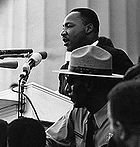 United States
Canada
Europe
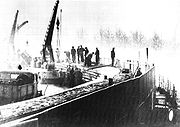
China
Mexico
 Middle East
South America
India
 The 1960s were marked by several notable assassinations:
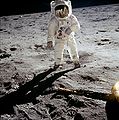 The Space Race
between the United States
and the Soviet Union
would dominate the 1960s. The Soviets sent the first man, Yuri Gagarin
, into outer space
during the Vostok 1
mission on 12 April 1961 and scored a host of other successes, but by the middle of the decade the US was taking the lead. In May 1961, President Kennedy set for the United States the goal of a manned spacecraft landing on the Moon
by the end of the decade.
In 1966 the Soviet Union launched Luna 10
, which later becomes the first space probe
to enter orbit around the Moon
.
The tragic deaths of astronauts Gus Grissom
, Edward Higgins White
, and Roger B. Chaffee
in the Apollo 1
fire on 27 January 1967 put a temporary hold on the US space program, but afterwards progress was steady, with the Apollo 8
crew (Frank Borman
, Jim Lovell
, William Anders
) being the first manned mission to orbit another celestial body (the moon) during Christmas of 1968.
On July 20, 1969, Apollo 11
, the first human spaceflight landed on the Moon
. Launched on July 16, 1969, it carried Mission Commander Neil Armstrong
, Command Module Pilot Michael Collins
, and Lunar Module Pilot Buzz Aldrin
. Apollo 11 fulfilled President John F. Kennedy's goal of reaching the moon by the end of the 1960s, which he had expressed during a speech given before a joint session of Congress on May 25, 1961: "I believe that this nation should commit itself to achieving the goal, before this decade is out, of landing a man on the Moon and returning him safely to the Earth."
The Soviet program lost its sense of direction with the death of chief designer Sergey Korolyov
in 1966. Political pressure, conflicts between different design bureaus, and engineering problems caused by an inadequate budget would doom the Soviet attempt to land men on the moon.
A succession of unmanned American and Soviet probes travelled to the Moon, Venus
, and Mars
during the 1960s, and commercial satellites also came into use.
, launched in 1964, was one of the decade's greatest successes. The "Big Three" American automakers enjoyed their highest ever sales and profitability in the 1960s, but the demise of Studebaker
in 1966 left American Motors Corporation as the last significant independent. The decade would see the car market split into different size classes for the first time, and model lineups now included compact
and mid-sized
cars in addition to full-sized
ones.
, questioning authority and government, and demanding more freedoms and rights for women and minorities. The Underground Press
, a widespread, eclectic collection of newspapers served as a unifying medium for the counterculture. The movement was also marked by the first widespread, socially accepted drug use (including LSD
and marijuana
) and psychedelic
music.
, ending in the massive Moratorium
protests in 1969, as well as the movement of resistance to conscription
("the Draft") for the war.
The antiwar movement was initially based on the older 1950s Peace movement
, heavily influenced by the American Communist Party
, but by the mid-1960s it outgrew this and became a broad-based mass movement centered in universities and churches: one kind of protest was called a "sit-in
". Other terms heard in the United States included "the Draft", "draft dodger
", "conscientious objector
", and "Vietnam vet
". Voter
age-limits were challenged by the phrase: "If you're old enough to die for your country, you're old enough to vote." Many of the youth involved in the politics of the movements distanced themselves from the "hippies".
and around the world gained momentum in the early 1960s. At the time, a woman's place was generally seen as being in the home, and they were excluded from many jobs and professions. Commercials often portrayed a woman as being helpless if her car broke down. In the US, a Presidential Commission on the Status of Women
found discrimination against women in the workplace and every other aspect of life, a revelation which launched two decades of prominent women-centered legal reforms (i.e. the Equal Pay Act of 1963
, Title IX
, etc.) which broke down the last remaining legal barriers to women's personal freedom and professional success. Feminists took to the streets, marching and protesting, writing books and debating to change social and political views that limited women. In 1963, with Betty Friedan
's revolutionary book, The Feminine Mystique
, the role of women in society, and in public and private life was questioned. By 1966, the movement was beginning to grow in size and power as women's group spread across the country and Friedan, along with other feminists, founded the National Organization for Women
. In 1968, "Women's Liberation" became a household term as, for the first time, the new women's movement eclipsed the black civil rights movement when New York Radical Women
, led by Robin Morgan
, protested the annual Miss America pageant
in Atlantic City, New Jersey
. The movement continued throughout the next decades.
, in the middle of a social revolution, led the world in LGBT rights in the late 60s and early 70s. Inspired by the civil rights movement and the women's movement, early gay rights pioneers had begun, by the 1960s, to build a movement. These groups were rather conservative in their practices, emphasizing that gays were just like straights and deserved full equality. This philosophy would be dominant again after AIDS, but by the very end of the 1960s, the movement's goals would change and become more radical, demanding a right to be different, and encouraging gay pride
.
The symbolic birth of the gay rights movement would not come until the decade had almost come to a close. Gays were not allowed by law to congregate together. Gay establishments such as the Stonewall Inn
in New York City
were routinely raided by the police to arrest gay people. On a night in late June 1969, LGBT people resisted, for the first time, a police raid, and rebelled openly in the streets. This uprising called the Stonewall Riots
began a new period of the LGBT rights movement that in the next decade would cause dramatic change both inside the LGBT community and in the mainstream American culture.
, such as California
with over 1 million Chicanos in Los Angeles
alone, and Texas
where Jim Crow laws included Mexican-Americans as "non-white" in some instances to be legally segregated.
Socially, the Chicano Movement
addressed what it perceived to be negative ethnic stereotype
s of Mexicans in mass media and the American consciousness. It did so through the creation of works of literary and visual art that validated Mexican-American ethnicity and culture. Chicanos fought to end social stigmas such as the usage of the Spanish language
and advocated official bilingualism in federal and state governments.
The Chicano Movement also addressed discrimination in public and private institutions. Early in the twentieth century, Mexican Americans formed organizations to protect themselves from discrimination. One of those organizations, the League of United Latin American Citizens
, was formed in 1929 and remains active today.
The movement gained momentum after World War II
when groups such as the American G.I. Forum, which was formed by returning Mexican American veterans, joined in the efforts by other civil rights organizations.
Mexican-American civil rights activists achieved several major legal victories including the 1947 Mendez v. Westminster
Supreme Court
ruling which declared that segregating children of "Mexican and Latin descent" was unconstitutional and the 1954 Hernandez v. Texas
ruling which declared that Mexican Americans and other racial groups in the United States were entitled to equal protection under the 14th Amendment
of the U.S. Constitution
.
The most prominent civil rights organization in the Mexican-American community is the Mexican American Legal Defense and Educational Fund (MALDEF), founded in 1968. Although modeled after the NAACP Legal Defense and Educational Fund
, MALDEF has also taken on many of the functions of other organizations, including political advocacy and training of local leaders.
Meanwhile, Puerto Ricans
in the U.S. mainland fought against racism, police brutality and socioeconomic problems affecting the three million Puerto Ricans residing in 50 states, the main concentration was in New York City
. They formed political action groups, became further involved in city and national politics, and became proud of their heritage, in spite of stereotypes and being viewed as "foreign" despite Puerto Rico
is US territory.
In the 1960s and the following 1970s, Hispanic-American culture was on the rebound like ethnic music, foods, culture and identity both became popular and assimilated into the American mainstream. Spanish-language television networks, radio stations and newspapers increased in presence across the country, especially in US-Mexican border towns and East Coast cities like New York City, and the growth of the Cuban American
community in Miami, Florida
.
The multitude of discrimination at this time represented an inhuman side to a society that in the 1960s was upheld as a world and industry leader. The issues of civil rights and warfare became major points of reflection of virtue and democracy, what once was viewed as traditional and inconsequential was now becoming the significance in the turning point of a culture. A document known as the Port Huron Statement exemplifies these two conditions perfectly in its first hand depiction, “while these and other problems either directly oppressed us or rankled our consciences and became our own subjective concerns, we began to see complicated and disturbing paradoxes in our surrounding America. The declaration "all men are created equal..." rang hollow before the facts of Negro life in the South and the big cities of the North. The proclaimed peaceful intentions of the United States contradicted its economic and military investments in the Cold War status quo.” These intolerable issues became too visible to ignore therefore its repercussions were feared greatly, the realization that we as individuals take the responsibility for encounter and resolution in our lives issues was an emerging idealism of the 1960s.
" applied the class perspective of Marxism
to postwar America, but had little organizational connection with older Marxist organizations such as the Communist Party
, and even went as far as to reject organized labor as the basis of a unified left-wing movement. The New Left differed from the traditional left in its resistance to dogma and its emphasis on personal as well as societal change. Students for a Democratic Society
(SDS) became the organizational focus of the New Left and was the prime mover behind the opposition to the War in Vietnam. The 1960s left also consisted of ephemeral campus-based Trotskyist
, Maoist
and anarchist
groups, some of which by the end of the 1960s had turned to militancy
.
, Detroit, Los Angeles
, New York City
, Newark
, Washington, DC and Oakland. By the end of the decade, politicians such as Richard Nixon
and George Wallace
campaigned on restoring law and order to a nation troubled with the new unrest.
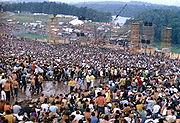
in San Francisco in 1967, and the Woodstock Festival
in upstate New York
in 1969. Psychedelic drugs, especially LSD
, were widely used medicinally, spiritually and recreationally throughout the late 1960s, and were popularized by Timothy Leary
with his slogan "Turn on, tune in, drop out
". Ken Kesey
and the Merry Pranksters
also played a part in the role of "turning heads on". Psychedelic
influenced the music, artwork and films of the decade, and a number of prominent musicians died of drug overdoses (see 27 Club
). There was a growing interest in Eastern religions and philosophy, and many attempts were made to found communes, which varied from supporting free love to religious puritanism.
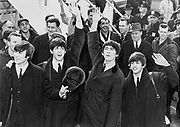
Popular music entered an era of "all hits", as numerous artists released recordings, beginning in the 1950s, as 45-rpm "singles" (with another on the flip side), and radio station
s tended to play only the most popular of the wide variety of records being made. Also, bands tended to record only the best of their songs as a chance to become a hit record. The taste of the American listeners expanded from the folksinger
, doo-wop
and saxophone
sounds of the 1950s to the Motown sound, folk rock
and the British Invasion
. The Los Angeles and San Francisco Sound
began in this period with many popular bands coming out of LA and the Haight-Ashbury district, well known for its hippie
culture. The rise of the counterculture
movement, particularly among the youth, created a market for rock
, soul
, pop
, reggae
and blues
music.
Significant events in music in the 1960s:
.
Some of Hollywood's most notable blockbuster films
of the 1960s include: Psycho
, Breakfast at Tiffany's, Spartacus, Lawrence of Arabia
, The Hustler
, Carnival of Souls
; The Birds
, The Pink Panther
, Dr. Strangelove or: How I Learned to Stop Worrying and Love the Bomb
; Mary Poppins
, The Sound of Music
; Doctor Zhivago, The Jungle Book
, The Dirty Dozen
, Butch Cassidy and the Sundance Kid
; Bonnie and Clyde
; Cool Hand Luke
; The Graduate
; Rosemary's Baby
; Midnight Cowboy
; Head
; Medium Cool
; 2001: A Space Odyssey
; Faces
; Night of the Living Dead
; Easy Rider
; Ice Station Zebra
; Planet of the Apes
; The Lion In Winter
; The Wild Bunch
.
The counterculture movement had a significant effect on cinema
. Movies began to break social taboos such as sex
and violence
causing both controversy and fascination. They turned increasingly dramatic, unbalanced, and hectic as the cultural revolution was starting. This was the beginning of the New Hollywood
era that dominated the next decade in theatres and revolutionized the film industry. Films of this time also focused on the changes happening in the world. Dennis Hopper
's Easy Rider
(1969) focused on the drug culture of the time. Movies also became more sexually explicit, such as Roger Vadim
's Barbarella
(1968) as the counterculture
progressed.
In Europe, Art Cinema gains wider distribution and sees movements like la Nouvelle Vague
(The French New Wave) featuring French filmmakers such as Roger Vadim
, François Truffaut
, Alain Resnais
, and Jean-Luc Godard
; Cinéma Vérité
documentary movement in Canada, France and the United States; Swedish filmmaker Ingmar Bergman
, Chilean filmmaker
Alexandro Jodorowsky and Polish filmmakers Roman Polanski
and Wojciech Jerzy Has produced original and offbeat masterpieces and the high-point of Italian filmmaking with Michelangelo Antonioni
and Federico Fellini
making some of their most known films during this period. Notable films from this period include: La Dolce Vita
, 8½
; La Notte
; L'Eclisse
, The Red Desert; Blowup
; Satyricon
; Accattone
; The Gospel According to St. Matthew
; Theorem
; Winter Light
; The Silence
; Persona
; Shame; A Passion
; Au Hasard Balthazar
; Mouchette
; Last Year at Marienbad
; Chronique d'un été
; Titicut Follies
; High School; Salesman
; La jetée
; Warrendale
; Knife in the Water; Repulsion
; The Saragossa Manuscript; El Topo
; A Hard Day's Night
; and the cinema verite
Dont Look Back
.
In Japan, a color version remake of director Kenji Mizoguchi
's The 47 Ronin
, entitled Chushingura: Hana no Maki, Yuki no Maki directed by Hiroshi Inagaki
was released in 1962, the legendary story was also remade as a television series in Japan. Academy Award winning Japanese
director Akira Kurosawa
produced Yojimbo (1961), and Sanjuro
(1962), which both starred Toshirō Mifune
as a mysterious Samurai
swordsman for hire. Like his previous films both had a profound influence around the world. The Spaghetti Western
genre was a direct outgrowth of the Kurosawa films. The influence of these films is most apparent in Sergio Leone
's A Fistful of Dollars
(1964) starring Clint Eastwood
and Walter Hill's Last Man Standing
(1996). Yojimbo was also the origin of the "Man with No Name
" trend which included Sergio Leone's For a Few Dollars More
, and The Good, The Bad and The Ugly
both also starring Clint Eastwood, and arguably continued through his 1968 opus Once Upon a Time in the West
, starring Henry Fonda
, Charles Bronson
, Claudia Cardinale
, and Jason Robards
. The Magnificent Seven
a 1960
American western film directed by John Sturges
was a remake
of Akira Kurosawa
's 1954 film, Seven Samurai.
The 1960s were also about experimentation. With the explosion of light-weight and affordable cameras, the underground avant-garde film movement thrived. Canada's Michael Snow
, Americans Kenneth Anger
. Stan Brakhage
, Andy Warhol
, and Jack Smith
. Notable films in this genre are: Dog Star Man
; Scorpio Rising
; Wavelength; Chelsea Girls
; Blow Job
; Vinyl
; Flaming Creatures
.
Significant events in the film industry in the 1960s:
, Peyton Place
, Star Trek
, I Dream of Jeannie
, The Twilight Zone
, The Outer Limits
, The Andy Williams Show
, The Dean Martin Show
, The Wonderful World of Disney, Alfred Hitchcock Presents
, The Beverly Hillbillies
, Bonanza
, McHale's Navy
, Laugh-In, The Dick Van Dyke Show
, The Fugitive
, The Tonight Show
, Gunsmoke
, Mission: Impossible
, The Flintstones
, The Adventures of Ozzie and Harriet
, Lassie
, The Danny Thomas Show
, The Lucy Show
, My Three Sons
, The Red Skelton Show
and Bewitched
. The Flintstones was a favoured show, receiving 40 million views an episode with an average of 3 views a day. Some programming such as The Smothers Brothers Comedy Hour
became controversial by challenging the very foundations of America's corporate and governmental controls; making fun of world leaders, and questioning U.S. involvement in and escalation of The Vietnam War.
In the UK, Doctor Who
appeared on TV for the first time on 23 November 1963. The series has entered the Guinness book of world records as the longest-running television show to date.
Walt Disney
, owner of Walt Disney Co. died on December 15, 1966 from a major tumor in his left lung.
held during the decade. These were:
s during the decade:
expansion in 1961 included the formation of the Los Angeles Angels, the move to Minnesota to become the Minnesota Twins
by the former Washington Senators
and the formation of a new franchise called the Washington Senators
. Major League Baseball sanctioned both the Houston Colt .45s
and the New York Mets
as new National League
franchises in 1962.
In 1969, the American League
expanded when the Kansas City Royals
and Seattle Pilots
, were admitted to the league prompting the expansion of the post-season for the first time since the creation of the World Series. The Pilots stayed just one season in Seattle before moving and becoming the Milwaukee Brewers
in 1970. The National League also added two teams in 1969, the Montreal Expos
and San Diego Padres
. By 1969, at the end of the 1960s the New York Mets won the World Series
in only the 8th year of the team's existence.
won outright in the 24 Hours of Le Mans
.
Graham Hill edged out Jackie Stewart and Denny Hulme for the World Championship in Formula One.
1960 • 1961 • 1962 • 1963 • 1964 • 1965 • 1966 • 1967 • 1968 • 1969
20th century
Many people define the 20th century as running from January 1, 1901 to December 31, 2000, others would rather define it as beginning on January 1, 1900....
.
The 1960s term also refers to an era more often called The Sixties, denoting the complex of inter-related cultural and political trends across the globe. This "cultural decade" is more loosely defined than the actual decade, beginning around 1963 and ending around 1974.
In the United States, "the Sixties", as they are known in popular culture, is a term used by historians, journalists, and other objective academics; in some cases nostalgically to describe the counterculture
Counterculture
Counterculture is a sociological term used to describe the values and norms of behavior of a cultural group, or subculture, that run counter to those of the social mainstream of the day, the cultural equivalent of political opposition. Counterculture can also be described as a group whose behavior...
and social revolution
Social revolution
The term social revolution may have different connotations depending on the speaker.In the Trotskyist movement, the term "social revolution" refers to an upheaval in which existing property relations are smashed...
near the end of the decade; and pejoratively to describe the era as one of irresponsible excess and flamboyance. The decade was also labeled the Swinging Sixties
Swinging London
Swinging London is a catch-all term applied to the fashion and cultural scene that flourished in London, in the 1960s.It was a youth-oriented phenomenon that emphasised the new and modern. It was a period of optimism and hedonism, and a cultural revolution. One catalyst was the recovery of the...
because of the fall or relaxation of some social taboos especially relating to sexism and racism that occurred during this time.
The 1960s have become synonym
Synonym
Synonyms are different words with almost identical or similar meanings. Words that are synonyms are said to be synonymous, and the state of being a synonym is called synonymy. The word comes from Ancient Greek syn and onoma . The words car and automobile are synonyms...
ous with the new, radical, and subversive events and trends of the period, which continued to develop in the 1970s, 1980s, 1990s and beyond. In Africa
Africa
Africa is the world's second largest and second most populous continent, after Asia. At about 30.2 million km² including adjacent islands, it covers 6% of the Earth's total surface area and 20.4% of the total land area...
the 1960s was a period of radical political change as 32 countries gained independence from their European colonial rulers.
Some commentators have seen in this era a classical Jungian
Carl Jung
Carl Gustav Jung was a Swiss psychiatrist and the founder of Analytical Psychology. Jung is considered the first modern psychiatrist to view the human psyche as "by nature religious" and make it the focus of exploration. Jung is one of the best known researchers in the field of dream analysis and...
nightmare cycle, where a rigid culture, unable to contain the demands for greater individual freedom
Individualism
Individualism is the moral stance, political philosophy, ideology, or social outlook that stresses "the moral worth of the individual". Individualists promote the exercise of one's goals and desires and so value independence and self-reliance while opposing most external interference upon one's own...
, broke free of the social constraints of the previous age through extreme deviation from the norm. Christopher Booker
Christopher Booker
Christopher John Penrice Booker is an English journalist and author. In 1961, he was one of the founders of the magazine Private Eye, and has contributed to it for over four decades. He has been a columnist for the Sunday Telegraph since 1990...
charts the rise, success, fall/nightmare and explosion in the London scene of the 1960s. This does not alone however explain the mass nature of the phenomenon.
Several governments turned to the left
Left-wing politics
In politics, Left, left-wing and leftist generally refer to support for social change to create a more egalitarian society...
in the early 1960s. In the United States, John F. Kennedy
John F. Kennedy
John Fitzgerald "Jack" Kennedy , often referred to by his initials JFK, was the 35th President of the United States, serving from 1961 until his assassination in 1963....
, a Keynesian
Keynesian economics
Keynesian economics is a school of macroeconomic thought based on the ideas of 20th-century English economist John Maynard Keynes.Keynesian economics argues that private sector decisions sometimes lead to inefficient macroeconomic outcomes and, therefore, advocates active policy responses by the...
and staunch anti-communist
Anti-communism
Anti-communism is opposition to communism. Organized anti-communism developed in reaction to the rise of communism, especially after the 1917 October Revolution in Russia and the beginning of the Cold War in 1947.-Objections to communist theory:...
who pushed for centre-left social reforms such as civil rights for African American
African American
African Americans are citizens or residents of the United States who have at least partial ancestry from any of the native populations of Sub-Saharan Africa and are the direct descendants of enslaved Africans within the boundaries of the present United States...
s and healthcare for the elderly
Medicare (United States)
Medicare is a social insurance program administered by the United States government, providing health insurance coverage to people who are aged 65 and over; to those who are under 65 and are permanently physically disabled or who have a congenital physical disability; or to those who meet other...
and the poor
Medicaid
Medicaid is the United States health program for certain people and families with low incomes and resources. It is a means-tested program that is jointly funded by the state and federal governments, and is managed by the states. People served by Medicaid are U.S. citizens or legal permanent...
, was elected to the Presidency; he also pledged to land a man on the Moon
Moon
The Moon is Earth's only known natural satellite,There are a number of near-Earth asteroids including 3753 Cruithne that are co-orbital with Earth: their orbits bring them close to Earth for periods of time but then alter in the long term . These are quasi-satellites and not true moons. For more...
by the end of the decade, a feat that was accomplished
Apollo 11
In early 1969, Bill Anders accepted a job with the National Space Council effective in August 1969 and announced his retirement as an astronaut. At that point Ken Mattingly was moved from the support crew into parallel training with Anders as backup Command Module Pilot in case Apollo 11 was...
in 1969. Italy formed its first left-of-centre government in March 1962 with a coalition of Christian Democrats
Christian Democracy (Italy)
Christian Democracy was a Christian democratic party in Italy. It was founded in 1943 as the ideological successor of the historical Italian People's Party, which had the same symbol, a crossed shield ....
, Social Democrats
Italian Democratic Socialist Party
The Italian Democratic Socialist Party is a minor social-democratic political party in Italy. Mimmo Magistro is the party leader. The PSDI, before the 1990s decline in votes and members, had been an important force in Italian politics, being the longest serving partner in government for Christian...
, and moderate Republicans
Italian Republican Party
The Italian Republican Party is a liberal political party in Italy.The PRI is party with old roots that originally took a left-wing position, claiming descent from the political position of Giuseppe Mazzini...
. Socialists
Italian Socialist Party
The Italian Socialist Party was a socialist and later social-democratic political party in Italy founded in Genoa in 1892.Once the dominant leftist party in Italy, it was eclipsed in status by the Italian Communist Party following World War II...
joined the ruling block in December 1963. In Britain, the Labour Party
Labour Party (UK)
The Labour Party is a centre-left democratic socialist party in the United Kingdom. It surpassed the Liberal Party in general elections during the early 1920s, forming minority governments under Ramsay MacDonald in 1924 and 1929-1931. The party was in a wartime coalition from 1940 to 1945, after...
gained power in 1964. In Brazil, João Goulart
João Goulart
João Belchior Marques Goulart was a Brazilian politician and the 24th President of Brazil until a military coup d'état deposed him on April 1, 1964. He is considered to have been the last left-wing President of the country until Luiz Inácio Lula da Silva took office in 2003.-Name:João Goulart is...
became president after Jânio Quadros
Jânio Quadros
Jânio da Silva Quadros , , was a Brazilian politician who served as President of Brazil for only 7 months in 1961.-Career:...
resigned.
Wars
- The Cold WarCold WarThe Cold War was the continuing state from roughly 1946 to 1991 of political conflict, military tension, proxy wars, and economic competition between the Communist World—primarily the Soviet Union and its satellite states and allies—and the powers of the Western world, primarily the United States...
:- The Vietnam WarVietnam WarThe Vietnam War was a Cold War-era military conflict that occurred in Vietnam, Laos, and Cambodia from 1 November 1955 to the fall of Saigon on 30 April 1975. This war followed the First Indochina War and was fought between North Vietnam, supported by its communist allies, and the government of...
(1955–1975)
- The Vietnam War
-
-
- 1961 – Substantial (approximately 700) American advisory forces first arrive in VietnamVietnamVietnam – sometimes spelled Viet Nam , officially the Socialist Republic of Vietnam – is the easternmost country on the Indochina Peninsula in Southeast Asia. It is bordered by China to the north, Laos to the northwest, Cambodia to the southwest, and the South China Sea –...
in 1961. - 1962 – By mid-1962, the number of U.S. military advisers in South VietnamSouth VietnamSouth Vietnam was a state which governed southern Vietnam until 1975. It received international recognition in 1950 as the "State of Vietnam" and later as the "Republic of Vietnam" . Its capital was Saigon...
had risen from 700 to 12,000. - 1963 – After the overthrow of the Diem RegimeNgo Dinh DiemNgô Đình Diệm was the first president of South Vietnam . In the wake of the French withdrawal from Indochina as a result of the 1954 Geneva Accords, Diệm led the effort to create the Republic of Vietnam. Accruing considerable U.S. support due to his staunch anti-Communism, he achieved victory in a...
in early November 1963, KennedyJohn F. KennedyJohn Fitzgerald "Jack" Kennedy , often referred to by his initials JFK, was the 35th President of the United States, serving from 1961 until his assassination in 1963....
increased the number of U.S. military advisers from 800 to more than 16,000 to cope with rising guerrilla activity in VietnamVietnam WarThe Vietnam War was a Cold War-era military conflict that occurred in Vietnam, Laos, and Cambodia from 1 November 1955 to the fall of Saigon on 30 April 1975. This war followed the First Indochina War and was fought between North Vietnam, supported by its communist allies, and the government of...
. - 1964 – In direct response to the minor naval engagement known as the Gulf of Tonkin incidentGulf of Tonkin IncidentThe Gulf of Tonkin Incident, or the USS Maddox Incident, are the names given to two incidents, one fabricated, involving North Vietnam and the United States in the waters of the Gulf of Tonkin...
which occurred on August 2, 1964, the Gulf of Tonkin ResolutionGulf of Tonkin ResolutionThe Tonkin Gulf Resolution was a joint resolution which the United States Congress passed on August 10, 1964 in response to a sea battle between the North Vietnamese Navy's Torpedo Squadron 10135 and the destroyer on August 2 and an alleged second naval engagement between North Vietnamese boats...
, a joint resolutionJoint resolutionIn the United States Congress, a joint resolution is a legislative measure that requires approval by the Senate and the House and is presented to the President for his/her approval or disapproval, in exactly the same case as a bill....
of the U.S. CongressUnited States CongressThe United States Congress is the bicameral legislature of the federal government of the United States, consisting of the Senate and the House of Representatives. The Congress meets in the United States Capitol in Washington, D.C....
, was passed on August 10, 1964. The resolution gave U.S. PresidentPresident of the United StatesThe President of the United States of America is the head of state and head of government of the United States. The president leads the executive branch of the federal government and is the commander-in-chief of the United States Armed Forces....
Lyndon B. JohnsonLyndon B. JohnsonLyndon Baines Johnson , often referred to as LBJ, was the 36th President of the United States after his service as the 37th Vice President of the United States...
authorization, without a formal declaration of warDeclaration of war by the United StatesA declaration of war is a formal declaration issued by a national government indicating that a state of war exists between that nation and another. For the United States, Article One, Section Eight of the Constitution says "Congress shall have power to ... declare War"...
by Congress, for the use of military force in Southeast AsiaSoutheast AsiaSoutheast Asia, South-East Asia, South East Asia or Southeastern Asia is a subregion of Asia, consisting of the countries that are geographically south of China, east of India, west of New Guinea and north of Australia. The region lies on the intersection of geological plates, with heavy seismic...
. The Johnson administration subsequently cited the resolution as legal authority for its rapid escalation of U.S. military involvement in the Vietnam WarVietnam WarThe Vietnam War was a Cold War-era military conflict that occurred in Vietnam, Laos, and Cambodia from 1 November 1955 to the fall of Saigon on 30 April 1975. This war followed the First Indochina War and was fought between North Vietnam, supported by its communist allies, and the government of...
. - 1966 – After 1966 with the draft in place more than 500,000 troops are sent to VietnamVietnamVietnam – sometimes spelled Viet Nam , officially the Socialist Republic of Vietnam – is the easternmost country on the Indochina Peninsula in Southeast Asia. It is bordered by China to the north, Laos to the northwest, Cambodia to the southwest, and the South China Sea –...
by the Johnson administration and college attendance soars.
- 1961 – Substantial (approximately 700) American advisory forces first arrive in Vietnam
- The Bay of Pigs InvasionBay of Pigs InvasionThe Bay of Pigs Invasion was an unsuccessful action by a CIA-trained force of Cuban exiles to invade southern Cuba, with support and encouragement from the US government, in an attempt to overthrow the Cuban government of Fidel Castro. The invasion was launched in April 1961, less than three months...
(1961) – an unsuccessful attempt by a CIA-trained force of Cuban exiles to invade southern Cuba with support from US government armed forces, to overthrow the Cuban government of Fidel Castro. - Portuguese Colonial WarPortuguese Colonial WarThe Portuguese Colonial War , also known in Portugal as the Overseas War or in the former colonies as the War of liberation , was fought between Portugal's military and the emerging nationalist movements in Portugal's African colonies between 1961 and 1974, when the Portuguese regime was...
(1961–1974) – the war was fought between Portugal's military and the emerging nationalist movements in Portugal's African coloniesPortuguese EmpireThe Portuguese Empire , also known as the Portuguese Overseas Empire or the Portuguese Colonial Empire , was the first global empire in history...
. It was a decisive ideological struggle and armed conflict of the cold warCold WarThe Cold War was the continuing state from roughly 1946 to 1991 of political conflict, military tension, proxy wars, and economic competition between the Communist World—primarily the Soviet Union and its satellite states and allies—and the powers of the Western world, primarily the United States...
in AfricaAfricaAfrica is the world's second largest and second most populous continent, after Asia. At about 30.2 million km² including adjacent islands, it covers 6% of the Earth's total surface area and 20.4% of the total land area...
n (Portuguese Africa and surrounding nations) and EuropeEuropeEurope is, by convention, one of the world's seven continents. Comprising the westernmost peninsula of Eurasia, Europe is generally 'divided' from Asia to its east by the watershed divides of the Ural and Caucasus Mountains, the Ural River, the Caspian and Black Seas, and the waterways connecting...
an (mainland Portugal) scenarios. Unlike other European nations, the Portuguese regime did not leave its AfricaAfricaAfrica is the world's second largest and second most populous continent, after Asia. At about 30.2 million km² including adjacent islands, it covers 6% of the Earth's total surface area and 20.4% of the total land area...
n colonies, or the overseas provinces, during the 1950s and 1960s. During the 1960s, various armed independence movements, most prominently led by communist-led parties who cooperated under the CONCP umbrella and pro US groups, became active in these areas, most notably in Angola, Mozambique, and Portuguese GuineaPortuguese GuineaPortuguese Guinea was the name for what is today Guinea-Bissau from 1446 to September 10, 1974.-History:...
. During the war, several atrocities were committed by all forces involved in the conflict.
-
- Arab–Israeli conflictArab–Israeli conflictThe Arab–Israeli conflict refers to political tensions and open hostilities between the Arab peoples and the Jewish community of the Middle East. The modern Arab-Israeli conflict began with the rise of Zionism and Arab Nationalism towards the end of the nineteenth century, and intensified with the...
(early 20th century-present)- Six Days War (June 1967) – a war between IsraelIsraelThe State of Israel is a parliamentary republic located in the Middle East, along the eastern shore of the Mediterranean Sea...
and the neighboring states of EgyptEgyptEgypt , officially the Arab Republic of Egypt, Arabic: , is a country mainly in North Africa, with the Sinai Peninsula forming a land bridge in Southwest Asia. Egypt is thus a transcontinental country, and a major power in Africa, the Mediterranean Basin, the Middle East and the Muslim world...
, JordanJordanJordan , officially the Hashemite Kingdom of Jordan , Al-Mamlaka al-Urduniyya al-Hashemiyya) is a kingdom on the East Bank of the River Jordan. The country borders Saudi Arabia to the east and south-east, Iraq to the north-east, Syria to the north and the West Bank and Israel to the west, sharing...
, and SyriaSyriaSyria , officially the Syrian Arab Republic , is a country in Western Asia, bordering Lebanon and the Mediterranean Sea to the West, Turkey to the north, Iraq to the east, Jordan to the south, and Israel to the southwest....
. The Arab states of IraqIraqIraq ; officially the Republic of Iraq is a country in Western Asia spanning most of the northwestern end of the Zagros mountain range, the eastern part of the Syrian Desert and the northern part of the Arabian Desert....
, Saudi ArabiaSaudi ArabiaThe Kingdom of Saudi Arabia , commonly known in British English as Saudi Arabia and in Arabic as as-Sa‘ūdiyyah , is the largest state in Western Asia by land area, constituting the bulk of the Arabian Peninsula, and the second-largest in the Arab World...
, SudanSudanSudan , officially the Republic of the Sudan , is a country in North Africa, sometimes considered part of the Middle East politically. It is bordered by Egypt to the north, the Red Sea to the northeast, Eritrea and Ethiopia to the east, South Sudan to the south, the Central African Republic to the...
, TunisiaTunisiaTunisia , officially the Tunisian RepublicThe long name of Tunisia in other languages used in the country is: , is the northernmost country in Africa. It is a Maghreb country and is bordered by Algeria to the west, Libya to the southeast, and the Mediterranean Sea to the north and east. Its area...
, MoroccoMoroccoMorocco , officially the Kingdom of Morocco , is a country located in North Africa. It has a population of more than 32 million and an area of 710,850 km², and also primarily administers the disputed region of the Western Sahara...
and AlgeriaAlgeriaAlgeria , officially the People's Democratic Republic of Algeria , also formally referred to as the Democratic and Popular Republic of Algeria, is a country in the Maghreb region of Northwest Africa with Algiers as its capital.In terms of land area, it is the largest country in Africa and the Arab...
also contributed troops and arms. At the war's end, Israel had gained control of the Sinai PeninsulaSinai PeninsulaThe Sinai Peninsula or Sinai is a triangular peninsula in Egypt about in area. It is situated between the Mediterranean Sea to the north, and the Red Sea to the south, and is the only part of Egyptian territory located in Asia as opposed to Africa, effectively serving as a land bridge between two...
, the Gaza StripGaza Stripthumb|Gaza city skylineThe Gaza Strip lies on the Eastern coast of the Mediterranean Sea. The Strip borders Egypt on the southwest and Israel on the south, east and north. It is about long, and between 6 and 12 kilometres wide, with a total area of...
, the West BankWest BankThe West Bank ) of the Jordan River is the landlocked geographical eastern part of the Palestinian territories located in Western Asia. To the west, north, and south, the West Bank shares borders with the state of Israel. To the east, across the Jordan River, lies the Hashemite Kingdom of Jordan...
, East JerusalemEast JerusalemEast Jerusalem or Eastern Jerusalem refer to the parts of Jerusalem captured and annexed by Jordan in the 1948 Arab-Israeli War and then captured and annexed by Israel in the 1967 Six-Day War...
, and the Golan Heights. The results of the war affect the geopoliticsGeopoliticsGeopolitics, from Greek Γη and Πολιτική in broad terms, is a theory that describes the relation between politics and territory whether on local or international scale....
of the region to this day.
- Six Days War (June 1967) – a war between Israel
- The Algerian War came to a close in 1962.
- The Nigeria Civil War begins in 1967.
Internal conflicts
- Cultural Revolution in ChinaCultural RevolutionThe Great Proletarian Cultural Revolution, commonly known as the Cultural Revolution , was a socio-political movement that took place in the People's Republic of China from 1966 through 1976...
(1966–1976) – a period of widespread social and political upheaval in the People’s Republic of China which was launched by Mao ZedongMao ZedongMao Zedong, also transliterated as Mao Tse-tung , and commonly referred to as Chairman Mao , was a Chinese Communist revolutionary, guerrilla warfare strategist, Marxist political philosopher, and leader of the Chinese Revolution...
, the chairman of the Communist Party of ChinaCommunist Party of ChinaThe Communist Party of China , also known as the Chinese Communist Party , is the founding and ruling political party of the People's Republic of China...
. Mao alleged that "liberal bourgeois" elements were permeating the party and society at large and that they wanted to restore capitalismCapitalismCapitalism is an economic system that became dominant in the Western world following the demise of feudalism. There is no consensus on the precise definition nor on how the term should be used as a historical category...
. Mao insisted that these elements be removed through post-revolutionary class struggleClass struggleClass struggle is the active expression of a class conflict looked at from any kind of socialist perspective. Karl Marx and Friedrich Engels wrote "The [written] history of all hitherto existing society is the history of class struggle"....
by mobilizing the thoughts and actions of China's youth, who formed Red GuardsRed Guards (China)Red Guards were a mass movement of civilians, mostly students and other young people in the People's Republic of China , who were mobilized by Mao Zedong in 1966 and 1967, during the Cultural Revolution.-Origins:...
groups around the country. The movement subsequently spread into the military, urban workers, and the party leadership itself. Although Mao himself officially declared the Cultural Revolution to have ended in 1969, the power struggles and political instability between 1969 and the arrest of the Gang of FourGang of FourThe Gang of Four was the name given to a political faction composed of four Chinese Communist Party officials. They came to prominence during the Cultural Revolution and were subsequently charged with a series of treasonous crimes...
in 1976 are now also widely regarded as part of the Revolution. - The TroublesThe TroublesThe Troubles was a period of ethno-political conflict in Northern Ireland which spilled over at various times into England, the Republic of Ireland, and mainland Europe. The duration of the Troubles is conventionally dated from the late 1960s and considered by many to have ended with the Belfast...
in Northern Ireland began with the rise of the Civil Rights movement in the mid 60s, the conflict continued into the later 90s. - The Compton's Cafeteria RiotCompton's cafeteria riotThe Compton's Cafeteria Riot occurred in August 1966 in the Tenderloin district of San Francisco. This incident was one of the first recorded transgender riots in United States history, preceding the more famous 1969 Stonewall Riots in New York City.A smaller-scale riot broke out in 1959 in Los...
occurred in August 1966 in the TenderloinTenderloin, San Francisco, CaliforniaThe Tenderloin is a neighborhood in downtown San Francisco, California, in the flatlands on the southern slope of Nob Hill, nestled between the Union Square shopping district to the northeast and the Civic Center office district to the southwest...
district of San Francisco. This incident was one of the first recorded transgenderTransgenderTransgender is a general term applied to a variety of individuals, behaviors, and groups involving tendencies to vary from culturally conventional gender roles....
riots in United States history, preceding the more famous 1969 Stonewall Riots in New York City by three years. - The Stonewall riotsStonewall riotsThe Stonewall riots were a series of spontaneous, violent demonstrations against a police raid that took place in the early morning hours of June 28, 1969, at the Stonewall Inn, in the Greenwich Village neighborhood of New York City...
occurred in June 1969 in the New York CityNew York CityNew York is the most populous city in the United States and the center of the New York Metropolitan Area, one of the most populous metropolitan areas in the world. New York exerts a significant impact upon global commerce, finance, media, art, fashion, research, technology, education, and...
. The Stonewall riots were a series of spontaneous, violent demonstrations against a police raid that took place in the Stonewall InnStonewall InnThe Stonewall Inn, often shortened to Stonewall is an American bar in New York City and the site of the Stonewall riots of 1969, which are widely considered to be the single most important event leading to the gay liberation movement and the modern fight for gay and lesbian rights in the United...
, in the Greenwich VillageGreenwich VillageGreenwich Village, , , , .in New York often simply called "the Village", is a largely residential neighborhood on the west side of Lower Manhattan in New York City. A large majority of the district is home to upper middle class families...
neighborhood of New York City. They are frequently cited as the first instance in American history when people in the homosexual community fought back against a government-sponsored system that persecuted sexual minorities, and they have become the defining event that marked the start of the gay rights movement in the United States and around the world. - The May 1968 student and worker uprisings in France.
- Mass socialist or Communist movement in most European countries (particularly France and Italy), with which the student-based new left was able to forge a connection. The most spectacular manifestation of this was the May student revolt of 1968 in Paris that linked up with a general strike of ten million workers called by the trade unions; and for a few days seemed capable of overthrowing the government of Charles de GaulleCharles de GaulleCharles André Joseph Marie de Gaulle was a French general and statesman who led the Free French Forces during World War II. He later founded the French Fifth Republic in 1958 and served as its first President from 1959 to 1969....
. De Gaulle went off to visit French troops in Germany to check on their loyalty. Major concessions were won for trade union rights, higher minimum wages and better working conditions. - University students protested in their hundreds of thousands in LondonLondonLondon is the capital city of :England and the :United Kingdom, the largest metropolitan area in the United Kingdom, and the largest urban zone in the European Union by most measures. Located on the River Thames, London has been a major settlement for two millennia, its history going back to its...
, ParisParisParis is the capital and largest city in France, situated on the river Seine, in northern France, at the heart of the Île-de-France region...
, BerlinBerlinBerlin is the capital city of Germany and is one of the 16 states of Germany. With a population of 3.45 million people, Berlin is Germany's largest city. It is the second most populous city proper and the seventh most populous urban area in the European Union...
and RomeRomeRome is the capital of Italy and the country's largest and most populated city and comune, with over 2.7 million residents in . The city is located in the central-western portion of the Italian Peninsula, on the Tiber River within the Lazio region of Italy.Rome's history spans two and a half...
with the huge crowds that protested against the Vietnam WarVietnam WarThe Vietnam War was a Cold War-era military conflict that occurred in Vietnam, Laos, and Cambodia from 1 November 1955 to the fall of Saigon on 30 April 1975. This war followed the First Indochina War and was fought between North Vietnam, supported by its communist allies, and the government of...
. - In Eastern Europe students also drew inspiration from the protests in the West. In PolandPolandPoland , officially the Republic of Poland , is a country in Central Europe bordered by Germany to the west; the Czech Republic and Slovakia to the south; Ukraine, Belarus and Lithuania to the east; and the Baltic Sea and Kaliningrad Oblast, a Russian exclave, to the north...
and YugoslaviaSocialist Federal Republic of YugoslaviaThe Socialist Federal Republic of Yugoslavia was the Yugoslav state that existed from the abolition of the Yugoslav monarchy until it was dissolved in 1992 amid the Yugoslav Wars. It was a socialist state and a federation made up of six socialist republics: Bosnia and Herzegovina, Croatia,...
they protested against restrictions on free speech by communist regimes. - The Tlatelolco massacreTlatelolco massacreThe Tlatelolco massacre, also known as The Night of Tlatelolco , was a government massacre of student and civilian protesters and bystanders that took place during the afternoon and night of October 2, 1968, in the Plaza de las Tres Culturas in the Tlatelolco section of Mexico City...
– was a government massacre of student and civilian protesters and bystanders that took place during the afternoon and night of October 2, 1968, in the Plaza de las Tres CulturasPlaza de las Tres CulturasThe Plaza de las Tres Culturas is the main square within the Tlatelolco neighbourhood of Mexico City. The name "Three Cultures" is in recognition of the three periods of Mexican history reflected by those buildings pre-Columbian, Spanish colonial, and the independent "mestizo" nation...
in the TlatelolcoTlatelolco (Mexico City)Tlatelolco is an area in the Cuauhtémoc borough of Mexico City, centered on the Plaza de las Tres Culturas, a square surrounded on three sides by an excavated Aztec archaeological site, a 17th century church called Templo de Santiago, a former convent, and office complexes that used to belong to...
section of Mexico CityMexico CityMexico City is the Federal District , capital of Mexico and seat of the federal powers of the Mexican Union. It is a federal entity within Mexico which is not part of any one of the 31 Mexican states but belongs to the federation as a whole...
.
Coups
The most prominent coups d'état of the decade include:- On April 21, 1967 in Greece a group of colonels established a military dictatorship for seven years.
- In 1968 a coup in Iraq led to the overthrow of Abdul Rahman ArifAbdul Rahman ArifHajj Abdul Rahman Mohammed Arif Aljumaily was president of Iraq from April 16, 1966 to July 17, 1968.-Biography:...
by the Arab SocialistArab socialismArab socialism is a political ideology based on an amalgamation of Pan-Arabism and socialism. Arab socialism is distinct from the much broader tradition of socialist thought in the Arab world, which predates Arab socialism by as much as fifty years...
Baath PartyBaath PartyThe Arab Socialist Ba'ath Party was a political party mixing Arab nationalist and Arab socialist interests, opposed to Western imperialism, and calling for the renaissance or resurrection and unification of the Arab world into a single state. Ba'ath is also spelled Ba'th or Baath and means...
. - On September 1, 1969, a small group of military officers led by the army officer Muammar al-GaddafiMuammar al-GaddafiMuammar Muhammad Abu Minyar Gaddafi or "September 1942" 20 October 2011), commonly known as Muammar Gaddafi or Colonel Gaddafi, was the official ruler of the Libyan Arab Republic from 1969 to 1977 and then the "Brother Leader" of the Libyan Arab Jamahiriya from 1977 to 2011.He seized power in a...
overthrows monarchy in LibyaLibyaLibya is an African country in the Maghreb region of North Africa bordered by the Mediterranean Sea to the north, Egypt to the east, Sudan to the southeast, Chad and Niger to the south, and Algeria and Tunisia to the west....
.
Nuclear threats
- The Cuban Missile CrisisCuban Missile CrisisThe Cuban Missile Crisis was a confrontation among the Soviet Union, Cuba and the United States in October 1962, during the Cold War...
(October 1962) – a near military confrontation between the U.S. and the Soviet UnionSoviet UnionThe Soviet Union , officially the Union of Soviet Socialist Republics , was a constitutionally socialist state that existed in Eurasia between 1922 and 1991....
about the presence of Soviet missiles in CubaCubaThe Republic of Cuba is an island nation in the Caribbean. The nation of Cuba consists of the main island of Cuba, the Isla de la Juventud, and several archipelagos. Havana is the largest city in Cuba and the country's capital. Santiago de Cuba is the second largest city...
. After an AmericanUnited StatesThe United States of America is a federal constitutional republic comprising fifty states and a federal district...
NavalUnited States NavyThe United States Navy is the naval warfare service branch of the United States Armed Forces and one of the seven uniformed services of the United States. The U.S. Navy is the largest in the world; its battle fleet tonnage is greater than that of the next 13 largest navies combined. The U.S...
(quarantine) blockade of Cuba the Soviet UnionSoviet UnionThe Soviet Union , officially the Union of Soviet Socialist Republics , was a constitutionally socialist state that existed in Eurasia between 1922 and 1991....
under the leadership of Nikita KhrushchevNikita KhrushchevNikita Sergeyevich Khrushchev led the Soviet Union during part of the Cold War. He served as First Secretary of the Communist Party of the Soviet Union from 1953 to 1964, and as Chairman of the Council of Ministers, or Premier, from 1958 to 1964...
agreed to remove their missiles in exchange the US would remove its missiles from TurkeyTurkeyTurkey , known officially as the Republic of Turkey , is a Eurasian country located in Western Asia and in East Thrace in Southeastern Europe...
. - On October 16, 1964 China detonated its first atomic bomb596 (nuclear test)596 is the codename of the People's Republic of China's first nuclear weapons test, detonated on October 16, 1964 at the Lop Nur test site. It was a uranium-235 implosion fission device and had a yield of 22 kilotons...
. China possessed a hydrogen bomb by 1967. President Johnson secretly considered a preemptive strike on China's nuclear facilities, but then dismissed the idea as too risky.
Decolonization and independence
- The transformation of AfricaAfricaAfrica is the world's second largest and second most populous continent, after Asia. At about 30.2 million km² including adjacent islands, it covers 6% of the Earth's total surface area and 20.4% of the total land area...
from colonialismColonialismColonialism is the establishment, maintenance, acquisition and expansion of colonies in one territory by people from another territory. It is a process whereby the metropole claims sovereignty over the colony and the social structure, government, and economics of the colony are changed by...
to independenceIndependenceIndependence is a condition of a nation, country, or state in which its residents and population, or some portion thereof, exercise self-government, and usually sovereignty, over its territory....
in what is known as the decolonisation of Africa dramatically accelerated during the decade, with 32 countries gaining independence between 1960 and 1968. Marking the end of the great European empires that once dominated the African continent, However The noble aspirations of these new nations quickly faded, and many states descended into anarchyAnarchyAnarchy , has more than one colloquial definition. In the United States, the term "anarchy" typically is meant to refer to a society which lacks publicly recognized government or violently enforced political authority...
, kleptocracyKleptocracyKleptocracy, alternatively cleptocracy or kleptarchy, is a form of political and government corruption where the government exists to increase the personal wealth and political power of its officials and the ruling class at the expense of the wider population, often without pretense of honest...
, dictatorships, and/or civil warCivil warA civil war is a war between organized groups within the same nation state or republic, or, less commonly, between two countries created from a formerly-united nation state....
. The road to prosperity has been difficult: , by many measuresMeasuring povertyAlthough the most severe poverty is in the developing world, there is evidence of poverty in every region. In developed countries, this condition results in wandering homeless people and poor suburbs and ghettos. Poverty may be seen as the collective condition of poor people, or of poor groups, and...
Africa continues to possess the poorest populationEconomy of AfricaThe economy of Africa consists of the trade, industry, and resources of the people of Africa. , approximately 922 million people were living in 54 different countries. Africa is by far the world's poorest inhabited continent...
in the world as well as the lowest life expectancyLife expectancyLife expectancy is the expected number of years of life remaining at a given age. It is denoted by ex, which means the average number of subsequent years of life for someone now aged x, according to a particular mortality experience...
.
Prominent political events
- 1960 – United States presidential election, 1960United States presidential election, 1960The United States presidential election of 1960 was the 44th American presidential election, held on November 8, 1960, for the term beginning January 20, 1961, and ending January 20, 1965. The incumbent president, Republican Dwight D. Eisenhower, was not eligible to run again. The Republican Party...
– The key turning point of the campaign was the series of four Kennedy-Nixon debates; they were the first presidential debates held on television. - 1961 – Newly elected President John F. KennedyJohn F. KennedyJohn Fitzgerald "Jack" Kennedy , often referred to by his initials JFK, was the 35th President of the United States, serving from 1961 until his assassination in 1963....
and Vice President Lyndon B. JohnsonLyndon B. JohnsonLyndon Baines Johnson , often referred to as LBJ, was the 36th President of the United States after his service as the 37th Vice President of the United States...
take office in 1961; Kennedy establishes the Peace CorpsPeace CorpsThe Peace Corps is an American volunteer program run by the United States Government, as well as a government agency of the same name. The mission of the Peace Corps includes three goals: providing technical assistance, helping people outside the United States to understand US culture, and helping...
. - 1963 – Martin Luther King Jr.'s "I Have a DreamI Have a Dream"I Have a Dream" is a 17-minute public speech by Martin Luther King, Jr. delivered on August 28, 1963, in which he called for racial equality and an end to discrimination...
" speech in Washington, D.C. on August 28. - 1963 – President Lyndon Johnson becomes president and presses for civil rightsCivil rightsCivil and political rights are a class of rights that protect individuals' freedom from unwarranted infringement by governments and private organizations, and ensure one's ability to participate in the civil and political life of the state without discrimination or repression.Civil rights include...
legislation. - 1964 – U.S. PresidentPresident of the United StatesThe President of the United States of America is the head of state and head of government of the United States. The president leads the executive branch of the federal government and is the commander-in-chief of the United States Armed Forces....
Lyndon B. JohnsonLyndon B. JohnsonLyndon Baines Johnson , often referred to as LBJ, was the 36th President of the United States after his service as the 37th Vice President of the United States...
is elected in his own right, defeating United States SenatorUnited States SenateThe United States Senate is the upper house of the bicameral legislature of the United States, and together with the United States House of Representatives comprises the United States Congress. The composition and powers of the Senate are established in Article One of the U.S. Constitution. Each...
Barry GoldwaterBarry GoldwaterBarry Morris Goldwater was a five-term United States Senator from Arizona and the Republican Party's nominee for President in the 1964 election. An articulate and charismatic figure during the first half of the 1960s, he was known as "Mr...
in November. - 1964 – Civil Rights Act of 1964Civil Rights Act of 1964The Civil Rights Act of 1964 was a landmark piece of legislation in the United States that outlawed major forms of discrimination against African Americans and women, including racial segregation...
signed into law by President Lyndon B. Johnson. This landmark piece of legislation in the United States outlawed racial segregationRacial segregationRacial segregation is the separation of humans into racial groups in daily life. It may apply to activities such as eating in a restaurant, drinking from a water fountain, using a public toilet, attending school, going to the movies, or in the rental or purchase of a home...
in schools, public places, and employment. - 1964 – Wilderness ActWilderness ActThe Wilderness Act of 1964 was written by Howard Zahniser of The Wilderness Society. It created the legal definition of wilderness in the United States, and protected some 9 million acres of federal land. The result of a long effort to protect federal wilderness, the Wilderness Act was signed...
signed into law by President Lyndon B. Johnson on September 3. - 1965 – U.S. President Lyndon B. JohnsonLyndon B. JohnsonLyndon Baines Johnson , often referred to as LBJ, was the 36th President of the United States after his service as the 37th Vice President of the United States...
and Vice President Hubert H. Humphrey take office in January. - 1965 – National Voting Rights Act of 1965 signed into law by President Lyndon B. Johnson. Outlawed discriminatory voting practices that had been responsible for the widespread disenfranchisement of African Americans in the United States.
- 1968 – U.S. President Richard M. Nixon is elected defeating Vice President Hubert H. Humphrey in November.
- 1969 – U.S. President Richard NixonRichard NixonRichard Milhous Nixon was the 37th President of the United States, serving from 1969 to 1974. The only president to resign the office, Nixon had previously served as a US representative and senator from California and as the 36th Vice President of the United States from 1953 to 1961 under...
is inaugurated in January 1969; promises "peace with honor" to end the Vietnam WarVietnam WarThe Vietnam War was a Cold War-era military conflict that occurred in Vietnam, Laos, and Cambodia from 1 November 1955 to the fall of Saigon on 30 April 1975. This war followed the First Indochina War and was fought between North Vietnam, supported by its communist allies, and the government of...
.
Canada
- The Quiet RevolutionQuiet RevolutionThe Quiet Revolution was the 1960s period of intense change in Quebec, Canada, characterized by the rapid and effective secularization of society, the creation of a welfare state and a re-alignment of politics into federalist and separatist factions...
in Quebec altered the province into a more secular society. The Jean LesageJean LesageJean Lesage, PC, CC, CD was a lawyer and politician in Quebec, Canada. He served as the 19th Premier of Quebec from 22 June 1960, to 16 August 1966...
Liberal government created a welfare stateWelfare stateA welfare state is a "concept of government in which the state plays a key role in the protection and promotion of the economic and social well-being of its citizens. It is based on the principles of equality of opportunity, equitable distribution of wealth, and public responsibility for those...
(État-Providence) and fomented the rise of active nationalismNationalismNationalism is a political ideology that involves a strong identification of a group of individuals with a political entity defined in national terms, i.e. a nation. In the 'modernist' image of the nation, it is nationalism that creates national identity. There are various definitions for what...
among FrancophoneFrancophoneThe adjective francophone means French-speaking, typically as primary language, whether referring to individuals, groups, or places. Often, the word is used as a noun to describe a natively French-speaking person....
QuébécoisFrench-speaking QuebecerFrench-speaking Quebecers are francophone residents of the Canadian province of Quebec....
. - On February 15, 1965, the new maple leaf flagFlag of CanadaThe national flag of Canada, also known as the Maple Leaf, and , is a red flag with a white square in its centre, featuring a stylized 11-pointed red maple leaf. Its adoption in 1965 marked the first time a national flag had been officially adopted in Canada to replace the Union Flag...
was adopted in Canada, after much acrimonious debate known as the Great Flag Debate. - In 1960, the Canadian Bill of RightsCanadian Bill of RightsThe Canadian Bill of Rights is a federal statute and bill of rights enacted by Prime Minister John Diefenbaker's government on August 10, 1960. It provides Canadians with certain quasi-constitutional rights in relation to other federal statutes...
becomes law, and Universal suffrageUniversal suffrageUniversal suffrage consists of the extension of the right to vote to adult citizens as a whole, though it may also mean extending said right to minors and non-citizens...
, the right for any Canadian citizen to vote, is finally adopted by John DiefenbakerJohn DiefenbakerJohn George Diefenbaker, PC, CH, QC was the 13th Prime Minister of Canada, serving from June 21, 1957, to April 22, 1963...
's Progressive ConservativeProgressive Conservative Party of CanadaThe Progressive Conservative Party of Canada was a Canadian political party with a centre-right stance on economic issues and, after the 1970s, a centrist stance on social issues....
government. The new election act allows first nationsFirst NationsFirst Nations is a term that collectively refers to various Aboriginal peoples in Canada who are neither Inuit nor Métis. There are currently over 630 recognised First Nations governments or bands spread across Canada, roughly half of which are in the provinces of Ontario and British Columbia. The...
people to vote for the first time.
Europe
- Construction of the Berlin WallBerlin WallThe Berlin Wall was a barrier constructed by the German Democratic Republic starting on 13 August 1961, that completely cut off West Berlin from surrounding East Germany and from East Berlin...
started in 1961. - British Prime Minister Harold MacmillanHarold MacmillanMaurice Harold Macmillan, 1st Earl of Stockton, OM, PC was Conservative Prime Minister of the United Kingdom from 10 January 1957 to 18 October 1963....
delivers his Wind of Change speech in 1960. - Pope John XXIIIPope John XXIII-Papal election:Following the death of Pope Pius XII in 1958, Roncalli was elected Pope, to his great surprise. He had even arrived in the Vatican with a return train ticket to Venice. Many had considered Giovanni Battista Montini, Archbishop of Milan, a possible candidate, but, although archbishop...
calls the Second Vatican CouncilSecond Vatican CouncilThe Second Vatican Council addressed relations between the Roman Catholic Church and the modern world. It was the twenty-first Ecumenical Council of the Catholic Church and the second to be held at St. Peter's Basilica in the Vatican. It opened under Pope John XXIII on 11 October 1962 and closed...
of the Catholic Church, continued by Pope Paul VIPope Paul VIPaul VI , born Giovanni Battista Enrico Antonio Maria Montini , reigned as Pope of the Catholic Church from 21 June 1963 until his death on 6 August 1978. Succeeding Pope John XXIII, who had convened the Second Vatican Council, he decided to continue it...
, which met from October 11, 1962, until December 8, 1965. - In October 1964, Soviet leader Nikita KhrushchevNikita KhrushchevNikita Sergeyevich Khrushchev led the Soviet Union during part of the Cold War. He served as First Secretary of the Communist Party of the Soviet Union from 1953 to 1964, and as Chairman of the Council of Ministers, or Premier, from 1958 to 1964...
was expelled from office due to his increasingly erratic and authoritarian behavior. Leonid BrezhnevLeonid BrezhnevLeonid Ilyich Brezhnev – 10 November 1982) was the General Secretary of the Central Committee of the Communist Party of the Soviet Union , presiding over the country from 1964 until his death in 1982. His eighteen-year term as General Secretary was second only to that of Joseph Stalin in...
and Alexei Kosygin then became the new leaders of the Soviet UnionSoviet UnionThe Soviet Union , officially the Union of Soviet Socialist Republics , was a constitutionally socialist state that existed in Eurasia between 1922 and 1991....
. - In CzechoslovakiaCzechoslovakiaCzechoslovakia or Czecho-Slovakia was a sovereign state in Central Europe which existed from October 1918, when it declared its independence from the Austro-Hungarian Empire, until 1992...
1968 was the year of Alexander DubčekAlexander DubcekAlexander Dubček , also known as Dikita, was a Slovak politician and briefly leader of Czechoslovakia , famous for his attempt to reform the communist regime during the Prague Spring...
’s Prague SpringPrague SpringThe Prague Spring was a period of political liberalization in Czechoslovakia during the era of its domination by the Soviet Union after World War II...
, a source of inspiration to many Western leftists who admired Dubček's "socialism with a human face". The Soviet invasion of Czechoslovakia in August ended these hopes and also fatally damaged the chances of the orthodox communist partiesCommunist partyA political party described as a Communist party includes those that advocate the application of the social principles of communism through a communist form of government...
drawing many recruits from the student protest movement.
China
- Relations with the United States remained hostile during the 1960s, although representatives from both countries held periodic meetings in Warsaw, Poland (since there was no US embassy in China). President Kennedy had plans to restore Sino-US relations, but his assassination, the war in Vietnam, and the Cultural Revolution put an end to that. Not until Richard Nixon took office in 1969 was there another opportunity.
- Following Soviet leader Nikita Khrushchev's expulsion in 1964, Sino-Soviet relations devolved into open hostility. The Chinese were deeply disturbed by the Soviet suppression of the Prague Spring in 1968, as the latter now claimed the right to intervene in any country it saw as deviating from the correct path of socialism. Finally, in March 1969, armed clashes took place along the Sino-Soviet border in Manchuria. This drove the Chinese to restore relations with the US, as Mao Zedong decided that the Soviet Union was a much greater threat.
Mexico
- The peak of the student and New LeftNew LeftThe New Left was a term used mainly in the United Kingdom and United States in reference to activists, educators, agitators and others in the 1960s and 1970s who sought to implement a broad range of reforms, in contrast to earlier leftist or Marxist movements that had taken a more vanguardist...
protests in 1968 coincided with political upheavals in a number of other countries. Although these events often sprung from completely different causes, they were influenced by reports and images of what was happening in the United States and France.
- On September 1, 1969, the Libyan monarchy was overthrown, and a radical, anti-Israel, anti-WesternAnti-Western sentimentAnti-Western sentiment refers to broad opposition or hostility to the people, policies, or governments in the western world. In many cases the United States, Israël and the United Kingdom are the subject of discussion or hostility...
government headed by Col. Muammar al-Qadaffi took power.
South America
- In 1964, a successful coup against the democratically elected government of Brazilian president João Goulart, initiates a military dictatorshipMilitary dictatorshipA military dictatorship is a form of government where in the political power resides with the military. It is similar but not identical to a stratocracy, a state ruled directly by the military....
of over 20 years of oppression. - The ArgentineArgentinaArgentina , officially the Argentine Republic , is the second largest country in South America by land area, after Brazil. It is constituted as a federation of 23 provinces and an autonomous city, Buenos Aires...
revolutionary Ernesto "Che" GuevaraChe GuevaraErnesto "Che" Guevara , commonly known as el Che or simply Che, was an Argentine Marxist revolutionary, physician, author, intellectual, guerrilla leader, diplomat and military theorist...
travelled to Africa and then BoliviaBoliviaBolivia officially known as Plurinational State of Bolivia , is a landlocked country in central South America. It is the poorest country in South America...
in his campaigning to spread worldwide revolution. He was captured and executed in 1967 by the Bolivian army, and afterwards became an iconic figure for leftists around the world. - Juan Velasco AlvaradoJuan Velasco AlvaradoJuan Francisco Velasco Alvarado was a left-leaning Peruvian General who ruled Peru from 1968 to 1975 under the title of "President of the Revolutionary Government."- Early life :...
took power in Peru in 1968.
India
- In India a literary and cultural movement started in Calcutta, Patna, and other cities by a group of writers and painters who called themselves "Hungryalists", or members of the Hungry generationHungry generationThe Hungry Generation was a literary movement in the Bengali language launched by what is known today as the Hungryalist quartet i.e. Shakti Chattopadhyay, Malay Roy Choudhury, Samir Roychoudhury and Debi Roy alias Haradhon Dhara, during the 1960s in Kolkata, India...
. The band of writers wanted to change virtually everything and were arrested with several cases filed against them on various charges. They ultimately won these cases. This span of the movement was from 1961 to 1964.
Assassinations
- January 17, 1961 – Patrice LumumbaPatrice LumumbaPatrice Émery Lumumba was a Congolese independence leader and the first legally elected Prime Minister of the Republic of the Congo after he helped win its independence from Belgium in June 1960. Only ten weeks later, Lumumba's government was deposed in a coup during the Congo Crisis...
, the Prime Minister of the Republic of the CongoRepublic of the Congo (Léopoldville)The Republic of the Congo was an independent republic established following the independence granted to the former colony of the Belgian Congo in 1960...
. Assassinated by a Belgian and Congolese firing squad outside LubumbashiLubumbashiLubumbashi is the second largest city in the Democratic Republic of the Congo, second only to the nation's capital Kinshasa, and the hub of the southeastern part of the country. The copper-mining city serves as the capital of the relatively prosperous Katanga Province, lying near the Zambian border...
, Democratic Republic of the CongoDemocratic Republic of the CongoThe Democratic Republic of the Congo is a state located in Central Africa. It is the second largest country in Africa by area and the eleventh largest in the world...
. - May 27, 1963 - Grigoris Lambrakis, Greek left-wing MP by far-right extremists with connections to the police and the army in ThessalonikiThessalonikiThessaloniki , historically also known as Thessalonica, Salonika or Salonica, is the second-largest city in Greece and the capital of the region of Central Macedonia as well as the capital of the Decentralized Administration of Macedonia and Thrace...
. - June 12, 1963 – Medgar EversMedgar EversMedgar Wiley Evers was an African American civil rights activist from Mississippi involved in efforts to overturn segregation at the University of Mississippi...
, an NAACP field secretary. Assassinated by a member of the Ku Klux KlanKu Klux KlanKu Klux Klan, often abbreviated KKK and informally known as the Klan, is the name of three distinct past and present far-right organizations in the United States, which have advocated extremist reactionary currents such as white supremacy, white nationalism, and anti-immigration, historically...
in JacksonJackson, MississippiJackson is the capital and the most populous city of the US state of Mississippi. It is one of two county seats of Hinds County ,. The population of the city declined from 184,256 at the 2000 census to 173,514 at the 2010 census...
, MississippiMississippiMississippi is a U.S. state located in the Southern United States. Jackson is the state capital and largest city. The name of the state derives from the Mississippi River, which flows along its western boundary, whose name comes from the Ojibwe word misi-ziibi...
. - November 2, 1963 – Ngo Dinh DiemNgo Dinh DiemNgô Đình Diệm was the first president of South Vietnam . In the wake of the French withdrawal from Indochina as a result of the 1954 Geneva Accords, Diệm led the effort to create the Republic of Vietnam. Accruing considerable U.S. support due to his staunch anti-Communism, he achieved victory in a...
, President of VietnamPresident of VietnamThe President of Vietnam is the head of state of Vietnam, although the functions of the President are often ceremonial...
, along with his brother and chief political adviser, Ngo Dinh NhuNgo Dinh NhuNgô Ðình Nhu was the younger brother and chief political advisor of South Vietnam's first president, Ngô Ðình Diệm. Nhu was widely regarded as the architect of the Ngô family's nepotistic and autocratic rule over South Vietnam from 1955 to 1963...
. Assassinated by Duong Hieu NghiaDuong Hieu NghiaColonel Dương Hiếu Nghĩa, born in Sa Đéc in 1925, was an officer in the Army of the Republic of Vietnam. Nghia graduated from the Da Lat National Military Academy. During the Vietnam War, he served in various infantry and armored units. His highest administrative position was Province Chief of Vinh...
and Nguyen Van NhungNguyen Van NhungMajor Nguyễn Văn Nhung was an officer in the Army of the Republic of Vietnam . After joining the French Army in 1944 during the colonial era of Vietnam, he soon met and became the aide-de-camp and bodyguard of Dương Văn Minh, and spent the rest of his career in this role as Minh rose up the ranks...
in the back of an armoured personnel carrierArmoured personnel carrierAn armoured personnel carrier is an armoured fighting vehicle designed to transport infantry to the battlefield.APCs are usually armed with only a machine gun although variants carry recoilless rifles, anti-tank guided missiles , or mortars...
. - November 22, 1963 – John F. KennedyJohn F. KennedyJohn Fitzgerald "Jack" Kennedy , often referred to by his initials JFK, was the 35th President of the United States, serving from 1961 until his assassination in 1963....
, President of the United StatesPresident of the United StatesThe President of the United States of America is the head of state and head of government of the United States. The president leads the executive branch of the federal government and is the commander-in-chief of the United States Armed Forces....
. The accused was Lee Harvey OswaldLee Harvey OswaldLee Harvey Oswald was, according to four government investigations,These were investigations by: the Federal Bureau of Investigation , the Warren Commission , the House Select Committee on Assassinations , and the Dallas Police Department. the sniper who assassinated John F...
, according to the 1964 report issued by the Warren CommissionWarren CommissionThe President's Commission on the Assassination of President Kennedy, known unofficially as the Warren Commission, was established on November 27, 1963, by Lyndon B. Johnson to investigate the assassination of United States President John F. Kennedy on November 22, 1963...
, in his car during a parade in DallasDallas, TexasDallas is the third-largest city in Texas and the ninth-largest in the United States. The Dallas-Fort Worth Metroplex is the largest metropolitan area in the South and fourth-largest metropolitan area in the United States...
, TexasTexasTexas is the second largest U.S. state by both area and population, and the largest state by area in the contiguous United States.The name, based on the Caddo word "Tejas" meaning "friends" or "allies", was applied by the Spanish to the Caddo themselves and to the region of their settlement in...
from gunshot wound. See JFK assassination for more details. - February 21, 1965 – Malcolm XMalcolm XMalcolm X , born Malcolm Little and also known as El-Hajj Malik El-Shabazz , was an African American Muslim minister and human rights activist. To his admirers he was a courageous advocate for the rights of African Americans, a man who indicted white America in the harshest terms for its...
. Assassinated by members of the Nation of IslamNation of IslamThe Nation of Islam is a mainly African-American new religious movement founded in Detroit, Michigan by Wallace D. Fard Muhammad in July 1930 to improve the spiritual, mental, social, and economic condition of African-Americans in the United States of America. The movement teaches black pride and...
in New York CityNew York CityNew York is the most populous city in the United States and the center of the New York Metropolitan Area, one of the most populous metropolitan areas in the world. New York exerts a significant impact upon global commerce, finance, media, art, fashion, research, technology, education, and...
. There is a dispute about which members killed Malcolm X. - September 6, 1966 – Hendrik Verwoerd, Prime Minister of South Africa and architect of apartheid was stabbed to death by Dimitri TsafendasDimitri TsafendasDimitri Tsafendas assassinated the "Architect of Apartheid", South African Prime Minister Hendrik Verwoerd on 6 September 1966...
, a parliamentary messenger. He survived a previous attempt on his life in 1960. - August 25, 1967 – George Lincoln RockwellGeorge Lincoln RockwellGeorge Lincoln Rockwell was the founder of the American Nazi Party. Rockwell was a major figure in the neo-Nazi movement in the United States, and his beliefs and writings have continued to be influential among white nationalists and neo-Nazis.-Early life:Rockwell was born in Bloomington,...
, leader of the American Nazi PartyAmerican Nazi PartyThe American Nazi Party was an American political party founded by discharged U.S. Navy Commander George Lincoln Rockwell. Headquartered in Arlington, Virginia, Rockwell initially called it the World Union of Free Enterprise National Socialists , but later renamed it the American Nazi Party in...
. Assassinated by John PatlerJohn PatlerJohn Patler is an American neo-Nazi who assassinated American Nazi Party leader George Lincoln Rockwell on August 25, 1967....
in Arlington, Virginia. - April 4, 1968 – Martin Luther King, Jr.Martin Luther King, Jr.Martin Luther King, Jr. was an American clergyman, activist, and prominent leader in the African-American Civil Rights Movement. He is best known for being an iconic figure in the advancement of civil rights in the United States and around the world, using nonviolent methods following the...
, civil rightsCivil rightsCivil and political rights are a class of rights that protect individuals' freedom from unwarranted infringement by governments and private organizations, and ensure one's ability to participate in the civil and political life of the state without discrimination or repression.Civil rights include...
leader. Assassinated by James Earl RayJames Earl RayJames Earl Ray was an American criminal convicted of the assassination of civil rights and anti-war activist Dr. Martin Luther King, Jr....
in MemphisMemphis, TennesseeMemphis is a city in the southwestern corner of the U.S. state of Tennessee, and the county seat of Shelby County. The city is located on the 4th Chickasaw Bluff, south of the confluence of the Wolf and Mississippi rivers....
, TennesseeTennesseeTennessee is a U.S. state located in the Southeastern United States. It has a population of 6,346,105, making it the nation's 17th-largest state by population, and covers , making it the 36th-largest by total land area...
. - June 5, 1968 – Robert F. KennedyRobert F. KennedyRobert Francis "Bobby" Kennedy , also referred to by his initials RFK, was an American politician, a Democratic senator from New York, and a noted civil rights activist. An icon of modern American liberalism and member of the Kennedy family, he was a younger brother of President John F...
, United States Senator. Assassinated by Sirhan SirhanSirhan SirhanSirhan Bishara Sirhan is a Jordanian citizen who was convicted for the assassination of United States Senator Robert F. Kennedy. He is serving a life sentence at Pleasant Valley State Prison in Coalinga, California.Sirhan was a Christian Arab born in Jerusalem who strongly opposed Israel...
in Los AngelesLos Angeles, CaliforniaLos Angeles , with a population at the 2010 United States Census of 3,792,621, is the most populous city in California, USA and the second most populous in the United States, after New York City. It has an area of , and is located in Southern California...
, CaliforniaCaliforniaCalifornia is a state located on the West Coast of the United States. It is by far the most populous U.S. state, and the third-largest by land area...
, taking California in the presidential national primaries.
Disasters
- 1960 Valdivia earthquake or Great Chilean Earthquake is to date the most powerful earthquake ever recorded, rating 9.5 on the moment magnitude scale. It caused localized tsunamis that severely battered the Chilean coast, with waves up to 25 meters (82 ft). The main tsunami raced across the Pacific Ocean and devastated Hilo, Hawai'i.
- 1969 – Cuyahoga RiverCuyahoga RiverThe Cuyahoga River is located in Northeast Ohio in the United States. Outside of Ohio, the river is most famous for being "the river that caught fire", helping to spur the environmental movement in the late 1960s...
catches fire in Ohio. Fires had erupted on the river many times, including June 22, 1969, when a river fire captured the attention of Time magazine, which described the Cuyahoga as the river that "oozes rather than flows" and in which a person "does not drown but decays." Helped spur legislative action on water pollution control resulting in the Clean Water Act, Great Lakes Water Quality Agreement, and the creation of the federal Environmental Protection Agency. - 1969 – Hurricane CamilleHurricane CamilleHurricane Camille was the third and strongest tropical cyclone and second hurricane during the 1969 Atlantic hurricane season. The second of three catastrophic Category 5 hurricanes to make landfall in the United States during the 20th century , which it did near the mouth of the Mississippi River...
hits the Gulf Coast at Category 5 Status on the night of August 17. To date it is the strongest hurricane ever recorded at landfall in means of sustained windspeed in the Atlantic Basin, reaching sustained winds of 190 mph and a low pressure of 905 mbs. It is one of only three hurricanes in the Atlantic to ever make landfall at Category 5 Status and one of only four hurricanes worldwide to reach a maximum sustained windspeed of 190 mph.
Space exploration
Space Race
The Space Race was a mid-to-late 20th century competition between the Soviet Union and the United States for supremacy in space exploration. Between 1957 and 1975, Cold War rivalry between the two nations focused on attaining firsts in space exploration, which were seen as necessary for national...
between the United States
United States
The United States of America is a federal constitutional republic comprising fifty states and a federal district...
and the Soviet Union
Soviet Union
The Soviet Union , officially the Union of Soviet Socialist Republics , was a constitutionally socialist state that existed in Eurasia between 1922 and 1991....
would dominate the 1960s. The Soviets sent the first man, Yuri Gagarin
Yuri Gagarin
Yuri Alekseyevich Gagarin was a Soviet pilot and cosmonaut. He was the first human to journey into outer space, when his Vostok spacecraft completed an orbit of the Earth on April 12, 1961....
, into outer space
Outer space
Outer space is the void that exists between celestial bodies, including the Earth. It is not completely empty, but consists of a hard vacuum containing a low density of particles: predominantly a plasma of hydrogen and helium, as well as electromagnetic radiation, magnetic fields, and neutrinos....
during the Vostok 1
Vostok 1
Vostok 1 was the first spaceflight in the Vostok program and the first human spaceflight in history. The Vostok 3KA spacecraft was launched on April 12, 1961. The flight took Yuri Gagarin, a cosmonaut from the Soviet Union, into space. The flight marked the first time that a human entered outer...
mission on 12 April 1961 and scored a host of other successes, but by the middle of the decade the US was taking the lead. In May 1961, President Kennedy set for the United States the goal of a manned spacecraft landing on the Moon
Moon
The Moon is Earth's only known natural satellite,There are a number of near-Earth asteroids including 3753 Cruithne that are co-orbital with Earth: their orbits bring them close to Earth for periods of time but then alter in the long term . These are quasi-satellites and not true moons. For more...
by the end of the decade.
In 1966 the Soviet Union launched Luna 10
Luna 10
Luna 10 was a Luna program, robotic spacecraft mission, also called Lunik 10.The Luna 10 spacecraft was launched towards the Moon from an Earth orbiting platform on March 31, 1966. It was the first artificial satellite of the Moon...
, which later becomes the first space probe
Space probe
A robotic spacecraft is a spacecraft with no humans on board, that is usually under telerobotic control. A robotic spacecraft designed to make scientific research measurements is often called a space probe. Many space missions are more suited to telerobotic rather than crewed operation, due to...
to enter orbit around the Moon
Moon
The Moon is Earth's only known natural satellite,There are a number of near-Earth asteroids including 3753 Cruithne that are co-orbital with Earth: their orbits bring them close to Earth for periods of time but then alter in the long term . These are quasi-satellites and not true moons. For more...
.
The tragic deaths of astronauts Gus Grissom
Gus Grissom
Virgil Ivan Grissom , , better known as Gus Grissom, was one of the original NASA Project Mercury astronauts and a United States Air Force pilot...
, Edward Higgins White
Edward Higgins White
Edward Higgins White, II was an engineer, United States Air Force officer and NASA astronaut. On June 3, 1965, he became the first American to "walk" in space. White died along with fellow astronauts Gus Grissom and Roger Chaffee during a pre-launch test for the first manned Apollo mission at...
, and Roger B. Chaffee
Roger B. Chaffee
Roger Bruce Chaffee was an American aeronautical engineer and a NASA astronaut in the Apollo program. Chaffee died along with fellow astronauts Gus Grissom and Ed White during a pre-launch test for the Apollo 1 mission at Cape Kennedy...
in the Apollo 1
Apollo 1
Apollo 1 was scheduled to be the first manned mission of the Apollo manned lunar landing program, with a target launch date of February 21, 1967. A cabin fire during a launch pad test on January 27 at Launch Pad 34 at Cape Canaveral killed all three crew members: Command Pilot Virgil "Gus"...
fire on 27 January 1967 put a temporary hold on the US space program, but afterwards progress was steady, with the Apollo 8
Apollo 8
Apollo 8, the second manned mission in the American Apollo space program, was the first human spaceflight to leave Earth orbit; the first to be captured by and escape from the gravitational field of another celestial body; and the first crewed voyage to return to Earth from another celestial...
crew (Frank Borman
Frank Borman
Frank Frederick Borman, II is a retired NASA astronaut and engineer, best remembered as the Commander of Apollo 8, the first mission to fly around the Moon, making him, along with fellow crew mates Jim Lovell and Bill Anders, the first of only 24 humans to do so...
, Jim Lovell
Jim Lovell
James "Jim" Arthur Lovell, Jr., is a former NASA astronaut and a retired captain in the United States Navy, most famous as the commander of the Apollo 13 mission, which suffered a critical failure en route to the Moon but was brought back safely to Earth by the efforts of the crew and mission...
, William Anders
William Anders
William Alison Anders is a former United States Air Force officer, NASA astronaut, businessman, and engineer. He is, along with Apollo 8 crewmates Frank Borman and Jim Lovell, one of the first three persons to have left Earth orbit and traveled to the Moon .-Biography:Anders was born to Arthur...
) being the first manned mission to orbit another celestial body (the moon) during Christmas of 1968.
On July 20, 1969, Apollo 11
Apollo 11
In early 1969, Bill Anders accepted a job with the National Space Council effective in August 1969 and announced his retirement as an astronaut. At that point Ken Mattingly was moved from the support crew into parallel training with Anders as backup Command Module Pilot in case Apollo 11 was...
, the first human spaceflight landed on the Moon
Moon landing
A moon landing is the arrival of a spacecraft on the surface of the Moon. This includes both manned and unmanned missions. The first human-made object to reach the surface of the Moon was the Soviet Union's Luna 2 mission on 13 September 1959. The United States's Apollo 11 was the first manned...
. Launched on July 16, 1969, it carried Mission Commander Neil Armstrong
Neil Armstrong
Neil Alden Armstrong is an American former astronaut, test pilot, aerospace engineer, university professor, United States Naval Aviator, and the first person to set foot upon the Moon....
, Command Module Pilot Michael Collins
Michael Collins (astronaut)
Michael Collins is a former American astronaut and test pilot. Selected as part of the third group of fourteen astronauts in 1963, he flew in space twice. His first spaceflight was Gemini 10, in which he and command pilot John Young performed two rendezvous with different spacecraft and Collins...
, and Lunar Module Pilot Buzz Aldrin
Buzz Aldrin
Buzz Aldrin is an American mechanical engineer, retired United States Air Force pilot and astronaut who was the Lunar Module pilot on Apollo 11, the first manned lunar landing in history...
. Apollo 11 fulfilled President John F. Kennedy's goal of reaching the moon by the end of the 1960s, which he had expressed during a speech given before a joint session of Congress on May 25, 1961: "I believe that this nation should commit itself to achieving the goal, before this decade is out, of landing a man on the Moon and returning him safely to the Earth."
The Soviet program lost its sense of direction with the death of chief designer Sergey Korolyov
Sergey Korolyov
Sergei Pavlovich Korolev ; died 14 January 1966 in Moscow, Russia) was the lead Soviet rocket engineer and spacecraft designer in the Space Race between the United States and the Soviet Union during the 1950s and 1960s...
in 1966. Political pressure, conflicts between different design bureaus, and engineering problems caused by an inadequate budget would doom the Soviet attempt to land men on the moon.
A succession of unmanned American and Soviet probes travelled to the Moon, Venus
Venus
Venus is the second planet from the Sun, orbiting it every 224.7 Earth days. The planet is named after Venus, the Roman goddess of love and beauty. After the Moon, it is the brightest natural object in the night sky, reaching an apparent magnitude of −4.6, bright enough to cast shadows...
, and Mars
Mars
Mars is the fourth planet from the Sun in the Solar System. The planet is named after the Roman god of war, Mars. It is often described as the "Red Planet", as the iron oxide prevalent on its surface gives it a reddish appearance...
during the 1960s, and commercial satellites also came into use.
Other scientific developments
- 1960 – The female birth control contraceptive, the pill, was released in the United States after Food and Drug Administration (FDA) approval.
- 1967 – First heart transplantationHeart transplantationA heart transplant, or a cardiac transplantation, is a surgical transplant procedure performed on patients with end-stage heart failure or severe coronary artery disease. As of 2007 the most common procedure was to take a working heart from a recently deceased organ donor and implant it into the...
operation by Professor Christiaan BarnardChristiaan BarnardChristiaan Neethling Barnard was a South African cardiac surgeon who performed the world's first successful human-to-human heart transplant.- Early life :...
in South AfricaSouth AfricaThe Republic of South Africa is a country in southern Africa. Located at the southern tip of Africa, it is divided into nine provinces, with of coastline on the Atlantic and Indian oceans...
.
Automobiles
As the 1960s began, American cars showed a rapid rejection of 1950s styling excess, and would remain relatively clean and boxy for the entire decade. The horsepower race reached its climax in the late 1960s, with muscle cars sold by most makes. The compact Ford MustangFord Mustang (first generation)
The first-generation Ford Mustang is the original pony car, manufactured by Ford Motor Company from 1964 until 1973.It was initially introduced as a hardtop and convertible with the fastback version put on sale the following year...
, launched in 1964, was one of the decade's greatest successes. The "Big Three" American automakers enjoyed their highest ever sales and profitability in the 1960s, but the demise of Studebaker
Studebaker
Studebaker Corporation was a United States wagon and automobile manufacturer based in South Bend, Indiana. Founded in 1852 and incorporated in 1868 under the name of the Studebaker Brothers Manufacturing Company, the company was originally a producer of wagons for farmers, miners, and the...
in 1966 left American Motors Corporation as the last significant independent. The decade would see the car market split into different size classes for the first time, and model lineups now included compact
Compact car
A compact car , or small family car , is a classification of cars which are larger than a supermini but smaller than or equal to a mid-size car...
and mid-sized
Mid-size car
A mid-size car is the North American/Australian standard for an automobile with a size equal to or greater than that of a compact...
cars in addition to full-sized
Full-size car
A full-size car is a marketing term used in North America for an automobile larger than a mid-size car. In the United States, the EPA uses "large car" to denote full-size cars....
ones.
Electronics and communications
- 1960 – The first working laser was demonstrated in May by Theodore Maiman at Hughes Research LaboratoriesHughes Research LaboratoriesHRL Laboratories , was the research arm of the Hughes Aircraft Company. Its dedicated research center was established in 1960 in Malibu...
. - 1962 – First trans-Atlantic satellite broadcast via the TelstarTelstarTelstar is the name of various communications satellites, including the first such satellite to relay television signals.The first two Telstar satellites were experimental and nearly identical. Telstar 1 was launched on top of a Thor-Delta rocket on July 10, 1962...
satellite. - 1962 – The first computer video game, Spacewar!, is invented.
- 1963 – The first geosynchronous communications satelliteGeosynchronous satelliteA geosynchronous Satellite is a satellite whose orbit on the Earth repeats regularly over points on the Earth over time. If such a satellite's orbit lies over the equator, the orbit is circular and its angular velocity is the same as the earth's, then it is called a geostationary satellite...
, Syncom 2 is launched. - 1963 – First trans-Pacific satellite broadcast via the Relay 1 satellite.
- 1963 – Touch-Tone telephones introduced.
- 1963 - SketchpadSketchpadSketchpad was a revolutionary computer program written by Ivan Sutherland in 1963 in the course of his PhD thesis, for which he received the Turing Award in 1988. It helped change the way people interact with computers...
was the first touch interacted computer graphicsComputer graphicsComputer graphics are graphics created using computers and, more generally, the representation and manipulation of image data by a computer with help from specialized software and hardware....
program. - 1963 – Video recorderVideocassette recorderThe videocassette recorder , is a type of electro-mechanical device that uses removable videocassettes that contain magnetic tape for recording analog audio and analog video from broadcast television so that the images and sound can be played back at a more convenient time...
The NottinghamNottinghamNottingham is a city and unitary authority in the East Midlands of England. It is located in the ceremonial county of Nottinghamshire and represents one of eight members of the English Core Cities Group...
Electronic Valve company produces the first home video recorder called the "Telcan". - 1964 – The first successful MinicomputerMinicomputerA minicomputer is a class of multi-user computers that lies in the middle range of the computing spectrum, in between the largest multi-user systems and the smallest single-user systems...
, Digital Equipment CorporationDigital Equipment CorporationDigital Equipment Corporation was a major American company in the computer industry and a leading vendor of computer systems, software and peripherals from the 1960s to the 1990s...
’s 12-bit PDP-8PDP-8The 12-bit PDP-8 was the first successful commercial minicomputer, produced by Digital Equipment Corporation in the 1960s. DEC introduced it on 22 March 1965, and sold more than 50,000 systems, the most of any computer up to that date. It was the first widely sold computer in the DEC PDP series of...
, is marketed. - 1964 – The programming languageProgramming languageA programming language is an artificial language designed to communicate instructions to a machine, particularly a computer. Programming languages can be used to create programs that control the behavior of a machine and/or to express algorithms precisely....
BASICBASICBASIC is a family of general-purpose, high-level programming languages whose design philosophy emphasizes ease of use - the name is an acronym from Beginner's All-purpose Symbolic Instruction Code....
was created. - 1967 – PALPALPAL, short for Phase Alternating Line, is an analogue television colour encoding system used in broadcast television systems in many countries. Other common analogue television systems are NTSC and SECAM. This page primarily discusses the PAL colour encoding system...
and SECAMSECAMSECAM, also written SÉCAM , is an analog color television system first used in France....
broadcast color TV systems start publicly transmitting in Europe. - 1967 – The first Automatic Teller Machine is opened in Barclays Bank, LondonLondonLondon is the capital city of :England and the :United Kingdom, the largest metropolitan area in the United Kingdom, and the largest urban zone in the European Union by most measures. Located on the River Thames, London has been a major settlement for two millennia, its history going back to its...
. - 1968 – The first public demonstrationThe Mother of All DemosThe Mother of All Demos is a name given to Douglas Engelbart's December 9, 1968, demonstration of experimental computer technologies that are now commonplace...
of the computer mouse, the paper paradigm Graphical user interfaceGraphical user interfaceIn computing, a graphical user interface is a type of user interface that allows users to interact with electronic devices with images rather than text commands. GUIs can be used in computers, hand-held devices such as MP3 players, portable media players or gaming devices, household appliances and...
, video conferencing, teleconferencingTeleconferenceA teleconference or teleseminar is the live exchange and mass articulation of information among several persons and machines remote from one another but linked by a telecommunications system...
, emailEmailElectronic mail, commonly known as email or e-mail, is a method of exchanging digital messages from an author to one or more recipients. Modern email operates across the Internet or other computer networks. Some early email systems required that the author and the recipient both be online at the...
, and hypertextHypertextHypertext is text displayed on a computer or other electronic device with references to other text that the reader can immediately access, usually by a mouse click or keypress sequence. Apart from running text, hypertext may contain tables, images and other presentational devices. Hypertext is the...
. - 1969 – ArpanetARPANETThe Advanced Research Projects Agency Network , was the world's first operational packet switching network and the core network of a set that came to compose the global Internet...
, the research-oriented prototype of the InternetInternetThe Internet is a global system of interconnected computer networks that use the standard Internet protocol suite to serve billions of users worldwide...
, was introduced. - 1969 – CCDCharge-coupled deviceA charge-coupled device is a device for the movement of electrical charge, usually from within the device to an area where the charge can be manipulated, for example conversion into a digital value. This is achieved by "shifting" the signals between stages within the device one at a time...
invented at AT&T Bell LabsBell LabsBell Laboratories is the research and development subsidiary of the French-owned Alcatel-Lucent and previously of the American Telephone & Telegraph Company , half-owned through its Western Electric manufacturing subsidiary.Bell Laboratories operates its...
, used as the electronic imager in still and video cameras.
Counterculture/social revolution
In the second half of the decade, young people began to revolt against the conservative norms of the time, as well as remove themselves from mainstream liberalism, in particular the high level of materialism which was so common during the era. This created a "counterculture" that sparked a social revolution throughout much of the western world. It began in the United States as a reaction against the conservatism and social conformity of the 1950s, and the US government's extensive military intervention in Vietnam. The youth involved in the popular social aspects of the movement became known as hippies. These groups created a movement toward liberation in society, including the sexual revolutionSexual revolution
The sexual revolution was a social movement that challenged traditional codes of behavior related to sexuality and interpersonal relationships throughout the Western world from the 1960s into the 1980s...
, questioning authority and government, and demanding more freedoms and rights for women and minorities. The Underground Press
Underground press
The underground press were the independently published and distributed underground papers associated with the counterculture of the late 1960s and early 1970s in the United States, Canada, United Kingdom, and other western nations....
, a widespread, eclectic collection of newspapers served as a unifying medium for the counterculture. The movement was also marked by the first widespread, socially accepted drug use (including LSD
LSD
Lysergic acid diethylamide, abbreviated LSD or LSD-25, also known as lysergide and colloquially as acid, is a semisynthetic psychedelic drug of the ergoline family, well known for its psychological effects which can include altered thinking processes, closed and open eye visuals, synaesthesia, an...
and marijuana
Cannabis (drug)
Cannabis, also known as marijuana among many other names, refers to any number of preparations of the Cannabis plant intended for use as a psychoactive drug or for medicinal purposes. The English term marijuana comes from the Mexican Spanish word marihuana...
) and psychedelic
Psychedelic
The term psychedelic is derived from the Greek words ψυχή and δηλοῦν , translating to "soul-manifesting". A psychedelic experience is characterized by the striking perception of aspects of one's mind previously unknown, or by the creative exuberance of the mind liberated from its ostensibly...
music.
Anti-war movement
The war in Vietnam would eventually lead to a commitment of over half a million American troops, resulting in over 58,500 American deaths and producing a large-scale antiwar movement in the United States. As late as the end of 1965, few Americans protested the American involvement in Vietnam, but as the war dragged on and the body count continued to climb, civil unrest escalated. Students became a powerful and disruptive force and university campuses sparked a national debate over the war. As the movement's ideals spread beyond college campuses, doubts about the war also began to appear within the administration itself. A mass movement began rising in opposition to the Vietnam WarVietnam War
The Vietnam War was a Cold War-era military conflict that occurred in Vietnam, Laos, and Cambodia from 1 November 1955 to the fall of Saigon on 30 April 1975. This war followed the First Indochina War and was fought between North Vietnam, supported by its communist allies, and the government of...
, ending in the massive Moratorium
Moratorium to End the War in Vietnam
The Moratorium to End the War in Vietnam was a large demonstration against the United States involvement in the Vietnam War that took place across the United States on October 15, 1969. The Moratorium developed from Jerome Grossman's April 20, 1969, call for a general strike if the war had not...
protests in 1969, as well as the movement of resistance to conscription
Conscription in the United States
Conscription in the United States has been employed several times, usually during war but also during the nominal peace of the Cold War...
("the Draft") for the war.
The antiwar movement was initially based on the older 1950s Peace movement
Peace movement
A peace movement is a social movement that seeks to achieve ideals such as the ending of a particular war , minimize inter-human violence in a particular place or type of situation, often linked to the goal of achieving world peace...
, heavily influenced by the American Communist Party
Communist Party USA
The Communist Party USA is a Marxist political party in the United States, established in 1919. It has a long, complex history that is closely related to the histories of similar communist parties worldwide and the U.S. labor movement....
, but by the mid-1960s it outgrew this and became a broad-based mass movement centered in universities and churches: one kind of protest was called a "sit-in
Sit-in
A sit-in or sit-down is a form of protest that involves occupying seats or sitting down on the floor of an establishment.-Process:In a sit-in, protesters remain until they are evicted, usually by force, or arrested, or until their requests have been met...
". Other terms heard in the United States included "the Draft", "draft dodger
Draft dodger
Draft evasion is a term that refers to an intentional failure to comply with the military conscription policies of the nation to which he or she is subject...
", "conscientious objector
Conscientious objector
A conscientious objector is an "individual who has claimed the right to refuse to perform military service" on the grounds of freedom of thought, conscience, and/or religion....
", and "Vietnam vet
Vietnam veteran
Vietnam veteran is a phrase used to describe someone who served in the armed forces of participating countries during the Vietnam War.The term has been used to describe veterans who were in the armed forces of South Vietnam, the United States armed forces, and countries allied to them, whether or...
". Voter
Voting
Voting is a method for a group such as a meeting or an electorate to make a decision or express an opinion—often following discussions, debates, or election campaigns. It is often found in democracies and republics.- Reasons for voting :...
age-limits were challenged by the phrase: "If you're old enough to die for your country, you're old enough to vote." Many of the youth involved in the politics of the movements distanced themselves from the "hippies".
The rise of feminism
Feminism in the United StatesUnited States
The United States of America is a federal constitutional republic comprising fifty states and a federal district...
and around the world gained momentum in the early 1960s. At the time, a woman's place was generally seen as being in the home, and they were excluded from many jobs and professions. Commercials often portrayed a woman as being helpless if her car broke down. In the US, a Presidential Commission on the Status of Women
Presidential Commission on the Status of Women
The Presidential Commission on the Status of Women was established to advise the President of the United States on issues concerning the status of women. It was created by John F. Kennedy's executive order 10980 signed December 14, 1961.-Background:...
found discrimination against women in the workplace and every other aspect of life, a revelation which launched two decades of prominent women-centered legal reforms (i.e. the Equal Pay Act of 1963
Equal Pay Act of 1963
The Equal Pay Act of 1963 is a United States federal law amending the Fair Labor Standards Act, aimed at abolishing wage disparity based on sex . It was signed into law on June 10, 1963 by John F. Kennedy as part of his New Frontier Program...
, Title IX
Title IX
Title IX of the Education Amendments of 1972 is a United States law, enacted on June 23, 1972, that amended Title IX of the Civil Rights Act of 1964. In 2002 it was renamed the Patsy T. Mink Equal Opportunity in Education Act, in honor of its principal author Congresswoman Mink, but is most...
, etc.) which broke down the last remaining legal barriers to women's personal freedom and professional success. Feminists took to the streets, marching and protesting, writing books and debating to change social and political views that limited women. In 1963, with Betty Friedan
Betty Friedan
Betty Friedan was an American writer, activist, and feminist.A leading figure in the Women's Movement in the United States, her 1963 book The Feminine Mystique is often credited with sparking the "second wave" of American feminism in the twentieth century...
's revolutionary book, The Feminine Mystique
The Feminine Mystique
The Feminine Mystique, published February 19, 1963, by W.W. Norton and Co., is a nonfiction book written by Betty Friedan. It is widely credited with sparking the beginning of second-wave feminism in the United States....
, the role of women in society, and in public and private life was questioned. By 1966, the movement was beginning to grow in size and power as women's group spread across the country and Friedan, along with other feminists, founded the National Organization for Women
National Organization for Women
The National Organization for Women is the largest feminist organization in the United States. It was founded in 1966 and has a membership of 500,000 contributing members. The organization consists of 550 chapters in all 50 U.S...
. In 1968, "Women's Liberation" became a household term as, for the first time, the new women's movement eclipsed the black civil rights movement when New York Radical Women
New York Radical Women
New York Radical Women was an early second-wave feminist group that existed from 1967–1969.NYRW was founded in New York City in the fall of 1967, by Shulamith Firestone and Pam Allen. Early members included: Ros Baxandall, Carol Hanisch, Patricia Mainardi, Robin Morgan, Irene Peslikis, Kathie...
, led by Robin Morgan
Robin Morgan
Robin Morgan is a former child actor turned American radical feminist activist, writer, poet, and editor of Sisterhood is Powerful and Ms. Magazine....
, protested the annual Miss America pageant
Miss America protest
The September 1968 protest by feminists outside of the Miss America Pageant in Atlantic City, New Jersey was largely responsible for bringing the term "Women's Liberation" into the American national consciousness...
in Atlantic City, New Jersey
Atlantic City, New Jersey
Atlantic City is a city in Atlantic County, New Jersey, United States, and a nationally renowned resort city for gambling, shopping and fine dining. The city also served as the inspiration for the American version of the board game Monopoly. Atlantic City is located on Absecon Island on the coast...
. The movement continued throughout the next decades.
Gay rights movement
The United StatesUnited States
The United States of America is a federal constitutional republic comprising fifty states and a federal district...
, in the middle of a social revolution, led the world in LGBT rights in the late 60s and early 70s. Inspired by the civil rights movement and the women's movement, early gay rights pioneers had begun, by the 1960s, to build a movement. These groups were rather conservative in their practices, emphasizing that gays were just like straights and deserved full equality. This philosophy would be dominant again after AIDS, but by the very end of the 1960s, the movement's goals would change and become more radical, demanding a right to be different, and encouraging gay pride
Gay pride
LGBT pride or gay pride is the concept that lesbian, gay, bisexual, and transgender people should be proud of their sexual orientation and gender identity...
.
The symbolic birth of the gay rights movement would not come until the decade had almost come to a close. Gays were not allowed by law to congregate together. Gay establishments such as the Stonewall Inn
Stonewall Inn
The Stonewall Inn, often shortened to Stonewall is an American bar in New York City and the site of the Stonewall riots of 1969, which are widely considered to be the single most important event leading to the gay liberation movement and the modern fight for gay and lesbian rights in the United...
in New York City
New York City
New York is the most populous city in the United States and the center of the New York Metropolitan Area, one of the most populous metropolitan areas in the world. New York exerts a significant impact upon global commerce, finance, media, art, fashion, research, technology, education, and...
were routinely raided by the police to arrest gay people. On a night in late June 1969, LGBT people resisted, for the first time, a police raid, and rebelled openly in the streets. This uprising called the Stonewall Riots
Stonewall riots
The Stonewall riots were a series of spontaneous, violent demonstrations against a police raid that took place in the early morning hours of June 28, 1969, at the Stonewall Inn, in the Greenwich Village neighborhood of New York City...
began a new period of the LGBT rights movement that in the next decade would cause dramatic change both inside the LGBT community and in the mainstream American culture.
Hispanic and Chicano Movement
Another large ethnic minority group, the Mexican-Americans, are among other Hispanics in the U.S. who fought to end racial discrimination and socioeconomic disparity. The largest Mexican-American populations was in the Southwestern United StatesSouthwestern United States
The Southwestern United States is a region defined in different ways by different sources. Broad definitions include nearly a quarter of the United States, including Arizona, California, Colorado, Nevada, New Mexico, Oklahoma, Texas and Utah...
, such as California
California
California is a state located on the West Coast of the United States. It is by far the most populous U.S. state, and the third-largest by land area...
with over 1 million Chicanos in Los Angeles
Los Ángeles
Los Ángeles is the capital of the province of Biobío, in the commune of the same name, in Region VIII , in the center-south of Chile. It is located between the Laja and Biobío rivers. The population is 123,445 inhabitants...
alone, and Texas
Texas
Texas is the second largest U.S. state by both area and population, and the largest state by area in the contiguous United States.The name, based on the Caddo word "Tejas" meaning "friends" or "allies", was applied by the Spanish to the Caddo themselves and to the region of their settlement in...
where Jim Crow laws included Mexican-Americans as "non-white" in some instances to be legally segregated.
Socially, the Chicano Movement
Chicano Movement
The Chicano Movement of the 1960s, also called the Chicano Civil Rights Movement, also known as El Movimiento, is an extension of the Mexican American Civil Rights Movement which began in the 1940s with the stated goal of achieving Mexican American empowerment.-Origins:The Chicano Movement...
addressed what it perceived to be negative ethnic stereotype
Ethnic stereotype
An ethnic stereotype is a generalized representation of an ethnic group, composed of what are thought to be typical characteristics of members of the group.Ethnic stereotypes are commonly portrayed in ethnic jokes.-Ethnic stereotypes:*African Americans...
s of Mexicans in mass media and the American consciousness. It did so through the creation of works of literary and visual art that validated Mexican-American ethnicity and culture. Chicanos fought to end social stigmas such as the usage of the Spanish language
Spanish language
Spanish , also known as Castilian , is a Romance language in the Ibero-Romance group that evolved from several languages and dialects in central-northern Iberia around the 9th century and gradually spread with the expansion of the Kingdom of Castile into central and southern Iberia during the...
and advocated official bilingualism in federal and state governments.
The Chicano Movement also addressed discrimination in public and private institutions. Early in the twentieth century, Mexican Americans formed organizations to protect themselves from discrimination. One of those organizations, the League of United Latin American Citizens
League of United Latin American Citizens
The League of United Latin American Citizens was created to combat the discrimination that Hispanics face in the United States. Established February 17, 1929 in Corpus Christi, Texas, LULAC was a consolidation of smaller, like-minded civil rights groups already in existence...
, was formed in 1929 and remains active today.
The movement gained momentum after World War II
World War II
World War II, or the Second World War , was a global conflict lasting from 1939 to 1945, involving most of the world's nations—including all of the great powers—eventually forming two opposing military alliances: the Allies and the Axis...
when groups such as the American G.I. Forum, which was formed by returning Mexican American veterans, joined in the efforts by other civil rights organizations.
Mexican-American civil rights activists achieved several major legal victories including the 1947 Mendez v. Westminster
Mendez v. Westminster
Mendez, et al v. Westminster School District, et al, 64 F.Supp. 544 , aff'd, 161 F.2d 774 , was a 1946 federal court case that challenged racial segregation in Orange County, California schools...
Supreme Court
Supreme Court of the United States
The Supreme Court of the United States is the highest court in the United States. It has ultimate appellate jurisdiction over all state and federal courts, and original jurisdiction over a small range of cases...
ruling which declared that segregating children of "Mexican and Latin descent" was unconstitutional and the 1954 Hernandez v. Texas
Hernandez v. Texas
Hernandez v. Texas, 347 U.S. 475 , was a landmark United States Supreme Court case that decided that Mexican Americans and all other racial groups in the United States had equal protection under the 14th Amendment of the U.S. Constitution....
ruling which declared that Mexican Americans and other racial groups in the United States were entitled to equal protection under the 14th Amendment
Fourteenth Amendment to the United States Constitution
The Fourteenth Amendment to the United States Constitution was adopted on July 9, 1868, as one of the Reconstruction Amendments.Its Citizenship Clause provides a broad definition of citizenship that overruled the Dred Scott v...
of the U.S. Constitution
United States Constitution
The Constitution of the United States is the supreme law of the United States of America. It is the framework for the organization of the United States government and for the relationship of the federal government with the states, citizens, and all people within the United States.The first three...
.
The most prominent civil rights organization in the Mexican-American community is the Mexican American Legal Defense and Educational Fund (MALDEF), founded in 1968. Although modeled after the NAACP Legal Defense and Educational Fund
NAACP Legal Defense and Educational Fund
The NAACP Legal Defense and Educational Fund, Inc. is a leading United States civil rights organization and law firm based in New York City....
, MALDEF has also taken on many of the functions of other organizations, including political advocacy and training of local leaders.
Meanwhile, Puerto Ricans
Puerto Rican people
A Puerto Rican is a person who was born in Puerto Rico.Puerto Ricans born and raised in the continental United States are also sometimes referred to as Puerto Ricans, although they were not born in Puerto Rico...
in the U.S. mainland fought against racism, police brutality and socioeconomic problems affecting the three million Puerto Ricans residing in 50 states, the main concentration was in New York City
New York City
New York is the most populous city in the United States and the center of the New York Metropolitan Area, one of the most populous metropolitan areas in the world. New York exerts a significant impact upon global commerce, finance, media, art, fashion, research, technology, education, and...
. They formed political action groups, became further involved in city and national politics, and became proud of their heritage, in spite of stereotypes and being viewed as "foreign" despite Puerto Rico
Puerto Rico
Puerto Rico , officially the Commonwealth of Puerto Rico , is an unincorporated territory of the United States, located in the northeastern Caribbean, east of the Dominican Republic and west of both the United States Virgin Islands and the British Virgin Islands.Puerto Rico comprises an...
is US territory.
In the 1960s and the following 1970s, Hispanic-American culture was on the rebound like ethnic music, foods, culture and identity both became popular and assimilated into the American mainstream. Spanish-language television networks, radio stations and newspapers increased in presence across the country, especially in US-Mexican border towns and East Coast cities like New York City, and the growth of the Cuban American
Cuban American
A Cuban American is a United States citizen who traces his or her "national origin" to Cuba. Cuban Americans are also considered native born Americans with Cuban parents or Cuban-born persons who were raised and educated in US...
community in Miami, Florida
Miami, Florida
Miami is a city located on the Atlantic coast in southeastern Florida and the county seat of Miami-Dade County, the most populous county in Florida and the eighth-most populous county in the United States with a population of 2,500,625...
.
The multitude of discrimination at this time represented an inhuman side to a society that in the 1960s was upheld as a world and industry leader. The issues of civil rights and warfare became major points of reflection of virtue and democracy, what once was viewed as traditional and inconsequential was now becoming the significance in the turning point of a culture. A document known as the Port Huron Statement exemplifies these two conditions perfectly in its first hand depiction, “while these and other problems either directly oppressed us or rankled our consciences and became our own subjective concerns, we began to see complicated and disturbing paradoxes in our surrounding America. The declaration "all men are created equal..." rang hollow before the facts of Negro life in the South and the big cities of the North. The proclaimed peaceful intentions of the United States contradicted its economic and military investments in the Cold War status quo.” These intolerable issues became too visible to ignore therefore its repercussions were feared greatly, the realization that we as individuals take the responsibility for encounter and resolution in our lives issues was an emerging idealism of the 1960s.
African-American Civil Rights Movement 1955-1968
see African-American Civil Rights MovementNew Left
The rapid rise of a "New LeftNew Left
The New Left was a term used mainly in the United Kingdom and United States in reference to activists, educators, agitators and others in the 1960s and 1970s who sought to implement a broad range of reforms, in contrast to earlier leftist or Marxist movements that had taken a more vanguardist...
" applied the class perspective of Marxism
Marxism
Marxism is an economic and sociopolitical worldview and method of socioeconomic inquiry that centers upon a materialist interpretation of history, a dialectical view of social change, and an analysis and critique of the development of capitalism. Marxism was pioneered in the early to mid 19th...
to postwar America, but had little organizational connection with older Marxist organizations such as the Communist Party
Communist Party USA
The Communist Party USA is a Marxist political party in the United States, established in 1919. It has a long, complex history that is closely related to the histories of similar communist parties worldwide and the U.S. labor movement....
, and even went as far as to reject organized labor as the basis of a unified left-wing movement. The New Left differed from the traditional left in its resistance to dogma and its emphasis on personal as well as societal change. Students for a Democratic Society
Students for a Democratic Society (1960 organization)
Students for a Democratic Society was a student activist movement in the United States that was one of the main iconic representations of the country's New Left. The organization developed and expanded rapidly in the mid-1960s before dissolving at its last convention in 1969...
(SDS) became the organizational focus of the New Left and was the prime mover behind the opposition to the War in Vietnam. The 1960s left also consisted of ephemeral campus-based Trotskyist
Trotskyism
Trotskyism is the theory of Marxism as advocated by Leon Trotsky. Trotsky considered himself an orthodox Marxist and Bolshevik-Leninist, arguing for the establishment of a vanguard party of the working-class...
, Maoist
Maoism
Maoism, also known as the Mao Zedong Thought , is claimed by Maoists as an anti-Revisionist form of Marxist communist theory, derived from the teachings of the Chinese political leader Mao Zedong . Developed during the 1950s and 1960s, it was widely applied as the political and military guiding...
and anarchist
Anarchism
Anarchism is generally defined as the political philosophy which holds the state to be undesirable, unnecessary, and harmful, or alternatively as opposing authority in the conduct of human relations...
groups, some of which by the end of the 1960s had turned to militancy
Militant
The word militant, which is both an adjective and a noun, usually is used to mean vigorously active, combative and aggressive, especially in support of a cause, as in 'militant reformers'. It comes from the 15th century Latin "militare" meaning "to serve as a soldier"...
.
Crime
The 1960s has also been associated with a large increase in crime and urban unrest of all types. Between 1960 and 1969 reported incidences of violent crime per 100,000 people in the United States nearly doubled and have yet to return to the levels of the early 1960s. Large riots broke out in many cities, such as ChicagoChicago
Chicago is the largest city in the US state of Illinois. With nearly 2.7 million residents, it is the most populous city in the Midwestern United States and the third most populous in the US, after New York City and Los Angeles...
, Detroit, Los Angeles
Los Ángeles
Los Ángeles is the capital of the province of Biobío, in the commune of the same name, in Region VIII , in the center-south of Chile. It is located between the Laja and Biobío rivers. The population is 123,445 inhabitants...
, New York City
New York City
New York is the most populous city in the United States and the center of the New York Metropolitan Area, one of the most populous metropolitan areas in the world. New York exerts a significant impact upon global commerce, finance, media, art, fashion, research, technology, education, and...
, Newark
Newark, New Jersey
Newark is the largest city in the American state of New Jersey, and the seat of Essex County. As of the 2010 United States Census, Newark had a population of 277,140, maintaining its status as the largest municipality in New Jersey. It is the 68th largest city in the U.S...
, Washington, DC and Oakland. By the end of the decade, politicians such as Richard Nixon
Richard Nixon
Richard Milhous Nixon was the 37th President of the United States, serving from 1969 to 1974. The only president to resign the office, Nixon had previously served as a US representative and senator from California and as the 36th Vice President of the United States from 1953 to 1961 under...
and George Wallace
George Wallace
George Corley Wallace, Jr. was the 45th Governor of Alabama, serving four terms: 1963–1967, 1971–1979 and 1983–1987. "The most influential loser" in 20th-century U.S. politics, according to biographers Dan T. Carter and Stephan Lesher, he ran for U.S...
campaigned on restoring law and order to a nation troubled with the new unrest.
Additional notable world-wide events
- Manson Murders – took place on August 8–10 1969 which was the death of Sharon TateSharon TateSharon Marie Tate was an American actress. During the 1960s she played small television roles before appearing in several films. After receiving positive reviews for her comedic performances, she was hailed as one of Hollywood's promising newcomers and was nominated for a Golden Globe Award for...
, Abigail FolgerAbigail FolgerAbigail Anne "Gibbie" Folger was an American coffee heiress, debutante, socialite, volunteer social worker, civil rights devotee and member of the prominent United States Folger family. She was the great-granddaughter of J. A. Folger, the founder of Folgers Coffee...
, along with several others in the Tate house. Killed on August 9, Rosemary LaBianca & Leno LaBiancaLeno LaBiancaPasqualino Antonio "Leno" LaBianca and his wife Rosemary LaBianca were victims of the Manson Family murders.-Rosemary LaBianca:...
. - Canada celebrated its 100th anniversary of ConfederationCanadian ConfederationCanadian Confederation was the process by which the federal Dominion of Canada was formed on July 1, 1867. On that day, three British colonies were formed into four Canadian provinces...
in 1967 by hosting Expo 67Expo 67The 1967 International and Universal Exposition or Expo 67, as it was commonly known, was the general exhibition, Category One World's Fair held in Montreal, Quebec, Canada, from April 27 to October 29, 1967. It is considered to be the most successful World's Fair of the 20th century, with the...
, the World's Fair, in MontrealMontrealMontreal is a city in Canada. It is the largest city in the province of Quebec, the second-largest city in Canada and the seventh largest in North America...
, QuebecQuebecQuebec or is a province in east-central Canada. It is the only Canadian province with a predominantly French-speaking population and the only one whose sole official language is French at the provincial level....
. During the anniversary celebrations, French president Charles De GaulleCharles de GaulleCharles André Joseph Marie de Gaulle was a French general and statesman who led the Free French Forces during World War II. He later founded the French Fifth Republic in 1958 and served as its first President from 1959 to 1969....
visited Canada, and caused a considerable uproar by declaring his support for Québécois independence.
Popular culture
The counterculture movement dominated the second half of the 1960s, its most famous moments being the Summer of LoveSummer of Love
The Summer of Love was a social phenomenon that occurred during the summer of 1967, when as many as 100,000 people converged on the Haight-Ashbury neighborhood of San Francisco, creating a cultural and political rebellion...
in San Francisco in 1967, and the Woodstock Festival
Woodstock Festival
Woodstock Music & Art Fair was a music festival, billed as "An Aquarian Exposition: 3 Days of Peace & Music". It was held at Max Yasgur's 600-acre dairy farm in the Catskills near the hamlet of White Lake in the town of Bethel, New York, from August 15 to August 18, 1969...
in upstate New York
Upstate New York
Upstate New York is the region of the U.S. state of New York that is located north of the core of the New York metropolitan area.-Definition:There is no clear or official boundary between Upstate New York and Downstate New York...
in 1969. Psychedelic drugs, especially LSD
LSD
Lysergic acid diethylamide, abbreviated LSD or LSD-25, also known as lysergide and colloquially as acid, is a semisynthetic psychedelic drug of the ergoline family, well known for its psychological effects which can include altered thinking processes, closed and open eye visuals, synaesthesia, an...
, were widely used medicinally, spiritually and recreationally throughout the late 1960s, and were popularized by Timothy Leary
Timothy Leary
Timothy Francis Leary was an American psychologist and writer, known for his advocacy of psychedelic drugs. During a time when drugs like LSD and psilocybin were legal, Leary conducted experiments at Harvard University under the Harvard Psilocybin Project, resulting in the Concord Prison...
with his slogan "Turn on, tune in, drop out
Turn on, tune in, drop out
"Turn on, tune in, drop out" is a counterculture phrase popularized by Timothy Leary in 1967. Leary spoke at the Human Be-In, a gathering of 30,000 hippies in Golden Gate Park in San Francisco and uttered the famous phrase, "Turn on, tune in, drop out". In a 1988 interview with Neil Strauss, Leary...
". Ken Kesey
Ken Kesey
Kenneth Elton "Ken" Kesey was an American author, best known for his novel One Flew Over the Cuckoo's Nest , and as a counter-cultural figure who considered himself a link between the Beat Generation of the 1950s and the hippies of the 1960s. "I was too young to be a beatnik, and too old to be a...
and the Merry Pranksters
Merry Pranksters
The Merry Pranksters were a group of people who formed around American author Ken Kesey in 1964 and sometimes lived communally at his homes in California and Oregon...
also played a part in the role of "turning heads on". Psychedelic
Psychedelic
The term psychedelic is derived from the Greek words ψυχή and δηλοῦν , translating to "soul-manifesting". A psychedelic experience is characterized by the striking perception of aspects of one's mind previously unknown, or by the creative exuberance of the mind liberated from its ostensibly...
influenced the music, artwork and films of the decade, and a number of prominent musicians died of drug overdoses (see 27 Club
27 Club
The 27 Club—also occasionally known as the Forever 27 Club, Club 27 or the Curse of 27—is the title for a group of popular musicians who all died at the age of 27...
). There was a growing interest in Eastern religions and philosophy, and many attempts were made to found communes, which varied from supporting free love to religious puritanism.
Music
Popular music entered an era of "all hits", as numerous artists released recordings, beginning in the 1950s, as 45-rpm "singles" (with another on the flip side), and radio station
Radio station
Radio broadcasting is a one-way wireless transmission over radio waves intended to reach a wide audience. Stations can be linked in radio networks to broadcast a common radio format, either in broadcast syndication or simulcast or both...
s tended to play only the most popular of the wide variety of records being made. Also, bands tended to record only the best of their songs as a chance to become a hit record. The taste of the American listeners expanded from the folksinger
Folksinger
----Folksinger is an album by folk singer-songwriter Phranc, released in 1985.Phranc's first solo LP fused elements of her punk rock past with acoustic folk music...
, doo-wop
Doo-wop
The name Doo-wop is given to a style of vocal-based rhythm and blues music that developed in African American communities in the 1940s and achieved mainstream popularity in the 1950s and early 1960s. It emerged from New York, Philadelphia, Chicago, Baltimore, Newark, Pittsburgh, Cincinnati and...
and saxophone
Saxophone
The saxophone is a conical-bore transposing musical instrument that is a member of the woodwind family. Saxophones are usually made of brass and played with a single-reed mouthpiece similar to that of the clarinet. The saxophone was invented by the Belgian instrument maker Adolphe Sax in 1846...
sounds of the 1950s to the Motown sound, folk rock
Folk rock
Folk rock is a musical genre combining elements of folk music and rock music. In its earliest and narrowest sense, the term referred to a genre that arose in the United States and the UK around the mid-1960s...
and the British Invasion
British Invasion
The British Invasion is a term used to describe the large number of rock and roll, beat, rock, and pop performers from the United Kingdom who became popular in the United States during the time period from 1964 through 1966.- Background :...
. The Los Angeles and San Francisco Sound
San Francisco Sound
The San Francisco Sound refers to rock music performed live and recorded by San Francisco-based rock groups of the mid 1960s to early 1970s. It was associated with the counterculture community in San Francisco during these years.- Stylistic Dimensions :...
began in this period with many popular bands coming out of LA and the Haight-Ashbury district, well known for its hippie
Hippie
The hippie subculture was originally a youth movement that arose in the United States during the mid-1960s and spread to other countries around the world. The etymology of the term 'hippie' is from hipster, and was initially used to describe beatniks who had moved into San Francisco's...
culture. The rise of the counterculture
Counterculture
Counterculture is a sociological term used to describe the values and norms of behavior of a cultural group, or subculture, that run counter to those of the social mainstream of the day, the cultural equivalent of political opposition. Counterculture can also be described as a group whose behavior...
movement, particularly among the youth, created a market for rock
Rock and roll
Rock and roll is a genre of popular music that originated and evolved in the United States during the late 1940s and early 1950s, primarily from a combination of African American blues, country, jazz, and gospel music...
, soul
Soul music
Soul music is a music genre originating in the United States combining elements of gospel music and rhythm and blues. According to the Rock and Roll Hall of Fame, soul is "music that arose out of the black experience in America through the transmutation of gospel and rhythm & blues into a form of...
, pop
Pop music
Pop music is usually understood to be commercially recorded music, often oriented toward a youth market, usually consisting of relatively short, simple songs utilizing technological innovations to produce new variations on existing themes.- Definitions :David Hatch and Stephen Millward define pop...
, reggae
Reggae
Reggae is a music genre first developed in Jamaica in the late 1960s. While sometimes used in a broader sense to refer to most types of Jamaican music, the term reggae more properly denotes a particular music style that originated following on the development of ska and rocksteady.Reggae is based...
and blues
Blues
Blues is the name given to both a musical form and a music genre that originated in African-American communities of primarily the "Deep South" of the United States at the end of the 19th century from spirituals, work songs, field hollers, shouts and chants, and rhymed simple narrative ballads...
music.
Significant events in music in the 1960s:
- Elvis PresleyElvis PresleyElvis Aaron Presley was one of the most popular American singers of the 20th century. A cultural icon, he is widely known by the single name Elvis. He is often referred to as the "King of Rock and Roll" or simply "the King"....
returns to civilian life in the USA after two years away in the U.S. Army. He resumes his musical career by recording "It's Now or Never'O Sole Mio"O sole mio" is a globally known Neapolitan song written in 1898. The lyrics were written by Giovanni Capurro and the melody was composed by Eduardo di Capua. Though there are versions in other languages, "'O sole mio" is usually sung in the original Neapolitan language...
" and "Are You Lonesome Tonight?Are You Lonesome Tonight? (song)"Are You Lonesome Tonight?" is a popular song with music by Lou Handman and lyrics by Roy Turk. It was written in 1926, first published in 1927 and most notably revived by Elvis Presley in 1960 ....
" in March 1960. - Motown Record CorporationMotown RecordsMotown is a record label originally founded by Berry Gordy, Jr. and incorporated as Motown Record Corporation in Detroit, Michigan, United States, on April 14, 1960. The name, a portmanteau of motor and town, is also a nickname for Detroit...
founded in 1960. Its first Top Ten hit was "Shop AroundShop Around"Shop Around" is a 1960 single by The Miracles for the Tamla label, catalog number T 54034. It is notable as being the label's first #1 hit on the Billboard magazine R&B singles chart, and also hit #2 on the Hot 100....
" by the Miracles in 1960. "Shop Around" peaked at number-two on the Billboard Hot 100Billboard Hot 100The Billboard Hot 100 is the United States music industry standard singles popularity chart issued weekly by Billboard magazine. Chart rankings are based on radio play and sales; the tracking-week for sales begins on Monday and ends on Sunday, while the radio play tracking-week runs from Wednesday...
, and was Motown's first million-selling record. - Folksinger and activist Joan BaezJoan BaezJoan Chandos Baez is an American folk singer, songwriter, musician and a prominent activist in the fields of human rights, peace and environmental justice....
released her debut albumJoan Baez (album)Joan Baez was singer Joan Baez's 1960 self-titled debut album, featuring 13 traditional folk songs.-History:Though Baez was reportedly offered a contract with Columbia at the time, she chose to go instead with the independent Vanguard label, hoping for increased artistic license...
on Vanguard RecordsVanguard RecordsVanguard Records is a record label set up in 1950 by brothers Maynard and Seymour Solomon in New York. It started as a classical label, but is perhaps best known for its catalogue of recordings by a number of pivotal folk and blues artists from the 1960s; the Bach Guild was a subsidiary...
in December 1960. - The MarvelettesThe MarvelettesThe Marvelettes were an American singing girl group on the Tamla label. Motown's first successful female vocal group, the Marvelettes are most notable for recording the company's first #1 Pop hit, "Please Mr...
scored Motown Record Corporation's first US #1 pop hit, "Please Mr. PostmanPlease Mr. Postman"Please Mr. Postman" is the debut single by The Marvelettes for the Tamla label, notable as the first Motown song to reach the number-one position on the Billboard Hot 100 pop singles chart. The single achieved this position in late 1961; it hit number one on the R&B chart as well. "Please Mr...
" in 1961. Motown would score 110 Billboard Top-Ten hits during its run. - The Four SeasonsThe Four Seasons (group)The Four Seasons are an American rock and pop band who became internationally successful in the mid-1960s. The Vocal Group Hall of Fame has stated that the group was the most popular rock band before The Beatles...
released three straight number one hits - In a widely anticipated and publicized event, The BeatlesThe BeatlesThe Beatles were an English rock band, active throughout the 1960s and one of the most commercially successful and critically acclaimed acts in the history of popular music. Formed in Liverpool, by 1962 the group consisted of John Lennon , Paul McCartney , George Harrison and Ringo Starr...
arrive in America in February 1964, spearheading the British InvasionBritish InvasionThe British Invasion is a term used to describe the large number of rock and roll, beat, rock, and pop performers from the United Kingdom who became popular in the United States during the time period from 1964 through 1966.- Background :...
. - The Mary PoppinsMary Poppins (film)Mary Poppins is a 1964 musical film starring Julie Andrews and Dick Van Dyke, produced by Walt Disney, and based on the Mary Poppins books series by P. L. Travers with illustrations by Mary Shepard. The film was directed by Robert Stevenson and written by Bill Walsh and Don DaGradi, with songs by...
Original Soundtrack tops record charts. Sherman BrothersSherman BrothersThe Sherman Brothers are an American songwriting duo that specialize in musical films, made up of Robert B. Sherman and Richard M. Sherman ....
receive Grammys and double Oscars. - Lesley Gore: At age 17 hits Number one on Billboard with "It's My Party" and '64 with Number 2 "You Don't Own Me" behind the Beatles "I Wanna Hold Your Hand."
- The SupremesThe SupremesThe Supremes, an American female singing group, were the premier act of Motown Records during the 1960s.Originally founded as The Primettes in Detroit, Michigan, in 1959, The Supremes' repertoire included doo-wop, pop, soul, Broadway show tunes, psychedelic soul, and disco...
scored twelve number one hit singles between 1964 and 1969, beginning with "Where Did Our Love GoWhere Did Our Love Go"Where Did Our Love Go" is a 1964 song recorded by The Supremes for the Motown label.Written and produced by Motown's main production team Holland–Dozier–Holland, "Where Did Our Love Go" was the first single by the Supremes to go to the number-one position on the Billboard Hot 100 pop singles chart...
". - The KinksThe KinksThe Kinks were an English rock band formed in Muswell Hill, North London, by brothers Ray and Dave Davies in 1964. Categorised in the United States as a British Invasion band, The Kinks are recognised as one of the most important and influential rock acts of the era. Their music was influenced by a...
release "You Really Got MeYou Really Got Me"You Really Got Me" is a rock song written by Ray Davies and performed by his band, The Kinks. It was released on 4th August 1964 as the group's third single, and reached Number 1 on the UK singles chart the next month, remaining for two weeks...
" in late 1964, which tops the British charts; it is regarded as the first hard rockHard rockHard rock is a loosely defined genre of rock music which has its earliest roots in mid-1960s garage rock, blues rock and psychedelic rock...
hit and a blueprint for related genres, such as heavy metalHeavy metal musicHeavy metal is a genre of rock music that developed in the late 1960s and early 1970s, largely in the Midlands of the United Kingdom and the United States...
. - John ColtraneJohn ColtraneJohn William Coltrane was an American jazz saxophonist and composer. Working in the bebop and hard bop idioms early in his career, Coltrane helped pioneer the use of modes in jazz and later was at the forefront of free jazz...
releases A Love SupremeA Love SupremeA Love Supreme is a studio album recorded by John Coltrane's quartet in December 1964 and released by Impulse! Records in February 1965...
in late 1964, considered among the most acclaimed jazz albums of the era. - The Grateful DeadGrateful DeadThe Grateful Dead was an American rock band formed in 1965 in the San Francisco Bay Area. The band was known for its unique and eclectic style, which fused elements of rock, folk, bluegrass, blues, reggae, country, improvisational jazz, psychedelia, and space rock, and for live performances of long...
was formed in 1965 (originally The Warlocks) thus paving the way, giving birth to Acid rockAcid rockAcid rock is a form of psychedelic rock, which is characterized with long instrumental solos, few lyrics and musical improvisation. Tom Wolfe describes the LSD-influenced music of The Jimi Hendrix Experience, Pink Floyd, The Doors, Iron Butterfly, Big Brother & The Holding Company, Cream,...
. - Bob DylanBob DylanBob Dylan is an American singer-songwriter, musician, poet, film director and painter. He has been a major and profoundly influential figure in popular music and culture for five decades. Much of his most celebrated work dates from the 1960s when he was an informal chronicler and a seemingly...
goes electricElectric Dylan controversyBy 1965, Bob Dylan had achieved the status of leading songwriter of the American folk music revival.Paul Simon suggested that Dylan's early compositions virtually took over the folk genre: "[Dylan's] early songs were very rich ... with strong melodies. 'Blowin' in the Wind' has a really strong...
at the 1965 Newport Folk FestivalNewport Folk FestivalThe Newport Folk Festival is an American annual folk-oriented music festival in Newport, Rhode Island, which began in 1959 as a counterpart to the previously established Newport Jazz Festival...
. - Cilla BlackCilla BlackCilla Black OBE is an English singer, actress, entertainer and media personality, who has been consistently popular as a light entertainment figure since 1963. She is most famous for her singles Anyone Who Had A Heart, You're My World, and Alfie...
's number one hit "Anyone who had a Heart" still remains the top selling single by a female artist in the UK from 1964. - The Rolling StonesThe Rolling StonesThe Rolling Stones are an English rock band, formed in London in April 1962 by Brian Jones , Ian Stewart , Mick Jagger , and Keith Richards . Bassist Bill Wyman and drummer Charlie Watts completed the early line-up...
have a huge #1 hit with their song "(I Can't Get No) Satisfaction(I Can't Get No) Satisfaction" Satisfaction" is a song by the English rock band The Rolling Stones, released in 1965. It was written by Mick Jagger and Keith Richards and produced by Andrew Loog Oldham. Richards's throwaway three-note guitar riff — intended to be replaced by horns — opens and drives the song...
" in the summer of 1965. - The ByrdsThe ByrdsThe Byrds were an American rock band, formed in Los Angeles, California in 1964. The band underwent multiple line-up changes throughout its existence, with frontman Roger McGuinn remaining the sole consistent member until the group disbanded in 1973...
release a cover of Bob Dylan's "Mr. Tambourine ManMr. Tambourine Man"Mr. Tambourine Man" is a song written and performed by Bob Dylan, which was released on his 1965 album Bringing It All Back Home. The Byrds also recorded a version of the song that was released as their first single on Columbia Records, reaching number 1 on both the Billboard Hot 100 chart and...
", which reached #1 on the U.S. charts and repeated the feat in the U.K. shortly thereafter. The extremely influential track effectively creates the musical subgenre of folk rockFolk rockFolk rock is a musical genre combining elements of folk music and rock music. In its earliest and narrowest sense, the term referred to a genre that arose in the United States and the UK around the mid-1960s...
. - Bob Dylan's "Like a Rolling StoneLike a Rolling Stone"Like a Rolling Stone" is a 1965 song by American singer-songwriter Bob Dylan. Its confrontational lyrics originate in an extended piece of verse Dylan wrote in June 1965, when he returned exhausted from a grueling tour of England...
" is a top-five hit on both sides of the Atlantic during the summer of 1965. - Bob Dylan's 1965 albums Bringing It All Back HomeBringing It All Back HomeBringing It All Back Home is singer-songwriter Bob Dylan's fifth studio album, released in March 1965 by Columbia Records. The album is divided into an electric and an acoustic side. On side one of the original LP, Dylan is backed by an electric rock and roll band - a move that further alienated...
and Highway 61 RevisitedHighway 61 RevisitedHighway 61 Revisited is the sixth studio album by singer-songwriter Bob Dylan. It was released in August 1965 by Columbia Records. On his previous album, Bringing It All Back Home, Dylan devoted Side One of the album to songs accompanied by an electric rock band, and Side Two to solo acoustic numbers...
usher in album focused rock and the "folk rockFolk rockFolk rock is a musical genre combining elements of folk music and rock music. In its earliest and narrowest sense, the term referred to a genre that arose in the United States and the UK around the mid-1960s...
" genre. - Simon and GarfunkelSimon and GarfunkelSimon & Garfunkel are an American duo consisting of singer-songwriter Paul Simon and singer Art Garfunkel. They formed the group Tom & Jerry in 1957 and had their first success with the minor hit "Hey, Schoolgirl". As Simon & Garfunkel, the duo rose to fame in 1965, largely on the strength of the...
release The Sound of SilenceThe Sound of Silence"The Sound of Silence" is the song that propelled the 1960s folk music duo Simon & Garfunkel to popularity. It was written in February 1964 by Paul Simon in the aftermath of the 1963 assassination of John F. Kennedy. An initial version preferred by the band was remixed and sweetened, and has become...
single in 1965. - The Beach BoysThe Beach BoysThe Beach Boys are an American rock band, formed in 1961 in Hawthorne, California. The group was initially composed of brothers Brian, Dennis and Carl Wilson, their cousin Mike Love, and friend Al Jardine. Managed by the Wilsons' father Murry, The Beach Boys signed to Capitol Records in 1962...
release Pet SoundsPet SoundsPet Sounds is the eleventh studio album by the American rock band The Beach Boys, released May 16, 1966, on Capitol Records. It has since been recognized as one of the most influential records in the history of popular music and one of the best albums of the 1960s, including songs such as "Wouldn't...
in 1966, which significantly influenced the Beatles Sgt. Pepper album a year later. - Bob Dylan is called "Judas" by an audience member during the legendary Manchester Free Trade Hall concertFree Trade HallThe Free Trade Hall, Peter Street, Manchester, was a public hall constructed in 1853–6 on St Peter's Fields, the site of the Peterloo Massacre and is now a hotel. The hall was built to commemorate the repeal of the Corn Laws in 1846. The architect was Edward Walters The hall subsequently was...
, the start of the Bootleg recordingBootleg recordingA bootleg recording is an audio or video recording of a performance that was not officially released by the artist or under other legal authority. The process of making and distributing such recordings is known as bootlegging...
industry follows, with recordings of this concert circulating for 30 years – wrongly labeled as – The Royal Albert Hall Concert before a legitimate release in 1998 as The Bootleg Series Vol. 4: Bob Dylan Live 1966, The "Royal Albert Hall" Concert. - In February 1966, Nancy Sinatra's song "These Boots Are Made for Walkin'" became very popular.
- In 1966, The Supremes A' Go-Go was the first album by a female group to reach the top position of the Billboard magazine pop albums chartBillboard 200The Billboard 200 is a ranking of the 200 highest-selling music albums and EPs in the United States, published weekly by Billboard magazine. It is frequently used to convey the popularity of an artist or groups of artists...
in the United States. - The SeekersThe SeekersThe Seekers are an Australian folk-influenced pop music group which were originally formed in 1962. They were the first Australian popular music group to achieve major chart and sales success in the United Kingdom and the United States...
are the first Australian Group to have a number one with "Georgy Girl" in 1966. - Jefferson AirplaneJefferson AirplaneJefferson Airplane was an American rock band formed in San Francisco in 1965. A pioneer of the psychedelic rock movement, Jefferson Airplane was the first band from the San Francisco scene to achieve mainstream commercial and critical success....
released the influential Surrealistic PillowSurrealistic PillowSurrealistic Pillow is the second album by American psychedelic rock band Jefferson Airplane, released in February 1967.Original drummer Alexander 'Skip' Spence had left the band in mid-1966, replaced by a jazz drummer from Los Angeles, Spencer Dryden, a nephew of Charlie Chaplin. New lead vocalist...
in 1967. - The Velvet UndergroundThe Velvet UndergroundThe Velvet Underground was an American rock band formed in New York City. First active from 1964 to 1973, their best-known members were Lou Reed and John Cale, who both went on to find success as solo artists. Although experiencing little commercial success while together, the band is often cited...
release their influential self-titled debut album The Velvet Underground & Nico in 1967. - The DoorsThe DoorsThe Doors were an American rock band formed in 1965 in Los Angeles, California, with vocalist Jim Morrison, keyboardist Ray Manzarek, drummer John Densmore, and guitarist Robby Krieger...
release their self-titled debut album The DoorsThe Doors (album)The Doors is the debut album by the American rock band The Doors, recorded in August 1966 and released in January 1967. It was originally released in significantly different stereo and mono mixes...
' in January 1967'. - LoveLove (band)Love was an American rock group of the late 1960s and early 1970s. They were led by singer/songwriter Arthur Lee and lead guitarist Johnny Echols...
release Forever ChangesForever ChangesForever Changes is the third album by American rock band Love, released by Elektra Records in November 1967. In 2003, Rolling Stone magazine ranked Forever Changes 40th in its list of the 500 greatest albums of all time...
in 1967.
- The Jimi Hendrix ExperienceThe Jimi Hendrix ExperienceThe Jimi Hendrix Experience were an English-American psychedelic rock band that formed in London in October 1966. Comprising eponymous singer-songwriter and guitarist Jimi Hendrix, bassist and backing vocalist Noel Redding and drummer Mitch Mitchell, the band was active until June 1969, in which...
release two successful albums during 1967 Are You ExperiencedAre You Experienced (album)Are You Experienced is the debut album by English/American rock band The Jimi Hendrix Experience. Released in 1967, it was the first LP for Track Records...
and Axis: Bold as LoveAxis: Bold as LoveAxis: Bold as Love is the second studio album by The Jimi Hendrix Experience. Under pressure from their record company to follow-up the successful debut of their May 1967 album Are You Experienced, Axis: Bold as Love was released on Track Records in the UK in December 1967...
that innovate both guitar, trio and recording techniques. - The BeatlesThe BeatlesThe Beatles were an English rock band, active throughout the 1960s and one of the most commercially successful and critically acclaimed acts in the history of popular music. Formed in Liverpool, by 1962 the group consisted of John Lennon , Paul McCartney , George Harrison and Ringo Starr...
released Sgt. Pepper's Lonely Hearts Club BandSgt. Pepper's Lonely Hearts Club BandSgt. Pepper's Lonely Hearts Club Band is the eighth studio album by the English rock band The Beatles, released on 1 June 1967 on the Parlophone label and produced by George Martin...
in June 1967. - The Moody BluesThe Moody BluesThe Moody Blues are an English rock band. Among their innovations was a fusion with classical music, most notably in their 1967 album Days of Future Passed....
release the album Days of Future PassedDays of Future PassedDays of Future Passed is the second album and first concept album by The Moody Blues, released in 1967. It was also their first album to feature Justin Hayward and John Lodge, who would play a very strong role in directing the band's sound in the decades to come...
in November 1967.- R & B legend Otis ReddingOtis ReddingOtis Ray Redding, Jr. was an American soul singer-songwriter, record producer, arranger and talent scout. He is considered one of the major figures in soul and R&B...
has his first No. 1 hit with the legendary Sitting on the Dock of the Bay. He also played at the Monterey Pop Festival in 1967 just before he died in a plane crash.
- R & B legend Otis Redding
- Pink FloydPink FloydPink Floyd were an English rock band that achieved worldwide success with their progressive and psychedelic rock music. Their work is marked by the use of philosophical lyrics, sonic experimentation, innovative album art, and elaborate live shows. Pink Floyd are one of the most commercially...
releases their debut record The Piper at the Gates of DawnThe Piper at the Gates of DawnThe Piper at the Gates of Dawn is the debut album by the English rock group Pink Floyd, and the only one made under founding member Syd Barrett's leadership. The album contains whimsical lyrics about space, scarecrows, gnomes, bicycles and fairy tales, along with psychedelic instrumental songs...
. - Bob DylanBob DylanBob Dylan is an American singer-songwriter, musician, poet, film director and painter. He has been a major and profoundly influential figure in popular music and culture for five decades. Much of his most celebrated work dates from the 1960s when he was an informal chronicler and a seemingly...
releases the Country rockCountry rockCountry rock is sub-genre of popular music, formed from the fusion of rock with country. The term is generally used to refer to the wave of rock musicians who began to record country-flavored records in the late 1960s and early 1970s, beginning with Bob Dylan and The Byrds; reaching its greatest...
album John Wesley HardingJohn Wesley Harding (album)John Wesley Harding is singer-songwriter Bob Dylan's eighth studio album, released by Columbia Records in December 1967.Produced by Bob Johnston, the album marked Dylan's return to acoustic music and traditional roots, after three albums of electric rock music...
in December 1967. - The Bee GeesBee GeesThe Bee Gees are a musical group that originally comprised three brothers: Barry, Robin, and Maurice Gibb. The trio was successful for most of their 40-plus years of recording music, but they had two distinct periods of exceptional success: as a pop act in the late 1960s and early 1970s, and as a...
release their international debut album Bee Gees 1st in July 1967 which contains the pop standard "To Love SomebodyTo Love Somebody (song)"To Love Somebody" is the second single released by the Bee Gees from their third LP, Bee Gees 1st.The band's manager Robert Stigwood wanted Barry Gibb to write a soul song for Otis Redding. Barry, along with Robin wrote "To Love Somebody," a soulful ballad in the style of Sam & Dave or The Rascals...
". - The Monterey Pop FestivalMonterey Pop FestivalThe Monterey International Pop Music Festival was a three-day concert event held June 16 to June 18, 1967 at the Monterey County Fairgrounds in Monterey, California...
in 1967 was the beginning of the so-called "Summer of LoveSummer of LoveThe Summer of Love was a social phenomenon that occurred during the summer of 1967, when as many as 100,000 people converged on the Haight-Ashbury neighborhood of San Francisco, creating a cultural and political rebellion...
". - Johnny CashJohnny CashJohn R. "Johnny" Cash was an American singer-songwriter, actor, and author, who has been called one of the most influential musicians of the 20th century...
releases At Folsom PrisonAt Folsom PrisonAt Folsom Prison is a live album by Johnny Cash, released on Columbia Records in May 1968. Since his 1955 song "Folsom Prison Blues", Cash had been interested in performing at a prison. His idea was put on hold until 1967, when personnel changes at Columbia Records put Bob Johnston in charge of...
in 1968 - 1968: after The YardbirdsThe Yardbirds- Current :* Chris Dreja - rhythm guitar, backing vocals * Jim McCarty - drums, backing vocals * Ben King - lead guitar * David Smale - bass, backing vocals...
fold, Led ZeppelinLed ZeppelinLed Zeppelin were an English rock band, active in the late 1960s and throughout the 1970s. Formed in 1968, they consisted of guitarist Jimmy Page, singer Robert Plant, bassist/keyboardist John Paul Jones, and drummer John Bonham...
is formed by Jimmy PageJimmy PageJames Patrick "Jimmy" Page, OBE is an English multi-instrumentalist, songwriter, and record producer. He began his career as a studio session guitarist in London and was subsequently a member of The Yardbirds from 1966 to 1968, after which he founded the English rock band Led Zeppelin.Jimmy Page...
and manager Peter Grant, with Robert PlantRobert PlantRobert Anthony Plant, CBE is an English singer and songwriter best known as the vocalist and lyricist of the iconic rock band Led Zeppelin. He has also had a successful solo career...
, John BonhamJohn BonhamJohn Henry Bonham was an English musician and songwriter, best known as the drummer of Led Zeppelin. Bonham was esteemed for his speed, power, fast right foot, distinctive sound, and "feel" for the groove...
and John Paul JonesJohn Paul Jones (musician)John Paul Jones is an English multi-instrumentalist, songwriter, composer, arranger and record producer. Best known as the bassist, mandolinist, and keyboardist for English rock band Led Zeppelin, Jones has since developed a solo career and has gained even more respect as both a musician and a...
; and, released their debut album Led ZeppelinLed Zeppelin (album)Led Zeppelin is the debut album of the English rock band Led Zeppelin. It was recorded in October 1968 at Olympic Studios in London and released on Atlantic Records on 12 January 1969 in the United States and 31 March 1969 in the United Kingdom. The album featured integral contributions from each...
. - The BandThe BandThe Band was an acclaimed and influential roots rock group. The original group consisted of Rick Danko , Garth Hudson , Richard Manuel , and Robbie Robertson , and Levon Helm...
releases the roots rockRoots rockRoots rock is a term now used to describe rock music that looks back to rock's origins in folk, blues and country music. It is particularly associated with the creation of hybrid sub-genres from the later 1960s including country rock and Southern rock, which have been seen as responses to the...
album Music from Big PinkMusic from Big PinkMusic from Big Pink is the 1968 debut album by rock band The Band. It features the well-known song, "The Weight". The music was composed partly in 'Big Pink', a house shared by Rick Danko, Richard Manuel, and Garth Hudson in West Saugerties, in upstate New York...
in 1968. - Big Brother and the Holding CompanyBig Brother and the Holding CompanyBig Brother and the Holding Company is an American rock band that formed in San Francisco in 1965 as part of the same psychedelic music scene that produced the Grateful Dead, Quicksilver Messenger Service and Jefferson Airplane. They are best known as the band that featured Janis Joplin as their...
, with Janis JoplinJanis JoplinJanis Lyn Joplin was an American singer, songwriter, painter, dancer and music arranger. She rose to prominence in the late 1960s as the lead singer of Big Brother and the Holding Company and later as a solo artist with her backing groups, The Kozmic Blues Band and The Full Tilt Boogie Band...
as lead singer, becomes an overnight sensation after their performance at Monterey Pop in 1967 and release their massively successful second album Cheap Thrills in 1968. - Gram ParsonsGram ParsonsGram Parsons was an American singer, songwriter, guitarist and pianist. Parsons is best known for his work within the country genre; he also mixed blues, folk, and rock to create what he called "Cosmic American Music"...
with The ByrdsThe ByrdsThe Byrds were an American rock band, formed in Los Angeles, California in 1964. The band underwent multiple line-up changes throughout its existence, with frontman Roger McGuinn remaining the sole consistent member until the group disbanded in 1973...
releases the extremely influential LP Sweetheart of the RodeoSweetheart of the RodeoSweetheart of the Rodeo is the sixth album by American rock band The Byrds and was released on August 30, 1968 on Columbia Records...
in late 1968, forming the basis for country rockCountry rockCountry rock is sub-genre of popular music, formed from the fusion of rock with country. The term is generally used to refer to the wave of rock musicians who began to record country-flavored records in the late 1960s and early 1970s, beginning with Bob Dylan and The Byrds; reaching its greatest...
. - The Jimi Hendrix ExperienceThe Jimi Hendrix ExperienceThe Jimi Hendrix Experience were an English-American psychedelic rock band that formed in London in October 1966. Comprising eponymous singer-songwriter and guitarist Jimi Hendrix, bassist and backing vocalist Noel Redding and drummer Mitch Mitchell, the band was active until June 1969, in which...
release the highly influential double LP Electric LadylandElectric LadylandElectric Ladyland is the third and final album of new material by the Jimi Hendrix Experience, released in October 1968 on Reprise Records, catalogue 2RS 6307. It is the only Hendrix studio album professionally produced under his supervision. It topped the Billboard 200 album chart for two weeks in...
in 1968 that furthered the guitar and studio innovations of his previous two albums. - Simon and GarfunkelSimon and GarfunkelSimon & Garfunkel are an American duo consisting of singer-songwriter Paul Simon and singer Art Garfunkel. They formed the group Tom & Jerry in 1957 and had their first success with the minor hit "Hey, Schoolgirl". As Simon & Garfunkel, the duo rose to fame in 1965, largely on the strength of the...
release the single Mrs. RobinsonMrs. Robinson"Mrs. Robinson" is a song written by Paul Simon and first performed by Simon & Garfunkel. When released as a single in 1968, it hit number one on the Billboard Hot 100 chart in the US, for their second chart-topping hit after "The Sound of Silence"...
in 1968 featured in the film The GraduateThe GraduateThe Graduate is a 1967 American comedy-drama motion picture directed by Mike Nichols. It is based on the 1963 novel The Graduate by Charles Webb, who wrote it shortly after graduating from Williams College. The screenplay was by Buck Henry, who makes a cameo appearance as a hotel clerk, and Calder...
.
- Sly & the Family StoneSly & the Family StoneSly and the Family Stone were an American rock, funk, and soul band from San Francisco, California. Active from 1966 to 1983, the band was pivotal in the development of soul, funk, and psychedelic music...
revolutionize black music with their massive 1968 hit single "Dance to the MusicDance to the Music (song)"Dance to the Music" is a 1968 hit single by the influential soul/funk/rock band Sly & the Family Stone for the Epic/CBS Records label. It was the first single by the band to reach the Billboard Pop Singles Top 10, peaking at #8 and the first to popularize the band's sound, which would be emulated...
" and by 1969 became international sensations with the release of their hit record Stand!Stand!Stand! is the fourth studio album by soul/funk band Sly and the Family Stone, released May 3, 1969 on Epic Records. Written and produced by lead singer and multi-instrumentalist Sly Stone, Stand! was the band's breakout album. It went on to sell over three million copies and become one of the most...
. The band cemented their position as a vital counterculture band when they performed at the Woodstock FestivalWoodstock FestivalWoodstock Music & Art Fair was a music festival, billed as "An Aquarian Exposition: 3 Days of Peace & Music". It was held at Max Yasgur's 600-acre dairy farm in the Catskills near the hamlet of White Lake in the town of Bethel, New York, from August 15 to August 18, 1969...
. - The Rolling Stones film the TV special The Rolling Stones Rock and Roll CircusThe Rolling Stones Rock and Roll CircusThe Rolling Stones Rock and Roll Circus is a film released in 1996 of an 11 December 1968 event put together by The Rolling Stones. The event comprised two concerts on a circus stage and included such acts as The Who, Taj Mahal, Marianne Faithfull, and Jethro Tull...
in December 1968 but the film is not released for transmission. Considered for decades as a fabled 'lost' performance until released in North America on LaserdiscLaserdiscLaserDisc was a home video format and the first commercial optical disc storage medium. Initially licensed, sold, and marketed as MCA DiscoVision in North America in 1978, the technology was previously referred to interally as Optical Videodisc System, Reflective Optical Videodisc, Laser Optical...
and VHSVHSThe Video Home System is a consumer-level analog recording videocassette standard developed by Victor Company of Japan ....
in 1996. Features performances from The WhoThe WhoThe Who are an English rock band formed in 1964 by Roger Daltrey , Pete Townshend , John Entwistle and Keith Moon . They became known for energetic live performances which often included instrument destruction...
; The Dirty MacThe Dirty MacThe Dirty Mac were a one-time English supergroup consisting of John Lennon, Eric Clapton, Keith Richards and Mitch Mitchell that Lennon put together for The Rolling Stones' TV special entitled The Rolling Stones Rock and Roll Circus...
featuring John LennonJohn LennonJohn Winston Lennon, MBE was an English musician and singer-songwriter who rose to worldwide fame as one of the founding members of The Beatles, one of the most commercially successful and critically acclaimed acts in the history of popular music...
, Eric ClaptonEric ClaptonEric Patrick Clapton, CBE, is an English guitarist and singer-songwriter. Clapton is the only three-time inductee to the Rock and Roll Hall of Fame: once as a solo artist, and separately as a member of The Yardbirds and Cream. Clapton has been referred to as one of the most important and...
and Mitch MitchellMitch MitchellJohn Ronald "Mitch" Mitchell was an English drummer, best known for his work in The Jimi Hendrix Experience.-Early life and the Jimi Hendrix Experience:...
; Jethro TullJethro Tull (band)Jethro Tull are a British rock group formed in 1967. Their music is characterised by the vocals, acoustic guitar, and flute playing of Ian Anderson, who has led the band since its founding, and the guitar work of Martin Barre, who has been with the band since 1969.Initially playing blues rock with...
and Taj MahalTaj Mahal (musician)Henry Saint Clair Fredericks , who uses the stage name Taj Mahal, is an American Grammy Award winning blues musician. He incorporates elements of world music into his music...
. - The Woodstock FestivalWoodstock FestivalWoodstock Music & Art Fair was a music festival, billed as "An Aquarian Exposition: 3 Days of Peace & Music". It was held at Max Yasgur's 600-acre dairy farm in the Catskills near the hamlet of White Lake in the town of Bethel, New York, from August 15 to August 18, 1969...
, and four months later, the Altamont Free Concert in 1969. - The WhoThe WhoThe Who are an English rock band formed in 1964 by Roger Daltrey , Pete Townshend , John Entwistle and Keith Moon . They became known for energetic live performances which often included instrument destruction...
release and tour the first rock opera TommyTommy (rock opera)Tommy is the fourth album by English rock band The Who, released by Track Records and Polydor Records in the United Kingdom and Decca Records/MCA in the United States. A double album telling a loose story about a "deaf, dumb and blind boy" who becomes the leader of a messianic movement, Tommy was...
in 1969. - Proto-punk band MC5MC5The MC5 is an American rock band formed in Lincoln Park, Michigan and originally active from 1964 to 1972. The original band line-up consisted of vocalist Rob Tyner, guitarists Wayne Kramer and Fred "Sonic" Smith, bassist Michael Davis, and drummer Dennis Thompson...
release the live album Kick Out The JamsKick Out the JamsKick Out the Jams is the first album by Detroit protopunkers MC5, released in 1969. It was recorded live at Detroit's Grande Ballroom over two nights, Devil's Night and Halloween, 1968. In 2003, the album was ranked number 294 on Rolling Stone magazine's list of the 500 greatest albums of all time...
in 1969. - Captain Beefheart and his Magic Band release the avant garde Trout Mask ReplicaTrout Mask ReplicaTrout Mask Replica is the third album by Captain Beefheart and his Magic Band, released in June 1969. Produced by Beefheart's friend and former schoolmate Frank Zappa, it was originally released as a double album on Zappa's Straight Records label...
in 1969. - The StoogesThe StoogesThe Stooges are an American rock band from Ann Arbor, Michigan first active from 1967 to 1974, and later reformed in 2003...
release their debut album in 1969. - The Flying Burrito BrothersThe Flying Burrito BrothersThe Flying Burrito Brothers was an early country rock band, best known for its influential debut album,The Gilded Palace of Sin . Although the group is most often mentioned in connection with country rock legends Gram Parsons and Chris Hillman, the group underwent many personnel changes.-Original...
released their influential debut The Gilded Palace of SinThe Gilded Palace of SinThe Gilded Palace of Sin is an album by the country rock group The Flying Burrito Brothers, released in 1969. It continued Gram Parsons' and Chris Hillman's pioneering work in modern country music, fusing traditional sources like folk and country with other forms of popular music like gospel, soul,...
in 1969. - King CrimsonKing CrimsonKing Crimson are a rock band founded in London, England in 1969. Often categorised as a foundational progressive rock group, the band have incorporated diverse influences and instrumentation during their history...
released their debut album In the Court of the Crimson KingIn the Court of the Crimson KingIn the Court of the Crimson King is the 1969 debut album by the British progressive rock group King Crimson. The album reached No. 5 on the British charts, and is certified gold in the United States....
in 1969.
Film
The highest-grossing film of the decade was 20th Century Fox's The Sound of MusicThe Sound of Music (film)
Rodgers and Hammerstein's The Sound of Music is a 1965 American musical film directed by Robert Wise and starring Julie Andrews and Christopher Plummer. The film is based on the Broadway musical The Sound of Music, with songs written by Richard Rodgers and Oscar Hammerstein II, and with the musical...
.
Some of Hollywood's most notable blockbuster films
Blockbuster (entertainment)
Blockbuster, as applied to film or theatre, denotes a very popular or successful production. The entertainment industry use was originally theatrical slang referring to a particularly successful play but is now used primarily by the film industry...
of the 1960s include: Psycho
Psycho (1960 film)
Psycho is a 1960 American suspense/psychological horror film directed by Alfred Hitchcock and starring Janet Leigh and Anthony Perkins. The film is based on the screenplay by Joseph Stefano, who adapted it from the 1959 novel of the same name by Robert Bloch...
, Breakfast at Tiffany's, Spartacus, Lawrence of Arabia
Lawrence of Arabia (film)
Lawrence of Arabia is a 1962 British film based on the life of T. E. Lawrence. It was directed by David Lean and produced by Sam Spiegel through his British company, Horizon Pictures, with the screenplay by Robert Bolt and Michael Wilson. The film stars Peter O'Toole in the title role. It is widely...
, The Hustler
The Hustler (film)
The Hustler is a 1961 American drama film directed by Robert Rossen from the 1959 novel of the same name he and Sidney Carroll adapted for the screen...
, Carnival of Souls
Carnival of Souls
Carnival of Souls is a 1962 independent horror film starring Candace Hilligoss. Produced and directed by Herk Harvey for an estimated $33,000, the film did not gain widespread attention when originally released, as a B film; today, however, it is a cult classic...
; The Birds
The Birds (film)
The Birds is a 1963 horror film directed by Alfred Hitchcock based on the 1952 short story "The Birds" by Daphne du Maurier. It depicts Bodega Bay, California which is, suddenly and for unexplained reasons, the subject of a series of widespread and violent bird attacks over the course of a few...
, The Pink Panther
The Pink Panther
The Pink Panther is a series of comedy films featuring the bungling French police detective Jacques Clouseau that began in 1963 with the release of the film of the same name. The role was originated by, and is most closely associated with, Peter Sellers...
, Dr. Strangelove or: How I Learned to Stop Worrying and Love the Bomb
Dr. Strangelove or: How I Learned to Stop Worrying and Love the Bomb
Dr. Strangelove or: How I Learned to Stop Worrying and Love the Bomb, commonly known as Dr. Strangelove, is a 1964 black comedy film which satirizes the nuclear scare. It was directed, produced, and co-written by Stanley Kubrick, starring Peter Sellers and George C. Scott, and featuring Sterling...
; Mary Poppins
Mary Poppins (film)
Mary Poppins is a 1964 musical film starring Julie Andrews and Dick Van Dyke, produced by Walt Disney, and based on the Mary Poppins books series by P. L. Travers with illustrations by Mary Shepard. The film was directed by Robert Stevenson and written by Bill Walsh and Don DaGradi, with songs by...
, The Sound of Music
The Sound of Music
The Sound of Music is a musical by Richard Rodgers, lyrics by Oscar Hammerstein II and a book by Howard Lindsay and Russel Crouse. It is based on the memoir of Maria von Trapp, The Story of the Trapp Family Singers...
; Doctor Zhivago, The Jungle Book
The Jungle Book (1967 film)
The Jungle Book is a 1967 American animated film produced by Walt Disney Animation Studios. Released on October 18, 1967, it is the 19th animated feature in the Walt Disney Animated Classics series. It was inspired by the stories about the feral child Mowgli from the book of the same name by...
, The Dirty Dozen
The Dirty Dozen
The Dirty Dozen is a 1967 film directed by Robert Aldrich and released by MGM. It was filmed in England and features an ensemble cast, including Lee Marvin, Ernest Borgnine, Charles Bronson, Jim Brown, John Cassavetes, Telly Savalas, and Robert Webber. The film is based on E. M...
, Butch Cassidy and the Sundance Kid
Butch Cassidy and the Sundance Kid
Butch Cassidy and the Sundance Kid is a 1969 American Western film directed by George Roy Hill and written by William Goldman...
; Bonnie and Clyde
Bonnie and Clyde (film)
The film was originally offered to François Truffaut, the best-known director of the New Wave movement, who made contributions to the script. He passed on the project to make Fahrenheit 451. The producers approached Jean-Luc Godard next...
; Cool Hand Luke
Cool Hand Luke
Cool Hand Luke is a 1967 American prison drama film directed by Stuart Rosenberg and starring Paul Newman. The screenplay was adapted by Donn Pearce and Frank Pierson from Pearce's 1965 novel of the same name. The film features George Kennedy, Strother Martin, J.D...
; The Graduate
The Graduate
The Graduate is a 1967 American comedy-drama motion picture directed by Mike Nichols. It is based on the 1963 novel The Graduate by Charles Webb, who wrote it shortly after graduating from Williams College. The screenplay was by Buck Henry, who makes a cameo appearance as a hotel clerk, and Calder...
; Rosemary's Baby
Rosemary's Baby (film)
Rosemary's Baby is a 1968 American horror film written and directed by Roman Polanski, based on the bestselling 1967 novel Rosemary's Baby by Ira Levin...
; Midnight Cowboy
Midnight Cowboy
Midnight Cowboy is a 1969 American drama film based on the 1965 novel of the same name by James Leo Herlihy. It was written by Waldo Salt, directed by John Schlesinger, and stars Dustin Hoffman and newcomer Jon Voight in the title role. Notable smaller roles are filled by Sylvia Miles, John...
; Head
Head (film)
Head is a 1968 psychedelic comedy-adventure major motion picture, starring TV group The Monkees , and distributed by Columbia Pictures...
; Medium Cool
Medium Cool
Medium Cool is an American film written and directed by Haskell Wexler and starring Robert Forster, Verna Bloom, Peter Bonerz, Marianna Hill and Harold Blankenship. It takes place in Chicago in the summer of 1968...
; 2001: A Space Odyssey
2001: A Space Odyssey (film)
2001: A Space Odyssey is a 1968 epic science fiction film produced and directed by Stanley Kubrick, and co-written by Kubrick and Arthur C. Clarke, partially inspired by Clarke's short story The Sentinel...
; Faces
Faces (film)
Faces is a 1968 drama film, directed by John Cassavetes and starring John Marley, Cassavetes' wife Gena Rowlands, Seymour Cassel and Lynn Carlin, who both received Academy Award nominations for this film....
; Night of the Living Dead
Night of the Living Dead
Night of the Living Dead is a 1968 American independent black-and-white zombie film and cult film directed by George A. Romero, starring Duane Jones, Judith O'Dea and Karl Hardman. It premiered on October 1, 1968, and was completed on a USD$114,000 budget. After decades of cinematic re-releases, it...
; Easy Rider
Easy Rider
Easy Rider is a 1969 American road movie written by Peter Fonda, Dennis Hopper, and Terry Southern, produced by Fonda and directed by Hopper. It tells the story of two bikers who travel through the American Southwest and South with the aim of achieving freedom...
; Ice Station Zebra
Ice Station Zebra
Ice Station Zebra is a 1963 thriller novel written by Scottish author Alistair MacLean. This was the last of MacLean's classic sequence of first person narratives which began with Night Without End, and represented a return to that earlier novel's Arctic setting...
; Planet of the Apes
Planet of the Apes (1968 film)
Planet of the Apes is a 1968 American science fiction film directed by Franklin J. Schaffner, based on the 1963 French novel La Planète des singes by Pierre Boulle. The film stars Charlton Heston, Roddy McDowall, Kim Hunter, Maurice Evans, James Whitmore, James Daly and Linda Harrison...
; The Lion In Winter
The Lion in Winter
-Synopsis:Set during Christmas 1183 at Henry II of England's château in Chinon, Anjou, Angevin Empire, the play opens with the arrival of Henry's wife Eleanor of Aquitaine, whom he has had imprisoned since 1173...
; The Wild Bunch
The Wild Bunch
The Wild Bunch is a 1969 American Western film directed by Sam Peckinpah about an aging outlaw gang on the Texas-Mexico border, trying to exist in the changing "modern" world of 1913...
.
The counterculture movement had a significant effect on cinema
Film
A film, also called a movie or motion picture, is a series of still or moving images. It is produced by recording photographic images with cameras, or by creating images using animation techniques or visual effects...
. Movies began to break social taboos such as sex
Sex
In biology, sex is a process of combining and mixing genetic traits, often resulting in the specialization of organisms into a male or female variety . Sexual reproduction involves combining specialized cells to form offspring that inherit traits from both parents...
and violence
Violence
Violence is the use of physical force to apply a state to others contrary to their wishes. violence, while often a stand-alone issue, is often the culmination of other kinds of conflict, e.g...
causing both controversy and fascination. They turned increasingly dramatic, unbalanced, and hectic as the cultural revolution was starting. This was the beginning of the New Hollywood
New Hollywood
New Hollywood or post-classical Hollywood, sometimes referred to as the "American New Wave", refers to the time from roughly the late-1960s to the early 1980s when a new generation of young filmmakers came to prominence in America, influencing the types of films produced, their production and...
era that dominated the next decade in theatres and revolutionized the film industry. Films of this time also focused on the changes happening in the world. Dennis Hopper
Dennis Hopper
Dennis Lee Hopper was an American actor, filmmaker and artist. As a young man, Hopper became interested in acting and eventually became a student of the Actors' Studio. He made his first television appearance in 1954 and appeared in two films featuring James Dean, Rebel Without a Cause and Giant...
's Easy Rider
Easy Rider
Easy Rider is a 1969 American road movie written by Peter Fonda, Dennis Hopper, and Terry Southern, produced by Fonda and directed by Hopper. It tells the story of two bikers who travel through the American Southwest and South with the aim of achieving freedom...
(1969) focused on the drug culture of the time. Movies also became more sexually explicit, such as Roger Vadim
Roger Vadim
Roger Vadim was a French screenwriter, director, and producer as well as a journalist, author and actor, who launched Brigitte Bardot's career in the film And God Created Woman.-Early life:...
's Barbarella
Barbarella (film)
Barbarella is a 1968 Franco-Italian science fiction film based on Jean-Claude Forrest's French Barbarella comics. The film was directed by Roger Vadim and stars Jane Fonda, who was Vadim's wife at the time.-Plot:...
(1968) as the counterculture
Counterculture
Counterculture is a sociological term used to describe the values and norms of behavior of a cultural group, or subculture, that run counter to those of the social mainstream of the day, the cultural equivalent of political opposition. Counterculture can also be described as a group whose behavior...
progressed.
In Europe, Art Cinema gains wider distribution and sees movements like la Nouvelle Vague
French New Wave
The New Wave was a blanket term coined by critics for a group of French filmmakers of the late 1950s and 1960s, influenced by Italian Neorealism and classical Hollywood cinema. Although never a formally organized movement, the New Wave filmmakers were linked by their self-conscious rejection of...
(The French New Wave) featuring French filmmakers such as Roger Vadim
Roger Vadim
Roger Vadim was a French screenwriter, director, and producer as well as a journalist, author and actor, who launched Brigitte Bardot's career in the film And God Created Woman.-Early life:...
, François Truffaut
François Truffaut
François Roland Truffaut was an influential film critic and filmmaker and one of the founders of the French New Wave. In a film career lasting over a quarter of a century, he remains an icon of the French film industry. He was also a screenwriter, producer, and actor working on over twenty-five...
, Alain Resnais
Alain Resnais
Alain Resnais is a French film director whose career has extended over more than six decades. After training as a film editor in the mid-1940s, he went on to direct a number of short films which included Nuit et Brouillard , an influential documentary about the Nazi concentration camps.He began...
, and Jean-Luc Godard
Jean-Luc Godard
Jean-Luc Godard is a French-Swiss film director, screenwriter and film critic. He is often identified with the 1960s French film movement, French Nouvelle Vague, or "New Wave"....
; Cinéma Vérité
Cinéma Vérité
Cinéma Vérité is the first album by an alternative rock group Dramarama, released in November 1985. Although Dramarama was an American group, specifically from New Jersey, the album was originally released by New Rose Records of France, and in America on Question Mark Records...
documentary movement in Canada, France and the United States; Swedish filmmaker Ingmar Bergman
Ingmar Bergman
Ernst Ingmar Bergman was a Swedish director, writer and producer for film, stage and television. Described by Woody Allen as "probably the greatest film artist, all things considered, since the invention of the motion picture camera", he is recognized as one of the most accomplished and...
, Chilean filmmaker
Cinema of Chile
The cinema of Chile began when the earliest films were made there in the first decade of the twentieth century. Nevertheless, it was not until the 1970s when the cinematic culture there developed, with the foundation of a national cinema and a department of experimental film at the University of...
Alexandro Jodorowsky and Polish filmmakers Roman Polanski
Roman Polanski
Roman Polanski is a French-Polish film director, producer, writer and actor. Having made films in Poland, Britain, France and the USA, he is considered one of the few "truly international filmmakers."...
and Wojciech Jerzy Has produced original and offbeat masterpieces and the high-point of Italian filmmaking with Michelangelo Antonioni
Michelangelo Antonioni
Michelangelo Antonioni, Cavaliere di Gran Croce OMRI was an Italian modernist film director, screenwriter, editor and short story writer.- Personal life :...
and Federico Fellini
Federico Fellini
Federico Fellini, Cavaliere di Gran Croce OMRI , was an Italian film director and scriptwriter. Known for a distinct style that blends fantasy and baroque images, he is considered one of the most influential and widely revered filmmakers of the 20th century...
making some of their most known films during this period. Notable films from this period include: La Dolce Vita
La Dolce Vita
La Dolce Vita is a 1960 comedy-drama film written and directed by the critically acclaimed director Federico Fellini. The film is a story of a passive journalist's week in Rome, and his search for both happiness and love that will never come...
, 8½
8½
8½ is a 1963 Italian fantasy film directed by Federico Fellini. Co-scripted by Fellini, Tullio Pinelli, Ennio Flaiano, and Brunello Rondi, it stars Marcello Mastroianni as Guido Anselmi, a famous Italian film director...
; La Notte
La Notte
La Notte is a 1961 Italian film directed by Michelangelo Antonioni. It is considered the central film of a trilogy beginning with L'avventura and ending with L'Eclisse.- Plot :...
; L'Eclisse
L'eclisse
L'eclisse is a 1962 film directed by Michelangelo Antonioni. It is considered the last part of a trilogy which was preceded by L'avventura and La Notte....
, The Red Desert; Blowup
Blowup
Blowup is a 1966 film directed by Michelangelo Antonioni, his first English-language film.It tells of a British photographer's accidental involvement with a murder, inspired by Julio Cortázar's short story, "Las babas del diablo" or "The Devil's Drool" , translated also as Blow-Up, and by the life...
; Satyricon
Satyricon (film)
Satyricon is a 1969 Italian fantasy drama film written and directed by Federico Fellini. It is loosely based on Petronius's work, Satyricon, a series of bawdy and satirical episodes written during the reign of the emperor Nero and set in imperial Rome.-Plot:The film opens on a graffiti-covered...
; Accattone
Accattone
Accattone is a 1961 Italian drama film written and directed by Pier Paolo Pasolini. Despite being filmed from an original screenplay, academics perceive Accattone as a cinematic rendition of Pasolini's earlier novels, particularly Boys of Life and A Violent Life...
; The Gospel According to St. Matthew
The Gospel According to St. Matthew (film)
The Gospel According to St. Matthew is a 1964 Italian film directed by Pier Paolo Pasolini. It is a retelling of the story of Jesus Christ, from the Nativity through the Resurrection....
; Theorem
Theorem (film)
Teorema is an Italian language movie directed by Pier Paolo Pasolini and starring Laura Betti, Silvana Mangano, Massimo Girotti, Terence Stamp, and Anne Wiazemsky. It was the first time Pasolini worked primarily with professional actors. In this film, an upper-class Milanese family is introduced...
; Winter Light
Winter Light
Winter Light is a 1962 Swedish drama film written and directed by Ingmar Bergman and starring Bergman regulars Gunnar Björnstrand, Ingrid Thulin and Max von Sydow. The film follows Tomas Ericsson , pastor of a small rural Swedish church, as he deals with existential crisis and his...
; The Silence
The Silence (1963 film)
The Silence is a 1963 Swedish film written and directed by Ingmar Bergman and starring Ingrid Thulin and Gunnel Lindblom. The plot focuses on two sisters – the younger a sensuous woman with a young son, the elder more intellectually orientated and seriously ill — and their tense relationship as...
; Persona
Persona (film)
Persona is a film by Swedish director Ingmar Bergman, released in 1966, and starring Bibi Andersson and Liv Ullmann. Bergman held this film to be one of his most important; in his book Images, he writes: "Today I feel that in Persona—and later in Cries and Whispers—I had gone as far as I could go...
; Shame; A Passion
The Passion of Anna
The Passion of Anna is a 1969 Swedish drama film written and directed by Ingmar Bergman. Bergman was awarded Best Director at the 1971 National Society of Film Critics Awards for the film.-Plot:...
; Au Hasard Balthazar
Au hasard Balthazar
Au hasard Balthazar, , also known as Balthazar, is a 1966 French film directed by Robert Bresson, starring Anne Wiazemsky.-Plot:...
; Mouchette
Mouchette
Mouchette is a 1967 French film directed by Robert Bresson, starring Nadine Nortier, and Jean-Claude Guilbert. It is based on the novel by Georges Bernanos. "Mouchette" means "little fly" in French...
; Last Year at Marienbad
Last Year at Marienbad
L'Année dernière à Marienbad is a 1961 French film directed by Alain Resnais from a screenplay by Alain Robbe-Grillet....
; Chronique d'un été
Chronique d'un été
Chronique d'un été is a documentary film made during the summer of 1960 by sociologist Edgar Morin and anthropologist and filmmaker Jean Rouch, with the esthetic collaboration of director cameraman Michel Brault. The film begins with a discussion between Rouch and Morin on whether or not it is...
; Titicut Follies
Titicut Follies
Titicut Follies is a 1967 American documentary film directed by Frederick Wiseman, about the treatment of inmates/patients at Bridgewater State Hospital for the criminally insane, a Massachusetts Correctional Institution in Bridgewater, Massachusetts. The title is taken from a talent show put on by...
; High School; Salesman
Salesman (film)
Salesman is a 1969 direct cinema documentary film directed by brothers Albert and David Maysles, and Charlotte Zwerin.-Synopsis:The documentary follows four salesmen as they travel across New England and Southeast Florida trying to sell expensive Bibles door-to-door in low-income neighborhoods and...
; La jetée
La Jetée
La jetée is a 1962 French science fiction film by Chris Marker. It is also known in English as The Jetty or The Pier. Constructed almost entirely from still photos, it tells the story of a post-nuclear war experiment in time travel. The film runs for 28 minutes and is in black and white...
; Warrendale
Warrendale
Warrendale is a 1967 documentary film by Canadian filmmaker Allan King. It was originally produced for broadcast on CBC Television, but was never shown due to King's refusal to edit out the copious profanity in the footage....
; Knife in the Water; Repulsion
Repulsion
Repulsion is a 1965 British psychological thriller film directed by Roman Polanski, based on a scenario by Gérard Brach and Roman Polanski. It was Polanski's first English language film, and was shot in Britain, as such being his second film made outside his native Poland. The cast includes...
; The Saragossa Manuscript; El Topo
El Topo
El Topo is a 1970 Spanish language allegorical, cult western movie and underground film, directed by and starring Alejandro Jodorowsky...
; A Hard Day's Night
A Hard Day's Night (film)
A Hard Day's Night is a 1964 British black-and-white comedy film directed by Richard Lester and starring The Beatles—John Lennon, Paul McCartney, George Harrison and Ringo Starr—during the height of Beatlemania. It was written by Alun Owen and originally released by United Artists...
; and the cinema verite
Cinéma vérité
Cinéma vérité is a style of documentary filmmaking, combining naturalistic techniques with stylized cinematic devices of editing and camerawork, staged set-ups, and the use of the camera to provoke subjects. It is also known for taking a provocative stance toward its topics.There are subtle yet...
Dont Look Back
Dont Look Back
Dont Look Back is a 1967 documentary film by D.A. Pennebaker that covers Bob Dylan's 1965 concert tour in the United Kingdom.In 1998, the film was selected for preservation in the United States National Film Registry by the Library of Congress as being "culturally, historically, or aesthetically...
.
In Japan, a color version remake of director Kenji Mizoguchi
Kenji Mizoguchi
Kenji Mizoguchi was a Japanese film director and screenwriter. His film Ugetsu won the Silver Lion at the Venice Film Festival, and appeared in the Sight & Sound Critics' Top Ten Poll in 1962 and 1972. Mizoguchi is renowned for his mastery of the long take and mise-en-scène...
's The 47 Ronin
The 47 Ronin
is a 1941/1942 black-and-white two-part jidaigeki Japanese film directed by Kenji Mizoguchi.The first part was originally released in Japan just prior to the attack on Pearl Harbor. The film was directed by Kenji Mizoguchi, and adapted from the play by Seika Mayama...
, entitled Chushingura: Hana no Maki, Yuki no Maki directed by Hiroshi Inagaki
Hiroshi Inagaki
was a Japanese filmmaker most known for the Academy Award-winning Samurai I: Musashi Miyamoto, which he directed in 1954.-Career:Born in Tokyo as the son of a shinpa actor, Inagaki appeared on stage in his childhood before joining the Nikkatsu studio as an actor in 1922...
was released in 1962, the legendary story was also remade as a television series in Japan. Academy Award winning Japanese
Cinema of Japan
The has a history that spans more than 100 years. Japan has one of the oldest and largest film industries in the world – as of 2009 the fourth largest by number of feature films produced. Movies have been produced in Japan since 1897, when the first foreign cameramen arrived...
director Akira Kurosawa
Akira Kurosawa
was a Japanese film director, producer, screenwriter and editor. Regarded as one of the most important and influential filmmakers in the history of cinema, Kurosawa directed 30 filmsIn 1946, Kurosawa co-directed, with Hideo Sekigawa and Kajiro Yamamoto, the feature Those Who Make Tomorrow ;...
produced Yojimbo (1961), and Sanjuro
Sanjuro
is a 1962 black-and-white Japanese samurai film directed by Akira Kurosawa and starring Toshirō Mifune. It is a sequel to Kurosawa's previous film Yojimbo, with Mifune reprising his role as a wandering ronin...
(1962), which both starred Toshirō Mifune
Toshiro Mifune
Toshirō Mifune was a Japanese actor who appeared in almost 170 feature films. He is best known for his 16-film collaboration with filmmaker Akira Kurosawa, from 1948 to 1965, in works such as Rashomon, Seven Samurai, Throne of Blood, and Yojimbo...
as a mysterious Samurai
Samurai
is the term for the military nobility of pre-industrial Japan. According to translator William Scott Wilson: "In Chinese, the character 侍 was originally a verb meaning to wait upon or accompany a person in the upper ranks of society, and this is also true of the original term in Japanese, saburau...
swordsman for hire. Like his previous films both had a profound influence around the world. The Spaghetti Western
Spaghetti Western
Spaghetti Western, also known as Italo-Western, is a nickname for a broad sub-genre of Western films that emerged in the mid-1960s in the wake of Sergio Leone's unique and much copied film-making style and international box-office success, so named by American critics because most were produced and...
genre was a direct outgrowth of the Kurosawa films. The influence of these films is most apparent in Sergio Leone
Sergio Leone
Sergio Leone was an Italian film director, producer and screenwriter most associated with the "Spaghetti Western" genre.Leone's film-making style includes juxtaposing extreme close-up shots with lengthy long shots...
's A Fistful of Dollars
A Fistful of Dollars
A Fistful of Dollars is a 1964 Italian Spaghetti Western film directed by Sergio Leone and starring Clint Eastwood alongside Gian Maria Volonté, Marianne Koch, Wolfgang Lukschy, Sieghardt Rupp, José Calvo, Antonio Prieto, and Joseph Egger. Released in Italy in 1964 then in the United States in...
(1964) starring Clint Eastwood
Clint Eastwood
Clinton "Clint" Eastwood, Jr. is an American film actor, director, producer, composer and politician. Eastwood first came to prominence as a supporting cast member in the TV series Rawhide...
and Walter Hill's Last Man Standing
Last Man Standing (film)
Last Man Standing is a 1996 action film written and directed by Walter Hill, starring Bruce Willis, Christopher Walken, and Bruce Dern. It is a credited remake of the Akira Kurosawa film Yojimbo.- Plot :...
(1996). Yojimbo was also the origin of the "Man with No Name
Man with No Name
The man with no name is a stock character in Western films, but the term usually applies specifically to the character played by Clint Eastwood in Sergio Leone's "Dollars Trilogy."...
" trend which included Sergio Leone's For a Few Dollars More
For a Few Dollars More
For a Few Dollars More is a 1965 Italian spaghetti western film directed by Sergio Leone and starring Clint Eastwood, Lee Van Cleef and Gian Maria Volonté. German actor Klaus Kinski also plays a supporting role as a secondary villain...
, and The Good, The Bad and The Ugly
The Good, the Bad and the Ugly
The Good, the Bad and the Ugly is a 1966 Italian epic spaghetti western film directed by Sergio Leone, starring Clint Eastwood, Lee Van Cleef, and Eli Wallach in the title roles. The screenplay was written by Age & Scarpelli, Luciano Vincenzoni and Leone, based on a story by Vincenzoni and Leone...
both also starring Clint Eastwood, and arguably continued through his 1968 opus Once Upon a Time in the West
Once Upon a Time in the West
Once Upon a Time in the West is a 1968 Italian epic spaghetti western film directed by Sergio Leone for Paramount Pictures. It stars Henry Fonda cast against type as the villain, Charles Bronson as his nemesis, Jason Robards as a bandit, and Claudia Cardinale as a newly widowed homesteader with a...
, starring Henry Fonda
Henry Fonda
Henry Jaynes Fonda was an American film and stage actor.Fonda made his mark early as a Broadway actor. He also appeared in 1938 in plays performed in White Plains, New York, with Joan Tompkins...
, Charles Bronson
Charles Bronson
Charles Bronson , born Charles Dennis Buchinsky was an American actor, best-known for such films as Once Upon a Time in the West, The Magnificent Seven, The Dirty Dozen, The Great Escape, Rider on the Rain, The Mechanic, and the popular Death Wish series...
, Claudia Cardinale
Claudia Cardinale
Claudia Cardinale is an Italian actress, and has appeared in some of the most prominent European films of the 1960s and 1970s. The majority of Cardinale's films have been either Italian or French...
, and Jason Robards
Jason Robards
Jason Nelson Robards, Jr. was an American actor on stage, and in film and television, and a winner of the Tony Award , two Academy Awards and the Emmy Award...
. The Magnificent Seven
The Magnificent Seven
The Magnificent Seven is an American Western film directed by John Sturges, and released in 1960. It is a fictional tale of a group of seven American gunmen who are hired to protect a small agricultural village in Mexico from a group of marauding Mexican bandits...
a 1960
1960 in film
The year 1960 in film involved some significant events, with Alfred Hitchcock's Psycho the top-grossing release in the U.S.-Events:* April 20 - for the first time since coming home from military service in Germany, Elvis Presley returns to Hollywood, California to film G.I...
American western film directed by John Sturges
John Sturges
John Eliot Sturges was an American film director. His movies include Bad Day at Black Rock , Gunfight at the O.K. Corral , The Magnificent Seven , The Great Escape and Ice Station Zebra .-Career:He started his career in Hollywood as an editor in 1932...
was a remake
Remake
A remake is a piece of media based primarily on an earlier work of the same medium.-Film:The term "remake" is generally used in reference to a movie which uses an earlier movie as the main source material, rather than in reference to a second, later movie based on the same source...
of Akira Kurosawa
Akira Kurosawa
was a Japanese film director, producer, screenwriter and editor. Regarded as one of the most important and influential filmmakers in the history of cinema, Kurosawa directed 30 filmsIn 1946, Kurosawa co-directed, with Hideo Sekigawa and Kajiro Yamamoto, the feature Those Who Make Tomorrow ;...
's 1954 film, Seven Samurai.
The 1960s were also about experimentation. With the explosion of light-weight and affordable cameras, the underground avant-garde film movement thrived. Canada's Michael Snow
Michael Snow
Michael Snow, CC is a Canadian artist working in painting, sculpture, video, films, photography, holography, drawing, books and music.-Life:...
, Americans Kenneth Anger
Kenneth Anger
Kenneth Anger is an American underground experimental filmmaker, occasional actor and author...
. Stan Brakhage
Stan Brakhage
James Stanley Brakhage , better known as Stan Brakhage, was an American non-narrative filmmaker who is considered to be one of the most important figures in 20th century experimental film....
, Andy Warhol
Andy Warhol
Andrew Warhola , known as Andy Warhol, was an American painter, printmaker, and filmmaker who was a leading figure in the visual art movement known as pop art...
, and Jack Smith
Jack Smith (film director)
Jack Smith was an American filmmaker, actor, and pioneer of underground cinema...
. Notable films in this genre are: Dog Star Man
Dog Star Man
Dog Star Man is a series of short experimental films, all directed by Stan Brakhage:* Prelude: Dog Star Man * Dog Star Man: Part I * Dog Star Man: Part II * Dog Star Man: Part III...
; Scorpio Rising
Scorpio Rising (film)
Scorpio Rising is a 1964 experimental film by Kenneth Anger, starring Bruce Byron as Scorpio. Themes central to the film include the occult, biker subculture, Catholicism and Nazism; the film also explores the worship of rebel icons of the era, namely James Dean and Marlon Brando...
; Wavelength; Chelsea Girls
Chelsea Girls
Chelsea Girls is a 1966 experimental underground film directed by Andy Warhol and Paul Morrissey. The film was Warhol's first major commercial success after a long line of avant-garde art films...
; Blow Job
Blow Job (film)
Blow Job is a silent film, directed by Andy Warhol, that was filmed in January 1964. The 35-minute film is an innovative film, considering the time period. It depicts the face of an uncredited DeVeren Bookwalter as he receives fellatio from an unseen homosexual partner...
; Vinyl
Vinyl (1965 film)
Vinyl is a black-and-white experimental film directed by Andy Warhol at The Factory. It is an early adaptation of the novel A Clockwork Orange by Anthony Burgess, starring Gerard Malanga, Edie Sedgwick, Ondine, and Tosh Carillo, and featuring such songs as "Nowhere to Run" by Martha and the...
; Flaming Creatures
Flaming Creatures
Flaming Creatures is an American experimental film by filmmaker Jack Smith. Due to its surreal, graphic depiction of sexuality, the film was seized by the police at its premiere, and was officially determined to be obscene by a New York Criminal Court. The 43-minute featurette attracted media and...
.
Significant events in the film industry in the 1960s:
- Removal of the Motion Picture Association of AmericaMotion Picture Association of AmericaThe Motion Picture Association of America, Inc. , originally the Motion Picture Producers and Distributors of America , was founded in 1922 and is designed to advance the business interests of its members...
's Production CodeProduction CodeThe Motion Picture Production Code was the set of industry moral censorship guidelines that governed the production of the vast majority of United States motion pictures released by major studios from 1930 to 1968. It is also popularly known as the Hays Code, after Hollywood's chief censor of the...
in 1967. - The decline and end of the Studio SystemStudio systemThe studio system was a means of film production and distribution dominant in Hollywood from the early 1920s through the early 1960s. The term studio system refers to the practice of large motion picture studios producing movies primarily on their own filmmaking lots with creative personnel under...
. - The rise of 'art house' films and theaters.
- The end of the classical hollywood cinemaClassical Hollywood cinemaClassical Hollywood cinema or the classical Hollywood narrative, are terms used in film history which designates both a visual and sound style for making motion pictures and a mode of production used in the American film industry between roughly the 1910s and the early 1960s.Classical style is...
era. - The beginning of the New HollywoodNew HollywoodNew Hollywood or post-classical Hollywood, sometimes referred to as the "American New Wave", refers to the time from roughly the late-1960s to the early 1980s when a new generation of young filmmakers came to prominence in America, influencing the types of films produced, their production and...
Era due to the counterculture. - The rise of independent producers that worked outside of the Studio System.
- Move to all-color production in Hollywood films.
- The invention of the NagraNagraNagra is the trademark referring to any of the series of mostly battery-operated portable professional audio recorders produced by Kudelski SA, based in Cheseaux-sur-Lausanne, Switzerland....
1/4", sync-sound, portable open-reel tape deck. - Expo 67Expo 67The 1967 International and Universal Exposition or Expo 67, as it was commonly known, was the general exhibition, Category One World's Fair held in Montreal, Quebec, Canada, from April 27 to October 29, 1967. It is considered to be the most successful World's Fair of the 20th century, with the...
where new film formats like ImaxIMAXIMAX is a motion picture film format and a set of proprietary cinema projection standards created by the Canadian company IMAX Corporation. IMAX has the capacity to record and display images of far greater size and resolution than conventional film systems...
were invented and new ways of displaying film were tested. - Flat-bed film editing tables appear, like the SteenbeckSteenbeckSteenbeck is a brand name that has become synonymous with a type of flatbed film editing suite which is usable with both 16 mm and 35 mm optical sound and magnetic sound film.The Steenbeck company was founded in 1931 by Wilhelm Steenbeck in Hamburg, Germany...
, they eventually replace the MoviolaMoviolaA Moviola is a device that allows a film editor to view film while editing. It was the first machine for motion picture editing when it was invented by Iwan Serrurier in 1924.-History:...
editing platform. - The French New WaveFrench New WaveThe New Wave was a blanket term coined by critics for a group of French filmmakers of the late 1950s and 1960s, influenced by Italian Neorealism and classical Hollywood cinema. Although never a formally organized movement, the New Wave filmmakers were linked by their self-conscious rejection of...
. - Direct CinemaDirect CinemaDirect Cinema is a documentary genre that originated between 1958 and 1962 in North America, principally in the Canadian province of Quebec and the United States...
and Cinéma véritéCinéma véritéCinéma vérité is a style of documentary filmmaking, combining naturalistic techniques with stylized cinematic devices of editing and camerawork, staged set-ups, and the use of the camera to provoke subjects. It is also known for taking a provocative stance toward its topics.There are subtle yet...
documentaries. - The decline and end of The Looney Tunes and Merrie Melodies .
Television
The most prominent American TV series of the 1960s include: The Ed Sullivan ShowThe Ed Sullivan Show
The Ed Sullivan Show is an American TV variety show that originally ran on CBS from Sunday June 20, 1948 to Sunday June 6, 1971, and was hosted by New York entertainment columnist Ed Sullivan....
, Peyton Place
Peyton Place (TV series)
Peyton Place is an American prime-time soap opera which aired on ABC in half-hour episodes from September 15, 1964 to June 2, 1969.Based upon the 1956 novel of the same name by Grace Metalious, the series was preceded by a 1957 film adaptation. A total of 514 episodes were broadcast, in...
, Star Trek
Star Trek
Star Trek is an American science fiction entertainment franchise created by Gene Roddenberry. The core of Star Trek is its six television series: The Original Series, The Animated Series, The Next Generation, Deep Space Nine, Voyager, and Enterprise...
, I Dream of Jeannie
I Dream of Jeannie
I Dream of Jeannie is a 1960s American sitcom with a fantasy premise. The show starred Barbara Eden as a 2,000-year-old genie, and Larry Hagman as an astronaut who becomes her master, with whom she falls in love and eventually marries...
, The Twilight Zone
The Twilight Zone
The Twilight Zone is an American television anthology series created by Rod Serling. Each episode is a mixture of self-contained drama, psychological thriller, fantasy, science fiction, suspense, or horror, often concluding with a macabre or unexpected twist...
, The Outer Limits
The Outer Limits (1963 TV series)
The Outer Limits is an American television series that aired on ABC from 1963 to 1965. The series is similar in style to the earlier The Twilight Zone, but with a greater emphasis on science fiction, rather than fantasy stories...
, The Andy Williams Show
The Andy Williams Show
The Andy Williams Show is a television variety show which ran from 1959 to 1971 , and a short-lived run in syndication, beginning in the fall of 1976...
, The Dean Martin Show
The Dean Martin Show
The Dean Martin Show is a TV variety-comedy series that ran from 1965 to 1974 for 264 episodes. It was broadcast by NBC and hosted by crooner Dean Martin...
, The Wonderful World of Disney, Alfred Hitchcock Presents
Alfred Hitchcock Presents
Alfred Hitchcock Presents is an American television anthology series hosted by Alfred Hitchcock. The series featured dramas, thrillers, and mysteries. By the premiere of the show on October 2, 1955, Hitchcock had been directing films for over three decades...
, The Beverly Hillbillies
The Beverly Hillbillies
The Beverly Hillbillies is an American situation comedy originally broadcast for nine seasons on CBS from 1962 to 1971, starring Buddy Ebsen, Irene Ryan, Donna Douglas, and Max Baer, Jr....
, Bonanza
Bonanza
Bonanza is an American western television series that both ran on and was a production of NBC from September 12, 1959 to January 16, 1973. Lasting 14 seasons and 430 episodes, it ranks as the second longest running western series and still continues to air in syndication. It centers on the...
, McHale's Navy
McHale's Navy
McHale's Navy is an American television sitcom series which ran for 138 half-hour episodes from October 11,1962, to August 31, 1966, on the ABC network. The series was filmed in black and white and originated in a one-hour drama called Seven Against the Sea, broadcast on April 3, 1962...
, Laugh-In, The Dick Van Dyke Show
The Dick Van Dyke Show
The Dick Van Dyke Show is an American television sitcom that initially aired on the Columbia Broadcasting System from October 3, 1961, until June 1, 1966. The show was created by Carl Reiner and starred Dick Van Dyke and Mary Tyler Moore. It was produced by Reiner with Bill Persky and Sam Denoff....
, The Fugitive
The Fugitive (TV series)
The Fugitive is an American drama series produced by QM Productions and United Artists Television that aired on ABC from 1963 to 1967. David Janssen stars as Richard Kimble, a doctor from the fictional town of Stafford, Indiana, who is falsely convicted of his wife's murder and given the death...
, The Tonight Show
The Tonight Show
The Tonight Show is an American late-night talk show that has aired on NBC since 1954. It is the longest currently running regularly scheduled entertainment program in the United States, and the third longest-running show on NBC, after Meet the Press and Today.The Tonight Show has been hosted by...
, Gunsmoke
Gunsmoke
Gunsmoke is an American radio and television Western drama series created by director Norman MacDonnell and writer John Meston. The stories take place in and around Dodge City, Kansas, during the settlement of the American West....
, Mission: Impossible
Mission: Impossible
Mission: Impossible is an American television series which was created and initially produced by Bruce Geller. It chronicled the missions of a team of secret American government agents known as the Impossible Missions Force . The leader of the team was Jim Phelps, played by Peter Graves, except in...
, The Flintstones
The Flintstones
The Flintstones is an animated, prime-time American television sitcom that screened from September 30, 1960 to April 1, 1966, on ABC. Produced by Hanna-Barbera Productions, The Flintstones was about a working class Stone Age man's life with his family and his next-door neighbor and best friend. It...
, The Adventures of Ozzie and Harriet
The Adventures of Ozzie and Harriet
The Adventures of Ozzie and Harriet is an American sitcom, airing on ABC from October 3, 1952 to September 3, 1966, starring the real life Nelson family. After a long run on radio, the show was brought to television where it continued its success, running on both radio and TV for a couple of years...
, Lassie
Lassie
Lassie is a fictional collie dog character created by Eric Knight in a short story expanded to novel length called Lassie Come-Home. Published in 1940, the novel was filmed by MGM in 1943 as Lassie Come Home with a dog named Pal playing Lassie. Pal then appeared with the stage name "Lassie" in six...
, The Danny Thomas Show
The Danny Thomas Show
The Danny Thomas Show is an American sitcom which ran from 1953-1957 on ABC and from 1957-1964 on CBS...
, The Lucy Show
The Lucy Show
The Lucy Show is an American situation comedy that aired on CBS from 1962 until 1968. It was Lucille Ball's follow-up to I Love Lucy. A significant change in cast and premise for the 1965-66 season divides the program into two distinct eras; aside from Ball, only Gale Gordon, who joined the program...
, My Three Sons
My Three Sons
My Three Sons is an American situation comedy. The series ran from 1960 to 1965 on ABC, and moved to CBS until its end on August 24, 1972. My Three Sons chronicles the life of a widower and aeronautical engineer named Steven Douglas , raising his three sons.The series was a cornerstone of the CBS...
, The Red Skelton Show
The Red Skelton Show
The Red Skelton Show is an American variety show that was a television staple for two decades, from 1951 to 1971. It was second to Gunsmoke and third to The Ed Sullivan Show in the ratings during that time. Skelton, who had previously been a radio star, had appeared in several motion pictures as...
and Bewitched
Bewitched
Bewitched is an American situation comedy originally broadcast for eight seasons on ABC from 1964 to 1972, starring Elizabeth Montgomery, Dick York and Dick Sargent , Agnes Moorehead, and David White. The show is about a witch who marries a mortal and tries to lead the life of a typical suburban...
. The Flintstones was a favoured show, receiving 40 million views an episode with an average of 3 views a day. Some programming such as The Smothers Brothers Comedy Hour
The Smothers Brothers Comedy Hour
The Smothers Brothers Comedy Hour is an American comedy and variety show hosted by the Smothers Brothers and initially airing on CBS from 1967 to 1969.-History:...
became controversial by challenging the very foundations of America's corporate and governmental controls; making fun of world leaders, and questioning U.S. involvement in and escalation of The Vietnam War.
In the UK, Doctor Who
Doctor Who
Doctor Who is a British science fiction television programme produced by the BBC. The programme depicts the adventures of a time-travelling humanoid alien known as the Doctor who explores the universe in a sentient time machine called the TARDIS that flies through time and space, whose exterior...
appeared on TV for the first time on 23 November 1963. The series has entered the Guinness book of world records as the longest-running television show to date.
Walt Disney
Walt Disney
Walter Elias "Walt" Disney was an American film producer, director, screenwriter, voice actor, animator, entrepreneur, entertainer, international icon, and philanthropist, well-known for his influence in the field of entertainment during the 20th century. Along with his brother Roy O...
, owner of Walt Disney Co. died on December 15, 1966 from a major tumor in his left lung.
Fashion
Significant fashion trends of the 1960s include:- The BeatlesThe BeatlesThe Beatles were an English rock band, active throughout the 1960s and one of the most commercially successful and critically acclaimed acts in the history of popular music. Formed in Liverpool, by 1962 the group consisted of John Lennon , Paul McCartney , George Harrison and Ringo Starr...
exerted an enormous influence on young men's fashions and hairstyles in the 1960s which included most notably the mop-top haircut, the Beatle bootsBeatle bootsBeatle boots are a style of boot that have been worn since the 1960s. The boots are tight-fitting, Cuban-heeled, ankle-high boots with a sharp pointed toe, made popular by the English rock group The Beatles, for whom they were originally made. The style can feature either zipped or elastic sides...
and the Nehru jacketNehru jacketThe Nehru jacket is a hip-length tailored coat for men or women, created in India in the 1940s. The jacket essentially blends the collar of the achkan, historically the royal court dress of Indian nobles, with the Western suit jacket...
. - The hippieHippieThe hippie subculture was originally a youth movement that arose in the United States during the mid-1960s and spread to other countries around the world. The etymology of the term 'hippie' is from hipster, and was initially used to describe beatniks who had moved into San Francisco's...
movement late in the decade also had a strong influence on clothing styles, including bell-bottom jeansBell-bottomsBell-bottoms are trousers that become wider from the knees downward. Related styles include flare, loon pants and boot-cut/leg trousers. Hip-huggers are bell-bottomed, flare, or boot-cut pants that are fitted tightly around the hips and thighs.-Naval origins:Bell-bottoms' precise origins are...
, tie-dyeTie-dyeTie-dye is a process of resist dyeing textiles or clothing which is made from knit or woven fabric, usually cotton; typically using bright colors. It is a modern version of traditional dyeing methods used in many cultures throughout the world. "Tie-dye" can also describe the resulting pattern or an...
and batikBatikBatik is a cloth that traditionally uses a manual wax-resist dyeing technique. Batik or fabrics with the traditional batik patterns are found in Indonesia, Malaysia, Japan, China, Azerbaijan, India, Sri Lanka, Egypt, Nigeria, Senegal, and Singapore.Javanese traditional batik, especially from...
fabrics, as well as paisleyPaisley (design)Paisley or Paisley pattern is a droplet-shaped vegetable motif of Indian, Pakistani and Persian origin. The pattern is sometimes called "Persian pickles" by American traditionalists, especially quiltmakers,The Persian Pickle Club, Sandra Dallas. St. Martin's Press,...
prints. - The bikiniBikiniThe bikini is typically a women's two-piece swimsuit. One part of the attire covers the breasts and the other part covers the crotch and part of or the entire buttocks, leaving an uncovered area between the two. Merriam–Webster describes the bikini as "a woman's scanty two-piece bathing suit" or "a...
finally came into fashion in 1963 after being featured in the film Beach PartyBeach PartyBeach Party was the first of several beach party films from American International Pictures aimed at a teen audience. It was directed by William Asher and written by Lou Rusoff. The main actors included Robert Cummings, Dorothy Malone, Frankie Avalon, and Annette Funicello...
. - Mary QuantMary QuantMary Quant OBE FCSD is a British] fashion designer and British fashion icon, who was instrumental in the mod fashion movement. She was one of the designers who took credit for inventing the miniskirt and hot pants. Born in Blackheath, London, to Welsh parents, Quant brought fun and fantasy to...
invented the mini-skirt which became the rage in the late 1960s. - Men's mainstream hairstyles ranged from the pompadourPompadour (hairstyle)Pompadour is a tall style of men's haircut which takes its name from Madame de Pompadour.There are Latin variants of the hair style more associated with European and Argentine tango fashion trends and occasionally with late 20th century musical genres such as rockabilly and country.The pompadour...
, the crew cutCrew cutA crew cut is a type of haircut in which the hair on the top of the head is cut relatively short, graduated in length from the longest hair at the front hairline to the shortest at the back of the crown. The hair on the sides and back of the head is usually tapered short, semi-short or medium. A...
, the flattopFlattopA flattop is a type of very short hairstyle similar to the crew cut, with the exception that the hair on the top of the head is deliberately styled to stand up and is cut to be flat, resulting in a haircut that is square in shape...
hairstyle, the tapered hairstyle, and short, parted hair in the early part of the decade to longer parted hairstyles with sideburnsSideburnsSideburns or sideboards are patches of facial hair grown on the sides of the face, extending from the hairline to below the ears and worn with an unbearded chin...
towards the latter half of the decade. - Women's mainstream hairstyles ranged from beehive hairdosBeehive (hairstyle)The Beehive is a woman's hairstyle that resembles a beehive; it is elegant and it is also known as the B-52, for its similarity to the bulbous nose of the B-52 Stratofortress bomber. It originated as one of a variety of elaborately teased and lacquered versions of "big hair" that developed from...
, the bird's nest hairstyle, and the chignonChignon (hairstyle)A chignon is a popular type of hairstyle. The word “chignon” comes from the French phrase “chignon du cou,” which means nape of the neck. Chignons are generally achieved by pinning the hair into a knot at the nape of the neck or at the back of the head, but there are many different variations of...
hairstyle in the early part of the decade to very short styles popularized by TwiggyTwiggyLesley Lawson née Hornby known as Twiggy is an English model, actress, and singer. In the early-1960s she became a prominent British teenage model of swinging sixties London with others such as Penelope Tree....
and Mia FarrowMia FarrowMia Farrow is an American actress, singer, humanitarian, and fashion model.Farrow first gained wide acclaim for her role as Allison Mackenzie in the soap opera Peyton Place, and for her subsequent short-lived marriage to Frank Sinatra...
in Rosemary's BabyRosemary's Baby (film)Rosemary's Baby is a 1968 American horror film written and directed by Roman Polanski, based on the bestselling 1967 novel Rosemary's Baby by Ira Levin...
towards the latter half of the decade. - African-American hairstyles for men and women included the afroAfroAfro, sometimes shortened to fro and also known as a "natural", is a hairstyle worn naturally by people with lengthy kinky hair texture or specifically styled in such a fashion by individuals with naturally curly or straight hair...
.
Olympics
There were six Olympic GamesOlympic Games
The Olympic Games is a major international event featuring summer and winter sports, in which thousands of athletes participate in a variety of competitions. The Olympic Games have come to be regarded as the world’s foremost sports competition where more than 200 nations participate...
held during the decade. These were:
- 1960 XVII Summer Olympics—Rome, Italy
- 1960 VIII Winter Olympics—Squaw Valley Ski ResortSquaw Valley Ski ResortSquaw Valley Ski Resort in Olympic Valley, California, is one of the largest ski areas in the United States, and was the site of the 1960 Winter Olympics. It is the second-largest ski area at Lake Tahoe , with 33 chairlifts, and has the only funitel lift in the U.S...
, United StatesUnited StatesThe United States of America is a federal constitutional republic comprising fifty states and a federal district... - 1964 XVIII Summer Olympics—Tokyo, Japan
- 1964 IX Winter Olympics—Innsbruck, Austria
- 1968 XIX Summer Olympics—Mexico CityMexico CityMexico City is the Federal District , capital of Mexico and seat of the federal powers of the Mexican Union. It is a federal entity within Mexico which is not part of any one of the 31 Mexican states but belongs to the federation as a whole...
, MexicoMexicoThe United Mexican States , commonly known as Mexico , is a federal constitutional republic in North America. It is bordered on the north by the United States; on the south and west by the Pacific Ocean; on the southeast by Guatemala, Belize, and the Caribbean Sea; and on the east by the Gulf of... - 1968 X Winter Olympics—Grenoble, France
Association football
There were two FIFA World CupFIFA World Cup
The FIFA World Cup, often simply the World Cup, is an international association football competition contested by the senior men's national teams of the members of Fédération Internationale de Football Association , the sport's global governing body...
s during the decade:
- 1962 FIFA World Cup1962 FIFA World CupThe 1962 FIFA World Cup, the seventh staging of the World Cup, was held in Chile from 30 May to 17 June. It was won by Brazil, who retained the championship by beating Czechoslovakia 3–1 in the final...
— hosted in ChileChileChile ,officially the Republic of Chile , is a country in South America occupying a long, narrow coastal strip between the Andes mountains to the east and the Pacific Ocean to the west. It borders Peru to the north, Bolivia to the northeast, Argentina to the east, and the Drake Passage in the far...
, won by BrazilBrazilBrazil , officially the Federative Republic of Brazil , is the largest country in South America. It is the world's fifth largest country, both by geographical area and by population with over 192 million people... - 1966 FIFA World Cup1966 FIFA World CupThe 1966 FIFA World Cup, the eighth staging of the World Cup, was held in England from 11 July to 30 July. England beat West Germany 4–2 in the final, winning the World Cup for the first time, so becoming the first host to win the tournament since Italy in 1934.-Host selection:England was chosen as...
— hosted and won by EnglandEnglandEngland is a country that is part of the United Kingdom. It shares land borders with Scotland to the north and Wales to the west; the Irish Sea is to the north west, the Celtic Sea to the south west, with the North Sea to the east and the English Channel to the south separating it from continental...
Baseball
Major League BaseballMajor League Baseball
Major League Baseball is the highest level of professional baseball in the United States and Canada, consisting of teams that play in the National League and the American League...
expansion in 1961 included the formation of the Los Angeles Angels, the move to Minnesota to become the Minnesota Twins
Minnesota Twins
The Minnesota Twins are a professional baseball team based in Minneapolis, Minnesota. They play in the Central Division of Major League Baseball's American League. The team is named after the Twin Cities area of Minneapolis and St. Paul. They played in Metropolitan Stadium from 1961 to 1981 and the...
by the former Washington Senators
Minnesota Twins
The Minnesota Twins are a professional baseball team based in Minneapolis, Minnesota. They play in the Central Division of Major League Baseball's American League. The team is named after the Twin Cities area of Minneapolis and St. Paul. They played in Metropolitan Stadium from 1961 to 1981 and the...
and the formation of a new franchise called the Washington Senators
Texas Rangers (baseball)
The Texas Rangers are a professional baseball team in the Dallas-Fort Worth Metroplex, based in Arlington, Texas. The Rangers are a member of the Western Division of Major League Baseball's American League, and are the reigning A.L. Western Division and A.L. Champions. Since , the Rangers have...
. Major League Baseball sanctioned both the Houston Colt .45s
Houston Astros
The Houston Astros are a Major League Baseball team located in Houston, Texas. They are a member of the National League Central division. The Astros are expected to join the American League West division in 2013. Since , they have played their home games at Minute Maid Park, known as Enron Field...
and the New York Mets
New York Mets
The New York Mets are a professional baseball team based in the borough of Queens in New York City, New York. They belong to Major League Baseball's National League East Division. One of baseball's first expansion teams, the Mets were founded in 1962 to replace New York's departed National League...
as new National League
National League
The National League of Professional Baseball Clubs, known simply as the National League , is the older of two leagues constituting Major League Baseball, and the world's oldest extant professional team sports league. Founded on February 2, 1876, to replace the National Association of Professional...
franchises in 1962.
In 1969, the American League
American League
The American League of Professional Baseball Clubs, or simply the American League , is one of two leagues that make up Major League Baseball in the United States and Canada. It developed from the Western League, a minor league based in the Great Lakes states, which eventually aspired to major...
expanded when the Kansas City Royals
Kansas City Royals
The Kansas City Royals are a Major League Baseball team based in Kansas City, Missouri. The Royals are a member of the Central Division of Major League Baseball's American League. From 1973 to the present, the Royals have played in Kauffman Stadium...
and Seattle Pilots
Milwaukee Brewers
The Milwaukee Brewers are a professional baseball team based in Milwaukee, Wisconsin, currently playing in the Central Division of Major League Baseball's National League...
, were admitted to the league prompting the expansion of the post-season for the first time since the creation of the World Series. The Pilots stayed just one season in Seattle before moving and becoming the Milwaukee Brewers
Milwaukee Brewers
The Milwaukee Brewers are a professional baseball team based in Milwaukee, Wisconsin, currently playing in the Central Division of Major League Baseball's National League...
in 1970. The National League also added two teams in 1969, the Montreal Expos
Montreal Expos
The Montreal Expos were a Major League Baseball team located in Montreal, Quebec from 1969 through 2004, holding the first MLB franchise awarded outside the United States. After the 2004 season, MLB moved the Expos to Washington, D.C. and renamed them the Nationals.Named after the Expo 67 World's...
and San Diego Padres
San Diego Padres
The San Diego Padres are a Major League Baseball team based in San Diego, California. They play in the National League Western Division. Founded in 1969, the Padres have won the National League Pennant twice, in 1984 and 1998, losing in the World Series both times...
. By 1969, at the end of the 1960s the New York Mets won the World Series
World Series
The World Series is the annual championship series of Major League Baseball, played between the American League and National League champions since 1903. The winner of the World Series championship is determined through a best-of-seven playoff and awarded the Commissioner's Trophy...
in only the 8th year of the team's existence.
Racing
In motorsports, the Can-Am and Trans-Am series were both established in 1966. The Ford GT40Ford GT40
The Ford GT40 was a high performance sports car and winner of the 24 hours of Le Mans four times in a row, from 1966 to 1969...
won outright in the 24 Hours of Le Mans
24 Hours of Le Mans
The 24 Hours of Le Mans is the world's oldest sports car race in endurance racing, held annually since near the town of Le Mans, France. Commonly known as the Grand Prix of Endurance and Efficiency, race teams have to balance speed against the cars' ability to run for 24 hours without sustaining...
.
Graham Hill edged out Jackie Stewart and Denny Hulme for the World Championship in Formula One.
World leaders
- Prime Minister Robert MenziesRobert MenziesSir Robert Gordon Menzies, , Australian politician, was the 12th and longest-serving Prime Minister of Australia....
(AustraliaAustraliaAustralia , officially the Commonwealth of Australia, is a country in the Southern Hemisphere comprising the mainland of the Australian continent, the island of Tasmania, and numerous smaller islands in the Indian and Pacific Oceans. It is the world's sixth-largest country by total area...
) - Prime Minister Harold HoltHarold HoltHarold Edward Holt, CH was an Australian politician and the 17th Prime Minister of Australia.His term as Prime Minister was brought to an early and dramatic end in December 1967 when he disappeared while swimming at Cheviot Beach near Portsea, Victoria, and was presumed drowned.Holt spent 32 years...
(AustraliaAustraliaAustralia , officially the Commonwealth of Australia, is a country in the Southern Hemisphere comprising the mainland of the Australian continent, the island of Tasmania, and numerous smaller islands in the Indian and Pacific Oceans. It is the world's sixth-largest country by total area...
) - Prime Minister John McEwenJohn McEwenSir John "Black Jack" McEwen, GCMG, CH , was an Australian politician and the 18th Prime Minister of Australia...
(AustraliaAustraliaAustralia , officially the Commonwealth of Australia, is a country in the Southern Hemisphere comprising the mainland of the Australian continent, the island of Tasmania, and numerous smaller islands in the Indian and Pacific Oceans. It is the world's sixth-largest country by total area...
) - Prime Minister John GortonJohn GortonSir John Grey Gorton, GCMG, AC, CH , Australian politician, was the 19th Prime Minister of Australia.-Early life:...
(AustraliaAustraliaAustralia , officially the Commonwealth of Australia, is a country in the Southern Hemisphere comprising the mainland of the Australian continent, the island of Tasmania, and numerous smaller islands in the Indian and Pacific Oceans. It is the world's sixth-largest country by total area...
) - President João GoulartJoão GoulartJoão Belchior Marques Goulart was a Brazilian politician and the 24th President of Brazil until a military coup d'état deposed him on April 1, 1964. He is considered to have been the last left-wing President of the country until Luiz Inácio Lula da Silva took office in 2003.-Name:João Goulart is...
(BrazilBrazilBrazil , officially the Federative Republic of Brazil , is the largest country in South America. It is the world's fifth largest country, both by geographical area and by population with over 192 million people...
) - President Humberto de Alencar Castelo BrancoHumberto de Alencar Castelo BrancoMarshal Humberto de Alencar Castelo Branco was a Brazilian military leader and politician.He was President of Brazil, as a military dictator, after the 1964 coup d'etat...
(BrazilBrazilBrazil , officially the Federative Republic of Brazil , is the largest country in South America. It is the world's fifth largest country, both by geographical area and by population with over 192 million people...
) - President Alberto Lleras CamargoAlberto Lleras CamargoAlberto Lleras Camargo was an important Colombian diplomat and political figure.He was a member of the Liberal Party of Colombia; he served as congressman , Minister of Education, Minister of the Interior and Minister of Foreign Affairs, during the governments of Alfonso López Pumarejo and Eduardo...
(ColombiaColombiaColombia, officially the Republic of Colombia , is a unitary constitutional republic comprising thirty-two departments. The country is located in northwestern South America, bordered to the east by Venezuela and Brazil; to the south by Ecuador and Peru; to the north by the Caribbean Sea; to the...
) - President Guillermo León ValenciaGuillermo León ValenciaGuillermo León Valencia Muñóz was a Colombian lawyer and statesman, who served as President of Colombia from August 7, 1962 to August 7, 1966.-Personal life:...
(ColombiaColombiaColombia, officially the Republic of Colombia , is a unitary constitutional republic comprising thirty-two departments. The country is located in northwestern South America, bordered to the east by Venezuela and Brazil; to the south by Ecuador and Peru; to the north by the Caribbean Sea; to the...
) - President Carlos Lleras RestrepoCarlos Lleras RestrepoCarlos Lleras Restrepo was a Colombian lawyer and political figure, President of Colombia .- Biographic data :...
(ColombiaColombiaColombia, officially the Republic of Colombia , is a unitary constitutional republic comprising thirty-two departments. The country is located in northwestern South America, bordered to the east by Venezuela and Brazil; to the south by Ecuador and Peru; to the north by the Caribbean Sea; to the...
) - Prime Minister John DiefenbakerJohn DiefenbakerJohn George Diefenbaker, PC, CH, QC was the 13th Prime Minister of Canada, serving from June 21, 1957, to April 22, 1963...
(CanadaCanadaCanada is a North American country consisting of ten provinces and three territories. Located in the northern part of the continent, it extends from the Atlantic Ocean in the east to the Pacific Ocean in the west, and northward into the Arctic Ocean...
) - Prime Minister Lester B. PearsonLester B. PearsonLester Bowles "Mike" Pearson, PC, OM, CC, OBE was a Canadian professor, historian, civil servant, statesman, diplomat, and politician, who won the Nobel Peace Prize in 1957 for organizing the United Nations Emergency Force to resolve the Suez Canal Crisis...
(CanadaCanadaCanada is a North American country consisting of ten provinces and three territories. Located in the northern part of the continent, it extends from the Atlantic Ocean in the east to the Pacific Ocean in the west, and northward into the Arctic Ocean...
) - Prime Minister Pierre Elliott Trudeau (CanadaCanadaCanada is a North American country consisting of ten provinces and three territories. Located in the northern part of the continent, it extends from the Atlantic Ocean in the east to the Pacific Ocean in the west, and northward into the Arctic Ocean...
) - Chairman Mao ZedongMao ZedongMao Zedong, also transliterated as Mao Tse-tung , and commonly referred to as Chairman Mao , was a Chinese Communist revolutionary, guerrilla warfare strategist, Marxist political philosopher, and leader of the Chinese Revolution...
(People's Republic of ChinaPeople's Republic of ChinaChina , officially the People's Republic of China , is the most populous country in the world, with over 1.3 billion citizens. Located in East Asia, the country covers approximately 9.6 million square kilometres...
) - President Chiang Kai-shekChiang Kai-shekChiang Kai-shek was a political and military leader of 20th century China. He is known as Jiǎng Jièshí or Jiǎng Zhōngzhèng in Mandarin....
(Republic of ChinaRepublic of ChinaThe Republic of China , commonly known as Taiwan , is a unitary sovereign state located in East Asia. Originally based in mainland China, the Republic of China currently governs the island of Taiwan , which forms over 99% of its current territory, as well as Penghu, Kinmen, Matsu and other minor...
on Taiwan) - Prime Minister Viggo KampmannViggo KampmannViggo Olfert Fischer Kampmann was the leader of the Danish Social Democrats and Prime Minister of Denmark from 19 February 1960 until 3 September 1962. His cabinet before the 1960 election was called the Cabinet of Viggo Kampmann I and the cabinet he formed after that election was called the...
(DenmarkDenmarkDenmark is a Scandinavian country in Northern Europe. The countries of Denmark and Greenland, as well as the Faroe Islands, constitute the Kingdom of Denmark . It is the southernmost of the Nordic countries, southwest of Sweden and south of Norway, and bordered to the south by Germany. Denmark...
) - Prime Minister Jens Otto KragJens Otto KragJens Otto Krag was a Danish politician. He was Prime Minister from 1962 to 1968 and again from 1971 to 1972....
(DenmarkDenmarkDenmark is a Scandinavian country in Northern Europe. The countries of Denmark and Greenland, as well as the Faroe Islands, constitute the Kingdom of Denmark . It is the southernmost of the Nordic countries, southwest of Sweden and south of Norway, and bordered to the south by Germany. Denmark...
) - Prime Minister Hilmar BaunsgaardHilmar BaunsgaardHilmar Baunsgaard was a Danish politician. He was a member of Det Radikale Venstre, a social liberal party. He was the Prime Minister of Denmark from 15 February 1968, ending 15 years of government by the Social Democrats, until 9 October 1971, when the Social Democrats regained power...
(DenmarkDenmarkDenmark is a Scandinavian country in Northern Europe. The countries of Denmark and Greenland, as well as the Faroe Islands, constitute the Kingdom of Denmark . It is the southernmost of the Nordic countries, southwest of Sweden and south of Norway, and bordered to the south by Germany. Denmark...
) - President Camilo Ponce Enríquez (EcuadorEcuadorEcuador , officially the Republic of Ecuador is a representative democratic republic in South America, bordered by Colombia on the north, Peru on the east and south, and by the Pacific Ocean to the west. It is one of only two countries in South America, along with Chile, that do not have a border...
) - until 1960 - President Carlos Julio Arosemena MonroyCarlos Julio Arosemena MonroyCarlos Julio Arosemena Monroy served as Vice President of Ecuador and due to the ousting of President José María Velasco Ibarra, became President of Ecuador from 7 November 1961 to 11 July 1963....
(EcuadorEcuadorEcuador , officially the Republic of Ecuador is a representative democratic republic in South America, bordered by Colombia on the north, Peru on the east and south, and by the Pacific Ocean to the west. It is one of only two countries in South America, along with Chile, that do not have a border...
) - President Clemente YeroviClemente YeroviClemente Yerovi Indaburu was a politician and the interim president of Ecuador from March 30, 1966, to November 16, 1966.-Biography:...
(EcuadorEcuadorEcuador , officially the Republic of Ecuador is a representative democratic republic in South America, bordered by Colombia on the north, Peru on the east and south, and by the Pacific Ocean to the west. It is one of only two countries in South America, along with Chile, that do not have a border...
) - President Otto ArosemenaOtto ArosemenaOtto Arosemena Gómez was President of Ecuador November 16, 1966 to September 1, 1968.-Early life and career:Arosemena was born in Guayaquil to Luis Alberto Arosemena Tola and Mercedes Gómez Santistevan on July 19, 1925. He came from a well-known Guayaquil family; his cousin and his cousin's father...
(EcuadorEcuadorEcuador , officially the Republic of Ecuador is a representative democratic republic in South America, bordered by Colombia on the north, Peru on the east and south, and by the Pacific Ocean to the west. It is one of only two countries in South America, along with Chile, that do not have a border...
) - President José María Velasco IbarraJosé María Velasco IbarraJosé María Velasco Ibarra was an Ecuadorian political figure. He served as the president of Ecuador from 1934–1935, 1944–1947, 1952–1956, 1960–1961, and 1968-1972. He only served one of those terms without being ousted by the army, from 1952-1956.-Early life and career:Velasco Ibarra was born on...
(EcuadorEcuadorEcuador , officially the Republic of Ecuador is a representative democratic republic in South America, bordered by Colombia on the north, Peru on the east and south, and by the Pacific Ocean to the west. It is one of only two countries in South America, along with Chile, that do not have a border...
) - President Gamal Abdel NasserGamal Abdel NasserGamal Abdel Nasser Hussein was the second President of Egypt from 1956 until his death. A colonel in the Egyptian army, Nasser led the Egyptian Revolution of 1952 along with Muhammad Naguib, the first president, which overthrew the monarchy of Egypt and Sudan, and heralded a new period of...
(EgyptEgyptEgypt , officially the Arab Republic of Egypt, Arabic: , is a country mainly in North Africa, with the Sinai Peninsula forming a land bridge in Southwest Asia. Egypt is thus a transcontinental country, and a major power in Africa, the Mediterranean Basin, the Middle East and the Muslim world...
) - Emperor Haile Selassie I (EthiopiaEthiopiaEthiopia , officially known as the Federal Democratic Republic of Ethiopia, is a country located in the Horn of Africa. It is the second-most populous nation in Africa, with over 82 million inhabitants, and the tenth-largest by area, occupying 1,100,000 km2...
) - President Urho KekkonenUrho KekkonenUrho Kaleva Kekkonen , was a Finnish politician who served as Prime Minister of Finland and later as the eighth President of Finland . Kekkonen continued the “active neutrality” policy of his predecessor President Juho Kusti Paasikivi, a doctrine which came to be known as the “Paasikivi–Kekkonen...
(FinlandFinlandFinland , officially the Republic of Finland, is a Nordic country situated in the Fennoscandian region of Northern Europe. It is bordered by Sweden in the west, Norway in the north and Russia in the east, while Estonia lies to its south across the Gulf of Finland.Around 5.4 million people reside...
) - President Charles de GaulleCharles de GaulleCharles André Joseph Marie de Gaulle was a French general and statesman who led the Free French Forces during World War II. He later founded the French Fifth Republic in 1958 and served as its first President from 1959 to 1969....
(FranceFranceThe French Republic , The French Republic , The French Republic , (commonly known as France , is a unitary semi-presidential republic in Western Europe with several overseas territories and islands located on other continents and in the Indian, Pacific, and Atlantic oceans. Metropolitan France...
) - Prime Minister Jawaharlal NehruJawaharlal NehruJawaharlal Nehru , often referred to with the epithet of Panditji, was an Indian statesman who became the first Prime Minister of independent India and became noted for his “neutralist” policies in foreign affairs. He was also one of the principal leaders of India’s independence movement in the...
(IndiaIndiaIndia , officially the Republic of India , is a country in South Asia. It is the seventh-largest country by geographical area, the second-most populous country with over 1.2 billion people, and the most populous democracy in the world...
) - Prime Minister Lal Bahadur ShastriLal Bahadur ShastriLal Bahadur Srivastava Shastri was the second Prime Minister of the Republic of India and a significant figure in the Indian independence movement.-Early life:...
(IndiaIndiaIndia , officially the Republic of India , is a country in South Asia. It is the seventh-largest country by geographical area, the second-most populous country with over 1.2 billion people, and the most populous democracy in the world...
) - Prime Minister Indira GandhiIndira GandhiIndira Priyadarshini Gandhara was an Indian politician who served as the third Prime Minister of India for three consecutive terms and a fourth term . She was assassinated by Sikh extremists...
(IndiaIndiaIndia , officially the Republic of India , is a country in South Asia. It is the seventh-largest country by geographical area, the second-most populous country with over 1.2 billion people, and the most populous democracy in the world...
) - Shah Mohammad Reza PahlaviMohammad Reza PahlaviMohammad Rezā Shāh Pahlavi, Shah of Iran, Shah of Persia , ruled Iran from 16 September 1941 until his overthrow by the Iranian Revolution on 11 February 1979...
(IranPahlavi dynastyThe Pahlavi dynasty consisted of two Iranian/Persian monarchs, father and son Reza Shah Pahlavi and Mohammad Reza Shah Pahlavi The Pahlavi dynasty consisted of two Iranian/Persian monarchs, father and son Reza Shah Pahlavi (reg. 1925–1941) and Mohammad Reza Shah Pahlavi The Pahlavi dynasty ...
) - President Muhammad Najib ar-Ruba'iMuhammad Najib ar-Ruba'iMuhammad Najib Ar-Ruba'i was the first President of Iraq from July 14, 1958 to February 8, 1963....
(IraqIraqIraq ; officially the Republic of Iraq is a country in Western Asia spanning most of the northwestern end of the Zagros mountain range, the eastern part of the Syrian Desert and the northern part of the Arabian Desert....
) - President Abdul Salam ArifAbdul Salam ArifAbdul Salam Mohammed Arif Aljumaily was President of Iraq from 1963 till his death. He played a leading role in the coup in which the Hashemite monarchy was overthrown on July 14, 1958.-1958 revolution and conflict with Qasim:...
(IraqIraqIraq ; officially the Republic of Iraq is a country in Western Asia spanning most of the northwestern end of the Zagros mountain range, the eastern part of the Syrian Desert and the northern part of the Arabian Desert....
) - President Abd ar-Rahman al-BazzazAbd ar-Rahman al-BazzazAbd al-Rahman al-Bazzaz was a politician, reformist, and writer. He was an pan-Arab nationalist and he was the Dean of Baghdad Law College and Prime Minister of Iraq. Al-Bazzaz main political project was the professionalization of the government on the basis of civilian expertise. That civic...
(IraqIraqIraq ; officially the Republic of Iraq is a country in Western Asia spanning most of the northwestern end of the Zagros mountain range, the eastern part of the Syrian Desert and the northern part of the Arabian Desert....
) (acting) - President Abdul Rahman ArifAbdul Rahman ArifHajj Abdul Rahman Mohammed Arif Aljumaily was president of Iraq from April 16, 1966 to July 17, 1968.-Biography:...
(IraqIraqIraq ; officially the Republic of Iraq is a country in Western Asia spanning most of the northwestern end of the Zagros mountain range, the eastern part of the Syrian Desert and the northern part of the Arabian Desert....
) - President Ahmed Hassan al-BakrAhmed Hassan al-BakrGeneral Ahmed Hassan al-Bakr , was the fourth President of Iraq from 1968 to 1979.-Military career:...
(IraqIraqIraq ; officially the Republic of Iraq is a country in Western Asia spanning most of the northwestern end of the Zagros mountain range, the eastern part of the Syrian Desert and the northern part of the Arabian Desert....
)
- Prime Minister David Ben-GurionDavid Ben-Gurion' was the first Prime Minister of Israel.Ben-Gurion's passion for Zionism, which began early in life, led him to become a major Zionist leader and Executive Head of the World Zionist Organization in 1946...
(IsraelIsraelThe State of Israel is a parliamentary republic located in the Middle East, along the eastern shore of the Mediterranean Sea...
) - Prime Minister Levi EshkolLevi Eshkol' served as the third Prime Minister of Israel from 1963 until his death from a heart attack in 1969. He was the first Israeli Prime Minister to die in office.-Biography:...
(IsraelIsraelThe State of Israel is a parliamentary republic located in the Middle East, along the eastern shore of the Mediterranean Sea...
) - Emperor HirohitoHirohito, posthumously in Japan officially called Emperor Shōwa or , was the 124th Emperor of Japan according to the traditional order, reigning from December 25, 1926, until his death in 1989. Although better known outside of Japan by his personal name Hirohito, in Japan he is now referred to...
(JapanJapanJapan is an island nation in East Asia. Located in the Pacific Ocean, it lies to the east of the Sea of Japan, China, North Korea, South Korea and Russia, stretching from the Sea of Okhotsk in the north to the East China Sea and Taiwan in the south...
) - Pope John XXIIIPope John XXIII-Papal election:Following the death of Pope Pius XII in 1958, Roncalli was elected Pope, to his great surprise. He had even arrived in the Vatican with a return train ticket to Venice. Many had considered Giovanni Battista Montini, Archbishop of Milan, a possible candidate, but, although archbishop...
- Pope Paul VIPope Paul VIPaul VI , born Giovanni Battista Enrico Antonio Maria Montini , reigned as Pope of the Catholic Church from 21 June 1963 until his death on 6 August 1978. Succeeding Pope John XXIII, who had convened the Second Vatican Council, he decided to continue it...
- King Idris of the Kingdom of LibyaKingdom of LibyaThe Kingdom of Libya, originally called the United Libyan Kingdom came into existence upon independence on 24 December 1951 and lasted until a coup d'état led by Muammar Gaddafi on 1 September 1969 overthrew King Idris of Libya and established the Libyan Arab Republic.- Constitution :Under the...
(LibyaKingdom of LibyaThe Kingdom of Libya, originally called the United Libyan Kingdom came into existence upon independence on 24 December 1951 and lasted until a coup d'état led by Muammar Gaddafi on 1 September 1969 overthrew King Idris of Libya and established the Libyan Arab Republic.- Constitution :Under the...
) - President Muammar GaddafiMuammar GaddafiMuammar Muhammad Abu Minyar Gaddafi or "September 1942" 20 October 2011), commonly known as Muammar Gaddafi or Colonel Gaddafi, was the official ruler of the Libyan Arab Republic from 1969 to 1977 and then the "Brother Leader" of the Libyan Arab Jamahiriya from 1977 to 2011.He seized power in a...
of the Libyan Arab Republic (Libya) - from 1969 - Prime Minister Walter NashWalter NashSir Walter Nash, GCMG, CH served as the 27th Prime Minister of New Zealand in the Second Labour Government from 1957 to 1960, and was also highly influential in his role as Minister of Finance...
(New ZealandNew ZealandNew Zealand is an island country in the south-western Pacific Ocean comprising two main landmasses and numerous smaller islands. The country is situated some east of Australia across the Tasman Sea, and roughly south of the Pacific island nations of New Caledonia, Fiji, and Tonga...
) - Prime Minister Keith HolyoakeKeith HolyoakeSir Keith Jacka Holyoake, KG, GCMG, CH, QSO, KStJ was a New Zealand politician. The only person to have been both Prime Minister and Governor-General of New Zealand, Holyoake was National Party Prime Minister from 20 September 1957 to 12 December 1957, then again from 12 December 1960 to 7...
(New ZealandNew ZealandNew Zealand is an island country in the south-western Pacific Ocean comprising two main landmasses and numerous smaller islands. The country is situated some east of Australia across the Tasman Sea, and roughly south of the Pacific island nations of New Caledonia, Fiji, and Tonga...
) - Prime Minister Basil BrookeBasil Brooke, 1st Viscount BrookeboroughBasil Stanlake Brooke, 1st Viscount Brookeborough, Bt, KG, CBE, MC, PC, HML was an Ulster Unionist politician who became the third Prime Minister of Northern Ireland in 1943 and held office until 1963....
(Northern IrelandNorthern IrelandNorthern Ireland is one of the four countries of the United Kingdom. Situated in the north-east of the island of Ireland, it shares a border with the Republic of Ireland to the south and west...
) - Prime Minister Terence O'NeillTerence O'NeillTerence Marne O'Neill, Baron O'Neill of the Maine, PC was the fourth Prime Minister of Northern Ireland and leader of the Ulster Unionist Party...
(Northern IrelandNorthern IrelandNorthern Ireland is one of the four countries of the United Kingdom. Situated in the north-east of the island of Ireland, it shares a border with the Republic of Ireland to the south and west...
) - Prime Minister James Chichester-ClarkJames Chichester-ClarkJames Dawson Chichester-Clark, Baron Moyola, PC, DL was the penultimate Prime Minister of Northern Ireland and eighth leader of the Ulster Unionist Party between 1969 and March 1971. He was Member of the Northern Ireland Parliament for South Londonderry for 12 years beginning at the by-election...
(Northern IrelandNorthern IrelandNorthern Ireland is one of the four countries of the United Kingdom. Situated in the north-east of the island of Ireland, it shares a border with the Republic of Ireland to the south and west...
) - Governor Luis A. FerréLuis A. FerréDon Luis Alberto Ferré Aguayo was a Puerto Rican engineer, industrialist, politician, philanthropist, and a patron of the arts. He was the third Governor of the Commonwealth of Puerto Rico from 1969 to 1973, and the founding father of the New Progressive Party which advocates for Puerto Rico...
(Commonwealth of Puerto RicoPuerto RicoPuerto Rico , officially the Commonwealth of Puerto Rico , is an unincorporated territory of the United States, located in the northeastern Caribbean, east of the Dominican Republic and west of both the United States Virgin Islands and the British Virgin Islands.Puerto Rico comprises an...
) - President Fernando Belaunde TerryFernando Belaúnde TerryFernando Belaúnde Terry was President of Peru for two non-consecutive terms . Deposed by a military coup in 1968, he was re-elected in 1980 after eleven years of military rule...
(PeruPeruPeru , officially the Republic of Peru , is a country in western South America. It is bordered on the north by Ecuador and Colombia, on the east by Brazil, on the southeast by Bolivia, on the south by Chile, and on the west by the Pacific Ocean....
) - President Juan Velasco AlvaradoJuan Velasco AlvaradoJuan Francisco Velasco Alvarado was a left-leaning Peruvian General who ruled Peru from 1968 to 1975 under the title of "President of the Revolutionary Government."- Early life :...
(PeruPeruPeru , officially the Republic of Peru , is a country in western South America. It is bordered on the north by Ecuador and Colombia, on the east by Brazil, on the southeast by Bolivia, on the south by Chile, and on the west by the Pacific Ocean....
) - Taoiseach Sean LemassSeán LemassSeán Francis Lemass was one of the most prominent Irish politicians of the 20th century. He served as Taoiseach from 1959 until 1966....
(Republic of IrelandRepublic of IrelandIreland , described as the Republic of Ireland , is a sovereign state in Europe occupying approximately five-sixths of the island of the same name. Its capital is Dublin. Ireland, which had a population of 4.58 million in 2011, is a constitutional republic governed as a parliamentary democracy,...
) - Taoiseach Jack LynchJack LynchJohn Mary "Jack" Lynch was the Taoiseach of Ireland, serving two terms in office; from 1966 to 1973 and 1977 to 1979....
(Republic of IrelandRepublic of IrelandIreland , described as the Republic of Ireland , is a sovereign state in Europe occupying approximately five-sixths of the island of the same name. Its capital is Dublin. Ireland, which had a population of 4.58 million in 2011, is a constitutional republic governed as a parliamentary democracy,...
) - Soviet Premier Nikita KhrushchevNikita KhrushchevNikita Sergeyevich Khrushchev led the Soviet Union during part of the Cold War. He served as First Secretary of the Communist Party of the Soviet Union from 1953 to 1964, and as Chairman of the Council of Ministers, or Premier, from 1958 to 1964...
(Soviet UnionSoviet UnionThe Soviet Union , officially the Union of Soviet Socialist Republics , was a constitutionally socialist state that existed in Eurasia between 1922 and 1991....
) - Leonid BrezhnevLeonid BrezhnevLeonid Ilyich Brezhnev – 10 November 1982) was the General Secretary of the Central Committee of the Communist Party of the Soviet Union , presiding over the country from 1964 until his death in 1982. His eighteen-year term as General Secretary was second only to that of Joseph Stalin in...
(Soviet UnionSoviet UnionThe Soviet Union , officially the Union of Soviet Socialist Republics , was a constitutionally socialist state that existed in Eurasia between 1922 and 1991....
) - Prime Minister Suleyman DemirelSüleyman DemirelSami Süleyman Gündoğdu Demirel, better known as Süleyman Demirel , is a Turkish politician who served as Prime Minister seven times and was the ninth President of Turkey.-Life:Demirel was born in İslamköy, a town in Isparta Province...
(TurkeyTurkeyTurkey , known officially as the Republic of Turkey , is a Eurasian country located in Western Asia and in East Thrace in Southeastern Europe...
) - Elizabeth II (United KingdomUnited KingdomThe United Kingdom of Great Britain and Northern IrelandIn the United Kingdom and Dependencies, other languages have been officially recognised as legitimate autochthonous languages under the European Charter for Regional or Minority Languages...
), (New ZealandNew ZealandNew Zealand is an island country in the south-western Pacific Ocean comprising two main landmasses and numerous smaller islands. The country is situated some east of Australia across the Tasman Sea, and roughly south of the Pacific island nations of New Caledonia, Fiji, and Tonga...
), (AustraliaAustraliaAustralia , officially the Commonwealth of Australia, is a country in the Southern Hemisphere comprising the mainland of the Australian continent, the island of Tasmania, and numerous smaller islands in the Indian and Pacific Oceans. It is the world's sixth-largest country by total area...
), (CanadaCanadaCanada is a North American country consisting of ten provinces and three territories. Located in the northern part of the continent, it extends from the Atlantic Ocean in the east to the Pacific Ocean in the west, and northward into the Arctic Ocean...
). - Prime Minister Harold MacmillanHarold MacmillanMaurice Harold Macmillan, 1st Earl of Stockton, OM, PC was Conservative Prime Minister of the United Kingdom from 10 January 1957 to 18 October 1963....
(United KingdomUnited KingdomThe United Kingdom of Great Britain and Northern IrelandIn the United Kingdom and Dependencies, other languages have been officially recognised as legitimate autochthonous languages under the European Charter for Regional or Minority Languages...
) - Prime Minister Harold WilsonHarold WilsonJames Harold Wilson, Baron Wilson of Rievaulx, KG, OBE, FRS, FSS, PC was a British Labour Member of Parliament, Leader of the Labour Party. He was twice Prime Minister of the United Kingdom during the 1960s and 1970s, winning four general elections, including a minority government after the...
(United KingdomUnited KingdomThe United Kingdom of Great Britain and Northern IrelandIn the United Kingdom and Dependencies, other languages have been officially recognised as legitimate autochthonous languages under the European Charter for Regional or Minority Languages...
) - President Dwight D. EisenhowerDwight D. EisenhowerDwight David "Ike" Eisenhower was the 34th President of the United States, from 1953 until 1961. He was a five-star general in the United States Army...
(United StatesUnited StatesThe United States of America is a federal constitutional republic comprising fifty states and a federal district...
) - until 1961 - President John F. KennedyJohn F. KennedyJohn Fitzgerald "Jack" Kennedy , often referred to by his initials JFK, was the 35th President of the United States, serving from 1961 until his assassination in 1963....
(United StatesUnited StatesThe United States of America is a federal constitutional republic comprising fifty states and a federal district...
) - President Lyndon Johnson (United StatesUnited StatesThe United States of America is a federal constitutional republic comprising fifty states and a federal district...
) - President Richard NixonRichard NixonRichard Milhous Nixon was the 37th President of the United States, serving from 1969 to 1974. The only president to resign the office, Nixon had previously served as a US representative and senator from California and as the 36th Vice President of the United States from 1953 to 1961 under...
(United StatesUnited StatesThe United States of America is a federal constitutional republic comprising fifty states and a federal district...
) - Chancellor Konrad AdenauerKonrad AdenauerKonrad Hermann Joseph Adenauer was a German statesman. He was the chancellor of the West Germany from 1949 to 1963. He is widely recognised as a person who led his country from the ruins of World War II to a powerful and prosperous nation that had forged close relations with old enemies France,...
(West GermanyWest GermanyWest Germany is the common English, but not official, name for the Federal Republic of Germany or FRG in the period between its creation in May 1949 to German reunification on 3 October 1990....
) - Chancellor Ludwig ErhardLudwig ErhardLudwig Wilhelm Erhard was a German politician affiliated with the CDU and Chancellor of West Germany from 1963 until 1966. He is notable for his leading role in German postwar economic reform and economic recovery , particularly in his role as Minister of Economics under Chancellor Konrad Adenauer...
(West GermanyWest GermanyWest Germany is the common English, but not official, name for the Federal Republic of Germany or FRG in the period between its creation in May 1949 to German reunification on 3 October 1990....
) - Chancellor Kurt Georg KiesingerKurt Georg KiesingerKurt Georg Kiesinger was a German politician affiliated with the CDU and Chancellor of West Germany from 1 December 1966 until 21 October 1969.-Early career and wartime activities:...
(West GermanyWest GermanyWest Germany is the common English, but not official, name for the Federal Republic of Germany or FRG in the period between its creation in May 1949 to German reunification on 3 October 1990....
) - President for Life Josip Broz TitoJosip Broz TitoMarshal Josip Broz Tito – 4 May 1980) was a Yugoslav revolutionary and statesman. While his presidency has been criticized as authoritarian, Tito was a popular public figure both in Yugoslavia and abroad, viewed as a unifying symbol for the nations of the Yugoslav federation...
(YugoslaviaSocialist Federal Republic of YugoslaviaThe Socialist Federal Republic of Yugoslavia was the Yugoslav state that existed from the abolition of the Yugoslav monarchy until it was dissolved in 1992 amid the Yugoslav Wars. It was a socialist state and a federation made up of six socialist republics: Bosnia and Herzegovina, Croatia,...
) - Prime Minister Fidel Castro Ruz (Cuba)
- President Fouad Chehab (LebanonLebanonLebanon , officially the Republic of LebanonRepublic of Lebanon is the most common term used by Lebanese government agencies. The term Lebanese Republic, a literal translation of the official Arabic and French names that is not used in today's world. Arabic is the most common language spoken among...
) - President Ayub Khan (Islamic Republic of Pakistan)
Political figures
- Konrad AdenauerKonrad AdenauerKonrad Hermann Joseph Adenauer was a German statesman. He was the chancellor of the West Germany from 1949 to 1963. He is widely recognised as a person who led his country from the ruins of World War II to a powerful and prosperous nation that had forged close relations with old enemies France,...
- Ella BakerElla BakerElla Josephine Baker was an African American civil rights and human rights activist beginning in the 1930s....
- Leonid BrezhnevLeonid BrezhnevLeonid Ilyich Brezhnev – 10 November 1982) was the General Secretary of the Central Committee of the Communist Party of the Soviet Union , presiding over the country from 1964 until his death in 1982. His eighteen-year term as General Secretary was second only to that of Joseph Stalin in...
- Stokely CarmichaelStokely CarmichaelKwame Ture , also known as Stokely Carmichael, was a Trinidadian-American black activist active in the 1960s American Civil Rights Movement. He rose to prominence first as a leader of the Student Nonviolent Coordinating Committee and later as the "Honorary Prime Minister" of the Black Panther Party...
- Fidel CastroFidel CastroFidel Alejandro Castro Ruz is a Cuban revolutionary and politician, having held the position of Prime Minister of Cuba from 1959 to 1976, and then President from 1976 to 2008. He also served as the First Secretary of the Communist Party of Cuba from the party's foundation in 1961 until 2011...
- César ChávezCésar ChávezCésar Estrada Chávez was an American farm worker, labor leader, and civil rights activist who, with Dolores Huerta, co-founded the National Farm Workers Association, which later became the United Farm Workers ....
- Sir Winston ChurchillWinston ChurchillSir Winston Leonard Spencer-Churchill, was a predominantly Conservative British politician and statesman known for his leadership of the United Kingdom during the Second World War. He is widely regarded as one of the greatest wartime leaders of the century and served as Prime Minister twice...
- Park Chung-HeePark Chung-heePark Chung-hee was a Republic of Korea Army general and the leader of South Korea from 1961 to 1979. He seized power in a military coup and ruled until his assassination in 1979. He has been credited with the industrialization of the Republic of Korea through export-led growth...
- Ramsey ClarkRamsey ClarkWilliam Ramsey Clark is an American lawyer, activist and former public official. He worked for the U.S. Department of Justice, which included service as United States Attorney General from 1967 to 1969, under President Lyndon B. Johnson...
- Moshe DayanMoshe DayanMoshe Dayan was an Israeli military leader and politician. The fourth Chief of Staff of the Israel Defense Forces , he became a fighting symbol to the world of the new State of Israel...
- Abba EbanAbba EbanAbba Eban was an Israeli diplomat and politician.In his career he was Israeli Foreign Affairs Minister, Education Minister, Deputy Prime Minister, and ambassador to the United States and to the United Nations...
- Charles de GaulleCharles de GaulleCharles André Joseph Marie de Gaulle was a French general and statesman who led the Free French Forces during World War II. He later founded the French Fifth Republic in 1958 and served as its first President from 1959 to 1969....
- Barry GoldwaterBarry GoldwaterBarry Morris Goldwater was a five-term United States Senator from Arizona and the Republican Party's nominee for President in the 1964 election. An articulate and charismatic figure during the first half of the 1960s, he was known as "Mr...
- Andrei GromykoAndrei GromykoAndrei Andreyevich Gromyko was a Soviet statesman during the Cold War. He served as Minister of Foreign Affairs and as Chairman of the Presidium of the Supreme Soviet . Gromyko was responsible for many top decisions on Soviet foreign policy until he retired in 1987. In the West he was given the...
- Che GuevaraChe GuevaraErnesto "Che" Guevara , commonly known as el Che or simply Che, was an Argentine Marxist revolutionary, physician, author, intellectual, guerrilla leader, diplomat and military theorist...
- Deniz GezmişDeniz GezmisDeniz Gezmiş was a Turkish Marxist-Leninist revolutionary and political activist in the Turkey in the late 1960s...
- Chiang Kai-shekChiang Kai-shekChiang Kai-shek was a political and military leader of 20th century China. He is known as Jiǎng Jièshí or Jiǎng Zhōngzhèng in Mandarin....
- David Ben-GurionDavid Ben-Gurion' was the first Prime Minister of Israel.Ben-Gurion's passion for Zionism, which began early in life, led him to become a major Zionist leader and Executive Head of the World Zionist Organization in 1946...
- Averell Harriman
- Tom HaydenTom HaydenThomas Emmet "Tom" Hayden is an American social and political activist and politician, known for his involvement in the animal rights, and the anti-war and civil rights movements of the 1960s. He is the former husband of actress Jane Fonda and the father of actor Troy Garity.-Life and...
- Abbie HoffmanAbbie HoffmanAbbot Howard "Abbie" Hoffman was a political and social activist who co-founded the Youth International Party ....
- J. Edgar HooverJ. Edgar HooverJohn Edgar Hoover was the first Director of the Federal Bureau of Investigation of the United States. Appointed director of the Bureau of Investigation—predecessor to the FBI—in 1924, he was instrumental in founding the FBI in 1935, where he remained director until his death in 1972...
- Hubert HumphreyHubert HumphreyHubert Horatio Humphrey, Jr. , served under President Lyndon B. Johnson as the 38th Vice President of the United States. Humphrey twice served as a United States Senator from Minnesota, and served as Democratic Majority Whip. He was a founder of the Minnesota Democratic-Farmer-Labor Party and...
- Lyndon Baines Johnson
- Edward M. Kennedy
- John F. KennedyJohn F. KennedyJohn Fitzgerald "Jack" Kennedy , often referred to by his initials JFK, was the 35th President of the United States, serving from 1961 until his assassination in 1963....
- Robert F. KennedyRobert F. KennedyRobert Francis "Bobby" Kennedy , also referred to by his initials RFK, was an American politician, a Democratic senator from New York, and a noted civil rights activist. An icon of modern American liberalism and member of the Kennedy family, he was a younger brother of President John F...
- Martin Luther King Jr.
- Nikita S. Khrushchev
- John LindsayJohn LindsayJohn Vliet Lindsay was an American politician, lawyer and broadcaster who was a U.S. Congressman, Mayor of New York City, candidate for U.S...
- Ferdinand MarcosFerdinand MarcosFerdinand Emmanuel Edralin Marcos, Sr. was a Filipino leader and an authoritarian President of the Philippines from 1965 to 1986. He was a lawyer, member of the Philippine House of Representatives and a member of the Philippine Senate...
- Harold MacmillanHarold MacmillanMaurice Harold Macmillan, 1st Earl of Stockton, OM, PC was Conservative Prime Minister of the United Kingdom from 10 January 1957 to 18 October 1963....
- Eugene McCarthyEugene McCarthyEugene Joseph "Gene" McCarthy was an American politician, poet, and a long-time member of the United States Congress from Minnesota. He served in the U.S. House of Representatives from 1949 to 1959 and the U.S. Senate from 1959 to 1971.In the 1968 presidential election, McCarthy was the first...
- Robert McNamaraRobert McNamaraRobert Strange McNamara was an American business executive and the eighth Secretary of Defense, serving under Presidents John F. Kennedy and Lyndon B. Johnson from 1961 to 1968, during which time he played a large role in escalating the United States involvement in the Vietnam War...
- Golda MeirGolda MeirGolda Meir ; May 3, 1898 – December 8, 1978) was a teacher, kibbutznik and politician who became the fourth Prime Minister of the State of Israel....
- Robert MenziesRobert MenziesSir Robert Gordon Menzies, , Australian politician, was the 12th and longest-serving Prime Minister of Australia....
- Ho Chi MinhHo Chi MinhHồ Chí Minh , born Nguyễn Sinh Cung and also known as Nguyễn Ái Quốc, was a Vietnamese Marxist-Leninist revolutionary leader who was prime minister and president of the Democratic Republic of Vietnam...
- Robin MorganRobin MorganRobin Morgan is a former child actor turned American radical feminist activist, writer, poet, and editor of Sisterhood is Powerful and Ms. Magazine....
- Gamal Abdel NasserGamal Abdel NasserGamal Abdel Nasser Hussein was the second President of Egypt from 1956 until his death. A colonel in the Egyptian army, Nasser led the Egyptian Revolution of 1952 along with Muhammad Naguib, the first president, which overthrew the monarchy of Egypt and Sudan, and heralded a new period of...
- Huey P. NewtonHuey P. NewtonHuey Percy Newton was an American political and urban activist who, along with Bobby Seale, co-founded the Black Panther Party for Self Defense.-Early life:...
- Richard M. Nixon
- Lester B. PearsonLester B. PearsonLester Bowles "Mike" Pearson, PC, OM, CC, OBE was a Canadian professor, historian, civil servant, statesman, diplomat, and politician, who won the Nobel Peace Prize in 1957 for organizing the United Nations Emergency Force to resolve the Suez Canal Crisis...
- Ronald ReaganRonald ReaganRonald Wilson Reagan was the 40th President of the United States , the 33rd Governor of California and, prior to that, a radio, film and television actor....
- Jackie RobinsonJackie RobinsonJack Roosevelt "Jackie" Robinson was the first black Major League Baseball player of the modern era. Robinson broke the baseball color line when he debuted with the Brooklyn Dodgers in 1947...
- Nelson A. Rockefeller
- George RomneyGeorge W. RomneyGeorge Wilcken Romney was an American businessman and Republican Party politician. He was chairman and CEO of American Motors Corporation from 1954 to 1962, the 43rd Governor of Michigan from 1963 to 1969, and the United States Secretary of Housing and Urban Development from 1969 to 1973...
- Eleanor RooseveltEleanor RooseveltAnna Eleanor Roosevelt was the First Lady of the United States from 1933 to 1945. She supported the New Deal policies of her husband, distant cousin Franklin Delano Roosevelt, and became an advocate for civil rights. After her husband's death in 1945, Roosevelt continued to be an international...
- Dean RuskDean RuskDavid Dean Rusk was the United States Secretary of State from 1961 to 1969 under presidents John F. Kennedy and Lyndon B. Johnson. Rusk is the second-longest serving U.S...
- Eisaku SatoEisaku SatoThis article is about the Prime Minister of Japan. For the governor of Fukushima Prefecture of Japan of the same name, see Eisaku Satō ....
- Mario SavioMario Savio""...But we're a bunch of raw materials that don't mean to be - have any process upon us. Don't mean to be made into any product! Don't mean - Don't mean to end up being bought by some clients of the University, be they the government, be they industry, be they organized labor, be they anyone!...
- Bobby SealeBobby SealeRobert George "Bobby" Seale , is an activist. He is known for co-founding the Black Panther Party with Huey Newton.-Early life:...
- Margaret Chase SmithMargaret Chase SmithMargaret Chase Smith was a Republican Senator from Maine, and one of the most successful politicians in Maine history. She was the first woman to be elected to both the U.S. House and the Senate, and the first woman from Maine to serve in either. She was also the first woman to have her name...
- Soong Ching-lingSoong Ching-lingSoong Ching-ling , also known as Madame Sun Yat-sen, was one of the three Soong sisters—who, along with their husbands, were amongst China's most significant political figures of the early 20th century. She was the Vice Chairman of the People's Republic of China...
- Gloria SteinemGloria SteinemGloria Marie Steinem is an American feminist, journalist, and social and political activist who became nationally recognized as a leader of, and media spokeswoman for, the women's liberation movement in the late 1960s and 1970s...
- Adlai Stevenson II
- Suharto
- U ThantU ThantU Thant was a Burmese diplomat and the third Secretary-General of the United Nations, from 1961 to 1971. He was chosen for the post when his predecessor, Dag Hammarskjöld, died in September 1961....
- Pierre Elliot Trudeau
- George WallaceGeorge WallaceGeorge Corley Wallace, Jr. was the 45th Governor of Alabama, serving four terms: 1963–1967, 1971–1979 and 1983–1987. "The most influential loser" in 20th-century U.S. politics, according to biographers Dan T. Carter and Stephan Lesher, he ran for U.S...
- Earl WarrenEarl WarrenEarl Warren was the 14th Chief Justice of the United States.He is known for the sweeping decisions of the Warren Court, which ended school segregation and transformed many areas of American law, especially regarding the rights of the accused, ending public-school-sponsored prayer, and requiring...
- Harold WilsonHarold WilsonJames Harold Wilson, Baron Wilson of Rievaulx, KG, OBE, FRS, FSS, PC was a British Labour Member of Parliament, Leader of the Labour Party. He was twice Prime Minister of the United Kingdom during the 1960s and 1970s, winning four general elections, including a minority government after the...
- Malcolm XMalcolm XMalcolm X , born Malcolm Little and also known as El-Hajj Malik El-Shabazz , was an African American Muslim minister and human rights activist. To his admirers he was a courageous advocate for the rights of African Americans, a man who indicted white America in the harshest terms for its...
- Mao ZedongMao ZedongMao Zedong, also transliterated as Mao Tse-tung , and commonly referred to as Chairman Mao , was a Chinese Communist revolutionary, guerrilla warfare strategist, Marxist political philosopher, and leader of the Chinese Revolution...
Musicians
- Paul AnkaPaul AnkaPaul Albert Anka, is a Canadian singer, songwriter, and actor.Anka first became famous as a teen idol in the late 1950s and 1960s with hit songs like "Diana'", "Lonely Boy", and "Put Your Head on My Shoulder"...
- Chuck BerryChuck BerryCharles Edward Anderson "Chuck" Berry is an American guitarist, singer, and songwriter, and one of the pioneers of rock and roll music. With songs such as "Maybellene" , "Roll Over Beethoven" , "Rock and Roll Music" and "Johnny B...
- Ray ManzarekRay ManzarekRaymond Daniel Manzarek, Jr., better known as Ray Manzarek , is an American musician, singer, producer, film director, writer, co-founder and keyboardist of The Doors from 1965 to 1973, Nite City from 1977–1978 and Manzarek-Krieger since 2001.Manzarek is listed #4 on Digital Dreamdoor's "100...
- Freddie MercuryFreddie MercuryFreddie Mercury was a British musician, singer and songwriter, best known as the lead vocalist of the rock band Queen. As a performer, he was known for his flamboyant stage persona and powerful vocals over a four-octave range...
- Louis ArmstrongLouis ArmstrongLouis Armstrong , nicknamed Satchmo or Pops, was an American jazz trumpeter and singer from New Orleans, Louisiana....
- Joan BaezJoan BaezJoan Chandos Baez is an American folk singer, songwriter, musician and a prominent activist in the fields of human rights, peace and environmental justice....
- Syd BarrettSyd BarrettSyd Barrett , born Roger Keith Barrett, was an English singer-songwriter, guitarist, and painter, best remembered as a founding member of the band Pink Floyd. He was the lead vocalist, guitarist and primary songwriter during the band's psychedelic years, providing major musical and stylistic...
- Harry BelafonteHarry BelafonteHarold George "Harry" Belafonte, Jr. is an American singer, songwriter, actor and social activist. He was dubbed the "King of Calypso" for popularizing the Caribbean musical style with an international audience in the 1950s...
- Johnny CashJohnny CashJohn R. "Johnny" Cash was an American singer-songwriter, actor, and author, who has been called one of the most influential musicians of the 20th century...
- Mama Cass
- Eric ClaptonEric ClaptonEric Patrick Clapton, CBE, is an English guitarist and singer-songwriter. Clapton is the only three-time inductee to the Rock and Roll Hall of Fame: once as a solo artist, and separately as a member of The Yardbirds and Cream. Clapton has been referred to as one of the most important and...
- Andy WilliamsAndy WilliamsHoward Andrew "Andy" Williams is an American singer who has recorded 18 Gold- and three Platinum-certified albums. He hosted The Andy Williams Show, a TV variety show, from 1962 to 1971, as well as numerous television specials, and owns his own theater, the Moon River Theatre in Branson, Missouri,...
- Leonard CohenLeonard CohenLeonard Norman Cohen, is a Canadian singer-songwriter, musician, poet and novelist. Cohen published his first book of poetry in Montreal in 1956 and his first novel in 1963. His work often explores religion, isolation, sexuality and interpersonal relationships...
- Judy CollinsJudy CollinsJudith Marjorie "Judy" Collins is an American singer and songwriter, known for her eclectic tastes in the material she records ; and for her social activism. She is an alumna of the University of Colorado.-Musical career:Collins was born and raised in Seattle, Washington...
- Sam CookeSam CookeSamuel Cook, , better known under the stage name Sam Cooke, was an American gospel, R&B, soul, and pop singer, songwriter, and entrepreneur. He is considered to be one of the pioneers and founders of soul music. He is commonly known as the King of Soul for his distinctive vocal abilities and...
- John ColtraneJohn ColtraneJohn William Coltrane was an American jazz saxophonist and composer. Working in the bebop and hard bop idioms early in his career, Coltrane helped pioneer the use of modes in jazz and later was at the forefront of free jazz...
- David CrosbyDavid CrosbyDavid Van Cortlandt Crosby is an American guitarist, singer, and songwriter. In addition to his solo career, he was a founding member of three bands: The Byrds, Crosby, Stills & Nash , and CPR...
- Roger DaltreyRoger DaltreyRoger Harry Daltrey, CBE , is an English singer and actor, best known as the founder and lead singer of English rock band The Who. He has maintained a musical career as a solo artist and has also worked in the film industry, acting in a large number of films, theatre and television roles and also...
- Bobby DarinBobby DarinBobby Darin , born Walden Robert Cassotto, was an American singer, actor and musician.Darin performed in a range of music genres, including pop, rock, jazz, folk and country...
- Miles DavisMiles DavisMiles Dewey Davis III was an American jazz musician, trumpeter, bandleader, and composer. Widely considered one of the most influential musicians of the 20th century, Miles Davis was, with his musical groups, at the forefront of several major developments in jazz music, including bebop, cool jazz,...
- DonovanDonovanDonovan Donovan Donovan (born Donovan Philips Leitch (born 10 May 1946) is a Scottish singer-songwriter and guitarist. Emerging from the British folk scene, he developed an eclectic and distinctive style that blended folk, jazz, pop, psychedelia, and world music...
- Judith DurhamJudith DurhamJudith Durham, OAM is an Australian jazz singer and musician who became the lead vocalist for the Australian popular folk music group The Seekers in 1963. She left the group in mid-1968 to pursue her solo career...
- Bob DylanBob DylanBob Dylan is an American singer-songwriter, musician, poet, film director and painter. He has been a major and profoundly influential figure in popular music and culture for five decades. Much of his most celebrated work dates from the 1960s when he was an informal chronicler and a seemingly...
- John EntwistleJohn EntwistleJohn Alec Entwistle was an English bass guitarist, songwriter, singer, horn player, and film and record producer who was best known as the bass player for the rock band The Who. His aggressive lead sound influenced many rock bass players...
- Ella FitzgeraldElla FitzgeraldElla Jane Fitzgerald , also known as the "First Lady of Song" and "Lady Ella," was an American jazz and song vocalist...
- John FogertyJohn FogertyJohn Cameron Fogerty is an American rock singer, songwriter, and guitarist, best known for his time with the swamp rock/roots rock band Creedence Clearwater Revival and as a #1 solo recording artist. Fogerty has a rare distinction of being named on Rolling Stone magazine's list of 100 Greatest...
- Jerry GarciaJerry GarciaJerome John "Jerry" Garcia was an American musician best known for his lead guitar work, singing and songwriting with the band the Grateful Dead...
- Lesley GoreLesley GoreLesley Gore is an American singer. She is perhaps best known for her 1963 pop hit "It's My Party", which she recorded at the age of 16. Following the hit, she became one of the most recognized teen pop singers of the 1960s.- Biography :Gore was born in New York City, New York. She was raised in...
- George HarrisonGeorge HarrisonGeorge Harrison, MBE was an English musician, guitarist, singer-songwriter, actor and film producer who achieved international fame as lead guitarist of The Beatles. Often referred to as "the quiet Beatle", Harrison became over time an admirer of Indian mysticism, and introduced it to the other...
- Jimi HendrixJimi HendrixJames Marshall "Jimi" Hendrix was an American guitarist and singer-songwriter...
- Mick JaggerMick JaggerSir Michael Philip "Mick" Jagger is an English musician, singer and songwriter, best known as the lead vocalist and a founding member of The Rolling Stones....
- Brian JonesBrian JonesLewis Brian Hopkins Jones , known as Brian Jones, was an English musician and a founding member of the Rolling Stones....
- Janis JoplinJanis JoplinJanis Lyn Joplin was an American singer, songwriter, painter, dancer and music arranger. She rose to prominence in the late 1960s as the lead singer of Big Brother and the Holding Company and later as a solo artist with her backing groups, The Kozmic Blues Band and The Full Tilt Boogie Band...
- Freddie KingFreddie KingFreddie King , thought to have been born as Frederick Christian, originally recording as Freddy King, and nicknamed "the Texas Cannonball", was an influential African-American blues guitarist and singer. He is often mentioned as one of "the Three Kings" of electric blues guitar, along with Albert...
- Kris KristoffersonKris KristoffersonKristoffer "Kris" Kristofferson is an American musician, actor, and writer. He is known for hits such as "Me and Bobby McGee", "For the Good Times", "Sunday Mornin' Comin' Down", and "Help Me Make It Through the Night"...
- John LennonJohn LennonJohn Winston Lennon, MBE was an English musician and singer-songwriter who rose to worldwide fame as one of the founding members of The Beatles, one of the most commercially successful and critically acclaimed acts in the history of popular music...
- Phil LeshPhil LeshPhillip Chapman Lesh is a musician and a founding member of the Grateful Dead, with whom he played bass guitar throughout their 30-year career....
- Bob MarleyBob MarleyRobert Nesta "Bob" Marley, OM was a Jamaican singer-songwriter and musician. He was the rhythm guitarist and lead singer for the ska, rocksteady and reggae band Bob Marley & The Wailers...
- Dean MartinDean MartinDean Martin was an American singer, film actor, television star and comedian. Martin's hit singles included "Memories Are Made of This", "That's Amore", "Everybody Loves Somebody", "You're Nobody till Somebody Loves You", "Sway", "Volare" and "Ain't That a Kick in the Head?"...
- Paul McCartneyPaul McCartneySir James Paul McCartney, MBE, Hon RAM, FRCM is an English musician, singer-songwriter and composer. Formerly of The Beatles and Wings , McCartney is listed in Guinness World Records as the "most successful musician and composer in popular music history", with 60 gold discs and sales of 100...
- Joni MitchellJoni MitchellJoni Mitchell, CC is a Canadian musician, singer songwriter, and painter. Mitchell began singing in small nightclubs in her native Saskatchewan and Western Canada and then busking in the streets and dives of Toronto...
- Keith MoonKeith MoonKeith John Moon was an English musician, best known for being the drummer of the English rock group The Who. He gained acclaim for his exuberant and innovative drumming style, and notoriety for his eccentric and often self-destructive behaviour, earning him the nickname "Moon the Loon". Moon...
- Jim MorrisonJim MorrisonJames Douglas "Jim" Morrison was an American musician, singer, and poet, best known as the lead singer and lyricist of the rock band The Doors...
- Van MorrisonVan MorrisonVan Morrison, OBE is a Northern Irish singer-songwriter and musician. His live performances at their best are regarded as transcendental and inspired; while some of his recordings, such as the studio albums Astral Weeks and Moondance, and the live album It's Too Late to Stop Now, are widely...
- Rick Nelson
- Bob NeuwirthBob NeuwirthBob Neuwirth is an American singer, songwriter, record producer and visual artist. A mainstay of the early 1960s Cambridge, Massachusetts, folk scene, he subsequently became a friend and associate of Bob Dylan alongside whom he appears in D.A...
- OdettaOdettaOdetta Holmes, known as Odetta, was an American singer, actress, guitarist, songwriter, and a human rights activist, often referred to as "The Voice of the Civil Rights Movement". Her musical repertoire consisted largely of American folk music, blues, jazz, and spirituals...
- Jimmy PageJimmy PageJames Patrick "Jimmy" Page, OBE is an English multi-instrumentalist, songwriter, and record producer. He began his career as a studio session guitarist in London and was subsequently a member of The Yardbirds from 1966 to 1968, after which he founded the English rock band Led Zeppelin.Jimmy Page...
- Robert PlantRobert PlantRobert Anthony Plant, CBE is an English singer and songwriter best known as the vocalist and lyricist of the iconic rock band Led Zeppelin. He has also had a successful solo career...
- Art PepperArt PepperArt Pepper , born Arthur Edward Pepper, Jr., was an American alto saxophonist and clarinetist.About Pepper, Scott Yanow of All Music stated, "In the 1950s he was one of the few altoists that was able to develop his own sound despite the dominant influence of Charlie Parker" and: "When Art Pepper...
- Elvis PresleyElvis PresleyElvis Aaron Presley was one of the most popular American singers of the 20th century. A cultural icon, he is widely known by the single name Elvis. He is often referred to as the "King of Rock and Roll" or simply "the King"....
- Billy PrestonBilly PrestonWilliam Everett "Billy" Preston was a musician who gained notoriety and fame, first as a session musician for the likes of Sam Cooke, Ray Charles and The Beatles, and later finding fame as a solo artist with hits such as "Space Race", "Will It Go Round in Circles" and "Nothing from...
- Lou ReedLou ReedLewis Allan "Lou" Reed is an American rock musician, songwriter, and photographer. He is best known as guitarist, vocalist, and principal songwriter of The Velvet Underground, and for his successful solo career, which has spanned several decades...
- Keith RichardsKeith RichardsKeith Richards is an English musician, songwriter, and founding member of the Rolling Stones. Rolling Stone magazine said Richards had created "rock's greatest single body of riffs", and placed him as the "10th greatest guitarist of all time." Fourteen songs written by Richards and songwriting...
- Diana RossDiana RossDiana Ernestine Earle Ross is an American singer, record producer, and actress. Ross was lead singer of the Motown group The Supremes during the 1960s. After leaving the group in 1970, Ross began a solo career that included successful ventures into film and Broadway...
- Jimmie RodgersJimmie Rodgers (pop singer)James Frederick "Jimmie" Rodgers is an American singer. He is not related to the country singer of the same name.-Career:...
- Pete SeegerPete SeegerPeter "Pete" Seeger is an American folk singer and was an iconic figure in the mid-twentieth century American folk music revival. A fixture on nationwide radio in the 1940s, he also had a string of hit records during the early 1950s as a member of The Weavers, most notably their recording of Lead...
- Paul SimonPaul SimonPaul Frederic Simon is an American singer-songwriter and guitarist.Simon is best known for his success, beginning in 1965, as part of the duo Simon & Garfunkel, with musical partner Art Garfunkel. Simon wrote most of the pair's songs, including three that reached number one on the US singles...
- Frank SinatraFrank SinatraFrancis Albert "Frank" Sinatra was an American singer and actor.Beginning his musical career in the swing era with Harry James and Tommy Dorsey, Sinatra became an unprecedentedly successful solo artist in the early to mid-1940s, after being signed to Columbia Records in 1943. Being the idol of the...
- Grace SlickGrace SlickGrace Slick is an American singer and songwriter, who was one of the lead singers of the rock groups The Great Society, Jefferson Airplane, Jefferson Starship, and Starship, and was a solo artist, for nearly three decades, from the mid-1960s to the mid-1990s...
- Dusty SpringfieldDusty SpringfieldMary Isobel Catherine Bernadette O'BrienSources use both Isabel and Isobel as the spelling of her second name. OBE , known professionally as Dusty Springfield and dubbed The White Queen of Soul, was a British pop singer whose career extended from the late 1950s to the 1990s...
- Ringo StarrRingo StarrRichard Starkey, MBE better known by his stage name Ringo Starr, is an English musician and actor who gained worldwide fame as the drummer for The Beatles. When the band formed in 1960, Starr was a member of another Liverpool band, Rory Storm and the Hurricanes. He became The Beatles' drummer in...
- Steven Stills
- Karlheinz StockhausenKarlheinz StockhausenKarlheinz Stockhausen was a German composer, widely acknowledged by critics as one of the most important but also controversial composers of the 20th and early 21st centuries. Another critic calls him "one of the great visionaries of 20th-century music"...
- Sly StoneSly StoneSly Stone is an American musician, songwriter, and record producer, most famous for his role as frontman for Sly & the Family Stone, a band which played a critical role in the development of soul, funk and psychedelia in the 1960s and 1970s. In 1993, he was inducted into the Rock and Roll Hall of...
- Pete TownshendPete TownshendPeter Dennis Blandford "Pete" Townshend is an English rock guitarist, vocalist, songwriter and author, known principally as the guitarist and songwriter for the rock group The Who, as well as for his own solo career...
- Bob WeirBob WeirBob Weir is an American singer, songwriter, and guitarist, most recognized as a founding member of the Grateful Dead. After the Grateful Dead disbanded in 1995, Weir performed with The Other Ones, later known as The Dead, together with other former members of the Grateful Dead...
- Brian WilsonBrian WilsonBrian Douglas Wilson is an American musician, best known as the leader and chief songwriter of the group The Beach Boys. Within the band, Wilson played bass and keyboards, also providing part-time lead vocals and, more often, backing vocals, harmonizing in falsetto with the group...
- Neil YoungNeil YoungNeil Percival Young, OC, OM is a Canadian singer-songwriter who is widely regarded as one of the most influential musicians of his generation...
- Frank ZappaFrank ZappaFrank Vincent Zappa was an American composer, singer-songwriter, electric guitarist, record producer and film director. In a career spanning more than 30 years, Zappa wrote rock, jazz, orchestral and musique concrète works. He also directed feature-length films and music videos, and designed...
Entertainers
- Woody AllenWoody AllenWoody Allen is an American screenwriter, director, actor, comedian, jazz musician, author, and playwright. Allen's films draw heavily on literature, sexuality, philosophy, psychology, Jewish identity, and the history of cinema...
- Ed AmesEd AmesEd Ames is an American popular singer and actor. He is best known for his pop and adult contemporary hits of the 1960s like "When the Snow is on the Roses" and the perennial "My Cup Runneth Over." He was part of a popular 1950s singing group called The Ames Brothers.-Early life:Born in Malden,...
- Julie AndrewsJulie AndrewsDame Julia Elizabeth Andrews, DBE is an English film and stage actress, singer, and author. She is the recipient of Golden Globe, Emmy, Grammy, BAFTA, People's Choice Award, Theatre World Award, Screen Actors Guild and Academy Award honors...
- Jerry MathersJerry MathersGerald Patrick "Jerry" Mathers is an American television, film, and stage actor. Mathers is best known for his role in the television sitcom series Leave It to Beaver , in which he played Theodore "Beaver" Cleaver, the younger son of archetypal suburban couple June and Ward Cleaver , and the brother...
- jon ProvostJon ProvostJon Provost is a former child actor of film and television. He is best known for his role as young Timmy Martin in the CBS series, Lassie....
- Brigitte BardotBrigitte BardotBrigitte Anne-Marie Bardot is a French former fashion model, actress, singer and animal rights activist. She was one of the best-known sex-symbols of the 1960s.In her early life, Bardot was an aspiring ballet dancer...
- Warren BeattyWarren BeattyWarren Beatty born March 30, 1937) is an American actor, producer, screenwriter and director. He has received a total of fourteen Academy Award nominations, winning one for Best Director in 1982. He has also won four Golden Globe Awards including the Cecil B. DeMille Award.-Early life and...
- Marlon BrandoMarlon BrandoMarlon Brando, Jr. was an American movie star and political activist. "Unchallenged as the most important actor in modern American Cinema" according to the St...
- Lenny BruceLenny BruceLeonard Alfred Schneider , better known by the stage name Lenny Bruce, was a Jewish-American comedian, social critic and satirist...
- Yul BrynnerYul BrynnerYul Brynner was a Russian-born actor of stage and film. He was best known for his portrayal of Mongkut, king of Siam, in the Rodgers and Hammerstein musical The King and I, for which he won an Academy Award for Best Actor for the film version; he also played the role more than 4,500 times on...
- Richard BurtonRichard BurtonRichard Burton, CBE was a Welsh actor. He was nominated seven times for an Academy Award, six of which were for Best Actor in a Leading Role , and was a recipient of BAFTA, Golden Globe and Tony Awards for Best Actor. Although never trained as an actor, Burton was, at one time, the highest-paid...
- Tony CurtisTony CurtisTony Curtis was an American film actor whose career spanned six decades, but had his greatest popularity during the 1950s and early 1960s. He acted in over 100 films in roles covering a wide range of genres, from light comedy to serious drama...
- Doris DayDoris DayDoris Day is an American actress, singer and, since her retirement from show business, an animal rights activist. With an entertainment career that spanned through almost 50 years, Day started her career as a big band singer in 1939, but only began to be noticed after her first hit recording,...
- Sandra DeeSandra DeeSandra Dee was an American actress. Dee began her career as a model and progressed to film. Best known for her portrayal of ingenues, Dee won a Golden Globe Award in 1959 as one of the year's most promising newcomers, and over several years her films were popular...
- Kirk DouglasKirk DouglasKirk Douglas is an American stage and film actor, film producer and author. His popular films include Out of the Past , Champion , Ace in the Hole , The Bad and the Beautiful , Lust for Life , Paths of Glory , Gunfight at the O.K...
- Clint EastwoodClint EastwoodClinton "Clint" Eastwood, Jr. is an American film actor, director, producer, composer and politician. Eastwood first came to prominence as a supporting cast member in the TV series Rawhide...
- Jane FondaJane FondaJane Fonda is an American actress, writer, political activist, former fashion model, and fitness guru. She rose to fame in the 1960s with films such as Barbarella and Cat Ballou. She has won two Academy Awards and received several other movie awards and nominations during more than 50 years as an...
- Peter FondaPeter FondaPeter Henry Fonda is an American actor. He is the son of Henry Fonda, brother of Jane Fonda, and father of Bridget and Justin Fonda...
- Cary GrantCary GrantArchibald Alexander Leach , better known by his stage name Cary Grant, was an English actor who later took U.S. citizenship...
- Audrey HepburnAudrey HepburnAudrey Hepburn was a British actress and humanitarian. Although modest about her acting ability, Hepburn remains one of the world's most famous actresses of all time, remembered as a film and fashion icon of the twentieth century...
- Katharine HepburnKatharine HepburnKatharine Houghton Hepburn was an American actress of film, stage, and television. In a career that spanned 62 years as a leading lady, she was best known for playing strong-willed, sophisticated women in both dramas and comedies...
- Charlton HestonCharlton HestonCharlton Heston was an American actor of film, theatre and television. Heston is known for heroic roles in films such as The Ten Commandments, Ben-Hur for which he won the Academy Award for Best Actor, El Cid, and Planet of the Apes...
- Dustin HoffmanDustin HoffmanDustin Lee Hoffman is an American actor with a career in film, television, and theatre since 1960. He has been known for his versatile portrayals of antiheroes and vulnerable characters....
- Dennis HopperDennis HopperDennis Lee Hopper was an American actor, filmmaker and artist. As a young man, Hopper became interested in acting and eventually became a student of the Actors' Studio. He made his first television appearance in 1954 and appeared in two films featuring James Dean, Rebel Without a Cause and Giant...
- Rock HudsonRock HudsonRoy Harold Scherer, Jr., later Roy Harold Fitzgerald , known professionally as Rock Hudson, was an American film and television actor, recognized as a romantic leading man during the 1950s and 1960s, most notably in several romantic comedies with Doris Day.Hudson was voted "Star of the Year",...
- Grace KellyGrace KellyGrace Patricia Kelly was an American actress who, in April 1956, married Rainier III, Prince of Monaco, to become Princess consort of Monaco, styled as Her Serene Highness The Princess of Monaco, and commonly referred to as Princess Grace.After embarking on an acting career in 1950, at the age of...
- Burt LancasterBurt LancasterBurton Stephen "Burt" Lancaster was an American film actor noted for his athletic physique and distinctive smile...
- Bruce LeeBruce LeeBruce Lee was a Chinese American, Hong Kong actor, martial arts instructor, philosopher, film director, film producer, screenwriter, and founder of the Jeet Kune Do martial arts movement...
- Janet LeighJanet LeighJanet Leigh , born Jeanette Helen Morrison, was an American actress. She was the wife of actor Tony Curtis from June 1951 to September 1962 and the mother of Kelly Curtis and Jamie Lee Curtis....
- Jerry LewisJerry LewisJerry Lewis is an American comedian, actor, singer, film producer, screenwriter and film director. He is best known for his slapstick humor in film, television, stage and radio. He was originally paired up with Dean Martin in 1946, forming the famed comedy team of Martin and Lewis...
- Jack LemmonJack LemmonJohn Uhler "Jack" Lemmon III was an American actor and musician. He starred in more than 60 films including Some Like It Hot, The Apartment, Mister Roberts , Days of Wine and Roses, The Great Race, Irma la Douce, The Odd Couple, Save the Tiger John Uhler "Jack" Lemmon III (February 8, 1925June...
- Sophia LorenSophia LorenSophia Loren, OMRI is an Italian actress.In 1962, Loren won the Academy Award for Best Actress for her role in Two Women, along with 21 awards, becoming the first actress to win an Academy Award for a non-English-speaking performance...
- Marcello MastroianniMarcello MastroianniMarcello Vincenzo Domenico Mastroianni, Knight Grand Cross was an Italian film actor. His honours included British Film Academy Awards, Best Actor awards at the Cannes Film Festival and two Golden Globe Awards.- Personal life :...
- Shirley McClaine
- Robert MitchumRobert MitchumRobert Charles Durman Mitchum was an American film actor, author, composer and singer and is #23 on the American Film Institute's list of the greatest male American screen legends of all time...
- Marilyn MonroeMarilyn MonroeMarilyn Monroe was an American actress, singer, model and showgirl who became a major sex symbol, starring in a number of commercially successful motion pictures during the 1950s....
- Elizabeth MontgomeryElizabeth MontgomeryElizabeth Victoria Montgomery was an American film and television actress whose career spanned five decades. She is perhaps best remembered for her roles as Samantha Stephens in Bewitched, as Ellen Harrod in A Case of Rape and as Lizzie Borden in The Legend of Lizzie Borden.-Early life:Born in Los...
- Jeanne MoreauJeanne MoreauJeanne Moreau is a French actress, singer, screenwriter and director.She made her theatrical debut in 1947, and established herself as one of the leading actresses of the Comédie-Française...
- Paul NewmanPaul NewmanPaul Leonard Newman was an American actor, film director, entrepreneur, humanitarian, professional racing driver and auto racing enthusiast...
- Kim NovakKim NovakKim Novak is an American film and television actress. She began her career with her roles in Pushover and Phffft! but achieved greater prominence in the 1955 film Picnic...
- Lawrence Olivier
- Peter O'ToolePeter O'ToolePeter Seamus Lorcan O'Toole is an Irish actor of stage and screen. O'Toole achieved stardom in 1962 playing T. E. Lawrence in Lawrence of Arabia, and then went on to become a highly-honoured film and stage actor. He has been nominated for eight Academy Awards, and holds the record for most...
- Al PacinoAl PacinoAlfredo James "Al" Pacino is an American film and stage actor and director. He is famous for playing mobsters, including Michael Corleone in The Godfather trilogy, Tony Montana in Scarface, Alphonse "Big Boy" Caprice in Dick Tracy and Carlito Brigante in Carlito's Way, though he has also appeared...
- Gregory PeckGregory PeckEldred Gregory Peck was an American actor.One of 20th Century Fox's most popular film stars from the 1940s to the 1960s, Peck continued to play important roles well into the 1980s. His notable performances include that of Atticus Finch in the 1962 film To Kill a Mockingbird, for which he won an...
- Anthony PerkinsAnthony PerkinsAnthony Perkins was an American actor, best known for his Oscar-nominated role in Friendly Persuasion and as Norman Bates in Alfred Hitchcock's Psycho , and its three sequels.-Early life:...
- Anthony QuinnAnthony QuinnAntonio Rodolfo Quinn-Oaxaca , more commonly known as Anthony Quinn, was a Mexican American actor, as well as a painter and writer...
- Cesar RomeroCesar RomeroCesar Julio Romero, Jr. was an American film and television actor who was active in film, radio, and television for almost sixty years...
- Mort SahlMort SahlMorton Lyon "Mort" Sahl is a Canadian-born American comedian and actor. He occasionally wrote jokes for speeches delivered by President John F. Kennedy. He was the first comedian to record a live album and the first to perform on college campuses...
- Omar SharifOmar SharifOmar Sharif is an Egyptian actor who has starred in Hollywood films including Lawrence of Arabia, Doctor Zhivago and Funny Girl. He has been nominated for an Academy Award and has won two Golden Globe Awards.-Early life:...
- Edie SedgwickEdie SedgwickEdith Minturn "Edie" Sedgwick was an American actress, socialite, model and heiress. She is best known for being one of Andy Warhol's superstars. Sedgwick became known as "The Girl of the Year" in 1965 after starring in several of Warhol's short films in the 1960s...
- Peter SellersPeter SellersRichard Henry Sellers, CBE , known as Peter Sellers, was a British comedian and actor. Perhaps best known as Chief Inspector Clouseau in The Pink Panther film series, he is also notable for playing three different characters in Dr...
- Jean ShepherdJean ShepherdJean Parker Shepherd was an American raconteur, radio and TV personality, writer and actor who was often referred to by the nickname Shep....
- James StewartJames Stewart (actor)James Maitland Stewart was an American film and stage actor, known for his distinctive voice and his everyman persona. Over the course of his career, he starred in many films widely considered classics and was nominated for five Academy Awards, winning one in competition and receiving one Lifetime...
- Barbra StreisandBarbra StreisandBarbra Joan Streisand is an American singer, actress, film producer and director. She has won two Academy Awards, eight Grammy Awards, four Emmy Awards, a Special Tony Award, an American Film Institute award, a Peabody Award, and is one of the few entertainers who have won an Oscar, Emmy, Grammy,...
- Sharon TateSharon TateSharon Marie Tate was an American actress. During the 1960s she played small television roles before appearing in several films. After receiving positive reviews for her comedic performances, she was hailed as one of Hollywood's promising newcomers and was nominated for a Golden Globe Award for...
- Elizabeth TaylorElizabeth TaylorDame Elizabeth Rosemond "Liz" Taylor, DBE was a British-American actress. From her early years as a child star with MGM, she became one of the great screen actresses of Hollywood's Golden Age...
- Dick Van DykeDick Van DykeRichard Wayne "Dick" Van Dyke is an American actor, comedian, writer, and producer with a career spanning six decades. He is the older brother of Jerry Van Dyke, and father of Barry Van Dyke...
- John WayneJohn WayneMarion Mitchell Morrison , better known by his stage name John Wayne, was an American film actor, director and producer. He epitomized rugged masculinity and became an enduring American icon. He is famous for his distinctive calm voice, walk, and height...
- Adam WestAdam WestWilliam West Anderson , better known by the stage name Adam West, is an American actor best known for his lead role in the Batman TV series and the film of the same name...
- Shelley WintersShelley WintersShelley Winters was an American actress who appeared in dozens of films, as well as on stage and television; her career spanned over 50 years until her death in 2006...
Film makers
- Stanley KubrickStanley KubrickStanley Kubrick was an American film director, writer, producer, and photographer who lived in England during most of the last four decades of his career...
- Alfred HitchcockAlfred HitchcockSir Alfred Joseph Hitchcock, KBE was a British film director and producer. He pioneered many techniques in the suspense and psychological thriller genres. After a successful career in British cinema in both silent films and early talkies, Hitchcock moved to Hollywood...
- Orson WellesOrson WellesGeorge Orson Welles , best known as Orson Welles, was an American film director, actor, theatre director, screenwriter, and producer, who worked extensively in film, theatre, television and radio...
- Roman PolanskiRoman PolanskiRoman Polanski is a French-Polish film director, producer, writer and actor. Having made films in Poland, Britain, France and the USA, he is considered one of the few "truly international filmmakers."...
- Federico FelliniFederico FelliniFederico Fellini, Cavaliere di Gran Croce OMRI , was an Italian film director and scriptwriter. Known for a distinct style that blends fantasy and baroque images, he is considered one of the most influential and widely revered filmmakers of the 20th century...
- Jean-Luc GodardJean-Luc GodardJean-Luc Godard is a French-Swiss film director, screenwriter and film critic. He is often identified with the 1960s French film movement, French Nouvelle Vague, or "New Wave"....
- Ingmar BergmanIngmar BergmanErnst Ingmar Bergman was a Swedish director, writer and producer for film, stage and television. Described by Woody Allen as "probably the greatest film artist, all things considered, since the invention of the motion picture camera", he is recognized as one of the most accomplished and...
- Alain ResnaisAlain ResnaisAlain Resnais is a French film director whose career has extended over more than six decades. After training as a film editor in the mid-1940s, he went on to direct a number of short films which included Nuit et Brouillard , an influential documentary about the Nazi concentration camps.He began...
- Sergio LeoneSergio LeoneSergio Leone was an Italian film director, producer and screenwriter most associated with the "Spaghetti Western" genre.Leone's film-making style includes juxtaposing extreme close-up shots with lengthy long shots...
- Kenneth AngerKenneth AngerKenneth Anger is an American underground experimental filmmaker, occasional actor and author...
- Michelangelo AntonioniMichelangelo AntonioniMichelangelo Antonioni, Cavaliere di Gran Croce OMRI was an Italian modernist film director, screenwriter, editor and short story writer.- Personal life :...
- Stan BrakhageStan BrakhageJames Stanley Brakhage , better known as Stan Brakhage, was an American non-narrative filmmaker who is considered to be one of the most important figures in 20th century experimental film....
- Claude ChabrolClaude ChabrolClaude Chabrol was a French film director, a member of the French New Wave group of filmmakers who first came to prominence at the end of the 1950s...
- Montgomery CliftMontgomery CliftEdward Montgomery Clift was an American film and stage actor. The New York Times’ obituary noted his portrayal of "moody, sensitive young men"....
- Allan KingAllan KingAllan Winton King, OC was a Canadian film director.-Life:During the Depression, King attended Henry Hudson Elementary School in Kitsilano, Vancouver...
- Richard LeacockRichard LeacockRichard Leacock was a British-born documentary film director and one of the pioneers of Direct Cinema and Cinéma vérité.-Early life and career:...
- Louis MalleLouis MalleLouis Malle was a French film director, screenwriter, and producer. He worked in both French cinema and Hollywood. His films include Ascenseur pour l'échafaud , Atlantic City , and Au revoir, les enfants .- Early years in France :Malle was born into a wealthy industrialist family in Thumeries,...
- Albert and David MayslesAlbert and David MayslesAlbert and David Maysles were a documentary filmmaking team whose cinéma vérité works include Salesman , Gimme Shelter and Grey Gardens . Their 1964 film on The Beatles forms the backbone of the DVD, The Beatles: The First U.S. Visit...
- D. A. PennebakerD. A. PennebakerDonn Alan Pennebaker is an American documentary filmmaker and one of the pioneers of Direct Cinema/Cinéma vérité. Performing arts and politics are his primary subjects.-Biography:...
- Pier Paolo PasoliniPier Paolo PasoliniPier Paolo Pasolini was an Italian film director, poet, writer, and intellectual. Pasolini distinguished himself as a poet, journalist, philosopher, linguist, novelist, playwright, filmmaker, newspaper and magazine columnist, actor, painter and political figure...
- Jacques RivetteJacques RivetteJacques Rivette is a French film director. His most well known films include Celine and Julie Go Boating, La Belle Noiseuse and the cult film Out 1....
- Éric RohmerÉric RohmerÉric Rohmer was a French film director, film critic, journalist, novelist, screenwriter and teacher. A figure in the post-war New Wave cinema, he was a former editor of Cahiers du cinéma....
- George A. RomeroGeorge A. RomeroGeorge Andrew Romero is a Canadian-American film director, screenwriter and editor, best known for his gruesome and satirical horror films about a hypothetical zombie apocalypse. He is nicknamed "Godfather of all Zombies." -Life and career:...
- Jean RouchJean RouchJean Rouch was a French filmmaker and anthropologist.He is considered to be one of the founders of the cinéma vérité in France, which shared the aesthetics of the direct cinema spearheaded by Richard Leacock, D.A. Pennebaker and Albert and David Maysles...
- François TruffautFrançois TruffautFrançois Roland Truffaut was an influential film critic and filmmaker and one of the founders of the French New Wave. In a film career lasting over a quarter of a century, he remains an icon of the French film industry. He was also a screenwriter, producer, and actor working on over twenty-five...
- Frederick WisemanFrederick WisemanFrederick Wiseman is an American documentary filmmaker. He came to documentary filmmaking after first being trained as a lawyer...
- Akira KurosawaAkira Kurosawawas a Japanese film director, producer, screenwriter and editor. Regarded as one of the most important and influential filmmakers in the history of cinema, Kurosawa directed 30 filmsIn 1946, Kurosawa co-directed, with Hideo Sekigawa and Kajiro Yamamoto, the feature Those Who Make Tomorrow ;...
Intellectuals
- Richard Alpert aka Baba Ram Dass
- Louis AlthusserLouis AlthusserLouis Pierre Althusser was a French Marxist philosopher. He was born in Algeria and studied at the École Normale Supérieure in Paris, where he eventually became Professor of Philosophy....
- Roland BarthesRoland BarthesRoland Gérard Barthes was a French literary theorist, philosopher, critic, and semiotician. Barthes' ideas explored a diverse range of fields and he influenced the development of schools of theory including structuralism, semiotics, existentialism, social theory, Marxism, anthropology and...
- Simone de BeauvoirSimone de BeauvoirSimone-Ernestine-Lucie-Marie Bertrand de Beauvoir, often shortened to Simone de Beauvoir , was a French existentialist philosopher, public intellectual, and social theorist. She wrote novels, essays, biographies, an autobiography in several volumes, and monographs on philosophy, politics, and...
- William F. Buckley
- Truman CapoteTruman CapoteTruman Streckfus Persons , known as Truman Capote , was an American author, many of whose short stories, novels, plays, and nonfiction are recognized literary classics, including the novella Breakfast at Tiffany's and the true crime novel In Cold Blood , which he labeled a "nonfiction novel." At...
- Rachel CarsonRachel CarsonRachel Louise Carson was an American marine biologist and conservationist whose writings are credited with advancing the global environmental movement....
- Noam ChomskyNoam ChomskyAvram Noam Chomsky is an American linguist, philosopher, cognitive scientist, and activist. He is an Institute Professor and Professor in the Department of Linguistics & Philosophy at MIT, where he has worked for over 50 years. Chomsky has been described as the "father of modern linguistics" and...
- Jacques DerridaJacques DerridaJacques Derrida was a French philosopher, born in French Algeria. He developed the critical theory known as deconstruction and his work has been labeled as post-structuralism and associated with postmodern philosophy...
- Michel FoucaultMichel FoucaultMichel Foucault , born Paul-Michel Foucault , was a French philosopher, social theorist and historian of ideas...
- Betty FriedanBetty FriedanBetty Friedan was an American writer, activist, and feminist.A leading figure in the Women's Movement in the United States, her 1963 book The Feminine Mystique is often credited with sparking the "second wave" of American feminism in the twentieth century...
- Milton FriedmanMilton FriedmanMilton Friedman was an American economist, statistician, academic, and author who taught at the University of Chicago for more than three decades...
- Allen GinsbergAllen GinsbergIrwin Allen Ginsberg was an American poet and one of the leading figures of the Beat Generation in the 1950s. He vigorously opposed militarism, materialism and sexual repression...
- Václav HavelVáclav HavelVáclav Havel is a Czech playwright, essayist, poet, dissident and politician. He was the tenth and last President of Czechoslovakia and the first President of the Czech Republic . He has written over twenty plays and numerous non-fiction works, translated internationally...
- Jane JacobsJane JacobsJane Jacobs, was an American-Canadian writer and activist with primary interest in communities and urban planning and decay. She is best known for The Death and Life of Great American Cities , a powerful critique of the urban renewal policies of the 1950s in the United States...
- Ken KeseyKen KeseyKenneth Elton "Ken" Kesey was an American author, best known for his novel One Flew Over the Cuckoo's Nest , and as a counter-cultural figure who considered himself a link between the Beat Generation of the 1950s and the hippies of the 1960s. "I was too young to be a beatnik, and too old to be a...
- Timothy LearyTimothy LearyTimothy Francis Leary was an American psychologist and writer, known for his advocacy of psychedelic drugs. During a time when drugs like LSD and psilocybin were legal, Leary conducted experiments at Harvard University under the Harvard Psilocybin Project, resulting in the Concord Prison...
- Norman MailerNorman MailerNorman Kingsley Mailer was an American novelist, journalist, essayist, poet, playwright, screenwriter, and film director.Along with Truman Capote, Joan Didion, Hunter S...
- Marshall McLuhanMarshall McLuhanHerbert Marshall McLuhan, CC was a Canadian educator, philosopher, and scholar—a professor of English literature, a literary critic, a rhetorician, and a communication theorist...
- Arthur MillerArthur MillerArthur Asher Miller was an American playwright and essayist. He was a prominent figure in American theatre, writing dramas that include plays such as All My Sons , Death of a Salesman , The Crucible , and A View from the Bridge .Miller was often in the public eye,...
- Michael NovakMichael NovakMichael Novak is an American Catholic philosopher, journalist, novelist, and diplomat. The author of more than twenty-five books on the philosophy and theology of culture, Novak is most widely known for his book The Spirit of Democratic Capitalism...
- Bertrand RussellBertrand RussellBertrand Arthur William Russell, 3rd Earl Russell, OM, FRS was a British philosopher, logician, mathematician, historian, and social critic. At various points in his life he considered himself a liberal, a socialist, and a pacifist, but he also admitted that he had never been any of these things...
- Carl SaganCarl SaganCarl Edward Sagan was an American astronomer, astrophysicist, cosmologist, author, science popularizer and science communicator in astronomy and natural sciences. He published more than 600 scientific papers and articles and was author, co-author or editor of more than 20 books...
- Jean-Paul SartreJean-Paul SartreJean-Paul Charles Aymard Sartre was a French existentialist philosopher, playwright, novelist, screenwriter, political activist, biographer, and literary critic. He was one of the leading figures in 20th century French philosophy, particularly Marxism, and was one of the key figures in literary...
- Susan SontagSusan SontagSusan Sontag was an American author, literary theorist, feminist and political activist whose works include On Photography and Against Interpretation.-Life:...
- Hunter S. ThompsonHunter S. ThompsonHunter Stockton Thompson was an American journalist and author who wrote The Rum Diary , Fear and Loathing in Las Vegas and Fear and Loathing on the Campaign Trail '72 .He is credited as the creator of Gonzo journalism, a style of reporting where reporters involve themselves in the action to...
- Alan WattsAlan WattsAlan Wilson Watts was a British philosopher, writer, and speaker, best known as an interpreter and popularizer of Eastern philosophy for a Western audience. Born in Chislehurst, he moved to the United States in 1938 and began Zen training in New York...
- Tom WolfeTom WolfeThomas Kennerly "Tom" Wolfe, Jr. is a best-selling American author and journalist. He is one of the founders of the New Journalism movement of the 1960s and 1970s.-Early life and education:...
- Samir RoychoudhurySamir RoychoudhurySamir Roychowdhury , one of the founding fathers of the Hungry Generation 1961-1965 ,was born at Panihati, West Bengal, India in a family of artists, sculptors, photographers and musicians...
Writers
- Edward AbbeyEdward AbbeyEdward Paul Abbey was an American author and essayist noted for his advocacy of environmental issues, criticism of public land policies, and anarchist political views. His best-known works include the novel The Monkey Wrench Gang, which has been cited as an inspiration by radical environmental...
- Edward AlbeeEdward AlbeeEdward Franklin Albee III is an American playwright who is best known for The Zoo Story , The Sandbox , Who's Afraid of Virginia Woolf? , and a rewrite of the screenplay for the unsuccessful musical version of Capote's Breakfast at Tiffany's . His works are considered well-crafted, often...
- Isaac AsimovIsaac AsimovIsaac Asimov was an American author and professor of biochemistry at Boston University, best known for his works of science fiction and for his popular science books. Asimov was one of the most prolific writers of all time, having written or edited more than 500 books and an estimated 90,000...
- Paul AveryPaul AveryPaul Avery was an American police reporter, best known for his stories on the infamous serial killer known as the Zodiac, and later for his work on the Patricia Hearst kidnapping.-Career:...
- J. G. BallardJ. G. BallardJames Graham Ballard was an English novelist, short story writer, and prominent member of the New Wave movement in science fiction...
- Amiri BarakaAmiri BarakaAmiri Baraka , formerly known as LeRoi Jones, is an American writer of poetry, drama, fiction, essays, and music criticism...
- Gwendolyn BrooksGwendolyn BrooksGwendolyn Elizabeth Brooks was an American poet. She was appointed Poet Laureate of Illinois in 1968 and Poet Laureate Consultant in Poetry to the Library of Congress in 1985.-Biography:...
- Anthony BurgessAnthony BurgessJohn Burgess Wilson – who published under the pen name Anthony Burgess – was an English author, poet, playwright, composer, linguist, translator and critic. The dystopian satire A Clockwork Orange is Burgess's most famous novel, though he dismissed it as one of his lesser works...
- Basil BuntingBasil BuntingBasil Cheesman Bunting was a significant British modernist poet whose reputation was established with the publication of Briggflatts in 1966. He had a lifelong interest in music that led him to emphasise the sonic qualities of poetry, particularly the importance of reading poetry aloud...
- William S. BurroughsWilliam S. BurroughsWilliam Seward Burroughs II was an American novelist, poet, essayist and spoken word performer. A primary figure of the Beat Generation and a major postmodernist author, he is considered to be "one of the most politically trenchant, culturally influential, and innovative artists of the 20th...
- Arthur C. ClarkeArthur C. ClarkeSir Arthur Charles Clarke, CBE, FRAS was a British science fiction author, inventor, and futurist, famous for his short stories and novels, among them 2001: A Space Odyssey, and as a host and commentator in the British television series Mysterious World. For many years, Robert A. Heinlein,...
- Joseph CampbellJoseph CampbellJoseph John Campbell was an American mythologist, writer and lecturer, best known for his work in comparative mythology and comparative religion. His work is vast, covering many aspects of the human experience...
- Truman CapoteTruman CapoteTruman Streckfus Persons , known as Truman Capote , was an American author, many of whose short stories, novels, plays, and nonfiction are recognized literary classics, including the novella Breakfast at Tiffany's and the true crime novel In Cold Blood , which he labeled a "nonfiction novel." At...
- Carlos CastanedaCarlos CastanedaCarlos Castaneda was a Peruvian-born American anthropologist and author....
- Gregory CorsoGregory CorsoGregory Nunzio Corso was an American poet, youngest of the inner circle of Beat Generation writers...
- Noël CowardNoël CowardSir Noël Peirce Coward was an English playwright, composer, director, actor and singer, known for his wit, flamboyance, and what Time magazine called "a sense of personal style, a combination of cheek and chic, pose and poise".Born in Teddington, a suburb of London, Coward attended a dance academy...
- R. Crumb
- Philip K. DickPhilip K. DickPhilip Kindred Dick was an American novelist, short story writer and essayist whose published work is almost entirely in the science fiction genre. Dick explored sociological, political and metaphysical themes in novels dominated by monopolistic corporations, authoritarian governments and altered...
- Jules FeifferJules FeifferJules Ralph Feiffer is an American syndicated cartoonist, most notable for his long-run comic strip titled Feiffer. He has created more than 35 books, plays and screenplays...
- Louise FitzhughLouise FitzhughLouise Fitzhugh was an American author and illustrator of young adult and children's literature.Her work includes Harriet the Spy, its sequels The Long Secret and Sport, and Nobody's Family is Going to Change.-Early life:Born in Memphis, Tennessee, she soon experienced her parents' divorce, from...
- Paul GoodmanPaul Goodman (writer)Paul Goodman was an American sociologist, poet, writer, anarchist, and public intellectual. Goodman is now mainly remembered as the author of Growing Up Absurd and an activist on the pacifist Left in the 1960s and an inspiration to that era's student movement...
- Seamus HeaneySeamus HeaneySeamus Heaney is an Irish poet, writer and lecturer. He lives in Dublin. Heaney has received the Nobel Prize in Literature , the Golden Wreath of Poetry , T. S. Eliot Prize and two Whitbread prizes...
- Robert A. HeinleinRobert A. HeinleinRobert Anson Heinlein was an American science fiction writer. Often called the "dean of science fiction writers", he was one of the most influential and controversial authors of the genre. He set a standard for science and engineering plausibility and helped to raise the genre's standards of...
- Joseph HellerJoseph HellerJoseph Heller was a US satirical novelist, short story writer, and playwright. His best known work is Catch-22, a novel about US servicemen during World War II...
- Frank HerbertFrank HerbertFranklin Patrick Herbert, Jr. was a critically acclaimed and commercially successful American science fiction author. Although a short story author, he is best known for his novels, most notably Dune and its five sequels...
- S.E. Hinton
- Ken KeseyKen KeseyKenneth Elton "Ken" Kesey was an American author, best known for his novel One Flew Over the Cuckoo's Nest , and as a counter-cultural figure who considered himself a link between the Beat Generation of the 1950s and the hippies of the 1960s. "I was too young to be a beatnik, and too old to be a...
- John KnowlesJohn KnowlesJohn Knowles was an American novelist best known for his novel A Separate Peace. He died in 2001 at the age of seventy-five.-Early life:...
- Philip LarkinPhilip LarkinPhilip Arthur Larkin, CH, CBE, FRSL is widely regarded as one of the great English poets of the latter half of the twentieth century...
- Harper LeeHarper LeeNelle Harper Lee is an American author known for her 1960 Pulitzer-Prize-winning novel To Kill a Mockingbird, which deals with the issues of racism that were observed by the author as a child in her hometown of Monroeville, Alabama...
- Gabriel García MárquezGabriel García MárquezGabriel José de la Concordia García Márquez is a Colombian novelist, short-story writer, screenwriter and journalist, known affectionately as Gabo throughout Latin America. He is considered one of the most significant authors of the 20th century. He was awarded the Nobel Prize in Literature in...
- Arthur MillerArthur MillerArthur Asher Miller was an American playwright and essayist. He was a prominent figure in American theatre, writing dramas that include plays such as All My Sons , Death of a Salesman , The Crucible , and A View from the Bridge .Miller was often in the public eye,...
- Sylvia PlathSylvia PlathSylvia Plath was an American poet, novelist and short story writer. Born in Massachusetts, she studied at Smith College and Newnham College, Cambridge before receiving acclaim as a professional poet and writer...
- Thomas PynchonThomas PynchonThomas Ruggles Pynchon, Jr. is an American novelist. For his most praised novel, Gravity's Rainbow, Pynchon received the National Book Award, and is regularly cited as a contender for the Nobel Prize in Literature...
- Jean RhysJean RhysJean Rhys , born Ella Gwendolen Rees Williams, was a mid 20th-century novelist from Dominica. Educated from the age of 16 in Great Britain, she is best known for her novel Wide Sargasso Sea , written as a "prequel" to Charlotte Brontë's Jane Eyre.-Early life:Rhys was born in Roseau, Dominica...
- J.D. Salinger
- Charles Schulz
- Dr. SeussDr. SeussTheodor Seuss Geisel was an American writer, poet, and cartoonist most widely known for his children's books written under the pen names Dr. Seuss, Theo LeSieg and, in one case, Rosetta Stone....
- Terry SouthernTerry SouthernTerry Southern was an American author, essayist, screenwriter and university lecturer, noted for his distinctive satirical style...
- John SteinbeckJohn SteinbeckJohn Ernst Steinbeck, Jr. was an American writer. He is widely known for the Pulitzer Prize-winning novel The Grapes of Wrath and East of Eden and the novella Of Mice and Men...
- Tom StoppardTom StoppardSir Tom Stoppard OM, CBE, FRSL is a British playwright, knighted in 1997. He has written prolifically for TV, radio, film and stage, finding prominence with plays such as Arcadia, The Coast of Utopia, Every Good Boy Deserves Favour, Professional Foul, The Real Thing, and Rosencrantz and...
- Hunter S. ThompsonHunter S. ThompsonHunter Stockton Thompson was an American journalist and author who wrote The Rum Diary , Fear and Loathing in Las Vegas and Fear and Loathing on the Campaign Trail '72 .He is credited as the creator of Gonzo journalism, a style of reporting where reporters involve themselves in the action to...
- Gore VidalGore VidalGore Vidal is an American author, playwright, essayist, screenwriter, and political activist. His third novel, The City and the Pillar , outraged mainstream critics as one of the first major American novels to feature unambiguous homosexuality...
- Kurt VonnegutKurt VonnegutKurt Vonnegut, Jr. was a 20th century American writer. His works such as Cat's Cradle , Slaughterhouse-Five and Breakfast of Champions blend satire, gallows humor and science fiction. He was known for his humanist beliefs and was honorary president of the American Humanist Association.-Early...
- Jack KerouacJack KerouacJean-Louis "Jack" Lebris de Kerouac was an American novelist and poet. He is considered a literary iconoclast and, alongside William S. Burroughs and Allen Ginsberg, a pioneer of the Beat Generation. Kerouac is recognized for his spontaneous method of writing, covering topics such as Catholic...
- Malay Roy ChoudhuryMalay Roy ChoudhuryMalay Roy Choudhury is a Bengali poet and novelist who founded the "Hungryalist Movement" in the 1960s. His literary works have been reviewed by sixty critics in HAOWA 49, a quarterly magazine which devoted its January 2001 special issue to Roy Choudhury's life and works...
Visual artists, painters and sculptors
- Francis BaconFrancis Bacon (painter)Francis Bacon , was an Irish-born British figurative painter known for his bold, austere, graphic and emotionally raw imagery. Bacon's painterly but abstract figures typically appear isolated in glass or steel geometrical cages set against flat, nondescript backgrounds...
- Jo BaerJo BaerJosephine Gail "Jo" Baer, born Josephine Kleinberg August 7, 1929, is an American artist, whose works are associated with minimalist art...
- Walter Darby BannardWalter Darby BannardWalter Darby Bannard , also known as Darby Bannard, is an American abstract painter.Bannard attended Phillips Exeter Academy and Princeton University, where he struck up a friendship and working relationship with Frank Stella, which continued after graduation and eventuated in the extreme...
- Artur BarrioArtur BarrioArtur Barrio is an artist who lives and works in Rio de Janeiro, Brazil. Much of his work consists of installation pieces that create interaction with the public. Barrio engages the viewer as participant in his art, often without their knowledge that it is art in which they are participating...
- Joseph BeuysJoseph BeuysJoseph Beuys was a German performance artist, sculptor, installation artist, graphic artist, art theorist and pedagogue of art.His extensive work is grounded in concepts of humanism, social philosophy and anthroposophy; it culminates in his "extended definition of art" and the idea of social...
- Peter BlakePeter Blake (artist)Sir Peter Thomas Blake, KBE, CBE, RDI, RA is an English pop artist, best known for his design of the sleeve for the Beatles' album Sgt. Pepper's Lonely Hearts Club Band. He lives in Chiswick, London, UK.-Career:...
- Larry BellLarry Bell (artist)Larry Bell is a contemporary American artist and sculptor. He lives and works in Taos, New Mexico, and maintains a studio in Venice, California. From 1957 to 1959 he studied at the Chouinard Art Institute in Los Angeles as a student of Robert Irwin, Richards Ruben, Robert Chuey, and Emerson Woelfer...
- Lynda BenglisLynda BenglisLynda Benglis is an American sculptor known for her wax paintings and poured latex sculptures. After earning a BFA from Newcomb College in 1964, Benglis moved to New York, where she lives and works today...
- Louise BourgeoisLouise BourgeoisLouise Joséphine Bourgeois , was a renowned French-American artist and sculptor, best known for her contributions to both modern and contemporary art, and for her spider structures, titled Maman, which resulted in her being nicknamed the Spiderwoman...
- Joan BrownJoan BrownJoan Brown was an American figurative painter who lived and worked in Northern California. She was a notable member of the "second generation" of the Bay Area Figurative Movement....
- Sir Anthony Caro
- John Chamberlain
- Dan ChristensenDan ChristensenDan Christensen, the American abstract painter, was born in Cozad, Nebraska on October 6, 1942, he died in Easthampton, New York on January 20, 2007....
- ChryssaChryssaChryssa Vardea Mavromichali is a Greek American artist who works in a wide variety of media. An American art pioneer in light art and luminist sculpture widely known for her neon, steel, aluminum and acrylic glass installations, she has always used the mononym Chryssa professionally...
- Christo
- Eduardo ChillidaEduardo ChillidaEduardo Chillida Juantegui, or Eduardo Txillida Juantegi in Basque, was a Spanish Basque sculptor notable for his monumental abstract works.-Early life and career:...
- Bruce Connor
- Joseph CornellJoseph CornellJoseph Cornell was an American artist and sculptor, one of the pioneers and most celebrated exponents of assemblage...
- R. Crumb
- Gene DavisGene Davis (painter)Gene Davis was an American painter known especially for his paintings of vertical stripes of color, and was a member of the group of abstract painters in Washington DC during the 1960s known as the Washington Color School....
- Ronald DavisRonald DavisRonald Davis , born 1937, is an American painter whose work is associated with Geometric abstraction, Abstract Illusionism, Lyrical Abstraction, Hard-edge painting, Shaped canvas painting, Color field painting, and 3D Computer Graphics...
- Jay DeFeoJay DeFeoJay DeFeo was a visual artist associated with the Beat generation who worked c.1950-1989 in the San Francisco Bay Area....
- Richard DiebenkornRichard DiebenkornRichard Diebenkorn was a well-known 20th century American painter. His early work is associated with Abstract expressionism and the Bay Area Figurative Movement of the 1950s and 1960s. His later work were instrumental to his achievement of worldwide acclaim.-Biography:Richard Clifford Diebenkorn Jr...
- Marcel DuchampMarcel DuchampMarcel Duchamp was a French artist whose work is most often associated with the Dadaist and Surrealist movements. Considered by some to be one of the most important artists of the 20th century, Duchamp's output influenced the development of post-World War I Western art...
- Marisol EscobarMarisol EscobarMaria Sol Escobar , otherwise known simply as Marisol, is a sculptor born in Paris of Venezuelan lineage, living in Europe, the United States and Caracas.-Education:...
- Jules FeifferJules FeifferJules Ralph Feiffer is an American syndicated cartoonist, most notable for his long-run comic strip titled Feiffer. He has created more than 35 books, plays and screenplays...
- Dan FlavinDan FlavinDan Flavin was an American minimalist artist famous for creating sculptural objects and installations from commercially available fluorescent light fixtures.-Early life and career:...
- Sam FrancisSam FrancisSamuel Lewis Francis was an American painter and printmaker.-Early life:...
- Helen FrankenthalerHelen FrankenthalerHelen Frankenthaler is an American abstract expressionist painter. She is a major contributor to the history of postwar American painting. Having exhibited her work in six decades she has spanned several generations of abstract painters while continuing to produce vital and ever-changing new work...
- Red GroomsRed GroomsRed Grooms is an American multimedia artist best known for his colorful pop-art constructions depicting frenetic scenes of modern urban life...
- Mimi GrossMimi GrossMimi Gross is a New York City born artist. She is the daughter of the sculptor Chaim Gross. From 1963-1976 she was married to the artist Red Grooms who was her collaborator on many projects...
- Philip GustonPhilip GustonPhilip Guston was a notable painter and printmaker in the New York School, which included many of the Abstract expressionists, such as Jackson Pollock and Willem De Kooning...
- Grace HartiganGrace HartiganGrace Hartigan was an American Abstract Expressionist painter of the New York School in the 1950s.-Biography and early career:...
- Michael HeizerMichael HeizerMichael Heizer is a contemporary artist specializing primarily in large-scale sculptures and earth art .Heizer was born in Berkeley, California in 1944; and he attended the San Francisco Art Institute. Traveling to New York City in 1966, he began his career producing more conventional, small-scale...
- Al HeldAl HeldAl Held was an American Abstract expressionist painter. He was particularly well known for his large scale Hard-edge paintings.-Background and education:...
- Eva HesseEva HesseEva Hesse , was a German-born American sculptor, known for her pioneering work in materials such as latex, fiberglass, and plastics. -Early life:Hesse was born into a family of observant Jews in Hamburg, Germany...
- David HockneyDavid HockneyDavid Hockney, CH, RA, is an English painter, draughtsman, printmaker, stage designer and photographer, who is based in Bridlington, Yorkshire and Kensington, London....
- Hans HofmannHans HofmannHans Hofmann was a German-born American abstract expressionist painter.-Biography:Hofmann was born in Weißenburg, Bavaria on March 21, 1880, the son of Theodor and Franziska Hofmann. When he was six he moved with his family to Munich...
- Robert IndianaRobert IndianaRobert Indiana is an American artist associated with the Pop Art movement.-Life and work:Robert Indiana was born Robert Clark in New Castle, Indiana. His family relocated to Indianapolis, where he graduated from Arsenal Technical High School...
- Al JaffeeAl JaffeeAbraham Jaffee , known as Al Jaffee, is an American cartoonist. He is notable for his work in the satirical magazine Mad, including his trademark feature, the Mad Fold-in. As of 2010, Jaffee remains a regular in the magazine after 55 years and is its longest-running contributor...
- JaxonJaxonJaxon was the pen name of Jack Jackson , an American cartoonist. Many consider him the first underground comix artist. He co-founded the seminal Rip Off Press.-Career:Jack Jackson was born in 1941 in Pandora, Texas...
- Jasper JohnsJasper JohnsJasper Johns, Jr. is an American contemporary artist who works primarily in painting and printmaking.-Life:Born in Augusta, Georgia, Jasper Johns spent his early life in Allendale, South Carolina with his paternal grandparents after his parents' marriage failed...
- Donald JuddDonald JuddDonald Clarence Judd was an American artist associated with minimalism . In his work, Judd sought autonomy and clarity for the constructed object and the space created by it, ultimately achieving a rigorously democratic presentation without compositional hierarchy...
- Allan KaprowAllan KaprowAllan Kaprow was an American painter, assemblagist and a pioneer in establishing the concepts of performance art. He helped to develop the "Environment" and "Happening" in the late 1950s and 1960s, as well as their theory. His Happenings - some 200 of them - evolved over the years...
- Alex KatzAlex KatzAlex Katz is an American figurative artist associated with the Pop art movement. In particular, he is known for his paintings, sculptures, and prints and is represented by numerous galleries internationally.-Life and work:...
- Jack KirbyJack KirbyJack Kirby , born Jacob Kurtzberg, was an American comic book artist, writer and editor regarded by historians and fans as one of the major innovators and most influential creators in the comic book medium....
- Ellsworth KellyEllsworth KellyEllsworth Kelly is an American painter and sculptor associated with Hard-edge painting, Color Field painting and the Minimalist school. His works demonstrate unassuming techniques emphasizing the simplicity of form found similar to the work of John McLaughlin. Kelly often employs bright colors to...
- Elaine de KooningElaine de KooningElaine de Kooning was an Abstract Expressionist, Figurative Expressionist painter in the post-World War II era and editorial associate for Art News magazine...
- Willem de KooningWillem de KooningWillem de Kooning was a Dutch American abstract expressionist artist who was born in Rotterdam, the Netherlands....
- Lee KrasnerLee KrasnerLee Krasner was an influential abstract expressionist painter in the second half of the 20th century. On October 25, 1945, she married artist Jackson Pollock, who was also influential in the Abstract Expressionism movement....
- Ronnie LandfieldRonnie LandfieldRonnie Landfield is an American abstract painter. During his early career from the mid-1960s through the 1970s his paintings were associated with Lyrical Abstraction, , and he was represented by the David Whitney Gallery and the André Emmerich Gallery.Landfield is...
- Stan LeeStan LeeStan Lee is an American comic book writer, editor, actor, producer, publisher, television personality, and the former president and chairman of Marvel Comics....
- Sol LeWittSol LeWittSolomon "Sol" LeWitt was an American artist linked to various movements, including Conceptual art and Minimalism....
- Roy LichtensteinRoy LichtensteinRoy Lichtenstein was a prominent American pop artist. During the 1960s his paintings were exhibited at the Leo Castelli Gallery in New York City and along with Andy Warhol, Jasper Johns, James Rosenquist and others he became a leading figure in the new art movement...
- Morris Louis
- Robert MangoldRobert MangoldRobert Mangold is an American minimalist artist.- Works :“Robert Mangold’s paintings,” wrote Michael Kimmelman in the New York Times in 1997, “are more complicated to describe than they seem, which is partly what’s good about them: the way they invite intense scrutiny, which, in the nature of good...
- Brice MardenBrice MardenBrice Marden , is an American artist, generally described as Minimalist, although his work defies specific categorization. He lives in New York and Eagles Mere.Marden is represented by the Matthew Marks Gallery.-Life:...
- Agnes MartinAgnes MartinAgnes Bernice Martin was an American abstract painter, often referred to as a minimalist; Martin considered herself an abstract expressionist.She won a National Medal of Arts from the National Endowment for the Arts in 1998....
- Peter MaxPeter MaxPeter Max is a German-born Jewish American artist. At first, works in this style appeared on posters and were seen on the walls of college dorms all across America. Max then became fascinated with new printing techniques that allowed for four-color reproduction on product merchandise...
- Joan MitchellJoan MitchellJoan Mitchell was a "second generation" abstract expressionist painter. She was an essential member of the American Abstract expressionist movement, even though much of her career took place in France. Along with Lee Krasner, Grace Hartigan, and Helen Frankenthaler she was one of her era's few...
- Robert MorrisRobert Morris (artist)Robert Morris is an American sculptor, conceptual artist and writer. He is regarded as one of the most prominent theorists of Minimalism along with Donald Judd but he has also made important contributions to the development of performance art, land art, the Process Art movement and installation...
- Robert MotherwellRobert MotherwellRobert Motherwell American painter, printmaker and editor. He was one of the youngest of the New York School , which also included Jackson Pollock, Mark Rothko, Willem de Kooning, and Philip Guston....
- Henry MooreHenry MooreHenry Spencer Moore OM CH FBA was an English sculptor and artist. He was best known for his semi-abstract monumental bronze sculptures which are located around the world as public works of art....
- Bruce NaumanBruce NaumanBruce Nauman is a contemporary American artist. His practice spans a broad range of media including sculpture, photography, neon, video, drawing, printmaking, and performance. Nauman lives in Galisteo, New Mexico....
- Manuel NeriManuel NeriManuel Neri is an American sculptor, painter, and printmaker and a notable member of the "second generation" of the Bay Area Figurative Movement.- Biography :...
- Louise Nevelson
- Barnett NewmanBarnett NewmanBarnett Newman was an American artist. He is seen as one of the major figures in abstract expressionism and one of the foremost of the color field painters.-Early life:...
- Kenneth NolandKenneth NolandKenneth Noland was an American abstract painter. He was one of the best-known American Color field painters, although in the 1950s he was thought of as an abstract expressionist and in the early 1960s he was thought of as a minimalist painter. Noland helped establish the Washington Color School...
- Claes OldenburgClaes OldenburgClaes Oldenburg is a Swedish sculptor, best known for his public art installations typically featuring very large replicas of everyday objects...
- Jules OlitskiJules OlitskiJules Olitski was an American abstract painter, printmaker, and sculptor.-Early life:Olitski was born Jevel Demikovski in Snovsk, in the Russian SFSR , a few months after his father, a commissar, was executed by the Russian government...
- Nam June PaikNam June PaikNam June Paik was a Korean American artist. He worked with a variety of media and is considered to be the first video artist....
- Niki de Saint PhalleNiki de Saint PhalleNiki de Saint Phalle, born Catherine-Marie-Agnès-Brandon Fal de Saint Phalle was a French sculptor, painter, and film maker.-The early years:...
- Larry PoonsLarry PoonsLawrence Poons , better known as Larry Poons, is an abstract painter who was born in Tokyo, Japan. He studied from 1955 to 1957 at the New England Conservatory of Music, with the intent of becoming a professional musician...
- Robert RauschenbergRobert RauschenbergRobert Rauschenberg was an American artist who came to prominence in the 1950s transition from Abstract Expressionism to Pop Art. Rauschenberg is well-known for his "Combines" of the 1950s, in which non-traditional materials and objects were employed in innovative combinations...
- Bridget RileyBridget RileyBridget Louise Riley CH CBE is an English painter who is one of the foremost proponents of Op art.-Early life:...
- Larry RiversLarry RiversLarry Rivers was an American artist, musician, filmmaker and occasional actor. Rivers resided and maintained studios in New York City, Southampton, New York and Zihuatanejo, Mexico.-Biography:...
- James RosenquistJames RosenquistJames Rosenquist is an American artist and one of the protagonists in the pop-art movement.-Background and education:...
- Mark RothkoMark RothkoMark Rothko, born Marcus Rothkowitz , was a Russian-born American painter. He is classified as an abstract expressionist, although he himself rejected this label, and even resisted classification as an "abstract painter".- Childhood :Mark Rothko was born in Dvinsk, Vitebsk Province, Russian...
- Robert RymanRobert RymanRobert Ryman is an American painter identified with the movements of monochrome painting, minimalism, and conceptual art. He is best known for abstract, white-on-white paintings. He lives and works in New York.-Early life and career:...
- Lucas SamarasLucas SamarasLucas Samaras , is an artist, born in Kastoria, Greece. He studied at Rutgers University on a scholarship, where he met Allan Kaprow and George Segal. While at Rutgers, he joined Gamma Sigma . He participated in Kaprow's "Happenings," and posed for Segal's plaster sculptures...
- George SegalGeorge Segal (artist)George Segal was an American painter and sculptor associated with the Pop Art movement. He was presented with a National Medal of Arts in 1999.-Works:...
- Richard SerraRichard SerraRichard Serra is an American minimalist sculptor and video artist known for working with large-scale assemblies of sheet metal. Serra was involved in the Process Art Movement.-Early life and education:...
- David SmithDavid Smith (sculptor)David Roland Smith was an American Abstract Expressionist sculptor and painter, best known for creating large steel abstract geometric sculptures.-Biography:...
- Tony SmithTony Smith (sculptor)Tony Smith was an American sculptor, visual artist, architectural designer, and a noted theorist on art. He is often cited as a pioneering figure in American Minimalist sculpture.-Education:...
- Robert SmithsonRobert SmithsonRobert Smithson was an American artist famous for his land art.-Background and education:Smithson was born in Passaic, New Jersey and studied painting and drawing in New York City at the Art Students League of New York....
- Frank StellaFrank StellaFrank Stella is an American painter and printmaker, significant within the art movements of minimalism and post-painterly abstraction.-Biography:...
- Jim SterankoJim SterankoJames F. Steranko is an American graphic artist, comic book writer-artist-historian, magician, publisher and film production illustrator....
- Clyfford StillClyfford StillClyfford Still was an American painter, and one of the leading figures of Abstract Expressionism.-Biography:...
- Daniel SpoerriDaniel SpoerriDaniel Spoerri is a Swiss artist and writer born in Romania, who has been called "the central figure of European post-war art" and "one of the most renown[ed] [artists] of the 20th century." Spoerri is best known for his "snare-pictures," a type of assemblage or object art, in which he captures...
- Mark Di SuveroMark di SuveroMarco Polo "Mark" di Suvero is an American abstract expressionist sculptor born Marco Polo Levi in Shanghai, China in 1933 to Italian expatriates. He immigrated to San Francisco, California in 1942 with his family. From 1953 to 1957, he attended the University of California, Berkeley to study...
- Paul ThekPaul ThekPaul Thek was an American painter and, later, sculptor and installation artist. Born in Brooklyn, he studied locally, at the Art Students League and the Pratt Institute. In 1951 he entered the Cooper Union....
- Jean TinguelyJean TinguelyJean Tinguely was a Swiss painter and sculptor. He is best known for his sculptural machines or kinetic art, in the Dada tradition; known officially as metamechanics...
- Ernest TrovaErnest TrovaErnest Tino Trova was a self-trained American surrealist and pop art painter and sculptor. Best known for his signature image and figure series, The Falling Man, Trova considered his entire output a single "work in progress." Trova used classic American comic character toys in some of his pieces...
- Richard TuttleRichard TuttleRichard Dean Tuttle is an American postminimalist artist known for his small, subtle, intimate works. His art makes use of scale and line.- Biography :...
- Cy TwomblyCy TwomblyEdwin Parker "Cy" Twombly, Jr. was an American artist well known for his large-scale, freely scribbled, calligraphic-style graffiti paintings, on solid fields of mostly gray, tan, or off-white colors...
- Wolf VostellWolf VostellWolf Vostell was a German painter, sculptor, noise music maker and Happening artist of the second half of the 20th century. Wolf Vostell is considered one of the pioneers of video art, environment-sculptures, Happenings and the Fluxus Movement...
- Andy WarholAndy WarholAndrew Warhola , known as Andy Warhol, was an American painter, printmaker, and filmmaker who was a leading figure in the visual art movement known as pop art...
- John WesleyJohn Wesley (artist)John Wesley was born in Los Angeles, California, on November 25, 1928. He is a pop artist.After holding a series of odd jobs, he began painting at the age of 22...
- Tom WesselmannTom WesselmannTom Wesselmann was an American artist associated with the Pop art movement who worked in painting, collage and sculpture.-Early years:...
- Hannah WilkeHannah WilkeHannah Wilke was an American painter, sculptor, photographer, video artist and performance artist.-Biography:...
- Peter YoungPeter Young (artist)Peter Young, is an American painter who was born in Pittsburgh, Pa, January 2, 1940. He is primarily known for his abstract paintings that have been widely exhibited in the United States and in Europe since the 1960s. His work is associated with Minimal Art, Post-minimalism, and Lyrical Abstraction...
- Larry ZoxLarry ZoxLawrence "Larry" Zox was an American painter and printmaker who is classified as an Abstract expressionist, Color Field painter and a Lyrical Abstractionist, although he did not readily use those categories for his work....
Sports figures
- Wilt ChamberlainWilt ChamberlainWilton Norman "Wilt" Chamberlain was an American professional NBA basketball player for the Philadelphia/San Francisco Warriors, the Philadelphia 76ers and the Los Angeles Lakers; he also played for the Harlem Globetrotters prior to playing in the NBA...
- Joe NamathJoe NamathJoseph William "Joe" Namath , nicknamed "Broadway Joe" or "Joe Willie", is a former American football quarterback. He played college football for the University of Alabama under coach Paul "Bear" Bryant and his assistant, Howard Schnellenberger, from 1962–1964, and professional football in the...
- Johnny UnitasJohnny UnitasJohn Constantine Unitas , known as Johnny Unitas or "Johnny U", and nicknamed "The Golden Arm", was a professional American football player in the 1950s through the 1970s, spending the majority of his career with the Baltimore Colts. He was a record-setting quarterback, and the National Football...
- Bobby MooreBobby MooreRobert Frederick Chelsea "Bobby" Moore, OBE was an English footballer. He captained West Ham United for more than ten years and was captain of the England team that won the 1966 World Cup...
- Bobby CharltonBobby CharltonSir Robert "Bobby" Charlton CBE is an English former professional football player, a member of the England team who won the World Cup and Ballon d'Or for European Footballer of the Year in 1966...
- Billy CannonBilly CannonWilliam Abb "Billy" Cannon is an All-American, 1959 Heisman Trophy winner and 2008 inductee into the College Football Hall of Fame from Louisiana State University in Baton Rouge, and one of the American Football League's most celebrated players.He was born in Philadelphia, Mississippi, and moved...
- Tommy MasonTommy MasonThomas Cyril Mason is a former American football running back in the National Football League. He was selected first overall by the expansion Minnesota Vikings in the 1961 NFL Draft. In six seasons with the Vikings, he rushed for 3,252 yards and 28 touchdowns. In 1967, he was signed by the Los...
- Buddy Rogers
- Chuck BednarikChuck BednarikCharles Philip Bednarik is a former professional American football player, known as one of the most devastating tacklers in the history of football and the last two-way player in the National Football League...
- Bill RussellBill RussellWilliam Felton "Bill" Russell is a retired American professional basketball player who played center for the Boston Celtics of the National Basketball Association...
- George BestGeorge BestGeorge Best was a professional footballer from Northern Ireland, who played for Manchester United and the Northern Ireland national team. He was a winger whose game combined pace, acceleration, balance, two-footedness, goalscoring and the ability to beat defenders...
- Denis LawDenis LawDenis Law is a retired Scottish football player, who enjoyed a long and successful career as a striker from the 1950s to the 1970s....
- Alan Ball
- Nobby StilesNobby StilesNorbert "Nobby" Peter Stiles MBE is a retired English footballer. He was born in Collyhurst, Manchester.Stiles played for England for five years, winning 28 caps and scoring 1 goal. He played every minute of England's victorious 1966 FIFA World Cup campaign...
- PelePeléHowever, Pelé has always maintained that those are mistakes, that he was actually named Edson and that he was born on 23 October 1940.), best known by his nickname Pelé , is a retired Brazilian footballer. He is widely regarded as one of the greatest football players of all time...
- Jimmy GreavesJimmy GreavesJames Peter 'Jimmy' Greaves is an English former football player, England's third highest international goalscorer, the highest goalscorer in the history of Tottenham Hotspur football club, the highest goalscorer in the history of English top flight football and more recently a television pundit -...
- Geoff HurstGeoff HurstSir Geoffrey Charles Hurst MBE is a retired England footballer best remembered for his years with West Ham. He made his mark in World Cup history as the only player to have scored a hat-trick in a World Cup final. His three goals came in the 1966 final for England in their 4–2 win over West...
- Bill ShanklyBill ShanklyWilliam "Bill" Shankly, OBE was a Scottish football player and manager, most noted for managing Liverpool between 1959 and 1974. One of Britain's most successful and respected football managers, Shankly was also a fine player whose career was interrupted by the Second World War...
- Jimmy JohnstoneJimmy JohnstoneJames Connolly "Jimmy" Johnstone was a Scottish football player. Johnstone was best known for his time with Celtic, and was voted their best ever player by the club's fans in 2002...
- Gordon BanksGordon BanksGordon Banks, OBE is a retired English football goalkeeper. The IFFHS named Banks the second best goalkeeper of the 20th century – after Lev Yashin and ahead of Dino Zoff ....
- EusebioEusébioEusébio da Silva Ferreira, GCIH, GCM , commonly known simply as Eusébio, is a retired Mozambican-born Portuguese football forward. He is considered one of the best footballers of all-time by the IFFHS, experts and fans...
- Jack CharltonJack CharltonJohn "Jack" Charlton, OBE, DL is a former footballer and manager who played for Leeds United in the 1950s, 1960s and 1970s, and was part of the England team who won the 1966 World Cup...
- Matt BusbyMatt BusbySir Alexander Matthew "Matt" Busby, CBE, KCSG was a Scottish football player and manager, most noted for managing Manchester United between 1945 and 1969 and again for the second half of the 1970–1971 season...
- Lev YashinLev YashinLev Ivanovich Yashin nicknamed as "The Black Spider", was a Soviet-Russian football goalkeeper, considered by many to be the greatest goalkeeper in the history of the game. He was known for his superior athleticism in goal, imposing stature, amazing reflex saves and inventing the idea of...
- GarrinchaGarrinchaManuel Francisco dos Santos , known by the nickname "Garrincha" , was an association football right winger and forward who helped the Brazil national team win the World Cups of 1958 and 1962. He played the majority of his professional career for Brazilian club Botafogo.The word garrincha itself...
- Alfredo Di StefanoAlfredo Di StéfanoAlfredo Stéfano Di Stéfano Laulhé, born into a family of Italian immigrants from Capri, is a former Argentinian footballer and coach, widely regarded as one of the greatest players of all time...
- Alf RamseyAlf RamseySir Alfred Ernest "Alf" Ramsey was an English footballer and manager of the English national football team from 1963 to 1974. His greatest achievement was winning the 1966 World Cup with England on 30 July 1966...
- Martin PetersMartin PetersMartin Stanford Peters, MBE is a former football player and member of the victorious England team which won the 1966 World Cup as well as playing in the 1970 FIFA World Cup....
- Giacinto FacchettiGiacinto FacchettiGiacinto Facchetti was an Italian football player. From January 2004 until his death, he was President of Internazionale, the club for which he played for his whole career during the 1960s and 1970s, playing 634 official games and scoring 75 goals. He played for the Internazionale team remembered...
Boxing
- Muhammad AliMuhammad AliMuhammad Ali is an American former professional boxer, philanthropist and social activist...
- Cus D'AmatoCus D'AmatoConstantine "Cus" D'Amato was an American boxing manager and trainer who handled the careers of Floyd Patterson, José Torres, Vinnie Ferguson, and Mike Tyson. Several successful boxing trainers, including Teddy Atlas, Kevin Rooney, and Joe Fariello, were tutored by D'Amato...
(trainer) - Angelo DundeeAngelo DundeeAngelo Dundee is an American boxing cornerman. He is best known for his work with Muhammad Ali , and has worked with 15 world boxing champions, including Sugar Ray Leonard, José Nápoles, George Foreman, Jimmy Ellis, Carmen Basilio, Luis Rodriguez and Willie Pastrano.-Professional career:Born in...
(trainer)
- Duilio LoiDuilio LoiDuilio Loi was an Italian boxer who held the Italian and European lightweight and welterweight titles, as well as the world junior welterweight championship. Loi fought from 1948 to 1962, and retired with a record of 115 wins , 3 losses and 8 draws...
- Antonio RoldánAntonio RoldánAntonio Roldán Reyna was a boxer from Mexico. He competed in the featherweight division during his career as an amateur.-Amateur career:...
- Eddie FutchEddie FutchEddie Futch was a boxing trainer. Among the fighters he trained are Joe Frazier, Ken Norton, Larry Holmes, and Trevor Berbick, four of the five men to defeat Muhammad Ali....
(trainer)
- Fighting HaradaFighting HaradaMasahiko Harada , better known as Fighting Harada, is a former world boxing champion. He is currently the president of the Japanese boxing commission....
- Laszlo PappLászló PappLászló Papp was a Hungarian boxer, born in Budapest. A southpaw, he won gold medals in the 1948 Summer Olympics in London, the 1952 Summer Olympics in Helsinki, and the 1956 Summer Olympics held in Melbourne, Australia...
- Henry CooperHenry Cooper (boxer)Sir Henry Cooper OBE KSG was an English heavyweight boxer known for the effectiveness of his left hook, "Enry's 'Ammer", and his knockdown of the young Muhammad Ali...
See also
- 1960s in music1960s in musicFor music from a year in the 1960s, go to 60 | 61 | 62 | 63 | 64 | 65 | 66 | 67 | 68 | 69This article includes an overview of the major events and trends in popular music in the 1960s....
- 1960s in fashion1960s in fashionThe 1960s featured a number of diverse trends. It was a decade that broke many fashion traditions, mirroring social movements during the period. In the middle of the decade, culottes, box-shaped PVC dresses and go-go boots were popular...
- 1960s in television
- 1960s in literature
- The Sixties UnpluggedThe Sixties UnpluggedThe Sixties Unplugged: A Kaleidoscopic History of a Disorderly Decade is a 2008 book by Gerard DeGroot. In the book, DeGroot seeks to debunk the popular legend of the Sixties as a golden age of "peace, love and understanding", whose adherents worshiped at sacred sites in San Francisco, Amsterdam...
(book)
Timeline
The following articles contain brief timelines which list the most prominent events of the decade:1960 • 1961 • 1962 • 1963 • 1964 • 1965 • 1966 • 1967 • 1968 • 1969
External links
- The 1960s: A Bibliography
- CBC Digital Archives — 1960s a GoGo
- The Sixties Project
- Heroes of the 1960s — slideshow by Life magazine
- The 60s: Literary Tradition and Social Change, exhibit at the University of VirginiaUniversity of VirginiaThe University of Virginia is a public research university located in Charlottesville, Virginia, United States, founded by Thomas Jefferson...
, Library, Special Collections. - 1960s protest movements in America
- The 1960s in Europe (Online Teaching and Research Guide)
- The 1960s — Articles, Video, Pictures, and Facts