
All Topics  
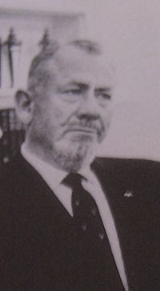
John Steinbeck

 
John Steinbeck

   Email Print
   Bookmark   Link


John Steinbeck


John Ernst Steinbeck III (February 27, 1902 – December 20, 1968) was an American writer
American literature

American literature refers to written or literature produced in the area of the United States and Colonial America. For more specific discussions of poetry and theater, see Poetry of the United States and Theater in the United States....
. He wrote the Pulitzer Prize
Pulitzer Prize

The Pulitzer Prize is an United States award regarded as the highest national honor in newspaper journalism, literary achievements and musical composition....
-winning novel
Novel

File:2009 stapelweise Neuerscheinungen im Buchladen.JPGA novel is today a long narrative in literary prose. The genre has historical roots both in the fields of the medieval and early modern Romance and in the tradition of the novella....
 The Grapes of Wrath
The Grapes of Wrath

The Grapes of Wrath is a novel published in 1939 and written by John Steinbeck, who was awarded the Pulitzer Prize and the Nobel Prize for Literature....
, published in 1939 and the novella
Novella

A novella is a writing, fictional, prose narrative longer than a novelette but shorter than a novel. While there is disagreement as to what length defines a novella, the Science Fiction and Fantasy Writers of America Nebula Awards for science fiction define the novella as having a word count between 17,500 and 40,000....
 Of Mice and Men
Of Mice and Men

Of Mice and Men is a novella written by Nobel Prize in Literature-winning author John Steinbeck. Published in 1937 in literature, it tells the tragic story of George Milton and Lennie Small, two displaced migrant worker ranch workers during the Great Depression in California....
, published in 1937. In all, he wrote twenty-five books, including sixteen novels, six non-fiction
Non-fiction

Non-fiction is an document or representation of a subject which is presented as fact. This presentation may be accurate or not; that is, it can give either a true or a false account of the subject in question....
 books and several collections of short stories. In 1962 Steinbeck received the Nobel Prize for Literature.

Steinbeck grew up in the Salinas Valley
Salinas Valley

The Salinas Valley in the Central Coast of California region of California, United States that lies along the Salinas River between the Gabilan Range and the Santa Lucia Range....
 region of California
California

California is a U.S. state on the West Coast of the United States of the United States, along the Pacific Ocean. It is bordered by Oregon to the north, Nevada to the east, Arizona to the southeast, and to the south the Mexico state of Baja California....
, a culturally diverse place of rich migratory and immigrant history.


Discussion
Ask a question about 'John Steinbeck'
Start a new discussion about 'John Steinbeck'
Answer questions from other users
Full Discussion Forum


Recent Posts


Quotations


A journey is like marriage. The certain way to be wrong is to think you control it.

Pt. 1

Four hoarse blasts of a ships whistle still raise the hair on my neck and set my feet to tapping.

Give a critic an inch, hell write a play.

On Critics

I am in love with Montana. For other states I have admiration, respect, recognition, even some affection, but with Montana it is love.

In utter loneliness a writer tries to explain the inexplicable.

New York Times (2 June 1969)

Lord knows you don't need no brains to buck barley.

"Buck" here means to work at lifting and throwing the sacks of Barley.


Encyclopedia


John Ernst Steinbeck III (February 27, 1902 – December 20, 1968) was an American writer
American literature

American literature refers to written or literature produced in the area of the United States and Colonial America. For more specific discussions of poetry and theater, see Poetry of the United States and Theater in the United States....
. He wrote the Pulitzer Prize
Pulitzer Prize

The Pulitzer Prize is an United States award regarded as the highest national honor in newspaper journalism, literary achievements and musical composition....
-winning novel
Novel

File:2009 stapelweise Neuerscheinungen im Buchladen.JPGA novel is today a long narrative in literary prose. The genre has historical roots both in the fields of the medieval and early modern Romance and in the tradition of the novella....
 The Grapes of Wrath
The Grapes of Wrath

The Grapes of Wrath is a novel published in 1939 and written by John Steinbeck, who was awarded the Pulitzer Prize and the Nobel Prize for Literature....
, published in 1939 and the novella
Novella

A novella is a writing, fictional, prose narrative longer than a novelette but shorter than a novel. While there is disagreement as to what length defines a novella, the Science Fiction and Fantasy Writers of America Nebula Awards for science fiction define the novella as having a word count between 17,500 and 40,000....
 Of Mice and Men
Of Mice and Men

Of Mice and Men is a novella written by Nobel Prize in Literature-winning author John Steinbeck. Published in 1937 in literature, it tells the tragic story of George Milton and Lennie Small, two displaced migrant worker ranch workers during the Great Depression in California....
, published in 1937. In all, he wrote twenty-five books, including sixteen novels, six non-fiction
Non-fiction

Non-fiction is an document or representation of a subject which is presented as fact. This presentation may be accurate or not; that is, it can give either a true or a false account of the subject in question....
 books and several collections of short stories. In 1962 Steinbeck received the Nobel Prize for Literature.

Steinbeck grew up in the Salinas Valley
Salinas Valley

The Salinas Valley in the Central Coast of California region of California, United States that lies along the Salinas River between the Gabilan Range and the Santa Lucia Range....
 region of California
California

California is a U.S. state on the West Coast of the United States of the United States, along the Pacific Ocean. It is bordered by Oregon to the north, Nevada to the east, Arizona to the southeast, and to the south the Mexico state of Baja California....
, a culturally diverse place of rich migratory and immigrant history. This upbringing imparted a regionalistic flavor to his writing, giving many of his works a distinct sense of place. Steinbeck moved briefly to New York City
New York City

The City of New York is the List of United States cities by population in the United States, while the New York metropolitan area ranks among the List of urban areas by population....
, but soon returned home to California to begin his career as a writer. Most of his earlier work dealt with subjects familiar to him from his formative years. An exception was his first novel Cup of Gold
Cup of Gold: A Life of Sir Henry Morgan, Buccaneer, With Occasional Reference to History

Cup of Gold: A life of Sir Henry Morgan, Buccaneer, with Occasional Reference to History, 1929 , was John Steinbeck first novel, loosely based on the privateer Henry Morgan life and death....
 which concerns the pirate Henry Morgan
Henry Morgan

Admiral Sir Henry Morgan , was a Wales privateer, who made a name in the Caribbean as a leader of privateers. He was one of the most notorious and successful privateers from Wales, and one of the most dangerous pirates that lurked in the Spanish Main....
, whose adventures had captured Steinbeck's imagination as a child.

In his subsequent novels, Steinbeck found a more authentic voice by drawing upon direct memories of his life in California. Later he used real historical conditions and events in the first half of 20th century America
United States

The United States of America is a Federal government constitutional republic comprising U.S. state and a federal district. The country is situated mostly in central North America, where its Contiguous United States and Washington, D.C., the Capital districts and territories, lie between the Pacific Ocean and Atlantic Oceans, Borders of the U...
, which he had experienced first-hand as a reporter. Steinbeck often populated his stories with struggling characters; his works examined the lives of the working class
Working class

Working class is a term used in academic sociology and in ordinary conversation to describe, depending on context and speaker, those employed in specific fields or types of work....
 and migrant worker
Migrant worker

The term migrant worker has different official meanings and connotations in different parts of the world; the United Nations' definition is very broad, essentially including anyone working outside of their home country....
s during the Dust Bowl
Dust Bowl

The Dust Bowl or the Dirty Thirties was a period of severe dust storms causing major ecological and agriculture damage to United States and Canada prairie lands from 1930 to 1936 ....
 and the Great Depression
Great Depression

File:International depression.pngThe Great Depression was a worldwide economic Recession starting in most places in 1929 and ending at different times in the 1930s or early 1940s for different countries....
. His later body of work reflected his wide range of interests, including marine biology
Marine biology

Marine biology is the scientific study of living organisms in the ocean or other Marine or brackish bodies of water.Given that in biology many scientific classification, families and Genera have some species that live in the sea and others that live on land, marine biology classifies species based on the environment rather than on taxon...
, politics
Politics

Politics is the process by which groups of people make decisions. The term is generally applied to behaviour within civil governments, but politics has been observed in all human group interactions, including corporation, academia, and religion institutions....
, religion
Religion

A religion is an organized approach to human spirituality which usually encompasses a set of myth, symbols, beliefs and practices, often with a supernatural or transcendence quality, that give meaning to the practitioner's experiences of life through reference to a higher power or truth....
, history
HIStory

HIStory: Past, Present and Future, Book I is a double album by Michael Jackson, released on June 20, 1995, and is Jackson's ninth. The first disc, named "HIStory Begins" consists of a selection of Jackson's greatest hits from the singer's past fifteen years, while the second, named "HIStory Continues" features new songs, with the...
, and mythology
Mythology

The word mythology refers to a body of folklore/myths/legends that a particular culture believes to be true and that often use the supernatural to interpret natural events and to explain the nature of the universe and humanity....
. One of his last published works was Travels with Charley, a travelogue
Travelogue

Travelogue is the second full-length studio album released by British synthpop band The Human League.The band at this point had yet to achieve any degree of commercial success....
 of a road trip
Road Trip

Road Trip is a 2000 in film comedy film written by Todd Phillips and Scott Armstrong and directed by Phillips. It is about the story of Josh who accidentally sends a video of him and his love interest to his childhood sweethart Tiffany and has to try to get the video back before Tiffany returns to school and before his session with phi...
 he took in 1960 to rediscover America. He died in 1968 in New York of a heart attack
Myocardial infarction

Myocardial infarction , commonly known as a heart attack, occurs when the Blood flow to part of the heart is interrupted. This is most commonly due to occlusion of a coronary artery following the rupture of a Vulnerable plaque, which is an unstable collection of lipids and white blood cells in the wall of an artery....
 and his ashes are interred in Salinas
Salinas, California

Salinas is the county seat and largest municipality of Monterey County, California in the U.S. state of California. The most current estimate from the California Department of Finance, places the 2006 population at 148,350, showing a small decline since 2000....
.

Seventeen of his works, including The Grapes of Wrath
The Grapes of Wrath

The Grapes of Wrath is a novel published in 1939 and written by John Steinbeck, who was awarded the Pulitzer Prize and the Nobel Prize for Literature....
 (1940), Cannery Row
Cannery Row (novel)

Cannery Row is a novel by John Steinbeck. It was published in 1945. A Cannery Row was released in 1982. A stage version was produced in 1995....
 (1945), The Pearl
The Pearl (novel)

File:JohnSteinbeck ThePearl title.jpgThe Pearl is a novella by American author John Steinbeck. Like his father, and grandfather before him, Kino is a poor pearl diver, gathering pearls from the Gulf of California beds that once brought great wealth to Spain and now provided Kino, Juana, and their infant son Coyotito, with meager subsis...
 (1947), and East of Eden
East of Eden

East of Eden is a novel by Nobel Prize for Literature winner John Steinbeck, published in September 1952.Often described as Steinbeck's most ambitious novel, East of Eden brings to life the intricate details of two families, the Trasks and the Hamiltons, and their interwoven stories....
 (1952), went on to become Hollywood
Cinema of the United States

United States cinema has had a profound effect on cinema across the world since the early 20th century. Its history is sometimes separated into four main periods: the silent film era, Classical Hollywood cinema, New Hollywood, and the contemporary period ....
 films (some appeared multiple times, i.e., as remakes), and Steinbeck also achieved success as a Hollywood writer, receiving an Academy Award nomination for Best Story
Academy Award for Best Story

The Academy Award for Best Story was an Academy Awards given from the beginning of the Academy Awards until 1957, when it was eliminated in favor of the Academy Award for Writing Original Screenplay, which had been introduced in 1940....
 in 1944 for Alfred Hitchcock
Alfred Hitchcock

Sir Alfred Joseph Hitchcock, Order of the British Empire was a British filmmaker and film producer who pioneered many techniques in the suspense and psychological thriller genres....
's Lifeboat
Lifeboat (film)

Lifeboat is a 1944 World War II war film, directed by Alfred Hitchcock from a story written by John Steinbeck. The film stars Tallulah Bankhead, William Bendix, Walter Slezak, Mary Anderson , John Hodiak, Henry Hull, Heather Angel , Hume Cronyn and Canada Lee, and is set entirely on a Lifeboat ....
.

Early life

Steinbeckhouse
John Ernst Steinbeck was born on February 27, 1902, in Salinas, California
Salinas, California

Salinas is the county seat and largest municipality of Monterey County, California in the U.S. state of California. The most current estimate from the California Department of Finance, places the 2006 population at 148,350, showing a small decline since 2000....
. He was of German American
German American

German Americans are citizens of the United States of Germans ancestry, with traditions and self-identity based on German language and culture....
 and Irish American
Irish American

Irish Americans are citizens of the United States who can claim ancestry originating in Ireland. A total of 36,495,800 Americans reported Irish ancestry in the 2006 American Community Survey....
 descent. Johann Adolf Großsteinbeck (i.e. Grosssteinbeck), Steinbeck's grandfather, changed the family name from Großsteinbeck to Steinbeck when he migrated to the United States
United States

The United States of America is a Federal government constitutional republic comprising U.S. state and a federal district. The country is situated mostly in central North America, where its Contiguous United States and Washington, D.C., the Capital districts and territories, lie between the Pacific Ocean and Atlantic Oceans, Borders of the U...
. The family's farm in Heiligenhaus
Heiligenhaus

Heiligenhaus is a town in the Mettmann , in North Rhine-Westphalia, Germany, in the suburban Rhine-Ruhr area. It lies between D?sseldorf and Essen, Germany....
 / Germany
Germany

Germany , officially the Federal Republic of Germany , is a country in Central Europe. It is bordered to the north by the North Sea, Denmark, and the Baltic Sea; to the east by Poland and the Czech Republic; to the south by Austria and Switzerland; and to the west by France, Luxembourg, Belgium, and the Netherlands....
 is still today named "Großsteinbeck". His father, John Steinbeck, Sr., served as the Monterey County Treasurer
Treasurer

In many governments, a treasurer is the person responsible for running the treasury. Treasurers are also employed by organizations such as clubs to look after funds....
 while his mother, Olive (Hamilton) Steinbeck, a former school teacher
Teacher

In education, a teacher is a person who teaches. A teacher who teaches an individual student may also be described as a personal tutor.The role of teacher is often formal and ongoing, carried out by way of Occupation or Profession at a school or other place of formal education....
, fostered Steinbeck's love of reading and writing.

At the time of his childhood, he lived in a small Californian town. Though growing larger, more prosperous, and modern, it was still essentially a rough-and-tumble frontier
Frontier

A frontier is a political and geographical term referring to areas near or beyond a Border....
 place, set amid some of the world's most fertile land. Steinbeck spent his summers working on nearby ranches and later with migrants on the huge Spreckels
Spreckels

Spreckels can refer to several things:*Spreckels, California, USA, originally a company town of the Spreckels Sugar Company*Spreckels Sugar Company, founded by Claus Spreckels...
 ranch. During this time, Steinbeck became aware of the harsher aspects of the migrant life in the region and of the darker side of human nature – material which was to be explored in works such as Of Mice and Men
Of Mice and Men

Of Mice and Men is a novella written by Nobel Prize in Literature-winning author John Steinbeck. Published in 1937 in literature, it tells the tragic story of George Milton and Lennie Small, two displaced migrant worker ranch workers during the Great Depression in California....
. He also explored the surrounding Salinas Valley, walking across local forests, fields and farms. This material was to provide background for most of his short stories.

Steinbeck graduated from Salinas High School in 1919. He then attended Stanford University
Stanford University

Leland Stanford Junior University, commonly referred to as Stanford University or Stanford, is a private university research university located in Stanford, California, California, United States....
 intermittently until 1925, eventually leaving without a degree, as he disliked the university lifestyle. From Stanford, he traveled to New York City and held various temporary jobs while pursuing his dream as a writer. However, he was unable to get any of his work published and returned to California where for a time he was resort handyman in Lake Tahoe
Lake Tahoe

Lake Tahoe is a large Fresh water lake in the Sierra Nevada mountains of the United States. It is located along the border between California and Nevada, west of Carson City, Nevada....
. John Steinbeck sometimes lived with the people he would be writing about. For example, he went to the Gulf of Mexico and heard about the story which "The Pearl" is based on. Also, he lived and worked with workers at Oklahoma before writing "The Grapes of Wrath."

Work

In California he continued to write. His first novel, Cup of Gold
Cup of Gold: A Life of Sir Henry Morgan, Buccaneer, With Occasional Reference to History

Cup of Gold: A life of Sir Henry Morgan, Buccaneer, with Occasional Reference to History, 1929 , was John Steinbeck first novel, loosely based on the privateer Henry Morgan life and death....
 was published in 1929. It is based on the privateer Henry Morgan
Henry Morgan

Admiral Sir Henry Morgan , was a Wales privateer, who made a name in the Caribbean as a leader of privateers. He was one of the most notorious and successful privateers from Wales, and one of the most dangerous pirates that lurked in the Spanish Main....
's life and death. It centers on Morgan's assault and sacking of the city of Panama
Panama

Panama, officially the Republic of Panama , is the southernmost country of Central America and, in turn, North America. Situated on an isthmus connecting North and South America, some categorize it as a transcontinental nation....
, sometimes referred to as the 'Cup of Gold', and the woman fairer than the sun reputed to be found there.

After Cup of Gold Steinbeck produced three shorter works between 1931 and 1933: The Pastures of Heaven
The Pastures of Heaven

The Pastures of Heaven is a book by John Steinbeck, first published in 1932, consisting of twelve interconnected stories about a valley in Monterey, California, California, which was discovered by a Spain corporal while chasing runaway Native Americans in the United States slaverys....
, published in 1932, consisted of twelve interconnected stories about a valley in Monterey, California
Monterey, California

The City of Monterey in Monterey County is located on Monterey Bay along the Pacific Ocean coast in Central California. As of 2005, the city population was 30,641....
, which was discovered by a Spanish
Spain

Spain or the Kingdom of Spain , is a country located in Southern Europe on the Iberian Peninsula.The Spanish constitution does not establish any official denomination of the country, even though Espa?a , Estado espa?ol and Naci?n espa?ola are used interchangeably....
 corporal
Corporal

Corporal is a Military rank in use in some form by most militaries and also by some police forces or other uniformed organizations. It is usually equivalent to Ranks and insignia of NATO....
 while chasing runaway American Indian
Native Americans in the United States

Native Americans in the United States are the Indigenous peoples of the Americas from the regions of North America now encompassed by the continental United States United States, including parts of Alaska and the island state of Hawaii....
 slaves. In 1933 Steinbeck brought out two works: The Red Pony
The Red Pony

"The Red Pony" is a novella written by United States author John Steinbeck in 1933 in literature. The stories in the book are tales of Steinbeck's childhood recounted by a ten-year-old boy named Jody Tiflin....
 is a short 100-page, four-chapter story, which recollects memories from Steinbeck's childhood. To a God Unknown
To a God Unknown

To a God Unknown is a novel by John Steinbeck, first published in 1933. The book was Steinbeck's second novel , the title taken from a hymn excerpt of the Rig Veda's Book X....
 follows the life of a homesteader and his family in California
California

California is a U.S. state on the West Coast of the United States of the United States, along the Pacific Ocean. It is bordered by Oregon to the north, Nevada to the east, Arizona to the southeast, and to the south the Mexico state of Baja California....
, depicting a character with a primal and pagan worship of the land he works. He lived for many years in a cottage in Pacific Grove
Pacific Grove, California

Pacific Grove is a coastal town in Monterey County, California, USA, with a total population of 15,522 as of the 2000 census.Pacific Grove is known for its Victorian homes, Asilomar State Beach, its artistic legacy and the annual migration of the Monarch butterfly....
 owned by his father, John Sr., who provided John paper on which to write his manuscripts.

Steinbeck achieved his first critical success with the novel Tortilla Flat
Tortilla Flat

Tortilla Flat is an early John Steinbeck novel set in Monterey, California.The book portrays with great sympathy and humour a group of paisanos , denouncing society by enjoying life and wine in the idyllic days after the end of the Great War and preceding U.S....
 (1935), which won the California Commonwealth Club's Gold Medal. The book portrays the adventures of a young group of classless and usually homeless men in Monterey, set in the era after World War I, just before U.S. prohibition
Prohibition

Prohibition of alcohol, often referred to simply as prohibition, also known as The Noble Experiment, refers to a sumptuary law which prohibits alcohol....
. These characters, who are portrayed in ironic comparison to mythologic knights on a quest, reject nearly all of the standard morals of American society in enjoyment of a dissolute life centering around wine, lust, comradery, and petty thievery. The book was made into a film of the same name in 1942, starring Spencer Tracy
Spencer Tracy

Spencer Tracy was a two-time Academy Award winning actor of theatre and film, who appeared in 74 films from 1930 in film to 1967 in film. He is generally regarded as one of the finest actors in motion picture history....
, Hedy Lamarr
Hedy Lamarr

Hedy Lamarr was an Austrian-born United States actress and scientist. Though known primarily for her acting , she also co-invented an early form of spread spectrum, a key to modern wireless communication....
, and John Garfield
John Garfield

John Garfield was an Academy Award-nominated United States actor. Garfield was especially adept at playing brooding, rebellious, working-class character roles....
 whom was a very good friend of John.

Critical success

Steinbeck0103 148
'Steinbeck began to write a series of "California novels" and Dust Bowl
Dust Bowl

The Dust Bowl or the Dirty Thirties was a period of severe dust storms causing major ecological and agriculture damage to United States and Canada prairie lands from 1930 to 1936 ....
 fiction, set among common people during the Great Depression
Great Depression

File:International depression.pngThe Great Depression was a worldwide economic Recession starting in most places in 1929 and ending at different times in the 1930s or early 1940s for different countries....
. These included In Dubious Battle
In Dubious Battle

In Dubious Battle is a novel by John Steinbeck, written in 1936 in literature. The central figure of the story is an activist for "the Party" who is organizing a major strike by the workers, seeking thus to attract followers to his cause....
 in 1936, Of Mice and Men
Of Mice and Men

Of Mice and Men is a novella written by Nobel Prize in Literature-winning author John Steinbeck. Published in 1937 in literature, it tells the tragic story of George Milton and Lennie Small, two displaced migrant worker ranch workers during the Great Depression in California....
 in 1937, and The Grapes of Wrath
The Grapes of Wrath

The Grapes of Wrath is a novel published in 1939 and written by John Steinbeck, who was awarded the Pulitzer Prize and the Nobel Prize for Literature....
 in 1939.

Of Mice and Men
Of Mice and Men

Of Mice and Men is a novella written by Nobel Prize in Literature-winning author John Steinbeck. Published in 1937 in literature, it tells the tragic story of George Milton and Lennie Small, two displaced migrant worker ranch workers during the Great Depression in California....
 (1937), his novella
Novella

A novella is a writing, fictional, prose narrative longer than a novelette but shorter than a novel. While there is disagreement as to what length defines a novella, the Science Fiction and Fantasy Writers of America Nebula Awards for science fiction define the novella as having a word count between 17,500 and 40,000....
 about the dreams of a pair of migrant laborers working the California soil, was critically acclaimed.

The stage adaptation of Of Mice and Men
Of Mice and Men

Of Mice and Men is a novella written by Nobel Prize in Literature-winning author John Steinbeck. Published in 1937 in literature, it tells the tragic story of George Milton and Lennie Small, two displaced migrant worker ranch workers during the Great Depression in California....
 was a hit, starring Broderick Crawford
Broderick Crawford

File:BroderickBurns.jpgWilliam Broderick Crawford was an American Academy Award-winning actor....
 as the mentally child-like but physically powerful itinerant farmhand "Lennie," and Wallace Ford
Wallace Ford

Wallace Ford was an England-born United States movie and television actor who, with his friendly appearance and stocky build later in life, appeared in a number of movie westerns and B-movies....
 as Lennie's companion, "George." However, Steinbeck refused to travel from his home in California to attend any performance of the play during its New York
New York City

The City of New York is the List of United States cities by population in the United States, while the New York metropolitan area ranks among the List of urban areas by population....
 run, telling Kaufman that the play as it existed in his own mind was "perfect" and that anything presented on stage would only be a disappointment. Steinbeck would write two more stage plays (The Moon Is Down and Burning Bright).

Of Mice and Men was rapidly adapted into a 1939 Hollywood film, in which Lon Chaney, Jr.
Lon Chaney, Jr.

Lon Chaney, Jr. was an United States character actor, known mainly for his roles in movies and as the son of silent film actor Lon Chaney, Sr.....
 (who had portrayed the role in the Los Angeles
Los Ángeles

Los ?ngeles is the Capital of the Biob?o Province, in the municipality of the same name, in Regions of Chile VIII , in the center-south of Chile....
 production of the play) was cast as Lennie and Burgess Meredith
Burgess Meredith

Oliver Burgess Meredith , known professionally as Burgess Meredith, was a versatile two-time Academy Award-nominated United States actor. He was known for portraying Rocky Balboa's trainer Mickey Goldmill in the Rocky films and Penguin in the television series Batman , amongst many other roles....
 as "George." Steinbeck followed this wave of success with The Grapes of Wrath
The Grapes of Wrath

The Grapes of Wrath is a novel published in 1939 and written by John Steinbeck, who was awarded the Pulitzer Prize and the Nobel Prize for Literature....
 (1939), based on newspaper articles he had written in San Francisco. The novel would be considered by many to be his finest work. It won the Pulitzer Prize
Pulitzer Prize

The Pulitzer Prize is an United States award regarded as the highest national honor in newspaper journalism, literary achievements and musical composition....
 in 1940, even as it was made into a notable film directed by John Ford
John Ford

John Ford was an United States film director of Ireland heritage famous for both his western such as Stagecoach and The Searchers and adaptations of such 20th-century American novels as The Grapes of Wrath ....
, starring Henry Fonda
Henry Fonda

Henry Jaynes Fonda was an United States Academy Awards-winning film and Stage actor, best known for his roles as plain-speaking idealists. Fonda's subtle, Naturalism acting style preceded by many years the popularization of method acting....
 as Tom Joad, who was nominated for an Academy Award for the part.

The success of The Grapes of Wrath
The Grapes of Wrath

The Grapes of Wrath is a novel published in 1939 and written by John Steinbeck, who was awarded the Pulitzer Prize and the Nobel Prize for Literature....
, however, was not free of controversy, as Steinbeck's liberal political views, portrayal of the ugly side of capitalism
Capitalism

Capitalism is an economic system in which wealth, and the means of producing wealth, are private property and controlled rather than commonly, publicly, or state-owned and controlled....
, and mythical reinterpretation of the historical events of the Dust Bowl
Dust Bowl

The Dust Bowl or the Dirty Thirties was a period of severe dust storms causing major ecological and agriculture damage to United States and Canada prairie lands from 1930 to 1936 ....
 migrations led to backlash against the author, especially close to home. In fact, claiming the book was both obscene and misrepresented conditions in the county, the Kern County Board of Supervisors banned the book from the county's public school
Public school

The term public school has two distinct meanings depending on the location of usage:* in the United States, Australia and Canada: A school funded from tax revenue and most commonly administered to some degree by government or local government agencies....
s and libraries in August 1939. This ban lasted until January 1941.

Of the controversy, Steinbeck wrote, "The vilification
Insult

An insult is an expression, statement which is considered degrading. Insults may be intentional or accidental. An example of the wikt:latter is a well-intended simple explanation, which in fact is wikt:superfluous, but is given due to underestimating the intelligence or knowledge of the other....
 of me out here from the large landowners and bankers is pretty bad. The latest is a rumor started by them that the Okie
Okie

Okie is a term, dating from as early as 1907, originally denoting a resident or native of Oklahoma. It is derived from the name of the state, similar to Texan or Tex for someone from Texas, or Arkie or Arkansawyer for a native of Arkansas....
s hate me and have threatened to kill me for lying about them. I'm frightened at the rolling might of this damned thing. It is completely out of hand; I mean a kind of hysteria
Hysteria

Hysteria, in its colloquial use, describes a state of mind, one of unmanageable fear or emotional excesses. The fear is often caused by multiple events in one's past that involved some sort of severe conflict; the fear can be centered on a body part or most commonly on an imagined problem with that body part ....
 about the book is growing that is not healthy."

The film versions of The Grapes of Wrath and Of Mice and Men (by two different movie studios) were in production simultaneously, allowing Steinbeck to spend a full day on the set of The Grapes of Wrath and the next day on the set of Of Mice and Men.

1940s–1950s

In 1943, after thirteen years of marriage, Steinbeck divorced his first wife, Carol Henning. He married Gwyn Conger that same year, a union which produced Steinbeck's only children, Thomas ("Thom") Myles Steinbeck
Thomas Steinbeck

Thomas Myles Steinbeck is a writer and the eldest son of Nobel Laureate John Steinbeck....
 in 1944 and John Steinbeck IV
John Steinbeck IV

John Steinbeck IV , was an American journalist and author. He was the second child of the Nobel Prize winning author, John Steinbeck. In 1965, he was drafted into the United States Army and served in Vietnam....
 (Catbird), in 1946. They divorced in 1948. Two years later, Steinbeck married Elaine (Anderson) Scott, the ex-wife of actor Zachary Scott
Zachary Scott

Zachary Scott was an United States actor, most notable for his roles as villains and "mystery men".Born in Austin, Texas, he was a distant cousin of George Washington, and his grandfather had been a very successful cattle rancher....
. They would remain married until his death in 1968. She died in 2003 in New York.

Ed Ricketts

In 1940, Steinbeck's interest in marine biology
Marine biology

Marine biology is the scientific study of living organisms in the ocean or other Marine or brackish bodies of water.Given that in biology many scientific classification, families and Genera have some species that live in the sea and others that live on land, marine biology classifies species based on the environment rather than on taxon...
 and his friendship with Ed Ricketts
Ed Ricketts

Edward Flanders Robb Ricketts commonly known as Ed Ricketts, was an United States marine biologist, ecologist, and philosopher. He is best known for Between Pacific Tides , a pioneering study of intertidal ecology, and for his influence on writer John Steinbeck, which resulted in their collaboration on the Sea of Cortez, later...
 led him to a voyage around the Gulf of California
Gulf of California

The Gulf of California is a body of water that separates the Baja California Peninsula from the Mexico mainland. It is bordered by the States of Mexico of Baja California, Baja California Sur, Sonora, and Sinaloa....
, also known as the "Sea of Cortez
Hernán Cortés

Hern?n Cort?s de Monroy y Pizarro, 1st Marqu?s del Valle de Oaxaca was a Spain conquistador who led an expedition that caused the conquest of the Aztec Empire and brought large portions of mainland Mexico under the Crown of Castile, in the early 16th century....
," where they collected biological specimens. Steinbeck's narrative portion of the total expedition report (with some philosophical additions by Ricketts) was later published as The Log from the Sea of Cortez
The Log from the Sea of Cortez

The Log from the Sea of Cortez is a book written by John Steinbeck, published in 1951, which details a six-week marine specimen-collecting boat expedition he made in 1940 at various sites in the Gulf of California , with his friend, marine biologist Ed Ricketts....
, and describes the daily experiences of the trip. The narrative-log plus the full catalog of the marine invertebrates taken, had earlier been published as a naturalist's narrative and biological catalog of the invertebrate life of the Gulf of California
Gulf of California

The Gulf of California is a body of water that separates the Baja California Peninsula from the Mexico mainland. It is bordered by the States of Mexico of Baja California, Baja California Sur, Sonora, and Sinaloa....
. While it remains a classic of an earlier tradition in biological reporting, in 1942 it did not sell well, in part due to failure to find a popular audience.

Ed Ricketts
Ed Ricketts

Edward Flanders Robb Ricketts commonly known as Ed Ricketts, was an United States marine biologist, ecologist, and philosopher. He is best known for Between Pacific Tides , a pioneering study of intertidal ecology, and for his influence on writer John Steinbeck, which resulted in their collaboration on the Sea of Cortez, later...
 had a tremendous impact on Steinbeck's writing. Not only did he help Steinbeck while he was in the process of writing, but he aided Steinbeck in his social adventures. Steinbeck frequently took small trips with Ricketts along the California coast, to collect the biological specimens which Ricketts sold for a living, and to give Steinbeck a vacation from his writing.

Ricketts' impact on Steinbeck was so great that Steinbeck based his character "Doc" in the novels Cannery Row
Cannery Row

Cannery Row is the waterfront street in the New Monterey section of Monterey, California, the site of a number of now-defunct sardine cannery. The street name, formerly a nickname for Ocean View Avenue, is now official....
 and Sweet Thursday
Sweet Thursday

Sweet Thursday is a 1954 novel by John Steinbeck. It is a sequel to Cannery Row and set in the years after the end of World War II. According to the author, "Sweet Thursday" is the day after Lousy Wednesday and the day before Waiting Friday....
 on Ricketts. Steinbeck's close relationship with Ricketts would end with the coming of the second World War, and as Steinbeck moved away from Salinas, California, to pursue a life away from his wife Carol.

World War II

During World War II
World War II

World War II, or the Second World War , was a global military conflict which involved a Participants in World War II, including all of the great powers, organised into two opposing military alliances: the Allies of World War II and the Axis powers....
, Steinbeck served as a war correspondent
War correspondent

A war correspondent is a journalist who covers stories firsthand from a war. In the 19th century they were also called Special Correspondents....
 for the New York Herald Tribune
New York Herald Tribune

The New York Herald Tribune was a daily newspaper created in 1924 when the New York Tribune acquired the New York Herald. The Herald Tribune was a leading Republican Party paper, and a voice for moderate "internationalism" Republicans as opposed to the "isolationism" variety represented by the Chicago Tribune....
.
It was at that time he became friends with Will Lang Jr.
Will Lang Jr.

William John Lang Jr. was an United States journalist and a bureau head for Life magazine....
 of Time/Life magazine. During the war, Steinbeck saw action in accompanying some of the commando raids of Douglas Fairbanks, Jr.
Douglas Fairbanks, Jr.

Douglas Elton Fairbanks, Jr., Order of the British Empire, Distinguished Service Cross was an United States actor and a highly decorated United States Navy officer of World War II....
's Beach Jumpers
Beach Jumpers

Beach Jumpers were U.S. Navy special warfare units, specializing in List of military tactics and psychological warfare.Like the fictional character The Shadow, the Beach Jumpers had a "mysterious power to cloud men?s minds," though it came from the study and development of tactics, rather than "traveling in the Orient." Beach Jumper volunte...
 program, which (among other things) launched small-unit diversion operations against German-held islands in the Mediterranean. As a war correspondent, Steinbeck would certainly have been executed if he had been captured with the automatic weapon which he routinely carried on such missions, but all were successful. These missions would help to earn Fairbanks a number of decorations, but as a civilian, Steinbeck's role in these doings went officially unrecognized. Some of Steinbeck's writings from his correspondence days were collected and made into the novelistic documentary Once There Was A War
Once There Was A War

Once There Was a War, published in 1958, is a collection of articles written by John Steinbeck while he was a special war correspondent for the New York Herald Tribune from June to December of 1943....
 (1958).


During the war, he continued to work in film, writing Alfred Hitchcock
Alfred Hitchcock

Sir Alfred Joseph Hitchcock, Order of the British Empire was a British filmmaker and film producer who pioneered many techniques in the suspense and psychological thriller genres....
's Lifeboat
Lifeboat (film)

Lifeboat is a 1944 World War II war film, directed by Alfred Hitchcock from a story written by John Steinbeck. The film stars Tallulah Bankhead, William Bendix, Walter Slezak, Mary Anderson , John Hodiak, Henry Hull, Heather Angel , Hume Cronyn and Canada Lee, and is set entirely on a Lifeboat ....
 (1944), and the film A Medal for Benny
A Medal for Benny

A Medal for Benny is a 1945 United States film directed by Irving Pichel. The story was conceived by writer Jack Wagner , who enlisted his longtime friend John Steinbeck to help him put it into script form....
 (1945), about paisanos
Compadre

The compadre relationship between the parents and godparents of a child is an important bond which originates when a child is baptized in Hispanic families....
 from Tortilla Flat
Tortilla Flat

Tortilla Flat is an early John Steinbeck novel set in Monterey, California.The book portrays with great sympathy and humour a group of paisanos , denouncing society by enjoying life and wine in the idyllic days after the end of the Great War and preceding U.S....
 going to war. John Steinbeck later requested that his name be removed from the credits of Lifeboat, because he believed the final version of the film had racist undertones.

His novel The Moon is Down
The Moon Is Down

The Moon Is Down, a novela by John Steinbeck, was published by Viking Press in March 1942. The title of the book comes from ?Macbeth?. Banquo, portrayed as a noble and loyal man, is in contrast to Macbeth?s character which is infused with evil....
 (1942), about the Socrates
Socrates

Socrates was a Classical Greece Philosophy. Credited as one of the founders of Western philosophy, he is an enigmatic figure known only through the classical accounts of his students....
-inspired spirit of resistance in a Nazi
Nazism

Nazism, officially National Socialism , refers to the ideology and practices of the National Socialist German Workers? Party under Adolf Hitler, and the policies adopted by the dictatorial government of Nazi Germany from 1933 to 1945....
-occupied village in northern Europe, was made into a film almost immediately. It was presumed that the unnamed country of the novel was Norway
Norway

Norway , officially the Kingdom of Norway, is a constitutional monarchy in Northern Europe that occupies the western portion of the Scandinavian Peninsula....
, and in 1945 Steinbeck received the Haakon VII
Haakon VII

Haakon VII may refer to:People* Haakon VII of Norway , King of Norway Ships* HNoMS King Haakon VII, a Royal Norwegian Navy escort ship in commission from 1942 to 1951...
 Medal of freedom for his literary contributions to the Norwegian
Norway

Norway , officially the Kingdom of Norway, is a constitutional monarchy in Northern Europe that occupies the western portion of the Scandinavian Peninsula....
 resistance movement.

After the war

After the war, he wrote The Pearl
The Pearl (novel)

File:JohnSteinbeck ThePearl title.jpgThe Pearl is a novella by American author John Steinbeck. Like his father, and grandfather before him, Kino is a poor pearl diver, gathering pearls from the Gulf of California beds that once brought great wealth to Spain and now provided Kino, Juana, and their infant son Coyotito, with meager subsis...
 (1947), already knowing it would be filmed. The story first appeared in the December 1945 issue of Woman's Home Companion
Woman's Home Companion

Woman's Home Companion was an United States monthly publication, published from 1873 to 1957. It was highly successful, climbing to a circulation peak of more than four million during the 1930s and 1940s....
 magazine as "The Pearl of the World." It was illustrated by John Alan Maxwell
John Alan Maxwell

John Alan Maxwell was an United States artist known primarily for his book and magazine illustrations, as well as History painter. He also was an illustrator for many commercial publications, including Collier's Weekly, The Saturday Evening Post, The Golden Book Magazine, The American Magazine, and Woman's Home Companion....
. The novel is an imaginative telling of a story which Steinbeck had heard in La Paz, as related in The Log From the Sea of Cortez, which he described in Chapter 11 as being "so much like a parable that it almost can't be". Steinbeck traveled to Mexico for the filming; on this trip he would be inspired by the story of Emiliano Zapata
Emiliano Zapata

Emiliano Zapata Salazar was a leading figure in the Mexican Revolution, which broke out in 1910, and which was initially directed against the president Porfirio D?az....
, and subsequently wrote a film script (Viva Zapata!
Viva Zapata!

Viva Zapata! is a 1952 in film biographical film directed by Elia Kazan. The screenplay was written by John Steinbeck, using as a guide Edgcomb Pinchon's book, 'Zapata the Unconquerable', a fact that is not credited in the titles of the film....
) directed by Elia Kazan
Elia Kazan

Elia Kazan, September 7 1909 – September 28 2003, was an United States award-winning film director and Theatre direction, film producer and theatrical producer, screenwriter, novelist and co-founder of the influential Actors Studio in New York in 1947....
 and starring Marlon Brando
Marlon Brando

Marlon Brando, Jr. was an Academy Award-winning American actor whose body of work spanned over half a century. He is widely considered one of the greatest actors of all time, and was named the fourth AFI's 100 Years......
 and Anthony Quinn
Anthony Quinn

Anthony Quinn was a two-time Academy Awards-winning Mexican-American actor, as well as a Painting and writer. He starred in numerous critically acclaimed and commercially successful films, including Zorba the Greek , Lawrence of Arabia , and Federico Fellini's La strada....
.

In 1948 Steinbeck again toured the Soviet Union
Soviet Union

The Union of Soviet Socialist Republics was a Constitution of the Soviet Union socialist state that existed in Eurasia from 1922 to 1991.The name is a translation of the , romanization of Russian Soyuz Sovetskikh Sotsialisticheskikh Respublik, abbreviated ????, SSSR....
, together with renowned photographer Robert Capa
Robert Capa

Robert Capa was born Endre Erno Friedmann . A self-proclaimed "photo-journalist," he was a 20th century combat photographer who covered five different wars: the Spanish Civil War, the Second Sino-Japanese War, World War II across Europe, the 1948 Arab-Israeli War, and the First Indochina War....
. They visited Moscow
Moscow

Moscow is the capital and the largest types of inhabited localities in Russia of the Russian Federation. It is also the largest European cities and metropolitan areas, with the Moscow metropolitan area ranking among the largest urban areas in the world....
, Kiev
Kiev

Kiev, also known as Kyiv , is the Capital and the largest city of Ukraine, located in the north central part of the country on the Dnieper River....
, Tbilisi
Tbilisi

Tbilisi , is the capital city and the largest city of Georgia , lying on the banks of the Mt'k'vari River. The name is derived from an early Georgian form Tpilisi and it was officially known as ?????? in Russian, until 1936....
, Batumi
Batumi

Batumi is a seaside city on the Black Sea coast and Capital of Adjara, an autonomous republic in southwest Georgia . It has a population of 121,806 ....
 and the ruined Stalingrad. He wrote a humorous report-book about their experiences, A Russian Journal, which was illustrated with Capa's photos. Avoiding political topics and reporting about the life of simple Soviet peasants and workers, Steinbeck tried to generate more understanding toward people living in the Soviet Union, in a time when anti-Communism was widespread in the U.S. and the danger of war between the two countries was imminent. In the same year he was also elected to the American Academy of Arts and Letters.

1950s–1960s

Following his divorce from Gwyndolyn Conger and the sudden, tragic death of his close friend Ed Ricketts (who perished as a result of his car being hit by a train), Steinbeck wrote one of his most popular novels, East of Eden
East of Eden

East of Eden is a novel by Nobel Prize for Literature winner John Steinbeck, published in September 1952.Often described as Steinbeck's most ambitious novel, East of Eden brings to life the intricate details of two families, the Trasks and the Hamiltons, and their interwoven stories....
 (1952). This book, which he wrote to give his sons some idea of their heritage, was the book he repeatedly wrote of as his best, and his life's work.

In 1952, Steinbeck appeared as the on-screen narrator of 20th Century Fox
20th Century Fox

Twentieth Century Fox Film Corporation , also known as 20th Century Fox, Fox 2000 Pictures, or simply Fox, is one of the six Worldwide major film studios....
's film, O. Henry's Full House
O. Henry's Full House

O. Henry's Full House is an anthology film made by 20th Century Fox, consisting of five separate stories by O. Henry. The film was produced by Andr? Hakim and directed by five separate directors from five separate screenplays....
. Although Steinbeck later admitted he was uncomfortable before the camera, he provided interesting introductions to several filmed adaptations of short stories by the legendary writer O. Henry
O. Henry

O. Henry was the pen name of United States writer William Sydney Porter . O. Henry short stories are known for wit, wordplay, warm characterization and clever twist endings....
. About the same time, Steinbeck recorded readings of several of his short stories for Columbia Records
Columbia Records

Columbia Records is an American record label founded in 1888.Columbia is the oldest surviving brand name in pre-recorded sound, being the first record company to produce pre-recorded records as opposed to blank cylinders....
; despite some obvious stiffness, the recordings provide a literal record of Steinbeck's deep, resonant voice.

Following the success of Viva Zapata!, Steinbeck collaborated with Kazan on the theatrical production of East of Eden
East of Eden (1955 film)

East of Eden is a 1955 in film, directed by Elia Kazan, and loosely based on part of the East of Eden by US author John Steinbeck.It stars Julie Harris, James Dean , and Raymond Massey; it also features Burl Ives, Richard Davalos and Jo Van Fleet, and was adapted by Paul Osborn and John Steinbeck ....
, James Dean
James Dean

James Byron Dean was a two-time Academy Award-nominated American film actor. Dean's status as a cultural icon is best embodied in the title of his most celebrated film, Rebel Without a Cause, in which he starred as troubled stereotypical high school rebel Jim Stark....
's film debut.

Steinbeck's next to last major work, Travels with Charley (subtitle: In Search of America) is a travelogue of a coast-to-coast road trip
Road Trip

Road Trip is a 2000 in film comedy film written by Todd Phillips and Scott Armstrong and directed by Phillips. It is about the story of Josh who accidentally sends a video of him and his love interest to his childhood sweethart Tiffany and has to try to get the video back before Tiffany returns to school and before his session with phi...
 he took across the United States
United States

The United States of America is a Federal government constitutional republic comprising U.S. state and a federal district. The country is situated mostly in central North America, where its Contiguous United States and Washington, D.C., the Capital districts and territories, lie between the Pacific Ocean and Atlantic Oceans, Borders of the U...
 in 1960, in a camper truck, with his standard poodle Charley. In the work, Steinbeck misses his lost youth and lost roots, and both criticizes and praises America on many levels. According to Thom Steinbeck, the author's older son, the real reason for the trip was that Steinbeck knew he was dying and wanted to see his country one last time. Thom says he was surprised that his stepmother (Steinbeck's wife) allowed Steinbeck to make the trip, since Steinbeck's heart disease put him at risk of dying without warning at any time.

Steinbeck's last novel, The Winter of Our Discontent
The Winter of Our Discontent

The Winter of Our Discontent published in 1961, is John Steinbeck last novel....
, was written in 1961. The book examines moral decline in America through a tragic story. The book reflected Steinbeck's increasing concern over the loss of integrity amongst members of society and the subsequent moral decay; in the book, the protagonist Ethan, like Steinbeck, grows discontented both with his own moral decline and of those around him. The book is quite different in tone to Steinbeck's amoral and ecological description of the innocent thievery of the protagonists of his earlier works such as Tortilla Flat
Tortilla Flat

Tortilla Flat is an early John Steinbeck novel set in Monterey, California.The book portrays with great sympathy and humour a group of paisanos , denouncing society by enjoying life and wine in the idyllic days after the end of the Great War and preceding U.S....
 and Cannery Row
Cannery Row

Cannery Row is the waterfront street in the New Monterey section of Monterey, California, the site of a number of now-defunct sardine cannery. The street name, formerly a nickname for Ocean View Avenue, is now official....
. Like many of Steinbeck's works, his last one was critically savaged. Many reviewers saw the quality and importance of the novel but were again disappointed, as many were still hoping for a work similar to the Grapes of Wrath.

Nobel prize for literature

In 1962, Steinbeck won the Nobel prize for literature for his “realistic and imaginative writing, combining as it does sympathetic humor and keen social perception.” Privately, he felt he did not deserve the honor. In his acceptance speech, he said:

In September 1964, Steinbeck was awarded the United States Medal of Freedom by President Lyndon B. Johnson
Lyndon B. Johnson

Lyndon Baines Johnson , often referred to as LBJ, was the List of Presidents of the United States President of the United States and List of Vice Presidents of the United States Vice President of the United States ....
.

In 1967, at the behest of Newsday
Newsday

Newsday is a daily tabloid-size, Pulitzer Prize-winning, United States newspaper that primarily serves Long Island and the New York City borough of Queens, although it is sold throughout the New York City metropolitan area....
 magazine, Steinbeck went to Vietnam
Vietnam

Vietnam , officially the Socialist Republic of Vietnam , is the easternmost country on the Indochina Peninsula in Southeast Asia. It is bordered by People's Republic of China to the north, Laos to the northwest, Cambodia to the southwest, and the South China Sea to the east....
 to report on the war there. Thinking of the Vietnam War
Vietnam War

The Vietnam War, also known as the Second Indochina Wars, the Vietnam Conflict, or often in Vietnam the American War occurred in Vietnam, Laos and Cambodia from 1959 to April 30, 1975....
 as a heroic venture, he was considered a Hawk
War Hawk

War Hawk is a term originally used to describe a member of the United States House of Representatives of the Twelfth United States Congress of the United States who advocated waging war against United Kingdom of Great Britain and Ireland in the War of 1812....
 for his position on that war. His sons both served in Vietnam prior to his death, and Steinbeck visited one son in the battlefield (at one point being allowed to man a machine-gun watch position at night at a firebase, while his son and other members of his platoon slept).

Death

On December 20, 1968 John Steinbeck died in New York City
New York City

The City of New York is the List of United States cities by population in the United States, while the New York metropolitan area ranks among the List of urban areas by population....
. His death is listed as heart disease
Heart disease

Heart disease is an umbrella term for a variety for different diseases affecting the heart. As of 2007, it is the leading cause of death in the United States, England, Canada and Wales, killing one person every 34 seconds in the United States alone....
 or heart attack
Myocardial infarction

Myocardial infarction , commonly known as a heart attack, occurs when the Blood flow to part of the heart is interrupted. This is most commonly due to occlusion of a coronary artery following the rupture of a Vulnerable plaque, which is an unstable collection of lipids and white blood cells in the wall of an artery....
. An autopsy showed nearly complete occlusion
Stenosis

A stenosis is an abnormal narrowing in a blood vessel or other tubular Organ or structure.It is also sometimes called a "stricture" .The term "coarctation" is synonymous, but is commonly used only in the context of aortic coarctation....
 of Steinbeck's main coronary arteries.

In accordance with his wishes, his body was cremated
Cremation

Cremation is the process of reducing human remains to basic Chemical element in the form of bone fragments through flame, heat, and vaporization....
 and an urn containing his ashes was interred at his family gravesite at Garden of Memories Memorial Park in Salinas. His ashes were placed with those of the Hamiltons (grandparents). His third wife, Elaine, was buried with him in 2004. He had earlier written to his doctor that he felt deeply "in hishe would not survive his physical death, and that the biological end of his life was the final end to it.

After Steinbeck's death, his incomplete novel based on the King Arthur
King Arthur

King Arthur is a legendary Britons leader who, according to medieval histories and Romance , led the defence of Britain against the Saxon invaders in the early 6th century....
 legends, The Acts of King Arthur and His Noble Knights
The Acts of King Arthur and His Noble Knights

The Acts of King Arthur and His Noble Knights is John Steinbeck's retelling of the Arthurian legend, based on the Winchester Manuscript text of Sir Thomas Malory's Le Morte d'Arthur....
, was finally published in 1976.

Legacy

The day after Steinbeck's death in New York City, reviewer Charles Poore wrote in the New York Times: "John Steinbeck's first great book was his last great book. But Good Lord, what a book that was and is: The Grapes of Wrath." Poore noted a "preachiness" in Steinbeck's work, "as if half his literary inheritance came from the best of Mark Twain
Mark Twain

Samuel Langhorne Clemens , better known by the pen name Mark Twain, was an United Statesmerican author and humorist. Twain is most noted for his novels Adventures of Huckleberry Finn, which has since been called the Great American Novel, and The Adventures of Tom Sawyer....
—and the other half from the worst of Cotton Mather
Cotton Mather

Cotton Mather . A.B. 1678 , A.M. 1681; honorary doctorate 1710 , was a socially and politically influential History of New England Puritan minister, prolific author, and pamphleteer....
." But he asserted that "Steinbeck didn't need the Nobel Prize
Nobel Prize

The Nobel Prize , established in the 1895 will of Swedish chemist Alfred Nobel; it was first awarded in Nobel Prize in Physics, Nobel Prize in Chemistry, Nobel Prize in Physiology or Medicine, Nobel Prize in Literature, and Nobel Peace Prize in 1901....
—the Nobel judges needed him." Poore concluded:

Many of Steinbeck's works are often included on required reading lists in American high schools. His works are often read in other countries, in particular, in schools in Canada
Canada

Canada is a country occupying most of northern North America, extending from the Atlantic Ocean in the east to the Pacific Ocean in the west and northward into the Arctic Ocean....
 and the United Kingdom
United Kingdom

The United Kingdom of Great Britain and Northern Ireland, commonly known as the United Kingdom , the UK or Britain,is a sovereign state located off the northwestern coast of continental Europe....
. In the United Kingdom, Of Mice and Men
Of Mice and Men

Of Mice and Men is a novella written by Nobel Prize in Literature-winning author John Steinbeck. Published in 1937 in literature, it tells the tragic story of George Milton and Lennie Small, two displaced migrant worker ranch workers during the Great Depression in California....
 is one of the key texts used by the examining body AQA
Assessment and Qualifications Alliance

AQA is an examination board in England, Wales and Northern Ireland. It compiles specifications for and holds examinations in various subjects at General Certificate of Secondary Education, AS and Advanced Level ....
 for its English Literature
English literature

The term English literature refers to literature written in the English language, including literature composed in English by writers not necessarily from England; Joseph Conrad was Polish, Robert Burns was Scottish, James Joyce was Irish, Dylan Thomas was Welsh, Edgar Allan Poe was American, Salman Rushdie is Indian, V.S....
 GCSE. A study by the Center for the Learning and Teaching of Literature in the United States
United States

The United States of America is a Federal government constitutional republic comprising U.S. state and a federal district. The country is situated mostly in central North America, where its Contiguous United States and Washington, D.C., the Capital districts and territories, lie between the Pacific Ocean and Atlantic Oceans, Borders of the U...
 found that Of Mice and Men
Of Mice and Men

Of Mice and Men is a novella written by Nobel Prize in Literature-winning author John Steinbeck. Published in 1937 in literature, it tells the tragic story of George Milton and Lennie Small, two displaced migrant worker ranch workers during the Great Depression in California....
 was one of the ten most frequently read books in both public high and independent schools.

Steinbeck's works have aroused controversy
Controversy

A controversy is a dispute, argument, discussion or debate featuring strong disagreements and opposing, contrary, or sharply contrasting opinions about an idea, subject, group or person....
. For example, at the time of its release The Grapes of Wrath
The Grapes of Wrath

The Grapes of Wrath is a novel published in 1939 and written by John Steinbeck, who was awarded the Pulitzer Prize and the Nobel Prize for Literature....
 was banned by several school boards, who believed his work to be obscene and misrepresentational. In one case, Kern County Board of Supervisors banned the book from the county's public school
Public school

The term public school has two distinct meanings depending on the location of usage:* in the United States, Australia and Canada: A school funded from tax revenue and most commonly administered to some degree by government or local government agencies....
s and libraries in August 1939. The Grapes of Wrath was also burned in Steinbeck's home town of Salinas
Salinas, California

Salinas is the county seat and largest municipality of Monterey County, California in the U.S. state of California. The most current estimate from the California Department of Finance, places the 2006 population at 148,350, showing a small decline since 2000....
 on two occasions. Controversy however, still surrounds some of his work today; Of Mice and Men
Of Mice and Men

Of Mice and Men is a novella written by Nobel Prize in Literature-winning author John Steinbeck. Published in 1937 in literature, it tells the tragic story of George Milton and Lennie Small, two displaced migrant worker ranch workers during the Great Depression in California....
 as another example, was banned in 2003 by a school board in Mississippi who considered the book's use of profanity as a danger to its students. The American Library Association
American Library Association

The American Library Association is a group based in the United States that promotes library and library education internationally. It is the oldest and largest library association in the world, with more than 65,000 members....
 states that Steinbeck was one of the ten most challenged and banned authors from 1990 to 2004, with Of Mice and Men the sixth highest challenged out of the 100 most frequently challenged books in the United States
United States

The United States of America is a Federal government constitutional republic comprising U.S. state and a federal district. The country is situated mostly in central North America, where its Contiguous United States and Washington, D.C., the Capital districts and territories, lie between the Pacific Ocean and Atlantic Oceans, Borders of the U...
.

California

The California
California

California is a U.S. state on the West Coast of the United States of the United States, along the Pacific Ocean. It is bordered by Oregon to the north, Nevada to the east, Arizona to the southeast, and to the south the Mexico state of Baja California....
 area which includes Salinas
Salinas, California

Salinas is the county seat and largest municipality of Monterey County, California in the U.S. state of California. The most current estimate from the California Department of Finance, places the 2006 population at 148,350, showing a small decline since 2000....
 and the Salinas Valley
Salinas Valley

The Salinas Valley in the Central Coast of California region of California, United States that lies along the Salinas River between the Gabilan Range and the Santa Lucia Range....
, Monterey
Monterey, California

The City of Monterey in Monterey County is located on Monterey Bay along the Pacific Ocean coast in Central California. As of 2005, the city population was 30,641....
, and parts of the nearby San Joaquin Valley
San Joaquin Valley

The San Joaquin Valley refers to the area of the California Central Valley of California that lies south of the Sacramento River Delta in Stockton, California....
, acted as a setting for many of his stories. The area is now sometimes referred to as "Steinbeck Country".

Steinbeck's boyhood home, a turreted Victorian
Victorian architecture

The term Victorian architecture can refer to one of a number of architectural styles predominantly employed during the Victorian era. As with the latter, the period of building that it covers may slightly overlap the actual reign, 20 June 1837 ? 22 January 1901, of Queen Victoria of the United Kingdom after whom it is named....
 building in downtown Salinas
Salinas, California

Salinas is the county seat and largest municipality of Monterey County, California in the U.S. state of California. The most current estimate from the California Department of Finance, places the 2006 population at 148,350, showing a small decline since 2000....
, has been preserved and restored by the Valley Guild, a nonprofit organization. Fixed menu lunches are served Monday through Saturday, and the house is open for tours
Tours

Tours is a city in central France, the capital of the Indre-et-Loire Departments of France.It is located on the lower reaches of the river River Loire, between Orl?ans and the Atlantic Ocean coast....
 during the summer on Sunday afternoons.

The National Steinbeck Center
National Steinbeck Center

The National Steinbeck Center is a museum and memorial dedicated to the author John Steinbeck that is located at One Main Street in Salinas, California, the town where Steinbeck grew up....
, two blocks away at One Main Street
Main Street

Main Street is the metonym for a generic street name of the primary retail street of a village, town, or small city in many parts of the world....
 is the only museum
Museum

A museum is a "permanent institution in the service of society and of its development, open to the public, which acquires, conserves, researches, communicates and exhibits the tangible and intangible heritage of humanity and its environment, for the purposes of education, study, and entertainment", as defined by the International Coun...
 in the U.S. dedicated to a single author. Dana Gioia (chair of the National Endowment for the Arts
National Endowment for the Arts

The National Endowment for the Arts is a United States federally funded and donation assisted program that offers support and funding for projects exhibiting artistic excellence....
) told an audience at the Center, "This is really the best modern literary shrine in the country, and I've seen them all." Its Steinbeckiana includes Rocinante, the camper truck in which Steinbeck made the crosscountry trip described in "Travels with Charley." A detailed breakdown of all of Steinbecks work are narrated through audio and visual materials including some original manuscript
Manuscript

A manuscript is any document that is written by hand, as opposed to being printed or reproduced in some other way. The term may also be used for information that is hand-recorded in other ways than writing, for example inscriptions that are chiselled upon a hard material or scratched as with a knife point in plaster or with a stylus on a wa...
s, first edition
First edition

The bibliographical definition of an edition includes all copies of a book printed ?from substantially the same setting of typesetting,? including all minor typography variants....
s and personal possessions.

The cottage his father owned on Eleventh Street in Pacific Grove, where Steinbeck wrote some of his earliest books, has also survived.

In Monterey, "Doc" Ed Ricketts
Ed Ricketts

Edward Flanders Robb Ricketts commonly known as Ed Ricketts, was an United States marine biologist, ecologist, and philosopher. He is best known for Between Pacific Tides , a pioneering study of intertidal ecology, and for his influence on writer John Steinbeck, which resulted in their collaboration on the Sea of Cortez, later...
' laboratory has survived (though is not yet open to the public) and at the corner which Steinbeck describes in Cannery Row
Cannery Row (novel)

Cannery Row is a novel by John Steinbeck. It was published in 1945. A Cannery Row was released in 1982. A stage version was produced in 1995....
, also the store which once belonged to Lee Chong, and the adjacent vacant lot frequented by the hobos of Cannery Row
Cannery Row

Cannery Row is the waterfront street in the New Monterey section of Monterey, California, the site of a number of now-defunct sardine cannery. The street name, formerly a nickname for Ocean View Avenue, is now official....
. The sardine
Sardine

Sardines, or pilchards, are a group of several types of small, oily fish related to herrings, family Clupeidae. Sardines were named after the island of Sardinia, where they were once in abundance....
 cannery next to Doc's lab has long stopped operation as a cannery, and is now the Monterey Bay Aquarium
Monterey Bay Aquarium

The Monterey Bay Aquarium, which is located on the site of a former sardine cannery on Cannery Row in Monterey, California, is one of the largest aquariums in the world....
, which contains some historical treasures, including a selection of Doc's library
Library

A library is a collection of information, sources, resources, books, and services, and the structure in which it is housed: it is organized for use and maintained by a public body, an institution, or a private individual....
 books. The town displays a series of civic links to Steinbeck's work including an avenue of flags
FLAGS

The Flags Pipeline is used to transport gas from the following Oil platforms:* Cormorant oilfield* Cormorant oilfield* North West Hutton* Ninian Central...
 from famous characters from Cannery Row, as well as a series of historical display signs.

Honors

On December 5, 2007 California Governor Arnold Schwarzenegger
Arnold Schwarzenegger

Arnold Alois Schwarzenegger is an Austrian-American bodybuilder, actor, businessman, and Politics of the United States, currently serving as the List of Governors of California Governor of California of the state of California....
 and First Lady Maria Shriver
Maria Shriver

Maria Owings Shriver is an award-winning United States journalist, author and First Lady of California. She is married to Governor of California Arnold Schwarzenegger, and is a member of the Kennedy family....
 inducted Steinbeck into the California Hall of Fame
California Hall of Fame

Conceived by First Lady Maria Shriver, the California Hall of Fame was established with The California Museum for History, Women and the Arts to honor legendary individuals and families who embody California innovative spirit and have made their mark on history....
, located at The California Museum for History, Women and the Arts
The California Museum for History, Women and the Arts

The California Museum for History, Women and the Arts ? home of the California Hall of Fame ? is housed in the State Archives Building in Sacramento, one block from the State Capitol....
. His son, author Thomas Steinbeck accepted the award on his behalf. In 1979, the United States Postal Service
United States Postal Service

The United States Postal Service is an Independent agencies of the United States government responsible for providing postal service in the United States....
 issued a stamp featuring Steinbeck, starting the Postal Service’s Literary Arts series honoring American writers.

Political views

Steinbeck's literary background brought him into close collaboration with leftist authors, journalists, and labor union
Trade union

A trade union or labor union is an organization run by and for workers who have banded together to achieve common goals in key areas such as wages, hours, and working conditions....
 figures, who may have influenced his writing. Steinbeck was mentored by radical writers Lincoln Steffens
Lincoln Steffens

Joseph Lincoln Steffens was an American journalist and one of the most famous practitioners of the journalistic style called muckraking. He is also known for his 1921 statement, upon his return from the Soviet Union: "I have been over into the future, and it works."...
 and his wife Ella Winter
Ella Winter

Ella Winter was an American Communist and the wife of journalist Lincoln Steffens. After the death of Lincoln Steffens in 1936, she married Hollywood screenwriter Donald Ogden Stewart....
, and through Francis Whitaker
Francis Whitaker

Francis Whitaker was a blacksmith in Carmel, California and, later, an artist-in-residence at the Colorado Rocky Mountain School in Carbondale, CO....
, a member of the United States Communist Party’s John Reed Club
John Reed Club

The John Reed Club was founded in October 1929 by staff members of The New Masses to support leftist and Marxist artists and writers.Originally politically independent, it and The New Masses officially affiliated with Moscow in November 1930....
 for writers, Steinbeck met with strike organizers from the Cannery and Agricultural Workers' Industrial Union.

Steinbeck complained publicly about government harassment. In a 1942 letter to United States Attorney General Francis Biddle
Francis Biddle

Francis Beverley Biddle was an United States lawyer and judge who was United States Attorney General during World War II and who served as the primary American judge during the postwar Nuremberg trials....
 he wrote "Do you suppose you could ask Edgar
J. Edgar Hoover

John Edgar Hoover , generally known as J. Edgar Hoover, was the first Director of the Federal Bureau of Investigation of the Federal Bureau of Investigation of the United States....
's boys to stop stepping on my heels? They think I am an enemy alien. It is getting tiresome". The FBI issued disingenuous denials that Steinbeck was not "under investigation". In fact, Steinbeck was indeed the object of intense FBI scrutiny. He was not under investigation, which is a technical term used by the FBI when it seeks to collect evidence in connection with a specific crime.

Steinbeck was also screened for his political beliefs by Army
United States Army

The United States Army is the branch of the United States Armed Forces responsible for Army operations. It is the largest and oldest established branch of the U.S....
 Intelligence during World War II
World War II

World War II, or the Second World War , was a global military conflict which involved a Participants in World War II, including all of the great powers, organised into two opposing military alliances: the Allies of World War II and the Axis powers....
 to determine his suitability for an officer's commission. It found him ideologically unqualified. In later years, he would be criticized from the left by those who accused him of insufficient ideological commitment to socialism. In 1948 a women's socialist group in Rome
Rome

Rome is the capital city of Italy and Lazio, and is Italy's largest and most populous city, with 2,724,347 residents in an urban area of some ....
 condemned Steinbeck for converting to "the camp of war and anti-Sovietism". Then in a 1955 article in the Daily Worker
Daily Worker

The Daily Worker was a newspaper published in New York City by the Communist Party USA, a Comintern-affiliated organization. Publication began in 1924....
 his portrayal of the American Left was criticised.

In 1967, Steinbeck traveled to Vietnam
Vietnam

Vietnam , officially the Socialist Republic of Vietnam , is the easternmost country on the Indochina Peninsula in Southeast Asia. It is bordered by People's Republic of China to the north, Laos to the northwest, Cambodia to the southwest, and the South China Sea to the east....
 to report on the war
Vietnam War

The Vietnam War, also known as the Second Indochina Wars, the Vietnam Conflict, or often in Vietnam the American War occurred in Vietnam, Laos and Cambodia from 1959 to April 30, 1975....
, and his sympathetic portrait of the United States Army
United States Army

The United States Army is the branch of the United States Armed Forces responsible for Army operations. It is the largest and oldest established branch of the U.S....
 caused the New York Post
New York Post

The New York Post is the 13th-oldest newspaper published in the United States and generally acknowledged as the oldest to have been published continually as a daily, although -- like most other papers -- its publication has been interrupted by labor actions....
 to denounce him for betraying his liberal
Liberalism

Liberalism is a broad class of political philosophy that considers individualism liberty and equality to be the most important political goals....
 past. Steinbeck's biographer, Jay Parini, has suggested that Steinbeck's affection for Lyndon B. Johnson
Lyndon B. Johnson

Lyndon Baines Johnson , often referred to as LBJ, was the List of Presidents of the United States President of the United States and List of Vice Presidents of the United States Vice President of the United States ....
, whom he considered a friend, influenced his view of the situation in Vietnam.

Steinbeck was a close associate of playwright Arthur Miller
Arthur Miller

Arthur Miller was an United States playwright and essayist. He was a prominent figure in Theater in the United States and film for almost 100 years, writing a wide variety of dramas, including celebrated Play such as The Crucible, A View from the Bridge, All My Sons, and Death of a Salesman, which are studied and performed w...
, author of Death of a Salesman
Death of a Salesman

Death of a Salesman is a 1949 Play by American playwright Arthur Miller and is a classic of American theater. The play ran for 742 performances, directed by Elia Kazan with Lee J....
 and The Crucible
The Crucible

The Crucible by Arthur Miller is a play based on the actual events that, in 1692, led to the Salem Witch Trials, a series of hearings before local magistrates to prosecute over 150 people accused of witchcraft in colonial Massachusetts between February 1692 and May 1693....
. In June 1959, Steinbeck took a personal and professional risk by standing up for his companion, who was held in contempt of the United States Congress
United States Congress

The United States Congress is the Bicameralism legislature of the Federal government of the United States of the United States of America, consisting of two houses, the United States Senate and the United States House of Representatives....
 for refusing to name names in the House Un-American Activities Committee
House Un-American Activities Committee

The House Committee on Un-American Activities was an investigative United States Congressional committee of the United States House of Representatives....
 trials. Steinbeck called the period one of the "strangest and most frightening times a government and people have ever faced."

Film credits


  • 1939—Of Mice and Men
    Of Mice and Men (1939 film)

    Of Mice and Men is a 1939 in film film based on the Of Mice and Men of the same title by American author John Steinbeck. It stars Burgess Meredith, Betty Field, Lon Chaney Jr., Charles Bickford, Roman Bohnen, Bob Steele and Noah Beery, Jr....
    —directed by Lewis Milestone, featuring Burgess Meredith
    Burgess Meredith

    Oliver Burgess Meredith , known professionally as Burgess Meredith, was a versatile two-time Academy Award-nominated United States actor. He was known for portraying Rocky Balboa's trainer Mickey Goldmill in the Rocky films and Penguin in the television series Batman , amongst many other roles....
    , Lon Chaney, Jr.
    Lon Chaney, Jr.

    Lon Chaney, Jr. was an United States character actor, known mainly for his roles in movies and as the son of silent film actor Lon Chaney, Sr.....
    , and Betty Field
    Betty Field

    Betty Field was an United States film and stage actor.Field began her acting career on the West End theatre in Howard Lindsay's farce, She Loves Me Not....
  • 1940—The Grapes of Wrath
    The Grapes of Wrath (film)

    The Grapes of Wrath is a United States drama film directed by Academy Award Winner Best Director, John Ford. It was based on the Pulitzer Prize winning The Grapes of Wrath , written by John Steinbeck....
    —directed by John Ford
    John Ford

    John Ford was an United States film director of Ireland heritage famous for both his western such as Stagecoach and The Searchers and adaptations of such 20th-century American novels as The Grapes of Wrath ....
    , featuring Henry Fonda
    Henry Fonda

    Henry Jaynes Fonda was an United States Academy Awards-winning film and Stage actor, best known for his roles as plain-speaking idealists. Fonda's subtle, Naturalism acting style preceded by many years the popularization of method acting....
    , Jane Darwell
    Jane Darwell

    Jane Darwell was an Academy Awards-winning United States theater and film actor.Born Patti Woodard in Palmyra, Missouri, she originally intended to become a Circus performer; her father objected, however, and she compromised by becoming an actress....
     and John Carradine
    John Carradine

    John Carradine was an United States actor, perhaps best known for his roles in horror films and Westerns....
  • 1941—The Forgotten Village—directed by Herbert Kline, narrated by Burgess Meredith
  • 1942—Tortilla Flat
    Tortilla Flat (film)

    Tortilla Flat is a 1942 film with Spencer Tracy, Hedy Lamarr, John Garfield, Frank Morgan, Akim Tamiroff, and Sheldon Leonard based Tortilla Flat by John Steinbeck....
    —directed by Victor Fleming
    Victor Fleming

    Victor Fleming was an Academy Award-winning United States film director....
    , featuring Spencer Tracy
    Spencer Tracy

    Spencer Tracy was a two-time Academy Award winning actor of theatre and film, who appeared in 74 films from 1930 in film to 1967 in film. He is generally regarded as one of the finest actors in motion picture history....
    , Hedy Lamarr
    Hedy Lamarr

    Hedy Lamarr was an Austrian-born United States actress and scientist. Though known primarily for her acting , she also co-invented an early form of spread spectrum, a key to modern wireless communication....
     and John Garfield
    John Garfield

    John Garfield was an Academy Award-nominated United States actor. Garfield was especially adept at playing brooding, rebellious, working-class character roles....
  • 1943—The Moon is Down—directed by Irving Pichel
    Irving Pichel

    Irving Pichel , was an American actor, and film director. He married Violette Wilson, daughter of Jackson Stitt Wilson, a Methodist minister and Socialist mayor of Berkeley, California....
    , featuring Lee J. Cobb
    Lee J. Cobb

    Lee J. Cobb was an United States actor....
     and Sir Cedric Hardwicke
    Cedric Hardwicke

    Sir Cedric Webster Hardwicke Order of the British Empire was a notable England actor....
  • 1944—Lifeboat
    Lifeboat (film)

    Lifeboat is a 1944 World War II war film, directed by Alfred Hitchcock from a story written by John Steinbeck. The film stars Tallulah Bankhead, William Bendix, Walter Slezak, Mary Anderson , John Hodiak, Henry Hull, Heather Angel , Hume Cronyn and Canada Lee, and is set entirely on a Lifeboat ....
    —directed by Alfred Hitchcock
    Alfred Hitchcock

    Sir Alfred Joseph Hitchcock, Order of the British Empire was a British filmmaker and film producer who pioneered many techniques in the suspense and psychological thriller genres....
    , featuring Tallulah Bankhead
    Tallulah Bankhead

    Tallulah Brockman Bankhead was an United States actress, talk-show host and wikt:bon vivant....
    , Hume Cronyn
    Hume Cronyn

    Hume Blake Cronyn, Order of Canada was a Canadian actor of Theatre and screen, who enjoyed a long career, often appearing professionally alongside his second wife, Jessica Tandy....
    , and John Hodiak
    John Hodiak

    John Hodiak was an United States actor.He was born in Pittsburgh, Pennsylvania, Pennsylvania, the son of Walter Hodiak and Anna Pogorzelec ....
  • 1944—A Medal for Benny
    A Medal for Benny

    A Medal for Benny is a 1945 United States film directed by Irving Pichel. The story was conceived by writer Jack Wagner , who enlisted his longtime friend John Steinbeck to help him put it into script form....
    —directed by Irving Pichel, featuring Dorothy Lamour
    Dorothy Lamour

    Dorothy Lamour was an United States film actor. She is probably best-remembered for appearing in the Road to... movies, a series of successful comedies co-starring Bob Hope and Bing Crosby....
     and Arturo de Cordova
  • 1947—La Perla
    La perla

    La perla is a 1945 Cinema of Mexico. The story is based on the novel The Pearl , by John Steinbeck, who also co-wrote the screenplay for the movie....
     (The Pearl, Mexico)—directed by Emilio Fernández
    Emilio Fernández

    "El Indio" Fern?ndez was a Mexican actor, screenwriter and director of the Cinema of Mexico....
    , featuring Pedro Armendáriz
    Pedro Armendáriz

    Pedro Armend?riz was a Mexico actor of the Cinema of Mexico and Hollywood....
     and María Elena Marqués
    María Elena Marqués

    Mar?a Elena Marqu?s was a Mexican actress who was a star of Golden Age of Mexican cinema in the 1940s and 1950s.In her best-known role, Marqu?s starred in the 1947 film La perla ; she played the wife of a fisherman who finds the ill-fated pearl....
  • 1949—The Red Pony
    The Red Pony

    "The Red Pony" is a novella written by United States author John Steinbeck in 1933 in literature. The stories in the book are tales of Steinbeck's childhood recounted by a ten-year-old boy named Jody Tiflin....
    —directed by Lewis Milestone, featuring Myrna Loy
    Myrna Loy

    Myrna Loy was an American actress. Trained as a dancer, but after a few minor roles in silent films, she devoted herself fully to an acting career, and from 1925 gradually established herself as a film actress....
    , Robert Mitchum
    Robert Mitchum

    Robert Charles Durman Mitchum was an Academy Award-nominated United States film actor, author, composer and singer. Mitchum is largely remembered for his starring roles in several major works of the film noir style, and is considered a forerunner of the anti-heroes prevalent in film during the 1950s and 1960s....
    , and Louis Calhern
    Louis Calhern

    Louis Calhern was an United States stage and screen actor....
  • 1952—Viva Zapata!
    Viva Zapata!

    Viva Zapata! is a 1952 in film biographical film directed by Elia Kazan. The screenplay was written by John Steinbeck, using as a guide Edgcomb Pinchon's book, 'Zapata the Unconquerable', a fact that is not credited in the titles of the film....
    —directed by Elia Kazan
    Elia Kazan

    Elia Kazan, September 7 1909 – September 28 2003, was an United States award-winning film director and Theatre direction, film producer and theatrical producer, screenwriter, novelist and co-founder of the influential Actors Studio in New York in 1947....
    , featuring Marlon Brando
    Marlon Brando

    Marlon Brando, Jr. was an Academy Award-winning American actor whose body of work spanned over half a century. He is widely considered one of the greatest actors of all time, and was named the fourth AFI's 100 Years......
    , Anthony Quinn
    Anthony Quinn

    Anthony Quinn was a two-time Academy Awards-winning Mexican-American actor, as well as a Painting and writer. He starred in numerous critically acclaimed and commercially successful films, including Zorba the Greek , Lawrence of Arabia , and Federico Fellini's La strada....
     and Jean Peters
    Jean Peters

    Jean Peters was an United States actor....
  • 1955—East of Eden
    East of Eden (1955 film)

    East of Eden is a 1955 in film, directed by Elia Kazan, and loosely based on part of the East of Eden by US author John Steinbeck.It stars Julie Harris, James Dean , and Raymond Massey; it also features Burl Ives, Richard Davalos and Jo Van Fleet, and was adapted by Paul Osborn and John Steinbeck ....
    —directed by Elia Kazan
    Elia Kazan

    Elia Kazan, September 7 1909 – September 28 2003, was an United States award-winning film director and Theatre direction, film producer and theatrical producer, screenwriter, novelist and co-founder of the influential Actors Studio in New York in 1947....
    , featuring James Dean
    James Dean

    James Byron Dean was a two-time Academy Award-nominated American film actor. Dean's status as a cultural icon is best embodied in the title of his most celebrated film, Rebel Without a Cause, in which he starred as troubled stereotypical high school rebel Jim Stark....
    , Julie Harris
    Julie Harris

    Julie Harris is a American stage, screen, and television actress. She has won five Tony Awards and three Emmy Awards, and was nominated for an Academy Awards....
    , Jo Van Fleet
    Jo Van Fleet

    'Jo Van Fleet' was an Academy Award- and Tony Award- winning United States theatre and film actor.Van Fleet established herself as a notable dramatic actress on Broadway theatre over several years, winning a Tony Award in 1954 for her skill in a difficult role, playing an unsympathetic, even abusive character, in Horton Foote's The Trip to...
    , and Raymond Massey
    Raymond Massey

    Raymond Hart Massey was a Canada-born United States actor....
  • 1956—The Wayward Bus
    The Wayward Bus

    The Wayward Bus is a novel by United States author John Steinbeck, originally published in 1947. The novel contains several references to the recent Second World War and America's attempts to adjust to life in the immediate postwar era....
    —directed by Victor Vicas, featuring Rick Jason, Jayne Mansfield
    Jayne Mansfield

    Jayne Mansfield was an United States actor working both on Broadway theatre and in Hollywood. One of the leading blonde sex symbols of the 1950s, Mansfield, like Marilyn Monroe, was a Playboy Playmate, and appeared in the magazine several more times over the years....
    , and Joan Collins
    Joan Collins

    Joan Henrietta Collins Order of the British Empire is a Golden Globe Award-winning English actress, bestselling author and columnist....
  • 1961—Flight—featuring Efrain Ramírez and Arnelia Cortez
  • 1962—Ikimize bir dünya (Of Mice and Men, Turkey)
  • 1972—Topoli (Of Mice and Men, Iran)
  • 1982—Cannery Row
    Cannery Row (film)

    Cannery Row is the title of a 1982 film directed by David S. Ward. Like the unsuccessful 1955 Rodgers and Hammerstein musical Pipe Dream , the movie is adapted from John Steinbeck's novels Cannery Row and Sweet Thursday, and contains many of the same plot elements....
    —directed by David S. Ward, featuring Nick Nolte
    Nick Nolte

    Nicholas King "Nick" Nolte is an Academy Awards-nominated United States actor, film producer and ex-model ....
     and Debra Winger
    Debra Winger

    Debra Winger is an Academy Award-nominated United States actress....
  • 1992—Of Mice and Men
    Of Mice and Men (1992 film)

    Of Mice and Men is a 1992 in film film starring John Malkovich and Gary Sinise, directed and produced by Sinise. It is the third movie adaptation of John Steinbeck's 1937 novel of the Of Mice and Men....
    —directed by Gary Sinise
    Gary Sinise

    Gary Alan Sinise is an United States actor and film director. During his career, Sinise has won an Emmy Award and a Golden Globe Award and was nominated for Palme d'Or and an Academy Award....
     and starring John Malkovich
    John Malkovich

    'John Gavin Malkovich' is an Emmy Award-winning, two-time Academy Award-nominated United States actor, film producer and film director. Over the last 25 years, Malkovich has appeared in more than 70 motion pictures, including Dangerous Liaisons, In the Line of Fire, Con Air, The Man in the Iron Mask , Rounders , Changelin...


Major Works


Of Mice and Men

Of Mice and Men is a tragedy that was written in the form of a play in 1937. The story is about two traveling ranch workers, George and Lennie, trying to work up enough money to buy their own farm/ranch. It encompasses themes of racism, loneliness, prejudice against the mentally ill, and the struggle for personal independence. Along with Grapes of Wrath, East of Eden, and The Pearl, Of Mice and Men is one of Steinbeck's best known works. It was made into a movie three times, in 1939 starring Burgess Meredith
Burgess Meredith

Oliver Burgess Meredith , known professionally as Burgess Meredith, was a versatile two-time Academy Award-nominated United States actor. He was known for portraying Rocky Balboa's trainer Mickey Goldmill in the Rocky films and Penguin in the television series Batman , amongst many other roles....
, Lon Chaney Jr., and Betty Field
Betty Field

Betty Field was an United States film and stage actor.Field began her acting career on the West End theatre in Howard Lindsay's farce, She Loves Me Not....
, in 1982 starring Randy Quaid
Randy Quaid

Randall Rudy "Randy" Quaid is a Golden Globe Award-winning and Academy Award-, Emmy Award-, and BAFTA Award-nominated American actor and comedian....
, Robert Blake
Robert Blake (actor)

File:RobtBlake1944.jpgRobert Blake is an United States Emmy-award-winning actor most famous for starring in the U.S. television series Baretta from 1975 to 1978....
 and Ted Neeley
Ted Neeley

Ted Neeley is a rock and roll drummer, singer, actor, composer, and record producer. He is probably best known for both his vocal range and for performing the title role in Jesus Christ Superstar, both live and in the Jesus Christ Superstar ....
, and in 1992 starring Gary Sinise
Gary Sinise

Gary Alan Sinise is an United States actor and film director. During his career, Sinise has won an Emmy Award and a Golden Globe Award and was nominated for Palme d'Or and an Academy Award....
 and John Malkovich
John Malkovich

'John Gavin Malkovich' is an Emmy Award-winning, two-time Academy Award-nominated United States actor, film producer and film director. Over the last 25 years, Malkovich has appeared in more than 70 motion pictures, including Dangerous Liaisons, In the Line of Fire, Con Air, The Man in the Iron Mask , Rounders , Changelin...
.

The Grapes of Wrath

The Grapes of Wrath was written in 1939 and won the Pulitzer Prize
Pulitzer Prize

The Pulitzer Prize is an United States award regarded as the highest national honor in newspaper journalism, literary achievements and musical composition....
 in 1940. The book is set in the Great Depression
Great Depression

File:International depression.pngThe Great Depression was a worldwide economic Recession starting in most places in 1929 and ending at different times in the 1930s or early 1940s for different countries....
 and describes a family of sharecroppers, the Joads, who were driven from their land due to the dust storms of the Dust Bowl
Dust Bowl

The Dust Bowl or the Dirty Thirties was a period of severe dust storms causing major ecological and agriculture damage to United States and Canada prairie lands from 1930 to 1936 ....
. The title is a reference to the Battle Hymn of the Republic. The book was made into a film in 1940 starring Henry Fonda
Henry Fonda

Henry Jaynes Fonda was an United States Academy Awards-winning film and Stage actor, best known for his roles as plain-speaking idealists. Fonda's subtle, Naturalism acting style preceded by many years the popularization of method acting....
 and directed by John Ford
John Ford

John Ford was an United States film director of Ireland heritage famous for both his western such as Stagecoach and The Searchers and adaptations of such 20th-century American novels as The Grapes of Wrath ....
.

East of Eden

Steinbeck deals with the nature of good and evil in this Salinas Valley saga. The story follows two families: the Hamiltons - based on Steinbeck's own maternal ancestry - and the Trasks, reprising stories about the Biblical Adam and his progeny. The book was published in 1952.

Travels With Charley

In 1960, Steinbeck bought a pickup truck and had it modified with a custom-built camper top - rare for that day - and drove across the United States with his faithful poodle, Charley. In this sometimes comical, sometimes melancholic book, Steinbeck describes what he sees from Maine
Maine

The State of Maine is a U.S. state in the New England region of the northeastern United States of America, bordering the Atlantic Ocean to the southeast, New Hampshire to the southwest, the Canadian provinces of Quebec to the northwest and New Brunswick to the northeast....
 to Montana
Montana

Montana is a U.S. state in the Western United States. The western third of the state contains numerous mountain ranges; other 'island' ranges are found in the central third of the state, for a total of 77 named ranges of the Rocky Mountains....
 to California
California

California is a U.S. state on the West Coast of the United States of the United States, along the Pacific Ocean. It is bordered by Oregon to the north, Nevada to the east, Arizona to the southeast, and to the south the Mexico state of Baja California....
, and from there to Texas
Texas

Texas is a U.S. state located in the South Central United States, nicknamed the Lone Star State. Texas is the second largest U.S. state in both area and population, spanning , and with a growing population of 24.3 million residents....
 and Louisiana
Louisiana

The State of Louisiana is a U.S. state located in the U.S. Southern States of the United States of America. Its capital is Baton Rouge and largest city is New Orleans....
 and back to his home in Long Island
Long Island

Long Island is an island located in southeastern New York, United States, just east of Manhattan. Stretching northeast into the Atlantic Ocean, Long Island contains four counties, two of which are Borough s of New York City, and two of which are mainly suburban....
. The restored camper truck is on exhibit in the National Steinbeck Center
National Steinbeck Center

The National Steinbeck Center is a museum and memorial dedicated to the author John Steinbeck that is located at One Main Street in Salinas, California, the town where Steinbeck grew up....
 in Salinas
Salinas, California

Salinas is the county seat and largest municipality of Monterey County, California in the U.S. state of California. The most current estimate from the California Department of Finance, places the 2006 population at 148,350, showing a small decline since 2000....
, California
California

California is a U.S. state on the West Coast of the United States of the United States, along the Pacific Ocean. It is bordered by Oregon to the north, Nevada to the east, Arizona to the southeast, and to the south the Mexico state of Baja California....
.

List of works

  • Cup of Gold
    Cup of Gold: A Life of Sir Henry Morgan, Buccaneer, With Occasional Reference to History

    Cup of Gold: A life of Sir Henry Morgan, Buccaneer, with Occasional Reference to History, 1929 , was John Steinbeck first novel, loosely based on the privateer Henry Morgan life and death....
     (1929)
  • The Pastures of Heaven
    The Pastures of Heaven

    The Pastures of Heaven is a book by John Steinbeck, first published in 1932, consisting of twelve interconnected stories about a valley in Monterey, California, California, which was discovered by a Spain corporal while chasing runaway Native Americans in the United States slaverys....
     (1932)
  • The Red Pony
    The Red Pony

    "The Red Pony" is a novella written by United States author John Steinbeck in 1933 in literature. The stories in the book are tales of Steinbeck's childhood recounted by a ten-year-old boy named Jody Tiflin....
     (1933)
  • To a God Unknown
    To a God Unknown

    To a God Unknown is a novel by John Steinbeck, first published in 1933. The book was Steinbeck's second novel , the title taken from a hymn excerpt of the Rig Veda's Book X....
     (1933)
  • Tortilla Flat
    Tortilla Flat

    Tortilla Flat is an early John Steinbeck novel set in Monterey, California.The book portrays with great sympathy and humour a group of paisanos , denouncing society by enjoying life and wine in the idyllic days after the end of the Great War and preceding U.S....
     (1935)
  • The Harvest Gypsies: On the Road to the Grapes of Wrath (1936)
  • In Dubious Battle
    In Dubious Battle

    In Dubious Battle is a novel by John Steinbeck, written in 1936 in literature. The central figure of the story is an activist for "the Party" who is organizing a major strike by the workers, seeking thus to attract followers to his cause....
     (1936)
  • Of Mice and Men
    Of Mice and Men

    Of Mice and Men is a novella written by Nobel Prize in Literature-winning author John Steinbeck. Published in 1937 in literature, it tells the tragic story of George Milton and Lennie Small, two displaced migrant worker ranch workers during the Great Depression in California....
     (1937)
  • The Long Valley
    The Long Valley

    The Long Valley is a collection of short stories written by the United States author John Steinbeck. The collection was first published in 1938....
     (1938)
  • The Grapes of Wrath
    The Grapes of Wrath

    The Grapes of Wrath is a novel published in 1939 and written by John Steinbeck, who was awarded the Pulitzer Prize and the Nobel Prize for Literature....
     (1939)
  • Forgotten Village (1941)
  • Sea of Cortez: A Leisurely Journal of Travel and Research
    The Log from the Sea of Cortez

    The Log from the Sea of Cortez is a book written by John Steinbeck, published in 1951, which details a six-week marine specimen-collecting boat expedition he made in 1940 at various sites in the Gulf of California , with his friend, marine biologist Ed Ricketts....
     (1941)
  • The Moon Is Down
    The Moon Is Down

    The Moon Is Down, a novela by John Steinbeck, was published by Viking Press in March 1942. The title of the book comes from ?Macbeth?. Banquo, portrayed as a noble and loyal man, is in contrast to Macbeth?s character which is infused with evil....
     (1942)
  • Bombs Away: The Story of a Bomber Team
    Bombs Away: The Story of a Bomber Team

    Bombs Away: The Story of a Bomber Team is a non fiction book by the American author John Steinbeck. It was written in 1942 and published by Viking Press....
     (1942)
  • Cannery Row
    Cannery Row (novel)

    Cannery Row is a novel by John Steinbeck. It was published in 1945. A Cannery Row was released in 1982. A stage version was produced in 1995....
     (1945)
  • The Wayward Bus
    The Wayward Bus

    The Wayward Bus is a novel by United States author John Steinbeck, originally published in 1947. The novel contains several references to the recent Second World War and America's attempts to adjust to life in the immediate postwar era....
     (1947)
  • The Pearl
    The Pearl (novel)

    File:JohnSteinbeck ThePearl title.jpgThe Pearl is a novella by American author John Steinbeck. Like his father, and grandfather before him, Kino is a poor pearl diver, gathering pearls from the Gulf of California beds that once brought great wealth to Spain and now provided Kino, Juana, and their infant son Coyotito, with meager subsis...
     (1947)
  • A Russian Journal
    A Russian Journal

    A Russian Journal, published by John Steinbeck in 1948, is an eyewitness account of his travels through the Soviet Union during the early years of the Cold War era....
     (1948)
  • Burning Bright
    Burning Bright

    Burning Bright is a 1950 novella by John Steinbeck written as an experiment with producing a play in novel format. Rather than providing only the dialogue and brief stage directions as would be expected in a play, Steinbeck fleshes out the scenes with details of both the characters and the environment....
     (1950)
  • The Log from the Sea of Cortez
    The Log from the Sea of Cortez

    The Log from the Sea of Cortez is a book written by John Steinbeck, published in 1951, which details a six-week marine specimen-collecting boat expedition he made in 1940 at various sites in the Gulf of California , with his friend, marine biologist Ed Ricketts....
     (1951)
  • East of Eden
    East of Eden

    East of Eden is a novel by Nobel Prize for Literature winner John Steinbeck, published in September 1952.Often described as Steinbeck's most ambitious novel, East of Eden brings to life the intricate details of two families, the Trasks and the Hamiltons, and their interwoven stories....
     (1952)
  • Sweet Thursday
    Sweet Thursday

    Sweet Thursday is a 1954 novel by John Steinbeck. It is a sequel to Cannery Row and set in the years after the end of World War II. According to the author, "Sweet Thursday" is the day after Lousy Wednesday and the day before Waiting Friday....
     (1954)
  • The Short Reign of Pippin IV: A Fabrication
    The Short Reign of Pippin IV

    The Short Reign of Pippin IV: A Fabrication is a novel by John Steinbeck published in 1957; his only political satire, the book pokes fun at French politics....
     (1957)
  • Once There Was A War
    Once There Was A War

    Once There Was a War, published in 1958, is a collection of articles written by John Steinbeck while he was a special war correspondent for the New York Herald Tribune from June to December of 1943....
     (1958)
  • The Winter of Our Discontent
    The Winter of Our Discontent

    The Winter of Our Discontent published in 1961, is John Steinbeck last novel....
     (1961)
  • Travels with Charley: In Search of America
    Travels With Charley: In Search of America

    Travels with Charley: In Search of America is a Travel literature by United States author John Steinbeck. It documents the road trip he took with his French standard poodle Charley around the United States, in 1960....
     (1962)
  • America and Americans
    America and Americans

    America and Americans is a 1966 collection of John Steinbeck's journalism.America and Americans is a fascinating personal view of America up until the mid-sixties....
     (1966)


Posthumous publishings include:

  • Journal of a Novel: The East of Eden Letters
    Journal of a Novel: The East of Eden Letters

    Journal of a Novel: The East of Eden Letters is a series of letters addressed to Pascal Covici, written by John Steinbeck in parallel with his longest novel....
     (1969)
  • Viva Zapata!
    Viva Zapata!

    Viva Zapata! is a 1952 in film biographical film directed by Elia Kazan. The screenplay was written by John Steinbeck, using as a guide Edgcomb Pinchon's book, 'Zapata the Unconquerable', a fact that is not credited in the titles of the film....
     (1975)
  • The Acts of King Arthur and His Noble Knights
    The Acts of King Arthur and His Noble Knights

    The Acts of King Arthur and His Noble Knights is John Steinbeck's retelling of the Arthurian legend, based on the Winchester Manuscript text of Sir Thomas Malory's Le Morte d'Arthur....
     (1976)
  • Workings Days: The Journals of The Grapes of Wrath (1989)


Gallery


Further reading

  • DeMott, Robert and Steinbeck, Elaine A., eds. John Steinbeck, Novels and Stories 1932-1937 (Library of America
    Library of America

    The Library of America is a nonprofit publisher of classic American literature....
    , 1994) ISBN 978-1-88301101-7
  • DeMott, Robert and Steinbeck, Elaine A., eds. John Steinbeck, The Grapes of Wrath and Other Writings 1936-1941 (Library of America
    Library of America

    The Library of America is a nonprofit publisher of classic American literature....
    , 1996) ISBN 978-1-88301115-4
  • DeMott, Robert, ed. John Steinbeck, Novels 1942-1952 (Library of America
    Library of America

    The Library of America is a nonprofit publisher of classic American literature....
    , 2002) ISBN 978-1-93108207-5
  • DeMott, Robert and Railsback, Brian, eds. John Steinbeck, Travels With Charlie and later novels, 1947-1962 (Library of America
    Library of America

    The Library of America is a nonprofit publisher of classic American literature....
    , 2007) ISBN 978-1-59853-004-9
  • Benson, Jackson J., ed. The Short Novels Of John Steinbeck: Critical Essays with a Checklist to Steinbeck Criticism. Durham: Duke UP, 1990. PS3537 .T3234 Z8666
  • Davis, Robert C. The Grapes of Wrath: A Collection of Critical Essays. Englewood Cliffs, NJ: Prentice-Hall, 1982. PS3537 .T3234 G734
  • French, Warren. John Steinbeck's Fiction Revisited. NY: Twayne, 1994.
  • Hughes, R. S. John Steinbeck: A Study of the Short Fiction. R.S. Hughes. Boston : Twayne, 1989. PS3537 .T3234 Z7147
  • Meyer, Michael J. The Hayashi Steinbeck Bibliography, 1982-1996. Lanham, MD: Scarecrow, 1998.
  • Benson, Jackson J. Looking for Steinbeck's Ghost. Reno: U of Nevada P, 2002.
  • Ditsky, John. John Steinbeck and the Critics. Rochester, NY: Camden House, 2000.
  • Heavilin, Barbara A. John Steinbeck's The Grapes of Wrath: A Reference Guide. Westport, CT: Greenwood, 2002.
  • Li, Luchen. ed. John Steinbeck: A Documentary Volume. Detroit: Gale, 2005.
  • Parini, Jay,. John Steinbeck: A Biography, , Holt Publishing, 1996


External links


Educational resources

  • (call number M0863; 7.5 linear ft.) is housed in the at
  • (call number M1063; 5 linear ft.) is housed in the at
  • at Ball State University
    Ball State University

    Ball State University is a state university research university located in Muncie, Indiana, Indiana, United States Located on the northwest side of the city, Ball State's campus spans more than 1,000 acres ....
     Archives and Special Collections Research Center
  • at the San José State University
    San José State University

    San Jos? State University is the founding campus of what became the California State University system. The sprawling 154-acre campus in the center of Silicon Valley has an enrollment of about 30,000 students and provides more graduates working in the high tech region than any other college or university....


Primary sources

  • at Oprah's Book Club
    Oprah's Book Club

    Oprah's Book Club is a book discussion club segment of the United States talk show The Oprah Winfrey Show, highlighting books chosen by host Oprah Winfrey....


Life related

  • at Find A Grave
    Find A Grave

    Find A Grave is a website providing access and input to an online database of cemetery records....