
All Topics  
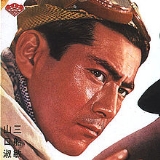
Toshiro Mifune

 
Toshiro Mifune

   Email Print
   Bookmark   Link


Toshiro Mifune


Toshiro Mifune ( Mifune Toshiro , 1 April, 1920 – 24 December, 1997) was a Japanese
Japanese people

The are the predominant ethnic group of Japan. Worldwide, approximately 130 million people are of Japanese descent; of these, approximately 127 million are residents of Japan....
 actor
Actor

An actor or actress is a person who acting in a dramatic production and who works in film, television, theatre, or radio programming in that capacity....
 who appeared in almost 170 feature film
Feature film

In the film industry, a feature film is a film made for initial Film distributor in Movie theater and being the "main attraction" of the screening ....
s. He is best known for his collaboration with filmmaker Akira Kurosawa
Akira Kurosawa

was a prominent Japanese people filmmaker, film producer, screenwriter and film editing. His first credited film as director, , was released in 1943, his last as director, , in 1993....
 in films such as Rashomon
Rashomon (film)

is a 1950 in film Cinema of Japan directed by Akira Kurosawa, working in close collaboration with cinematographer Kazuo Miyagawa. It stars Toshiro Mifune, Takashi Shimura, Machiko Kyo, Masayuki Mori and Minoru Chiaki....
, Seven Samurai, Throne of Blood
Throne of Blood

is a 1957 in film directed by Akira Kurosawa, which transposes the plot of William Shakespeare play Macbeth to feudal Japan. It is regarded as one of Kurosawa's best films, and by many critics as one of the best film adaptations of Macbeth, despite having almost none of the play's script....
, and Yojimbo
Yojimbo (film)

is a 1961 in film jidaigeki film directed by Akira Kurosawa. It tells the story of a ronin , portrayed by Toshiro Mifune, who arrives in a small town where competing crime lords make their money from gambling....
.


Discussion
Ask a question about 'Toshiro Mifune'
Start a new discussion about 'Toshiro Mifune'
Answer questions from other users
Full Discussion Forum


Encyclopedia


Drunken Angel 1948
Toshiro Mifune ( Mifune Toshiro , 1 April, 1920 – 24 December, 1997) was a Japanese
Japanese people

The are the predominant ethnic group of Japan. Worldwide, approximately 130 million people are of Japanese descent; of these, approximately 127 million are residents of Japan....
 actor
Actor

An actor or actress is a person who acting in a dramatic production and who works in film, television, theatre, or radio programming in that capacity....
 who appeared in almost 170 feature film
Feature film

In the film industry, a feature film is a film made for initial Film distributor in Movie theater and being the "main attraction" of the screening ....
s. He is best known for his collaboration with filmmaker Akira Kurosawa
Akira Kurosawa

was a prominent Japanese people filmmaker, film producer, screenwriter and film editing. His first credited film as director, , was released in 1943, his last as director, , in 1993....
 in films such as Rashomon
Rashomon (film)

is a 1950 in film Cinema of Japan directed by Akira Kurosawa, working in close collaboration with cinematographer Kazuo Miyagawa. It stars Toshiro Mifune, Takashi Shimura, Machiko Kyo, Masayuki Mori and Minoru Chiaki....
, Seven Samurai, Throne of Blood
Throne of Blood

is a 1957 in film directed by Akira Kurosawa, which transposes the plot of William Shakespeare play Macbeth to feudal Japan. It is regarded as one of Kurosawa's best films, and by many critics as one of the best film adaptations of Macbeth, despite having almost none of the play's script....
, and Yojimbo
Yojimbo (film)

is a 1961 in film jidaigeki film directed by Akira Kurosawa. It tells the story of a ronin , portrayed by Toshiro Mifune, who arrives in a small town where competing crime lords make their money from gambling....
. He is also popular for portraying Miyamoto Musashi
Miyamoto Musashi

, also known as Shinmen Takezo, Miyamoto Bennosuke, or by his Buddhist name Niten Doraku, was a Japanese people swordsman famed for his duels and distinctive style....
 in Hiroshi Inagaki
Hiroshi Inagaki

Hiroshi Inagaki was a Japanese filmmaker most known for the Academy Awards-winning Samurai Trilogy, which he directed. Before becoming a director and screenwriter, Inagaki was a child actor....
's Samurai Trilogy
Samurai Trilogy

The Samurai Trilogy is a film trilogy directed by Hiroshi Inagaki and starring Toshiro Mifune as Miyamoto Musashi and Koji Tsuruta as Sasaki Kojiro....
.

Early life

Toshiro Mifune was born in Qingdao
Qingdao

, best known in the West by its Chinese Postal Map Romanization Tsingtao, is a major city in eastern Shandong province of China, People's Republic of China....
, China
China

China is a Culture of China, an ancient civilization, and, depending on perspective, a national or multinational entity extending over a large area in East Asia....
, to Japanese parents, and grew up in the Chinese city of Dalian
Dalian

Dalian is the governing sub-provincial city in the eastern Liaoning Province of Northeast China. Dalian is China's northernmost Warm water port....
 with his parents and two siblings. In his youth, Mifune worked in the photography
Photography

Photography is the process, activity and art of creating still or moving by recording radiation on a sensitive medium, such as a photographic film, or an ....
 shop of his father Tokuzo, a commercial photographer and importer who had emigrated from northern Japan.

Tokuzo was a Methodist
Methodism

Methodism is a movement of Protestant Christianity represented by John Wesley and his younger brother Charles Wesley that sought to keep Methodism as a Revivalism movement within the Church of England....
, and there is evidence that he was also a missionary
Missionary

A 'missionary' is a member of a religion who works to convert those who do not share the missionary's faith; someone who Proselytism. The word "mission" is derived from the Latin missioninimus...
, ministering to the ethnic Japanese
Ethnic Japanese

Ethnic Japanese may mean:* Japanese people, when referring to people of Japanese descent** May also be used as a term to refer to the Yamato people as opposed to the minority peoples of Japan: the Ainu people, Ryukyuans, Burakumin and immigrant groups such as the Han Chinese and Koreans....
 Christians in Dalian.

Although the young Mifune spent the first 19 years of his life in China, as a Japanese citizen he was drafted into the Imperial Japanese Army Aviation, where he served in the Aerial Photography (Ko-type) unit during World War II
World War II

World War II, or the Second World War , was a global military conflict which involved a Participants in World War II, including all of the great powers, organised into two opposing military alliances: the Allies of World War II and the Axis powers....
. He repatriated
Repatriation

Repatriation is the process of return of refugees or soldiers to their homes, most notably following a war. The term may also refer to the process of converting a foreign currency into the currency of one's own country....
 to Japan in 1946.

Career

In 1947, one of Mifune's friends who worked for the Photography
Photography

Photography is the process, activity and art of creating still or moving by recording radiation on a sensitive medium, such as a photographic film, or an ....
 Department of Toho
Toho

is a large Japanese independent film studio. It is headquartered in Chiyoda, Tokyo, and is one of the core companies of the Hankyu Hanshin Toho Group....
 Productions suggested Mifune try out for the Photography Department. He was accepted for a position as an assistant cameraman. However, the union was affiliated with the Communist party, which made Mifune, a religiously conservative man, very uncomfortable.

At this time, a large number of Toho actors, after a prolonged strike
Strike action

Strike action, often simply called a strike, is a work stoppage caused by the mass refusal of employees to perform labour . A strike usually takes place in response to employee grievances....
, had left to form their own company, Shin Toho. The studio organized a "new faces" contest to find new talent. Mifune's friends submitted an application and photo, without his knowledge. He was accepted, along with 48 others (out of roughly 4000 applicants), and allowed to take a screen test for Kajiro Yamamoto. Instructed to mime anger
Anger

Anger is an emotional state that may range from minor irritation to intense rage. The physical effects of anger include increased heart rate, blood pressure,and levels of adrenaline and noradrenaline....
, he drew from his wartime experiences. Yamamoto took a liking to Mifune, recommending him to director Senkichi Taniguchi
Senkichi Taniguchi

was a Japanese film Film director. He made his feature film directing debut in 1947 in Snow Trail, which was written by his friend, acclaimed Japanese filmmaker, Akira Kurosawa....
. This led to Mifune's first feature role, in Shin Baka Jidai.

Marriage

One of Mifune's fellow performers, one of the 32 women chosen during the new faces contest, was Sachiko Yoshimine. Eight years Mifune's junior, she came from a respected Tokyo
Tokyo

, officially , is one of the 47 prefectures of Japan of Japan and located on the eastern side of the main island Honshu. The twenty-three special wards of Tokyo, each governed as a city, cover the area that was once the Tokyo City in the eastern part of the prefecture, and total over 8 million people....
 family. They fell in love and Mifune soon proposed marriage
Marriage

Marriage is a social, spirituality, or law union of individuals. This union may also be called matrimony, while the ceremony that marks its beginning is usually called a wedding and the married status created is sometimes called wedlock....
.

Yoshimine's parents were strongly opposed to the union. Mifune was doubly an outsider, being a non-Buddhist as well as a native Manchuria
Manchuria

Manchuria is a historical name given to a vast geographic region in northeast Asia. Depending on the definition of its extent, Manchuria either falls entirely within People's Republic of China, or is divided between China and Russia....
n. His choice of profession also made him suspect, as actors were generally assumed to be irresponsible and financially incapable of supporting a family.

Director Senkichi Taniguchi, with the help of Akira Kurosawa
Akira Kurosawa

was a prominent Japanese people filmmaker, film producer, screenwriter and film editing. His first credited film as director, , was released in 1943, his last as director, , in 1993....
, convinced the Yoshimine family to allow the marriage. It took place in February 1950. In November of the same year, their first son Shiro was born. In 1955, they had a second son, Takeshi. Mifune's daughter Mika was born to his mistress, actress Mika Kitagawa, in 1982.

Popularity

His imposing bearing, acting range, facility with foreign languages and lengthy partnership with acclaimed director Akira Kurosawa
Akira Kurosawa

was a prominent Japanese people filmmaker, film producer, screenwriter and film editing. His first credited film as director, , was released in 1943, his last as director, , in 1993....
 made him the most famous Japanese actor of his time, and easily the best known to Western audiences. He often portrayed a samurai
Samurai

is the term for the military nobility of Pre-industrial society Japan. According to translator William Scott Wilson: "In Chinese, the character ? was originally a verb meaning to wait upon or accompany a person in the upper ranks of society, and this is also true of the original term in Japanese, saburau....
 or ronin
Ronin

A was a samurai with no lord or master during the History_of_Japan#Feudal_Japan_.2812th_-_19th_century.29 of Japan. A samurai became masterless from the ruin or fall of his master, or after the loss of his master's favor or privilege....
, who was usually coarse and gruff (Kurosawa once explained that the only weakness he could find with Mifune and his acting ability was his "rough" voice), inverting the popular stereotype of the genteel, clean-cut samurai. In such films as Seven Samurai and Yojimbo
Yojimbo (film)

is a 1961 in film jidaigeki film directed by Akira Kurosawa. It tells the story of a ronin , portrayed by Toshiro Mifune, who arrives in a small town where competing crime lords make their money from gambling....
, he played characters who were often comically lacking in manners, but replete with practical wisdom and experience, understated nobility, and, in the case of Yojimbo, unmatched fighting prowess. Sanjuro
Sanjuro

is a 1962 black and white Cinema of Japan samurai film directed by Akira Kurosawa and starring Toshiro Mifune. It is a sequel to Kurosawa's previous film Yojimbo , with Mifune reprising his role as a wandering ronin....
 in particular contrasts this earthy warrior spirit with the useless, sheltered propriety of the court samurai. Kurosawa highly valued Mifune for his effortless portrayal of unvarnished emotion, once commenting that he could convey in only three feet of film an emotion for which the average Japanese actor would require ten feet.

On the other hand, his portrayal of Musashi Miyamoto in Hiroshi Inagaki
Hiroshi Inagaki

Hiroshi Inagaki was a Japanese filmmaker most known for the Academy Awards-winning Samurai Trilogy, which he directed. Before becoming a director and screenwriter, Inagaki was a child actor....
's Samurai Trilogy
Samurai Trilogy

The Samurai Trilogy is a film trilogy directed by Hiroshi Inagaki and starring Toshiro Mifune as Miyamoto Musashi and Koji Tsuruta as Sasaki Kojiro....
 is deliberately made to become the epitome of samurai honour and manners.

Mifune was famous for his self-deprecating sense of humor, which often found its way into his film roles. He was renowned for the effort he put into his performances. To prepare for Seven Samurai and Rashomon
Rashomon (film)

is a 1950 in film Cinema of Japan directed by Akira Kurosawa, working in close collaboration with cinematographer Kazuo Miyagawa. It stars Toshiro Mifune, Takashi Shimura, Machiko Kyo, Masayuki Mori and Minoru Chiaki....
, Mifune reportedly studied footage of lion
Lion

The lion is a member of the family Felidae and one of four big cats in the genus Panthera. With exceptionally large males exceeding 250 kg in weight, it is the second-largest living cat after the tiger....
s in the wild; for Ánimas Trujano
Ánimas Trujano

?nimas Trujano is a 1962 in film Mexico film directed by Ismael Rodr?guez, based on a novel by Rogelio Barriga Rivas. It stars Toshiro Mifune as ?nimas Trujano, a boisterous, irresponsible Amerindian who aspires to become Majordomo of his village....
, he studied tapes of Mexican
Mexico

The United Mexican States , commonly known as Mexico , is a federalism constitutionalism republic in North America. It is bordered on the north by the United States; on the south and west by the Pacific Ocean; on the southeast by Guatemala, Belize, and the Caribbean Sea; and on the east by the Gulf of Mexico....
 actors speaking, so he could recite all his lines in Spanish
Spanish language

Spanish or Castilian is a Romance languages that originated in northern Spain, and gradually spread in the Kingdom of Castile and evolved into the principal language of government and trade....
. In his earliest film roles in English
English language

English is a West Germanic language that originated in Anglo-Saxon England and has lingua franca status in many parts of the world as a result of the military, economic, scientific, political and cultural influence of the British Empire in the 18th, 19th and early 20th centuries and that of the United States from the mid 20th century onwa...
 like Grand Prix
Grand Prix (film)

Grand Prix is an action film released in 1966 in film. It was directed by John Frankenheimer with music by Maurice Jarre. It starred James Garner, Eva Marie Saint, Yves Montand, Brian Bedford and Antonio Sabato, Sr....
, made in 1966, he learned his lines phonetically. This met with limited success and his voice was often dubbed by Paul Frees
Paul Frees

Paul Frees was an United States voice actor and character actor....
. By the time he made Red Sun
Red Sun

Red Sun is a film in the western genre with an international flavor. It starred the U.S. born Charles Bronson, the Japanese actor Toshiro Mifune, the French actor Alain Delon and the Swiss actress Ursula Andress....
 in 1971 he had become somewhat more proficient in the language and his voice is heard throughout this multinational western. He was always disappointed that he did not have a larger career in the West. His most prominent English-language role was probably playing Admiral Isoroku Yamamoto
Isoroku Yamamoto

Admiral of the Fleet was the commander-in-chief of the Combined Fleet during World War II, a graduate of the Imperial Japanese Naval Academy and a student of the U.S....
 in Midway
Midway (film)

Midway is a 1976 in film war film made by the Mirisch Corporation and released by Universal Pictures . It was directed by Jack Smight and produced by...
 (for which he was again dubbed by Frees).

Early in the development of Star Wars Episode IV: A New Hope
Star Wars Episode IV: A New Hope

Star Wars Episode IV: A New Hope is an Cinema of the United States 1977 in film space opera film, written and directed by George Lucas. It was the first of six films released in the Star Wars saga: Star Wars#Original trilogy continue the story, while a Star Wars#Prequel trilogy contributes backstory, primarily for the troubled charac...
, director George Lucas
George Lucas

George Walton Lucas, Jr. is an Academy Award-nominated United States film director, film producer, screenwriter and chairman of Lucasfilm Ltd. He is best known for being the creator of the Epic film Sci-Fi franchise Star Wars and the archaeologist-adventurer character Indiana Jones....
 reportedly considered Mifune for the role of Obi-Wan Kenobi
Obi-Wan Kenobi

Obi-Wan Kenobi is a fictional character in the Star Wars Star Wars galaxy. He is one of the protagonists in the Star Wars film series; along with Anakin Skywalker, R2-D2, and C-3PO, he is one of the few major characters to appear in each of the six Star Wars films....
. He had played an analogous role (General Rokurota) in The Hidden Fortress
The Hidden Fortress

File:The Hidden Fortress poster 2.jpgFile:The Hidden Fortress poster 3.jpg is a 1958 in film film directed by Akira Kurosawa and starring Toshiro Mifune as General Rokurota Makabe and Misa Uehara as Princess Yuki....
, a film greatly admired by Lucas. Its plot and characters have some parallels that Lucas carried into his first Star Wars film.

Mifune has been credited as originating the "roving warrior" archetype
Stock character

A stock character is one which relies heavily on cultural types or names for his or her personality, manner of speech, and other characteristics....
, which he perfected during his collaboration with Kurosawa. Clint Eastwood
Clint Eastwood

Clinton "Clint" Eastwood, Jr. is an American actor, film director, film producer and composer. He is known for his tough guy, anti-hero acting roles in Action films and western films, particularly in the 1960s, 1970s and 1980s....
 was among the first of many American
United States

The United States of America is a Federal government constitutional republic comprising U.S. state and a federal district. The country is situated mostly in central North America, where its Contiguous United States and Washington, D.C., the Capital districts and territories, lie between the Pacific Ocean and Atlantic Oceans, Borders of the U...
 actors to adopt this persona, which he used to great effect in his Western roles, especially the spaghetti western
Spaghetti Western

Spaghetti Western, also known in some countries in mainland Europe as the Italo-Western, is a nickname for a broad Genre of Western film that emerged in the mid-1960s, so named because most were produced and directed by Cinema of Italy, usually in coproduction with a Cinema of Spain....
s made with Sergio Leone
Sergio Leone

Sergio Leone was an Italy film director, Film producer and screenwriter most famous for his spaghetti westerns....
.

Most of the sixteen Kurosawa–Mifune films are considered cinema classics. These include Rashomon, Stray Dog
Stray Dog (film)

is a 1949 in film film noir police procedural directed by Akira Kurosawa....
, Seven Samurai, The Hidden Fortress, High and Low
High and Low

is a 1963 in film film directed by Akira Kurosawa. It was loosely based on King's Ransom, an 87th Precinct police procedural by Evan Hunter ....
, Throne of Blood
Throne of Blood

is a 1957 in film directed by Akira Kurosawa, which transposes the plot of William Shakespeare play Macbeth to feudal Japan. It is regarded as one of Kurosawa's best films, and by many critics as one of the best film adaptations of Macbeth, despite having almost none of the play's script....
 (an adaptation of Shakespeare's
William Shakespeare

William Shakespeare was an English people poet and playwright, widely regarded as the greatest writer in the English language and the world's preeminent dramatist....
 MacBeth
Macbeth

Macbeth is a tragedy by William Shakespeare about a regicide and its aftermath. It is Shakespeare's shortest Shakespearean tragedy and is believed to have been written some time between 1603 and 1606, with 1607 being the very latest possible date....
), Yojimbo, and Sanjuro. (See filmography, below)

Mifune and Kurosawa finally parted ways after Red Beard
Red Beard

is a 1965 in film Cinema of Japan directed by Akira Kurosawa about the relationship between a village doctor and his new trainee. It is an adaptation of a novel by Shugoro Yamamoto....
. Several factors contributed to the rift that ended this career-spanning collaboration. Most of Mifune's contemporaries acted in several different movies throughout the year. Since Red Beard required Mifune to grow a natural beard — one he had to keep for the entirety of the film's two years of shooting — he was unable to act in any other films during the production. This put Mifune and his financially strapped production company deeply into debt, creating friction between him and Kurosawa. Although Red Beard played to packed houses in Japan and Europe, which helped Mifune recoup some of his losses, the ensuing years held varying outcomes for both Mifune and Kurosawa. After the film's release, the careers of each man took different arcs: Mifune continued to enjoy success with a range of samurai and war-themed films (Rebellion, Samurai Assassin, the Emperor and a General, among others). In contrast, Kurosawa's output of films dwindled and drew mixed responses. During this time, Kurosawa apparently attempted suicide. In 1980, Mifune experienced popularity with mainstream American audiences through his role as Lord Toranaga in the television miniseries Shogun. Yet Kurosawa did not rejoice in his estranged friend's success, and publicly made derisive remarks about Shogun.

Later life

Early in the 1980s, Mifune founded an acting
Acting

Acting is the work of an actor or actress, which is a person in theatre, television, film, or any other storytelling medium who tells the story by portraying a Fictional character and, usually, Speech communication or singing the written text or Play ....
 school, Mifune Geijutsu Gakuin . The school failed after only three years, due to mismanaged finances.

Mifune received wider audience acclaim in the West than he ever had after playing Toranaga in the 1980 miniseries
Miniseries

A miniseries , in a serial storytelling medium, is a production which tells a story in a pre-planned limited number of episodes....
 Shogun. However, the series' historically accurate yet blunt portrayal of the Japanese shogunate and the greatly abridged version shown in Japan meant that it was not as well received in his homeland. It deepened the rift with Kurosawa, virtually ensuring that they would not work together again.

The relationship between the two men remained ambivalent. While Kurosawa made some very uncharitable comments about Mifune's acting, he also admitted in an interview in Interview magazine that 'all the films that I made with Mifune, without him, they would not exist.' He also presented Mifune with the Kawashita award which he himself had won two years prior. They finally made something of a reconciliation in 1993 at the funeral
Japanese funeral

A Japanese funeral includes a wake, the cremation of the deceased, a burial in a family Grave , and a periodic memorial service. 99.82% of all deceased Japanese are cremated, according to 2005 statistics....
 of their friend Ishiro Honda
Ishiro Honda

Ishiro Honda , sometimes miscredited in foreign releases as "Inoshiro Honda", was a Japanese people film director. His early film career included working as an assistant under the famed director, Akira Kurosawa....
. After making tenuous eye contact, they tearfully embraced one another, ending nearly three decades of mutual avoidance. They never collaborated again, however, nor did they have a chance to restore their friendship fully. Both died within a year of the other.

In 1992, Mifune began suffering from a serious unknown health problem. It has been variously suggested that he destroyed his health with overwork
Karoshi

, which can be translated quite literally from Japanese language as "death from overwork", is occupational sudden death. Although this category has a significant count, Japan is one of the few countries that reports it in the statistics as a separate category....
, suffered a heart attack
Myocardial infarction

Myocardial infarction , commonly known as a heart attack, occurs when the Blood flow to part of the heart is interrupted. This is most commonly due to occlusion of a coronary artery following the rupture of a Vulnerable plaque, which is an unstable collection of lipids and white blood cells in the wall of an artery....
, or experienced a stroke
Stroke

A stroke is the rapidly developing loss of brain function due to a disturbance in the blood supply to the brain. According to the National Stroke Association, a "stroke" occurs when a blood clot blocks and artery or a blood vessel breaks, interrupting blood flow to an area of the brain....
. For whatever reason, he abruptly retreated from public life and remained largely confined to his home, cared for by his estranged wife Sachiko. When she succumbed to pancreatic cancer
Pancreatic cancer

Pancreatic cancer is a cancer of the pancreas. Each year in the United States, about 37,680 individuals are diagnosed with this condition and 34,290 die from the disease each year....
 in 1995, Mifune's physical and mental state began to decline rapidly.

He died in Mitaka, Japan
Japan

Japan is an island country in East Asia. Located in the Pacific Ocean, it lies to the east of the Sea of Japan, People's Republic of China, North Korea, South Korea and Russia, stretching from the Sea of Okhotsk in the north to the East China Sea and Taiwan in the south....
, of multiple organ failure at the age of 77.

Honors

Mifune was awarded the Order of the Sacred Treasure by the Japanese government in 1993.

Personal quotes

Of Akira Kurosawa, Mifune said, "I am proud of nothing I have done other than with him."

"Mifune had a kind of talent I had never encountered before in the Japanese film world. It was, above all, the speed with which he expressed himself that was astounding. The ordinary Japanese actor might need ten feet of film to get across an impression; Mifune needed only three. The speed of his movements was such that he said in a single action what took ordinary actors three separate movements to express. He put forth everything directly and boldly, and his sense of timing was the keenest I had ever seen in a Japanese actor. And yet with all his quickness, he also had surprisingly fine sensibilities." - Akira Kurosawa, Something Like an Autobiography

Filmography

Due to variations in translation from the Japanese and other factors, there are multiple titles to many of Mifune's films (see IMDB link). The titles shown here are the most common titles used in the United States.

  • 1947 Snow Trail
    Snow Trail

    Snow Trail is a 1947 black and white Cinema of Japan directed by Senkichi Taniguchi....
     - directed by Senkichi Taniguchi
    Senkichi Taniguchi

    was a Japanese film Film director. He made his feature film directing debut in 1947 in Snow Trail, which was written by his friend, acclaimed Japanese filmmaker, Akira Kurosawa....
  • 1947 These Foolish Times - Parts 1 & 2 - directed by Kajiro Yamamoto
  • 1948 Drunken Angel
    Drunken Angel

    is a 1948 in film Cinema of Japan directed by Akira Kurosawa. It stars Takashi Shimura as an alcoholic doctor in postwar Japan who treats a young, small-time hood named Matsunaga , after a gunfight with a rival syndicate....
     - directed by Akira Kurosawa
    Akira Kurosawa

    was a prominent Japanese people filmmaker, film producer, screenwriter and film editing. His first credited film as director, , was released in 1943, his last as director, , in 1993....
  • 1949 The Quiet Duel
    The Quiet Duel

    is a 1949 in film Cinema of Japan directed by Akira Kurosawa. ...
     - directed by Akira Kurosawa
  • 1949 Jakoman and Tetsu - directed by Senkichi Taniguchi
  • 1949 Stray Dog
    Stray Dog (film)

    is a 1949 in film film noir police procedural directed by Akira Kurosawa....
     - directed by Akira Kurosawa
  • 1950 Escape at Dawn
    Escape at Dawn

    is a 1950 in film Cinema of Japan which revolves around a tragic affair between a soldier involved in the Manchukuo and a prostitute....
     - directed by Senkichi Taniguchi
  • 1950 Conduct Report on Professor Ishinaka - Directed by Mikio Naruse
    Mikio Naruse

    was a Japanese people film director, writer and Film producer who directed some 89 films spanning from the end of the silent era through the sixties ....
  • 1950 Scandal
    Scandal (1950 film)

    is a Japanese film written and directed by Akira Kurosawa in 1950 in film.The film stars Toshiro Mifune, Takashi Shimura and Yoshiko Otaka. It is in black-and-white and runs 104 minutes....
     - directed by Akira Kurosawa
  • 1950 Engagement Ring
    Engagement ring

    In Western tradition, an engagement ring is a jewelry ring worn by a woman indicating her engagement to be marriage. In some countries, such as the United States and the United Kingdom, it is worn on the left-hand ring finger, while in other countries, such as Poland and Ukraine, it is customary for the ring to be worn on the right-hand....
     - directed by Keisuke Kinoshita
    Keisuke Kinoshita

    was a Japanese people film director....
  • 1950 Rashomon
    Rashomon (film)

    is a 1950 in film Cinema of Japan directed by Akira Kurosawa, working in close collaboration with cinematographer Kazuo Miyagawa. It stars Toshiro Mifune, Takashi Shimura, Machiko Kyo, Masayuki Mori and Minoru Chiaki....
     - directed by Akira Kurosawa
  • 1951 Beyond Love and Hate - directed by Senkichi Taniguchi
  • 1951 Elegy
    Elegy (film)

    Elegy is a 2008 in film drama film directed by Spanish director Isabel Coixet and based on a Philip Milton Roth novel, The Dying Animal....
     - directed by Kajiro Yamamoto
  • 1951 The Idiot - directed by Akira Kurosawa
  • 1951 Pirates - directed by Hiroshi Inagaki
    Hiroshi Inagaki

    Hiroshi Inagaki was a Japanese filmmaker most known for the Academy Awards-winning Samurai Trilogy, which he directed. Before becoming a director and screenwriter, Inagaki was a child actor....
  • 1951 Meeting of the Ghost Aprčs-Guerre - directed by Kiyoshi Saeki
  • 1951 Conclusion of Kojiro Sasaki-Duel at Ganryu Island directed by Hiroshi Inagaki - This was the first, but not the last, time that Mifune played Musashi Miyamoto
  • 1951 The Life of a Horsetrader - directed by Keigo Kimura
  • 1951 Who Knows a Woman's Heart - directed by Kajiro Yamamoto
  • 1952 Vendetta for a Samurai - directed by Kazuo Mori
    Kazuo Mori

    was a Japanese film director. He directed films from 1930s to 1970s....
  • 1952 Foghorn - directed by Senkichi Taniguchi
  • 1952 The Life of Oharu
    The Life of Oharu

    is a 1952 in film historical fiction black and white film by Film director Kenji Mizoguchi starring Kinuyo Tanaka as Oharu, a one-time concubine of a daimyo who struggles to escape the stigma of having been sold into prostitution by her father....
     - directed by Kenji Mizoguchi
  • 1952 Jewels in our Hearts - directed by Yasuke Chiba
  • 1952 Swift Current - directed by Senkichi Taniguchi
  • 1952 The Man Who Came to Port
    The Man Who Came to Port

    is a 1952 cinema of Japan directed by Ishiro Honda.External links...
     - directed by Ishiro Honda
    Ishiro Honda

    Ishiro Honda , sometimes miscredited in foreign releases as "Inoshiro Honda", was a Japanese people film director. His early film career included working as an assistant under the famed director, Akira Kurosawa....
  • 1953 My Wonderful Yellow Car - directed by Senkichi Taniguchi
  • 1953 The Last Embrace - directed by Masahiro Makino
    Masahiro Makino

    was a Japanese film director of more than 230 films. His father was director Shozo Makino and the recent pseudonym of film director Masahiko Tsugawa, Makino Masahiko, is a tribute to Masahiro....
  • 1953 Love in a Teacup - directed by Yasuke Chiba
  • 1953 The Eagle of the Pacific - directed by Ishiro Honda
  • 1954 Seven Samurai - directed by Akira Kurosawa
  • 1954-56 Samurai Trilogy
    Samurai Trilogy

    The Samurai Trilogy is a film trilogy directed by Hiroshi Inagaki and starring Toshiro Mifune as Miyamoto Musashi and Koji Tsuruta as Sasaki Kojiro....
     - directed by Hiroshi Inagaki
    • 1954 Samurai I: Musashi Miyamoto
      Samurai I: Musashi Miyamoto

      is a 1954 film by Hiroshi Inagaki starring Toshir? Mifune. It is the first film of Inagaki's Samurai Trilogy. The film is adapted from Eiji Yoshikawa's novel Musashi ....
    • 1955 Samurai II: Duel at Ichijoji Temple
      Samurai II: Duel at Ichijoji Temple

      Duel at Ichijoji Temple is a film by Hiroshi Inagaki starring Toshir? Mifune. It is the second film of the Samurai Trilogy. The film is adapted from Eiji Yoshikawa's novel Musashi ....
    • 1956 Samurai III: Duel at Ganryu Island
      Samurai III: Duel at Ganryu Island

      Samurai III: Duel At Ganryu Island is a film by Hiroshi Inagaki starring Toshir? Mifune. It is the third film of the Samurai Trilogy. The film is adapted from Eiji Yoshikawa's novel Musashi ....
  • 1954 The Sound of Waves - directed by Senkichi Taniguchi
  • 1954 The Black Fury - directed by Toshio Sugie
    Toshio Sugie

    , a Japanese film director. He directed films from 1940s to 1960s....
  • 1955 A Man Among Men - directed by Kajiro Yamamoto
  • 1955 All is Well
    All Is Well

    All Is Well may refer to:* All Is Well , a 1972 song by Chicago* All Is Well , a 2006 EP by Clay Aiken* All is Well , a 1955 film starring Toshiro Mifune...
     - Part 1 & 2 - directed by Toshio Sugie
  • 1955 No Time for Tears
    No Time For Tears

    "No Time For Tears" is a song by The Enemy for the upcoming album Music For The PeopleThe song debuted on Radio 1 at 7pm on the 16/2/09. Following the premier of the song, the band were interviewed to discuss their "New Punk Sound"...
     - directed by Seiji Maruyama
  • 1955 Record of a Living Being aka I Live in Fear
    I Live in Fear

    is a 1955 in film Cinema of Japan written and directed by Akira Kurosawa. It was co-written by Shinobu Hashimoto, Fumio Hayasaka, and Hideo Oguni.The film stars Kurosawa regulars Toshiro Mifune and Takashi Shimura....
     - directed by Akira Kurosawa
  • 1956 Rainy Night Duel - directed by Senkichi Taniguchi
  • 1956 The Underworld - directed by Kajiro Yamamoto
  • 1956 Settlement of Love - directed by Shin Saburi
    Shin Saburi

    Shin Saburi was a Japanese film actor noted for his leading roles in a number of films by the director Yasujiro Ozu including Brothers and Sisters of the Toda Family , Tea Over Rice , Equinox Flower and Late Autumn ....
  • 1956 A Wife's Heart
    A Wife's Heart

    is a 1956 black and white cinema of Japan directed by Mikio Naruse.External links...
     - directed by Mikio Naruse
  • 1956 Scoundrel - directed by Nabuo Aoyagi
  • 1956 Rebels on the High Seas - directed by Hiroshi Inagaki
  • 1957 Throne of Blood
    Throne of Blood

    is a 1957 in film directed by Akira Kurosawa, which transposes the plot of William Shakespeare play Macbeth to feudal Japan. It is regarded as one of Kurosawa's best films, and by many critics as one of the best film adaptations of Macbeth, despite having almost none of the play's script....
     aka Spider Web Castle - directed by Akira Kurosawa
  • 1957 A Man in the Storm - directed by Senkichi Taniguchi
  • 1957 Be Happy These Two Lovers - directed by Ishiro Honda
  • 1957 Yagyu Secret Scrolls
    Yagyu Secret Scrolls

    is a 1957 color Cinema of Japan directed by Hiroshi Inagaki. Other English titles include: Ninjitsu, Secret Scrolls, Yagyu Secret Scrolls Part I....
     - part 1 - directed by Hiroshi Inagaki
  • 1957 A Dangerous Hero - directed by Hideo Suzuki
  • 1957 The Lower Depths
    The Lower Depths (1957 film)

    is a 1957 in film Cinema of Japan directed by Akira Kurosawa, based on the play of The Lower Depths by Maxim Gorky. The film's setting was changed to Edo-period Japan....
     - directed by Akira Kurosawa
  • 1957 Downtown - directed by Yasuki Chiba
  • 1958 Yagyu Secret Scrolls
    Yagyu Secret Scrolls

    is a 1957 color Cinema of Japan directed by Hiroshi Inagaki. Other English titles include: Ninjitsu, Secret Scrolls, Yagyu Secret Scrolls Part I....
     - part 2 - directed by Hiroshi Inagaki
  • 1958 Tokyo Holiday - directed by Kajiro Yamamoto
  • 1958 Muhomatsu, The Rikshaw Man - directed by Hiroshi Inagaki
  • 1958 The Happy Pilgrimage - directed by Yasuki Chiba
  • 1958 All About Marriage - uncredited cameo - directed by Kihachi Okamoto
  • 1958 Theater of Life
    Theater of Life

    Theater of Life is a 1983 in film film directed by Kinji Fukasaku, Sadao Nakajima and Junya Sato....
     - directed by Toshio Sugie
  • 1958 The Hidden Fortress
    The Hidden Fortress

    File:The Hidden Fortress poster 2.jpgFile:The Hidden Fortress poster 3.jpg is a 1958 in film film directed by Akira Kurosawa and starring Toshiro Mifune as General Rokurota Makabe and Misa Uehara as Princess Yuki....
     - directed by Akira Kurosawa
  • 1959 Boss of the Underworld - directed by Kihachi Okamoto
  • 1959 Samurai Saga - directed by Hiroshi Inagaki
  • 1959 The Saga of the Vagabonds - directed by Toshio Sugie
  • 1959 Desperado Outpost - directed by Kihachi Okamoto
  • 1959 The Birth of Japan
    The Birth of Japan

    , also called The Three Treasures, is a 1959 Japanese tokusatsu fantasy epic film. Telling the story of the creation of Japan according to Japanese mythology, specifically the Shinto religion, it is considered Japan's answer to The Ten Commandments ....
     - directed by Hiroshi Inagaki
  • 1960 The Last Gunfight - directed by Kihachi Okamoto
  • 1960 The Gambling Samurai - directed by Senkichi Taniguchi
  • 1960 The Storm Over the Pacific - directed by Shuei Matsubayashi
    Shuei Matsubayashi

    is a Japanese film director....
  • 1960 Man Against Man - directed by Senkichi Taniguchi
  • 1960 The Bad Sleep Well
    The Bad Sleep Well

    is a 1960 in film directed by the Japanese director Akira Kurosawa. It was the first film to be produced under Kurosawa's own independent production company....
     - directed by Akira Kurosawa
  • 1960 The Masterless 47 - part 1 - directed by Toshio Sugie
  • 1961 The Story of Osaka Castle - directed by Hiroshi Inagaki
  • 1961 The Masterless 47 - part 2 - directed by Toshio Sugie
  • 1961 Yojimbo
    Yojimbo (film)

    is a 1961 in film jidaigeki film directed by Akira Kurosawa. It tells the story of a ronin , portrayed by Toshiro Mifune, who arrives in a small town where competing crime lords make their money from gambling....
     aka The Bodyguard - directed by Akira Kurosawa
  • 1961 The Youth and his Amulet - directed by Hiroshi Inagaki
  • 1962 Ánimas Trujano
    Ánimas Trujano

    ?nimas Trujano is a 1962 in film Mexico film directed by Ismael Rodr?guez, based on a novel by Rogelio Barriga Rivas. It stars Toshiro Mifune as ?nimas Trujano, a boisterous, irresponsible Amerindian who aspires to become Majordomo of his village....
     aka The Important Man - directed by Ismael Rodríguez
    Ismael Rodríguez

    Ismael Rodr?guez was an acclaimed Mexico film director.He directed many major stars, including Pedro Infante, Dolores del R?o, Mar?a F?lix, and even Toshiro Mifune, the favorite actor of Japanese director Akira Kurosawa, as a Mexican Amerindian in the film ?nimas Trujano ....
  • 1962 Sanjuro - directed by Akira Kurosawa
  • 1962 Tatsu
    Tatsu

    Tatsu is a Steel roller coaster flying roller coaster operating at Six Flags Magic Mountain in Valencia, Santa Clarita, California, California. It opened May 13, 2006....
     - directed by Hiroshi Inagaki
  • 1962 Chushingura
    Chushingura

    is the name for fictionalized accounts of the historical revenge by the Forty-seven Ronin of the death of their master, Asano Naganori. Including the early , the story has been told in kabuki, bunraku, stage plays, films, novels, television shows and other media....
     - directed by Hiroshi Inagaki
  • 1963 Wings over the Pacific - directed by Shue Matsubayashi
  • 1963 High and Low
    High and Low

    is a 1963 in film film directed by Akira Kurosawa. It was loosely based on King's Ransom, an 87th Precinct police procedural by Evan Hunter ....
     aka Heaven and Hell - directed by Akira Kurosawa
  • 1963 Legacy of the 500,000 - directed by Toshiro Mifune
  • 1963 The Great Thief - directed by Senkichi Taniguchi
  • 1964 Whirlwind - directed by Hiroshi Inagaki
  • 1965 Samurai Assassin
    Samurai Assassin

    is a 1965 Japanese movie directed by Kihachi Okamoto and starring Toshiro Mifune, Koshiro Matsumoto, Yunosuke Ito, and Michiyo Aratama.Samurai Assassin is set in 1860, immediately before the Meiji Restoration changed Japanese society forever by doing away with the castes in society and reducing the position of the samurai class....
     aka Samurai - directed by Kihachi Okamoto
  • 1965 Red Beard
    Red Beard

    is a 1965 in film Cinema of Japan directed by Akira Kurosawa about the relationship between a village doctor and his new trainee. It is an adaptation of a novel by Shugoro Yamamoto....
     - directed by Akira Kurosawa
  • 1965 Sanshiro Sugata
    Sanshiro Sugata

    was the directorial debut of the Academy Award-winning Japanese film director Akira Kurosawa. It was first released in Japan on 25 March 1943 by Toho film studios, eventually being released in the United States on 28 April 1974 and is based on the novel of the same name by Tsuneo Tomita....
     - directed by Seiichiro Uchikiro - this is a remake of Kurosawa's films Sanshiro Sugata and Sanshiro Sugata part 2
  • 1965 Retreat from Kiska - directed by Seiji Maruyama
  • 1965 Fort Graveyard - directed by Kihachi Okamoto
  • 1966 Wild Goemon - directed by Hiroshi Inagaki
  • 1966 The Sword of Doom
    The Sword of Doom

    , is a jidaigeki movie released in 1966 in film. It was directed by Kihachi Okamoto and stars Tatsuya Nakadai....
     - directed by Kihachi Okamoto
  • 1966 The Adventure of Kigan Castle - directed by Senkichi Taniguchi
  • 1966 The Mad Atlantic - directed by Jun Fukuda
    Jun Fukuda

    , was a Japanese director. He was born in Manchuria. He has directed dozens of films, perhaps best known for his contributions to the Godzilla in the 1970s....
  • 1966 Grand Prix
    Grand Prix (film)

    Grand Prix is an action film released in 1966 in film. It was directed by John Frankenheimer with music by Maurice Jarre. It starred James Garner, Eva Marie Saint, Yves Montand, Brian Bedford and Antonio Sabato, Sr....
     - directed by John Frankenheimer
    John Frankenheimer

    John Michael Frankenheimer was an United States filmmaker. He is bestknown for making The Manchurian Candidate and Ronin ....
     - This was Mifune's first English language film - He was learning English phonetically - It is reported that his voice was used at the premiere - All versions of the film after that are dubbed by Paul Frees
    Paul Frees

    Paul Frees was an United States voice actor and character actor....
    , except for the scenes where he is speaking Japanese where his voice is used.
  • 1967 Samurai Rebellion
    Samurai Rebellion

    Rebellion, also known as Samurai Rebellion, is a 1967 Japanese film film director by Masaki Kobayashi. Its original Japanese title is Joi-uchi: Hairyo tsuma shimatsu , which translates as Rebellion: Receive the Wife....
     - directed by Masaki Kobayashi
    Masaki Kobayashi

    was a Japanese people film director.Among his films is Kwaidan , a collection of four kwaidan drawn from Kwaidan: Stories and Studies of Strange Things by Lafcadio Hearn, each of which has a surprise ending....
  • 1967 The Longest Day of Japan - directed by Kihachi Okamoto
  • 1968 The Sands of Kurobe
    The Sands of Kurobe

    is a 1968 in film Cinema of Japan Film director by Kei Kumai. It was Japan's submission to the 41st Academy Awards for the Academy Award for Best Foreign Language Film, but was not accepted as a nominee....
     - directed by Kei Kumai
    Kei Kumai

    was a Japanese movie director. After his studies in literature he worked as director's assistant.Perhaps his best-known film is Sandakan No. 8, which received widespread acclaim for tackling the issue of a woman forced into prostitution in Borneo before the outbreak of World War II....
  • 1968 Admiral Yamamoto - directed by Seiji Maruyama
  • 1968 Gion Festival - directed by Daisuke Ito and Tetsuya Yamanouchi
  • 1968 Hell in the Pacific
    Hell in the Pacific

    Hell in the Pacific is a 1968 World War II film starring Lee Marvin and Toshiro Mifune. It was directed by John Boorman.Two men, one American and one Japanese, are marooned on an uninhabited Pacific island....
     - directed by John Boorman
    John Boorman

    John Boorman is an England filmmaker, currently based in Ireland, best known for his feature films such as Point Blank , Deliverance, Excalibur , Hope and Glory , The General and Zardoz....
     - This was filmed with different endings for the U.S. and Japanese releases. Both are available on current video releases.
  • 1969 Samurai Banners
    Samurai Banners

    is a Japanese Samurai cinema film released in 1969. It was directed by Hiroshi Inagaki and is based on the life of the famous Sengoku-era battle strategist, Yamamoto Kansuke....
     - directed by Hiroshi Inagaki
  • 1969 5,000 Kilometers to Glory - directed by Koreyoshi Kurahara
    Koreyoshi Kurahara

    was a Japanese screenwriter and director. He is perhaps best known for directing Nankyoku Monogatari, which won awards. He also was co-director, with Roger Spottiswoode, of Hiroshima ....
  • 1969 Battle of the Japan Sea - directed by Seiji Maruyama
  • 1969 Red Lion
    Red Lion (film)

    Red Lion is a 1969 japanese samurai movie which stars Toshiro Mifune, and Shima Iwashita. It was directed by Kihachi Okamoto....
     - directed by Kihachi Okamoto
  • 1969 Band of Assassins - directed by Tadashi Sawashima
    Tadashi Sawashima

    Tadashi Sawashima, , a Japanese film director. He directed films from 1950s to 1960s....
  • 1970 Zatoichi Meets Yojimbo
    Zatoichi

    is a fictional character featured in one of Japan's longest running series of films and a television series set in the Edo period. The character, a blind masseur and swordmaster, was created by novelist ....
     - directed by Kihachi Okamoto
  • 1970 The Ambitious - directed by Daisuke Ito
  • 1970 Incident at Blood Pass - directed by Hiroshi Inigaki
  • 1970 The Walking Majo - directed by Koji Senno, Nobuaki Shirai and Keith Eric Burt
  • 1970 The Militarists - directed by Hiromichi Horikawa
  • 1971 Red Sun
    Red Sun

    Red Sun is a film in the western genre with an international flavor. It starred the U.S. born Charles Bronson, the Japanese actor Toshiro Mifune, the French actor Alain Delon and the Swiss actress Ursula Andress....
     - directed by Terence Young
    Terence Young

    Stewart Terence Herbert Young was a United Kingdom film director best known for directing three films in the James Bond series, Dr. No , From Russia with Love , and Thunderball ....
     - not released in the U.S. until 1972
  • 1975 Paper Tiger
    Paper tiger

    Paper tiger is a literal English language translation of the Chinese language phrase zhi laohu , meaning something which seems as threatening as a tiger, but is really harmless....
     - directed by Ken Annakin
    Ken Annakin

    Ken Annakin, Order of the British Empire is an England film director. His career in films followed his work experience in documentaries. He made his directing debut in 1947 at the Rank Organisation, although the following year he moved to Gainsborough Pictures to helm three films about Here Come the Huggetts, a working class family living in...
  • 1975 Midway
    Midway (film)

    Midway is a 1976 in film war film made by the Mirisch Corporation and released by Universal Pictures . It was directed by Jack Smight and produced by...
     - directed by Jack Smight
    Jack Smight

    'Jack Smight' was an United States film director.Smight was born in Minneapolis, Minnesota and went to school with future actor Peter Graves . His credits include Loving Couples , Midway , Harper , Airport 1975, Damnation Alley and the Emmy Award-winning Eddie, as well as many episodes of television series such as T...
  • 1977 Proof of the Man - directed by Junya Sato
    Junya Sato

    is a Japanese people film director.FilmographyExternal links...
  • 1977 Japanese Godfather: Ambition - directed by Sadao Nakajima
  • 1977 Shogun's Samurai
    Shogun's Samurai

    also "Intrigue of the Yagyu clan" and "Yagyu Clan Conspiracy," is a 1978 in film Cinema of Japan jidaigeki martial arts film period film, directed by Kinji Fukasaku....
     - directed by Kinji Fukasaku
    Kinji Fukasaku

    was a Japanese film actor, writer and best known as a celebrated and innovative filmmaker. He was born in Mito, Ibaraki, Ibaraki Prefecture, Japan, and died in Tokyo, from prostate cancer....
  • 1978 Dog Flute - directed by Sadao Nakajima
  • 1978 Lady Ogin - directed by Kei Kajima
  • 1978 Japanese Godfather: Conclusion - directed by Sadao Nakajima
  • 1978 The Fall of Ako Castle
    The Fall of Ako Castle

    is a 1978 in film Cinema of Japan jidaigeki martial arts film period film, directed by Kinji Fukasaku. It depicts the story of the Forty-seven Ronin ....
     - directed by Kinji Fukasaku
  • 1978 Lord Incognito - directed by Tetsuya Yamauchi
  • 1979 Winter Kills
    Winter Kills (film)

    Winter Kills is a 1979 in film film based on the Winter Kills by Richard Condon. The film is distinguished by having a high-powered cast, including John Huston, Toshiro Mifune, Sterling Hayden, Anthony Perkins, Elizabeth Taylor, Jeff Bridges, and Susan Walden....
     - directed by William Richart
  • 1979 The Adventures of Kosuke Kindaichi - directed by Nobuhiku Kobayashi
  • 1979 Secret Detective Investigation-Net in Big Edo - directed by Akinori Matsuo
  • 1979 1941
    1941 (film)

    1941 is a period comedy film directed by Steven Spielberg and written by Robert Zemeckis and Bob Gale. It starred John Belushi and Dan Aykroyd and premiered in December 1979....
     - directed by Steven Spielberg
    Steven Spielberg

    Steven Allan Spielberg, KBE is an American film director, screenwriter and film producer. Forbes magazine places Spielberg's net worth at $3.1 billion....
  • 1981 The Bushido Blade - directed by Tsugunobu Kotani
  • 1981 Port Arthur - directed by Toshio Masuda
    Toshio Masuda

    is a Japanese people film director. He developed a reputation as a consistent box office hit-maker. Over the course of five decades, 16 of his films made the yearly top ten lists at the Japanese box office?a second place record in the industry....
  • 1981 Shogun
    Shogun (TV miniseries)

    Shogun is an United States television miniseries based on the namesake Shogun by James Clavell. The miniseries was broadcast over five nights, between September 15 and September 19, 1980 on NBC in the United States....
     - directed by Jerry London
    Jerry London

    Jerry London is an United States television director and Television producer....
     - this was shown on television in the U.S. and as a theatrical version in the rest of the world
  • 1981 Inchon! - directed by Terence Young
  • 1982 The Challenge
    The Challenge (1982 film)

    The Challenge is a 1982 action film directed by John Frankenheimer and co-written by John Sayles. The film stars Scott Glenn and Toshiro Mifune....
     - directed by John Frankenheimer
  • 1983 Conquest
    Conquest (film)

    Conquest is a 1937 in film film which tells the story of a Poland countess who becomes the mistress of Napoleon I of France in order to influence his actions towards her homeland....
     - directed by Sadao Nakajima
  • 1983 Theater of Life
    Theater of Life

    Theater of Life is a 1983 in film film directed by Kinji Fukasaku, Sadao Nakajima and Junya Sato....
     - directed by Sadao Nakajima, Junya Sato and Kinji Fukasaku
  • 1983 Battle Anthem - directed by Toshio Masuda
  • 1984 The miracle of Joe the Petrel - directed by Toshiya Fujita
    Toshiya Fujita (director)

    , also known as Shigaya Fujita, was a Japanese people film actor, writer and director. He is credited with 29 films but is best known for Lady Snowblood and Lady Snowblood 2: Love Song of Vengeance....
  • 1985 Legend of the Holy Woman - directed by Toru Murakawa
  • 1986 Song of Genkai Tsurezure - directed by Masanobu Deme
  • 1987 Shatterer - directed by Tonino Valerii
    Tonino Valerii

    Tonino Valerii is an Italy film director, most known for his Spaghetti Westerns. Valerii started his film career as an assistant director on Sergio Leone's A Fistful of Dollars, before moving on to direct by himself....
  • 1987 Tora-san Goes North - directed by Yoji Yamada
  • 1987 Princess from the Moon - directed by Kon Ichikawa
    Kon Ichikawa

    was a prominent Japanese film director....
  • 1989 Demons in Spring - directed by Akira Kobayashi
  • 1989 Death of a Tea Master - directed by Kei Kumai
    Kei Kumai

    was a Japanese movie director. After his studies in literature he worked as director's assistant.Perhaps his best-known film is Sandakan No. 8, which received widespread acclaim for tackling the issue of a woman forced into prostitution in Borneo before the outbreak of World War II....
  • 1989 cf Girl - directed by Izo Hashimoto
  • 1991 Strawberry Road - directed by Koreyoshi Kurihara
  • 1992 Helmet - directed by Gordon Hessler
    Gordon Hessler

    Gordon Hessler is a United Kingdom film director and television director, screenwriter, and film producer.Hessler began as a story editor for two seasons on the Alfred Hitchcock Presents television series, then served as the show's associate producer from 1962 until its cancellation in 1965....
  • 1992 Shadow of the Wolf - directed by Jacques Dorfman
  • 1994 Picture Bride
    Picture Bride (film)

    Picture Bride is a 1995 independent film directed by Kayo Hatta from a script by Hatta, Mari Hatta and Diane Mei Lin Mark, co-produced by Diane Mei Lin Mark and Lisa Onodera....
     - directed by Kayo Hatta
    Kayo Hatta

    Kayo Hatta was an American film director best known for her 1994 independent film Picture Bride .Born in Honolulu, Hawaii, Hatta graduated from Stanford University and obtained a master's degree in film from UCLA....
  • 1995 Deep River - directed by Kei Kumai
    Kei Kumai

    was a Japanese movie director. After his studies in literature he worked as director's assistant.Perhaps his best-known film is Sandakan No. 8, which received widespread acclaim for tackling the issue of a woman forced into prostitution in Borneo before the outbreak of World War II....


Television appearances

All shows aired in Japan except for Shogun which aired in the U.S.

  • 1968 The Masterless Samurai - 6 one hour episodes
  • 1971 Daichushingura
    Daichushingura

    is a television dramatization of the events of the Forty-seven Ronin. The first episode aired on January 5, 1971, and the 52nd and final episode appeared on December 28 of the same year....
     - 52 one hour episodes
  • 1972 Ronin of the Wilderness - 104 one hour episodes
  • 1973 Yojimbo of the Wilderness - 5 one hour episodes
  • 1976 The Sword, The Wind and the Lullaby - 27 one hour episodes
  • 1977 Ronin in a Lawless Town - 23 one hour episodes
  • 1978 The Spy Appears - 5 one hour episodes
  • 1978 An Eagle in Edo - 38 one hour episodes
  • 1979 Hideout in a Suite - 11 one hour episodes
  • 1980 Shogun - parts 1 & 5 159 minutes parts 2-4 93 minutes
  • 1981 Sekigahara - one seven hour episode
  • 1981 Bungo's Detective Notes - 3 one hour episodes
  • 1981 The Ten Battles of Shingo - 2 one hour episodes
  • 1981 My Daughter! Fly on the Wings of Love and Tears - 1 two hour episode
  • 1981 The Crescent Shaped Wilderness - 1 two hour episode
  • 1982 The Ronin's Path - 5 two hour episodes
  • 1982 The Happy Yellow Handkerchief - 1 two hour episode
  • 1983 The Brave Man Says Little - 1 eight hour episode
  • 1983 The Ronin's Path vol. 5 - 1 one hour episode
  • 1983 Ronin-Secret of the Wilderness Valley - 1 one hour episode
  • 1984 Soshi Okita, Burning Corpse of a Sword Master - 1 one hour episode
  • 1984 The Burning Mountain River - 51 episodes


Further reading


External links

English:
  • - Tribute Site
  • at the British Film Institute
    British Film Institute

    The British Film Institute is a charitable organisation established by Royal Charter to:...


Japanese:
  • - Official Toshiro Mifune Website
  • at the Japanese Movie Database