
All Topics  
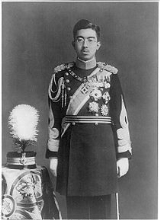
Hirohito

 
Hirohito

   Email Print
   Bookmark   Link


Hirohito


, also known as , (29 April 1901 – 7 January 1989) was the 124th Emperor
Emperor of Japan

The of Japan is the symbol of the state and of the unity of the Japanese people. He is the head of the Imperial House of Japan. Under Japan's present constitution, the Emperor is the "symbol of the state and the unity of the people," and is a ceremonial figurehead in a constitutional monarchy ....
 of Japan
Japan

Japan is an island country in East Asia. Located in the Pacific Ocean, it lies to the east of the Sea of Japan, People's Republic of China, North Korea, South Korea and Russia, stretching from the Sea of Okhotsk in the north to the East China Sea and Taiwan in the south....
 according to the traditional order, reigning from 25 December 1926 until his death in 1989.

Although better known outside of Japan by his personal name Hirohito, he is now referred to exclusively by his posthumous name Emperor Showa in Japan and increasingly by scholars outside Japan. The word Showa is the name of the era
Japanese era name

The Japanese era calendar scheme is a common calendar scheme used in Japan, which identifies a year by the combination of the and the year number within the era....
 that corresponded with the Emperor's reign, and was made the Emperor's own name upon his death
Posthumous name

A posthumous name is an honorary name given to royalty, nobles, and sometimes others, in some cultures after the person's death. The posthumous name is commonly used when naming royalty of Table of Chinese monarchs, List of Korean monarchs, Vietnam and emperors of Japan....
.

The Showa era was the longest reign of any historical Japanese emperor, encompassing a period of tremendous change in Japanese society.


Discussion
Ask a question about 'Hirohito'
Start a new discussion about 'Hirohito'
Answer questions from other users
Full Discussion Forum


Quotations


To strive for the common prosperity and happiness of all nations as well as the security and well-being of Our subjects is the solemn obligation which has been handed down by Our Imperial Ancestors and which lies close to Our heart.

Unite your total strength, to be devoted to construction for the future. Cultivate the ways of rectitude, foster nobility of spirit, and work with resolution — so that you may enhance the innate glory of the Imperial State and keep pace with the progress of the world.


Encyclopedia


, also known as , (29 April 1901 – 7 January 1989) was the 124th Emperor
Emperor of Japan

The of Japan is the symbol of the state and of the unity of the Japanese people. He is the head of the Imperial House of Japan. Under Japan's present constitution, the Emperor is the "symbol of the state and the unity of the people," and is a ceremonial figurehead in a constitutional monarchy ....
 of Japan
Japan

Japan is an island country in East Asia. Located in the Pacific Ocean, it lies to the east of the Sea of Japan, People's Republic of China, North Korea, South Korea and Russia, stretching from the Sea of Okhotsk in the north to the East China Sea and Taiwan in the south....
 according to the traditional order, reigning from 25 December 1926 until his death in 1989.

Although better known outside of Japan by his personal name Hirohito, he is now referred to exclusively by his posthumous name Emperor Showa in Japan and increasingly by scholars outside Japan. The word Showa is the name of the era
Japanese era name

The Japanese era calendar scheme is a common calendar scheme used in Japan, which identifies a year by the combination of the and the year number within the era....
 that corresponded with the Emperor's reign, and was made the Emperor's own name upon his death
Posthumous name

A posthumous name is an honorary name given to royalty, nobles, and sometimes others, in some cultures after the person's death. The posthumous name is commonly used when naming royalty of Table of Chinese monarchs, List of Korean monarchs, Vietnam and emperors of Japan....
.

The Showa era was the longest reign of any historical Japanese emperor, encompassing a period of tremendous change in Japanese society. At the start of his reign, Japan was still a fairly rural country with a limited industrial base. Japan's militarization in the 1930s eventually led to Japan's involvement in World War II
World War II

World War II, or the Second World War , was a global military conflict which involved a Participants in World War II, including all of the great powers, organised into two opposing military alliances: the Allies of World War II and the Axis powers....
. After the war ended with the unconditional surrender
Unconditional surrender

Unconditional surrender is a surrender without conditions, except for those provided by international law. Announcing that only unconditional surrender is acceptable puts psychological pressure on a weaker adversary....
 of Japan, the Emperor cooperated with the reorganization of the Japanese state during the occupation of Japan, and lived to see Japan becoming a highly urbanized democracy
Democracy

Democracy is a form of government in which power is held directly or indirectly by citizens under a free electoral system. It is derived from the Greek language d?????at?a , "popular government" which was coined from d???? , "people" and ???t?? , "rule, strength" in the middle of the 5th-4th century BC to denote the political syst...
 and one of the industrial and technological powerhouses of the world.

Early life

Born in the Aoyama Palace in Tokyo
Tokyo

, officially , is one of the 47 prefectures of Japan of Japan and located on the eastern side of the main island Honshu. The twenty-three special wards of Tokyo, each governed as a city, cover the area that was once the Tokyo City in the eastern part of the prefecture, and total over 8 million people....
, Prince Hirohito was the first son of Crown Prince
Crown Prince

A Crown Prince or Crown Princess is the heir apparent to the throne in a royal or imperial monarchy. The wife of a crown prince is also titled crown princess....
 Yoshihito (the future Emperor Taisho
Emperor Taisho

The was the 123rd Emperor of Japan, according to the traditional order of succession, reigning from July 30, 1912, until his death in 1926.The Emperor?s personal name was ....
) and Crown Princess Sadako (the future Empress Teimei). His childhood title was . He became heir apparent upon the death of his grandfather, Emperor Meiji
Emperor Meiji

The or Meiji the Great was the 122nd Emperor of Japan of Japan according to the traditional order of succession, reigning from 3 February 1867 until his death....
, on July 30, 1912. He was formally installed as Crown Prince in November 2, 1916; but an investiture ceremony was not strictly necessary to confirm this status as heir to the throne.

Prince Hirohito attended the boy's department of Gakushuin
Gakushuin

File:Gakushuin in 1933.JPGThe or Peers School is an educational institution founded in Tokyo in 1877, during the Meiji period, for the education of the children of the Kazoku, though it eventually also opened its doors to the offspring of extremely wealthy commoners....
 Peers' School from 1908 to 1914 and then a special institute for the crown prince (Togu-gogakumonsho) from 1914 to 1921. In 1921, Prince Hirohito took a six month tour of Europe
Europe

Europe is, conventionally, one of the world's seven continents. Comprising the westernmost peninsula of Eurasia, Europe is generally divided from Asia to its east by the water divide of the Ural Mountains, the Ural , the Caspian Sea, and by the Caucasus Mountains to the southeast....
, including the United Kingdom
United Kingdom

The United Kingdom of Great Britain and Northern Ireland, commonly known as the United Kingdom , the UK or Britain,is a sovereign state located off the northwestern coast of continental Europe....
, France
France

France , officially the French Republic , is a country whose Metropolitan France is located in Western Europe and that also comprises various Overseas departments and territories of France....
, Italy
Italy

Italy , officially the Italian Republic , is a country located on the Italian Peninsula in Southern Europe and on the two largest islands in the Mediterranean Sea, Sicily and Sardinia....
, the Netherlands and Belgium
Belgium

* A small German-speaking Community of Belgium exists in eastern Wallonia. Belgium's linguistic diversity and related political and cultural conflicts are reflected in the history of Belgium and a complex Communities and regions of Belgium....
, becoming the first Japanese crown prince to travel abroad. After his return to Japan, he became Regent
Regent

A regent, from the Latin regens "reigning", is a person selected to act as head of state because the ruler is a minor, not present or debilitated....
 of Japan
Japan

Japan is an island country in East Asia. Located in the Pacific Ocean, it lies to the east of the Sea of Japan, People's Republic of China, North Korea, South Korea and Russia, stretching from the Sea of Okhotsk in the north to the East China Sea and Taiwan in the south....
 on November 29, 1921, in place of his ailing father who was affected by a mental illness.

During Prince Hirohito's regency, a number of important events occurred:

In the Four-Power Treaty
Four-Power Treaty

The was a treaty signed by the United States, Great Britain, France and Japan at the Washington Naval Conference on 13 December 1921. It was partly a follow-on to the Lansing-Ishii Agreement, signed between the US and Japan....
 on Insular Possessions signed on December 13, 1921, Japan, the United States, Britain and France agreed to recognize the status quo in the Pacific, and Japan and Britain agreed to terminate formally the Anglo-Japanese Alliance
Anglo-Japanese Alliance

The first was signed in London at what is now the , on January 30 1902, by Henry Petty-Fitzmaurice, 5th Marquess of Lansdowne and Hayashi Tadasu . A diplomatic milestone for its ending of Britain's splendid isolation, the alliance was renewed and extended in scope twice, in 1905 and 1911, before its demise in 1921....
. The Washington Naval Treaty
Washington Naval Treaty

The Washington Naval Treaty, also known as the Five-Power Treaty, limited the naval armaments of its five signatories: the United States of America, the British Empire, the Empire of Japan, the French Third Republic, and the Kingdom of Italy ....
 was signed on February 6, 1922. Japan completed withdrawal of troops from the Siberian Intervention
Siberian Intervention

The of 1918?1922 was the dispatch of troops of the Entente powers to the Russian Primorsky Krai as part of a Allied intervention in the Russian Civil War to support White Russian forces against the Bolshevik Red Army during the Russian Civil War....
 on August 28, 1922. The Great Kanto earthquake devastated Tokyo on September 1, 1923. The General Election Law
General Election Law

The was a law passed in Taisho period Japan, extending suffrage to all males aged 25 and over. It was proposed by the Kenseito political party and it was passed by the Diet of Japan on 5 May 1925....
 was passed on May 5, 1925, giving all men above age 25 the right to vote.

Marriage and issue


Prince Hirohito married his distant cousin Princess Nagako Kuni (the future Empress Kojun
Empress Kojun

, also known as , was Queen consort of Hirohito of Japan. Born , she was the mother of the present Emperor . Her posthumous name, Kojun, means "fragrant purity"....
), the eldest daughter of Prince Kuni Kuniyoshi
Prince Kuni Kuniyoshi

was a member of the Imperial Household of Japan and a Field Marshal in the Imperial Japanese Army during the Meiji period and Taisho periods. He was the father of Empress Kojun , and therefore, the maternal grandfather of the present emperor of Japan, Akihito....
, on January 26, 1924. They had two sons and five daughters:

  1. Princess Shigeko, childhood appellation , December 9, 1925–July 23, 1961; m. October 10, 1943 Prince Higashikuni Morihiro
    Higashikuni Morihiro

    , formerly was a member of a oke of the Imperial Household of Japan and husband of the Emperor Hirohito's eldest daughter....
     (May 6, 1916 — February 1, 1969), the eldest son of Prince Higashikuni Naruhiko
    Prince Higashikuni

    was the 43rd Prime Minister of Japan from August 17, 1945 to October 9, 1945 for a period of 54 days. An uncle of Hirohito twice over, Prince Higashikuni was the only member of the Imperial Household of Japan to head a cabinet....
     and his wife, Princess Toshiko, the eighth daughter of Emperor Meiji
    Emperor Meiji

    The or Meiji the Great was the 122nd Emperor of Japan of Japan according to the traditional order of succession, reigning from 3 February 1867 until his death....
    ; lost status as imperial family members, October 14, 1947;
  2. Princess Sachiko, childhood appellation , September 10, 1927–March 8, 1928;
  3. Princess Kazuko, childhood appellation , September 30, 1929–May 28, 1989; m. May 5, 1950 Takatsukasa Toshimichi
    Takatsukasa Toshimichi

    , son of duke Takatsukasa Nobusuke, was a Japanese researcher of trains. He worked at TEI Park, a museum in Tokyo. He married the third daughter of Hirohito, Princess Kazuko; they adopted a son from Ogyu-Matsudaira, Takatsukasa Naotake....
     (August 26, 1923 — January 27, 1966), eldest son of Nobusuke
    Takatsukasa Nobusuke

    Duke , son of Takatsukasa Hiromichi, was a Japanese politician of the Meiji period who served as a member of House of Peers in the Diet of Japan....
     [peer]; and adopted a son Naotake
    Takatsukasa Naotake

    , adopted son of Takatsukasa Toshimichi, was a Japanese entrepreneur. He graduated from Keio University.References * Japanese Wikipedia...
    .
  4. Princess Atsuko, childhood appellation , b. March 7, 1931; m. October 10, 1952 Ikeda Takamasa (b. October 21, 1927), eldest son of former Marquis Nobumasa Ikeda;
  5. Crown Prince Akihito
    Akihito

    is the current of Japan, and the 125th Emperor according to Japan's list of Emperors of Japan. He acceded to the throne in 1989, and is the List of longest reigning current monarchs monarch or lifelong leader....
    , childhood appellation became the present Emperor of Japan
    Emperor of Japan

    The of Japan is the symbol of the state and of the unity of the Japanese people. He is the head of the Imperial House of Japan. Under Japan's present constitution, the Emperor is the "symbol of the state and the unity of the people," and is a ceremonial figurehead in a constitutional monarchy ....
    , b. December 23, 1933; m. April 10, 1959 Shoda Michiko
    Empress Michiko of Japan

    Empress Michiko of Japan, formerly and later the Crown Princess of Japan , is the wife and consort of the reigning Emperor of Japan, Emperor Emperor Akihito....
     (the present Empress of Japan, b. October 20, 1934), elder daughter of Shoda Hidesaburo, former president and chairman of Nisshin Flour Milling Company;
  6. Prince Masahito
    Prince Hitachi

    is a member of the Imperial Household of Japan and the younger brother of the current reigning Emperor, Akihito. The prince is the second son and sixth born child of Emperor Emperor Showa and Empress Kojun....
    , childhood appellation , b. November 28, 1935, titled since October 1, 1964; m. September 30, 1964 Tsugaru Hanako (b. July 19, 1940), fourth daughter of former Count Tsugaru Yoshitaka;
  7. Princess Takako, childhood appellation , b. March 3, 1939; m. March 3, 1960 Shimazu Hisanaga, son of former Count Shimazu Hisanori and has a son Yoshihisa.
The daughters who lived to adulthood left the imperial family as a result of the American reforms of the Japanese imperial household in October 1947 (in the case of Princess Higashikuni) or under the terms of the Imperial Household Law
Imperial Household Law

is a statute in Japanese law that governs the line of imperial succession, the membership of the Imperial House of Japan, and several other matters pertaining to the administration of the Imperial Household....
 at the moment of their subsequent marriages (in the cases of Princesses Kazuko, Atsuko, and Takako).

Ascension

On December 25, 1926, Hirohito assumed the throne upon the death of his father Yoshihito; and the Crown Prince was said to have received the succession (‘‘senso’’). The Taisho era
Taisho period

The , or Taisho era, is a period in the history of Japan dating from July 30, 1912 to December 25, 1926, coinciding with the reign of the Taisho Emperor....
 ceased at once and a new era, the Showa era
Showa period

The , or Showa era, is the period of Japanese history corresponding to the reign of Emperor Showa , from December 25, 1926 to January 7, 1989. In his coronation message which was read to the people and to the army, the newly enthroned emperor referenced this Japanese era name or nengo: "I have visited the battlefields of the Great War in...
 (Enlightened Peace), was proclaimed. The deceased Emperor was posthumously renamed Emperor Taisho
Emperor Taisho

The was the 123rd Emperor of Japan, according to the traditional order of succession, reigning from July 30, 1912, until his death in 1926.The Emperor?s personal name was ....
 a few days later. Following Japanese custom, the new Emperor was never referred
Naming taboo

Naming taboo is a cultural taboo against speaking or writing the given names of exalted persons in China and neighboring nations in the ancient Chinese cultural sphere....
 to by his given name, but rather was referred to simply as , which may be shortened to . In writing, the emperor was also referred to formally as .

In November 1928, the emperor's ascension was confirmed in ceremonies (sokui) which are conventionally identified as "enthronement" and "coronation" (Showa no tairei-shiki); but this formal event would have been more accurately described as a public confirmation that his Imperial Majesty possesses the Japanese Imperial Regalia
Imperial Regalia

The Imperial Regalia, insignia, or crown jewels are the regalia of the Emperors and Monarchs of the Holy Roman Empire. The most important parts are the Imperial Crown of the Holy Roman Empire, the Holy_Lance#Vienna_lance_ and the Imperial Sword....
, also called the Three Sacred Treasures, which have been handed down through centuries.

Early reign

The first part of Hirohito's reign as sovereign took place against a background of financial crisis and increasing military power within the government, through both legal and extralegal means. The Imperial Japanese Army
Imperial Japanese Army

The Imperial Japanese Army , or literally Army of Empire of Greater Japan was the official ground based armed force of Imperial Japan from 1867 to 1945....
 and Imperial Japanese Navy
Imperial Japanese Navy

The origins of the Imperial Japanese Navy trace back to early interactions with nations on the Asia, beginning in the early history of Japan#Feudal Japan and reaching a peak of activity during the 16th and 17th centuries at a time of cultural diffusion with European power during the Age of Discovery....
 had held veto
Veto

A veto, Latin for "I forbid", is used to denote that a certain party has the right to stop unilaterally a piece of legislation. In practice, the veto can be absolute or limited ...
 power over the formation of cabinets since 1900, and between 1921 and 1944 there were no fewer than 64 incidents of political violence.

Hirohito narrowly missed assassination by a hand grenade
Hand grenade

A hand grenade is an anti-personnel weapon that explodes a short time after release. The word "grenade" is derived from the French word for pomegranate, as shrapnel reminded soldiers of the seeds....
 thrown by a Korean nationalist in Tokyo on January 9, 1932 in the Sakuradamon Incident
Sakuradamon Incident

The Sakuradamon Incident or Patriotic Deed of Lee Bong-chang was an assassination attempt against Emperor Hirohito of the Empire of Japan by a Korean independence activist, Lee Bong-chang in Tokyo on 9 January 1932....
.

Another notable case was the assassination of moderate Prime Minister
Prime Minister of Japan

The is the usual English-language term used for the head of government of Japan, although the literal translation of the Japanese name for the office is Prime Minister of the Cabinet....
 Inukai Tsuyoshi
Inukai Tsuyoshi

, was a Japanese politician and the 29th Prime Minister of Japan from 13 December 1931 to 15 May 1932....
 in 1932, which marked the end of civilian control of the military
Civilian control of the military

Civilian control of the military is a doctrine in military science and political science that places ultimate command responsibility for a Country military strategy Group decision making in the hands of the civilian politics leadership, rather than professional military Officer ....
. This was followed by an attempted military coup in February 1936, the February 26 incident, mounted by junior Army officers of the Kodoha faction who had the sympathy of many high-ranking officers including Prince Chichibu
Prince Chichibu

, also known as Prince Yasuhito, was the second son of Emperor Taisho and a younger brother of the Showa Emperor. As a member of the Imperial Household of Japan, he was the patron of several sporting, medical, and international exchange organizations....
 (Yasuhito), one of the Emperor's brothers. This revolt was occasioned by a loss of ground by the militarist faction in Diet
Diet of Japan

The is Japan's bicameral legislature. It is composed of a lower house, called the House of Representatives of Japan, and an upper house, called the House of Councillors....
 elections. The coup resulted in the murder of a number of high government and Army officials.

When Chief Aide-de-camp
Aide-de-camp to the Emperor of Japan

In Japan, the is a special Officer whose primary duties are to report military affairs to the Emperor and act as a close attendant . From 1896 through to 1945, a small number of army and naval aides-de-camp were supplied to the Emperor due to his increased status and the risks to him during wartime....
 Shigeru Honjo
Shigeru Honjo

General Baron was a general in the Imperial Japanese Army during the early period of the Second Sino-Japanese War. He was considered an ardent follower of Sadao Araki's doctrines....
 informed him of the revolt, the Emperor immediately ordered that it be put down and referred to the officers as "rebels" (boto). Shortly thereafter, he ordered Army Minister
Ministry of War of Japan

The , more popularly known as the Ministry of War of Japan was the Cabinet -level ministry from 1872-1945 in charge with administration of the Imperial Japanese Army ....
 Yoshiyuki Kawashima
Yoshiyuki Kawashima

was a general in the Imperial Japanese Army and Ministry of War of Japan in the 1930s....
 to suppress the rebellion within the hour, and he asked reports from Honjo every thirty minutes. The next day, when told by Honjo that little progress was being made by the high command in quashing the rebels, the emperor told him "I Myself, will lead the Konoe Division
Imperial Guard of Japan

The Japanese is an organization which is dedicated to protection of the Emperor of Japan and his family, palaces and other imperial properties. The Guard also served as a unit within the Imperial Japanese Army....
 and subdue them." The rebellion was suppressed following his orders on February 29.

The Sino-Japanese War and World War II


Entering World War II

Prior to World War II
World War II

World War II, or the Second World War , was a global military conflict which involved a Participants in World War II, including all of the great powers, organised into two opposing military alliances: the Allies of World War II and the Axis powers....
, Japan invaded Manchuria
Manchuria

Manchuria is a historical name given to a vast geographic region in northeast Asia. Depending on the definition of its extent, Manchuria either falls entirely within People's Republic of China, or is divided between China and Russia....
 in 1931 and the rest of China
China

China is a Culture of China, an ancient civilization, and, depending on perspective, a national or multinational entity extending over a large area in East Asia....
 in 1937 (the Second Sino-Japanese War
Second Sino-Japanese War

The Second Sino-Japanese War was the largest Asian war in the twentieth century. From 1937 to 1941, it was fought between the Republic of China and the Empire of Japan....
). The primary sources reveal that Emperor Showa never really had any objection to the invasion of China in 1937, which was recommended to him by his chiefs of staff and prime minister Fumimaro Konoe
Fumimaro Konoe

Prince Fumimaro Konoe was a Japanese politician and the 34th , 38th and 39th Prime Minister of Japan....
. His main concern seems to have been the possibility of an attack by the Soviets in the north. His questions to his chief of staff, Prince Kan'in, and minister of the army, Hajime Sugiyama
Hajime Sugiyama

was a Field Marshal who served as successively as Imperial Army General Staff Office, and Ministry of War of Japan in the Imperial Japanese Army during World War II between 1937 and 1944....
, were mostly about the time it could take to crush the Chinese resistance.

According to Akira Fujiwara, the Emperor personally ratified the proposal by the Japanese Army to remove the constraints of international law on the treatment of Chinese prisoners on August 5. Moreover, the works of Yoshiaki Yoshimi
Yoshiaki Yoshimi

is a professor of modern Japanese history at Chuo University in Tokyo. Yoshimi is a founder member of the Center for Research and Documentation on Japan's war responsibility....
 and Seiya Matsuno show that the Emperor authorized, by specific orders (rinsanmei), the use of chemical weapons against the Chinese. During the invasion of Wuhan
Wuhan

is the capital of Hubei province, and is the most populous city in central People's Republic of China. It lies at the east of Jianghan Plain, and the intersection of the middle reaches of the Yangtze River and Han River ....
, from August to October 1938, the emperor authorized the use of toxic gas on 375 separate occasions, despite the resolution adopted by the League of Nations
League of Nations

The League of Nations was an inter-governmental organization founded as a result of the Treaty of Versailles in 1919?1920. At its greatest extent from 28 September 1934 to 23 February 1935, it had 58 members....
 on May 14 condemning the use of toxic gas by the Japanese Army.

During World War II
World War II

World War II, or the Second World War , was a global military conflict which involved a Participants in World War II, including all of the great powers, organised into two opposing military alliances: the Allies of World War II and the Axis powers....
, ostensibly under Emperor Showa's leadership, Japan formed alliances with Nazi Germany
Nazi Germany

Nazi Germany and the Third Reich are the colloquial English names for Germany under the regime of Adolf Hitler and the Nazi Party , which established a Totalitarianism dictatorship that existed from 1933 to 1945....
 and Fascist Italy
Kingdom of Italy (1861–1946)

The Kingdom of Italy was a state forged in 1861 by the Italian unification under the influence of the Kingdom of Sardinia; it existed until 1946 when the Italians opted for a republican constitution....
, forming the Axis Powers
Axis Powers

The Axis powers were those countries that were opposed to the Allies of World War II during World War II. The three major Axis powers - Nazi Germany, Kingdom of Italy , and Empire of Japan - were part of a military alliance on the signing of the Tripartite Pact in September 1940, which officially founded the Axis powers....
. Some historians believe the Emperor, who had a predilection for the United Kingdom
British Empire

The British Empire comprised the dominions, Crown colony, protectorates, League of Nations mandate, and other Dependent territory ruled or administered by the United Kingdom , that had originated with the overseas colonies and trading posts established by England in the late 16th and early 17th centuries....
, might have been reluctant to form this alliance. In July 1939, the Emperor quarreled with one of his brothers, Prince Chichibu
Prince Chichibu

, also known as Prince Yasuhito, was the second son of Emperor Taisho and a younger brother of the Showa Emperor. As a member of the Imperial Household of Japan, he was the patron of several sporting, medical, and international exchange organizations....
, who was visiting him three times a week to support the treaty, and reprimanded the army minister Seishiro Itagaki, but then consented to the alliance after the success of the Wehrmacht
Wehrmacht

Wehrmacht was the name of the unified armed forces of Germany from 1935 to 1945. It consisted of the Heer , the Kriegsmarine and the Luftwaffe ....
 in Europe.

On September 4, 1941, the Japanese Cabinet met to consider war plans prepared by Imperial General Headquarters, and decided that:

The "objectives" to be obtained were clearly defined: a free hand to continue with the conquest of China
China

China is a Culture of China, an ancient civilization, and, depending on perspective, a national or multinational entity extending over a large area in East Asia....
 and Southeast Asia
Southeast Asia

Southeast Asia or Southeastern Asia is a subregion of Asia, consisting of the countries that are geographically south of China, east of India and north of Australia....
, no increase in US or British military forces in the region, and cooperation by the West "in the acquisition of goods needed by our Empire."

On September 5, Prime Minister Konoe informally submitted a draft of the decision to the emperor, just one day in advance of the Imperial Conference at which it would be formally implemented. On this evening, Emperor Showa had a meeting with the chief of staff of the army, Sugiyama, chief of staff of the navy, Osami Nagano
Osami Nagano

Fleet Admiral was a career navy Officer in the Imperial Japanese Navy from 1934. More of an administrative officer than a sea commander, he was Chief of the Imperial Japanese Navy General Staff for the majority of World War II, from April 1941 to February 1944....
, and Prime Minister Konoe. The emperor questioned Sugiyama about the chances of success of an open war with the Occident. As Sugiyama answered positively, the Emperor scolded him:

Chief of Naval General Staff Admiral Nagano, a former Navy Minister and vastly experienced, later told a trusted colleague, "I have never seen the emperor reprimand us in such a manner, his face turning red and raising his voice." According to the traditional view, Emperor Showa was deeply concerned by the decision to place "war preparations first and diplomatic negotiations second," and he announced his intention to break with tradition. At the Imperial Conference on the following day, the emperor directly questioned the chiefs of the Army and Navy general staffs, which was quite an unprecedented action.

Nevertheless, all speakers at the Imperial Conference were united in favor of war rather than diplomacy. Baron Yoshimichi Hara
Yoshimichi Hara

Yoshimichi Hara was a Japanese statesman and the president of the Japanese privy council during World War II, from June 1940 until his death. Hara was always reluctant to use military force....
, President of the Imperial Council and the Emperor's representative, then questioned them closely, producing replies to the effect that war would only be considered as a last resort from some, and silence from others.

At this point, the emperor astonished all present by addressing the conference personally, and in breaking the tradition of Imperial silence left his advisors "struck with awe." (Prime Minister Konoe's description of the event.) Emperor Showa stressed the need for peaceful resolution of international problems, expressed regret at his ministers' failure to respond to Baron Hara's probings, and recited a poem written by his grandfather, Emperor Meiji which, he said, he had read "over and over again":

Recovering from their shock, the ministers hastened to express their profound wish to explore all possible peaceful avenues. The Emperor's presentation was in line with his practical role as leader of the Shinto
Shinto

is the former state religion of Japan and remains the most common name for the nation's non-Buddhist ethnic religion practices. It was formed from disparate local mythologies, beginning with the Kojiki of 712, into an imperial cult called State Shinto that solidified in the Meiji period....
 religion.

At this time, Army Imperial Headquarters was continually communicating with the Imperial household in detail about the military situation. On October 8, Sugiyama signed a 47 page report to the emperor (sojoan) outlining in minute detail plans for the advance in Southeast Asia. During the third week of October, Sugiyama gave the emperor a 51 page document, "Materials in Reply to the Throne," about the operational outlook for the war.

As war preparations continued, Prime Minister Konoe found himself more and more isolated and gave his demission on October 16. He justified himself to his chief cabinet secretary, Kenji Tomita :

The army and the navy recommended the candidacy of Prince Higashikuni
Prince Higashikuni

was the 43rd Prime Minister of Japan from August 17, 1945 to October 9, 1945 for a period of 54 days. An uncle of Hirohito twice over, Prince Higashikuni was the only member of the Imperial Household of Japan to head a cabinet....
, one of the emperor's uncles. According to the Showa "Monologue," written after the war, the Emperor then said that if the war were to begin while a member of the imperial house was prime minister, the imperial house would have to carry the responsibility and this he opposed.

Instead, the emperor chose the hard-line General Hideki Tojo
Hideki Tojo

Hideki Tojo was a general in the Imperial Japanese Army and the 40th Prime Minister of Japan during much of World War II, from 18 October 1941 to 22 July 1944....
, who was known for his devotion to the imperial institution, and asked him to make a policy review of what had been sanctioned by the imperial conferences. On November 2, Tojo, Sugiyama and Nagano reported to the emperor that the review of eleven points had been in vain. Emperor Showa gave his consent to the war and then asked: "Are you going to provide justification for the war?"

On November 3, Nagano explained in detail the Pearl Harbor attack plan to the emperor. On November 5, Emperor Showa approved in imperial conference the operations plan for a war against the Occident and had many meetings with the military and Tojo until the end of the month. On December 1, an imperial conference sanctioned the "War against the United States, United Kingdom and the Kingdom of the Netherlands." On December 8 (December 7 in Hawaii) 1941, in simultaneous attacks, Japanese forces struck at the US Fleet in Pearl Harbor
Attack on Pearl Harbor

The attack on Pearl Harbor was a surprise military strike conducted by the Empire of Japan Imperial Japanese Navy against the United States' naval base at Pearl Harbor, Hawaii, on the morning of Sunday, December 7, 1941, later resulting in the United States becoming militarily involved in World War II....
 and began the invasion of Malaysia
Malaysia

Malaysia is a federation that consists of States of Malaysia in Southeast Asia with a total landmass of . The capital city is Kuala Lumpur, while Putrajaya is the seat of the federal government....
.

With the nation fully committed to the war, Emperor Showa took a keen interest in military progress and sought to boost morale. According to Akira Yamada and Akira Fujiwara, the emperor made major interventions in some military operations. For example, he pressed Sugiyama four times, on January 13 and 21 and February 9 and 26, to increase troop strength and launch an attack on Bataan
Bataan

Bataan is a Provinces of the Philippines of the Philippines occupying the whole of Bataan Peninsula on Luzon. The province is part of the Central Luzon Regions of the Philippines....
. On February 9, March 19 and May 29, the emperor ordered the Army Chief of staff to examine the possibilities for an attack on Chungking, which led to Operation Gogo.

As the tide of war gradually began to turn (around late 1942 and early 1943), some people argue that the flow of information to the palace gradually began to bear less and less relation to reality, while others suggest that the emperor worked closely with Prime Minister Tojo, continued to be well and accurately briefed by the military, and knew Japan's military position precisely right up to the point of surrender. The chief of staff of the General Affairs section of the Prime Minister's office, Shuichi Inada, remarked to Tojo's private secretary, Sadao Akamatsu: In the first six months of war, all the major engagements had been victories. As the tide turned in the summer of 1942 with the battle of Midway
Battle of Midway

The Battle of Midway was a major naval battle, widely regarded as the most important of the Pacific Theater of Operations of World War II. It took place from 4 June to 7 June 1942, approximately one month after the Battle of the Coral Sea and exactly six months after Empire of Japan's attack on Pearl Harbor....
 and the landing of the American forces on Guadalcanal
Guadalcanal

Guadalcanal is a 2,510-square mile island in the Pacific Ocean and a province of the Solomon Islands. The World War II Guadalcanal Campaign happened on and around the island....
 and Tulagi
Tulagi

Tulagi, less commonly Tulaghi, is a small island in the Solomon Islands, just off the south coast of Florida Island. The town of the same name on the island was the capital of the Solomon Islands from 1896 to 1942, and is today the capital of the Central Province, Solomon Islands....
 in August, the Emperor recognized the potential danger and pushed the navy and the army for greater efforts. When informed in August 1943 by Sugiyama
Sugiyama

Sugiyama is a Japanese surname, which may refer to:* Ai Sugiyama, Japanese professional tennis player* Hajime Sugiyama, a World War II field marshal...
 that the American advance through the Solomon islands
Solomon Islands

For the group of islands rather than the nation, see Solomon Islands .The Solomon Islands is a country in Melanesia, east of Papua New Guinea, consisting of nearly one thousand islands....
 could not be stopped, the emperor asked his chief of staff to consider other places to attack : "When and where on are you ever going to put up a good fight? And when are you ever going to fight a decisive battle?" On August 24, the emperor reprimanded Nagano for the defeat of Bela Bela
Bela Bela

Bela Bela, previously known as Warmbad is a town situated on geo-thermic hot springs in the Limpopo Province of South Africa. Bela Bela, the Tswana name for the hot springs, produces 22,000 litres per hour at 50?C....
 and on September 11, he ordered Sugiyama to work with the Navy to implement better military preparation and give adequate supply to soldiers fighting in Rabaul
Rabaul

Rabaul is a township in East New Britain province, Papua New Guinea. The town was the provincial capital and most important settlement in the province until it was destroyed in 1994 by falling ash of a volcanic eruption....
.

Throughout the following years, the sequence of drawn and then decisively lost engagements was reported to the public as a series of great victories. Only gradually did it become apparent to the people in the home islands that the situation was very grim. U.S. air raids on the cities of Japan starting in 1944 made a mockery of the unending tales of victory. Later that year, with the downfall of Hideki Tojo's government, two other prime ministers were appointed to continue the war effort, Kuniaki Koiso
Kuniaki Koiso

was a general in the Imperial Japanese Army, Governor-General of Korea and 41st Prime Minister of Japan from 22 July 1944 to 7 April 1945.Koiso was born in Utsunomiya, Tochigi Prefecture as the son of an ex-samurai family....
 and Kantaro Suzuki
Kantaro Suzuki

Baron was an admiral in the Imperial Japanese Navy and 42nd Prime Minister of Japan from 7 April 1945 to 17 August 1945.Suzuki was a key voice in favor of Japan's acceptance of the Potsdam Declaration and full surrender to the Allied Powers, thus ending World War II....
— each with the formal approval of the emperor. Both were unsuccessful and Japan was nearing defeat.

Last days of the war

In early 1945, in the wake of the loss of Leyte
Battle of Leyte

The Battle of Leyte in the Pacific War of World War II was the invasion and conquest of Leyte in the Philippines by Military history of the United States during World War II and Military history of the Philippines during World War II guerrilla warfare forces under the command of General Douglas MacArthur, who fought against the Imperial Japa...
, Emperor Showa began a series of individual meetings with senior government officials to consider the progress of the war. All but ex-Prime Minister Fumimaro Konoe advised continuing the war. Konoe feared a communist
Communism

Communism is a socioeconomic structure and political ideology that promotes the establishment of an egalitarianism, classlessness, stateless society based on common ownership and control of the means of production and property in general....
 revolution even more than defeat in war and urged a negotiated surrender. In February 1945, during the first private audience with the emperor which he had been allowed in three years, Konoe advised Hirohito to begin negotiations to end World War II
World War II

World War II, or the Second World War , was a global military conflict which involved a Participants in World War II, including all of the great powers, organised into two opposing military alliances: the Allies of World War II and the Axis powers....
. According to Grand Chamberlain Hisanori Fujita, the emperor, still looking for a tennozan (a great victory) in order to provide a stronger bargaining position, firmly rejected Konoe's recommendation.

With each passing week a great victory became less likely. In April the Soviet Union
Soviet Union

The Union of Soviet Socialist Republics was a Constitution of the Soviet Union socialist state that existed in Eurasia from 1922 to 1991.The name is a translation of the , romanization of Russian Soyuz Sovetskikh Sotsialisticheskikh Respublik, abbreviated ????, SSSR....
 issued notice that it would not renew its neutrality agreement. Japan's ally Germany
Germany

Germany , officially the Federal Republic of Germany , is a country in Central Europe. It is bordered to the north by the North Sea, Denmark, and the Baltic Sea; to the east by Poland and the Czech Republic; to the south by Austria and Switzerland; and to the west by France, Luxembourg, Belgium, and the Netherlands....
 surrendered in early May 1945. In June, the cabinet reassessed the war strategy, only to decide more firmly than ever on a fight to the last man. This strategy was officially affirmed at a brief Imperial Council meeting, at which the emperor listened in stony-faced silence.

The following day, Lord Keeper of the Privy Seal
Lord Keeper of the Privy Seal of Japan

The was an administrative post not of cabinet rank in the government of the Empire of Japan. The Lord Keeper of the Privy Seal was responsible for keeping the Privy Seal of Japan and State Seal of Japan....
 Koichi Kido
Koichi Kido

Marquis served as Lord Keeper of the Privy Seal of Japan from 1940 to 1945, and was the closest advisor to Hirohito throughout World War II....
 prepared a draft document which summarized the hopeless military situation and proposed a negotiated settlement. According to some commentators, the Emperor privately approved of it and authorized Kido to circulate it discreetly amongst less hawkish cabinet members; others suggest that the Emperor was indecisive, and that the delay cost many tens of thousands of Japanese and Allied lives. Extremists in Japan were also calling for a death-before-dishonor mass suicide, modeled on the "47 Ronin
Forty-seven Ronin

The revenge of the , also known as the Forty-seven Samurai, the Ako vendetta, or the took place in Japan at the start of the eighteenth century....
" incident. By mid-June 1945, the cabinet had agreed to approach the Soviet Union to act as a mediator for a negotiated surrender, but not before Japan's bargaining position had been improved by repulse of the anticipated Allied invasion of mainland Japan.

On June 22, the Emperor met his ministers, saying "I desire that concrete plans to end the war, unhampered by existing policy, be speedily studied and that efforts be made to implement them." The attempt to negotiate a peace via the Soviet Union came to nothing. There was always the threat that extremists would carry out a coup or foment other violence. On July 26, 1945, the Allies issued the Potsdam Declaration
Potsdam Declaration

The Potsdam Declaration or the Proclamation Defining Terms for Japanese Surrender was a statement issued on July 26 for the surrender of Japanese forces, 1945, by United States President of the United States Harry S....
 demanding unconditional surrender
Unconditional surrender

Unconditional surrender is a surrender without conditions, except for those provided by international law. Announcing that only unconditional surrender is acceptable puts psychological pressure on a weaker adversary....
. The Japanese government council, the Big Six, considered that option and recommended to the emperor that it be accepted only if one to three conditions were agreed, including a guarantee of the emperor's continued position in Japanese society
Culture of Japan

The culture of Japan has evolved greatly over millennia, from the country's prehistoric Jomon culture to its contemporary hybrid culture, which combines influences from Asia, Europe and North America....
. The emperor decided not to surrender.

On August 9, 1945, following the atomic bombings of Hiroshima and Nagasaki
Atomic bombings of Hiroshima and Nagasaki

The atomic bombings of Hiroshima and Nagasaki were nuclear warfares near the end of World War II against the Empire of Japan by the United States at the executive order of President of the United States Harry S....
 and the Soviet declaration of war, Emperor Showa told Kido to "quickly control the situation" because "the Soviet Union has declared war and today began hostilities against us." On August 10, the cabinet drafted an "Imperial Rescript ending the War" following the emperor's indications that the declaration did not compromise any demand which prejudiced the prerogatives of His Majesty as a Sovereign Ruler.

On August 12, 1945, the Emperor informed the imperial family of his decision to surrender. One of his uncles, Prince Asaka
Prince Asaka

of Japan, was the founder of a oke of the Imperial Household of Japan and a career officer in the Imperial Japanese Army. A son-in-law of Emperor Meiji and an uncle-in-law of Emperor Showa , Prince Asaka was commander of Japanese forces in the final assault on Nanjing, then the capital city of Nationalist China in December 1937....
, asked whether the war would be continued if the kokutai
Kokutai

Kokutai is a politically loaded word in the Japanese language, translatable as "national identity; national essence; national character" or "national polity; body politic; national entity; basis for the Emperor of Japan's sovereignty; Japanese constitution"....
 (national polity) could not be preserved. The Emperor simply replied "of course." On August 14, the Suzuki government notified the Allies that it had accepted the Potsdam Declaration
Potsdam Declaration

The Potsdam Declaration or the Proclamation Defining Terms for Japanese Surrender was a statement issued on July 26 for the surrender of Japanese forces, 1945, by United States President of the United States Harry S....
. On August 15, a recording of the Emperor's surrender speech
Gyokuon-hoso

The , lit. "Jewel Voice Broadcast", was the radio broadcast in which Japan emperor Hirohito read out the , announcing to the Japanese people that the Japanese Government had accepted the Potsdam Declaration demanding the unconditional surrender of the Japanese military at the end of World War II....
 was broadcast over (the first time the emperor was heard on the radio by the Japanese people) the radio signifying the unconditional surrender of Japan's military forces (known as Gyokuon-hoso
Gyokuon-hoso

The , lit. "Jewel Voice Broadcast", was the radio broadcast in which Japan emperor Hirohito read out the , announcing to the Japanese people that the Japanese Government had accepted the Potsdam Declaration demanding the unconditional surrender of the Japanese military at the end of World War II....
).

Objecting to the surrender, die-hard army fanatics attempted a coup d'état
Coup d'état

A coup d??tat , often simply called a coup, is the sudden unconstitutional overthrow of a government by a part of the state establishment – usually the military – to replace the branch of the stricken government, either with another civil government or with a military government....
 by conducting a full military assault and takeover of the Imperial Palace. The physical recording of the surrender speech was hidden and preserved overnight, and the coup was quickly crushed on the Emperor's order.

The surrender speech noted that "the war situation has developed not necessarily to Japan's advantage" and ordered the Japanese to "endure the unendurable" in surrender. It was the first time the public had heard the Emperor's voice. He was deliberately vague, because the Emperor of Japan was not regarded merely as a human saying "We surrender to the Allies," but rather was viewed as the sacred symbol, embodiment, and leader of Japan; therefore, he was required to use a vague tone in order to preserve that mystique. Indeed, the formal, stilted Japanese used by the Emperor in the speech was not readily understood by many common Japanese. According to historian Richard Storry in A History of Modern Japan, the Emperor typically used "a form of language familiar only to the well-educated" and to the more traditional samurai
Samurai

is the term for the military nobility of Pre-industrial society Japan. According to translator William Scott Wilson: "In Chinese, the character ? was originally a verb meaning to wait upon or accompany a person in the upper ranks of society, and this is also true of the original term in Japanese, saburau....
 families.

The issue of the Emperor's responsibility for war crimes

Many people from countries once part of the Greater East Asia Co-Prosperity Sphere
Greater East Asia Co-Prosperity Sphere

The Greater East Asia Co-Prosperity Sphere was a concept created and promulgated during the Showa era by the government and military of the Empire of Japan which represented the desire to create a self-sufficient "bloc of Asian nations led by the Japanese and free of Western powers"....
 see Emperor Showa as responsible for the atrocities committed by the imperial forces in the Second Sino-Japanese War and in World War II
Japanese war crimes

Japanese war crimes occurred during the period of Japanese expansionism. Some of the incidents have also been described as an Asian Holocaust and Japanese war atrocities....
. Some feel that he, some members of the imperial family such as his brother Prince Chichibu
Prince Chichibu

, also known as Prince Yasuhito, was the second son of Emperor Taisho and a younger brother of the Showa Emperor. As a member of the Imperial Household of Japan, he was the patron of several sporting, medical, and international exchange organizations....
, his cousins Prince Takeda and Prince Fushimi
Prince Fushimi Hiroyasu

was a scion of the Imperial Household of Japan and was a career naval officer who served as Chief of staff of the Imperial Japanese Navy from 1932 to 1941....
, and his uncles Prince Kan'in, Prince Asaka
Prince Asaka

of Japan, was the founder of a oke of the Imperial Household of Japan and a career officer in the Imperial Japanese Army. A son-in-law of Emperor Meiji and an uncle-in-law of Emperor Showa , Prince Asaka was commander of Japanese forces in the final assault on Nanjing, then the capital city of Nationalist China in December 1937....
, and Prince Higashikuni, should have been tried for war crime
War crime

War crimes are "violations of the laws or customs of war"; including but not limited to "murder, the ill-treatment or deportation of civilian residents of an occupied territory to slave labor camps", "the murder or ill-treatment of prisoner of war", the killing of hostages, "the wanton destruction of cities, towns and villages, and any devast...
s. Because of this perception of responsibility for war crimes and lack of accountability, many Asians residing in countries that were subject to Japanese invasion, as well as others in nations that fought Japan, retain a hostile attitude towards the Japanese imperial family.

The issue of responsibility for war crimes usually involves a debate regarding how much real control the Emperor had over the Japanese military during the two wars. Officially, the imperial constitution, adopted under Emperor Meiji
Emperor Meiji

The or Meiji the Great was the 122nd Emperor of Japan of Japan according to the traditional order of succession, reigning from 3 February 1867 until his death....
, gave full power to the Emperor. Article 4 prescribed that, "The Emperor is the head of the Empire, combining in Himself the rights of sovereignty, and exercises them, according to the provisions of the present Constitution," while, according to article 6, "The Emperor gives sanction to laws and orders them to be promulgated and executed," and article 11, "The Emperor has the supreme command of the Army and the Navy." The Emperor was thus the leader of the Imperial General Headquarters
Imperial General Headquarters

The as part of the Supreme War Council was established in 1893 to coordinate efforts between the Imperial Japanese Army and Imperial Japanese Navy during wartime....
.

The view promoted by both the Japanese Imperial Palace and the American occupation forces immediately after World War II had Emperor Showa as a powerless figurehead
Figurehead (metaphor)

In politics, a figurehead, by metaphor with the carved figurehead at the prow of a sailing ship, is a person who holds an important title or office yet executes little actual power....
 behaving strictly according to protocol, while remaining at a distance from the decision-making processes.

Many historians such as Akira Fujiwara (Showa Tenno no Ju-go Nen Senso, 1991) and Peter Wetzler (Hirohito and War, 1998), based on the primary sources and the monumental work of Shiro Hara, have produced evidence suggesting that the Emperor worked through intermediaries to exercise a great deal of control over the military and was neither bellicose nor a pacifist, but an opportunist who governed in a pluralistic decision-making process. American historian Herbert Bix
Herbert P. Bix

Herbert P. Bix is the author of Hirohito and the Making of Modern Japan, an acclaimed account of the Japanese Emperor and the events which shaped modern Japanese imperialism....
 argues that Emperor Showa might have been the prime mover of most of the events of the two wars. Historians such as Bix, Fujiwara, Wetzler, and Akira Yamada recognize that the post-war view focusing on imperial conferences misses the importance of numerous "behind the chrysanthemum curtain" meetings where the real decisions were made between the emperor, his chiefs of staff, and the cabinet.

Primary sources, such as the "Sugiyama memo" and the diaries of Kido and Konoe, describe in detail the informal meetings Emperor Showa had with his chiefs of staff and ministers (e.g., Prince Fumimaro Konoe
Fumimaro Konoe

Prince Fumimaro Konoe was a Japanese politician and the 34th , 38th and 39th Prime Minister of Japan....
 had a very good firsthand view of the surrender events). These documents show that the Emperor was kept informed of all main military operations and that he frequently questioned his senior staff and asked for changes.

Post-war reign

Macarthur Hirohito
As the Emperor chose his uncle Prince Higashikuni as prime minister to assist the occupation, there were attempts by numerous leaders to have him put on trial for alleged war crimes. Many members of the imperial family, such as Princes Chichibu, Takamatsu and Higashikuni, pressured the Emperor to abdicate so that one of the Princes could serve as regent until Crown Prince Akihito
Akihito

is the current of Japan, and the 125th Emperor according to Japan's list of Emperors of Japan. He acceded to the throne in 1989, and is the List of longest reigning current monarchs monarch or lifelong leader....
 came of age. On February 27, 1946, the emperor's youngest brother, Prince Mikasa
Prince Mikasa

is the fourth and youngest son of Emperor Taisho and Empress Teimei. He is a younger brother of Hirohito and the only surviving paternal uncle of Emperor Akihito....
 (Takahito), even stood up in the privy council and indirectly urged the emperor to step down and accept responsibility for Japan's defeat. According to Minister of Welfare Ashida's diary, "Everyone seemed to ponder Mikasa's words. Never have I seen His Majesty's face so pale."

U.S. General Douglas MacArthur
Douglas MacArthur

General of the Army Douglas MacArthur, Order of the Bath was an United States General officer, United Nations general and Field Marshal of the Philippine Army....
 insisted that Emperor Showa retain the throne. MacArthur saw the emperor as a symbol of the continuity and cohesion of the Japanese people. Many historians criticize the decision to exonerate the Emperor and all members of the imperial family who were implicated in the war, such as Prince Chichibu
Prince Chichibu

, also known as Prince Yasuhito, was the second son of Emperor Taisho and a younger brother of the Showa Emperor. As a member of the Imperial Household of Japan, he was the patron of several sporting, medical, and international exchange organizations....
, Prince Asaka
Prince Asaka

of Japan, was the founder of a oke of the Imperial Household of Japan and a career officer in the Imperial Japanese Army. A son-in-law of Emperor Meiji and an uncle-in-law of Emperor Showa , Prince Asaka was commander of Japanese forces in the final assault on Nanjing, then the capital city of Nationalist China in December 1937....
, Prince Higashikuni and Prince Hiroyasu Fushimi, from criminal prosecutions

Before the war crimes trials actually convened, the SCAP
Supreme Commander of the Allied Powers

Supreme Commander of the Allied Powers was the title held by General Douglas MacArthur during the Occupation of Japan following World War II. Although subsequently there were, and continue to exist, other Supreme Allied Commanders, the SCAP title per se has only ever been given to MacArthur....
, the IPS, and Japanese officials worked behind the scenes not only to prevent the Imperial family from being indicted, but also to slant the testimony of the defendants to ensure that no one implicated the emperor. High officials in court circles and the Japanese government collaborated with Allied GHQ in compiling lists of prospective war criminals, while the individuals arrested as Class A suspects and incarcerated in Sugamo
Sugamo

is a neighborhood in Toshima, Tokyo , Tokyo, Japan. It is well known for Jizo-dori , a popular shopping street for the older generation . It lies at the crossing point of the JR Yamanote railway line, and national road route Route 17 ....
 prison solemnly vowed to protect their sovereign against any possible taint of war responsibility. Thus, "months before the Tokyo tribunal commenced, MacArthur's highest subordinates were working to attribute ultimate responsibility for Pearl Harbor
Pearl Harbor

Pearl Harbor is a harbor on the island of Oahu, Hawaii, west of Honolulu, Hawaii. Much of the harbor and surrounding lands is a United States Navy deep-water naval base....
 to Hideki Tojo
Hideki Tojo

Hideki Tojo was a general in the Imperial Japanese Army and the 40th Prime Minister of Japan during much of World War II, from 18 October 1941 to 22 July 1944....
" by allowing, "the major criminal suspects to coordinate their stories so that the Emperor would be spared from indictment." According to John Dower, "This successful campaign to absolve the Emperor of war responsibility knew no bounds. Hirohito was not merely presented as being innocent of any formal acts that might make him culpable to indictment as a war criminal. He was turned into an almost saintly figure who did not even bear moral responsibility for the war." According to Bix, "MacArthur's truly extraordinary measures to save Hirohito from trial as a war criminal had a lasting and profoundly distorting impact on Japanese understanding of the lost war."

The Emperor was not put on trial, but he was forced to explicitly reject (in the ) the traditional claim that the Emperor of Japan was an arahitogami
Arahitogami

is a Japanese language word meaning a kami who is a human being.It first appears in Kojiki, but is assumed to have been used before this book....
, i.e., an incarnate divinity. There is consensus amongst authors such as Dower and Bix, however, that the emperor never rejected the claim that he was a descendant of Amaterasu
Amaterasu

, or is in Japanese mythology a Solar deity and perhaps the most important Shinto . Her name, Amaterasu, means literally " illuminates Heaven"....
. Immediately after the Imperial Rescript usually regarded as a repudiation of divinity, the emperor asked the occupation authorities for permission to worship the Sun Goddess. Some commentators have seen this act by the emperor to be an implicit reaffirmation of the claim to divine status; others have seen it as simply an expression of the emperor's personal religious beliefs, with no political or social implications. In any case, the "renunciation of divinity" was noted more by foreigners than by Japanese, and seems to have been intended for the consumption of the former.

Although the Emperor supposedly had repudiated claims to divine status, his public position was deliberately left vague, partly because General MacArthur thought him likely to be a useful partner to get the Japanese to accept the occupation, and partly due to behind-the-scenes maneuverings by Shigeru Yoshida
Shigeru Yoshida

, Royal Victorian Order was a Japanese diplomat and politician who served as Prime Minister of Japan of Japan from 1946 to 1947 and from 1948 to 1954....
 to thwart attempts to cast him as a European-style monarch.

While Emperor Showa was usually seen abroad as a head of state
Head of State

Head of state is the generic term for the individual or collective office that serves as the chief public representative of a monarchic or republican nation-state, federation, commonwealth or any other political state....
, there is still a broad dispute about whether he became a common citizen or retained special status related to his religious offices and participations in Shinto and Buddhist calendar rituals. Many scholars claim that today's tenno (usually translated Emperor of Japan
Emperor of Japan

The of Japan is the symbol of the state and of the unity of the Japanese people. He is the head of the Imperial House of Japan. Under Japan's present constitution, the Emperor is the "symbol of the state and the unity of the people," and is a ceremonial figurehead in a constitutional monarchy ....
 in English) is not an emperor
Emperor

An emperor is a monarch, usually the sovereign ruler of an empire or another type of imperial realm. Empress is the female equivalent. As a title, "empress" may indicate the wife of an emperor or a woman who rules in her own right ....
. See the Emperor of Japan
Emperor of Japan

The of Japan is the symbol of the state and of the unity of the Japanese people. He is the head of the Imperial House of Japan. Under Japan's present constitution, the Emperor is the "symbol of the state and the unity of the people," and is a ceremonial figurehead in a constitutional monarchy ....
 article for discussion of the position of Emperor of Japan.

For the rest of his life, Emperor Showa was an active figure in Japanese life, and performed many of the duties commonly associated with a constitutional head of state
Head of State

Head of state is the generic term for the individual or collective office that serves as the chief public representative of a monarchic or republican nation-state, federation, commonwealth or any other political state....
. The emperor and his family maintained a strong public presence, often holding public walkabouts, and making public appearances on special events and ceremonies.

Emperor Showa also played an important role in rebuilding Japan's diplomatic image, traveling abroad to meet with many foreign leaders, including Queen Elizabeth II
Elizabeth II of the United Kingdom

Elizabeth II is the queen regnant of sixteen independent states known as the Commonwealth realms: Monarchy of the United Kingdom, Monarchy of Canada, Monarchy of Australia, Monarchy of New Zealand, Monarchy of Jamaica, Monarchy of Barbados, the Bahamas, Grenada, Papua New Guinea, the Monarchy of the Solomon Islands, Tuvalu, Saint Lucia, Sain...
 (1971) and President Gerald Ford
Gerald Ford

Gerald Rudolph Ford, Jr. was the List of Presidents of the United States President of the United States, serving from 1974 to 1977, and the List of Vice Presidents of the United States Vice President of the United States serving from 1973 to 1974....
 (1975).

The emperor was deeply interested in and well-informed about marine biology
Marine biology

Marine biology is the scientific study of living organisms in the ocean or other Marine or brackish bodies of water.Given that in biology many scientific classification, families and Genera have some species that live in the sea and others that live on land, marine biology classifies species based on the environment rather than on taxon...
, and the Imperial Palace
Kokyo

is the imperial main residence of the Emperor of Japan. It is a large park-like area located in Chiyoda, Tokyo close to Tokyo Station and contains various buildings such as the main palace and the private residences of the imperial family....
 contained a laboratory from which the emperor published several papers in the field under his personal name "Hirohito." His contributions included the description of several dozen species of jellyfish
Jellyfish

Jellyfish are free-swimming members of the phylum Cnidaria. They have several different morphologies that represent several different cnidarian classes including the Scyphozoa , Staurozoa , Cubozoa , and Hydrozoa ....
 new to science.

Yasukuni Shrine

Emperor Showa maintained an official boycott of the Yasukuni Shrine
Yasukuni Shrine

is a Shinto Shinto shrine located in Chiyoda, Tokyo, Tokyo, Japan. It is dedicated to the kami of soldiers and others who died fighting on behalf of the Emperor of Japan....
 after it was revealed to him that the remains of class-A war criminals had secretly been transferred to the shrine after its post war rededication. This boycott lasted from 1978 until the time of his death. This boycott has been maintained by his son Akihito
Akihito

is the current of Japan, and the 125th Emperor according to Japan's list of Emperors of Japan. He acceded to the throne in 1989, and is the List of longest reigning current monarchs monarch or lifelong leader....
, who has also refused to attend Yasukuni.

On July 20, 2006, Nihon Keizai Shimbun
Nihon Keizai Shimbun

, or , is one of the largest media corporations in Japan. Nikkei specializes in publishing financial, business and industry news. Its main news publications include:...
 published a front page article about discovery of a memorandum detailing the reason that the Emperor stopped visiting Yasukuni. The memorandum, kept by former chief of Imperial Household Agency
Imperial Household Agency

The is a government agency of Japan in charge of the state matters concerning Imperial Household of Japan and also keeping the Privy Seal of Japan and the State Seal of Japan....
 Tomohiko Tomita, confirms for the first time that the enshrinement of 14 Class A War Criminals in Yasukuni was the reason for the boycott. Tomita recorded in detail the contents of his conversations with the emperor in his diaries and notebooks. According to the memorandum, in 1988, the emperor expressed his strong displeasure at the decision made by Yasukuni Shrine to include Class A war criminals in the list of war dead honored there by saying, "At some point, Class-A criminals became enshrined, including Matsuoka
Yosuke Matsuoka

Yosuke "Frank" Matsuoka was a Foreign Minister of Japan shortly before World War II....
 and Shiratori
Toshio Shiratori

Toshio Shiratori was the Japanese ambassador to Italy from 1938 to 1940, advisor to the Japanese foreign minister in 1940, and one of the 14 Class-A war criminals enshrined at Yasukuni....
. I heard Tsukuba acted cautiously." Tsukuba is believed to refer to Fujimaro Tsukuba, the former chief Yasukuni priest at the time, who decided not to enshrine the war criminals despite having received in 1966 the list of war dead compiled by the government. "What's on the mind of Matsudaira's son, who is the current head priest?" "Matsudaira had a strong wish for peace, but the child didn't know the parent's heart. That's why I have not visited the shrine since. This is my heart." Matsudaira is believed to refer to Yoshitami Matsudaira, who was the grand steward of the Imperial Household immediately after the end of World War II. His son, Nagayoshi, succeeded Fujimaro Tsukuba as the chief priest of Yasukuni and decided to enshrine the war criminals in 1978. Nagayoshi Matsudaira passed away in 2006, which some commentators have speculated is the reason for release of the memo.

For journalist Masanori Yamaguchi, who analyzed the "memo" and comments made by the emperor in his first-ever press conference in 1975, the emperor's evasive and opaque attitude about his own responsibility for the war and the fact he said that the bombing of Hiroshima "could not be helped", could mean that the emperor was afraid that the enshrinement of the war criminals at Yasukuni would reignite the debate over his own responsibility for the war.

Death and state funeral

On September 22, 1987, the Emperor underwent surgery on his pancreas
Pancreas

The pancreas is a gland Organ in the digestive system and endocrine system of vertebrates. It is both an endocrine gland , as well as an exocrine gland, secreting pancreatic juice containing Digestion enzymes that pass to the small intestine....
 after having digestive problems for several months. The doctors discovered that he had duodenal cancer
Duodenal cancer

Duodenal cancer is a cancer in the beginning section of the small intestine. It is relatively rare compared to gastric cancer and colorectal cancer....
. The emperor seemed to be recovering well for several months after the surgery. About a year later, however, on September 19, 1988, he collapsed in his palace, and his health worsened over the next several months as he suffered from continuous internal bleeding. On January 7, 1989, at 7:55 AM, the grand steward of Japan's Imperial Household Agency, Shoichi Fujimori, officially announced the Emperor's death, and revealed details about his cancer for the first time. The emperor was succeeded by his son, Akihito.

The emperor's death ended the Showa era
Showa period

The , or Showa era, is the period of Japanese history corresponding to the reign of Emperor Showa , from December 25, 1926 to January 7, 1989. In his coronation message which was read to the people and to the army, the newly enthroned emperor referenced this Japanese era name or nengo: "I have visited the battlefields of the Great War in...
. On the same day a new era
Japanese era name

The Japanese era calendar scheme is a common calendar scheme used in Japan, which identifies a year by the combination of the and the year number within the era....
 began: the Heisei era
Heisei

is the current Japanese era name in Japan. The Heisei era started on January 8, 1989, just one day after the death of the reigning Emperor, Hirohito....
. From January 7 until January 31, the emperor's formal appellation was "Taiko Tenno ", which means the departed emperor. His definitive posthumous name, , was determined on January 13 and formally released on January 31 by Toshiki Kaifu
Toshiki Kaifu

is a Japanese politician who was the 76th and 77th Prime Minister of Japan from 1989 to 1991.He was born in Nagoya City, Aichi Prefecture, and was educated at Chuo University and Waseda University....
, the prime minister.

On February 24, Emperor Showa's state funeral was held, and unlike that of his predecessor, it was formal but not conducted in a strictly Shinto
Shinto

is the former state religion of Japan and remains the most common name for the nation's non-Buddhist ethnic religion practices. It was formed from disparate local mythologies, beginning with the Kojiki of 712, into an imperial cult called State Shinto that solidified in the Meiji period....
 manner. A large number of world leaders attended the funeral, including U.S. President George H.W. Bush. Emperor Showa is buried in the Imperial mausoleum in Hachioji
Hachioji, Tokyo

is a cities of Japan located in Tokyo, Japan, about 40 kilometers west of the center of the special wards of Tokyo.As of 2007, the city has an estimated population of 542,712 and the population density of 2,912.95/km?....
, alongside Emperor Taisho
Emperor Taisho

The was the 123rd Emperor of Japan, according to the traditional order of succession, reigning from July 30, 1912, until his death in 1926.The Emperor?s personal name was ....
, his father.

Honours

  • Collar and Grand Cordon of the Supreme Order of the Chrysanthemum
  • Grand Cordon of the Order of the Rising Sun
    Order of the Rising Sun

    The Order of the Rising Sun is a Japanese Order , established in 1875 by Emperor Meiji of Japan. The Order was the first national decoration awarded by the Japanese Government, created on April 10, 1875 by decree of the Council of State....
     with Paulownia
    Paulownia

    Paulownia is a genus of between 6?17 species of plants in the monogeneric family Paulowniaceae, related to and sometimes included in the Scrophulariaceae....
     Blossoms
  • Grand Cordon of the Order of the Sacred Treasure
  • Grand Cross of the Order of Saint Olav
  • Knight of the Order of the Garter (KG), conferred in 1929, revoked in 1942, restored in 1971.
  • Knight Grand Cross of the Order of the Bath (GCB), conferred in May 1921, revoked in 1942.
  • Knight Grand Cross of the Royal Victorian Order (GCVO), conferred in 1921, revoked in 1942.
  • Knight of the Order of the Golden Fleece
    Order of the Golden Fleece

    The Order of the Golden Fleece is an order of chivalry founded in 1430 by Duke Philip III, Duke of Burgundy of Duchy of Burgundy to celebrate his marriage to the Portugal princess Isabel, Duchess of Burgundy....
  • Honorary General
    General

    A General officer is an Officer of high military rank. The term or equivalent is used by nearly every country in the world. General can be used as a generic term for all grades of general officer, or it can specifically refer to a single rank that is just called general....
     in the British Army
    British Army

    The British Army is the Army branch of the British Armed Forces. It came into being with the unification of the Kingdoms of Kingdom of England and Kingdom of Scotland into the Kingdom of Great Britain in 1707....
    , conferred in May 1921
  • Honorary Field Marshal
    Field Marshal

    Field marshal is a military officer rank. Today it is the highest rank in the armies in which it is used, one step above a general or colonel-general....
     in the British Army, conferred in 1930, revoked 1942.


Scientific publications

  • (1967) A review of the hydroids of the family Clathrozonidae with description of a new genus and species from Japan.
  • (1969) Some hydroids from the Amakusa Islands.
  • (1971) Additional notes on Clathrozoon wilsoni Spencer.
  • (1974) Some hydrozoans of the Bonin Islands
  • (1977) Five hydroid species from the Gulf of Aqaba, Red Sea.
  • (1983) Hydroids from Izu Oshima and Nijima.
  • (1984) A new hydroid Hydractinia bayeri n. sp. (family Hydractiniidae) from the Bay of Panama.
  • (1988) The hydroids of Sagami Bay collected by His Majesty the Emperor of Japan.
  • (1995) The hydroids of Sagami Bay II.(posthumous)


See also

  • Gyokuon-hoso
    Gyokuon-hoso

    The , lit. "Jewel Voice Broadcast", was the radio broadcast in which Japan emperor Hirohito read out the , announcing to the Japanese people that the Japanese Government had accepted the Potsdam Declaration demanding the unconditional surrender of the Japanese military at the end of World War II....
  • Japanese nationalism
    Japanese nationalism

    encompasses a broad range of ideas and sentiments harbored by the Japanese people over the last two centuries regarding their native country, its cultural nature, political form and historical destiny....
  • Imperial Japan
  • The Sun
    The Sun (film)

    The Sun is a 2005 in film Russian biographical film about Japanese Emperor Showa directed by Alexander Sokurov. The film is the third in Sokurov's planned tetralogy on the leaders of Russia , Germany , Japan and another unknown world leader....
    —a biographical film about the Emperor


Footnotes


External links

  • (with links in multiple languages)
  • at the Rotten Library
    Rotten.com

    Rotten.com is a United States-hosted shock site with a slogan of "An archive of disturbing illustration" operated by Soylent Communications.It is devoted to morbidity curiosities, primarily pictures of violent acts, deformities, autopsy or forensics photographs, depictions of sexual perversion sex acts, and historical curios that are distur...