


Labour Party (UK)

Encyclopedia
The Labour Party is a centre-left
democratic socialist party in the United Kingdom
. It surpassed the Liberal Party
in general elections during the early 1920s, forming minority governments under Ramsay MacDonald
in 1924
and 1929-1931. The party was in a wartime coalition
from 1940 to 1945, after which it formed a majority government under Clement Attlee
. Labour was also in government from 1964 to 1970 under Harold Wilson
and from 1974 to 1979, first under Wilson and then James Callaghan
.
The Labour Party was last in government between 1997
and 2010 under Tony Blair
and Gordon Brown
, beginning with a majority of 179, reduced to 167 in 2001
and 66 in 2005
. Having won 258 seats in the 2010 general election, Labour is the Official Opposition. Labour has a working majority in the Welsh Assembly
, is the main opposition party in the Scottish Parliament
and has 13 members
in the European Parliament
. The Labour Party is a member of the Socialist International
. The Party's current leader is Ed Miliband
MP
.
in its politics. Officially, it has maintained the stance of being a socialist
party ever since its inception, currently describing itself as a "democratic socialist party". The party has been described as a broad church
, containing a diversity of ideological trends from strongly socialist, to more moderately social democratic, and in recent years pro-market tendencies. Throughout its history, it has been criticised by other leftist commentators and historians for not being truly socialist in its policies, instead supporting anti-socialist stances such as capitalism
and neo-colonialism and has been described as a "capitalist workers' party".
Historically the party was broadly in favour of socialism, as set out in Clause Four
of the original party constitution, and advocated socialist policies such as public ownership of key industries, government intervention in the economy, redistribution of wealth, increased rights for workers, the welfare state
, publicly-funded healthcare and education. Beginning in the late-1980s continuing to the current day, the party has adopted free market
policies, leading many observers to describe the Labour Party as Social Democratic
or Third Way
, rather than democratic socialist.
Party electoral manifestos have not contained the term socialism since 1992, and in 1995 the original Clause Four
was abolished. The new version states:
and the Co-operative Party
, with which it has an electoral agreement. Members who are elected to parliamentary positions take part in the Parliamentary Labour Party
(PLP) and European Parliamentary Labour Party (EPLP). The party's decision-making bodies on a national level formally include the National Executive Committee
(NEC), Labour Party Conference and National Policy Forum
(NPF)—although in practice the Parliamentary leadership has the final say on policy. The 2008 Labour Party Conference was the first at which affiliated trade unions and Constituency Labour Parties did not have the right to submit motions on contemporary issues that would previously have been debated. Labour Party conferences now include more "keynote" addresses, guest speakers and question-and-answer sessions, while specific discussion of policy now takes place in the National Policy Forum
.
For many years Labour held to a policy of not allowing residents of Northern Ireland
to apply for membership, instead supporting the Social Democratic and Labour Party
(SDLP). The 2003 Labour Party Conference accepted legal advice that the party could not continue to prohibit residents of the province joining, and whilst the National Executive has established a regional constituency party it has not yet agreed to contest elections there.
The party had 193,961 members on 31 December 2010 according to accounts filed with the Electoral Commission
, which was up from 156,205 the previous year. In that year it had an income of about £36 million (£4.9 million from membership fees) and expenditure of about £34 million, high due to that year's general election.
As a party founded by the unions to represent the interests of working-class people, Labour's link with the unions has always been a defining characteristic of the party. In recent years this link has come under increasing strain, with the RMT
being expelled from the party in 2004 for allowing its branches in Scotland to affiliate to the left-wing Scottish Socialist Party
. Other unions have also faced calls from members to reduce financial support for the Party and seek more effective political representation for their views on privatisation, public spending cuts and the anti-trade union
laws. Unison and GMB have both threatened to withdraw funding from constituency MPs and Dave Prentis of UNISON
has warned that the union will write "no more blank cheques" and is dissatisfied with "feeding the hand that bites us".
between 1923 and 1940. It is currently, and since 1951, member of the Socialist International
, which was founded thanks to the efforts of the Clement Attlee leadership. Labour is also a member of the Party of European Socialists
, while the party's MEPs
sit in the Socialists & Democrats
group.

. Some members of the trades union movement became interested in moving into the political field, and after further extensions of the voting franchise in 1867 and 1885, the Liberal Party endorsed some trade-union sponsored candidates. In addition, several small socialist groups had formed around this time, with the intention of linking the movement to political policies. Among these were the Independent Labour Party
, the intellectual and largely middle-class Fabian Society
, the Social Democratic Federation
and the Scottish Labour Party.
It was during this period that British socialism began to make headway in local government. In 1889, a "Progressive" party composed of Fabians and British Liberals took control of London County Council at the first elections held there. This was the first council to have substantial socialist influence, and carried out a programme of municipalisation, while constructing some of the first social housing in England and increasing public spending on services such as the Fire Brigade. In addition, the number of parks and public baths were increased, London’s sewage system was improved, roads were widened and paved, and the Blackwall Tunnel
, linking the Isle of Dogs with Greenwich, was opened in 1897.
The Women’s Labour League, which was active in the field of social policy, set up a child welfare clinic in Kensington before the outbreak of World War I
.
In 1892, Fred Jowett a member of the Independent Labour Party) became the first socialist to be elected to Bradford City Council. A few months later, Jowett founded a branch of the Independent Labour Party in that city. As a member of Bradford City Council, Jowett was responsible for the passage of several important reforms that were eventually imitated by other local authorities. In 1904, for instance, Bradford
became the first local authority in Britain to provide free school meal
s, while a successful campaign led to the clearing of a slum area and its replacement with new houses. Jowett was also a supporter of reforming the 1834 Poor Law
, and attempted to improve the quality of the food given to the children in the Bradford Workhouse after being elected as a Poor Law Guardian.
In 1898, West Ham borough became the first ever Labour council. The new administration embarked on a programme involving the enlargement of the municipal workforce and bringing it directly under public control in order to improve job security, conditions, and pay for workers. A minimum wage and an eight-hour workday were introduced for council employees, together with a fortnight’s annual holiday. Although Labour lost its majority two years later, its achievements in the council demonstrated Labour’s effectiveness at instigating reform at a municipal level.
In the 1895 general election
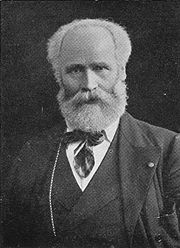
, the Independent Labour Party put up 28 candidates but won only 44,325 votes. Keir Hardie
, the leader of the party, believed that to obtain success in parliamentary elections, it would be necessary to join with other left-wing groups. Hardie's roots as a Methodist lay preacher contributed to an ethos in the party which led to the comment by 1950s General Secretary Morgan Phillips that "Socialism in Britain owed more to Methodism than Marx".
 In 1899, a Doncaster
member of the Amalgamated Society of Railway Servants
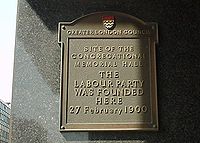
, Thomas R. Steels, proposed in his union branch that the Trade Union Congress call a special conference to bring together all left-wing organisations and form them into a single body that would sponsor Parliamentary candidates. The motion was passed at all stages by the TUC, and the proposed conference was held at the Memorial Hall on Farringdon Street on 26 and 27 February 1900. The meeting was attended by a broad spectrum of working-class and left-wing organisations — trades unions represented about one third of the membership of the TUC delegates.
After a debate, the 129 delegates passed Hardie's motion to establish "a distinct Labour group in Parliament, who shall have their own whips, and agree upon their policy, which must embrace a readiness to cooperate with any party which for the time being may be engaged in promoting legislation in the direct interests of labour." This created an association called the Labour Representation Committee (LRC), meant to coordinate attempts to support MPs sponsored by trade unions and represent the working-class population. It had no single leader, and in the absence of one, the Independent Labour Party nominee Ramsay MacDonald
was elected as Secretary. He had the difficult task of keeping the various strands of opinions in the LRC united. The October 1900
"Khaki election" came too soon for the new party to campaign effectively; total expenses for the election only came to £33. Only 15 candidatures were sponsored, but two were successful; Keir Hardie
in Merthyr Tydfil
and Richard Bell
in Derby
.
Support for the LRC was boosted by the 1901 Taff Vale Case
, a dispute between strikers and a railway company that ended with the union being ordered to pay £23,000 damages for a strike. The judgment effectively made strikes illegal since employers could recoup the cost of lost business from the unions. The apparent acquiescence of the Conservative Government of Arthur Balfour
to industrial and business interests (traditionally the allies of the Liberal Party in opposition to the Conservative's landed interests) intensified support for the LRC against a government that appeared to have little concern for the industrial proletariat and its problems.
 In the 1906 election
, the LRC won 29 seats—helped by a secret 1903 pact
between Ramsay MacDonald
and Liberal Chief Whip
Herbert Gladstone that aimed to avoid splitting the opposition vote between Labour and Liberal candidates in the interest of removing the Conservatives from office.
In their first meeting after the election the group's Members of Parliament decided to adopt the name "The Labour Party" formally (15 February 1906). Keir Hardie, who had taken a leading role in getting the party established, was elected as Chairman of the Parliamentary Labour Party (in effect, the Leader), although only by one vote over David Shackleton
after several ballots. In the party's early years the Independent Labour Party
(ILP) provided much of its activist base as the party did not have individual membership until 1918 but operated as a conglomerate of affiliated bodies. The Fabian Society
provided much of the intellectual stimulus for the party. One of the first acts of the new Liberal Government was to reverse the Taff Vale judgement, while Labour parliamentarians encouraged and supported progressive measures such as the 1908 Old Age Pensions Act and compulsory medical inspections in state schools. In 1906, the Labour Party scored its first ever legislative success in the new Parliament with the passage of a bill put forward by the Labour MP Fred Jowett in the form of the Education (Provision of Meals) Act 1906
.
By 1914, there were about 420 labour representatives sitting on municipal Councils of various kinds, not including a few County councilors in the mining areas, or a much larger number on Boards of Guardians, Parish Councils, and District Councils. Aside from education, and the feeding and medical inspection and treatment of schoolchildren, the issues which the Labour Party pressed most urgently in local government were the local provision of work for the unemployed, the eight-hour workday, the adoption and enforcement of the fair Wages Clause in public contracts, and fair wages and conditions for local authority employees. In some areas (particularly Birmingham And Glasgow) there was active pressure in support of municipal housing and slum clearance schemes, while there was also continued agitation (in relation to the Board of guardians) for improved treatment both of the unemployed and other classes of paupers, particularly the disabled and the aged. House-building, midway between a public health service and a trading enterprise, became one of the main planks in the Labour municipal platform.
During the First World War, the Labour Party split between supporters and opponents of the conflict but opposition to the war grew within the party as time went on. Ramsay MacDonald
, a notable anti-war campaigner, resigned as leader of the Parliamentary Labour Party and Arthur Henderson
became the main figure of authority within the party.
In 1915, the Labour Party experienced ministerial office for the first time when leading members of the party were invited to join Herbert Asquith’s wartime government. The rationale behind this was that the government needed the co-operation of the trade union movement, and felt that one way of achieving was to provide Labour with ministerial positions. From that time onwards, the Labour Party remained a part of the wartime coalition until the end of hostilities in November 1918. The secretary of the Labour Party, Arthur Henderson, was accepted into Prime Minister Asquith
's war cabinet (becoming the first Labour Party member to serve in government) as both President of the Board of Education and as unofficial adviser on labour issues, while minor positions were given to G.H. Roberts (a printer, who became a government whip) and William Bruce (a miner, who acquired an under-secretaryship). In December 1916, when the wartime coalition was reconstructed by David Lloyd George (Asquith’s successor as prime minister), Henderson was promoted to the inner war cabinet, while George Barnes
of the engineers became Minister of Pensions and John Hodge
of the steel workers became Minister of Labour. William Bruce, G.H. Roberts, and James Parker (another Labour MP) were offered minor posts.
Despite mainstream Labour Party's support for the coalition, the Independent Labour Party
was instrumental in opposing conscription through organisations such as the Non-Conscription Fellowship while a Labour Party affiliate, the British Socialist Party
, organised a number of unofficial strikes. Arthur Henderson resigned from the Cabinet in 1917 amid calls for party unity to be replaced by George Barnes
.
During the course of the First World War, while serving both inside and outside of government, the Labour Party was able to influence a number of progressive developments in social policy. At a time when 90% of housing was privately rented, landlords sought to increase rents in the face of rising wartime prices (and in some cases as a means of profiteering). This resulted in a range of largely spontaneous protests in 1915 which were then often co-ordinated by local Labour movements, such as that in Glasgow, where the ILP played a leading role. This forced the government to pass legislation which fixed wartime rents at pre-war levels. This was significant in that it showed labour to be the party that would defend working-class interests in housing, more than its rivals, while also helping Labour to move away from trade union related issues towards areas which some direct appeal to women, in particular. In addition, as argued by Andrew Thorpe, it also “added credibility to the idea of state action to control market forces which disadvantaged the working class.”
The Labour Party also campaigned for “fair shares,” attacking profiteering and unrestricted market forces, and secured some advances by applying pressure on the government. The Labour Party pushed hard for high taxation of war profits, rationing, and other controls, and in 1917, price controls were introduced which stabilised food prices, while rationing, which came into operation at the beginning of 1918, ensured degree of “fair play.” An excess profits duty was also introduced in 1915 which stood at 80% by 1917, and Labour’s credentials were further established by the WEC’s “Conscription of Riches” campaign, launched in 1916. As noted by Andrew Thorpe,
“Since ‘fair play’ was one of the great traditions of British radicalism, it was clearly to Labour’s advantage to push in this direction, and the fact that such policies could be implemented greatly enhanced labour’s general credibility.”
The wartime experience of the Labour ministers made them feel more confident of their party’s ability to use the machinery of state to bring about social change, and encouraged them to resist policies “direct action” urged by local “Soviets” and the fledgling Communist Party of Great Britain
.
The growth in Labour's local activist base and organisation was reflected in the elections following the war, the co-operative movement now providing its own resources to the Co-operative Party
after the armistice. The Co-operative Party later reached an electoral agreement with the Labour Party. The Communist Party of Great Britain
was refused affiliation between 1921 and 1923.
Meanwhile the Liberal Party declined rapidly and the party suffered a catastrophic split that allowed the Labour Party to co-opt much of the Liberals' support.
With the Liberals in disarray Labour won 142 seats in 1922
, making it the second largest political group in the House of Commons and the official opposition
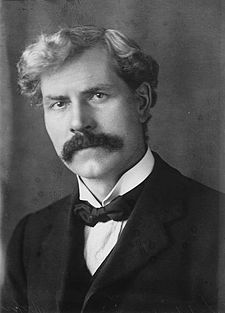
to the Conservative government. After the election the now-rehabilitated Ramsay MacDonald was voted the first official leader of the Labour Party.
 The 1923 general election
was fought on the Conservatives' protectionist proposals but, although they got the most votes and remained the largest party, they lost their majority in parliament, necessitating the formation of a government supporting free trade
. Thus, with the acquiescence of Asquith's Liberals, Ramsay MacDonald
became the first ever Labour Prime Minister in January 1924, forming the first Labour government, despite Labour only having 191 MPs (less than a third of the House of Commons).
Because the government had to rely on the support of the Liberals it was unable to get any legislation of an arguably socialist nature passed by the House of Commons. The most significant and long-lasting measure was the Wheatley Housing Act, which began a building programme of 500,000 homes for rental to working-class families. Legislation on education, unemployment and social insurance were also passed.
The government collapsed after only nine months when the Liberals voted for a Select Committee inquiry into the Campbell Case, a vote which MacDonald had declared to be a vote of confidence. The ensuing general election
saw the publication, four days before polling day, of the notorious Zinoviev letter
, which implicated Labour in a plot for a Communist revolution in Britain. The Conservatives were returned to power although Labour increased its vote from 30.7% to a third of the popular vote, most Conservative gains being at the expense of the Liberals. The Zinoviev letter is now known to have been a forgery.
In opposition Ramsay MacDonald continued his policy of presenting the Labour Party as a moderate force. During the General Strike of 1926
he opposed strike action, arguing that the best way to achieve social reforms was through the ballot box.
 In the 1929 general election
, the Labour Party became the largest in the House of Commons for the first time, with 287 seats and 37.1% of the popular vote. However MacDonald was still reliant on Liberal support to form a minority government. MacDonald went on to appoint Britain's first female cabinet minister, Margaret Bondfield
, who was appointed Minister of Labour
.
The government, however, soon found itself engulfed in crisis: the Wall Street Crash of 1929
and eventual Great Depression
occurred soon after the government came to power, and the crisis hit Britain hard. By the end of 1930 unemployment had doubled to over two and a half million. The government had no effective answers to the crisis. A sudden budgeting crisis in the summer of 1931 split the cabinet over whether the rate of unemployment benefit should be reduced; when it became clear that leading Ministers who were opposed would resign, the Government could no longer continue.
To the surprise of fellow Ministers, MacDonald returned from seeing the King having agreed to head a "National Government" with Conservative
and Liberal Ministers. A small number of Labour ministers joined him, causing great anger among those within the Labour Party who felt betrayed by MacDonald's actions: he and his supporters were later expelled from the Labour Party. Arthur Henderson returned to the party leadership and repudiated all spending cuts. When the economic crisis did not abate, the National Government called a general election
and won an overwhelming victory (MacDonald's supporters having formed a scratch National Labour group). The election was a disaster for the Labour Party which won only 46 seats, together with 3 for the Independent Labour Party
and 3 Labour candidates who did not have official endorsement. The total of 52 was 225 fewer than in 1929.
, accordingly became party leader.
The party experienced another split in 1932 when the Independent Labour Party
, which for some years had been increasingly at odds with the Labour leadership, opted to disaffiliate from the Labour Party and embarked on a long, drawn-out decline.
Lansbury resigned as leader in 1935 after public disagreements over foreign policy. He was promptly replaced as leader by his deputy, Clement Attlee, who would lead the party for two decades. The party experienced a revival in the 1935 general election
, winning 154 seats and 38% of the popular vote, the highest that Labour had achieved.
As the threat from Nazi Germany
increased in the 1930s the Labour Party gradually abandoned its earlier pacifist stance and supported re-armament, largely due to the efforts of Ernest Bevin
and Hugh Dalton
who by 1937 had also persuaded the party to oppose Neville Chamberlain
's policy of appeasement
.
“the Labour-controlled local authorities, and also those in which Labour was the strongest single party, had in practice to concentrate mainly on making the most of the opportunities offered to them by national legislation – especially in the fields of housing, education, public health services, and, after 1929, the services transferred to them from the Boards of Guardians. In all these fields, Labour had a notably good local government record”.
During the interwar period, Labour in local government sought to use the power of municipal authority to improve the working and living environments of its primarily working-class constituents. The functions of local government provided Labour Party members with experience in office, and provided them with the opportunity to improve the living standards of its constituents through measures such as improvements in housing and health care, the provision of maternity clinics, and free milk and meals for schoolchildren. Following the end of World War I
, Labour councillors returned in 1919 adopted a policy of municipal socialism (particularly in boroughs of London to tackle social problems such as poor health, inadequate housing, and general insecurity. As noted by Harry Harmer, Labour in local government sought to establish a “proto-welfare state” through, for instance, the elected Boards of Guardians, paying more generous levels of poor relief to the jobless and encouraging the construction of clinics, houses, and municipal baths which, apart from providing necessary services, also provided employment opportunities. Also, although Labour groups often remained in the minority on their respective councils, they and their supporters mounted campaigns to safeguard and extend people’s standard of living. For example, minority Labour groups could block council initiatives that they saw as going against the interests of their constituents.
Housing was one of the most pressing concerns of the Labour Party from 1918 onwards. In response to David Lloyd George’s promise of “homes fit for heroes,” Labour borough councils in London which were elected in 1919 acted quickly to improve the standard of living of their constituents. In Camberwell, the Labour council of 1919-22 constructed 450 council houses, while in Poplar, the labour council embarked on a house-building programme, extended the borough’s electricity undertaking, and put pressure on landlords to make essential repairs.
Worthwhile reforms, such as allowing working-class families with no bathrooms to use public baths for free, formed an integral part of the council agenda of the Labour Party. In Islington, where the Labour party had a council majority, the borough party’s 1937 election campaign involved campaigns for a gynaecological clinic, a convalescence home, and improvements in maternity and child welfare. In 1919, Fulham set up a municipal laundry service, and in 1932, Walthamstow set up a municipal savings bank. In Hackney, the municipality profitably administrated the borough’s electricity supply, council houses were constructed, a municipal insurance scheme was established, and council employees replaced contractors in collecting the refuse of the borough.
In Bermondsey, the Labour council led by Alfred Salter and his wife Ada Salter introduced an extensive network of health centres and clinics, while also making improvements to environmental and housing conditions. Municipal health centres, clinics, and baths were established, while 2,700 houses were built between 1929 and 1938. A “beautification committee” was set up to brighten up the borough, which planted over 9,000 trees and launched gardening competitions to encourage public participation. The Salters also converted their country house at Fairby Grange into a convalescence home for mothers, and although they had lost their own daughter to scarlet fever, the Salters strove to raise the health of the borough through the distribution of free milk, food, and insulin to those in need, the opening of a solarium to fight off TB, and the launching of health propaganda campaigns. In Tredegar, efforts were made to improve access to health care with the introduction of a Medical Aid Association, which covered 90% of the town’s population by 1944. in Lincoln, the council’s maternity and child welfare centre was, in the words of Matthew Worley, “the jewel in Labour’s municipal crown.”
In Norwich, where Labour took office in 1933, a housing programme was carried out which led to the construction of 5,000 houses by 1935, with “fair rents” set for council tenants. Improvements were also made in health care and unemployment relief, while labour councillors emphasised their provision of nutritious school meals and building of hygienic schools and nurseries to provide an “equal opportunity to every child, however poor their parents may be.” In Kingston, during the Thirties, Labour members campaigned to ensure the enforcement of housing regulations, organising tenants’ rallies of some 2,000 people. In Poplar, a wide range of reforms were carried out, including the organisation of social events on Saturday nights, an expansion of library services, the introduction of a free milk scheme, the opening of public baths on Sundays, and the opening of a TB dispensary. Certain labour councils, such as in Swindon, also placed greater emphasis on the quality of working-class housing than others. In Islington, the council had limited success in converting houses into flats.
Some other Labour councils such as West Ham and Bedwellty also continued to provide levels of poor relief above the government recommendation into the mid-to-late Twenties, although they remained the exception rather than the rule.
In Barnsley, the Labour council raised the school leaving age, while in St. Helens, a massive investment was made in education. In Glasgow (where a minority Labour administration took office in 1933), 60,000 houses had built by Glasgow Corporation by the Labour council and its predecessors by 1947. Labour briefly controlled the (then) middle-class borough in Hackney from 1919 to 1922, during which time it reduced the rate demand to the lowest in England. A plan in Leeds to demolish and replace all the back-to-back houses by five-year stages was accepted by the council in 1933 under the inspiration of the Reverend Charles Jenkinson, a Labour Party member who became the leader of their council when Labour won control of it in 1933. Out of the 72,000 back-to-back houses in Leeds, 8,000 were replaced by 1935. Although problems in the building industry prevented the plan from being completed, as noted by Lewis Baston,
“the face of Leeds was being transformed well before the blitz and post-war planning policy took place elsewhere”
In 1926, Sheffield came under the control of the Labour Party, and became the first major city in Britain to enjoy sustained Labour control. The first Labour administration in Sheffield carried out a broad range of important social reforms which made it a source of immense pride for many in the Labour party and, until London county Council was gained by Labour in 1934, was “labour’s municipal showcase.” The Sheffield Labour group, led by Ernest Rowlinson, widened educational opportunities and standards, extended Sheffield’s transport network, built improved municipal housing, carried out slum clearances, and erected public abattoirs and a hospital for people who suffered from tuberculosis. After the holding of a referendum in 1939, the Labour council agreed to provide land and leases for the building of local pubs, while money was set aside in 1939 for the construction of recreational facilities. A massive slum clearance programme was carried out, with 10,000 new houses constructed and some the old slum areas renovated, while investments were made in schools and health centres. A cheap transport policy was launched, with a 25% reduction in fares and the introduction of free travel for he disabled on trams. Welfare provisions were also extended, with workless households compensated in full for the 1931 cut in unemployment benefit. Profits from municipal trams, electricity, and their trading were used to improve services instead of reducing rates. The Sheffield Labour council also invested in baths and other public services. Various provisions were made for maternity and child welfare, public abattoirs were constructed (together with a fever hospital for tuberculosis cases), and frequent quality checks on milk were carried out as a public health measure. Altogether, these policies contributed to a dramatic fall in the local death rate.
During the Great Depression, Labour councils made great efforts to protect unemployed people from the worst effects of the slump, and sought to ensure that the public assistance system for the needy was made as generous as possible. In Durham and Glamorgan, the Labour administrations there paid more than the minimum, while operating the means test more humanely than they were supposed to. In Hackney, the London Labour Party secretary Herbert Morrison resorted to charitable methods to counteract the effects of unemployment. In Nelson, the Labour council of the Thirties invested in essential servicse like education and child welfare. In Glasgow, Patrick Dollan’s Glasgow corporation carried out a slum-clearance programme that resulted in the construction of some 200,000 homes between 1934 and 1939. In Barnsley, the school-leaving age was raised by six months in order to promote education and keep some 500 teenagers off the unemployment figure. In addition, priority was given to housing construction and slum clearances.
Labour authorities also sought to humanise the services provided by local authorities, together with enabling reducing the harshness of the way in which welfare services operated and enabling working-class people to enjoy the benefits of open space and culture. In Norwich, Labour ensured that school architecture was made bright and modern, while the Labour administration in Glasgow put an end to a controversial system in which elderly couples claiming poor relief could be split up into separate hostel units. In many Labour authorities such as Norwich and West Ham, assistance was given to poor mothers as well as the disabled. As noted by Lewis Baston,
“’Compassionate professionalism’ – humanised but efficient and honest welfare services – became the theme of local labour government, and in some areas helped the part assemble a base of support reaching well beyond the trade union core.”
Labour representatives on the Boards of Guardians in the Twenties and on the Public Assistance Committees of the early Thirties sought to offset the effects of unemployment and poverty as best as they could within existing structures. This often led to interventionist measures such as the provision of free school meals or ensuring that benefit claimants received the relief that was owed to them. Labour councils sought to administer the means test in the most favourable terms possible, which involved accepting a higher percentage of applications for transitional benefit than in non-Labour localities and providing the maximum rate of relief available. In Poplar, Bethnal Green, and Stepney, for instance, Labour took positive steps on behalf of its working-class supporters, providing protection, jobs, and relief at a time of economic uncertainty.
Female Labour members played an active role in the policy-making of local labour councils, and as noted by Matthew Worley, “the extension of accepted (or expected) municipal responsibility brought politics into areas to which women were the acknowledged experts.” As recalled by Hannah Mitchell, when she sat on relief committees she “knew just how much food could be bought out of the allowance, knew the cost of children’s clothes and footwear, could tell at a glance if an applicant was in ill health.” Through first-hand knowledge of such issues, women contributed to the implementation of reforms which benefited their constituents, such as the building of wash houses, maternity centres, health clinics, playgrounds, and parks. These reforms not only extended Labour’s appeal, but also provided women with “a distinctive place within Labour and municipal politics.”
The Labour Party also enjoyed a strong following in Wales, where in the 1935 general election
it won 8 out of 35 seats. In regards to social legislation (including health, housing, and education), the Labour-controlled authorities were both progressive in outlook and generous in spending. This meant that, despite extreme poverty, South Wales (where Labour was strong), had better outcomes in health, housing, and education than other parts of Wales, and this despite the poverty of the councils themselves. For instance, Glamorgan, Carmarthenshire, parts of Monmouthshire and Wrexham provided free school meals, while provision of this kind was exceptional in most of North Wales. A move towards expanding secondary school places to be filled on merit was also far more evident in authorities controlled by the Labour Party. In the most industrialised parts of Wales, Labour-dominated councils successfully tried not only to increase the number of secondary-school places (even during the years of the Great depression), but also worked towards providing these places free, and therefore on merit, instead of on ability to pay. By 1932, over 60% of places were free, a far higher figure than in England. In Rhondda, the dominant Labour council introduced progressive measures such as free milk for children from poor households which helped to counteract some of the worst effects of the Great Depression, while in Swansea, a government grant was obtained to finance a number of civic building projects, the means test was exercised relatively humanely, and a nursery school was opened.
The biggest breakthrough for Labour in local government came in 1934, with the capture of the most powerful local authority in Britain, the LCC. Under the leadership of Herbert Morrison
, the Labour-run LCC implemented a wide range of progressive social democratic reforms which transformed London into a model of responsible and progressive local Labour government. A year after taking office, Morrison took steps to raised the rates of London householders to 31% (seven shillings in the pound), and had run through what was termed a “nest egg” of £2,000,000 he had found upon taking office, salted away in London County Council’s treasury by Conservatives. This money was used in treating London’s poor more humanely, providing more homes for the aged poor, more free education, and modernising hospitals, improving their dietary and increasing their numbers of staff.
As leader of the LCC, Morrison presided over the development of London's housing, health, education and transport services, together with the unification of the transport system and creating a 'green belt' around London's suburbs. In addition, new schools were constructed, measures to combat corruption and inefficiency were carried out, a major programme of slum clearance and council house construction was carried out, and a municipal health service was set up, which became a model for the NHS. Led by Morrison and his “presidium” of Charles Latham, Isaac Hayward, and Lewis Silkin, the LCC provided to be a successful local Labour administration. An offensive was carried out against London’s slums, with new homes built, repairs carried out, and rents reduced for those moving to new municipal accommodation from slum areas. Spending on welfare services, education, and health care was increased from 1934 onwards, with more staff with more staff employed in hospitals and enjoying better pay and conditions. More free places in secondary education were offered, improvements were made in patient care, new schools were constructed, and more amenities were provided, with the initiation of more milk, playing fields, and health visits. The LCC also made efforts to ensure that reforms were carried out to reduce the harshness of public assistance. Morrison’s plans for a “green belt” surrounding London also came to fruition, which provided the relevant local authorities with funds to purchase and maintain land.
As summed up by the historian John Vaizey,
“Herbert Morrison, by putting London ahead in social welfare, hospitals, and education, and by establishing a statutory board, set the pattern for social development.”
One Labour council that acquired great notoriety during the inter-war period was that of Poplar. Dedicated to improving the lives of poor working-class people, the Labour Poor Law Guardians paid generous scales of relief to the poor that led them to fall into debt. The Labour Guardians refused to hand over payments to London County Council that they were supposed to make, and were imprisoned in 1921.
The Poplar Guardians justified the generous scales of relief they paid out, together with their abandonment of principles of less eligibility in terms of a politics of redistribution of the financial burden of unemployment, stating that
“If society cannot organize its economic affairs so as to provide work for all its able-bodied members, then society as a whole should provide them with adequate maintenance from national funds, obtained under existing conditions by increased taxation upon the large and superfluous incomes of those whose social position is maintained only as a result of ‘preying on the poor.’
The actions of the Labour Guardians were arguably justified on the grounds that Poplar carried a heavier burden than many other boroughs in carrying the costs of poor relief. In 1921, for instance, Poplar had a rateable value of £4m and 86,500 unemployed persons to support, while other, richer councils could call on a rateable value of £15 to support only 4,800 unemployed. George Lansbury, the new mayor of Poplar, proposed that the Council stop collecting the rates for outside, cross-London bodies. This was agreed and on 31st March 1921, Poplar Council set a rate of 4s 4d instead of 6s 10d.
Despite their imprisonment, the Labour Guardians refused to give way, and were released six weeks after their imprisoned. In addition,the actions of the Poplar councillors in demanding that the burden of the rates be shared more equitably between poorer and richer boroughs led to the passage of legislation which provided for the greater equality between boroughs that they had demanded. Poplar no longer had to carry an unduly heavy burden as all London areas now shared the costs of poor relief in the future. Poplar continued to provide elative generous scales of relief, paying £2 19s 6d to a family of seven instead of the agreed London rate of London rate of £2 14s.
Labour councils also endeavoured to present themselves as model employers. By the Thirties, for instance, most Labour councils had set up municipal works departments, carrying out repair work and construction without having to use a private contractor. Labour council employees also tended to be paid at (or above) trade union wage rates and were subject to union-recognised conditions. In Poplar, the Labour council that was elected in 1919 immediately agreed to, and increased, a minimum wage for all employees. Labour councils sought to employ direct labour to embark on their municipal building schemes, such as in Wigan, where people who were employed to build the town’s municipal houses were subject to trade union pay, conditions, and holidays. As noted by Matthew Worsley,
“Labour councils not only brought relief to the poorest sections of the community, they provided opportunities for employment and, through the funding of education and library facilities, self-improvement.”
. When Neville Chamberlain
resigned in the spring of 1940, incoming-Prime Minister
Winston Churchill
decided to bring the other main parties into a coalition similar to that of the First World War. Clement Attlee was appointed Lord Privy Seal
and a member of the war cabinet, eventually becoming the United Kingdom's first Deputy Prime Minister
.
A number of other senior Labour figures also took up senior positions; the trade union leader Ernest Bevin, as Minister of Labour
, directed Britain's wartime economy and allocation of manpower, the veteran Labour statesman Herbert Morrison
became Home Secretary
, Hugh Dalton
was Minister of Economic Warfare
and later President of the Board of Trade, while A. V. Alexander
resumed the role he had held in the previous Labour Government as First Lord of the Admiralty. Labour also filled eight junior posts, a number which rose to seventeen by 1945. According to G.D.H. Cole, the basis of the Wartime Coalition was that the labour ministers would look after the “Home Front” (including the maintenance of important social services and the mobilisation of manpower). Although the Exchequer remained in the hands of the Conservative Party
, a firm understanding was made with Labour regarding the equitable distribution of tax burdens.
While serving in coalition with the Conservatives, the Labour members of Churchill's cabinet were able put their democratic socialist ideals into practice, implementing a wide range of progressive social and economic reforms which did much to improve the living standards and working conditions of working-class Britons. As observed by Kenneth O. Morgan, “Labour ministers were uniquely associated with the triumphs on the home front.” Herbert Morrison
at the Home Office, assisted by his friend Ellen Wilkinson
, was noted for his effective involvement in home defence and presiding over the repairs carried out on major cities affected by the Blitz. Arthur Greenwood
, in his capacity as minister without portfolio, commissioned the Beveridge Report
which would lay the foundations for the post-war British welfare state.
During the war years, the Labour Party was continuously active (with some success) in pushing for better arrangements of housing and billeting both of evacuees and of workers transferred for war services to already congested industrial areas, for fair systems of food rationing and distribution, for more effective control of prices, and for improvements in service pay and allowances. Labour also pressed hard for better provisions for the victims of air warfare, for more and better civic and industrial restaurants and canteens, and for war-time nurseries for the children of female workers.
In a manifesto on "The Peace," adopted by the 1941 Labour Party Annual Conference, it was claimed that Labour’s participation in the Wartime coalition Government had been effective in that, a year after Labour had joined the government, the war was now being fought not only with much greater efficiency, but with a higher regard for social equity as well:
“The area of the social services has been increased. Largely through the care and determination of the Trade unions, the standard of life has been well safeguarded. The health of the workers has been protected by the maintenance of the factory codes, and by the institution of factory doctors, canteens, and nurseries. Labour, national and local, has taken its share in civil defence; and in every sphere its activities have done much to improve the provision for the safety and comfort of citizens. The social protection of our people has been facilitated by the alert and continuous watch which has been kept over financial policy. Interest rates have been kept down. The Treasury has assumed powers over the Banks which assure their full co-operation in the policy upon which Parliament decides. The dangers of inflation, ever present in war-time, have been kept to a minimum.”
According to the historian G.D.H. Cole, Labour’s claims were arguably justified: profiteering was kept down, and there was greater equity both in the allocation of supplies and in taxation. In addition, social services were not merely kept up, but also expanded to meet wartime needs.
Tom Johnston used his position as Secretary of State for Scotland
to push through a range of important developmental initiatives, such as the development of hydroelectricity in the Highlands, while Hugh Dalton’s regional policies directly assisted some of the Labour Party’s strongest cores of support. The Distribution of Industry Act 1945, pushed through by Hugh Dalton before the end of the wartime coalition, launched a vigorous policy of regenerating “depressed areas” such as industrial Scotland, the North-East of England, Cumbria, and South Wales, while diversifying the economic base of these regions. This foundation of this vigorous regional policy were actually laid during the Second World War, with the extension of the role of the trading estates and the linking of the industrial base of areas like the Welsh mining areas with the operations of government ordinance and armaments plants. James Chuter Ede
, a Labour politician who served as the Parliamentary Secretary to the Board of Education, worked together with the conservative politician Rab Butler
in drafting the 1944 Education Act, while also playing a major role in its passage.
Co-operators, in common with the trade unions and labour, pressed hard from the outset of the war for the extension of the food rationing system to cover all essential supplies, arguing that the existence of an unrationed “sector” would create class injustices and result in time wasted on seeking supplies from shop to shop. Labour responded to Co-operative demands on these issues in March 1941 by establishing a Food Deputation Committee to work for more effective control and rationing of food supplies, together with the creation of an effective Consumers’ Council.
As Minister of Labour, Ernest Bevin did much to improve working conditions, raising the wages of the lowest paid male workers, such as miners, railwaymen, and agricultural labourers, while also persuading and forcing employers, under threat of removal of their Essential Works Order, to improve company medical and welfare provision, together with sanitary and safety provisions. This was important both for improving working conditions and for cementing worker consent to the war effort, and as a result of Bevin’s efforts, doctors, nurses, and welfare officers multiplied on the shop floor while there was a threefold increase in the provision of works canteens. Almost 5,000 canteens were directly created by Bevin in controlled establishments, while a further 6,800 were set up by private employers by 1944. During the course of the war, the number of works doctors increased from 60 to about 1,000. This provision, however, was much more extensive within larger factories, with smaller employers continuing “to barely comply with the minimum provision of a first aid box.” Accident rates did, however, decline after 1942.
The Second World War also saw significant improvements in the position of trade unions, which were encouraged by Bevin. Trade unions were integrated into joint consultation at all levels of government and industry, with the TUC drawn in to represent labour on the National Joint Advisory Council (1939) and the joint Consultative Committee (1940). A similar status was bestowed upon employers’ organisations, which led Middlemass to argue that capital and organised labour had become “governing institutions” within a tripartite industrial relations system “with the state at the fulcrum.” The elevation of the status of organised labour to one of parity with capital in Whitehall was effectively summed up by Bevin’s biographer as such:
“The organised working class represented by the trade unions was for the first time brought into a position of partnership in the national enterprise of war – a partnership on equal not inferior terms, as in the First World War.”
Collective bargaining was further extended by Bevin, who radically extended both the Wages Boards (the renamed Trades Boards) and the Whitley Committees, 46 of the latter were formed during the Second World War, and by the end of the war 15.5 million workers were covered by the minimum wage provisions by the Wages Boards. On the shop floor, Bevin directly encouraged the formation of joint production committees to extend worker’s participation in industry. By June 1944, almost 4,500 such committees were in existence, covering 3.5 million workers. By the end of the war, the joint production committees were intervening in areas once considered to be the sacrosanct domain of employers, such as health, welfare, transfers of labour, machine staffing, technology, piece rate fixing, and wage payment systems. These developments brought about significant improvements to conditions in the workplace, with a Mass Observation survey carried out in 1942 noting that “the quick sack and the unexplained instability” of the 1930s had practically vanished. During the 1940s, significant improvements in occupational health and safety standards were brought about both by the rising bargaining power of workers within the older “staple” sectors of the economy and the rise of “the pro-active wartime and post-war state.”
Also in the 1940s, trade union power and authority was extended further than in British history up until that point, with labour’s ability to regulate and control work significantly enhanced during this period. This was assisted by developments such as full employment, the growth of union membership, rising from 32% to 45% of the workforce from 1939 to 1950 and increasing workplace representation, as characterised by the large increase in the number of shop stewards. The progressive social changes were continued in the initial post-war period, with the creation of the Welfare State (which placed a floor under wages) and the extension of the legal rights of unions through the repeal of the Trade Disputes and Trade Unions Act (1927) in 1946, while the 1948 Industrial Injuries Act provided compensation for accidents in the workplace.
The war years also witnessed a significant extension of collective bargaining, which was directly encouraged by Bevin. By 1950, between nine and ten million workers were covered by collective voluntary bargaining. Bevin also established 46 new Joint Industrial Councils and extended the coverage of the Wages Boards between 1943 and 1945. By 1950, as a result of these changes, virtually all of the poorly organised and low-paid categories of workers were subject to state sponsored wage regulation and collective bargaining. This transformation in worker’s protection and bargaining power had the definitive effect of reducing long-established local and regional wage differences.
Bevin was also responsible for the passage of the Determination of Needs Act in 1941, which finally abolished the long-detested household means test. After the passage of the Determination of Needs Act, the Labour Movement continued to press for improvements, particularly for the extension of the principles of the new legislation to cover Public Assistance and other services as well (at that time, it only covered the Assistance Board). In 1943, this was achieved by further legislation, which also improved conditions relating to supplementary pensions. Throughout the war period, the Labour movement (both in and out of Parliament) pressed successfully for a number of changes liberalising the administration of the social services.
The Catering Wages Act (1943), another initiative by Bevin, established a Catering Wages Commission to oversee wages and working conditions in restaurants and hotels. Inspectors were also appointed to ensure that employers complied with Bevin’s insistence on the provision of canteens, welfare officers, and personnel officers in factories. Bevin also did much to improve conditions for those with disabilities, of which little had been done for before the outbreak of the war. In 1941, Bevin introduced an interim retraining scheme, which was followed by the interdepartmental Tomlinson Committee of the Rehabilitation and Resettlement of the Disabled. According to the historian Pat Thane, the Committee served as “a mouthpiece for Bevin’s own aspirations,” and its proposals for improving the lives of the disabled culminated in the Disabled Persons Employment Act of 1944.
Bevin and the other Labour ministers were also able to ensure that, compared with the First World War, there was greater equality of sacrifice within society. Profiteering was effectively controlled, while rent controls and food subsidies helped to keep down wartime inflation. Wartime wages were allowed to increase in line with, and earnings to surpass, the rate of price inflation, while the tax system became more progressive, with taxation becoming heavier on the very rich (this movement towards greater progressivity was maintained under the Attlee government, with the top rate of income tax reaching 98% in 1949). These policies led to a narrowing of wealth inequalities, with the real value of wage incomes increasing by some 18% between 1938 and 1947, while the real value of property income fell by 15% and salaries by some 21% over that same period.
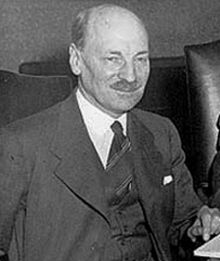 At the end of the war in Europe, in May 1945, Labour resolved not to repeat the Liberals' error of 1918 and promptly withdrew from government to contest the 1945 general election
in opposition to Churchill's Conservatives. Surprising many observers, Labour won a formidable victory, winning just under 50% of the vote with a majority of 145 seats.
Clement Attlee's government proved itself to be one of the most radical British governments of the 20th century, implementing the economic theories of John Maynard Keynes
, presiding over a policy of nationalising major industries and utilities including the Bank of England
, coal mining, the steel industry, electricity, gas, telephones and inland transport including railways, road haulage and canals. It developed and implemented the "cradle to grave" welfare state
conceived by the economist William Beveridge
. To this day the party considers the 1948 creation of Britain's publicly funded National Health Service
under health minister Aneurin Bevan
its proudest achievement. Attlee's government also began the process of dismantling the British Empire
when it granted independence to India and Pakistan in 1947, followed by Burma (Myanmar) and Ceylon (Sri Lanka) the following year. At a secret meeting in January 1947, Attlee and six cabinet ministers, including Foreign Secretary Ernest Bevin
, decided to proceed with the development of Britain's nuclear weapons programme
, in opposition to the pacifist and anti-nuclear stances of a large element inside the Labour Party.
Labour went on to win the 1950 general election
but with a much reduced majority of five seats. Soon afterwards defence became a divisive issues within the party, especially defence spending (which reached a peak of 14% of GDP in 1951 during the Korean War
), straining public finances and forcing savings elsewhere. The Chancellor of the Exchequer, Hugh Gaitskell
, introduced charges for NHS dentures and spectacles, prompting Bevan, along with Harold Wilson (then President of the Board of Trade), to resign over the dilution of the principle of free treatment on which the NHS had been established.
In the 1951 general election
, Labour narrowly lost to the Conservatives despite receiving the larger share of the popular vote, its highest ever vote numerically. Most of the changes introduced by the 1945–51 Labour government were accepted by the Conservatives and became part of the "post war consensus" that lasted until the late 1970s.
, under the leadership of the visionary but corrupt T. Dan Smith
, an accelerated “modernisation” of the city took place, as characterised by an ambitious programme of road construction and public building and the replacement of slum terraces with new innovative estates such as the Byker “wall.”
Following the defeat of 1951 the party underwent a long period of thirteen years in opposition. The party suffered an ideological split during the 1950s while the postwar economic recovery, given the social effects of Attlee's reforms, made the public broadly content with the Conservative governments of the time. Attlee remained as leader until his retirement in 1955.
His replacement Hugh Gaitskell
, a man associated with the right-wing of the party, struggled to deal with internal divisions in the late 1950s and early 1960s and Labour lost the 1959 general election
. In 1963 Gaitskell's sudden death from a heart-attack made way for Harold Wilson to lead the party.
) engulfed the Conservative government by 1963. The Labour Party returned to government with a four-seat majority under Wilson in the 1964 election
but increased its majority to 96 in the 1966 election
.
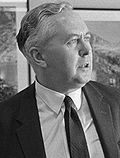 Wilson's government was responsible for a number of sweeping social and educational reforms such as the legalisation of abortion and homosexuality (initially only for men aged 21 or over) and a significant expansion of the welfare state
. In addition, comprehensive education was expanded and the Open University
was created. As noted by one historian, in summing up the reform record of Wilson's government,
"In spite of the economic problems encountered by the First Wilson Government and in spite of (and to some degree in response to) the criticisms of its own supporters, Labour presided over a notable expansion of state welfare during its time in office."
Wilson's government had inherited a large trade deficit that led to a currency crisis and an ultimately doomed attempt to stave off devaluation of the pound. Labour went on to lose the 1970 election
to the Conservatives under Edward Heath
.
and a dispute with miners in 1973 which led to the "three-day week
". The 1970s were a difficult time to be in government for both the Conservatives and Labour due to the 1973 oil crisis
which caused high inflation and a global recession. The Labour Party was returned to power again under Wilson a few weeks after the February 1974 general election
, forming a minority government with the support of the Ulster Unionists. The Conservatives were unable to form a government as they had fewer seats despite receiving more votes numerically. It was the first general election since 1924 in which both main parties had received less than 40% of the popular vote and the first of six successive general elections in which Labour failed to reach 40% of the popular vote. In a bid to gain a proper majority, a second election was soon called for October 1974
in which Labour, still with Harold Wilson as leader, managed a majority of three, gaining just 18 seats and taking its total to 319.
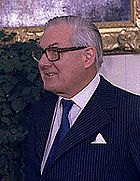 For much of its time in office the Labour government struggled with serious economic problems and a precarious majority in the Commons, while the party's internal dissent over Britain's membership of the European Economic Community
(EEC), which Britain had entered under Edward Heath in 1972, led in 1975 to a national referendum on the issue in which two thirds of the public supported continued membership.
Harold Wilson's personal popularity remained reasonably high but he unexpectedly resigned as Prime Minister in 1976, citing health reasons and was replaced by James Callaghan. The Wilson and Callaghan governments of the 1970s tried to control inflation (which reached 23.7% in 1975) by a policy of wage restraint. This was fairly successful, reducing inflation to 7.4% by 1978, but led to increasingly strained relations between the government and the trade unions. The Labour governments of the 1970s did, however, manage to protect many people from the economic storm, with pensions increasing by 20% in real terms between 1974 and 1979, while measures such as rent controls and food and transport subsidies prevented the incomes of other people from deteriorating further.
Legislation was introduced which guaranteed annual uprating of benefits in line with increases in prices or average earnings, whichever was the highest. In addition, new benefits for the disabled and infirm were introduced whilst pensioners benefited from the largest ever increase in pensions up until that period. New employment legislation strengthened equal pay provisions, guaranteed payments for workers on short-time and temporarily laid-off and introduced job security and maternity leave for pregnant women.
A more effective system of workplace inspection was set up, together with the Health and Safety Executive, in response to the plight of many workers who suffered accidents or ill-health as a result of poor working conditions (whose plight which had long been ignored by the media). Industrial tribunals also provided protection through compensation for unfair dismissal, while the Advisory, Conciliation and Arbitration Service performed an effective function in the management of industrial disputes.
Although the Wilson and Callaghan governments were accused by many socialists of failing to put the Labour Party's socialist ideals into practice, it did much to bring about a greater deal of social justice in British society, as characterised by a significant reduction in poverty during the course of the 1970s, and arguably played as much as a role as the Attlee Government in advancing the cause of social democracy
and reducing social and economic inequalities in the United Kingdom
. As noted by one historian,
“In the seventeen years that it occupied office, Labour accomplished much in alleviating poverty and misery, and in giving help and sustenance to groups – the old, the sick, the disabled – least capable of protecting themselves in a market economy.”
Fear of advances by the nationalist parties, particularly in Scotland, led to the suppression of a report from Scottish Office economist Gavin McCrone
that suggested that an independent Scotland would be 'chronically in surplus'. By 1977 by-election losses and defections to the breakaway Scottish Labour Party
left Callaghan heading a minority government, forced to trade with smaller parties in order to govern. An arrangement negotiated in 1977 with Liberal leader David Steel
, known as the Lib-Lab Pact
, ended after one year. After this deals were forged with various small parties including the Scottish National Party
and the Welsh nationalist Plaid Cymru
, prolonging the life of the government slightly.
The nationalist parties, in turn, demanded devolution
to their respective constituent countries in return for their supporting the government. When referenda for Scottish and Welsh devolution were held in March 1979 Welsh devolution was rejected outright while the Scottish referendum returned a narrow majority in favour without reaching the required threshold of 40% support. When the Labour government duly refused to push ahead with setting up the proposed Scottish Assembly, the SNP withdrew its support for the government: this finally brought the government down as it triggered a vote of confidence in Callaghan's government that was lost by a single vote on 28 March 1979, necessitating a general election.
Callaghan had been widely expected to call a general election in the autumn of 1978 when most opinion polls showed Labour to have a narrow lead. However he decided to extend his wage restraint policy for another year hoping that the economy would be in a better shape for a 1979 election. But during the winter of 1978-79 there were widespread strikes among lorry drivers, railway workers, car workers and local government and hospital workers in favour of higher pay-rises that caused significant disruption to everyday life. These events came to be dubbed the "Winter of Discontent
".
In the 1979 election
Labour suffered electoral defeat by the Conservatives
, now led by Margaret Thatcher
. The number of people voting Labour hardly changed between February 1974 and 1979 but in 1979 the Conservative Party achieved big increases in support in the Midlands and South of England, benefiting from both a surge in turnout and votes lost by the ailing Liberals.
and Tony Benn
, and the right-wing represented by Denis Healey
. The election of Michael Foot as leader in 1980 led in 1981 to four former cabinet ministers from the right of the Labour Party (Shirley Williams, William Rodgers, Roy Jenkins
and David Owen
) forming the Social Democratic Party
.
The Labour Party was defeated heavily in the 1983 general election
, winning only 27.6% of the vote, its lowest share since 1918
, and receiving only half a million votes more than the SDP-Liberal Alliance
who leader Michael Foot condemned for "siphoning" Labour support and enabling the Conservatives to win more seats.
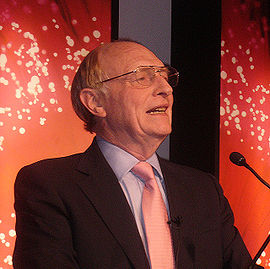 Michael Foot resigned and was replaced as leader by Neil Kinnock
who was elected on 2 October 1983 and progressively moved the party towards the centre. Labour improved its performance in 1987
, gaining 20 seats and so reducing the Conservative majority from 143 to 102. They were now firmly established as the second political party in Britain as the Alliance had once again failed to make a breakthrough with seats and it subsequently collapsed, prompting a merger of the SDP and Liberals to form the Liberal Democrats
.
The Seventies and Eighties were significant for Labour in the rise of left-wing Labour councils (derided by the political right as the “loony left,” which emphasised participation and rights for women and minorities, workers’ control, decentralisation, and opposition to neoliberalism. The left regarded local councils as part of an extra-parliamentary mode of opposition, alongside community groups and town halls. David Blunkett, once a member of labour’s left-wing, described Labour town halls as “a rudimentary opposition movement against the ruling party in Westminster.” The left councils greatly advanced the cause of blacks, women, and homosexuals within the political system, while also opening up council-decision making.
The Greater London Council, under the leadership of Ken Livingstone from 1981 to 1986, carried out a number of progressive policies such as a programme of grants to voluntary groups (which cost £47 million in 1984-85: £100 million in 1999 prices) and a “Fares Fair” policy, which cut London Transport fares by 25%. Although this policy was controversially ruled out by a House of Lords judgement, it was replaced by a more subtle cheap fares policy before London Transport was removed from GLC control by the government in 1984.
In 1983, The Liverpool Labour party (then under the effective control of the Trotskyist Militant Tendency
group) embarked upon an ambitious programme of municipal reform. Apart from promoting propaganda for class conflict, as characterised by continual protests and “days of action” in which council workers and even school pupils were encouraged to participate, the Militant Labour council devoted much time and effort to improving the quality of the inner-city environment. New houses were constructed, while new parks, sports centres, and other leisure facilities were created. In addition, within a short space of time, 8,000 housing units were refurbished and 4,000 units had been built. Altogether, the results were an improvement on previous councils run by all parties.
Following the 1987 election, Kinnock began expelling Militant Tendency
members from the party. They would later form the Socialist Party of England and Wales and the Scottish Socialist Party
although a remnant of Militant continues to operate within the Labour Party through the newspaper Socialist Appeal
.
During the course of the 1980s, the GLC and several other Labour councils attempted to promote local economic recovery by setting up a network of enterprise boards and agencies. In addition, the GLC, Glasgow, Liverpool, Sheffield, and smaller London councils like Lambeth, Camden, and Islington adopted policies that challenged the Thatcher Government’s insistence on budgetary cuts and privatisation.
The Labour councils in old metropolitan counties of West Midlands, South Yorkshire, Greater London, and Greater Manchester led the way in developing interventionist economic policies. In the met county areas, Inward Investment Agencies, Enterprise Boards, Low Pay Units, and Co-operative Development Agencies proliferated, while parts of the country such as Salford Quays and Cardiff Bay were redeveloped. The Labour council in Birmingham in the 1980s worked to diversify the business visitor economy, as characterised by the decision to build a new, purpose-built convention centre in a decaying, inner-city district around Broad Street. By the mid-1990s, the success of this strategy was evident by the success of the International convention centre leading to wider redevelopment, as characterised by the building of a Sea Life Centre, the National Indoor Arena, bars, hotels, and thousands of newly constructed and refurbished flats and houses. This helped to revitalise the city centre and brought in people and money to both and the city and the West Midlands region as a whole.
During the Eighties and Nineties, Labour councils vied to attract inward investment and build themselves up as tourist and retail centres. The relatively left-wing Labour council in Southampton was popular among property developers for its ambitious city centre plans, while the labour council in Sheffield set up a partnership with business to redevelop a large part of Sheffield that had been abandoned by steel closures. Some labour councils also remedied the neglect of management and service delivery during the mid-Eighties under the Thatcher Government and introduced charters and guaranteed standards of service for local residents before a similar “Citizen’s Charter” was launched by the Major Government.
In November 1990, Margaret Thatcher resigned as prime minister and was succeeded by John Major
. Most opinion polls had shown Labour comfortably ahead of the Tories for more than a year before Mrs Thatcher's resignation, with the fall in Tory support blamed largely on the introduction of the unpopular poll tax
, combined with the fact that the economy was sliding into recession at the time. One of the reasons Mrs Thatcher gave for her resignation was that she felt the Tories would stand a better chance of re-election with a new leader at the helm.
 The change of leader in the Tory government saw a turnaround in support for the Tories, who regularly topped the opinion polls throughout 1991 although Labour regained the lead more than once.
The "yo yo" in the opinion polls continued into 1992, though after November 1990 any Labour lead in the polls was rarely sufficient for a majority. Major resisted Kinnock's calls for a general election throughout 1991. Kinnock campaigned on the theme "It's Time for a Change", urging voters to elect a new government after more than a decade of unbroken Conservative rule. However, the Conservatives themselves had undergone a dramatic change in the change of leader from Margaret Thatcher to John Major
, at least in terms of style if not substance, whereas Kinnock was now the longest serving leader of any of the major political parties at the time and was now the longest-serving opposition leader in British political history.
From the outset, it was clearly a well-received change, as Labour's 14-point lead in the November 1990 "Poll of Polls" was replaced by an 8% Tory lead a month later.
The election on 9 April 1992 was widely tipped to result in a hung parliament or a narrow Labour majority, but in the event the Conservatives were returned to power, though with a much reduced majority of 21 in 1992
. Despite the increased number of seats and votes, it was still an incredibly disappointing result for members and supporters of the Labour party, and for the first time in over 30 years there was serious doubt among the public and the media as to whether Labour could ever return to government.
Even before the country went to the polls, it seemed doubtful as to whether Labour could form a majority as an 8% electoral swing was needed across the country for this to be achieved.
Kinnock then resigned as leader and was replaced by John Smith
, who tragically died from a heart attack in May 1994.
The Black Wednesday
economic disaster in September 1992 left the Conservative government's reputation for monetary excellence in tatters, and by the end of that year Labour had a comfortable lead over the Tories in the opinion polls. Although the recession was declared over in April 1993 and a period of strong and sustained economic growth followed, coupled with a relatively swift fall in unemployment, the Labour lead in the opinion polls remained strong.
The growing strength of the Labour Party during the Nineties was demonstrated by its success in preventing the passage of two major policy initiatives of the Major Government. Plans to privatise the post office were abandoned as a result of pressure from Labour, the Communications Workers Union and voters in conservative rural heartlands who sought to protect post office services. Another major policy abandonment came as a result of Norman Lamont
’s 1993 announcement that VAT on domestic fuel and lighting would be introduced, starting at a rate of 8% in April 1994 and reaching the full rate the following April. The Labour Party launched a massive public campaign against the controversial tax, collecting 1.5 million signatures on a petition. An important House of Commons vote on introducing the second stage of the tax took place in December 1994. Concerted pressure was put on Conservative backbenchers from marginal seats to vote against the controversial tax, and in the end the Major Government was narrowly defeated, with 319 voting against the tax compared to 311 for. This not only represented a victory for the Labour party’s campaign, but it further demonstrated Labour’s social-democratic credentials and its growing political strength.
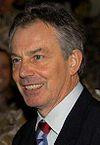 Tony Blair continued to move the party further to the centre, abandoning the largely symbolic Clause Four
at the 1995 mini-conference in a strategy to increase the party's appeal to "middle England
". More than a simple re-branding, however, the project would draw upon a new political third way
, particularly informed by the thought of the British sociologist Anthony Giddens
.
"New Labour" was first termed as an alternative branding for the Labour Party, dating from a conference slogan first used by the Labour Party in 1994, which was later seen in a draft manifesto published by the party in 1996, called New Labour, New Life For Britain
. It was a continuation of the trend that had begun under the leadership of Neil Kinnock
. "New Labour" as a name has no official status, but remains in common use to distinguish modernisers from those holding to more traditional positions, normally referred to as "Old Labour".
'New Labour is a party of ideas and ideals but not of outdated ideology. What counts is what works. The objectives are radical. The means will be modern.'
The Labour Party won the 1997 general election with a landslide majority of 179; it was the largest Labour majority ever, and the largest swing to a political party achieved since 1945. Over the next decade, a wide range of progressive social reforms were enacted, with millions lifted out of poverty during Labour's time in office largely as a result of various tax and benefit reforms.
Among the early acts of Tony Blair's government were the establishment of the national minimum wage, the devolution
of power to Scotland, Wales and Northern Ireland
, and the re-creation of a city-wide government body for London, the Greater London Authority
, with its own elected-Mayor
. Combined with a Conservative opposition that had yet to organise effectively under William Hague
, and the continuing popularity of Blair, Labour went on to win the 2001 election
with a similar majority, dubbed the "quiet landslide" by the media.
A perceived turning point was when Tony Blair controversially allied himself with US President George W. Bush
in supporting the Iraq War, which caused him to lose much of his political support. The UN Secretary-General
, among many, considered the war illegal. The Iraq War was deeply unpopular in most western countries, with Western governments divided in their support and under pressure from worldwide popular protests
. At the 2005 election
, Labour was re-elected for a third term, but with a reduced majority of 66. The decisions that led up to the Iraq war and its subsequent conduct are currently the subject of Sir John Chilcot's Iraq Inquiry.
Tony Blair announced in September 2006 that he would quit as leader within the year, though he had been under pressure to quit earlier than May 2007 in order to get a new leader in place before the May elections which were expected to be disastrous for Labour. In the event, the party did lose power in Scotland to a minority Scottish National Party
government at the 2007 elections
and, shortly after this, Tony Blair resigned as Prime Minister and was replaced by his Chancellor
, Gordon Brown. Although the party experienced a brief rise in the polls after this, its popularity soon slumped to its lowest level since the days of Michael Foot
. During May 2008, Labour suffered heavy defeats in the London mayoral election
, local elections
and the loss in the Crewe and Nantwich by-election
, culminating in the party registering its worst ever opinion poll result since records began in 1943, of 23%, with many citing Brown's leadership as a key factor.
Finance proved a major problem for the Labour Party during this period; a "cash for peerages
" scandal under Tony Blair resulted in the drying up of many major sources of donations. Declining party membership, partially due to the reduction of activists' influence upon policy-making under the reforms of Neil Kinnock and Tony Blair, also contributed to financial problems. Between January and March 2008, the Labour Party received just over £3 million in donations and were £17 million in debt; compared to the Conservatives' £6 million in donations and £12 million in debt.
In the 2010 general election on 6 May that year, Labour with 29.0% of the vote won the second largest number of seats (258). The Conservatives with 36.5% of the vote won the largest number of seats (307), but no party had an overall majority
, meaning that Labour could still remain in power if they managed to form a coalition with at least one smaller party. However, the Labour Party would have had to form a coalition with more than one other smaller party to gain an overall majority; anything less would result in a minority government. On 10 May 2010, after talks to form a coalition with the Liberal Democrats
broke down, Gordon Brown announced his intention to stand down as Leader before the Labour Party Conference but a day later resigned as both Prime Minister
and party leader.
became the Leader of the Opposition and acting Leader of the Labour Party following the resignation of Gordon Brown on 11 May 2010, pending a leadership election
subsequently won by Ed Miliband. This period has to date witnessed a revival in Labour's opinion poll fortunes, with the first Labour lead recorded since the commencement of Gordon Brown's premiership in 2007 being reported in a YouGov
poll for The Sun on 27 September 2010 during the 2010 Labour Party Conference. This phenomenon has been speculatively attributed to the sharp decline in Liberal Democrat
support since May 2010, with disillusioned Liberal Democrat supporters defecting their support to Labour. Such poll leads, up to 6% above the Conservatives
in a 20 December 2010 opinion poll, are in contrast to Ed Miliband's low public satisfaction ratings; +1% in an Ipsos MORI poll, interpreted by a spokesperson for the said pollster as "...bad news for Ed Miliband. We have to go back to Michael Foot who led the party to a crushing defeat in 1983 to find a lower satisfaction rating at this stage". Foot, in fact, had actually enjoyed a lead in the opinion polls over the Tories wide enough to win an election with a majority of up to 130 seats immediately after becoming leader in 1980, although that lead was wiped out in 1981 following the advent of the Social Democratic Party
.
The new leadership of the party has been seeking a coherent ideological position to answer Cameron's 'Big Society' rhetoric, and also mark a seachange from the neoliberal ideology of Blair and 'New Labour'. Blue Labour
is a recent, and had been increasingly influential ideological tendency in the party that advocates the belief that working class voters will be won back to Labour through more conservative
policies on certain social and international issues, such as immigration
and crime
, a rejection of neoliberal economics in favour of ideas from guild socialism
and continental corporatism
, and a switch to local and democratic community management and provision of services, rather than relying on a traditional welfare state
that is seen as excessively 'bureaucratic'. These ideas have been given an endorsement by Ed Miliband who in 2011 wrote the preface to a book expounding Blue Labour's positions However, it lost influence after comments by Maurice Glasman in the Telegraph newspaper.

†The first election held under the Representation of the People Act 1918
in which all men over 21, and most women over the age of 30 could vote, and therefore a much larger electorate
‡The first election under universal suffrage
in which all women aged over 21 could vote
†Although these were technically leaders of the Labour Party, they only assumed this role because of the death or resignation of the incumbent and were not elected to the post. They were in effect acting temporary leaders. Margaret Beckett
was deputy leader when leader John Smith
unexpectedly died, and she automatically became leader as a result of his death. Similarly, George Brown
, who became leader after the death of Hugh Gaitskell
, had been deputy leader at the time of Gaitskell's death. Harriet Harman was deputy leader when Gordon Brown resigned the leadership in the wake of his May 2010 election defeat, and she too became leader automatically and remained leader while the Labour Party went through the process of electing a new leader.
{| class="wikitable sortable" style="font-size:100%"
|-
! Member of Parliament
!! Constituency !! First elected !! Notes
|-
| Diane Abbott
|| Hackney North and Stoke Newington || 1987
||
|-
| Debbie Abrahams
|| Oldham East and Saddleworth || 2011
||
|-
| Bob Ainsworth
|| Coventry North East || 1992
||
|-
| Douglas Alexander
|| Paisley and Renfrewshire South
|| 1997
|| Member for Paisley South 1997-2005, Paisley and Renfrewshire South 2005-
|-
| Heidi Alexander
|| Lewisham East || 2010 ||
|-
| Rushanara Ali
|| Bethnal Green and Bow || 2010 ||
|-
| Graham Allen || Nottingham North
|| 1987
||
|-
| David Anderson
|| Blaydon || 2005
||
|-
| Jon Ashworth || Leicester South
|| 2011
||
|-
| Ian Austin || Dudley North
|| 2005
||
|-
| Adrian Bailey
|| West Bromwich West || 2000
||
|-
| William Bain
|| Glasgow North East
|| 2009
||
|-
| Ed Balls
|| Morley and Outwood
|| 2005
|| Member for Normanton 2005-2010, Morley and Outwood 2010-
|-
| Gordon Banks
|| Ochil and South Perthshire
|| 2005
||
|-
| Kevin Barron
|| Rother Valley
|| 1983
||
|-
| Hugh Bayley
|| York Central || 1992
|| Member for York 1992-1997, City of York 1997-2010, York Central 2010-
|-
| Margaret Beckett
|| Derby South || 1974
|| Member for Lincoln 1974-1979, Derby South 1983-2010
|-
| Anne Begg
|| Aberdeen South
|| 1997
||
|-
| Stuart Bell
|| Middlesbrough
|| 1983
||
|-
| Hilary Benn
|| Leeds Central
|| 1999
||
|-
| Joe Benton
|| Bootle
|| 1990 ||
|-
| Luciana Berger
|| Liverpool Wavertree || 2010 ||
|-
| Clive Betts
|| Sheffield South East
|| 1992
|| Member for Sheffield Attercliffe 1992-2010, Sheffield South East 2010-
|-
| Roberta Blackman-Woods
|| City of Durham || 2005
||
|-
| Hazel Blears
|| Salford and Eccles
|| 1997
|| Member for Salford 1997-2010, Salford and Eccles 2010-
|-
| Tom Blenkinsop
|| Middlesbrough South and East Cleveland
|| 2010 ||
|-
| Paul Blomfield
|| Sheffield Central || 2010 ||
|-
| David Blunkett
|| Sheffield Brightside and Hillsborough
|| 1987
|| Member for Sheffield Brightside 1987-2010, Sheffield Brightside and Hillsborough 2010-
|-
| Ben Bradshaw
|| Exeter
|| 1997
||
|-
| Kevin Brennan
|| Cardiff West
|| 2001
||
|-
| Gordon Brown || Kirkcaldy and Cowdenbeath
|| 1983
|| Member for Dunfermline East 1983-2005, Kirkcaldy and Cowdenbeath 2005-
|-
| Lyn Brown
|| West Ham
|| 2005
||
|-
| Nick Brown
|| Newcastle upon Tyne East
|| 1983
|| Member for Newcastle upon Tyne East 1983-1997, Newcastle upon Tyne East and Wallsend 1997-2010, Newcastle upon Tyne East 2010-
|-
| Russell Brown
|| Dumfries and Galloway
|| 1997
|| Member for Dumfries 1997-2005, Dumfries and Galloway 2005-
|-
| Chris Bryant
|| Rhondda
|| 2001
||
|-
| Karen Buck
|| Westminster North
|| 1997
|| Member for Regent’s Park and Kensington North 1997-2010, Westminster North 2010-
|-
| Richard Burden
|| Birmingham Northfield || 1992
||
|-
| Andy Burnham || Leigh
|| 2001
||
|-
| Liam Byrne
|| Birmingham Hodge Hill || 2004 ||
|-
| Alan Campbell
|| Tynemouth
|| 1997
||
|-
| Ronnie Campbell
|| Blyth Valley
|| 1987
||
|-
| Martin Caton
|| Gower
|| 1997
||
|-
| Jenny Chapman
|| Darlington
|| 2010 ||
|-
| Katy Clark
|| Ayrshire North and Arran || 2005
||
|-
| Tom Clarke || Coatbridge, Chryston and Bellshill || 1982
|| Member for Coatbridge and Airdrie 1982-1983, Monklands West 1983-1997, Coatbridge and Chryston 1997-2005, Coatbridge, Chryston and Bellshill 2005-
|-
| Ann Clwyd
|| Cynon Valley
|| 1984
||
|-
| Ann Coffey
|| Stockport
|| 1987
||
|-
| Michael Connarty
|| Linlithgow and East Falkirk
|| 1992
|| Member for Falkirk East 1992-2005, Linlithgow and East Falkirk 2005-
|-
| Rosie Cooper
|| West Lancashire
|| 2005
||
|-
| Yvette Cooper
|| Normanton, Pontefract and Castleford
|| 1997
|| Member for Pontefract and Castleford 1997-2010, Normanton, Pontefract and Castleford 2010-
|-
| Jeremy Corbyn
|| Islington North
|| 1983
||
|-
| David Crausby
|| Bolton North East || 1997
||
|-
| Mary Creagh
|| Wakefield
|| 2005
||
|-
| Stella Creasy
|| Walthamstow
|| 2010 ||
|-
| Jon Cruddas
|| Dagenham and Rainham
|| 2001
|| Member for Dagenham 2001-2010, Dagenham and Rainham 2010-
|-
| John Cryer
|| Leyton and Wanstead || 1997
|| Member for Hornchurch 1997-2005, Leyton and Wanstead 2010-
|-
| Alex Cunningham
|| Stockton North || 2010 ||
|-
| Jim Cunningham
|| Coventry South || 1992
|| Member for Coventry South East 1992-1997, Coventry South 1997-
|-
| Tony Cunningham
|| Workington
|| 2001
||
|-
| Margaret Curran
|| Glasgow East
|| 2010 || Member of the Scottish Parliament for Glasgow Baillieston 1999-2011
|-
| Nic Dakin
|| Scunthorpe
|| 2010 ||
|-
| Simon Danczuk
|| Rochdale
|| 2010 ||
|-
| Alistair Darling
|| Edinburgh South West
|| 1987
|| Member for Edinburgh Central 1987-2005, Edinburgh South West 2005-
|-
| Wayne David
|| Caerphilly
|| 2001
||
|-
| Geraint Davies || Swansea West
|| 1997
|| Member for Croydon Central 1997-2005, Swansea West 2010-
|-
| Ian Davidson
|| Glasgow South West
|| 1992
|| Member for Glasgow Govan 1992-1997, Glasgow Pollok 1997-2005, Glasgow South Wes 2005-
|-
| John Denham || Southampton Itchen || 1992
||
|-
| Gloria De Piero
|| Ashfield
|| 2010 ||
|-
| Jim Dobbin
|| Heywood and Middleton || 1997
||
|-
| Frank Dobson
|| Holborn and St Pancras || 1979
||
|-
| Thomas Docherty
|| Dunfermline and West Fife
|| 2010 ||
|-
| Brian Donohoe
|| Central Ayrshire
|| 1992
|| Member for Cunninghame South 1992-2005, Central Ayrshire 2005-
|-
| Frank Doran || Aberdeen North
|| 1987
|| Member for Aberdeen South 1987-1992, Aberdeen Central 1997-2005, Aberdeen North 2005-
|-
| Jim Dowd
|| Lewisham West and Penge
|| 1992
|| Member for Lewisham West 1992-2010, Lewisham West and Penge 2010-
|-
| Gemma Doyle || West Dunbartonshire
|| 2010 ||
|-
| Jack Dromey
|| Birmingham Erdington || 2010 ||
|-
| Michael Dugher
|| Barnsley East
|| 2010 ||
|-
| Angela Eagle
|| Wallasey
|| 1992
||
|-
| Maria Eagle
|| Garston and Halewood
|| 1997
|| Member for Liverpool Garston 1997-2010, Garston and Halewood 2010-
|-
| Clive Efford
|| Eltham
|| 1997
||
|-
| Julie Elliott
|| Sunderland Central
|| 2010 ||
|-
| Louise Ellman
|| Liverpool Riverside
|| 1997
||
|-
| Natascha Engel
|| North East Derbyshire
|| 2005
||
|-
| Bill Esterson
|| Sefton Central
|| 2010 ||
|-
| Chris Evans
|| Islwyn
|| 2010 ||
|-
| Paul Farrelly
|| Newcastle-under-Lyme
|| 2001
||
|-
| Frank Field || Birkenhead
|| 1979
||
|-
| Jim Fitzpatrick
|| Poplar and Limehouse
|| 1997
|| Member for Poplar and Canning Town 1997-2010, Poplar and Limehouse 2010-
|-
| Robert Flello
|| Stoke-on-Trent South || 2005
||
|-
| Caroline Flint
|| Don Valley
|| 1997
||
|-
| Paul Flynn
|| Newport West
|| 1987
||
|-
| Yvonne Fovargue
|| Makerfield
|| 2010 ||
|-
| Hywel Francis
|| Aberavon
|| 2001
||
|-
| Mike Gapes
|| Ilford South
|| 1992
||
|-
| Barry Gardiner
|| Brent North || 1997
||
|-
| Sheila Gilmore
|| Edinburgh East
|| 2010 ||
|-
| Pat Glass
|| North West Durham || 2010 ||
|-
| Mary Glindon
|| North Tyneside
|| 2010 ||
|-
| Roger Godsiff
|| Birmingham Hall Green || 1992
|| Member for Birmingham Small Heath 1992-1997, Birmingham Sparkbrook and Small Heath 1997-2010, Birmingham Hall Green 2010-
|-
| Paul Goggins
|| Wythenshawe and Sale East || 1997
||
|-
| Helen Goodman
|| Bishop Auckland
|| 2005
||
|-
| Tom Greatrex
|| Rutherglen and Hamilton West
|| 2010 ||
|-
| Kate Green
|| Stretford and Urmston || 2010 ||
|-
| Lilian Greenwood
|| Nottingham South
|| 2010 ||
|-
| Nia Griffith
|| Llanelli
|| 2005
||
|-
| Andrew Gwynne
|| Denton and Reddish || 2005
||
|-
| Peter Hain
|| Neath
|| 1991
||
|-
| David Hamilton
|| Midlothian
|| 2001
||
|-
| Fabian Hamilton
|| Leeds North East
|| 1997
||
|-
| David Hanson
|| Delyn
|| 1992
||
|-
| Harriet Harman
|| Camberwell and Peckham || 1982
|| Member for Peckham 1982-1997, Camberwell and Peckham 1997-
|-
| Tom Harris || Glasgow South
|| 2001
|| Member for Glasgow Cathcart 2001-2005, Glasgow South 2005-
|-
| Dai Havard
|| Merthyr Tydfil and Rhymney
|| 2001
||
|-
| John Healey
|| Wentworth and Dearne
|| 1997
|| Member for Wentworth 1997-2010, Wentworth and Dearne 2010-
|-
| Mark Hendrick
|| Preston
|| 2000
||
|-
| Stephen Hepburn
|| Jarrow
|| 1997
||
|-
| David Heyes
|| Ashton-under-Lyne
|| 2001
||
|-
| Meg Hillier
|| Hackney South and Shoreditch || 2005
||
|-
| Julie Hilling
|| Bolton West
|| 2010 ||
|-
| Margaret Hodge
|| Barking
|| 1994
||
|-
| Sharon Hodgson
|| Washington and Sunderland West
|| 2005
|| Member for Gateshead East and Washington West 2005-2010, Washington and Sunderland West 2010-
|-
| Kate Hoey
|| Vauxhall
|| 1989
||
|-
| Jim Hood
|| Lanark and Hamilton East
|| 1987
|| Member for Clydesdale 1987-2005, Lanark and Hamilton East 2005-
|-
| Kelvin Hopkins
|| Luton North
|| 1997
||
|-
| George Howarth
|| Knowsley
|| 1986
|| Member for Knowsley North 1986-1997, Knowsley North and Sefton East 1997-2010, Knowsley 2010-
|-
| Lindsay Hoyle
|| Chorley
|| 1997
||
|-
| Tristram Hunt
|| Stoke-on-Trent Central || 2010 ||
|-
| Huw Irranca-Davies
|| Ogmore
|| 2002
||
|-
| Glenda Jackson
|| Hampstead and Kilburn
|| 1992
|| Member for Hampstead and Highgate 1992-2010, Hampstead and Kilburn 2010-
|-
| Sian James
|| Swansea East
|| 2005
||
|-
| Cathy Jamieson
|| Kilmarnock and Loudoun
|| 2010 || Member of the Scottish Parliament for Carrick, Cumnock and Doon Valley 1999-2011
|-
| Dan Jarvis
|| Barnsley Central || 2011
||
|-
| Alan Johnson
|| Kingston upon Hull West and Hessle || 1997
||
|-
| Diana Johnson
|| Kingston upon Hull North
|| 2005
|| Member for Hull North 2005-2010, Kingston upon Hull North 2010-
|-
| Graham Jones
|| Hyndburn
|| 2010 ||
|-
| Helen Jones
|| Warrington North
|| 1997
||
|-
| Kevan Jones
|| North Durham
|| 2001
||
|-
| Susan Elan Jones || Clwyd South
|| 2010 ||
|-
| Tessa Jowell
|| Dulwich and West Norwood || 1992
|| Member for Dulwich 1992-1997, Dulwich and West Norwood 1997-
|-
| Eric Joyce
|| Falkirk
|| 2000
|| Member for Falkirk West 2000-2005, Falkirk 2005-
|-
| Gerald Kaufman
|| Manchester Gorton
|| 1970
|| Member for Ardwick 1970-1983, Manchester Gorton 1983-
|-
| Barbara Keeley
|| Worsley and Eccles South
|| 2005
|| Member for Worsley 2005-2010, Worsley and Eccles South 2010-
|-
| Alan Keen
|| Feltham and Heston || 1992
||
|-
| Liz Kendall
|| Leicester West
|| 2010 ||
|-
| Sadiq Khan
|| Tooting
|| 2005
||
|-
| David Lammy
|| Tottenham
|| 2000
||
|-
| Ian Lavery
|| Wansbeck
|| 2010 ||
|-
| Mark Lazarowicz
|| Edinburgh North and Leith
|| 2001
||
|-
| Christopher Leslie || Nottingham East
|| 1997
|| Member for Shipley 1997-2005, Nottingham East 2010-
|-
| Ivan Lewis
|| Bury South
|| 1997
||
|-
| Tony Lloyd
|| Manchester Central
|| 1983
|| Member for Stretford 1983-1997, Manchester Central 1997-
|-
| Andrew Love
|| Edmonton
|| 1997
||
|-
| Ian Lucas
|| Wrexham
|| 2001
||
|-
| Dennis MacShane || Rotherham
|| 1994
||
|-
| Fiona Mactaggart
|| Slough
|| 1997
||
|-
| Khalid Mahmood
|| Birmingham Perry Barr || 2001
||
|-
| Shabana Mahmood
|| Birmingham Ladywood || 2010 ||
|-
| John Mann
|| Bassetlaw
|| 2001
||
|-
| Gordon Marsden
|| Blackpool South
|| 1997
||
|-
| Steve McCabe
|| Birmingham Selly Oak || 2010
|| Member for Birmingham Hall Green 1997-2010, Birmingham Selly Oak 2010-
|-
| Michael McCann
|| East Kilbride, Strathaven and Lesmahagow
|| 2010 ||
|-
| Kerry McCarthy
|| Bristol East
|| 2005
||
|-
| Gregg McClymont
|| Cumbernauld, Kilsyth and Kirkintilloch East
|| 2010 ||
|-
| Siobhain McDonagh
|| Mitcham and Morden || 1997
||
|-
| John McDonnell
|| Hayes and Harlington
|| 1997
||
|-
| Pat McFadden
|| Wolverhampton South East || 2005
||
|-
| Alison McGovern
|| Wirral South || 2010 ||
|-
| Jim McGovern
|| Dundee West
|| 2005
||
|-
| Anne McGuire
|| Stirling
|| 1997
||
|-
| Ann McKechin || Glasgow North
|| 2001
|| Member for Glasgow Maryhill 2001-2005, Glasgow North 2005-
|-
| Iain McKenzie
|| Inverclyde
|| 2011 ||
|-
| Catherine McKinnell
|| Newcastle upon Tyne North
|| 2010 ||
|-
| Michael Meacher
|| Oldham West and Royton || 1970
|| Member for Oldham West 1970-1997, Oldham West and Royton 1997-
|-
| Alan Meale
|| Mansfield
|| 1987
||
|-
| Ian Mearns
|| Gateshead
|| 2010 ||
|-
| Alun Michael
|| Cardiff South and Penarth || 1987
||
|-
| David Miliband
|| South Shields
|| 2001
||
|-
| Ed Miliband
|| Doncaster North
|| 2005
||
|-
| Andrew Miller
|| Ellesmere Port and Neston
|| 1992
||
|-
| Austin Mitchell
|| Great Grimsby
|| 1977 || Member for Grimsby 1977-1983, Great Grimsby 1983-
|-
| Madeleine Moon
|| Bridgend
|| 2005
||
|-
| Jessica Morden
|| Newport East
|| 2005
||
|-
| Graeme Morrice
|| Livingston
|| 2010 ||
|-
| Grahame Morris
|| Easington
|| 2010 ||
|-
| George Mudie
|| Leeds East
|| 1992
||
|-
| Meg Munn
|| Sheffield Heeley || 2001
||
|-
| Jim Murphy
|| East Renfrewshire
|| 1997
|| Member for Eastwood 1997-2005, East Renfrewshire 2005-
|-
| Paul Murphy || Torfaen
|| 1987
||
|-
| Ian Murray
|| Edinburgh South
|| 2010 ||
|-
| Lisa Nandy
|| Wigan
|| 2010 ||
|-
| Pamela Nash
|| Airdrie and Shotts
|| 2010 ||
|-
| Fiona O’Donnell || East Lothian
|| 2010 ||
|-
| Chi Onwurah
|| Newcastle upon Tyne Central
|| 2010 ||
|-
| Sandra Osborne
|| Ayr, Carrick and Cumnock
|| 1997
|| Member for Ayr 1997-2005, Ayr, Carrick and Cumnock 2005-
|-
| Albert Owen
|| Ynys Mon
|| 2001
||
|-
| Teresa Pearce
|| Erith and Thamesmead || 2010 ||
|-
| Toby Perkins
|| Chesterfield
|| 2010 ||
|-
| Bridget Phillipson
|| Houghton and Sunderland South
|| 2010 ||
|-
| Stephen Pound || Ealing North || 1997
||
|-
| Dawn Primarolo
|| Bristol South || 1987
||
|-
| Yasmin Qureshi
|| Bolton South East || 2010 ||
|-
| Nick Raynsford
|| Greewich and Woolwich || 1992
|| Member for Greenwich 1992-1997, Greenwich and Woolwich 1997-
|-
| Jamie Reed
|| Copeland
|| 2005
||
|-
| Rachel Reeves
|| Leeds West
|| 2010 ||
|-
| Emma Reynolds
|| Wolverhampton North East || 2010 ||
|-
| Jonathan Reynolds
|| Stalybridge and Hyde || 2010 ||
|-
| Linda Riordan
|| Halifax
|| 2005
||
|-
| John Robertson || Glasgow North West
|| 2000 || Member for Glasgow Anniesland 2000-2005, Glasgow North West 2005-
|-
| Geoffrey Robinson
|| Coventry North West
|| 1976
||
|-
| Steve Rotherham || Liverpool Walton
|| 2010 ||
|-
| Frank Roy
|| Motherwell and Wishaw
|| 1997
||
|-
| Lindsay Roy
|| Glenrothes
|| 2008
||
|-
| Chris Ruane
|| Vale of Clwyd
|| 1997
||
|-
| Joan Ruddock
|| Lewisham Deptford || 1987
||
|-
| Anas Sarwar
|| Glasgow Central
|| 2010 ||
|-
| Alison Seabeck
|| Plymouth Moor View || 2005
|| Member for Plymouth Devonport 2005-2010, Plymouth Moor View 2010-
|-
| Virendra Sharma
|| Ealing Southall || 2007
||
|-
| Barry Sheerman
|| Huddersfield
|| 1979
|| Member for Huddersfield East 1979-1983, Huddersfield 1983-
|-
| Jim Sheridan
|| Paisley and Renfrewshire North
|| 2001
|| Member for West Renfrewshire 2001-2005, Paisley and Renfrewshire North 2005-
|-
| Gavin Shuker
|| Luton South
|| 2010 ||
|-
| Marsha Singh
|| Bradford West
|| 1997
||
|-
| Dennis Skinner
|| Bolsover || 1970
||
|-
| Andy Slaughter || Hammersmith
|| 2005
|| Member for Ealing, Acton and Shepherd’s Bush 2005-2010, Hammersmith 2010-
|-
| Andrew Smith || Oxford East || 1987
||
|-
| Angela Smith || Penistone and Stocksbridge
|| 2005
|| Member for Sheffield Hillsborough 2005-2010, Penistone and Stocksbridge 2010-
|-
| Nick Smith
|| Blaenau Gwent
|| 2010 ||
|-
| Owen Smith
|| Pontypridd
|| 2010 ||
|-
| John Spellar
|| Warley
|| 1982
|| Member for Birmingham Northfield 1982-1983, Warley West 1992-1997, Warley 1997-
|-
| Jack Straw
|| Blackburn
|| 1979
||
|-
| Graham Stringer
|| Blackley and Broughton
|| 1997
|| Member for Manchester Blackley, Blackley and Broughton 2010-
|-
| Gisela Stuart
|| Birmingham Edgbaston || 1997
||
|-
| Gerry Sutcliffe
|| Bradford South
|| 1994
||
|-
| Mark Tami
|| Alyn and Deeside
|| 2001
||
|-
| Gareth Thomas
|| Harrow West || 1997
||
|-
| Emily Thornberry
|| Islington South and Finsbury || 2005
||
|-
| Stephen Timms
|| East Ham
|| 1994
|| Member for Newham North East 1994-1997, East Ham 1997-
|-
| Jon Trickett
|| Hemsworth
|| 1996
||
|-
| Karl Turner
|| Kingston upon Hull East
|| 2010 ||
|-
| Derek Twigg
|| Halton
|| 1997
||
|-
| Stephen Twigg
|| Liverpool West Derby || 1997
|| Member for Enfield Southgate 1997-2005, Liverpool West Derby 2010-
|-
| Chuka Umunna
|| Streatham
|| 2010 ||
|-
| Keith Vaz
|| Leicester East
|| 1987
||
|-
| Valerie Vaz
|| Walsall South || 2010 ||
|-
| Joan Walley
|| Stoke-on-Trent North || 1987
||
|-
| Tom Watson
|| West Bromwich East || 2001
||
|-
| David Watts || St Helens North
|| 1997
||
|-
| Alan Whitehead
|| Southampton Test || 1997
||
|-
| Malcolm Wicks
|| Croydon North
|| 1992
|| Member for Croydon North West 1992-1997, Croydon North 1997-
|-
| Chris Williamson
|| Derby North || 2010 ||
|-
| Phil Wilson || Sedgefield
|| 2007
||
|-
| David Winnick
|| Walsall North || 1966
|| Member for Croydon South 1966-1970, Walsall North 1979-
|-
| Rosie Winterton
|| Doncaster Central
|| 1997
||
|-
| Mike Wood || Batley and Spen || 1997
||
|-
| John Woodcock
|| Barrow and Furness
|| 2010 ||
|-
| Shaun Woodward
|| St Helens South and Whiston
|| 1997
|| Member for Witney 1997-2001, St Helens South 2001-2010, St Helens South and Whiston 2010- (Conservative 1997-1999, Labour 1999-)
|-
| David Wright
|| Telford
|| 2001
||
|-
| Iain Wright
|| Hartlepool
|| 2004
||
|}
was removed as MP for Oldham East and Saddleworth following a decision that he had breached electoral law. Debbie Abrahams
won the subsequent by-election
on 13 January 2011 for Labour.
2. Eric Illsley
resigned as MP for Barnsley Central after he was convicted for expenses fraud. Dan Jarvis
won the by-election
for Labour.
3. Peter Soulsby
resigned as MP for Leicester South
in order to contest the election for the newly created position of directly-elected Mayor of Leicester. Jon Ashworth won the following by-election
for Labour.
4. The MP for Inverclyde David Cairns
died on 9 May 2011. He was replaced as MP for Inverclyde
in the by-election held on the 30th June 2011.
Centre-left
Centre-left is a political term that describes individuals, political parties or organisations such as think tanks whose ideology lies between the centre and the left on the left-right spectrum...
democratic socialist party in the United Kingdom
United Kingdom
The United Kingdom of Great Britain and Northern IrelandIn the United Kingdom and Dependencies, other languages have been officially recognised as legitimate autochthonous languages under the European Charter for Regional or Minority Languages...
. It surpassed the Liberal Party
Liberal Party (UK)
The Liberal Party was one of the two major political parties of the United Kingdom during the 19th and early 20th centuries. It was a third party of negligible importance throughout the latter half of the 20th Century, before merging with the Social Democratic Party in 1988 to form the present day...
in general elections during the early 1920s, forming minority governments under Ramsay MacDonald
Ramsay MacDonald
James Ramsay MacDonald, PC, FRS was a British politician who was the first ever Labour Prime Minister, leading a minority government for two terms....
in 1924
Labour Government 1924
See also First Labour Government Members of the Cabinet are in bold face.Source: D. Butler and G. Butler, Twentieth Century British Political Facts 1900-2000...
and 1929-1931. The party was in a wartime coalition
Churchill War Ministry
-The War Cabinet:Changes*August 1940: Lord Beaverbrook , Minister of Aircraft Production, joins the War Cabinet*October 1940: Sir John Anderson succeeds Neville Chamberlain as Lord President. Sir Kingsley Wood, the Chancellor of the Exchequer, and Ernest Bevin, the Minister of Labour, enter the War...
from 1940 to 1945, after which it formed a majority government under Clement Attlee
Clement Attlee
Clement Richard Attlee, 1st Earl Attlee, KG, OM, CH, PC, FRS was a British Labour politician who served as the Prime Minister of the United Kingdom from 1945 to 1951, and as the Leader of the Labour Party from 1935 to 1955...
. Labour was also in government from 1964 to 1970 under Harold Wilson
Harold Wilson
James Harold Wilson, Baron Wilson of Rievaulx, KG, OBE, FRS, FSS, PC was a British Labour Member of Parliament, Leader of the Labour Party. He was twice Prime Minister of the United Kingdom during the 1960s and 1970s, winning four general elections, including a minority government after the...
and from 1974 to 1979, first under Wilson and then James Callaghan
James Callaghan
Leonard James Callaghan, Baron Callaghan of Cardiff, KG, PC , was a British Labour politician, who was Prime Minister of the United Kingdom from 1976 to 1979 and Leader of the Labour Party from 1976 to 1980...
.
The Labour Party was last in government between 1997
United Kingdom general election, 1997
The United Kingdom general election, 1997 was held on 1 May 1997, more than five years after the previous election on 9 April 1992, to elect 659 members to the British House of Commons. The Labour Party ended its 18 years in opposition under the leadership of Tony Blair, and won the general...
and 2010 under Tony Blair
Tony Blair
Anthony Charles Lynton Blair is a former British Labour Party politician who served as the Prime Minister of the United Kingdom from 2 May 1997 to 27 June 2007. He was the Member of Parliament for Sedgefield from 1983 to 2007 and Leader of the Labour Party from 1994 to 2007...
and Gordon Brown
Gordon Brown
James Gordon Brown is a British Labour Party politician who was the Prime Minister of the United Kingdom and Leader of the Labour Party from 2007 until 2010. He previously served as Chancellor of the Exchequer in the Labour Government from 1997 to 2007...
, beginning with a majority of 179, reduced to 167 in 2001
United Kingdom general election, 2001
The United Kingdom general election, 2001 was held on Thursday 7 June 2001 to elect 659 members to the British House of Commons. It was dubbed "the quiet landslide" by the media, as the Labour Party was re-elected with another landslide result and only suffered a net loss of 6 seats...
and 66 in 2005
United Kingdom general election, 2005
The United Kingdom general election of 2005 was held on Thursday, 5 May 2005 to elect 646 members to the British House of Commons. The Labour Party under Tony Blair won its third consecutive victory, but with a majority of 66, reduced from 160....
. Having won 258 seats in the 2010 general election, Labour is the Official Opposition. Labour has a working majority in the Welsh Assembly
Welsh Assembly Government
The Welsh Government is the devolved government of Wales. It is accountable to the National Assembly for Wales, the legislature which represents the interests of the people of Wales and makes laws for Wales...
, is the main opposition party in the Scottish Parliament
Scottish Parliament
The Scottish Parliament is the devolved national, unicameral legislature of Scotland, located in the Holyrood area of the capital, Edinburgh. The Parliament, informally referred to as "Holyrood", is a democratically elected body comprising 129 members known as Members of the Scottish Parliament...
and has 13 members
Progressive Alliance of Socialists and Democrats
The Progressive Alliance of Socialists and Democrats is the social-democratic political group in the European Parliament, formed by MEPs of the Party of European Socialists and allied centre-left parties. The group dates its ancestry via various names back to the beginning of the European...
in the European Parliament
Party of European Socialists
The Party of European Socialists is a European political party led by Sergei Stanishev, former Prime Minister of Bulgaria. The PES comprises social-democratic national-level political parties primarily from Member state of the European Union, as well as other nations of the European continent. The...
. The Labour Party is a member of the Socialist International
Socialist International
The Socialist International is a worldwide organization of democratic socialist, social democratic and labour political parties. It was formed in 1951.- History :...
. The Party's current leader is Ed Miliband
Ed Miliband
Edward Samuel Miliband is a British Labour Party politician, currently the Leader of the Labour Party and Leader of the Opposition...
MP
Member of Parliament
A Member of Parliament is a representative of the voters to a :parliament. In many countries with bicameral parliaments, the term applies specifically to members of the lower house, as upper houses often have a different title, such as senate, and thus also have different titles for its members,...
.
Party ideology
Throughout its history, the Labour Party has usually been thought of as being left wing or centre-leftCentre-left
Centre-left is a political term that describes individuals, political parties or organisations such as think tanks whose ideology lies between the centre and the left on the left-right spectrum...
in its politics. Officially, it has maintained the stance of being a socialist
Socialism
Socialism is an economic system characterized by social ownership of the means of production and cooperative management of the economy; or a political philosophy advocating such a system. "Social ownership" may refer to any one of, or a combination of, the following: cooperative enterprises,...
party ever since its inception, currently describing itself as a "democratic socialist party". The party has been described as a broad church
Broad church
Broad church is a term referring to latitudinarian churchmanship in the Church of England, in particular, and Anglicanism, in general. From this, the term is often used to refer to secular political organisations, meaning that they encompass a broad range of opinion.-Usage:After the terms high...
, containing a diversity of ideological trends from strongly socialist, to more moderately social democratic, and in recent years pro-market tendencies. Throughout its history, it has been criticised by other leftist commentators and historians for not being truly socialist in its policies, instead supporting anti-socialist stances such as capitalism
Capitalism
Capitalism is an economic system that became dominant in the Western world following the demise of feudalism. There is no consensus on the precise definition nor on how the term should be used as a historical category...
and neo-colonialism and has been described as a "capitalist workers' party".
Historically the party was broadly in favour of socialism, as set out in Clause Four
Clause IV
Clause IV historically refers to part of the 1918 text of the British Labour Party constitution which set out the aims and values of the party. Before its revision in 1995, its application was the subject of considerable dispute.-Text:...
of the original party constitution, and advocated socialist policies such as public ownership of key industries, government intervention in the economy, redistribution of wealth, increased rights for workers, the welfare state
Welfare state
A welfare state is a "concept of government in which the state plays a key role in the protection and promotion of the economic and social well-being of its citizens. It is based on the principles of equality of opportunity, equitable distribution of wealth, and public responsibility for those...
, publicly-funded healthcare and education. Beginning in the late-1980s continuing to the current day, the party has adopted free market
Free market
A free market is a competitive market where prices are determined by supply and demand. However, the term is also commonly used for markets in which economic intervention and regulation by the state is limited to tax collection, and enforcement of private ownership and contracts...
policies, leading many observers to describe the Labour Party as Social Democratic
Social democracy
Social democracy is a political ideology of the center-left on the political spectrum. Social democracy is officially a form of evolutionary reformist socialism. It supports class collaboration as the course to achieve socialism...
or Third Way
Third way (centrism)
The Third Way refers to various political positions which try to reconcile right-wing and left-wing politics by advocating a varying synthesis of right-wing economic and left-wing social policies. Third Way approaches are commonly viewed from within the first- and second-way perspectives as...
, rather than democratic socialist.
Party electoral manifestos have not contained the term socialism since 1992, and in 1995 the original Clause Four
Clause IV
Clause IV historically refers to part of the 1918 text of the British Labour Party constitution which set out the aims and values of the party. Before its revision in 1995, its application was the subject of considerable dispute.-Text:...
was abolished. The new version states:
Party constitution and structure
The Labour Party is a membership organisation consisting of Constituency Labour Parties, affiliated trade unions, socialist societiesSocialist societies
A socialist society is a membership organisation that is affiliated with the Labour Party in the UK.The best-known socialist society is the Fabian Society, founded in 1884, some years before the creation of the Labour Party itself . The Society's membership is relatively small , but in Labour...
and the Co-operative Party
Co-operative Party
The Co-operative Party is a centre-left political party in the United Kingdom committed to supporting and representing co-operative principles. The party does not put up separate candidates for any UK election itself. Instead, Co-operative candidates stand jointly with the Labour Party as "Labour...
, with which it has an electoral agreement. Members who are elected to parliamentary positions take part in the Parliamentary Labour Party
Parliamentary Labour Party
In UK politics, the Parliamentary Labour Party is the parliamentary party of the Labour Party in Parliament: Labour MPs as a collective body....
(PLP) and European Parliamentary Labour Party (EPLP). The party's decision-making bodies on a national level formally include the National Executive Committee
National Executive Committee
The National Executive Committee or NEC is the chief administrative body of the UK Labour Party. Its composition has changed over the years, and includes representatives of affiliated trade unions, the Parliamentary Labour Party and European Parliamentary Labour Party, Constituency Labour Parties,...
(NEC), Labour Party Conference and National Policy Forum
National Policy Forum
The National Policy Forum of the British Labour Party is part of the policy-making system of the Party, set up by Leader Tony Blair as part of the Partnership in Power process....
(NPF)—although in practice the Parliamentary leadership has the final say on policy. The 2008 Labour Party Conference was the first at which affiliated trade unions and Constituency Labour Parties did not have the right to submit motions on contemporary issues that would previously have been debated. Labour Party conferences now include more "keynote" addresses, guest speakers and question-and-answer sessions, while specific discussion of policy now takes place in the National Policy Forum
National Policy Forum
The National Policy Forum of the British Labour Party is part of the policy-making system of the Party, set up by Leader Tony Blair as part of the Partnership in Power process....
.
For many years Labour held to a policy of not allowing residents of Northern Ireland
Northern Ireland
Northern Ireland is one of the four countries of the United Kingdom. Situated in the north-east of the island of Ireland, it shares a border with the Republic of Ireland to the south and west...
to apply for membership, instead supporting the Social Democratic and Labour Party
Social Democratic and Labour Party
The Social Democratic and Labour Party is a social-democratic, Irish nationalist political party in Northern Ireland. Its basic party platform advocates Irish reunification, and the further devolution of powers while Northern Ireland remains part of the United Kingdom...
(SDLP). The 2003 Labour Party Conference accepted legal advice that the party could not continue to prohibit residents of the province joining, and whilst the National Executive has established a regional constituency party it has not yet agreed to contest elections there.
The party had 193,961 members on 31 December 2010 according to accounts filed with the Electoral Commission
Electoral Commission (United Kingdom)
The Electoral Commission is an independent body set up by the UK Parliament. It regulates party and election finance and sets standards for well-run elections...
, which was up from 156,205 the previous year. In that year it had an income of about £36 million (£4.9 million from membership fees) and expenditure of about £34 million, high due to that year's general election.
As a party founded by the unions to represent the interests of working-class people, Labour's link with the unions has always been a defining characteristic of the party. In recent years this link has come under increasing strain, with the RMT
National Union of Rail, Maritime and Transport Workers
The National Union of Rail, Maritime and Transport Workers is a trade union in the United Kingdom which unionises transport workers. It has more than 80,000 members, and its current general secretary is Bob Crow...
being expelled from the party in 2004 for allowing its branches in Scotland to affiliate to the left-wing Scottish Socialist Party
Scottish Socialist Party
The Scottish Socialist Party is a left-wing Scottish political party. Positioning itself significantly to the left of Scotland's centre-left parties, the SSP campaigns on a socialist economic platform and for Scottish independence....
. Other unions have also faced calls from members to reduce financial support for the Party and seek more effective political representation for their views on privatisation, public spending cuts and the anti-trade union
Trade unions in the United Kingdom
Trade unions in the United Kingdom were first decriminalised under the recommendation of a Royal Commission in 1867, which agreed that the establishment of the organisations was to the advantage of both employers and employees...
laws. Unison and GMB have both threatened to withdraw funding from constituency MPs and Dave Prentis of UNISON
UNISON
UNISON is the largest trade union in the United Kingdom with over 1.3 million members.The union was formed in 1993 when three public sector trade unions, the National and Local Government Officers Association , the National Union of Public Employees and the Confederation of Health Service...
has warned that the union will write "no more blank cheques" and is dissatisfied with "feeding the hand that bites us".
International linkages
The party was a member of the Labour and Socialist InternationalLabour and Socialist International
The Labour and Socialist International was an international organization of socialist and labour parties, active between 1923 and 1940. The LSI was a forerunner of the present-day Socialist International....
between 1923 and 1940. It is currently, and since 1951, member of the Socialist International
Socialist International
The Socialist International is a worldwide organization of democratic socialist, social democratic and labour political parties. It was formed in 1951.- History :...
, which was founded thanks to the efforts of the Clement Attlee leadership. Labour is also a member of the Party of European Socialists
Party of European Socialists
The Party of European Socialists is a European political party led by Sergei Stanishev, former Prime Minister of Bulgaria. The PES comprises social-democratic national-level political parties primarily from Member state of the European Union, as well as other nations of the European continent. The...
, while the party's MEPs
Member of the European Parliament
A Member of the European Parliament is a person who has been elected to the European Parliament. The name of MEPs differ in different languages, with terms such as europarliamentarian or eurodeputy being common in Romance language-speaking areas.When the European Parliament was first established,...
sit in the Socialists & Democrats
Progressive Alliance of Socialists and Democrats
The Progressive Alliance of Socialists and Democrats is the social-democratic political group in the European Parliament, formed by MEPs of the Party of European Socialists and allied centre-left parties. The group dates its ancestry via various names back to the beginning of the European...
group.
History
Founding of the party
The Labour Party's origins lie in the late 19th century, around which time it became apparent that there was a need for a new political party to represent the interests and needs of the urban proletariat, a demographic which had increased in number and had recently been given franchiseSuffrage
Suffrage, political franchise, or simply the franchise, distinct from mere voting rights, is the civil right to vote gained through the democratic process...
. Some members of the trades union movement became interested in moving into the political field, and after further extensions of the voting franchise in 1867 and 1885, the Liberal Party endorsed some trade-union sponsored candidates. In addition, several small socialist groups had formed around this time, with the intention of linking the movement to political policies. Among these were the Independent Labour Party
Independent Labour Party
The Independent Labour Party was a socialist political party in Britain established in 1893. The ILP was affiliated to the Labour Party from 1906 to 1932, when it voted to leave...
, the intellectual and largely middle-class Fabian Society
Fabian Society
The Fabian Society is a British socialist movement, whose purpose is to advance the principles of democratic socialism via gradualist and reformist, rather than revolutionary, means. It is best known for its initial ground-breaking work beginning late in the 19th century and continuing up to World...
, the Social Democratic Federation
Social Democratic Federation
The Social Democratic Federation was established as Britain's first organised socialist political party by H. M. Hyndman, and had its first meeting on June 7, 1881. Those joining the SDF included William Morris, George Lansbury and Eleanor Marx. However, Friedrich Engels, Karl Marx's long-term...
and the Scottish Labour Party.
It was during this period that British socialism began to make headway in local government. In 1889, a "Progressive" party composed of Fabians and British Liberals took control of London County Council at the first elections held there. This was the first council to have substantial socialist influence, and carried out a programme of municipalisation, while constructing some of the first social housing in England and increasing public spending on services such as the Fire Brigade. In addition, the number of parks and public baths were increased, London’s sewage system was improved, roads were widened and paved, and the Blackwall Tunnel
Blackwall Tunnel
The Blackwall Tunnel is a pair of road tunnels underneath the River Thames in east London, linking the London Borough of Tower Hamlets with the London Borough of Greenwich, and part of the A102 road. The northern portal lies just south of the East India Dock Road in Blackwall; the southern...
, linking the Isle of Dogs with Greenwich, was opened in 1897.
The Women’s Labour League, which was active in the field of social policy, set up a child welfare clinic in Kensington before the outbreak of World War I
World War I
World War I , which was predominantly called the World War or the Great War from its occurrence until 1939, and the First World War or World War I thereafter, was a major war centred in Europe that began on 28 July 1914 and lasted until 11 November 1918...
.
In 1892, Fred Jowett a member of the Independent Labour Party) became the first socialist to be elected to Bradford City Council. A few months later, Jowett founded a branch of the Independent Labour Party in that city. As a member of Bradford City Council, Jowett was responsible for the passage of several important reforms that were eventually imitated by other local authorities. In 1904, for instance, Bradford
Bradford
Bradford lies at the heart of the City of Bradford, a metropolitan borough of West Yorkshire, in Northern England. It is situated in the foothills of the Pennines, west of Leeds, and northwest of Wakefield. Bradford became a municipal borough in 1847, and received its charter as a city in 1897...
became the first local authority in Britain to provide free school meal
Free school meal
A Free School Meal, provided to a child or young person during a school break, is paid for by Government. For a child to qualify for a Free School Meal, their parent or carer must be receiving particular qualifying benefits as stated by Government...
s, while a successful campaign led to the clearing of a slum area and its replacement with new houses. Jowett was also a supporter of reforming the 1834 Poor Law
Poor Law Amendment Act 1834
The Poor Law Amendment Act 1834, sometimes abbreviated to PLAA, was an Act of the Parliament of the United Kingdom passed by the Whig government of Lord Melbourne that reformed the country's poverty relief system . It was an Amendment Act that completely replaced earlier legislation based on the...
, and attempted to improve the quality of the food given to the children in the Bradford Workhouse after being elected as a Poor Law Guardian.
In 1898, West Ham borough became the first ever Labour council. The new administration embarked on a programme involving the enlargement of the municipal workforce and bringing it directly under public control in order to improve job security, conditions, and pay for workers. A minimum wage and an eight-hour workday were introduced for council employees, together with a fortnight’s annual holiday. Although Labour lost its majority two years later, its achievements in the council demonstrated Labour’s effectiveness at instigating reform at a municipal level.
In the 1895 general election
United Kingdom general election, 1895
The United Kingdom general election of 1895 was held from 13 July - 7 August 1895. It was won by the Conservatives led by Lord Salisbury who formed an alliance with the Liberal Unionist Party and had a large majority over the Liberals, led by Lord Rosebery...
, the Independent Labour Party put up 28 candidates but won only 44,325 votes. Keir Hardie
Keir Hardie
James Keir Hardie, Sr. , was a Scottish socialist and labour leader, and was the first Independent Labour Member of Parliament elected to the Parliament of the United Kingdom...
, the leader of the party, believed that to obtain success in parliamentary elections, it would be necessary to join with other left-wing groups. Hardie's roots as a Methodist lay preacher contributed to an ethos in the party which led to the comment by 1950s General Secretary Morgan Phillips that "Socialism in Britain owed more to Methodism than Marx".
Labour Representation Committee
Doncaster
Doncaster is a town in South Yorkshire, England, and the principal settlement of the Metropolitan Borough of Doncaster. The town is about from Sheffield and is popularly referred to as "Donny"...
member of the Amalgamated Society of Railway Servants
Amalgamated Society of Railway Servants
The Amalgamated Society of Railway Servants was a trade union of railway workers in the United Kingdom from 1872 until 1913.The ASRS was an industrial union founded in 1871 with the support of the Liberal MP Michael Bass. Its early years were difficult...
, Thomas R. Steels, proposed in his union branch that the Trade Union Congress call a special conference to bring together all left-wing organisations and form them into a single body that would sponsor Parliamentary candidates. The motion was passed at all stages by the TUC, and the proposed conference was held at the Memorial Hall on Farringdon Street on 26 and 27 February 1900. The meeting was attended by a broad spectrum of working-class and left-wing organisations — trades unions represented about one third of the membership of the TUC delegates.
After a debate, the 129 delegates passed Hardie's motion to establish "a distinct Labour group in Parliament, who shall have their own whips, and agree upon their policy, which must embrace a readiness to cooperate with any party which for the time being may be engaged in promoting legislation in the direct interests of labour." This created an association called the Labour Representation Committee (LRC), meant to coordinate attempts to support MPs sponsored by trade unions and represent the working-class population. It had no single leader, and in the absence of one, the Independent Labour Party nominee Ramsay MacDonald
Ramsay MacDonald
James Ramsay MacDonald, PC, FRS was a British politician who was the first ever Labour Prime Minister, leading a minority government for two terms....
was elected as Secretary. He had the difficult task of keeping the various strands of opinions in the LRC united. The October 1900
United Kingdom general election, 1900
-Seats summary:-See also:*MPs elected in the United Kingdom general election, 1900*The Parliamentary Franchise in the United Kingdom 1885-1918-External links:***-References:*F. W. S. Craig, British Electoral Facts: 1832-1987**...
"Khaki election" came too soon for the new party to campaign effectively; total expenses for the election only came to £33. Only 15 candidatures were sponsored, but two were successful; Keir Hardie
Keir Hardie
James Keir Hardie, Sr. , was a Scottish socialist and labour leader, and was the first Independent Labour Member of Parliament elected to the Parliament of the United Kingdom...
in Merthyr Tydfil
Merthyr Tydfil (UK Parliament constituency)
Merthyr Tydfil was a parliamentary constituency centred on the town of Merthyr Tydfil in Glamorgan. From 1832 to 1868 it returned one Member of Parliament to the House of Commons of the Parliament of the United Kingdom, and in 1868 this was increased to two members...
and Richard Bell
Richard Bell (politician)
Richard Bell was one of the first two British Labour Members of Parliament, and the first English one, elected after the formation of the Labour Representation Committee in 1900....
in Derby
Derby (UK Parliament constituency)
Derby is a former United Kingdom Parliamentary constituency. It was a constituency of the House of Commons of the Parliament of England then of the Parliament of Great Britain from 1707 to 1800 and of the Parliament of the United Kingdom from 1801 to 1950. It was represented by two Members of...
.
Support for the LRC was boosted by the 1901 Taff Vale Case
Taff Vale Case
Taff Vale Railway Co v Amalgamated Society of Railway Servants [1901] , commonly known as the Taff Vale case is a formative case in UK labour law...
, a dispute between strikers and a railway company that ended with the union being ordered to pay £23,000 damages for a strike. The judgment effectively made strikes illegal since employers could recoup the cost of lost business from the unions. The apparent acquiescence of the Conservative Government of Arthur Balfour
Arthur Balfour
Arthur James Balfour, 1st Earl of Balfour, KG, OM, PC, DL was a British Conservative politician and statesman...
to industrial and business interests (traditionally the allies of the Liberal Party in opposition to the Conservative's landed interests) intensified support for the LRC against a government that appeared to have little concern for the industrial proletariat and its problems.
United Kingdom general election, 1906
-Seats summary:-See also:*MPs elected in the United Kingdom general election, 1906*The Parliamentary Franchise in the United Kingdom 1885-1918-External links:***-References:*F. W. S. Craig, British Electoral Facts: 1832-1987**...
, the LRC won 29 seats—helped by a secret 1903 pact
Lib-Lab pact
In British politics, a Lib-Lab pact is a working arrangement between the Liberal Democrats and the Labour Party.There have been four such arrangements, and one alleged proposal, at the national level...
between Ramsay MacDonald
Ramsay MacDonald
James Ramsay MacDonald, PC, FRS was a British politician who was the first ever Labour Prime Minister, leading a minority government for two terms....
and Liberal Chief Whip
Chief Whip
The Chief Whip is a political office in some legislatures assigned to an elected member whose task is to administer the whipping system that ensures that members of the party attend and vote as the party leadership desires.-The Whips Office:...
Herbert Gladstone that aimed to avoid splitting the opposition vote between Labour and Liberal candidates in the interest of removing the Conservatives from office.
In their first meeting after the election the group's Members of Parliament decided to adopt the name "The Labour Party" formally (15 February 1906). Keir Hardie, who had taken a leading role in getting the party established, was elected as Chairman of the Parliamentary Labour Party (in effect, the Leader), although only by one vote over David Shackleton
David Shackleton
Sir David James Shackleton was a cotton worker and trade unionist who became the third Labour Member of Parliament in the United Kingdom, following the formation of the Labour Representation Committee. He later became a senior civil servant....
after several ballots. In the party's early years the Independent Labour Party
Independent Labour Party
The Independent Labour Party was a socialist political party in Britain established in 1893. The ILP was affiliated to the Labour Party from 1906 to 1932, when it voted to leave...
(ILP) provided much of its activist base as the party did not have individual membership until 1918 but operated as a conglomerate of affiliated bodies. The Fabian Society
Fabian Society
The Fabian Society is a British socialist movement, whose purpose is to advance the principles of democratic socialism via gradualist and reformist, rather than revolutionary, means. It is best known for its initial ground-breaking work beginning late in the 19th century and continuing up to World...
provided much of the intellectual stimulus for the party. One of the first acts of the new Liberal Government was to reverse the Taff Vale judgement, while Labour parliamentarians encouraged and supported progressive measures such as the 1908 Old Age Pensions Act and compulsory medical inspections in state schools. In 1906, the Labour Party scored its first ever legislative success in the new Parliament with the passage of a bill put forward by the Labour MP Fred Jowett in the form of the Education (Provision of Meals) Act 1906
Education (Provision of Meals) Act 1906
The Education Act 1906 is an Act of the Parliament of the United KingdomMargaret McMillan and Fred Jowett were members of the School Board which introduced free school meals in Bradford. This was actually illegal and the School Board could have been forced to end this service...
.
Early years and the rise of the Labour Party
The 1910 election saw 42 Labour MPs elected to the House of Commons, a significant victory since, a year before the election, the House of Lords had passed the Osborne judgment ruling that Trades Unions in the United Kingdom could no longer donate money to fund the election campaigns and wages of Labour MPs. The governing Liberals were unwilling to repeal this judicial decision with primary legislation. The height of Liberal compromise was to introduce a wage for Members of Parliament to remove the need to involve the Trade Unions. By 1913, faced with the opposition of the largest Trades Unions, the Liberal government passed the Trade Disputes Act to allow Trade Unions to fund Labour MPs once more.By 1914, there were about 420 labour representatives sitting on municipal Councils of various kinds, not including a few County councilors in the mining areas, or a much larger number on Boards of Guardians, Parish Councils, and District Councils. Aside from education, and the feeding and medical inspection and treatment of schoolchildren, the issues which the Labour Party pressed most urgently in local government were the local provision of work for the unemployed, the eight-hour workday, the adoption and enforcement of the fair Wages Clause in public contracts, and fair wages and conditions for local authority employees. In some areas (particularly Birmingham And Glasgow) there was active pressure in support of municipal housing and slum clearance schemes, while there was also continued agitation (in relation to the Board of guardians) for improved treatment both of the unemployed and other classes of paupers, particularly the disabled and the aged. House-building, midway between a public health service and a trading enterprise, became one of the main planks in the Labour municipal platform.
During the First World War, the Labour Party split between supporters and opponents of the conflict but opposition to the war grew within the party as time went on. Ramsay MacDonald
Ramsay MacDonald
James Ramsay MacDonald, PC, FRS was a British politician who was the first ever Labour Prime Minister, leading a minority government for two terms....
, a notable anti-war campaigner, resigned as leader of the Parliamentary Labour Party and Arthur Henderson
Arthur Henderson
Arthur Henderson was a British iron moulder and Labour politician. He was the 1934 Nobel Peace Prize Laureate and he served three short terms as the Leader of the Labour Party from 1908–1910, 1914–1917 and 1931-1932....
became the main figure of authority within the party.
In 1915, the Labour Party experienced ministerial office for the first time when leading members of the party were invited to join Herbert Asquith’s wartime government. The rationale behind this was that the government needed the co-operation of the trade union movement, and felt that one way of achieving was to provide Labour with ministerial positions. From that time onwards, the Labour Party remained a part of the wartime coalition until the end of hostilities in November 1918. The secretary of the Labour Party, Arthur Henderson, was accepted into Prime Minister Asquith
H. H. Asquith
Herbert Henry Asquith, 1st Earl of Oxford and Asquith, KG, PC, KC served as the Liberal Prime Minister of the United Kingdom from 1908 to 1916...
's war cabinet (becoming the first Labour Party member to serve in government) as both President of the Board of Education and as unofficial adviser on labour issues, while minor positions were given to G.H. Roberts (a printer, who became a government whip) and William Bruce (a miner, who acquired an under-secretaryship). In December 1916, when the wartime coalition was reconstructed by David Lloyd George (Asquith’s successor as prime minister), Henderson was promoted to the inner war cabinet, while George Barnes
George Nicoll Barnes
George Nicoll Barnes CH PC was a Scottish politician and a leader of the Labour Party.Barnes was born in Lochee, Dundee, the second of five sons of James Barnes, a skilled engineer and mill manager from Yorkshire, and his wife, Catherine Adam Langlands...
of the engineers became Minister of Pensions and John Hodge
John Hodge
John Hodge is a British screenwriter, most noted for his adaptation of Irvine Welsh's novel Trainspotting into the script for the film of the same title...
of the steel workers became Minister of Labour. William Bruce, G.H. Roberts, and James Parker (another Labour MP) were offered minor posts.
Despite mainstream Labour Party's support for the coalition, the Independent Labour Party
Independent Labour Party
The Independent Labour Party was a socialist political party in Britain established in 1893. The ILP was affiliated to the Labour Party from 1906 to 1932, when it voted to leave...
was instrumental in opposing conscription through organisations such as the Non-Conscription Fellowship while a Labour Party affiliate, the British Socialist Party
British Socialist Party
The British Socialist Party was a Marxist political organisation established in Great Britain in 1911. Following a protracted period of factional struggle, in 1916 the party's anti-war forces gained decisive control of the party and saw the defection of its pro-war Right Wing...
, organised a number of unofficial strikes. Arthur Henderson resigned from the Cabinet in 1917 amid calls for party unity to be replaced by George Barnes
George Nicoll Barnes
George Nicoll Barnes CH PC was a Scottish politician and a leader of the Labour Party.Barnes was born in Lochee, Dundee, the second of five sons of James Barnes, a skilled engineer and mill manager from Yorkshire, and his wife, Catherine Adam Langlands...
.
During the course of the First World War, while serving both inside and outside of government, the Labour Party was able to influence a number of progressive developments in social policy. At a time when 90% of housing was privately rented, landlords sought to increase rents in the face of rising wartime prices (and in some cases as a means of profiteering). This resulted in a range of largely spontaneous protests in 1915 which were then often co-ordinated by local Labour movements, such as that in Glasgow, where the ILP played a leading role. This forced the government to pass legislation which fixed wartime rents at pre-war levels. This was significant in that it showed labour to be the party that would defend working-class interests in housing, more than its rivals, while also helping Labour to move away from trade union related issues towards areas which some direct appeal to women, in particular. In addition, as argued by Andrew Thorpe, it also “added credibility to the idea of state action to control market forces which disadvantaged the working class.”
The Labour Party also campaigned for “fair shares,” attacking profiteering and unrestricted market forces, and secured some advances by applying pressure on the government. The Labour Party pushed hard for high taxation of war profits, rationing, and other controls, and in 1917, price controls were introduced which stabilised food prices, while rationing, which came into operation at the beginning of 1918, ensured degree of “fair play.” An excess profits duty was also introduced in 1915 which stood at 80% by 1917, and Labour’s credentials were further established by the WEC’s “Conscription of Riches” campaign, launched in 1916. As noted by Andrew Thorpe,
“Since ‘fair play’ was one of the great traditions of British radicalism, it was clearly to Labour’s advantage to push in this direction, and the fact that such policies could be implemented greatly enhanced labour’s general credibility.”
The wartime experience of the Labour ministers made them feel more confident of their party’s ability to use the machinery of state to bring about social change, and encouraged them to resist policies “direct action” urged by local “Soviets” and the fledgling Communist Party of Great Britain
Communist Party of Great Britain
The Communist Party of Great Britain was the largest communist party in Great Britain, although it never became a mass party like those in France and Italy. It existed from 1920 to 1991.-Formation:...
.
The growth in Labour's local activist base and organisation was reflected in the elections following the war, the co-operative movement now providing its own resources to the Co-operative Party
Co-operative Party
The Co-operative Party is a centre-left political party in the United Kingdom committed to supporting and representing co-operative principles. The party does not put up separate candidates for any UK election itself. Instead, Co-operative candidates stand jointly with the Labour Party as "Labour...
after the armistice. The Co-operative Party later reached an electoral agreement with the Labour Party. The Communist Party of Great Britain
Communist Party of Great Britain
The Communist Party of Great Britain was the largest communist party in Great Britain, although it never became a mass party like those in France and Italy. It existed from 1920 to 1991.-Formation:...
was refused affiliation between 1921 and 1923.
Meanwhile the Liberal Party declined rapidly and the party suffered a catastrophic split that allowed the Labour Party to co-opt much of the Liberals' support.
With the Liberals in disarray Labour won 142 seats in 1922
United Kingdom general election, 1922
The United Kingdom general election of 1922 was held on 15 November 1922. It was the first election held after most of the Irish counties left the United Kingdom to form the Irish Free State, and was won by Andrew Bonar Law's Conservatives, who gained an overall majority over Labour, led by John...
, making it the second largest political group in the House of Commons and the official opposition
Official Opposition (UK)
Her Majesty's Most Loyal Opposition, or the Official Opposition, in the United Kingdom is led by the Leader of the Opposition. This is usually the political party with the second-largest number of seats in the House of Commons, as the largest party will usually form Her Majesty's Government...
to the Conservative government. After the election the now-rehabilitated Ramsay MacDonald was voted the first official leader of the Labour Party.
First Labour government (1924)
United Kingdom general election, 1923
-Seats summary:-References:*F. W. S. Craig, British Electoral Facts: 1832-1987*-External links:***...
was fought on the Conservatives' protectionist proposals but, although they got the most votes and remained the largest party, they lost their majority in parliament, necessitating the formation of a government supporting free trade
Free trade
Under a free trade policy, prices emerge from supply and demand, and are the sole determinant of resource allocation. 'Free' trade differs from other forms of trade policy where the allocation of goods and services among trading countries are determined by price strategies that may differ from...
. Thus, with the acquiescence of Asquith's Liberals, Ramsay MacDonald
Ramsay MacDonald
James Ramsay MacDonald, PC, FRS was a British politician who was the first ever Labour Prime Minister, leading a minority government for two terms....
became the first ever Labour Prime Minister in January 1924, forming the first Labour government, despite Labour only having 191 MPs (less than a third of the House of Commons).
Because the government had to rely on the support of the Liberals it was unable to get any legislation of an arguably socialist nature passed by the House of Commons. The most significant and long-lasting measure was the Wheatley Housing Act, which began a building programme of 500,000 homes for rental to working-class families. Legislation on education, unemployment and social insurance were also passed.
The government collapsed after only nine months when the Liberals voted for a Select Committee inquiry into the Campbell Case, a vote which MacDonald had declared to be a vote of confidence. The ensuing general election
United Kingdom general election, 1924
- Seats summary :- References :* F. W. S. Craig, British Electoral Facts: 1832-1987* - External links :* * *...
saw the publication, four days before polling day, of the notorious Zinoviev letter
Zinoviev Letter
The "Zinoviev Letter" refers to a controversial document published by the British press in 1924, allegedly sent from the Communist International in Moscow to the Communist Party of Great Britain...
, which implicated Labour in a plot for a Communist revolution in Britain. The Conservatives were returned to power although Labour increased its vote from 30.7% to a third of the popular vote, most Conservative gains being at the expense of the Liberals. The Zinoviev letter is now known to have been a forgery.
In opposition Ramsay MacDonald continued his policy of presenting the Labour Party as a moderate force. During the General Strike of 1926
UK General Strike of 1926
The 1926 general strike in the United Kingdom was a general strike that lasted nine days, from 4 May 1926 to 13 May 1926. It was called by the general council of the Trades Union Congress in an unsuccessful attempt to force the British government to act to prevent wage reduction and worsening...
he opposed strike action, arguing that the best way to achieve social reforms was through the ballot box.
Second Labour government (1929–1931)
United Kingdom general election, 1929
-Seats summary:-References:*F. W. S. Craig, British Electoral Facts: 1832-1987*-External links:***...
, the Labour Party became the largest in the House of Commons for the first time, with 287 seats and 37.1% of the popular vote. However MacDonald was still reliant on Liberal support to form a minority government. MacDonald went on to appoint Britain's first female cabinet minister, Margaret Bondfield
Margaret Bondfield
Margaret Grace Bondfield was an English Labour politician and feminist, the first woman Cabinet minister in the United Kingdom and one of the first three female Labour MPs...
, who was appointed Minister of Labour
Secretary of State for Employment
The Secretary of State for Employment was a position in the Cabinet of the United Kingdom. In 1995 it was merged with Secretary of State for Education to make the Secretary of State for Education and Employment...
.
The government, however, soon found itself engulfed in crisis: the Wall Street Crash of 1929
Wall Street Crash of 1929
The Wall Street Crash of 1929 , also known as the Great Crash, and the Stock Market Crash of 1929, was the most devastating stock market crash in the history of the United States, taking into consideration the full extent and duration of its fallout...
and eventual Great Depression
Great Depression in the United Kingdom
The Great Depression in the United Kingdom, also known as the Great Slump, was a period of national economic downturn in the 1930s, which had its origins in the global Great Depression...
occurred soon after the government came to power, and the crisis hit Britain hard. By the end of 1930 unemployment had doubled to over two and a half million. The government had no effective answers to the crisis. A sudden budgeting crisis in the summer of 1931 split the cabinet over whether the rate of unemployment benefit should be reduced; when it became clear that leading Ministers who were opposed would resign, the Government could no longer continue.
To the surprise of fellow Ministers, MacDonald returned from seeing the King having agreed to head a "National Government" with Conservative
Conservative Party (UK)
The Conservative Party, formally the Conservative and Unionist Party, is a centre-right political party in the United Kingdom that adheres to the philosophies of conservatism and British unionism. It is the largest political party in the UK, and is currently the largest single party in the House...
and Liberal Ministers. A small number of Labour ministers joined him, causing great anger among those within the Labour Party who felt betrayed by MacDonald's actions: he and his supporters were later expelled from the Labour Party. Arthur Henderson returned to the party leadership and repudiated all spending cuts. When the economic crisis did not abate, the National Government called a general election
United Kingdom general election, 1931
The United Kingdom general election on Tuesday 27 October 1931 was the last in the United Kingdom not held on a Thursday. It was also the last election, and the only one under universal suffrage, where one party received an absolute majority of the votes cast.The 1931 general election was the...
and won an overwhelming victory (MacDonald's supporters having formed a scratch National Labour group). The election was a disaster for the Labour Party which won only 46 seats, together with 3 for the Independent Labour Party
Independent Labour Party
The Independent Labour Party was a socialist political party in Britain established in 1893. The ILP was affiliated to the Labour Party from 1906 to 1932, when it voted to leave...
and 3 Labour candidates who did not have official endorsement. The total of 52 was 225 fewer than in 1929.
In opposition during the 1930s
Arthur Henderson, elected in 1931 to succeed MacDonald, lost his seat in the 1931 general election. The only former Labour cabinet member who had retained his seat, the pacifist George LansburyGeorge Lansbury
George Lansbury was a British politician, socialist, Christian pacifist and newspaper editor. He was a Member of Parliament from 1910 to 1912 and from 1922 to 1940, and leader of the Labour Party from 1932 to 1935....
, accordingly became party leader.
The party experienced another split in 1932 when the Independent Labour Party
Independent Labour Party
The Independent Labour Party was a socialist political party in Britain established in 1893. The ILP was affiliated to the Labour Party from 1906 to 1932, when it voted to leave...
, which for some years had been increasingly at odds with the Labour leadership, opted to disaffiliate from the Labour Party and embarked on a long, drawn-out decline.
Lansbury resigned as leader in 1935 after public disagreements over foreign policy. He was promptly replaced as leader by his deputy, Clement Attlee, who would lead the party for two decades. The party experienced a revival in the 1935 general election
United Kingdom general election, 1935
The United Kingdom general election held on 14 November 1935 resulted in a large, though reduced, majority for the National Government now led by Conservative Stanley Baldwin. The greatest number of MPs, as before, were Conservative, while the National Liberal vote held steady...
, winning 154 seats and 38% of the popular vote, the highest that Labour had achieved.
As the threat from Nazi Germany
Nazi Germany
Nazi Germany , also known as the Third Reich , but officially called German Reich from 1933 to 1943 and Greater German Reich from 26 June 1943 onward, is the name commonly used to refer to the state of Germany from 1933 to 1945, when it was a totalitarian dictatorship ruled by...
increased in the 1930s the Labour Party gradually abandoned its earlier pacifist stance and supported re-armament, largely due to the efforts of Ernest Bevin
Ernest Bevin
Ernest Bevin was a British trade union leader and Labour politician. He served as general secretary of the powerful Transport and General Workers' Union from 1922 to 1945, as Minister of Labour in the war-time coalition government, and as Foreign Secretary in the post-war Labour Government.-Early...
and Hugh Dalton
Hugh Dalton
Edward Hugh John Neale Dalton, Baron Dalton PC was a British Labour Party politician who served as Chancellor of the Exchequer from 1945 to 1947, when he was implicated in a political scandal involving budget leaks....
who by 1937 had also persuaded the party to oppose Neville Chamberlain
Neville Chamberlain
Arthur Neville Chamberlain FRS was a British Conservative politician who served as Prime Minister of the United Kingdom from May 1937 to May 1940. Chamberlain is best known for his appeasement foreign policy, and in particular for his signing of the Munich Agreement in 1938, conceding the...
's policy of appeasement
Appeasement
The term appeasement is commonly understood to refer to a diplomatic policy aimed at avoiding war by making concessions to another power. Historian Paul Kennedy defines it as "the policy of settling international quarrels by admitting and satisfying grievances through rational negotiation and...
.
Local Labour reforms in the inter-war period
Although Labour remained out of office for most of the inter-war period, it was able to control of many local authorities and put its socialist principles into practice on a small scale. A noted by G.D.H Cole,“the Labour-controlled local authorities, and also those in which Labour was the strongest single party, had in practice to concentrate mainly on making the most of the opportunities offered to them by national legislation – especially in the fields of housing, education, public health services, and, after 1929, the services transferred to them from the Boards of Guardians. In all these fields, Labour had a notably good local government record”.
During the interwar period, Labour in local government sought to use the power of municipal authority to improve the working and living environments of its primarily working-class constituents. The functions of local government provided Labour Party members with experience in office, and provided them with the opportunity to improve the living standards of its constituents through measures such as improvements in housing and health care, the provision of maternity clinics, and free milk and meals for schoolchildren. Following the end of World War I
World War I
World War I , which was predominantly called the World War or the Great War from its occurrence until 1939, and the First World War or World War I thereafter, was a major war centred in Europe that began on 28 July 1914 and lasted until 11 November 1918...
, Labour councillors returned in 1919 adopted a policy of municipal socialism (particularly in boroughs of London to tackle social problems such as poor health, inadequate housing, and general insecurity. As noted by Harry Harmer, Labour in local government sought to establish a “proto-welfare state” through, for instance, the elected Boards of Guardians, paying more generous levels of poor relief to the jobless and encouraging the construction of clinics, houses, and municipal baths which, apart from providing necessary services, also provided employment opportunities. Also, although Labour groups often remained in the minority on their respective councils, they and their supporters mounted campaigns to safeguard and extend people’s standard of living. For example, minority Labour groups could block council initiatives that they saw as going against the interests of their constituents.
Housing was one of the most pressing concerns of the Labour Party from 1918 onwards. In response to David Lloyd George’s promise of “homes fit for heroes,” Labour borough councils in London which were elected in 1919 acted quickly to improve the standard of living of their constituents. In Camberwell, the Labour council of 1919-22 constructed 450 council houses, while in Poplar, the labour council embarked on a house-building programme, extended the borough’s electricity undertaking, and put pressure on landlords to make essential repairs.
Worthwhile reforms, such as allowing working-class families with no bathrooms to use public baths for free, formed an integral part of the council agenda of the Labour Party. In Islington, where the Labour party had a council majority, the borough party’s 1937 election campaign involved campaigns for a gynaecological clinic, a convalescence home, and improvements in maternity and child welfare. In 1919, Fulham set up a municipal laundry service, and in 1932, Walthamstow set up a municipal savings bank. In Hackney, the municipality profitably administrated the borough’s electricity supply, council houses were constructed, a municipal insurance scheme was established, and council employees replaced contractors in collecting the refuse of the borough.
In Bermondsey, the Labour council led by Alfred Salter and his wife Ada Salter introduced an extensive network of health centres and clinics, while also making improvements to environmental and housing conditions. Municipal health centres, clinics, and baths were established, while 2,700 houses were built between 1929 and 1938. A “beautification committee” was set up to brighten up the borough, which planted over 9,000 trees and launched gardening competitions to encourage public participation. The Salters also converted their country house at Fairby Grange into a convalescence home for mothers, and although they had lost their own daughter to scarlet fever, the Salters strove to raise the health of the borough through the distribution of free milk, food, and insulin to those in need, the opening of a solarium to fight off TB, and the launching of health propaganda campaigns. In Tredegar, efforts were made to improve access to health care with the introduction of a Medical Aid Association, which covered 90% of the town’s population by 1944. in Lincoln, the council’s maternity and child welfare centre was, in the words of Matthew Worley, “the jewel in Labour’s municipal crown.”
In Norwich, where Labour took office in 1933, a housing programme was carried out which led to the construction of 5,000 houses by 1935, with “fair rents” set for council tenants. Improvements were also made in health care and unemployment relief, while labour councillors emphasised their provision of nutritious school meals and building of hygienic schools and nurseries to provide an “equal opportunity to every child, however poor their parents may be.” In Kingston, during the Thirties, Labour members campaigned to ensure the enforcement of housing regulations, organising tenants’ rallies of some 2,000 people. In Poplar, a wide range of reforms were carried out, including the organisation of social events on Saturday nights, an expansion of library services, the introduction of a free milk scheme, the opening of public baths on Sundays, and the opening of a TB dispensary. Certain labour councils, such as in Swindon, also placed greater emphasis on the quality of working-class housing than others. In Islington, the council had limited success in converting houses into flats.
Some other Labour councils such as West Ham and Bedwellty also continued to provide levels of poor relief above the government recommendation into the mid-to-late Twenties, although they remained the exception rather than the rule.
In Barnsley, the Labour council raised the school leaving age, while in St. Helens, a massive investment was made in education. In Glasgow (where a minority Labour administration took office in 1933), 60,000 houses had built by Glasgow Corporation by the Labour council and its predecessors by 1947. Labour briefly controlled the (then) middle-class borough in Hackney from 1919 to 1922, during which time it reduced the rate demand to the lowest in England. A plan in Leeds to demolish and replace all the back-to-back houses by five-year stages was accepted by the council in 1933 under the inspiration of the Reverend Charles Jenkinson, a Labour Party member who became the leader of their council when Labour won control of it in 1933. Out of the 72,000 back-to-back houses in Leeds, 8,000 were replaced by 1935. Although problems in the building industry prevented the plan from being completed, as noted by Lewis Baston,
“the face of Leeds was being transformed well before the blitz and post-war planning policy took place elsewhere”
In 1926, Sheffield came under the control of the Labour Party, and became the first major city in Britain to enjoy sustained Labour control. The first Labour administration in Sheffield carried out a broad range of important social reforms which made it a source of immense pride for many in the Labour party and, until London county Council was gained by Labour in 1934, was “labour’s municipal showcase.” The Sheffield Labour group, led by Ernest Rowlinson, widened educational opportunities and standards, extended Sheffield’s transport network, built improved municipal housing, carried out slum clearances, and erected public abattoirs and a hospital for people who suffered from tuberculosis. After the holding of a referendum in 1939, the Labour council agreed to provide land and leases for the building of local pubs, while money was set aside in 1939 for the construction of recreational facilities. A massive slum clearance programme was carried out, with 10,000 new houses constructed and some the old slum areas renovated, while investments were made in schools and health centres. A cheap transport policy was launched, with a 25% reduction in fares and the introduction of free travel for he disabled on trams. Welfare provisions were also extended, with workless households compensated in full for the 1931 cut in unemployment benefit. Profits from municipal trams, electricity, and their trading were used to improve services instead of reducing rates. The Sheffield Labour council also invested in baths and other public services. Various provisions were made for maternity and child welfare, public abattoirs were constructed (together with a fever hospital for tuberculosis cases), and frequent quality checks on milk were carried out as a public health measure. Altogether, these policies contributed to a dramatic fall in the local death rate.
During the Great Depression, Labour councils made great efforts to protect unemployed people from the worst effects of the slump, and sought to ensure that the public assistance system for the needy was made as generous as possible. In Durham and Glamorgan, the Labour administrations there paid more than the minimum, while operating the means test more humanely than they were supposed to. In Hackney, the London Labour Party secretary Herbert Morrison resorted to charitable methods to counteract the effects of unemployment. In Nelson, the Labour council of the Thirties invested in essential servicse like education and child welfare. In Glasgow, Patrick Dollan’s Glasgow corporation carried out a slum-clearance programme that resulted in the construction of some 200,000 homes between 1934 and 1939. In Barnsley, the school-leaving age was raised by six months in order to promote education and keep some 500 teenagers off the unemployment figure. In addition, priority was given to housing construction and slum clearances.
Labour authorities also sought to humanise the services provided by local authorities, together with enabling reducing the harshness of the way in which welfare services operated and enabling working-class people to enjoy the benefits of open space and culture. In Norwich, Labour ensured that school architecture was made bright and modern, while the Labour administration in Glasgow put an end to a controversial system in which elderly couples claiming poor relief could be split up into separate hostel units. In many Labour authorities such as Norwich and West Ham, assistance was given to poor mothers as well as the disabled. As noted by Lewis Baston,
“’Compassionate professionalism’ – humanised but efficient and honest welfare services – became the theme of local labour government, and in some areas helped the part assemble a base of support reaching well beyond the trade union core.”
Labour representatives on the Boards of Guardians in the Twenties and on the Public Assistance Committees of the early Thirties sought to offset the effects of unemployment and poverty as best as they could within existing structures. This often led to interventionist measures such as the provision of free school meals or ensuring that benefit claimants received the relief that was owed to them. Labour councils sought to administer the means test in the most favourable terms possible, which involved accepting a higher percentage of applications for transitional benefit than in non-Labour localities and providing the maximum rate of relief available. In Poplar, Bethnal Green, and Stepney, for instance, Labour took positive steps on behalf of its working-class supporters, providing protection, jobs, and relief at a time of economic uncertainty.
Female Labour members played an active role in the policy-making of local labour councils, and as noted by Matthew Worley, “the extension of accepted (or expected) municipal responsibility brought politics into areas to which women were the acknowledged experts.” As recalled by Hannah Mitchell, when she sat on relief committees she “knew just how much food could be bought out of the allowance, knew the cost of children’s clothes and footwear, could tell at a glance if an applicant was in ill health.” Through first-hand knowledge of such issues, women contributed to the implementation of reforms which benefited their constituents, such as the building of wash houses, maternity centres, health clinics, playgrounds, and parks. These reforms not only extended Labour’s appeal, but also provided women with “a distinctive place within Labour and municipal politics.”
The Labour Party also enjoyed a strong following in Wales, where in the 1935 general election
United Kingdom general election, 1935
The United Kingdom general election held on 14 November 1935 resulted in a large, though reduced, majority for the National Government now led by Conservative Stanley Baldwin. The greatest number of MPs, as before, were Conservative, while the National Liberal vote held steady...
it won 8 out of 35 seats. In regards to social legislation (including health, housing, and education), the Labour-controlled authorities were both progressive in outlook and generous in spending. This meant that, despite extreme poverty, South Wales (where Labour was strong), had better outcomes in health, housing, and education than other parts of Wales, and this despite the poverty of the councils themselves. For instance, Glamorgan, Carmarthenshire, parts of Monmouthshire and Wrexham provided free school meals, while provision of this kind was exceptional in most of North Wales. A move towards expanding secondary school places to be filled on merit was also far more evident in authorities controlled by the Labour Party. In the most industrialised parts of Wales, Labour-dominated councils successfully tried not only to increase the number of secondary-school places (even during the years of the Great depression), but also worked towards providing these places free, and therefore on merit, instead of on ability to pay. By 1932, over 60% of places were free, a far higher figure than in England. In Rhondda, the dominant Labour council introduced progressive measures such as free milk for children from poor households which helped to counteract some of the worst effects of the Great Depression, while in Swansea, a government grant was obtained to finance a number of civic building projects, the means test was exercised relatively humanely, and a nursery school was opened.
The biggest breakthrough for Labour in local government came in 1934, with the capture of the most powerful local authority in Britain, the LCC. Under the leadership of Herbert Morrison
Herbert Morrison
Herbert Stanley Morrison, Baron Morrison of Lambeth, CH, PC was a British Labour politician; he held a various number of senior positions in the Cabinet, including Home Secretary, Foreign Secretary and Deputy Prime Minister.-Early life:Morrison was the son of a police constable and was born in...
, the Labour-run LCC implemented a wide range of progressive social democratic reforms which transformed London into a model of responsible and progressive local Labour government. A year after taking office, Morrison took steps to raised the rates of London householders to 31% (seven shillings in the pound), and had run through what was termed a “nest egg” of £2,000,000 he had found upon taking office, salted away in London County Council’s treasury by Conservatives. This money was used in treating London’s poor more humanely, providing more homes for the aged poor, more free education, and modernising hospitals, improving their dietary and increasing their numbers of staff.
As leader of the LCC, Morrison presided over the development of London's housing, health, education and transport services, together with the unification of the transport system and creating a 'green belt' around London's suburbs. In addition, new schools were constructed, measures to combat corruption and inefficiency were carried out, a major programme of slum clearance and council house construction was carried out, and a municipal health service was set up, which became a model for the NHS. Led by Morrison and his “presidium” of Charles Latham, Isaac Hayward, and Lewis Silkin, the LCC provided to be a successful local Labour administration. An offensive was carried out against London’s slums, with new homes built, repairs carried out, and rents reduced for those moving to new municipal accommodation from slum areas. Spending on welfare services, education, and health care was increased from 1934 onwards, with more staff with more staff employed in hospitals and enjoying better pay and conditions. More free places in secondary education were offered, improvements were made in patient care, new schools were constructed, and more amenities were provided, with the initiation of more milk, playing fields, and health visits. The LCC also made efforts to ensure that reforms were carried out to reduce the harshness of public assistance. Morrison’s plans for a “green belt” surrounding London also came to fruition, which provided the relevant local authorities with funds to purchase and maintain land.
As summed up by the historian John Vaizey,
“Herbert Morrison, by putting London ahead in social welfare, hospitals, and education, and by establishing a statutory board, set the pattern for social development.”
One Labour council that acquired great notoriety during the inter-war period was that of Poplar. Dedicated to improving the lives of poor working-class people, the Labour Poor Law Guardians paid generous scales of relief to the poor that led them to fall into debt. The Labour Guardians refused to hand over payments to London County Council that they were supposed to make, and were imprisoned in 1921.
The Poplar Guardians justified the generous scales of relief they paid out, together with their abandonment of principles of less eligibility in terms of a politics of redistribution of the financial burden of unemployment, stating that
“If society cannot organize its economic affairs so as to provide work for all its able-bodied members, then society as a whole should provide them with adequate maintenance from national funds, obtained under existing conditions by increased taxation upon the large and superfluous incomes of those whose social position is maintained only as a result of ‘preying on the poor.’
The actions of the Labour Guardians were arguably justified on the grounds that Poplar carried a heavier burden than many other boroughs in carrying the costs of poor relief. In 1921, for instance, Poplar had a rateable value of £4m and 86,500 unemployed persons to support, while other, richer councils could call on a rateable value of £15 to support only 4,800 unemployed. George Lansbury, the new mayor of Poplar, proposed that the Council stop collecting the rates for outside, cross-London bodies. This was agreed and on 31st March 1921, Poplar Council set a rate of 4s 4d instead of 6s 10d.
Despite their imprisonment, the Labour Guardians refused to give way, and were released six weeks after their imprisoned. In addition,the actions of the Poplar councillors in demanding that the burden of the rates be shared more equitably between poorer and richer boroughs led to the passage of legislation which provided for the greater equality between boroughs that they had demanded. Poplar no longer had to carry an unduly heavy burden as all London areas now shared the costs of poor relief in the future. Poplar continued to provide elative generous scales of relief, paying £2 19s 6d to a family of seven instead of the agreed London rate of London rate of £2 14s.
Labour councils also endeavoured to present themselves as model employers. By the Thirties, for instance, most Labour councils had set up municipal works departments, carrying out repair work and construction without having to use a private contractor. Labour council employees also tended to be paid at (or above) trade union wage rates and were subject to union-recognised conditions. In Poplar, the Labour council that was elected in 1919 immediately agreed to, and increased, a minimum wage for all employees. Labour councils sought to employ direct labour to embark on their municipal building schemes, such as in Wigan, where people who were employed to build the town’s municipal houses were subject to trade union pay, conditions, and holidays. As noted by Matthew Worsley,
“Labour councils not only brought relief to the poorest sections of the community, they provided opportunities for employment and, through the funding of education and library facilities, self-improvement.”
Wartime coalition (1940-1945)
The party returned to government in 1940 as part of the wartime coalitionCoalition government
A coalition government is a cabinet of a parliamentary government in which several political parties cooperate. The usual reason given for this arrangement is that no party on its own can achieve a majority in the parliament...
. When Neville Chamberlain
Neville Chamberlain
Arthur Neville Chamberlain FRS was a British Conservative politician who served as Prime Minister of the United Kingdom from May 1937 to May 1940. Chamberlain is best known for his appeasement foreign policy, and in particular for his signing of the Munich Agreement in 1938, conceding the...
resigned in the spring of 1940, incoming-Prime Minister
Prime Minister of the United Kingdom
The Prime Minister of the United Kingdom of Great Britain and Northern Ireland is the Head of Her Majesty's Government in the United Kingdom. The Prime Minister and Cabinet are collectively accountable for their policies and actions to the Sovereign, to Parliament, to their political party and...
Winston Churchill
Winston Churchill
Sir Winston Leonard Spencer-Churchill, was a predominantly Conservative British politician and statesman known for his leadership of the United Kingdom during the Second World War. He is widely regarded as one of the greatest wartime leaders of the century and served as Prime Minister twice...
decided to bring the other main parties into a coalition similar to that of the First World War. Clement Attlee was appointed Lord Privy Seal
Lord Privy Seal
The Lord Privy Seal is the fifth of the Great Officers of State in the United Kingdom, ranking beneath the Lord President of the Council and above the Lord Great Chamberlain. The office is one of the traditional sinecure offices of state...
and a member of the war cabinet, eventually becoming the United Kingdom's first Deputy Prime Minister
Deputy Prime Minister
A deputy prime minister or vice prime minister is, in some counties, a government minister who can take the position of acting prime minister when the prime minister is temporarily absent. The position is often likened to that of a vice president, but is significantly different, though both...
.
A number of other senior Labour figures also took up senior positions; the trade union leader Ernest Bevin, as Minister of Labour
Secretary of State for Employment
The Secretary of State for Employment was a position in the Cabinet of the United Kingdom. In 1995 it was merged with Secretary of State for Education to make the Secretary of State for Education and Employment...
, directed Britain's wartime economy and allocation of manpower, the veteran Labour statesman Herbert Morrison
Herbert Morrison
Herbert Stanley Morrison, Baron Morrison of Lambeth, CH, PC was a British Labour politician; he held a various number of senior positions in the Cabinet, including Home Secretary, Foreign Secretary and Deputy Prime Minister.-Early life:Morrison was the son of a police constable and was born in...
became Home Secretary
Home Secretary
The Secretary of State for the Home Department, commonly known as the Home Secretary, is the minister in charge of the Home Office of the United Kingdom, and one of the country's four Great Offices of State...
, Hugh Dalton
Hugh Dalton
Edward Hugh John Neale Dalton, Baron Dalton PC was a British Labour Party politician who served as Chancellor of the Exchequer from 1945 to 1947, when he was implicated in a political scandal involving budget leaks....
was Minister of Economic Warfare
Minister of Economic Warfare
The Minister of Economic Warfare was a British government position which existed during the Second World War. The minister was in charge of the Special Operations Executive.-Ministers of Economic Warfare 1939-1945:...
and later President of the Board of Trade, while A. V. Alexander
A. V. Alexander, 1st Earl Alexander of Hillsborough
Albert Victor Alexander, 1st Earl Alexander of Hillsborough KG, CH, PC was a British Labour Co-operative politician. He was three times First Lord of the Admiralty, including during the Second World War, and then Minister of Defence under Clement Attlee.-Background:Born in Weston-super-Mare and...
resumed the role he had held in the previous Labour Government as First Lord of the Admiralty. Labour also filled eight junior posts, a number which rose to seventeen by 1945. According to G.D.H. Cole, the basis of the Wartime Coalition was that the labour ministers would look after the “Home Front” (including the maintenance of important social services and the mobilisation of manpower). Although the Exchequer remained in the hands of the Conservative Party
Conservative Party (UK)
The Conservative Party, formally the Conservative and Unionist Party, is a centre-right political party in the United Kingdom that adheres to the philosophies of conservatism and British unionism. It is the largest political party in the UK, and is currently the largest single party in the House...
, a firm understanding was made with Labour regarding the equitable distribution of tax burdens.
While serving in coalition with the Conservatives, the Labour members of Churchill's cabinet were able put their democratic socialist ideals into practice, implementing a wide range of progressive social and economic reforms which did much to improve the living standards and working conditions of working-class Britons. As observed by Kenneth O. Morgan, “Labour ministers were uniquely associated with the triumphs on the home front.” Herbert Morrison
Herbert Morrison
Herbert Stanley Morrison, Baron Morrison of Lambeth, CH, PC was a British Labour politician; he held a various number of senior positions in the Cabinet, including Home Secretary, Foreign Secretary and Deputy Prime Minister.-Early life:Morrison was the son of a police constable and was born in...
at the Home Office, assisted by his friend Ellen Wilkinson
Ellen Wilkinson
Ellen Cicely Wilkinson was the Labour Member of Parliament for Middlesbrough and later for Jarrow on Tyneside. She was one of the first women in Britain to be elected as a Member of Parliament .- History :...
, was noted for his effective involvement in home defence and presiding over the repairs carried out on major cities affected by the Blitz. Arthur Greenwood
Arthur Greenwood
Arthur Greenwood CH was a prominent member of the Labour Party from the 1920s until the late 1940s. He rose to prominence within the party as secretary of its research department from 1920 and served as Parliamentary Secretary to the Ministry of Health in the short-lived Labour government of 1924...
, in his capacity as minister without portfolio, commissioned the Beveridge Report
Beveridge Report
The Report of the Inter-Departmental Committee on Social Insurance and Allied Services, known commonly as the Beveridge Report was an influential document in the founding of the Welfare State in the United Kingdom...
which would lay the foundations for the post-war British welfare state.
During the war years, the Labour Party was continuously active (with some success) in pushing for better arrangements of housing and billeting both of evacuees and of workers transferred for war services to already congested industrial areas, for fair systems of food rationing and distribution, for more effective control of prices, and for improvements in service pay and allowances. Labour also pressed hard for better provisions for the victims of air warfare, for more and better civic and industrial restaurants and canteens, and for war-time nurseries for the children of female workers.
In a manifesto on "The Peace," adopted by the 1941 Labour Party Annual Conference, it was claimed that Labour’s participation in the Wartime coalition Government had been effective in that, a year after Labour had joined the government, the war was now being fought not only with much greater efficiency, but with a higher regard for social equity as well:
“The area of the social services has been increased. Largely through the care and determination of the Trade unions, the standard of life has been well safeguarded. The health of the workers has been protected by the maintenance of the factory codes, and by the institution of factory doctors, canteens, and nurseries. Labour, national and local, has taken its share in civil defence; and in every sphere its activities have done much to improve the provision for the safety and comfort of citizens. The social protection of our people has been facilitated by the alert and continuous watch which has been kept over financial policy. Interest rates have been kept down. The Treasury has assumed powers over the Banks which assure their full co-operation in the policy upon which Parliament decides. The dangers of inflation, ever present in war-time, have been kept to a minimum.”
According to the historian G.D.H. Cole, Labour’s claims were arguably justified: profiteering was kept down, and there was greater equity both in the allocation of supplies and in taxation. In addition, social services were not merely kept up, but also expanded to meet wartime needs.
Tom Johnston used his position as Secretary of State for Scotland
Secretary of State for Scotland
The Secretary of State for Scotland is the principal minister of Her Majesty's Government in the United Kingdom with responsibilities for Scotland. He heads the Scotland Office , a government department based in London and Edinburgh. The post was created soon after the Union of the Crowns, but was...
to push through a range of important developmental initiatives, such as the development of hydroelectricity in the Highlands, while Hugh Dalton’s regional policies directly assisted some of the Labour Party’s strongest cores of support. The Distribution of Industry Act 1945, pushed through by Hugh Dalton before the end of the wartime coalition, launched a vigorous policy of regenerating “depressed areas” such as industrial Scotland, the North-East of England, Cumbria, and South Wales, while diversifying the economic base of these regions. This foundation of this vigorous regional policy were actually laid during the Second World War, with the extension of the role of the trading estates and the linking of the industrial base of areas like the Welsh mining areas with the operations of government ordinance and armaments plants. James Chuter Ede
James Chuter Ede
James Chuter Ede, Baron Chuter-Ede CH, PC, DL was a British teacher, trade unionist and Labour politician. He notably served as Home Secretary under Clement Attlee from 1945 to 1951.-Early life:...
, a Labour politician who served as the Parliamentary Secretary to the Board of Education, worked together with the conservative politician Rab Butler
Rab Butler
Richard Austen Butler, Baron Butler of Saffron Walden, KG CH DL PC , who invariably signed his name R. A. Butler and was familiarly known as Rab, was a British Conservative politician...
in drafting the 1944 Education Act, while also playing a major role in its passage.
Co-operators, in common with the trade unions and labour, pressed hard from the outset of the war for the extension of the food rationing system to cover all essential supplies, arguing that the existence of an unrationed “sector” would create class injustices and result in time wasted on seeking supplies from shop to shop. Labour responded to Co-operative demands on these issues in March 1941 by establishing a Food Deputation Committee to work for more effective control and rationing of food supplies, together with the creation of an effective Consumers’ Council.
As Minister of Labour, Ernest Bevin did much to improve working conditions, raising the wages of the lowest paid male workers, such as miners, railwaymen, and agricultural labourers, while also persuading and forcing employers, under threat of removal of their Essential Works Order, to improve company medical and welfare provision, together with sanitary and safety provisions. This was important both for improving working conditions and for cementing worker consent to the war effort, and as a result of Bevin’s efforts, doctors, nurses, and welfare officers multiplied on the shop floor while there was a threefold increase in the provision of works canteens. Almost 5,000 canteens were directly created by Bevin in controlled establishments, while a further 6,800 were set up by private employers by 1944. During the course of the war, the number of works doctors increased from 60 to about 1,000. This provision, however, was much more extensive within larger factories, with smaller employers continuing “to barely comply with the minimum provision of a first aid box.” Accident rates did, however, decline after 1942.
The Second World War also saw significant improvements in the position of trade unions, which were encouraged by Bevin. Trade unions were integrated into joint consultation at all levels of government and industry, with the TUC drawn in to represent labour on the National Joint Advisory Council (1939) and the joint Consultative Committee (1940). A similar status was bestowed upon employers’ organisations, which led Middlemass to argue that capital and organised labour had become “governing institutions” within a tripartite industrial relations system “with the state at the fulcrum.” The elevation of the status of organised labour to one of parity with capital in Whitehall was effectively summed up by Bevin’s biographer as such:
“The organised working class represented by the trade unions was for the first time brought into a position of partnership in the national enterprise of war – a partnership on equal not inferior terms, as in the First World War.”
Collective bargaining was further extended by Bevin, who radically extended both the Wages Boards (the renamed Trades Boards) and the Whitley Committees, 46 of the latter were formed during the Second World War, and by the end of the war 15.5 million workers were covered by the minimum wage provisions by the Wages Boards. On the shop floor, Bevin directly encouraged the formation of joint production committees to extend worker’s participation in industry. By June 1944, almost 4,500 such committees were in existence, covering 3.5 million workers. By the end of the war, the joint production committees were intervening in areas once considered to be the sacrosanct domain of employers, such as health, welfare, transfers of labour, machine staffing, technology, piece rate fixing, and wage payment systems. These developments brought about significant improvements to conditions in the workplace, with a Mass Observation survey carried out in 1942 noting that “the quick sack and the unexplained instability” of the 1930s had practically vanished. During the 1940s, significant improvements in occupational health and safety standards were brought about both by the rising bargaining power of workers within the older “staple” sectors of the economy and the rise of “the pro-active wartime and post-war state.”
Also in the 1940s, trade union power and authority was extended further than in British history up until that point, with labour’s ability to regulate and control work significantly enhanced during this period. This was assisted by developments such as full employment, the growth of union membership, rising from 32% to 45% of the workforce from 1939 to 1950 and increasing workplace representation, as characterised by the large increase in the number of shop stewards. The progressive social changes were continued in the initial post-war period, with the creation of the Welfare State (which placed a floor under wages) and the extension of the legal rights of unions through the repeal of the Trade Disputes and Trade Unions Act (1927) in 1946, while the 1948 Industrial Injuries Act provided compensation for accidents in the workplace.
The war years also witnessed a significant extension of collective bargaining, which was directly encouraged by Bevin. By 1950, between nine and ten million workers were covered by collective voluntary bargaining. Bevin also established 46 new Joint Industrial Councils and extended the coverage of the Wages Boards between 1943 and 1945. By 1950, as a result of these changes, virtually all of the poorly organised and low-paid categories of workers were subject to state sponsored wage regulation and collective bargaining. This transformation in worker’s protection and bargaining power had the definitive effect of reducing long-established local and regional wage differences.
Bevin was also responsible for the passage of the Determination of Needs Act in 1941, which finally abolished the long-detested household means test. After the passage of the Determination of Needs Act, the Labour Movement continued to press for improvements, particularly for the extension of the principles of the new legislation to cover Public Assistance and other services as well (at that time, it only covered the Assistance Board). In 1943, this was achieved by further legislation, which also improved conditions relating to supplementary pensions. Throughout the war period, the Labour movement (both in and out of Parliament) pressed successfully for a number of changes liberalising the administration of the social services.
The Catering Wages Act (1943), another initiative by Bevin, established a Catering Wages Commission to oversee wages and working conditions in restaurants and hotels. Inspectors were also appointed to ensure that employers complied with Bevin’s insistence on the provision of canteens, welfare officers, and personnel officers in factories. Bevin also did much to improve conditions for those with disabilities, of which little had been done for before the outbreak of the war. In 1941, Bevin introduced an interim retraining scheme, which was followed by the interdepartmental Tomlinson Committee of the Rehabilitation and Resettlement of the Disabled. According to the historian Pat Thane, the Committee served as “a mouthpiece for Bevin’s own aspirations,” and its proposals for improving the lives of the disabled culminated in the Disabled Persons Employment Act of 1944.
Bevin and the other Labour ministers were also able to ensure that, compared with the First World War, there was greater equality of sacrifice within society. Profiteering was effectively controlled, while rent controls and food subsidies helped to keep down wartime inflation. Wartime wages were allowed to increase in line with, and earnings to surpass, the rate of price inflation, while the tax system became more progressive, with taxation becoming heavier on the very rich (this movement towards greater progressivity was maintained under the Attlee government, with the top rate of income tax reaching 98% in 1949). These policies led to a narrowing of wealth inequalities, with the real value of wage incomes increasing by some 18% between 1938 and 1947, while the real value of property income fell by 15% and salaries by some 21% over that same period.
Post-war victory under Attlee
United Kingdom general election, 1945
The United Kingdom general election of 1945 was a general election held on 5 July 1945, with polls in some constituencies delayed until 12 July and in Nelson and Colne until 19 July, due to local wakes weeks. The results were counted and declared on 26 July, due in part to the time it took to...
in opposition to Churchill's Conservatives. Surprising many observers, Labour won a formidable victory, winning just under 50% of the vote with a majority of 145 seats.
Clement Attlee's government proved itself to be one of the most radical British governments of the 20th century, implementing the economic theories of John Maynard Keynes
John Maynard Keynes
John Maynard Keynes, Baron Keynes of Tilton, CB FBA , was a British economist whose ideas have profoundly affected the theory and practice of modern macroeconomics, as well as the economic policies of governments...
, presiding over a policy of nationalising major industries and utilities including the Bank of England
Bank of England
The Bank of England is the central bank of the United Kingdom and the model on which most modern central banks have been based. Established in 1694, it is the second oldest central bank in the world...
, coal mining, the steel industry, electricity, gas, telephones and inland transport including railways, road haulage and canals. It developed and implemented the "cradle to grave" welfare state
Welfare state
A welfare state is a "concept of government in which the state plays a key role in the protection and promotion of the economic and social well-being of its citizens. It is based on the principles of equality of opportunity, equitable distribution of wealth, and public responsibility for those...
conceived by the economist William Beveridge
William Beveridge
William Henry Beveridge, 1st Baron Beveridge KCB was a British economist and social reformer. He is best known for his 1942 report Social Insurance and Allied Services which served as the basis for the post-World War II welfare state put in place by the Labour government elected in 1945.Lord...
. To this day the party considers the 1948 creation of Britain's publicly funded National Health Service
National Health Service
The National Health Service is the shared name of three of the four publicly funded healthcare systems in the United Kingdom. They provide a comprehensive range of health services, the vast majority of which are free at the point of use to residents of the United Kingdom...
under health minister Aneurin Bevan
Aneurin Bevan
Aneurin "Nye" Bevan was a British Labour Party politician who was the Deputy Leader of the Labour Party from 1959 until his death in 1960. The son of a coal miner, Bevan was a lifelong champion of social justice and the rights of working people...
its proudest achievement. Attlee's government also began the process of dismantling the British Empire
British Empire
The British Empire comprised the dominions, colonies, protectorates, mandates and other territories ruled or administered by the United Kingdom. It originated with the overseas colonies and trading posts established by England in the late 16th and early 17th centuries. At its height, it was the...
when it granted independence to India and Pakistan in 1947, followed by Burma (Myanmar) and Ceylon (Sri Lanka) the following year. At a secret meeting in January 1947, Attlee and six cabinet ministers, including Foreign Secretary Ernest Bevin
Ernest Bevin
Ernest Bevin was a British trade union leader and Labour politician. He served as general secretary of the powerful Transport and General Workers' Union from 1922 to 1945, as Minister of Labour in the war-time coalition government, and as Foreign Secretary in the post-war Labour Government.-Early...
, decided to proceed with the development of Britain's nuclear weapons programme
Nuclear weapons and the United Kingdom
The United Kingdom was the third country to test an independently developed nuclear weapon, in October 1952. It is one of the five "Nuclear Weapons States" under the Nuclear Non-Proliferation Treaty, which the UK ratified in 1968...
, in opposition to the pacifist and anti-nuclear stances of a large element inside the Labour Party.
Labour went on to win the 1950 general election
United Kingdom general election, 1950
The 1950 United Kingdom general election was the first general election ever after a full term of a Labour government. Despite polling over one and a half million votes more than the Conservatives, the election, held on 23 February 1950 resulted in Labour receiving a slim majority of just five...
but with a much reduced majority of five seats. Soon afterwards defence became a divisive issues within the party, especially defence spending (which reached a peak of 14% of GDP in 1951 during the Korean War
Korean War
The Korean War was a conventional war between South Korea, supported by the United Nations, and North Korea, supported by the People's Republic of China , with military material aid from the Soviet Union...
), straining public finances and forcing savings elsewhere. The Chancellor of the Exchequer, Hugh Gaitskell
Hugh Gaitskell
Hugh Todd Naylor Gaitskell CBE was a British Labour politician, who held Cabinet office in Clement Attlee's governments, and was the Leader of the Labour Party and Leader of the Opposition from 1955, until his death in 1963.-Early life:He was born in Kensington, London, the third and youngest...
, introduced charges for NHS dentures and spectacles, prompting Bevan, along with Harold Wilson (then President of the Board of Trade), to resign over the dilution of the principle of free treatment on which the NHS had been established.
In the 1951 general election
United Kingdom general election, 1951
The 1951 United Kingdom general election was held eighteen months after the 1950 general election, which the Labour Party had won with a slim majority of just five seats...
, Labour narrowly lost to the Conservatives despite receiving the larger share of the popular vote, its highest ever vote numerically. Most of the changes introduced by the 1945–51 Labour government were accepted by the Conservatives and became part of the "post war consensus" that lasted until the late 1970s.
Opposition during the 1950s
In the decade following the Second World War, Labour councils stood as important players in the reconstruction of housing and city centres. In NewcastleNewcastle upon Tyne
Newcastle upon Tyne is a city and metropolitan borough of Tyne and Wear, in North East England. Historically a part of Northumberland, it is situated on the north bank of the River Tyne...
, under the leadership of the visionary but corrupt T. Dan Smith
T. Dan Smith
Thomas Daniel Smith was a British politician who was Leader of Newcastle upon Tyne City Council from 1960 to 1965. He was a prominent figure in the Labour Party in the north east of England, such that he was nicknamed 'Mr Newcastle'...
, an accelerated “modernisation” of the city took place, as characterised by an ambitious programme of road construction and public building and the replacement of slum terraces with new innovative estates such as the Byker “wall.”
Following the defeat of 1951 the party underwent a long period of thirteen years in opposition. The party suffered an ideological split during the 1950s while the postwar economic recovery, given the social effects of Attlee's reforms, made the public broadly content with the Conservative governments of the time. Attlee remained as leader until his retirement in 1955.
His replacement Hugh Gaitskell
Hugh Gaitskell
Hugh Todd Naylor Gaitskell CBE was a British Labour politician, who held Cabinet office in Clement Attlee's governments, and was the Leader of the Labour Party and Leader of the Opposition from 1955, until his death in 1963.-Early life:He was born in Kensington, London, the third and youngest...
, a man associated with the right-wing of the party, struggled to deal with internal divisions in the late 1950s and early 1960s and Labour lost the 1959 general election
United Kingdom general election, 1959
This United Kingdom general election was held on 8 October 1959. It marked a third successive victory for the ruling Conservative Party, led by Harold Macmillan...
. In 1963 Gaitskell's sudden death from a heart-attack made way for Harold Wilson to lead the party.
Labour in government under Wilson (1964–1970)
A down-turn in the economy along with a series of scandals in the early 1960s (the most notorious being the Profumo affairProfumo Affair
The Profumo Affair was a 1963 British political scandal named after John Profumo, Secretary of State for War. His affair with Christine Keeler, the reputed mistress of an alleged Russian spy, followed by lying in the House of Commons when he was questioned about it, forced the resignation of...
) engulfed the Conservative government by 1963. The Labour Party returned to government with a four-seat majority under Wilson in the 1964 election
United Kingdom general election, 1964
The United Kingdom general election of 1964 was held on 15 October 1964, more than five years after the preceding election, and thirteen years after the Conservative Party had retaken power...
but increased its majority to 96 in the 1966 election
United Kingdom general election, 1966
The 1966 United Kingdom general election on 31 March 1966 was called by sitting Labour Prime Minister Harold Wilson. Wilson's decision to call an election turned on the fact that his government, elected a mere 17 months previously in 1964 had an unworkably small majority of only 4 MPs...
.
Welfare state
A welfare state is a "concept of government in which the state plays a key role in the protection and promotion of the economic and social well-being of its citizens. It is based on the principles of equality of opportunity, equitable distribution of wealth, and public responsibility for those...
. In addition, comprehensive education was expanded and the Open University
Open University
The Open University is a distance learning and research university founded by Royal Charter in the United Kingdom...
was created. As noted by one historian, in summing up the reform record of Wilson's government,
"In spite of the economic problems encountered by the First Wilson Government and in spite of (and to some degree in response to) the criticisms of its own supporters, Labour presided over a notable expansion of state welfare during its time in office."
Wilson's government had inherited a large trade deficit that led to a currency crisis and an ultimately doomed attempt to stave off devaluation of the pound. Labour went on to lose the 1970 election
United Kingdom general election, 1970
The United Kingdom general election of 1970 was held on 18 June 1970, and resulted in a surprise victory for the Conservative Party under leader Edward Heath, who defeated the Labour Party under Harold Wilson. The election also saw the Liberal Party and its new leader Jeremy Thorpe lose half their...
to the Conservatives under Edward Heath
Edward Heath
Sir Edward Richard George "Ted" Heath, KG, MBE, PC was a British Conservative politician who served as Prime Minister of the United Kingdom and as Leader of the Conservative Party ....
.
In opposition (1970-1974)
After losing the 1970 general election, Labour returned to opposition, but retained Harold Wilson as Leader. Heath's government soon ran into trouble over Northern IrelandNorthern Ireland
Northern Ireland is one of the four countries of the United Kingdom. Situated in the north-east of the island of Ireland, it shares a border with the Republic of Ireland to the south and west...
and a dispute with miners in 1973 which led to the "three-day week
Three-Day Week
The Three-Day Week was one of several measures introduced in the United Kingdom by the Conservative Government 1970–1974 to conserve electricity, the production of which was severely limited due to industrial action by coal miners...
". The 1970s were a difficult time to be in government for both the Conservatives and Labour due to the 1973 oil crisis
1973 oil crisis
The 1973 oil crisis started in October 1973, when the members of Organization of Arab Petroleum Exporting Countries or the OAPEC proclaimed an oil embargo. This was "in response to the U.S. decision to re-supply the Israeli military" during the Yom Kippur war. It lasted until March 1974. With the...
which caused high inflation and a global recession. The Labour Party was returned to power again under Wilson a few weeks after the February 1974 general election
United Kingdom general election, February 1974
The United Kingdom's general election of February 1974 was held on the 28th of that month. It was the first of two United Kingdom general elections held that year, and the first election since the Second World War not to produce an overall majority in the House of Commons for the winning party,...
, forming a minority government with the support of the Ulster Unionists. The Conservatives were unable to form a government as they had fewer seats despite receiving more votes numerically. It was the first general election since 1924 in which both main parties had received less than 40% of the popular vote and the first of six successive general elections in which Labour failed to reach 40% of the popular vote. In a bid to gain a proper majority, a second election was soon called for October 1974
United Kingdom general election, October 1974
The United Kingdom general election of October 1974 took place on 10 October 1974 to elect 635 members to the British House of Commons. It was the second general election of that year and resulted in the Labour Party led by Harold Wilson, winning by a tiny majority of 3 seats.The election of...
in which Labour, still with Harold Wilson as leader, managed a majority of three, gaining just 18 seats and taking its total to 319.
Return to government (1974-1979)
European Economic Community
The European Economic Community The European Economic Community (EEC) The European Economic Community (EEC) (also known as the Common Market in the English-speaking world, renamed the European Community (EC) in 1993The information in this article primarily covers the EEC's time as an independent...
(EEC), which Britain had entered under Edward Heath in 1972, led in 1975 to a national referendum on the issue in which two thirds of the public supported continued membership.
Harold Wilson's personal popularity remained reasonably high but he unexpectedly resigned as Prime Minister in 1976, citing health reasons and was replaced by James Callaghan. The Wilson and Callaghan governments of the 1970s tried to control inflation (which reached 23.7% in 1975) by a policy of wage restraint. This was fairly successful, reducing inflation to 7.4% by 1978, but led to increasingly strained relations between the government and the trade unions. The Labour governments of the 1970s did, however, manage to protect many people from the economic storm, with pensions increasing by 20% in real terms between 1974 and 1979, while measures such as rent controls and food and transport subsidies prevented the incomes of other people from deteriorating further.
Legislation was introduced which guaranteed annual uprating of benefits in line with increases in prices or average earnings, whichever was the highest. In addition, new benefits for the disabled and infirm were introduced whilst pensioners benefited from the largest ever increase in pensions up until that period. New employment legislation strengthened equal pay provisions, guaranteed payments for workers on short-time and temporarily laid-off and introduced job security and maternity leave for pregnant women.
A more effective system of workplace inspection was set up, together with the Health and Safety Executive, in response to the plight of many workers who suffered accidents or ill-health as a result of poor working conditions (whose plight which had long been ignored by the media). Industrial tribunals also provided protection through compensation for unfair dismissal, while the Advisory, Conciliation and Arbitration Service performed an effective function in the management of industrial disputes.
Although the Wilson and Callaghan governments were accused by many socialists of failing to put the Labour Party's socialist ideals into practice, it did much to bring about a greater deal of social justice in British society, as characterised by a significant reduction in poverty during the course of the 1970s, and arguably played as much as a role as the Attlee Government in advancing the cause of social democracy
Social democracy
Social democracy is a political ideology of the center-left on the political spectrum. Social democracy is officially a form of evolutionary reformist socialism. It supports class collaboration as the course to achieve socialism...
and reducing social and economic inequalities in the United Kingdom
United Kingdom
The United Kingdom of Great Britain and Northern IrelandIn the United Kingdom and Dependencies, other languages have been officially recognised as legitimate autochthonous languages under the European Charter for Regional or Minority Languages...
. As noted by one historian,
“In the seventeen years that it occupied office, Labour accomplished much in alleviating poverty and misery, and in giving help and sustenance to groups – the old, the sick, the disabled – least capable of protecting themselves in a market economy.”
Fear of advances by the nationalist parties, particularly in Scotland, led to the suppression of a report from Scottish Office economist Gavin McCrone
McCrone report
The McCrone report was a dossier written in 1974 by Professor Gavin McCrone, a leading government economist, for the Conservative UK government into the viability of an independent Scotland....
that suggested that an independent Scotland would be 'chronically in surplus'. By 1977 by-election losses and defections to the breakaway Scottish Labour Party
Scottish Labour Party (1976)
The Scottish Labour Party was formed on January 18, 1976, as a breakaway from the UK Labour Party, by members disaffected with the then Labour Government's failure to secure a devolved Scottish Assembly, as well as with its social and economic agenda...
left Callaghan heading a minority government, forced to trade with smaller parties in order to govern. An arrangement negotiated in 1977 with Liberal leader David Steel
David Steel
David Martin Scott Steel, Baron Steel of Aikwood, KT, KBE, PC is a British Liberal Democrat politician who served as the Leader of the Liberal Party from 1976 until its merger with the Social Democratic Party in 1988 to form the Liberal Democrats...
, known as the Lib-Lab Pact
Lib-Lab pact
In British politics, a Lib-Lab pact is a working arrangement between the Liberal Democrats and the Labour Party.There have been four such arrangements, and one alleged proposal, at the national level...
, ended after one year. After this deals were forged with various small parties including the Scottish National Party
Scottish National Party
The Scottish National Party is a social-democratic political party in Scotland which campaigns for Scottish independence from the United Kingdom....
and the Welsh nationalist Plaid Cymru
Plaid Cymru
' is a political party in Wales. It advocates the establishment of an independent Welsh state within the European Union. was formed in 1925 and won its first seat in 1966...
, prolonging the life of the government slightly.
The nationalist parties, in turn, demanded devolution
Devolution
Devolution is the statutory granting of powers from the central government of a sovereign state to government at a subnational level, such as a regional, local, or state level. Devolution can be mainly financial, e.g. giving areas a budget which was formerly administered by central government...
to their respective constituent countries in return for their supporting the government. When referenda for Scottish and Welsh devolution were held in March 1979 Welsh devolution was rejected outright while the Scottish referendum returned a narrow majority in favour without reaching the required threshold of 40% support. When the Labour government duly refused to push ahead with setting up the proposed Scottish Assembly, the SNP withdrew its support for the government: this finally brought the government down as it triggered a vote of confidence in Callaghan's government that was lost by a single vote on 28 March 1979, necessitating a general election.
Callaghan had been widely expected to call a general election in the autumn of 1978 when most opinion polls showed Labour to have a narrow lead. However he decided to extend his wage restraint policy for another year hoping that the economy would be in a better shape for a 1979 election. But during the winter of 1978-79 there were widespread strikes among lorry drivers, railway workers, car workers and local government and hospital workers in favour of higher pay-rises that caused significant disruption to everyday life. These events came to be dubbed the "Winter of Discontent
Winter of Discontent
The "Winter of Discontent" is an expression, popularised by the British media, referring to the winter of 1978–79 in the United Kingdom, during which there were widespread strikes by local authority trade unions demanding larger pay rises for their members, because the Labour government of...
".
In the 1979 election
United Kingdom general election, 1979
The United Kingdom general election of 1979 was held on 3 May 1979 to elect 635 members to the British House of Commons. The Conservative Party, led by Margaret Thatcher ousted the incumbent Labour government of James Callaghan with a parliamentary majority of 43 seats...
Labour suffered electoral defeat by the Conservatives
Conservative Party (UK)
The Conservative Party, formally the Conservative and Unionist Party, is a centre-right political party in the United Kingdom that adheres to the philosophies of conservatism and British unionism. It is the largest political party in the UK, and is currently the largest single party in the House...
, now led by Margaret Thatcher
Margaret Thatcher
Margaret Hilda Thatcher, Baroness Thatcher, was Prime Minister of the United Kingdom from 1979 to 1990...
. The number of people voting Labour hardly changed between February 1974 and 1979 but in 1979 the Conservative Party achieved big increases in support in the Midlands and South of England, benefiting from both a surge in turnout and votes lost by the ailing Liberals.
The "Wilderness Years" (1979–1997)
After its defeat in the 1979 election the Labour Party underwent a period of internal rivalry between the left-wing, represented by Michael FootMichael Foot
Michael Mackintosh Foot, FRSL, PC was a British Labour Party politician, journalist and author, who was a Member of Parliament from 1945 to 1955 and from 1960 until 1992...
and Tony Benn
Tony Benn
Anthony Neil Wedgwood "Tony" Benn, PC is a British Labour Party politician and a former MP and Cabinet Minister.His successful campaign to renounce his hereditary peerage was instrumental in the creation of the Peerage Act 1963...
, and the right-wing represented by Denis Healey
Denis Healey
Denis Winston Healey, Baron Healey CH, MBE, PC is a British Labour politician, who served as Secretary of State for Defence from 1964 to 1970 and Chancellor of the Exchequer from 1974 to 1979.-Early life:...
. The election of Michael Foot as leader in 1980 led in 1981 to four former cabinet ministers from the right of the Labour Party (Shirley Williams, William Rodgers, Roy Jenkins
Roy Jenkins
Roy Harris Jenkins, Baron Jenkins of Hillhead OM, PC was a British politician.The son of a Welsh coal miner who later became a union official and Labour MP, Roy Jenkins served with distinction in World War II. Elected to Parliament as a Labour member in 1948, he served in several major posts in...
and David Owen
David Owen
David Anthony Llewellyn Owen, Baron Owen CH PC FRCP is a British politician.Owen served as British Foreign Secretary from 1977 to 1979, the youngest person in over forty years to hold the post; he co-authored the failed Vance-Owen and Owen-Stoltenberg peace plans offered during the Bosnian War...
) forming the Social Democratic Party
Social Democratic Party (UK)
The Social Democratic Party was a political party in the United Kingdom that was created on 26 March 1981 and existed until 1988. It was founded by four senior Labour Party 'moderates', dubbed the 'Gang of Four': Roy Jenkins, David Owen, Bill Rodgers and Shirley Williams...
.
The Labour Party was defeated heavily in the 1983 general election
United Kingdom general election, 1983
The 1983 United Kingdom general election was held on 9 June 1983. It gave the Conservative Party under Margaret Thatcher the most decisive election victory since that of Labour in 1945...
, winning only 27.6% of the vote, its lowest share since 1918
United Kingdom general election, 1918
The United Kingdom general election of 1918 was the first to be held after the Representation of the People Act 1918, which meant it was the first United Kingdom general election in which nearly all adult men and some women could vote. Polling was held on 14 December 1918, although the count did...
, and receiving only half a million votes more than the SDP-Liberal Alliance
SDP-Liberal Alliance
The SDP–Liberal Alliance was an electoral pact formed by the Social Democratic Party and the Liberal Party in the United Kingdom which was in existence from 1981 to 1988, when the bulk of the two parties merged to form the Social and Liberal Democrats, later referred to as simply the Liberal...
who leader Michael Foot condemned for "siphoning" Labour support and enabling the Conservatives to win more seats.
Neil Kinnock
Neil Gordon Kinnock, Baron Kinnock is a Welsh politician belonging to the Labour Party. He served as a Member of Parliament from 1970 until 1995 and as Labour Leader and Leader of Her Majesty's Loyal Opposition from 1983 until 1992 - his leadership of the party during nearly nine years making him...
who was elected on 2 October 1983 and progressively moved the party towards the centre. Labour improved its performance in 1987
United Kingdom general election, 1987
The United Kingdom general election of 1987 was held on 11 June 1987, to elect 650 members to the British House of Commons. The election was the third consecutive election victory for the Conservative Party under the leadership of Margaret Thatcher, who became the first Prime Minister since the 2nd...
, gaining 20 seats and so reducing the Conservative majority from 143 to 102. They were now firmly established as the second political party in Britain as the Alliance had once again failed to make a breakthrough with seats and it subsequently collapsed, prompting a merger of the SDP and Liberals to form the Liberal Democrats
Liberal Democrats
The Liberal Democrats are a social liberal political party in the United Kingdom which supports constitutional and electoral reform, progressive taxation, wealth taxation, human rights laws, cultural liberalism, banking reform and civil liberties .The party was formed in 1988 by a merger of the...
.
The Seventies and Eighties were significant for Labour in the rise of left-wing Labour councils (derided by the political right as the “loony left,” which emphasised participation and rights for women and minorities, workers’ control, decentralisation, and opposition to neoliberalism. The left regarded local councils as part of an extra-parliamentary mode of opposition, alongside community groups and town halls. David Blunkett, once a member of labour’s left-wing, described Labour town halls as “a rudimentary opposition movement against the ruling party in Westminster.” The left councils greatly advanced the cause of blacks, women, and homosexuals within the political system, while also opening up council-decision making.
The Greater London Council, under the leadership of Ken Livingstone from 1981 to 1986, carried out a number of progressive policies such as a programme of grants to voluntary groups (which cost £47 million in 1984-85: £100 million in 1999 prices) and a “Fares Fair” policy, which cut London Transport fares by 25%. Although this policy was controversially ruled out by a House of Lords judgement, it was replaced by a more subtle cheap fares policy before London Transport was removed from GLC control by the government in 1984.
In 1983, The Liverpool Labour party (then under the effective control of the Trotskyist Militant Tendency
Militant Tendency
The Militant tendency was an entrist group within the British Labour Party based around the Militant newspaper that was first published in 1964...
group) embarked upon an ambitious programme of municipal reform. Apart from promoting propaganda for class conflict, as characterised by continual protests and “days of action” in which council workers and even school pupils were encouraged to participate, the Militant Labour council devoted much time and effort to improving the quality of the inner-city environment. New houses were constructed, while new parks, sports centres, and other leisure facilities were created. In addition, within a short space of time, 8,000 housing units were refurbished and 4,000 units had been built. Altogether, the results were an improvement on previous councils run by all parties.
Following the 1987 election, Kinnock began expelling Militant Tendency
Militant Tendency
The Militant tendency was an entrist group within the British Labour Party based around the Militant newspaper that was first published in 1964...
members from the party. They would later form the Socialist Party of England and Wales and the Scottish Socialist Party
Scottish Socialist Party
The Scottish Socialist Party is a left-wing Scottish political party. Positioning itself significantly to the left of Scotland's centre-left parties, the SSP campaigns on a socialist economic platform and for Scottish independence....
although a remnant of Militant continues to operate within the Labour Party through the newspaper Socialist Appeal
Socialist Appeal
Socialist Appeal is the publication of a British Trotskyist organisation operating within the Labour Party which was founded by Ted Grant and Alan Woods after they were expelled from the Militant tendency. The organisation is popularly known as the Socialist Appeal group, and publishes a monthly...
.
During the course of the 1980s, the GLC and several other Labour councils attempted to promote local economic recovery by setting up a network of enterprise boards and agencies. In addition, the GLC, Glasgow, Liverpool, Sheffield, and smaller London councils like Lambeth, Camden, and Islington adopted policies that challenged the Thatcher Government’s insistence on budgetary cuts and privatisation.
The Labour councils in old metropolitan counties of West Midlands, South Yorkshire, Greater London, and Greater Manchester led the way in developing interventionist economic policies. In the met county areas, Inward Investment Agencies, Enterprise Boards, Low Pay Units, and Co-operative Development Agencies proliferated, while parts of the country such as Salford Quays and Cardiff Bay were redeveloped. The Labour council in Birmingham in the 1980s worked to diversify the business visitor economy, as characterised by the decision to build a new, purpose-built convention centre in a decaying, inner-city district around Broad Street. By the mid-1990s, the success of this strategy was evident by the success of the International convention centre leading to wider redevelopment, as characterised by the building of a Sea Life Centre, the National Indoor Arena, bars, hotels, and thousands of newly constructed and refurbished flats and houses. This helped to revitalise the city centre and brought in people and money to both and the city and the West Midlands region as a whole.
During the Eighties and Nineties, Labour councils vied to attract inward investment and build themselves up as tourist and retail centres. The relatively left-wing Labour council in Southampton was popular among property developers for its ambitious city centre plans, while the labour council in Sheffield set up a partnership with business to redevelop a large part of Sheffield that had been abandoned by steel closures. Some labour councils also remedied the neglect of management and service delivery during the mid-Eighties under the Thatcher Government and introduced charters and guaranteed standards of service for local residents before a similar “Citizen’s Charter” was launched by the Major Government.
In November 1990, Margaret Thatcher resigned as prime minister and was succeeded by John Major
John Major
Sir John Major, is a British Conservative politician, who served as Prime Minister of the United Kingdom and Leader of the Conservative Party from 1990–1997...
. Most opinion polls had shown Labour comfortably ahead of the Tories for more than a year before Mrs Thatcher's resignation, with the fall in Tory support blamed largely on the introduction of the unpopular poll tax
Poll tax
A poll tax is a tax of a portioned, fixed amount per individual in accordance with the census . When a corvée is commuted for cash payment, in effect it becomes a poll tax...
, combined with the fact that the economy was sliding into recession at the time. One of the reasons Mrs Thatcher gave for her resignation was that she felt the Tories would stand a better chance of re-election with a new leader at the helm.
The "yo yo" in the opinion polls continued into 1992, though after November 1990 any Labour lead in the polls was rarely sufficient for a majority. Major resisted Kinnock's calls for a general election throughout 1991. Kinnock campaigned on the theme "It's Time for a Change", urging voters to elect a new government after more than a decade of unbroken Conservative rule. However, the Conservatives themselves had undergone a dramatic change in the change of leader from Margaret Thatcher to John Major
John Major
Sir John Major, is a British Conservative politician, who served as Prime Minister of the United Kingdom and Leader of the Conservative Party from 1990–1997...
, at least in terms of style if not substance, whereas Kinnock was now the longest serving leader of any of the major political parties at the time and was now the longest-serving opposition leader in British political history.
From the outset, it was clearly a well-received change, as Labour's 14-point lead in the November 1990 "Poll of Polls" was replaced by an 8% Tory lead a month later.
The election on 9 April 1992 was widely tipped to result in a hung parliament or a narrow Labour majority, but in the event the Conservatives were returned to power, though with a much reduced majority of 21 in 1992
United Kingdom general election, 1992
The United Kingdom general election of 1992 was held on 9 April 1992, and was the fourth consecutive victory for the Conservative Party. This election result was one of the biggest surprises in 20th Century politics, as polling leading up to the day of the election showed Labour under leader Neil...
. Despite the increased number of seats and votes, it was still an incredibly disappointing result for members and supporters of the Labour party, and for the first time in over 30 years there was serious doubt among the public and the media as to whether Labour could ever return to government.
Even before the country went to the polls, it seemed doubtful as to whether Labour could form a majority as an 8% electoral swing was needed across the country for this to be achieved.
Kinnock then resigned as leader and was replaced by John Smith
John Smith (UK politician)
John Smith was a British Labour Party politician who served as Leader of the Labour Party from July 1992 until his sudden death from a heart attack in May 1994...
, who tragically died from a heart attack in May 1994.
The Black Wednesday
Black Wednesday
In politics and economics, Black Wednesday refers to the events of 16 September 1992 when the British Conservative government was forced to withdraw the pound sterling from the European Exchange Rate Mechanism after they were unable to keep it above its agreed lower limit...
economic disaster in September 1992 left the Conservative government's reputation for monetary excellence in tatters, and by the end of that year Labour had a comfortable lead over the Tories in the opinion polls. Although the recession was declared over in April 1993 and a period of strong and sustained economic growth followed, coupled with a relatively swift fall in unemployment, the Labour lead in the opinion polls remained strong.
The growing strength of the Labour Party during the Nineties was demonstrated by its success in preventing the passage of two major policy initiatives of the Major Government. Plans to privatise the post office were abandoned as a result of pressure from Labour, the Communications Workers Union and voters in conservative rural heartlands who sought to protect post office services. Another major policy abandonment came as a result of Norman Lamont
Norman Lamont
Norman Stewart Hughson Lamont, Baron Lamont of Lerwick, PC is a British politician and former Conservative MP for Kingston-upon-Thames. He is best-known for his period serving as Chancellor of the Exchequer, from 1990 until 1993...
’s 1993 announcement that VAT on domestic fuel and lighting would be introduced, starting at a rate of 8% in April 1994 and reaching the full rate the following April. The Labour Party launched a massive public campaign against the controversial tax, collecting 1.5 million signatures on a petition. An important House of Commons vote on introducing the second stage of the tax took place in December 1994. Concerted pressure was put on Conservative backbenchers from marginal seats to vote against the controversial tax, and in the end the Major Government was narrowly defeated, with 319 voting against the tax compared to 311 for. This not only represented a victory for the Labour party’s campaign, but it further demonstrated Labour’s social-democratic credentials and its growing political strength.
"New Labour" – in government (1997–2010)
Clause IV
Clause IV historically refers to part of the 1918 text of the British Labour Party constitution which set out the aims and values of the party. Before its revision in 1995, its application was the subject of considerable dispute.-Text:...
at the 1995 mini-conference in a strategy to increase the party's appeal to "middle England
Middle England
The phrase "Middle England" is a socio-political and geographical term which originally indicated the central region of England, now almost always referred to as the "Midlands"....
". More than a simple re-branding, however, the project would draw upon a new political third way
Third way (centrism)
The Third Way refers to various political positions which try to reconcile right-wing and left-wing politics by advocating a varying synthesis of right-wing economic and left-wing social policies. Third Way approaches are commonly viewed from within the first- and second-way perspectives as...
, particularly informed by the thought of the British sociologist Anthony Giddens
Anthony Giddens
Anthony Giddens, Baron Giddens is a British sociologist who is known for his theory of structuration and his holistic view of modern societies. He is considered to be one of the most prominent modern contributors in the field of sociology, the author of at least 34 books, published in at least 29...
.
"New Labour" was first termed as an alternative branding for the Labour Party, dating from a conference slogan first used by the Labour Party in 1994, which was later seen in a draft manifesto published by the party in 1996, called New Labour, New Life For Britain
New Labour, New Life For Britain
New Labour, New Life For Britain was a hugely significant political manifesto published in 1996 by the UK's Labour Party, which had recently restyled itself as New Labour under Tony Blair...
. It was a continuation of the trend that had begun under the leadership of Neil Kinnock
Neil Kinnock
Neil Gordon Kinnock, Baron Kinnock is a Welsh politician belonging to the Labour Party. He served as a Member of Parliament from 1970 until 1995 and as Labour Leader and Leader of Her Majesty's Loyal Opposition from 1983 until 1992 - his leadership of the party during nearly nine years making him...
. "New Labour" as a name has no official status, but remains in common use to distinguish modernisers from those holding to more traditional positions, normally referred to as "Old Labour".
'New Labour is a party of ideas and ideals but not of outdated ideology. What counts is what works. The objectives are radical. The means will be modern.'
The Labour Party won the 1997 general election with a landslide majority of 179; it was the largest Labour majority ever, and the largest swing to a political party achieved since 1945. Over the next decade, a wide range of progressive social reforms were enacted, with millions lifted out of poverty during Labour's time in office largely as a result of various tax and benefit reforms.
Among the early acts of Tony Blair's government were the establishment of the national minimum wage, the devolution
Devolution
Devolution is the statutory granting of powers from the central government of a sovereign state to government at a subnational level, such as a regional, local, or state level. Devolution can be mainly financial, e.g. giving areas a budget which was formerly administered by central government...
of power to Scotland, Wales and Northern Ireland
Northern Ireland
Northern Ireland is one of the four countries of the United Kingdom. Situated in the north-east of the island of Ireland, it shares a border with the Republic of Ireland to the south and west...
, and the re-creation of a city-wide government body for London, the Greater London Authority
Greater London Authority
The Greater London Authority is the top-tier administrative body for Greater London, England. It consists of a directly elected executive Mayor of London, currently Boris Johnson, and an elected 25-member London Assembly with scrutiny powers...
, with its own elected-Mayor
Mayor of London
The Mayor of London is an elected politician who, along with the London Assembly of 25 members, is accountable for the strategic government of Greater London. Conservative Boris Johnson has held the position since 4 May 2008...
. Combined with a Conservative opposition that had yet to organise effectively under William Hague
William Hague
William Jefferson Hague is the British Foreign Secretary and First Secretary of State. He served as Leader of the Conservative Party from June 1997 to September 2001...
, and the continuing popularity of Blair, Labour went on to win the 2001 election
United Kingdom general election, 2001
The United Kingdom general election, 2001 was held on Thursday 7 June 2001 to elect 659 members to the British House of Commons. It was dubbed "the quiet landslide" by the media, as the Labour Party was re-elected with another landslide result and only suffered a net loss of 6 seats...
with a similar majority, dubbed the "quiet landslide" by the media.
A perceived turning point was when Tony Blair controversially allied himself with US President George W. Bush
George W. Bush
George Walker Bush is an American politician who served as the 43rd President of the United States, from 2001 to 2009. Before that, he was the 46th Governor of Texas, having served from 1995 to 2000....
in supporting the Iraq War, which caused him to lose much of his political support. The UN Secretary-General
Kofi Annan
Kofi Atta Annan is a Ghanaian diplomat who served as the seventh Secretary-General of the UN from 1 January 1997 to 31 December 2006...
, among many, considered the war illegal. The Iraq War was deeply unpopular in most western countries, with Western governments divided in their support and under pressure from worldwide popular protests
Protests against the Iraq War
Beginning in 2002, and continuing after the 2003 invasion of Iraq, protests against the Iraq War were held in many cities worldwide, often coordinated to occur simultaneously around the world...
. At the 2005 election
United Kingdom general election, 2005
The United Kingdom general election of 2005 was held on Thursday, 5 May 2005 to elect 646 members to the British House of Commons. The Labour Party under Tony Blair won its third consecutive victory, but with a majority of 66, reduced from 160....
, Labour was re-elected for a third term, but with a reduced majority of 66. The decisions that led up to the Iraq war and its subsequent conduct are currently the subject of Sir John Chilcot's Iraq Inquiry.
Tony Blair announced in September 2006 that he would quit as leader within the year, though he had been under pressure to quit earlier than May 2007 in order to get a new leader in place before the May elections which were expected to be disastrous for Labour. In the event, the party did lose power in Scotland to a minority Scottish National Party
Scottish National Party
The Scottish National Party is a social-democratic political party in Scotland which campaigns for Scottish independence from the United Kingdom....
government at the 2007 elections
Scottish Parliament election, 2007
The 2007 Scottish Parliament election was held on Thursday 3 May 2007 to elect members to the Scottish Parliament. It was the third general election to the devolved Scottish Parliament since it was created in 1999...
and, shortly after this, Tony Blair resigned as Prime Minister and was replaced by his Chancellor
Chancellor of the Exchequer
The Chancellor of the Exchequer is the title held by the British Cabinet minister who is responsible for all economic and financial matters. Often simply called the Chancellor, the office-holder controls HM Treasury and plays a role akin to the posts of Minister of Finance or Secretary of the...
, Gordon Brown. Although the party experienced a brief rise in the polls after this, its popularity soon slumped to its lowest level since the days of Michael Foot
Michael Foot
Michael Mackintosh Foot, FRSL, PC was a British Labour Party politician, journalist and author, who was a Member of Parliament from 1945 to 1955 and from 1960 until 1992...
. During May 2008, Labour suffered heavy defeats in the London mayoral election
London mayoral election, 2008
The London mayoral election, 2008 for the office of Mayor of London was held on 1 May 2008 and was won by Conservative Party candidate Boris Johnson....
, local elections
United Kingdom local elections, 2008
The 2008 United Kingdom local elections were held on 1 May 2008. These elections took place in 137 English Local Authorities and all Welsh Councils....
and the loss in the Crewe and Nantwich by-election
Crewe and Nantwich by-election, 2008
The Crewe and Nantwich by-election, 2008 was a parliamentary by-election held on 22 May 2008, for the British House of Commons constituency of Crewe and Nantwich, in Cheshire, England...
, culminating in the party registering its worst ever opinion poll result since records began in 1943, of 23%, with many citing Brown's leadership as a key factor.
Finance proved a major problem for the Labour Party during this period; a "cash for peerages
Cash for Peerages
Cash for Honours is the name given by some in the media to a political scandal in the United Kingdom in 2006 and 2007 concerning the connection between political donations and the award of life peerages...
" scandal under Tony Blair resulted in the drying up of many major sources of donations. Declining party membership, partially due to the reduction of activists' influence upon policy-making under the reforms of Neil Kinnock and Tony Blair, also contributed to financial problems. Between January and March 2008, the Labour Party received just over £3 million in donations and were £17 million in debt; compared to the Conservatives' £6 million in donations and £12 million in debt.
In the 2010 general election on 6 May that year, Labour with 29.0% of the vote won the second largest number of seats (258). The Conservatives with 36.5% of the vote won the largest number of seats (307), but no party had an overall majority
Hung parliament
In a two-party parliamentary system of government, a hung parliament occurs when neither major political party has an absolute majority of seats in the parliament . It is also less commonly known as a balanced parliament or a legislature under no overall control...
, meaning that Labour could still remain in power if they managed to form a coalition with at least one smaller party. However, the Labour Party would have had to form a coalition with more than one other smaller party to gain an overall majority; anything less would result in a minority government. On 10 May 2010, after talks to form a coalition with the Liberal Democrats
Liberal Democrats
The Liberal Democrats are a social liberal political party in the United Kingdom which supports constitutional and electoral reform, progressive taxation, wealth taxation, human rights laws, cultural liberalism, banking reform and civil liberties .The party was formed in 1988 by a merger of the...
broke down, Gordon Brown announced his intention to stand down as Leader before the Labour Party Conference but a day later resigned as both Prime Minister
Prime Minister of the United Kingdom
The Prime Minister of the United Kingdom of Great Britain and Northern Ireland is the Head of Her Majesty's Government in the United Kingdom. The Prime Minister and Cabinet are collectively accountable for their policies and actions to the Sovereign, to Parliament, to their political party and...
and party leader.
In opposition (2010–present)
Harriet HarmanHarriet Harman
Harriet Ruth Harman QC is a British Labour Party politician, who is the Member of Parliament for Camberwell and Peckham, and was MP for the predecessorPeckham constituency from 1982 to 1997...
became the Leader of the Opposition and acting Leader of the Labour Party following the resignation of Gordon Brown on 11 May 2010, pending a leadership election
Labour Party (UK) leadership election, 2010
The 2010 Labour Party leadership election was triggered by a general election which resulted in a hung parliament. On 10 May, Gordon Brown resigned as Leader of the Labour Party. The following day, he stepped down as Prime Minister....
subsequently won by Ed Miliband. This period has to date witnessed a revival in Labour's opinion poll fortunes, with the first Labour lead recorded since the commencement of Gordon Brown's premiership in 2007 being reported in a YouGov
YouGov
YouGov, formerly known as PollingPoint in the United States, is an international internet-based market research firm launched in the UK in May 2000 by Stephan Shakespeare, now Chief Executive Officer, and Nadhim Zahawi...
poll for The Sun on 27 September 2010 during the 2010 Labour Party Conference. This phenomenon has been speculatively attributed to the sharp decline in Liberal Democrat
Liberal Democrats
The Liberal Democrats are a social liberal political party in the United Kingdom which supports constitutional and electoral reform, progressive taxation, wealth taxation, human rights laws, cultural liberalism, banking reform and civil liberties .The party was formed in 1988 by a merger of the...
support since May 2010, with disillusioned Liberal Democrat supporters defecting their support to Labour. Such poll leads, up to 6% above the Conservatives
Conservative Party (UK)
The Conservative Party, formally the Conservative and Unionist Party, is a centre-right political party in the United Kingdom that adheres to the philosophies of conservatism and British unionism. It is the largest political party in the UK, and is currently the largest single party in the House...
in a 20 December 2010 opinion poll, are in contrast to Ed Miliband's low public satisfaction ratings; +1% in an Ipsos MORI poll, interpreted by a spokesperson for the said pollster as "...bad news for Ed Miliband. We have to go back to Michael Foot who led the party to a crushing defeat in 1983 to find a lower satisfaction rating at this stage". Foot, in fact, had actually enjoyed a lead in the opinion polls over the Tories wide enough to win an election with a majority of up to 130 seats immediately after becoming leader in 1980, although that lead was wiped out in 1981 following the advent of the Social Democratic Party
Social Democratic Party (UK, 1979)
The Social Democratic Party was a minor centre left political party founded in Manchester in 1979 by Donald Kean. The party stood one candidate in Warrington at the 1979 UK general election, who received only 144 votes and came bottom of the poll....
.
The new leadership of the party has been seeking a coherent ideological position to answer Cameron's 'Big Society' rhetoric, and also mark a seachange from the neoliberal ideology of Blair and 'New Labour'. Blue Labour
Blue Labour
Blue Labour is an influential political tendency in the British Labour Party that was "effectively disbanded" in July 2011 following remarks about immigration by Maurice Glasman, though political commentators argue that its ideas still have strong influence with the Labour leadership...
is a recent, and had been increasingly influential ideological tendency in the party that advocates the belief that working class voters will be won back to Labour through more conservative
Conservatism
Conservatism is a political and social philosophy that promotes the maintenance of traditional institutions and supports, at the most, minimal and gradual change in society. Some conservatives seek to preserve things as they are, emphasizing stability and continuity, while others oppose modernism...
policies on certain social and international issues, such as immigration
Immigration
Immigration is the act of foreigners passing or coming into a country for the purpose of permanent residence...
and crime
Crime
Crime is the breach of rules or laws for which some governing authority can ultimately prescribe a conviction...
, a rejection of neoliberal economics in favour of ideas from guild socialism
Guild socialism
Guild socialism is a political movement advocating workers' control of industry through the medium of trade-related guilds. It originated in the United Kingdom and was at its most influential in the first quarter of the 20th century. It was strongly associated with G. D. H...
and continental corporatism
Corporatism
Corporatism, also known as corporativism, is a system of economic, political, or social organization that involves association of the people of society into corporate groups, such as agricultural, business, ethnic, labor, military, patronage, or scientific affiliations, on the basis of common...
, and a switch to local and democratic community management and provision of services, rather than relying on a traditional welfare state
Welfare state
A welfare state is a "concept of government in which the state plays a key role in the protection and promotion of the economic and social well-being of its citizens. It is based on the principles of equality of opportunity, equitable distribution of wealth, and public responsibility for those...
that is seen as excessively 'bureaucratic'. These ideas have been given an endorsement by Ed Miliband who in 2011 wrote the preface to a book expounding Blue Labour's positions However, it lost influence after comments by Maurice Glasman in the Telegraph newspaper.
Electoral performance
| Election | Number of votes for Labour | Share of votes | Seats | Outcome of election |
| 1900 United Kingdom general election, 1900 -Seats summary:-See also:*MPs elected in the United Kingdom general election, 1900*The Parliamentary Franchise in the United Kingdom 1885-1918-External links:***-References:*F. W. S. Craig, British Electoral Facts: 1832-1987**... |
62,698 | 1.8% | 2 | Conservative victory |
| 1906 United Kingdom general election, 1906 -Seats summary:-See also:*MPs elected in the United Kingdom general election, 1906*The Parliamentary Franchise in the United Kingdom 1885-1918-External links:***-References:*F. W. S. Craig, British Electoral Facts: 1832-1987**... |
321,663 | 5.7% | 29 | Liberal victory |
| 1910 (January) | 505,657 | 7.6% | 40 | Hung parliament (Liberal minority government) |
| 1910 (December) | 371,802 | 7.1% | 42 | Hung parliament (Liberal minority government) |
| 1918 United Kingdom general election, 1918 The United Kingdom general election of 1918 was the first to be held after the Representation of the People Act 1918, which meant it was the first United Kingdom general election in which nearly all adult men and some women could vote. Polling was held on 14 December 1918, although the count did... † |
2,245,777 | 21.5% | 57 | Coalition victory |
| 1922 United Kingdom general election, 1922 The United Kingdom general election of 1922 was held on 15 November 1922. It was the first election held after most of the Irish counties left the United Kingdom to form the Irish Free State, and was won by Andrew Bonar Law's Conservatives, who gained an overall majority over Labour, led by John... |
4,076,665 | 29.7% | 142 | Conservative victory |
| 1923 United Kingdom general election, 1923 -Seats summary:-References:*F. W. S. Craig, British Electoral Facts: 1832-1987*-External links:***... |
4,267,831 | 30.7% | 191 | Hung parliament (Labour minority government) |
| 1924 United Kingdom general election, 1924 - Seats summary :- References :* F. W. S. Craig, British Electoral Facts: 1832-1987* - External links :* * *... |
5,281,626 | 33.3% | 151 | Conservative victory |
| 1929 United Kingdom general election, 1929 -Seats summary:-References:*F. W. S. Craig, British Electoral Facts: 1832-1987*-External links:***... ‡ |
8,048,968 | 37.1% | 287 | Hung parliament (Labour minority government) |
| 1931 United Kingdom general election, 1931 The United Kingdom general election on Tuesday 27 October 1931 was the last in the United Kingdom not held on a Thursday. It was also the last election, and the only one under universal suffrage, where one party received an absolute majority of the votes cast.The 1931 general election was the... |
6,339,306 | 30.8% | 52 | National Government victory |
| 1935 United Kingdom general election, 1935 The United Kingdom general election held on 14 November 1935 resulted in a large, though reduced, majority for the National Government now led by Conservative Stanley Baldwin. The greatest number of MPs, as before, were Conservative, while the National Liberal vote held steady... |
7,984,988 | 38.0% | 154 | National Government victory |
| 1945 United Kingdom general election, 1945 The United Kingdom general election of 1945 was a general election held on 5 July 1945, with polls in some constituencies delayed until 12 July and in Nelson and Colne until 19 July, due to local wakes weeks. The results were counted and declared on 26 July, due in part to the time it took to... |
11,967,746 | 49.7% | 393 | Labour victory |
| 1950 United Kingdom general election, 1950 The 1950 United Kingdom general election was the first general election ever after a full term of a Labour government. Despite polling over one and a half million votes more than the Conservatives, the election, held on 23 February 1950 resulted in Labour receiving a slim majority of just five... |
13,266,176 | 46.1% | 315 | Labour victory |
| 1951 United Kingdom general election, 1951 The 1951 United Kingdom general election was held eighteen months after the 1950 general election, which the Labour Party had won with a slim majority of just five seats... |
13,948,883 | 48.8% | 295 | Conservative victory |
| 1955 United Kingdom general election, 1955 The 1955 United Kingdom general election was held on 26 May 1955, four years after the previous general election. It resulted in a substantially increased majority of 60 for the Conservative government under new leader and prime minister Sir Anthony Eden against Labour Party, now in their 20th year... |
12,405,254 | 46.4% | 277 | Conservative victory |
| 1959 United Kingdom general election, 1959 This United Kingdom general election was held on 8 October 1959. It marked a third successive victory for the ruling Conservative Party, led by Harold Macmillan... |
12,216,172 | 43.8% | 258 | Conservative victory |
| 1964 United Kingdom general election, 1964 The United Kingdom general election of 1964 was held on 15 October 1964, more than five years after the preceding election, and thirteen years after the Conservative Party had retaken power... |
12,205,808 | 44.1% | 317 | Labour victory |
| 1966 United Kingdom general election, 1966 The 1966 United Kingdom general election on 31 March 1966 was called by sitting Labour Prime Minister Harold Wilson. Wilson's decision to call an election turned on the fact that his government, elected a mere 17 months previously in 1964 had an unworkably small majority of only 4 MPs... |
13,096,629 | 48.0% | 364 | Labour victory |
| 1970 United Kingdom general election, 1970 The United Kingdom general election of 1970 was held on 18 June 1970, and resulted in a surprise victory for the Conservative Party under leader Edward Heath, who defeated the Labour Party under Harold Wilson. The election also saw the Liberal Party and its new leader Jeremy Thorpe lose half their... |
12,208,758 | 43.1% | 288 | Conservative victory |
| 1974 (February) United Kingdom general election, February 1974 The United Kingdom's general election of February 1974 was held on the 28th of that month. It was the first of two United Kingdom general elections held that year, and the first election since the Second World War not to produce an overall majority in the House of Commons for the winning party,... |
11,645,616 | 37.2% | 301 | Hung parliament (Labour minority government) |
| 1974 (October) United Kingdom general election, October 1974 The United Kingdom general election of October 1974 took place on 10 October 1974 to elect 635 members to the British House of Commons. It was the second general election of that year and resulted in the Labour Party led by Harold Wilson, winning by a tiny majority of 3 seats.The election of... |
11,457,079 | 39.2% | 319 | Labour victory |
| 1979 United Kingdom general election, 1979 The United Kingdom general election of 1979 was held on 3 May 1979 to elect 635 members to the British House of Commons. The Conservative Party, led by Margaret Thatcher ousted the incumbent Labour government of James Callaghan with a parliamentary majority of 43 seats... |
11,532,218 | 36.9% | 269 | Conservative victory |
| 1983 United Kingdom general election, 1983 The 1983 United Kingdom general election was held on 9 June 1983. It gave the Conservative Party under Margaret Thatcher the most decisive election victory since that of Labour in 1945... |
8,456,934 | 27.6% | 209 | Conservative victory |
| 1987 United Kingdom general election, 1987 The United Kingdom general election of 1987 was held on 11 June 1987, to elect 650 members to the British House of Commons. The election was the third consecutive election victory for the Conservative Party under the leadership of Margaret Thatcher, who became the first Prime Minister since the 2nd... |
10,029,807 | 30.8% | 229 | Conservative victory |
| 1992 United Kingdom general election, 1992 The United Kingdom general election of 1992 was held on 9 April 1992, and was the fourth consecutive victory for the Conservative Party. This election result was one of the biggest surprises in 20th Century politics, as polling leading up to the day of the election showed Labour under leader Neil... |
11,560,484 | 34.4% | 271 | Conservative victory |
| 1997 United Kingdom general election, 1997 The United Kingdom general election, 1997 was held on 1 May 1997, more than five years after the previous election on 9 April 1992, to elect 659 members to the British House of Commons. The Labour Party ended its 18 years in opposition under the leadership of Tony Blair, and won the general... |
13,518,167 | 43.2% | 419 | Labour victory |
| 2001 United Kingdom general election, 2001 The United Kingdom general election, 2001 was held on Thursday 7 June 2001 to elect 659 members to the British House of Commons. It was dubbed "the quiet landslide" by the media, as the Labour Party was re-elected with another landslide result and only suffered a net loss of 6 seats... |
10,724,953 | 40.7% | 413 | Labour victory |
| 2005 United Kingdom general election, 2005 The United Kingdom general election of 2005 was held on Thursday, 5 May 2005 to elect 646 members to the British House of Commons. The Labour Party under Tony Blair won its third consecutive victory, but with a majority of 66, reduced from 160.... |
9,562,122 | 35.3% | 356 | Labour victory |
| 2010 | 8,601,441 | 29.1% | 258 | Hung parliament (Conservative/Lib Dem coalition) |
†The first election held under the Representation of the People Act 1918
Representation of the People Act 1918
The Representation of the People Act 1918 was an Act of Parliament passed to reform the electoral system in the United Kingdom. It is sometimes known as the Fourth Reform Act...
in which all men over 21, and most women over the age of 30 could vote, and therefore a much larger electorate
‡The first election under universal suffrage
Universal suffrage
Universal suffrage consists of the extension of the right to vote to adult citizens as a whole, though it may also mean extending said right to minors and non-citizens...
in which all women aged over 21 could vote
Leaders of the Labour Party since 1906
- Keir HardieKeir HardieJames Keir Hardie, Sr. , was a Scottish socialist and labour leader, and was the first Independent Labour Member of Parliament elected to the Parliament of the United Kingdom...
, 1906–1908 - Arthur HendersonArthur HendersonArthur Henderson was a British iron moulder and Labour politician. He was the 1934 Nobel Peace Prize Laureate and he served three short terms as the Leader of the Labour Party from 1908–1910, 1914–1917 and 1931-1932....
, 1908–1910 - George Nicoll BarnesGeorge Nicoll BarnesGeorge Nicoll Barnes CH PC was a Scottish politician and a leader of the Labour Party.Barnes was born in Lochee, Dundee, the second of five sons of James Barnes, a skilled engineer and mill manager from Yorkshire, and his wife, Catherine Adam Langlands...
, 1910–1911 - Ramsay MacDonaldRamsay MacDonaldJames Ramsay MacDonald, PC, FRS was a British politician who was the first ever Labour Prime Minister, leading a minority government for two terms....
, 1911–1914 - Arthur Henderson, 1914–1917
- William AdamsonWilliam AdamsonWilliam Adamson was a Scottish trade unionist and Labour politician. He was Leader of the Labour Party between 1917 and 1921 and served as Secretary of State for Scotland in 1924 and between 1929 and 1931 in the first two Labour administrations headed by Ramsay MacDonald.-Background:Adamson was...
, 1917–1921 - John Robert ClynesJohn Robert ClynesJohn Robert Clynes was a British trade unionist and Labour Party politician. He was a Member of Parliament for 35 years, and led the party in its breakthrough at the 1922 general election...
, 1921–1922 - Ramsay MacDonaldRamsay MacDonaldJames Ramsay MacDonald, PC, FRS was a British politician who was the first ever Labour Prime Minister, leading a minority government for two terms....
, 1922–1931 - Arthur HendersonArthur HendersonArthur Henderson was a British iron moulder and Labour politician. He was the 1934 Nobel Peace Prize Laureate and he served three short terms as the Leader of the Labour Party from 1908–1910, 1914–1917 and 1931-1932....
, 1931–1932 - George LansburyGeorge LansburyGeorge Lansbury was a British politician, socialist, Christian pacifist and newspaper editor. He was a Member of Parliament from 1910 to 1912 and from 1922 to 1940, and leader of the Labour Party from 1932 to 1935....
, 1932–1935 - Clement AttleeClement AttleeClement Richard Attlee, 1st Earl Attlee, KG, OM, CH, PC, FRS was a British Labour politician who served as the Prime Minister of the United Kingdom from 1945 to 1951, and as the Leader of the Labour Party from 1935 to 1955...
, 1935–1955 - Hugh GaitskellHugh GaitskellHugh Todd Naylor Gaitskell CBE was a British Labour politician, who held Cabinet office in Clement Attlee's governments, and was the Leader of the Labour Party and Leader of the Opposition from 1955, until his death in 1963.-Early life:He was born in Kensington, London, the third and youngest...
, 1955–1963 - George BrownGeorge Brown, Baron George-BrownGeorge Alfred Brown, Baron George-Brown, PC was a British Labour politician, who served as the Deputy Leader of the Labour Party from 1960 to 1970, and served in a number of positions in the Cabinet, most notably as Foreign Secretary, in the Labour Government of the 1960s...
, 1963 † - Harold WilsonHarold WilsonJames Harold Wilson, Baron Wilson of Rievaulx, KG, OBE, FRS, FSS, PC was a British Labour Member of Parliament, Leader of the Labour Party. He was twice Prime Minister of the United Kingdom during the 1960s and 1970s, winning four general elections, including a minority government after the...
, 1963–1976 - James CallaghanJames CallaghanLeonard James Callaghan, Baron Callaghan of Cardiff, KG, PC , was a British Labour politician, who was Prime Minister of the United Kingdom from 1976 to 1979 and Leader of the Labour Party from 1976 to 1980...
, 1976–1980 - Michael FootMichael FootMichael Mackintosh Foot, FRSL, PC was a British Labour Party politician, journalist and author, who was a Member of Parliament from 1945 to 1955 and from 1960 until 1992...
, 1980–1983 - Neil KinnockNeil KinnockNeil Gordon Kinnock, Baron Kinnock is a Welsh politician belonging to the Labour Party. He served as a Member of Parliament from 1970 until 1995 and as Labour Leader and Leader of Her Majesty's Loyal Opposition from 1983 until 1992 - his leadership of the party during nearly nine years making him...
, 1983–1992 - John SmithJohn Smith (UK politician)John Smith was a British Labour Party politician who served as Leader of the Labour Party from July 1992 until his sudden death from a heart attack in May 1994...
, 1992–1994 - Margaret BeckettMargaret BeckettMargaret Mary Beckett is a British Labour Party politician who has been the Member of Parliament for Derby South since 1983, rising to become the Deputy Leader of the Labour Party under John Smith, from 18 July 1992 to 12 May 1994, and briefly serving as Leader of the Party following Smith's death...
, 1994 † - Tony BlairTony BlairAnthony Charles Lynton Blair is a former British Labour Party politician who served as the Prime Minister of the United Kingdom from 2 May 1997 to 27 June 2007. He was the Member of Parliament for Sedgefield from 1983 to 2007 and Leader of the Labour Party from 1994 to 2007...
, 1994–2007 - Gordon BrownGordon BrownJames Gordon Brown is a British Labour Party politician who was the Prime Minister of the United Kingdom and Leader of the Labour Party from 2007 until 2010. He previously served as Chancellor of the Exchequer in the Labour Government from 1997 to 2007...
, 2007–2010 - Harriet HarmanHarriet HarmanHarriet Ruth Harman QC is a British Labour Party politician, who is the Member of Parliament for Camberwell and Peckham, and was MP for the predecessorPeckham constituency from 1982 to 1997...
, 2010 † - Ed MilibandEd MilibandEdward Samuel Miliband is a British Labour Party politician, currently the Leader of the Labour Party and Leader of the Opposition...
, 2010–present
†Although these were technically leaders of the Labour Party, they only assumed this role because of the death or resignation of the incumbent and were not elected to the post. They were in effect acting temporary leaders. Margaret Beckett
Margaret Beckett
Margaret Mary Beckett is a British Labour Party politician who has been the Member of Parliament for Derby South since 1983, rising to become the Deputy Leader of the Labour Party under John Smith, from 18 July 1992 to 12 May 1994, and briefly serving as Leader of the Party following Smith's death...
was deputy leader when leader John Smith
John Smith (UK politician)
John Smith was a British Labour Party politician who served as Leader of the Labour Party from July 1992 until his sudden death from a heart attack in May 1994...
unexpectedly died, and she automatically became leader as a result of his death. Similarly, George Brown
George Brown, Baron George-Brown
George Alfred Brown, Baron George-Brown, PC was a British Labour politician, who served as the Deputy Leader of the Labour Party from 1960 to 1970, and served in a number of positions in the Cabinet, most notably as Foreign Secretary, in the Labour Government of the 1960s...
, who became leader after the death of Hugh Gaitskell
Hugh Gaitskell
Hugh Todd Naylor Gaitskell CBE was a British Labour politician, who held Cabinet office in Clement Attlee's governments, and was the Leader of the Labour Party and Leader of the Opposition from 1955, until his death in 1963.-Early life:He was born in Kensington, London, the third and youngest...
, had been deputy leader at the time of Gaitskell's death. Harriet Harman was deputy leader when Gordon Brown resigned the leadership in the wake of his May 2010 election defeat, and she too became leader automatically and remained leader while the Labour Party went through the process of electing a new leader.
Deputy Leaders of the Labour Party since 1922
- John Robert ClynesJohn Robert ClynesJohn Robert Clynes was a British trade unionist and Labour Party politician. He was a Member of Parliament for 35 years, and led the party in its breakthrough at the 1922 general election...
, 1922–1932 - William Graham, 1931–1932
- Clement Attlee, 1932–1935
- Arthur GreenwoodArthur GreenwoodArthur Greenwood CH was a prominent member of the Labour Party from the 1920s until the late 1940s. He rose to prominence within the party as secretary of its research department from 1920 and served as Parliamentary Secretary to the Ministry of Health in the short-lived Labour government of 1924...
, 1935–1945 - Herbert MorrisonHerbert MorrisonHerbert Stanley Morrison, Baron Morrison of Lambeth, CH, PC was a British Labour politician; he held a various number of senior positions in the Cabinet, including Home Secretary, Foreign Secretary and Deputy Prime Minister.-Early life:Morrison was the son of a police constable and was born in...
, 1945–1955 - Jim GriffithsJim GriffithsJames "Jim" Griffiths CH , was a Welsh Labour politician, trade union leader and the first ever Secretary of State for Wales.-Background and education:...
, 1955–1959 - Aneurin BevanAneurin BevanAneurin "Nye" Bevan was a British Labour Party politician who was the Deputy Leader of the Labour Party from 1959 until his death in 1960. The son of a coal miner, Bevan was a lifelong champion of social justice and the rights of working people...
, 1959–1960 - George BrownGeorge Brown, Baron George-BrownGeorge Alfred Brown, Baron George-Brown, PC was a British Labour politician, who served as the Deputy Leader of the Labour Party from 1960 to 1970, and served in a number of positions in the Cabinet, most notably as Foreign Secretary, in the Labour Government of the 1960s...
, 1960–1970 - Roy JenkinsRoy JenkinsRoy Harris Jenkins, Baron Jenkins of Hillhead OM, PC was a British politician.The son of a Welsh coal miner who later became a union official and Labour MP, Roy Jenkins served with distinction in World War II. Elected to Parliament as a Labour member in 1948, he served in several major posts in...
, 1970–1972 - Edward ShortEdward Short, Baron GlenamaraEdward Watson Short, Baron Glenamara, CH PC is a former Labour Member of Parliament for Newcastle upon Tyne Central, England. He was a minister during the Labour Governments of Harold Wilson...
, 1972–1976 - Michael FootMichael FootMichael Mackintosh Foot, FRSL, PC was a British Labour Party politician, journalist and author, who was a Member of Parliament from 1945 to 1955 and from 1960 until 1992...
, 1976–1980 - Denis HealeyDenis HealeyDenis Winston Healey, Baron Healey CH, MBE, PC is a British Labour politician, who served as Secretary of State for Defence from 1964 to 1970 and Chancellor of the Exchequer from 1974 to 1979.-Early life:...
, 1980–1983 - Roy HattersleyRoy HattersleyRoy Sydney George Hattersley, Baron Hattersley is a British Labour politician, author and journalist from Sheffield. He served as Deputy Leader of the Labour Party from 1983 to 1992.-Early life:...
, 1983–1992 - Margaret BeckettMargaret BeckettMargaret Mary Beckett is a British Labour Party politician who has been the Member of Parliament for Derby South since 1983, rising to become the Deputy Leader of the Labour Party under John Smith, from 18 July 1992 to 12 May 1994, and briefly serving as Leader of the Party following Smith's death...
, 1992–1994 - John PrescottJohn PrescottJohn Leslie Prescott, Baron Prescott is a British politician who was Deputy Prime Minister of the United Kingdom from 1997 to 2007. Born in Prestatyn, Wales, he represented Hull East as the Labour Member of Parliament from 1970 to 2010...
, 1994–2007 - Harriet HarmanHarriet HarmanHarriet Ruth Harman QC is a British Labour Party politician, who is the Member of Parliament for Camberwell and Peckham, and was MP for the predecessorPeckham constituency from 1982 to 1997...
, 2007–present
Leaders of the Labour Party in the House of Lords since 1924
- Richard Haldane, 1st Viscount HaldaneRichard Haldane, 1st Viscount HaldaneRichard Burdon Haldane, 1st Viscount Haldane KT, OM, PC, KC, FRS, FBA, FSA , was an influential British Liberal Imperialist and later Labour politician, lawyer and philosopher. He was Secretary of State for War between 1905 and 1912 during which time the "Haldane Reforms" were implemented...
, 1924–1928 - Charles Cripps, 1st Baron ParmoorCharles Cripps, 1st Baron ParmoorCharles Alfred Cripps, 1st Baron Parmoor KCVO, PC, QC was a British politician who crossed the floor from the Conservative to the Labour Party and was a strong supporter of the League of Nations and of Church of England causes....
, 1928–1931 - Arthur Ponsonby, 1st Baron Ponsonby of ShulbredeArthur Ponsonby, 1st Baron Ponsonby of ShulbredeArthur Augustus William Harry Ponsonby, 1st Baron Ponsonby of Shulbrede was a British politician, writer, and social activist. He was the third son of Sir Henry Ponsonby, Private Secretary to Queen Victoria, and the great-grandson of Frederick Ponsonby, 3rd Earl of Bessborough...
, 1931–1935 - Harry Snell, 1st Baron SnellHarry Snell, 1st Baron SnellHenry Snell, 1st Baron Snell CH, PC , was a British socialist politician and campaigner. He served in government under Ramsay MacDonald and Winston Churchill, and as the Labour Party's leader in the House of Lords in the late 1930s.-Background:Born in Sutton-on-Trent in Nottinghamshire, the son of...
, 1935–1940 - Christopher Addison, 1st Viscount AddisonChristopher Addison, 1st Viscount AddisonSir Christopher Addison, 1st Viscount Addison KG, PC was a British medical doctor and politician. By turns a liberal and a socialist, he served as Minister of Munitions during the first World War, and was later Minister of Health under David Lloyd George and Leader of the House of Lords under...
, 1940–1952 - William Jowitt, 1st Earl JowittWilliam Jowitt, 1st Earl JowittWilliam Allen Jowitt, 1st Earl Jowitt PC, KC , was a British Labour politician and lawyer, who served as Lord High Chancellor of Great Britain under Clement Attlee from 1945 to 1951.-Background and education:...
, 1952–1955 - Albert Victor Alexander, 1st Earl Alexander of Hillsborough, 1955–1964
- Frank Pakenham, 7th Earl of LongfordFrank Pakenham, 7th Earl of LongfordFrancis Aungier Pakenham, 7th Earl of Longford KG, PC , known as the Lord Pakenham from 1945 to 1961, was a British politician, author, and social reformer...
, 1964–1968 - Edward Shackleton, Baron ShackletonEdward Shackleton, Baron ShackletonEdward Arthur Alexander Shackleton, Baron Shackleton, KG AC OBE PC FRS , was a British geographer and Labour Party politician....
, 1968–1974 - Malcolm Shepherd, 2nd Baron ShepherdMalcolm Shepherd, 2nd Baron ShepherdMalcolm Newton Shepherd, 2nd Baron Shepherd [Hereditary] and also Baron Shepherd of Spalding [Life Peerage] PC , was a British Labour politician and peer who served as Leader of the House of Lords under Harold Wilson and James Callaghan.Shepherd was the son of the Labour politician George...
, 1974–1976 - Fred Peart, Baron PeartFred Peart, Baron PeartThomas Frederick "Fred" Peart, Baron Peart, PC was a British Labour politician who served in the Labour governments of the 1960s and 1970s and was a candidate for Deputy Leader of the Party....
, 1976–1982 - Cledwyn Hughes, Baron Cledwyn of Penrhos, 1982–1992
- Ivor Richard, Baron RichardIvor Richard, Baron RichardIvor Seward Richard, Baron Richard, PC , is a British politician belonging to the Labour Party and former member of the Commission of the European Communities.-Background:...
, 1992–1998 - Margaret Jay, Baroness Jay of PaddingtonMargaret Jay, Baroness Jay of PaddingtonMargaret Ann Jay, Baroness Jay of Paddington, PC is a British politician for the Labour Party.-Background:Her father was former Labour Prime Minister James Callaghan, and she was educated at Blackheath High School, Blackheath and Somerville College, Oxford.Between 1965 and 1977 she held production...
, 1998–2001 - Gareth Williams, Baron Williams of MostynGareth Williams, Baron Williams of MostynGareth Wyn Williams, Baron Williams of Mostyn, PC, QC, was a Welsh barrister and Labour politician who was Leader of the House of Lords, Lord President of the Council and a member of the Cabinet at the time of his sudden death in 2003.Williams was born near Prestatyn, in North Wales, a son of...
, 2001–2003 - Valerie Amos, Baroness AmosValerie Amos, Baroness AmosValerie Ann Amos, Baroness Amos, PC is the eighth and current UN Under-Secretary-General for Humanitarian Affairs and Emergency Relief Coordinator. Before her appointment to the UN, she had been British High Commissioner to Australia. She was made a Labour life peer in 1997 and served as Leader...
, 2003–2007 - Catherine Ashton, Baroness Ashton of UphollandCatherine Ashton, Baroness Ashton of UphollandCatherine Ashton, Baroness Ashton of Upholland, , is a British Labour politician who in 2009 became the European Union's High Representative of the Union for Foreign Affairs and Security Policy...
, 2007–2008 - Janet Royall, Baroness Royall of BlaisdonJanet Royall, Baroness Royall of BlaisdonJanet Anne Royall, Baroness Royall of Blaisdon, PC is a British Labour politician. She is the current Leader of the Opposition in the House of Lords.-Education and early political career:...
, 2008–present
Labour Prime Ministers
| Name Name A name is a word or term used for identification. Names can identify a class or category of things, or a single thing, either uniquely, or within a given context. A personal name identifies a specific unique and identifiable individual person, and may or may not include a middle name... |
Portrait Portrait thumb|250px|right|Portrait of [[Thomas Jefferson]] by [[Rembrandt Peale]], 1805. [[New-York Historical Society]].A portrait is a painting, photograph, sculpture, or other artistic representation of a person, in which the face and its expression is predominant. The intent is to display the likeness,... |
Country of birth Country A country is a region legally identified as a distinct entity in political geography. A country may be an independent sovereign state or one that is occupied by another state, as a non-sovereign or formerly sovereign political division, or a geographic region associated with a previously... |
Periods in Office History of the British Labour Party This is about the history of the British Labour Party. For information about the wider history of British socialism see History of socialism in Great Britain.... |
|---|---|---|---|
| Ramsay MacDonald Ramsay MacDonald James Ramsay MacDonald, PC, FRS was a British politician who was the first ever Labour Prime Minister, leading a minority government for two terms.... |
|
Scotland | 1924 1924 vote of no confidence against the government of Stanley Baldwin The 1924 vote of no confidence against the government of Stanley Baldwin was a vote of no confidence against Conservative Party leader Stanley Baldwin. After an election in December 1923 the Conservative Party did not have the majority it needed to form a government allowing Labour and the Liberals... ; 1929-1931 |
| Clement Attlee Clement Attlee Clement Richard Attlee, 1st Earl Attlee, KG, OM, CH, PC, FRS was a British Labour politician who served as the Prime Minister of the United Kingdom from 1945 to 1951, and as the Leader of the Labour Party from 1935 to 1955... |
|
England | 1945–1950; 1950-1951 |
| Harold Wilson Harold Wilson James Harold Wilson, Baron Wilson of Rievaulx, KG, OBE, FRS, FSS, PC was a British Labour Member of Parliament, Leader of the Labour Party. He was twice Prime Minister of the United Kingdom during the 1960s and 1970s, winning four general elections, including a minority government after the... |
|
England | 1964-1966; 1966-1970; 1974; 1974-1976 Labour Party (UK) leadership election, 1976 The Labour Party leadership election of 1976 occurred when former leader Harold Wilson resigned as Party Leader and Prime Minister.In the first ballot, held on 25 March, six candidates vied for the leadership: Employment Secretary Michael Foot; Foreign Secretary Jim Callaghan; Home Secretary Roy... |
| James Callaghan James Callaghan Leonard James Callaghan, Baron Callaghan of Cardiff, KG, PC , was a British Labour politician, who was Prime Minister of the United Kingdom from 1976 to 1979 and Leader of the Labour Party from 1976 to 1980... |
|
England | 1976 Labour Party (UK) leadership election, 1976 The Labour Party leadership election of 1976 occurred when former leader Harold Wilson resigned as Party Leader and Prime Minister.In the first ballot, held on 25 March, six candidates vied for the leadership: Employment Secretary Michael Foot; Foreign Secretary Jim Callaghan; Home Secretary Roy... -1979 |
| Tony Blair Tony Blair Anthony Charles Lynton Blair is a former British Labour Party politician who served as the Prime Minister of the United Kingdom from 2 May 1997 to 27 June 2007. He was the Member of Parliament for Sedgefield from 1983 to 2007 and Leader of the Labour Party from 1994 to 2007... |
|
Scotland | 1997-2001; 2001-2005; 2005-2007 Labour Party (UK) leadership election, 2007 The 2007 Labour Party Leadership Election was formally triggered on 10 May 2007 by the resignation of Tony Blair, Labour Leader since the previous leadership contest on 21 July 1994... |
| Gordon Brown Gordon Brown James Gordon Brown is a British Labour Party politician who was the Prime Minister of the United Kingdom and Leader of the Labour Party from 2007 until 2010. He previously served as Chancellor of the Exchequer in the Labour Government from 1997 to 2007... |
Scotland | 2007 Labour Party (UK) leadership election, 2007 The 2007 Labour Party Leadership Election was formally triggered on 10 May 2007 by the resignation of Tony Blair, Labour Leader since the previous leadership contest on 21 July 1994... -2010 |
Current elected members
258 Labour MPs were elected at the 2010 election. The MPs as of August 2011 are:{| class="wikitable sortable" style="font-size:100%"
|-
! Member of Parliament
Member of Parliament
A Member of Parliament is a representative of the voters to a :parliament. In many countries with bicameral parliaments, the term applies specifically to members of the lower house, as upper houses often have a different title, such as senate, and thus also have different titles for its members,...
!! Constituency !! First elected !! Notes
|-
| Diane Abbott
Diane Abbott
Diane Julie Abbott is a British Labour Party politician who has been the Member of Parliament for Hackney North and Stoke Newington since 1987, when she became the first black woman to be elected to the House of Commons...
|| Hackney North and Stoke Newington || 1987
United Kingdom general election, 1987
The United Kingdom general election of 1987 was held on 11 June 1987, to elect 650 members to the British House of Commons. The election was the third consecutive election victory for the Conservative Party under the leadership of Margaret Thatcher, who became the first Prime Minister since the 2nd...
||
|-
| Debbie Abrahams
Debbie Abrahams
Deborah Angela Elspeth Abrahams is a British politician, who has been the Labour Member of Parliament for the Oldham East and Saddleworth constituency since a by-election in January 2011. Her previous career was as a public health consultant.-Early and professional life:Abrahams was born in...
|| Oldham East and Saddleworth || 2011
Oldham East and Saddleworth by-election, 2011
The 2011 by-election in Oldham East and Saddleworth was a by-election for the Parliament of the United Kingdom's House of Commons constituency of Oldham East and Saddleworth held on 13 January 2011...
||
|-
| Bob Ainsworth
Bob Ainsworth
Robert William Ainsworth is a British Labour Party politician who has been the Member of Parliament for Coventry North East since 1992, and was the Secretary of State for Defence from 2009 to 2010...
|| Coventry North East || 1992
United Kingdom general election, 1992
The United Kingdom general election of 1992 was held on 9 April 1992, and was the fourth consecutive victory for the Conservative Party. This election result was one of the biggest surprises in 20th Century politics, as polling leading up to the day of the election showed Labour under leader Neil...
||
|-
| Douglas Alexander
Douglas Alexander
Douglas Garven Alexander is a British Labour Party politician, who is currently the Shadow Secretary of State for Foreign and Commonwealth Affairs in the shadow cabinet of Ed Miliband. He has held cabinet posts under Tony Blair and Gordon Brown, including Secretary of State for Scotland and...
|| Paisley and Renfrewshire South
Paisley and Renfrewshire South (UK Parliament constituency)
Paisley and Renfrewshire South is a constituency of the British House of Commons, located in Renfrewshire, Scotland to the south-west of Glasgow. It elects one Member of Parliament at least once every five years using the First-past-the-post system of voting.The seat was formed in 2005, and is a...
|| 1997
Paisley South by-election, 1997
The Member of Parliament for Paisley South, in Scotland, Gordon McMaster, died on 28 July 1997.A by-election to fill the seat was held on 6 November...
|| Member for Paisley South 1997-2005, Paisley and Renfrewshire South 2005-
|-
| Heidi Alexander
Heidi Alexander
Heidi Alexander is a British Labour Party politician who has been the Member of Parliament for Lewisham East since the 2010 general election.- Early life:...
|| Lewisham East || 2010 ||
|-
| Rushanara Ali
Rushanara Ali
Rushanara Ali is a British Labour Party politician and Associate Director of the Young Foundation, who has been the Member of Parliament for Bethnal Green and Bow since 2010...
|| Bethnal Green and Bow || 2010 ||
|-
| Graham Allen || Nottingham North
Nottingham North (UK Parliament constituency)
Nottingham North is a borough constituency represented in the House of Commons of the Parliament of the United Kingdom. It elects one Member of Parliament by the first past the post system of election...
|| 1987
United Kingdom general election, 1987
The United Kingdom general election of 1987 was held on 11 June 1987, to elect 650 members to the British House of Commons. The election was the third consecutive election victory for the Conservative Party under the leadership of Margaret Thatcher, who became the first Prime Minister since the 2nd...
||
|-
| David Anderson
David Anderson (UK politician)
David Anderson is a British Labour Party politician, who has been the Member of Parliament for Blaydon since 2005.-Early life:...
|| Blaydon || 2005
United Kingdom general election, 2005
The United Kingdom general election of 2005 was held on Thursday, 5 May 2005 to elect 646 members to the British House of Commons. The Labour Party under Tony Blair won its third consecutive victory, but with a majority of 66, reduced from 160....
||
|-
| Jon Ashworth || Leicester South
Leicester South (UK Parliament constituency)
Leicester South is a borough constituency represented in the House of Commons of the Parliament of the United Kingdom. It elects one Member of Parliament , by the first past the post voting system...
|| 2011
Leicester South by-election, 2011
The Leicester South by-election was held to elect a Member of Parliament of the United Kingdom for the Leicester South constituency on 5 May 2011. It was prompted by the resignation of Sir Peter Soulsby of the Labour Party, who stood down from Parliament to contest the election for Mayor of...
||
|-
| Ian Austin || Dudley North
Dudley North (UK Parliament constituency)
Dudley North is a parliamentary constituency represented in the House of Commons of the Parliament of the United Kingdom. It elects one Member of Parliament by the first past the post system of election.- Boundaries :...
|| 2005
United Kingdom general election, 2005
The United Kingdom general election of 2005 was held on Thursday, 5 May 2005 to elect 646 members to the British House of Commons. The Labour Party under Tony Blair won its third consecutive victory, but with a majority of 66, reduced from 160....
||
|-
| Adrian Bailey
Adrian Bailey
Adrian Edward Bailey is a British Labour Co-operative politician, who has been the Member of Parliament for West Bromwich West since winning the seat at a by-election in 2000...
|| West Bromwich West || 2000
West Bromwich West by-election, 2000
The West Bromwich West by-election, 2000 was a by-election held on 23rd November 2000 for the British House of Commons constituency of West Bromwich West.The constituency's Member of Parliament was the Rt. Hon. Betty Boothroyd, the Speaker...
||
|-
| William Bain
Willie Bain
William Thomas Bain is a Scottish Labour Party politician who has been the Member of Parliament for Glasgow North East since 2009....
|| Glasgow North East
Glasgow North East (UK Parliament constituency)
Glasgow North East is a burgh constituency of the House of Commons of the Parliament of the United Kingdom . It was first contested at the 2005 general election...
|| 2009
Glasgow North East by-election, 2009
The 2009 Glasgow North East by-election was a by-election for the Parliament of the United Kingdom's House of Commons constituency of Glasgow North East. The by-election was held on 12 November 2009 following the resignation of Michael Martin as an MP and as Speaker of the British House of Commons...
||
|-
| Ed Balls
Ed Balls
Edward Michael Balls, known as Ed Balls, is a British Labour politician, who has been a Member of Parliament since 2005, currently for Morley and Outwood, and is the current Shadow Chancellor of the Exchequer....
|| Morley and Outwood
Morley and Outwood (UK Parliament constituency)
Morley and Outwood is a county constituency represented in the House of Commons of the Parliament of the United Kingdom. It elects one Member of Parliament by the first past the post system of election....
|| 2005
United Kingdom general election, 2005
The United Kingdom general election of 2005 was held on Thursday, 5 May 2005 to elect 646 members to the British House of Commons. The Labour Party under Tony Blair won its third consecutive victory, but with a majority of 66, reduced from 160....
|| Member for Normanton 2005-2010, Morley and Outwood 2010-
|-
| Gordon Banks
Gordon Banks
Gordon Banks, OBE is a retired English football goalkeeper. The IFFHS named Banks the second best goalkeeper of the 20th century – after Lev Yashin and ahead of Dino Zoff ....
|| Ochil and South Perthshire
Ochil and South Perthshire (UK Parliament constituency)
Ochil and South Perthshire is a county constituency of the House of Commons of the Parliament of the United Kingdom. It elects one Member of Parliament by the first past the post system of election....
|| 2005
United Kingdom general election, 2005
The United Kingdom general election of 2005 was held on Thursday, 5 May 2005 to elect 646 members to the British House of Commons. The Labour Party under Tony Blair won its third consecutive victory, but with a majority of 66, reduced from 160....
||
|-
| Kevin Barron
Kevin Barron
Kevin John Barron is a British Labour Party politician who has been the Member of Parliament for Rother Valley since 1983.-Early life:...
|| Rother Valley
Rother Valley (UK Parliament constituency)
- Elections in the 2000s :- Elections in the 1990s :- Elections in the 1980s :- Elections in the 1970s :- Elections in the 1960s :...
|| 1983
United Kingdom general election, 1983
The 1983 United Kingdom general election was held on 9 June 1983. It gave the Conservative Party under Margaret Thatcher the most decisive election victory since that of Labour in 1945...
||
|-
| Hugh Bayley
Hugh Bayley
Hugh Bayley is a British Labour Party politician and Member of Parliament for York Central. He held the City of York seat from 1992 to the 2010 general election, when boundary changes took effect.-Early life:...
|| York Central || 1992
United Kingdom general election, 1992
The United Kingdom general election of 1992 was held on 9 April 1992, and was the fourth consecutive victory for the Conservative Party. This election result was one of the biggest surprises in 20th Century politics, as polling leading up to the day of the election showed Labour under leader Neil...
|| Member for York 1992-1997, City of York 1997-2010, York Central 2010-
|-
| Margaret Beckett
Margaret Beckett
Margaret Mary Beckett is a British Labour Party politician who has been the Member of Parliament for Derby South since 1983, rising to become the Deputy Leader of the Labour Party under John Smith, from 18 July 1992 to 12 May 1994, and briefly serving as Leader of the Party following Smith's death...
|| Derby South || 1974
United Kingdom general election, October 1974
The United Kingdom general election of October 1974 took place on 10 October 1974 to elect 635 members to the British House of Commons. It was the second general election of that year and resulted in the Labour Party led by Harold Wilson, winning by a tiny majority of 3 seats.The election of...
|| Member for Lincoln 1974-1979, Derby South 1983-2010
|-
| Anne Begg
Anne Begg
Dame Anne Begg, DBE is a British Labour Party politician, who has been the Member of Parliament for Aberdeen South since 1997...
|| Aberdeen South
Aberdeen South (UK Parliament constituency)
Aberdeen South is a burgh constituency of the House of Commons of the Parliament of the United Kingdom, and it elects one Member of Parliament by the first past the post system of election...
|| 1997
United Kingdom general election, 1997
The United Kingdom general election, 1997 was held on 1 May 1997, more than five years after the previous election on 9 April 1992, to elect 659 members to the British House of Commons. The Labour Party ended its 18 years in opposition under the leadership of Tony Blair, and won the general...
||
|-
| Stuart Bell
Stuart Bell
Sir Stuart Bell is a British Labour Party politician, who has been the Member of Parliament for Middlesbrough since 1983.-Early life:...
|| Middlesbrough
Middlesbrough (UK Parliament constituency)
Middlesbrough is a borough constituency represented in the House of Commons of the Parliament of the United Kingdom. It elects one Member of Parliament by the first past the post system of election.- Boundaries :...
|| 1983
United Kingdom general election, 1983
The 1983 United Kingdom general election was held on 9 June 1983. It gave the Conservative Party under Margaret Thatcher the most decisive election victory since that of Labour in 1945...
||
|-
| Hilary Benn
Hilary Benn
Hilary James Wedgwood Benn is a British Labour Party politician who has been the Member of Parliament for Leeds Central since 1999. He served in the Cabinet as Secretary of State for International Development from 2003 to 2007 and as the Secretary of State for Environment, Food and Rural Affairs...
|| Leeds Central
Leeds Central (UK Parliament constituency)
Leeds Central is a borough constituency represented in the House of Commons of the Parliament of the United Kingdom. It elects one Member of Parliament by the first past the post system of election.- Boundaries :...
|| 1999
Leeds Central by-election, 1999
The Member of Parliament for Leeds Central, the Rt. Hon. Derek Fatchett, died suddenly on 9 May 1999. The Labour Party rushed to organise for the by-election and moved the writ so that the election could be held on 10 June, the same day as elections to the European Parliament.The shortlist for the...
||
|-
| Joe Benton
Joe Benton
Joseph Edward Benton is a British Labour Party politician who has been the Member of Parliament for Bootle since 1990.-Early life:...
|| Bootle
Bootle (UK Parliament constituency)
Bootle is a borough constituency represented in the House of Commons of the Parliament of the United Kingdom. It elects one Member of Parliament by the first past the post system of election. Since 1990 the MP has been Joe Benton of the Labour Party...
|| 1990 ||
|-
| Luciana Berger
Luciana Berger
Luciana Clare Berger is a British Labour Co-operative politician who has been the Member of Parliament for Liverpool Wavertree since 2010...
|| Liverpool Wavertree || 2010 ||
|-
| Clive Betts
Clive Betts
Clive James Charles Betts is a British Labour Party politician, who was the Member of Parliament for Sheffield Attercliffe from 1992 to 2010, when he became Member of Parliament for Sheffield South East.- Early life :...
|| Sheffield South East
Sheffield South East (UK Parliament constituency)
Sheffield South East is a parliamentary constituency in the City of Sheffield, first used in the General Election 2010. It succeeded the existing Sheffield Attercliffe represented by the Labour MP Clive Betts following boundary changes in the South Yorkshire region recommended by The Boundary...
|| 1992
United Kingdom general election, 1992
The United Kingdom general election of 1992 was held on 9 April 1992, and was the fourth consecutive victory for the Conservative Party. This election result was one of the biggest surprises in 20th Century politics, as polling leading up to the day of the election showed Labour under leader Neil...
|| Member for Sheffield Attercliffe 1992-2010, Sheffield South East 2010-
|-
| Roberta Blackman-Woods
Roberta Blackman-Woods
Professor Roberta Carol Blackman-Woods is a British Labour Party politician who has been the Member of Parliament for the City of Durham since 2005.-Biography:...
|| City of Durham || 2005
United Kingdom general election, 2005
The United Kingdom general election of 2005 was held on Thursday, 5 May 2005 to elect 646 members to the British House of Commons. The Labour Party under Tony Blair won its third consecutive victory, but with a majority of 66, reduced from 160....
||
|-
| Hazel Blears
Hazel Blears
Hazel Anne Blears is a British Labour Party politician, who has been the Member of Parliament for Salford and Eccles since 2010 and was previously the MP for Salford since 1997...
|| Salford and Eccles
Salford and Eccles (UK Parliament constituency)
Salford and Eccles is a borough constituency represented in the House of Commons of the Parliament of the United Kingdom. It elects one Member of Parliament by the first past the post system of election. It is the successor seat to the previous Salford .The last MP for Salford was Hazel Blears,...
|| 1997
United Kingdom general election, 1997
The United Kingdom general election, 1997 was held on 1 May 1997, more than five years after the previous election on 9 April 1992, to elect 659 members to the British House of Commons. The Labour Party ended its 18 years in opposition under the leadership of Tony Blair, and won the general...
|| Member for Salford 1997-2010, Salford and Eccles 2010-
|-
| Tom Blenkinsop
Tom Blenkinsop
Thomas Francis Blenkinsop is a British Labour Party politician and Member of Parliament for Middlesbrough South and East Cleveland....
|| Middlesbrough South and East Cleveland
Middlesbrough South and East Cleveland (UK Parliament constituency)
Middlesbrough South and East Cleveland is a county constituency represented in the House of Commons of the Parliament of the United Kingdom. It elects one Member of Parliament by the first past the post system of election....
|| 2010 ||
|-
| Paul Blomfield
Paul Blomfield
Paul Blomfield is a British Labour Party politician who has been the Member of Parliament for Sheffield Central since 2010. Twice Sabbatical President of the Students' Union at St John's College, York, he was also a member of the National Executive Committees of both the National Union of...
|| Sheffield Central || 2010 ||
|-
| David Blunkett
David Blunkett
David Blunkett is a British Labour Party politician and the Member of Parliament for Sheffield Brightside and Hillsborough, having represented Sheffield Brightside from 1987 to 2010...
|| Sheffield Brightside and Hillsborough
Sheffield Brightside and Hillsborough (UK Parliament constituency)
Sheffield, Brightside and Hillsborough is a parliamentary constituency represented in the House of Commons of the Parliament of the United Kingdom...
|| 1987
United Kingdom general election, 1987
The United Kingdom general election of 1987 was held on 11 June 1987, to elect 650 members to the British House of Commons. The election was the third consecutive election victory for the Conservative Party under the leadership of Margaret Thatcher, who became the first Prime Minister since the 2nd...
|| Member for Sheffield Brightside 1987-2010, Sheffield Brightside and Hillsborough 2010-
|-
| Ben Bradshaw
Ben Bradshaw
Benjamin Peter James Bradshaw is a British Labour politician who has been the Member of Parliament for Exeter since 1997, and served in the Cabinet as Secretary of State for Culture, Media and Sport....
|| Exeter
Exeter (UK Parliament constituency)
Exeter is a borough constituency represented in the House of Commons of the Parliament of the United Kingdom. It elects one Member of Parliament by the first past the post system of election....
|| 1997
United Kingdom general election, 1997
The United Kingdom general election, 1997 was held on 1 May 1997, more than five years after the previous election on 9 April 1992, to elect 659 members to the British House of Commons. The Labour Party ended its 18 years in opposition under the leadership of Tony Blair, and won the general...
||
|-
| Kevin Brennan
Kevin Brennan (politician)
Kevin Denis Brennan is a British Labour Party politician who has been the Member of Parliament for Cardiff West since 2001, and was a Minister of State at both the Department for Business, Innovation and Skills and the Department for Children, Schools and Families before the 2010 general election...
|| Cardiff West
Cardiff West (UK Parliament constituency)
Cardiff West is a borough constituency in the city of Cardiff. It returns one Member of Parliament to the House of Commons of the Parliament of the United Kingdom, elected by the first past the post voting system...
|| 2001
United Kingdom general election, 2001
The United Kingdom general election, 2001 was held on Thursday 7 June 2001 to elect 659 members to the British House of Commons. It was dubbed "the quiet landslide" by the media, as the Labour Party was re-elected with another landslide result and only suffered a net loss of 6 seats...
||
|-
| Gordon Brown || Kirkcaldy and Cowdenbeath
Kirkcaldy and Cowdenbeath (UK Parliament constituency)
Kirkcaldy and Cowdenbeath is a county constituency representing the areas around the towns of Kirkcaldy and Cowdenbeath, in Fife, Scotland, in the House of Commons of the Parliament of the United Kingdom...
|| 1983
United Kingdom general election, 1983
The 1983 United Kingdom general election was held on 9 June 1983. It gave the Conservative Party under Margaret Thatcher the most decisive election victory since that of Labour in 1945...
|| Member for Dunfermline East 1983-2005, Kirkcaldy and Cowdenbeath 2005-
|-
| Lyn Brown
Lyn Brown (politician)
Lyn Carol Brown is a British Labour Party politician who has been the Member of Parliament for West Ham since 2005.- Early life :...
|| West Ham
West Ham (UK Parliament constituency)
West Ham is a parliamentary constituency in the London Borough of Newham, represented in the House of Commons of the Parliament of the United Kingdom...
|| 2005
United Kingdom general election, 2005
The United Kingdom general election of 2005 was held on Thursday, 5 May 2005 to elect 646 members to the British House of Commons. The Labour Party under Tony Blair won its third consecutive victory, but with a majority of 66, reduced from 160....
||
|-
| Nick Brown
Nick Brown
Nicholas Hugh "Nick" Brown is a British Labour Party politician who has been the Member of Parliament for Newcastle upon Tyne East since 1983...
|| Newcastle upon Tyne East
Newcastle upon Tyne East (UK Parliament constituency)
Newcastle upon Tyne East is a borough constituency represented in the House of Commons of the Parliament of the United Kingdom. It elects one Member of Parliament by the first past the post system of election....
|| 1983
United Kingdom general election, 1983
The 1983 United Kingdom general election was held on 9 June 1983. It gave the Conservative Party under Margaret Thatcher the most decisive election victory since that of Labour in 1945...
|| Member for Newcastle upon Tyne East 1983-1997, Newcastle upon Tyne East and Wallsend 1997-2010, Newcastle upon Tyne East 2010-
|-
| Russell Brown
Russell Brown
Russell Leslie Brown is a Scottish Labour Party politician. He is Member of Parliament for Dumfries and Galloway.-Early years :Russell Brown was born in Annan, Scotland, and attended the local Annan Academy...
|| Dumfries and Galloway
Dumfries and Galloway (UK Parliament constituency)
Dumfries and Galloway is a county constituency of in the House of Commons of the Parliament of the United Kingdom. It was first used in the 2005 general election, and replaced Galloway and Upper Nithsdale and part of Dumfries, and it elects one Member of Parliament by the first past the post...
|| 1997
United Kingdom general election, 1997
The United Kingdom general election, 1997 was held on 1 May 1997, more than five years after the previous election on 9 April 1992, to elect 659 members to the British House of Commons. The Labour Party ended its 18 years in opposition under the leadership of Tony Blair, and won the general...
|| Member for Dumfries 1997-2005, Dumfries and Galloway 2005-
|-
| Chris Bryant
Chris Bryant
Christopher John Bryant is a British Labour Party politician, who has been the Member of Parliament for Rhondda since 2001...
|| Rhondda
Rhondda (UK Parliament constituency)
Rhondda is a parliamentary constituency represented in the House of Commons of the Parliament of the United Kingdom. It elects one Member of Parliament by the first past the post system of election...
|| 2001
United Kingdom general election, 2001
The United Kingdom general election, 2001 was held on Thursday 7 June 2001 to elect 659 members to the British House of Commons. It was dubbed "the quiet landslide" by the media, as the Labour Party was re-elected with another landslide result and only suffered a net loss of 6 seats...
||
|-
| Karen Buck
Karen Buck
Karen Patricia Buck is a British Labour Party politician, who has been the Member of Parliament for Regent's Park and Kensington North since 1997, and is a former Parliamentary Under Secretary of State at the Department for Transport....
|| Westminster North
Westminster North (UK Parliament constituency)
Westminster North is a UK Parliamentary constituency in Central London and west London, comprising the northern part of the City of Westminster. It existed from 1983 to 1997...
|| 1997
United Kingdom general election, 1997
The United Kingdom general election, 1997 was held on 1 May 1997, more than five years after the previous election on 9 April 1992, to elect 659 members to the British House of Commons. The Labour Party ended its 18 years in opposition under the leadership of Tony Blair, and won the general...
|| Member for Regent’s Park and Kensington North 1997-2010, Westminster North 2010-
|-
| Richard Burden
Richard Burden
Richard Burden is a British Labour Party politician who has been the Member of Parliament for Birmingham Northfield since 1992. Together with close friend and fellow ex-Young Liberal Peter Hain M.P., he was an enthusiastic supporter of the ill-fated Alternative Vote system in the May 2011...
|| Birmingham Northfield || 1992
United Kingdom general election, 1992
The United Kingdom general election of 1992 was held on 9 April 1992, and was the fourth consecutive victory for the Conservative Party. This election result was one of the biggest surprises in 20th Century politics, as polling leading up to the day of the election showed Labour under leader Neil...
||
|-
| Andy Burnham || Leigh
Leigh (UK Parliament constituency)
Leigh is a constituency represented in the House of Commons of the Parliament of the United Kingdom. It elects one Member of Parliament by the first past the post system of election.-Boundaries:...
|| 2001
United Kingdom general election, 2001
The United Kingdom general election, 2001 was held on Thursday 7 June 2001 to elect 659 members to the British House of Commons. It was dubbed "the quiet landslide" by the media, as the Labour Party was re-elected with another landslide result and only suffered a net loss of 6 seats...
||
|-
| Liam Byrne
Liam Byrne
Liam Dominic Byrne is a British Labour Party politician who has been the Member of Parliament for Birmingham Hodge Hill since 2004, and was the Chief Secretary to the Treasury from 2009 to 2010 before being appointed Shadow Secretary of State for Work and Pensions on 20 January 2011.-Early...
|| Birmingham Hodge Hill || 2004 ||
|-
| Alan Campbell
Alan Campbell (politician)
Alan Campbell is a British Labour Party politician who has been the Member of Parliament for Tynemouth since 1997. He served as the Parliamentary Under-Secretary of State at the Home Office from 2008 until 2010, when the Conservatives and Liberal Democrats came to power...
|| Tynemouth
Tynemouth (UK Parliament constituency)
Tynemouth is a borough constituency represented in the House of Commons of the Parliament of the United Kingdom. It elects one Member of Parliament using the first past the post voting system.-History:...
|| 1997
United Kingdom general election, 1997
The United Kingdom general election, 1997 was held on 1 May 1997, more than five years after the previous election on 9 April 1992, to elect 659 members to the British House of Commons. The Labour Party ended its 18 years in opposition under the leadership of Tony Blair, and won the general...
||
|-
| Ronnie Campbell
Ronnie Campbell
Ronald Campbell is a British Labour Party politician who has been the Member of Parliament for Blyth Valley since 1987.-Early life:He grew up in a family of eight brothers and sisters...
|| Blyth Valley
Blyth Valley (UK Parliament constituency)
Blyth Valley is a county constituency represented in the House of Commons of the Parliament of the United Kingdom...
|| 1987
United Kingdom general election, 1987
The United Kingdom general election of 1987 was held on 11 June 1987, to elect 650 members to the British House of Commons. The election was the third consecutive election victory for the Conservative Party under the leadership of Margaret Thatcher, who became the first Prime Minister since the 2nd...
||
|-
| Martin Caton
Martin Caton
Martin Philip Caton is a British Labour Party politician who has been the Member of Parliament for Gower since 1997.Caton was born in Bishop's Stortford and educated at the Newport Free Grammar School near Saffron Walden, the Norfolk School of Agriculture, and the Aberystwyth College of Further...
|| Gower
Gower (UK Parliament constituency)
Gower is a county constituency represented in the House of Commons of the Parliament of the United Kingdom. It elects one Member of Parliament , using the first-past-the-post voting system....
|| 1997
United Kingdom general election, 1997
The United Kingdom general election, 1997 was held on 1 May 1997, more than five years after the previous election on 9 April 1992, to elect 659 members to the British House of Commons. The Labour Party ended its 18 years in opposition under the leadership of Tony Blair, and won the general...
||
|-
| Jenny Chapman
Jenny Chapman
Jennifer Chapman is a British Labour Party politician, who has been the Member of Parliament for Darlington since the 2010 general election.-Personal life:...
|| Darlington
Darlington (UK Parliament constituency)
Darlington is a borough constituency represented in the House of Commons of the Parliament of the United Kingdom. It elects one Member of Parliament by the first past the post system of election....
|| 2010 ||
|-
| Katy Clark
Katy Clark
Kathryn Sloan Clark is a British Labour Party politician and former trade union official who has been the Member of Parliament for North Ayrshire and Arran since 2005.-Early life:...
|| Ayrshire North and Arran || 2005
United Kingdom general election, 2005
The United Kingdom general election of 2005 was held on Thursday, 5 May 2005 to elect 646 members to the British House of Commons. The Labour Party under Tony Blair won its third consecutive victory, but with a majority of 66, reduced from 160....
||
|-
| Tom Clarke || Coatbridge, Chryston and Bellshill || 1982
Coatbridge and Airdrie by-election, 1982
The Coatbridge and Airdrie by-election, 1982 was a parliamentary by-election held on 24 June 1982 for the British House of Commons constituency of Coatbridge and Airdrie.- Previous MP :...
|| Member for Coatbridge and Airdrie 1982-1983, Monklands West 1983-1997, Coatbridge and Chryston 1997-2005, Coatbridge, Chryston and Bellshill 2005-
|-
| Ann Clwyd
Ann Clwyd
Ann Clwyd Roberts is a Welsh Labour Party politician who has been the Member of Parliament for Cynon Valley since 1984.-Early life:Ann Clwyd is the daughter of Gwilym Henri Lewis and Elizabeth Ann Lewis...
|| Cynon Valley
Cynon Valley (UK Parliament constituency)
Cynon Valley is a constituency of the House of Commons of the Parliament of the United Kingdom. It elects one Member of Parliament by the first past the post system of election...
|| 1984
Cynon Valley by-election, 1984
The Cynon Valley by-election, 1984 was a parliamentary by-election held on 3 May 1984 for the British House of Commons constituency of Cynon Valley.- Previous MP :The seat had become vacant on 10 February 1984...
||
|-
| Ann Coffey
Ann Coffey
Ann Coffey is a British Labour Party politician who has been the Member of Parliament for Stockport since 1992.-Early life:...
|| Stockport
Stockport (UK Parliament constituency)
Stockport is a borough constituency represented in the House of Commons of the Parliament of the United Kingdom. It elects one Member of Parliament by the first past the post system of election.-Boundaries:...
|| 1987
United Kingdom general election, 1987
The United Kingdom general election of 1987 was held on 11 June 1987, to elect 650 members to the British House of Commons. The election was the third consecutive election victory for the Conservative Party under the leadership of Margaret Thatcher, who became the first Prime Minister since the 2nd...
||
|-
| Michael Connarty
Michael Connarty
Michael Connarty is a British Labour Party politician, who has been the Member of Parliament for Linlithgow and Falkirk East since 2005, and a variation of the same seat since 1992.-Early life:...
|| Linlithgow and East Falkirk
Linlithgow and East Falkirk (UK Parliament constituency)
Linlithgow and East Falkirk is a county constituency of the House of Commons of the Parliament of the United Kingdom, created for use in the 2005 general election...
|| 1992
United Kingdom general election, 1992
The United Kingdom general election of 1992 was held on 9 April 1992, and was the fourth consecutive victory for the Conservative Party. This election result was one of the biggest surprises in 20th Century politics, as polling leading up to the day of the election showed Labour under leader Neil...
|| Member for Falkirk East 1992-2005, Linlithgow and East Falkirk 2005-
|-
| Rosie Cooper
Rosie Cooper
Rosemary Elizabeth Cooper is a British Labour Party politician, who has been the Member of Parliament for West Lancashire since 2005.- Early years :Cooper was born in Liverpool, the daughter of deaf parents...
|| West Lancashire
West Lancashire (UK Parliament constituency)
West Lancashire is a County constituency represented in the House of Commons of the Parliament of the United Kingdom. It elects one Member of Parliament by the first past the post system of election.-Boundaries:...
|| 2005
United Kingdom general election, 2005
The United Kingdom general election of 2005 was held on Thursday, 5 May 2005 to elect 646 members to the British House of Commons. The Labour Party under Tony Blair won its third consecutive victory, but with a majority of 66, reduced from 160....
||
|-
| Yvette Cooper
Yvette Cooper
Yvette Cooper is a British Labour Party politician who has been the Member of Parliament for Normanton, Pontefract and Castleford since 2010, having previously been MP for Pontefract and Castleford since 1997. She served in the Cabinet between 2008 and 2010. She is the Shadow Home Secretary...
|| Normanton, Pontefract and Castleford
Normanton, Pontefract and Castleford (UK Parliament constituency)
Normanton, Pontefract and Castleford is a county constituency represented in the House of Commons of the Parliament of the United Kingdom. It elects one Member of Parliament by the first past the post system of election.-Boundaries:...
|| 1997
United Kingdom general election, 1997
The United Kingdom general election, 1997 was held on 1 May 1997, more than five years after the previous election on 9 April 1992, to elect 659 members to the British House of Commons. The Labour Party ended its 18 years in opposition under the leadership of Tony Blair, and won the general...
|| Member for Pontefract and Castleford 1997-2010, Normanton, Pontefract and Castleford 2010-
|-
| Jeremy Corbyn
Jeremy Corbyn
Jeremy Bernard Corbyn is a British Labour Party politician who has been the Member of Parliament for Islington North since 1983.-Early and personal life:...
|| Islington North
Islington North (UK Parliament constituency)
Islington North is a parliamentary constituency represented in the House of Commons of the Parliament of the United Kingdom. It elects one Member of Parliament by the first-past-the-post system of election...
|| 1983
United Kingdom general election, 1983
The 1983 United Kingdom general election was held on 9 June 1983. It gave the Conservative Party under Margaret Thatcher the most decisive election victory since that of Labour in 1945...
||
|-
| David Crausby
David Crausby
David Anthony Crausby is a British Labour Party politician who has been the Member of Parliament for Bolton North East since 1997.-Professional career:...
|| Bolton North East || 1997
United Kingdom general election, 1997
The United Kingdom general election, 1997 was held on 1 May 1997, more than five years after the previous election on 9 April 1992, to elect 659 members to the British House of Commons. The Labour Party ended its 18 years in opposition under the leadership of Tony Blair, and won the general...
||
|-
| Mary Creagh
Mary Creagh
Mary Helen Creagh is a British Labour Party politician and Member of Parliament for Wakefield since 2005. She was appointed to the shadow cabinet on 7 October 2010.- Background :...
|| Wakefield
Wakefield (UK Parliament constituency)
Wakefield is a county constituency represented in the House of Commons of the Parliament of the United Kingdom. It elects one Member of Parliament by the first past the post system of election.-Boundaries:...
|| 2005
United Kingdom general election, 2005
The United Kingdom general election of 2005 was held on Thursday, 5 May 2005 to elect 646 members to the British House of Commons. The Labour Party under Tony Blair won its third consecutive victory, but with a majority of 66, reduced from 160....
||
|-
| Stella Creasy
Stella Creasy
Dr Stella Judith Creasy is a British Labour Co-operative politician who has been the Member of Parliament for Walthamstow since 2010.-Education:...
|| Walthamstow
Walthamstow (UK Parliament constituency)
Walthamstow is a borough constituency represented in the House of Commons of the Parliament of the United Kingdom. It elects one Member of Parliament by the first past the post system of election.- 1885–1918 :...
|| 2010 ||
|-
| Jon Cruddas
Jon Cruddas
Jonathan Cruddas is a British Labour Party politician who is the Member of Parliament for Dagenham and Rainham. He was first elected in 2001 to the seat of Dagenham....
|| Dagenham and Rainham
Dagenham and Rainham (UK Parliament constituency)
Dagenham and Rainham is a constituency represented in the House of Commons of the Parliament of the United Kingdom. It elects one Member of Parliament by the first past the post system of election...
|| 2001
United Kingdom general election, 2001
The United Kingdom general election, 2001 was held on Thursday 7 June 2001 to elect 659 members to the British House of Commons. It was dubbed "the quiet landslide" by the media, as the Labour Party was re-elected with another landslide result and only suffered a net loss of 6 seats...
|| Member for Dagenham 2001-2010, Dagenham and Rainham 2010-
|-
| John Cryer
John Cryer
John Robert Cryer is an English Labour Party politician, who has been the Member of Parliament for Leyton and Wanstead since the general election in May 2010...
|| Leyton and Wanstead || 1997
United Kingdom general election, 1997
The United Kingdom general election, 1997 was held on 1 May 1997, more than five years after the previous election on 9 April 1992, to elect 659 members to the British House of Commons. The Labour Party ended its 18 years in opposition under the leadership of Tony Blair, and won the general...
|| Member for Hornchurch 1997-2005, Leyton and Wanstead 2010-
|-
| Alex Cunningham
Alex Cunningham
Alexander Cunningham is a British Labour Party politician. He was elected at the 2010 general election as the Member of Parliament for Stockton North....
|| Stockton North || 2010 ||
|-
| Jim Cunningham
Jim Cunningham (UK politician)
James Dolan "Jim" Cunningham is a British Labour Party politician. He is the Member of Parliament for Coventry South.-Early life:...
|| Coventry South || 1992
United Kingdom general election, 1992
The United Kingdom general election of 1992 was held on 9 April 1992, and was the fourth consecutive victory for the Conservative Party. This election result was one of the biggest surprises in 20th Century politics, as polling leading up to the day of the election showed Labour under leader Neil...
|| Member for Coventry South East 1992-1997, Coventry South 1997-
|-
| Tony Cunningham
Tony Cunningham
Thomas Anthony 'Tony' Cunningham is a British Labour Party politician who has been the Member of Parliament for Workington since 2001...
|| Workington
Workington (UK Parliament constituency)
Workington is a constituency represented in the House of Commons of the Parliament of the United Kingdom. It elects one Member of Parliament by the first-past-the-post system of election.-Boundaries:...
|| 2001
United Kingdom general election, 2001
The United Kingdom general election, 2001 was held on Thursday 7 June 2001 to elect 659 members to the British House of Commons. It was dubbed "the quiet landslide" by the media, as the Labour Party was re-elected with another landslide result and only suffered a net loss of 6 seats...
||
|-
| Margaret Curran
Margaret Curran
Margaret Patricia Curran is a Scottish Labour Party politician, who has been the Member of Parliament for Glasgow East since 2010, and is currently Shadow Secretary of State for Scotland...
|| Glasgow East
Glasgow East (UK Parliament constituency)
Glasgow East is a constituency of the British House of Commons, located in the city of Glasgow, Scotland. It elects one Member of Parliament at least once every five years using the First-past-the-post system of voting....
|| 2010 || Member of the Scottish Parliament for Glasgow Baillieston 1999-2011
|-
| Nic Dakin
Nic Dakin
Nicholas Dakin is a British Labour Party politician, who has been the Member of Parliament for Scunthorpe since 2010.-Early life:...
|| Scunthorpe
Scunthorpe (UK Parliament constituency)
Scunthorpe is a county constituency represented in the House of Commons of the Parliament of the United Kingdom. Centred on the town of Scunthorpe in North Lincolnshire, it elects one Member of Parliament by the first past the post system of election...
|| 2010 ||
|-
| Simon Danczuk
Simon Danczuk
Simon Christopher Danczuk is a British Labour Party politician, who has been the Member of Parliament for Rochdale since 2010.-Early life and career:...
|| Rochdale
Rochdale (UK Parliament constituency)
Rochdale is a county constituency represented in the House of Commons of the Parliament of the United Kingdom. It elects one Member of Parliament by the first past the post system of election.-Boundaries:...
|| 2010 ||
|-
| Alistair Darling
Alistair Darling
Alistair Maclean Darling is a Scottish Labour Party politician who has been a Member of Parliament since 1987, currently for Edinburgh South West. He served as the Chancellor of the Exchequer from 2007 to 2010...
|| Edinburgh South West
Edinburgh South West (UK Parliament constituency)
Edinburgh South West is a Scottish constituency of the House of Commons of the Parliament of the United Kingdom , first used in the 2005 general election. It elects one Member of Parliament by the first past the post system of election....
|| 1987
United Kingdom general election, 1987
The United Kingdom general election of 1987 was held on 11 June 1987, to elect 650 members to the British House of Commons. The election was the third consecutive election victory for the Conservative Party under the leadership of Margaret Thatcher, who became the first Prime Minister since the 2nd...
|| Member for Edinburgh Central 1987-2005, Edinburgh South West 2005-
|-
| Wayne David
Wayne David
Wayne David is a British Labour Party politician, who has been the Member of Parliament for Caerphilly since 2001. He was Parliamentary Under-Secretary of State at the Wales Office from 2008 to 2010...
|| Caerphilly
Caerphilly (UK Parliament constituency)
Caerphilly is a county constituency centred on the town of Caerphilly in South Wales. It returns one Member of Parliament to the House of Commons of the Parliament of the United Kingdom, elected by the first past the post voting system.The constituency has always elected Labour MPs.- Boundaries...
|| 2001
United Kingdom general election, 2001
The United Kingdom general election, 2001 was held on Thursday 7 June 2001 to elect 659 members to the British House of Commons. It was dubbed "the quiet landslide" by the media, as the Labour Party was re-elected with another landslide result and only suffered a net loss of 6 seats...
||
|-
| Geraint Davies || Swansea West
Swansea West (UK Parliament constituency)
Swansea West is a constituency of the House of Commons of the Parliament of the United Kingdom. It elects one Member of Parliament by the first past the post system of election....
|| 1997
United Kingdom general election, 1997
The United Kingdom general election, 1997 was held on 1 May 1997, more than five years after the previous election on 9 April 1992, to elect 659 members to the British House of Commons. The Labour Party ended its 18 years in opposition under the leadership of Tony Blair, and won the general...
|| Member for Croydon Central 1997-2005, Swansea West 2010-
|-
| Ian Davidson
Ian Davidson (Scottish politician)
Ian Graham Davidson is a Scottish Labour Co-operative politician, who has been the Member of Parliament for Glasgow South West since 2005...
|| Glasgow South West
Glasgow South West (UK Parliament constituency)
Glasgow South West is a constituency of the House of Commons of the Parliament of the United Kingdom . It elects one Member of Parliament by the first past the post system of election....
|| 1992
United Kingdom general election, 1992
The United Kingdom general election of 1992 was held on 9 April 1992, and was the fourth consecutive victory for the Conservative Party. This election result was one of the biggest surprises in 20th Century politics, as polling leading up to the day of the election showed Labour under leader Neil...
|| Member for Glasgow Govan 1992-1997, Glasgow Pollok 1997-2005, Glasgow South Wes 2005-
|-
| John Denham || Southampton Itchen || 1992
United Kingdom general election, 1992
The United Kingdom general election of 1992 was held on 9 April 1992, and was the fourth consecutive victory for the Conservative Party. This election result was one of the biggest surprises in 20th Century politics, as polling leading up to the day of the election showed Labour under leader Neil...
||
|-
| Gloria De Piero
Gloria De Piero
Gloria De Piero is a British Labour Party politician, journalist and presenter best known for her work with GMTV. In 2010, she was elected as the Member of Parliament for Ashfield.-Early life:...
|| Ashfield
Ashfield (UK Parliament constituency)
Ashfield is a county constituency represented in the House of Commons of the Parliament of the United Kingdom. It elects one Member of Parliament by the first-past-the-post voting system....
|| 2010 ||
|-
| Jim Dobbin
Jim Dobbin
James "Jim" Dobbin is a British Labour Co-operative politician and microbiologist, who has been the Member of Parliament for Heywood and Middleton since 1997.-Education and career:...
|| Heywood and Middleton || 1997
United Kingdom general election, 1997
The United Kingdom general election, 1997 was held on 1 May 1997, more than five years after the previous election on 9 April 1992, to elect 659 members to the British House of Commons. The Labour Party ended its 18 years in opposition under the leadership of Tony Blair, and won the general...
||
|-
| Frank Dobson
Frank Dobson
Frank Gordon Dobson, is a British Labour Party politician who has been the Member of Parliament for Holborn and St. Pancras since 1979...
|| Holborn and St Pancras || 1979
United Kingdom general election, 1979
The United Kingdom general election of 1979 was held on 3 May 1979 to elect 635 members to the British House of Commons. The Conservative Party, led by Margaret Thatcher ousted the incumbent Labour government of James Callaghan with a parliamentary majority of 43 seats...
||
|-
| Thomas Docherty
Thomas Docherty (politician)
Thomas Docherty is a British Labour Party politician who has been the Member of Parliament for Dunfermline and West Fife since 2010....
|| Dunfermline and West Fife
Dunfermline and West Fife (UK Parliament constituency)
Dunfermline and West Fife is a county constituency represented in the House of Commons of the Parliament of the United Kingdom. It was created for the 2005 general election from all of the old Dunfermline West and parts of the old Dunfermline East constituencies...
|| 2010 ||
|-
| Brian Donohoe
Brian Donohoe
Brian Harold Donohoe is a British Labour Party politician and former trade union official, who has been the Member of Parliament for Central Ayrshire since 2005, and was first elected in 1992.-Early life:...
|| Central Ayrshire
Central Ayrshire (UK Parliament constituency)
Central Ayrshire is a constituency of the British House of Commons, located in the south-west of Scotland within the North Ayrshire and South Ayrshire council areas...
|| 1992
United Kingdom general election, 1992
The United Kingdom general election of 1992 was held on 9 April 1992, and was the fourth consecutive victory for the Conservative Party. This election result was one of the biggest surprises in 20th Century politics, as polling leading up to the day of the election showed Labour under leader Neil...
|| Member for Cunninghame South 1992-2005, Central Ayrshire 2005-
|-
| Frank Doran || Aberdeen North
Aberdeen North (UK Parliament constituency)
Aberdeen North is a burgh constituency of the House of Commons of the Parliament of the United Kingdom, and it elects one Member of Parliament by the first past the post system of election...
|| 1987
United Kingdom general election, 1987
The United Kingdom general election of 1987 was held on 11 June 1987, to elect 650 members to the British House of Commons. The election was the third consecutive election victory for the Conservative Party under the leadership of Margaret Thatcher, who became the first Prime Minister since the 2nd...
|| Member for Aberdeen South 1987-1992, Aberdeen Central 1997-2005, Aberdeen North 2005-
|-
| Jim Dowd
Jim Dowd (politician)
James Patrick Dowd is a British Labour Party politician, who has been a Member of Parliament since 1992, first for Lewisham West and since 2010 for Lewisham West and Penge.-Early life:...
|| Lewisham West and Penge
Lewisham West and Penge (UK Parliament constituency)
Lewisham West and Penge is a cross-border constituency represented in the House of Commons of the Parliament of the United Kingdom. It elects one Member of Parliament by the first past the post system of election....
|| 1992
United Kingdom general election, 1992
The United Kingdom general election of 1992 was held on 9 April 1992, and was the fourth consecutive victory for the Conservative Party. This election result was one of the biggest surprises in 20th Century politics, as polling leading up to the day of the election showed Labour under leader Neil...
|| Member for Lewisham West 1992-2010, Lewisham West and Penge 2010-
|-
| Gemma Doyle || West Dunbartonshire
West Dunbartonshire (UK Parliament constituency)
West Dunbartonshire is a county constituency of the House of Commons of the Parliament of the United Kingdom . It elects one Member of Parliament by the first past the post system of election and covers the same area as the county of West Dunbartonshire.The current constituency was first used in...
|| 2010 ||
|-
| Jack Dromey
Jack Dromey
Jack Dromey MP is a British Labour Party politician and trade unionist, who has been the Member of Parliament for Birmingham Erdington since 2010...
|| Birmingham Erdington || 2010 ||
|-
| Michael Dugher
Michael Dugher
Michael Vincent Dugher is a British Labour Party politician, who has been the Member of Parliament for Barnsley East since 2010....
|| Barnsley East
Barnsley East (UK Parliament constituency)
Barnsley East is a Parliamentary constituency in South Yorkshire which returns one Member of Parliament to the House of Commons of the Parliament of the United Kingdom. The seat was created as Barnsley East in 1983 and abolished to create Barnsley East and Mexborough in 1997...
|| 2010 ||
|-
| Angela Eagle
Angela Eagle
Angela Eagle is a British Labour Party politician, who has been the Member of Parliament for Wallasey since 1992. She served as the Minister of State for Pensions and Ageing Society from June 2009 until May 2010. Eagle was elected to the Shadow Cabinet in October 2010 and was appointed by Ed...
|| Wallasey
Wallasey (UK Parliament constituency)
Wallasey is a borough constituency represented in the House of Commons of the Parliament of the United Kingdom. It elects one Member of Parliament by the first past the post system of election.-Boundaries:...
|| 1992
United Kingdom general election, 1992
The United Kingdom general election of 1992 was held on 9 April 1992, and was the fourth consecutive victory for the Conservative Party. This election result was one of the biggest surprises in 20th Century politics, as polling leading up to the day of the election showed Labour under leader Neil...
||
|-
| Maria Eagle
Maria Eagle
Maria Eagle is a British solicitor and Labour Party politician. She is the Member of Parliament for Garston and Halewood, having been the MP for Liverpool Garston from 1997 to 2010....
|| Garston and Halewood
Garston and Halewood (UK Parliament constituency)
Garston and Halewood is a parliamentary constituency represented in the House of Commons of the Parliament of the United Kingdom. It elects one Member of Parliament by the first past the post system of election....
|| 1997
United Kingdom general election, 1997
The United Kingdom general election, 1997 was held on 1 May 1997, more than five years after the previous election on 9 April 1992, to elect 659 members to the British House of Commons. The Labour Party ended its 18 years in opposition under the leadership of Tony Blair, and won the general...
|| Member for Liverpool Garston 1997-2010, Garston and Halewood 2010-
|-
| Clive Efford
Clive Efford
Clive Stanley Efford is a British Labour Party politician who has been the Member of Parliament for Eltham since 1997.-Early life:...
|| Eltham
Eltham (UK Parliament constituency)
Eltham is a borough constituency represented in the House of Commons of the Parliament of the United Kingdom. It elects one Member of Parliament by the first past the post system of election.-Boundaries:...
|| 1997
United Kingdom general election, 1997
The United Kingdom general election, 1997 was held on 1 May 1997, more than five years after the previous election on 9 April 1992, to elect 659 members to the British House of Commons. The Labour Party ended its 18 years in opposition under the leadership of Tony Blair, and won the general...
||
|-
| Julie Elliott
Julie Elliott
Julie Elliott is a British Labour Party politician, who has been the Member of Parliament for Sunderland Central since 2010....
|| Sunderland Central
Sunderland Central (UK Parliament constituency)
Sunderland Central is a borough constituency represented in the House of Commons of the Parliament of the United Kingdom. It elects one Member of Parliament by the first past the post system of election.-Boundaries:...
|| 2010 ||
|-
| Louise Ellman
Louise Ellman
Louise Joyce Ellman is a British Labour Co-operative politician who has been the Member of Parliament for Liverpool Riverside since 1997. In parliament she is Chair of the Transport Select Committee and a member of the Liaison Committee.-Early life:Ellman was born in Manchester to a British...
|| Liverpool Riverside
Liverpool Riverside (UK Parliament constituency)
Liverpool Riverside is a borough constituency represented in the House of Commons of the Parliament of the United Kingdom. It elects one Member of Parliament by the first past the post system of election.-Boundaries:...
|| 1997
United Kingdom general election, 1997
The United Kingdom general election, 1997 was held on 1 May 1997, more than five years after the previous election on 9 April 1992, to elect 659 members to the British House of Commons. The Labour Party ended its 18 years in opposition under the leadership of Tony Blair, and won the general...
||
|-
| Natascha Engel
Natascha Engel
Natascha Engel is a German-British Labour Party politician who has been the Member of Parliament for North East Derbyshire since 2005. She has extensive involvement in the trade union movement, and has close connections to Gordon Brown....
|| North East Derbyshire
North East Derbyshire (UK Parliament constituency)
North East Derbyshire is a county constituency represented in the House of Commons of the Parliament of the United Kingdom. It elects one Member of Parliament by the first past the post system of election.-Boundaries:...
|| 2005
United Kingdom general election, 2005
The United Kingdom general election of 2005 was held on Thursday, 5 May 2005 to elect 646 members to the British House of Commons. The Labour Party under Tony Blair won its third consecutive victory, but with a majority of 66, reduced from 160....
||
|-
| Bill Esterson
Bill Esterson
William Roffen "Bill" Esterson is a Labour MP for Sefton Central, first elected in 2010. Bill sits on the following Select Committees; Environment, Food and Rural Affairs; Education....
|| Sefton Central
Sefton Central (UK Parliament constituency)
Sefton Central is a borough constituency represented in the House of Commons of the Parliament of the United Kingdom. It elects one Member of Parliament by the first past the post system of election...
|| 2010 ||
|-
| Chris Evans
Chris Evans (UK politician)
Christopher James "Chris" Evans is a British Labour Co-operative politician, who has been the Member of Parliament for Islwyn since 2010.-External links:* Welsh Labour Party profile...
|| Islwyn
Islwyn (UK Parliament constituency)
Islwyn is a constituency represented in the House of Commons of the Parliament of the United Kingdom.This area, historically known for coal-mining, is a safe Labour Party seat latterly held by the former Leader of the Opposition Neil Kinnock...
|| 2010 ||
|-
| Paul Farrelly
Paul Farrelly
Christopher Paul Farrelly is a British Labour Party politician and journalist, who has been the Member of Parliament for Newcastle-under-Lyme since 2001.-Early life:...
|| Newcastle-under-Lyme
Newcastle-under-Lyme (UK Parliament constituency)
Newcastle-under-Lyme is a borough constituency represented in the House of Commons of the Parliament of the United Kingdom. It elects one Member of Parliament by the first past the post system of election.- History :...
|| 2001
United Kingdom general election, 2001
The United Kingdom general election, 2001 was held on Thursday 7 June 2001 to elect 659 members to the British House of Commons. It was dubbed "the quiet landslide" by the media, as the Labour Party was re-elected with another landslide result and only suffered a net loss of 6 seats...
||
|-
| Frank Field || Birkenhead
Birkenhead (UK Parliament constituency)
Birkenhead is a parliamentary constituency represented in the House of Commons of the Parliament of the United Kingdom. It elects one Member of Parliament by the first past the post system of election.-History:...
|| 1979
United Kingdom general election, 1979
The United Kingdom general election of 1979 was held on 3 May 1979 to elect 635 members to the British House of Commons. The Conservative Party, led by Margaret Thatcher ousted the incumbent Labour government of James Callaghan with a parliamentary majority of 43 seats...
||
|-
| Jim Fitzpatrick
Jim Fitzpatrick (politician)
James Fitzpatrick is a British Labour Party politician, who has been the Member of Parliament for Poplar and Limehouse since the 2010 General Election. From 1997 to the 2010 election he was the member for Poplar and Canning Town...
|| Poplar and Limehouse
Poplar and Limehouse (UK Parliament constituency)
Poplar and Limehouse is a constituency represented in the House of Commons of the Parliament of the United Kingdom. It elects one Member of Parliament using the first past the post system of election....
|| 1997
United Kingdom general election, 1997
The United Kingdom general election, 1997 was held on 1 May 1997, more than five years after the previous election on 9 April 1992, to elect 659 members to the British House of Commons. The Labour Party ended its 18 years in opposition under the leadership of Tony Blair, and won the general...
|| Member for Poplar and Canning Town 1997-2010, Poplar and Limehouse 2010-
|-
| Robert Flello
Robert Flello
Robert Charles Douglas Flello is a British Labour Party politician who has been the Member of Parliament for Stoke-on-Trent South since 2005.-Early life:...
|| Stoke-on-Trent South || 2005
United Kingdom general election, 2005
The United Kingdom general election of 2005 was held on Thursday, 5 May 2005 to elect 646 members to the British House of Commons. The Labour Party under Tony Blair won its third consecutive victory, but with a majority of 66, reduced from 160....
||
|-
| Caroline Flint
Caroline Flint
Caroline Louise Flint is a British Labour Party politician who has been the Member of Parliament for Don Valley since 1997. She served as the Minister of State for Housing and Planning in 2008, and later as the Minister for Europe until her resignation in 2009, citing the leadership of Gordon...
|| Don Valley
Don Valley (UK Parliament constituency)
Don Valley is a parliamentary constituency which returns one Member of Parliament to the House of Commons of the Parliament of the United Kingdom.Created in 1918, Don Valley is a former coal mining area which has elected only Labour MPs since 1922...
|| 1997
United Kingdom general election, 1997
The United Kingdom general election, 1997 was held on 1 May 1997, more than five years after the previous election on 9 April 1992, to elect 659 members to the British House of Commons. The Labour Party ended its 18 years in opposition under the leadership of Tony Blair, and won the general...
||
|-
| Paul Flynn
Paul Flynn (politician)
Paul Philip Flynn is a British Labour Party politician, who has been the Member of Parliament for Newport West since the 1987 general election. He was born in Cardiff of Welsh/Irish parentage....
|| Newport West
Newport West (UK Parliament constituency)
Newport West is a parliamentary constituency represented in the House of Commons of the Parliament of the United Kingdom. It elects one Member of Parliament using the first-past-the-post voting system...
|| 1987
United Kingdom general election, 1987
The United Kingdom general election of 1987 was held on 11 June 1987, to elect 650 members to the British House of Commons. The election was the third consecutive election victory for the Conservative Party under the leadership of Margaret Thatcher, who became the first Prime Minister since the 2nd...
||
|-
| Yvonne Fovargue
Yvonne Fovargue
Yvonne Helen Fovargue is a British Labour Party politician, who has been the Member of Parliament for the Makerfield constituency, in the Metropolitan Borough of Wigan, Greater Manchester since 2010, replacing the previous Labour MP Ian McCartney, who stepped down due to ill health.Fovargue...
|| Makerfield
Makerfield (UK Parliament constituency)
Makerfield is a county constituency represented in the House of Commons of the Parliament of the United Kingdom. It elects one Member of Parliament by the first past the post system of election....
|| 2010 ||
|-
| Hywel Francis
Hywel Francis
Dr Hywel Francis is a Welsh Labour Party politician, who has been the Member of Parliament for Aberavon since 2001.-Background:...
|| Aberavon
Aberavon (UK Parliament constituency)
Aberavon is a constituency represented in the House of Commons of the Parliament of the United Kingdom. It returns one Member of Parliament by the first past the post system.-History:...
|| 2001
United Kingdom general election, 2001
The United Kingdom general election, 2001 was held on Thursday 7 June 2001 to elect 659 members to the British House of Commons. It was dubbed "the quiet landslide" by the media, as the Labour Party was re-elected with another landslide result and only suffered a net loss of 6 seats...
||
|-
| Mike Gapes
Mike Gapes
Michael John "Mike" Gapes is a British Labour Co-operative politician who has been the Member of Parliament for Ilford South since 1992....
|| Ilford South
Ilford South (UK Parliament constituency)
Ilford South is a borough constituency represented in the House of Commons of the Parliament of the United Kingdom. It elects one Member of Parliament by the first past the post system of election.- Boundaries :...
|| 1992
United Kingdom general election, 1992
The United Kingdom general election of 1992 was held on 9 April 1992, and was the fourth consecutive victory for the Conservative Party. This election result was one of the biggest surprises in 20th Century politics, as polling leading up to the day of the election showed Labour under leader Neil...
||
|-
| Barry Gardiner
Barry Gardiner
Barry Strachan Gardiner is a British Labour Party politician who has been the Member of Parliament for Brent North since 1997...
|| Brent North || 1997
United Kingdom general election, 1997
The United Kingdom general election, 1997 was held on 1 May 1997, more than five years after the previous election on 9 April 1992, to elect 659 members to the British House of Commons. The Labour Party ended its 18 years in opposition under the leadership of Tony Blair, and won the general...
||
|-
| Sheila Gilmore
Sheila Gilmore
Sheila Gilmore is a British Labour Party politician, who has been the Member of Parliament for Edinburgh East since 2010. Gilmore stood for the seat following the decision of Gavin Strang MP to stand down; she is a former City of Edinburgh councillor.- Childhood and early career :Gilmore was born...
|| Edinburgh East
Edinburgh East (UK Parliament constituency)
Edinburgh East is a burgh constituency of the House of Commons of the Parliament of the United Kingdom. It elects one Member of Parliament by the first past the post system of election....
|| 2010 ||
|-
| Pat Glass
Pat Glass
Patricia Glass is a British Labour Party politician, who has been the Member of Parliament for North West Durham since 2010.She was born in Esh Winning, County Durham.-Career:...
|| North West Durham || 2010 ||
|-
| Mary Glindon
Mary Glindon
Mary Theresa Glindon is a British Labour Party politician, who has been the Member of Parliament for North Tyneside since 2010....
|| North Tyneside
North Tyneside (UK Parliament constituency)
North Tyneside is a constituency represented in the House of Commons of the Parliament of the United Kingdom. It elects one Member of Parliament by the first past the post system of election.-Boundary review:...
|| 2010 ||
|-
| Roger Godsiff
Roger Godsiff
Roger Duncan Godsiff is a British Labour politician, who was the Member of Parliament for Birmingham Sparkbrook and Small Heath from 1992 to 2010, when he became Member of Parliament for Birmingham Hall Green.-Early life:...
|| Birmingham Hall Green || 1992
United Kingdom general election, 1992
The United Kingdom general election of 1992 was held on 9 April 1992, and was the fourth consecutive victory for the Conservative Party. This election result was one of the biggest surprises in 20th Century politics, as polling leading up to the day of the election showed Labour under leader Neil...
|| Member for Birmingham Small Heath 1992-1997, Birmingham Sparkbrook and Small Heath 1997-2010, Birmingham Hall Green 2010-
|-
| Paul Goggins
Paul Goggins
Paul Gerard Goggins is a British Labour Party politician, who has been the Member of Parliament for Wythenshawe and Sale East since 1997, and was a Minister of State at the Northern Ireland Office.-Early life:...
|| Wythenshawe and Sale East || 1997
United Kingdom general election, 1997
The United Kingdom general election, 1997 was held on 1 May 1997, more than five years after the previous election on 9 April 1992, to elect 659 members to the British House of Commons. The Labour Party ended its 18 years in opposition under the leadership of Tony Blair, and won the general...
||
|-
| Helen Goodman
Helen Goodman
Helen Catherine Goodman is a British Labour Party politician, who has been the Member of Parliament for Bishop Auckland since 2005, and was the Parliamentary Under Secretary of State for in the Department for Work and Pensions until 2010 with responsibility for Child Poverty and childcare.-Early...
|| Bishop Auckland
Bishop Auckland (UK Parliament constituency)
Bishop Auckland is a county constituency represented in the House of Commons of the Parliament of the United Kingdom. It elects one Member of Parliament by the first past the post system of election. Since 1935 it has elected Labour MPs.-Boundaries:...
|| 2005
United Kingdom general election, 2005
The United Kingdom general election of 2005 was held on Thursday, 5 May 2005 to elect 646 members to the British House of Commons. The Labour Party under Tony Blair won its third consecutive victory, but with a majority of 66, reduced from 160....
||
|-
| Tom Greatrex
Tom Greatrex
Thomas James Greatrex is a British Labour Co-operative politician, who has been the Member of Parliament for Rutherglen and Hamilton West since 2010. He is presently Shadow Energy Minister.-Early life:Greatrex was born in Kent...
|| Rutherglen and Hamilton West
Rutherglen and Hamilton West (UK Parliament constituency)
Rutherglen and Hamilton West is a burgh constituency of the House of Commons of the Parliament of the United Kingdom, which was first used in the general election of 2005...
|| 2010 ||
|-
| Kate Green
Kate Green
Katherine Anne 'Kate' Green OBE is a British Labour Party politician, who has been the Member of Parliament for Stretford and Urmston since 2010.-Early life:Green was born in Edinburgh to Maurice and Jessie Craig Green...
|| Stretford and Urmston || 2010 ||
|-
| Lilian Greenwood
Lilian Greenwood
Lilian Rachel Greenwood is a British Labour Party politician, who has been the Member of Parliament for Nottingham South since 2010.-Pre-parliamentary career:...
|| Nottingham South
Nottingham South (UK Parliament constituency)
Nottingham South is a borough constituency represented in the House of Commons of the Parliament of the United Kingdom. It elects one Member of Parliament by the first past the post system of election....
|| 2010 ||
|-
| Nia Griffith
Nia Griffith
Nia Rhiannon Griffith is a British Labour Party politician, who has been the Member of Parliament for Llanelli since 2005.-Background:...
|| Llanelli
Llanelli (UK Parliament constituency)
Llanelli is a constituency of the House of Commons of the Parliament of the United Kingdom. From 1918 to 1970 the official spelling of the constituency name was Llanelly...
|| 2005
United Kingdom general election, 2005
The United Kingdom general election of 2005 was held on Thursday, 5 May 2005 to elect 646 members to the British House of Commons. The Labour Party under Tony Blair won its third consecutive victory, but with a majority of 66, reduced from 160....
||
|-
| Andrew Gwynne
Andrew Gwynne
Andrew John Gwynne is a British Labour Party politician and has been the Member of Parliament for Denton and Reddish since 2005, replacing the retiring Andrew Bennett.-Early life:...
|| Denton and Reddish || 2005
United Kingdom general election, 2005
The United Kingdom general election of 2005 was held on Thursday, 5 May 2005 to elect 646 members to the British House of Commons. The Labour Party under Tony Blair won its third consecutive victory, but with a majority of 66, reduced from 160....
||
|-
| Peter Hain
Peter Hain
Peter Gerald Hain is a British Labour Party politician, who has been the Member of Parliament for the Welsh constituency of Neath since 1991, and has served in the Cabinets of both Tony Blair and Gordon Brown, firstly as Leader of the House of Commons under Blair and both Secretary of State for...
|| Neath
Neath (UK Parliament constituency)
Neath is a constituency represented in the House of Commons of the Parliament of the United Kingdom. It elects one Member of Parliament by the first past the post system of election and one Assembly Member by the first past the post system of election.- The Constituency of Neath :The constituency...
|| 1991
Neath by-election, 1991
The Neath by-election, 1991 was a by-election held on 4 April 1991 for the British House of Commons constituency of Neath in Wales. It was won by the Labour Party candidate Peter Hain.- Vacancy :...
||
|-
| David Hamilton
David Hamilton (politician)
David Hamilton is a British Labour Party politician who has been the Member of Parliament for Midlothian since 2001.David Hamilton was born in Dalkeith, Midlothian, and was educated at the local Dalkeith High School...
|| Midlothian
Midlothian (UK Parliament constituency)
Midlothian in Scotland, is a county constituency of the House of Commons of the Parliament of the United Kingdom. It elects one Member of Parliament by the first-past-the-post voting system....
|| 2001
United Kingdom general election, 2001
The United Kingdom general election, 2001 was held on Thursday 7 June 2001 to elect 659 members to the British House of Commons. It was dubbed "the quiet landslide" by the media, as the Labour Party was re-elected with another landslide result and only suffered a net loss of 6 seats...
||
|-
| Fabian Hamilton
Fabian Hamilton
Fabian Uziell-Hamilton is a British Labour Party politician who has been the Member of Parliament for Leeds North East since 1997.- Education and professional career :...
|| Leeds North East
Leeds North East (UK Parliament constituency)
Leeds North East is a borough constituency represented in the House of Commons of the Parliament of the United Kingdom. It elects one Member of Parliament by the first past the post system of election.- Boundaries :...
|| 1997
United Kingdom general election, 1997
The United Kingdom general election, 1997 was held on 1 May 1997, more than five years after the previous election on 9 April 1992, to elect 659 members to the British House of Commons. The Labour Party ended its 18 years in opposition under the leadership of Tony Blair, and won the general...
||
|-
| David Hanson
David Hanson (politician)
David George Hanson is a British Labour Party politician, who has been the Member of Parliament for Delyn since 1992. He was the Minister of State for Security, Counter-Terrorism, Crime and Policing from 2009 to 2010...
|| Delyn
Delyn (UK Parliament constituency)
Delyn is a constituency of the House of Commons of the Parliament of the United Kingdom, first used in the 1983 General Election. It elects one Member of Parliament by the first past the post system of election....
|| 1992
United Kingdom general election, 1992
The United Kingdom general election of 1992 was held on 9 April 1992, and was the fourth consecutive victory for the Conservative Party. This election result was one of the biggest surprises in 20th Century politics, as polling leading up to the day of the election showed Labour under leader Neil...
||
|-
| Harriet Harman
Harriet Harman
Harriet Ruth Harman QC is a British Labour Party politician, who is the Member of Parliament for Camberwell and Peckham, and was MP for the predecessorPeckham constituency from 1982 to 1997...
|| Camberwell and Peckham || 1982
Peckham by-election, 1982
The Peckham by-election of 28 October 1982 was held after the death of Labour Member of Parliament Harry Lamborn on 21 August 1982. The seat was retained for Labour by Harriet Harman.-Results:...
|| Member for Peckham 1982-1997, Camberwell and Peckham 1997-
|-
| Tom Harris || Glasgow South
Glasgow South (UK Parliament constituency)
Glasgow South is a burgh constituency of the House of Commons of the Parliament of the United Kingdom . It elects one Member of Parliament by the first past the post system of election....
|| 2001
United Kingdom general election, 2001
The United Kingdom general election, 2001 was held on Thursday 7 June 2001 to elect 659 members to the British House of Commons. It was dubbed "the quiet landslide" by the media, as the Labour Party was re-elected with another landslide result and only suffered a net loss of 6 seats...
|| Member for Glasgow Cathcart 2001-2005, Glasgow South 2005-
|-
| Dai Havard
Dai Havard
David Stuart Havard is a British Labour Party politician, who has been the Member of Parliament for Merthyr Tydfil and Rhymney since 2001. Before then, he had been a secretary of the MSF union.-External links:...
|| Merthyr Tydfil and Rhymney
Merthyr Tydfil and Rhymney (UK Parliament constituency)
Merthyr Tydfil and Rhymney is a county constituency represented in the House of Commons of the Parliament of the United Kingdom.- Boundaries :The main towns are Merthyr Tydfil and Rhymney...
|| 2001
United Kingdom general election, 2001
The United Kingdom general election, 2001 was held on Thursday 7 June 2001 to elect 659 members to the British House of Commons. It was dubbed "the quiet landslide" by the media, as the Labour Party was re-elected with another landslide result and only suffered a net loss of 6 seats...
||
|-
| John Healey
John Healey
John Healey is a British Labour Party politician, who has been the Member of Parliament for Wentworth and Dearne since 1997, and former Minister of State for Housing and Planning. In 2010 he was elected to the shadow cabinet and appointed shadow health secretary...
|| Wentworth and Dearne
Wentworth and Dearne (UK Parliament constituency)
Wentworth and Dearne is a borough constituency represented in the House of Commons of the Parliament of the United Kingdom. It was created for the 2010 general election, and elects one Member of Parliament by the first past the post system of election....
|| 1997
United Kingdom general election, 1997
The United Kingdom general election, 1997 was held on 1 May 1997, more than five years after the previous election on 9 April 1992, to elect 659 members to the British House of Commons. The Labour Party ended its 18 years in opposition under the leadership of Tony Blair, and won the general...
|| Member for Wentworth 1997-2010, Wentworth and Dearne 2010-
|-
| Mark Hendrick
Mark Hendrick
Mark Phillip Hendrick is a British Labour Co-operative politician who has been the Member of Parliament for Preston since winning a by-election in 2000.-Biography:Hendrick, who is half Somali, was born in Salford, Lancashire...
|| Preston
Preston (UK Parliament constituency)
Preston is a borough constituency represented in the House of Commons of the Parliament of the United Kingdom. It elects one Member of Parliament by the first past the post system of election.-Boundaries:...
|| 2000
Preston by-election, 2000
The Member of Parliament for Preston, Audrey Wise, died on 2 September 2000.A by-election to fill the seat was held on 23 November.The Labour vote share declined, but with the main beneficiaries being fringe parties they held the seat comfortably....
||
|-
| Stephen Hepburn
Stephen Hepburn
Stephen Hepburn is a British Labour politician, who has been the Member of Parliament for Jarrow since 1997.-Early life and family:...
|| Jarrow
Jarrow (UK Parliament constituency)
Jarrow is a parliamentary constituency represented in the House of Commons of the Parliament of the United Kingdom. It elects one Member of Parliament by the first-past-the-post system of election.-Boundaries:...
|| 1997
United Kingdom general election, 1997
The United Kingdom general election, 1997 was held on 1 May 1997, more than five years after the previous election on 9 April 1992, to elect 659 members to the British House of Commons. The Labour Party ended its 18 years in opposition under the leadership of Tony Blair, and won the general...
||
|-
| David Heyes
David Heyes
David Alan Heyes is a British Labour Party politician who has been the Member of Parliament for Ashton under Lyne since 2001.-Early life:...
|| Ashton-under-Lyne
Ashton-under-Lyne (UK Parliament constituency)
Ashton-under-Lyne is a constituency centred on the town of Ashton-under-Lyne that is represented in the House of Commons of the Parliament of the United Kingdom. It elects one Member of Parliament by the first past the post system of election...
|| 2001
United Kingdom general election, 2001
The United Kingdom general election, 2001 was held on Thursday 7 June 2001 to elect 659 members to the British House of Commons. It was dubbed "the quiet landslide" by the media, as the Labour Party was re-elected with another landslide result and only suffered a net loss of 6 seats...
||
|-
| Meg Hillier
Meg Hillier
Margaret Olivia Hillier is a British Labour Co-operative politician who has been the Member of Parliament for Hackney South and Shoreditch since 2005, and was a junior Minister in HM Government from 2007 to 2010...
|| Hackney South and Shoreditch || 2005
United Kingdom general election, 2005
The United Kingdom general election of 2005 was held on Thursday, 5 May 2005 to elect 646 members to the British House of Commons. The Labour Party under Tony Blair won its third consecutive victory, but with a majority of 66, reduced from 160....
||
|-
| Julie Hilling
Julie Hilling
Julie Ann Hilling is a British Labour Party politician, who has been the Member of Parliament for Bolton West since the general election in May 2010.-Background:...
|| Bolton West
Bolton West (UK Parliament constituency)
Bolton West is a county constituency represented in the House of Commons of the Parliament of the United Kingdom. It elects one Member of Parliament by the first past the post system of election...
|| 2010 ||
|-
| Margaret Hodge
Margaret Hodge
Margaret Hodge MBE MP, also known as Lady Hodge by virtue of her husband's knighthood, is a British Labour politician, who has been the Member of Parliament for Barking since 1994. She was the first Minister for Children in 2003 and was Minister of State for Culture and Tourism at the Department...
|| Barking
Barking (UK Parliament constituency)
Barking is a constituency represented in the House of Commons of the Parliament of the United Kingdom. It elects one Member of Parliament by the first past the post system of election. It has elected Labour MPs since its creation in 1945, usually with strong majorities.- Boundaries :The...
|| 1994
Barking by-election, 1994
The Barking by-election was held on 9 June 1994, following the death of Labour Party Member of Parliament for Barking Jo Richardson. Richardson had represented the seat since the February 1974 general election, following Tom Driberg....
||
|-
| Sharon Hodgson
Sharon Hodgson
Sharon Hodgson is a British Labour Party politician, who has been the Member of Parliament for Washington and Sunderland West since 2010...
|| Washington and Sunderland West
Washington and Sunderland West (UK Parliament constituency)
-See also:* Constituencies in the United Kingdom general election, 2010* List of Parliamentary constituencies in Tyne and Wear* Houghton and Sunderland South* Sunderland Central...
|| 2005
United Kingdom general election, 2005
The United Kingdom general election of 2005 was held on Thursday, 5 May 2005 to elect 646 members to the British House of Commons. The Labour Party under Tony Blair won its third consecutive victory, but with a majority of 66, reduced from 160....
|| Member for Gateshead East and Washington West 2005-2010, Washington and Sunderland West 2010-
|-
| Kate Hoey
Kate Hoey
Catharine Letitia Hoey is a British Labour Party politician who has been the Member of Parliament for Vauxhall since 1989. She served in the Blair Government as Minister for Sport from 1999 to 2001.-Background:...
|| Vauxhall
Vauxhall (UK Parliament constituency)
-Elections in the 1980s:-Elections in the 1970s:-Elections in the 1960s:-Notes and references:...
|| 1989
Vauxhall by-election, 1989
A by-election for the United Kingdom House of Commons was held in the constituency of Vauxhall on the 15th June 1989, following the resignation of sitting Member of Parliament Stuart Holland....
||
|-
| Jim Hood
Jim Hood
James Matthew "Jim" Hood is the Attorney General of the U.S. state of Mississippi. A Democrat, he was elected in 2003, having defeated the Republican nominee Scott Newton. A former District Attorney, Hood succeeded Mike Moore....
|| Lanark and Hamilton East
Lanark and Hamilton East (UK Parliament constituency)
Lanark and Hamilton East is a county constituency of the House of Commons of the Parliament of the United Kingdom, which was first used in the general election of 2005...
|| 1987
United Kingdom general election, 1987
The United Kingdom general election of 1987 was held on 11 June 1987, to elect 650 members to the British House of Commons. The election was the third consecutive election victory for the Conservative Party under the leadership of Margaret Thatcher, who became the first Prime Minister since the 2nd...
|| Member for Clydesdale 1987-2005, Lanark and Hamilton East 2005-
|-
| Kelvin Hopkins
Kelvin Hopkins
Kelvin Peter Hopkins is a British Labour Party politician, who has been the Member of Parliament for Luton North since 1997.-Background:...
|| Luton North
Luton North (UK Parliament constituency)
Luton North is a borough constituency represented in the House of Commons of the Parliament of the United Kingdom. It elects one Member of Parliament by the first past the post system of election.-Boundaries:...
|| 1997
United Kingdom general election, 1997
The United Kingdom general election, 1997 was held on 1 May 1997, more than five years after the previous election on 9 April 1992, to elect 659 members to the British House of Commons. The Labour Party ended its 18 years in opposition under the leadership of Tony Blair, and won the general...
||
|-
| George Howarth
George Howarth
George Edward Howarth is a British Labour Party politician, who has been the Member of Parliament for Knowsley North from 1986 until 1997, and since then for its replacement Knowsley North and Sefton East....
|| Knowsley
Knowsley (UK Parliament constituency)
Knowsley is a parliamentary constituency represented in the House of Commons of the Parliament of the United Kingdom. It elects one Member of Parliament by the first past the post system of election. The seat was created during the Boundary Commission for England's review of constituencies...
|| 1986
Knowsley North by-election, 1986
The Knowsley North by-election, 1986 was a parliamentary by-election held on 13 November 1986 for the British House of Commons constituency of Knowsley North....
|| Member for Knowsley North 1986-1997, Knowsley North and Sefton East 1997-2010, Knowsley 2010-
|-
| Lindsay Hoyle
Lindsay Hoyle
The Honourable Lindsay Harvey Hoyle is a British Labour Party politician who has been the Member of Parliament for Chorley since 1997. He is the son of Lord Hoyle, a former Labour MP for Warrington North....
|| Chorley
Chorley (UK Parliament constituency)
Chorley is a county constituency represented in the House of Commons of the Parliament of the United Kingdom. It elects one Member of Parliament by the first past the post system of election.-Boundaries:...
|| 1997
United Kingdom general election, 1997
The United Kingdom general election, 1997 was held on 1 May 1997, more than five years after the previous election on 9 April 1992, to elect 659 members to the British House of Commons. The Labour Party ended its 18 years in opposition under the leadership of Tony Blair, and won the general...
||
|-
| Tristram Hunt
Tristram Hunt
Tristram Julian William Hunt, FRHistS MP is a British politician, historian, broadcaster and newspaper columnist, who is currently the Member of Parliament for Stoke-on-Trent Central. He also teaches and lectures on Modern British History at Queen Mary, University of London in Mile End, East London...
|| Stoke-on-Trent Central || 2010 ||
|-
| Huw Irranca-Davies
Huw Irranca-Davies
Ifor Huw Irranca-Davies , born Ifor Huw Davies, is a British Labour Party politician, who has been the Member of Parliament for Ogmore since 2002...
|| Ogmore
Ogmore (UK Parliament constituency)
Ogmore is a county constituency represented in the House of Commons of the Parliament of the United Kingdom.- Boundaries :Taking its name from the River Ogmore, the constituency is situated close to the source of the river in the Ogwr valley and excludes the village of Ogmore-by-Sea, which is the...
|| 2002
Ogmore by-election, 2002
The Member of Parliament for Ogmore in Mid Glamorgan, Sir Raymond Powell, of the Labour Party died on 7 December 2001.The by-election to fill his seat was held on 14 February 2002. Labour faced no realistic challenge in this very safe seat and retained it easily, with only Plaid Cymru making...
||
|-
| Glenda Jackson
Glenda Jackson
Glenda May Jackson, CBE is a British Labour Party politician and former actress. She has been a Member of Parliament since 1992, and currently represents Hampstead and Kilburn. She previously served as MP for Hampstead and Highgate...
|| Hampstead and Kilburn
Hampstead and Kilburn (UK Parliament constituency)
Hampstead and Kilburn is a borough constituency electing one Member of Parliament to the House of Commons of the Parliament of the United Kingdom.-History:...
|| 1992
United Kingdom general election, 1992
The United Kingdom general election of 1992 was held on 9 April 1992, and was the fourth consecutive victory for the Conservative Party. This election result was one of the biggest surprises in 20th Century politics, as polling leading up to the day of the election showed Labour under leader Neil...
|| Member for Hampstead and Highgate 1992-2010, Hampstead and Kilburn 2010-
|-
| Sian James
Sian James (politician)
Siân Catherine James is a Welsh Labour Party politician, who has been the Member of Parliament for Swansea East since 2005.-Early life:She spent most of her childhood in the Swansea Valley, where her parents ran a public house...
|| Swansea East
Swansea East (UK Parliament constituency)
Swansea East is a borough constituency represented in the House of Commons of the Parliament of the United Kingdom.- Boundaries :The constituency comprises the electoral wards of Bonymaen, Cwmbwrla, Landore, Llansamlet, Morriston, Mynydd-Bach, Penderry, and St.Thomas...
|| 2005
United Kingdom general election, 2005
The United Kingdom general election of 2005 was held on Thursday, 5 May 2005 to elect 646 members to the British House of Commons. The Labour Party under Tony Blair won its third consecutive victory, but with a majority of 66, reduced from 160....
||
|-
| Cathy Jamieson
Cathy Jamieson
Catherine Mary "Cathy" Jamieson is a UK Labour party politician and the Member of Parliament for Kilmarnock & Loudoun. She has previously been Deputy Leader and Acting Leader of the Scottish Labour Party, former Minister for Justice in the Scottish Executive, and Labour Co-operative Member of the...
|| Kilmarnock and Loudoun
Kilmarnock and Loudoun (UK Parliament constituency)
Kilmarnock and Loudoun is a county constituency of the House of Commons of the Parliament of the United Kingdom. It elects one Member of Parliament , using the first-past-the-post voting system.-Boundaries:...
|| 2010 || Member of the Scottish Parliament for Carrick, Cumnock and Doon Valley 1999-2011
|-
| Dan Jarvis
Dan Jarvis
Daniel Owen Woolgar Jarvis MBE is a British Labour Party politician and former British Army officer. After a career in the Parachute Regiment including most of the regiment's major deployments, he went into politics and has been the Member of Parliament for Barnsley Central since a by-election...
|| Barnsley Central || 2011
Barnsley Central by-election, 2011
The Barnsley Central by-election was a by-election for the Parliament of the United Kingdom's House of Commons constituency of Barnsley Central which took place on 3 March 2011...
||
|-
| Alan Johnson
Alan Johnson
Alan Arthur Johnson is a British Labour Party politician who served as Home Secretary from June 2009 to May 2010. Before that, he filled a wide variety of cabinet positions in both the Blair and Brown governments, including Health Secretary and Education Secretary. Until 20 January 2011 he was...
|| Kingston upon Hull West and Hessle || 1997
United Kingdom general election, 1997
The United Kingdom general election, 1997 was held on 1 May 1997, more than five years after the previous election on 9 April 1992, to elect 659 members to the British House of Commons. The Labour Party ended its 18 years in opposition under the leadership of Tony Blair, and won the general...
||
|-
| Diana Johnson
Diana Johnson
Diana Ruth Johnson is a British Labour Party politician who has been the Member of Parliament for Hull North since 2005; she was the Parliamentary Under Secretary of State with responsibility for Schools in the Department for Children, Schools and Families until the resignation of Gordon Brown as...
|| Kingston upon Hull North
Kingston upon Hull North (UK Parliament constituency)
Kingston upon Hull North is a borough constituency represented in the House of Commons of the Parliament of the United Kingdom. It elects one Member of Parliament by the first past the post system of election.-Boundaries:...
|| 2005
United Kingdom general election, 2005
The United Kingdom general election of 2005 was held on Thursday, 5 May 2005 to elect 646 members to the British House of Commons. The Labour Party under Tony Blair won its third consecutive victory, but with a majority of 66, reduced from 160....
|| Member for Hull North 2005-2010, Kingston upon Hull North 2010-
|-
| Graham Jones
Graham Jones (politician)
Graham Peter Jones is a British Labour Party politician and the current Member of Parliament for Hyndburn Previously he was the Opposition Leader on Hyndburn Borough Council.-2010 Election campaign:...
|| Hyndburn
Hyndburn (UK Parliament constituency)
Hyndburn is a borough constituency represented in the House of Commons of the Parliament of the United Kingdom. It elects one Member of Parliament by the first past the post system of election.-Boundaries:...
|| 2010 ||
|-
| Helen Jones
Helen Jones
Helen Mary Jones is a British Labour Party politician, who has been the Member of Parliament for Warrington North since 1997...
|| Warrington North
Warrington North (UK Parliament constituency)
Warrington North is a parliamentary constituency represented in the House of Commons of the Parliament of the United Kingdom. It elects one Member of Parliament by the first past the post system of election.-Boundaries:...
|| 1997
United Kingdom general election, 1997
The United Kingdom general election, 1997 was held on 1 May 1997, more than five years after the previous election on 9 April 1992, to elect 659 members to the British House of Commons. The Labour Party ended its 18 years in opposition under the leadership of Tony Blair, and won the general...
||
|-
| Kevan Jones
Kevan Jones
Kevan David Jones is a British Labour Party politician, who has been the Member of Parliament for North Durham since 2001.-Early life:...
|| North Durham
North Durham (UK Parliament constituency)
North Durham is a county constituency represented in the House of Commons of the Parliament of the United Kingdom. It elects one Member of Parliament by the first past the post system of election....
|| 2001
United Kingdom general election, 2001
The United Kingdom general election, 2001 was held on Thursday 7 June 2001 to elect 659 members to the British House of Commons. It was dubbed "the quiet landslide" by the media, as the Labour Party was re-elected with another landslide result and only suffered a net loss of 6 seats...
||
|-
| Susan Elan Jones || Clwyd South
Clwyd South (UK Parliament constituency)
Clwyd South is a constituency of the House of Commons of the Parliament of the United Kingdom . The constituency was created in 1997, and it elects one Member of Parliament by the first past the post method of election.The Clwyd South Welsh Assembly constituency was created with the same...
|| 2010 ||
|-
| Tessa Jowell
Tessa Jowell
Tessa Jowell is a British Labour Party politician, who has been the Member of Parliament for Dulwich and West Norwood since 1992. Formerly a member of both the Blair and Brown Cabinets, she is currently the Shadow Minister for the Olympics and Shadow Minister for London.-Early life:Tessa Jane...
|| Dulwich and West Norwood || 1992
United Kingdom general election, 1992
The United Kingdom general election of 1992 was held on 9 April 1992, and was the fourth consecutive victory for the Conservative Party. This election result was one of the biggest surprises in 20th Century politics, as polling leading up to the day of the election showed Labour under leader Neil...
|| Member for Dulwich 1992-1997, Dulwich and West Norwood 1997-
|-
| Eric Joyce
Eric Joyce
Eric Stuart Joyce is a British Labour Party politician, who has been the Member of Parliament for Falkirk since 2005. Joyce served as a Private in the Black Watch before attending University and subsequently rejoining the army as a commissioned officer...
|| Falkirk
Falkirk (UK Parliament constituency)
- References :...
|| 2000
Falkirk West by-election, 2000
The Falkirk West by-election, 2000 was a parliamentary by-election held on 21 December 2000 for the Scottish constituency of Falkirk West.The vacancy was caused the resignation from the House of Commons of Dennis Canavan, the Member of Parliament for Falkirk West...
|| Member for Falkirk West 2000-2005, Falkirk 2005-
|-
| Gerald Kaufman
Gerald Kaufman
Sir Gerald Bernard Kaufman is a British Labour Party politician, who has been a Member of Parliament since 1970, first for Manchester Ardwick, and then subsequently for Manchester Gorton...
|| Manchester Gorton
Manchester Gorton (UK Parliament constituency)
Manchester, Gorton is a parliamentary constituency in the city of Manchester, represented in the House of Commons of the Parliament of the United Kingdom. It elects one Member of Parliament by the first past the post system of election.-1885–1918:...
|| 1970
United Kingdom general election, 1970
The United Kingdom general election of 1970 was held on 18 June 1970, and resulted in a surprise victory for the Conservative Party under leader Edward Heath, who defeated the Labour Party under Harold Wilson. The election also saw the Liberal Party and its new leader Jeremy Thorpe lose half their...
|| Member for Ardwick 1970-1983, Manchester Gorton 1983-
|-
| Barbara Keeley
Barbara Keeley
Barbara Mary Keeley is a British Labour Party politician who is the Member of Parliament for Worsley and Eccles South. She represented the predecessor constituency of Worsley from 2005 to 2010, after the retirement of Terry Lewis...
|| Worsley and Eccles South
Worsley and Eccles South (UK Parliament constituency)
Worsley and Eccles South is a county constituency represented in the House of Commons of the Parliament of the United Kingdom. It elects one Member of Parliament by the first past the post system of election...
|| 2005
United Kingdom general election, 2005
The United Kingdom general election of 2005 was held on Thursday, 5 May 2005 to elect 646 members to the British House of Commons. The Labour Party under Tony Blair won its third consecutive victory, but with a majority of 66, reduced from 160....
|| Member for Worsley 2005-2010, Worsley and Eccles South 2010-
|-
| Alan Keen
Alan Keen
David Alan Keen was a British Labour Co-operative politician, who was the Member of Parliament for Feltham and Heston from 1992 until his death.-Early life:...
|| Feltham and Heston || 1992
United Kingdom general election, 1992
The United Kingdom general election of 1992 was held on 9 April 1992, and was the fourth consecutive victory for the Conservative Party. This election result was one of the biggest surprises in 20th Century politics, as polling leading up to the day of the election showed Labour under leader Neil...
||
|-
| Liz Kendall
Liz Kendall
Elizabeth Louise Kendall is a British Labour Party politician who has been the Member of Parliament for Leicester West since 2010....
|| Leicester West
Leicester West (UK Parliament constituency)
Leicester West is a borough constituency represented in the House of Commons of the Parliament of the United Kingdom. It elects one Member of Parliament by the first past the post system of election.- Boundaries :...
|| 2010 ||
|-
| Sadiq Khan
Sadiq Khan
Sadiq Aman Khan is a British Labour Party politician, who has been the Member of Parliament for Tooting since 2005, succeeding Tom Cox as the Labour MP for the seat...
|| Tooting
Tooting (UK Parliament constituency)
-Elections in the 2000s:-Elections in the 1990s:- See also :* List of Parliamentary constituencies in Greater London* London Borough of Wandsworth-External links:****...
|| 2005
United Kingdom general election, 2005
The United Kingdom general election of 2005 was held on Thursday, 5 May 2005 to elect 646 members to the British House of Commons. The Labour Party under Tony Blair won its third consecutive victory, but with a majority of 66, reduced from 160....
||
|-
| David Lammy
David Lammy
David Lindon Lammy is a British Labour Party politician, who has been the Member of Parliament for Tottenham since 2000.Lammy has commented on Britain's history of slavery.-Early life and Education:...
|| Tottenham
Tottenham (UK Parliament constituency)
Tottenham is a borough constituency represented in the House of Commons of the Parliament of the United Kingdom. It elects one Member of Parliament by the first past the post system of election.- Boundaries :...
|| 2000
Tottenham by-election, 2000
The Labour Member of Parliament for Tottenham, Bernie Grant, died on 8 April 2000, creating a by-election in his constituency.Grant was one of the first four black MPs and the constituency was one of the centres of the London Afro-Caribbean community...
||
|-
| Ian Lavery
Ian Lavery
Ian Lavery is a British Labour Party politician, who has been the Member of Parliament for Wansbeck since the 2010 general election. He was previously the President of the National Union of Mineworkers.-Early life:...
|| Wansbeck
Wansbeck (UK Parliament constituency)
Wansbeck is a parliamentary constituency represented in the House of Commons of the Parliament of the United Kingdom. It elects one Member of Parliament by the first past the post system of election.- Boundaries :...
|| 2010 ||
|-
| Mark Lazarowicz
Mark Lazarowicz
Mark Lazarowicz, is a British Labour Co-operative politician who has been the Member of Parliament for Edinburgh North and Leith since 2001...
|| Edinburgh North and Leith
Edinburgh North and Leith (UK Parliament constituency)
Edinburgh North and Leith is a constituency of the House of Commons of the Parliament of the United Kingdom , first used in the 1997 general election. It elects one Member of Parliament by the first past the post system of election....
|| 2001
United Kingdom general election, 2001
The United Kingdom general election, 2001 was held on Thursday 7 June 2001 to elect 659 members to the British House of Commons. It was dubbed "the quiet landslide" by the media, as the Labour Party was re-elected with another landslide result and only suffered a net loss of 6 seats...
||
|-
| Christopher Leslie || Nottingham East
Nottingham East (UK Parliament constituency)
Nottingham East is a borough constituency represented in the House of Commons of the Parliament of the United Kingdom. It elects one Member of Parliament by the first past the post system of election.-Boundaries:...
|| 1997
United Kingdom general election, 1997
The United Kingdom general election, 1997 was held on 1 May 1997, more than five years after the previous election on 9 April 1992, to elect 659 members to the British House of Commons. The Labour Party ended its 18 years in opposition under the leadership of Tony Blair, and won the general...
|| Member for Shipley 1997-2005, Nottingham East 2010-
|-
| Ivan Lewis
Ivan Lewis
Ivan Lewis is a British Labour Party politician who has been the Member of Parliament for Bury South since 1997. Lewis served in a variety of junior ministerial positions, including as Minister of State at the Foreign and Commonwealth Office.-Personal life:Lewis was born to a British Jewish...
|| Bury South
Bury South (UK Parliament constituency)
Bury South is a borough constituency represented in the House of Commons of the Parliament of the United Kingdom. It elects one Member of Parliament by the first past the post system of election...
|| 1997
United Kingdom general election, 1997
The United Kingdom general election, 1997 was held on 1 May 1997, more than five years after the previous election on 9 April 1992, to elect 659 members to the British House of Commons. The Labour Party ended its 18 years in opposition under the leadership of Tony Blair, and won the general...
||
|-
| Tony Lloyd
Tony Lloyd
Anthony Joseph 'Tony' Lloyd is a British Labour Party politician who has been the Member of Parliament for Manchester Central since 1997.-Early life:...
|| Manchester Central
Manchester Central (UK Parliament constituency)
Manchester Central is a borough constituency represented in the House of Commons of the Parliament of the United Kingdom. It elects one Member of Parliament by the first past the post system of election. The constituency has always been a safe Labour seat...
|| 1983
United Kingdom general election, 1983
The 1983 United Kingdom general election was held on 9 June 1983. It gave the Conservative Party under Margaret Thatcher the most decisive election victory since that of Labour in 1945...
|| Member for Stretford 1983-1997, Manchester Central 1997-
|-
| Andrew Love
Andrew Love
Andrew Love is an American actor and voice actor who work for Funimation Entertainment, ADV Films, Seraphim Digital, and OkraTron 5000. He graduated from the University of Houston with a B.A. degree in acting and directing...
|| Edmonton
Edmonton (UK Parliament constituency)
Edmonton is a borough constituency represented in the House of Commons of the Parliament of the United Kingdom. It elects one Member of Parliament by the first past the post system of election.-History:...
|| 1997
United Kingdom general election, 1997
The United Kingdom general election, 1997 was held on 1 May 1997, more than five years after the previous election on 9 April 1992, to elect 659 members to the British House of Commons. The Labour Party ended its 18 years in opposition under the leadership of Tony Blair, and won the general...
||
|-
| Ian Lucas
Ian Lucas
Ian Colin Lucas is a British Labour Party politician, who has been the Member of Parliament for Wrexham since 2001...
|| Wrexham
Wrexham (UK Parliament constituency)
Wrexham is a parliamentary constituency in North Wales which is represented in the House of Commons of the Parliament of the United Kingdom...
|| 2001
United Kingdom general election, 2001
The United Kingdom general election, 2001 was held on Thursday 7 June 2001 to elect 659 members to the British House of Commons. It was dubbed "the quiet landslide" by the media, as the Labour Party was re-elected with another landslide result and only suffered a net loss of 6 seats...
||
|-
| Dennis MacShane || Rotherham
Rotherham (UK Parliament constituency)
Rotherham is a borough constituency covering the town of Rotherham in South Yorkshire. It returns one Member of Parliament to the House of Commons of the Parliament of the United Kingdom, elected by the first past the post voting system....
|| 1994
Rotherham by-election, 1994
The Rotherham by-election was held on 5 May 1994, following the death of Labour Party Member of Parliament for Rotherham Jimmy Boyce.Boyce had won the seat only at the 1992 general election, but it had been continuously held by Labour since 1933, usually with a large majority...
||
|-
| Fiona Mactaggart
Fiona Mactaggart
Fiona Margaret Mactaggart is a British Labour Party politician, who has been the Member of Parliament for Slough since 1997.-Early life:...
|| Slough
Slough (UK Parliament constituency)
Slough is a borough constituency represented in the House of Commons of the Parliament of the United Kingdom. It elects one Member of Parliament by the first past the post system of election.-Boundaries:...
|| 1997
United Kingdom general election, 1997
The United Kingdom general election, 1997 was held on 1 May 1997, more than five years after the previous election on 9 April 1992, to elect 659 members to the British House of Commons. The Labour Party ended its 18 years in opposition under the leadership of Tony Blair, and won the general...
||
|-
| Khalid Mahmood
Khalid Mahmood
Khalid Mahmood is a British Labour Party politician who has been the Member of Parliament for Birmingham Perry Barr since 2001.-Political career:...
|| Birmingham Perry Barr || 2001
United Kingdom general election, 2001
The United Kingdom general election, 2001 was held on Thursday 7 June 2001 to elect 659 members to the British House of Commons. It was dubbed "the quiet landslide" by the media, as the Labour Party was re-elected with another landslide result and only suffered a net loss of 6 seats...
||
|-
| Shabana Mahmood
Shabana Mahmood
Shabana Mahmood is a British Labour Party politician and barrister, who has been the Member of Parliament for Birmingham, Ladywood since the May 2010 general election.-Early life:...
|| Birmingham Ladywood || 2010 ||
|-
| John Mann
John Mann (politician)
John Mann is a British Labour Party politician who has been the Member of Parliament for Bassetlaw since 2001, after the retirement of previous MP Joe Ashton.John Mann serves on the Treasury Select Committee...
|| Bassetlaw
Bassetlaw (UK Parliament constituency)
Bassetlaw is a parliamentary constituency represented in the House of Commons of the Parliament of the United Kingdom. It elects one Member of Parliament by the first past the post system of election.-Boundaries:...
|| 2001
United Kingdom general election, 2001
The United Kingdom general election, 2001 was held on Thursday 7 June 2001 to elect 659 members to the British House of Commons. It was dubbed "the quiet landslide" by the media, as the Labour Party was re-elected with another landslide result and only suffered a net loss of 6 seats...
||
|-
| Gordon Marsden
Gordon Marsden
Gordon Marsden is a British Labour Party politician who has been the Member of Parliament for Blackpool South since 1997.-Early life:...
|| Blackpool South
Blackpool South (UK Parliament constituency)
Blackpool South is a borough constituency in Lancashire, represented in the House of Commons of the Parliament of the United Kingdom. It elects one Member of Parliament by the first past the post system of election, and was created in 1945.-History:...
|| 1997
United Kingdom general election, 1997
The United Kingdom general election, 1997 was held on 1 May 1997, more than five years after the previous election on 9 April 1992, to elect 659 members to the British House of Commons. The Labour Party ended its 18 years in opposition under the leadership of Tony Blair, and won the general...
||
|-
| Steve McCabe
Steve McCabe (politician)
Stephen James McCabe is a British Labour Party politician who was the Member of Parliament for Birmingham Hall Green from 1997 to 2010, when he was elected for Birmingham Selly Oak.-Early life:...
|| Birmingham Selly Oak || 2010
United Kingdom general election, 1997
The United Kingdom general election, 1997 was held on 1 May 1997, more than five years after the previous election on 9 April 1992, to elect 659 members to the British House of Commons. The Labour Party ended its 18 years in opposition under the leadership of Tony Blair, and won the general...
|| Member for Birmingham Hall Green 1997-2010, Birmingham Selly Oak 2010-
|-
| Michael McCann
Michael McCann (politician)
Michael McCann is a British Labour Party politician who has been the Member of Parliament for East Kilbride, Strathaven and Lesmahagow since 2010, succeeding Adam Ingram.-References:...
|| East Kilbride, Strathaven and Lesmahagow
East Kilbride, Strathaven and Lesmahagow (UK Parliament constituency)
East Kilbride, Strathaven and Lesmahagow is a county constituency of the House of Commons of the Parliament of the United Kingdom, which was first used in the general election of 2005...
|| 2010 ||
|-
| Kerry McCarthy
Kerry McCarthy
Kerry Gillian McCarthy is a British Labour Party politician who has been the Member of Parliament for Bristol East since 2005.-Early life:...
|| Bristol East
Bristol East (UK Parliament constituency)
Bristol East is a borough constituency represented in the House of Commons of the Parliament of the United Kingdom. It elects one Member of Parliament by the first past the post system of election.-Boundaries:...
|| 2005
United Kingdom general election, 2005
The United Kingdom general election of 2005 was held on Thursday, 5 May 2005 to elect 646 members to the British House of Commons. The Labour Party under Tony Blair won its third consecutive victory, but with a majority of 66, reduced from 160....
||
|-
| Gregg McClymont
Gregg McClymont
Gregg McClymont is a Scottish Labour Party politician, who has been the Member of Parliament for Cumbernauld, Kilsyth and Kirkintilloch East since 2010.-Background and personal life:...
|| Cumbernauld, Kilsyth and Kirkintilloch East
Cumbernauld, Kilsyth and Kirkintilloch East (UK Parliament constituency)
Cumbernauld, Kilsyth and Kirkintilloch East is a constituency of the House of Commons of the Parliament of the United Kingdom. It was created for the 2005 general election, replacing Cumbernauld and Kilsyth and part of Strathkelvin and Bearsden....
|| 2010 ||
|-
| Siobhain McDonagh
Siobhain McDonagh
Siobhain Ann McDonagh is a British Labour Party politician who has been the Member of Parliament for Mitcham and Morden since 1997. She previously served as an Assistant Whip in the Labour Government, but was fired following comments regarding a leadership contest to replace PM Gordon Brown.She...
|| Mitcham and Morden || 1997
United Kingdom general election, 1997
The United Kingdom general election, 1997 was held on 1 May 1997, more than five years after the previous election on 9 April 1992, to elect 659 members to the British House of Commons. The Labour Party ended its 18 years in opposition under the leadership of Tony Blair, and won the general...
||
|-
| John McDonnell
John McDonnell (politician)
John Martin McDonnell is a British Labour Party politician, who has been the Member of Parliament for Hayes and Harlington since 1997; he serves as Chair of the Socialist Campaign Group, the Labour Representation Committee, and the "Public Services Not Private Profit Group"...
|| Hayes and Harlington
Hayes and Harlington (UK Parliament constituency)
Hayes and Harlington is a borough constituency represented in the House of Commons of the Parliament of the United Kingdom. It elects one Member of Parliament by the first past the post system of election.-Boundaries:...
|| 1997
United Kingdom general election, 1997
The United Kingdom general election, 1997 was held on 1 May 1997, more than five years after the previous election on 9 April 1992, to elect 659 members to the British House of Commons. The Labour Party ended its 18 years in opposition under the leadership of Tony Blair, and won the general...
||
|-
| Pat McFadden
Pat McFadden (British politician)
Patrick Bosco McFadden is a British Labour Party politician, who has been the Member of Parliament for Wolverhampton South East since 2005...
|| Wolverhampton South East || 2005
United Kingdom general election, 2005
The United Kingdom general election of 2005 was held on Thursday, 5 May 2005 to elect 646 members to the British House of Commons. The Labour Party under Tony Blair won its third consecutive victory, but with a majority of 66, reduced from 160....
||
|-
| Alison McGovern
Alison McGovern
Alison McGovern is a British Labour Party politician who has been the Member of Parliament for Wirral South since 2010.-Early life:...
|| Wirral South || 2010 ||
|-
| Jim McGovern
Jim McGovern
James Patrick "Jim" McGovern is the U.S. Representative for , serving since 1997. He is a member of the Democratic Party....
|| Dundee West
Dundee West (UK Parliament constituency)
Dundee West is a constituency of the House of Commons of the Parliament of the United Kingdom. It elects one Member of Parliament by the first-past-the-post voting system....
|| 2005
United Kingdom general election, 2005
The United Kingdom general election of 2005 was held on Thursday, 5 May 2005 to elect 646 members to the British House of Commons. The Labour Party under Tony Blair won its third consecutive victory, but with a majority of 66, reduced from 160....
||
|-
| Anne McGuire
Anne McGuire
Anne Catherine McGuire is a British Labour Party politician, who has been the Member of Parliament for Stirling since 1997.-Early life:...
|| Stirling
Stirling (UK Parliament constituency)
Stirling is a county constituency of the House of Commons of the Parliament of the United Kingdom. It elects one Member of Parliament by the first past the post system of election.-Boundaries:...
|| 1997
United Kingdom general election, 1997
The United Kingdom general election, 1997 was held on 1 May 1997, more than five years after the previous election on 9 April 1992, to elect 659 members to the British House of Commons. The Labour Party ended its 18 years in opposition under the leadership of Tony Blair, and won the general...
||
|-
| Ann McKechin || Glasgow North
Glasgow North (UK Parliament constituency)
Glasgow North is a burgh constituency of the House of Commons of the Parliament of the United Kingdom . It elects one Member of Parliament by the first-past-the-post voting system....
|| 2001
United Kingdom general election, 2001
The United Kingdom general election, 2001 was held on Thursday 7 June 2001 to elect 659 members to the British House of Commons. It was dubbed "the quiet landslide" by the media, as the Labour Party was re-elected with another landslide result and only suffered a net loss of 6 seats...
|| Member for Glasgow Maryhill 2001-2005, Glasgow North 2005-
|-
| Iain McKenzie
Iain McKenzie
Iain McKenzie is a Scottish Labour politician, who has been the Member of Parliament for Inverclyde since the June 2011 by-election in his constituency.-Early life:...
|| Inverclyde
Inverclyde (UK Parliament constituency)
Inverclyde is a parliamentary constituency of the House of Commons of the Parliament of the United Kingdom. It replaced Greenock and Inverclyde and the Port Glasgow and Kilmacolm areas from West Renfrewshire for the 2005 general election....
|| 2011 ||
|-
| Catherine McKinnell
Catherine McKinnell
Catherine McKinnell is a British Labour Party politician and the Member of Parliament for Newcastle upon Tyne North. She stood as a candidate for the 2010 UK general election after the incumbent Labour MP, Doug Henderson, announced in 2009 that he would not stand for re-election...
|| Newcastle upon Tyne North
Newcastle upon Tyne North (UK Parliament constituency)
Newcastle upon Tyne North is a parliamentary constituency represented in the House of Commons of the Parliament of the United Kingdom. It elects one Member of Parliament by the first past the post system of election.-Boundaries:...
|| 2010 ||
|-
| Michael Meacher
Michael Meacher
Michael Hugh Meacher is a British Labour politician, who has been the Member of Parliament for Oldham West and Royton since 1997. Previously he had been the MP for Oldham West, first elected in 1970. On 22 February 2007 he declared that he would be standing for the Labour Leadership, challenging...
|| Oldham West and Royton || 1970
United Kingdom general election, 1970
The United Kingdom general election of 1970 was held on 18 June 1970, and resulted in a surprise victory for the Conservative Party under leader Edward Heath, who defeated the Labour Party under Harold Wilson. The election also saw the Liberal Party and its new leader Jeremy Thorpe lose half their...
|| Member for Oldham West 1970-1997, Oldham West and Royton 1997-
|-
| Alan Meale
Alan Meale
Sir Joseph Alan Meale is a British Labour Party politician who has been the Member of Parliament for Mansfield since 1987.-Early life:...
|| Mansfield
Mansfield (UK Parliament constituency)
Mansfield is a county constituency represented in the House of Commons of the Parliament of the United Kingdom. It elects one Member of Parliament by the first past the post system of election.-Boundary review:...
|| 1987
United Kingdom general election, 1987
The United Kingdom general election of 1987 was held on 11 June 1987, to elect 650 members to the British House of Commons. The election was the third consecutive election victory for the Conservative Party under the leadership of Margaret Thatcher, who became the first Prime Minister since the 2nd...
||
|-
| Ian Mearns
Ian Mearns
Ian Mearns is a British Labour Party politician who is the Member of Parliament for Gateshead. He was first elected at the 2010 general election....
|| Gateshead
Gateshead (UK Parliament constituency)
Gateshead is a borough constituency represented in the House of Commons of the Parliament of the United Kingdom. It elects one Member of Parliament by the first-past-the-post system of election. A previous Gateshead constituency existed from 1832 to 1950....
|| 2010 ||
|-
| Alun Michael
Alun Michael
Alun Edward Michael is a British Labour Co-operative politician, who has been the Member of Parliament for Cardiff South and Penarth since 1987. He was formerly First Minister of Wales and leader of the Welsh Labour Party from 1999 to 2000.-Education:Michael was born at Bryngwran Anglesey, son of...
|| Cardiff South and Penarth || 1987
United Kingdom general election, 1987
The United Kingdom general election of 1987 was held on 11 June 1987, to elect 650 members to the British House of Commons. The election was the third consecutive election victory for the Conservative Party under the leadership of Margaret Thatcher, who became the first Prime Minister since the 2nd...
||
|-
| David Miliband
David Miliband
David Wright Miliband is a British Labour Party politician who has been the Member of Parliament for South Shields since 2001, and was the Secretary of State for Foreign and Commonwealth Affairs from 2007 to 2010. He is the elder son of the late Marxist theorist Ralph Miliband...
|| South Shields
South Shields (UK Parliament constituency)
South Shields is a borough constituency represented in the House of Commons of the Parliament of the United Kingdom. It elects one Member of Parliament by the first past the post system of election.-Boundaries:...
|| 2001
United Kingdom general election, 2001
The United Kingdom general election, 2001 was held on Thursday 7 June 2001 to elect 659 members to the British House of Commons. It was dubbed "the quiet landslide" by the media, as the Labour Party was re-elected with another landslide result and only suffered a net loss of 6 seats...
||
|-
| Ed Miliband
Ed Miliband
Edward Samuel Miliband is a British Labour Party politician, currently the Leader of the Labour Party and Leader of the Opposition...
|| Doncaster North
Doncaster North (UK Parliament constituency)
- Sources :* Election results from 1992 to the present* Election results from 1945 to the present* The website of Ed Miliband...
|| 2005
United Kingdom general election, 2005
The United Kingdom general election of 2005 was held on Thursday, 5 May 2005 to elect 646 members to the British House of Commons. The Labour Party under Tony Blair won its third consecutive victory, but with a majority of 66, reduced from 160....
||
|-
| Andrew Miller
Andrew Miller (politician)
Andrew Peter Miller is a British Labour Party politician who has been the Member of Parliament for Ellesmere Port and Neston since 1992.-Early life:...
|| Ellesmere Port and Neston
Ellesmere Port and Neston (UK Parliament constituency)
Ellesmere Port and Neston is a constituency represented in the House of Commons of the Parliament of the United Kingdom. It elects one Member of Parliament by the first past the post system of election.- History :...
|| 1992
United Kingdom general election, 1992
The United Kingdom general election of 1992 was held on 9 April 1992, and was the fourth consecutive victory for the Conservative Party. This election result was one of the biggest surprises in 20th Century politics, as polling leading up to the day of the election showed Labour under leader Neil...
||
|-
| Austin Mitchell
Austin Mitchell
Austin Vernon Mitchell is a British Labour Party politician who has been the Member of Parliament for Great Grimsby since a 1977 by-election.-Education and early life:...
|| Great Grimsby
Great Grimsby (UK Parliament constituency)
Great Grimsby is a borough constituency represented in the House of Commons of the Parliament of the United Kingdom, consisting of the town of Grimsby in North East Lincolnshire. It elects one Member of Parliament by the first past the post system of election...
|| 1977 || Member for Grimsby 1977-1983, Great Grimsby 1983-
|-
| Madeleine Moon
Madeleine Moon
Madeleine Moon is a British Labour Party politician, who has been the Member of Parliament for Bridgend since 2005, succeeding Win Griffiths, who retired from politics.- Early life :...
|| Bridgend
Bridgend (UK Parliament constituency)
-Elections in the 2000s:-Elections in the 1990s:-See also:* Bridgend * List of Parliamentary constituencies in Mid Glamorgan-Notes and references:...
|| 2005
United Kingdom general election, 2005
The United Kingdom general election of 2005 was held on Thursday, 5 May 2005 to elect 646 members to the British House of Commons. The Labour Party under Tony Blair won its third consecutive victory, but with a majority of 66, reduced from 160....
||
|-
| Jessica Morden
Jessica Morden
Jessica Elizabeth Morden is a British Labour Party politician, who has been the Member of Parliament for Newport East since 2005.-Background:...
|| Newport East
Newport East (UK Parliament constituency)
Newport East is a parliamentary constituency represented in the House of Commons of the Parliament of the United Kingdom. It elects one Member of Parliament using the first-past-the-post voting system.-Boundaries:...
|| 2005
United Kingdom general election, 2005
The United Kingdom general election of 2005 was held on Thursday, 5 May 2005 to elect 646 members to the British House of Commons. The Labour Party under Tony Blair won its third consecutive victory, but with a majority of 66, reduced from 160....
||
|-
| Graeme Morrice
Graeme Morrice
Graeme Morrice is a British Labour Party politician, who has been the Member of Parliament for Livingston since 2010...
|| Livingston
Livingston (UK Parliament constituency)
Livingston is a county constituency of the House of Commons of the Parliament of the United Kingdom, to which it returns one Member of Parliament . Elections are held using the first-past-the-post voting system....
|| 2010 ||
|-
| Grahame Morris
Grahame Morris
Grahame Mark Morris is a British Labour Party politician, who was elected at the 2010 general election as the Member of Parliament for Easington, replacing the previous Labour MP John Cummings, who decided to step down....
|| Easington
Easington (UK Parliament constituency)
Easington is a county constituency represented in the House of Commons of the Parliament of the United Kingdom. It elects one Member of Parliament by the first past the post system of election....
|| 2010 ||
|-
| George Mudie
George Mudie
George Edward Mudie is a British Labour Party politician who has been the Member of Parliament for Leeds East since 1992.-Early life:...
|| Leeds East
Leeds East (UK Parliament constituency)
Leeds East is a borough constituency represented in the House of Commons of the Parliament of the United Kingdom. It elects one Member of Parliament by the first past the post system of election.-Boundaries:...
|| 1992
United Kingdom general election, 1992
The United Kingdom general election of 1992 was held on 9 April 1992, and was the fourth consecutive victory for the Conservative Party. This election result was one of the biggest surprises in 20th Century politics, as polling leading up to the day of the election showed Labour under leader Neil...
||
|-
| Meg Munn
Meg Munn
Margaret Patricia Munn , is a British Labour Co-operative politician, who has been the Member of Parliament for Sheffield Heeley since 2001.-Early life:...
|| Sheffield Heeley || 2001
United Kingdom general election, 2001
The United Kingdom general election, 2001 was held on Thursday 7 June 2001 to elect 659 members to the British House of Commons. It was dubbed "the quiet landslide" by the media, as the Labour Party was re-elected with another landslide result and only suffered a net loss of 6 seats...
||
|-
| Jim Murphy
Jim Murphy
James Francis "Jim" Murphy is a British Labour Party politician and is the Member of Parliament for East Renfrewshire....
|| East Renfrewshire
East Renfrewshire (UK Parliament constituency)
East Renfrewshire is a constituency of the British House of Commons, located in Scotland to the south of Glasgow. It elects one Member of Parliament at least once every five years using the First-past-the-post system of voting....
|| 1997
United Kingdom general election, 1997
The United Kingdom general election, 1997 was held on 1 May 1997, more than five years after the previous election on 9 April 1992, to elect 659 members to the British House of Commons. The Labour Party ended its 18 years in opposition under the leadership of Tony Blair, and won the general...
|| Member for Eastwood 1997-2005, East Renfrewshire 2005-
|-
| Paul Murphy || Torfaen
Torfaen (UK Parliament constituency)
Torfaen is a county constituency represented in the House of Commons of the Parliament of the United Kingdom. It returns one Member of Parliament , elected by the first past the post system.-Boundaries:...
|| 1987
United Kingdom general election, 1987
The United Kingdom general election of 1987 was held on 11 June 1987, to elect 650 members to the British House of Commons. The election was the third consecutive election victory for the Conservative Party under the leadership of Margaret Thatcher, who became the first Prime Minister since the 2nd...
||
|-
| Ian Murray
Ian Murray (Scottish politician)
Ian Murray is a British Labour Party politician, who has been the Member of Parliament for Edinburgh South since 2010. He was previously an Edinburgh city councillor for the Liberton/Gilmerton ward.-Life outside politics:...
|| Edinburgh South
Edinburgh South (UK Parliament constituency)
Edinburgh South is a constituency of the House of Commons of the Parliament of the United Kingdom, first used in the general election of 1885. It elects one Member of Parliament by the first past the post system of election...
|| 2010 ||
|-
| Lisa Nandy
Lisa Nandy
Lisa Eva Nandy is a British Labour Party politician. She has been the Member of Parliament for the constituency of Wigan in Greater Manchester, since the 2010 general election and is one of six Asian female MPs in the country....
|| Wigan
Wigan (UK Parliament constituency)
Wigan is a county constituency represented in the House of Commons of the Parliament of the United Kingdom. It elects one Member of Parliament by the first past the post system of election...
|| 2010 ||
|-
| Pamela Nash
Pamela Nash
Pamela Nash is a British Labour Party politician, who has been the Member of Parliament for Airdrie and Shotts since the 2010 general election.-Early life and education:...
|| Airdrie and Shotts
Airdrie and Shotts (UK Parliament constituency)
Airdrie and Shotts is a constituency of the British House of Commons, located in central Scotland within the North Lanarkshire council area. It elects one Member of Parliament at least once every five years using the First-past-the-post system of voting....
|| 2010 ||
|-
| Fiona O’Donnell || East Lothian
East Lothian (UK Parliament constituency)
East Lothian is a constituency in Scotland which returned one Member of Parliament to the House of Commons of the Parliament of the United Kingdom, elected by the first past the post voting system.-History:...
|| 2010 ||
|-
| Chi Onwurah
Chi Onwurah
Chinyelu Susan "Chi" Onwurah is a British Labour Party politician, who was elected at the 2010 general election as the Member of Parliament for Newcastle upon Tyne Central, replacing the previous Labour MP Jim Cousins, who decided to step down...
|| Newcastle upon Tyne Central
Newcastle upon Tyne Central (UK Parliament constituency)
Newcastle upon Tyne Central is a borough constituency represented in the House of Commons of the Parliament of the United Kingdom. It elects one Member of Parliament by the first past the post system of election.- Boundaries :...
|| 2010 ||
|-
| Sandra Osborne
Sandra Osborne
Sandra Currie Osborne is a Scottish Labour politician, who has been the Member of Parliament for Ayr, Carrick and Cumnock since 2005. She was first elected in 1997, and resigned from a government job in 2003 over the Iraq War. She was a member of the Foreign Affairs Select Committee from 2005–10...
|| Ayr, Carrick and Cumnock
Ayr, Carrick and Cumnock (UK Parliament constituency)
Ayr, Carrick, and Cumnock is a county constituency represented in the House of Commons of the Parliament of the United Kingdom. It was created for the 2005 general election from parts of the old Ayr and Carrick, Cumnock and Doon Valley constituencies....
|| 1997
United Kingdom general election, 1997
The United Kingdom general election, 1997 was held on 1 May 1997, more than five years after the previous election on 9 April 1992, to elect 659 members to the British House of Commons. The Labour Party ended its 18 years in opposition under the leadership of Tony Blair, and won the general...
|| Member for Ayr 1997-2005, Ayr, Carrick and Cumnock 2005-
|-
| Albert Owen
Albert Owen
Albert Owen is a Welsh Labour Party politician and Member of Parliament for Ynys Môn. He took the seat in the 2001 election from Plaid Cymru with a margin of exactly eight hundred votes and retained the seat with an increased majority of approximately twelve hundred votes in the 2005 election. In...
|| Ynys Mon
Ynys Môn (UK Parliament constituency)
Ynys Môn is a constituency of the House of Commons of the Parliament of the United Kingdom. It elects one Member of Parliament by the first past the post system of election....
|| 2001
United Kingdom general election, 2001
The United Kingdom general election, 2001 was held on Thursday 7 June 2001 to elect 659 members to the British House of Commons. It was dubbed "the quiet landslide" by the media, as the Labour Party was re-elected with another landslide result and only suffered a net loss of 6 seats...
||
|-
| Teresa Pearce
Teresa Pearce
Teresa Pearce is a British Labour Party politician who has been the Member of Parliament for Erith and Thamesmead since 2010.-Early life:...
|| Erith and Thamesmead || 2010 ||
|-
| Toby Perkins
Toby Perkins
Matthew Toby Perkins is a British Labour Party politician, who has been the Member of Parliament for Chesterfield since 2010, winning the seat from Liberal Democrat Paul Holmes. Before taking the seat, he was a councillor in the town.Perkins has one sister, Polly and is son of V.F. and Teresa...
|| Chesterfield
Chesterfield (UK Parliament constituency)
Chesterfield is a constituency represented in the House of Commons of the Parliament of the United Kingdom. It is a marginal seat between Labour and the Liberal Democrats. The best-known MP was Tony Benn from 1984 to 2001...
|| 2010 ||
|-
| Bridget Phillipson
Bridget Phillipson
Bridget Maeve Phillipson is a British Labour Party politician who was elected at the 2010 general election as the Member of Parliament for Houghton and Sunderland South.- Early life :...
|| Houghton and Sunderland South
Houghton and Sunderland South (UK Parliament constituency)
Houghton and Sunderland South is a parliamentary constituency represented in the House of Commons of the Parliament of the United Kingdom. From 2010, it has elected one Member of Parliament by the first past the post system of election....
|| 2010 ||
|-
| Stephen Pound || Ealing North || 1997
United Kingdom general election, 1997
The United Kingdom general election, 1997 was held on 1 May 1997, more than five years after the previous election on 9 April 1992, to elect 659 members to the British House of Commons. The Labour Party ended its 18 years in opposition under the leadership of Tony Blair, and won the general...
||
|-
| Dawn Primarolo
Dawn Primarolo
Dawn Primarolo is a British Labour Party politician who has been the Member of Parliament for Bristol South since 1987. She was Minister of State for Children, Young People and Families at the Department for Children, Schools and Families from June 2009 to May 2010 and is now a Deputy Speaker of...
|| Bristol South || 1987
United Kingdom general election, 1987
The United Kingdom general election of 1987 was held on 11 June 1987, to elect 650 members to the British House of Commons. The election was the third consecutive election victory for the Conservative Party under the leadership of Margaret Thatcher, who became the first Prime Minister since the 2nd...
||
|-
| Yasmin Qureshi
Yasmin Qureshi
Yasmin Qureshi is a British-Pakistani Labour Party politician and a barrister practicing criminal law. She was elected as the Member of Parliament for Bolton South East in the May 2010 general election.-Early life:...
|| Bolton South East || 2010 ||
|-
| Nick Raynsford
Nick Raynsford
Wyvill Richard Nicolls Raynsford , known as Nick Raynsford, is a British Labour Party politician. A government minister from 1997 to 2005, he has been the Member of Parliament for Greenwich & Woolwich since 1997, having previously been MP for Greenwich from 1992 to 1997, and for Fulham from 1986...
|| Greewich and Woolwich || 1992
United Kingdom general election, 1992
The United Kingdom general election of 1992 was held on 9 April 1992, and was the fourth consecutive victory for the Conservative Party. This election result was one of the biggest surprises in 20th Century politics, as polling leading up to the day of the election showed Labour under leader Neil...
|| Member for Greenwich 1992-1997, Greenwich and Woolwich 1997-
|-
| Jamie Reed
Jamie Reed
Jamieson Ronald "Jamie" Reed is a British Labour politician, who has been the Member of Parliament for Copeland in Cumbria since 2005, replacing Copeland's long-serving former MP Jack Cunningham.-Early life:...
|| Copeland
Copeland (UK Parliament constituency)
Copeland is a county constituency represented in the House of Commons of the Parliament of the United Kingdom. It elects one Member of Parliament by the first past the post system of election.-Boundaries:...
|| 2005
United Kingdom general election, 2005
The United Kingdom general election of 2005 was held on Thursday, 5 May 2005 to elect 646 members to the British House of Commons. The Labour Party under Tony Blair won its third consecutive victory, but with a majority of 66, reduced from 160....
||
|-
| Rachel Reeves
Rachel Reeves
Rachel Jane Reeves is a British economist and a Labour Party politician who has been the Member of Parliament for Leeds West since 2010. She served as Shadow Pensions Minister from October 2010 until October 2011, when she was appointed as Shadow Chief Secretary to the Treasury by Ed...
|| Leeds West
Leeds West (UK Parliament constituency)
Leeds West is a borough constituency in the city of Leeds, West Yorkshire which is represented in the House of Commons of the Parliament of the United Kingdom...
|| 2010 ||
|-
| Emma Reynolds
Emma Reynolds
Emma Elizabeth Reynolds is a British Labour Party politician who has been the Member of Parliament for Wolverhampton North East since 2010.-Early life:...
|| Wolverhampton North East || 2010 ||
|-
| Jonathan Reynolds
Jonathan Reynolds
Jonathan Neil Reynolds is a British Labour Co-operative politician, who has been the Member of Parliament for Stalybridge and Hyde since 2010....
|| Stalybridge and Hyde || 2010 ||
|-
| Linda Riordan
Linda Riordan
Linda June Riordan is an English Labour Co-operative politician who has been the Member of Parliament for Halifax since 2005.-Early life:Riordan was born in Halifax and graduated from the University of Bradford....
|| Halifax
Halifax (UK Parliament constituency)
Halifax is a borough constituency represented in the House of Commons of the Parliament of the United Kingdom. It elects one Member of Parliament by the first-past-the-post system of election.- Boundaries :...
|| 2005
United Kingdom general election, 2005
The United Kingdom general election of 2005 was held on Thursday, 5 May 2005 to elect 646 members to the British House of Commons. The Labour Party under Tony Blair won its third consecutive victory, but with a majority of 66, reduced from 160....
||
|-
| John Robertson || Glasgow North West
Glasgow North West (UK Parliament constituency)
Glasgow North West is a constituency of the House of Commons of the Parliament of the United Kingdom . It was first used in the 2005 general election.-Boundaries:...
|| 2000 || Member for Glasgow Anniesland 2000-2005, Glasgow North West 2005-
|-
| Geoffrey Robinson
Geoffrey Robinson
Geoffrey Robinson is a British Labour Party politician who has been the Member of Parliament for Coventry North West since 1976. He was Paymaster General from May 1997 to January 1999, resigning after it was revealed that he had lent his government colleague Peter Mandelson £373,000 to buy a house...
|| Coventry North West
Coventry North West (UK Parliament constituency)
Coventry North West is a borough constituency in the city of Coventry which is represented in the House of Commons of the Parliament of the United Kingdom...
|| 1976
Coventry North West by-election, 1976
The Coventry North West by-election, in Coventry, on 4 March 1976 was held after the death of Labour Member of Parliament Maurice Edelman. A safe Labour seat, it was won by Geoffrey Robinson, who would go on to retain the seat in 1979.-Party performance:...
||
|-
| Steve Rotherham || Liverpool Walton
Liverpool Walton (UK Parliament constituency)
Liverpool, Walton is a borough constituency represented in the House of Commons of the Parliament of the United Kingdom. It elects one Member of Parliament by the first-past-the-post system of election.-Boundaries:...
|| 2010 ||
|-
| Frank Roy
Frank Roy
Frank Roy is a British Labour Party politician, who has been the Member of Parliament for Motherwell and Wishaw since 1997...
|| Motherwell and Wishaw
Motherwell and Wishaw (UK Parliament constituency)
Motherwell and Wishaw is a burgh constituency of the House of Commons of the Parliament of the United Kingdom. It was formed in 1974, mostly from Motherwell...
|| 1997
United Kingdom general election, 1997
The United Kingdom general election, 1997 was held on 1 May 1997, more than five years after the previous election on 9 April 1992, to elect 659 members to the British House of Commons. The Labour Party ended its 18 years in opposition under the leadership of Tony Blair, and won the general...
||
|-
| Lindsay Roy
Lindsay Roy
Lindsay Allan Roy, CBE, FRSA is a British Labour Party politician, who has been the Member of Parliament for Glenrothes since 2008, and is the former Rector of Inverkeithing High School and Kirkcaldy High School.-Teaching career:...
|| Glenrothes
Glenrothes (UK Parliament constituency)
Glenrothes is a British Parliamentary constituency represented in the House of Commons. It was created for the 2005 general election.The seat is currently held by Lindsay Roy, of the Scottish Labour party...
|| 2008
Glenrothes by-election, 2008
The 2008 Glenrothes by-election was a by-election held in Scotland on 6 November 2008 to elect a new Member of Parliament for the House of Commons constituency of Glenrothes in Fife, Scotland....
||
|-
| Chris Ruane
Chris Ruane
Christopher Shaun Ruane is a Welsh Labour Party politician who has been the Member of Parliament for the Vale of Clwyd since 1997.-Early life:...
|| Vale of Clwyd
Vale of Clwyd (UK Parliament constituency)
The Vale of Clwyd is a constituency of the House of Commons of the Parliament of the United Kingdom. It elects one Member of Parliament by the first past the post system of election....
|| 1997
United Kingdom general election, 1997
The United Kingdom general election, 1997 was held on 1 May 1997, more than five years after the previous election on 9 April 1992, to elect 659 members to the British House of Commons. The Labour Party ended its 18 years in opposition under the leadership of Tony Blair, and won the general...
||
|-
| Joan Ruddock
Joan Ruddock
Joan Mary Ruddock is a British Labour Party politician who has been the Member of Parliament for Lewisham Deptford since 1987. She is a feminist and is the wife of Frank Doran, the Labour MP for Aberdeen North...
|| Lewisham Deptford || 1987
United Kingdom general election, 1987
The United Kingdom general election of 1987 was held on 11 June 1987, to elect 650 members to the British House of Commons. The election was the third consecutive election victory for the Conservative Party under the leadership of Margaret Thatcher, who became the first Prime Minister since the 2nd...
||
|-
| Anas Sarwar
Anas Sarwar
Anas Sarwar MP is a British Labour Party politician, who has been the Member of Parliament for Glasgow Central since 2010, succeeding his father Mohammad Sarwar.-Early life:...
|| Glasgow Central
Glasgow Central (UK Parliament constituency)
Glasgow Central is a constituency of the House of Commons of the Parliament of the United Kingdom . In its current form, the constituency was first used in the general election of 2005, but there was also a Glasgow Central constituency from 1885 to 1997.- Boundaries :The Redistribution of Seats Act...
|| 2010 ||
|-
| Alison Seabeck
Alison Seabeck
Alison Jane Seabeck is an English Labour Party politician and shadow Minister in the Ministry of Defence. She was previously the shadow Housing Minister...
|| Plymouth Moor View || 2005
United Kingdom general election, 2005
The United Kingdom general election of 2005 was held on Thursday, 5 May 2005 to elect 646 members to the British House of Commons. The Labour Party under Tony Blair won its third consecutive victory, but with a majority of 66, reduced from 160....
|| Member for Plymouth Devonport 2005-2010, Plymouth Moor View 2010-
|-
| Virendra Sharma
Virendra Sharma
Virendra Kumar Sharma is a British Labour Party politician and the Member of Parliament for Ealing Southall since 2007.-Parliamentary career:...
|| Ealing Southall || 2007
Ealing Southall by-election, 2007
The Ealing Southall by-election, 2007 was a by-election for the British House of Commons constituency of Ealing Southall, in west London. It was held on 19 July 2007....
||
|-
| Barry Sheerman
Barry Sheerman
Barry John Sheerman is a British Labour Co-operative politician who has been the Member of Parliament for Huddersfield since the 1979 general election.-Early life:...
|| Huddersfield
Huddersfield (UK Parliament constituency)
-Elections in the 2000s:-Elections in the 1990s:- Notes and references :...
|| 1979
United Kingdom general election, 1979
The United Kingdom general election of 1979 was held on 3 May 1979 to elect 635 members to the British House of Commons. The Conservative Party, led by Margaret Thatcher ousted the incumbent Labour government of James Callaghan with a parliamentary majority of 43 seats...
|| Member for Huddersfield East 1979-1983, Huddersfield 1983-
|-
| Jim Sheridan
Jim Sheridan
Jim Sheridan is an Irish film director. A six-time Academy Award nominee, Sheridan is perhaps best known for his films My Left Foot, In the Name of the Father, Get Rich or Die Tryin and In America.-Life and career:...
|| Paisley and Renfrewshire North
Paisley and Renfrewshire North (UK Parliament constituency)
Paisley and Renfrewshire North is a constituency of the House of Commons of the Parliament of the United Kingdom. It was created for the 2005 general election, replacing most of Paisley North and Renfrewshire West....
|| 2001
United Kingdom general election, 2001
The United Kingdom general election, 2001 was held on Thursday 7 June 2001 to elect 659 members to the British House of Commons. It was dubbed "the quiet landslide" by the media, as the Labour Party was re-elected with another landslide result and only suffered a net loss of 6 seats...
|| Member for West Renfrewshire 2001-2005, Paisley and Renfrewshire North 2005-
|-
| Gavin Shuker
Gavin Shuker
Gavin Shuker is an English Labour Co-operative politician, who has been the Member of Parliament for Luton South since 2010. Shuker successfully defended the seat after his predecessor Margaret Moran stood down following controversy over her expenses.-Education:A Lutonian, Shuker was educated at...
|| Luton South
Luton South (UK Parliament constituency)
Luton South is a borough constituency represented in the House of Commons of the Parliament of the United Kingdom. It elects one Member of Parliament by the first past the post system of election...
|| 2010 ||
|-
| Marsha Singh
Marsha Singh
Marsha Singh is a British Labour Party politician, who has been the Member of Parliament for Bradford West since 1997....
|| Bradford West
Bradford West (UK Parliament constituency)
Bradford West is a borough constituency in England which is represented in the House of Commons of the Parliament of the United Kingdom. It elects one Member of Parliament by the first past the post system of election....
|| 1997
United Kingdom general election, 1997
The United Kingdom general election, 1997 was held on 1 May 1997, more than five years after the previous election on 9 April 1992, to elect 659 members to the British House of Commons. The Labour Party ended its 18 years in opposition under the leadership of Tony Blair, and won the general...
||
|-
| Dennis Skinner
Dennis Skinner
Dennis Edward Skinner is a British Labour Party politician who has been the Member of Parliament for Bolsover since 1970, the Chairman of the Labour Party from 1988 to 1989, and has sat on the National Executive Committee numerous times since 1978.Born in Clay Cross, Derbyshire, Skinner is the...
|| Bolsover || 1970
United Kingdom general election, 1970
The United Kingdom general election of 1970 was held on 18 June 1970, and resulted in a surprise victory for the Conservative Party under leader Edward Heath, who defeated the Labour Party under Harold Wilson. The election also saw the Liberal Party and its new leader Jeremy Thorpe lose half their...
||
|-
| Andy Slaughter || Hammersmith
Hammersmith (UK Parliament constituency)
Hammersmith is a borough constituency represented in the House of Commons of the Parliament of the United Kingdom. It elects one Member of Parliament by the first past the post system of election...
|| 2005
United Kingdom general election, 2005
The United Kingdom general election of 2005 was held on Thursday, 5 May 2005 to elect 646 members to the British House of Commons. The Labour Party under Tony Blair won its third consecutive victory, but with a majority of 66, reduced from 160....
|| Member for Ealing, Acton and Shepherd’s Bush 2005-2010, Hammersmith 2010-
|-
| Andrew Smith || Oxford East || 1987
United Kingdom general election, 1987
The United Kingdom general election of 1987 was held on 11 June 1987, to elect 650 members to the British House of Commons. The election was the third consecutive election victory for the Conservative Party under the leadership of Margaret Thatcher, who became the first Prime Minister since the 2nd...
||
|-
| Angela Smith || Penistone and Stocksbridge
Penistone and Stocksbridge (UK Parliament constituency)
Penistone and Stocksbridge is a parliamentary constituency represented in the House of Commons of the Parliament of the United Kingdom. It was contested for the first time at the 2010 general election, and returns one Member of Parliament elected by the first past the post system of election.-...
|| 2005
United Kingdom general election, 2005
The United Kingdom general election of 2005 was held on Thursday, 5 May 2005 to elect 646 members to the British House of Commons. The Labour Party under Tony Blair won its third consecutive victory, but with a majority of 66, reduced from 160....
|| Member for Sheffield Hillsborough 2005-2010, Penistone and Stocksbridge 2010-
|-
| Nick Smith
Nick Smith (British politician)
Nicholas Desmond John Smith , known as Nick Smith, is a British Labour Party politician, who has been the Member of Parliament for Blaenau Gwent since the May 2010 election...
|| Blaenau Gwent
Blaenau Gwent (UK Parliament constituency)
Blaenau Gwent is a county constituency in South Wales, represented in the House of Commons of the Parliament of the United Kingdom. It elects one Member of Parliament by the first past the post system of election.- History :...
|| 2010 ||
|-
| Owen Smith
Owen Smith
Owen Smith is a British Labour Party politician, who has been the Member of Parliament for Pontypridd since 2010, replacing the previous Labour MP Kim Howells, who decided to step down...
|| Pontypridd
Pontypridd (UK Parliament constituency)
-Elections in the 2000s:-Elections in the 1990s:-Elections in the 1980s:-Elections in the 1970s:...
|| 2010 ||
|-
| John Spellar
John Spellar
John Francis Spellar is a British Labour Party politician, and the Member of Parliament for Warley. He served as a Minister of State at the Northern Ireland Office, before returning to the backbenches in 2005...
|| Warley
Warley (UK Parliament constituency)
Warley is a borough constituency in the West Midlands represented in the House of Commons of the Parliament of the United Kingdom. It elects one Member of Parliament by the first past the post system of election...
|| 1982
Birmingham Northfield by-election, 1982
The Birmingham, Northfield by-election of 28 October 1982 was held after the death of Conservative Member of Parliament Jocelyn Cadbury on 31 July 1982...
|| Member for Birmingham Northfield 1982-1983, Warley West 1992-1997, Warley 1997-
|-
| Jack Straw
Jack Straw
Jack Straw , British politician.Jack Straw may also refer to:* Jack Straw , English* "Jack Straw" , 1971 song by the Grateful Dead* Jack Straw by W...
|| Blackburn
Blackburn (UK Parliament constituency)
Blackburn is a borough constituency represented in the House of Commons of the Parliament of the United Kingdom. The town currently elects one Member of Parliament by the first past the post system of election. It has elected Labour MPs since its re-creation in 1955.-Boundaries:The constituency...
|| 1979
United Kingdom general election, 1979
The United Kingdom general election of 1979 was held on 3 May 1979 to elect 635 members to the British House of Commons. The Conservative Party, led by Margaret Thatcher ousted the incumbent Labour government of James Callaghan with a parliamentary majority of 43 seats...
||
|-
| Graham Stringer
Graham Stringer
Graham Eric Stringer is a British Labour Party politician who is the current Member of Parliament for Blackley and Broughton having previously represented Manchester Blackley from 1997 to 2010.-Early life:...
|| Blackley and Broughton
Blackley and Broughton (UK Parliament constituency)
Blackley and Broughton is a parliamentary constituency represented in the House of Commons of the Parliament of the United Kingdom. It elects one Member of Parliament by the first past the post system of election.-Boundaries:...
|| 1997
United Kingdom general election, 1997
The United Kingdom general election, 1997 was held on 1 May 1997, more than five years after the previous election on 9 April 1992, to elect 659 members to the British House of Commons. The Labour Party ended its 18 years in opposition under the leadership of Tony Blair, and won the general...
|| Member for Manchester Blackley, Blackley and Broughton 2010-
|-
| Gisela Stuart
Gisela Stuart
Gisela Gschaider Stuart is a German born, British Labour Party politician, who has been the Member of Parliament for Birmingham Edgbaston since 1997.-Early life:...
|| Birmingham Edgbaston || 1997
United Kingdom general election, 1997
The United Kingdom general election, 1997 was held on 1 May 1997, more than five years after the previous election on 9 April 1992, to elect 659 members to the British House of Commons. The Labour Party ended its 18 years in opposition under the leadership of Tony Blair, and won the general...
||
|-
| Gerry Sutcliffe
Gerry Sutcliffe
Gerard "Gerry" Sutcliffe is a British Labour Party politician who has been the Member of Parliament for Bradford South since 1994, and was the Minister for Sport and Tourism in the Brown Government.- Biography :...
|| Bradford South
Bradford South (UK Parliament constituency)
Bradford South is a borough constituency in the city of Bradford, West Yorkshire. It elects one Member of Parliament to the House of Commons of the Parliament by the first past the post system of election....
|| 1994
Bradford South by-election, 1994
The Bradford South by-election, 1994 was a by-election held in England on 9 June 1994 for the House of Commons constituency of Bradford South in West Yorkshire....
||
|-
| Mark Tami
Mark Tami
Mark Richard Tami is a British Labour Party politician, who has been the Member of Parliament for Alyn and Deeside since 2001.-Early life:...
|| Alyn and Deeside
Alyn and Deeside (UK Parliament constituency)
-Elections in the 1990s:-See also:* Alyn and Deeside * List of Parliamentary constituencies in Clwyd-Notes and references:...
|| 2001
United Kingdom general election, 2001
The United Kingdom general election, 2001 was held on Thursday 7 June 2001 to elect 659 members to the British House of Commons. It was dubbed "the quiet landslide" by the media, as the Labour Party was re-elected with another landslide result and only suffered a net loss of 6 seats...
||
|-
| Gareth Thomas
Gareth Thomas (English politician)
Gareth Richard Thomas is a British Labour Co-operative politician, who has been the Member of Parliament for Harrow West since 1997...
|| Harrow West || 1997
United Kingdom general election, 1997
The United Kingdom general election, 1997 was held on 1 May 1997, more than five years after the previous election on 9 April 1992, to elect 659 members to the British House of Commons. The Labour Party ended its 18 years in opposition under the leadership of Tony Blair, and won the general...
||
|-
| Emily Thornberry
Emily Thornberry
Emily Anne Thornberry is a British Labour Party politician who has been the Member of Parliament for Islington South and Finsbury since 2005.-Before Parliament:...
|| Islington South and Finsbury || 2005
United Kingdom general election, 2005
The United Kingdom general election of 2005 was held on Thursday, 5 May 2005 to elect 646 members to the British House of Commons. The Labour Party under Tony Blair won its third consecutive victory, but with a majority of 66, reduced from 160....
||
|-
| Stephen Timms
Stephen Timms
Stephen Creswell Timms is a British Labour politician, who has been the Member of Parliament for East Ham since 1994. He is a former Cabinet Minister having served as Chief Secretary to the Treasury from 2006 to 2007...
|| East Ham
East Ham (UK Parliament constituency)
East Ham is a borough constituency represented in the House of Commons of the Parliament of the United Kingdom, in the London Borough of Newham...
|| 1994
Newham North East by-election, 1994
The Newham North East by-election, in London Borough of Newham, on 9 June 1994 was held after long-serving Labour Member of Parliament Ron Leighton died. A safe Labour seat, it was won by Stephen Timms, who would go on to retain the East Ham seat which replaced it in 1997.-Candidates:* Richard...
|| Member for Newham North East 1994-1997, East Ham 1997-
|-
| Jon Trickett
Jon Trickett
Jon Hedley Trickett is a British Labour Party politician, who has been the Member of Parliament for Hemsworth in West Yorkshire since a 1996 by-election...
|| Hemsworth
Hemsworth (UK Parliament constituency)
-Elections in the 2000s:- Elections in the 1990s :- Elections in the 1940s :- Elections in the 1930s :- Elections in the 1920s :...
|| 1996
Hemsworth by-election, 1996
The Hemsworth by-election, 1996 was a parliamentary by-election held in England on 1 February 1996 for the House of Commons constituency of Hemsworth in West Yorkshire....
||
|-
| Karl Turner
Karl Turner (politician)
Karl Turner is a British Labour Party politician, who has been the Member of Parliament for Kingston upon Hull East since 2010.-Early life:...
|| Kingston upon Hull East
Kingston upon Hull East (UK Parliament constituency)
Kingston upon Hull East is a borough constituency represented in the House of Commons of the Parliament of the United Kingdom. It elects one Member of Parliament by the first past the post system of election.- Boundaries :...
|| 2010 ||
|-
| Derek Twigg
Derek Twigg
John Derek Twigg is a British Labour Party politician who has been the Member of Parliament for Halton since 1997.-Early life:...
|| Halton
Halton (UK Parliament constituency)
Halton is a county constituency in Cheshire, represented in the House of Commons of the Parliament of the United Kingdom. It elects one Member of Parliament by the first past the post system of election.-History:The constituency was created in 1983...
|| 1997
United Kingdom general election, 1997
The United Kingdom general election, 1997 was held on 1 May 1997, more than five years after the previous election on 9 April 1992, to elect 659 members to the British House of Commons. The Labour Party ended its 18 years in opposition under the leadership of Tony Blair, and won the general...
||
|-
| Stephen Twigg
Stephen Twigg
Stephen Twigg is a British Labour Party politician who has been the Labour Co-operative Member of Parliament for Liverpool West Derby since 2010. He previously served as the Member of Parliament for Enfield Southgate from 1997 to 2005, when he lost his seat. He came to national prominence in 1997...
|| Liverpool West Derby || 1997
United Kingdom general election, 1997
The United Kingdom general election, 1997 was held on 1 May 1997, more than five years after the previous election on 9 April 1992, to elect 659 members to the British House of Commons. The Labour Party ended its 18 years in opposition under the leadership of Tony Blair, and won the general...
|| Member for Enfield Southgate 1997-2005, Liverpool West Derby 2010-
|-
| Chuka Umunna
Chuka Umunna
Chuka Harrison Umunna is a British Labour Party politician and employment lawyer. He has been the Member of Parliament for Streatham since 2010. After less than 18 months in Parliament, he was promoted to the Shadow Cabinet as Shadow Business Secretary by Labour Leader Ed Miliband on 7 October 2011...
|| Streatham
Streatham (UK Parliament constituency)
Streatham is a borough constituency represented in the House of Commons of the Parliament of the United Kingdom. It elects one Member of Parliament by the first past the post system of election.-Boundaries:...
|| 2010 ||
|-
| Keith Vaz
Keith Vaz
Nigel Keith Anthony Standish Vaz, known as Keith Vaz, was born 26 November 1956 in Aden, Yemen.Keith Vaz is a British Labour Party politician and a Member of Parliament for Leicester East, He is the longest serving Asian MP and has been the Chairman of the Home Affairs Select Committee since July...
|| Leicester East
Leicester East (UK Parliament constituency)
- Elections in the 2000s :In 2005 this seat bucked the national trend as there was a swing to Labour whereas the national swing was 2.5% to the Conservatives.- Elections in the 1990s :- Elections in the 1970s :...
|| 1987
United Kingdom general election, 1987
The United Kingdom general election of 1987 was held on 11 June 1987, to elect 650 members to the British House of Commons. The election was the third consecutive election victory for the Conservative Party under the leadership of Margaret Thatcher, who became the first Prime Minister since the 2nd...
||
|-
| Valerie Vaz
Valerie Vaz
Valerie Carol Marian Vaz is a British politician and lawyer. A member of the Labour Party, she has served as the Member of Parliament for Walsall South since the 2010 general election.-Background:Vaz was born in Aden, Yemen...
|| Walsall South || 2010 ||
|-
| Joan Walley
Joan Walley
Joan Lorraine Walley is a British Labour Party politician, who has been the Member of Parliament for Stoke-on-Trent North since 1987.-Early life:...
|| Stoke-on-Trent North || 1987
United Kingdom general election, 1987
The United Kingdom general election of 1987 was held on 11 June 1987, to elect 650 members to the British House of Commons. The election was the third consecutive election victory for the Conservative Party under the leadership of Margaret Thatcher, who became the first Prime Minister since the 2nd...
||
|-
| Tom Watson
Tom Watson (politician)
Thomas Anthony Watson is a British Labour Party politician, who has been the Member of Parliament for West Bromwich East since 2001. Watson was a Parliamentary Secretary for the Cabinet Office from 2008 to 2009...
|| West Bromwich East || 2001
United Kingdom general election, 2001
The United Kingdom general election, 2001 was held on Thursday 7 June 2001 to elect 659 members to the British House of Commons. It was dubbed "the quiet landslide" by the media, as the Labour Party was re-elected with another landslide result and only suffered a net loss of 6 seats...
||
|-
| David Watts || St Helens North
St Helens North (UK Parliament constituency)
St. Helens North is a borough constituency represented in the House of Commons of the Parliament of the United Kingdom. It elects one Member of Parliament by the first past the post system of election.-Boundaries:...
|| 1997
United Kingdom general election, 1997
The United Kingdom general election, 1997 was held on 1 May 1997, more than five years after the previous election on 9 April 1992, to elect 659 members to the British House of Commons. The Labour Party ended its 18 years in opposition under the leadership of Tony Blair, and won the general...
||
|-
| Alan Whitehead
Alan Whitehead
Alan Patrick Vincent Whitehead is a British Labour Party politician who has been the Member of Parliament for Southampton Test since 1997.-Early life:...
|| Southampton Test || 1997
United Kingdom general election, 1997
The United Kingdom general election, 1997 was held on 1 May 1997, more than five years after the previous election on 9 April 1992, to elect 659 members to the British House of Commons. The Labour Party ended its 18 years in opposition under the leadership of Tony Blair, and won the general...
||
|-
| Malcolm Wicks
Malcolm Wicks
Malcolm Hunt Wicks is a British Labour Party politician who has been the Member of Parliament for Croydon North since 1997. He was MP for Croydon North West from 1992 to 1997.-Early life and education:...
|| Croydon North
Croydon North (UK Parliament constituency)
Croydon North is a parliamentary constituency represented in the House of Commons of the Parliament of the United Kingdom. It elects one Member of Parliament by the first past the post system of election...
|| 1992
United Kingdom general election, 1992
The United Kingdom general election of 1992 was held on 9 April 1992, and was the fourth consecutive victory for the Conservative Party. This election result was one of the biggest surprises in 20th Century politics, as polling leading up to the day of the election showed Labour under leader Neil...
|| Member for Croydon North West 1992-1997, Croydon North 1997-
|-
| Chris Williamson
Chris Williamson (politician)
Christopher Williamson is a British Labour Party politician, who was elected as the Member of Parliament for Derby North in 2010...
|| Derby North || 2010 ||
|-
| Phil Wilson || Sedgefield
Sedgefield (UK Parliament constituency)
Sedgefield is a county constituency represented in the House of Commons of the Parliament of the United Kingdom. It elects one Member of Parliament by the first past the post system of election...
|| 2007
Sedgefield by-election, 2007
The Sedgefield by-election, 2007 was a by-election held on 19 July 2007 for the British House of Commons constituency of Sedgefield in County Durham...
||
|-
| David Winnick
David Winnick
David Julian Winnick is a British Labour Party politician who has been the Member of Parliament for Walsall North since 1979....
|| Walsall North || 1966
United Kingdom general election, 1966
The 1966 United Kingdom general election on 31 March 1966 was called by sitting Labour Prime Minister Harold Wilson. Wilson's decision to call an election turned on the fact that his government, elected a mere 17 months previously in 1964 had an unworkably small majority of only 4 MPs...
|| Member for Croydon South 1966-1970, Walsall North 1979-
|-
| Rosie Winterton
Rosie Winterton
Rosalie "Rosie" Winterton is a British Labour Party politician who has been the Member of Parliament for Doncaster Central since 1997. Formerly a minister within both the Blair and Brown Governments, she first entered the Shadow Cabinet in May 2010 as the Shadow Leader of the House of Commons...
|| Doncaster Central
Doncaster Central (UK Parliament constituency)
Doncaster Central is a constituency represented in the House of Commons of the Parliament of the United Kingdom. Created in 1983, it covers a similar area to the former Doncaster constituency...
|| 1997
United Kingdom general election, 1997
The United Kingdom general election, 1997 was held on 1 May 1997, more than five years after the previous election on 9 April 1992, to elect 659 members to the British House of Commons. The Labour Party ended its 18 years in opposition under the leadership of Tony Blair, and won the general...
||
|-
| Mike Wood || Batley and Spen || 1997
United Kingdom general election, 1997
The United Kingdom general election, 1997 was held on 1 May 1997, more than five years after the previous election on 9 April 1992, to elect 659 members to the British House of Commons. The Labour Party ended its 18 years in opposition under the leadership of Tony Blair, and won the general...
||
|-
| John Woodcock
John Woodcock (UK politician)
John Zak Woodcock is a British Labour Co-operative politician. He was elected as the Member of Parliament for Barrow and Furness in 2010.-Early and personal life:...
|| Barrow and Furness
Barrow and Furness (UK Parliament constituency)
Barrow and Furness is a parliamentary constituency in Cumbria, represented in the House of Commons of the Parliament of the United Kingdom...
|| 2010 ||
|-
| Shaun Woodward
Shaun Woodward
Shaun Anthony Woodward is a British Labour Party politician who has been the Member of Parliament for St Helens South since 2001. He served in the Cabinet from 28 June 2007 to 11 May 2010 as Secretary of State for Northern Ireland...
|| St Helens South and Whiston
St Helens South and Whiston (UK Parliament constituency)
St. Helens South and Whiston is a borough constituency represented in the House of Commons of the Parliament of the United Kingdom. It elects one Member of Parliament by the first past the post system of election.-Boundaries:...
|| 1997
United Kingdom general election, 1997
The United Kingdom general election, 1997 was held on 1 May 1997, more than five years after the previous election on 9 April 1992, to elect 659 members to the British House of Commons. The Labour Party ended its 18 years in opposition under the leadership of Tony Blair, and won the general...
|| Member for Witney 1997-2001, St Helens South 2001-2010, St Helens South and Whiston 2010- (Conservative 1997-1999, Labour 1999-)
|-
| David Wright
David Wright (politician)
David Wright is a British Labour Party politician who has been the Member of Parliament for Telford since 2001. He was an assistant government whip from June 2009 to May 2010.-Early and personal life:...
|| Telford
Telford (UK Parliament constituency)
Telford is a parliamentary constituency represented in the House of Commons of the Parliament of the United Kingdom. It elects one Member of Parliament by the first past the post system of election.-Boundaries:...
|| 2001
United Kingdom general election, 2001
The United Kingdom general election, 2001 was held on Thursday 7 June 2001 to elect 659 members to the British House of Commons. It was dubbed "the quiet landslide" by the media, as the Labour Party was re-elected with another landslide result and only suffered a net loss of 6 seats...
||
|-
| Iain Wright
Iain Wright
Iain David Wright is a British Labour Party politician who has been the Member of Parliament for Hartlepool since 2004, and was Parliamentary Under-Secretary of State with responsibility for apprenticeships and 14-19 reform in the Department for Children, Schools and Families until 11 May...
|| Hartlepool
Hartlepool (UK Parliament constituency)
Hartlepool is a borough constituency represented in the House of Commons of the Parliament of the United Kingdom. It elects one Member of Parliament by the first-past-the-post system of election.- Boundaries :...
|| 2004
Hartlepool by-election, 2004
On 23 July 2004, the Member of Parliament for Hartlepool, in England, Peter Mandelson , was nominated as the United Kingdom's new European Commissioner. On 8 September he accepted the office of Steward of the Manor of Northstead, thereby disqualifying himself from Parliament and causing a by-election...
||
|}
Changes
1. Phil WoolasPhil Woolas
Philip James Woolas was a British Labour Party politician who was the Member of Parliament for Oldham East and Saddleworth from his election in 1997 to 2010. He was the Minister of State for Borders and Immigration in the Home Office, as well as being the Minister of State for the Treasury...
was removed as MP for Oldham East and Saddleworth following a decision that he had breached electoral law. Debbie Abrahams
Debbie Abrahams
Deborah Angela Elspeth Abrahams is a British politician, who has been the Labour Member of Parliament for the Oldham East and Saddleworth constituency since a by-election in January 2011. Her previous career was as a public health consultant.-Early and professional life:Abrahams was born in...
won the subsequent by-election
Oldham East and Saddleworth by-election, 2011
The 2011 by-election in Oldham East and Saddleworth was a by-election for the Parliament of the United Kingdom's House of Commons constituency of Oldham East and Saddleworth held on 13 January 2011...
on 13 January 2011 for Labour.
2. Eric Illsley
Eric Illsley
Eric Evlyn Illsley is a former British politician who was the Member of Parliament for Barnsley Central from 1987 until 2011. He was a Labour Party representative until suspended from the party after being charged with false accounting as part of the United Kingdom Parliamentary expenses scandal,...
resigned as MP for Barnsley Central after he was convicted for expenses fraud. Dan Jarvis
Dan Jarvis
Daniel Owen Woolgar Jarvis MBE is a British Labour Party politician and former British Army officer. After a career in the Parachute Regiment including most of the regiment's major deployments, he went into politics and has been the Member of Parliament for Barnsley Central since a by-election...
won the by-election
Barnsley Central by-election, 2011
The Barnsley Central by-election was a by-election for the Parliament of the United Kingdom's House of Commons constituency of Barnsley Central which took place on 3 March 2011...
for Labour.
3. Peter Soulsby
Peter Soulsby
Sir Peter Alfred Soulsby is a British Labour Party politician and the current Mayor of Leicester. He was the Member of Parliament for Leicester South from 2005 until he resigned in order to contest the new post of mayor in April 2011...
resigned as MP for Leicester South
Leicester South (UK Parliament constituency)
Leicester South is a borough constituency represented in the House of Commons of the Parliament of the United Kingdom. It elects one Member of Parliament , by the first past the post voting system...
in order to contest the election for the newly created position of directly-elected Mayor of Leicester. Jon Ashworth won the following by-election
Leicester South by-election, 2011
The Leicester South by-election was held to elect a Member of Parliament of the United Kingdom for the Leicester South constituency on 5 May 2011. It was prompted by the resignation of Sir Peter Soulsby of the Labour Party, who stood down from Parliament to contest the election for Mayor of...
for Labour.
4. The MP for Inverclyde David Cairns
David Cairns (politician)
John David Cairns was a Scottish Labour Party politician, who was a Member of Parliament from 2001 until his death. He represented the constituency of Inverclyde. He was the Minister of State at the Scotland Office until he resigned on 16 September 2008...
died on 9 May 2011. He was replaced as MP for Inverclyde
Inverclyde (UK Parliament constituency)
Inverclyde is a parliamentary constituency of the House of Commons of the Parliament of the United Kingdom. It replaced Greenock and Inverclyde and the Port Glasgow and Kilmacolm areas from West Renfrewshire for the 2005 general election....
in the by-election held on the 30th June 2011.
See also
|
Scottish Labour Party The Scottish Labour Party is the section of the British Labour Party which operates in Scotland.... Blue Labour Blue Labour is an influential political tendency in the British Labour Party that was "effectively disbanded" in July 2011 following remarks about immigration by Maurice Glasman, though political commentators argue that its ideas still have strong influence with the Labour leadership... Liberal Democrats The Liberal Democrats are a social liberal political party in the United Kingdom which supports constitutional and electoral reform, progressive taxation, wealth taxation, human rights laws, cultural liberalism, banking reform and civil liberties .The party was formed in 1988 by a merger of the... Conservative Party (UK) The Conservative Party, formally the Conservative and Unionist Party, is a centre-right political party in the United Kingdom that adheres to the philosophies of conservatism and British unionism. It is the largest political party in the UK, and is currently the largest single party in the House... Socialist Party (England and Wales) The Socialist Party is a Trotskyist party active in England and Wales.It publishes the weekly newspaper The Socialist and the monthly magazine Socialism Today... Socialist Labour Party (UK) The Socialist Labour Party is a far left socialist political party in the United Kingdom. The party is led by former trade union leader Arthur Scargill, who established it in 1996 as a breakaway from the Labour Party... Labour Students Labour Students is a student organisation affiliated to the British Labour Party.Membership comprises affiliated college and university clubs . Membership of Labour Students is through membership of a university or college Labour Club. Affiliation is open to any Labour Club generally supportive of... |
Further reading
- Davies, A.J, To Build A New Jerusalem (1996) ISBN
- Better or Worse?: Has Labour Delivered? By Polly Toynbee and David Walker
- Did Things Get Better? An Audit of Labour's Successes and Failures
- Stephen Driver and Luke Martell, New Labour: Politics after Thatcherism, Polity Press, 1998 and 2006
- Geoffrey Foote, The Labour Party's Political Thought: A History, Macmillan, 1997 ed.
- Martin Francis, Ideas and Policies under Labour 1945–51, Manchester University PressManchester University PressManchester University Press is the university press of the University of Manchester, England and a publisher of academic books and journals. Manchester University Press has developed into an international publisher...
, 1997. ISBN - Roy HattersleyRoy HattersleyRoy Sydney George Hattersley, Baron Hattersley is a British Labour politician, author and journalist from Sheffield. He served as Deputy Leader of the Labour Party from 1983 to 1992.-Early life:...
, New StatesmanNew StatesmanNew Statesman is a British centre-left political and cultural magazine published weekly in London. Founded in 1913, and connected with leading members of the Fabian Society, the magazine reached a circulation peak in the late 1960s....
, 10 May 2004, 'We should have made it clear that we too were modernisers' - David Howell, British Social Democracy, Croom Helm, 1976
- David Howell, MacDonald's Party, Oxford University Press, 2002
- H. C. G. Matthew, R. I. McKibbin, J. A. Kay. "The Franchise Factor in the Rise of the Labour Party," English Historical review Vol. 91, No. 361 (Oct., 1976), pp. 723–752 in JSTOR
- Ralph Miliband, Parliamentary Socialism, Merlin, 1960, 1972, ISBN
- Kenneth O. Morgan, Labour in Power, 1945-51, OUP, 1984
- Kenneth O. Morgan, Labour People: Leaders and Lieutenants, Hardie to Kinnock OUP, 1992, ISBN
- Henry Pelling and Alastair J. Reid, A Short History of the Labour Party, Palgrave Macmillan, 2005 ed. ISBN
- Ben PimlottBen PimlottBenjamin John Pimlott, known as Ben Pimlott , was a British historian of the post-war period in Britain...
, Labour and the Left in the 1930s, Cambridge University PressCambridge University PressCambridge University Press is the publishing business of the University of Cambridge. Granted letters patent by Henry VIII in 1534, it is the world's oldest publishing house, and the second largest university press in the world...
, 1977. - Raymond Plant, Matt Beech and Kevin Hickson (2004), The Struggle for Labour's Soul: understanding Labour's political thought since 1945, Routledge, ISBN
- Clive PontingClive PontingClive Ponting is a British writer, former academic and former senior civil servant. He is the author of a number of revisionist books on British and world history...
, Breach of Promise, 1964-70, Penguin, 1990, ISBN - Greg Rosen, Dictionary of Labour Biography. Politicos Publishing, 2001, ISBN
- Greg Rosen, Old Labour to New, Politicos Publishing, 2005, ISBN
- Eric Shaw, The Labour Party since 1979: Crisis and Transformation, Routledge, 1994
- Andrew Thorpe, A History of the British Labour Party, Palgrave Macmillan, 2008, ISBN
- Phillip Whitehead, The Writing on the Wall, Michael JosephPenguin GroupThe Penguin Group is a trade book publisher, the largest in the world , having overtaken Random House in 2009. The Penguin Group is the name of the incorporated division of parent Pearson PLC that oversees these publishing operations...
, 1985 - Patrick Wintour and Colin Hughes, Labour Rebuilt, Fourth EstateFourth EstateThe concept of the Fourth Estate is a societal or political force or institution whose influence is not consistently or officially recognized. The Fourth Estate now most commonly refers to the news media; especially print journalism, referred to hereon as "The Press"...
, 1990 - John PilgerJohn PilgerJohn Richard Pilger is an Australian journalist and documentary maker, based in London. He has twice won Britain's Journalist of the Year Award, and his documentaries have received academy awards in Britain and the US....
, Freedom Next Time, Bantam Press, 2006, ISBN
Official party sites
- Labour
- Scottish Labour
- Welsh Labour
- London Assembly Labour
- Young Labour - Party youth wing
- Labour Party in Northern Ireland
- Labour Party in Westminster
Other
- "Tony Benn, former Labour MP for 51 years in Parliament, Quotations"
- Unofficial website with an archive of electoral manifestos and a directory of related websites
- Labourhome - unofficial Labour Party grassroots
- Labour History Group website
- Unofficial history website
- Guardian Unlimited Politics—Special Report: Labour Party
- Labour Party aggregated news (multilingual)
- Labour History Archive and Study Centre holds archives of the National Labour Party ( Translation accessible on www.humaniteinenglish.com)