
|
|
|
|
Diana Ross
|
| |
|
| |
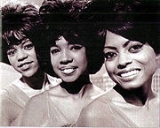
Diane Ernestine "Diana" Ross (born March 26, 1944) is a recording artist, actress, and entertainer. During the 1960s, she helped shape the Motown Sound as lead singer of The Supremes before leaving for a solo career in the beginning of 1970. Since the beginning of her career with The Supremes and as a solo artist, Diana Ross has sold more than 100 million records.
During the 1970s and through the mid 1980s, Ross was one of the most successful female artists of the rock era, crossing over into film, television and Broadway.

Discussion
Ask a question about 'Diana Ross'
Start a new discussion about 'Diana Ross'
Answer questions from other users
|
Encyclopedia
Diane Ernestine "Diana" Ross (born March 26, 1944) is a recording artist, actress, and entertainer. During the 1960s, she helped shape the Motown Sound as lead singer of The Supremes before leaving for a solo career in the beginning of 1970. Since the beginning of her career with The Supremes and as a solo artist, Diana Ross has sold more than 100 million records.
During the 1970s and through the mid 1980s, Ross was one of the most successful female artists of the rock era, crossing over into film, television and Broadway. She received a Best Actress Academy Award nomination for her 1972 role as Billie Holiday in Lady Sings the Blues. She won a Golden Globe award for Lady Sings the Blues. She won American Music Awards, garnered twelve Grammy Award nominations, and won a Tony Award for her one-woman show, An Evening with Diana Ross in 1977.
In 1976, Billboard magazine named her the "Female Entertainer of the Century." The Guinness Book Of World Records declared Diana Ross as the most successful female music artist of the 20th century with a total of eighteen American number-one singles: twelve as lead singer of The Supremes and six as a soloist. Ross was the first female solo artist to score six number-ones. This feat puts her in a tie for fifth place among solo female artists with the most No. 1s on the Hot 100. She is also one of the few recording artists to have two stars on the Hollywood Walk of Fame--one as a solo artist and the other as a member of the trio "The Supremes." In December 2007, she received a John F. Kennedy Center for the Performing Arts Honors Award.
Including her work with the Supremes, Ross has recorded 61 studio albums. Ross is a Lyric Soprano.
Early life and career
Diane Ernestine Ross, the daughter of a former United States Army soldier from Bluefield, West Virginia and a schoolteacher from Bessemer, Alabama, was born at Hutzel Women's Hospital, in Detroit, Michigan. After living on Detroit's St. Antoine street, Ross' family eventually settled at the low-income Brewster-Douglass housing projects. Ross aspired to be a fashion designer and learned how to design and sew clothes while attending Cass Technical High School in Midtown Detroit.
In 1959 Ross was brought to the attention of Milton Jenkins, the manager of the local doo-wop group The Primes, by friend Mary Wilson. According to sources, Primes member Paul Williams convinced Jenkins to enlist Ross in the sister group The Primettes, which included Wilson, Florence Ballard and Betty McGlown. Ross, Wilson and Ballard each sang lead during live performances and in 1960, the group signed with Lupine Records where the label issued the Ross-led single "Tears of Sorrow" b/w the Wilson-led "Pretty Baby". The single, however, flopped.
The Supremes
In 1961, having already replaced McGlown with Barbara Martin, the quartet auditioned for and eventually signed with Motown Records under their new moniker, The Supremes.
After Martin's exit in 1962, the group would remain a trio throughout its tenure. In 1963, Motown CEO Berry Gordy made Ross the lead singer of the group, because he felt the group could crossover to the pop charts with Ross' vocal quality. Initially, this decision was not an issue by Ross' group mates, until a few years later, when it became obvious that Ross was the focal point of the group; Ballard, in particular, took extreme issue. Despite difficulties, after The Supremes hit number-one with "Where Did Our Love Go", the group found unprecedented success: between August 1964 and May 1967, Ross, Wilson and Ballard sang on ten number-one hit singles, all of which also made the UK Top 40.
After deciding to remove Florence Ballard from the group in July 1967, Gordy chose Cindy Birdsong, a member of Patti LaBelle and the Bluebelles, as the replacement for Ballard. At the same time, he changed the group's name to Diana Ross and the Supremes to signify Ross' contribution and focal point as lead.
Recording a total of 12 number-one singles, The Supremes became the most successful American vocal group of the 1960s, and the second most successful group worldwide, second only to The Beatles.
Leaving the Supremes
Motown began plans to have Ross start a solo career in 1968. Television specials such as TCB (1968) and G.I.T. on Broadway (1969) were designed to spotlight Ross as a star in her own right, and much of the later Ross-led Supremes material was recorded by Ross with session singers The Andantes, not Wilson and Birdsong, on backing vocals.
By the summer of 1969, Ross began her first solo recordings. In November of the same year, three years after it was first rumored, Billboard magazine confirmed Ross' exit from the group to begin her solo career. In conjunction with the start of her solo career, Ross introduced Motown's newest act, The Jackson 5, to national audiences.
Ross began her solo sessions with a number of producers, including Bones Howe and Johnny Bristol. Her first track with Bristol, "Someday We'll Be Together", was tagged as her first solo single; it was instead issued as the final Diana Ross & the Supremes release. "Someday We'll Be Together" was the 12th and the final number-one hit for the Supremes and the last American number-one hit of the 1960s. Ross made her final appearance with the Supremes at the Frontier Hotel in Las Vegas on January 14, 1970.
Early solo career
After a half-year of recording material with various producers, Ross settled with the production team of Nickolas Ashford and Valerie Simpson, the creative force behind Marvin Gaye & Tammi Terrell's hit duets. Ashford and Simpson helmed most of Ross' first album, Diana Ross, and would continue to write and produce for Ross for the next decade.
In May 1970, Diana Ross was released on Motown. The first single, the gospel-influenced "Reach Out and Touch (Somebody's Hand)", peaked at #20 on the Billboard Hot 100. The album's second single, a cover of Gaye and Terrell's 1967 hit "Ain't No Mountain High Enough", was an international hit, and gave Ross her first #1 pop single as a solo artist. "Ain't No Mountain High Enough" garnered Ross a Grammy nomination for Best Pop Vocal Performance, Female.
In 1971, Motown released Ross's second album Everything Is Everything, which garnered Ross's first UK number one solo single, "I'm Still Waiting". Several months later, Ross released Surrender, which garnered the top 20 pop hit, "Remember Me". That year, Ross hosted her first solo TV special, Diana!. Featuring guest appearances by The Jackson 5, Bill Cosby and Danny Thomas, Ross' special continued her popularity with her rapidly increasing fan base.
By then, Motown Records had relocated to Hollywood. Berry Gordy decided it was time the company ventured again into new territory, so he focused much of his attention on developing a motion picture company and making Ross a movie star.
Lady Sings the Blues
In late 1971, it was announced that Diana Ross was going to play jazz icon Billie Holiday in a Motown-produced biographical film loosely based on Holiday's autobiography, Lady Sings the Blues. From the moment the film was announced, critics ridiculed Ross throughout the media: Ross and Holiday were miles apart from each other in vocal stylings and appearance. Ross soldiered on, immersing herself in Holiday's music and life story. Ross actually knew little about Holiday and wasn't a big fan of jazz in general. Instead of imitating Holiday's voice, Ross focused on Holiday's vocal phrasing.
Opening in October 1972, Lady Sings the Blues was a phenomenal success, and Ross' performance drew universal rave reviews. The movie co-starred Brian's Song star Billy Dee Williams, who played Holiday's lover, Louis McKay. Appearing in his film debut was comedian Richard Pryor, who played the "Piano Man". In 1973, Ross was nominated for both the Golden Globe Award and the Academy Award for "Best Actress". Winning a Golden Globe for Best Newcomer, Ross lost the Best Actress Oscar to her friend Liza Minnelli for her role in Cabaret. The soundtrack album for Lady Sings the Blues went to number-one album on the Billboard 200 for two weeks and reportedly sold 300,000 copies during its first eight days of release.
Ross' continued career in music and film
In 1972, shortly after filming Lady Sings the Blues, Ross recorded an all-jazz album titled Blue, which was eventually shelved by Motown Records staff, who wanted Ross to return to pop music. The following year, Ross responded with Touch Me in the Morning. The title track became Ross' second US number-one hit. Later in 1973, Ross and label mate Marvin Gaye released their successful duets album, Diana & Marvin, which included the top-twenty US hit, "My Mistake (Was to Love You)" and the top-five UK hit cover of The Stylistics' "You Are Everything".
In 1975, Ross again co-starred with Billy Dee Williams in the Motown film Mahogany. The story of an aspiring fashion designer who becomes a runway model and the toast of the industry, Mahogany was a troubled production from early on. The film's original director, Tony Richardson, was fired during production and Berry Gordy assumed the director's chair himself. In addition, Gordy and Ross clashed during filming, with Ross leaving the production before shooting was completed, forcing Gordy to use secretary Edna Anderson as a body double for Ross. While a box office hit, the film was not a critical success: Time magazine's review of the film chastised Gordy for "squandering one of America's most natural resources: Diana Ross."
Ross hit number-one on the pop charts twice in 1976 with "Theme From Mahogany (Do You Know Where You're Going To)", and the disco single "Love Hangover". The successes of these singles made her 1976 album, Diana Ross, her fourth LP to reach the Top 10. In 1977, her Broadway one-woman show earned the singer a special Tony Award. That same show was televised as a special on NBC and later released as An Evening with Diana Ross.
That same year, Motown acquired the film rights to the popular Broadway play The Wiz, an African-American reinterpretation of L. Frank Baum's The Wonderful Wizard of Oz. Although teenage Stephanie Mills, a veteran of the play, was originally cast as Dorothy, Diana Ross convinced Universal Pictures producer Rob Cohen to have Ross cast as Dorothy. As a result, the eleven-year old protagonist of the story was altered into a shy twenty-four year old schoolteacher from Harlem, New York. Among Ross' costars in the film were Lena Horne, Richard Pryor, Nipsey Russell, Ted Ross (no relation), and her former label mate and protégé Michael Jackson from the Jackson 5. Upon its October 1978 release, the film adaptation of The Wiz was a costly commercial and critical failure, and was Ross' final film for Motown. The accompanying Quincy Jones produced soundtrack album, however, sold over 850,000 copies. As the years have gone by, The Wiz has become a cult classic and in 2008 was re-released in an Anniversary Edition.
In 1979, Ross reunited with Nickolas Ashford & Valerie Simpson for the album The Boss, which became Ross' first gold-certified album (Motown sales records before 1977 were not audited by the RIAA, and therefore none of Motown's pre-1977 releases were awarded certifications). In 1980, Ross released her first RIAA platinum-certified disc, "diana", produced by Chic's front men Nile Rodgers and Bernard Edwards. The album included two of Ross' most successful and familiar solo hits, her fifth number-one single, "Upside Down", and the Top 5 single "I'm Coming Out". diana was the singer's most successful studio album to date, peaking at number-two on the Billboard 200 chart for three weeks and selling over 6 million copies worldwide.
Ross scored a Top 10 hit in late 1980 with the theme song to the 1980 film It's My Turn. The following year, she collaborated with former Commodores singer-songwriter Lionel Richie on the theme song for the film Endless Love. The Academy Award-nominated "Endless Love" single became Ross' final hit on Motown Records, and the Number One Record of the year. Feeling that Motown, and in particular Gordy, were keeping her from freely expressing herself, and not according her financial parity, Ross left Motown and signed a $20 million contract with RCA Records in the US and Canada and Capitol/EMI elsewhere, ending her twenty-year tenure with the label. The Ross-RCA deal was the most money ever paid to a recording artist. When "Endless Love" hit number-one in 1981, Ross became the first female artist in music history to place six singles at number one on the Billboard Hot 100.
Ross' career during the 1980s and 1990s Diana Ross' RCA Records debut, Why Do Fools Fall in Love, was issued in the summer of 1981. The album yielded 3 Top 10 hits including the title track "Why Do Fools Fall in Love", a remake of the 1956 Frankie Lymon & the Teenagers classic of the same name, and the single "Mirror Mirror". A third single, "Work That Body", hit the top ten in the UK.
In 1983, Ross reunited with former Supremes Mary Wilson and Cindy Birdsong for the television special Motown 25: Yesterday, Today, Forever. The three singers performed their 1969 number-one hit "Someday We'll Be Together", although altercations on stage between Ross and Wilson became an issue during the taping of the special. A four song Supremes set was planned but Ross declined to rehearse with "The Girls" and stated that they would have to be happy just doing "Someday We'll Be Together". Due to the lack of rehearsal, Wilson planned with Birdsong to take a step forward every time Ross did as to not fade into the background. Wilson was not aware of the script set by producer Suzanne DePasse, in which Ross was to introduce Berry Gordy. Wilson took it upon herself to do so, at which point Ross pushed down Wilson's hand-held microphone, stating "It's been taken care of." Ross then, after fluffing her hair, proceeded to introduce Gordy herself. These incidents were excised from the final edit of the taped special, but still made their way into the news media; People magazine reported that "Ross [did] some elbowing to get Wilson out of the spotlight."
Later that year, Ross held a much-heralded concert in Central Park, the proceeds of which were to go towards building a playground in the singer's name. Fifteen minutes into the show, which was being filmed for Showtime cable television, it began to rain, and as she urged the crowd of 300,000 to safely exit the venue, Ross announced that she would continue the performance the next day. Ross' actions drew praise within the mainstream press. That next day, over 500,000 people came back for one of the largest free concerts in the park's history. However, the second show generated controversy. During and after the concert, groups of young men began a rampage through Central Park, assaulting and robbing more than a hundred people. Some of the victims of the attacks subsequently filed law suits against New York City for failing to provide adequate security at the concert; the law suits were eventually settled at a cost of millions of dollars. Although representatives of Diana Ross originally refused to pay anything for the proposed playground, citing a lack of revenue from the concert, the Diana Ross Playground was finally built three years later.
Other hit singles recorded by Ross for RCA included the Grammy nominated "Muscles" (1982), "So Close" (1983), "Pieces of Ice" (1983), "All of You" (1984), the no. 1 dance hit "Swept Away" (1984), the no. 1 R&B Marvin Gaye tribute "Missing You" (1985), "Eaten Alive" (1985) and the UK number-one single, "Chain Reaction" (1986). Ross also sang on the 1985 worldwide #1 "We Are The World". Hit albums during this period included the gold-certified releases, All The Great Hits, Silk Electric, Diana Ross Anthology and Swept Away, the latter being the last top forty charted album in Ross' career for two decades. While Ross continued to have success overseas as the 1980s continued, she began to struggle on the United States Billboard Hot 100 chart. The 1987 album Red Hot Rhythm & Blues was a critical but less commercial success and "If We Hold On Together", the theme to the Steven Spielberg animated film "The Land Before Time" in 1988 was a # 1 single in Japan, later making the UK Top 20 in 1992. In 1989, after leaving RCA, Diana Ross returned to Motown, where Ross was now both a part-owner and a recording artist.
In 1989, Diana Ross released her first Motown album in eight years, the Nile Rodgers-produced Workin' Overtime. Despite a Top 10 R&B hit with the title track, the album failed to find a pop audience in America, as Ross' 1987 RCA release had. Subsequent follow-up albums such as 1991's The Force Behind the Power, 1995's Take Me Higher and 1999's Every Day is a New Day produced the same disappointing results in the US. Her last major R&B hit was "No Matter What You Do", a duet with Al B. Sure!, which peaked at #4 in early 1991.
Ross had success with her latter-day Motown albums and singles in the United Kingdom and Europe, however, scoring Top 10 UK hits with "When You Tell Me That You Love Me" (1991), "One Shining Moment (1992), and "Not Over You Yet" (1999). Additionally, "Force Behind The Power", "Heart (Don't Change My Mind)" (1992), "Your Love" (1994), "The Best Years of My Life" (1994), "Take Me Higher" (1995), "Gone" (1995), "I Will Survive" (1996) and "In the Ones You Love" (1996) all reached either the UK Top 20 or Top 40, proving that while her domestic chart performance waned, overseas she was still a viable recording artist. Ross headlined the 1991 UK Royal Variety Performance and was a halftime performer at Super Bowl XXX in 1996. In 1999, Diana Ross was named the most successful female singer in the history of the United Kingdom charts, based upon a tally of her career hits. Fellow Michigan singer Madonna would eventually beat Ross out as the most successful female artist in the UK. In 2002, Diana Ross and Motown parted ways.
Diana Ross returned to acting in the ABC telefilm, Out of Darkness (1994), in which she played a woman suffering from schizophrenia. Once again, Ross drew critical acclaim for her acting, and scored her third Golden Globe nomination. In 1999, Ross co-starred with young R&B singer Brandy for the ABC television movie Double Platinum playing a singer who neglected her daughter while concentrating on her career.
Later years
Diana Ross was a presenter at the 1999 MTV Video Music Awards, held that September. She shocked TV viewers when she touched rapper Lil' Kim's exposed breast, reportedly amazed at the open brashness of the rapper showcasing her body A month after the Lil Kim incident, authorities at London's Heathrow Airport detained Ross for assaulting a female security guard. The singer claimed that she had felt "violated as a woman" by the body search that she was subjected to. In retaliation, she was alleged to have fondled the bust of the female airport security guard. The singer was detained but was later released.
In 2000, Ross announced a Supremes reunion tour, again with former band mates Mary Wilson and Cindy Birdsong, called Return to Love. Wilson and Birdsong declined the tour because of a reported difference in pay offered to each member: Ross was offered $15 million while Wilson was offered $3 million and Birdsong less than $1 million. They were replaced by latter-day Supremes Lynda Laurence and Scherrie Payne, both of whom were members of the group after Diana Ross had left The Supremes. Despite a respectable opening in Philadelphia and a sellout show at Madison Square Garden in New York (ironically, the final show they would play), the Return to Love tour was canceled after nine dates, because of lackluster ticket sales.
In December 2002, Ross was arrested in Tucson, Arizona for drunk driving. She pleaded "no contest", and later served a two day jail sentence near her home in Greenwich, Connecticut.
Current work
In 2005, Diana Ross returned to the charts with a pair of duets. "I Got a Crush on You" was recorded with Rod Stewart for his album The Great American Songbook, and reached #19 on the Billboard Hot Adult Contemporary chart. Another duet, recorded with Westlife, was a remake of Ross' 1991 #2 UK single, "When You Tell Me You Love Me", and reached #2 in the UK just as the original had and #1 in Ireland.
In June 2006, Motown released the shelved Blue album, where it peaked at #2 on the jazz albums chart. In October, Ross' new studio album, I Love You, was released on October 2 around the world, and then saw release in North America on January 16, 2007, on the Manhattan Records/EMI label. The new album earned the coveted Hot Shot Debut by Billboard magazine when it bowed at #32 on the pop albums chart, making it Ross' first top forty US pop album since 1984's Swept Away. Since its release in 2007, EMI Inside reports that I Love You has sold more than 250,000 copies world-wide.
honorees as she is recognized for her achievements by President George W. Bush in the East Room of the White House Sunday, Dec. 2, 2007, during the Kennedy Center Gala Reception. From left are singer, songwriter Brian Wilson; filmmaker Martin Scorsese; comedian, actor and author Steve Martin and pianist Leon Fleisher.]]
In January 2007, Ross appeared on a number of TV shows across the U.S. to promote her new album and began touring in the spring. She also appeared on American Idol as a mentor to the contestants Ross's United States "I Love You" tour has garnered positive reviews, as well as her European tour, which began on May 6, 2007.
At the 2007 BET Awards, Ross was presented with a Lifetime Achievement Award by singer Alicia Keys and her five children. Stevie Wonder, Erykah Badu, and Chaka Khan performed a tribute to Ross, covering several of her hits. Later that year, the prestigious Kennedy Center Honors committee which recognizes career excellence, cultural influence and contributions to American culture named Diana Ross as one of the honorees. Past honoree and fellow Motown alumni Smokey Robinson and actor Terence Howard spoke on her behalf at the official ceremony that December, and singers Ciara, Vanessa L. Williams, Yolanda Adams, and American Idol winner Jordin Sparks performed in a musical tribute.
In February 2008, Diana Ross was the guest speaker at the Houston-based Brilliant Lecture series, at The Hobby Center, Houston. The lectures are designed to present prolific and influential characters to speak about their life and inspirations. During this lecture, Ross revealed that it was "unlikely" that she would undertake any further movie projects.
In early May 2008, Diana headlined at New York's Radio City Hall at the 'Divas with Heart' event, which also featured fellow R&B legends Gladys Knight, Chaka Khan and Patti LaBelle.
In July 2008, Diana Ross performed at two major events in the UK; the famous Liverpool Pops Festival and the National Trust Summer Festival at Petworth House, East Sussex. In addition, Diana Ross is also scheduled for a further North America/Canada/European tour throughout the year.
Diana's 1970 album Everything Is Everything was released in the United States for the first time on CD on April 18, 2008 as an expanded edition with bonus tracks and alternate versions of the songs.
In early December 2008, Motown announced the result of an international poll of the greatest Motown tracks. The winner, worldwide, was Marvin Gaye's "I Heard it Through the Grapevine" while Ross' version of "Ain't No Mountain High Enough" was No. 2. This track was the top choice by British voters. The poll determined the track listing for a Motown fiftieth anniversary album to be released in December. So many Supremes and Diana Ross cuts finished in the Top 50 of the poll that they had to eliminate some of their songs from the anniversary album or it would have been another Diana Ross CD.
On December 9, 2008, the expanded edition of Ross' third solo album, Surrender, was released. Soundscan has yet to release the truth about the album's sales figures of that and of "Playlist Plus".
Personal life
Ross was the second of six children born to a Baptist family by Fred Ross (July 4, 1920 - November 21, 2007) and Ernestine Ross (January 27, 1916 - October 9, 1984) in Detroit. During Ross' later teenage years, her parents divorced. Diana's mother later married John Jordan while Fred Ross never remarried. Her eldest sister Barbara became a doctor, while her younger sister Rita became a teacher. Brothers Arthur and Chico Ross followed their sister in the recording industry and entertainment business respectively.
Ross attended Detroit's Cass Technical High School. She graduated in January 1962 at the age of seventeen, one semester before the rest of her classmates. Ross married music business manager Robert Ellis Silberstein in January 1971. After divorcing him in March 1977, Ross married Norwegian tycoon Arne Næss Jr. in February 1986. They divorced in 1999.
Ross is the mother of five children. Her children include Rhonda Suzanne Silberstein (born August 8, 1971), now known as Rhonda Ross Kendrick. Tracee Joy Silberstein (born October 29, 1972, known professionally as Tracee Ellis Ross). Chudney Lane Silberstein (born November 4, 1975, known professionally as Chudney Ross) are the children of Robert Silberstein. Ross Arne Næss (born October 7, 1987) and Evan Olav Næss ( born August 26, 1988), known professionally as Evan Ross) are the children of Arne Næss.
Rhonda was the biological daughter of Motown CEO Berry Gordy. The baby was conceived just a month before Ross' marriage to Silberstein. In her teenage years, Rhonda learned that Gordy was her father, according to Diana.
All of Ross' daughters graduated from college and all followed their mother to show business. Rhonda gained success as an actress in television movies and daytime television shows, while Tracee was the star of the hit sitcom, Girlfriends. Chudney is active in behind-the-scenes work and is also a model. Youngest son Evan is also a current actor. Son Ross, currently attending college, has not followed his siblings into show business.
Awards and recognitions
- To see a list of awards and accolades won by Diana Ross, see List of Diana Ross awards and accolades.
Solo discography
Top Ten singles
The following singles reached the Top Ten on either the United States Billboard Hot 100 pop singles chart or the United Kingdom UK Singles chart.
Top Ten albums
The following albums reached the Top Ten on either the United States
albums chart or the United Kingdom pop albums chart.
Filmography
Television Work
Autobiographies
(A scrapbook-style collection of photographs & poems)
See also
Further reading
External links
|
| |
|
|