


Pahlavi dynasty

Encyclopedia
The Pahlavi dynasty consisted of two Iran
ian/Persian monarchs, father and son Reza Shah Pahlavi
(reg. 1925–1941) and Mohammad Reza Shah Pahlavi
(reg. 1941–79).
The Pahlavis came to power after Ahmad Shah Qajar
, the last ruler of the Qajar dynasty
, proved unable to stop British and Soviet encroachment on Iranian sovereignty, was overthrown in a military coup, abdicated his throne and went to exile in France
. The National Assembly
of Iran, known as the Majlis
, convening as a constituent assembly
on December 12, 1925, deposed the young Ahmad Shah Qajar, and declared Reza Shah the new monarch of the Imperial State of Persia. In 1935, Reza Shah informed foreign embassies to call Persia by its ancient Persian name, Iran.
The Pahlavi dynasty was interrupted in 1979 when Reza Shah's son Mohammad Reza Pahlavi was forced into exile by an Islamic Revolution
led by Ruhollah Khomeini
.
, used his troops to support a successful coup
against the government of the Qajar dynasty
. Within four years he had established himself as the most powerful person in the country by suppressing rebellions and establishing order. In 1925, a specially convened assembly deposed Ahmad Shah Qajar
, the last ruler of the Qajar dynasty, and named Reza Khan, who earlier had adopted the surname Pahlavi, as the new shah.
 Reza Shah had ambitious plans for modernizing Iran. These plans included developing large-scale industries, implementing major infrastructure
projects, building a cross-country railroad system, establishing a national public education
system, reforming the judiciary
, and improving health care
. He believed a strong, centralized government
managed by educated personnel could carry out his plans.
He sent hundreds of Iranians, including his son, to Europe for training. During 16 years from 1925 to 1941, Reza Shah's numerous development projects transformed Iran into an urbanized country. Public education progressed rapidly, and new social classes developed. A professional middle class
and an industrial working class
had emerged.
By the mid-1930s Reza Shah's strong secular rule caused dissatisfaction among some groups, particularly the clergy
, who opposed his reforms. In 1935 Reza Pahlavi
issued a decree asking foreign delegates to use the term Iran in formal correspondence, in accordance with the fact that "Persia" was a term used by Western
peoples for the country called "Iran" in Persian. After some scholars protested, his successor, Mohammad Reza Pahlavi, announced in 1959 that both Persia and Iran were acceptable and could be used interchangeably.
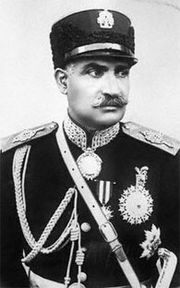 Reza Shah tried to avoid involvement with Britain
and the Soviet Union
. Though many of his development projects required foreign technical expertise, he avoided awarding contracts to British and Soviet companies. Although Britain, through its ownership of the Anglo-Iranian Oil Company, controlled all of Iran's oil resources, Reza Shah preferred to obtain technical assistance from Germany
, France
, Italy
, and other European countries. This created problems for Iran after 1939, when Germany and Britain became enemies in World War II
. Reza Shah proclaimed Iran as a neutral country
, but Britain insisted that German engineers and technicians in Iran were spies
with missions to sabotage
British oil facilities in southwestern Iran. Britain demanded that Iran expel all German citizens, but Reza Shah refused, claiming this would adversely impact his development projects.
in June 1941, Britain and the Soviet Union became allies. Britain and the USSR saw the newly-opened Trans-Iranian Railway
as an attractive route to transport supplies from the Persian Gulf
to the Soviet Union. In August 1941, because Reza Shah refused to expel the German nationals, Britain and the Soviet Union invaded Iran
, arrested the Shah and sent him into exile, taking control of Iran's communications and railroad. In 1942 the United States
, an ally of Britain and the USSR during the war, sent a military force to Iran to help maintain and operate sections of the railroad. Over the next few months, the three nations took control of Iran's oil resources and secured a supply corridor for themselves. Reza Shah's regime collapsed, and the American, British and Soviet authorities limited the powers of the rump government that remained. They permitted Reza Shah's son, Mohammad Reza Pahlavi
to accede to the throne.
In January 1942 they signed an agreement with Iran to respect Iran's independence and to withdraw their troops within six months of the war's end. In 1943 at the Tehran Conference
, the United States reaffirmed this commitment. In 1945, the USSR refused to announce a timetable to leave Iran's northwestern provinces of East Azerbaijan and West Azerbaijan, where Soviet-supported autonomy movements had developed. At the time, the Tudeh Party of Iran
, a communist party
that was already influential and had parliamentary representation, was becoming increasingly militant, especially in the North. This promoted actions from the side of the government, including attempts of the Iranian armed forces to restore order in the Northern provinces. While the Tudeh headquarters in Tehran
were occupied and the Isfahan branch crushed, the Soviet troops present in the Northern parts of the country prevented the Iranian forces from entering. Thus, by the late autumn of 1945, the North was virtually controlled by the Tudeh and its affiliates.
The USSR withdrew its troops in May 1946, but tensions continued for several months. This episode was one of the precipitating events of the emerging Cold War
, the postwar rivalry between the United States and its allies, and the USSR and its allies.
Iran's political system became increasingly open. Political parties were developed, and in 1944 the Majlis
election was the first genuinely competitive election in more than 20 years. Foreign influence remained a very sensitive issue for all parties. The Anglo-Iranian Oil Company (AIOC), which was owned by the British government, continued to produce and market Iranian oil. In the beginning of 1930s some Iranians began to advocate nationalization of the country's oil fields. After 1946 this became an increasingly popular political movement.
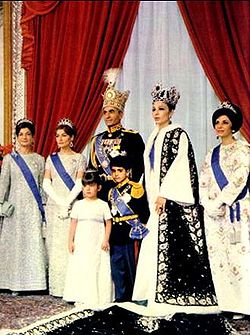 Mohammad Reza Pahlavi
replaced his father on the throne on September 16, 1941. He wanted to continue the reform policies of his father, but a contest for control of the government soon erupted between the shah and an older professional politician, the nationalistic Mohammad Mosaddegh.
Despite his vow to act as a constitutional monarch who would defer to the power of the parliamentary government, Mohammad Reza Pahlavi increasingly involved himself in governmental affairs. He concentrated on reviving the army and ensuring that it would remain under royal control as the monarchy's main power base. In 1949 an assassination attempt on the Shah, attributed to the pro-Soviet Tudeh Party, resulted in the banning of that party and the expansion of the Shah's constitutional powers.
In 1951, the Majlis (Parliament of Iran) named Mohammad Mossadegh as new prime minister by a vote of 79–12, who shortly after nationalized the British-owned oil industry (see Abadan Crisis
). Mossadegh was opposed by the Shah who feared a resulting oil embargo imposed by the West would leave Iran in economic ruin. The Shah fled Iran but returned when the United Kingdom
and United States
staged a coup against Mossadegh in August 1953 (see Operation Ajax
). Mossadegh was then arrested by pro-Shah army forces.
In the context of regional turmoil and the Cold War, the Shah established himself as an indispensable ally of the West. Domestically, he advocated reform policies, culminating in the 1963 program known as the White Revolution
, which included land reform, extension of voting rights to women, and the elimination of illiteracy. Major plans to build Iran's infrastructure were undertaken, a new middle class began flourishing and in less than two decades Iran became the indisputable major economic and military power of the Middle East.
However, these measures and the increasing arbitrariness of the Shah's rule provoked religious leaders who feared losing their traditional authority, and intellectuals seeking democratic reforms. These opponents criticized the Shah for his reforms or for violation of the constitution, which placed limits on royal power and provided for a representative government.
The Shah saw himself as heir to the kings of ancient Iran, and in 1971 he held a celebration of 2,500 years of Persian monarchy
. In 1976 he replaced the calendar (year 1355) with an "Imperial" calendar (year 2535), which began with the foundation of the Persian Empire more than 25 centuries earlier. These actions were viewed as un-Islam
ic and resulted in more religious opposition by the clergy.
. Such opponents included members of the Communist Tudeh party.
By the mid-1970s, relying on increased oil revenues, the Shah began a series of even more ambitious and bolder plans for the progress of his country and the march toward the "White Revolution". But his socioeconomic advances increasingly irritated the clergy. Islamic leaders, particularly the exiled cleric Ayatollah
Ruhollah Khomeini
, were able to focus this discontent with an ideology tied to Islamic principles that called for the overthrow of the Shah and the return to Islamic traditions, called the Islamic revolution
. The Shah's government collapsed following widespread uprisings in 1978 and 1979. The Islamic Revolution dissolved the SAVAK
and replaced it with the SAVAMA. It was run after the revolution, according to U.S. sources and Iranian exile sources in the US and in Paris, by Gen. Hossein Fardoust, who was deputy chief of SAVAK under the former Shah, Mohammad Reza Pahlavi, and a friend from boyhood of the deposed monarch.
The Shah fled the country, seeking medical treatment to Egypt
, Mexico
,the United States
, and Panama
and finally resettled with his family in Egypt as a guest of Anwar Sadat
. Upon his death his son Crown Prince Reza Pahlavi
succeeded him in absentia
as heir apparent to the Pahlavi dynasty. Pahlavi and his wife live in the United States in Potomac, Maryland
with three daughters.
Iran
Iran , officially the Islamic Republic of Iran , is a country in Southern and Western Asia. The name "Iran" has been in use natively since the Sassanian era and came into use internationally in 1935, before which the country was known to the Western world as Persia...
ian/Persian monarchs, father and son Reza Shah Pahlavi
Reza Shah
Rezā Shāh, also known as Rezā Shāh Pahlavi and Rezā Shāh Kabir , , was the Shah of the Imperial State of Iran from December 15, 1925, until he was forced to abdicate by the Anglo-Soviet invasion of Iran on September 16, 1941.In 1925, Reza Shah overthrew Ahmad Shah Qajar, the last Shah of the Qajar...
(reg. 1925–1941) and Mohammad Reza Shah Pahlavi
Mohammad Reza Pahlavi
Mohammad Rezā Shāh Pahlavi, Shah of Iran, Shah of Persia , ruled Iran from 16 September 1941 until his overthrow by the Iranian Revolution on 11 February 1979...
(reg. 1941–79).
The Pahlavis came to power after Ahmad Shah Qajar
Ahmad Shah Qajar
Ahmad Shah Qajar was Shah of Iran from July 16, 1909, to October 31, 1925 and the last of the Qajar dynasty.- Reign :...
, the last ruler of the Qajar dynasty
Qajar dynasty
The Qajar dynasty was an Iranian royal family of Turkic descent who ruled Persia from 1785 to 1925....
, proved unable to stop British and Soviet encroachment on Iranian sovereignty, was overthrown in a military coup, abdicated his throne and went to exile in France
France
The French Republic , The French Republic , The French Republic , (commonly known as France , is a unitary semi-presidential republic in Western Europe with several overseas territories and islands located on other continents and in the Indian, Pacific, and Atlantic oceans. Metropolitan France...
. The National Assembly
National Assembly
National Assembly is either a legislature, or the lower house of a bicameral legislature in some countries. The best known National Assembly, and the first legislature to be known by this title, was that established during the French Revolution in 1789, known as the Assemblée nationale...
of Iran, known as the Majlis
Majlis of Iran
The National Consultative Assembly of Iran , also called The Iranian Parliament or People's House, is the national legislative body of Iran...
, convening as a constituent assembly
Constituent assembly
A constituent assembly is a body composed for the purpose of drafting or adopting a constitution...
on December 12, 1925, deposed the young Ahmad Shah Qajar, and declared Reza Shah the new monarch of the Imperial State of Persia. In 1935, Reza Shah informed foreign embassies to call Persia by its ancient Persian name, Iran.
The Pahlavi dynasty was interrupted in 1979 when Reza Shah's son Mohammad Reza Pahlavi was forced into exile by an Islamic Revolution
Iranian Revolution
The Iranian Revolution refers to events involving the overthrow of Iran's monarchy under Shah Mohammad Reza Pahlavi and its replacement with an Islamic republic under Ayatollah Ruhollah Khomeini, the leader of the...
led by Ruhollah Khomeini
Ruhollah Khomeini
Grand Ayatollah Sayyed Ruhollah Musavi Khomeini was an Iranian religious leader and politician, and leader of the 1979 Iranian Revolution which saw the overthrow of Mohammad Reza Pahlavi, the Shah of Iran...
.
Establishment
In 1921, Reza Khan, an officer in Iran's Persian Cossack BrigadePersian Cossack Brigade
The Persian Cossack Brigade was an elite cavalry unit formed in 1879 in Iran. During much of their history they were the only functional, effective military unit of the Qajar Dynasty...
, used his troops to support a successful coup
Coup d'état
A coup d'état state, literally: strike/blow of state)—also known as a coup, putsch, and overthrow—is the sudden, extrajudicial deposition of a government, usually by a small group of the existing state establishment—typically the military—to replace the deposed government with another body; either...
against the government of the Qajar dynasty
Qajar dynasty
The Qajar dynasty was an Iranian royal family of Turkic descent who ruled Persia from 1785 to 1925....
. Within four years he had established himself as the most powerful person in the country by suppressing rebellions and establishing order. In 1925, a specially convened assembly deposed Ahmad Shah Qajar
Ahmad Shah Qajar
Ahmad Shah Qajar was Shah of Iran from July 16, 1909, to October 31, 1925 and the last of the Qajar dynasty.- Reign :...
, the last ruler of the Qajar dynasty, and named Reza Khan, who earlier had adopted the surname Pahlavi, as the new shah.
Infrastructure
Infrastructure is basic physical and organizational structures needed for the operation of a society or enterprise, or the services and facilities necessary for an economy to function...
projects, building a cross-country railroad system, establishing a national public education
Public education
State schools, also known in the United States and Canada as public schools,In much of the Commonwealth, including Australia, New Zealand, South Africa, and the United Kingdom, the terms 'public education', 'public school' and 'independent school' are used for private schools, that is, schools...
system, reforming the judiciary
Judiciary
The judiciary is the system of courts that interprets and applies the law in the name of the state. The judiciary also provides a mechanism for the resolution of disputes...
, and improving health care
Health care
Health care is the diagnosis, treatment, and prevention of disease, illness, injury, and other physical and mental impairments in humans. Health care is delivered by practitioners in medicine, chiropractic, dentistry, nursing, pharmacy, allied health, and other care providers...
. He believed a strong, centralized government
Centralized government
A centralized or centralised government is one in which power or legal authority is exerted or coordinated by a de facto political executive to which federal states, local authorities, and smaller units are considered subject...
managed by educated personnel could carry out his plans.
He sent hundreds of Iranians, including his son, to Europe for training. During 16 years from 1925 to 1941, Reza Shah's numerous development projects transformed Iran into an urbanized country. Public education progressed rapidly, and new social classes developed. A professional middle class
Middle class
The middle class is any class of people in the middle of a societal hierarchy. In Weberian socio-economic terms, the middle class is the broad group of people in contemporary society who fall socio-economically between the working class and upper class....
and an industrial working class
Working class
Working class is a term used in the social sciences and in ordinary conversation to describe those employed in lower tier jobs , often extending to those in unemployment or otherwise possessing below-average incomes...
had emerged.
By the mid-1930s Reza Shah's strong secular rule caused dissatisfaction among some groups, particularly the clergy
Clergy
Clergy is the generic term used to describe the formal religious leadership within a given religion. A clergyman, churchman or cleric is a member of the clergy, especially one who is a priest, preacher, pastor, or other religious professional....
, who opposed his reforms. In 1935 Reza Pahlavi
Reza Shah
Rezā Shāh, also known as Rezā Shāh Pahlavi and Rezā Shāh Kabir , , was the Shah of the Imperial State of Iran from December 15, 1925, until he was forced to abdicate by the Anglo-Soviet invasion of Iran on September 16, 1941.In 1925, Reza Shah overthrew Ahmad Shah Qajar, the last Shah of the Qajar...
issued a decree asking foreign delegates to use the term Iran in formal correspondence, in accordance with the fact that "Persia" was a term used by Western
Western world
The Western world, also known as the West and the Occident , is a term referring to the countries of Western Europe , the countries of the Americas, as well all countries of Northern and Central Europe, Australia and New Zealand...
peoples for the country called "Iran" in Persian. After some scholars protested, his successor, Mohammad Reza Pahlavi, announced in 1959 that both Persia and Iran were acceptable and could be used interchangeably.
United Kingdom
The United Kingdom of Great Britain and Northern IrelandIn the United Kingdom and Dependencies, other languages have been officially recognised as legitimate autochthonous languages under the European Charter for Regional or Minority Languages...
and the Soviet Union
Soviet Union
The Soviet Union , officially the Union of Soviet Socialist Republics , was a constitutionally socialist state that existed in Eurasia between 1922 and 1991....
. Though many of his development projects required foreign technical expertise, he avoided awarding contracts to British and Soviet companies. Although Britain, through its ownership of the Anglo-Iranian Oil Company, controlled all of Iran's oil resources, Reza Shah preferred to obtain technical assistance from Germany
Germany
Germany , officially the Federal Republic of Germany , is a federal parliamentary republic in Europe. The country consists of 16 states while the capital and largest city is Berlin. Germany covers an area of 357,021 km2 and has a largely temperate seasonal climate...
, France
France
The French Republic , The French Republic , The French Republic , (commonly known as France , is a unitary semi-presidential republic in Western Europe with several overseas territories and islands located on other continents and in the Indian, Pacific, and Atlantic oceans. Metropolitan France...
, Italy
Italy
Italy , officially the Italian Republic languages]] under the European Charter for Regional or Minority Languages. In each of these, Italy's official name is as follows:;;;;;;;;), is a unitary parliamentary republic in South-Central Europe. To the north it borders France, Switzerland, Austria and...
, and other European countries. This created problems for Iran after 1939, when Germany and Britain became enemies in World War II
World War II
World War II, or the Second World War , was a global conflict lasting from 1939 to 1945, involving most of the world's nations—including all of the great powers—eventually forming two opposing military alliances: the Allies and the Axis...
. Reza Shah proclaimed Iran as a neutral country
Neutral country
A neutral power in a particular war is a sovereign state which declares itself to be neutral towards the belligerents. A non-belligerent state does not need to be neutral. The rights and duties of a neutral power are defined in Sections 5 and 13 of the Hague Convention of 1907...
, but Britain insisted that German engineers and technicians in Iran were spies
Espionage
Espionage or spying involves an individual obtaining information that is considered secret or confidential without the permission of the holder of the information. Espionage is inherently clandestine, lest the legitimate holder of the information change plans or take other countermeasures once it...
with missions to sabotage
Sabotage
Sabotage is a deliberate action aimed at weakening another entity through subversion, obstruction, disruption, or destruction. In a workplace setting, sabotage is the conscious withdrawal of efficiency generally directed at causing some change in workplace conditions. One who engages in sabotage is...
British oil facilities in southwestern Iran. Britain demanded that Iran expel all German citizens, but Reza Shah refused, claiming this would adversely impact his development projects.
World War II
Following Germany's invasion of the Soviet UnionOperation Barbarossa
Operation Barbarossa was the code name for Germany's invasion of the Soviet Union during World War II that began on 22 June 1941. Over 4.5 million troops of the Axis powers invaded the USSR along a front., the largest invasion in the history of warfare...
in June 1941, Britain and the Soviet Union became allies. Britain and the USSR saw the newly-opened Trans-Iranian Railway
Trans-Iranian Railway
The Trans-Iranian Railway was a major railway building project started in 1927 and completed in 1938, under the direction of the Persian monarch, Reza Shah, and entirely with indigenous capital. It links the capital Tehran with the Persian Gulf and Caspian Sea...
as an attractive route to transport supplies from the Persian Gulf
Persian Gulf
The Persian Gulf, in Southwest Asia, is an extension of the Indian Ocean located between Iran and the Arabian Peninsula.The Persian Gulf was the focus of the 1980–1988 Iran-Iraq War, in which each side attacked the other's oil tankers...
to the Soviet Union. In August 1941, because Reza Shah refused to expel the German nationals, Britain and the Soviet Union invaded Iran
Anglo-Soviet invasion of Iran
The Anglo-Soviet invasion of Iran was the Allied invasion of the Imperial State of Iran during World War II, by British, Commonwealth, and Soviet armed forces. The invasion from August 25 to September 17, 1941, was codenamed Operation Countenance...
, arrested the Shah and sent him into exile, taking control of Iran's communications and railroad. In 1942 the United States
United States
The United States of America is a federal constitutional republic comprising fifty states and a federal district...
, an ally of Britain and the USSR during the war, sent a military force to Iran to help maintain and operate sections of the railroad. Over the next few months, the three nations took control of Iran's oil resources and secured a supply corridor for themselves. Reza Shah's regime collapsed, and the American, British and Soviet authorities limited the powers of the rump government that remained. They permitted Reza Shah's son, Mohammad Reza Pahlavi
Mohammad Reza Pahlavi
Mohammad Rezā Shāh Pahlavi, Shah of Iran, Shah of Persia , ruled Iran from 16 September 1941 until his overthrow by the Iranian Revolution on 11 February 1979...
to accede to the throne.
In January 1942 they signed an agreement with Iran to respect Iran's independence and to withdraw their troops within six months of the war's end. In 1943 at the Tehran Conference
Tehran Conference
The Tehran Conference was the meeting of Joseph Stalin, Franklin D. Roosevelt and Winston Churchill between November 28 and December 1, 1943, most of which was held at the Soviet Embassy in Tehran, Iran. It was the first World War II conference amongst the Big Three in which Stalin was present...
, the United States reaffirmed this commitment. In 1945, the USSR refused to announce a timetable to leave Iran's northwestern provinces of East Azerbaijan and West Azerbaijan, where Soviet-supported autonomy movements had developed. At the time, the Tudeh Party of Iran
Tudeh Party of Iran
The Tudeh Party of Iran is an Iranian communist party. Formed in 1941, with Soleiman Mohsen Eskandari as its head, it had considerable influence in its early years and played an important role during Mohammad Mosaddeq's campaign to nationalize the Anglo-Iranian Oil Company and his term as prime...
, a communist party
Communist party
A political party described as a Communist party includes those that advocate the application of the social principles of communism through a communist form of government...
that was already influential and had parliamentary representation, was becoming increasingly militant, especially in the North. This promoted actions from the side of the government, including attempts of the Iranian armed forces to restore order in the Northern provinces. While the Tudeh headquarters in Tehran
Tehran
Tehran , sometimes spelled Teheran, is the capital of Iran and Tehran Province. With an estimated population of 8,429,807; it is also Iran's largest urban area and city, one of the largest cities in Western Asia, and is the world's 19th largest city.In the 20th century, Tehran was subject to...
were occupied and the Isfahan branch crushed, the Soviet troops present in the Northern parts of the country prevented the Iranian forces from entering. Thus, by the late autumn of 1945, the North was virtually controlled by the Tudeh and its affiliates.
The USSR withdrew its troops in May 1946, but tensions continued for several months. This episode was one of the precipitating events of the emerging Cold War
Cold War
The Cold War was the continuing state from roughly 1946 to 1991 of political conflict, military tension, proxy wars, and economic competition between the Communist World—primarily the Soviet Union and its satellite states and allies—and the powers of the Western world, primarily the United States...
, the postwar rivalry between the United States and its allies, and the USSR and its allies.
Iran's political system became increasingly open. Political parties were developed, and in 1944 the Majlis
Majlis of Iran
The National Consultative Assembly of Iran , also called The Iranian Parliament or People's House, is the national legislative body of Iran...
election was the first genuinely competitive election in more than 20 years. Foreign influence remained a very sensitive issue for all parties. The Anglo-Iranian Oil Company (AIOC), which was owned by the British government, continued to produce and market Iranian oil. In the beginning of 1930s some Iranians began to advocate nationalization of the country's oil fields. After 1946 this became an increasingly popular political movement.
The Cold War
Mohammad Reza Pahlavi
Mohammad Rezā Shāh Pahlavi, Shah of Iran, Shah of Persia , ruled Iran from 16 September 1941 until his overthrow by the Iranian Revolution on 11 February 1979...
replaced his father on the throne on September 16, 1941. He wanted to continue the reform policies of his father, but a contest for control of the government soon erupted between the shah and an older professional politician, the nationalistic Mohammad Mosaddegh.
Despite his vow to act as a constitutional monarch who would defer to the power of the parliamentary government, Mohammad Reza Pahlavi increasingly involved himself in governmental affairs. He concentrated on reviving the army and ensuring that it would remain under royal control as the monarchy's main power base. In 1949 an assassination attempt on the Shah, attributed to the pro-Soviet Tudeh Party, resulted in the banning of that party and the expansion of the Shah's constitutional powers.
In 1951, the Majlis (Parliament of Iran) named Mohammad Mossadegh as new prime minister by a vote of 79–12, who shortly after nationalized the British-owned oil industry (see Abadan Crisis
Abadan Crisis
The Abadan Crisis occurred from 1951 to 1954, after Iran nationalised the Iranian assets of the Anglo-Iranian Oil Company and expelled Western companies from oil refineries in the city of Abadan .-Prelude:...
). Mossadegh was opposed by the Shah who feared a resulting oil embargo imposed by the West would leave Iran in economic ruin. The Shah fled Iran but returned when the United Kingdom
United Kingdom
The United Kingdom of Great Britain and Northern IrelandIn the United Kingdom and Dependencies, other languages have been officially recognised as legitimate autochthonous languages under the European Charter for Regional or Minority Languages...
and United States
United States
The United States of America is a federal constitutional republic comprising fifty states and a federal district...
staged a coup against Mossadegh in August 1953 (see Operation Ajax
Operation Ajax
The 1953 Iranian coup d'état was the overthrow of the democratically elected government of Iranian Prime Minister Mohammad Mosaddegh on 19 August 1953, orchestrated by the intelligence agencies of the United Kingdom and the United States under the name TPAJAX Project...
). Mossadegh was then arrested by pro-Shah army forces.
In the context of regional turmoil and the Cold War, the Shah established himself as an indispensable ally of the West. Domestically, he advocated reform policies, culminating in the 1963 program known as the White Revolution
White Revolution
The White Revolution was a far-reaching series of reforms in Iran launched in 1963 by the Shah Mohammad Reza Pahlavi. Mohammad Reza Shah’s reform program was built especially to strengthen those classes that supported the traditional system...
, which included land reform, extension of voting rights to women, and the elimination of illiteracy. Major plans to build Iran's infrastructure were undertaken, a new middle class began flourishing and in less than two decades Iran became the indisputable major economic and military power of the Middle East.
However, these measures and the increasing arbitrariness of the Shah's rule provoked religious leaders who feared losing their traditional authority, and intellectuals seeking democratic reforms. These opponents criticized the Shah for his reforms or for violation of the constitution, which placed limits on royal power and provided for a representative government.
The Shah saw himself as heir to the kings of ancient Iran, and in 1971 he held a celebration of 2,500 years of Persian monarchy
2,500 year celebration of Iran's monarchy
The 2,500 year celebration of the Persian Empire consisted of an elaborate set of festivities that took place October 12–16, 1971, on the occasion of the 2,500th anniversary of the founding of the Iranian monarchy by Cyrus the Great...
. In 1976 he replaced the calendar (year 1355) with an "Imperial" calendar (year 2535), which began with the foundation of the Persian Empire more than 25 centuries earlier. These actions were viewed as un-Islam
Islam
Islam . The most common are and . : Arabic pronunciation varies regionally. The first vowel ranges from ~~. The second vowel ranges from ~~~...
ic and resulted in more religious opposition by the clergy.
Collapse of the dynasty
The Shah's government suppressed its opponents with the help of Iran's security and intelligence secret police, SAVAKSAVAK
SAVAK was the secret police, domestic security and intelligence service established by Iran's Mohammad Reza Shah on the recommendation of the British Government and with the help of the United States' Central Intelligence Agency SAVAK (Persian: ساواک, short for سازمان اطلاعات و امنیت کشور...
. Such opponents included members of the Communist Tudeh party.
By the mid-1970s, relying on increased oil revenues, the Shah began a series of even more ambitious and bolder plans for the progress of his country and the march toward the "White Revolution". But his socioeconomic advances increasingly irritated the clergy. Islamic leaders, particularly the exiled cleric Ayatollah
Ayatollah
Ayatollah is a high ranking title given to Usuli Twelver Shī‘ah clerics. Those who carry the title are experts in Islamic studies such as jurisprudence, ethics, and philosophy and usually teach in Islamic seminaries. The next lower clerical rank is Hojatoleslam wal-muslemin...
Ruhollah Khomeini
Ruhollah Khomeini
Grand Ayatollah Sayyed Ruhollah Musavi Khomeini was an Iranian religious leader and politician, and leader of the 1979 Iranian Revolution which saw the overthrow of Mohammad Reza Pahlavi, the Shah of Iran...
, were able to focus this discontent with an ideology tied to Islamic principles that called for the overthrow of the Shah and the return to Islamic traditions, called the Islamic revolution
Iranian Revolution
The Iranian Revolution refers to events involving the overthrow of Iran's monarchy under Shah Mohammad Reza Pahlavi and its replacement with an Islamic republic under Ayatollah Ruhollah Khomeini, the leader of the...
. The Shah's government collapsed following widespread uprisings in 1978 and 1979. The Islamic Revolution dissolved the SAVAK
SAVAK
SAVAK was the secret police, domestic security and intelligence service established by Iran's Mohammad Reza Shah on the recommendation of the British Government and with the help of the United States' Central Intelligence Agency SAVAK (Persian: ساواک, short for سازمان اطلاعات و امنیت کشور...
and replaced it with the SAVAMA. It was run after the revolution, according to U.S. sources and Iranian exile sources in the US and in Paris, by Gen. Hossein Fardoust, who was deputy chief of SAVAK under the former Shah, Mohammad Reza Pahlavi, and a friend from boyhood of the deposed monarch.
The Shah fled the country, seeking medical treatment to Egypt
Egypt
Egypt , officially the Arab Republic of Egypt, Arabic: , is a country mainly in North Africa, with the Sinai Peninsula forming a land bridge in Southwest Asia. Egypt is thus a transcontinental country, and a major power in Africa, the Mediterranean Basin, the Middle East and the Muslim world...
, Mexico
Mexico
The United Mexican States , commonly known as Mexico , is a federal constitutional republic in North America. It is bordered on the north by the United States; on the south and west by the Pacific Ocean; on the southeast by Guatemala, Belize, and the Caribbean Sea; and on the east by the Gulf of...
,the United States
United States
The United States of America is a federal constitutional republic comprising fifty states and a federal district...
, and Panama
Panama
Panama , officially the Republic of Panama , is the southernmost country of Central America. Situated on the isthmus connecting North and South America, it is bordered by Costa Rica to the northwest, Colombia to the southeast, the Caribbean Sea to the north and the Pacific Ocean to the south. The...
and finally resettled with his family in Egypt as a guest of Anwar Sadat
Anwar Sadat
Muhammad Anwar al-Sadat was the third President of Egypt, serving from 15 October 1970 until his assassination by fundamentalist army officers on 6 October 1981...
. Upon his death his son Crown Prince Reza Pahlavi
Reza Pahlavi
Reza Pahlavi may refer to:*Reza Shah , aka Reza Shah Pahlavi, Shah of Persia from 1925 until 1935 and Shah of Iran from 1935 until 1941* Mohammad Reza Pahlavi , Shah of Iran from 1941 to 1979, son of Reza Shah...
succeeded him in absentia
In absentia
In absentia is Latin for "in the absence". In legal use, it usually means a trial at which the defendant is not physically present. The phrase is not ordinarily a mere observation, but suggests recognition of violation to a defendant's right to be present in court proceedings in a criminal trial.In...
as heir apparent to the Pahlavi dynasty. Pahlavi and his wife live in the United States in Potomac, Maryland
Potomac, Maryland
Potomac is a census-designated place in Montgomery County, Maryland, United States, named for the nearby Potomac River. The population was 44,822 at the 2000 census. The Potomac area is known for its very affluent and highly-educated residents. In 2009 CNNMoney.com listed Potomac as the fourth...
with three daughters.
Imperial Heads of Pahlavi Dynasty (1925–1979)
| Name | Portrait | Family Relations | Born-Died | Entered office | Left office | |
|---|---|---|---|---|---|---|
| Imperial Heads of Pahlavi Dynasty (1925–1979) | ||||||
| 1 | Reza Pahlavi I Reza Shah Rezā Shāh, also known as Rezā Shāh Pahlavi and Rezā Shāh Kabir , , was the Shah of the Imperial State of Iran from December 15, 1925, until he was forced to abdicate by the Anglo-Soviet invasion of Iran on September 16, 1941.In 1925, Reza Shah overthrew Ahmad Shah Qajar, the last Shah of the Qajar... |
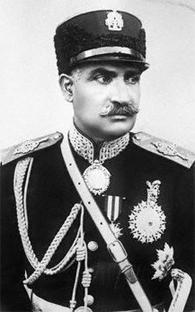 |
Son of Abbas Ali | 1878–1944 | 15 December 1925 | 16 September 1941 |
| 2 | Mohammad-Reza Pahlavi | Son of Reza Pahlavi I Reza Shah Rezā Shāh, also known as Rezā Shāh Pahlavi and Rezā Shāh Kabir , , was the Shah of the Imperial State of Iran from December 15, 1925, until he was forced to abdicate by the Anglo-Soviet invasion of Iran on September 16, 1941.In 1925, Reza Shah overthrew Ahmad Shah Qajar, the last Shah of the Qajar... |
1919–1980 | 16 September 1941 | 11 February 1979 | |
| Post-Imperial Heads of Pahlavi Dynasty (1979–Present) | ||||||
| 1 | Mohammad-Reza Pahlavi | Son of Reza Pahlavi I Reza Shah Rezā Shāh, also known as Rezā Shāh Pahlavi and Rezā Shāh Kabir , , was the Shah of the Imperial State of Iran from December 15, 1925, until he was forced to abdicate by the Anglo-Soviet invasion of Iran on September 16, 1941.In 1925, Reza Shah overthrew Ahmad Shah Qajar, the last Shah of the Qajar... |
1919–1980 | 11 February 1979 | 27 July 1980 | |
| 2 | Farah Pahlavi Farah Pahlavi Farah Pahlavi is the former Queen and Empress of Iran. She is the widow of Mohammad Reza Pahlavi, the Shah of Iran, and only Empress of modern Iran... |
Wife of Mohammad Reza Pahlavi Mohammad Reza Pahlavi Mohammad Rezā Shāh Pahlavi, Shah of Iran, Shah of Persia , ruled Iran from 16 September 1941 until his overthrow by the Iranian Revolution on 11 February 1979... |
1938 – | 27 July 1980 | 27 July 1981 | |
| 3 | Reza Pahlavi Reza Pahlavi Reza Pahlavi may refer to:*Reza Shah , aka Reza Shah Pahlavi, Shah of Persia from 1925 until 1935 and Shah of Iran from 1935 until 1941* Mohammad Reza Pahlavi , Shah of Iran from 1941 to 1979, son of Reza Shah... II |
Son of Mohammad Reza Pahlavi Mohammad Reza Pahlavi Mohammad Rezā Shāh Pahlavi, Shah of Iran, Shah of Persia , ruled Iran from 16 September 1941 until his overthrow by the Iranian Revolution on 11 February 1979... |
1960 – | 27 July 1981 | Incumbent | |
Use of titles
- Shah: Regal name, followed by Shahanshah of Iran, with style His Imperial Majesty
- Shabanou: Shahbanou or Empress, followed by first name, followed by "of Iran", with style Her Imperial Majesty
- Eldest son: Crown Prince of Iran, with style His Imperial Highness
- Younger sons: Prince (Shahpur, or King's Son), followed by first name and surname (Pahlavi), and style His Imperial Highness.
- Daughters: Princess (Shahdokht, or King's Daughter), followed by first name and surname (Pahlavi), and style Her Imperial Highness.
- Children of the monarch's daughter/s use another version of Prince (Vala Gohar) or Princess (Vala Gohari), which indicate descent in the second generation through the female line, and use the styles His Highness or Her Highness. This is then followed by first name and father's surname, whether he was royal or a commoner. However, the children by the last Shah's sister Fatemeh, who married an American businessman as her first husband, are surnamed Pahlavi Hillyer and do not use any titles.
See also
- Crown Prince Reza PahlaviReza PahlaviReza Pahlavi may refer to:*Reza Shah , aka Reza Shah Pahlavi, Shah of Persia from 1925 until 1935 and Shah of Iran from 1935 until 1941* Mohammad Reza Pahlavi , Shah of Iran from 1941 to 1979, son of Reza Shah...
- Abdolhossein Teymourtash
- Sorood-e Shahanshahi IranSorood-e Shahanshahi Iranthumb|right|250px|Civil flag of Iran 1964–1979, and of the Opposition to the Islamic republic"Sorood-e Shahanshahi Iran" or "Imperial Salute of Iran" was the national anthem of Iran from 1933 until the Islamic Revolution of 1979, when the monarchy was abolished...
- Ey IranEy IranEy Iran is a famous and popular anthem in Iran. The lyrics were written by Hossein Gol-e-Golab in 1946, the music was composed by Ruhollah Khaleghi, and it was first performed by Gholam Hossein Banan....
- List of kings of Persia
- Anglo-Iranian Oil Company
- Anglo-Soviet invasion of IranAnglo-Soviet invasion of IranThe Anglo-Soviet invasion of Iran was the Allied invasion of the Imperial State of Iran during World War II, by British, Commonwealth, and Soviet armed forces. The invasion from August 25 to September 17, 1941, was codenamed Operation Countenance...
- Persian CorridorPersian CorridorThe Persian Corridor is the name for a supply route through Iran into Soviet Azerbaijan by which British aid and American Lend-Lease supplies were transferred to the Soviet Union during World War II.-Background:...
- Tehran ConferenceTehran ConferenceThe Tehran Conference was the meeting of Joseph Stalin, Franklin D. Roosevelt and Winston Churchill between November 28 and December 1, 1943, most of which was held at the Soviet Embassy in Tehran, Iran. It was the first World War II conference amongst the Big Three in which Stalin was present...
- Trans-Iranian RailwayTrans-Iranian RailwayThe Trans-Iranian Railway was a major railway building project started in 1927 and completed in 1938, under the direction of the Persian monarch, Reza Shah, and entirely with indigenous capital. It links the capital Tehran with the Persian Gulf and Caspian Sea...
- Middle East Theatre of World War IIMiddle East Theatre of World War IIThe Middle East Theatre of World War II is defined largely by reference to the British Middle East Command, which controlled Allied forces in both Southwest Asia and eastern North Africa...
- Norman Schwarzkopf, Sr.Norman Schwarzkopf, Sr.Major General Herbert Norman Schwarzkopf was the first superintendent of the New Jersey State Police. He is best known for his involvement in the Lindbergh kidnapping case. He was the father of General H...
- Iranian RevolutionIranian RevolutionThe Iranian Revolution refers to events involving the overthrow of Iran's monarchy under Shah Mohammad Reza Pahlavi and its replacement with an Islamic republic under Ayatollah Ruhollah Khomeini, the leader of the...
- Iran-France relationsIran-France relationsFrance–Iran relations are the international relations between France and Iran. Iran has generally enjoyed a friendly relationship with France since the Middle Ages...
- List of Shi'a Muslims dynasties
External links
- The Pahlavi Dynasty coins and insignia
- What Really Happed to the Shah of Iran, Payvand News, March 10, 2006.