
All Topics  
South Vietnam


   Email Print
   Bookmark   Link


South Vietnam


"RVN" redirects here. RVN is also the former callsign of a TV station in Wagga Wagga, New South Wales, Australia.

South Vietnam is the commonly used name for the former VietnamVietnam Overview

Vietnam, officially the Socialist Republic of Vietnam, is a country in Southeast Asia....
ese state that existed from 1954 to 1976 in the portion of VietnamVietnam

Vietnam, officially the Socialist Republic of Vietnam, is a country in Southeast Asia....
 that lies south of the 17th parallelVietnamese Demilitarized Zone

The Vietnamese Demilitarized Zone was established as a dividing line between North and South Vietnam as a result of the Firs...
. North VietnamNorth Vietnam

The Democratic Republic of Vietnam , or less commonly, Vietnamese Democratic Republic , also known as North Vietnam, w...
 was situated to the north of the 17th parallel. The division of Vietnam occurred during the Geneva ConferenceGeneva Conference (1954)

The Geneva Conference was a conference between many countries that agreed to end hostilities and restore peace in French Ind...
, after the Viet MinhViet Minh

The Vi?t Minh was formed by H? Ch Minh in 1941 to seek independence for Vietnam from France as well as to oppose the Japane...
 fought to end almost 100 years of colonial rule in French IndochinaFrench Indochina

French Indochina was a federation of protectorates and one directly ruled colony in Southeast Asia, part of the French colon...
.


LocationSouth Vietnam, officially the State of Vietnam, from 1949 to 1955, the Republic of Vietnam (RVN), (Vietnamese: Vi?t Nam C?ng Hòa) from 1955 to 1975, and the Republic of South Vietnam from 1975 to 1976, was a country that existed from 1949 to 1975 in the territory of VietnamVietnam

Vietnam, officially the Socialist Republic of Vietnam, is a country in Southeast Asia....
 that lay south of the 17th parallelVietnamese Demilitarized Zone

The Vietnamese Demilitarized Zone was established as a dividing line between North and South Vietnam as a result of the Firs...
.
History Founding: the Nation of Vietnam
Unlike the rest of French Indochina, CochinchinaCochinchina

Cochinchina, from Cochin China, in French: Cochinchine) is a name for the southernmost part of Vietnam, lying so...
, the southern third of Vietnam, was a colony rather than a protectorateProtectorate

In international law a protectorate is a political entity that formally agrees by treaty to enter into an unequal relationsh...
.


Discussion
Ask a question about 'South Vietnam'
Start a new discussion about 'South Vietnam'
Answer questions from other users
Full Discussion Forum


Timeline

1954   First Indochina War: The Geneva Conference partitions Vietnam into North Vietnam and South Vietnam

1955   US President Dwight D. Eisenhower sends the first U.S. advisors to South Vietnam.

1963   South Vietnamese President Ngo Dinh Diem is assassinated following a military coup.

1963   Vietnam War: Coup leader General Duong Van Minh takes over as leader of South Vietnam.

1963   Vietnam War: New U.S. President Lyndon B. Johnson confirms that the United States intends to continue supporting South Vietnam militarily and economically.

1964   The New Hampshire primary is won by Henry Cabot Lodge, Ambassador to South Vietnam.

1964   Vietnam War: At a rally in Saigon, South Vietnamese Prime Minister Nguyen Khanh calls for expanding the war into North Vietnam.

1965   Vietnam War: 3,500 United States Marines arrive in South Vietnam, becoming the first American combat troops in Vietnam.

1965   Vietnam War: Australian Prime Minister Robert Menzies announces that the country will substantially increase its number of troops in South Vietnam, supposedly at the request of the Saigon government, although it is later revealed that Menzies had asked the leadership in Saigon to send the request at the behest of the Americans.

1965   Australia announces that it is sending an infantry battalion to support the South Vietnam government.


Encyclopedia


"RVN" redirects here. RVN is also the former callsign of a TV station in Wagga Wagga, New South Wales, Australia.

South Vietnam is the commonly used name for the former VietnamVietnam Overview

Vietnam, officially the Socialist Republic of Vietnam, is a country in Southeast Asia....
ese state that existed from 1954 to 1976 in the portion of VietnamVietnam

Vietnam, officially the Socialist Republic of Vietnam, is a country in Southeast Asia....
 that lies south of the 17th parallelVietnamese Demilitarized Zone

The Vietnamese Demilitarized Zone was established as a dividing line between North and South Vietnam as a result of the Firs...
. North VietnamNorth Vietnam

The Democratic Republic of Vietnam , or less commonly, Vietnamese Democratic Republic , also known as North Vietnam, w...
 was situated to the north of the 17th parallel. The division of Vietnam occurred during the Geneva ConferenceGeneva Conference (1954)

The Geneva Conference was a conference between many countries that agreed to end hostilities and restore peace in French Ind...
, after the Viet MinhViet Minh

The Vi?t Minh was formed by H? Ch Minh in 1941 to seek independence for Vietnam from France as well as to oppose the Japane...
 fought to end almost 100 years of colonial rule in French IndochinaFrench Indochina

French Indochina was a federation of protectorates and one directly ruled colony in Southeast Asia, part of the French colon...
.

  • (1949–1955): State of VietnamState of Vietnam

    The State of Vietnam was a former state in Vietnam under the leadership of the Chief Bao Dai, the last emperor of Nguyen Dyn...
    .
  • (1955–1975): the Republic of Vietnam.
  • (1975–1976): the Republic of South VietnamRepublic of South Vietnam

    |Huynh Tan Phat|8 June 1969|2 July 1976...
    .

Location

South Vietnam, officially the State of Vietnam, from 1949 to 1955, the Republic of Vietnam (RVN), (Vietnamese: Vi?t Nam C?ng Hòa) from 1955 to 1975, and the Republic of South Vietnam from 1975 to 1976, was a country that existed from 1949 to 1975 in the territory of VietnamVietnam

Vietnam, officially the Socialist Republic of Vietnam, is a country in Southeast Asia....
 that lay south of the 17th parallelVietnamese Demilitarized Zone

The Vietnamese Demilitarized Zone was established as a dividing line between North and South Vietnam as a result of the Firs...
.

History

Founding: the Nation of Vietnam


Unlike the rest of French Indochina, CochinchinaCochinchina

Cochinchina, from Cochin China, in French: Cochinchine) is a name for the southernmost part of Vietnam, lying so...
, the southern third of Vietnam, was a colony rather than a protectorateProtectorate

In international law a protectorate is a political entity that formally agrees by treaty to enter into an unequal relationsh...
. It had been annexed by France in 1862, and even elected a deputy to the French National AssemblyFrench National Assembly

The French National Assembly is one of the two houses of the bicameral Parliament of France under the Fifth Republic....
. French interests were stronger in Cochinchina than in other parts of French Indochina. In 1946, France declared Cochinchina a republic within an Indochinese Federation. In 1949, this republic was united with the Central and North regions to form the State of VietnamState of Vietnam

The State of Vietnam was a former state in Vietnam under the leadership of the Chief Bao Dai, the last emperor of Nguyen Dyn...
.

The State of VietnamState of Vietnam

The State of Vietnam was a former state in Vietnam under the leadership of the Chief Bao Dai, the last emperor of Nguyen Dyn...
 was created through co-operation between anti-communist Vietnamese and the French government on June 14, 1949 during the French Indochina War, and the Emperor Bao DaiBao Dai

B?o ?i was the last Emperor of Vietnam, the 13th and last Emperor of the Nguy?n Dynasty....
 took up the position of Chief of State (Quoc Truong). This was known as the 'Bao Dai Solution', and was an attempt by the French to grant partial independence to Vietnam, while still retaining substantial control over the country, and keeping it from communist rule. Such a formulation was rejected by the communist Vietminh, led by Ho Chi MinhHo Chi Minh

H? Ch Minh listen ) was a Vietnamese revolutionary and statesman, who later became Prime Minister and President of North V...
, who were fighting the French for full independence for Vietnam.

In 1954, France and the Vietminh agreed at the Geneva ConferenceGeneva Conference (1954)

The Geneva Conference was a conference between many countries that agreed to end hostilities and restore peace in French Ind...
 that the State of VietnamState of Vietnam

The State of Vietnam was a former state in Vietnam under the leadership of the Chief Bao Dai, the last emperor of Nguyen Dyn...
 would rule the territory south of the 17th parallelVietnamese Demilitarized Zone

The Vietnamese Demilitarized Zone was established as a dividing line between North and South Vietnam as a result of the Firs...
, pending unification on the basis of supervised elections in 1956. At the time of the conference, it was expected that the South would continue to be a French dependency. However, South Vietnamese Premier Ngô Ðình Di?mNgo Dinh Diem

Ng nh Di?m Jean Baptiste ngoh dihn zih-ehm was the first President of the Republic of Vietnam ....
, who preferred American sponsorship to French, rejected the agreement. When Vietnam was divided, 800,000 to 1 million North Vietnamese, mainly but not exclusively Roman Catholics, sailed south due to a fear of religious persecution in the North, which turned out to be well-founded.

1955–1963

In July 1955, Di?m announced in a broadcast that South Vietnam would not participate in the elections specificed in the Geneva accords. As Saigon's delegation did not sign the Geneva accords, it was not bound by it, Di?m said. He also claimed the communist government in the North created conditions that made a fair election impossible in that region.

Di?m held a referendum in October 1955 to determine the future of the country. He asked voters to approve a Republic, thus removing B?o Ð?i as head of state. The poll was supervised and rigged by his younger brother Ngo Dinh NhuNgo Dinh Nhu

...
. Di?m's Republic was said to have been approved by 98 percent of voters. In many districts, there were more votes to remove B?o Ð?i than there were registered voters. In Saigon, 133 percent of the registered population reportedly voted to remove B?o Ð?i. On October 26, Di?m declared himself as the president of the newly proclaimed Republic of Vietnam. The French, who needed troops to fight in Algeria, completely withdrew from Vietnam by April 1956.

Di?m attempted to consolidate his rule on Vietnam by eliminating rival groups. He launched an Anti-communist denunciation campaign (To Cong) against remnants of the communist Vietminh. He also crushed rival factions by launching military campaigns against the three main sects; the Cao DaiCao Dai

Cao Dai is a relatively new, syncretist, monotheistic religion, officially established in Ty Ninh, southern Vietnam, in 1926...
, Hoa HaoHoa Hao

Ha H?o is a Buddhist religious tradition founded in 1939 by Huynh Phu So, a native of the Mekong River Delta region of south...
 and the Binh XuyenBinh Xuyen

Binh Xuyen was a powerful Vietnamese criminal organization....
 organised crime syndicate whose military strength combined amounted to approximately 350,000 soldiers. Throughout this period the level of U.S. aid and political support increased.

1963–1973

See Vietnam WarVietnam War

The Vietnam War was a conflict in which the Democratic Republic of Vietnam and its allies fought against the Republic of Vi...
 for military history of the Republic of Vietnam in this period.

1973–1975


In accordance with the Paris Peace AccordsParis Peace Accords Summary

The Paris Peace Accords were signed in 1973 by the governments of North Vietnam, South Vietnam, and the United States, as we...
 signed with North VietnamNorth Vietnam

The Democratic Republic of Vietnam , or less commonly, Vietnamese Democratic Republic , also known as North Vietnam, w...
 on January 27, 1973, U.S. militaryMilitary

A military or military force has seen many different incarnations throughout time....
 forces withdrew from South Vietnam. North Vietnam was allowed to continue supplying communist troops in the South, but only to the extent of replacing materials that were consumed.

The communist leaders had expected that the ceasefire terms would favor their side. But as Saigon began to roll back the Vietcong, they found it necessary to adopt a new strategy, hammered out at a series of meetings in Hanoi in March 1973, according to the memoirs of Tr?n Van TràTran Van Tra

Tran Van Tra was a general in the army of North Vietnam during the three Indochina Wars....
. As the Vietcong's top commander, Trà participated in several of these meetings. A plan to improve logistics was prepared so that the North Vietnamese army would be able to launch a massive invasion of the South, projected for 1976, before Saigon's army could be fully trained. A gas pipeline would be built from North Vietnam to Vietcong headquarters in Loc Ninh, about north of Saigon.

On March 15, 1973, U.S. President Richard NixonRichard Nixon

Richard Milhous Nixon was the 37th President of the United States, serving from 1969 to 1974....
 implied that the U.S. would intervene militarily if the communist side violated the ceasefire. Public reaction was unfavorable and on June 4, 1973 the U.S. Senate passed the Case-Church AmendmentCase-Church Amendment

The Case-Church Amendment was a piece of legislation that sought to rein in President Richard Nixon's conduct of the Vietnam...
 to prohibit such intervention. The oil price shock of October 1973 caused significant damage to the South Vietnamese economy. The Vietcong resumed offensive operations and by January 1974 it had recaptured the territory that it had lost earlier. After two clashes that left 55 South Vietnamese soldiers dead, President Thieu announced on January 4 that the war had restarted and that the Paris Peace Accord was no longer in effect. There were over 25,000 South Vietnamese casualties during the ceasefire period.

In August 1974, Nixon was forced to resign as a result of the Watergate scandalWatergate scandal Summary

The term "Watergate" refers to a series of events, spanning from 1972 to 1975, that got its name from burglaries of the head...
 and the U.S. Congress voted to reduce assistance to South Vietnam from $1 billion a year to $700 million. By this time, Ho Chi Minh Trail, once an arduous mountain trek, had been upgraded into a drivable highway with gas stations.

In 1975 the communists of North Vietnam launched an offensive in the South, which became known as the Ho Chi Minh CampaignHo Chi Minh Campaign

The Ho Chi Minh Campaign began on January 24, 1975, and was the final campaign launched by the Democratic Republic of Vietna...
. The Army of the Republic of VietnamArmy of the Republic of Vietnam

The Army of the Republic of Vietnam was a military component of the armed forces of the Republic of Vietnam....
 unsuccessfully attempted a defense and a counterattack. It had few remaining operational tanks and artillery pieces, as well as a shortage of spare parts, and ammunition. The NVA had a vastly greater supply of new equipment and ammunition. As a consequence, South Vietnamese President Nguyen Van ThieuNguyen Van Thieu

Nguy?n Van Thi?u, was a former General and President of South Vietnam. ...
 was forced to withdraw key army units from the Central HighlandsCentral Highlands

Central Highlands is the name for several mountainous regions located in the center of the nations or geographical regions....
, which exacerbated an already-perilous military situation and undercut the confidence of the ARVN soldiers in their leadership.

The retreat became a rout. The cities of HueFacts About Hue

A hue refers to the gradation of color within the visible spectrum, or optical spectrum, of light....
, Da NangDa Nang

Da Nang is a major port city in the South Central Coast of Vietnam, on the coast of the South China Sea....
 and Da Lat in central Vietnam quickly fell, and the North Vietnamese advanced southwards. As the military situation deteriorated, ARVN troops started deserting.

Thieu requested aid from U.S. President Gerald FordGerald Ford

Gerald Rudolph Ford, Jr., was the 38th President of the United States....
, but the U.S. Senate would not release extra money to provide aid to South Vietnam, and had already passed laws to prevent further involvement in Vietnam. In desperation, Thieu called back Nguyen Cao KyNguyen Cao Ky Summary

Nguy?n Cao K? is a Vietnamese politician, who served as Prime Minister of South Vietnam from 1965 to 1967, and then as Vice ...
 from retirement as a military commander, but resisted calls to name his old rival prime minister.

Fall of Saigon, April 1975

Nguyen Van ThieuNguyen Van Thieu

Nguy?n Van Thi?u, was a former General and President of South Vietnam. ...
 resigned on April 21, 1975, and fled to TaiwanTaiwan

Taiwan is an island in East Asia, but the term "Taiwan" is also commonly used to collectively refer to the territories gove...
. He nominated his Vice President Tran Van HuongTran Van Huong

Tr?n Van Huong was a South Vietnamese politician....
 as his successor. A last-ditch defense was made by the ARVN 18th Division at the Battle of Xuan LocBattle of Xuan Loc Summary

The Battle of Xuan Loc was the last major battle of the Vietnam War....
 led by Major General Le Minh Dao.
After only one week in office, Tran Van Huong handed over the presidency to General Duong Van MinhDuong Van Minh

Duong Van Minh, known popularly as "Big Minh," led the South Vietnamese army under Prime Minister Ngo Dinh Diem....
. Minh was seen as a more conciliatory figure toward the North, and it was hoped he might be able to negotiate a more favorable settlement to end the war. The North was not interested in negotiations, however, and its tanks rolled into Saigon largely unopposed which led to the fall of SaigonFall of Saigon

The Fall/Liberation of Saigon, was the capture of the South Vietnamese capital of Saigon by the Vietnam People's Army on Apr...
. Acting President Minh unconditionally surrenderedUnconditional surrender

Unconditional surrender is a surrender without conditions, except for those provided by international law....
 the capital city of Saigon and the rest of South Vietnam to North VietnamNorth Vietnam

The Democratic Republic of Vietnam , or less commonly, Vietnamese Democratic Republic , also known as North Vietnam, w...
 on April 30, 1975.

During the hours leading up to the surrender, the United States undertook a massive evacuation of its embassy in Saigon, Operation Frequent WindOperation Frequent Wind

Operation Frequent Wind was the emergency evacuation by helicopter from Saigon, South Vietnam in April 1975 during the last ...
. The evacuees included U.S. government personnel as well as high-ranking members of the ARVN and other South Vietnamese who had aided the U.S.-backed administration and were seen as potential targets for persecution by the Communists. Many of the evacuees were taken directly by helicopter to multiple aircraft carriers waiting off the coast. An iconic image of the evacuation is the widely-seen footage of empty HueyUH-1 Iroquois

The Bell Helicopter UH-1 Iroquois, commonly known as the "Huey", is a multipurpose military helicopter, famous for its use ...
 helicopters being jettisoned over the side of the carriers, to provide more room on the ship's deck for more evacuees to land. The evacuation was forced to stop by the U.S. Navy. All the marines and diplomats were evacuated, but thousands of South Vietnamese waited vainly atop the U.S. Embassy for helicopters that never came.

Relationship with America

The history of the relationship with the United StatesUnited States Summary

The United States of America, also known as the United States, the U.S., the U.S.A., and America, is...
 is controversial. Some historianHistorian

A historian is someone who writes history, and history is a written accounting of the past....
s say the founding of South Vietnam was based on the United States' desire to create an "anti-communist" base in Southeast AsiaSoutheast Asia

Southeast Asia or Southeastern Asia is a subregion of Asia, consisting of the countries that are geographically east o...
. Opponents argue that it was based on popular support of the South Vietnamese people. However, the U.S. and the Diem government agreed that elections mandated by the Geneva Conference (1954)Geneva Conference (1954)

The Geneva Conference was a conference between many countries that agreed to end hostilities and restore peace in French Ind...
 should not occur, claiming that the communists could not be trusted to conduct a fair election in the North. Moreover, most contemporary observers, including U.S. President Dwight D. EisenhowerDwight D. Eisenhower

Dwight David "Ike" Eisenhower was an American soldier and politician....
, estimated that if an election were held in the 1954–55 period (when South Vietnam was under Bao Dai's rule), around 80% of the Vietnamese population would vote for Ho Chi Minh. The dominant political rationale for supporting the South Vietnamese government was America's containmentContainment

Containment refers to the foreign policy strategy of the United States in the early years of the Cold War in which it attemp...
 policy, which was designed to hold back the spread of communismCommunism

Communism is an ideology that seeks to establish a future classless, stateless social organization, based upon common owners...
 during the Cold WarCold War

The Cold War was the protracted geopolitical, ideological, and economic struggle that emerged after World War II between dem...
.

The failure to unify the country in 1956, along with Diem's persecution of communists, led in 1959 to the foundation of the National Front for the Liberation of South VietnamNational Front for the Liberation of South Vietnam Overview

The National Front for the Liberation of South Vietnam, also known as the Vi?t C?ng, VC, or the National Liberation...
 (abbrievated NLF but also known as the Viet Cong), which initiated an organised and widespread guerrilla insurgency against the South Vietnamese government. Although initially cautious, Hanoi backed the insurgency, which grew in support and intensity. The United States, under President Eisenhower, initially sent military advisers to train the South Vietnamese army. President John F. KennedyFacts About John F. Kennedy

John Fitzgerald Kennedy , also referred to as John F....
 increased the size of the advisory force fourfold and allowed the advisors to participate in combat operations, and later acquiesced in the removal of President Diem in a military coupCoup d'état

A coup d'tat , or simply coup, is the sudden overthrow of a government through unconstitutional means by a part of the...
. After promising not to do so during the 1964 election campaign, in 1965 President Lyndon B. JohnsonLyndon B. Johnson

Lyndon Baines Johnson , often referred to as LBJ, was the 36th President of the United States ....
 decided to send in much larger numbers of combat troops, and conflict steadily escalated to become what is commonly known as the Vietnam WarVietnam War

The Vietnam War was a conflict in which the Democratic Republic of Vietnam and its allies fought against the Republic of Vi...
. In 1968, the NLF ceased to be an effective fighting organization after the Tet Offensive and the war was largely taken over by regular army units of North Vietnam. Following American withdrawal from the war in 1973, the South Vietnamese government continued fighting the North Vietnamese, until, overwhelmed by a conventional invasion by the North, it finally unconditionally surrenderedUnconditional surrender

Unconditional surrender is a surrender without conditions, except for those provided by international law....
 on April 30, 1975, the day of the surrender of SaigonFall of Saigon

The Fall/Liberation of Saigon, was the capture of the South Vietnamese capital of Saigon by the Vietnam People's Army on Apr...
. North Vietnam controlled South Vietnam under military occupation, while the Provisional Revolutionary Government of South Vietnam, which had been proclaimed in June 1969 by the NLF, established the Republic of South VietnamRepublic of South Vietnam

|Huynh Tan Phat|8 June 1969|2 July 1976...
 but the republic never really had any of the authority of a government. The North Vietnamese quickly moved to marginalise non-communist members of the PRG and integrate South Vietnam into the communist north. The unified Socialist Republic of Vietnam was inaugurated on July 2, 1976.
Controversial history
There is much controversy about how closely the South Vietnamese government was linked to the United States. While it is clear that Ngo Dinh DiemNgo Dinh Diem

Ng nh Di?m Jean Baptiste ngoh dihn zih-ehm was the first President of the Republic of Vietnam ....
 was initially the favored candidate of the United States to rule South Vietnam, he later displayed a sufficiently independent and nationalistic streak that the American government assented to his removal by a coup.

It has been claimed that, in particular, the South Vietnamese government of Nguyen Van ThieuNguyen Van Thieu

Nguy?n Van Thi?u, was a former General and President of South Vietnam. ...
 was nothing more than an American puppetPuppet state

A puppet government is a government that, though notionally of the same culture as the governed people, owes its existence ...
, and point to American connivance in Thieu's manipulation of the 1971 South Vietnamese Presidential election as evidence. On the other hand, some point to sharp differences between Thieu and Nixon at the time of the Paris Peace Accord to demonstrate that he was not a puppet. The historical consensus is that there existed a symbiotic relationship between the Thieu government and US military involvement in IndochinaIndochina

Indochina, or the Indochinese Peninsula, is a region in Southeast Asia....
: without American support the Thieu government could not survive; while the US needed to maintain the Thieu government to be able to continue its involvement in Indochina. The removal of one of these factors would inevitably bring about the end of the other.

Politics

South Vietnam went through many political changes during its short life. Initially, the nation was a constitutional monarchyConstitutional monarchy

A constitutional monarchy is a form of monarchical government established under a constitutional system which acknowledges a...
, with Emperor Bao DaiBao Dai

B?o ?i was the last Emperor of Vietnam, the 13th and last Emperor of the Nguy?n Dynasty....
 as Head of StateHead of State

Head of State or Chief of State is the generic term for the individual or collective office that serves as the chief p...
. The Vietnamese monarchy was unpopular however, largely because monarchical leaders were considered collaborators during FrenchFrance

France, officially the French Republic, is a country whose metropolitan territory is located in Western Europe and whi...
 rule.

In 1955 a republican referendum, which is largely considered to have been rigged due to the active presence of pro-republican military forces at voting booths, ended with a 98% vote in favour of abolishing the monarchy. In Saigon, Diem received 133% of the vote. This abolished the monarchy and made Prime Minister Ngo Dinh DiemNgo Dinh Diem

Ng nh Di?m Jean Baptiste ngoh dihn zih-ehm was the first President of the Republic of Vietnam ....
 the country's first presidentPresident

President is a title held by many leaders of organizations, companies, trade unions, universities, and countries....
. Despite successes in politics, economics, and social change in the first 5 years, Diem quickly became a dictatorial leader. With the acquiescence of the United States government, ARVN officers led by General Duong Van MinhDuong Van Minh

Duong Van Minh, known popularly as "Big Minh," led the South Vietnamese army under Prime Minister Ngo Dinh Diem....
 staged a coup and killed him in 1963. The military held a brief interim government until General Nguyen KhanhNguyen Khanh

Nguyen Khanh was a former Chief of State and Prime minister of South Vietnam....
 deposed Minh1964 South Vietnamese coup Summary

On January 30, 1964, a successful coup led by General Nguy?n Kh?nh ousted the military junta led by General Duong Van Minh f...
 in a January 1964 coup. Until late 1965, multiple coups and changes of government occurred, with some civilians being allowed to give a semblance of legislative rule overseen by a military junta.

In 1965 the feuding civilian government voluntarily resigned and handed power back to the nation's military, in the hope this would bring stability and unity to the nation. A joint assembly with representatives of all the branches of the military decided to switch the nation's system of government to a parliamentParliament

A parliament is a legislature, especially in those countries whose system of government is based on the Westminster system m...
ary system with a strong Prime MinisterPrime minister

A prime minister is the most senior minister of a cabinet in the executive branch of government in a parliamentary system....
 and a figureheadFigurehead (metaphor)

In politics, a figurehead, by metaphor with the carved figurehead at the prow of a sailing ship, is a person who holds an im...
 President. There was a bicameral National AssemblyNational Assembly

The National Assembly is the name of either a legislature, or the lower house of a bicameral legislature in some countries....
 consisting of a SenateFacts About Senate

A senate is a deliberative body, often the upper house or chamber of a legislature. ...
 and a House of RepresentativesHouse of Representatives

House of Representatives is a name used for legislative bodies in many countries....
. Military rule initially failed to provide much stability however, as internal conflicts and political inexperience caused various factions of the army to launch coups and counter-coups against one another, making leadership very tumultuous. The situation stabilized when the Vietnam Air ForceVietnam Air Force

This is an article for the former air force of the now defunct South Vietnam....
 chief Nguyen Cao KyNguyen Cao Ky Overview

Nguy?n Cao K? is a Vietnamese politician, who served as Prime Minister of South Vietnam from 1965 to 1967, and then as Vice ...
 became Prime Minister, with former General Nguyen Van ThieuNguyen Van Thieu

Nguy?n Van Thi?u, was a former General and President of South Vietnam. ...
 as his deputy.

In 1967 South Vietnam held its first elections under the new system. Following the elections, however, it switched back to a presidential system. The military nominated Nguyen Van ThieuNguyen Van Thieu

Nguy?n Van Thi?u, was a former General and President of South Vietnam. ...
 as their candidate, and he was elected with a pluralityPlurality

A plurality, or "relative/simple majority" as it is also referred to outside the United States, is the largest share of some...
 of the popular vote. Thieu quickly consolidated power much to the dismay of those who hoped for an era of more political openness. He was re-elected unopposed in 1971, receiving a suspiciously high 94% of the vote on an 87% turn-out. Thieu ruled until the final days of the war, resigning in 1975. Duong Van MinhDuong Van Minh

Duong Van Minh, known popularly as "Big Minh," led the South Vietnamese army under Prime Minister Ngo Dinh Diem....
 was the nation's last president and unconditionally surrendered to the Communist forces a few days after assuming office.

South Vietnam was formerly a member of ACCT, Asian Development BankFacts About Asian Development Bank

he Asian Development Bank is a regional development bank established in 1966 to promote economic and social development in ...
 (ADB), World BankWorld Bank Overview

World Bank is an internationally supported bank that provides financial and technical assistance to developing countries fo...
 (IBRD), International Development AssociationInternational Development Association

The International Development Association created on September 24, 1960, is a UN specialized agency....
 (IDA), International Finance Corporation (IFC), IMFInternational Monetary Fund

The International Monetary Fund is an international organization that oversees the global financial system by observing ex...
, International Telecommunications Satellite OrganizationInternational Telecommunications Satellite Organization

The International Telecommunications Satellite Organization is an intergovernmental organisation charged with overseeing the...
 (Intelsat), Interpol, IOCInternational Olympic Committee

The International Olympic Committee is an organization based in Lausanne, Switzerland, created by Pierre de Coubertin and De...
, ITUItu

Itu is a municipality in the state of São Paulo in Brazil....
, League of Red Cross and Red Crescent Societies (LORCS), UNESCO and Universal Postal UnionUniversal Postal Union

The Universal Postal Union is an international organization that coordinates postal policies between member nations, and he...
 (UPU).

Leaders of the Republic of Vietnam

  • See the Leaders of South VietnamLeaders of South Vietnam

    Republic of Cochin China...
    .
    • Ngo Dinh DiemNgo Dinh Diem

      Ng nh Di?m Jean Baptiste ngoh dihn zih-ehm was the first President of the Republic of Vietnam ....
       (1955–1963)
    • Duong Van MinhDuong Van Minh

      Duong Van Minh, known popularly as "Big Minh," led the South Vietnamese army under Prime Minister Ngo Dinh Diem....
       (1963–1964)
    • Nguyen KhanhNguyen Khanh Overview

      Nguyen Khanh was a former Chief of State and Prime minister of South Vietnam....
       (1964)
    • Phan Khac SuuPhan Khac Suu Overview

      Phan Khac Suu was President of South Vietnam from 19641965. ...
       (1964–1965)
    • Nguyen Van ThieuNguyen Van Thieu

      Nguy?n Van Thi?u, was a former General and President of South Vietnam. ...
       (1965–1975)
    • Tran Van HuongTran Van Huong

      Tr?n Van Huong was a South Vietnamese politician....
       (1975)
    • Duong Van MinhDuong Van Minh

      Duong Van Minh, known popularly as "Big Minh," led the South Vietnamese army under Prime Minister Ngo Dinh Diem....
       (2nd time) (1975)

Republic of South Vietnam

Following the surrender of Saigon to North Vietnamese forces on April 30 1975, the Provisional Revolutionary Government of the Republic of South Vietnam established itself in Saigon as the government of the Republic of South VietnamRepublic of South Vietnam

|Huynh Tan Phat|8 June 1969|2 July 1976...
. However, it lacked real autonomy and was largely under the control of the North Vietnamese. The Republic of South Vietnam was dissolved in July 1976 when it merged with the Democratic Republic of Vietnam (North Vietnam) to become the Socialist Republic of Vietnam.

Army

On October 26, 1956, the military was reorganized by the administration of President Ngo Dinh DiemNgo Dinh Diem

Ng nh Di?m Jean Baptiste ngoh dihn zih-ehm was the first President of the Republic of Vietnam ....
 who established the Army of the Republic of Vietnam (ARVN, pronounced "arvin"). Early on, the focus of the army was combatting the guerrillaGuerrilla warfare

Guerrilla is a term borrowed from the Spanish guerrilla meaning small war, and used to describe small combat groups...
 fighters of the National Front for the Liberation of South VietnamNational Front for the Liberation of South Vietnam

The National Front for the Liberation of South Vietnam, also known as the Vi?t C?ng, VC, or the National Liberation...
 (NLF, also known as the Viet Cong) an insurgent movement formed to oppose the Diem administration. The United StatesUnited States

The United States of America, also known as the United States, the U.S., the U.S.A., and America, is...
, under President John F. KennedyJohn F. Kennedy

John Fitzgerald Kennedy , also referred to as John F....
 sent advisors and a great deal of financial support to aid ARVN in combating the NLF resistance. ARVN and President Diem began to be criticized by the foreign press when the troops were used to crush southern religious groups like the Cao DaiCao Dai

Cao Dai is a relatively new, syncretist, monotheistic religion, officially established in Ty Ninh, southern Vietnam, in 1926...
 and Hoa HaoHoa Hao

Ha H?o is a Buddhist religious tradition founded in 1939 by Huynh Phu So, a native of the Mekong River Delta region of south...
 as well as to raid Buddhist temples, which Diem claimed were harboring Communist guerrillas.

In 1963 Ngo Dinh DiemNgo Dinh Diem

Ng nh Di?m Jean Baptiste ngoh dihn zih-ehm was the first President of the Republic of Vietnam ....
 was killed in a coup d'état carried out by ARVN officers led by Duong Van MinhDuong Van Minh

Duong Van Minh, known popularly as "Big Minh," led the South Vietnamese army under Prime Minister Ngo Dinh Diem....
 ('Big Minh'). In the confusion that followed Big Minh took power, but was only the first in a succession of ARVN generals to assume the presidency of South Vietnam in a period of intense political instability. During these years, the United States began taking full control of the war against the NLF and the role of the ARVN became less and less significant. They were also plagued by continuing problems of severe corruption among the officer corps. Although the U.S. was highly critical of them, the ARVN continued to be entirely U.S. armed and funded.

The value of the ARVN was highly questionable in this period. In 1963 at the Battle of Ap BacBattle of Ap Bac

The Battle of Ap Bac was a small-scale action early in the Vietnam War that resulted in the first major combat victory by Vi...
 some 1,400 ARVN troops were defeated by only 350 NLF guerrillas. The battle of Dong XoaiDong Xoai

Dong Xoai is a capital city of Binh Phuoc Province, Vietnam. It is located at around . ...
 in 1965 was another humiliating ARVN defeat. Although they always outnumbered their nationalist enemies, most were inexperienced, poorly trained, and not motivated to fight hard for the generals and politicians behind them. Generals tended to be political appointees and corruption was rampant. Their relations with the civilian population were never good and relations with the U.S. military were often very cold.

Starting in 1969, President Richard M. Nixon started the process of "Vietnamization," pulling out American forces and leaving the ARVN to fight the war against the People's Army of Vietnam (PAVN). Slowly, ARVN began to expand from its counter-insurgency role to become the primary ground defense against the NLFNational Front for the Liberation of South Vietnam

The National Front for the Liberation of South Vietnam, also known as the Vi?t C?ng, VC, or the National Liberation...
 and North Vietnamese. From 1969–1971 there were about 22,000 ARVN combat deaths per year. Starting in 1968, South Vietnam began calling up every available man for service in the ARVN, reaching a strength of a million soldiers by 1972. In 1970 they performed well in CambodiaCambodia

The Kingdom of Cambodia is a country in Southeast Asia with a population of more than 13 million....
 and were executing 3 times as many operations as they had during the American war period. However, the officer corps was still the biggest problem. Leaders were often poorly trained, inept and the equipment continued to sub-standard as the U.S. tried to upgrade ARVN technology.

Relations with the public also remained poor as their only counter to NLF organizing was to resurrect the Strategic Hamlet ProgramStrategic Hamlet Program

The Strategic Hamlet Program was a plan by the governments of South Vietnam and the United States during the Vietnam War to ...
, which many peasants resented. Disapproving Americans called this "barbed wire diplomacy." However, forced to carry the burden left by the Americans, the South Vietnamese army actually started to perform rather well, and in 1970 was winning the war against the Communists, though with continued American air support. The exhaustion of the North was becoming evident, and the Paris talks gave some hope of a negotiated peace, if not a victory.

The most crucial moment of truth for the ARVN came with General Vo Nguyen GiapVo Nguyen Giap

General V Nguyn Gip is a Vietnamese four-star general, who was the military leader of the Vi?t Minh guerrilla group under ...
's 1972 "Easter Offensive," the first all-out invasion of South Vietnam by the communist North. It was code-named "Nguyen Hue" after the historic Vietnamese hero who defeated the Chinese in 1778. The assault combined infantry wave assaults, artillery and the first massive use of tanks by the North Vietnamese. ARVN took heavy losses, but to the surprise of many, managed to hold their ground.

U.S. President Richard NixonRichard Nixon

Richard Milhous Nixon was the 37th President of the United States, serving from 1969 to 1974....
 dispatched more bombers to provide air support for ARVN when it seemed that South Vietnam was about to be overrun. In desperation, President Nguyen Van ThieuNguyen Van Thieu

Nguy?n Van Thi?u, was a former General and President of South Vietnam. ...
 fired the incompetent General Hoàng Xuân Lãm and replaced him with ARVN's best commander, General Ngo Quang TruongNgo Quang Truong

General Ng Quang Tru?ng was a general in the South Vietnamese Army....
. He gave the order that all deserters would be executed and pulled enough forces together so that the North Vietnamese army (PAVN) failed to take HueHue

A hue refers to the gradation of color within the visible spectrum, or optical spectrum, of light....
. Finally, largely as a result of U.S. air and naval supportOperation Linebacker

Operation Linebacker was the name of a United States military operation during the Vietnam War....
, as well as some surprising determination by the ARVN soldiers, the Easter Offensive was halted.

After the signing of the Paris Peace Accords in 1973 all U.S. military forces withdrew from South Vietnam and the war officially ended, however clashes between ARVN and NLFFacts About NLF

NLF may stand for:* National Front for the Liberation of South Vietnam...
 forces continued.

In 1975 the PAVN again invaded the South. Lacking U.S. air support the ARVN could not hold them back. City after city fell to the Communists with ARVN soldiers joining the civilians trying to flee south. The North called this the "H? Chí Minh Campaign." All resistance crumbled. Faced with few viable options, the South tried to form a coalition government that would be palatable to the Communists, one that favored negotiated peace and neutrality. The new coalition government was headed by General Duong Van Minh (Big Minh), one of the organizers of the coup in November 1963, with the full support of the CIA and President Kennedy, that killed President Ngo Dinh Diem. General Cao Van Vien, then Colonel and Commander of the Airborne Brigade, had been captured and held by the Big Minh faction and threatened with execution unless he ordered his troops to join the coup. He refused and was held captive until the end of the coup and was released only because of his close friendship with one of the coup leaders.

Because the new coalition government would be headed by Big Minh, General Vien immediately submitted his resignation to then President of South Vietnam Tran Van Huong, who succeeded President Thieu as President. President Huong, knowing the 1963 coup history, granted General Vien's resignation request (Vien had submitted his resignation to President Thieu many times and had always been turned down).General Vien then escaped to the US as a civilian once his resignation was effective and formalized.

The situation in South Vietnam deteriorated.

The ARVN tried to defend Xuan Loc, their last line before Saigon. These men fought very well, but it was not enough. They were greatly outnumbered and overwhelmed by the entire army of North Vietnam. Xuan Loc was taken and on April 30, 1975, initiated the Fall/Liberation of SaigonFall of Saigon

The Fall/Liberation of Saigon, was the capture of the South Vietnamese capital of Saigon by the Vietnam People's Army on Apr...
. The army of the Democratic Republic of Vietnam captured the city, placing the Vietnam National Liberation Front flag over the Independence Palace even though the NLF had accomplished almost nothing during the battles and had almost no authority within the country. General Duong Van MinhDuong Van Minh

Duong Van Minh, known popularly as "Big Minh," led the South Vietnamese army under Prime Minister Ngo Dinh Diem....
, recently appointed president by Tran Van HuongTran Van Huong

Tr?n Van Huong was a South Vietnamese politician....
, unconditionally surrenderedUnconditional surrender

Unconditional surrender is a surrender without conditions, except for those provided by international law....
 the city and government bringing the Republic of Vietnam and also the Army of the Republic of Vietnam to a final end.

Provinces

South Vietnam's capital was Saigon which was renamed H? Chí Minh CityHo Chi Minh City

Ho Chi Minh City is the largest city in Vietnam and is located near the Mekong River delta....
 on May 1, 1975 after unconditionally surrenderingUnconditional surrender

Unconditional surrender is a surrender without conditions, except for those provided by international law....
 to the North.

Before surrendering, the South was divided into forty-four provinces (t?nh, singular and plural).

Geography

The South was divided into coastal lowlands, the mountainous Central highlands (Cao-nguyen Trung-phan), and the Mekong River Delta.

Economy

Vietnam’s economy evolved under the burden of military actions and political issues. In 1954, the nations of North Vietnam and South Vietnam had developed their own economic structure, reflecting different economic systems with different resources and trading partners. South Vietnam maintained a free-market economy with ties to the west. It established the first Airline under Emperor Bao Dai, named Air VietnamAir Vietnam

Active from 1951 to 1975, Air Viet Nam was South Vietnam's first commercial air carrier....
. The economy of South Vietnam was artificially inflated by American aid and the presence of large numbers of Americans in the country between 1961 and 1973. After 1973 the country suffered economic shocks due to the removal of American spending and an increase in the price of oil. The unification of Vietnam in 1976, led to the imposition of North Vietnam's centrally planned economy into the South. The country made no significant economic progress for the next twenty years. After the fall of the Soviet Union and the end of Soviet aid, the leadership of Vietnam accepted the need for change. Their occupation armies were withdrawn from Laos and Cambodia. Afterward, the country introduced economic reforms that created a market economy in the mid 1990s. The government remains a collective dictatorship under the close control of the communist party.

Demographics

About 90% of population was Kinh, and 10% was HoaHoa

The Hoa are an overseas Chinese minority in Vietnam....
, MontagnardDegar

The Degar are the indigenous peoples of the Central Highlands of Vietnam....
, FrenchFrench people Summary

French people can refer to:* The legal residents and citizens of France, regardless of ancestry....
, ChamCham people

The Cham people are descendants of the kingdom of Champa....
, EurasianEurasian

Eurasian can mean:...
s and others. (1970)

Culture

Principal religions were BuddhismBuddhism

Buddhism is a dharmic, non-theistic religion, a way of life, a practical philosophy, and arguably a form of psychology....
, Roman Catholic, Cao DaiCao Dai

Cao Dai is a relatively new, syncretist, monotheistic religion, officially established in Ty Ninh, southern Vietnam, in 1926...
, Hoa HaoHoa Hao

Ha H?o is a Buddhist religious tradition founded in 1939 by Huynh Phu So, a native of the Mekong River Delta region of south...
, animists and others.

Vietnamese culture

Cultural life was strongly influenced by ChinaChina

China is a cultural region and ancient civilization in East Asia....
 until FrenchFrance

France, officially the French Republic, is a country whose metropolitan territory is located in Western Europe and whi...
 domination in the 19th century. At that time, the traditional culture began to acquire an overlay of western characteristics. Many families have three generations living under one roof.

See also

  • Republic of Vietnam NavyRepublic of Vietnam Navy

    The VNN was the naval forces of the former Republic of Vietnam from 1952 to 1975....
  • Vietnam Air ForceVietnam Air Force

    This is an article for the former air force of the now defunct South Vietnam....
  • Republic of Vietnam Marine CorpsRepublic of Vietnam Marine Corps

    The Republic of Vietnam Marine Corps was established by President Ngo Dinh Diem....
  • Air VietnamAir Vietnam Overview

    Active from 1951 to 1975, Air Viet Nam was South Vietnam's first commercial air carrier....
  • Civilian Irregular Defense GroupCivilian Irregular Defense Group Overview

    Civilian Irregular Defense Group was a program devised by the CIA in early 1961 to counter expanding Viet Cong influence in ...
  • Independence PalaceReunification Palace

    Reunification Palace formerly known as Independence Palace or Norodom Palace, is a historic landmark in Ho Chi M...
  • Leaders of South VietnamFacts About Leaders of South Vietnam

    Republic of Cochin China...
  • VietnamVietnam

    Vietnam, officially the Socialist Republic of Vietnam, is a country in Southeast Asia....
  • Vietnam WarVietnam War

    The Vietnam War was a conflict in which the Democratic Republic of Vietnam and its allies fought against the Republic of Vi...
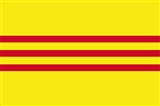
  • Flag of South Vietnam
  • National anthem of South VietnamNational anthem of South Vietnam

    The national anthem of South Vietnam government was originally "Thanh Niên Hành Khúc"....
  • Northern and southern VietnamNorthern and southern Vietnam

    Northern Vietnam and Southern Vietnam are two general regions within Vietnam....


External links

  • (English language)
  • (Vietnamese language)