
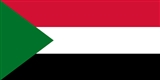
Sudan (officially the
Republic of the Sudan) (As Sūdān) is a country in northeastern
AfricaAfrica is the world's second-largest and second most-populous continent, after Asia. At about 30.2 million km² including adjacent islands, it covers 6% of the Earth's total surface area and 20.4% of the total land area. With a billion people in 61 territories, it accounts for about 14.8% of the...
. It is the largest country in
AfricaAfrica is the world's second-largest and second most-populous continent, after Asia. At about 30.2 million km² including adjacent islands, it covers 6% of the Earth's total surface area and 20.4% of the total land area. With a billion people in 61 territories, it accounts for about 14.8% of the...
and in the
Arab WorldThe Arab World refers to Arabic-speaking countries stretching from the Atlantic Ocean in the west to the Arabian Sea in the east, and from the Mediterranean Sea in the north to the Horn of Africa and the Indian Ocean in the southeast...
, and
tenth largest in the world by area. It is bordered by
EgyptEgypt , officially the Arab Republic of Egypt, is a country mainly in North Africa, with the Sinai Peninsula forming a land bridge in Western Asia...
to the north, the
Red SeaThe Red Sea is a seawater inlet of the Indian Ocean, lying between Africa and Asia. The connection to the ocean is in the south through the Bab el Mandeb strait and the Gulf of Aden. In the north, there is the Sinai Peninsula, the Gulf of Aqaba, and the Gulf of Suez,...
to the northeast,
EritreaEritrea , officially the State of Eritrea, is a country in the Horn of Africa. It is bordered by Sudan in the west, Ethiopia in the south, and Djibouti in the southeast. The east and northeast of the country have an extensive coastline on the Red Sea, directly across from Saudi Arabia and Yemen...
and
EthiopiaEthiopia , officially the Federal Democratic Republic of Ethiopia, is a landlocked country situated in the Horn of Africa. Ethiopia is bordered by Eritrea to the north, Sudan to the west, Kenya to the south, Somalia to the east and Djibouti to the northeast. Its size is 1,100,000 km² with an...
to the east,
KenyaThe Republic of Kenya is a country in East Africa. Lying along the Indian Ocean, at the equator, Kenya is bordered by Ethiopia , Somalia , Tanzania , Uganda plus Lake Victoria , and Sudan . The capital city is Nairobi. Kenya spans an area about 85% the size of France or Texas...
and
UgandaThe Republic of Uganda is a landlocked country in East Africa. It is bordered on the east by Kenya, on the north by Sudan, on the west by the Democratic Republic of the Congo, on the southwest by Rwanda, and on the south by Tanzania...
to the southeast, the
Democratic Republic of the CongoThe Democratic Republic of the Congo is a country located in Central Africa, with a small length of Atlantic coastline. It is the third largest country in Africa...
and the
Central African RepublicThe Central African Republic , is a landlocked country in Central Africa...
to the southwest,
ChadChad , officially known as the Republic of Chad, is a landlocked country in central Africa. It is bordered by Libya to the north, Sudan to the east, the Central African Republic to the south, Cameroon and Nigeria to the southwest, and Niger to the west...
to the west and
LibyaLibya , officially the Great Socialist People's Libyan Arab Jamahiriya , is a country located in North Africa...
to the northwest. The world's longest river, the
NileThe Nile is a major north-flowing river in Africa, generally regarded as the longest river in the world....
, bisects the country from south to north.
Sudan is home to one of the world's oldest continuous major civilizations, with historical and urban settlements dating back to 3000 BC. The people of Sudan have a long history extending from antiquity, which is intertwined with the
history of EgyptEgyptian history can be roughly divided into the following periods:*Prehistoric Egypt*Ancient Egypt**Early Dynastic Period of Egypt: 31st to 27th centuries BC**Old Kingdom of Egypt: 27th to 22nd centuries BC...
, with which it was united politically over several periods. After gaining independence from the
United KingdomThe United Kingdom of Great Britain and Northern Ireland is a sovereign state located off the northwestern coast of continental Europe. It is an island country, spanning an archipelago including Great Britain, the northeastern part of Ireland, and many small islands...
in 1956, Sudan suffered
a civil warThe First Sudanese Civil War was a conflict from 1955 to 1972 between the northern part of Sudan and a south that demanded more regional autonomy...
, lasting 17 years, subsequently followed by ethnic,
religiousA religion is a system of human thought which usually includes a set of narratives, symbols, beliefs and practices that give meaning to the practitioner's experiences of life through reference to a higher power, deity or deities, or ultimate truth...
, and economic conflict between the Northern Sudanese (with Arab and Nubian roots), and the
ChristianChristianity is a monotheistic religion based on the life and teachings of Jesus of Nazareth as presented by the revelations in the New Testament....
and
animistAnimism is a philosophical, religious or spiritual idea that souls or spirits exist not only in humans but also in other animals, plants, rocks, natural phenomena such as thunder, geographic features such as mountains or rivers, or other entities of the natural environment, a proposition also...
Nilotes of
Southern SudanSouthern Sudan is located in Africa with Juba as its capital city. Under the terms of the deal with Khartoum, Southern Sudan has been given a large degree of autonomy...
. Thus this led to a
second civil warThe Second Sudanese Civil War started in 1983, although it was largely a continuation of the First Sudanese Civil War of 1955 to 1972. It took place, for the most part, in southern Sudan and was one of the longest lasting and deadliest wars of the later 20th century...
in 1983, and due to continuing political and military struggles, Sudan was seized in a bloodless
coup d'étatA coup d'état , or coup for short, is the sudden unconstitutional deposition of a legitimate government, usually by a small group of the existing state establishment—typically the military—to replace the deposed government with another, either civil or military...
by colonel
Omar al-Bashir Omar Hassan Ahmad al-Bashir is the current President of Sudan and the head of the National Congress Party. He came to power in 1989 when he, as a colonel in the Sudanese army, led a group of officers in a bloodless military coup that ousted the government of Prime Minister Sadiq al-Mahdi.In...
in 1989, who thereafter proclaimed himself
President of Sudan, achieved great
economic growthEconomic growth is a term used to indicate the increase of total GDP. It is often measured as the rate of change of gross domestic product . Economic growth refers only to the quantity of goods and services produced; it says nothing about the way in which they are produced...
by implementing
macroeconomicMacroeconomics is a branch of economics that deals with the performance, structure, and behavior of a national or regional economy as a whole. Along with microeconomics, macroeconomics is one of the two most general fields in economics. It is the study of the behavior and decision-making of entire...
reforms and finally ended the civil war in 2005 by adopting
a new constitutionThe Comprehensive Peace Agreement , also known as the Naivasha Agreement, was a set of agreements culminating in January 2005 that were signed between the Sudan People's Liberation Movement and the Government of Sudan. The Naivasha Agreement was meant to end the Second Sudanese Civil War, develop...
with rebel groups in the south. Rich of natural resources such as
petroleumPetroleum or crude oil is a naturally occurring, flammable liquid found in rock formations in the Earth consisting of a complex mixture of hydrocarbons of various molecular weights, plus other organic compounds.The term "petroleum" was first used in the treatise De Natura Fossilium, published in...
and crude oil, Sudan's economy is amongst the fastest growing in the world.
However, after introducing an
Islamic legal codeSharia is an Arabic word meaning ‘way’ or ‘path’. In Arabic, the collocation ‘Šarīʿat Allāh’ is traditionally used not only by Muslims, but also Christians and Jews, sometimes translating expressions such as Torat Elōhīm [תורת אלוהים] or ‘ho nómos toû theoû' '’...
on the national level, establishing the ruling
National Congress PartyThe National Congress or National Congress Party ' is the governing official political party of Sudan. It is headed by Omar al-Bashir, who has been President of Sudan since he seized power in a military coup on 30 June 1989, and began institutionalizing Sharia law at a national level...
(NCP) as the only political party and supporting the usage of recruited Arab militias in guerrilla warfare, such as in the ongoing Darfur conflict, al-Bashir's presidency has been marked by thousands of people being displaced and killed, in what has been described as a
genocideGenocide is the deliberate and systematic destruction, in whole or in part, of an ethnic, racial, religious, or national group.While precise definition varies among genocide scholars, a legal definition is found in the 1948 United Nations Convention on the Prevention and Punishment of the Crime of...
. Though officially a
presidentialA presidential system is a system of government where an executive branch exists and presides separately from the legislature, to which it is not accountable and which cannot, in normal circumstances, dismiss it....
representative democraticElectoral democracies require a majority of the votes cast. Many representative democracies are constitutional republics in which majority rule is tempered by minority rights protected by law".- Criticisms :...
republicA republic is a form of government in which the head of state is not a monarch and the people have an impact on its government. The word 'republic' is derived from the Latin phrase res publica which can be translated as "a public affair".Both modern and ancient republics vary widely in their...
, Sudan is widely considered to be controlled by an
authoritarian regimeAuthoritarianism describes a form of government characterized by an emphasis on the authority of state in a republic or union. It is a political system controlled by typically non-elected rulers who usually permit some degree of individual freedom....
, which has led to armed conflict with Chad, obstructed humanitarian assistance to the civilian population and has even led to war crimes charges being issued against members of the government. This has been followed by severe economic sanctions being put on the country, especially by the
United StatesThe United States of America is a federal constitutional republic comprising fifty states and a federal district...
.
A member of the
United NationsThe United Nations is an international organization whose stated aims are facilitating cooperation in international law, international security, economic development, social progress, human rights, and the achieving of world peace...
, Sudan also maintains membership with the
AUThe African Union is an intergovernmental organization consisting of 52 African states. Established on July 9 2002, the AU was formed as a successor to the Organization of African Unity...
,
LASThe Arab League , officially called the League of Arab States , is a regional organization of Arab states in Southwest Asia, and North and Northeast Africa. It was formed in Cairo on March 22, 1945 with six members: Egypt, Iraq, Transjordan , Lebanon, Saudi Arabia, and Syria...
,
OICThe Organisation of the Islamic Conference is an international organisation with a permanent delegation to the United Nations. It groups 57 member states, from the Middle East, Africa, Central Asia, Caucasus, Balkans, Southeast Asia and South Asia...
and
NAMThe Non-Aligned Movement is an international organisation of states considering themselves not formally aligned with or against any major power bloc. The movement is largely the brainchild of India's first Prime Minister Jawaharlal Nehru, former president of Egypt Gamal Abdul Nasser and Yugoslav...
, as well as serving as an observer in
WTOThe World Trade Organization is an international organization designed by its founders to supervise and liberalize international capital trade. The organization officially commenced on January 1, 1995 under the Marrakesh Agreement, replacing the General Agreements on Tariffs and Trade , which...
. Its capital is
KhartoumKhartoum is the capital of Sudan and of Khartoum State. It is located at the confluence of the White Nile flowing north from Lake Victoria, and the Blue Nile flowing west from Ethiopia. The location where the two Niles meet is known as "al-Mogran"...
, which serves as the political, cultural and commercial center of the nation, while
OmdurmanOmdurman is the largest city in Sudan and Khartoum State, lying on the western banks of the river Nile, opposite the capital, Khartoum. Omdurman has a population of 2,395,159 and is the national center of commerce...
remains the largest city. Among Sudan's population of 42 million people,
Sunni islamSunni Islam is the largest denomination of Islam. It is also referred to as Ahl as-Sunnah wa’l-Jamā‘ah or Ahl as-Sunnah for short...
is the official and largest religion, while Arabic and
EnglishEnglish is a West Germanic language that developed in England during the Anglo-Saxon era. As a result of the military, economic, scientific, political, and cultural influence of the British Empire during the 18th, 19th, and early 20th centuries, and of the United States since the mid 20th century,...
are the official languages.
Early history (3000 BC - 543 AD)
Archaeological evidence has confirmed that
the area in the north of Sudan,
NubiaNubia is the region in the south of Egypt, along the Nile and in northern Sudan. Most of Nubia is situated in Sudan with about a quarter of its territory in Egypt...
, was inhabited at least 60,000 years ago. A settled culture had appeared in the area around 8,000 BC, living in fortified
villages, where they subsisted on hunting and fishing, as well as grain gathering and cattle herding while also being shepherds .
The area was known to the Egyptians as
KushThe Kingdom of Kush or Cush was an ancient African state centered on the confluences of the Blue Nile, White Nile and River Atbara in what is now the Republic of Sudan. It was one of the earliest civilizations to develop in the Nile River Valley...
and had strong cultural and religious ties to Egypt. In the
8th century BCThe 8th century BC started the first day of 800 BC and ended the last day of 701 BC.- Overview :The 8th century BC was a period of great changes in civilizations. In Egypt, the 23rd and 24th dynasties led to rule from Nubia in the 25 Dynasty...
, however, Kush came under the rule of an aggressive line of monarchs, ruling from the capital city,
NapataNapata was a city-state on the west bank of the Nile River, some 400 km north of Khartoum, the present capital of Sudan. It was built around 1345 BC by the Nubians.-The Rise of Napata:...
, who gradually extended their influence into Egypt. About 750 BC, a Kushite king called
KashtaKashta was a king of the Kushite Dynasty. His name names translates literally as "The Kushite".-Kushite rule of Upper Egypt under Kashta:While Kashta ruled Nubia from Napata, which is 400 km north of Khartoum, the modern capital of Sudan, he also exercised a strong degree of control--over Upper...
conquered
Upper EgyptUpper Egypt is the strip of land, on both sides of the Nile valley, that extends from the cataract boundaries of modern-day Aswan north to the area between El-Ayait and Zawyet Dahshur . The northern section of Upper Egypt, between El-Ayait and Sohag is sometimes known as Middle Egypt...
and became ruler of
ThebesThebes is the Greek name for a city in Ancient Egypt located about 800 km south of the Mediterranean, on the east bank of the river Nile . It was inhabited beginning in around 3200 BC. It was the eponymous capital of Waset, the fourth Upper Egyptian nome...
until approximately 740 BC. His successor, Piankhy, subdued the delta, reunited Egypt under the Twenty-fifth Dynasty, and founded a line of kings who ruled Kush and Thebes for about a hundred years. The dynasty's intervention in the area of modern
SyriaSyria , officially the Syrian Arab Republic , is a country in Western Asia, bordering Lebanon and the Mediterranean Sea to the west, Turkey to the north, Iraq to the east, Jordan to the south and Israel to the southwest....
caused a confrontation between Egypt and
AssyriaAssyria was a civilization centered on the Upper Tigris river, in Mesopotamia , that came to rule regional empires a number of times in history. It was named for its original capital, the ancient city of Assur...
. When the Assyrians in retaliation invaded Egypt,
TaharqaTaharqa was a pharaoh of Egypt and a member of the Nubian or Twenty-fifth dynasty of Egypt. His reign can be dated from 690 BC to 664 BC. He was the son of Piye, the Nubian king of Napata who had first conquered Egypt; Taharqa was also the younger brother and successor of Shebitku.Kenneth Kitchen's...
(688–663 BC), the last Kushite pharaoh, withdrew and returned the dynasty to Napata, where it continued to rule Kush and extended its dominions to the south and east.
In 590 BC, an Egyptian army sacked Napata, compelling the Kushite court to move to
MeroeMeroë is the name of an ancient city on the east bank of the Nile about 6 km north-east of the Kabushiya station near Shendi, Sudan, approximately 200 km north-east of Khartoum. Near the site are a group of villages called Bagrawiyah. This city was the capital of the Kingdom of Kush for several...
near the
Sixth CataractThe cataracts of the Nile are shallow stretches of the river between Aswan and Khartoum where the water's surface is broken by numerous small boulders and stones protruding from the river bed, as well as many small rocky islets...
. The Meroitic kingdom subsequently developed independently of Egypt, and during the height of its power in the 2nd and 3rd centuries BC, Meroe extended over a region from the Third Cataract in the north to Sawba, near present-day
KhartoumKhartoum is the capital of Sudan and of Khartoum State. It is located at the confluence of the White Nile flowing north from Lake Victoria, and the Blue Nile flowing west from Ethiopia. The location where the two Niles meet is known as "al-Mogran"...
(the modern capital of Sudan).
The pharaonic tradition persisted among Meroe's rulers, who raised stelae to record the achievements of their reigns and erected pyramids to contain their tombs. These objects and the ruins at palaces, temples and baths at Meroe attest to a centralised political system that employed artisans' skills and commanded the labour of a large workforce. A well-managed
irrigationIrrigation is an artificial application of water to the soil. It is usually used to assist in growing crops in dry areas and during periods of inadequate rainfall...
system allowed the area to support a higher population density than was possible during later periods. By the
1st century BCThe 1st century BC, also known as the last century BC or 1st century BCE started on the first day of 100 BC and ended on the last day of 1 BC.It is considered part of the Classical era, epoch, or historical period...
, the use of hieroglyphs gave way to a Meroitic script that adapted the Egyptian writing system to an indigenous,
NubiaNubia is the region in the south of Egypt, along the Nile and in northern Sudan. Most of Nubia is situated in Sudan with about a quarter of its territory in Egypt...
n-related language spoken later by the region's people.
In the
6th centuryThe 6th century is the period from 501 to 600 in accordance with the Julian calendar in the Christian/Common Era. In the West this century marks the end of Classical Antiquity and the beginning of the Middle Ages.- Overview :...
AD, the people known as the Nobatae occupied the
NileThe Nile is a major north-flowing river in Africa, generally regarded as the longest river in the world....
's west bank in northern Kush. Eventually they intermarried and established themselves among the Meroitic people as a military aristocracy. Until nearly the
5th centuryThe 5th century is the period from 401 to 500 in accordance with the Julian calendar in Anno Domini/Common Era.-Overview:This century is noted for being a time of repeated disaster and instability both internally and externally for the Western Roman Empire, which finally unravelled, and came to an...
,
RomeAncient Rome was a civilization that grew out of a small agricultural community founded on the Italian Peninsula as early as the 10th century BC. Located along the Mediterranean Sea, it became one of the largest empires in the ancient world....
subsidised the Nobatae and used Meroe as a buffer between Egypt and the
BlemmyesThe Blemmyes were a nomadic Nubian tribe described in Roman histories of the later empire. From the late third century on, along with another tribe, the Nobadae, they repeatedly fought the Romans...
. About AD 350, an
AxumAxum or Aksum is a city in northern Ethiopia which was the original capital of the eponymous kingdom of Axum. Axum was a naval and trading power that ruled the region from ca. 400 BC into the 10th century...
ite army from
AbyssiniaAbyssinia may refer to the Ethiopian Empire that consisted of modern Ethiopia and Eritrea.Abyssinia may also refer to:* SS Abyssinia, 1870 Canadian Pacific steamship* HMS Abyssinia , British armoured ship...
captured and destroyed Meroe city, ending the kingdom's independent existence.
Christianity and Islam (543-1821)
By the
6th centuryThe 6th century is the period from 501 to 600 in accordance with the Julian calendar in the Christian/Common Era. In the West this century marks the end of Classical Antiquity and the beginning of the Middle Ages.- Overview :...
, three states had emerged as the political and cultural heirs of the Meroitic Kingdom. Nobatia in the north, also known as Ballanah, had its capital at Faras, in what is now Egypt; the central kingdom, Muqurra (Makuria), was centred at Dunqulah, about 13,000 kilometers south of modern Dunqulah; and Alawa (
AlodiaAlodia or Alwa was the southernmost of the three kingdoms of Christian Nubia; the other two were Nobatia and Makuria to the north.Much about this kingdom is still unknown, despite its thousand year existence and considerable power and geographic size. Due to fewer excavations far less is known...
), in the heartland of old Meroe, which had its capital at Sawba (now a suburb of modern-day Khartoum). In all three kingdoms, warrior aristocracies ruled Meroitic populations from royal courts where functionaries bore Greek titles in emulation of the
ByzantineThe word Byzantine may refer to:Topics directly related to the Byzantine Empire* A citizen of The Byzantine Empire, or native Greek during the Middle Ages...
court. A missionary sent by Byzantine empress Theodora arrived in Nobatia and started preaching
ChristianityChristianity is a monotheistic religion based on the life and teachings of Jesus of Nazareth as presented by the revelations in the New Testament....
about AD 540. The Nubian kings became Monophysite Christians. However,
MakuriaThe Kingdom of Makuria was a kingdom located in what is today Northern Sudan and Southern Egypt. It was one of a group of Nubian kingdoms that emerged during the decline of the Aksumite Empire, which had dominated the region from approximately 50 AD to AD 950...
was of the
MelkiteThe term Melkite is used to refer to various Christian churches and their members originating in the Middle East. The word comes from the Syriac word malkāyā , meaning "imperial"...
Christian faith, unlike
NobatiaNobatia or Nobadia was an ancient African Christian kingdom in Lower Nubia and subsequently a region of the larger Nubian kingdom of Makuria...
and
AlodiaAlodia or Alwa was the southernmost of the three kingdoms of Christian Nubia; the other two were Nobatia and Makuria to the north.Much about this kingdom is still unknown, despite its thousand year existence and considerable power and geographic size. Due to fewer excavations far less is known...
.
After many attempts at military conquest failed, the Arab commander in Egypt concluded the first in a series of regularly renewed treaties known as
Albaqut (pactum) with the Nubians that governed relations between the two peoples for more than 678 years. Islam progressed in the area over a long period of time through intermarriage and contacts with Arab merchants and settlers, particularly the Sufi nobles of Arabia. In 1093, a Muslim prince of Nubian royal blood ascended the throne of Dunqulah as king. The two most important Arab tribes to emerge in Nubia were the
JaaliJa'alin an Arab tribe of Semitic stock. They formerly occupied the country on both banks of the Nile from Khartoum to Abu Hamad. They are a trace descent from Abbas, uncle of the Islamic prophet Muhammad. They are of Arab origin, but now of mixed blood. They emigrated to Nubia in the 12th century...
and the Juhayna. Both showed physical continuity with the indigenous pre-Islamic population. Today's northern Sudanese culture combines Nubian and Arabic elements.
During the 1500s, a people called the Funj, under a leader named Amara Dunqus, appeared in southern
NubiaNubia is the region in the south of Egypt, along the Nile and in northern Sudan. Most of Nubia is situated in Sudan with about a quarter of its territory in Egypt...
and supplanted the remnants of the old
ChristianA Christian is a person who adheres to Christianity, an Abrahamic, monotheistic, religion based on the life and teachings of Jesus of Nazareth, who Christians believe was the Messiah prophesied in the Old Testament/Hebrew Bible, and the Son of God.The term "Christian" is also used adjectivally to...
kingdom of Alwa, establishing As-Saltana az-Zarqa (the Blue Sultanate) at
SinnarSennar is one of the 26 wilayat or states of Sudan. It has an area of 37,844 km² and an estimated population of approximately 1,100,000 . Sennar is the capital and largest city in the state...
. The Blue Sultanate eventually became the keystone of the Funj Empire. By the mid 16th century, Sinnar controlled Al Jazirah and commanded the allegiance of vassal states and tribal districts north to the Third Cataract and south to the rainforests. The government was substantially weakened by a series of succession arguments and coups within the royal family. In 1820
Muhammad Ali of EgyptMuhammad Ali Pasha al-Mas'ud ibn Agha , Muhamed Ali Pasha in Albanian or Kavalalı Mehmet Ali Paşa in Turkish, was born 4 March in 1769 in Kavala in the Ottoman territory of Macedonia - died at Alexandria August 2, 1849, was Wāli of Egypt and Sudan, and is regarded as the "founder of modern Egypt"...
sent 4,000 troops to invade Sudan. The
pashaPasha or pacha, formerly bashaw, was a high rank in the Ottoman Empire political system, typically granted to governors, generals and dignitaries...
's forces accepted Sinnar's surrender from the last Funj
sultanSultan is an Islamic title, with several historical meanings. Originally it was an Arabic language abstract noun meaning "strength", "authority", or "rulership", derived from the masdar سلطة , meaning "authority" or "power"...
,
Badi VIIBadi VII 1805 - 1821 was the last ruler of the Kingdom of Sennar.Badi offered no resistance to Ismail Pasha, who had led the khedive army of his father up the Nile to his capital at Sennar...
.
Modern Egyptian union (1821-1885)
In 1820, the Egyptian ruler
Muhammad Ali PashaMuhammad Ali Pasha al-Mas'ud ibn Agha , Muhamed Ali Pasha in Albanian or Kavalalı Mehmet Ali Paşa in Turkish, was born 4 March in 1769 in Kavala in the Ottoman territory of Macedonia - died at Alexandria August 2, 1849, was Wāli of Egypt and Sudan, and is regarded as the "founder of modern Egypt"...
invaded and conquered northern Sudan. Though technically the
WāliWalī , is an Arabic word meaning "trusted one or patron"; it generally denotes "friend of God" in the phrase ولي الله walīyu 'llāh It should not be confused with the word Wāli which is an administrative title that was used in the Muslim Caliphate, and still today in some Muslim countries.-Sunni...
of Egypt under the
Ottoman SultanThe Ottoman Empire or Ottoman State , also known by its contemporaries as the Turkish Empire or Turkey , was an empire that lasted from 1299 to November 1, 1922 The Ottoman Empire or Ottoman State (Ottoman Turkish: دَوْلَتِ عَلِیَّهِ عُثْمَانِیَّه Dawlet-il ʿAliyyat-il ʿOs̠māniyye, Modern Turkish:...
, Muhammad Ali styled himself as
KhediveThe term Khedive is a title largely equivalent to the English word viceroy. It was first used, without official recognition, by Muhammad Ali Pasha , the Ottoman Wali of Egypt and Sudan...
of a virtually independent Egypt. Seeking to add Sudan to his domains, he sent his son
Ibrahim PashaIbrahim Basha , a 19th century general of Egypt. He is better known as the son of Muhammad Ali of Egypt...
to conquer the country, and subsequently incorporate it into Egypt. This policy was expanded and intensified by Ibrahim's son, Ismail I, under whose reign most of the remainder of modern-day Sudan was conquered. The Egyptian authorities made significant improvements to the Sudanese infrastructure (mainly in the north), especially with regard to irrigation and cotton production.
In 1879, the Great Powers forced the removal of Ismail and established his son
Tewfik IHH Muhammed Tewfik Pasha ' was Khedive of Egypt and Sudan between 1879 and 1892, and the sixth ruler from the Muhammad Ali Dynasty.-Early life:...
in his place. Tewfik's corruption and mismanagement resulted in the Orabi Revolt, which threatened the Khedive's survival. Tewfik appealed for help to the
BritishThe United Kingdom of Great Britain and Northern Ireland is a sovereign state located off the northwestern coast of continental Europe. It is an island country, spanning an archipelago including Great Britain, the northeastern part of Ireland, and many small islands...
, who subsequently occupied Egypt in 1882. Sudan was left in the hands of the Khedivial government, and the mismanagement and corruption of its officials became notorious. During the 1870s, European initiatives against the slave trade caused an economic crisis in northern Sudan, precipitating the rise of Mahdist forces.
Eventually, a revolt broke out in Sudan, led by
Muhammad Ahmad ibn Abd AllahMuhammad Ahmad ibn as Sayyid Abd Allah was a religious leader in Sudan who proclaimed himself the Mahdi in 1881, and declared a jihad against Egyptian authority in Sudan...
, the self-proclaimed
MahdiAccording to the Shia and Sunni versions of the Islamic eschatology the Mahdi is the prophesied redeemer of Islam who will stay on earth seven, nine, or nineteen years before the coming of the day, Yawm al-Qiyamah...
(Guided One), who sought to end foreign presence in Sudan. His revolt culminated in the fall of
KhartoumKhartoum is the capital of Sudan and of Khartoum State. It is located at the confluence of the White Nile flowing north from Lake Victoria, and the Blue Nile flowing west from Ethiopia. The location where the two Niles meet is known as "al-Mogran"...
and the death of the British governor
General GordonMajor-General Charles George Gordon, CB , known as Chinese Gordon, Gordon Pasha, and Gordon of Khartoum, was a British army officer and administrator...
(Gordon of Khartoum) in 1885. The Egyptian and British subsequently withdrew forces from Sudan leaving the Mahdi to form a short-lived theocracy.
The Mahdist rule (1885-1899)
The Mahdiyah (Mahdist regime) did not impose
Islamic lawsSharia is an Arabic word meaning ‘way’ or ‘path’. In Arabic, the collocation ‘Šarīʿat Allāh’ is traditionally used not only by Muslims, but also Christians and Jews, sometimes translating expressions such as Torat Elōhīm [תורת אלוהים] or ‘ho nómos toû theoû' '’...
. The new ruler's aim was more political than anything else. This was evident in the animosity he showed towards existing Muslims and locals who did not show loyalty to his system and rule. He authorised the burning of lists of pedigrees and books of law and theology as well as destruction of Mosques in the north and east of Sudan. The Mahdi maintained that his movement was not a religious order that could be accepted or rejected at will, but that it was a universal regime, which challenged man to join or to be destroyed.
Originally, the Mahdiyah was a
jihadJihad , an Islamic term, is a religious duty of Muslims. In Arabic, the word jihād is a noun meaning "struggle." Jihad appears frequently in the Qur'an and common usage as the idiomatic expression "striving in the way of Allah "...
state, run like a military camp. Courts enforced the regime's grip on power and the Mahdi's precepts, which had the force of law. Six months after the fall of Khartoum, the Mahdi died of
typhusEpidemic typhus is a form of typhus so named because the disease often causes epidemics following wars and natural disasters...
, and after a power struggle amongst his deputies,
Abdallahi ibn MuhammadAbdullah Ibn-Mohammed or Abdullah al-Taaisha, also known as "The Khalifa" was a Sudanese Ansar General and ruler....
, with the help primarily of the Baqqara Arabs of western Sudan, overcame the opposition of the others and emerged as unchallenged leader of the Mahdiyah. After consolidating his power, Abdallahi ibn Muhammad assumed the title of Khalifa (successor) of the Mahdi, instituted an administration, and appointed Ansar (who were usually Baqqara) as emirs over each of the several provinces.
Regional relations remained tense throughout much of the Mahdiyah period, largely because of the Khalifa's brutal methods to extend his rule throughout the country. In 1887, a 60,000-man Ansar army invaded
EthiopiaEthiopia , officially the Federal Democratic Republic of Ethiopia, is a landlocked country situated in the Horn of Africa. Ethiopia is bordered by Eritrea to the north, Sudan to the west, Kenya to the south, Somalia to the east and Djibouti to the northeast. Its size is 1,100,000 km² with an...
, penetrating as far as
GondarGondar or Gonder is a city in Ethiopia, which was once the old imperial capital and capital of the historic Begemder province. As a result, the old province of Begemder is sometimes referred to as Gondar...
. In March 1889, king
Yohannes IV of EthiopiaEmperor Yohannes IV , was Emperor of Ethiopia from 1872 until his death....
, marched on
MetemmaMetemma is a town in northwestern Ethiopia, on the border with Sudan. Located in the Semien Gondar Zone of the Amhara Region, Metemma has a latitude and longitude of with an elevation of 685 meters above sea level. Across the border is the corresponding Sudanese village of Gallabat...
; however, after Yohannes fell in battle, the Ethiopian forces withdrew. Abd ar Rahman an Nujumi, the Khalifa's general, attempted an invasion of
EgyptEgypt , officially the Arab Republic of Egypt, is a country mainly in North Africa, with the Sinai Peninsula forming a land bridge in Western Asia...
in 1889, but British-led Egyptian troops defeated the Ansar at Tushkah. The failure of the Egyptian invasion broke the spell of the Ansar's invincibility. The
BelgiansThe Kingdom of Belgium is a country in northwest Europe. It is a founding member of the European Union and hosts its headquarters, as well as those of other major international organizations, including NATO...
prevented the Mahdi's men from conquering
EquatoriaEquatoria began as a province of Egypt, located in the extreme south of present-day Sudan along the upper reaches of the White Nile. It also contained most of Northern part of present day Uganda including Albert Lake...
, and in 1893, the
ItaliansItaly , officially the Italian Republic , is a country located on the Italian Peninsula in Southern Europe and on the two largest islands in the Mediterranean Sea, Sicily and Sardinia. Italy shares its northern, Alpine boundary with France, Switzerland, Austria and Slovenia...
repelled an Ansar attack at Akordat (in
EritreaEritrea , officially the State of Eritrea, is a country in the Horn of Africa. It is bordered by Sudan in the west, Ethiopia in the south, and Djibouti in the southeast. The east and northeast of the country have an extensive coastline on the Red Sea, directly across from Saudi Arabia and Yemen...
) and forced the Ansar to withdraw from
EthiopiaEthiopia , officially the Federal Democratic Republic of Ethiopia, is a landlocked country situated in the Horn of Africa. Ethiopia is bordered by Eritrea to the north, Sudan to the west, Kenya to the south, Somalia to the east and Djibouti to the northeast. Its size is 1,100,000 km² with an...
.
Anglo-Egyptian Sudan (1899-1956)
In the 1890s, the British sought to re-establish their control over Sudan, once more officially in the name of the Egyptian Khedive, but in actuality treating the country as British imperial territory. By the early 1890s,
BritishThe United Kingdom of Great Britain and Ireland was the formal name and the state form of the United Kingdom from 1 January 1801 until 12 April 1927...
,
FrenchFrance , officially the French Republic , is a country located in Western Europe, with several overseas islands and territories located on other continents. Metropolitan France extends from the Mediterranean Sea to the English Channel and the North Sea, and from the Rhine to the Atlantic Ocean...
and
BelgianThe Kingdom of Belgium is a country in northwest Europe. It is a founding member of the European Union and hosts its headquarters, as well as those of other major international organizations, including NATO...
claims had converged at the
NileThe Nile is a major north-flowing river in Africa, generally regarded as the longest river in the world....
headwaters. Britain feared that the other imperial powers would take advantage of Sudan's instability to acquire territory previously annexed to Egypt. Apart from these political considerations, Britain wanted to establish control over the Nile to safeguard a planned irrigation dam at
AswanAswan, formerly spelled Assuan, is a city in the south of Egypt, the capital of the Aswan Governorate....
.
Lord Kitchener led military campaigns from 1896 to 1898. Kitchener's campaigns culminated in the
Battle of OmdurmanAt the Battle of Omdurman , an army commanded by the British General Sir Herbert Kitchener defeated the army of Abdullah al-Taashi, the successor to the self-proclaimed Mahdi Muhammad Ahmad...
. Following defeat of the Mahdists at
OmdurmanOmdurman is the largest city in Sudan and Khartoum State, lying on the western banks of the river Nile, opposite the capital, Khartoum. Omdurman has a population of 2,395,159 and is the national center of commerce...
, an agreement was reached in 1899 establishing Anglo-Egyptian rule, under which Sudan was run by a governor-general appointed by
EgyptEgypt , officially the Arab Republic of Egypt, is a country mainly in North Africa, with the Sinai Peninsula forming a land bridge in Western Asia...
with British consent. In reality, much to the revulsion of Egyptian and Sudanese nationalists, Sudan was effectively administered as a British colony. The British were keen to reverse the process, started under
Muhammad Ali PashaMuhammad Ali Pasha al-Mas'ud ibn Agha , Muhamed Ali Pasha in Albanian or Kavalalı Mehmet Ali Paşa in Turkish, was born 4 March in 1769 in Kavala in the Ottoman territory of Macedonia - died at Alexandria August 2, 1849, was Wāli of Egypt and Sudan, and is regarded as the "founder of modern Egypt"...
, of uniting the Nile Valley under Egyptian leadership, and sought to frustrate all efforts aimed at further uniting the two countries. During
World War IIWorld War II, or the Second World War , was a global military conflict which involved a majority of the world's nations, including all great powers, organized into two opposing military alliances: the Allies and the Axis...
, Sudan was directly involved militarily in the
East African CampaignThe East African Campaign refers to the battles fought in East Africa during World War II. The battles of this campaign were fought between the forces of the British Empire, the British Commonwealth of Nations, and several allies on one side, and the forces of the Italian Empire on the other...
. Formed in 1925, the
Sudan Defence ForceThe Sudan Defence Force was a Sudanese military unit formed in 1925, as its name indicates, to maintain the borders of the Sudan under the British administration...
(SDF) played an active part in responding to the early incursions (occupation by Italian troops of
KassalaKassala is the capital of the state of Kassala in northeastern Sudan. Its 1993 population was recorded to be 234,622. It is a railroad hub, market town and famous for its fruit gardens...
and other border areas) into the Sudan from
Italian East AfricaItalian East Africa was a short-lived Italian colony in Africa consisting of Ethiopia and the established colonies of Italian Somaliland and Eritrea held in the name of Victor Emmanuel III of the Kingdom of Italy. In August 1940, British Somaliland was conquered and annexed to Italian East Africa...
during 1940. In 1942, the SDF also played a part in the invasion of the Italian colony by British and Commonwealth forces. From 1924 until independence in 1956, the British had a policy of running Sudan as two essentially separate territories, the north (Muslim) and south (Christian). The last British
Governor-GeneralA governor-general, also known as governor general, is a vice-regal representative of a monarch in an independent realm or a major colonial circonscription...
was
Sir Robert HoweSir Robert George Howe GBE KCMG was a British diplomat who served as the last Governor-General of the Sudan from 1947 to 1955.-Career:*Third Secretary at British Embassy, Copenhagen, 1920...
.
Independence and civil wars (1956-1989)
The continued British occupation of Sudan fueled an increasingly strident nationalist backlash in Egypt, with Egyptian nationalist leaders determined to force Britain to recognize a single independent union of Egypt and Sudan. With the formal end of Ottoman rule in 1914,
Husayn KamilSultan Husayn Kamil was the Sultan of Egypt and Sudan from December 19 1914 - October 9 1917, during the British occupation which lasted from 1882-1922....
was declared
Sultan of Egypt and SudanSultan of Egypt was the status held by the rulers of Egypt after the establishment of the Ayyubid Dynasty of Saladin in 1174 until the Ottoman conquest of Egypt in 1517. Though the extent of the Egyptian Sultanate ebbed and flowed, it generally included Sham and Hejaz, with the consequence that the...
, as was his brother Fuad I who succeeded him. The insistence of a single Egyptian-Sudanese state persisted when the Sultanate was retitled the
Kingdom of Egypt and SudanThe Kingdom of Egypt was the first modern Egyptian state, lasting from 1922 to 1953. The Kingdom was created in 1922 when the British government released Egypt from the Protectorate, in place since 1914. Sultan Fuad I became the first king of the new state...
, but the British continued to frustrate these efforts. The Egyptian Revolution of 1952 finally heralded the beginning of the march towards Sudanese independence. Having abolished the monarchy in 1953, Egypt's new leaders,
Muhammad NaguibMuhammad Naguib was the first President of Egypt, serving from the declaration of the Republic on June 18, 1953 to November 14 1954. Along with Gamal Abdel Nasser, he was the primary leader of the Egyptian Revolution of 1952, which ended the rule of the Muhammad Ali Dynasty in Egypt and Sudan...
, whose mother was Sudanese, and later Gamal Abdel-Nasser, believed the only way to end British domination in Sudan was for Egypt to officially abandon its sovereignty over Sudan. The British on the other hand continued their political and financial support for the Mahdi successor Sayyid Abdel Rahman whom they believed could resist the Egyptian presence in Sudan. However they realised his political inability and diminishing support in northern and central Sudan, both Britain and Egypt with no option but to allow the Sudanese in the north and south together self determination and a free vote on independence. In 1954 the governments of Egypt and Britain signed a treaty guaranteeing Sudanese
independenceIndependence is the self-government of a nation, country, or state by its residents and population, or some portion thereof, generally exercising sovereignty....
on January 1, 1956, in a special ceremony held at the People's Palace where the Egyptian and British flags were lowered and the new Sudanese flag, composed of green, blue and white stripes, was raised in their place. Afterwards, Ismail Al-Azhari was elected first Prime Minister and led the first modern Sudanese government.
In 1955, the year before independence, a
civil warThe First Sudanese Civil War was a conflict from 1955 to 1972 between the northern part of Sudan and a south that demanded more regional autonomy...
began between Northern and
Southern SudanSouthern Sudan is located in Africa with Juba as its capital city. Under the terms of the deal with Khartoum, Southern Sudan has been given a large degree of autonomy...
. The southerners, anticipating independence, feared the new nation would be dominated by the north. Historically, the north of Sudan had closer ties with Egypt and was predominantly Arab and
Muslim:A Muslim , , is an adherent of the religion of Islam. The feminine form is Muslimah . Literally, the word means "one who submits ". Muslim is the participle of the same verb of which Islam is the infinitive. Muslims believe that there is only one God, translated in Arabic as Allah...
while the south was predominantly a mixture of
ChristianityChristianity is a monotheistic religion based on the life and teachings of Jesus of Nazareth as presented by the revelations in the New Testament....
and
AnimismAnimism is a philosophical, religious or spiritual idea that souls or spirits exist not only in humans but also in other animals, plants, rocks, natural phenomena such as thunder, geographic features such as mountains or rivers, or other entities of the natural environment, a proposition also...
. These divisions had been further emphasized by the British policy of ruling the north and south under separate administrations. From 1924, it was illegal for people living north of the
10th parallelThe 10th parallel north is a circle of latitude that is 10 degrees north of the Earth's equatorial plane. It crosses Africa, the Indian Ocean, South Asia, Southeast Asia, the Pacific Ocean, Central America, South America and the Atlantic Ocean....
to go further south and for people south of the
8th parallelThe 8th parallel north is a circle of latitude that is 8 degrees north of the Earth's equatorial plane. It crosses Africa, the Indian Ocean, South Asia, Southeast Asia, the Pacific Ocean, Central America, South America and the Atlantic Ocean....
to go further north. The law was ostensibly enacted to prevent the spread of
malariaMalaria is a vector-borne infectious disease caused by a eukaryotic protist of the genus Plasmodium. It is widespread in tropical and subtropical regions, including parts of the Americas, Asia, and Africa. Each year, there are approximately 350–500 million cases of malaria, killing between one and...
and other tropical diseases that had ravaged British troops, as well as to facilitate spreading Christianity among the predominantly Animist population while stopping the Arabic and Islamic influence from advancing south. The result was increased isolation between the already distinct north and south and arguably laid the seeds of conflict in the years to come.
The resulting conflict lasted from 1955 to 1972. The 1955 war began when Southern army officers mutinied and then formed the Anya-Nya guerilla movement. A few years later the first Sudanese military regime took power under Major-General Abboud. Military regimes continued into 1969 when General
Gaafar NimeiryGaafar Muhammad an-Nimeiry was the President of Sudan from 1969 to 1985...
led a successful coup. In 1972, a cessation of the north-south conflict was agreed upon under the terms of the
Addis Ababa AgreementThe Addis Ababa Agreement, also known as the Addis Ababa Accord, was a series of compromises in 1972, aimed at appeasing the leaders of the insurgency in southern Sudan after the first Sudanese Civil War proved costly to the government in the North. Autonomy was granted to Southern Sudan. There...
, following talks which were sponsored by the
World Council of ChurchesThe World Council of Churches is an international Christian ecumenical organization. Based in Geneva, Switzerland , it is a fellowship of about 340 churches of which 157 are members...
. This led to a ten-year hiatus in the national conflict.
In 1983, the civil war was reignited following President
Gaafar NimeiryGaafar Muhammad an-Nimeiry was the President of Sudan from 1969 to 1985...
's decision to circumvent the
Addis Ababa AgreementThe Addis Ababa Agreement, also known as the Addis Ababa Accord, was a series of compromises in 1972, aimed at appeasing the leaders of the insurgency in southern Sudan after the first Sudanese Civil War proved costly to the government in the North. Autonomy was granted to Southern Sudan. There...
. President Gaafar Nimeiry attempted to create a federated Sudan including states in southern Sudan, which violated the Addis Ababa Agreement that had granted the south considerable autonomy. He appointed a committee to undertake “a substantial review of the Addis Ababa Agreement, especially in the areas of security arrangements, border trade, language, culture and religion”. Mansour Khalid a former foreign minister wrote, “Nimeiri had never been genuinely committed to the principles of the Addis Ababa Agreement". In September 1983, the civil war was reignited when President
Gaafar NimeiryGaafar Muhammad an-Nimeiry was the President of Sudan from 1969 to 1985...
's culminated the 1977 revisions by imposing new Islamic laws on all of Sudan, including the non-Muslim south. When asked about revisions he stated “The Addis Ababa agreement is myself and Joseph Lagu and we want it that way… I am 300 percent the constitution. I do not know of any plebiscite because I am mandated by the people as the President”. Southern troops rebelled against the northern political offensive, and launched attacks in June 1983. In 1995, former U.S. President
Jimmy CarterJames Earl "Jimmy" Carter, Jr. served as the 39th President of the United States from 1977 to 1981 and was the recipient of the 2002 Nobel Peace Prize, the only U.S. President to have received the Prize after leaving office...
negotiated the longest
ceasefireA ceasefire is a temporary stoppage of a war in which each side agrees with the other to suspend aggressive actions. Ceasefires may be declared as part of a formal treaty, but they have also been called as part of an informal understanding between opposing forces.-World War I:On December 24, 1914,...
in the history of the war to allow humanitarian aid to enter
Southern SudanSouthern Sudan is located in Africa with Juba as its capital city. Under the terms of the deal with Khartoum, Southern Sudan has been given a large degree of autonomy...
which had been inaccessible owing to violence. This ceasefire, which lasted almost six months, has since been called the "Guinea Worm Ceasefire." Since 1983, a combination of civil war and
famineA famine is a widespread scarcity of food that may apply to any faunal species, which phenomenon is usually accompanied by regional malnutrition, starvation, epidemic, and increased mortality...
has taken the lives of nearly 2 million people in Sudan.
The
Sudan People's Liberation ArmyThe Sudan People's Liberation Army and its political wing, the Sudan People's Liberation Movement – known collectively as Sudan People's Liberation Army/Movement – is a predominantly Christian Sudanese rebel movement turned political party...
(SPLA), based in
southern SudanSouthern Sudan is located in Africa with Juba as its capital city. Under the terms of the deal with Khartoum, Southern Sudan has been given a large degree of autonomy...
, was formed in May 1983. Finally, in June 1983, the Sudanese government under President Gaafar Nimeiry abrogated the Addis Ababa Peace Agreement (A.A.A.). The situation was exacerbated after President Gaafar Nimeiry went on to implement Sharia Law in September of the same year.
The war continued even after Nimeiry was ousted and a democratic government was elected with
Al Sadig Al Mahdi'sSadiq al-Mahdi is a Sudanese political and religious figure. He is head of the National Umma Party and Imam of the Ansar, a sufi sect that pledges allegiance to Muhammad Ahmad who claimed to be Islam's messianic saviour, or the Mahdi.-1966 - 1967:Sadiq al-Mahdi was Prime Minister of Sudan on two...
Umma Party having the majority in the parliament. The leader of the SPLA
John GarangDr John Garang de Mabior was the First Vice President of Sudan and former leader of the rebel Sudan People's Liberation Army.-Early years:...
refused to recognize the government and to negotiate with it as representative of Sudan but agreed to negotiate with government officials as representative of their political parties.
Recent history (1989-present)
On 30 June 1989, colonel
Omar al-Bashir Omar Hassan Ahmad al-Bashir is the current President of Sudan and the head of the National Congress Party. He came to power in 1989 when he, as a colonel in the Sudanese army, led a group of officers in a bloodless military coup that ousted the government of Prime Minister Sadiq al-Mahdi.In...
led a group of army officers in ousting the unstable coalition government of Prime Minister
Sadiq al-MahdiSadiq al-Mahdi is a Sudanese political and religious figure. He is head of the National Umma Party and Imam of the Ansar, a sufi sect that pledges allegiance to Muhammad Ahmad who claimed to be Islam's messianic saviour, or the Mahdi.-1966 - 1967:Sadiq al-Mahdi was Prime Minister of Sudan on two...
in a bloodless
military coupA coup d'état , or coup for short, is the sudden unconstitutional deposition of a legitimate government, usually by a small group of the existing state establishment—typically the military—to replace the deposed government with another, either civil or military...
. Under al-Bashir's leadership, the new military government suspended political parties and introduced an Islamic legal code on the national level. He then became Chairman of the
Revolutionary Command Council for National SalvationThe Revolutionary Command Council for National Salvation was the authority by which the military government of Sudan under Lt. Gen. Omar al-Bashir exercised power.The RCC came to power following the June 1989 coup....
(a newly established body with legislative and executive powers for what was described as a transitional period), and assumed the posts of chief of state,
prime ministerA prime minister is the most senior minister of cabinet in the executive branch of government in a parliamentary system. The position is usually held by, but need not always be held by, a politician. In many systems, the prime minister selects and can dismiss other members of the cabinet, and...
, chief of the armed forces, and minister of defense. Subsequent to al-Bashir's promotion to the Chairman of the Revolutionary Command Council for National Salvation, he allied himself with
Hassan al-TurabiDr. Hassan 'Abd Allah al-Turabi , commonly called Hassan al-Turabi , is a religious and Islamist political leader in Sudan, who may have been instrumental in institutionalizing sharia in the northern part of the country...
, the leader of the
National Islamic FrontThe National Islamic Front is the political organization founded and led by Dr. Hassan al-Turabi that has influenced the Sudanese government since 1979, and dominated it since 1989. It supports the maintenance of an Islamic state run on sharia and rejects the concept of a secular state...
(NIF), who along with al-Bashir began institutionalizing
Sharia lawSharia is an Arabic word meaning ‘way’ or ‘path’. In Arabic, the collocation ‘Šarīʿat Allāh’ is traditionally used not only by Muslims, but also Christians and Jews, sometimes translating expressions such as Torat Elōhīm [תורת אלוהים] or ‘ho nómos toû theoû' '’...
in the northern part of Sudan. Further on, al-Bashir issued purges and executions in the upper ranks of the army, the banning of associations, political parties, and independent newspapers and the imprisonment of leading political figures and journalists.
The Sudanese army advanced successfully in the south, reaching the southern borders with neighbouring
KenyaThe Republic of Kenya is a country in East Africa. Lying along the Indian Ocean, at the equator, Kenya is bordered by Ethiopia , Somalia , Tanzania , Uganda plus Lake Victoria , and Sudan . The capital city is Nairobi. Kenya spans an area about 85% the size of France or Texas...
and
UgandaThe Republic of Uganda is a landlocked country in East Africa. It is bordered on the east by Kenya, on the north by Sudan, on the west by the Democratic Republic of the Congo, on the southwest by Rwanda, and on the south by Tanzania...
. The campaign started in 1989 and ended in 1994. During the fight the situation worsened in the tribal south causing casualties among the Christian and animist minority. Rebel leader Riek Mashar subsequently signed a peace agreement with the Sudanese government and became Vice President of Sudan. His troops took part in the fight against the SPLA during the government offensive in the 1990s. After the Sudanese army took control of the entire south with the help of Riek Mashar, the situation improved. In time, however, the SPLA sought support in the West by using the northern Sudanese government's religious propaganda to portray the war as a campaign by the Arab Islamic government to impose
IslamIslam Islam Islam ( al-’islām,
[There are ten pronunciations of Islam in English, differing in whether the first or second syllable has the stress, whether the s is or , and whether the a is pronounced as in father, as in cat, or (when the stress is on the i) as in the a of sofa...]
and the
Arabic languageArabic is a Central Semitic language, thus related to and classified alongside other Semitic languages such as Hebrew and the Neo-Aramaic languages. In terms of speakers, the Arabic macrolanguage is the largest member of the Semitic language family. It is spoken by more than 280 million people as...
on the
ChristianA Christian is a person who adheres to Christianity, an Abrahamic, monotheistic, religion based on the life and teachings of Jesus of Nazareth, who Christians believe was the Messiah prophesied in the Old Testament/Hebrew Bible, and the Son of God.The term "Christian" is also used adjectivally to...
south.
The war went on for more than 20 years, including the use of
RussiaRussia , officially known as both Russia and the Russian Federation , is a country in northern Eurasia . It is a semi-presidential republic, comprising 83 federal subjects...
n-made combat helicopters and military cargo planes which were used as bombers to devastating effect on villages and tribal rebels alike. "Sudan's independent history has been dominated by chronic, exceptionally cruel warfare that has starkly divided the country on racial, religious, and regional grounds; displaced an estimated four million people (of a total estimated population of thirty-two million); and killed an estimated two million people." It damaged Sudan's economy and led to food shortages, resulting in starvation and malnutrition. The lack of investment during this time, particularly in the south, meant a generation lost access to basic health services, education, and jobs.
On 16 October 1993, al-Bashir's powers increased when he appointed himself
President of the country, after which he disbanded the
Revolutionary Command Council for National SalvationThe Revolutionary Command Council for National Salvation was the authority by which the military government of Sudan under Lt. Gen. Omar al-Bashir exercised power.The RCC came to power following the June 1989 coup....
and all other rival political parties. The executive and legislative powers of the council were later given to al-Bashir completely. In the 1996 national election, where he was the only candidate by law to run for election, al-Bashir transformed Sudan into an Islamic
totalitarianTotalitarianism is a political system where the state, usually under the control of a single party or faction, recognizes no limits to its authority and strives to regulate every aspect of public and private life wherever feasible...
single-party stateA single-party state, one-party system or single-party system is a type of party system government in which a single political party forms the government and no other parties are permitted to run candidates for election...
and created the
National Congress PartyThe National Congress or National Congress Party ' is the governing official political party of Sudan. It is headed by Omar al-Bashir, who has been President of Sudan since he seized power in a military coup on 30 June 1989, and began institutionalizing Sharia law at a national level...
(NCP) with a new parliament and government obtained solely by members of the NCP. During the 1990s,
Hassan al-TurabiDr. Hassan 'Abd Allah al-Turabi , commonly called Hassan al-Turabi , is a religious and Islamist political leader in Sudan, who may have been instrumental in institutionalizing sharia in the northern part of the country...
, then Speaker of the National Assembly, reached out to
Islamic fundamentalistIslamic fundamentalism Arabic: usul , is a term used to describe religious ideologies seen as advocating a return to the "fundamentals" of Islam: the Quran and the Sunnah.Definitions of the term vary...
groups, as well as allowing them to operate out of Sudan, even personally inviting
Osama bin LadenOsama bin Mohammed bin Awad bin Laden is a member of the prominent Saudi bin Laden family and one of the founders of the terrorist organization al-Qaeda, best known for the September 11 attacks on the United States and its associations with numerous other mass-casualty attacks against...
to the country.
The
United StatesThe United States of America is a federal constitutional republic comprising fifty states and a federal district...
subsequently listed Sudan as a state sponsor of terrorism and U.S. firms were been barred from doing business in Sudan. Further on, al-Turabi's influence and that of his party's "'internationalist' and ideological wing" waned "in favor of the 'nationalist' or more pragmatic leaders who focus on trying to recover from Sudan's disastrous international isolation and economic damage that resulted from ideological adventurism." At the same time Sudan worked to appease the United States and other international critics by expelling members of the
Egyptian Islamic JihadThe Egyptian Islamic Jihad , formerly called simply Islamic Jihad The Egyptian Islamic Jihad (EIJ), formerly called simply Islamic Jihad The Egyptian Islamic Jihad (EIJ), formerly called simply Islamic Jihad (الجهاد الإسلامي and Liberation Army for Holy Sites...
and encouraging bin Laden to leave. Prior to the the
2000 presidential electionElections in Sudan gives information on election and election results in Sudan.Sudan elects on national level a head of state - the president - and a legislature. The president is elected for a five year term by the people...
, al-Turabi introduced a bill to reduce the President's powers, prompting al-Bashir to dissolve parliament and declare a
state of emergencyA state of emergency is a governmental declaration that may suspend certain normal functions of government, alert citizens to alter their normal behaviors, or order government agencies to implement emergency preparedness plans. It can also be used as a rationale for suspending civil liberties...
. After he urged a boycott of the President's re-election campaign and signed an agreement with
Sudan People's Liberation ArmyThe Sudan People's Liberation Army and its political wing, the Sudan People's Liberation Movement – known collectively as Sudan People's Liberation Army/Movement – is a predominantly Christian Sudanese rebel movement turned political party...
, Omar al-Bashir suspected that they were plotting to overthrow him and the government, thus jailing Hassan al-Turabi that same year.
Peace talks between the southern rebels and the government made substantial progress in 2003 and early 2004. The peace was consolidated with the official signing by both sides of the Nairobi Comprehensive Peace Agreement 9 January 2005, granting
Southern SudanSouthern Sudan is located in Africa with Juba as its capital city. Under the terms of the deal with Khartoum, Southern Sudan has been given a large degree of autonomy...
autonomy for six years, to be followed by a referendum about independence. It created a co-vice president position and allowed the north and south to split oil deposits equally, but also left both the north's and south's armies in place.
John GarangDr John Garang de Mabior was the First Vice President of Sudan and former leader of the rebel Sudan People's Liberation Army.-Early years:...
, the south's peace agreement appointed co-vice president died in a helicopter crash on August 1, 2005, three weeks after being sworn in. This resulted in riots, but the peace was eventually able to continue. The
United Nations Mission in SudanThe United Nations Mission in the Sudan was established by the UN Security Council under Resolution 1590 of 24 March 2005, in response to the signing of the Comprehensive Peace Agreement between the government of the Sudan and the Sudan People's Liberation Movement on January 9, 2005 in Nairobi,...
(UNMIS) was established under the UN Security Council Resolution 1590 of March 24, 2005. Its
mandateIn international law, a mandate is a binding obligation issued from an inter-governmental organization like the United Nations to a country which is bound to follow the instructions of the organization....
is to support implementation of the Comprehensive Peace Agreement, and to perform functions relating to humanitarian assistance, and protection and promotion of
human rightsHuman rights refer to the "basic rights and freedoms to which all humans are entitled." Examples of rights and freedoms which have come to be commonly thought of as human rights include civil and political rights, such as the right to life and liberty, freedom of expression, and equality before the...
. In October 2007 the former southern rebel Sudan People's Liberation Movement (SPLM) withdrew from government in protest over slow implementation of a landmark 2005 peace deal which ended the civil war. Due to significant cultural, social, political, ethnic and economic changes in short amounts of time, conflicts were evolved in western and eastern provinces of Sudan in addition to an escalating conflict in
Southern SudanSouthern Sudan is located in Africa with Juba as its capital city. Under the terms of the deal with Khartoum, Southern Sudan has been given a large degree of autonomy...
. Since the 2005 Comprehensive Peace Agreement (CPA), several violent struggles between the
JanjaweedThe Janjaweed is a blanket term used to describe mostly armed gunmen in Darfur, western Sudan, and now eastern Chad. Using the United Nations definition, the Janjaweed comprised nomadic Arabic-speaking African tribes The Janjaweed (Arabic: جنجويد; variously transliterated Janjawid) is...
militia and rebel groups such as the
Sudan People's Liberation ArmyThe Sudan People's Liberation Army and its political wing, the Sudan People's Liberation Movement – known collectively as Sudan People's Liberation Army/Movement – is a predominantly Christian Sudanese rebel movement turned political party...
(SPLA),
Sudanese Liberation ArmyThe Sudan Liberation Movement/Army or is a Sudanese rebel group. It was founded as the Darfur Liberation Front by members of three indigenous ethnic groups in Darfur, the Fur, the Zaghawa and the Masalit...
(SLA) and the
Justice and Equality MovementThe Justice and Equality Movement is a rebel group involved in the Darfur conflict of Sudan. It is led by Khalil Ibrahim. Along with other rebel groups such as the Sudan Liberation Movement , they are fighting against the Sudanese government. The JEM is also a member of the Eastern Front, a...
(JEM) in the form of guerilla warfare in the
DarfurDarfur is a region in Sudan. An independent sultanate for several hundred years, it was incorporated into Sudan by Anglo-Egyptian forces. The region is divided into three federal states: West Darfur, South Darfur, and North Darfur which are coordinated by a Transitional Darfur Regional Authority...
, Read Sea and
EquatoriaEquatoria began as a province of Egypt, located in the extreme south of present-day Sudan along the upper reaches of the White Nile. It also contained most of Northern part of present day Uganda including Albert Lake...
regions have occured, which has resulted in death tolls between 200,000 and 400,000, over 2.5 million
people being displacedA displaced person is a person who has been forced to leave his or her native place, a phenomenon known as forced migration.- Origin of term :...
and the diplomatic relations between Sudan and
ChadChad , officially known as the Republic of Chad, is a landlocked country in central Africa. It is bordered by Libya to the north, Sudan to the east, the Central African Republic to the south, Cameroon and Nigeria to the southwest, and Niger to the west...
being at a crisis level.
Darfur conflict
Just as the long north-south
civil warA civil war is a war between organized groups within a single nation state, or, less commonly, between two nations created from a formerly-united nation state. The aim of one side may be to take control of the nation or a region, to achieve independence for a region, or to change government policies...
was reaching a resolution, some clashes occurred in the western region of
DarfurDarfur is a region in Sudan. An independent sultanate for several hundred years, it was incorporated into Sudan by Anglo-Egyptian forces. The region is divided into three federal states: West Darfur, South Darfur, and North Darfur which are coordinated by a Transitional Darfur Regional Authority...
in the early 1970s between the
pastoralPastoral, as an adjective, refers to the lifestyle of shepherds and pastoralists, moving livestock around larger areas of land according to seasons and availability of water and food. "Pastoral" also describes literature, art and music which depicts the life of shepherds, often in a highly...
tribes. The rebels accused the central government of neglecting the Darfur region economically, although there is uncertainty regarding the objectives of the rebels and whether they merely seek an improved position for Darfur within Sudan or outright secession. Both the government and the rebels have been accused of atrocities in this war, although most of the blame has fallen on Arab militias known as the
JanjaweedThe Janjaweed is a blanket term used to describe mostly armed gunmen in Darfur, western Sudan, and now eastern Chad. Using the United Nations definition, the Janjaweed comprised nomadic Arabic-speaking African tribes The Janjaweed (Arabic: جنجويد; variously transliterated Janjawid) is...
, which are armed men appointed by the
Al Saddiq Al MahdiSadiq al-Mahdi is a Sudanese political and religious figure. He is head of the National Umma Party and Imam of the Ansar, a sufi sect that pledges allegiance to Muhammad Ahmad who claimed to be Islam's messianic saviour, or the Mahdi.-1966 - 1967:Sadiq al-Mahdi was Prime Minister of Sudan on two...
administration to stop the longstanding chaotic disputes between Darfur tribes. According to declarations by the United States Government, these militias have been engaging in
genocideGenocide is the deliberate and systematic destruction, in whole or in part, of an ethnic, racial, religious, or national group.While precise definition varies among genocide scholars, a legal definition is found in the 1948 United Nations Convention on the Prevention and Punishment of the Crime of...
; the fighting has displaced hundreds of thousands of people, many of them seeking refuge in neighbouring
ChadChad , officially known as the Republic of Chad, is a landlocked country in central Africa. It is bordered by Libya to the north, Sudan to the east, the Central African Republic to the south, Cameroon and Nigeria to the southwest, and Niger to the west...
. The government claimed victory over the rebels after capturing a town on the border with Chad in early 1994. However, the fighting resumed in 2003.
On September 9, 2004, the
United States Secretary of StateThe United States Secretary of State is the head of the United States Department of State, concerned with foreign affairs. The Secretary is a member of the President's Cabinet and the highest-ranking cabinet secretary both in line of succession and order of precedence. The current Secretary of...
Colin PowellColin Luther Powell is an American statesman and a retired four-star general in the United States Army. He was the 65th United States Secretary of State , serving under President George W. Bush. He was the first African American appointed to that position...
termed the Darfur conflict a genocide, claiming it as the worst humanitarian
crisisA crisis may occur on a personal or societal level. It may be an unstable and dangerous social situation, in political, social, economic, military affairs, or a large-scale environmental event, especially one involving an impending abrupt change...
of the 21st century. There have been reports that the Janjawid has been launching raids, bombings, and attacks on villages, killing civilians based on ethnicity, raping women, stealing land, goods, and herds of livestock. So far, over 2.5 million civilians have been displaced and the death toll is variously estimated from 200,000 to 400,000 killed. These figures have remained stagnant since initial UN reports of the conflict hinted at
genocideGenocide is the deliberate and systematic destruction, in whole or in part, of an ethnic, racial, religious, or national group.While precise definition varies among genocide scholars, a legal definition is found in the 1948 United Nations Convention on the Prevention and Punishment of the Crime of...
in 2003/2004. Genocide has been considered a criminal offense under international humanitarial law since the 1948 Convention on the Prevention and Punishment of the Crime of Genocide.
On May 5, 2006, the Sudanese government and Darfur's largest rebel group, the SLM (Sudanese Liberation Movement), signed the
DarfurDarfur is a region in Sudan. An independent sultanate for several hundred years, it was incorporated into Sudan by Anglo-Egyptian forces. The region is divided into three federal states: West Darfur, South Darfur, and North Darfur which are coordinated by a Transitional Darfur Regional Authority...
Peace Agreement, which aimed at ending the three-year-long conflict. The agreement specified the disarmament of the Janjawid and the disbandment of the rebel forces, and aimed at establishing a temporal government in which the rebels could take part. The agreement, which was brokered by the
African UnionThe African Union is an intergovernmental organization consisting of 52 African states. Established on July 9 2002, the AU was formed as a successor to the Organization of African Unity...
, however, was not signed by all of the rebel groups. Only one rebel group, the SLA, led by Minni Arko Minnawi, signed the DPA.
Since the agreement was signed, however, there have been reports of widespread violence throughout the region. A new rebel group has emerged called the National Redemption Front, which is made up of the four main rebel groups that refused to sign the May peace agreement. Recently, both the Sudanese government and government-sponsored Muslim militias have launched large offensives against the rebel groups, resulting in more deaths and more displacements. Clashes among the rebel groups have also contributed to the violence. Recent fighting along the Chad border has left hundreds of soldiers and rebel forces dead and nearly a quarter of a million refugees cut off from aid. In addition, villages have been bombed and more civilians have been killed. UNICEF recently reported that around 80 infants die each day in Darfur as a result of
malnutritionMalnutrition is the insufficient, excessive or imbalanced consumption of nutrients.A number of different nutrition disorders may arise, depending on which nutrients are under or overabundant in the diet....
.
The people in Darfur are predominantly
BlackThe term black people usually refers to a racial group of humans with skin colors that range from light brown to nearly black. It also has been used to categorize a number of diverse populations into a common group. Some definitions of the term include only people of relatively recent Sub Saharan...
Africans of
Muslim:A Muslim , , is an adherent of the religion of Islam. The feminine form is Muslimah . Literally, the word means "one who submits ". Muslim is the participle of the same verb of which Islam is the infinitive. Muslims believe that there is only one God, translated in Arabic as Allah...
belief. While the Janjawid
militiaThe term militia is commonly used today to refer to a military force composed of ordinary citizens to provide defense, emergency law enforcement, or paramilitary service, in times of emergency without being paid a regular salary or committed to a fixed term of service. It is a polyseme with...
is made up of
ArabizedArabization describes a growing cultural influence on a non-Arab area that gradually changes into one that speaks Arabic and/or incorporates Arab culture...
Black African (Black Arabs); the majority of Arab groups in Darfur remain uninvolved in the conflict. Darfurians—Arab and non-Arab alike—profoundly distrust a government in Khartoum that has brought them nothing but trouble.
The
International Criminal CourtThe International Criminal Court is a permanent tribunal to prosecute individuals for genocide, crimes against humanity, war crimes, and the crime of aggression .The court came into being on 1 July 2002 — the...
has indicted State Minister for Humanitarian Affairs
Ahmed HarounAhmed Mohammed Haroun is one of three Sudanese men wanted by the International Criminal Court for war crimes and crimes against humanity in Darfur...
and alleged Muslim Janjawid militia leader Ali Mohammed Ali, also known as Ali Kosheib, in relation to the atrocities in the region. Ahmed Haroun belongs to the Bargou tribe, one of the non-Arab tribes of Darfur, and is alleged to have incited attacks on specific non-Arab ethnic groups. Ali Kosheib is a former soldier and a leader of the popular defense forces, and is alleged to be one of the key leaders responsible for attacks on villages in west Darfur.
The
International Criminal CourtThe International Criminal Court is a permanent tribunal to prosecute individuals for genocide, crimes against humanity, war crimes, and the crime of aggression .The court came into being on 1 July 2002 — the...
's chief prosecutor on Darfur,
Luis Moreno-OcampoLuis Moreno-Ocampo is an Argentine lawyer who has been the Prosecutor of the International Criminal Court since 16 June 2003. He previously worked as a prosecutor in Argentina, famously combating corruption and prosecuting human rights abuses by senior military officials...
, announced on July 14, 2008, ten criminal charges against President Bashir, accusing him of sponsoring war crimes and crimes against humanity. The ICC's prosecutors have claimed that al-Bashir "masterminded and implemented a plan to destroy in substantial part" three tribal groups in Darfur because of their ethnicity. The ICC's prosecutor for Darfur,
Luis Moreno-OcampoLuis Moreno-Ocampo is an Argentine lawyer who has been the Prosecutor of the International Criminal Court since 16 June 2003. He previously worked as a prosecutor in Argentina, famously combating corruption and prosecuting human rights abuses by senior military officials...
, is expected within months to ask a panel of ICC judges to issue an arrest warrant for Bashir.
The Arab League,
African UnionThe African Union is an intergovernmental organization consisting of 52 African states. Established on July 9 2002, the AU was formed as a successor to the Organization of African Unity...
, and even France support Sudan’s efforts to suspend the ICC investigation. They are willing to consider Article 16 of the Rome Statute, which states ICC investigations can be suspended for one year if the investigation endangers the peace process.
Chad-Sudan conflict
The Chad-Sudan conflict officially started on December 23, 2005, when the
government of ChadPolitics of Chad takes place in a framework of a presidential republic, whereby the President of Chad is both head of state and head of government. Executive power is exercised by the government. Legislative power is vested in both the government and parliament...
declared a
state of warState of war may refer to:*a state of war is the situation when two or more states are at war with each other, with or without a real armed conflict...
with Sudan and called for the citizens of
ChadChad , officially known as the Republic of Chad, is a landlocked country in central Africa. It is bordered by Libya to the north, Sudan to the east, the Central African Republic to the south, Cameroon and Nigeria to the southwest, and Niger to the west...
to mobilize themselves against the "common enemy"—the
United Front for Democratic ChangeThe United Front for Democratic Change or Front uni pour le changement is a Chadian rebel alliance, made up of eight individual rebel groups, all with the goals of overthrowing the government of current Chadian President. It is now part of the Union of Forces for Democracy and Development. UFDC...
, a coalition of rebel factions dedicated to overthrowing Chadian President
Idriss DébyLieutenant General Idriss Déby Itno is the President of Chad and the head of the Patriotic Salvation Movement. Déby is of the Bidayat clan of the Zaghawa ethnic group. He added "Itno" to his surname in January 2006.-Rise to power:...
(and who the Chadians believe are backed by the Sudanese government), and Sudanese janjawid, who have been raiding refugee camps and certain tribes in eastern Chad. Déby accuses Sudanese President Omar Hasan Ahmad al-Bashir of trying to "destabilize our country, to drive our people into misery, to create disorder and export the war from Darfur to Chad."
The incident prompting the declaration of war was an attack on the Chadian town of
AdréAdré is the main town of the Assoungha department in the Ouaddaï Region of Chad. It is located very close to Chad's eastern border with Sudan, 400 m away...
near the Sudanese border that led to the deaths of either one hundred rebels (as most news sources reported) or three hundred rebels. The Sudanese government was blamed for the attack, which was the second in the region in three days, but Sudanese foreign ministry spokesman
Jamal Mohammed IbrahimJamal Mohammed Ibrahim is the foreign ministry spokesman for Sudan....
denied any Sudanese involvement, "We are not for any escalation with Chad. We technically deny involvement in Chadian internal affairs." The Battle of Adré led to the declaration of war by Chad and the alleged deployment of the Chadian air force into Sudanese airspace, which the Chadian government denies.
The leaders of Sudan and Chad signed an agreement in
Saudi ArabiaSaudi Arabia , is an Arab country and the largest country of the Arabian Peninsula. It is bordered by Jordan on the northwest, Iraq on the north and northeast, Kuwait, Qatar, Bahrain, and the United Arab Emirates on the east, Oman on the southeast, and Yemen on the south...
on May 3, 2007 to stop fighting from the
Darfur conflictThe Darfur Conflict refers to violence taking place in Darfur, Sudan.The conflict started in February 2003 when the Sudan Liberation Army and Justice and Equality Movement in Darfur took up arms, accusing the government of oppressing black Africans in favour of Arabs. There are various estimates...
along their countries' border.
Eastern Front
The
Eastern Front is a coalition of rebel groups operating in eastern Sudan along the border with
EritreaEritrea , officially the State of Eritrea, is a country in the Horn of Africa. It is bordered by Sudan in the west, Ethiopia in the south, and Djibouti in the southeast. The east and northeast of the country have an extensive coastline on the Red Sea, directly across from Saudi Arabia and Yemen...
, particularly the
statesBelow is a list of the 25 states of Sudan organized by their original provinces under British rule. Arabic language versions are, as appropriate, in parentheses. States that were not provinces before 1994 are marked with . Transliterations from Arabic to English may vary; in particular, the...
of Red Sea and
KassalaKassala is one of the 26 wilayat of Sudan. It has an area of 36,710 km² and an estimated population of approximately 1,400,000 . Kassala is the capital of the state; other towns in Kassala include Aroma, Hamishkoreb, and Khor Telkok....
. The Eastern Front's Chairman is
Musa Mohamed AhmedMusa Mohamed Ahmed is the leader of Eastern Front, a rebel group based in eastern Sudan. The Beja Congress and the Free Lions Movement merged to create the movement. The Eastern Front began negotiations in May 2006 with the Sudanese Government and concluded them on 14 October 2006 with the...
. While the
Sudan People's Liberation ArmyThe Sudan People's Liberation Army and its political wing, the Sudan People's Liberation Movement – known collectively as Sudan People's Liberation Army/Movement – is a predominantly Christian Sudanese rebel movement turned political party...
(SPLA) was the primary member of the Eastern Front, the SPLA was obliged to leave by the January 2005 agreement that ended the
Second Sudanese Civil WarThe Second Sudanese Civil War started in 1983, although it was largely a continuation of the First Sudanese Civil War of 1955 to 1972. It took place, for the most part, in southern Sudan and was one of the longest lasting and deadliest wars of the later 20th century...
. Their place was taken in February 2004 after the merger of the larger
Beja CongressThe Beja Congress is a political group comprising several ethnic entities, most prominently the Beja, of the eastern region of Sudan. It was founded in 1957 by Dr. Taha Osman Bileya together with a group of Beja intellectuals, as a political platform for the politically and economically...
with the smaller
Rashaida Free LionsThe Rashaida Free Lions are an armed group of the Rashaida people that was active in the eastern regions of Sudan. The Free Lions were formed in November 1999 by Mabrouk Mubarak Salim....
, two tribal based groups of the
BejaThe Beja are an ethnic group dwelling in parts of North Africa and the Horn of Africa.-Geography:The Beja are found mostly in Sudan, but also in parts of Eritrea, and Egypt...
and
Rashaida peopleThe Rashaida are a Bedouin tribe populating both sides of the Red Sea as well as other parts of the Arabian Peninsula. They claim descent from a famous ancient Arab tribe, the Banu Abs, . Most of the Rashaida live in the Arabian Peninsula...
, respectively. The
Justice and Equality MovementThe Justice and Equality Movement is a rebel group involved in the Darfur conflict of Sudan. It is led by Khalil Ibrahim. Along with other rebel groups such as the Sudan Liberation Movement , they are fighting against the Sudanese government. The JEM is also a member of the Eastern Front, a...
(JEM), a rebel group from
DarfurDarfur is a region in Sudan. An independent sultanate for several hundred years, it was incorporated into Sudan by Anglo-Egyptian forces. The region is divided into three federal states: West Darfur, South Darfur, and North Darfur which are coordinated by a Transitional Darfur Regional Authority...
in the west, then joined.
Both the Free Lions and the Beja Congress stated that government inequity in the distribution of oil profits was the cause of their rebellion. They demanded to have a greater say in the composition of the national government, which has been seen as a destabilizing influence on the agreement ending the conflict in
Southern SudanSouthern Sudan is located in Africa with Juba as its capital city. Under the terms of the deal with Khartoum, Southern Sudan has been given a large degree of autonomy...
.
The Eastern Front had threatened to block the flow of crude oil, which travels from the
oil fieldAn oil field is a region with an abundance of oil wells extracting petroleum from below ground. Because the oil reservoirs typically extend over a large area, possibly several hundred kilometres across, full exploitation entails multiple wells scattered across the area...
s of the south-central regions to outside
marketA market is any one of a variety of different systems, institutions, procedures, social relations and infrastructures whereby persons trade, and goods and services are exchanged, forming part of the economy. It is an arrangement that allows buyers and sellers to exchange things...
s through Port Sudan. A government plan to build a second
oil refineryAn oil refinery is an industrial process plant where crude oil is processed and refined into more useful petroleum products, such as gasoline, diesel fuel, asphalt base, heating oil, kerosene and liquefied petroleum gas...
near Port Sudan was also threatened. The government was reported to have three times as many soldiers in the east to suppress the rebellion and protect vital infrastructure as in the more widely reported Darfur region.
The Eritrean government in mid-2006 dramatically changed their position on the conflict. From being the main supporter of the Eastern Front they decided that bringing the Sudanese government around the negotiating table for a possible agreement with the rebels would be in their best interests.
They were successful in their attempts and on the 19 June 2006, the two sides signed an agreement on declaration of principles. This was the start of four months of Eritrean-mediated negotiations for a comprehensive peace agreement between the Sudanese government and the Eastern Front, which culminated in signing of a peace agreement on 14 October 2006, in Asmara. The agreement covers security issues, power sharing at a federal and regional level, and wealth sharing in regards to the three Eastern states
KassalaKassala is one of the 26 wilayat of Sudan. It has an area of 36,710 km² and an estimated population of approximately 1,400,000 . Kassala is the capital of the state; other towns in Kassala include Aroma, Hamishkoreb, and Khor Telkok....
, Red Sea and
Al QadarifAl Qadarif also is the capital of the state of Al Qadarif in Sudan. It lies on the road that connects Khartoum with Gallabat on the Ethiopian border. The Distance between Gedarif and the capital is about 410 km. The city is surrounded by a group of mountains from three sides...
.
In July 2007, many parts of the country were devastated by
floodingOn 3 July 2007, flash floods started to devastate many parts of Sudan, including some areas in conflict-battered Darfur and war-torn Southern Sudan.-Damage:...
, prompting an immediate humanitarian response by the
United NationsThe United Nations is an international organization whose stated aims are facilitating cooperation in international law, international security, economic development, social progress, human rights, and the achieving of world peace...
and partners, under the leadership of acting
United NationsThe United Nations is an international organization whose stated aims are facilitating cooperation in international law, international security, economic development, social progress, human rights, and the achieving of world peace...
Resident CoordinatorA United Nations Resident Coordinator is the highest United Nations official and the chief of UN diplomatic mission in a country . It confers the same rank as an Ambassador of a foreign state...
s
David GresslyDavid Gressly is a senior United Nations official.With a background as a Peace Corps volunteer and as an official of the United Nations Children's Fund , he was appointed in 2005 by Secretary-General Kofi Annan as United Nations Resident Coordinator and Humanitarian Coordinator in Juba, Southern...
and
Oluseyi BajulaiyeOluseyi Bajulaiye, a national of Nigeria, is a senior United Nations official with a background in the UNHCR activities dealing with refugees and humanitarian programsSince 2005, he is the Deputy Resident Coordinator and Humanitarian Coordinator in the Sudan...
. Over 400,000 people were directly affected, with over 3.5 million at risk of epidemics. The United Nations have allocated US$ 13.5 million for the response from its pooled funds, but will launch an appeal to the international community to cover the gap. The humanitarian crisis is in danger of worsening. Following attacks in Darfur, the U.N. World Food Program announced it could stop food aid to some parts of Darfur. Banditry against truck convoys is one of the biggest problems, as it impedes the delivery of food assistance to war-stricken areas and forces a cut in monthly rations. In 2009, President Barack Obama appointed
Scott GrationJonathan Scott Gration is a retired Major General of the United States Air Force, currently working as a policy advisor to President Barack Obama...
as his envoy to Sudan.
Government and politics
Officially, the
politics of SudanOfficially, the politics of Sudan takes place in the framework of a presidential representative democratic consociationalist republic, where the President of Sudan is Head of State, Head of Government and Commander-in-Chief of the Sudanese Armed Forces in a multi-party system...
takes place in the framework of a
presidentialA presidential system is a system of government where an executive branch exists and presides separately from the legislature, to which it is not accountable and which cannot, in normal circumstances, dismiss it....
representative democraticElectoral democracies require a majority of the votes cast. Many representative democracies are constitutional republics in which majority rule is tempered by minority rights protected by law".- Criticisms :...
consociationalistConsociationalism is a form of government involving guaranteed group representation, and is often suggested for managing conflict in deeply divided societies. It is often viewed as synonymous with power-sharing, although it is technically only one form of power-sharing.Consociationalism was...
republicA republic is a form of government in which the head of state is not a monarch and the people have an impact on its government. The word 'republic' is derived from the Latin phrase res publica which can be translated as "a public affair".Both modern and ancient republics vary widely in their...
, where the
President of Sudan is
Head of StateHead of state is the generic term for the individual or collective office that serves as the chief public representative of a monarchy, republic, federation, commonwealth or other kind of state...
,
Head of GovernmentHead of government is the chief officer of the executive branch of a government, often presiding over a cabinet. In a parliamentary system, the head of government is often styled Prime Minister, President of the Government, Premier, etc...
and Commander-in-Chief of the
Sudanese Armed ForcesThe Sudan People's Armed Forces is a 394,250 member army supported by 95,000 reserve troops. The Sudanese army also has air bornesystems, including Mi-24 helicopter gun ships, F-7 fighters and fourth generation fighters such as the MiG-29, Antonov medium and long transport aircraft, mobile...
in a
multi-party systemA multi-party system is a system in which three or more political parties have the capacity to gain control of government separately or in coalition....
. Legislative power is vested in both the government and in the two chambers, the
National AssemblyThe National Assembly is the lower house of the newly formed National Legislature of Sudan. The Legislature was previously unicameral. The upper house is the Council of States...
(lower) and the
Council of StatesThe Council of States is the upper house of the parliament of Sudan. Sudan is currently in an interim period following the signing of a Comprehensive Peace Agreement on 9 January 2005 that officially ended the civil war between the Sudanese Government and the southern-based Sudan People's...
(upper), of the bicameral
National LegislatureThe National Legislature is the parliament of Sudan. Sudan is currently in an interim period following the signing of a Comprehensive Peace Agreement on 9 January 2005 that officially ended the civil war between the Sudanese Government and the southern-based Sudan People's Liberation Movement ...
. The
judiciaryThe judiciary is the system of courts which interprets and applies the law in the name of the sovereign or state. The judiciary also provides a mechanism for the resolution of disputes...
is independent and obtained by the Constitutional Court. However, following
a deadly civil warThe Second Sudanese Civil War started in 1983, although it was largely a continuation of the First Sudanese Civil War of 1955 to 1972. It took place, for the most part, in southern Sudan and was one of the longest lasting and deadliest wars of the later 20th century...
and the ongoing genocide in Darfur, Sudan is widely recognized as an
authoritarianAuthoritarianism describes a form of government characterized by an emphasis on the authority of state in a republic or union. It is a political system controlled by typically non-elected rulers who usually permit some degree of individual freedom....
state where all effective political power is obtained by President
Omar al-Bashir Omar Hassan Ahmad al-Bashir is the current President of Sudan and the head of the National Congress Party. He came to power in 1989 when he, as a colonel in the Sudanese army, led a group of officers in a bloodless military coup that ousted the government of Prime Minister Sadiq al-Mahdi.In...
and the ruling
National Congress PartyThe National Congress or National Congress Party ' is the governing official political party of Sudan. It is headed by Omar al-Bashir, who has been President of Sudan since he seized power in a military coup on 30 June 1989, and began institutionalizing Sharia law at a national level...
(NCP).
The political system of the Republic of Sudan was restructured following a military coup on 30 June 1989, when
Omar al-Bashir Omar Hassan Ahmad al-Bashir is the current President of Sudan and the head of the National Congress Party. He came to power in 1989 when he, as a colonel in the Sudanese army, led a group of officers in a bloodless military coup that ousted the government of Prime Minister Sadiq al-Mahdi.In...
, then a
colonelColonel is a military rank of a commissioned officer, with corresponding ranks existing in almost every country in the world. It is also used in some police forces and other paramilitary rank structures...
in the
Sudanese ArmyThe Sudan People's Armed Forces is a 394,250 member army supported by 95,000 reserve troops. The Sudanese army also has air bornesystems, including Mi-24 helicopter gun ships, F-7 fighters and fourth generation fighters such as the MiG-29, Antonov medium and long transport aircraft, mobile...
, led a group of officers and ousted the government of Prime Minister
Sadiq al-MahdiSadiq al-Mahdi is a Sudanese political and religious figure. He is head of the National Umma Party and Imam of the Ansar, a sufi sect that pledges allegiance to Muhammad Ahmad who claimed to be Islam's messianic saviour, or the Mahdi.-1966 - 1967:Sadiq al-Mahdi was Prime Minister of Sudan on two...
. Under al-Bashir's leadership, the new military government suspended political parties and introduced an Islamic legal code on the national level. He then became Chairman of the
Revolutionary Command Council for National SalvationThe Revolutionary Command Council for National Salvation was the authority by which the military government of Sudan under Lt. Gen. Omar al-Bashir exercised power.The RCC came to power following the June 1989 coup....
(a newly established body with legislative and executive powers for what was described as a transitional period), and assumed the posts of chief of state,
prime ministerA prime minister is the most senior minister of cabinet in the executive branch of government in a parliamentary system. The position is usually held by, but need not always be held by, a politician. In many systems, the prime minister selects and can dismiss other members of the cabinet, and...
, chief of the armed forces, and minister of defense. Further on, after institutionalizing
Sharia lawSharia is an Arabic word meaning ‘way’ or ‘path’. In Arabic, the collocation ‘Šarīʿat Allāh’ is traditionally used not only by Muslims, but also Christians and Jews, sometimes translating expressions such as Torat Elōhīm [תורת אלוהים] or ‘ho nómos toû theoû' '’...
in the northern part of the country along with
Hassan al-TurabiDr. Hassan 'Abd Allah al-Turabi , commonly called Hassan al-Turabi , is a religious and Islamist political leader in Sudan, who may have been instrumental in institutionalizing sharia in the northern part of the country...
, al-Bashir issued purges and executions in the upper ranks of the army, the banning of associations, political parties, and independent newspapers and the imprisonment of leading political figures and journalists.. In 1993, Sudan transformed into an Islamic
totalitarianTotalitarianism is a political system where the state, usually under the control of a single party or faction, recognizes no limits to its authority and strives to regulate every aspect of public and private life wherever feasible...
single-party stateA single-party state, one-party system or single-party system is a type of party system government in which a single political party forms the government and no other parties are permitted to run candidates for election...
as al-Bashir abolished the Revolutionary Command Council and created the
National Islamic FrontThe National Islamic Front is the political organization founded and led by Dr. Hassan al-Turabi that has influenced the Sudanese government since 1979, and dominated it since 1989. It supports the maintenance of an Islamic state run on sharia and rejects the concept of a secular state...
(NIF) with a new parliament and government obtained solely by members of the NIF, and proclaimed himself President of Sudan. As a result, the
Second Sudanese Civil WarThe Second Sudanese Civil War started in 1983, although it was largely a continuation of the First Sudanese Civil War of 1955 to 1972. It took place, for the most part, in southern Sudan and was one of the longest lasting and deadliest wars of the later 20th century...
with the Sudan People's Liberation Army (SPLA) would only escalate in the following years.
From 1983 to 1997, the country was divided into five regions in the north and three in the south, each headed by a military governor. After a military coup in 1985, regional assemblies were suspended. With the
Revolutionary Command Council for National SalvationThe Revolutionary Command Council for National Salvation was the authority by which the military government of Sudan under Lt. Gen. Omar al-Bashir exercised power.The RCC came to power following the June 1989 coup....
abolished in 1993 and the ruling National Islamic Front (NIF) forming the
National Congress PartyThe National Congress or National Congress Party ' is the governing official political party of Sudan. It is headed by Omar al-Bashir, who has been President of Sudan since he seized power in a military coup on 30 June 1989, and began institutionalizing Sharia law at a national level...
(NCP), the new party included some non-Muslim members; mainly Southern Sudanese politicians, some of whom were appointed as ministers or state governors. In 1997, the structure of regional administration was replaced by the creation of twenty-six states. The executives, cabinets, and senior-level state officials are appointed by the President, and their limited budgets are determined by and dispensed from Khartoum. The states, as a result, remain economically dependent upon the central government.
Khartoum stateKhartoum is one of the 26 wilayat or states of Sudan. It has an area of 22,122 km2 and an estimated population of approximately 4,700,000 . Khartoum, the national capital of Sudan, is the capital of the Khartoum State....
, comprising the capital and outlying districts, is administered by a governor.
Following the signing of the
Comprehensive Peace AgreementThe Comprehensive Peace Agreement , also known as the Naivasha Agreement, was a set of agreements culminating in January 2005 that were signed between the Sudan People's Liberation Movement and the Government of Sudan. The Naivasha Agreement was meant to end the Second Sudanese Civil War, develop...
(CPA) in 2005 between the government of Omar al-Bashir and the SPLA, a Government of National Unity was installed in Sudan in accordance with the Interim Constitution whereby a co-
Vice President position representing the south was created in addition to the northern Sudanese
Vice President. This allowed the north and south to split
oilAn oil is any substance that is liquid at ambient temperatures and is hydrophobic but soluble in organic solvents. Oils have a high carbon and hydrogen content and are nonpolar substances. The general definition above includes compound classes with otherwise unrelated chemical structures,...
deposits equally, but also left both the north's and south's armies in place. Following the
Darfur Peace AgreementThe Darfur Peace Agreement, signed May 5 2006, by the largest rebel group, the Sudan Liberation Movement, led by Mini Menawi, and the Sudanese Government, is an important achievement for peace in Darfur...
, the office of senior Presidential advisor was allocated to
Minni MinnawiMinni Arcua Minnawi is the leader of the largest faction of the Sudanese Liberation Army.Under Minnawi's leadership, his SLA faction signed a peace agreement, known as the May agreement, with the Khartoum government in May 2006. Nevertheless, fighting has continued with Minnawi's group fighting...
, a
ZaghawaThe Zaghawa are an African ethnic group or tribe, mainly living in eastern Chad and western Sudan, including the Darfur province of Sudan....
of the
Sudanese Liberation ArmyThe Sudan Liberation Movement/Army or is a Sudanese rebel group. It was founded as the Darfur Liberation Front by members of three indigenous ethnic groups in Darfur, the Fur, the Zaghawa and the Masalit...
(SLA), and this thus became the fourth highest constitutional post. Executive posts are divided between the
National Congress PartyThe National Congress or National Congress Party ' is the governing official political party of Sudan. It is headed by Omar al-Bashir, who has been President of Sudan since he seized power in a military coup on 30 June 1989, and began institutionalizing Sharia law at a national level...
(NCP), the Sudan People's Liberation Army,
Eastern FrontThe Eastern Front is a coalition of rebel groups operating in eastern Sudan along the border with Eritrea, particularly the states of Red Sea and Kassala. The Eastern Front's Chairman is Musa Mohamed Ahmed...
and factions of the Umma Party and
Democratic Unionist PartyFor other political parties named Democratic Unionist Party, see Democratic Unionist Party .'The Democratic Unionist Party is the oldest political party in Sudan....
(DUP). This peace agreement with the rebel group Sudan People's Liberation Army (SPLA) granted
Southern SudanSouthern Sudan is located in Africa with Juba as its capital city. Under the terms of the deal with Khartoum, Southern Sudan has been given a large degree of autonomy...
autonomy for six years, to be followed by a referendum about independence in 2011. According to the new 2005 constitution, the bicameral
National LegislatureThe National Legislature is the parliament of Sudan. Sudan is currently in an interim period following the signing of a Comprehensive Peace Agreement on 9 January 2005 that officially ended the civil war between the Sudanese Government and the southern-based Sudan People's Liberation Movement ...
is the official Sudanese
parliamentA parliament is a legislature, especially in those countries whose system of government is based on the Westminster system modeled after that of the United Kingdom. The name is derived from the French parlement, the action of parler : a parlement is a discussion. The term came to mean a meeting at...
, and is divided between two chambers; the
National AssemblyThe National Assembly is the lower house of the newly formed National Legislature of Sudan. The Legislature was previously unicameral. The upper house is the Council of States...
, a lower house with 450 seats, and the
Council of StatesThe Council of States is the upper house of the parliament of Sudan. Sudan is currently in an interim period following the signing of a Comprehensive Peace Agreement on 9 January 2005 that officially ended the civil war between the Sudanese Government and the southern-based Sudan People's...
, an upper house with 50 seats. Thus the parliament consists of 500 appointed members altogether, where all are indirectly elected by state legislatures to serve six-year terms.
Despite his international arrest warrant, Omar al-Bashir is a candidate in the upcoming 2010 Sudanese presidential election, the first
democraticDemocracy is a system of government in which either the actual governing is carried out by the people governed , or the power to do so is granted by them...
election with multiple political parties participating in nine years. His political rival is
Vice President Salva Kiir MayarditSalva Kiir Mayardit is the President of autonomous Government of Southern Sudan and the successor to the post of First Vice President of Sudan, following the death of John Garang in a crash on 30 July 2005...
, current leader of the SPLA.
Foreign relations
Sudan has had a troubled relationship with many of its neighbours and much of the international community owing to what is viewed as its aggressively Islamic stance. For much of the 1990s,
UgandaThe Republic of Uganda is a landlocked country in East Africa. It is bordered on the east by Kenya, on the north by Sudan, on the west by the Democratic Republic of the Congo, on the southwest by Rwanda, and on the south by Tanzania...
,
KenyaThe Republic of Kenya is a country in East Africa. Lying along the Indian Ocean, at the equator, Kenya is bordered by Ethiopia , Somalia , Tanzania , Uganda plus Lake Victoria , and Sudan . The capital city is Nairobi. Kenya spans an area about 85% the size of France or Texas...
and
EthiopiaEthiopia , officially the Federal Democratic Republic of Ethiopia, is a landlocked country situated in the Horn of Africa. Ethiopia is bordered by Eritrea to the north, Sudan to the west, Kenya to the south, Somalia to the east and Djibouti to the northeast. Its size is 1,100,000 km² with an...
formed an ad-hoc alliance called the "Front Line States" with support from the
United StatesThe United States of America is a federal constitutional republic comprising fifty states and a federal district...
to check the influence of the
National Islamic FrontThe National Islamic Front is the political organization founded and led by Dr. Hassan al-Turabi that has influenced the Sudanese government since 1979, and dominated it since 1989. It supports the maintenance of an Islamic state run on sharia and rejects the concept of a secular state...
government. The Sudanese Government supported anti-Uganda rebel groups such as the
Lord's Resistance ArmyThe Lord's Resistance Army insurgency is a guerrilla campaign waged since 1987 by the sectarian Lord's Resistance Army rebel group, operating mainly in northern Uganda, but also in South Sudan and eastern DR Congo...
. Beginning from the mid-1990s Sudan gradually began to moderate its positions as a result of increased US pressure following the 1998 U.S. embassy bombings and the new development of oil fields previously in rebel hands. Sudan also has a territorial dispute with Egypt over the
Hala'ib TriangleThe Halayeb Triangle or Hala'ib Triangle is an area of land measuring 20,580 km² located on the Red Sea's African coast, between the political borders of Egypt and the administrative boundary...
. Since 2003, the foreign relations of Sudan have centered on the support for ending the
Second Sudanese Civil WarThe Second Sudanese Civil War started in 1983, although it was largely a continuation of the First Sudanese Civil War of 1955 to 1972. It took place, for the most part, in southern Sudan and was one of the longest lasting and deadliest wars of the later 20th century...
and condemnation of government support for militias in the Darfur conflict.
The United States has listed Sudan as a state sponsor of terrorism since 1993.
U.S.The United States of America is a federal constitutional republic comprising fifty states and a federal district...
firms have been barred from doing business in Sudan since 1997. In 1998, the
Al-Shifa pharmaceutical factoryThe Al-Shifa pharmaceutical factory in Khartoum North, Sudan was constructed between 1992 and 1996 with components imported from the United States, Sweden, Italy, Switzerland, Germany, India, and Thailand....
in Khartoum was destroyed by a US cruise missile strike because of its alleged production of chemical weapons and links to
al-QaedaAl-Qaeda , alternatively spelled al-Qaida and sometimes al-Qa'ida, is an Islamist group founded sometime between August 1988 and late 1989 and early 1990...
. Sudan has extensive economic relations with China. China gets 1/10 of its oil from Sudan, and according to a former Sudanese government minister, China is Sudan’s largest supplier of arms.
On December 23, 2005,
ChadChad , officially known as the Republic of Chad, is a landlocked country in central Africa. It is bordered by Libya to the north, Sudan to the east, the Central African Republic to the south, Cameroon and Nigeria to the southwest, and Niger to the west...
, Sudan's neighbour to the west, declared war on Sudan and accused the country of being the "common enemy of the nation [Chad]." This happened after the December 18 attack on
AdréAdré is the main town of the Assoungha department in the Ouaddaï Region of Chad. It is located very close to Chad's eastern border with Sudan, 400 m away...
, which left about 100 people dead. A statement issued by Chadian government on December 23, accused Sudanese militias of making daily incursions into Chad, stealing cattle, killing people and burning villages on the Chadian border. The statement went on to call for Chadians to form a patriotic front against Sudan. The
Organization of the Islamic ConferenceThe Organisation of the Islamic Conference is an international organisation with a permanent delegation to the United Nations. It groups 57 member states, from the Middle East, Africa, Central Asia, Caucasus, Balkans, Southeast Asia and South Asia...
(OIC) have called on Sudan and Chad to exercise self-restraint to defuse growing tensions between the two countries. On May 11, 2008 Sudan announced it was cutting diplomatic relations with Chad, claiming that it was helping rebels in
DarfurDarfur is a region in Sudan. An independent sultanate for several hundred years, it was incorporated into Sudan by Anglo-Egyptian forces. The region is divided into three federal states: West Darfur, South Darfur, and North Darfur which are coordinated by a Transitional Darfur Regional Authority...
to attack the Sudanese capital
KhartoumKhartoum is the capital of Sudan and of Khartoum State. It is located at the confluence of the White Nile flowing north from Lake Victoria, and the Blue Nile flowing west from Ethiopia. The location where the two Niles meet is known as "al-Mogran"...
. On December 27, 2005, Sudan became one of the few
stateA sovereign state is a political association with effective internal and external sovereignty over a geographic area and population which is not dependent on, or subject to any other power or state...
s to recognize Moroccan sovereignty over
Western SaharaWestern Sahara is a territory of North Africa, bordered by Morocco to the north, Algeria to the northeast, Mauritania to the east and south, and the Atlantic Ocean to the west. Its surface area amounts to . It is one of the most sparsely populated territories in the world, mainly consisting of...
.
On June 20, 2006 President Omar al-Bashir told reporters that he would not allow any UN peacekeeping force into Sudan. President al-Bashir denounced any such mission as "colonial forces." On November 17, 2006, UN Secretary-General
Kofi AnnanKofi Atta Annan, Honorary GCMG is a Ghanaian diplomat who served as the seventh Secretary-General of the United Nations from 1 January 1997 to 1 January 2007. Annan and the United Nations were the co-recipients of the 2001 Nobel Peace Prize.-Early years and family:Kofi Annan was born in the...
announced that "Sudan has agreed in principle to allow the establishment of a joint African Union and UN peacekeeping force in an effort to solve the crisis in Darfur" – but had stopped short of setting the number of troops involved. Annan speculated that this force could number 17,000. Despite this claim, no additional troops have been deployed as of late December 2006. On July 31, 2007 the UN Security Council passed Resolution 1769, authorizing the deployment of UN forces. Violence continues in the region and on December 15, 2006, prosecutors at the
International Criminal CourtThe International Criminal Court is a permanent tribunal to prosecute individuals for genocide, crimes against humanity, war crimes, and the crime of aggression .The court came into being on 1 July 2002 — the...
(ICC) stated they would be proceeding with cases of human rights violations against members of the Sudan government. A Sudanese legislator was quoted as saying that Khartoum may permit UN peacekeepers to patrol Darfur in exchange for immunity from prosecution for officials charged with war crimes and crimes against humanity.
Military
The
Sudanese People's Armed ForcesThe Sudan People's Armed Forces is a 394,250 member army supported by 95,000 reserve troops. The Sudanese army also has air bornesystems, including Mi-24 helicopter gun ships, F-7 fighters and fourth generation fighters such as the MiG-29, Antonov medium and long transport aircraft, mobile...
is the regular forces of the Republic of Sudan and is divided into five branches; the Sudanese Army, Sudanese Navy (including the Marine Corps),
Sudanese Air ForceThe Sudanese Air Force is the air force operated by the Republic of the Sudan. As such it is part of the Sudanese Armed Forces.-History:...
, Border Patrol and the Popular Defense Force, totalling about 200,000 troops. These forces are under the sole command of
President Omar al-Bashir Omar Hassan Ahmad al-Bashir is the current President of Sudan and the head of the National Congress Party. He came to power in 1989 when he, as a colonel in the Sudanese army, led a group of officers in a bloodless military coup that ousted the government of Prime Minister Sadiq al-Mahdi.In...
and its strategic principles include defending Sudan’s external borders and preserve internal security. Although, since the Darfur crisis in 2004, safe-keeping the central government from the armed resistance and rebellion of paramilitary rebel groups such as the Sudan People's Liberation Army (SPLA), the Sudanese Liberation Army (SLA) and the
Justice and Equality MovementThe Justice and Equality Movement is a rebel group involved in the Darfur conflict of Sudan. It is led by Khalil Ibrahim. Along with other rebel groups such as the Sudan Liberation Movement , they are fighting against the Sudanese government. The JEM is also a member of the Eastern Front, a...
(JEM) have been important priorities. While not official, a substantial part of the Sudanese military include the usage of Arab militias, the most prominent being the
JanjaweedThe Janjaweed is a blanket term used to describe mostly armed gunmen in Darfur, western Sudan, and now eastern Chad. Using the United Nations definition, the Janjaweed comprised nomadic Arabic-speaking African tribes The Janjaweed (Arabic: جنجويد; variously transliterated Janjawid) is...
, in executing a
genocideGenocide is the deliberate and systematic destruction, in whole or in part, of an ethnic, racial, religious, or national group.While precise definition varies among genocide scholars, a legal definition is found in the 1948 United Nations Convention on the Prevention and Punishment of the Crime of...
towards the local population in the Darfur region by destroying villages, engage in murder and rape, and drive the inhabitants into refugee camps. The number of members affiliated with the Janjaweed militia is unknown, however, it is believed to be in the thousands. This is because something between 200,000 and 400,000 have died in the violent struggles.
Legal system
The legal system in Sudan is based on English common law and Islamic
shariaSharia is an Arabic word meaning ‘way’ or ‘path’. In Arabic, the collocation ‘Šarīʿat Allāh’ is traditionally used not only by Muslims, but also Christians and Jews, sometimes translating expressions such as Torat Elōhīm [תורת אלוהים] or ‘ho nómos toû theoû' '’...
. Islamic law was implemented in all of the north as of 20 January 1991, by the now-defunct Revolutionary Command Council; this applies to all residents of the northern states regardless of their religion. The 2005 Naivasha Agreement, ending the civil war between North and South Sudan, established some protections for non-Muslims in Khartoum. ICJ jurisdiction is accepted, though with reservations. Under the terms of the Naivasha Agreement, Islamic law does not apply in the south; the legal system there is still developing.
The judicial branch of the northern government consists of a Constitutional Court of nine justices, the National Supreme Court and National Courts of Appeal, and other national courts; the National Judicial Service Commission provides overall management for the judiciary.
Human rights
A letter dated August 14, 2006, from the Executive Director of Human Rights Watch found that the Sudanese government is both incapable of protecting its own citizens in Darfur and unwilling to do so, and that its militias are guilty of crimes against humanity. The letter added that these human rights abuses have existed since 2004.
Some reports attribute part of the violations to the rebels as well as the government and the
JanjaweedThe Janjaweed is a blanket term used to describe mostly armed gunmen in Darfur, western Sudan, and now eastern Chad. Using the United Nations definition, the Janjaweed comprised nomadic Arabic-speaking African tribes The Janjaweed (Arabic: جنجويد; variously transliterated Janjawid) is...
. The US State Department's human rights report issued in March 2007 claims that "All parties to the conflagration committed serious abuses, including widespread killing of civilians, rape as a tool of war, systematic torture, robbery and recruitment of child soldiers."
Both government forces and militias allied with the government are known to attack not only civilians in Darfur, but also humanitarian workers. Sympathizers of rebel groups are arbitrarily detained, as are foreign journalists, human rights defenders, student activists, and displaced people in and around Khartoum, some of whom face torture. The rebel groups have also been accused in a report issued by the American government of attacking humanitarian workers and of killing innocent civilians.
States, districts, and counties
Sudan is divided into
twenty-five statesBelow is a list of the 25 states of Sudan organized by their original provinces under British rule. Arabic language versions are, as appropriate, in parentheses. States that were not provinces before 1994 are marked with . Transliterations from Arabic to English may vary; in particular, the...
(
wilayat,
sing.In linguistics, grammatical number is a grammatical category of nouns, pronouns, and adjective and verb agreement that expresses count distinctions ....
wilayahA wilāyah or vilâyet is an administrative division, usually translated as "province" or "governorate". The word comes from Arabic w-l-y 'to govern': a wāli 'governor' governs a wilayah 'that which is governed'...
) which in turn are subdivided into
133 districtsThe States of Sudan were subdivided into 133 districts. With the adoption of the Interim National Constitution of Sudan and the Interim Constitution of Southern Sudan , the ten states of South Sudan are however now divided into counties...
. The ten states in
Southern SudanSouthern Sudan is located in Africa with Juba as its capital city. Under the terms of the deal with Khartoum, Southern Sudan has been given a large degree of autonomy...
have been divided into
84 countiesThe ten states of the autonomous region of Southern Sudan were divided into 78 counties and now into 84 counties. The ten states are Central Equatoria, Eastern Equatoria, Jonglei, Lakes, Northern Bahr el Ghazal, Unity, Upper Nile, Warrap, Western Bahr el Ghazal, and Western Equatoria.-Central...
. The states are:
Autonomy, separation and conflicts

- Abyei
Abyei is a county and former district of South Kurdufan, Sudan, that is considered an historical bridge between northern and Southern Sudan. The Protocol on the resolution of the Abyei conflict in the Comprehensive Peace Agreement that ended the Second Sudanese Civil War in 2005 defined it, in...
is to hold a referendum in 2011 on whether to join South Sudan or not.
- Southern Sudan
Southern Sudan is located in Africa with Juba as its capital city. Under the terms of the deal with Khartoum, Southern Sudan has been given a large degree of autonomy...
is an autonomous region intermediate between the states and the national government. Southern Sudan is scheduled to have a referendum on independence in 2011. As agreed in the peace agreement a new currency, the Sudan Pound was launched throughout the country on January 10, 2007, and will replace the Sudanese Dinar. But this agreement has come under dispute owing to poor communication. The Southern Sudanese government tried to launch a new currency, but stopped after the central Sudanese government declared that such a move constituted a breach of the peace agreement.
- Darfur
Darfur is a region in Sudan. An independent sultanate for several hundred years, it was incorporated into Sudan by Anglo-Egyptian forces. The region is divided into three federal states: West Darfur, South Darfur, and North Darfur which are coordinated by a Transitional Darfur Regional Authority...
, a region of three western states, is plagued by a violent conflict between the Sudanese government and a group of rebelling peoples of the region. (see Darfur conflictThe Darfur Conflict refers to violence taking place in Darfur, Sudan.The conflict started in February 2003 when the Sudan Liberation Army and Justice and Equality Movement in Darfur took up arms, accusing the government of oppressing black Africans in favour of Arabs. There are various estimates...
, Transitional Darfur Regional AuthorityThe Transitional Darfur Regional Authority is an interim authority for the Darfur region of Sudan. The TDRA was established in April 2007 under the terms of the Darfur Peace Agreement signed in May 2006...
).
- There was also an insurgency in the east led by the Eastern Front
The Eastern Front is a coalition of rebel groups operating in eastern Sudan along the border with Eritrea, particularly the states of Red Sea and Kassala. The Eastern Front's Chairman is Musa Mohamed Ahmed...
. On October 14, 2006, both the Sudanese government and the Eastern Front signed a power-sharing agreement ending the insurgency.
Geography
Sudan is situated in northern Africa, bordering the
Red SeaThe Red Sea is a seawater inlet of the Indian Ocean, lying between Africa and Asia. The connection to the ocean is in the south through the Bab el Mandeb strait and the Gulf of Aden. In the north, there is the Sinai Peninsula, the Gulf of Aqaba, and the Gulf of Suez,...
and it has a coastline of 853 km along the Red Sea. With an area of , it is the largest country on the continent and the tenth largest in the world.
The terrain is generally flat plains, broken by several mountain ranges; in the west the Jebel Marra is the highest range; in the south is the highest mountain Mount Kinyeti Imatong, near the border with
UgandaThe Republic of Uganda is a landlocked country in East Africa. It is bordered on the east by Kenya, on the north by Sudan, on the west by the Democratic Republic of the Congo, on the southwest by Rwanda, and on the south by Tanzania...
; in the east are the Red Sea Hills.
The
BlueThe Blue Nile is a river originating at Lake Tana in Ethiopia. With the White Nile, the river is one of the two major tributaries of the Nile...
and
WhiteThe White Nile is a river of Africa, one of the two main tributaries of the Nile, the other being the Blue Nile. In the strict meaning, "White Nile" refers to the river formed at Lake No at the confluence of the Bahr al Jabal and Bahr el Ghazal rivers...
Niles meet in
KhartoumKhartoum is the capital of Sudan and of Khartoum State. It is located at the confluence of the White Nile flowing north from Lake Victoria, and the Blue Nile flowing west from Ethiopia. The location where the two Niles meet is known as "al-Mogran"...
to form the River Nile, which flows northwards through
EgyptEgypt , officially the Arab Republic of Egypt, is a country mainly in North Africa, with the Sinai Peninsula forming a land bridge in Western Asia...
to the
Mediterranean SeaThe Mediterranean Sea is a sea connected to the Atlantic Ocean surrounded by the Mediterranean region and almost completely enclosed by land: on the north by Anatolia and Europe, on the south by Africa, and on the east by the Levant. The sea is technically a part of the Atlantic Ocean, although it...
.
Blue NileThe Blue Nile is a river originating at Lake Tana in Ethiopia. With the White Nile, the river is one of the two major tributaries of the Nile...
's course through Sudan is nearly 800 km long and is joined by the rivers Dinder and Rahad between Sennar and
KhartoumKhartoum is the capital of Sudan and of Khartoum State. It is located at the confluence of the White Nile flowing north from Lake Victoria, and the Blue Nile flowing west from Ethiopia. The location where the two Niles meet is known as "al-Mogran"...
. The
White NileThe White Nile is a river of Africa, one of the two main tributaries of the Nile, the other being the Blue Nile. In the strict meaning, "White Nile" refers to the river formed at Lake No at the confluence of the Bahr al Jabal and Bahr el Ghazal rivers...
within Sudan has no significant tributaries.
The amount of rainfall increases towards the south. In the north there is the very dry
Nubian DesertThe Nubian Desert is in the eastern region of the Sahara Desert, spanning 50,000 km² of northeastern Sudan between the Nile and the Red Sea at .. The arid region, a largely sandstone plateau, has lots of wadis flowing towards the Nile. There is virtually no rainfall in the Nubian, and there are no...
; in the south there are swamps and rainforest. Sudan’s rainy season lasts for about three months (July to September) in the north, and up to six months (June to November) in the south. The dry regions are plagued by
sandstormsA dust storm or sandstorm is a meteorological phenomenon common in arid and semi-arid regions. Dust storms arise when a gust front blows loose sand and dust from a dry surface. Particles are transported by saltation and suspension, causing soil erosion from one place and deposition in another...
, known as
haboobA haboob is a type of intense sandstorm commonly observed in the Sahara desert , as well as across the Arabian Peninsula, throughout Kuwait, and in the most arid regions of Iraq. African haboobs result from the northward summer shift of the inter-tropical front into North Africa, bringing moisture...
, which can completely block out the sun. In the northern and western semi-desert areas, people rely on the scant rainfall for basic agriculture and many are
nomadNomadic people are communities of people who move from one place to another, rather than settling permanently in one location. There are an estimated 30-40 million nomads in the world. Many cultures have traditionally been nomadic, but traditional nomadic behavior is increasingly rare in...
ic, traveling with their herds of sheep and
camelCamels are even-toed ungulates within the genus Camelus. The dromedary or Arabian camel has a single hump, and the Bactrian camel has two humps. They are native to the dry desert areas of western Asia, and central and east Asia, respectively...
s. Nearer the River Nile, there are
well-irrigatedIrrigation is an artificial application of water to the soil. It is usually used to assist in growing crops in dry areas and during periods of inadequate rainfall...
farms growing cash crops.
There are several dams on the
BlueThe Blue Nile is a river originating at Lake Tana in Ethiopia. With the White Nile, the river is one of the two major tributaries of the Nile...
and
WhiteThe White Nile is a river of Africa, one of the two main tributaries of the Nile, the other being the Blue Nile. In the strict meaning, "White Nile" refers to the river formed at Lake No at the confluence of the Bahr al Jabal and Bahr el Ghazal rivers...
Niles. Among them are the Sennar and Roseires on the
Blue NileThe Blue Nile is a river originating at Lake Tana in Ethiopia. With the White Nile, the river is one of the two major tributaries of the Nile...
, and Jebel Aulia dam on the
White NileThe White Nile is a river of Africa, one of the two main tributaries of the Nile, the other being the Blue Nile. In the strict meaning, "White Nile" refers to the river formed at Lake No at the confluence of the Bahr al Jabal and Bahr el Ghazal rivers...
. There is also Lake Nubia on the Sudanese-Egyptian border.
Rich mineral resources are available in Sudan including:
petroleumPetroleum or crude oil is a naturally occurring, flammable liquid found in rock formations in the Earth consisting of a complex mixture of hydrocarbons of various molecular weights, plus other organic compounds.The term "petroleum" was first used in the treatise De Natura Fossilium, published in...
,
natural gasNatural gas is a gas consisting primarily of methane. It is found associated with fossil fuels, in coal beds, as methane clathrates, and is created by methanogenic organisms in marshes, bogs, and landfills...
,
goldGold is a chemical element with the symbol Au and an atomic number of 79. It has been a highly sought-after precious metal for coinage, jewelry, and other arts since the beginning of recorded history. The metal occurs as nuggets or grains in rocks, in veins and in alluvial deposits. Gold is...
,
silverSilver is a chemical element with the chemical symbol Ag and atomic number 47. A soft, white, lustrous transition metal, it has the highest electrical conductivity of any element and the highest thermal conductivity of any metal...
,
chromiteChromite is iron magnesium chromium oxide: Cr
2O
4. It is an oxide mineral belonging to the spinel group. Magnesium can substitute for iron in variable amounts; also, aluminium and ferric iron commonly substitute for chromium....
,
asbestosAsbestos is a naturally occurring silicate mineral with long, thin fibrous crystals. The word asbestos is a borrowed Greek adjective meaning inextinguishable. The Greeks termed asbestos the miracle mineral because of its soft and pliant properties, as well as its ability to withstand...
,
manganeseManganese is a chemical element, designated by the symbol Mn. It has the atomic number 25. It is found as a free element in nature , and in many minerals...
,
gypsumGypsum is a very soft mineral composed of calcium sulfate dihydrate, with the chemical formula CaSO
4·2H
2O.-Crystal varieties:...
,
micaThe mica group of sheet silicate minerals includes several closely related materials having highly perfect basal cleavage. All are monoclinic with a tendency towards pseudo-hexagonal crystals and are similar in chemical composition...
,
zincZinc , also known as spelter, is a metallic chemical element; it has the symbol Zn and atomic number 30. It is the first element in group 12 of the periodic table. Zinc is, in some respects, chemically similar to magnesium, because its ion is of similar size and its only common oxidation state is +2...
,
ironIron is a metallic chemical element with the symbol Fe and atomic number 26. Iron is a group 8 and period 4 element and is therefore classified as a transition metal. Iron and iron alloys are by far the most common metals and the most common ferromagnetic materials in everyday use...
,
leadLead is a main-group element with symbol Pb and atomic number 82. Lead is a soft, malleable poor metal, also considered to be one of the heavy metals. Lead has a bluish-white color when freshly cut, but tarnishes to a dull grayish color when exposed to air...
,
uraniumUranium is a silvery-white metallic chemical element in the actinide series of the periodic table that has the symbol U and atomic number 92. Besides its 92 protons, a uranium nucleus can have between 141 and 146 neutrons. The most common uranium isotopes are U-238 and U-235 . A uranium atom has...
,
copperCopper is a chemical element with the symbol Cu and atomic number 29.It is a ductile metal with very high thermal and electrical conductivity. Pure copper is rather soft and malleable and a freshly-exposed surface has a pinkish or peachy color...
, kaolin,
cobaltCobalt is a hard, lustrous, gray metal, a chemical element with symbol Co and atomic number 27. Although cobalt-based colors and pigments have been used since ancient times for making jewelry and paints, and miners have long used the name kobold ore for some minerals, the free metallic cobalt was...
,
graniteGranite is a common and widely occurring type of intrusive, felsic, igneous rock. Granite has a medium to coarse texture, occasionally with some individual crystals larger than the groundmass forming a rock known as porphyry. Granites can be pink to dark gray or even black, depending on their...
,
nickelNickel is a chemical element, with the chemical symbol Ni and atomic number 28. It is a silvery-white lustrous metal with a slight golden tinge. It is one of the four ferromagnetic elements at about room temperature, other three being iron, cobalt and gadolinium...
and
tinTin is a chemical element with the symbol Sn and atomic number 50. It is a main group metal in group 14 of the periodic table. Tin shows chemical similarity to both neighboring group 14 elements, germanium and lead, like the two possible oxidation states +2 and +4...
.
DesertificationDesertification is the degradation of land in arid and dry sub-humid areas, resulting primarily from man-made activities and influenced by climatic variations...
is a serious problem in Sudan. There is also concern over soil erosion.
AgriculturalAgriculture is the production of food and goods through farming and forestry. Agriculture was the key development that led to the rise of human civilization, with the husbandry of domesticated animals and plants creating food surpluses that enabled the development of more densely populated and...
expansion, both public and private, has proceeded without
conservationThe conservation of forests also known as nature conservation is a political and social movement that seeks to protect natural resources including plant and animal species as well as their habitat for the future....
measures. The consequences have manifested themselves in the form of
deforestationDeforestation is the clearance of naturally occurring forests by the processes of logging and/or burning of trees in a forested area. There are several reasons deforestation occurs: trees or derived charcoal can be sold as a commodity and used by humans, while cleared land is used as pasture,...
, soil desiccation, and the lowering of soil fertility and the
water tableThe water table is the level at which the groundwater pressure is equal to atmospheric pressure. It may be conveniently visualized as the 'surface' of the groundwater in a given vicinity. It usually coincides approximately with the 'phreatic surface', but can be many feet above it...
.
The nation's wildlife is threatened by hunting. As of 2001, twenty-one
mammalMammals are a class of vertebrate animals whose females are characterized by the possession of mammary glands while both males and females are characterized by sweat glands, hair, three middle ear bones used in hearing, and a neocortex region in the brain.Mammals are divided into three main...
species and nine bird species are endangered, as well as two species of plants. Endangered species include: the
waldrappThe Northern Bald Ibis, Hermit Ibis, or Waldrapp is a bird found in barren, semi-desert or rocky habitats, often close to running water, although unlike other ibises it does not wade. This 70–80 cm glossy black ibis has an unfeathered red face and head, and a long, curved red bill...
, northern
white rhinocerosThe White Rhinoceros or Square-lipped rhinoceros is one of the five species of rhinoceros that still exist and is one of the few megafaunal species left. It has a wide mouth used for grazing and is the most social of all rhino species...
, tora
hartebeestThe hartebeest is a grassland antelope found in West Africa, East Africa and Southern Africa. It is one of the three species classified in the genus Alcelaphus....
, slender-horned
gazelleA gazelle is any of many antelope species currently or formerly in the genus Gazella. Six species are included in two genera which were formerly considered subgenera...
, and
hawksbill turtleThe hawksbill turtle is a critically endangered sea turtle belonging to the family Cheloniidae. It is the only species in its genus. The species has a worldwide distribution, with Atlantic and Pacific subspecies...
. The Sahara
oryxOryx is one of three or four large antelope species of the genus Oryx, typically having long, straight, almost-upright or swept-back horns. Two or three of the species are native to Africa, with a fourth native to the Arabian Peninsula...
has become extinct in the wild.
In May 2007, it was announced that hundreds of wild
elephantElephants are large land mammals in two genera of the family Elephantidae: Elephas and Loxodonta. Three species of elephant are living today: the African Bush Elephant, the African Forest Elephant and the Asian Elephant...
s have been located on a previously unknown, treeless island in the
SuddThe Sudd also called the Bahr el Jebel, As Sudd or Al Sudd in southern Sudan, is a vast swamp formed by the White Nile. The area covered thereby is one of the world's largest wetlands and the largest freshwater wetland in the Nile basin. The word “sudd” is derived from the Arabic word “sadd”,...
swampA swamp is a wetland featuring temporary or permanent inundation of large areas of land by shallow bodies of water. A swamp generally has a substantial number of hammocks, or dry-land protrusions, covered by aquatic vegetation, or vegetation that tolerates periodical inundation. The two main types...
land region of southern Sudan. The exact location being kept secret to protect the animals from
poachersPoaching is the illegal hunting, fishing, trapping, or eating of wild plants or animals contrary to local and international conservation and wildlife management laws...
.
Economy
Despite being the 17th fastest growing economy in the world with new economic policies and infrastructure investments, Sudan still faces formidable economic problems, as it must rise from a very low level of per capita output. Since 1997, Sudan has been implementing the macroeconomic reforms recommended by the
IMFThe International Monetary Fund is an international organization that oversees the global financial system by following the macroeconomic policies of its member countries, in particular those with an impact on exchange rates and the balance of payments...
. In 1999, Sudan began exporting crude oil and in the last quarter of 1999, recorded its first trade surplus. Increased oil production (the current production is about ) revived light industry, and expanded export processing zones helped sustain GDP growth at 6.1% in 2003. These gains, along with improvements to monetary policy, have stabilized the exchange rate. Currently oil is Sudan's main export, and the production is increasing dramatically. With rising oil revenues the Sudanese economy is booming, with a growth rate of about 9% in 2007. Sustained growth was expected the next year due to not only increasing oil production, but also to the boost of
hydroelectricityHydroelectricity is electricity generated by hydropower, i.e., the production of power through use of the gravitational force of falling or flowing water. It is the most widely used form of renewable energy...
(annual electricity yield of 5.5 TWh) provided by the
Merowe DamThe Merowe High Dam, also known as Merowe Multi-Purpose Hydro Project or Hamdab Dam, is a large construction project in Merowe Town in northern Sudan, about 350 km north of the capital Khartoum. It is situated on the river Nile, close to the 4th Cataract where the river divides into multiple...
.
Rich mineral resources are available in Sudan including: petroleum, natural gas, gold, silver, chrome, asbestos, manganese, gypsum, mica, zinc, iron, lead, uranium, copper, kaolin, cobalt, granite, nickel and tin.
Agriculture production remains Sudan's most important sector, employing 80% of the workforce and contributing 39% of GDP, but most farms remain rain-fed and susceptible to
droughtA drought is an extended period of months or years when a region notes a deficiency in its water supply. Generally, this occurs when a region receives consistently below average precipitation. It can have a substantial impact on the ecosystem and agriculture of the affected region...
. Chronic instability—including the long-standing civil war between the Muslim north and the Christian/animist south, adverse weather, and weak world agricultural prices—ensure that much of the population will remain at or below the poverty line for years.
The
Merowe DamThe Merowe High Dam, also known as Merowe Multi-Purpose Hydro Project or Hamdab Dam, is a large construction project in Merowe Town in northern Sudan, about 350 km north of the capital Khartoum. It is situated on the river Nile, close to the 4th Cataract where the river divides into multiple...
, also known as Merowe Multi-Purpose Hydro Project or Hamdab Dam, is a large construction project in northern Sudan, about 350 km north of the capital Khartoum. It is situated on the river Nile, close to the
Fourth CataractThe cataracts of the Nile are shallow stretches of the river between Aswan and Khartoum where the water's surface is broken by numerous small boulders and stones protruding from the river bed, as well as many small rocky islets...
where the river divides into multiple smaller branches with large islands in between. Merowe is a city about 40 km downstream from the construction site at Hamdab. The main purpose of the dam will be the generation of electricity. Its dimensions make it the largest contemporary hydro power project in Africa. The construction of the dam was to be finished by mid 2008, supplying more than 90% of the population with electricity. Other gas-powered generating stations are under construction in Khartoum state; these were also due to be completed by 2008.
Despite the American sanctions, the Sudanese economy is the one of the fastest growing in the world according to a New York Times report of October 2006.
Demographics
In Sudan's 1993
censusA "census" is the procedure of systematically acquiring and recording information about the members of a given population. It is a regularly occurring and official count of a particular population.In other words every 10 years...next one would be in 2010 The term is used mostly in connection with...
, the population was recorded to be 25 million. No comprehensive census has been carried out since then owing to the continuation of the civil war. A 2006
United NationsThe United Nations is an international organization whose stated aims are facilitating cooperation in international law, international security, economic development, social progress, human rights, and the achieving of world peace...
estimate put the population at about 37 million. The population of metropolitan Khartoum (including Khartoum,
OmdurmanOmdurman is the largest city in Sudan and Khartoum State, lying on the western banks of the river Nile, opposite the capital, Khartoum. Omdurman has a population of 2,395,159 and is the national center of commerce...
, and
Khartoum NorthKhartoum North is a city close to, but distinct from, Khartoum in central Sudan. The city is close to the confluence of the White and Blue Niles on the eastern bank of the Blue Nile. The city, which had in 1993 a rapidly growing population of 900,000 is connected by bridges to Khartoum proper and...
) is growing rapidly and is estimated at about 5 to 7 million, including around 2 million displaced persons from the southern war zone as well as western and eastern drought-affected areas.
Despite being a refugee-generating country, Sudan also hosts a refugee population. According to the
World Refugee Survey 2008, published by the U.S. Committee for Refugees and Immigrants, 310,500 refugees and asylum seekers lived in Sudan in 2007. The majority of this population came from
EritreaEritrea , officially the State of Eritrea, is a country in the Horn of Africa. It is bordered by Sudan in the west, Ethiopia in the south, and Djibouti in the southeast. The east and northeast of the country have an extensive coastline on the Red Sea, directly across from Saudi Arabia and Yemen...
(240,400 persons),
ChadChad , officially known as the Republic of Chad, is a landlocked country in central Africa. It is bordered by Libya to the north, Sudan to the east, the Central African Republic to the south, Cameroon and Nigeria to the southwest, and Niger to the west...
(45,000),
EthiopiaEthiopia , officially the Federal Democratic Republic of Ethiopia, is a landlocked country situated in the Horn of Africa. Ethiopia is bordered by Eritrea to the north, Sudan to the west, Kenya to the south, Somalia to the east and Djibouti to the northeast. Its size is 1,100,000 km² with an...
(19,300) and the
Central African RepublicThe Central African Republic , is a landlocked country in Central Africa...
(2,500). The Sudanese government was reportedly uncooperative with the UN High Commissioner for Refugees in 2007, and the government forcibly deported at least 1,500 refugees and asylum seekers during the year. Sudan is a party to the 1951
Convention Relating to the Status of RefugeesThe United Nations Convention Relating to the Status of Refugees is an international convention that defines who is a refugee, and sets out the rights of individuals who are granted asylum and the responsibilities of nations that grant asylum. The convention also sets out which people do not...
.
Ethnic groups
Sudan has 597 tribes that speak over 400 different languages and dialects, but there are two distinct major cultures: the
Muslim:A Muslim , , is an adherent of the religion of Islam. The feminine form is Muslimah . Literally, the word means "one who submits ". Muslim is the participle of the same verb of which Islam is the infinitive. Muslims believe that there is only one God, translated in Arabic as Allah...
Northern Sudanese (with Arab and Nubian roots), and the
ChristianChristianity is a monotheistic religion based on the life and teachings of Jesus of Nazareth as presented by the revelations in the New Testament....
and
animistAnimism is a philosophical, religious or spiritual idea that souls or spirits exist not only in humans but also in other animals, plants, rocks, natural phenomena such as thunder, geographic features such as mountains or rivers, or other entities of the natural environment, a proposition also...
Nilotes of
Southern SudanSouthern Sudan is located in Africa with Juba as its capital city. Under the terms of the deal with Khartoum, Southern Sudan has been given a large degree of autonomy...
. These two groups consist of hundreds of smaller ethnic and tribal divisions, and in the latter case, language groups.
As with Egyptians,
PalestiniansThe Palestinian people, also referred to as Palestinians or Palestinian Arabs , are an Arabic-speaking people with family origins in Palestine...
, and most other non-Arabian peninsula Arabs, most Sudanese Arabs are Arabs in linguistic, cultural and ethnic association, rather than ancestry, being descended primarily from the pre-existing indigenous populations, that is, the ancient Nubians. Sudanese Arabs are thus, biologically speaking, most closely related to Sudanese non-Arabs, and vice versa. The
NubiansThe Nubians are an ethnic group originally from northern Sudan, now inhabiting East Africa and some parts of Northeast Africa, such as southern Egypt....
share a common history with
EthiopianEthiopian may refer to:* Something of, from, or related to the country of Ethiopia* A person from Ethiopia, or of Ethiopian descent. For information about the Ethiopian people, see Demographics of Ethiopia and Culture of Ethiopia. For specific persons, see List of Ethiopians.* Ethiopian Semitic...
s up to a point (see ancient Kush, and Axum). In common with much of the rest of the
Arab WorldThe Arab World refers to Arabic-speaking countries stretching from the Atlantic Ocean in the west to the Arabian Sea in the east, and from the Mediterranean Sea in the north to the Horn of Africa and the Indian Ocean in the southeast...
, the gradual process of Arabisation in northern Sudan led to the predominance of the
Arabic languageArabic is a Central Semitic language, thus related to and classified alongside other Semitic languages such as Hebrew and the Neo-Aramaic languages. In terms of speakers, the Arabic macrolanguage is the largest member of the Semitic language family. It is spoken by more than 280 million people as...
and aspects of Arab culture, leading to the shift among a majority of northern Sudanese today to an Arab ethnic identity. This process was furthered both by the spread of Islam and an emigration to Sudan of genealogical Arabs from the
Arabian PeninsulaThe Arabian Peninsula , Arabia, Arabistan, and the Arabian subcontinent is a peninsula in Southwest Asia at the junction of Africa and Asia...
, and their intermarriage with the Arabized indigenous peoples of the country.
The northern states cover most of Sudan and include most of the urban centers. Most of the 22 million Sudanese who live in this region are Arabic-speaking Muslims, though the majority also use a traditional non-Arabic mother tongue (e.g. Nubian, Beja, Fur, Nuban, Ingessana, etc) as education is in Arabic language. Among these are several distinct tribal groups: the
camelCamels are even-toed ungulates within the genus Camelus. The dromedary or Arabian camel has a single hump, and the Bactrian camel has two humps. They are native to the dry desert areas of western Asia, and central and east Asia, respectively...
-raising Kababish of northern Kordofan; the Dongolawiyin (الدنقلاويين); the Ga’aliyin (الجعلين); the Rubatab (الرباطاب); the
ManasirThe Manasir people constitute one of many Sunni Afro-Arab riverine tribes of Northern Sudan. They inhabit the region of the Fourth Cataract of the Nile and call their homeland Dar al-Manasir. Similar to their neighbouring tribes, the upstream Rubatab and the downstream Shaiqiyah , the Manasir are...
(المناصير); the Shaiqiyah (الشايقيّة); the Bideiria ; the semi-nomadic Baggara of
KurdufanKurdufan is a former province of central Sudan. In 1994 it was divided into three new federal states: North Kurdufan, South Kurdufan, and West Kurdufan...
and
DarfurDarfur is a region in Sudan. An independent sultanate for several hundred years, it was incorporated into Sudan by Anglo-Egyptian forces. The region is divided into three federal states: West Darfur, South Darfur, and North Darfur which are coordinated by a Transitional Darfur Regional Authority...
; the
BejaThe Beja are an ethnic group dwelling in parts of North Africa and the Horn of Africa.-Geography:The Beja are found mostly in Sudan, but also in parts of Eritrea, and Egypt...
and
Hausa peopleThe Hausa are a Sahelian people chiefly located in the West African regions of northern Nigeria and southeastern Niger. There are also significant numbers found in regions of Sudan, Cameroon, Ghana, Cote d'Ivoire, and Chad and smaller communities scattered throughout West Africa and on the...
in the Red Sea area and who extend into Eritrea; and the Nubians of the northern Nile areas, some of whom have been resettled on the Atbara River.
Shokrya in the
ButanaButana is a region in Sudan. It is bordered by the Nile from Khartoum to Atbarah, by the Atbarah River from Atbarah to Ethiopia, by the Ethiopian border from the Atbarah River to the Blue Nile, and by the Blue Nile from Ethiopia to Khartoum. It includes most of the state of Al Qadarif plus parts...
land, Bataheen bordering the Ga’alin and Shokrya in the southwest of
ButanaButana is a region in Sudan. It is bordered by the Nile from Khartoum to Atbarah, by the Atbarah River from Atbarah to Ethiopia, by the Ethiopian border from the Atbarah River to the Blue Nile, and by the Blue Nile from Ethiopia to Khartoum. It includes most of the state of Al Qadarif plus parts...
. Rufaa, Halaween,Fulani (فولاني) and many other tribes have settled in the Gazeera region and on the banks of the
Blue NileThe Blue Nile is a river originating at Lake Tana in Ethiopia. With the White Nile, the river is one of the two major tributaries of the Nile...
, Damazine and the Dindir region. The Nuba of southern Kurdufan and Fur in the western reaches of the country.
The Southern region has a population of around six million and a predominantly rural, subsistence economy. This region has been affected by war for all but 10 years since the country's independence in 1956, resulting in serious neglect, lack of infrastructure development, and major destruction and displacement. More than two million people have died, and more than four million are internally displaced or have become refugees as a result of the civil war and war-related impacts.
Here a majority of the population practices traditional indigenous beliefs, although some practice
ChristianityChristianity is a monotheistic religion based on the life and teachings of Jesus of Nazareth as presented by the revelations in the New Testament....
, a result of Christian
missionaryA missionary is a member of a religion who works to convert those who do not share the missionary's faith; someone who proselytizes. The word "mission" is derived from the Latin missioninimus A missionary is a member of a religion who works to convert those who do not share the missionary's faith;...
efforts. The south also contains many tribal groups and many more languages are used than in the north. The
DinkaThe Dinka is a tribe in south Sudan, inhabiting the Bahr el Ghazal region of the Nile basin, Jonglei and parts of southern Kordufan and Upper Nile regions. They are mainly agro-pastoral people, relying on cattle herding at riverside camps in the dry season and growing millet and other varieties of...
, whose population is estimated at more than one million, are the largest of the many Black African ethnic groups of Sudan. Along with the
ShillukThe Shilluk prefer to be known as Chollo, rather than the more widely known term, Shilluk, and their language as Dhɔg Cɔlɔ, dhɔg being the Shilluk word for mouth. The Shilluk are a major Nilotic ethnic group of Southern Sudan, living on both banks of the river Nile, in the vicinity of the city of...
, also the
NuerThe Nuer are a confederation of tribes located in Southern Sudan and western Ethiopia. Collectively, the Nuer form one of the largest ethnic groups in East Africa....
and the
BariThis article is about the Bari ethnic groups of Sudan. For information about the tribes occupying the Bar region of Punjab, see List of Bari Tribes.The Bari ethnic groups in the Sudan occupy the Savanna lands of the Nile Valley. They speak a language which is also called Bari...
who consist of five other tribes,
Pojulu-----Demography and Geography:The Pojulu ethnic groups in the South Sudan occupy the Savanna lands of the Nile Valley on the west of Bari. Their neighbouring tribes are Bari to the east, Nyangwara, Moro to the north Kakwa to the south, west Mundu and Avukaya to the northwest...
, Mundari, Kuku, Kakaw and Ngangware are
NiloticNilotic people or Nilotes, in its contemporary usage, refers to some ethnic groups mainly in southern Sudan, Uganda, Kenya, and northern Tanzania, who speak Nilotic languages, a large sub-group of the Nilo-Saharan languages...
tribes.
The
AzandeThe Azande are a tribe of north central Africa. Their number is estimated by various sources at between 1 and 4 million....
,
BorBor may refer to:*Bór, a character in J. R. R. Tolkien's Middle-earth legendarium*Bor , a location in Afghanistan*Bor , a town in Plzeň Region , Czech Republic*Bor, name of several villages in the Czech Republic...
, and Jo Luo are “Sudanic” tribes in the west, and the
Acholi and Lotuhu live in the extreme south, extending into
UgandaThe Republic of Uganda is a landlocked country in East Africa. It is bordered on the east by Kenya, on the north by Sudan, on the west by the Democratic Republic of the Congo, on the southwest by Rwanda, and on the south by Tanzania...
. Unlike northern Sudan, Arabisation and Islamisation have been limited in the south as the region's permanent merger with the north is relatively recent, dating back to the
union with EgyptAnglo-Egyptian Sudan referred to the manner by which Sudan was administered between 1899 and 1956, when it was a condominium of Egypt and the United Kingdom.-Union with Egypt:...
in the 19th Century. As a result, Arab self-identification amongst people in the south is almost exclusively limited to those of northern Sudanese origin, with the vast majority of southern Sudanese rejecting Arab identity.
Language
The
lingua francaA lingua franca is a language systematically used to communicate between persons not sharing a mother tongue, in particular when it is a third language, distinct from both persons' mother tongues.Lingua franca is a functionally defined term, independent of the linguistic history or...
in Southern Sudan is a variant of Arabic called
"Juba Arabic"; the
English languageEnglish is a West Germanic language that developed in England during the Anglo-Saxon era. As a result of the military, economic, scientific, political, and cultural influence of the British Empire during the 18th, 19th, and early 20th centuries, and of the United States since the mid 20th century,...
is used by the educated elite.
Some western African tribes like the Fallata, also known as Fulani and
HausaThe Hausa are a Sahelian people chiefly located in the West African regions of northern Nigeria and southeastern Niger. There are also significant numbers found in regions of Sudan, Cameroon, Ghana, Cote d'Ivoire, and Chad and smaller communities scattered throughout West Africa and on the...
, have migrated to Sudan at various times, settling in various regions, mainly in the north, with most speaking Arabic in addition to their native languages.
Religion
An estimated 70% of the population adheres to
IslamIslam Islam Islam ( al-’islām,
[There are ten pronunciations of Islam in English, differing in whether the first or second syllable has the stress, whether the s is or , and whether the a is pronounced as in father, as in cat, or (when the stress is on the i) as in the a of sofa...]
. The remainder of the population follows either animist and indigenous beliefs (25%) or Christianity (5%). Sudan's largest Christian denominations are the following: the
Roman Catholic ChurchThe Catholic Church, also known as the Roman Catholic Church, is the world's largest Christian church. With more than a billion members, over half of all Christians and more than one-sixth of the world's population, the Catholic Church is a communion of the Western, or Latin Rite Church, and...
, the
Episcopal Church of the SudanThe Episcopal Church of the Sudan is an autonomous province of the Anglican Communion in Sudan. The province consists of twenty-four dioceses, each headed by a bishop. One of the diocesan bishops is elected to serve as Archbishop of the Sudan, and represent the province to the rest of the Communion...
, the Presbyterian Church in the Sudan, and the Coptic Orthodox Church. Southern Sudan has one of the fastest growing Christian populations in the whole world, new churches in the South are being built very frequently.
Islam predominates in the North, while traditional indigenous beliefs (animism) and Christianity are prevalent in the South. Some Muslim leaders estimate the Muslim population to be more than 32 million, or above 80 percent of the total population. Almost all Muslims are Sunni, although there are significant distinctions between followers of different Sunni traditions. Two popular divisions, the Ansar and the Khatmia, are associated with the opposition Umma and Democratic Unionist Parties, respectively. There is a small Shi'a community.
Traditionalists are believed to be the second largest religious group in the country, although there are reports that many converted to Christianity or followed a syncretic form of these two religious beliefs.
Christians are generally considered the third largest group. The
Roman Catholic ChurchThe Catholic Church, also known as the Roman Catholic Church, is the world's largest Christian church. With more than a billion members, over half of all Christians and more than one-sixth of the world's population, the Catholic Church is a communion of the Western, or Latin Rite Church, and...
estimates the number of baptized Catholics at six million, including small
Melkitestyle="float: right;"|- |The Melkite Greek Catholic Church is an Eastern Catholic sui juris particular Church in full union with the Roman Catholic Church. The church's origins lie in the Near East, but, today, Melkite Catholics are spread throughout the world. At present there is a worldwide...
and
MaroniteMaronites are members of one of the Lebanese or Syriac Eastern Catholic Churches, with a heritage reaching back to Maron the Syriac Monk in the early 5th century. The first Maronite Patriarch, John Maron, was elected in the late 7th century...
communities in the north.
AnglicansAnglicanism is a tradition within Christianity comprising churches with historical connections to the Church of England or similar beliefs, worship and church structures...
estimate five million followers in the
Episcopal Church of SudanThe Episcopal Church of the Sudan is an autonomous province of the Anglican Communion in Sudan. The province consists of twenty-four dioceses, each headed by a bishop. One of the diocesan bishops is elected to serve as Archbishop of the Sudan, and represent the province to the rest of the Communion...
and the dissident Reformed Episcopal Church. There are very small but long established groups of
Orthodox ChristiansThe term Orthodox Christianity may refer to:* Correct theology or belief, such as the ancient, majority, or Trinitarian theologies of Christianity...
in Khartoum and other northern cities, including Coptic Orthodox and
Greek OrthodoxThe Greek Orthodox Church is the body of several churches within the larger communion of the Orthodox Church, sharing a common cultural tradition and whose liturgy is traditionally conducted in Koine Greek, the original language of the New Testament....
Christians.
There are also
EthiopianThe Ethiopian Orthodox Tewahedo Church is an Oriental Orthodox Christian church in Ethiopia...
and Eritrean Orthodox communities in Khartoum and eastern Sudan, largely made up of refugees and migrants. Other Christian groups with smaller followings in the country include the Africa Inland Church, the
Armenian Apostolic ChurchThe Armenian Apostolic Church is the world's oldest National Church and is one of the most ancient Christian communities. Armenia was the first country to adopt Christianity as its official religion in 301 AD, in establishing this church...
, the Sudan Church of Christ, the Sudan Interior Church,
Jehovah's WitnessesJehovah's Witnesses is a restorationist, millenarian Christian denomination. The religion reports worldwide membership of over 7 million adherents involved in evangelism; they report convention attendance of over 12 million, and annual Memorial attendance of over 17 million...
, the Sudan Pentecostal Church, the Sudan Evangelical Presbyterian Church (in the North), the Presbyterian Church of the Sudan (in the South), and the
Seventh-day Adventist ChurchThe Seventh-day Adventist Church is a Christian denomination which is distinguished by its observance of Saturday, the original seventh day of the Judeo-Christian week, as the Sabbath, and by its emphasis on the imminent second coming of Jesus Christ. It is the eighth largest international body of...
of Sudan.
Foreign missionary groups operate in both North and South, although Christian missionary activity is limited in the North owing to Shari'a, strong social pressure against
proselytizingProselytizing is the act of attempting to convert people to another opinion and, particularly, another religion. The word proselytize is derived ultimately from the Greek language prefix 'πρός' and the verb 'έρχομαι' . Historically in the New Testament, the word proselyte denoted a person who...
, and existing laws against
apostasyApostasy is the formal religious disaffiliation or abandonment or renunciation of one's religion, especially if the motive is deemed unworthy. In a technical sense, as used sometimes by sociologists without the pejorative connotations of the word, the term refers to renunciation and criticism of,...
.
Many Christians in the North are descended from pre-Islamic era communities or are trading families that immigrated from Egypt or the Near East before independence (1956). Many Muslims in the South are shopkeepers or small business owners who sought economic opportunities during the civil war. Political tensions have created not only a sense of ethnic and religious marginalization among the minority religious group in each region but also a feeling among the majority that the minority groups control a disproportionate share of the wealth.
Religious identity plays a role in the country's political divisions. Northern Muslims have dominated the country's political and economic system since independence. The NCP draws much of its support from Islamists, Salafis/Wahhabis, and other conservative Arab Muslims in the North. The
UmmaUmmah is an Arabic word meaning "community" or "nation". It is commonly used to mean either the collective nation of states, or the whole Arab world...
Party has traditionally attracted Arab followers of the Ansar Sect of Sufism as well as non-Arab Muslims from Darfur and Kordofan.
The Democratic Unionist Party (DUP) includes both Arab and non-Arab Muslims in the North and East, especially those in the Khatmia Sufi brotherhood, as well as some northern Arabic-speaking Christians. Southern Christians generally support the SPLM or one of the smaller southern parties.
Peoples of Sudan
- Arakeien
- Abddallab
- Ababda
The Ababda , are nomads living in the area between the Nile and the Red Sea, in the vicinity of Aswan in Egypt...
- Ashraf
- Azande
The Azande are a tribe of north central Africa. Their number is estimated by various sources at between 1 and 4 million....
- Bataheen
- Baggara
The Baggara Arabs or Baqqarah are a nomadic Bedouin people inhabiting Africa from between Lake Chad and the Nile, in the states of Sudan , Niger, Chad, Cameroon, Nigeria, and the Central African Republic. They are also known as Shuwa Arabs...
- Bari
- Beja
The Beja are an ethnic group dwelling in parts of North Africa and the Horn of Africa.-Geography:The Beja are found mostly in Sudan, but also in parts of Eritrea, and Egypt...
- Berti
- Bideiria Dahmshiia
|
Danagla
Dinka
Fulbe
FurThe Fur are an ethnic group from western Sudan, principally inhabiting the region of Darfur, where they are the largest tribe....
HausaThe Hausa are a Sahelian people chiefly located in the West African regions of northern Nigeria and southeastern Niger. There are also significant numbers found in regions of Sudan, Cameroon, Ghana, Cote d'Ivoire, and Chad and smaller communities scattered throughout West Africa and on the...
Halfaween
Hamar
HasaniaHasania are members of a Muslim tribe of Arab origin. As of 1911, they were inhabitants of the desert between Merwe and the Nile at the 6th Cataract, and the left bank of the Blue Nile immediately south of Khartoum....
Horefaen
Ja'AlinJa'alin an Arab tribe of Semitic stock. They formerly occupied the country on both banks of the Nile from Khartoum to Abu Hamad. They are a trace descent from Abbas, uncle of the Islamic prophet Muhammad. They are of Arab origin, but now of mixed blood. They emigrated to Nubia in the 12th century...
|
Gaalin Gaalin is a Muslim ethnic group of Sudan. This is an Arab Tribe. The number of persons in this group exceeds 4 million.It is one of the largest tribes in Sudan.Many other tribes are sub-tribes of Ja'alin.Search the word Ja'Alin for better results....
LuoLuo may refer to:*Luo , a group of related African ethnic groups.*Luo , a people of Kenya and Tanzania, part of the above named group...
KukuKuku are a people of the Southern Sudan. They belong to the Bari-speaking group of the Southern Sudan. They inhabit the agricultural lands of the Equatorial region of Kajo Keji County....
Kinouz
Madi
MahasThe Mahas is ethnic group located in Northern Sudan along the banks of the Nile. They are named after the hereditary Maahes caste of warriors and guards enlisted to protect temples, birthing chambers,cattle, the royal women and priestesses during dynastic times....
ManasirThe Manasir people constitute one of many Sunni Afro-Arab riverine tribes of Northern Sudan. They inhabit the region of the Fourth Cataract of the Nile and call their homeland Dar al-Manasir. Similar to their neighbouring tribes, the upstream Rubatab and the downstream Shaiqiyah , the Manasir are...
MasalitThe Masalit are a nation of people of Darfur in western Sudan and Wadai in eastern Chad. They speak Masalit, a Nilo-Saharan language of the Maba group. They numbered about 250,000 ....
Mundari
NubaNuba is a collective term used here for the peoples who inhabit the Nuba Mountains, in the states of Southern Sudan, Africa. Although the term is used to describe them as if they composed a single group, the Nuba are multiple distinct strains and speak different kindss of language...
Nubian
Nuer
NymangNyimang is an ethnic group of the Nuba Mountains in Kordofan in Sudan and one of the ethnicities called "Nuba". They speak Nyima languages, of the Nilo-Saharan language family. The population of may exceed 100,000. Most are Muslims....
|
Pojulu-----Demography and Geography:The Pojulu ethnic groups in the South Sudan occupy the Savanna lands of the Nile Valley on the west of Bari. Their neighbouring tribes are Bari to the east, Nyangwara, Moro to the north Kakwa to the south, west Mundu and Avukaya to the northwest...
RashaidaThe Rashaida are a Bedouin tribe populating both sides of the Red Sea as well as other parts of the Arabian Peninsula. They claim descent from a famous ancient Arab tribe, the Banu Abs, . Most of the Rashaida live in the Arabian Peninsula...
RubatabThe Rubatab are one of the many tribes of Sudan. They are located in Northern Sudan along the Nile River.There are great many things to add to this article and research is on going with a Rubatab representative. Over time, there will be greater development of this article.-Communication:Robatab...
Shaigiya
Shokrya
ZandeThe name Zande may refer to:* A variant spelling of Azande, the name of a people of north central Africa.* Zande language, the language of the Azande people.* Zande, a town in Belgium...
ZaghawaThe Zaghawa are an African ethnic group or tribe, mainly living in eastern Chad and western Sudan, including the Darfur province of Sudan....
Sudanese ArabsSudanese Arabs are an ethnic group of Afro-Arab origin. They are believed to be the largest group living in Northern and Central Sudan, with a population currently numbering over 16,000,000. For centuries, many Arab tribes of Sudan had intermarried and gradually mixed with the indigenous black...
Tama peopleTama is an ethnic group in Chad and Sudan. They speak Tama language, a Nilo-Saharan language. They likely number more than 50,000.Most Tama people in Sudan are settled in Kabkabyia, in Northern Darfur....
|
| People |
Location |
| Acholi |
east |
| Pari Pari is an ethnic group in Sudan.Pari or PARI may also refer to:* Pari , an obsolete unit of measure* Pari , a 1995 motion picture* PARI/GP, a computer algebra system... |
east |
| Anuak The Anuak are a river people whose villages are scattered along the banks and rivers of southeastern Sudan and western Ethiopia, in the Gambela Region. Members of this ethnic group number between 100,000 to 150,000 people worldwide, most of whom live in this southwestern area of Ethiopia, with... |
south central |
| The Bari |
Juba - People :* Juba I of Numidia * Juba II of Numidia * Juba of Mauretania * Titus Desticius Juba * Master Juba , stage name for William Henry Lane* Jussi Tuomola - People :* Juba I of Numidia (85 BC–46 BC)* Juba II of Numidia (52 BC-23)* Juba of Mauretania (2nd century)* Titus Desticius Juba (3rd...
|
| Didinga The Didinga occupy the Didinga Hills region in the southeastern corner of Sudan. They live in the valleys, on the plateaus and slopes, and on the adjacent plains of the region... |
east |
| Fula Fula or Fulani or Fulbe are an ethnic group of people spread over many countries, predominantly in West Africa, but found also in Central Africa and Sudanese North Africa... (Fulani) |
Blue Nile, East and Tulus |
| Kakwa The Kakwa are an ethnic group in northwestern Uganda, southern Sudan, and northeastern Democratic Republic of the Congo, from Nilotic origin. Their language is also called Kakwa, a Bari language, itself an Eastern Nilotic language. The economy consists of cultivating corn, millet, potatoes,... |
southwest |
| Lotuko Lotuko is an ethnic group in Sudan. Their population exceeds 100,000. Their traditional home is Equatoria area on Southern Sudan. They speak Otuho language, a Nilotic language.... |
east |
| Madi The Mà'dí people are found in the Magwi County in Sudan, and the districts of Adjumani and Moyo in Uganda. From south to north, the area runs from the from Nimule to Nyolo River where the Ma’di mingle with Acholi, Bari and Lolubo...
|
| Juba, Yei and Lainya |
ShillukThe Shilluk prefer to be known as Chollo, rather than the more widely known term, Shilluk, and their language as Dhɔg Cɔlɔ, dhɔg being the Shilluk word for mouth. The Shilluk are a major Nilotic ethnic group of Southern Sudan, living on both banks of the river Nile, in the vicinity of the city of...
|
| Toposa Toposa is an ethnic group in Sudan. They speak Toposa, a Nilotic language. Many members of this ethnicity are Christians. The population of this ethnicity possibly exceeds 100,000. Peace with the Buya, another ethnic group has been facilitated by the Galcholo Community Based Rehabilitation...
|
Goraan
Languages
According to the authoritative Ethnologue, the total number of languages used or spoken in Sudan is 142. Of those, 133 are currently spoken and lived languages and 9 languages are extinct.
In the 2005 constitution, Sudan's official languages are
ArabicArabic is a Central Semitic language, thus related to and classified alongside other Semitic languages such as Hebrew and the Neo-Aramaic languages. In terms of speakers, the Arabic macrolanguage is the largest member of the Semitic language family. It is spoken by more than 280 million people as...
and
EnglishEnglish is a West Germanic language that developed in England during the Anglo-Saxon era. As a result of the military, economic, scientific, political, and cultural influence of the British Empire during the 18th, 19th, and early 20th centuries, and of the United States since the mid 20th century,...
:
Besides the two official languages, there are speakers of
NubianThe Nubian language group, according to the most recent research by Bechhaus-Gerst comprises the following varieties:# Nobiin ....
,
HausaHausa is the Chadic language with the largest number of speakers, spoken as a first language by about 24 million people, and as a second language by about 15 million more.-Classification:...
spoken in all Sudanese States, Ta Bedawie, diverse dialects of
NiloticThe Nilotic languages are a group of Eastern Sudanic languages spoken across a wide area between southern Sudan and Tanzania by the Nilotic peoples, particularly associated with cattle-herding...
and
ParaniloticThe Eastern and Southern Nilotic languages were formerly widely believed to constitute a single Paranilotic grouping; they were believed to have arisen as a sort of "mixed language" combining Nilotic and "Hamitic" elements. The theory was most strongly associated with the work of Carl Meinhof...
, as well as speakers of the
DinkaThis article is for the language, for the ethnic group see Dinka.The Dinka language, or as it is known in the language itself, is a Nilo-Saharan language spoken by the Dinka, one of the major ethnic groups of Southern Sudan. With 2-3 million speakers, it exists in five major dialect divisions....
and
Nuer languageThe Nuer language is a Nilo-Saharan language of the Western Nilotic group. It is spoken by the Nuer people of southern Sudan and in western Ethiopia. Nuer is one of eastern and central Africa's most widely spoken languages. The Nuer tribe is one of the largest tribes in Southern Sudan.- Nuer...
s.
Culture
Education
Institutions of higher education in Sudan include:
See also
External links