
|
|
|
|
The Flintstones
|
| |
|
| |
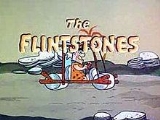
The Flintstones is an animated American television sitcom that ran from 1960 to 1966 on ABC.
Produced by Hanna-Barbera Productions (H-B), The Flintstones is about a working class Stone Age man's life with his family and his next door neighbor and best friend. This show played like a prehistoric Honeymooners and its popularity rested heavily on its consistently entertaining juxtaposition of modern-day concerns in the Stone Age setting.

Discussion
Ask a question about 'The Flintstones'
Start a new discussion about 'The Flintstones'
Answer questions from other users
|
Recent Posts

Encyclopedia
The Flintstones is an animated American television sitcom that ran from 1960 to 1966 on ABC.
Produced by Hanna-Barbera Productions (H-B), The Flintstones is about a working class Stone Age man's life with his family and his next door neighbor and best friend. This show played like a prehistoric Honeymooners and its popularity rested heavily on its consistently entertaining juxtaposition of modern-day concerns in the Stone Age setting.
The first prime-time animated series geared for adults, the show originally aired from 1960 to 1966 on the ABC network. Starting with the third season, it was also ABC's first series to be televised in color (the first two seasons, originally broadcast in black and white, are broadcast in color now either through colorization or through color copies of the episodes). While the show was originally co-produced and syndicated by Screen Gems, Warner Bros. Television later acquired the rights to The Flintstones after parent Time Warner's purchase of Turner Broadcasting System and its properties, including H-B.
Screen Gems / Columbia Pictures Television syndicated repeats of the program until 1981, when The Program Exchange picked up syndication on Columbia's behalf. In the mid 1990s, syndication moved to Turner Program Services, shortly after Turner's acquisition of H-B, and its acquisition of The Flintstones from Columbia.
Overview
The show is set in the town of Bedrock in the Stone Age era. The show is an allegory to American society of the mid-20th century; in the Flintstones' fantasy version of the past, dinosaurs, saber-toothed tigers, woolly mammoths, and other long extinct animals co-exist with barefoot cavemen, who use technology very similar to that of the mid-20th century, although made entirely from pre-industrial materials and largely powered through the use of various animals. The characters drive cars made out of stone or wood and animal skins and powered by foot.
One source of the show's humor was the ways animals were used for technology. For example, when the characters took photographs with an instant camera, the inside of the camera box would be shown to contain a bird carving the picture on a stone tablet with its bill. In a running gag, the animals powering such technology would, breaking the fourth wall, look directly into the camera at the audience, shrug, and remark, "It's a living," or some similar phrase. Other commonly seen gadgets in the series included:
- a baby woolly mammoth being used as a vacuum cleaner
- An adult woolly mammoth would act as a shower by spraying water with its trunk
- Lifts are raised and lowered by ropes around brontosaurs' necks
- "automatic" windows are powered by monkeys that dwell on the outside windowsill
- birds configured as "car horns" are activated by pulling on their tails
- An electric razor is depicted as a clam shell housing a honey-bee vibrating it as the edges are rubbed against the character's face.
Travel to "Hollyrock," a parody of Hollywood, California, usually involved an "airplane" flight—the "plane" in this case often shown as a giant pterodactyl. (Other familiar place names are similarly contorted: San Antonio becomes Sand-and-Stony-o; the country to the south of Bedrock's land is called Mexirock; and so forth.)
The Stone Age setting allowed for gags and puns involving rocks; the names of the various characters being "rock" puns. These included celebrities of the 1960s such as:
Closing credits
In the show's closing credits, Fred tries to put the cat (actually a saber-tooth tiger) out for the night. The cat runs back into the house through the window and locks the door on Fred. Then he starts yelling for his wife to come open the door: "Wilma! Come on, Wilma, open this door! Willllll-ma!"
By the time the theme song "Meet the Flintstones" was used as background, Fred cut the yelling to: "Willllll-ma!"
Although the cat, Baby Puss, was seen in the closing credits of every episode, it was rarely actually seen in any of the storylines.
The endings seen on episodes currently in distribution are not the ones seen originally in the series' first airing. Videos exist of the original versions of the credits, where a short advertising sequence with the main characters is included as part of the ending. The ending credits, a plug for the show's then-sponsor Winston cigarettes, shows a commercial where the announcer states: "The Flintstones has been brought to you by Winston, America's best-selling, best-tasting filter cigarette", and Fred sings the brand's jingle as the Hanna-Barbera orchestra plays the jingle in the style usually used for the series' background music. Then the sequence of everyone going to sleep occurs, with a "Winston" sign flashing on and off outside of Bedrock.Then after Fred says "Wilma! Come on, Wilma, open this door! Willlllll-ma!", there is applause and then for its final title card it says "This has been an ABC Television Network presentation".
The television network notice (common for many shows on all networks at the time as a sort of station identification) was included in a 1995 laserdisc where the newly-rediscovered 1960 credits were first made available, but was later removed from TV distribution prints, as the show no longer airs on ABC (and is not considered appropriate for a cartoon to sponsor cigarettes). The final applause were erased in the process of cutting part of the music to remove the ABC notice. Also, they airbrushed the frames so that the Winston sign was erased. The color print of the ending has no advertising in it. Hanna-Barbera also produced short advertising scenes for their many sponsors, which appeared after the end of the episode and right before the credits, as well as commercial breaks
Unfortunately, the original credit lists for each episode of seasons 1 and 2 no longer are seen. This is due to years of substituting credits from seasons 3 and beyond. However, this is proved to not work, as tacking one episode's credits to a season's worth of episodes confused more than one viewer. A few years ago, Cartoon Network created closing credits which had all the persons working through the two seasons, regardless of some being absent from different episodes. Whether the original credit lists will be found (or even exist) remains in doubt.
Opening Credits
The opening credits of the show were not immune to censorship either. In the first two seasons, after Fred arrives at home, the camera zooms into one of the windows, showing Fred lighting a Winston and relaxing on a chair, reciting the jingle, with the TV in front of him having a picture of a box of them. In current distribution then, the scene was reanimated to the way it is today to hide the reference.
Curiously, late in 2008, Boomerang went through with restoring the original opening credits to the first episode (albeit with all advertising omitted).
The characters
The Flintstones live at 323 Cobblestone Lane in Bedrock. (However, in the season 2 episode, "The X-Ray Story," their address is given as "25 Stone Cave Road.")
The Flintstones
- Fred Flintstone - The main character of the show.
- Wilma Flintstone (née Pebble, later Slaghoople) - (Fred's wife.)
- Pebbles Flintstone The Flintstones' infant daughter.
- Dino - The Flintstones' pet dinosaur, who barks like a dog.
- Baby Puss - The Flintstones' pet saber toothed cat.
- Pearl Slaghoople - Wilma's mother.
- Tex Hardrock - Fred's uncle on his mother's side.
- Jemina Hardrock - Fred's uncle's sister
- Eddy Alfaro- Fred's Butler
- Zeke Flintstone - Fred's uncle that owned Sandstone Cemente, a pun on the California town, San Clemente, that was the site of Richard Nixon's "Western White House."
The Rubbles
- Barney Rubble - Fred's best friend and next door neighbor
- Betty Rubble (née Elizabeth Jean McBricker) - Barney's wife.
- Bamm-Bamm Rubble - the Rubbles' abnormally strong adopted son.
- Hoppy - The Rubbles' pet Hopparoo (a kangaroo/dinosaur combination creature)
Other characters
- Mr. Slate - Fred Flintstone's hot tempered boss at the stone quarry.
- Joe Rockhead - a friend of Fred's.
- Arnold - the paper boy. A running gag is Fred being outsmarted by Arnold
- Sam Slagheap - the Grand Poobah of the Loyal Order of Water Buffaloes.
- The Great Gazoo - an alien exiled to Earth who helps Fred and Barney, often against their will.
- The Gruesomes - the Flintstone's strange next-door neighbors (inspired by the then-popular monster sitcoms
The Addams Family and The Munsters) Uncle Giggles - Fred's eccentric uncle who lived on nightmare hill. * Samantha and Darrin - One time neighbors of The Flintstones.
Opening teasers
Each episode of The Flintstones opened with a short scene, lasting from a few seconds to a few minutes prior to the main titles. During the first three seasons, this was footage that took place later in the episode, usually from somewhere in the middle. Serving as a preview, the opening teaser did not clue viewers in on the actual plot.
Beginning with the fourth season, the majority of opening teasers were scenes specifically written to open the episode (examples include "Ann Margrock Presents," "Sleep On Sweet Fred"). This change was not consistent, as a handful of episodes still previewed footage that would be seen later in the episode ("Glue For Two" and "10 Little Flintstones"), while on five occasions, this "preview" footage was never seen during the remainder of the episode at all ("Daddy's Anonymous," "Peek A Boo Camera,"
"Once Upon A Coward," "Fred El Terrifico" and "'The Hatrocks," a.k.a. "Bedrock Hillbillies").
Voices
It has been noted that Fred Flintstone physically resembled voice actor Alan Reed, and also Jackie Gleason. The voice of Barney was provided by legendary voice actor Mel Blanc, though five episodes during the second season employed Hanna-Barbera regular Daws Butler while Blanc was incapacitated by a near-fatal car accident. Blanc was able to return to the series much sooner than expected, by virtue of a temporary recording studio for the entire cast set up at Blanc's bedside.
Additional similarities with The Honeymooners included the fact that Reed based Fred's voice upon Jackie Gleason's interpretation of Ralph Kramden, while Blanc, after a season of using a nasal, high-pitched voice for Barney, eventually adopted a style of voice similar to that used by Art Carney in his portrayal of Ed Norton. The first time that Art Carney voice was used was for a few seconds in "The Prowler" (the 3rd episode produced!). In a 1980s Playboy interview, Jackie Gleason said that Alan Reed had done voice-overs for Gleason in his early movies, and that he (Gleason) considered suing Hanna-Barbera for copying The Honeymooners but decided to let it pass.
Supposedly, Jackie Gleason intended to sue Hanna-Barbera for plagiarizing his program. According to Henry Corden, who took over as the voice of Fred Flintstone after the late Alan Reed and was a friend of Gleason’s, “Jackie’s lawyers told him that he could probably have The Flintstones pulled right off the air. But they also told him, “Do you want to be known as the guy who yanked Fred Flintstone off the air? The guy who took away a show that so many kids love, and so many parents love, too?”
Henry Corden handled the voice responsibilities of Fred after Reed's death in 1977. Corden had previously provided Fred's singing voice in The Man Called Flintstone and later on Flintstones' children's records. After 1999, Jeff Bergman performed the voice of Fred. Since Mel Blanc's death in 1989, Barney has been voiced by both Frank Welker and Kevin Richardson. Various additional character voices were created by Hal Smith, Allan Melvin, Janet Waldo, Daws Butler, Howard Morris, among others.
Voice cast
Production history
Originally, the series was to have been titled The Flagstones, and a brief demonstration film was created to sell the idea of a "modern stone age family" to sponsors and the network. When the series itself was commissioned, the title was changed, possibly to avoid confusion with the Flagstons, characters in the comic strip Hi and Lois. After spending a brief period in development as The Gladstones, Hanna-Barbera settled upon The Flintstones. Aside from the animation and fantasy setting, the show's scripts and format are typical of a 1950s American situation comedy, with the usual family issues resolved with a laugh at the end of each episode.
Although most Flintstones episodes are standalone storylines, the series did have a few story arcs. The most notable example was a series of episodes surrounding the birth of Pebbles. Beginning with the episode "The Surprise", aired midway through the third season, in which Wilma reveals her pregnancy to Fred, the arc continued through the trials and tribulations leading up to Pebbles' birth, and then continued with several episodes showing Fred and Wilma adjusting to the world of parenthood. The Flintstones also became the first primetime animated series to last more than two seasons; this record wasn't surpassed by any other primetime animated tv series until The Simpsons aired their third season in 1992.
A postscript to the arc occurred in the third episode of the fourth season, in which the Rubbles, depressed over being unable to have children of their own (making The Flintstones the first animated series in history to address the issue of infertility, though subtly), adopt Bamm-Bamm. The 100th episode made (but the 90th to air), Little Bamm-Bamm, established how Bamm-Bamm was adopted. About nine episodes were made before it but shown after which explains why Bamm-Bamm would not be seen again until episode 101 Daddy's Annonymous (Bamm-Bamm was in a teaser on episode 98 Kleptomaniac Pebbles). Another story arc, occurring in the final season, centered on Fred and Barney's dealings with The Great Gazoo (voiced by Harvey Korman).
The series was initially aimed at adult audiences; the first season was sponsored by Winston cigarettes and the characters appeared in several black and white television commercials for Winston.
The Flintstones was the first American animated show to depict two people of the opposite sex (Fred and Wilma; Barney and Betty) sleeping together in one bed, although Fred and Wilma are sometimes depicted as sleeping in separate beds. For comparison, the first live-action depiction of this in American TV history was in television's first-ever sitcom: 1947's Mary Kay and Johnny.
The show also contained a laugh track, common to most other sitcoms of the period. In the mid-1990s, when Turner Networks remastered the episodes, the original laugh track was removed. Currently, the shows airing on Boomerang and the DVD releases have the original laugh track restored to most episodes (a number of episodes from Seasons 1 and 2 still lack them). Some episodes, however, have a newer laugh track dubbed in, apparently replacing the old one. Because of this practice, the only episode to originally air without a laugh track ("Sheriff For a Day" in 1965) now has one.
Reception
In January 2009, IGN named The Flintstones as the ninth best in its "Top 100 Animated TV Shows".
Films and subsequent TV series
Following the show's cancellation in 1966, a film based upon the series was created. The Man Called Flintstone was a musical spy caper that parodied James Bond and other secret agents. The movie was released to theaters on August 3, 1966 by Columbia Pictures. It was released on DVD in Canada in March 2005 and in United States in December 2008.
The show was revived in the 1970s with Pebbles and Bamm-Bamm having grown into teenagers, and several different series and made-for-TV movies — including a series depicting Fred and Barney as police officers, another depicting the characters as children, and yet others featuring Fred and Barney encountering Marvel Comics superhero The Thing and comic strip character The Shmoo — have appeared over the years. The original show also was adapted into a hit live-action film in 1994, which was so popular that a prequel The Flintstones in Viva Rock Vegas, followed in 2000.
The Flintstones Show The popularity of The Flintstones spawned a staged production which opened at Universal Studios Hollywood in 1994 (the year the live action film was released), developed by Universal and Hanna-Barbera Productions. It opened at the Panasonic Theatre replacing the Star Trek Show. The story consists with Fred, Wilma, Barney and Betty heading for "Hollyrock".
According to FX Control Systems.com, the most extremely challenging stage effect for the show was the animated pterodactyl that transported Fred, Wilma, Barney and Betty from “Bedrock” to “Hollyrock”. This technically demanding animated piece lifted four cast members off the stage and flew them out over the audience during a set change, after which they safely landed at their new destination.
The Universal Studios’ script called for Fred, Wilma, Barney and Betty to board Pterodactyl World Airways and fly from “Bedrock” to “Hollyrock” over the heads of the audience. The project was technically challenging and presented many engineering hurdles. Further exacerbating the design was the need for full seismic analysis and a short schedule. Above all else was the absolute safety for the cast and audience during the Flintstones’ spectacular flight to "Hollyrock".
The show's Designer Mr. Valenze also designed and programmed the automated winch trolley that travels on a monorail mounted to the roof structure. On cue, the trolley positions itself over center stage and drops four cables and an electrical interface. Once attached to the animated pterodactyl, the trolley automatically pre-tensions and tests the cable attachments. The cast members board, wings start flapping, the on-board PLC performs a host of safety checks and the cast is off. The prop altitude and position are constantly monitored to assure proper clearance over the audience at all times. Then comes the hard part, landing four cast members at exact center stage, safely, softly and on cue.
The single-point failure proof design prevents the catastrophic failure of any single winch, lifting cable, connection or sensor from precipitating further failure or placing the cast or audience at risk of injury. The stage used in the Theatre also contained a Cat Walk with a stair case for the cast members to go into the audience to make them feel that they are apart of the show which makes it very entertaining.
Despite the attraction being somewhat successful among Tourists and Theme park fans, Universal closed the show on January 2, 1997 to make way for new shows such as Totally Nickelodeon (1997-2000) and The Rugrats Stage Show (2000-2002). Shrek 4D now performs in the Panasonic Theatre. After The Rugrats Show closed, the Cat Walk Stage used for the Flintstones show was removed completely as the Shrek Attraction was made up with new advanced Technology. Since the Flintstones show has closed, it hasn't been featured in any of the other Universal Themeparks. It is currently unknown if Universal will ever bring the show back to Universal Studios Hollywood or possibly open duplicate versions at Universal Studios Florida and Universal Studios Japan in the near future.
Broadcast history
Production Credits
- Produced and Directed: William Hanna, Joseph Barbera
- Written by: Warren Foster, Michael Maltese, Arthur Phillips
- Story Director: Dan Gordon, Alex Lovy, Art Davis
- Associate Producer: Alan Dinehart
- Voices: Alan Reed, Jean Vanderpyl, Mel Blanc, Bea Benaderet, John Stephenson, Daws Butler, Don Messick, Jerry Mann, Hal Smith
- Musical Diector: Hoyt Curtin
- Animation: Kenneth Muse, Carlo Vinci, George Nicholas, Ed Love, Don Patterson, Dick Lundy, William Keil
- Layout: Dick Bickenbach, Walt Clinton
- Production Supervision: Howard Hanson
- Backgrounds: Art Lozzi, Montealegre, Robert Gentle, Dick Thomas
- Titles: Lawrence Goble
- Camera: Roy Wade, Norman Stainback, Frank Paiker, Charles Flekal
- Film Editing: Greg Watson, Warner Leighton, Donald A. Douglas, Joseph Ruby, Kenneth Muse
- THE FLINTSTONES
- © Copyright MCMLX Hanna-Barbera Productions
- A HANNA-BARBERA PRODUCTION
- A SCREEN GEMS FILM PRESENTATION
- Television Subsidiary: Columbia Pictures Corporation
Flintstones series and spin-offs
Television series
The Flintstones (1960-66) The Pebbles and Bamm-Bamm Show (1971-72) The Flintstone Comedy Hour (1972-73) The Flintstone Comedy Show (1973-74) Fred Flintstone and Friends (1977-78) The New Fred and Barney Show (1979) Fred and Barney Meet the Thing (1979) Fred and Barney Meet the Shmoo (1979-80) The Flintstone Comedy Show (1980-82) The Flintstone Funnies (1982-84) The Flintstone Kids (1986-88) Dino: World Premiere Toons - featuring "Stay Out!" (1995) and "The Great Egg-Scape" (1997) Cave Kids: Pebbles & Bamm-Bamm (1996)
Theatrical animated feature
The Man Called Flintstone (1966, released by Columbia Pictures)
Television specials
A Flintstone Christmas (1977) The Flintstones: Little Big League (1978) The Flintstones' New Neighbors (1980) The Flintstones Meet Rockula and Frankenstone (1980) The Flintstones: Fred's Final Fling (1980) The Flintstones: Wind-Up Wilma (1981) The Flintstones: Jogging Fever (1981) The Flintstones' 25th Anniversary Celebration (1986) The Flintstone Kids' "Just Say No" Special (1988) A Flintstone Family Christmas (1993)
Television movies
The Jetsons Meet the Flintstones (1987) I Yabba-Dabba Do! (1993) Hollyrock-a-Bye Baby (1993) A Flintstones Christmas Carol (1994) The Flintstones: On the Rocks (2001)
Live action films
The Flintstones (1994) The Flintstones in Viva Rock Vegas (2000)
Other media
For a list of DVDs, video games, comic books, and VHS releases, see List of The Flintstones media.
This American Life Radio Play about Barney running over Dino in Fred's driveway
http://www.thislife.org/Radio_Episode.aspx?sched=1222
May 13, 1986 ABC broadcast The Joe Piscopo New Jersey Special which included a skit called Flintstones: The Lost Episodes with Piscopo as Fred and Danny Devito as Barney; besides appropriate costuming they wore plastic wigs shaped like the hairstyles on the show. An onscreen credit at the end of the skit indicated it was done with the authorization of Hanna-Barbara.
Popular culture In the 1960s the series had strong ties to a sponsor, Winston cigarettes, with the characters shown smoking the product during commercial breaks. This approach was not unusual for television at that time, either with tobacco or any other product. In one memorable advertisement, Fred and Barney relaxed while their wives did housework, smoking Winstons and reciting Winston's jingle, "Winston tastes good like a cigarette should!" In 1963, Winston pulled their sponsorship from the show when Wilma became pregnant; after that point, the main sponsor was Welch's Grape Juice. This is probably because of a shift from adult to family audiences.
Welch's advertised their product with animated commercials featuring the cartoon cast and they were often pictured in print ads and on grape juice containers. In a few episodes, Pebbles is given grape juice as a treat.
The characters from the series were used in an industrial film designed to promote the 1967 beer advertising campaigns for Anheuser-Busch. This film was released to the Anheuser-Busch distributors, and it was not seen by the general public until years later when bootleg copies began to circulate.
The series spawned three breakfast cereals: Fruity Pebbles and Cocoa Pebbles, and the discontinued Dino Pebbles (later revived as "Marshmallow Mania Pebbles").
An enduring license has been a line of children's multivitamins called "Flintstones Complete" (more popularly known as Flintstones Vitamins); the first seasons of the series were, in part, sponsored by Miles Laboratories. Miles' corporate successor, Bayer Corporation, continues to market Flintstones vitamins.
More recently, the Flintstones have been seen in commercials for GEICO automotive insurance and Midas auto repair shops.
Fred Flintstone's exclamation 'Yabba Dabba Dooo!', shouted in the opening credits as well as any time Fred became happy or excited, is widely known and repeated.
The Screaming Blue Messiahs had a song called I Wanna Be a Flintstone on their album Bikini Red. It was later rereleased on the soundtrack album of the 1994 live action film The Flintstones.
"Weird Al" Yankovic paid homage to the Flintstones in "Bedrock Anthem", a combined parody of "Under the Bridge" and "Give it Away", both by the Red Hot Chili Peppers, that even featured Flintstones voices and sound effects. It also was rereleased on the soundtrack album of the 1994 live action film The Flintstones.
In one episonde of Alvin and the Chipmunks when the 90s Chipmnks enter the 50s Chipmunks house Alvin asks "Who painted this place? The Flintstones?!?!?!"
See also
External links
-
-
-
-
-
-
-
- - Official site for Flintstone Halloween costumes.
- - Fansite
- - Written by Kevin McCorry.
|
| |
|
|