
All Topics  
Prague Spring

 
Prague Spring

   Email Print
   Bookmark   Link


Prague Spring


The Prague Spring () was a period of political liberalization in Czechoslovakia
Czechoslovakia

Czechoslovakia was a sovereign state in Central Europe that existed from October 1918 until 1992 . On January 1, 1993, Czechoslovakia dissolution of Czechoslovakia into the Czech Republic and Slovakia....
 during the era of its domination by the Soviet Union
Soviet Union

The Union of Soviet Socialist Republics was a Constitution of the Soviet Union socialist state that existed in Eurasia from 1922 to 1991.The name is a translation of the , romanization of Russian Soyuz Sovetskikh Sotsialisticheskikh Respublik, abbreviated ????, SSSR....
 after World War II
World War II

World War II, or the Second World War , was a global military conflict which involved a Participants in World War II, including all of the great powers, organised into two opposing military alliances: the Allies of World War II and the Axis powers....
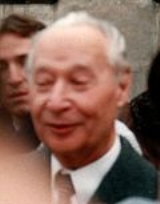
. It began on January 5, 1968, when reformist Slovak Alexander Dubcek
Alexander Dubcek

Alexander Dubcek was a Slovaks politician and briefly leader of Czechoslovakia , famous for his attempt to reform the Communist regime . Later, after the overthrow of the Communist government in 1989, he was Speaker of the Federal Assembly of Czechoslovakia....
 came to power, and continued until August 21, when the Soviet Union and members of its Warsaw Pact
Warsaw Pact

The Warsaw Pact was an organization of communist states in Central Europe and Eastern Europe. The treaty was signed in Warsaw, Poland on May 14, 1955 and official copies were made in Russian language, Polish language, Czech language and German language....
 allies invaded the country
Warsaw Pact invasion of Czechoslovakia

On the night of August 20 - August 21, 1968, the Soviet Union, Bulgaria, the German Democratic Republic , Hungary and Poland invaded the Czechoslovak Socialist Republic in order to halt Alexander Dubcek's Prague Spring political liberalization reforms....
 to halt the reforms.

The Prague
Prague

Prague is the Capital and World's largest cities of the Czech Republic. Its official name is Hlavn? mesto Praha, meaning Prague, the Capital City....
 Spring reforms were an attempt by Dubcek to grant additional rights to the citizens in an act of partial decentralization of the economy and democratization.


Discussion
Ask a question about 'Prague Spring'
Start a new discussion about 'Prague Spring'
Answer questions from other users
Full Discussion Forum


Encyclopedia


The Prague Spring () was a period of political liberalization in Czechoslovakia
Czechoslovakia

Czechoslovakia was a sovereign state in Central Europe that existed from October 1918 until 1992 . On January 1, 1993, Czechoslovakia dissolution of Czechoslovakia into the Czech Republic and Slovakia....
 during the era of its domination by the Soviet Union
Soviet Union

The Union of Soviet Socialist Republics was a Constitution of the Soviet Union socialist state that existed in Eurasia from 1922 to 1991.The name is a translation of the , romanization of Russian Soyuz Sovetskikh Sotsialisticheskikh Respublik, abbreviated ????, SSSR....
 after World War II
World War II

World War II, or the Second World War , was a global military conflict which involved a Participants in World War II, including all of the great powers, organised into two opposing military alliances: the Allies of World War II and the Axis powers....
. It began on January 5, 1968, when reformist Slovak Alexander Dubcek
Alexander Dubcek

Alexander Dubcek was a Slovaks politician and briefly leader of Czechoslovakia , famous for his attempt to reform the Communist regime . Later, after the overthrow of the Communist government in 1989, he was Speaker of the Federal Assembly of Czechoslovakia....
 came to power, and continued until August 21, when the Soviet Union and members of its Warsaw Pact
Warsaw Pact

The Warsaw Pact was an organization of communist states in Central Europe and Eastern Europe. The treaty was signed in Warsaw, Poland on May 14, 1955 and official copies were made in Russian language, Polish language, Czech language and German language....
 allies invaded the country
Warsaw Pact invasion of Czechoslovakia

On the night of August 20 - August 21, 1968, the Soviet Union, Bulgaria, the German Democratic Republic , Hungary and Poland invaded the Czechoslovak Socialist Republic in order to halt Alexander Dubcek's Prague Spring political liberalization reforms....
 to halt the reforms.

The Prague
Prague

Prague is the Capital and World's largest cities of the Czech Republic. Its official name is Hlavn? mesto Praha, meaning Prague, the Capital City....
 Spring reforms were an attempt by Dubcek to grant additional rights to the citizens in an act of partial decentralization of the economy and democratization. Among the freedoms granted were a loosening of restrictions on the media
Freedom of the press

Freedom of the press consists ofconstitutional or Statute protections pertaining to the Mass media and published materials.With respect to governmental information, any government distinguishes which materials are public or protected from disclosure to the public based on classified information as sensitive, classified or secret and being...
, speech
Freedom of speech

Freedom of speech is the freedom to speak freely without censorship or limitation. The synonymous term freedom of expression is sometimes used to denote not only freedom of verbal speech but any act of seeking, receiving and imparting information or ideas, regardless of the medium used....
 and travel
Freedom of movement

Freedom of movement, mobility rights or the right to travel is a human rights concept which is respected in the constitutions of numerous states....
. Dubcek also federalized the country into two separate republics; this was the only change that survived the end of the Prague Spring.

The reforms were not received well by the Soviets who, after failed negotiations, sent thousands of Warsaw Pact troops and tanks to occupy the country. A large wave of emigration swept the nation. While there were many non-violent protests in the country, including the protest-suicide of a student, there was no military resistance. Czechoslovakia remained occupied until 1990.

After the invasion, Czechoslovakia entered a period of normalization
Normalization (Czechoslovakia)

In the history of Czechoslovakia, normalization is a name commonly given to the period 1969 to about 1987. It was characterized by initial restoration of the conditions prevailing before the Prague Spring led by Alexander Dubcek and subsequent preservation of this new status quo....
: subsequent leaders attempted to restore the political and economic values that had prevailed before Dubcek gained control of the Communist Party of Czechoslovakia
Communist Party of Czechoslovakia

The Communist Party of Czechoslovakia, in Czech and in Slovak: Komunistick? strana Ceskoslovenska was a Communist and Marxist-Leninist political party in Czechoslovakia that existed between 1921 and 1992....
 (KSC). Gustáv Husák
Gustáv Husák

Gust?v Hus?k was a Slovaks politician, president of Czechoslovakia and a long-term Communist leader of Czechoslovakia and of the Communist Party of Czechoslovakia in the 1970s and 1980s....
, who replaced Dubcek and also became president, reversed almost all of Dubcek's reforms. The Prague Spring has become immortalized in music and literature such as the work of Karel Kryl
Karel Kryl

Karel Kryl was a popular Czech people songwriter and performer of many protest songs in which he strongly criticized and identified the shortcomings and inhumanity of the Communist regime in his home country....
 and Milan Kundera
Milan Kundera

Milan Kundera is a Czech Republic and French writer of Czech Republic origin who has lived in exile in France since 1975, where he became a Naturalization in 1981....
's The Unbearable Lightness of Being
The Unbearable Lightness of Being

The Unbearable Lightness of Being is a novel written by Milan Kundera in 1982, first published in 1984 in literature in France....
.

Background

The process of de-Stalinization
De-Stalinization

De-Stalinization refers to the process of eliminating the cult of personality and Stalinist political system created by Soviet Union leader Joseph Stalin....
 in Czechoslovakia had begun under Antonín Novotný
Antonín Novotný

Anton?n Novotn? was President of Czechoslovakia from 1957 to 1968 and ruled as General Secretary of the Communist Party of Czechoslovakia from 1953 to 1968....
 in the late 1950s and early 1960s, but had progressed slower than in most other socialist states of the Eastern Bloc
Eastern bloc

During the Cold War, the terms Eastern Bloc, Communist Bloc or Soviet Bloc were used to refer to European annexed or expanded Soviet Socialist Republics of the USSR and Satellite state states, including members of the Soviet-dominated organizations Comecon and the Warsaw Pact....
. Following the lead of Nikita Khrushchev
Nikita Khrushchev

Nikita Sergeyevich Khrushchev served as General Secretary of the Communist Party of the Soviet Union of the Communist Party of the Soviet Union from 1953 to 1964, following the death of Joseph Stalin, and Premier of the Soviet Union from 1958 to 1964....
, Novotný proclaimed the completion of socialism
Socialism

Socialism refers to a broad set of economic theories of social organization advocating public or state ownership and administration of the means of production and distribution of goods, and a society characterized by equality for all individuals, with a fair or Egalitarianism method of compensation....
, and the new constitution
1960 Constitution of Czechoslovakia

The Constitution of the Czechoslovak Socialist Republic , promulgated on 11 July 1960 as the constitutional law 100/1960 Sb., codified the Communist regime in Czechoslovakia....
, accordingly, adopted the name Czechoslovak Socialist Republic
Czechoslovak Socialist Republic

The Czechoslovak Socialist Republic was the official name of Czechoslovakia from 1960 until early 1990 .The traditional name Ceskoslovensk? republika was changed on July 11, 1960 as a symbol of the "final victory of socialism" in the country, and remained so until the Velvet Revolution in Czechoslovakia....
. The pace of change, however, was sluggish; the rehabilitation of Stalinist-era victims, such as those convicted in the Slánský trials
Slánský trials

The Sl?nsk? trial was a show trial against elements of the Communist Party of Czechoslovakia who were thought to have adopted the line of the maverick Yugoslav leader Josip Tito....
, may have been considered as early as 1963, but did not take place until 1967. As the strict regime eased its rules, the Union of Czechoslovak Writers cautiously began to air discontent, and in the union's gazette, Literární noviny, members suggested that literature should be independent of Party doctrine.

In June 1967, a small fraction of the Czech writer's union sympathized with radical socialists, specifically Ludvík Vaculík
Ludvík Vaculík

Ludv?k Vacul?k is a Czechs writer and journalist. A prominent samizdat writer, he is most famous as the author of the "Two Thousand Words" manifesto of June 1968....
, Milan Kundera
Milan Kundera

Milan Kundera is a Czech Republic and French writer of Czech Republic origin who has lived in exile in France since 1975, where he became a Naturalization in 1981....
, Jan Procházka, Antonín Jaroslav Liehm, Pavel Kohout
Pavel Kohout

Pavel Kohout is a Czech people and Austrians novelist, playwright, and poet. He was a member of the Communist Party of Czechoslovakia, a Prague Spring exponent and dissident in 1970s until he was expelled to Austria....
 and Ivan Klíma
Ivan Klíma

Ivan Kl?ma is a Czech Republic novelist and playwright. He was a member of the Communist Party of Czechoslovakia.Less well known than the work of his contemporary Milan Kundera, Kl?ma' s writings are generally seen to be much more overtly political, though there are numerous similarities between their works, most notably a tendency toward...
. A few months later, at a party meeting, it was decided that administrative actions against the writers who openly expressed support of reformation would be taken. Since only a small part of the union held these beliefs, the remaining members were relied upon to discipline their colleagues. Control over Literární noviny and several other publishing houses was transferred to the ministry of culture, and even members of the party who later became major reformers—including Dubcek—endorsed these moves.

In the early 1960s, Czechoslovakia, then officially known as the Czechoslovak Socialist Republic
Czechoslovak Socialist Republic

The Czechoslovak Socialist Republic was the official name of Czechoslovakia from 1960 until early 1990 .The traditional name Ceskoslovensk? republika was changed on July 11, 1960 as a symbol of the "final victory of socialism" in the country, and remained so until the Velvet Revolution in Czechoslovakia....
 (CSSR), underwent an economic downturn. The Soviet model of industrialization applied poorly to Czechoslovakia. Czechoslovakia was already quite industrialized before World War II
World War II

World War II, or the Second World War , was a global military conflict which involved a Participants in World War II, including all of the great powers, organised into two opposing military alliances: the Allies of World War II and the Axis powers....
 and the Soviet model mainly took into account less developed economies. Novotný's attempt at restructuring the economy, the 1965 New Economic Model, spurred increased demand for political reform as well.

By 1967, president Antonín Novotný was losing support. First Secretary of the regional Communist Party of Slovakia
Communist Party of Slovakia (1939)

The Communist Party of Slovakia was a communist party in Slovakia. It was formed in March 1939, when the WWII Slovak Republic was created, as the Slovakian branches of the Communist Party of Czechoslovakia were separated from the mother party....
, Alexander Dubcek, and economist Ota Šik
Ota Šik

Ota ?ik was a Czechoslovakia economist and politician. He was the man behind the New Economic Model and was one of the key figures in the Prague Spring....
 challenged him at a meeting of the Central Committee, and Dubcek invited Soviet premier Leonid Brezhnev
Leonid Brezhnev

Leonid Ilyich Brezhnev was General Secretary of the Communist Party of the Soviet Union from 1964 to 1982, serving in that position longer than anyone other than Joseph Stalin....
 to Prague
Prague

Prague is the Capital and World's largest cities of the Czech Republic. Its official name is Hlavn? mesto Praha, meaning Prague, the Capital City....
 that December. Brezhnev was surprised at the extent of the opposition to Novotný and supported his removal as Czechoslovakia's leader. Dubcek thus replaced Novotný as First Secretary on January 5, 1968. On March 22, 1968, Novotný resigned his presidency and was replaced by Ludvík Svoboda
Ludvík Svoboda

Ludv?k Svoboda was a Czechoslovakia military leader and politician. He fought in both World Wars, for which he is regarded as a national hero, and was later the president of Czechoslovakia of the Czechoslovak Socialist Republic....
, who later gave consent to the reforms.

Liberalization and reform

The Czechoslovak public knew nothing of the political infighting, and early signs of change were few. When the Communist Party of Czechoslovakia (KSC) Presidium member Josef Smrkovský
Josef Smrkovský

Josef Smrkovsk? was a Czechoslovakia politician and a member of the Communist Party of Czechoslovakia reform wing during the 1968 Prague Spring....
 was interviewed in a Rudé Právo
Rudé právo

Rud? pr?vo was the official newspaper of the Communist Party of Czechoslovakia.It was founded in 1920 when the party was splitting from the social democrats and their older daily Pr?vo lidu ....
 article, entitled "What Lies Ahead", he insisted that Dubcek's appointment at the January Plenum would further the goals of socialism and maintain the working-class nature of the Communist Party.

On the 20th anniversary of Czechoslovakia’s "Victorious February", Dubcek delivered a speech explaining the need for change following the triumph of socialism. He emphasized the need to "enforce the leading role of the party more effectively" and acknowledged that, despite Klement Gottwald
Klement Gottwald

Klement Gottwald was a Czechoslovakian Communist politician, longtime leader of the Communist Party of Czechoslovakia , prime minister and president of Czechoslovakia....
's urgings for better relations with society, the Party had too often made heavy-handed rulings on trivial issues. Dubcek declared the party's mission was "to build an advanced socialist society on sound economic foundations ... a socialism that corresponds to the historical democratic traditions of Czechoslovakia, in accordance with the experience of other communist parties ..."

In April, Dubcek launched an "Action Program
Action Programme (1968)

The Action Programme is a political plan, devised by Alexander Dubcek and his associates in the Communist Party of Czechoslovakia , that was published on April 5, 1968....
" of liberalizations, which included increasing freedom of the press, freedom of speech, and freedom of movement, with economic emphasis on consumer goods and the possibility of a multiparty government. The program was based on the view that "Socialism cannot mean only liberation of the working people from the domination of exploiting class relations, but must make more provisions for a fuller life of the personality than any bourgeois democracy." The program would limit the power of the secret police and provide for the federalization
Constitutional Law of Federation

The Constitutional Law of Federation was a Organic law in Czechoslovakia adopted on 27 October 1968 and in force from 1969 – 1992, by which the Unitary state Czechoslovak state was turned into a federation....
 of the CSSR into two equal nations. The Program also covered foreign policy, including both the maintenance of good relations with Western countries and cooperation with the Soviet Union
Soviet Union

The Union of Soviet Socialist Republics was a Constitution of the Soviet Union socialist state that existed in Eurasia from 1922 to 1991.The name is a translation of the , romanization of Russian Soyuz Sovetskikh Sotsialisticheskikh Respublik, abbreviated ????, SSSR....
 and other communist nations. It spoke of a ten year transition through which democratic elections would be made possible and a new form of democratic socialism would replace the status quo.

Those who drafted the Program, however, were careful not to criticize the actions of the post-war communist regime, only to point out policies that they felt had outlived their usefulness. For instance, the immediate post-war situation had required "centralist and directive-administrative methods" to fight against the "remnants of the bourgeoisie
Bourgeoisie

Bourgeoisie is a classification used in analyzing human societies to describe a social class of people. Historically, the bourgeoisie comes from the middle or merchant classes of the Middle Ages, whose status or power came from employment, education, and wealth, as distinguished from those whose power came from being born into an aristocrati...
." Since the "antagonistic classes" were said to have been defeated with the achievement of socialism, these methods were no longer necessary. Reform was needed, stated the Program, for the Czechoslovak economy to join the "scientific-technical revolution in the world" rather than relying on Stalinist-era heavy industry
Heavy industry

Heavy industry does not have a single fixed meaning as compared to light industry. It can mean production of products which are either heavy in weight or in the processes leading to their production....
, labor power, and raw materials. Furthermore, since internal class conflict had been overcome, workers could now be duly rewarded for their qualifications and technical skills without contravening Marxist-Leninism. The Program suggested it was now necessary to ensure important positions were "filled by capable, educated socialist expert cadres" in order to compete with capitalism.

Although the Action Program stipulated that reform must proceed under KSC direction, popular pressure mounted to implement reforms immediately. Radical elements became more vocal: anti-Soviet polemics appeared in the press (after the formal abolishment of censorship on June 26, 1968), the Social Democrats
Czech Social Democratic Party

The Czech Social Democratic Party is the Social Democracy political party in the Czech Republic.The party won the Czech legislative election, 2002 with 70 of 200 representatives in the Chamber of Deputies of the Czech Republic....
 began to form a separate party, and new unaffiliated political clubs were created. Party conservatives urged repressive measures, but Dubcek counseled moderation and reemphasized KSC leadership. At the Presidium of the Communist Party of Czechoslovakia
Communist Party of Czechoslovakia

The Communist Party of Czechoslovakia, in Czech and in Slovak: Komunistick? strana Ceskoslovenska was a Communist and Marxist-Leninist political party in Czechoslovakia that existed between 1921 and 1992....
 in April, Dubcek announced a political program of "socialism with a human face". In May, he announced that the Fourteenth Party Congress would convene in an early session on September 9. The congress would incorporate the Action Program into the party statutes, draft a federalization law, and elect a new Central Committee.

Dubcek's reforms guaranteed freedom of the press, and political commentary was allowed for the first time in mainstream media. At the time of the Prague Spring, Czechoslovak exports were declining in competitiveness, and Dubcek's reforms planned to solve these troubles by mixing planned
Planned economy

A planned economy or directed economy is an economic system in which the government or workers' councils manages the economy. It is an economic system in which the central government makes all decisions on the production and consumption of goods and services....
 and market economies
Market economy

A market economy is a social system based on the division of labor in which the prices of goods and services are determined in a free price system set by supply and demand....
. Within the party, there were varying opinions on how this should proceed; certain economists wished for a more mixed economy
Mixed economy

A mixed economy is an economic system that incorporates a mixture of private and government ownership or control, or a mixture of capitalism and socialism....
 while others wanted the economy to remain mostly socialist. Dubcek continued to stress the importance of economic reform proceeding under Communist Party rule.

On June 27, Ludvík Vaculík
Ludvík Vaculík

Ludv?k Vacul?k is a Czechs writer and journalist. A prominent samizdat writer, he is most famous as the author of the "Two Thousand Words" manifesto of June 1968....
, a leading author and journalist, published a manifesto titled The Two Thousand Words
The Two Thousand Words

"The Two Thousand Words" is a manifesto written by Czech reformist writer Ludvik Vaculik in the midst of the Prague Spring, a period of political liberalization in Czechoslovakia that began in January 1968 with the election of Alexander Dubcek and ended with a Soviet invasion in August....
. It expressed concern about conservative elements within the KSC and so-called "foreign" forces. Vaculík called on the people to take the initiative in implementing the reform program. Dubcek, the party Presidium, the National Front, and the cabinet denounced this manifesto.

Soviet reaction

Initial reaction within the Communist Bloc
Eastern bloc

During the Cold War, the terms Eastern Bloc, Communist Bloc or Soviet Bloc were used to refer to European annexed or expanded Soviet Socialist Republics of the USSR and Satellite state states, including members of the Soviet-dominated organizations Comecon and the Warsaw Pact....
 was mixed. Hungary
People's Republic of Hungary

The People's Republic of Hungary or Hungarian People's Republic was the official state name of Hungary from 1949 to 1989 during its Communism period under the guidance of the Soviet Union....
's János Kádár
János Kádár

J?nos K?d?r, n? Giovanni Czermanik , was a Hungarian politician, the communist leader of Hungary from 1956 to 1988, and twice served as Prime Minister of Hungary, from 1956 to 1958 and again from 1961 to 1965....
 was highly supportive of Dubcek's appointment in January, but Leonid Brezhnev
Leonid Brezhnev

Leonid Ilyich Brezhnev was General Secretary of the Communist Party of the Soviet Union from 1964 to 1982, serving in that position longer than anyone other than Joseph Stalin....
 and others grew concerned about Dubcek's reforms, which they feared might weaken the position of the Communist Bloc during the Cold War
Cold War

The Cold War was the continuing state of conflict, tension and competition that existed between a number of world powers, including the United States, the Soviet Union, People's Republic of China, France, United Kingdom and those countries' respective allies from the mid-1940s to the early 1990s....
.

At a March 23 meeting in Dresden, leaders of "Warsaw Five" (USSR, Hungary, Poland
People's Republic of Poland

The People's Republic of Poland or Polish People's Republic was the official name of Poland from 1952 to 1989 inclusively.Although the People's Republic of Poland was a sovereignty state as defined by international law, its leaders were at the very least approved by Soviet Union leaders....
, Bulgaria and East Germany) questioned a Czechoslovak delegation over the planned reforms, suggesting any talk of "democratization" was a veiled critique of other policies. Wladyslaw Gomulka
Wladyslaw Gomulka

Wladyslaw Gomulka was a Poland Communism leader. He was a member of the Communist Party of Poland starting in 1926.In 1934 Gomulka went to Moscow, where he lived for a year....
 and Janos Kádár were less concerned with the reforms themselves than with the growing criticisms leveled by the Czechoslovak media, and worried the situation might be "similar to the prologue of the Hungarian counterrevolution". Some of the language in April's KSC Action Program may have been chosen to assert that no counterrevolution was planned, but Kieran Williams suggests that Dubcek was perhaps surprised at, but not resentful of, Soviet suggestions.

The Soviet leadership tried to stop or limit the changes in the CSSR through a series of negotiations. The Soviet Union
Soviet Union

The Union of Soviet Socialist Republics was a Constitution of the Soviet Union socialist state that existed in Eurasia from 1922 to 1991.The name is a translation of the , romanization of Russian Soyuz Sovetskikh Sotsialisticheskikh Respublik, abbreviated ????, SSSR....
 agreed to bilateral talks with Czechoslovakia in July at Cierna nad Tisou
Cierna nad Tisou

Cierna nad Tisou is a town and municipality in the Trebi?ov District in the Ko?ice Region of extreme south-eastern Slovakia, near the Tisza river....
, near the Slovak-Soviet border. At the meeting, Dubcek defended the program of the reformist wing of the KSC while pledging commitment to the Warsaw Pact
Warsaw Pact

The Warsaw Pact was an organization of communist states in Central Europe and Eastern Europe. The treaty was signed in Warsaw, Poland on May 14, 1955 and official copies were made in Russian language, Polish language, Czech language and German language....
 and Comecon
Comecon

The Council for Mutual Economic Assistance , 1949?1991, was an economic organization of communist states and a kind of Eastern Bloc equivalent to?but more geographically inclusive than—the European Economic Community....
. The KSC leadership, however, was divided between vigorous reformers (Josef Smrkovský, Oldrich Cerník
Oldrich Cerník

Oldrich Cern?k was a Czechoslovakian Communist political figure. He was the List of Prime Ministers of Czechoslovakia from April 8, 1968 to January 28, 1970....
, and František Kriegel
František Kriegel

Franti?ek Kriegel was a Czechoslovakia politician, physician, and a member of the Communist Party reform wing of Prague Spring . He was the only one of the political leaders kidnapping to Moscow during the Warsaw Pact invasion of Czechoslovakia who declined to sign the Moscow Protocol....
) who supported Dubcek, and conservatives (Vasil Bilak
Vasil Bilak

RSDr. Vasil Bilak was Slovak Communist leader of Rusyn origin.Vasil Bilak was originally a tailor. In the years 1955?1968 and 1969?1971 he was a member of the Central Committee of the Communist Party of Slovakia ; in 1962?1968 he was the secretary and from January until August 1968 General secretary of ?V KSS; from April 1968 until Decem...
, Drahomír Kolder, and Oldrich Švestka) who adopted an anti-reformist stance. Brezhnev decided on compromise. The KSC delegates reaffirmed their loyalty to the Warsaw Pact and promised to curb "anti-socialist" tendencies, prevent the revival of the Czechoslovak Social Democratic Party, and control the press more effectively. The Soviets agreed to withdraw their troops (still in Czechoslovakia after maneuvers back in June) and permit the September 9 party congress.

On August 3, representatives from the Soviet Union, East Germany, Poland, Hungary, Bulgaria, and Czechoslovakia met in Bratislava
Bratislava

Bratislava is the capital of Slovakia and, with a population of about 427,000, also the country's largest city. Bratislava is in southwestern Slovakia on both banks of the Danube River....
 and signed the Bratislava Declaration. The declaration affirmed unshakable fidelity to Marxism-Leninism
Marxism-Leninism

Marxism-Leninism is a communist ideology stream that emerged as the mainstream tendency among the Communist parties in the 1920s as it was adopted as the ideological foundation of the Communist International during Stalin's era....
 and proletarian internationalism
Proletarian internationalism

Proletarian internationalism is a Marxist social class theory whose concept is that members of the working class should act in solidarity towards working people in other countries on the basis of a common class interest, rather than following their respective national governments....
 and declared an implacable struggle against "bourgeois" ideology and all "anti-socialist" forces. The Soviet Union expressed its intention to intervene in a Warsaw Pact country if a "bourgeois" system—a pluralist system of several political parties representing different factions of the capitalist class—was ever established. After the Bratislava conference, Soviet troops left Czechoslovak territory but remained along its borders.

Invasion

As these talks proved unsatisfactory, the Soviets began to consider a military alternative. The Soviet Union's policy of compelling the socialist governments of its satellite state
Satellite state

Satellite state is a political term that refers to a country which is formally independent, but under heavy influence or control by another country....
s to subordinate their national interests to those of the "Eastern Bloc
Eastern bloc

During the Cold War, the terms Eastern Bloc, Communist Bloc or Soviet Bloc were used to refer to European annexed or expanded Soviet Socialist Republics of the USSR and Satellite state states, including members of the Soviet-dominated organizations Comecon and the Warsaw Pact....
" (through military force if needed) became known as the Brezhnev Doctrine
Brezhnev Doctrine

The Brezhnev Doctrine was a Soviet Union foreign policy, first and most clearly outlined by S. Kovalev in a September 26, 1968 Pravda article, entitled ?Sovereignty and the International Obligations of Socialist Countries.? Leonid Ilych Brezhnev reiterated it in a speech at the Fifth Congress of the Polish United Workers' Party on Novembe...
. On the night of August 20–21, 1968, Eastern Bloc armies from four Warsaw Pact countries — the Soviet Union, Bulgaria
Bulgaria

The state of Bulgaria , Scientific transliteration Balgarija, officially the Republic of Bulgaria has played a significant role in the Balkans in south-eastern Europe for over fourteen centuries....
, Poland
Poland

Poland , officially the Republic of Poland , is a country in Central Europe. Poland is bordered by Germany to the west; the Czech Republic and Slovakia to the south; Ukraine, Belarus and Lithuania to the east; and the Baltic Sea and Kaliningrad Oblast, a Russian Enclave and exclave, to the north....
 and Hungary
Hungary

Hungary , officially in English the Republic of Hungary , is a landlocked country in the Carpathian Basin of Central Europe, bordered by Austria, Slovakia, Ukraine, Romania, Serbia, Croatia, and Slovenia....
—invaded the CSSR.

That night, 200,000 Warsaw Pact troops and 2,000 tanks entered the country. The troops first occupied the Ruzyne International Airport
Ruzyne International Airport

Ruzyne Airport serves Prague, Czech Republic. Located 10 kilometre from the city centre, the airport is a hub for Czech Airlines. It was opened on April 5 1937....
, where air deployment of more troops was arranged. The Czechoslovak forces
Military of the Czech Republic

The Czech Armed Forces comprise of the military, Czech air force and support units. After joining NATO in March 12, 1999, the Czech Republic is completing a major overhaul of the extensive Czechoslovak Armed Forces which until 1989 formed one of the pillars of the Warsaw Pact military alliance....
 were confined to their own barracks and were surrounded until the threat of a counter-attack was assuaged. By the morning of August 21, Czechoslovakia was occupied.

Neither Romania
Romania

Romania is a country located in Southeastern Europe Central Europe, North of the Balkan Peninsula, on the Lower Danube, within and outside the Carpathian Mountains, bordering on the Black Sea....
 nor Albania
Albania

Albania , officially the Republic of Albania , is a country in Balkans. It is bordered by Greece to the south-east, Montenegro to the north, Kosovo to the northeast, and the Republic of Macedonia to the east....
 took part in the invasion, the latter having withdrawn from the Warsaw Pact in 1962. During the attack of the Warsaw Pact armies, 72 Czechs and Slovaks
Slovaks

File:Pribina, Nitra .jpgFile:J?no??k.jpgFile:Slovak USC2000 PHS.svgFile:Madonna in the Slovak national museum.jpgFile:Slovak soldiers on parade, detail.jpg...
 were killed (19 of those in Slovakia), 266 severely wounded and another 436 were lightly injured. Alexander Dubcek called upon his people not to resist. Nevertheless, there was scattered resistance in the streets. Road signs in towns were removed or painted over—except for those indicating the way to Moscow. Many small villages renamed themselves "Dubcek" or "Svoboda"; without navigational equipment, the invaders were often confused.

Although on the night of the invasion the Czechoslovak Presidium declared that Warsaw Pact troops had crossed the border without the knowledge of the CSSR government, the Soviet Press
Central newspapers of the Soviet Union

The following publications were known as central newspapers in the Soviet Union. They were organs of the major organizations of the Soviet Union....
 printed an unsigned request, allegedly by Czechoslovak party and state leaders, for "immediate assistance, including assistance with armed forces". At the 14th KSC Party Congress
Party Congress

A party congress is a general conference of a political party. The congress is attended by delegates who represent the party membership. In most parties the party congress is the highest decision making body of the organisation and elects the party's leadership bodies such as the National Executive Committee in the case of the British Labour...
 (conducted secretly, immediately following the intervention), it was emphasized that no member of the leadership had invited the intervention. More recent evidence suggests that certain conservative KSC members (including Bilak, Švestka, Kolder, Indra, and Kapek) did send a request for intervention to the Soviets. The invasion was followed by a wave of emigration, unseen before, which stopped shortly after. An estimated 70,000 fled immediately, and the total eventually reached 300,000.

The Soviets attributed the invasion to the "Brezhnev Doctrine" which stated that the U.S.S.R. had the right to intervene whenever a country in the Eastern Bloc appeared to be making a shift towards capitalism. There is still some uncertainty, however, as to what provocation, if any, occurred to make the Warsaw Pact armies invade. The days leading up to the invasion was a rather calm period without any major events taking place in Czechoslovakia.

Reactions to the invasion

In Czechoslovakia, popular opposition to the invasion was expressed in numerous spontaneous acts of nonviolent resistance. On January 19, 1969, student Jan Palach
Jan Palach

Jan Palach was a Czech Republic student who committed suicide by self-immolation as a political protest....
 set himself on fire
Self-immolation

Self-immolation is often used to refer to suicide by fire. The Latin root of immolate means sacrifice, rather than referring to burning, so more generally self-immolation means suicide without specifying the method....
 in Prague's Wenceslas Square
Wenceslas Square

Wenceslas Square is one of the main city squares and the centre of the business and cultural communities in the New Town, Prague of Prague, Czech Republic....
 to protest against the renewed suppression of free speech. The generalized resistance caused the Soviet Union to abandon its original plan to oust the First Secretary. Dubcek, who had been arrested on the night of August 20, was taken to Moscow for negotiations. There, he and several other leaders signed, under heavy psychological pressure from Soviet politicians, the Moscow Protocol
Moscow Protocol

Moscow Protocol was a document signed by Czechoslovakia political leaders in Moscow, after the Prague Spring. The negotiations took place from 23rd to 26th August 1968....
 and it was agreed that Dubcek would remain in office and a program of moderate reform would continue.

Za Vashu I Nashu Svobodu
On August 25, citizens of the Soviet Union who did not approve of the invasion protested on the Red Square
1968 Red Square demonstration

The 1968 Red Square demonstration took place on August 25, 1968 at Red Square, Moscow, Soviet Union, to protest the Soviet invasion of Czechoslovakia by the Soviet Union and its Warsaw Pact allies, that occurred during the night of 20-21 August, 1968, crushing the so-called Prague spring, a set of de-centralization reforms promoted by...
; eight protesters opened banners with anti-invasion slogans. The demonstrators were arrested and later punished; the protest was dubbed "anti-Soviet".

A more pronounced effect took place in Communist Romania, where leader Nicolae Ceausescu
Nicolae Ceausescu

Nicolae Ceausescu was the Secretary General of the Romanian Workers' Party, later the Romanian Communist Party from 1965 until 1989, President of the Council of State from 1967 and President of Romania from 1974 until 1989....
, already a staunch opponent of Soviet influences and a self-declared Dubcek's supporter, gave a public speech in Bucharest
Bucharest

Bucharest is the capital city, industrial and commercial centre of Romania. It is the largest city in Romania, located in the southeast of the country, at , and lies on the banks of the D?mbovita River....
 on the day of the invasion, depicting Soviet policies in harsh terms. In Finland
Finland

Finland , officially the Republic of Finland , is a Nordic countries situated in the Fennoscandian region of northern Europe. It borders Sweden on the west, Russia on the east, and Norway on the north, while Estonia lies to its south across the Gulf of Finland....
, a country under domineering Soviet political influence, the occupation caused a major scandal. Like the Italian
Italian Communist Party

The Italian Communist Party emerged as the Communist Party of Italy by seceding from the Italian Socialist Party at their congress on 21 January 1921 at Livorno....
 and French Communist Parties, the Communist Party of Finland
Communist Party of Finland

The Communist Party of Finland was a communist political party in Finland. The SKP was a section of Comintern and illegal in Finland until 1944....
 denounced the occupation. Nonetheless, Finnish president
President of Finland

The President of Finland is the Head of State of Finland. Under the Constitution of Finland, executive power is vested in the President and the government, with the President possessing extensive powers....
 Urho Kekkonen
Urho Kekkonen

Urho Kaleva Kekkonen was a Politics of Finland who served as Prime Minister of Finland and later as President of Finland . Kekkonen continued the "active neutrality" policy of President Juho Kusti Paasikivi, which came to be known as the Paasikivi-Kekkonen Line....
 was the very first Western politician to officially visit Czechoslovakia after August 1968; he received the highest Czechoslovakian honors from the hands of president Ludvík Svoboda
Ludvík Svoboda

Ludv?k Svoboda was a Czechoslovakia military leader and politician. He fought in both World Wars, for which he is regarded as a national hero, and was later the president of Czechoslovakia of the Czechoslovak Socialist Republic....
, on October 4, 1969. The Portuguese communist
Portuguese Communist Party

The Portuguese Communist Party is a major Left-wing politics political party in Portugal. It is a Marxist-Leninist party, and its organization is based upon democratic centralism....
 secretary-general Álvaro Cunhal
Álvaro Cunhal

?lvaro Barreirinhas Cunhal was a Portugal politician. He served as secretary-general of the Portuguese Communist Party from 1961 to 1992. He was one of the most pro-Soviet of all western Europe communist leaders, often supporting USSR world policies, including the intervention in Czechoslovakia in 1968....
 was one of few political leaders from western Europe to have supported the invasion for being counterrevolutionary
Counterrevolutionary

A counter-revolutionary is anyone who opposes a revolution, particularly those who act after a revolution to try to overturn or reverse it, in full or in part....
. along with the Luxembourg party
Communist Party of Luxembourg

The Communist Party of Luxembourg , abbreviated to KPL or PCL, is a political party in Luxembourg.Ali Ruckert is the current chairman of the party....
 and conservative factions of the Greek party.

Western countries offered only vocal criticism following the invasion. The night of the invasion, Canada, Denmark
Denmark

Denmark is a Scandinavian country in northern Europe and the senior member of the Kingdom of Denmark. It is the southernmost of the Nordic countries....
, France, Paraguay
Paraguay

Paraguay, officially the Republic of Paraguay , is one of the only two landlocked countries in South America . It lies on both banks of the Paraguay River and is bordered by Argentina to the south and southwest, Brazil to the east and northeast, and Bolivia to the northwest....
, the United Kingdom and the United States requested a meeting of the United Nations Security Council
United Nations Security Council

The United Nations Security Council is one of the principal organs charged with the maintenance of international security. Its powers, outlined in the United Nations Charter, include the establishment of peacekeeping operations, the establishment of international sanctions, and the authorization of war....
. At the meeting, the Czechoslovak ambassador Jan Muzik denounced the invasion. Soviet ambassador Jacob Malik
Jacob Alexandrovich Malik

Yakov Alexandrovich Malik was a Ukraine Soviet Union diplomat. Malik was the Soviet ambassador to the United Nations from 1948 to 1952, and from 1968 to 1972....
 insisted the Warsaw Pact actions were "fraternal assistance" against "antisocial forces". The next day, several countries suggested a resolution condemning the intervention and calling for immediate withdrawal. Eventually, a vote was taken. Ten members supported the motion; Algeria
Algeria

Algeria , officially the People's Democratic Republic of Algeria, is a country located in North Africa. It is the largest country of the Mediterranean sea, second largest in the Arab World, and the second largest on the African continent and the eleventh-largest country in the world in terms of land area....
, India, and Pakistan
Pakistan

Pakistan , officially the Islamic Republic of Pakistan, is a country located in South Asia and borders Central Asia and the Middle East. It has a 1,046 kilometre coastline along the Arabian Sea and Gulf of Oman in the south, and is bordered by Afghanistan and Iran in the west, India in the east and People's Republic of China in th...
 abstained; the USSR (with veto power) and Hungary
Hungary

Hungary , officially in English the Republic of Hungary , is a landlocked country in the Carpathian Basin of Central Europe, bordered by Austria, Slovakia, Ukraine, Romania, Serbia, Croatia, and Slovenia....
 opposed it. Canadian delegates immediately introduced another motion asking for a UN representative to travel to Prague and work toward the release of the imprisoned Czechoslovak leaders. By August 26, another vote had not taken place, but a new Czechoslovak representative requested the whole issue be removed from the Security Council's agenda. The United States government had sent Shirley Temple Black to Prague in August 1968 to prepare to become the first United States ambassador to a free Czechoslovakia. Two decades later, when Czechoslovakia became independent, Black was the first United States ambassador to the country.

Aftermath


In April 1969, Dubcek was replaced as first secretary by Gustáv Husák
Gustáv Husák

Gust?v Hus?k was a Slovaks politician, president of Czechoslovakia and a long-term Communist leader of Czechoslovakia and of the Communist Party of Czechoslovakia in the 1970s and 1980s....
, and a period of "normalization
Normalization (Czechoslovakia)

In the history of Czechoslovakia, normalization is a name commonly given to the period 1969 to about 1987. It was characterized by initial restoration of the conditions prevailing before the Prague Spring led by Alexander Dubcek and subsequent preservation of this new status quo....
" began. Dubcek was expelled from the KSC and given a job as a forestry official.

Husák reversed Dubcek's reforms, purged the party of its liberal
Liberalism

Liberalism is a broad class of political philosophy that considers individualism liberty and equality to be the most important political goals....
 members, and dismissed from public office professional and intellectual elites who openly expressed disagreement with the political transformation. Husák worked to reinstate the power of the police authorities and strengthen ties with other socialist nations. He also sought to re-centralize
Planned economy

A planned economy or directed economy is an economic system in which the government or workers' councils manages the economy. It is an economic system in which the central government makes all decisions on the production and consumption of goods and services....
 the economy, as a considerable amount of freedom had been granted to industries during the Prague Spring. Commentary on politics was disallowed again in mainstream media and political statements by anyone who was not considered to have "full political trust" were also banned. The only significant change that survived was the federalization of the country, which created the Czech Socialist Republic
Czech Socialist Republic

From 1969 to 1990, the Czech Socialist Republic was the official name of that part of Czechoslovakia that is the Czech Republic today. The name was used from January 1 1969 to March 1990....
 and the Slovak Socialist Republic
Slovak Socialist Republic

From 1969 to 1990, the Slovak Socialist Republic was the official name of that part of Czechoslovakia that is Slovakia today. The name was used from January 1 1969 until March 1990....
 in 1969.

In 1987, the Soviet leader Mikhail Gorbachev
Mikhail Gorbachev

Mikhail Sergeyevich Gorbachev is a Russian politician. He was the last General Secretary of the Communist Party of the Soviet Union, serving from 1985 until 1991, and also the last head of state of the USSR, serving from 1988 until its collapse in 1991....
 acknowledged that his liberalizing policies of glasnost
Glasnost

was the policy of maximal publicity, openness, and transparency in the activities of all government institutions in the Soviet Union, together with freedom of information, introduced by Mikhail Gorbachev in the second half of 1980s....
 and perestroika
Perestroika

is the Russian language term for the political and economic reforms introduced in June 1987 by the Soviet Union leader Mikhail Gorbachev. Its literal meaning is "restructuring", referring to the restructuring of the Soviet economy....
 owed a great deal to Dubcek's "socialism with a human face". With the fall of socialism
Velvet Revolution

The "Velvet Revolution" or "Gentle Revolution" refers to a nonviolence revolution in Czechoslovakia that saw the overthrow of the Communist government....
 in 1989, Dubcek became chairman of the federal assembly under the Havel
Václav Havel

V?clav Havel is a Czechs playwright, writer and politician. He was the tenth and last List of Presidents of Czechoslovakia of Czechoslovakia and the first List of presidents of the Czech Republic ....
 administration. When asked what the difference was between the Prague Spring and Gorbachev's own reforms, a Foreign Ministry spokesman replied, "Nineteen years."

After Communism fell in Czechoslovakia in the Velvet Revolution
Velvet Revolution

The "Velvet Revolution" or "Gentle Revolution" refers to a nonviolence revolution in Czechoslovakia that saw the overthrow of the Communist government....
 of 1989, Dubcek was elected the Speaker of the Federal Assembly, a position he held until June 1992. He eventually would lead the Social Democratic Party of Slovakia
Social Democratic Party of Slovakia

The Social Democratic Party of Slovakia was a left wing political party in Slovakia. Its last chairman, since 1993, was Jaroslav Volf, its chairman in 1992 was Alexander Dubcek....
, and spoke against the dissolution of Czechoslovakia
Dissolution of Czechoslovakia

The dissolution of Czechoslovakia, which took effect on 1 January 1993, saw Czechoslovakia split into two separate countries: the Czech Republic and Slovakia....
 prior to his death in November 1992.

Cultural impact

The Prague Spring deepened the disillusionment of many Western leftists with Marxist-Leninist
Marxism-Leninism

Marxism-Leninism is a communist ideology stream that emerged as the mainstream tendency among the Communist parties in the 1920s as it was adopted as the ideological foundation of the Communist International during Stalin's era....
 views. It contributed to the growth of Eurocommunist
Eurocommunism

Eurocommunism was a new trend in the 1970s and 1980s within various Western European communism parties to develop a theory and practice of social transformation that was more relevant in a Western European democracy and less aligned to the partyline of the Communist Party of the Soviet Union....
 ideas in Western communist parties, which sought greater distance from the Soviet Union, and eventually led to the dissolution of many of these groups. A decade later, a period of Chinese political liberalization became known as the Beijing Spring
Beijing Spring

The Beijing Spring refers to a brief period of political liberalization in the People's Republic of China which occurred in 1977 and 1978. The name is derived from "Prague Spring", an analogous event which occurred in Czechoslovakia in 1968....
. It also partly influenced the Croatian Spring
Croatian Spring

The Croatian Spring was a political movement from the early 1970s that called for greater rights for Croatia which was then part of Socialist Federal Republic of Yugoslavia as well as democratic and economic reforms....
 in Yugoslavia. In a 1993 Czech survey, 60% of those surveyed had a personal memory linked to the Prague Spring while another 30% were familiar with the events in some other form.

The event has been referenced in popular music, including the music of Karel Kryl
Karel Kryl

Karel Kryl was a popular Czech people songwriter and performer of many protest songs in which he strongly criticized and identified the shortcomings and inhumanity of the Communist regime in his home country....
, Luboš Fišer
Luboš Fišer

Lubo? Fi?er was a Czech people composer, born in Prague. He was known both for his soundtracks and chamber music. From 1952 to 1956 he studied the composition at the Prague Conservatory as a pupil of Emil Hlobil....
's Requiem, and Karel Husa
Karel Husa

Karel Husa is a Czech people-born classical composer and conductor, winner of the 1969 Pulitzer Prize and 1993 Grawemeyer Award in Music. In 1954 he came to the United States and became American citizen in 1959....
's Music for Prague 1968
Music for Prague 1968

Music for Prague 1968 is a programme music written by Czech-born composer Karel Husa for symphonic band and later transcribed for full orchestra, written shortly after the crushing of the Prague Spring reform movement in Czechoslovakia in 1968....
. "They Can't Stop The Spring
They Can't Stop The Spring

"They Can't Stop the Spring" is a song by Ireland band Dervish . On February 18, 2007, on a The Late Late Show special it was chosen as the song Dervish would sing at the Eurovision Song Contest 2007 in Helsinki....
", a song by Irish journalist and songwriter John Waters
John Waters (columnist)

John Waters is a columnist with The Irish Times and former editor of Magill Magazine magazine. His journalistic career began in 1981 with the leading Irish political-music magazine Hot Press ....
, represented Ireland in the Eurovision Song Contest
Eurovision Song Contest

The Eurovision Song Contest is an annual competition held among active member countries of the European Broadcasting Union .Each member country submits a song to be performed on live television and then casts votes for the other countries' songs to determine the most popular song in the competition....
 in 2007. Waters has described it as "a kind of Celtic celebration of the Eastern European revolutions and their eventual outcome", quoting Dubcek's alleged comment: "They may crush the flowers, but they can't stop the Spring."

The Prague Spring has also appeared in literature. Milan Kundera
Milan Kundera

Milan Kundera is a Czech Republic and French writer of Czech Republic origin who has lived in exile in France since 1975, where he became a Naturalization in 1981....
 set his novel The Unbearable Lightness of Being
The Unbearable Lightness of Being

The Unbearable Lightness of Being is a novel written by Milan Kundera in 1982, first published in 1984 in literature in France....
 during the Prague Spring. It follows the repercussions of increased Soviet presence and the dictatorial police control of the population. A film version
The Unbearable Lightness of Being (film)

The Unbearable Lightness of Being is a 1988 in film adaptation of the The Unbearable Lightness of Being by Milan Kundera. Like the novel, it is set in Prague in 1968 and details the lives of artists and intellectuals in Czechoslovakia in the wake of the Prague Spring and the subsequent Warsaw Pact invasion of Czechoslovakia by the Soviet...
 was released in 1988. The Liberators
The Liberators (Suvorov)

'The Liberators' by Viktor Suvorov is a partly autobiographical description of life in the Soviet Army during the 1960s and 1970s. Told through anecdote, it provides insight into the brutality of a military machine where soldiers are treated with no regard whatever....
, by Viktor Suvorov
Viktor Suvorov

Viktor Suvorov ; is the pen name for Vladimir Bogdanovich Rezun , a Russian writer. Suvorov made his name writing books about Soviet history, the Soviet Army, GRU, and Spetsnaz....
, is an eyewitness description of the 1968 invasion of Czechoslovakia, from the point of view of a Soviet tank commander. Rock 'n' Roll
Rock 'n' Roll (play)

Rock 'n' Roll is a play by Czech republic-born United Kingdom playwright Tom Stoppard that premiered at the Royal Court Theatre, London, in 2006....
, a play by award-winning playwright Tom Stoppard
Tom Stoppard

Sir Tom Stoppard Order of Merit , Order of the British Empire, FRSL is a British screenwriter and playwright. He has written plays such as The Coast of Utopia, Arcadia , Rosencrantz & Guildenstern Are Dead, and Rock 'n' Roll ....
, references the Prague Spring, as well as the 1989 Velvet Revolution
Velvet Revolution

The "Velvet Revolution" or "Gentle Revolution" refers to a nonviolence revolution in Czechoslovakia that saw the overthrow of the Communist government....
. Heda Margolius Kovály
Heda Margolius Kovály

Heda Margolius Kov?ly is a Czechs author....
 also ends her memoir Under a Cruel Star with a first hand account of the Prague Spring and the subsequent invasion, and her reflections upon these events.

Other than the film adaptation of The Unbearable Lightness of Being, there is also the movie Pelíšky
Pelíšky

Pel?ky is a 1999 in film Cinema of the Czech Republic film directed by Jan Hrebejk. It is loosely based on the novel Hovno Hor? by Petr ?abach....
 from director Jan Hrebejk
Jan Hrebejk

Jan Hrebejk is a Czech Republic film director. He studied together with his frequent scriptwriter Petr Jarchovsk? at high school and, from 1987 to 1991, at FAMU, an arts college in Prague for film and television, studying screenplay and dramaturgy....
 and screenwriter Petr Jarchovský, which depicts the events of the Prague Spring, albeit it is more about the period of normalization. The Czech musical film, Rebelové
Rebelové

Rebelov? is a 2001 in film Czech Republic musical film.The story, set in the year of the Prague Spring and the Soviet Union invasion, features a planned escape to the West and the arrest of one of its central characters for desertion from the army....
 from Filip Renc
Filip Renc

Filip Renc is a Czechs director, screenwriter and actor....
, also depicts the events, the invasion and subsequent emigration wave.

The number 68 has become iconic in the former Czechoslovakia
Czechoslovakia

Czechoslovakia was a sovereign state in Central Europe that existed from October 1918 until 1992 . On January 1, 1993, Czechoslovakia dissolution of Czechoslovakia into the Czech Republic and Slovakia....
. Hockey
Ice hockey

Ice hockey, often referred to simply as hockey, is a team sport played on ice. It is a fast paced and physical sport. Ice hockey is most popular in areas that are sufficiently cold for natural reliable seasonal ice cover such as Canada, the northern United States, Scandinavia and Russia, though with the advent of indoor artificial ice r...
 player Jaromír Jágr
Jaromir Jagr

Jarom?r J?gr is a professional ice hockey Winger , who plays for Avangard Omsk in the Kontinental Hockey League. J?gr formerly played in the National Hockey League with the Pittsburgh Penguins, Washington Capitals, and most recently the New York Rangers....
 wears the number because of the importance of the year in Czechoslovak history. A former publishing house based in Toronto
Toronto

Toronto is the List of the 100 largest municipalities in Canada by population in Canada and the Provinces and territories of Canada Provincial and territorial capitals of Canada of Ontario....
, 68 Publishers
68 Publishers

68 Publishers, also called Sixty-Eight Publishers, Sixtyeight Publishers, or even Nakladatelstv? 68 , was a publishing house formed in Toronto, Ontario in 1971 by Czech expatriate Josef ?kvoreck? and his wife Zdena Salivarov?....
, that published books by exiled Czech and Slovak authors, took its name from the event.

Civilians who had protested against the suppression of the Prague Spring are recognized (after 40 years) by Czech politicians and Russian citizens. No such recognition is reported from the side of the Russian government. Prague and Czechoslovakia are listed among other places where Russian soldiers served their international debt. Comparisons have been made between the Prague Spring and the 2008 conflict in Georgia.
2008 South Ossetia war

The 2008 South Ossetia War, also known as August War, Five-Day War, Georgia-Russia Conflict or Russia-Georgia War, was an war between Georgia on the one side, and Russian Federation together with Separatism in South Ossetia and Abkhazia on the other....


Sources


  • Ello (ed.), Paul (April 1968). Control Committee of the Communist Party of Czechoslovakia, "Action Plan of the Communist Party of Czechoslovakia (Prague, April 1968)" in Dubcek’s Blueprint for Freedom: His original documents leading to the invasion of Czechoslovakia. William Kimber & Co. 1968


External links

  • – The Prague Spring 1968
  • – A Chronology Of Events Leading To The 1968 Invasion
  • – More information on the Prague Spring
  • - A list of victims from the Warsaw Pact Invasion with method of death