


Jack Lynch

Encyclopedia
John Mary "Jack" Lynch (15 August 1917 – 20 October 1999) was the Taoiseach
of Ireland
, serving two terms in office; from 1966 to 1973 and 1977 to 1979.
Lynch was first elected to Dáil Éireann
as a Teachta Dála
(TD) for Cork in 1948, and was re-elected at each general election until his retirement in 1981. He previously served as Minister for Finance
(1965–1966), Minister for Industry and Commerce
(1959–1965), Minister for Education
(1957–1959), Minister for the Gaeltacht
(1957) and as a Parliamentary Secretary
. He was the third leader of Fianna Fáil
from 1966 until 1979, succeeding the hugely influential Seán Lemass
. Lynch was the last Fianna Fáil leader to secure (in 1977) an overall majority in the Dáil.
Prior to his political career Lynch had a successful sporting career as a dual player
of Gaelic games
. He played hurling
with his local club Glen Rovers
and with the Cork senior inter-county team from 1936 until 1950. Lynch also played Gaelic football
with his local club St. Nicholas'
and with the Cork senior inter-county team from 1936 until 1946. He is widely regarded as one of the greatest dual players of all-time.
In a senior inter-county hurling career that lasted for fourteen years he won five All-Ireland
titles, seven Munster
titles, three National Hurling League
titles and seven Railway Cup
titles. In a senior inter-county football career that lasted for ten years Lynch won one All-Ireland
title, two Munster
titles and one Railway Cup title. Lynch was later named at midfield on the GAA Hurling Team of the Century
and the GAA Hurling Team of the Millennium
and St. Anne's in Cork City
. The youngest of five boys, with two girls born after him, Jack, as he was known, was generally regarded as the "wild boy" of the family. He was educated at St. Vincent's Convent on Peacock Lane, and later at the famous "North Mon", the North Monastery
Christian Brothers
School. When Lynch was just thirteen years old his mother died suddenly. Lynch, who had been particularly close to his mother, was deeply affected by her death. His aunt, who herself had a family of six, stepped in to look after the family in this time of great upheaval for them. Lynch sat his Leaving Certificate
in 1936, after which he moved to Dublin and worked with the Dublin District Milk Board, before returning to Cork to take up a position in the Circuit Court Office.
Lynch began working at the Cork Circuit Court as a clerk while still only nineteen years old. His work in the court ignited his interest in law and in 1941 he began a night course at University College Cork studying law. After two years in UCC he moved to Dublin to complete his studies at King's Inns
. While continuing his studies he started work with the Department of Justice. In 1945 Lynch was called to the Bar and had to decide whether to remain in his Civil Service job or practice as a barrister. Lynch made the decision (literally on the toss of a coin) to move back to Cork and began a private practice on the Cork Circuit.
It was in 1943, while on holidays in Glengariff, West Cork, that Lynch met his future wife, Máirín O'Connor, the daughter of a Dublin judge. Lynch was to be her first and only boyfriend, and the couple were married three years later on 10 August 1946. Although she was apprehensive about her husband's decision to become active in politics, to become a Minister and even to become Taoiseach
, she stood by him through it all and helped him make the tough decisions that would affect Lynch's life and her own. One story exists where Lynch, in spite of tremendous pressure from Seán Lemass and the entire Fianna Fáil
party to stand for the leadership, only accepted the nomination after Máirín had agreed. The fact that the couple didn't have any children allowed Lynch to embark on a political career, without having to worry about his commitment to the family. However, he remained totally devoted to Máirín throughout his, and she became just as easily recognisable as her husband.
, soccer
, swimming and handball
were all favourite pastimes for Lynch, however it was the sports of Gaelic football
and hurling
where Lynch showed particular flair.
with the famous Glen Rovers
club in the Blackpool area of Cork city. He enjoyed much success at underage levels, winning back-to-back minor county championship titles in 1933 and in 1934 as captain. That same year Lynch won his first senior county hurling championship
with "the Glen." It was the first of a record-breaking eight county titles in-a-row for Glen Rovers and for Lynch, who served as captain of the side on a number of occasions. He finished off his club hurling career by winning a further three county medals in succession in 1948, 1949 and 1950.
Lynch also played club football
with "the Glen’s" sister club St. Nicholas. Once again he enjoyed a successful underage career, winning back-to-back county minor titles in 1932 and 1933. Lynch won an intermediate county title in 1937, before adding a senior county football championship medal to his collection in 1938. Lynch won his second county football medal with "St. Nick’s" in 1941. While working in Dublin in the mid-1940s Lynch played club football with the Civil Service GAA team. In 1944 he won a Dublin Senior Football Championship title, alongside fellow Munster native Mick Falvey
.http://www.hoganstand.com/dublin/ArticleForm.aspx?ID=70528
with the Cork senior hurling and senior football teams. In 1939 he became the only player, in history to captain both the inter-county football and hurling teams in the same year. That year he won his first Munster
hurling title, however, Kilkenny
later accounted for Cork in the famous "thunder and lightning"
All-Ireland final. In 1939 and 1940 Lynch guided Cork to back-to-back National Hurling League
titles, however, the 1941 championship was severely hampered due to an outbreak of foot-and-mouth disease. Cork only had to play two games to be crowned All-Ireland
hurling champions, however, they lost the delayed Munster hurling final to Tipperary
.
In 1942 Lynch was selected as Cork hurling captain once again. That year he captured his second set of Munster and All-Ireland medals. 1943 proved to be a successful year for Lynch as he won a third Munster hurling medal and a first Munster
football medal. While the footballers were later defeated in the All-Ireland semi-final, Lynch’s hurling team went on to win a third All-Ireland title in-a-row. In 1944 Lynch captured his fourth Munster hurling title. Later that year Cork created a piece of sporting history by becoming the first team to win four All-Ireland hurling titles in-a-row. Lynch was one of the heroes of the team who played in all four finals.
In 1945 Cork surrendered their provincial hurling crown, however, Lynch, as a member of the Cork senior football team won his second Munster
football title. Cork later defeated Cavan
in the All-Ireland final, giving Lynch his first, and only, All-Ireland
football medal. In 1946 the Cork hurlers returned to their winning ways and Lynch claimed a fifth provincial hurling title. A fifth All-Ireland hurling medal was later added to his collection following a defeat of old rivals Kilkenny I the final. On that September day in 1946 Lynch made Irish sporting history by becoming the first, and to date the only, player to win six consecutive senior All-Ireland medals (five in hurling and one in football).
Lynch captured a sixth Munster hurling medal in 1947 before going on to play in his seventh All-Ireland hurling final in less than a decade. The game itself against Kilkenny has often been described as the greatest All-Ireland final ever played, however, Lynch ended up on the losing side by a single point. There was some consolation at the start of 1948 as Lynch claimed another National Hurling League medal, however, Tipperary
quickly became the dominant force in the Munster Championship. Lynch retired from inter-county hurling in 1950. He had retired from inter-county football several years earlier.
. His contribution to the game of hurling was first recognised when he was named as the "Hurling Captain of the Forties". In the centenary year of the Gaelic Athletic Association
in 1984 Lynch was named on the "Hurling Team of the Century". At the special centenary All-Ireland final in Semple Stadium
he received one of the loudest cheers and rounds of applause when all the former All-Ireland winning hurling captains were introduced to the crowd. Shortly after his death in 1999 Lynch’s reputation as one of the true greats of the game was further cemented when he was named on the "Hurling Team of the Millennium".
In 1981 he won an All-Time All-Star Award
since there was no All-Star Award's during his playing days.
cumann
to stand for the Dáil in a by-election. He declined on this occasion, due to his lack of political experience, but indicated that he would be interested in standing in the next general election. In 1947 Lynch refused a similar offer to stand by the new political party Clann na Poblachta
. A general election was eventually called for February 1948
, Lynch topped the poll for the Cork Borough
constituency and became a Fianna Fáil TD in the 13th Dáil. Although Fianna Fáil lost the election and were out of power for the first time in sixteen years, Lynch became speech writer and research assistant for the party leader, Éamon de Valera
.
In 1951 Fianna Fáil were back in power and Lynch was appointed Parliamentary Secretary
to the Government, with special responsibility for Gaeltacht
areas. The party was out of power again between 1954 and 1957. During this period Lynch served as Fianna Fáil spokesperson on the Gaeltacht. After the 1957 general election
Fianna Fáil returned to power and de Valera headed his last government. Lynch, at 39, became the youngest member to join the government, as Minister for Education
, as well as holding the Gaeltacht portfolio for a short while. Lynch introduced innovative legislation, such as:
and Seán Lemass
became the new Taoiseach
and Fianna Fáil leader. Lynch was promoted to Lemass' old portfolio as Minister for Industry and Commerce
. Here he inherited the most dynamic department in the government, however, having replaced such a political giant, Lynch felt that his own scope for change was severely limited. Lynch was described as not being the most innovative of ministers but was particularly attentive when it came to legislation and detail. It was in this department where Lynch worked closely with Lemass and T. K. Whitaker
in generating economic growth and implementing the Programme for Economic Expansion. He was also noted for his astuteness in solving several industrial disputes during his tenure at the Department.
, with Lynch taking over from the former as Minister for Finance
. This appointment was particularly significant because Lemass was coming to the end of his premiership and wanted to prepare a successor. As a result Lynch took charge of the second most important position in the Government, gaining widespread experience in a number of affairs, and accompanying Lemass to London to sign one of the most important trade agreements between Ireland
and the United Kingdom. One occasion in which Lynch's authority was seen to be undermined as Minister for Finance was when the Minister for Education, Donogh O'Malley, announced that the government would provide free secondary school education for all. This proposal had not been discussed at Cabinet level as would be required to fund such a service. It subsequently transpired that Lemass had previously agreed the decision without cabinet discussion as was required.
, ruled themselves out of the leadership election
from the very beginning, however, other candidates such as Charles Haughey
, George Colley
and Neil Blaney
threw their hats into the ring immediately. None of the candidates that were being offered to the party seemed particularly appealing and Lemass' made one last attempt to coax either Hillery or Lynch to join the race as a compromise candidate. Hillery remained adamant that he did not want the leadership and eventually Lynch allowed his name to go forward. Upon hearing this Haughey and Blaney, the latter having never really entered the race in the first place, withdrew and announced their support for Lynch. Colley refused to withdraw and when it was put to a ballot Lynch comfortably defeated him by 52 votes to 19. Lynch was thus elected Taoiseach
and leader of Fianna Fáil on 10 November 1966.
The Lynch succession however, was not a smooth one. Three men had openly expressed ambitions to be Taoiseach, Haughey, Blaney and Colley. Three other cabinet ministers had also contemplated running - Brian Lenihan, Kevin Boland
and Donogh O'Malley.
. This thought could not be further from his mind, and he outlined this intentions shortly after coming to power. Lynch took particular exception to the title "Interim Taoiseach" or "Reluctant Taoiseach". He had no intention of stepping aside after a few years in favour of one of the other candidates who had been unsuccessful against him in 1966. He was however reluctant in naming his first Cabinet. He believed that the existing members of the government owed their positions to Lemass, and so he retained the entire Cabinet, albeit with some members moving to different departments. Lynch adopted a chairman-like approach to government allowing his Ministers a free run in their respective Departments. He continued the modernising and liberal approach that Lemass had begun, albeit at a slower pace. Lynch was lucky in the timing of Lemass's resignation. The new Taoiseach now had almost a full Dáil term before the next general election.
having been in power for eleven years by 1968, Lynch was persuaded once again to make an attempt to abolish the proportional representation
method of voting in general elections in favour of a first-past-the-post system like in the United Kingdom. However, the campaign generated little enthusiasm, even within Fianna Fáil. Fine Gael
and the Labour Party
opposed the referendum when it transpired that Fianna Fáil could win up to 80 or 90 seats in a 144 seat Dáil if the motion was passed. Much like 1959, when the party tried to make the same referendum, the electorate believed this to be an attempt to institutionalise Fianna Fáil in power, and thus they rejected the motion put to them. This cast doubts on Lynch and his ability to win a general election, however, he proved his critics wrong in the 1969 general election
when Fianna Fáil won its first overall majority since Éamon de Valera in 1957, and Lynch proved himself to be a huge electoral asset for the party.
, and Lynch's attitude to the situation which was about to develop there would come to define his first tenure as Taoiseach. Lynch continued Lemass's approach in regard to relations with Northern Ireland. Better relations had been forged between the two parts of Ireland with co-operation between Ministers on several practical issues such as trade, agriculture and tourism. In December 1967 Lynch travelled to Stormont
for his first meeting with the Prime Minister
Terence O'Neill
, in the hope of forming even more links. On 8 January 1968 they met again in Dublin. However, the situation was already beginning to deteriorate in the North with civil unrest and the resignation of O'Neill to come.
Shortly after Lynch's election victory, tensions in Northern Ireland
finally spilled over and "the troubles" began. The sight of refugees from the North teeming across the border turned public opinion in the Republic. The Battle of the Bogside
in Derry
between the Royal Ulster Constabulary
and residents in August 1969 prompted Lynch on 13 August to make what some people consider one of the most important broadcasts to the nation on Irish television
, commenting on the ever-increasingly violent situation. He said:
Lynch's statement that the Irish Government could "no longer stand by" was interpreted by Unionists
in Northern Ireland as hinting at military intervention (and was misquoted as a promise not to "stand idly by"). A minority of ministers - two, according to Desmond O'Malley
- would have favoured such a course, but the Irish Army was completely unprepared for an operation of this kind. The majority of the cabinet opposed military intervention, and Lynch took no such action, though he commissioned a study named Exercise Armageddon
. As the violence continued, the Minister for External Affairs, Patrick Hillery
, met with the British Foreign Secretary and also went to the United Nations
in a plea to send a peacekeeping
force to the North and to highlight the Irish government's case. However, little else was achieved from these meetings other than media coverage of the activities in the north. The situation in Northern Ireland continued to deteriorate during Lynch's first term. Bloody Sunday
(30 January 1972), saw the killing of 14 unarmed civilians by British paratroopers and a backlash of anti-British feeling in all parts of Ireland, including the burning of the British embassy in Dublin.
, and the Minister for Finance, Charles Haughey
, were involved in an attempt to use £100,000 in aid money to import arms for the Provisional IRA. Both ministers were sacked after some initial procrastination on Lynch's part, his innocent Minister for Justice, Micheál Ó Móráin
, retired the day before and a fourth minister, Kevin Boland
and his Parliamentary Secretary, resigned in sympathy with Haughey and Blaney. The whole affair, which became known as the Arms Crisis
, allowed Lynch to stamp his control on his government, but would eventually lead to deep division in Fianna Fáil for many decades to come. It is now believed that Lynch was aware of these activities, and acted only when his hand was forced.
's entry into the European Economic Community
. Lynch personally steered the application for membership and the acceptance of membership by a five to one majority in a referendum shows that the vast majority of the country was behind him. Ireland officially joined, along with its nearest neighbour, the United Kingdom and Denmark, on 1 January 1973. Patrick Hillery
became Ireland's first European Commissioner
. In appointing Hillery Europe was gaining one of Ireland's most experienced politicians, while on the other hand Lynch was losing one of his staunchest allies. The admittance of Ireland was the culmination of a decade of preparation which was begun by Lynch and his predecessor, Seán Lemass, who unfortunately did not live to see what would have been his greatest achievement.
of Fine Gael
and the Labour Party
. Liam Cosgrave
was elected Taoiseach and Lynch found himself on the opposition benches for the first time in sixteen years. Lynch's popularity remained steadfast, so much so that during his tenure as Leader of the Opposition he was frequently referred to as "the Real Taoiseach". Lynch had some success while out of power. He had finally expelled all the elements of the party which threatened his leadership and the unification of the party. Lynch was now in complete control. Fianna Fáil began its electoral comeback by securing the election of its candidate, Erskine H. Childers
, in becoming President of Ireland
in 1973, defeating the odds-on favourite, the National Coalition's Tom O'Higgins
.
In 1975 Lynch allowed Charles Haughey
to return to his Front Bench as Spokesperson on Health. There was much media criticism of Lynch for this move. In the same year the Foreign Affairs Spokesperson, Michael O'Kennedy
, published a Fianna Fáil policy document calling for a withdrawal of British forces from Northern Ireland
. The document was an echo of Fianna Fáil's republican origins, and although Lynch was not happy with it, he did not stop it.
Controversy continued to dog the National Coalition when the President of Ireland
, Cearbhall Ó Dálaigh
, resigned in 1976 after being called a "thundering disgrace" by the Minister for Defence, Paddy Donegan
. Liam Cosgrave
refused to sack his Minister and the government's popularity took a downturn. A former Fianna Fáil cabinet minister and a political ally of Lynch, Patrick Hillery, was eventually nominated (without election) as Ó Dálaigh's successor and sixth President of Ireland
.
In 1977 the government, although reasonably unpopular, felt sure of an election victory and June date for the poll was fixed. The National Coalition's spirits had been buoyed up by the actions of the Minister for Local Government, James Tully. In what became known as the Tullymander (a pun on the word gerrymander) he re-drew every constituency in Ireland (as he had authority to do), apparently favouring Fine Gael and Labour Party candidates. However, when the election took place the coalition was swept out of office by Fianna Fáil which won an unprecedented twenty seat Dáil majority and over 50% of the first preference votes. Lynch himself received the biggest personal vote in the state. Although the large parliamentary majority seemed to restore Lynch as an electoral asset, the fact that the party was returned with an enormous vote allowed Lynch to be undermined by many new TDs who were not loyal to Lynch and wanted him removed.
, Lynch decided that he would not lead Fianna Fáil into another general election campaign. The date of January 1980 was in his mind as a retirement date, however nothing had been made definite. It was during this time, due to a combination of a large parliamentary majority and the search for a new leader, when party discipline began to break down.
workers, an increase in electricity charges and the oil crisis of 1979
also caused problems for the government and its economic policy.
, attempted to impose a 2% levy on farmers. Colley was forced into a humiliating climbdown at the behest of the backbenchers and the authority of the government was shaken. There was similar tension when a vote on the Family Planning Bill was proposed in the Dáil by the Minister for Health, Charles Haughey. The legislation proposed that only people with a prescription could be dispensed contraception and was described as "an Irish solution to an Irish problem
". Jim Gibbons
, who was a devout Catholic
and had a deep hatred of Haughey failed to turn up and vote for this important legislation. It was the only time when a TD, let alone a cabinet minister, was allowed flout the party whip in Fianna Fáil and damaged Lynch's authority when he failed to expel the minister from the government and parliamentary party. As well as this, a group of backbench TDs began to lobby other TDs in support of Charles Haughey, should a leadership election arise. This group, known as the "gang of five," consisted of Jackie Fahey
, Tom McEllistrim, Seán Doherty, Mark Killilea
and Albert Reynolds
.
took place in June saw the electorate severely punish the ruling Fianna Fáil party. A five-month postal strike also led to deep anger amongst people all over the country. On 27 August 1979 the Provisional IRA assassinated Earl Mountbatten of Burma
in County Sligo. On the same day the IRA killed 18 British soldiers at Warrenpoint
in County Down
. A radical security review and greater cross-border co-operation were discussed with the new British Prime Minister
, Margaret Thatcher
. These discussions led Síle de Valera
, a backbench TD, to directly challenge the leadership in a speech at the Liam Lynch commemoration at Fermoy on the 9th of September. Although Lynch quickly tried to impose party discipline, attempting to discipline her for opposing party policy at a parliamentary party meeting held at the 28th of September, de Valera correctly pointed out that she had not opposed the party policy regarding the North which called for the declaration of the British intent to withdraw from the north. The result was embarrassing for Lynch.
The visit of Pope John Paul II
to Ireland in September proved to be a welcome break for Lynch from the day-to-day running of the country. In November, just before Lynch departed on a visit to the United States he decided that he would resign at the end of the year. This would allow him to complete his term as President of the European Community. The defining event which made up his mind was the news that Fianna Fáil had lost two by-elections in his native Cork (Cork City and Cork North East, both on 7 November). In addition during the trip Lynch claimed in an interview with the Washington Post that a five-kilometre air corridor between the border was agreed upon during the meeting with Thatcher to enhance security co-operation This was something highly unsavoury to many in Fianna Fáil
. When Lynch returned he was confronted openly by Síle de Valera
, Dr Bill Loughnane
, a noted hardline Republican backbencher, along with Tom McEllistrim, a member of Haughey's gang of five, at a parliamentary party meeting. Lynch stated that the British did not have permission to overfly the border. Afterwards Loughnane went public with the details of the meeting and accused Lynch of deliberately misleading the party. An attempt to remove the whip from Loughnane failed. At this stage Lynch's position had become untenable, with supporters of Haughey caucusing opinion within the party.
George Colley
, the man who Lynch saw as his successor, went to him and encouraged him to resign sooner. Colley was convinced that he had enough support to defeat the other likely candidate, Charles Haughey
, and that Lynch should resign early to catch his opponents on the hop. Lynch agreed to this and resigned as leader of Fianna Fáil on 5 December 1979, assured that Colley had the votes necessary to win. However, Haughey and his supporters had been preparing for months to take over the leadership and Lynch's resignation came as no surprise. He narrowly defeated Colley in the leadership contest
and succeeded Lynch as Taoiseach
.
Lynch remained on in Dáil Éireann
as a TD until his retirement from politics at the 1981 general election
.
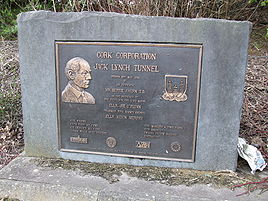 Following Lynch's retirement from politics the offers from various companies flooded in. He became a director on the boards of a number of companies, including Irish Distillers
, Smurfit
and Hibernian Insurance. He also embarked on a good deal of foreign travel. He was conferred with the freedom of his own native Cork city
. He continued to speak on political issues, particularly in favour of Desmond O'Malley
at the time of his expulsion from Fianna Fáil. Lynch also declined to accept nominations to become President of Ireland
, a position he had little interest in. In 1992 he suffered a severe health set-back, and in 1993 suffered a stroke in which he nearly lost his sight. Following this he withdrew from public life, preferring to remain at his home with his wife Máirín where he continued to be dogged by ill-health.
He continued to be honoured by, among others, the Gaelic Athletic Association
and various other organisations. In 1999 the Jack Lynch Tunnel
under the river Lee was named by Cork Corporation in his honour. A plaque was also erected at his birthplace in Shandon. Lynch died in the Royal Hospital, Donnybrook
, Dublin on 20 October 1999 at the age of 82. He was honoured with a state funeral which was attended by the President of Ireland
Mary McAleese
, Taoiseach
Bertie Ahern
, former Taoisigh John Bruton
, Albert Reynolds
and Charles Haughey
, and various political persons from all parties. The coffin was then flown from Dublin to Cork where a procession through the streets of the city drew some of the biggest crowds in the city's history. Lynch's friend and political ally, Desmond O'Malley
, delivered the graveside oration, paying tribute to Lynch's sense of decency. He is buried in St Finbarr's Cemetery in Cork city.
." This praise did not come from Lynch's allies or even his own party, but from the former leader of Fine Gael
, Liam Cosgrave
. As a sportsman Lynch earned a reputation for decency and fair play, characteristics he brought to political life. It was for this that the man known as "the Real Taoiseach" or "the Reluctant Taoiseach", with his ever-present pipe and the soft Cork lilt in his voice will be remembered.
Taoiseach
The Taoiseach is the head of government or prime minister of Ireland. The Taoiseach is appointed by the President upon the nomination of Dáil Éireann, the lower house of the Oireachtas , and must, in order to remain in office, retain the support of a majority in the Dáil.The current Taoiseach is...
of Ireland
Republic of Ireland
Ireland , described as the Republic of Ireland , is a sovereign state in Europe occupying approximately five-sixths of the island of the same name. Its capital is Dublin. Ireland, which had a population of 4.58 million in 2011, is a constitutional republic governed as a parliamentary democracy,...
, serving two terms in office; from 1966 to 1973 and 1977 to 1979.
Lynch was first elected to Dáil Éireann
Dáil Éireann
Dáil Éireann is the lower house, but principal chamber, of the Oireachtas , which also includes the President of Ireland and Seanad Éireann . It is directly elected at least once in every five years under the system of proportional representation by means of the single transferable vote...
as a Teachta Dála
Teachta Dála
A Teachta Dála , usually abbreviated as TD in English, is a member of Dáil Éireann, the lower house of the Oireachtas . It is the equivalent of terms such as "Member of Parliament" or "deputy" used in other states. The official translation of the term is "Deputy to the Dáil", though a more literal...
(TD) for Cork in 1948, and was re-elected at each general election until his retirement in 1981. He previously served as Minister for Finance
Minister for Finance (Ireland)
The Minister for Finance is the title held by the Irish government minister responsible for all financial and monetary matters. The office-holder controls the Department of Finance and is considered one of the most important members of the Government of Ireland.The current Minister for Finance is...
(1965–1966), Minister for Industry and Commerce
Minister for Enterprise, Trade and Employment (Ireland)
The Minister for Jobs, Enterprise and Innovation is the senior minister at the Department of Jobs, Enterprise and Innovation in the Government of Ireland.The current Minister for Jobs, Enterprise and Innovation is Richard Bruton, TD...
(1959–1965), Minister for Education
Minister for Education and Science (Ireland)
The Minister for Education and Skills is the senior minister at the Department of Education and Skills in the Government of Ireland.The current Minister for Education and Skills is Ruairi Quinn, TD...
(1957–1959), Minister for the Gaeltacht
Minister for Community, Rural and Gaeltacht Affairs
The Minister for Children and Youth Affairs is a senior minister at the Department of Children and Youth Affairs in the Government of Ireland.The current Minister for Children and Youth Affairs is Frances Fitzgerald, TD.-Overview:...
(1957) and as a Parliamentary Secretary
Minister of State (Ireland)
A Minister of State in Ireland is of non-Cabinet rank, attached to one or more Departments of State of the Government of Ireland....
. He was the third leader of Fianna Fáil
Fianna Fáil
Fianna Fáil – The Republican Party , more commonly known as Fianna Fáil is a centrist political party in the Republic of Ireland, founded on 23 March 1926. Fianna Fáil's name is traditionally translated into English as Soldiers of Destiny, although a more accurate rendition would be Warriors of Fál...
from 1966 until 1979, succeeding the hugely influential Seán Lemass
Seán Lemass
Seán Francis Lemass was one of the most prominent Irish politicians of the 20th century. He served as Taoiseach from 1959 until 1966....
. Lynch was the last Fianna Fáil leader to secure (in 1977) an overall majority in the Dáil.
Prior to his political career Lynch had a successful sporting career as a dual player
Dual player
Dual player or dual star is a term used in Gaelic games to describe a player who plays both Men's Gaelic football and Hurling or Ladies' Gaelic football and Camogie. The player doesn't necessarily have to play at the same standard in both sports...
of Gaelic games
Gaelic games
Gaelic games are sports played in Ireland under the auspices of the Gaelic Athletic Association. The two main games are Gaelic football and hurling...
. He played hurling
Hurling
Hurling is an outdoor team game of ancient Gaelic origin, administered by the Gaelic Athletic Association, and played with sticks called hurleys and a ball called a sliotar. Hurling is the national game of Ireland. The game has prehistoric origins, has been played for at least 3,000 years, and...
with his local club Glen Rovers
Glen Rovers GAA
Glen Rovers is a Cork-based Gaelic Athletic Association club based in the Ballyvolane and Blackpool areas of Cork city, Ireland. The club was founded in 1916 and is primarily concerned with the game of hurling.-Colours:...
and with the Cork senior inter-county team from 1936 until 1950. Lynch also played Gaelic football
Gaelic football
Gaelic football , commonly referred to as "football" or "Gaelic", or "Gah" is a form of football played mainly in Ireland...
with his local club St. Nicholas'
St. Nicholas' GAA
St. Nicholas’ Gaelic Football Club is a Cork-based Gaelic Athletic Association club based in the Ballyvolane and Blackpool areas of Cork city, Ireland. The club was founded in 1901 and is solely concerned with the game of Gaelic football. St...
and with the Cork senior inter-county team from 1936 until 1946. He is widely regarded as one of the greatest dual players of all-time.
In a senior inter-county hurling career that lasted for fourteen years he won five All-Ireland
All-Ireland Senior Hurling Championship
The GAA Hurling All-Ireland Senior Championship is an annual hurling competition organised by the Gaelic Athletic Association since 1887 for the top hurling teams in Ireland....
titles, seven Munster
Munster Senior Hurling Championship
The Munster GAA Hurling Championship is an annual hurling competition organised by the Gaelic Athletic Association since 1888 for the top hurling teams in the province of Munster in Ireland....
titles, three National Hurling League
National Hurling League
The National Hurling League is an annual hurling competition between the county teams of Ireland. Contested by 35 teams , it operates on a system of promotion and relegation between four different divisions, with Division One...
titles and seven Railway Cup
Interprovincial Championship
The Interprovincial Championship or Railway Cup is the name of two annual Gaelic football and hurling competetitions held between the provinces of Ireland. The Munster, Leinster, Connacht and Ulster teams are composed of the best players from the various counties in the province...
titles. In a senior inter-county football career that lasted for ten years Lynch won one All-Ireland
All-Ireland Senior Football Championship
The All-Ireland Senior Football Championship, the premier competition in Gaelic football, is a series of games organised by the Gaelic Athletic Association and played during the summer and early autumn...
title, two Munster
Munster Senior Football Championship
The Munster Senior Football Championship is the premier "knockout" competition in the game of football played in the province of Munster in Ireland. The series of games are organised by the Munster Council and are played during the summer months...
titles and one Railway Cup title. Lynch was later named at midfield on the GAA Hurling Team of the Century
GAA Hurling Team of the Century
The Hurling Team of the Century was chosen as part of the Gaelic Athletic Association's centenary year celebrations in 1984 to comprise, as a fifteen-member side divided as one goalkeeper, three half-backs, two midfielders, three half-forwardss and three full-forwards, the best hurling players of...
and the GAA Hurling Team of the Millennium
GAA Hurling Team of the Millennium
The GAA Hurling Team of the Millennium was announced by GAA President Seán McCague at a special dinner at Croke Park on 24 July 2000. The initiative was sponsored by An Post who issued special commemorative stamps of the Millennium team members. The team was chosen to comprise, as a...
Early and private life
John Mary Lynch was born on 15 August 1917, just yards from the famous Shandon bellsShandon, Cork
Shandon is a district in Cork city noted for The Bells of Shandon, a song celebrating the bells of the Church of St Anne written by Francis Sylvester Mahony under the pen name of "Father Prout".-People associated with Shandon:* John Arnott, 1st...
and St. Anne's in Cork City
Cork (city)
Cork is the second largest city in the Republic of Ireland and the island of Ireland's third most populous city. It is the principal city and administrative centre of County Cork and the largest city in the province of Munster. Cork has a population of 119,418, while the addition of the suburban...
. The youngest of five boys, with two girls born after him, Jack, as he was known, was generally regarded as the "wild boy" of the family. He was educated at St. Vincent's Convent on Peacock Lane, and later at the famous "North Mon", the North Monastery
The North Monastery
The North Monastery is a collection of primary, secondary and a Gaelcholáiste schools located at Our Lady's Mount, Cork City, Republic of Ireland.-History:...
Christian Brothers
Congregation of Christian Brothers
The Congregation of Christian Brothers is a worldwide religious community within the Catholic Church, founded by Blessed Edmund Rice. The Christian Brothers, as they are commonly known, chiefly work for the evangelisation and education of youth, but are involved in many ministries, especially with...
School. When Lynch was just thirteen years old his mother died suddenly. Lynch, who had been particularly close to his mother, was deeply affected by her death. His aunt, who herself had a family of six, stepped in to look after the family in this time of great upheaval for them. Lynch sat his Leaving Certificate
Leaving Certificate
The Leaving Certificate Examinations , commonly referred to as the Leaving Cert is the final examination in the Irish secondary school system. It takes a minimum of two years preparation, but an optional Transition Year means that for those students it takes place three years after the Junior...
in 1936, after which he moved to Dublin and worked with the Dublin District Milk Board, before returning to Cork to take up a position in the Circuit Court Office.
Lynch began working at the Cork Circuit Court as a clerk while still only nineteen years old. His work in the court ignited his interest in law and in 1941 he began a night course at University College Cork studying law. After two years in UCC he moved to Dublin to complete his studies at King's Inns
King's Inns
The Honorable Society of King's Inns , is the institution which controls the entry of barristers-at-law into the justice system of Ireland...
. While continuing his studies he started work with the Department of Justice. In 1945 Lynch was called to the Bar and had to decide whether to remain in his Civil Service job or practice as a barrister. Lynch made the decision (literally on the toss of a coin) to move back to Cork and began a private practice on the Cork Circuit.
It was in 1943, while on holidays in Glengariff, West Cork, that Lynch met his future wife, Máirín O'Connor, the daughter of a Dublin judge. Lynch was to be her first and only boyfriend, and the couple were married three years later on 10 August 1946. Although she was apprehensive about her husband's decision to become active in politics, to become a Minister and even to become Taoiseach
Taoiseach
The Taoiseach is the head of government or prime minister of Ireland. The Taoiseach is appointed by the President upon the nomination of Dáil Éireann, the lower house of the Oireachtas , and must, in order to remain in office, retain the support of a majority in the Dáil.The current Taoiseach is...
, she stood by him through it all and helped him make the tough decisions that would affect Lynch's life and her own. One story exists where Lynch, in spite of tremendous pressure from Seán Lemass and the entire Fianna Fáil
Fianna Fáil
Fianna Fáil – The Republican Party , more commonly known as Fianna Fáil is a centrist political party in the Republic of Ireland, founded on 23 March 1926. Fianna Fáil's name is traditionally translated into English as Soldiers of Destiny, although a more accurate rendition would be Warriors of Fál...
party to stand for the leadership, only accepted the nomination after Máirín had agreed. The fact that the couple didn't have any children allowed Lynch to embark on a political career, without having to worry about his commitment to the family. However, he remained totally devoted to Máirín throughout his, and she became just as easily recognisable as her husband.
Sporting life
From an early age, Lynch showed an enormous interest and great accomplishment as a sportsman. Rugby unionRugby union
Rugby union, often simply referred to as rugby, is a full contact team sport which originated in England in the early 19th century. One of the two codes of rugby football, it is based on running with the ball in hand...
, soccer
Football (soccer)
Association football, more commonly known as football or soccer, is a sport played between two teams of eleven players with a spherical ball...
, swimming and handball
Gaelic handball
Gaelic handball is a sport similar to Basque pelota, racquetball, squash and American handball . It is one of the four Gaelic games organised by the Gaelic Athletic Association...
were all favourite pastimes for Lynch, however it was the sports of Gaelic football
Gaelic football
Gaelic football , commonly referred to as "football" or "Gaelic", or "Gah" is a form of football played mainly in Ireland...
and hurling
Hurling
Hurling is an outdoor team game of ancient Gaelic origin, administered by the Gaelic Athletic Association, and played with sticks called hurleys and a ball called a sliotar. Hurling is the national game of Ireland. The game has prehistoric origins, has been played for at least 3,000 years, and...
where Lynch showed particular flair.
Club
Lynch played his club hurlingHurling
Hurling is an outdoor team game of ancient Gaelic origin, administered by the Gaelic Athletic Association, and played with sticks called hurleys and a ball called a sliotar. Hurling is the national game of Ireland. The game has prehistoric origins, has been played for at least 3,000 years, and...
with the famous Glen Rovers
Glen Rovers GAA
Glen Rovers is a Cork-based Gaelic Athletic Association club based in the Ballyvolane and Blackpool areas of Cork city, Ireland. The club was founded in 1916 and is primarily concerned with the game of hurling.-Colours:...
club in the Blackpool area of Cork city. He enjoyed much success at underage levels, winning back-to-back minor county championship titles in 1933 and in 1934 as captain. That same year Lynch won his first senior county hurling championship
Cork Senior Hurling Championship
The Evening Echo Cork County Senior Hurling Championship is an annual hurling competition organised by the Cork County Board of the Gaelic Athletic Association since 1887 for the top hurling teams in the county of Cork in Ireland....
with "the Glen." It was the first of a record-breaking eight county titles in-a-row for Glen Rovers and for Lynch, who served as captain of the side on a number of occasions. He finished off his club hurling career by winning a further three county medals in succession in 1948, 1949 and 1950.
Lynch also played club football
Gaelic football
Gaelic football , commonly referred to as "football" or "Gaelic", or "Gah" is a form of football played mainly in Ireland...
with "the Glen’s" sister club St. Nicholas. Once again he enjoyed a successful underage career, winning back-to-back county minor titles in 1932 and 1933. Lynch won an intermediate county title in 1937, before adding a senior county football championship medal to his collection in 1938. Lynch won his second county football medal with "St. Nick’s" in 1941. While working in Dublin in the mid-1940s Lynch played club football with the Civil Service GAA team. In 1944 he won a Dublin Senior Football Championship title, alongside fellow Munster native Mick Falvey
Mick Falvey
Mick Falvey is a former all-Ireland winning Gaelic football player with Dublin. Despite being a Kerry native of An Daingean, Falvey won the all-Ireland Senior football championship as a Dublin player in 1942 in a final with Galway...
.http://www.hoganstand.com/dublin/ArticleForm.aspx?ID=70528
Inter-county
By the late 1930s Lynch was a dual playerDual player
Dual player or dual star is a term used in Gaelic games to describe a player who plays both Men's Gaelic football and Hurling or Ladies' Gaelic football and Camogie. The player doesn't necessarily have to play at the same standard in both sports...
with the Cork senior hurling and senior football teams. In 1939 he became the only player, in history to captain both the inter-county football and hurling teams in the same year. That year he won his first Munster
Munster Senior Hurling Championship
The Munster GAA Hurling Championship is an annual hurling competition organised by the Gaelic Athletic Association since 1888 for the top hurling teams in the province of Munster in Ireland....
hurling title, however, Kilkenny
Kilkenny GAA
The Kilkenny County Board of the Gaelic Athletic Association is one of the 32 county boards of the GAA in Ireland and is responsible for Gaelic Games in County Kilkenny. The county board has its head office and main grounds at Nowlan Park and is also responsible for Kilkenny inter-county teams...
later accounted for Cork in the famous "thunder and lightning"
All-Ireland Senior Hurling Championship 1939
-Miscellaneous:* Kilkenny's victory over Cork in the All-Ireland final is the fourth time that Kilkenny have beaten their great rivals by just a single point. Previous one-point wins came in 1904, 1907 and 1912...
All-Ireland final. In 1939 and 1940 Lynch guided Cork to back-to-back National Hurling League
National Hurling League
The National Hurling League is an annual hurling competition between the county teams of Ireland. Contested by 35 teams , it operates on a system of promotion and relegation between four different divisions, with Division One...
titles, however, the 1941 championship was severely hampered due to an outbreak of foot-and-mouth disease. Cork only had to play two games to be crowned All-Ireland
All-Ireland Senior Hurling Championship
The GAA Hurling All-Ireland Senior Championship is an annual hurling competition organised by the Gaelic Athletic Association since 1887 for the top hurling teams in Ireland....
hurling champions, however, they lost the delayed Munster hurling final to Tipperary
Tipperary GAA
The Tipperary County Board of the Gaelic Athletic Association or C is one of over 30 regional executive boards throughout the world. These executive boards are known as County Boards even though some no longer correspond to the area under the jurisdiction of the counties from which their names...
.
In 1942 Lynch was selected as Cork hurling captain once again. That year he captured his second set of Munster and All-Ireland medals. 1943 proved to be a successful year for Lynch as he won a third Munster hurling medal and a first Munster
Munster Senior Football Championship
The Munster Senior Football Championship is the premier "knockout" competition in the game of football played in the province of Munster in Ireland. The series of games are organised by the Munster Council and are played during the summer months...
football medal. While the footballers were later defeated in the All-Ireland semi-final, Lynch’s hurling team went on to win a third All-Ireland title in-a-row. In 1944 Lynch captured his fourth Munster hurling title. Later that year Cork created a piece of sporting history by becoming the first team to win four All-Ireland hurling titles in-a-row. Lynch was one of the heroes of the team who played in all four finals.
In 1945 Cork surrendered their provincial hurling crown, however, Lynch, as a member of the Cork senior football team won his second Munster
Munster Senior Football Championship
The Munster Senior Football Championship is the premier "knockout" competition in the game of football played in the province of Munster in Ireland. The series of games are organised by the Munster Council and are played during the summer months...
football title. Cork later defeated Cavan
Cavan GAA
The Cavan County Board of the Gaelic Athletic Association or Cavan GAA is one of the 32 county boards of the GAA in Ireland, and is responsible for Gaelic games in County Cavan...
in the All-Ireland final, giving Lynch his first, and only, All-Ireland
All-Ireland Senior Football Championship
The All-Ireland Senior Football Championship, the premier competition in Gaelic football, is a series of games organised by the Gaelic Athletic Association and played during the summer and early autumn...
football medal. In 1946 the Cork hurlers returned to their winning ways and Lynch claimed a fifth provincial hurling title. A fifth All-Ireland hurling medal was later added to his collection following a defeat of old rivals Kilkenny I the final. On that September day in 1946 Lynch made Irish sporting history by becoming the first, and to date the only, player to win six consecutive senior All-Ireland medals (five in hurling and one in football).
Lynch captured a sixth Munster hurling medal in 1947 before going on to play in his seventh All-Ireland hurling final in less than a decade. The game itself against Kilkenny has often been described as the greatest All-Ireland final ever played, however, Lynch ended up on the losing side by a single point. There was some consolation at the start of 1948 as Lynch claimed another National Hurling League medal, however, Tipperary
Tipperary GAA
The Tipperary County Board of the Gaelic Athletic Association or C is one of over 30 regional executive boards throughout the world. These executive boards are known as County Boards even though some no longer correspond to the area under the jurisdiction of the counties from which their names...
quickly became the dominant force in the Munster Championship. Lynch retired from inter-county hurling in 1950. He had retired from inter-county football several years earlier.
Honours
Even at the height of his career, Lynch had come to be regarded as one of the all-time greats of Gaelic gamesGaelic games
Gaelic games are sports played in Ireland under the auspices of the Gaelic Athletic Association. The two main games are Gaelic football and hurling...
. His contribution to the game of hurling was first recognised when he was named as the "Hurling Captain of the Forties". In the centenary year of the Gaelic Athletic Association
Gaelic Athletic Association
The Gaelic Athletic Association is an amateur Irish and international cultural and sporting organisation focused primarily on promoting Gaelic games, which include the traditional Irish sports of hurling, camogie, Gaelic football, handball and rounders...
in 1984 Lynch was named on the "Hurling Team of the Century". At the special centenary All-Ireland final in Semple Stadium
Semple Stadium
Semple Stadium, located in Thurles, North Tipperary, Ireland, is the home of hurling for Tipperary GAA and for the province of Munster. It is the second largest stadium in Ireland with a capacity of 53,500....
he received one of the loudest cheers and rounds of applause when all the former All-Ireland winning hurling captains were introduced to the crowd. Shortly after his death in 1999 Lynch’s reputation as one of the true greats of the game was further cemented when he was named on the "Hurling Team of the Millennium".
In 1981 he won an All-Time All-Star Award
GAA All-Time All-Star Award (Hurling)
The GAA All-Time All-Star Award in Hurling was an award given on an annual basis to a sportsperson who had made a long-running and considerable contribution to the sport of hurling in Ireland...
since there was no All-Star Award's during his playing days.
Early career
In 1946 Lynch had his first brush with politics when he was asked by his local Fianna FáilFianna Fáil
Fianna Fáil – The Republican Party , more commonly known as Fianna Fáil is a centrist political party in the Republic of Ireland, founded on 23 March 1926. Fianna Fáil's name is traditionally translated into English as Soldiers of Destiny, although a more accurate rendition would be Warriors of Fál...
cumann
Cumann
A cumann is the lowest local unit or branch of a number of Irish political parties. The term cumann may also be used to describe a non-political association....
to stand for the Dáil in a by-election. He declined on this occasion, due to his lack of political experience, but indicated that he would be interested in standing in the next general election. In 1947 Lynch refused a similar offer to stand by the new political party Clann na Poblachta
Clann na Poblachta
Clann na Poblachta , abbreviated CnaP, was an Irish republican and social democratic political party founded by former Irish Republican Army Chief of Staff Seán MacBride in 1946.-Foundation:...
. A general election was eventually called for February 1948
Irish general election, 1948
The Irish general election of 1948 was held on 4 February 1948. The 147 newly elected members of the 13th Dáil assembled on 18 February when the First Inter-Party government in the history of the Irish state was appointed....
, Lynch topped the poll for the Cork Borough
Cork Borough (Dáil Éireann constituency)
Cork Borough was a parliamentary constituency represented in Dáil Éireann, the lower house of the Irish parliament or Oireachtas from 1921 to 1969...
constituency and became a Fianna Fáil TD in the 13th Dáil. Although Fianna Fáil lost the election and were out of power for the first time in sixteen years, Lynch became speech writer and research assistant for the party leader, Éamon de Valera
Éamon de Valera
Éamon de Valera was one of the dominant political figures in twentieth century Ireland, serving as head of government of the Irish Free State and head of government and head of state of Ireland...
.
In 1951 Fianna Fáil were back in power and Lynch was appointed Parliamentary Secretary
Parliamentary Secretary
A Parliamentary Secretary is a member of a Parliament in the Westminster system who assists a more senior minister with his or her duties.In the parliamentary systems of several Commonwealth countries, such as the United Kingdom, Canada and Australia, it is customary for the prime minister to...
to the Government, with special responsibility for Gaeltacht
Gaeltacht
is the Irish language word meaning an Irish-speaking region. In Ireland, the Gaeltacht, or an Ghaeltacht, refers individually to any, or collectively to all, of the districts where the government recognises that the Irish language is the predominant language, that is, the vernacular spoken at home...
areas. The party was out of power again between 1954 and 1957. During this period Lynch served as Fianna Fáil spokesperson on the Gaeltacht. After the 1957 general election
Irish general election, 1957
The Irish general election of 1957 was held on 5 March 1957, just over three weeks after the dissolution of the Dáil on 4 February. The newly elected members of the 16th Dáil assembled at Leinster House on 20 March when the new Taoiseach and government were appointed.The general election took place...
Fianna Fáil returned to power and de Valera headed his last government. Lynch, at 39, became the youngest member to join the government, as Minister for Education
Minister for Education and Science (Ireland)
The Minister for Education and Skills is the senior minister at the Department of Education and Skills in the Government of Ireland.The current Minister for Education and Skills is Ruairi Quinn, TD...
, as well as holding the Gaeltacht portfolio for a short while. Lynch introduced innovative legislation, such as:
- raising the school leaving age
- reducing school class sizes
- removing a ban on married women working as teachers.
- allowing the Jewish skull cap to be worn but only from the age of 12
Minister for Industry and Commerce
In 1959 de Valera was elected President of IrelandPresident of Ireland
The President of Ireland is the head of state of Ireland. The President is usually directly elected by the people for seven years, and can be elected for a maximum of two terms. The presidency is largely a ceremonial office, but the President does exercise certain limited powers with absolute...
and Seán Lemass
Seán Lemass
Seán Francis Lemass was one of the most prominent Irish politicians of the 20th century. He served as Taoiseach from 1959 until 1966....
became the new Taoiseach
Taoiseach
The Taoiseach is the head of government or prime minister of Ireland. The Taoiseach is appointed by the President upon the nomination of Dáil Éireann, the lower house of the Oireachtas , and must, in order to remain in office, retain the support of a majority in the Dáil.The current Taoiseach is...
and Fianna Fáil leader. Lynch was promoted to Lemass' old portfolio as Minister for Industry and Commerce
Minister for Enterprise, Trade and Employment (Ireland)
The Minister for Jobs, Enterprise and Innovation is the senior minister at the Department of Jobs, Enterprise and Innovation in the Government of Ireland.The current Minister for Jobs, Enterprise and Innovation is Richard Bruton, TD...
. Here he inherited the most dynamic department in the government, however, having replaced such a political giant, Lynch felt that his own scope for change was severely limited. Lynch was described as not being the most innovative of ministers but was particularly attentive when it came to legislation and detail. It was in this department where Lynch worked closely with Lemass and T. K. Whitaker
T. K. Whitaker
T.K. "Ken" Whitaker is an Irish economist and former public servant, credited with a pivotal role in the economic development of Ireland...
in generating economic growth and implementing the Programme for Economic Expansion. He was also noted for his astuteness in solving several industrial disputes during his tenure at the Department.
Minister for Finance
In 1965 Lemass was once again re-elected Taoiseach. The big change was the retirement of such political heavyweights as James Ryan and Seán MacEnteeSeán MacEntee
Seán MacEntee was an Irish politician. In a career that spanned over forty years as a Fianna Fáil Teachta Dála, MacEntee was one of the most important figures in post-independence Ireland. He served in the governments of Éamon de Valera and Seán Lemass in a range of ministerial positions,...
, with Lynch taking over from the former as Minister for Finance
Minister for Finance (Ireland)
The Minister for Finance is the title held by the Irish government minister responsible for all financial and monetary matters. The office-holder controls the Department of Finance and is considered one of the most important members of the Government of Ireland.The current Minister for Finance is...
. This appointment was particularly significant because Lemass was coming to the end of his premiership and wanted to prepare a successor. As a result Lynch took charge of the second most important position in the Government, gaining widespread experience in a number of affairs, and accompanying Lemass to London to sign one of the most important trade agreements between Ireland
Republic of Ireland
Ireland , described as the Republic of Ireland , is a sovereign state in Europe occupying approximately five-sixths of the island of the same name. Its capital is Dublin. Ireland, which had a population of 4.58 million in 2011, is a constitutional republic governed as a parliamentary democracy,...
and the United Kingdom. One occasion in which Lynch's authority was seen to be undermined as Minister for Finance was when the Minister for Education, Donogh O'Malley, announced that the government would provide free secondary school education for all. This proposal had not been discussed at Cabinet level as would be required to fund such a service. It subsequently transpired that Lemass had previously agreed the decision without cabinet discussion as was required.
Lemass resignation
Lemass retired in 1966 after 7 years in the position and a leadership race (the first contested race in the history of the party) threatened to tear Fianna Fáil apart. Lynch, and another favourite of Lemass's, Patrick HilleryPatrick Hillery
Patrick John "Paddy" Hillery was an Irish politician and the sixth President of Ireland from 1976 until 1990. First elected at the 1951 general election as a Fianna Fáil Teachta Dála for Clare, he remained in Dáil Éireann until 1973...
, ruled themselves out of the leadership election
Fianna Fáil leadership election, 1966
The 1966 Fianna Fáil leadership election in the Republic of Ireland began in October 1966 following the decision of Seán Lemass to resign as party leader and Taoiseach. Lemass had occupied both posts for over seven years and, while there was no pressure on him to resign, he felt that the time was...
from the very beginning, however, other candidates such as Charles Haughey
Charles Haughey
Charles James "Charlie" Haughey was Taoiseach of Ireland, serving three terms in office . He was also the fourth leader of Fianna Fáil...
, George Colley
George Colley
George Colley was an Irish Fianna Fáil politician, who served in a wide number of Cabinet poistions, most notably as Minister for Finance and Tánaiste. He was twice defeated for the leadership of Fianna Fáil in 1966 and 1979.-Early life:Colley was born in Fairview, on the northside of Dublin...
and Neil Blaney
Neil Blaney
Neil Terence Columba Blaney was a senior Irish politician. He was first elected to Dáil Éireann in 1948 as a Fianna Fáil Teachta Dála representing Donegal East. Blaney served as Minister for Posts and Telegraphs , Minister for Local Government and Minister for Agriculture and Fisheries...
threw their hats into the ring immediately. None of the candidates that were being offered to the party seemed particularly appealing and Lemass' made one last attempt to coax either Hillery or Lynch to join the race as a compromise candidate. Hillery remained adamant that he did not want the leadership and eventually Lynch allowed his name to go forward. Upon hearing this Haughey and Blaney, the latter having never really entered the race in the first place, withdrew and announced their support for Lynch. Colley refused to withdraw and when it was put to a ballot Lynch comfortably defeated him by 52 votes to 19. Lynch was thus elected Taoiseach
Taoiseach
The Taoiseach is the head of government or prime minister of Ireland. The Taoiseach is appointed by the President upon the nomination of Dáil Éireann, the lower house of the Oireachtas , and must, in order to remain in office, retain the support of a majority in the Dáil.The current Taoiseach is...
and leader of Fianna Fáil on 10 November 1966.
The Lynch succession however, was not a smooth one. Three men had openly expressed ambitions to be Taoiseach, Haughey, Blaney and Colley. Three other cabinet ministers had also contemplated running - Brian Lenihan, Kevin Boland
Kevin Boland
Kevin Boland , was a senior Irish politician. He was first elected to Dáil Éireann in 1957 as a Fianna Fáil TD. He served as Minister for Defence , Minister for Social Welfare and Minister for Local Government...
and Donogh O'Malley.
Taoiseach 1966–1973
Because Lynch was elected as somewhat of a "compromise candidate" it appeared to many that he would only remain as an interim TaoiseachTaoiseach
The Taoiseach is the head of government or prime minister of Ireland. The Taoiseach is appointed by the President upon the nomination of Dáil Éireann, the lower house of the Oireachtas , and must, in order to remain in office, retain the support of a majority in the Dáil.The current Taoiseach is...
. This thought could not be further from his mind, and he outlined this intentions shortly after coming to power. Lynch took particular exception to the title "Interim Taoiseach" or "Reluctant Taoiseach". He had no intention of stepping aside after a few years in favour of one of the other candidates who had been unsuccessful against him in 1966. He was however reluctant in naming his first Cabinet. He believed that the existing members of the government owed their positions to Lemass, and so he retained the entire Cabinet, albeit with some members moving to different departments. Lynch adopted a chairman-like approach to government allowing his Ministers a free run in their respective Departments. He continued the modernising and liberal approach that Lemass had begun, albeit at a slower pace. Lynch was lucky in the timing of Lemass's resignation. The new Taoiseach now had almost a full Dáil term before the next general election.
PR referendum
With Fianna FáilFianna Fáil
Fianna Fáil – The Republican Party , more commonly known as Fianna Fáil is a centrist political party in the Republic of Ireland, founded on 23 March 1926. Fianna Fáil's name is traditionally translated into English as Soldiers of Destiny, although a more accurate rendition would be Warriors of Fál...
having been in power for eleven years by 1968, Lynch was persuaded once again to make an attempt to abolish the proportional representation
Proportional representation
Proportional representation is a concept in voting systems used to elect an assembly or council. PR means that the number of seats won by a party or group of candidates is proportionate to the number of votes received. For example, under a PR voting system if 30% of voters support a particular...
method of voting in general elections in favour of a first-past-the-post system like in the United Kingdom. However, the campaign generated little enthusiasm, even within Fianna Fáil. Fine Gael
Fine Gael
Fine Gael is a centre-right to centrist political party in the Republic of Ireland. It is the single largest party in Ireland in the Oireachtas, in local government, and in terms of Members of the European Parliament. The party has a membership of over 35,000...
and the Labour Party
Labour Party (Ireland)
The Labour Party is a social-democratic political party in the Republic of Ireland. The Labour Party was founded in 1912 in Clonmel, County Tipperary, by James Connolly, James Larkin and William X. O'Brien as the political wing of the Irish Trade Union Congress. Unlike the other main Irish...
opposed the referendum when it transpired that Fianna Fáil could win up to 80 or 90 seats in a 144 seat Dáil if the motion was passed. Much like 1959, when the party tried to make the same referendum, the electorate believed this to be an attempt to institutionalise Fianna Fáil in power, and thus they rejected the motion put to them. This cast doubts on Lynch and his ability to win a general election, however, he proved his critics wrong in the 1969 general election
Irish general election, 1969
The Irish general election of 1969 was held on 18 June 1969. The newly elected members of the 19th Dáil assembled at Leinster House on 2 July when the new Taoiseach and government were appointed...
when Fianna Fáil won its first overall majority since Éamon de Valera in 1957, and Lynch proved himself to be a huge electoral asset for the party.
Northern Ireland
Northern IrelandNorthern Ireland
Northern Ireland is one of the four countries of the United Kingdom. Situated in the north-east of the island of Ireland, it shares a border with the Republic of Ireland to the south and west...
, and Lynch's attitude to the situation which was about to develop there would come to define his first tenure as Taoiseach. Lynch continued Lemass's approach in regard to relations with Northern Ireland. Better relations had been forged between the two parts of Ireland with co-operation between Ministers on several practical issues such as trade, agriculture and tourism. In December 1967 Lynch travelled to Stormont
Parliament of Northern Ireland
The Parliament of Northern Ireland was the home rule legislature of Northern Ireland, created under the Government of Ireland Act 1920, which sat from 7 June 1921 to 30 March 1972, when it was suspended...
for his first meeting with the Prime Minister
Prime Minister of Northern Ireland
The Prime Minister of Northern Ireland was the de facto head of the Government of Northern Ireland. No such office was provided for in the Government of Ireland Act 1920. However the Lord Lieutenant, as with Governors-General in other Westminster Systems such as in Canada, chose to appoint someone...
Terence O'Neill
Terence O'Neill
Terence Marne O'Neill, Baron O'Neill of the Maine, PC was the fourth Prime Minister of Northern Ireland and leader of the Ulster Unionist Party...
, in the hope of forming even more links. On 8 January 1968 they met again in Dublin. However, the situation was already beginning to deteriorate in the North with civil unrest and the resignation of O'Neill to come.
Shortly after Lynch's election victory, tensions in Northern Ireland
Northern Ireland
Northern Ireland is one of the four countries of the United Kingdom. Situated in the north-east of the island of Ireland, it shares a border with the Republic of Ireland to the south and west...
finally spilled over and "the troubles" began. The sight of refugees from the North teeming across the border turned public opinion in the Republic. The Battle of the Bogside
Battle of the Bogside
The Battle of the Bogside was a very large communal riot that took place during 12–14 August 1969 in Derry, Northern Ireland. The fighting was between residents of the Bogside area and the Royal Ulster Constabulary .The rioting erupted after the RUC attempted to disperse Irish nationalists who...
in Derry
Derry
Derry or Londonderry is the second-biggest city in Northern Ireland and the fourth-biggest city on the island of Ireland. The name Derry is an anglicisation of the Irish name Doire or Doire Cholmcille meaning "oak-wood of Colmcille"...
between the Royal Ulster Constabulary
Royal Ulster Constabulary
The Royal Ulster Constabulary was the name of the police force in Northern Ireland from 1922 to 2000. Following the awarding of the George Cross in 2000, it was subsequently known as the Royal Ulster Constabulary GC. It was founded on 1 June 1922 out of the Royal Irish Constabulary...
and residents in August 1969 prompted Lynch on 13 August to make what some people consider one of the most important broadcasts to the nation on Irish television
RTE
RTÉ is the abbreviation for Raidió Teilifís Éireann, the public broadcasting service of the Republic of Ireland.RTE may also refer to:* Recep Tayyip Erdoğan, 25th Prime Minister of Turkey...
, commenting on the ever-increasingly violent situation. He said:
It is clear now that the present situation cannot be allowed to continue. It is evident also that the Stormont government is no longer in control of the situation. Indeed, the present situation is the inevitable outcome of the policies pursued for decades by successive Stormont governments. It is clear also that the Irish Government can no longer stand by and see innocent people injured and perhaps worse. It is obvious that the RUC is no longer accepted as an impartial police force. Neither would the employment of British troopsBritish ArmyThe British Army is the land warfare branch of Her Majesty's Armed Forces in the United Kingdom. It came into being with the unification of the Kingdom of England and Scotland into the Kingdom of Great Britain in 1707. The new British Army incorporated Regiments that had already existed in England...
be acceptable nor would they be likely to restore peaceful conditions, certainly not in the long term. The Irish GovernmentIrish GovernmentThe Government of Ireland is the cabinet that exercises executive authority in Ireland.-Members of the Government:Membership of the Government is regulated fundamentally by the Constitution of Ireland. The Government is headed by a prime minister called the Taoiseach...
have, therefore, requested the British Government to apply immediately to the United NationsUnited NationsThe United Nations is an international organization whose stated aims are facilitating cooperation in international law, international security, economic development, social progress, human rights, and achievement of world peace...
for the urgent dispatch of a Peace-Keeping Force to the Six Counties of Northern Ireland and have instructed the Permanent Representative to the United Nations to inform the Secretary General of this request. We have also asked the British Government to see to it that police attacks on the people of Derry should cease immediately.
Very many people have been injured and some of them seriously. We know that many of these do not wish to be treated in Six County hospitals. We have, therefore, directed the Irish ArmyIrish ArmyThe Irish Army, officially named simply the Army is the main branch of the Defence Forces of Ireland. Approximately 8,500 men and women serve in the Irish Army, divided into three infantry Brigades...
authorities to have field hospitals established in County DonegalCounty DonegalCounty Donegal is a county in Ireland. It is part of the Border Region and is also located in the province of Ulster. It is named after the town of Donegal. Donegal County Council is the local authority for the county...
adjacent to Derry and at other points along the Border where they may be necessary.
Recognising, however, that the re-unification of the national territory can provide the only permanent solution for the problem, it is our intention to request the British Government to enter into early negotiations with the Irish Government to review the present constitutional position of the Six Counties of Northern Ireland.
Lynch's statement that the Irish Government could "no longer stand by" was interpreted by Unionists
Unionism in Ireland
Unionism in Ireland is an ideology that favours the continuation of some form of political union between the islands of Ireland and Great Britain...
in Northern Ireland as hinting at military intervention (and was misquoted as a promise not to "stand idly by"). A minority of ministers - two, according to Desmond O'Malley
Desmond O'Malley
Desmond Joseph "Des" O'Malley is a former Irish politician.Born in Limerick, O'Malley was raised in a local political dynasty that had a strong association with Fianna Fáil. Elected to Dáil Éireann in 1968, he quickly became a trusted confidante of Taoiseach Jack Lynch...
- would have favoured such a course, but the Irish Army was completely unprepared for an operation of this kind. The majority of the cabinet opposed military intervention, and Lynch took no such action, though he commissioned a study named Exercise Armageddon
Exercise Armageddon
Exercise Armageddon, also described as Operation Armageddon, were plans by the Republic of Ireland drafted in September–October 1969 that envisaged a military invasion and guerilla operations in Northern Ireland during The Troubles, in order to protect the Catholic communities during the Battle of...
. As the violence continued, the Minister for External Affairs, Patrick Hillery
Patrick Hillery
Patrick John "Paddy" Hillery was an Irish politician and the sixth President of Ireland from 1976 until 1990. First elected at the 1951 general election as a Fianna Fáil Teachta Dála for Clare, he remained in Dáil Éireann until 1973...
, met with the British Foreign Secretary and also went to the United Nations
United Nations
The United Nations is an international organization whose stated aims are facilitating cooperation in international law, international security, economic development, social progress, human rights, and achievement of world peace...
in a plea to send a peacekeeping
Peacekeeping
Peacekeeping is an activity that aims to create the conditions for lasting peace. It is distinguished from both peacebuilding and peacemaking....
force to the North and to highlight the Irish government's case. However, little else was achieved from these meetings other than media coverage of the activities in the north. The situation in Northern Ireland continued to deteriorate during Lynch's first term. Bloody Sunday
Bloody Sunday (1972)
Bloody Sunday —sometimes called the Bogside Massacre—was an incident on 30 January 1972 in the Bogside area of Derry, Northern Ireland, in which twenty-six unarmed civil rights protesters and bystanders were shot by soldiers of the British Army...
(30 January 1972), saw the killing of 14 unarmed civilians by British paratroopers and a backlash of anti-British feeling in all parts of Ireland, including the burning of the British embassy in Dublin.
Arms crisis
Lynch's attitude towards the Northern Ireland question and the application of Fianna Fáil party policy to it would eventually come to define his first period as Taoiseach, and would once again show his critics that far from being "reluctant" he was in fact a strong and decisive leader. His strong leadership skills and determination were clearly evident in 1970 when allegations (later disproved in court, though questions since have emerged challenging that verdict in one case), that the hardline republican Minister for Agriculture, Neil BlaneyNeil Blaney
Neil Terence Columba Blaney was a senior Irish politician. He was first elected to Dáil Éireann in 1948 as a Fianna Fáil Teachta Dála representing Donegal East. Blaney served as Minister for Posts and Telegraphs , Minister for Local Government and Minister for Agriculture and Fisheries...
, and the Minister for Finance, Charles Haughey
Charles Haughey
Charles James "Charlie" Haughey was Taoiseach of Ireland, serving three terms in office . He was also the fourth leader of Fianna Fáil...
, were involved in an attempt to use £100,000 in aid money to import arms for the Provisional IRA. Both ministers were sacked after some initial procrastination on Lynch's part, his innocent Minister for Justice, Micheál Ó Móráin
Micheál Ó Móráin
Micheál Ó Móráin was an Irish Fianna Fáil politician, who served in a wide number of Cabinet minister from 1957 until 1970, most notably as Minister for Justice and Minister for the Gaeltacht....
, retired the day before and a fourth minister, Kevin Boland
Kevin Boland
Kevin Boland , was a senior Irish politician. He was first elected to Dáil Éireann in 1957 as a Fianna Fáil TD. He served as Minister for Defence , Minister for Social Welfare and Minister for Local Government...
and his Parliamentary Secretary, resigned in sympathy with Haughey and Blaney. The whole affair, which became known as the Arms Crisis
Arms Crisis
The Arms Crisis or Arms Trial was a political scandal in the Republic of Ireland in 1970, when two cabinet ministers — Charles Haughey and Neil Blaney — were sacked for allegedly attempting to illegally import arms for the Irish Republican Army in Northern Ireland.-Background:The...
, allowed Lynch to stamp his control on his government, but would eventually lead to deep division in Fianna Fáil for many decades to come. It is now believed that Lynch was aware of these activities, and acted only when his hand was forced.
EEC membership
One of the high points of Lynch's first term as Taoiseach, and possibly one of the most important events in modern Irish history, was IrelandRepublic of Ireland
Ireland , described as the Republic of Ireland , is a sovereign state in Europe occupying approximately five-sixths of the island of the same name. Its capital is Dublin. Ireland, which had a population of 4.58 million in 2011, is a constitutional republic governed as a parliamentary democracy,...
's entry into the European Economic Community
European Economic Community
The European Economic Community The European Economic Community (EEC) The European Economic Community (EEC) (also known as the Common Market in the English-speaking world, renamed the European Community (EC) in 1993The information in this article primarily covers the EEC's time as an independent...
. Lynch personally steered the application for membership and the acceptance of membership by a five to one majority in a referendum shows that the vast majority of the country was behind him. Ireland officially joined, along with its nearest neighbour, the United Kingdom and Denmark, on 1 January 1973. Patrick Hillery
Patrick Hillery
Patrick John "Paddy" Hillery was an Irish politician and the sixth President of Ireland from 1976 until 1990. First elected at the 1951 general election as a Fianna Fáil Teachta Dála for Clare, he remained in Dáil Éireann until 1973...
became Ireland's first European Commissioner
European Commissioner
A European Commissioner is a member of the 27-member European Commission. Each Member within the college holds a specific portfolio and are led by the President of the European Commission...
. In appointing Hillery Europe was gaining one of Ireland's most experienced politicians, while on the other hand Lynch was losing one of his staunchest allies. The admittance of Ireland was the culmination of a decade of preparation which was begun by Lynch and his predecessor, Seán Lemass, who unfortunately did not live to see what would have been his greatest achievement.
Opposition 1973–1977
Lynch's government was expected to collapse following the Arms Crisis; however, it survived until 1973. Lynch had wanted to call the general election for the end of 1972, however, events had conspired against him and the date was set for February, 1973. Lynch's government was defeated by the National CoalitionGovernment of the 20th Dáil
The 20th Dáil was elected at the 1973 general election on 28 February 1973 and first met on 14 March when the 14th Government of Ireland was appointed...
of Fine Gael
Fine Gael
Fine Gael is a centre-right to centrist political party in the Republic of Ireland. It is the single largest party in Ireland in the Oireachtas, in local government, and in terms of Members of the European Parliament. The party has a membership of over 35,000...
and the Labour Party
Labour Party (Ireland)
The Labour Party is a social-democratic political party in the Republic of Ireland. The Labour Party was founded in 1912 in Clonmel, County Tipperary, by James Connolly, James Larkin and William X. O'Brien as the political wing of the Irish Trade Union Congress. Unlike the other main Irish...
. Liam Cosgrave
Liam Cosgrave
Liam Cosgrave is an Irish Fine Gael politician who served as Taoiseach and as Leader of Fine Gael . He was a Teachta Dála from 1943 to 1981....
was elected Taoiseach and Lynch found himself on the opposition benches for the first time in sixteen years. Lynch's popularity remained steadfast, so much so that during his tenure as Leader of the Opposition he was frequently referred to as "the Real Taoiseach". Lynch had some success while out of power. He had finally expelled all the elements of the party which threatened his leadership and the unification of the party. Lynch was now in complete control. Fianna Fáil began its electoral comeback by securing the election of its candidate, Erskine H. Childers
Erskine Hamilton Childers
Erskine Hamilton Childers served as the fourth President of Ireland from 1973 until his death in 1974. He was a Teachta Dála from 1938 until 1973...
, in becoming President of Ireland
President of Ireland
The President of Ireland is the head of state of Ireland. The President is usually directly elected by the people for seven years, and can be elected for a maximum of two terms. The presidency is largely a ceremonial office, but the President does exercise certain limited powers with absolute...
in 1973, defeating the odds-on favourite, the National Coalition's Tom O'Higgins
Tom O'Higgins
Thomas Francis O'Higgins was an Irish Fine Gael politician, a barrister and a judge.Tom O'Higgins was born in Cork in 1916. He was the son of Thomas F. O'Higgins and the nephew of Kevin O'Higgins...
.
In 1975 Lynch allowed Charles Haughey
Charles Haughey
Charles James "Charlie" Haughey was Taoiseach of Ireland, serving three terms in office . He was also the fourth leader of Fianna Fáil...
to return to his Front Bench as Spokesperson on Health. There was much media criticism of Lynch for this move. In the same year the Foreign Affairs Spokesperson, Michael O'Kennedy
Michael O'Kennedy
Michael O'Kennedy is a former Irish Fianna Fáil politician, who served in a range of cabinet positions, most notably as Minister for Foreign Affairs, Minister for Finance and Irish European Commissioner.-Early life:...
, published a Fianna Fáil policy document calling for a withdrawal of British forces from Northern Ireland
Northern Ireland
Northern Ireland is one of the four countries of the United Kingdom. Situated in the north-east of the island of Ireland, it shares a border with the Republic of Ireland to the south and west...
. The document was an echo of Fianna Fáil's republican origins, and although Lynch was not happy with it, he did not stop it.
Controversy continued to dog the National Coalition when the President of Ireland
President of Ireland
The President of Ireland is the head of state of Ireland. The President is usually directly elected by the people for seven years, and can be elected for a maximum of two terms. The presidency is largely a ceremonial office, but the President does exercise certain limited powers with absolute...
, Cearbhall Ó Dálaigh
Cearbhall Ó Dálaigh
Cearbhall Ó Dálaigh served as the fifth President of Ireland, from 1974 to 1976. He resigned in 1976 after a clash with the government. He also had a notable legal career, including serving as Chief Justice of Ireland.- Early life :Cearbhall Ó Dálaigh, one of four children, was born on 12 February...
, resigned in 1976 after being called a "thundering disgrace" by the Minister for Defence, Paddy Donegan
Paddy Donegan
Patrick Sarsfield "Paddy" Donegan was an Irish Fine Gael Party politician.He was educated at a Christian Brothers School in Drogheda and at the Vincentian Castleknock College. Donegan was first elected as a Fine Gael Teachta Dála at the 1954 general election. He lost his seat at the following...
. Liam Cosgrave
Liam Cosgrave
Liam Cosgrave is an Irish Fine Gael politician who served as Taoiseach and as Leader of Fine Gael . He was a Teachta Dála from 1943 to 1981....
refused to sack his Minister and the government's popularity took a downturn. A former Fianna Fáil cabinet minister and a political ally of Lynch, Patrick Hillery, was eventually nominated (without election) as Ó Dálaigh's successor and sixth President of Ireland
President of Ireland
The President of Ireland is the head of state of Ireland. The President is usually directly elected by the people for seven years, and can be elected for a maximum of two terms. The presidency is largely a ceremonial office, but the President does exercise certain limited powers with absolute...
.
In 1977 the government, although reasonably unpopular, felt sure of an election victory and June date for the poll was fixed. The National Coalition's spirits had been buoyed up by the actions of the Minister for Local Government, James Tully. In what became known as the Tullymander (a pun on the word gerrymander) he re-drew every constituency in Ireland (as he had authority to do), apparently favouring Fine Gael and Labour Party candidates. However, when the election took place the coalition was swept out of office by Fianna Fáil which won an unprecedented twenty seat Dáil majority and over 50% of the first preference votes. Lynch himself received the biggest personal vote in the state. Although the large parliamentary majority seemed to restore Lynch as an electoral asset, the fact that the party was returned with an enormous vote allowed Lynch to be undermined by many new TDs who were not loyal to Lynch and wanted him removed.
Taoiseach 1977–1979
Early on in his second term as TaoiseachTaoiseach
The Taoiseach is the head of government or prime minister of Ireland. The Taoiseach is appointed by the President upon the nomination of Dáil Éireann, the lower house of the Oireachtas , and must, in order to remain in office, retain the support of a majority in the Dáil.The current Taoiseach is...
, Lynch decided that he would not lead Fianna Fáil into another general election campaign. The date of January 1980 was in his mind as a retirement date, however nothing had been made definite. It was during this time, due to a combination of a large parliamentary majority and the search for a new leader, when party discipline began to break down.
The economy
In the party's election manifesto in 1977 Fianna Fáil promised a whole range of new economic measures. These measures included the abolition of car tax, rates on houses and a number of other vote-winning "sweeteners." A new Department of Economic Planning and Development was set up to kick-start Ireland's flagging economy and to implement these new measures. The government abolished domestic rates on houses and unemployment fell from 106,000 to 90,000 between 1977 and 1979, however other actions that were taken were not so productive. In 1978 the Irish economy recorded the biggest deficit for an advanced country at 17.6% deficit. The national debt increased by £2 billion in the same period, protest marches by PAYEPAYE
Pay as you earn or PAYE refers to a system of withholding of income tax from payments to employees. Amounts withheld are treated as advance payments of income tax due. They are refundable to the extent they exceed tax as determined on tax returns. PAYE may also refer to withholding of the...
workers, an increase in electricity charges and the oil crisis of 1979
1979 energy crisis
The 1979 oil crisis in the United States occurred in the wake of the Iranian Revolution. Amid massive protests, the Shah of Iran, Mohammad Reza Pahlavi, fled his country in early 1979 and the Ayatollah Khomeini soon became the new leader of Iran. Protests severely disrupted the Iranian oil...
also caused problems for the government and its economic policy.
Party discipline
The year 1978 saw the first open revolt in party discipline. There was an open mutiny by many backbenchers when the Minister for Finance, George ColleyGeorge Colley
George Colley was an Irish Fianna Fáil politician, who served in a wide number of Cabinet poistions, most notably as Minister for Finance and Tánaiste. He was twice defeated for the leadership of Fianna Fáil in 1966 and 1979.-Early life:Colley was born in Fairview, on the northside of Dublin...
, attempted to impose a 2% levy on farmers. Colley was forced into a humiliating climbdown at the behest of the backbenchers and the authority of the government was shaken. There was similar tension when a vote on the Family Planning Bill was proposed in the Dáil by the Minister for Health, Charles Haughey. The legislation proposed that only people with a prescription could be dispensed contraception and was described as "an Irish solution to an Irish problem
An Irish solution to an Irish problem
The availability of contraception in the Republic of Ireland was illegal in the Irish Free State from 1935 until 1980, when it was legalized with strong restrictions, later loosened...
". Jim Gibbons
Jim Gibbons (Irish politician)
James "Jim" Gibbons was a senior Irish Fianna Fáil politician. He was first elected in 1957 as a Teachta Dála for Carlow–Kilkenny. He held his seat until 1982...
, who was a devout Catholic
Catholic
The word catholic comes from the Greek phrase , meaning "on the whole," "according to the whole" or "in general", and is a combination of the Greek words meaning "about" and meaning "whole"...
and had a deep hatred of Haughey failed to turn up and vote for this important legislation. It was the only time when a TD, let alone a cabinet minister, was allowed flout the party whip in Fianna Fáil and damaged Lynch's authority when he failed to expel the minister from the government and parliamentary party. As well as this, a group of backbench TDs began to lobby other TDs in support of Charles Haughey, should a leadership election arise. This group, known as the "gang of five," consisted of Jackie Fahey
Jackie Fahey
John "Jackie" Fahey is a former Irish politician. He was a Teachta Dála for the Fianna Fáil party for over twenty five years....
, Tom McEllistrim, Seán Doherty, Mark Killilea
Mark Killilea, Jnr
Mark Killilea, Jnr is a former Irish Fianna Fáil party politician from County Galway. In a 30-year political career, served as a Teachta Dála and Member of the European Parliament and also as a Senator....
and Albert Reynolds
Albert Reynolds
Albert Reynolds , served as Taoiseach of Ireland, serving one term in office from 1992 until 1994. He has been nominated for the Nobel Peace Prize...
.
Lynch's resignation
1979 proved to be the year in which Lynch finally realised that his grip on power had slipped. The first direct elections to the European ParliamentEuropean Parliament
The European Parliament is the directly elected parliamentary institution of the European Union . Together with the Council of the European Union and the Commission, it exercises the legislative function of the EU and it has been described as one of the most powerful legislatures in the world...
took place in June saw the electorate severely punish the ruling Fianna Fáil party. A five-month postal strike also led to deep anger amongst people all over the country. On 27 August 1979 the Provisional IRA assassinated Earl Mountbatten of Burma
Louis Mountbatten, 1st Earl Mountbatten of Burma
Admiral of the Fleet Louis Francis Albert Victor Nicholas George Mountbatten, 1st Earl Mountbatten of Burma, KG, GCB, OM, GCSI, GCIE, GCVO, DSO, PC, FRS , was a British statesman and naval officer, and an uncle of Prince Philip, Duke of Edinburgh...
in County Sligo. On the same day the IRA killed 18 British soldiers at Warrenpoint
Warrenpoint
Warrenpoint is a small town in County Down, Northern Ireland. It lies on the northern shore of Carlingford Lough and is separated from the Republic of Ireland by a narrow strait. The town sprang up within the townland of Ringmackilroy...
in County Down
County Down
-Cities:*Belfast *Newry -Large towns:*Dundonald*Newtownards*Bangor-Medium towns:...
. A radical security review and greater cross-border co-operation were discussed with the new British Prime Minister
Prime minister
A prime minister is the most senior minister of cabinet in the executive branch of government in a parliamentary system. In many systems, the prime minister selects and may dismiss other members of the cabinet, and allocates posts to members within the government. In most systems, the prime...
, Margaret Thatcher
Margaret Thatcher
Margaret Hilda Thatcher, Baroness Thatcher, was Prime Minister of the United Kingdom from 1979 to 1990...
. These discussions led Síle de Valera
Síle de Valera
Síle de Valera , is a former Irish Fianna Fáil politician. She was first elected a Teachta Dála in 1977 serving as a member of Dáil Éireann until 1981, and then again from 1987 to 2007, as well as being a Member of the European Parliament for Dublin from 1979 to 1984...
, a backbench TD, to directly challenge the leadership in a speech at the Liam Lynch commemoration at Fermoy on the 9th of September. Although Lynch quickly tried to impose party discipline, attempting to discipline her for opposing party policy at a parliamentary party meeting held at the 28th of September, de Valera correctly pointed out that she had not opposed the party policy regarding the North which called for the declaration of the British intent to withdraw from the north. The result was embarrassing for Lynch.
The visit of Pope John Paul II
Pope John Paul II
Blessed Pope John Paul II , born Karol Józef Wojtyła , reigned as Pope of the Catholic Church and Sovereign of Vatican City from 16 October 1978 until his death on 2 April 2005, at of age. His was the second-longest documented pontificate, which lasted ; only Pope Pius IX ...
to Ireland in September proved to be a welcome break for Lynch from the day-to-day running of the country. In November, just before Lynch departed on a visit to the United States he decided that he would resign at the end of the year. This would allow him to complete his term as President of the European Community. The defining event which made up his mind was the news that Fianna Fáil had lost two by-elections in his native Cork (Cork City and Cork North East, both on 7 November). In addition during the trip Lynch claimed in an interview with the Washington Post that a five-kilometre air corridor between the border was agreed upon during the meeting with Thatcher to enhance security co-operation This was something highly unsavoury to many in Fianna Fáil
Fianna Fáil
Fianna Fáil – The Republican Party , more commonly known as Fianna Fáil is a centrist political party in the Republic of Ireland, founded on 23 March 1926. Fianna Fáil's name is traditionally translated into English as Soldiers of Destiny, although a more accurate rendition would be Warriors of Fál...
. When Lynch returned he was confronted openly by Síle de Valera
Síle de Valera
Síle de Valera , is a former Irish Fianna Fáil politician. She was first elected a Teachta Dála in 1977 serving as a member of Dáil Éireann until 1981, and then again from 1987 to 2007, as well as being a Member of the European Parliament for Dublin from 1979 to 1984...
, Dr Bill Loughnane
Bill Loughnane
William Loughnane was an Irish Fianna Fáil politician. A medical doctor by profession, he was first elected to Dáil Éireann as a Fianna Fáil Teachta Dála for the Clare-Galway South constituency at the 1969 general election. He was re-elected at the 1973 general election for the same constituency...
, a noted hardline Republican backbencher, along with Tom McEllistrim, a member of Haughey's gang of five, at a parliamentary party meeting. Lynch stated that the British did not have permission to overfly the border. Afterwards Loughnane went public with the details of the meeting and accused Lynch of deliberately misleading the party. An attempt to remove the whip from Loughnane failed. At this stage Lynch's position had become untenable, with supporters of Haughey caucusing opinion within the party.
George Colley
George Colley
George Colley was an Irish Fianna Fáil politician, who served in a wide number of Cabinet poistions, most notably as Minister for Finance and Tánaiste. He was twice defeated for the leadership of Fianna Fáil in 1966 and 1979.-Early life:Colley was born in Fairview, on the northside of Dublin...
, the man who Lynch saw as his successor, went to him and encouraged him to resign sooner. Colley was convinced that he had enough support to defeat the other likely candidate, Charles Haughey
Charles Haughey
Charles James "Charlie" Haughey was Taoiseach of Ireland, serving three terms in office . He was also the fourth leader of Fianna Fáil...
, and that Lynch should resign early to catch his opponents on the hop. Lynch agreed to this and resigned as leader of Fianna Fáil on 5 December 1979, assured that Colley had the votes necessary to win. However, Haughey and his supporters had been preparing for months to take over the leadership and Lynch's resignation came as no surprise. He narrowly defeated Colley in the leadership contest
Fianna Fáil leadership election, 1979
The 1979 Fianna Fáil leadership election began in December 1979, when Jack Lynch resigned as party leader and Taoiseach. Lynch had been party leader for thirteen years and Taoiseach for over nine years. His successor was elected by the members of the Fianna Fáil parliamentary party on 7 December...
and succeeded Lynch as Taoiseach
Taoiseach
The Taoiseach is the head of government or prime minister of Ireland. The Taoiseach is appointed by the President upon the nomination of Dáil Éireann, the lower house of the Oireachtas , and must, in order to remain in office, retain the support of a majority in the Dáil.The current Taoiseach is...
.
Lynch remained on in Dáil Éireann
Dáil Éireann
Dáil Éireann is the lower house, but principal chamber, of the Oireachtas , which also includes the President of Ireland and Seanad Éireann . It is directly elected at least once in every five years under the system of proportional representation by means of the single transferable vote...
as a TD until his retirement from politics at the 1981 general election
Irish general election, 1981
The Irish general election of 1981 was held on 11 June 1981, three weeks after the dissolution of the Dáil on 21 May. The newly elected 166 members of the 22nd Dáil assembled at Leinster House on 30 June when a new Taoiseach and government were appointed....
.
Retirement
Irish Distillers
Irish Distillers is a subsidiary of the French drinks conglomerate Pernod-Ricard S.A.. It was acquired in 1988 in a friendly takeover.-History:...
, Smurfit
Smurfit-Stone Container
Financial Information 200720062005Total Revenue 7,4207,1576,812Smurfit-Stone Container Corporation was a global paperboard and paper-based packaging company based in Creve Coeur, Missouri, and Chicago, Illinois. It had approximately 21,000 employees...
and Hibernian Insurance. He also embarked on a good deal of foreign travel. He was conferred with the freedom of his own native Cork city
Cork (city)
Cork is the second largest city in the Republic of Ireland and the island of Ireland's third most populous city. It is the principal city and administrative centre of County Cork and the largest city in the province of Munster. Cork has a population of 119,418, while the addition of the suburban...
. He continued to speak on political issues, particularly in favour of Desmond O'Malley
Desmond O'Malley
Desmond Joseph "Des" O'Malley is a former Irish politician.Born in Limerick, O'Malley was raised in a local political dynasty that had a strong association with Fianna Fáil. Elected to Dáil Éireann in 1968, he quickly became a trusted confidante of Taoiseach Jack Lynch...
at the time of his expulsion from Fianna Fáil. Lynch also declined to accept nominations to become President of Ireland
President of Ireland
The President of Ireland is the head of state of Ireland. The President is usually directly elected by the people for seven years, and can be elected for a maximum of two terms. The presidency is largely a ceremonial office, but the President does exercise certain limited powers with absolute...
, a position he had little interest in. In 1992 he suffered a severe health set-back, and in 1993 suffered a stroke in which he nearly lost his sight. Following this he withdrew from public life, preferring to remain at his home with his wife Máirín where he continued to be dogged by ill-health.
He continued to be honoured by, among others, the Gaelic Athletic Association
Gaelic Athletic Association
The Gaelic Athletic Association is an amateur Irish and international cultural and sporting organisation focused primarily on promoting Gaelic games, which include the traditional Irish sports of hurling, camogie, Gaelic football, handball and rounders...
and various other organisations. In 1999 the Jack Lynch Tunnel
Jack Lynch Tunnel
The Jack Lynch Tunnel is an immersed tube tunnel and an integral part of the N25 southern ring road of Cork in Ireland. It is named after former Taoiseach, Jack Lynch, a native of Cork....
under the river Lee was named by Cork Corporation in his honour. A plaque was also erected at his birthplace in Shandon. Lynch died in the Royal Hospital, Donnybrook
Donnybrook, Dublin
Donnybrook is a district of Dublin, Ireland. It is situated on the southside of the city, in the Dublin 4 postal district, and is home to the Irish state broadcaster RTÉ. It was once part of the Pembroke Township...
, Dublin on 20 October 1999 at the age of 82. He was honoured with a state funeral which was attended by the President of Ireland
President of Ireland
The President of Ireland is the head of state of Ireland. The President is usually directly elected by the people for seven years, and can be elected for a maximum of two terms. The presidency is largely a ceremonial office, but the President does exercise certain limited powers with absolute...
Mary McAleese
Mary McAleese
Mary Patricia McAleese served as the eighth President of Ireland from 1997 to 2011. She was the second female president and was first elected in 1997 succeeding Mary Robinson, making McAleese the world's first woman to succeed another as president. She was re-elected unopposed for a second term in...
, Taoiseach
Taoiseach
The Taoiseach is the head of government or prime minister of Ireland. The Taoiseach is appointed by the President upon the nomination of Dáil Éireann, the lower house of the Oireachtas , and must, in order to remain in office, retain the support of a majority in the Dáil.The current Taoiseach is...
Bertie Ahern
Bertie Ahern
Patrick Bartholomew "Bertie" Ahern is a former Irish politician who served as Taoiseach of Ireland from 26 June 1997 to 7 May 2008....
, former Taoisigh John Bruton
John Bruton
John Gerard Bruton is an Irish politician who served as Taoiseach of Ireland from 1994 to 1997. A minister under two taoisigh, Liam Cosgrave and Garret FitzGerald, Bruton held a number of the top posts in Irish government, including Minister for Finance , and Minister for Industry, Trade,...
, Albert Reynolds
Albert Reynolds
Albert Reynolds , served as Taoiseach of Ireland, serving one term in office from 1992 until 1994. He has been nominated for the Nobel Peace Prize...
and Charles Haughey
Charles Haughey
Charles James "Charlie" Haughey was Taoiseach of Ireland, serving three terms in office . He was also the fourth leader of Fianna Fáil...
, and various political persons from all parties. The coffin was then flown from Dublin to Cork where a procession through the streets of the city drew some of the biggest crowds in the city's history. Lynch's friend and political ally, Desmond O'Malley
Desmond O'Malley
Desmond Joseph "Des" O'Malley is a former Irish politician.Born in Limerick, O'Malley was raised in a local political dynasty that had a strong association with Fianna Fáil. Elected to Dáil Éireann in 1968, he quickly became a trusted confidante of Taoiseach Jack Lynch...
, delivered the graveside oration, paying tribute to Lynch's sense of decency. He is buried in St Finbarr's Cemetery in Cork city.
Legacy
Jack Lynch has been described as "the most popular Irish politician since Daniel O'ConnellDaniel O'Connell
Daniel O'Connell Daniel O'Connell Daniel O'Connell (6 August 1775 – 15 May 1847; often referred to as The Liberator, or The Emancipator, was an Irish political leader in the first half of the 19th century...
." This praise did not come from Lynch's allies or even his own party, but from the former leader of Fine Gael
Fine Gael
Fine Gael is a centre-right to centrist political party in the Republic of Ireland. It is the single largest party in Ireland in the Oireachtas, in local government, and in terms of Members of the European Parliament. The party has a membership of over 35,000...
, Liam Cosgrave
Liam Cosgrave
Liam Cosgrave is an Irish Fine Gael politician who served as Taoiseach and as Leader of Fine Gael . He was a Teachta Dála from 1943 to 1981....
. As a sportsman Lynch earned a reputation for decency and fair play, characteristics he brought to political life. It was for this that the man known as "the Real Taoiseach" or "the Reluctant Taoiseach", with his ever-present pipe and the soft Cork lilt in his voice will be remembered.
Governments
The following governments were led by Jack Lynch:- 12th Government of Ireland (November 1966–July 1969)
- 13th Government of Ireland (July 1969–March 1973)
- 15th Government of Ireland (July 1977–December 1979)