
|
|
|
|
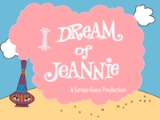
I Dream of Jeannie
|
| |
|
| |
I Dream of Jeannie is a 1960s American sitcom with a fantasy premise. Produced by Screen Gems, it originally aired from September 1965 to May 1970 with new episodes, and September 1970 with season repeats, on NBC. The show ran for five seasons and produced 139 episodes. The first season consisted of 30 episodes filmed in black and white and recently colorized for some broadcasts and a DVD release. The other 109 episodes were filmed in color.

Discussion
Ask a question about 'I Dream of Jeannie'
Start a new discussion about 'I Dream of Jeannie'
Answer questions from other users
|
Recent Posts

Encyclopedia
I Dream of Jeannie is a 1960s American sitcom with a fantasy premise. Produced by Screen Gems, it originally aired from September 1965 to May 1970 with new episodes, and September 1970 with season repeats, on NBC. The show ran for five seasons and produced 139 episodes. The first season consisted of 30 episodes filmed in black and white and recently colorized for some broadcasts and a DVD release. The other 109 episodes were filmed in color. The show has continued to air in reruns ever since.
Show history
Original run
The series was created by Sidney Sheldon in response to the great success of rival network ABC's Bewitched series, which had debuted in 1964 as the second most watched program in the United States. Sheldon, inspired by the movie The Brass Bottle, which had starred Tony Randall, Barbara Eden, and Burl Ives as the genie Fakrash, came up with the idea for a beautiful female genie. Both I Dream of Jeannie and Bewitched were Screen Gems productions. The show debuted at 8:00 pm (EDT), Saturday, September 18, 1965, on NBC.
When casting was opened for the role of Jeannie, Sidney Sheldon could not find an actress who could play the role the way he wrote it. He did have one specific rule: he did not want a blonde genie because there would be too much similarity with the blonde witch on Bewitched. However, after many unsuccessful auditions, he called Barbara Eden's agent.
In most episodes, Eden wears her revealing "Jeannie" costume. Censors allowed her to be depicted living in a house with an unmarried man (it was made plain that she slept in her bottle), but would not permit Eden's navel to be seen. (In one scene midway through a season four episode entitled "The Case of My Vanishing Master, Part 2", Jeannie's waistband slips below her navel.) The makers of the series were also presented with the situation of filming around Eden's real-life pregnancy during the first season, without writing it into the storyline. She wore veils to hide her stomach, and as her pregnancy progressed, they began to use body doubles and filmed Eden only above the waist, though her belly is visible in some profile shots.
When NBC began telecasting most of its prime time television programs in color in the fall of 1965, Jeannie was the one regular program that remained in black and white because of the special photographic effects employed to achieve Jeannie's magic. By the second season, however, further work had been done on techniques to create the visual effects in color, necessary because by 1966 all U.S. prime time series were being made in color.
According to the book Dreaming of Jeannie by Stephen Cox and Howard Frank, series producers originally wanted to film season one in color but NBC did not want to pay for the extra expense because they believed the series would not make it to a second season.
Syndication
It was a moderate success on NBC, but the show's popularity exploded when the series began playing in syndication. In reruns, it became one of the highest-rated series during the 1970s. For example, when the reruns debuted on New York's WPIX, Jeannie won its time period with a 13 rating and a 23 share of the audience (Variety, October 6, 1971). The series averaged a 14 share and 32 share of the audience when WTTG in Washington, D.C. began airing the series (Variety, September 22, 1971). Across the board, the series was reaching a bigger audience in syndication than on NBC. According to the October 6, 1971 edition of Variety, it was the first off-network series to best network competition in the ratings: "The big switch no doubt representing the first time in rating history that indies (local stations) have knocked over the network stations in a primetime slot was promoted by WPIX's premiere of the off-web Jeannie reruns back to back from 7 to 8 p.m." The show continues to have a cult following today.
As of February 2009, the show can be viewed in the US on WGN America, downloaded on iTunes, or streamed for free in the US on IMDb, Hulu, and Minisodes available on Crackle.
Animated series
Hanna-Barbera Productions produced an animated series Jeannie from September 1973 to 1975, which featured Jeannie (voiced by Julie McWhirter) and genie-in-training Babu (voiced by former Three Stooges star Joe Besser) as the servants of Corry Anders, a high-school student (voiced by Mark Hamill).
Reunion films and appearances
There were two reunion movies, both televised on NBC: I Dream of Jeannie: 15 Years Later (1985) and I Still Dream of Jeannie (1991). Hagman refused to appear in the first reunion movie, reportedly because of a payment dispute, so Wayne Rogers played the role of Tony Nelson. When it came time to film the second reunion, Barbara Eden asked Hagman to join her. However, as she told Geraldo Rivera in a 1991 interview, Hagman was just coming off a 13-year run on Dallas and was taking a vacation. Eden expressed her disappointment, as a year earlier, she had obliged Hagman by appearing on a few episodes of Dallas, playing a former lover out for revenge. Tony Nelson was written out of the movie, with his character being away on an extended mission.
In November, 1999, the cast was brought together for the official I Dream of Jeannie reunion on the Donny & Marie daytime talk show. For the first time in 29 years, Barbara Eden, Larry Hagman, Bill Daily, and even the creator and producer Sidney Sheldon reunited on this 1-hour show that was filled with memories and clips from I Dream of Jeannie.
In 2002, when I Dream of Jeannie was set to join the cable channel TV Land, once again there was an I Dream of Jeannie reunion, this time on the Larry King Live show for CNN. For the first time ever, fans of I Dream of Jeannie were able to call in and talk to the cast.
Rumors of a big screen treatment of I Dream of Jeannie have flown around Hollywood for years. Jessica Alba, Halle Berry, Amanda Bynes, Jessica Simpson, Mandy Moore, Paris Hilton, Keira Knightley, Valeria Mazza, Parminder Nagra, Reese Witherspoon, Jenna Elfman, Lindsay Lohan, and Lisa Kudrow have been considered for the part of Jeannie. Jimmy Fallon, Will Ferrell, Steve Carell, Will Smith, and James Marsden have all been considered for the role of Major Nelson. The latest news is that Columbia Pictures is in pre-production for a feature film version of I Dream of Jeannie, the date of release now pushed back to 2010 with no defined script, cast, or director. According to some sources, writer/director Gurinder Chadha, who had been set to direct the remake, lost the job because of her lack of knowledge of the show and its initial success. Chadha suggested a possible storyline which would be somewhat darker than the original series, with Jeannie as a headstrong girl who is punished for becoming a soldier by being imprisoned in a bottle as a genie. As Columbia Pictures began to see the direction Chadha was going, it is rumored they cancelled that idea and told her to create a storyline more closely relating to the original show. Upon her inability to do so, Columbia released Chadha from her contract.
Recently, Cocoa Beach, Florida, has been embracing the fame it garnered from Jeannie. A street near the Lori Wilson Park in Cocoa Beach is named "I Dream of Jeannie Lane." On September 15, 2005, they held the "We Dream of Jeannie" Festival, including a Jeannie lookalike contest. There were plans for one in 2004, but it was interrupted by Hurricane Frances and Hurricane Jeanne. They did, however, hold the Jeannie lookalike contest in 2004, with Bill Daily attending.
Cast
Regulars
Recurring characters
- Amanda Bellows (Dr. Bellows' wife) (1966-1970) Emmaline Henry
- Gen. Wingard Stone (1965) - Philip Ober
- Gen. Martin Peterson (19651969) Barton MacLane
- Gen. Winfield Schaeffer (19691970) Vinton Hayworth
- Jeannie's Sister (also named Jeannie and officially known to NBC as "Jeannie II"; in recent closed-captioning her name is spelled "Jeaney" to make it distinct) (1967-1969) Barbara Eden
- Jeannie's Mother Barbara Eden (Fourth season) (In the first season Jeannie's Mother was also played by Florence Sundstrom and Lurene Tuttle)
- Haji (the "chief of all the genies") (1966, mention, to 1968) - Abraham Sofaer
Additional appearances
Story
- Main article: List of I Dream of Jeannie episodes (including DVD and VHS release information).
In the pilot episode, "The Lady in the Bottle", astronaut Captain Tony Nelson is on a space flight when his one-man capsule comes down far from the planned recovery area, near a deserted island. On the beach, Tony notices a strange bottle that rolls by itself. When he rubs it after removing the stopper, smoke starts shooting out and a Farsi-speaking female genie materializes and kisses Tony on the lips with passion, shocking him. (In the second season's animated opening, it's a kiss on the cheek and Tony is happy to receive it). They cannot understand each other until Tony expresses his wish that Jeannie (a homophone of genie) could speak English, which she then does. Then, per his instructions she "blinks" and causes a recovery helicopter to show up to rescue Tony, who is so grateful that he tells her she's free. But Jeannie, who has fallen in love with Tony at first sight after being trapped for 2000 years, re-enters her bottle and places it in Tony's duffel bag so she can accompany him back home. One of the first things Jeannie does, in a subsequent episode, is break up Tony's engagement to his commanding general's daughter, who, along with that particular general, is never seen again. (This event reflects the decision of the producers that the engagement depicted in the pilot episode would not be part of the series continuity.)
Tony at first keeps Jeannie in her bottle most of the time, but finally relents and allows her to enjoy a life of her own. His efforts to cover up Jeannie's antics brings him to the attention of NASA's resident psychiatrist, Dr. Alfred Bellows. In a running gag, Dr. Bellows tries over and over to prove to his superiors that Tony is either crazy or hiding something, but he is always foiled and Tony's job remains secure.
Tony's best friend and fellow astronaut, Captain Roger Healey, doesn't know about Jeannie for several episodes when he finds out, he steals her so he can live in luxury. It's not long though before Tony reclaims his status as Jeannie's master. Roger continues to demonstrate his desire to use Jeannie's powers for his own benefit, but for the most part he respects Tony's status as Jeannie's master. Both Tony and Roger are promoted to the rank of major late in the first season.
Jeannie's sister, mentioned in a second-season episode (and also named Jeannie), proves to have a mean streak starting in the third season, repeatedly trying to steal Tony for herself, with her as the real master. Her final attempt in the series comes right after Tony and Jeannie get married, with a ploy involving a man played by Barbara Eden's real-life husband at the time, Michael Ansara (in a kind of in-joke, while Jeannie's sister pretends to be attracted to him, she privately scoffs at him).
Early in the fifth season, Jeannie is called upon by her Uncle Sully (Jackie Coogan) to become queen of their family's native country, Basenji. Tony inadvertently gives grave offense to Basenji national pride in their feud with neighboring Kasja. To regain favor, Tony is required by Sully to marry Jeannie, and avenge Basenji's honor by killing the ambassador from Kasja when he visits NASA. After Sully puts Tony through an ordeal of nearly killing the ambassador, Tony responds in a fit of anger that he is fed up with Sully and his cohorts, and that he wouldn't marry Jeannie if she were "the last genie on earth". Hearing this, Jeannie bitterly leaves Tony, and returns to Basenji. With Jeannie gone, Tony realizes how deeply he loves her, and that that outweighs all concerns he has had about Jeannie's threat to his career. He flies to Basenji to win Jeannie back, and upon their return to NASA, Tony introduces Jeannie as his fiancιe. The two get married several weeks later. The public introduction of Jeannie heralds a change in the series continuity: the secret is no longer Jeannie's existence, but merely that she possesses magical powers.
Sidney Sheldon and the cast fought against the marriage, feeling it would ruin the sexual tension between the two. Despite the series finishing its fourth season in 26th place, NBC was going to cancel the program if Jeannie and Tony did not wed. For the fifth season (196970), NBC moved the series to a weak time slot (Tuesday at 7:30 p.m. [Eastern/Pacific Time]) where it had had mediocre ratings during its third season (196768). Jeannie and Tony wed, NBC got lots of press, and then canceled the series.
Multi-part story arcs
On several occasions, multi-part story arcs were created to serve as backgrounds for national contests. During the second season, in a story that is the focus of a two-part episode and a peripheral plot of two further episodes, it was established that Jeannie did not know her birthday, and her family members could not agree when it was either (2,000 years being a long time to remember such a thing). Tony and Roger use NASA's powerful new computer and horoscopic guidance based on Jeannie's traits to calculate it. The year is quickly established as 64 B.C., but only Roger is privy to the exact date, and he decides to make a game out of revealing it. This date became the basis of the contest. Jeannie finally forces it out of him in the fourth episode: April 1.
In a third-season four-part episode (entitled "Genie, Genie, Who's Got the Genie?"), Jeannie is locked in a safe bound for the moon, and any attempt to force the safe or use the wrong combination will destroy the safe with an explosive. Jeannie is in there so long (four weeks) that whoever opens the safe will become her master. The episodes spread out over a month, during which the contest was held to guess the safe's combination. This explains why Larry Hagman is never seen actually saying the combination out loud...his mouth is hidden behind the safe, or the shot is on Jeannie when he says it. The actual combination was not decided until right before airing, and Hagman's voice was dubbed in. Over the closing credits, Barbara Eden announced and congratulated the contest winner. The combination: 4-9-7.
In the fourth season, a two-part episode concerned Tony being taken to a secret location somewhere in the world, while a perfect double took his place at home (and was flabbergasted by the magical Jeannie he encountered there!) The contest was held to guess the location to which Tony had been taken. Unlike earlier contests, the answer was not revealed within the story.
Theme music
The first season theme music was an instrumental jazz waltz written by Richard Wess. From the second season on, however, it was replaced by a new theme entitled "Jeannie", composed by Hugo Montenegro with lyrics by Buddy Kaye. The lyrics were never used in the show.
Songwriters Gerry Goffin and Carole King wrote a theme, called "Jeannie", for Sidney Sheldon before the series started, but it was rejected.
Opening sequence
The first few episodes after the pilot used a non-animated, expository opening narrated by Paul Frees. The animated opening, which was used in the pilot and from the middle of Season 1 onward, was done by world-famous animator Friz Freleng, with the actual animation of the dancing Jeannie handled by Gerry Chiniquy. For the first color season, it was expanded to include footage of Captain Nelson's space capsule splashing down on the beach, and Jeannie dancing out of her bottle and kissing Nelson. As well, the image of the bottle itself was modified to reflect its new decoration.
The bottle
- Jeannie's famous bottle was not created for the show. The actual bottle was a special Christmas 1964 Jim Beam liquor decanter containing "Beam's Choice" bourbon whiskey. It was designed by Roy Kramer for the Wheaton Bottle Company.
- For years it was said that Sidney Sheldon received one as a gift and thought it would be a perfect design for the series. Several people in the Screen Gems art department also take credit for finding the bottle. There is strong evidence, however, that it was first season director, Gene Nelson who saw one in a liquor store and bought it, bringing it to Sidney Sheldon.
- Jeannie's bottle was left its original dark, smoke-green color, with a painted gold leaf pattern (to make it look like an antique), during the first season. The plot description of the pilot episode in TV Guide in September 1965 referred to it as a "green bottle". In that first episode, it also looked quite rough and weathered. Since the show was originally filmed in black and white, a lot of colors and patterns were not necessary. When the show switched to color, the prop people came up with a brightly colored bottle to replace the original.
- The first season bottle had a clear glass stopper that Tony took from a 1956 Old Grand-Dad Bourbon bottle in his home, as the original stopper was left behind on the beach where Tony found Jeannie. In the first color episode, Jeannie returns to the beach, and her bottle is seen to have its original stopper (painted to match the bottle), presumably retrieved by her upon her return there. The rest of the TV series (and the movies) used the original bottle stopper. (During some close-ups, you can still see the plastic rings that hold the cork part of the stopper in place.)
- During the first season, in black and white, the smoke effect was usually a screen overlay of billowing smoke, sometimes combined with animation. Early color episodes used a purely animated smoke effect. Sometime later a live smoke pack, lifted out of the bottle on a wire, was used.
- Jeannie's color-episodes bottle was painted mainly in pinks and purples, while the bottle for the Blue Djinn was a first-season design with a heavy green wash; and Jeannie's sister's bottle was simply a plain, unpainted Jim Beam bottle.
- No one knows exactly how many bottles were used during the show, but members of the production have estimated that from six to eight bottles were painted and used during the run of the series. The stunt bottle used mostly for the smoke effect was broken frequently by the heat and chemicals used to produce Jeannie's smoke. In the pilot episode, several bottles were used for the opening scene on the beach; one was drilled through the bottom for smoke, and another was used to walk across the sand and slip into Tony's pack. Two bottles were used from promotional tours to kick off the first season, and one bottle was used for the first-season production.
- On the last day of filming the final episode of the television series, Barbara Eden got to keep the color stunt bottle. In the DVD release of the first season, during the first episode commentary, Bill Daily also claims to own an original bottle.
- The movies again used Jim Beam bottles, but with a new, more dramatic paint job. The TV-movie I Still Dream of Jeannie showed for the first time and for less than a minute what has come to be known as Tony Jr.'s bottle in a two-tone black and green bottle with gold and pink accents (It is frequently mistaken for Jeannie II's own personal bottle. A closer examination of the bottle will reveal, however, that the interior of the bottle has absolutely no furniture inside of it -- in stark contrast to Jeannie's lavishly-furnished bottle. This leads one to conclude that Jeannie II created the bottle for the express purpose of trapping Tony Jr.)
Jeannie's origin
In the first season, it is made clear that Jeannie was originally a human who was turned into a genie by (as later revealed) the Blue Djinn when she refused to marry him. Several members of her family, including her parents, are rather eccentric, but none are genies. Her mother describes the family as "just peasants from the old country".
The topic of Jeannie originally being human is restated in season two during the episode "How to be a Genie in 10 Easy Lessons." Jeannie does mention that she has a sister who is a genie, but the phrasing - "she was a genie when I left Baghdad" - does bring up the question of whether or not she too was born a genie.
In the third season, this continuity was changed retroactively and it is assumed that Jeannie has always been a genie. All her relatives are then also genies, including, by the fourth season, her mother (now also played by Barbara Eden). This may have been done to increase the similarity with Bewitched, or simply to increase the number of possible plotlines. Whatever the reason, this new concept was retained for the rest of the series.
The 1985 TV movie I Dream of Jeannie: 15 Years Later reiterates most of Jeannie's first-season origin when she tells her son, Tony Jr., that she was trapped in her bottle by an evil djinn after she refused to marry him (There is no specific statement, however, about whether he turned her into a genie at that time or if she had been born one.)
Other inconsistencies
- In the pilot episode footage is used from a Mercury-Atlas launch to represent Tony being launched into orbit. But the recap at the beginning of episodes two to eight show a Gemini-Titan being launched. Later episodes of season one show Tony and Roger in a capsule very similar to a prototype Apollo spacecraft and another episode mentions Tony going on an Apollo near-Earth mission. However, these would be natural progressions from after the first launch.
- Early on, Jeannie's budding movie career ended when she discovered that genies cannot be photographed, but four times in the middle of the series run Jeannie was successfully photographed. The original premise is reasserted for the actual wedding episode, in which the fact that people would be trying to take pictures of her was part of the storyline.
- In a two-part episode, it was determined that Jeannie's birthday was April 1, 64 BC (which was a Thursday, according to the proleptic Gregorian calendar). However, in the fifth episode of the first season, "G.I. Jeannie", she stated that her birthday was July 1, 21 BC (a Tuesday). This is somewhat resolved by the understanding that she did not know her birthday until it was calculated in that later episode (many people who do not know their birthdays choose one for ceremonial or social purposes, which Jeannie could have done in choosing, or assuming, that date). In the same episode, she gives her place of birth as Pompeii. In the end, 64 B.C. is a more plausible year assuming she had been imprisoned in her bottle a full 2,000 years.
- The end credits of the pilot episode list Larry Hagman as Capt. Anthony Wilson (this error was corrected on the DVD release). In fact, in the entire pilot episode there is no specific mention of Anthony's last name except when seen in a newspaper headline that reads "Nelson safe!".
- In the pilot, when rescued, Jeannie speaks Persian (not Arabic, as is often stated), and can only speak English after Tony wishes her to (and even then, she inexplicably speaks archaic English until she learns the modern form). Yet, whenever anyone from Jeannie's family show up, or she visits them, they speak perfect contemporary English.
- Jeannie claims to come from Baghdad, and to be around 2000 years old. Yet, Baghdad was not founded until AD 762. In an earlier episode she claimed to be from Babylon.
- In one early episode, before Roger knew about Jeannie, he was simply made to forget something "impossible" that he'd seen. In a different episode, after Roger has gotten himself into serious trouble while having control of Jeannie, she eventually resolves it by just rewinding time. Yet in later episodes, both of these easy escapes seem to be beyond her capabilities.
- In one episode, Jeannie replicates a Rembrandt painting from the Louvre, so that the replica also appears to be 300 years old. In another episode, she takes back her 2000-year-old Bukistan slippers from an international exhibition causing a diplomatic emergency. However no one suggests she replicates the slippers.
- Jeannie was supposedly held captive in her bottle for two thousand years, yet has had relationships with famous people throughout the ages.
- One episode asserts that genies are forbidden to marry mortals, while another claims that genies who marry mortals will lose their powers. However, when Tony and Jeannie's marriage actually takes place there are no objections amongst her kind nor any loss of her powers afterwards.
- In early episodes the street address of Anthony Nelson's house was given as 1137 Oak Grove, but in the fourth season the address of the same house was stated as 1020 Palm Drive.
- A crystal ball also shows a possible future: of the two children they have, the boy is mortal but the girl is a genie. In the movie made in 1985, they have one child, Tony Jr., who turns out to be a djinn. However, in the 1991 movie, Tony Jr.'s powers are inexplicably absent.
- The bottle's interior design changed from the first season's Old World look of hanging lanterns and drapery to the color episode's pillow-strewn pink decor.
Miscellaneous
- Actor Larry Hagman was notoriously difficult to work with, to the point where the producers seriously considered getting rid of him and replacing him with another actor. Darren McGavin was at the top of the list for Hagman's replacement. They even worked out a story where Tony lost Jeannie and McGavin found her, but the studio execs loved Hagman and wouldn't consider a change.
- Gene Nelson, the first director for I Dream of Jeannie, was originally an actor, singer, and dancer. He appeared as Will in the motion picture version of the Rodgers and Hammerstein musical Oklahoma!.
- The idea that a genie is female and Djinn is male is mistaken. In Arabic, Djinn (or jinn ??) is the collective name for the whole group, Djinni (or jinni ???) is singular and masculine. A female genie is called a jinniyah. The word "genie" is just an alteration of the Arabic word jinni that was adopted into English, as a result of a mistaken association with the Roman mythological genii.
- According to the show, genies have both red and green blood corpuscles.
- While not apparent in the first season (because of the black and white film), Tony Nelson was a Captain in the Air Force, while Roger Healey was a Captain in the Army. This is clearly shown when, in color, Nelson wears the blue uniform and Healey wears the green. These ranks, while in two different branches of the military, are equal in seniority. Healey is in the Army Corps of Engineers, according to his lapel insignia, and wears Army pilot wings which are distinct from Nelson's Air Force pilot wings. There were no real Army astronauts until the Space Shuttle program. Both Healey and Nelson were promoted to the grade of Major in a later episode of the first season. However, one inconsistency appears in an episode where the two characters appear on "Skull Island" with a Naval Commander named Porter. Here, Healey wears fatigues with a nametape saying "US Air Force".
- Owing to network censorship, Barbara Eden was forbidden to bare her navel for the entire series run, although it does slip out in several instances in the series. It would not be established that Jeannie actually had a navel until Eden wore a redesigned costume in the movies.
- Series creator Sidney Sheldon dropped in veiled Jewish/Catskills humor in the early episodes he wrote himself. In one episode, Hagman calls Jeannie a "neatnik," the "nik" suffix being a Hebrew/Yiddish term; and when Jeannie transports herself and Nelson back to ancient "Baghdad," and describes Tony as a pilot, her father says, with Yiddish inflections, "From this he earns a living?"
Comparison to actual NASA astronauts
I Dream of Jeannies NASA differs from the real NASA in a number of ways:
- The NASA shown in the series appears to be launching a few more flights than real-life NASA, since Tony makes it into space at least three times during the series. But several real astronauts did make second and third flights.
- The first-season pilot uses footage from an actual launch of a Project Gemini spacecraft (identifiable by its LGM-25 Titan II booster with twin rocket engines), and this footage also appears in the opening title sequence for some early first-season episodes. However, the pilot storyline has Tony as the only crew member of the craft, which would imply it must have been a Project Mercury mission, since all crewed Gemini spacecraft were flown with two crew members. The cartoon spacecraft shown in the opening titles of later seasons appears to be a one-man spacecraft bearing some resemblance to Project Mercury (flown 1961May 1963), but during the series' run, the two-man Project Gemini (March 1965November 1966) and three-man Project Apollo (February 1967July 1975) craft were flying, aside from the hiatus between Gemini 12 and Apollo 7. In fact, Tony was shown on the series to fly all three of these craft, as well as the Space Shuttle (if you count the TV movies).
- NASA has always hired more astronauts than it has seats on flights, and there was an emphasis on rotation, so that other astronauts would get equal opportunity in space (this is especially true of John Glenn, who was grounded after his Mercury flight Friendship 7 in 1962, for fear of anything risky happening to such a celebrity. He finally flew again in Shuttle Discovery flight STS-95 in 1998).
- The only real astronaut in history to fly one of each of the Mercury, Gemini, and Apollo spacecraft was astronaut Wally Schirra. (Mercury Sigma 7 flight, Gemini 6, and Apollo 7 flights.) Charles Conrad, James Lovell, Thomas Stafford, and John Young were the only astronauts to fly two Gemini missions; 15 astronauts made both Gemini and Apollo flights during the series' five-year run.
- Since Tony seems to be comparable to James Lovell and Wally Schirra, he was probably, fictionally, one of NASA's earliest-chosen astronauts. That is, healthy and skilled enough to be valuable for several flights.
I Dream of Jeannie's NASA also was far more militaristic than the real NASA. Major Nelson and Major Healey wore their uniforms at all times. Virtually all the NASA characters such as astronauts (Nelson and Healey), mission controllers (Doctor Bellows), and support personnel were portrayed as active duty military personnel and commanders. Jeannie's NASA was governed along a strict military hierarchy. In real life, NASA did not operate as such.
Television
Seinfeld, George walks into Jerry's apartment without being heard. When Jerry asks how he got in, George sarcastically crosses his arms and blinks, just like Jeannie. In an episode of Perfect Strangers, Larry is concerned that Balki is becoming addicted to cable television. Harriette asks whether Balki has started singing the I Dream of Jeannie theme. Larry says, "I'm not sure I'd recognize it," and right on cue, Balki descends the Chicago Chronicle stairs singing and dancing the theme. One episode of the show Jimmy Neutron: Boy Genius was called "I Dream of Jimmy"; the title card evoked I Dream of Jeannies logo. On an episode of American Dreams titled "California Dreamin'", which takes place in the spring of 1966, Meg and Roxanne go to Los Angeles and visit the set of I Dream of Jeannie. They see the large version of Jeannie's bottle and meet Barbara Eden (played by Paris Hilton) in her Jeannie outfit. The soap opera As the World Turns did a mini-spoof of I Dream of Jeannie called "I Dream of Carly" as a part of their 50th anniversary celebration on March 30, 2006. Character Jack Snyder played Tony and Carly Snyder played Jeannie. On the Adult Swim animated series Robot Chicken, I Dream of Jeannie was spoofed in a short segment of the episode "Celebrity Rocket". In the segment, Jeannie is shown apologizing to an irritated-looking Major Nelson for causing problems in his life again, then disappearing into her bottle. In retaliation for what she did to him, Major Nelson shakes her bottle vigorously while she is still inside it. The 'genie-in-a-bottle' premise was parodied in the Charmed episode "I Dream of Phoebe", where the original genie is imprisoned in the bottle by a sorcerer in retaliation for not returning his feelings.Family Guy episode "The Griffin Family History": In the "Big Bang Theory" scene, Peter Griffin is "obligated by the state of Kansas to present the Church's alternative to the theory of Evolution". The screen scrolls left and shows Jeannie walking out of the water and creating things (animals, Jesus, Santa Claus, a business man and gas pumps). Afterward, the animals, humans, and Jeannie finish the scene by doing a short dance.In a Roseanne episode, there is a short spoof on I Dream of Jeannie, with Roseanne as Jeannie and her husband Dan as Major Nelson.In an episode of That 70s Show the cast argues in the basement over whose powers are better: Jeannie, or Samantha from Bewitched In another episode, Kelso has a dream in which he is the Major and Jackie is Jeannie.In an episode of the Simpsons, Homer tries to overcome his attraction to new coworker Mindy Simmons by imagining Barney dancing in a bikini while vocalizing the I Dream of Jeannie theme. In a Halloween special, Homer is dressed as Jeannie while trick or treating.On an episode of Good Eats titled "Urban Preservation II: The Jerky", the character of "W" plays the part of Jeannie complete with Jeannie costume as she explains about dehydration and dehydrators.An episode of Beavis and Butt-head entitled "I Dream of Beavis" shows them with a dead mouse in a bottle, with them believing that there is a genie inside. They have also sung the theme music during one video review.A couple episodes of the TV series of Disney's Aladdin feature a pretty, female genie named "Eden", who inhabits a tall bottle.In the Johnny Bravo episode "I Dream of Johnny", Johnny finds a beautiful genie who grants him three wishes.Several episodes of Weird Science reference I Dream of Jeannie (the show is also deliberately similar, not only in the story of a beautiful female genie but in the way it characterizes the male leads). In one episode, a guest character (played by Emma Caulfield) steals Lisa and forces her to dress in the costume Barbara Eden wore.An episode of The Sopranos was titled "I Dream of Jeannie Cusamano"One episode of The Monkees ("Spy Who Came In From the Cool") features a Jeannie look-alike, who appears after Davy Jones rubs a lamp. "Jeannie" says "What is your Wish, Master?" Davy reacts by saying "Sorry, wrong show," and walks away. Both shows ran concurrently on NBC.In a seventh season episode of The X-Files entitled, "Je Souhaite" (French for "I Wish"), Fox Mulder briefly becomes the master of a female genie. When questioning a man who previously possessed the genie, Mulder mimics Jeannie's dance and sings the "I Dream of Jeannie" theme song.
Movies
- Half Baked features a music video by "Sir Smoke-A-Lot" (Dave Chappelle) where he demands weed from a genie in a bottle. (The genie was a cameo by the director of Half Baked, Tamra Davis.)
- I Dream of Jenna (starring porn-queen Jenna Jameson) is the title of a pornographic film based on a lurid premise of the series.
- There is also another pornographic film parody called I Dream of Farrah starring porn star Farrah.
- In Ferris Bueller's Day Off, Ferris dances to the theme song of I Dream of Jeannie imitating the opening credits.
- Barbara Eden appears as Jeannie at the end of A Very Brady Sequel, saying she is Mike Brady's first wife.
Music
- Philadelphia punk rock band Dead Milkmen have a song called "I Dream of Jesus", in which the singer's mother finds Jesus who is trapped inside a bottle. The song appears on the 1993 album Not Richard, but Dick.
- The song "Girls Ain't Nothing but Trouble" by Fresh Prince and DJ Jazzy Jeff released in 1986 samples the I Dream of Jeannie theme song.
- Ice Cream T sampled the theme song for her 1988 single "Guys Ain't Nothing But Trouble", a parody of DJ Jazzy Jeff & The Fresh Prince's earlier single.
- Dimples D sampled the theme song for her single "Sucker DJs" in 1990.
- Timbaland sampled the theme song on "Wit' Yo' Bad Self" from his 1998 album Tim's Bio: Life from da Bassment.
- The song "Jeannie's Diner" By Mark Davis and Marilyn E Whitelaw, released in 1991, recounts the tale of Barbara Eden's Jeannie, and includes a sample of the theme song.
- UK band Johnny Foreigner sample the theme song on the song "Cranes and Cranes and Cranes and Cranes" from their 2008 album Waited Up 'til It Was Light.
Merchandising
Over the past ten years, merchandise based on the series has been produced including numerous dolls, ceramic pieces, lunchboxes, board games, and a series of Instant Scratchit cards.
Dell Comics published its first comic book issue of the series in April, 1965. Issue number two was released in December, 1966. Airwave Comics produced a version in 2001.
The first I Dream of Jeannie board game was produced by Milton Bradley in 1965. A German version of the game was released in 1971. Another I Dream of Jeannie board game was released by University Games Corporation in 1997.
There is also an officially licensed slot machine from International Game Technology, with Jeannie sound effects, new animations, and voice samples recorded specifically for the machine by Eden herself.
Libby made a 20" doll in 1966. Remco produced a Jeannie poseable doll in 1977. Mattel made a fashion doll of Jeannie and her evil sister, Jeannie, in 1996, followed by a Jeannie version of Barbie in 2001.
See also
External links
- - I Dream of Jeannie Online
- - Encyclopedia Astronautica
|
| |
|
|