
All Topics  
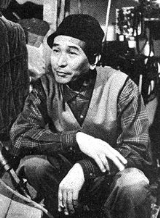
Akira Kurosawa

 
Akira Kurosawa

   Email Print
   Bookmark   Link


Akira Kurosawa


was a prominent Japanese
Japanese people

The are the predominant ethnic group of Japan. Worldwide, approximately 130 million people are of Japanese descent; of these, approximately 127 million are residents of Japan....
 filmmaker, producer
Film producer

A film producer is someone who creates the conditions for making film. The producer initiates, co-ordinates, supervises and controls matters such as fund-raising, hiring key personnel and arranging for distributors....
, screenwriter
Screenwriter

Screenwriters or scenarists are scriptwriters who write the screenplays from which films and television programs are made.Most screenwriters start their careers writing on speculation....
 and editor
Film editing

Film editing is the process of selecting and joining together Shot , connecting the resulting Sequence , and ultimately creating a finished motion picture....
. His first credited film as director, (Sanshiro Sugata
Sanshiro Sugata

was the directorial debut of the Academy Award-winning Japanese film director Akira Kurosawa. It was first released in Japan on 25 March 1943 by Toho film studios, eventually being released in the United States on 28 April 1974 and is based on the novel of the same name by Tsuneo Tomita....
), was released in 1943, his last as director, (Madadayo
Madadayo

is a 1993 in film Cinema of Japan. It is the thirty-first and final film made by Akira Kurosawa....
), in 1993. His many awards include the Légion d'honneur
Légion d'honneur

The L?gion d'honneur or Ordre national de la L?gion d'honneur is a France order established by Napoleon I of France, First Consul of the French First Republic, on May 19, 1802....
 and an Academy Award for Lifetime Achievement
Academy Honorary Award

The Academy Honorary Award, instituted in 1948 in film for the 21st Academy Awards , is given by the discretion of the Academy of Motion Picture Arts and Sciences#Current administration of the Academy of the Academy of Motion Picture Arts and Sciences to celebrate motion picture achievements that are not covered by existing Academy Awards....
.

a Kurosawa was born to Isamu and Shima Kurosawa on 23 March 1910. He was the youngest of eight children born to the Kurosawas in a suburb of Tokyo
Tokyo

, officially , is one of the 47 prefectures of Japan of Japan and located on the eastern side of the main island Honshu. The twenty-three special wards of Tokyo, each governed as a city, cover the area that was once the Tokyo City in the eastern part of the prefecture, and total over 8 million people....
. Shima Kurosawa was forty years old at the time of Akira's birth and his father Isamu was forty-five.


Discussion
Ask a question about 'Akira Kurosawa'
Start a new discussion about 'Akira Kurosawa'
Answer questions from other users
Full Discussion Forum


Quotations


In a mad world, only the mad are sane.

Man is a genius when he is dreaming.


Encyclopedia


was a prominent Japanese
Japanese people

The are the predominant ethnic group of Japan. Worldwide, approximately 130 million people are of Japanese descent; of these, approximately 127 million are residents of Japan....
 filmmaker, producer
Film producer

A film producer is someone who creates the conditions for making film. The producer initiates, co-ordinates, supervises and controls matters such as fund-raising, hiring key personnel and arranging for distributors....
, screenwriter
Screenwriter

Screenwriters or scenarists are scriptwriters who write the screenplays from which films and television programs are made.Most screenwriters start their careers writing on speculation....
 and editor
Film editing

Film editing is the process of selecting and joining together Shot , connecting the resulting Sequence , and ultimately creating a finished motion picture....
. His first credited film as director, (Sanshiro Sugata
Sanshiro Sugata

was the directorial debut of the Academy Award-winning Japanese film director Akira Kurosawa. It was first released in Japan on 25 March 1943 by Toho film studios, eventually being released in the United States on 28 April 1974 and is based on the novel of the same name by Tsuneo Tomita....
), was released in 1943, his last as director, (Madadayo
Madadayo

is a 1993 in film Cinema of Japan. It is the thirty-first and final film made by Akira Kurosawa....
), in 1993. His many awards include the Légion d'honneur
Légion d'honneur

The L?gion d'honneur or Ordre national de la L?gion d'honneur is a France order established by Napoleon I of France, First Consul of the French First Republic, on May 19, 1802....
 and an Academy Award for Lifetime Achievement
Academy Honorary Award

The Academy Honorary Award, instituted in 1948 in film for the 21st Academy Awards , is given by the discretion of the Academy of Motion Picture Arts and Sciences#Current administration of the Academy of the Academy of Motion Picture Arts and Sciences to celebrate motion picture achievements that are not covered by existing Academy Awards....
.

Life

Akira Kurosawa was born to Isamu and Shima Kurosawa on 23 March 1910. He was the youngest of eight children born to the Kurosawas in a suburb of Tokyo
Tokyo

, officially , is one of the 47 prefectures of Japan of Japan and located on the eastern side of the main island Honshu. The twenty-three special wards of Tokyo, each governed as a city, cover the area that was once the Tokyo City in the eastern part of the prefecture, and total over 8 million people....
. Shima Kurosawa was forty years old at the time of Akira's birth and his father Isamu was forty-five. Akira Kurosawa grew up in a household with three older brothers and four older sisters. Of his three older brothers, one died before Akira was born and one was already grown and out of the household. One of his four older sisters had also left the home to begin her own family before Kurosawa was born. Kurosawa's next-oldest sibling, a sister he called "Little Big Sister," also died suddenly after a short illness when he was ten years old.

Kurosawa's father worked as the director of a junior high school operated by the Japanese military and the Kurosawas descended from a line of former samurai. Financially, the family was above average. Isamu Kurosawa embraced western culture both in the athletic programs that he directed and by taking the family to see films, which were then just beginning to appear in Japanese theaters. Later, when Japanese culture turned away from western films, Isamu Kurosawa continued to believe that films were a positive educational experience.

In primary school, Akira Kurosawa was encouraged to draw by a teacher who took an interest in mentoring his talents. His older brother, Heigo, had a profound impact on him. Heigo was very intelligent and won several academic competitions, but also had what was later called a cynical or dark side. In 1923, the Great Kanto earthquake
1923 Great Kanto earthquake

The struck the Kanto plain on the Japanese main island of Honshu at 11:58 on the morning of September 1, 1923. Varied accounts hold that the duration of the earthquake was between 4 and 10 minutes....
 destroyed Tokyo and left 100,000 people dead. In the wake of this event, Heigo, 17, and Akira, 13, made a walking tour of the devastation. Corpses of humans and animals were piled everywhere. When Akira would attempt to turn his head away, Heigo urged him not to. According to Akira, this experience would later instruct him that to look at a frightening thing head-on is to defeat its ability to cause fear.

Heigo eventually began a career as a benshi
Benshi

were Japanese performers who provided live narrator for silent films ....
 in Tokyo film theaters. Benshi narrated silent films for the audience and were a uniquely Japanese addition to the theater experience. However, with the impact of talking pictures on the rise, benshi were losing work all over Japan. Heigo organized a benshi strike that failed. Akira was likewise involved in labor-management struggles, writing several articles for a radical newspaper while improving and expanding his skills as a painter and reading literature.

When Akira Kurosawa was in his early 20s, his older brother Heigo committed suicide. Four months later, the oldest of Kurosawa's brothers also died, leaving Akira as the only surviving son of an original four at age 23.

Kurosawa's wife was actress Yoko Yaguchi
Yôko Yaguchi

was a Japanese actress, and the wife of Japanese filmmaker Akira Kurosawa for 39 years....
. He had two children with her: a son named Hisao and a daughter named Kazuko
Kazuko Kurosawa

Kazuko Kurosawa is a costume designer. She won the 2008 Genie Award for Best Achievement in Costume Design. She is the daughter of famous filmmaker Akira Kurosawa....
.

Kurosawa was a notoriously lavish gourmet, and spent huge quantities of money on film sets providing an incredibly large quantity of fine delicacies, especially meat, for the cast and crew, although the meat was sometimes left over from recording sound effects of the sound of blades cutting flesh in the many swordfight scenes.

Kurosawa was a close friend of director Ishiro Honda
Ishiro Honda

Ishiro Honda , sometimes miscredited in foreign releases as "Inoshiro Honda", was a Japanese people film director. His early film career included working as an assistant under the famed director, Akira Kurosawa....
, who directed the original Godzilla
Godzilla (1954 film)

is a successful landmark 1954 in film Japanese science fiction film directed and co-written by Ishiro Honda with special effects by Eiji Tsuburaya, produced and distributed by Toho....
.

Early career

In 1936, Kurosawa learned of an apprenticeship program for directors through a major film studio, PCL (which later became Toho
Toho

is a large Japanese independent film studio. It is headquartered in Chiyoda, Tokyo, and is one of the core companies of the Hankyu Hanshin Toho Group....
). He was hired and worked as an assistant director to Kajiro Yamamoto. After his directorial debut with Sanshiro Sugata, his next few films were made under the watchful eye of the wartime Japanese government and sometimes contained nationalistic themes. For instance, The Most Beautiful
The Most Beautiful

is a 1944 in film drama film written and Film_director by Akira Kurosawa.The film is set in an optics factory during the Second World War.It is considered by many to be a war propaganda film from wartime Japan, but it does show Kurosawa's developing talent as a director....
 is a propaganda film about Japanese women working in a military optics factory. Judo Saga 2
Sanshiro Sugata Part II

is a 1945 in film film written and Film_director by Akira Kurosawa. It is based on the novel by Tsuneo Tomita.Judo Saga 2 was filmed in post-war Japan, after its loss in World War II....
 portrays Japanese judo
Judo

, meaning "gentle way", is a modern Japanese martial art and combat sport, that originated in Japan in the late nineteenth century. Its most prominent feature is its competitive element, where the object is to either Throw one's opponent to the ground, immobilize or otherwise subdue one's opponent with a grappling manoeuvre, or force an opponent...
 as superior to western (American) boxing
Boxing

Boxing is a combat sport where two participants, generally of similar human weight, fight each other with their fists. Boxing is supervised by a referee and is typically engaged in during a series of one to three-minute intervals called rounds....
.

His first post-war film No Regrets for Our Youth
No Regrets for Our Youth

is a Cinema of Japan written and directed by Akira Kurosawa in 1946 in film. It is based on the Takigawa incident of 1933.File:Waga seishun ni kuinashi poster 2.jpg...
, by contrast, is critical of the old Japanese regime and is about the wife of a left-wing dissident who is arrested for his political leanings. Kurosawa made several more films dealing with contemporary Japan, most notably Drunken Angel
Drunken Angel

is a 1948 in film Cinema of Japan directed by Akira Kurosawa. It stars Takashi Shimura as an alcoholic doctor in postwar Japan who treats a young, small-time hood named Matsunaga , after a gunfight with a rival syndicate....
 and Stray Dog
Stray Dog (film)

is a 1949 in film film noir police procedural directed by Akira Kurosawa....
. However, it was his period film Rashomon
Rashomon (film)

is a 1950 in film Cinema of Japan directed by Akira Kurosawa, working in close collaboration with cinematographer Kazuo Miyagawa. It stars Toshiro Mifune, Takashi Shimura, Machiko Kyo, Masayuki Mori and Minoru Chiaki....
 that made him internationally famous and won the Golden Lion
Golden Lion

The Leone d?Oro is the highest prize given to a film at the Venice Biennale Venice Film Festival. The prize was introduced in 1949 by the organizing committee and is now regarded as one of the film industry's most distinguished prizes....
 at the Venice Film Festival
Venice Film Festival

The Venice Film Festival is the oldest film festival in the world. Founded by Count Giuseppe Volpi di Misurata in 1932 as the "Esposizione Internazionale d'Arte Cinematografica", the festival has since taken place every year in late August or early September on the island of the Lido di Venezia, Venice, Italy....
.

Directorial approach

Kurosawa had a distinctive cinematic technique, which he had developed by the 1950s, and which gave his films a unique look. He liked using telephoto lenses for the way they flattened the frame and also because he believed that placing cameras farther away from his actors produced better performances. He also liked using multiple cameras, which allowed him to shoot an action scene from different angles. Another Kurosawa trademark was the use of weather elements to heighten mood: for example the heavy rain in the opening scene of Rashomon, and the final battle in Seven Samurai, the intense heat in Stray Dog
Stray Dog (film)

is a 1949 in film film noir police procedural directed by Akira Kurosawa....
, the cold wind in Yojimbo
Yojimbo (film)

is a 1961 in film jidaigeki film directed by Akira Kurosawa. It tells the story of a ronin , portrayed by Toshiro Mifune, who arrives in a small town where competing crime lords make their money from gambling....
, the snow in Ikiru
Ikiru

is a 1952 in film Cinema of Japan written and Film director by the acclaimed Japanese filmmaker Akira Kurosawa. The film examines the struggles of a Tokyo bureaucrat and his final quest for meaning....
, and the fog in Throne of Blood
Throne of Blood

is a 1957 in film directed by Akira Kurosawa, which transposes the plot of William Shakespeare play Macbeth to feudal Japan. It is regarded as one of Kurosawa's best films, and by many critics as one of the best film adaptations of Macbeth, despite having almost none of the play's script....
. Kurosawa also liked using frame wipes, sometimes cleverly hidden by motion within the frame, as a transition device.

He was known as "Tenno", literally "Emperor", for his dictatorial directing style. He was a perfectionist who spent enormous amounts of time and effort to achieve the desired visual effects. In Rashomon, he dyed the rain water black with calligraphy ink in order to achieve the effect of heavy rain, and ended up using up the entire local water supply of the location area in creating the rainstorm. In the final scene of Throne of Blood, in which Mifune is shot by arrows, Kurosawa used real arrows shot by expert archers from a short range, landing within centimetres of Mifune's body. In Ran
Ran (film)

is a 1985 in film Screenwriter and Film director by Japanese people Film director Akira Kurosawa. It is a jidaigeki depicting the fall of Hidetora Ichimonji , an aging Sengoku Period-era warlord who decides to abdication as ruler in favor of his three sons....
, an entire castle set was constructed on the slopes of Mt. Fuji only to be burned to the ground in a climactic scene.

Other stories include demanding a stream be made to run in the opposite direction in order to get a better visual effect, and having the roof of a house removed, later to be replaced, because he felt the roof's presence to be unattractive in a short sequence filmed from a train.

His perfectionism also showed in his approach to costumes: he felt that giving an actor a brand new costume made the character look less than authentic. To resolve this, he often gave his cast their costumes weeks before shooting was to begin and required them to wear them on a daily basis and "bond with them." In some cases, such as with Seven Samurai, where most of the cast portrayed poor farmers, the actors were told to make sure the costumes were worn down and tattered by the time shooting started.

Kurosawa did not believe that "finished" music went well with film. When choosing a musical piece to accompany his scenes, he usually had it stripped down to one element (e.g., trumpets only). Only towards the end of his films are more finished pieces heard.

Influences

A notable feature of Kurosawa's films is the breadth of his artistic influences. Some of his plots are based on William Shakespeare
William Shakespeare

William Shakespeare was an English people poet and playwright, widely regarded as the greatest writer in the English language and the world's preeminent dramatist....
's works: Ran is loosely based on King Lear
King Lear

King Lear is a tragedy by William Shakespeare, believed to have been written between 1603 and 1606, and is considered one of his greatest works....
, Throne of Blood is based on Macbeth
Macbeth

Macbeth is a tragedy by William Shakespeare about a regicide and its aftermath. It is Shakespeare's shortest Shakespearean tragedy and is believed to have been written some time between 1603 and 1606, with 1607 being the very latest possible date....
, while The Bad Sleep Well
The Bad Sleep Well

is a 1960 in film directed by the Japanese director Akira Kurosawa. It was the first film to be produced under Kurosawa's own independent production company....
 parallels Hamlet
Hamlet

Hamlet is a tragedy by William Shakespeare, believed to have been written between 1599 and 1601. The play, set in Denmark, recounts how Prince Hamlet exacts revenge on his uncle King Claudius, who has murdered King Hamlet, the King, and then taken the throne and married Gertrude ....
, but is not affirmed to be based on it. Kurosawa also directed film adaptations of Russian literary works, including The Idiot by Dostoevsky and The Lower Depths
The Lower Depths (1957 film)

is a 1957 in film Cinema of Japan directed by Akira Kurosawa, based on the play of The Lower Depths by Maxim Gorky. The film's setting was changed to Edo-period Japan....
, a play by Maxim Gorky
Maxim Gorky

Aleksey Maksimovich Peshkov , better known as Maxim Gorky , was a Russian/Soviet Union author, a founder of the socialist realism literary method and a political activist....
. Ikiru
Ikiru

is a 1952 in film Cinema of Japan written and Film director by the acclaimed Japanese filmmaker Akira Kurosawa. The film examines the struggles of a Tokyo bureaucrat and his final quest for meaning....
 was inspired by Leo Tolstoy
Leo Tolstoy

Leo Tolstoy, or Count Lev Nikolayevich Tolstoy Tolstoy's further talents as essayist, dramatist and Education reform made him the most influential member of the aristocracy Tolstoy....
's The Death of Ivan Ilyich
The Death of Ivan Ilyich

The Death of Ivan Ilyich , first published in 1886, is a novella by Leo Tolstoy, one of the masterpieces of his late fiction, written shortly after his conversion to Christianity....
. Dersu Uzala
Dersu Uzala (1975 film)

Dersu Uzala is a 1975 joint Soviet-Japanese film production directed by Akira Kurosawa. The film won the Grand Prix at the Moscow Film Festival and the 1975 Academy Awards for Academy Award for Best Foreign Language Film....
 was based on the 1923 memoir of the same title
Dersu Uzala

File:Dersuuzala.jpgDersu Uzala is the title of a 1923 book by the Russian explorer Vladimir Arsenyev....
 by Russian explorer Vladimir Arsenyev
Vladimir Arsenyev

Vladimir Klavdiyevich Arsenyev was a Russian explorer of the Far East who recounted his travels in a series of books , telling of his military journeys to the Ussuri basin with Dersu Uzala, a native hunter, from 1902 to 1907....
. Story lines in Red Beard
Red Beard

is a 1965 in film Cinema of Japan directed by Akira Kurosawa about the relationship between a village doctor and his new trainee. It is an adaptation of a novel by Shugoro Yamamoto....
 can be found in The Insulted and Humiliated
The Insulted and Humiliated

Humiliated and Insulted by Fyodor Dostoevsky, first published in 1861, is the trigger of the many tragic novels written by Dostoevsky that depict the harshness of human relations with a zest of blind kindness....
 by Dostoevsky.

High and Low
High and Low

is a 1963 in film film directed by Akira Kurosawa. It was loosely based on King's Ransom, an 87th Precinct police procedural by Evan Hunter ....
 was based on King's Ransom by American
United States

The United States of America is a Federal government constitutional republic comprising U.S. state and a federal district. The country is situated mostly in central North America, where its Contiguous United States and Washington, D.C., the Capital districts and territories, lie between the Pacific Ocean and Atlantic Oceans, Borders of the U...
 crime
Crime

Societies define Crime as the breach of one or more rules or laws for which some Government or force may ultimately prescribe a punishment.The word crime originates from the Latin crimen , from the Latin root cerno and Greek ????? = "I judge"....
 writer Ed McBain
Evan Hunter

Evan Hunter was a prolific United States author and screenwriter. Though he was a successful and well-known writer using the Evan Hunter name , he was perhaps even better known as Ed McBain, a name he used for most of his crime fiction, beginning in 1956....
, Yojimbo may have been based on Dashiell Hammett
Dashiell Hammett

Samuel Dashiell Hammett was an United States author of hardboiled detective fiction novels and short stories. Among the enduring characters he created are Sam Spade , Nick and Nora Charles , and the Continental Op ....
's Red Harvest
Red Harvest

Red Harvest is a novel by Dashiell Hammett. The story is narrated by The Continental Op, a frequent character in Hammett's fiction. Hammett based the story on his own experiences in Butte, Montana Dashiell Hammett#Early Life....
 and also borrows from American Westerns
Western (genre)

The Western is a fiction genre seen in film, television, radio, literature, painting and other visual arts. Westerns are devoted to telling stories set primarily in the later half of the 19th century in what became the Western United States , but also in Western Canada, Mexico , Alaska and even Australia ....
, and Stray Dog was inspired by the detective novels of Georges Simenon
Georges Simenon

Georges Joseph Christian Simenon was a Belgium writer who wrote in French language. He is best known for the creation of the fictional detective Jules Maigret....
. When Kurosawa got to meet John Ford
John Ford

John Ford was an United States film director of Ireland heritage famous for both his western such as Stagecoach and The Searchers and adaptations of such 20th-century American novels as The Grapes of Wrath ....
, an American film director commonly said to be the most influential to Kurosawa, Ford simply said, "You really like rain." Kurosawa responded, "You've really been paying attention to my films."

Despite criticism by some Japanese critics that Kurosawa was "too Western", he was deeply influenced by Japanese culture as well, including the Kabuki
Kabuki

is the highly stylised classical Japanese dance-drama. Kabuki theatre is known for the stylization of its drama and for the elaborate make-up worn by some of its performers....
 and Noh
Noh

, or is a major form of classic Japanese musical drama that has been performed since the 14th century. Together with the closely-related Kyogen farce, it evolved from various popular, folk and aristocratic art forms, including Dengaku, Shirabyoshi, and Gagaku....
 theaters and the Jidaigeki
Jidaigeki

is a genre of film, television, and theatre in Japan. The name means "period drama", and the period is usually the Edo period of History of Japan, from 1603 to 1868....
 (period drama) genre of Japanese cinema.

Influence


Seven Samurai was remade as The Magnificent Seven
The Magnificent Seven

The Magnificent Seven is a 1960 in film American western film directed by John Sturges about a group of hired gunmen protecting a Mexican village from bandits....
. The story was also used as inspiration in numerous novel
Novel

File:2009 stapelweise Neuerscheinungen im Buchladen.JPGA novel is today a long narrative in literary prose. The genre has historical roots both in the fields of the medieval and early modern Romance and in the tradition of the novella....
s, among them Stephen King
Stephen King

Stephen Edwin King is an United States author of contemporary horror fiction, fantasy fiction and science fiction.Having sold an estimated List of bestselling fiction authors of his books, King is best known for his work in horror fiction, in which he demonstrates a thorough knowledge of the genre's history....
's 5th Dark Tower
The Dark Tower (series)

The Dark Tower is a heptalogy written by American author Stephen King between 1970 and 2004. The series incorporates themes from multiple genres, including fantasy fiction, science fantasy, horror fiction and Western fiction elements....
 novel, Wolves of the Calla
Wolves of the Calla

Wolves of the Calla is the fifth book in Stephen King's The Dark Tower series. This book continues the story of Roland Deschain, Eddie Dean, Susannah Dean, Jake Chambers, and Oy as they make their way toward the Dark Tower....
.

Rashomon
Rashomon (film)

is a 1950 in film Cinema of Japan directed by Akira Kurosawa, working in close collaboration with cinematographer Kazuo Miyagawa. It stars Toshiro Mifune, Takashi Shimura, Machiko Kyo, Masayuki Mori and Minoru Chiaki....
 was remade by Martin Ritt
Martin Ritt

Martin Ritt was an United States Theater director, actor, and playwright who worked in both film and theater. He was born in New York City....
 in 1964's The Outrage
The Outrage

The Outrage is a 1964 remake of the 1950 Japan film Rashomon , reformulated as a Western . Like the original Akira Kurosawa film, four people give contradictory accounts of a rape and murder....
. The Tamil films Andha Naal
Andha Naal

Andha Naal is a Cinema of Tamil Nadu directed by Sundaram Balachander . It is probably the first film-noir in Tamil cinema, and is the first Tamil film without songs....
 (1954) and Virumaandi
Virumaandi

Virumaandi is a Tamil language Indian film directed, written and starring Kamal Haasan. The film revolves around two criminals being interviewed....
 (2004), starring Kamal Hassan, employ a storytelling method similar to the one Kurosawa uses in Rashomon. In a more recent incarnation, the film Hero
Hero (2002 film)

Hero is a Chinese films of the 2000s Cinema of China martial arts film, directed by Zhang Yimou with music by Tan Dun. Starring Jet Li as the nameless protagonist, the movie is loosely based on the legendary Jing Ke....
 also features a Rashomon style story. The 2005 animated film Hoodwinked
Hoodwinked

Hoodwinked! is a 2005 in film computer-animated family film produced by Blue Yonder Films with Kanbar Entertainment. It was released by The Weinstein Company in selected markets on December 16, 2005, before expanding nationwide in the USA on January 13, 2006....
 applies the narrative structure of Rashomon to the story of Little Red Riding Hood
Little Red Riding Hood

Little Red Riding Hood is a famous fairy tale about a young girl's encounter with a wolf. The story has changed considerably in its history, and been subject to numerous modern adaptations and readings....
. Rashomon not only helped open Japanese cinema to the world, but also entered the English language as a term for fractured, inconsistent narratives (see Rashomon Effect
Rashomon effect

The Rashomon effect is the effect of the subjectivity of perception on recollection, by which observers of an event are able to produce substantially different but equally plausible accounts of it....
).

Yojimbo
Yojimbo (film)

is a 1961 in film jidaigeki film directed by Akira Kurosawa. It tells the story of a ronin , portrayed by Toshiro Mifune, who arrives in a small town where competing crime lords make their money from gambling....
  was the basis for the Sergio Leone
Sergio Leone

Sergio Leone was an Italy film director, Film producer and screenwriter most famous for his spaghetti westerns....
 western A Fistful of Dollars
A Fistful of Dollars

A Fistful of Dollars is a 1964 in film western film directed by Sergio Leone and starring Clint Eastwood alongside Gian Maria Volont?, Marianne Koch, Wolfgang Lukschy, Jos? Calvo and Joseph Egger....
 and two Bruce Willis
Bruce Willis

Walter Bruce Willis , better known as Bruce Willis, is an United Statesn actor and film producer. His career began in television in the 1980s and has continued both in television and film since....
 films, prohibition-era Last Man Standing
Last Man Standing (film)

Last Man Standing is a 1996 in film action film written and directed by Walter Hill , starring Bruce Willis, Christopher Walken, and Bruce Dern....
. The Hidden Fortress
The Hidden Fortress

File:The Hidden Fortress poster 2.jpgFile:The Hidden Fortress poster 3.jpg is a 1958 in film film directed by Akira Kurosawa and starring Toshiro Mifune as General Rokurota Makabe and Misa Uehara as Princess Yuki....
 is an acknowledged influence on George Lucas
George Lucas

George Walton Lucas, Jr. is an Academy Award-nominated United States film director, film producer, screenwriter and chairman of Lucasfilm Ltd. He is best known for being the creator of the Epic film Sci-Fi franchise Star Wars and the archaeologist-adventurer character Indiana Jones....
's Star Wars
Star Wars

Star Wars is an epic film space opera Media franchise initially conceived by George Lucas. The first film in the franchise was simply titled Star Wars Episode IV: A New Hope, but later had the subtitle Episode IV: A New Hope added to distinguish it from its sequels and prequels....
 films, in particular Episodes IV
Star Wars Episode IV: A New Hope

Star Wars Episode IV: A New Hope is an Cinema of the United States 1977 in film space opera film, written and directed by George Lucas. It was the first of six films released in the Star Wars saga: Star Wars#Original trilogy continue the story, while a Star Wars#Prequel trilogy contributes backstory, primarily for the troubled charac...
 and VI
Star Wars Episode VI: Return of the Jedi

Star Wars Episode VI: Return of the Jedi is a 1983 in film space opera film directed by Richard Marquand and written by George Lucas and Lawrence Kasdan....
 and most notably in the characters of R2-D2
R2-D2

R2-D2 , is a fictional character in the Star Wars fictional universe, an astromech droid. R2-D2 is one of the only four characters to appear in all six Star Wars films, the others being Anakin Skywalker , Obi-Wan Kenobi, and R2-D2's droid companion C-3PO....
 and C-3PO
C-3PO

C-3PO is a fictional character from the Star Wars fictional universe, who appears in both the Star Wars original trilogy and the Star Wars prequel trilogy....
. Lucas also used a modified version of Kurosawa's wipe transition effect throughout the Star Wars saga.

Collaboration

During his most productive period, from the late 40s to the mid-60s, Kurosawa often worked with the same group of collaborators. Fumio Hayasaka
Fumio Hayasaka

Fumio Hayasaka was a Japanese composer of classical music and film scores.Hayasaka was born in Sendai on the main Japanese island of Honshu. In 1918, Hayasaka and his family moved to Sapporo on the northern island of Hokkaido....
 composed music for seven of his films — notably Rashomon, Ikiru and Seven Samurai. Many of Kurosawa's scripts, including Throne of Blood, Seven Samurai and Ran were co-written with Hideo Oguni. Yoshiro Muraki
Yoshiro Muraki

Yoshiro Muraki is a Japanese people production designer, art director and costume designer. He was nominated three times for the Academy Award for Best Art Direction for his work in Tora! Tora! Tora! , Kagemusha and Ran ....
 was Kurosawa's production designer
Production designer

Production designer is a term used in the movie industry and television industries to refer to the person responsible for the overall look of a filmed event such as films, TV programs, music videos or adverts....
 or art director
Art director

The term art director is a blanket title for a variety of similar job functions in advertising, publishing, film industry and television, the Internet, and video games....
 for most of his films after Stray Dog in 1949, and Asakazu Nakai
Asakazu Nakai

Asakazu Nakai was a Japanese people cinematographer. He worked several times with filmmaker Akira Kurosawa. He was nominated for the Academy Award for Best Cinematography for his work in the film Ran ....
 was his cinematographer
Cinematographer

A cinematographer is one photography with a motion picture camera . The title is generally equivalent to director of photography , used to designate a chief over the camera and lighting film crews working on a film, responsible for achieving artistic and technical decisions related to the image....
 on 11 films including Ikiru, Seven Samurai and Ran. Kurosawa also liked working with the same group of actors, especially Takashi Shimura
Takashi Shimura

was one of Japanese people greatest actors of the 20th century.Born in Ikuno, Hyogo, Japan, one of his earliest film roles was in Kenji Mizoguchi's Osaka Elegy ....
, Tatsuya Nakadai
Tatsuya Nakadai

is a Japanese leading film actor.He became a star after he was discovered working as a Tokyo shop clerk by filmmaker Masaki Kobayashi during the early 1950s....
, and Toshiro Mifune
Toshiro Mifune

Toshiro Mifune was a Japanese people actor who appeared in almost 170 feature films. He is best known for his collaboration with filmmaker Akira Kurosawa in films such as Rashomon , Seven Samurai, Throne of Blood, and Yojimbo ....
. His collaboration with the latter, which began with 1948's Drunken Angel and ended with 1965's Red Beard, is one of the most famous director-actor combinations in cinema history.

Later films

The film Red Beard marked a turning point in Kurosawa's career in more ways than one. In addition to being his last film with Mifune, it was his last in black-and-white. It was also his last as a major director within the Japanese studio system making roughly a film a year. Kurosawa was signed to direct a Hollywood project, Tora! Tora! Tora!
Tora! Tora! Tora!

Tora! Tora! Tora! is a 1970 United States-Japanese film that dramatizes the Empire of Japan attack on Pearl Harbor, to the extent these facts were known at the time of production....
; but 20th Century Fox
20th Century Fox

Twentieth Century Fox Film Corporation , also known as 20th Century Fox, Fox 2000 Pictures, or simply Fox, is one of the six Worldwide major film studios....
 replaced him with Toshio Masuda
Toshio Masuda

is a Japanese people film director. He developed a reputation as a consistent box office hit-maker. Over the course of five decades, 16 of his films made the yearly top ten lists at the Japanese box office?a second place record in the industry....
 and Kinji Fukasaku
Kinji Fukasaku

was a Japanese film actor, writer and best known as a celebrated and innovative filmmaker. He was born in Mito, Ibaraki, Ibaraki Prefecture, Japan, and died in Tokyo, from prostate cancer....
 before it was completed. His next few films were a lot harder to finance and were made at intervals of five years. The first, Dodesukaden
Dodesukaden

is a film by Akira Kurosawa set in a Japanese rubbish dump in the period immediately following World War II. The film focuses lives of a variety of characters who happen to live in a dump....
, about a group of poor people living around a rubbish dump, was not a success.

After an attempted suicide, Kurosawa went on to make several more films, although he had great difficulty in obtaining domestic financing despite his international reputation. Dersu Uzala
Dersu Uzala (1975 film)

Dersu Uzala is a 1975 joint Soviet-Japanese film production directed by Akira Kurosawa. The film won the Grand Prix at the Moscow Film Festival and the 1975 Academy Awards for Academy Award for Best Foreign Language Film....
, made in the Soviet Union
Soviet Union

The Union of Soviet Socialist Republics was a Constitution of the Soviet Union socialist state that existed in Eurasia from 1922 to 1991.The name is a translation of the , romanization of Russian Soyuz Sovetskikh Sotsialisticheskikh Respublik, abbreviated ????, SSSR....
 and set in Siberia in the early 20th century, was the only Kurosawa film made outside of Japan and not in the Japanese language. It is about the friendship of a Russian explorer and a nomadic hunter, and won the Oscar
Academy Award for Best Foreign Language Film

The Academy Award for Best Foreign Language Film is one of the Academy Award, popularly known as the Oscars, handed out annually by the U.S.-based Academy of Motion Picture Arts and Sciences ....
 for Best Foreign Language Film. Kagemusha
Kagemusha

is a 1980 in film film by Akira Kurosawa. The title is a term used for an impersonator. It is set in the Sengoku period era of Japanese history and tells the story of a lower-class criminal who is taught to impersonate a dying warlord in order to dissuade opposing lords from attacking the newly vulnerable clan....
, financed with the help of the director's most famous admirers, George Lucas
George Lucas

George Walton Lucas, Jr. is an Academy Award-nominated United States film director, film producer, screenwriter and chairman of Lucasfilm Ltd. He is best known for being the creator of the Epic film Sci-Fi franchise Star Wars and the archaeologist-adventurer character Indiana Jones....
 and Francis Ford Coppola
Francis Ford Coppola

Francis Ford "Frank" Coppola is a five-time Academy Award-winning United States film director, Film producer and screenwriter. Away from showbusiness, Coppola is also a vintner, publisher and Hotel manager....
, is the story of a man who is the body double of a medieval Japanese lord and takes over his identity after the lord's death. The film was awarded the Palme d'Or
Palme d'Or

The Palme d'Or is the highest prize awarded to competing films at the Cannes Film Festival. It was introduced in 1955 by the organising committee....
 (Golden Palm) at the 1980 Cannes Film Festival
Cannes Film Festival

The Cannes Film Festival , founded in 1946, is one of the world's oldest, most influential and prestigious film festivals alongside Venice Film Festival and Berlin Film Festival....
 (shared with Bob Fosse's All That Jazz
All That Jazz

All That Jazz is a 1979 in film United States musical film directed by Bob Fosse. The screenplay by Robert Alan Aurthur and Fosse is a autobiographical novel fantasy based on aspects of the dancer, choreographer, and director's life and career....
). Ran
Ran (film)

is a 1985 in film Screenwriter and Film director by Japanese people Film director Akira Kurosawa. It is a jidaigeki depicting the fall of Hidetora Ichimonji , an aging Sengoku Period-era warlord who decides to abdication as ruler in favor of his three sons....
 was the director's version of Shakespeare's
William Shakespeare

William Shakespeare was an English people poet and playwright, widely regarded as the greatest writer in the English language and the world's preeminent dramatist....
 King Lear
King Lear

King Lear is a tragedy by William Shakespeare, believed to have been written between 1603 and 1606, and is considered one of his greatest works....
, set in medieval Japan (and the only film of Kurosawa's career that he received a "Best Director" Academy Award nomination for). It was by far the largest project of Kurosawa's late career, and he spent a decade planning it and trying to obtain funding, which he was finally able to do with the help of the French producer Serge Silberman
Serge Silberman

Serge Silberman was a France film producer.Silberman was born in L?dz, then a part of the Russian Empire. During World War II Silberman, a Jew, survived Nazism concentration camps and eventually settled in Paris....
. The film was an international success and is generally considered Kurosawa's last masterpiece. In an interview, Kurosawa said that he considered it to be the best film he ever made.

Kurosawa made three more films during the 1990s which were more personal than his earlier works. Dreams
Dreams (1990 film)

is a 1990 magical realism film based on actual dreams of the film's director, Akira Kurosawa at different stages of his life. The film is based more on imagery than on dialogue....
 is a series of vignettes based on his own dreams. Rhapsody in August is about memories of the Nagasaki atomic bomb
Atomic bombings of Hiroshima and Nagasaki

The atomic bombings of Hiroshima and Nagasaki were nuclear warfares near the end of World War II against the Empire of Japan by the United States at the executive order of President of the United States Harry S....
 and his final film, Madadayo
Madadayo

is a 1993 in film Cinema of Japan. It is the thirty-first and final film made by Akira Kurosawa....
, is about a retired teacher and his former students. Kurosawa died of a stroke
Stroke

A stroke is the rapidly developing loss of brain function due to a disturbance in the blood supply to the brain. According to the National Stroke Association, a "stroke" occurs when a blood clot blocks and artery or a blood vessel breaks, interrupting blood flow to an area of the brain....
 in Setagaya, Tokyo
Setagaya, Tokyo

is one of the Special wards of Tokyo of Tokyo, Japan. It is also the name of a neighborhood within the ward. The ward calls itself the City of Setagaya in English....
, at age 88.

is a 1998 posthumous film directed by Kurosawa's closest collaborator, Takashi Koizumi
Takashi Koizumi

Takashi Koizumi is a Japanese people film director....
, co-produced by Kurosawa Production (Hisao Kurosawa) and starring Tatsuya Nakadai and Shiro Mifune, son of Toshiro Mifune
Toshiro Mifune

Toshiro Mifune was a Japanese people actor who appeared in almost 170 feature films. He is best known for his collaboration with filmmaker Akira Kurosawa in films such as Rashomon , Seven Samurai, Throne of Blood, and Yojimbo ....
. Screenplay, script and dialogues were both written by Kurosawa himself. The story is based on a short novel by Shugoro Yamamoto, Ame Agaru.

To coincide with the 100th anniversary of Kurosawa's birth, his unfinished documentary Gendai no Noh will be completed and released in 2010. While filming his masterpiece Ran
Ran (film)

is a 1985 in film Screenwriter and Film director by Japanese people Film director Akira Kurosawa. It is a jidaigeki depicting the fall of Hidetora Ichimonji , an aging Sengoku Period-era warlord who decides to abdication as ruler in favor of his three sons....
 in 1983, Kurosawa experienced a number of problems during production, including financial troubles, and temporarily postponed filming to work on a non-fiction project. The documentary was to be about classic Japanese Noh
Noh

, or is a major form of classic Japanese musical drama that has been performed since the 14th century. Together with the closely-related Kyogen farce, it evolved from various popular, folk and aristocratic art forms, including Dengaku, Shirabyoshi, and Gagaku....
 theater, whose style had a substantial influence on Ran
Ran (film)

is a 1985 in film Screenwriter and Film director by Japanese people Film director Akira Kurosawa. It is a jidaigeki depicting the fall of Hidetora Ichimonji , an aging Sengoku Period-era warlord who decides to abdication as ruler in favor of his three sons....
, as well as Throne of Blood
Throne of Blood

is a 1957 in film directed by Akira Kurosawa, which transposes the plot of William Shakespeare play Macbeth to feudal Japan. It is regarded as one of Kurosawa's best films, and by many critics as one of the best film adaptations of Macbeth, despite having almost none of the play's script....
 and Kagemusha
Kagemusha

is a 1980 in film film by Akira Kurosawa. The title is a term used for an impersonator. It is set in the Sengoku period era of Japanese history and tells the story of a lower-class criminal who is taught to impersonate a dying warlord in order to dissuade opposing lords from attacking the newly vulnerable clan....
. Only about 50 minutes of footage exist, but to finish the film, an additional hour will be shot using Kurosawa's original screenplay.

Awards


  • 1951 – Golden Lion
    Golden Lion

    The Leone d?Oro is the highest prize given to a film at the Venice Biennale Venice Film Festival. The prize was introduced in 1949 by the organizing committee and is now regarded as one of the film industry's most distinguished prizes....
     at the Venice Film Festival
    Venice Film Festival

    The Venice Film Festival is the oldest film festival in the world. Founded by Count Giuseppe Volpi di Misurata in 1932 as the "Esposizione Internazionale d'Arte Cinematografica", the festival has since taken place every year in late August or early September on the island of the Lido di Venezia, Venice, Italy....
     for Rashomon
  • 1951 – Academy Award: Best Foreign Language Film
    Academy Award for Best Foreign Language Film

    The Academy Award for Best Foreign Language Film is one of the Academy Award, popularly known as the Oscars, handed out annually by the U.S.-based Academy of Motion Picture Arts and Sciences ....
     for Rashomon
  • 1954 – Silver Lion
    Silver Lion

    The Leone d?Argento refers to a number of awards presented at the Venice Film Festival. The Silver Lion is awarded irregularly and have gone through several changes of purpose....
     at the Venice Film Festival
    Venice Film Festival

    The Venice Film Festival is the oldest film festival in the world. Founded by Count Giuseppe Volpi di Misurata in 1932 as the "Esposizione Internazionale d'Arte Cinematografica", the festival has since taken place every year in late August or early September on the island of the Lido di Venezia, Venice, Italy....
     for Seven Samurai
  • 1959 – Silver Bear for Best Director
    Silver Bear for Best Director

    The Silver Bear for Best Director is the Berlin International Film Festival's award for best achievement in direction....
     at the Berlin Film Festival for The Hidden Fortress
  • 1975 – Academy Award: Best Foreign Language Film
    Academy Award for Best Foreign Language Film

    The Academy Award for Best Foreign Language Film is one of the Academy Award, popularly known as the Oscars, handed out annually by the U.S.-based Academy of Motion Picture Arts and Sciences ....
     for Dersu Uzala
  • 1980 – Palme d'Or
    Palme d'Or

    The Palme d'Or is the highest prize awarded to competing films at the Cannes Film Festival. It was introduced in 1955 by the organising committee....
     at the Cannes Film Festival
    Cannes Film Festival

    The Cannes Film Festival , founded in 1946, is one of the world's oldest, most influential and prestigious film festivals alongside Venice Film Festival and Berlin Film Festival....
     for Kagemusha
  • 1982 – Japan Foundation
    Japan Foundation

    The was established in 1972 by an Act of the Diet of Japan as a special legal entity to undertake international dissemination of Japanese culture, and became an independent administrative institution under the jurisdiction of the Ministry of Foreign Affairs on October 1, 2003 under the "Independent Administrative Institution Japan Foundation Law"...
    : Japan Foundation Award.
  • 1982 – Career Golden Lion at the Venice Film Festival
  • 1984 – Légion d'honneur
    Légion d'honneur

    The L?gion d'honneur or Ordre national de la L?gion d'honneur is a France order established by Napoleon I of France, First Consul of the French First Republic, on May 19, 1802....
  • 1985 – Order of Culture
    Order of Culture

    The Order of Culture is a Japanese Order , established on February 11, 1937. The order has one class only, and may be awarded to men and women for contributions to Japanese Art, Japanese Literature or Japanese Culture; recipients of the order also receive an Annuity for life....
  • 1989 – Honorary Academy Award
  • 1992 – Praemium Imperiale
    Praemium Imperiale

    The Praemium Imperiale is a prize for artists that has been awarded since 1989 at the suggestion of the Emperor of Japan. It is intended to be a "Nobel Prize in art" and an expansion on the Nobel Prize in Literature to other fields of fine art....
  • 1999 – Lifetime Achievement Award at the Japanese Academy Awards
  • 1990 – Fukuoka Asian Culture Prize
    Fukuoka Asian Culture Prize

    The Fukuoka Asian Culture Prizes were established by Fukuoka, Fukuoka and Yokatopia Foundation to honor the outstanding work of individuals or organizations in preserving or creating culture of Asia....


Filmography

Year Title Japanese Romanization
1943 Sanshiro Sugata
Sanshiro Sugata

was the directorial debut of the Academy Award-winning Japanese film director Akira Kurosawa. It was first released in Japan on 25 March 1943 by Toho film studios, eventually being released in the United States on 28 April 1974 and is based on the novel of the same name by Tsuneo Tomita....

aka Judo Saga
Sugata Sanshiro
1944 The Most Beautiful
The Most Beautiful

is a 1944 in film drama film written and Film_director by Akira Kurosawa.The film is set in an optics factory during the Second World War.It is considered by many to be a war propaganda film from wartime Japan, but it does show Kurosawa's developing talent as a director....
Ichiban utsukushiku
1945 Sanshiro Sugata Part II
Sanshiro Sugata Part II

is a 1945 in film film written and Film_director by Akira Kurosawa. It is based on the novel by Tsuneo Tomita.Judo Saga 2 was filmed in post-war Japan, after its loss in World War II....

aka Judo Saga 2
Zoku Sugata Sanshirô
The Men Who Tread on the Tiger's Tail
The Men Who Tread On the Tiger's Tail

is a Japanese film, written and directed by Akira Kurosawa in 1945 in film. It is based on the kabuki play Kanjincho, which is in turn based on the Noh play Ataka ....
Tora no o wo fumu otokotachi
1946 No Regrets for Our Youth
No Regrets for Our Youth

is a Cinema of Japan written and directed by Akira Kurosawa in 1946 in film. It is based on the Takigawa incident of 1933.File:Waga seishun ni kuinashi poster 2.jpg...
Waga seishun ni kuinashi
1947 One Wonderful Sunday
One Wonderful Sunday

is a 1947 in film Cinema of Japan co-written and directed by Akira Kurosawa. This was Kurosawa's seventh film. It is in black-and-white and runs 108 minutes....
Subarashiki nichiyobi
1948 Drunken Angel
Drunken Angel

is a 1948 in film Cinema of Japan directed by Akira Kurosawa. It stars Takashi Shimura as an alcoholic doctor in postwar Japan who treats a young, small-time hood named Matsunaga , after a gunfight with a rival syndicate....
Yoidore tenshi
1949 The Quiet Duel
The Quiet Duel

is a 1949 in film Cinema of Japan directed by Akira Kurosawa. ...
Shizukanaru ketto
Stray Dog
Stray Dog (film)

is a 1949 in film film noir police procedural directed by Akira Kurosawa....
Nora inu
1950 Scandal
Scandal (1950 film)

is a Japanese film written and directed by Akira Kurosawa in 1950 in film.The film stars Toshiro Mifune, Takashi Shimura and Yoshiko Otaka. It is in black-and-white and runs 104 minutes....
Sukyandaru
aka Shubun
Rashomon
Rashomon (film)

is a 1950 in film Cinema of Japan directed by Akira Kurosawa, working in close collaboration with cinematographer Kazuo Miyagawa. It stars Toshiro Mifune, Takashi Shimura, Machiko Kyo, Masayuki Mori and Minoru Chiaki....
Rashomon
1951 The Idiot Hakuchi
1952 Ikiru
Ikiru

is a 1952 in film Cinema of Japan written and Film director by the acclaimed Japanese filmmaker Akira Kurosawa. The film examines the struggles of a Tokyo bureaucrat and his final quest for meaning....

aka To Live
Ikiru
1954 Seven Samurai Shichinin no samurai
1955 I Live in Fear
I Live in Fear

is a 1955 in film Cinema of Japan written and directed by Akira Kurosawa. It was co-written by Shinobu Hashimoto, Fumio Hayasaka, and Hideo Oguni.The film stars Kurosawa regulars Toshiro Mifune and Takashi Shimura....

aka Record of a Living Being
Ikimono no kiroku
1957 Throne of Blood
Throne of Blood

is a 1957 in film directed by Akira Kurosawa, which transposes the plot of William Shakespeare play Macbeth to feudal Japan. It is regarded as one of Kurosawa's best films, and by many critics as one of the best film adaptations of Macbeth, despite having almost none of the play's script....

aka Spider Web Castle
Kumonosu-jo
The Lower Depths
The Lower Depths (1957 film)

is a 1957 in film Cinema of Japan directed by Akira Kurosawa, based on the play of The Lower Depths by Maxim Gorky. The film's setting was changed to Edo-period Japan....
Donzoko
1958 The Hidden Fortress
The Hidden Fortress

File:The Hidden Fortress poster 2.jpgFile:The Hidden Fortress poster 3.jpg is a 1958 in film film directed by Akira Kurosawa and starring Toshiro Mifune as General Rokurota Makabe and Misa Uehara as Princess Yuki....
Kakushi toride no san akunin
1960 The Bad Sleep Well
The Bad Sleep Well

is a 1960 in film directed by the Japanese director Akira Kurosawa. It was the first film to be produced under Kurosawa's own independent production company....
Warui yatsu hodo yoku nemuru
1961 Yojimbo
Yojimbo (film)

is a 1961 in film jidaigeki film directed by Akira Kurosawa. It tells the story of a ronin , portrayed by Toshiro Mifune, who arrives in a small town where competing crime lords make their money from gambling....

aka The Bodyguard
Yojinbo
1962 Sanjuro
Sanjuro

is a 1962 black and white Cinema of Japan samurai film directed by Akira Kurosawa and starring Toshiro Mifune. It is a sequel to Kurosawa's previous film Yojimbo , with Mifune reprising his role as a wandering ronin....
Tsubaki Sanjuro
1963 High and Low
High and Low

is a 1963 in film film directed by Akira Kurosawa. It was loosely based on King's Ransom, an 87th Precinct police procedural by Evan Hunter ....

aka Heaven and Hell
Tengoku to jigoku
1965 Red Beard
Red Beard

is a 1965 in film Cinema of Japan directed by Akira Kurosawa about the relationship between a village doctor and his new trainee. It is an adaptation of a novel by Shugoro Yamamoto....
Akahige
1970 Dodesukaden
Dodesukaden

is a film by Akira Kurosawa set in a Japanese rubbish dump in the period immediately following World War II. The film focuses lives of a variety of characters who happen to live in a dump....
Dodesukaden
1975 Dersu Uzala
Dersu Uzala (1975 film)

Dersu Uzala is a 1975 joint Soviet-Japanese film production directed by Akira Kurosawa. The film won the Grand Prix at the Moscow Film Festival and the 1975 Academy Awards for Academy Award for Best Foreign Language Film....
Derusu Uzara
1980 Kagemusha
Kagemusha

is a 1980 in film film by Akira Kurosawa. The title is a term used for an impersonator. It is set in the Sengoku period era of Japanese history and tells the story of a lower-class criminal who is taught to impersonate a dying warlord in order to dissuade opposing lords from attacking the newly vulnerable clan....
Kagemusha
1985 Ran
Ran (film)

is a 1985 in film Screenwriter and Film director by Japanese people Film director Akira Kurosawa. It is a jidaigeki depicting the fall of Hidetora Ichimonji , an aging Sengoku Period-era warlord who decides to abdication as ruler in favor of his three sons....
Ran
1990 Dreams
aka Akira Kurosawa's Dreams
Yume
1991 Rhapsody in August Hachigatsu no rapusodi
aka Hachigatsu no kyoshikyoku
1993 Madadayo
Madadayo

is a 1993 in film Cinema of Japan. It is the thirty-first and final film made by Akira Kurosawa....

aka Not Yet
Madadayo


See also

  • Akira Kurosawa Memorial Short Film Competition
    Akira Kurosawa Memorial Short Film Competition

    The Akira Kurosawa Memorial Short Film Competition is a major international short film awards ceremony, run by the Akira Kurosawa Foundation. Since the inaugural 2004-2005 competition, the Grand Prix and numerous other prizes have been awarded on an annual basis....
  • Samurai cinema
    Samurai cinema

    While earlier samurai period pieces were more dramatic rather than action-based, samurai movies post World War II have become more action-based, with darker and more violent characters....


Further reading

  • Mitsuhiro Yoshimoto Kurosawa: Film Studies and Japanese Cinema ISBN 0-8223-2519-5
  • Akira Kurosawa. Something Like An Autobiography. Vintage Books USA, 1983. ISBN 0-394-71439-3
  • Stephen Prince. The Warrior's Camera. Princeton University Press, 1999. ISBN 0-691-01046-3
  • Donald Richie, Joan Mellen. The Films of Akira Kurosawa. University of California Press, 1999. ISBN 0-520-22037-4
  • Stuart Galbraith IV. The Emperor and the Wolf: The Lives and Films of Akira Kurosawa and Toshiro Mifune. Faber & Faber, 2002. ISBN 0-571-19982-8
  • Toshimitsu Shima. Kurosawa Akira no iru fukei. Shinchosha, 1991. ISBN 4-103-83501-X
  • Bert Cardullo. Akira Kurosawa: Interviews (Conversations with Filmmakers). University Press of Mississippi, 2007. ISBN 1-578-06997-1
  • James Goodwin. Akira Kurosawa and Intertextual Cinema. Johns Hopkins University Press, 1993. ISBN 0-801-84661-7
  • James Goodwin (editor). Perspectives on Akira Kurosawa. G.K. Hall & Co., 1994. ISBN 0-816-11993-7
  • Teruyo Nogami. Waiting on the Weather: Making Movies With Akira Kurosawa. Stone Bridge Press, 2006. ISBN 1-933-33009-0
  • Manuel Vidal Estevez. Akira Kurosawa. Ediciones Catedra S.A., 2004. ISBN 8-437-61131-8


External links

(Akira Kurosawa)}}