
Encyclopedia
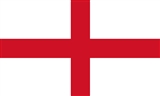
England is the largest and most populous constituent country of the
United Kingdom. Its inhabitants account for more than 83% of the total population of the United Kingdom, whilst the mainland territory of England occupies most of the southern two-thirds of the island of
Great Britain and shares land borders with
Scotland to the north and
Wales to the west. Elsewhere, it is bordered by the
North Sea,
Irish Sea,
Atlantic Ocean, and
English Channel.
England was formed as a country during the
10th century and takes its name from the
Angles - one of a number of
Germanic tribes who settled in the territory during the 5th and 6th centuries. The capital city of England is
London, which is the largest city in the United Kingdom and one of the worlds'
Global Cities.
England ranks as one of the most influential and far-reaching centres of cultural development in the world; it is the heart of both the
English language and the
Church of England, was the historic centre of the
British Empire, and the birthplace of the
Industrial Revolution.
The
Kingdom of England was an independent state until 1 May 1707, when the Acts of Union resulted in a political union with the
Kingdom of Scotland to create the
Kingdom of Great Britain.
England's National Day is
St George's Day, which is celebrated annually on April 23.
Etymology
England is named after the
Angles , one of a number of
Germanic tribes who settled in England in the 5th and 6th centuries. This is also the origin of its
Latin name,
Anglia.
History
Roman conquest of Britain
By AD43, the time of the main Roman invasion of Britain, Britain had already frequently been the target of invasions, planned and actual, by forces of the Roman Republic and Roman Empire. In common with other regions on the edge of the empire, Britain had long enjoyed trading links with the Romans and their economic and cultural influence was a significant part of the British late pre-Roman Iron Age, especially in the south.
Anglo-Saxon England
The
History of Anglo-Saxon England covers the history of early mediaeval England from the end of Roman Britain and the establishment of Anglo-Saxon kingdoms in the 5th century until the Conquest by the Normans in 1066.
Fragmentary knowledge of Anglo-Saxon England in the 5th and 6th centuries comes from the British writer Gildas the Anglo-Saxon Chronicle , saints' lives, poetry, archaeological findings, and place-name studies.
The dominant themes of the 7th to 10th centuries were the spread of Christianity and the political unification of England. Christianity is thought to have came from two directions—
Rome from the south and Scotland and
Ireland to the north and west.
Heptarchy is a term used to refer to the existence of the seven petty kingdoms which eventually merged to become the
Kingdom of England during the early
10th century. These included
Northumbria,
Mercia,
East Anglia, Essex, Kent, Sussex, and
Wessex.
The Anglo-Saxon kingdoms tended to coalesce by means of warfare. As early as the time of
Ethelbert of Kent, one king could be recognized as Bretwalda, or "Lord of Britain". Generally speaking, the title fell in the 7th century to the kings of Northumbria, in the 8th to those of Mercia, and finally, in the 9th, to
Egbert of Wessex, who in 825 defeated the Mercians at Ellendun. In the next century his family came to rule all England.
Kingdom of England
Originally, England was a geographical term to describe the territory of Britain which was occupied by the
Anglo-Saxons, rather than a name of an individual
nation state.
The Kingdom of England wasn't founded until the separate petty kingdoms were unified under
Alfred the Great king of Wessex, who later proclaimed himself King of the English after liberating
London from the
Danes in 886.
For the next few hundred years, the Kingdom of England would fall in and out of power between several
West-Saxon and
Danish kings. For over half a century, the unified Kingdom of England became part of a vast Danish empire under
Cnut, before regaining independence for a short period under the restored West-Saxon lineage of
Edward the Confessor.
The Kingdom of England continued to exist as an independent nation-state right through to the Acts of Union and the
Union of Crowns. However the political ties and direction of England were changed forever with the arrival of the
Norman conquest in 1066.
Norman conquest
The
Norman conquest of England was the conquest of the
Kingdom of England by
William the Conqueror , in 1066 at the
Battle of Hastings and the subsequent Norman control of England. It is an important watershed in English history for a number of reasons. The conquest linked England more closely with Continental
Europe and lessened
Scandinavian influence. The success of the conquest created one of the most powerful monarchies in Europe, created the most sophisticated governmental system in Europe, changed the
English language and culture, and set the stage for English-
French conflict that would last into the
19th century.
The events of the conquest also paved the way for a pivotal historical document to be produced - the
Domesday Book. The Domesday Book, was the record of the great survey of England completed in 1086, executed for William the Conqueror. The survey was similar to a census by a government of today and is England's earliest surviving public records publication.
The Norman conquest, to this day, remains the last successful military conquest of England.
Mediaeval England
The next few hundred years saw England as an important part of expanding and dwindling empires based in
France, with the "King of England" being a subsidiary title of a succession of French-speaking Dukes of territories in what is now France. Only when English kings realised that their losses in France meant that England was now their richest and most important possession did they accept the same "nationality" and language as their subjects in England. They used England as a source of troops to enlarge their personal holdings in France for many years ; in fact the English crown did not relinquish its last foothold on mainland France until
Calais was lost during the reign of Mary Tudor .
The
Principality of Wales, under the control of English monarchs from the Statute of Rhuddlan in 1284, became part of the
Kingdom of England by the
Laws in Wales Act 1535. Wales shared a legal identity with England as the joint entity originally called
England and later
England and Wales.
Reformation
The
English Reformation was the process whereby the external authority of the
Roman Catholic Church in England was abolished and replaced with Royal Supremacy and the establishment of a
Church of England outside the Roman Catholic Church and under the Supreme Governance of the English monarch. The English Reformation differed from its other European counterparts in that it was more of a political than a
theological dispute which was at the root of it. The break with
Rome started in the reign of
Henry VIII.
The English Reformation ultimately paved the way for the spread of
Anglicanism in the church and other institutions.
English Civil War
The
English Civil War was a series of armed conflicts and political machinations which took place between Parliamentarians and
Royalists from 1642 until 1651. The first and second civil wars pitted the supporters of
King Charles I against the supporters of the Long Parliament, while the third war of saw fighting between supporters of
King Charles II and supporters of the Rump Parliament. The Civil War ended with the Parliamentary victory at the Battle of Worcester on 3 September 1651.
The Civil War led to the trial and execution of
Charles I of England, the exile of his son
Charles II and the replacement of the English monarchy with the
Commonwealth of England and then with a
Protectorate : the personal rule of
Oliver Cromwell. The monopoly of the
Church of England on Christian worship in England came to an end, and the victors consolidated the already-established
Protestant Ascendancy in Ireland. Constitutionally, the wars established a precedent that British monarchs could not govern without the consent of Parliament although this would not be cemented until the
Glorious Revolution later in the century.
Charles II was the restored
House of Stuart King of England in 1660, shortly after Cromwell's death.
Great Britain and the United Kingdom
When the
Kingdom of England and the
Kingdom of Scotland merged to form the unified
Kingdom of Great Britain under the
Acts of Union in 1707, both England and Scotland lost their political, , identities. This union has subsequently changed its name twice: firstly on the merger with the
Kingdom of Ireland following the
Act of Union in 1800 creating the
United Kingdom of Great Britain and Ireland in 1801, and then following the secession from the union of the
Irish Free State under the terms of the
Government of Ireland Act 1920, the
United Kingdom of Great Britain and Northern Ireland. Throughout these changes, England retained a separate legal identity from its partners, with a separate legal system from those in
Northern Ireland and
Scotland, and eventually the strong feelings of the Welsh were acknowledged when it was decided that the name would henceforth be "England and Wales".
Wales gained even more of an identity when, like Scotland, it gained its own department within the UK government, the
Welsh Office.
Politics
There has not been a Government of England since 1707 when the
Kingdom of England and Wales merged with the
Kingdom of Scotland to form the
Kingdom of Great Britain, although both kingdoms had been ruled by a single monarch since 1603 under
James I of England. Prior to the
Acts of Union 1707, England was ruled by a
monarch and the
Parliament of England.
The Scottish and Welsh governing institutions were created by the UK parliament along with strong support from the majority of people of Scotland and Wales, and are not yet independent of the rest of Britain. However, this gave each country a separate and distinct political identity, leaving England as the only part of Britain directly ruled in nearly all matters by the British government in London. In Cornwall, a region of England claiming a distinct national identity, there has been a campaign for a
Cornish assembly along Welsh lines by nationalist parties such as
Mebyon Kernow,they could come back to their natural roots to become part of wales once more, which recently collected more than 150,000 signatures in support.
Regarding parliamentary matters, a long-standing anomaly called the West Lothian question has come to the fore. Before Scottish devolution, purely-Scottish matters were debated at Westminster, but subject to a convention that only Scottish MPs could vote on them. The "Question" was that there was no "reverse" convention: Scottish MPs could and did vote on issues relating only to England and Wales. Welsh devolution has removed the anomaly for Wales, but not for England: Scottish and Welsh MPs can vote on English issues, but Scottish and Welsh issues are not debated at Westminster at all. This problem is exacerbated by an over-representation of Scottish MPs in the government, sometimes referred to as the Scottish mafia; as of September 2006, seven of the twenty-three
Cabinet members are Scottish, including the Prime Minister, Chancellor of the Exchequer and Home Secretary.
In terms of national administration, England's affairs are managed by a combination of the
UK government, the UK parliament, a number of England-specific quangos, such as
English Heritage, and the Regional Development Authorities .
There are calls for a devolved English Parliament, and some English people and parties go further by calling for the dissolution of the Union entirely. However, the approach favoured by the current
Labour government was to propose the devolution of power to the
Regions of England.
Lord Falconer claimed a devolved English parliament would dwarf the rest of the United Kingdom. Referendums would decide whether people wanted to vote for
regional assemblies to watch over the work of the non-elected RDAs.
During the campaign, a common criticism of the proposals was that England "did not need another layer of bureaucrats". On the other hand, many said that they were not decentralising enough, and amounted not to devolution, but to little more than local government reorganisation, with no real power being removed from central government, and no real power given to the regions, which would not even gain the limited powers of the
Welsh Assembly, much less the tax-varying and legislative powers of the
Scottish Parliament . They said that power was simply re-allocated within the region, with little new resource allocation and no real prospects of Assemblies being able to change the pattern of regional aid. Late in the process, responsibility for regional transport was added to the proposals. This was perhaps crucial in the North East, where resentment at the Barnett Formula, which delivers greater regional aid to adjacent
Scotland, was a significant impetus for the North East devolution campaign. However, a
referendum on this issue in
North East England on 4 November 2004 rejected this proposal, and plans for referendums in other Regions were shelved.
England is the only country in the United Kingdom and
European Union without a parliament.
Subdivisions
Historically, the highest level of local government in England was the
county. These divisions had emerged from a range of units of old, pre-unification England and further Mediaeval reorganisations . These
historical county lines were usually drawn up before the
industrial revolution and the mass urbanisation of England. The counties each had a county town and many county names were drawn from these .
Since the latter part of the
19th Century there has been a series of local government reorganisations. The solution to the emergence of large urban areas was the creation of large
metropolitan counties centred on cities . In the
1990s reform of local government, there began the creation of unitary authorities, where districts gained the administrative status of a county. Today, there exists some confusion between the
ceremonial counties and the
metropolitan and non-metropolitan counties.
Non-metropolitan counties are divided into one or more districts. At the very lowest level, England is divided into
parishes, though these are not to be found everywhere . Parishes are prohibited from existing in Greater London.
England is now also divided into
9 regions, which do not have an elected authority and exist to co-ordinate certain local government functions across a wider area.
London is a special case, and is the one region which currently has a representative
authority as well as a directly elected mayor. The 32
London boroughs and the
Corporation of London remain the local form of government in the city.
Other than
London , the official regions are:
Geography
England comprises the central and southern two-thirds of the island of
Great Britain, plus offshore islands of which the largest is the
Isle of Wight. It is bordered to the north by
Scotland and to the west by
Wales. It is closer to continental Europe than any other part of Britain, divided from France only by a 38 km sea gap.
Most of England consists of rolling hills, but it is more mountainous in the north with a chain of low mountains, the
Pennines, dividing east and west. The dividing line between terrain types is usually indicated by the
Tees-Exe line. There is also an area of flat, low-lying marshland in the east, much of which has been drained for agricultural use.
The list of England's largest cities is much debated because in
English the normal meaning of
city is "a continuously built-up urban area"; these are hard to define and various other definitions are preferred by some people to boost the ranking of their own city. However, by any definition
London is by far the largest English city.
Manchester and
Birmingham now vie for second place. A number of other cities, mainly in central and northern England, are of substantial size and influence. These include:
Leeds,
Liverpool,
Newcastle,
Sheffield,
Bristol,
Coventry,
Leicester,
Nottingham and
Hull.
The
Channel Tunnel, near
Folkestone, directly links England to the
European mainland. The English/
French border is halfway along the tunnel.
The largest natural harbour in England is at
Poole, on the south-central coast. Some regard it as the second largest harbour in the world, after Sydney Australia, although this fact is disputed .
Climate
England has a temperate climate, with plentiful
rainfall all year round, though the
seasons are quite variable in temperature. However, temperatures rarely fall below −5°C or rise above 30°C . The prevailing
wind is from the southwest, bringing mild and wet weather to England regularly from the
Atlantic Ocean. It is driest in the
east and warmest in the southeast, which is closest to the
European mainland.
Snowfall can occur in
Winter and early
Spring, though it is not that common away from high ground.
The highest temperature ever recorded in England is 38.5
°C on August 10, 2003 at Brogdale, near Faversham, in
Kent.. The lowest temp