
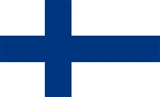
Finland officially the
Republic of Finland, is a
Nordic countryThe Nordic countries make up a region in Northern Europe and the North Atlantic which consists of Denmark, Finland, Iceland, Norway and Sweden and their associated territories, the Faroe Islands, Greenland and Åland...
situated in the
FennoscandiaFennoscandia and Fenno-Scandinavia are geographic and geological terms used to describe the Scandinavian Peninsula, the Kola Peninsula, Karelia and Finland...
n region of
Northern EuropeNorthern Europe is the northern part or region of Europe. Northern Europe typically refers to the seven countries in the northern part of the European subcontinent which includes Denmark, Estonia, Latvia, Lithuania, Norway, Finland and Sweden...
. It is bordered by
SwedenSweden , officially the Kingdom of Sweden , is a Nordic country on the Scandinavian Peninsula in Northern Europe. Sweden borders with Norway and Finland and is connected to Denmark by a bridge-tunnel across the Öresund....
in the west,
NorwayNorway , officially the Kingdom of Norway, is a Nordic unitary constitutional monarchy whose territory comprises the western portion of the Scandinavian Peninsula, Jan Mayen, and the Arctic archipelago of Svalbard and Bouvet Island. Norway has a total area of and a population of about 4.9 million...
in the north and
RussiaRussia or , officially known as both Russia and the Russian Federation , is a country in northern Eurasia. It is a federal semi-presidential republic, comprising 83 federal subjects...
in the east, while
EstoniaEstonia , officially the Republic of Estonia , is a state in the Baltic region of Northern Europe. It is bordered to the north by the Gulf of Finland, to the west by the Baltic Sea, to the south by Latvia , and to the east by Lake Peipsi and the Russian Federation . Across the Baltic Sea lies...
lies to its south across the
Gulf of FinlandThe Gulf of Finland is the easternmost arm of the Baltic Sea. It extends between Finland and Estonia all the way to Saint Petersburg in Russia, where the river Neva drains into it. Other major cities around the gulf include Helsinki and Tallinn...
.
Around 5.4 million people reside in Finland, with the majority concentrated in the southern region. It is the
eighth largest country in Europe in terms of areaThis is a list of countries and territories in Europe by population density. The list includes all entities falling even partially under any of the various common definitions of Europe, geographic or political....
and the most sparsely populated country in the
European UnionThe European Union is an economic and political union of 27 independent member states which are located primarily in Europe. The EU traces its origins from the European Coal and Steel Community and the European Economic Community , formed by six countries in 1958...
. Finland is a
parliamentaryA parliamentary system is a system of government in which the ministers of the executive branch get their democratic legitimacy from the legislature and are accountable to that body, such that the executive and legislative branches are intertwined....
republicA republic is a form of government in which the people, or some significant portion of them, have supreme control over the government and where offices of state are elected or chosen by elected people. In modern times, a common simplified definition of a republic is a government where the head of...
with a central government based in
HelsinkiHelsinki is the capital and largest city in Finland. It is in the region of Uusimaa, located in southern Finland, on the shore of the Gulf of Finland, an arm of the Baltic Sea. The population of the city of Helsinki is , making it by far the most populous municipality in Finland. Helsinki is...
and local governments in 336 municipalities. A total of about one million residents live in the
Greater HelsinkiGreater Helsinki and the smaller Helsinki Metropolitan Area or Capital Region refer to two regions of different size surrounding Helsinki, the capital of Finland...
area (which includes Helsinki,
EspooEspoo is the second largest city and municipality in Finland. The population of the city of Espoo is . It is part of the Helsinki Metropolitan Area along with the cities of Helsinki, Vantaa, and Kauniainen. Espoo shares its eastern border with Helsinki and Vantaa, while enclosing Kauniainen....
,
KauniainenKauniainen is a small town and a municipality of inhabitants in the Helsinki Metropolitan Area, Finland. It is surrounded by the city of Espoo, in Greater Helsinki...
and
VantaaVantaa is a city and municipality in Finland. Helsinki, Vantaa, Espoo and Kauniainen make up the Helsinki Metropolitan Area.Vantaa, with its population of , is the fourth most populated city of Finland. The biggest airport in Finland, the Helsinki-Vantaa Airport, is located there...
), and a third of the country's
GDPGross domestic product refers to the market value of all final goods and services produced within a country in a given period. GDP per capita is often considered an indicator of a country's standard of living....
is produced there. Other larger cities include
TampereTampere is a city in southern Finland. It is the most populous inland city in any of the Nordic countries. The city has a population of , growing to approximately 300,000 people in the conurbation and over 340,000 in the metropolitan area. Tampere is the third most-populous municipality in...
,
TurkuTurku is a city situated on the southwest coast of Finland at the mouth of the Aura River. It is located in the region of Finland Proper. It is believed that Turku came into existence during the end of the 13th century which makes it the oldest city in Finland...
,
OuluOulu is a city and municipality of inhabitants in the region of Northern Ostrobothnia, in Finland. It is the most populous city in Northern Finland and the sixth most populous city in the country. It is one of the northernmost larger cities in the world....
,
JyväskyläJyväskylä is the capital of Central Finland and the largest city on the Finnish Lakeland, north-east of Tampere and north of Helsinki, on northern coast of lake Päijänne. The city has been continuously one of the most rapidly growing cities in Finland since World War II. The city is surrounded...
,
LahtiLahti is a city and municipality in Finland.Lahti is the capital of the Päijänne Tavastia region. It is situated on a bay at the southern end of lake Vesijärvi about north-east of the capital Helsinki...
and
KuopioKuopio is a city and a municipality located in the region of Northern Savonia, Finland. A population of makes it the ninth biggest city in the country. The city has a total area of , of which is water and half forest...
.
Finland was historically a part of
SwedenSweden , officially the Kingdom of Sweden , is a Nordic country on the Scandinavian Peninsula in Northern Europe. Sweden borders with Norway and Finland and is connected to Denmark by a bridge-tunnel across the Öresund....
, and from 1809–1917 was
an autonomous Grand DuchyThe Grand Duchy of Finland was the predecessor state of modern Finland. It existed 1809–1917 as part of the Russian Empire and was ruled by the Russian czar as Grand Prince.- History :...
within the
Russian EmpireThe Russian Empire was a state that existed from 1721 until the Russian Revolution of 1917. It was the successor to the Tsardom of Russia and the predecessor of the Soviet Union...
. The Finnish Declaration of Independence from
RussiaRussia or , officially known as both Russia and the Russian Federation , is a country in northern Eurasia. It is a federal semi-presidential republic, comprising 83 federal subjects...
in 1917 was followed by
a civil warThe Finnish Civil War was a part of the national, political and social turmoil caused by World War I in Europe. The Civil War concerned control and leadership of The Grand Duchy of Finland as it achieved independence from Russia after the October Revolution in Petrograd...
in which the leftist side was defeated with
GermanThe German Empire refers to Germany during the "Second Reich" period from the unification of Germany and proclamation of Wilhelm I as German Emperor on 18 January 1871, to 1918, when it became a federal republic after defeat in World War I and the abdication of the Emperor, Wilhelm II.The German...
support. Finland fought
World War IIWorld War II, or the Second World War , was a global conflict lasting from 1939 to 1945, involving most of the world's nations—including all of the great powers—eventually forming two opposing military alliances: the Allies and the Axis...
as essentially three separate conflicts: the
Winter WarThe Winter War was a military conflict between the Soviet Union and Finland. It began with a Soviet offensive on 30 November 1939 – three months after the start of World War II and the Soviet invasion of Poland – and ended on 13 March 1940 with the Moscow Peace Treaty...
(1939–1940), the
Continuation WarThe Continuation War was the second of two wars fought between Finland and the Soviet Union during World War II.At the time of the war, the Finnish side used the name to make clear its perceived relationship to the preceding Winter War...
(1941–1944), and the
Lapland WarThe Lapland War were the hostilities between Finland and Nazi Germany between September 1944 and April 1945, fought in Finland's northernmost Lapland Province. While the Finns saw this as a separate conflict much like the Continuation War, German forces considered their actions to be part of the...
(1944–1945). Finland joined the
United NationsThe United Nations is an international organization whose stated aims are facilitating cooperation in international law, international security, economic development, social progress, human rights, and achievement of world peace...
in 1955, the
OECDThe Organisation for Economic Co-operation and Development is an international economic organisation of 34 countries founded in 1961 to stimulate economic progress and world trade...
in 1969, the
European UnionThe European Union is an economic and political union of 27 independent member states which are located primarily in Europe. The EU traces its origins from the European Coal and Steel Community and the European Economic Community , formed by six countries in 1958...
in 1995, and the
eurozoneThe eurozone , officially called the euro area, is an economic and monetary union of seventeen European Union member states that have adopted the euro as their common currency and sole legal tender...
since its inception in 1999.
Finland was a relative latecomer to
industrialisationIndustrialization is the process of social and economic change that transforms a human group from an agrarian society into an industrial one...
, remaining a largely
agrarianAgriculture is the cultivation of animals, plants, fungi and other life forms for food, fiber, and other products used to sustain life. Agriculture was the key implement in the rise of sedentary human civilization, whereby farming of domesticated species created food surpluses that nurtured the...
country until the 1950s. Thereafter, economic development was rapid. Finland built an extensive welfare state and balanced between the East and the West in global economics and politics. With the best educational system in
EuropeEurope is, by convention, one of the world's seven continents. Comprising the westernmost peninsula of Eurasia, Europe is generally 'divided' from Asia to its east by the watershed divides of the Ural and Caucasus Mountains, the Ural River, the Caspian and Black Seas, and the waterways connecting...
, Finland has recently ranked as one of the world's most
peacePeace is a state of harmony characterized by the lack of violent conflict. Commonly understood as the absence of hostility, peace also suggests the existence of healthy or newly healed interpersonal or international relationships, prosperity in matters of social or economic welfare, the...
ful,
competitiveCompetitiveness is a comparative concept of the ability and performance of a firm, sub-sector or country to sell and supply goods and/or services in a given market...
and livable countries.
Finland
Among the first documents to mention Finland are two rune-stones. There is one in the Swedish province
UpplandUppland is a historical province or landskap on the eastern coast of Sweden, just north of Stockholm, the capital. It borders Södermanland, Västmanland and Gästrikland. It is also bounded by lake Mälaren and the Baltic sea...
, with the inscription
finlonti (U 582) and one in
GotlandGotland is a county, province, municipality and diocese of Sweden; it is Sweden's largest island and the largest island in the Baltic Sea. At 3,140 square kilometers in area, the region makes up less than one percent of Sweden's total land area...
, in the
Baltic SeaThe Baltic Sea is a brackish mediterranean sea located in Northern Europe, from 53°N to 66°N latitude and from 20°E to 26°E longitude. It is bounded by the Scandinavian Peninsula, the mainland of Europe, and the Danish islands. It drains into the Kattegat by way of the Øresund, the Great Belt and...
, with the inscription
finlandi (G 319), the latter dating from the 13th century.
Suomi
The name
Suomi (
FinnishFinnish is the language spoken by the majority of the population in Finland Primarily for use by restaurant menus and by ethnic Finns outside Finland. It is one of the two official languages of Finland and an official minority language in Sweden. In Sweden, both standard Finnish and Meänkieli, a...
for "Finland") has uncertain origins, but a candidate for a cognate is the Proto-Baltic word
*zeme, meaning "land". In addition to the close relatives of Finnish (the
Finnic languagesThe term Finnic languages often means the Baltic-Finnic languages, an undisputed branch of the Uralic languages. However, it is also commonly used to mean the Finno-Permic languages, a hypothetical intermediate branch that includes Baltic Finnic, or the more disputed Finno-Volgaic languages....
), this name is also used in the
Baltic languagesThe Baltic languages are a group of related languages belonging to the Balto-Slavic branch of the Indo-European language family and spoken mainly in areas extending east and southeast of the Baltic Sea in Northern Europe...
LatvianLatvian is the official state language of Latvia. It is also sometimes referred to as Lettish. There are about 1.4 million native Latvian speakers in Latvia and about 150,000 abroad. The Latvian language has a relatively large number of non-native speakers, atypical for a small language...
and
LithuanianLithuanian is the official state language of Lithuania and is recognized as one of the official languages of the European Union. There are about 2.96 million native Lithuanian speakers in Lithuania and about 170,000 abroad. Lithuanian is a Baltic language, closely related to Latvian, although they...
. Alternatively, the Indo-European word *
gʰm-on "man" (cf. Gothic
guma, Latin
homo) has been suggested, being borrowed as *
ćoma. The word originally referred only to the province of
Finland ProperFinland Proper or Southwest Finland , is a region in south-western Finland. It borders the regions of Satakunta, Tavastia Proper, Ahvenanmaa and Uusimaa.- Municipalities :...
, and later to the northern coast of
Gulf of FinlandThe Gulf of Finland is the easternmost arm of the Baltic Sea. It extends between Finland and Estonia all the way to Saint Petersburg in Russia, where the river Neva drains into it. Other major cities around the gulf include Helsinki and Tallinn...
, with northern lands such as
OstrobothniaOstrobothnia, and , is a historical province of Finland to the west and north in Finland. It borders on Karelia, Savonia, Tavastia and Satakunda in the south, and on Västerbotten in Sweden, and Laponia in the north...
still being excluded as late as the 18th century. Earlier theories suggested derivation from
suomaa (
fenA fen is a type of wetland fed by mineral-rich surface water or groundwater. Fens are characterised by their water chemistry, which is neutral or alkaline, with relatively high dissolved mineral levels but few other plant nutrients...
land) or
suoniemi (fen cape), and parallels between
saame (
SamiThe Sami people, also spelled Sámi, or Saami, are the arctic indigenous people inhabiting Sápmi, which today encompasses parts of far northern Sweden, Norway, Finland, the Kola Peninsula of Russia, and the border area between south and middle Sweden and Norway. The Sámi are Europe’s northernmost...
, a non-Finnish people in Finland) and
HämeHäme is the name of a geographical region in Finland. It is an ancient Finnish word, etymologically related to sápmi, the endonym of the Sami people...
(a Finnish people and a province) were drawn, but these theories are now considered outdated.
Prehistory
According to
archaeologicalArchaeology, or archeology , is the study of human society, primarily through the recovery and analysis of the material culture and environmental data that they have left behind, which includes artifacts, architecture, biofacts and cultural landscapes...
evidence, the area now comprising Finland was settled at the latest around 8500 BCE during the
Stone AgeThe Stone Age is a broad prehistoric period, lasting about 2.5 million years , during which humans and their predecessor species in the genus Homo, as well as the earlier partly contemporary genera Australopithecus and Paranthropus, widely used exclusively stone as their hard material in the...
as the ice sheet of the last ice age receded. The
artifactsAn artifact or artefact is "something made or given shape by man, such as a tool or a work of art, esp an object of archaeological interest"...
the first settlers left behind present characteristics that are shared with those found in Estonia, Russia and Norway. The earliest people were
hunter-gathererA hunter-gatherer or forage society is one in which most or all food is obtained from wild plants and animals, in contrast to agricultural societies which rely mainly on domesticated species. Hunting and gathering was the ancestral subsistence mode of Homo, and all modern humans were...
s, using stone tools. The first pottery appeared in 5200 BCE when the
Comb Ceramic cultureThe Pit–Comb Ware culture Comb Ceramic culture was a northeast European culture of pottery-making hunter-gatherers. It existed from around 4200 BC to around 2000 BC...
was introduced. The arrival of the
Corded Ware cultureThe Corded Ware culture , alternatively characterized as the Battle Axe culture or Single Grave culture, is an enormous European archaeological horizon that begins in the late Neolithic , flourishes through the Copper Age and culminates in the early Bronze Age.Corded Ware culture is associated with...
in southern coastal Finland between 3000–2500 BCE may have coincided with the start of agriculture. Even with the introduction of agriculture, hunting and fishing continued to be important parts of the subsistence economy.
The
Bronze AgeThe Bronze Age is a period characterized by the use of copper and its alloy bronze as the chief hard materials in the manufacture of some implements and weapons. Chronologically, it stands between the Stone Age and Iron Age...
(1500–500 BCE) and
Iron AgeThe Iron Age is the archaeological period generally occurring after the Bronze Age, marked by the prevalent use of iron. The early period of the age is characterized by the widespread use of iron or steel. The adoption of such material coincided with other changes in society, including differing...
(500 BCE–1200 CE) were characterised by extensive contacts with other cultures in the
FennoscandiaFennoscandia and Fenno-Scandinavia are geographic and geological terms used to describe the Scandinavian Peninsula, the Kola Peninsula, Karelia and Finland...
n and
Baltic regionThe terms Baltic region, Baltic Rim countries, and Baltic Rim refer to slightly different combinations of countries in the general area surrounding the Baltic Sea.- Etymology :...
s. There is no consensus on when
Uralic languagesThe Uralic languages constitute a language family of some three dozen languages spoken by approximately 25 million people. The healthiest Uralic languages in terms of the number of native speakers are Hungarian, Finnish, Estonian, Mari and Udmurt...
and
Indo-European languagesThe Indo-European languages are a family of several hundred related languages and dialects, including most major current languages of Europe, the Iranian plateau, and South Asia and also historically predominant in Anatolia...
were first spoken in the area of contemporary Finland. During the 1st millennium AD early Finnish was spoken at least in agricultural settlements of Southern Finland, whereas Sámi-speaking populations occupied
most parts of the country.
Swedish era
Swedish kings established their rule in the
Northern CrusadesThe Northern Crusades or Baltic Crusades were crusades undertaken by the Christian kings of Denmark and Sweden, the German Livonian and Teutonic military orders, and their allies against the pagan peoples of Northern Europe around the southern and eastern shores of the Baltic Sea...
from the
12th centuryFirst Swedish Crusade is a legendary military expedition presumably in the 1150s that has traditionally been seen as the conquest of Finland by Sweden, with pagan Finns converting to Christianity. According to the legend, the crusade was conducted by King Eric IX of Sweden...
until
1249The Second Swedish Crusade was a Swedish military expedition to areas in present-day Finland by Birger jarl in the 13th century. As a result of the crusade, Finland became permanently part of Sweden for the next 550 years.-Year of the crusade:...
. The area of present-day Finland became a
fully consolidated partThe consolidation of Sweden was a long process during which the loosely organized social system consolidated under the power of the king. The actual age of the Swedish kingdom is unknown...
of the Swedish kingdom. Swedish-speaking settlers arrived in some coastal regions during the medieval time. Swedish became the dominant language of the nobility, administration and education;
FinnishFinnish is the language spoken by the majority of the population in Finland Primarily for use by restaurant menus and by ethnic Finns outside Finland. It is one of the two official languages of Finland and an official minority language in Sweden. In Sweden, both standard Finnish and Meänkieli, a...
was chiefly a language for the
peasantA peasant is an agricultural worker who generally tend to be poor and homeless-Etymology:The word is derived from 15th century French païsant meaning one from the pays, or countryside, ultimately from the Latin pagus, or outlying administrative district.- Position in society :Peasants typically...
ry,
clergyClergy is the generic term used to describe the formal religious leadership within a given religion. A clergyman, churchman or cleric is a member of the clergy, especially one who is a priest, preacher, pastor, or other religious professional....
and local
courtA court is a form of tribunal, often a governmental institution, with the authority to adjudicate legal disputes between parties and carry out the administration of justice in civil, criminal, and administrative matters in accordance with the rule of law...
s in predominantly Finnish-speaking areas.
During the
Protestant ReformationThe Protestant Reformation was a 16th-century split within Western Christianity initiated by Martin Luther, John Calvin and other early Protestants. The efforts of the self-described "reformers", who objected to the doctrines, rituals and ecclesiastical structure of the Roman Catholic Church, led...
, the Finns gradually converted to
LutheranismLutheranism is a major branch of Western Christianity that identifies with the theology of Martin Luther, a German reformer. Luther's efforts to reform the theology and practice of the church launched the Protestant Reformation...
. In the 16th century,
Mikael AgricolaMikael Agricola was a clergyman who became the de facto founder of written Finnish and a prominent proponent of the Protestant Reformation in Sweden . He is often called the "father of the Finnish written language". Agricola was consecrated as the bishop of Turku in 1554, without papal approval...
published the first written works in Finnish. The first university in Finland,
The Royal Academy of TurkuThe Royal Academy of Turku was the first university in Finland, and the only university in present-day Finland to be founded when it was still a part of Sweden. In 1809, after Finland became a Grand Duchy under the suzerainty of the Russian Tzar, it was renamed the Imperial Academy of Turku...
, was established in 1640. Finland suffered a severe
famine in 1696–1697The Great Famine of Finland killed about a third of the Finnish population in two years....
, during which about one-third of the Finnish population died. In the 18th century, wars between Sweden and Russia led to the occupation of Finland twice by Russian forces, wars known to the Finns as the
Greater WrathThe Greater Wrath is a term used in Finnish history for the Russian invasion and subsequent military occupation of Eastern Sweden, now Finland, from 1714 until the treaty of Nystad 1721, which ended the Great Northern War, although sometimes the term is used to denote all of the Great Northern...
(1714–1721) and the Lesser Wrath (1742–1743). By this time Finland was the predominant term for the whole area from the
Gulf of BothniaThe Gulf of Bothnia is the northernmost arm of the Baltic Sea. It is situated between Finland's west coast and Sweden's east coast. In the south of the gulf lie the Åland Islands, between the Sea of Åland and the Archipelago Sea.-Name:...
to the Russian border.
Russian Empire era
On March 29, 1809, having been taken over by the armies of
Alexander I of RussiaAlexander I of Russia , served as Emperor of Russia from 23 March 1801 to 1 December 1825 and the first Russian King of Poland from 1815 to 1825. He was also the first Russian Grand Duke of Finland and Lithuania....
in the
Finnish WarThe Finnish War was fought between Sweden and the Russian Empire from February 1808 to September 1809. As a result of the war, the eastern third of Sweden was established as the autonomous Grand Duchy of Finland within the Russian Empire...
, Finland became an autonomous
Grand DuchyThe Grand Duchy of Finland was the predecessor state of modern Finland. It existed 1809–1917 as part of the Russian Empire and was ruled by the Russian czar as Grand Prince.- History :...
in the
Russian EmpireThe Russian Empire was a state that existed from 1721 until the Russian Revolution of 1917. It was the successor to the Tsardom of Russia and the predecessor of the Soviet Union...
until the end of 1917. In 1811 Alexander I incorporated Russian Vyborg province into Grand Duchy of Finland. During the Russian era, the Finnish language began to gain recognition. From the 1860s onwards, a strong Finnish
nationalist movementEthnic nationalism is a form of nationalism wherein the "nation" is defined in terms of ethnicity. Whatever specific ethnicity is involved, ethnic nationalism always includes some element of descent from previous generations and the implied claim of ethnic essentialism, i.e...
known as the
FennomanThe Fennomans were the most important political movement in the 19th century Grand Principality of Finland. They succeeded the fennophile interests of the 18th and early 19th century.-History:...
movement grew. Milestones included the publication of what would become Finland's
national epicA national epic is an epic poem or a literary work of epic scope which seeks or is believed to capture and express the essence or spirit of a particular nation; not necessarily a nation-state, but at least an ethnic or linguistic group with aspirations to independence or autonomy...
– the
KalevalaThe Kalevala is a 19th century work of epic poetry compiled by Elias Lönnrot from Finnish and Karelian oral folklore and mythology.It is regarded as the national epic of Finland and is one of the most significant works of Finnish literature...
– in 1835, and the Finnish language's achieving equal legal status with Swedish in 1892.
The Finnish famine of 1866–1868 killed 15% of the population, making it one of the worst
famineA famine is a widespread scarcity of food, caused by several factors including crop failure, overpopulation, or government policies. This phenomenon is usually accompanied or followed by regional malnutrition, starvation, epidemic, and increased mortality. Every continent in the world has...
s in European history. The famine led the Russian Empire to ease financial regulations, and investment rose in following decades. Economic and political development was rapid. The GDP per capita was still half of that of the
United StatesThe United States of America is a federal constitutional republic comprising fifty states and a federal district...
and a third of that of
BritainThe United Kingdom of Great Britain and Northern IrelandIn the United Kingdom and Dependencies, other languages have been officially recognised as legitimate autochthonous languages under the European Charter for Regional or Minority Languages...
.
In 1906,
universal suffrageUniversal suffrage consists of the extension of the right to vote to adult citizens as a whole, though it may also mean extending said right to minors and non-citizens...
was adopted in the Grand Duchy of Finland. However, the relationship between the Grand Duchy and the Russian Empire soured when the Russian government made moves to restrict Finnish
autonomyAn autonomous area or autonomous entity is an area of a country that has a degree of autonomy, or freedom from an external authority. Typically it is either geographically distinct from the rest of the country or populated by a national minority. Countries that include autonomous areas are often...
. For example, the universal suffrage was, in practice, virtually meaningless, since the tsar did not have to approve any of the laws adopted by the Finnish parliament. Desire for independence gained ground, first among radical liberals and socialists.
Civil war and early independence
After the 1917
February RevolutionThe February Revolution of 1917 was the first of two revolutions in Russia in 1917. Centered around the then capital Petrograd in March . Its immediate result was the abdication of Tsar Nicholas II, the end of the Romanov dynasty, and the end of the Russian Empire...
the position of Finland as part of the Russian Empire was questioned, mainly by
Social DemocratsThe Russian Social Democratic Labour Party , also known as Russian Social Democratic Workers' Party or Russian Social Democratic Party, was a revolutionary socialist Russian political party formed in 1898 in Minsk to unite the various revolutionary organizations into one party...
. Since the head of state was the Czar of Russia, it was not clear who the chief executive of Finland was after the revolution. The parliament, controlled by social democrats, passed the so-called
Power Law, which would give the highest authority to the parliament. This was rejected by the
Russian Provisional GovernmentThe Russian Provisional Government was the short-lived administrative body which sought to govern Russia immediately following the abdication of Tsar Nicholas II . On September 14, the State Duma of the Russian Empire was officially dissolved by the newly created Directorate, and the country was...
and by the right wing parties in Finland. The Provisional Government dissolved the parliament by force, which the social democrats considered illegal, since the right to do so was stripped from the Russians by the
Power Law.
New elections were conducted, in which right wing parties won a slim majority. Some social democrats refused to accept the result and still claimed that the dissolution of the parliament (and thus the ensuing elections) were extralegal. The two nearly equally powerful political blocs, the right wing parties and the social democratic party, were highly antagonized.
The
October RevolutionThe October Revolution , also known as the Great October Socialist Revolution , Red October, the October Uprising or the Bolshevik Revolution, was a political revolution and a part of the Russian Revolution of 1917...
in Russia changed the game anew. Suddenly, the right-wing parties in Finland started to reconsider their decision to block the transfer of highest executive power from the Russian government to Finland, as radical communists took power in Russia. Rather than acknowledge the authority of the
Power Law of a few months earlier, the right-wing government declared independence on December 6, 1917.
On January 27, 1918, the official opening shots of the war were fired in two simultaneous events. The government started to disarm the Russian forces in
PohjanmaaOstrobothnia, and , is a historical province of Finland to the west and north in Finland. It borders on Karelia, Savonia, Tavastia and Satakunda in the south, and on Västerbotten in Sweden, and Laponia in the north...
, and the
Social Democratic PartyThe Social Democratic Party of Finland is one of the three major political parties in Finland, along with the Centre Party and the National Coalition Party. Jutta Urpilainen is the current SDP leader. The party has been in the Finnish government cabinet for long periods and has set many...
staged a coup. The latter succeeded in controlling southern Finland and Helsinki, but the white government continued in exile from
VaasaVaasa is a city on the west coast of Finland. It received its charter in 1606, during the reign of Charles IX of Sweden and is named after the Royal House of Vasa...
. This sparked the brief but bitter
civil warThe Finnish Civil War was a part of the national, political and social turmoil caused by World War I in Europe. The Civil War concerned control and leadership of The Grand Duchy of Finland as it achieved independence from Russia after the October Revolution in Petrograd...
. The
WhitesThe White Guard was a voluntary militia that emerged victorious over the socialist Red Guard as part of the Whites in the Finnish Civil War of 1918...
, who were supported by
Imperial GermanyThe German Empire refers to Germany during the "Second Reich" period from the unification of Germany and proclamation of Wilhelm I as German Emperor on 18 January 1871, to 1918, when it became a federal republic after defeat in World War I and the abdication of the Emperor, Wilhelm II.The German...
, prevailed over the
RedsThe Red Guards formed the army of Red Finland during the Finnish Civil War in 1918. The combined strength of the Red Guard was about 30,000 at the beginning of the Civil War, and peaked at 90,000-120,000 during the course of the conflict....
. After the war tens of thousands of Reds and suspected sympathizers were interned in camps, where thousands died by execution or from malnutrition and disease. Deep social and political enmity was sown between the Reds and Whites and would last until the
Winter WarThe Winter War was a military conflict between the Soviet Union and Finland. It began with a Soviet offensive on 30 November 1939 – three months after the start of World War II and the Soviet invasion of Poland – and ended on 13 March 1940 with the Moscow Peace Treaty...
and beyond. The civil war and
activist expeditionsThe term in Finnish historiography heimosodat in English literally "Kindred Nations Wars", "Wars for kindred peoples" or "Kinship Wars" for Finnic kinship. It is often erroneously translated as "Tribal Wars"...
to the Soviet Union strained Eastern relations.
After
a brief flirtation with monarchyThe Kingdom of Finland was an abortive attempt to establish a monarchy in Finland, following Finland's independence from Russia. Had the German Empire endured, Prince Frederick Charles of Hesse would have been installed as King of Finland.-History:...
, Finland became a
presidentialA presidential system is a system of government where an executive branch exists and presides separately from the legislature, to which it is not responsible and which cannot, in normal circumstances, dismiss it....
republic, with
Kaarlo Juho StåhlbergKaarlo Juho Ståhlberg was a Finnish jurist and academic, who played a central role in the drafting of the Constitution of Finland in 1919. He was the first President of Finland and a nationalist liberal.-Early life:...
elected as its first president in 1919. The Finnish–Russian border was determined by the
Treaty of TartuThe Treaty of Tartu between Finland and Soviet Russia was signed on 14 October 1920 after negotiations that lasted for four months. The treaty confirmed the border between Finland and Soviet Russia after the Finnish civil war and Finnish volunteer expeditions in Russian East Karelia. Ratifications...
in 1920, largely following the historic border but granting
PechengaPechengsky District is an administrative and municipal district , one of the five in Murmansk Oblast, Russia. It is located to the northwest of the Kola Peninsula on the coast of the Barents Sea and borders with Finland in the south and southwest and with Norway in the west, northwest, and north...
and its
Barents SeaThe Barents Sea is a marginal sea of the Arctic Ocean, located north of Norway and Russia. Known in the Middle Ages as the Murman Sea, the sea takes its current name from the Dutch navigator Willem Barents...
harbour to Finland. Finnish democracy did not see any Soviet coup attempts and survived the anti-Communist
Lapua MovementThe Lapua Movement , was a Finnish radical nationalist and anti-communist political movement founded in and named after the town of Lapua. After radicalisation it turned towards far-right politics and was banned after a failed coup-d'état in 1932...
. The relationship between Finland and the Soviet Union was tense. Germany's relations with Finland were also not good. Military was trained in
FranceThe French Republic , The French Republic , The French Republic , (commonly known as France , is a unitary semi-presidential republic in Western Europe with several overseas territories and islands located on other continents and in the Indian, Pacific, and Atlantic oceans. Metropolitan France...
instead, and relations to Western Europe and Sweden were strengthened.
In 1917 the population was 3 million. Credit-based
land reform[Image:Jakarta farmers protest23.jpg|300px|thumb|right|Farmers protesting for Land Reform in Indonesia]Land reform involves the changing of laws, regulations or customs regarding land ownership. Land reform may consist of a government-initiated or government-backed property redistribution,...
was enacted after the civil war, increasing the proportion of capital-owning population. About 70% of workers were occupied in agriculture and 10% in industry. The largest export markets were the United Kingdom and Germany.
World War II
During
World War IIWorld War II, or the Second World War , was a global conflict lasting from 1939 to 1945, involving most of the world's nations—including all of the great powers—eventually forming two opposing military alliances: the Allies and the Axis...
, Finland fought the Soviet Union twice: in the
Winter WarThe Winter War was a military conflict between the Soviet Union and Finland. It began with a Soviet offensive on 30 November 1939 – three months after the start of World War II and the Soviet invasion of Poland – and ended on 13 March 1940 with the Moscow Peace Treaty...
of 1939–40 after the Soviet Union had attacked Finland; and in the
Continuation WarThe Continuation War was the second of two wars fought between Finland and the Soviet Union during World War II.At the time of the war, the Finnish side used the name to make clear its perceived relationship to the preceding Winter War...
of 1941–44, following
Operation BarbarossaOperation Barbarossa was the code name for Germany's invasion of the Soviet Union during World War II that began on 22 June 1941. Over 4.5 million troops of the Axis powers invaded the USSR along a front., the largest invasion in the history of warfare...
, in which Germany invaded the Soviet Union. For 872 days, the German army besieged
LeningradLeningrad is the former name of Saint Petersburg, Russia.Leningrad may also refer to:- Places :* Leningrad Oblast, a federal subject of Russia, around Saint Petersburg* Leningrad, Tajikistan, capital of Muminobod district in Khatlon Province...
, the Soviet Union's second largest city. The
siege of LeningradThe Siege of Leningrad, also known as the Leningrad Blockade was a prolonged military operation resulting from the failure of the German Army Group North to capture Leningrad, now known as Saint Petersburg, in the Eastern Front theatre of World War II. It started on 8 September 1941, when the last...
resulted in the deaths of some one million of the city's inhabitants. Finnish troops controlled some of the areas around the city but refused to attack or let Germans use those areas for attack; whether they should be said to have helped in the siege or refused to help is controversial. After fighting a major Soviet offensive in June/July 1944 to a standstill, Finland reached an armistice with the Soviet Union. This was followed by the
Lapland WarThe Lapland War were the hostilities between Finland and Nazi Germany between September 1944 and April 1945, fought in Finland's northernmost Lapland Province. While the Finns saw this as a separate conflict much like the Continuation War, German forces considered their actions to be part of the...
of 1944–45, when Finland forced the Germans out of northern Finland.
The treaties signed in 1947 and 1948 with the Soviet Union included Finnish obligations, restraints and reparations – as well as further Finnish territorial concessions begun in the Moscow Peace Treaty of 1940. As a result of the two wars, Finland was forced to cede most of
Finnish KareliaKarelia is a historical province of Finland. It refers to the Western Karelia that during the second millennium has been under western dominance, religiously and politically. Western, i.e. Finnish Karelia is separate from Eastern, i.e...
,
SallaSalla is a municipality of Finland, located in Lapland. The municipality has a population of and covers an area of ofwhich is water. The population density is....
and
PetsamoPechengsky District is an administrative and municipal district , one of the five in Murmansk Oblast, Russia. It is located to the northwest of the Kola Peninsula on the coast of the Barents Sea and borders with Finland in the south and southwest and with Norway in the west, northwest, and north...
, which amounted to ten percent of its land area and twenty percent of its industrial capacity, including the ports of
VyborgVyborg is a town in Leningrad Oblast, Russia, situated on the Karelian Isthmus near the head of the Bay of Vyborg, to the northwest of St. Petersburg and south from Russia's border with Finland, where the Saimaa Canal enters the Gulf of Finland...
(Viipuri) and ice-free
LiinakhamariLiinakhamari is an ice-free harbour and a rural locality in Pechengsky District of Murmansk Oblast, Russia. The harbour belonged to Finland from 1920 until 1944 when it was handed over to the Soviet Union....
(Liinahamari).
Almost the whole population, some 400,000 personsAs a result of the 1940 Moscow Peace Treaty that concluded the Winter War, Finland ceded the area of Finnish Karelia and other territories to the Soviet Union...
, fled these areas. Finland was never occupied by Soviet forces and retained its independence, however at a loss of about 93 000 soldiers killed, by proportion the third-highest loss rate in World War II.
Finland rejected Marshall aid, in apparent
deference to Soviet desiresFinlandization is a term used to describe the influence that one powerful country may have on the policies of a smaller neighboring country.It is generally considered to be pejorative, originating in West German political debate of the late 1960s and 1970s...
. However, the United States provided secret development aid and helped the still non-communist Social Democratic Party in hopes of preserving Finland's independence. Establishing trade with the Western powers, such as the
United KingdomThe United Kingdom of Great Britain and Northern IrelandIn the United Kingdom and Dependencies, other languages have been officially recognised as legitimate autochthonous languages under the European Charter for Regional or Minority Languages...
, and the reparations to the Soviet Union caused Finland to transform itself from a primarily
agrarianAgriculture is the cultivation of animals, plants, fungi and other life forms for food, fiber, and other products used to sustain life. Agriculture was the key implement in the rise of sedentary human civilization, whereby farming of domesticated species created food surpluses that nurtured the...
economy to an
industrialisedIndustrialization is the process of social and economic change that transforms a human group from an agrarian society into an industrial one...
one. For example, the
Valmet' was a Finnish state-owned conglomerate. Valmet was formed in 1951, when the state of Finland decided to group their various factories working on war reparations to the Soviet Union under one company...
corporation was founded to create materials for war reparations. Even after the reparations had been paid off, Finland – poor in certain resources necessary for an industrialized nation (such as iron and oil) – continued to trade with the Soviet Union in the framework of
bilateral tradeBilateral trade or clearing trade is trade exclusively between two states, particularly, barter trade based on bilateral deals between governments, and without using hard currency for payment...
.
Cold War
In 1950 half of the Finnish workers were occupied in agriculture and a third lived in urban areas. The new jobs in manufacturing, services and trade quickly attracted people to the towns. The average number of births per woman declined from a
baby boomA baby boom is any period marked by a greatly increased birth rate. This demographic phenomenon is usually ascribed within certain geographical bounds and when the number of annual births exceeds 2 per 100 women...
peak of 3.5 in 1947 to 1.5 in 1973. When baby-boomers entered the workforce, the economy did not generate jobs fast enough, and hundreds of thousands emigrated to the more industrialized Sweden, with emigration peaking in 1969 and 1970. The
1952 Summer OlympicsThe 1952 Summer Olympics, officially known as the Games of the XV Olympiad, were an international multi-sport event held in Helsinki, Finland in 1952. Helsinki had been earlier given the 1940 Summer Olympics, which were cancelled due to World War II...
brought international visitors. Finland took part in trade liberalization in the
World BankThe World Bank is an international financial institution that provides loans to developing countries for capital programmes.The World Bank's official goal is the reduction of poverty...
, the
International Monetary FundThe International Monetary Fund is an organization of 187 countries, working to foster global monetary cooperation, secure financial stability, facilitate international trade, promote high employment and sustainable economic growth, and reduce poverty around the world...
and the
General Agreement on Tariffs and TradeThe General Agreement on Tariffs and Trade was negotiated during the UN Conference on Trade and Employment and was the outcome of the failure of negotiating governments to create the International Trade Organization . GATT was signed in 1947 and lasted until 1993, when it was replaced by the World...
.
Officially claiming to be
neutralA neutral power in a particular war is a sovereign state which declares itself to be neutral towards the belligerents. A non-belligerent state does not need to be neutral. The rights and duties of a neutral power are defined in Sections 5 and 13 of the Hague Convention of 1907...
, Finland lay in the grey zone between the
Western countriesThe Western world, also known as the West and the Occident , is a term referring to the countries of Western Europe , the countries of the Americas, as well all countries of Northern and Central Europe, Australia and New Zealand...
and the Soviet Union. The YYA Treaty (Finno-Soviet Pact of Friendship, Cooperation and Mutual Assistance) gave the Soviet Union some leverage in Finnish domestic politics. This was extensively exploited by President
Urho KekkonenUrho Kaleva Kekkonen , was a Finnish politician who served as Prime Minister of Finland and later as the eighth President of Finland . Kekkonen continued the “active neutrality” policy of his predecessor President Juho Kusti Paasikivi, a doctrine which came to be known as the “Paasikivi–Kekkonen...
against his opponents. He maintained an effective monopoly on Soviet relations from 1956 on, which was crucial for his continued popularity. In politics, there was a tendency of avoiding any policies and statements that could be interpreted as anti-Soviet. This phenomenon was given the name "
FinlandizationFinlandization is a term used to describe the influence that one powerful country may have on the policies of a smaller neighboring country.It is generally considered to be pejorative, originating in West German political debate of the late 1960s and 1970s...
" by the German press.
Despite close relations with the Soviet Union, Finland remained a Western European market economy. Various industries benefited from trade privileges with the Soviets, which explains the widespread support that pro-Soviet policies enjoyed among business interests in Finland. Economic growth was rapid in the postwar era, and by 1975 Finland's GDP per capita was the 15th highest in the world. In the 1970s and 1980s, Finland built one of the most extensive
welfare stateA welfare state is a "concept of government in which the state plays a key role in the protection and promotion of the economic and social well-being of its citizens. It is based on the principles of equality of opportunity, equitable distribution of wealth, and public responsibility for those...
s in the world. Finland also negotiated with the
EECThe European Economic Community The European Economic Community (EEC) The European Economic Community (EEC) (also known as the Common Market in the English-speaking world, renamed the European Community (EC) in 1993The information in this article primarily covers the EEC's time as an independent...
(a predecessor of the European Union) a treaty that mostly abolished customs duties towards the EEC starting from 1977, although Finland did not fully join. In 1981, President
Urho KekkonenUrho Kaleva Kekkonen , was a Finnish politician who served as Prime Minister of Finland and later as the eighth President of Finland . Kekkonen continued the “active neutrality” policy of his predecessor President Juho Kusti Paasikivi, a doctrine which came to be known as the “Paasikivi–Kekkonen...
's failing health forced him to retire after holding office for 25 years.
Miscalculated macroeconomic decisions, a banking crisis, the collapse of its primary trading partner (the Soviet Union) and a global economic downturn caused a deep recession in Finland in the early 1990s. The depression bottomed out in 1993, and Finland saw steady economic growth for more than ten years.
Recent history
Like other Nordic countries, Finland has liberalized its economy since the late 1980s. Financial and product market regulation was loosened. Some state enterprises have been privatized and there have been some modest tax cuts. Finland joined the
European UnionThe European Union is an economic and political union of 27 independent member states which are located primarily in Europe. The EU traces its origins from the European Coal and Steel Community and the European Economic Community , formed by six countries in 1958...
in 1995, and the
EurozoneThe eurozone , officially called the euro area, is an economic and monetary union of seventeen European Union member states that have adopted the euro as their common currency and sole legal tender...
in 1999.
The population is aging with the
birth rate at 10.42 births per 1,000 population, or a fertility rate of 1.8. With a median age of 41.6 years, Finland is one of the oldest countries; half of voters are estimated to be over 50 years old. Like most European countries, without further reforms or much higher immigration, Finland is expected to struggle with demographics, even though macroeconomic projections are healthier than in most other developed countries.
The Finnish markka was replaced by the
euroThe euro is the official currency of the eurozone: 17 of the 27 member states of the European Union. It is also the currency used by the Institutions of the European Union. The eurozone consists of Austria, Belgium, Cyprus, Estonia, Finland, France, Germany, Greece, Ireland, Italy, Luxembourg,...
in 2002. As a preparation for this date, the minting of the new euro coins started as early as 1999; this is why the first euro coins from Finland have the year 1999 on them, instead of 2002 like some of the other countries of the
EurozoneThe eurozone , officially called the euro area, is an economic and monetary union of seventeen European Union member states that have adopted the euro as their common currency and sole legal tender...
. Three different designs (one for €2 coin, one for €1 coin and one for the other six coins) were selected for the Finnish coins. In 2007, in order to adopt the new common map like the rest of the Eurozone countries, Finland changed the common side of their coins.
Geography
Finland is a country of thousands of lakes and islands – 187,888 lakes (larger than 500 m² (0.123552581507638 acre)) and 179,584 islands. Its largest lake,
SaimaaSaimaa is a lake in southeastern Finland. At approximately , it is the largest lake in Finland, and the fourth largest in Europe. It was formed by glacial melting at the end of the Ice Age. Major towns on the lakeshore include Lappeenranta, Imatra, Savonlinna, Mikkeli, Varkaus, and Joensuu. The...
, is the fourth largest in
EuropeEurope is, by convention, one of the world's seven continents. Comprising the westernmost peninsula of Eurasia, Europe is generally 'divided' from Asia to its east by the watershed divides of the Ural and Caucasus Mountains, the Ural River, the Caspian and Black Seas, and the waterways connecting...
. The Finnish landscape is mostly flat with few hills and fewer mountains. Its highest point, the
HaltiHalti is the highest fell in Finland, at above sea level, and thus the highest point in the country. The Halti fell is located in the municipality of Enontekiö in the province of Lapland at the border between Finland and Norway. The summit of Halti at is actually in Norway and it is known as...
at 1324 metres (4,344 ft), is found in the extreme north of Lapland at the border between Finland and
NorwayNorway , officially the Kingdom of Norway, is a Nordic unitary constitutional monarchy whose territory comprises the western portion of the Scandinavian Peninsula, Jan Mayen, and the Arctic archipelago of Svalbard and Bouvet Island. Norway has a total area of and a population of about 4.9 million...
. The highest mountain, its peak being in Finland, is
RidnitsohkkaRidnitsohkka is the second-highest point in Finland, though it is the highest mountain with its peak within Finland. The eastern face is steep while the western side is mild. While somewhat popular destination among off-piste skiers, the remoteness of this mountain makes it very isolated...
at 1,316 m (4,318 ft), directly adjacent to
HaltiHalti is the highest fell in Finland, at above sea level, and thus the highest point in the country. The Halti fell is located in the municipality of Enontekiö in the province of Lapland at the border between Finland and Norway. The summit of Halti at is actually in Norway and it is known as...
.
Finland lies between latitudes
59°The 59th parallel north is a circle of latitude that is 59 degrees north of the Earth's equatorial plane. It crosses Europe, Asia, the Pacific Ocean, North America, and the Atlantic Ocean....
and
71° NThe 71st parallel north is a circle of latitude that is 71 degrees north of the Earth's equatorial plane, in the Arctic. It crosses the Atlantic Ocean, Europe, Asia and North America, and passes through some of the southern seas of the Arctic Ocean....
, and longitudes
20°The meridian 20° east of Greenwich is a line of longitude that extends from the North Pole across the Arctic Ocean, Europe, Africa, the Atlantic and Indian oceans, the Southern Ocean, and Antarctica to the South Pole....
and
32° EThe meridian 32° east of Greenwich is a line of longitude that extends from the North Pole across the Arctic Ocean, Europe, Turkey, Africa, the Indian Ocean, the Southern Ocean, and Antarctica to the South Pole....
.
Forest covers 86% of the country's area, the largest forested area in Europe. The forest consists of pine, spruce, birch, larch and other species. Finland is the largest producer of wood in Europe and among the largest in the world.
The landscape is covered mostly (seventy-five percent of land area) by coniferous
taigaTaiga , also known as the boreal forest, is a biome characterized by coniferous forests.Taiga is the world's largest terrestrial biome. In North America it covers most of inland Canada and Alaska as well as parts of the extreme northern continental United States and is known as the Northwoods...
forests and
fenA fen is a type of wetland fed by mineral-rich surface water or groundwater. Fens are characterised by their water chemistry, which is neutral or alkaline, with relatively high dissolved mineral levels but few other plant nutrients...
s, with little
arable landIn geography and agriculture, arable land is land that can be used for growing crops. It includes all land under temporary crops , temporary meadows for mowing or pasture, land under market and kitchen gardens and land temporarily fallow...
. The most common type of rock is
graniteGranite is a common and widely occurring type of intrusive, felsic, igneous rock. Granite usually has a medium- to coarse-grained texture. Occasionally some individual crystals are larger than the groundmass, in which case the texture is known as porphyritic. A granitic rock with a porphyritic...
. It is a ubiquitous part of the scenery, visible wherever there is no soil cover.
MoraineA moraine is any glacially formed accumulation of unconsolidated glacial debris which can occur in currently glaciated and formerly glaciated regions, such as those areas acted upon by a past glacial maximum. This debris may have been plucked off a valley floor as a glacier advanced or it may have...
or
tillthumb|right|Closeup of glacial till. Note that the larger grains in the till are completely surrounded by the matrix of finer material , and this characteristic, known as matrix support, is diagnostic of till....
is the most common type of soil, covered by a thin layer of
humus of biological origin. Podzol profile development is seen in most forest soils except where drainage is poor. Gleysols and peat
bogA bog, quagmire or mire is a wetland that accumulates acidic peat, a deposit of dead plant material—often mosses or, in Arctic climates, lichens....
s occupy poorly drained areas. The greater part of the islands are found in the southwest in the
Archipelago SeaArchipelago Sea is a part of the Baltic Sea between the Gulf of Bothnia, the Gulf of Finland and the Sea of Åland, within Finnish territorial waters...
, part of the
archipelagoAn archipelago , sometimes called an island group, is a chain or cluster of islands. The word archipelago is derived from the Greek ἄρχι- – arkhi- and πέλαγος – pélagos through the Italian arcipelago...
of the
Åland IslandsThe Åland Islands form an archipelago in the Baltic Sea. They are situated at the entrance to the Gulf of Bothnia and form an autonomous, demilitarised, monolingually Swedish-speaking region of Finland...
, and along the southern coast in the
Gulf of FinlandThe Gulf of Finland is the easternmost arm of the Baltic Sea. It extends between Finland and Estonia all the way to Saint Petersburg in Russia, where the river Neva drains into it. Other major cities around the gulf include Helsinki and Tallinn...
.
Finland is one of the few countries in the world whose surface area is still expanding. Owing to the
post-glacial reboundPost-glacial rebound is the rise of land masses that were depressed by the huge weight of ice sheets during the last glacial period, through a process known as isostasy...
that has been taking place since the last
ice ageAn ice age or, more precisely, glacial age, is a generic geological period of long-term reduction in the temperature of the Earth's surface and atmosphere, resulting in the presence or expansion of continental ice sheets, polar ice sheets and alpine glaciers...
, the surface area of the country is expanding by about 7 square kilometres (2.7 sq mi) annually.
The distance from the southernmost – Hanko – to the northernmost point in the country –
NuorgamNuorgam is a village in the Utsjoki municipality in the region of Lapland, Finland. It has approximately 200 inhabitants. It is near the northernmost point of Finland and the northernmost point of the European Union....
– is 1160 kilometres (720.8 mi).
Biodiversity
PhytogeographicallyPhytogeography , also called geobotany, is the branch of biogeography that is concerned with the geographic distribution of plant species...
, Finland is shared between the Arctic, central European and northern European provinces of the
Circumboreal RegionThe Circumboreal Region is a floristic region within the Holarctic Kingdom in Eurasia and North America, as delineated by such geobotanists as Josias Braun-Blanquet and Armen Takhtajan....
within the
Boreal KingdomThe Boreal Kingdom or Holarctic Kingdom is a floristic kingdom identified by botanist Ronald Good , which includes the temperate to Arctic portions of North America and Eurasia. Its flora is inherited from the ancient supercontinent of Laurasia...
. According to the
WWFThe World Wide Fund for Nature is an international non-governmental organization working on issues regarding the conservation, research and restoration of the environment, formerly named the World Wildlife Fund, which remains its official name in Canada and the United States...
, the territory of Finland can be subdivided into three
ecoregionAn ecoregion , sometimes called a bioregion, is an ecologically and geographically defined area that is smaller than an ecozone and larger than an ecosystem. Ecoregions cover relatively large areas of land or water, and contain characteristic, geographically distinct assemblages of natural...
s: the
Scandinavian and Russian taigaThe Scandinavian and Russian taiga is an ecoregion within the Taiga and Boreal forests Biome as defined by the WWF classification...
,
Sarmatic mixed foreststhumb|237px|[[Pinophyta|Coniferous trees]] are dominating this sarmatic mixed [[forest]] in southernmost [[Finland]]The Sarmatic mixed forests constitute an ecoregion within the Temperate broadleaf and mixed forests Biome, according to the World Wide Fund for Nature classification...
and
Scandinavian Montane Birch forest and grasslandsThe Scandinavian Montane Birch forests and grasslands ecoregion, a Palearctic ecoregion of the Alpine tundra and Boreal forest Biomes, located in Norway, Sweden, and Finland. It is one of the terrestrial ecoregions determined and defined by the World Wildlife Fund...
.
Similarly, Finland has a diverse and extensive range of fauna. There are at least sixty native
mammalMammals are members of a class of air-breathing vertebrate animals characterised by the possession of endothermy, hair, three middle ear bones, and mammary glands functional in mothers with young...
ian species, 248 breeding bird species, over seventy fish species and eleven reptile and frog species present today, many migrating from neighboring countries thousands of years ago.
Large and widely recognized wildlife mammals found in Finland are the
brown bearThe brown bear is a large bear distributed across much of northern Eurasia and North America. It can weigh from and its largest subspecies, the Kodiak Bear, rivals the polar bear as the largest member of the bear family and as the largest land-based predator.There are several recognized...
(the national animal),
gray wolfThe gray wolf , also known as the wolf, is the largest extant wild member of the Canidae family...
,
wolverineThe wolverine, pronounced , Gulo gulo , also referred to as glutton, carcajou, skunk bear, or quickhatch, is the largest land-dwelling species of the family Mustelidae . It is a stocky and muscular carnivore, more closely resembling a small bear than other mustelids...
,
elkThe moose or Eurasian elk is the largest extant species in the deer family. Moose are distinguished by the palmate antlers of the males; other members of the family have antlers with a dendritic configuration...
(moose) and
reindeerThe reindeer , also known as the caribou in North America, is a deer from the Arctic and Subarctic, including both resident and migratory populations. While overall widespread and numerous, some of its subspecies are rare and one has already gone extinct.Reindeer vary considerably in color and size...
. Three of the more striking birds are the
Whooper SwanThe Whooper Swan , Cygnus cygnus, is a large Northern Hemisphere swan. It is the Eurasian counterpart of the North American Trumpeter Swan. An old name for the Whooper Swan is Elk; it is so called in Francis Willughby and John Ray's Ornithology of 1676.-Description:The Whooper Swan is similar in...
, a large European swan and the national bird of Finland, the
CapercaillieThe Western Capercaillie , also known as the Wood Grouse, Heather Cock or Capercaillie , is the largest member of the grouse family, reaching over 100 cm in length and 6.7 kg in weight. The largest one ever recorded in captivity had a weight of 7.2 kg....
, a large, black-plumaged member of the
grouseGrouse are a group of birds from the order Galliformes. They are sometimes considered a family Tetraonidae, though the American Ornithologists' Union and many others include grouse as a subfamily Tetraoninae in the family Phasianidae...
family and the European Eagle-owl. The latter is considered an indicator of old-growth forest connectivity, and has been declining because of landscape fragmentation. The most common breeding birds are the
willow warblerThe Willow Warbler is a very common and widespread leaf warbler which breeds throughout northern and temperate Europe and Asia, from Ireland east to the Anadyr River basin in eastern Siberia...
,
chaffinchThe Chaffinch , also called by a wide variety of other names, is a small passerine bird in the finch family Fringillidae.- Description :...
and
redwingThe Redwing is a bird in the thrush family Turdidae, native to Europe and Asia, slightly smaller than the related Song Thrush.-Taxonomy:...
. Of some seventy species of freshwater fish, the
northern pikeThe northern pike , is a species of carnivorous fish of the genus Esox...
,
perchPerch is a common name for fish of the genus Perca, freshwater gamefish belonging to the family Percidae. The perch, of which there are three species in different geographical areas, lend their name to a large order of vertebrates: the Perciformes, from the Greek perke meaning spotted, and the...
and others are plentiful.
Atlantic salmonThe Atlantic salmon is a species of fish in the family Salmonidae, which is found in the northern Atlantic Ocean and in rivers that flow into the north Atlantic and the north Pacific....
remains the favorite of
fly rodFly fishing is an angling method in which an artificial 'fly' is used to catch fish. The fly is cast using a fly rod, reel, and specialized weighted line. Casting a nearly weightless fly or 'lure' requires casting techniques significantly different from other forms of casting...
enthusiasts.
The endangered
Saimaa Ringed SealThe Saimaa ringed seal The Saimaa ringed seal The Saimaa ringed seal (Pusa hispida saimensis, is a subspecies of ringed seal (Pusa hispida). They are among the most endangered seals in the world, having a total population of only about 260 individuals. The only existing population of these seals is...
, one of only three lake seal species in the world, exists only in the
SaimaaSaimaa is a lake in southeastern Finland. At approximately , it is the largest lake in Finland, and the fourth largest in Europe. It was formed by glacial melting at the end of the Ice Age. Major towns on the lakeshore include Lappeenranta, Imatra, Savonlinna, Mikkeli, Varkaus, and Joensuu. The...
lake system of southeastern Finland, down to only 300 seals today. It has become the emblem of the Finnish Association for Nature Conservation.
Climate
The Finnish climate is suitable for grain farming in the southernmost regions but not further north.
Finland has a
humid and cool semi continental climateA humid continental climate is a climatic region typified by large seasonal temperature differences, with warm to hot summers and cold winters....
, characterized by warm summers and freezing winters. The
climateClimate encompasses the statistics of temperature, humidity, atmospheric pressure, wind, rainfall, atmospheric particle count and other meteorological elemental measurements in a given region over long periods...
type in southern Finland is north
temperate climateIn geography, temperate or tepid latitudes of the globe lie between the tropics and the polar circles. The changes in these regions between summer and winter are generally relatively moderate, rather than extreme hot or cold...
. Winters of southern Finland (average day time temperature is below 0 °C (32 °F)) are usually 4 months long, and the snow typically covers the land from middle of December to early April. In the southern coast, it can melt many times during early winter, and then come again. The coldest winter days of southern Finland are usually under -20 °C, and the warmest days of July and August can be as high as 30 °C (86 °F).
Climatic summers of the southern Finland last 4 months (from mid May to mid September). In northern Finland, particularly in Lapland, a
subarctic climateThe subarctic climate is a climate characterized by long, usually very cold winters, and short, cool to mild summers. It is found on large landmasses, away from the moderating effects of an ocean, generally at latitudes from 50° to 70°N poleward of the humid continental climates...
dominates, characterized by cold – occasionally severe – winters and relatively warm, short summers. Winters in north Finland are nearly 7 months long, and snow covers the lands almost 6 months, from October to early May. Summers in the north are quite short, only 2–3 months.
The main factor influencing Finland's climate is the country's geographical position between the 60th and 70th northern parallels in the
EurasiaEurasia is a continent or supercontinent comprising the traditional continents of Europe and Asia ; covering about 52,990,000 km2 or about 10.6% of the Earth's surface located primarily in the eastern and northern hemispheres...
n continent's coastal zone, which shows characteristics of both a
maritimeAn oceanic climate, also called marine west coast climate, maritime climate, Cascadian climate and British climate for Köppen climate classification Cfb and subtropical highland for Köppen Cfb or Cwb, is a type of climate typically found along the west coasts at the middle latitudes of some of the...
and a
continental climateContinental climate is a climate characterized by important annual variation in temperature due to the lack of significant bodies of water nearby...
, depending on the direction of air flow. Finland is near enough to the
Atlantic OceanThe Atlantic Ocean is the second-largest of the world's oceanic divisions. With a total area of about , it covers approximately 20% of the Earth's surface and about 26% of its water surface area...
to be continuously warmed by the
Gulf StreamThe Gulf Stream, together with its northern extension towards Europe, the North Atlantic Drift, is a powerful, warm, and swift Atlantic ocean current that originates at the tip of Florida, and follows the eastern coastlines of the United States and Newfoundland before crossing the Atlantic Ocean...
, which explains the unusually warm climate considering the absolute
latitudeIn geography, the latitude of a location on the Earth is the angular distance of that location south or north of the Equator. The latitude is an angle, and is usually measured in degrees . The equator has a latitude of 0°, the North pole has a latitude of 90° north , and the South pole has a...
.
A quarter of Finland's territory lies within the
Arctic CircleThe Arctic Circle is one of the five major circles of latitude that mark maps of the Earth. For Epoch 2011, it is the parallel of latitude that runs north of the Equator....
and the
midnight sunThe midnight sun is a natural phenomenon occurring in summer months at latitudes north and nearby to the south of the Arctic Circle, and south and nearby to the north of the Antarctic Circle where the sun remains visible at the local midnight. Given fair weather, the sun is visible for a continuous...
can be experienced – for more days, the farther north one travels. At Finland's northernmost point, the sun does not set for 73 consecutive days during summer, and does not rise at all for 51 days during winter.
Administrative divisions
The fundamental administrative divisions of the country are the
municipalities, which may also call themselves towns or cities. They account for half of public spending. Spending is financed by municipal income tax, state subsidies, and other revenue. There are 336 municipalities, and most have fewer than 6,000 residents. People often identify with their municipality.
In addition to municipalities, two intermediate levels are defined. Municipalities co-operate in seventy-four
sub-regionsIn 2009 Finland is divided into 70 sub-regions . The sub-regions are formed by groups of municipalities within the 19 regions of Finland...
and twenty
regionsFinland consists of 19 regions called in Finnish and in Swedish. The regions are governed by regional councils, which serve as forums of cooperation for the municipalities of a region. The main tasks of the regions are regional planning and development of enterprise and education. In addition,...
. These are governed by the member municipalities and have only limited powers. The Åland region has a permanent democratically elected regional council as a part of the autonomy. In the
KainuuKainuu is a region of Finland. It borders the regions of Northern Ostrobothnia, North Karelia and Northern Savonia. In the east it also borders Russia. Kainuu is known in the ancient Norse sagas as Kvenland....
region, there is a pilot project underway with regional elections.
Sami peopleThe Sami people, also spelled Sámi, or Saami, are the arctic indigenous people inhabiting Sápmi, which today encompasses parts of far northern Sweden, Norway, Finland, the Kola Peninsula of Russia, and the border area between south and middle Sweden and Norway. The Sámi are Europe’s northernmost...
have a semi-autonomous
Sami Domicile AreaThe Sami native region of Finland is the northernmost part of the Lapland Province in Finland, home of approximately half of Finland's Sami population...
in Lapland for issues on language and culture.
In the following chart, the number of inhabitants includes those living in the entire
municipalityA municipality is essentially an urban administrative division having corporate status and usually powers of self-government. It can also be used to mean the governing body of a municipality. A municipality is a general-purpose administrative subdivision, as opposed to a special-purpose district...
(
kunta/kommun), not just in the built-up area. The land area is given in km², and the density in inhabitants per km² (land area). The figures are as of . The
capital regionA capital region, also called a national capital region, capital district or capital territory is a common term for the region or district surrounding the capital city of a country or any other administrative division...
– comprising
HelsinkiHelsinki is the capital and largest city in Finland. It is in the region of Uusimaa, located in southern Finland, on the shore of the Gulf of Finland, an arm of the Baltic Sea. The population of the city of Helsinki is , making it by far the most populous municipality in Finland. Helsinki is...
,
VantaaVantaa is a city and municipality in Finland. Helsinki, Vantaa, Espoo and Kauniainen make up the Helsinki Metropolitan Area.Vantaa, with its population of , is the fourth most populated city of Finland. The biggest airport in Finland, the Helsinki-Vantaa Airport, is located there...
,
EspooEspoo is the second largest city and municipality in Finland. The population of the city of Espoo is . It is part of the Helsinki Metropolitan Area along with the cities of Helsinki, Vantaa, and Kauniainen. Espoo shares its eastern border with Helsinki and Vantaa, while enclosing Kauniainen....
and
KauniainenKauniainen is a small town and a municipality of inhabitants in the Helsinki Metropolitan Area, Finland. It is surrounded by the city of Espoo, in Greater Helsinki...
– forms a continuous
conurbationA conurbation is a region comprising a number of cities, large towns, and other urban areas that, through population growth and physical expansion, have merged to form one continuous urban and industrially developed area...
of one million people. However, common administration is limited to voluntary cooperation of all municipalities, e.g. in
Helsinki Metropolitan Area CouncilThe Helsinki Metropolitan Area Council was a co-operation agency operating in the Helsinki Metropolitan Area, now replaced by HSL and HSY. The organisation had a few responsibilities, most notably regional public transport and waste management. It was subordinated to the city councils of the four...
.

| City | Population | Land area | Density |
HelsinkiHelsinki is the capital and largest city in Finland. It is in the region of Uusimaa, located in southern Finland, on the shore of the Gulf of Finland, an arm of the Baltic Sea. The population of the city of Helsinki is , making it by far the most populous municipality in Finland. Helsinki is... |
|
|
|
EspooEspoo is the second largest city and municipality in Finland. The population of the city of Espoo is . It is part of the Helsinki Metropolitan Area along with the cities of Helsinki, Vantaa, and Kauniainen. Espoo shares its eastern border with Helsinki and Vantaa, while enclosing Kauniainen.... |
|
|
|
TampereTampere is a city in southern Finland. It is the most populous inland city in any of the Nordic countries. The city has a population of , growing to approximately 300,000 people in the conurbation and over 340,000 in the metropolitan area. Tampere is the third most-populous municipality in... |
|
|
|
Vantaa Vantaa is a city and municipality in Finland. Helsinki, Vantaa, Espoo and Kauniainen make up the Helsinki Metropolitan Area.Vantaa, with its population of , is the fourth most populated city of Finland. The biggest airport in Finland, the Helsinki-Vantaa Airport, is located there... |
|
|
|
Turku Turku is a city situated on the southwest coast of Finland at the mouth of the Aura River. It is located in the region of Finland Proper. It is believed that Turku came into existence during the end of the 13th century which makes it the oldest city in Finland... |
|
|
|
OuluOulu is a city and municipality of inhabitants in the region of Northern Ostrobothnia, in Finland. It is the most populous city in Northern Finland and the sixth most populous city in the country. It is one of the northernmost larger cities in the world.... |
|
|
|
JyväskyläJyväskylä is the capital of Central Finland and the largest city on the Finnish Lakeland, north-east of Tampere and north of Helsinki, on northern coast of lake Päijänne. The city has been continuously one of the most rapidly growing cities in Finland since World War II. The city is surrounded... |
|
|
|
LahtiLahti is a city and municipality in Finland.Lahti is the capital of the Päijänne Tavastia region. It is situated on a bay at the southern end of lake Vesijärvi about north-east of the capital Helsinki... |
|
|
|
Kuopio Kuopio is a city and a municipality located in the region of Northern Savonia, Finland. A population of makes it the ninth biggest city in the country. The city has a total area of , of which is water and half forest... |
|
|
|
Kouvola Kouvola is a town and municipality in southeastern Finland. It is located northeast of the capital, Helsinki.The city has a population of and covers an area of of which is water. The population density is .... |
|
|
|
PoriPori is a city and municipality on the west coast of Finland. The city is located some from the Gulf of Bothnia, on the estuary of the Kokemäenjoki river, which is the largest in Finland. Pori is the most important town in the Satakunta region.... |
|
|
|
JoensuuJoensuu is a city and municipality in North Karelia in eastern Finland. It is located in the province of Eastern Finland and is part of North Karelia region. It was founded in 1848... |
|
|
|
Lappeenranta Lappeenranta is a city and municipality that resides on the shore of the lake Saimaa in South-Eastern Finland, about from the Russian border. It belongs to the region of South Karelia. With approximately inhabitants Lappeenranta is the largest city in Finland... |
|
|
|
HämeenlinnaHämeenlinna is a city and municipality of about inhabitants in the heart of the historical province of Häme in the south of Finland and is the birthplace of composer Jean Sibelius. Today, it belongs to the region of Tavastia Proper, and until 2010 it was the residence city for the Governor of the... |
|
|
|
RovaniemiRovaniemi is a city and municipality of Finland. It is the administrative capital and commercial centre of Finland's northernmost province, Lapland. It is situated close to the Arctic Circle and is between the hills of Ounasvaara and Korkalovaara, at the confluence of the Kemijoki River and its... |
|
|
|
Politics
The
Constitution of FinlandThe Constitution of Finland is the supreme source of national law of Finland. It defines the basis, structures and organisation of government, the relationship between the different constitutional organs, and lays out the fundamental rights of Finnish citizens...
defines the political system. Finland is a representative democracy that was formerly a semi-presidential
parliamentary systemA parliamentary system is a system of government in which the ministers of the executive branch get their democratic legitimacy from the legislature and are accountable to that body, such that the executive and legislative branches are intertwined....
, but now is a largely ceremonial non-executive Presidency. Aside from state-level politics, residents use their vote in municipal elections and in the
European Union electionsElections to the Parliament of the European Union take place every five years by universal adult suffrage. 736 MEPs are elected to the European Parliament which has been directly elected since 1979. No other body is directly elected although the Council of the European Union and European Council is...
.
According to the Constitution, the
President of FinlandThe President of the Republic of Finland is the nation's head of state. Under the Finnish constitution, executive power is vested in the President and the government, with the President possessing extensive powers. The President is elected directly by the people of Finland for a term of six years....
is the
head of stateA head of state is the individual that serves as the chief public representative of a monarchy, republic, federation, commonwealth or other kind of state. His or her role generally includes legitimizing the state and exercising the political powers, functions, and duties granted to the head of...
and responsible for
foreign policyThe foreign relations of Finland are the responsibility of President of Finland, who leads foreign policy in cooperation with the government. Implicitly the government is responsible for internal policy and decision making in the European Union...
(which excludes affairs related to the
European UnionThe European Union is an economic and political union of 27 independent member states which are located primarily in Europe. The EU traces its origins from the European Coal and Steel Community and the European Economic Community , formed by six countries in 1958...
) in cooperation with the
cabinetA Cabinet is a body of high ranking government officials, typically representing the executive branch. It can also sometimes be referred to as the Council of Ministers, an Executive Council, or an Executive Committee.- Overview :...
. Other powers include
Commander-in-ChiefA commander-in-chief is the commander of a nation's military forces or significant element of those forces. In the latter case, the force element may be defined as those forces within a particular region or those forces which are associated by function. As a practical term it refers to the military...
, decree, and appointive powers. Direct vote is used to elect the president for a term of six years and maximum two consecutive terms. The current president is
Tarja HalonenTarja Kaarina Halonen is the incumbent President of Finland. The first female to hold the office, Halonen had previously been a member of the parliament from 1979 to 2000 when she resigned after her election to the presidency...
(SDP).
The 200-member
unicameralIn government, unicameralism is the practice of having one legislative or parliamentary chamber. Thus, a unicameral parliament or unicameral legislature is a legislature which consists of one chamber or house...
Parliament of FinlandThe Eduskunta , is the parliament of Finland. The unicameral parliament has 200 members and meets in the Parliament House in Helsinki. The latest election to the parliament took place on April 17, 2011.- Constitution :...
exercises the supreme legislative authority in Finland. The parliament may alter laws and the constitution, bring about the resignation of the Council of State, and override presidential
vetoA veto, Latin for "I forbid", is the power of an officer of the state to unilaterally stop an official action, especially enactment of a piece of legislation...
es. Its acts are not subject to judicial review. Various parliament committees listen to experts and prepare legislation. Proportional vote in multi-seat constituencies is used to elect the parliament for a term of four years. The Speaker of the Parliament of Finland is currently
Eero HeinäluomaEero Olavi Heinäluoma is the current Speaker of the Parliament of Finland. A former chairman of the Finnish Social Democratic Party, he was replaced in the party's leadership by Jutta Urpilainen in June 2008....
(Social Democratic Party (Finland)). The cabinet (the
Finnish Council of StateThe Cabinet of Finland is the body that directs the Government of Finland. However, in governmental translations to English, the distinction is often blurred between cabinet and government in the wider sense...
) exercises most executive powers. It is headed by the
Prime Minister of FinlandThe Prime Minister is the Head of Government of Finland. The Prime Minister is appointed by the President, who is the Head of State. The current Prime Minister is Jyrki Katainen of the National Coalition Party.-Overview:...
and includes other ministers and the Chancellor of Justice. Parliament majority decides its composition, and a vote of no confidence can be used to modify it. The current prime minister is
Jyrki KatainenJyrki Tapani Katainen is the Prime Minister of Finland and chairman of the country's largest party, the National Coalition Party.-Career:...
(National Coalition Party).
Since
equal and common suffrageUniversal suffrage consists of the extension of the right to vote to adult citizens as a whole, though it may also mean extending said right to minors and non-citizens...
was introduced in 1906, the parliament has been dominated by the
Centre PartyThe Centre Party is a centrist and Nordic agrarian political party in Finland. It is one of the four largest political parties in the country, along with the Social Democratic Party , the National Coalition Party and the True Finns , and currently has 35 seats in the Finnish Parliament...
(former Agrarian Union), National Coalition Party and
Social DemocratsThe Social Democratic Party of Finland is one of the three major political parties in Finland, along with the Centre Party and the National Coalition Party. Jutta Urpilainen is the current SDP leader. The party has been in the Finnish government cabinet for long periods and has set many...
, which have approximately equal support and represent 65–80% of voters. After 1944
CommunistsThe Communist Party of Finland was a communist political party in Finland. The SKP was a section of Comintern and illegal in Finland until 1944.SKP did not participate in any elections with its own name. Instead, front organisations were used...
were a factor to consider for a few decades. The relative strengths of the parties vary only slightly in the elections because of the proportional election from multi-member districts, but there are some visible long-term trends. In the elections 2011 the
True FinnsTrue Finns or The Finns is a populist and nationalist political party in Finland, founded in 1995 following the dissolution of the Finnish Rural Party. The head of the movement is Timo Soini. In the 2011 Finnish parliamentary election, The party won 19.1% of votes, becoming the third largest party...
had an exceptional success, rising its representation from 5 to 39 seats and thus surpassing the Centre party. The autonomous Åland islands has separate elections, where
Liberals for ÅlandThe Liberals for Åland is a liberal political party of the Åland Islands. The party is an observer at Liberal International. At the 2007 legislative elections, the party won 10 out of 30 seats. The current party leader is Viveka Eriksson.-Elections:...
was the largest party in
2007 electionsThe 2007 Åland legislative election was held on 21 October 2007 in the Åland Islands for the Lagting, the regional parliament of Åland. All 30 seats were up for election to four-year terms using proportional representation...
.
After the
parliamentary elections on April 17, 2011An election to the Eduskunta was held on 17 April 2011 after the termination of the previous parliamentary term. Advance voting, which included voting by Finnish expatriates, was held between 6 and 12 April with a turnout of 31.2%....
, the seats were divided among eight parties as follows:
| Party | Seats | Net gain/loss | % of seats | % of votes |
| National Coalition Party |
44 |
−6 |
22.0 |
20.4 |
Social Democratic PartyThe Social Democratic Party of Finland is one of the three major political parties in Finland, along with the Centre Party and the National Coalition Party. Jutta Urpilainen is the current SDP leader. The party has been in the Finnish government cabinet for long periods and has set many...
|
42 |
-3 |
21.0 |
19.1 |
True FinnsTrue Finns or The Finns is a populist and nationalist political party in Finland, founded in 1995 following the dissolution of the Finnish Rural Party. The head of the movement is Timo Soini. In the 2011 Finnish parliamentary election, The party won 19.1% of votes, becoming the third largest party...
|
39 |
+34 |
19.5 |
19.1 |
| Centre Party The Centre Party is a centrist and Nordic agrarian political party in Finland. It is one of the four largest political parties in the country, along with the Social Democratic Party , the National Coalition Party and the True Finns , and currently has 35 seats in the Finnish Parliament...
|
35 |
-16 |
17.5 |
15.8 |
Left AllianceThe Left Alliance is a left-wing political party in Finland. It was founded on the basis of the Finnish People's Democratic League and the Communist Party of Finland in 1990....
|
14 |
-2 |
7.0 |
8.1 |
Green LeagueThe Green League is a centrist green liberal political party in Finland. It has ten seats in the Finnish Parliament and two in the European Parliament. The current chairperson is Ville Niinistö....
|
10 |
-5 |
5.0 |
7.3 |
| Swedish People's Party |
9 |
0 |
4.5 |
4.3 |
| Christian Democrats The Christian Democrats is a Christian democratic political party in Finland. Formerly known as the Finnish Christian League , the Christian Democrats have six seats in the Finnish Parliament and one in the European Parliament.The party was founded in 1958, chiefly from the Christian faction of...
|
6 |
-1 |
3.0 |
4.0 |
| Others |
1* |
0 |
0.5 |
0.4 |
| |
Law
The
judicial system of FinlandUnder the Constitution of Finland, everyone is entitled to have their case heard by a court or an authority appropriately and without undue delay. This is achieved through the judicial system of Finland.The Finnish judicial system consists of...
is a
civil lawCivil law is a legal system inspired by Roman law and whose primary feature is that laws are codified into collections, as compared to common law systems that gives great precedential weight to common law on the principle that it is unfair to treat similar facts differently on different...
system divided between
courtA court is a form of tribunal, often a governmental institution, with the authority to adjudicate legal disputes between parties and carry out the administration of justice in civil, criminal, and administrative matters in accordance with the rule of law...
s with regular civil and criminal jurisdiction and
administrative courtGreece, as a civil law country has administrative courts. The establishment of those courts can be found in article 94 of the Constitution of the Hellenic Republic 1975, as revised in 2001. The administrative courts are composed from districts Courts of First Instance, district Courts of Appeal and...
s with jurisdiction over litigation between individuals and the public administration. Finnish law is codified and based on Swedish law and in a wider sense,
civil lawCivil law is a legal system inspired by Roman law and whose primary feature is that laws are codified into collections, as compared to common law systems that gives great precedential weight to common law on the principle that it is unfair to treat similar facts differently on different...
or
Roman lawRoman law is the legal system of ancient Rome, and the legal developments which occurred before the 7th century AD — when the Roman–Byzantine state adopted Greek as the language of government. The development of Roman law comprises more than a thousand years of jurisprudence — from the Twelve...
. The court system for civil and criminal jurisdiction consists of local courts (
käräjäoikeus,
tingsrätt), regional appellate courts (
hovioikeus,
hovrätt), and the Supreme Court (
korkein oikeus,
högsta domstolen). The administrative branch of justice consists of administrative courts (
hallinto-oikeus,
förvaltningsdomstol) and the Supreme Administrative Court (
korkein hallinto-oikeus,
högsta förvaltningsdomstolen). In addition to the regular courts, there are a few special courts in certain branches of administration. There is also a High Court of Impeachment for criminal charges against certain high-ranking officeholders.
Around 92% of residents are confident in Finland's security institutions. The overall
crime rate of Finland-Statistics:Offences recorded by the police6)1980199020002004 per 1,000 people5)All offences480,964848,978763,391787,964150.46Offences against the Penal Code1)221,106435,1544)530,270540,867103.28...
is not high in the EU context. Some crime types are above average, notably the highest
homicideHomicide refers to the act of a human killing another human. Murder, for example, is a type of homicide. It can also describe a person who has committed such an act, though this use is rare in modern English...
rate in Western Europe. A day fine system is in effect and also applied to offenses such as speeding.
Finland has successfully fought against government corruption which was more common in the 1970s and 1980s. For instance, economic reforms and EU membership introduced stricter requirements for open bidding and many public monopolies were abolished. Today, Finland has a very low number of corruption charges;
Transparency InternationalTransparency International is a non-governmental organization that monitors and publicizes corporate and political corruption in international development. It publishes an annual Corruption Perceptions Index, a comparative listing of corruption worldwide...
ranks Finland as one of the least corrupt countries in Europe. Also, Finland's public records are among the world's most transparent.
Foreign relations
According to the latest constitution of 2000, the president (currently
Tarja HalonenTarja Kaarina Halonen is the incumbent President of Finland. The first female to hold the office, Halonen had previously been a member of the parliament from 1979 to 2000 when she resigned after her election to the presidency...
) leads foreign policy in cooperation with the government, except that the government leads EU affairs.
In 2008, President
Martti AhtisaariMartti Oiva Kalevi Ahtisaari is a Finnish politician, the tenth President of Finland , Nobel Peace Prize laureate and United Nations diplomat and mediator, noted for his international peace work....
was awarded the
Nobel Peace PrizeThe Nobel Peace Prize is one of the five Nobel Prizes bequeathed by the Swedish industrialist and inventor Alfred Nobel.-Background:According to Nobel's will, the Peace Prize shall be awarded to the person who...
. Finland was considered a cooperative model state, and Finland did not oppose proposals for a common EU defence policy. This was reversed in the 2000s, when Tarja Halonen and
Erkki TuomiojaErkki Sakari Tuomioja is the Finnish Minister for Foreign Affairs. He is currently a member of the Finnish Parliament.Tuomioja is a member of the Social Democratic Party of Finland, although his political views are thought to be more to the left than the party line. He is also a member of ATTAC...
made Finland's official policy to resist other EU members' plans for common defense.
Social security
In the late 1980s, Finland had one of the world's most extensive welfare systems, one that guaranteed decent living conditions for all Finns. Since then social security has been cut back, but still the system is one of the most comprehensive in the world. Created almost entirely during the first three decades after World War II, the social security system was an outgrowth of the traditional Nordic belief that the state was not inherently hostile to the well-being of its citizens, but could intervene benevolently on their behalf. According to some social historians, the basis of this belief was a relatively benign history that had allowed the gradual emergence of a free and independent peasantry in the Nordic countries and had curtailed the dominance of the nobility and the subsequent formation of a powerful right wing. Finland's history has been harsher than the histories of the other Nordic countries, but not harsh enough to bar the country from following their path of social development.
Military
The Finnish Defence Forces consists of a
cadreEn cadre or cadre is a French expression originally denoting either the complement of commissioned officers of a regiment or the permanent skeleton establishment of a unit, around which the unit could be built if needed...
of professional soldiers (mainly officers and technical personnel), currently serving conscripts and a large reserve. The standard readiness strength is 34,700 people in uniform, of which 25% are professional soldiers. A universal male
conscriptionConscription is the compulsory enlistment of people in some sort of national service, most often military service. Conscription dates back to antiquity and continues in some countries to the present day under various names...
is in place, under which all male Finnish nationals above 18 years of age serve for 6 to 12 months of armed service or 12 months of civilian (non-armed) service.
Alternative
non-military serviceA conscientious objector is an "individual who has claimed the right to refuse to perform military service" on the grounds of freedom of thought, conscience, and/or religion....
and volunteer service by women (chosen by around 500 annually) are possible. Finland is the only non-
NATO EU country bordering Russia. Finland's official policy states that the 350,000 reservists, armed mostly with ground weaponry are a sufficient deterrent.
The Finnish Defense Forces favor partnerships with Western institutions such as NATO, WEU and the EU, but are careful to avoid politics. Finland's defence budget equals about €2 billion or about 1.4–1.6% of the
GDPGross domestic product refers to the market value of all final goods and services produced within a country in a given period. GDP per capita is often considered an indicator of a country's standard of living....
. Finnish defense expenditure is around the sixth highest in the EU. Voluntary overseas service is popular, and troops serve around the world in UN, NATO and EU peace-keeping missions. Residents claim around 80% homeland defense willingness, one of the highest rates in Europe.
The Finnish Defence Forces are under the command of the
Chief of DefenceThe Chief of Defence is the Chief of Defence and commander of the Finnish Defence Forces, under the authority of the Commander in Chief, President of Finland. He commands the Finnish Army, the Finnish Air Force, the Finnish Navy and is assisted by the Defence Command...
(currently General
Ari PuheloinenAri Tapani Puheloinen is a Finnish General and Chief of Defence of the Finnish Defence Forces....
), who is directly subordinate to the
President of the RepublicThe President of the Republic of Finland is the nation's head of state. Under the Finnish constitution, executive power is vested in the President and the government, with the President possessing extensive powers. The President is elected directly by the people of Finland for a term of six years....
in matters related to military command. The branches of the military are the
Finnish ArmyThe Finnish Army is the land forces branch of the Finnish Defence Forces.Today's Army is divided into six branches: the infantry , field artillery, anti-aircraft artillery, engineers, signals, and materiel troops.-History of the Finnish Army:Between 1809 and 1917 Finland was an autonomous part of...
,
Finnish NavyThe Finnish Navy is one of the branches of the Finnish Defence Forces. The Navy employs 2,300 people and about 4,300 conscripts are trained each year. Finnish Navy vessels are given the ship prefix "FNS" simply short for "Finnish Navy Ship"...
and
Finnish Air ForceThe Finnish Air Force is one of the branches of the Finnish Defence Forces. Its peacetime tasks are airspace surveillance, identification flights, and production of readiness formations for wartime conditions...
. The
Border GuardThe Finnish Border guard is the national security agency responsible for enforcing the security of Finland's borders...
is under the Ministry of the Interior but can be incorporated into the Defence Forces when required for defence readiness.
Economy
Finland has a highly industrialized mixed economy with a
per capitaPer capita is a Latin prepositional phrase: per and capita . The phrase thus means "by heads" or "for each head", i.e. per individual or per person...
output equal to that of other European economies such as
FranceThe French Republic , The French Republic , The French Republic , (commonly known as France , is a unitary semi-presidential republic in Western Europe with several overseas territories and islands located on other continents and in the Indian, Pacific, and Atlantic oceans. Metropolitan France...
,
GermanyGermany , officially the Federal Republic of Germany , is a federal parliamentary republic in Europe. The country consists of 16 states while the capital and largest city is Berlin. Germany covers an area of 357,021 km2 and has a largely temperate seasonal climate...
,
BelgiumBelgium , officially the Kingdom of Belgium, is a federal state in Western Europe. It is a founding member of the European Union and hosts the EU's headquarters, and those of several other major international organisations such as NATO.Belgium is also a member of, or affiliated to, many...
or the
UKThe United Kingdom of Great Britain and Northern IrelandIn the United Kingdom and Dependencies, other languages have been officially recognised as legitimate autochthonous languages under the European Charter for Regional or Minority Languages...
. The largest sector of the economy is services at 66%, followed by manufacturing and refining at 31%. Primary production is 2.9%. With respect to
foreign tradeInternational trade is the exchange of capital, goods, and services across international borders or territories. In most countries, such trade represents a significant share of gross domestic product...
, the key economic sector is
manufacturingManufacturing is the use of machines, tools and labor to produce goods for use or sale. The term may refer to a range of human activity, from handicraft to high tech, but is most commonly applied to industrial production, in which raw materials are transformed into finished goods on a large scale...
. The largest industries are
electronicsElectronics is the branch of science, engineering and technology that deals with electrical circuits involving active electrical components such as vacuum tubes, transistors, diodes and integrated circuits, and associated passive interconnection technologies...
(22%), machinery, vehicles and other engineered metal products (21.1%), forest industry (13%) and chemicals (11%).
Finland has
timberTimber may refer to:* Timber, a term common in the United Kingdom and Australia for wood materials * Timber, Oregon, an unincorporated community in the U.S...
and several mineral and freshwater resources.
ForestryForestry is the interdisciplinary profession embracing the science, art, and craft of creating, managing, using, and conserving forests and associated resources in a sustainable manner to meet desired goals, needs, and values for human benefit. Forestry is practiced in plantations and natural stands...
, paper factories, and the
agricultural sectorAgriculture is the cultivation of animals, plants, fungi and other life forms for food, fiber, and other products used to sustain life. Agriculture was the key implement in the rise of sedentary human civilization, whereby farming of domesticated species created food surpluses that nurtured the...
(on which taxpayers spend around 3 billion euros annually) are politically sensitive to rural residents. The
Greater HelsinkiGreater Helsinki and the smaller Helsinki Metropolitan Area or Capital Region refer to two regions of different size surrounding Helsinki, the capital of Finland...
area generates around a third of
GDPGross domestic product refers to the market value of all final goods and services produced within a country in a given period. GDP per capita is often considered an indicator of a country's standard of living....
. In a 2004 OECD comparison, high-technology manufacturing in Finland ranked second largest after Ireland. Knowledge-intensive services have also ranked the smallest and slow-growth sectors – especially agriculture and low-technology manufacturing – second largest after Ireland. Overall short-term outlook was good, and GDP growth has been above many EU peers.
Finland is highly integrated in the global economy, and international trade is a third of GDP. The European Union makes 60% of the total trade. The largest trade flows are with Germany,
RussiaRussia or , officially known as both Russia and the Russian Federation , is a country in northern Eurasia. It is a federal semi-presidential republic, comprising 83 federal subjects...
, Sweden, United Kingdom,
United StatesThe United States of America is a federal constitutional republic comprising fifty states and a federal district...
,
NetherlandsThe Netherlands is a constituent country of the Kingdom of the Netherlands, located mainly in North-West Europe and with several islands in the Caribbean. Mainland Netherlands borders the North Sea to the north and west, Belgium to the south, and Germany to the east, and shares maritime borders...
and
ChinaChinese civilization may refer to:* China for more general discussion of the country.* Chinese culture* Greater China, the transnational community of ethnic Chinese.* History of China* Sinosphere, the area historically affected by Chinese culture...
. Trade policy is managed by the European Union, where Finland has traditionally been among the free trade supporters, except for agriculture. Finland is the only Nordic country to have joined the
EurozoneThe eurozone , officially called the euro area, is an economic and monetary union of seventeen European Union member states that have adopted the euro as their common currency and sole legal tender...
.
Finland's climate and soils make growing crops a particular challenge. The country lies between 60° and 70° north latitude, and has severe winters and relatively short growing seasons that are sometimes interrupted by frosts. However, because the Gulf Stream and the North Atlantic Drift Current moderate the climate, Finland contains half of the world's arable land north of 60° north latitude. Annual precipitation is usually sufficient, but it occurs almost exclusively during the winter months, making summer droughts a constant threat. In response to the climate, farmers have relied on quick-ripening and frost-resistant varieties of crops, and they have cultivated south-facing slopes as well as richer bottomlands to ensure production even in years with summer frosts. Most farmland had originally been either forest or swamp, and the soil had usually required treatment with lime and years of cultivation to neutralize excess acid and to develop fertility. Irrigation was generally not necessary, but drainage systems were often needed to remove excess water. Finland's agriculture was efficient and productive – at least when compared with farming in other European countries.

Forests play a key role in the country's economy, making it one of the world's leading wood producers and providing raw materials at competitive prices for the crucial wood-processing industries. As in agriculture, the government has long played a leading role in forestry, regulating tree cutting, sponsoring technical improvements, and establishing long-term plans to ensure that the country's forests continue to supply the wood-processing industries. To maintain the country's comparative advantage in forest products, Finnish authorities moved to raise lumber output toward the country's ecological limits. In 1984 the government published the Forest 2000 plan, drawn up by the Ministry of Agriculture and Forestry. The plan aimed at increasing forest harvests by about 3 percent per year, while conserving forestland for recreation and other uses.
Private sector employees amount to 1.8 million, out of which around a third with tertiary education. The average cost of a private sector employee per hour was 25.1 euros in 2004. As of 2008 average purchasing power-adjusted income levels are similar to those of Italy, Sweden, Germany and France. In 2006, 62% of the workforce worked for enterprises with less than 250 employees and they accounted for 49% of total business turnover and had the strongest rate of growth. The female employment rate is high. Gender segregation between male-dominated professions and female-dominated professions is higher than in the US. The proportion of part-time workers was one of the lowest in OECD in 1999.
Employment rate 68% and unemployment rate was 6.8% in early 2008. 18% of residents are outside job market at the age of 50 and less than a third working at the age of 61. Unfunded pensions and other promises such as health insurances are a dominant future liability, though Finland is much better prepared than countries such as
FranceThe French Republic , The French Republic , The French Republic , (commonly known as France , is a unitary semi-presidential republic in Western Europe with several overseas territories and islands located on other continents and in the Indian, Pacific, and Atlantic oceans. Metropolitan France...
or
GermanyGermany , officially the Federal Republic of Germany , is a federal parliamentary republic in Europe. The country consists of 16 states while the capital and largest city is Berlin. Germany covers an area of 357,021 km2 and has a largely temperate seasonal climate...
. Directly held public debt has been reduced to around 32% of GDP in 2007. In 2007, the average household savings rate was −3.8 and
household debtHousehold debt is the debt owed by persons living in households, as opposed to business debts. It includes consumer debt and mortgage loans held by members of households for the homes they live in....
101% of annual disposable income, a typical level in Europe. Home ownership rate is 60%.
As of 2006, 2.4 million households reside in Finland. The average size is 2.1 persons; 40% of households consist of a single person, 32% two persons and 28% three or more persons. Residential buildings total 1.2 million and the average residential space is 38 m
2 per person. The average residential property without land costs 1,187 euro per sq metre and residential land 8.6 euro per sq metre. 74% of households had a car. There are 2.5 million cars and 0.4 million other vehicles.
Around 92% have a mobile phone and 83.5% (2009)
Internet connection at home. The average total household consumption was 20,000 euro, out of which housing consisted of about 5500 euro, transport about 3000 euro, food and beverages excluding alcoholic at around 2500 euro, recreation and culture at around 2000 euro. Purchasing power-adjusted average household consumption is about the same level as it is in Germany, Sweden and Italy. According to Invest in Finland, private consumption grew by 3% in 2006 and consumer trends included durables, high quality products, and spending on well-being.
Education and science
Most pre-tertiary education is arranged at municipal level. Even though many or most schools were started as private schools, today only around 3% students are enrolled in private schools (mostly Helsinki-based schools such as
SYKHelsingin Suomalainen Yhteiskoulu, commonly abbreviated SYK, is a free Finnish private school located in the district of Etelä-Haaga in the city of Helsinki. SYK is the oldest Finnish-speaking school in Finland and considered to be one of the most prestigious.-History:SYK was founded in 1886...
), many times less than in Sweden and most other developed countries. Pre-school education is rare compared to other EU countries. Formal education is usually started at the age of 7. The primary school takes normally 6 years, the lower secondary school 3 years, and most schools are managed by municipal officials.
The flexible curriculum is set by the Ministry of Education and the Education Board. Education is compulsory between the ages of 7 and 16. After lower secondary school, graduates may either enter the workforce directly, or apply to trade schools or gymnasiums (upper secondary schools). Trade schools prepare for professions. Academically oriented
gymnasiumA gymnasium is a type of school providing secondary education in some parts of Europe, comparable to English grammar schools or sixth form colleges and U.S. college preparatory high schools. The word γυμνάσιον was used in Ancient Greece, meaning a locality for both physical and intellectual...
s have higher entrance requirements and specifically prepare for
AbiturAbitur is a designation used in Germany, Finland and Estonia for final exams that pupils take at the end of their secondary education, usually after 12 or 13 years of schooling, see also for Germany Abitur after twelve years.The Zeugnis der Allgemeinen Hochschulreife, often referred to as...
and tertiary education. Graduation from either formally qualifies for tertiary education.
In tertiary education, two mostly separate and non-interoperating sectors are found: the profession-oriented polytechnics and the research-oriented
universitiesA university is an institution of higher education and research, which grants academic degrees in a variety of subjects. A university is an organisation that provides both undergraduate education and postgraduate education...
. Education is free and living expenses are to a large extent financed by the government through
student benefitStudent benefits are transfer payments that are given to students for purposes of full-time study, and require progress in studies, or obtaining academic credits. Student benefits are found in countries where education is free of charge, e.g. Finland and Sweden...
s. There are 20 universities and 30 polytechnics in the country. Helsinki University is ranked 75th in the Top University Ranking of 2010. The
World Economic ForumThe World Economic Forum is a Swiss non-profit foundation, based in Cologny, Geneva, best known for its annual meeting in Davos, a mountain resort in Graubünden, in the eastern Alps region of Switzerland....
ranks Finland's tertiary education #2 in the world. Around 33% of residents have a tertiary degree, similar to Nordics and more than in most other OECD countries except Canada (44%), United States (38%) and Japan(37%). The proportion of foreign students is 3% of all tertiary enrolments, one of the lowest in OECD, while in advanced programs it is 7.3%, still below OECD average 16.5%.
More than 30% of tertiary graduates are in science-related fields. Forest improvement, materials research, environmental sciences, neural networks, low-temperature physics, brain research, biotechnology, genetic technology and communications showcase fields of study where Finnish researchers have had a significant impact.
Finland had a long tradition of adult education, and by the 1980s nearly one million Finns were receiving some kind of instruction each year. Forty percent of them did so for professional reasons. Adult education appeared in a number of forms, such as secondary evening schools, civic and workers' institutes, study centers, vocational course centers, and folk high schools. Study centers allowed groups to follow study plans of their own making, with educational and financial assistance provided by the state.
Folk high schoolFolk high schools are institutions for adult education that generally do not grant academic degrees, though certain courses might exist leading to that goal...
s are a distinctly Nordic institution. Originating in Denmark in the nineteenth century, folk high schools became common throughout the region. Adults of all ages could stay at them for several weeks and take courses in subjects that ranged from handicrafts to economics.
Finland is highly productive in scientific research. In 2005, Finland had the fourth most scientific publications per capita of the
OECDThe Organisation for Economic Co-operation and Development is an international economic organisation of 34 countries founded in 1961 to stimulate economic progress and world trade...
countries. In 2007, 1,801 patents were filed in Finland.
Energy
Anyone can enter the free and largely privately owned financial and physical
Nordic energy marketNordic energy market is a common market for energy in Nordic countries. It is one of the first free energy markets in Europe and is traded in NASDAQ OMX Commodities Europe and Nord Pool Spot. In 2003, the largest market shares were as follows: Vattenfall 17%, Fortum 14.1%, Statkraft 8.9%, E.on...
s traded in NASDAQ OMX Commodities Europe and
Nord Pool SpotNord Pool Spot runs the largest market for electrical energy in the world, measured in volume traded and in market share. It operates in Norway, Denmark, Sweden, Finland, and Estonia. More than 70% of the total consumption of electrical energy in the Nordic market is traded through Nord Pool...
exchanges, which have provided competitive prices compared to other EU countries. As of 2007, Finland has roughly the lowest industrial electricity prices in the EU-15 (equal to
FranceThe French Republic , The French Republic , The French Republic , (commonly known as France , is a unitary semi-presidential republic in Western Europe with several overseas territories and islands located on other continents and in the Indian, Pacific, and Atlantic oceans. Metropolitan France...
).
In 2006, the energy market was around 90 terawatt hours and the peak demand around 15 gigawatts in winter. This means that the
energy consumption per capita is around 7.2 tons of oil equivalent per year. Industry and construction consumed 51% of total consumption, a relatively high figure reflecting Finland's industries. Finland's
hydrocarbonIn organic chemistry, a hydrocarbon is an organic compound consisting entirely of hydrogen and carbon. Hydrocarbons from which one hydrogen atom has been removed are functional groups, called hydrocarbyls....
resources are limited to
peatPeat is an accumulation of partially decayed vegetation matter or histosol. Peat forms in wetland bogs, moors, muskegs, pocosins, mires, and peat swamp forests. Peat is harvested as an important source of fuel in certain parts of the world...
and
woodWood is a hard, fibrous tissue found in many trees. It has been used for hundreds of thousands of years for both fuel and as a construction material. It is an organic material, a natural composite of cellulose fibers embedded in a matrix of lignin which resists compression...
. About 10–15 % of the electricity is produced by
hydropowerHydropower, hydraulic power, hydrokinetic power or water power is power that is derived from the force or energy of falling water, which may be harnessed for useful purposes. Since ancient times, hydropower has been used for irrigation and the operation of various mechanical devices, such as...
, which is little compared to more mountainous Sweden or Norway. In 2008,
renewable energyRenewable energy is energy which comes from natural resources such as sunlight, wind, rain, tides, and geothermal heat, which are renewable . About 16% of global final energy consumption comes from renewables, with 10% coming from traditional biomass, which is mainly used for heating, and 3.4% from...
forms (mainly hydropower and various forms of wood energy) made high 30.5% compared to the EU average 10.3% in final energy consumption.
Finland has four privately owned nuclear reactors producing 18% of the country's energy, one research reactor in
OtaniemiOtaniemi , or Otnäs , is a district of Espoo, Finland. It is located near the border of Helsinki, the capital of Finland....
campus, and the fifth
AREVAAREVA is a French public multinational industrial conglomerate headquartered in the Tour Areva in Courbevoie, Paris. AREVA is mainly known for nuclear power; it also has interests in other energy projects. It was created on 3 September 2001, by the merger of Framatome , Cogema and...
-
SiemensSiemens AG is a German multinational conglomerate company headquartered in Munich, Germany. It is the largest Europe-based electronics and electrical engineering company....
-built reactor – the world's largest at 1600
MWeMWE may refer to:*Manufacturer's Weight Empty*McDermott Will & Emery*Midwest Express, an airline*Merowe Airport - IATA code*Multiword expressionMWe may refer to:*Megawatt electrical...
and a focal point of Europe's nuclear industry – is scheduled to be operational by 2013. A varying amount (5–17%) of electricity has been imported from Russia (at around 3 gigawatt power line capacity), Sweden and Norway.
Finland negotiated itself expensive
KyotoThe Kyoto Protocol is a protocol to the United Nations Framework Convention on Climate Change , aimed at fighting global warming...
and EU emission terms. They might be causing an increase in energy prices, amplified by the aging and soon decommissioned production capacity. Energy companies are about to increase nuclear power production, as in July 2010 the Finnish parliament granted permits for additional two new reactors.
Transport
The extensive road system is utilized by most internal cargo and passenger traffic. The annual road network expenditure of around 1 billion euro is paid with vehicle and fuel taxes which amount to around 1.5 billion euro and 1 billion euro.
The main international passenger gateway is
Helsinki-Vantaa AirportHelsinki Airport or Helsinki-Vantaa Airport is the main international airport of the Helsinki metropolitan region and the whole of Finland. It is located in Vantaa, Finland, about west of Tikkurila, the centre of Vantaa, and north of Helsinki city centre...
with over 13 million passengers in 2008.
Oulu AirportOulu Airport is located in the municipality of Oulunsalo, Finland, south-west of Oulu city centre. The airport is the second busiest in Finland after Helsinki-Vantaa airport, as measured by the number of passengers and the amount of freight transported. There are around twenty daily flights to...
is the second largest and
around 25 airports have scheduled passenger services. The Helsinki-Vantaa based
FinnairFinnair Plc is the flag carrier and largest airline of Finland, with its headquarters on the grounds of Helsinki Airport in Vantaa, Finland, and its main hub at Helsinki Airport. Finnair and its subsidiaries dominate both the domestic and international air travel markets in Finland. The largest...
,
Blue1 and
Finncomm AirlinesFinnish Commuter Airlines Oy operating as Flybe Nordic, trading as Finncomm Airlines, was a regional airline with its head office on the grounds of Seinäjoki Airport in Ilmajoki, Finland, near Seinäjoki. The carrier operates flights to Estonia, Germany, Lithuania, Romania, Sweden and 16...
sell air services both domestically and internationally. Helsinki has an optimal location for
great circleA great circle, also known as a Riemannian circle, of a sphere is the intersection of the sphere and a plane which passes through the center point of the sphere, as opposed to a general circle of a sphere where the plane is not required to pass through the center...
routes between
Western EuropeWestern Europe is a loose term for the collection of countries in the western most region of the European continents, though this definition is context-dependent and carries cultural and political connotations. One definition describes Western Europe as a geographic entity—the region lying in the...
and the
Far EastThe Far East is an English term mostly describing East Asia and Southeast Asia, with South Asia sometimes also included for economic and cultural reasons.The term came into use in European geopolitical discourse in the 19th century,...
.
Despite low population density, the Government spends annually around 350 million euro in maintaining 5865 kilometres (3,644.4 mi) railway tracks. Rail transport is handled by state owned
VR GroupVR or VR Group is a state-owned railway company in Finland. Formerly known as Suomen Valtion Rautatiet until 1922 and Valtionrautatiet / Statsjärnvägarna until 1995...
, which has 5% passenger market share (out of which 80% are urban trips in Greater Helsinki) and 25% cargo market share.
Since 12 December 2010
Karelian TrainsOy Karelian Trains Ltd is a joint venture agreed on 23 November 2006 between Russian Railways and VR Group to facilitate the operation of international express passenger rail services between Helsinki, Finland and Saint Petersburg, Russia. Karelian Trains is registered in Helsinki, VR and RZhD...
, a joint venture between
Russian RailwaysThe Russian Railways , is the government owned national rail carrier of the Russian Federation, headquartered in Moscow. The Russian Railways operate over of common carrier routes as well as a few hundred kilometers of industrial routes, making it the second largest network in the world exceeded...
and
VR (Finnish Railways)VR or VR Group is a state-owned railway company in Finland. Formerly known as Suomen Valtion Rautatiet until 1922 and Valtionrautatiet / Statsjärnvägarna until 1995...
, has been running Alstom Pendolino operated high-speed services between Saint Petersburg's Finlyandsky and Helsinki's
CentralHelsinki Central railway station is a widely recognised landmark in central Helsinki, Finland, and the focal point of public transport in the Greater Helsinki area. The station is used by approximately 200,000 passengers per day, making it Finland's most-visited building...
railway stations. These services are branded as "Allegro" trains. Journey from
HelsinkiHelsinki is the capital and largest city in Finland. It is in the region of Uusimaa, located in southern Finland, on the shore of the Gulf of Finland, an arm of the Baltic Sea. The population of the city of Helsinki is , making it by far the most populous municipality in Finland. Helsinki is...
to
Saint PetersburgSaint Petersburg is a city and a federal subject of Russia located on the Neva River at the head of the Gulf of Finland on the Baltic Sea...
takes only three and a half hours.
The majority of international cargo utilizes ports. Port logistics prices are low.
Vuosaari HarbourVuosaari Harbour is a seaport facility in Helsinki, Finland, opened in November 2008....
in Helsinki is the largest container port after completion in 2008 and others include
KotkaKotka is a town and municipality of Finland. Its former name is Rochensalm.Kotka is located on the coast of the Gulf of Finland at the mouth of Kymi River and it is part of the Kymenlaakso region in southern Finland. The municipality has a population of and covers an area of of which is water....
,
HaminaHamina is a town and a municipality of Finland. It is located in the province of Southern Finland and is part of the Kymenlaakso region. The town has a population of and covers an area of ofwhich is water. The population density is...
, Hanko,
PoriPori is a city and municipality on the west coast of Finland. The city is located some from the Gulf of Bothnia, on the estuary of the Kokemäenjoki river, which is the largest in Finland. Pori is the most important town in the Satakunta region....
,
RaumaRauma is a town and municipality of ca. inhabitants on the west coast of Finland, north of Turku, and south of Pori. Granted town privileges on May 17, 1442 , Rauma is known of its high quality lace , and of the old wooden architecture of its centre , which is a Unesco world heritage...
,
OuluOulu is a city and municipality of inhabitants in the region of Northern Ostrobothnia, in Finland. It is the most populous city in Northern Finland and the sixth most populous city in the country. It is one of the northernmost larger cities in the world....
. There is passenger traffic from Helsinki and Turku, which have ferry connections to
TallinnTallinn is the capital and largest city of Estonia. It occupies an area of with a population of 414,940. It is situated on the northern coast of the country, on the banks of the Gulf of Finland, south of Helsinki, east of Stockholm and west of Saint Petersburg. Tallinn's Old Town is in the list...
,
MariehamnMariehamn is the capital of Åland, an autonomous territory under Finnish sovereignty. Mariehamn is the seat of the Government and Parliament of Åland, and 40% of the population of Åland live in the city...
and
StockholmStockholm is the capital and the largest city of Sweden and constitutes the most populated urban area in Scandinavia. Stockholm is the most populous city in Sweden, with a population of 851,155 in the municipality , 1.37 million in the urban area , and around 2.1 million in the metropolitan area...
. The Helsinki–Tallinn route, one of the busiest passenger sea routes in the world , has also been served by a helicopter line.
Industry
Finland has developed greatly since 1945, when it was a primarily agricultural nation, and created major firms in telecommunications like
NokiaNokia Corporation is a Finnish multinational communications corporation that is headquartered in Keilaniemi, Espoo, a city neighbouring Finland's capital Helsinki...
, electronics, X-Ray Machines like
PlanmecaPlanmeca, established in 1971, is a Finnish manufacturer of high-tech dental equipment, 3D digital imaging devices and software.Planmeca’s product lines are organised in* dental care units* dental X-ray units* digital imaging and software applications....
and Instrumentarium, metalworking,
forestryForestry is the interdisciplinary profession embracing the science, art, and craft of creating, managing, using, and conserving forests and associated resources in a sustainable manner to meet desired goals, needs, and values for human benefit. Forestry is practiced in plantations and natural stands...
, metrology and climate measurement systems like
VaisalaVaisala is a Finnish company that develops, manufactures and markets products and services for environmental and industrial measurement.The major customer groups and markets are national meteorological and hydrological services, aviation authorities, defense forces, road authorities, the weather...
, and construction like
PöyryPöyry is a global consulting and engineering firm focusing on the energy, forest industry and infrastructure & environment sectors. It changed its name from Jaakko Pöyry Group in 2006...
.
AhlstromAhlstrom is a Finnish wood processing firm and a global manufacturer of specialty papers and nonwoven materials, using natural and synthetic fibers to produce roll goods for customers who turn them into hundreds of products. Ahlstrom's shares have been traded on the main list of the Helsinki Stock...
is a global leader in the manufacturing of specialty papers and nonwoven materials. Shipbuilding industry is important for the Finnish economy, and the world's biggest cruise ships are built in Finnish shipyards.
Based on the Economist Intelligence Unit report released in September 2011, Finland has clinched the second place after the United States on Benchmarking IT Industry Competitiveness 2011 which scored on 6 key indicators: overall business environment, technology infrastructure, human capital, legal framework, public support for industry development, and research and development landscape.
Public policy
Finnish politicians have often emulated other Nordics and the
Nordic modelThe Nordic model refers to the economic and social models of the Nordic countries . This particular adaptation of the mixed market economy is characterised by "universalist" welfare states , which are aimed specifically at enhancing individual autonomy, ensuring the universal provision of basic human...
. Nordics have been free-trading and relatively welcoming to skilled migrants for over a century, though in Finland immigration is relatively new. The level of protection in commodity trade has been low, except for agricultural products.
Finland has top levels of economic freedom in many areas, although there is a heavy tax burden and inflexible job market. Finland is ranked 16th (ninth in Europe) in the 2008
Index of Economic FreedomThe Index of Economic Freedom is a series of 10 economic measurements created by The Heritage Foundation and The Wall Street Journal. Its stated objective is to measure the degree of economic freedom in the world's nations....
. While the manufacturing sector is thriving, OECD points out that the service sector would benefit substantially from policy improvements.
IMDIMD - International Institute for Management Development is a non profit business school located in Lausanne, Switzerland.- History & Mission :...
World Competitiveness Yearbook 2007 ranked Finland 17th most
competitiveCompetitiveness is a comparative concept of the ability and performance of a firm, sub-sector or country to sell and supply goods and/or services in a given market...
. The
World Economic ForumThe World Economic Forum is a Swiss non-profit foundation, based in Cologny, Geneva, best known for its annual meeting in Davos, a mountain resort in Graubünden, in the eastern Alps region of Switzerland....
2008 index ranked Finland the 6th most competitive. In both indicators, Finland's performance was next to Germany, and significantly higher than most European countries. In the Business competitiveness index 2007–08 Finland ranked third in the world.
Economists attribute much growth to reforms in the product markets. According to OECD, only four EU-15 countries have less regulated
product marketProduct market is a mechanism that allows people to easily buy and sell products. Services are often included in the scope of the term. Product market regulation is an economic term that describes restrictions in the market....
s (UK, Ireland, Denmark and Sweden) and only one has less regulated
financial marketIn economics, a financial market is a mechanism that allows people and entities to buy and sell financial securities , commodities , and other fungible items of value at low transaction costs and at prices that reflect supply and demand.Both general markets and...
s (Denmark). Nordic countries were pioneers in liberalizing energy, postal, and other markets in Europe. The legal system is clear and business bureaucracy less than most countries. Property rights are well protected and contractual agreements are strictly honored. Finland is rated the 6th least corrupted countries in Corruption perception index. Finland is rated 13th in the
Ease of Doing Business IndexThe Ease of Doing Business Index is an index created by the World Bank. Higher rankings indicate better, usually simpler, regulations for businesses and stronger protections of property rights...
. It indicates exceptional ease to trade across borders (5th), enforce contracts (7th), and close a business (5th), and exceptional hardship to employ workers (127th) and pay taxes (83rd).
Finnish law
forces all workers to obey the national contractsIn Finland, Universal validity of collective labour agreements is a condition that a collective agreement in an economic sector becomes a universally applicable legal minimum for any individual's employment contract, union member or not. It requires that half of the workforce in that sector support...
that are drafted every few years for each profession and seniority level. The agreement becomes universally enforceable provided that more than 50% of the employees support it, in practice by being a member of a relevant trade union. The unionization rate is high (70%), especially in the middle class (AKAVA – 80%). A lack of a national agreement in an industry is considered an exception.
Tourism
In 2005, Finnish
tourismTourism is travel for recreational, leisure or business purposes. The World Tourism Organization defines tourists as people "traveling to and staying in places outside their usual environment for not more than one consecutive year for leisure, business and other purposes".Tourism has become a...
grossed over €6.7 billion with a five percent increase from the previous year. Much of the sudden growth can be attributed to the globalisation and modernisation of the country as well as a rise in positive publicity and awareness. There are many attractions in Finland which attracted over 4 million visitors in 2005.
The Finnish landscape is covered with thick
pinePines are trees in the genus Pinus ,in the family Pinaceae. They make up the monotypic subfamily Pinoideae. There are about 115 species of pine, although different authorities accept between 105 and 125 species.-Etymology:...
forests, rolling hills and complemented with a labyrinth of lakes and
inletAn inlet is a narrow body of water between islands or leading inland from a larger body of water, often leading to an enclosed body of water, such as a sound, bay, lagoon or marsh. In sea coasts an inlet usually refers to the actual connection between a bay and the ocean and is often called an...
s. Much of Finland is pristine and virgin as it contains 35 national parks from the Southern shores of the
Gulf of FinlandThe Gulf of Finland is the easternmost arm of the Baltic Sea. It extends between Finland and Estonia all the way to Saint Petersburg in Russia, where the river Neva drains into it. Other major cities around the gulf include Helsinki and Tallinn...
to the high
fell“Fell” is a word used to refer to mountains, or certain types of mountainous landscape, in Scandinavia, the Isle of Man, and parts of northern England.- Etymology :...
s of Lapland. It is also an urbanised region with many cultural events and activities.
Commercial cruisesThe Baltic Sea is crossed by several cruiseferry lines. Some important shipping companies are Viking Line, Silja Line and Tallink.-Eastern Baltic:...
between major coastal and port cities in the
Baltic regionThe terms Baltic region, Baltic Rim countries, and Baltic Rim refer to slightly different combinations of countries in the general area surrounding the Baltic Sea.- Etymology :...
, including Helsinki,
TurkuTurku is a city situated on the southwest coast of Finland at the mouth of the Aura River. It is located in the region of Finland Proper. It is believed that Turku came into existence during the end of the 13th century which makes it the oldest city in Finland...
,
TallinnTallinn is the capital and largest city of Estonia. It occupies an area of with a population of 414,940. It is situated on the northern coast of the country, on the banks of the Gulf of Finland, south of Helsinki, east of Stockholm and west of Saint Petersburg. Tallinn's Old Town is in the list...
,
StockholmStockholm is the capital and the largest city of Sweden and constitutes the most populated urban area in Scandinavia. Stockholm is the most populous city in Sweden, with a population of 851,155 in the municipality , 1.37 million in the urban area , and around 2.1 million in the metropolitan area...
and
TravemündeTravemünde is a borough of Lübeck, Germany, located at the mouth of the river Trave in Lübeck Bay. It began life as a fortress built by Henry the Lion, Duke of Saxony, in the 12th century to guard the mouth of the Trave, and the Danes subsequently strengthened it. It became a town in 1317 and in...
, play a significant role in the local tourism industry. Finland is regarded as the home of Saint Nicholas or
Santa ClausSanta Claus is a folklore figure in various cultures who distributes gifts to children, normally on Christmas Eve. Each name is a variation of Saint Nicholas, but refers to Santa Claus...
, living in the northern Lapland region. Above the
Arctic CircleThe Arctic Circle is one of the five major circles of latitude that mark maps of the Earth. For Epoch 2011, it is the parallel of latitude that runs north of the Equator....
, there is a
polar nightThe polar night occurs when the night lasts for more than 24 hours. This occurs only inside the polar circles. The opposite phenomenon, the polar day, or midnight sun, occurs when the sun stays above the horizon for more than 24 hours.-Description:...
, a period when the sun does not rise for days or weeks, or even months. Lapland is so far north that the Aurora Borealis, atmospheric
fluorescenceFluorescence is the emission of light by a substance that has absorbed light or other electromagnetic radiation of a different wavelength. It is a form of luminescence. In most cases, emitted light has a longer wavelength, and therefore lower energy, than the absorbed radiation...
, is seen regularly in winter.
Outdoor activities range from
Nordic skiingNordic skiing is a winter sport that encompasses all types of skiing where the heel of the boot cannot be fixed to the ski, as opposed to Alpine skiing....
,
golfGolf is a precision club and ball sport, in which competing players use many types of clubs to hit balls into a series of holes on a golf course using the fewest number of strokes....
,
fishingFishing is the activity of trying to catch wild fish. Fish are normally caught in the wild. Techniques for catching fish include hand gathering, spearing, netting, angling and trapping....
,
yachtingYachting refers to recreational sailing or boating, the specific act of sailing or using other water vessels for sporting purposes.-Competitive sailing:...
, lake cruises,
hikingHiking is an outdoor activity which consists of walking in natural environments, often in mountainous or other scenic terrain. People often hike on hiking trails. It is such a popular activity that there are numerous hiking organizations worldwide. The health benefits of different types of hiking...
,
kayakingKayaking is the use of a kayak for moving across water. Kayaking and canoeing are also known as paddling. Kayaking is distinguished from canoeing by the sitting position of the paddler and the number of blades on the paddle...
among many others. At Finland's northernmost point, in the heart of summer, the Sun does not completely set for 73 consecutive days. Wildlife is abundant in Finland. Bird-watching is popular for those fond of flying fauna, however
huntingHunting is the practice of pursuing any living thing, usually wildlife, for food, recreation, or trade. In present-day use, the term refers to lawful hunting, as distinguished from poaching, which is the killing, trapping or capture of the hunted species contrary to applicable law...
is also popular.
ElkThe moose or Eurasian elk is the largest extant species in the deer family. Moose are distinguished by the palmate antlers of the males; other members of the family have antlers with a dendritic configuration...
,
reindeerThe reindeer , also known as the caribou in North America, is a deer from the Arctic and Subarctic, including both resident and migratory populations. While overall widespread and numerous, some of its subspecies are rare and one has already gone extinct.Reindeer vary considerably in color and size...
and
hareHares and jackrabbits are leporids belonging to the genus Lepus. Hares less than one year old are called leverets. Four species commonly known as types of hare are classified outside of Lepus: the hispid hare , and three species known as red rock hares .Hares are very fast-moving...
are all common game in Finland.
OlavinlinnaOlavinlinna is a 15th century three-tower castle located in Savonlinna, Finland. It is the northernmost medieval stone fortress still standing.- Construction :...
in
SavonlinnaSavonlinna is a town and a municipality of inhabitants in the southeast of Finland, in the heart of the Saimaa lake region. The Finnish name of the town means "Castle of Savonia" and the Swedish name means "Newcastle".- History :...
hosts the annual
Savonlinna Opera FestivalSavonlinna Opera Festival is held annually in the city of Savonlinna in Finland. The Festival takes place at the medieval Olavinlinna , built in 1475...
.
Demographics
Population of Finland, 1750–2000
| Year | Population | Year | Population |
| 1750 |
421,000 |
1880 |
2,060,800 |
| 1760 |
491,000 |
1890 |
2,380,100 |
| 1770 |
561,000 |
1900 |
2,655,900 |
| 1780 |
663,000 |
1910 |
2,943,400 |
| 1790 |
705,600 |
1920 |
3,147,600 |
| 1800 |
832,700 |
1930 |
3,462,700 |
| 1810 |
863,300 |
1940 |
3,695,617 |
| 1820 |
1,177,500 |
1950 |
4,029,803 |
| 1830 |
1,372,100 |
1960 |
4,446,222 |
| 1840 |
1,445,600 |
1970 |
4,598,336 |
| 1850 |
1,636,900 |
1980 |
4,787,778 |
| 1860 |
1,746,700 |
1990 |
4,998,478 |
| 1870 |
1,768,800 |
2000 |
5,181,000 |
The population of Finland is currently about 5,400,000. Finland has an average population density of 16 inhabitants per square kilometre. This is the third-lowest population density of any European country, behind those of
NorwayNorway , officially the Kingdom of Norway, is a Nordic unitary constitutional monarchy whose territory comprises the western portion of the Scandinavian Peninsula, Jan Mayen, and the Arctic archipelago of Svalbard and Bouvet Island. Norway has a total area of and a population of about 4.9 million...
and
IcelandIceland , described as the Republic of Iceland, is a Nordic and European island country in the North Atlantic Ocean, on the Mid-Atlantic Ridge. Iceland also refers to the main island of the country, which contains almost all the population and almost all the land area. The country has a population...
. Finland's population has always been concentrated in the southern parts of the country, a phenomenon that became even more pronounced during 20th-century
urbanisationUrbanization, urbanisation or urban drift is the physical growth of urban areas as a result of global change. The United Nations projected that half of the world's population would live in urban areas at the end of 2008....
. The largest cities in Finland are those of the
Greater HelsinkiGreater Helsinki and the smaller Helsinki Metropolitan Area or Capital Region refer to two regions of different size surrounding Helsinki, the capital of Finland...
metropolitan areaThe term metropolitan area refers to a region consisting of a densely populated urban core and its less-populated surrounding territories, sharing industry, infrastructure, and housing. A metropolitan area usually encompasses multiple jurisdictions and municipalities: neighborhoods, townships,...
–
HelsinkiHelsinki is the capital and largest city in Finland. It is in the region of Uusimaa, located in southern Finland, on the shore of the Gulf of Finland, an arm of the Baltic Sea. The population of the city of Helsinki is , making it by far the most populous municipality in Finland. Helsinki is...
,
EspooEspoo is the second largest city and municipality in Finland. The population of the city of Espoo is . It is part of the Helsinki Metropolitan Area along with the cities of Helsinki, Vantaa, and Kauniainen. Espoo shares its eastern border with Helsinki and Vantaa, while enclosing Kauniainen....
and
VantaaVantaa is a city and municipality in Finland. Helsinki, Vantaa, Espoo and Kauniainen make up the Helsinki Metropolitan Area.Vantaa, with its population of , is the fourth most populated city of Finland. The biggest airport in Finland, the Helsinki-Vantaa Airport, is located there...
. Other large cities include
TampereTampere is a city in southern Finland. It is the most populous inland city in any of the Nordic countries. The city has a population of , growing to approximately 300,000 people in the conurbation and over 340,000 in the metropolitan area. Tampere is the third most-populous municipality in...
,
TurkuTurku is a city situated on the southwest coast of Finland at the mouth of the Aura River. It is located in the region of Finland Proper. It is believed that Turku came into existence during the end of the 13th century which makes it the oldest city in Finland...
and
OuluOulu is a city and municipality of inhabitants in the region of Northern Ostrobothnia, in Finland. It is the most populous city in Northern Finland and the sixth most populous city in the country. It is one of the northernmost larger cities in the world....
.
The share of foreign citizens in Finland is 2.5%, among the lowest in the European Union. Most of them are from Russia, Estonia and Sweden. The children of foreigners are not automatically given Finnish citizenship. If they are born in Finland and cannot get citizenship of any other country, they become citizens.
Languages
FinnishFinnish is the language spoken by the majority of the population in Finland Primarily for use by restaurant menus and by ethnic Finns outside Finland. It is one of the two official languages of Finland and an official minority language in Sweden. In Sweden, both standard Finnish and Meänkieli, a...
and
SwedishSwedish is a North Germanic language, spoken by approximately 10 million people, predominantly in Sweden and parts of Finland, especially along its coast and on the Åland islands. It is largely mutually intelligible with Norwegian and Danish...
are the national languages of Finland, with equal status in the jurisdiction, although Finnish dominates in most parts of the country. The ”other domestic language” is studied in the compulsory education and bilinguality is quite common in some parts of the country. The Sami language is an official language in northern Lapland. Also Finnish Romani and
Finnish Sign LanguageFinnish Sign Language is the sign language most commonly used in Finland. There are 5000 Finnish deaf who have Finnish Sign Language as a mother tongue...
are recognized in the constitution. The
NordicThe Nordic countries make up a region in Northern Europe and the North Atlantic which consists of Denmark, Finland, Iceland, Norway and Sweden and their associated territories, the Faroe Islands, Greenland and Åland...
languages and
KarelianKarelian language is a Finnic language spoken mainly in the Russian Republic of Karelia. Linguistically Karelian is closely related to the Finnish dialects spoken in eastern Finland and some Finnish linguists even classified Karelian as a dialect of Finnish...
are also specially treated in some contexts.
The native language of 92 % of the population is
FinnishFinnish is the language spoken by the majority of the population in Finland Primarily for use by restaurant menus and by ethnic Finns outside Finland. It is one of the two official languages of Finland and an official minority language in Sweden. In Sweden, both standard Finnish and Meänkieli, a...
, which is part of the
Finnic subgroupThe term Finnic languages often means the Baltic-Finnic languages, an undisputed branch of the Uralic languages. However, it is also commonly used to mean the Finno-Permic languages, a hypothetical intermediate branch that includes Baltic Finnic, or the more disputed Finno-Volgaic languages....
of the
Uralic languagesThe Uralic languages constitute a language family of some three dozen languages spoken by approximately 25 million people. The healthiest Uralic languages in terms of the number of native speakers are Hungarian, Finnish, Estonian, Mari and Udmurt...
. The language is one of only four official
EU languagesThe languages of the European Union are languages used by people within the member states of the European Union. They include the twenty-three official languages of the European Union along with a range of others...
not of
Indo-EuropeanThe Indo-European languages are a family of several hundred related languages and dialects, including most major current languages of Europe, the Iranian plateau, and South Asia and also historically predominant in Anatolia...
origin. Finnish is most closely related to
EstonianEstonian is the official language of Estonia, spoken by about 1.1 million people in Estonia and tens of thousands in various émigré communities...
and more remotely to the Sami languages and
HungarianHungarian is a Uralic language, part of the Ugric group. With some 14 million speakers, it is one of the most widely spoken non-Indo-European languages in Europe....
.
Swedish is the native language of 6% of the population (Swedish-speaking Finns), not counting bilingualism. Swedish is the only official language in the autonomous Åland. The Finnish history and Nordic cooperation gives the language a role very different from other minority languages.
To the north, in Lapland, are the
Sami peopleThe Sami people, also spelled Sámi, or Saami, are the arctic indigenous people inhabiting Sápmi, which today encompasses parts of far northern Sweden, Norway, Finland, the Kola Peninsula of Russia, and the border area between south and middle Sweden and Norway. The Sámi are Europe’s northernmost...
, numbering around 7,000 and recognized as an
indigenous peopleIndigenous peoples are ethnic groups that are defined as indigenous according to one of the various definitions of the term, there is no universally accepted definition but most of which carry connotations of being the "original inhabitants" of a territory....
. About a quarter of them speak a Sami language as their mother tongue. There are three Sami languages that are spoken in Finland:
Northern SamiNorthern or North Sami is the most widely spoken of all Sami languages. The speaking area of Northern Sami covers the northern parts of Norway, Sweden and Finland...
, Inari Sami and
Skolt SamiSkolt Sami is a Uralic, Sami language spoken by approximately 400 speakers in Finland, mainly in Sevettijärvi, and approximately 20–30 speakers of the Njuõˊttjäuˊrr dialect in an area surrounding Lake Lovozero in Russia. Skolt Sami used to also be spoken on the Neiden area of Norway,...
. Finnish Romani is spoken by some 5,000–6,000 people, who usually also speak Finnish. The Finnish Sign Language is used as a first language by 4,000–5,000 people. Tatar language is spoken by a
Finnish TatarThe Tatars of Finland are a Turkic people who espouse the Muslim faith. They number approximately 1000 and form a well-established and homogeneous religious, cultural and linguistic minority. The Tatars are the oldest Muslim minority in Finland and throughout the Nordic countries and the Finnish...
minority of about 800 people who moved to Finland mainly during the Russian rule from the 1870´s until 1920´s.
The right of minority groups (in particular
SamiThe Sami people, also spelled Sámi, or Saami, are the arctic indigenous people inhabiting Sápmi, which today encompasses parts of far northern Sweden, Norway, Finland, the Kola Peninsula of Russia, and the border area between south and middle Sweden and Norway. The Sámi are Europe’s northernmost...
, Swedish-speaking Finns and Romani people) to cherish their culture and language is protected by the constitution.
Immigrant languages include
RussianRussian is a Slavic language used primarily in Russia, Belarus, Uzbekistan, Kazakhstan, Tajikistan and Kyrgyzstan. It is an unofficial but widely spoken language in Ukraine, Moldova, Latvia, Turkmenistan and Estonia and, to a lesser extent, the other countries that were once constituent republics...
(0.8%),
EstonianEstonian is the official language of Estonia, spoken by about 1.1 million people in Estonia and tens of thousands in various émigré communities...
(0.3%),
EnglishEnglish is a West Germanic language that arose in the Anglo-Saxon kingdoms of England and spread into what was to become south-east Scotland under the influence of the Anglian medieval kingdom of Northumbria...
,
SomaliThe Somali language is a member of the East Cushitic branch of the Afro-Asiatic language family. Its nearest relatives are Afar and Oromo. Somali is the best documented of the Cushitic languages, with academic studies beginning before 1900....
,
ArabicArabic is a name applied to the descendants of the Classical Arabic language of the 6th century AD, used most prominently in the Quran, the Islamic Holy Book...
,
KurdishKurdish is a dialect continuum spoken by the Kurds in western Asia. It is part of the Iranian branch of the Indo-Iranian group of Indo-European languages....
,
AlbanianAlbanian is an Indo-European language spoken by approximately 7.6 million people, primarily in Albania and Kosovo but also in other areas of the Balkans in which there is an Albanian population, including western Macedonia, southern Montenegro, southern Serbia and northwestern Greece...
and
ChineseThe Chinese language is a language or language family consisting of varieties which are mutually intelligible to varying degrees. Originally the indigenous languages spoken by the Han Chinese in China, it forms one of the branches of Sino-Tibetan family of languages...
.
The best known foreign languages are English (63 %),
GermanGerman is a West Germanic language, related to and classified alongside English and Dutch. With an estimated 90 – 98 million native speakers, German is one of the world's major languages and is the most widely-spoken first language in the European Union....
(18 %) and
FrenchFrench is a Romance language spoken as a first language in France, the Romandy region in Switzerland, Wallonia and Brussels in Belgium, Monaco, the regions of Quebec and Acadia in Canada, and by various communities elsewhere. Second-language speakers of French are distributed throughout many parts...
(3 %). English is studied by most pupils as a compulsory subject from the third or fifth grade (at 9 or 11 years of age respectively) in the comprehensive school (in some schools other languages can be chosen instead). German, French and Russian can be studied as second foreign languages from the eighth grade (at 14 years of age; some schools may offer other options). A third foreign language may be studied in upper secondary school or university (at 16 years of age or over).
NorwegianNorwegian is a North Germanic language spoken primarily in Norway, where it is the official language. Together with Swedish and Danish, Norwegian forms a continuum of more or less mutually intelligible local and regional variants .These Scandinavian languages together with the Faroese language...
and to some extent
DanishDanish is a North Germanic language spoken by around six million people, principally in the country of Denmark. It is also spoken by 50,000 Germans of Danish ethnicity in the northern parts of Schleswig-Holstein, Germany, where it holds the status of minority language...
are
mutually intelligibleIn linguistics, mutual intelligibility is recognized as a relationship between languages or dialects in which speakers of different but related languages can readily understand each other without intentional study or extraordinary effort...
with Swedish and are thus understood by a significant minority, although studied only a little in the schools.
Religion
Religion in Finland
|
| year |
Evangelical Lutheran Church of Finland |
Finnish Orthodox Church |
Other |
Not affiliated |
| 1900 |
98.1% |
1.7% |
0.2% |
– |
| 1950 |
95.1% |
1.7% |
0.4% |
2.8% |
| 1990 |
87.9% |
1.1% |
0.9% |
10.2% |
| 2000 |
85.1% |
1.1% |
1.0% |
12.7% |
| 2005 |
83.2% |
1.1% |
1.1% |
14.5% |
| 2006 |
82.6% |
1.1% |
1.2% |
15.1% |
| 2007 |
81.8% |
1.1% |
1.2% |
15.9% |
| 2008 |
80.7% |
1.1% |
1.3% |
16.9% |
| 2009 |
79.9% |
1.1% |
1.3% |
17.7% |
| 2010 |
78.3% |
1.1% |
1.4% |
19.2% |
Approximately 4.2 million (or 78.2% at the end of 2010) adherents are members of the
Evangelical Lutheran Church of FinlandThe Evangelical Lutheran Church of Finland is the national church of Finland. The church professes the Lutheran branch of Christianity, and is a member of the Porvoo Communion....
. The Evangelical Lutheran Church of Finland is one of the largest Lutheran churches in the world, although its share of the country's population has declined in recent years (
See table at right.) The second largest group, accounting for 19.2% of the population, has no religious affiliation. In recent years, the church's position on homosexuality has spurred some Finns to declare themselves unaffiliated. A small minority belong to the
Finnish Orthodox ChurchThe Finnish Orthodox Church is an autonomous Orthodox archdiocese of the Patriarchate of Constantinople. The Church has a legal position as a national church in the country, along with the Evangelical Lutheran Church of Finland....
(1.1%). Other
ProtestantProtestantism is one of the three major groupings within Christianity. It is a movement that began in Germany in the early 16th century as a reaction against medieval Roman Catholic doctrines and practices, especially in regards to salvation, justification, and ecclesiology.The doctrines of the...
denominations and the
Roman Catholic ChurchThe Catholic Church, also known as the Roman Catholic Church, is the world's largest Christian church, with over a billion members. Led by the Pope, it defines its mission as spreading the gospel of Jesus Christ, administering the sacraments and exercising charity...
in Finland are significantly smaller, as are the
MuslimIslam . The most common are and . : Arabic pronunciation varies regionally. The first vowel ranges from ~~. The second vowel ranges from ~~~...
,
JewishJudaism ) is the "religion, philosophy, and way of life" of the Jewish people...
and other non-Christian communities (totaling 1.3%).
The main Lutheran and Orthodox churches are
national churchNational church is a concept of a Christian church associated with a specific ethnic group or nation state. The idea was notably discussed during the 19th century, during the emergence of modern nationalism....
es of Finland with special roles such as in state ceremonies and schools.
In 2010, 79.3% of Finnish children were baptized and 83.6% were confirmed in 2009 at the age of 15, and nearly all funerals are Christian. However, the majority of Lutherans attend church only for special occasions like Christmas ceremonies, weddings and funerals. The Lutheran Church estimates that approximately 2 percent of its members attend church services weekly. The average number of church visits per year by church members is approximately two. According to a 2005
EurobarometerEurobarometer is a series of surveys regularly performed on behalf of the European Commission since 1973. It produces reports of public opinion of certain issues relating to the European Union across the member states...
poll, 41% of Finnish citizens responded that "they believe there is a God"; 41% answered that "they believe there is some sort of spirit or life force"; and 16% that "they do not believe there is any sort of spirit, God, or life force".
Health
Life expectancyLife expectancy is the expected number of years of life remaining at a given age. It is denoted by ex, which means the average number of subsequent years of life for someone now aged x, according to a particular mortality experience...
is 82 years for women and 75 years for men. There are 307 residents for each doctor. About 18.9% of health care is funded directly by households and 76.6% by taxation.
A recent study by The Lancet medical journal found that Finland has the lowest stillbirth rate out of 193 countries, including UK, France and New Zealand.
Society
Finnish family life is centered on the
nuclear familyNuclear family is a term used to define a family group consisting of a father and mother and their children. This is in contrast to the smaller single-parent family, and to the larger extended family. Nuclear families typically center on a married couple, but not always; the nuclear family may have...
. Relations with the
extended familyThe term extended family has several distinct meanings. In modern Western cultures dominated by nuclear family constructs, it has come to be used generically to refer to grandparents, uncles, aunts, and cousins, whether they live together within the same household or not. However, it may also refer...
are often rather distant, and Finnish people do not form politically significant clans, tribes or similar structures. According to
UNICEFUnited Nations Children's Fund was created by the United Nations General Assembly on December 11, 1946, to provide emergency food and healthcare to children in countries that had been devastated by World War II...
, Finland ranks fourth in the world in child well-being.
After examining the position of women around the world, the Washington-based Population Crisis Committee reported in 1988 that Finland, slightly behind top-ranked Sweden and just ahead of the United States, was one of the best places in which a woman could live. The group reached this conclusion after examining the health, educational, economic, and legal conditions that affect women's lives. Finnish women were the first in Europe to gain the franchise, and by the 1980s they routinely constituted about one-third of the membership of the Eduskunta (parliament) and held several ministerial posts. In the 1980s, about 75 percent of adult women worked outside the home; they made up about 48 percent of the work force. Finnish women were as well educated as their male counterparts, and, in some cases, the number of women studying at the university level, for example, were slightly ahead of the number of men. In addition to an expanding welfare system, which since World War II had come to provide them with substantial assistance in the area of childbearing and child-rearing, women had made notable legislative gains that brought them closer to full equality with men.
In a number of areas, however, the country's small feminist movement maintained that the circumstances in which Finnish women lived needed to be improved. Most striking was the disparity in wages. Although women made up just under half the work force and had a tradition of working outside the home, they earned only about two-thirds of the wages paid to men.
The Equality Law that went into effect in 1987 committed the country to achieving full equality for women. In the late 1980s, there was a timetable listing specific goals to be achieved during the remainder of the twentieth century. The emphasis was to be equality for everyone, rather than protection for women. Efforts were undertaken not only to place women in occupations dominated by males, but also to bring males into fields traditionally believed to belong to the women's sphere, such as child care and elementary school teaching. Another aim was for women to occupy a more equal share of decision-making positions.
In 1906, Finland was the first nation in the world to give full suffrage (the right to vote and to run for office) to all citizens, including women.
Culture
Literature
Though Finnish written language could be said to exist since
Mikael AgricolaMikael Agricola was a clergyman who became the de facto founder of written Finnish and a prominent proponent of the Protestant Reformation in Sweden . He is often called the "father of the Finnish written language". Agricola was consecrated as the bishop of Turku in 1554, without papal approval...
translated the
New TestamentThe New Testament is the second major division of the Christian biblical canon, the first such division being the much longer Old Testament....
into Finnish in the sixteenth century as a result of the
Protestant ReformationThe Protestant Reformation was a 16th-century split within Western Christianity initiated by Martin Luther, John Calvin and other early Protestants. The efforts of the self-described "reformers", who objected to the doctrines, rituals and ecclesiastical structure of the Roman Catholic Church, led...
, few notable works of literature were written until the nineteenth century, which saw the beginning of a Finnish national
Romantic MovementRomanticism was an artistic, literary and intellectual movement that originated in the second half of the 18th century in Europe, and gained strength in reaction to the Industrial Revolution...
. This prompted
Elias LönnrotElias Lönnrot was a Finnish philologist and collector of traditional Finnish oral poetry. He is best known for compiling the Kalevala, the Finnish national epic compiled from national folklore.-Education and early life:...
to collect Finnish and
KarelianKarelian refers to something from or related to the region of Karelia, in present-day Russia and FInland*Karelians*Karelian language*Karelian foods* Karelian pasties* Karelian hot pot* Karelian Birch, a cultivar of Betula pendula...
folk poetry and arrange and publish them as
KalevalaThe Kalevala is a 19th century work of epic poetry compiled by Elias Lönnrot from Finnish and Karelian oral folklore and mythology.It is regarded as the national epic of Finland and is one of the most significant works of Finnish literature...
, the Finnish
national epicA national epic is an epic poem or a literary work of epic scope which seeks or is believed to capture and express the essence or spirit of a particular nation; not necessarily a nation-state, but at least an ethnic or linguistic group with aspirations to independence or autonomy...
. The era saw a rise of poets and novelists who wrote in Finnish, notably
Aleksis KiviAleksis Kivi , born Alexis Stenvall, was a Finnish author who wrote the first significant novel in the Finnish language, Seven Brothers...
and
Eino LeinoEino Leino was a Finnish poet and journalist and is considered one of the pioneers of Finnish poetry. His poems combine modern and Finnish folk elements. The style of much of his work is like the Kalevala and folk songs. Nature, love, and despair are frequent themes in Leino's work...
. Many writers of the national awakening wrote in Swedish, such as the national poet
Johan Ludvig RunebergJohan Ludvig Runeberg was a Finnish poet, and is the national poet of Finland. He wrote in the Swedish language....
and Zachris Topelius.
After Finland became independent there was a rise of modernist writers, most famously Finnish speaking
Mika WaltariMika Toimi Waltari was a Finnish writer, best known for his best-selling novel The Egyptian .- Early life :...
and Swedish speaking
Edith SödergranEdith Irene Södergran was a Swedish-speaking Finnish poet. She was one of the first modernists within Swedish-language literature and her influences came from French Symbolism, German expressionism and Russian futurism. At the age of 24 she released her first collection of poetry entitled Dikter...
.
Frans Eemil SillanpääFrans Eemil Sillanpää was one of the most famous Finnish writers.He was awarded the Nobel Prize in Literature in 1939 "for his deep understanding of his country's peasantry and the exquisite art with which he has portrayed their way of life and their relationship with Nature."Frans Eemil...
was awarded the
Nobel Prize in LiteratureSince 1901, the Nobel Prize in Literature has been awarded annually to an author from any country who has, in the words from the will of Alfred Nobel, produced "in the field of literature the most outstanding work in an ideal direction"...
in 1939. The
second World WarWorld War II, or the Second World War , was a global conflict lasting from 1939 to 1945, involving most of the world's nations—including all of the great powers—eventually forming two opposing military alliances: the Allies and the Axis...
prompted a return to more national interests in comparison to a more international line of thought, characterized by
Väinö LinnaVäinö Linna was one of the most influential Finnish authors of the 20th century. He shot to immediate literary fame with his third novel, Tuntematon sotilas , and consolidated his position with the trilogy Täällä Pohjantähden alla Väinö Linna (20 December 1920 – 21 April 1992) was one of the...
. Besides Kalevala and Waltari Swedish speaking
Tove JanssonTove Marika Jansson was a Swedish-Finnish novelist, painter, illustrator and comic strip author. She is best known as the author of the Moomin books.- Biography :...
is the most translated Finnish writer. Literature in modern Finland is in a healthy state. Popular modern writers include
Arto PaasilinnaArto Tapio Paasilinna is a Finnish writer, being a former journalist turned comic novelist. One of the most successful novelists of Finland, he has won a broad readership outside of Finland in a way few other Finnish authors have before...
,
Ilkka RemesIlkka Remes , is a Finnish author of thrillers and young adult literature. Remes was born in Luumäki as Petri Pykälä. Remes has stated he uses a pseudonym because he does not want to be considered only a thriller writer, and wants to be able to write other genres of books in the future.Remes lives...
,
Kari HotakainenKari Hotakainen is a Finnish writer. Hotakainen started his writing career as a reporter in Pori. In 1986, he moved to Helsinki. He became a full-time writer in 1996. He has two children with his wife, sound technician Tarja Laaksonen, whom he married in 1983...
,
Sofi OksanenSofi Oksanen is a Finnish contemporary writer. She was born in Jyväskylä. Her father is Finnish and her mother is Estonian. So far, Oksanen has published three novels, one an international best seller and a play. She has received several awards for her literary work.-Life:Sofi Oksanen was born and...
and
Jari TervoJari Tervo is a well-known Finnish author of prose. He is a major name in current Finnish literature.He writes traditional plot-driven prose, sometimes more humoristic , sometimes more like a detective story . Often he includes autobiographical elements...
, while the best novel is annually awarded the prestigious
Finlandia PrizeThe Finlandia Prize is the most prestigious literary award in Finland by the Finnish Book Foundation. It is awarded annually to the author of the best novel written by a Finnish citizen , children's book , and non-fiction book...
.
Visual arts
Finns have made major contributions to
handicraftHandicraft, more precisely expressed as artisanic handicraft, sometimes also called artisanry, is a type of work where useful and decorative devices are made completely by hand or by using only simple tools. It is a traditional main sector of craft. Usually the term is applied to traditional means...
s and
industrial designIndustrial design is the use of a combination of applied art and applied science to improve the aesthetics, ergonomics, and usability of a product, but it may also be used to improve the product's marketability and production...
. Finland's best-known sculptor of the twentieth century was
Wäinö AaltonenWäinö Valdemar Aaltonen was a Finnish artist and sculptor. The Chambers Biographical Dictionary describes him as "one of the leading Finnish sculptors".He was born to a tailor in the village of Marttila, Finland...
, remembered for his monumental
bustsA bust is a sculpted or cast representation of the upper part of the human figure, depicting a person's head and neck, as well as a variable portion of the chest and shoulders. The piece is normally supported by a plinth. These forms recreate the likeness of an individual...
and
sculptureSculpture is three-dimensional artwork created by shaping or combining hard materials—typically stone such as marble—or metal, glass, or wood. Softer materials can also be used, such as clay, textiles, plastics, polymers and softer metals...
s. Finnish architecture is famous around the world. Among the top of the twentieth century Finnish architects to win international recognition are
Eliel SaarinenGottlieb Eliel Saarinen was a Finnish architect who became famous for his art nouveau buildings in the early years of the 20th century....
(designer of the widely recognised
Helsinki Central railway stationHelsinki Central railway station is a widely recognised landmark in central Helsinki, Finland, and the focal point of public transport in the Greater Helsinki area. The station is used by approximately 200,000 passengers per day, making it Finland's most-visited building...
and many other public works) and his son
Eero SaarinenEero Saarinen was a Finnish American architect and industrial designer of the 20th century famous for varying his style according to the demands of the project: simple, sweeping, arching structural curves or machine-like rationalism.-Biography:Eero Saarinen shared the same birthday as his father,...
.
Alvar AaltoHugo Alvar Henrik Aalto was a Finnish architect and designer. His work includes architecture, furniture, textiles and glassware...
, who helped bring
functionalist architectureFunctionalism, in architecture, is the principle that architects should design a building based on the purpose of that building. This statement is less self-evident than it first appears, and is a matter of confusion and controversy within the profession, particularly in regard to modern...
to Finland, is also famous for his work in
furnitureFurniture is the mass noun for the movable objects intended to support various human activities such as seating and sleeping in beds, to hold objects at a convenient height for work using horizontal surfaces above the ground, or to store things...
, textiles and
glasswareThis list of glassware includes drinking vessels , tableware, such as dishes, and flatware used to set a table for eating a meal, general glass items such as vases, and glasses used in the catering industry whether made of glass or plastics such as polystyrene and...
.
Television
Finland's most internationally successful TV shows is backpacking travel documentary television series
MadventuresMadventures is a Finnish travel documentary television series that concentrates on backpacking in the most off-the-beaten-path destinations on the planet. It is presented by Riku Rantala and Tuomas "Tunna" Milonoff. As the show's director and cameramen, they travel around the world exploring...
and the The Dudesons, a reality TV show about four childhood friends who perform stunts and play pranks on each other − similar to the American TV show Jackass.
Music
Much of the music of Finland is influenced by traditional
KareliaKarelia , the land of the Karelian peoples, is an area in Northern Europe of historical significance for Finland, Russia, and Sweden...
n melodies and lyrics, as comprised in the
KalevalaThe Kalevala is a 19th century work of epic poetry compiled by Elias Lönnrot from Finnish and Karelian oral folklore and mythology.It is regarded as the national epic of Finland and is one of the most significant works of Finnish literature...
. Karelian culture is perceived as the purest expression of the
FinnicThe Finnic or Fennic peoples were historic ethnic groups who spoke various languages traditionally classified as Finno-Permic...
myths and beliefs, less influenced by
GermanicThe Germanic peoples are an Indo-European ethno-linguistic group of Northern European origin, identified by their use of the Indo-European Germanic languages which diversified out of Proto-Germanic during the Pre-Roman Iron Age.Originating about 1800 BCE from the Corded Ware Culture on the North...
influence than the Nordic folk dance music that largely replaced the kalevaic tradition. Finnish
folk musicFolk music is an English term encompassing both traditional folk music and contemporary folk music. The term originated in the 19th century. Traditional folk music has been defined in several ways: as music transmitted by mouth, as music of the lower classes, and as music with unknown composers....
has undergone a
roots revivalA roots revival is a trend which includes young performers popularizing the traditional musical styles of their ancestors. Often, roots revivals include an addition of newly-composed songs with socially and politically aware lyrics, as well as a general modernization of the folk sound.After an...
in recent decades, and has become a part of
popular musicPopular music belongs to any of a number of musical genres "having wide appeal" and is typically distributed to large audiences through the music industry. It stands in contrast to both art music and traditional music, which are typically disseminated academically or orally to smaller, local...
.
The people of northern Finland, Sweden and Norway, the
SamiThe Sami people, also spelled Sámi, or Saami, are the arctic indigenous people inhabiting Sápmi, which today encompasses parts of far northern Sweden, Norway, Finland, the Kola Peninsula of Russia, and the border area between south and middle Sweden and Norway. The Sámi are Europe’s northernmost...
, are known primarily for highly spiritual songs called
JoikA joik, , luohti, vuolle, leu'dd, or juoiggus is a traditional Sami form of song.Originally, joik referred to only one of several Sami singing styles, but in English the word is often used to refer to all types of traditional Sami singing...
. The same word sometimes refers to lavlu or vuelie songs, though this is technically incorrect.
The first Finnish opera was written by the
GermanGermany , officially the Federal Republic of Germany , is a federal parliamentary republic in Europe. The country consists of 16 states while the capital and largest city is Berlin. Germany covers an area of 357,021 km2 and has a largely temperate seasonal climate...
born composer
Fredrik PaciusFredrik Pacius was a German composer and conductor who lived most of his life in Finland. He has been called the "Father of Finnish music"....
in 1852. Pacius also wrote the music to the poem
Maamme/Vårt land (Our Country)Maamme or Vårt land is the title of Finland's national anthem. There is no law on an official national anthem in Finland, but Maamme is firmly established by convention....
, Finland's
national anthemA national anthem is a generally patriotic musical composition that evokes and eulogizes the history, traditions and struggles of its people, recognized either by a nation's government as the official national song, or by convention through use by the people.- History :Anthems rose to prominence...
. In the 1890s Finnish
nationalismNationalism is a political ideology that involves a strong identification of a group of individuals with a political entity defined in national terms, i.e. a nation. In the 'modernist' image of the nation, it is nationalism that creates national identity. There are various definitions for what...
based on the
Kalevala spread, and
Jean SibeliusJean Sibelius was a Finnish composer of the later Romantic period whose music played an important role in the formation of the Finnish national identity. His mastery of the orchestra has been described as "prodigious."...
became famous for his vocal symphony
KullervoKullervo, Op. 7 is an early symphonic poem for soloists, chorus and orchestra, written by the Finnish composer Jean Sibelius.The work, based on the character of Kullervo from the epic poem Kalevala, premiered to great critical acclaim on 28 April 1892. The soloists at the premiere were Emmy Achté...
. He soon received a grant to study
runo singers in Karelia and continued his rise as the first prominent Finnish musician. In 1899 he composed
FinlandiaFinlandia, Op. 26 is a symphonic poem by the Finnish composer Jean Sibelius. The first version was written in 1899, and it was revised in 1900...
, which played its important role in Finland gaining independence. He remains one of Finland's most popular national figures and is a symbol of the nation.
Today, Finland has a very lively classical music scene. Finnish classical music has only existed for about a hundred years, and many of the important composers are still alive, such as
Magnus LindbergMagnus Lindberg is a Finnish composer and pianist. He is currently the composer-in-residence at the New York Philharmonic.-Education:...
,
Kaija SaariahoKaija Saariaho is a Finnish composer.Kaija Saariaho studied composition in Helsinki, Freiburg and Paris, where she has lived since 1982. Her studies and research at IRCAM have had a major influence on her music and her characteristically luxuriant and mysterious textures are often created by...
,
Aulis SallinenAulis Sallinen is a Finnish contemporary classical music composer. He writes in a modern, though tonal and not experimental music style. He studied at the Sibelius Academy, where his teachers included Joonas Kokkonen...
and
Einojuhani RautavaaraEinojuhani Rautavaara is a Finnish composer of contemporary classical music, and is one of the most notable Finnish composers after Jean Sibelius.-Life:...
. The composers are accompanied with a large number of great conductors such as
Esa-Pekka SalonenEsa-Pekka Salonen is a Finnish orchestral conductor and composer. He is currently Principal Conductor and Artistic Advisor of the Philharmonia Orchestra in London and Conductor Laureate of the Los Angeles Philharmonic.-Early career:...
,
Osmo VänskäOsmo Antero Vänskä is a Finnish conductor, clarinetist and composer.He started his musical career as an orchestral clarinetist with the Turku Philharmonic . He then became the principal clarinet of the Helsinki Philharmonic from 1977 to 1982...
,
Jukka-Pekka SarasteJukka-Pekka Saraste is a Finnish conductor and violinist.Saraste was trained as a violinist. He later studied conducting at the Sibelius Academy with Jorma Panula, in the same class as Esa-Pekka Salonen and Osmo Vänskä...
and
Leif SegerstamLeif Segerstam is a Finnish conductor and composer.He studied violin, piano and conducting at the Sibelius Academy in Helsinki and conducting at the Juilliard School in New York with Jean Morel....
. Some of the internationally acclaimed Finnish classical musicians are
Karita MattilaKarita Marjatta Mattila is a leading opera soprano. She was born in Somero, Finland.Mattila appears regularly in the major opera houses worldwide, including the Metropolitan Opera, the Royal Opera House in London, Théâtre du Châtelet, Opéra Bastille, the Lyric Opera of Chicago, San Francisco...
,
Soile IsokoskiSoile Isokoski is a Finnish lyric soprano. She is an opera singer as well as a concert and lieder singer.- Career :Isokoski was born in Posio...
,
Pekka KuusistoPekka Kuusisto is a Finnish classical and jazz violinist.Pekka Kuusisto began studying the violin at the age of three. His first violin teacher was Geza Szilvay at the East Helsinki Music Institute. In 1983 he enrolled in the Sibelius Academy in Helsinki. He began to study there with Tuomas...
,
Olli MustonenOlli Mustonen is a Finnish pianist, conductor and composer.- Biography :He studied harpsichord and piano from the age of five with Ralf Gothóni and then Eero Heinonen. He studied composition with Einojuhani Rautavaara from 1975...
, and
Linda LampeniusLinda Magdalena Cullberg Lampenius, better known by her maiden name Linda Lampenius and international stage name Linda Brava, is a Finnish classical concert violinist and recording artist.-Background:...
.
Iskelmä (coined directly from the German word
SchlagerSchlager music is a style of popular music prevalent in Central and Northern Europe and the Balkans and also in France and Poland. In Portugal, it was adapted and became pimba music...
, meaning
hit) is a traditional Finnish word for a light popular song. Finnish popular music also includes various kinds of
dance musicDance music is music composed specifically to facilitate or accompany dancing. It can be either a whole musical piece or part of a larger musical arrangement...
;
tangoTango is a style of ballroom dance music in 2/4 or 4/4 time that originated among European immigrant populations of Argentina and Uruguay . It is traditionally played by a sextet, known as the orquesta típica, which includes two violins, piano, double bass, and two bandoneons...
, a style of
Argentine musicThe music of Argentina is known mostly for the tango, which developed in Buenos Aires and surrounding areas, as well as Montevideo, Uruguay. Folk, pop and classical music are also popular, and Argentine artists like Mercedes Sosa and Atahualpa Yupanqui contributed greatly to the development of the...
, is also popular. The light music in Swedish speaking areas has more influences from Sweden. Modern Finnish popular music includes a number of prominent
rock bandRock Band is a music video game developed by Harmonix Music Systems, published by MTV Games and Electronic Arts. It is the first title in the Rock Band series. The PlayStation 3 and Xbox 360 versions were released in the United States on November 20, 2007, while the PlayStation 2 version was...
s,
jazzJazz is a musical style that originated at the beginning of the 20th century in African American communities in the Southern United States. It was born out of a mix of African and European music traditions. From its early development until the present, jazz has incorporated music from 19th and 20th...
musicians,
hip hopHip hop is a form of musical expression and artistic culture that originated in African-American and Latino communities during the 1970s in New York City, specifically the Bronx. DJ Afrika Bambaataa outlined the four pillars of hip hop culture: MCing, DJing, breaking and graffiti writing...
performers, and
dance musicDance music is music composed specifically to facilitate or accompany dancing. It can be either a whole musical piece or part of a larger musical arrangement...
acts.
During the early 1960s, first significant wave of Finnish rock groups emerged, playing
instrumental rockInstrumental rock is a type of rock music which emphasizes musical instruments, and which features very little or no singing.Examples of instrumental rock can be found in practically every subgenre of rock, often from musicians who specialize in the style, most notably Joe Satriani, Steve Vai, Link...
inspired by groups such as
The ShadowsThe Shadows are a British pop group with a total of 69 UK hit-charted singles: 35 as 'The Shadows' and 34 as 'Cliff Richard and the Shadows', from the 1950s to the 2000s. Cliff Richard in casual conversation with the British rock press frequently refers to the Shadows by their nickname: 'The Shads'...
. Around 1964,
BeatlemaniaBeatlemania is a term that originated during the 1960s to describe the intense fan frenzy directed toward The Beatles during the early years of their success...
arrived in Finland, resulting into further development of the local rock scene. During the late 1960s and 1970s Finnish rock musicians increasingly wrote their own music instead of translating international hits into Finnish. During the decade some
progressive rockProgressive rock is a subgenre of rock music that developed in the late 1960s and early 1970s as part of a "mostly British attempt to elevate rock music to new levels of artistic credibility." John Covach, in Contemporary Music Review, says that many thought it would not just "succeed the pop of...
groups, such as
Tasavallan PresidenttiTasavallan Presidentti is a Finnish progressive rock band. It was founded in 1969 by guitarist Jukka Tolonen and drummer Vesa Aaltonen. Other founder members were Måns Groundstroem and Frank Robson , previously of Blues Section...
and
WigwamWigwam is a Finnish progressive rock band formed in 1968.Wigwam was founded after the split of the seminal Blues Section, with whom drummer Ronnie Österberg had played before. He formed the band as a trio, but soon brought in British expatriate singer/songwriter Jim Pembroke and organist Jukka...
, gained respect abroad but failed to make a commercial breakthrough outside Finland. This was also the fate of the
rock and rollRock and roll is a genre of popular music that originated and evolved in the United States during the late 1940s and early 1950s, primarily from a combination of African American blues, country, jazz, and gospel music...
group
HurriganesHurriganes is a Finnish rock band that was formed in the early 1970s. They were very popular in Finland in the 1970s and early '80s; they were also a popular live act in Sweden during this time. Their classic line-up consisted of Remu Aaltonen, Albert Järvinen and Cisse Häkkinen. What seems like...
. The Finnish punk scene produced some internationally acknowledged names including
Terveet KädetTerveet Kädet are a Finnish hardcore punk band, the first in Finland. The group was founded in Tornio in January 1980. They have had a major influence on bands from all over the world, especially in Brazil...
in 1980s.
Hanoi RocksHanoi Rocks was a Finnish rock band formed in 1979, whose most successful period came in the early 1980s. The band broke up in 1985 after the death of their drummer, Nicholas "Razzle" Dingley...
was a pioneering 1980s
glam rockGlam rock is a style of rock and pop music that developed in the UK in the early 1970s, which was performed by singers and musicians who wore outrageous clothes, makeup and hairstyles, particularly platform-soled boots and glitter...
act that left perhaps a deeper mark in the history of popular music than any other Finnish group, giving inspiration for
Guns N' RosesGuns N' Roses is an American hard rock band, formed in Hollywood, Los Angeles, California, in 1985. The band has released six studio albums, three EPs, and one live album...
.
Many Finnish metal bands have gained international recognition. HIM and
NightwishNightwish is a Finnish symphonic metal band from Kitee, Finland. Formed in 1996 by songwriter and keyboardist Tuomas Holopainen, guitarist Emppu Vuorinen, and former vocalist Tarja Turunen, Nightwish's current line-up has five members, although Tarja has been replaced by Anette Olzon and the...
are some of Finland's most internationally known bands. HIM's 2005 "Dark Light" album went gold in the United States.
ApocalypticaApocalyptica is a band from Helsinki, Finland, formed in 1993. The band is composed of classically trained cellists Eicca Toppinen, Paavo Lötjönen, and Perttu Kivilaakso and drummer Mikko Sirén...
are an internationally famous Finnish group who are most renowned for mixing strings led classical music with classic heavy metal. Other well known metal bands are
EnsiferumEnsiferum is a Finnish folk metal band from Helsinki. The members of the band label themselves as "heroic folk metal." Since their formation, Ensiferum has released four full-length albums, one EP, one compilation, three singles, and three demo albums and one unreleased album.-Musical...
,
KalmahKalmah is a melodic death metal band from Oulu, Finland that formed in 1998. In less than a year after its formation, Kalmah was signed by Spinefarm Records. The word "kalmah" is Karelian and could be translated as "to the grave" or "to the death."-History:...
,
The RasmusThe Rasmus are a Finnish rock band that formed in 1995 in Helsinki while the band members were still in upper comprehensive school. The original band members were Lauri Ylönen , Eero Heinonen , Pauli Rantasalmi and Janne Heiskanen...
,
Children of BodomChildren of Bodom is a Finnish heavy metal band from Espoo. Formed in 1993, the group currently consists of Alexi Laiho , Roope Latvala , Janne Wirman , Henkka Seppälä , and Jaska Raatikainen...
,
Poets of the FallPoets of the Fall is a rock band from Finland. It consists of Marko Saaresto , Olli Tukiainen and Markus "Captain" Kaarlonen...
,
Sonata ArcticaSonata Arctica are a Finnish power metal band from the town of Kemi, originally assembled in 1995. Their later works contain several elements typical of progressive metal.....
,
AmorphisAmorphis is a Finnish heavy metal band started by Jan Rechberger, Tomi Koivusaari, and Esa Holopainen in 1990. Initially, the band was a death metal act, but on later albums they evolved into playing other types of genres, which include heavy metal, progressive metal, and folk metal...
,
KorpiklaaniKorpiklaani is a folk metal band from Finland who were formerly known as Shaman.-Biography:While other folk metal bands began with metal before adding folk music, Korpiklaani started with folk music before turning metal...
and
StratovariusStratovarius are a Finnish power metal band that formed in 1984. Since their formation they have released 13 studio albums and one live album. Along with Helloween, Blind Guardian, Rhapsody of Fire and Gamma Ray, Stratovarius are considered one of the leading groups of the power metal and symphonic...
. Finland hosted the
Eurovision Song ContestThe Eurovision Song Contest is an annual competition held among active member countries of the European Broadcasting Union .Each member country submits a song to be performed on live television and then casts votes for the other countries' songs to determine the most popular song in the competition...
in 2007The Eurovision Song Contest 2007 was the 52nd edition of the Eurovision Song Contest. It was won by first-time appearance as an independent country Serbia and was held at the Hartwall Areena in Helsinki, Finland from 10 May to 12 May. The host broadcaster was YLE.Finland earned the right to host...
, after hard rock/heavy metal band
LordiLordi is a Finnish hard rock/heavy metal band, formed in 1996 by the band's lead singer, songwriter and costume-designer, Mr. Lordi. The band is known for wearing monster masks and using pyrotechnics during concerts...
won the competition in
2006The Eurovision Song Contest 2006 was the 51st Eurovision Song Contest, held at the Olympic Indoor Hall in Athens, Greece on 18 May and 20 May 2006 . The hosting national broadcaster of the contest was Ellinikí Radiofonía Tileórasi . The Finnish band Lordi won the contest with the song "Hard Rock...
.
Cinema
In
film industryThe film industry consists of the technological and commercial institutions of filmmaking: i.e. film production companies, film studios, cinematography, film production, screenwriting, pre-production, post production, film festivals, distribution; and actors, film directors and other film crew...
, notable directors include
Aki Kaurismäki-Career:After studying Media Studies at the University of Tampere, Aki Kaurismäki started his career as a co-director in the films of his elder brother Mika Kaurismäki. His debut as an independent director was Crime and Punishment , Dostoyevsky's famous crime story set in modern-day Helsinki...
,
Mauritz StillerMauritz Stiller was a Finnish-Swedish actor, screenwriter and silent film director, who was mostly active in Sweden.-Life:...
,
Spede PasanenPertti Olavi "Spede" Pasanen was a Finnish film director and producer, comedian, humorist, inventor, TV personality and practitioner of gags....
and Hollywood film director and producer
Renny HarlinRenny Harlin is a Finnish-American film director and producer. He is best known for Die Hard 2 , Cliffhanger , The Long Kiss Goodnight and Deep Blue Sea...
.
Media and communications
Due to Finland being one of the world's wealthiest countries and its emphasis on transparency and equal rights, so Finland's press is the most free in the world.
Today there are 200
newspaperA newspaper is a scheduled publication containing news of current events, informative articles, diverse features and advertising. It usually is printed on relatively inexpensive, low-grade paper such as newsprint. By 2007, there were 6580 daily newspapers in the world selling 395 million copies a...
s, 320 popular
magazineMagazines, periodicals, glossies or serials are publications, generally published on a regular schedule, containing a variety of articles. They are generally financed by advertising, by a purchase price, by pre-paid magazine subscriptions, or all three...
s, 2,100 professional magazines, and 67 commercial
radio stationRadio broadcasting is a one-way wireless transmission over radio waves intended to reach a wide audience. Stations can be linked in radio networks to broadcast a common radio format, either in broadcast syndication or simulcast or both...
s, with one nationwide, five national
public service radio channelsPublic broadcasting includes radio, television and other electronic media outlets whose primary mission is public service. Public broadcasters receive funding from diverse sources including license fees, individual contributions, public financing and commercial financing.Public broadcasting may be...
, and three
digital radioDigital radio has several meanings:1. Today the most common meaning is digital radio broadcasting technologies, such as the digital audio broadcasting system, also known as Eureka 147. In these systems, the analog audio signal is digitized into zeros and ones, compressed using formats such as...
channels.
Each year around twelve
feature filmIn the film industry, a feature film is a film production made for initial distribution in theaters and being the main attraction of the screening, rather than a short film screened before it; a full length movie...
s are made, 12,000
bookA book is a set or collection of written, printed, illustrated, or blank sheets, made of hot lava, paper, parchment, or other materials, usually fastened together to hinge at one side. A single sheet within a book is called a leaf or leaflet, and each side of a leaf is called a page...
titles published and 12 million records sold.
Sanoma publishes the newspaper
Helsingin SanomatHelsingin Sanomat is the largest subscription newspaper in Finland and the Nordic countries, owned by Sanoma. Except after certain holidays, it is published daily. In 2008, its daily circulation was 412,421 on weekdays and 468,505 on Sundays...
(the circulation of 412,000 making it the largest newspaper), the tabloid
Ilta-SanomatIlta-Sanomat is one of Finland's two prominent tabloid size evening dailys and the second largest newspaper in the country...
, the commerce-oriented
TaloussanomatTaloussanomat is a commerce-oriented newspaper in Finland. It is owned by Sanoma.Since 28 December 2007 it is only published on the Internet . -History:...
, and the television channel
NelonenNelonen is a Finnish commercial TV channel. It started out as Helsinki's local television channel PTV in 1989 on the HTV cable network, which name was changed first to PTV4 and then to Nelonen. It started on June 1, 1997. Nelonen, in Finnish, means the glyph of the number four. The channel is...
. The other major publisher
Alma MediaAlma Media is one of the largest media companies in Finland.Alma Media is specialized in newspapers, online media and other internet services. Its best known products are Aamulehti, Iltalehti, Kauppalehti, Monster.fi, Etuovi.com and City24. Alma Media employs ca. 2,800 professionals. Net sales in...
publishes over thirty magazines, including newspaper
AamulehtiAamulehti is a Finnish newspaper published in Tampere. It has the second largest circulation of Finnish dailies with an average circulation of 136,726 per day and 140,802 on Sundays . Today Aamulehti is part of Alma Media, a large media corporation in Finland...
, tabloid
IltalehtiIltalehti is a daily tabloid newspaper and the third largest newspaper in Finland. Of tabloid newspapers, Iltalehti has a market share of 40% and its biggest rival Ilta-Sanomat has a market share of 60%...
and commerce-oriented
KauppalehtiKauppalehti is a commerce-oriented newspaper in Finland owned by Alma Media....
. Finns, along with other Nordic people and the
JapaneseThe are an ethnic group originating in the Japanese archipelago and are the predominant ethnic group of Japan. Worldwide, approximately 130 million people are of Japanese descent; of these, approximately 127 million are residents of Japan. People of Japanese ancestry who live in other countries...
, spend the most time in the world reading newspapers.
The National Broadcasting Company YLE has five television channels and 13 radio channels in two national languages. YLE is funded through a mandatory license for television owners and fees for private broadcasters. All TV channels are broadcast
digitallyDigital television is the transmission of audio and video by digital signals, in contrast to the analog signals used by analog TV...
, both terrestrially and on cable. The most popular television channel
MTV3MTV3 is a Finnish commercial television station owned by Bonnier. It had the biggest audience share of all Finnish TV channels until Finnish Broadcasting Company’s YLE1 took the lead. The letters MTV stand for Mainos-TV , due to the channel getting its revenue from running commercials...
and the most popular radio channel
Radio NovaRadio Nova is a radio channel in Finland. It was a major radio industry milestone when it launched in 1997. Nova was the only national commercial broadcaster. It is owned by Bonnier and Proventus. Nova specializes in playing popular music for people aged 25-44 and hourly news bulletins.-External...
are owned by Nordic Broadcasting (Bonnier and Proventus Industrier).
Around 79 percent of the population use the
InternetThe Internet is a global system of interconnected computer networks that use the standard Internet protocol suite to serve billions of users worldwide...
. Finland had around 1.52 million
broadbandBroadband Internet access, often shortened to just "broadband", is a high data rate, low-latency connection to the Internet— typically contrasted with dial-up access using a 56 kbit/s modem or satellite Internet with inherently high latency....
Internet connections by the end of June 2007 or around 287 per 1,000 inhabitants. All Finnish schools and public libraries have Internet connections and computers. Most residents have a mobile phone. It's used mostly for contact and value-added services are rare. In October 2009, Finland's Ministry of Transport and Communications committed to ensuring that every person in Finland will be able to access the internet at a minimum speed of one megabit-per-second beginning July 2010.
Cuisine
Public holidays
All official holidays in Finland are established by acts of
ParliamentThe Eduskunta , is the parliament of Finland. The unicameral parliament has 200 members and meets in the Parliament House in Helsinki. The latest election to the parliament took place on April 17, 2011.- Constitution :...
. The official holidays can be divided into
ChristianChristianity is a monotheistic religion based on the life and teachings of Jesus as presented in canonical gospels and other New Testament writings...
and secular holidays. The main Christian holidays are
ChristmasChristmas or Christmas Day is an annual holiday generally celebrated on December 25 by billions of people around the world. It is a Christian feast that commemorates the birth of Jesus Christ, liturgically closing the Advent season and initiating the season of Christmastide, which lasts twelve days...
,
EpiphanyEpiphany, or Theophany, meaning "vision of God",...
,
EasterEaster is the central feast in the Christian liturgical year. According to the Canonical gospels, Jesus rose from the dead on the third day after his crucifixion. His resurrection is celebrated on Easter Day or Easter Sunday...
, Ascension Day,
PentecostPentecost is a prominent feast in the calendar of Ancient Israel celebrating the giving of the Law on Sinai, and also later in the Christian liturgical year commemorating the descent of the Holy Spirit upon the disciples of Christ after the Resurrection of Jesus...
and
All Saints DayAll Saints' Day , often shortened to All Saints, is a solemnity celebrated on 1 November by parts of Western Christianity, and on the first Sunday after Pentecost in Eastern Christianity, in honour of all the saints, known and unknown...
. The secular holidays are
New Year's DayNew Year's Day is observed on January 1, the first day of the year on the modern Gregorian calendar as well as the Julian calendar used in ancient Rome...
,
May DayMay Day on May 1 is an ancient northern hemisphere spring festival and usually a public holiday; it is also a traditional spring holiday in many cultures....
,
Midsummer DayMidsummer may simply refer to the period of time centered upon the summer solstice, but more often refers to specific European celebrations that accompany the actual solstice, or that take place on a day between June 21 and June 24, and the preceding evening. The exact dates vary between different...
and the
Independence DayFinland's Independence Day is a national public holiday held on 6 December to celebrate Finland's declaration of independence from the Russian Empire. The movement for Finland's Independence started after the revolutions in Russia, caused by the disturbances from the defeats of the First World...
. Christmas is the most extensively celebrated holiday: usually at least December 23 to 26 are holidays. Also, in the region of
BothniaSS Bothnia was a passenger ship built in 1874 in Glasgow. She made several voyages from Liverpool to New York City and Boston. The ship was scrapped in 1899....
(perhaps most notably in the city of
KokkolaKokkola is a town and municipality of Finland.The town is located in the province of Western Finland and is part of the Central Ostrobothnia region. The town has a population of and covers an area of of which is water. The population density is...
), there is a celebration called Venetsialaiset, the celebration of water and fire.
Sports
Various
sportA Sport is all forms of physical activity which, through casual or organised participation, aim to use, maintain or improve physical fitness and provide entertainment to participants. Sport may be competitive, where a winner or winners can be identified by objective means, and may require a degree...
ing events are popular in Finland.
PesäpalloPesäpallo is a fast-moving ball sport that is quite often referred to as the national sport of Finland and has some presence in other countries, such as Germany, Sweden, Switzerland, Australia, and Northern Ontario in Canada...
(reminiscent of
baseballBaseball is a bat-and-ball sport played between two teams of nine players each. The aim is to score runs by hitting a thrown ball with a bat and touching a series of four bases arranged at the corners of a ninety-foot diamond...
) is the national sport of Finland, although the most popular sports in Finland in terms of media coverage are
Formula OneFormula One, also known as Formula 1 or F1 and referred to officially as the FIA Formula One World Championship, is the highest class of single seater auto racing sanctioned by the Fédération Internationale de l'Automobile . The "formula" designation in the name refers to a set of rules with which...
,
rallyingRallying, also known as rally racing, is a form of auto racing that takes place on public or private roads with modified production or specially built road-legal cars...
,
ice hockeyIce hockey, often referred to as hockey, is a team sport played on ice, in which skaters use wooden or composite sticks to shoot a hard rubber puck into their opponent's net. The game is played between two teams of six players each. Five members of each team skate up and down the ice trying to take...
and football. Finland has won the ice hockey World Championships twice, in 1995 and 2011.
Jari KurriJari Pekka Kurri is a retired Finnish professional ice hockey right winger and a five-time Stanley Cup champion. He was inducted into the Hockey Hall of Fame in 2001. He is currently the general manager of Team Finland....
and
Teemu SelänneTeemu Ilmari Selänne nicknamed "The Finnish Flash" is a Finnish professional ice hockey winger, an alternate captain of the Anaheim Ducks of the National Hockey League . An offensive player known for his skill and speed, Selanne has led the NHL in goal-scoring three times and has been named to...
are the two Finnish-born ice hockey players to have scored 600 goals in their
NHLThe National Hockey League is an unincorporated not-for-profit association which operates a major professional ice hockey league of 30 franchised member clubs, of which 7 are currently located in Canada and 23 in the United States...
careers.
The
Finland national football teamThe Finland national football team represents Finland in international football competitions and is controlled by the Football Association of Finland....
has never qualified for a finals tournament of the
World CupThe FIFA World Cup, often simply the World Cup, is an international association football competition contested by the senior men's national teams of the members of Fédération Internationale de Football Association , the sport's global governing body...
or the
European ChampionshipsThe UEFA European Football Championship is the main football competition of the men's national football teams governed by UEFA . Held every four years since 1960, in the even-numbered year between World Cup tournaments, it was originally called the UEFA European Nations Cup, changing to the current...
.
Jari LitmanenJari Olavi Litmanen is a Finnish footballer, currently playing for HJK. He is the current vice-captain of Finland national football team, where he served as a first choice captain between 1996–2008...
,
Sami HyypiäSami Tuomas Hyypiä is a retired European Cup winning Finnish footballer who played in the centre back position. He last played for German Bundesliga side Bayer 04 Leverkusen and was the captain of the Finland national football team. He joined Leverkusen in summer 2009, ending a ten year spell at...
, Antti Niemi,
Jussi JääskeläinenJussi Albert Jääskeläinen is a Finnish football goalkeeper, who plays for Bolton Wanderers.-Club career:Jääskeläinen was born in Mikkeli, and made his Veikkausliiga debut in Finland for MP Mikkeli in 1992, and became the club's first choice goalkeeper in 1994. In 1996, he moved to VPS Vaasa where...
and
Mikael ForssellMikael Kaj Forssell is a Finnish footballer who plays as a striker for Football League Championship team Leeds United and for the Finnish national team.-Club career:...
are the most internationally renowned of the Finnish football players. Snowboarding is also very popular in Finland, and there are many Finnish professional snowboarders such as
Antti AuttiAntti-Matias Antero Autti is a Finnish snowboarding star who shot to fame when he defeated big-name talents Danny Kass, Andy Finch, and Shaun White in the Men's Superpipe at the 2005 Winter X Games to claim the gold...
, Heikki Sorsa, and
Peetu PiiroinenPeetu Piiroinen is a Finnish snowboarder.-Personal life:Living in Hyvinkää, Finland, with his home mountain being Sveitsin Hiihtokeskus, Peetu has been travelling the world competing since 1997....
.
Relative to its population, Finland has been a top country in the world in
automobile racingAuto racing is a motorsport involving the racing of cars for competition. It is one of the world's most watched televised sports.-The beginning of racing:...
, measured by international success. Finland has produced three
Formula OneFormula One, also known as Formula 1 or F1 and referred to officially as the FIA Formula One World Championship, is the highest class of single seater auto racing sanctioned by the Fédération Internationale de l'Automobile . The "formula" designation in the name refers to a set of rules with which...
World Champions –
Keke RosbergKeijo Erik Rosberg , nicknamed "Keke", is a Finnish former racing driver and winner of the Formula One World Championship. He was the first Finnish driver to compete regularly in the series. Rosberg grew up in Oulu and Iisalmi, Finland...
(
WilliamsWilliams Grand Prix Engineering Limited, trading as AT&T Williams, is a British Formula One motor racing team and constructor. It was founded and run by Sir Frank Williams and Patrick Head...
,
1982The 1982 Formula One season was the 33rd FIA Formula One World Championship season. It commenced on January 23, 1982, and ended on September 25 after sixteen races. The World Drivers' Championship was won by Williams driver Keke Rosberg. Rosberg was the first driver since Mike Hawthorn in the 1958...
),
Mika HäkkinenMika Pauli Häkkinen is a Finnish racing driver and two-time Formula One World Champion...
(
McLarenMcLaren Racing Limited, trading as Vodafone McLaren Mercedes, is a British Formula One team based in Woking, Surrey, United Kingdom. McLaren is best known as a Formula One constructor but has also competed and won in the Indianapolis 500 and Canadian-American Challenge Cup...
,
1998The 1998 Formula One season was the 49th FIA Formula One World Championship season. It commenced on March 8, 1998, and ended on November 1 after sixteen races.-Season summary:...
and
1999The 1999 Formula One season was the 50th FIA Formula One World Championship season. It commenced on March 7, 1999, and ended on October 31 after sixteen races. The season saw the introduction of a new event to the World Championship calendar, the Malaysian Grand Prix...
) and
Kimi RäikkönenKimi Matias Räikkönen , nicknamed Iceman, is a Finnish racing driver, who will drive in Formula One for Lotus in . After nine seasons racing in Formula One, in which he took the Formula One World Drivers' Championship, he competed in the World Rally Championship from 2009-2011.Räikkönen entered...
(
FerrariScuderia Ferrari is the racing team division of the Ferrari automobile marque. The team currently only races in Formula One but has competed in numerous classes of motorsport since its formation in 1929, including sportscar racing....
,
2007The 2007 Formula One season was the 58th season of FIA Formula One motor racing. It featured the 2007 FIA Formula One World Championship, which began on 18 March and ended on 21 October after seventeen events. The Drivers' Championship was won by Ferrari driver Kimi Räikkönen by one point at the...
). Following Räikkönen's departure from the sport, the only Finnish Formula One driver currently active is
Heikki KovalainenHeikki Johannes Kovalainen is a Finnish Formula One racing driver who spent the 2008 and 2009 seasons with British based team McLaren and the 2010 and 2011 seasons with Team Lotus....
(Lotus). Rosberg's son,
Nico RosbergNico Erik Rosberg is a racing driver for the Mercedes GP Formula One team. He races under the German flag in Formula One, although he competed for Finland earlier in his career...
(
Mercedes GPMercedes GP Petronas Formula One Team, the trading name of Mercedes-Benz Grand Prix Limited, is a British-based Formula One racing team and constructor, owned by Mercedes-Benz and racing under a German licence since the 2010 season....
), is also currently driving, but under his mother's
GermanThe Germans are a Germanic ethnic group native to Central Europe. The English term Germans has referred to the German-speaking population of the Holy Roman Empire since the Late Middle Ages....
nationality.
Other notable Finnish Grand Prix drivers include
Leo KinnunenLeo Juhani "Leksa" Kinnunen is a Finnish former car racer, the first Formula One driver from his country. He is also remembered for his success in sportscar racing and rallying....
, Le Mans 24 Hours -winner
JJ LehtoJyrki Juhani Järvilehto , better known as "JJ Lehto", , is a racing driver from Finland. He won the 24 Hours of Le Mans twice, in 1995 and 2005...
and
Mika SaloMika Juhani Salo is a Finnish racing driver. He competed in Formula One between and . His best ranking was 10th in the world championship in 1999. He also won the GT2 class in the 2008 and 2009 24 Hours of Le Mans....
. Finland has also produced most of the world's best
rallyRallying, also known as rally racing, is a form of auto racing that takes place on public or private roads with modified production or specially built road-legal cars...
drivers, including the ex-
WRCThe World Rally Championship is a rallying series organised by the FIA, culminating with a champion driver and manufacturer. The driver's world championship and manufacturer's world championship are separate championships, but based on the same point system. The series currently consists of 13...
World Champion drivers
Markku AlénMarkku Allan Alén is a Finnish former rally and race car driver. He drove for Fiat, Lancia, Subaru and Toyota in the World Rally Championship, and held the record for most stage wins in the series until 2011...
,
Marcus GrönholmMarcus "Bosse" Grönholm is a Finnish former rally driver. Driving for Peugeot, he won the World Rally Championship in 2000 and 2002. After Peugeot withdrew from the World Rally Championship, Grönholm moved to Ford for the 2006 season and placed second in the drivers' world championship, losing the...
,
Juha KankkunenJuha Matti Pellervo Kankkunen is a Finnish former rally driver. His factory team career in the World Rally Championship lasted from 1983 to 2002. He won 23 world rallies and four drivers' world championship titles, which were both once records in the series...
,
Hannu MikkolaHannu Olavi Mikkola is a retired world champion rally driver. He was a seven time winner of the 1000 Lakes Rally in Finland and won the RAC Rally in Great Britain four times.- Career :...
,
Tommi Mäkinen"Turbo" Tommi Antero Mäkinen , tied with Juha Kankkunen and behind Sébastien Loeb , and fifth in wins .He is a four-time World Rally Champion, a series he first won, and then successfully defended, continuously throughout 1996, 1997, 1998 and 1999, on all occasions driving the Ralliart Mitsubishi...
,
Timo SalonenTimo Salonen is a Finnish former rally driver and the 1985 world champion for Peugeot. It was commented of him that he stood out from other drivers, because he was overweight, wore thick glasses and smoked heavily, but still remained one of the fastest and most competitive drivers in the sport...
and
Ari VatanenAri Pieti Uolevi Vatanen is a Finnish rally driver turned politician and Member of the European Parliament 1999–2009. Vatanen won the World Rally Championship drivers' title in 1981 and the Paris Dakar Rally four times....
. The only Finn to have won a
road racingRoad racing is a general term for most forms of motor racing held on paved, purpose-built race tracks , as opposed to oval tracks and off-road racing...
World Championship,
Jarno SaarinenJarno Karl Keimo Saarinen was a Finnish Grand Prix motorcycle road racer. He is the only Finn to win a road racing World Championship.- Career :...
, was killed in 1973 while racing.
Among
winter sportA winter sport is a sport which is played on snow or ice. Most such sports are variations of skiing, ice skating and sledding. Traditionally such sports were only played in cold areas during winter, but artificial snow and ice allow more flexibility...
s, Finland has been the most successful country in
ski jumpingSki jumping is a sport in which skiers go down a take-off ramp, jump and attempt to land as far as possible down the hill below. In addition to the length of the jump, judges give points for style. The skis used for ski jumping are wide and long...
, with former ski jumper
Matti NykänenMatti Ensio Nykänen is a Finnish former ski jumper who won five Olympic medals , nine World Championships medals and 22 Finnish Championships medals . Most notably, Nykänen won three gold medals at the 1988 Winter Olympics, becoming, along with Yvonne van Gennip of the Netherlands, the most...
being arguably the best ever in that sport. Most notably, he won five Olympic medals (four gold) and nine World Championships medals (five gold). Among currently active Finnish ski jumpers,
Janne AhonenJanne Petteri Ahonen is a former Finnish ski jumper who has competed in the world cup between 1992-2011. A legendary ski jumper, he is widely considered one of the best and most successful athletes in the history of the sport...
has been the most successful.
Kalle PalanderKalle Markus Palander is a Finnish alpine skier, the most successful male Finn ever in the sport.In 1999 Palander won the world championship in slalom. He also won the Alpine skiing World Cup in slalom during the 2002–2003 season, and was fourth in the overall standings. Palander has also...
is a well-known
alpine skiingAlpine skiing is the sport of sliding down snow-covered hills on skis with fixed-heel bindings. Alpine skiing can be contrasted with skiing using free-heel bindings: Ski mountaineering and nordic skiing – such as cross-country; ski jumping; and Telemark. In competitive alpine skiing races four...
winner, who won the World Championship and Crystal Ball (twice, in
Kitzbühel-Demographic evolution:-Personalities:*Karl Wilhelm von Dalla Torre , entomologist and botanist*Alfons Walde , expressionist painter and architect*Peter Aufschnaiter , mountaineer and geographer...
).
Tanja PoutiainenTanja Poutiainen is a Finnish alpine ski racer, the silver medalist in the women's giant slalom at the 2006 Winter Olympics in Torino....
has won an
OlympicThe Olympic Games is a major international event featuring summer and winter sports, in which thousands of athletes participate in a variety of competitions. The Olympic Games have come to be regarded as the world’s foremost sports competition where more than 200 nations participate...
silver medalA silver medal is a medal awarded to the second place finisher of contests such as the Olympic Games, Commonwealth Games, and contests with similar formats....
for alpine skiing, as well as multiple FIS World Cup races.
Some of the most outstanding athletes from the past include
Hannes KolehmainenJuho Pietari "Hannes" Kolehmainen was a Finnish long-distance runner. He is considered to be the first of a generation of great Finnish long distance runners, often named the "Flying Finns". Kolehmainen competed for a number of years in the United States, wearing the Winged Fist of the Irish...
(1890–1966),
Paavo NurmiPaavo Johannes Nurmi was a Finnish runner. Born in Turku, he was known as one of the "Flying Finns," a term given to him, Hannes Kolehmainen, Ville Ritola, and others for their distinction in running...
(1897–1973) and
Ville RitolaVilho Eino Ritola was a Finnish athlete, specialised in the long distance events. In the 1920s, he won 8 Olympic medals...
(1896–1982) who won eighteen
goldA gold medal is typically the medal awarded for highest achievement in a non-military field. Its name derives from the use of at least a fraction of gold in form of plating or alloying in its manufacture...
and seven silver Olympic medals in the 1910s and 1920s.
They are also considered to be the first of a generation of great Finnish
middleMiddle distance running events are track races longer than sprints, up to 3000 metres. The standard middle distances are the 800 metres, 1500 metres and mile run, although the 3000 metres may also be classified as a middle distance event. The 880 yard run, or half mile, was the forebear to the...
and
long-distanceLong-distance track event races require runners to balance their energy. These types of races are predominantly aerobic in nature and at the highest level, exceptional levels of aerobic endurance is required more than anything else...
runners (and subsequently, other great Finnish sportsmen) often named the "
Flying Finns"The Flying Finn" is a nickname given to several Finnish athletes. Originally, it was given to several Finnish middle and long-distance runners...
". Another long-distance runner,
Lasse VirénLasse Artturi Virén is a former Finnish long-distance runner, winner of four gold medals at the 1972 and 1976 Summer Olympics...
(born 1949), won a total of four gold medals during the
1972The 1972 Summer Olympics, officially known as the Games of the XX Olympiad, were an international multi-sport event held in Munich, West Germany, from August 26 to September 11, 1972....
and
1976 Summer OlympicsThe 1976 Summer Olympics, officially known as the Games of the XXI Olympiad, was an international multi-sport event celebrated in Montreal, Quebec, Canada, in 1976. Montreal was awarded the rights to the 1976 Games on May 12, 1970, at the 69th IOC Session in Amsterdam, over the bids of Moscow and...
.
Riku KiriRiku Kiri is a Finnish sportsman, best known for competing in the World's Strongest Man competition, narrowly missing out on capturing the title on more than one occasion...
,
Jouko AholaJouko Ahola is a Finnish strongman and actor. He won the 1997 and 1999 World's Strongest Man, and finished second in 1998. Ahola won the Europe's Strongest Man contest twice in 1998 and 1999, and finished fourth in 1996. Jouko won the World's Strongest Team in 1997 and 1999, and was second in 1998...
and
Janne VirtanenJanne Virtanen is a strongman from Espoo, Finland. Janne earns his living as a carpenter in Finland....
have been the greatest
strength athletesIn the 19th century, the term strongman referred to an exhibitor of strength or circus performers of similar ilk who displayed feats of strength such as the bent press , supporting large amounts of...
in the country, participating in the
World's Strongest ManThe World's Strongest Man is a well recognised event in strength athletics and has been described by a number of highly respected authorities in the sport as the premier event in strongman. Organized by TWI, an IMG Media company, it is broadcast around the end of December each year...
competition between 1993 and 2000.
The
1952 Summer OlympicsThe 1952 Summer Olympics, officially known as the Games of the XV Olympiad, were an international multi-sport event held in Helsinki, Finland in 1952. Helsinki had been earlier given the 1940 Summer Olympics, which were cancelled due to World War II...
, officially known as the
Games of the XV Olympiad, were held in
HelsinkiHelsinki is the capital and largest city in Finland. It is in the region of Uusimaa, located in southern Finland, on the shore of the Gulf of Finland, an arm of the Baltic Sea. The population of the city of Helsinki is , making it by far the most populous municipality in Finland. Helsinki is...
, Finland. Other notable sporting events held in Finland include the
1983The inaugural World Championships in Athletics were run under the auspices of the International Association of Athletics Federations and were held at the Olympic Stadium in Helsinki, Finland between August 7 and August 14, 1983....
and
2005 World Championships in AthleticsThe 10th World Championships in Athletics, under the auspices of the International Association of Athletics Federations , were held in the Olympic Stadium, Helsinki, Finland , the site of the first IAAF World Championships in 1983. One theme of the 2005 championships was paralympic sports, some of...
, among others.
Some of the most popular recreational sports and activities include
floorballFloorball, a type of floor hockey, is an indoor team sport which was developed in the 1970s in Sweden. Floorball is most popular in areas where the sport has developed the longest, such as the Czech Republic, Denmark, Estonia, Finland, Latvia, Norway, Sweden and Switzerland. The game is played...
,
Nordic walkingNordic walking, originally known as ski walking, is a physical activity and a sport consisting of walking with poles similar to ski poles.-Origin:...
,
runningRunning is a means of terrestrial locomotion allowing humans and other animals to move rapidly on foot. It is simply defined in athletics terms as a gait in which at regular points during the running cycle both feet are off the ground...
,
cyclingCycling, also called bicycling or biking, is the use of bicycles for transport, recreation, or for sport. Persons engaged in cycling are cyclists or bicyclists...
and
skiingSkiing is a recreational activity using skis as equipment for traveling over snow. Skis are used in conjunction with boots that connect to the ski with use of a binding....
.
See also
- Crime in Finland
-Statistics:Offences recorded by the police6)1980199020002004 per 1,000 people5)All offences480,964848,978763,391787,964150.46Offences against the Penal Code1)221,106435,1544)530,270540,867103.28...
- Fire fighting in Finland
Fire fighting in Finland is regulated by the Ministry of the Interior. Municipalities in Finland can choose whether the fire and rescue services are provided by a professional fire brigade, a half-ordinary fire brigade or a voluntary fire brigade. Half-ordinary and voluntary fire brigades rely on...
- Football in Finland
Football in Finland, unlike in most European countries, is not the most popular spectator sport, as it falls behind ice hockey, which enjoys a huge amount of popularity in the country. Football tops ice hockey in the number of registered players and as a popular hobby...
- Gun politics in Finland
In Finland there are 32 privately owned firearms per 100 civilians according to the Finnish Ministry of the Interior. By the end of 2006 there were more than 1.6 million licensed firearms. Averaged among Finland's population of 5.3 million it comes to 30.5 per 100 people...
- Kansallisbiografia
Suomen Kansallisbiografia is a collection of 6,000 biographies of individuals and families who have made important contributions to the development of Finnish society.- From the time of the Swedish era :Adlercreutz, ,Aeimelaeus,...
- List of bands from Finland
- List of Finns
- Protected areas of Finland
The protected areas of Finland include national parks, nature reserves and other areas, with a purpose of conserving areas of all of Finland's ecosystems and biotopes.Protected areas include:...
Further reading
- Chew, Allen F. The White Death: The Epic of the Soviet-Finnish Winter War (ISBN 0-87013-167-2)
- Engle, Eloise and Paananen, Pauri,The Winter War: The Soviet Attack on Finland 1939–1940 (ISBN 0-8117-2433-6)
- Insight Guide: Finland (ISBN 981-4120-39-1)
- Jakobson, Max
Max Jakobson is a retired Finnish Jewish diplomat and journalist.Jakobson began his career as a journalist. He worked at the BBC. From 1953 to 1974 he was employed by the Finnish foreign ministry, eventually acting as Finland's ambassador to the United Nations and Sweden...
. Finland in the New Europe (ISBN 0-275-96372-1)
- Jutikkala, Eino; Pirinen, Kauko. A History of Finland (ISBN 0-88029-260-1)
- Klinge, Matti
Matti Klinge is a Finnish historian.He studied at the University of Helsinki and gained his Ph.D. in 1969. Later, he was Visiting Professor at the University of Paris 1970–1972, and held the Swedish Professorship of History at the University of Helsinki between 1975 and 2001. Klinge is one...
. Let Us Be Finns: Essays on History (ISBN 951-1-11180-9)
- Lavery, Jason. The History of Finland (The Greenwood Histories of the Modern Nations), Greenwood Press 2006 (ISBN 0-313-32837-4) (ISSN
An International Standard Serial Number is a unique eight-digit number used to identify a print or electronic periodical publication. Periodicals published in both print and electronic form may have two ISSNs, a print ISSN and an electronic ISSN...
1096-2905)
- Lewis, Richard D. Finland: Cultural Lone Wolf (ISBN 1-931930-18-X)
- Lonely Planet
Lonely Planet is the largest travel guide book and digital media publisher in the world. The company is owned by BBC Worldwide, which bought a 75% share from the founders Maureen and Tony Wheeler in 2007 and the final 25% in February 2011...
: Finland (ISBN 1-74059-791-5)
- Mann, Chris. Hitler
Adolf Hitler was an Austrian-born German politician and the leader of the National Socialist German Workers Party , commonly referred to as the Nazi Party). He was Chancellor of Germany from 1933 to 1945, and head of state from 1934 to 1945...
's Arctic War: The German Campaigns in Norway, Finland, and the USSR 1940–1945 (ISBN 0-312-31100-1)
- Rusama, Jaakko. Ecumenical Growth in Finland. (ISBN 951-693-239-8)
- Singleton, Fred. A Short History of Finland (ISBN 0-521-64701-0)
- Subrenat, Jean-Jacques
Jean-Jacques Subrenat is a French diplomat who served as ambassador, permanent representative to the WEU in Brussels , ambassador to Estonia and to Finland . He represented France at the Board of Governors of the Asia-Europe Foundation in 2005. He retired from the diplomatic service in September...
– Listen, there's music from the forest; a brief presentation of the Kuhmo Chamber Music Festival (ISBN 952-92-0564-3)
- Swallow, Deborah. Culture Shock! Finland: A Guide to Customs and Etiquette (ISBN 1-55868-592-8)
- Trotter, William R.
William R. Trotter is an American author and historian.- Writings :Trotter's work has covered a variety of genres and markets. His first published work was "Sibelius and the Tides of Taste" for High Fidelity in 1965. Lawyer Rob Newsom III invited him to write Deadly Kin, a true crime book, which...
. A Frozen Hell: The Russo-Finnish Winter War of 1939–1940 (ISBN 1-56512-249-6)
External links