
All Topics  
Patrice Lumumba

 
Patrice Lumumba

   Email Print
   Bookmark   Link


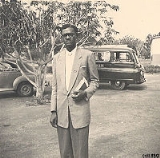
Patrice Lumumba


Patrice Émery Lumumba (2 July 1925 – 17 January 1961) was an African anti-colonial leader and the first legally elected Prime Minister
Prime minister

A prime minister is the most senior minister of Cabinet in the Executive branch of government in a parliamentary system. The position is usually held by, but need not always be held by, a politician....
 of the Republic of the Congo
Republic of the Congo (Léopoldville)

The Republic of the Congo was an independent republic established following the independence granted to the former colony of the Belgian Congo in 1960....
 after he helped to win its independence from Belgium in June 1960. Only ten weeks later, Lumumba's government was deposed in coup during the Congo Crisis
Congo Crisis

The Congo Crisis was a period of turmoil in the First Republic of the Republic of the Congo that began with national independence from Belgium and ended with the seizing of power by Joseph Mobutu....
. He was subsequently imprisoned and murdered under controversial circumstances.

mba was born in Onalua in the Katakokombe
Katakokombe

Katakokombe is a region of the Kasai region of what was formerly known as the Belgian Congo, now the Democratic Republic of Congo. It is the homeland of the Tetela people....
 region of the Kasai
Kasai region

The Kasai region of the Democratic Republic of the Congo is divided administratively into Kasai-Occidental and Kasai-Oriental. It shares its name with the Kasai River....
 province of the Belgian Congo
Belgian Congo

The Belgian Congo was the formal title of present-day Democratic Republic of the Congo between King Leopold II of Belgium formal relinquishment of personal control over the state to Belgium on 15 November 1908, and the dawn of Congo Crisis on 30 June 1960....
, a member of the Tetela
Tetela

Tetela may refer to: Democratic Republic of the Congo:*Tetela people*Tetela language Mexico:*Tetela del Volc?n, Morelos*Tetela, Oaxaca...
 ethnic group.


Discussion
Ask a question about 'Patrice Lumumba'
Start a new discussion about 'Patrice Lumumba'
Answer questions from other users
Full Discussion Forum


Encyclopedia


Patrice Émery Lumumba (2 July 1925 – 17 January 1961) was an African anti-colonial leader and the first legally elected Prime Minister
Prime minister

A prime minister is the most senior minister of Cabinet in the Executive branch of government in a parliamentary system. The position is usually held by, but need not always be held by, a politician....
 of the Republic of the Congo
Republic of the Congo (Léopoldville)

The Republic of the Congo was an independent republic established following the independence granted to the former colony of the Belgian Congo in 1960....
 after he helped to win its independence from Belgium in June 1960. Only ten weeks later, Lumumba's government was deposed in coup during the Congo Crisis
Congo Crisis

The Congo Crisis was a period of turmoil in the First Republic of the Republic of the Congo that began with national independence from Belgium and ended with the seizing of power by Joseph Mobutu....
. He was subsequently imprisoned and murdered under controversial circumstances.

Path to Prime Minister

Lumumba was born in Onalua in the Katakokombe
Katakokombe

Katakokombe is a region of the Kasai region of what was formerly known as the Belgian Congo, now the Democratic Republic of Congo. It is the homeland of the Tetela people....
 region of the Kasai
Kasai region

The Kasai region of the Democratic Republic of the Congo is divided administratively into Kasai-Occidental and Kasai-Oriental. It shares its name with the Kasai River....
 province of the Belgian Congo
Belgian Congo

The Belgian Congo was the formal title of present-day Democratic Republic of the Congo between King Leopold II of Belgium formal relinquishment of personal control over the state to Belgium on 15 November 1908, and the dawn of Congo Crisis on 30 June 1960....
, a member of the Tetela
Tetela

Tetela may refer to: Democratic Republic of the Congo:*Tetela people*Tetela language Mexico:*Tetela del Volc?n, Morelos*Tetela, Oaxaca...
 ethnic group. Raised in a Catholic family as one of four sons, he was educated at a Protestant primary school, a Catholic missionary school, and finally the government post office training school, passing the one-year course with distinction. He subsequently worked in Leopoldville (now Kinshasa
Kinshasa

Kinshasa is the Capital and largest city of the Democratic Republic of the Congo, which is also known as Congo Kinshasa. The city is located on the Congo River....
) and Stanleyville (now Kisangani
Kisangani

Kisangani, formerly Stanleyville or Stanleystad, is a city in the Democratic Republic of the Congo in Central Africa. It is the provincial capital of Tshopo Province....
) as a postal clerk and as a travelling beer salesman. In 1951, he married Pauline Opangu. In 1955, Lumumba became regional head of the Cercles of Stanleyville and joined the Liberal Party of Belgium
Liberal Party (Belgium)

The Liberal Party was a Belgium political party that existed from 1846 until 1961, when it became the Party for Freedom and Progress, Partij voor Vrijheid en Vooruitgang/Parti de la Libert? et du Progr?s or PVV-PLP, under the leadership of Omer Vanaudenhove....
, where he worked on editing and distributing party literature. After traveling on a three-week study tour in Belgium, he was arrested in 1955 on charges of embezzlement of post office funds. His two-year sentence was commuted to twelve months after it was confirmed by Belgian lawyer Jules Chrome that Lumumba had returned the funds, and he was released in July 1956. After his release, he helped found the non-tribal Mouvement National Congolais
Mouvement National Congolais

The Mouvement National Congolais is a political party in the Democratic Republic of the Congo....
 (MNC) in 1958, later becoming the organization's president. Lumumba and his team represented the MNC at the All-African People's Conference in Accra
Accra

Accra is the capital city, and most populous city of Ghana, a nation on the coast of the western region of Africa. The city also doubles as the capital of the Greater Accra Region, and of the Accra Metropolis District with which it is coterminous....
, Ghana
Ghana

The Republic of Ghana is a country in West Africa. It borders C?te d'Ivoire to the west, Burkina Faso to the north, Togo to the east, and the Gulf of Guinea to the south....
, in December 1958. At this international conference, hosted by influential Pan-African
Pan-Africanism

Pan-Africanism is a sociopolitical world view, and philosophy, as well as a movement, which seeks to unify both native Africans and those of the African diaspora, as part of a "global African community".Pan-Africanism calls for a politically united Africa....
 President Kwame Nkrumah
Kwame Nkrumah

Kwame Nkrumah , was an influential 20th century advocate of Pan-Africanism, and the leader of Ghana and its predecessor state, the Gold Coast , from 1952 to 1966....
 of Ghana, Lumumba further solidified his Pan-Africanist beliefs.

In late October 1959, Lumumba as leader of the MNC was again arrested for allegedly inciting an anti-colonial riot in Stanleyville where thirty people were killed, for which he was sentenced to six months in prison. The trial's start date of 18 January 1960, was also the first day of a round-table conference in Brussels to finalize the future of the Congo. Despite Lumumba's imprisonment at the time, the MNC won a convincing majority in the December local elections in the Congo. As a result of pressure from delegates who were enraged at Lumumba's imprisonment, he was released and allowed to attend the Brussels
Brussels

Brussels , officially the Brussels Capital-Region, is the de facto capital city of the European Union and the largest urban area in Belgium....
 conference. The conference culminated on 27 January with a declaration of Congolese independence setting 30 June 1960, as the independence date with national elections from 11-25 May 1960. Lumumba and the MNC won this election and the right to form a government, with the announcement on 23 June 1960 of 35-year-old Lumumba as Congo's first prime minister and Joseph Kasa-Vubu
Joseph Kasa-Vubu

Joseph Kasa-Vubu was the first President of the Republic of the Congo He was educated by Catholic missionaries at a student seminary from 1928-1936 at Mbata Kiela....
 as its president. In accordance with the constitution, on 24 June the new government passed a vote of confidence and was ratified by the Congolese Chamber and Senate.

Independence Day was celebrated on 30 June in a ceremony attended by many dignitaries including King Baudouin
Baudouin of Belgium

Baudouin of Belgium reigned as King of the Belgians from 1951 to 1993. He was the eldest son of Leopold III of Belgium and his first wife, Princess Astrid of Sweden ....
 and the foreign press, Patrice Lumumba delivered his famous independence speech after being officially excluded from the event programme, despite being the elected Congolese Prime Minister. In direct contrast to the paternalistic glorification of colonialism in the speech of King Baudouin, as well as the relatively harmless speech of President Kasa-Vubu, Lumumba's outspoken anti-colonial speech resonated with the crowd for its emotional appeal while simultaneously humiliating and alienating the King and his entourage. Lumumba was later harshly criticised for the inappropriate nature of this speech.

Actions as Prime Minister

A few days after gaining its independence, Lumumba made the fateful decision to raise the pay of all government employees except for the army. Late on 5 July, this sparked a mutiny among soldiers (who were also rebelling against their officers who were mostly Belgians) at the Thysville military base. It quickly spread throughout the country, leading to a general breakdown in law and order. Lumumba was unable to regain control. Soon the country was overrun by gangs of soldiers and looters, causing a media sensation, particularly over Europeans fleeing the country.

The province of Katanga
Katanga Province

Katanga is a southern province in the Democratic Republic of the Congo. Between 1971 and 1997, its official name was Shaba Province. Under the new constitution, the province is to be replaced by four smaller provinces by February 2009....
 declared independence under regional premier Moïse Tshombe
Moise Tshombe

Mo?se Kapenda Tshombe was a Republic of the Congo politician....
 on 11 July 1960 with support from the Belgian government and mining companies such as Union Minière
Union Minière du Haut Katanga

The Union Mini?re du Haut Katanga was a Belgium mining company, once operating in Katanga Province, in what is now the Democratic Republic of the Congo ....
. Despite the arrival of United Nations
United Nations

The United Nations is an international organization whose stated aims are to facilitate cooperation in international law, international security, economic development, Social change, human rights and achieving world peace....
 troops, unrest continued. Lumumba sought Soviet
Soviet Union

The Union of Soviet Socialist Republics was a Constitution of the Soviet Union socialist state that existed in Eurasia from 1922 to 1991.The name is a translation of the , romanization of Russian Soyuz Sovetskikh Sotsialisticheskikh Respublik, abbreviated ????, SSSR....
 aid to forcefully subdue Katanga. Soviet troops were then used in an invasion, which failed due to poor intelligence and poor knowledge of local conditions. Lumumba now lost the support of his colleagues and President Kasa-Vubu.

Deposed and arrested

In September, the President dismissed Lumumba from government. In retaliation, Lumumba illegally declared Kasa-Vubu deposed and won a vote of confidence in the Senate, while the newly appointed prime minister failed to gain parliament's confidence. On 14 September, a coup d’état organized by Colonel Joseph Mobutu
Mobutu Sese Seko

Mobutu Sese Seko Nkuku Ngbendu wa Za Banga , commonly known as Mobutu, or Mobutu Sese Seko , born Joseph-D?sir? Mobutu, was the Heads of state of the Democratic Republic of the Congo of Zaire for 32 years after deposing Joseph Kasavubu....
 and endorsed by the CIA incapacitated both Lumumba and Kasa-Vubu. Lumumba was placed under house arrest at the prime minister's residence, although UN troops were positioned around the house to protect him. Nevertheless, Lumumba decided to rouse his supporters in Haut-Congo. Smuggled out of his residence at night, he escaped to Stanleyville, where he attempted to set up his own government and army. Pursued by troops loyal to Mobutu he was finally captured in Port Francqui and arrested on 1 December 1960 and flown to Leopoldville (now Kinshasa) in handcuffs. He desperately appealed to local UN
United Nations

The United Nations is an international organization whose stated aims are to facilitate cooperation in international law, international security, economic development, Social change, human rights and achieving world peace....
 troops to save him, but he was no longer their responsibility. Mobutu said Lumumba would be tried for inciting the army to rebellion and other crimes. United Nations
United Nations

The United Nations is an international organization whose stated aims are to facilitate cooperation in international law, international security, economic development, Social change, human rights and achieving world peace....
 Secretary General Dag Hammarskjöld
Dag Hammarskjöld

Dag Hjalmar Agne Carl Hammarskj?ld was a Swedish diplomat, Christian mystic, and the second United Nations Secretary-General of the United Nations....
 made an appeal to Kasa-Vubu asking that Lumumba be treated according to due process of law. The USSR denounced Hammarskjöld and the Western powers as responsible for Lumumba's arrest and demanded his release.

The UN Security Council was called into session on 7 December 1960 to consider Soviet demands that the UN seek Lumumba's immediate release, the immediate restoration of Lumumba as head of the Congo government, the disarming of the forces of Mobutu, and the immediate evacuation of Belgians from the Congo. Hammarskjöld, answering Soviet attacks against his Congo operations, said that if the UN forces were withdrawn from the Congo "I fear everything will crumble."

The threat to the UN cause was intensified by the announcement of the withdrawal of their contingents by Yugoslavia
Yugoslavia

File:LocationYugoslavia2.pngYugoslavia is a term that describes three political entities that existed successively on the Balkan Peninsula in Europe, during most of the 20th century....
, the United Arab Republic
United Arab Republic

The United Arab Republic , often abbreviated as the U.A.R., was a union between Egypt and Syria. The union began in 1958 and existed until 1961 when Syria seceded from the union....
, Ceylon
Sri Lanka

Sri Lanka, officially the Democratic Socialist Republic of Sri Lanka is an island country in South Asia, located about off the southern coast of India....
, Indonesia
Indonesia

The Republic of Indonesia , is a transcontinental country in Southeast Asia and Oceania. Comprising Islands of Indonesia, it is the world's largest Archipelago state....
, Morocco
Morocco

Morocco , officially the Kingdom of Morocco , is a country located in North Africa with a population of nearly 34 million and an area just under 447,000 km2....
, and Guinea
Guinea

Guinea, officially Republic of Guinea , is a country in West Africa formerly known as French Guinea. The country's current population is estimated at 10,211,437 ....
. The Soviet pro-Lumumba resolution was defeated on 14 December 1960 by a vote of 8-2. On the same day, a Western resolution that would have given Hammarskjöld increased powers to deal with the Congo situation (and perhaps intervene on Lumumba's behalf) was vetoed by the Soviet Union.

Lumumba was sent first on 3 December, to Thysville military barracks Camp Hardy, 150 km (about 100 miles) from Leopoldville. However, when security and disciplinary breaches threatened Lumamba's safety, it was decided that he should be transferred to the Katanga Province
Katanga Province

Katanga is a southern province in the Democratic Republic of the Congo. Between 1971 and 1997, its official name was Shaba Province. Under the new constitution, the province is to be replaced by four smaller provinces by February 2009....
.

Death

Patricelumumbaiisg
Lumumba was forcibly restrained on the flight to Elizabethville (now Lubumbashi
Lubumbashi

Lubumbashi is the second largest city in the Democratic Republic of the Congo , second only to the nation's capital Kinshasa, and the hub of the southeastern part of the country....
) on 17 January 1961 after attempting to incite the other passengers. On arrival, he was conducted under arrest to Brouwez House and held there bound and gagged while President Tshombe and his cabinet decided what to do with him.

Later that night, Lumumba was driven to an isolated spot where three firing squads had been assembled. According to David Akerman and Ludo de Witte (2002:97-152), the firing squads were commanded by a Belgian, Captain Julien Gat, and another Belgian, Police Commissioner Verschurre, had overall command of the execution site. The Belgian Commission has found that the execution was carried out by Katanga's authorities, but de Witte found written orders from the Belgian government requesting Lumumba's murder and documents on various arrangements, such as death squads. It reported that President Tshombe and two other ministers were present with four Belgian officers under the command of Katangan authorities. Lumumba and two other comrades from the government, Maurice Mpolo and Joseph Okito, were lined up against a tree and shot one at a time. The execution most likely took place on 17 January 1961 between 9:40PM and 9:43PM according to the Belgian report. Lumumba's corpse was buried nearby.

No statement was released until three weeks later despite rumours that Lumumba was dead. His death was formally announced on Katangese radio when it was alleged that he escaped and was killed by enraged villagers. On January 18, panicked by rumours indicating that the burial of the three bodies had been observed, members of the murder team went to dig up the bodies and move them to a place near the border with Rhodesia for reburial. Belgian Police Commissioner Gerard Soete later admitted in several accounts that he and his brother led the first and a second second exhumation. Police Commissioner Frans Verscheure also took part. On the afternoon and evening of January 21, Commissioner Soete and his brother dug up Lumumba's corpse for the second time, cut it up with a hacksaw, and dissolved it in concentrated sulfuric acid
Sulfuric acid

Sulfuric acid, hydrogen2sulfuroxygen4, is a strong mineral acid. It is soluble in water at all concentrations. Sulfuric acid has many applications, and is one of the top products of the chemical industry....
 (de Witte 2002:140-143). Only some teeth and a fragment of skull and bullets survived the process, kept as souvenirs. In an interview on Belgian television in a program on the assassination of Lumumba in 1999, Soete displayed a bullet and two teeth that he boasted he had saved from Lumumba's body. De Witte also mentions that Verscheure kept souvenirs from the exhumation: bullets from the skull of Lumumba (de Witte 2002: 140).

After the announcement of Lumumba's death, street protests were organized in several European countries — in Belgrade, capital of Yugoslavia, protesters sacked the Belgian embassy and confronted the police, and in London a crowd marched from Trafalgar Square
Trafalgar Square

Trafalgar Square is a square in central London, England. With its position in the heart of London, it is a tourist attraction; its trademark is Nelson's Column which stands in the centre and the four lion statues that guard the column....
 to the Belgian embassy, where a letter of protest was delivered and where protesters clashed with police.

There is much speculation over any role that the Belgian and US governments played in the prime minister's murder. The Belgian Commission investigating Lumumba's assassination concluded that (1) Belgium wanted Lumumba arrested, (2) Belgium was not particularly concerned with Lumumba's physical well being, and (3) although informed of the danger to Lumumba's life, Belgium did not take any action to avert his death. But the report also specifically denied that Belgium ordered Lumumba's assassination (but see paragraph above)

Under its own 'Good Samaritan' laws
Good Samaritan law

Good Samaritan laws in the United States are laws or acts protecting from liability those who choose to aid others who are injured or ill. They are intended to reduce bystanders' hesitation to assist, for fear of being sued or prosecuted for unintentional injury or wrongful death claim....
, Belgium was legally culpable for failing to prevent the assassination from taking place and was also in breach of its obligation (under U.N. Resolution 290 of 1949) to refrain from acts or threats "aimed at impairing the freedom, independence or integrity of another state."

It was revealed that U.S. President Dwight D. Eisenhower
Dwight D. Eisenhower

Dwight David ?Ike? Eisenhower was the List of Presidents of the United States President of the United States from 1953 until 1961 and a General of the Army in the United States Army....
 had said "something [to CIA chief Allen Dulles] to the effect that Lumumba should be eliminated". This was revealed by a declassified interview with then-US National Security Council minutekeeper Robert Johnson released in August 2000 from Senate intelligence committee's inquiry on covert action. The committee later found that while the CIA had conspired to kill Lumumba, it was not involved in the murder. In 1975, the Church Committee
Church Committee

The Church Committee is the common term referring to the United States Senate Select Committee to Study Governmental Operations with Respect to Intelligence Activities, a United States Senate committee chaired by Senator Frank Church in 1975....
 went on record with the finding that Allen Dulles had ordered Lumumba's assassination as "an urgent and prime objective". (Dulles' own words). Furthermore, de-classified CIA cables quoted or mentioned in the Church report and in Kalb (1972) mention two specific CIA plots to murder Lumumba: the poison plot and a shooting plot. Although some sources claim that CIA plots ended when Lumumba was captured, that is not stated or shown in the CIA records. Rather, those records show two still-partly-censored CIA cables from Elizabethville on days significant in the murder: January 17, the day Lumumba died, and January 18, the day of the first exhumation. The cable on the 17, after a long censored section, talks about where they need to go from there. On the 18th, the cable expresses thanks for Lumumba being sent to them and then says that, had Elizabethville base known he was coming, they would have "baked a snake". (see Significantly, David Doyle, the then chief of base, Elizabethville, told other CIA officers later that he had had Lumumba's body in the trunk of his car to try to find a way to dispose of it

Plots by U.S. and Belgium


The report of 2001 by the Belgian Commission mentions that there had been previous U.S. and Belgian plots to kill Lumumba. Among them was a Central Intelligence Agency
Central Intelligence Agency

The Central Intelligence Agency is a civilian intelligence agency of the Federal government of the United States. It is the successor of the Office of Strategic Services formed during World War II to coordinate espionage activities between the branches of the US military services....
-sponsored attempt to poison him, which may have come on orders from U.S. President Dwight D. Eisenhower
Dwight D. Eisenhower

Dwight David ?Ike? Eisenhower was the List of Presidents of the United States President of the United States from 1953 until 1961 and a General of the Army in the United States Army....
. CIA chemist Sidney Gottlieb
Sidney Gottlieb

Sidney Gottlieb was an United States military psychiatrist and chemist probably best-known for his involvement with the Central Intelligence Agency's mind control program MKULTRA....
 was a key person in this by devising a poison resembling toothpaste. However, the plan is said to have failed because the local CIA Station Chief, Larry Devlin
Larry Devlin

Lawrence Devlin ? known as Larry Devlin ? was a Central Intelligence Agency field officer. Stationed for many years in Africa, he was Station Chief in the Democratic Republic of the Congo when Prime Minister Patrice Lumumba was assassinated on 17 January 1961....
, had a conscience issue and did not go forward.However, as Kalb points out in her book, Congo Cables, Devlin the record shows many communications by him at the time, urging elimination of Lumumba p. 53, 101, 129-133, 149-152, 158-159, 184-185, 195). Also, the CIA helped to capture Lumumba for his transfer to his enemies in Katanga, and the CIA administrator in then Elizabethville was in direct touch with the killers the night Lumumba was killed. Furthermore, a CIA agent had the body in the trunk of his car (p. 105, Stockwell, John 1978 In Search of Enemies, A CIA Story), Stockwell, who knew Devlin well felt Devlin knew more than anyone else about the murder (71-72, 136-137).

In February 2002, the Belgian government apologised to the Congolese people, and admitted to a "moral responsibility" and "an irrefutable portion of responsibility in the events that led to the death of Lumumba." In July, documents released by the United States government revealed that while the CIA had been kept informed of Belgium's plans, it had no direct role in Lumumba's eventual death.

This same disclosure showed that U.S. perception at the time was that Lumumba was a communist. Eisenhower's reported call, at a meeting of his national security advisers, for Lumumba's elimination must have been brought on by this perception. Both Belgium and the US were clearly influenced in their unfavourable stance towards Lumumba by the Cold War
Cold War

The Cold War was the continuing state of conflict, tension and competition that existed between a number of world powers, including the United States, the Soviet Union, People's Republic of China, France, United Kingdom and those countries' respective allies from the mid-1940s to the early 1990s....
. He seemed to gravitate around the Soviet Union, although it was the only place he could find support in his country's effort to rid itself of colonial rule, not because he was a communist. (Ironically, the US was the first country Lumumba requested help from). — Lumumba, for his part, not only denied being a Communist, but said he found colonialism and Communism to be equally deplorable, and professed his personal preference for neutrality between the East
Eastern bloc

During the Cold War, the terms Eastern Bloc, Communist Bloc or Soviet Bloc were used to refer to European annexed or expanded Soviet Socialist Republics of the USSR and Satellite state states, including members of the Soviet-dominated organizations Comecon and the Warsaw Pact....
 and West
Western world

The term Western world, the West or the Occident can have multiple meanings dependent on its context . Accordingly, the basic definition of what constitutes "the West" varies, expanding and contracting over time, in relation to various historical circumstances....
.

Legacy


Political

Lumumba bequeathed very few positive results from his term of office. He failed to promote development and alienated his colleagues and supporters alike. In addition he failed to stave off or quell a civil war that erupted within days of his appointment as prime minister. Instead he behaved impetuously and followed expedients rather than policies that led to the deaths of hundreds of thousands of people, including himself.

2006 Congolese elections

Nevertheless, the image of Patrice Lumumba continues to serve as an inspiration in contemporary Congolese politics. In the 2006 elections
Democratic Republic of the Congo general election, 2006

General elections were held in the Democratic Republic of the Congo on July 30, 2006, the first multiparty elections in the country in 46 years....
, several parties claimed to be motivated by his ideas,including the People's Party for Reconstruction and Democracy
People's Party for Reconstruction and Democracy

The People's Party for Reconstruction and Democracy is a political party of the Democratic Republic of the Congo. It is the political structure established by the current president of the country, Joseph Kabila....
 (PPRD), the political party initiated by the incumbent President Joseph Kabila
Joseph Kabila

Joseph Kabila Kabange , is the President of the Democratic Republic of the Congo of the Democratic Republic of the Congo . He took office in 2001#January, ten days after the murder of his father and DRC president Laurent-D?sir? Kabila....
. Antoine Gizenga
Antoine Gizenga

Antoine Gizenga is a Democratic Republic of the Congo politician who was Prime Minister of the Democratic Republic of the Congo from December 30, 2006 to 10 October 2008....
, who served as Lumumba's Deputy Prime Minister in the post-independence period, was a 2006 Presidential candidate under the Unified Lumumbist Party (Parti Lumumbiste Unifié (PALU)) and was named prime minister at the end of the year. Other political parties that directly utilise his name include the Mouvement National Congolais-Lumumba (MNC-L) and the Mouvement Lumumbiste (MLP).

Family and politics

Patrice Lumumba's family is actively involved in contemporary Congolese politics. Patrice Lumumba was married and had five children; François was the eldest followed by Patrice junior, Julienne, Roland and Guy-Patrice Lumumba
Guy-Patrice Lumumba

Guy-Patrice Lumumba, also known as Patrice Lumumba Guy, is the son of murdered Congolese Prime Minister and Pan-Africanist Patrice Lumumba....
. François Lumumba was 10 years old when Patrice died. Before his imprisonment, Patrice arranged for his wife and children to move into exile
Exile

Exile means to be away from one's home while either being explicitly refused permission to return and/or being threatened by prison or death upon return....
 in Egypt
Egypt

Egypt is a country mainly in North Africa, with the Sinai Peninsula forming a land bridge in Western Asia. Covering an area of about , Egypt borders the Mediterranean Sea to the north, the Gaza Strip and Israel to the northeast, the Red Sea to the east, Sudan to the south and Libya to the west....
, where François spent his childhood, then went to Hungary for education (he holds a doctorate in political economics). He returned to Congo in 1992 to oppose Mobutu
Mobutu Sese Seko

Mobutu Sese Seko Nkuku Ngbendu wa Za Banga , commonly known as Mobutu, or Mobutu Sese Seko , born Joseph-D?sir? Mobutu, was the Heads of state of the Democratic Republic of the Congo of Zaire for 32 years after deposing Joseph Kasavubu....
 since which time he has been the leader of the Mouvement National Congolais Lumumba (MNC-L), his father's original political party.

Lumumba's youngest son, Patrice-Guy, born six months after his father's death, was an independent presidential candidate in the 2006 elections, but received less than 1% of the vote.

On the DVD of the film Lumumba, the special features section includes an interview with Julienne in which she speaks of how her father knew that he was going to die for the cause, that he spoke of it frequently but did not anticipate the rule of Mobutu. She says that Lumumba had faith that his message would live on after his death.

Writings by Lumumba

  • Congo, My Country, 1962, New York: Praeger (Books That Matter)
  • Lumumba Speaks: The Speeches and Writings of Patrice Lumumba, 1958-1961 [Collection of Speeches, Little, Brown and Company, 1972] Translated by Helen R. Lane. Ed. Jean Van Lierde


Writings about Lumumba

  • Aimé Césaire
    Aimé Césaire

    Aim? Fernand David C?saire was an Black peopleMartinique francophone poet, author and politician....
    , Une Saison au Congo (1966); Eng. trans. by Ralph Manheim
    Ralph Manheim

    Ralph Manheim was an United States translator of German literature and French literature, as well as occasional works from Dutch language, Polish language and Hungarian language....
    , A Season in the Congo (1969). A poetic drama about the career and death of Lumumba.
  • W. A. E Skurnik, African Political Thought: Lumumba, Nkrumah, Touré (Social Science Foundation and Graduate School of International Studies
    Graduate School of International Studies

    The University of Denver's Josef Korbel School of International Studies is graduate school located in Ben Cherrington Hall on the DU campus....
    , University of Denver
    University of Denver

    The University of Denver , founded in 1864 is the oldest private university university in the Rocky Mountain Region of the United States. The University of Denver is a coeducational, four-year university in Denver, Colorado, Colorado....
    . Monograph series in world affairs, v. 5, no. 3-4), 1968, Denver: University of Denver, ASIN B0006CNYSW
  • Ludo De Witte, The Assassination of Lumumba, Trans. by Ann Wright and Renée Fenby, 2002 (Orig. 2001), London; New York: Verso, ISBN 1-85984-410-3
  • Thomas R. Kanza, Conflict in the Congo: The Rise and Fall of Lumumba (Penguin African library), 1972, New York: Penguin, ISBN 0-14-041030-9
  • Robin McKown, Lumumba: A Biography, 1969, London: Doubleday, ISBN 0-385-07776-9
  • G. Heinz, Lumumba: The Last Fifty Days, 1980, New York: Grove Press, ASIN B0006C07TQ
  • Panaf, Patrice Lumumba (Panaf Great Lives), 1973, New York: St. Martin's Press, ISBN 0-901787-31-0
  • Kwame Nkrumah
    Kwame Nkrumah

    Kwame Nkrumah , was an influential 20th century advocate of Pan-Africanism, and the leader of Ghana and its predecessor state, the Gold Coast , from 1952 to 1966....
    , Challenge of the Congo, 1967, New York: International Publishers


Tributes

  • In 1966 Patrice Lumumba's image was rehabilitated by the Mobutu
    Mobutu Sese Seko

    Mobutu Sese Seko Nkuku Ngbendu wa Za Banga , commonly known as Mobutu, or Mobutu Sese Seko , born Joseph-D?sir? Mobutu, was the Heads of state of the Democratic Republic of the Congo of Zaire for 32 years after deposing Joseph Kasavubu....
     regime and he was proclaimed a national hero and martyr
    Martyr

    The term martyr is most commonly used today to describe an individual who sacrifices his or her life in order to further a cause or belief for many....
     in the Democratic Republic of the Congo
    Democratic Republic of the Congo

    The Democratic Republic of the Congo , is a country in central Africa with a small length of Atlantic coastline. It is the third largest list of African countries in order of geographical area....
    . By a presidential decree, the Brouwez House, site of Lumumba's brutal torture on the night of his murder, became a place of pilgrimage in the Congo. Plans made to erect a spire in Lumumba's memory did not proceed but the anniversary of Lumumba's death was commemorated yearly until 1974, upon the unveiling of Mobutism
    Mobutism

    Mobutism was an official state and party ideology in Zaire during the latter half of the 20th century. Mobutism encompassed and glorified the thoughts, visions, and policies of Zairian president and self-proclaimed "Father of the Nation", Mobutu Sese Seko....
    .
  • A major transportation artery in Kinshasa
    Kinshasa

    Kinshasa is the Capital and largest city of the Democratic Republic of the Congo, which is also known as Congo Kinshasa. The city is located on the Congo River....
    , the Lumumba Boulevard, is named in his honour. The boulevard goes past an interchange with a giant tower, the Tour de l'Echangeur (the main landmark of Kinshasa) commemorating him. On the tower's plaza, the first Kabila regime erected a tall statue of Lumumba with a raised hand, greeting people coming from Kinshasa International Airport
    Kinshasa International Airport

    N'Djili International Airport , also known as Kinshasa International Airport, serves the city of Kinshasa and is the largest of the four international airports in the Democratic Republic of the Congo....
    .
  • In Bamako
    Bamako

    Bamako, population 1,690,471 , is the Capital and largest city of Mali, and currently estimated to be the fastest growing city in Africa . It is located on the Niger River, near the rapids that divide the Upper and Middle Niger Valleys, in the southwestern part of the country....
    , Mali
    Mali

    Mali, officially the Republic of Mali, is a landlocked nation in West Africa. Mali is the seventh largest country in Africa, bordering Algeria on the north, Niger on the east, Burkina Faso and the C?te d'Ivoire on the south, Guinea on the south-west, and Senegal and Mauritania on the west....
    , Lumumba Square is a large central plaza with a life-size statue of Lumumba, a park with fountains, and a flag display. Around Lumumba Square are various businesses, embassies and Bamako's largest bank.
  • Streets were also named after him in Haiti
    Haiti

    Haiti , officially the Republic of Haiti , is a Haitian Creole language- and French language-speaking Caribbean country. Along with the Dominican Republic, it occupies the island of Hispaniola, in the Greater Antilles archipelago....
    , Tanzania
    Tanzania

    Tanzania , officially the United Republic of Tanzania , is a country in East Africa that is bordered by Kenya and Uganda on the north, Rwanda, Burundi and the Democratic Republic of the Congo on the west, and Zambia, Malawi and Mozambique on the south....
    , Ghana
    Ghana

    The Republic of Ghana is a country in West Africa. It borders C?te d'Ivoire to the west, Burkina Faso to the north, Togo to the east, and the Gulf of Guinea to the south....
    , Budapest
    Budapest

    Budapest is the Capitals of Hungary of Hungary. As the largest city of Hungary, it serves as the country's principal political, cultural, commerce, Industry, and transportation center and is considered an important hub in Central Europe....
    , Hungary (between 1961 and 1990); Jakarta
    Jakarta

    Jakarta is the Capital and largest city of Indonesia. It also has a List of urban areas by population than any other city in Southeast Asia. It was formerly known as Sunda Kelapa , Jayakarta , Batavia, Dutch East Indies , and Djakarta ....
     (between 1945 to 1967); Belgrade
    Belgrade

    Belgrade is the capital and largest city of Serbia. The city lies on international waterway, at the confluence of the Sava River and Danube rivers, where the Pannonian Plain meets the Balkan Peninsula....
    , Serbia
    Serbia

    Serbia , officially the Republic of Serbia , is a country in Central Europe and Balkans Europe, covering the southern part of the Pannonian Plain and the central part of the Balkans....
    ; Bata
    Bata, Equatorial Guinea

    Bata is a port city in Equatorial Guinea. With a population of around 70,000 people, it is thirty percent smaller than the capital Malabo and it is the second largest city in the country....
     and Malabo
    Malabo

    Malabo is the Capital and largest city of Equatorial Guinea, located on the northern coast of Bioko Island on the rim of a sunken volcano.. Its population has grown rapidly over the past ten years to about 100,000....
    , Equatorial Guinea
    Equatorial Guinea

    The Republic of Equatorial Guinea is a Spanish-speaking country located in Central Africa. With an area of 28,000 km2 it is one of the smallest countries in continental Africa, having a population estimated at half a million....
    ; Tehran
    Tehran

    Tehran is the capital and largest city of Iran, and the administrative center of Tehran Province. Tehran is a sprawling city at the foot of the Alborz mountain range with an immense network of highways unparalleled in Western Asia....
    , Iran
    Iran

    Iran , officially the Islamic Republic of Iran and formerly known internationally as Persian Empire until 1935, is a country in Central Eurasia, located on the northeastern shore of the Persian Gulf and the southern shore of the Caspian Sea....
    ; Algiers
    Algiers

    Algiers Nicknamed El-Bahdja or Alger la Blanche for the glistening white of its buildings as seen rising up from the sea, Algiers is situated on the west side of a bay of the Mediterranean Sea....
    , Algeria
    Algeria

    Algeria , officially the People's Democratic Republic of Algeria, is a country located in North Africa. It is the largest country of the Mediterranean sea, second largest in the Arab World, and the second largest on the African continent and the eleventh-largest country in the world in terms of land area....
     (Rue Patrice Lumumba); Santiago de Cuba
    Santiago de Cuba

    Santiago de Cuba is the capital city of Santiago de Cuba Province in the south-eastern area of the island nation of Cuba, some east south-east of the Cuban capital of Havana....
    , Cuba
    Cuba

    The Republic of Cuba is a country in the Caribbean. It consists of the island of Cuba , the island of Isla de la Juventud, and several adjacent small islands....
     (since 1960, formerly Avenida de Bélgica); Lódz
    Lódz

    L?dz is the third-largest city in Poland. Located in the central part of the country, it had a population of 753,192 in 2007. It is the capital of L?dz Voivodeship, and is approximately south-west of Warsaw....
    , Poland; Kiev
    Kiev

    Kiev, also known as Kyiv , is the Capital and the largest city of Ukraine, located in the north central part of the country on the Dnieper River....
    , Ukraine
    Ukraine

    Ukraine is a country in Eastern Europe. It is bordered by Russia to the east; Belarus to the north; Poland, Slovakia, and Hungary to the west; Romania and Moldova to the southwest; and the Black Sea and Sea of Azov to the south....
    ; Rabat
    Rabat

    Rabat , population 2 million , is the Capital of the Morocco. It is also the capital of the Rabat-Sal?-Zemmour-Zaer region.The city is located on the Atlantic Ocean at the mouth of the river Bou Regreg....
    , Morocco
    Morocco

    Morocco , officially the Kingdom of Morocco , is a country located in North Africa with a population of nearly 34 million and an area just under 447,000 km2....
    ; Maputo
    Maputo

    Maputo, formerly Louren?o Marques, is the Capital and largest city of Mozambique. A port on the Indian Ocean, its economy is centered around the harbour....
    , Mozambique
    Mozambique

    Mozambique, officially the Republic of Mozambique , is a country in southeastern Africa bordered by the Indian Ocean to the east, Tanzania to the north, Malawi and Zambia to the northwest, Zimbabwe to the west and Swaziland and South Africa to the southwest....
    ; Leipzig
    Leipzig

    Leipzig is, with a population of over 511,252, the largest city in the States of Germany of Saxony, Germany....
    , Germany; Lusaka
    Lusaka

    Lusaka is the capital city and largest city of Zambia. It is located in the southern part of the central plateau of the country, at an elevation of 1300 m ....
    , Zambia
    Zambia

    The Republic of Zambia is a landlocked country in Southern Africa. The neighbouring countries are the Democratic Republic of the Congo to the north, Tanzania to the north-east, Malawi to the east, Mozambique, Zimbabwe, Botswana, and Namibia to the south, and Angola to the west....
     ("Lumumba Street").
  • The Peoples' Friendship University of the USSR
    Peoples' Friendship University of Russia

    File:RUDN.jpgThe Peoples' Friendship University of Russia, more correctly The Russian University of Friendship between People, is an educational and research institution located in the South of Moscow....
     was renamed "Patrice Lumumba Peoples' Friendship University" in 1961, but it was later renamed "The Peoples' Friendship University of Russia
    Peoples' Friendship University of Russia

    File:RUDN.jpgThe Peoples' Friendship University of Russia, more correctly The Russian University of Friendship between People, is an educational and research institution located in the South of Moscow....
    " in the post-Soviet landscape in 1992.
  • In Belgrade
    Belgrade

    Belgrade is the capital and largest city of Serbia. The city lies on international waterway, at the confluence of the Sava River and Danube rivers, where the Pannonian Plain meets the Balkan Peninsula....
    , Serbia
    Serbia

    Serbia , officially the Republic of Serbia , is a country in Central Europe and Balkans Europe, covering the southern part of the Pannonian Plain and the central part of the Balkans....
    , "The Patris Lumumba Hall of Residence" at Belgrade University was built in 1961 and continues to carry Lumumba's name.
  • In Kampala
    Kampala

    Kampala is the capital city of Uganda. With a population of 1,208,544 it is the largest city in Uganda. It is coterminous with the Kampala . The city is divided into five boroughs that oversee local planning: Central, Kawempe, Makindye, Nakawa and Rubaga....
    , Uganda
    Uganda

    The Republic of Uganda is a landlocked country in East Africa. It is bordered on the east by Kenya, on the north by Sudan, on the west by the Democratic Republic of the Congo, on the southwest by Rwanda, and on the south by Tanzania....
    , "Lumumba Hall" of Residence at Makerere University
    Makerere University

    Makerere University, Uganda's largest university, was first established as a technical school in 1922, and in 1963 it became the University of East Africa, offering courses leading to general degrees of the University of London....
     continues to carry his name.
  • "Lumumba" is a popular choice for children's names throughout Africa.
  • American stand-up comedian
    Comedian

    A comedian or comic is a person who seeks to entertain members of an audience, primarily by making them laughter. This might be through jokes or amusing situations, or acting a fool, as in slapstick, or employing prop comedy....
     Patrice Oneal
    Patrice Oneal

    Patrice Lumumba Malcolm Oneal is an United States stand-up comedian, radio personality, and actor. He is considered to be a "comedian's comedian," known for his cutting, often confrontational crowd work during which he frequently plays couples against each other....
     is named after Lumumba.
  • Argentinian Reggae Band, was named "Lumumba". http://en.wikipedia.org/wiki/Lumumba_%28band%29
  • In 1964 Malcolm X
    Malcolm X

    Malcolm X , also known as Hajji Malik El-Shabazz , was an African American Muslim minister, public speaker, and human rights activist. To his admirers, he was a courageous advocate for the rights of African Americans, a man who indicted white America in the harshest terms for its crimes against black Americans....
     labelled Patrice Lumumba, "the greatest black man who ever walked the African continent".
  • In 1969 students from the Black Student Council and Mexican-American Youth Association of the University of California San Diego formed Lumumba-Zapata College, now known as Thurgood Marshall College
    Thurgood Marshall College

    Thurgood Marshall College is one of the six undergraduate colleges at the UCSD. The college, named after Thurgood Marshall, the first African-American SCOTUS Justice and lawyer for the landmark 1954 Supreme Court case Brown v....
    .


Filmography

  • (1992). Documentary distributed by California Newsreel.
  • (in English Lumumba: A state crime)


Archive video and audio


In popular culture


Books

  • Tim Butcher
    Tim Butcher

    Tim Butcher is an England journalist and author.Born in Warwickshire, UK, he was educated at Rugby School, and Magdalen College, Oxford University....
    : Blood River - A Journey To Africa's Broken Heart, 2007. ISBN 0-701-17981-3
  • Bogumil Jewsiewicki, ed., A Congo Chronicle: Patrice Lumumba in Urban Art, 1999, New York: Museum for African Art, ISBN 0-945802-25-0. The catalogue of a travelling exhibition of contemporary Congolese artists who were inspired by the legacy of Lumumba.
  • Barbara Kingsolver
    Barbara Kingsolver

    Barbara Kingsolver is an United States writer. She has written, or collaborated on, 12 books, most of which are novels, but including some poems, short stories and essays....
    's The Poisonwood Bible
    The Poisonwood Bible

    The Poisonwood Bible by Barbara Kingsolver isa bestselling novel about a missionary family, the Prices, who in 1959 move from Georgia to the fictional village of Kilanga in the Belgian Congo....
     is a fictional account of an American missionary family in the Congo during the election and assassination of Lumumba. The book is critical of western governments and their interference in Africa.
  • Godfrey Mwakikagile
    Godfrey Mwakikagile

    Godfrey Mwakikagile is a Tanzanian writer who was born in Kigoma in western Tanganyika on 4 October 1949....
    , Nyerere and Africa: End of an Era, Third Edition, New Africa Press, 2006, "Chapter Six: Congo in The Sixties: The Bleeding Heart of Africa," pp. 147 - 205, ISBN 978-0980253412; Godfrey Mwakikagile, Africa and America in The Sixties: A Decade That Changed The Nation and The Destiny of A Continent, First Edition, New Africa Press, 2006, ISBN 978-0980253429.


Films

  • Seduto alla sua destra (1968). A fictional film by writer-director Valerio Zurlini
    Valerio Zurlini

    Valerio Zurlini was an Italy film director, stage director and screenwriter.During his law studies in Rome Zurlini started working in the theatre....
     starring Woody Strode
    Woody Strode

    Woodrow Wilson Woolwine Strode was a decathlon and American football star before finding even greater fame as a pioneering African-American film actor....
     as a thinly-disguised Lumumba. (Released in the U.S. as Black Jesus.)
  • Lumumba (film)
    Lumumba (film)

    Lumumba is a 2000 in film film directed by Raoul Peck centred around Patrice Lumumba in the months before and after the Democratic Republic of the Congo achieved independence from Belgium in June 1960....
     (2000). Dramatized biography of Lumumba directed by Raoul Peck.
  • In the film The Day of the Jackal
    The Day of the Jackal (film)

    The Day of the Jackal is a 1973 in film set in late 1963, based on The Day of the Jackal of the same name by Frederick Forsyth. Directed by Fred Zinnemann, it stars Edward Fox as the assassin known only as "the Jackal" who was hired to assassinate Charles de Gaulle....
    , it is portrayed that the Jackal
    Jackal (The Day Of The Jackal)

    The Jackal is the main Fictional character in the fiction novel The Day Of The Jackal by Frederick Forsyth, which features a storyline centred on a professional assassination attempt on Charles de Gaulle's life in the summer of 1963....
     is the same assassin who killed Patrice Lumumba and Rafael Leónidas Trujillo
    Rafael Leónidas Trujillo

    Rafael Le?nidas Trujillo ruled the Dominican Republic from 1930 until his assassination in 1961. Officially, he was president only from 1930 to 1938 and again from 1942 to 1952, ruling for the rest of the time as an unelected military Dictator....
     and before attempting to murder Charles de Gaulle
    Charles de Gaulle

    Charles Andr? Joseph Marie de Gaulle , , was a French people general and statesman who led the Free French Forces during World War II. He later founded the French Fifth Republic in 1958 and served as its first President of France from 1959 to 1969....
    .
  • In the episode, The Gladiators, in the TV serial "The New Avengers", the terrorists were said to have trained at the Patrice Lumumba University
    Peoples' Friendship University of Russia

    File:RUDN.jpgThe Peoples' Friendship University of Russia, more correctly The Russian University of Friendship between People, is an educational and research institution located in the South of Moscow....
    .
  • In the episode, Musings of a Cigarette Smoking Man, in the TV series, "The X-files
    The X-Files

    The X-Files is a Peabody Award, Golden Globe and Emmy Award-winning American cult following science fiction television series, created by Chris Carter , which first aired in 1993 and ended in 2002....
    ", it is suggested that the Cigarette Smoking Man assassinated Patrice Lumumba.
  • In the film "Claudine
    Claudine

    Claudine is the protagonist of the early novels of the French author Colette, published under the name of her husband 'Willy'.The Claudine novels are thought to be roughly autobiography....
    ," when the male lead "Roop" first hears Claudine's daughter's name is "Patrice," he asks, "Like Patrice Lumumba?" She replies, "No. Like Patrice Price."


Miscellaneous

In Viennese coffee houses
Viennese café

The Viennese caf? is a typical institution of Vienna that still plays an important role in Viennese culture and tradition.Character ...
, Lumumba is a cocoa
Cocoa

Cocoa is the dried and fully fermented fatty seed of the cacao from which chocolate is made. "Cocoa" can often also refer to the drink commonly known as hot chocolate; Cocoa solids, the dry powder made by grinding cocoa seeds and removing the cocoa butter from the dark, bitter cocoa solids; or it may refer to the combination of both cocoa p...
 with rum
Rûm

R?m, also Roum or Rhum , is a very indefinite term used at different times in the Muslim world to refer to the Balkans and Anatolia generally, and for the Byzantine Empire in particular, for the Seljuk Sultanate of R?m in Asia Minor, and for Greeks inhabiting Ottoman Empire or modern Turkey territory as well as for Greek Cypriots....
, Lumumba Coffee a black coffee
Coffee

Coffee is a brewed drink prepared from roasted seeds, commonly called coffee beans, of the Coffea. Caffeinated coffee has a stimulating effect in humans....
 with rum and whipped cream
Whipped cream

Whipped cream is cream, often sweetened, whipped with air. Cream with 30% or more fat can be mixed with air, and the resulting colloid is roughly double the volume of the original cream as air bubbles are captured in a network of fat droplets....
. Both beverages originate from northern Germany, where they are called Tote Tante (dead aunt, with cocoa) and Pharisäer (pharisee, with coffee; see Nordstrand, Germany
Nordstrand, Germany

Nordstrand is a peninsula and former island in North Frisia on the North Sea coast of Germany. It is part of the Nordfriesland district in the federal state of Schleswig-Holstein....
) respectively.

Student's hostel in Belgrade
Belgrade

Belgrade is the capital and largest city of Serbia. The city lies on international waterway, at the confluence of the Sava River and Danube rivers, where the Pannonian Plain meets the Balkan Peninsula....
, Serbia
Serbia

Serbia , officially the Republic of Serbia , is a country in Central Europe and Balkans Europe, covering the southern part of the Pannonian Plain and the central part of the Balkans....
 is called Patrice Lumamba in his honour.

Student's Hall in Makerere University
Makerere University

Makerere University, Uganda's largest university, was first established as a technical school in 1922, and in 1963 it became the University of East Africa, offering courses leading to general degrees of the University of London....
, Uganda
Uganda

The Republic of Uganda is a landlocked country in East Africa. It is bordered on the east by Kenya, on the north by Sudan, on the west by the Democratic Republic of the Congo, on the southwest by Rwanda, and on the south by Tanzania....
 is called Lumumba Hall
Lumumba Hall

Lumumba Hall is students hall of residence at Makerere University, Kampala, Uganda. It is the biggest hall on campus and occupants often refer to the hall as the Great Lumumba Hall and call themselves The Gallant Elephants....
 in the honor of Patrice Lumumba
Patrice Lumumba

Patrice ?mery Lumumba was an African anti-colonial leader and the first legally elected Prime Minister of the Republic of the Congo after he helped to win its independence from Belgium in June 1960....
 as freedom fighter
Freedom fighter

"Freedom fighter" is a term for those engaged in an armed struggle, the main cause of which is to achieve, in their or their supporters' view, freedom for themselves or obtain freedom for others....
.

External links

  • at Find-A-grave
  • - 1 December 2007: On Assignment to Congo - Peter chats with Larry Devlin, the CIA’s legendary station chief in Congo during the 1960s. Larry reflects on his reasons for joining the CIA, the political situation in Congo at the time, and the face-off with the Soviets in the Third World. He also discusses his response to the controversial directive from headquarters to have Congo’s Prime Minister Patrice Lumumba killed.
  • A rich source of information on Lumumba, including a reprint of Stephen R. Weissman's 21 July 2002 article from the Washington Post, "Opening the Secret Files on Lumumba's Murder," detailing declassified documents on the CIA's role in Lumumba's murder and the overthrow by Mobutu.
  • Lumumba apology: Congo's mixed feelings
  • Lumumba assassination
  • Documentary of Lumumba's life and work in the Congo
  • An "On this day" text. It features an audio clip of a BBC correspondent on Lumumba's death.
  • The findings of the Belgian Commission of 2001 investigating Belgian involvement in the death of Lumumba. Documents at the bottom of the page are in English.
  • A particular document from the previous link
  • Dr. D'Lynn Waldron's extensive archive of articles, photographs, and documents from her days as a foreign press correspondent in Lumumba's 1960 Congo
  • Lumumba assassination
  • , report from the Washington Post by Karen DeYoung and Walter Pincus**