
See Also

Tunisia

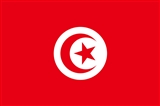
Tunisia , officially the Tunisian Republic , is a country situated on the Mediterranean Mediterranean Sea

The Mediterranean Sea is a part of the Atlantic Ocean [i] almost completely enclosed by land: on the nor ... 

 coast of North Africa North Africa

North Africa or Northern Africa is the northernmost [i] region [i] of the Africa [i]n continent [i] ... 

. It is the northernmost African country and the smallest of the nations situated along the Atlas mountain Atlas Mountains

The Atlas Mountains are a mountain range [i] in northwest Africa [i] extending about 2,400 km through ... 

 range, bordering Algeria Algeria

Algeria , officially the People's Democratic Republic of Algeria is a country in north Africa [i], ... 

, to the west, and Libya Libya

Libya , officially the Great Socialist People's Libyan Arab Jamahiriya [i] , is a country in North Africa [i] ... 

 to the south east. Around forty percent of the country is composed of the Sahara desert Sahara

The Sahara is the world's largest hot desert [i], and second largest desert [i] at over 9,000,000 km, a ... 

, with much of the remainder consisting of particularly fertile soil, and a 1300-km coastline. Both played a prominent role ancient times, first with the famous Phoenician Phoenicia

Phoenicia was an ancient civilization [i] centred in the north of ancient Canaan [i], with its heartland ... 

 city of Carthage Carthage

The term Carthage refers both to an ancient city in North Africa [i] located in modern day Tunis [i] an ... 

, and later, as the Africa Province Africa Province

Africa was a province [i] of the Roman Empire [i]. ... 

, which became known as the bread basket of the Roman Empire Roman Empire

The Roman Empire was a phase of the ancient Roman [i] civilization characterized by an autocratic [i] ... 

.

Discussions

  Discussion Features

   Ask a question about 'Tunisia'

   Start a new discussion about 'Tunisia'

   Answer questions about 'Tunisia'

   'Tunisia' discussion forum

Timeline

670   The city of Kairouan Kairouan

Kairouan is a city in Tunisia [i], about 160 kilometres south of Tunis [i]. ... 

 in what is now Tunisia is founded.

868   Aghlabid Aghlabid

The Aghlabid [i] dynasty of emirs, members of the Arab [i] tribe of Bani Tamim [i], ruled Ifriqiya [i], nomina ... 

 dynasty of Tunisia takes Malta Malta

Malta, officially the Republic of Malta, is a small and densely populated island nation [i] consis ... 

.

910   Establishment of the caliphate of Ubayd Allah al-Mahdi Billah of the Fatimid dynasty after he enters the former Aghlabid Aghlabid

The Aghlabid [i] dynasty of emirs, members of the Arab [i] tribe of Bani Tamim [i], ruled Ifriqiya [i], nomina ... 

 capital of Raqqada in modern Tunisia.

913   The Shiite Shi'a Islam

Shi'a Islam, also Shi'ite Islam, Shiite or Shi'ism is the second largest denominatio... 

 Fatimid state in modern day Tunisia launches a failed military campaign against Egypt Egypt

[i] country in [[North Africa]... 

916   City of Mahdia Mahdia

Mahdia, Arabic [i]: ???????, is a Tunisian [i] coastal city with 37,000 in ... 

 founded in Tunisia

969   Fatimids conquer Egypt and move their capital from Kairouan Kairouan

Kairouan is a city in Tunisia [i], about 160 kilometres south of Tunis [i]. ... 

 (in modern Tunisia) to Fustat, subsequently founding a new capital city and naming it Cairo Cairo

Cairo translated the "land of Ra'" It comes from two Coptic words "Kahi" ... 

.

1881   In North Africa North Africa

North Africa or Northern Africa is the northernmost [i] region [i] of the Africa [i]n continent [i] ... 

, Tunisia becomes a French France

France, officially the French Republic, is a country [i] whose metropolitan territory [i] ... 

 protectorate.

1943   World War II: Battle of the Kasserine Pass Battle of the Kasserine Pass

The Battle for Kasserine Pass took place in World War II [i] during the Tunisia Campaign [i] ... 

 - German Germany

Germany , officially the Federal Republic of Germany , is a country [i] in central Europe [i]. ... 

 General Erwin Rommel Erwin Rommel

Erwin Johannes Eugen Rommel was one of the most distinguished German [i] Field Marshals [i] ... 

 and his Afrika Korps Afrika Korps

The German Afrika Korps was the corps [i]-level headquarters controlling the German Panzer [i] division [i] ... 

 launch an offensive against Allied defenses in Tunisia; it is the United States United States

The United States of America, also known as the United States, the U.S., the U.S.A., a... 

' first major battle defeat of the war.

1956   Tunisia gains independence from France France

France, officially the French Republic, is a country [i] whose metropolitan territory [i] ... 

.

1956   Habib Bourgiba Habib Bourguiba

Habib Ben Ali Bourguiba was a Tunisian [i] statesman and the first President of the Republic of Tunisia [i] ... 

 is elected prime minister of Tunisia.

   More Events >>


Encyclopedia

Tunisia , officially the Tunisian Republic , is a country situated on the Mediterranean Mediterranean Sea

The Mediterranean Sea is a part of the Atlantic Ocean [i] almost completely enclosed by land: on the nor... 

 coast of North Africa North Africa

North Africa or Northern Africa is the northernmost [i] region [i] of the Africa [i]n continent [i] ... 

. It is the northernmost African country and the smallest of the nations situated along the Atlas mountain Atlas Mountains

The Atlas Mountains are a mountain range [i] in northwest Africa [i] extending about 2,400 km through ... 

 range, bordering Algeria Algeria

Algeria , officially the People's Democratic Republic of Algeria is a country in north Africa [i],... 

, to the west, and Libya Libya

Libya , officially the Great Socialist People's Libyan Arab Jamahiriya [i] , is a country in North Africa [i] ... 

 to the south east. Around forty percent of the country is composed of the Sahara desert Sahara

The Sahara is the world's largest hot desert [i], and second largest desert [i] at over 9,000,000 km, a ... 

, with much of the remainder consisting of particularly fertile soil, and a 1300-km coastline. Both played a prominent role ancient times, first with the famous Phoenician Phoenicia

Phoenicia was an ancient civilization [i] centred in the north of ancient Canaan [i], with its heartland ... 

 city of Carthage Carthage

The term Carthage refers both to an ancient city in North Africa [i] located in modern day Tunis [i] an ... 

, and later, as the Africa Province Africa Province

Africa was a province [i] of the Roman Empire [i]. ... 

, which became known as the bread basket of the Roman Empire Roman Empire

The Roman Empire was a phase of the ancient Roman [i] civilization characterized by an autocratic [i] ... 

.

It is thought that the name Tunis Tunis

Tunis is the capital [i] of Tunisia [i] and also the Tunis Governorate [i], with a population of 699,70 ... 

originated from Berber Berber languages

The Berber languages are a group of closely related language [i]s mainly spoken in Morocco [i] and Algeria [i] ... 

, meaning either a geographical Geography

Geography is the study of the Earth's features and of the distribution of life on the earth, including ... 

 promontory, or, "to spend the night."

History


At the beginning of recorded history, Tunisia was inhabited by Berber Berber people

The Berbers are an ethnic group [i] indigenous to Northwest Africa [i], speaking the Berber languages [i] ... 

 tribes. Its coast was settled by Phoenicians starting as early as the 10th century BC. In the 6th century BC, Carthage Carthage

The term Carthage refers both to an ancient city in North Africa [i] located in modern day Tunis [i] an ... 

 rose to power and eventually became the dominant power in the Mediterranean Mediterranean Sea

The Mediterranean Sea is a part of the Atlantic Ocean [i] almost completely enclosed by land: on the nor... 

 after a series of wars with Greece.

Carthage Carthage

The term Carthage refers both to an ancient city in North Africa [i] located in modern day Tunis [i] an ... 

 was founded in the 8th Century B.C. by settlers from Tyre Tyre

Tyre is a city in the South Governorate [i] of Lebanon [i]. ... 

, now in modern day Lebanon Lebanon

Lebanon, officially the Lebanese democratic Republic , is a small, largely mountainous [i] country ... 

, and the settlers of Carthage brought their culture and religion from the Phoenician and Canaanite Canaan

Canaan .
Canaan is an ancient term for a region approximating present-day Israel [i] and Palestine [i] p... 

 legacy. Legend says that the Queen Dido Dido

In Greek and Roman sources Dido or Elissa appears as the founder and first Queen of Carthage [i]. ... 

 founded the city, and this is retold in the Roman Epic Aeneid Aeneid

The Aeneid : is a Latin [i] epic [i] written by Virgil [i] in the 1st century BC [i] th ... 

.

The people of Carthage worshiped a pantheon of Middle Eastern Gods including Baal Baal

Baal is a Semitic [i] title and honorific meaning lord that is used for various gods, spirits and demon [i]... 

 and Tanit Tanit

Tanit was a Carthaginian [i] lunar goddess [i].... 

. Tanit's symbol, a simple female figure in long dress and extended arms, is a popular icon on ancient sites. The founders of Carthage also established a Tophet which was altered in Roman times.

Though the Romans referred to the new empire growing in the city of Carthage Carthage

The term Carthage refers both to an ancient city in North Africa [i] located in modern day Tunis [i] an ... 

 as Punic or Phoenician the empire built around Carthage Carthage

The term Carthage refers both to an ancient city in North Africa [i] located in modern day Tunis [i] an ... 

 was a distinct independent political entity from the other Phoenician settlements in the Western Mediterranean.

During a series of wars with Rome, a Carthaginian invasion of Italy led by Hannibal Hannibal Barca

Hannibal Barca was a Punic [i] military commander and politician [i], later also working in ot ... 

 during the Second Punic War Second Punic War

The Second Punic War lasted from 218 [i] to 202 BC [i] and involved combatants in the western an ... 

 nearly crippled the rise of the Roman Empire Roman Empire

The Roman Empire was a phase of the ancient Roman [i] civilization characterized by an autocratic [i] ... 

. Carthage Carthage

The term Carthage refers both to an ancient city in North Africa [i] located in modern day Tunis [i] an ... 

 was eventually conquered by Rome in the 2nd century BC, a turning point which meant that the civilization of the ancient Mediterranean Mediterranean Sea

The Mediterranean Sea is a part of the Atlantic Ocean [i] almost completely enclosed by land: on the nor... 

 would become influenced mainly by European instead of African cultures. After the Roman conquest, the region became one of the granaries of Rome. It was conquered by the Vandals Vandals

The Vandals were an East Germanic tribe [i] that entered the late Roman Empire [i] during the 5th century [i] ... 

 in the 5th century AD and was retaken by Byzantines Byzantine Empire

Byzantine Empire is the term conventionally used since the 19th century [i] to describe the Greek-spea ... 

 in the 6th century 6th century

The 6th century is the period from 501 [i] - 600 [i] in accordance with the Julian calendar [i] in the Christian Era [i]... 

, during the rule of Justinian Justinian I

Justinian I was Eastern Roman Emperor [i] from August 1 [i], 527 [i] until h ... 

 by his commander Belisarius Belisarius

Flavius Belisarius was one of the greatest general [i]s of the Byzantine Empire [i] and one of the most ... 

.

In the 7th century 7th century

The 7th century is the period from 601 [i] - 700 [i] in accordance with the Julian calendar [i] in the Christian Era [i]... 

 it was conquered by Arab Muslims Islam

Islam is a monotheistic [i] religion [i] based upon the Qur'an [i], which adherents believe w ... 

, who founded Al Qayrawan Kairouan

Kairouan is a city in Tunisia [i], about 160 kilometres south of Tunis [i]. ... 

. Successive Muslim dynasties ruled, interrupted by Berber rebellions. The reigns of the Aghlabids Aghlabid

The Aghlabid [i] dynasty of emirs, members of the Arab [i] tribe of Bani Tamim [i], ruled Ifriqiya [i], nomina... 

  and of the Zirids , Berber followers of the Fatimids, were especially prosperous. When the Zirids angered the Fatimids in Cairo Cairo

Cairo translated the "land of Ra'" It comes from two Coptic words "Kahi"
... 

 , the latter sent in the Banu Hilal to ravage Tunisia. The coasts were held briefly by the Normans Normans

The Normans were a people who colonized Normandy [i], conquered England [i], and played a major politic ... 

 of Sicily Sicily

Sicily is an autonomous region [i] of Italy [i] and the larges ... 

 in the 12th century 12th century

As a means of recording the passage of time [i], the 12th century was that century [i] which lasted from ... 

. In 1159, Tunisia was conquered by the Almohad Almohad

The Almohad Dynasty were a Berber [i] Muslim religious [i] power which founded the fifth Moorish [i] ... 

 caliphs. They were succeeded by the Berber Hafsids Hafsid dynasty

Hafsid dynasty in Ifriqiya [i]
... 

 , under whom Tunisia prospered. In the last years of the Hafsids, Spain Spain

Spain, officially the Kingdom of Spain , is a Europe [i]an parliamentary monarchy [i].... 

 seized many of the coastal cities, but these were recovered for Islam Islam

Islam is a monotheistic [i] religion [i] based upon the Qur'an [i], which adherents believe w ... 

 by the Ottoman Empire Ottoman Empire

The Ottoman Empire , is also sometimes known in the West [i] as the Turkish Empire. ... 

. Under its Turkish Ottoman Empire

The Ottoman Empire , is also sometimes known in the West [i] as the Turkish Empire. ... 

 governors, the Beys, Tunisia attained virtual independence. The Hussein dynasty of Beys, established in 1705, lasted until 1957. In the late 16th Century 16th century

As a means of recording the passage of time [i], the 16th century was that century [i] which lasted from ... 

 the coast became a pirate Piracy

Piracy is robbery [i] committed at sea, or sometimes on the shore, by an agent without a commission [i] ... 

 stronghold .

French Imperialism


In the mid-1800's, Tunisia's government under the rule of the Bey severely compromised its legitimacy by making several controversial financial decisions that led to its downfall. France had been planning to take control of Tunisia when the Bey first borrowed large sums of money in an attempt to Westernise Westernization

Westernization is a process whereby traditional, long-established societies [i] come under the influence ... 

. This failing state facilitated the Algerian raids that occurred thereafter. The weakened Bey was powerless against these raids and unable to resist European colonization.

In 1878, a secret deal was made between the United Kingdom United Kingdom

The United Kingdom of Great Britain and Northern Ireland is a country and sovereign state [i] tha ... 

 and France that decided the fate of the African Africa

Africa is one of the greatest sized continents of the Earth.... 

 country. Provided that the French accepted British control of Cyprus Cyprus

Cyprus , officially the Republic of Cyprus , is a Eurasia [i]n island nation [i] in the eastern pa ... 

, recently given to the United Kingdom, the British would in turn accepted French control of Tunisia. This satisfied the French and led to their assumption of control in 1880. Tunisia was formally made a French France

France, officially the French Republic, is a country [i] whose metropolitan territory [i] ... 

 protectorate on May 12, 1881.

Tunisia gained independence from France in 1956. The Bey reclaimed power, but was soon deposed by French-educated Habib Bourguiba Habib Bourguiba

Habib Ben Ali Bourguiba was a Tunisian [i] statesman and the first President of the Republic of Tunisia [i] ... 

 in 1957. He was quickly selected to be the Republic's first president and served through 1987.

World War II

Tunisia was the scene of the first major joint operations between the United States and British allies in World War II World War II

World War II, or the Second World War, was a worldwide [i] conflict [i] fought betwe ... 

 during 1942–1943. The main body of the British army, advancing from their victory in Battle of el-Alamein El Alamein

El Alamein is a town in northern Egypt [i] on the Mediterranean Sea [i] coast. ... 

 under the command of British Field Marshal Montgomery, pushed in to Tunisia from the south whereas the US and other allies, following their invasions of Algeria and Morocco in Operation Torch Operation Torch

Operation Torch was the British [i]-American [i] invasion of French North Africa [i] ... 

, came from the west. With Germany engaged in the battle of Stalingrad Volgograd

Volgograd , formerly called [i] Tsaritsyn and Stalingrad is a city [i] ... 

, it is easy to dismiss the battle for Tunisia as a minor event, but in fact it had significance for the rest of the war.

General Erwin Rommel Erwin Rommel

Erwin Johannes Eugen Rommel was one of the most distinguished German [i] Field Marshals [i] ... 

, commander of Axis Axis Powers

The Axis Powers were those nations opposed to the Allies [i] during the Second World War [i] ... 

 forces in North Africa, had hoped to inflict a similar defeat on the allies in Tunisia as the German forces had in the Battle of France Battle of France

In World War II [i], the Battle of France, also known as the Fall of France, was the German [i]... 

 in 1940. Until the battle for Tunisia, the inexperienced allied forces had generally been unable to withstand quick German blitzkrieg Blitzkrieg

Blitzkrieg is a popular name for an offensive operational-level [i] military doctrine [i]... 

s or properly coordinate their operations, therefore the battle for Tunisia was a major test of the allies. If they were going to defeat Germany they were going to have to fight together, and stand up to the inevitable setbacks that the excellent German forces would inflict.

On February 19, 1943, General Rommel launched an attack on the American forces in the Kasserine Pass Battle of the Kasserine Pass

The Battle for Kasserine Pass took place in World War II [i] during the Tunisia Campaign [i] ... 

 region of Western Tunisia, hoping to inflict the kind of alliance and morale shattering defeat the Germans had won in Poland and France. The initial results were a disaster for the United States; to this day the area around the Kasserine Pass is the site of many US war grave War grave

A war grave is a place where war [i] dead are buried. ... 

s from that time.

However, the American forces were ultimately able to stop their retreat, having learned a critical lesson in tank warfare Armoured warfare

Armoured warfare in modern warfare [i] is understood to be the use of armoured fighting vehicles [i] as ... 

. On March 20, 1943, the Allies broke through the German Mareth line and subsequently linked up on April 8, 1943. Thus, the alliance of the United States, the United Kingdom, the Free French, and Polish as well as other forces were able to win a major battle as an allied army.

The battle, though often overshadowed by Stalingrad, represented a major allied victory of World War II World War II

World War II, or the Second World War, was a worldwide [i] conflict [i] fought betwe ... 

 largely because it forged the Alliance which would one day liberate Western Europe.

Politics

Tunisia is a republic Republic

In a broad definition, a republic is a state [i] or country [i] that is led by people whose political power [i] ... 

 with a strong presidential system Presidential system

A presidential system, also called a congressional system, is a system of government [i] where the ... 

 dominated by a single political party. President Zine El Abidine Ben Ali Zine El Abidine Ben Ali

General [i] Zine El Abidine Ben Ali is the President of the Tunisian Republic [i] since November 7, 1987 ... 

 has been in office since 1987 when he deposed Habib Bourguiba Habib Bourguiba

Habib Ben Ali Bourguiba was a Tunisian [i] statesman and the first President of the Republic of Tunisia [i] ... 

, who had been President since Tunisia's independence from France in 1956. The constitution has been changed twice to allow him to remain in power: initially from two to three terms, and then from three to five. The ruling party, the Democratic Constitutional Rally , was the sole legal party for 25 years — when it was known as the Socialist Destourian Party — and still dominates political life.

The President is elected to 5-year terms — with virtually no opposition — and appoints a Prime Minister and cabinet, who play a strong role in the execution of policy. Regional governors and local administrators also are appointed by the central government; largely consultative mayors and municipal councils are elected. There is a unicameral legislative body, the Chamber of Deputies, which has 182 seats, 20% of which are reserved for the opposition parties. It plays a growing role as an arena for debate on national policy but never originates legislation, and virtually always passes bills presented by the executive with only one minor change. The judiciary is nominally independent but responds to executive direction especially in political cases. The military is professional and does not play a role in politics. There are currently six legal opposition parties having their own Journals.

Tunisia is noteworthy for its lack of public political discourse. Tunisia's precise political situations is hard to determine due to the effective level of silence the government has placed and the entire lack of all transparency. There is strong evidence that dissidents are routinely arrested, for crimes as minor as looking at banned web sites. The growth of the Internet has been a major issue for Tunisia, with European tourists and ISP so close by. Tunisia allows only censored Internet access in its own country. This censorship bars all materials deemed pornographic, and any chat group references critical of the government. It seems unlikely that the oppression brought to bear is restricted only to the Internet. Tunisia has free press and Tunisians are almost never willing to speak about politics. Most likely the Internet has only made public the pervasive structure of state control which has managed to shroud itself in a western friendly face, welcoming masses of tourists who can even enjoy pardise beaches.

Tunisia is also one of the few Muslim countries , where hijab Hijab

Hijab or hijab is the Arabic term for "barrier".
... 

s are prohibited in government buildings.

As for the underground opposition from Islamic Fundamentalists, these groups have an obvious but not clear existence in the nation. Under former Habib Bourguiba Islamic Fundamentalists were allowed to serve as a counter to more left wing movements. In 1987, Zine al-Abidine Ben Ali took power in a bloodless coup. Ben Ali has followed an aggressive policy regarding the Fundamentalists but the extent of any government success if difficult to judge in a nation where so much is secret. While Tunisia has a repressive political system, standards of living are among the best in the developing world. Tunisia remains an autocratic regime, but one free of many of the evils of starvation, homelessness, and disease seen in much of Africa and Asia.

See Also:
  • Foreign relations of Tunisia

Administrative Divisions


Tunisia is subdivided into 24 governorates.

Geography


Tunisia is in northern Africa Africa

Africa is one of the greatest sized continents of the Earth.... 

, between the Mediterranean Sea Mediterranean Sea

The Mediterranean Sea is a part of the Atlantic Ocean [i] almost completely enclosed by land: on the nor... 

 and the Sahara Desert Sahara

The Sahara is the world's largest hot desert [i], and second largest desert [i] at over 9,000,000 km, a ... 

 and bordered by Algeria Algeria

Algeria , officially the People's Democratic Republic of Algeria is a country in north Africa [i],... 

 in the west and Libya Libya

Libya , officially the Great Socialist People's Libyan Arab Jamahiriya [i] , is a country in North Africa [i] ... 

 in the south-east. Much of the land is semi-arid and desert Desert

In geography [i], a desert is a landscape [i] form or region that receives little precipitation [i] ... 

. There are mountains in the north. The climate is temperate in the north, with mild, rainy winters and hot, dry summers. The desert is in the south.

See also:
  • List of cities in Tunisia List of cities in Tunisia

    This is the list of cities [i] and town [i]s in the country [i] of Tunisia [i]:

... 


Economy


Tunisia has a diverse economy, with important agricultural, mining, energy, tourism, and manufacturing sectors. Governmental control of economic affairs whilst still heavy has gradually lessened over the past decade with increasing privatization, simplification of the tax structure, and a prudent approach to debt. Real growth averaged 5.0% in the 1990s, and inflation is slowing. Increased trade and tourism have been key elements in this steady economic growth. Tunisia's association agreement with the European Union European Union

The European Union is an intergovernmental [i] and supranational [i] ... 

  entered into force on March 1 1998, the first such accord between the EU and Mediterranean countries to be activated. Under the agreement Tunisia will gradually remove barriers to trade with the EU over the next decade. Broader privatization, further liberalization of the investment code to increase foreign investment, and improvements in government efficiency are among the challenges for the future. In 2008, Tunisia will be a completely associated member of the EU .

Culture


See also:
  • Islam in Tunisia
  • Music of Tunisia
  • Tunisian Arabic

Demographics


While the vast majority of modern Tunisians identify themselves as Arabs, they are mainly the descendants of indigenous Berber Berber people

The Berbers are an ethnic group [i] indigenous to Northwest Africa [i], speaking the Berber languages [i] ... 

s: less than 20% of their genetic material comes from the Middle East . Numerous civilizations have invaded, migrated to, and been assimilated into the population over the millennia. Significant influxes of population have come through conquest by the Phoenicia Phoenicia

Phoenicia was an ancient civilization [i] centred in the north of ancient Canaan [i], with its heartland ... 

ns, the Roman Roman Republic

The Roman Republic was a phase of the ancient Roman civilization [i] characterized by a republic [i]... 

s, the Vandal Vandals

The Vandals were an East Germanic tribe [i] that entered the late Roman Empire [i] during the 5th century [i] ... 

s coming from Germany, the Arabs, the Ottoman Ottoman Empire

The Ottoman Empire , is also sometimes known in the West [i] as the Turkish Empire. ... 

s, and the French France

France, officially the French Republic, is a country [i] whose metropolitan territory [i] ... 

. Many Spanish Spain

Spain, officially the Kingdom of Spain , is a Europe [i]an parliamentary monarchy [i].... 

 Moors Moors

The Moors were the medieval Muslim [i] inhabitants of al-Andalus [i] and the Maghreb [i] and western Africa [i]... 

 and Jew Jew

Jews are followers of Judaism [i] or, more generally, members of the Jewish people , an ethno [i]... 

s also arrived at the end of the 15th century.

Nearly all Tunisians are Muslim. There has been a Jewish population on the southern island of Djerba for 2500 years, and though considerably diminished Jewish exodus from Arab lands

The Jewish exodus from Arab lands refers to the 20th century [i] emigration [i] of Jews, primarily of Sephardi [i]... 

, there remains a small Jewish population in Tunis Tunis

Tunis is the capital [i] of Tunisia [i] and also the Tunis Governorate [i], with a population of 699,70 ... 

 which is descended from those who fled Spain in the late 15th century. There is a small indigenous Christian population. http://france-echos.com/actualite.php?cle=6174. Small nomadic Nomad

Communities of nomadic people move from place to place, rather than settling down [i] in one loc ... 

 indigenous minorities have been mostly assimilated into the larger population.

Education

Main article: List of universities in Tunisia
Colleges and universities in Tunisia include:

  • International University of Tunis
  • Universite Libre de Tunis
  • University of Aviation and Technology, Tunisia

Interesting Notes

  • The Monty Python Monty Python

    Monty Python, or The Pythons, is the collective name of the creators of Monty Python's Flying Circus [i] ... 

     movie "Life of Brian" was filmed in Tunisia.
  • Four of the Star Wars Star Wars

    Star Wars is a science fantasy [i] [i] and fictional galaxy [i] cr ... 

     films were partly filmed in Tataouine Tataouine

    Tataouine is a city [i] located in southern Tunisia [i] at . ... 

    , in the Tunisian Tunisia

    Tunisia , officially the Tunisian Republic , is a country situated on the Mediterranean [i] coast ... 

     Sahara Sahara

    The Sahara is the world's largest hot desert [i], and second largest desert [i] at over 9,000,000 km, a ... 

    . These scenes took place on the planet Tatooine Tatooine

    In George Lucas [i]'s Star Wars [i] saga, Tatooine is the home planet [i]... 

    .

Miscellaneous topics

  • Communications in Tunisia
  • History of the Jews in Tunisia History of the Jews in Tunisia

    Tunisia [i] has had a Jew [i]ish minority since Roman times [i]. ... 

  • Military of Tunisia
  • Transportation of Tunisia
  • Les Scouts Tunisiens Les Scouts Tunisiens

    Les Scouts Tunisiens is the national Scouting [i] organization of Tunisia [i]. ... 

  • Gay rights in Tunisia

References


External links


Government

  • official site
  • official site

News

  • news headline links
  • government-sourced
  • business news

Overviews

  • [https://www.cia.gov/cia/publications/factbook/geos/ts.html CIA World Factbook - Tunisia]
  • directory category

Tourism


Other

  • from Jurispedia Jurispedia

    Jurispedia is an Arabic [i], Chinese [i], English [i], ...