
All Topics  
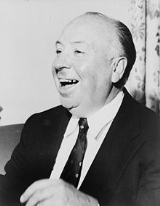
Alfred Hitchcock

 
Alfred Hitchcock

   Email Print
   Bookmark   Link


Alfred Hitchcock


Sir Alfred Joseph Hitchcock, KBE
Order of the British Empire

The Most Excellent Order of the British Empire is a United Kingdom order of chivalry established on 4 June 1917 by George V of the United Kingdom....
 (13 August 1899 – 29 April 1980) was a British filmmaker and producer
Film producer

A film producer is someone who creates the conditions for making film. The producer initiates, co-ordinates, supervises and controls matters such as fund-raising, hiring key personnel and arranging for distributors....
 who pioneered many techniques in the suspense
Suspense

Suspense is a feeling of uncertainty and anxiety about the outcome of certain actions, most often referring to an audience's perceptions in a dramatic work....
 and psychological thriller
Psychological thriller

Psychological thriller is a specific sub-genre of the wide-ranging Thriller genre. However, this genre often incorporates elements from the Mystery fiction in addition to the typical traits of the thriller genre....
 genres. After a successful career in his native United Kingdom
United Kingdom

The United Kingdom of Great Britain and Northern Ireland, commonly known as the United Kingdom , the UK or Britain,is a sovereign state located off the northwestern coast of continental Europe....
 in both silent film
Silent film

A silent film is a film with no synchronized recorded sound, especially spoken dialogue. The idea of combining motion pictures with recorded sound is nearly as old as film itself, but because of the technical challenges involved, synchronized dialogue was only made possible in the late 1920s with the introduction of the Vitaphone system....
s and early talkies
Sound film

A sound film is a film with synchronization, or sound technologically coupled to image, as opposed to a silent film. The first known public exhibition of projected sound films took place in Paris in 1900, but decades would pass before reliable synchronization was made commercially practical....
, Hitchcock moved to Hollywood. In 1956 he became an American citizen while retaining his British citizenship.

Hitchcock directed more than fifty feature film
Feature film

In the film industry, a feature film is a film made for initial Film distributor in Movie theater and being the "main attraction" of the screening ....
s in a career spanning six decades.


Discussion
Ask a question about 'Alfred Hitchcock'
Start a new discussion about 'Alfred Hitchcock'
Answer questions from other users
Full Discussion Forum


Quotations


Blondes make the best victims. Theyre like virgin snow that shows up the bloody footprints.

CBS TV, 20 Feb. 1977

Give them pleasure — the same pleasure they have when they wake up from a nightmare.

on audiences, Asbury Park NJ Press, 13 Aug. 1974

Im not against the police; Im just afraid of them.

New Society, London, 10 May, 1984

Never turn your back on a friend.

One of televisions great contributions is that it brought murder back into the home, where it belongs.

National Observer, 15 Aug. 1966

Self-plagiarism is style.

defending repetition of his filming techniques, London Observer, 8 Aug. 1976


Encyclopedia


Sir Alfred Joseph Hitchcock, KBE
Order of the British Empire

The Most Excellent Order of the British Empire is a United Kingdom order of chivalry established on 4 June 1917 by George V of the United Kingdom....
 (13 August 1899 – 29 April 1980) was a British filmmaker and producer
Film producer

A film producer is someone who creates the conditions for making film. The producer initiates, co-ordinates, supervises and controls matters such as fund-raising, hiring key personnel and arranging for distributors....
 who pioneered many techniques in the suspense
Suspense

Suspense is a feeling of uncertainty and anxiety about the outcome of certain actions, most often referring to an audience's perceptions in a dramatic work....
 and psychological thriller
Psychological thriller

Psychological thriller is a specific sub-genre of the wide-ranging Thriller genre. However, this genre often incorporates elements from the Mystery fiction in addition to the typical traits of the thriller genre....
 genres. After a successful career in his native United Kingdom
United Kingdom

The United Kingdom of Great Britain and Northern Ireland, commonly known as the United Kingdom , the UK or Britain,is a sovereign state located off the northwestern coast of continental Europe....
 in both silent film
Silent film

A silent film is a film with no synchronized recorded sound, especially spoken dialogue. The idea of combining motion pictures with recorded sound is nearly as old as film itself, but because of the technical challenges involved, synchronized dialogue was only made possible in the late 1920s with the introduction of the Vitaphone system....
s and early talkies
Sound film

A sound film is a film with synchronization, or sound technologically coupled to image, as opposed to a silent film. The first known public exhibition of projected sound films took place in Paris in 1900, but decades would pass before reliable synchronization was made commercially practical....
, Hitchcock moved to Hollywood. In 1956 he became an American citizen while retaining his British citizenship.

Hitchcock directed more than fifty feature film
Feature film

In the film industry, a feature film is a film made for initial Film distributor in Movie theater and being the "main attraction" of the screening ....
s in a career spanning six decades. He remains one of the most popular and most recognised filmmakers of all time. His image has endured partly due to cameo appearances in his own films and the series of television dramas he hosted, the eponymous Alfred Hitchcock Presents
Alfred Hitchcock Presents

Alfred Hitchcock Presents is an anthology television series hosted by Alfred Hitchcock. The series featured both mystery fiction and melodramas....
.

Life

Hitchcock was born on 13 August 1899, in Leytonstone
Leytonstone

Leytonstone is an area of East London, England and part of the London Borough of Waltham Forest. It is a high density suburban area, located north east of Charing Cross....
, London, the second son and youngest of three children of William Hitchcock (1862-1914), a greengrocer
Greengrocer

A greengrocer is a retail trader in fruit and vegetables; that is, in green groceries. Greengrocer is primarily a United Kingdom and Australian term, and greengrocers' shops were once common in suburbs, towns and villages....
 and poulterer, and Emma Jane Hitchcock (née Whelan; 1863-1942). His family was mostly Roman Catholic, being of Irish extraction. Hitchcock was sent to the Jesuit Classic school St. Ignatius College
St Ignatius' College

St Ignatius' College is a Roman Catholic Church secondary school for boys, aged 11-18, located in Enfield Town, Middlesex. Formerly a grammar school, only accepting boys who had passed their Eleven plus exam, its educational philosophy was originally based upon the Society of Jesus precept of Ignatius of Loyola:...
 near Stamford Hill, London. He often described his childhood as being very lonely and sheltered, a situation compounded by his obesity.

On numerous occasions, Hitchcock said he was once sent by his father to the local police station with a note asking the officer to lock him away for ten minutes as punishment for behaving badly. This idea of being harshly treated or wrongfully accused is frequently reflected in Hitchcock's films.

Hitchcock's mother would often make him address her while standing at the foot of her bed, especially if he behaved badly, forcing him to stand there for hours. These experiences would later be used for the portrayal of the character of Norman Bates
Norman Bates

Norman Bates is a fictional character created by writer Robert Bloch as the central character in his novel Psycho . The character is based on real-life murder Ed Gein....
 in his movie Psycho
Psycho (1960 film)

Psycho is an Cinema of the United States Thriller /thriller directed by Alfred Hitchcock, from the screenplay by Joseph Stefano. It is based on the Psycho by Robert Bloch, which was in turn inspired by the crimes of Wisconsin serial killer Ed Gein....
.

Hitchcock's father died when he was 14. In the same year, Hitchcock left St Ignatius to study at the London County Council School of Engineering and Navigation in Poplar, London. After graduating, he became a draftsman
Technical drawing

File:Drafter at work.jpgFile:Bundesarchiv B 145 Bild-F038800-0010, Wolfsburg, VW Autowerk.jpgTechnical drawing is the discipline of creating Standardization technology drawing by architects, CAD drafters, design engineers, and related professionals....
 and advertising designer with a cable company.

During this period, Hitchcock became intrigued by photography and started working in film production in London, working as a title-card designer for the London branch of what would become Paramount Pictures
Paramount Pictures

Paramount Pictures Corporation is an American motion picture production company and distribution company, located on Melrose Avenue in Hollywood, California....
. In 1920, he received a full-time position at Islington Studios
Hoxton

Hoxton is an area in the London Borough of Hackney, immediately north of the financial district of the City of London. The area of Hoxton is bordered by Regents Canal on the north side, Wharf Road and City Road on the west, Old Street on the south, and Kingsland Road on the east....
 with its American owner, Famous Players-Lasky
Famous Players-Lasky

Famous Players-Lasky Corporation was an United States motion picture company formed in 1916 from the merger of Famous Players Film Company and the Jesse L....
 and their British successor, Gainsborough Pictures
Gainsborough Pictures

Gainsborough Pictures was a United Kingdom film studio based on the south bank of the Regent's Canal, in Poole Street, Hoxton in the London Borough of Hackney....
, designing the titles for silent movies. His rise from title designer to film director took five years, and by the end of the 1930s, Hitchcock became one of the most famous filmmakers in England, with a long Hollywood career.

Hitchcock was made a Knight Commander of the Order of the British Empire
Order of the British Empire

The Most Excellent Order of the British Empire is a United Kingdom order of chivalry established on 4 June 1917 by George V of the United Kingdom....
 by Queen Elizabeth II
Elizabeth II of the United Kingdom

Elizabeth II is the queen regnant of sixteen independent states known as the Commonwealth realms: Monarchy of the United Kingdom, Monarchy of Canada, Monarchy of Australia, Monarchy of New Zealand, Monarchy of Jamaica, Monarchy of Barbados, the Bahamas, Grenada, Papua New Guinea, the Monarchy of the Solomon Islands, Tuvalu, Saint Lucia, Sain...
 in the 1980 New Year's Honours. Although he had adopted American citizenship in 1956, he was entitled to use the title "Sir" because he had remained a British subject. Hitchcock died just four months later, on 29 April, before he could be formally invested.

Hitchcock died from renal failure
Renal failure

Renal failure or kidney failure is a situation in which the kidneys fail to function adequately. It is divided in acute and chronic forms; either form may be due to a large number of other medical problems....
 in his Bel-Air, Los Angeles, California
California

California is a U.S. state on the West Coast of the United States of the United States, along the Pacific Ocean. It is bordered by Oregon to the north, Nevada to the east, Arizona to the southeast, and to the south the Mexico state of Baja California....
 home at the age of 80. His wife Alma Reville
Alma Reville

Alma Lucy Reville, Lady Hitchcock was an film director, screenwriter and Film Editor.She is best known as the wife of Alfred Hitchcock, whom she met while they were working together at Paramount Pictures's Famous Players-Lasky in London, during the early 1920s....
, and their daughter, Patricia Hitchcock O'Connell
Patricia Hitchcock

Patricia Hitchcock O'Connell is a United Kingdom-born United States actor and Film producer.She is the only child of the film director Alfred Hitchcock and film editor Alma Reville....
, both survived him.

Pre-war British career

Hitchcock's last collaboration with Graham Cutts led him to Germany in 1924. The film Die Prinzessin und der Geiger (UK title The Blackguard, 1925), directed by Cutts and co-written by Hitchcock, was produced in the Babelsberg Studios
Babelsberg Studios

The Babelsberg Studios, located in Potsdam-Potsdam-Babelsberg, Germany, is the oldest large-scale film studio in the world. Founded in 1911, it covers an area of about ....
 in Berlin. Hitchcock also worked as an art-director on the set of F. W. Murnau's film Der letzte Mann (1924) He was very impressed with Murnau's work and later used many techniques for the set design in his own productions. In his book-length interview with François Truffaut
François Truffaut

Fran?ois Roland Truffaut was an influential filmmaker and one of the founders of the French New Wave; and remains an icon of the Cinema of France industry....
, Hitchcock/Truffaut (Simon and Schuster, 1967), Hitchcock also said he was influenced by Fritz Lang
Fritz Lang

Friedrich Christian Anton "Fritz" Lang was an Austrian-Germany-United States filmmaker, screenwriter and occasional film producer. One of the best known ?migr?s from Germany's school of German Expressionism, he was dubbed the "Master of Darkness" by the British Film Institute....
's film Destiny (1921).

In 1925, Michael Balcon
Michael Balcon

Sir Michael Elias Balcon KBE was an England film producer, known for his work with the Ealing Studios....
 of Gainsborough Pictures gave Hitchcock an opportunity to receive his first directing credit with The Pleasure Garden made at UFA Studios
Universum Film AG

Universum Film AG, better known as Ufa or UFA, was the principal film studio in Germany, home of the German film industry during the Weimar Republic and through World War II, and a major force in world cinema from 1917 to 1945....
 in Germany. The film was a commercial failure. In 1926, Hitchcock made his debut in the thriller genre with the film, The Lodger: A Story of the London Fog
The Lodger: A Story of the London Fog

The Lodger: A Story of the London Fog is a 1927 silent film directed by Alfred Hitchcock It concerns the hunt for a "Jack the Ripper" type serial killer in London....
. The film, released in January 1927, was a major commercial and critical success in the United Kingdom.. As with many of his earlier works, this film was influenced by Expressionist
German Expressionism

German Expressionism refers to a number of related creative movements which emerged in Germany before the first world war and reached a peak in 1920s Berlin, during the 1920s....
 techniques Hitchcock had witnessed first-hand in Germany. Some commentators regard this piece as the first truly "Hitchcockian" film, incorporating such themes as the "wrong man".

Following the success of The Lodger, Hitchcock hired a publicist to help enhance his growing reputation. On 2 December 1926, Hitchcock married his assistant director, Alma Reville
Alma Reville

Alma Lucy Reville, Lady Hitchcock was an film director, screenwriter and Film Editor.She is best known as the wife of Alfred Hitchcock, whom she met while they were working together at Paramount Pictures's Famous Players-Lasky in London, during the early 1920s....
 at the Brompton Oratory
Church of the Immaculate Heart of Mary

The Church of the Immaculate Heart of Mary, popularly but incorrectly known as Brompton Oratory_, is a Roman Catholic Church in South Kensington, London....
. Their only child, daughter Patricia
Patricia Hitchcock

Patricia Hitchcock O'Connell is a United Kingdom-born United States actor and Film producer.She is the only child of the film director Alfred Hitchcock and film editor Alma Reville....
, was born on 7 July 1928. Alma was to become Hitchcock's closest collaborator. She wrote some of his screenplays and (though often uncredited) worked with him on every one of his films.

In 1929, Hitchcock began work on his tenth film Blackmail
Blackmail (1929 film)

Blackmail is a Thriller /drama film directed by Alfred Hitchcock, starring Anny Ondra, John Longden, and Cyril Ritchard, and featuring Donald Calthrop, Sara Allgood and Charles Paton....
. While the film was still in production, the studio, British International Pictures (BIP), decided to make it one of the UK's first sound pictures. With the climax of the film taking place on the dome of the British Museum
British Museum

The British Museum is a museum of human history and culture situated in London. Its collections, which number more than 7 million Object , are amongst the largest and most comprehensive in the world and originate from all continents, illustrating and documenting the story of human culture from its beginning to the present....
, Blackmail began the Hitchcock tradition of using famous landmarks as a backdrop for suspense sequences. In the PBS series The Men Who Made The Movies, Hitchcock had explained how he used early sound recording as a special element of the film, emphasizing the word "knife" in a conversation with the woman suspected of murder.During this period, Hitchcock directed segments for a BIP musical film
Musical film

The musical film is a film genre in which several songs sung by the fictional character are interwoven into the narrative. The songs are used to advance the plot or develop the film's characters....
 revue
Revue

A revue is a type of multi-act popular theatre entertainment that combines music, dance and sketch comedy. The revue has its roots in nineteenth-century American popular entertainment and melodrama, but grew into a substantial cultural presence of its own during its golden years from ca....
 Elstree Calling
Elstree Calling

Elstree Calling is a film directed by Andre Charlot, Jack Hulbert, Paul Murray, and Alfred Hitchcock at Elstree Studios. The film, referred to as "A Cine-Radio Revue" in its original publicity, is a lavish musical film revue and was Britain's answer to the Hollywood revues which has been produced by the major studios in the United States...
 (1930) and directed a short film featuring two Film Weekly scholarship winners, An Elastic Affair
An Elastic Affair

An Elastic Affair was a 10-minute short film comedy film directed by Alfred Hitchcock which features the two winners -- Cyril Butcher as "the Boy" and Aileen Despard as "the Girl" -- of a film actor scholarship sponsored by British film magazine Film Weekly....
 (1930). Another BIP musical revue, Harmony Heaven (1929), reportedly had minor input from Hitchcock, but his name does not appear in the credits.

In 1933, Hitchcock was once again working for Michael Balcon at Gaumont-British Picture Corporation
Gaumont British

Gaumont-British Picture Corporation was the British arm of the France film company Gaumont Film Company. The company became independent of its French parent in 1922, when Isidore Ostrer acquired control of Gaumont-British....
. His first film for the company, The Man Who Knew Too Much
The Man Who Knew Too Much (1934 film)

The Man Who Knew Too Much is a 1934 in film suspense film directed by Alfred Hitchcock and released by Gaumont Film Company. It was one of the most successful and critically acclaimed films of Hitchcock's British period....
 (1934), was a success and his second, The 39 Steps
The 39 Steps (1935 film)

The 39 Steps is a Cinema of the UK thriller film directed by Alfred Hitchcock, based on the adventure novel The Thirty-nine Steps by John Buchan, 1st Baron Tweedsmuir....
 (1935), is often considered one of the best films from his early period. This film was also one of the first to introduce the concept of the "Macguffin
MacGuffin

A MacGuffin is a plot device that motivates the characters or advances the story, but the details of which are of little or no importance otherwise....
", a plot device around which a whole story seems to revolve, but ultimately has nothing to do with the true meaning or ending of the story. In The 39 Steps, the Macguffin is a stolen set of design plans. (Hitchcock told French director François Truffaut
François Truffaut

Fran?ois Roland Truffaut was an influential filmmaker and one of the founders of the French New Wave; and remains an icon of the Cinema of France industry....
: "There are two men sitting in a train going to Scotland and one man says to the other, 'Excuse me, sir, but what is that strange parcel you have on the luggage rack above you?' 'Oh,' says the other, 'that's a Macguffin.' 'Well,' says the first man, 'what's a Macguffin?' The other answers, 'It's an apparatus for trapping lions in the Scottish Highlands.' 'But,' says the first man, 'there are no lions in the Scottish Highlands.' 'Well,' says the other, 'then that's no Macguffin.'")

Hitchcock's next major success was in 1938 with his film The Lady Vanishes
The Lady Vanishes (1938 film)

The Lady Vanishes is a thriller directed by Alfred Hitchcock and adapted by Sidney Gilliat and Frank Launder from the novel The Wheel Spins by Ethel Lina White....
, a clever and fast-paced film about the search for a kindly old Englishwoman (Dame May Whitty), who disappears while on board a train in the fictional country of Vandrika (a thinly-veiled version of Nazi
Nazism

Nazism, officially National Socialism , refers to the ideology and practices of the National Socialist German Workers? Party under Adolf Hitler, and the policies adopted by the dictatorial government of Nazi Germany from 1933 to 1945....
 Germany).

By 1938, Hitchcock had become known for his famous observation, "Actors are cattle." He once said that he first made this remark as early as the late 1920s, in connection to stage actors who were snobbish about motion pictures. However, Michael Redgrave
Michael Redgrave

Sir Michael Scudamore Redgrave Order of the British Empire was a well-known English people stage and film actor, director, manager and author....
 said that Hitchcock had made the statement during the filming of The Lady Vanishes
The Lady Vanishes (1938 film)

The Lady Vanishes is a thriller directed by Alfred Hitchcock and adapted by Sidney Gilliat and Frank Launder from the novel The Wheel Spins by Ethel Lina White....
. The phrase would haunt Hitchcock for years to come and would result in an incident during the filming of his 1941 production of Mr. & Mrs. Smith
Mr. & Mrs. Smith (1941 film)

Mr. & Mrs. Smith is a screwball comedy film directed by Alfred Hitchcock, written by Norman Krasna, and starring Carole Lombard and Robert Montgomery ....
 where Carole Lombard
Carole Lombard

Carole Lombard , born Jane Alice Peters in Fort Wayne, Indiana, was an Oscar-nominated United States Actor. She was particularly noted for her comedic roles in several classic films of the 1930s, most notably in the 1936 film My Man Godfrey....
 brought some heifers onto the set — with name tags of Lombard, Robert Montgomery
Robert Montgomery (actor)

Robert Montgomery was an United States actor and director.Montgomery was born Henry Montgomery Jr. in Beacon, New York, then known as "Fishkill Landing", the son of Mary Weed and Henry Montgomery, Sr....
, and Gene Raymond
Gene Raymond

Gene Raymond born Raymond Guion was an United States film, television, and stage actor of the 1930s and 1940s. In addition to acting, Raymond was also a composer, writer, director, producer, and decorated military pilot....
, the stars of the film — to surprise the director. Hitchcock said he was misquoted: "I said 'Actors should be treated like cattle'."

At the end of the 1930s, David O. Selznick
David O. Selznick

David O. Selznick, born David Selznick , was one of the iconic Hollywood film producer of the Golden Age. He is best known for producing the epic blockbuster Gone with the Wind which earned him an Academy Awards for Best Picture....
 signed Hitchcock to a seven-year contract beginning in March 1939, when the Hitchcocks moved to the United States.

Hollywood

The suspense and the gallows humor
Gallows humor

Gallows humor is a type of humour that arises from stressful, traumatic, or life-threatening situations; often in circumstances such that death is perceived as impending and unavoidable....
 that had become Hitchcock's trademark in film continued to appear in his productions. The working arrangements with Selznick were less than optimal. Selznick suffered from perennial money problems, and Hitchcock was often displeased with Selznick's creative control over his films. In a later interview, Hitchcock summarised the working relationship thus: '[Selznick] was the Big Producer. [...] Producer was king, The most flattering thing Mr. Selznick ever said about me - and it shows you the amount of control - he said I was the "only director" he'd "trust with a film" '

Selznick "loaned" Hitchcock to the larger studios more often than producing Hitchcock's films himself. In addition, Selznick, as well as fellow independent producer Samuel Goldwyn
Samuel Goldwyn

Samuel Goldwyn was an American film producer, and founding contributor executive of several motion picture studios....
, made only a few films each year, so Selznick did not always have projects for Hitchcock to direct. Goldwyn had also negotiated with Hitchcock on a possible contract, only to be outbid by Selznick. Hitchcock was quickly impressed with the superior resources of the American studios compared to the financial restrictions he had frequently encountered in England..

Hitchcock's fondness for his homeland resulted in numerous American films set in, or filmed in, the United Kingdom, including his penultimate film, Frenzy
Frenzy

Frenzy is a Thriller film directed by Alfred Hitchcock, and is the penultimate feature film of his extensive career. The film is based upon the novel Goodbye Piccadilly, Farewell Leicester Square by Arthur La Bern, and was adapted for the screen by Anthony Shaffer....
.

With the prestigious Selznick picture Rebecca
Rebecca (film)

Rebecca is a psychological thriller directed by Alfred Hitchcock as his first United States project, and his first film produced under his contract with David O....
 in 1940, Hitchcock made his first American movie, set in England and based on a novel by English author Daphne du Maurier
Daphne du Maurier

Dame Daphne du Maurier, Lady Browning Order of the British Empire was an English author and playwright. Many of her works have been adapted into films, including the novels Rebecca , which won the Best Picture Academy Award in 1941, Jamaica Inn , and her short stories The Birds and Don't Look Now....
. The film starred Sir Laurence Olivier and Joan Fontaine
Joan Fontaine

Joan Fontaine is an Academy Awards-winning United Kingdom actress in American films. She became an American citizen in April 1943. She is the younger sister of actress Olivia de Havilland, also an Academy Award winner....
. "This Gothic melodrama
Melodrama

The theatrical genre of Melodrama utilizes theme-music to manipulate the spectator's emotional response and to denote character types. The term combines "melody" and "drama"....
 explores the fears of a naive young bride who enters a great English country home and must grapple with the problems of a distant husband, a predatory housekeeper, and the legacy of her husband's late wife, the beautiful, mysterious Rebecca". The film won the Academy Award
Academy Awards

The Academy Awards, popularly known as the Oscars, are presented annually by the Academy of Motion Picture Arts and Sciences to recognize excellence of professionals in the film industry, including directors, actors, and writers....
 for Best Picture
Academy Award for Best Picture

The Academy Award for Best Motion Picture is one of the Academy Award presented annually by the Academy of Motion Picture Arts and Sciences to artists working in the film industry....
 of 1940. The statuette was given to Selznick, as the film's producer,. The film did not win the Best Director award for Hitchcock.

There were additional problems between Selznick and Hitchcock. Selznick was known to impose very restrictive rules upon Hitchcock . Hitchcock was forced to shoot the film as Selznick wanted . At the same time, Selznick complained about Hitchcock's "goddamn jigsaw cutting", which meant that the producer did not have nearly the leeway to create his own film as he liked, but had to follow Hitchcock's vision of the finished product. The film was the third longest of Hitchcock's films, at 130 minutes, exceeded only by The Paradine Case
The Paradine Case

The Paradine Case is a Legal drama film, set in England, directed by Alfred Hitchcock and produced by David O. Selznick. The screenplay was written by Selznick and an uncredited Ben Hecht, from an adaptation by Alma Reville and James Bridie of the novel by Robert S....
 at 132 minutes and North by Northwest
North by Northwest

North by Northwest is an Cinema of the United States Thriller directed by Alfred Hitchcock, starring Cary Grant, Eva Marie Saint and James Mason, and featuring Leo G....
 (136 minutes).

Hitchcock's second American film, the European-set thriller Foreign Correspondent
Foreign Correspondent (film)

Foreign Correspondent is a Cinema of the United States Thriller directed by Alfred Hitchcock which tells the story of an American reporter who tries to expose enemy spies in United Kingdom, a series of events involving a continent-wide conspiracy that eventually leads to the events of a fictionalized Second World War....
, based on Vincent Sheean
Vincent Sheean

Vincent Sheean , born James Vincent Sheean, American journalist and novelist, most famous for Personal History . The book, a political memoir, was bought by film producer Walter Wanger, and became the basis for Wanger's production Foreign Correspondent directed by Alfred Hitchcock....
's Personal History and produced by Walter Wanger
Walter Wanger

Walter Wanger was an Academy Award-winning United States film producer. An intellectual and a socially conscious movie executive who produced provocative message movies and glittering romantic melodramas, Wanger's career started at Paramount Pictures in the 1920s and led him to work at virtually every major studio as either a contract produc...
, was nominated for Best Picture that year. The movie was filmed in the first year of World War II and was apparently inspired by the rapidly-changing events in Europe, as fictionally covered by an American newspaper reporter portrayed by Joel McCrea
Joel McCrea

Joel Albert McCrea, was an Cinema of the United States actor and film star whose career spanned 50 years and appearances in over 90 films....
. The film mixed actual footage of European scenes and scenes filmed on a Hollywood back lot. In compliance with Hollywood's Production Code censorship, the film avoided direct references to Germany and Germans.

1940s films

Hitchcock's films during the 1940s were diverse. The movies ranged from the romantic comedy Mr. & Mrs. Smith
Mr. & Mrs. Smith (1941 film)

Mr. & Mrs. Smith is a screwball comedy film directed by Alfred Hitchcock, written by Norman Krasna, and starring Carole Lombard and Robert Montgomery ....
 (1941) and the courtroom drama The Paradine Case
The Paradine Case

The Paradine Case is a Legal drama film, set in England, directed by Alfred Hitchcock and produced by David O. Selznick. The screenplay was written by Selznick and an uncredited Ben Hecht, from an adaptation by Alma Reville and James Bridie of the novel by Robert S....
 (1947), to the dark and disturbing Shadow of a Doubt
Shadow of a Doubt

Shadow of a Doubt is a Thriller directed by Alfred Hitchcock and written by Thornton Wilder, Sally Benson and Alma Reville. It stars Teresa Wright, Joseph Cotten, Macdonald Carey, Patricia Collinge, Henry Travers and Hume Cronyn....
 (1943).

In September 1940, the Hitchcocks purchased the Cornwall Ranch, located near Scotts Valley in the Santa Cruz Mountains
Santa Cruz Mountains

The Santa Cruz Mountains, part of the Pacific Coast Ranges, are a mountain range in central California, United States. They form a ridge along the San Francisco Peninsula, south of San Francisco, California, separating the Pacific Ocean from San Francisco Bay and the Santa Clara Valley, and continuing south, bordering Monterey Bay and ending...
 in northern California. The Ranch became the primary residence of the Hitchcocks for the rest of their lives, although they kept their Bel Air home. Suspicion
Suspicion (film)

Suspicion is a romance film psychological thriller directed by Alfred Hitchcock, and starring Cary Grant and Joan Fontaine as a married couple....
 (1941) marked Hitchcock's first film as a producer as well as director. Hitchcock used the north coast of Santa Cruz, California
Santa Cruz, California

Santa Cruz is the county seat and largest city of Santa Cruz County, California, California in the United States of America. As of the United States Census, 2000, Santa Cruz had a total population of 54,593....
 for the English coastline sequence. This film was to be actor Cary Grant
Cary Grant

Archibald Alec Leach , better known by his stage name, Cary Grant, was a British-born American actor. With his distinctive yet not quite placeable accent, he was noted as perhaps the foremost exemplar of the debonair leading man, handsome, virile, charismatic and charming....
's first time working with Hitchcock, and it was one of the few times that Grant would be cast in a sinister role. Joan Fontaine won Best Actress Oscar and the New York Film Critics Circle Award for her "outstanding performance in Suspicion." "Grant plays an irresponsible husband whose actions raise suspicion and anxiety by his wife (Fontaine)." In what critics regard as a classic scene, Hitchcock uses a light bulb to illuminate what might be a fatal glass of milk that Grant is bringing to his wife. In the book upon which the movie is based (Before the Fact
Before the Fact

Before the Fact is a novel by Anthony Berkeley writing under the pen name "Francis Iles".Iles' novel is experimental in that it is not a whodunit: It does not take long to determine the identity of the villain and his motives....
 by Francis Iles), the Grant character is a killer, but Hitchcock and the studio felt Grant's image would be tarnished by that ending. Though a homicide would have suited him better, as he stated to François Truffaut, Hitchcock settled for an ambiguous finale.

Saboteur
Saboteur (film)

Saboteur is a 1942 Universal Studios film directed by Alfred Hitchcock with a screenplay written by Peter Viertel, Joan Harrison, and Dorothy Parker....
 (1942) was the first of two films that Hitchcock made for Universal
Universal Studios

Universal Studios , a subsidiary of NBC Universal, is one of the six Worldwide major American film studios. Its production studios are located at 100 Universal City Plaza Drive in Universal City, California....
, a studio where he would continue his career during his later years. Hitchcock was forced to use Universal contract players Robert Cummings
Robert Cummings

Robert Cummings , also known as Bob Cummings, was an United States motion picture and television actor, noted for his fresh faced youthful look which lasted long into his old age....
 and Priscilla Lane, both known for their work in comedies and light dramas. Breaking with Hollywood conventions of the time, Hitchcock did extensive location filming, especially in New York City, and depicted a confrontation between a suspected saboteur (Cummings) and a real saboteur (Norman Lloyd
Norman Lloyd

Norman Lloyd is an United States veteran actor, producer and director with a career in entertainment spanning more than seven decades. Lloyd has appeared in over sixty films and television shows....
) atop the Statue of Liberty
Statue of Liberty

The Statue of Liberty , or, more formally, Liberty Enlightening the World , was presented to the United States by the people of France in 1886....
.

Shadow of a Doubt
Shadow of a Doubt

Shadow of a Doubt is a Thriller directed by Alfred Hitchcock and written by Thornton Wilder, Sally Benson and Alma Reville. It stars Teresa Wright, Joseph Cotten, Macdonald Carey, Patricia Collinge, Henry Travers and Hume Cronyn....
 (1943), Hitchcock's personal favourite of all his films and the second of the early Universal films, was about young Charlotte "Charlie" Newton (Teresa Wright
Teresa Wright

Teresa Wright was an Academy Awards-winning United States actor....
), who suspects her beloved uncle Charlie Oakley (Joseph Cotten
Joseph Cotten

Joseph Cheshire Cotten was an American actor of stage and film. He was perhaps best known for his collaborations with Orson Welles, which included Citizen Kane, The Third Man, The Magnificent Ambersons and Journey into Fear , which Cotten wrote, and for his work with Alfred Hitchcock in Shadow of a Doubt....
) of being a serial murderer. Critics have said that in its use of overlapping characters, dialogue, and closeups it has provided a generation of film theorists with psychoanalytic potential, including Jacques Lacan
Jacques Lacan

Jacques-Marie-?mile Lacan was a France psychoanalyst and psychiatrist who made prominent contributions to psychoanalysis, philosophy, and literary theory....
 and Slavoj Žižek
Slavoj Žižek

Slavoj ?i?ek is a Marxist sociologist, philosopher, and cultural critic. He was born in Ljubljana, Socialist Federal Republic of Yugoslavia . He received a Doctor of Arts in Philosophy from the University of Ljubljana and studied psychoanalysis at the University of Paris VIII with Jacques-Alain Miller and Fran?ois Regnault....
. Hitchcock again filmed extensively on location, this time in the Northern California city of Santa Rosa, California
Santa Rosa, California

Santa Rosa is the county seat of Sonoma County, California, United States. As of January 1, 2007, the population of Santa Rosa was approximately 157,985 residents....
, during the summer of 1942. The director showcased his own personal fascination with crime and criminals when he had two of his characters discuss various ways of killing people, to the obvious annoyance of Charlotte.

Working at 20th Century Fox
20th Century Fox

Twentieth Century Fox Film Corporation , also known as 20th Century Fox, Fox 2000 Pictures, or simply Fox, is one of the six Worldwide major film studios....
, Hitchcock adapted a script of John Steinbeck
John Steinbeck

John Ernst Steinbeck III was an American literature. He wrote the Pulitzer Prize-winning novel The Grapes of Wrath, published in 1939 and the novella Of Mice and Men, published in 1937....
's that chronicled the experiences of the survivors of a German U-boat attack in the film Lifeboat
Lifeboat (film)

Lifeboat is a 1944 World War II war film, directed by Alfred Hitchcock from a story written by John Steinbeck. The film stars Tallulah Bankhead, William Bendix, Walter Slezak, Mary Anderson , John Hodiak, Henry Hull, Heather Angel , Hume Cronyn and Canada Lee, and is set entirely on a Lifeboat ....
 (1944). The action sequences were shot on the small boat. The locale also posed problems for Hitchcock's traditional cameo appearance. That was solved by having Hitchcock's image appear in a newspaper that William Bendix
William Bendix

William Bendix was an United States film actor.Bendix, named for his paternal grandfather, was born in Manhattan, New York City, the only son of Cleveland-born Oscar and London-born Hilda Bendix....
 is reading in the boat, showing the director in a before-and-after advertisement for "Reduco-Obesity Slayer". While at Fox, Hitchcock seriously considered directing the film version of A.J. Cronin's novel about a Catholic priest in China, The Keys of the Kingdom
The Keys of the Kingdom (film)

The Keys of the Kingdom is a 1944 in film American film based on the 1941 in literature novel, The Keys of the Kingdom, by A. J. Cronin....
, but the plans for this fell through. John M. Stahl
John M. Stahl

John Malcolm Stahl was an United States film director and film producer.Born in New York City, New York, he began working in the city's growing motion picture industry at a young age and directed his first silent film short film in 1914....
 ended up directing the 1944 film, which was produced by Joseph L. Mankiewicz
Joseph L. Mankiewicz

Joseph Leo Mankiewicz was an United States Academy Award-winning film director, screenwriter, and film producer....
 and starred Gregory Peck
Gregory Peck

Gregory Peck was an American film actor. He was one of 20th Century Fox's most popular film stars, from the 1940s to the 1960s, and played important roles well into the 1990s....
, among other luminaries.

Returning to England for an extended visit in late 1943 and early 1944, Hitchcock made two short films for the Ministry of Information, Bon Voyage
Bon Voyage (1944 film)

Bon Voyage is a 1944 in film French language propaganda short film made by Alfred Hitchcock for the British Minister of Information. It depicts the escape of a downed RAF pilot through German-occupied territory....
 and Aventure Malgache
Aventure Malgache

Aventure Malgache is a 1944 in film French language propaganda short film made by Alfred Hitchcock for the British Minister of Information. In it, an actor tells of being in the French Resistance and running an illegal radio station and dodging Nazism....
. The films were made for the Free French, were the only ones Hitchcock made in French, and "feature typical Hitchcockian touches." In the 1990s, the two films were shown by Turner Classic Movies
Turner Classic Movies

Turner Classic Movies is a cable television channel featuring television commercial-free classic movies, mostly from the Turner Entertainment and Warner Bros....
 and released on home video.

In 1945, Hitchcock served as "treatment advisor" (in effect, a film editor) for a Holocaust documentary produced by the British Army. The film, which recorded the liberation of Nazi Concentration Camps, remained unreleased until 1985, when it was completed by PBS Frontline and distributed under the title Memory of the Camps.

Hitchcock worked for Selznick again when he directed Spellbound
Spellbound (1945 film)

Spellbound is a psychological thriller Mystery Thriller directed by Alfred Hitchcock. It tells the story of the new head of a mental asylum who turns out not to be what he claims....
, which explored the then-fashionable subject of psychoanalysis
Psychoanalysis

Psychoanalysis is a body of ideas developed by Austrian physician Sigmund Freud and his followers, which is devoted to the study of human psychological functioning and behaviour....
 and featured a dream sequence designed by Salvador Dalí
Salvador Dalí

Salvador Domingo Felipe Jacinto Dal? i Dom?nech, 1st Marquis of P?bol was a Spain Catalonia surrealist painter born in Figueres.Dal? was a skilled Technical drawing, best known for the striking and bizarre images in his surrealism work....
. Gregory Peck
Gregory Peck

Gregory Peck was an American film actor. He was one of 20th Century Fox's most popular film stars, from the 1940s to the 1960s, and played important roles well into the 1990s....
 is amnesiac Dr. Anthony Edwardes under the treatment of analyst Dr. Peterson (Ingrid Bergman
Ingrid Bergman

was a Swedish people three-time Academy Award-winning and two-time Emmy Award-winning Actor. She also won the Tony Award for Tony Award for Best Performance by a Leading Actress in a Play in the 1st Tony Awards in 1947....
), who falls in love with him while trying to unlock his repressed past. The dream sequence as it actually appears in the film is considerably shorter than was originally envisioned, which was to be several minutes long, because it proved to be too disturbing for the audience. Some of the original musical score by Miklós Rózsa
Miklós Rózsa

Mikl?s R?zsa or Miklos Rozsa was a Hungary-born composer, best known for his film scores, most notably the score to the 1959 epic Ben-Hur ....
 (which makes use of the theremin
Theremin

The theremin is an early electronic musical instrument controlled without contact from the player. It is named after its Russian inventor, Professor Leon Theremin, who patented the device in 1928....
) was later adapted by the composer into a concert piano concerto.

Notorious (1946) followed Spellbound. According to Hitchcock, in his book-length interview with François Truffaut, Selznick sold the director, the two stars (Grant and Bergman) and the screenplay (by Ben Hecht) to RKO Radio Pictures as a "package" for $500,000 due to cost overruns on Selznick's Duel in the Sun
Duel in the Sun

Duel in the Sun is a 1946 in film Western film, produced by David O. Selznick, which tells the story of a Mestiza girl who goes to live with her Anglo relatives, becoming involved in prejudice and forbidden love....
 (1946). From this point on, Hitchcock produced his own films.Notorious starred Hitchcock regulars Ingrid Bergman
Ingrid Bergman

was a Swedish people three-time Academy Award-winning and two-time Emmy Award-winning Actor. She also won the Tony Award for Tony Award for Best Performance by a Leading Actress in a Play in the 1st Tony Awards in 1947....
 and Cary Grant
Cary Grant

Archibald Alec Leach , better known by his stage name, Cary Grant, was a British-born American actor. With his distinctive yet not quite placeable accent, he was noted as perhaps the foremost exemplar of the debonair leading man, handsome, virile, charismatic and charming....
, and features a plot about Nazis, uranium, and South America. It was a huge box office success and has remained one of Hitchcock's most acclaimed films. His use of uranium
Uranium

Uranium is a silvery-gray metallic chemical element in the actinide series of the periodic table that has the chemical symbol U and atomic number 92....
 as a plot device led to Hitchcock's being briefly under FBI surveillance. McGilligan writes that Hitchcock consulted Dr. Robert Millikan
Robert Millikan

Robert Andrews Millikan was an United States experimental physics, and Nobel Prize for Physics in physics for his measurement of the charge on the electron and for his work on the photoelectric effect....
 of Caltech about the development of an atomic bomb. Selznick complained that the notion was "science fiction" only to be confronted by the news stories of the detonation of two atomic bombs on Hiroshima and Nagasaki
Atomic bombings of Hiroshima and Nagasaki

The atomic bombings of Hiroshima and Nagasaki were nuclear warfares near the end of World War II against the Empire of Japan by the United States at the executive order of President of the United States Harry S....
 in Japan in August 1945.

After completing his final film for Selznick, The Paradine Case
The Paradine Case

The Paradine Case is a Legal drama film, set in England, directed by Alfred Hitchcock and produced by David O. Selznick. The screenplay was written by Selznick and an uncredited Ben Hecht, from an adaptation by Alma Reville and James Bridie of the novel by Robert S....
 (a courtroom drama that critics found lost momentum because it apparently ran too long and exhausted its resource of ideas), Hitchcock filmed his first color film, Rope
Rope (film)

Rope is a film written by Hume Cronyn and Arthur Laurents, produced and directed by Alfred Hitchcock, and starring James Stewart , John Dall and Farley Granger....
, which appeared in 1948. Here Hitchcock experimented with marshalling suspense in a confined environment, as he had done earlier with Lifeboat
Lifeboat (film)

Lifeboat is a 1944 World War II war film, directed by Alfred Hitchcock from a story written by John Steinbeck. The film stars Tallulah Bankhead, William Bendix, Walter Slezak, Mary Anderson , John Hodiak, Henry Hull, Heather Angel , Hume Cronyn and Canada Lee, and is set entirely on a Lifeboat ....
 (1943). He also experimented with exceptionally long takes — up to ten minutes long (see Themes and devices
Alfred Hitchcock

Sir Alfred Joseph Hitchcock, Order of the British Empire was a British filmmaker and film producer who pioneered many techniques in the suspense and psychological thriller genres....
). Featuring James Stewart
James Stewart (actor)

James Maitland Stewart , popularly known as Jimmy Stewart, was an United States film and stage actor best known for his self-effacing persona....
 in the leading role, Rope was the first of four films Stewart would make for Hitchcock. It was based on the Leopold and Loeb
Leopold and Loeb

Nathan Freudenthal Leopold, Jr. and Richard A. Loeb , more commonly known as "Leopold and Loeb", were two wealthy University of Chicago students who murdered 14-year-old Bobby Franks in 1924, and were sentenced to life imprisonment....
 case of the 1920s. Somehow Hitchcock's cameraman managed to move the bulky, heavy Technicolor
Technicolor

Technicolor is the trademark for a series of Color film processes pioneered by Technicolor Motion Picture Corporation , now a division of Thomson SA....
 camera quickly around the set as it followed the continuous action of the long takes.

Under Capricorn
Under Capricorn

Under Capricorn is an Alfred Hitchcock film based on a novel by Helen de Guerry Simpson, with screenplay written by James Bridie, and adaptation by Hume Cronyn....
 (1949), set in nineteenth-century Australia, also used the short-lived technique of long takes, but to a more limited extent. He again used Technicolor
Technicolor

Technicolor is the trademark for a series of Color film processes pioneered by Technicolor Motion Picture Corporation , now a division of Thomson SA....
 in this production, then returned to black and white films for several years. For Rope and Under Capricorn, Hitchcock formed a production company with Sidney Bernstein, called Transatlantic Pictures
Transatlantic Pictures

Transatlantic Pictures was founded by Alfred Hitchcock and longtime associate Sidney Bernstein at the end of World War II. They planned to produce films in both Hollywood and London....
, which became inactive after these two unsuccessful pictures. Hitchcock continued to produce his own films for the rest of his life.

1950s: Peak years

In 1950, Hitchcock filmed Stage Fright
Stage Fright (film)

Stage Fright is an Alfred Hitchcock crime film starring Jane Wyman, Marlene Dietrich, Michael Wilding , and Richard Todd. Others in the cast include Alastair Sim, Sybil Thorndike, Kay Walsh, Hitchcock's daughter Patricia Hitchcock in her movie debut, and Joyce Grenfell in a humorous vignette....
 on location in the UK. For the first time, Hitchcock matched one of Warner Brothers' biggest stars, Jane Wyman
Jane Wyman

Jane Wyman was an American actor. She began her film career in the 1930s, and was a prolific performer for two decades. She received an Academy Award for Best Actress for her performance in Johnny Belinda , and later achieved success during the 1980s for her leading role in the television series Falcon Crest....
, with the sultry German actress Marlene Dietrich
Marlene Dietrich

Marlene Dietrich ; was a German-born American actress, singer and entertainer.Dietrich remained popular throughout her long career by continually re-inventing herself....
. Dietrich's daughter later wrote that Dietrich detested Wyman. Hitchcock used a number of prominent British actors, including Michael Wilding
Michael Wilding

Michael Wilding may refer to:*Michael Wilding *Michael Wilding ...
, Richard Todd
Richard Todd

Richard Todd is an Ireland-born actor, United Kingdom soldier and film star....
, and Alastair Sim
Alastair Sim

Alastair Sim, CBE was a Scottish people character actor actor who appeared in a string of classic United Kingdom films. He is best remembered in the role of Ebenezer Scrooge in the 1951 film Scrooge , and for his portrayal of Miss Fritton, the headmistress in two of the much-loved St....
. This was Hitchcock's first production for Warner Brothers, which had distributed Rope and Under Capricorn, because Transatlantic Pictures was experiencing financial difficulties.

With the film Strangers on a Train
Strangers on a Train (film)

Strangers on a Train is a film released in 1951 by Warner Bros. It was directed by Alfred Hitchcock. The film stars Farley Granger, Ruth Roman, Robert Hudson Walker, Leo G....
 (1951), based on the novel by Patricia Highsmith
Patricia Highsmith

Patricia Highsmith was an United States author known for her psychological thrillers, which have led to more than two dozen film adaptations. Strangers on a Train has been adapted for the screen three times, notably by Alfred Hitchcock in 1951....
, Hitchcock combined many elements from his preceding films. Hitchcock approached Dashiell Hammett
Dashiell Hammett

Samuel Dashiell Hammett was an United States author of hardboiled detective fiction novels and short stories. Among the enduring characters he created are Sam Spade , Nick and Nora Charles , and the Continental Op ....
 to write the dialogue but Raymond Chandler
Raymond Chandler

Raymond Thornton Chandler was an United States crime fiction, who had an immense stylistic influence upon the modern private eye story, especially in the style of the writing and the attitudes now characteristic of the genre....
 took over, then left over disagreements with the director. Two men casually meet and speculate on removing people who are causing them difficulty. One of the men takes this banter entirely seriously. "With Farley Granger
Farley Granger

Farley Earle Granger II is an American actor. In a career that has spanned over several decades, Granger is perhaps most closely identified with his film work of the 1950s, particularly his performance in the 1951 Alfred Hitchcock film Strangers on a Train ....
 reprising some elements of his role from Rope, Strangers continued the director's interest in the narrative possibilities of blackmail and murder". Robert Walker
Robert Walker

Robert Walker may refer to:*Robert Walker , English painter associated with 57 portraits*Robert J. Walker , US Secretary of the Treasury under President Polk...
, previously known for "boy-next-door" roles, plays the villain.

MCA
Music Corporation of America

MCA, Inc. was an United States corporation in the music and television businesses. MCA published music, booked acts, ran a record company, and distributed television productions and home videos....
 head Lew Wasserman
Lew Wasserman

Lewis Robert Wasserman was an American talent agent and studio executive credited with first creating and then taking apart the studio system in a career spanning more than six decades....
, whose client list included James Stewart
James Stewart (actor)

James Maitland Stewart , popularly known as Jimmy Stewart, was an United States film and stage actor best known for his self-effacing persona....
, Janet Leigh
Janet Leigh

Janet Leigh was an American actress.Discovered by the actress Norma Shearer, Leigh secured a contract with MGM and began her film career in the late 1940s....
 and other actors who would appear in Hitchcock's films, had a significant impact in packaging and marketing Hitchcock's films beginning in the 1950s.

Three very popular films starring Grace Kelly
Grace Kelly

Grace Patricia Kelly was an Academy Award-winning United States film and Stage actor and fashion icon. Upon marrying Rainier III, Prince of Monaco in 1956, she became Her Serene Highness The Princess of Monaco, but was generally known as Princess Grace of Monaco....
 followed. Dial M for Murder
Dial M for Murder

Dial M for Murder is a howcatchem film directed by Alfred Hitchcock starring Grace Kelly, Ray Milland, and Robert Cummings, and released by Warner Brothers....
 (1954) was adapted from the popular stage play by Frederick Knott
Frederick Knott

Frederick Major Paull Knott was an England playwright, best known for writing the London-based stage thriller Dial M for Murder, which was later filmed in Hollywood by Alfred Hitchcock....
. Ray Milland
Ray Milland

Ray Milland was a Wales-born United States actor and Film director. His screen career ran from 1929 to 1985, and he is best-remembered for his Academy Award-winning portrayal of an alcoholic writer in The Lost Weekend ....
 plays the "suave and scheming" villain, an ex-tennis pro, who tries to murder his innocent wife Grace Kelly
Grace Kelly

Grace Patricia Kelly was an Academy Award-winning United States film and Stage actor and fashion icon. Upon marrying Rainier III, Prince of Monaco in 1956, she became Her Serene Highness The Princess of Monaco, but was generally known as Princess Grace of Monaco....
 for her money. When the murder goes awry and the assassin is killed by her in self-defense, he manipulates the evidence to pin the murder of the assassin on his wife. Her lover Mark Halliday (Robert Cummings
Robert Cummings

Robert Cummings , also known as Bob Cummings, was an United States motion picture and television actor, noted for his fresh faced youthful look which lasted long into his old age....
) and police inspector Hubbard (John Williams
John Williams

John Towner Williams is an United States composer, conducting and pianist. In a career that spans six decades, Williams has composed many of the most famous film scores in Hollywood history, including Star Wars music, Superman music, Born on the Fourth of July , Harry Potter music and all but two of Steven Spielberg's feature fil...
) work urgently to save her from execution. Hitchcock experimented with 3D
3-D film

In film, the term 3-D is used to describe any visual presentation system that attempts to maintain or recreate moving images of the third dimension, the optical illusion of depth as seen by the viewer....
 cinematography, although the film was not released in this format at first. However, it was shown in 3D in the early 1980s. The film marked a return to Technicolor
Technicolor

Technicolor is the trademark for a series of Color film processes pioneered by Technicolor Motion Picture Corporation , now a division of Thomson SA....
 productions for Hitchcock.

Hitchcock moved to Paramount Pictures
Paramount Pictures

Paramount Pictures Corporation is an American motion picture production company and distribution company, located on Melrose Avenue in Hollywood, California....
 and filmed Rear Window
Rear Window

Rear Window is a suspense film directed by Alfred Hitchcock, and written by John Michael Hayes, based on Cornell Woolrich's short story It Had to Be Murder....
, starring James Stewart and Kelly again, as well as Thelma Ritter
Thelma Ritter

Thelma Ritter was an United States Tony Award-winning character actor of the 1940s, 1950s and 1960s....
 and Raymond Burr
Raymond Burr

Raymond William Stacey Burr was a Canada Emmy-winning actor, primarily known for his roles in the television dramas Perry Mason and Ironside ....
. Here, the wheelchair-bound Stewart, a photographer based on Robert Capa
Robert Capa

Robert Capa was born Endre Erno Friedmann . A self-proclaimed "photo-journalist," he was a 20th century combat photographer who covered five different wars: the Spanish Civil War, the Second Sino-Japanese War, World War II across Europe, the 1948 Arab-Israeli War, and the First Indochina War....
, observes the movements of his neighbours across the courtyard and becomes convinced one of them (Raymond Burr
Raymond Burr

Raymond William Stacey Burr was a Canada Emmy-winning actor, primarily known for his roles in the television dramas Perry Mason and Ironside ....
) has murdered his wife. Stewart tries to sway both his glamorous model-girlfriend (Kelly) and his policeman buddy (Wendell Corey
Wendell Corey

Wendell Corey was an United States actor and politician.He was born Wendell Reid Corey in Dracut, Massachusetts, the son of Milton Rothwell Corey and Julia Etta McKenney ....
) to his theory, and finally succeeds in getting her involved to the point of danger. Like Lifeboat
Lifeboat (film)

Lifeboat is a 1944 World War II war film, directed by Alfred Hitchcock from a story written by John Steinbeck. The film stars Tallulah Bankhead, William Bendix, Walter Slezak, Mary Anderson , John Hodiak, Henry Hull, Heather Angel , Hume Cronyn and Canada Lee, and is set entirely on a Lifeboat ....
 and Rope
Rope (film)

Rope is a film written by Hume Cronyn and Arthur Laurents, produced and directed by Alfred Hitchcock, and starring James Stewart , John Dall and Farley Granger....
, the movie was photographed almost entirely within the confines of a small space: Stewart's tiny studio apartment overlooking the massive courtyard set. Hitchcock uses closeups of Stewart's face to show his character's reactions to all he sees, "from the comic voyeurism directed at his neighbors to his helpless terror watching Kelly and Burr in the villain's apartment."

The third Kelly film To Catch a Thief
To Catch a Thief (film)

To Catch a Thief is a 1955 film directed by Alfred Hitchcock, starring Cary Grant, Grace Kelly, Jessie Royce Landis and John Williams , and released by Paramount Pictures....
, set in the French Riviera, stars Kelly with Cary Grant
Cary Grant

Archibald Alec Leach , better known by his stage name, Cary Grant, was a British-born American actor. With his distinctive yet not quite placeable accent, he was noted as perhaps the foremost exemplar of the debonair leading man, handsome, virile, charismatic and charming....
 again. Grant plays retired thief John Robie who woos both Kelly and her jewels, and then becomes the prime suspect for a spate of robberies in the Riviera. "Despite the obvious age disparity between Grant and Kelly and a lightweight plot, the witty script (loaded with double-entendres) and the good-natured acting proved a commercial success." It was Hitchcock's last film with Kelly because she married Prince Rainier of Monaco
Monaco

Monaco , officially the Principality of Monaco , is a small sovereign city-state located in South Western Europe . The territory lies on the northern coast of the Mediterranean Sea....
 in 1956 and the residents of her new homeland refused to allow her to make any more films.

The remake of Hitchcock's own 1934 film, The Man Who Knew Too Much
The Man Who Knew Too Much (1956 film)

The Man Who Knew Too Much is a suspense film directed by Alfred Hitchcock, starring James Stewart and Doris Day. The film is a remake in widescreen VistaVision and Technicolor of Hitchcock's The Man Who Knew Too Much ....
, in 1956 followed, this time starring Stewart and Doris Day
Doris Day

Doris Mary Anne von Kappelhoff is a German-American singer, actress, and animal welfare advocate known as Doris Day. Able to sing, dance, and play comedy and dramatic roles, she became one of the biggest box-office stars....
, who sang the theme song, "Whatever Will Be, Will Be (Que Sera, Sera)
Whatever Will Be, Will Be (Qué Será, Será)

"Que Sera, Sera " first published in 1956, is a popular music song which was written by the Jay Livingston and Ray Evans songwriting team.The song was featured in Alfred Hitchcock's 1956 film, The Man Who Knew Too Much , with Doris Day and James Stewart in the lead roles....
" (which won the Oscar for "Best Music", and became a big hit for Day). Stewart and Day, distraught over the kidnapping of their son, struggle with both their emotions and their urgent quest to find their child and stop an assassination, until the song helps re-unite the family.

The Wrong Man
The Wrong Man

The Wrong Man is a 1956 film by Alfred Hitchcock which stars Henry Fonda and Vera Miles. The film is based on a true story of an innocent man charged for a crime he didn't commit, even though witnesses swear he's guilty....
 (1957), Hitchcock's final film for Warner Brothers, was a low-key black and white production based on a real-life case of mistaken identity reported in Life Magazine in 1953. This was the only film of Hitchcock's to star Henry Fonda
Henry Fonda

Henry Jaynes Fonda was an United States Academy Awards-winning film and Stage actor, best known for his roles as plain-speaking idealists. Fonda's subtle, Naturalism acting style preceded by many years the popularization of method acting....
. Fonda plays a Stork Club musician mistaken for a liquor store thief who is arrested and tried for robbery while his wife (newcomer Vera Miles
Vera Miles

Vera Miles is an United States actor known from such classic films as The Searchers , Psycho and The Man Who Shot Liberty Valance....
) emotionally collapses under the strain. Hitchcock told Truffaut that his lifelong fear of the police attracted him to the subject and was embedded in many scenes.

Vertigo
Vertigo (film)

Vertigo is a psychological thriller directed by Alfred Hitchcock, starring James Stewart and Kim Novak and featuring Barbara Bel Geddes and Tom Helmore....
 (1958) again starred Stewart, this time with Kim Novak
Kim Novak

Kim Novak is an United States actor who was one of her nation's most popular movie stars in the late 1950s. She is best known for her performance in Alfred Hitchcock's Vertigo ....
 and Barbara Bel Geddes
Barbara Bel Geddes

Barbara Bel Geddes was an United States actress, artist and children's literature. Best known for her role on the CBS drama, Dallas , as matriarch Eleanor "Eleanor "Miss Ellie" Southworth Ewing Farlow" Ewing, Bel Geddes also created the role of "Maggie" in the original broadway production of Cat On A Hot Tin Roof, and collaborated with A...
. Stewart plays "Scottie", a former police investigator suffering from acrophobia
Acrophobia

Acrophobia is an Extremism or irrational fear of heights. It belongs to a category of specific phobias, called space and motion discomfort that share both similar etiology and options for treatment....
, who develops an obsession with a woman he is shadowing (Kim Novak
Kim Novak

Kim Novak is an United States actor who was one of her nation's most popular movie stars in the late 1950s. She is best known for her performance in Alfred Hitchcock's Vertigo ....
). Scottie's obsession leads to tragedy, and this time Hitchcock does not opt for a happy ending. Though the film is widely considered a classic today, Vertigo met with negative reviews and poor box office receipts upon its release, and marked the last collaboration between Stewart and Hitchcock. The film is now placed highly in the Sight & Sound decade polls. It was premiered in the San Sebastián International Film Festival
San Sebastián International Film Festival

The San Sebasti?n International Film Festival is an annual FIAPF A category film festival which originated in 1953 and is held in the Spain city of San Sebasti?n ....
, where Hitchcock won a Silver Seashell.

Late 1950s, 1960s and 1970s

By this time, Hitchcock had filmed in many areas of the United States. He followed Vertigo with three more successful films. All are also recognized as among his very best films: North by Northwest
North by Northwest

North by Northwest is an Cinema of the United States Thriller directed by Alfred Hitchcock, starring Cary Grant, Eva Marie Saint and James Mason, and featuring Leo G....
 (1959), Psycho
Psycho (1960 film)

Psycho is an Cinema of the United States Thriller /thriller directed by Alfred Hitchcock, from the screenplay by Joseph Stefano. It is based on the Psycho by Robert Bloch, which was in turn inspired by the crimes of Wisconsin serial killer Ed Gein....
 (1960) and The Birds
The Birds (film)

The Birds is a suspense film directed by Alfred Hitchcock, based on the short story The Birds by Daphne du Maurier. The film's innovative special effects, soundtrack, and apocalyptic fiction theme influenced later "revenge of nature" disaster films....
 (1963). After completing Psycho, Hitchcock moved to Universal, where he made the remainder of his films.

In North by Northwest, Cary Grant is Roger Thornhill, a Madison Avenue ad executive who is mistaken for a government agent. He is hotly pursued by enemy agents across the country who try to kill him, one of whom is foreign agent Eve Kendall (Eva Marie Saint
Eva Marie Saint

Eva Marie Saint is an Academy Awards-winning United States Actor. She has starred on Broadway, in films and on television beginning in the 1950s....
). She seduces Thornhill, sets him up, but then falls in love with him and aids his escape.

Psycho is considered by some to be Hitchcock's most famous film. Produced on a highly constrained budget of $800,000, it is shot in black-and-white on a spare set. The unprecedented violence of the shower scene, the early demise of the heroine, the innocent lives extinguished by a disturbed murderer were all hallmarks of Hitchcock, copied in many subsequent horror films.

The Birds, inspired by a Daphne Du Maurier
Daphne du Maurier

Dame Daphne du Maurier, Lady Browning Order of the British Empire was an English author and playwright. Many of her works have been adapted into films, including the novels Rebecca , which won the Best Picture Academy Award in 1941, Jamaica Inn , and her short stories The Birds and Don't Look Now....
 short story and by an actual news story about a mysterious infestation of birds in California, was Hitchcock's 49th film. He signed up Tippi Hedren
Tippi Hedren

Nathalie Kay 'Tippi' Hedren is an United States actress and former fashion model with a career spanning six decades. She is primarily known for her roles in two Alfred Hitchcock films, The Birds and Marnie , and her extensive efforts in animal rescue at Shambala Preserve, an wildlife habitat which she founded in 1983....
 as his latest blonde heroine opposite Rod Taylor. The scenes of the birds attacking included hundreds of shots mixing actual and animated sequences. The cause of the birds' attack is left unanswered, "perhaps highlighting the mystery of forces unknown".

The latter two films were particularly notable for their unconventional soundtracks, both orchestrated by Bernard Herrmann
Bernard Herrmann

Bernard Herrmann was an United States composer noted for his work in motion pictures.An Academy Award-winner , Herrmann is particularly known for collaboration with director Alfred Hitchcock, most famously Psycho , North by Northwest, The Man Who Knew Too Much, and Vertigo ....
: the screeching strings played in the murder scene in Psycho exceeded the limits of the time, and The Birds dispensed completely with conventional instruments, instead using an electronically-produced soundtrack and an unaccompanied song by school children (just prior to the infamous attack at the historic Bodega Bay School). Also notable was that Santa Cruz was mentioned again as the place where the bird-phenomenon was said to have first occurred. These films are considered his last great films, after which it is said his career started to lose pace (although some critics such as Robin Wood and Donald Spoto
Donald Spoto

Donald Spoto , is an American celebrity biographer, Catholic theologian and former monk. He is best known for his bestseller biographies of film and theatre celebrity such as Alfred Hitchcock, Laurence Olivier, Tennessee Williams, Ingrid Bergman, James Dean, Elizabeth Taylor, Marlene Dietrich, Marilyn Monroe, Audrey Hepburn, and Alan Bates....
 contend that Marnie
Marnie (film)

Marnie is a 1964 psychological thriller directed by Alfred Hitchcock and based on the Marnie by Winston Graham. The film stars Tippi Hedren and Sean Connery....
, from 1964, is first-class Hitchcock, and some have argued that Frenzy
Frenzy

Frenzy is a Thriller film directed by Alfred Hitchcock, and is the penultimate feature film of his extensive career. The film is based upon the novel Goodbye Piccadilly, Farewell Leicester Square by Arthur La Bern, and was adapted for the screen by Anthony Shaffer....
 is unfairly overlooked).

Failing health took its toll on Hitchcock, reducing his output during the last two decades of his life. Hitchcock filmed two spy thrillers, Torn Curtain
Torn Curtain

Torn Curtain is a political thriller film directed by Alfred Hitchcock, featuring his trademark characters and camera techniques....
 with Paul Newman
Paul Newman

Paul Leonard Newman was an United States actor, film director, entrepreneur, Humanitarianism, and auto racing enthusiast. He won numerous awards, including an Academy Award for his performance in the 1986 Martin Scorsese film The Color of Money and eight other nominations three Golden Globe, a BAFTA Award, a Screen Actors Guild Award, a...
 and Julie Andrews
Julie Andrews

Dame Julie Elizabeth Andrews, Order of the British Empire is an award-winning English actress, singer, author and Cultural icon. She is the recipient of Golden Globe, Emmy, Grammy, BAFTA, People's Choice Award, Theatre World Award, Screen Actors Guild and Academy Awards honours....
 and Topaz
Topaz (1969 film)

Topaz, film director Alfred Hitchcock's 51st film, 1969 in film. It is a Cold War and espionage story, adapted from the book Topaz by Leon Uris....
 (based on a Leon Uris
Leon Uris

Leon Marcus Uris was an United States writer, known for his historical fiction and the deep research that went into his novels. His two bestselling books were Exodus , published in 1958, and Trinity , in 1976....
 novel), which both received mixed reviews.

In 1972, Hitchcock returned to London to film Frenzy
Frenzy

Frenzy is a Thriller film directed by Alfred Hitchcock, and is the penultimate feature film of his extensive career. The film is based upon the novel Goodbye Piccadilly, Farewell Leicester Square by Arthur La Bern, and was adapted for the screen by Anthony Shaffer....
, his last major success. The plot recycles his early film The Lodger
The Lodger

The Lodger may refer to:* The Lodger , an American horror film* The Lodger , an American thriller film* The Lodger , an indie pop band* The Lodger , a 1913 horror novel...
. Richard Blaney (Jon Finch
Jon Finch

Jon Finch is an English people actor noted for many William Shakespeare roles. Perhaps his most notable role was Macbeth in Roman Polanski's 1971 film of Macbeth ....
), volatile barkeeper with a history of explosive anger, becomes the likely perpetrator of the "Necktie Murders", which are actually committed by his friend (Barry Foster
Barry Foster

Barry Foster is a former American football running back in the National Football League....
), a fruit seller. This time Hitchcock makes the victim and villain twins, rather than opposites, as in Strangers on a Train. Only one of them, however, has crossed the line to murder. For the first time, Hitchcock allowed nudity and profane language, which had before been taboo, in one of his films. He also shows rare sympathy for the Chief Inspector and his comic domestic life. Biographers have noted that Hitchcock had always pushed the limits of film censorship, often managing to fool Joseph Breen
Joseph Breen

Joseph Breen is an United States soap opera actor.He played contract parts on both Guiding Light and Loving before being offered his most front-burner role to date: that of Lisa Grimaldi?s long-lost son, Scott Eldridge, on As the World Turns....
, the longtime head of Hollywood's Production Code
Production Code

File:Code hays, cover.gifThe Production Code was the set of industry censorship guidelines, and the office enforcing them, which governed the production of Cinema of the United States from 1930 to 1968....
. Many times Hitchcock slipped in subtle hints of improprieties forbidden by censorship until the mid-1960s. Yet Patrick McGilligan wrote that Breen and others often realized that Hitchcock was inserting such things and were actually amused as well as alarmed by Hitchcock's "inescapable inferences". Beginning with Torn Curtain, Hitchcock was finally able to blatantly include plot elements previously forbidden in American films and this continued for the remainder of his film career.

Family Plot
Family Plot

Family Plot is a 1976 in film film directed by Alfred Hitchcock, his final completed film. It stars Barbara Harris , Bruce Dern, William Devane and Karen Black....
 (1976) was Hitchcock's last film. It related the escapades of "Madam" Blanche Tyler played by Barbara Harris
Barbara Harris (actress)

Barbara Harris is an American Tony Award-winning Broadway theatre stage star and Academy Awards-nominated motion picture actor.Biography...
, a fraudulent spiritualist, and her taxi driver lover Bruce Dern
Bruce Dern

Bruce MacLeish Dern is an Academy Award-nominated United States TV and screen actor, who has appeared in over 128 TV shows and films....
 making a living from her phony powers. William Devane
William Devane

William Devane is an United States film and television actor. He was born in Albany, New York, the son of Joseph Devane, who was President Franklin D....
, Karen Black
Karen Black

Karen Black is an United States actor, screenwriter, singer and songwriter. She is noted for films such as Five Easy Pieces, The Great Gatsby and Nashville in a career that has spanned five decades....
 and Cathleen Nesbitt
Cathleen Nesbitt

Cathleen Nesbitt, Order of the British Empire was an England actor of Wales and Irish people extraction.Born in Cheshire, England, she was educated in Lisieux, France and attended the Queen's University of Belfast, and studied at the University of Paris in Paris, France....
 co-starred. It was the only Hitchcock film scored by John Williams
John Williams

John Towner Williams is an United States composer, conducting and pianist. In a career that spans six decades, Williams has composed many of the most famous film scores in Hollywood history, including Star Wars music, Superman music, Born on the Fourth of July , Harry Potter music and all but two of Steven Spielberg's feature fil...
.

When Hitchcock saw the Mel Brooks
Mel Brooks

Mel Brooks is an United States film director, writer, composer, lyricist, comedian, actor and Film producer, best known as a creator of broad film farces and comic parody....
 1977 comedy-spoof of his work, High Anxiety
High anxiety

High anxiety is a non-technical term referring to a state of extreme fear or apprehension. It may also mean:* High Anxiety, a film by Mel Brooks...
, he enjoyed it, but Brooks initially feared that Hitchcock was not pleased because he walked out of the movie when it was over. Days later, Brooks' fear proved untrue when Hitchcock sent Brooks a bottle of champagne.

Last film work

Near the end of his life, Hitchcock had worked on the script for a projected spy thriller, The Short Night
The Short Night

The Short Night was a film planned by Alfred Hitchcock as a follow-up to Family Plot . An espionage picture, the script was based on both a same-titled novel by Ronald Kirkbride, and the case of real-life double agent George Blake....
, collaborating with screenwriters James Costigan
James Costigan

James Costigan was an United States television actor and Emmy Award award winning television screenwriter. His writing credited included the Eleanor and Franklin and Love Among the Ruins television movies....
 and Ernest Lehman
Ernest Lehman

Ernest Lehman was an United States screenwriter. He received 6 Academy Awards nominations during his screenwriting career. In 2001 he received an honorary Oscar for his works, the first screenwriter to receive that honor....
. Despite some preliminary work, the story was never filmed. This was due, primarily, to Hitchcock's own failing health and his concerns over the health of his wife, Alma, who had suffered a stroke. The script was eventually published posthumously, in a book on Hitchcock's last years.

A funeral service was held at Good Shepherd Catholic Church in Beverly Hills. Hitchcock's body was cremated
Cremation

Cremation is the process of reducing human remains to basic Chemical element in the form of bone fragments through flame, heat, and vaporization....
 and his ashes were scattered over the Pacific
Pacific Ocean

The Pacific Ocean is the largest of the Earth's oceanic divisions. Its name is derived from the Latin name Mare Pacificum, "peaceful sea", bestowed upon it by the Portugal explorer Ferdinand Magellan....
.

Themes, plot devices and motifs

Hitchcock returned several times to cinematic devices such as suspense
Suspense

Suspense is a feeling of uncertainty and anxiety about the outcome of certain actions, most often referring to an audience's perceptions in a dramatic work....
, the audience as voyeur, and his well-known "McGuffin", an apparently minor detail serving as a pivot upon which the narrative turns.

Technical innovations

Hitchcock seemed to delight in the technical challenges of film making. In the film Lifeboat
Lifeboat (film)

Lifeboat is a 1944 World War II war film, directed by Alfred Hitchcock from a story written by John Steinbeck. The film stars Tallulah Bankhead, William Bendix, Walter Slezak, Mary Anderson , John Hodiak, Henry Hull, Heather Angel , Hume Cronyn and Canada Lee, and is set entirely on a Lifeboat ....
, Hitchcock stages the entire action of the movie in a small boat, yet manages to keep the cinematography from monotonous repetition (his trademark cameo appearance was a dilemma, given the limitations of the setting; so Hitchcock appears in a fictitious magazine for a weight loss product). Similarly, the entire action in Rear Window
Rear Window

Rear Window is a suspense film directed by Alfred Hitchcock, and written by John Michael Hayes, based on Cornell Woolrich's short story It Had to Be Murder....
 either takes place in or is seen from a single apartment. In Spellbound
Spellbound (1945 film)

Spellbound is a psychological thriller Mystery Thriller directed by Alfred Hitchcock. It tells the story of the new head of a mental asylum who turns out not to be what he claims....
, two unprecedented point-of-view shots were achieved by constructing a large wooden hand (which would appear to belong to the character whose point of view the camera took) and out sized props for it to hold: a bucket-sized glass of milk and a large wooden gun. For added novelty and impact, the climactic gunshot was hand-colored red on some copies of the black-and-white print of the film.

Rope
Rope (film)

Rope is a film written by Hume Cronyn and Arthur Laurents, produced and directed by Alfred Hitchcock, and starring James Stewart , John Dall and Farley Granger....
 (1948) was another technical challenge: a film that appears to have been shot entirely in a single take. The film was actually shot in 10 takes ranging from four and a half to 10 minutes each; 10 minutes being the maximum amount of film that would fit in a single camera reel. Some transitions between reels were hidden by having a dark object fill the entire screen for a moment. Hitchcock used those points to hide the cut, and began the next take with the camera in the same place. Hitchcock's 1958 film Vertigo contains a camera technique that has been imitated and re-used many times by filmmakers. It has become known as the Hitchcock zoom. One of the more inventive aspects of Hitchcock's devices is incorporating the number 13 into scenes for its superstitious nature. For example, in Psycho, Norman Bates first chooses cabin 3, then turns to cabin 1, for Marion Crane. She is spotted driving in a car where the license plate numbers add up to 13.

Signature appearances in his films

Hitchcock appeared briefly in many of his own films, usually playing upon his portly figure in an incongruous manner, for example, seen struggling to get a double bass
Double bass

The double bass or contrabass is the largest and lowest-pitched Bow string instrument used in the modern orchestra. It is a standard member of the string section of the orchestra and smaller string musical ensembles in European classical music....
 on to a train.

Character and its effects on his films

Hitchcock's films sometimes feature characters struggling in their relationships with their mothers. In North by Northwest
North by Northwest

North by Northwest is an Cinema of the United States Thriller directed by Alfred Hitchcock, starring Cary Grant, Eva Marie Saint and James Mason, and featuring Leo G....
 (1959), Roger Thornhill (Cary Grant
Cary Grant

Archibald Alec Leach , better known by his stage name, Cary Grant, was a British-born American actor. With his distinctive yet not quite placeable accent, he was noted as perhaps the foremost exemplar of the debonair leading man, handsome, virile, charismatic and charming....
's character) is an innocent man ridiculed by his mother for insisting that shadowy, murderous men are after him (in this case, they are). In The Birds
The Birds (film)

The Birds is a suspense film directed by Alfred Hitchcock, based on the short story The Birds by Daphne du Maurier. The film's innovative special effects, soundtrack, and apocalyptic fiction theme influenced later "revenge of nature" disaster films....
 (1963), the Rod Taylor
Rod Taylor (actor)

Rodney Sturt Taylor is an Australian-born film and television actor....
 character, an innocent man, finds his world under attack by vicious birds, and struggles to free himself of a clinging mother (Jessica Tandy
Jessica Tandy

Jessie Alice "Jessica" Tandy was a United Kingdom-United States stage and film actress....
). The killer in Frenzy
Frenzy

Frenzy is a Thriller film directed by Alfred Hitchcock, and is the penultimate feature film of his extensive career. The film is based upon the novel Goodbye Piccadilly, Farewell Leicester Square by Arthur La Bern, and was adapted for the screen by Anthony Shaffer....
 (1972) has a loathing of women but idolizes his mother. The villain Bruno in Strangers on a Train hates his father, but has an incredibly close relationship with his mother (played by Marion Lorne
Marion Lorne

Marion Lorne MacDougall was an American Emmy Award-winning character actress....
). Sebastian (Claude Rains
Claude Rains

William Claude Rains was an England award-winning actor and film star whose career spanned 47 years. He later held Cinema of the United States citizenship and was best known for his many roles in Hollywood films....
) in Notorious has a clearly conflictual relationship with his mother, who is (correctly) suspicious of his new bride Alicia Huberman (Ingrid Bergman
Ingrid Bergman

was a Swedish people three-time Academy Award-winning and two-time Emmy Award-winning Actor. She also won the Tony Award for Tony Award for Best Performance by a Leading Actress in a Play in the 1st Tony Awards in 1947....
). And, of course, Norman Bates' troubles with his mother in Psycho
Psycho (1960 film)

Psycho is an Cinema of the United States Thriller /thriller directed by Alfred Hitchcock, from the screenplay by Joseph Stefano. It is based on the Psycho by Robert Bloch, which was in turn inspired by the crimes of Wisconsin serial killer Ed Gein....
 are infamous.

Hitchcock heroines tend to be lovely, cool blondes who seem proper at first but, when aroused by passion or danger, respond in a more sensual, animal, or even criminal way. As noted, the famous victims in The Lodger are all blondes. In The 39 Steps
The 39 Steps (1935 film)

The 39 Steps is a Cinema of the UK thriller film directed by Alfred Hitchcock, based on the adventure novel The Thirty-nine Steps by John Buchan, 1st Baron Tweedsmuir....
, Hitchcock's glamorous blonde star, Madeleine Carroll
Madeleine Carroll

Madeleine Carroll was a United Kingdom Actor, immensely popular in the 1930s and 1940s, who was renowned for her great beauty.Early life...
, is put in handcuffs. In Marnie
Marnie (film)

Marnie is a 1964 psychological thriller directed by Alfred Hitchcock and based on the Marnie by Winston Graham. The film stars Tippi Hedren and Sean Connery....
 (1964), the title character (played by Tippi Hedren
Tippi Hedren

Nathalie Kay 'Tippi' Hedren is an United States actress and former fashion model with a career spanning six decades. She is primarily known for her roles in two Alfred Hitchcock films, The Birds and Marnie , and her extensive efforts in animal rescue at Shambala Preserve, an wildlife habitat which she founded in 1983....
) is a kleptomania
Kleptomania

Kleptomania is the condition of not being able to resist the urge to collect or hoard things. People with this disorder are compelled to steal things, generally things of little or no value, such as pens, paper clips, tape, small toys....
c. In To Catch a Thief
To Catch a Thief (film)

To Catch a Thief is a 1955 film directed by Alfred Hitchcock, starring Cary Grant, Grace Kelly, Jessie Royce Landis and John Williams , and released by Paramount Pictures....
 (1955), Francie (Grace Kelly
Grace Kelly

Grace Patricia Kelly was an Academy Award-winning United States film and Stage actor and fashion icon. Upon marrying Rainier III, Prince of Monaco in 1956, she became Her Serene Highness The Princess of Monaco, but was generally known as Princess Grace of Monaco....
) offers to help a man she believes is a burglar. In Rear Window
Rear Window

Rear Window is a suspense film directed by Alfred Hitchcock, and written by John Michael Hayes, based on Cornell Woolrich's short story It Had to Be Murder....
, Lisa (Grace Kelly again) risks her life by breaking into Lars Thorwald's apartment. And, most notoriously, in Psycho
Psycho (1960 film)

Psycho is an Cinema of the United States Thriller /thriller directed by Alfred Hitchcock, from the screenplay by Joseph Stefano. It is based on the Psycho by Robert Bloch, which was in turn inspired by the crimes of Wisconsin serial killer Ed Gein....
, Janet Leigh
Janet Leigh

Janet Leigh was an American actress.Discovered by the actress Norma Shearer, Leigh secured a contract with MGM and began her film career in the late 1940s....
's unfortunate character steals $40,000 and is murdered by a reclusive lunatic. Hitchcock's last blonde heroine was - years after Dany Robin
Dany Robin

Dany Robin [IPA: d?ni ??b?~) was a French actress in the 1950s and the early 1960s who was married to fellow actor Georges Marchal. She performed with Peter Sellers in The Waltz of the Toreadors....
 and her "daughter" Claude Jade
Claude Jade

Claude Jade, byname of Claude Marcelle Jorr? was a French actress, best known by starring fictional character Antoine Doinel#Christine Darbon in Fran?ois Truffaut's films Baisers vol?s , Domicile conjugal and L'amour en fuite ....
 in Topaz - Barbara Harris
Barbara Harris (actress)

Barbara Harris is an American Tony Award-winning Broadway theatre stage star and Academy Awards-nominated motion picture actor.Biography...
 as a phony psychic turned amateur sleuth in his final film, 1976's Family Plot
Family Plot

Family Plot is a 1976 in film film directed by Alfred Hitchcock, his final completed film. It stars Barbara Harris , Bruce Dern, William Devane and Karen Black....
. In the same film, the diamond smuggler played by Karen Black
Karen Black

Karen Black is an United States actor, screenwriter, singer and songwriter. She is noted for films such as Five Easy Pieces, The Great Gatsby and Nashville in a career that has spanned five decades....
 could also fit that role, as she wears a long blonde wig in various scenes and becomes increasingly uncomfortable about her line of work.

Hitchcock saw that reliance on actors and actresses was a holdover from the theatre tradition. He was a pioneer in using camera movement, camera set ups and montage to explore the outer reaches of cinematic art.

Most critics and Hitchcock scholars, including Donald Spoto and Roger Ebert, agree that Vertigo
Vertigo (film)

Vertigo is a psychological thriller directed by Alfred Hitchcock, starring James Stewart and Kim Novak and featuring Barbara Bel Geddes and Tom Helmore....
 represents the director's most personal and revealing film, dealing with the obsessions of a man who crafts a woman into the woman he desires. Vertigo explores more frankly and at greater length his interest in the relation between sex and death than any other film in his filmography.

Hitchcock often said that his favorite film (of his own work) was Shadow of a Doubt
Shadow of a Doubt

Shadow of a Doubt is a Thriller directed by Alfred Hitchcock and written by Thornton Wilder, Sally Benson and Alma Reville. It stars Teresa Wright, Joseph Cotten, Macdonald Carey, Patricia Collinge, Henry Travers and Hume Cronyn....
.

Style of working


Writing

Hitchcock once commented, "The writer and I plan out the entire script down to the smallest detail, and when we're finished all that's left to do is to shoot the film. Actually, it's only when one enters the studio that one enters the area of compromise. Really, the novelist has the best casting since he doesn't have to cope with the actors and all the rest." In an interview with Roger Ebert in 1969, Hitchcock further elaborates,

"Once the screenplay is finished, I'd just as soon not make the film at all...I have a strongly visual mind. I visualize a picture right down to the final cuts. I write all this out in the greatest detail in the script, and then I don't look at the script while I'm shooting. I know it off by heart, just as an orchestra conductor needs not look at the score...When you finish the script, the film is perfect. But in shooting it you lose perhaps 40 per cent of your original conception."

Storyboards and production

Hitchcock's films were strongly believed to have been extensively storyboarded to the finest detail by the majority of commentators over the years. He was reported to have never even bothered looking through the viewfinder, since he didn't need to do so, though in publicity photos he was shown doing so. He also used this as an excuse to never have to change his films from his initial vision. If a studio asked him to change a film, he would claim that it was already shot in a single way, and that there were no alternate takes to consider.

However, this view of Hitchcock as a director who relied more on pre-production than on the actual production itself, has been challenged by the book, Hitchcock At Work, written by Bill Krohn, the American correspondent of Cahiers du Cinema. Krohn after investigating several script revisions, notes to other production personnel written by or to Hitchcock alongside inspection of storyboards and other production material has observed that Hitchcock's work often deviated from how the screenplay was written or how the film was originally envisioned. He noted that the myth of storyboards in relation to Hitchcock, often regurgitated by generations of commentators on his movies was to a great degree perpetuated by Hitchcock himself or the publicity arm of the studios. A great example would be the famous crop duster sequence of North by Northwest which wasn't storyboarded at all. After the scene was filmed, the publicity department asked Hitchcock to make storyboards to promote the film and Hitchcock in turn hired an artist to match the scenes in detail.

Even on the occasions when storyboards were made, the scene which was shot did differ from it significantly. Krohn's extensive analysis of the production of Hitchcock classics like Notorious reveals that Hitchcock was flexible enough to change a film's conception during its making. Another example is the American remake of The Man Who Knew Too Much which Krohn notes went into production without a complete script which moreover went over schedule, something which as Krohn notes was not an uncommon occurrence on many of Hitchcock's films including Strangers on a Train
Strangers on a Train

Strangers on a Train is a psychological thriller novel by Patricia Highsmith. It was Strangers on a Train in 1951 by director Alfred Hitchcock....
 and Topaz
Topaz (1969 film)

Topaz, film director Alfred Hitchcock's 51st film, 1969 in film. It is a Cold War and espionage story, adapted from the book Topaz by Leon Uris....
. While Hitchcock did do a great deal of preparation for all his movies, he was fully cognizant that the actual film-making process often deviated from the best laid plans and was flexible to adapt to the changes and needs of production as his films weren't free from the normal hassles and routines that face many other film productions.

Krohn's work also sheds light on Hitchcock's practice of generally shooting in chronological order. A practice which he notes often sent many of his films over budget and over schedule and more importantly differed from the standard operating procedure of Hollywood in the Studio System Era. Equally important is Hitchcock's tendency of shooting alternate takes of scenes. This differed from coverage in that the films weren't necessarily shot from varying angles so as to give the editor options to shape the film how he/she chooses (often under the producer's aegis). Rather they represented Hitchcock's tendency of giving himself options in the editing room where he would provide advice to his editors after viewing a rough cut of the work so as to give him space for other possibilities in the editing room. According to Krohn, this and numerous other information revealed through his research of Hitchcock's personal papers, script revisions and the like refute the notion of Hitchcock as a director who was always in control of his films, whose vision of his films did not change during production, which Krohn notes has remained the central long-standing myth of Alfred Hitchcock.

His fastidiousness and attention to detail also found its way to each film poster for his films. Hitchcock preferred to work with the best talent of his day -- film poster designers such as Bill Gold
Bill Gold

Bill Gold During his 60-year career he worked with some of Hollywood's greatest filmmakers, including Clint Eastwood, Alfred Hitchcock, Stanley Kubrick, Elia Kazan, Ridley Scott, and many more....
 and Saul Bass
Saul Bass

Saul Bass was an United States graphic designer and Academy Award-winning filmmaker, but he is best known for his design on animated motion picture title sequences....
 -- and kept them busy with countless rounds of revision until he felt that the single image of the poster accurately represented his entire film.

Approach to actors


Similarly, much of Hitchcock's hatred of actors has been exaggerated. Hitchcock simply did not tolerate the method
Method acting

Method acting is a technique in which actors aim to engender in themselves the thoughts and emotions of their characters in an effort to create a lifelike performance....
 approach as he believed that actors should only concentrate on their performances and leave work on script and character to the directors and screenwriters. In a Sight and Sound interview, he stated that, ' the method actor is OK in the theatre because he has a free space to move about. But when it comes to cutting the face and what he sees and so forth, there must be some discipline'. During the making of Lifeboat, Walter Slezak
Walter Slezak

Walter Slezak was an Austrian actor who appeared in numerous Hollywood films. Slezak often portrayed villains or thugs, notably the German U-boat commander in Alfred Hitchcock's 1944 Lifeboat , but occasionally he played lighter roles, as in The Wonderful World of the Brothers Grimm, a philosophical detective in Born to Kill , a...
, who played the German character, stated that Hitchcock knew the mechanics of acting better than anyone he knew. Several critics have observed that despite his reputation as a man who disliked actors, several actors who worked with him gave fine, often brilliant performances and these performances contribute to the film's success.

Regarding Hitchcock's sometimes less than pleasant relationship with actors, there was a persistent rumor that he had said that actors were cattle. Hitchcock later denied this, typically tongue-in-cheek
Tongue-in-cheek

Tongue-in-cheek is a term used to refer to humor in which a statement, or an entire fictional work, is not meant to be taken seriously, but its lack of seriousness is subtle....
, clarifying that he had only said that actors should be treated like cattle. Carole Lombard
Carole Lombard

Carole Lombard , born Jane Alice Peters in Fort Wayne, Indiana, was an Oscar-nominated United States Actor. She was particularly noted for her comedic roles in several classic films of the 1930s, most notably in the 1936 film My Man Godfrey....
, tweaking Hitchcock and drumming up a little publicity, brought some cows along with her when she reported to the set of Mr. and Mrs. Smith
Mr. & Mrs. Smith (1941 film)

Mr. & Mrs. Smith is a screwball comedy film directed by Alfred Hitchcock, written by Norman Krasna, and starring Carole Lombard and Robert Montgomery ....
. For Hitchcock, the actors, like the props, were part of the film's setting.

In the late 1950s, French New Wave
French New Wave

The New Wave was a blanket term coined by critics for a group of Cinema of France of the late 1950s and 1960s, influenced by Italian Neorealism and classical Hollywood cinema....
 critics, especially Éric Rohmer
Éric Rohmer

?ric Rohmer is a French film director and screenwriter. He is regarded as a key figure in the post-war French New Wave and is a former editor of influential French film journal Cahiers du cin?ma....
, Claude Chabrol
Claude Chabrol

Claude Chabrol is a French Cinema of France director and one of the core members of the French New Wave group of filmmakers who first came to prominence in the late 1950s and early 1960s....
 and François Truffaut
François Truffaut

Fran?ois Roland Truffaut was an influential filmmaker and one of the founders of the French New Wave; and remains an icon of the Cinema of France industry....
, were among the first to see and promote Hitchcock's films as artistic works. Hitchcock was one of the first directors to whom they applied their auteur theory
Auteur theory

In film criticism, the 1950s-era Auteur theory holds that a film director's films reflect that director's personal creative vision, as if he were the primary "Auteur" ....
, which stresses the artistic authority of the director in the film-making process.

Hitchcock's innovations and vision have influenced a great number of filmmakers, producer
Film producer

A film producer is someone who creates the conditions for making film. The producer initiates, co-ordinates, supervises and controls matters such as fund-raising, hiring key personnel and arranging for distributors....
s, and actors. His influence helped start a trend for film director
Film director

A film director, or filmmaker, is a person who directs the making of a film. A film director visualizes the Screenplay, controlling a film's artistic and dramatic aspects, while guiding the technical crew and actors in the fulfillment of his or her vision....
s to control artistic aspects of their movies without answering to the movie's producer.

Awards

The Academy of Motion Picture Arts and Sciences
Academy of Motion Picture Arts and Sciences

The Academy of Motion Picture Arts and Sciences is a professional honorary organization dedicated to the advancement of the arts and sciences of motion pictures....
 awarded Hitchcock the Irving G. Thalberg Memorial Award, in 1967. His other Oscar nominations were:
  • Best Director in 1960 for Psycho
    Psycho (1960 film)

    Psycho is an Cinema of the United States Thriller /thriller directed by Alfred Hitchcock, from the screenplay by Joseph Stefano. It is based on the Psycho by Robert Bloch, which was in turn inspired by the crimes of Wisconsin serial killer Ed Gein....
    .
  • Best Director for Rebecca
    Rebecca (film)

    Rebecca is a psychological thriller directed by Alfred Hitchcock as his first United States project, and his first film produced under his contract with David O....
     (1940), Lifeboat
    Lifeboat (film)

    Lifeboat is a 1944 World War II war film, directed by Alfred Hitchcock from a story written by John Steinbeck. The film stars Tallulah Bankhead, William Bendix, Walter Slezak, Mary Anderson , John Hodiak, Henry Hull, Heather Angel , Hume Cronyn and Canada Lee, and is set entirely on a Lifeboat ....
     (1944), Spellbound
    Spellbound (1945 film)

    Spellbound is a psychological thriller Mystery Thriller directed by Alfred Hitchcock. It tells the story of the new head of a mental asylum who turns out not to be what he claims....
     (1945), and Rear Window
    Rear Window

    Rear Window is a suspense film directed by Alfred Hitchcock, and written by John Michael Hayes, based on Cornell Woolrich's short story It Had to Be Murder....
     (1954).
  • Producer for Best Picture
    Academy Award for Best Picture

    The Academy Award for Best Motion Picture is one of the Academy Award presented annually by the Academy of Motion Picture Arts and Sciences to artists working in the film industry....
    : Suspicion
    Suspicion

    Suspicion or suspicions may refer to:In television:* Suspicion , an episode of the science fiction television series Stargate Atlantis...
     (1941).


Rebecca, which Hitchcock directed, won the 1940 Best Picture Oscar for its producer David O. Selznick
David O. Selznick

David O. Selznick, born David Selznick , was one of the iconic Hollywood film producer of the Golden Age. He is best known for producing the epic blockbuster Gone with the Wind which earned him an Academy Awards for Best Picture....
. In addition to Rebecca and Suspicion, two other films Hitchcock directed, Foreign Correspondent and Spellbound, were nominated for Best Picture.

Hitchcock is considered the Best Film Director of all time by The Screen Directory. Hitchcock was knighted in 1980.

Sixteen films directed by Hitchcock earned Oscar nominations, though only six of those films earned Hitchcock himself a nomination. The total number of Oscar nominations (including winners) earned by films he directed is fifty. Four of those films earned Best Picture nominations.

Six of Hitchcock's films are in the National Film Registry
National Film Registry

The National Film Registry is the registry of films selected by the United States National Film Preservation Board for preservation in the Library of Congress....
: Vertigo
Vertigo (film)

Vertigo is a psychological thriller directed by Alfred Hitchcock, starring James Stewart and Kim Novak and featuring Barbara Bel Geddes and Tom Helmore....
, Rear Window
Rear Window

Rear Window is a suspense film directed by Alfred Hitchcock, and written by John Michael Hayes, based on Cornell Woolrich's short story It Had to Be Murder....
, North by Northwest
North by Northwest

North by Northwest is an Cinema of the United States Thriller directed by Alfred Hitchcock, starring Cary Grant, Eva Marie Saint and James Mason, and featuring Leo G....
, Shadow of a Doubt
Shadow of a Doubt

Shadow of a Doubt is a Thriller directed by Alfred Hitchcock and written by Thornton Wilder, Sally Benson and Alma Reville. It stars Teresa Wright, Joseph Cotten, Macdonald Carey, Patricia Collinge, Henry Travers and Hume Cronyn....
, Notorious, and Psycho
Psycho (1960 film)

Psycho is an Cinema of the United States Thriller /thriller directed by Alfred Hitchcock, from the screenplay by Joseph Stefano. It is based on the Psycho by Robert Bloch, which was in turn inspired by the crimes of Wisconsin serial killer Ed Gein....
; all but Shadow of a Doubt and Notorious were also in 1998's AFI's 100 best American films
AFI's 100 Years... 100 Movies

The first of the AFI 100 Years... series of cinematic milestones, AFI's 100 Years... 100 Movies is a list of the 100 best American movies, as determined by the American Film Institute from a poll of more than 1,500 artists and leaders in the film industry who chose from a list of 400 nominated movies....
  and the AFI's 2007 update
AFI's 100 Years... 100 Movies (10th Anniversary Edition)

AFI?s 100 Years...100 Movies ? 10th Anniversary Edition was the 2007 updated version of AFI's 100 Years 100 Movies. The original list was first unveiled in 1998....
. In 2008, four of Hitchcock's films were named among the ten best mystery films of all time in the AFI's 10 Top 10
AFI's 10 Top 10

AFI's 10 Top 10 honors the ten greatest United States films in ten classic film genres. Presented by the American Film Institute , the lists were unveiled on a television special broadcast by CBS on June 17, 2008....
. Those films are Vertigo (at No. 1); Rear Window (No. 3); North by Northwest (No. 7); and Dial M for Murder
Dial M for Murder

Dial M for Murder is a howcatchem film directed by Alfred Hitchcock starring Grace Kelly, Ray Milland, and Robert Cummings, and released by Warner Brothers....
 (No. 9).

Fame

Hitchcock became famous for his expert and largely unrivaled control of pace and suspense, and his films draw heavily on both fear
Fear

Fear is an emotional response to threats and danger. It is a basic survival mechanism occurring in response to a specific stimulus, such as pain or the threat of pain....
 and fantasy
Fantasy

Fantasy is a genre that uses magic and other supernatural forms as a primary element of Plot , Theme , and/or Setting . Fantasy is generally distinguished from science fiction and horror by the expectation that it steers clear of technological and macabre themes, respectively, though there is a great deal of overlap between the three ....
. The films are known for their droll humour
Droll humor

Droll humor is an often dry, witty form of humor that elicits laughs through amusingly odd, sometimes zany behavior or speech. Due to its more subtle nature, this type of humor is not commonly used by comedians; Steven Wright is an example of one who does use it in combination with other techniques....
 and witticisms, and these cinematic works often portray innocent people caught up in circumstances beyond their control or understanding.

Hitchcock began his directing career in the United Kingdom in 1922. From 1939 onward, he worked primarily in the United States. In September, 1940, Hitchcock had purchased a mountaintop estate for the sum of $40,000. Known as the 1870 Cornwall Ranch or "Heart o' the Mountain", the property was perched high above Scotts Valley, California
California

California is a U.S. state on the West Coast of the United States of the United States, along the Pacific Ocean. It is bordered by Oregon to the north, Nevada to the east, Arizona to the southeast, and to the south the Mexico state of Baja California....
, at the end of Canham Road. The Hitchcocks resided there from 1940 to 1972. The Hitchcocks became close friends with the parents of Joan Fontaine, after she starred in his film, Rebecca
Rebecca (film)

Rebecca is a psychological thriller directed by Alfred Hitchcock as his first United States project, and his first film produced under his contract with David O....
. Years later, after a break-in at his estate, Hitchcock replaced all of the accumulated paintings with studio-made copies. The family sold the estate in 1974, six years before Hitchcock's death.

Hitchcock and family also purchased a second home in late 1942 at 10957 Bellagio Road in Los Angeles, just across from the Bel Air Country Club.

Rebecca
Rebecca (film)

Rebecca is a psychological thriller directed by Alfred Hitchcock as his first United States project, and his first film produced under his contract with David O....
 was the only Hitchcock film to win the Academy Award for Best Picture
Academy Award for Best Picture

The Academy Award for Best Motion Picture is one of the Academy Award presented annually by the Academy of Motion Picture Arts and Sciences to artists working in the film industry....
 (though the award did not go to Hitchcock), four other films were nominated. In 1967 he was awarded the Irving G. Thalberg Memorial Award for lifetime achievement. He never won an Academy Award for directing.

Television and books


Along with Walt Disney
Walt Disney

Walter Elias Disney was a multiple Academy Award-winning American film producer, film director, screenwriter, voice actor, animator, entrepreneur and philanthropist....
, Hitchcock was one of the first prominent motion picture producers to fully envision just how popular the medium of television would become. From 1955 to 1965, Hitchcock was the host and producer of a long-running television series entitled Alfred Hitchcock Presents
Alfred Hitchcock Presents

Alfred Hitchcock Presents is an anthology television series hosted by Alfred Hitchcock. The series featured both mystery fiction and melodramas....
. While his films had made Hitchcock's name strongly associated with suspense, the TV series made Hitchcock a celebrity himself. His irony
Irony

Irony is a Literary technique or rhetorical device, in which there is an wiktionary:incongruous or wiktionary:discordance between what one says or does and what one means or what is generally understood....
-tinged voice, image, and mannerisms became instantly recognizable and were often the subject of parody.

The title-theme of the show pictured a minimalist caricature of Hitchcock's profile (he drew it himself; it is composed of only nine strokes) which his real silhouette then filled. His introductions before the stories in his program always included some sort of wry humor, such as the description of a recent multi-person execution hampered by having only one electric chair, while two are now shown with a sign "Two chairs--no waiting!" He directed a few episodes of the TV series himself, and he upset a number of movie production companies when he insisted on using his TV production crew to produce his motion picture Psycho. In the late 1980s, a new version of Alfred Hitchcock Presents was produced for television, making use of Hitchcock's original introductions in a colorised
Film colorization

Film colorization is any process that involves adding color to black and white, sepia tone or monochrome moving-picture images. The earliest examples date back to the early 20th century, but it has become easier and more common since the development of digital image processing....
 form.

"Hitch" used a curious little tune by the French composer Charles Gounod
Charles Gounod

Charles-Fran?ois Gounod was a French composer, best known for his Ave Maria as well as his operas Faust and Rom?o et Juliette....
 (1818-1893), the composer of the 1859 opera Faust
Faust (opera)

Faust is an opera in five acts by Charles Gounod to a French language libretto by Jules Barbier and Michel Carr? from Carr?'s play Faust et Marguerite, in turn loosely based on Goethe's Faust Part One....
, as the theme "song" for his television programs, after it was suggested to him by composer Bernard Herrmann. Arthur Fiedler
Arthur Fiedler

Arthur Fiedler was the long-time Music of the Boston Pops Orchestra, a symphony orchestra that specializes in popular and light classical music....
 and the Boston Pops Orchestra
Boston Pops Orchestra

The Boston Pops Orchestra was founded in 1885 as a subsection of the Boston Symphony Orchestra , founded four years earlier. Careful examination of the rosters of ?Pops orchestra" or ?Festival" orchestras, which are associated with a co-resident symphony orchestra in the same community, shows that the principal players of a ?pops" ensemble us...
 included the piece, Funeral March of a Marionette, in one of their extended play 45 rpm discs for RCA Victor during the 1950s.

Hitchcock appears as a character in the popular juvenile detective book series, Alfred Hitchcock and the Three Investigators
Three Investigators

The Three Investigators was an American adolescence detective book series first published as "Alfred Hitchcock and the Three Investigators." It was created by Robert Arthur, Jr., who believed using a famous figure like movie director Hitchcock would attract attention....
. The long-running detective series was created by Robert Arthur
Robert Arthur (writer)

Robert Jay Arthur, Jr. was a mystery writer known for The Mysterious Traveler radio series and his Three Investigators series of novels....
, who wrote the first several books, although other authors took over after he left the series. The Three Investigators -- Jupiter Jones, Bob Andrews and Peter Crenshaw -- were amateur detectives, slightly younger than the Hardy Boys. In the introduction to each book, "Alfred Hitchcock" introduces the mystery, and he sometimes refers a case to the boys to solve. At the end of each book, the boys report to Hitchcock, and sometimes give him a memento of their case.

When the real Hitchcock died, the fictional Hitchcock in the Three Investigators books was replaced by a retired detective named Hector Sebastian. At this time, the series title was changed from Alfred Hitchcock and the Three Investigators to The Three Investigators.

At the height of Hitchcock's success, he was also asked to introduce a set of books with his name attached. The series was a collection of short stories by popular short-story writers, primarily focused on suspense and thrillers. These titles included Alfred Hitchcock's Anthology
Alfred Hitchcock's Anthology

Alfred Hitchcock's Anthology was a seasonally printed collection of suspenseful and Thriller short stories from Alfred Hitchcock's Mystery Magazine....
, Alfred Hitchcock Presents: Stories to be Read with the Door Locked, Alfred Hitchcock's Monster Museum, Alfred Hitchcock's Supernatural Tales of Terror and Suspense, Alfred Hitchcock's Spellbinders in Suspense, Alfred Hitchcock's Witch's Brew, Alfred Hitchcock's Ghostly Gallery, Alfred Hitchcock's A Hangman's Dozen and Alfred Hitchcock's Haunted Houseful. Hitchcock himself was not actually involved in the reading, reviewing, editing or selection of the short stories; in fact, even his introductions were ghost-written. The entire extent of his involvement with the project was to lend his name and collect a check.

Some notable writers whose works were used in the collection, include Shirley Jackson
Shirley Jackson

Shirley Jackson was an influential United States author. A popular writer in her time, her work has received increasing attention from literary critics in recent years....
 (Strangers in Town, The Lottery
The Lottery

"The Lottery" is a short story by Shirley Jackson, first published in the June 26, 1948 issue of The New Yorker.The magazine and Jackson herself were surprised by the highly negative reader response....
), T.H. White (The Once and Future King
The Once and Future King

The Once and Future King is an Arthurian fantasy novel written by T. H. White. It was first published in 1958 and is mostly a composite of earlier works....
), Robert Bloch
Robert Bloch

Robert Albert Bloch was a prolific United States writer, primarily of crime fiction, horror fiction and science fiction. He was the son of Raphael "Ray" Bloch , a bank cashier, and his wife Stella Loeb , a social worker, both of Germans-Jewish descent....
, H. G. Wells
H. G. Wells

Herbert George Wells , known by his pen name H. G. Wells, was an England author, best known for his work in the science fiction genre. Wells and Jules Verne are each sometimes referred to as "The Father of Science Fiction"....
 (The War of the Worlds), Robert Louis Stevenson
Robert Louis Stevenson

Robert Louis Balfour Stevenson , was a Scottish novelist, poet, essayist and Travel writing. Stevenson was greatly admired by many authors, including Jorge Luis Borges, Ernest Hemingway, Rudyard Kipling, Vladimir Nabokov, J....
, Sir Arthur Conan Doyle
Arthur Conan Doyle

Sir Arthur Ignatius Conan Doyle, Deputy Lieutenant was a Scotland author most noted for his stories about the Detective fiction Sherlock Holmes, which are generally considered a major innovation in the field of crime fiction, and for the adventures of Professor Challenger....
, Mark Twain
Mark Twain

Samuel Langhorne Clemens , better known by the pen name Mark Twain, was an United Statesmerican author and humorist. Twain is most noted for his novels Adventures of Huckleberry Finn, which has since been called the Great American Novel, and The Adventures of Tom Sawyer....
 and the creator of The Three Investigators, Robert Arthur
Robert Arthur (writer)

Robert Jay Arthur, Jr. was a mystery writer known for The Mysterious Traveler radio series and his Three Investigators series of novels....
.

Hitchcock also wrote a mystery story for Look
Look (American magazine)

Look was a biweekly, general-interest magazine published in Des Moines, Iowa from 1937 to 1971, with more of an emphasis on photographs than articles....
 magazine in 1943, "The Murder of Monty Woolley
Monty Woolley

Monty Woolley was an United States actor....
." This was a sequence of captioned photographs inviting the reader to inspect the pictures for clues to the murderer's identity; Hitchcock cast the performers as themselves; such as Woolley, Doris Merrick and make up man Guy Pearce, whom Hitchcock identified, in the last photo, as the murderer. The article was reprinted in Games Magazine in November/December 1980.

Filmography


Frequent collaborators


Actors


  • Sara Allgood
    Sara Allgood

    Sara Allgood was an Academy Award-nominated Ireland character-actress....
  • Murray Alper
    Murray Alper

    Murray Alper was an American actor.Alper's earliest screen credit was 1930's The Royal Family of Broadway, and for the following thirty-five years, he appeared in a number of films, usually playing cab drivers, bookies, cops and GIs....
  • Ingrid Bergman
    Ingrid Bergman

    was a Swedish people three-time Academy Award-winning and two-time Emmy Award-winning Actor. She also won the Tony Award for Tony Award for Best Performance by a Leading Actress in a Play in the 1st Tony Awards in 1947....
  • Paul Bryar
    Paul Bryar

    Dr. Paul Bryar is an ophthalmologist at Northwestern's Feinberg School of Medicine. He is running for congress in the Illinois' 5th congressional district special election, 2009....
  • Donald Calthrop
    Donald Calthrop

    Donald Calthrop , was an English film actor. He appeared in 63 films between 1916 in film and 1941 in film, including five films directed by Alfred Hitchcock....
  • Leonard Carey
    Leonard Carey

    Leonard Carey was a British-born character actor who very often played butlers in Hollywood movies of the 1930's, 1940's, and 1950's. He was also active in television during the 1950's....
  • Leo G. Carroll
    Leo G. Carroll

    Leo Gratten Carroll was an England actor, best known for his roles in several Alfred Hitchcock films and The Man from U.N.C.L.E.....
  • Edward Chapman
    Edward Chapman (actor)

    Edward Chapman was an English people actor who starred in many Cinema of the United Kingdom and British television programmes, but is chiefly remembered as "Mr....
  • Hume Cronyn
    Hume Cronyn

    Hume Blake Cronyn, Order of Canada was a Canadian actor of Theatre and screen, who enjoyed a long career, often appearing professionally alongside his second wife, Jessica Tandy....
     (also as writer)
  • Violet Farebrother
    Violet Farebrother

    Violet Farebrother , was an English film actress. She appeared in 25 films between 1911 in film and 1965 in film, including three films directed by Alfred Hitchcock....
  • Bess Flowers
    Bess Flowers

    Bess Flowers was an United States actor. By some counts considered the most prolific actress in the history of Hollywood, Los Angeles, California, she was known as "The Queen of the Hollywood Extras," appearing in over 700 movies in her 41 year career....
  • Cary Grant
    Cary Grant

    Archibald Alec Leach , better known by his stage name, Cary Grant, was a British-born American actor. With his distinctive yet not quite placeable accent, he was noted as perhaps the foremost exemplar of the debonair leading man, handsome, virile, charismatic and charming....
  • Clare Greet
    Clare Greet

    Clare Greet , was an English film actress. She appeared in 26 films between 1921 in film and 1939 in film, including seven films directed by Alfred Hitchcock....
  • Edmund Gwenn
    Edmund Gwenn

    Edmund Gwenn was an Academy Award-winning England theatre and film actor....
  • Gordon Harker
    Gordon Harker

    Gordon Harker , was an English film actor. He appeared in 68 films between 1921 in film and 1959 in film, including three films directed by Alfred Hitchcock and a cameo appearance in Elstree Calling , a revue film co-directed by Hitchcock....
  • Tom Helmore
    Tom Helmore

    Tom Helmore was an England film actor. He appeared in over 50 films between 1927 in film and 1972 in film, including three films directed by Alfred Hitchcock....
  • Patricia Hitchcock
    Patricia Hitchcock

    Patricia Hitchcock O'Connell is a United Kingdom-born United States actor and Film producer.She is the only child of the film director Alfred Hitchcock and film editor Alma Reville....
     (daughter)
  • Ian Hunter
    Ian Hunter (actor)

    'Ian Hunter' was a United Kingdom character actor.Among dozens of film roles, his best-remembered appearances include That Certain Woman with Bette Davis, The Adventures of Robin Hood , A Little Princess and Dr....
  • Isabel Jeans
    Isabel Jeans

    Isabel Jeans was an England Theatre and film actress.She played a couple of major roles in two Alfred Hitchcock silent films, Downhill and Easy Virtue , before playing a number of grande dames in Hollywood films, such as Hitchcock's Suspicion and Gigi ....
  • Hannah Jones
  • Malcolm Keen
    Malcolm Keen

    Malcolm Keen was a United Kingdom film and television actor.He was an early collaborator with the director Alfred Hitchcock, starring in Hitchcock's silent films The Mountain Eagle, The Lodger: A Story of the London Fog and The Manxman....
  • Phyllis Konstam
    Phyllis Konstam

    Phyllis Konstam , was an English film actress. She appeared in 11 films between 1928 in film and 1964 in film, including four films directed by Alfred Hitchcock....
  • Grace Kelly
    Grace Kelly

    Grace Patricia Kelly was an Academy Award-winning United States film and Stage actor and fashion icon. Upon marrying Rainier III, Prince of Monaco in 1956, she became Her Serene Highness The Princess of Monaco, but was generally known as Princess Grace of Monaco....
  • John Longden
    John Longden

    John Longden , was a West Indian-born English film actor. He appeared in 84 films between 1926 in film and 1964 in film, including five films directed by Alfred Hitchcock....
  • Percy Marmont
    Percy Marmont

    Percy Marmont was an English film actor. He appeared in over 80 films between 1916 in film and 1968 in film.He was born and died in London, England....
  • Basil Radford
    Basil Radford

    Basil Radford was an England character actor who featured in many Cinema of the United Kingdom of the 1930s and 1940s. He is probably best-remembered for his appearances alongside Naunton Wayne as two cricket-obsessed Englishmen in several films from 1938-1949....
  • Jeffrey Sayre
  • James Stewart
    James Stewart (actor)

    James Maitland Stewart , popularly known as Jimmy Stewart, was an United States film and stage actor best known for his self-effacing persona....
  • John Williams
    John Williams (actor)

    John Williams was a Great Britain stage, film, and television actor....

Film crew


  • Fred Ahern
    Fred Ahern

    Frederick Vincent Ahern Jr. is a retired professional ice hockey player who played 146 games in the National Hockey League in 1974?78. A graduate of Bowdoin College, he played for the California Golden Seals/Cleveland Barons and Colorado Rockies and also represented the United States in the 1976 Canada Cup....
     - Production Manager
  • Michael Balcon
    Michael Balcon

    Sir Michael Elias Balcon KBE was an England film producer, known for his work with the Ealing Studios....
     - Producer
  • Jack Barron - Makeup
  • Saul Bass
    Saul Bass

    Saul Bass was an United States graphic designer and Academy Award-winning filmmaker, but he is best known for his design on animated motion picture title sequences....
     - Main titles design
  • Robert F. Boyle
    Robert F. Boyle

    Robert F. Boyle is an Academy Award-winning United States art director and production designer. He is the oldest living recipient of an Academy Award....
     - Art Director/Production Designer
  • Henry Bumstead
    Henry Bumstead

    Lloyd Henry Bumstead was an United States cinematic Art director#Film and production designer. In a career that spanned over fifty-five years he won two Academy Awards: the first for To Kill a Mockingbird , and the second for The Sting....
     - Art Director
  • Robert Burks
    Robert Burks

    Cinematographer Robert Burks, A.S.C. was an American cinematographer known for being proficient in virtually every genre and equally at home with black-and-white or colour....
     - Cinematographer
  • Herbert Coleman - Assistant Director/Producer
  • Jack E. Cox
    Jack E. Cox

    Jack E. Cox, know variously as J. J. Cox, Jack Cox, John J. Cox and John Cox, was an English people cinematographer born in London, on 26 July 1896....
     - Cinematographer
  • Lowell J. Farrell - Assistant Director
  • Charles Frend
    Charles Frend

    'Charles Frend' was an England film director, born 21 November 1909 in Pulborough, Sussex, England.Charles Frend started his career at British International Pictures in 1931 and after editing Alfred Hitchcock's Waltzes from Vienna moved to Gaumont-British Pictures in 1933 where he worked as an editor on Alfred Hitchcock's movies Secret Ag...
     - Film Editor
  • Bill Gold
    Bill Gold

    Bill Gold During his 60-year career he worked with some of Hollywood's greatest filmmakers, including Clint Eastwood, Alfred Hitchcock, Stanley Kubrick, Elia Kazan, Ridley Scott, and many more....
     - Film poster designer
  • Hilton A. Green - Assistant Director
  • Bobby Greene - First Assistant Camera
  • Edith Head
    Edith Head

    Edith Head was an United Statesn costume designer who had a long career in Hollywood that garnered eight Academy Awards?more than any other woman in history....
     - Costume Designer
  • Bernard Herrmann
    Bernard Herrmann

    Bernard Herrmann was an United States composer noted for his work in motion pictures.An Academy Award-winner , Herrmann is particularly known for collaboration with director Alfred Hitchcock, most famously Psycho , North by Northwest, The Man Who Knew Too Much, and Vertigo ....
     - Music Composer
  • J. McMillan Johnson - Art Director/Production Designer
  • Barbara Keon - Production Assistant
  • Emile Kuri
    Emile Kuri

    Emile Kuri was a Mexican-born American set decorator. He won two Academy Awards and was nominated for six more in the category Academy Award for Best Art Direction....
     - Set Decoration
  • Bryan Langley - Cinematographer/Assistant Camera
  • Louis Levy
    Louis Levy

    Louis Levy was an English film composer and music director, who worked in particular on Alfred Hitchcock and Will Hay films. He was born in London and died in Slough, Berkshire....
     - Musical Director/Music Composer
  • Norman Lloyd
    Norman Lloyd

    Norman Lloyd is an United States veteran actor, producer and director with a career in entertainment spanning more than seven decades. Lloyd has appeared in over sixty films and television shows....
     - Producer/Director
  • John Maxwell - Producer
  • Daniel McCauley - Assistant Director
  • Frank Mills - Assistant Director
  • George Milo
    George Milo

    George Milo was an American set decorator. He was nominated for three Academy Awards in the category Academy Award for Best Art Direction. ...
     - Set Decoration
  • Ivor Montagu
    Ivor Montagu

    The Hon. Ivor Goldsmid Samuel Montagu was a United Kingdom filmmaker, screenwriter, producer, film critic, writer, table tennis player and alleged Soviet spy....
     - Editor/Producer
  • Hal Pereira
    Hal Pereira

    Hal Pereira was an USA art director and production designer.In the 1940s through the 1960s he worked on more than 200 films as an art director and production designer....
     - Art Director
  • Michael Powell
    Michael Powell (director)

    Michael Latham Powell was a British people film director, renowned for his partnership with Emeric Pressburger which produced a series of classic British films under the aegis of "Powell and Pressburger."...
     - Still Photographer/Assistant Camera
  • Alma Reville
    Alma Reville

    Alma Lucy Reville, Lady Hitchcock was an film director, screenwriter and Film Editor.She is best known as the wife of Alfred Hitchcock, whom she met while they were working together at Paramount Pictures's Famous Players-Lasky in London, during the early 1920s....
     (wife) - Assistant Director/Writer
  • Rita Riggs - Costume Designer
  • Peggy Robertson - Assistant
  • Emile de Ruelle - Film Editor
  • William Russell
    William Russell

    William Russell, Bill Russell, Billy Russell, or Willy Russell may refer to:...
     - Sound Recordist
  • David O. Selznick
    David O. Selznick

    David O. Selznick, born David Selznick , was one of the iconic Hollywood film producer of the Golden Age. He is best known for producing the epic blockbuster Gone with the Wind which earned him an Academy Awards for Best Picture....
     - Producer
  • Harry Stradling
    Harry Stradling

    Harry Stradling Sr., A.S.C. was an Academy Award-winning an USA cinematographer with over 130 films to his credit.His son Harry Stradling Jr....
     - Cinematographer/Director of Photography
  • Lois Thurman - Script Supervisor
  • Dimitri Tiomkin
    Dimitri Tiomkin

    Dimitri Zinovievich Tiomkin was a film score composer and conductor. Along with Max Steiner, Mikl?s R?zsa and Franz Waxman, Tiomkin was one of the most productive and decorated film music writers of Hollywood....
     - Music Composer
  • George Tomasini
    George Tomasini

    George Tomasini was an United States film editor, born in Springfield, Massachusetts, who worked very closely with film Film director Alfred Hitchcock in the decade 1954-1964....
     - Film Editor
  • Joseph A. Valentine - Cinematographer
  • Gaetano di Ventimiglia - Cinematographer
  • Waldon O. Watson - Sound Recordist
  • Franz Waxman
    Franz Waxman

    Franz Waxman was a Jewish German American composer, known for his bravura Carmen Fantasie for violin and orchestra, based on musical themes from the Georges Bizet opera Carmen, and for his musical scores for films....
     - Music Composer
  • Albert Whitlock
    Albert Whitlock

    Albert J. Whitlock was an England motion picture Matte artist best known for his work with Walt Disney Pictures and Universal Studios....
     - Matte Painter
  • William H. Ziegler - Film Editor

Screenwriters


  • Charles Bennett
    Charles Bennett (screenwriter)

    Charles Bennett was an England playwright and screenwriter, probably best known for his work with Alfred Hitchcock.Born in Shoreham-by-Sea, Sussex, England, Bennett served in World War I and worked as an actor and writer, before finding success as a playwright in the 1920s....
  • James Bridie
    James Bridie

    James Bridie was thne pseudonym of a Scottish people playwright, screenwriter and surgery whose real name was Osborne Henry Mavor.He studied medicine at the University of Glasgow, then he served as a military doctor during World War I, seeing time in France and Mesopotamia....
  • Joan Harrison
    Joan Harrison

    Joan Harrison was an England film producer and screenwriter....
  • John Michael Hayes
    John Michael Hayes

    John Michael Hayes was an United States screenwriter, who scripted some of Alfred Hitchcock's best remembered films.Hayes was born in Worcester, Massachusetts, Massachusetts to John Michael Hayes Sr....
  • Ben Hecht
    Ben Hecht

    Ben Hecht , , was an United States screenwriter, director, producer, playwright, and novelist. Called "the Shakespeare of Hollywood", he received screen credits, alone or in collaboration, for the stories or screenplays of some 70 films and as a prolific storyteller, authored 35 books and created some of the most entertaining screenplays or p...
  • Ernest Lehman
    Ernest Lehman

    Ernest Lehman was an United States screenwriter. He received 6 Academy Awards nominations during his screenwriting career. In 2001 he received an honorary Oscar for his works, the first screenwriter to receive that honor....
  • Angus MacPhail
    Angus MacPhail

    Angus MacPhail was an England screenwriter, active from the late 1920s, and who is known for his work with Alfred Hitchcock.He was educated at Westminster School and Trinity Hall, Cambridge where he studied English and edited Granta....
  • Eliot Stannard
    Eliot Stannard

    Eliot Stannard , was an England screenwriter. He wrote for 147 films between 1914 in film and 1933 in film, including seven films directed by Alfred Hitchcock....
  • Joseph Stefano
    Joseph Stefano

    Joseph Stefano was an United States screenwriter.As a teenager, Stefano was so keen to become an actor that he dropped out of high school two weeks before graduation and went to New York City....


See also

  • Alfred Hitchcock filmography
    Alfred Hitchcock filmography

    The filmography by Alfred Hitchcock encompasses silent films on which he worked as a title designer then produced as a director. He also directed films under British production companies as well as American-British collaborations....
  • List of unproduced Hitchcock projects
    List of unproduced Hitchcock projects

    The following is a partial list of unproduced Hitchcock projects, in roughly chronological order. During a career that spanned six decades, Alfred Hitchcock Alfred Hitchcock filmography, and worked on a number of others which never made it beyond the pre-production stage....
  • List of film collaborations


Further reading

  • Auiler, Dan: Hitchcock's notebooks: an authorized and illustrated look inside the creative mind of Alfred Hitchcock. New York, Avon Books, 1999. Much useful background to the films.
  • Barr, Charles: English Hitchcock. Cameron & Hollis, 1999. On the early films of the director.
  • Conrad, Peter: The Hitchcock Murders. Faber and Faber, 2000. A highly personal and idiosyncratic discussion of Hitchcock's oeuvre.
  • DeRosa, Steven: Writing with Hitchcock. Faber and Faber, 2001. An examination of the collaboration between Hitchcock and screenwriter John Michael Hayes, his most frequent writing collaborator in Hollywood. Their films include Rear Window and The Man Who Knew Too Much.
  • Deutelbaum, Marshall; Poague, Leland (ed.): A Hitchcock Reader. Iowa State University Press, 1986. A wide-ranging collection of scholarly essays on Hitchcock.
  • Durgnat, Raymond: The strange case of Alfred Hitchcock Cambridge, Massachusetts: MIT Press, 1974
  • Durgnat, Raymond; James, Nick; Gross, Larry: Hitchcock British Film Institute, 1999
  • Durgnat, Raymond: A long hard look at Psycho London: British Film Institute Pub., 2002
  • Giblin, Gary: "Alfred Hitchcock's London". Midnight Marquee Press, 2006, (Paperback: ISBN 188766467X)
  • Gottlieb, Sidney: Hitchcock on Hitchcock. Faber and Faber, 1995. Articles, lectures, etc. by Hitchcock himself. Basic reading on the director and his films.
  • Gottlieb, Sidney: Alfred Hitchcock: Interviews. University Press of Mississippi, 2003. A collection of Hitchcock interviews.
  • Haeffner, Nicholas: Alfred Hitchcock. Longman, 2005. An undergraduate-level text.
  • Hitchcock, Patricia
    Patricia Hitchcock

    Patricia Hitchcock O'Connell is a United Kingdom-born United States actor and Film producer.She is the only child of the film director Alfred Hitchcock and film editor Alma Reville....
    ; Bouzereau, Laurent: Alma Hitchcock: The Woman Behind the Man. Berkley, 2003.
  • Krohn, Bill: Hitchcock at Work. Phaidon, 2000. Translated from the award-winning French edition. The nitty-gritty of Hitchcock's filmmaking from scripting to post-production.
  • Leff, Leonard J.: Hitchcock and Selznick. Weidenfeld & Nicolson, 1987. An in-depth examination of the rich collaboration between Hitchcock and David O Selznick.
  • Leitch, Thomas: The Encyclopedia of Alfred Hitchcock (ISBN 0816043876). Checkmark Books, 2002. A single-volume encyclopedia of all things Hitchcock.
  • Martin, Jr. Grams: The Alfred Hitchcock Presents Companion. OTR Pub, 2001, (Paperback: ISBN 0970331010)
  • McGilligan, Patrick: Alfred Hitchcock: A Life in Darkness and Light. Regan Books, 2003. A comprehensive biography of the director.
  • Modleski, Tania: The Women Who Knew Too Much: Hitchcock And Feminist Theory. Routledge, 2005 (2nd edition). A collection of critical essays on Hitchcock and his films; argues that Hitchcock's portrayal of women was ambivalent, rather than simply misogynist or sympathetic (as widely thought).
  • Mogg, Ken. The Alfred Hitchcock Story. Titan, 1999. This original UK edition has significantly more text than the abridged US edition. New material on all the films.
  • Rebello, Stephen: Alfred Hitchcock and the Making of Psycho
    Psycho (1960 film)

    Psycho is an Cinema of the United States Thriller /thriller directed by Alfred Hitchcock, from the screenplay by Joseph Stefano. It is based on the Psycho by Robert Bloch, which was in turn inspired by the crimes of Wisconsin serial killer Ed Gein....
    . St. Martin's, 1990. Intimately researched and detailed history of the making of Psycho,.
  • Rohmer, Eric; Chabrol, Claude. Hitchcock, the first forty-four films (ISBN 0804427437). F. Ungar, 1979. First book-long study of Hitchock art and probably still the best one.
  • Rothman, William. The Murderous Gaze. Harvard Press, 1980. Auteur study that looks at several Hitchcock films intimately.
  • Spoto, Donald: The Art of Alfred Hitchcock. Anchor Books, 1992. The first detailed critical survey of Hitchcock's work by an American.
  • Spoto, Donald: The Dark Side of Genius. Ballantine Books, 1983. A biography of Hitchcock, featuring a controversial exploration of Hitchcock's psychology.
  • Taylor, Alan: Jacobean Visions: Webster, Hitchcock and the Google Culture, Peter Lang, 2007.
  • Truffaut, François
    François Truffaut

    Fran?ois Roland Truffaut was an influential filmmaker and one of the founders of the French New Wave; and remains an icon of the Cinema of France industry....
    : Hitchcock. Simon and Schuster, 1985. A series of interviews of Hitchcock by the influential French director.
  • Vest, James: Hitchcock and France: The Forging of an Auteur. Praeger Publishers, 2003. A study of Hitchcock's interest in French culture and the manner by which French critics, such as Truffaut, came to regard him in such high esteem.
  • Weibel, Adrian: Spannung bei Hitchcock. Zur Funktionsweise der auktorialen Suspense. (ISBN 978-3-8260-3681-1) Würzburg: Königshausen & Neumann, 2008
  • Wood, Robin: Hitchcock's Films Revisited. Columbia University Press, 2002 (2nd edition). A much-cited collection of critical essays, now supplemented and annotated in this second edition with additional insights and changes that time and personal experience have brought to the author (including his own coming-out as a gay man).
  • -- Contains interviews with Alfred Hitchcock and a discussion of the making of The Man Who Knew Too Much (1934) and Secret Agent (1936), which co-starred classic film actor Peter Lorre.


External links


Hitchcock sites

  • - Contains a lengthy online essay and related links.
  • - includes original interviews, essays, script excerpts, and extensive material on Hitchcock's unproduced works.*
  • - Includes news, book reviews and essays about Alfred Hitchcock.
  • - The definitive Alfred Hitchcock fansite - with large community forums, pictures, up to date news, and a vast wealth of information about Hitchcock films.


Film and TV sites

  • -- online exhibit from screenonline
    Screenonline

    screenonline is a Web site devoted to the history of British film and British television, and to social history as revealed by film and television....
    , a website of the British Film Institute
    British Film Institute

    The British Film Institute is a charitable organisation established by Royal Charter to:...


Profiles and interviews


Essays

  • - the online extension of the Alfred Hitchcock journal The MacGuffin.
  • .