
All Topics  
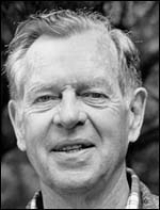
Joseph Campbell

 
Joseph Campbell

   Email Print
   Bookmark   Link


Joseph Campbell


Joseph John Campbell (March 26, 1904 – October 30, 1987) was an American
United States

The United States of America is a Federal government constitutional republic comprising U.S. state and a federal district. The country is situated mostly in central North America, where its Contiguous United States and Washington, D.C., the Capital districts and territories, lie between the Pacific Ocean and Atlantic Oceans, Borders of the U...
 mythologist, writer
Writer

A writer is anyone who creates a written work, although the word usually designates those who write creatively or professionally, as well as those who have written in many different forms....
, and lecturer
Lecturer

Lecturer is a term of academic rank. In the United Kingdom lecturer is the name given to university teachers in their first permanent university position....
 best known for his work in the fields of comparative mythology
Comparative mythology

Comparative mythology is the comparison of myths from different cultures in an attempt to identify shared themes and characteristics. Comparative mythology has served a variety of academic purposes....
 and comparative religion
Comparative religion

Comparative religion is a field of religious study that analyzes the similarities and differences of themes, myths, rituals and concepts among the Religions of the world....
. His work is vast and covers many aspects of the human experience, and his philosophy is often identified with the phrase he coined: "Follow Your Bliss".

ph Campbell was born and raised in White Plains
White Plains, New York

The City of White Plains is the county seat of Westchester County, New York. It is located in south-central Westchester, about east of the Hudson River and northwest of Long Island Sound....
, New York
New York

The State of New York is a U.S. state in the Mid-Atlantic States and Northeastern United States regions of the United States and is the nation's List of U.S....
 in an upper middle class Roman Catholic family.


Discussion
Ask a question about 'Joseph Campbell'
Start a new discussion about 'Joseph Campbell'
Answer questions from other users
Full Discussion Forum


Quotations


Computers are like Old Testament gods; lots of rules and no mercy.

Episode 2, Chapter 22.

I think it's important to live life with a knowledge of its mystery, and of your own mystery.

It's a wonderful, wonderful opera, except that it hurts.

Episode 2, Chapter 15.

Our life evokes our character and you find out more about yourself as you go on.

Episode 1, Chapter 12.

We are standing on a whale fishing for minnows.

Episode 2, Chapter 19.

This thing up here, this consciousness, thinks it's running the shop. It's a secondary organ. It's a secondary organ of a total human being, and it must not put itself in control. It must submit and serve the humanity of the body.

Episode 1, Chapter 12.


Encyclopedia


Joseph John Campbell (March 26, 1904 – October 30, 1987) was an American
United States

The United States of America is a Federal government constitutional republic comprising U.S. state and a federal district. The country is situated mostly in central North America, where its Contiguous United States and Washington, D.C., the Capital districts and territories, lie between the Pacific Ocean and Atlantic Oceans, Borders of the U...
 mythologist, writer
Writer

A writer is anyone who creates a written work, although the word usually designates those who write creatively or professionally, as well as those who have written in many different forms....
, and lecturer
Lecturer

Lecturer is a term of academic rank. In the United Kingdom lecturer is the name given to university teachers in their first permanent university position....
 best known for his work in the fields of comparative mythology
Comparative mythology

Comparative mythology is the comparison of myths from different cultures in an attempt to identify shared themes and characteristics. Comparative mythology has served a variety of academic purposes....
 and comparative religion
Comparative religion

Comparative religion is a field of religious study that analyzes the similarities and differences of themes, myths, rituals and concepts among the Religions of the world....
. His work is vast and covers many aspects of the human experience, and his philosophy is often identified with the phrase he coined: "Follow Your Bliss".

Childhood and education

Joseph Campbell was born and raised in White Plains
White Plains, New York

The City of White Plains is the county seat of Westchester County, New York. It is located in south-central Westchester, about east of the Hudson River and northwest of Long Island Sound....
, New York
New York

The State of New York is a U.S. state in the Mid-Atlantic States and Northeastern United States regions of the United States and is the nation's List of U.S....
 in an upper middle class Roman Catholic family. As a child, Campbell became fascinated with Native American
Native Americans in the United States

Native Americans in the United States are the Indigenous peoples of the Americas from the regions of North America now encompassed by the continental United States United States, including parts of Alaska and the island state of Hawaii....
 culture
Culture

Culture is difficult to define. For example, in 1952, Alfred Kroeber and Clyde Kluckhohn compiled a list of 164 definitions of "culture" in Culture: A Critical Review of Concepts and Definitions....
 after his father took him to see the American Museum of Natural History
American Museum of Natural History

The American Museum of Natural History , located on the Upper West Side, Manhattan, New York, USA, is one of the largest and most celebrated museums in the world....
 in New York
New York

The State of New York is a U.S. state in the Mid-Atlantic States and Northeastern United States regions of the United States and is the nation's List of U.S....
 where he saw on display featured collections of Native American artifacts. He soon became versed in numerous aspects of Native American society, primarily in Native American mythology
Native American mythology

Although a section on Mythology is no substitute for a section on Native American Religion, Native American belief systems include many sacred narratives....
. This led to Campbell's lifelong passion for myth
Mythology

The word mythology refers to a body of folklore/myths/legends that a particular culture believes to be true and that often use the supernatural to interpret natural events and to explain the nature of the universe and humanity....
 and to his study of and mapping of the cohesive threads in mythology that appeared to exist among even disparate human cultures. He graduated from the Canterbury School (Connecticut) in 1921. While at Dartmouth College
Dartmouth College

Dartmouth College is a private university, coeducational university located in Hanover, New Hampshire, New Hampshire. Incorporated as "Trustees of Dartmouth College,"...
 he studied biology and mathematics, but decided that he preferred the humanities. He transferred to Columbia University
Columbia University

Columbia University in the City of New York , is a private university in the United States and a member of the Ivy League. Columbia's main campus lies in the Morningside Heights, Manhattan neighborhood in the borough of Manhattan, in New York City....
 where he received his B.A. in English literature
English literature

The term English literature refers to literature written in the English language, including literature composed in English by writers not necessarily from England; Joseph Conrad was Polish, Robert Burns was Scottish, James Joyce was Irish, Dylan Thomas was Welsh, Edgar Allan Poe was American, Salman Rushdie is Indian, V.S....
 in 1925 and M.A. in Medieval literature
Medieval literature

Medieval literature is a broad subject, encompassing essentially all written works available in Europe beyond and during the Middle Ages . The literature of this time was composed of religious writings as well as secular works....
 in 1927. Campbell was also an accomplished athlete, receiving awards in track and field
Athletics (track and field)

Track and field athletics, commonly known as athletics or track and field, is a collection of sports events that involve running, throwing and jumping....
 events.

Europe
In 1927, Campbell received a fellowship
Scholarship

A scholarship is an award of access to an institution, or a Student financial aid award for a student to further education. Scholarships are awarded on various criteria usually reflecting the values and purposes of the donor or founder of the award....
 provided by Columbia to study in Europe. Campbell studied Old French
Old French

Old French was the Romance languages dialect continuum spoken in territories which span roughly the northern half of modern France and parts of modern Belgium and Switzerland from around 1000 to 1300....
 and Sanskrit
Sanskrit

Sanskrit is a historical Indo-Aryan language, one of the liturgical languages of Hinduism and Buddhism, and one of the 22 official languages of India....
 at the University of Paris
University of Paris

The historic University of Paris first appeared in the 12th century. In 1970 it was reorganized as 13 autonomous university . The university is often referred to as the Sorbonne or La Sorbonne after the collegiate institution founded about 1257 by Robert de Sorbon....
 in France
France

France , officially the French Republic , is a country whose Metropolitan France is located in Western Europe and that also comprises various Overseas departments and territories of France....
 and the University of Munich in Germany
Germany

Germany , officially the Federal Republic of Germany , is a country in Central Europe. It is bordered to the north by the North Sea, Denmark, and the Baltic Sea; to the east by Poland and the Czech Republic; to the south by Austria and Switzerland; and to the west by France, Luxembourg, Belgium, and the Netherlands....
. He quickly learned to read and speak both French
French language

French is a Romance language spoken around the world by around 80 million people as first language, by 190 million as second language, and by about another 200 million people as an acquired tongue, with significant speakers in 54 countries....
 and German
German language

German is a West Germanic languages, thus related to and classified alongside English language and Dutch language. It is one of the world's world language and the most widely spoken mother tongue in the European Union....
, mastering them after only a few months of rigorous study. He remained fluent in both languages for the remainder of his life.

He was highly influenced while in Europe by the period of the Lost Generation
Lost Generation

The 'Lost Generation' is a phrase made popular by American author Ernest Hemingway in his first published novel The Sun Also Rises. Often it is used to refer to a group of United States literary notables who lived in Paris and other parts of Europe, some after military service in the World War I....
, a time of enormous intellectual and artistic innovation. Campbell commented on this influence, particularly that of James Joyce
James Joyce

James Augustine Aloysius Joyce was an Ireland expatriate author of the 20th century. He is best known for his landmark novel Ulysses and its controversial successor Finnegans Wake , as well as the short story collection Dubliners and the semi-autobiographical novel A Portrait of the Artist as a Young Man ....
, in The Hero's Journey: Joseph Campbell on His Life and Work (1990, first edition:28):

CAMPBELL: And then the fact that James Joyce grabbed me. You know that wonderful living in a realm of significant fantasy, which is Irish, is there in the Arthurian
King Arthur

King Arthur is a legendary Britons leader who, according to medieval histories and Romance , led the defence of Britain against the Saxon invaders in the early 6th century....
 romances; it's in Joyce; and it's in my life.
COUSINEAU: Did you find that you identified with Stephen Daedalus...in Joyce's A Portrait of the Artist as a Young Man
A Portrait of the Artist as a Young Man

A Portrait of the Artist as a Young Man is a autobiography novel by James Joyce, first serialized in The Egoist from 1914 to 1915 and published in book form in 1916 in literature....
?
CAMPBELL: His problem was my problem, exactly...Joyce helped release me into an understanding of the universal sense of these symbols...Joyce disengaged himself and left the labyrinth, you might say, of Irish politics and the church to go to London
London

London is the capital of both England and the United Kingdom, and the most populous municipality in the European Union. An important settlement for two millennia, History of London goes back to its founding by the Roman Empire....
, where he became one of the very important members of this marvelous movement that Paris represented in the period when I was there, in the '20s.


It was in this climate that Campbell was also introduced to the work of Thomas Mann
Thomas Mann

Paul Thomas Mann was a German literature, short story writer, social critic, philanthropist, essayist, and 1929 Nobel Prize for Literature, known for his series of highly symbolic and irony epic novels and novellas, noted for their insight into the psychology of the artist and the intellectual....
, who was to prove equally influential upon his life and ideas. Also while in Europe, Campbell was introduced to modern art, becoming particularly enthusiastic about the work of Paul Klee
Paul Klee

Paul Klee was a Switzerland Painting of Germany nationality. His highly individual style was influenced by many different art trends, including expressionism, cubism, and surrealism....
 and Pablo Picasso
Pablo Picasso

Pablo Diego Jos? Francisco de Paula Juan Nepomuceno Mar?a de los Remedios Cipriano de la Sant?sima Trinidad Ruiz y Picasso was a Spanish people Painting, drawing, and Sculpture....
. A new world of exciting ideas opened up to Campbell while studying in Europe. Here he also discovered the works and writings of Sigmund Freud
Sigmund Freud

Sigmund Freud , born Sigismund Schlomo Freud , was an Austrian psychiatrist who founded the psychoanalysis of psychology. Freud is best known for his theories of the unconscious mind and the defense mechanism of Psychological repression and for creating the clinical practice of psychoanalysis for curing psychopathology through dialogue...
 and Carl Jung
Carl Jung

Carl Gustav Jung was a Swiss psychiatrist, an influential thinker and the founder of Analytical psychology. Jung's approach to psychology has been influential in the field of depth psychology and in counterculture movements across the globe....
. It was during this time, as well, that he met and became friends with the young Jiddu Krishnamurti
Jiddu Krishnamurti

Jiddu Krishnamurti or J. Krishnamurti , was a well known writer and speaker on philosophical and spiritual subjects. His subject matter included: the purpose of meditation, human wikt:relationships, the nature of the mind, and how to enact Social change in global society....
, a friendship which began his lifelong interest in Hindu philosophy and mythology. In addition, after the death of Indologist Heinrich Zimmer
Heinrich Zimmer

Heinrich Zimmer was an Indologist and historian of South Asian art. He was born in Greifswald, Germany.Zimmer began his career studying Sanskrit and linguistics at the University of Berlin where he graduated in 1913....
, Campbell was given the task to edit and posthumously publish Zimmer's papers.

Return to the United States and the Great Depression

On his return from Europe in 1929, Campbell announced to his faculty at Columbia that his time in Europe had broadened his interests and that he wanted to study Sanskrit
Sanskrit

Sanskrit is a historical Indo-Aryan language, one of the liturgical languages of Hinduism and Buddhism, and one of the 22 official languages of India....
 and Modern Art
Modern art

Modern art is a term that refers to artistic works produced during the period extending roughly from the 1860s through the 1970s, and denotes the style and philosophy of the art produced during that era....
 in addition to Medieval literature
Medieval literature

Medieval literature is a broad subject, encompassing essentially all written works available in Europe beyond and during the Middle Ages . The literature of this time was composed of religious writings as well as secular works....
. When his advisors did not support this, Campbell decided not to go forward with his plans to earn a doctorate
Doctorate

A doctorate is an academic degree that in most countries represents the highest level of formal study or research in a given field. In some countries it also refers to a class of degrees which qualify the holder to practice in a specific profession ....
 and never returned to a conventional graduate program .

A few weeks later, the Great Depression
Great Depression

File:International depression.pngThe Great Depression was a worldwide economic Recession starting in most places in 1929 and ending at different times in the 1930s or early 1940s for different countries....
 began. Campbell spent the next five years (1929–1934) figuring out what to do with his life (Larsen
Stephen Larsen

H. Stephen Larsen is a psychologist and author who, with his wife Robin Larsen, was on the founding board of advisors of the Joseph Campbell Foundation, and also founded the Center for Symbolic Studies, to carry on with the work of Joseph Campbell....
 and Larsen, 2002:160), engaging in a period of intensive and rigorous independent study. Campbell discussed this period in The Hero's Journey: Joseph Campbell on His Life and Work (1990, first edition:52-3). Campbell states that he "would divide the day into four four-hour periods, of which I would be reading in three of the four hour periods, and free one of them...I would get nine hours of sheer reading done a day. And this went on for five years straight."

He also traveled to California for a year (1931-32), continuing his independent studies and becoming close friends with the budding writer John Steinbeck
John Steinbeck

John Ernst Steinbeck III was an American literature. He wrote the Pulitzer Prize-winning novel The Grapes of Wrath, published in 1939 and the novella Of Mice and Men, published in 1937....
 and his wife Carol (Larsen
Stephen Larsen

H. Stephen Larsen is a psychologist and author who, with his wife Robin Larsen, was on the founding board of advisors of the Joseph Campbell Foundation, and also founded the Center for Symbolic Studies, to carry on with the work of Joseph Campbell....
 and Larsen, 2002, chapters 8 and 9). Campbell also maintained his independent reading while teaching for a year in 1933 at the Canterbury School
Canterbury School

Canterbury School may refer to:*Canterbury School , a private, co-educational college preparatory lay-Catholic boarding school in New Milford, Connecticut...
 during which time he also attempted to publish works of fiction .

Campbell's independent studies led to his greater exploration of the ideas of the Swiss
Switzerland

Switzerland is a landlocked Swiss Alps country of roughly 7.7 million people in Western Europe with an area of 41,285 km?. Switzerland is a federal republic consisting of 26 states called Cantons of Switzerland....
 psychiatrist
Psychiatrist

A psychiatrist is a physician who specializes in psychiatry and is certified in treating mental disorders. All psychiatrists are trained in diagnostic evaluation and in psychotherapy....
 Carl Jung
Carl Jung

Carl Gustav Jung was a Swiss psychiatrist, an influential thinker and the founder of Analytical psychology. Jung's approach to psychology has been influential in the field of depth psychology and in counterculture movements across the globe....
, a contemporary and estranged colleague of Sigmund Freud
Sigmund Freud

Sigmund Freud , born Sigismund Schlomo Freud , was an Austrian psychiatrist who founded the psychoanalysis of psychology. Freud is best known for his theories of the unconscious mind and the defense mechanism of Psychological repression and for creating the clinical practice of psychoanalysis for curing psychopathology through dialogue...
. Campbell edited the first Eranos
Eranos

Eranos is an intellectual discussion group dedicated to the study of spirituality which has met annually in Switzerland since 1933.The name is derived from an ancient Greek language word, meaning a banquet to which the guests bring contributions of food, a no-host dinner....
 conference papers and helped to found Princeton University Press
Princeton University Press

The Princeton University Press is an independent Academic publishing with close connections to Princeton University. Its mission is to disseminate scholarship within academia and society at large....
' Bollingen Press. Another dissident member of Freud's circle to influence Campbell was Wilhelm Stekel
Wilhelm Stekel

Wilhelm Stekel was an Austrian physician and psychologist, who became one of Sigmund Freud's earliest followers, a self-described apostle. He later had a falling-out with Freud....
 (1868–1939). Stekel pioneered the application of Freud's conceptions of dreams, fantasies of the human mind, and the unconscious to such fields as anthropology
Anthropology

Anthropology is the study of humans and humanity in its totality. Anthropology has origins in the natural sciences, and the humanities. In Great Britain it was originally divided into physical anthropology and cultural anthropology, which itself was divided into archaeology, technology, ethnology and sociology ....
 and literature
Literature

Literature is the art of written works. Literally translated, the word means "acquaintance with letters" . In Western culture the most basic written literary types include fiction and non-fiction....
.

Sarah Lawrence College

In 1934, Campbell was offered a position as professor at Sarah Lawrence College
Sarah Lawrence College

Sarah Lawrence is a Private school, Independent school, Liberal arts colleges in the United States in the United States. It is located in southern Westchester County, New York, New York, in the city of Yonkers, New York, north of New York, New York....
 (through the efforts of his former Columbia advisor W.W. Laurence). Campbell married one of his former students, dancer and dance instructor Jean Erdman
Jean Erdman

Jean Erdman is a dancer and choreographer of modern dance....
, in 1938. He retired from Sarah Lawrence College in 1972, after having taught there for 38 years.

Death

Joseph Campbell died at the age of 83 on October 30, 1987, at his home in Honolulu, Hawaii, from complications due to esophageal cancer shortly after completing filming of The Power of Myth
The Power of Myth

The Power of Myth is a book and six part television documentary film originally broadcast on PBS in 1988 as Joseph Campbell and the Power of Myth....
 with Bill Moyers
Bill Moyers

Bill Moyers is an United States journalist and public commentator. He served as White House Press Secretary in the Lyndon B. Johnson Administration from 1965-67....
.

Select works


James Joyce and early works

As noted above, James Joyce
James Joyce

James Augustine Aloysius Joyce was an Ireland expatriate author of the 20th century. He is best known for his landmark novel Ulysses and its controversial successor Finnegans Wake , as well as the short story collection Dubliners and the semi-autobiographical novel A Portrait of the Artist as a Young Man ....
 was an important influence on Campbell. Campbell's first important book (with Henry Morton Robinson
Henry Morton Robinson

Henry Morton Robinson was an United States novelist, best known for his 1950 in literature novel The Cardinal , detailing the life of Stephen Fermoyle, a young American priest who eventually becomes a Prince of the Church....
), A Skeleton Key to Finnegans Wake
A Skeleton Key to Finnegans Wake

A Skeleton Key to Finnegans Wake by mythologist Joseph Campbell and Henry Morton Robinson is a work of literary criticism. One of the first major texts to provide an in-depth analysis of Finnegans Wake , A Skeleton Key to Finnegans Wake is considered by many scholars to be a seminal work on the text....
  (1944), is a critical analysis of Joyce's final text Finnegans Wake
Finnegans Wake

Finnegans Wake is a work of Comic novel by Irish literature James Joyce, which is recognised for its difficulty for the reader and its experimental style....
. In addition, Campbell's seminal work, The Hero with a Thousand Faces
The Hero with a Thousand Faces

The Hero with a Thousand Faces is a non-fiction book, and wikt:seminal work of comparative mythology by Joseph Campbell. In this publication, Campbell discusses his theory of the journey of the archetypal hero found in world mythology....
, discusses what Campbell termed the monomyth
Monomyth

The term Monomyth as used within the field of comparative mythology refers to a basic pattern supposedly found in many narratives from around the world....
 -- the cycle of the journey of the hero
Hero

A hero , in Greek mythology and folklore, was originally a demigod, the offspring of a mortal and a deity,their Greek hero cult being one of the most distinctive features of Religion in ancient Greece....
, an idea which he directly attributes to Joyce's Finnegans Wake
Finnegans Wake

Finnegans Wake is a work of Comic novel by Irish literature James Joyce, which is recognised for its difficulty for the reader and its experimental style....
.

The Masks of God

His massive four-volume work The Masks of God covers mythology from around the world, from ancient to modern. Where The Hero with a Thousand Faces
The Hero with a Thousand Faces

The Hero with a Thousand Faces is a non-fiction book, and wikt:seminal work of comparative mythology by Joseph Campbell. In this publication, Campbell discusses his theory of the journey of the archetypal hero found in world mythology....
 focused on the commonality of mythology (the “elementary ideas”), the Masks of God books focus upon historical and cultural variations the monomyth takes on (the “folk ideas”). In other words, where The Hero with a Thousand Faces draws perhaps more from psychology, the Masks of God books draw more from anthropology and history. The four volumes of Masks of God are as follows: Primitive Mythology, Oriental Mythology, Occidental Mythology, and Creative Mythology.

The Historical Atlas of World Mythology

At the time of his death, Campbell was in the midst of working upon a large-format, lavishly illustrated series entitled The Historical Atlas of World Mythology. This series was to build on Campbell’s idea, first presented in The Hero with a Thousand Faces, that myth evolves over time through four stages:

The Way of the Animal Powers -- the myths of Paleolithic
Paleolithic

The Paleolithic or Palaeolithic or "Old Stone" era is a Prehistory era distinguished by the development of the first stone tools, and covers roughly 99% of human history....
 hunter-gatherers which focus on shamanism and animal totems.

The Way of the Seeded Earth -- the myths of Neolithic
Neolithic

The Neolithic period was a period in the development of human technology, beginning about 9500 Before the Christian Era in the Middle East that is traditionally considered the last part of the Stone Age....
, agrarian cultures which focus upon a mother goddess and associated fertility rites.

The Way of the Celestial Lights -- the myths of Bronze Age
Bronze Age

The Bronze Age is, with respect to a given prehistory, the period in that society when the most advanced metalworking included smelting copper and tin from naturally-occurring outcroppings of copper and tin ores, creating a bronze alloy by melting those metals together, and casting them into bronze artifact s....
 city-states with pantheons of gods ruling from the heavens, led by a masculine god-king.

The Way of Man -- religion and philosophy as it developed after the Axial Age
Axial Age

Germany philosopher Karl Jaspers coined the term the axial age to describe the period from 8th century BC to 2nd century BC, during which, according to Jaspers, similarly revolutionary thinking appeared in China, India and the Occident....
 (c. 6th century BC), in which the mythic imagery of previous eras was made consciously metaphorical, reinterpreted as referring to psycho-spiritual, not literal-historical, matters. This transition is evidenced in the East by Buddhism
Buddhism

Buddhism is a family of beliefs and practices considered by most to be a religionand is based on the teachings attributed to Siddhartha Gautama, commonly known as "The Buddha" , who was born in what is today Nepal....
, Vedanta
Vedanta

Vedanta is a spiritual tradition explained in the Upanishads that is concerned with the self-realisation by which one understands the ultimate nature of reality and teaches the believer's goal is to transcend the limitations of self-identity and realize one's unity with Brahman....
, and philosophical Taoism
Taoism

Taoism refers to a variety of related philosophical and religious traditions and concepts. These traditions have influenced East Asia for over two thousand years and some have spread to the West....
; and in the West by the Mystery Cults, Platonism
Platonism

Platonism is the philosophy of Plato or the name of other philosophical systems considered closely derived from it. In a narrower sense the term might indicate the doctrine of Platonic realism....
 and Gnosticism
Gnosticism

Gnosticism refers to diverse, syncretistic religious movements in antiquity consisting of various belief systems generally united in the teaching that humans are divine souls trapped in a Nature created by an imperfect god, the demiurge; this being is frequently identified with the Abrahamic God, and is contrasted with a superior entity, ref...
.

Only the first two volumes were completed at the time of Campbell's death. Both are now out-of-print.

The Power of Myth

Campbell's widest popular recognition followed his collaboration with Bill Moyers
Bill Moyers

Bill Moyers is an United States journalist and public commentator. He served as White House Press Secretary in the Lyndon B. Johnson Administration from 1965-67....
 on the PBS series The Power of Myth
The Power of Myth

The Power of Myth is a book and six part television documentary film originally broadcast on PBS in 1988 as Joseph Campbell and the Power of Myth....
, which was first broadcast in 1988, the year following Campbell's death. The series exposed his ideas concerning mythological, religious, and psychological archetypes to a wide audience, and captured the imagination of millions of viewers. It remains a staple of PBS television membership drives to this day. A companion book, The Power of Myth, containing expanded transcripts of their conversations, was released shortly after the original broadcast, and became a best seller.

Thou Art That: Transforming Religious Metaphor

A recent compilation of many of his ideas is titled Thou Art That: Transforming Religious Metaphor. In it Campbell writes:"...Mythology is often thought of as other people's religions, and religion can be defined as mis-interpreted mythology." In other words, Campbell did not read religious symbols literally as historical facts, but instead he saw them as symbols or as metaphors for greater philosophical ideas.

Campbell had previously discussed this idea with Bill Moyers
Bill Moyers

Bill Moyers is an United States journalist and public commentator. He served as White House Press Secretary in the Lyndon B. Johnson Administration from 1965-67....
 in The Power of Myth:

CAMPBELL: That would be a mistake in the reading of the symbol. That is reading the words in terms of prose instead of in terms of poetry, reading the metaphor in terms of the denotation instead of the connotation.


MOYERS: And poetry gets to the unseen reality.


CAMPBELL: That which is beyond even the concept of reality, that which transcends all thought. The myth puts you there all the time, gives you a line to connect with that mystery which you are (Campbell, 1988:57).


Campbell's original voice

Campbell relied often upon the writings of Carl Jung
Carl Jung

Carl Gustav Jung was a Swiss psychiatrist, an influential thinker and the founder of Analytical psychology. Jung's approach to psychology has been influential in the field of depth psychology and in counterculture movements across the globe....
 as an explanation of psychological phenomena, as experienced through archetype
Archetype

An archetype is an original model of a person, ideal example, or a prototype after which others are copied, patterned, or emulated; a symbol universally recognized by all....
s. But Campbell did not necessarily agree with Jung upon every issue, and had very definite ideas of his own.

A fundamental belief of Campbell's was that all spirituality
Spirituality

Spirituality, in a narrow sense, concerns itself with matters of the spirit, a concept closely tied to religion and faith, transcendence , or one or more Deity....
 is a search for the same basic, unknown force from which everything came, within which everything currently exists, and into which everything will return. This elemental force is ultimately “unknowable” because it exists before words and knowledge. Although this basic driving force cannot be expressed in words, spiritual rituals and stories refer to the force through the use of "metaphor
Metaphor

Metaphor is language that directly compares seemingly unrelated subjects. It is a figure of speech that compares two or more things without using the words "like" or "as." More generally, a metaphor describes a first subject as being or equal to a second object in some way....
s" - these metaphors being the various stories, deities, and objects of spirituality we see in the world. For example, the Genesis
Genesis

Genesis or Breishit is the first book of the Bible used by Judaism and Christianity, and the first of five books of the Pentateuch or Torah....
 myth in the Bible
Bible

The Bible is the central religious text of Judaism and Christianity. The exact Books of the Bible is dependent on the religious traditions of specific denominations....
 ought not be taken as a literal description of actual events, but rather its poetic, metaphorical meaning should be examined for clues concerning the fundamental truths of the world and our existence.

Accordingly, Campbell believed the religion
Religion

A religion is an organized approach to human spirituality which usually encompasses a set of myth, symbols, beliefs and practices, often with a supernatural or transcendence quality, that give meaning to the practitioner's experiences of life through reference to a higher power or truth....
s of the world to be the various, culturally influenced “masks” of the same fundamental, transcendent truths. All religions, including Christianity
Christianity

Christianity is a Monotheistic religion #Christian view religion centered on the life and teachings of Jesus as New Testament view on Jesus' life....
 and Buddhism
Buddhism

Buddhism is a family of beliefs and practices considered by most to be a religionand is based on the teachings attributed to Siddhartha Gautama, commonly known as "The Buddha" , who was born in what is today Nepal....
, can bring one to an elevated awareness above and beyond a dualistic conception of reality, or idea of “pairs of opposites,” such as being and non-being, or right and wrong. Indeed, he quotes in the preface of The Hero with a Thousand Faces
The Hero with a Thousand Faces

The Hero with a Thousand Faces is a non-fiction book, and wikt:seminal work of comparative mythology by Joseph Campbell. In this publication, Campbell discusses his theory of the journey of the archetypal hero found in world mythology....
: "Truth is one, the sages speak of it by many names." which is a translation of the Rig Vedic saying "Ekam Sat Vipra Bahuda Vadanthi."

Campbell was fascinated with what he viewed as basic, universal truth
Truth

semantic fields for the word truth extend from honesty, good faith, and sincerity in general, to agreement with fact or reality in particular....
s, expressed in different manifestations across different cultures. For example, in the preface of The Hero with a Thousand Faces, he indicated that a goal of his was to demonstrate similarities between Eastern and Western religions. In his four-volume series of books "The Masks of God", Campbell tried to summarize the main spiritual threads common throughout the world. Tied in with this, was his idea that many of the belief systems of the world which expressed these universal truths had a common geographic ancestry, starting off on the fertile grasslands of Europe in the Bronze Age
Bronze Age

The Bronze Age is, with respect to a given prehistory, the period in that society when the most advanced metalworking included smelting copper and tin from naturally-occurring outcroppings of copper and tin ores, creating a bronze alloy by melting those metals together, and casting them into bronze artifact s....
 and moving to the Levant
Levant

The Levant describes, traditionally, the Eastern Mediterranean at large, but can be used as a geographical term that denotes a large area in Western Asia formed by the lands bordering the Eastern shores of the Mediterranean, roughly bounded on the north by the Taurus Mountains, on the south by the Arabian Desert, and on the west by the M...
 and the "Fertile Crescent
Fertile Crescent

The Fertile Crescent is a region in the Near East, incorporating the Levant and Mesopotamia, and often extended to Lower Egypt. Mesopotamia is considered the Cradle of civilization and saw the development of the earliest human civilizations and is the History_of_writing#Bronze_Age_writing and Wheel#History....
" of Mesopotamia
Mesopotamia

Mesopotamia is the area of the Tigris-Euphrates river system, along the Tigris and Euphrates rivers, largely corresponding to modern Iraq, as well as some parts of northeastern Syria, some parts of southeastern Turkey, and some parts of the Khuzestan Province of southwestern Iran....
 and back to Europe (and the Far East
Far East

The Far East is a term current in English language to refer to the countries of East Asia. The term is often expanded to also include Southeast Asia and South Asia, for economic and cultural reasons, for example because Buddhism is common to East Asia, Southeast Asia and South Asia....
), where it was mixed with the newly emerging Indo-European (Aryan
Aryan

Aryan is an English language loanword. As the American Heritage Dictionary of the English Language states at the beginning of its definition, "[it] is one of the ironies of history that Aryan, a word nowadays referring to the blond-haired, blue-eyed physical ideal of Nazi Germany, originally referred to a people who looked vastly di...
) culture.

Heroes and the monomyth

The role of the hero
Hero

A hero , in Greek mythology and folklore, was originally a demigod, the offspring of a mortal and a deity,their Greek hero cult being one of the most distinctive features of Religion in ancient Greece....
 figured largely in Campbell's comparative studies. In 1949 The Hero with a Thousand Faces
The Hero with a Thousand Faces

The Hero with a Thousand Faces is a non-fiction book, and wikt:seminal work of comparative mythology by Joseph Campbell. In this publication, Campbell discusses his theory of the journey of the archetypal hero found in world mythology....
 introduced his idea of the monomyth
Monomyth

The term Monomyth as used within the field of comparative mythology refers to a basic pattern supposedly found in many narratives from around the world....
 (as stated above, a word borrowed from Joyce), which outlined some of the archetypal patterns Campbell recognized. Heroes were important to Campbell because, to him, they conveyed universal truths about one's personal self-discovery and self-transcendence, one's role in society
Society

A society is a group of humans characterized by patterns of relationships between individuals that share a distinctive culture and/or institutions....
, and the relationship between the two.

Organizations and Archives


The Joseph Campbell Foundation


In 1991, Campbell's widow, choreographer Jean Erdman
Jean Erdman

Jean Erdman is a dancer and choreographer of modern dance....
, worked with Campbell's longtime friend and editor, Robert Walter
Robert Walter

Robert John Walter MP , is the Conservative Member of Parliament for North Dorset in south west England. He was re-elected for a third term in May 2005....
, to create the Joseph Campbell Foundation
Joseph Campbell Foundation

The Joseph Campbell Foundation is a US not-for-profit organization dedicated to preserve, protect and perpetuate the work of influential American mythologist Joseph Campbell ....
. The mission of the foundation is to preserve, protect and perpetuate Campbell's work, as well as supporting work in his field of study.

Among the initiatives undertaken by the JCF include: The Collected Works of Joseph Campbell
The Collected Works of Joseph Campbell

File:The Collected Works of Joseph Campbell.jpgThe Collected Works of Joseph Campbell is a project initiated by the Joseph Campbell Foundation to release new, authoritative editions of Joseph Campbell's published and unpublished writing, as well as audio and video recordings of Campbell's lectures....
, a series of books and recordings that aims to pull together Campbell's myriad-minded work; the Erdman Campbell Award; the Mythological RoundTables, a network of local groups around the globe that explore the subjects of comparative mythology, psychology, religion and culture; and the collection of Campbell's library and papers housed at the OPUS Archive and Research Center (see below).

The Joseph Campbell Collection

After Campbell's death, Jean Erdman
Jean Erdman

Jean Erdman is a dancer and choreographer of modern dance....
 and the Joseph Campbell Foundation
Joseph Campbell Foundation

The Joseph Campbell Foundation is a US not-for-profit organization dedicated to preserve, protect and perpetuate the work of influential American mythologist Joseph Campbell ....
 donated his papers, books and other effects to the Center for the Study of Depth Psychology at Pacifica Graduate Institute
Pacifica Graduate Institute

Pacifica Graduate Institute is an accredited graduate school with two campuses near Santa Barbara, California. The Institute offers masters and doctoral degrees in the fields of psychology, mythological studies, and the humanities....
 in Carpinteria, California
Carpinteria, California

Carpinteria is a small oceanside city located in the southeastern extremity of Santa Barbara County, California, east of Santa Barbara, California and northwest of Ventura, California....
. The 'Center' became OPUS Archives and Research Center and is the home of the collection. Campbell had frequently lectured at Pacifica, a private school that supports graduate work in mythology
Mythology

The word mythology refers to a body of folklore/myths/legends that a particular culture believes to be true and that often use the supernatural to interpret natural events and to explain the nature of the universe and humanity....
 and depth psychology
Depth psychology

Depth psychology is a broad term that refers to any psychological approach examining the depth of human experience. It includes the study and interpretation of dreams, complexes, and Jungian archetypess, and it encompasses any psychology that works with the concept of an unconscious mind....
. The founding curator, psychologist Jonathan Young
Jonathan Young

Jonathan Young is a psychologist who became the founding curator of the Joseph Campbell Archives....
, worked closely with Ms. Erdman to gather the materials from Campbell's homes in Honolulu and Greenwich Village
Greenwich Village

Greenwich Village , often simply called the Village, is a largely residential area on the lower west side of southern Manhattan in New York City....
, New York City
New York City

The City of New York is the List of United States cities by population in the United States, while the New York metropolitan area ranks among the List of urban areas by population....
. The Campbell Collection features approximately 3,000 volumes and covers a broad range of subjects, including anthropology, folklore
Folklore

Folklore is the body of expressive culture, including tales, music, dance, legends, oral history, proverbs, jokes, superstitions, customs, and so forth within a particular population comprising the traditions of that culture, subculture, or group ....
, religion
Religion

A religion is an organized approach to human spirituality which usually encompasses a set of myth, symbols, beliefs and practices, often with a supernatural or transcendence quality, that give meaning to the practitioner's experiences of life through reference to a higher power or truth....
, literature, and psychology. The collection also includes audio and video tapes of lectures, original manuscripts, and research papers. The current curator and librarian is Richard Buchen..

Influence


Scholars who influenced Campbell

Campbell often referred to the work of modern writers James Joyce
James Joyce

James Augustine Aloysius Joyce was an Ireland expatriate author of the 20th century. He is best known for his landmark novel Ulysses and its controversial successor Finnegans Wake , as well as the short story collection Dubliners and the semi-autobiographical novel A Portrait of the Artist as a Young Man ....
 and Thomas Mann
Thomas Mann

Paul Thomas Mann was a German literature, short story writer, social critic, philanthropist, essayist, and 1929 Nobel Prize for Literature, known for his series of highly symbolic and irony epic novels and novellas, noted for their insight into the psychology of the artist and the intellectual....
 in his lectures and writings. Anthropologist Leo Frobenius
Leo Frobenius

Leo Viktor Frobenius was an ethnologist and archaeologist and a major figure in German ethnography. He was born in Berlin as the son of a Prussian officer and died in Biganzolo, Lago Maggiore, Piedmont, Italy....
 was important to Campbell’s view of cultural history. He often indicated that the single most important book in his intellectual development was Oswald Spengler
Oswald Spengler

Oswald Arnold Gottfried Spengler was a German historian and philosopher whose interests also included mathematics, science, and art. He is best known for his book The Decline of the West in which he puts forth a cyclical pattern theory of the rise and decline of civilizations....
's The Decline of the West
The Decline of the West

The Decline of the West is a two-volume work by Oswald Spengler, the first volume of which was published in the summer of 1918. Spengler revised this volume in 1922 and published the second volume, subtitled Perspectives of World History, in 1923....
.

Campbell's ideas regarding myth and its relationship to the human psyche are dependent on the work of Carl Jung
Carl Jung

Carl Gustav Jung was a Swiss psychiatrist, an influential thinker and the founder of Analytical psychology. Jung's approach to psychology has been influential in the field of depth psychology and in counterculture movements across the globe....
, whose studies of human psychology, as previously mentioned, greatly influenced Campbell. Campbell's conception of myth is closely related to the Jungian method of dream interpretation, which is heavily reliant on symbolic interpretation. Jung's insights into archetypes were in turn heavily influenced by the Bardo Thodol
Bardo Thodol

The Liberation Through Hearing During the Intermediate State , sometimes translated as Liberation Through Hearing or Bardo Thodol is a funerary text....
 (also known as the The Tibetan Book of the Dead). In his 1981 text The Mythic Image, Campbell quotes Jung on the Bardo Thodol, who states that it "belongs to that class of writings which not only are of interest to specialists in Mahayana Buddhism, but also, because of their deep humanity and still deeper insight into the secrets of the human psyche, make an especial appeal to the layman seeking to broaden his knowledge of life"... "For years, ever since it was first published, the Bardo Thodol has been my constant companion, and to it I owe not only many stimulating ideas and discoveries, but also many fundamental insights" (Campbell 1981:392).

The "follow your bliss" philosophy attributed to Campbell following the original broadcast of The Power of Myth was possibly influenced by the 1922 Sinclair Lewis
Sinclair Lewis

Sinclair Lewis was an United States novelist, short-story writer, and playwright. In 1930, he became the first American to be awarded the Nobel Prize in Literature, "for his vigorous and graphic art of description and his ability to create, with wit and humor, new types of characters." His works are known for their insightful and critical vi...
 novel Babbitt
Babbitt (novel)

Babbitt, first published in 1922 in literature, is a novel by Sinclair Lewis. Largely a satire of American culture, society, and behavior, its main theme focuses on the power of conformity, and the vacuity of middle-class American life....
. In The Power of Myth
The Power of Myth

The Power of Myth is a book and six part television documentary film originally broadcast on PBS in 1988 as Joseph Campbell and the Power of Myth....
 Campbell quotes from the novel:

Campbell: "Have you ever read Sinclair Lewis' Babbit?
Moyers: "Not in a long time."
Campbell: "Remember the last line? 'I have never done the thing that I wanted to do in all my life.' That is a man who never followed his bliss." (Campbell, 1988:117)


Campbell studied mythology under Professor Heinrich Zimmer
Heinrich Zimmer

Heinrich Zimmer was an Indologist and historian of South Asian art. He was born in Greifswald, Germany.Zimmer began his career studying Sanskrit and linguistics at the University of Berlin where he graduated in 1913....
 while a young student at Columbia. Zimmer taught Campbell that myth (rather than a guru or spiritual guide) could serve in the role of a personal mentor, in that its stories provide a psychological roadmap for the finding of oneself in the labyrinth of the complex modern world. Zimmer relied more on the meanings of mythological tales (their symbols, metaphors, imagery, etc.) as a source for psychological realization than upon psychoanalysis itself. Campbell later borrowed from the interpretative techniques of Jung and then reshaped them in a fashion that followed Zimmer's beliefs- interpreting directly from world mythology. This is an important distinction because it serves to explain why Campbell did not directly follow Jung's footsteps in applied psychology.

Campbell's influence on cinema


George Lucas
George Lucas

George Walton Lucas, Jr. is an Academy Award-nominated United States film director, film producer, screenwriter and chairman of Lucasfilm Ltd. He is best known for being the creator of the Epic film Sci-Fi franchise Star Wars and the archaeologist-adventurer character Indiana Jones....
 was the first Hollywood filmmaker to openly credit Campbell's influence. Lucas stated following the release of the first Star Wars
Star Wars

Star Wars is an epic film space opera Media franchise initially conceived by George Lucas. The first film in the franchise was simply titled Star Wars Episode IV: A New Hope, but later had the subtitle Episode IV: A New Hope added to distinguish it from its sequels and prequels....
 film in 1977 that its story was shaped, in part, by ideas described in The Hero With a Thousand Faces
The Hero with a Thousand Faces

The Hero with a Thousand Faces is a non-fiction book, and wikt:seminal work of comparative mythology by Joseph Campbell. In this publication, Campbell discusses his theory of the journey of the archetypal hero found in world mythology....
 and other works of Campbell's. The linkage between Star Wars and Campbell was further reinforced when later reprints of Campbell's book used the image of Mark Hamill
Mark Hamill

Mark Richard Hamill is an United States actor and voice artist, best known for his portrayal of Luke Skywalker in the original Star Wars trilogy and as the voice of Joker in the DC animated universe....
 as Luke Skywalker
Luke Skywalker

Luke Skywalker is the main protagonist of the Star Wars films Star Wars Episode IV: A New Hope, Star Wars Episode V: The Empire Strikes Back and Star Wars Episode VI: Return of the Jedi....
 on the cover. Lucas discusses this influence at great length in the official biography of Joseph Campbell, Joseph Campbell: A Fire in the Mind by Stephen
Stephen Larsen

H. Stephen Larsen is a psychologist and author who, with his wife Robin Larsen, was on the founding board of advisors of the Joseph Campbell Foundation, and also founded the Center for Symbolic Studies, to carry on with the work of Joseph Campbell....
 and Robin Larsen:

I [Lucas] came to the conclusion after American Graffiti
American Graffiti

American Graffiti is a 1973 period piece coming of age film directed by George Lucas, and written by Lucas, Gloria Katz and Willard Huyck. The film stars Richard Dreyfuss, Ron Howard, Paul Le Mat, Charles Martin Smith, Candy Clark, Mackenzie Phillips, Cindy Williams and Wolfman Jack and features Harrison Ford....
that what's valuable for me is to set standards, not to show people the world the way it is...around the period of this realization...it came to me that there really was no modern use of mythology...The Western
Western (genre)

The Western is a fiction genre seen in film, television, radio, literature, painting and other visual arts. Westerns are devoted to telling stories set primarily in the later half of the 19th century in what became the Western United States , but also in Western Canada, Mexico , Alaska and even Australia ....
 was possibly the last generically American fairy tale
Fairy tale

A fairy tale is a fictional story that may feature folklore characters such as Fairy, goblins, Elf, trolls, giant , and talking animals, and usually enchanted, often involving a far-fetched sequence of events....
, telling us about our values. And once the Western disappeared, nothing has ever taken its place. In literature we were going off into science fiction
Science fiction

Science fiction is a broad genre of fiction that often involves speculations based on current or future science or technology. Science fiction is found in books, art, television, films, games, theatre, and other media....
...so that's when I started doing more strenuous research on fairy tales, folklore
Folklore

Folklore is the body of expressive culture, including tales, music, dance, legends, oral history, proverbs, jokes, superstitions, customs, and so forth within a particular population comprising the traditions of that culture, subculture, or group ....
, and mythology
Mythology

The word mythology refers to a body of folklore/myths/legends that a particular culture believes to be true and that often use the supernatural to interpret natural events and to explain the nature of the universe and humanity....
, and I started reading Joe's books. Before that I hadn't read any of Joe's books...It was very eerie because in reading
The Hero with a Thousand Faces

The Hero with a Thousand Faces is a non-fiction book, and wikt:seminal work of comparative mythology by Joseph Campbell. In this publication, Campbell discusses his theory of the journey of the archetypal hero found in world mythology....
I began to realize that my first draft of Star Wars was following classic motifs...so I modified my next draft [of Star Wars] according to what I'd been learning about classical motifs and made it a little bit more consistent...I went on to read 'The Masks of God' and many other books (Larsen and Larsen, 2002: 541).


It was not until after the completion of the original Star Wars trilogy in 1983, however, that Lucas met Campbell or heard any of his lectures. The 1988 documentary The Power of Myth
The Power of Myth

The Power of Myth is a book and six part television documentary film originally broadcast on PBS in 1988 as Joseph Campbell and the Power of Myth....
 was filmed at Lucas' Skywalker Ranch
Skywalker Ranch

Skywalker Ranch is the name of the workplace of film director and film producer George Lucas in secluded but open country near Nicasio, California in Marin County....
. During his interviews with Bill Moyers
Bill Moyers

Bill Moyers is an United States journalist and public commentator. He served as White House Press Secretary in the Lyndon B. Johnson Administration from 1965-67....
, Campbell discusses the way in which Lucas used The Hero's Journey in the Star Wars
Star Wars

Star Wars is an epic film space opera Media franchise initially conceived by George Lucas. The first film in the franchise was simply titled Star Wars Episode IV: A New Hope, but later had the subtitle Episode IV: A New Hope added to distinguish it from its sequels and prequels....
 films (IV, V, and VI) to re-invent the mythology for the contemporary viewer. Moyers and Lucas filmed an interview 12 years later in 1999 called the Mythology of Star Wars with George Lucas & Bill Moyers to further discuss the impact of Campbell's work on Lucas' films. In addition, the National Air and Space Museum
National Air and Space Museum

The National Air and Space Museum of the Smithsonian Institution is a museum in Washington, D.C., United States, and is the most popular of the Smithsonian museums....
 of the Smithsonian Institution
Smithsonian Institution

The Smithsonian Institution is an educational and research institute and associated museum complex, administered and funded by the government of the United States and by funds from its Financial endowment, contributions, and profits from its shops and its magazine....
 sponsored an exhibit during the late 1990s called Star Wars: The Magic of Myth, which discussed the ways in which Campbell's work shaped the Star Wars films. A companion guide of the same name was published in 1997.

Christopher Vogler
Christopher Vogler

Christopher Vogler is a Hollywood development executive best known for his guide for screenwriters, The Writer's Journey: Mythic Structure For Writers....
, a Hollywood screenwriter, was also highly influenced by Campbell. He created a 7-page company memo based on Campbell's work, A Practical Guide to The Hero With a Thousand Faces,, which led to the development of Disney
Walt Disney Pictures

Walt Disney Pictures refers to several different entities associated with The Walt Disney Company:Walt Disney Pictures, the film banner, was found as a designation in 1983, prior to which Disney films since the death of Walt Disney were released under the name of the parent company, then named Walt Disney Productions....
's 1994 film The Lion King
The Lion King

The Lion King is a American Animation film produced by Walt Disney Feature Animation, released in theaters on June 15, 1994 by Walt Disney Pictures....
. Vogler's memo was later developed into the late 1990s book The Writer's Journey: Mythic Structure For Writers
The Writer's Journey: Mythic Structure For Writers

The Writer's Journey: Mythic Structure For Writers is a popular screenwriting textbook by writer Christopher Vogler, focusing on the theory that most stories can be boiled down to a series of narrative structures and character archetypes, described through mythological allegory....
.

John David Ebert
John David Ebert

John David Ebert is a cultural critic and philosopher who has made several contributions to the study of mythology and popular culture....
, a former editor who worked with the Campbell Foundation, was also highly influenced by Campbell, and this is especially evident in Ebert's book Celluloid Heroes & Mechanical Dragons: Film as the Mythology of Electronic Society (Cybereditions, 2005).

A Different View

After Campbell's death Brendan Gill
Brendan Gill

Brendan Gill wrote for The New Yorker for more than 60 years. He also contributed film criticism for Film Comment and wrote a popular book about his time at the New Yorker magazine....
's article, "The Faces of Joseph Campbell," published in the New York Review of Books, accused Campbell of anti-semitism
Anti-Semitism

Antisemitism is prejudice against or hostility towards Jews.This prejudice or hostility is usually characterized by a combination of Religion, Race , cultural and ethnic group biases....
. Gill, who identified himself as a friend of Campbell from the Century Association in New York City, notes in the article that he wrote it in reaction to the enormous popularity of The Power of Myth
The Power of Myth

The Power of Myth is a book and six part television documentary film originally broadcast on PBS in 1988 as Joseph Campbell and the Power of Myth....
 series in 1988.

Professor of religion
Religion

A religion is an organized approach to human spirituality which usually encompasses a set of myth, symbols, beliefs and practices, often with a supernatural or transcendence quality, that give meaning to the practitioner's experiences of life through reference to a higher power or truth....
 Robert Segal countered Gill's accusation of anti-semitism with the article, "Joseph Campbell on Jews and Judaism". Later in the article Segal also suggests that this view of Campbell stems, at least in part, from his tendency to be perhaps blunt at times in his critique of certain aspects of various organized religions, which Campbell, in his valedictory series of lectures, Transformations of Myth Through Time, had stated was his job.

Other scholars disagreed both with Gill's general critiques as well as the accusation of antisemitism. A few months after Gill's article appeared, the New York Review of Books published a series of letters: "Brendan Gill vs. Defenders of Joseph Campbell" (cover title), "Joseph Campbell: An Exchange" (article title). A number of the letters from former students and colleagues argue against the accusations. In particular, Professors Roberta and Peter Markman argue that "we were dismayed because this piece of character assassination was unsupported by any evidence." Gill continued to uphold his claims.

Stephen Larsen
Stephen Larsen

H. Stephen Larsen is a psychologist and author who, with his wife Robin Larsen, was on the founding board of advisors of the Joseph Campbell Foundation, and also founded the Center for Symbolic Studies, to carry on with the work of Joseph Campbell....
 and Robin Larsen, the authors of the biography "Joseph Campbell: A Fire in the Mind," (2002) also argued against what they referred to as "the so-called anti-Semitic charge". They state: "For the record, Campbell did not belong to any organization that condoned racial or social bias, nor do we know of any other way in which he endorsed such viewpoints. During his lifetime there was no record of such accusations in which he might have publicly betrayed his bigotry or visibly been forced to defend such a position".

Bibliography of works by Campbell


Books by Joseph Campbell

  • Where the Two Came to Their Father: A Navaho War Ceremonial (1943). with Jeff King and Maud Oakes, Old Dominion Foundation
  • A Skeleton Key to Finnegans Wake
    A Skeleton Key to Finnegans Wake

    A Skeleton Key to Finnegans Wake by mythologist Joseph Campbell and Henry Morton Robinson is a work of literary criticism. One of the first major texts to provide an in-depth analysis of Finnegans Wake , A Skeleton Key to Finnegans Wake is considered by many scholars to be a seminal work on the text....
     (1944). with Henry Morton Robinson, Harcourt, Brace & Co.
  • The Hero with a Thousand Faces
    The Hero with a Thousand Faces

    The Hero with a Thousand Faces is a non-fiction book, and wikt:seminal work of comparative mythology by Joseph Campbell. In this publication, Campbell discusses his theory of the journey of the archetypal hero found in world mythology....
     (1949). Pantheon Books. Princeton University Press 1968: ISBN 0-691-01784-0; Bollingen 2004 commemorative hardcover: ISBN 0-691-11924-4; New World Library, 3rd Edition, 2008: ISBN 978-1577315933
  • The Masks of God (1959–1968). Viking Press:
    • Volume 1, Primitive Mythology (1959)
    • Volume 2, Oriental Mythology (1962)
    • Volume 3, Occidental Mythology (1964)
    • Volume 4, Creative Mythology (1968)
  • The Flight of the Wild Gander
    The Flight of the Wild Gander

    In The Flight of the Wild Gander, mythologist Joseph Campbell collected a number of his most thought-provoking early essays and forwards into a single volume....
    :Explorations in the Mythological Dimension
    (1968). Viking Press
  • Myths to Live By
    Myths to Live By

    Myths to Live By is a collection of lectures by mythologist Joseph Campbell during the time period of 1958 to 1971.The deep power of mythology on the inner, spiritual lives of human beings throughout the ages is the common theme running throughout all of the essays in the collection....
     (1972). Viking Press
  • Erotic irony and mythic forms in the art of Thomas Mann (1973)
  • The Mythic Image (1974). Princeton University Press
  • The Inner Reaches of Outer Space
    The Inner Reaches of Outer Space

    The Inner Reaches of Outer Space was the last book completed by mythologist Joseph Campbell before his death in 1987. In it, he explores the intersections of art, psychology and religion, and discusses the ways in which new myths are born....
    : Metaphor As Myth and As Religion
    (1986). Alfred van der Marck Editions
  • Historical Atlas of World Mythology
    • Volume I: The Way of Animal Powers (1983). Alfred van der Marck Editions
      • reprint in two parts: Part 1: Mythologies of the Primitive Hunters and Gatherers (1988)
      • Part 2: Mythologies of the Great Hunt (1988)
    • Volume II: The Way of the Seeded Earth
      • Part 1: The Sacrifice (1988). Alfred van der Marck Editions
      • Part 2: Mythologies of the Primitive Planters: The North Americas (1989). Harper & Row
      • Part 3: Mythologies of the Primitive Planters: The Middle and Southern Americas (1989). Harper & Row
  • Transformations of Myth Through Time (1990). Harper and Row
  • A Joseph Campbell Companion: Reflections on the Art of Living (1991). editor Diane K. Osbon
  • Mythic Worlds, Modern Words: On the Art of James Joyce (1993). editor Edmund L. Epstein
  • The Mythic Dimension: Selected Essays (1959–1987) (1993). editor Anthony Van Couvering
  • Baksheesh & Brahman: Indian Journals (1954–1955) (1995). editors Robin/Stephen Larsen & Anthony Van Couvering
  • Thou Art That
    Thou Art That (book)

    Thou Art That is a book by Joseph Campbell exploring the mythology underpinnings of the Judeo-Christian tradition. It was edited posthumously from Campbell's lectures and unpublished writing by Eugene Kennedy....
    : Transforming Religious Metaphor
    (2001). editor Eugene Kennedy, New World Library ISBN 1-57731-202-3. first volume in the Collected Works of Joseph Campbell
  • Sake & Satori: Asian Journals - Japan (2002). editor David Kudler
  • Myths of Light: Eastern Metaphors of the Eternal (2003). editor David Kudler
  • Pathways to Bliss: Mythology and Personal Transformation (2004). editor David Kudler


Books based upon interviews with Joseph Campbell

  • The Power of Myth
    The Power of Myth

    The Power of Myth is a book and six part television documentary film originally broadcast on PBS in 1988 as Joseph Campbell and the Power of Myth....
     (1988). with Bill Moyers
    Bill Moyers

    Bill Moyers is an United States journalist and public commentator. He served as White House Press Secretary in the Lyndon B. Johnson Administration from 1965-67....
     and editor Betty Sue Flowers
    Betty Sue Flowers

    Betty Sue Flowers is the director of the Lyndon Baines Johnson Library and Museum and a Professor of English at the University of Texas at Austin....
    , Doubleday, hardcover: ISBN 0-385-24773-7
  • An Open Life: Joseph Campbell in Conversation with Michael Toms (1989). editors John Maher and Dennie Briggs, forward by Jean Erdman Campbell. Larson Publications, Harper Perennial 1990 paperback: ISBN 0-06-097295-5
  • This business of the gods: Interview with Fraser Boa (1989)
  • The Hero's Journey: Joseph Campbell on His Life and Work
    The Hero's Journey (book)

    The Hero's Journey: Joseph Campbell on His Life and Work is a biography of the mythologist Joseph Campbell 1904-1987. In the form of a series of conversations, the book was drawn from the film, The Hero's Journey ...
     (1990). editor Phil Cousineau
    Phil Cousineau

    Phil Cousineau is an author, lecturer, independent scholar, screenwriter, and documentary filmmaker....
    . Harper & Row 1991 paperback: ISBN 0-06-250171-2. Element Books 1999 hardcover: ISBN 1862045984. New World Library centennial edition with introduction by Phil Cousineau, forward by executive editor Stuart L. Brown: ISBN 1-57731-404-2


Audio Tapes of Joseph Campbell

  • The Power of Myth (With Bill Moyers) (1987)
  • Transformation of Myth through Time Volume 1-3 (1989)
  • The Hero with a Thousand Faces: The Cosmogonic Cycle (Read by Ralph Blum) (1990)
  • The Way of Art (1990—unlicensed)
  • The Lost Teachings of Joseph Campbell Volume 1-9 (With Michael Toms) (1993)
  • On the Wings of Art: Joseph Campbell; Joseph Campbell on the Art of James Joyce (1995)
  • The Wisdom of Joseph Campbell (With Michael Toms) (1997)
  • The Collected Lectures of Joseph Campbell:
    • Volume 1: Mythology and the Individual (1997)
    • Volume 2: The Inward Journey (1997)
    • Volume 3: The Eastern Way (1997)
    • Volume 4: Man and Myth (1997)
    • Volume 5: The Myths and Masks of God (1997)
    • Volume 6: The Western Quest (1997)
  • Myth and Metaphor in Society (With Jamake Highwater) (abridged)(2002)


Video/DVDs of Joseph Campbell

  • Psyche & Symbol 13 part KQED/PBS video series (Executive Producer: Aaron Miller; Director: Diane Dowling) (1976)
  • Transformations of Myth Through Time (1989)
  • Mythos
    Mythos (film)

    Mythos is a multi-part documentary which consists of a series of lectures given by Joseph Campbell. Volume One of Mythos was released in 1987 and is narrated by Susan Sarandon....
    (1987/1998)
  • Joseph Campbell and the Power of Myth
    The Power of Myth

    The Power of Myth is a book and six part television documentary film originally broadcast on PBS in 1988 as Joseph Campbell and the Power of Myth....
    (1988)
  • The Hero's Journey: The World of Joseph Campbell
    The Hero's Journey (film)

    The Hero's Journey: A Biographical Portrait is a filmed biography of famed mythologist Joseph Campbell . In the years just before his death, Campbell was filmed in conversation with his friends and colleagues, discussing his own life and career in terms of the myths that he studied throughout his life....
    (1987) (Phil Cousineau
    Phil Cousineau

    Phil Cousineau is an author, lecturer, independent scholar, screenwriter, and documentary filmmaker....
    )
  • Myth and Metaphor in Society (With Jamake Highwater) (1993)
  • Sukhavati (2005)


Books edited by Joseph Campbell

  • Gupta, Mahendranath
    Mahendranath Gupta

    Mahendranath Gupta , who wrote under the pen name 'M' , was a disciple of Sri Ramakrishna and the author of The Gospel of Sri Ramakrishna ....
    .
    The Gospel of Sri Ramakrishna
    Ramakrishna

    Sri Ramakrishna Paramahamsa , born Gadadhar Chattopadhyay , is a famous mystic of 19th-century India. His religious school of thought led to the formation of the Ramakrishna Mission by his chief disciple Swami Vivekananda?both were influential figures in the Bengali Renaissance and the Hindu renaissance during 19th and 20th century....
    (1942) (translation from Bengali
    Bengali language

    Bengali or Bangla is an Indo-European languages language of the eastern Indian subcontinent, evolved from the Magadhi Prakrit and Sanskrit languages....
     by Swami Nikhilananda
    Nikhilananda

    Swami Nikhilananda , born Dinesh Chandra Das Gupta was a direct disciple of Sri Sarada Devi. In 1933, he founded the Ramakrishna-Vivekananda Center of New York, a branch of Ramakrishna Mission, and remained its head until his death in 1973....
    ; Joseph Campbell and Margaret Woodrow Wilson, translation assistants - see preface; foreword by Aldous Huxley
    Aldous Huxley

    Aldous Leonard Huxley was an English writer and one of the most prominent members of the famous Huxley family. He spent the later part of his life in the United States, living in Los Angeles from 1937 until his death in 1963....
    )
  • Myths and Symbols in Indian Art and Civilization. Heinrich Zimmer
    Heinrich Zimmer

    Heinrich Zimmer was an Indologist and historian of South Asian art. He was born in Greifswald, Germany.Zimmer began his career studying Sanskrit and linguistics at the University of Berlin where he graduated in 1913....
      (1946)
  • The King and the Corpse: Tales of the Soul's Conquest of Evil. Heinrich Zimmer (1948)
  • Philosophies of India. Heinrich Zimmer (1951)
  • The Portable Arabian Nights (1951)
  • The Art of Indian Asia. Heinrich Zimmer (1955)
  • Man and Time: Papers from the Eranos Yearbooks. Various authors (1954–1969)
  • Man and Transformation: Papers from the Eranos Yearbooks. Various authors (1954–1969)
  • The Mysteries: Papers from the Eranos Yearbooks. Various authors (1954–1969)
  • The Mystic Vision: Papers from the Eranos Yearbooks. Various authors (1954–1969)
  • Spirit and Nature: Papers from the Eranos Yearbooks. Various authors (1954–1969)
  • Spiritual Disciplines: Papers from the Eranos Yearbooks. Various authors (1954–1969)
  • Myths, Dreams, Religion. Various authors (1970)
  • The Portable Jung. Carl Jung
    Carl Jung

    Carl Gustav Jung was a Swiss psychiatrist, an influential thinker and the founder of Analytical psychology. Jung's approach to psychology has been influential in the field of depth psychology and in counterculture movements across the globe....
      (1971)


General references


On the Life and Work of Joseph Campbell


Books
  • Segal, Robert. Joseph Campbell an Introduction, (1987)
  • Larsen, Stephen and Robin. Joseph Campbell: A Fire in the Mind. (1991)
  • Golden, Kenneth L. Uses of Comparative Mythology: Essays on the Work of Joseph Campbell (1992)
  • Manganaro, Marc. Myth, Rhetoric, and the Voice of Authority: A Critique of Frazer, Eliot, Frye, and Campbell. (1992)
  • Madden, Lawrence. (Editor) The Joseph Campbell Phenomenon: Implications for the Contemporary Church (1992)
  • Noel, Daniel C. (Editor) Paths to the Power of Myth (1994)
  • Snyder, Tom. Myth Conceptions: Joseph Campbell and the New Age (1995)
  • Henderson, Mary. Star Wars: The Magic of Myth (1997)
  • Vogler, Christopher. The Writer's Journey: Mythic Structure For Writers. (1998)
  • Ellwood, Robert. The Politics of Myth: A Study of C. G. Jung, Mircea Eliade, and Joseph Campbell (1999)


Articles
  • Man and Myth: A Conversation with Joseph Campbell. Sam Keen. Psychology Today, v. 5 (1971)
  • Living Myths: A Conversation with Joseph Campbell. Lorraine Kisly. Parabola, v. 1 (1976)
  • The Professor with a Thousand Faces. Donald Newlove. Esquire, v. 88 (1977)
  • Earthrise: The Dawning of a New Spiritual Awareness. Eugene Kennedy. New York Times Magazine. (April 15, 1979)
  • Elders and Guides: A Conversation with Joseph Campbell. Michael McKnight. Parabola, v. 5 (1980)
  • The Masks of Joseph Campbell. Florence Sandler and Darrell Reeck. Religion, v. 11 (1981)
  • The faces of Joseph Campbell. Brendan Gill. New York Review of Books, v. 36, number 14 (September 28, 1989)
  • Brendan Gill vs Defenders of Joseph Campbell-An Exchange. Various Authors. New York Review of Books, v. 36, number 17 (November 9, 1989)
  • Joseph Campbell on Jews and Judaism. Robert Segal. Religion, v. 22 (April 1992)
  • “Was Joseph Campbell a Postmodernist?’’ Joseph M. Felser. Journal of the American Academy of Religion, v. 64 (1998)
  • Why Joseph Campbell's Psychologizing of Myth Precludes the Holocaust as Touchstone of Reality. Maurice Friedman, Journal of the American Academy of Religion, v. 67 (1998)
  • Joseph Campbell as Antisemite and as Theorist of Myth: A Response to Maurice Friedman. Robert A. Segal, Journal of the American Academy of Religion, v. 66 (1999)


Secondary References


Books
  • Pearson, Carol and Pope, Katherine. The Female Hero in American and British Literature. (1981)
  • Ford, Clyde W. The Hero with an African Face: Mythic Wisdom of Traditional Africa. (2000)
  • Jones, Steven Swann. The Fairy Tale: The Magic Mirror of the Imagination. (2002)
  • Erickson, Leslie Goss. Re-Visioning of the Heroic Journey in Postmodern Literature: Toni Morrison, Julia Alvarez, Arthur Miller, and American Beauty (2006)
  • Joiner, Ann Livingston. A Myth in Action: The Heroic Life of Audie Murphy. (2006)


See also

  • Religion and mythology
    Religion and mythology

    Religion and mythology differ, but have overlapping aspects. Both terms refer to systems of concepts that are of high importance to a certain community, making statements concerning the supernatural or sacred....


External links

Organizations:


General:


Interviews:
  • with Tom Collins
  • with Jeffery Mishlove
  • with Bill Moyers
  • with Bill Moyers


Critical Essays:
  • by Jonathan Young, PhD
  • by David L. Miller, PhD
  • by James Hillman, PhD
  • by Robert A. Segal, PhD