
All Topics  
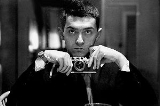
Stanley Kubrick

 
Stanley Kubrick

   Email Print
   Bookmark   Link


Stanley Kubrick


Stanley Kubrick (July 26, 1928 – March 7, 1999) was an influential American-British filmmaker, screenwriter
Screenwriter

Screenwriters or scenarists are scriptwriters who write the screenplays from which films and television programs are made.Most screenwriters start their careers writing on speculation....
, producer
Film producer

A film producer is someone who creates the conditions for making film. The producer initiates, co-ordinates, supervises and controls matters such as fund-raising, hiring key personnel and arranging for distributors....
 and photographer. He directed a number of highly acclaimed and often controversial films. Kubrick was noted for the scrupulous care with which he chose his subjects, his slow method of working, the variety of genres he worked in, his technical perfectionism, and his reclusiveness about his films and personal life.

ley Kubrick was born on July 26, 1928 at the Lying-In Hospital in Manhattan
Manhattan

Manhattan is one of the five borough of New York City, located primarily on Manhattan Island at the mouth of the Hudson River.With a United States Census of 1,620,867 living in a land area of 22.96 square miles , Manhattan, coextensive with New York County, is the most population density county in the United States, w...
, the first of two children born to Jacques Leonard Kubrick (1901–1985) and his wife Gertrude (née Perveler; 1903–1985).


Discussion
Ask a question about 'Stanley Kubrick'
Start a new discussion about 'Stanley Kubrick'
Answer questions from other users
Full Discussion Forum


Quotations


You sit at the board and suddenly your heart leaps. Your hand trembles to pick up the piece and move it. But what chess teaches you is that you must sit there calmly and think about whether its really a good idea and whether there are other, better ideas.

Newsweek 26 May 1980

...There's something in the human personality which resents things that are clear, and conversely, something which is attracted to puzzles, enigmas, and allegories.

from Kubrick: Inside a Film Artist's Maze by Thomas Allen Nelson, p.10

The very meaninglessness of life forces man to create his own meaning. If it can be written or thought, it can be filmed.

from Halliwell's Filmgoer's and Video Viewer's Companion


Encyclopedia


Stanley Kubrick (July 26, 1928 – March 7, 1999) was an influential American-British filmmaker, screenwriter
Screenwriter

Screenwriters or scenarists are scriptwriters who write the screenplays from which films and television programs are made.Most screenwriters start their careers writing on speculation....
, producer
Film producer

A film producer is someone who creates the conditions for making film. The producer initiates, co-ordinates, supervises and controls matters such as fund-raising, hiring key personnel and arranging for distributors....
 and photographer. He directed a number of highly acclaimed and often controversial films. Kubrick was noted for the scrupulous care with which he chose his subjects, his slow method of working, the variety of genres he worked in, his technical perfectionism, and his reclusiveness about his films and personal life.

Early life

Stanley Kubrick was born on July 26, 1928 at the Lying-In Hospital in Manhattan
Manhattan

Manhattan is one of the five borough of New York City, located primarily on Manhattan Island at the mouth of the Hudson River.With a United States Census of 1,620,867 living in a land area of 22.96 square miles , Manhattan, coextensive with New York County, is the most population density county in the United States, w...
, the first of two children born to Jacques Leonard Kubrick (1901–1985) and his wife Gertrude (née Perveler; 1903–1985). His sister, Barbara, was born in 1934. Jacques Kubrick, whose parents were of Jew
Jew

A Jew is a member of the Jewish people, an ethnoreligious group that traces its ancestry to the Israelites or Hebrews of the Ancient Near East....
ish Austro
Austria

Austria , officially the Republic of Austria , is a landlocked country in Central Europe. It borders both Germany and the Czech Republic to the north, Slovakia and Hungary to the east, Slovenia and Italy to the south, and Switzerland and Liechtenstein to the west....
-Romanian and Polish origin, was a doctor. At Stanley's birth, the Kubricks lived in an apartment at 2160 Clinton Avenue in The Bronx
The Bronx

The Bronx is the northernmost of the Five Boroughs of New York City and the newest of the 62 Administrative divisions of New York#county of New York State....
.

Kubrick's father taught him chess
Chess

Chess is a recreational and competitive game played between two Player . Sometimes called Western chess or international chess to distinguish it from History of chess and other chess variants, the current form of the game emerged in Southern Europe during the second half of the 15th century after evolving from similar, much older...
 at age twelve, and the game remained a life-long obsession. He also bought his son a Graflex
Graflex

Graflex was a manufacturer, a brand name and several models of cameras. William F. Folmer, an inventor, built the first Graflex camera in 1898, when his company was called The Folmer and Schwing Manufacturing Company....
 camera when he was thirteen years old, triggering a fascination with still photography. As a teenager, Kubrick was interested in jazz
Jazz

Jazz is a primarily American musical art form which originated at the beginning of the 20th century in African American communities in the Southern United States from a confluence of African and European music traditions....
, and briefly attempted a career as a drummer
Drummer

A drummer is a musician who plays a drum or drums, particularly a drum kit , marching percussion or hand drums. The term percussionist applies to a musician performing on any percussion instrument, but usually refers to one who plays Classical music or Latin percussion....
.

Kubrick attended William Howard Taft High School
William Howard Taft High School (New York City)

for schools of the same name.William Howard Taft High School was a high school in South Bronx, New York City.The school was operated by the New York City Department of Education....
 from 1941–1945. He was a poor student with a meager 67 grade average. He graduated from high school in 1945, and his poor grades, combined with the demand for college admissions from soldiers returning from the Second World War
World War II

World War II, or the Second World War , was a global military conflict which involved a Participants in World War II, including all of the great powers, organised into two opposing military alliances: the Allies of World War II and the Axis powers....
, eliminated any hopes of higher education. Later in life, Kubrick spoke disdainfully of his education and of education in general, maintaining that nothing about school interested him. His parents sent him to live with relatives for a year in Los Angeles
Los Ángeles

Los ?ngeles is the Capital of the Biob?o Province, in the municipality of the same name, in Regions of Chile VIII , in the center-south of Chile....
 in the hopes that it would help his academic growth.

While still in high school, he was chosen official school photographer for a year. In 1946 he briefly attended City College of New York
City College of New York

The City College of The City University of New York is a senior college of the City University of New York, in New York City. It is also the oldest of the City University's twenty-three institutions of higher learning....
 (CCNY) and then left. Eventually, he sought jobs as a freelance photographer, and by graduation he had sold a photographic series to Look
Look (American magazine)

Look was a biweekly, general-interest magazine published in Des Moines, Iowa from 1937 to 1971, with more of an emphasis on photographs than articles....
 magazine. Kubrick supplemented his income by playing "chess for quarters" in Washington Square Park
Washington Square Park

Washington Square Park is one of the best-known of New York City's List of New York City parks. At 9.75 acres , it is a landmark in the Manhattan neighborhood of Greenwich Village, as well as a meeting place and center for cultural activity....
 and various Manhattan
Manhattan

Manhattan is one of the five borough of New York City, located primarily on Manhattan Island at the mouth of the Hudson River.With a United States Census of 1,620,867 living in a land area of 22.96 square miles , Manhattan, coextensive with New York County, is the most population density county in the United States, w...
 chess clubs. He became an apprentice photographer for Look in 1946, and later a full-time staff photographer. (Many early (1945–1950) photographs by Kubrick have been published in the book "Drama and Shadows" (2005, Phaidon Press), and also appear as a special feature on the 2007 Special Edition DVD of 2001:A Space Odyssey.)

During his Look magazine years, Kubrick married Toba Metz (b. 1930) on May 29, 1948. They lived in Greenwich Village
Greenwich Village

Greenwich Village , often simply called the Village, is a largely residential area on the lower west side of southern Manhattan in New York City....
, eventually divorcing in 1951. During this time, Kubrick began frequenting film screenings at the Museum of Modern Art
Museum of Modern Art

The Museum of Modern Art is an art museum located in Midtown Manhattan in New York City, USA, on 53rd Street, between Fifth and Sixth Avenues....
 and the cinemas of New York City. He was particularly inspired by the complex, fluid camerawork of director Max Ophüls
Max Ophüls

Max Oph?ls was an influential German-born film director who worked in Germany, the United States, and France....
, whose films influenced Kubrick's later visual style.

Film career and later life


Early works

In 1951, Kubrick's friend Alex Singer persuaded him to start making short documentaries for the March of Time, a provider of newsreels to movie theatres. Kubrick agreed, and shot the independently financed Day of the Fight
Day of the Fight

Day of the Fight is a 1951 in film short subject documentary film in black-and-white, which is notable as the first picture directed by Stanley Kubrick....
 in 1951. The film notably employed a reverse tracking shot
Tracking shot

In motion picture terminology, a tracking shot is a segment in which the camera is mounted on a wheeled platform that is pushed on rails while the picture is being taken....
, which would become one of Kubrick's signature camera movements. Although its distributor went out of business that year, Kubrick sold Day of the Fight to RKO Pictures
RKO Pictures

RKO Pictures is an United States film production and distribution company. As Radio Pictures Inc. and then RKO Radio Pictures Inc., it was one of the so-called studio system major film studio of Hollywood Cinema of the United States#Golden Age of Hollywood....
 for a profit of one hundred dollars. Inspired by this early success, Kubrick quit his job at Look magazine and began working on his second short documentary, Flying Padre
Flying Padre

Flying Padre is a 1951 in film short subject black-and-white documentary film, which is notable as the second picture directed by Stanley Kubrick, after Day of the Fight....
 (1951), funded by RKO. A third film, The Seafarers
The Seafarers

The Seafarers is Stanley Kubrick's third film, a short for the Seafarers International Union of North America, directed in June of 1953.There are shots of ships, machinery, a canteen, and a union meeting....
 (1953), Kubrick's first color film, was a 30-minute promotional film for the Seafarers' International Union. These three films constitute Kubrick's only surviving work in the documentary
Documentary film

Documentary film is a broad category of visual expression that is based on the attempt, in one fashion or another, to "document" reality. Although "documentary film" originally referred to movies shot on film stock, it has subsequently expanded to include video and new media productions that can be either direct-to-video or made for a televis...
 genre. However it is believed that he was involved in other shorts which have been lost, most notably World Assembly of Youth
World Assembly of Youth (film)

World Assembly of Youth is a documentary film created by Stanley Kubrick in 1952 for the US State Department. It is believed to be lost but evidence for it was discovered on an early Kubrick resume sent to veteran New York film critic Theodore Huff in February 1953....
 (1952). He also served as second unit director on an episode of the Omnibus television program about the life of Abraham Lincoln
Abraham Lincoln

Abraham Lincoln was the List of Presidents of the United States President of the United States. He successfully led the country through its greatest internal crisis, the American Civil War, preserving the Union and ending slavery....
. None of these shorts has ever been officially released, though they have been widely bootlegged, and clips are used in the documentary Stanley Kubrick: A Life In Pictures. In addition, Day of the Fight and Flying Padre have been shown on TCM
TCM

TCM is a three-letter acronym that may refer to:...
 as part of a festival of short films.

Fear and Desire

Kubrick moved to narrative feature films with Fear and Desire
Fear and Desire

Fear and Desire is a military action/adventure film directed by Stanley Kubrick. It is noteworthy as Kubrick?s first feature film, and is also one of Kubrick's least-seen productions....
 (1953), the story of a team of soldiers caught behind enemy lines in a fictional war. Kubrick and his then-wife Toba Metz were the only crew on the film, which was written by Kubrick's friend Howard Sackler
Howard Sackler

Howard Oliver Sackler , was an American screenwriter and playwright who is best known for writing The Great White Hope . The Great White Hope enjoyed both a successful run on Broadway theatre and, as a film adaptation, in movie theaters....
, who later became a successful playwright. Fear and Desire garnered respectable reviews, but was a commercial failure. In later life, Kubrick was embarrassed by the film, which he dismissed as an amateur effort. He refused to allow Fear and Desire to be shown at retrospectives and public screenings, and did everything possible to keep it out of circulation. At least one copy remained in the hands of a private collector, and the film has subsequently surfaced on VHS and later on DVD.

Killer's Kiss

Kubrick's marriage to Toba Metz ended during the making of Fear and Desire. He met his second wife, Austrian-born dancer and theatrical designer Ruth Sobotka
Ruth Sobotka

Ruth A. Sobotka ; dancer, costume designer, art director, painter, and actress. The daughter of prominent Austrian architect and interior designer, Walter Sobotka and Viennese actress, Gisela Sch?nau, Ruth Sobotka immigrated to the United States from Vienna with her parents in 1938....
, in 1952. They lived together in the East Village from 1952–1955 until their marriage on January 15, 1955. They moved to Hollywood that summer. Sobotka, who made a cameo appearance in Kubrick's next film, Killer's Kiss
Killer's Kiss

Killer's Kiss is a film noir co-written and directed by Stanley Kubrick, his second feature. The film features Jamie Smith, Irene Kane, Frank Silvera, and others....
 (1954), also served as art director on The Killing
The Killing

The Killing is the second feature length film noir directed by Stanley Kubrick, written by Kubrick and Jim Thompson , based on the novel Clean Break by Lionel White....
 (1956). Like Fear and Desire, Killer's Kiss is a short feature film, with a running time of slightly more than an hour, and met with limited commercial and critical success. The film is about a young, heavyweight boxer at the end of his career who is involved with organized crime. Both Fear and Desire and Killer's Kiss were privately funded by Kubrick's family and friends.

The Killing

Alex Singer introduced Kubrick to a young producer named James B. Harris
James B. Harris

James B. Harris is a film screenwriter, producer and director. He worked with film director Stanley Kubrick as a producer on The Killing, Paths of Glory and Lolita ....
, and the two became close friends. Their business partnership, Harris-Kubrick Productions, would finance Kubrick's next three films. The two bought the rights to a Lionel White
Lionel White

Lionel White was an author whose dark noirish stories were sometimes made into films. His books include The Money Trap, Clean Break , and Obsession ....
 novel called Clean Break
Clean Break (novel)

Clean Break a self help book focused on dealing with divorce. It is written by Karen Stewart, CEO and Founder of Fairway Divorce. The book uses Stewart?s own journey though divorce as a narrative to show others how to deal with divorce and part with dignity....
, which Kubrick and co-screenwriter Jim Thompson
Jim Thompson (writer)

James Myers Thompson was a United States writer of novels, short stories and screenplays, largely in the hardboiled style of crime fiction.Thompson wrote more than thirty novels, the majority of which were original paperback book publications by pulp magazine houses, from the late-1940s through mid-1950s....
 turned into a story about a race track robbery gone wrong. Starring Sterling Hayden
Sterling Hayden

Sterling Hayden was an United States actor and author. For most of his career as a leading man, he specialized in Western and film noir, such as Johnny Guitar, The Asphalt Jungle and The Killing....
, The Killing
The Killing

The Killing is the second feature length film noir directed by Stanley Kubrick, written by Kubrick and Jim Thompson , based on the novel Clean Break by Lionel White....
 was Kubrick's first full-length feature film, shot with a professional cast and crew. The resulting film was unusual in 1950s American cinema in having a non-linear storyline in a manner imitated nearly 40 years later by director Quentin Tarantino
Quentin Tarantino

Quentin Jerome Tarantino is an American film director, screenwriter, Film producer, cinematographer and actor. He rose to fame in the early 1990s as an independent film filmmaker whose films used nonlinear and aestheticization of violence....
 in Pulp Fiction
Pulp fiction

Pulp fiction may refer to:*Fiction published in pulp magazines*Pulp Fiction , 1994 film directed by Quentin Tarantino*Pulp Fiction , the soundtrack album from the film...
 and an unhappy ending. In many ways it followed the conventions of film noir
Film noir

Film noir is a film term used primarily to describe stylish cinema of the United States Crime film, particularly those that emphasize moral ambiguity and sexual motivation....
 both in its plotting and cinematography style. That kind of crime caper film had peaked in the 1940s, but today many regard this film as one of the best of the noir genre. While it was not a financial success, it received good reviews.

The widespread admiration for The Killing brought Harris-Kubrick Productions to the attention of Metro-Goldwyn-Mayer. The studio offered them its massive collection of copyrighted stories from which to choose their next project. During this time Kubrick also collaborated with Calder Willingham
Calder Willingham

Calder Baynard Willingham, Jr. was an American novelist and screenwriter. He cowrote several notable screenplays, including Paths of Glory and One-Eyed Jacks ....
 on an adaptation of the Austrian novel The Burning Secret. Although Kubrick was enthusiastic about the project, it was eventually shelved.

Paths of Glory

Kubrick's next film was set during World War I
World War I

World War I, or the First World War , was a global military conflict which involved the Great powers, organized into two opposing military alliances: the Allies of World War I and the Central Powers....
 and based on Humphrey Cobb
Humphrey Cobb

Humphrey Cobb was a screenwriter and novelist. He is best known for writing the novel Paths of Glory, which was made into an acclaimed 1957 movie by Stanley Kubrick....
's 1935 anti-war novel of the same name. It is about a French army unit ordered on an impossible mission by their superiors. As a result of the mission's failure, three innocent soldiers are charged with cowardice as an example to the other troops. Kirk Douglas
Kirk Douglas

Kirk Douglas is an Academy Award-nominated United States actor and film producer known for his cleft chin, his gravelly voice and his recurring roles as the kinds of characters Douglas himself once described as "sons of bitches"....
 was cast as Colonel Dax, a humanitarian officer who tries to prevent the soldiers' execution. Douglas was instrumental in securing financing for the ambitious production. The film was not a significant commercial success, but it was critically acclaimed and widely admired within the industry, establishing Kubrick as a major up-and-coming young filmmaker. Critics over the years have praised the film's unsentimental, spare, and unvarnished combat scenes and its raw black and white cinematography. Steven Spielberg
Steven Spielberg

Steven Allan Spielberg, KBE is an American film director, screenwriter and film producer. Forbes magazine places Spielberg's net worth at $3.1 billion....
 has named this one of his favorite Kubrick films.

Marriage to Christiane Harlan

During the production of Paths of Glory in Munich
Munich

Munich is the capital city of Bavaria, Germany. Munich is located on the River Isar north of the Northern Limestone Alps. Munich is the third largest city in Germany, after Berlin and Hamburg....
, Kubrick met and romanced the young German actress Christiane Harlan (credited by her stage name
Stage name

A stage name, also called a showbiz name or screen name, is a pseudonym used by performers and entertainers such as actors, comedians, musician, and professional wrestling....
 "Susanne Christian"), who played the only woman speaking part in the film. Kubrick divorced his second wife Ruth Sobotka in 1957. Christiane Susanne Harlan (b. 1932 in Germany
Germany

Germany , officially the Federal Republic of Germany , is a country in Central Europe. It is bordered to the north by the North Sea, Denmark, and the Baltic Sea; to the east by Poland and the Czech Republic; to the south by Austria and Switzerland; and to the west by France, Luxembourg, Belgium, and the Netherlands....
) belonged to a theatrical family, and had trained as an actress. She and Kubrick married in 1958 and remained together until his death in 1999. During her marriage to Kubrick, Christiane concentrated on a career as a painter. In addition to raising Christiane's young daughter Katharina (b. 1953) from her first marriage to the late German actor, Werner Bruhns (d. 1977), the couple had two daughters: Anya (b. 1958) and Vivian (b. 1960). Christiane's brother Jan Harlan
Jan Harlan

Jan Harlan is a film producer and the brother of Christiane Kubrick, Stanley Kubrick's widow. He acted as Kubrick's Executive Producer for Barry Lyndon , The Shining , Full Metal Jacket , Eyes Wide Shut , and was an assistant to the Producer for A Clockwork Orange ....
 was Kubrick's executive producer from 1975 onward.

Spartacus

Upon his return to the United States
United States

The United States of America is a Federal government constitutional republic comprising U.S. state and a federal district. The country is situated mostly in central North America, where its Contiguous United States and Washington, D.C., the Capital districts and territories, lie between the Pacific Ocean and Atlantic Oceans, Borders of the U...
, Kubrick worked for six months on the Marlon Brando
Marlon Brando

Marlon Brando, Jr. was an Academy Award-winning American actor whose body of work spanned over half a century. He is widely considered one of the greatest actors of all time, and was named the fourth AFI's 100 Years......
 vehicle One-Eyed Jacks
One-Eyed Jacks

One-Eyed Jacks, a western movie released in 1961, is the only film directed by Marlon Brando, who replaced the original director, Stanley Kubrick....
 (1961). Brando eventually fired him and decided to direct the picture himself. The two had clashed over a number of casting decisions. Kubrick worked on a number of unproduced screenplays until Kirk Douglas
Kirk Douglas

Kirk Douglas is an Academy Award-nominated United States actor and film producer known for his cleft chin, his gravelly voice and his recurring roles as the kinds of characters Douglas himself once described as "sons of bitches"....
 asked him to take over Douglas' epic production Spartacus
Spartacus (film)

Spartacus is a 1960 in film historical film drama film directed by Stanley Kubrick and based on the Spartacus by Howard Fast about the historical life of Spartacus and the Third Servile War....
 (1960) from Anthony Mann
Anthony Mann

Anthony Mann was an United States actor and film director....
 who had been fired by the studio two weeks into shooting.

Based upon the true story of a doomed uprising of Roman slaves, Spartacus was a difficult production. Creative differences arose between Kubrick and Douglas, and the two reportedly had a stormy working relationship. Frustrated by his lack of creative control, Kubrick later largely disowned the film, which further angered Douglas. The friendship the two men had formed on Paths of Glory was destroyed by the experience of making the film. Years later, Douglas referred to Kubrick as "a talented shit."

Despite the on-set troubles, Spartacus was a major critical and commercial success, and established Kubrick as a major director. However, its embattled production convinced Kubrick to find ways of working with Hollywood financing while remaining independent of its production system, which he called "film by fiat, film by frenzy."

Spartacus is the only Stanley Kubrick film in which Kubrick had no hand in the screenplay, no final cut, no producing credit, nor any hand in the casting. It is largely Kirk Douglas' project.

Lolita

In 1962, Kubrick moved to England to film Lolita
Lolita (1962 film)

Lolita is an influential 1962 in film drama film by Stanley Kubrick based on the classic Lolita by Vladimir Nabokov. The film stars James Mason as Humbert Humbert, Sue Lyon as Dolores Haze and Shelley Winters as Charlotte Haze with Peter Sellers as Clare Quilty....
 and he would live there for the rest of his life. The film was Kubrick's first major controversy. The book
LOLITA

LOLITA is a natural language processing system developed by Durham University between 1986 and 2000. The name is an acronym for "Large-scale, Object-based, Linguistics Interactor, Machine translation and Analyzer"....
, by Russian-American novelist Vladimir Nabokov
Vladimir Nabokov

Vladimir Vladimirovich Nabokov was a Multilingualism Russian-American novelist and short story writer.Nabokov wrote his first nine novels in Russian language, then rose to international prominence as a master English prose stylist....
, dealt with an affair between a middle-aged man named Humbert Humbert and his twelve-year-old stepdaughter, and was already notorious as an "obscene" novel and a cause celebre when Kubrick embarked on the project. The difficult subject matter was mocked in the film's famous tagline
Tagline

A tagline is a variant of a Advertising slogan typically used in marketing materials and advertising. The idea behind the concept is to create a memorable phrase that will sum up the tone and premise of a brand or product , or to reinforce the audience's memory of a product....
: "How did they ever make a film of Lolita?" Kubrick originally engaged Nabokov to adapt his own novel for the screen. The writer first produced a four-hundred page screenplay which he then reduced to two hundred. The final screenplay was written by Kubrick himself, and it has been estimated that only 20% of Nabokov's work made it into the final draft. Nabokov's original draft was later published under the title Lolita: A Screenplay.

The film faced a censorship battle before its release. Kubrick tried to make some elements more acceptable by changing Lolita's age from twelve to fourteen, and omitting all material referring to Humbert's lifelong infatuation with "nymphets." Nonetheless, several scenes in the final film had to be re-edited to satisfy the censors. As a result, the novel's more perverse aspects were toned down in the final cut, leaving much to the viewer's imagination. Kubrick would later say that had he known the severity of the censorship he would face, he probably would not have made the film.

Lolita was the first of two times Kubrick worked with British comic actor Peter Sellers
Peter Sellers

'Richard Henry Sellers', Order of British Empire, commonly known as 'Peter Sellers' was a United Kingdom comedian and actor best known for his roles in Dr....
, followed by Dr. Strangelove (1964). Sellers’ role is Clare Quilty, a second older man involved with Lolita unknown to Humbert, serving dramatically as Humbert's darker doppelganger. In the novel, Quilty’s presence is behind-the-scenes for most of the story, but Kubrick brings him to the foreground, which resulted in an expansion of his role (even then running to only about half an hour’s screentime.) Kubrick adds the dramatic device of Quilty's pretending to be multiple characters, allowing Sellers to employ his gift for mock accents.

Critical reception of the film was mixed, with many praising it for its daring subject matter, while others were surprised by the lack of intimacy between Lolita and Humbert. The film received an Academy Award nomination for Best Adapted Screenplay
Academy Award for Writing Adapted Screenplay

The Academy Award for Writing Adapted Screenplay is one of the Academy Awards, the most prominent film awards in the United States. It is awarded each year to the screenwriter of a Adapted_screenplay from another source ....
, and Sue Lyon
Sue Lyon

Sue Lyon is a Golden Globe-winning United States former actor....
, who played the title role, won a Golden Globe for Best Newcomer.

Dr. Strangelove

Kubrick's next film, Dr. Strangelove or: How I Learned to Stop Worrying and Love the Bomb (1964), became a cult film
Cult film

A 'cult film' is a film that has acquired a highly devoted but relatively small group of fan . Often, cult movies have failed to achieve fame outside of the small fanbases; however, there have been exceptions that have managed to gain fame amongst mainstream audiences, including Carnival of Souls , Easy Rider , 2001: A Space Odyssey...
 and is now considered a classic. The screenplay—based upon the novel Red Alert, by ex-RAF flight lieutenant Peter George
Peter George

Peter Bryan George was a United Kingdom author, most famous for the Cold War thriller novel Red Alert ? pen name, Peter Bryant.Life...
 (writing as Peter Bryant)—was co-written by Kubrick and George, with contributions by American satirist Terry Southern
Terry Southern

Terry Southern was a highly influential American author, essayist, screenwriter and university lecturer, noted for a distinctive satirical style....
. Red Alert is a serious, cautionary tale of accidental atomic war. However, Kubrick found the conditions leading to nuclear war so absurd that the story became a sinister macabre comedy. Once so reconceived, Kubrick recruited Terry Southern to polish the final screenplay.

The story centers on American nuclear attack on the Soviet Union, initiated by renegade U.S.A.F. General Jack D. Ripper (Sterling Hayden
Sterling Hayden

Sterling Hayden was an United States actor and author. For most of his career as a leading man, he specialized in Western and film noir, such as Johnny Guitar, The Asphalt Jungle and The Killing....
; the character name is a reference to "Jack the Ripper
Jack the Ripper

Jack the Ripper is an pseudonym given to an unidentified serial killer active in the largely impoverished Whitechapel area and adjacent districts of London, England, in late 1888....
") without official authorization. When Ripper gives his orders, the bombers are all at Fail-safe
Fail-safe

Fail-safe or fail-secure describes a device or feature which, in the event of Failure mode, responds in a way that will cause no harm or at least a minimum of harm to other devices or danger to personnel....
 points, before which passing they cannot arm their warheads and past which they cannot proceed without direct orders. Once past this point, the planes will only return with a pre-arranged recall code. The film intercuts between three locales,(i) Ripper's air force base, where RAF Group Captain Lionel Mandrake (Sellers) tries to stop the mad Gen. Ripper, by obtaining the codes; (ii) the Pentagon War Room, where the President of the United States
President of the United States

The President of the United States is the head of state and head of government of the United States and is the highest political official in the United States by influence and recognition....
 (Sellers), and U.S.A.F. General Buck Turgidson (George C. Scott
George C. Scott

George Campbell Scott was an American stage and film actor, film director, and Film producer. He was best known for his Academy Award-winning portrayal of General George S....
), try to develop a strategy with the Soviets to stop General Ripper's B-52 bombers from dropping nuclear bombs on Russia; and (iii) Major Kong's (Slim Pickens
Slim Pickens

'Louis Burton Lindley, Jr.' , better known by the stage name 'Slim Pickens', was an American rodeo performer, and film and television actor, who epitomized the profane, tough, sardonic cowboy, but who is best remembered for his comic roles, notably in Dr....
) B-52 bomber where he and his crew of airmen, never knowing their orders are false, doggedly try to complete their mission. It soon becomes clear that the bombers may reach Russia since only General Ripper knows the recall codes. At this point the character of Dr. Strangelove (Sellers' third role) is introduced. His Nazi-style plans for ensuring the survival of the fittest of the human race should there be a nuclear holocaust are the black comic highlight of the film.

Peter Sellers
Peter Sellers

'Richard Henry Sellers', Order of British Empire, commonly known as 'Peter Sellers' was a United Kingdom comedian and actor best known for his roles in Dr....
, who had played a small but pivotal part in Lolita, was hired to play four roles in Dr. Strangelove. He eventually played three, due to an injured leg and his difficulty in mastering bomber pilot Major "King" Kong's Texas accent. Kubrick later called Sellers "amazing," but lamented the fact that the actor's manic energy rarely lasted beyond two or three takes. To overcome this problem, Kubrick ran two cameras simultaneously and let Sellers improvise. Coincidentally, that same year, Columbia Studios released the dramatic nuclear war thriller Fail-Safe
Fail-Safe (1964 film)

Fail-Safe is a 1964 in film film directed by Sidney Lumet, based on the 1962 Fail-Safe by Eugene Burdick and Harvey Wheeler. It tells the story of a fictional Cold War nuclear crisis, and the US President's attempt to end it....
.


The film prefigured the antiwar sentiments of the later 1960s that would become explosive only a few years after its release. It was highly irreverent to war policies of the US largely considered sacrosanct up till that time. The film earned four Academy Award nominations (including Best Picture and Best Director) and the New York Film Critics' Best Director award.

2001: A Space Odyssey

Kubrick spent five years developing his next film, 2001: A Space Odyssey
2001: A Space Odyssey (film)

2001: A Space Odyssey is a 1968 in film science fiction film directed by Stanley Kubrick, written by Kubrick and Arthur C. Clarke. The film deals with thematic elements of human evolution, technology, artificial intelligence, and extraterrestrial life, and is notable for its scientific realism, pioneering special effects, ambiguous and of...
 (1968). The film was conceived as a Cinerama
Cinerama

Cinerama is the trademarked name for a widescreen process which works by simultaneously projecting images from three synchronized 35 mm projectors onto a huge, deeply-curved screen, subtending 146? of arc....
 spectacle and was photographed in Super Panavision 70
Super Panavision 70

Super Panavision 70 was the marketing brand name used to identify movies photographed with Panavision 70 mm film spherical optics between 1959 and 1983....
. Kubrick co-wrote the screenplay with science fiction writer Sir Arthur C. Clarke
Arthur C. Clarke

Sri Lankabhimanya Sir Arthur Charles Clarke, Order of the British Empire was a British people science fiction author, inventor, and Futurology, most famous for the novel 2001: A Space Odyssey , written in collaboration with director Stanley Kubrick, a collaboration which also produced the 2001: A Space Odyssey ; and as a host and comment...
, expanding on Clarke's short story "The Sentinel
The Sentinel (short story)

"The Sentinel" is a short story by Arthur C. Clarke, famous for being expanded into the novel and movie 2001: A Space Odyssey. Clarke actually expressed impatience with the common description of it as "the story on which 2001 is based." He was quoted as saying, it is like comparing "an acorn to the resulting oak tree"....
". Kubrick reportedly told Clarke that his intention was to make "the proverbial great science-fiction film."

Enigmatic and sometimes impenetrable, 2001 resists a short synopsis. It begins four million years ago with an encounter between a group of apes and a mysterious black monolith, which seems to trigger in them the ability to use a bone as both a tool and a weapon. The latter allows them to claim a water-hole from another group of apes who have no tool-wielding ability. A victorious ape tosses his bone into the air at which point the film makes a celebrated jump-cut to an orbiting weapons-satellite circa the year 2000. At this time a group of Americans at their moonbase have dug up a similar monolith. Geological evidence indicates it was deliberately buried four million years ago. When the sun rises over the monolith, it sends a radio signal to Jupiter. Eighteen months later, the US sends a group of astronauts aboard the spaceship Discovery on a mission to Jupiter, the purpose of which is to investigate the monolith's signal although this is concealed from the crew. During the flight, the ship's sentient HAL9000 computer malfunctions but resists disconnection, believing its control of the mission to be crucial. The computer terminates life support for most of the crew before it is successfully shut down. The surviving astronaut David Bowman (Keir Dullea) in a tiny spacepod encounters another monolith in orbit around Jupiter whereupon he is hurled into a portal in space at high speed witnessing many astronomical phenomena. His interstellar journey concludes with his transformation into a mysterious new being resembling a fetus enclosed in an orb of light, last seen gazing at Earth from space.

The film was a massive production for its time. The special effects were overseen by Kubrick and engineered by a team that included special effects pioneer Douglas Trumbull
Douglas Trumbull

Douglas Trumbull is an United States film director and special effects supervisor. He was responsible for the special effects of 2001: A Space Odyssey , Close Encounters of the Third Kind, Star Trek: The Motion Picture and Blade Runner....
 (Silent Running
Silent Running

Silent Running is a 1972 ecologically-themed science fiction film directed by Douglas Trumbull which depicts a future in which all plant life on Earth has been made extinct, except for a few specimens preserved in space in greenhouse domes....
, Blade Runner
Blade Runner

Blade Runner is a 1982 in film Cinema of the United States science fiction film, directed by Ridley Scott and starring Harrison Ford, Rutger Hauer, and Sean Young....
). The special effects were considered groundbreaking. Kubrick extensively used travelling matte
Matte

Matte may refer to:In film:* Matte , film and video technology* Matte painting, a process of creating sets used in film and video* Matte box, a camera accessory for controlling lens glare...
 photography to film space flight, a technique also used nine years later by George Lucas
George Lucas

George Walton Lucas, Jr. is an Academy Award-nominated United States film director, film producer, screenwriter and chairman of Lucasfilm Ltd. He is best known for being the creator of the Epic film Sci-Fi franchise Star Wars and the archaeologist-adventurer character Indiana Jones....
 in making Star Wars
Star Wars

Star Wars is an epic film space opera Media franchise initially conceived by George Lucas. The first film in the franchise was simply titled Star Wars Episode IV: A New Hope, but later had the subtitle Episode IV: A New Hope added to distinguish it from its sequels and prequels....
, although that film could use motion-control effects unavailable to Kubrick. Kubrick used an innovative use of slitscan photography to film the Stargate sequence. The film's striking cinematography was the work of legendary British director of photography Geoffrey Unsworth
Geoffrey Unsworth

Geoffrey Unsworth Order of the British Empire, BSC was a United Kingdom cinematographer who worked on nearly 90 feature films spanning over more than 40 years....
, who would later photograph classic films such as Cabaret
Cabaret (film)

Cabaret is a 1972 in film American musical film directed by Bob Fosse and starring Liza Minnelli, Michael York and Joel Grey. The film is set in Berlin during the Weimar Republic in 1931, before the rise of the Nazism under Adolf Hitler....
 and Superman. Manufacturing companies were consulted as to what the design of both special-purpose and everyday objects would look like in the future. At the time of the movie's release, Arthur C. Clarke predicted that a generation of engineers would design real spacecraft based upon 2001 "even if it isn't the best way to do it".. The film also is a rare instance of portraying space travel realistically with complete silence in the vacuum of space and realistic portrayal of weightlessness.

The film is famous for using classical music in place of an original score. Richard Strauss
Richard Strauss

Richard Georg Strauss was a German composer of the late Romantic music and early modern eras, particularly of operas, Lieder and tone poems. Strauss was also a prominent Conducting....
's Also Sprach Zarathustra and Johann Strauss
Johann Strauss

Johann Strauss is the name of three Austrian composers:*Johann Strauss I , or Johann Strauss Sr., composer, popularizer of the waltz*Johann Strauss II , or Johann Strauss Jr., composer, known as the "Waltz King", son of Johann I...
's The Blue Danube
The Blue Danube

The Blue Danube is the common English title of An der sch?nen blauen Donau op. 314 , a waltz by Johann Strauss II, composed in 1866....
 waltz became for a while indelibly associated with the film, especially the former as it was not well-known to the public prior to the film. Kubrick also used music by contemporary, avant-garde Hungarian composer György Ligeti
György Ligeti

Gy?rgy S?ndor Ligeti was a composer, born in a Hungarian History of the Jews in Romania family in Transylvania, Romania. He briefly lived in Hungary before later becoming an Austrian citizen....
, although some of the pieces were altered without Ligeti's consent. The appearance of Atmospheres, Lux Aeterna, and Requiem on the 2001 soundtrack was the first wide commercial exposure of Ligeti's work. This use of 'program' music was not originally planned. Kubrick had commissioned composer Alex North
Alex North

Alex North was an United States composer responsible for the first jazz-based film score and one of the first modernism scores written in Hollywood, ....
 to write a full-length score for the film, but Kubrick became so attached to the temporary soundtrack he had constructed during editing that he dropped the idea of an original score entirely.

Although it eventually became an enormous success, the film was not an immediate hit. Initial critical reaction was extremely hostile, with critics attacking the film's lack of dialogue, its slow pacing, and seemingly impenetrable storyline. One of the film's few defenders was Penelope Gilliatt
Penelope Gilliatt

Penelope Gilliatt was an England novelist, short story writer, screenwriter, and film critic.She was born in London, England. Her father, Cyril Conner, was originally a barrister, while her mother was Marie Stephanie Douglass....
, who called it in the New Yorker "some kind of a great film". Word of mouth among young audiences--especially the 1960s counterculture
Counterculture

Counterculture is a Sociology term used to describe the values and norms of behavior of a cultural group, or subculture, that run counter to those of the social mainstream of the day, the cultural equivalent of political opposition....
 audience, who loved the movie's "Star Gate" sequence, a seemingly psychedelic journey to the infinite reaches of the cosmos--made the film a hit. Despite nominations in the directing, writing, and producing categories, the only Academy Award
Academy Award for Visual Effects

The Academy Award for Visual Effects is an Academy Awards given to one film each year that shows highest achievement in visual effects.The category was called Best Special Effects when it was created in 1939....
 Kubrick ever received was for supervising the special effects of 2001: A Space Odyssey.

Artistically, 2001: A Space Odyssey was a radical departure from Kubrick's previous films. It contains only 45 minutes of spoken dialogue, over a running time of two hours and twenty minutes. The fairly mundane dialogue is mostly superfluous to the images and music. The film's most memorable dialogue belongs to the computer HAL or HAL's exchanges with Dave Bowman. Some argue that Kubrick is portraying a future humanity largely dissociated from its environment. The film's ambiguous, perplexing ending continues to fascinate contemporary audiences and critics. After this film, Kubrick would never experiment so radically with special effects or narrative form, but his subsequent films maintain some level of ambiguity.

Interpretations of 2001: A Space Odyssey are numerous and diverse. Despite having been released in 1968, it still prompts debate today. When critic Joseph Gelmis asked Kubrick about the meaning of the film, Kubrick replied:

They are the areas I prefer not to discuss, because they are highly subjective and will differ from viewer to viewer. In this sense, the film becomes anything the viewer sees in it. If the film stirs the emotions and penetrates the subconscious
Subconscious

The term subconscious is used in many different contexts and has no single or precise definition. This greatly limits its significance as a meaning-bearing concept, and in consequence the word tends to be avoided in academic and scientific settings....
 of the viewer, if it stimulates, however inchoately, his mythological and religious yearnings and impulses, then it has succeeded.


2001: A Space Odyssey is likely Kubrick's most famous and influential film. Steven Spielberg
Steven Spielberg

Steven Allan Spielberg, KBE is an American film director, screenwriter and film producer. Forbes magazine places Spielberg's net worth at $3.1 billion....
 called it his generation's big bang, focusing attention upon the space race. It was a precursor to the explosion of the science-fiction film market nine years later which began with the release of Star Wars
Star Wars

Star Wars is an epic film space opera Media franchise initially conceived by George Lucas. The first film in the franchise was simply titled Star Wars Episode IV: A New Hope, but later had the subtitle Episode IV: A New Hope added to distinguish it from its sequels and prequels....
 and Close Encounters of the Third Kind
Close Encounters of the Third Kind

Close Encounters of the Third Kind is a 1977 science fiction film written and directed by Steven Spielberg. The film stars Richard Dreyfuss, Fran?ois Truffaut, Melinda Dillon, Teri Garr, Bob Balaban and Cary Guffey....
.

A Clockwork Orange

After 2001, Kubrick initially attempted to make a film about the life of Napoleon Bonaparte. When financing fell through, Kubrick went looking for a project which he could film quickly on a small budget. He eventually settled on A Clockwork Orange
A Clockwork Orange (film)

A Clockwork Orange is a 1971 satire science fiction film film adaptation of a 1962 A Clockwork Orange, written by Anthony Burgess. The adaptation was produced, co-written, and directed by Stanley Kubrick....
 (1971). His adaptation of Anthony Burgess
Anthony Burgess

John Burgess Wilson was an England author, poet, playwright, composer, linguist, translator and critic.His Utopian and dystopian fiction satire A Clockwork Orange, widely considered to be his magnum opus, is by far his most famous novel, and was adapted into a famous, if highly controversial, A Clockwork Orange by Stanley Kubrick....
' novel is a dark, shocking exploration of violence in human society. The film was initially released with an 'X' rating in the United States, and caused considerable controversy. The film's iconic poster imagery was created by the legendary designer Bill Gold
Bill Gold

Bill Gold During his 60-year career he worked with some of Hollywood's greatest filmmakers, including Clint Eastwood, Alfred Hitchcock, Stanley Kubrick, Elia Kazan, Ridley Scott, and many more....
.

The story takes place in a futuristic version of Great Britain that is both authoritarian and chaotic. The central character is a teenage hooligan named Alex DeLarge (Malcolm McDowell
Malcolm McDowell

Malcolm McDowell is a UK actor. McDowell's career has spanned five decades and includes notable roles in if...., A Clockwork Orange , O Lucky Man!, Caligula , Star Trek Generations, Heroes , Metalocalypse, and the 2007 horror remake of Halloween ....
), who gleefully torments, beats, robs, tortures, and rapes without conscience or remorse. His brutal beating and murder of an older woman finally lands Alex in prison. Alex undergoes an experimental medical aversion treatment which inhibits his violent tendencies though he has no real free moral choice. At the public demonstration of the success of the technique, Alex is treated cruelly and cannot fight back and we see he had been made less than human. He has been conditioned against classical music, his love of which was his one human feature, and apparently his entire sex drive is gone. We further see hints that the promotion of the treatment is politically motivated. After being freed, he is found by former partners in crime of his whom he betrayed and who are now policemen, and they beat him mercilessly. He then comes to the home of a political writer who disdains "the modern age" and is initially sympathetic to Alex's plight until he recognizes Alex as the young man who brutally raped his wife and paralyzed him a few years before. Alex then becomes a pawn in a political game.

The society was sometimes perceived as communist (as Michael Ciment pointed out in an interview with Kubrick, although he himself didn't feel that way) due to its slight ties to Russian culture. The teenage slang has a heavily Russian vocabulary, which can be attributed to Burgess. There is some evidence to suggest that the society is a socialist one, or at least a society moving out of a failed, Leftist socialism and into a Rightist or fascist society: in the novel, streets have paintings of working men in the style of Russian socialist art, and in the film there is a mural of socialist artwork with obscenities drawn on it. As well, Alex's residence was shot on an actual, failed Labour party architecture (as Malcolm McDowell points out on the DVD commentary) and the name "Municipal Flat Block 18A, Linear North" alludes to socialist style housing. Later on in the film, when the new right wing government takes power, the atmosphere is certainly more authoritarian than the anarchist air of the beginning. Kubrick's response to Ciment's question remained ambiguous as to exactly what kind of society it is. He held that the film held comparisons between both the left and right end of the political spectrum and that there is little difference between the two. Kubrick stated "The Minister, played by Anthony Sharp, is clearly a figure of the Right. The writer, Patrick Magee, is a lunatic of the Left....They differ only in their dogma. Their means and ends are hardly distinguishable."

Kubrick photographed A Clockwork Orange quickly and almost entirely on location in and around London. Despite the low-tech nature of the film compared to 2001: A Space Odyssey, Kubrick showed his talent for innovation: at one point, he threw an Arriflex camera off a rooftop in order to achieve the effect he wanted. For the score, Kubrick enlisted electronic music composer Wendy Carlos
Wendy Carlos

Wendy Carlos is an United States composer and electronic musician. She gained fame in the late 1960s for playing on the Moog synthesizer, which was a relatively new and unknown instrument at the time....
--at the time known as Walter Carlos, (Switched-On Bach
Switched-On Bach

Switched-On Bach is a musical album by Wendy Carlos and Benjamin Folkman, produced by Carlos and Rachel Elkind and released in 1968 by CBS Records....
)--to adapt famous classical works such as Beethoven's
Ludwig van Beethoven

Ludwig van Beethoven was a German composer and pianist. He was a crucial figure in the transitional period between the Classical music era and Romantic music eras in classical music, and remains one of the most acclaimed and influential composers of all time....
 Ninth Symphony for the Moog synthesizer
Moog synthesizer

Moog synthesizer may refer to any number of analog synthesizers designed by Dr. Robert Moog or manufactured by Moog Music, and is commonly used as a generic term for analog and digital music synthesisers....
.

The film was extremely controversial because of its explicit depiction of teenage gang-rape and violence. It was released in the same year as Sam Peckinpah
Sam Peckinpah

David Samuel "Sam" Peckinpah was an United States film director who achieved iconic status following the release of his 1969 Western epic The Wild Bunch....
's Straw Dogs
Straw Dogs

Straw Dogs is a 1971 in film film directed by Sam Peckinpah which stars Dustin Hoffman and Susan George . A dark, domestic drama psychological thriller, the screenplay by Peckinpah and David Zelag Goodman is based on the novel, The Siege of Trencher's Farm by Gordon Williams....
 and Don Siegel
Don Siegel

Donald Siegel was an influential United States film director and film producer. His name appeared in the credits of his films as both Don Siegel and Donald Siegel....
's Dirty Harry
Dirty Harry

Dirty Harry is a crime film thriller produced and directed by Don Siegel. It is the first film in the Dirty Harry . Clint Eastwood plays the title role, in his first outing as San Francisco Police Department Inspector Harry Callahan ....
, and the three films sparked a ferocious debate in the media about the social effects of cinematic violence. The controversy was exacerbated when copycat crimes were committed in England by criminals wearing the same costumes as characters in A Clockwork Orange. British readers of the novel noted that Kubrick had omitted the final chapter (omitted from American editions of the book) in which Alex finds redemption and sanity.

It is pivotal to the plot that the lead character, Alex, is fond of classical music, and that the brainwashing Ludovico treatment accidentally conditions him against classical music. As such, it was natural for Kubrick to continue the tradition begun in his previous film 2001: A Space Odyssey of using a great deal of classical music in the score. However, in this film classical music accompanied scenes of violent mayhem and coercive sexuality rather than of graceful spaceflight and mysterious alien presences. Both Pauline Kael (who generally disliked Kubrick) and Roger Ebert (who often praises Kubrick) found Kubrick's use of juxtaposing classical music and violence in this film unpleasant, Ebert calling it a "cute, cheap, dead-end dimension" and Kael "self-important". However, novelist Anthony Burgess in his introduction to his own stage adaptation of the novel held that ultimately classical music is what will finally redeem Alex.

After receiving death threats to himself and his family as a result of the controversy, Kubrick took the unusual step of removing the film from circulation in Britain. It was unavailable in the United Kingdom until its re-release in 2000, a year after Kubrick's death, although it could be seen in continental Europe. The Scala cinema in London's Kings Cross showed the film in the early 1990s and at Kubrick's insistence the cinema was sued and put out of business, thus depriving London of one of its very few independent cinemas. It is now the Scala (club)
Scala (club)

Scala is a nightclub in London, England, near London King's Cross railway station.The Scala was originally built as a Cinema to the designs of H Courtney Constantine, but construction was interrupted by the First World War and it spent some time being used to manufacture aircraft parts, and as a labour exchange for demobilised troops before...
.

In the mid-1990s, a documentary about the censorship controversy was released in Britain entitled Forbidden Fruit. Kubrick was unable to prevent the documentary makers from including footage from A Clockwork Orange in their film.

Barry Lyndon

Barry12
Kubrick's next film, released in 1975, was an adaptation of William Makepeace Thackeray
William Makepeace Thackeray

William Makepeace Thackeray was an England novelist of the 19th century. He was famous for his satire works, particularly Vanity Fair , a panoramic portrait of English society....
's The Luck of Barry Lyndon
The Luck of Barry Lyndon

The Luck of Barry Lyndon is a picaresque novel by William Makepeace Thackeray, first published in serial form in 1844, about a member of the Ireland gentry trying to become a member of the English aristocracy....
, also known as Barry Lyndon, a picaresque novel
Picaresque novel

The picaresque novel is a popular sub-genre of prose fiction which is usually satire and depicts in realism and often humorous detail the adventures of a roguish hero of low social class who lives by his or her wits in a corrupt society....
 about the adventures and misadventures of an 18th century gambler and social climber. After serving in the Prussian army, Lyndon slowly insinuates himself into English high society, eventually marrying the Countess of Lyndon. The world of the aristocracy turns out to be a hollow paradise, dull and decaying. Lyndon is ultimately unable to maintain his good standing there, and falls from grace after a series of persecutions.

Some critics, especially Pauline Kael
Pauline Kael

Pauline Kael was an American film critic who wrote for The New Yorker magazine from 1968 to 1991. Earlier in her career she was published by City Lights, McCall's and The New Republic....
, one of Kubrick's greatest detractors, found Barry Lyndon a cold, slow-moving, and lifeless film. Its measured pace and length--more than three hours--put off many American critics and audiences, although it received positive reviews from Rex Reed
Rex Reed

Rex Taylor Reed is an United States film critic and former co-television presenter of the syndicated television show At the Movies with Gene Siskel and Roger Ebert....
 and Richard Schickel
Richard Schickel

Richard Warren Schickel is an author, journalist, and documentary filmmaker. He is a film critic for Time magazine, having also written for Life magazine and the Los Angeles Times Book Review....
. Time
Time (magazine)

Time is a weekly United States newsmagazine, similar to Newsweek and U.S. News & World Report. A European edition is published from London....
 magazine published a cover story about the film, and Kubrick was nominated for three Academy Awards. The film was nominated for seven Academy Awards
Academy Awards

The Academy Awards, popularly known as the Oscars, are presented annually by the Academy of Motion Picture Arts and Sciences to recognize excellence of professionals in the film industry, including directors, actors, and writers....
 and won four, more than any other Kubrick film. Despite this, Barry Lyndon was not a box office success in the US, although the film found a great audience in Europe, particularly in France.

As with most of Kubrick's films, Barry Lyndons reputation has grown through the years, particularly among other filmmakers. Director Martin Scorsese
Martin Scorsese

Martin Marcantonio Luciano Scorsese is an Academy Award-winning American filmmaker, screenwriter, film producer, and film historian. Also affectionately known as "Marty", he is the founder of the World Cinema Foundation and a recipient of the AFI Life Achievement Award for his contributions to the cinema and has won awards from the Gol...
 has cited it as his favorite Kubrick film. Steven Spielberg
Steven Spielberg

Steven Allan Spielberg, KBE is an American film director, screenwriter and film producer. Forbes magazine places Spielberg's net worth at $3.1 billion....
 has praised its "impeccable technique," though, when younger, he famously described it "like going through the Prado
Museo del Prado

The Museo del Prado is a museum and art gallery located in Madrid, the capital of Spain. It features one of the world's finest collections of European art, from the 12th century to the early 19th century, based on the former Spanish Royal Collection....
 without lunch".

As in his other films, Kubrick's cinematography and lighting techniques were highly innovative. Most famously, interior scenes were shot with a specially-adapted, high-speed Zeiss camera lens originally developed for NASA. This allowed many scenes to be lit only with candlelight, creating two-dimensional, diffused-light images reminiscent of 18th-century painting.

Like its two predecessors, the film does not have an original score. Irish traditional songs (performed by The Chieftains
The Chieftains

The Chieftains are a Grammy-winning Ireland musical group founded in 1962, best known for being one of the first bands to make Folk music of Ireland popular around the world....
), are combined with works by Antonio Vivaldi
Antonio Vivaldi

Antonio Lucio Vivaldi , nicknamed il Prete Rosso , was a Baroque music composer and Venice priest, as well as a famous virtuoso violinist, born and raised in the Republic of Venice....
's Cello Concerto in B, a Johann Sebastian Bach
Johann Sebastian Bach

Johann Sebastian Bach was a German composer and organ whose sacred and secular works for choir, orchestra, and solo instruments drew together the strands of the Baroque music period and brought it to its ultimate maturity....
 Double Concerto, George Frideric Handel
George Frideric Handel

George Frideric Handel was an England Baroque music composer of Germany birth who is famous for his operas, oratorios, and concerto grosso. His life and music may justly be described as "cosmopolitan": he was born in Germany, trained in Italy, and spent most of his life in England....
's
Sarabande
Sarabande

In music, the sarabande is a dance in triple metre. The second and third beats of each measure are often tied, giving the dance a distinctive rhythm of crotchets and minims in alternation....
from the Keyboard Suite in D minor, HWV
Händel-Werke-Verzeichnis

The H?ndel-Werke-Verzeichnis is the Catalogue of Handel's Works. It was published in three volumes by Bern Baselt between 1978 and 1986, and lists every piece of music known to have been written by George Frideric Handel....
 448, HG
Händel-Gesellschaft

The H?ndel-Gesellschaft, or "German Handel Society," produced the second collected edition of the works of Georg Frideric Handel between 1858 and 1902....
 II/ii/4, and Franz Schubert
Franz Schubert

Franz Peter Schubert was an Austrian composer. He wrote some 600 lieder, nine symphonies , liturgy music, operas, and a large body of chamber music and solo piano music....
's German Dance No. 1 in C major, Piano Trio No. 2 in E flat
Piano Trio No. 2 (Schubert)

The Trio No. 2 in E-flat major for piano, violin, and violoncello, Otto Erich Deutsch 929, was one of the last compositions completed by Franz Schubert, dated November 1827 in music....
, and Impromptu No. 1 in C minor
Impromptus (Schubert)

Franz Schubert's Impromptus, Opus 90 and 142 , are a series of pieces for solo piano composed in 1827 and first published during the composer's lifetime under that name....
.

The Shining

The pace of Kubrick's work slowed considerably after Barry Lyndon, and he did not make another film for five years. The Shining
The Shining (film)

The Shining is a 1980 in film Horror film film directed by Stanley Kubrick, based on Stephen King's The Shining . Though not initially successful, the film has had status as a cult film for years....
, released in 1980, was adapted from the novel
The Shining (novel)

The Shining is a horror fiction novel by United States author Stephen King. The title was inspired by the John Lennon song "Instant Karma!", which contained the line "We all shine on?"....
 of the same name by bestselling horror writer Stephen King
Stephen King

Stephen Edwin King is an United States author of contemporary horror fiction, fantasy fiction and science fiction.Having sold an estimated List of bestselling fiction authors of his books, King is best known for his work in horror fiction, in which he demonstrates a thorough knowledge of the genre's history....
. The film starred Jack Nicholson
Jack Nicholson

John Joseph "Jack" Nicholson is an United States actor, film director, film producer, and screenwriter, Movie star for his often dark-themed portrayals of Neurosis Fictional character....
 as Jack Torrance, a failed writer who takes a job as an off-season caretaker of the Overlook Hotel
Overlook Hotel

The Overlook Hotel is the fictional hotel from Stephen King's novel The Shining and its adaptations. The hotel is an amalgamation of parts of real hotels across the United States and England....
, a high-class resort deep in the Colorado mountains. The job demands spending the winter in the isolated hotel with his wife Wendy, played by Shelley Duvall
Shelley Duvall

Shelley Alexis Duvall is an award-winning United States film and television actor. She began her career in the 1970s, playing characters in the movies of Robert Altman, and eventually starred in movies by Woody Allen, Stanley Kubrick, Terry Gilliam, Steve Martin and Tim Burton....
, and their young son, Danny, who is gifted with a form of telepathy
Telepathy

Telepathy describes the purported transfer of information on thoughts or feelings between individuals by means other than the Senses#Five classical senses ....
 – the "shining" of the film's title.

As winter takes hold, the family's isolation deepens, and the demons and ghosts of the Overlook Hotel's dark past begin to awake. The hotel displays increasingly horrible, phantasmagoric
Phantasmagoria

Phantasmagoria can refer to:* Phantasmagoria, a type of show using an optical device to display moving images* Phantasmagoria * Phantasmagoria , a Lewis Carroll poem...
 images to Danny. Meanwhile, Jack is slowly driven mad by the haunted surroundings until he finally collapses into homicidal psychosis
Psychosis

Psychosis , with adjective psychotic, literally means abnormal condition of the mind, and is a generic psychiatry term for a mental state often described as involving a "loss of contact with reality"....
.

The film was shot entirely on London soundstages, with the exception of second-unit exterior footage filmed in Colorado, Montana and Oregon. In order to convey the claustrophobic oppression of the haunted hotel, Kubrick made extensive use of the newly-invented Steadicam
Steadicam

A steadicam is a stabilizing mount for a motion picture camera, which mechanically isolates the operator's movement from the camera, allowing a very smooth shot even when the operator is moving quickly over an uneven surface....
, a weight balanced camera support, which allowed for smooth camera movement in enclosed spaces.

More than any of his other films,
The Shining gave rise to the legend of Kubrick as a megalomanic perfectionist. Reportedly, he demanded hundreds of takes of certain scenes (ca. 1.3 million film ft. were exposed). This process was particularly difficult for actress Shelley Duvall
Shelley Duvall

Shelley Alexis Duvall is an award-winning United States film and television actor. She began her career in the 1970s, playing characters in the movies of Robert Altman, and eventually starred in movies by Woody Allen, Stanley Kubrick, Terry Gilliam, Steve Martin and Tim Burton....
, who was used to the faster, improvisational style of director Robert Altman
Robert Altman

Robert Bernard Altman was an United Statesn film director known for making Cinema of the United States that are highly Naturalism , but with a stylized perspective....
.

Stephen King disliked the movie, calling Kubrick "a man who thinks too much and feels too little." In 1997, King collaborated with Mick Garris
Mick Garris

Mick Garris is an United States filmmaker and screenwriter born in Santa Monica, California. He is best known for his adaptations of Stephen King stories, and is the creator of the Showtime series Masters of Horror....
 to create a television mini-series version of the novel more faithful to King's original.

The film opened to mostly negative reviews, but proved a commercial success. As with most Kubrick films, subsequent critical reaction has treated the film more favorably. Among horror movie fans,
The Shining is a cult classic, often appearing at the top of best horror film lists alongside Psycho
Psycho (1960 film)

Psycho is an Cinema of the United States Thriller /thriller directed by Alfred Hitchcock, from the screenplay by Joseph Stefano. It is based on the Psycho by Robert Bloch, which was in turn inspired by the crimes of Wisconsin serial killer Ed Gein....
(1960), The Exorcist
The Exorcist (film)

The Exorcist is a 1973 in film United States horror film, adapted from the 1971 The Exorcist by William Peter Blatty, dealing with the demonic possession of a young girl, and her mother?s desperate attempts to win back her daughter through an exorcism conducted by two priests....
(1973) and Halloween
Halloween (1978 film)

Halloween is a 1978 United States independent film horror film set in the fictional suburban Midwestern United States town of Haddonfield , Illinois on Halloween....
(1978). Some of its images, such as an antique elevator disgorging a tidal wave of blood, are among the most recognizable and widely-known images from any Stanley Kubrick film. The financial success of The Shining renewed Warner Brothers faith in Kubrick's ability to make artistically satisfying and profitable films after the commercial failure of Barry Lyndon in the United States.

Full Metal Jacket

It was seven years until Kubrick's next film, Full Metal Jacket
Full Metal Jacket

Full Metal Jacket is a war film by Stanley Kubrick, based on the novel The Short-Timers by Gustav Hasford. The title refers to the full metal jacket bullet type of ammunition used by infantry riflemen....
(1987), an adaptation of Gustav Hasford
Gustav Hasford

Gustav Hasford born in Russellville, Alabama joined the United States Marine Corps in 1967, serving as a combat correspondent during the Vietnam War....
's Vietnam War
Vietnam War

The Vietnam War, also known as the Second Indochina Wars, the Vietnam Conflict, or often in Vietnam the American War occurred in Vietnam, Laos and Cambodia from 1959 to April 30, 1975....
 novel,
The Short-Timers
The Short-Timers

The Short-Timers is a semi-autobiographical novel by former Marine Gustav Hasfordabout his experience in the Vietnam War. It was later adapted into the film Full Metal Jacket by Hasford, Michael Herr, and Stanley Kubrick....
, starring Matthew Modine
Matthew Modine

Matthew Avery Modine is an United States actor, perhaps most famous for playing Private Joker in Stanley Kubrick 1987 in film film Full Metal Jacket and high school wrestler Louden Swain in Vision Quest....
 as Joker, Adam Baldwin
Adam Baldwin

Adam Baldwin is an American actor, not related to the Baldwin brothers. He is known for his roles as Animal Mother in Stanley Kubrick's Full Metal Jacket, Ricky Linderman in My Bodyguard, Knowle Rohrer in The X-Files, and Marcus Hamilton in Joss Whedon's Angel ....
 as Animal Mother, R. Lee Ermey
R. Lee Ermey

Ronald Lee Ermey is a former United States Marine Corps drill instructor and later Golden Globe-nominated actor, often playing the roles of authority figures, such as Gunnery Sergeant Hartmann in Full Metal Jacket, Mayor Tilman in the Alan Parker film Mississippi Burning and Sheriff Hoyt in The Texas Chainsaw Massacre remake....
 as Gunnery Sergeant
Gunnery Sergeant

Gunnery Sergeant is the seventh enlisted rank in the United States Marine Corps, just above Staff Sergeant#United States and below Master Sergeant and First Sergeant, and is a staff non-commissioned officer ....
 Hartman, and Vincent D'Onofrio
Vincent D'Onofrio

Vincent Phillip D'Onofrio is an United States actor and film producer. He first gained attention for his role as "Private Leonard 'Gomer Pyle' Lawrence" in Full Metal Jacket, and more currently for his role as Robert Goren in Law & Order: Criminal Intent....
 as Private
Private (rank)

A Private is a soldier of the lowest military rank . The term dates from the Middle Ages, where privates were known as "private soldiers" who were either hired, conscripted, or feudalism into service by a nobleman forming an army....
 Leonard "Gomer Pyle
Gomer Pyle

Gomer Pyle was the simple-minded gas station attendant and later auto mechanic in the American TV sitcom The Andy Griffith Show, played by Jim Nabors....
" Lawrence. Kubrick said to film critic Gene Siskel
Gene Siskel

Eugene "Gene" Kal Siskel was an United States film critic. Alongside colleague Roger Ebert, he pioneered the classic review show, Siskel & Ebert at the Movies....
 that his attraction to Gustav Hasford's book was because it was "neither anti-war or pro-war", held "no moral or political position", and was primarily concerned with "the way things are."

The film begins at Marine Corps Recruit Depot Parris Island
Marine Corps Recruit Depot Parris Island

Marine Corps Recruit Depot Parris Island is an 8,095 acre military installation near Beaufort, South Carolina tasked with the training of enlisted United States Marine Corps....
, South Carolina
South Carolina

South Carolina is a U.S. state in the Southern United States of the United States. It borders Georgia to the south and North Carolina to the north....
, U.S.A., where Senior Drill Instructor Gunnery Sergeant Hartman relentlessly pushes his recruits through basic training in order to transform them from worthless "maggots" into killer Marines
United States Marine Corps

The United States Marine Corps is a branch of the United States Armed Forces responsible for providing Military power projection from the sea, using the mobility of the United States Navy to rapidly deliver Marine Air-Ground Task Force....
. Private Lawrence, an overweight, slow-witted recruit whom Hartman nicknamed "Gomer Pyle", is unable to cope with the program and slowly cracks under the strain. On the eve of graduation, he has a psychotic breakdown and murders Hartman before killing himself.

The second half of the film follows Joker, since promoted to sergeant, as he tries to stay sane in Vietnam
Vietnam

Vietnam , officially the Socialist Republic of Vietnam , is the easternmost country on the Indochina Peninsula in Southeast Asia. It is bordered by People's Republic of China to the north, Laos to the northwest, Cambodia to the southwest, and the South China Sea to the east....
. As a reporter for the United States Military's newspaper the
Stars and Stripes
Stars and Stripes (newspaper)

Stars and Stripes is an independent news source that operates from inside the United States Department of Defense but is editorially separate from it....
, Joker occupies war's middle ground, using wit and sarcasm to detach himself from the carnage around him. Though a soldier at war, he also is a reporter and so is compelled to abide by the ethics of his profession. The film then follows an infantry platoon's advance on and through Hue City, decimated by the Tet Offensive. The film climaxes in a battle between Joker's platoon and a sniper hiding in the rubble, who is revealed to be a young girl. She almost kills Joker until his reporter partner shoots and severely injures her. Joker then kills her to put her out of her misery.

Filming a Vietnam War film in England was a considerable challenge for Kubrick and his production team. Much of the filming was done in the Docklands area of London
London

London is the capital of both England and the United Kingdom, and the most populous municipality in the European Union. An important settlement for two millennia, History of London goes back to its founding by the Roman Empire....
, with the ruined-city set created by production designer Anton Furst
Anton Furst

Anton Furst was a distinguished production designer who won an Academy Award for designing the Batmobile and the noirish nightmare version of Gotham City in Tim Burton's Batman ....
. As a result, the film is visually very different from other Vietnam War films, such as
Platoon
Platoon (film)

Platoon is a 1986 in film war film written and directed by Oliver Stone and starring Charlie Sheen, Tom Berenger, Willem Dafoe, Forest Whitaker, Kevin Dillon, Keith David, John C....
and Hamburger Hill
Hamburger Hill

Hamburger Hill is a 1987 in film United States war film about the actual assault of the U.S. Army's 3rd Battalion, 187th Infantry Regiment, part of the 101st Airborne Division, on a well-fortified position, including trench warfareworks and bunkers, of the North Vietnamese Army on Ap Bia Mountain near the Laos border....
, most of which were shot in the Far East. Instead of a tropical, Southeast-Asian jungle, the second half of the story unfolds in a city, illuminating the urban warfare aspect of a war generally portrayed (and thus perceived) as jungle warfare, notwithstanding significant urban skirmishes like the Tet offensive. Reviewers and commentators thought this contributed to the bleakness and seriousness of the film.

Full Metal Jacket received mixed critical reviews, but also found a reasonably large audience, despite being over-shadowed by Oliver Stone
Oliver Stone

William Oliver Stone is an United Statesn film director and screenwriter. Stone came to prominence as a director with a series of films about the Vietnam War, in which he had participated as an American infantry soldier, and his work continues to focus frequently on contemporary political and cultural issues, often controversially....
's
Platoon
Platoon (film)

Platoon is a 1986 in film war film written and directed by Oliver Stone and starring Charlie Sheen, Tom Berenger, Willem Dafoe, Forest Whitaker, Kevin Dillon, Keith David, John C....
and Clint Eastwood
Clint Eastwood

Clinton "Clint" Eastwood, Jr. is an American actor, film director, film producer and composer. He is known for his tough guy, anti-hero acting roles in Action films and western films, particularly in the 1960s, 1970s and 1980s....
's
Heartbreak Ridge
Heartbreak Ridge

Heartbreak Ridge is a 1986 in film war film, starring Clint Eastwood and Mario Van Peebles, about the 1983 United States invasion of Grenada, West Indies....
.

Eyes Wide Shut

Kubrick's final film was Eyes Wide Shut
Eyes Wide Shut

Eyes Wide Shut is a psychological drama with many elements of an erotic thriller directed, produced and co-written by Stanley Kubrick, based on the novella Traumnovelle by Arthur Schnitzler....
, starring then-married actors Tom Cruise
Tom Cruise

Thomas Cruise Mapother IV , better known by his Stage name Tom Cruise, is an United States actor and film producer. Forbes magazine ranked him as the world's most powerful celebrity in 2006....
 and Nicole Kidman
Nicole Kidman

Nicole Mary Kidman, Order of Australia is an Academy Award-winning Hawaiian-born Australian actress, fashion model, singer, United Nations Citizen of the World award-winning humanitarian, and a UNIFEM and UNICEF Goodwill Ambassador....
 as a wealthy Manhattan couple on a sexual odyssey.

The story of
Eyes Wide Shut is based on Arthur Schnitzler
Arthur Schnitzler

File:Arthur_Schnitzler_1912.jpgDr. Arthur Schnitzler was an Austrians Austrian literature and dramatist....
's Freudian novella
Traumnovelle (Dream Story
Dream Story

Dream Story is a 1926 novella by the Austrian writer Arthur Schnitzler. It details the thoughts and psychological transformations of Doctor Fridolin over a two day period....
in English), although the story has been ported from Vienna in the 1920s to New York City in the 1990s. It follows Dr. William Harford's journey into the sexual underworld of New York City, after his wife, Alice, has shattered his faith in her fidelity by confessing to having fantasized about giving him and their daughter up for one night with another man. Until then, Harford had presumed women are more naturally faithful than men. This new revelation generates doubt and despair, and he begins to roam the streets of New York, acting blindly on his jealousy.

After trespassing upon the rituals of a sinister, mysterious sexual cult, Dr. Harford thinks twice before seeking sexual revenge against his wife. Upon returning home, he discovers his wife has had a dream about making love to several men at once, concerning which fantasy she has conflicted feelings. After his own dangerous escapades, Dr. Harford has no high moral ground over her. The couple begin to patch their relationship.

The film was in production for more than two years, and two of the main members of the cast, Harvey Keitel
Harvey Keitel

Harvey Keitel is an Academy Award-nominated American actor whose latest work is that of Detective Lieutenant Gene Hunt on ABC's crime drama "Life on Mars "....
 and Jennifer Jason Leigh
Jennifer Jason Leigh

Jennifer Jason Leigh is a Golden Globe Awards-nominated and two-time New York Film Critics Circle Awards-winning United States actress.Her work has drawn high critical praise....
, were replaced in the course of the filming. Although it is set in New York City, the film was mostly shot on London soundstages, with little location shooting. Shots of Manhattan itself were pick-up shots filmed in New York City by a second-unit crew. Because of Kubrick's secrecy about the film, mostly inaccurate rumors abounded about its plot and content. Most especially, the story's sexual content provoked speculation, some journalists writing that it would be "the sexiest film ever made." The casting of the celebrity-actor couple Tom Cruise and Nicole Kidman as a husband-wife couple in the film increased the pre-release journalistic hyperbole.

Eyes Wide Shut, like Lolita and A Clockwork Orange before it, faced censorship before release. In the United States and Canada, digitally manufactured silhouette figures were strategically placed to mask explicit copulation scenes so as to secure an "R" rating from the MPAA
Motion Picture Association of America

The Motion Picture Association of America was since 1922, originally the Motion Picture Producers and Distributors of America , is a non-profit business and trade association based in the United States, which was formed to advance the business interests of movie studios....
. To Europe, and the rest of the world, the film has been released uncut, in its original form. The October 2007 DVD reissue contains the uncut version, making it available to North American audiences for the first time.

Death

In 1999, four days after screening a final cut of
Eyes Wide Shut
Eyes Wide Shut

Eyes Wide Shut is a psychological drama with many elements of an erotic thriller directed, produced and co-written by Stanley Kubrick, based on the novella Traumnovelle by Arthur Schnitzler....
for his family, the lead actor and actress, and Warner Brothers executives, 70-year-old Kubrick died of a heart attack
Myocardial infarction

Myocardial infarction , commonly known as a heart attack, occurs when the Blood flow to part of the heart is interrupted. This is most commonly due to occlusion of a coronary artery following the rupture of a Vulnerable plaque, which is an unstable collection of lipids and white blood cells in the wall of an artery....
 in his sleep. He was buried next to his favorite tree in Childwickbury Manor
Childwickbury Manor

Childwick Bury Manor is a Manor house in Hertfordshire, England, between St Albans and Harpenden. Previous owners were the Lomax family who bought the house in 1666 and who lived there until 1854 when Joshua Lomax sold it to Henry Hayman Toulmin, a wealthy ship owner and High Sheriff of Hertfordshire and mayor of St Albans....
, Hertfordshire, England, U.K.

Projects Kubrick did not complete


Abandoned projects completed by others


Stanley Kubrick worked on two projects eventually completed by other directors. On
One-Eyed Jacks he was hired from the outside, as had been the case with Spartacus. The film A.I. was completed after his death by Steven Spielberg
Steven Spielberg

Steven Allan Spielberg, KBE is an American film director, screenwriter and film producer. Forbes magazine places Spielberg's net worth at $3.1 billion....
.

One-Eyed Jacks

The Hollywood Reporter announced on October 18, 1956 that producer Frank Rosenberg had bought rights to Charles Neider’s novel
The Authentic Death of Hendry Jones for $40,000. Two years later, Pennebaker Inc., Marlon Brando
Marlon Brando

Marlon Brando, Jr. was an Academy Award-winning American actor whose body of work spanned over half a century. He is widely considered one of the greatest actors of all time, and was named the fourth AFI's 100 Years......
’s independent production company, bought the rights to the novel as well as Sam Peckinpah’s first-draft screenplay adaptation for $150,000. Even at this time it was announced that Brando may direct.

Later that same year Kubrick was announced as director of
Gun’s Up , the working title for the production. Shortly after this announcement, the name of the film was changed to One-Eyed Jacks and Pina Pellicer
Pina Pellicer

Josefina Yolanda Pellicer L?pez de Llergo , professionally known as Pina Pellicer, was a Mexico actress, best known for her role as Louisa alongside Marlon Brando in the Brando-directed movie One-Eyed Jacks....
 was announced as “the unanimous choice of Brando, Rosenberg, and Kubrick” to play the female lead.

On November 20, 1958, Kubrick quit as director of
One-Eyed Jacks, stating that he had the utmost respect for Marlon Brando as one of 'the world’s foremost artists,' but had recently acquired the rights to Nabokov’s Lolita and wanted to begin production work immediately in light of this wonderful opportunity.

The film was completed with directorial credit given to Marlon Brando.

A.I.: Artificial Intelligence
One Kubrick project was eventually completed by another director, Steven Spielberg
Steven Spielberg

Steven Allan Spielberg, KBE is an American film director, screenwriter and film producer. Forbes magazine places Spielberg's net worth at $3.1 billion....
. Throughout the 1980s and early 90s, Kubrick collaborated with various writers (including Brian Aldiss
Brian Aldiss

Brian Wilson Aldiss, Order of the British Empire, is a prolific England author of both general fiction and science fiction. His byline reads either Brian W....
, Sara Maitland
Sara Maitland

Sara Maitland is a United Kingdom writer and academic. An accomplished novelist, she is also known for her short stories. Her work has a magic realist tendency....
 and Ian Watson
Ian Watson (author)

Ian Watson is a British science fiction author. He currently lives in Northamptonshire, England.His first novel, The Embedding, won the Prix Apollo in 1975, unusual for being based on ideas from generative grammar; the title refers to the process of center embedding....
) on a project called by various names, including "Pinocchio" and "Artificial Intelligence."

The film was developed expanding on Aldiss' short story "Super-Toys Last All Summer Long
Super-Toys Last All Summer Long

"Super-Toys Last All Summer Long" is a short story by science fiction author Brian Aldiss, first published in 1969. The story deals with an overpopulated world where child creation is controlled, and the artificial superficiality of the American lifestyle has become more pronounced....
", which Kubrick and his writers turned into a feature-length film in three acts. It was a futuristic fairy tale about a robot which resembles and behaves as a child, who is sold as a temporary surrogate to a family whose only son is in a coma. The robot, however, learns of this, and out of sympathy is left abandoned in the woods by his owners instead of being returned to the factory for destruction. The rest of the story concerns the robot's attempts in becoming a real boy by seeking “Blue Fairy” (a reference to Pinocchio), in order to regain his mother's love and acceptance once more, as his love was hard-wired into him, and hence everlasting. The journey would take the boy-robot (referred to as a "Mecha" ) thousands of years.

Kubrick reportedly held long telephone discussions with Steven Spielberg regarding the film, and, according to Spielberg, at one point stated that the subject matter was closer to Spielberg's sensibilities than his. In 2001, following Kubrick's death, Spielberg took the various drafts and notes left by Kubrick and his writers, and composed a new screenplay, and in association with what remained of Kubrick's production unit, made the movie
A.I.: Artificial Intelligence
A.I. (film)

A.I. Artificial Intelligence is a 2001 science fiction film directed, produced and co-written by Steven Spielberg. Based on the short story Super-Toys Last All Summer Long, the film stars Haley Joel Osment, Frances O'Connor, Jude Law, Sam Robards, Jake Thomas and William Hurt....
, starring Haley Joel Osment
Haley Joel Osment

Haley Joel Osment is an United States actor. After a series of roles in television and film during the 1990s, including a small part in Forrest Gump playing the title character?s son, Osment rose to fame with his performance as Cole Sear in M....
, Frances O'Connor
Frances O'Connor

Frances O'Connor is an Australian actor....
, and William Hurt
William Hurt

William M. Hurt is an United States actor. He won both the Academy Awards and BAFTA Awards for his work in Kiss of the Spider Woman ....
.

The film contains a posthumous producing credit for Stanley Kubrick at the beginning, and the brief dedication "For Stanley Kubrick" at the end. The film contains many recurrent Kubrick motifs, such as an omniscient narrator, an extreme form of the three act structure
Three act structure

Three act structure is the type of dramatic structure standardized by Aristotle in Poetics . As such, it is the earliest known type of structure....
, the themes of humanity and inhumanity, and a sardonic view of Freudian psychology. In addition, John William's score contains allusions to pieces heard in other Kubrick films.

Early Unrealised screenplays

Early in his career Kubrick either commissioned or wrote screenplays he was not able to get off the ground.

The Burning Secret and Natural Child
In 1956 after MGM turned down Harris and Kubrick's request to film Paths of Glory, they invited him to look through their other properties. Harris and Kubrick discovered Stefan Zweig's novel The Burning Secret, a tale published after World War I about a young baron who tries to seduce a young Jewish woman by first befriending her twelve-year-old son who eventually detects what the baron wants. Kubrick was very excited about this novel, and hired novelist Calder Willingham to produce a screenplay, but Production Code
Production Code

File:Code hays, cover.gifThe Production Code was the set of industry censorship guidelines, and the office enforcing them, which governed the production of Cinema of the United States from 1930 to 1968....
 restrictions made the project impossible.

Kubrick had earlier been interested in adapting the same Calder Willingham's novel
Natural Child but quickly realized it could not be done within the Production Code.

Lunatic at Large
On November 1, 2006, Philip Hobbs, Kubrick's son-in-law
Son-in-Law

Son-in-Law was an United Kingdom Thoroughbred horse racing and an influential Father, especially for sport horses.The National Horseracing Museum says that Son-in-Law is "probably the best and most distinguished stayer this country has ever known."...
, announced that he will be shepherding a film treatment of
Lunatic at Large, which was commissioned by Kubrick for treatment from noir pulp novelist Jim Thompson
Jim Thompson (writer)

James Myers Thompson was a United States writer of novels, short stories and screenplays, largely in the hardboiled style of crime fiction.Thompson wrote more than thirty novels, the majority of which were original paperback book publications by pulp magazine houses, from the late-1940s through mid-1950s....
 in the 1950s, but had become lost until Kubrick's death in 1999.

The German Lieutenant
A screenplay attributed to Kubrick and one Richard Adams called The German Lieutenant can be found online. It is about a German group of soldiers sent on a mission during the final days of World War II
World War II

World War II, or the Second World War , was a global military conflict which involved a Participants in World War II, including all of the great powers, organised into two opposing military alliances: the Allies of World War II and the Axis powers....
, despite odds being against Nazi-Germany at the time.

I Stole 16 Million Dollars
Kubrick planned to direct a film called "I Stole 16 Million Dollars" based on notorious 1930s bank robber Willie Sutton
Willie Sutton

William "Willie" Sutton was a prolific United States bank robber. For his talent at executing robberies in disguises, he gained two nicknames, "Willie the Actor" and "Slick Willie." When not disguised, Sutton was an immaculate dresser....
. It was to be made by Kirk Douglas
Kirk Douglas

Kirk Douglas is an Academy Award-nominated United States actor and film producer known for his cleft chin, his gravelly voice and his recurring roles as the kinds of characters Douglas himself once described as "sons of bitches"....
' Bryna production company, but Douglas thought the script was poorly written. Although Kubrick tried to get Cary Grant
Cary Grant

Archibald Alec Leach , better known by his stage name, Cary Grant, was a British-born American actor. With his distinctive yet not quite placeable accent, he was noted as perhaps the foremost exemplar of the debonair leading man, handsome, virile, charismatic and charming....
 interested, the film was never made.

Untitled Civil War project
Kubrick in the 1950s wrote a draft of a screenplay about the Mosby Rangers, a Southern guerilla force in Civil War, but did not pursue it after the first draft.

Later projects stopped after preproduction planning

An exacting perfectionist who often worked for years on pre-production planning and research, Kubrick had a number of unrealised projects during his career.

Napoleon
After the success of 2001 Kubrick planned a large-scale biopic of Napoleon Bonaparte
Napoleon I of France

Napoleon Bonaparte later known as Emperor Napoleon I, was a military and political leader of France whose actions shaped European politics in the early 19th century....
. He did much research, read books about the French Emperor, and wrote a preliminary screenplay. With assistants, he meticulously created a card-catalogue of the places and deeds of Napoleon's inner circle during its operative years. Kubrick scouted locations, planning to film large portions of the story in the historical places where Napoleon's life occurred.

In notes to his financial backers, preserved in The Kubrick Archives, Kubrick told them he was unsure how his Napoleon film would turn out, but that he expected to create 'the best movie ever made.' Ultimately, the project was canceled for three reasons: (i) the prohibitive cost of location filming; (ii) the release, in the West, of Sergei Bondarchuk
Sergei Bondarchuk

Sergei Fedorovich Bondarchuk was a Soviet Union film director, screenwriter, and actor....
's epic film version of Leo Tolstoy's novel
War and Peace
War and Peace (1968 film)

War and Peace is a Soviet-produced film adaptation of the Leo Tolstoy's novel War and Peace. Sergei Bondarchuk directed the film, co-wrote the screenplay and starred in the role of Pierre Bezukhov....
(1968), and (iii) the commercial failure of Bondarchuk's Napoleon-themed film Waterloo
Waterloo (film)

Waterloo is a Soviet Union-Italy film of 1970, directed by Sergei Bondarchuk and produced by Dino De Laurentiis. It was the story of the preliminary events and the Battle of Waterloo, and was famous for its lavish battle scenes....
(1970). Stanley Kubrick's screenplay for this film has been published on the Internet. Much of his historical research would influence Barry Lyndon (1975), set in the late eighteenth century, just before Napoleon's wars.

The film was originally to star Jack Nicholson
Jack Nicholson

John Joseph "Jack" Nicholson is an United States actor, film director, film producer, and screenwriter, Movie star for his often dark-themed portrayals of Neurosis Fictional character....
 as Napoleon after Kubrick saw him in
Easy Rider
Easy Rider

Easy Rider, a Cinema of the United States road movie written by Peter Fonda, Dennis Hopper and Terry Southern and directed by Hopper, about two bikers who travel through the Southwest United States and U.S....
. Kubrick and Nicholson eventually worked together on The Shining. After years of preproduction, the movie was set aside indefinitely in favor of more economically feasible projects. As late as 1987, Kubrick stated that he had not given up on the project, mentioning that he had read almost 500 books on the historical figure. He was convinced that a film worthy of the subject had not yet appeared.

Aryan Papers
As early as 1976, Stanley Kubrick wanted to make a film about the Holocaust. He tried to convince Isaac Bashevis Singer
Isaac Bashevis Singer

Isaac Bashevis Singer was a Nobel Prize in literature-winning Poland-born United States author and one of the leading figures in the Yiddish literature movement....
 in contributing an original screenplay. What Kubrick sought from Singer was a "dramatic structure that compressed the complex and vast information into the story of an individual who represented the essence of this man-made hell." Singer declined, saying "I don't know the first thing about the Holocaust." In the early 1990s, Kubrick almost went into production on a film of Louis Begley
Louis Begley

Louis Begley is an United Statesn novelist....
's
Wartime Lies
Wartime Lies

Wartime Lies is a Autobiographical novel by Louis Begley first published in 1991 in literature. Set in Poland during the years of the History of Poland , it is about two members of an upper middle class Jewish family, a young woman and her nephew, who defy the persecution of Jews by assuming Roman Catholic Church identities....
, the story of a boy and his aunt in hiding during the Holocaust
The Holocaust

The Holocaust , also known as , Churben is the term generally used to describe the genocide of approximately six million European Jews during World War II, as part of a program of deliberate extermination planned and executed by Nazi Germany under Adolf Hitler....
. The first draft screenplay, titled "Aryan Papers", had been penned by Kubrick himself.
Full Metal Jacket co-screenwriter Michael Herr reports Kubrick had considered casting Julia Roberts
Julia Roberts

Julia Fiona Roberts is an American actress and former fashion model. She became well known during the early 1990s after starring in the romantic comedy Pretty Woman opposite Richard Gere, which grossed $463 million worldwide....
 and Uma Thurman
Uma Thurman

Uma Karuna Thurman Hawke , better known as Uma Thurman, is an American actress. She performs predominantly in leading roles in a variety of films, ranging from romantic comedy film and dramas to science fiction film and Action movie Thriller s....
 as the aunt. Eventually, Johanna ter Steege
Johanna ter Steege

Johanna ter Steege is a Netherlands actor.She won the European Film Award for Best Supporting Actress for her movie debut in The Vanishing ....
 was cast as the aunt and Joseph Mazzello
Joseph Mazzello

Joseph Mazzello III is an American actor.He was born in Rhinebeck, New York and raised in Hyde Park, New York, the son of Ginnie and Joseph Mazzello, Jr., who own a performing arts school....
 was cast as the young boy and Kubrick travelled to the Czech city of Brno
Brno

Brno is the second-largest city in the Czech Republic. It was founded in 1243, although the area had been settled since the 5th century. Today Brno has 403,304 inhabitants and is the seat of the Constitutional Court of the Czech Republic, Supreme Court, Supreme Administrative Court, Supreme Prosecutor's Office and Ombudsman....
 as a possible location for wartime Warsaw
Warsaw

Warsaw is the Capital and World's largest cities of Poland. It is located on the Vistula River roughly from both the Baltic Sea coast and the Carpathian Mountains....
. But Kubrick chose not to make the film due to the release of Steven Spielberg
Steven Spielberg

Steven Allan Spielberg, KBE is an American film director, screenwriter and film producer. Forbes magazine places Spielberg's net worth at $3.1 billion....
's Holocaust-themed
Schindler's List
Schindler's List

Schindler's List is an Cinema of the United States biographical film about Oskar Schindler, a Germany businessman who saved the lives of more than a thousand Poland Jews during the The Holocaust by employing them in his factories....
in 1993. In addition, according to Kubrick's wife, Christiane, the subject itself had become too depressing and difficult for the director. Kubrick eventually concluded that an accurate film about the Holocaust was beyond the capacity of cinema and abandoned the project in 1995.

Story outline only


Untitled Nazi era project
Kubrick is also reported to have been fascinated by the career of Nazi film maker Veit Harlan
Veit Harlan

Veit Harlan was a Germans film director and actor....
, an uncle of his wife, and to have contemplated a film on the circle around Joseph Goebbels
Joseph Goebbels

Paul Joseph Goebbels was a German people politician and Reich Minister of Propaganda in Nazi Germany from 1933 to 1945. He was one of German dictator Adolf Hitler's closest associates and most devout followers....
. Although Kubrick worked on it for several years, this never got further than a rough story outline.

Author rebuff


Foucault's Pendulum
Kubrick wanted to make a film based on Umberto Eco
Umberto Eco

Umberto Eco is an Italy medievalist, Semiotics, philosopher, Literary criticism and novelist, best known for his novel The Name of the Rose , an intellectual mystery combining semiotics in fiction, biblical analysis, medieval studies and literary theory....
's novel Foucault's Pendulum
Foucault's Pendulum

Foucault's Pendulum is a novel by Italy novelist and philosopher Umberto Eco. It was first published in 1988; the translation into English by William Weaver appeared a year later....
 which appeared in 1988. Unfortunately, Eco refused, as he was dissatisfied with the filming of his earlier novel The Name of the Rose
The Name of the Rose

The Name of the Rose, a novel by Umberto Eco, is a historical whodunnit ? a murder mystery set in an Italy monastery in the year 1327. It is an intellectual mystery combining semiotics in fiction, biblical analysis, medieval studies and literary theory....
 and also because Kubrick wasn't willing to let him write the screenplay himself. However, when Kubrick died, Eco regretted having rebuffed him.

The Spy Who Loved Me

In 1976 Kubrick agreed to visit the recently completed 007 Stage at Pinewood Studios
Pinewood Studios

Pinewood Studios is a major United Kingdom film studio situated in Iver, Buckinghamshire. Approximately 20 miles west of Central London on what was the estate of Heatherden Hall, the studios were created in 1934 by Charles Boot and built within 12 months by the Henry Boot Company of Sheffield....
 to provide advice on how to light the enormous soundstage, which had been built for and was being prepped for the James Bond movie
The Spy Who Loved Me
The Spy Who Loved Me (film)

The Spy Who Loved Me is the tenth spy film in the James Bond James Bond , and the third to star Roger Moore as the fictional character Secret Intelligence Service agent James Bond ....
. Kubrick agreed to consult when it was promised that nobody would ever know of his involvement. This was honored until 2000, when the fact was mentioned in the documentary on the making of The Spy Who Loved Me on the special edition DVD of the 007 movie.

Frequent collaborators

Unlike directors such as John Ford
John Ford

John Ford was an United States film director of Ireland heritage famous for both his western such as Stagecoach and The Searchers and adaptations of such 20th-century American novels as The Grapes of Wrath ....
, Martin Scorsese
Martin Scorsese

Martin Marcantonio Luciano Scorsese is an Academy Award-winning American filmmaker, screenwriter, film producer, and film historian. Also affectionately known as "Marty", he is the founder of the World Cinema Foundation and a recipient of the AFI Life Achievement Award for his contributions to the cinema and has won awards from the Gol...
 and Akira Kurosawa
Akira Kurosawa

was a prominent Japanese people filmmaker, film producer, screenwriter and film editing. His first credited film as director, , was released in 1943, his last as director, , in 1993....
, Kubrick did not generally reuse actors. However, Kubrick did on several occasions work with the same actor more than once. In lead roles, there was Sterling Hayden in both
The Killing and Dr. Strangelove, Peter Sellers in Lolita and Dr Strangelove, and Kirk Douglas in Paths of Glory and Spartacus. In supporting roles, Joe Turkel
Joe Turkel

Joe Turkel is a prolific United States character actor. He is credited in several films as Joseph Turkel.His most famous roles are Dr. Eldon Tyrell, the eccentric God-figure in Ridley Scott's Blade Runner , and Lloyd, the ghostly bartender in Stanley Kubrick's The Shining ....
 appears in
The Killing, Paths of Glory and The Shining, Philip Stone
Philip Stone

Philip Stone was an English people actor.He was born Philip Stones in Leeds, West Yorkshire. Stone appeared in three successive Stanley Kubrick films: playing the central character's "Dad" in A Clockwork Orange , "Graham" in Barry Lyndon and as "Delbert Grady," the original caretaker in The Shining ....
 appears in
A Clockwork Orange, Barry Lyndon, and The Shining, Leonard Rossiter
Leonard Rossiter

Leonard Rossiter was an England actor known for his role as Rupert Rigsby in the United Kingdom comedy television series Rising Damp and as the eponymous The Fall and Rise of Reginald Perrin....
 features in
2001: A Space Odyssey and Barry Lyndon whilst Timothy Carey
Timothy Carey

Timothy Agoglia Carey was an United States actor and Film directorCarey wrote, produced, directed and starred in the 1962 feature The World's Greatest Sinner which was scored by Frank Zappa....
 is in both
The Killing and Paths of Glory. A Clockwork Orange and Barry Lyndon saw the largest crossover with six actors (including Patrick Magee
Patrick Magee (actor)

Patrick Magee was a Northern Irish Tony Award-winning actor best known for his collaborations with Samuel Beckett and Harold Pinter, as well as his appearances in horror films....
) having roles of various lengths in each film.

One of Kubricks longest collaborations was with Leon Vitali
Leon Vitali

Leon Vitali is an English actor, best known for his collaborations with filmmaker Stanley Kubrick, most notably as Lord Bullingdon in Barry Lyndon....
, who after playing the older Lord Bullingdon in
Barry Lyndon, became Kubrick's personal assistant, working as the casting director on his following films, and supervising film-to-video transfers for Kubrick. He would also appear in Eyes Wide Shut, playing the ominous Red Cloak who confronts Tom Cruise during the infamous orgy scene. Since Kubrick's death, Vitali has overseen the restoration of both picture and sound elements for most of Kubrick's films. He has also collaborated frequently with his Eyes Wide Shut co-star Todd Field
Todd Field

William Todd Field, known professionally as Todd Field is an American actor, producer, composer, screenwriter, and three time Academy Award-nominated writer/director....
, on his pictures.

Family cameos

Stanley Kubrick's daughter Vivian has cameos in
2001: A Space Odyssey (as Heywood Floyd's daughter), Barry Lyndon (as a girl at the birthday party for young Bryan Lyndon), The Shining (as a party ghost), and Full Metal Jacket (as a TV reporter). His stepdaughter Katherina has cameos in A Clockwork Orange and Eyes Wide Shut, and her character's son in the latter is played by her real son. Kubrick's wife Christiane Kubrick
Christiane Kubrick

Christiane Kubrick is a Germany actress, dancer, Painting and singer, born into a theatrical family....
 appeared prior to her marriage to Kubrick in
Paths of Glory billed as Susanne Christian (her birth-name is Christiane Susanne Harlan), and as a cafe guest in Eyes Wide Shut.

Later versions of source material for Kubrick films

Three of Stanley Kubrick's films have had their source material re-adapted in some fashion, in two cases with the source's author writing the new version hoping it will stand as the authorized adaptation in contrast to the Kubrick version. In the third case, the source author's son gave a blessing to the new version.

Anthony Burgess did a subsequent stage adaptation of
A Clockwork Orange in 1990 which he hoped would be considered a more definitive adaptation than Kubrick's film. Stephen King wrote and produced a television mini-series of The Shining broadcast over 3 nights in 1997 that was motivated largely by King's desire to see a more faithful adaptation of the book than that made by Kubrick. Finally, Vladimir Nabokov's son, Dmitri, gave his blessing to the Adrian Lyne film of Lolita, while echoing his father's moderate misgivings about the Kubrick version. Both Burgess and King overtly stated that they were annoyed by Kubrick denying their lead character (Alex DeLarge and Jack Torrance respectively) a final redemption that was present in the source material but absent from Kubrick's adaptation. This is arguably also a difference between Kubrick's version of Lolita on the one hand and both the novel and Lyne film on the other, though this was never mentioned by Dmitri Nabokov.

It must be noted that among other Kubrick film adaptations of the work of living authors, both Arthur C. Clarke and Gustav Hasford (author of the source novel for
Full Metal Jacket) were entirely satisfied with how Kubrick adapted their work.

Trademarks

Stanley Kubrick's films have several trademark characteristics. All but his first two full-length films and
2001 were adapted from existing novels (2001 having a planned novelization), and he occasionally wrote screenplays in collaboration with writers (usually novelists but a journalist in the case of Full Metal Jacket) who had limited screenwriting experience. Many of his films had voice-over narration sometimes taken verbatim from the novel. With or without narration, all of his films contain extensive character point-of-view footage. The closing of films with "The End" went out of style with the advent of long closing credits, but Kubrick continued to put it at the end of the credits, long after the rest of the film industry stopped using it. On the other hand, Kubrick occasionally dispensed with opening credits (in Space Odyssey and Clockwork Orange) long before the industry started doing so commonly. His credits are always a slide-show. His only rolling credits are the opening credits to The Shining.

Beginning with
2001: A Space Odyssey all of his films except Full Metal Jacket used mostly pre-recorded classical music, in two cases electronically altered by Wendy Carlos. He also often used merry-sounding pop music in an ironic way during scenes depicting devastation and destruction, especially in the closing credits or end-sequences of a film.

In his review of "Full Metal Jacket", Roger Ebert noted that many Kubrick films have a facial close-up of a character unravelling in which the character's head is tilted down and his eyes tilted up. Kubrick also extensively employed wide angle shots, character tracking shots, zoom shots, and shots down tall parallel walls.

Many of Kubrick's films have back-references to previous Kubrick films. The best-known examples of this are the appearance of the soundtrack album for
2001: A Space Odyssey appearing in the record store in A Clockwork Orange and Quilty's joke about Spartacus in Lolita. Less obvious is the reference to a painter named Ludovico in Barry Lyndon with Ludovico being the name of the conditioning treatment in A Clockwork Orange.

All Stanley Kubrick movies have a scene in or just outside a bathroom. (Oddly, the most cited example of this in 2001 is Dr. Floyd's becoming stymied by the Zero-Gravity Toilet en route to the moon, never David Bowman's exploration (still wearing his space-suit) of the bathroom adjacent to his celestial bedroom after his journey through the Star Gate.)

Special case of CRM-114 Although
Doctor Strangelove employs a device called CRM114
CRM114

CRM114 is a program based upon a statistical approach for classifying data, and especially used for filtering Spam . While others have done statistical Bayesian filtering based upon the frequency of single word occurrences in email, CRM114 achieves a higher rate of spam recognition through creating hits based upon phrases up to five words i...
, and
A Clockwork Orange has a medicine called Serum 114, numerous and often-repeated claims that the numbers 114 appear in other Kubrick films are apocryphal. (CRM-114 is also used in the source novel Red Alert upon which Doctor Strangelove is based, which should make anyone suspicious of claims that the numbers appeared in Kubrick's earlier film The Killing.) Nonetheless, in a remarkable case of a director influencing popular culture through an exaggerated urban legend, there is in honor of this Kubrick 'trademark' an e-mail spam filtering system, a progressive rock band, a right-wing website, a sound amplifier in the film Back to the Future
Back to the Future

Back to the Future is a 1985 science fiction film adventure film directed by Robert Zemeckis, co-written by Bob Gale and produced by Steven Spielberg....
, a catalog code in the TV series Heroes
Heroes (TV series)

Heroes is an American science fiction dramatic programming created by Tim Kring, which premiered on NBC on September 25, 2006. The series tells the stories of ordinary individuals from around the world who inexplicably develop Superpower , and their roles in preventing disasters, usually foreseen in images produced by precognitive painter...
, and a weapon in the TV series Star Trek: Deep Space Nine
Star Trek: Deep Space Nine

Star Trek: Deep Space Nine is a science fiction television program that premiered in 1993 and ran for seven seasons, ending in 1999. Rooted in Gene Roddenberry?s Star Trek universe, it was created by Rick Berman and Michael Piller, at the request of Brandon Tartikoff, and produced by CBS Paramount Television....
all named CRM114, and a short film called Serum 114. The Star Trek: Deep Space Nine episode in question had as guest star actor Steven Berkoff
Steven Berkoff

Steven Berkoff is an England actor, writer and Theatre director. He is patron of the Nightingale Theatre, in Brighton, England, a Fringe theatre....
 from
A Clockwork Orange and Barry Lyndon and it was directed by regular cast member Alexander Siddig
Alexander Siddig

Siddig Et Tahir El Fadil El Siddig Abderrahman Mohammed Ahmed Abdel Karim El Mahdi is a Sudanese-born England actor, also known as Siddig El Fadil and Alexander Siddig....
 who is a nephew of Malcolm MacDowell, star of
A Clockwork Orange.

Legacy

Kubrick made only thirteen feature films in his life. His oeuvre was comparatively low in number, considering the output of his contemporaries such as John Ford
John Ford

John Ford was an United States film director of Ireland heritage famous for both his western such as Stagecoach and The Searchers and adaptations of such 20th-century American novels as The Grapes of Wrath ....
 or Federico Fellini
Federico Fellini

Federico Fellini, Italian orders of merit was an Italy film director. Known for a distinct style which meshes fantasy and baroque images, he is considered as one of the most influential and widely revered filmmakers of the 20th century....
, due to his methodical and meticulous dedication to every aspect of film production. A number of his films are recognized as seminal classics within their genre.

2001: A Space Odyssey received numerous technical awards, including a BAFTA award for cinematographer Geoffrey Unsworth and an Academy Award for best visual effects, which Kubrick as director of special effects on the film received. Five of his films were nominated for Academy Awards in various categories, including Best Picture for Dr. Strangelove, A Clockwork Orange, Barry Lyndon, and Best Director for 2001: A Space Odyssey, Dr. Strangelove, A Clockwork Orange, and Barry Lyndon.
Most awards for which Kubrick's films were nominated tended to be in the areas of cinematography, art design, screen-writing and music. However, only four of his films were nominated for their acting performances, notably
Lolita getting three acting nominations from the Golden Globes, and Peter Sellers getting nominated for both an Oscar and a BAFTA for his triple roles in Doctor Strangelove. Only Spartacus actually won an acting award. See also Awards below.

For Kubrick, written dialogue is one element to be put in balance with mise-en-scene (sets and acting and lighting), music and especially editing. Inspired by Pudovkin's treatise on Film Acting, Kubrick realized that one could create a performance in the editing room and often re-direct a film.

As he explained to a journalist,
"Everything else [in film] comes from something else. Writing, of course, is writing, acting comes from the theatre, and cinematography comes from photography. Editing is unique to film. You can see something from different points of view almost simultaneously, and it creates a new experience."


Kubrick's method of operating thus became a quest for an emergent vision in the editing room, when all the elements of a film could be assembled. The price of this method, beginning as early as
Spartacus (when he first had an ample budget for film stock), was endless exploratory reshooting of scenes that was an exhaustive investigation of all possible variations of a scene. This enabled him to walk into the editing room with a copia of options. Jonathan Baxter has written
Instead of finding the intellectual spine of a film in the script before starting work, Kubrick felt his way towards the final version of a film by shooting each scene from many angles and demanding scores of takes on each line. Then over months...he arranged and rearranged the tens of thousands of scraps of film to fit a vision that really only began to emerge during editing.


Such notable, contemporary directors as Martin Scorsese
Martin Scorsese

Martin Marcantonio Luciano Scorsese is an Academy Award-winning American filmmaker, screenwriter, film producer, and film historian. Also affectionately known as "Marty", he is the founder of the World Cinema Foundation and a recipient of the AFI Life Achievement Award for his contributions to the cinema and has won awards from the Gol...
, Steven Spielberg
Steven Spielberg

Steven Allan Spielberg, KBE is an American film director, screenwriter and film producer. Forbes magazine places Spielberg's net worth at $3.1 billion....
 and Ridley Scott
Ridley Scott

Sir Ridley Scott is a United Kingdom Academy Award nominated and Golden Globe Award, Emmy Award and British Academy of Film and Television Arts winning film director and film producer known for his stylish visuals and an obsession for detail....
 have cited Kubrick as a source of inspiration, and in the case of Spielberg, collaboration. Kubrick's inventive and unique use of camera movement and framing has often been repeated by other film directors, for instance Jonathan Glazer
Jonathan Glazer

For actor and comedian Jon Glaser, see Jon Glaser.Jonathan Glazer is an England director of films, commercials and music videos.After studying theatre design, at Nottingham Trent University, Glazer started out directing theatre and making film and television trailers, including award-winning work for the BBC....
, whose film Birth
Birth (film)

Birth is a 2004 in film film Film director by Jonathan Glazer and starring Nicole Kidman, Lauren Bacall, Danny Huston and Cameron Bright. The story is about a young widow from a prominent Manhattan-based family named Anna who slowly becomes convinced that her husband, Sean, who died ten years previously, has been reincarnated in the form of...
 contains many visual references to Kubrick.

Kubrick has been noted both for his social commentary and for his distinctive visual style. At least two full-length books on Stanley Kubrick are devoted to frame-by-frame analysis of his visual style:
Stanley Kubrick, Director: A Visual Analysis by Alexander Walker and Stanley Kubrick: Visual Poet 1928-1999 (Basic Film) by Paul Duncan. History professor Geoffrey Cocks notes that Kubrick has what he calls an "open narrative" style that "requires the audience to derive meaning actively rather than being passively instructed, entertained and manipulated." On the other hand, Cocks believes that Kubrick's preoccupation with sweeping over-arching historical themes causes him to frequently sacrifice character development. "His films consistently display a basic taxonomy of violence, systems of control, and inherent human evil. This idee fixe freezes the people in his films into types rather than fully developed characters"

Two authors have noticed that the television cartoon
The Simpsons
The Simpsons

The Simpsons is an Television in the United States animated cartoon Situation comedy created by Matt Groening for the Fox Broadcasting Company....
abounds with references to multiple Stanley Kubrick films particularly 2001 and A Clockwork Orange, but also Spartacus, Doctor Strangelove and The Shining. Gary Westfall in The Greenwood Encyclopedia of Science Fiction and Fantasy writes that while the references to "fantastic fiction" in The Simpsons is copious "there are two masters of the genre whose impact on The Simpsons supersedes that of all others: Stanley Kubrick and Edgar Allan Poe" John Alberti writing in Leaving Springfield: The Simpsons and the Possibility of Oppositional Culture
Leaving Springfield

Leaving Springfield: The Simpsons and the Possibility of Oppositional Culture is a non-fiction compilation work analyzing the effect of the television program The Simpsons on society, edited by John Alberti....
writes of
...the show's almost obsessive references to the films of Stanley Kubrick...It was almost as if the show's admittance of these films into the show's pantheon of intertextual allusions finally marked their entry into the deepest subconscious level of the global pop cultural mind


Character

Kubrick infrequently discussed personal matters in interview, and rarely spoke publicly at all. Over time, the gamut of his public image in the media ranged from a reclusive genius to a meglomaniacal lunatic shut off from the world. Since his death, Kubrick's friends and family have publicly denied both of these stereotypes. It is clear that the director left behind a strong family and a circle of close friends, and many of those who worked for him have spoken in his favor.

Kubrick's famous reclusive nature is largely a myth, and may have resulted from his aversion to air travel. Despite once holding a pilot's license, Kubrick had a fear of flying
Fear of flying

Fear of flying is a fear of being on a plane while in flight. It is also sometimes referred to as aerophobia, aviatophobia, aviophobia or pteromechanophobia....
 and refused to take airplane trips. As a result, he rarely left England in the last forty years of his life. In addition, Kubrick shunned the Hollywood system and its publicity machine, resulting in little media coverage of him as a personality. Upon purchasing the Childwickbury
Childwickbury

Childwickbury is a small Hamlet in Hertfordshire, England lying to the north of St Albans.Childwickbury Manor was home to Stanley Kubrick from the 1978 until his death in 1999....
 Manor in Hertfordshire, England, Kubrick set up his life so that family and business were one. He purchased top-of-the-line film editing equipment and owned a number of cameras which he sometimes used on his own movies. Children and animals would frequently come in and out of the room as he worked on a script or met with an actor. His appearance was not well known in his later years, to the extent that a British man named Alan Conway
Alan Conway

Alan Conway became known for impersonating the film director Stanley Kubrick. Conway and his wife were Travel agencys with offices in Harrow, London, Muswell Hill and London....
 successfully impersonated Kubrick in order to meet several well-known actors and get into fancy clubs. Conway is the subject of the film
Colour Me Kubrick
Colour Me Kubrick

Colour Me Kubrick is a dramedy film released in 2006 . The film stars John Malkovich as Alan Conway....
(2005), written by Kubrick's assistant Anthony Frewin and directed by Brian Cook, Kubrick's First Assistant Director
Assistant director

An assistant director is a person who helps the filmmaker in the filmmaking of a movie or television show. The duties of an AD include setting the shooting schedule, tracking daily progress against the filming production schedule, arranging logistics, preparing daily call sheets, checking the arrival of cast and crew, maintaining order on t...
 for 25 years.

Despite his aversion to international travel, Kubrick was constantly in contact with family members and business associates, often by telephone, and contacted his collaborators at all hours of the day and night for conversations which lasted from under a minute to several hours. Many of Kubrick's admirers and friends spoke of these telephone conversations with great affection and nostalgia after his death, especially Michael Herr
Michael Herr

Michael Herr is a writer and former war correspondent, best known as the author of Dispatches , a memoir of his time as a correspondent for Esquire magazine during the Vietnam War....
 and Steven Spielberg
Steven Spielberg

Steven Allan Spielberg, KBE is an American film director, screenwriter and film producer. Forbes magazine places Spielberg's net worth at $3.1 billion....
. In his memoir of Kubrick, Herr stated that dozens of people have claimed to have spoken to Kubrick on the day of his death and remarked that "I believe all of them." Kubrick also frequently invited people to his house, ranging from actors to close friends, admired film directors, writers, and intellectuals.

It was little known by the public during his life that Kubrick was also an animal lover. He owned many dogs and cats and showed an extraordinary affection for them. Kubrick's widow, Christiane, in her book version of
Stanley Kubrick: A Life In Pictures wrote that Kubrick brought his cats on to film sets and editing rooms with him in order to spend more time with them. Matthew Modine
Matthew Modine

Matthew Avery Modine is an United States actor, perhaps most famous for playing Private Joker in Stanley Kubrick 1987 in film film Full Metal Jacket and high school wrestler Louden Swain in Vision Quest....
 remembers Kubrick being deeply upset when a family of rabbits was accidentally killed during the making of
Full Metal Jacket. Kubrick was so beside himself that he canceled shooting for the rest of the day. Philip Kaplan, one of Kubrick's lawyers and friends, told the story that Stanley once canceled a meeting at the last moment with him and another lawyer who had flown to London from the United States because he had sat up all night with a dying cat and was in no shape to participate. Also according to Kaplan, the huge kitchen table at Kubrick's home in St. Albans was supported by an undulating base and that within each curved space was a dog, most of no recognizable breed and some not notably friendly to strangers.

Kubrick had a reputation for being tactless and rude to those he worked with. Some of Kubrick's collaborators complained that his personality was cold and lacked sympathy for the feelings of other people. Although Kubrick became close friends with
Clockwork Orange star Malcolm McDowell during filming, Kubrick abruptly terminated the friendship soon after the film was complete. McDowell was deeply hurt by this and the schism between the two men lasted until Kubrick's death. Science-fiction writer Brian Aldiss was fired from Kubrick's never completed project AI for vacationing with his family in violation of his contract, even though Kubrick had put the project on hold at the time. James Earl Jones
James Earl Jones

James Earl Jones is an United Statesn actor of theater and screen, well known for his deep bass voice....
, despite his admiration for Kubrick on an artistic level, spoke negatively of his experience on
Dr. Strangelove, saying that Kubrick was disrespectful to actors, using them as instruments in a grand design rather than allowing them to be creative artists in their own right. George C. Scott, who admired Kubrick in retrospect for reportedly being one of the few people who could routinely beat him in chess, famously resented Kubrick using his most over-the-top performances for the final cut of Dr. Strangelove, after being promised by Kubrick they were warmups that would not actually be seen.. Kubrick's employees and crew members have stated that he was notorious for not complimenting anyone and rarely showed admiration for his co-workers for fear it would make them complacent. Kubrick complimented them on their work only after the movie was finished, unless he felt their work was "genius." The only actors that Kubrick called "genius" were Peter Sellers, James Mason and Malcolm McDowell.

Michael Herr, in his otherwise positive memoir of his friendship with Kubrick, complained that Kubrick was extremely cheap and very greedy about money. He stated that Kubrick was a "terrible man to do business with" and that the director was upset until the day he died that Jack Nicholson made more money from
The Shining than he did. Kirk Douglas often commented on Kubrick's unwillingness to compromise, his out of control ego, and his ruthless determination to make a film his own distinct work of art instead of a group effort. However, Douglas has acknowledged that a large part of his dislike for Kubrick was caused by the director's consistently negative statements about Spartacus.

Many of those who worked with Kubrick have spoken kindly of him since his death, including co-workers and friends Jack Nicholson
Jack Nicholson

John Joseph "Jack" Nicholson is an United States actor, film director, film producer, and screenwriter, Movie star for his often dark-themed portrayals of Neurosis Fictional character....
, Diane Johnson
Diane Johnson

Diane Johnson is an United States born novelist and essayist whose satirical novels often contain American heroines living abroad in contemporary France....
, Tom Cruise
Tom Cruise

Thomas Cruise Mapother IV , better known by his Stage name Tom Cruise, is an United States actor and film producer. Forbes magazine ranked him as the world's most powerful celebrity in 2006....
, Joe Turkel
Joe Turkel

Joe Turkel is a prolific United States character actor. He is credited in several films as Joseph Turkel.His most famous roles are Dr. Eldon Tyrell, the eccentric God-figure in Ridley Scott's Blade Runner , and Lloyd, the ghostly bartender in Stanley Kubrick's The Shining ....
, Con Pederson, Carl Solomon, Ryan O'Neal
Ryan O'Neal

Ryan O'Neal is an Academy Awards- and Golden Globe Awards-nominated United States actor....
, Anthony Frewin, Ian Watson
Ian Watson (author)

Ian Watson is a British science fiction author. He currently lives in Northamptonshire, England.His first novel, The Embedding, won the Prix Apollo in 1975, unusual for being based on ideas from generative grammar; the title refers to the process of center embedding....
, John Milius
John Milius

John Frederick Milius is an USA screenwriter, Film director, and producer of motion pictures. He helped write Dirty Harry and Apocalypse Now and directed Conan the Barbarian and Red Dawn....
, Jocelyn Pook
Jocelyn Pook

Jocelyn Pook is a United Kingdom composer, pianist and viola player....
, Sydney Pollack
Sydney Pollack

Sydney Irwin Pollack was an United States film director, producer and actor. Born in Lafayette, Indiana to Russian Jewish immigrants, Pollack studied with Sanford Meisner at the Neighborhood Playhouse in New York City, where he later taught acting....
, R. Lee Ermey
R. Lee Ermey

Ronald Lee Ermey is a former United States Marine Corps drill instructor and later Golden Globe-nominated actor, often playing the roles of authority figures, such as Gunnery Sergeant Hartmann in Full Metal Jacket, Mayor Tilman in the Alan Parker film Mississippi Burning and Sheriff Hoyt in The Texas Chainsaw Massacre remake....
, and others. Michael Herr
Michael Herr

Michael Herr is a writer and former war correspondent, best known as the author of Dispatches , a memoir of his time as a correspondent for Esquire magazine during the Vietnam War....
's memoir of Kubrick and Matthew Modine's book
Full Metal Jacket Diary show a much more kind, sane and warm version of Kubrick than the conventional view of him as cold, demanding, and impersonal. In a series of interviews found on the DVD of Eyes Wide Shut, a teary eyed Tom Cruise
Tom Cruise

Thomas Cruise Mapother IV , better known by his Stage name Tom Cruise, is an United States actor and film producer. Forbes magazine ranked him as the world's most powerful celebrity in 2006....
 remembers Kubrick with great affection. Nicole Kidman shares his sentiments. Shelley Winters
Shelley Winters

Shelley Winters was an Academy Award-winning American actress who appeared in dozens of films, as well as on stage and television....
, when asked what she thought of him, answered: "A gift." Shelley Duvall, who played Wendy in
The Shining had a rocky relationship with Kubrick, but said in retrospect that it was a great experience that made her smarter—though she'd never want to do it again. Malcolm McDowell acknowledged in retrospect that some of his statements about Kubrick were "unfair" and were a "cry out" to Kubrick to reconnect with him.

Politics

In his memoir of Kubrick, Michael Herr, his friend and co-writer of the screenplay for
Full Metal Jacket, wrote:
Stanley had views on everything, but I would not exactly call them political... His views on democracy were those of most people I know, neither left or right, not exactly brimming with belief, a noble failed experiment along our evolutionary way, brought low by base instincts, money and self-interest and stupidity... He thought the best system might be under a benign despot, though he had little belief that such a man could be found. He wasn't a cynic, but he could have easily passed for one. He was certainly a capitalist. He believed himself to be a realist.
Herr recalls that Kubrick was sometimes akin to a 19th century liberal-humanist, that he found Irving Kristol's definition of a neoconservative as a "liberal mugged by reality" to be hysterically funny, that he distrusted almost all authority and that he was a Social Darwinist.

Herr further wrote that Kubrick owned guns and did not think that war was an entirely bad thing. In the documentary
Stanley Kubrick: A Life in Pictures

Stanley Kubrick: A Life in Pictures is a 2001 Documentary film about the life and work of Stanley Kubrick, famed film director, made by his long-time assistant Jan Harlan....
, Herr says "… he also accepted that it was perfectly ok to acknowledge that, of all the things war is, it's also very beautiful." The writer said of initial reactions to Full Metal Jacket that "The political left will call Kubrick
Kubrick

is a line of collectible block-style figures and associated products created by Japanese toy company MediCom Toy Inc. Kubrick figures are produced in three scales, designated as 100% , 400% , and 1000% ....
 a fascist." In his 1987 interview with Gene Siskel called
Candidly Kubrick, Kubrick said, "Full Metal Jacket suggests there is more to say about war than it is just bad." He added that everything serious the drill instructor says, such as "A rifle is only a tool, it is a hard heart that kills" is completely true.

Though some have said Kubrick disliked America, Michael Herr says that America was all he talked about and that he often thought of moving back. Herr wrote that Kubrick was sent VHS tapes from American friends of NFL Football
American football

American football, known in the United States and Canada simply as football, is a competitive team sport known for mixing strategy with physical play....
,
Seinfeld
Seinfeld

Seinfeld is an Emmy Award and Golden Globe Award-winning Television in the United States Situation comedy that originally aired on NBC from July 5, 1989, to May 14, 1998, lasting nine seasons, and is now in Broadcast syndication....
, The Simpsons
The Simpsons

The Simpsons is an Television in the United States animated cartoon Situation comedy created by Matt Groening for the Fox Broadcasting Company....
and other television shows which he could not get in the United Kingdom. Kubrick told Siskel that he was not anti-American and thought that America was a good country, though he did not think that Ronald Reagan
Ronald Reagan

Ronald Wilson Reagan was the List of Presidents of the United States President of the United States and the 33rd Governor of California . Born in Illinois, Reagan moved to Los Angeles, California in the 1930s, where he was an actor, president of the Screen Actors Guild , and a spokesman for General Electric ....
 was a good President. According to Ian Watson
Ian Watson (author)

Ian Watson is a British science fiction author. He currently lives in Northamptonshire, England.His first novel, The Embedding, won the Prix Apollo in 1975, unusual for being based on ideas from generative grammar; the title refers to the process of center embedding....
, Kubrick said of the pre-1997 socialist Labour Party that “If the Labourites ever get in, I’ll leave the country.” Watson claims that Kubrick was extremely opposed to taxes on the rich and to welfare in general.

Kubrick's earlier work can be seen as more liberal than his later work. Colonel Dax in Paths of Glory and Spartacus embody liberal ideals, and the satire of government and military in Dr. Strangelove seems to point to a liberal political perspective. Kubrick's more mature works are more pessimistic and suspicious of the so-called innate goodness of mankind, and are critical of stances based on that positive assessment. For example, in
A Clockwork Orange, the police are as violent and vulgar as the droogs, and Kubrick depicts both the subversive Leftist writer Mr. Alexander and the authoritarian status-quo Minister of the Interior as manipulative and sinister. Kubrick commented to the New York Times regarding A Clockwork Orange:
Man isn't a noble savage
Noble savage

In the eighteenth-century cult of "Primitivism" the noble savage, uncorrupted by the influences of civilization, was considered more worthy, more authentically noble than the contemporary product of civilized training....
, he's an ignoble savage. He is irrational, brutal, weak, silly, unable to be objective about anything where his own interests are involved—that about sums it up. I'm interested in the brutal and violent nature of man because it's a true picture of him. And any attempt to create social institutions on a false view of the nature of man is probably doomed to failure.
He went on to say:
The idea that social restraints are all bad is based on a utopian and unrealistic vision of man. But in this movie you have an example of social institutions gone a bit berserk. Obviously social institutions faced with the law-and-order problem might choose to become grotesquely oppressive. The movie poses two extremes: it shows Alex in his pre-civilized state, and society committing a worse evil in attempting to cure him."


When New York Times writer Fred M. Hechinger wrote a piece which declared
A Clockwork Orange "fascist", Kubrick wrote a letter in response:
It is quite true that my film's view of man is less flattering than the one Rousseau entertained in a similarly allegorical narrative—but, in order to avoid fascism, does one have to view man as a noble savage, rather than an ignoble one? Being a pessimist is not yet enough to qualify one to be regarded as a tyrant
Tyrant

This article is about the political ruler. For other uses see Tyrant and Tyranny In modern usage, a tyrant is a single ruler holding absolute political power over a state or within an organization....
 (I hope)...The age of the alibi, in which we find ourselves, began with the opening sentence of Rousseau's
Emile
Emile: Or, On Education

Emile, or On Education was considered by Jean-Jacques Rousseau to be the ?best and most important of all my writings?. On its first appearance in 1762 it was publicly book burning....
: 'Nature made me happy and good, and if I am otherwise, it is society's fault.' It is based on two misconceptions: that man in his natural state was happy and good, and that primal man had no society...Rousseau's romantic fallacy that it is society which corrupts man, not man who corrupts society, places a flattering gauze between ourselves and reality. This view, to use Mr. Hechinger's frame of reference, is solid box office but, in the end, such a self-inflating illusion leads to despair.


In his letter, Kubrick quoted extensively from Robert Ardrey
Robert Ardrey

Robert Ardrey was an United States playwright and screenwriter who returned to his Academia in anthropology and the behavioral sciences in the 1950s....
, author of
African Genesis and The Social Contract--not to be confused with Rousseau's--and author Arthur Koestler
Arthur Koestler

Arthur Koestler Order of the British Empire was a Jewish-Hungary polymath author who became a naturalized United Kingdom subject....
 who is famous for writing
The Ghost In The Machine
The Ghost in the Machine

The Ghost in the Machine is a 1967 non-fiction work by Arthur Koestler. The title is referring to the British philosopher Gilbert Ryle's Ghost in the machine of Ren? Descartes' mind-body Cartesian dualism....
. Both authors (Koestler through psychology
Psychology

Psychology is an academic and applied science discipline involving the science study of human mental functions and behavior. Occasionally it also relies on symbolic hermeneutics and critical theory, although these traditions are less pronounced than in other social sciences such as sociology....
 and Ardrey through anthropology
Anthropology

Anthropology is the study of humans and humanity in its totality. Anthropology has origins in the natural sciences, and the humanities. In Great Britain it was originally divided into physical anthropology and cultural anthropology, which itself was divided into archaeology, technology, ethnology and sociology ....
) searched for the cause of humanity's capacity for death and destruction and both, like Kubrick, were suspicious of the liberal belief in the innate goodness of mankind. Ardrey and Kubrick both attribute this to Rousseau, who, in Ardrey's words "Fathered the romantic fallacy" and Behaviourism, especially what they consider "radical Behaviourism", which they blame primarily on B.F. Skinner. In his interview with
The New York Times, Kubrick stated that his view of man was closer to those of Christianity than to humanism or Jewish theology, saying "I mean, it's essentially Christian theology anyway, that view of man."

Kubrick appeared to believe that freedom is still worth pursuing even if mankind is ultimately ignoble, and that evil on the part of the individual, however undesirable, is still preferable in contrast to the evil of a totalitarian society. Kubrick said in an interview with Gene Siskel
Gene Siskel

Eugene "Gene" Kal Siskel was an United States film critic. Alongside colleague Roger Ebert, he pioneered the classic review show, Siskel & Ebert at the Movies....
:
To restrain man is not to redeem him...I think the danger is not that authority will collapse, but that, finally, in order to preserve itself, it will become very repressive... Law and order is not a phoney issue, not just an excuse for the Right to go further right.


Religion

Stanley Kubrick was of Polish Jewish
Judaism

Judaism is a set of beliefs and practices originating in the Hebrew Bible , as later further explored and explained in the Talmud and other texts....
 descent, but his family did not practice religion at all. Indeed though his father's real name was Jacob, he went by Jacques or Jack as a move towards American assimilation. When asked by Michel Ciment
Michel Ciment

Michel Ciment is a film critic and the editor of the cinema magazine Positif . Ciment is a Ordre National du M?rite, L?gion d'honneur, Ordre des Arts et des Lettres, and the president of FIPRESCI....
 in an interview if he had a religious upbringing, Kubrick replied: "No, not at all."

Kubrick is often said to have been an atheist
Atheism

Atheism is the absence or rejection of belief in deity, or the explicit view that Existence of God.Many list of atheists are Skepticism of all supernatural beings and cite a lack of empiricism evidence for the existence of deities....
. This may or may not be true. In Kubrick's interview with Craig McGregor, he said:
2001 would give a little insight into my metaphysical interests", he explains. "I'd be very surprised if the universe wasn't full of an intelligence of an order that to us would seem God-like. I find it very exciting to have a semi-logical belief that there's a great deal to the universe we don't understand, and that there is an intelligence of an incredible magnitude outside the Earth. It's something I've become more and more interested in. I find it a very exciting and satisfying hope.


When asked by Eric Nordern in Kubrick's interview with
Playboy
Playboy

Playboy is an American men's magazine, founded in Chicago, Illinois, by Hugh Hefner and his associates, which has grown into Playboy Enterprises, with a presence in nearly every medium....
if 2001: A Space Odyssey was a religious film, Kubrick elaborated:
I will say that the God
God

God is a deity in theism and deism religions and other belief systems, representing either the sole deity in monotheism, or a principal deity in polytheism....
 concept is at the heart of
2001 but not any traditional, anthropomorphic image of God. I don't believe in any of Earth's monotheistic religions, but I do believe that one can construct an intriguing scientific definition of God, once you accept the fact that there are approximately 100 billion stars in our galaxy
Galaxy

A galaxy is a massive, gravitation system that consists of stars and stellar remnants, an interstellar medium of gas and cosmic dust, and an important but poorly-understood component tentatively dubbed dark matter....
 alone, that each star is a life-giving sun and that there are approximately 100 billion galaxies in just the visible universe. Given a planet in a stable orbit, not too hot and not too cold, and given a few billion years of chance chemical reactions created by the interaction of a sun's energy on the planet's chemicals, it's fairly certain that life in one form or another will eventually emerge. It's reasonable to assume that there must be, in fact, countless billions of such planets where biological life has arisen, and the odds of some proportion of such life developing intelligence are high. Now, the sun is by no means an old star, and its planets are mere children in cosmic age, so it seems likely that there are billions of planets in the universe not only where intelligent life is on a lower scale than man but other billions where it is approximately equal and others still where it is hundreds of thousands of millions of years in advance of us. When you think of the giant technological strides that man has made in a few millennia—less than a microsecond in the chronology of the universe—can you imagine the evolutionary development that much older life forms have taken? They may have progressed from biological species
Organism

In biology, an organism is any life thing . In at least some form, all organisms are capable of response to stimulus , reproduction, growth and developmental biology, and maintenance of homeostasis as a stable whole....
, which are fragile shells for the mind at best, into immortal
Immortality

Immortality is the concept of life in a body or soul for an infinite or inconceivably vast length of time.As immortality is the negation of mortality?not dying or not being subject to death?it has been a subject of fascination to human since at least the beginning of history....
 machine entities—and then, over innumerable eons, they could emerge from the chrysalis
Pupa

A pupa is the life stage of some insects undergoing transformation. The pupal stage is found only in Holometabolism insects, those that undergo a complete metamorphosis, going through four life stages; embryo, larva, pupa and imago....
 of matter transformed into beings of pure energy and spirit
Spirit

The English word "spirit" comes from the Latin "spiritus" . The term is commonly used to refer to a supernatural being which is transcendence and therefore metaphysical in nature....
. Their potentialities would be limitless and their intelligence ungraspable by humans.


In the same interview, he also blames the poor critical reaction to
2001 as follows:
Perhaps there is a certain element of the lumpen literati that is so dogmatically atheist and materialist and Earth-bound that it finds the grandeur of space and the myriad mysteries of cosmic intelligence anathema
Anathema

Anathema originally meant something lifted up as an offering to the gods; later, with evolving meanings, it came to mean:# to be formally setting apart;...
.


In an interview with William Kloman of
The New York Times, when asked why there is hardly any dialogue in 2001, Kubrick explained:
I don't have the slightest doubt that to tell a story like this, you couldn't do it with words. There are only 46 minutes of dialogue scenes in the film, and 113 of non-dialogue. There are certain areas of feeling and reality—or unreality or innermost yearning, whatever you want to call it—which are notably inaccessible to words. Music can get into these areas. Painting can get into them. Non-verbal forms of expression can. But words are a terrible straitjacket. It's interesting how many prisoners of that straitjacket resent its being loosened or taken off. There's a side to the human personality that somehow senses that wherever the cosmic truth may lie, it doesn't lie in A, B, C, D. It lies somewhere in the mysterious, unknowable aspects of thought and life and experience. Man has always responded to it. Religion, mythology
Mythology

The word mythology refers to a body of folklore/myths/legends that a particular culture believes to be true and that often use the supernatural to interpret natural events and to explain the nature of the universe and humanity....
, allegories—it's always been one of the most responsive chords in man. With rationalism, modern man has tried to eliminate it, and successfully dealt some pretty jarring blows to religion. In a sense, what's happening now in films and in popular music is a reaction to the stifling limitations of rationalism. One wants to break out of the clearly arguable, demonstrable things which really are not very meaningful, or very useful or inspiring, nor does one even sense any enormous truth in them.


Stephen King recalled Kubrick calling him late at night while he was filming
The Shining and Kubrick asked him, "Do you believe in God?" King said that he had answered, "Yes", but has had three different versions of what happened next. One time, he said that Kubrick simply hung up on him. On other occasions, he claimed Kubrick said, "I knew it", and then hung up on him. On yet another occasion, King claimed that Kubrick said, before hanging up, "No, I don't think there is a God." In more recent interviews, King has had yet another version of the "God" story, in which Kubrick calls King and asks him if he thinks ghost stories are optimistic because they all suggest there is life after death. King replies, "What about hell?" There is a pause and Kubrick says, "I do not believe in hell."

Finally, Katharina Kubrick Hobbs was asked by alt.movies.kubrick if Stanley Kubrick believed in God. Here is her response:
Hmm, tricky. I think he believed in something, if you understand my meaning. He was a bit of a fatalist actually, but he was also very superstitious. Truly a mixture of nature and nurture. I don't know exactly what he believed, he probably would have said that no-one can really ever know for sure, and that it would be rather arrogant to assume that one could know. I asked him once after The Shining, if he believed in ghosts. He said that it would be nice if there "were" ghosts, as that would imply that there is something after death. In fact, I think he said, "Gee I hope so."...He did not have a religious funeral service. He's not buried in consecrated ground. We always celebrated Christmas
Christmas

Christmas , also referred to as Christmas Day, is an annual holiday celebrated on December 25 that commemorates the birth of Jesus. The day marks the beginning of the larger season of Christmastide, which lasts Twelve Days of Christmas....
 and had huge Christmas trees.


In
Stanley Kubrick: A Life in Pictures, Jack Nicholson recalls that Kubrick said The Shining is an overall optimistic story because "anything that says there's anything after death is ultimately an optimistic story."

Aspect ratio

There has been a longstanding debate regarding the DVD
DVD

DVD, also known as "Digital Versatile Disc" or "Digital Video Disc,"is a popular optical disc data storage device media format. Its main uses are video and data storage....
 releases of Kubrick's films; specifically, the aspect ratio
Aspect ratio (image)

The aspect ratio of an is its width divided by its height.Aspect ratios are mathematically expressed as x :y and x?y . The most common aspect ratios used today in the presentation of films in movie theaters are 1.85:1 and 2.39:1....
 of many of the films. The primary point of contention relates to his final five films:
A Clockwork Orange, Barry Lyndon, The Shining, Full Metal Jacket, and Eyes Wide Shut.

Kubrick's initial involvement with home video mastering of his films was a result of television screenings of
2001: A Space Odyssey . Because the film was shot in 65 mm, the composition of each shot was compromised by the pan-and-scan method of transferring a wide-screen image to fit a 1.33:1 television set.

Kubrick's final five films were shot "flat"-- the full 1.37:1 area is exposed in the camera and cropped in a theater's projector to the 1.85:1 ratio.

The first mastering of these five films was in 2000 as part of the "Stanley Kubrick Collection," consisting of
Lolita, Dr. Strangelove (in association with Sony Pictures), 2001: A Space Odyssey, A Clockwork Orange, Barry Lyndon, The Shining Full Metal Jacket, and Eyes Wide Shut. Kubrick oversaw the video masters in 1989 for Warner Home Video
Warner Home Video

Warner Home Video is the home video unit of Warner Bros., itself part of Time Warner. It was founded in 1978 as WCI Home Video . It was re-named Warner Home Video in 1980....
, and approved of 1.33:1 transfers for all of the films except for
2001, which was letter-boxed.

Kubrick never approved a 1.85:1 video transfer of any of his films; when he died in 1999, DVDs and the 16x9 format were only beginning to catch on strongly in the U.S., and most people were still used to seeing movies fill their television screen. Warner Home Video chose to release these films with the transfers which Kubrick had explicitly approved.

In 2007, Warner Home Video remastered
2001: A Space Odyssey, A Clockwork Orange, The Shining, Full Metal Jacket and Eyes Wide Shut in High-Definition, releasing the titles on DVD, HD DVD
HD DVD

HD DVD is a discontinued high-density optical media optical disc format for storing data and high-definition video.HD DVD was supported principally by Toshiba, and was envisaged to be the successor to the standard DVD format....
 and Blu-ray Disc
Blu-ray Disc

Blu-ray Disc is an optical disc data storage device medium. Its main uses are high-definition video and data storage. The disc has the same physical dimensions as standard DVDs and CDs....
. All were released in 16x9 anamorphic transfers preserving the theatrical 1.85:1 aspect ratios for all of the flat films, except
A Clockwork Orange, which was transferred at an aspect ratio of 1.66:1.

In regards to the Warner Bros. titles, there is little studio documentation that is public about them other than instructions given to projectionists on initial release, however Kubrick's storyboards for
The Shining do prove that he composed the film for wide-screen. In instructions given to photographer John Alcott
John Alcott

John Alcott, B.S.C. was an Oscar winning cinematographer best known for his four collaborations with director Stanley Kubrick: 2001: A Space Odyssey , for which he took over as lighting cameraman from Geoffrey Unsworth in mid-shoot, A Clockwork Orange , Barry Lyndon , the film for which he won his Oscar, and The Shining ....
 in one panel, Kubrick writes:

THE FRAME IS EXACTLY 1.85-1. Obviously you compose for that but protect the full 1.33-1 area.


More confusion results in regards to Kubrick's non-Warner distributed titles. During the days of laserdisc
Laserdisc

The Laserdisc is an obsolete home video disc format, and was the first commercial optical disc storage medium. Initially marketed as Discovision in 1978, the technology was licensed and sold as Reflective Optical Videodisc,
Laser Videodisc, 'Laservision, 'Disco-Vision, 'DiscoVision, and MCA DiscoVision...
, The Criterion Collection
The Criterion Collection

The Criterion Collection is a privately held company that distributes "authoritative" consumer versions of "important classic and contemporary films," first on Laserdisc, and then on DVD, Blu-ray and downloading online....
 released six Kubrick films.
Spartacus and 2001 were both native 70 mm releases (exhibited in their roadshow engagements at a ratio of 2.20:1) at the same ratio as their subsequent DVD releases, and The Killing and Paths of Glory were both transferred at 1.33:1, despite the latter being hard matted extensively. Both pictures were theatrically projected at an aspect ratio of 1.85:1.

Dr. Strangelove and Lolita were also transferred at 1.33:1, although Strangelove exhibits a number of hard mattes at a ratio of 1.66:1 in second unit footage. This is sometimes falsely attributed to the use of stock footage in Strangelove. Both films were presented theatrically at ratios of 1.85:1

The DVD versions of
The Killing and Paths of Glory released by MGM Home Entertainment
MGM Home Entertainment

MGM Home Entertainment is the home video and DVD arm of Metro-Goldwyn-Mayer....
 retained the same 1.33:1 aspect ratio as the laserdisc versions. The initial DVD releases of
Strangelove maintained the 1.33:1, Kubrick-approved transfer, but for the most recent two-disc special edition, Sony Pictures Home Entertainment
Sony Pictures Home Entertainment

Sony Pictures Home Entertainment is the home video distribution arm of Sony Pictures Entertainment, a subsidiary of Sony Corporation. It was established in 1978 as Columbia Pictures Home Entertainment....
 replaced it with a new, digitally remastered anamorphic transfer with an aspect ratio of 1.66:1. All DVD releases of
Lolita to date have been at a uniform 1.66:1 aspect ratio, and the expectation is that future releases will retain this aspect ratio.

Also of note, laserdisc releases of
2001 were in a slightly flawed aspect ratio. The film was shot in 65 mm, which has a ratio of 2.20:1, but many theaters could only show it in 35 mm reduction prints, which were presented at a ratio of 2.35:1. Thus, the picture was slightly modified for the 35 mm prints. The laserdisc releases maintained the 2.20:1 ratio, but the source material was an already-cropped 35 mm print; thus, the edges were slightly cropped, and the top and bottom of the image slightly opened up. This seems to have finally been corrected with the most recent DVD release, which was newly remastered from a 70 mm print.

In debates over Kubrick's original intent, he is frequently quoted as saying that he likes/prefers height to width. However, without context, it is unclear whether he made this statement regarding flat wide-screen versus the Academy ratio
Academy ratio

The Academy ratio of 1.375:1 is an aspect ratio of a frame of 35mm film when used with negative pulldown. It was standardized by the Academy of Motion Picture Arts and Sciences as the standard film aspect ratio in 1932, although it was used as early as 1928....
 or anamorphic wide-screen vs. flat wide-screen. The latter would certainly be possible, given that many filmmakers contemporary to Kubrick used anamorphic 35 mm as a default aspect ratio, whereas Kubrick never used it. The closest he came was
Spartacus (shot in Super Technirama 70
Super Technirama 70

Super Technirama 70 was the marketing name for films which were photographed in the 35 mm 8-perf Technirama process and optically enlarged to 70 mm 5-perf prints for deluxe exhibition....
), and
2001: A Space Odyssey (shot in Super Panavision 70
Super Panavision 70

Super Panavision 70 was the marketing brand name used to identify movies photographed with Panavision 70 mm film spherical optics between 1959 and 1983....
).

Filmography

Documentary short films
  • Day of the Fight
    Day of the Fight

    Day of the Fight is a 1951 in film short subject documentary film in black-and-white, which is notable as the first picture directed by Stanley Kubrick....
    (1951)
  • Flying Padre
    Flying Padre

    Flying Padre is a 1951 in film short subject black-and-white documentary film, which is notable as the second picture directed by Stanley Kubrick, after Day of the Fight....
    (1951)
  • The Seafarers
    The Seafarers

    The Seafarers is Stanley Kubrick's third film, a short for the Seafarers International Union of North America, directed in June of 1953.There are shots of ships, machinery, a canteen, and a union meeting....
    (1953)


Feature films
Year Title Awards
1953 Fear and Desire
Fear and Desire

Fear and Desire is a military action/adventure film directed by Stanley Kubrick. It is noteworthy as Kubrick?s first feature film, and is also one of Kubrick's least-seen productions....
 
1955 Killer's Kiss
Killer's Kiss

Killer's Kiss is a film noir co-written and directed by Stanley Kubrick, his second feature. The film features Jamie Smith, Irene Kane, Frank Silvera, and others....
 
1956 The Killing
The Killing

The Killing is the second feature length film noir directed by Stanley Kubrick, written by Kubrick and Jim Thompson , based on the novel Clean Break by Lionel White....
Nominated for BAFTA Award: Best Film from any Source
1957 Paths of Glory
Paths of Glory

Paths of Glory is a war film film by Stanley Kubrick based on the novel of the same name by Humphrey Cobb....
Nominated for BAFTA Award: Best Film from any Source
1960 Spartacus
Spartacus (film)

Spartacus is a 1960 in film historical film drama film directed by Stanley Kubrick and based on the Spartacus by Howard Fast about the historical life of Spartacus and the Third Servile War....
Nominated for 6 Oscars, Won 4: Best Supporting Actor, Best Art-Direction, Best Cinematography, Best Costume Design, Best Editing, Best Original Score
Nominated for 6 Golden Globes, Won 1:
Best Drama Picture, Best Drama Actor, Best Director, Best Original Score, Best Supporting Actor
Nominated for BAFTA Award: Best Film from any Source
1962 Lolita
Lolita (1962 film)

Lolita is an influential 1962 in film drama film by Stanley Kubrick based on the classic Lolita by Vladimir Nabokov. The film stars James Mason as Humbert Humbert, Sue Lyon as Dolores Haze and Shelley Winters as Charlotte Haze with Peter Sellers as Clare Quilty....
Nominated for Oscar: Best Adapted Screenplay
Nominated for 5 Golden Globes, Won 1: Most Promising Newcomer - Female, Best Drama Actor, Best Drama Actress, Best Director, Best Supporting Actor
Nominated for BAFTA Award: Best Actor
1964 Dr. Strangelove or: How I Learned to Stop Worrying and Love the Bomb Nominated for 4 Oscars:Best Actor, Best Director, Best Picture, Best Adapted Screenplay
Nominated for 6 BAFTA Awards, Won 3: Best British Art-Direction, Best British Film, Best Film from any Source, Best British Actor, Best British Screenplay, Best Foreign Actor
1968 2001: A Space Odyssey
2001: A Space Odyssey (film)

2001: A Space Odyssey is a 1968 in film science fiction film directed by Stanley Kubrick, written by Kubrick and Arthur C. Clarke. The film deals with thematic elements of human evolution, technology, artificial intelligence, and extraterrestrial life, and is notable for its scientific realism, pioneering special effects, ambiguous and of...
Nominated for 4 Oscars, Won 1 : Best Special Effects, Best Director, Best Art-Direction, Best Original Screenplay
Nominated for 4 BAFTA Awards, Won 3:
Best Art-Direction, Best Cinematography, Best Sound Track, Best Film
1971 A Clockwork Orange
A Clockwork Orange (film)

A Clockwork Orange is a 1971 satire science fiction film film adaptation of a 1962 A Clockwork Orange, written by Anthony Burgess. The adaptation was produced, co-written, and directed by Stanley Kubrick....
Nominated for 4 Oscars: Best Director, Best Editing, Best Picture, Best Adapted Screenplay
Nominated for 3 Golden Globes: Best Director, Best Drama Picture, Best Drama Actor
Nominated for 7 BAFTA Awards: Best Art-Direction, Best Cinematography, Best Direction, Best Film, Best Film Editing, Best Screenplay, Best Sound Track
1975 Barry Lyndon Nominated for 7 Oscars, Won 4: Best Art-Direction, Best Cinematography, Best Costume Design, Best Original Song Score and/or Adaptation, Best Director, Best Picture, Best Adapted Screenplay
Nominated for 2 Golden Globes: Best Director, Best Drama Picture
Nominated for 5 BAFTA Awards, Won 2:
Best Cinematography, Best Direction, Best Art-Direction, Best Costume Design, Best Film
1980 The Shining
The Shining (film)

The Shining is a 1980 in film Horror film film directed by Stanley Kubrick, based on Stephen King's The Shining . Though not initially successful, the film has had status as a cult film for years....
 
1987 Full Metal Jacket
Full Metal Jacket

Full Metal Jacket is a war film by Stanley Kubrick, based on the novel The Short-Timers by Gustav Hasford. The title refers to the full metal jacket bullet type of ammunition used by infantry riflemen....
Nominated for Oscar: Best Adapted Screenplay
Nominated for Golden Globe: Best Supporting Actor
Nominated for 2 BAFTA Awards: Best Sound, Best Special Effect
1999 Eyes Wide Shut
Eyes Wide Shut

Eyes Wide Shut is a psychological drama with many elements of an erotic thriller directed, produced and co-written by Stanley Kubrick, based on the novella Traumnovelle by Arthur Schnitzler....
Nominated for Golden Globe: Best Original Score


This chart is limited to the Oscars, Golden Globes, and BAFTAs.

Kubrick has also been nominated for and won awards from various societies of film critics, film festivals, and both the Writers Guild of America
Writers Guild of America

The Writers Guild of America is a generic term referring to the joint efforts of two different US labor unions:* The Writers Guild of America, East , representing TV and film writers around New York City....
 and the Directors Guild of America
Directors Guild of America

Directors Guild of America is the trade union which represents the interests of film director and television director directors in the United States motion picture industry....
.

In the science-fiction world, Kubrick has three times won the especially coveted Hugo Award
Hugo Award

The Hugo Awards are given every year for the best science fiction or fantasy works and achievements of the previous year. The award is named after Hugo Gernsback, the founder of the pioneering science fiction magazine Amazing Stories....
, a prized mainly for print writing and only secondarily for drama production. He also received 4 nominations (with one win) of the sci-fi film-oriented Saturn awards from the Academy of Science Fiction for
The Shining, an award that did not exist when Kubrick won any of his three Hugos.

The least honored of Kubrick's films since 1956's
The Killing is 1980's The Shining which garnered only the above-mentioned 4 nominations (with one win) for Saturn awards. In addition The Shining is the only Stanley Kubrick film ever to be nominated for any of the notorious Razzies for worst film element. It was nominated for two.

See also

  • Stanley Kubrick Archive
    Stanley Kubrick Archive

    The Stanley Kubrick Archive is held by the University of the Arts London in their Archives and Special Collection Centre at the London College of Communication, ....
     at .


Further reading


  • Lyons, V and Fitzgerald, M. (2005) ‘’Asperger syndrome : a gift or a curse?’’ New York : Nova Science Publishers. ISBN 1-59454-387-9


  • Deutsches Filmmuseum (Ed.): Stanley Kubrick ; Kinematograph Nr. 14, Frankfurt/Main, 2004. ISBN 3-88799-069-2 (English edition)


Documentary

  • Stanley Kubrick: A Life in Pictures
    Stanley Kubrick: A Life in Pictures

    Stanley Kubrick: A Life in Pictures is a 2001 Documentary film about the life and work of Stanley Kubrick, famed film director, made by his long-time assistant Jan Harlan....
    . Documentary film. Dir. Jan Harlan. Warner Home Video, 2001. 142 min.


External links

  • * at the London College of Communication
    London College of Communication

    The London College of Communication is a constituent college of the University of the Arts London. The college is located in Elephant and Castle in South London and was originally based in Clerkenwell....
  • The Guardian
    The Guardian

    Sorry, no overview for this topic
    :
  • , by Stanley Kubrick, Gene D. Phillips