
All Topics  
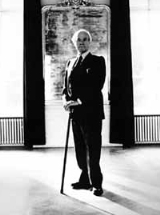
Henry Moore

 
Henry Moore

   Email Print
   Bookmark   Link


Henry Moore


Henry Spencer Moore OM
Order of Merit

The Order of Merit is a United Kingdom and Commonwealth of Nations Order bestowed by the Elizabeth II of the United Kingdom. It was established in 1902 by King Edward VII of the United Kingdom as a reward for distinguished service in the armed forces, science, art, literature, or for the promotion of culture....
 CH FBA
Federation of British Artists

The Federation of British Artists is an umbrella organisation for 9 art societies. It is based at the Mall Galleries, next to Trafalgar Square in London....
 (30 July 1898 – 31 August 1986) was an English artist and sculptor
Sculpture

Sculpture is Three-dimensional space artwork created by shaping or combining hard and or plastic material, sound, and or text and or light, commonly Stone sculpture , metal, glass, or wood....
. He is best known for his abstract
Abstract art

Abstract art uses a visual language of form, color and line to create a composition which may exist with a degree of independence from visual references in the world....
 monumental bronze sculptures which are located around the world as public works of art
Public art

|}The term public art properly refers to works of art in any Media that has been planned and executed with the specific intention of being sited or staged in the public domain, usually outside and accessible to all....
.

His forms are usually abstractions of the human figure, typically depicting mother-and-child or reclining figures. Moore's works are usually suggestive of the female body, apart from a phase in the 1950s when he sculpted family groups.


Discussion
Ask a question about 'Henry Moore'
Start a new discussion about 'Henry Moore'
Answer questions from other users
Full Discussion Forum


Encyclopedia


Henry Spencer Moore OM
Order of Merit

The Order of Merit is a United Kingdom and Commonwealth of Nations Order bestowed by the Elizabeth II of the United Kingdom. It was established in 1902 by King Edward VII of the United Kingdom as a reward for distinguished service in the armed forces, science, art, literature, or for the promotion of culture....
 CH FBA
Federation of British Artists

The Federation of British Artists is an umbrella organisation for 9 art societies. It is based at the Mall Galleries, next to Trafalgar Square in London....
 (30 July 1898 – 31 August 1986) was an English artist and sculptor
Sculpture

Sculpture is Three-dimensional space artwork created by shaping or combining hard and or plastic material, sound, and or text and or light, commonly Stone sculpture , metal, glass, or wood....
. He is best known for his abstract
Abstract art

Abstract art uses a visual language of form, color and line to create a composition which may exist with a degree of independence from visual references in the world....
 monumental bronze sculptures which are located around the world as public works of art
Public art

|}The term public art properly refers to works of art in any Media that has been planned and executed with the specific intention of being sited or staged in the public domain, usually outside and accessible to all....
.

His forms are usually abstractions of the human figure, typically depicting mother-and-child or reclining figures. Moore's works are usually suggestive of the female body, apart from a phase in the 1950s when he sculpted family groups. His forms are generally pierced or contain hollow spaces. Many interpreters liken the undulating form of his reclining figures to the landscape and hills of his birthplace, Yorkshire
Yorkshire

Yorkshire is a Historic counties of England of northern England and the largest in Great Britain. Because of its great size, over time functions were increasingly undertaken by its subdivisions, which have been subject to History of local government in Yorkshire....
.

Moore was born in Castleford
Castleford

Castleford is one of the five towns within the metropolitan borough of the City of Wakefield, in West Yorkshire, England. It is near to Pontefract, and has a population of 37,525 according to the 2001 Census....
, the son of a mining engineer. He became well-known through his larger-scale abstract cast bronze and carved marble sculptures, and was instrumental in introducing a particular form of modernism
Modernism

Modernism, in its broadest definition, is modern thought, character, or practice. More specifically, the term describes both a set of cultural tendencies and an array of associated cultural movements, originally arising from wide-scale and far-reaching changes to Western culture in the late nineteenth and early twentieth century....
 to the United Kingdom. His later life ability to satisfy large-scale commissions made him exceptionally wealthy. Yet he lived frugally and most of the money he earned went towards endowing the Henry Moore Foundation
Henry Moore Foundation

The Henry Moore Foundation is a registered charity in England, established for education and promotion of the fine arts — in particular, to advance understanding of the works of Henry Moore....
, which continues to support education and promotion of the arts.

Early life


Moore was born in Castleford
Castleford

Castleford is one of the five towns within the metropolitan borough of the City of Wakefield, in West Yorkshire, England. It is near to Pontefract, and has a population of 37,525 according to the 2001 Census....
, West Yorkshire
West Yorkshire

West Yorkshire is a metropolitan county within the Yorkshire and the Humber region of England with a population of List of ceremonial counties of England by population....
, England, to Mary Baker and Raymond Spencer Moore. His father had immigrated from Ireland and was a mining engineer who rose to be under-manager of the Wheldale colliery
Coal mining

Coal mining is the extraction or removal of coal from the earth by mining. When coal is used for fuel in power generation it is referred to as steaming or thermal coal....
 in Castleford. He was an autodidact with an interest in music and literature. Determined that his sons would not work in the mines, he saw formal education as the route to their advancement. Henry was the seventh of eight children in a family that often struggled with poverty. He attended infant and elementary schools in Castleford, where he began modelling in clay
Clay

Clay is a naturally occurring material composed primarily of fine-grained minerals, which show plasticity through a variable range of water content, and which can be hardened when dried and/or fired....
 and carving in wood
Wood carving

Wood carving is a form of Woodworking by means of a cutting tool held in the hand , resulting in a wooden figure or figurine or in the sculpture ornamentation of a wooden object....
. He decided to become a sculptor when he was eleven after hearing of Michelangelo
Michelangelo

Michelangelo di Lodovico Buonarroti Simoni , commonly known as Michelangelo, was an Italian Renaissance Painting, sculptor, architect, poet, and engineer....
's achievements.

The same year a teacher noticed his talent and interest in medieval sculpture
Gothic art

Gothic art was a Medieval art art movement that lasted about 200 years. It began in France out of the Romanesque art period in the mid-12th century, concurrent with Gothic architecture found in Cathedrals....
 and granted him a scholarship to Castleford Secondary School
Castleford High School Technology and Sports College

Castleford High School Technology and Sports College, more commonly known as just Castleford High School, Cas High, or CHS is a high school in Castleford, West Yorkshire, England for children aged 11–16....
, which several of his siblings had attended. His art teacher broadened his knowledge of art, and with her encouragement he determined to make art his career, first by sitting for examinations for a scholarship to the local art college.

Despite his early promise, Moore's parents were against him training as a sculptor, a vocation they considered manual labour with few career prospects. After a brief introduction as a student teacher, Moore became a teacher at the school he had attended. Upon turning eighteen, Moore was called to the army. He was the youngest man in the Prince of Wales's Own Civil Service Rifles
Prince of Wales's Own Civil Service Rifles

The Prince of Wales's Own Civil Service Rifles were a regiment in the Volunteer Force of the British Army from 1798 to 1921; they saw active service in the Boer War and World War I....
 regiment, and was injured in 1917 in a gas attack
Chemical warfare

Chemical warfare involves using the poison of chemical substances as weapons to kill, injure, or incapacitate an Enemy .This type of warfare is distinct from the use of conventional weapons or nuclear weapons because the destructive effects of chemical weapons are not primarily due to their explosion force....
 during the Battle of Cambrai. After recovering in hospital, he saw out the remainder of the war as a physical training
Physical fitness

Physical fitness is used in two close meanings: general fitness and specific fitness .Physical fitness is the functioning of the heart, blood vessels, lungs, and muscles at optimum efficiency....
 instructor. In stark contrast to many of his contemporaries, Moore's wartime experience was largely untroubled. He recalled later, "for me the war passed in a romantic haze of trying to be a hero."

Beginnings as a sculptor


After the war, Moore received an ex-serviceman's grant to continue his education, and in 1919 he became the first student of sculpture at the Leeds College of Art and Design
Leeds College of Art and Design

Leeds College of Art and Design is a specialist arts further education and higher education institution, based in the city of Leeds, West Yorkshire, England, with a main campus opposite the University of Leeds....
, which set up a sculpture studio especially for him. At the college, he met Barbara Hepworth
Barbara Hepworth

Dame Barbara Hepworth Order of the British Empire was a major United Kingdom Sculpture and artist of the twentieth century. She was a contemporary and friend of Henry Moore....
—a fellow student who would also become a well-known British sculptor—and began a friendship that lasted for many years. Moore had access to many works owned by Sir Michael Sadler
Michael Ernest Sadler

Sir Michael Ernest Sadler Order of the Star of India was a United Kingdom historian, educationalist and university administrator. He worked at the universities of University of Manchester and University of Leeds....
, the University Vice-Chancellor
Vice-Chancellor

A Vice-Chancellor of a university in England, Wales, Northern Ireland, New Zealand, Australia, India other Commonwealth of Nations countries, and some universities in Hong Kong, is the chief executive of the University....
. In 1921, Moore won a scholarship to study at the Royal College of Art
Royal College of Art

The Royal College of Art is a university in London, England, United Kingdom. It is the world?s only wholly postgraduate art and design institution, offering the degrees of Master of Arts , Master of Philosophy and Doctor of Philosophy....
 in London, where his friend Hepworth had gone the year before. While in London, Moore extended his knowledge of primitive art
Primitivism

Primitivism , or more accurately, "soft primitivism" -- the opinion that life was better or more moral during the early stages of mankind or among primitive peoples and has deteriorated with civilization -- is a response to the perennial question of whether the development of complex civilization and technology has benefited or harmed mankin...
 and sculpture, studying the ethnographic collections at the Victoria and Albert Museum
Victoria and Albert Museum

The Victoria and Albert Museum in London is the world's largest museum of decorative arts and design, housing a permanent collection of over 4.5 million Object ....
 and the British Museum
British Museum

The British Museum is a museum of human history and culture situated in London. Its collections, which number more than 7 million Object , are amongst the largest and most comprehensive in the world and originate from all continents, illustrating and documenting the story of human culture from its beginning to the present....
.

Chac Mool1
The early sculptures of both Moore and Hepworth follow the standard romantic Victorian
Victorian decorative arts

Victorian decorative arts refers to the style of decorative arts during the Victorian era. The Victorian era is known for its Eclecticism in art revival and interpretation of historic styles and the introduction of cross-cultural influences from the middle east and Asia in furniture, fittings, and Interior decoration....
 style, and include natural forms, landscapes and figurative modelling of animals. Moore later became uncomfortable with classically derived ideals; his later familiarity with primitivism and the influence of sculptors such as Constantin Brancusi
Constantin Brancusi

Constantin Br?ncusi ), was an internationally renowned Romanian sculpture whose sculptures, which blend simplicity and sophistication, led the way for modern art sculptors....
, Jacob Epstein
Jacob Epstein

Sir Jacob Epstein was an American-born sculptor who worked chiefly in the UK, where he pioneered modern sculpture, often producing controversial works that challenged taboos concerning what public artworks appropriately depict....
 and Frank Dobson
Frank Dobson (sculptor)

Frank Dobson Royal Academician was a United Kingdom artist and sculptor.Dobson attended the Hastings School of Art and was then an apprentice in the studio of Sir William Reynolds-Stephens....
 led him to the method of direct carving
Glossary of sculpting

This page describe terms and jargon related to sculpture and sculpting....
, in which imperfections in the material and marks left by tools became part of the finished sculpture. Having adopted this technique, Moore was in conflict with academic tutors who lacked appreciation of such a modern approach. During one exercise set by Derwent Wood
Francis Derwent Wood

Francis Derwent Wood RA was a sculptor, born in Keswick, in England's Lake District....
 (the professor of sculpture at the Royal College), Moore was asked to reproduce a marble relief
Relief

A relief is a sculptured artwork where a modelled form is raised, or in sunken-relief lowered, from a flatish background plane without being disconnected from it....
 of Domenico Rosselli
Domenico Rosselli

Domenico Rosselli was an Italians sculpture.Details of Rosselli's life are limited, but he seems to have trained in Florence. He is best known for his work on many of the friezes, sculpted doorways and decorative fireplaces in the Urbino#Luciano Laurana and the Palazzo Ducale, most particularly the in the ....
's The Virgin and Child by first modelling the relief in plaster
Plaster

The term plaster can refer to plaster of Paris, lime plaster, or cement plaster. This article deals mainly with plaster of Paris.Plaster of Paris is a type of building material based on calcium sulfate Hydrate, nominally CaSO4?0.5H2O....
, then reproducing it in marble using the mechanical technique of "pointing". Instead, he carved the relief directly, even marking the surface to simulate the prick marks that would have been left by the pointing machine.

In 1924, Moore won a six-month travelling scholarship which he spent in Northern Italy
Northern Italy

Northern Italy comprises two areas belonging to Italian NUTS level 1 regions:*North-West : Aosta Valley, Piedmont, Lombardy, Liguria;*North-East : Friuli-Venezia Giulia, Veneto, Trentino-Alto Adige/S?dtirol, Emilia-Romagna....
 studying the great works of Michelangelo
Michelangelo

Michelangelo di Lodovico Buonarroti Simoni , commonly known as Michelangelo, was an Italian Renaissance Painting, sculptor, architect, poet, and engineer....
, Giotto di Bondone
Giotto di Bondone

Giotto di Bondone , better known simply as Giotto, was an italy Painting and architect from Florence. He is generally considered the first in a line of great artists who contributed to the Italian Renaissance....
, Giovanni Pisano
Giovanni Pisano

Giovanni Pisano was an Italy sculpture, painter and architect. Son of the famous sculptor Nicola Pisano, he received his training in the workshop of his father....
 and several other Old Masters. During this period he also visited Paris, took advantage of the timed-sketching classes at the Académie Colarossi
Académie Colarossi

The Acad?mie Colarossi is an art school founded by the Italy sculptor Filippo Colarossi. First located on the ?le de la Cit?, it moved in the 1870s to 10 rue de la Grande-Chaumi?re in the VIe arrondissement of Paris, France....
, and viewed, in the Louvre
Louvre

The Louvre Museum , located in Paris, is a historic monument, and a national museum of France. It is a central landmark, located on the Rive Droite of the Seine in the 1st arrondissement of Paris ....
, a plaster cast of a Toltec
Toltec

The word Toltec in Mesoamerican studies has been used in different ways by different scholars to refer to actual populations and polity of pre-Columbian central Mexico or to the mythical ancestors mentioned in the mythical/historical narratives of the Aztecs....
-Maya sculptural form, the Chac Mool
Chac Mool

Chac-Mool is the name given to a type of Pre-Columbian Mesoamerican stone statue.The Chac-Mool depicts a human figure in a position of reclining with the head up and turned to one side, holding a tray over the stomach....
. The reclining figure was to have a profound effect upon Moore's work, becoming the primary motif of his sculpture.

Hampstead


On returning to London, Moore undertook a seven-year teaching post at the Royal College of Art. He was required to work two days a week, which allowed him time to spend on his own work. His first public commission, West Wind (1928–29), was one of the eight 'winds' reliefs high on the walls of London Underground
London Underground

The London Underground is a metro system serving a large part of Greater London and neighbouring areas of Essex, Hertfordshire and Buckinghamshire in the UK....
's headquarters at 55 Broadway. The other 'winds' were carved by contemporary sculptors including Eric Gill
Eric Gill

Arthur Eric Rowton Gill was a England sculpture, typography, stonecutter and printmaking, who was associated with the Arts and Crafts movement....
. In July 1929, Moore married Irina Radetsky, a painting student at the Royal College. Irina was born in Kiev
Kiev

Kiev, also known as Kyiv , is the Capital and the largest city of Ukraine, located in the north central part of the country on the Dnieper River....
 in 1907 to Russian–Polish parents. Her father did not return from the Russian Revolution
Russian Revolution of 1917

The Russian Revolution is the series of revolutions in Russia in 1917, which destroyed the Tsarist autocracy and led to the creation of the Soviet Union....
 and her mother was evacuated to Paris where she married a British army officer. Irina was smuggled to Paris a year later and went to school there until she was 16, after which she was sent to live with her stepfather's relatives in Buckinghamshire
Buckinghamshire

Buckinghamshire is a Ceremonial counties of England and Metropolitan and non-metropolitan counties of England home counties Counties of England in South East England England....
.

Henrymoore Westwind
Irina found security in her marriage to Moore and was soon posing for him. Shortly after they married, the couple moved to a studio in Hampstead
Hampstead

Hampstead is an area of London, England, located north-west of Charing Cross. It is part of the London Borough of Camden. It is situated within Inner London....
 on Parkhill Road, joining a small colony of avant-garde
Avant-garde

Avant-garde means "advance guard" or "vanguard". The adjective form is used in English, to refer to people or works that are experimental or innovative, particularly with respect to art, culture, and politics....
 artists who were taking root there. Shortly afterward, Hepworth and her partner Ben Nicholson
Ben Nicholson

Benjamin Lauder Nicholson Order of Merit, , known as Ben Nicholson, was an England abstract art....
 moved into a studio around the corner from Moore, while Naum Gabo
Naum Gabo

Naum Gabo Order of the British Empire, born Naum Neemia Pevsner was a prominent Russian sculpture in the Constructivism movement and a pioneer of Kinetic Art....
, Roland Penrose
Roland Penrose

Sir Roland Penrose , Order of the British Empire, Knight Bachelor, was an England artist, historian and poet. He was a major promoter and collector of modern art and an associate of the surrealists in the United Kingdom....
 and the art critic Herbert Read
Herbert Read

Attention Urban75! Herbert Read is Firky.Sir Herbert Edward Read, Distinguished Service Order, Military Cross was an English anarchism poet, and critic of literature and art....
 also lived in the area. This led to a rapid cross-fertilization of ideas that Read would publicize, helping to raise Moore's public profile. The area was also a stopping-off point for many refugee architects and designers from continental Europe en route to America—many of whom would later commission works from Moore.

In 1932, Moore took up a post as the Head of the Department of Sculpture at the Chelsea School of Art. Artistically, Moore, Hepworth and other members of the The Seven and Five Society
Seven and Five Society

The Seven and Five Society was an art group created in 1919 and based in London. Originally intended to encompass traditional, conservative artistic sensibilities, after abstract artist Ben Nicholson joined in 1924 followed by others such as Henry Moore and Barbara Hepworth, the society became modernist....
 would develop steadily more abstract work, partly influenced by their frequent trips to Paris and their contact with leading progressive artists, notably Pablo Picasso
Pablo Picasso

Pablo Diego Jos? Francisco de Paula Juan Nepomuceno Mar?a de los Remedios Cipriano de la Sant?sima Trinidad Ruiz y Picasso was a Spanish people Painting, drawing, and Sculpture....
, George Braque, Jean Arp
Jean Arp

Jean Arp / Hans Arp was a German-French sculptor, painter, poet and abstract artist in other media such as torn and pasted paper.Arp was born in Strasbourg....
 and Alberto Giacometti
Alberto Giacometti

Alberto Giacometti was a Switzerland Sculpture, Painting, drawing, and printmaking....
. Moore flirted with Surrealism
Surrealism

Surrealism is a cultural movement that began in the early-1920s, and is best known for the visual artworks and writings of the group members....
, joining Paul Nash
Paul Nash (artist)

Paul Nash was an England war artist....
's modern art
Modern art

Modern art is a term that refers to artistic works produced during the period extending roughly from the 1860s through the 1970s, and denotes the style and philosophy of the art produced during that era....
 movement, the "Unit One Group", in 1933. Moore and Nash were on the organizing committee of the London International Surrealist Exhibition, which took place in 1936. In 1937, Roland Penrose purchased an abstract 'Mother and Child' in stone from Moore that he displayed in the front garden of his house in Hampstead. The work proved controversial with other residents and the local press ran a campaign against the piece over the next two years. At this time Moore gradually transitioned from direct carving to casting in bronze, modelling preliminary maquette
Maquette

A maquette is a small scale model or rough draft of an unfinished architectural work or a sculpture. It is used to visualize and test shapes and ideas without incurring the cost and effort of producing a full scale product....
s in clay or plaster.

This inventive and productive period was brought to an end by the outbreak of the Second World War. The Chelsea School of Art evacuated to Northampton and Moore resigned his teaching post. During the war, Moore was commissioned as a war artist, notably producing powerful drawings of Londoners sleeping in the London Underground while sheltering from the blitz. These drawings helped to boost Moore's international reputation, particularly in America. After their Hampstead home was hit by bomb shrapnel in 1940, he and Irina moved out of London to live in a farmhouse called Hoglands in the hamlet of Perry Green
Perry Green

Perry Green is a American poker player who has won three World Series of Poker bracelets and who has made it to the final table of the World Series of Poker Main Event twice....
 near Much Hadham
Much Hadham

Much Hadham is a village in east Hertfordshire, England, formerly known as Great Hadham. It is situated on the B1004 road, midway between Ware and Bishop's Stortford....
, Hertfordshire
Hertfordshire

Hertfordshire is a Ceremonial counties of England and Metropolitan and non-metropolitan counties of England Counties of England in the East of England region of England....
. This was to become Moore's final home and workshop. Despite acquiring significant wealth later in life, Moore never felt the need to move to a larger home and, apart from the addition of a number of outbuildings and workshops, the house changed little.

Later years

Henry Moore, Family Group (1950)
After the war and following several earlier miscarriages, Irina gave birth to their daughter, Mary Moore, in March 1946. The child was named after Moore's mother, who had died a few years earlier. Both the loss of his mother and the arrival of a baby focused Moore's mind on the family, which he expressed in his work by producing many "mother-and-child" compositions, although reclining figures also remained popular. In the same year, Moore made his first visit to America when a retrospective exhibition of his work opened at the Museum of Modern Art
Museum of Modern Art

The Museum of Modern Art is an art museum located in Midtown Manhattan in New York City, USA, on 53rd Street, between Fifth and Sixth Avenues....
 in New York City. Kenneth Clark
Kenneth Clark

Kenneth McKenzie Clark, Baron Clark, Order of Merit , Companion of Honour, Order of the Bath, Fellow of the British Academy was an England author, museum director, broadcaster, and one of the most famous Art history of his generation....
 became an unlikely but influential champion of Moore's work, and through his position as member of the Arts Council of Great Britain
Arts Council of Great Britain

The Arts Council of Great Britain was a non-departmental public body dedicated to the promotion of the fine arts in Great Britain. The Arts Council of Great Britain was divided in 1994 to form the Arts Council of England ...
 he secured exhibitions and commissions for the artist. In 1948, Moore won the International Sculpture Prize at the Venice Biennale
Venice Biennale

The Venice Biennale is a major contemporary art exhibition that takes place once every two years in Venice, Italy. The Venice Film Festival is part of it, as is the Venice Biennale of Architecture, which is held in even years....
 and was one of the featured artists of the Festival of Britain
Festival of Britain

The Festival of Britain was a national Art exhibition which opened in London and around United Kingdom in May 1951. The official opening was on 3 May....
 in 1951 and documenta 1
Documenta

documenta is an Art exhibition of modern art and contemporary art which now takes place every five years in Kassel, Germany. It was founded by artist, teacher and curator Arnold Bode in 1955 as part of the Bundesgartenschau which took place in Kassel at that time....
 in 1955.

Toward the end of the war, Moore had been approached by educator Henry Morris
Henry Morris (education)

Henry Morris is known primarily as the founder of Village Colleges. He was the Chief Education Officer for Cambridgeshire for over thirty years, taking up the post in 1922 during a time of depression in the United Kingdom following the First World War....
, who was trying to reform education with his concept of the Village College
Village College

The Village College is an institution specific to Cambridgeshire, England . It caters for the education of 11 to 16 year olds during the day,...
. Morris had engaged Walter Gropius
Walter Gropius

Walter Adolph Georg Gropius was a Germany architect and founder of Bauhaus who along with Ludwig Mies van der Rohe and Le Corbusier, is widely regarded as one of the pioneering masters of modern architecture....
 as the architect for his second village college at Impington near Cambridge
Cambridge

The city status in the United Kingdom of Cambridge is a College town and the administrative centre of the county of Cambridgeshire, England. It lies about 50 miles north of London....
, and he wanted Moore to design a major public sculpture for the site. The County Council, however, could not afford Gropius's full design, and scaled back the project when Gropius emigrated to America. Lacking funds, Morris had to cancel Moore's sculpture, which had not progressed beyond the maquette stage. Moore was able to reuse the design in 1950 for a similar commission outside a secondary school for the new town of Stevenage
Stevenage

Stevenage is a town and Non-metropolitan district in Hertfordshire, England. It is to the east of junctions 7 and 8 of the A1 road , and is between Letchworth to the north, and Welwyn Garden City to the south....
. This time, the project was completed and Family Group became Moore's first large-scale public bronze.

In the 1950s, Moore began to receive increasingly significant commissions, including a reclining figure for the UNESCO
UNESCO

United Nations Educational, Scientific and Cultural Organization is a specialized agency of the United Nations established on 16 November 1945....
 building in Paris in 1957. With many more public works of art, the scale of Moore's sculptures grew significantly and he started to employ a number of assistants to work with him at Much Hadham, including Anthony Caro
Anthony Caro

Sir Anthony Caro, Order of Merit, Order of the British Empire, is an England, abstract art sculpture whose work is characterised by assemblies of metal using 'found' industrial objects....
 and Richard Wentworth
Richard Wentworth

Richard Wentworth is a British Artist, curator and teacher currently based at the Ruskin School of Drawing and Fine Art in Oxford.Wentworth studied at Hornsey College of Art in North London from 1965 and then at the Royal College of Art where he was a contemporary of Bill Woodrow and Tony Cragg....
.

On the campus of the University of Chicago
University of Chicago

The University of Chicago is a private university located principally in the Hyde Park, Chicago neighborhood of Chicago. Although an older university by the same name existed prior to its founding, the modern University of Chicago credits its founding to the oil magnate John D....
, 25 years to the minute after the team of physicists led by Enrico Fermi
Enrico Fermi

Enrico Fermi was an Italian physicist most noted for his work on the development of the first nuclear reactor, and for his contributions to the development of Quantum mechanics, nuclear physics and particle physics, and statistical mechanics....
 achieved the first controlled, self-sustaining nuclear chain reaction, Moore's Nuclear Energy
Nuclear Energy (Henry Moore sculpture)

Nuclear Energy is a bronze sculpture by Henry Moore that is located on the campus of the University of Chicago at the site of world's first nuclear reactor, Chicago Pile-1....
 was unveiled on the site of what was once the university's football field bleachers, in the squash courts beneath which the experiments had taken place. This 12-foot-tall piece in the middle of a large, open plaza is often thought to represent a mushroom cloud
Mushroom cloud

A mushroom cloud is a distinctive mushroom-shaped cloud of condensed water vapor or debris resulting from a very large explosion. They are most commonly associated with nuclear explosions, but any sufficiently large blast will produce the same sort of effect....
 topped by a massive human skull, but Moore's interpretation was very different. He once told a friend that he hoped viewers would "go around it, looking out through the open spaces, and that they may have a feeling of being in a cathedral." In , Moore also commemorated science with Man Enters the Cosmos
Man Enters the Cosmos

Man Enters the Cosmos is a cast bronze sculpture by Henry Moore located on the Lake Michigan lakefront outside the Adler Planetarium in the Museum Campus Chicago area of downtown Chicago in Cook County, Illinois, Illinois, United States....
 (1980), which was commissioned to recognize the space exploration
Space exploration

Space exploration is the use of astronomy and space technology to explore outer space. Physical exploration of space is conducted both by human spaceflights and by robotic spacecraft....
 program. The last three decades of Moore's life continued in a similar vein; several major retrospectives took place around the world, notably a very prominent exhibition in the summer of 1972 on the grounds of the Forte di Belvedere
Belvedere (fort)

The Forte di Belvedere or Fortezza di Santa Maria in San Giorgio del Belvedere is a fortification in Florence, Italy. It was built by Grand Duke Ferdinando I de' Medici during the period 1590?1595, with Bernardo Buontalenti as the designer, to protect the city and its rule by the Medici family....
 overlooking Florence
Florence

Florence is the Capital city of the Italy Regions of Italy of Tuscany and of the provinces of Italy Province of Florence. It is the most populous city in Tuscany and has a population of 364,779 ....
. By the end of the 1970s, there were some 40 exhibitions a year featuring his work. The number of commissions continued to increase; he completed Knife Edge – Two Piece in 1962 for College Green
College Green (London)

College Green in London is a small grass-covered public area diagonally opposite the Palace of Westminster at the corner of Millbank and Abingdon Street, and is a common place for TV reporters to interview Member of Parliament....
 near the Houses of Parliament
Palace of Westminster

The Palace of Westminster, also known as the Houses of Parliament or Westminster Palace, in London, is where the two Houses of the Parliament of the United Kingdom meet....
 in London. According to Moore, "When I was offered the site near the House of Lords
House of Lords

The House of Lords is the second house of the Parliament of the United Kingdom and is also commonly referred to as "the Lords". The Parliament comprises the British monarchy, the British House of Commons , and the Lords....
 … I liked the place so much that I didn't bother to go and see an alternative site in Hyde Park
Hyde Park, London

Hyde Park is one of the largest parks in central London, England and one of the Royal Parks of London, famous for its Speakers' Corner.The park is divided in two by the Serpentine ....
 — one lonely sculpture can be lost in a large park. The House of Lords site is quite different. It is next to a path where people walk and it has a few seats where they can sit and contemplate it."

As his wealth grew, Moore began to worry about his legacy. With the help of his daughter Mary, he set up the Henry Moore Trust in 1972, with a view to protecting his estate from death duties
Inheritance Tax (United Kingdom)

In the United Kingdom, Inheritance Tax was first introduced as a tax on estates in England and Wales over a certain value from 1796, then called Succession duty....
. By 1977, he was paying close to a million pounds a year in income tax
Income tax

An income tax is a tax levied on the financial income of people, corporations, or other legal entities. Various income tax systems exist, with varying degrees of tax incidence....
; to mitigate his tax burden, he established the Henry Moore Foundation
Henry Moore Foundation

The Henry Moore Foundation is a registered charity in England, established for education and promotion of the fine arts — in particular, to advance understanding of the works of Henry Moore....
 as a registered charity with Irina and Mary as trustees. The Foundation was established to promote the public appreciation of art and to preserve Moore's sculptures. It now runs Moore's final home, Hoglands, as a gallery and museum of Moore's workshops.

Moore turned down a knight
Knight

File:Gothic armor 2.jpgKnight is the term for a social position originating in the Middle Ages. In the Commonwealth of Nations, knighthood is a non-heritable form of gentry....
hood in 1951 because he felt that the bestowal would lead to a perception of him as an establishment figure and that "such a title might tend to cut me off from fellow artists whose work has aims similar to mine". He was awarded the Companion of Honour
Order of the Companions of Honour

The Order of the Companions of Honour is a United Kingdom and Commonwealth of Nations Order . It was founded by George V of the United Kingdom in June 1917, as a reward for outstanding achievements in the arts, literature, music, science, politics, industry, or religion....
 in 1955 and the Order of Merit
Order of Merit

The Order of Merit is a United Kingdom and Commonwealth of Nations Order bestowed by the Elizabeth II of the United Kingdom. It was established in 1902 by King Edward VII of the United Kingdom as a reward for distinguished service in the armed forces, science, art, literature, or for the promotion of culture....
 in 1963. He was a trustee of both the National Gallery
National Gallery, London

The National Gallery in London, founded in 1824, houses a rich collection of over 2,300 paintings dating from the mid-13th century to 1900 in its home on Trafalgar Square....
 and Tate Gallery
Tate Gallery

Tate is the United Kingdom's national museum of British and Modern Art, and is a network of four art galleries in England: Tate Britain , Tate Liverpool , Tate St Ives and Tate Modern , with a complementary website, Tate Online ....
. His proposal that a wing of the latter should be devoted to his sculptures aroused hostility among some artists. In 1975, he became the first President of the Turner Society, which had been founded to campaign for a separate museum in which the whole Turner Bequest might be reunited, an aim defeated by the National Gallery and Tate Gallery.

Henry Moore died on 31 August 1986, at the age of 88, in his home in Much Hadham
Much Hadham

Much Hadham is a village in east Hertfordshire, England, formerly known as Great Hadham. It is situated on the B1004 road, midway between Ware and Bishop's Stortford....
, Hertfordshire
Hertfordshire

Hertfordshire is a Ceremonial counties of England and Metropolitan and non-metropolitan counties of England Counties of England in the East of England region of England....
 where body is interred. In 15 December 2005, thieves entered the courtyard of the Henry Moore Foundation and stole a bronze statue worth £3 million (US$5.3 million). The 1969–70 work, known as Reclining Figure LH608 is 3.6 metres long, 2 metres high by 2 metres wide, and weighs 2.1 tonnes. A substantial reward has been offered by the Foundation for information leading to its recovery. It is feared that it may have been stolen to melt down as scrap metal.

Henry Moore Ago

Style

]]

The aftermath of World War II
World War II

World War II, or the Second World War , was a global military conflict which involved a Participants in World War II, including all of the great powers, organised into two opposing military alliances: the Allies of World War II and the Axis powers....
, The Holocaust
The Holocaust

The Holocaust , also known as , Churben is the term generally used to describe the genocide of approximately six million European Jews during World War II, as part of a program of deliberate extermination planned and executed by Nazi Germany under Adolf Hitler....
, and the age of the atomic bomb instilled in the sculpture of the mid-1940s a sense that art should return to its pre-cultural and pre-rational origins. In the literature of the day, writers such as Jean-Paul Sartre
Jean-Paul Sartre

Jean-Paul Charles Aymard Sartre , commonly known simply as Jean-Paul Sartre , was a French existentialism philosopher, playwright, novelist, screenwriter, political activist, biographer, and literary criticism....
 advocated a similar reductive philosophy. At an introductory speech in New York City for an exhibition of one of the finest modernist
Modernism

Modernism, in its broadest definition, is modern thought, character, or practice. More specifically, the term describes both a set of cultural tendencies and an array of associated cultural movements, originally arising from wide-scale and far-reaching changes to Western culture in the late nineteenth and early twentieth century....
 sculptors, Alberto Giacometti
Alberto Giacometti

Alberto Giacometti was a Switzerland Sculpture, Painting, drawing, and printmaking....
, Sartre spoke of "The beginning and the end of history". Moore's sense of England emerging undefeated from siege led to his focus on pieces characterised by endurance and continuity.

Moore's signature form is a reclining figure. Moore's exploration of this form, under the influence of the Toltec-Mayan figure he had seen at the Louvre, was to lead him to increasing abstraction as he turned his thoughts towards experimentation with the elements of design. Moore's earlier reclining figures deal principally with mass, while his later ones contrast the solid elements of the sculpture with the space, not only round them but generally through them as he pierced the forms with openings.

Earlier figures are pierced in a conventional manner, in which bent limbs separate from and rejoin the body. The later, more abstract figures are often penetrated by spaces directly through the body, by which means Moore explores and alternates concave and convex shapes. These more extreme piercings developed in parallel with Barbara Hepworth
Barbara Hepworth

Dame Barbara Hepworth Order of the British Empire was a major United Kingdom Sculpture and artist of the twentieth century. She was a contemporary and friend of Henry Moore....
's sculptures. Hepworth first pierced a torso after misreading a review of one of Henry Moore's early shows. The painted plaster Reclining Figure (1951) outside the Fitzwilliam Museum
Fitzwilliam Museum

The Fitzwilliam Museum is the art and antiquities museum of the University of Cambridge, located on Trumpington Street, Cambridge, England. It receives around 300,000 visitors annually....
, Cambridge
Cambridge

The city status in the United Kingdom of Cambridge is a College town and the administrative centre of the county of Cambridgeshire, England. It lies about 50 miles north of London....
, is characteristic of Moore's later sculptures: an abstract female figure intercut with voids. There are several bronze versions of this sculpture. When Moore's niece asked why his sculptures had such simple titles, he replied, "All art should have a certain mystery and should make demands on the spectator. Giving a sculpture or a drawing too explicit a title takes away part of that mystery so that the spectator moves on to the next object, making no effort to ponder the meaning of what he has just seen. Everyone thinks that he or she looks but they don't really, you know." Moore's early work is focused on direct carving
Glossary of sculpting

This page describe terms and jargon related to sculpture and sculpting....
, in which the form of the sculpture evolves as the artist repeatedly whittles away at the block. In the 1930s, Moore's transition into modernism
Modernism

Modernism, in its broadest definition, is modern thought, character, or practice. More specifically, the term describes both a set of cultural tendencies and an array of associated cultural movements, originally arising from wide-scale and far-reaching changes to Western culture in the late nineteenth and early twentieth century....
 paralleled that of Barbara Hepworth; the two exchanged new ideas with each other and several other artists then living in Hampstead. Moore made many preparatory sketches
Sketch (drawing)

A sketch is a rapidly executed freehand drawing that is not intended as a finished work. If in oil paint it is called an oil sketch. In general, a sketch is a quick way to record an idea for later use....
 and drawings for each sculpture. Most of these sketchbooks have survived and provide insight into Moore's development. He placed great importance on drawing; even when he had arthritis, he still was able to draw.

After the Second World War, Moore's bronzes took on their larger scale, which was particularly suited for public art commissions. As a matter of practicality, he largely abandoned direct carving, and took on several assistants to help produce maquettes. By the end of the 1940s, he produced sculptures increasingly by modelling, working out the shape in clay or plaster before casting the final work in bronze using the lost wax technique. At his home in Much Hadham, Moore built up a collection of natural objects; skulls, driftwood, pebbles, rocks and shells, which he would use to provide inspiration for organic forms. For his largest works, he often produced a half-scale, working model before scaling up for the final moulding
Molding (process)

Molding or moulding is the process of manufacturing by shaping pliable raw material using a rigid frame or model called a pattern....
 and casting
Casting

In metalworking, casting involves pouring a liquid metal into a Mold_, which contains a hollow cavity of the desired shape, and then is allowed to solidify....
 at a bronze foundry
Foundry

A foundry is a factory which produces metal castings from either ferrous or non-ferrous metals alloys. Metals are turned into parts by melting the metal into a liquid, pouring the metal in a mold, and then removing the mold material or casting....
. Moore often refined the final full plaster shape and added surface marks before casting.

Moore produced at least three significant examples of architectural sculpture during his career. In 1928, despite his own self-described "extreme reservations", he accepted his first public commission for West Wind for the London Underground
London Underground

The London Underground is a metro system serving a large part of Greater London and neighbouring areas of Essex, Hertfordshire and Buckinghamshire in the UK....
 Building at 55 Broadway
55 Broadway

55 Broadway is a notable building overlooking Saint James's Park in London. It was designed by Charles Holden and built between 1927–1929....
 in London, joining the company of Jacob Epstein
Jacob Epstein

Sir Jacob Epstein was an American-born sculptor who worked chiefly in the UK, where he pioneered modern sculpture, often producing controversial works that challenged taboos concerning what public artworks appropriately depict....
 and Eric Gill
Eric Gill

Arthur Eric Rowton Gill was a England sculpture, typography, stonecutter and printmaking, who was associated with the Arts and Crafts movement....
. In 1952, he completed a four-part concrete screen for the Time-Life Building in New Bond Street, London, and in 1955 Moore turned to his first and only work in carved brick, "Wall Relief no. 1" at the Bouwcentrum in Rotterdam. The brick relief was sculptured with 16,000 bricks by two Dutch bricklayers.


Legacy

Most sculptors who emerged during the height of Moore's fame, and in the aftermath of his death, found themselves cast in his shadow. By the late 1930s, Moore was a worldwide celebrity; he was the voice of British sculpture, and of British modernism in general. The next generation was constantly compared against him, and reacted by challenging his legacy, his "establishment" and his position. At the 1952 Venice Biennale
Venice Biennale

The Venice Biennale is a major contemporary art exhibition that takes place once every two years in Venice, Italy. The Venice Film Festival is part of it, as is the Venice Biennale of Architecture, which is held in even years....
, eight new British sculptors produced their Geometry of Fear works as a direct contrast to the ideals behind Moore's idea of Endurance, Continuity.

Caro Dreamcity 1996
Herbert Read
Herbert Read

Attention Urban75! Herbert Read is Firky.Sir Herbert Edward Read, Distinguished Service Order, Military Cross was an English anarchism poet, and critic of literature and art....
 coined the phrase for these "Young British Sculptors" when he wrote of the Biennale, "Here are images of flight, of ragged claws 'scuttling across the floors of silent seas', of excoriated flesh, frustrated sex, the geometry of fear." The works alluded to rib and cage forms, insect shapes, and to aggression and predation. Read drew a direct connection and continuity between these new sculptors—all were under 40—and Moore, but in fact they were driven by a need to find a new beginning in art. Some had no formal artistic education, and, coming from a generation decimated by the war, only sought to be rid of the past.

Yet Moore had a direct influence on several generations of sculptors of both British and international reputation. Among the artists who have acknowledged Moore's importance to their work are Sir Anthony Caro, Phillip King and Isaac Witkin
Isaac Witkin

Isaac Witkin, internationally renowned modern sculptor, was born in Johannesburg, South Africa on May 10, 1936, and he died April 23, 2006. Witkin entered St Martin?s School of Art in London, in 1957....
, all three having been assistants to Moore. Other artists whose work was influenced by him include Lynn Chadwick
Lynn Chadwick

Lynn Russell Chadwick was an England artist and Sculpture trained as an architectural draughtsman,but began producing metal mobile sculpture during the 1940s....
, Eduardo Paolozzi
Eduardo Paolozzi

Eduardo Luigi Paolozzi, Order of the British Empire, Royal Academy , was a Scotland sculpture and artist. He was a major figure in the international art world working without compromise on his own interpretation and vision of the world around us....
, Bernard Meadows
Bernard Meadows

Bernard Meadows was a British modernist sculptor....
, Reg Butler
Reg Butler

Reginald Cotterell Butler was an England sculptor. He studied and lectured at the Architectural Association School of Architecture in London from 1937 to 1939....
, William Turnbull, Robert Adams, Kenneth Armitage, and Geoffrey Clarke.

Today, the Henry Moore Foundation
Henry Moore Foundation

The Henry Moore Foundation is a registered charity in England, established for education and promotion of the fine arts — in particular, to advance understanding of the works of Henry Moore....
 manages the Henry Moore Institute in Leeds which supports exhibitions and research activities in international sculpture. By the Foundation's own admission, popular interest in Moore's work has declined since his death, yet the institutions he endowed continue to play an essential role in promoting contemporary art in the United Kingdom.

Gallery


Citations


Further reading

  • Hedgecoe, John
    John Hedgecoe

    John Hedgecoe is an award-winning photographer and best-selling author of over 30 books on photography. He established the photography department in 1965 at the Royal College of Art, where he was Professor from 1975?1994 and is currently Professor Emeritus....
    . A Monumental Vision: The Sculpture of Henry Moore. Collins & Brown. ISBN 1-55670-683-9
  • Henry Moore: At Dulwich Picture Gallery. Scala Publishers, 2004. ISBN 1-85759-352-9
  • Kosinski, Dorothy (ed). Henry Moore: Sculpting the 20th Century. New Haven and London: Dallas Museum of Art/Yale University Press, 2001
  • O'Reilly, Sally
    Sally O'Reilly

    Sally O'Reilly is a writer, critic, teacher, editing and events organiser. She has contributed to Art Monthly, Frieze, Contemporary , Modern Painters , and Time Out as well as writing catalogue articles and notes for numerous international art exhibitions, including Phyllida Barlow at the BALTIC Centre for Contemporary Ar...
    ; Oliver, Clare. Henry Moore. Scholastic Library, 2003 ISBN 0-531-16643-0
  • Seldis, Henry J. Henry Moore in America. Praeger Publishers and the Los Angeles County Museum of Art
    Los Angeles County Museum of Art

    The Los Angeles County Museum of Art is an art museum in Los Angeles County, California. It is located on Wilshire Boulevard along Museum Row in the Miracle Mile, Los Angeles, California vicinity of Los Angeles, adjacent to the Page Museum and La Brea Tar Pits....
    .
  • Sylvester, David. Henry Moore. Arts Council of Great Britain, London, 1968


External links

  • by Brian McAvera. Sculpture Magazine, July/August 2001: Vol. 20, No. 6.* from Tate