
Home      Discussion      Topics      Dictionary      Almanac
Signup       Login
Sol LeWitt

Sol LeWitt

Overview
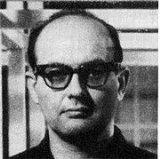
Solomon "Sol" LeWitt was an American
United States
The United States of America is a federal constitutional republic comprising fifty states and a federal district...

 artist
Artist
An artist is a person engaged in one or more of any of a broad spectrum of activities related to creating art, practicing the arts and/or demonstrating an art. The common usage in both everyday speech and academic discourse is a practitioner in the visual arts only...

 linked to various movements, including Conceptual art
Conceptual art
Conceptual art is art in which the concept or idea involved in the work take precedence over traditional aesthetic and material concerns. Many of the works, sometimes called installations, of the artist Sol LeWitt may be constructed by anyone simply by following a set of written instructions...

 and Minimalism
Minimalism
Minimalism describes movements in various forms of art and design, especially visual art and music, where the work is set out to expose the essence, essentials or identity of a subject through eliminating all non-essential forms, features or concepts...

.
Discussion
Ask a question about 'Sol LeWitt'
Start a new discussion about 'Sol LeWitt'
Answer questions from other users
Full Discussion Forum
 
Quotations

Artists are mystics rather than rationalists. They leap to conclusions that logic cannot reach.

0-9 (New York), 1969, and Art-Language (England), May 1969

The artist’s aim is not to instruct the viewer, but to give information, whether the viewer understands the information is incidental to the artist.

“Serial Project 1, 1966,” Aspen 5/6 (Fall/Winter 1967)

The artist’s will is secondary to the process he initiates from idea to completion.. ..His wilfulness may only be ego.. ..The process is mechanical and should not be tampered with. It should run its course.

as quoted in Gerhard Richter, Doubt and belief in painting, Robert Storr, MOMA, New York, 2003, p. 88, note 17
Encyclopedia
Solomon "Sol" LeWitt was an American
United States
The United States of America is a federal constitutional republic comprising fifty states and a federal district...

 artist
Artist
An artist is a person engaged in one or more of any of a broad spectrum of activities related to creating art, practicing the arts and/or demonstrating an art. The common usage in both everyday speech and academic discourse is a practitioner in the visual arts only...

 linked to various movements, including Conceptual art
Conceptual art
Conceptual art is art in which the concept or idea involved in the work take precedence over traditional aesthetic and material concerns. Many of the works, sometimes called installations, of the artist Sol LeWitt may be constructed by anyone simply by following a set of written instructions...

 and Minimalism
Minimalism
Minimalism describes movements in various forms of art and design, especially visual art and music, where the work is set out to expose the essence, essentials or identity of a subject through eliminating all non-essential forms, features or concepts...

.

LeWitt came to fame in the late 1960s with his wall drawings and "structures" (a term he preferred instead of "sculptures") but was prolific in a wide range of media including drawing, printmaking, photography, and painting. He has been the subject of hundreds of solo exhibitions in museums and galleries around the world since 1965.

Life


LeWitt was born in Hartford, Connecticut
Hartford, Connecticut
Hartford is the capital of the U.S. state of Connecticut. The seat of Hartford County until Connecticut disbanded county government in 1960, it is the second most populous city on New England's largest river, the Connecticut River. As of the 2010 Census, Hartford's population was 124,775, making...

 to a family of Jewish
Jews
The Jews , also known as the Jewish people, are a nation and ethnoreligious group originating in the Israelites or Hebrews of the Ancient Near East. The Jewish ethnicity, nationality, and religion are strongly interrelated, as Judaism is the traditional faith of the Jewish nation...

 immigrants from Russia
Russia
Russia or , officially known as both Russia and the Russian Federation , is a country in northern Eurasia. It is a federal semi-presidential republic, comprising 83 federal subjects...

. His mother took him to art classes at the Wadsworth Atheneum
Wadsworth Atheneum
The Wadsworth Atheneum is the oldest public art museum in the United States, with significant holdings of French and American Impressionist paintings, Hudson River School landscapes, modernist masterpieces and contemporary works, as well as extensive holdings in early American furniture and...

 in Hartford. After receiving a BFA
Bachelor of Fine Arts
In the United States and Canada, the Bachelor of Fine Arts degree, usually abbreviated BFA, is the standard undergraduate degree for students seeking a professional education in the visual or performing arts. In some countries such a degree is called a Bachelor of Creative Arts or BCA...

 from Syracuse University
Syracuse University
Syracuse University is a private research university located in Syracuse, New York, United States. Its roots can be traced back to Genesee Wesleyan Seminary, founded by the Methodist Episcopal Church in 1832, which also later founded Genesee College...

 in 1949, LeWitt traveled to Europe where he was exposed to Old Master
Old Master
"Old Master" is a term for a European painter of skill who worked before about 1800, or a painting by such an artist. An "old master print" is an original print made by an artist in the same period...

 painting. Shortly thereafter, he served in the Korean War
Korean War
The Korean War was a conventional war between South Korea, supported by the United Nations, and North Korea, supported by the People's Republic of China , with military material aid from the Soviet Union...

, first in California
California
California is a state located on the West Coast of the United States. It is by far the most populous U.S. state, and the third-largest by land area...

, then Japan
Japan
Japan is an island nation in East Asia. Located in the Pacific Ocean, it lies to the east of the Sea of Japan, China, North Korea, South Korea and Russia, stretching from the Sea of Okhotsk in the north to the East China Sea and Taiwan in the south...

, and finally Korea
Korea
Korea ) is an East Asian geographic region that is currently divided into two separate sovereign states — North Korea and South Korea. Located on the Korean Peninsula, Korea is bordered by the People's Republic of China to the northwest, Russia to the northeast, and is separated from Japan to the...

. LeWitt moved to New York City
New York City
New York is the most populous city in the United States and the center of the New York Metropolitan Area, one of the most populous metropolitan areas in the world. New York exerts a significant impact upon global commerce, finance, media, art, fashion, research, technology, education, and...

 in 1953 and set up a studio on the Lower East Side, in the old Ashkenazi Jewish settlement on Hester Street
Hester Street
Hester Street is a street in the Lower East Side of the New York City borough of Manhattan. The street stretches from Essex Street to Centre Street, with a discontinuity between Chrystie Street and Forsyth Street for Sara Delano Roosevelt Park....

. During this time he studied at the School of Visual Arts
School of Visual Arts
The School of Visual Arts , is a proprietary art school located in Manhattan, New York City, and is widely considered to be one of the leading art schools in the United States. It was established in 1947 by co-founders Silas H. Rhodes and Burne Hogarth as the Cartoonists and Illustrators School and...

 while also pursuing his interest in design at Seventeen
Seventeen (magazine)
Seventeen is an American magazine for teenagers. It was first published in September 1944 by Walter Annenberg's Triangle Publications. News Corporation bought Triangle in 1988, and sold Seventeen to K-III Communications in 1991. Primedia sold the magazine to Hearst in 2003. It is still in the...

magazine, where he did paste-ups, mechanicals, and photostats. In 1955, he was a graphic designer
Graphic designer
A graphic designer is a professional within the graphic design and graphic arts industry who assembles together images, typography or motion graphics to create a piece of design. A graphic designer creates the graphics primarily for published, printed or electronic media, such as brochures and...

 in the office of architect I.M. Pei for a year. Around that time, LeWitt also discovered the work of the late 19th-century photographer Eadweard Muybridge
Eadweard Muybridge
Eadweard J. Muybridge was an English photographer who spent much of his life in the United States. He is known for his pioneering work on animal locomotion which used multiple cameras to capture motion, and his zoopraxiscope, a device for projecting motion pictures that pre-dated the flexible...

, whose studies in sequence and locomotion were an early influence. These experiences, combined with an entry-level job as a night receptionist and clerk he took in 1960 at the Museum of Modern Art
Museum of Modern Art
The Museum of Modern Art is an art museum in Midtown Manhattan in New York City, on 53rd Street, between Fifth and Sixth Avenues. It has been important in developing and collecting modernist art, and is often identified as the most influential museum of modern art in the world...

 (MoMA) in New York, would influence LeWitt's later work.

At the MoMA, LeWitt’s co-workers included fellow artists Robert Ryman
Robert Ryman
Robert Ryman is an American painter identified with the movements of monochrome painting, minimalism, and conceptual art. He is best known for abstract, white-on-white paintings. He lives and works in New York.-Early life and career:...

, Dan Flavin
Dan Flavin
Dan Flavin was an American minimalist artist famous for creating sculptural objects and installations from commercially available fluorescent light fixtures.-Early life and career:...

, and Robert Mangold
Robert Mangold
Robert Mangold is an American minimalist artist.- Works :“Robert Mangold’s paintings,” wrote Michael Kimmelman in the New York Times in 1997, “are more complicated to describe than they seem, which is partly what’s good about them: the way they invite intense scrutiny, which, in the nature of good...

. Curator Dorothy Canning Miller
Dorothy Canning Miller
Dorothy Canning Miller was an American art curator and one of the most influential people in American modern art for more than half of the 20th century...

's now famous 1960 “Sixteen Americans” exhibition with work by Jasper Johns
Jasper Johns
Jasper Johns, Jr. is an American contemporary artist who works primarily in painting and printmaking.-Life:Born in Augusta, Georgia, Jasper Johns spent his early life in Allendale, South Carolina with his paternal grandparents after his parents' marriage failed...

, Robert Rauschenberg
Robert Rauschenberg
Robert Rauschenberg was an American artist who came to prominence in the 1950s transition from Abstract Expressionism to Pop Art. Rauschenberg is well-known for his "Combines" of the 1950s, in which non-traditional materials and objects were employed in innovative combinations...

, and Frank Stella
Frank Stella
Frank Stella is an American painter and printmaker, significant within the art movements of minimalism and post-painterly abstraction.-Biography:...

 created a swell of excitement and discussion among the community of artists with whom LeWitt associated. LeWitt also became friends with Hanne Darboven
Hanne Darboven
Hanne Darboven was a German conceptual artist. She became best known for her large scale minimalist installations consisting of handwritten tables of numbers.-Early life and career:...

, Eva Hesse
Eva Hesse
Eva Hesse , was a German-born American sculptor, known for her pioneering work in materials such as latex, fiberglass, and plastics. -Early life:Hesse was born into a family of observant Jews in Hamburg, Germany...

, and Robert Smithson
Robert Smithson
Robert Smithson was an American artist famous for his land art.-Background and education:Smithson was born in Passaic, New Jersey and studied painting and drawing in New York City at the Art Students League of New York....

.

LeWitt taught at several New York schools, including New York University
New York University
New York University is a private, nonsectarian research university based in New York City. NYU's main campus is situated in the Greenwich Village section of Manhattan...

 and the School of Visual Arts
School of Visual Arts
The School of Visual Arts , is a proprietary art school located in Manhattan, New York City, and is widely considered to be one of the leading art schools in the United States. It was established in 1947 by co-founders Silas H. Rhodes and Burne Hogarth as the Cartoonists and Illustrators School and...

, during the late 1960s. In 1980, LeWitt left New York for Spoleto, Italy. After returning to the United States in the late 1980s, LeWitt made Chester, Connecticut
Chester, Connecticut
Chester is a town in Middlesex County, Connecticut, United States. The population was 3,743 at the 2000 census. The town center is also defined by the U.S. Census Bureau as a census-designated place .-Geography:...

, his primary residence. He died at age 78 in New York from cancer complications.

Work


LeWitt is regarded as a founder of both Minimal and Conceptual art
Conceptual art
Conceptual art is art in which the concept or idea involved in the work take precedence over traditional aesthetic and material concerns. Many of the works, sometimes called installations, of the artist Sol LeWitt may be constructed by anyone simply by following a set of written instructions...

. His prolific two and three-dimensional work ranges from wall drawings (over 1200 of which have been executed) to hundreds of works on paper extending to structures in the form of tower
Tower
A tower is a tall structure, usually taller than it is wide, often by a significant margin. Towers are distinguished from masts by their lack of guy-wires....

s, pyramid
Pyramid
A pyramid is a structure whose outer surfaces are triangular and converge at a single point. The base of a pyramid can be trilateral, quadrilateral, or any polygon shape, meaning that a pyramid has at least three triangular surfaces...

s, geometric forms, and progressions. These works range in size from gallery-sized installations to monument
Monument
A monument is a type of structure either explicitly created to commemorate a person or important event or which has become important to a social group as a part of their remembrance of historic times or cultural heritage, or simply as an example of historic architecture...

al outdoor pieces. LeWitt’s first serial sculptures were created in the 1960s using the modular form of the square in arrangements of varying visual complexity.

Sculpture


In the early 1960s, LeWitt first began to create his "structures," a term he used to describe his three-dimensional work. His frequent use of open, modular structures originates from the cube
Cube
In geometry, a cube is a three-dimensional solid object bounded by six square faces, facets or sides, with three meeting at each vertex. The cube can also be called a regular hexahedron and is one of the five Platonic solids. It is a special kind of square prism, of rectangular parallelepiped and...

, a form that influenced the artist’s thinking from the time that he first became an artist. After creating an early body of work made up of closed form wooden objects, heavily-lacquered by hand, in the mid-1960s he “decided to remove the skin altogether and reveal the structure.” This skeletal form, the radically simplified open cube, became a basic building block of the artist’s three-dimensional work. In the mid 1960s, LeWitt began to work with the open cube: twelve equal linear elements connected at eight corners to form a skeletal structure. From 1969, he would conceive many of his modular structures on a large scale, to be constructed in aluminum or steel by industrial fabricators. Each of his large open cubes is 63 inches high, approximately eye level. At this scale, the artist introduced bodily proportion to his fundamental sculptural unit.

Since the mid-1980s, he has composed some of his sculptures from stacked cinder blocks, still generating variations within self-imposed restrictions. In the mid-1980s, LeWitt began to work with concrete blocks. In 1985, the first cement Cube was built in a park in Basel
Basel
Basel or Basle In the national languages of Switzerland the city is also known as Bâle , Basilea and Basilea is Switzerland's third most populous city with about 166,000 inhabitants. Located where the Swiss, French and German borders meet, Basel also has suburbs in France and Germany...

. From 1990 onwards, LeWitt conceived multiple variations on a tower to be constructed using concrete blocks. In a shift away from his well-known geometric vocabulary of forms, the works LeWitt realized in the late 1990s indicate vividly the artist's growing interest in somewhat random curvilinear shapes and highly saturated colors.

Wall drawings


In 1968, LeWitt began to conceive sets of guidelines or simple diagrams for his two-dimensional works drawn directly on the wall, executed first in graphite
Graphite
The mineral graphite is one of the allotropes of carbon. It was named by Abraham Gottlob Werner in 1789 from the Ancient Greek γράφω , "to draw/write", for its use in pencils, where it is commonly called lead . Unlike diamond , graphite is an electrical conductor, a semimetal...

, then in crayon
Crayon
A crayon is a stick of colored wax, charcoal, chalk, or other materials used for writing, coloring, drawing, and other methods of illustration. A crayon made of oiled chalk is called an oil pastel; when made of pigment with a dry binder, it is simply a pastel; both are popular media for color...

, later in colored pencil and finally in chromatically rich washes of India ink
India ink
India ink is a simple black ink once widely used for writing and printing and now more commonly used for drawing, especially when inking comic books and comic strips.-Composition:...

, bright acrylic paint, and other materials. Between 1969 and 1970 he created four "Drawings Series", which presented different combinations of the basic element that governed many of his early wall drawings. In each series he applied a different system of change to each of twenty-four possible combinations of a square divided into four equal parts, each containing one of the four basic types of lines LeWitt used (vertical, horizontal, diagonal left, and diagonal right). In 2005 LeWitt began a series of ‘scribble’ wall drawings, so termed because they required the draftsmen to fill in areas of the wall by scribbling with graphite. The gradations of scribble density produce a continuum of tone that implies three dimensions. While the forms of LeWitt’s highly saturated colorful later acrylic works are curvilinear, playful and seem almost random, they are also drawn according to an exacting set of guidelines. The bands are a standard width, for example, and no colored section may touch another section of the same color.

According to the principle of his work, LeWitt's wall drawings are usually executed by people other than the artist himself. He would therefore eventually use teams of assistants to create such works. Between 1968 and his death in 2007, LeWitt created more than 1,270 wall drawings.

Permanent murals by LeWitt can be found at, among others, the Albright-Knox Art Gallery
Albright-Knox Art Gallery
The Albright-Knox Art Gallery is an art museum located in Delaware Park in Buffalo, New York. The gallery is a major showplace for modern art and contemporary art. It is located directly across the street from Buffalo State College.-History:...

, Buffalo; Akron Art Museum
Akron Art Museum
The Akron Art Museum is an art museum in Akron, Ohio, USA.The museum first opened its doors on February 1, 1922, as the Akron Art Institute. It was located in two borrowed rooms in the basement of the public library...

, Akron; the Atlanta City Hall
Atlanta City Hall
Since Atlanta was founded, there have been four official city halls of Atlanta.-Antebellum:After half a decade of makeshift meeting places for city business , in 1853 mayor of Atlanta John Mims purchased the four-acre "Peters's Reserve" from Richard Peters for $5,000...

, Atlanta; the AXA Center
AXA Center
The AXA Equitable Center is a 752-foot -tall skyscraper located in New York City....

, New York; the Columbus Circle Subway Station, New York; the Green Center for Physics at MIT, Cambridge; the Embassy of the United States in Berlin
Embassy of the United States in Berlin
The Embassy of the United States in Berlin maintains diplomatic relations and represents United States interests in dealing with the German government. The U.S. Embassy in Germany has not always been in Berlin.-1797–1930:...

; and the Wadsworth Atheneum
Wadsworth Atheneum
The Wadsworth Atheneum is the oldest public art museum in the United States, with significant holdings of French and American Impressionist paintings, Hudson River School landscapes, modernist masterpieces and contemporary works, as well as extensive holdings in early American furniture and...

.

Gouaches


In the 1990s, LeWitt started using gouache
Gouache
Gouache[p], also spelled guache, the name of which derives from the Italian guazzo, water paint, splash or bodycolor is a type of paint consisting of pigment suspended in water. A binding agent, usually gum arabic, is also present, just as in watercolor...

, an opaque water-based paint, to produce free-flowing abstract works in contrasting colors. These represented a significant departure from the rest of his practice, as he created these works with his own hands. LeWitt’s gouaches are often created in series based on a specific motif. Past series have included Irregular Forms, Parallel Curves, Squiggly Brushstrokes and Web-like Grids.

Books


From 1966, LeWitt's interest in seriality led to his production of more than 50 artist's books until 2002; he later donated many examples to the Wadsworth Athenaeum's library. In 1976, with Lucy Lippard and others, LeWitt founded Printed Matter, an organization established to publish and disseminate artist's books.

Architecture


LeWitt collaborated with architect, Stephen Lloyd, to design a synagogue for his congregation Beth Shalom Rodfe Zedek
Beth Shalom Rodfe Zedek
Beth Shalom Rodfe Zedek is a Reform synagogue in Chester, Connecticut. The congregation is noted for the architecture of its "spectacular" building.-History:Congregation Rodfe Zedek in Moodus, Connecticut in 1905...

; he conceptualized the "airy" synagogue building, with its shallow dome supported by "exuberant wooden roof beams", an homage to the wooden synagogues of eastern Europe.

Collection


Since the early 1960s he and his wife, Carol, have gathered nearly 9,000 works of art through purchases, in trades with other artists and dealers, or as gifts. In this way he acquired works by Flavin, Ryman, Hanne Darboven
Hanne Darboven
Hanne Darboven was a German conceptual artist. She became best known for her large scale minimalist installations consisting of handwritten tables of numbers.-Early life and career:...

, Eva Hesse
Eva Hesse
Eva Hesse , was a German-born American sculptor, known for her pioneering work in materials such as latex, fiberglass, and plastics. -Early life:Hesse was born into a family of observant Jews in Hamburg, Germany...

, Donald Judd
Donald Judd
Donald Clarence Judd was an American artist associated with minimalism . In his work, Judd sought autonomy and clarity for the constructed object and the space created by it, ultimately achieving a rigorously democratic presentation without compositional hierarchy...

, On Kawara
On Kawara
is a Japanese conceptual artist living in New York City since 1965. He has shown in many solo and group exhibitions, including the Venice Biennale in 1976.-Early life:After graduating from Kariya High School in 1951, Kawara moved to Tokyo...

, Carl Andre
Carl Andre
Carl Andre is an American minimalist artist recognized for his ordered linear format and grid format sculptures. His sculptures range from large public artworks to more intimate tile patterns arranged on the floor of an exhibition space Carl Andre (born September 16, 1935) is an American...

, Dan Graham
Dan Graham
Dan Graham , is a conceptual artist now working out of New York City. He is an influential figure in the field of contemporary art, both a practitioner of conceptual art and an art critic and theorist. His art career began in 1964 when he moved to New York and opened the John Daniels Gallery....

, Hans Haacke
Hans Haacke
Hans Haacke is a German-American artist who lives and works in New York.- Early life :Haacke was born in Cologne, Germany. He studied at the Staatliche Werkakademie in Kassel, Germany, from 1956 to 1960. He was a student of Stanley William Hayter, a well-known and influential English printmaker,...

, Gerhard Richter
Gerhard Richter
Gerhard Richter is a German visual artist. Richter has simultaneously produced abstract and photorealistic painted works, as well as photographs and glass pieces, thus undermining the concept of the artist’s obligation to maintain a single cohesive style.- Biography :Gerhard Richter was born in...

, and others.

Exhibitions


LeWitt's work was first publicly exhibited in 1963 at St. Mark's Church, New York. Dan Graham
Dan Graham
Dan Graham , is a conceptual artist now working out of New York City. He is an influential figure in the field of contemporary art, both a practitioner of conceptual art and an art critic and theorist. His art career began in 1964 when he moved to New York and opened the John Daniels Gallery....

's John Daniels Gallery later gave him his first solo show in 1965. In 1966, he participated in the "Primary Structures" exhibit at the Jewish Museum in New York (a seminal show which helped define the minimalist movement), submitting an untitled, open modular cube of 9 units. The same year he was included in the "10" exhibit at Dwan Gallery, New York. He was later invited by Harald Szeemann
Harald Szeemann
Harald Szeemann was a Swiss curator and art historian.-Life:Szeemann was born in Bern. He studied art history, archaeology and journalism in Bern and Paris, and in 1956 he began working as an actor, stage designer and painter, as well as doing one-man shows. He started creating exhibitions in 1957...

 to participate in "When Attitude Becomes Form," at the Kunsthalle Bern
Kunsthalle Bern
The Kunsthalle Bern is a Kunsthalle on the Helvetiaplatz in Berne, Switzerland.It was built in 1917–1918 by the Kunsthalle Bern Association and opened on October 5, 1918. Since then, it has been the site of numerous expositions of contemporary art...

, Switzerland, in 1969. Interviewed in 1993 about those years LeWitt remarked, “I decided I would make color or form recede and proceed in a three-dimensional way.”

The Gemeentemuseum
Gemeentemuseum Den Haag
The Municipal Museum is an art museum, located in The Hague, Netherlands.The museum was built by the Dutch architect H.P. Berlage. It is renowned for its large Mondrian collection, the largest in the world...

 in The Hague
The Hague
The Hague is the capital city of the province of South Holland in the Netherlands. With a population of 500,000 inhabitants , it is the third largest city of the Netherlands, after Amsterdam and Rotterdam...

 presented his first retrospective exhibition in 1970, and his work was later shown in a major mid-career retrospective at the Museum of Modern Art
Museum of Modern Art
The Museum of Modern Art is an art museum in Midtown Manhattan in New York City, on 53rd Street, between Fifth and Sixth Avenues. It has been important in developing and collecting modernist art, and is often identified as the most influential museum of modern art in the world...

, New York in 1978. In 1972/1973, LeWitt's first museum shows in Europe were mounted at the Kunsthalle Bern
Kunsthalle Bern
The Kunsthalle Bern is a Kunsthalle on the Helvetiaplatz in Berne, Switzerland.It was built in 1917–1918 by the Kunsthalle Bern Association and opened on October 5, 1918. Since then, it has been the site of numerous expositions of contemporary art...

 and the Museum of Modern Art, Oxford. MoMA gave LeWitt his first retrospective in 1978-79. The exhibition traveled to various American venues. For the 1987 Skulptur Projekte Münster
Skulptur Projekte Münster
Skulptur Projekte Münster is an exhibition of sculptures in public places in the town of Münster...

, Germany, he realized Black Form: Memorial to the Missing Jews, a rectangular wall of black concrete blocks for the center of a plaza in front of an elegant, white Neoclassical government building; it is now installed at Altona Town Hall, Hamburg
Hamburg
-History:The first historic name for the city was, according to Claudius Ptolemy's reports, Treva.But the city takes its modern name, Hamburg, from the first permanent building on the site, a castle whose construction was ordered by the Emperor Charlemagne in AD 808...

. Other major exhibitions since include Sol LeWitt Drawings 1958-1992, which was organized by the Gemeentemuseum in The Hague, the Netherlands
Netherlands
The Netherlands is a constituent country of the Kingdom of the Netherlands, located mainly in North-West Europe and with several islands in the Caribbean. Mainland Netherlands borders the North Sea to the north and west, Belgium to the south, and Germany to the east, and shares maritime borders...

 in 1992 which traveled over the next three years to museums in the United Kingdom
United Kingdom
The United Kingdom of Great Britain and Northern IrelandIn the United Kingdom and Dependencies, other languages have been officially recognised as legitimate autochthonous languages under the European Charter for Regional or Minority Languages...

, Germany
Germany
Germany , officially the Federal Republic of Germany , is a federal parliamentary republic in Europe. The country consists of 16 states while the capital and largest city is Berlin. Germany covers an area of 357,021 km2 and has a largely temperate seasonal climate...

, Switzerland
Switzerland
Switzerland name of one of the Swiss cantons. ; ; ; or ), in its full name the Swiss Confederation , is a federal republic consisting of 26 cantons, with Bern as the seat of the federal authorities. The country is situated in Western Europe,Or Central Europe depending on the definition....

, France
France
The French Republic , The French Republic , The French Republic , (commonly known as France , is a unitary semi-presidential republic in Western Europe with several overseas territories and islands located on other continents and in the Indian, Pacific, and Atlantic oceans. Metropolitan France...

, Spain
Spain
Spain , officially the Kingdom of Spain languages]] under the European Charter for Regional or Minority Languages. In each of these, Spain's official name is as follows:;;;;;;), is a country and member state of the European Union located in southwestern Europe on the Iberian Peninsula...

, and the United States
United States
The United States of America is a federal constitutional republic comprising fifty states and a federal district...

; and in 1996, the Museum of Modern Art, New York mounted a traveling survey exhibition: Sol LeWitt Prints: 1970-1995. A major LeWitt retrospective
Retrospective
Retrospective generally means to take a look back at events that already have taken place. For example, the term is used in medicine, describing a look back at a patient's medical history or lifestyle.-Music:...

 was organized by the San Francisco Museum of Modern Art
San Francisco Museum of Modern Art
The San Francisco Museum of Modern Art is a modern art museum located in San Francisco, California. A nonprofit organization, SFMOMA holds an internationally recognized collection of modern and contemporary art and was the first museum on the West Coast devoted solely to 20th century art...

 in 2000. The exhibition traveled to the Museum of Contemporary Art, Chicago
Museum of Contemporary Art, Chicago
The Museum of Contemporary Art Chicago is a contemporary art museum near Water Tower Place in downtown Chicago in Cook County, Illinois, United States. The museum, which was established in 1967, is one of the world's largest contemporary art venues...

, and Whitney Museum of American Art
Whitney Museum of American Art
The Whitney Museum of American Art, often referred to simply as "the Whitney", is an art museum with a focus on 20th- and 21st-century American art. Located at 945 Madison Avenue at 75th Street in New York City, the Whitney's permanent collection contains more than 18,000 works in a wide variety of...

, New York.

In 2006, LeWitt’s “Drawing Series…” was displayed at Dia:Beacon
Dia:Beacon
Dia:Beacon, Riggio Galleries is the museum for the Dia Art Foundation's collection of art from the 1960s to the present. The museum, which opened in 2003, is situated on the banks of the Hudson River in Beacon, New York. Dia:Beacon occupies a former Nabisco box-printing facility that was renovated...

 and was devoted to the 1970s drawings by the conceptual art
Conceptual art
Conceptual art is art in which the concept or idea involved in the work take precedence over traditional aesthetic and material concerns. Many of the works, sometimes called installations, of the artist Sol LeWitt may be constructed by anyone simply by following a set of written instructions...

ist. He had drawn directly on the walls using graphite
Graphite
The mineral graphite is one of the allotropes of carbon. It was named by Abraham Gottlob Werner in 1789 from the Ancient Greek γράφω , "to draw/write", for its use in pencils, where it is commonly called lead . Unlike diamond , graphite is an electrical conductor, a semimetal...

, colored pencil, crayon
Crayon
A crayon is a stick of colored wax, charcoal, chalk, or other materials used for writing, coloring, drawing, and other methods of illustration. A crayon made of oiled chalk is called an oil pastel; when made of pigment with a dry binder, it is simply a pastel; both are popular media for color...

, and chalk
Chalk
Chalk is a soft, white, porous sedimentary rock, a form of limestone composed of the mineral calcite. Calcite is calcium carbonate or CaCO3. It forms under reasonably deep marine conditions from the gradual accumulation of minute calcite plates shed from micro-organisms called coccolithophores....

. The works were based on LeWitt’s complex principles, which eliminated the limitations of the canvas for more extensive constructions.

Sol LeWitt: A Wall Drawing Retrospective, a collaboration between the Yale University Art Gallery
Yale University Art Gallery
The Yale University Art Gallery houses a significant and encyclopedic collection of art in several buildings on the campus of Yale University in New Haven, Connecticut. Although it embraces all cultures and periods, the Gallery possesses especially renowned collections of early Italian painting,...

 (YUAG), MASS MoCA (Massachusetts Museum of Contemporary Art), and the Williams College Museum of Art
Williams College Museum of Art
The Williams College Museum of Art is a teaching museum located in Williamstown, Massachusetts. It is a department of Williams College. The museum's mission is to "advance learning through lively and innovative approaches to art for the students of Williams College and communities beyond the...

 (WCMA) opened to the public in 2008 at MASS MoCA in North Adams, Massachusetts. The exhibition will be on view for 25 years and is housed in a three-story 27000 square feet (2,508.4 m²) historic mill building in the heart of MASS MoCA’s campus fully restored by Bruner/Cott and Associates architects (and outfitted with a sequence of new interior walls constructed to LeWitt’s specifications.) The exhibition consists of 105 drawings –- comprising nearly one acre of wall surface—that LeWitt created over 40 years from 1968–2007 and will include several drawings never before seen, some of which LeWitt created for the project shortly before his death.

Furthermore, the artist was the subject of exhibitions at P.S. 1 Contemporary Center, Long Island City (Concrete Blocks); The Addison Gallery of American Art
Addison Gallery of American Art
The Addison Gallery of American Art, as a department of Phillips Academy, Andover, Massachusetts, is an academic museum dedicated to collecting American art...

, Andover
Andover, Massachusetts
Andover is a town in Essex County, Massachusetts, United States. It was incorporated in 1646 and as of the 2010 census, the population was 33,201...

 (Twenty-Five Years of Wall Drawings, 1968-1993); and Wadsworth Atheneum Museum of Art
Wadsworth Atheneum
The Wadsworth Atheneum is the oldest public art museum in the United States, with significant holdings of French and American Impressionist paintings, Hudson River School landscapes, modernist masterpieces and contemporary works, as well as extensive holdings in early American furniture and...

, Hartford
Hartford, Connecticut
Hartford is the capital of the U.S. state of Connecticut. The seat of Hartford County until Connecticut disbanded county government in 1960, it is the second most populous city on New England's largest river, the Connecticut River. As of the 2010 Census, Hartford's population was 124,775, making...

 (Incomplete Cubes), which traveled to three art museums in the United States. At the time of his death, LeWitt had just organized a retrospective of his work at the Allen Memorial Art Museum
Allen Memorial Art Museum
The Allen Memorial Art Museum is located in Oberlin, Ohio and is run by Oberlin College. Founded in 1917, its collection is one of the finest of any college or university museum in the United States, consistently ranking among those of Harvard and Yale...

 in Oberlin, Ohio
Oberlin, Ohio
Oberlin is a city in Lorain County, Ohio, United States, to the south and west of Cleveland. Oberlin is perhaps best known for being the home of Oberlin College, a liberal arts college and music conservatory with approximately 3,000 students...

.

Museum collections


LeWitt's works are found in the most important museum collections including: Tate Modern
Tate Modern
Tate Modern is a modern art gallery located in London, England. It is Britain's national gallery of international modern art and forms part of the Tate group . It is the most-visited modern art gallery in the world, with around 4.7 million visitors per year...

, London, the Stedelijk van Abbemuseum, Amsterdam, Musee National d'Art Moderne, Centre Georges Pompidou, Paris, Australian National Gallery, Canberra, Australia, Guggenheim Museum
Guggenheim Museum
Guggenheim Museum may refer to:* The Solomon R. Guggenheim Museum in New York, United States* The Peggy Guggenheim Collection in Venice, Italy* The Guggenheim Museum Bilbao in Spain* The Guggenheim Hermitage Museum in Las Vegas, United States...

, the Museum of Modern Art, New York, Dia:Beacon
Dia:Beacon
Dia:Beacon, Riggio Galleries is the museum for the Dia Art Foundation's collection of art from the 1960s to the present. The museum, which opened in 2003, is situated on the banks of the Hudson River in Beacon, New York. Dia:Beacon occupies a former Nabisco box-printing facility that was renovated...

, the National Gallery of Art
National Gallery of Art
The National Gallery of Art and its Sculpture Garden is a national art museum, located on the National Mall between 3rd and 9th Streets at Constitution Avenue NW, in Washington, DC...

, Washington D.C., and the Hirshhorn Museum and Sculpture Garden
Hirshhorn Museum and Sculpture Garden
The Hirshhorn Museum and Sculpture Garden is an art museum beside the National Mall, in Washington, D.C., the United States. The museum was initially endowed during the 1960s with the permanent art collection of Joseph H. Hirshhorn. It was designed by architect Gordon Bunshaft and is part of the...

.

Influence


Sol LeWitt was one of the main figures of his time; he transformed the idea and practice of drawing
Drawing
Drawing is a form of visual art that makes use of any number of drawing instruments to mark a two-dimensional medium. Common instruments include graphite pencils, pen and ink, inked brushes, wax color pencils, crayons, charcoal, chalk, pastels, markers, styluses, and various metals .An artist who...

 and changed the relationship between an idea and the art it produces. LeWitt’s art is not about the singular hand of the artist; it is the ideas behind the works that surpass each work itself.

Position on the art market


Sol LeWitt is represented by the Paula Cooper Gallery
Paula Cooper Gallery
The Paula Cooper Gallery is an art gallery in New York City founded in 1968.The gallery is primarily known for the Minimalist and Conceptual artists it has represented and whose careers it helped launch. Such artists include: Carl Andre, Jennifer Bartlett, Lynda Benglis, Mark di Suvero, Donald...

 in New York, Donald Young Gallery in Chicago, Lisson Gallery
Lisson Gallery
The Lisson Gallery is a contemporary art gallery in Bell Street, Lisson Grove, London, founded by Nicholas Logsdail in 1967. The gallery represents such artists as Ai Weiwei, John Latham, Sol LeWitt, Robert Mangold, Jonathan Monk, Julian Opie, Richard Wentworth and Turner Prize winners Anish Kapoor...

 in London, and Yvon Lambert Gallery
Yvon Lambert Gallery
Yvon Lambert Gallery is a contemporary art gallery founded by Yvon Lambert in 1966. There are two locations; one in Paris and the second in New York City.-History:...

 in Paris. The Pace Gallery
Pace Gallery
The Pace Gallery is a New York City-based exhibition space. It was founded in 1960 in Boston by Arne Glimcher.-PaceWildenstein:From 1993 until April 1, 2010, the gallery became "PaceWildenstein," a joint business venture between the Pace Gallery and Wildenstein & Co....

 was appointed the International Representative of the LeWitt Estate in November 2007, and continues to represent the Estate today.

To date, LeWitt's most highly valued works at auction have all been three-dimensionall structures, the earliest of which date to 1965. His auction record of $520,000 was set in 2006 by his three-dimensional structure Wall Floor Piece #1 (1976) at Christie's
Christie's
Christie's is an art business and a fine arts auction house.- History :The official company literature states that founder James Christie conducted the first sale in London, England, on 5 December 1766, and the earliest auction catalogue the company retains is from December 1766...

, New York.

Selected books


  • LeWitt, Sol. Arcs, from Corners & Sides, Circles, & Grids and All Their Combinations. Bern, Switzerland: Kunsthalle Bern & Paul Biancini, 1972.
  • LeWitt, Sol. The Location of Eight Points. Washington, DC: Max Protetch Gallery, 1974.
  • LeWitt, Sol. Photogrids. New York: P. David Press, 1977/1978. ISBN 0847801667
  • Legg, Alicia (ed.). Sol LeWitt: the Museum of Modern Art, New York. New York: The Museum, 1978. ISBN 0870704273
  • LeWitt, Sol. Geometric Figures & Color. New York: H.N. Abrams, 1979. ISBN 0810909537
  • LeWitt, Sol. Autobiography. New York and Boston: Multiple and Lois and Michael K. Torf, 1980. ISBN 0960558004
  • LeWitt, Sol. Sol LeWitt Wall Drawings, 1968-1984. [Amsterdam, Endhoven, and Hartford, CT: Stedelijk Museum, Van Abbemuseum, and Wadsworth Atheneum, 1984.] ISBN 9070149095
  • LeWitt, Sol. Sol LeWitt Prints, 1970-86. London: Tate Gallery, 1986. ISBN 0946590516
  • LeWitt, Sol. Sol LeWitt Drawings, 1958-1992. The Hague: Haags Gemeentemuseum, 1992. ISBN 9067300926
  • LeWitt, Sol. Sol LeWitt, Twenty-Five Years of Wall Drawings, 1968-1993. Andover, MA, and Seattle: Addison Gallery of American Art and University of Washington Press, 1993. ISBN 1879886340
  • LeWitt, Sol. Sol LeWitt - Structures, 1962-1993. Oxford: Museum of Modern Art, 1993. ISBN 0905836782
  • LeWitt, Sol, Cristina Bechtler, and Charlotte von Koerber. 100 Cubes. Ostfildern: Cantz, 1996. ISBN 3893227539
  • LeWitt, Sol. Sol LeWitt, Bands of Color. Chicago: Museum of Contemporary Art, 1999. ISBN 093385658X
  • Garrels, Gary, and Sol LeWitt. Sol LeWitt: a Retrospective. San Francisco and New Haven: San Francisco Museum of Modern Art and Yale University Press, 2000. ISBN 0300083580
  • Gale, Peggy (ed.). Artists Talk: 1969–1977. Halifax, NS: Nova Scotia College of Art and Design, 2001. ISBN 0919616402
  • LeWitt, Sol, Nicholas Baume, Jonathan Flatley, and Pamela M. Lee. Sol LeWitt: Incomplete Open Cubes. Hartford, CT, and Cambridge, MA: Wadsworth Atheneum Museum of Art and MIT Press, 2001. ISBN 0262523116
  • LeWitt, Sol, Dean Swanson, and Martin L. Friedman. LeWitt x 2: Sol LeWitt: Structure and Line: Selections from the LeWitt Collection. Madison, WI: Madison Museum of Contemporary Art, 2006. ISBN 0913883336
  • LeWitt, Sol. Sol LeWitt: Wall Drawings. Bologna, Italy: Damiani, 2006. ISBN 8889431598
  • Cross, Susan, and Denise Markonish (eds.). Sol LeWitt: 100 Views. North Adams, MA, and New Haven, CT: Massachusetts Museum of Contemporary Art and Yale University Press, 2009. ISBN 9780300152821
  • Maffei, Giorgio, and Emanuele De Donno. Sol LeWitt: Artist's Books. Sant'Eraclio di Foligno, Italy: Viaindustriae, 2009. ISBN 9788890345920

External links