


Human

Encyclopedia
Humans are the only living species
in the Homo
genus. Anatomically modern humans
originated in Africa
about 200,000 years ago, reaching full behavioral modernity
around 50,000 years ago.
Humans have a highly developed
brain
and are capable of abstract reasoning, language
, introspection
, and problem solving
. This mental capability, combined with an erect body carriage that frees the hands for manipulating objects, has allowed humans to make far greater use of tool
s than any other living species on Earth. Other higher-level thought processes of humans, such as self-awareness
, rationality
, and sapience, are considered to be defining features of what constitutes a "person
".
Humans are uniquely adept at utilizing systems of communication for self-expression, the exchange of ideas, and organization. Humans create complex social structure
s composed of many cooperating and competing groups, from families
to nation
s. Social interactions between humans have established an extremely wide variety of values, social norms
, and rituals, which together form the basis of human society. With individuals widespread in every continent except Antarctica, humans are a cosmopolitan
species. , the human population
was estimated by the United Nations Population Division to be about 7 billion,
and by the United States Census Bureau
to be about 6.97 billion.
Humans are noted for their desire to understand and influence their environment, seeking to explain and manipulate phenomena through science
, philosophy
, mythology
, and religion
. This natural curiosity has led to the development of advanced tools and skills, which are passed down culturally
; humans are the only species known to build fire
s, cook their food
, clothe
themselves, create art
, and use numerous other technologies
. The study of humans is the scientific discipline of anthropology
.
loanword
from Old French
, ultimately from Latin
, the adjective form of "man". The word's use as a noun (with a plural: humans) dates to the 16th century. The native English term man
is now often reserved for male adults, but the term mankind is occasionally used to refer to the species generally in Modern English. This use is considered by some to be obsolete. The word is from Proto-Germanic , from a Proto-Indo-European
(PIE) root , a cognate
to Sanskrit manu
-.
The generic name Homo
is a learned 18th century derivation from Latin "man", ultimately "earthly being" (Old Latin
, a cognate
to Old English "man", from PIE
, meaning 'earth' or 'ground').
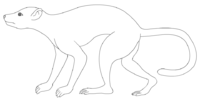 Scientific study of human evolution
is concerned, primarily, with the development of the genus Homo
, but usually involves studying other hominids
and hominines
as well, such as Australopithecus
. "Modern humans" are defined as the Homo sapiens species
, of which the only extant subspecies
is known as Homo sapiens sapiens. Homo sapiens idaltu
(roughly translated as "elder wise human"), the other known subspecies, is now extinct. Homo neanderthalensis
, which became extinct 30,000 years ago, has sometimes been classified as a subspecies, "Homo sapiens neanderthalensis"; genetic studies now suggest that the functional DNA of modern humans and Neanderthals diverged 500,000 years ago. Similarly, the discovered specimens of the Homo rhodesiensis
species have been classified by some as a subspecies, but this classification is not widely accepted.
Anatomically modern humans first appear in the fossil record in Africa about 195,000 years ago, and studies of molecular biology give evidence that the approximate time of divergence from the common ancestor of all modern human populations was 200,000 years ago. The broad study of African genetic diversity headed by Dr. Sarah Tishkoff found the San people
to express the greatest genetic diversity among the 113 distinct populations sampled, making them one of 14 "ancestral population clusters". The research also located the origin of modern human migration in south-western Africa, near the coastal border of Namibia
and Angola
.
The evolutionary history of primate
s can be traced back 65 million years. Primates are one of the oldest of all surviving placental mammal groups. The oldest known primate-like mammal species (those of the genus Plesiadapis
) come from North America, but inhabited Eurasia and Africa on a wide scale during the tropical conditions of the Paleocene
and Eocene
. Molecular evidence suggests that the last common ancestor between humans and the remaining great apes diverged 4–8 million years ago.
The orangutan
s were the first group to split from the line leading to the humans, then gorilla
s followed by chimpanzees (genus Pan). The functional portion of human DNA
is approximately 98.4% identical to that of chimpanzees when comparing single nucleotide polymorphisms (see human evolutionary genetics
). Some studies put that as low as 94%. Therefore, the closest living relatives of humans are gorilla
s and chimpanzee
s, as they share a relatively recent common ancestor.
Humans are probably most closely related to two chimpanzee species: the Common Chimpanzee
and the Bonobo
. Full genome
sequencing has resulted in the conclusion that "after 6.5 [million] years of separate evolution, the differences between chimpanzee and human are ten times greater than those between two unrelated people and ten times less than those between rats and mice". Current estimates of suggested concurrence between functional human and chimpanzee DNA sequences range between 95% and 99%; Early estimates indicated that the human lineage
may have diverged from that of chimpanzees about five million years ago, and from that of gorilla
s about eight million years ago. However, a hominid skull discovered in Chad
in 2001, classified as Sahelanthropus tchadensis
, is approximately seven million years old, and may be evidence of an earlier divergence.
Human evolution is characterised by a number of important changes—morphological, developmental, physiological, and behavioural—which have taken place since the split between the last common ancestor of humans and chimpanzees. The first major morphological change was the evolution of a bipedal locomotor adaptation from an arboreal or semi-arboreal
one, with all its attendant adaptations (a valgus
knee, low intermembral index (long legs relative to the arms), reduced upper-body strength).
The human species developed a much larger brain than that of other primates – typically 1,400 cm³ in modern humans, over twice the size of that of a chimpanzee or gorilla. The pattern of human postnatal brain growth differs from that of other apes (heterochrony
), and allows for extended periods of social learning and language acquisition
in juvenile humans. Physical anthropologists
argue that the differences between the structure of human brain
s and those of other apes are even more significant than their differences in size.
Other significant morphological changes included the evolution of a power and precision grip, a reduced masticatory system, a reduction of the canine tooth
, and the descent of the larynx
and hyoid bone
, making speech possible. An important physiological change in humans was the evolution of hidden oestrus, or concealed ovulation
, which may have coincided with the evolution of important behavioural changes, such as pair bonding. Another significant behavioural change was the development of material culture
, with human-made objects becoming increasingly common and diversified over time. The relationship between all these changes is the subject of ongoing debate.
The forces of natural selection
have continued to operate on human populations, with evidence that certain regions of the genome display directional selection
in the past 15,000 years.
 Anatomically modern humans
evolved from archaic Homo sapiens
in Africa in the Middle Paleolithic
, about 200,000 years ago. By the beginning of the Upper Paleolithic
period (50,000 BP [Before Present
]), full behavioral modernity
, including language
, music and other cultural universal
s had developed.
The out of Africa
migration is estimated to have occurred about 70,000 years BP. Modern humans subsequently spread to all continents, replacing earlier hominids: they inhabited Eurasia
and Oceania
by 40,000 years BP, and the Americas at least 14,500 years BP. A popular theory is that they displaced Homo neanderthalensis and other species descended from Homo erectus
(which had inhabited Eurasia as early as 2 million years ago) through more successful reproduction and competition for resources
. The exact manner or extent of the coexistence and interaction of these species is unknown and continues to be a controversial subject.
Evidence from archaeogenetics
accumulating since the 1990s has lent strong support to the "out-of-Africa" scenario, and has marginalized the competing multiregional hypothesis, which proposed that modern humans evolved, at least in part, from independent hominid populations.
Geneticists Lynn Jorde and Henry Harpending
of the University of Utah
propose that the variation in human DNA is minute compared to that of other species. They also propose that during the Late Pleistocene
, the human population was reduced to a small number of breeding pairs
– no more than 10,000, and possibly as few as 1,000 – resulting in a very small residual gene pool. Various reasons for this hypothetical bottleneck have been postulated, one being the Toba catastrophe theory
.
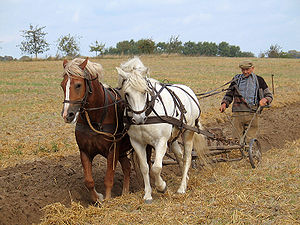 Until c. 10,000 years ago, most humans lived as hunter-gatherer
s. They generally lived in small nomadic groups known as band societies. The advent of agriculture prompted the Neolithic Revolution
, when access to food surplus led to the formation of permanent human settlements, the domestication
of animals and the use of metal tools for the first time in history. Agriculture encouraged trade and cooperation, and led to complex society. Because of the significance of this date for human society, it is the epoch of the Holocene calendar
or Human Era.
About 6,000 years ago, the first proto-states developed in Mesopotamia
, Egypt
's Nile Valley and the Indus Valleys
. Military forces were formed for protection, and government bureaucracies for administration. States cooperated and competed for resources, in some cases waging wars. Around 2,000–3,000 years ago, some states, such as Persia, India
, China
, Rome
, and Greece, developed through conquest into the first expansive empires. Influential religions, such as Judaism
, originating in West Asia, and Hinduism
, a religious tradition that originated in South Asia, also rose to prominence at this time.
The late Middle Ages
saw the rise of revolutionary ideas and technologies. In China, an advanced and urbanized society promoted innovations and sciences, such as printing and seed drilling. In India, major advancements were made in mathematics, philosophy, religion and metallurgy. The Islamic Golden Age
saw major scientific advancements in Muslim
empires. In Europe, the rediscovery of classical
learning and inventions such as the printing press led to the Renaissance
in the 14th and 15th centuries. Over the next 500 years, exploration
and colonialism
brought great parts of the world under European control, leading to later struggles for independence. The Scientific Revolution
in the 17th century and the Industrial Revolution
in the 18th–19th centuries promoted major innovations in transport, such as the railway and automobile; energy development
, such as coal and electricity; and government, such as representative democracy
and Communism
.
With the advent of the Information Age
at the end of the 20th century, modern humans live in a world that has become increasingly globalized
and interconnected. As of 2010, almost 2 billion humans are able to communicate with each other via the Internet
, and 3.3 billion by mobile phone
subscriptions.
Although interconnection between humans has encouraged the growth of science
, art
, discussion, and technology
, it has also led to culture clashes and the development and use of weapons of mass destruction
. Human civilization has led to environmental destruction and pollution significantly contributing to the ongoing mass extinction of other forms of life called the holocene extinction event
, that may be further accelerated by global warming
in the future.
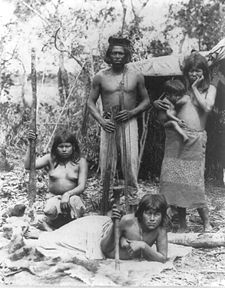 Early human settlements were dependent on proximity to water
and, depending on the lifestyle, other natural resources
used for subsistence, such as populations of animal prey for hunting
and arable land
for growing crops and grazing livestock
. But humans have a great capacity for altering their habitats
by means of technology; through irrigation
, urban planning
, construction
, transport
, manufacturing
goods, deforestation
and desertification
. Deliberate habitat alteration is often done with the goals of increasing material wealth
, increasing thermal comfort
, improving the amount of food available, improving aesthetics
, or improving ease of access to resources or other human settlements. With the advent of large-scale trade and transport infrastructure, proximity to these resources has become unnecessary, and in many places, these factors are no longer a driving force behind the growth and decline of a population. Nonetheless, the manner in which a habitat is altered is often a major determinant in population change.
Technology has allowed humans to colonize all of the continents and adapt to virtually all climates. Within the last century, humans have explored Antarctica, the ocean depths, and outer space, although large-scale colonization of these environments is not yet feasible. With a population of over six billion, humans are among the most numerous of the large mammals. Most humans (61%) live in Asia. The remainder live in the Americas (14%), Africa (14%), Europe (11%), and Oceania (0.5%).
Human habitation within closed ecological system
s in hostile environments, such as Antarctica and outer space, is expensive, typically limited in duration, and restricted to scientific, military, or industrial expeditions. Life in space has been very sporadic, with no more than thirteen humans in space at any given time. Between 1969 and 1972, two humans at a time spent brief intervals on the Moon
. As of , no other celestial body has been visited by humans, although there has been a continuous human presence in space since the launch of the initial crew to inhabit the International Space Station
on October 31, 2000. However, other celestial bodies have been visited by human-made objects.
Since 1800, the human population has increased from one billion to over six billion. In 2004, some 2.5 billion out of 6.3 billion people (39.7%) lived in urban area
s, and this percentage is expected to continue to rise throughout the 21st century. In February 2008, the U.N. estimated that half the world's population will live in urban area
s by the end of the year. Problems for humans living in cities
include various forms of pollution
and crime
, especially in inner city and suburban slums.
Humans have had a dramatic effect on the environment
. As humans are rarely preyed upon, they have been described as superpredators
. Currently, through land development, combustion of fossil fuels and pollution
, humans are thought to be the main contributor to global climate change
. Human activity is believed to be a major contributor to the ongoing Holocene extinction event
, a form of mass extinction
. If this continues at its current rate it is predicted that it will wipe out half of all species over the next century.
s, it is also significantly influenced by environmental factors such as diet
and exercise. The average height
of an adult human is about 1.5 to 1.8 m (5 to 6 feet) tall, although this varies significantly from place to place and depending on ethnic origin. The average mass of an adult human is 54–64 kg (120–140 lbs) for females and 76–83 kg (168–183 lbs) for males. Weight can also vary greatly (e.g. obesity
). Unlike most other primates, humans are capable of fully bipedal locomotion
, thus leaving their arms available for manipulating objects using their hand
s, aided especially by opposable thumbs.
Although humans appear hairless compared to other primates, with notable hair
growth occurring chiefly on the top of the head, underarms and pubic area, the average human has more hair follicles on his or her body than the average chimpanzee. The main distinction is that human hairs are shorter, finer, and less heavily pigmented than the average chimpanzee's, thus making them harder to see.
The hue of human skin and hair is determined by the presence of pigment
s called melanin
s. Human skin hues can range from very dark brown to very pale pink. Human hair ranges from white
to brown
to red
to most commonly black
. This depends on the amount of melanin (an effective sun blocking pigment) in the skin and hair, with hair melanin concentrations in hair fading with increased age, leading to grey or even white hair. Most researchers believe that skin darkening was an adaptation that evolved as a protection against ultraviolet
solar radiation. However, more recently it has been argued that particular skin colors are an adaptation to balance folate, which is destroyed by ultraviolet radiation, and vitamin D, which requires sunlight to form. The skin pigmentation of contemporary humans is geographically stratified, and in general correlates with the level of ultraviolet radiation. Human skin also has a capacity to darken (sun tanning
) in response to exposure to ultraviolet radiation. Humans tend to be physically weaker than other similarly sized primates, with young, conditioned male humans having been shown to be unable to match the strength of female orangutan
s which are at least three times stronger.
The construction of the human pelvis differs from other primates, as do the toes. As a result, humans are slower for short distances than most other animals, but are among the best long-distance runners in the animal kingdom. Humans' thinner body hair and more productive sweat glands also helps avoid heat exhaustion while running for long distances. For this reason persistence hunting
was most likely a very successful strategy for early humans – in this method, prey is chased until it is literally exhausted. This may have also helped the early human Cro-Magnon
population out-compete the Neanderthal
population for food. The otherwise physically stronger Neanderthal would have much greater difficulty hunting in this way, and much more likely hunted larger game in close quarters. A trade-off for these advantages of the modern human pelvis is that childbirth is more difficult and dangerous.
The construction of modern human shoulders enable throwing weapons, which also were much more difficult or even impossible for Neanderthal competitors to use effectively.
The dental formula
of Humans is the following: . Humans have proportionately shorter palates and much smaller teeth than other primates. They are the only primates to have short, relatively flush canine teeth. Humans have characteristically crowded teeth, with gaps from lost teeth usually closing up quickly in young specimens. Humans are gradually losing their wisdom teeth, with some individuals having them congenitally absent.
species. Each diploid
cell
has two sets of 23 chromosome
s, each set received from one parent. There are 22 pairs of autosome
s and one pair of sex chromosomes
. By present estimates, humans have approximately 20,000–25,000 genes. Like other mammals, humans have an XY sex-determination system
, so that female
s have the sex chromosomes XX and male
s have XY. The X chromosome carries many genes not on the Y chromosome, which means that recessive diseases associated with X-linked genes, such as haemophilia
, affect men more often than women.
 The zygote
divides inside the female's uterus
to become an embryo, which over a period of thirty-eight weeks (9 months) of gestation
becomes a fetus. After this span of time, the fully grown fetus is birthed from the woman's body and breathes independently as an infant for the first time. At this point, most modern cultures recognize the baby as a person entitled to the full protection of the law, though some jurisdictions extend various levels of personhood earlier to human fetuses while they remain in the uterus.
Compared with other species, human childbirth
is dangerous. Painful labors lasting twenty-four hours or more are not uncommon and sometimes leads to the death of the mother, or the child. This is because of both the relatively large fetal head circumference (for housing the brain) and the mother's relatively narrow pelvis (a trait required for successful bipedalism, by way of natural selection). The chances of a successful labor increased significantly during the 20th century in wealthier countries with the advent of new medical technologies. In contrast, pregnancy and natural childbirth
remain hazardous ordeals in developing regions of the world, with maternal death rates approximately 100 times more common than in developed countries.
In developed countries, infants are typically 3–4 kg (6–9 pounds) in weight and 50–60 cm (20–24 inches) in height at birth. However, low birth weight
is common in developing countries, and contributes to the high levels of infant mortality
in these regions. Helpless at birth, humans continue to grow for some years, typically reaching sexual maturity
at 12 to 15 years of age. Females continue to develop physically until around the age of 18, whereas male development continues until around age 21. The human life span can be split into a number of stages: infancy, childhood
, adolescence
, young adulthood, adult
hood and old age
. The lengths of these stages, however, have varied across cultures and time periods. Compared to other primates, humans experience an unusually rapid growth spurt during adolescence, where the body grows 25% in size. Chimpanzees, for example, grow only 14%, with no pronounced spurt. The presence of the growth spurt is probably necessary to keep children physically small until they are psychologically mature. Humans are one of the few species in which females undergo menopause
. It has been proposed that menopause increases a woman's overall reproductive success by allowing her to invest more time and resources in her existing offspring and/or their children (the grandmother hypothesis
), rather than by continuing to bear children into old age.
There are significant differences in life expectancy around the world. The developed world is generally aging, with the median age around 40 years. In the developing world
the median age is between 15 and 20 years. Life expectancy at birth in Hong Kong
is 84.8 years for a female and 78.9 for a male, while in Swaziland
, primarily because of AIDS
, it is 31.3 years for both sexes. While one in five Europeans is 60 years of age or older, only one in twenty Africans is 60 years of age or older. The number of centenarian
s (humans of age 100 years or older) in the world was estimated by the United Nations
at 210,000 in 2002. At least one person, Jeanne Calment
, is known to have reached the age of 122 years; higher ages have been claimed but they are not well substantiated. Worldwide, there are 81 men aged 60 or older for every 100 women of that age group, and among the oldest, there are 53 men for every 100 women.
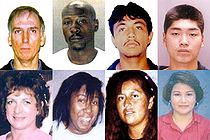 Humans often categorize themselves in terms of race or ethnicity
, sometimes on the basis of differences in appearance. Human racial categories have been based on both ancestry and visible traits, especially facial features, skull shape, skin color
and hair texture. Most current genetic
and archaeological evidence supports a recent single origin of modern humans in East Africa
with first migrations placed at 60,000 years ago. Current genetic studies have demonstrated that humans on the African continent are most genetically diverse. However, compared to the other great apes, human gene sequences are remarkably homogeneous. The predominance of genetic variation occurs within racial groups, with only 5 to 15% of total variation occurring between groups. Thus the scientific concept of variation in the human genome is largely incongruent with the cultural concept of ethnicity or race. Ethnic groups are defined by linguistic, cultural, ancestral, national or regional ties. Self-identification with an ethnic group is usually based on kinship and descent. Race and ethnicity are among major factors in social identity
giving rise to various forms of identity politics
, e.g., racism
.
There is no scientific consensus of a list of the human races, and few anthropologists endorse the notion of human "race". For example, a color terminology for race includes the following in a classification of human races: Black (e.g. Sub-Saharan Africa), Red (e.g. Native Americans), Yellow (e.g. East Asians), White (e.g. Europeans) and Brown (e.g. South Asians).
Referring to natural species, in general, the term "race" is obsolete, particularly if a species is uniformly distributed on a territory. In its modern scientific connotation, the term is not applicable to a species as genetically homogeneous as the human one, as stated in the declaration on race (UNESCO 1950). Genetic studies have substantiated the absence of clear biological borders, thus the term "race" is rarely used in scientific terminology, both in biological anthropology and in human genetics. What in the past had been defined as "races"—e.g., whites, blacks, or Asians—are now defined as "ethnic groups" or "populations", in correlation with the field (sociology, anthropology, genetics) in which they are considered.
.
Until the development of agriculture approximately 10,000 years ago, Homo sapiens employed a hunter-gatherer method as their sole means of food collection. This involved combining stationary food sources (such as fruits, grains, tubers, and mushrooms, insect larvae and aquatic molluscs) with wild game
, which must be hunted and killed in order to be consumed. It has been proposed that members of H. sapiens have used fire to prepare and cook
food since the time of their divergence from Homo rhodesiensis
(which itself had previously speciated from Homo erectus
). Around ten thousand years ago, humans developed agriculture
, which substantially altered their diet. This change in diet may also have altered human biology; with the spread of dairy farming
providing a new and rich source of food, leading to the evolution of the ability to digest lactose
in some adults. Agriculture led to increased populations, the development of cities, and because of increased population density, the wider spread of infectious disease
s. The types of food consumed, and the way in which they are prepared, has varied widely by time, location, and culture.
In general, humans can survive for two to eight weeks without food, depending on stored body fat. Survival without water is usually limited to three or four days. About 36 million humans die every year from causes directly or indirectly related to hunger. Childhood malnutrition is also common and contributes to the global burden of disease. However global food distribution is not even, and obesity
among some human populations has increased rapidly, leading to health complications and increased mortality in some developed
, and a few developing countries. Worldwide over one billion people are obese, while in the United States 35% of people are obese, leading to this being described as an "obesity epidemic
". Obesity is caused by consuming more calorie
s than are expended, so excessive weight gain is usually caused by a combination of an energy-dense high fat diet and insufficient exercise.
requirement is between seven and nine hours per day for an adult and nine to ten hours per day for a child; elderly people usually sleep for six to seven hours. Experiencing less sleep than this is common in modern societies; this sleep deprivation
can have negative effects. A sustained restriction of adult sleep to four hours per day has been shown to correlate with changes in physiology and mental state, including fatigue, aggression, and bodily discomfort.
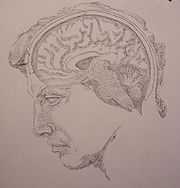 The human brain
, the focal point of the central nervous system
in humans, controls the peripheral nervous system
. In addition to controlling "lower", involuntary, or primarily autonomic
activities such as respiration
and digestion
, it is also the locus of "higher" order functioning such as thought
, reason
ing, and abstraction
. These cognitive processes
constitute the mind
, and, along with their behavior
al consequences, are studied in the field of psychology
.
Generally regarded as more capable of these higher order activities, the human brain is believed to be more "intelligent" in general than that of any other known species. While some non-human species are capable of creating structures and using simple tools—mostly through instinct and mimicry—human technology is vastly more complex, and is constantly evolving and improving through time.
Although being vastly more advanced than many species in cognitive abilities, most of these abilities are known in primitive form among other species. Modern anthropology has tended to bear out Darwin's
proposition that "the difference in mind between man and the higher animals, great as it is, certainly is one of degree and not of kind".
—which tests whether an animal recognizes its reflection as an image of itself—along with all the great apes
(gorillas, chimpanzees, orangutans, bonobo
s), Bottlenose dolphins, Asian elephants, European Magpie
s, and Orcas. Most human children will pass the mirror test at 18 months old. However, the usefulness of this test as a true test of consciousness has been disputed, and this may be a matter of degree rather than a sharp divide. Monkeys have been trained to apply abstract rules in tasks.
The human brain perceives the external world through the sense
s, and each individual human is influenced greatly by his or her experiences, leading to subjective
views of existence
and the passage of time. Humans are variously said to possess consciousness
, self-awareness
, and a mind, which correspond roughly to the mental processes of thought
. These are said to possess qualities such as self-awareness, sentience
, sapience, and the ability to perceive the relationship between oneself and one's environment
. The extent to which the mind constructs or experiences the outer world is a matter of debate, as are the definitions and validity of many of the terms used above. The philosopher of cognitive science
Daniel Dennett
, for example, argues that there is no such thing as a narrative centre called the "mind", but that instead there is simply a collection of sensory inputs and outputs: different kinds of "software" running in parallel. Psychologist B.F. Skinner argued that the mind is an explanatory fiction that diverts attention from environmental causes of behavior, and that what are commonly seen as mental processes may be better conceived of as forms of covert verbal behavior.
Humans study the more physical aspects of the mind and brain, and by extension of the nervous system, in the field of neurology
, the more behavioral in the field of psychology, and a sometimes loosely defined area between in the field of psychiatry, which treats mental illness and behavioral disorders. Psychology does not necessarily refer to the brain or nervous system, and can be framed purely in terms of phenomenological
or information processing
theories of the mind. Increasingly, however, an understanding of brain functions is being included in psychological theory and practice, particularly in areas such as artificial intelligence
, neuropsychology
, and cognitive neuroscience
.
The nature of thought is central to psychology and related fields. Cognitive psychology
studies cognition
, the mental processes'
underlying behavior. It uses information processing
as a framework for understanding the mind. Perception, learning, problem solving, memory, attention, language and emotion are all well researched areas as well. Cognitive psychology is associated with a school of thought known as cognitivism
, whose adherents argue for an information processing
model of mental function, informed by positivism
and experimental psychology
. Techniques and models from cognitive psychology are widely applied and form the mainstay of psychological theories in many areas of both research and applied psychology. Largely focusing on the development of the human mind through the life span, developmental psychology
seeks to understand how people come to perceive, understand, and act within the world and how these processes change as they age. This may focus on intellectual, cognitive, neural, social, or moral development
.
Some philosophers divide consciousness into phenomenal consciousness, which is experience itself, and access consciousness, which is the processing of the things in experience. Phenomenal consciousness is the state of being conscious, such as when they say "I am conscious." Access consciousness is being conscious of something in relation to abstract concepts, such as when one says "I am conscious of these words." Various forms of access consciousness include awareness, self-awareness, conscience, stream of consciousness
, Husserl's phenomenology, and intentionality
. The concept of phenomenal consciousness, in modern history, according to some, is closely related to the concept of qualia
. Social psychology
links sociology with psychology in their shared study of the nature and causes of human social interaction, with an emphasis on how people think towards each other and how they relate to each other. The behavior and mental processes, both human and non-human, can be described through animal cognition
, ethology
, evolutionary psychology
, and comparative psychology
as well. Human ecology
is an academic discipline that investigates how humans and human societies
interact with both their natural environment and the human social environment
.
is the driving force of desire behind all deliberate actions of humans. Motivation is based on emotion—specifically, on the search for satisfaction
(positive emotional experiences), and the avoidance of conflict. Positive and negative is defined by the individual brain state, which may be influenced by social norms: a person may be driven to self-injury or violence
because his brain
is conditioned to create a positive response to these actions. Motivation is important because it is involved in the performance of all learned responses. Within psychology
, conflict avoidance
and the libido
are seen to be primary motivators. Within economics
, motivation is often seen to be based on incentive
s; these may be financial
, moral
, or coercive. Religion
s generally posit divine or demon
ic influences.
Happiness
, or the state of being happy, is a human emotional condition. The definition of happiness is a common philosophical
topic. Some people might define it as the best condition that a human can have—a condition of mental
and physical health
. Others define it as freedom from want and distress; consciousness of the good order of things; assurance of one's place in the universe
or society
.
Emotion has a significant influence on, or can even be said to control, human behavior, though historically many culture
s and philosophers have for various reasons discouraged allowing this influence to go unchecked. Emotional experiences perceived as pleasant, such as love
, admiration, or joy, contrast with those perceived as unpleasant, like hate, envy
, or sorrow
. There is often a distinction made between refined emotions that are socially learned and survival oriented emotions, which are thought to be innate. Human exploration of emotions as separate from other neurological phenomena is worthy of note, particularly in cultures where emotion is considered separate from physiological state. In some cultural medical theories emotion is considered so synonymous with certain forms of physical health that no difference is thought to exist. The Stoics
believed excessive emotion was harmful, while some Sufi teachers felt certain extreme emotions could yield a conceptual perfection, what is often translated as ecstasy
.
In modern scientific thought, certain refined emotions are considered a complex neural trait innate in a variety of domesticated and non-domesticated mammal
s. These were commonly developed in reaction to superior survival mechanisms and intelligent interaction with each other and the environment; as such, refined emotion is not in all cases as discrete and separate from natural neural function as was once assumed. However, when humans function in civilized tandem, it has been noted that uninhibited acting on extreme emotion can lead to social disorder and crime
.
Humans are social beings. In comparisons with animalia, humans are regarded like the primates for their social qualities. But beyond any other creature, humans are adept at utilizing systems of communication
for self-expression, the exchange of ideas, and organization, and as such have created complex social structures composed of many cooperating and competing groups. Human groups range from families to nations. Social interactions between humans have established an extremely wide variety of values, social norms, and rituals, which together form the basis of human society
.
Culture
is defined here as patterns of complex symbolic behavior, i.e. all behavior that is not innate but which has to be learned through social interaction with others; such as the use of distinctive material
and symbolic system
s, including language, ritual, social organization, traditions, beliefs and technology.
, besides ensuring biological reproduction, has important social functions: it creates physical intimacy, bonds, and hierarchies among individuals; and in a hedonistic
sense to the enjoyment of activity involving sexual gratification. Sexual desire, or libido
, is experienced as a bodily urge, often accompanied by strong emotions such as love, ecstasy
and jealousy. The extreme importance of sexuality in the human species can be seen in a number of physical features, among them hidden ovulation, the evolution of external scrotum and penis suggesting sperm competition, the absence of an os penis
, permanent secondary sexual characteristics, the forming of pair bonds based on sexual attraction as a common social structure and sexual ability in females outside of ovulation. These adaptations indicate that the importance of sexuality in humans is on a par with that found in the Bonobo
, and that the complex human sexual behaviour has a long evolution
ary history.
Human choices in acting on sexuality are commonly influenced by cultural norms, which vary widely. Restrictions are often determined by religious beliefs or social customs. The pioneering researcher Sigmund Freud
believed that humans are born polymorphously perverse
, which means that any number of objects could be a source of pleasure. According to Freud, humans then pass through five stages of psychosexual development
(and can fixate on any stage because of various traumas during the process). For Alfred Kinsey
, another influential sex researcher, people can fall anywhere along a continuous scale of sexual orientation (with only small minorities fully heterosexual or homosexual). Recent studies of neurology and genetics suggest people may be born predisposed to various sexual tendencies.
s have varied historically, and challenges to predominant gender norms have recurred in many societies.
 Society
is the system of organizations and institutions arising from interaction between humans. A state
is an organized political
community occupying a definite territory, having an organized government
, and possessing internal and external sovereignty
. Recognition of the state's claim to independence by other states, enabling it to enter into international agreements, is often important to the establishment of its statehood. The "state" can also be defined in terms of domestic conditions, specifically, as conceptualized by Max Weber
, "a state is a human community that (successfully) claims the monopoly of the 'legitimate' use of physical force within a given territory."
Government
can be defined as the political
means of creating and enforcing law
s; typically via a bureaucratic
hierarchy
. Politics
is the process by which decisions are made within groups; this process often involves conflict as well as compromise. Although the term is generally applied to behavior within government
s, politics is also observed in all human group interactions, including corporate, academic, and religious institutions. Many different political systems exist, as do many different ways of understanding them, and many definitions overlap. Examples of governments include monarchy
, Communist state
, military dictatorship
, theocracy
, and liberal democracy
, the last of which is considered dominant today. All of these issues have a direct relationship with economics.
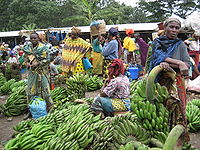 Trade is the voluntary exchange of goods and services, and is a form of economics
. A mechanism that allows trade is called a market
. The original form of trade was barter, the direct exchange of goods and services. Modern traders instead generally negotiate through a medium of exchange, such as money. As a result, buying can be separated from selling, or earning
. The invention of money (and later credit
, paper money and non-physical money) greatly simplified and promoted trade. Because of specialization and division of labor, most people concentrate on a small aspect of manufacturing or service, trading their labour for products. Trade exists between regions because different regions have an absolute
or comparative advantage
in the production of some tradable commodity, or because different regions' size allows for the benefits of mass production
.
Economics is a social science which studies the production, distribution, trade, and consumption of goods and services. Economics focuses on measurable variables, and is broadly divided into two main branches: microeconomics
, which deals with individual agents, such as households and businesses, and macroeconomics, which considers the economy as a whole, in which case it considers aggregate supply
and demand
for money, capital
and commodities
. Aspects receiving particular attention in economics are resource allocation
, production, distribution, trade, and competition
. Economic logic is increasingly applied to any problem that involves choice under scarcity or determining economic value
.
between combatants and/or upon civilians. (Humans also engage in lesser conflicts, such as brawls, riots, revolts, and melees. A revolution
may or may not involve warfare.) It is estimated that during the 20th century between 167 and 188 million humans died as a result of war. A common perception of war is a series of military campaign
s between at least two opposing sides involving a dispute over sovereignty
, territory, resources
, religion
, or other issues. A war between internal elements of a state is a civil war
.
There have been a wide variety of rapidly advancing
tactics
throughout the history of war, ranging from conventional war to asymmetric warfare
to total war
and unconventional warfare
. Techniques include hand to hand combat
, the use of ranged weapons, Naval warfare
, and, more recently, air support
. Military intelligence has often played a key role in determining victory and defeat. Propaganda, which often includes information, slanted opinion and disinformation, plays a key role in maintaining unity within a warring group, and/or sowing discord among opponents. In modern warfare, soldiers and combat vehicle
s are used to control the land, warships the sea, and aircraft
the sky. These fields have also overlapped in the forms of marines, paratroopers, naval aircraft carriers, and surface-to-air missiles, among others. Satellites in low Earth orbit
have made outer space a factor in warfare as well as it is used for detailed intelligence gathering, however no known aggressive actions have been taken from space
.
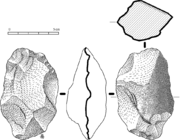 Stone tools were used by proto-humans at least 2.5 million years ago. The controlled use of fire
began around 1.5 million years ago. Since then, humans have made major advances, developing complex technology to create tools to aid their lives and allowing for other advancements in culture. Major leaps in technology include the discovery of agriculture
– what is known as the Neolithic Revolution
; and the invention of automated machines in the Industrial Revolution
.
Archaeology
attempts to tell the story of past or lost cultures in part by close examination of the artifacts
they produced. Early humans left stone tools, pottery
, and jewelry that are particular to various regions and times.
describes the structure of language and the relationship between languages. There are approximately 6,000 different languages currently in use, including sign languages, and many thousands more that are considered extinct
.
 Religion
is generally defined as a belief
system concerning the supernatural, sacred or divine, and practices, values, institutions and rituals associated with such belief. Some religions also have a moral code. The evolution
and the history of the first religions
have recently become areas of active scientific investigation. However, in the course of its development
, religion has taken on many forms that vary by culture and individual perspective. Some of the chief questions and issues religions are concerned with include life after death (commonly involving belief in an afterlife
), the origin of life, the nature of the universe
(religious cosmology
) and its ultimate fate
(eschatology
), and what is moral
or immoral. A common source for answers to these questions are beliefs in transcendent
divine
beings such as deities
or a singular God
, although not all religions are theistic
. Spirituality, belief or involvement in matters of the soul
or spirit
, is one of the many different approaches humans take in trying to answer fundamental questions about humankind's place in the universe, the meaning of life
, and the ideal way to live one's life. Though these topics have also been addressed by philosophy, and to some extent by science, spirituality is unique in that it focuses on mystical or supernatural concepts such as karma
and God.
Although the exact level of religiosity can be hard to measure, a majority of humans professes some variety of religious or spiritual belief, although some are irreligious
. Other humans have no religious beliefs and are atheists
, scientific skeptics, agnostics or simply non-religious. Humanism
is a philosophy which seeks to include all of humanity and all issues common to humans; it is usually non-religious. Additionally, although most religions and spiritual beliefs are clearly distinct from science on both a philosophical and methodological level, the two are not generally considered mutually exclusive; a majority of humans holds a mix of both scientific and religious views. The distinction between philosophy and religion, on the other hand, is at times less clear, and the two are linked in such fields as the philosophy of religion
and theology
.
 Philosophy
is a discipline or field of study involving the investigation, analysis, and development of ideas at a general, abstract, or fundamental level. It is the discipline searching for a general understanding of reality, reasoning and values. Major fields of philosophy include logic
, metaphysics
, epistemology, philosophy of mind
, and axiology
(which includes ethics
and aesthetics
). Philosophy covers a very wide range of approaches, and is used to refer to a worldview, to a perspective on an issue, or to the positions argued for by a particular philosopher or school of philosophy.
Mathematics is connected to language, and it is argued that this special genetic trait of humans, linked to language and abstract thought is responsible for the mathematical ability.
Closely related is humans' ability to model the world and use science. Although scientific revolution
is relatively recent, humans have attempted to explain their environment since the ancient times.
 Artistic works have existed for almost as long as humankind, from early pre-historic
art to contemporary art. Art is one of the most unusual aspects of human behaviour and a key distinguishing feature of humans from other species.
As a form of cultural
expression by humans, art may be defined by the pursuit of diversity
and the usage of narrative
s of liberation and exploration (i.e. art history
, art criticism
, and art theory) to mediate its boundaries. This distinction may be applied to objects or performances, current or historical, and its prestige extends to those who made, found, exhibit, or own them. In the modern use of the word, art is commonly understood to be the process or result of making material works that, from concept to creation, adhere to the "creative impulse" of human beings. Art is distinguished from other works by being in large part unprompted by necessity, by biological drive, or by any undisciplined pursuit of recreation.
Music is a natural intuitive
phenomenon based on the three distinct and interrelated organization structures of rhythm, harmony, and melody. Listening to music is perhaps the most common and universal form of entertainment
for humans, while learning and understanding it are popular discipline
s. There are a wide variety of music genre
s and ethnic musics. Literature
, the body of written—and possibly oral—works, especially creative ones, includes prose, poetry and drama, both fiction and non-fiction
. Literature includes such genres as epic
, legend, myth, ballad, and folklore.
Species
In biology, a species is one of the basic units of biological classification and a taxonomic rank. A species is often defined as a group of organisms capable of interbreeding and producing fertile offspring. While in many cases this definition is adequate, more precise or differing measures are...
in the Homo
Homo
Homo may refer to:*the Greek prefix ὅμο-, meaning "the same"*the Latin for man, human being*Homo, the taxonomical genus including modern humans...
genus. Anatomically modern humans
Anatomically modern humans
The term anatomically modern humans in paleoanthropology refers to early individuals of Homo sapiens with an appearance consistent with the range of phenotypes in modern humans....
originated in Africa
Africa
Africa is the world's second largest and second most populous continent, after Asia. At about 30.2 million km² including adjacent islands, it covers 6% of the Earth's total surface area and 20.4% of the total land area...
about 200,000 years ago, reaching full behavioral modernity
Behavioral modernity
Behavioral modernity is a term used in anthropology, archeology and sociology to refer to a set of traits that distinguish present day humans and their recent ancestors from both living primates and other extinct hominid lineages. It is the point at which Homo sapiens began to demonstrate a...
around 50,000 years ago.
Humans have a highly developed
Encephalization
Encephalization is defined as the amount of brain mass exceeding that related to an animal's total body mass. Quantifying an animal's encephalization has been argued to be directly related to that animal's level of intelligence. Aristotle wrote in 335 B.C...
brain
Human brain
The human brain has the same general structure as the brains of other mammals, but is over three times larger than the brain of a typical mammal with an equivalent body size. Estimates for the number of neurons in the human brain range from 80 to 120 billion...
and are capable of abstract reasoning, language
Language
Language may refer either to the specifically human capacity for acquiring and using complex systems of communication, or to a specific instance of such a system of complex communication...
, introspection
Introspection
Introspection is the self-observation and reporting of conscious inner thoughts, desires and sensations. It is a conscious and purposive process relying on thinking, reasoning, and examining one's own thoughts, feelings, and, in more spiritual cases, one's soul...
, and problem solving
Problem solving
Problem solving is a mental process and is part of the larger problem process that includes problem finding and problem shaping. Consideredthe most complex of all intellectual functions, problem solving has been defined as higher-order cognitive process that requires the modulation and control of...
. This mental capability, combined with an erect body carriage that frees the hands for manipulating objects, has allowed humans to make far greater use of tool
Tool
A tool is a device that can be used to produce an item or achieve a task, but that is not consumed in the process. Informally the word is also used to describe a procedure or process with a specific purpose. Tools that are used in particular fields or activities may have different designations such...
s than any other living species on Earth. Other higher-level thought processes of humans, such as self-awareness
Self-awareness
Self-awareness is the capacity for introspection and the ability to reconcile oneself as an individual separate from the environment and other individuals...
, rationality
Rationality
In philosophy, rationality is the exercise of reason. It is the manner in which people derive conclusions when considering things deliberately. It also refers to the conformity of one's beliefs with one's reasons for belief, or with one's actions with one's reasons for action...
, and sapience, are considered to be defining features of what constitutes a "person
Person
A person is a human being, or an entity that has certain capacities or attributes strongly associated with being human , for example in a particular moral or legal context...
".
Humans are uniquely adept at utilizing systems of communication for self-expression, the exchange of ideas, and organization. Humans create complex social structure
Social structure
Social structure is a term used in the social sciences to refer to patterned social arrangements in society that are both emergent from and determinant of the actions of the individuals. The usage of the term "social structure" has changed over time and may reflect the various levels of analysis...
s composed of many cooperating and competing groups, from families
Family
In human context, a family is a group of people affiliated by consanguinity, affinity, or co-residence. In most societies it is the principal institution for the socialization of children...
to nation
Nation
A nation may refer to a community of people who share a common language, culture, ethnicity, descent, and/or history. In this definition, a nation has no physical borders. However, it can also refer to people who share a common territory and government irrespective of their ethnic make-up...
s. Social interactions between humans have established an extremely wide variety of values, social norms
Norm (sociology)
Social norms are the accepted behaviors within a society or group. This sociological and social psychological term has been defined as "the rules that a group uses for appropriate and inappropriate values, beliefs, attitudes and behaviors. These rules may be explicit or implicit...
, and rituals, which together form the basis of human society. With individuals widespread in every continent except Antarctica, humans are a cosmopolitan
Cosmopolitan distribution
In biogeography, a taxon is said to have a cosmopolitan distribution if its range extends across all or most of the world in appropriate habitats. For instance, the killer whale has a cosmopolitan distribution, extending over most of the world's oceans. Other examples include humans, the lichen...
species. , the human population
World population
The world population is the total number of living humans on the planet Earth. As of today, it is estimated to be billion by the United States Census Bureau...
was estimated by the United Nations Population Division to be about 7 billion,
and by the United States Census Bureau
United States Census Bureau
The United States Census Bureau is the government agency that is responsible for the United States Census. It also gathers other national demographic and economic data...
to be about 6.97 billion.
Humans are noted for their desire to understand and influence their environment, seeking to explain and manipulate phenomena through science
Science
Science is a systematic enterprise that builds and organizes knowledge in the form of testable explanations and predictions about the universe...
, philosophy
Philosophy
Philosophy is the study of general and fundamental problems, such as those connected with existence, knowledge, values, reason, mind, and language. Philosophy is distinguished from other ways of addressing such problems by its critical, generally systematic approach and its reliance on rational...
, mythology
Mythology
The term mythology can refer either to the study of myths, or to a body or collection of myths. As examples, comparative mythology is the study of connections between myths from different cultures, whereas Greek mythology is the body of myths from ancient Greece...
, and religion
Religion
Religion is a collection of cultural systems, belief systems, and worldviews that establishes symbols that relate humanity to spirituality and, sometimes, to moral values. Many religions have narratives, symbols, traditions and sacred histories that are intended to give meaning to life or to...
. This natural curiosity has led to the development of advanced tools and skills, which are passed down culturally
Culture
Culture is a term that has many different inter-related meanings. For example, in 1952, Alfred Kroeber and Clyde Kluckhohn compiled a list of 164 definitions of "culture" in Culture: A Critical Review of Concepts and Definitions...
; humans are the only species known to build fire
Fire
Fire is the rapid oxidation of a material in the chemical process of combustion, releasing heat, light, and various reaction products. Slower oxidative processes like rusting or digestion are not included by this definition....
s, cook their food
Cooking
Cooking is the process of preparing food by use of heat. Cooking techniques and ingredients vary widely across the world, reflecting unique environmental, economic, and cultural traditions. Cooks themselves also vary widely in skill and training...
, clothe
Clothing
Clothing refers to any covering for the human body that is worn. The wearing of clothing is exclusively a human characteristic and is a feature of nearly all human societies...
themselves, create art
Art
Art is the product or process of deliberately arranging items in a way that influences and affects one or more of the senses, emotions, and intellect....
, and use numerous other technologies
Technology
Technology is the making, usage, and knowledge of tools, machines, techniques, crafts, systems or methods of organization in order to solve a problem or perform a specific function. It can also refer to the collection of such tools, machinery, and procedures. The word technology comes ;...
. The study of humans is the scientific discipline of anthropology
Anthropology
Anthropology is the study of humanity. It has origins in the humanities, the natural sciences, and the social sciences. The term "anthropology" is from the Greek anthrōpos , "man", understood to mean mankind or humanity, and -logia , "discourse" or "study", and was first used in 1501 by German...
.
Etymology
The English adjective human is a Middle EnglishMiddle English
Middle English is the stage in the history of the English language during the High and Late Middle Ages, or roughly during the four centuries between the late 11th and the late 15th century....
loanword
Loanword
A loanword is a word borrowed from a donor language and incorporated into a recipient language. By contrast, a calque or loan translation is a related concept where the meaning or idiom is borrowed rather than the lexical item itself. The word loanword is itself a calque of the German Lehnwort,...
from Old French
Old French
Old French was the Romance dialect continuum spoken in territories that span roughly the northern half of modern France and parts of modern Belgium and Switzerland from the 9th century to the 14th century...
, ultimately from Latin
Latin
Latin is an Italic language originally spoken in Latium and Ancient Rome. It, along with most European languages, is a descendant of the ancient Proto-Indo-European language. Although it is considered a dead language, a number of scholars and members of the Christian clergy speak it fluently, and...
, the adjective form of "man". The word's use as a noun (with a plural: humans) dates to the 16th century. The native English term man
Man (word)
The term man and words derived from it can designate any or even all of the human race regardless of their sex or age...
is now often reserved for male adults, but the term mankind is occasionally used to refer to the species generally in Modern English. This use is considered by some to be obsolete. The word is from Proto-Germanic , from a Proto-Indo-European
Proto-Indo-European language
The Proto-Indo-European language is the reconstructed common ancestor of the Indo-European languages, spoken by the Proto-Indo-Europeans...
(PIE) root , a cognate
Cognate
In linguistics, cognates are words that have a common etymological origin. This learned term derives from the Latin cognatus . Cognates within the same language are called doublets. Strictly speaking, loanwords from another language are usually not meant by the term, e.g...
to Sanskrit manu
Manu (Hinduism)
In various Hindu traditions, Manu is a title accorded to the progenitor of mankind, and also the very first brahman king to rule this earth, who saved mankind from the universal flood. He was absolutely honest which was why he was initially known as "Satyavrata"...
-.
The generic name Homo
Homo (genus)
Homo is the genus that includes modern humans and species closely related to them. The genus is estimated to be about 2.3 to 2.4 million years old, evolving from australopithecine ancestors with the appearance of Homo habilis....
is a learned 18th century derivation from Latin "man", ultimately "earthly being" (Old Latin
Old Latin
Old Latin refers to the Latin language in the period before the age of Classical Latin; that is, all Latin before 75 BC...
, a cognate
Cognate
In linguistics, cognates are words that have a common etymological origin. This learned term derives from the Latin cognatus . Cognates within the same language are called doublets. Strictly speaking, loanwords from another language are usually not meant by the term, e.g...
to Old English "man", from PIE
Proto-Indo-European language
The Proto-Indo-European language is the reconstructed common ancestor of the Indo-European languages, spoken by the Proto-Indo-Europeans...
, meaning 'earth' or 'ground').
Evolution
Human evolution
Human evolution refers to the evolutionary history of the genus Homo, including the emergence of Homo sapiens as a distinct species and as a unique category of hominids and mammals...
is concerned, primarily, with the development of the genus Homo
Homo (genus)
Homo is the genus that includes modern humans and species closely related to them. The genus is estimated to be about 2.3 to 2.4 million years old, evolving from australopithecine ancestors with the appearance of Homo habilis....
, but usually involves studying other hominids
Hominidae
The Hominidae or include them .), as the term is used here, form a taxonomic family, including four extant genera: chimpanzees , gorillas , humans , and orangutans ....
and hominines
Homininae
Homininae is a subfamily of Hominidae, which includes humans, gorillas and chimpanzees, and some extinct relatives; it comprises all those hominids, such as Australopithecus, that arose after the split from orangutans . Our family tree, which has 3 main branches leading to chimpanzees, humans and...
as well, such as Australopithecus
Australopithecus
Australopithecus is a genus of hominids that is now extinct. From the evidence gathered by palaeontologists and archaeologists, it appears that the Australopithecus genus evolved in eastern Africa around 4 million years ago before spreading throughout the continent and eventually becoming extinct...
. "Modern humans" are defined as the Homo sapiens species
Species
In biology, a species is one of the basic units of biological classification and a taxonomic rank. A species is often defined as a group of organisms capable of interbreeding and producing fertile offspring. While in many cases this definition is adequate, more precise or differing measures are...
, of which the only extant subspecies
Subspecies
Subspecies in biological classification, is either a taxonomic rank subordinate to species, ora taxonomic unit in that rank . A subspecies cannot be recognized in isolation: a species will either be recognized as having no subspecies at all or two or more, never just one...
is known as Homo sapiens sapiens. Homo sapiens idaltu
Homo sapiens idaltu
Homo sapiens idaltu is an extinct subspecies of Homo sapiens that lived almost 160,000 years ago in Pleistocene Africa. is from the Saho-Afar word meaning "elder or first born"....
(roughly translated as "elder wise human"), the other known subspecies, is now extinct. Homo neanderthalensis
Neanderthal
The Neanderthal is an extinct member of the Homo genus known from Pleistocene specimens found in Europe and parts of western and central Asia...
, which became extinct 30,000 years ago, has sometimes been classified as a subspecies, "Homo sapiens neanderthalensis"; genetic studies now suggest that the functional DNA of modern humans and Neanderthals diverged 500,000 years ago. Similarly, the discovered specimens of the Homo rhodesiensis
Homo rhodesiensis
Homo rhodesiensis is a hominin species described from the fossil Kabwe skull. Other morphologically-comparable remains have been found from the same, or earlier, time period in southern Africa , East Africa and North Africa...
species have been classified by some as a subspecies, but this classification is not widely accepted.
Anatomically modern humans first appear in the fossil record in Africa about 195,000 years ago, and studies of molecular biology give evidence that the approximate time of divergence from the common ancestor of all modern human populations was 200,000 years ago. The broad study of African genetic diversity headed by Dr. Sarah Tishkoff found the San people
Bushmen
The indigenous people of Southern Africa, whose territory spans most areas of South Africa, Zimbabwe, Lesotho, Mozambique, Swaziland, Botswana, Namibia, and Angola, are variously referred to as Bushmen, San, Sho, Barwa, Kung, or Khwe...
to express the greatest genetic diversity among the 113 distinct populations sampled, making them one of 14 "ancestral population clusters". The research also located the origin of modern human migration in south-western Africa, near the coastal border of Namibia
Namibia
Namibia, officially the Republic of Namibia , is a country in southern Africa whose western border is the Atlantic Ocean. It shares land borders with Angola and Zambia to the north, Botswana to the east and South Africa to the south and east. It gained independence from South Africa on 21 March...
and Angola
Angola
Angola, officially the Republic of Angola , is a country in south-central Africa bordered by Namibia on the south, the Democratic Republic of the Congo on the north, and Zambia on the east; its west coast is on the Atlantic Ocean with Luanda as its capital city...
.
The evolutionary history of primate
Primate
A primate is a mammal of the order Primates , which contains prosimians and simians. Primates arose from ancestors that lived in the trees of tropical forests; many primate characteristics represent adaptations to life in this challenging three-dimensional environment...
s can be traced back 65 million years. Primates are one of the oldest of all surviving placental mammal groups. The oldest known primate-like mammal species (those of the genus Plesiadapis
Plesiadapis
Plesiadapis is one of the oldest known primate-like mammal species which existed about 58-55 million years ago in North America and Europe. Plesiadapis literally means "near-Adapis", which is a reference to the Eocene lemuriform, Adapis...
) come from North America, but inhabited Eurasia and Africa on a wide scale during the tropical conditions of the Paleocene
Paleocene
The Paleocene or Palaeocene, the "early recent", is a geologic epoch that lasted from about . It is the first epoch of the Palaeogene Period in the modern Cenozoic Era...
and Eocene
Eocene
The Eocene Epoch, lasting from about 56 to 34 million years ago , is a major division of the geologic timescale and the second epoch of the Paleogene Period in the Cenozoic Era. The Eocene spans the time from the end of the Palaeocene Epoch to the beginning of the Oligocene Epoch. The start of the...
. Molecular evidence suggests that the last common ancestor between humans and the remaining great apes diverged 4–8 million years ago.
The orangutan
Orangutan
Orangutans are the only exclusively Asian genus of extant great ape. The largest living arboreal animals, they have proportionally longer arms than the other, more terrestrial, great apes. They are among the most intelligent primates and use a variety of sophisticated tools, also making sleeping...
s were the first group to split from the line leading to the humans, then gorilla
Gorilla
Gorillas are the largest extant species of primates. They are ground-dwelling, predominantly herbivorous apes that inhabit the forests of central Africa. Gorillas are divided into two species and either four or five subspecies...
s followed by chimpanzees (genus Pan). The functional portion of human DNA
Gene
A gene is a molecular unit of heredity of a living organism. It is a name given to some stretches of DNA and RNA that code for a type of protein or for an RNA chain that has a function in the organism. Living beings depend on genes, as they specify all proteins and functional RNA chains...
is approximately 98.4% identical to that of chimpanzees when comparing single nucleotide polymorphisms (see human evolutionary genetics
Human evolutionary genetics
Human evolutionary genetics studies how one human genome differs from the other, the evolutionary past that gave rise to it, and its current effects. Differences between genomes have anthropological, medical and forensic implications and applications...
). Some studies put that as low as 94%. Therefore, the closest living relatives of humans are gorilla
Gorilla
Gorillas are the largest extant species of primates. They are ground-dwelling, predominantly herbivorous apes that inhabit the forests of central Africa. Gorillas are divided into two species and either four or five subspecies...
s and chimpanzee
Chimpanzee
Chimpanzee, sometimes colloquially chimp, is the common name for the two extant species of ape in the genus Pan. The Congo River forms the boundary between the native habitat of the two species:...
s, as they share a relatively recent common ancestor.
Humans are probably most closely related to two chimpanzee species: the Common Chimpanzee
Common Chimpanzee
The common chimpanzee , also known as the robust chimpanzee, is a great ape. Colloquially, the common chimpanzee is often called the chimpanzee , though technically this term refers to both species in the genus Pan: the common chimpanzee and the closely related bonobo, formerly called the pygmy...
and the Bonobo
Bonobo
The bonobo , Pan paniscus, previously called the pygmy chimpanzee and less often, the dwarf or gracile chimpanzee, is a great ape and one of the two species making up the genus Pan. The other species in genus Pan is Pan troglodytes, or the common chimpanzee...
. Full genome
Genome
In modern molecular biology and genetics, the genome is the entirety of an organism's hereditary information. It is encoded either in DNA or, for many types of virus, in RNA. The genome includes both the genes and the non-coding sequences of the DNA/RNA....
sequencing has resulted in the conclusion that "after 6.5 [million] years of separate evolution, the differences between chimpanzee and human are ten times greater than those between two unrelated people and ten times less than those between rats and mice". Current estimates of suggested concurrence between functional human and chimpanzee DNA sequences range between 95% and 99%; Early estimates indicated that the human lineage
Lineage (evolution)
An evolutionary lineage is a sequence of species, that form a line of descent, each new species the direct result of speciation from an immediate ancestral species. Lineages are subsets of the evolutionary tree of life. Lineages are often determined by the techniques of molecular systematics.-...
may have diverged from that of chimpanzees about five million years ago, and from that of gorilla
Gorilla
Gorillas are the largest extant species of primates. They are ground-dwelling, predominantly herbivorous apes that inhabit the forests of central Africa. Gorillas are divided into two species and either four or five subspecies...
s about eight million years ago. However, a hominid skull discovered in Chad
Chad
Chad , officially known as the Republic of Chad, is a landlocked country in Central Africa. It is bordered by Libya to the north, Sudan to the east, the Central African Republic to the south, Cameroon and Nigeria to the southwest, and Niger to the west...
in 2001, classified as Sahelanthropus tchadensis
Sahelanthropus tchadensis
Sahelanthropus tchadensis is an extinct hominid species that is dated to about . Whether it can be regarded as part of the Hominina tree is unclear; there are arguments both supporting and rejecting it...
, is approximately seven million years old, and may be evidence of an earlier divergence.
Human evolution is characterised by a number of important changes—morphological, developmental, physiological, and behavioural—which have taken place since the split between the last common ancestor of humans and chimpanzees. The first major morphological change was the evolution of a bipedal locomotor adaptation from an arboreal or semi-arboreal
Arboreal locomotion
Arboreal locomotion is the locomotion of animals in trees. In every habitat in which trees are present, animals have evolved to move in them. Some animals may only scale trees occasionally, while others are exclusively arboreal. These habitats pose numerous mechanical challenges to animals...
one, with all its attendant adaptations (a valgus
Valgus deformity
In orthopedics, a valgus deformity is a term for outward angulation of the distal segment of a bone or joint. The opposite deformation, medial deviation of the distal bone, is called varus....
knee, low intermembral index (long legs relative to the arms), reduced upper-body strength).
The human species developed a much larger brain than that of other primates – typically 1,400 cm³ in modern humans, over twice the size of that of a chimpanzee or gorilla. The pattern of human postnatal brain growth differs from that of other apes (heterochrony
Heterochrony
In biology, heterochrony is defined as a developmental change in the timing of events, leading to changes in size and shape. There are two main components, namely the onset and offset of a particular process, and the rate at which the process operates...
), and allows for extended periods of social learning and language acquisition
Language acquisition
Language acquisition is the process by which humans acquire the capacity to perceive, produce and use words to understand and communicate. This capacity involves the picking up of diverse capacities including syntax, phonetics, and an extensive vocabulary. This language might be vocal as with...
in juvenile humans. Physical anthropologists
Physical anthropology
Biological anthropology is that branch of anthropology that studies the physical development of the human species. It plays an important part in paleoanthropology and in forensic anthropology...
argue that the differences between the structure of human brain
Human brain
The human brain has the same general structure as the brains of other mammals, but is over three times larger than the brain of a typical mammal with an equivalent body size. Estimates for the number of neurons in the human brain range from 80 to 120 billion...
s and those of other apes are even more significant than their differences in size.
Other significant morphological changes included the evolution of a power and precision grip, a reduced masticatory system, a reduction of the canine tooth
Canine tooth
In mammalian oral anatomy, the canine teeth, also called cuspids, dogteeth, fangs, or eye teeth, are relatively long, pointed teeth...
, and the descent of the larynx
Larynx
The larynx , commonly called the voice box, is an organ in the neck of amphibians, reptiles and mammals involved in breathing, sound production, and protecting the trachea against food aspiration. It manipulates pitch and volume...
and hyoid bone
Hyoid bone
The hyoid bone is a horseshoe-shaped bone situated in the anterior midline of the neck between the chin and the thyroid cartilage. At rest, it lies at the level of the base of the mandible in the front and the third cervical vertebra behind.Unlike other bones, the hyoid is only distantly...
, making speech possible. An important physiological change in humans was the evolution of hidden oestrus, or concealed ovulation
Concealed ovulation
Concealed ovulation or hidden estrus is the lack of distinctive signaling that the adult female of a species is "in heat". These signals may include swelling and redness of the genitalia in baboons and bonobos Pan paniscus, pheromone release in the feline family, etc...
, which may have coincided with the evolution of important behavioural changes, such as pair bonding. Another significant behavioural change was the development of material culture
Material culture
In the social sciences, material culture is a term that refers to the relationship between artifacts and social relations. Studying a culture's relationship to materiality is a lens through which social and cultural attitudes can be discussed...
, with human-made objects becoming increasingly common and diversified over time. The relationship between all these changes is the subject of ongoing debate.
The forces of natural selection
Natural selection
Natural selection is the nonrandom process by which biologic traits become either more or less common in a population as a function of differential reproduction of their bearers. It is a key mechanism of evolution....
have continued to operate on human populations, with evidence that certain regions of the genome display directional selection
Directional selection
In population genetics, directional selection is a mode of natural selection in which a single phenotype is favored, causing the allele frequency to continuously shift in one direction...
in the past 15,000 years.
Paleolithic
Anatomically modern humans
The term anatomically modern humans in paleoanthropology refers to early individuals of Homo sapiens with an appearance consistent with the range of phenotypes in modern humans....
evolved from archaic Homo sapiens
Archaic Homo sapiens
Archaic Homo sapiens is a loosely defined term used to describe a number of varieties of Homo, as opposed to anatomically modern humans , in the period beginning 500,000 years ago....
in Africa in the Middle Paleolithic
Middle Paleolithic
The Middle Paleolithic is the second subdivision of the Paleolithic or Old Stone Age as it is understood in Europe, Africa and Asia. The term Middle Stone Age is used as an equivalent or a synonym for the Middle Paleolithic in African archeology. The Middle Paleolithic and the Middle Stone Age...
, about 200,000 years ago. By the beginning of the Upper Paleolithic
Upper Paleolithic
The Upper Paleolithic is the third and last subdivision of the Paleolithic or Old Stone Age as it is understood in Europe, Africa and Asia. Very broadly it dates to between 40,000 and 10,000 years ago, roughly coinciding with the appearance of behavioral modernity and before the advent of...
period (50,000 BP [Before Present
Before Present
Before Present years is a time scale used in archaeology, geology, and other scientific disciplines to specify when events in the past occurred. Because the "present" time changes, standard practice is to use AD 1950 as the origin of the age scale, reflecting the fact that radiocarbon...
]), full behavioral modernity
Behavioral modernity
Behavioral modernity is a term used in anthropology, archeology and sociology to refer to a set of traits that distinguish present day humans and their recent ancestors from both living primates and other extinct hominid lineages. It is the point at which Homo sapiens began to demonstrate a...
, including language
Origin of language
The origin of language is the emergence of language in the human species. This is a highly controversial topic. Empirical evidence is so limited that many regard it as unsuitable for serious scholars. In 1866, the Linguistic Society of Paris went so far as to ban debates on the subject...
, music and other cultural universal
Cultural universal
A cultural universal , as discussed by George Murdock, Claude Lévi-Strauss, Donald Brown and others, is an element, pattern, trait, or institution that is common to all human cultures worldwide. Taken together, the whole body of cultural universals is known as the human condition...
s had developed.
The out of Africa
Recent African origin of modern humans
In paleoanthropology, the recent African origin of modern humans is the most widely accepted model describing the origin and early dispersal of anatomically modern humans...
migration is estimated to have occurred about 70,000 years BP. Modern humans subsequently spread to all continents, replacing earlier hominids: they inhabited Eurasia
Eurasia
Eurasia is a continent or supercontinent comprising the traditional continents of Europe and Asia ; covering about 52,990,000 km2 or about 10.6% of the Earth's surface located primarily in the eastern and northern hemispheres...
and Oceania
Oceania
Oceania is a region centered on the islands of the tropical Pacific Ocean. Conceptions of what constitutes Oceania range from the coral atolls and volcanic islands of the South Pacific to the entire insular region between Asia and the Americas, including Australasia and the Malay Archipelago...
by 40,000 years BP, and the Americas at least 14,500 years BP. A popular theory is that they displaced Homo neanderthalensis and other species descended from Homo erectus
Homo erectus
Homo erectus is an extinct species of hominid that lived from the end of the Pliocene epoch to the later Pleistocene, about . The species originated in Africa and spread as far as India, China and Java. There is still disagreement on the subject of the classification, ancestry, and progeny of H...
(which had inhabited Eurasia as early as 2 million years ago) through more successful reproduction and competition for resources
Natural Resources
Natural Resources is a soul album released by Motown girl group Martha Reeves and the Vandellas in 1970 on the Gordy label. The album is significant for the Vietnam War ballad "I Should Be Proud" and the slow jam, "Love Guess Who"...
. The exact manner or extent of the coexistence and interaction of these species is unknown and continues to be a controversial subject.
Evidence from archaeogenetics
Archaeogenetics
Archaeogenetics, a term coined by Colin Renfrew, refers to the application of the techniques of molecular population genetics to the study of the human past. This can involve:*the analysis of DNA recovered from archaeological remains, i.e...
accumulating since the 1990s has lent strong support to the "out-of-Africa" scenario, and has marginalized the competing multiregional hypothesis, which proposed that modern humans evolved, at least in part, from independent hominid populations.
Geneticists Lynn Jorde and Henry Harpending
Henry Harpending
Henry C. Harpending is an anthropologist and population geneticist at the University of Utah, where he is a distinguished professor...
of the University of Utah
University of Utah
The University of Utah, also known as the U or the U of U, is a public, coeducational research university in Salt Lake City, Utah, United States. The university was established in 1850 as the University of Deseret by the General Assembly of the provisional State of Deseret, making it Utah's oldest...
propose that the variation in human DNA is minute compared to that of other species. They also propose that during the Late Pleistocene
Late Pleistocene
The Late Pleistocene is a stage of the Pleistocene Epoch. The beginning of the stage is defined by the base of the Eemian interglacial phase before the final glacial episode of the Pleistocene 126,000 ± 5,000 years ago. The end of the stage is defined exactly at 10,000 Carbon-14 years BP...
, the human population was reduced to a small number of breeding pairs
Population bottleneck
A population bottleneck is an evolutionary event in which a significant percentage of a population or species is killed or otherwise prevented from reproducing....
– no more than 10,000, and possibly as few as 1,000 – resulting in a very small residual gene pool. Various reasons for this hypothetical bottleneck have been postulated, one being the Toba catastrophe theory
Toba catastrophe theory
The Toba supereruption was a supervolcanic eruption that occurred some time between 69,000 and 77,000 years ago at Lake Toba . It is recognized as one of the Earth's largest known eruptions...
.
Transition to civilization
Hunter-gatherer
A hunter-gatherer or forage society is one in which most or all food is obtained from wild plants and animals, in contrast to agricultural societies which rely mainly on domesticated species. Hunting and gathering was the ancestral subsistence mode of Homo, and all modern humans were...
s. They generally lived in small nomadic groups known as band societies. The advent of agriculture prompted the Neolithic Revolution
Neolithic Revolution
The Neolithic Revolution was the first agricultural revolution. It was the transition from hunting and gathering to agriculture and settlement. Archaeological data indicates that various forms of plants and animal domestication evolved independently in 6 separate locations worldwide circa...
, when access to food surplus led to the formation of permanent human settlements, the domestication
Domestication
Domestication or taming is the process whereby a population of animals or plants, through a process of selection, becomes accustomed to human provision and control. In the Convention on Biological Diversity a domesticated species is defined as a 'species in which the evolutionary process has been...
of animals and the use of metal tools for the first time in history. Agriculture encouraged trade and cooperation, and led to complex society. Because of the significance of this date for human society, it is the epoch of the Holocene calendar
Holocene calendar
The Human Era, also known as the Holocene calendar or Holocene era , is a year numbering system that adds exactly 10,000 years to the currently world-dominant Anno Domini and Common Era system, placing its first year near the beginning of the Holocene epoch and the Neolithic revolution...
or Human Era.
About 6,000 years ago, the first proto-states developed in Mesopotamia
Mesopotamia
Mesopotamia is a toponym for the area of the Tigris–Euphrates river system, largely corresponding to modern-day Iraq, northeastern Syria, southeastern Turkey and southwestern Iran.Widely considered to be the cradle of civilization, Bronze Age Mesopotamia included Sumer and the...
, Egypt
Egypt
Egypt , officially the Arab Republic of Egypt, Arabic: , is a country mainly in North Africa, with the Sinai Peninsula forming a land bridge in Southwest Asia. Egypt is thus a transcontinental country, and a major power in Africa, the Mediterranean Basin, the Middle East and the Muslim world...
's Nile Valley and the Indus Valleys
Indus Valley Civilization
The Indus Valley Civilization was a Bronze Age civilization that was located in the northwestern region of the Indian subcontinent, consisting of what is now mainly modern-day Pakistan and northwest India...
. Military forces were formed for protection, and government bureaucracies for administration. States cooperated and competed for resources, in some cases waging wars. Around 2,000–3,000 years ago, some states, such as Persia, India
History of India
The history of India begins with evidence of human activity of Homo sapiens as long as 75,000 years ago, or with earlier hominids including Homo erectus from about 500,000 years ago. The Indus Valley Civilization, which spread and flourished in the northwestern part of the Indian subcontinent from...
, China
China
Chinese civilization may refer to:* China for more general discussion of the country.* Chinese culture* Greater China, the transnational community of ethnic Chinese.* History of China* Sinosphere, the area historically affected by Chinese culture...
, Rome
Roman Empire
The Roman Empire was the post-Republican period of the ancient Roman civilization, characterised by an autocratic form of government and large territorial holdings in Europe and around the Mediterranean....
, and Greece, developed through conquest into the first expansive empires. Influential religions, such as Judaism
Judaism
Judaism ) is the "religion, philosophy, and way of life" of the Jewish people...
, originating in West Asia, and Hinduism
Hinduism
Hinduism is the predominant and indigenous religious tradition of the Indian Subcontinent. Hinduism is known to its followers as , amongst many other expressions...
, a religious tradition that originated in South Asia, also rose to prominence at this time.
The late Middle Ages
Middle Ages
The Middle Ages is a periodization of European history from the 5th century to the 15th century. The Middle Ages follows the fall of the Western Roman Empire in 476 and precedes the Early Modern Era. It is the middle period of a three-period division of Western history: Classic, Medieval and Modern...
saw the rise of revolutionary ideas and technologies. In China, an advanced and urbanized society promoted innovations and sciences, such as printing and seed drilling. In India, major advancements were made in mathematics, philosophy, religion and metallurgy. The Islamic Golden Age
Islamic Golden Age
During the Islamic Golden Age philosophers, scientists and engineers of the Islamic world contributed enormously to technology and culture, both by preserving earlier traditions and by adding their own inventions and innovations...
saw major scientific advancements in Muslim
Islam
Islam . The most common are and . : Arabic pronunciation varies regionally. The first vowel ranges from ~~. The second vowel ranges from ~~~...
empires. In Europe, the rediscovery of classical
Classical antiquity
Classical antiquity is a broad term for a long period of cultural history centered on the Mediterranean Sea, comprising the interlocking civilizations of ancient Greece and ancient Rome, collectively known as the Greco-Roman world...
learning and inventions such as the printing press led to the Renaissance
Renaissance
The Renaissance was a cultural movement that spanned roughly the 14th to the 17th century, beginning in Italy in the Late Middle Ages and later spreading to the rest of Europe. The term is also used more loosely to refer to the historical era, but since the changes of the Renaissance were not...
in the 14th and 15th centuries. Over the next 500 years, exploration
Age of Discovery
The Age of Discovery, also known as the Age of Exploration and the Great Navigations , was a period in history starting in the early 15th century and continuing into the early 17th century during which Europeans engaged in intensive exploration of the world, establishing direct contacts with...
and colonialism
Colonialism
Colonialism is the establishment, maintenance, acquisition and expansion of colonies in one territory by people from another territory. It is a process whereby the metropole claims sovereignty over the colony and the social structure, government, and economics of the colony are changed by...
brought great parts of the world under European control, leading to later struggles for independence. The Scientific Revolution
Scientific revolution
The Scientific Revolution is an era associated primarily with the 16th and 17th centuries during which new ideas and knowledge in physics, astronomy, biology, medicine and chemistry transformed medieval and ancient views of nature and laid the foundations for modern science...
in the 17th century and the Industrial Revolution
Industrial Revolution
The Industrial Revolution was a period from the 18th to the 19th century where major changes in agriculture, manufacturing, mining, transportation, and technology had a profound effect on the social, economic and cultural conditions of the times...
in the 18th–19th centuries promoted major innovations in transport, such as the railway and automobile; energy development
Energy development
Energy development is the effort to provide sufficient primary energy sources and secondary energy forms for supply, cost, impact on air pollution and water pollution, mitigation of climate change with renewable energy....
, such as coal and electricity; and government, such as representative democracy
Representative democracy
Representative democracy is a form of government founded on the principle of elected individuals representing the people, as opposed to autocracy and direct democracy...
and Communism
Communism
Communism is a social, political and economic ideology that aims at the establishment of a classless, moneyless, revolutionary and stateless socialist society structured upon common ownership of the means of production...
.
With the advent of the Information Age
Information Age
The Information Age, also commonly known as the Computer Age or Digital Age, is an idea that the current age will be characterized by the ability of individuals to transfer information freely, and to have instant access to knowledge that would have been difficult or impossible to find previously...
at the end of the 20th century, modern humans live in a world that has become increasingly globalized
Globalization
Globalization refers to the increasingly global relationships of culture, people and economic activity. Most often, it refers to economics: the global distribution of the production of goods and services, through reduction of barriers to international trade such as tariffs, export fees, and import...
and interconnected. As of 2010, almost 2 billion humans are able to communicate with each other via the Internet
Internet
The Internet is a global system of interconnected computer networks that use the standard Internet protocol suite to serve billions of users worldwide...
, and 3.3 billion by mobile phone
Mobile phone
A mobile phone is a device which can make and receive telephone calls over a radio link whilst moving around a wide geographic area. It does so by connecting to a cellular network provided by a mobile network operator...
subscriptions.
Although interconnection between humans has encouraged the growth of science
Science
Science is a systematic enterprise that builds and organizes knowledge in the form of testable explanations and predictions about the universe...
, art
Art
Art is the product or process of deliberately arranging items in a way that influences and affects one or more of the senses, emotions, and intellect....
, discussion, and technology
Technology
Technology is the making, usage, and knowledge of tools, machines, techniques, crafts, systems or methods of organization in order to solve a problem or perform a specific function. It can also refer to the collection of such tools, machinery, and procedures. The word technology comes ;...
, it has also led to culture clashes and the development and use of weapons of mass destruction
Weapons of mass destruction
A weapon of mass destruction is a weapon that can kill and bring significant harm to a large number of humans and/or cause great damage to man-made structures , natural structures , or the biosphere in general...
. Human civilization has led to environmental destruction and pollution significantly contributing to the ongoing mass extinction of other forms of life called the holocene extinction event
Holocene extinction event
The Holocene extinction refers to the extinction of species during the present Holocene epoch . The large number of extinctions span numerous families of plants and animals including mammals, birds, amphibians, reptiles and arthropods; a sizeable fraction of these extinctions are occurring in the...
, that may be further accelerated by global warming
Global warming
Global warming refers to the rising average temperature of Earth's atmosphere and oceans and its projected continuation. In the last 100 years, Earth's average surface temperature increased by about with about two thirds of the increase occurring over just the last three decades...
in the future.
Habitat and population
Water resources
Water resources are sources of water that are useful or potentially useful. Uses of water include agricultural, industrial, household, recreational and environmental activities. Virtually all of these human uses require fresh water....
and, depending on the lifestyle, other natural resources
Natural Resources
Natural Resources is a soul album released by Motown girl group Martha Reeves and the Vandellas in 1970 on the Gordy label. The album is significant for the Vietnam War ballad "I Should Be Proud" and the slow jam, "Love Guess Who"...
used for subsistence, such as populations of animal prey for hunting
Hunting
Hunting is the practice of pursuing any living thing, usually wildlife, for food, recreation, or trade. In present-day use, the term refers to lawful hunting, as distinguished from poaching, which is the killing, trapping or capture of the hunted species contrary to applicable law...
and arable land
Arable land
In geography and agriculture, arable land is land that can be used for growing crops. It includes all land under temporary crops , temporary meadows for mowing or pasture, land under market and kitchen gardens and land temporarily fallow...
for growing crops and grazing livestock
Livestock
Livestock refers to one or more domesticated animals raised in an agricultural setting to produce commodities such as food, fiber and labor. The term "livestock" as used in this article does not include poultry or farmed fish; however the inclusion of these, especially poultry, within the meaning...
. But humans have a great capacity for altering their habitats
Habitat (ecology)
A habitat is an ecological or environmental area that is inhabited by a particular species of animal, plant or other type of organism...
by means of technology; through irrigation
Irrigation
Irrigation may be defined as the science of artificial application of water to the land or soil. It is used to assist in the growing of agricultural crops, maintenance of landscapes, and revegetation of disturbed soils in dry areas and during periods of inadequate rainfall...
, urban planning
Urban planning
Urban planning incorporates areas such as economics, design, ecology, sociology, geography, law, political science, and statistics to guide and ensure the orderly development of settlements and communities....
, construction
Construction
In the fields of architecture and civil engineering, construction is a process that consists of the building or assembling of infrastructure. Far from being a single activity, large scale construction is a feat of human multitasking...
, transport
Transport
Transport or transportation is the movement of people, cattle, animals and goods from one location to another. Modes of transport include air, rail, road, water, cable, pipeline, and space. The field can be divided into infrastructure, vehicles, and operations...
, manufacturing
Manufacturing
Manufacturing is the use of machines, tools and labor to produce goods for use or sale. The term may refer to a range of human activity, from handicraft to high tech, but is most commonly applied to industrial production, in which raw materials are transformed into finished goods on a large scale...
goods, deforestation
Deforestation
Deforestation is the removal of a forest or stand of trees where the land is thereafter converted to a nonforest use. Examples of deforestation include conversion of forestland to farms, ranches, or urban use....
and desertification
Desertification
Desertification is the degradation of land in drylands. Caused by a variety of factors, such as climate change and human activities, desertification is one of the most significant global environmental problems.-Definitions:...
. Deliberate habitat alteration is often done with the goals of increasing material wealth
Wealth
Wealth is the abundance of valuable resources or material possessions. The word wealth is derived from the old English wela, which is from an Indo-European word stem...
, increasing thermal comfort
Thermal comfort
Thermal comfort is a term used by the American Society of Heating, Refrigerating and Air-Conditioning Engineers, an international body. It is defined as the state of mind in humans that expresses satisfaction with the surrounding environment...
, improving the amount of food available, improving aesthetics
Aesthetics
Aesthetics is a branch of philosophy dealing with the nature of beauty, art, and taste, and with the creation and appreciation of beauty. It is more scientifically defined as the study of sensory or sensori-emotional values, sometimes called judgments of sentiment and taste...
, or improving ease of access to resources or other human settlements. With the advent of large-scale trade and transport infrastructure, proximity to these resources has become unnecessary, and in many places, these factors are no longer a driving force behind the growth and decline of a population. Nonetheless, the manner in which a habitat is altered is often a major determinant in population change.
Technology has allowed humans to colonize all of the continents and adapt to virtually all climates. Within the last century, humans have explored Antarctica, the ocean depths, and outer space, although large-scale colonization of these environments is not yet feasible. With a population of over six billion, humans are among the most numerous of the large mammals. Most humans (61%) live in Asia. The remainder live in the Americas (14%), Africa (14%), Europe (11%), and Oceania (0.5%).
Human habitation within closed ecological system
Closed ecological system
Closed ecological systems are ecosystems that do not rely on matter exchange with any part outside the system.The term is most often used to describe small manmade ecosystems...
s in hostile environments, such as Antarctica and outer space, is expensive, typically limited in duration, and restricted to scientific, military, or industrial expeditions. Life in space has been very sporadic, with no more than thirteen humans in space at any given time. Between 1969 and 1972, two humans at a time spent brief intervals on the Moon
Exploration of the Moon
The physical exploration of the Moon began when Luna 2, a space probe launched by the Soviet Union, made an impact on the surface of the Moon on September 14, 1959. Prior to that the only available means of exploration had been observation. The invention of the optical telescope brought about the...
. As of , no other celestial body has been visited by humans, although there has been a continuous human presence in space since the launch of the initial crew to inhabit the International Space Station
International Space Station
The International Space Station is a habitable, artificial satellite in low Earth orbit. The ISS follows the Salyut, Almaz, Cosmos, Skylab, and Mir space stations, as the 11th space station launched, not including the Genesis I and II prototypes...
on October 31, 2000. However, other celestial bodies have been visited by human-made objects.
Since 1800, the human population has increased from one billion to over six billion. In 2004, some 2.5 billion out of 6.3 billion people (39.7%) lived in urban area
Urban area
An urban area is characterized by higher population density and vast human features in comparison to areas surrounding it. Urban areas may be cities, towns or conurbations, but the term is not commonly extended to rural settlements such as villages and hamlets.Urban areas are created and further...
s, and this percentage is expected to continue to rise throughout the 21st century. In February 2008, the U.N. estimated that half the world's population will live in urban area
Urban area
An urban area is characterized by higher population density and vast human features in comparison to areas surrounding it. Urban areas may be cities, towns or conurbations, but the term is not commonly extended to rural settlements such as villages and hamlets.Urban areas are created and further...
s by the end of the year. Problems for humans living in cities
City
A city is a relatively large and permanent settlement. Although there is no agreement on how a city is distinguished from a town within general English language meanings, many cities have a particular administrative, legal, or historical status based on local law.For example, in the U.S...
include various forms of pollution
Pollution
Pollution is the introduction of contaminants into a natural environment that causes instability, disorder, harm or discomfort to the ecosystem i.e. physical systems or living organisms. Pollution can take the form of chemical substances or energy, such as noise, heat or light...
and crime
Crime
Crime is the breach of rules or laws for which some governing authority can ultimately prescribe a conviction...
, especially in inner city and suburban slums.
Humans have had a dramatic effect on the environment
Natural environment
The natural environment encompasses all living and non-living things occurring naturally on Earth or some region thereof. It is an environment that encompasses the interaction of all living species....
. As humans are rarely preyed upon, they have been described as superpredators
Apex predator
Apex predators are predators that have no predators of their own, residing at the top of their food chain. Zoologists define predation as the killing and consumption of another organism...
. Currently, through land development, combustion of fossil fuels and pollution
Pollution
Pollution is the introduction of contaminants into a natural environment that causes instability, disorder, harm or discomfort to the ecosystem i.e. physical systems or living organisms. Pollution can take the form of chemical substances or energy, such as noise, heat or light...
, humans are thought to be the main contributor to global climate change
Climate change
Climate change is a significant and lasting change in the statistical distribution of weather patterns over periods ranging from decades to millions of years. It may be a change in average weather conditions or the distribution of events around that average...
. Human activity is believed to be a major contributor to the ongoing Holocene extinction event
Holocene extinction event
The Holocene extinction refers to the extinction of species during the present Holocene epoch . The large number of extinctions span numerous families of plants and animals including mammals, birds, amphibians, reptiles and arthropods; a sizeable fraction of these extinctions are occurring in the...
, a form of mass extinction
Extinction event
An extinction event is a sharp decrease in the diversity and abundance of macroscopic life. They occur when the rate of extinction increases with respect to the rate of speciation...
. If this continues at its current rate it is predicted that it will wipe out half of all species over the next century.
Anatomy
Human body types vary substantially. Although body size is largely determined by geneGene
A gene is a molecular unit of heredity of a living organism. It is a name given to some stretches of DNA and RNA that code for a type of protein or for an RNA chain that has a function in the organism. Living beings depend on genes, as they specify all proteins and functional RNA chains...
s, it is also significantly influenced by environmental factors such as diet
Diet (nutrition)
In nutrition, diet is the sum of food consumed by a person or other organism. Dietary habits are the habitual decisions an individual or culture makes when choosing what foods to eat. With the word diet, it is often implied the use of specific intake of nutrition for health or weight-management...
and exercise. The average height
Human height
Human height is the distance from the bottom of the feet to the top of the head in a human body standing erect.When populations share genetic background and environmental factors, average height is frequently characteristic within the group...
of an adult human is about 1.5 to 1.8 m (5 to 6 feet) tall, although this varies significantly from place to place and depending on ethnic origin. The average mass of an adult human is 54–64 kg (120–140 lbs) for females and 76–83 kg (168–183 lbs) for males. Weight can also vary greatly (e.g. obesity
Obesity
Obesity is a medical condition in which excess body fat has accumulated to the extent that it may have an adverse effect on health, leading to reduced life expectancy and/or increased health problems...
). Unlike most other primates, humans are capable of fully bipedal locomotion
Terrestrial locomotion in animals
Terrestrial locomotion has evolved as animals adapted from aquatic to terrestrial environments. Locomotion on land raises different problems than that on water, with reduced friction being replaced by the effects of gravity....
, thus leaving their arms available for manipulating objects using their hand
Hand
A hand is a prehensile, multi-fingered extremity located at the end of an arm or forelimb of primates such as humans, chimpanzees, monkeys, and lemurs...
s, aided especially by opposable thumbs.
Although humans appear hairless compared to other primates, with notable hair
Hair
Hair is a filamentous biomaterial, that grows from follicles found in the dermis. Found exclusively in mammals, hair is one of the defining characteristics of the mammalian class....
growth occurring chiefly on the top of the head, underarms and pubic area, the average human has more hair follicles on his or her body than the average chimpanzee. The main distinction is that human hairs are shorter, finer, and less heavily pigmented than the average chimpanzee's, thus making them harder to see.
The hue of human skin and hair is determined by the presence of pigment
Pigment
A pigment is a material that changes the color of reflected or transmitted light as the result of wavelength-selective absorption. This physical process differs from fluorescence, phosphorescence, and other forms of luminescence, in which a material emits light.Many materials selectively absorb...
s called melanin
Melanin
Melanin is a pigment that is ubiquitous in nature, being found in most organisms . In animals melanin pigments are derivatives of the amino acid tyrosine. The most common form of biological melanin is eumelanin, a brown-black polymer of dihydroxyindole carboxylic acids, and their reduced forms...
s. Human skin hues can range from very dark brown to very pale pink. Human hair ranges from white
White
White is a color, the perception of which is evoked by light that stimulates all three types of color sensitive cone cells in the human eye in nearly equal amounts and with high brightness compared to the surroundings. A white visual stimulation will be void of hue and grayness.White light can be...
to brown
Brown hair
Brown hair is the second most common human hair color.Brown hair varies from light brown to almost black hair. It is characterized by higher levels of the dark pigment eumelanin and lower levels of the pale pigment pheomelanin. Its strands are thicker than those of fair hair but not as much as...
to red
Red hair
Red hair occurs on approximately 1–2% of the human population. It occurs more frequently in people of northern or western European ancestry, and less frequently in other populations...
to most commonly black
Black hair
Black hair is the darkest and most common of all human hair colors globally. It is a dominant genetic trait, and it is found in people of all backgrounds and ethnicities. It has large amounts of eumelanin and is less dense than other hair colors. Black hair is known to be the shiniest of all hair...
. This depends on the amount of melanin (an effective sun blocking pigment) in the skin and hair, with hair melanin concentrations in hair fading with increased age, leading to grey or even white hair. Most researchers believe that skin darkening was an adaptation that evolved as a protection against ultraviolet
Ultraviolet
Ultraviolet light is electromagnetic radiation with a wavelength shorter than that of visible light, but longer than X-rays, in the range 10 nm to 400 nm, and energies from 3 eV to 124 eV...
solar radiation. However, more recently it has been argued that particular skin colors are an adaptation to balance folate, which is destroyed by ultraviolet radiation, and vitamin D, which requires sunlight to form. The skin pigmentation of contemporary humans is geographically stratified, and in general correlates with the level of ultraviolet radiation. Human skin also has a capacity to darken (sun tanning
Sun tanning
Sun tanning or simply tanning is the process whereby skin color is darkened or tanned. The process is most often a result of exposure to ultraviolet radiation from the sun or from artificial sources, such as a tanning bed, but can also be a result of windburn or reflected light...
) in response to exposure to ultraviolet radiation. Humans tend to be physically weaker than other similarly sized primates, with young, conditioned male humans having been shown to be unable to match the strength of female orangutan
Orangutan
Orangutans are the only exclusively Asian genus of extant great ape. The largest living arboreal animals, they have proportionally longer arms than the other, more terrestrial, great apes. They are among the most intelligent primates and use a variety of sophisticated tools, also making sleeping...
s which are at least three times stronger.
The construction of the human pelvis differs from other primates, as do the toes. As a result, humans are slower for short distances than most other animals, but are among the best long-distance runners in the animal kingdom. Humans' thinner body hair and more productive sweat glands also helps avoid heat exhaustion while running for long distances. For this reason persistence hunting
Persistence hunting
Persistence hunting is a hunting technique in which hunters use a combination of running and tracking to pursue prey to the point of exhaustion. While humans can sweat to reduce body heat their quadruped prey would need to slow from a gallop to pant. Today, it is very rare and seen only in a few...
was most likely a very successful strategy for early humans – in this method, prey is chased until it is literally exhausted. This may have also helped the early human Cro-Magnon
Cro-Magnon
The Cro-Magnon were the first early modern humans of the European Upper Paleolithic. The earliest known remains of Cro-Magnon-like humans are radiometrically dated to 35,000 years before present....
population out-compete the Neanderthal
Neanderthal
The Neanderthal is an extinct member of the Homo genus known from Pleistocene specimens found in Europe and parts of western and central Asia...
population for food. The otherwise physically stronger Neanderthal would have much greater difficulty hunting in this way, and much more likely hunted larger game in close quarters. A trade-off for these advantages of the modern human pelvis is that childbirth is more difficult and dangerous.
The construction of modern human shoulders enable throwing weapons, which also were much more difficult or even impossible for Neanderthal competitors to use effectively.
| Constituent | Weight | Percentage of atoms |
|---|---|---|
| Oxygen Oxygen Oxygen is the element with atomic number 8 and represented by the symbol O. Its name derives from the Greek roots ὀξύς and -γενής , because at the time of naming, it was mistakenly thought that all acids required oxygen in their composition... |
38.8 kg | 25.5 % |
| Carbon Carbon Carbon is the chemical element with symbol C and atomic number 6. As a member of group 14 on the periodic table, it is nonmetallic and tetravalent—making four electrons available to form covalent chemical bonds... |
10.9 kg | 9.5 % |
| Hydrogen Hydrogen Hydrogen is the chemical element with atomic number 1. It is represented by the symbol H. With an average atomic weight of , hydrogen is the lightest and most abundant chemical element, constituting roughly 75% of the Universe's chemical elemental mass. Stars in the main sequence are mainly... |
6.0 kg | 63.0 % |
| Nitrogen Nitrogen Nitrogen is a chemical element that has the symbol N, atomic number of 7 and atomic mass 14.00674 u. Elemental nitrogen is a colorless, odorless, tasteless, and mostly inert diatomic gas at standard conditions, constituting 78.08% by volume of Earth's atmosphere... |
1.9 kg | 1.4 % |
| Other | 2.4 kg | 0.6 % |
The dental formula
Dentition
Dentition pertains to the development of teeth and their arrangement in the mouth. In particular, the characteristic arrangement, kind, and number of teeth in a given species at a given age...
of Humans is the following: . Humans have proportionately shorter palates and much smaller teeth than other primates. They are the only primates to have short, relatively flush canine teeth. Humans have characteristically crowded teeth, with gaps from lost teeth usually closing up quickly in young specimens. Humans are gradually losing their wisdom teeth, with some individuals having them congenitally absent.
Physiology
Human physiology is the science of the mechanical, physical, and biochemical functions of humans in good health, their organs, and the cells of which they are composed. The principal level of focus of physiology is at the level of organs and systems. Most aspects of human physiology are closely homologous to corresponding aspects of animal physiology, and animal experimentation has provided much of the foundation of physiological knowledge. Anatomy and physiology are closely related fields of study: anatomy, the study of form, and physiology, the study of function, are intrinsically tied and are studied in tandem as part of a medical curriculum.Genetics
Humans are a eukaryoticEukaryote
A eukaryote is an organism whose cells contain complex structures enclosed within membranes. Eukaryotes may more formally be referred to as the taxon Eukarya or Eukaryota. The defining membrane-bound structure that sets eukaryotic cells apart from prokaryotic cells is the nucleus, or nuclear...
species. Each diploid
Ploidy
Ploidy is the number of sets of chromosomes in a biological cell.Human sex cells have one complete set of chromosomes from the male or female parent. Sex cells, also called gametes, combine to produce somatic cells. Somatic cells, therefore, have twice as many chromosomes. The haploid number is...
cell
Cell (biology)
The cell is the basic structural and functional unit of all known living organisms. It is the smallest unit of life that is classified as a living thing, and is often called the building block of life. The Alberts text discusses how the "cellular building blocks" move to shape developing embryos....
has two sets of 23 chromosome
Chromosome
A chromosome is an organized structure of DNA and protein found in cells. It is a single piece of coiled DNA containing many genes, regulatory elements and other nucleotide sequences. Chromosomes also contain DNA-bound proteins, which serve to package the DNA and control its functions.Chromosomes...
s, each set received from one parent. There are 22 pairs of autosome
Autosome
An autosome is a chromosome that is not a sex chromosome, or allosome; that is to say, there is an equal number of copies of the chromosome in males and females. For example, in humans, there are 22 pairs of autosomes. In addition to autosomes, there are sex chromosomes, to be specific: X and Y...
s and one pair of sex chromosomes
Sex-determination system
A sex-determination system is a biological system that determines the development of sexual characteristics in an organism. Most sexual organisms have two sexes. In many cases, sex determination is genetic: males and females have different alleles or even different genes that specify their sexual...
. By present estimates, humans have approximately 20,000–25,000 genes. Like other mammals, humans have an XY sex-determination system
XY sex-determination system
The XY sex-determination system is the sex-determination system found in humans, most other mammals, some insects and some plants . In this system, females have two of the same kind of sex chromosome , and are called the homogametic sex. Males have two distinct sex chromosomes , and are called...
, so that female
Female
Female is the sex of an organism, or a part of an organism, which produces non-mobile ova .- Defining characteristics :The ova are defined as the larger gametes in a heterogamous reproduction system, while the smaller, usually motile gamete, the spermatozoon, is produced by the male...
s have the sex chromosomes XX and male
Male
Male refers to the biological sex of an organism, or part of an organism, which produces small mobile gametes, called spermatozoa. Each spermatozoon can fuse with a larger female gamete or ovum, in the process of fertilization...
s have XY. The X chromosome carries many genes not on the Y chromosome, which means that recessive diseases associated with X-linked genes, such as haemophilia
Haemophilia
Haemophilia is a group of hereditary genetic disorders that impair the body's ability to control blood clotting or coagulation, which is used to stop bleeding when a blood vessel is broken. Haemophilia A is the most common form of the disorder, present in about 1 in 5,000–10,000 male births...
, affect men more often than women.
Life cycle
Zygote
A zygote , or zygocyte, is the initial cell formed when two gamete cells are joined by means of sexual reproduction. In multicellular organisms, it is the earliest developmental stage of the embryo...
divides inside the female's uterus
Uterus
The uterus or womb is a major female hormone-responsive reproductive sex organ of most mammals including humans. One end, the cervix, opens into the vagina, while the other is connected to one or both fallopian tubes, depending on the species...
to become an embryo, which over a period of thirty-eight weeks (9 months) of gestation
Gestation
Gestation is the carrying of an embryo or fetus inside a female viviparous animal. Mammals during pregnancy can have one or more gestations at the same time ....
becomes a fetus. After this span of time, the fully grown fetus is birthed from the woman's body and breathes independently as an infant for the first time. At this point, most modern cultures recognize the baby as a person entitled to the full protection of the law, though some jurisdictions extend various levels of personhood earlier to human fetuses while they remain in the uterus.
Compared with other species, human childbirth
Childbirth
Childbirth is the culmination of a human pregnancy or gestation period with the birth of one or more newborn infants from a woman's uterus...
is dangerous. Painful labors lasting twenty-four hours or more are not uncommon and sometimes leads to the death of the mother, or the child. This is because of both the relatively large fetal head circumference (for housing the brain) and the mother's relatively narrow pelvis (a trait required for successful bipedalism, by way of natural selection). The chances of a successful labor increased significantly during the 20th century in wealthier countries with the advent of new medical technologies. In contrast, pregnancy and natural childbirth
Natural childbirth
Natural Childbirth is a philosophy of childbirth that is based on the notion that women who are adequately prepared are innately able to give birth without routine medical interventions. Natural childbirth arose in opposition to the techno-medical model of childbirth that has recently gained...
remain hazardous ordeals in developing regions of the world, with maternal death rates approximately 100 times more common than in developed countries.
In developed countries, infants are typically 3–4 kg (6–9 pounds) in weight and 50–60 cm (20–24 inches) in height at birth. However, low birth weight
Birth weight
Birth weight is the body weight of a baby at its birth.There have been numerous studies that have attempted, with varying degrees of success, to show links between birth weight and later-life conditions, including diabetes, obesity, tobacco smoking and intelligence.-Determinants:There are...
is common in developing countries, and contributes to the high levels of infant mortality
Infant mortality
Infant mortality is defined as the number of infant deaths per 1000 live births. Traditionally, the most common cause worldwide was dehydration from diarrhea. However, the spreading information about Oral Re-hydration Solution to mothers around the world has decreased the rate of children dying...
in these regions. Helpless at birth, humans continue to grow for some years, typically reaching sexual maturity
Sexual maturity
Sexual maturity is the age or stage when an organism can reproduce. It is sometimes considered synonymous with adulthood, though the two are distinct...
at 12 to 15 years of age. Females continue to develop physically until around the age of 18, whereas male development continues until around age 21. The human life span can be split into a number of stages: infancy, childhood
Childhood
Childhood is the age span ranging from birth to adolescence. In developmental psychology, childhood is divided up into the developmental stages of toddlerhood , early childhood , middle childhood , and adolescence .- Age ranges of childhood :The term childhood is non-specific and can imply a...
, adolescence
Adolescence
Adolescence is a transitional stage of physical and mental human development generally occurring between puberty and legal adulthood , but largely characterized as beginning and ending with the teenage stage...
, young adulthood, adult
Adult
An adult is a human being or living organism that is of relatively mature age, typically associated with sexual maturity and the attainment of reproductive age....
hood and old age
Old age
Old age consists of ages nearing or surpassing the average life span of human beings, and thus the end of the human life cycle...
. The lengths of these stages, however, have varied across cultures and time periods. Compared to other primates, humans experience an unusually rapid growth spurt during adolescence, where the body grows 25% in size. Chimpanzees, for example, grow only 14%, with no pronounced spurt. The presence of the growth spurt is probably necessary to keep children physically small until they are psychologically mature. Humans are one of the few species in which females undergo menopause
Menopause
Menopause is a term used to describe the permanent cessation of the primary functions of the human ovaries: the ripening and release of ova and the release of hormones that cause both the creation of the uterine lining and the subsequent shedding of the uterine lining...
. It has been proposed that menopause increases a woman's overall reproductive success by allowing her to invest more time and resources in her existing offspring and/or their children (the grandmother hypothesis
Grandmother hypothesis
The grandmother hypothesis is a theory to explain why menopause, rare in mammal species, arose in human evolution and how a long post-fertile period could confer an evolutionary advantage....
), rather than by continuing to bear children into old age.
There are significant differences in life expectancy around the world. The developed world is generally aging, with the median age around 40 years. In the developing world
Third World
The term Third World arose during the Cold War to define countries that remained non-aligned with either capitalism and NATO , or communism and the Soviet Union...
the median age is between 15 and 20 years. Life expectancy at birth in Hong Kong
Hong Kong
Hong Kong is one of two Special Administrative Regions of the People's Republic of China , the other being Macau. A city-state situated on China's south coast and enclosed by the Pearl River Delta and South China Sea, it is renowned for its expansive skyline and deep natural harbour...
is 84.8 years for a female and 78.9 for a male, while in Swaziland
Swaziland
Swaziland, officially the Kingdom of Swaziland , and sometimes called Ngwane or Swatini, is a landlocked country in Southern Africa, bordered to the north, south and west by South Africa, and to the east by Mozambique...
, primarily because of AIDS
AIDS
Acquired immune deficiency syndrome or acquired immunodeficiency syndrome is a disease of the human immune system caused by the human immunodeficiency virus...
, it is 31.3 years for both sexes. While one in five Europeans is 60 years of age or older, only one in twenty Africans is 60 years of age or older. The number of centenarian
Centenarian
A centenarian is a person who is or lives beyond the age of 100 years. Because current average life expectancies across the world are less than 100, the term is invariably associated with longevity. Much rarer, a supercentenarian is a person who has lived to the age of 110 or more, something only...
s (humans of age 100 years or older) in the world was estimated by the United Nations
United Nations
The United Nations is an international organization whose stated aims are facilitating cooperation in international law, international security, economic development, social progress, human rights, and achievement of world peace...
at 210,000 in 2002. At least one person, Jeanne Calment
Jeanne Calment
Jeanne Louise Calment was a French supercentenarian who had the longest confirmed human life span in history, living to the age of . She lived in Arles, France, for her entire life, and outlived both her daughter and grandson. She became especially well known from the age of 113, when the...
, is known to have reached the age of 122 years; higher ages have been claimed but they are not well substantiated. Worldwide, there are 81 men aged 60 or older for every 100 women of that age group, and among the oldest, there are 53 men for every 100 women.
Race and ethnicity
Ethnic group
An ethnic group is a group of people whose members identify with each other, through a common heritage, often consisting of a common language, a common culture and/or an ideology that stresses common ancestry or endogamy...
, sometimes on the basis of differences in appearance. Human racial categories have been based on both ancestry and visible traits, especially facial features, skull shape, skin color
Human skin color
Human skin color is primarily due to the presence of melanin in the skin. Skin color ranges from almost black to white with a pinkish tinge due to blood vessels underneath. Variation in natural skin color is mainly due to genetics, although the evolutionary causes are not completely certain...
and hair texture. Most current genetic
Genetic anthropology
Genetic anthropology is a new branch of scientific study which deals with combining DNA data with available physical evidence and past histories of civilizations. This would enable scientists to glean through available genetic information that would go a long way in explaining how the modern day...
and archaeological evidence supports a recent single origin of modern humans in East Africa
East Africa
East Africa or Eastern Africa is the easterly region of the African continent, variably defined by geography or geopolitics. In the UN scheme of geographic regions, 19 territories constitute Eastern Africa:...
with first migrations placed at 60,000 years ago. Current genetic studies have demonstrated that humans on the African continent are most genetically diverse. However, compared to the other great apes, human gene sequences are remarkably homogeneous. The predominance of genetic variation occurs within racial groups, with only 5 to 15% of total variation occurring between groups. Thus the scientific concept of variation in the human genome is largely incongruent with the cultural concept of ethnicity or race. Ethnic groups are defined by linguistic, cultural, ancestral, national or regional ties. Self-identification with an ethnic group is usually based on kinship and descent. Race and ethnicity are among major factors in social identity
Social identity
A social identity is the portion of an individual's self-concept derived from perceived membership in a relevant social group. As originally formulated by Henri Tajfel and John Turner in the 1970s and 80s, social identity theory introduced the concept of a social identity as a way in which to...
giving rise to various forms of identity politics
Identity politics
Identity politics are political arguments that focus upon the self interest and perspectives of self-identified social interest groups and ways in which people's politics may be shaped by aspects of their identity through race, class, religion, sexual orientation or traditional dominance...
, e.g., racism
Racism
Racism is the belief that inherent different traits in human racial groups justify discrimination. In the modern English language, the term "racism" is used predominantly as a pejorative epithet. It is applied especially to the practice or advocacy of racial discrimination of a pernicious nature...
.
There is no scientific consensus of a list of the human races, and few anthropologists endorse the notion of human "race". For example, a color terminology for race includes the following in a classification of human races: Black (e.g. Sub-Saharan Africa), Red (e.g. Native Americans), Yellow (e.g. East Asians), White (e.g. Europeans) and Brown (e.g. South Asians).
Referring to natural species, in general, the term "race" is obsolete, particularly if a species is uniformly distributed on a territory. In its modern scientific connotation, the term is not applicable to a species as genetically homogeneous as the human one, as stated in the declaration on race (UNESCO 1950). Genetic studies have substantiated the absence of clear biological borders, thus the term "race" is rarely used in scientific terminology, both in biological anthropology and in human genetics. What in the past had been defined as "races"—e.g., whites, blacks, or Asians—are now defined as "ethnic groups" or "populations", in correlation with the field (sociology, anthropology, genetics) in which they are considered.
Diet
Humans are omnivorous, capable of consuming a wide variety of plant and animal material. Varying with available food sources in regions of habitation, and also varying with cultural and religious norms, human groups have adopted a range of diets, from purely vegetarian to primarily carnivorous. In some cases, dietary restrictions in humans can lead to deficiency diseases; however, stable human groups have adapted to many dietary patterns through both genetic specialization and cultural conventions to use nutritionally balanced food sources. The human diet is prominently reflected in human culture, and has led to the development of food scienceFood science
Food science is a study concerned with all technical aspects of foods, beginning with harvesting or slaughtering, and ending with its cooking and consumption, an ideology commonly referred to as "from field to fork"...
.
Until the development of agriculture approximately 10,000 years ago, Homo sapiens employed a hunter-gatherer method as their sole means of food collection. This involved combining stationary food sources (such as fruits, grains, tubers, and mushrooms, insect larvae and aquatic molluscs) with wild game
Game (food)
Game is any animal hunted for food or not normally domesticated. Game animals are also hunted for sport.The type and range of animals hunted for food varies in different parts of the world. This will be influenced by climate, animal diversity, local taste and locally accepted view about what can or...
, which must be hunted and killed in order to be consumed. It has been proposed that members of H. sapiens have used fire to prepare and cook
Cooking
Cooking is the process of preparing food by use of heat. Cooking techniques and ingredients vary widely across the world, reflecting unique environmental, economic, and cultural traditions. Cooks themselves also vary widely in skill and training...
food since the time of their divergence from Homo rhodesiensis
Homo rhodesiensis
Homo rhodesiensis is a hominin species described from the fossil Kabwe skull. Other morphologically-comparable remains have been found from the same, or earlier, time period in southern Africa , East Africa and North Africa...
(which itself had previously speciated from Homo erectus
Homo erectus
Homo erectus is an extinct species of hominid that lived from the end of the Pliocene epoch to the later Pleistocene, about . The species originated in Africa and spread as far as India, China and Java. There is still disagreement on the subject of the classification, ancestry, and progeny of H...
). Around ten thousand years ago, humans developed agriculture
History of agriculture
Agriculture was developed at least 10,000 years ago, and it has undergone significant developments since the time of the earliest cultivation. The Fertile Crescent of Western Asia, Egypt, and India were sites of the earliest planned sowing and harvesting of plants that had previously been gathered...
, which substantially altered their diet. This change in diet may also have altered human biology; with the spread of dairy farming
Dairy farming
Dairy farming is a class of agricultural, or an animal husbandry, enterprise, for long-term production of milk, usually from dairy cows but also from goats and sheep, which may be either processed on-site or transported to a dairy factory for processing and eventual retail sale.Most dairy farms...
providing a new and rich source of food, leading to the evolution of the ability to digest lactose
Lactose
Lactose is a disaccharide sugar that is found most notably in milk and is formed from galactose and glucose. Lactose makes up around 2~8% of milk , although the amount varies among species and individuals. It is extracted from sweet or sour whey. The name comes from or , the Latin word for milk,...
in some adults. Agriculture led to increased populations, the development of cities, and because of increased population density, the wider spread of infectious disease
Infectious disease
Infectious diseases, also known as communicable diseases, contagious diseases or transmissible diseases comprise clinically evident illness resulting from the infection, presence and growth of pathogenic biological agents in an individual host organism...
s. The types of food consumed, and the way in which they are prepared, has varied widely by time, location, and culture.
In general, humans can survive for two to eight weeks without food, depending on stored body fat. Survival without water is usually limited to three or four days. About 36 million humans die every year from causes directly or indirectly related to hunger. Childhood malnutrition is also common and contributes to the global burden of disease. However global food distribution is not even, and obesity
Obesity
Obesity is a medical condition in which excess body fat has accumulated to the extent that it may have an adverse effect on health, leading to reduced life expectancy and/or increased health problems...
among some human populations has increased rapidly, leading to health complications and increased mortality in some developed
Developed country
A developed country is a country that has a high level of development according to some criteria. Which criteria, and which countries are classified as being developed, is a contentious issue...
, and a few developing countries. Worldwide over one billion people are obese, while in the United States 35% of people are obese, leading to this being described as an "obesity epidemic
Epidemiology of obesity
For thousands of years obesity was rarely seen. It was not until the 20th century that it became common, so much so that in 1997 the World Health Organization formally recognized obesity as a global epidemic. As of 2005 the WHO estimates that at least 400 million adults are obese, with higher...
". Obesity is caused by consuming more calorie
Calorie
The calorie is a pre-SI metric unit of energy. It was first defined by Nicolas Clément in 1824 as a unit of heat, entering French and English dictionaries between 1841 and 1867. In most fields its use is archaic, having been replaced by the SI unit of energy, the joule...
s than are expended, so excessive weight gain is usually caused by a combination of an energy-dense high fat diet and insufficient exercise.
Sleep
Humans are generally diurnal. The average sleepSleep
Sleep is a naturally recurring state characterized by reduced or absent consciousness, relatively suspended sensory activity, and inactivity of nearly all voluntary muscles. It is distinguished from quiet wakefulness by a decreased ability to react to stimuli, and is more easily reversible than...
requirement is between seven and nine hours per day for an adult and nine to ten hours per day for a child; elderly people usually sleep for six to seven hours. Experiencing less sleep than this is common in modern societies; this sleep deprivation
Sleep deprivation
Sleep deprivation is the condition of not having enough sleep; it can be either chronic or acute. A chronic sleep-restricted state can cause fatigue, daytime sleepiness, clumsiness and weight loss or weight gain. It adversely affects the brain and cognitive function. Few studies have compared the...
can have negative effects. A sustained restriction of adult sleep to four hours per day has been shown to correlate with changes in physiology and mental state, including fatigue, aggression, and bodily discomfort.
Psychology
Human brain
The human brain has the same general structure as the brains of other mammals, but is over three times larger than the brain of a typical mammal with an equivalent body size. Estimates for the number of neurons in the human brain range from 80 to 120 billion...
, the focal point of the central nervous system
Central nervous system
The central nervous system is the part of the nervous system that integrates the information that it receives from, and coordinates the activity of, all parts of the bodies of bilaterian animals—that is, all multicellular animals except sponges and radially symmetric animals such as jellyfish...
in humans, controls the peripheral nervous system
Peripheral nervous system
The peripheral nervous system consists of the nerves and ganglia outside of the brain and spinal cord. The main function of the PNS is to connect the central nervous system to the limbs and organs. Unlike the CNS, the PNS is not protected by the bone of spine and skull, or by the blood–brain...
. In addition to controlling "lower", involuntary, or primarily autonomic
Autonomic nervous system
The autonomic nervous system is the part of the peripheral nervous system that acts as a control system functioning largely below the level of consciousness, and controls visceral functions. The ANS affects heart rate, digestion, respiration rate, salivation, perspiration, diameter of the pupils,...
activities such as respiration
Respiration (physiology)
'In physiology, respiration is defined as the transport of oxygen from the outside air to the cells within tissues, and the transport of carbon dioxide in the opposite direction...
and digestion
Digestion
Digestion is the mechanical and chemical breakdown of food into smaller components that are more easily absorbed into a blood stream, for instance. Digestion is a form of catabolism: a breakdown of large food molecules to smaller ones....
, it is also the locus of "higher" order functioning such as thought
Thought
"Thought" generally refers to any mental or intellectual activity involving an individual's subjective consciousness. It can refer either to the act of thinking or the resulting ideas or arrangements of ideas. Similar concepts include cognition, sentience, consciousness, and imagination...
, reason
Reason
Reason is a term that refers to the capacity human beings have to make sense of things, to establish and verify facts, and to change or justify practices, institutions, and beliefs. It is closely associated with such characteristically human activities as philosophy, science, language, ...
ing, and abstraction
Abstraction
Abstraction is a process by which higher concepts are derived from the usage and classification of literal concepts, first principles, or other methods....
. These cognitive processes
Mental function
Mental processes, mental functions and cognitive processes are terms often used interchangeably to mean such functions or processes as perception, introspection, memory, creativity, imagination, conception, belief, reasoning, volition, and emotion—in...
constitute the mind
Mind
The concept of mind is understood in many different ways by many different traditions, ranging from panpsychism and animism to traditional and organized religious views, as well as secular and materialist philosophies. Most agree that minds are constituted by conscious experience and intelligent...
, and, along with their behavior
Behavior
Behavior or behaviour refers to the actions and mannerisms made by organisms, systems, or artificial entities in conjunction with its environment, which includes the other systems or organisms around as well as the physical environment...
al consequences, are studied in the field of psychology
Psychology
Psychology is the study of the mind and behavior. Its immediate goal is to understand individuals and groups by both establishing general principles and researching specific cases. For many, the ultimate goal of psychology is to benefit society...
.
Generally regarded as more capable of these higher order activities, the human brain is believed to be more "intelligent" in general than that of any other known species. While some non-human species are capable of creating structures and using simple tools—mostly through instinct and mimicry—human technology is vastly more complex, and is constantly evolving and improving through time.
Although being vastly more advanced than many species in cognitive abilities, most of these abilities are known in primitive form among other species. Modern anthropology has tended to bear out Darwin's
Charles Darwin
Charles Robert Darwin FRS was an English naturalist. He established that all species of life have descended over time from common ancestry, and proposed the scientific theory that this branching pattern of evolution resulted from a process that he called natural selection.He published his theory...
proposition that "the difference in mind between man and the higher animals, great as it is, certainly is one of degree and not of kind".
Consciousness and thought
Humans are one of only nine species known to pass the mirror testMirror test
The mirror test is a measure of self-awareness, as animals either possess or lack the ability to recognize themselves in a mirror.The test was developed by Gordon Gallup Jr. in 1970, based in part on observations made by Charles Darwin. While visiting a zoo, Darwin held a mirror up to an orangutan...
—which tests whether an animal recognizes its reflection as an image of itself—along with all the great apes
Great Apes
Great Apes may refer to*Great apes, species in the biological family Hominidae, including humans, chimpanzees, gorillas, and orangutans*Great Apes , a 1997 novel by Will Self...
(gorillas, chimpanzees, orangutans, bonobo
Bonobo
The bonobo , Pan paniscus, previously called the pygmy chimpanzee and less often, the dwarf or gracile chimpanzee, is a great ape and one of the two species making up the genus Pan. The other species in genus Pan is Pan troglodytes, or the common chimpanzee...
s), Bottlenose dolphins, Asian elephants, European Magpie
European Magpie
The European Magpie, Eurasian Magpie, or Common Magpie, , is a resident breeding bird throughout Europe, much of Asia and northwest Africa. It is one of several birds in the crow family named as magpies, and belongs to the Holarctic radiation of "monochrome" magpies...
s, and Orcas. Most human children will pass the mirror test at 18 months old. However, the usefulness of this test as a true test of consciousness has been disputed, and this may be a matter of degree rather than a sharp divide. Monkeys have been trained to apply abstract rules in tasks.
The human brain perceives the external world through the sense
Sense
Senses are physiological capacities of organisms that provide inputs for perception. The senses and their operation, classification, and theory are overlapping topics studied by a variety of fields, most notably neuroscience, cognitive psychology , and philosophy of perception...
s, and each individual human is influenced greatly by his or her experiences, leading to subjective
Subjectivity
Subjectivity refers to the subject and his or her perspective, feelings, beliefs, and desires. In philosophy, the term is usually contrasted with objectivity.-Qualia:...
views of existence
Existence
In common usage, existence is the world we are aware of through our senses, and that persists independently without them. In academic philosophy the word has a more specialized meaning, being contrasted with essence, which specifies different forms of existence as well as different identity...
and the passage of time. Humans are variously said to possess consciousness
Consciousness
Consciousness is a term that refers to the relationship between the mind and the world with which it interacts. It has been defined as: subjectivity, awareness, the ability to experience or to feel, wakefulness, having a sense of selfhood, and the executive control system of the mind...
, self-awareness
Self-awareness
Self-awareness is the capacity for introspection and the ability to reconcile oneself as an individual separate from the environment and other individuals...
, and a mind, which correspond roughly to the mental processes of thought
Thought
"Thought" generally refers to any mental or intellectual activity involving an individual's subjective consciousness. It can refer either to the act of thinking or the resulting ideas or arrangements of ideas. Similar concepts include cognition, sentience, consciousness, and imagination...
. These are said to possess qualities such as self-awareness, sentience
Sentience
Sentience is the ability to feel, perceive or be conscious, or to have subjective experiences. Eighteenth century philosophers used the concept to distinguish the ability to think from the ability to feel . In modern western philosophy, sentience is the ability to have sensations or experiences...
, sapience, and the ability to perceive the relationship between oneself and one's environment
Natural environment
The natural environment encompasses all living and non-living things occurring naturally on Earth or some region thereof. It is an environment that encompasses the interaction of all living species....
. The extent to which the mind constructs or experiences the outer world is a matter of debate, as are the definitions and validity of many of the terms used above. The philosopher of cognitive science
Cognitive science
Cognitive science is the interdisciplinary scientific study of mind and its processes. It examines what cognition is, what it does and how it works. It includes research on how information is processed , represented, and transformed in behaviour, nervous system or machine...
Daniel Dennett
Daniel Dennett
Daniel Clement Dennett is an American philosopher, writer and cognitive scientist whose research centers on the philosophy of mind, philosophy of science and philosophy of biology, particularly as those fields relate to evolutionary biology and cognitive science. He is currently the Co-director of...
, for example, argues that there is no such thing as a narrative centre called the "mind", but that instead there is simply a collection of sensory inputs and outputs: different kinds of "software" running in parallel. Psychologist B.F. Skinner argued that the mind is an explanatory fiction that diverts attention from environmental causes of behavior, and that what are commonly seen as mental processes may be better conceived of as forms of covert verbal behavior.
Humans study the more physical aspects of the mind and brain, and by extension of the nervous system, in the field of neurology
Neurology
Neurology is a medical specialty dealing with disorders of the nervous system. Specifically, it deals with the diagnosis and treatment of all categories of disease involving the central, peripheral, and autonomic nervous systems, including their coverings, blood vessels, and all effector tissue,...
, the more behavioral in the field of psychology, and a sometimes loosely defined area between in the field of psychiatry, which treats mental illness and behavioral disorders. Psychology does not necessarily refer to the brain or nervous system, and can be framed purely in terms of phenomenological
Phenomenology (psychology)
Phenomenology is an approach to psychological subject matter that has its roots in the philosophical work of Edmund Husserl. Early phenomenologists such as Husserl, Jean-Paul Sartre, and Maurice Merleau-Ponty conducted their own psychological investigations in the early 20th century...
or information processing
Information processing
Information processing is the change of information in any manner detectable by an observer. As such, it is a process which describes everything which happens in the universe, from the falling of a rock to the printing of a text file from a digital computer system...
theories of the mind. Increasingly, however, an understanding of brain functions is being included in psychological theory and practice, particularly in areas such as artificial intelligence
Artificial intelligence
Artificial intelligence is the intelligence of machines and the branch of computer science that aims to create it. AI textbooks define the field as "the study and design of intelligent agents" where an intelligent agent is a system that perceives its environment and takes actions that maximize its...
, neuropsychology
Neuropsychology
Neuropsychology studies the structure and function of the brain related to specific psychological processes and behaviors. The term neuropsychology has been applied to lesion studies in humans and animals. It has also been applied to efforts to record electrical activity from individual cells in...
, and cognitive neuroscience
Cognitive neuroscience
Cognitive neuroscience is an academic field concerned with the scientific study of biological substrates underlying cognition, with a specific focus on the neural substrates of mental processes. It addresses the questions of how psychological/cognitive functions are produced by the brain...
.
The nature of thought is central to psychology and related fields. Cognitive psychology
Cognitive psychology
Cognitive psychology is a subdiscipline of psychology exploring internal mental processes.It is the study of how people perceive, remember, think, speak, and solve problems.Cognitive psychology differs from previous psychological approaches in two key ways....
studies cognition
Cognition
In science, cognition refers to mental processes. These processes include attention, remembering, producing and understanding language, solving problems, and making decisions. Cognition is studied in various disciplines such as psychology, philosophy, linguistics, and computer science...
, the mental processes'
Mental function
Mental processes, mental functions and cognitive processes are terms often used interchangeably to mean such functions or processes as perception, introspection, memory, creativity, imagination, conception, belief, reasoning, volition, and emotion—in...
underlying behavior. It uses information processing
Information processing
Information processing is the change of information in any manner detectable by an observer. As such, it is a process which describes everything which happens in the universe, from the falling of a rock to the printing of a text file from a digital computer system...
as a framework for understanding the mind. Perception, learning, problem solving, memory, attention, language and emotion are all well researched areas as well. Cognitive psychology is associated with a school of thought known as cognitivism
Cognitivism (psychology)
In psychology, cognitivism is a theoretical framework for understanding the mind that came into usage in the 1950s. The movement was a response to behaviorism, which cognitivists said neglected to explain cognition...
, whose adherents argue for an information processing
Information processing
Information processing is the change of information in any manner detectable by an observer. As such, it is a process which describes everything which happens in the universe, from the falling of a rock to the printing of a text file from a digital computer system...
model of mental function, informed by positivism
Positivism
Positivism is a a view of scientific methods and a philosophical approach, theory, or system based on the view that, in the social as well as natural sciences, sensory experiences and their logical and mathematical treatment are together the exclusive source of all worthwhile information....
and experimental psychology
Experimental psychology
Experimental psychology is a methodological approach, rather than a subject, and encompasses varied fields within psychology. Experimental psychologists have traditionally conducted research, published articles, and taught classes on neuroscience, developmental psychology, sensation, perception,...
. Techniques and models from cognitive psychology are widely applied and form the mainstay of psychological theories in many areas of both research and applied psychology. Largely focusing on the development of the human mind through the life span, developmental psychology
Developmental psychology
Developmental psychology, also known as human development, is the scientific study of systematic psychological changes, emotional changes, and perception changes that occur in human beings over the course of their life span. Originally concerned with infants and children, the field has expanded to...
seeks to understand how people come to perceive, understand, and act within the world and how these processes change as they age. This may focus on intellectual, cognitive, neural, social, or moral development
Moral Development
Moral development focuses on the emergence, change, and understanding of morality from infancy to adulthood. In the field of moral development, morality is defined as principles for how individuals ought to treat one another, with respect to justice, others’ welfare, and rights...
.
Some philosophers divide consciousness into phenomenal consciousness, which is experience itself, and access consciousness, which is the processing of the things in experience. Phenomenal consciousness is the state of being conscious, such as when they say "I am conscious." Access consciousness is being conscious of something in relation to abstract concepts, such as when one says "I am conscious of these words." Various forms of access consciousness include awareness, self-awareness, conscience, stream of consciousness
Stream of consciousness (psychology)
Stream of consciousness refers to the flow of thoughts in the conscious mind. The full range of thoughts that one can be aware of can form the content of this stream, not just verbal thoughts...
, Husserl's phenomenology, and intentionality
Intentionality
The term intentionality was introduced by Jeremy Bentham as a principle of utility in his doctrine of consciousness for the purpose of distinguishing acts that are intentional and acts that are not...
. The concept of phenomenal consciousness, in modern history, according to some, is closely related to the concept of qualia
Qualia
Qualia , singular "quale" , from a Latin word meaning for "what sort" or "what kind," is a term used in philosophy to refer to subjective conscious experiences as 'raw feels'. Examples of qualia are the pain of a headache, the taste of wine, the experience of taking a recreational drug, or the...
. Social psychology
Social psychology
Social psychology is the scientific study of how people's thoughts, feelings, and behaviors are influenced by the actual, imagined, or implied presence of others. By this definition, scientific refers to the empirical method of investigation. The terms thoughts, feelings, and behaviors include all...
links sociology with psychology in their shared study of the nature and causes of human social interaction, with an emphasis on how people think towards each other and how they relate to each other. The behavior and mental processes, both human and non-human, can be described through animal cognition
Animal cognition
Animal cognition is the title given to the study of the mental capacities of non-human animals. It has developed out of comparative psychology, but has also been strongly influenced by the approach of ethology, behavioral ecology, and evolutionary psychology...
, ethology
Ethology
Ethology is the scientific study of animal behavior, and a sub-topic of zoology....
, evolutionary psychology
Evolutionary psychology
Evolutionary psychology is an approach in the social and natural sciences that examines psychological traits such as memory, perception, and language from a modern evolutionary perspective. It seeks to identify which human psychological traits are evolved adaptations, that is, the functional...
, and comparative psychology
Comparative psychology
Comparative psychology generally refers to the scientific study of the behavior and mental processes of non-human animals. However, scientists from different disciplines do not always agree on this definition...
as well. Human ecology
Human ecology
Human ecology is the subdiscipline of ecology that focuses on humans. More broadly, it is an interdisciplinary and transdisciplinary study of the relationship between humans and their natural, social, and built environments. The term 'human ecology' first appeared in a sociological study in 1921...
is an academic discipline that investigates how humans and human societies
Society
A society, or a human society, is a group of people related to each other through persistent relations, or a large social grouping sharing the same geographical or virtual territory, subject to the same political authority and dominant cultural expectations...
interact with both their natural environment and the human social environment
Social environment
The social environment of an individual, also called social context or milieu, is the culture that s/he was educated or lives in, and the people and institutions with whom the person interacts....
.
Motivation and emotion
MotivationMotivation
Motivation is the driving force by which humans achieve their goals. Motivation is said to be intrinsic or extrinsic. The term is generally used for humans but it can also be used to describe the causes for animal behavior as well. This article refers to human motivation...
is the driving force of desire behind all deliberate actions of humans. Motivation is based on emotion—specifically, on the search for satisfaction
Contentment
"Contentment" seems realistically defined as "enjoyment of whatever may be desired". That definition is realistic because the more contented an individual or community becomes the less extreme so more acceptable their desires will be...
(positive emotional experiences), and the avoidance of conflict. Positive and negative is defined by the individual brain state, which may be influenced by social norms: a person may be driven to self-injury or violence
Violence
Violence is the use of physical force to apply a state to others contrary to their wishes. violence, while often a stand-alone issue, is often the culmination of other kinds of conflict, e.g...
because his brain
Human brain
The human brain has the same general structure as the brains of other mammals, but is over three times larger than the brain of a typical mammal with an equivalent body size. Estimates for the number of neurons in the human brain range from 80 to 120 billion...
is conditioned to create a positive response to these actions. Motivation is important because it is involved in the performance of all learned responses. Within psychology
Psychology
Psychology is the study of the mind and behavior. Its immediate goal is to understand individuals and groups by both establishing general principles and researching specific cases. For many, the ultimate goal of psychology is to benefit society...
, conflict avoidance
Conflict avoidance
Conflict avoidance is a method of dealing with conflict, which attempts to avoid directly confronting the issue at hand. Methods of doing this can include changing the subject, putting off a discussion until later, or simply not bringing up the subject of contention. Conflict avoidance can be used...
and the libido
Libido
Libido refers to a person's sex drive or desire for sexual activity. The desire for sex is an aspect of a person's sexuality, but varies enormously from one person to another, and it also varies depending on circumstances at a particular time. A person who has extremely frequent or a suddenly...
are seen to be primary motivators. Within economics
Economics
Economics is the social science that analyzes the production, distribution, and consumption of goods and services. The term economics comes from the Ancient Greek from + , hence "rules of the house"...
, motivation is often seen to be based on incentive
Incentive
In economics and sociology, an incentive is any factor that enables or motivates a particular course of action, or counts as a reason for preferring one choice to the alternatives. It is an expectation that encourages people to behave in a certain way...
s; these may be financial
FINANCIAL
FINANCIAL is the weekly English-language newspaper with offices in Tbilisi, Georgia and Kiev, Ukraine. Published by Intelligence Group LLC, FINANCIAL is focused on opinion leaders and top business decision-makers; It's about world’s largest companies, investing, careers, and small business. It is...
, moral
Moral
A moral is a message conveyed or a lesson to be learned from a story or event. The moral may be left to the hearer, reader or viewer to determine for themselves, or may be explicitly encapsulated in a maxim...
, or coercive. Religion
Religion
Religion is a collection of cultural systems, belief systems, and worldviews that establishes symbols that relate humanity to spirituality and, sometimes, to moral values. Many religions have narratives, symbols, traditions and sacred histories that are intended to give meaning to life or to...
s generally posit divine or demon
Demon
call - 1347 531 7769 for more infoIn Ancient Near Eastern religions as well as in the Abrahamic traditions, including ancient and medieval Christian demonology, a demon is considered an "unclean spirit" which may cause demonic possession, to be addressed with an act of exorcism...
ic influences.
Happiness
Happiness
Happiness is a mental state of well-being characterized by positive emotions ranging from contentment to intense joy. A variety of biological, psychological, religious, and philosophical approaches have striven to define happiness and identify its sources....
, or the state of being happy, is a human emotional condition. The definition of happiness is a common philosophical
Philosophy
Philosophy is the study of general and fundamental problems, such as those connected with existence, knowledge, values, reason, mind, and language. Philosophy is distinguished from other ways of addressing such problems by its critical, generally systematic approach and its reliance on rational...
topic. Some people might define it as the best condition that a human can have—a condition of mental
Mental health
Mental health describes either a level of cognitive or emotional well-being or an absence of a mental disorder. From perspectives of the discipline of positive psychology or holism mental health may include an individual's ability to enjoy life and procure a balance between life activities and...
and physical health
Health
Health is the level of functional or metabolic efficiency of a living being. In humans, it is the general condition of a person's mind, body and spirit, usually meaning to be free from illness, injury or pain...
. Others define it as freedom from want and distress; consciousness of the good order of things; assurance of one's place in the universe
Universe
The Universe is commonly defined as the totality of everything that exists, including all matter and energy, the planets, stars, galaxies, and the contents of intergalactic space. Definitions and usage vary and similar terms include the cosmos, the world and nature...
or society
Society
A society, or a human society, is a group of people related to each other through persistent relations, or a large social grouping sharing the same geographical or virtual territory, subject to the same political authority and dominant cultural expectations...
.
Emotion has a significant influence on, or can even be said to control, human behavior, though historically many culture
Culture
Culture is a term that has many different inter-related meanings. For example, in 1952, Alfred Kroeber and Clyde Kluckhohn compiled a list of 164 definitions of "culture" in Culture: A Critical Review of Concepts and Definitions...
s and philosophers have for various reasons discouraged allowing this influence to go unchecked. Emotional experiences perceived as pleasant, such as love
Love
Love is an emotion of strong affection and personal attachment. In philosophical context, love is a virtue representing all of human kindness, compassion, and affection. Love is central to many religions, as in the Christian phrase, "God is love" or Agape in the Canonical gospels...
, admiration, or joy, contrast with those perceived as unpleasant, like hate, envy
Envy
Envy is best defined as a resentful emotion that "occurs when a person lacks another's superior quality, achievement, or possession and either desires it or wishes that the other lacked it."...
, or sorrow
Sorrow (emotion)
Sorrow is an emotion, feeling, or sentiment. Sorrow 'is more "intense" than sadness...it implies a long term state'. At the same time 'sorrow - but not unhappiness - suggests a degree of resignation...which lends sorrow its peculiar air of dignity'....
. There is often a distinction made between refined emotions that are socially learned and survival oriented emotions, which are thought to be innate. Human exploration of emotions as separate from other neurological phenomena is worthy of note, particularly in cultures where emotion is considered separate from physiological state. In some cultural medical theories emotion is considered so synonymous with certain forms of physical health that no difference is thought to exist. The Stoics
Stoicism
Stoicism is a school of Hellenistic philosophy founded in Athens by Zeno of Citium in the early . The Stoics taught that destructive emotions resulted from errors in judgment, and that a sage, or person of "moral and intellectual perfection," would not suffer such emotions.Stoics were concerned...
believed excessive emotion was harmful, while some Sufi teachers felt certain extreme emotions could yield a conceptual perfection, what is often translated as ecstasy
Ecstasy (emotion)
Ecstasy is a subjective experience of total involvement of the subject, with an object of his or her awareness. Because total involvement with an object of our interest is not our ordinary experience since we are ordinarily aware also of other objects, the ecstasy is an example of altered state of...
.
In modern scientific thought, certain refined emotions are considered a complex neural trait innate in a variety of domesticated and non-domesticated mammal
Mammal
Mammals are members of a class of air-breathing vertebrate animals characterised by the possession of endothermy, hair, three middle ear bones, and mammary glands functional in mothers with young...
s. These were commonly developed in reaction to superior survival mechanisms and intelligent interaction with each other and the environment; as such, refined emotion is not in all cases as discrete and separate from natural neural function as was once assumed. However, when humans function in civilized tandem, it has been noted that uninhibited acting on extreme emotion can lead to social disorder and crime
Crime
Crime is the breach of rules or laws for which some governing authority can ultimately prescribe a conviction...
.
Society and culture
| Human society statistics | |
|---|---|
| World population World population The world population is the total number of living humans on the planet Earth. As of today, it is estimated to be billion by the United States Census Bureau... |
billion |
| Population density | 12.7 per km² (4.9 mi²) by total area 43.6 per km² (16.8 mi²) by land area |
| Largest agglomerations World's largest cities This article ranks the world's largest cities, in population or land area, using a variety of ranking methods.-Ambiguities in measuring the "size" of a city:... |
Beijing Beijing Beijing , also known as Peking , is the capital of the People's Republic of China and one of the most populous cities in the world, with a population of 19,612,368 as of 2010. The city is the country's political, cultural, and educational center, and home to the headquarters for most of China's... , Bogotá Bogotá Bogotá, Distrito Capital , from 1991 to 2000 called Santa Fé de Bogotá, is the capital, and largest city, of Colombia. It is also designated by the national constitution as the capital of the department of Cundinamarca, even though the city of Bogotá now comprises an independent Capital district... , Buenos Aires Buenos Aires Buenos Aires is the capital and largest city of Argentina, and the second-largest metropolitan area in South America, after São Paulo. It is located on the western shore of the estuary of the Río de la Plata, on the southeastern coast of the South American continent... , Cairo Cairo Cairo , is the capital of Egypt and the largest city in the Arab world and Africa, and the 16th largest metropolitan area in the world. Nicknamed "The City of a Thousand Minarets" for its preponderance of Islamic architecture, Cairo has long been a centre of the region's political and cultural life... , Delhi Delhi Delhi , officially National Capital Territory of Delhi , is the largest metropolis by area and the second-largest by population in India, next to Mumbai. It is the eighth largest metropolis in the world by population with 16,753,265 inhabitants in the Territory at the 2011 Census... , Dhaka Dhaka Dhaka is the capital of Bangladesh and the principal city of Dhaka Division. Dhaka is a megacity and one of the major cities of South Asia. Located on the banks of the Buriganga River, Dhaka, along with its metropolitan area, had a population of over 15 million in 2010, making it the largest city... , Guangzhou Guangzhou Guangzhou , known historically as Canton or Kwangchow, is the capital and largest city of the Guangdong province in the People's Republic of China. Located in southern China on the Pearl River, about north-northwest of Hong Kong, Guangzhou is a key national transportation hub and trading port... , Istanbul Istanbul Istanbul , historically known as Byzantium and Constantinople , is the largest city of Turkey. Istanbul metropolitan province had 13.26 million people living in it as of December, 2010, which is 18% of Turkey's population and the 3rd largest metropolitan area in Europe after London and... , Jakarta Jakarta Jakarta is the capital and largest city of Indonesia. Officially known as the Special Capital Territory of Jakarta, it is located on the northwest coast of Java, has an area of , and a population of 9,580,000. Jakarta is the country's economic, cultural and political centre... , Karachi Karachi Karachi is the largest city, main seaport and the main financial centre of Pakistan, as well as the capital of the province of Sindh. The city has an estimated population of 13 to 15 million, while the total metropolitan area has a population of over 18 million... , Kinshasa Kinshasa Kinshasa is the capital and largest city of the Democratic Republic of the Congo. The city is located on the Congo River.... , Kolkata Kolkata Kolkata , formerly known as Calcutta, is the capital of the Indian state of West Bengal. Located on the east bank of the Hooghly River, it was the commercial capital of East India... , Lagos Lagos Lagos is a port and the most populous conurbation in Nigeria. With a population of 7,937,932, it is currently the third most populous city in Africa after Cairo and Kinshasa, and currently estimated to be the second fastest growing city in Africa... , Lima Lima Lima is the capital and the largest city of Peru. It is located in the valleys of the Chillón, Rímac and Lurín rivers, in the central part of the country, on a desert coast overlooking the Pacific Ocean. Together with the seaport of Callao, it forms a contiguous urban area known as the Lima... , London London London is the capital city of :England and the :United Kingdom, the largest metropolitan area in the United Kingdom, and the largest urban zone in the European Union by most measures. Located on the River Thames, London has been a major settlement for two millennia, its history going back to its... , Los Angeles Los Ángeles Los Ángeles is the capital of the province of Biobío, in the commune of the same name, in Region VIII , in the center-south of Chile. It is located between the Laja and Biobío rivers. The population is 123,445 inhabitants... , Manila Manila Manila is the capital of the Philippines. It is one of the sixteen cities forming Metro Manila.Manila is located on the eastern shores of Manila Bay and is bordered by Navotas and Caloocan to the north, Quezon City to the northeast, San Juan and Mandaluyong to the east, Makati on the southeast,... , Mexico City Mexico City Mexico City is the Federal District , capital of Mexico and seat of the federal powers of the Mexican Union. It is a federal entity within Mexico which is not part of any one of the 31 Mexican states but belongs to the federation as a whole... , Moscow Moscow Moscow is the capital, the most populous city, and the most populous federal subject of Russia. The city is a major political, economic, cultural, scientific, religious, financial, educational, and transportation centre of Russia and the continent... , Mumbai Mumbai Mumbai , formerly known as Bombay in English, is the capital of the Indian state of Maharashtra. It is the most populous city in India, and the fourth most populous city in the world, with a total metropolitan area population of approximately 20.5 million... , New York City New York City New York is the most populous city in the United States and the center of the New York Metropolitan Area, one of the most populous metropolitan areas in the world. New York exerts a significant impact upon global commerce, finance, media, art, fashion, research, technology, education, and... , Osaka Osaka is a city in the Kansai region of Japan's main island of Honshu, a designated city under the Local Autonomy Law, the capital city of Osaka Prefecture and also the biggest part of Keihanshin area, which is represented by three major cities of Japan, Kyoto, Osaka and Kobe... , Paris Paris Paris is the capital and largest city in France, situated on the river Seine, in northern France, at the heart of the Île-de-France region... , Rio de Janeiro Rio de Janeiro Rio de Janeiro , commonly referred to simply as Rio, is the capital city of the State of Rio de Janeiro, the second largest city of Brazil, and the third largest metropolitan area and agglomeration in South America, boasting approximately 6.3 million people within the city proper, making it the 6th... , São Paulo São Paulo São Paulo is the largest city in Brazil, the largest city in the southern hemisphere and South America, and the world's seventh largest city by population. The metropolis is anchor to the São Paulo metropolitan area, ranked as the second-most populous metropolitan area in the Americas and among... , Seoul Seoul Seoul , officially the Seoul Special City, is the capital and largest metropolis of South Korea. A megacity with a population of over 10 million, it is the largest city proper in the OECD developed world... , Shanghai Shanghai Shanghai is the largest city by population in China and the largest city proper in the world. It is one of the four province-level municipalities in the People's Republic of China, with a total population of over 23 million as of 2010... , Shenzen, Tehran Tehran Tehran , sometimes spelled Teheran, is the capital of Iran and Tehran Province. With an estimated population of 8,429,807; it is also Iran's largest urban area and city, one of the largest cities in Western Asia, and is the world's 19th largest city.In the 20th century, Tehran was subject to... , Tianjin Tianjin ' is a metropolis in northern China and one of the five national central cities of the People's Republic of China. It is governed as a direct-controlled municipality, one of four such designations, and is, thus, under direct administration of the central government... , Tokyo Tokyo , ; officially , is one of the 47 prefectures of Japan. Tokyo is the capital of Japan, the center of the Greater Tokyo Area, and the largest metropolitan area of Japan. It is the seat of the Japanese government and the Imperial Palace, and the home of the Japanese Imperial Family... , Wuhan Wuhan Wuhan is the capital of Hubei province, People's Republic of China, and is the most populous city in Central China. It lies at the east of the Jianghan Plain, and the intersection of the middle reaches of the Yangtze and Han rivers... |
| Most widely spoken languages | Mandarin Chinese, English English language English is a West Germanic language that arose in the Anglo-Saxon kingdoms of England and spread into what was to become south-east Scotland under the influence of the Anglian medieval kingdom of Northumbria... , Spanish Spanish language Spanish , also known as Castilian , is a Romance language in the Ibero-Romance group that evolved from several languages and dialects in central-northern Iberia around the 9th century and gradually spread with the expansion of the Kingdom of Castile into central and southern Iberia during the... , Arabic, Hindi Hindi Standard Hindi, or more precisely Modern Standard Hindi, also known as Manak Hindi , High Hindi, Nagari Hindi, and Literary Hindi, is a standardized and sanskritized register of the Hindustani language derived from the Khariboli dialect of Delhi... , Bengali Bengali language Bengali or Bangla is an eastern Indo-Aryan language. It is native to the region of eastern South Asia known as Bengal, which comprises present day Bangladesh, the Indian state of West Bengal, and parts of the Indian states of Tripura and Assam. It is written with the Bengali script... , Portuguese Portuguese language Portuguese is a Romance language that arose in the medieval Kingdom of Galicia, nowadays Galicia and Northern Portugal. The southern part of the Kingdom of Galicia became independent as the County of Portugal in 1095... , Russian Russian language Russian is a Slavic language used primarily in Russia, Belarus, Uzbekistan, Kazakhstan, Tajikistan and Kyrgyzstan. It is an unofficial but widely spoken language in Ukraine, Moldova, Latvia, Turkmenistan and Estonia and, to a lesser extent, the other countries that were once constituent republics... , Japanese Japanese language is a language spoken by over 130 million people in Japan and in Japanese emigrant communities. It is a member of the Japonic language family, which has a number of proposed relationships with other languages, none of which has gained wide acceptance among historical linguists .Japanese is an... , German German language German is a West Germanic language, related to and classified alongside English and Dutch. With an estimated 90 – 98 million native speakers, German is one of the world's major languages and is the most widely-spoken first language in the European Union.... , Javanese Javanese language Javanese language is the language of the Javanese people from the central and eastern parts of the island of Java, in Indonesia. In addition, there are also some pockets of Javanese speakers in the northern coast of western Java... , Punjabi Punjabi language Punjabi is an Indo-Aryan language spoken by inhabitants of the historical Punjab region . For Sikhs, the Punjabi language stands as the official language in which all ceremonies take place. In Pakistan, Punjabi is the most widely spoken language... , Telugu Telugu language Telugu is a Central Dravidian language primarily spoken in the state of Andhra Pradesh, India, where it is an official language. It is also spoken in the neighbouring states of Chattisgarh, Karnataka, Maharashtra, Orissa and Tamil Nadu... , Vietnamese Vietnamese language Vietnamese is the national and official language of Vietnam. It is the mother tongue of 86% of Vietnam's population, and of about three million overseas Vietnamese. It is also spoken as a second language by many ethnic minorities of Vietnam... , French French language French is a Romance language spoken as a first language in France, the Romandy region in Switzerland, Wallonia and Brussels in Belgium, Monaco, the regions of Quebec and Acadia in Canada, and by various communities elsewhere. Second-language speakers of French are distributed throughout many parts... , Marathi Marathi language Marathi is an Indo-Aryan language spoken by the Marathi people of western and central India. It is the official language of the state of Maharashtra. There are over 68 million fluent speakers worldwide. Marathi has the fourth largest number of native speakers in India and is the fifteenth most... , Turkish Turkish language Turkish is a language spoken as a native language by over 83 million people worldwide, making it the most commonly spoken of the Turkic languages. Its speakers are located predominantly in Turkey and Northern Cyprus with smaller groups in Iraq, Greece, Bulgaria, the Republic of Macedonia, Kosovo,... , Korean Korean language Korean is the official language of the country Korea, in both South and North. It is also one of the two official languages in the Yanbian Korean Autonomous Prefecture in People's Republic of China. There are about 78 million Korean speakers worldwide. In the 15th century, a national writing... , Tamil Tamil language Tamil is a Dravidian language spoken predominantly by Tamil people of the Indian subcontinent. It has official status in the Indian state of Tamil Nadu and in the Indian union territory of Pondicherry. Tamil is also an official language of Sri Lanka and Singapore... , Italian Italian language Italian is a Romance language spoken mainly in Europe: Italy, Switzerland, San Marino, Vatican City, by minorities in Malta, Monaco, Croatia, Slovenia, France, Libya, Eritrea, and Somalia, and by immigrant communities in the Americas and Australia... , Urdu Urdu Urdu is a register of the Hindustani language that is identified with Muslims in South Asia. It belongs to the Indo-European family. Urdu is the national language and lingua franca of Pakistan. It is also widely spoken in some regions of India, where it is one of the 22 scheduled languages and an... , Indonesian Indonesian language Indonesian is the official language of Indonesia. Indonesian is a normative form of the Riau Islands dialect of Malay, an Austronesian language which has been used as a lingua franca in the Indonesian archipelago for centuries.... |
| Most popular religion Religion Religion is a collection of cultural systems, belief systems, and worldviews that establishes symbols that relate humanity to spirituality and, sometimes, to moral values. Many religions have narratives, symbols, traditions and sacred histories that are intended to give meaning to life or to... s |
Christianity Christianity Christianity is a monotheistic religion based on the life and teachings of Jesus as presented in canonical gospels and other New Testament writings... , Islam Islam Islam . The most common are and . : Arabic pronunciation varies regionally. The first vowel ranges from ~~. The second vowel ranges from ~~~... , Hinduism Hinduism Hinduism is the predominant and indigenous religious tradition of the Indian Subcontinent. Hinduism is known to its followers as , amongst many other expressions... , Buddhism Buddhism Buddhism is a religion and philosophy encompassing a variety of traditions, beliefs and practices, largely based on teachings attributed to Siddhartha Gautama, commonly known as the Buddha . The Buddha lived and taught in the northeastern Indian subcontinent some time between the 6th and 4th... , Sikhism Sikhism Sikhism is a monotheistic religion founded during the 15th century in the Punjab region, by Guru Nanak Dev and continued to progress with ten successive Sikh Gurus . It is the fifth-largest organized religion in the world and one of the fastest-growing... , Judaism Judaism Judaism ) is the "religion, philosophy, and way of life" of the Jewish people... , Baha'i |
| GDP Gross domestic product Gross domestic product refers to the market value of all final goods and services produced within a country in a given period. GDP per capita is often considered an indicator of a country's standard of living.... (nominal Real versus nominal value In economics, nominal value refers to a value expressed in money terms in a given year or series of years. By contrast, real value adjusts nominal value to remove effects of price changes over time... ) |
$36,356,240 million USD ($5,797 USD per capita Per capita Per capita is a Latin prepositional phrase: per and capita . The phrase thus means "by heads" or "for each head", i.e. per individual or per person... ) |
| GDP (PPP Purchasing power parity In economics, purchasing power parity is a condition between countries where an amount of money has the same purchasing power in different countries. The prices of the goods between the countries would only reflect the exchange rates... ) |
$51,656,251 million IND ($8,236 per capita) |
Humans are social beings. In comparisons with animalia, humans are regarded like the primates for their social qualities. But beyond any other creature, humans are adept at utilizing systems of communication
Communication
Communication is the activity of conveying meaningful information. Communication requires a sender, a message, and an intended recipient, although the receiver need not be present or aware of the sender's intent to communicate at the time of communication; thus communication can occur across vast...
for self-expression, the exchange of ideas, and organization, and as such have created complex social structures composed of many cooperating and competing groups. Human groups range from families to nations. Social interactions between humans have established an extremely wide variety of values, social norms, and rituals, which together form the basis of human society
Society
A society, or a human society, is a group of people related to each other through persistent relations, or a large social grouping sharing the same geographical or virtual territory, subject to the same political authority and dominant cultural expectations...
.
Culture
Culture
Culture is a term that has many different inter-related meanings. For example, in 1952, Alfred Kroeber and Clyde Kluckhohn compiled a list of 164 definitions of "culture" in Culture: A Critical Review of Concepts and Definitions...
is defined here as patterns of complex symbolic behavior, i.e. all behavior that is not innate but which has to be learned through social interaction with others; such as the use of distinctive material
Material culture
In the social sciences, material culture is a term that refers to the relationship between artifacts and social relations. Studying a culture's relationship to materiality is a lens through which social and cultural attitudes can be discussed...
and symbolic system
Symbolic system
In the fields of anthropology, sociology, and psychology, symbolic system refers to a system of interconnected symbolic meanings. In particular, the field focuses on the dynamic relationships between various symbols within different task or theoretical contexts...
s, including language, ritual, social organization, traditions, beliefs and technology.
Sexuality and love
Human sexualityHuman sexuality
Human sexuality is the awareness of gender differences, and the capacity to have erotic experiences and responses. Human sexuality can also be described as the way someone is sexually attracted to another person whether it is to opposite sexes , to the same sex , to either sexes , or not being...
, besides ensuring biological reproduction, has important social functions: it creates physical intimacy, bonds, and hierarchies among individuals; and in a hedonistic
Hedonism
Hedonism is a school of thought which argues that pleasure is the only intrinsic good. In very simple terms, a hedonist strives to maximize net pleasure .-Etymology:The name derives from the Greek word for "delight" ....
sense to the enjoyment of activity involving sexual gratification. Sexual desire, or libido
Libido
Libido refers to a person's sex drive or desire for sexual activity. The desire for sex is an aspect of a person's sexuality, but varies enormously from one person to another, and it also varies depending on circumstances at a particular time. A person who has extremely frequent or a suddenly...
, is experienced as a bodily urge, often accompanied by strong emotions such as love, ecstasy
Ecstasy (emotion)
Ecstasy is a subjective experience of total involvement of the subject, with an object of his or her awareness. Because total involvement with an object of our interest is not our ordinary experience since we are ordinarily aware also of other objects, the ecstasy is an example of altered state of...
and jealousy. The extreme importance of sexuality in the human species can be seen in a number of physical features, among them hidden ovulation, the evolution of external scrotum and penis suggesting sperm competition, the absence of an os penis
Baculum
The baculum is a bone found in the penis of most mammals. It is absent in humans, but present in other primates, such as the gorilla and chimpanzee.The bone aids in sexual intercourse.-Purpose:...
, permanent secondary sexual characteristics, the forming of pair bonds based on sexual attraction as a common social structure and sexual ability in females outside of ovulation. These adaptations indicate that the importance of sexuality in humans is on a par with that found in the Bonobo
Bonobo
The bonobo , Pan paniscus, previously called the pygmy chimpanzee and less often, the dwarf or gracile chimpanzee, is a great ape and one of the two species making up the genus Pan. The other species in genus Pan is Pan troglodytes, or the common chimpanzee...
, and that the complex human sexual behaviour has a long evolution
Evolution
Evolution is any change across successive generations in the heritable characteristics of biological populations. Evolutionary processes give rise to diversity at every level of biological organisation, including species, individual organisms and molecules such as DNA and proteins.Life on Earth...
ary history.
Human choices in acting on sexuality are commonly influenced by cultural norms, which vary widely. Restrictions are often determined by religious beliefs or social customs. The pioneering researcher Sigmund Freud
Sigmund Freud
Sigmund Freud , born Sigismund Schlomo Freud , was an Austrian neurologist who founded the discipline of psychoanalysis...
believed that humans are born polymorphously perverse
Psychosexual development
In Freudian psychology, psychosexual development is a central element of the psychoanalytic sexual drive theory, that human beings, from birth, possess an instinctual libido that develops in five stages. Each stage — the oral, the anal, the phallic, the latent, and the genital — is characterized...
, which means that any number of objects could be a source of pleasure. According to Freud, humans then pass through five stages of psychosexual development
Psychosexual development
In Freudian psychology, psychosexual development is a central element of the psychoanalytic sexual drive theory, that human beings, from birth, possess an instinctual libido that develops in five stages. Each stage — the oral, the anal, the phallic, the latent, and the genital — is characterized...
(and can fixate on any stage because of various traumas during the process). For Alfred Kinsey
Alfred Kinsey
Alfred Charles Kinsey was an American biologist and professor of entomology and zoology, who in 1947 founded the Institute for Sex Research at Indiana University, now known as the Kinsey Institute for Research in Sex, Gender, and Reproduction, as well as producing the Kinsey Reports and the Kinsey...
, another influential sex researcher, people can fall anywhere along a continuous scale of sexual orientation (with only small minorities fully heterosexual or homosexual). Recent studies of neurology and genetics suggest people may be born predisposed to various sexual tendencies.
Gender roles
The sexual division of humans into male and female has been marked culturally by a corresponding division of roles, norms, practices, dress, behavior, rights, duties, privileges, status, and power. Cultural differences by gender have often been believed to have arisen naturally out of a division of reproductive labor; the biological fact that women give birth led to their further cultural responsibility for nurturing and caring for children and households. Gender roleGender role
Gender roles refer to the set of social and behavioral norms that are considered to be socially appropriate for individuals of a specific sex in the context of a specific culture, which differ widely between cultures and over time...
s have varied historically, and challenges to predominant gender norms have recurred in many societies.
Society, government, and politics
Society
A society, or a human society, is a group of people related to each other through persistent relations, or a large social grouping sharing the same geographical or virtual territory, subject to the same political authority and dominant cultural expectations...
is the system of organizations and institutions arising from interaction between humans. A state
State (polity)
A state is an organized political community, living under a government. States may be sovereign and may enjoy a monopoly on the legal initiation of force and are not dependent on, or subject to any other power or state. Many states are federated states which participate in a federal union...
is an organized political
Politics
Politics is a process by which groups of people make collective decisions. The term is generally applied to the art or science of running governmental or state affairs, including behavior within civil governments, but also applies to institutions, fields, and special interest groups such as the...
community occupying a definite territory, having an organized government
Government
Government refers to the legislators, administrators, and arbitrators in the administrative bureaucracy who control a state at a given time, and to the system of government by which they are organized...
, and possessing internal and external sovereignty
Sovereignty
Sovereignty is the quality of having supreme, independent authority over a geographic area, such as a territory. It can be found in a power to rule and make law that rests on a political fact for which no purely legal explanation can be provided...
. Recognition of the state's claim to independence by other states, enabling it to enter into international agreements, is often important to the establishment of its statehood. The "state" can also be defined in terms of domestic conditions, specifically, as conceptualized by Max Weber
Max Weber
Karl Emil Maximilian "Max" Weber was a German sociologist and political economist who profoundly influenced social theory, social research, and the discipline of sociology itself...
, "a state is a human community that (successfully) claims the monopoly of the 'legitimate' use of physical force within a given territory."
Government
Government
Government refers to the legislators, administrators, and arbitrators in the administrative bureaucracy who control a state at a given time, and to the system of government by which they are organized...
can be defined as the political
Politics
Politics is a process by which groups of people make collective decisions. The term is generally applied to the art or science of running governmental or state affairs, including behavior within civil governments, but also applies to institutions, fields, and special interest groups such as the...
means of creating and enforcing law
Law
Law is a system of rules and guidelines which are enforced through social institutions to govern behavior, wherever possible. It shapes politics, economics and society in numerous ways and serves as a social mediator of relations between people. Contract law regulates everything from buying a bus...
s; typically via a bureaucratic
Bureaucracy
A bureaucracy is an organization of non-elected officials of a governmental or organization who implement the rules, laws, and functions of their institution, and are occasionally characterized by officialism and red tape.-Weberian bureaucracy:...
hierarchy
Hierarchy
A hierarchy is an arrangement of items in which the items are represented as being "above," "below," or "at the same level as" one another...
. Politics
Politics
Politics is a process by which groups of people make collective decisions. The term is generally applied to the art or science of running governmental or state affairs, including behavior within civil governments, but also applies to institutions, fields, and special interest groups such as the...
is the process by which decisions are made within groups; this process often involves conflict as well as compromise. Although the term is generally applied to behavior within government
Government
Government refers to the legislators, administrators, and arbitrators in the administrative bureaucracy who control a state at a given time, and to the system of government by which they are organized...
s, politics is also observed in all human group interactions, including corporate, academic, and religious institutions. Many different political systems exist, as do many different ways of understanding them, and many definitions overlap. Examples of governments include monarchy
Monarchy
A monarchy is a form of government in which the office of head of state is usually held until death or abdication and is often hereditary and includes a royal house. In some cases, the monarch is elected...
, Communist state
Communist state
A communist state is a state with a form of government characterized by single-party rule or dominant-party rule of a communist party and a professed allegiance to a Leninist or Marxist-Leninist communist ideology as the guiding principle of the state...
, military dictatorship
Military dictatorship
A military dictatorship is a form of government where in the political power resides with the military. It is similar but not identical to a stratocracy, a state ruled directly by the military....
, theocracy
Theocracy
Theocracy is a form of organization in which the official policy is to be governed by immediate divine guidance or by officials who are regarded as divinely guided, or simply pursuant to the doctrine of a particular religious sect or religion....
, and liberal democracy
Liberal democracy
Liberal democracy, also known as constitutional democracy, is a common form of representative democracy. According to the principles of liberal democracy, elections should be free and fair, and the political process should be competitive...
, the last of which is considered dominant today. All of these issues have a direct relationship with economics.
Trade and economics
Economics
Economics is the social science that analyzes the production, distribution, and consumption of goods and services. The term economics comes from the Ancient Greek from + , hence "rules of the house"...
. A mechanism that allows trade is called a market
Market
A market is one of many varieties of systems, institutions, procedures, social relations and infrastructures whereby parties engage in exchange. While parties may exchange goods and services by barter, most markets rely on sellers offering their goods or services in exchange for money from buyers...
. The original form of trade was barter, the direct exchange of goods and services. Modern traders instead generally negotiate through a medium of exchange, such as money. As a result, buying can be separated from selling, or earning
Earnings
Earnings are the net benefits of a Corporation's operation. Earnings is also the amount on which corporate tax is due. For an analysis of specific aspects of corporate operations several more specific terms are used as EBIT -- earnings before interest and taxes, EBITDA - earnings before...
. The invention of money (and later credit
Credit (finance)
Credit is the trust which allows one party to provide resources to another party where that second party does not reimburse the first party immediately , but instead arranges either to repay or return those resources at a later date. The resources provided may be financial Credit is the trust...
, paper money and non-physical money) greatly simplified and promoted trade. Because of specialization and division of labor, most people concentrate on a small aspect of manufacturing or service, trading their labour for products. Trade exists between regions because different regions have an absolute
Absolute advantage
In economics, principle of absolute advantage refers to the ability of a party to produce more of a good or service than competitors, using the same amount of resources...
or comparative advantage
Comparative advantage
In economics, the law of comparative advantage says that two countries will both gain from trade if, in the absence of trade, they have different relative costs for producing the same goods...
in the production of some tradable commodity, or because different regions' size allows for the benefits of mass production
Mass production
Mass production is the production of large amounts of standardized products, including and especially on assembly lines...
.
Economics is a social science which studies the production, distribution, trade, and consumption of goods and services. Economics focuses on measurable variables, and is broadly divided into two main branches: microeconomics
Microeconomics
Microeconomics is a branch of economics that studies the behavior of how the individual modern household and firms make decisions to allocate limited resources. Typically, it applies to markets where goods or services are being bought and sold...
, which deals with individual agents, such as households and businesses, and macroeconomics, which considers the economy as a whole, in which case it considers aggregate supply
Aggregate supply
In economics, aggregate supply is the total supply of goods and services that firms in a national economy plan on selling during a specific time period...
and demand
Aggregate demand
In macroeconomics, aggregate demand is the total demand for final goods and services in the economy at a given time and price level. It is the amount of goods and services in the economy that will be purchased at all possible price levels. This is the demand for the gross domestic product of a...
for money, capital
Capital (economics)
In economics, capital, capital goods, or real capital refers to already-produced durable goods used in production of goods or services. The capital goods are not significantly consumed, though they may depreciate in the production process...
and commodities
Commodity
In economics, a commodity is the generic term for any marketable item produced to satisfy wants or needs. Economic commodities comprise goods and services....
. Aspects receiving particular attention in economics are resource allocation
Resource allocation
Resource allocation is used to assign the available resources in an economic way. It is part of resource management. In project management, resource allocation is the scheduling of activities and the resources required by those activities while taking into consideration both the resource...
, production, distribution, trade, and competition
Competition
Competition is a contest between individuals, groups, animals, etc. for territory, a niche, or a location of resources. It arises whenever two and only two strive for a goal which cannot be shared. Competition occurs naturally between living organisms which co-exist in the same environment. For...
. Economic logic is increasingly applied to any problem that involves choice under scarcity or determining economic value
Value (economics)
An economic value is the worth of a good or service as determined by the market.The economic value of a good or service has puzzled economists since the beginning of the discipline. First, economists tried to estimate the value of a good to an individual alone, and extend that definition to goods...
.
War
War is a state of widespread conflict between states or other large groups of humans, which is characterized by the use of lethal violenceViolence
Violence is the use of physical force to apply a state to others contrary to their wishes. violence, while often a stand-alone issue, is often the culmination of other kinds of conflict, e.g...
between combatants and/or upon civilians. (Humans also engage in lesser conflicts, such as brawls, riots, revolts, and melees. A revolution
Revolution
A revolution is a fundamental change in power or organizational structures that takes place in a relatively short period of time.Aristotle described two types of political revolution:...
may or may not involve warfare.) It is estimated that during the 20th century between 167 and 188 million humans died as a result of war. A common perception of war is a series of military campaign
Military campaign
In the military sciences, the term military campaign applies to large scale, long duration, significant military strategy plan incorporating a series of inter-related military operations or battles forming a distinct part of a larger conflict often called a war...
s between at least two opposing sides involving a dispute over sovereignty
Sovereignty
Sovereignty is the quality of having supreme, independent authority over a geographic area, such as a territory. It can be found in a power to rule and make law that rests on a political fact for which no purely legal explanation can be provided...
, territory, resources
Natural resource
Natural resources occur naturally within environments that exist relatively undisturbed by mankind, in a natural form. A natural resource is often characterized by amounts of biodiversity and geodiversity existent in various ecosystems....
, religion
Religion
Religion is a collection of cultural systems, belief systems, and worldviews that establishes symbols that relate humanity to spirituality and, sometimes, to moral values. Many religions have narratives, symbols, traditions and sacred histories that are intended to give meaning to life or to...
, or other issues. A war between internal elements of a state is a civil war
Civil war
A civil war is a war between organized groups within the same nation state or republic, or, less commonly, between two countries created from a formerly-united nation state....
.
There have been a wide variety of rapidly advancing
Revolution in Military Affairs
The military concept of Revolution in Military Affairs is a theory about the future of warfare, often connected to technological and organizational recommendations for change in the United States military and others....
tactics
Military tactics
Military tactics, the science and art of organizing an army or an air force, are the techniques for using weapons or military units in combination for engaging and defeating an enemy in battle. Changes in philosophy and technology over time have been reflected in changes to military tactics. In...
throughout the history of war, ranging from conventional war to asymmetric warfare
Asymmetric warfare
Asymmetric warfare is war between belligerents whose relative military power differs significantly, or whose strategy or tactics differ significantly....
to total war
Total war
Total war is a war in which a belligerent engages in the complete mobilization of fully available resources and population.In the mid-19th century, "total war" was identified by scholars as a separate class of warfare...
and unconventional warfare
Unconventional warfare
Unconventional warfare is the opposite of conventional warfare. Where conventional warfare is used to reduce an opponent's military capability, unconventional warfare is an attempt to achieve military victory through acquiescence, capitulation, or clandestine support for one side of an existing...
. Techniques include hand to hand combat
Hand to hand combat
Hand-to-hand combat is a lethal or nonlethal physical confrontation between two or more persons at very short range that does not involve the use of firearms or other distance weapons...
, the use of ranged weapons, Naval warfare
Naval warfare
Naval warfare is combat in and on seas, oceans, or any other major bodies of water such as large lakes and wide rivers.-History:Mankind has fought battles on the sea for more than 3,000 years. Land warfare would seem, initially, to be irrelevant and entirely removed from warfare on the open ocean,...
, and, more recently, air support
Air Support
Air Support is a 1992 computer game for the Amiga and Atari ST. It is a top-down strategy game, with a first-person mode available for special missions. The game takes place during a retrofuturistic 21st century where all wars are fought in virtual reality. The game was given mostly positive...
. Military intelligence has often played a key role in determining victory and defeat. Propaganda, which often includes information, slanted opinion and disinformation, plays a key role in maintaining unity within a warring group, and/or sowing discord among opponents. In modern warfare, soldiers and combat vehicle
Combat vehicle
A combat vehicle, also known as a ground combat vehicle, is a self-propelled, weaponized military vehicle used for combat operations. Combat vehicles can be wheeled or tracked.- Automation :...
s are used to control the land, warships the sea, and aircraft
Aircraft
An aircraft is a vehicle that is able to fly by gaining support from the air, or, in general, the atmosphere of a planet. An aircraft counters the force of gravity by using either static lift or by using the dynamic lift of an airfoil, or in a few cases the downward thrust from jet engines.Although...
the sky. These fields have also overlapped in the forms of marines, paratroopers, naval aircraft carriers, and surface-to-air missiles, among others. Satellites in low Earth orbit
Low Earth orbit
A low Earth orbit is generally defined as an orbit within the locus extending from the Earth’s surface up to an altitude of 2,000 km...
have made outer space a factor in warfare as well as it is used for detailed intelligence gathering, however no known aggressive actions have been taken from space
Space warfare
Space warfare is combat that takes place in outer space, i.e. outside the atmosphere. Space warfare therefore includes ground-to-space warfare, such as attacking satellites from the Earth, as well as space-to-space warfare, such as satellites attacking satellites.It does not include the use of...
.
Material culture and technology
Control of fire by early humans
The control of fire by early humans was a turning point in the cultural aspect of human evolution that allowed humans to cook food and obtain warmth and protection...
began around 1.5 million years ago. Since then, humans have made major advances, developing complex technology to create tools to aid their lives and allowing for other advancements in culture. Major leaps in technology include the discovery of agriculture
Agriculture
Agriculture is the cultivation of animals, plants, fungi and other life forms for food, fiber, and other products used to sustain life. Agriculture was the key implement in the rise of sedentary human civilization, whereby farming of domesticated species created food surpluses that nurtured the...
– what is known as the Neolithic Revolution
Neolithic Revolution
The Neolithic Revolution was the first agricultural revolution. It was the transition from hunting and gathering to agriculture and settlement. Archaeological data indicates that various forms of plants and animal domestication evolved independently in 6 separate locations worldwide circa...
; and the invention of automated machines in the Industrial Revolution
Industrial Revolution
The Industrial Revolution was a period from the 18th to the 19th century where major changes in agriculture, manufacturing, mining, transportation, and technology had a profound effect on the social, economic and cultural conditions of the times...
.
Archaeology
Archaeology
Archaeology, or archeology , is the study of human society, primarily through the recovery and analysis of the material culture and environmental data that they have left behind, which includes artifacts, architecture, biofacts and cultural landscapes...
attempts to tell the story of past or lost cultures in part by close examination of the artifacts
Artifact (archaeology)
An artifact or artefact is "something made or given shape by man, such as a tool or a work of art, esp an object of archaeological interest"...
they produced. Early humans left stone tools, pottery
Pottery
Pottery is the material from which the potteryware is made, of which major types include earthenware, stoneware and porcelain. The place where such wares are made is also called a pottery . Pottery also refers to the art or craft of the potter or the manufacture of pottery...
, and jewelry that are particular to various regions and times.
Language
The capacity humans have to transfer concepts, ideas and notions through speech and writing is unrivaled in known species. Unlike the call systems of other primates that are closed, human language is far more open, and gains variety in different situations. The human language has the quality of displacement, using words to represent things and happenings that are not presently or locally occurring, but elsewhere or at a different time. In this way data networks are important to the continuing development of language. The faculty of speech is a defining feature of humanity, possibly predating phylogenetic separation of the modern population. Language is central to the communication between humans, as well as being central to the sense of identity that unites nations, cultures and ethnic groups. The invention of writing systems at least 5,000 years ago allowed the preservation of language on material objects, and was a major step in cultural evolution. The science of linguisticsLinguistics
Linguistics is the scientific study of human language. Linguistics can be broadly broken into three categories or subfields of study: language form, language meaning, and language in context....
describes the structure of language and the relationship between languages. There are approximately 6,000 different languages currently in use, including sign languages, and many thousands more that are considered extinct
Extinct language
An extinct language is a language that no longer has any speakers., or that is no longer in current use. Extinct languages are sometimes contrasted with dead languages, which are still known and used in special contexts in written form, but not as ordinary spoken languages for everyday communication...
.
Spirituality and religion
Religion
Religion is a collection of cultural systems, belief systems, and worldviews that establishes symbols that relate humanity to spirituality and, sometimes, to moral values. Many religions have narratives, symbols, traditions and sacred histories that are intended to give meaning to life or to...
is generally defined as a belief
Belief
Belief is the psychological state in which an individual holds a proposition or premise to be true.-Belief, knowledge and epistemology:The terms belief and knowledge are used differently in philosophy....
system concerning the supernatural, sacred or divine, and practices, values, institutions and rituals associated with such belief. Some religions also have a moral code. The evolution
Evolutionary psychology of religion
The evolutionary psychology of religion is the study of religious belief using evolutionary psychology principles. It is one approach to the psychology of religion. As with all other organs and organ functions, the brain and cognition's functional structure have been argued to have a genetic basis,...
and the history of the first religions
Evolutionary origin of religions
The evolutionary origin of religions theorizes about the emergence of religious behavior during the course of human evolution.- Nonhuman religious behavior :...
have recently become areas of active scientific investigation. However, in the course of its development
Development of religion
The development of religion describes the stages in the evolution of any particular religious system from a social sciences perspective. It includes such considerations as the evolutionary origin of religions and the evolutionary psychology of religion; the history of religions, including...
, religion has taken on many forms that vary by culture and individual perspective. Some of the chief questions and issues religions are concerned with include life after death (commonly involving belief in an afterlife
Afterlife
The afterlife is the belief that a part of, or essence of, or soul of an individual, which carries with it and confers personal identity, survives the death of the body of this world and this lifetime, by natural or supernatural means, in contrast to the belief in eternal...
), the origin of life, the nature of the universe
Universe
The Universe is commonly defined as the totality of everything that exists, including all matter and energy, the planets, stars, galaxies, and the contents of intergalactic space. Definitions and usage vary and similar terms include the cosmos, the world and nature...
(religious cosmology
Religious cosmology
A Religious cosmology is a way of explaining the origin, the history and the evolution of the universe based on the religious mythology of a specific tradition...
) and its ultimate fate
Ultimate fate of the universe
The ultimate fate of the universe is a topic in physical cosmology. Many possible fates are predicted by rival scientific theories, including futures of both finite and infinite duration....
(eschatology
Eschatology
Eschatology is a part of theology, philosophy, and futurology concerned with what are believed to be the final events in history, or the ultimate destiny of humanity, commonly referred to as the end of the world or the World to Come...
), and what is moral
Morality
Morality is the differentiation among intentions, decisions, and actions between those that are good and bad . A moral code is a system of morality and a moral is any one practice or teaching within a moral code...
or immoral. A common source for answers to these questions are beliefs in transcendent
Transcendence (religion)
In religion transcendence refers to the aspect of God's nature which is wholly independent of the physical universe. This is contrasted with immanence where God is fully present in the physical world and thus accessible to creatures in various ways...
divine
Divinity
Divinity and divine are broadly applied but loosely defined terms, used variously within different faiths and belief systems — and even by different individuals within a given faith — to refer to some transcendent or transcendental power or deity, or its attributes or manifestations in...
beings such as deities
Deity
A deity is a recognized preternatural or supernatural immortal being, who may be thought of as holy, divine, or sacred, held in high regard, and respected by believers....
or a singular God
God
God is the English name given to a singular being in theistic and deistic religions who is either the sole deity in monotheism, or a single deity in polytheism....
, although not all religions are theistic
Theism
Theism, in the broadest sense, is the belief that at least one deity exists.In a more specific sense, theism refers to a doctrine concerning the nature of a monotheistic God and God's relationship to the universe....
. Spirituality, belief or involvement in matters of the soul
Soul
A soul in certain spiritual, philosophical, and psychological traditions is the incorporeal essence of a person or living thing or object. Many philosophical and spiritual systems teach that humans have souls, and others teach that all living things and even inanimate objects have souls. The...
or spirit
Spirit
The English word spirit has many differing meanings and connotations, most of them relating to a non-corporeal substance contrasted with the material body.The spirit of a living thing usually refers to or explains its consciousness.The notions of a person's "spirit" and "soul" often also overlap,...
, is one of the many different approaches humans take in trying to answer fundamental questions about humankind's place in the universe, the meaning of life
Meaning of life
The meaning of life constitutes a philosophical question concerning the purpose and significance of life or existence in general. This concept can be expressed through a variety of related questions, such as "Why are we here?", "What is life all about?", and "What is the meaning of it all?" It has...
, and the ideal way to live one's life. Though these topics have also been addressed by philosophy, and to some extent by science, spirituality is unique in that it focuses on mystical or supernatural concepts such as karma
Karma
Karma in Indian religions is the concept of "action" or "deed", understood as that which causes the entire cycle of cause and effect originating in ancient India and treated in Hindu, Jain, Buddhist and Sikh philosophies....
and God.
Although the exact level of religiosity can be hard to measure, a majority of humans professes some variety of religious or spiritual belief, although some are irreligious
Irreligion
Irreligion is defined as an absence of religion or an indifference towards religion. Sometimes it may also be defined more narrowly as hostility towards religion. When characterized as hostility to religion, it includes antitheism, anticlericalism and antireligion. When characterized as...
. Other humans have no religious beliefs and are atheists
Atheism
Atheism is, in a broad sense, the rejection of belief in the existence of deities. In a narrower sense, atheism is specifically the position that there are no deities...
, scientific skeptics, agnostics or simply non-religious. Humanism
Humanism
Humanism is an approach in study, philosophy, world view or practice that focuses on human values and concerns. In philosophy and social science, humanism is a perspective which affirms some notion of human nature, and is contrasted with anti-humanism....
is a philosophy which seeks to include all of humanity and all issues common to humans; it is usually non-religious. Additionally, although most religions and spiritual beliefs are clearly distinct from science on both a philosophical and methodological level, the two are not generally considered mutually exclusive; a majority of humans holds a mix of both scientific and religious views. The distinction between philosophy and religion, on the other hand, is at times less clear, and the two are linked in such fields as the philosophy of religion
Philosophy of religion
Philosophy of religion is a branch of philosophy concerned with questions regarding religion, including the nature and existence of God, the examination of religious experience, analysis of religious language and texts, and the relationship of religion and science...
and theology
Theology
Theology is the systematic and rational study of religion and its influences and of the nature of religious truths, or the learned profession acquired by completing specialized training in religious studies, usually at a university or school of divinity or seminary.-Definition:Augustine of Hippo...
.
Philosophy and self-reflection
Philosophy
Philosophy is the study of general and fundamental problems, such as those connected with existence, knowledge, values, reason, mind, and language. Philosophy is distinguished from other ways of addressing such problems by its critical, generally systematic approach and its reliance on rational...
is a discipline or field of study involving the investigation, analysis, and development of ideas at a general, abstract, or fundamental level. It is the discipline searching for a general understanding of reality, reasoning and values. Major fields of philosophy include logic
Logic
In philosophy, Logic is the formal systematic study of the principles of valid inference and correct reasoning. Logic is used in most intellectual activities, but is studied primarily in the disciplines of philosophy, mathematics, semantics, and computer science...
, metaphysics
Metaphysics
Metaphysics is a branch of philosophy concerned with explaining the fundamental nature of being and the world, although the term is not easily defined. Traditionally, metaphysics attempts to answer two basic questions in the broadest possible terms:...
, epistemology, philosophy of mind
Philosophy of mind
Philosophy of mind is a branch of philosophy that studies the nature of the mind, mental events, mental functions, mental properties, consciousness and their relationship to the physical body, particularly the brain. The mind-body problem, i.e...
, and axiology
Axiology
Axiology is the philosophical study of value. It is either the collective term for ethics and aesthetics—philosophical fields that depend crucially on notions of value—or the foundation for these fields, and thus similar to value theory and meta-ethics...
(which includes ethics
Ethics
Ethics, also known as moral philosophy, is a branch of philosophy that addresses questions about morality—that is, concepts such as good and evil, right and wrong, virtue and vice, justice and crime, etc.Major branches of ethics include:...
and aesthetics
Aesthetics
Aesthetics is a branch of philosophy dealing with the nature of beauty, art, and taste, and with the creation and appreciation of beauty. It is more scientifically defined as the study of sensory or sensori-emotional values, sometimes called judgments of sentiment and taste...
). Philosophy covers a very wide range of approaches, and is used to refer to a worldview, to a perspective on an issue, or to the positions argued for by a particular philosopher or school of philosophy.
Science and mathematics
Scientific approach and mathematics have been unique to humans.Mathematics is connected to language, and it is argued that this special genetic trait of humans, linked to language and abstract thought is responsible for the mathematical ability.
Closely related is humans' ability to model the world and use science. Although scientific revolution
Scientific revolution
The Scientific Revolution is an era associated primarily with the 16th and 17th centuries during which new ideas and knowledge in physics, astronomy, biology, medicine and chemistry transformed medieval and ancient views of nature and laid the foundations for modern science...
is relatively recent, humans have attempted to explain their environment since the ancient times.
Art, music, and literature
Prehistory
Prehistory is the span of time before recorded history. Prehistory can refer to the period of human existence before the availability of those written records with which recorded history begins. More broadly, it refers to all the time preceding human existence and the invention of writing...
art to contemporary art. Art is one of the most unusual aspects of human behaviour and a key distinguishing feature of humans from other species.
As a form of cultural
Culture
Culture is a term that has many different inter-related meanings. For example, in 1952, Alfred Kroeber and Clyde Kluckhohn compiled a list of 164 definitions of "culture" in Culture: A Critical Review of Concepts and Definitions...
expression by humans, art may be defined by the pursuit of diversity
Multiculturalism
Multiculturalism is the appreciation, acceptance or promotion of multiple cultures, applied to the demographic make-up of a specific place, usually at the organizational level, e.g...
and the usage of narrative
Narrative
A narrative is a constructive format that describes a sequence of non-fictional or fictional events. The word derives from the Latin verb narrare, "to recount", and is related to the adjective gnarus, "knowing" or "skilled"...
s of liberation and exploration (i.e. art history
Art history
Art history has historically been understood as the academic study of objects of art in their historical development and stylistic contexts, i.e. genre, design, format, and style...
, art criticism
Art criticism
Art criticism is the discussion or evaluation of visual art.Art critics usually criticize art in the context of aesthetics or the theory of beauty...
, and art theory) to mediate its boundaries. This distinction may be applied to objects or performances, current or historical, and its prestige extends to those who made, found, exhibit, or own them. In the modern use of the word, art is commonly understood to be the process or result of making material works that, from concept to creation, adhere to the "creative impulse" of human beings. Art is distinguished from other works by being in large part unprompted by necessity, by biological drive, or by any undisciplined pursuit of recreation.
Music is a natural intuitive
Intuition (knowledge)
Intuition is the ability to acquire knowledge without inference or the use of reason. "The word 'intuition' comes from the Latin word 'intueri', which is often roughly translated as meaning 'to look inside'’ or 'to contemplate'." Intuition provides us with beliefs that we cannot necessarily justify...
phenomenon based on the three distinct and interrelated organization structures of rhythm, harmony, and melody. Listening to music is perhaps the most common and universal form of entertainment
Entertainment
Entertainment consists of any activity which provides a diversion or permits people to amuse themselves in their leisure time. Entertainment is generally passive, such as watching opera or a movie. Active forms of amusement, such as sports, are more often considered to be recreation...
for humans, while learning and understanding it are popular discipline
Discipline
In its original sense, discipline is referred to systematic instruction given to disciples to train them as students in a craft or trade, or to follow a particular code of conduct or "order". Often, the phrase "to discipline" carries a negative connotation. This is because enforcement of order –...
s. There are a wide variety of music genre
Music genre
A music genre is a categorical and typological construct that identifies musical sounds as belonging to a particular category and type of music that can be distinguished from other types of music...
s and ethnic musics. Literature
Literature
Literature is the art of written works, and is not bound to published sources...
, the body of written—and possibly oral—works, especially creative ones, includes prose, poetry and drama, both fiction and non-fiction
Non-fiction
Non-fiction is the form of any narrative, account, or other communicative work whose assertions and descriptions are understood to be fact...
. Literature includes such genres as epic
Epic poetry
An epic is a lengthy narrative poem, ordinarily concerning a serious subject containing details of heroic deeds and events significant to a culture or nation. Oral poetry may qualify as an epic, and Albert Lord and Milman Parry have argued that classical epics were fundamentally an oral poetic form...
, legend, myth, ballad, and folklore.
External links
- MNSU
- Archaeology Info
- Chororapithecus abyssinicus Possible human-orangutan split 20 million years ago. (Aug 26 2007)
- Homo sapiens - The Smithsonian Institution's Human Origins Program