


Physical anthropology

Encyclopedia
Biological anthropology (also called physical anthropology) is that branch of anthropology
that studies the physical development of the human species. It plays an important part in paleoanthropology
(the study of human origins) and in forensic anthropology
(the analysis and identification of human remains for legal purposes). It draws upon human anthropometrics (body measurements), human genetics
(molecular anthropology
) and human osteology
(the study of bones) and includes neuroanthropology
, the study of human brain evolution, and of culture as neurological adaptation to environment.
In two centuries biological anthropology has been involved in a range of controversies. The quest for human origins was accompanied by the evolution debate and various racial theories. The nature and nurture debate became a political battleground. There have been various attempts to correlate human physique with psychological traits such as intelligence, criminality and personality type, many of which proved themselves mistaken and are now obsolete.
 The nomenclature of the field is not exact: the relevant sub-division of the American Anthropological Association
is the Biological Anthropology Section while the principal professional organization is the American Association of Physical Anthropologists
. The term "biological anthropology" emerged with the rise of genetics and incorporates genetic marker
s as well as primate ethology
.
 Scientific
physical anthropology began in the 18th century with the study of racial classification. In the 1830s and 1840s, physical anthropology was prominent in the debate about slavery
, with the scientific, monogenist works of the British abolitionist James Cowles Prichard
(1786–1848) opposing those of the American polygenist Samuel George Morton
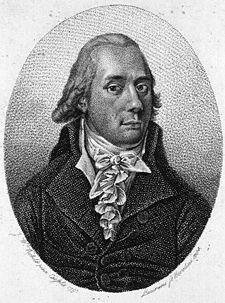
(1799–1851). The first prominent physical anthropologist, the German physician Johann Friedrich Blumenbach
(1752–1840) of Göttingen, amassed a large collection of human skulls.
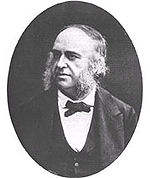
In the latter 19th century French physical anthropologists, led by Paul Broca
(1824–1880), focused on craniometry while the German tradition, led by Rudolf Virchow
(1821–1902), emphasized the influence of environment and disease upon the human body. American thought evolved the “four-field approach”, skeletons, artefacts, language and culture (ways of life) using the remains of North American people.
In 1897 Columbia University
appointed Franz Boas
(1858–1942) as a physical anthropologist for his expertise in measuring schoolchildren and collecting of Inuit
skeletons. From his German education and training Boas emphasized the mutability of the human form and minimized race (then a biology synonym) in favor of culture
. Ales Hrdlicka
(1869–1943), a physician, studied physical anthropology in France under Leonce Manouvrier before working at the Smithsonian Institution
from 1902.
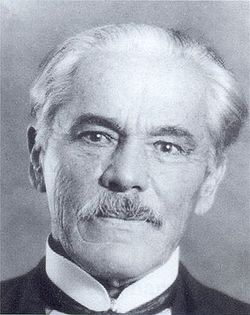 Earnest Hooton
(1887–1954), a Classics PhD from the University of Wisconsin, entered anthropology as an Oxford Rhodes Scholar under R. R. Marett and the anatomist Arthur Keith
. Harvard University hired Hooton in 1913: he trained most American physical anthropologists of the coming decades, beginning with Harry L. Shapiro
and Carleton S. Coon
and struggled to differentiate physical anthropology from racism. There was much intellectual
continuity with Germans such as Eugen Fischer
, Fritz Lenz
and Erwin Baur
.
In 1951 Sherwood Washburn
, a Hooton alumnus, introduced a "new physical anthropology", withdrawing from the study of racial typology to concentrate upon the study of human microevolution, moving away from classification towards evolutionary process. Anthropology expanded to comprehend paleoanthropology
and primatology
.
, biological anthropology, nutrition
and medicine
which focuses on human
s; it is closely related to primate
biology, and a number of other fields.
, predominantly found in U.S. academic and public health settings, that incorporates perspectives from the biological and medical anthropology
subfields. In contrast to much of medical anthropology, it does not generally take a critical approach to biomedicine
and Western medicine
. Instead, it seeks to improve medical practice and biomedical science through the holistic
integration of cross-cultural
or biocultural
, behavioral
, and epidemiological
perspectives on health. As an academic discipline, biomedical anthropology is closely related to human biology
.
Currently, the only accredited degree program in biomedical anthropology is at Binghamton University
http://biomedical.binghamton.edu. Other anthropology departments, such as that of the University of Washington
http://depts.washington.edu/anthweb/programs/medical.php, offer biomedical tracks within more traditional biological or biocultural anthropology programs.
, the Australoid race, and the Capoid race which was the racial classification system as defined in 1962 by Carleton S. Coon
).
The typological model was built on the assumption that humans can be assigned to a race based on similar physical traits. However, author Dennis O'Neil says the typological model in anthropology is now thoroughly discredited. Current mainstream thinking is that the morphological traits are due to simple variations in specific regions, and are the effect of climatic selective pressures. This debate is covered in more detail in the article on race.
and Kretschmer
typologies are examples as well as Sheldon's constitutional theory of personality.
to identify and situate racial groups using maps
to highlight, perpetuate, and naturalize the differences of race through both literal and metaphorical means, mapmakers create a common knowledge by displaying specific data as representative the real world, and construct racial identity by framing, situating, and defining what race is.
As a result, there is a long tradition of cartography being used as a tool to support social Darwinism
, physical anthropology
, and evolution theories
, which seek to promote specific people as superior to others.
Racism
, as it is understood today in western thought, originates in the late 15th century as an expression of European
superiority. However, the basis for racial mapping, at least in the western world, goes back to the Hellenistic tradition of mapping, where exotic “other” people were purported to live in far off lands. These “others” were usually based upon the writings of Herodotus
, and later Greek cartographers spatially situated these groups in their maps. The use of maps to identify otherness was also present Medieval Europe through the use of mappaemundi. These maps displayed “monstrous races” along the periphery to denote the separation between the settled (Europe) and the unknown. While these old maps are originally seen as representation of Christian
proselytizing influence, they also exude an ideal of European supremacy. European mapmakers continued this tradition into the colonial
era, using the maps to replace indigenous
ideas of identity and spatial distribution. These maps, and others, were used to legitimize European imperialism
through the use of racial delineation. Europeans were bringing their supposedly superior race, and the knowledge that went with that, to the world through their empire
s, and those empires were situated along a spatial understanding made possible through maps.
Racial ideology is not to be found entirely in maps of colonialization, it is also seen within the biopolitics
of the early 19th century with the rise of the “population” as a unit of analysis, and a governmental concern with health and crime that led attempts to understand, and categorize, the population. The effects of grouping individuals into populations and having identities for the population, as opposed to the individual, presents the ability of a government to categorize people based upon knowledge. Many times this knowledge, and the categorization was done using cartography.
Following the end of World War I
, many of Europe’s borders were redrawn, often influenced by racial and eugenic ideologies. The decision behind this was that, “…territories remain stable and peace be guaranteed,”. The AGS
assisted in the redrawing of Europe's map through the project known as the Inquiry
, and in doing so helped to determine what the territory and identity of people in Europe would be. Consequently, the redrawing of Europe’s map after World War I was directly influenced by the knowledge of racial purity.
Anthropology
Anthropology is the study of humanity. It has origins in the humanities, the natural sciences, and the social sciences. The term "anthropology" is from the Greek anthrōpos , "man", understood to mean mankind or humanity, and -logia , "discourse" or "study", and was first used in 1501 by German...
that studies the physical development of the human species. It plays an important part in paleoanthropology
Paleoanthropology
Paleoanthropology, which combines the disciplines of paleontology and physical anthropology, is the study of ancient humans as found in fossil hominid evidence such as petrifacted bones and footprints.-19th century:...
(the study of human origins) and in forensic anthropology
Forensic anthropology
Forensic anthropology is the application of the science of physical anthropology and human osteology in a legal setting, most often in criminal cases where the victim's remains are in the advanced stages of decomposition. A forensic anthropologist can assist in the identification of deceased...
(the analysis and identification of human remains for legal purposes). It draws upon human anthropometrics (body measurements), human genetics
Human genetics
Human genetics describes the study of inheritance as it occurs in human beings. Human genetics encompasses a variety of overlapping fields including: classical genetics, cytogenetics, molecular genetics, biochemical genetics, genomics, population genetics, developmental genetics, clinical genetics,...
(molecular anthropology
Molecular anthropology
Molecular anthropology is a field of anthropology in which molecular analysis is used to determine evolutionary links between ancient and modern human populations, as well as between contemporary species...
) and human osteology
Osteology
Osteology is the scientific study of bones. A subdiscipline of anatomy, anthropology, and archeology, osteology is a detailed study of the structure of bones, skeletal elements, teeth, morphology, function, disease, pathology, the process of ossification , the resistance and hardness of bones , etc...
(the study of bones) and includes neuroanthropology
Neuroanthropology
Neuroanthropology is the study of culture and the brain. This field explores how new findings in the brain sciences help us understand the interactive effects of culture and biology on human development and behavior...
, the study of human brain evolution, and of culture as neurological adaptation to environment.
In two centuries biological anthropology has been involved in a range of controversies. The quest for human origins was accompanied by the evolution debate and various racial theories. The nature and nurture debate became a political battleground. There have been various attempts to correlate human physique with psychological traits such as intelligence, criminality and personality type, many of which proved themselves mistaken and are now obsolete.
Branches
American Anthropological Association
The American Anthropological Association is a professional organization of scholars and practitioners in the field of anthropology. With 11,000 members, the Arlington, Virginia based association includes archaeologists, cultural anthropologists, biological anthropologists, linguistic...
is the Biological Anthropology Section while the principal professional organization is the American Association of Physical Anthropologists
American Association of Physical Anthropologists
The American Association of Physical Anthropologists is an American-based international scientific society of physical anthropologists. It was formed in 1930, with Morris Steggerda as one of its founding members. They have 1,700 members. They publish the American Journal of Physical...
. The term "biological anthropology" emerged with the rise of genetics and incorporates genetic marker
Genetic marker
A genetic marker is a gene or DNA sequence with a known location on a chromosome that can be used to identify cells, individuals or species. It can be described as a variation that can be observed...
s as well as primate ethology
Ethology
Ethology is the scientific study of animal behavior, and a sub-topic of zoology....
.
- PaleoanthropologyPaleoanthropologyPaleoanthropology, which combines the disciplines of paleontology and physical anthropology, is the study of ancient humans as found in fossil hominid evidence such as petrifacted bones and footprints.-19th century:...
, the study of fossil evidence for human evolutionHuman evolutionHuman evolution refers to the evolutionary history of the genus Homo, including the emergence of Homo sapiens as a distinct species and as a unique category of hominids and mammals...
, studying hominid fossilFossilFossils are the preserved remains or traces of animals , plants, and other organisms from the remote past...
evidence and dating to determine matters such as the time and manner in which the mandible evolved, the effect of nature and environment on bipedality or the use of opposable thumb, with hominid classificationBiological classificationBiological classification, or scientific classification in biology, is a method to group and categorize organisms by biological type, such as genus or species. Biological classification is part of scientific taxonomy....
and the individual naming of the proposed species and their place in primatologyPrimatologyPrimatology is the scientific study of primates. It is a diverse discipline and researchers can be found in academic departments of anatomy, anthropology, biology, medicine, psychology, veterinary sciences and zoology, as well as in animal sanctuaries, biomedical research facilities, museums and zoos...
, the study of primates. PaleopathologyPaleopathologyPaleopathology, also spelled palaeopathology, is the study of ancient diseases. It is useful in understanding the past history of diseases, and uses this understanding to predict its course in the future.- History of paleopathology :...
studies the traces of disease and injury in ancient human skeletons.
- Human behavioral ecologyHuman behavioral ecologyHuman behavioral ecology or human evolutionary ecology applies the principles of evolutionary theory and optimization to the study of human behavioral and cultural diversity. HBE examines the adaptive design of traits, behaviors, and life histories of humans in an ecological context...
, the study of behavioral adaptations (foraging, reproduction, ontogeny) from the evolutionary and ecologic perspectives, (see behavioral ecologyBehavioral ecologyBehavioral ecology, or ethoecology, is the study of the ecological and evolutionary basis for animal behavior, and the roles of behavior in enabling an animal to adapt to its environment...
). Human adaptationAdaptationAn adaptation in biology is a trait with a current functional role in the life history of an organism that is maintained and evolved by means of natural selection. An adaptation refers to both the current state of being adapted and to the dynamic evolutionary process that leads to the adaptation....
, the study of human adaptive responses (physiologic, developmental, genetic) to environmental stresses and variation.
- Human biology, an interdisciplinary field of biology, biological anthropology, nutritionNutritionNutrition is the provision, to cells and organisms, of the materials necessary to support life. Many common health problems can be prevented or alleviated with a healthy diet....
and medicine, concentrates upon international, population-level perspectives on health, evolution, adaptation and population geneticsPopulation geneticsPopulation genetics is the study of allele frequency distribution and change under the influence of the four main evolutionary processes: natural selection, genetic drift, mutation and gene flow. It also takes into account the factors of recombination, population subdivision and population...
.
- Human osteology, the study of human bones.
- PaleopathologyPaleopathologyPaleopathology, also spelled palaeopathology, is the study of ancient diseases. It is useful in understanding the past history of diseases, and uses this understanding to predict its course in the future.- History of paleopathology :...
, the study of disease in antiquity. This study focuses not only on pathogenic conditions observable in bones or mummified soft tissue, but also on nutritional disorders, variation in stature or the morphologyMorphology (biology)In biology, morphology is a branch of bioscience dealing with the study of the form and structure of organisms and their specific structural features....
of bones over time, evidence of physical trauma, or evidence of occupationally derived biomechanical stress.
- Forensic anthropologyForensic anthropologyForensic anthropology is the application of the science of physical anthropology and human osteology in a legal setting, most often in criminal cases where the victim's remains are in the advanced stages of decomposition. A forensic anthropologist can assist in the identification of deceased...
, the application of osteology, paleopathology, archaeologyArchaeologyArchaeology, or archeology , is the study of human society, primarily through the recovery and analysis of the material culture and environmental data that they have left behind, which includes artifacts, architecture, biofacts and cultural landscapes...
, and other anthropological techniques for the identification of modern human remains or the reconstruction of events surrounding a person's death.
History
Scientific method
Scientific method refers to a body of techniques for investigating phenomena, acquiring new knowledge, or correcting and integrating previous knowledge. To be termed scientific, a method of inquiry must be based on gathering empirical and measurable evidence subject to specific principles of...
physical anthropology began in the 18th century with the study of racial classification. In the 1830s and 1840s, physical anthropology was prominent in the debate about slavery
Slavery
Slavery is a system under which people are treated as property to be bought and sold, and are forced to work. Slaves can be held against their will from the time of their capture, purchase or birth, and deprived of the right to leave, to refuse to work, or to demand compensation...
, with the scientific, monogenist works of the British abolitionist James Cowles Prichard
James Cowles Prichard
James Cowles Prichard MD FRS was an English physician and ethnologist. His influential Researches into the physical history of mankind touched upon the subject of evolution...
(1786–1848) opposing those of the American polygenist Samuel George Morton
Samuel George Morton
Samuel George Morton was an American physician and natural scientist. Morton, reared a Quaker but became Episcopalian in midlife, was born in Philadelphia, Pennsylvania, and graduated from the University of Pennsylvania in 1820. After earning an advanced degree from Edinburgh University in...
(1799–1851). The first prominent physical anthropologist, the German physician Johann Friedrich Blumenbach
Johann Friedrich Blumenbach
Johann Friedrich Blumenbach was a German physician, physiologist and anthropologist, one of the first to explore the study of mankind as an aspect of natural history, whose teachings in comparative anatomy were applied to classification of what he called human races, of which he determined...
(1752–1840) of Göttingen, amassed a large collection of human skulls.
In the latter 19th century French physical anthropologists, led by Paul Broca
Paul Broca
Pierre Paul Broca was a French physician, surgeon, anatomist, and anthropologist. He was born in Sainte-Foy-la-Grande, Gironde. He is best known for his research on Broca's area, a region of the frontal lobe that has been named after him. Broca’s Area is responsible for articulated language...
(1824–1880), focused on craniometry while the German tradition, led by Rudolf Virchow
Rudolf Virchow
Rudolph Carl Virchow was a German doctor, anthropologist, pathologist, prehistorian, biologist and politician, known for his advancement of public health...
(1821–1902), emphasized the influence of environment and disease upon the human body. American thought evolved the “four-field approach”, skeletons, artefacts, language and culture (ways of life) using the remains of North American people.
In 1897 Columbia University
Columbia University
Columbia University in the City of New York is a private, Ivy League university in Manhattan, New York City. Columbia is the oldest institution of higher learning in the state of New York, the fifth oldest in the United States, and one of the country's nine Colonial Colleges founded before the...
appointed Franz Boas
Franz Boas
Franz Boas was a German-American anthropologist and a pioneer of modern anthropology who has been called the "Father of American Anthropology" and "the Father of Modern Anthropology." Like many such pioneers, he trained in other disciplines; he received his doctorate in physics, and did...
(1858–1942) as a physical anthropologist for his expertise in measuring schoolchildren and collecting of Inuit
Inuit
The Inuit are a group of culturally similar indigenous peoples inhabiting the Arctic regions of Canada , Denmark , Russia and the United States . Inuit means “the people” in the Inuktitut language...
skeletons. From his German education and training Boas emphasized the mutability of the human form and minimized race (then a biology synonym) in favor of culture
Culture
Culture is a term that has many different inter-related meanings. For example, in 1952, Alfred Kroeber and Clyde Kluckhohn compiled a list of 164 definitions of "culture" in Culture: A Critical Review of Concepts and Definitions...
. Ales Hrdlicka
Aleš Hrdlicka
Aleš Hrdlička or Ales Hrdlicka was a Czech anthropologist who lived in the United States after his family had moved there in 1881...
(1869–1943), a physician, studied physical anthropology in France under Leonce Manouvrier before working at the Smithsonian Institution
Smithsonian Institution
The Smithsonian Institution is an educational and research institute and associated museum complex, administered and funded by the government of the United States and by funds from its endowment, contributions, and profits from its retail operations, concessions, licensing activities, and magazines...
from 1902.
Earnest Hooton
Earnest Albert Hooton was a U.S. physical anthropologist known for his work on racial classification and his popular writings such as the book Up From The Ape...
(1887–1954), a Classics PhD from the University of Wisconsin, entered anthropology as an Oxford Rhodes Scholar under R. R. Marett and the anatomist Arthur Keith
Arthur Keith
Sir Arthur Keith was a Scottish anatomist and anthropologist, who became a fellow of the Royal College of Surgeons of England and Hunterian Professor and conservator of the Hunterian Museum of the Royal College of Surgeons in London...
. Harvard University hired Hooton in 1913: he trained most American physical anthropologists of the coming decades, beginning with Harry L. Shapiro
Harry L. Shapiro
Harry Lionel Shapiro was an American author, eugenicist, and Professor of Anthropology.-Biography:Shapiro was born in to a Jewish family and was educated in Boston, Massachusetts....
and Carleton S. Coon
Carleton S. Coon
Carleton Stevens Coon, was an American physical anthropologist, Professor of Anthropology at the University of Pennsylvania, lecturer and professor at Harvard, and president of the American Association of Physical Anthropologists.-Biography:Carleton Coon was born in Wakefield, Massachusetts to a...
and struggled to differentiate physical anthropology from racism. There was much intellectual
Intellectualism
Intellectualism denotes the use and development of the intellect, the practice of being an intellectual, and of holding intellectual pursuits in great regard. Moreover, in philosophy, “intellectualism” occasionally is synonymous with “rationalism”, i.e. knowledge derived mostly from reason and...
continuity with Germans such as Eugen Fischer
Eugen Fischer
Eugen Fischer was a German professor of medicine, anthropology and eugenics. He was director of the Kaiser Wilhelm Institute of Anthropology, Human Heredity, and Eugenics between 1927 and 1942...
, Fritz Lenz
Fritz Lenz
Fritz A Lenz was a German geneticist, member of the Nazi party, and influential specialist in "racial hygiene" during the Third Reich, one of the leading German theorists of "scientific racism" which legitimized the Nazi racial policies, starting with the 1935 Nuremberg Laws.- Biography...
and Erwin Baur
Erwin Baur
Erwin Baur was a German geneticist and botanist. Baur worked primarily on plant genetics. He was director of the Kaiser Wilhelm Institute for Breeding Research . Baur is considered to be the father of plant virology...
.
In 1951 Sherwood Washburn
Sherwood Washburn
Sherwood Larned Washburn , nicknamed "Sherry", was an American physical anthropologist and pioneer in the field of primatology, opening it to study of primates in their natural habitats...
, a Hooton alumnus, introduced a "new physical anthropology", withdrawing from the study of racial typology to concentrate upon the study of human microevolution, moving away from classification towards evolutionary process. Anthropology expanded to comprehend paleoanthropology
Paleoanthropology
Paleoanthropology, which combines the disciplines of paleontology and physical anthropology, is the study of ancient humans as found in fossil hominid evidence such as petrifacted bones and footprints.-19th century:...
and primatology
Primatology
Primatology is the scientific study of primates. It is a diverse discipline and researchers can be found in academic departments of anatomy, anthropology, biology, medicine, psychology, veterinary sciences and zoology, as well as in animal sanctuaries, biomedical research facilities, museums and zoos...
.
Human biology
Human biology is an interdisciplinary academic field of biologyBiology
Biology is a natural science concerned with the study of life and living organisms, including their structure, function, growth, origin, evolution, distribution, and taxonomy. Biology is a vast subject containing many subdivisions, topics, and disciplines...
, biological anthropology, nutrition
Nutrition
Nutrition is the provision, to cells and organisms, of the materials necessary to support life. Many common health problems can be prevented or alleviated with a healthy diet....
and medicine
Medicine
Medicine is the science and art of healing. It encompasses a variety of health care practices evolved to maintain and restore health by the prevention and treatment of illness....
which focuses on human
Human
Humans are the only living species in the Homo genus...
s; it is closely related to primate
Primate
A primate is a mammal of the order Primates , which contains prosimians and simians. Primates arose from ancestors that lived in the trees of tropical forests; many primate characteristics represent adaptations to life in this challenging three-dimensional environment...
biology, and a number of other fields.
Biomedical anthropology
Biomedical anthropology is a subfield of anthropologyAnthropology
Anthropology is the study of humanity. It has origins in the humanities, the natural sciences, and the social sciences. The term "anthropology" is from the Greek anthrōpos , "man", understood to mean mankind or humanity, and -logia , "discourse" or "study", and was first used in 1501 by German...
, predominantly found in U.S. academic and public health settings, that incorporates perspectives from the biological and medical anthropology
Medical anthropology
Medical anthropology is an interdisciplinary field which studies "human health and disease, health care systems, and biocultural adaptation". It views humans from multidimensional and ecological perspectives...
subfields. In contrast to much of medical anthropology, it does not generally take a critical approach to biomedicine
Biomedicine
Biomedicine is a branch of medical science that applies biological and other natural-science principles to clinical practice,. Biomedicine, i.e. medical research, involves the study of physiological processes with methods from biology, chemistry and physics. Approaches range from understanding...
and Western medicine
Medicine
Medicine is the science and art of healing. It encompasses a variety of health care practices evolved to maintain and restore health by the prevention and treatment of illness....
. Instead, it seeks to improve medical practice and biomedical science through the holistic
Holism
Holism is the idea that all the properties of a given system cannot be determined or explained by its component parts alone...
integration of cross-cultural
Cross-cultural studies
Cross-cultural studies, sometimes called Holocultural Studies, is a specialization in anthropology and sister sciences that uses field data from many societies to examine the scope of human behavior and test hypotheses about human behavior and culture. Cross-cultural studies is the third form of...
or biocultural
Biocultural anthropology
Biocultural anthropology is the scientific exploration of the relationships between human biology and culture. Physical anthropologists throughout the first half of the 20th century viewed this relationship from a racial perspective; that is, from the assumption that typological human biological...
, behavioral
Behavioral health
In psychology behavioral health, as a general concept, refers to the reciprocal relationship between human behavior, individually or socially, and the well-being of the body, mind, and spirit, whether the latter are considered individually or as an integrated whole...
, and epidemiological
Epidemiology
Epidemiology is the study of health-event, health-characteristic, or health-determinant patterns in a population. It is the cornerstone method of public health research, and helps inform policy decisions and evidence-based medicine by identifying risk factors for disease and targets for preventive...
perspectives on health. As an academic discipline, biomedical anthropology is closely related to human biology
Human biology
Human Biology is an interdisciplinary area of study that examines humans through the influences and interplay of many diverse fields such as genetics, evolution, physiology, epidemiology, ecology, nutrition, population genetics and sociocultural influences. It is closely related to...
.
Currently, the only accredited degree program in biomedical anthropology is at Binghamton University
Binghamton University
Binghamton University, also formally called State University of New York at Binghamton, , is a public research university in the State of New York. The University is one of the four university centers in the State University of New York system...
http://biomedical.binghamton.edu. Other anthropology departments, such as that of the University of Washington
University of Washington
University of Washington is a public research university, founded in 1861 in Seattle, Washington, United States. The UW is the largest university in the Northwest and the oldest public university on the West Coast. The university has three campuses, with its largest campus in the University...
http://depts.washington.edu/anthweb/programs/medical.php, offer biomedical tracks within more traditional biological or biocultural anthropology programs.
Typology
Typology in anthropology is the categorization of the human species by physical traits that are readily observable from a distance such as head shape, skin color, hair form, body build and stature. During the late 19th and early 20th centuries anthropologists used a typological model to divide people from different ethnic regions into races, (e.g. the Negroid race, the Caucasoid race, the Mongoloid raceMongoloid race
Mongoloid is a term sometimes used by forensic anthropologists and physical anthropologists to refer to populations that share certain phenotypic traits such as epicanthic fold and shovel-shaped incisors and other physical traits common in East Asia, the Americas and the Arctic...
, the Australoid race, and the Capoid race which was the racial classification system as defined in 1962 by Carleton S. Coon
Carleton S. Coon
Carleton Stevens Coon, was an American physical anthropologist, Professor of Anthropology at the University of Pennsylvania, lecturer and professor at Harvard, and president of the American Association of Physical Anthropologists.-Biography:Carleton Coon was born in Wakefield, Massachusetts to a...
).
The typological model was built on the assumption that humans can be assigned to a race based on similar physical traits. However, author Dennis O'Neil says the typological model in anthropology is now thoroughly discredited. Current mainstream thinking is that the morphological traits are due to simple variations in specific regions, and are the effect of climatic selective pressures. This debate is covered in more detail in the article on race.
Somatotypes
Somatotypology is the study of somatotypes or constitutional types. The objective is to produce a classification system that enables an observer to make determinations of the susceptibiity of a person of a given type to physical or psychological diseases or disease generally. The CarusCarl Gustav Carus
Carl Gustav Carus was a German physiologist and painter, born at Leipzig.A friend of Johann Wolfgang von Goethe, he was a many-sided man: a doctor, a naturalist, a scientist and a psychologist and an advocate of the theory that health of body and mind depends on the equipoise of antagonistic...
and Kretschmer
Ernst Kretschmer
Ernst Kretschmer Prof. Dr. med. Dr. phil. h.c., was a German psychiatrist who researched the human constitution and established a typology...
typologies are examples as well as Sheldon's constitutional theory of personality.
Racial mapping
Racial Mapping is the use of cartographyCartography
Cartography is the study and practice of making maps. Combining science, aesthetics, and technique, cartography builds on the premise that reality can be modeled in ways that communicate spatial information effectively.The fundamental problems of traditional cartography are to:*Set the map's...
to identify and situate racial groups using maps
MAPS
Maps is the plural of map, a visual representation of an area.As an acronym, MAPS may refer to:* Mail Abuse Prevention System, an organisation that provides anti-spam support...
to highlight, perpetuate, and naturalize the differences of race through both literal and metaphorical means, mapmakers create a common knowledge by displaying specific data as representative the real world, and construct racial identity by framing, situating, and defining what race is.
As a result, there is a long tradition of cartography being used as a tool to support social Darwinism
Social Darwinism
Social Darwinism is a term commonly used for theories of society that emerged in England and the United States in the 1870s, seeking to apply the principles of Darwinian evolution to sociology and politics...
, physical anthropology
Physical anthropology
Biological anthropology is that branch of anthropology that studies the physical development of the human species. It plays an important part in paleoanthropology and in forensic anthropology...
, and evolution theories
Evolution Theory
Tin1 Yin2 Leun6 is Candy Lo's 9th studio album. It was released on 4 June 2005. For this album Candy Lo worked together with Hong Kong producer Kubert Leung with whom she worked on previous albums as well.- Track listing :...
, which seek to promote specific people as superior to others.
Racism
Racism
Racism is the belief that inherent different traits in human racial groups justify discrimination. In the modern English language, the term "racism" is used predominantly as a pejorative epithet. It is applied especially to the practice or advocacy of racial discrimination of a pernicious nature...
, as it is understood today in western thought, originates in the late 15th century as an expression of European
European ethnic groups
The ethnic groups in Europe are the various ethnic groups that reside in the nations of Europe. European ethnology is the field of anthropology focusing on Europe....
superiority. However, the basis for racial mapping, at least in the western world, goes back to the Hellenistic tradition of mapping, where exotic “other” people were purported to live in far off lands. These “others” were usually based upon the writings of Herodotus
Herodotus
Herodotus was an ancient Greek historian who was born in Halicarnassus, Caria and lived in the 5th century BC . He has been called the "Father of History", and was the first historian known to collect his materials systematically, test their accuracy to a certain extent and arrange them in a...
, and later Greek cartographers spatially situated these groups in their maps. The use of maps to identify otherness was also present Medieval Europe through the use of mappaemundi. These maps displayed “monstrous races” along the periphery to denote the separation between the settled (Europe) and the unknown. While these old maps are originally seen as representation of Christian
Christian
A Christian is a person who adheres to Christianity, an Abrahamic, monotheistic religion based on the life and teachings of Jesus of Nazareth as recorded in the Canonical gospels and the letters of the New Testament...
proselytizing influence, they also exude an ideal of European supremacy. European mapmakers continued this tradition into the colonial
Colonialism
Colonialism is the establishment, maintenance, acquisition and expansion of colonies in one territory by people from another territory. It is a process whereby the metropole claims sovereignty over the colony and the social structure, government, and economics of the colony are changed by...
era, using the maps to replace indigenous
Indigenous peoples
Indigenous peoples are ethnic groups that are defined as indigenous according to one of the various definitions of the term, there is no universally accepted definition but most of which carry connotations of being the "original inhabitants" of a territory....
ideas of identity and spatial distribution. These maps, and others, were used to legitimize European imperialism
Imperialism
Imperialism, as defined by Dictionary of Human Geography, is "the creation and/or maintenance of an unequal economic, cultural, and territorial relationships, usually between states and often in the form of an empire, based on domination and subordination." The imperialism of the last 500 years,...
through the use of racial delineation. Europeans were bringing their supposedly superior race, and the knowledge that went with that, to the world through their empire
Empire
The term empire derives from the Latin imperium . Politically, an empire is a geographically extensive group of states and peoples united and ruled either by a monarch or an oligarchy....
s, and those empires were situated along a spatial understanding made possible through maps.
Racial ideology is not to be found entirely in maps of colonialization, it is also seen within the biopolitics
Biopolitics
The term "biopolitics" or "biopolitical" can refer to several different yet often compatible concepts.-Definitions:# In the work of Michel Foucault, the style of government that regulates populations through "biopower" .# In the works of Michael Hardt and Antonio Negri, anti-capitalist insurrection...
of the early 19th century with the rise of the “population” as a unit of analysis, and a governmental concern with health and crime that led attempts to understand, and categorize, the population. The effects of grouping individuals into populations and having identities for the population, as opposed to the individual, presents the ability of a government to categorize people based upon knowledge. Many times this knowledge, and the categorization was done using cartography.
Following the end of World War I
World War I
World War I , which was predominantly called the World War or the Great War from its occurrence until 1939, and the First World War or World War I thereafter, was a major war centred in Europe that began on 28 July 1914 and lasted until 11 November 1918...
, many of Europe’s borders were redrawn, often influenced by racial and eugenic ideologies. The decision behind this was that, “…territories remain stable and peace be guaranteed,”. The AGS
American Geographical Society
The American Geographical Society is an organization of professional geographers, founded in 1851 in New York City. Most fellows of the society are Americans, but among them have always been a significant number of fellows from around the world...
assisted in the redrawing of Europe's map through the project known as the Inquiry
The Inquiry
The Inquiry was a study group established in September 1917 by Woodrow Wilson to prepare materials for the peace negotiations following World War I. The group, composed of around 150 academics, was directed by presidential adviser Edward House and supervised directly by philosopher Sidney Mezes...
, and in doing so helped to determine what the territory and identity of people in Europe would be. Consequently, the redrawing of Europe’s map after World War I was directly influenced by the knowledge of racial purity.
Renowned biological anthropologists
- Egon Freiherr von EickstedtEgon Freiherr von EickstedtEgon Freiherr von Eickstedt was a German physical anthropologist who classified humanity into races.-Racial typology:...
- Richard LeakeyRichard LeakeyRichard Erskine Frere Leakey is a politician, paleoanthropologist and conservationist. He is second of the three sons of the archaeologists Louis Leakey and Mary Leakey, and is the younger brother of Colin Leakey...
(1944- ) - Frank B. LivingstoneFrank B. LivingstoneFrank B. Livingstone was an American biological anthropologist.Livingstone was born in Winchester, Massachusetts to Guy P. Livingstone and Margery Brown Livingstone. He graduated from Winchester High School in 1946 and earned his Bachelors Degree in Mathematics at Harvard University in 1950...
(1928–2005) - David PilbeamDavid PilbeamDavid Pilbeam is the Henry Ford II Professor of the Social Sciences at Harvard University and curator of paleoanthropology at the Peabody Museum of Archaeology and Ethnology. He is a member of the National Academy of Sciences. He received his Ph.D...
- Elwyn Simons
- Phillip V. TobiasPhillip V. TobiasPhillip Vallentine Tobias is a South African palaeoanthropologist and Professor Emeritus at the University of the Witwatersrand in Johannesburg...
(1925-) - Alan C. Walker (1938- )
- Sherwood WashburnSherwood WashburnSherwood Larned Washburn , nicknamed "Sherry", was an American physical anthropologist and pioneer in the field of primatology, opening it to study of primates in their natural habitats...
(1911–2000) - Ralph HollowayRalph HollowayRalph Leslie Holloway, Jr. is a physical anthropologist at Columbia University and research associate with the American Museum of Natural History. Since obtaining his Ph.D from the University of California, Berkley in 1964, Holloway has served as a professor of anthropology at Columbia...
(1935- ) - Milford H. WolpoffMilford H. WolpoffMilford H. Wolpoff is a paleoanthropologist, and since 1977, a professor of anthropology and adjunct associate research scientist, Museum of Anthropology at the University of Michigan...
(1942- ) - Tim WhiteTim White (anthropologist)Tim D. White is an American Paleoanthropologist and Professor of Integrative Biology at the University of California, Berkeley. He is most famous for his work on Lucy as Australopithecus afarensis with discoverer Donald Johanson.-Career:White was born in Los Angeles County, California...
(1950- ) - Pardis SabetiPardis SabetiPardis C. Sabeti is an Iranian American computational biologist, medical geneticist and evolutionary geneticist, who developed a bioinformatic statistical method which identifies sections of the genome that have been subject to natural selection and an algorithm which explains the effects of...
(1975- ) - Raymond DartRaymond DartRaymond Arthur Dart was an Australian anatomist and anthropologist, best known for his involvement in the 1924 discovery of the first fossil ever found of Australopithecus africanus, an extinct hominid closely related to humans, at Taung in the North of South Africa in the province...
- Robert CorrucciniRobert CorrucciniRobert Spencer Corruccini is an American anthropologist, distinguished professor, Smithsonian Institution Research Fellow, Human Biology Council Fellow , and the 1994 Outstanding Scholar at Southern Illinois University-Carbondale...
- Eugenie C. Scott (1945- )
- Donald JohansonDonald JohansonDonald Carl Johanson is an American paleoanthropologist. Along with Maurice Taieb, and Yves Coppens he is known for the discovery of the skeleton of the female hominid australopithecine known as "Lucy", in the Afar Triangle region of Hadar, Ethiopia.-Early years:Johanson was born in Chicago,...
- Yohannes Haile-SelassieYohannes Haile-SelassieDr. Yohannes Haile-Selassie is an Ethiopian paleoanthropologist. An authority on pre-Homo sapiens hominids, he particularly focuses his attention on the Great Rift Valley and Middle Awash Valleys of East Africa....
- A. Roberto FrisanchoA. Roberto FrisanchoA. Roberto Frisancho is a biological anthropologist and the Arthur F. Thurnau Professor of Anthropology at the University of Michigan. He is the 2008 recipient of the Franz Boas Distinguished Achievement Award in Anthropology bestowed by the American Human Biology Association...
(1939- ) - Robert JurmainRobert JurmainRobert Jurmain is a professor emeritus of anthropology at San Jose State University.Jurmain holds an A.B. in anthropology from UCLA and a Ph.D. in Biological Anthropology from Harvard. He joined the San Jose State faculty in 1975, and taught there until his retirement in 2004.He is the author or...
- Jane GoodallJane GoodallDame Jane Morris Goodall, DBE , is a British primatologist, ethologist, anthropologist, and UN Messenger of Peace. Considered to be the world's foremost expert on chimpanzees, Goodall is best known for her 45-year study of social and family interactions of wild chimpanzees in Gombe Stream National...
- Kathy ReichsKathy ReichsKathleen Joan Toelle "Kathy" Reichs is an American crime writer, forensic anthropologist and academic . She is a professor of anthropology at the University of North Carolina at Charlotte, but is currently on indefinite leave...
(Kathleen Joan Toelle Reichs) - Colin GrovesColin GrovesColin Peter Groves is Professor of Biological Anthropology at the Australian National University in Canberra, Australia.Born in England on 24 June 1942, Colin Groves completed a Bachelor of Science at University College London in 1963, and a Doctor of Philosophy at the Royal Free Hospital School of...
- Linda Fedigan
- Meredith SmallMeredith SmallMeredith F. Small is a Professor of Anthropology at Cornell University and popular science author. She was born November 20, 1950, in St. Louis, Missouri. She has been widely published in academic journals, and her research is well presented in her most popular book: "Our Babies, Ourselves". She...
- David WattsDavid P. WattsDavid Watts is a professor of anthropology at Yale University. As a physical anthropologist he has studied chimpanzees. He directed the Karisoke Research Center in Rwanda founded by Dian Fossey for two years, and is doing research on chimpanzees in a long term study at Ngogo National Park in...
- Richard WranghamRichard WranghamRichard W. Wrangham is a British primatologist. He is the Ruth Moore Professor of Biological Anthropology at Harvard University and his research group is now part of the newly established Department of Human Evolutionary Biology....
- Russell MittermeierRussell MittermeierRussell Alan Mittermeier is a primatologist, herpetologist and biological anthropologist. He has written several books for both popular and scientist audiences, and has authored some 300 scientific papers.-Biography:...
- William M. BassWilliam M. BassWilliam Marvin Bass III is an American forensic anthropologist, best known for his research on human osteology and human decomposition. He has also assisted federal, local, and non-U.S. authorities in the identification of human remains...
- Janet M. Monge
- Claude O. Lovejoy
- Maciej Henneberg (1949- )
See also
- PsychologyPsychologyPsychology is the study of the mind and behavior. Its immediate goal is to understand individuals and groups by both establishing general principles and researching specific cases. For many, the ultimate goal of psychology is to benefit society...
- Behavioural neuroscience
- Racial Mapping
- Craniometry
- Craniofacial anthropometry
- PhysiognomyPhysiognomyPhysiognomy is the assessment of a person's character or personality from their outer appearance, especially the face...
- PhrenologyPhrenologyPhrenology is a pseudoscience primarily focused on measurements of the human skull, based on the concept that the brain is the organ of the mind, and that certain brain areas have localized, specific functions or modules...
External links
- American Association of Physical Anthropologists
- British Association of Biological Anthropologists and Osteoarchaeologists
- Human Biology Association
- Canadian Association for Physical Anthropology
- Homo erectus and Homo neanderthalensis reconstructions - Electronic articles published by the Division of Anthropology, American Museum of Natural History.
- The Internet Journal of Biological Anthropology-The Free Online Journal
- Istituto Italiano di Antropologia
- Journal of Anthropological Sciences - free full text review articles available
- Mapping Transdisciplinarity in Anthropology pdf
- Fundamental Theory of Human Sciences ppt
- Human Biology Association
- American Journal of Human Biology
- Human Biology, The International Journal of Population Genetics and Anthropology
- Economics and Human Biology
- Laboratory for Human Biology Research at Northwestern University
- The Program in Human Biology at Stanford
- Society for the Study of Human Biology Symposium Series
- Scottish Qualifications Authority
Further reading
- Michael A. Little and Kenneth A.R. Kennedy, eds. Histories of American Physical Anthropology in the Twentieth Century (Lexington Books; 2010); 259 pages; essays on the field from the late 19th to the late 20th century; topics include Sherwood L. Washburn (1911–2000) and the "new physical anthropology."