In Depth
See Also

God

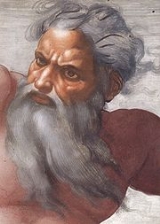
God is the deity believed by monotheists to be the supreme reality. He is believed variously to be the creator, emanator, substance or at least the sustainer, of the universe. Theologians and philosophers have ascribed a number of attributes to God, including omniscience, omnipotence, omnipresence, omnibenevolence, divine simplicity, and eternal and necessary existence. He has been described as incorporeal, a personal being, the source of all moral obligation, and the greatest conceivable existent. the great medieval philosophers Medieval philosophy

Medieval philosophy is the philosophy [i] of Western Europe in the "era" now known as medieval [i] or th ... 

 developed arguments for the existence of God,

Discussions

  Discussion Features

   Ask a question about 'God'

   Start a new discussion about 'God'

   Answer questions about 'God'

   'God' discussion forum

Timeline

363   The Council of Laodicea, which dealt with constricting the conduct of church members, is held. The major canon approved by this council was canon 29, which prohibited resting on the Sabbath (Saturday), restricting Christians to honoring the Lord God

God is the deity [i] believed by monotheists [i] to be the supreme reality. ... 

 on Sunday.

1519   Hernán Cortés Hernán Cortés

Hernn Corts, Marqus del Valle de Oaxaca was the conquistador [i] who conquered the Aztec empire [i] ... 

 enters Tenochtitlán Tenochtitlan

Tenochtitlan or, alternatively, Mexico-Tenochtitlan, was the capital of the Aztec [i] empire, bu ... 

 and Aztec Aztec

The Aztecs were a Pre-Columbian [i] Mesoamerica [i]n people of central Mexico [i] in the 14th [i] ... 

 ruler Moctezuma Moctezuma II

Moctezuma II, also known as Motecuhzoma Xocoyotzin and as Montezuma , was an Aztec [i] ruler , ... 

 welcomes him with great pomp as would befit a returning god.

1619   Thirty-eight colonists Colony

In politics [i] and in history [i], a colony is a territory [i] under the immediate political control of ... 

 from Berkeley Parish in England England

England is the largest and most populous constituent country [i] of the United Kingdom [i]. ... 

 disembark in Virginia Virginia

The Commonwealth of Virginia is one of the original thirteen colonies [i] of the United States [i] ... 

 and give thanks to God (this is considered by some to be the first Thanksgiving Thanksgiving

Thanksgiving, or Thanksgiving Day, is an annual secular [i] one-day holiday [i] observed in Canada [i] ... 

 in the Americas Americas

he Americas are the lands of the Western hemisphere [i] or New World [i] consisting o ... 

).

1820   Spring Spring (season)

Spring is one of the four season [i]s of temperate zone [i]s, the transition from winter [i] into summer [i] ... 

 - Joseph Smith, Jr. Joseph Smith, Jr.

Joseph Smith, Jr. was an American [i] religious [i] leader who founded the Latter Day Saint movement [i] ... 

 at age 14 was visited in a vision by God and Jesus Jesus

Jesus,Some of the historians and Biblical scholars who place the birth and death of Jesus within this ra... 

 (Tradition holds that this occurred on April 6)

1950   Pope Pius XII Pope Pius XII

Pope Pius XII , born Eugenio Maria Giuseppe Giovanni Pacelli , reigned as the 260th pope [i], the ... 

 defines a new dogma of Roman Catholicism Roman Catholic Church

The Roman Catholic Church or Catholic Church is the Christian [i] Church [i] ... 

: that God assumed Assumption of Mary

According to Roman Catholic [i] doctrine and the traditions of the Roman Catholic Church [i], th ... 

 Mary's body into Heaven after her death.


Quotations

A God who cannot smile could not have created this humorous universe.

Sri Aurobindo, in Thoughts and Aphorisms

A man who recognizes no God is probably placing an inordinate value on himself.

Robertson Davies in Conversations

An honest God is the noblest work of man.

An honest man's the noblest work of God.

At best, God can be viewed as nothing more than an uncaring incompetent father-figure.

Before God we are all equally wise — and equally foolish.

       More Quotes >>


Encyclopedia

 Disambiguation


This article discusses the term "God" in the context of monotheism and henotheism. See God God

God is the deity [i] believed by monotheists [i] to be the supreme reality.... 

 for the etymology and capitalization of the term. See deity, god God

God is the deity [i] believed by monotheists [i] to be the supreme reality.... 

 or goddess Goddess

A goddess is a female [i] deity [i], in contrast with a male [i] deity known as a "god [i]". ... 

 for details on polytheistic usages. See Names of God Names of God

Monotheistic [i] faiths believe that there is and can only be one unique supreme being, Polytheism [i] ... 

 for terms used in other languages or specific belief systems. See God God

God is the deity [i] believed by monotheists [i] to be the supreme reality.... 

 for other uses.


God is the deity believed by monotheists to be the supreme reality. He is believed variously to be the creator, emanator, substance or at least the sustainer, of the universe.

Theologians and philosophers have ascribed a number of attributes to God, including omniscience, omnipotence, omnipresence, omnibenevolence, divine simplicity, and eternal and necessary existence. He has been described as incorporeal, a personal being, the source of all moral obligation, and the greatest conceivable existent. the great medieval philosophers Medieval philosophy

Medieval philosophy is the philosophy [i] of Western Europe in the "era" now known as medieval [i] or th ... 

 developed arguments for the existence of God,

The last few hundred years of philosophy have seen sustained attacks on the ontological, cosmological, and teleological arguments for God's existence. Against these, some theists  argue that faith is not a product of reason, but requires risk. There would be no risk, they say, if the arguments for God's existence were as solid as the laws of logic, a position famously summed up by Pascal Blaise Pascal

Blaise Pascal was a French [i] mathematician [i], physicist [i], and religious [i] philosopher [i] ... 

 as: "The heart has reasons which reason knows not of."

Etymology and usage


The earliest written form of the Germanic word "god" comes from the 6th century Christian Christianity

Christianity is a monotheistic [i] religion [i] centered on Jesus of Nazareth [i] ... 

 Codex Argenteus Codex Argenteus

The Codex Argenteus is a 6th century [i] manuscript, originally containing bishop Ulfilas [i]'s 4th century [i]... 

, which descends from the Old English guţ from the Proto-Germanic Proto-Germanic language

Proto-Germanic is the common ancestor of all Germanic languages [i]. ... 

 *?udan.
While hotly disputed, most agree on the reconstructed Proto-Indo-European form *?hu-tó-m, based on the root *?hau-, *?hau??-, which meant "to call" or "to invoke". "Ghau" itself appears to have derived from a posthumously deified chieftain named "Gaut" — a name which sometimes appears as a name for the Norse god Odin Odin

Odin is considered the chief god [i] in Norse mythology [i] and Norse paganism [i], like the Anglo-Saxon [i] ... 

 or one of his descendants. The Lombardic form of Odin, Godan, may derive from cognate Proto-Germanic *?udánaz.

The capitalized form "God" was first used in Ulfilas Ulfilas

Ulfilas or Wulfila , bishop [i], missionary [i], and translator [i], was a Goth [i] or half ... 

' Gothic translation of the New Testament New Testament

The New Testament , sometimes called the Greek Testament or Greek Scriptures, and sometimes ... 

, to represent the Greek Theos , and the Latin Deus DEUS

dEUS is an indie rock [i] band based in Antwerp [i], Belgium [i], currently consisting of Tom Barman [i] ... 

.
Because the development of English orthography was dominated by Christian texts, the capitalization continues to represent a distinction between monotheistic "God" and the "gods" of pagan polytheism.
The name "God" now typically refers to the Abrahamic God Abrahamic religion

In the study of comparative religion [i], an Abrahamic religion or Judeo-Abrahamic Faith is any religion [i]... 

 of Judaism Judaism

Judaism is the religion [i] of the Jew [i]ish people. ... 

 , Christianity Christianity

Christianity is a monotheistic [i] religion [i] centered on Jesus of Nazareth [i] ... 

 , and Islam Islam

Islam is a monotheistic [i] religion [i] based upon the Qur'an [i], which adherents believe w ... 

 . Though there are significant cultural divergences that are implied by these different names, "God" remains the common English translation for all.
The name may signify any related or similar monotheistic deities, such as the early monotheism of Akhenaten Akhenaten

Akhenaten, known as Amenhotep IV at the start of his reign, was a Pharaoh [i] of the Eighteenth dynasty of Egypt [i] ... 

 and Zoroastrianism Zoroastrianism

Zoroastrianism is the religion and philosophy based on the teachings ascribed to the prophet Zoroaster [i] ... 

.
In the context of comparative religion, "God" is also often related to concepts of universal deity in Dharmic religion Dharmic religions

Dharmic religions are a family of religions whose theology and philosophy center on the concept of Dharma [i] ... 

s, in spite of the historical distinctions which separate monotheism from polytheism — a distinction which some, such as Max Müller Max Müller

Friedrich Max Mller, more commonly known as Max Mller, was a German [i] philologist [i] ... 

 and Joseph Campbell Joseph Campbell

Joseph Campbell was an American [i] professor [i], writer [i], and orator [i] best known ... 

, have characterised as a bias within Western Western culture

Western culture or Western civilization is a term used to refer to the culture [i]s of the people... 

 culture and theology.

History of monotheism


Many historians of religion hold that monotheism may be of relatively recent historical origins — although comparison is difficult as many religions claim to be ancient. Native religions of China China

China is a cultural region [i] and ancient civilization [i] in East Asia [i]. ... 

 and India India

India , officially the Republic of India, is a country in South Asia [i]. ... 

 have concepts of panentheistic views of God that are difficult to classify along Western Western world

The term Western World or "the West" can have multiple meanings depending on its context.... 

 notions of monotheism vs. polytheism.

In the Ancient Orient Ancient Near East

The term Ancient Near East or Ancient Orient encompasses the early civilization [i]s predating Classical Antiquity [i]... 

, many cities had their own local god, although this henotheistic worship of a single god did not imply denial of the existence of other gods. The Hebrew Ark of the Covenant Ark of the Covenant

The Ark of the Covenant is described in the Hebrew Bible [i] as a sacred container, wherein rested the ... 

 is supposed to have adapted this practice to a nomad Nomad

Communities of nomadic people move from place to place, rather than settling down [i] in one loc ... 

ic lifestyle, paving their way for a singular God. Yet, many scholars now believe that it may have been the Zoroastrian religion of the Persian Empire Persian Empire

The Persian Empire was a series of historical empires that ruled over the Iranian plateau [i] ... 

 that was the first monotheistic religion, and the Jews were influenced by such notions .

The innovative cult of the Egyptian solar god Aten Aten

Aten is a creator [i] of the universe [i] in ancient Egyptian mythology [i], usually regarde ... 

 was promoted by the pharaoh Akhenaten Akhenaten

Akhenaten, known as Amenhotep IV at the start of his reign, was a Pharaoh [i] of the Eighteenth dynasty of Egypt [i] ... 

 , who ruled between 1358 and 1340 BC. The Aten cult is often cited as the earliest known example of monotheism, and is sometimes claimed to have been a formative influence on early Judaism, due to the presence of Hebrew slaves in Egypt. But even though Akhenaten Akhenaten

Akhenaten, known as Amenhotep IV at the start of his reign, was a Pharaoh [i] of the Eighteenth dynasty of Egypt [i] ... 

's hymn to Aten offers strong evidence that Akhenaten considered Aten to be the sole, omnipotent creator, Akhenaten's program to enforce this monotheistic world-view ended with his death; the worship of other gods beside Aten never ceased outside his court, and the older polytheistic religions soon regained precedence.

Other early examples of monotheism include two late rigvedic Rigveda

The Rigveda is a collection of Vedic Sanskrit [i] hymns [i] counted as the holiest of the four reli ... 

 hymns to a Panentheistic creator god, Shri Rudram, a Vedic hymn to Rudra, an earlier aspect of Shiva often referred to by the ancient Brahmans as Stiva, a masculine fertility god, which expressed monistic theism Monism

Monism is the metaphysical [i] and theological [i] view that all is of one essential essence [i] ... 

, and is still chanted today; the Zoroastrian Zoroastrianism

Zoroastrianism is the religion and philosophy based on the teachings ascribed to the prophet Zoroaster [i] ... 

 Ahuramazda and Chinese Shang Ti. The worship of polytheistic gods, on the other hand, is seen by many to predate monotheism, reaching back as far as the Paleolithic. Today, monotheistic religions are dominant in the many parts of the world, though other systems of belief continue to be prevalent.

Names of God


The noun God is the proper English name used for the deity of monotheistic faiths. Different names for God exist within different religious traditions:

  • Allah Allah

    Allah is the Arabic language [i] word referring to "God [i]", "the Lord" and, literally according to the ... 

     is the Arabic name of God, which is used by Arab Muslims and also by most non-Muslim Arabs. ilah, cognate to northwest Semitic El , is the generic word for a god , Allah contains the article, literally "The God". Also, when speaking in English, Muslims often translate "Allah" as "God". One Islamic tradition states that Allah has 99 names while others say that all good names belong to Allah. Similarly, in the Aramaic of Jesus, the word Alaha is used for the name of God.
  • Yahweh Yahweh

    Yahweh and Jehovah are two different English transcriptions of

... 

, Jehovah Jehovah

Jehovah is an English transcription of , which is a specific vocalized spelling of [ i.e.... 

  are some of the names used for God in various translations of the Bible . El, and the plural/majestic form Elohim, is another term used frequently, though El can also simply mean god in reference to deities of other religions. Others include El Shaddai, Adonai Names of God in Judaism

In Judaism [i], the name of God is more than a distinguishing title. ... 

, Emmanuel. When Moses asked "What is your name?" he was given the answer Ehyeh Asher Ehyeh, which literally means, "I am that I am," as a parallel to the Tetragrammaton Tetragrammaton

The Tetragrammaton is the usual reference to the Hebrew [i] name for God [i], which is ... 

 Yud-Hay-Vav-Hay. See The name of God in Judaism Names of God in Judaism

In Judaism [i], the name of God is more than a distinguishing title. ... 

for Jewish names of God. Most Orthodox Jews, and many Jews of other denominations, believe it wrong to write the word "God" on any substance which can be destroyed. Therefore, they will write "G-d" as what they consider a more respectful symbolic representation. Others consider this unnecessary because English is not the "Holy Language Hebrew language

Hebrew is a Semitic language [i] of the Afro-Asiatic language family [i] ... 

" , but still will not speak the Hebrew representation written in the Torah Torah

Torah is a Hebrew [i] word meaning "teaching [i]," "instruction [i]," or "law [i]". ... 

, "Yud-Hay-Vav-Hay", aloud, and will instead use other names such as "Adonai" or the euphemism "Hashem" . Another name especially used by ultra-Orthodox Jews is "HaKadosh Baruch Hu", meaning "The Holy One, Blessed is He".


In early English Bibles, the Tetragrammaton was rendered in capitals: "IEHOUAH" in William Tyndale William Tyndale

William Tyndale was a 16th century [i] religious reformer and scholar [i] who translated the Bible [i] ... 

's version of 1525. The King James Version King James Version of the Bible

The King James Version of the Bible, first published in 1611, has had a profound impact on English literature [i] ... 

 of 1611 renders YHWH Tetragrammaton

The Tetragrammaton is the usual reference to the Hebrew [i] name for God [i], which is ... 

as "The Lord", also as "Jehovah", see Psalms 83:18; Exodus 6:3.
Research in comparative mythology shows a linguistic correlation between Levantine Yaw and monotheistic Yahweh, suggesting that the god may in some manner be the predecessor in the sense of an evolving religion of Yahweh Yahweh

Yahweh and Jehovah are two different English transcriptions of
... 

.
  • Elohim as "God" ; sometimes used to mean "gods" or apparently mortal judges.
  • The Holy Trinity Trinity

    Within Christianity [i], the doctrine [i] of the Trinity states that God [i] is a single Being [i] ... 

      denotes God in almost all Christianity. Arab Christians will often also use "Allah" to refer to God.


  • Deus DEUS

    dEUS is an indie rock [i] band based in Antwerp [i], Belgium [i], currently consisting of Tom Barman [i] ... 

    , cognate of the Greek ?e?? is the Latin Latin

    Latin is an ancient Indo-European language [i] originally spoken in Latium [i], ... 

     word for God, and will be used in Latin portions of Roman Catholic Roman Catholic Church

    The Roman Catholic Church or Catholic Church is the Christian [i] Church [i] ... 

     masses. It is also used to denote God by some Deists, Pandeists, Pantheists, and followers of similars non-Theistic beliefs.


  • God is called Igzi'abihier or Amlak in the Ethiopian Orthodox Church.
  • Jah is the name of God in the Rastafari movement Rastafari movement

    Rasta, or the Rastafari movement, is a religion and philosophy that accepts Haile Selassie I [i] ... 

  • The Maasai Maasai

    The Maasai are an indigenous [i] Africa [i]n ethnic group [i] of semi-nomad [i]ic peo ... 

     name for "God" is Ngai, which occurs in the volcano Volcano

    A volcano is a geological landform [i] on the surface of the Earth [i] where magma [i] from th ... 

     name Ol Doinyo Lengai Ol Doinyo Lengai

    Ol Doinyo Lengai is a volcano [i] located in Tanzania [i] and is part of the volcanic system of the Great Rift Valley [i] ... 

     .
  • The Mi'kmaq Mi'kmaq

    The Mi'kmaq are a First Nations [i] people, indigenous to northeastern New England [i], Canada [i]'s Atlantic Provinces [i] ... 

     name for "God" is Niskam.
  • Some churches are using "the One" alongside "God" as a more gender-neutral way of referring to God .
  • Ishvara is the term used for God among the Hindus. In Sanskrit Sanskrit

    The Sanskrit language is a classical language [i] of India [i], a liturgical language [i] ... 

    , it means the Supreme Lord. Most Hindu Hindu

    A Hindu , as per modern definition, is an adherent of the philosophies and scriptures of [[Hinduism]... 

    s worship the personal form of God or Saguna Brahman, as Vishnu Vishnu

    Vishnu , is a form of God [i], in Hinduism [i]. ... 

    , Shiva Shiva

    Shiva is a form of Ishvara [i] or God [i] in the later Vedic [i] scriptures of Hinduism [i]. ... 

    , or directly as the Supreme Cosmic Spirit Brahman through the Gayatri mantra Gayatri

    Gayatri is the feminine form of gayatra, a Sanskrit [i] word for a song or a hymn. ... 

    . A common prayer for Hindus is the Vishnu sahasranama, which is a hymn describing the one thousand names of God. Ishvara must not be confused with the numerous deities of the Hindus. In modern Hindi, Ishvara is also called Bhagavan.
  • Baquan is a phonetical pronunciation for God in several Pacific Islander religions.
  • Buddhism Buddhism

    Buddhism is a dharmic [i], non-theistic [i] religion [i], a way of life, a p ... 

     is non-theistic : instead of extolling an anthropomorphic creator God, Gautama Buddha Gautama Buddha

    Gautama Buddha was a spiritual [i] teacher [i] in the ancient Indian subcontinent [i] and the historica... 

     employed negative theology to avoid speculation and keep the undefined as ineffable . Buddha believed the more important issue was to bring beings out of suffering to liberation. Enlightened ones are called Arhat Arhat

    Arhat or Arahant refers to a highly realized Buddhist [i] or Jain [i] ascetic.... 

    s or Buddha , and are venerated. A bodhisattva Bodhisattva

    In Buddhist [i] thought, a bodhisattva is a being who is dedicated to assisting all sentient b ... 

     is an altruistic being who has vowed to attain Buddhahood in order to help others to become Awakened too. Buddhism also teaches of the existence of the devas or heavenly beings who temporarily dwell in celestial states of great happiness but are not yet free from the cycle of reincarnations . Some Mahayana Mahayana

    Mahayana is one of the major branches of Buddhism [i]. ... 

     and Tantra Buddhist scriptures do express ideas which are extremely close to pantheism, with a cosmic Buddha being viewed as the sustaining Ground of all being - although this is very much a minority vision within Buddhism.
  • Jain Jainism

    Jainism , traditionally known as Jain Dharma , is a religion [i] and philosophy [i] originating in ... 

    s invoke the five paramethis: Siddha, Arahant Arhat

    Arhat or Arahant refers to a highly realized Buddhist [i] or Jain [i] ascetic.... 

    , Acharya, Upadhyaya, Sadhu Sadhu

    In Hinduism [i], sadhu is a common term for an ascetic [i] or practitioner of yoga [i] who has given u ... 

    . The arhantas include the 24 Tirthankaras Tirthankar

    In Jainism [i], a Tirthankar is a human [i] who achieves enlightenment [i], through asceticism [i] ... 

     from Lord Rishabha Rishabha (Jain tirthankar)

    Rishabha is considered the first Tirthankar [i] of Jainism [i] and referred to with the honorific prefix... 

     to Mahavira Mahavira

    Mahavira or Mahavir was the 24th, and last, Jainist [i] Tirthankara [i]. ... 

    . But Jain philosophy as such does not recognize any Supreme Omnipotent creator God.
  • Sikhs Sikh

    A Sikh is an adherent of Sikhism [i]. ... 

     worship God with these common names Waheguru Wondrous God, Satnaam , Akal or Onkar . When reciting these names, devotion, dedication and a genuine appreciation and acceptance of the Almighty and His blessings is essential if one is to gain anything by the meditation. Just mechanical reciting of the words brings little advantage to the devotee. Help of the Guru Guru

    A Guru is a teacher [i] in Hinduism [i], Buddhism [i], and Sikhism [i]. ... 

     is essential to reach God.
  • In Surat Shabda Yoga, names used for God include Anami Purush and Radha Swami .
  • The Bahá'í Faith Bahá'í Faith

    The Bah' Faith is a religion founded by Bah'u'llh [i] in 19th century Persia [i]. ... 

     refers to God using the local word for God in whatever language is being spoken. In the Bahá'í Writings in Arabic, Allah is used. Bahá'ís share some naming traditions with Islam, but see "Bahá" as The Greatest Name Bahá'í symbols

    ... 

     of God. God's names are seen as his attributes, and God is often, in prayers, referred to by these titles and attributes.
  • Zoroastrians Zoroastrianism

    Zoroastrianism is the religion and philosophy based on the teachings ascribed to the prophet Zoroaster [i] ... 

     worship Ahura Mazda.
  • To many Native American Native Americans

    Native Americans is a term which has several different common meanings and scope, according to regional ... 

     religions, God is called "The Great Spirit", "The Master of Life", "The Master of Breath", or "Grandfather". For example, in the Algonquian Algonquian languages

    The Algonquian languages are a subfamily of Native American languages [i] that includes most of the lan ... 

     first nations culture, Gitche Manitou or "Great Spirit" was the name adopted by French missionaries for the Christian God. Other similar names may also be used.
  • Followers of Eckankar Eckankar

    Eckankar, Religion of the Light and Sound of God emphasizes the value of personal experiences as the mos... 

     refer to God as SUGMAD or HU; the latter name is pronounced as a spiritual practice.
  • In Chinese, the name Shang Ti ?? , is the name given for God in the Standard Mandarin Standard Mandarin

    Standard Mandarin is the official Chinese spoken language [i] used by the People's Republic of China [i] ... 

     Union Version of the Bible Bible

    The Bible , is the name used by Jews [i] and Christians [i] for their differing canons [i]... 

    . Shen ? was also adopted by Protestant missionaries in China to refer to the Christian God.

Theological approaches


Theologians attempt to explicate beliefs; some express their own experience of the divine. Theologians ask questions such as, "What is the nature of God?" "What does it mean for God to be singular?" "If people believe in God as a duality or trinity, what do these terms signify?" "Is God transcendent, immanent, or some mix of the two?" "What is the relationship between God and the universe, and God and humankind?"

It is also important to note that most major religions hold God not as a metaphor, but a being that influences our day-to-day existences. This is to say that people who have rejected the teachings of such religions typically view God as a metaphor or stand-in for the common aspirations and beliefs all humans share, rather than a sentient part of life; whereas organized religion tends to believe the opposite.

Most believers allow for the existence of other, less powerful spiritual beings, and give them names such as angels, saints, Djinni Genie

Genie is the English [i] term for the Arabic [i] ?? . ... 

, demons, and devas.

  • — Catholic Encyclopedia article

Theism and Deism


Theism holds that God exists realistically, objectively, and independently of human thought; that God created and sustains everything; that God is omnipotent and eternal, and is personal, interested and answers prayer. It holds that God is both transcendent and immanent; thus, God is simultaneously infinite and in some way present in the affairs of the world. Catholic theology holds that God is infinitely simple and is not involuntarily subject to time. Most theists hold that God is omnipotent, omniscient, and benevolent, although this belief raises questions about God's responsibility for evil and suffering in the world. Some theists ascribe to God a self-conscious or purposeful limiting of omnipotence, omniscience, or benevolence. Open Theism, by contrast, asserts that, due to the nature of time, God's omniscience does not mean he can predict the future. "Theism" is sometimes used to refer in general to any belief in a god or gods, i.e., monotheism or polytheism.

Deism Deism

Deism is a religious [i] philosophy and movement that became prominent in England [i], France [i] ... 

 holds that God is wholly transcendent: God exists, but does not intervene in the world beyond what was necessary for God to create it. In this view, God is not anthropomorphic Anthropomorphism

Anthropomorphism is the attribution of human [i] characteristics and qualities to non-human beings, obje ... 

, and does not literally answer prayers or cause miracles to occur. Common in Deism is a belief that God has no interest in humanity and may not even be aware of humanity. Pandeism Pandeism

Pandeism is a term that has been used at various times to describe religious beliefs.... 

 and Panendeism, respectively, combine Deism with the Pantheistic or Panentheistic beliefs discussed below.

Monotheism and Pantheism


Monotheism holds that there is only one God, and/or that the one true God is worshipped in different religions under different names. It is important to note, however, that monotheists of one religion can, and often do, consider the monotheistic god of a different religion to be a false god. For instance, many Christian fundamentalists consider the God of Islam to be a false god or demon. However, theologians and linguists argue that "Allah" is merely the Arabic word for "God," and not the literal name of a specifically Muslim God . To Muslims, the Bible is a holy scripture and Jesus is a Holy Prophet, so Islam is considered a continuation of Christianity. Many Jews consider the messiah of Christianity to be a false god and some monotheists hold that there is one triune God, and that all gods of other religions are actually demons in disguise . Eastern religious believers and liberal Christians are more likely to assume those of other faiths worship the same God as they, just under a different name and/or form. Muslims believe that Jesus, although the Messiah and one of the holy Prophets, is not the son of God, because relating God to any partners or spouses or offspring is considered blasphemy and apostasy.


Pantheism holds that God is the universe and the universe is God. Panentheism holds that God contains, but is not identical to, the Universe. The distinctions between the two are subtle, and some consider them unhelpful. It is also the view of the Liberal Catholic Church, Theosophy Theosophy

Theosophy, literally "knowledge of the divine", is a body of ideas which holds that all religion [i]s ar ... 

, Hinduism, some divisions of Buddhism, and Taoism Taoism

Taoism is the English name for:The English word "Taoism" is used to translate the Chinese [i] ... 

, along with many varying denominations and individuals within denominations. Kabbalah Kabbalah

Kabbalah literally means a "receiving", in the sense of a "received tradition".... 

, Jewish mysticism, paints a pantheistic/panentheistic view of God — which has wide acceptance in Hasidic Judaism Hasidic Judaism

Hasidic Judaism is a Haredi [i] Jewish [i] religious movement. ... 

, particularly from their founder The Baal Shem Tov Yisroel ben Eliezer (The Baal Shem Tov)

*Judaism [i]
  • Kabbalah [i]
  • List of Hasidic dynasties [i]

... 

 — but only as an addition to the Jewish view of a personal god, not in the original pantheistic sense that denies or limits persona to God.

Speculative dilemmas


Dystheism is a form of theism which holds that God is malevolent as a consequence of the problem of evil. Dystheistic speculation is common in theology, but there is no known church of practicing dystheists. See also Satanism Satanism

Satanism is a religion [i] based upon the philosophy [i] of Anton Szandor LaVey [i] as outli... 

.

Nontheism holds that the universe can be explained without any reference to the supernatural, or to a supernatural being. Some non-theists avoid the concept of God, whilst accepting that it is significant to many; other non-theists understand God as a symbol of human values and aspirations.

The Ontological Argument


The Ontological argument proposed by Anselm of Canterbury Anselm of Canterbury

Saint Anselm of Canterbury , a widely influential medieval philosopher [i] and theologian [i], ... 

 is one of the first and most famous ontological arguments for God's existence. The argument, first posited in the Proslogion, argues that God exists based on the definition of God as a being "that-than-which-nothing-greater-can-be-thought".

Scientific perspective


Though conflicts have often been perceived between science and religion, the Vatican's Pontifical Academy of Sciences argues that there is no conflict between the existence, and different religion-dependent properties, of God and the results of the scientific research:

The Bible itself speaks to us of the origin of the universe and its make-up, not in order to provide us with a scientific treatise, but in order to state the correct relationships of man with God and with the universe. Sacred Scripture wishes simply to declare that the world was created by God, and in order to teach this truth it expresses itself in the terms of the cosmology in use at the time of the writer.

See also


Notes


References


External links


  • - a Christian perspective
  • at Mormon.org
  • Cheung, Vincent .
  • Islam-info.ch .
  • Draye, Hani . . Retrieved 2005-06-26.
  • Haisch, Bernard . .
  • . Retrieved 2005-06-26.
  • Nicholls, David . . Retrieved 2005-06-26.
  • Salgia, Amar Retrieved 2005-10-18.
  • Shaivam.org . . Retrieved 2005-06-26.
  • from the Yoga point of view.
  • Schlecht, Joel . . Retrieved 2005-06-26.
  • Stanford Encyclopedia of Philosophy . . Retrieved 2005-06-26.
  • Stanford Encyclopedia of Philosophy . . Retrieved 2005-06-26.
  • Students of Shari'ah . . Retrieved 2005-06-26.
  • . A Gnostic Gnosticism

    Gnosticism is a term created by modern scholars to describe a collection of religious groups, many of wh... 

     belief system
  • The Old Path.
  • The Old Path.
  • From a Christian point of view