


Water resources

Encyclopedia
Water resources are sources of water
that are useful or potentially useful. Uses of water include agricultural, industrial
, household
, recreational and environmental
activities. Virtually all of these human uses require fresh water
.
Ninety-seven percent of the water on the Earth is salt water. Only three percent is fresh water; slightly over two thirds of this is frozen in glacier
s and polar
ice cap
s. The remaining unfrozen freshwater is found mainly as groundwater, with only a small fraction present above ground or in the air.
Fresh water is a renewable resource
, yet the world's supply of clean, fresh water is steadily decreasing. Water demand already exceeds supply
in many parts of the world and as the world population
continues to rise, so too does the water demand. Awareness of the global importance of preserving water
for ecosystem services
has only recently emerged as, during the 20th century, more than half the world’s wetlands have been lost along with their valuable environmental services for Water Education. The framework for allocating water resources to water users (where such a framework exists) is known as water rights.
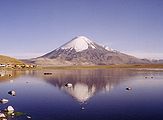 Surface water is water in a river, lake
or fresh water wetland
. Surface water is naturally replenished by precipitation
and naturally lost through discharge to the oceans, evaporation
, evapotranspiration
and sub-surface seepage.
Although the only natural input to any surface water system is precipitation within its watershed
, the total quantity of water in that system at any given time is also dependent on many other factors. These factors include storage capacity in lakes, wetlands and artificial reservoirs, the permeability of the soil
beneath these storage bodies, the runoff
characteristics of the land in the watershed, the timing of the precipitation and local evaporation rates. All of these factors also affect the proportions of water lost.
Human activities can have a large and sometimes devastating impact on these factors. Humans often increase storage capacity by constructing reservoirs and decrease it by draining wetlands. Humans often increase runoff quantities and velocities by paving areas and channelizing stream flow.
The total quantity of water available at any given time is an important consideration. Some human water users have an intermittent need for water. For example, many farm
s require large quantities of water in the spring, and no water at all in the winter. To supply such a farm with water, a surface water system may require a large storage capacity to collect water throughout the year and release it in a short period of time. Other users have a continuous need for water, such as a power plant that requires water for cooling. To supply such a power plant with water, a surface water system only needs enough storage capacity to fill in when average stream flow is below the power plant's need.
Nevertheless, over the long term the average rate of precipitation within a watershed is the upper bound for average consumption of natural surface water from that watershed.
Natural surface water can be augmented by importing surface water from another watershed through a canal
or pipeline
. It can also be artificially augmented from any of the other sources listed here, however in practice the quantities are negligible. Humans can also cause surface water to be "lost" (i.e. become unusable) through pollution
.
Brazil
is the country estimated to have the largest supply of fresh water in the world, followed by Russia
and Canada
.
areas where pot-holes and underground rivers are common.
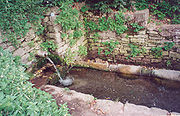 Sub-surface water, or groundwater, is fresh water located in the pore
space of soil and rocks
. It is also water that is flowing within aquifer
s below the water table
. Sometimes it is useful to make a distinction between sub-surface water that is closely associated with surface water and deep sub-surface water in an aquifer (sometimes called "fossil water").
Sub-surface water can be thought of in the same terms as surface water: inputs, outputs and storage. The critical difference is that due to its slow rate of turnover, sub-surface water storage is generally much larger compared to inputs than it is for surface water. This difference makes it easy for humans to use sub-surface water unsustainably for a long time without severe consequences. Nevertheless, over the long term the average rate of seepage above a sub-surface water source is the upper bound for average consumption of water from that source.
The natural input to sub-surface water is seepage from surface water. The natural outputs from sub-surface water are springs
and seepage to the oceans.
If the surface water source is also subject to substantial evaporation, a sub-surface water source may become saline
. This situation can occur naturally under endorheic
bodies of water, or artificially under irrigated
farmland. In coastal areas, human use of a sub-surface water source may cause the direction of seepage to ocean to reverse which can also cause soil salinization. Humans can also cause sub-surface water to be "lost" (i.e. become unusable) through pollution. Humans can increase the input to a sub-surface water source by building reservoirs or detention ponds.
(generally sea water) is converted to fresh water. The most common desalination processes are distillation
and reverse osmosis
. Desalination is currently expensive compared to most alternative sources of water, and only a very small fraction of total human use is satisfied by desalination. It is only economically practical for high-valued uses (such as household and industrial uses) in arid
areas. The most extensive use is in the Persian Gulf
.
s as a water source, however to date this has only been done for novelty purposes. Glacier runoff is considered to be surface water.
The Himalayas, which are often called "The Roof of the World", contain some of the most extensive and rough high altitude areas on Earth as well as the greatest area of glaciers and permafrost outside of the poles. Ten of Asia’s largest rivers flow from there, and more than a billion people’s livelihoods depend on them. To complicate matters, temperatures are rising more rapidly here than the global average. In Nepal the temperature has risen with 0.6 degree over the last decade, whereas the global warming has been around 0.7 over the last hundred years.
and returned as surface water, such as sewage, is generally considered non-consumptive if that water can be put to additional use. Water use in power generation and industry is generally described using an alternate terminology, focusing on separate measurements of withdrawal and consumption. Withdrawal describes the removal of water from the environment, while consumption describes the conversion of fresh water into some other form, such as atmospheric water vapor or contaminated waste water
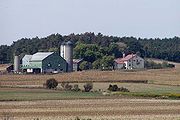 It is estimated that 69% of worldwide water use is for irrigation, with 15-35% of irrigation withdrawals being unsustainable. It takes around 3,000 litres of water, converted from liquid to vapour, to produce enough food to satisfy one person's daily dietary need. This is a considerable amount, when compared to that required for drinking, which is between two and five litres. To produce food for the now over 7 billion people who inhabit the planet today requires the water that would fill a canal ten metres deep, 100 metres wide and 7.1 million kilometres long – that's enough to circle the globe 180 times.
, urbanisation and biofuel crops. In future, even more water will be needed to produce food because the Earth's population is forecast to rise to 9 billion by 2050. An additional 2.5 or 3 billion people, choosing to eat fewer cereals and more meat and vegetables could add an additional five million kilometres to the virtual canal mentioned above.
An assessment of water management in agriculture was conducted in 2007 by the International Water Management Institute
in Sri Lanka
to see if the world had sufficient water to provide food for its growing population. It assessed the current availability of water for agriculture on a global scale and mapped out locations suffering from water scarcity. It found that a fifth of the world's people, more than 1.2 billion, live in areas of physical water scarcity
, where there is not enough water to meet all demands. A further 1.6 billion people live in areas experiencing economic water scarcity
, where the lack of investment in water or insufficient human capacity make it impossible for authorities to satisfy the demand for water. The report found that it would be possible to produce the food required in future, but that continuation of today's food production and environmental trends would lead to crises in many parts of the world. To avoid a global water crisis, farmers will have to strive to increase productivity to meet growing demands for food, while industry and cities find ways to use water more efficiently.
In some areas of the world irrigation is necessary to grow any crop at all, in other areas it permits more profitable crops to be grown or enhances crop yield. Various irrigation methods involve different trade-offs between crop yield, water consumption and capital cost of equipment and structures. Irrigation methods such as furrow and overhead sprinkler
irrigation are usually less expensive but are also typically less efficient, because much of the water evaporates, runs off or drains below the root zone. Other irrigation methods considered to be more efficient include drip or trickle irrigation
, surge irrigation, and some types of sprinkler systems where the sprinklers are operated near ground level. These types of systems, while more expensive, usually offer greater potential to minimize runoff, drainage and evaporation. Any system that is improperly managed can be wasteful, all methods have the potential for high efficiencies under suitable conditions, appropriate irrigation timing and management. Some issues that are often insufficiently considered are salinization of sub-surface water and contaminant accumulation leading to water quality declines.
As global populations grow, and as demand for food increases in a world with a fixed water supply, there are efforts under way to learn how to produce more food with less water, through improvements in irrigation methods and technologies, agricultural water management
, crop types, and water monitoring. Aquaculture
is a small but growing agricultural use of water. Freshwater commercial fisheries may also be considered as agricultural uses of water, but have generally been assigned a lower priority than irrigation (see Aral Sea
and Pyramid Lake
).
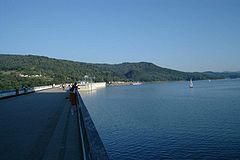 It is estimated that 22% of worldwide water use is industrial. Major industrial users include hydroelectric dams, thermoelectric power plants
, which use water for cooling, ore
and oil
refineries, which use water in chemical processes, and manufacturing plants, which use water as a solvent.
Water withdrawal can be very high for certain industries, but consumption is generally much lower than that of agriculture.
Water is used in renewable power generation. Hydroelectric power derives energy from the force of water flowing downhill, driving a turbine connected to a generator. This hydroelectricity is a low-cost, non-polluting, renewable energy source. Significantly, hydroelectric power can also be used for load following unlike most renewable energy sources which are intermittent. Ultimately, the energy in a hydroelectric powerplant is supplied by the sun. Heat from the sun evaporates water, which condenses as rain in higher altitudes and flows downhill. Pumped-storage hydroelectric
plants also exist, which use grid electricity to pump water uphill when demand is low, and use to stored water to produce electricity when demand is high.
Hydroelectric power plants generally require the creation of a large artificial lake. Evaporation from this lake is higher than evaporation from a river due to the larger surface area exposed to the elements, resulting in much higher water consumption. The process of driving water through the turbine and tunnels or pipes also briefly removes this water from the natural environment, creating water withdrawal. The impact of this withdrawal on wildlife varies greatly depending on the design of the powerplant.
Pressurized water is used in water blasting and water jet cutters. Also, very high pressure water guns are used for precise cutting. It works very well, is relatively safe, and is not harmful to the environment. It is also used in the cooling of machinery to prevent overheating, or prevent saw blades from overheating. This is generally a very small source of water consumption relative to other uses.
Water is also used in many large scale industrial processes, such as thermoelectric power production, oil refining, fertilizer production and other chemical plant use, and natural gas extraction from shale rock. Discharge of untreated water from industrial uses is pollution. Pollution includes discharged solutes (chemical pollution) and increased water temperature (thermal pollution). Industry requires pure water for many applications and utilizes a variety of purification techniques both in water supply and discharge. Most of this pure water is generated on site, either from natural freshwater or from municipal grey water. Industrial consumption of water is generally much lower than withdrawal, due to laws requiring industrial grey water to be treated and returned to the environment. Thermoelectric powerplants using cooling towers have high consumption, nearly equal to their withdrawal, as most of the withdrawn water is evaporated as part of the cooling process. The withdrawal, however, is lower than in once-through cooling systems.
 It is estimated that 8% of worldwide water use is for household purposes. These include drinking water
, bathing
, cooking
, sanitation, and gardening
. Basic household water requirements have been estimated by Peter Gleick
at around 50 liters per person per day, excluding water for gardens.
Drinking water is water that is of sufficiently high quality so that it can be consumed or used without risk of immediate or long term harm. Such water is commonly called potable water. In most developed countries, the water supplied to households, commerce and industry is all of drinking water standard even though only a very small proportion is actually consumed or used in food preparation.
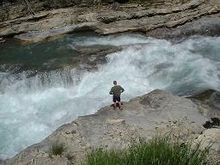 Recreation
al water use is usually a very small but growing percentage of total water use. Recreational water use is mostly tied to reservoirs. If a reservoir is kept fuller than it would otherwise be for recreation, then the water retained could be categorized as recreational usage. Release of water from a few reservoirs is also timed to enhance whitewater
boating, which also could be considered a recreational usage. Other examples are anglers, water skiers, nature enthusiasts and swimmers.
Recreational usage is usually non-consumptive. Golf course
s are often targeted as using excessive amounts of water, especially in drier regions. It is, however, unclear whether recreational irrigation (which would include private gardens) has a noticeable effect on water resources. This is largely due to the unavailability of reliable data. Additionally, many golf courses utilize either primarily or exclusively treated effluent water, which has little impact on potable water availability.
Some governments, including the Californian Government, have labelled golf course usage as agricultural in order to deflect environmentalist
s' charges of wasting water. However, using the above figures as a basis, the actual statistical effect of this reassignment is close to zero. In Arizona, an organized lobby has been established in the form of the Golf Industry Association, a group focused on educating the public on how golf impacts the environment.
Recreational usage may reduce the availability of water for other users at specific times and places. For example, water retained in a reservoir to allow boating in the late summer is not available to farmers during the spring planting season. Water released for whitewater rafting may not be available for hydroelectric generation during the time of peak electrical demand.
s, and water releases from reservoirs timed to help fish spawn, or to restore more natural flow regimes
Like recreational usage, environmental usage is non-consumptive but may reduce the availability of water for other users at specific times and places. For example, water release from a reservoir to help fish spawn may not be available to farms upstream, and water retained in a river to maintain waterway health would not be available to water abstractors downstream.
, it applies to situations where there is not enough water for all uses, whether agricultural, industrial or domestic.
Defining thresholds for stress in terms of available water per capita
is more complex, however, entailing assumptions about water use and its efficiency. Nevertheless, it has been proposed that when annual per capita renewable freshwater availability is less than 1,700 cubic meters, countries begin to experience periodic or regular water stress. Below 1,000 cubic meters, water
scarcity begins to hamper economic development and human health and well-being.
and recycling
of this vital resource. In building on the data presented here by the UN, the World Bank goes on to explain that access to water for producing food will be one of the main challenges in the decades to come. Access to water will need to be balanced with the importance of managing water itself in a sustainable way while taking into account the impact of climate change, and other environmental and social variables.
and sanitation, which can lead to more pressure on water resources and natural ecosystem
s.
is accelerating. Small private wells
and septic tank
s that work well in low-density communities are not feasible within high-density urban area
s. Urbanization requires significant investment in water infrastructure
in order to deliver water to individuals and to process the concentrations of wastewater – both from individuals and from business. These polluted and contaminated waters must be treated or they pose unacceptable public health risks.
In 60% of European cities with more than 100,000 people, groundwater is being used at a faster rate than it can be replenished. Even if some water remains available, it costs more and more
to capture it.
could have significant impacts on water resources around the world because of the close connections between the climate and hydrological cycle. Rising temperatures will increase evaporation
and lead to increases in precipitation, though there will be regional variations in rainfall. Overall, the global supply of freshwater will increase. Both droughts and floods may become more frequent in different regions at different times, and dramatic changes in snowfall and snow melt are expected in mountainous areas. Higher temperatures will also affect water quality in ways that are not well understood. Possible impacts include increased eutrophication
. Climate change could also mean an increase in demand for farm irrigation, garden sprinklers, and perhaps even swimming pools. There is now ample evidence that increased hydrologic variability and change in climate has and will continue have a profound impact on the water sector through the hydrologic cycle, water availability, water demand, and water allocation at the global, regional, basin, and local levels.
There is now ample evidence that increased hydrologic variability and change in climate has and will continue to have a profound impact on the water sector through the hydrologic cycle, water availability, water demand, and water allocation at global, regional, basin, and local levels.
, competition for water is growing such that many of the worlds major aquifers are becoming depleted. This is due both for direct human consumption as well as agricultural irrigation by groundwater. Millions of pumps of all sizes are currently extracting groundwater throughout the world. Irrigation in dry areas such as northern China and India is supplied by groundwater, and is being extracted at an unsustainable rate.
Cities that have experienced aquifer drops between 10 to 50 meters include Mexico City
, Bangkok
, Manila
, Beijing
, Madras and Shanghai
.
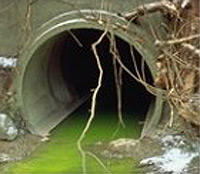 Water pollution
is one of the main concerns of the world today. The governments of numerous countries have striven to find solutions to reduce this problem. Many pollutants threaten water supplies, but the most widespread, especially in developing countries, is the discharge of raw sewage
into natural waters; this method of sewage disposal is the most common method in underdeveloped countries, but also is prevalent in quasi-developed countries such as China, India and Iran.
Sewage, sludge, garbage, and even toxic pollutants are all dumped into the water. Even if sewage is treated, problems still arise. Treated sewage forms sludge, which may be placed in landfills, spread out on land, incinerated or dumped at sea. In addition to sewage, nonpoint source pollution
such as agricultural runoff is a significant source of pollution in some parts of the world, along with urban stormwater
runoff and chemical waste
s dumped by industries and governments.
The only known example of an actual inter-state conflict over water took place between 2500 and 2350 BC between the Sumer
ian states of Lagash
and Umma
. Water stress has most often led to conflicts at local and regional levels. Tensions arise most often within national borders, in the downstream areas of distressed river
basins. Areas such as the lower regions of China
's Yellow River
or the Chao Phraya River
in Thailand
, for example, have already been experiencing water stress
for several years. Water stress can also exacerbate conflicts and political tensions which are not directly caused by water. Gradual reductions over time in the quality and/or quantity of fresh water can add to the instability of a region by depleting the health of a population, obstructing economic development
, and exacerbating larger conflicts.
Water resources that span international boundaries, are more likely to be a source of collaboration and cooperation, than war. Scientists working at the International Water Management Institute
, in partnership with Aaron Wolf at Oregon State University, have been investigating the evidence behind water war predictions. Their findings show that, while it is true there has been conflict related to water in a handful of international basins, in the rest of the world’s approximately 300 shared basins the record has been largely positive. This is exemplified by the hundreds of treaties in place guiding equitable water use between nations sharing water resources. The institutions created by these agreements can, in fact, be one of the most important factors in ensuring cooperation rather than conflict.
At Earth Summit 2002
governments approved a Plan of Action to:
As the picture shows, in 2025, water shortages will be more prevalent among poorer countries where resources are limited and population growth is rapid, such as the Middle East
, Africa
, and parts of Asia
. By 2025, large urban and peri-urban areas will require new infrastructure to provide safe water and adequate sanitation. This suggests growing conflicts with agricultural water users, who currently consume the majority of the water used by humans.
Generally speaking the more developed countries of North America
, Europe
and Russia
will not see a serious threat to water supply by the year 2025, not only because of their relative wealth, but more importantly their populations will be better aligned with available water resources. North Africa, the Middle East, South Africa
and northern China will face very severe water shortages due to physical scarcity and a condition of overpopulation relative to their carrying capacity
with respect to water supply. Most of South America
, Sub-Saharan Africa, Southern China and India will face water supply shortages by 2025; for these latter regions the causes of scarcity will be economic constraints to developing safe drinking water, as well as excessive population growth
.
1.6 billion people have gained access to a safe water source since 1990.
The proportion of people in developing countries with access to safe water is calculated to have improved from 30 percent in 1970 to 71 percent in 1990, 79 percent in 2000 and 84 percent in 2004. This trend is projected to continue.
in infrastructure such as pipe networks, pumping stations and water treatment works. It is estimated that Organisation for Economic Co-operation and Development
(OECD) nations need to invest at least USD 200 billion per year to replace aging water infrastructure to guarantee supply, reduce leakage rates and protect water quality.
International attention has focused upon the needs of the developing countries. To meet the Millennium Development Goals
targets of halving the proportion of the population lacking access to safe drinking water and basic sanitation by 2015, current annual investment on the order of USD 10 to USD 15 billion would need to be roughly doubled. This does not include investments required for the maintenance of existing infrastructure.
Once infrastructure is in place, operating water supply and sanitation systems entails significant ongoing costs to cover personnel, energy, chemicals, maintenance and other expenses. The sources of money to meet these capital and operational costs are essentially either user fees, public funds or some combination of the two.
But this is where the economics of water management start to become extremely complex as they intersect with social and broader economic policy. Such policy questions are beyond the scope of this article, which has concentrated on basic information about water availability and water use. They are, nevertheless, highly relevant to understanding how critical water issues will affect business and industry in terms of both risks and opportunities.
in its H2OScenarios engaged in a scenario building process to:
It concludes that:
Water
Water is a chemical substance with the chemical formula H2O. A water molecule contains one oxygen and two hydrogen atoms connected by covalent bonds. Water is a liquid at ambient conditions, but it often co-exists on Earth with its solid state, ice, and gaseous state . Water also exists in a...
that are useful or potentially useful. Uses of water include agricultural, industrial
Industry
Industry refers to the production of an economic good or service within an economy.-Industrial sectors:There are four key industrial economic sectors: the primary sector, largely raw material extraction industries such as mining and farming; the secondary sector, involving refining, construction,...
, household
Household
The household is "the basic residential unit in which economic production, consumption, inheritance, child rearing, and shelter are organized and carried out"; [the household] "may or may not be synonymous with family"....
, recreational and environmental
Natural environment
The natural environment encompasses all living and non-living things occurring naturally on Earth or some region thereof. It is an environment that encompasses the interaction of all living species....
activities. Virtually all of these human uses require fresh water
Fresh Water
Fresh Water is the debut album by Australian rock and blues singer Alison McCallum, released in 1972. Rare for an Australian artist at the time, it came in a gatefold sleeve...
.
Ninety-seven percent of the water on the Earth is salt water. Only three percent is fresh water; slightly over two thirds of this is frozen in glacier
Glacier
A glacier is a large persistent body of ice that forms where the accumulation of snow exceeds its ablation over many years, often centuries. At least 0.1 km² in area and 50 m thick, but often much larger, a glacier slowly deforms and flows due to stresses induced by its weight...
s and polar
Polar climate
Regions with a polar climate are characterized by a lack of warm summers . Regions with polar climate cover over 20% of the Earth. The sun shines 24 hours in the summer, and barely ever shines at all in the winter...
ice cap
Ice cap
An ice cap is an ice mass that covers less than 50 000 km² of land area . Masses of ice covering more than 50 000 km² are termed an ice sheet....
s. The remaining unfrozen freshwater is found mainly as groundwater, with only a small fraction present above ground or in the air.
Fresh water is a renewable resource
Renewable resource
A renewable resource is a natural resource with the ability of being replaced through biological or other natural processes and replenished with the passage of time...
, yet the world's supply of clean, fresh water is steadily decreasing. Water demand already exceeds supply
Supply and demand
Supply and demand is an economic model of price determination in a market. It concludes that in a competitive market, the unit price for a particular good will vary until it settles at a point where the quantity demanded by consumers will equal the quantity supplied by producers , resulting in an...
in many parts of the world and as the world population
World population
The world population is the total number of living humans on the planet Earth. As of today, it is estimated to be billion by the United States Census Bureau...
continues to rise, so too does the water demand. Awareness of the global importance of preserving water
Water
Water is a chemical substance with the chemical formula H2O. A water molecule contains one oxygen and two hydrogen atoms connected by covalent bonds. Water is a liquid at ambient conditions, but it often co-exists on Earth with its solid state, ice, and gaseous state . Water also exists in a...
for ecosystem services
Ecosystem services
Humankind benefits from a multitude of resources and processes that are supplied by natural ecosystems. Collectively, these benefits are known as ecosystem services and include products like clean drinking water and processes such as the decomposition of wastes...
has only recently emerged as, during the 20th century, more than half the world’s wetlands have been lost along with their valuable environmental services for Water Education. The framework for allocating water resources to water users (where such a framework exists) is known as water rights.
Surface water
Lake
A lake is a body of relatively still fresh or salt water of considerable size, localized in a basin, that is surrounded by land. Lakes are inland and not part of the ocean and therefore are distinct from lagoons, and are larger and deeper than ponds. Lakes can be contrasted with rivers or streams,...
or fresh water wetland
Wetland
A wetland is an area of land whose soil is saturated with water either permanently or seasonally. Wetlands are categorised by their characteristic vegetation, which is adapted to these unique soil conditions....
. Surface water is naturally replenished by precipitation
Precipitation (meteorology)
In meteorology, precipitation In meteorology, precipitation In meteorology, precipitation (also known as one of the classes of hydrometeors, which are atmospheric water phenomena is any product of the condensation of atmospheric water vapor that falls under gravity. The main forms of precipitation...
and naturally lost through discharge to the oceans, evaporation
Evaporation
Evaporation is a type of vaporization of a liquid that occurs only on the surface of a liquid. The other type of vaporization is boiling, which, instead, occurs on the entire mass of the liquid....
, evapotranspiration
Evapotranspiration
Evapotranspiration is a term used to describe the sum of evaporation and plant transpiration from the Earth's land surface to atmosphere. Evaporation accounts for the movement of water to the air from sources such as the soil, canopy interception, and waterbodies...
and sub-surface seepage.
Although the only natural input to any surface water system is precipitation within its watershed
Drainage basin
A drainage basin is an extent or an area of land where surface water from rain and melting snow or ice converges to a single point, usually the exit of the basin, where the waters join another waterbody, such as a river, lake, reservoir, estuary, wetland, sea, or ocean...
, the total quantity of water in that system at any given time is also dependent on many other factors. These factors include storage capacity in lakes, wetlands and artificial reservoirs, the permeability of the soil
Soil
Soil is a natural body consisting of layers of mineral constituents of variable thicknesses, which differ from the parent materials in their morphological, physical, chemical, and mineralogical characteristics...
beneath these storage bodies, the runoff
Surface runoff
Surface runoff is the water flow that occurs when soil is infiltrated to full capacity and excess water from rain, meltwater, or other sources flows over the land. This is a major component of the water cycle. Runoff that occurs on surfaces before reaching a channel is also called a nonpoint source...
characteristics of the land in the watershed, the timing of the precipitation and local evaporation rates. All of these factors also affect the proportions of water lost.
Human activities can have a large and sometimes devastating impact on these factors. Humans often increase storage capacity by constructing reservoirs and decrease it by draining wetlands. Humans often increase runoff quantities and velocities by paving areas and channelizing stream flow.
The total quantity of water available at any given time is an important consideration. Some human water users have an intermittent need for water. For example, many farm
Farm
A farm is an area of land, or, for aquaculture, lake, river or sea, including various structures, devoted primarily to the practice of producing and managing food , fibres and, increasingly, fuel. It is the basic production facility in food production. Farms may be owned and operated by a single...
s require large quantities of water in the spring, and no water at all in the winter. To supply such a farm with water, a surface water system may require a large storage capacity to collect water throughout the year and release it in a short period of time. Other users have a continuous need for water, such as a power plant that requires water for cooling. To supply such a power plant with water, a surface water system only needs enough storage capacity to fill in when average stream flow is below the power plant's need.
Nevertheless, over the long term the average rate of precipitation within a watershed is the upper bound for average consumption of natural surface water from that watershed.
Natural surface water can be augmented by importing surface water from another watershed through a canal
Canal
Canals are man-made channels for water. There are two types of canal:#Waterways: navigable transportation canals used for carrying ships and boats shipping goods and conveying people, further subdivided into two kinds:...
or pipeline
Pipeline transport
Pipeline transport is the transportation of goods through a pipe. Most commonly, liquids and gases are sent, but pneumatic tubes that transport solid capsules using compressed air are also used....
. It can also be artificially augmented from any of the other sources listed here, however in practice the quantities are negligible. Humans can also cause surface water to be "lost" (i.e. become unusable) through pollution
Pollution
Pollution is the introduction of contaminants into a natural environment that causes instability, disorder, harm or discomfort to the ecosystem i.e. physical systems or living organisms. Pollution can take the form of chemical substances or energy, such as noise, heat or light...
.
Brazil
Brazil
Brazil , officially the Federative Republic of Brazil , is the largest country in South America. It is the world's fifth largest country, both by geographical area and by population with over 192 million people...
is the country estimated to have the largest supply of fresh water in the world, followed by Russia
Russia
Russia or , officially known as both Russia and the Russian Federation , is a country in northern Eurasia. It is a federal semi-presidential republic, comprising 83 federal subjects...
and Canada
Canada
Canada is a North American country consisting of ten provinces and three territories. Located in the northern part of the continent, it extends from the Atlantic Ocean in the east to the Pacific Ocean in the west, and northward into the Arctic Ocean...
.
Under river flow
Throughout the course of a river, the total volume of water transported downstream will often be a combination of the visible free water flow together with a substantial contribution flowing through sub-surface rocks and gravels that underlie the river and its floodplain called the hyporheic zone. For many rivers in large valleys, this unseen component of flow may greatly exceed the visible flow. The hyporheic zone often forms a dynamic interface between surface water and true ground-water receiving water from the ground water when aquifers are fully charged and contributing water to ground-water when ground waters are depleted. This is especially significant in karstKARST
Kilometer-square Area Radio Synthesis Telescope is a Chinese telescope project to which FAST is a forerunner. KARST is a set of large spherical reflectors on karst landforms, which are bowlshaped limestone sinkholes named after the Kras region in Slovenia and Northern Italy. It will consist of...
areas where pot-holes and underground rivers are common.
Ground water
Porosity
Porosity or void fraction is a measure of the void spaces in a material, and is a fraction of the volume of voids over the total volume, between 0–1, or as a percentage between 0–100%...
space of soil and rocks
Rock (geology)
In geology, rock or stone is a naturally occurring solid aggregate of minerals and/or mineraloids.The Earth's outer solid layer, the lithosphere, is made of rock. In general rocks are of three types, namely, igneous, sedimentary, and metamorphic...
. It is also water that is flowing within aquifer
Aquifer
An aquifer is a wet underground layer of water-bearing permeable rock or unconsolidated materials from which groundwater can be usefully extracted using a water well. The study of water flow in aquifers and the characterization of aquifers is called hydrogeology...
s below the water table
Water table
The water table is the level at which the submarine pressure is far from atmospheric pressure. It may be conveniently visualized as the 'surface' of the subsurface materials that are saturated with groundwater in a given vicinity. However, saturated conditions may extend above the water table as...
. Sometimes it is useful to make a distinction between sub-surface water that is closely associated with surface water and deep sub-surface water in an aquifer (sometimes called "fossil water").
Sub-surface water can be thought of in the same terms as surface water: inputs, outputs and storage. The critical difference is that due to its slow rate of turnover, sub-surface water storage is generally much larger compared to inputs than it is for surface water. This difference makes it easy for humans to use sub-surface water unsustainably for a long time without severe consequences. Nevertheless, over the long term the average rate of seepage above a sub-surface water source is the upper bound for average consumption of water from that source.
The natural input to sub-surface water is seepage from surface water. The natural outputs from sub-surface water are springs
Spring (hydrosphere)
A spring—also known as a rising or resurgence—is a component of the hydrosphere. Specifically, it is any natural situation where water flows to the surface of the earth from underground...
and seepage to the oceans.
If the surface water source is also subject to substantial evaporation, a sub-surface water source may become saline
Salinity
Salinity is the saltiness or dissolved salt content of a body of water. It is a general term used to describe the levels of different salts such as sodium chloride, magnesium and calcium sulfates, and bicarbonates...
. This situation can occur naturally under endorheic
Endorheic
An endorheic basin is a closed drainage basin that retains water and allows no outflow to other bodies of water such as rivers or oceans...
bodies of water, or artificially under irrigated
Irrigation
Irrigation may be defined as the science of artificial application of water to the land or soil. It is used to assist in the growing of agricultural crops, maintenance of landscapes, and revegetation of disturbed soils in dry areas and during periods of inadequate rainfall...
farmland. In coastal areas, human use of a sub-surface water source may cause the direction of seepage to ocean to reverse which can also cause soil salinization. Humans can also cause sub-surface water to be "lost" (i.e. become unusable) through pollution. Humans can increase the input to a sub-surface water source by building reservoirs or detention ponds.
Desalination
Desalination is an artificial process by which saline waterSaline water
Saline water is a general term for water that contains a significant concentration of dissolved salts . The concentration is usually expressed in parts per million of salt....
(generally sea water) is converted to fresh water. The most common desalination processes are distillation
Distillation
Distillation is a method of separating mixtures based on differences in volatilities of components in a boiling liquid mixture. Distillation is a unit operation, or a physical separation process, and not a chemical reaction....
and reverse osmosis
Reverse osmosis
Reverse osmosis is a membrane technical filtration method that removes many types of large molecules and ions from solutions by applying pressure to the solution when it is on one side of a selective membrane. The result is that the solute is retained on the pressurized side of the membrane and...
. Desalination is currently expensive compared to most alternative sources of water, and only a very small fraction of total human use is satisfied by desalination. It is only economically practical for high-valued uses (such as household and industrial uses) in arid
Arid
A region is said to be arid when it is characterized by a severe lack of available water, to the extent of hindering or even preventing the growth and development of plant and animal life...
areas. The most extensive use is in the Persian Gulf
Persian Gulf
The Persian Gulf, in Southwest Asia, is an extension of the Indian Ocean located between Iran and the Arabian Peninsula.The Persian Gulf was the focus of the 1980–1988 Iran-Iraq War, in which each side attacked the other's oil tankers...
.
Frozen water
Several schemes have been proposed to make use of icebergIceberg
An iceberg is a large piece of ice from freshwater that has broken off from a snow-formed glacier or ice shelf and is floating in open water. It may subsequently become frozen into pack ice...
s as a water source, however to date this has only been done for novelty purposes. Glacier runoff is considered to be surface water.
The Himalayas, which are often called "The Roof of the World", contain some of the most extensive and rough high altitude areas on Earth as well as the greatest area of glaciers and permafrost outside of the poles. Ten of Asia’s largest rivers flow from there, and more than a billion people’s livelihoods depend on them. To complicate matters, temperatures are rising more rapidly here than the global average. In Nepal the temperature has risen with 0.6 degree over the last decade, whereas the global warming has been around 0.7 over the last hundred years.
Uses of fresh water
Uses of fresh water can be categorized as consumptive and non-consumptive (sometimes called "renewable"). A use of water is consumptive if that water is not immediately available for another use. Losses to sub-surface seepage and evaporation are considered consumptive, as is water incorporated into a product (such as farm produce). Water that can be treatedWater treatment
Water treatment describes those processes used to make water more acceptable for a desired end-use. These can include use as drinking water, industrial processes, medical and many other uses. The goal of all water treatment process is to remove existing contaminants in the water, or reduce the...
and returned as surface water, such as sewage, is generally considered non-consumptive if that water can be put to additional use. Water use in power generation and industry is generally described using an alternate terminology, focusing on separate measurements of withdrawal and consumption. Withdrawal describes the removal of water from the environment, while consumption describes the conversion of fresh water into some other form, such as atmospheric water vapor or contaminated waste water
Agricultural
Increasing water scarcity
Fifty years ago, the common perception was that water was an infinite resource. At this time, there were fewer than half the current number of people on the planet. People were not as wealthy as today, consumed fewer calories and ate less meat, so less water was needed to produce their food. They required a third of the volume of water we presently take from rivers. Today, the competition for water resources is much more intense. This is because there are now nearly seven billion people on the planet, their consumption of water-thirsty meat and vegetables is rising, and there is increasing competition for water from industryIndustry
Industry refers to the production of an economic good or service within an economy.-Industrial sectors:There are four key industrial economic sectors: the primary sector, largely raw material extraction industries such as mining and farming; the secondary sector, involving refining, construction,...
, urbanisation and biofuel crops. In future, even more water will be needed to produce food because the Earth's population is forecast to rise to 9 billion by 2050. An additional 2.5 or 3 billion people, choosing to eat fewer cereals and more meat and vegetables could add an additional five million kilometres to the virtual canal mentioned above.
An assessment of water management in agriculture was conducted in 2007 by the International Water Management Institute
International Water Management Institute
The International Water Management Institute is a non-profit research organisation with headquarters in Colombo, Sri Lanka, and offices across Africa and Asia...
in Sri Lanka
Sri Lanka
Sri Lanka, officially the Democratic Socialist Republic of Sri Lanka is a country off the southern coast of the Indian subcontinent. Known until 1972 as Ceylon , Sri Lanka is an island surrounded by the Indian Ocean, the Gulf of Mannar and the Palk Strait, and lies in the vicinity of India and the...
to see if the world had sufficient water to provide food for its growing population. It assessed the current availability of water for agriculture on a global scale and mapped out locations suffering from water scarcity. It found that a fifth of the world's people, more than 1.2 billion, live in areas of physical water scarcity
Physical water scarcity
Physical water scarcity is the situation where there is not enough water to meet all demands, including that needed for ecosystems to function effectively. Arid regions frequently suffer from physical water scarcity. It also occurs where water seems abundant but where resources are over-committed...
, where there is not enough water to meet all demands. A further 1.6 billion people live in areas experiencing economic water scarcity
Economic water scarcity
Economic water scarcity is a type of water scarcity caused by a lack of investment in water or insufficient human capacity to satisfy the demand for water. Symptoms of economic water scarcity include a lack of infrastructure, with people often having to fetch water from rivers or lakes for domestic...
, where the lack of investment in water or insufficient human capacity make it impossible for authorities to satisfy the demand for water. The report found that it would be possible to produce the food required in future, but that continuation of today's food production and environmental trends would lead to crises in many parts of the world. To avoid a global water crisis, farmers will have to strive to increase productivity to meet growing demands for food, while industry and cities find ways to use water more efficiently.
In some areas of the world irrigation is necessary to grow any crop at all, in other areas it permits more profitable crops to be grown or enhances crop yield. Various irrigation methods involve different trade-offs between crop yield, water consumption and capital cost of equipment and structures. Irrigation methods such as furrow and overhead sprinkler
Irrigation sprinkler
Irrigation sprinklers are sprinklers used on farms, golf courses, and yards, to provide water to vegetation and plants in the event of drought. They may also be used for recreation, as a cooling system, or to keep down the amount of airborne dust....
irrigation are usually less expensive but are also typically less efficient, because much of the water evaporates, runs off or drains below the root zone. Other irrigation methods considered to be more efficient include drip or trickle irrigation
Drip irrigation
Drip irrigation, also known as trickle irrigation or microirrigation or localized irrigation , is an irrigation method which saves water and fertilizer by allowing water to drip slowly to the roots of plants, either onto the soil surface or directly onto the root zone, through a network of valves,...
, surge irrigation, and some types of sprinkler systems where the sprinklers are operated near ground level. These types of systems, while more expensive, usually offer greater potential to minimize runoff, drainage and evaporation. Any system that is improperly managed can be wasteful, all methods have the potential for high efficiencies under suitable conditions, appropriate irrigation timing and management. Some issues that are often insufficiently considered are salinization of sub-surface water and contaminant accumulation leading to water quality declines.
As global populations grow, and as demand for food increases in a world with a fixed water supply, there are efforts under way to learn how to produce more food with less water, through improvements in irrigation methods and technologies, agricultural water management
Water management
Water management is the activity of planning, developing, distributing and managing the optimum use of water resources. In an ideal world. water management planning has regard to all the competing demands for water and seeks to allocate water on an equitable basis to satisfy all uses and demands...
, crop types, and water monitoring. Aquaculture
Aquaculture
Aquaculture, also known as aquafarming, is the farming of aquatic organisms such as fish, crustaceans, molluscs and aquatic plants. Aquaculture involves cultivating freshwater and saltwater populations under controlled conditions, and can be contrasted with commercial fishing, which is the...
is a small but growing agricultural use of water. Freshwater commercial fisheries may also be considered as agricultural uses of water, but have generally been assigned a lower priority than irrigation (see Aral Sea
Aral Sea
The Aral Sea was a lake that lay between Kazakhstan in the north and Karakalpakstan, an autonomous region of Uzbekistan, in the south...
and Pyramid Lake
Pyramid Lake
Pyramid Lake is the geographic sink of the Truckee River Basin and is located northeast of Reno. The inflow is moderately high silt-loaded surface runoff....
).
Industrial
Thermoelectric power
Thermoelectric power can refer to two things:# Electrical power generated from a heat source, such as burning fossil fuel-coal,oils, indirectly through devices like steam turbines....
, which use water for cooling, ore
Ore
An ore is a type of rock that contains minerals with important elements including metals. The ores are extracted through mining; these are then refined to extract the valuable element....
and oil
Petroleum
Petroleum or crude oil is a naturally occurring, flammable liquid consisting of a complex mixture of hydrocarbons of various molecular weights and other liquid organic compounds, that are found in geologic formations beneath the Earth's surface. Petroleum is recovered mostly through oil drilling...
refineries, which use water in chemical processes, and manufacturing plants, which use water as a solvent.
Water withdrawal can be very high for certain industries, but consumption is generally much lower than that of agriculture.
Water is used in renewable power generation. Hydroelectric power derives energy from the force of water flowing downhill, driving a turbine connected to a generator. This hydroelectricity is a low-cost, non-polluting, renewable energy source. Significantly, hydroelectric power can also be used for load following unlike most renewable energy sources which are intermittent. Ultimately, the energy in a hydroelectric powerplant is supplied by the sun. Heat from the sun evaporates water, which condenses as rain in higher altitudes and flows downhill. Pumped-storage hydroelectric
Pumped-storage hydroelectricity
Pumped-storage hydroelectricity is a type of hydroelectric power generation used by some power plants for load balancing. The method stores energy in the form of water, pumped from a lower elevation reservoir to a higher elevation. Low-cost off-peak electric power is used to run the pumps...
plants also exist, which use grid electricity to pump water uphill when demand is low, and use to stored water to produce electricity when demand is high.
Hydroelectric power plants generally require the creation of a large artificial lake. Evaporation from this lake is higher than evaporation from a river due to the larger surface area exposed to the elements, resulting in much higher water consumption. The process of driving water through the turbine and tunnels or pipes also briefly removes this water from the natural environment, creating water withdrawal. The impact of this withdrawal on wildlife varies greatly depending on the design of the powerplant.
Pressurized water is used in water blasting and water jet cutters. Also, very high pressure water guns are used for precise cutting. It works very well, is relatively safe, and is not harmful to the environment. It is also used in the cooling of machinery to prevent overheating, or prevent saw blades from overheating. This is generally a very small source of water consumption relative to other uses.
Water is also used in many large scale industrial processes, such as thermoelectric power production, oil refining, fertilizer production and other chemical plant use, and natural gas extraction from shale rock. Discharge of untreated water from industrial uses is pollution. Pollution includes discharged solutes (chemical pollution) and increased water temperature (thermal pollution). Industry requires pure water for many applications and utilizes a variety of purification techniques both in water supply and discharge. Most of this pure water is generated on site, either from natural freshwater or from municipal grey water. Industrial consumption of water is generally much lower than withdrawal, due to laws requiring industrial grey water to be treated and returned to the environment. Thermoelectric powerplants using cooling towers have high consumption, nearly equal to their withdrawal, as most of the withdrawn water is evaporated as part of the cooling process. The withdrawal, however, is lower than in once-through cooling systems.
Household
Drinking water
Drinking water or potable water is water pure enough to be consumed or used with low risk of immediate or long term harm. In most developed countries, the water supplied to households, commerce and industry is all of drinking water standard, even though only a very small proportion is actually...
, bathing
Bathing
Bathing is the washing or cleansing of the body in a fluid, usually water or an aqueous solution. It may be practised for personal hygiene, religious ritual or therapeutic purposes or as a recreational activity....
, cooking
Cooking
Cooking is the process of preparing food by use of heat. Cooking techniques and ingredients vary widely across the world, reflecting unique environmental, economic, and cultural traditions. Cooks themselves also vary widely in skill and training...
, sanitation, and gardening
Gardening
Gardening is the practice of growing and cultivating plants. Ornamental plants are normally grown for their flowers, foliage, or overall appearance; useful plants are grown for consumption , for their dyes, or for medicinal or cosmetic use...
. Basic household water requirements have been estimated by Peter Gleick
Peter Gleick
Dr. Peter H. Gleick is a scientist working on issues related to the environment, economic development, and international security, with a focus on global freshwater challenges. He works at the Pacific Institute in Oakland, California, which he co-founded in 1987. In 2003 he was awarded a MacArthur...
at around 50 liters per person per day, excluding water for gardens.
Drinking water is water that is of sufficiently high quality so that it can be consumed or used without risk of immediate or long term harm. Such water is commonly called potable water. In most developed countries, the water supplied to households, commerce and industry is all of drinking water standard even though only a very small proportion is actually consumed or used in food preparation.
Recreation
Recreation
Recreation is an activity of leisure, leisure being discretionary time. The "need to do something for recreation" is an essential element of human biology and psychology. Recreational activities are often done for enjoyment, amusement, or pleasure and are considered to be "fun"...
al water use is usually a very small but growing percentage of total water use. Recreational water use is mostly tied to reservoirs. If a reservoir is kept fuller than it would otherwise be for recreation, then the water retained could be categorized as recreational usage. Release of water from a few reservoirs is also timed to enhance whitewater
Whitewater
Whitewater is formed in a rapid, when a river's gradient increases enough to disturb its laminar flow and create turbulence, i.e. form a bubbly, or aerated and unstable current; the frothy water appears white...
boating, which also could be considered a recreational usage. Other examples are anglers, water skiers, nature enthusiasts and swimmers.
Recreational usage is usually non-consumptive. Golf course
Golf course
A golf course comprises a series of holes, each consisting of a teeing ground, fairway, rough and other hazards, and a green with a flagstick and cup, all designed for the game of golf. A standard round of golf consists of playing 18 holes, thus most golf courses have this number of holes...
s are often targeted as using excessive amounts of water, especially in drier regions. It is, however, unclear whether recreational irrigation (which would include private gardens) has a noticeable effect on water resources. This is largely due to the unavailability of reliable data. Additionally, many golf courses utilize either primarily or exclusively treated effluent water, which has little impact on potable water availability.
Some governments, including the Californian Government, have labelled golf course usage as agricultural in order to deflect environmentalist
Environmentalist
An environmentalist broadly supports the goals of the environmental movement, "a political and ethical movement that seeks to improve and protect the quality of the natural environment through changes to environmentally harmful human activities"...
s' charges of wasting water. However, using the above figures as a basis, the actual statistical effect of this reassignment is close to zero. In Arizona, an organized lobby has been established in the form of the Golf Industry Association, a group focused on educating the public on how golf impacts the environment.
Recreational usage may reduce the availability of water for other users at specific times and places. For example, water retained in a reservoir to allow boating in the late summer is not available to farmers during the spring planting season. Water released for whitewater rafting may not be available for hydroelectric generation during the time of peak electrical demand.
Environmental
Explicit environmental water use is also a very small but growing percentage of total water use. Environmental water may include water stored in impoundments and released for environmental purposes (held environmental water), but more often is water retained in waterways through regulatory limits of abstraction . Environmental water usage includes watering of natural or artificial wetlands, artificial lakes intended to create wildlife habitat, fish ladderFish ladder
A fish ladder, also known as a fishway, fish pass or fish steps, is a structure on or around artificial barriers to facilitate diadromous fishes' natural migration. Most fishways enable fish to pass around the barriers by swimming and leaping up a series of relatively low steps into the waters on...
s, and water releases from reservoirs timed to help fish spawn, or to restore more natural flow regimes
Like recreational usage, environmental usage is non-consumptive but may reduce the availability of water for other users at specific times and places. For example, water release from a reservoir to help fish spawn may not be available to farms upstream, and water retained in a river to maintain waterway health would not be available to water abstractors downstream.
Water stress
The concept of water stress is relatively simple: According to the World Business Council for Sustainable DevelopmentWorld Business Council for Sustainable Development
The World Business Council for Sustainable Development is a CEO-led, global association of some 200 international companies dealing exclusively with business and sustainable development....
, it applies to situations where there is not enough water for all uses, whether agricultural, industrial or domestic.
Defining thresholds for stress in terms of available water per capita
Per capita
Per capita is a Latin prepositional phrase: per and capita . The phrase thus means "by heads" or "for each head", i.e. per individual or per person...
is more complex, however, entailing assumptions about water use and its efficiency. Nevertheless, it has been proposed that when annual per capita renewable freshwater availability is less than 1,700 cubic meters, countries begin to experience periodic or regular water stress. Below 1,000 cubic meters, water
scarcity begins to hamper economic development and human health and well-being.
Population growth
In 2000, the world population was 6.2 billion. The UN estimates that by 2050 there will be an additional 3.5 billion people with most of the growth in developing countries that already suffer water stress. Thus, water demand will increase unless there are corresponding increases in water conservationWater conservation
Water conservation refers to reducing the usage of water and recycling of waste water for different purposes such as cleaning, manufacturing, and agricultural irrigation.- Water conservation :Water conservation can be defined as:...
and recycling
Recycling
Recycling is processing used materials into new products to prevent waste of potentially useful materials, reduce the consumption of fresh raw materials, reduce energy usage, reduce air pollution and water pollution by reducing the need for "conventional" waste disposal, and lower greenhouse...
of this vital resource. In building on the data presented here by the UN, the World Bank goes on to explain that access to water for producing food will be one of the main challenges in the decades to come. Access to water will need to be balanced with the importance of managing water itself in a sustainable way while taking into account the impact of climate change, and other environmental and social variables.
Expansion of business activity
Business activity ranging from industrialization to services such as tourism and entertainment continues to expand rapidly. This expansion requires increased water services including both supplyWater supply
Water supply is the provision of water by public utilities, commercial organisations, community endeavours or by individuals, usually via a system of pumps and pipes...
and sanitation, which can lead to more pressure on water resources and natural ecosystem
Ecosystem
An ecosystem is a biological environment consisting of all the organisms living in a particular area, as well as all the nonliving , physical components of the environment with which the organisms interact, such as air, soil, water and sunlight....
s.
Rapid urbanization
The trend towards urbanizationUrbanization
Urbanization, urbanisation or urban drift is the physical growth of urban areas as a result of global change. The United Nations projected that half of the world's population would live in urban areas at the end of 2008....
is accelerating. Small private wells
Water well
A water well is an excavation or structure created in the ground by digging, driving, boring or drilling to access groundwater in underground aquifers. The well water is drawn by an electric submersible pump, a trash pump, a vertical turbine pump, a handpump or a mechanical pump...
and septic tank
Septic tank
A septic tank is a key component of the septic system, a small-scale sewage treatment system common in areas with no connection to main sewage pipes provided by local governments or private corporations...
s that work well in low-density communities are not feasible within high-density urban area
Urban area
An urban area is characterized by higher population density and vast human features in comparison to areas surrounding it. Urban areas may be cities, towns or conurbations, but the term is not commonly extended to rural settlements such as villages and hamlets.Urban areas are created and further...
s. Urbanization requires significant investment in water infrastructure
Infrastructure
Infrastructure is basic physical and organizational structures needed for the operation of a society or enterprise, or the services and facilities necessary for an economy to function...
in order to deliver water to individuals and to process the concentrations of wastewater – both from individuals and from business. These polluted and contaminated waters must be treated or they pose unacceptable public health risks.
In 60% of European cities with more than 100,000 people, groundwater is being used at a faster rate than it can be replenished. Even if some water remains available, it costs more and more
Diminishing returns
In economics, diminishing returns is the decrease in the marginal output of a production process as the amount of a single factor of production is increased, while the amounts of all other factors of production stay constant.The law of diminishing returns In economics, diminishing returns (also...
to capture it.
Climate change
Climate changeClimate change
Climate change is a significant and lasting change in the statistical distribution of weather patterns over periods ranging from decades to millions of years. It may be a change in average weather conditions or the distribution of events around that average...
could have significant impacts on water resources around the world because of the close connections between the climate and hydrological cycle. Rising temperatures will increase evaporation
Evaporation
Evaporation is a type of vaporization of a liquid that occurs only on the surface of a liquid. The other type of vaporization is boiling, which, instead, occurs on the entire mass of the liquid....
and lead to increases in precipitation, though there will be regional variations in rainfall. Overall, the global supply of freshwater will increase. Both droughts and floods may become more frequent in different regions at different times, and dramatic changes in snowfall and snow melt are expected in mountainous areas. Higher temperatures will also affect water quality in ways that are not well understood. Possible impacts include increased eutrophication
Eutrophication
Eutrophication or more precisely hypertrophication, is the movement of a body of water′s trophic status in the direction of increasing plant biomass, by the addition of artificial or natural substances, such as nitrates and phosphates, through fertilizers or sewage, to an aquatic system...
. Climate change could also mean an increase in demand for farm irrigation, garden sprinklers, and perhaps even swimming pools. There is now ample evidence that increased hydrologic variability and change in climate has and will continue have a profound impact on the water sector through the hydrologic cycle, water availability, water demand, and water allocation at the global, regional, basin, and local levels.
There is now ample evidence that increased hydrologic variability and change in climate has and will continue to have a profound impact on the water sector through the hydrologic cycle, water availability, water demand, and water allocation at global, regional, basin, and local levels.
Depletion of aquifers
Due to the expanding human populationOverpopulation
Overpopulation is a condition where an organism's numbers exceed the carrying capacity of its habitat. The term often refers to the relationship between the human population and its environment, the Earth...
, competition for water is growing such that many of the worlds major aquifers are becoming depleted. This is due both for direct human consumption as well as agricultural irrigation by groundwater. Millions of pumps of all sizes are currently extracting groundwater throughout the world. Irrigation in dry areas such as northern China and India is supplied by groundwater, and is being extracted at an unsustainable rate.
Cities that have experienced aquifer drops between 10 to 50 meters include Mexico City
Mexico City
Mexico City is the Federal District , capital of Mexico and seat of the federal powers of the Mexican Union. It is a federal entity within Mexico which is not part of any one of the 31 Mexican states but belongs to the federation as a whole...
, Bangkok
Bangkok
Bangkok is the capital and largest urban area city in Thailand. It is known in Thai as Krung Thep Maha Nakhon or simply Krung Thep , meaning "city of angels." The full name of Bangkok is Krung Thep Mahanakhon Amon Rattanakosin Mahintharayutthaya Mahadilok Phop Noppharat Ratchathani Burirom...
, Manila
Manila
Manila is the capital of the Philippines. It is one of the sixteen cities forming Metro Manila.Manila is located on the eastern shores of Manila Bay and is bordered by Navotas and Caloocan to the north, Quezon City to the northeast, San Juan and Mandaluyong to the east, Makati on the southeast,...
, Beijing
Beijing
Beijing , also known as Peking , is the capital of the People's Republic of China and one of the most populous cities in the world, with a population of 19,612,368 as of 2010. The city is the country's political, cultural, and educational center, and home to the headquarters for most of China's...
, Madras and Shanghai
Shanghai
Shanghai is the largest city by population in China and the largest city proper in the world. It is one of the four province-level municipalities in the People's Republic of China, with a total population of over 23 million as of 2010...
.
Pollution and water protection
Water pollution
Water pollution is the contamination of water bodies . Water pollution occurs when pollutants are discharged directly or indirectly into water bodies without adequate treatment to remove harmful compounds....
is one of the main concerns of the world today. The governments of numerous countries have striven to find solutions to reduce this problem. Many pollutants threaten water supplies, but the most widespread, especially in developing countries, is the discharge of raw sewage
Sewage
Sewage is water-carried waste, in solution or suspension, that is intended to be removed from a community. Also known as wastewater, it is more than 99% water and is characterized by volume or rate of flow, physical condition, chemical constituents and the bacteriological organisms that it contains...
into natural waters; this method of sewage disposal is the most common method in underdeveloped countries, but also is prevalent in quasi-developed countries such as China, India and Iran.
Sewage, sludge, garbage, and even toxic pollutants are all dumped into the water. Even if sewage is treated, problems still arise. Treated sewage forms sludge, which may be placed in landfills, spread out on land, incinerated or dumped at sea. In addition to sewage, nonpoint source pollution
Nonpoint source pollution
Nonpoint source pollution refers to both water and air pollution from diffuse sources. Nonpoint source water pollution affects a water body from sources such as polluted runoff from agricultural areas draining into a river, or wind-borne debris blowing out to sea. Nonpoint source air pollution...
such as agricultural runoff is a significant source of pollution in some parts of the world, along with urban stormwater
Stormwater
Stormwater is water that originates during precipitation events. It may also be used to apply to water that originates with snowmelt that enters the stormwater system...
runoff and chemical waste
Chemical waste
Chemical waste is a waste that is made from harmful chemicals . Chemical waste may fall under regulations such as COSHH in the United Kingdom, or the Clean Water Act and Resource Conservation and Recovery Act in the United States...
s dumped by industries and governments.
Water and conflict
Over the past 25 years, politicians, academics and journalists have frequently predicted that disputes over water would be a source of future wars. Commonly cited quotes include: that of former Egyptian Foreign Minister and former Secretary-General of the United Nations Boutrous Ghali, who forecast, “The next war in the Middle East will be fought over water, not politics”; his successor at the UN, Kofi Annan, who in 2001 said, “Fierce competition for fresh water may well become a source of conflict and wars in the future,” and the former Vice President of the World Bank, Ismail Serageldin, who said the wars of the next century will be over water unless signicant changes in governance occurred. The water wars hypothesis had its roots in earlier research carried out on a small number of transboundary rivers such as the Indus, Jordan and Nile. These particular rivers became the focus because they had experienced water-related disputes. Specific events cited as evidence include Israel’s bombing of Syria’s attempts to divert the Jordan’s headwaters, and military threats by Egypt against any country building dams in the upstream waters of the Nile. However, while some links made between conflict and water were valid, they did not necessarily represent the norm.The only known example of an actual inter-state conflict over water took place between 2500 and 2350 BC between the Sumer
Sumer
Sumer was a civilization and historical region in southern Mesopotamia, modern Iraq during the Chalcolithic and Early Bronze Age....
ian states of Lagash
Lagash
Lagash is located northwest of the junction of the Euphrates and Tigris rivers and east of Uruk, about east of the modern town of Ash Shatrah. Lagash was one of the oldest cities of the Ancient Near East...
and Umma
Umma
Umma was an ancient city in Sumer. Note that there is some scholarly debateabout the Sumerian and Akkadian names for this site.-History:...
. Water stress has most often led to conflicts at local and regional levels. Tensions arise most often within national borders, in the downstream areas of distressed river
River
A river is a natural watercourse, usually freshwater, flowing towards an ocean, a lake, a sea, or another river. In a few cases, a river simply flows into the ground or dries up completely before reaching another body of water. Small rivers may also be called by several other names, including...
basins. Areas such as the lower regions of China
People's Republic of China
China , officially the People's Republic of China , is the most populous country in the world, with over 1.3 billion citizens. Located in East Asia, the country covers approximately 9.6 million square kilometres...
's Yellow River
Yellow River
The Yellow River or Huang He, formerly known as the Hwang Ho, is the second-longest river in China and the sixth-longest in the world at the estimated length of . Originating in the Bayan Har Mountains in Qinghai Province in western China, it flows through nine provinces of China and empties into...
or the Chao Phraya River
Chao Phraya River
The Chao Phraya is a major river in Thailand, with its low alluvial plain forming the centre of the country. It runs through Bangkok, the capital city, and then empties into the Gulf of Thailand.-Etymology:...
in Thailand
Thailand
Thailand , officially the Kingdom of Thailand , formerly known as Siam , is a country located at the centre of the Indochina peninsula and Southeast Asia. It is bordered to the north by Burma and Laos, to the east by Laos and Cambodia, to the south by the Gulf of Thailand and Malaysia, and to the...
, for example, have already been experiencing water stress
Water stress
Researchers define water stress and water scarcity in different ways. For example, some have presented maps showing the physical existence of water in nature to show nations with lower or higher volumes of water available for use. Others have related water availability to population...
for several years. Water stress can also exacerbate conflicts and political tensions which are not directly caused by water. Gradual reductions over time in the quality and/or quantity of fresh water can add to the instability of a region by depleting the health of a population, obstructing economic development
Economic development
Economic development generally refers to the sustained, concerted actions of policymakers and communities that promote the standard of living and economic health of a specific area...
, and exacerbating larger conflicts.
Water resources that span international boundaries, are more likely to be a source of collaboration and cooperation, than war. Scientists working at the International Water Management Institute
International Water Management Institute
The International Water Management Institute is a non-profit research organisation with headquarters in Colombo, Sri Lanka, and offices across Africa and Asia...
, in partnership with Aaron Wolf at Oregon State University, have been investigating the evidence behind water war predictions. Their findings show that, while it is true there has been conflict related to water in a handful of international basins, in the rest of the world’s approximately 300 shared basins the record has been largely positive. This is exemplified by the hundreds of treaties in place guiding equitable water use between nations sharing water resources. The institutions created by these agreements can, in fact, be one of the most important factors in ensuring cooperation rather than conflict.
World water supply and distribution
Food and water are two basic human needs. However, global coverage figures from 2002 indicate that, of every 10 people:- roughly 5 have a connection to a piped water supply at home (in their dwelling, plot or yard);
- 3 make use of some other sort of improved water supply, such as a protected well or public standpipe;
- 2 are unserved;
- In addition, 4 out of every 10 people live without improved sanitation.
At Earth Summit 2002
Earth Summit 2002
The World Summit on Sustainable Development, WSSD or Earth Summit 2002 took place in Johannesburg, South Africa, from 26 August to 4 September 2002. It was convened to discuss sustainable development by the United Nations. WSSD gathered a number of leaders from business and non-governmental...
governments approved a Plan of Action to:
- Halve by 2015 the proportion of people unable to reach or afford safe drinking water. The Global Water Supply and Sanitation Assessment 2000 Report (GWSSAR) defines "Reasonable access" to water as at least 20 liters per person per day from a source within one kilometer of the user’s home.
- Halve the proportion of people without access to basic sanitation. The GWSSR defines "Basic sanitation" as private or shared but not public disposal systems that separate waste from human contact.
As the picture shows, in 2025, water shortages will be more prevalent among poorer countries where resources are limited and population growth is rapid, such as the Middle East
Middle East
The Middle East is a region that encompasses Western Asia and Northern Africa. It is often used as a synonym for Near East, in opposition to Far East...
, Africa
Africa
Africa is the world's second largest and second most populous continent, after Asia. At about 30.2 million km² including adjacent islands, it covers 6% of the Earth's total surface area and 20.4% of the total land area...
, and parts of Asia
Asia
Asia is the world's largest and most populous continent, located primarily in the eastern and northern hemispheres. It covers 8.7% of the Earth's total surface area and with approximately 3.879 billion people, it hosts 60% of the world's current human population...
. By 2025, large urban and peri-urban areas will require new infrastructure to provide safe water and adequate sanitation. This suggests growing conflicts with agricultural water users, who currently consume the majority of the water used by humans.
Generally speaking the more developed countries of North America
North America
North America is a continent wholly within the Northern Hemisphere and almost wholly within the Western Hemisphere. It is also considered a northern subcontinent of the Americas...
, Europe
Europe
Europe is, by convention, one of the world's seven continents. Comprising the westernmost peninsula of Eurasia, Europe is generally 'divided' from Asia to its east by the watershed divides of the Ural and Caucasus Mountains, the Ural River, the Caspian and Black Seas, and the waterways connecting...
and Russia
Russia
Russia or , officially known as both Russia and the Russian Federation , is a country in northern Eurasia. It is a federal semi-presidential republic, comprising 83 federal subjects...
will not see a serious threat to water supply by the year 2025, not only because of their relative wealth, but more importantly their populations will be better aligned with available water resources. North Africa, the Middle East, South Africa
South Africa
The Republic of South Africa is a country in southern Africa. Located at the southern tip of Africa, it is divided into nine provinces, with of coastline on the Atlantic and Indian oceans...
and northern China will face very severe water shortages due to physical scarcity and a condition of overpopulation relative to their carrying capacity
Carrying capacity
The carrying capacity of a biological species in an environment is the maximum population size of the species that the environment can sustain indefinitely, given the food, habitat, water and other necessities available in the environment...
with respect to water supply. Most of South America
South America
South America is a continent situated in the Western Hemisphere, mostly in the Southern Hemisphere, with a relatively small portion in the Northern Hemisphere. The continent is also considered a subcontinent of the Americas. It is bordered on the west by the Pacific Ocean and on the north and east...
, Sub-Saharan Africa, Southern China and India will face water supply shortages by 2025; for these latter regions the causes of scarcity will be economic constraints to developing safe drinking water, as well as excessive population growth
Population growth
Population growth is the change in a population over time, and can be quantified as the change in the number of individuals of any species in a population using "per unit time" for measurement....
.
1.6 billion people have gained access to a safe water source since 1990.
The proportion of people in developing countries with access to safe water is calculated to have improved from 30 percent in 1970 to 71 percent in 1990, 79 percent in 2000 and 84 percent in 2004. This trend is projected to continue.
Economic considerations
Water supply and sanitation require a huge amount of capital investmentInvestment
Investment has different meanings in finance and economics. Finance investment is putting money into something with the expectation of gain, that upon thorough analysis, has a high degree of security for the principal amount, as well as security of return, within an expected period of time...
in infrastructure such as pipe networks, pumping stations and water treatment works. It is estimated that Organisation for Economic Co-operation and Development
Organisation for Economic Co-operation and Development
The Organisation for Economic Co-operation and Development is an international economic organisation of 34 countries founded in 1961 to stimulate economic progress and world trade...
(OECD) nations need to invest at least USD 200 billion per year to replace aging water infrastructure to guarantee supply, reduce leakage rates and protect water quality.
International attention has focused upon the needs of the developing countries. To meet the Millennium Development Goals
Millennium Development Goals
The Millennium Development Goals are eight international development goals that all 193 United Nations member states and at least 23 international organizations have agreed to achieve by the year 2015...
targets of halving the proportion of the population lacking access to safe drinking water and basic sanitation by 2015, current annual investment on the order of USD 10 to USD 15 billion would need to be roughly doubled. This does not include investments required for the maintenance of existing infrastructure.
Once infrastructure is in place, operating water supply and sanitation systems entails significant ongoing costs to cover personnel, energy, chemicals, maintenance and other expenses. The sources of money to meet these capital and operational costs are essentially either user fees, public funds or some combination of the two.
But this is where the economics of water management start to become extremely complex as they intersect with social and broader economic policy. Such policy questions are beyond the scope of this article, which has concentrated on basic information about water availability and water use. They are, nevertheless, highly relevant to understanding how critical water issues will affect business and industry in terms of both risks and opportunities.
Business response
The World Business Council for Sustainable DevelopmentWorld Business Council for Sustainable Development
The World Business Council for Sustainable Development is a CEO-led, global association of some 200 international companies dealing exclusively with business and sustainable development....
in its H2OScenarios engaged in a scenario building process to:
- Clarify and enhance understanding by business of the key issues and drivers of change related to water.
- Promote mutual understanding between the business community and non-business stakeholders on water management issues.
- Support effective business action as part of the solution to sustainable water management.
It concludes that:
- Business cannot survive in a society that thirsts.
- One does not have to be in the water business to have a water crisisWater crisisWater crisis is a general term used to describe a situation where the available water within a region is less than the region's demand. The term has been used to describe the availability of potable water in a variety of regions by the United Nations and other world organizations...
. - Business is part of the solution, and its potential is driven by its engagement.
- Growing water issues and complexity will drive up costs.
See also
- Deficit irrigationDeficit irrigationDeficit irrigation is a watering strategy that can be applied by different types of irrigation application methods. The correct application of DI requires thorough understanding of the yield response to water and of the economic impact of reductions in harvest...
- Ecological sanitationEcological sanitationEcological sanitation, also known as ecosan or eco-san, are terms coined to describe a form of sanitation that usually involves urine diversion and the recycling of water and nutrients contained within human wastes back into the local environment....
- Optimum water content for tillageOptimum water content for tillageThe optimum water content for tillage is defined as the moisture content of soil at which tillage produces the largest number of small aggregates.-Overview:...
- Peak waterPeak waterThe term Peak Water has been put forward as a concept to help understand growing constraints on the availability, quality, and use of freshwater resources...
- Shared vision planningShared vision planningShared vision planning was developed by the U.S. Army Corps of Engineers during the National Drought Study . Shared vision planning has three basic elements: an updated version of the systems approach to water resources management developed during the Harvard Water Program; an approach to public...
- Spragg BagSpragg BagA flexible barge is a fabric barge for the transportation of bulk fresh water or other liquid bulk items .-History:...
- Tap waterTap waterTap water is a principal component of "indoor plumbing", which became available in urban areas of the developed world during the last quarter of the 19th century, and common during the mid-20th century...
- University of Wisconsin–Milwaukee School of Freshwater SciencesUniversity of Wisconsin–Milwaukee School of Freshwater SciencesUniversity of Wisconsin–Milwaukee School of Freshwater Sciences is an academic division of the University of Wisconsin-Milwaukee focusing on freshwater research and graduate education....
- Virtual waterVirtual waterVirtual water refers, in the context of trade, to the water used in the production of a good or service. For instance, it takes 1,300 cubic meters of water on average to produce one metric tonne of wheat. The precise volume can be more or less depending on climatic conditions and agricultural...
- Water cycleWater cycleThe water cycle, also known as the hydrologic cycle or H2O cycle, describes the continuous movement of water on, above and below the surface of the Earth. Water can change states among liquid, vapor, and solid at various places in the water cycle...
- Water distribution on EarthWater distribution on EarthWater is widely distributed on Earth as freshwater and salt water in the oceans. The Earth is often referred to as the "blue planet" because when viewed from space it appears blue...
- Water lawWater lawWater law is the field of law dealing with the ownership, control, and use of water as a resource. It is most closely related to property law, but has also become influenced by environmental law...
- XerochoreXerochoreXEROCHORE is a Support Action – An Exercise to Assess Research Needs and Policy Choices in Areas of Drought – founded by European Commission under the FP7-Theme 6, Environment , and it is aimed at assisting in the development of a European Drought Policy in accordance with the EU-Water Framework...
(European action plan)
Further reading
- Pearce, FredFred PearceFred Pearce is an English author and journalist based in London. He has been described as one of Britain's finest science writers and has reported on environment, popular science and development issues from 64 countries over the past 20 years. He specializes in global environmental issues,...
When the Rivers Run Dry: Water—The Defining Crisis of the Twenty-First Century Beacon Press, 2006, ISBN 0-8070-8572-3 ISBN 978-0-8070-8572-1 - Sustaining Water for All in a Changing Climate The International Bank for Reconstruction and Development-The World Bank, 2010.
- The World Bank on private water operations in rural communities The World Bank, 2010.
- The World Bank on public-private water mechanisms for urban utilities The World Bank, 2009, ISBN 978-0-8213-7956-1.
External links
- United Nations Environment Program - Freshwater
- U.S. Centers for Disease Control and Prevention (CDC) Healthy Water One-stop resource for water information including drinking water, global water, and water resources (agricultural, industrial, medical).
- The World Bank's strategy, work and publications on water resources
- Renewable water resources in the world by country
- A 'quick facts' brochure from the International Year of Water (2003)
- Portal to international hydrology and water resources
- IGRAC International Groundwater Resources Assessment Centre
- The Transboundary Freshwater Dispute Database
- UN-Water
- American Museum of Natural History - Water: H2O=Life
- International Water Management Institute (IWMI)
- eWater Cooperative Research Centre - Australian Government funded initiative supporting water management decision support tools
- Bibliography on Water Resources and International Law Peace Palace LibraryPeace Palace LibraryThe Peace Palace Library is one of the oldest and most prestigious libraries specialized in international law. Its principal objective is to service the institutions that reside in the Peace Palace, including the International Court of Justice, the Permanent Court of Arbitration, and the Hague...
- US Army Geospatial Center — For information on OCONUS surface water and groundwater.
- UNESCO-IHE — The UNESCO-IHEUNESCO-IHEThe UNESCO-IHE Institute for Water Education is an international institute for water education that was created in 2003 from the previous IHE. This in turn grew out of the International Course in Hydraulic Engineering , whose name was changed in 1976 to International Institute for Hydraulic and...
Institute for Water Education. - South Asia's Troubled Waters Journalistic project on Water in South Asia at the Pulitzer Center on Crisis ReportingPulitzer Center on Crisis ReportingThe Pulitzer Center on Crisis Reporting is an American news media organization established in 2006 that sponsors independent reporting that other media outlets are less willing or able to undertake on their own. The Center's goal is to raise the standard of coverage of global affairs, and to do so...
- Water resources and use in the Middle East - A visual comparison of per capita carbon water resources and water use in the Middle East from Carboun