

Human evolution

Encyclopedia
Human evolution refers to the evolution
ary history of the genus Homo
, including the emergence of Homo sapiens as a distinct species
and as a unique category of hominids ("great apes") and mammals. The study of human evolution
uses many scientific disciplines, including physical anthropology
, primatology
, archaeology
, linguistics
and genetics
.
The term "human" in the context of human evolution refers to the genus
Homo, but studies of human evolution usually include other hominids, such as the Australopithecine
s, from which the genus Homo diverged by about 2.3 to 2.4 million years ago in Africa. Scientists have estimated that humans branched off from their common ancestor with chimpanzee
s about 5–7 million years ago. Several species and subspecies of Homo evolved and are now extinct
, introgressed
or extant. Examples include Homo erectus
(which inhabited
Asia, Africa, and Europe) and Neanderthal
s (either Homo neanderthalensis or Homo sapiens neanderthalensis) (which inhabited Europe and Asia). Archaic Homo sapiens
, the forerunner of anatomically modern humans
, evolved between 400,000 and 250,000 years ago.
One view among scientists concerning the origin of anatomically modern humans is the hypothesis known as "Out of Africa", recent African origin of modern humans
, or recent African origin hypothesis, which argues that Homo sapiens arose
in Africa and migrated out of the continent around 50,000 to 100,000 years ago, replacing populations of Homo erectus in Asia and Neanderthals in Europe. An alternative multiregional hypothesis posits that Homo sapiens evolved as geographically separate but interbreeding populations stemming from the worldwide migration of Homo erectus out of Africa nearly 2.5 million years ago. Evidence suggests that several haplotypes of Neanderthal origin are present among all non-African populations, and Neanderthals and other hominids, such as Denisova hominin
may have contributed up to 6% of their genome to present-day humans.
for "human". It was chosen originally by Carolus Linnaeus
in his classification system. The word "human" is from the Latin humanus, the adjectival form of homo. The Latin "homo" derives from the Indo-European root *dhghem, or "earth".
Carolus Linnaeus and other scientists of his time also considered the great apes to be the closest relatives of humans due to morphological
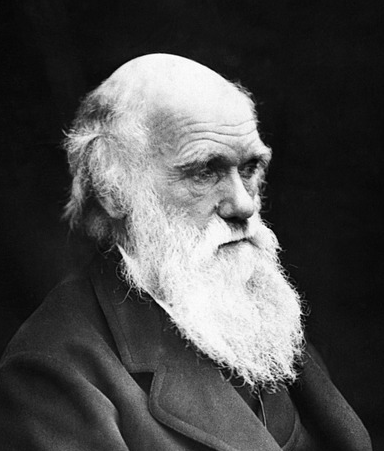
and anatomical similarities. The possibility of linking humans with earlier apes by descent only became clear after 1859 with the publication of Charles Darwin
's On the Origin of Species. This argued for the idea of the evolution of new species from earlier ones. Darwin's book did not address the question of human evolution, saying only that "Light will be thrown on the origin of man and his history".
The first debates about the nature of human evolution arose between Thomas Huxley
and Richard Owen
. Huxley argued for human evolution from apes by illustrating many of the similarities and differences between humans and apes, and did so particularly in his 1863 book Evidence as to Man's Place in Nature
. However, many of Darwin's early supporters (such as Alfred Russel Wallace
and Charles Lyell
) did not agree that the origin of the mental capacities and the moral sensibilities of humans could be explained by natural selection
. Darwin applied the theory of evolution and sexual selection
to humans when he published The Descent of Man
in 1871.
A major problem at that time was the lack of fossil intermediaries. Despite the discovery by Eugene Dubois
of what is now called Homo erectus
in 1891 at Trinil
, Java
, it was only in the 1920s that such fossil
s were discovered in Africa, that intermediate species began to accumulate. In 1925, Raymond Dart
described Australopithecus africanus
. The type specimen was the Taung Child
, an Australopithecine infant discovered in a cave. The child's remains were a remarkably well-preserved tiny skull and an endocranial cast of the individual's brain. Although the brain was small (410 cm³), its shape was rounded, unlike that of chimpanzees and gorillas, and more like a modern human brain. Also, the specimen showed short canine teeth
, and the position of the foramen magnum was evidence of bipedal locomotion. All of these traits convinced Dart that the Taung baby was a bipedal human ancestor, a transitional form between apes and humans.
The classification of humans and their relatives has changed considerably since the 1950s. For instance; gracile Australopithecines was thought to be ancestors of the genus Homo, the group to which modern humans belong. Both Australopithecines and Homo sapiens are part of the tribe Hominini
.
Data collected during the 1970s suggests Australopithecines were a diverse group and that A. africanus may not be a direct ancestor of modern humans. Reclassification of Australopithecines that originally were split into either gracile or robust varieties has put the latter into a genus of its own, Paranthropus
. Taxonomists place humans, Australopithecines and related species in the same family as other great apes, in the Hominidae
. Richard Dawkins
in his book The Ancestor's Tale
proposes that robust Australopithecines: Paranthropus
, are the ancestors of gorillas, whereas some of the gracile australopithecus are the ancestors of chimpanzees, the others being human ancestors (see Homininae
).
Progress throughout the 1980s and 1990s in DNA sequencing
, specifically mitochondrial DNA
(mtDNA) and then Y-chromosome DNA advanced the understanding of human origins. Sequencing mtDNA and Y-DNA sampled from a wide range of indigenous populations revealed ancestral information relating to both male and female genetic heritage. Aligned in genetic tree differences were interpreted as supportive of a recent single origin
. Analysis have shown a greater diverse of DNA pattern throughout Africa, thus indicating its the ancestral home of mitochondrial Eve
and Y-chromosomal Adam
.
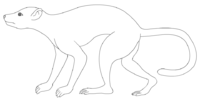 The evolutionary history of the primate
s can be traced back 65 million years, as one of the oldest of all surviving placental mammal groups. The oldest known primate-like mammal species, the Plesiadapis
, came from North America, but they were widespread in Eurasia and Africa during the tropical conditions of the Paleocene
and Eocene
.
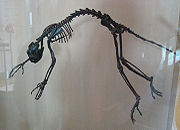 The beginning of modern climates was marked by the formation of the first Antarctic ice in the early Oligocene
around 30 million years ago. A primate from this time was Notharctus
. Fossil evidence found in Germany in the 1980s was determined to be about 16.5 million years old, some 1.5 million years older than similar species from East Africa and challenging the original theory regarding human ancestry originating on the African continent.
David Begun says that these primates flourished in Eurasia and that the lineage leading to the African apes and humans—including Dryopithecus
—migrated south from Europe or Western Asia into Africa. The surviving tropical population, which is seen most completely in the upper Eocene and lowermost Oligocene fossil beds of the Fayum depression southwest of Cairo, gave rise to all living primates—lemur
s of Madagascar, loris
es of Southeast Asia, galago
s or "bush babies" of Africa, and the anthropoids
; platyrrhines or New World monkeys, and catarrhines or Old World monkeys and the great apes and humans.
The earliest known catarrhine is Kamoyapithecus
from uppermost Oligocene at Eragaleit in the northern Kenya Rift Valley, dated to 24 million years ago. Its ancestry is generally thought to be species related to Aegyptopithecus
, Propliopithecus
, and Parapithecus
from the Fayum, at around 35 million years ago. In 2010, Saadanius
was described as a close relative of the last common ancestor of the crown
catarrhines, and tentatively dated to 29–28 million years ago, helping to fill an 11-million-year gap in the fossil record.
.jpg) In the early Miocene
In the early Miocene
, about 22 million years ago, the many kinds of arboreally adapted primitive catarrhines from East Africa suggest a long history of prior diversification. Fossils at 20 million years ago include fragments attributed to Victoriapithecus, the earliest Old World Monkey. Among the genera thought to be in the ape lineage leading up to 13 million years ago are Proconsul
, Rangwapithecus, Dendropithecus
, Limnopithecus, Nacholapithecus, Equatorius, Nyanzapithecus, Afropithecus
, Heliopithecus
, and Kenyapithecus, all from East Africa. The presence of other generalized non-cercopithecids of middle Miocene age from sites far distant—Otavipithecus from cave deposits in Namibia, and Pierolapithecus and Dryopithecus
from France, Spain and Austria—is evidence of a wide diversity of forms across Africa and the Mediterranean basin during the relatively warm and equable climatic regimes of the early and middle Miocene. The youngest of the Miocene hominoids, Oreopithecus, is from 9 million year old coal beds in Italy.
Molecular evidence indicates that the lineage of gibbon
s (family Hylobatidae) became distinct from Great Apes between 18 and 12 million years ago, and that of orangutan
s (subfamily Ponginae) became distinct from the other Great Apes at about 12 million years; there are no fossils that clearly document the ancestry of gibbons, which may have originated in a so-far-unknown South East Asian hominoid population, but fossil proto-orangutans may be represented by Ramapithecus from India and Griphopithecus from Turkey, dated to around 10 million years ago.
s, and then the chimpanzees (genus Pan) split off from the line leading to the humans; human DNA is approximately 98.4% identical to that of chimpanzees when comparing single nucleotide polymorphisms (see human evolutionary genetics
). The fossil record of gorillas and chimpanzees is quite limited. Both poor preservation (rain forest soils tend to be acidic and dissolve bone) and sampling bias probably contribute to this problem.
Other hominines
likely adapted to the drier environments outside the equatorial belt, along with antelopes, hyenas, dogs, pigs, elephants, and horses. The equatorial belt contracted after about 8 million years ago. Fossils of these hominans - the species in the human lineage following divergence from the chimpanzees - are relatively well known.
The earliest are Sahelanthropus tchadensis
(7 Ma) and Orrorin tugenensis
(6 Ma), followed by:
. While some other, extinct Homo species might have been ancestors of Homo sapiens, many were likely our "cousins", having speciated away from our ancestral line. There is not yet a consensus as to which of these groups should count as separate species and which as subspecies. In some cases this is due to the dearth of fossils, in other cases it is due to the slight differences used to classify species in the Homo genus. The Sahara pump theory
(describing an occasionally passable "wet" Sahara Desert) provides an explanation of the early variation in the genus Homo.
Based on archaeological and paleontological evidence, it has been possible to infer, to some extent, the ancient dietary practices of various Homo species and to study the role of diet in physical and behavioral evolution within Homo.
lived from about 2.4 to 1.4 Ma. Homo habilis evolved in South and East Africa in the late Pliocene
or early Pleistocene
, 2.5–2 Ma, when it diverged from the Australopithecines. Homo habilis had smaller molars and larger brains than the Australopithecines, and made tools from stone and perhaps animal bones. One of the first known hominids, it was nicknamed 'handy man' by its discoverer, Louis Leakey
due to its association with stone tools. Some scientists have proposed moving this species out of Homo and into Australopithecus due to the morphology of its skeleton being more adapted to living on trees rather than to moving on two legs like Homo sapiens.
It was considered to be the first species of the genus Homo until May 2010, when a new species, Homo gautengensis
was discovered in South Africa, that most likely arose earlier than Homo habilis.
 The first fossils of Homo erectus were discovered by Dutch physician Eugene Dubois
in 1891 on the Indonesia
n island of Java
. He originally gave the material the name Pithecanthropus erectus based on its morphology that he considered to be intermediate between that of humans and apes. Homo erectus
(H erectus) lived from about 1.8 Ma to about 70,000 years ago (which would indicate that they were probably wiped out by the Toba catastrophe; however, Homo erectus soloensis
and Homo floresiensis
survived it). Often the early phase, from 1.8 to 1.25 Ma, is considered to be a separate species, Homo ergaster
, or it is seen as a subspecies of Homo erectus, Homo erectus ergaster
.
In the early Pleistocene, 1.5–1 Ma, in Africa, Asia, and Europe, some populations of Homo habilis are thought to have evolved larger brains and made more elaborate stone tools; these differences and others are sufficient for anthropologists to classify them as a new species, Homo erectus. In addition Homo erectus was the first human ancestor to walk truly upright. This was made possible by the evolution of locking knees and a different location of the foramen magnum (the hole in the skull where the spine enters). They may have used fire to cook their meat.
A famous example of Homo erectus is Peking Man
; others were found in Asia (notably in Indonesia), Africa, and Europe. Many paleoanthropologists now use the term Homo ergaster for the non-Asian forms of this group, and reserve Homo erectus only for those fossils that are found in Asia and meet certain skeletal and dental requirements which differ slightly from H. ergaster.
Man) lived from about 800,000 to about 300,000 years ago. Also proposed as Homo sapiens heidelbergensis or Homo sapiens paleohungaricus.
indicated that no significant gene flow occurred between H. neanderthalensis and H. sapiens, and, therefore, the two were separate species that shared a common ancestor about 660,000 years ago. However, the 2010 sequencing of the Neanderthal genome indicated that Neanderthals did indeed interbreed with anatomically modern humans circa 45,000 to 80,000 years ago (at the approximate time that modern humans migrated out from Africa, but before they dispersed into Europe, Asia and elsewhere). Nearly all modern non-African humans have 1% to 4% of their DNA derived from Neanderthal DNA, and this finding is consistent with recent studies indicating that the divergence of some human alleles dates to one Ma, although the interpretation of these studies has been questioned. Competition from Homo sapiens probably contributed to Neanderthal extinction. They could have coexisted in Europe
for as long as 10,000 years.
In 2008, archaeologists working at the site of Denisova Cave
in the Altai Mountains of Siberia
uncovered a small bone fragment from the fifth finger of a juvenile member of a population now referred to as Denisova hominin
s, or simply Denisovans. Artifacts, including a bracelet, excavated in the cave at the same level were carbon dated
to around 40,000 BP
. As DNA had survived in the fossil fragment due to the cool climate of the Denisova Cave, both mtDNA and nuclear genomic DNA has been and sequenced.
While the divergence point of the mtDNA was unexpectedly deep in time, the full genomic sequence suggested the Denisovans belonged to the same lineage as Neanderthals, with the two diverging shortly after their line split from that giving rise to modern humans. Modern humans are known to have overlapped with Neanderthals in Europe for more than 10,000 years, and the discovery raises the possibility that Neanderthals, modern humans and the Denisova hominin may have co-existed. Pääbo noted that the existence of this distant branch creates a much more complex picture of humankind during the Late Pleistocene
. Evidence has also been found for as much as 6% of the genomes of some modern Melanesians
to derive from Denisovans, indicating limited interbreeding in Southeast Asia
.
Alleles thought to have originated in Neanderthal and the Denisova hominin have been identified at several genetic loci in the genomes of modern humans outside of Africa. HLA types from Denisovans and Neanderthal represent more than half the HLA alleles of modern Eurasians, indicating strong positive selection for these introgressed
alleles.
, around 250,000 years ago, the trend in skull expansion
and the elaboration of stone tool technologies developed, providing evidence for a transition from H. erectus to H. sapiens. The direct evidence suggests there was a migration of H. erectus out of Africa, then a further speciation
of H. sapiens from H. erectus in Africa. A subsequent migration within and out of Africa eventually replaced the earlier dispersed H. erectus. This migration and origin theory is usually referred to as the recent single origin or Out of Africa theory. Current evidence does not preclude some multiregional evolution or some admixture of the migrant H. sapiens with existing Homo populations. This is a hotly debated area of paleoanthropology
.
Current research has established that humans are genetically highly homogenous; that is, the DNA of individuals is more alike than usual for most species, which may have resulted from their relatively recent evolution or the possibility of a population bottleneck
resulting from cataclysmic natural events such as the Toba catastrophe
. Distinctive genetic characteristics have arisen, however, primarily as the result of small groups of people moving into new environmental circumstances. These adapted traits are a very small component of the Homo sapiens genome, but include various characteristics such as skin color and nose form, in addition to internal characteristics such as the ability to breathe more efficiently at high altitudes.
H. sapiens idaltu
, from Ethiopia, is an extinct sub-species who lived about 160,000 years ago.
for its small size, possibly a result of insular dwarfism
. H. floresiensis is intriguing both for its size and its age, being a concrete example of a recent species of the genus Homo that exhibits derived traits not shared with modern humans. In other words, H. floresiensis share a common ancestor with modern humans, but split from the modern human lineage and followed a distinct evolutionary path. The main find was a skeleton believed to be a woman of about 30 years of age. Found in 2003 it has been dated to approximately 18,000 years old. The living woman was estimated to be one meter in height, with a brain volume of just 380 cm3 (considered small for a chimpanzee and less than a third of the H. sapiens average of 1400 cm3).
However, there is an ongoing debate over whether H. floresiensis is indeed a separate species. Some scientists presently believe that H. floresiensis was a modern H. sapiens suffering from pathological dwarfism. This hypothesis is supported in part, because some modern humans who live on Flores
, the island where the skeleton was found, are pygmies. This coupled with pathological dwarfism, it is argued, could indeed create a hobbit-like human. The other major attack on H. floresiensis is that it was found with tools only associated with H. sapiens.
The hypothesis of pathological dwarfism, however, fails to explain additional anatomical features that are unlike those of modern humans (diseased or not) but much like those of ancient members of our genus. Aside from cranial features, these features include the form of bones in the wrist, forearm, shoulder, knees, and feet.
 Using tools has been interpreted as a sign of intelligence, and it has been theorized that tool use may have stimulated certain aspects of human evolution—most notably the continued expansion of the human brain. Paleontology has yet to explain the expansion of this organ over millions of years despite being extremely demanding in terms of energy consumption. The brain of a modern human consumes about 20 watt
s (400 kilocalories per day), which is one fifth of the energy consumption of a human body. Increased tool use would allow hunting for energy-rich meat products, and would enable processing more energy-rich plant products. Researchers have suggested that early hominids were thus under evolutionary pressure to increase their capacity to create and use tools.
Precisely when early humans started to use tools is difficult to determine, because the more primitive these tools are (for example, sharp-edged stones) the more difficult it is to decide whether they are natural objects or human artifacts. There is some evidence that the australopithecines (4 Ma) may have used broken bones as tools, but this is debated.
It should be noted that many species make and use tools, but it is the human species that dominates the areas of making and using more complex tools. The oldest known tools are the "Oldowan stone tools" from Ethiopia. It was discovered that these tools are from 2.5 to 2.6 million years old, which predates the earliest known "Homo" species. There is no known evidence that any "Homo" specimens appeared by 2.5 Ma. A Homo fossil was found near some Oldowan tools, and its age was noted at 2.3 million years old, suggesting that maybe the Homo species did indeed create and use these tools. It is surely possible, but not solid evidence. Bernard Wood noted that "Paranthropus" coexisted with the early Homo species in the area of the "Oldowan Industrial Complex" over roughly the same span of time. Although there is no direct evidence that points to Paranthropus as the tool makers, their anatomy lends to indirect evidence of their capabilities in this area. Most paleoanthropologists agree that the early "Homo" species were indeed responsible for most of the Oldowan tools found. They argue that when most of the Oldowan tools were found in association with human fossils, Homo was always present, but Paranthropus was not.
In 1994, Randall Susman used the anatomy of opposable thumbs as the basis for his argument that both the Homo and Paranthropus species were toolmakers. He compared bones and muscles of human and chimpanzee thumbs, finding that humans have 3 muscles that chimps lack. Humans also have thicker metacarpals with broader heads, making the human hand more successful at precision grasping than the chimpanzee hand. Susman defended that modern anatomy of the human thumb is an evolutionary response to the requirements associated with making and handling tools and that both species were indeed toolmakers.
made out of round pebbles that had been split by simple strikes. This marks the beginning of the Paleolithic
, or Old Stone Age; its end is taken to be the end of the last Ice Age, around 10,000 years ago. The Paleolithic is subdivided into the Lower Paleolithic
(Early Stone Age, ending around 350,000–300,000 years ago), the Middle Paleolithic
(Middle Stone Age, until 50,000–30,000 years ago), and the Upper Paleolithic
.
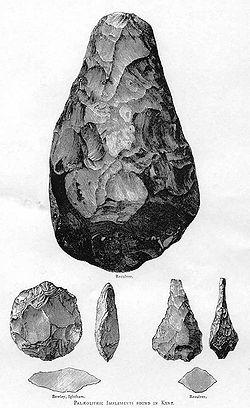
The period from 700,000–300,000 years ago is also known as the Acheulean
, when H. ergaster (or erectus) made large stone hand-axes out of flint
and quartzite
, at first quite rough (Early Acheulian), later "retouched
" by additional, more subtle strikes at the sides of the flakes
. After 350,000 BP (Before Present
) the more refined so-called Levallois technique
was developed. It consisted of a series of consecutive strikes, by which scrapers, slicers ("racloirs"), needles, and flattened needles were made. Finally, after about 50,000 BP, ever more refined and specialized flint tools were made by the Neanderthals and the immigrant Cro-Magnon
s (knives, blades, skimmers). In this period they also started to make tools out of bone.
, author of The Third Chimpanzee
, and some anthropologists characterize this as a "Great Leap Forward
".
Modern humans started burying their dead, making clothing out of hides, developing sophisticated hunting techniques (such as using trapping pit
s or driving animals off cliffs), and engaging in cave painting
. As human culture advanced, different populations of humans introduced novelty to existing technologies: artifacts such as fish hooks, buttons and bone needles show signs of variation among different populations of humans, something that had not been seen in human cultures prior to 50,000 BP. Typically, H. neanderthalensis populations do not vary in their technologies.
Among concrete examples of Modern human behavior, anthropologists include specialization of tools, use of jewellery and images (such as cave drawings), organization of living space, rituals (for example, burials with grave gifts), specialized hunting techniques, exploration of less hospitable geographical areas, and barter
trade networks. Debate continues as to whether a "revolution" led to modern humans ("the big bang of human consciousness"), or whether the evolution was more gradual.
.
Anthropologists have been divided as to whether current human population evolved only in East Africa, speciated
, then migrated out of Africa and replaced human populations in Eurasia
(called the "Out-of-Africa" Model or the "Complete-Replacement" Model) or evolved as one interconnected population (as postulated by the Multiregional Evolution hypothesis).
and Peter Andrews, modern H. sapiens evolved in Africa 200,000 years ago. Homo sapiens began migrating from Africa between 70,000 – 50,000 years ago and eventually replaced existing hominid species in Europe and Asia. Out of Africa has gained support from research using female mitochondrial DNA (mtDNA) and the male Y chromosome. After analysing genealogy trees constructed using 133 types of mtDNA, researchers concluded that all were descended from a woman from Africa, dubbed Mitochondrial Eve
. Out of Africa is also supported by the fact that mitochondrial genetic diversity is highest among African populations.
There are differing theories on whether there was a single exodus or several. A multiple dispersal model involves the Southern Dispersal theory, which has gained support in recent years from genetic, linguistic and archaeological evidence. In this theory, there was a coastal dispersal of modern humans from the Horn of Africa
around 70,000 years ago. This group helped to populate Southeast Asia and Oceania, explaining the discovery of early human sites in these areas much earlier than those in the Levant
. A second wave of humans dispersed across the Sinai peninsula
into Asia, resulting in the bulk of human population for Eurasia
. This second group possessed a more sophisticated tool technology and was less dependent on coastal food sources than the original group. Much of the evidence for the first group's expansion would have been destroyed by the rising sea levels at the end of each glacial maximum. The multiple dispersal model is contradicted by studies indicating that the populations of Eurasia and the populations of Southeast Asia and Oceania are all descended from the same mitochondrial DNA lineages, which support a single migration out of Africa that gave rise to all non-African populations.
The broad study of African genetic diversity headed by Sarah Tishkoff found the San people
to express the greatest genetic diversity among the 113 distinct populations sampled, making them one of 14 "ancestral population clusters
". The research also located the origin of modern human migration in south-western Africa, near the coastal border of Namibia
and Angola
.
According to the Toba catastrophe theory
to which some anthropologists and archeologists subscribe, the supereruption
of Lake Toba
on Sumatra island in Indonesia roughly 70,000 years ago had global consequences, killing most humans then alive and creating a population bottleneck
that affected the genetic inheritance of all humans today.
in 1988. Multiregional evolution holds that human evolution from the beginning of the Pleistocene
2.5 million years BP
to the present day has been within a single, continuous human species, evolving worldwide from Homo erectus into modern Homo sapiens.
According to the multiregional hypothesis, fossil and genomic data are evidence for worldwide human evolution and contradict the recent speciation postulated by the Recent African origin hypothesis. The fossil evidence was insufficient for Richard Leakey
to resolve this debate. Studies of haplogroup
s in Y-chromosomal DNA and mitochondrial DNA have largely supported a recent African origin. Evidence from autosomal DNA also predominantly supports a Recent African origin. However evidence for archaic
admixture in modern humans had been suggested by some studies.
Recent sequencing of Neanderthal and Denisovan genomes show that some admixture occurred. Modern humans outside Africa have 2-4% Neanderthal alleles in their genome, and some Melanesians
have an additional 4-6% of Denisovan alleles. These new results do not contradict the « Out of Africa » model, except in its strictest interpretation. After recovery from a genetic bottleneck that might be due to the Toba supervolcano catastrophe (73.000 years ago), a fairly small group left Africa and briefly interbred with Neanderthals, probably in the middle-east or even North Africa before their departure. Their still predominantly-African descendants spread to populate the world. A fraction in turn interbred with Denisovans, probably in south-east Asia, before populating Melanesia. HLA
haplotypes of Neanderthal and Denisova origin have been identified in modern Eurasian and Oceanian populations.
has significant over-representation of an immune variant of the prion protein gene G127V versus non-immune alleles. The frequency of this genetic variant is due to the survival of immune persons. Other reported evolutionary trends in other populations include a lengthening of the reproductive period, reduction in cholesterol levels, blood glucose and blood pressure.
It has been argued that human evolution has accelerated since, and as a result of, the development of agriculture and civilization some 10,000 years ago. It is claimed that this has resulted in substantial genetic differences between different current human populations.
differs from the other, the evolutionary past that gave rise to it, and its current effects. Differences between genomes have anthropological, medical and forensic implications and applications. Genetic data can provide important insight into human evolution.
.
Evolution
Evolution is any change across successive generations in the heritable characteristics of biological populations. Evolutionary processes give rise to diversity at every level of biological organisation, including species, individual organisms and molecules such as DNA and proteins.Life on Earth...
ary history of the genus Homo
Homo (genus)
Homo is the genus that includes modern humans and species closely related to them. The genus is estimated to be about 2.3 to 2.4 million years old, evolving from australopithecine ancestors with the appearance of Homo habilis....
, including the emergence of Homo sapiens as a distinct species
Species
In biology, a species is one of the basic units of biological classification and a taxonomic rank. A species is often defined as a group of organisms capable of interbreeding and producing fertile offspring. While in many cases this definition is adequate, more precise or differing measures are...
and as a unique category of hominids ("great apes") and mammals. The study of human evolution
Evolution
Evolution is any change across successive generations in the heritable characteristics of biological populations. Evolutionary processes give rise to diversity at every level of biological organisation, including species, individual organisms and molecules such as DNA and proteins.Life on Earth...
uses many scientific disciplines, including physical anthropology
Physical anthropology
Biological anthropology is that branch of anthropology that studies the physical development of the human species. It plays an important part in paleoanthropology and in forensic anthropology...
, primatology
Primatology
Primatology is the scientific study of primates. It is a diverse discipline and researchers can be found in academic departments of anatomy, anthropology, biology, medicine, psychology, veterinary sciences and zoology, as well as in animal sanctuaries, biomedical research facilities, museums and zoos...
, archaeology
Archaeology
Archaeology, or archeology , is the study of human society, primarily through the recovery and analysis of the material culture and environmental data that they have left behind, which includes artifacts, architecture, biofacts and cultural landscapes...
, linguistics
Linguistics
Linguistics is the scientific study of human language. Linguistics can be broadly broken into three categories or subfields of study: language form, language meaning, and language in context....
and genetics
Genetics
Genetics , a discipline of biology, is the science of genes, heredity, and variation in living organisms....
.
The term "human" in the context of human evolution refers to the genus
Genus
In biology, a genus is a low-level taxonomic rank used in the biological classification of living and fossil organisms, which is an example of definition by genus and differentia...
Homo, but studies of human evolution usually include other hominids, such as the Australopithecine
Australopithecine
The term australopithecine refers generally to any species in the related genera Australopithecus or Paranthropus. These species occurred in the Plio-Pleistocene era, and were bipedal and dentally similar to humans, but with a brain size not much larger than modern apes, lacking the...
s, from which the genus Homo diverged by about 2.3 to 2.4 million years ago in Africa. Scientists have estimated that humans branched off from their common ancestor with chimpanzee
Chimpanzee
Chimpanzee, sometimes colloquially chimp, is the common name for the two extant species of ape in the genus Pan. The Congo River forms the boundary between the native habitat of the two species:...
s about 5–7 million years ago. Several species and subspecies of Homo evolved and are now extinct
Extinction
In biology and ecology, extinction is the end of an organism or of a group of organisms , normally a species. The moment of extinction is generally considered to be the death of the last individual of the species, although the capacity to breed and recover may have been lost before this point...
, introgressed
Introgression
Introgression, also known as introgressive hybridization, in genetics is the movement of a gene from one species into the gene pool of another by the repeated backcrossing of an interspecific hybrid with one of its parent species...
or extant. Examples include Homo erectus
Homo erectus
Homo erectus is an extinct species of hominid that lived from the end of the Pliocene epoch to the later Pleistocene, about . The species originated in Africa and spread as far as India, China and Java. There is still disagreement on the subject of the classification, ancestry, and progeny of H...
(which inhabited
Habitat
* Habitat , a place where a species lives and grows*Human habitat, a place where humans live, work or play** Space habitat, a space station intended as a permanent settlement...
Asia, Africa, and Europe) and Neanderthal
Neanderthal
The Neanderthal is an extinct member of the Homo genus known from Pleistocene specimens found in Europe and parts of western and central Asia...
s (either Homo neanderthalensis or Homo sapiens neanderthalensis) (which inhabited Europe and Asia). Archaic Homo sapiens
Archaic Homo sapiens
Archaic Homo sapiens is a loosely defined term used to describe a number of varieties of Homo, as opposed to anatomically modern humans , in the period beginning 500,000 years ago....
, the forerunner of anatomically modern humans
Anatomically modern humans
The term anatomically modern humans in paleoanthropology refers to early individuals of Homo sapiens with an appearance consistent with the range of phenotypes in modern humans....
, evolved between 400,000 and 250,000 years ago.
One view among scientists concerning the origin of anatomically modern humans is the hypothesis known as "Out of Africa", recent African origin of modern humans
Recent African origin of modern humans
In paleoanthropology, the recent African origin of modern humans is the most widely accepted model describing the origin and early dispersal of anatomically modern humans...
, or recent African origin hypothesis, which argues that Homo sapiens arose
Speciation
Speciation is the evolutionary process by which new biological species arise. The biologist Orator F. Cook seems to have been the first to coin the term 'speciation' for the splitting of lineages or 'cladogenesis,' as opposed to 'anagenesis' or 'phyletic evolution' occurring within lineages...
in Africa and migrated out of the continent around 50,000 to 100,000 years ago, replacing populations of Homo erectus in Asia and Neanderthals in Europe. An alternative multiregional hypothesis posits that Homo sapiens evolved as geographically separate but interbreeding populations stemming from the worldwide migration of Homo erectus out of Africa nearly 2.5 million years ago. Evidence suggests that several haplotypes of Neanderthal origin are present among all non-African populations, and Neanderthals and other hominids, such as Denisova hominin
Denisova hominin
Denisova hominins , or Denisovans, are Paleolithic-Era members of the genus Homo that may belong to a previously unknown species. In , scientists announced the discovery of a finger bone fragment of a juvenile female that lived about 41,000 years ago, found in Denisova Cave in Altai Krai, Russia, a...
may have contributed up to 6% of their genome to present-day humans.
History of ideas
The word homo, the name of the biological genus to which humans belong, is LatinLatin
Latin is an Italic language originally spoken in Latium and Ancient Rome. It, along with most European languages, is a descendant of the ancient Proto-Indo-European language. Although it is considered a dead language, a number of scholars and members of the Christian clergy speak it fluently, and...
for "human". It was chosen originally by Carolus Linnaeus
Carolus Linnaeus
Carl Linnaeus , also known after his ennoblement as , was a Swedish botanist, physician, and zoologist, who laid the foundations for the modern scheme of binomial nomenclature. He is known as the father of modern taxonomy, and is also considered one of the fathers of modern ecology...
in his classification system. The word "human" is from the Latin humanus, the adjectival form of homo. The Latin "homo" derives from the Indo-European root *dhghem, or "earth".
Carolus Linnaeus and other scientists of his time also considered the great apes to be the closest relatives of humans due to morphological
Morphology (biology)
In biology, morphology is a branch of bioscience dealing with the study of the form and structure of organisms and their specific structural features....
and anatomical similarities. The possibility of linking humans with earlier apes by descent only became clear after 1859 with the publication of Charles Darwin
Charles Darwin
Charles Robert Darwin FRS was an English naturalist. He established that all species of life have descended over time from common ancestry, and proposed the scientific theory that this branching pattern of evolution resulted from a process that he called natural selection.He published his theory...
's On the Origin of Species. This argued for the idea of the evolution of new species from earlier ones. Darwin's book did not address the question of human evolution, saying only that "Light will be thrown on the origin of man and his history".
The first debates about the nature of human evolution arose between Thomas Huxley
Thomas Huxley
Thomas Henry Huxley PC FRS was an English biologist, known as "Darwin's Bulldog" for his advocacy of Charles Darwin's theory of evolution....
and Richard Owen
Richard Owen
Sir Richard Owen, FRS KCB was an English biologist, comparative anatomist and palaeontologist.Owen is probably best remembered today for coining the word Dinosauria and for his outspoken opposition to Charles Darwin's theory of evolution by natural selection...
. Huxley argued for human evolution from apes by illustrating many of the similarities and differences between humans and apes, and did so particularly in his 1863 book Evidence as to Man's Place in Nature
Evidence as to Man's Place in Nature
Evidence as to Man's Place in Nature is an 1863 book by Thomas Henry Huxley, in which he gives evidence for the evolution of man and apes from a common ancestor. It was the first book devoted to the topic of human evolution, and discussed much of the anatomical and other evidence...
. However, many of Darwin's early supporters (such as Alfred Russel Wallace
Alfred Russel Wallace
Alfred Russel Wallace, OM, FRS was a British naturalist, explorer, geographer, anthropologist and biologist...
and Charles Lyell
Charles Lyell
Sir Charles Lyell, 1st Baronet, Kt FRS was a British lawyer and the foremost geologist of his day. He is best known as the author of Principles of Geology, which popularised James Hutton's concepts of uniformitarianism – the idea that the earth was shaped by slow-moving forces still in operation...
) did not agree that the origin of the mental capacities and the moral sensibilities of humans could be explained by natural selection
Natural selection
Natural selection is the nonrandom process by which biologic traits become either more or less common in a population as a function of differential reproduction of their bearers. It is a key mechanism of evolution....
. Darwin applied the theory of evolution and sexual selection
Sexual selection
Sexual selection, a concept introduced by Charles Darwin in his 1859 book On the Origin of Species, is a significant element of his theory of natural selection...
to humans when he published The Descent of Man
The Descent of Man, and Selection in Relation to Sex
The Descent of Man, and Selection in Relation to Sex is a book on evolutionary theory by English naturalist Charles Darwin, first published in 1871. It was Darwin's second great book on evolutionary theory, following his 1859 work, On The Origin of Species. In The Descent of Man, Darwin applies...
in 1871.
A major problem at that time was the lack of fossil intermediaries. Despite the discovery by Eugene Dubois
Eugène Dubois
Marie Eugène François Thomas Dubois was a Dutch paleoanthropologist. He earned worldwide fame for his discovery of Pithecanthropus erectus , or 'Java Man'...
of what is now called Homo erectus
Homo erectus
Homo erectus is an extinct species of hominid that lived from the end of the Pliocene epoch to the later Pleistocene, about . The species originated in Africa and spread as far as India, China and Java. There is still disagreement on the subject of the classification, ancestry, and progeny of H...
in 1891 at Trinil
Trinil
Trinil is a palaeoanthropological site on the banks of the Bengawan Solo River in Ngawi Regency, East Java Province, Indonesia. It was at this site in 1891 that the Dutch anatomist Eugène Dubois discovered the first early hominid remains to be found outside of Europe: the famous "Java Man" specimen....
, Java
Java
Java is an island of Indonesia. With a population of 135 million , it is the world's most populous island, and one of the most densely populated regions in the world. It is home to 60% of Indonesia's population. The Indonesian capital city, Jakarta, is in west Java...
, it was only in the 1920s that such fossil
Fossil
Fossils are the preserved remains or traces of animals , plants, and other organisms from the remote past...
s were discovered in Africa, that intermediate species began to accumulate. In 1925, Raymond Dart
Raymond Dart
Raymond Arthur Dart was an Australian anatomist and anthropologist, best known for his involvement in the 1924 discovery of the first fossil ever found of Australopithecus africanus, an extinct hominid closely related to humans, at Taung in the North of South Africa in the province...
described Australopithecus africanus
Australopithecus africanus
Australopithecus africanus was an early hominid, an australopithecine, who lived between 2–3 million years ago in the Pliocene. In common with the older Australopithecus afarensis, A. africanus was slenderly built, or gracile, and was thought to have been a direct ancestor of modern humans. Fossil...
. The type specimen was the Taung Child
Taung Child
The Taung Child — or Taung Baby — is the fossilized skull of a young Australopithecus africanus individual. It was discovered in 1924 by quarrymen working for the Northern Lime Company in Taung, South Africa...
, an Australopithecine infant discovered in a cave. The child's remains were a remarkably well-preserved tiny skull and an endocranial cast of the individual's brain. Although the brain was small (410 cm³), its shape was rounded, unlike that of chimpanzees and gorillas, and more like a modern human brain. Also, the specimen showed short canine teeth
Canine tooth
In mammalian oral anatomy, the canine teeth, also called cuspids, dogteeth, fangs, or eye teeth, are relatively long, pointed teeth...
, and the position of the foramen magnum was evidence of bipedal locomotion. All of these traits convinced Dart that the Taung baby was a bipedal human ancestor, a transitional form between apes and humans.
The classification of humans and their relatives has changed considerably since the 1950s. For instance; gracile Australopithecines was thought to be ancestors of the genus Homo, the group to which modern humans belong. Both Australopithecines and Homo sapiens are part of the tribe Hominini
Hominini
Hominini is the tribe of Homininae that comprises Homo, and the two species of the genus Pan , their ancestors, and the extinct lineages of their common ancestor . Members of the tribe are called hominins...
.
Data collected during the 1970s suggests Australopithecines were a diverse group and that A. africanus may not be a direct ancestor of modern humans. Reclassification of Australopithecines that originally were split into either gracile or robust varieties has put the latter into a genus of its own, Paranthropus
Paranthropus
The robust australopithecines, members of the extinct hominin genus Paranthropus , were bipedal hominids that probably descended from the gracile australopithecine hominids...
. Taxonomists place humans, Australopithecines and related species in the same family as other great apes, in the Hominidae
Hominidae
The Hominidae or include them .), as the term is used here, form a taxonomic family, including four extant genera: chimpanzees , gorillas , humans , and orangutans ....
. Richard Dawkins
Richard Dawkins
Clinton Richard Dawkins, FRS, FRSL , known as Richard Dawkins, is a British ethologist, evolutionary biologist and author...
in his book The Ancestor's Tale
The Ancestor's Tale
The Ancestor's Tale is a 2004 popular science book by Richard Dawkins, with contributions from Dawkins' research assistant Yan Wong. It follows the path of humans backwards through evolutionary history, meeting humanity's cousins as they converge on common ancestors...
proposes that robust Australopithecines: Paranthropus
Paranthropus
The robust australopithecines, members of the extinct hominin genus Paranthropus , were bipedal hominids that probably descended from the gracile australopithecine hominids...
, are the ancestors of gorillas, whereas some of the gracile australopithecus are the ancestors of chimpanzees, the others being human ancestors (see Homininae
Homininae
Homininae is a subfamily of Hominidae, which includes humans, gorillas and chimpanzees, and some extinct relatives; it comprises all those hominids, such as Australopithecus, that arose after the split from orangutans . Our family tree, which has 3 main branches leading to chimpanzees, humans and...
).
Progress throughout the 1980s and 1990s in DNA sequencing
DNA sequencing
DNA sequencing includes several methods and technologies that are used for determining the order of the nucleotide bases—adenine, guanine, cytosine, and thymine—in a molecule of DNA....
, specifically mitochondrial DNA
Mitochondrial DNA
Mitochondrial DNA is the DNA located in organelles called mitochondria, structures within eukaryotic cells that convert the chemical energy from food into a form that cells can use, adenosine triphosphate...
(mtDNA) and then Y-chromosome DNA advanced the understanding of human origins. Sequencing mtDNA and Y-DNA sampled from a wide range of indigenous populations revealed ancestral information relating to both male and female genetic heritage. Aligned in genetic tree differences were interpreted as supportive of a recent single origin
Recent African origin of modern humans
In paleoanthropology, the recent African origin of modern humans is the most widely accepted model describing the origin and early dispersal of anatomically modern humans...
. Analysis have shown a greater diverse of DNA pattern throughout Africa, thus indicating its the ancestral home of mitochondrial Eve
Mitochondrial Eve
In the field of human genetics, Mitochondrial Eve refers to the matrilineal "MRCA" . In other words, she was the woman from whom all living humans today descend, on their mother's side, and through the mothers of those mothers and so on, back until all lines converge on one person...
and Y-chromosomal Adam
Y-chromosomal Adam
In human genetics, Y-chromosomal Adam is the theoretical most recent common ancestor from whom all living people are descended patrilineally . Many studies report that Y-chromosomal Adam lived as early as around 142,000 years ago and possibly as recently as 60,000 years ago...
.
Before Homo
Evolution of the great apes
Primate
A primate is a mammal of the order Primates , which contains prosimians and simians. Primates arose from ancestors that lived in the trees of tropical forests; many primate characteristics represent adaptations to life in this challenging three-dimensional environment...
s can be traced back 65 million years, as one of the oldest of all surviving placental mammal groups. The oldest known primate-like mammal species, the Plesiadapis
Plesiadapis
Plesiadapis is one of the oldest known primate-like mammal species which existed about 58-55 million years ago in North America and Europe. Plesiadapis literally means "near-Adapis", which is a reference to the Eocene lemuriform, Adapis...
, came from North America, but they were widespread in Eurasia and Africa during the tropical conditions of the Paleocene
Paleocene
The Paleocene or Palaeocene, the "early recent", is a geologic epoch that lasted from about . It is the first epoch of the Palaeogene Period in the modern Cenozoic Era...
and Eocene
Eocene
The Eocene Epoch, lasting from about 56 to 34 million years ago , is a major division of the geologic timescale and the second epoch of the Paleogene Period in the Cenozoic Era. The Eocene spans the time from the end of the Palaeocene Epoch to the beginning of the Oligocene Epoch. The start of the...
.
Oligocene
The Oligocene is a geologic epoch of the Paleogene Period and extends from about 34 million to 23 million years before the present . As with other older geologic periods, the rock beds that define the period are well identified but the exact dates of the start and end of the period are slightly...
around 30 million years ago. A primate from this time was Notharctus
Notharctus
Notharctus was an early primate that inhabited Europe and North America 50 million years ago. Modern lemurs evolved from primates similar to this genus....
. Fossil evidence found in Germany in the 1980s was determined to be about 16.5 million years old, some 1.5 million years older than similar species from East Africa and challenging the original theory regarding human ancestry originating on the African continent.
David Begun says that these primates flourished in Eurasia and that the lineage leading to the African apes and humans—including Dryopithecus
Dryopithecus
Dryopithecus was a genus of apes that is known from Eastern Africa into Eurasia during the late Miocene period. The first species of Dryopithecus was discovered at the site of Saint-Gaudens, Haute-Garonne, France, in 1856...
—migrated south from Europe or Western Asia into Africa. The surviving tropical population, which is seen most completely in the upper Eocene and lowermost Oligocene fossil beds of the Fayum depression southwest of Cairo, gave rise to all living primates—lemur
Lemur
Lemurs are a clade of strepsirrhine primates endemic to the island of Madagascar. They are named after the lemures of Roman mythology due to the ghostly vocalizations, reflective eyes, and the nocturnal habits of some species...
s of Madagascar, loris
Loris
Loris is the common name for the strepsirrhine primates of the subfamily Lorisinae in family Lorisidae. Loris is one genus in this subfamily and includes the slender lorises, while Nycticebus is the genus for the slow lorises....
es of Southeast Asia, galago
Galago
Galagos , also known as bushbabies, bush babies or nagapies , are small, nocturnal primates native to continental Africa, and make up the family Galagidae...
s or "bush babies" of Africa, and the anthropoids
Simian
The simians are the "higher primates" familiar to most people: the Old World monkeys and apes, including humans, , and the New World monkeys or platyrrhines. Simians tend to be larger than the "lower primates" or prosimians.- Classification and evolution :The simians are split into three groups...
; platyrrhines or New World monkeys, and catarrhines or Old World monkeys and the great apes and humans.
The earliest known catarrhine is Kamoyapithecus
Kamoyapithecus
Kamoyapithecus was a primate that lived in Africa during the late Oligocene period, about 24.2-27.5 million years ago. First found in 1948 as part of a University of California, Berkeley expedition, it was at first thought to be under a form of Proconsul by C.T...
from uppermost Oligocene at Eragaleit in the northern Kenya Rift Valley, dated to 24 million years ago. Its ancestry is generally thought to be species related to Aegyptopithecus
Aegyptopithecus
Aegyptopithecus zeuxis means “linking Egyptian ape”. It was discovered by E. Simons in 1965. There is controversy over whether or not Aegyptopithecus should be a genus on its own or whether it should be moved into the genus Propliopithecus. If Aegyptopithecus is placed in its own genus, then there...
, Propliopithecus
Propliopithecus
Propliopithecus is an extinct genus of ape.The 40 cm long creature resembled today's gibbons. Its eyes faced forwards, giving it stereoscopical vision. Propliopithecus was most likely an omnivore. It is possible that Propliopithecus is the same creature as Aegyptopithecus...
, and Parapithecus
Parapithecus
Parapithecus is an extinct genus of primates. There are two known species.-Species:*†Parapithecus fraasi Schlosser 1910*†Parapithecus grangeri Simons 1974...
from the Fayum, at around 35 million years ago. In 2010, Saadanius
Saadanius
Saadanius is a genus of fossil primate dating to the Oligocene that is closely related to the common ancestor of the Old World monkeys and apes, collectively known as catarrhines. It is represented by a single species, Saadanius hijazensis, which is known only from a single partial skull...
was described as a close relative of the last common ancestor of the crown
Crown group
A crown group is a group consisting of living representatives, their ancestors back to the most recent common ancestor of that group, and all of that ancestor's descendants. The name was given by Willi Hennig, the formulator of phylogenetic systematics, as a way of classifying living organisms...
catarrhines, and tentatively dated to 29–28 million years ago, helping to fill an 11-million-year gap in the fossil record.
Miocene
The Miocene is a geological epoch of the Neogene Period and extends from about . The Miocene was named by Sir Charles Lyell. Its name comes from the Greek words and and means "less recent" because it has 18% fewer modern sea invertebrates than the Pliocene. The Miocene follows the Oligocene...
, about 22 million years ago, the many kinds of arboreally adapted primitive catarrhines from East Africa suggest a long history of prior diversification. Fossils at 20 million years ago include fragments attributed to Victoriapithecus, the earliest Old World Monkey. Among the genera thought to be in the ape lineage leading up to 13 million years ago are Proconsul
Proconsul (genus)
Proconsul is an extinct genus of primates that existed from 23 to 5 million years ago during the Early Miocene epoch. Fossil remains are present in Eastern Africa including Kenya and Uganda. Four species have been classified to date: P. africanus, P. heseloni, P. major and P. nyanzae. The four...
, Rangwapithecus, Dendropithecus
Dendropithecus
Dendropithecus is an extinct genus of apes native to East Africa between 20 and 15 million years ago. It may have been the ancestor of modern gibbons, which it resembled in some respects.Dendropithecus was a slender ape, about in body length...
, Limnopithecus, Nacholapithecus, Equatorius, Nyanzapithecus, Afropithecus
Afropithecus
Afropithecus turkanensis, a new Miocene hominoid, was excavated from a small site near Lake Turkana called Kalodirr in northern Kenya in 1986 and was named by Richard Leakey and Meave Leakey...
, Heliopithecus
Heliopithecus
Heliopithecus is an extinct genus of primates that existed 16 million years ago during the Miocene epoch. Fragmentary fossil remains of a jaw and isolated teeth were found in Saudi Arabia which have been described as belonging to H. leakeyi...
, and Kenyapithecus, all from East Africa. The presence of other generalized non-cercopithecids of middle Miocene age from sites far distant—Otavipithecus from cave deposits in Namibia, and Pierolapithecus and Dryopithecus
Dryopithecus
Dryopithecus was a genus of apes that is known from Eastern Africa into Eurasia during the late Miocene period. The first species of Dryopithecus was discovered at the site of Saint-Gaudens, Haute-Garonne, France, in 1856...
from France, Spain and Austria—is evidence of a wide diversity of forms across Africa and the Mediterranean basin during the relatively warm and equable climatic regimes of the early and middle Miocene. The youngest of the Miocene hominoids, Oreopithecus, is from 9 million year old coal beds in Italy.
Molecular evidence indicates that the lineage of gibbon
Gibbon
Gibbons are apes in the family Hylobatidae . The family is divided into four genera based on their diploid chromosome number: Hylobates , Hoolock , Nomascus , and Symphalangus . The extinct Bunopithecus sericus is a gibbon or gibbon-like ape which, until recently, was thought to be closely related...
s (family Hylobatidae) became distinct from Great Apes between 18 and 12 million years ago, and that of orangutan
Orangutan
Orangutans are the only exclusively Asian genus of extant great ape. The largest living arboreal animals, they have proportionally longer arms than the other, more terrestrial, great apes. They are among the most intelligent primates and use a variety of sophisticated tools, also making sleeping...
s (subfamily Ponginae) became distinct from the other Great Apes at about 12 million years; there are no fossils that clearly document the ancestry of gibbons, which may have originated in a so-far-unknown South East Asian hominoid population, but fossil proto-orangutans may be represented by Ramapithecus from India and Griphopithecus from Turkey, dated to around 10 million years ago.
Divergence of the human lineage from other Great Apes
Species close to the last common ancestor of gorillas, chimpanzees and humans may be represented by Nakalipithecus fossils found in Kenya and Ouranopithecus found in Greece. Molecular evidence suggests that between 8 and 4 million years ago, first the gorillaGorilla
Gorillas are the largest extant species of primates. They are ground-dwelling, predominantly herbivorous apes that inhabit the forests of central Africa. Gorillas are divided into two species and either four or five subspecies...
s, and then the chimpanzees (genus Pan) split off from the line leading to the humans; human DNA is approximately 98.4% identical to that of chimpanzees when comparing single nucleotide polymorphisms (see human evolutionary genetics
Human evolutionary genetics
Human evolutionary genetics studies how one human genome differs from the other, the evolutionary past that gave rise to it, and its current effects. Differences between genomes have anthropological, medical and forensic implications and applications...
). The fossil record of gorillas and chimpanzees is quite limited. Both poor preservation (rain forest soils tend to be acidic and dissolve bone) and sampling bias probably contribute to this problem.
Other hominines
Homininae
Homininae is a subfamily of Hominidae, which includes humans, gorillas and chimpanzees, and some extinct relatives; it comprises all those hominids, such as Australopithecus, that arose after the split from orangutans . Our family tree, which has 3 main branches leading to chimpanzees, humans and...
likely adapted to the drier environments outside the equatorial belt, along with antelopes, hyenas, dogs, pigs, elephants, and horses. The equatorial belt contracted after about 8 million years ago. Fossils of these hominans - the species in the human lineage following divergence from the chimpanzees - are relatively well known.
The earliest are Sahelanthropus tchadensis
Sahelanthropus tchadensis
Sahelanthropus tchadensis is an extinct hominid species that is dated to about . Whether it can be regarded as part of the Hominina tree is unclear; there are arguments both supporting and rejecting it...
(7 Ma) and Orrorin tugenensis
Orrorin tugenensis
Orrorin tugenensis is considered to be the second-oldest known hominin ancestor that is possibly related to modern humans, and it is the only species classified in genus Orrorin...
(6 Ma), followed by:
- ArdipithecusArdipithecusArdipithecus is a very early hominin genus. Two species are described in the literature: A. ramidus, which lived about 4.4 million years ago during the early Pliocene, and A. kadabba, dated to approximately 5.6 million years ago ....
(5.5–4.4 Ma), with species Ar. kadabba and Ar. ramidus; - AustralopithecusAustralopithecusAustralopithecus is a genus of hominids that is now extinct. From the evidence gathered by palaeontologists and archaeologists, it appears that the Australopithecus genus evolved in eastern Africa around 4 million years ago before spreading throughout the continent and eventually becoming extinct...
(4–1.8 Ma), with species Au. anamensisAustralopithecus anamensisAustralopithecus anamensis is a stem-human species that lived approximately four million years ago. Nearly one hundred fossil specimens are known from Kenya and Ethiopia, representing over 20 individuals.- Discovery :...
, Au. afarensisAustralopithecus afarensisAustralopithecus afarensis is an extinct hominid that lived between 3.9 and 2.9 million years ago. A. afarensis was slenderly built, like the younger Australopithecus africanus. It is thought that A...
, Au. africanusAustralopithecus africanusAustralopithecus africanus was an early hominid, an australopithecine, who lived between 2–3 million years ago in the Pliocene. In common with the older Australopithecus afarensis, A. africanus was slenderly built, or gracile, and was thought to have been a direct ancestor of modern humans. Fossil...
, Au. bahrelghazaliAustralopithecus bahrelghazaliAustralopithecus bahrelghazali is a fossil hominin that was first discovered in 1993 by the paleontologist Michel Brunet in the Bahr el Ghazal valley near Koro Toro, in Chad, that Brunet named Abel...
, Au. garhiAustralopithecus garhiAustralopithecus garhi is a gracile australopithecine species whose fossils were discovered in 1996 by a research team led by Ethiopian paleontologist Berhane Asfaw and Tim White, an American paleontologist. The hominin remains are believed to be a human ancestor species and the final missing link...
, and Au. sedibaAustralopithecus sedibaAustralopithecus sediba is a species of Australopithecus of the early Pleistocene, identified based on fossil remains dated to about 2 million years ago....
; - Kenyanthropus (3–2.7 Ma), with species Kenyanthropus platyopsKenyanthropus platyopsKenyanthropus platyops is a 3.5 to 3.2 million year old hominin fossil that was discovered in Lake Turkana, Kenya in 1999 by Justus Erus, who was part of Meave Leakey's team...
; - ParanthropusParanthropusThe robust australopithecines, members of the extinct hominin genus Paranthropus , were bipedal hominids that probably descended from the gracile australopithecine hominids...
(3–1.2 Ma), with species P. aethiopicusParanthropus aethiopicusParanthropus aethiopicus is an extinct species of hominid. The finding discovered in 1985 by Alan Walker in West Turkana, Kenya, KNM WT 17000 , is one of the earliest examples of robust pliocene hominids...
, P. boiseiParanthropus boiseiParanthropus boisei was an early hominin and described as the largest of the Paranthropus species...
, and P. robustusParanthropus robustusParanthropus robustus was originally discovered in Southern Africa in 1938. The development of P. robustus, namely in cranial features, seemed to be aimed in the direction of a "heavy-chewing complex"...
; - HomoHomo (genus)Homo is the genus that includes modern humans and species closely related to them. The genus is estimated to be about 2.3 to 2.4 million years old, evolving from australopithecine ancestors with the appearance of Homo habilis....
(2 Ma–present), with species Homo habilisHomo habilisHomo habilis is a species of the genus Homo, which lived from approximately at the beginning of the Pleistocene period. The discovery and description of this species is credited to both Mary and Louis Leakey, who found fossils in Tanzania, East Africa, between 1962 and 1964. Homo habilis Homo...
, Homo rudolfensisHomo rudolfensisHomo rudolfensis is a fossil human species discovered by Bernard Ngeneo, a member of a team led by anthropologist Richard Leakey and zoologist Meave Leakey in 1972, at Koobi Fora on the east side of Lake Rudolf in Kenya. The scientific name Pithecanthropus rudolfensis was proposed in 1978 by V. P...
, Homo ergasterHomo ergasterHomo ergaster is an extinct chronospecies of Homo that lived in eastern and southern Africa during the early Pleistocene, about 2.5–1.7 million years ago.There is still disagreement on the subject of the classification, ancestry, and progeny of H...
, Homo georgicusHomo georgicusHomo georgicus is a species of Homo that was suggested in 2002 to describe fossil skulls and jaws found in Dmanisi, Georgia in 1999 and 2001, which seem intermediate between Homo habilis and H. erectus. A partial skeleton was discovered in 2001. The fossils are about 1.8 million years old...
, Homo antecessorHomo antecessorHomo antecessor is an extinct human species dating from 1.2 million to 800,000 years ago, that was discovered by Eudald Carbonell, Juan Luis Arsuaga and J. M. Bermúdez de Castro. H. antecessor is one of the earliest known human varieties in Europe. Various archaeologists and anthropologists have...
, Homo cepranensisHomo cepranensisHomo cepranensis is a proposed name for a human species, known from only one skull cap discovered in 1994. The fossil was discovered by archeologist Italo Biddittu and was nicknamed "Ceprano Man" after a nearby town in the province of Frosinone, 89 kilometers Southeast of Rome, Italy.The age of...
, Homo erectusHomo erectusHomo erectus is an extinct species of hominid that lived from the end of the Pliocene epoch to the later Pleistocene, about . The species originated in Africa and spread as far as India, China and Java. There is still disagreement on the subject of the classification, ancestry, and progeny of H...
, Homo heidelbergensisHomo heidelbergensisHomo heidelbergensis is an extinct species of the genus Homo which may be the direct ancestor of both Homo neanderthalensis in Europe and Homo sapiens. The best evidence found for these hominins date between 600,000 and 400,000 years ago. H...
, Homo rhodesiensisHomo rhodesiensisHomo rhodesiensis is a hominin species described from the fossil Kabwe skull. Other morphologically-comparable remains have been found from the same, or earlier, time period in southern Africa , East Africa and North Africa...
, Homo neanderthalensisNeanderthalThe Neanderthal is an extinct member of the Homo genus known from Pleistocene specimens found in Europe and parts of western and central Asia...
, Homo sapiens idaltuHomo sapiens idaltuHomo sapiens idaltu is an extinct subspecies of Homo sapiens that lived almost 160,000 years ago in Pleistocene Africa. is from the Saho-Afar word meaning "elder or first born"....
, Archaic Homo sapiensArchaic Homo sapiensArchaic Homo sapiens is a loosely defined term used to describe a number of varieties of Homo, as opposed to anatomically modern humans , in the period beginning 500,000 years ago....
, Homo floresiensisHomo floresiensisHomo floresiensis is a possible species, now extinct, in the genus Homo. The remains were discovered in 2003 on the island of Flores in Indonesia. Partial skeletons of nine individuals have been recovered, including one complete cranium...
.
Genus Homo
Homo sapiens is the only extant species of its genus, HomoHomo
Homo may refer to:*the Greek prefix ὅμο-, meaning "the same"*the Latin for man, human being*Homo, the taxonomical genus including modern humans...
. While some other, extinct Homo species might have been ancestors of Homo sapiens, many were likely our "cousins", having speciated away from our ancestral line. There is not yet a consensus as to which of these groups should count as separate species and which as subspecies. In some cases this is due to the dearth of fossils, in other cases it is due to the slight differences used to classify species in the Homo genus. The Sahara pump theory
Sahara pump theory
The Sahara pump theory is a hypothesis that explains how flora and fauna migrated between Eurasia and Africa via a Levantine land bridge. The theory observes that extended periods of abundant rainfall lasting many thousands of years in Africa are associated with a "wet Sahara" phase, during which...
(describing an occasionally passable "wet" Sahara Desert) provides an explanation of the early variation in the genus Homo.
Based on archaeological and paleontological evidence, it has been possible to infer, to some extent, the ancient dietary practices of various Homo species and to study the role of diet in physical and behavioral evolution within Homo.
H. habilis and H. gautengensis
Homo habilisHomo habilis
Homo habilis is a species of the genus Homo, which lived from approximately at the beginning of the Pleistocene period. The discovery and description of this species is credited to both Mary and Louis Leakey, who found fossils in Tanzania, East Africa, between 1962 and 1964. Homo habilis Homo...
lived from about 2.4 to 1.4 Ma. Homo habilis evolved in South and East Africa in the late Pliocene
Pliocene
The Pliocene Epoch is the period in the geologic timescale that extends from 5.332 million to 2.588 million years before present. It is the second and youngest epoch of the Neogene Period in the Cenozoic Era. The Pliocene follows the Miocene Epoch and is followed by the Pleistocene Epoch...
or early Pleistocene
Pleistocene
The Pleistocene is the epoch from 2,588,000 to 11,700 years BP that spans the world's recent period of repeated glaciations. The name pleistocene is derived from the Greek and ....
, 2.5–2 Ma, when it diverged from the Australopithecines. Homo habilis had smaller molars and larger brains than the Australopithecines, and made tools from stone and perhaps animal bones. One of the first known hominids, it was nicknamed 'handy man' by its discoverer, Louis Leakey
Louis Leakey
Louis Seymour Bazett Leakey was a British archaeologist and naturalist whose work was important in establishing human evolutionary development in Africa. He also played a major role in creating organizations for future research in Africa and for protecting wildlife there...
due to its association with stone tools. Some scientists have proposed moving this species out of Homo and into Australopithecus due to the morphology of its skeleton being more adapted to living on trees rather than to moving on two legs like Homo sapiens.
It was considered to be the first species of the genus Homo until May 2010, when a new species, Homo gautengensis
Homo gautengensis
Homo gautengensis is a hominin species proposed by biological anthropologist Darren Curnoe in 2010. The species is composed of South African hominin fossils previously attributed to Homo habilis and is argued by some to be the earliest species in the genus Homo.-Discovery and analysis:Analysis...
was discovered in South Africa, that most likely arose earlier than Homo habilis.
H. rudolfensis and H. georgicus
These are proposed species names for fossils from about 1.9–1.6 Ma, the relation of which with Homo habilis is not yet clear.- Homo rudolfensisHomo rudolfensisHomo rudolfensis is a fossil human species discovered by Bernard Ngeneo, a member of a team led by anthropologist Richard Leakey and zoologist Meave Leakey in 1972, at Koobi Fora on the east side of Lake Rudolf in Kenya. The scientific name Pithecanthropus rudolfensis was proposed in 1978 by V. P...
refers to a single, incomplete skull from Kenya. Scientists have suggested that this was another Homo habilis, but this has not been confirmed. - Homo georgicusHomo georgicusHomo georgicus is a species of Homo that was suggested in 2002 to describe fossil skulls and jaws found in Dmanisi, Georgia in 1999 and 2001, which seem intermediate between Homo habilis and H. erectus. A partial skeleton was discovered in 2001. The fossils are about 1.8 million years old...
, from GeorgiaGeorgia (country)Georgia is a sovereign state in the Caucasus region of Eurasia. Located at the crossroads of Western Asia and Eastern Europe, it is bounded to the west by the Black Sea, to the north by Russia, to the southwest by Turkey, to the south by Armenia, and to the southeast by Azerbaijan. The capital of...
, may be an intermediate form between Homo habilis and Homo erectus, or a sub-species of Homo erectus.
H. ergaster and H. erectus
Eugène Dubois
Marie Eugène François Thomas Dubois was a Dutch paleoanthropologist. He earned worldwide fame for his discovery of Pithecanthropus erectus , or 'Java Man'...
in 1891 on the Indonesia
Indonesia
Indonesia , officially the Republic of Indonesia , is a country in Southeast Asia and Oceania. Indonesia is an archipelago comprising approximately 13,000 islands. It has 33 provinces with over 238 million people, and is the world's fourth most populous country. Indonesia is a republic, with an...
n island of Java
Java
Java is an island of Indonesia. With a population of 135 million , it is the world's most populous island, and one of the most densely populated regions in the world. It is home to 60% of Indonesia's population. The Indonesian capital city, Jakarta, is in west Java...
. He originally gave the material the name Pithecanthropus erectus based on its morphology that he considered to be intermediate between that of humans and apes. Homo erectus
Homo erectus
Homo erectus is an extinct species of hominid that lived from the end of the Pliocene epoch to the later Pleistocene, about . The species originated in Africa and spread as far as India, China and Java. There is still disagreement on the subject of the classification, ancestry, and progeny of H...
(H erectus) lived from about 1.8 Ma to about 70,000 years ago (which would indicate that they were probably wiped out by the Toba catastrophe; however, Homo erectus soloensis
Homo erectus soloensis
Homo erectus soloensis, known as Solo Man and formerly classified as Homo sapiens soloensis, is generally now regarded as a subspecies of the extinct hominin, Homo erectus. The only known specimens of this anomalous hominid were retrieved from sites along the Bengawan Solo River, on the Indonesian...
and Homo floresiensis
Homo floresiensis
Homo floresiensis is a possible species, now extinct, in the genus Homo. The remains were discovered in 2003 on the island of Flores in Indonesia. Partial skeletons of nine individuals have been recovered, including one complete cranium...
survived it). Often the early phase, from 1.8 to 1.25 Ma, is considered to be a separate species, Homo ergaster
Homo ergaster
Homo ergaster is an extinct chronospecies of Homo that lived in eastern and southern Africa during the early Pleistocene, about 2.5–1.7 million years ago.There is still disagreement on the subject of the classification, ancestry, and progeny of H...
, or it is seen as a subspecies of Homo erectus, Homo erectus ergaster
Homo erectus
Homo erectus is an extinct species of hominid that lived from the end of the Pliocene epoch to the later Pleistocene, about . The species originated in Africa and spread as far as India, China and Java. There is still disagreement on the subject of the classification, ancestry, and progeny of H...
.
In the early Pleistocene, 1.5–1 Ma, in Africa, Asia, and Europe, some populations of Homo habilis are thought to have evolved larger brains and made more elaborate stone tools; these differences and others are sufficient for anthropologists to classify them as a new species, Homo erectus. In addition Homo erectus was the first human ancestor to walk truly upright. This was made possible by the evolution of locking knees and a different location of the foramen magnum (the hole in the skull where the spine enters). They may have used fire to cook their meat.
A famous example of Homo erectus is Peking Man
Peking Man
Peking Man , Homo erectus pekinensis, is an example of Homo erectus. A group of fossil specimens was discovered in 1923-27 during excavations at Zhoukoudian near Beijing , China...
; others were found in Asia (notably in Indonesia), Africa, and Europe. Many paleoanthropologists now use the term Homo ergaster for the non-Asian forms of this group, and reserve Homo erectus only for those fossils that are found in Asia and meet certain skeletal and dental requirements which differ slightly from H. ergaster.
H. cepranensis and H. antecessor
These are proposed as species that may be intermediate between H. erectus and H. heidelbergensis.- H. antecessorHomo antecessorHomo antecessor is an extinct human species dating from 1.2 million to 800,000 years ago, that was discovered by Eudald Carbonell, Juan Luis Arsuaga and J. M. Bermúdez de Castro. H. antecessor is one of the earliest known human varieties in Europe. Various archaeologists and anthropologists have...
is known from fossils from Spain and England that are dated 1.2 Ma–500 ka. - H. cepranensisHomo cepranensisHomo cepranensis is a proposed name for a human species, known from only one skull cap discovered in 1994. The fossil was discovered by archeologist Italo Biddittu and was nicknamed "Ceprano Man" after a nearby town in the province of Frosinone, 89 kilometers Southeast of Rome, Italy.The age of...
refers to a single skull cap from Italy, estimated to be about 800,000 years old.
H. heidelbergensis
H. heidelbergensis (HeidelbergHeidelberg
-Early history:Between 600,000 and 200,000 years ago, "Heidelberg Man" died at nearby Mauer. His jaw bone was discovered in 1907; with scientific dating, his remains were determined to be the earliest evidence of human life in Europe. In the 5th century BC, a Celtic fortress of refuge and place of...
Man) lived from about 800,000 to about 300,000 years ago. Also proposed as Homo sapiens heidelbergensis or Homo sapiens paleohungaricus.
H. rhodesiensis, and the Gawis cranium
- H. rhodesiensis, estimated to be 300,000–125,000 years old. Most current experts believe Rhodesian Man to be within the group of Homo heidelbergensis, though other designations such as Archaic Homo sapiens and Homo sapiens rhodesiensisHomo rhodesiensisHomo rhodesiensis is a hominin species described from the fossil Kabwe skull. Other morphologically-comparable remains have been found from the same, or earlier, time period in southern Africa , East Africa and North Africa...
have also been proposed. - In February 2006 a fossil, the Gawis craniumGawis craniumThe Gawis cranium is a hominid skull discovered on February 16, 2006 near the drainage of Gawis, a tributary of the Awash River in the Afar Depression, Ethiopia...
, was found which might possibly be a species intermediate between H. erectus and H. sapiens or one of many evolutionary dead ends. The skull from Gawis, Ethiopia, is believed to be 500,000–250,000 years old. Only summary details are known, and no peer reviewed studies have been released by the finding team. Gawis man's facial features suggest its being either an intermediate species or an example of a "Bodo man" female.
Neanderthal and Denisova hominin
H. neanderthalensis, alternatively designated as Homo sapiens neanderthalensis, lived from 400,000 to about 30,000 years ago. Evidence from sequencing mitochondrial DNAMitochondrial DNA
Mitochondrial DNA is the DNA located in organelles called mitochondria, structures within eukaryotic cells that convert the chemical energy from food into a form that cells can use, adenosine triphosphate...
indicated that no significant gene flow occurred between H. neanderthalensis and H. sapiens, and, therefore, the two were separate species that shared a common ancestor about 660,000 years ago. However, the 2010 sequencing of the Neanderthal genome indicated that Neanderthals did indeed interbreed with anatomically modern humans circa 45,000 to 80,000 years ago (at the approximate time that modern humans migrated out from Africa, but before they dispersed into Europe, Asia and elsewhere). Nearly all modern non-African humans have 1% to 4% of their DNA derived from Neanderthal DNA, and this finding is consistent with recent studies indicating that the divergence of some human alleles dates to one Ma, although the interpretation of these studies has been questioned. Competition from Homo sapiens probably contributed to Neanderthal extinction. They could have coexisted in Europe
Europe
Europe is, by convention, one of the world's seven continents. Comprising the westernmost peninsula of Eurasia, Europe is generally 'divided' from Asia to its east by the watershed divides of the Ural and Caucasus Mountains, the Ural River, the Caspian and Black Seas, and the waterways connecting...
for as long as 10,000 years.
In 2008, archaeologists working at the site of Denisova Cave
Denisova Cave
Denisova Cave is a cave in the Bashelaksky Range of the Altai mountains, Siberia, Russia. The cave is of paleoarchaeological and paleontological interest. Bone fragments of the Denisova hominin, sometime called the "X-woman" originate from the cave, including artifacts dated to ~40,000 Before...
in the Altai Mountains of Siberia
Siberia
Siberia is an extensive region constituting almost all of Northern Asia. Comprising the central and eastern portion of the Russian Federation, it was part of the Soviet Union from its beginning, as its predecessor states, the Tsardom of Russia and the Russian Empire, conquered it during the 16th...
uncovered a small bone fragment from the fifth finger of a juvenile member of a population now referred to as Denisova hominin
Denisova hominin
Denisova hominins , or Denisovans, are Paleolithic-Era members of the genus Homo that may belong to a previously unknown species. In , scientists announced the discovery of a finger bone fragment of a juvenile female that lived about 41,000 years ago, found in Denisova Cave in Altai Krai, Russia, a...
s, or simply Denisovans. Artifacts, including a bracelet, excavated in the cave at the same level were carbon dated
Radiocarbon dating
Radiocarbon dating is a radiometric dating method that uses the naturally occurring radioisotope carbon-14 to estimate the age of carbon-bearing materials up to about 58,000 to 62,000 years. Raw, i.e. uncalibrated, radiocarbon ages are usually reported in radiocarbon years "Before Present" ,...
to around 40,000 BP
Before Present
Before Present years is a time scale used in archaeology, geology, and other scientific disciplines to specify when events in the past occurred. Because the "present" time changes, standard practice is to use AD 1950 as the origin of the age scale, reflecting the fact that radiocarbon...
. As DNA had survived in the fossil fragment due to the cool climate of the Denisova Cave, both mtDNA and nuclear genomic DNA has been and sequenced.
While the divergence point of the mtDNA was unexpectedly deep in time, the full genomic sequence suggested the Denisovans belonged to the same lineage as Neanderthals, with the two diverging shortly after their line split from that giving rise to modern humans. Modern humans are known to have overlapped with Neanderthals in Europe for more than 10,000 years, and the discovery raises the possibility that Neanderthals, modern humans and the Denisova hominin may have co-existed. Pääbo noted that the existence of this distant branch creates a much more complex picture of humankind during the Late Pleistocene
Late Pleistocene
The Late Pleistocene is a stage of the Pleistocene Epoch. The beginning of the stage is defined by the base of the Eemian interglacial phase before the final glacial episode of the Pleistocene 126,000 ± 5,000 years ago. The end of the stage is defined exactly at 10,000 Carbon-14 years BP...
. Evidence has also been found for as much as 6% of the genomes of some modern Melanesians
Melanesians
Melanesians are an ethnic group in Melanesia. The original inhabitants of the group of islands now named Melanesia were likely the ancestors of the present-day Papuan-speaking people...
to derive from Denisovans, indicating limited interbreeding in Southeast Asia
Southeast Asia
Southeast Asia, South-East Asia, South East Asia or Southeastern Asia is a subregion of Asia, consisting of the countries that are geographically south of China, east of India, west of New Guinea and north of Australia. The region lies on the intersection of geological plates, with heavy seismic...
.
Alleles thought to have originated in Neanderthal and the Denisova hominin have been identified at several genetic loci in the genomes of modern humans outside of Africa. HLA types from Denisovans and Neanderthal represent more than half the HLA alleles of modern Eurasians, indicating strong positive selection for these introgressed
Introgression
Introgression, also known as introgressive hybridization, in genetics is the movement of a gene from one species into the gene pool of another by the repeated backcrossing of an interspecific hybrid with one of its parent species...
alleles.
H. sapiens
H. sapiens (the adjective sapiens is Latin for "wise" or "intelligent") have lived from about 250,000 years ago to the present. Between 400,000 years ago and the second interglacial period in the Middle PleistocenePleistocene
The Pleistocene is the epoch from 2,588,000 to 11,700 years BP that spans the world's recent period of repeated glaciations. The name pleistocene is derived from the Greek and ....
, around 250,000 years ago, the trend in skull expansion
Cranial capacity
Cranial capacity is a measure of the volume of the interior of the cranium of those vertebrates who have both a cranium and a brain. The most commonly used unit of measure is the cubic centimetre or cc...
and the elaboration of stone tool technologies developed, providing evidence for a transition from H. erectus to H. sapiens. The direct evidence suggests there was a migration of H. erectus out of Africa, then a further speciation
Speciation
Speciation is the evolutionary process by which new biological species arise. The biologist Orator F. Cook seems to have been the first to coin the term 'speciation' for the splitting of lineages or 'cladogenesis,' as opposed to 'anagenesis' or 'phyletic evolution' occurring within lineages...
of H. sapiens from H. erectus in Africa. A subsequent migration within and out of Africa eventually replaced the earlier dispersed H. erectus. This migration and origin theory is usually referred to as the recent single origin or Out of Africa theory. Current evidence does not preclude some multiregional evolution or some admixture of the migrant H. sapiens with existing Homo populations. This is a hotly debated area of paleoanthropology
Paleoanthropology
Paleoanthropology, which combines the disciplines of paleontology and physical anthropology, is the study of ancient humans as found in fossil hominid evidence such as petrifacted bones and footprints.-19th century:...
.
Current research has established that humans are genetically highly homogenous; that is, the DNA of individuals is more alike than usual for most species, which may have resulted from their relatively recent evolution or the possibility of a population bottleneck
Population bottleneck
A population bottleneck is an evolutionary event in which a significant percentage of a population or species is killed or otherwise prevented from reproducing....
resulting from cataclysmic natural events such as the Toba catastrophe
Toba catastrophe theory
The Toba supereruption was a supervolcanic eruption that occurred some time between 69,000 and 77,000 years ago at Lake Toba . It is recognized as one of the Earth's largest known eruptions...
. Distinctive genetic characteristics have arisen, however, primarily as the result of small groups of people moving into new environmental circumstances. These adapted traits are a very small component of the Homo sapiens genome, but include various characteristics such as skin color and nose form, in addition to internal characteristics such as the ability to breathe more efficiently at high altitudes.
H. sapiens idaltu
Homo sapiens idaltu
Homo sapiens idaltu is an extinct subspecies of Homo sapiens that lived almost 160,000 years ago in Pleistocene Africa. is from the Saho-Afar word meaning "elder or first born"....
, from Ethiopia, is an extinct sub-species who lived about 160,000 years ago.
H. floresiensis
H. floresiensis, which lived from approximately 100,000 to 12,000 before present, has been nicknamed hobbitHobbit
Hobbits are a fictional diminutive race who inhabit the lands of Middle-earth in J. R. R. Tolkien's fiction.Hobbits first appeared in the novel The Hobbit, in which the main protagonist, Bilbo Baggins, is the titular hobbit...
for its small size, possibly a result of insular dwarfism
Insular dwarfism
Insular dwarfism, a form of phyletic dwarfism, is the process and condition of the reduction in size of large animals – typically mammals – when their population's range is limited to a small environment, primarily islands. This natural process is distinct from the intentional creation of dwarf...
. H. floresiensis is intriguing both for its size and its age, being a concrete example of a recent species of the genus Homo that exhibits derived traits not shared with modern humans. In other words, H. floresiensis share a common ancestor with modern humans, but split from the modern human lineage and followed a distinct evolutionary path. The main find was a skeleton believed to be a woman of about 30 years of age. Found in 2003 it has been dated to approximately 18,000 years old. The living woman was estimated to be one meter in height, with a brain volume of just 380 cm3 (considered small for a chimpanzee and less than a third of the H. sapiens average of 1400 cm3).
However, there is an ongoing debate over whether H. floresiensis is indeed a separate species. Some scientists presently believe that H. floresiensis was a modern H. sapiens suffering from pathological dwarfism. This hypothesis is supported in part, because some modern humans who live on Flores
Flores
Flores is one of the Lesser Sunda Islands, an island arc with an estimated area of 14,300 km² extending east from the Java island of Indonesia. The population was 1.831.000 in the 2010 census and the largest town is Maumere. Flores is Portuguese for "flowers".Flores is located east of Sumbawa...
, the island where the skeleton was found, are pygmies. This coupled with pathological dwarfism, it is argued, could indeed create a hobbit-like human. The other major attack on H. floresiensis is that it was found with tools only associated with H. sapiens.
The hypothesis of pathological dwarfism, however, fails to explain additional anatomical features that are unlike those of modern humans (diseased or not) but much like those of ancient members of our genus. Aside from cranial features, these features include the form of bones in the wrist, forearm, shoulder, knees, and feet.
Use of tools
Watt
The watt is a derived unit of power in the International System of Units , named after the Scottish engineer James Watt . The unit, defined as one joule per second, measures the rate of energy conversion.-Definition:...
s (400 kilocalories per day), which is one fifth of the energy consumption of a human body. Increased tool use would allow hunting for energy-rich meat products, and would enable processing more energy-rich plant products. Researchers have suggested that early hominids were thus under evolutionary pressure to increase their capacity to create and use tools.
Precisely when early humans started to use tools is difficult to determine, because the more primitive these tools are (for example, sharp-edged stones) the more difficult it is to decide whether they are natural objects or human artifacts. There is some evidence that the australopithecines (4 Ma) may have used broken bones as tools, but this is debated.
It should be noted that many species make and use tools, but it is the human species that dominates the areas of making and using more complex tools. The oldest known tools are the "Oldowan stone tools" from Ethiopia. It was discovered that these tools are from 2.5 to 2.6 million years old, which predates the earliest known "Homo" species. There is no known evidence that any "Homo" specimens appeared by 2.5 Ma. A Homo fossil was found near some Oldowan tools, and its age was noted at 2.3 million years old, suggesting that maybe the Homo species did indeed create and use these tools. It is surely possible, but not solid evidence. Bernard Wood noted that "Paranthropus" coexisted with the early Homo species in the area of the "Oldowan Industrial Complex" over roughly the same span of time. Although there is no direct evidence that points to Paranthropus as the tool makers, their anatomy lends to indirect evidence of their capabilities in this area. Most paleoanthropologists agree that the early "Homo" species were indeed responsible for most of the Oldowan tools found. They argue that when most of the Oldowan tools were found in association with human fossils, Homo was always present, but Paranthropus was not.
In 1994, Randall Susman used the anatomy of opposable thumbs as the basis for his argument that both the Homo and Paranthropus species were toolmakers. He compared bones and muscles of human and chimpanzee thumbs, finding that humans have 3 muscles that chimps lack. Humans also have thicker metacarpals with broader heads, making the human hand more successful at precision grasping than the chimpanzee hand. Susman defended that modern anatomy of the human thumb is an evolutionary response to the requirements associated with making and handling tools and that both species were indeed toolmakers.
Stone tools
Stone tools are first attested around 2.6 Ma, when H. habilis in Eastern Africa used so-called pebble tools, choppersChopper (archaeology)
Archaeologists define a chopper as a pebble tool with an irregular cutting edge formed through the removal of flakes from one side of a stone....
made out of round pebbles that had been split by simple strikes. This marks the beginning of the Paleolithic
Paleolithic
The Paleolithic Age, Era or Period, is a prehistoric period of human history distinguished by the development of the most primitive stone tools discovered , and covers roughly 99% of human technological prehistory...
, or Old Stone Age; its end is taken to be the end of the last Ice Age, around 10,000 years ago. The Paleolithic is subdivided into the Lower Paleolithic
Lower Paleolithic
The Lower Paleolithic is the earliest subdivision of the Paleolithic or Old Stone Age. It spans the time from around 2.5 million years ago when the first evidence of craft and use of stone tools by hominids appears in the current archaeological record, until around 300,000 years ago, spanning the...
(Early Stone Age, ending around 350,000–300,000 years ago), the Middle Paleolithic
Middle Paleolithic
The Middle Paleolithic is the second subdivision of the Paleolithic or Old Stone Age as it is understood in Europe, Africa and Asia. The term Middle Stone Age is used as an equivalent or a synonym for the Middle Paleolithic in African archeology. The Middle Paleolithic and the Middle Stone Age...
(Middle Stone Age, until 50,000–30,000 years ago), and the Upper Paleolithic
Upper Paleolithic
The Upper Paleolithic is the third and last subdivision of the Paleolithic or Old Stone Age as it is understood in Europe, Africa and Asia. Very broadly it dates to between 40,000 and 10,000 years ago, roughly coinciding with the appearance of behavioral modernity and before the advent of...
.
The period from 700,000–300,000 years ago is also known as the Acheulean
Acheulean
Acheulean is the name given to an archaeological industry of stone tool manufacture associated with early humans during the Lower Palaeolithic era across Africa and much of West Asia, South Asia and Europe. Acheulean tools are typically found with Homo erectus remains...
, when H. ergaster (or erectus) made large stone hand-axes out of flint
Flint
Flint is a hard, sedimentary cryptocrystalline form of the mineral quartz, categorized as a variety of chert. It occurs chiefly as nodules and masses in sedimentary rocks, such as chalks and limestones. Inside the nodule, flint is usually dark grey, black, green, white, or brown in colour, and...
and quartzite
Quartzite
Quartzite is a hard metamorphic rock which was originally sandstone. Sandstone is converted into quartzite through heating and pressure usually related to tectonic compression within orogenic belts. Pure quartzite is usually white to gray, though quartzites often occur in various shades of pink...
, at first quite rough (Early Acheulian), later "retouched
Retouch (lithics)
Retouch - the work done to an edge of a flint implement in order to make it into a functional tool, or to reshape a used tool. In the case of a core-tool, such as a hand-axe, retouch may simply consist of roughly trimming the edge by striking with a hammerstone, but on smaller, finer flake or blade...
" by additional, more subtle strikes at the sides of the flakes
Lithic flake
In archaeology, a lithic flake is a "portion of rock removed from an objective piece by percussion or pressure," and may also be referred to as a chip or spall, or collectively as debitage. The objective piece, or the rock being reduced by the removal of flakes, is known as a core. Once the proper...
. After 350,000 BP (Before Present
Before Present
Before Present years is a time scale used in archaeology, geology, and other scientific disciplines to specify when events in the past occurred. Because the "present" time changes, standard practice is to use AD 1950 as the origin of the age scale, reflecting the fact that radiocarbon...
) the more refined so-called Levallois technique
Levallois technique
The Levallois technique is a name given by archaeologists to a distinctive type of stone knapping developed by precursors to modern humans during the Palaeolithic period....
was developed. It consisted of a series of consecutive strikes, by which scrapers, slicers ("racloirs"), needles, and flattened needles were made. Finally, after about 50,000 BP, ever more refined and specialized flint tools were made by the Neanderthals and the immigrant Cro-Magnon
Cro-Magnon
The Cro-Magnon were the first early modern humans of the European Upper Paleolithic. The earliest known remains of Cro-Magnon-like humans are radiometrically dated to 35,000 years before present....
s (knives, blades, skimmers). In this period they also started to make tools out of bone.
Modern humans and the "Great Leap Forward" debate
Until about 50,000–40,000 years ago the use of stone tools seems to have progressed stepwise. Each phase (H. habilis, H. ergaster, H. neanderthalensis) started at a higher level than the previous one, but once that phase started further development was slow. These Homo species were culturally conservative, but after 50,000 BC modern human culture started to change at a much greater speed. Jared DiamondJared Diamond
Jared Mason Diamond is an American scientist and author whose work draws from a variety of fields. He is currently Professor of Geography and Physiology at UCLA...
, author of The Third Chimpanzee
The Third Chimpanzee
The Third Chimpanzee: The Evolution and Future of the Human Animal is a wide-ranging book by Jared Diamond, professor of geography and physiology at the University of California, Los Angeles , which applies insights from biology, anthropology, and linguistics to questions such as why one species...
, and some anthropologists characterize this as a "Great Leap Forward
Behavioral modernity
Behavioral modernity is a term used in anthropology, archeology and sociology to refer to a set of traits that distinguish present day humans and their recent ancestors from both living primates and other extinct hominid lineages. It is the point at which Homo sapiens began to demonstrate a...
".
Modern humans started burying their dead, making clothing out of hides, developing sophisticated hunting techniques (such as using trapping pit
Trapping pit
Trapping pits are deep pits dug into the ground, or built from stone, in order to trap animals.European rock drawings and cave paintings reveal that the elk and moose have been hunted since the stone age using trapping pits. In Northern Scandinavia one can still find remains of trapping pits used...
s or driving animals off cliffs), and engaging in cave painting
Cave painting
Cave paintings are paintings on cave walls and ceilings, and the term is used especially for those dating to prehistoric times. The earliest European cave paintings date to the Aurignacian, some 32,000 years ago. The purpose of the paleolithic cave paintings is not known...
. As human culture advanced, different populations of humans introduced novelty to existing technologies: artifacts such as fish hooks, buttons and bone needles show signs of variation among different populations of humans, something that had not been seen in human cultures prior to 50,000 BP. Typically, H. neanderthalensis populations do not vary in their technologies.
Among concrete examples of Modern human behavior, anthropologists include specialization of tools, use of jewellery and images (such as cave drawings), organization of living space, rituals (for example, burials with grave gifts), specialized hunting techniques, exploration of less hospitable geographical areas, and barter
Barter
Barter is a method of exchange by which goods or services are directly exchanged for other goods or services without using a medium of exchange, such as money. It is usually bilateral, but may be multilateral, and usually exists parallel to monetary systems in most developed countries, though to a...
trade networks. Debate continues as to whether a "revolution" led to modern humans ("the big bang of human consciousness"), or whether the evolution was more gradual.
Models of human evolution
Today, all humans belong to one population of Homo sapiens sapiens, undivided by species barrier. However, according to the "Out-of-Africa" model this is not the first species of hominids: the first species of genus Homo, Homo habilis, evolved in East Africa at least 2 Ma, and members of this species populated different parts of Africa in a relatively short time. Homo erectus evolved more than 1.8 Ma, and by 1.5 Ma had spread throughout the Old WorldOld World
The Old World consists of those parts of the world known to classical antiquity and the European Middle Ages. It is used in the context of, and contrast with, the "New World" ....
.
Anthropologists have been divided as to whether current human population evolved only in East Africa, speciated
Speciation
Speciation is the evolutionary process by which new biological species arise. The biologist Orator F. Cook seems to have been the first to coin the term 'speciation' for the splitting of lineages or 'cladogenesis,' as opposed to 'anagenesis' or 'phyletic evolution' occurring within lineages...
, then migrated out of Africa and replaced human populations in Eurasia
Eurasia
Eurasia is a continent or supercontinent comprising the traditional continents of Europe and Asia ; covering about 52,990,000 km2 or about 10.6% of the Earth's surface located primarily in the eastern and northern hemispheres...
(called the "Out-of-Africa" Model or the "Complete-Replacement" Model) or evolved as one interconnected population (as postulated by the Multiregional Evolution hypothesis).
Out of Africa
According to the Out-of-Africa model, developed by Chris StringerChris Stringer
Christopher Brian Stringer FRS, better known as Chris Stringer, is a British anthropologist.He is one of the leading proponents of the recent single-origin hypothesis or "Out of Africa" theory, which hypothesizes that modern humans originated in Africa over 100,000 years ago and replaced the...
and Peter Andrews, modern H. sapiens evolved in Africa 200,000 years ago. Homo sapiens began migrating from Africa between 70,000 – 50,000 years ago and eventually replaced existing hominid species in Europe and Asia. Out of Africa has gained support from research using female mitochondrial DNA (mtDNA) and the male Y chromosome. After analysing genealogy trees constructed using 133 types of mtDNA, researchers concluded that all were descended from a woman from Africa, dubbed Mitochondrial Eve
Mitochondrial Eve
In the field of human genetics, Mitochondrial Eve refers to the matrilineal "MRCA" . In other words, she was the woman from whom all living humans today descend, on their mother's side, and through the mothers of those mothers and so on, back until all lines converge on one person...
. Out of Africa is also supported by the fact that mitochondrial genetic diversity is highest among African populations.
There are differing theories on whether there was a single exodus or several. A multiple dispersal model involves the Southern Dispersal theory, which has gained support in recent years from genetic, linguistic and archaeological evidence. In this theory, there was a coastal dispersal of modern humans from the Horn of Africa
Horn of Africa
The Horn of Africa is a peninsula in East Africa that juts hundreds of kilometers into the Arabian Sea and lies along the southern side of the Gulf of Aden. It is the easternmost projection of the African continent...
around 70,000 years ago. This group helped to populate Southeast Asia and Oceania, explaining the discovery of early human sites in these areas much earlier than those in the Levant
Levant
The Levant or ) is the geographic region and culture zone of the "eastern Mediterranean littoral between Anatolia and Egypt" . The Levant includes most of modern Lebanon, Syria, Jordan, Israel, the Palestinian territories, and sometimes parts of Turkey and Iraq, and corresponds roughly to the...
. A second wave of humans dispersed across the Sinai peninsula
Sinai Peninsula
The Sinai Peninsula or Sinai is a triangular peninsula in Egypt about in area. It is situated between the Mediterranean Sea to the north, and the Red Sea to the south, and is the only part of Egyptian territory located in Asia as opposed to Africa, effectively serving as a land bridge between two...
into Asia, resulting in the bulk of human population for Eurasia
Eurasia
Eurasia is a continent or supercontinent comprising the traditional continents of Europe and Asia ; covering about 52,990,000 km2 or about 10.6% of the Earth's surface located primarily in the eastern and northern hemispheres...
. This second group possessed a more sophisticated tool technology and was less dependent on coastal food sources than the original group. Much of the evidence for the first group's expansion would have been destroyed by the rising sea levels at the end of each glacial maximum. The multiple dispersal model is contradicted by studies indicating that the populations of Eurasia and the populations of Southeast Asia and Oceania are all descended from the same mitochondrial DNA lineages, which support a single migration out of Africa that gave rise to all non-African populations.
The broad study of African genetic diversity headed by Sarah Tishkoff found the San people
Bushmen
The indigenous people of Southern Africa, whose territory spans most areas of South Africa, Zimbabwe, Lesotho, Mozambique, Swaziland, Botswana, Namibia, and Angola, are variously referred to as Bushmen, San, Sho, Barwa, Kung, or Khwe...
to express the greatest genetic diversity among the 113 distinct populations sampled, making them one of 14 "ancestral population clusters
Human genetic clustering
Human genetic clustering analysis uses mathematical cluster analysis of the degree of similarity of genetic data between individuals and groups to infer population structures and assign individuals to groups that often correspond with their self-identified geographical ancestry...
". The research also located the origin of modern human migration in south-western Africa, near the coastal border of Namibia
Namibia
Namibia, officially the Republic of Namibia , is a country in southern Africa whose western border is the Atlantic Ocean. It shares land borders with Angola and Zambia to the north, Botswana to the east and South Africa to the south and east. It gained independence from South Africa on 21 March...
and Angola
Angola
Angola, officially the Republic of Angola , is a country in south-central Africa bordered by Namibia on the south, the Democratic Republic of the Congo on the north, and Zambia on the east; its west coast is on the Atlantic Ocean with Luanda as its capital city...
.
According to the Toba catastrophe theory
Toba catastrophe theory
The Toba supereruption was a supervolcanic eruption that occurred some time between 69,000 and 77,000 years ago at Lake Toba . It is recognized as one of the Earth's largest known eruptions...
to which some anthropologists and archeologists subscribe, the supereruption
Supervolcano
A supervolcano is a volcano capable of producing a volcanic eruption with an ejecta volume greater than 1,000 cubic kilometers . This is thousands of times larger than most historic volcanic eruptions. Supervolcanoes can occur when magma in the Earth rises into the crust from a hotspot but is...
of Lake Toba
Lake Toba
Lake Toba is a lake and supervolcano. The lake is 100 kilometres long and 30 kilometres wide, and 505 metres at its deepest point. Located in the middle of the northern part of the Indonesian island of Sumatra with a surface elevation of about , the lake stretches from to...
on Sumatra island in Indonesia roughly 70,000 years ago had global consequences, killing most humans then alive and creating a population bottleneck
Population bottleneck
A population bottleneck is an evolutionary event in which a significant percentage of a population or species is killed or otherwise prevented from reproducing....
that affected the genetic inheritance of all humans today.
Multiregional model
Multiregional evolution, a model to account for the pattern of human evolution, was proposed by Milford H. WolpoffMilford H. Wolpoff
Milford H. Wolpoff is a paleoanthropologist, and since 1977, a professor of anthropology and adjunct associate research scientist, Museum of Anthropology at the University of Michigan...
in 1988. Multiregional evolution holds that human evolution from the beginning of the Pleistocene
Pleistocene
The Pleistocene is the epoch from 2,588,000 to 11,700 years BP that spans the world's recent period of repeated glaciations. The name pleistocene is derived from the Greek and ....
2.5 million years BP
Before Present
Before Present years is a time scale used in archaeology, geology, and other scientific disciplines to specify when events in the past occurred. Because the "present" time changes, standard practice is to use AD 1950 as the origin of the age scale, reflecting the fact that radiocarbon...
to the present day has been within a single, continuous human species, evolving worldwide from Homo erectus into modern Homo sapiens.
According to the multiregional hypothesis, fossil and genomic data are evidence for worldwide human evolution and contradict the recent speciation postulated by the Recent African origin hypothesis. The fossil evidence was insufficient for Richard Leakey
Richard Leakey
Richard Erskine Frere Leakey is a politician, paleoanthropologist and conservationist. He is second of the three sons of the archaeologists Louis Leakey and Mary Leakey, and is the younger brother of Colin Leakey...
to resolve this debate. Studies of haplogroup
Haplogroup
In the study of molecular evolution, a haplogroup is a group of similar haplotypes that share a common ancestor having the same single nucleotide polymorphism mutation in both haplotypes. Because a haplogroup consists of similar haplotypes, this is what makes it possible to predict a haplogroup...
s in Y-chromosomal DNA and mitochondrial DNA have largely supported a recent African origin. Evidence from autosomal DNA also predominantly supports a Recent African origin. However evidence for archaic
Archaic Homo sapiens
Archaic Homo sapiens is a loosely defined term used to describe a number of varieties of Homo, as opposed to anatomically modern humans , in the period beginning 500,000 years ago....
admixture in modern humans had been suggested by some studies.
Recent sequencing of Neanderthal and Denisovan genomes show that some admixture occurred. Modern humans outside Africa have 2-4% Neanderthal alleles in their genome, and some Melanesians
Melanesians
Melanesians are an ethnic group in Melanesia. The original inhabitants of the group of islands now named Melanesia were likely the ancestors of the present-day Papuan-speaking people...
have an additional 4-6% of Denisovan alleles. These new results do not contradict the « Out of Africa » model, except in its strictest interpretation. After recovery from a genetic bottleneck that might be due to the Toba supervolcano catastrophe (73.000 years ago), a fairly small group left Africa and briefly interbred with Neanderthals, probably in the middle-east or even North Africa before their departure. Their still predominantly-African descendants spread to populate the world. A fraction in turn interbred with Denisovans, probably in south-east Asia, before populating Melanesia. HLA
MHC class I
MHC class I molecules are one of two primary classes of major histocompatibility complex molecules and are found on every nucleated cell of the body...
haplotypes of Neanderthal and Denisova origin have been identified in modern Eurasian and Oceanian populations.
Recent and current human evolution
Natural selection occurs in modern human populations. For example, the population which is at risk of the severe debilitating disease kuruKuru (disease)
Kuru is an incurable degenerative neurological disorder that is a type of transmissible spongiform encephalopathy, caused by a prion found in humans...
has significant over-representation of an immune variant of the prion protein gene G127V versus non-immune alleles. The frequency of this genetic variant is due to the survival of immune persons. Other reported evolutionary trends in other populations include a lengthening of the reproductive period, reduction in cholesterol levels, blood glucose and blood pressure.
It has been argued that human evolution has accelerated since, and as a result of, the development of agriculture and civilization some 10,000 years ago. It is claimed that this has resulted in substantial genetic differences between different current human populations.
Genetics
Human evolutionary genetics studies how one human genomeHuman genome
The human genome is the genome of Homo sapiens, which is stored on 23 chromosome pairs plus the small mitochondrial DNA. 22 of the 23 chromosomes are autosomal chromosome pairs, while the remaining pair is sex-determining...
differs from the other, the evolutionary past that gave rise to it, and its current effects. Differences between genomes have anthropological, medical and forensic implications and applications. Genetic data can provide important insight into human evolution.
Notable human evolution researchers
- Robert BroomRobert BroomProfessor Robert Broom was a Scottish South African doctor and paleontologist. He qualified as a medical practitioner in 1895 and received his DSc in 1905 from the University of Glasgow...
, a Scottish physician and palaeontologist whose work on South AfricaSouth AfricaThe Republic of South Africa is a country in southern Africa. Located at the southern tip of Africa, it is divided into nine provinces, with of coastline on the Atlantic and Indian oceans...
led to the discovery and description of the ParanthropusParanthropusThe robust australopithecines, members of the extinct hominin genus Paranthropus , were bipedal hominids that probably descended from the gracile australopithecine hominids...
genus of hominins, and of "Mrs. PlesMrs. PlesMrs. Ples is the popular nickname for the most complete skull of an Australopithecus africanus specimen ever found in South Africa. Many fossils of this species, which are considered to be the distant relatives of all humankind, have been found in the Sterkfontein area, in what has been designated...
" - Raymond DartRaymond DartRaymond Arthur Dart was an Australian anatomist and anthropologist, best known for his involvement in the 1924 discovery of the first fossil ever found of Australopithecus africanus, an extinct hominid closely related to humans, at Taung in the North of South Africa in the province...
, an Australian anatomist and palaeoanthropologist, whose work at Taung, in South Africa, led to the discovery of Australopithecus africanus - Charles DarwinCharles DarwinCharles Robert Darwin FRS was an English naturalist. He established that all species of life have descended over time from common ancestry, and proposed the scientific theory that this branching pattern of evolution resulted from a process that he called natural selection.He published his theory...
, a British naturalist who documented considerable evidence that species originate through evolutionary change - Henry McHenryHenry McHenryHenry Malcolm McHenry , PhD, is a professor of anthropology at the University of California, Davis, specializing in studies of human evolution, the origins of bipedality, and paleoanthropology....
, an American anthropologist who specializes in studies of human evolution, the origins of bipedality, and paleoanthropology - Donald JohansonDonald JohansonDonald Carl Johanson is an American paleoanthropologist. Along with Maurice Taieb, and Yves Coppens he is known for the discovery of the skeleton of the female hominid australopithecine known as "Lucy", in the Afar Triangle region of Hadar, Ethiopia.-Early years:Johanson was born in Chicago,...
, credited with the discovery of Australopithecus afarensis - Jeffrey LaitmanJeffrey LaitmanJeffrey Todd Laitman, Ph.D. is an American anatomist and physical anthropologist whose science has combined experimental, comparative, and paleontological studies to understand the development and evolution of the human upper respiratory and vocal tract regions...
, an American anatomist and physical anthropologist whose work has explored the evolution of the vocal tract and speech - Louis LeakeyLouis LeakeyLouis Seymour Bazett Leakey was a British archaeologist and naturalist whose work was important in establishing human evolutionary development in Africa. He also played a major role in creating organizations for future research in Africa and for protecting wildlife there...
, an African archaeologist and naturalist whose work was important in establishing human evolutionary development in Africa - Mary LeakeyMary LeakeyMary Leakey was a British archaeologist and anthropologist, who discovered the first skull of a fossil ape on Rusinga Island and also a noted robust Australopithecine called Zinjanthropus at Olduvai. For much of her career she worked together with her husband, Louis Leakey, in Olduvai Gorge,...
, a British archaeologist and anthropologist whose discoveries in Africa include the Laetoli footprints - Richard LeakeyRichard LeakeyRichard Erskine Frere Leakey is a politician, paleoanthropologist and conservationist. He is second of the three sons of the archaeologists Louis Leakey and Mary Leakey, and is the younger brother of Colin Leakey...
, an African paleontologist and archaeologist, son of Louis and Mary Leakey - Svante PääboSvante PääboSvante Pääbo is a Swedish biologist specializing in evolutionary genetics. He was born in 1955 in Stockholm to Sune Bergström, who shared the Nobel Prize in Physiology or Medicine with Bengt I. Samuelsson and John R. Vane in 1982, and his mother, Estonian Karin Pääbo.He earned his PhD from Uppsala...
, a Swedish biologist specializing in evolutionary genetics - David PilbeamDavid PilbeamDavid Pilbeam is the Henry Ford II Professor of the Social Sciences at Harvard University and curator of paleoanthropology at the Peabody Museum of Archaeology and Ethnology. He is a member of the National Academy of Sciences. He received his Ph.D...
, a paleoanthropologist, researcher and writer on a range of topics involving human and primate evolution. - Jeffrey H. SchwartzJeffrey H. SchwartzJeffrey Hugh Schwartz, PhD, is an American physical anthropologist and professor of biological anthropology at the University of Pittsburgh in Pittsburgh, Pennsylvania, President of the World Academy of Art and Science ....
, an American physical anthropologist and professor of biological anthropology - Chris StringerChris StringerChristopher Brian Stringer FRS, better known as Chris Stringer, is a British anthropologist.He is one of the leading proponents of the recent single-origin hypothesis or "Out of Africa" theory, which hypothesizes that modern humans originated in Africa over 100,000 years ago and replaced the...
, anthropologist, leading proponent of the recent single origin hypothesis - Alan TempletonAlan TempletonAlan R. Templeton is an American geneticist and statistician from Washington University in St. Louis, where he holds the Charles Rebstock professorship in biology. He is known for his work demonstrating the lack of genetic differences between humans of different races...
, geneticist and statistician, proponent of the multiregional hypothesis - Philip V. Tobias, a South African palaeoanthropologist is one of the world's leading authorities on the evolution of humankind
- Erik TrinkausErik TrinkausErik Trinkaus, PhD, is a prominent paleoanthropologist and expert on Neanderthal biology and human evolution. Trinkaus researches the evolution of the species Homo sapiens and recent human diversity, focusing on the paleoanthropology and emergence of late archaic and early modern humans, and the...
, a prominent American paleoanthropologist and expert on Neanderthal biology and human evolution - Milford H. WolpoffMilford H. WolpoffMilford H. Wolpoff is a paleoanthropologist, and since 1977, a professor of anthropology and adjunct associate research scientist, Museum of Anthropology at the University of Michigan...
, an American paleoanthropologist who is the leading proponent of the multiregional evolution hypothesis.
Species list
This list is in chronological order across the page by genusGenus
In biology, a genus is a low-level taxonomic rank used in the biological classification of living and fossil organisms, which is an example of definition by genus and differentia...
.
- Sahelanthropus
- Sahelanthropus tchadensisSahelanthropus tchadensisSahelanthropus tchadensis is an extinct hominid species that is dated to about . Whether it can be regarded as part of the Hominina tree is unclear; there are arguments both supporting and rejecting it...
- Sahelanthropus tchadensis
- Orrorin
- Orrorin tugenensisOrrorin tugenensisOrrorin tugenensis is considered to be the second-oldest known hominin ancestor that is possibly related to modern humans, and it is the only species classified in genus Orrorin...
- Orrorin tugenensis
- ArdipithecusArdipithecusArdipithecus is a very early hominin genus. Two species are described in the literature: A. ramidus, which lived about 4.4 million years ago during the early Pliocene, and A. kadabba, dated to approximately 5.6 million years ago ....
- Ardipithecus kadabba
- Ardipithecus ramidus
- AustralopithecusAustralopithecusAustralopithecus is a genus of hominids that is now extinct. From the evidence gathered by palaeontologists and archaeologists, it appears that the Australopithecus genus evolved in eastern Africa around 4 million years ago before spreading throughout the continent and eventually becoming extinct...
- Australopithecus anamensisAustralopithecus anamensisAustralopithecus anamensis is a stem-human species that lived approximately four million years ago. Nearly one hundred fossil specimens are known from Kenya and Ethiopia, representing over 20 individuals.- Discovery :...
- Australopithecus afarensisAustralopithecus afarensisAustralopithecus afarensis is an extinct hominid that lived between 3.9 and 2.9 million years ago. A. afarensis was slenderly built, like the younger Australopithecus africanus. It is thought that A...
- Australopithecus bahrelghazaliAustralopithecus bahrelghazaliAustralopithecus bahrelghazali is a fossil hominin that was first discovered in 1993 by the paleontologist Michel Brunet in the Bahr el Ghazal valley near Koro Toro, in Chad, that Brunet named Abel...
- Australopithecus africanusAustralopithecus africanusAustralopithecus africanus was an early hominid, an australopithecine, who lived between 2–3 million years ago in the Pliocene. In common with the older Australopithecus afarensis, A. africanus was slenderly built, or gracile, and was thought to have been a direct ancestor of modern humans. Fossil...
- Australopithecus garhiAustralopithecus garhiAustralopithecus garhi is a gracile australopithecine species whose fossils were discovered in 1996 by a research team led by Ethiopian paleontologist Berhane Asfaw and Tim White, an American paleontologist. The hominin remains are believed to be a human ancestor species and the final missing link...
- Australopithecus sedibaAustralopithecus sedibaAustralopithecus sediba is a species of Australopithecus of the early Pleistocene, identified based on fossil remains dated to about 2 million years ago....
- Australopithecus anamensis
- ParanthropusParanthropusThe robust australopithecines, members of the extinct hominin genus Paranthropus , were bipedal hominids that probably descended from the gracile australopithecine hominids...
- Paranthropus aethiopicusParanthropus aethiopicusParanthropus aethiopicus is an extinct species of hominid. The finding discovered in 1985 by Alan Walker in West Turkana, Kenya, KNM WT 17000 , is one of the earliest examples of robust pliocene hominids...
- Paranthropus boiseiParanthropus boiseiParanthropus boisei was an early hominin and described as the largest of the Paranthropus species...
- Paranthropus robustusParanthropus robustusParanthropus robustus was originally discovered in Southern Africa in 1938. The development of P. robustus, namely in cranial features, seemed to be aimed in the direction of a "heavy-chewing complex"...
- Paranthropus aethiopicus
- Kenyanthropus
- Kenyanthropus platyopsKenyanthropus platyopsKenyanthropus platyops is a 3.5 to 3.2 million year old hominin fossil that was discovered in Lake Turkana, Kenya in 1999 by Justus Erus, who was part of Meave Leakey's team...
- Kenyanthropus platyops
- HomoHomo (genus)Homo is the genus that includes modern humans and species closely related to them. The genus is estimated to be about 2.3 to 2.4 million years old, evolving from australopithecine ancestors with the appearance of Homo habilis....
- Homo gautengensisHomo gautengensisHomo gautengensis is a hominin species proposed by biological anthropologist Darren Curnoe in 2010. The species is composed of South African hominin fossils previously attributed to Homo habilis and is argued by some to be the earliest species in the genus Homo.-Discovery and analysis:Analysis...
- Homo habilisHomo habilisHomo habilis is a species of the genus Homo, which lived from approximately at the beginning of the Pleistocene period. The discovery and description of this species is credited to both Mary and Louis Leakey, who found fossils in Tanzania, East Africa, between 1962 and 1964. Homo habilis Homo...
- Homo rudolfensisHomo rudolfensisHomo rudolfensis is a fossil human species discovered by Bernard Ngeneo, a member of a team led by anthropologist Richard Leakey and zoologist Meave Leakey in 1972, at Koobi Fora on the east side of Lake Rudolf in Kenya. The scientific name Pithecanthropus rudolfensis was proposed in 1978 by V. P...
- Homo ergasterHomo ergasterHomo ergaster is an extinct chronospecies of Homo that lived in eastern and southern Africa during the early Pleistocene, about 2.5–1.7 million years ago.There is still disagreement on the subject of the classification, ancestry, and progeny of H...
- Homo georgicusHomo georgicusHomo georgicus is a species of Homo that was suggested in 2002 to describe fossil skulls and jaws found in Dmanisi, Georgia in 1999 and 2001, which seem intermediate between Homo habilis and H. erectus. A partial skeleton was discovered in 2001. The fossils are about 1.8 million years old...
- Homo erectusHomo erectusHomo erectus is an extinct species of hominid that lived from the end of the Pliocene epoch to the later Pleistocene, about . The species originated in Africa and spread as far as India, China and Java. There is still disagreement on the subject of the classification, ancestry, and progeny of H...
- Homo cepranensisHomo cepranensisHomo cepranensis is a proposed name for a human species, known from only one skull cap discovered in 1994. The fossil was discovered by archeologist Italo Biddittu and was nicknamed "Ceprano Man" after a nearby town in the province of Frosinone, 89 kilometers Southeast of Rome, Italy.The age of...
- Homo antecessorHomo antecessorHomo antecessor is an extinct human species dating from 1.2 million to 800,000 years ago, that was discovered by Eudald Carbonell, Juan Luis Arsuaga and J. M. Bermúdez de Castro. H. antecessor is one of the earliest known human varieties in Europe. Various archaeologists and anthropologists have...
- Homo heidelbergensisHomo heidelbergensisHomo heidelbergensis is an extinct species of the genus Homo which may be the direct ancestor of both Homo neanderthalensis in Europe and Homo sapiens. The best evidence found for these hominins date between 600,000 and 400,000 years ago. H...
- Homo rhodesiensisHomo rhodesiensisHomo rhodesiensis is a hominin species described from the fossil Kabwe skull. Other morphologically-comparable remains have been found from the same, or earlier, time period in southern Africa , East Africa and North Africa...
- Homo neanderthalensisNeanderthalThe Neanderthal is an extinct member of the Homo genus known from Pleistocene specimens found in Europe and parts of western and central Asia...
- Homo sapiens idaltuHomo sapiens idaltuHomo sapiens idaltu is an extinct subspecies of Homo sapiens that lived almost 160,000 years ago in Pleistocene Africa. is from the Saho-Afar word meaning "elder or first born"....
- Homo sapiens (Cro-MagnonCro-MagnonThe Cro-Magnon were the first early modern humans of the European Upper Paleolithic. The earliest known remains of Cro-Magnon-like humans are radiometrically dated to 35,000 years before present....
) - Homo sapiens sapiensHumanHumans are the only living species in the Homo genus...
- Homo floresiensisHomo floresiensisHomo floresiensis is a possible species, now extinct, in the genus Homo. The remains were discovered in 2003 on the island of Flores in Indonesia. Partial skeletons of nine individuals have been recovered, including one complete cranium...
- Homo gautengensis
See also
- List of human evolution fossils
- Timeline of human evolutionTimeline of human evolutionThe timeline of human evolution outlines the major events in the development of human species, and the evolution of humans' ancestors. It includes a brief explanation of some animals, species or genera, which are possible ancestors of Homo sapiens...
- ArchaeogeneticsArchaeogeneticsArchaeogenetics, a term coined by Colin Renfrew, refers to the application of the techniques of molecular population genetics to the study of the human past. This can involve:*the analysis of DNA recovered from archaeological remains, i.e...
- Ancestor's taleThe Ancestor's TaleThe Ancestor's Tale is a 2004 popular science book by Richard Dawkins, with contributions from Dawkins' research assistant Yan Wong. It follows the path of humans backwards through evolutionary history, meeting humanity's cousins as they converge on common ancestors...
- Biocultural evolutionBiocultural evolutionBiocultural evolution refers to historical evolutionary processes that occur as a result of culture's interaction with biology.-Cultural factors:...
- Dual inheritance theoryDual inheritance theoryDual inheritance theory , also known as gene-culture coevolution, was developed in the late 1970s and early 1980s to explain how human behavior is a product of two different and interacting evolutionary processes: genetic evolution and cultural evolution...
- DysgenicsDysgenicsDysgenics is the study of factors producing the accumulation and perpetuation of defective or disadvantageous genes and traits in offspring of a particular population or species. Dysgenic mutations have been studied in animals such as the mouse and the fruit fly...
- Evolutionary anthropologyEvolutionary anthropologyEvolutionary anthropology is the interdisciplinary study of evolution of human physiology and human behaviour and the relation between hominids and non-hominid primates. Evolutionary anthropology is based in natural science and social science...
- Evolutionary medicineEvolutionary medicineEvolutionary medicine or Darwinian medicine is the application of modern evolutionary theory to understanding health and disease. It provides a complementary scientific approach to the present mechanistic explanations that dominate medical science, and particularly modern medical education...
- Evolutionary neuroscienceEvolutionary neuroscienceEvolutionary neuroscience is an interdisciplinary scientific research field that studies the evolution of nervous systems. Evolutionary neuroscientists attempt to understand the evolution and natural history of nervous system structure and function. The field draws on concepts and findings from...
- Evolution of human intelligence
- Evolution of moralityEvolution of moralityThe evolution of morality refers to the emergence of human moral behavior over the course of human evolution. Morality can be defined as a system of ideas about right and wrong conduct. In everyday life, morality is typically associated with human behavior and not much thought is given to the...
- Evolutionary origin of religionsEvolutionary origin of religionsThe evolutionary origin of religions theorizes about the emergence of religious behavior during the course of human evolution.- Nonhuman religious behavior :...
- Evolutionary psychologyEvolutionary psychologyEvolutionary psychology is an approach in the social and natural sciences that examines psychological traits such as memory, perception, and language from a modern evolutionary perspective. It seeks to identify which human psychological traits are evolved adaptations, that is, the functional...
- Hominid intelligenceHominid intelligenceThe evolution of human intelligence refers to a set of theories that attempt to explain how human intelligence has evolved. These theories are closely tied to the evolution of the human brain and to the emergence of human language....
- HomininaeHomininaeHomininae is a subfamily of Hominidae, which includes humans, gorillas and chimpanzees, and some extinct relatives; it comprises all those hominids, such as Australopithecus, that arose after the split from orangutans . Our family tree, which has 3 main branches leading to chimpanzees, humans and...
- Human behavioral ecologyHuman behavioral ecologyHuman behavioral ecology or human evolutionary ecology applies the principles of evolutionary theory and optimization to the study of human behavioral and cultural diversity. HBE examines the adaptive design of traits, behaviors, and life histories of humans in an ecological context...
- Human evolution (origins of society and culture)Human evolution (origins of society and culture)While for many specialists, the term 'human evolution' should be restricted to the physical emergence of Homo sapiens as a distinct species, others – notably Chris Stringer and Stephen Oppenheimer – argue that associated cognitive, social and cultural developments are equally legitimate topics of...
- Human skeletal changes due to bipedalismHuman skeletal changes due to bipedalismThe evolution of human bipedalism approximately four million years ago has led to morphological alterations to the human skeleton including changes to the arrangement and size of the bones of the foot, hip size and shape, knee size, leg length, and the shape and orientation of the vertebral column...
- Human vestigialityHuman vestigialityIn the context of human evolution, human vestigiality involves those characters occurring in the human species that are considered vestigial—in other words having lost all or most of their original function through evolution...
- Obstetrical DilemmaObstetrical DilemmaThe Obstetrical Dilemma refers to the evolutionary development of the human species through a number of biological changes, specifically the shifting of the females' pelvic bones, thereby shortening the fetal incubation period....
- Pan prior
- Physical anthropologyPhysical anthropologyBiological anthropology is that branch of anthropology that studies the physical development of the human species. It plays an important part in paleoanthropology and in forensic anthropology...
- Sahara pump theorySahara pump theoryThe Sahara pump theory is a hypothesis that explains how flora and fauna migrated between Eurasia and Africa via a Levantine land bridge. The theory observes that extended periods of abundant rainfall lasting many thousands of years in Africa are associated with a "wet Sahara" phase, during which...
- Sexual selection in human evolutionSexual selection in human evolutionCharles Darwin described sexual selection as depending "on the advantage which certain individuals have over others of the same sex and species solely in respect of reproduction". In animals, he saw the competition for advantage as occurring between males - the most successful of which were chosen...
Further reading
- Flinn, M. V., Geary, D. C., & Ward, C. V. (2005). Ecological dominance, social competition, and coalitionary arms races: Why humans evolved extraordinary intelligence. Evolution and Human Behavior, 26, 10-46. Also ISBN 978-0-521-46786-5
- DNA Shows Neandertals Were Not Our Ancestors—two ancestral ape chromosomes fused to give rise to human chromosome 2.
- BBC: Finds test human origins theory. 2007-08-08 Homo habilis and Homo erectus are sister species that overlapped in time.
External links
- BBC: The Evolution of Man
- Illustrations from Evolution (textbook)
- Smithsonian – Homosapiens
- Smithsonian – The Human Origins Program
- Becoming Human: Paleoanthropology, Evolution and Human Origins, presented by Arizona State University's Institute of Human Origins
- species
- Bones, Stones and Genes: The Origin of Modern Humans, Howard Hughes Medical Institute 2011 Holiday Lecture Series.