
|
|
|
|
Scientific revolution
|
| |
|
| |
The period, which no historians of science would ever literally refer to as a revolution, can only in the crudest fashion be estimated at having begun around 1543, the year in which Nicolaus Copernicus published his De revolutionibus orbium coelestium (On the Revolutions of the Heavenly Spheres) and Andreas Vesalius published his De humani corporis fabrica (On the Fabric of the Human body). As with many historical demarcations, historians of science disagree about its boundaries. Although the period is commonly dated to the 16th and 17th centuries, some see elements contributing to the revolution as early as the middle ages, and finding its last stages in chemistry and biology in the 18th and 19th centuries. There is general agreement, however, that the intervening period saw a fundamental transformation in scientific ideas in physics, astronomy, and biology, in institutions supporting scientific investigation, and in the more widely held picture of the universe. As a result, the scientific revolution is commonly viewed as a foundation and origin of modern science. The "Continuity Thesis" is the opposing view that there was no radical discontinuity between the development of science in the Middle Ages and later developments in the Renaissance and early modern period.
Significance of the Revolution The Scientific Revolution of the late Renaissance was significant in establishing a base for many modern sciences as well as challenging the power of the Church. J. D. Bernal believed that “the renaissance enabled a scientific revolution which let scholars look at the world in a different light. Religion, superstition, and fear were replaced by reason and knowledge”. Despite their challenge to Church dogma, however, many notable figures in the Scientific Revolution - Copernicus, Kepler, Newton, and even Galileo - remained devout in their faith. The new spirit of inquiry is captured in the quote attributed to Galileo, "The Bible tells us how to go to the heavens, not how the heavens go."
This period saw a fundamental transformation in scientific ideas across physics, astronomy, and biology, in institutions supporting scientific investigation, and in the more widely held picture of the universe. Brilliant minds started to question all manners of things and it was this questioning that lead to the Scientific Revolution, which in turn formed the foundations of all modern sciences. Many of these new ideas contradicted previous ideas that had been supported by the church. In 1949 Herbet Butterfield wrote that “when theology became subordinate to science meaningful human advancement became a possibility”. The Scientific Revolution led to the establishment of several modern sciences, as well as the understanding that the church was also fallible.
Many contemporary writers and modern historians claim that there was a revolutionary change in world view. In 1611 the English poet, John Donne, wrote:
Mid-twentieth century historian Herbert Butterfield was less disconcerted, but nevertheless saw the change as fundamental:
More recently, sociologist and historian of science Steven Shapin opened his book, The Scientific Revolution, with the paradoxical statement: "There was no such thing as the Scientific Revolution, and this is a book about it." Although historians of science continue to debate the exact meaning of the term, and even its validity, the Scientific Revolution still remains a useful concept to interpret the many changes in science.
Ancient and medieval background The scientific revolution was built upon the foundation of ancient Greek and Hellenistic learning, as it had been elaborated and further developed by Roman/Byzantine science followed by medieval Islamic science and the schools and universities of medieval Europe. Though it had evolved considerably over the centuries, this "Aristotelian tradition" was still the dominant intellectual framework in 16th and 17th century Europe.
Key ideas from this period, which would be transformed fundamentally during the scientific revolution, include:
- Aristotle's cosmology which placed the Earth at the center of a spherical cosmos, with a hierarchical order to the Universe. The terrestrial and celestial regions were made up of different elements which had different kinds of natural movement.
- The terrestrial region, according to Aristotle, consisted of concentric spheres of the four elements—earth, water, air, and fire. All bodies naturally moved in straight lines until they reached the sphere appropriate to their elemental composition—their natural place. All other terrestrial motions were non-natural, or violent.
- The celestial region was made up of the fifth element, Aether, which was unchanging and moved naturally with circular motion. In the Aristotelian tradition, astronomical theories sought to explain the observed irregular motion of celestial objects through the combined effects of multiple uniform circular motions.
- The Ptolemaic model of planetary motion: Ptolemy's Almagest demonstrated that geometrical calculations could compute the exact positions of the Sun, Moon, stars, and planets in the future and in the past, and showed how these computational models were derived from astronomical observations. As such they formed the model for later astronomical developments. The physical basis for Ptolemaic models invoked layers of spherical shells, though the most complex models were inconsistent with this physical explanation.
New approaches to natureHistorians of the Scientific Revolution traditionally maintain that its most important changes were in the way in which scientific investigation was conducted, as well as the philosophy underlying scientific developments. Among the main changes are the mechanical philosophy, the chemical philosophy, empiricism, and the increasing role of mathematics.
The mechanical philosophy Aristotle recognized four kinds of causes, of which the most important was the "final cause". The final cause was the aim, goal, or purpose of something. Thus, the final cause of rain was to let plants grow. Until the scientific revolution, it was very natural to see such goals in nature. The world was inhabited by angels and demons, spirits and souls, occult powers and mystical principles. Scientists spoke about the 'soul of a magnet' as easily as they spoke about its velocity.
The rise of the so-called "mechanical philosophy" put a stop to this. The mechanists, of whom the most important one was René Descartes, rejected all goals, emotion and intelligence in nature. In this view the world consisted of particles of matter -- which lacked all active powers and were fundamentally inert -- with motion being caused by direct physical contact. Where nature had previously been imagined to be like an active entity, the mechanical philosophers viewed nature as following natural, physical laws. But so did the anti-mechanist scientists such as Newton, and Descartes held the teleological principle that God conserved the amount of motion in the universe. As the American historian and philosopher of science Tom Kuhn pointed out in 1962: "Gravity, interpreted as an innate attraction between every pair of particles of matter, was an occult quality in the same sense as the scholastics' "tendency to fall" had been....By the mid eighteenth century that interpretation had been almost universally accepted, and the result was a genuine reversion (which is not the same as a retrogression) to a scholastic standard. Innate attractions and repulsions joined size, shape, position and motion as physically irreducible primary properties of matter.“ And Newton had also specifically attributed the inherent power of inertia to matter, against the mechanist thesis that matter has no inherent powers. But whereas Newton vehemently denied gravity was an inherent power of matter, his collaborator Roger Cotes made gravity also an inherent power of matter, as set out in his famous Preface to the Principia's 1713 second edition which he edited, and contra Newton himself. And it was Cotes's interpretation of gravity rather than Newton's that came to be accepted. Thus on this analysis mechanism was roundly overthrown by the Newtonian restoration of scholastic and Aristotelian metaphysics.
The chemical philosophy Chemistry, and its antecedent alchemy, became an increasingly important aspect of scientific thought in the course of the sixteenth and seventeenth centuries. The importance of chemistry is indicated by the range of important scholars who actively engaged in chemical research. Among them were the astronomer Tycho Brahe, the chemical physician Paracelsus, and the English philosophers Robert Boyle and Isaac Newton.
Unlike the mechanical philosophy, the chemical philosophy stressed the active powers of matter, which alchemists frequently expressed in terms of vital or active principles – of spirits operating in nature.
Empiricism The Aristotelian scientific tradition's primary mode of interacting with the world was through observation and searching for "natural" circumstances. It saw what we would today consider "experiments" to be contrivances which at best revealed only contingent and un-universal facts about nature in an artificial state. Coupled with this approach was the belief that rare events which seemed to contradict theoretical models were "monsters", telling nothing about nature as it "naturally" was. During the scientific revolution, changing perceptions about the role of the scientist in respect to nature, the value of evidence, experimental or observed, led towards a scientific methodology in which empiricism played a large, but not absolute, role.
Under the influence of scientists and philosophers like Ibn al-Haytham (Alhacen) and Francis Bacon, an empirical tradition was developed by the 16th century. The Aristotelian belief of natural and artificial circumstances was abandoned, and a research tradition of systematic experimentation was slowly accepted throughout the scientific community. Bacon's philosophy of using an inductive approach to nature – to abandon assumption and to attempt to simply observe with an open mind – was in strict contrast with the earlier, Aristotelian approach of deduction, by which analysis of "known facts" produced further understanding. In practice, of course, many scientists (and philosophers) believed that a healthy mix of both was needed—the willingness to question assumptions, yet also interpret observations assumed to have some degree of validity.
At the end of the scientific revolution the organic, qualitative world of book-reading philosophers had been changed into a mechanical, mathematical world to be known through experimental research. Though it is certainly not true that Newtonian science was like modern science in all respects, it conceptually resembled ours in many ways—much more so than the Aristotelian science of a century earlier. Many of the hallmarks of modern science, especially in respect to the institution and profession of science, would not become standard until the mid-19th century.
Mathematization Scientific knowledge, according to the Aristotelians, was concerned with establishing true and necessary causes of things. To the extent that medieval natural philosophers used mathematical techniques, they limited mathematics to theoretical analyses of local motion and other aspects of change. The actual measurement of a physical quantity, and the comparison of that measurement to a value computed on the basis of theory, was largely limited to the mathematical disciplines of astronomy and optics in Europe,.
In the 16th and 17th centuries, European scientists began increasingly applying quantitative measurements to the measurement of physical phenomena on the Earth. Galileo maintained strongly that mathematics provided a kind of necessary certainty that could be compared to God's: "with regard to those few [mathematical propositions] which the human intellect does understand, I believe its knowledge equals the Divine in objective certainty."
Emergence of the revolution Since the time of Voltaire, some observers have considered that a revolutionary change in thought, called in recent times a scientific revolution, took place around the year 1600; that is, that there were dramatic and historically rapid changes in the ways in which scholars thought about the physical world and studied it. Science, as it is treated in this account, is essentially understood and practiced in the modern world; with various "other narratives" or alternate ways of knowing omitted.
Alexandre Koyré coined the term and definition of 'The Scientific Revolution' in 1939, which later influenced the work of traditional historians A. Rupert Hall and J.D. Bernal and subsequent historiography on the subject (Steven Shapin, The Scientific Revolution, 1996). To some extent, this arises from different conceptions of what the revolution was; some of the rancor and cross-purposes in such debates may arise from lack of recognition of these fundamental differences. But it also and more crucially arises from disagreements over the historical facts about different theories and their logical analysis, e.g. Did Aristotle's dynamics deny the principle of inertia or not? Did science become mechanistic?
Scientific developmentsKey ideas and people that emerged from the 16th and 17th centuries:
- Nicolaus Copernicus (1473–1543) published On the Revolutions of the Heavenly Spheres in 1543, which advanced the heliocentric theory of cosmology.
- Andreas Vesalius (1514–1564) published De Humani Corporis Fabrica (On the Fabric of the Human Body) (1543), which discredited Galen's views. He found that the circulation of blood resolved from pumping of the heart. He also assembled the first human skeleton from cutting open cadavers.
- William Gilbert (1544–1603) published On the Magnet and Magnetic Bodies, and on the Great Magnet the Earth in 1600, which laid the foundations of a theory of magnetism and electricity.
- Tycho Brahe (1546–1601) made extensive and more accurate naked eye observations of the planets in the late 1500s. These became the basic data for Kepler's studies.
- Sir Francis Bacon (1561–1626) published Novum Organum in 1620, which outlined a new system of logic based on the process of reduction, which he offered as an improvement over Aristotle's philosophical process of syllogism. This contributed to the development of what became known as the scientific method.
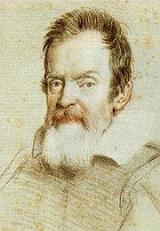
- Galileo Galilei (1564–1642) improved the telescope, with which he made several important astronomical discoveries, including the four largest moons of Jupiter, the phases of Venus, and the rings of Saturn, and made detailed observations of sunspots. He developed the laws for falling bodies based on pioneering quantitative experiments which he analyzed mathematically.
- Johannes Kepler (1571–1630) published the first two of his three laws of planetary motion in 1609.
- William Harvey (1578–1657) demonstrated that blood circulates, using dissections and other experimental techniques.
- René Descartes (1596–1650) published his Discourse on the Method in 1637, which helped to establish the scientific method.
- Antony van Leeuwenhoek (1632–1723) constructed powerful single lens microscopes and made extensive observations that he published around 1660, opening up the micro-world of biology.
- Isaac Newton (1643–1727) built upon the work of Kepler and Galileo. His development of the calculus opened up new applications of the methods of mathematics to science. He showed that an inverse square law for gravity explained the elliptical orbits of the planets, and advanced the law of universal gravitation. Newton taught that scientific theory should be coupled with rigorous experimentation, which became the keystone of modern science.
Theoretical developments Before the 16th century the Church’s power was paramount, the Pope was more powerful than any king, queen, or nobility. Until the beginning of the 16th century the Church had a firm grip on any discoveries that were made. The church had developed laws to prevent it from being contradicted. The church controlled spiritual and intellectual life. The 16th Century saw a new way of thinking develop called Empiricism. Empiricism was a significant intellectual revolution. This way of thinking was not based on any external authority. Although this new thinking lead to great discoveries the church viewed it as heresy. Some people were forced to recant but this was the best case scenario for someone spreading contradictory ideas. Andreas Vesalius was forced to take a pilgrimage to Jerusalem, Galileo Galilee was threatened with torture, faced a heretical inquisition, spent many years in jail, and was finally forced to recant. The Church had a firm hold of people’s intellectual and spiritual life and was a major factor in limiting people’s knowledge.
In 1543 Copernicus' work on the heliocentric model of the solar system was published, in which he tried to prove that the sun was the center of the universe. This was at the behest of the Roman Catholic Church, as part of the Catholic Reformation's efforts to create a more accurate calendar to govern its activities. For almost two millennia, the geocentric model had been accepted by all but a few astronomers. The idea that the earth moved around the sun, as advocated by Copernicus, was to most of his contemporaries preposterous. It contradicted not only the virtually unquestioned Aristotelian philosophy, but also common sense.
Johannes Kepler and Galileo gave the theory credibility. Kepler was an astronomer who, using the accurate observations of Tycho Brahe, proposed that the planets move around the sun not in circular orbits, but in elliptical ones. Together with his other laws of planetary motion, this allowed him to create a model of the solar system that was an improvement over Copernicus' original system. Galileo's main contributions to the acceptance of the heliocentric system were his mechanics, the observations he made with his telescope, as well as his detailed presentation of the case for the system. Using an early theory of inertia, Galileo could explain why rocks dropped from a tower fall straight down even if the earth rotates. His observations of the moons of Jupiter, the phases of Venus, the spots on the sun, and mountains on the moon all helped to discredit the Aristotelian philosophy and the Ptolemaic theory of the solar system. Through their combined discoveries, the heliocentric system gained support, and at the end of the 17th century it was generally accepted by astronomers.
Kepler's laws of planetary motion and Galileo's mechanics culminated in the work of Isaac Newton. His laws of motion were to be the solid foundation of mechanics; his law of universal gravitation combined terrestrial and celestial mechanics into one great system that seemed to be able to describe the whole world in mathematical formulae.
Not only astronomy and mechanics were greatly changed. Optics, for instance, was revolutionized by people like Robert Hooke, Christiaan Huygens, René Descartes and, once again, Isaac Newton, who developed mathematical theories of light as either waves (Huygens) or particles (Newton). Similar developments could be seen in chemistry, biology and other sciences, although their full development into modern science was delayed for a century or more.
Contrary views Not all historians of science are agreed that there was any revolution in the sixteenth or seventeenth century.
Another contrary view has been recently proposed by Arun Bala in his dialogical history of the birth of modern science. Bala argues that the changes involved in the Scientific Revolution – the mathematical realist turn, the mechanical philosophy, the corpuscular (atomic) philosophy, the central role assigned to the Sun in Copernican heliocentrism - have to be seen as rooted in multicultural influences on Europe. Islamic science gave the first exemplar of a mathematical realist theory with Alhazen's Book of Optics in which physical light rays traveled along mathematical straight lines. The swift transfer of Chinese mechanical technologies in the medieval era shifted European sensibilities to perceive the world in the image of a machine. The Indian number system, which developed in close association with atomism in India, carried implicitly a new mode of mathematical atomic thinking. And the heliocentric theory which assigned central status to the sun, as well as Newton’s concept of force acting at a distance, were rooted in ancient Egyptian religious ideas associated with Hermeticism. Bala argues that by ignoring such multicultural impacts we have been led to a Eurocentric conception of the Scientific Revolution .
See also
Revolutions
|
| |
|
|