
Encyclopedia
The
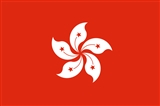
Hong Kong Special Administrative Region of the People's Republic of China is one of the two special administrative regions of the
People's Republic of China , the other being
Macau. It is commonly known as
Hong Kong , which is often written
Hongkong in older English-language texts. The Hong Kong Government officially changed the name of
Hongkong to
Hong Kong on 3 September 1926 .
Hong Kong is on the eastern side of the
Pearl River Delta on the southeastern coast of
China, facing the
South China Sea in the south, and bordering Guangdong Province in the north. Hong Kong is China's richest region, has one of the world's most liberal economies and is a major international centre of
finance and
trade.
Hong Kong was a
British colony from 1842, until its sovereignty was transferred to the PRC in 1997. It is governed as a special administrative region under the
Basic Law of Hong Kong. Under the terms of the Sino-British Joint Declaration, the PRC has promised that Hong Kong will have a relatively high degree of autonomy until at least 2047, fifty years after the transfer of sovereignty. Under the "
One Country, Two Systems" policy, it retains its own
legal system, currency, customs policy, cultural delegation, international sport teams, and immigration laws.
History
The area now known as Hong Kong became an important trading region and a significant strategic location for the Chinese mainland during the
Tang and
Song dynasties. These populated townships or villages had never been collectively known as Hong Kong before the British administration. The area began to attract the attention of China and the rest of the world again in the 19th century, when it was ceded to
Britain after the Opium Wars. Hong Kong's earliest recorded non-Asian visitor was the
Portuguese mariner Jorge Įlvares who arrived in 1513. Įlvares began trading with the Chinese, and the Portuguese continued to make periodic trade stops at various locations along the coast.
Tea,
silk, and other Asian
luxury goods were introduced in Europe by the Portuguese, and by the mid-18th century these items were in high demand, particularly tea. The British, to redress their net outflow of payments to China for tea and to force China to conduct relations like other states, invaded China, winning the
First Opium War in 1841. During the war,
Hong Kong Island was first occupied by the British, and then formally ceded by the
Qing Dynasty of China in 1842 under the
Treaty of Nanking.
Hong Kong became a
crown colony in 1843. The first urban settlement was named
Victoria City. The Kowloon Peninsula south of
Boundary Street and Stonecutter's Island was ceded to the British in 1860 under the Convention of Peking after the
Second Opium War. Various adjacent lands, known as the
New Territories , were then leased by Britain for 99 years, from 1 July 1898 to 30 June 1997. For the first 20 years there was little contact between the European and Chinese communities. The first specially-recruited Hong Kong civil servants to be taught
Cantonese were recruited in 1862, markedly improving relations.
Hong Kong entered a dark age during the
Japanese Occupation of
World War II, which lasted for three years and eight months. Many Hong Kongers were executed by the Japanese army during the war. There was a significant resistance movement most notably on
Lantau Island. After their defeat by the allied forces, the Japanese surrendered on 15 August 1945. The port was quickly re-opened and welcomed a mass migration of Chinese
refugees in 1949 from the
civil war. Many refugees escaped to Hong Kong fearing the new
Communist government in China.
Hong Kong had been a trade port ever since the British occupation, but its position as an entrepot declined greatly after the
United Nations ordered a trade embargo against the People's Republic of China as a result of the
Korean War. In response, a
textile industry was established, taking advantage of the new pool of workers from China who were willing to work for almost any wage. During this period, the economy grew extremely rapidly. Towards the 1970s, Hong Kong began to move away from the textile industry and develop its financial and banking economy. This led to even greater growth, and Hong Kong quickly became one of the wealthiest territories in the world. Its position as an entrepot was revived when the
Open Door Policy was adopted by the PRC in the late 1970s under
Deng Xiaoping.
In the 1980s, with the lease on the New Territories running out, the British government, led by
Margaret Thatcher, decided to negotiate the question of the sovereignty of Hong Kong. Although the British would have been legally required to transfer only the New Territories to the PRC, Whitehall decided that maintaining a rump colony would not be worthwhile - the majority of Hong Kong's land was in the New Territories, and failure to return the entire colony would undoubtedly have generated political friction between the UK and PRC.
Pursuant to an agreement known as the Sino-British Joint Declaration, signed by the
People's Republic of China and the
United Kingdom on 19 December 1984, the whole territory of Hong Kong under British
colonial rule became the Hong Kong Special Administrative Region of the PRC on 1 July 1997. In the Joint Declaration, the PRC promised that under the "One Country, Two Systems" policy proposed by Deng Xiaoping, the
socialist economic system in mainland China would not be practised in Hong Kong, and Hong Kong's previous
capitalist system and life-style would remain unchanged for at least 50 years, or until 2047. Hong Kong would enjoy a high degree of autonomy in all matters except diplomatic affairs and national defence.
The Joint Declaration came into particular focus in June 1989 when the PRC authorities in Beijing moved with particular severity against "pro-democracy" demonstrators in
Tiananmen Square and elsewhere in
Beijing. The loss of life amongst their Chinese brethren in the Chinese capital led to literally millions of Hong Kong Chinese protesting openly in the streets of Hong Kong. In the colony of Hong Kong there was immediate concern about Hong Kong's future, a fall in the
stock market and general disquiet.
Hong Kong was transferred to the PRC at midnight on 1 July 1997, with the last governor,
Chris Patten, leaving on the
royal yacht. Soon after the handover in July, land values in Hong Kong collapsed substantially and expedited the burst of the
bubble economy, as part of the
Asian financial crisis. This was exacerbated by
Tung Chee Hwa's unsubstantiated pledge to supply 85,000 new flats annually ; which essentially manipulated the region's real estate prices. In some areas, land values fell by over half; and the Hang Seng Index fell by over 1,500 points on 28 October 1997, losing 22.8% of its value in a week.
Hong Kong was hit badly by the outbreak of the SARS virus beginning in mid-March through the summer of 2003. This exacerbated the region's economic problems, especially in the effect that it had on travel to and from Hong Kong.
On 1 July the same year, half a million people marched in the largest protest rally ever aimed at the government of Hong Kong, voicing concerns about a proposed anti-subversion bill that would have eroded freedom of the press, of religion and of association arising from Article 23 of the Hong Kong Basic Law, as well as dissatisfaction with the poor state of the economy.
Regina Ip, then Secretary for Security, and
Antony Leung, then Financial Secretary, were forced to leave office in 2003 under public pressure .
On 10 March 2005, Tung Chee Hwa submitted his resignation as chief executive of Hong Kong.
Donald Tsang, the Chief Secretary for Administration of Hong Kong, served as Acting Chief Executive until 25 May, when he, too, resigned to take part in the campaign for the new Chief Executive election. Following an interim government headed by
Henry Tang, Tsang was elected as Chief Executive.
Politics and government
The Hong Kong Special Administrative Region is headed by its
Chief Executive, the head of government. This office is currently held by
Donald Tsang, who was elected on 16 June 2005.
Tsang had held the post of Chief Secretary for Administration previously. He assumed his post on 24 June 2005 in
Beijing, China; he will finish the remaining portion of
Tung Chee Hwa's last term, which ends on 30 June 2007, according to the interpretation of Annex I and Article 46 by the Standing Committee of the National People's Congress.
The election of a new Chief Executive by the 800-member Election Committee was expected to be held on 10 July 2005. On 16 June 2005,
Donald Tsang was acclaimed the winner, as the only candidate securing the required 100 nominations from members of the election committee. Tung Chee Hwa, the first Chief Executive, assumed office on 1 July 1997, following his election by a 400-member electoral college. For the second five-year term of the Chief Executive which began in July 2002, Tung was the only nominated candidate and therefore acclaimed.
The PRC set up a Provisional Legislative Council in 1996 just before the handover, where it moved to Hong Kong to have its meetings after the handover. It reverted some laws passed by the colonial Legislative Council, which was formed by means of universal suffrage since 1995. The PLC passed some new laws, such as the Public Order Ordinance, which required permission from police to hold a demonstration where the number of people who participates exceeds 30.
Legislative Council elections were held on 24 May 1998, 10 September 2000, and again on 12 September 2004, with the next election scheduled for 2008. According to the
Basic Law, Hong Kong's "mini-
constitution", the present third term of the Legislative Council has 30 seats directly elected from geographical constituencies, and 30 seats elected from functional constituencies. The 1998, 2000 and 2004 Legislative Council elections were seen as free, open, and widely contested, despite discontent among mainly 'pro-democratic' politicians, who contended that the functional constituency elections and the Election Committee elections were undemocratic, as they consider that the electorate for these seats is too narrow.
The civil service of Hong Kong maintains its quality and neutrality following its tradition in the colonial times, operating without discernible direction from
Beijing. Many government and administrative operations are located in Central on Hong Kong Island near the historical location of
Victoria City, the site of the original British settlements.
The
right of abode issue sparked debates in 1999, while the controversy over Hong Kong Basic Law Article 23 was the focus of politics in Hong Kong between 2002 and 2003, culminating in a peaceful mass demonstration on 1 July 2003, after which the government still tried to pass the law to the Legislative Council. But one of the major pro-government parties refused to vote for passing the bill. Thus the government found that the bill could not be passed. So it shelved the drafted law brought forth by Article 23. The focus of controversies shifted to the issue of universal suffrage towards the end of 2003 and in 2004, which was the slogan of another mass demonstration on 1 July 2004.
On 24 September 2005, 25 Hong Kong pro-democracy Legco members, some of whom were previously labelled as traitors by Beijing after the 1989
Tiananmen Square crackdown and barred from entering the mainland, crossed the border into the southern province of Guangdong, following an unprecedented invitation by the PRC . The invitation was generally regarded as one of the greatest goodwill gestures from the PRC to the Hong Kong democrats since the Tiananmen Square massacre.
On 4 December 2005, a demonstration was organised by the Civil Human Rights Front and pro-democracy lawmakers to demand a timetable for universal suffrage to be included in political reform proposals for the 2007 and 2008 elections for the Chief Executive and the Legislative Council respectively. The turnout was reported to be 63,000 by the police, and at least 250,000 by the organisers. The proposals would have doubled the size of the election committee and added ten seats to the Legislative Council . On 22 December 2005, the reforms, proposed by the Chief Executive of Hong Kong, Donald Tsang, were defeated by the pro-democracy camp after they failed to reach the necessary two-third threshold with 34 votes in favour and 24 opposed. In the wake of the defeat, China and the Chief Executive have indicated that reforms will not be possible until the 2012 elections. The defeat also did little to blunt Tsang's popularity, with his approval ratings only dropping from 82 to 79% in the wake of the vote.
After the transfer of sovereignty, Hong Kong maintains its own delegation but changes its designation from "Hong Kong" to "Hong Kong, China" in most international organizations, such as the
Asia-Pacific Economic Cooperation, and to international sporting events, such as the
Olympic Games. Only the defence and the
diplomatic relations of Hong Kong are the responsibilities of the Central People's Government in
Beijing.
Legal system and judiciary
In contrast to mainland China's civil law system, Hong Kong continues to follow the common law tradition established by British colonial rule. Article 84 of the
Basic Law of Hong Kong allows Hong Kong's courts to refer to decisions rendered by courts of other common law jurisdictions. Articles 82 and 92 allow invite judges from other common law jurisdictions to participate in proceedings of Hong Kong's
Court of Final Appeal and sit as Hong Kong judges.
Structurally, Hong Kong's court system consists of the
Court of Final Appeal which replaced the Judicial Committee of the Privy Council, the High Court, which is made up of the Court of Appeal and the Court of First Instance, and the District Court, which includes the Family Court. Other adjudicative bodies include the Lands Tribunal, the Magistrates' Courts, the Juvenile Court, the Coroner's Court, the Labour Tribunal, the Small Claims Tribunal, and the Obscene Articles Tribunal, which is responsible for classifying non-video pornography to be circulated in Hong Kong. Justices of the
Court of Final Appeal are appointed by Hong Kong's Chief Executive. The
Basic Law of Hong Kong is subject to interpretation by the Standing Committee of the National People's Congress and this power has been invoked three times: the
right of abode issue, an interpretation regarding post-2008 election procedures, and an interpretation regarding the length of the term of the Chief Executive.
As in
England,
lawyers in Hong Kong are classified as either
barristers or
solicitors, where one can choose to practice as either one but not both . The vast majority of
lawyers are
solicitors, who are licensed and regulated by the Law Society of Hong Kong.
Barristers, on the other hand, are licensed and regulated by the Hong Kong Bar Association. Only
barristers are allowed to appear in the
Court of Final Appeal and the High Court. Just as the common law system is maintained, so are British courtroom customs such as the wearing of robes and wigs by both judges and
lawyers.
Geography
Hong Kong consists of
Hong Kong Island,
Kowloon, and the
New Territories. The Kowloon Peninsula is attached to the New Territories in the north, and the New Territories are in turn connected to
mainland China across the Sham Chun River . In total, Hong Kong has 236 islands in the
South China Sea, of which
Lantau is the largest. Hong Kong Island itself is the second largest and also the most populated.
Ap Lei Chau is the most densely populated island in the world.
The name "Hong Kong", literally meaning "fragrant harbour", is derived from the area around present-day
Aberdeen and Wong Chuk Hang on Hong Kong Island, where fragrant trees were once abundant and widely exported. The body of water between Hong Kong Island and Kowloon Peninsula is
Victoria Harbour, one of the deepest natural maritime
ports in the world. The landscape of Hong Kong is fairly hilly to mountainous with steep slopes. The highest point in the territory is
Tai Mo Shan, at a height of 958
metres . Lowlands exist in the northwestern part of the New Territories.
Hong Kong is 60 kilometres east of
Macau, on the opposite side of the
Pearl River Delta and borders the city of
Shenzhen in Guangdong Province. Of the territory's 1,102 square kilometres and nearly 7 million residents, less than 25% is developed; the remaining land is remarkably green and significant portions are reserved as
country parks and
nature reserves. This is because most live and work in high-rise buildings in the city and surrounding new towns.
Climate
Hong Kong's climate is subtropical and prone to
monsoons. It is cool and dry in the
wintertime which lasts from around January to March, and is hot, humid and
rainy from spring through summer. It is warm,
sunny, and dry in
autumn. Hong Kong occasionally has
typhoons. The ecology of Hong Kong is mostly affected by the results of climatic changes. Hong Kong's climate is seasonal due to alternating wind direction between winter and summer. Hong Kong has been geologically stable for millions of years, though landslides are common especially after rain. Flora and fauna in Hong Kong are altered by climatic change, sea level alternation and human impact.
The highest recorded temperature in Hong Kong is 36.1°
C while the lowest recorded temperature is 0.0°C . The average temperature in the coldest month, January, is 15.8°C while the average temperature in the hottest month, July, is 28.8°C .
Hong Kong's climate is subtropical but half of the year is temperate. The territory is situated south of the
Tropic of Cancer which is approximate to
Hawaii in
latitude. In winter, strong and cold winds generate from the north and cool the city; in the summer, the wind's direction reverses and brings the warm and humid air in from the south. This climate can support a
tropical rainforest.
Administrative divisions
Hong Kong consists of 18 administrative districts:
- Islands
- Kwai Tsing
- North
- Sai Kung
- Sha Tin
- Tai Po
- Tsuen Wan
- Tuen Mun
- Yuen Long
- Kowloon City
- Kwun Tong
- Sham Shui Po
- Wong Tai Sin
- Yau Tsim Mong
- Central and Western
- Eastern
- Southern
- Wan Chai
There are several cities and towns within Hong Kong, the largest of which include
Kowloon, Victoria , Tseun Wan New Town, and
Sha Tin New Town. These entities, however, are not granted any formal administrative status and are either administered as parts of districts or divided up amongst districts .
Economy
Hong Kong has the least restricted economy in the world and is basically duty-free. But the Hong Kong Government plans to induce a new Goods and Services Tax - a value-added tax on consumer spending. Economists fear that this will severely harm tourists' shopping and local consumer spending
It is the world's 11th largest trading entity and 13th largest
banking centre. It has a laissez-faire
capitalist system, which according to the
Index of Economic Freedom and the Economic Freedom of the World Report is the freest economy on earth. Because of this, Hong Kong is an immensely rich city with a GDP per capita rivaling Western nations. To put in perspective Hong Kong's economic strength, its closest Chinese rival, Shanghai, has a GDP of „46,586 per capita in 2003, ranked no. 13 among all 659 Chinese cities. Hong Kong on the other hand, possessed an unparalleled GDP of „310,021 , ranked #1 among all of the Asian Continent. It has one of the world's most liberal economies and is a major international centre of
finance and
trade. The dominant presence of international trade is reflected in the number of consulates in the territory: at June 2005, it had 107 consulates and consulates-general, more than any other city in the world.
The objective of Hong Kong's monetary policy is to maintain currency stability. Given the highly externally-oriented nature of the economy, this objective was further defined as a stable external value for the
Hong Kong dollar in terms of a linked exchange rate against the US dollar at the rate of approximately HK$7.80 to one
United States dollar until 2005, when it was allowed to trade within a band of HK$7.75–$7.85.
Hong Kong has limited natural resources, and most
food and raw materials must be imported. In fact, imports and exports exceed the
GDP of Hong Kong. Hong Kong has extensive trade and investment ties with the
People's Republic of China which existed even before the handover on 1 July 1997. These ties and its autonomous status enable it to be the middleman between the
Republic of China on
Taiwan and the mainland. Flights, investment, and trade from Taiwan go through Hong Kong to get to the mainland. The
service sector represented 86.5% of the GDP in 2001. The territory, with a highly sophisticated banking sector and good communication links, hosts the
Asian headquarters of many multinational corporations.
At
USD $37,400 in 2006, the real per capita GDP of Hong Kong is somewhat higher than that of the four big economies of
western Europe which is around USD $30,000. Growth averaged a strong 8.9% per annum in real terms in the 1970s and 7.2% p.a. in the 1980s. As the economy shifted to services , growth slowed to 2.7% p.a. in the 1990s, including a 5.3% decline in 1998, due to the
Asian financial crisis' impact on demand in the region. Growth since 2000 has averaged 5.2% p.a. amid strong deflation.
The economy rebounded rapidly, growing by 10% in 2000. A world-wide global downturn and the
Severe Acute Respiratory Syndrome outbreak reduced economic growth to 2.3% in 2003. Thereafter, a boom in tourism from the mainland because of China's easing of travel restrictions, a return of consumer confidence, and a solid rise in exports resulted in the resumption of strong growth in late 2003 and 2004, with growth averaging 6.5% in the first half of 2005.
To further increase economic co-operation between Hong Kong and the mainland, the Individual Visit Scheme was started on 28 July 2003, which allows travellers from some cities in mainland China to visit Hong Kong without an accompanying tour group. As a result, the
tourism industry in Hong Kong is booming due to an exponential increase in the number of visitors from mainland China. The upsurge is also boosted by the recent opening of
Hong Kong Disneyland Resort.
A revival in both external and domestic demand led to a strong upswing in growth in 2004, surging to 8.2% for the year. The domestic sector completely shrugged off its earlier sluggishness, and the general weakness of the Hong Kong dollar, when included with the still modest cost and price pressures in Hong Kong, has resulted in a strengthening in Hong Kong's external price competitiveness. In addition, Hong Kong's 68-month-long deflationary spiral, the longest and highest deflation according to
Guinness World Records, ended in mid-2004, with consumer price inflation hovering at near zero levels.
Along with
Singapore,
South Korea and
Taiwan, ROC, Hong Kong's fast-paced industrialisation earned it a place as one of the four original
East Asian Tigers.
Hong Kong enjoys low rates of both personal and corporate taxation. Concerned at the territory's narrow tax base and the government's over-dependence on tax revenue from property transactions, the government is consulting the public on the proposed introduction of a Goods and Services Tax . Initial popular reaction has been largely unfavourable, primarily because of concerns that it will impose an undue burden on the poorer members of society, and may also harm Hong Kong's attractiveness as a tourist destination.
Demographics
The population of Hong Kong increased markedly during the 1990s, reaching 6.86 million in 2005. About 96% of Hong Kong's population are of Chinese descent, the majority of which are Cantonese. Groups such as the
Hakka and
Teochew are also substantial. Cantonese, used in government matters, is spoken by most of the local Chinese population at home and at work, although
English is also widely understood and spoken by more than one-third of the population. Since the British handover to China, a new group of immigrants from
mainland China have increased the ethnic diversity of the Chinese population and intensified the usage of Mandarin in the territory, in addition to the indirect effects of closer communication with mainland China, where Mandarin is the official language.
The remaining 4% of the population is composed of non-ethnic Chinese, who form a highly visible group despite their small numbers, and other foreign nationals.
Among these is a significant
South Asian population, which includes some of Hong Kong's wealthiest families. Some
Nepalis residing in Hong Kong are
Gurkhas who, along with their families and descendants, chose to stay after their service to Britain. In July 2006, British authorities will be granting full British citizenship to all Nepalese and their dependants serving the British army durin