
All Topics  
Angola


   Email Print
   Bookmark   Link


Angola


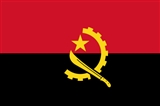
Angola, officially the Republic of Angola (pronounced ), is a country in south-central Africa
Africa

Africa is the world's second-largest and second most-populous continent, after Asia. At about 30.2 million km? including adjacent islands, it covers 6% of the Earth's total surface area and 20.4% of the total land area....
 bordering Namibia
Namibia

Namibia, officially the Republic of Namibia, is a country in southern Africa on the Atlantic Ocean coast. It shares borders with Angola and Zambia to the north, Botswana to the east, and South Africa to the south....
 to the south, Democratic Republic of the Congo
Democratic Republic of the Congo

The Democratic Republic of the Congo , is a country in central Africa with a small length of Atlantic coastline. It is the third largest list of African countries in order of geographical area....
 to the north, and Zambia
Zambia

The Republic of Zambia is a landlocked country in Southern Africa. The neighbouring countries are the Democratic Republic of the Congo to the north, Tanzania to the north-east, Malawi to the east, Mozambique, Zimbabwe, Botswana, and Namibia to the south, and Angola to the west....
 to the east, and with a west coast along the Atlantic Ocean
Atlantic Ocean

The Atlantic Ocean is the second-largest of the world's oceanic divisions; with a total area of about 106.4 million square kilometres . It covers approximately one-fifth of the Earth's surface....
. The exclave
Enclave and exclave

In political geography, an enclave is a territory whose geographical boundaries lie entirely within the boundaries of another territory.An exclave, on the other hand, is a territory legally attached to another territory with which it is not physically contiguous....
 province Cabinda
Cabinda (province)

Cabinda is an exclave and province of Angola, a status that has been disputed by many political organizations in the territory. The capital city is also called Cabinda ....
 has a border with the Republic of the Congo
Republic of the Congo

The Republic of the Congo , also known as Congo-Brazzaville or the Congo, is a country in Central Africa. It is bordered by Gabon, Cameroon, the Central African Republic, the Democratic Republic of the Congo, the Angolan exclave province of Cabinda , and the Gulf of Guinea....
 and the Democratic Republic of the Congo
Democratic Republic of the Congo

The Democratic Republic of the Congo , is a country in central Africa with a small length of Atlantic coastline. It is the third largest list of African countries in order of geographical area....
. Angola was a Portuguese overseas territory
Portuguese West Africa

Angola is the common name by which the Portuguese Empire's territorial expansion in South-West Africa was known across different periods of time....
 from the 16th century to 1975. The country is the second-largest petroleum
Petroleum

Petroleum or crude oil is a naturally occurring, flammable liquid found in rock formations in the Earth consisting of a complex mixture of hydrocarbons of various molecular weights, plus other organic compounds....
 and diamond
Diamond

In mineralogy, diamond is the Allotropes of carbon where the carbon atoms are arranged in an isometric-hexoctahedral crystal lattice. After graphite, diamond is the second most stable form of carbon....
 producer in sub-Saharan Africa, yet its people are among the continent's poorest.


Discussion
Ask a question about 'Angola'
Start a new discussion about 'Angola'
Answer questions from other users
Full Discussion Forum


Timeline

1575   Portugal founds the city of Luanda in Angola.

1961   The Portuguese Colonial War begins in Angola.

1975   Angola becomes independent from Portugal; civil war soon erupts.

1976   Three British and one American mercenaries are shot by firing squad in Angola.

1976   Angola joins the United Nations.

1981   South African troops invade Angola.

1989   Cuban troops begin withdrawing from Angola.

1991   A rare tropical storm develops in the Southern Hemisphere off the coast of Angola (the first of its kind to be documented by satellites).

1994   The Angolan government and UNITA rebels sign the Lusaka Protocol.

1996   The Republic of Angola officially joins the World Trade Organization, as ''Angola''.


Encyclopedia


Angola, officially the Republic of Angola (pronounced ), is a country in south-central Africa
Africa

Africa is the world's second-largest and second most-populous continent, after Asia. At about 30.2 million km? including adjacent islands, it covers 6% of the Earth's total surface area and 20.4% of the total land area....
 bordering Namibia
Namibia

Namibia, officially the Republic of Namibia, is a country in southern Africa on the Atlantic Ocean coast. It shares borders with Angola and Zambia to the north, Botswana to the east, and South Africa to the south....
 to the south, Democratic Republic of the Congo
Democratic Republic of the Congo

The Democratic Republic of the Congo , is a country in central Africa with a small length of Atlantic coastline. It is the third largest list of African countries in order of geographical area....
 to the north, and Zambia
Zambia

The Republic of Zambia is a landlocked country in Southern Africa. The neighbouring countries are the Democratic Republic of the Congo to the north, Tanzania to the north-east, Malawi to the east, Mozambique, Zimbabwe, Botswana, and Namibia to the south, and Angola to the west....
 to the east, and with a west coast along the Atlantic Ocean
Atlantic Ocean

The Atlantic Ocean is the second-largest of the world's oceanic divisions; with a total area of about 106.4 million square kilometres . It covers approximately one-fifth of the Earth's surface....
. The exclave
Enclave and exclave

In political geography, an enclave is a territory whose geographical boundaries lie entirely within the boundaries of another territory.An exclave, on the other hand, is a territory legally attached to another territory with which it is not physically contiguous....
 province Cabinda
Cabinda (province)

Cabinda is an exclave and province of Angola, a status that has been disputed by many political organizations in the territory. The capital city is also called Cabinda ....
 has a border with the Republic of the Congo
Republic of the Congo

The Republic of the Congo , also known as Congo-Brazzaville or the Congo, is a country in Central Africa. It is bordered by Gabon, Cameroon, the Central African Republic, the Democratic Republic of the Congo, the Angolan exclave province of Cabinda , and the Gulf of Guinea....
 and the Democratic Republic of the Congo
Democratic Republic of the Congo

The Democratic Republic of the Congo , is a country in central Africa with a small length of Atlantic coastline. It is the third largest list of African countries in order of geographical area....
. Angola was a Portuguese overseas territory
Portuguese West Africa

Angola is the common name by which the Portuguese Empire's territorial expansion in South-West Africa was known across different periods of time....
 from the 16th century to 1975. The country is the second-largest petroleum
Petroleum

Petroleum or crude oil is a naturally occurring, flammable liquid found in rock formations in the Earth consisting of a complex mixture of hydrocarbons of various molecular weights, plus other organic compounds....
 and diamond
Diamond

In mineralogy, diamond is the Allotropes of carbon where the carbon atoms are arranged in an isometric-hexoctahedral crystal lattice. After graphite, diamond is the second most stable form of carbon....
 producer in sub-Saharan Africa, yet its people are among the continent's poorest. According to the International Monetary Fund
International Monetary Fund

The International Monetary Fund is an international organization that oversees the global financial system by following the macroeconomic policies of its member countries, in particular those with an impact on exchange rates and the balance of payments....
, more than $4 billion in oil receipts have disappeared from Angola's treasury in the 2000s. In August 2006, a peace deal was signed with a faction
Faction

Faction or factionalism can refer to:* Political faction, a group of people connected by a shared belief or opinion within a larger group....
 of the FLEC
Front for the Liberation of the Enclave of Cabinda

The Front for the Liberation of the Enclave of Cabinda is a separatist guerrilla and political movement in Cabinda , Angola. Formerly under Portugal administration, with the independence of Angola from Portugal in 1975, the territory became a province of the newly-independent Angola....
, a separatist guerrilla from the Cabinda
Cabinda (province)

Cabinda is an exclave and province of Angola, a status that has been disputed by many political organizations in the territory. The capital city is also called Cabinda ....
 exclave in the North, which is still active. About 65% of Angola's oil comes from that region.

History


Early migrations

Khoisan hunter-gatherer
Hunter-gatherer

A hunter-gatherer society is one whose primary List of subsistence techniques involves the direct procurement of edible plants and animals from the wild, foraging and hunting without significant recourse to the domestication of either....
s are some of the earliest known modern human inhabitants of the area. They were largely replaced by Bantu tribes during Bantu migrations
Bantu expansion

The Bantu expansion was a millennia-long series of migrations of speakers of the original proto-Bantu languages language group. This group is hypothesized to have originated from the southwestern border of modern Nigeria and Cameroon....
, though small numbers of Khoisan remain in parts of southern Angola to the present day. The Bantu came from the north, probably from somewhere near the present-day Republic of Cameroon
Cameroon

The Republic of Cameroon is a unitary state of central and western Africa. It is bordered by Nigeria to the west; Chad to the northeast; the Central African Republic to the east; and Equatorial Guinea, Gabon, and the Republic of the Congo to the south....
. When they reached what is now Angola they encountered the Khoisan, Bushmen and other groups considerably less advanced than themselves, who they easily dominated with their superior knowledge of metal-working, ceramic and agriculture. The establishment of the Bantu took many centuries and gave rise to various groupings who took on different ethnic characteristics.

Portuguese rule

The geographical areas now designated as Angola first became the subject to incursions by the Portuguese in the late 15th century. In 1483 Portugal established relations with the Kongo
Kingdom of Kongo

The Kingdom of Kongo was an African kingdom located in west central Africa in what are now northern Angola, Cabinda , the Republic of the Congo, and the western portion of the Democratic Republic of the Congo....
 State, Ndongo and Lunda
Lunda

Lunda may refer to:* Lunda Empire incorporating the Lunda Kingdom* Lunda language * Lunda people , speaking Chilunda and living in southern DR Congo, eastern Angola and the North-Western Province, Zambia of Zambia; also called the Western Lunda to distinguish them from:?...
 existed. The Kongo State stretched from modern Gabon
Gabon

Gabon is a country in west central Africa sharing borders with the Gulf of Guinea to the west, Equatorial Guinea to the northwest, and Cameroon to the north, with the Republic of the Congo curving around the east and south....
 in the north to the Kwanza River in the south. Angola became a link in European trade with India and Southeast Asia. Portuguese
Portugal

Portugal , officially the Portuguese Republic , is a country on the Iberian Peninsula. Located in southwestern Europe, Portugal is the westernmost country of mainland Europe and is bordered by the Atlantic Ocean to the west and south and by Spain to the north and east....
 explorer Paulo Dias de Novais
Paulo Dias de Novais

Paulo Dias de Novais , a nobleman of the Royal Household, was a Portugal colonizer of Africa in the 16th century and the 1st Captain-Governor of Angola....
 founded Luanda
Luanda

Luanda is the Capital and largest city of Angola. Located on Angola's coast with the Atlantic Ocean, Luanda is both Angola's chief seaport and administrative center and has a population of approximately 4.8 million ....
 in 1575 as "São Paulo de Loanda", with a hundred families of settlers and four hundred soldiers. Benguela
Benguela

Benguela is a city in western Angola, south of Luanda, and capital of Benguela Province. It lies on a bay of the same name, in 12? 33? S., 13? 25? E....
, a Portuguese fort from 1587, a town from 1617, was another important early settlement founded and ruled by the Europeans. The Portuguese would establish several settlements, forts and trading posts along the coastal strip of current-day Angola, which relied on slave trade
Slavery in Angola

Slavery in Angola existed since early times. Several peoples and tribes from current-day Angola, like the Imbangala and the Mbundu, were active slave traders for centuries ....
, commerce on raw materials, and exchange of goods for survival. The African slave trade
African slave trade

The slave trade in Africa existed for thousands of years. The first main route passed through the Sahara, tying in to the Arab slave trade. After the European Age of Exploration, African slaves became part of the Atlantic slave trade, from which comes the modern, Western conception of slavery as an institution of African-descended slaves and...
 provided a large number of black slaves to Europeans and their African agents. For example, in what is now Angola, the Imbangala
Imbangala

The Imbangala or Mbangala were 17th century groups of Angolan warriors and marauders who founded the kingdom of Kasanje....
 had economies which were heavily focused on the slave trade. European traders would export manufactured goods to the coast of Africa where they would be exchanged for slaves. Within the Portuguese Empire
Portuguese Empire

The Portuguese Empire was the first global empire in history and also the earliest and longest lived of the modern European Colonialism empires, spanning almost six centuries, from the capture of Ceuta in 1415 to the handover of Macau in 1999....
, most black African slaves were traded to Portuguese merchants who bought them to sell cheap workforce for use on Brazilian agricultural plantations. This trade would last until the first half of the 1800s. The Portuguese gradually took control of the coastal strip throughout the sixteenth century by a series of treaties and wars forming the Portuguese colony of Angola. Taking advantage of the Portuguese Restoration War
Portuguese Restoration War

Portuguese Restoration War was the name given after the 19th century by Romantic nationalism historians to the war between Portugal and Crown of Castile after the revolution of 1640, that ended the sixty years period of the dual monarchy between Portugal and Spain under the Philippine Dynasty....
, the Dutch
Netherlands

The Netherlands is a country that is part of the Kingdom of the Netherlands. It is a parliamentary democratic constitutional monarchy. The Netherlands is located in North-West Europe, and bordered by the North Sea to the north and west, Belgium to the south, and Germany to the east....
 occupied Luanda from 1641 to 1648, where they allied with local peoples to consolidate their colonial rule against the remaining Portuguese resistance.
Queen Nzinga 1657
In 1648, Portugal retook Luanda and initiated a conquest of the lost territories, which restored the pre-occupation possessions of Portugal by 1650. Treaties regulated relations with Congo in 1649 and Njinga's Kingdom of Matamba and Ndongo in 1656. The conquest of Pungo Andongo
Pungo Andongo

The Black Rocks at Pungo Andongo are found some 116 km from the provincial capital of Malange in Angola. They are a series of mysterious rock formations, many incredibly and spectacular shaped in the form of animals, standing high above the flat African savannah....
 in 1671 was the last great Portuguese expansion, as attempts to invade Congo in 1670 and Matamba in 1681 failed. Portugal expanded its territory behind the colony of Benguela in the eighteenth century, and began the attempt to occupy other regions in the mid-nineteenth century. The process resulted in few gains until the 1880s. Development of the interior began after the Berlin Conference
Berlin Conference

The Berlin Conference of 1884–85 regulated colonialism and trade in Africa during the New Imperialism period, and coincided with Germany's sudden emergence as an imperial power....
 in 1885, fixed the colony's borders, and British and Portuguese investment fostered mining, railways, and agriculture. Full Portuguese administrative control of the interior didn't occur until the beginning of the twentieth century. In 1951, the colony was designated as an overseas province, called Overseas Province of Angola. Portugal had a presence in Angola for nearly five hundred years, and the population's initial reaction to calls for independence was mixed.

Ceasefire with UNITA

On February 22, 2002, Jonas Savimbi
Jonas Savimbi

Jonas Malheiro Savimbi led UNITA, an Anti-communism rebel group that fought against the Popular Movement for the Liberation of Angola in the Angolan Civil War until his death in a clash with Government troops in 2002....
, the leader of UNITA, was killed in combat with government troops, and a cease-fire was reached by the two factions. UNITA gave up its armed wing and assumed the role of major opposition party. Although the political situation of the country began to stabilize, President dos Santos has so far refused to institute regular democratic processes. Among Angola's major problems are a serious humanitarian crisis (a result of the prolonged war), the abundance of minefields, and the actions of guerrilla movements fighting for the independence of the northern exclave
Exclave

An exclave is strip of land that belongs to a political entity but that is not connected to it by land . The strip of land is surrounded by other political entities....
 of Cabinda
Cabinda (province)

Cabinda is an exclave and province of Angola, a status that has been disputed by many political organizations in the territory. The capital city is also called Cabinda ....
 (Frente para a Libertação do Enclave de Cabinda). While most of the internally displaced have now returned home, the general situation for most Angolans remains desperate, and the development facing the government challenging as a consequence.

Politics

Angola's motto is Virtus Unita Fortior, a Latin
Latin

Latin is an Italic language, historically spoken in Latium and Ancient Rome. Through the Military history of the Roman Empire, Latin spread throughout the Mediterranean and a large part of Europe....
 phrase meaning "Virtue is stronger when united." The executive branch of the government is composed of the President, the Prime Minister (currently Paulo Kassoma
Paulo Kassoma

Ant?nio Paulo Kassoma is an Angolan politician. He has been Prime Minister of Angola since 30 September 2008.Kassoma was born in Rangel municipality, located in Luanda, the capital....
) and the Council of Ministers. For decades, political power has been concentrated in the Presidency. The Council of Ministers, composed of all government ministers and vice ministers, meets regularly to discuss policy issues. Governors of the 18 provinces are appointed by and serve at the pleasure of the president. The Constitutional Law of 1992 establishes the broad outlines of government structure and delineates the rights and duties of citizens. The legal system is based on Portuguese and customary law but is weak and fragmented, and courts operate in only twelve of more than 140 municipalities. A Supreme Court serves as the appellate tribunal; a Constitutional Court with powers of judicial review has never been constituted despite statutory authorization.

Parliamentary elections
Angolan legislative election, 2008

A legislative election was held in Angola on September 5 and September 6, 2008, as announced by President Jos? Eduardo dos Santos on December 27, 2007....
 held on September, 5th, 2008, announced MPLA as the winning party with 81% of votes. The closest opposition party was UNITA with 10%. These elections were the first since 1992.

Administrative divisions

Angola Provinces Numbered 300px
Angola is divided into eighteen provinces
Provinces of Angola

Provinces and capitalsSee also * ISO 3166-2:AO, the ISO codes for Angola....
 (províncias) and 163 municipalities
Municipalities of Angola

The Provinces of Angola are divided into 157 municipalities ....
. The provinces are:

  1. Bengo
    Bengo (province)

    Bengo is a Provinces of Angola of Angola. Its capital is Caxito. According to 1988 statistics, there were 18,700 people living in urban areas with 137,400 in rural areas, with a total of 156,100 residents....

  2. Benguela
  3. Bié
    Bié (province)

    Bi? is a Provinces of Angola of Angola. Located on Bi? Plateau in central part of country. Its capital is Kuito and it has an area of 70,314 km? and a population of approximately 800,000....

  4. Cabinda
    Cabinda (province)

    Cabinda is an exclave and province of Angola, a status that has been disputed by many political organizations in the territory. The capital city is also called Cabinda ....

  5. Cuando Cubango
    Cuando Cubango

    Cuando Cubango is a Provinces of Angola of Angola and it has an area of 199,049 km? and a population of approximately 140,000. Menongue is the capital of the province....

  6. Cuanza Norte
    Cuanza Norte

    Cuanza Norte is a Provinces of Angola of Angola. N'Dalantando is the capital and it has an area of 24,110 km? and a population of approximately 400,000....

  7. Cuanza Sul
    Cuanza Sul

    Cuanza Sul is a Provinces of Angola of Angola. It has an area of 55,660 km? and a population of approximately 600,000.Sumbe is the capital of the province....

  8. Cunene
    Cunene (province)

    Cunene is a Provinces of Angola of Angola. It has an area of 87,342 km? and a population of approximately 200,000Ondjiva is the capital of the province....

  9. Huambo

  1. Huila
  2. Luanda
  3. Lunda Norte
    Lunda Norte

    Lunda Norte is a Provinces of Angola of Angola. It has an area of 103,000 km? and a population of approximately 850,000. Angola's first President, Agostino Neto, made Lucapa the provincial capital after independence, but the capital was later moved to Dundo....

  4. Lunda Sul
    Lunda Sul

    Lunda Sul is a Provinces of Angola of Angola. It has an area of 77,637 km? and a population of approximately 125,000. Saurimo is the capital of the province....

  5. Malanje
  6. Moxico
    Moxico (province)

    Moxico is the largest Provinces of Angola of the Africa nation of Angola. It has an area of 223,023 km? and a population of approximately 230,000....

  7. Namibe
  8. Uíge
    Uíge (province)

    U?ge is a Provinces of Angola of Angola. It has an area of 58,698 km? and a population of approximately 800,000. Uige is the capital of the province....

  9. Zaire


Exclave of Cabinda

With an area of approximately 7,283 km² (2,800 square miles), the Northern Angolan province of Cabinda
Cabinda

Cabinda may refer to:*Cabinda , an exclave and Province of Angola*Cabinda , the administrative capital of Cabinda Province*Republic of Cabinda, government which claims sovereignty over Cabinda...
 is unique in being separated from the rest of the country by a strip, some wide, of the Democratic Republic of Congo (DRC) along the lower Congo river
Congo River

The Congo River is the largest river in Western Central Africa. Its overall length of 4,700 km makes it the second longest in Africa ....
. Cabinda borders the Congo Republic to the north and north-northeast and the DRC to the east and south. The town of Cabinda is the chief population centre. According to a 1995 census, Cabinda had an estimated population of 600,000, approximately 400,000 of whom live in neighbouring countries. Population estimates are, however, highly unreliable. Consisting largely of tropical forest, Cabinda produces hardwoods, coffee, cocoa, crude rubber and palm oil. The product for which it is best known, however, is its oil, which has given it the nickname, "the Kuwait of Africa". Cabinda's petroleum production from its considerable offshore reserves now accounts for more than half of Angola's output. Most of the oil along its coast was discovered under Portuguese rule by the Cabinda Gulf Oil Company (CABGOC) from 1968 onwards. Since Portugal
Portugal

Portugal , officially the Portuguese Republic , is a country on the Iberian Peninsula. Located in southwestern Europe, Portugal is the westernmost country of mainland Europe and is bordered by the Atlantic Ocean to the west and south and by Spain to the north and east....
 handed over sovereignty of its former overseas province of Angola to the local independentist groups (MPLA, UNITA, and FNLA), the territory of Cabinda has been a theatre of separatist guerrilla actions opposing the Government of Angola (which has employed its military forces, the FAA – Forças Armadas Angolanas) and Cabindan separatists. The Cabindan separatists, FLEC-FAC, created a virtual Federal Republic of Cabinda under the Presidency of N'Zita Henriques Tiago. In its website, it claimed to be committed to building a Republic of Cabinda
Republic of Cabinda

The Republic of Cabinda is the name adopted by the currently unrecognized secessionist government of Cabinda , presently an exclave of Angola....
 in which "freedom, opportunity, prosperity and civil society flourish". This Federal Republic, with Tchiowa (Cabinda
Cabinda (city)

Cabinda or Tchiowa, as it is called by the Cabindans, is a city that is located in the Cabinda , an exclave of Angola. Angolan sovereignty over Cabinda is disputed by the Republic of Cabinda....
) as its capital city, would be administratively made up of seven districts, with a system of government which the website simply describes as a "true democracy" and a legal system based on traditional N'Goyo law. One of the characteristics of the Cabindan independence movement is its constant fragmentation, into smaller and smaller factions, in a process which although not totally fomented by the Angolan government, is undoubtedly encouraged and duly exploited by it.

Military

The Angolan Armed Forces (AAF) is headed by a Chief of Staff who reports to the Minister of Defense. There are three divisions--the Army (Exército), Navy (Marinha de Guerra, MGA), and Air and Air Defense Forces
People's Air and Air Defence Force of Angola

The People's Air and Air Defence Force of Angola or For?a A?rea Popular de Angola/Defesa A?rea e Antia?rea was established on 21 January 1976 and initially made use of the aircraft left behind by Portugal....
 (Força Aérea Nacional, FAN). Total manpower is about 110,000. The army is by far the largest of the services with about 100,000 men and women. The Navy numbers about 3,000 and operates several small patrol craft and barges. Air force personnel total about 7,000; its equipment includes Russia
Russia

Russia , or the Russian Federation , is a list of countries spanning more than one continent country extending over much of northern Eurasia....
n-manufactured fighters, bombers, and transport planes. There are also Brazilian-made EMB-312 Tucano for Training role, Czech-made L-39 for training and bombing role, Czech Zlin for training role and a variety of western made aircraft such as C-212\Aviocar, Sud Aviation Aloutte III, etc. A small number of FAA personnel are stationed in the Democratic Republic of the Congo
Democratic Republic of the Congo

The Democratic Republic of the Congo , is a country in central Africa with a small length of Atlantic coastline. It is the third largest list of African countries in order of geographical area....
 (Kinshasa) and the Republic of the Congo
Republic of the Congo

The Republic of the Congo , also known as Congo-Brazzaville or the Congo, is a country in Central Africa. It is bordered by Gabon, Cameroon, the Central African Republic, the Democratic Republic of the Congo, the Angolan exclave province of Cabinda , and the Gulf of Guinea....
 (Brazzaville).

Police

The National Police departments are: Public Order, Criminal Investigation, Traffic and Transport, Investigation and Inspection of Economic Activities, Taxation and Frontier Supervision, Riot Police and the Rapid Intervention Police. The National Police are in the process of standing up an air wing, which will provide helicopter support for police operations. The National Police are also developing their criminal investigation and forensic capabilities. The National Police has an estimated 6,000 patrol officers, 2,500 Taxation and Frontier Supervision officers, 182 criminal investigators and 100 financial crimes detectives and around 90 Economic Activity Inspectors.

The National Police have implemented a modernization and development plan to increase the capabilities and efficiency of the total force. In addition to administrative reorganization; modernization projects include procurement of new vehicles, aircraft and equipment, construction of new police stations and forensic laboratories, restructured training programs and the replacement of AKM rifles with 9 mm UZIs for police officers in urban areas.

Geography

At 481,321 square miles (1,246,700 km²), [https://www.cia.gov/library/publications/the-world-factbook/rankorder/2147rank.html] Angola is the world's twenty-third largest country (after Niger
Niger

Niger , officially the Republic of Niger, is a landlocked country in Western Africa, named after the Niger River. It borders Nigeria and Benin to the south, Burkina Faso and Mali to the west, Algeria and Libya to the north and Chad to the east....
). It is comparable in size to Mali
Mali

Mali, officially the Republic of Mali, is a landlocked nation in West Africa. Mali is the seventh largest country in Africa, bordering Algeria on the north, Niger on the east, Burkina Faso and the C?te d'Ivoire on the south, Guinea on the south-west, and Senegal and Mauritania on the west....
 and is nearly twice the size of the US state of Texas
Texas

Texas is a U.S. state located in the South Central United States, nicknamed the Lone Star State. Texas is the second largest U.S. state in both area and population, spanning , and with a growing population of 24.3 million residents....
, or five times the area of the United Kingdom
United Kingdom

The United Kingdom of Great Britain and Northern Ireland, commonly known as the United Kingdom , the UK or Britain,is a sovereign state located off the northwestern coast of continental Europe....
.

Angola is bordered by Namibia
Namibia

Namibia, officially the Republic of Namibia, is a country in southern Africa on the Atlantic Ocean coast. It shares borders with Angola and Zambia to the north, Botswana to the east, and South Africa to the south....
 to the south, Zambia
Zambia

The Republic of Zambia is a landlocked country in Southern Africa. The neighbouring countries are the Democratic Republic of the Congo to the north, Tanzania to the north-east, Malawi to the east, Mozambique, Zimbabwe, Botswana, and Namibia to the south, and Angola to the west....
 to the east, the Democratic Republic of the Congo
Democratic Republic of the Congo

The Democratic Republic of the Congo , is a country in central Africa with a small length of Atlantic coastline. It is the third largest list of African countries in order of geographical area....
 to the north-east, and the South Atlantic Ocean to the west. The exclave
Exclave

An exclave is strip of land that belongs to a political entity but that is not connected to it by land . The strip of land is surrounded by other political entities....
 of Cabinda
Cabinda (province)

Cabinda is an exclave and province of Angola, a status that has been disputed by many political organizations in the territory. The capital city is also called Cabinda ....
 also borders the Republic of the Congo
Republic of the Congo

The Republic of the Congo , also known as Congo-Brazzaville or the Congo, is a country in Central Africa. It is bordered by Gabon, Cameroon, the Central African Republic, the Democratic Republic of the Congo, the Angolan exclave province of Cabinda , and the Gulf of Guinea....
 to the north. Angola's capital, Luanda
Luanda

Luanda is the Capital and largest city of Angola. Located on Angola's coast with the Atlantic Ocean, Luanda is both Angola's chief seaport and administrative center and has a population of approximately 4.8 million ....
, lies on the Atlantic coast in the north-west of the country. Angola's average temperature on the coast is 60 degrees Fahrenheit (16 °C) in the winter and 70 degrees Fahrenheit (21 °C) in the summer.

Economy

Angola's economy has undergone a period of transformation in recent years, moving from the disarray caused by a quarter century of war to being the second fastest growing economy in Africa and one of the fastest in the world. In 2004, China's Eximbank approved a $2 billion line of credit to Angola. The loan is being used to rebuild Angola's infrastructure, and has also limited the influence of the International Monetary Fund
International Monetary Fund

The International Monetary Fund is an international organization that oversees the global financial system by following the macroeconomic policies of its member countries, in particular those with an impact on exchange rates and the balance of payments....
 in the country.

Growth is almost entirely driven by rising oil production which surpassed in late-2005 and which is expected to grow to by 2007. Control of the oil industry is consolidated in Sonangol Group
Sonangol Group

SONANGOL is a parastatal that oversees petroleum and natural gas production in Angola. The group has many subsidiaries. The subsidiaries generally have Sonangol as a primary client, along with other corporate, commercial and individual clients....
, a conglomerate which is owned by the Angolan government. In December 2006, Angola was admitted as a member of OPEC
OPEC

The Organization of Petroleum Exporting Countries is a cartel of twelve countries made up of Algeria, Angola, Ecuador, Iran, Iraq, Kuwait, Libya, Nigeria, Qatar, Saudi Arabia, the United Arab Emirates, and Venezuela....
. The economy grew 18% in 2005, 26% in 2006 and 17.6% in 2007 and it's expected to stay above 10% for the rest of the decade. The security brought about by the 2002 peace settlement has led to the resettlement of 4 million displaced persons, thus resulting in large-scale increases in agriculture production.

The country has developed its economy since political stability arose in 2002. However, it faces huge social and economic problems as a result of an almost continual state of conflict since 1961, although the highest level of destruction and socio-economic damage was reached after the 1975 independence, during the long years of civil war
Angolan Civil War

The Angolan Civil War began in Angola after the end of the Angolan War of Independence from Portugal in 1975. The war ultimately evolved into a prominent Cold War conflict, featuring two warring Angolan factions, the Communist MPLA, which was supported by the Soviet Union, and the anti-Communist UNITA, which gained support from the United Sta...
. Rapidly rising production and revenues from the oil
Oil

An oil is a chemical substance that is in a viscosity liquid state at room temperature or slightly warmer, and is both hydrophobic and lipophilic ....
 sector have been the main driving forces behind the improvements in overall economic activity – nevertheless, poverty
Poverty

Poverty is the shortage of common things such as food, clothing, shelter and safe drinking water, all of which determine our quality of life. It may also include the lack of access to opportunities such as education and employment which aid the escape from poverty and/or allow one to enjoy the respect of fellow citizens....
 remains widespread. Anti-corruption watchdog Transparency International
Transparency International

Transparency International is an international non-governmental organization addressing corruption. This includes, but is not limited to, political corruption....
 rated Angola one of the 10 most corrupt
Political corruption

Political corruption is the use of governmental powers by government officials for illegitimate private gain. Misuse of government power for other purposes, such as repression of political opponents and general police brutality, is not considered political corruption....
 countries in the world in 2005. The capital city is the most developed and the only large economic center worth mentioning in the country, however, slums called musseques, stretch for miles beyond Luanda
Luanda

Luanda is the Capital and largest city of Angola. Located on Angola's coast with the Atlantic Ocean, Luanda is both Angola's chief seaport and administrative center and has a population of approximately 4.8 million ....
's former city limits.

According to the Heritage Foundation
Heritage Foundation

The Heritage Foundation is an American American conservatism-leaning think tank based in Washington, D.C.The foundation took a leading role in the conservative movement during the presidency of Ronald Reagan, whose policies drew significantly from Heritage's policy study Mandate for Leadership....
, a conservative American think tank
Think tank

A think tank is an organization, institute, corporation, or group that conducts research and engages in advocacy in areas such as social policy, political strategy, economy, science or technology issues, industrial or business policies, or military advice....
, oil from Angola has increased so significantly that Angola now is China's biggest supplier of oil.

Demographics

Angola is composed of Ovimbundu
Ovimbundu

The Ovimbundu are an ethnic group consisting of traders, farmers, and herders who live on the Bi? Plateau of central Angola. They speak both Portuguese language and the Bantu languages language of Umbundu language....
 37%, Kimbundu
Kimbundu

Kimbundu is one of the most widely spoken languages in Angola, especially in the north-west of the country, notably in the Luanda province.There are eleven variants of the Kimbundu language: Ngola, Dembo, Jinga, Bondo, B?ngala, Songo, Ibaco, Luanda, Quibala, Libolo and Quissama....
 25%, Bakongo 13%, mestiços (mixed European and native African) 2%, European 1%, and 22% 'other' ethnic groups. The two Mbundu nations combined form a majority of the population, at 62%.

It is estimated that Angola was host to 12,100 refugees and 2,900 asylum seekers by the end of 2007. 11,400 of those refugees were originally from the Democratic Republic of Congo (Congo-Kinshasa) who arrived in the 1970s. As of 2008 there were an estimated 400,000 DRC
Democratic Republic of the Congo

The Democratic Republic of the Congo , is a country in central Africa with a small length of Atlantic coastline. It is the third largest list of African countries in order of geographical area....
 migrant workers, at least 30,000 Portuguese
Portuguese people

The Portuguese people are the ethnic group or nation native to the country of Portugal, in the west of the Iberian peninsula of Southern Europe-Western Europe Europe....
, and at least 20,000 Chinese
Overseas Chinese

Overseas Chinese are people of Chinese people birth or descent who live outside the territories administered by the rival governments of the People's Republic of China and the Republic of China ....
 living in Angola. Prior to independence in 1975, Angola had a community of approximately 500,000 Portuguese.

Languages

Portuguese
Portuguese language

Portuguese is a Romance language that originated in what is now Galicia and Portugal. It is derived from the Latin language spoken by the Romanization Pre-Roman peoples of the Iberian Peninsula around 2000 years ago....
 is spoken as a first language by 60% of the population, and as a second language by another 20%. The majority dominance of Portuguese over the native Mbundu
Mbundu

The Mbundu people are the largest ethnic group in Angola. About one half of Angola's population is of Mbundu origin ; however, a smaller percentage of Mbundu people speak the Umbundu and Kimbundu languages in favor of the Portuguese language, because of strong Portuguese influence in Mbundu territory....
 and other African languages is due to a strong influence from Portugal and Brazil, as opposed to in Mozambique
Mozambique

Mozambique, officially the Republic of Mozambique , is a country in southeastern Africa bordered by the Indian Ocean to the east, Tanzania to the north, Malawi and Zambia to the northwest, Zimbabwe to the west and Swaziland and South Africa to the southwest....
, which being more remote from the Lusosphere, retained a majority of Bantu language speakers.

Religion

Religion in Angola
Religion in Angola

Angola is a majority Christian country, with 53% of citizens professing the religion. Most Angolan Christians are Roman Catholic, 38%, or Protestant, 15%....


Christianity is the Major Religion in Angola at 53 percent. Of the Christians in Angola, 38% are Roman Catholic, and 15% are Protestant. 47% of Angolans practice indigenous beliefs.

Christianity is the religion of the vast majority of the country's population, with Roman Catholicism as the country's largest single denomination. The Roman Catholic Church claims 5 million adherents, but such figures could not be verified. The major Protestant denominations also are present, along with a number of indigenous African and Brazilian Christian denominations. The largest Protestant denominations include the Methodists, Baptists, Congregationalists (United Church of Christ), and Assemblies of God. The largest syncretic religious group is the Kimbanguist Church, whose followers believe that a mid-20th century Congolese pastor named Joseph Kimbangu was a prophet. A small portion of the country's rural population practices animism or traditional indigenous religions. There is a small Islamic community based around migrants from West Africa. There are a few atheists in the country.

In colonial times, the country's coastal populations primarily were Catholic while the Protestant mission groups were active in the interior. With the massive social displacement caused by 26 years of civil war, this rough division is no longer valid.

Foreign missionaries were very active prior to independence in 1975, although the Portuguese colonial authorities expelled many Protestant missionaries and closed mission stations based on the belief that the missionaries were inciting pro-independence sentiments. Missionaries have been able to return to the country since the early 1990s, although security conditions due to the civil war have made it impossible for them to return to most parts of the interior.

Health

A 2007 survey concluded that low and deficient niacin status was common in Angola.

Education

Although by law, education in Angola is compulsory and free for 8 years, the government reports that a certain percentage of students are not attending school due to a lack of school buildings and teachers. Students are often responsible for paying additional school-related expenses, including fees for books and supplies. In 1999, the gross primary enrollment rate was 74 percent and in 1998, the most recent year for which data are available, the net primary enrollment rate was 61 percent. Gross and net enrollment ratios are based on the number of students formally registered in primary school and therefore do not necessarily reflect actual school attendance. There continue to be significant disparities in enrollment between rural and urban areas. In 1995, 71.2 percent of children ages 7 to 14 years were attending school. It is reported that higher percentages of boys attend school than girls. During the Angolan Civil War
Angolan Civil War

The Angolan Civil War began in Angola after the end of the Angolan War of Independence from Portugal in 1975. The war ultimately evolved into a prominent Cold War conflict, featuring two warring Angolan factions, the Communist MPLA, which was supported by the Soviet Union, and the anti-Communist UNITA, which gained support from the United Sta...
 (1975-2002), nearly half of all schools were reportedly looted and destroyed, leading to current problems with overcrowding. The Ministry of Education hired 20,000 new teachers in 2005, and continued to implement teacher trainings. Teachers tend to be underpaid, inadequately trained, and overworked (sometimes teaching two or three shifts a day). Teachers also reportedly demand payment or bribes directly from their students. Other factors, such as the presence of landmines, lack of resources and identity papers, and poor health also prevent children from regularly attending school. Although budgetary allocations for education were increased in 2004, the education system in Angola continues to be extremely under-funded. Literacy is quite low, with 67.4% of the population over the age of 15 able to read and write in Portuguese. 82.9% of males and 54.2% of women are literate as of 2001. Since independence from Portugal in 1975, a number of Angolan students continued to be admitted every year at Portuguese high schools, polytechnical institutes, and universities, through bilateral agreements between the Portuguese Government and the Angolan Government.

Culture

Portugal
Portugal

Portugal , officially the Portuguese Republic , is a country on the Iberian Peninsula. Located in southwestern Europe, Portugal is the westernmost country of mainland Europe and is bordered by the Atlantic Ocean to the west and south and by Spain to the north and east....
 ruled over Angola for 400 years and both countries share cultural aspects: language (Portuguese
Portuguese language

Portuguese is a Romance language that originated in what is now Galicia and Portugal. It is derived from the Latin language spoken by the Romanization Pre-Roman peoples of the Iberian Peninsula around 2000 years ago....
) and main religion (Roman Catholic Christianity
Christianity

Christianity is a Monotheistic religion #Christian view religion centered on the life and teachings of Jesus as New Testament view on Jesus' life....
). The Angolan culture is mostly native Bantu
Bantu

Bantu peoples...
 which was mixed with Portuguese culture
Culture of Portugal

The culture of Portugal is rooted in the Latin culture of Ancient Rome, with Celtiberians and Lusitanian backgrounds. Portugal, as a country with a long history, is home to several ancient architectural structures, as well as typical art, furniture and literary collections mirroring and chronicling the events that shaped the country and it...
. In the Moxico province more than 10,000 persons are Spanish-speaking (ca. 4.34% of the population of this province) due to the presence of Cuban troops during the civil war.

See also


Further reading

  • Le Billon, P. (2005). "Aid in the Midst of Plenty: Oil Wealth, Misery and Advocacy in Angola." Disasters 29(1): 1-25.
  • Bösl, Anton (2008). Angola´s Parliamentary Elections in 2008. A Country on its Way to One-Party-Democracy, KAS Auslandsinformationen 10/2008. http://www.kas.de/wf/de/33.15186/
  • Cilliers, Jackie and Christian Dietrich, Eds. (2000). Angola's War Economy: The Role of Oil and Diamonds. Pretoria, South Africa, Institute for Security Studies.
  • Global Witness (1999). A Crude Awakening, The Role of Oil and Banking Industries in Angola's Civil War and the Plundering of State Assets. London, UK, Global Witness. http://www.globalwitness.org/media_library_detail.php/93/en/a_crude_awakening
  • Hodges, T. (2004). Angola: The Anatomy of an Oil State. Oxford, UK and Indianapolis, US, The Fridtjol Nansen Institute & The International African Institute in association with James Currey and Indiana University Press.
  • Human Rights Watch (2004). Some Transparency, No Accountability: The Use of Oil Revenues in Angola and Its Impact on Human Rights. New York, Human Rights Watch. http://www.hrw.org/reports/2004/angola0104/
  • Human Rights Watch (2005). Coming Home, Return and Reintegration in Angola. New York, Human Rights Watch. http://hrw.org/reports/2005/angola0305/
  • Kapuscinski, Ryszard. Another Day of Life, Penguin, 1975. ISBN 014118678X. A Polish journalist's account of Portuguese withdrawal from Angola and the beginning of the civil war. Ryszard Kapuscinski
    Ryszard Kapuscinski

    Ryszard Kapuscinski was a popular Poland journalist, author, publicist, photographer and Poetry, at both home and abroad. Born in Pinsk, a city formerly located in the Kresy of the Second Polish Republic, and now belonging to Belarus, Kapuscinski is generally thought of as the leading Polish journalist of his time....
  • Kevlihan, R. (2003). "Sanctions and humanitarian concerns: Ireland and Angola, 2001-2." Irish Studies in International Affairs 14: 95-106.
  • Lari, A. (2004). Returning home to a normal life? The plight of displaced Angolans. Pretoria, South Africa, Institute for Security Studies. http://www.iss.co.za/pubs/papers/85/Paper85.pdf
  • Lari, A. and R. Kevlihan (2004). "International Human Rights Protection in Situations of Conflict and Post-Conflict, A Case Study of Angola." African Security Review 13(4): 29-41. http://www.iss.co.za/pubs/ASR/13No4/FLari.pdf
  • Le Billon, P. (2001). "Angola’s Political Economy of War: The Role of Oil and Diamonds." African Affairs(100): 55-80.
  • Médecins Sans Frontières (2002). Angola: Sacrifice of a People. Luanda, Angola, MSF. http://www.doctorswithoutborders.org/publications/reports/2002/angola1_10-2002.pdf
  • Pinto Escoval [2004): "Staatszerfall im südlichen Afrika. Das Beispiel Angola". Wissenschaftlicher Verlag Berlin
  • Much of the material in these articles comes from the CIA World Factbook 2000 and the 2003 U.S. Department of State website.*Pearce, J. (2004). "War, Peace and Diamonds in Angola: Popular perceptions of the diamond industry in the Lundas." 2005.African Security Review 13 (2), 2004, pp 51-64. http://www.iss.co.za/pubs/ASR/13No2/AW.pdf
  • Porto, J. G. (2003). Cabinda: Notes on a soon to be forgotten war. Pretoria, South Africa, Institute for Security Studies. http://www.iss.co.za/pubs/papers/77/Paper77.html
  • Tvedten, I. (1997). Angola, Struggle for Peace and Reconstruction. Boulder, Colorado, Westview Press.
  • Vines, A. (1999). Angola Unravels: The Rise and Fall of the Lusaka Peace Process. New York and London, UK, Human Rights Watch.
  • Godfrey Mwakikagile, Nyerere and Africa: End of an Era, Third Edition, Pretoria, South Africa, 2006, on Angola in Chapter Eleven, "American Involvement in Angola and Southern Africa: Nyerere's Response," pp. 324 – 346, ISBN 978-0980253412.


External links

Government
  • has information on Angola's anti-corruption efforts.
  • official government portal (Portuguese only)
  • (Portuguese only)
  • [https://www.cia.gov/library/publications/world-leaders-1/world-leaders-a/angola.html Chief of State and Cabinet Members]


General information* from UCB Libraries GovPubs Media
  • from AllAfrica.com
    AllAfrica.com

    AllAfrica.com is a website that aggregates news produced primarily on the African continent on all areas of African life, politics, issues and culture....
  • Government-controlled news agency (Portuguese, French, English)
  • popular news source in Angola (Portuguese only)
  • state-owned national TV station (Portuguese only)
  • state-owned national radio station (Portuguese only)
  • popular newspaper in Angola (Portuguese only)
  • chronicles and articles - Angola (Portuguese only)
  • from Newspaper Index


Tourism