
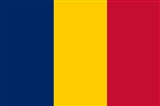
Chad , officially known as the
Republic of Chad, is a landlocked country in
central AfricaCentral Africa is a core region of the African continent often considered to include Burundi, the Central African Republic, Chad, Democratic Republic of the Congo, and Rwanda....
. It is bordered by
LibyaLibya , officially the Great Socialist People's Libyan Arab Jamahiriya , is a country located in North Africa...
to the north,
SudanSudan is a country in northeastern Africa. It is the largest country in Africa and in the Arab World, and tenth largest in the world by area...
to the east, the
Central African RepublicThe Central African Republic , is a landlocked country in Central Africa...
to the south,
CameroonThe Republic of Cameroon is a unitary republic of central and western Africa. It is bordered by Nigeria to the west; Chad to the northeast; the Central African Republic to the east; and Equatorial Guinea, Gabon, and the Republic of the Congo to the south. Cameroon's coastline lies on the Bight of...
and
NigeriaNigeria , officially the Federal Republic of Nigeria, is a federal constitutional republic comprising thirty-six states and one Federal Capital Territory. The country is located in West Africa and shares land borders with the Republic of Benin in the west, Chad and Cameroon in the east, and Niger...
to the southwest, and
NigerNiger , officially the Republic of Niger is a landlocked country in Western Africa, named after the Niger River. It borders Nigeria and Benin to the south, Burkina Faso and Mali to the west, Algeria and Libya to the north and Chad to the east...
to the west. Due to its distance from the sea and its largely
desertA desert is a landscape or region that receives almost no precipitation. Deserts are defined as areas with an average annual precipitation of less than per year, or as areas where more water is lost by evapotranspiration than falls as precipitation. In the Köppen climate classification system,...
climate, the country is sometimes referred to as the "Dead Heart of Africa". Chad is divided into three major geographical regions: a desert zone in the north, an arid
SahelThe Sahel or Sahel Belt is a semi-arid tropical savanna and steppe ecoregion in Africa, which forms the transition between the Sahara to the north and the slightly less arid savanna belt to the south, known as the Sudan .-Geography:The Sahel runs 2,400...
ian belt in the centre and a more fertile
SudaneseThe Sudan, from the Arabic bilâd as-sûdân or "land of the Blacks" , is a geographic region stretching from West to Eastern Africa...
savannaA savanna, or savannah, is a grassland ecosystem characterized by the trees being sufficiently small or widely spaced so that the canopy does not close...
zone in the south.
Lake ChadLake Chad is a historically large, shallow lake in Africa, whose size has varied greatly over the centuries. It is economically very important, providing water to more than 20 million people living in the four countries which surround it: Chad, Cameroon, Niger, and Nigeria. It is located mainly in...
, after which the country is named, is the largest
wetlandA wetland is an area of land whose soil is saturated with moisture either permanently or seasonally. Such areas may also be covered partially or completely by shallow pools of water. Wetlands include swamps, marshes, and bogs, among others. The water found in wetlands can be saltwater, freshwater,...
in Chad and the second largest in Africa. Chad's highest peak is the
Emi KoussiEmi Koussi is a high pyroclastic shield volcano that lies at the south end of the Tibesti Mountains in the central Sahara of northern Chad. It is the highest mountain in Chad, and the highest in the Sahara. The volcano is one of several in the Tibesti massif, and reaches 3445 m in altitude,...
in the
SaharaThe Sahara , , "The Greatest Desert") is the world's largest hot desert. At over 9,000,000 square kilometres , it covers most of Northern Africa, making it almost as large as the United States or the continent of Europe. The desert stretches from the Red Sea, including parts of the Mediterranean...
, and
N'DjamenaN'Djamena , population 721,000 , is the capital city of Chad. It is also the largest city in the country. A port on the Chari River, near the confluence with the Logone River, it directly faces the Cameroonian town of Kousséri, to which the city is connected by a bridge. It is also a special...
, (formerly
Fort-Lamy), the capital, is the largest city. Chad is home to over 200 different
ethnic and
linguistic groupsChad has two official languages, French and literary Arabic, and over 120 indigenous languages. A vernacular version of Arabic, Chadian Arabic, is the lingua franca.- Afro-Asiatic languages :*Chadic languages**Boudouma...
. Arabic and French are the official languages.
IslamIslam Islam Islam ( al-’islām,
[There are ten pronunciations of Islam in English, differing in whether the first or second syllable has the stress, whether the s is or , and whether the a is pronounced as in father, as in cat, or (when the stress is on the i) as in the a of sofa...]
and
ChristianityChristianity is a monotheistic religion based on the life and teachings of Jesus of Nazareth as presented by the revelations in the New Testament....
are the most widely practiced religions.
Beginning in the 7th millennium BC, human populations moved into the Chadian basin in great numbers. By the end of the 1st millennium BC, a series of states and empires rose and fell in Chad's Sahelian strip, each focused on controlling the
trans-Saharan tradeTrans-Saharan trade is trade across the Sahara between Mediterranean countries and sub-Saharan Africa. While existing from prehistoric times, the peak of such trade extended from the eighth century until the late sixteenth century....
routes that passed through the region. France conquered the territory by 1920 and incorporated it as part of
French Equatorial AfricaFrench Equatorial Africa or the AEF was the federation of French colonial possessions in Middle Africa, extending northwards from the Congo River to the Sahara Desert....
. In 1960 Chad obtained independence under the leadership of
François TombalbayeFrançois Tombalbaye, also called Ngarta Tombalbaye , was a teacher and a trade union activist who served as the first president of Chad. He was born in the southern region of the country in the Moyen-Chari Prefecture near the city of Koumara and was of the Sara ethnic group, the prominent ethnicity...
. Resentment towards his policies in the Muslim north culminated in the eruption of a long-lasting civil war in 1965. In 1979 the rebels conquered the capital and put an end to the south's hegemony. However, the rebel commanders fought amongst themselves until
Hissène HabréHissène Habré , also spelled Hissen Habré, was the leader of Chad from 1982 until he was deposed in 1990.-Early life:Habré was born in 1942 in Faya-Largeau, northern Chad, then a colony of France. He was born into a family of shepards. He is a member of the Anakaza branch of the Gorane ethnic group...
defeated his rivals. He was overthrown in 1990 by his general
Idriss DébyLieutenant General Idriss Déby Itno is the President of Chad and the head of the Patriotic Salvation Movement. Déby is of the Bidayat clan of the Zaghawa ethnic group. He added "Itno" to his surname in January 2006.-Rise to power:...
. Recently, the
Darfur crisisThe Darfur Conflict refers to violence taking place in Darfur, Sudan.The conflict started in February 2003 when the Sudan Liberation Army and Justice and Equality Movement in Darfur took up arms, accusing the government of oppressing black Africans in favour of Arabs. There are various estimates...
in Sudan has spilt over the border and destabilised the nation, with hundreds of thousands of Sudanese refugees living in and around camps in eastern Chad.
While
many political parties are active, power lies firmly in the hands of President Déby and his political party, the
Patriotic Salvation MovementThe Patriotic Salvation Movement is the ruling political party in Chad.After Idriss Déby, an army commander who participated in an unsuccessful plot against President Hissène Habré in 1989, fled to Sudan, he and his supporters, known as the April 1 Movement, operated from Sudan with Libyan backing...
. Chad remains plagued by political violence and recurrent attempted
coups d'étatA coup d'état , or coup for short, is the sudden unconstitutional deposition of a legitimate government, usually by a small group of the existing state establishment—typically the military—to replace the deposed government with another, either civil or military...
(see Battle of N'Djamena (2006) and
Battle of N'Djamena (2008)The Battle of N'Djamena began on February 2, 2008 when Chadian rebel forces opposed to Chadian President Idriss Déby entered N'Djamena, the capital of Chad, after a three-day advance through the country. The rebels were initially successful, taking a large part of the city and attacking the...
).
The country is one of the
poorest and
most corruptSince 1995, Transparency International has published an annual Corruption Perceptions Index ordering the countries of the world according to "the degree to which corruption is perceived to exist among public officials and politicians"...
countries in the world; most Chadians live in poverty as
subsistence herders and farmersIn 1986 approximately 83% of the active population of Chad were farmers or herders. This sector of the economy accounted for almost half of GDP. With the exception of cotton production, some small-scale sugar cane production, and a portion of the peanut crop, Chad's agriculture consisted of...
. Since 2003
crude oilPetroleum or crude oil is a naturally occurring, flammable liquid found in rock formations in the Earth consisting of a complex mixture of hydrocarbons of various molecular weights, plus other organic compounds.The term "petroleum" was first used in the treatise De Natura Fossilium, published in...
has become the country's primary source of export earnings, superseding the traditional
cottonCotton is a soft, staple fiber that grows in a form known as a boll around the seeds of the cotton plant, a shrub native to tropical and subtropical regions around the world, including the Americas, India and Africa. The fiber most often is spun into yarn or thread and used to make a soft,...
industry.
History
In the 7th millennium BC, ecological conditions in the northern half of Chadian territory favored human settlement, and the region experienced a strong population increase. Some of the most important
African archaeologicalThe continent of Africa has the longest record of human activity of any part of the world and along with its geographical extent, it contains an enormous archaeological resource...
sites are found in Chad, mainly in the Borkou-Ennedi-Tibesti Region; some date to earlier than 2,000 BC. For more than 2000 years, the Chadian Basin has been inhabited by agricultural and sedentary peoples. The region became a crossroads of civilizations. The earliest of these were the legendary
SaoThe Sao or So were an African civilisation that flourished from ca. the 6th century to as late as the 15th century. The Sao lived by the Chari River south of Lake Chad in territory that would later be part of Cameroon and Chad. They are the earliest people to have left clear traces of their...
, known from artifacts and oral histories. The Sao fell to the
Kanem EmpireThe Kanem Empire was located in the present countries of Chad and Libya. At its height it encompassed an area covering not only much of Chad, but also parts of southern Libya and eastern Niger...
, the first and longest-lasting of the empires that developed in Chad's
SahelThe Sahel or Sahel Belt is a semi-arid tropical savanna and steppe ecoregion in Africa, which forms the transition between the Sahara to the north and the slightly less arid savanna belt to the south, known as the Sudan .-Geography:The Sahel runs 2,400...
ian strip by the end of the 1st millennium AD. The power of Kanem and its successors was based on control of the
trans-Saharan tradeTrans-Saharan trade is trade across the Sahara between Mediterranean countries and sub-Saharan Africa. While existing from prehistoric times, the peak of such trade extended from the eighth century until the late sixteenth century....
routes that passed through the region. These states, at least tacitly
MuslimThe precise number of Muslims in Africa is unknown, as statistics regarding religious demography in Africa are incomplete. According to the World Book Encyclopedia, Islam is the largest religion in Africa, followed by Christianity...
, never extended their control to the southern grasslands except to
raid for slavesThe Arab slave trade was the practice of slavery in the Arab World, namely West Asia, North Africa, East Africa and certain parts of Europe during their period of domination by Arab leaders. The trade was focused on the slave markets of the Middle East and North Africa...
.
French colonial expansionThe French colonial empire is the set of territories outside Europe that were under French rule primarily from the 1600s to the late 1960s . In the 19th and 20th centuries, the colonial empire of France was the second largest in the world behind the British Empire...
led to the creation of the in 1900. By 1920, France had secured full control of the colony and incorporated it as part of
French Equatorial AfricaFrench Equatorial Africa or the AEF was the federation of French colonial possessions in Middle Africa, extending northwards from the Congo River to the Sahara Desert....
.
French rule in ChadColonial Chad is the period during which the territory of today Chad was a part of the French colonial empire. This period started with the creation of the Military Territory of Chad in 1900, that was linked from 1905 to the federation of French colonial possessions in Middle Africa, known from...
was characterised by an absence of policies to unify the territory and sluggish modernisation. The French primarily viewed the colony as an unimportant source of untrained labour and raw cotton; France introduced large-scale cotton production in 1929. The colonial administration in Chad was critically understaffed and had to rely on the dregs of the French civil service. Only the south was governed effectively; French presence in the north and east was nominal. The educational system suffered from this neglect. After
World War IIWorld War II, or the Second World War , was a global military conflict which involved a majority of the world's nations, including all great powers, organized into two opposing military alliances: the Allies and the Axis...
, France granted Chad the status of overseas territory and its inhabitants the right to elect representatives to the French National Assembly and a
Chadian assemblyThe National Assembly is the parliament of Chad. It has 155 members, elected for a four year term in 25 single-member constituencies and 34 multi-member constituencies.-See also:*List of Presidents of the National Assembly of Chad...
. The largest political party was the
Chadian Progressive PartyThe Chadian Progressive Party was the first African political party created in Chad, active from 1947 to 1973...
(PPT), based in the southern half of the colony. Chad was granted independence on August 11, 1960 with the PPT's leader,
François TombalbayeFrançois Tombalbaye, also called Ngarta Tombalbaye , was a teacher and a trade union activist who served as the first president of Chad. He was born in the southern region of the country in the Moyen-Chari Prefecture near the city of Koumara and was of the Sara ethnic group, the prominent ethnicity...
, as its first
president- List of Heads of State of Chad :- Affiliations :
...
.
Two years later, Tombalbaye banned opposition parties and established a one-party system. Tombalbaye's autocratic rule and insensitive mismanagement exacerbated interethnic tensions. In 1965 Muslims began a civil war. Tombalbaye was
overthrown and killedThe Chadian coup of 1975 was in considerable part generated by the growing distrust of the President of Chad, François Tombalbaye, for the army. This distrust came in part from the Chadian Armed Forces incapacity to deal with the rebellion that was inflaming the Muslim north from when the rebel...
in 1975, but the insurgency continued. In 1979 the rebel factions conquered the capital, and all central authority in the country collapsed. Armed factions, many from the north's rebellion, contended for power. The disintegration of Chad caused the collapse of France's position in the country.
LibyaLibya , officially the Great Socialist People's Libyan Arab Jamahiriya , is a country located in North Africa...
moved to fill the power vacuum and became involved in Chad's civil war. Libyia adventure
ended in disasterThe Toyota War is the name commonly given to the last phase of the Chadian-Libyan conflict, which took place in 1987 in Northern Chad and on the Libyan-Chadian border. It takes its name from the Toyota pickup trucks used as technicals to provide mobility for the Chadian troops as they fought...
in 1987; the French-supported president,
Hissène HabréHissène Habré , also spelled Hissen Habré, was the leader of Chad from 1982 until he was deposed in 1990.-Early life:Habré was born in 1942 in Faya-Largeau, northern Chad, then a colony of France. He was born into a family of shepards. He is a member of the Anakaza branch of the Gorane ethnic group...
, evoked a united response from Chadians of a kind never seen before and forced the Libyan army off Chadian soil.
Habré consolidated his dictatorship through a power system that relied on corruption and violence; an estimated 40,000 people were killed under his rule. The president favoured his own
DazaThe Daza people are a semi-nomadic ethnicity living primarily in the Sahara regions of south-eastern Niger and north and central Chad. They consider themselves a warrior people, and are almost entirely Muslim. The Daza speak the Dazaga language. The increasing desertification of Africa has resulted...
ethnic group and discriminated against his former allies, the
ZaghawaThe Zaghawa are an African ethnic group or tribe, mainly living in eastern Chad and western Sudan, including the Darfur province of Sudan....
. His general,
Idriss DébyLieutenant General Idriss Déby Itno is the President of Chad and the head of the Patriotic Salvation Movement. Déby is of the Bidayat clan of the Zaghawa ethnic group. He added "Itno" to his surname in January 2006.-Rise to power:...
, overthrew him in 1990.
Déby attempted to reconcile the rebel groups and reintroduced multiparty politics. Chadians approved a
new constitutionThe Constitution of the Republic of Chad is the supreme law of Chad. Adopted in 1996, six years after President Idriss Déby rose to power following a successful rebellion against President Hissène Habré, this formal document establishes the framework of the Chadian state and government and...
by
referendumThe Chadian constitutional referendum of 1996, held on March 31, 1996, was designed to approve or reject, through a popular consultation, a constitutional draft meant to definitively replace the Transitional Charter established by the Sovereign National Conference in 1993.Chadian President Idriss...
, and in 1996, Déby easily won a
competitive presidential electionA presidential election was held in Chad in 1996, occurring in two rounds, the first on June 2 and the second on July 3. This was the first multiparty presidential election in the history of Chad since its independence. It occurred at the end of a long transitional process and was repeatedly delayed...
. He won a
second termA presential election was held in Chad on May 20 2001. President Idriss Déby stood as a candidate for a second term. He obtained the support of a former opponent, Lol Mahamat Choua, leader of the Rally for Democracy and Progress ....
five years later.
OilPetroleum or crude oil is a naturally occurring, flammable liquid found in rock formations in the Earth consisting of a complex mixture of hydrocarbons of various molecular weights, plus other organic compounds.The term "petroleum" was first used in the treatise De Natura Fossilium, published in...
exploitation began in Chad in 2003, bringing with it hopes that Chad would at last have some chances of peace and prosperity. Instead, internal dissent worsened, and a new civil war broke out. Déby
unilaterally modified the constitutionOn 6 June 2005 the Chadian voters were called to pronounce themselves through a referendum on the revision of the Constitution originally approved on 31 March 1996....
to remove the two-term limit on the presidency; this caused an uproar among the civil society and opposition parties. In 2006 Déby won
a third mandateA presidential election took place in Chad on May 3 2006. A 2005 constitutional referendum made it possible for President Idriss Déby to run for a third term; having come to power in December 1990, he previously won elections in 1996 and 2001...
in elections that the opposition boycotted. Ethnic violence in eastern Chad has increased; the
United Nations High Commissioner for RefugeesThe Office of the United Nations High Commissioner for Refugees is a United Nations agency mandated to protect and support refugees at the request of a government or the UN itself and assists in their voluntary repatriation, local integration or resettlement to a third country...
has warned that a
genocideGenocide is the deliberate and systematic destruction, in whole or in part, of an ethnic, racial, religious, or national group.While precise definition varies among genocide scholars, a legal definition is found in the 1948 United Nations Convention on the Prevention and Punishment of the Crime of...
like that in
DarfurThe Darfur Conflict refers to violence taking place in Darfur, Sudan.The conflict started in February 2003 when the Sudan Liberation Army and Justice and Equality Movement in Darfur took up arms, accusing the government of oppressing black Africans in favour of Arabs. There are various estimates...
may yet occur in Chad.
In 2006 and
in 2008The Battle of N'Djamena began on February 2, 2008 when Chadian rebel forces opposed to Chadian President Idriss Déby entered N'Djamena, the capital of Chad, after a three-day advance through the country. The rebels were initially successful, taking a large part of the city and attacking the...
rebel forces have attempted to take the capital by force, but have on both circumstances failed.
Politics and government
Chad's constitution provides for a strong executive branch headed by a president who dominates the political system. The president has the power to appoint the prime minister and the cabinet, and exercises considerable influence over appointments of judges, generals, provincial officials and heads of Chad's para-statal firms. In cases of grave and immediate threat, the president, in consultation with the
National AssemblyThe National Assembly is the parliament of Chad. It has 155 members, elected for a four year term in 25 single-member constituencies and 34 multi-member constituencies.-See also:*List of Presidents of the National Assembly of Chad...
, may declare a
state of emergencyA state of emergency is a governmental declaration that may suspend certain normal functions of government, alert citizens to alter their normal behaviors, or order government agencies to implement emergency preparedness plans. It can also be used as a rationale for suspending civil liberties...
. The president is
directly electedElections in Chad gives information on election and election results in Chad.Chad elects on national level a head of state - the president - and a legislature. The president is elected for a five year term by the people...
by popular vote for a five-year term; in 2005 constitutional term limits were removed. This removal allows a president to remain in power beyond the previous two-term limit. Most of Déby's key advisers are members of the Zaghawa ethnic group, although southern and opposition personalities are represented in
governmentThe Government of Chad has been ruled and controlled by Idriss Déby and his Patriotic Salvation Movement since December 2, 1990, and officially since February 28, 1991. An amendment to the Constitution of Chad, passed in 2005, allowed Déby to run for his next term which will be his third...
. Corruption is rife at all levels;
Transparency InternationalTransparency International is an international non-governmental organization addressing corruption . This includes, but is not limited to, political corruption. It is widely known for producing its annual Corruptions Perceptions Index , a comparative listing of corruption worldwide. The...
's
Corruption Perceptions IndexSince 1995, Transparency International has published an annual Corruption Perceptions Index ordering the countries of the world according to "the degree to which corruption is perceived to exist among public officials and politicians"...
for 2005 named Chad the most corrupt country in the world, and it has fared only slightly better in the following years. In 2007, it scored 1.8 out of 10 on the
Corruption Perceptions IndexSince 1995, Transparency International has published an annual Corruption Perceptions Index ordering the countries of the world according to "the degree to which corruption is perceived to exist among public officials and politicians"...
(with 10 being the least corrupt). Only
TongaTonga , officially the Kingdom of Tonga , an archipelago in the South Pacific Ocean, comprises 169 islands, 36 of which are inhabited, and stretches over a distance of about 800 kilometres in a north-south line...
,
UzbekistanUzbekistan, officially the Republic of Uzbekistan , is a doubly landlocked country in Central Asia, formerly part of the Soviet Union...
,
HaitiHaiti , officially the Republic of Haiti , is a Creole- and French-speaking Caribbean country. Along with the Dominican Republic, it occupies the island of Hispaniola, in the Greater Antillean archipelago...
,
IraqIraq , officially the Republic of Iraq , also known as Mesopotamia, is a country in Western Asia spanning most of the northwestern end of the Zagros mountain range, the eastern part of the Syrian Desert and the northern part of the Arabian Desert.Iraq shares borders with Jordan to the west, Syria...
, Myanmar, and
SomaliaSomalia , officially the Republic of Somalia and formerly known as the Somali Democratic Republic, is a country located in the Horn of Africa...
scored lower. Critics of President Déby have accused him of cronyism and tribalism.
Chad's legal system is based on
French civil lawIn academic terms, French law can be divided into two main categories: private law and public law .Judicial law includes, in particular:*civil law ; and*criminal law ....
and Chadian customary law where the latter does not interfere with public order or constitutional guarantees of equality. Despite the constitution's guarantee of judicial independence, the president names most key judicial officials. The legal system's highest jurisdictions, the
Supreme CourtThe Supreme Court is the highest jurisdiction of Chad in judiciary, administrative and tributary fields.-The Supreme Court in the Constitution:...
and the
Constitutional CouncilThe Constitutional Council of Chad judges the constitutionality of legislation and treaties in Chad. It consists of nine judges who are elected to 9-year terms. It is established by Title VII of the Constitution of Chad.-Sources:...
, have become fully operational since 2000. The Supreme Court is made up of a chief justice, named by the president, and 15 councillors, appointed for life by the president and the National Assembly. The Constitutional Court is headed by nine judges elected to nine-year terms. It has the power to review legislation, treaties and international agreements prior to their adoption.
The
National AssemblyThe National Assembly is the parliament of Chad. It has 155 members, elected for a four year term in 25 single-member constituencies and 34 multi-member constituencies.-See also:*List of Presidents of the National Assembly of Chad...
makes legislation. The body consists of 155 members elected for four-year terms who meet three times per year. The Assembly holds regular sessions twice a year, starting in March and October, and can hold special sessions when called by the prime minister. Deputies elect a National Assembly president every two years. The president must sign or reject newly passed laws within 15 days. The National Assembly must approve the prime minister's plan of government and may force the prime minister to resign through a majority vote of no confidence. However, if the National Assembly rejects the executive branch's programme twice in one year, the president may disband the Assembly and call for new legislative elections. In practice, the president exercises considerable influence over the National Assembly through his party, the
Patriotic Salvation MovementThe Patriotic Salvation Movement is the ruling political party in Chad.After Idriss Déby, an army commander who participated in an unsuccessful plot against President Hissène Habré in 1989, fled to Sudan, he and his supporters, known as the April 1 Movement, operated from Sudan with Libyan backing...
(MPS), which holds a large majority.
Until the legalisation of opposition parties in 1992, Déby's MPS was the sole legal party in Chad. Since,
78 registered political parties have become active. In 2005, opposition parties and human rights organisations supported the boycott of the constitutional referendum that allowed Déby to stand for re-election for a third term amid reports of widespread irregularities in voter registration and government censorship of independent media outlets during the campaign. Correspondents judged the 2006 presidential elections a mere formality, as the opposition deemed the polls a farce and boycotted.
Déby faces armed opposition from groups who are deeply divided by leadership clashes but united in their intention to overthrow him. These forces
stormed the capitalThe Battle of N'Djamena was a battle between the forces of the revolutionary United Front for Democratic Change and the military of Chad that occurred on April 13, 2006 when rebel forces launched an assault on the capital of Chad in the pre-dawn hours, attempting to overthrow the government of...
on April 13, 2006, but were ultimately repelled. Chad's greatest foreign influence is France, which maintains 1,000 troops in the country. Déby relies on the French to help repel the rebels, and France gives the
Chadian armyThe Military of Chad consists of the Armed Forces , Republican Guard, Rapid Intervention Force, Police, and National and Nomadic Guard...
logistical and intelligence support for fear of a complete collapse of regional stability. Nevertheless, Franco-Chadian relations were soured by the granting of oil drilling rights to the American
ExxonThe Exxon Mobil Corporation, or ExxonMobil, is an American oil and gas corporation. It is a direct descendant of John D. Rockefeller's Standard Oil company, and was formed on November 30, 1999, by the merger of Exxon and Mobil....
company in 1999.
EducatorsEducation in Chad is challenging due to the nation's dispersed population and a certain degree of reluctance on the part of parents to send their children to school. Although attendance is compulsory, only 68% of boys continue past primary school, and more than half of the population is illiterate...
face considerable challenges due to the nation's dispersed population and a certain degree of reluctance on the part of parents to send their children to school. Although attendance is compulsory, only 68% of boys attend primary school, and more than half of the population is illiterate. Higher education is provided at the
University of N'DjamenaThe University of N'Djamena is the leading institution of higher education in Chad. It was created in 1971 as the University of Chad, and was renamed to "University of N'Djamena" in 1994...
.
Humanitarian situation
According to the
United NationsThe United Nations is an international organization whose stated aims are facilitating cooperation in international law, international security, economic development, social progress, human rights, and the achieving of world peace...
, Chad has been affected by a
humanitarian crisisA humanitarian crisis is an event or series of events which represents a critical threat to the health, safety, security or wellbeing of a community or other large group of people, usually over a wide area...
since at least 2001. As of 2008, the country of Chad hosts over 280,000 refugees from the
SudanSudan is a country in northeastern Africa. It is the largest country in Africa and in the Arab World, and tenth largest in the world by area...
's
DarfurDarfur is a region in Sudan. An independent sultanate for several hundred years, it was incorporated into Sudan by Anglo-Egyptian forces. The region is divided into three federal states: West Darfur, South Darfur, and North Darfur which are coordinated by a Transitional Darfur Regional Authority...
region, over 55,000 from the
Central African RepublicThe Central African Republic , is a landlocked country in Central Africa...
, as well as over 170,000
internally displaced personInternally displaced persons are people forced to flee their homes but who, unlike refugees, remain within their country's borders. At the end of 2006 estimates of t4.5 million in some 52 countries. The region with the largest IDP population is Africa with some 11.8 million in 21...
s.
In February 2008 in the aftermath of the
battle of N'DjamenaThe Battle of N'Djamena began on February 2, 2008 when Chadian rebel forces opposed to Chadian President Idriss Déby entered N'Djamena, the capital of Chad, after a three-day advance through the country. The rebels were initially successful, taking a large part of the city and attacking the...
,
UNThe United Nations is an international organization whose stated aims are facilitating cooperation in international law, international security, economic development, social progress, human rights, and the achieving of world peace...
Under-Secretary-General for Humanitarian Affairs
John HolmesSir John Holmes, GCVO, KBE, CMG, was born in Preston, in the north of England, in April 1951. Following his education at Preston Grammar School and Balliol College, Oxford, he entered the Foreign & Commonwealth Office in 1973....
expressed "extreme concern" that the crisis would have a negative effect on the ability of humanitarians to deliver life-saving assistance to half a million beneficiaries, most of whom - according to him - heavily rely on humanitarian aid for their survival.
UNThe United Nations is an international organization whose stated aims are facilitating cooperation in international law, international security, economic development, social progress, human rights, and the achieving of world peace...
spokesperson
Maurizio GiulianoMaurizio Giuliano is an Italian-British traveller, author and journalist. As of 2004 he was, according to the Guinness Book of World Records, the youngest person to have visited all sovereign nations of the world...
stated to
The Washington PostThe Washington Post is the newspaper with the largest circulation in Washington, D.C. and is the city's oldest paper, founded in 1877. Being located in the nation's capital, it has a particular emphasis on national politics and international affairs...
: "If we do not manage to provide aid at sufficient levels, the humanitarian crisis might become a humanitarian catastrophe".
Regions, departments, and sub-prefectures
Chad is divided since February 2008 in
22 regions||The country of Chad is currently divided into 18 regions. From independence in 1960 until 1999 it was divided into 14 prefectures. These were replaced in 1999 by 28 departments...
. The subdivision of Chad in regions came about in 2003 as part of the decentralisation process, when the government abolished the previous
14 prefecturesChad was divided into 14 prefectures from 1960, the year of independence, to 1999, when the country was divided in 28 departments:A further reorganisation in 2002 divided the country into the current 18 regions.NB : Alphabetic order...
. Each region is headed by a presidentially appointed governor. Prefects administer the
61 departmentsThe regions of Chad are divided into 53 departments. The departments are listed below, by region:-Borkou-Ennedi-Tibesti Region:*Borkou*Ennedi Est*Ennedi Ouest*Tibesti-Chari-Baguirmi Region:*Baguirmi*Chari*Loug Chari-Ouaddaï Region:*Assoungha...
within the regions. The departments are divided into
200 sub-prefecturesThe departments of Chad are divided into 348 sub-prefectures .-See also:*Regions of Chad*Departments of Chad...
, which are in turn composed of 446 cantons. The cantons are scheduled to be replaced by
communautés rurales, but the legal and regulatory framework has not yet been completed. The constitution provides for decentralised government to compel local populations to play an active role in their own development. To this end, the constitution declares that each administrative subdivisions be governed by elected local assemblies, but no local elections have taken place, and communal elections scheduled for 2005 have been repeatedly postponed.
The regions are:
- Barh El Gazel
Barh El Gazel is one of the two departments in Kanem, a region of Chad. Its capital is Moussoro.Barh El Gazel is divided into 6 sub-prefectures:* Amsileb* Chadra* Mandjoura* Michemire* Moussoro* Salal...
- Batha
Batha is one of the 18 regions of Chad located in the centre of the country. The regional capital is Ati. The region is composed of the former Batha Prefecture.- Subdivisions :The region of Batha is divided in 3 departments:- Demography :...
- Borkou
- Chari-Baguirmi
Chari-Baguirmi is one of the 18 regions of Chad and its capital is Massenya. It is composed by part of the former Chari-Baguirmi Prefecture .-Subdivisions:...
- Ennedi
- Guéra
Guéra is one of the 18 regions of Chad and its capital is Mongo. It is formed by the former Guéra Prefecture- Subdivisions :The region of Guéra is divided in 2 departments:- Demography:...
- Hadjer-Lamis
- Kanem
Kanem is one of the 18 regions of Chad, corresponding to the former prefecture of Kanem. Its capital is Mao.The region of Kanem is divided into 2 departments:- Demography :...
- Lac
Lac is one of the 18 regions of Chad and its capital is Bol. It is composed by the former Lac Prefecture.-Subdivisions:The region of Lac is divided in 2 departments:- Demography:The population of this region has 248,226 inhabitants ....
- Logone Occidental
Logone Occidental is one of the 18 regions of Chad and its capital is Moundou. It consists of the former Logone Occidental Prefecture.- Subdivisions :The region of Logone Occidental is divided in 3 departments:- Demography:...
- Logone Oriental
Logone Oriental is one of the 18 regions of Chad and its capital is Doba. It is composed by the former Logone Oriental Prefecture.- Subdivisions :The region of Logone Oriental is divided in 4 departments:-Demography:...
|
- Mandoul
- Mayo-Kebbi Est
- Mayo-Kebbi Ouest
- Moyen-Chari
Moyen-Chari is one of the 18 regions of Chad and its capital is Sarh. Its main ethnic group are the Sara. Its economy is based on subsistence agriculture, breeding, cotton and sugarcane.- Subdivisions :The region of Moyen-Chari is divided in 3 departments:...
- Ouaddaï
Ouaddaï is one of the 18 regions of Chad and its capital is Abéché. It is composed by the former Ouaddaï Prefecture. Its main ethnic groups are the Arabs and the Maba. The economy is based on subsistence agriculture and breeding...
- Salamat
Salamat is one of the 18 regions of Chad with its capital at Am Timan. The region's economy is based on subsistence agriculture, breeding, fishery and cotton.-Subdivisions :The region of Salamat is divided in 3 departments:...
- Sila
Sila is one of four departments in Ouaddaï, a region of Chad. Its capital is Goz Beïda....
- Tandjilé
Tandjilé is one of the 18 regions of Chad and its capital is Laï.- Subdivisions :The region of Tandjilé is divided in 2 departments:- Demography :...
- Tibesti
- Wadi Fira
- N'Djamena
N'Djamena , population 721,000 , is the capital city of Chad. It is also the largest city in the country. A port on the Chari River, near the confluence with the Logone River, it directly faces the Cameroonian town of Kousséri, to which the city is connected by a bridge. It is also a special...
|
Geography
At , Chad is the world's
21st-largest country. It is slightly smaller than
PeruPeru , officially the Republic of Peru , is a country in western South America. It is bordered on the north by Ecuador and Colombia, on the east by Brazil, on the southeast by Bolivia, on the south by Chile, and on the west by the Pacific Ocean.Peruvian territory was home to the Norte Chico...
and slightly larger than South Africa. Chad is in north central Africa, lying between 8° and 24° north and between 14° and 24° east. Chad is bounded to the north by Libya, to the east by Sudan, to the west by Niger, Nigeria and Cameroon, and to the south by the Central African Republic. The country's capital is from the nearest seaport Douala (Cameroon). Due to this distance from the sea and the country's largely
desertA desert is a landscape or region that receives almost no precipitation. Deserts are defined as areas with an average annual precipitation of less than per year, or as areas where more water is lost by evapotranspiration than falls as precipitation. In the Köppen climate classification system,...
climate, Chad is sometimes referred to as the "Dead Heart of Africa".
A heritage of the colonial era, Chad's borders do not coincide wholly with natural boundaries. The dominant physical structure is a wide basin bounded to the north, east and south by mountain ranges.
Lake ChadLake Chad is a historically large, shallow lake in Africa, whose size has varied greatly over the centuries. It is economically very important, providing water to more than 20 million people living in the four countries which surround it: Chad, Cameroon, Niger, and Nigeria. It is located mainly in...
, after which the country is named, is the remains of an immense lake that occupied of the Chadian Basin 7,000 years ago.
Although in the 21st century it covers only , and its surface area is subject to heavy seasonal fluctuations, the lake is Africa's second largest wetland. The
Emi KoussiEmi Koussi is a high pyroclastic shield volcano that lies at the south end of the Tibesti Mountains in the central Sahara of northern Chad. It is the highest mountain in Chad, and the highest in the Sahara. The volcano is one of several in the Tibesti massif, and reaches 3445 m in altitude,...
, a dormant volcano in the
Tibesti MountainsThe Tibesti Mountains are a volcanic group of inactive volcanoes with one potentially active volcano in the central Sahara desert in the Bourkou-Ennedi-Tibesti Region of northern Chad. The northern slopes extend a short distance into southern Libya....
that reaches above sea level, is the highest point in Chad and the
SaharaThe Sahara , , "The Greatest Desert") is the world's largest hot desert. At over 9,000,000 square kilometres , it covers most of Northern Africa, making it almost as large as the United States or the continent of Europe. The desert stretches from the Red Sea, including parts of the Mediterranean...
.
Each year a tropical weather system known as the
intertropical frontThe Intertropical Convergence Zone is a term that is used to describe the North-East and South-East trade wind convergence. Convectively active portions of the ITCZ are known as the monsoon trough...
crosses Chad from south to north, bringing a
wet seasonThe wet season, or rainy season, is the time of year, covering one or more months, when most of the average annual rainfall in a region falls. The term green season is also sometimes used as a euphemism by tourist authorities. Areas with wet seasons are dispersed across portions of the tropics...
that lasts from May to October in the south, and from June to September in the Sahel. Variations in local rainfall create three major geographical zones. The Sahara lies in the country's northern third. Yearly precipitations there are under throughout this belt is scarce; only the occasional spontaneous palm grove survives, the only ones to do so south of the
Tropic of CancerThe Tropic of Cancer, or the Northern tropic, is one of five major degree measures or major circles of latitude that mark maps of the Earth. It is the northmost latitude at which the sun can appear directly overhead at noon...
. The Sahara gives way to a
SahelThe Sahel or Sahel Belt is a semi-arid tropical savanna and steppe ecoregion in Africa, which forms the transition between the Sahara to the north and the slightly less arid savanna belt to the south, known as the Sudan .-Geography:The Sahel runs 2,400...
ian belt in Chad's centre; precipitation there varies from per year. In the Sahel a steppe of thorny bushes (mostly
acaciaAcacia is a genus of shrubs and trees belonging to the subfamily Mimosoideae of the family Fabaceae, first described in Africa by the Swedish botanist Carolus Linnaeus in 1773. The plants tend to be thorny and pod-bearing, with sap and leaves typically bearing large amounts of tannins...
s) gradually gives way to a
savannaA savanna, or savannah, is a grassland ecosystem characterized by the trees being sufficiently small or widely spaced so that the canopy does not close...
in Chad's
SudanThe Sudan, from the Arabic bilâd as-sûdân or "land of the Blacks" , is a geographic region stretching from West to Eastern Africa...
ese zone to the south. Yearly rainfall in this belt is over . The region's tall grasses and extensive marshes make it favourable for birds, reptiles, and large mammals. Chad's major rivers—the
ChariThe Chari or Shari River is a 949-kilometer-long river of central Africa. It flows from the Central African Republic through Chad into Lake Chad, following the Cameroon border from N'Djamena, where it joins the Logone River waters....
, Logone and their tributaries—flow through the southern savannas from the southeast into Lake Chad.
Economy and infrastructure
The United Nations'
Human Development IndexThe Human Development Index is an index used to rank countries by level of "human development", which usually also implies whether a country is developed, developing, or underdeveloped.-Summary:...
ranks Chad as the fifth poorest country in the world, with 80% of the population living below the poverty line. The
GDPThe gross domestic product or gross domestic income is a basic measure of a country's economic performance and is the market value of all final goods and services made within the borders of a country in a year...
(
PPPThe purchasing power parity theory uses the long-term equilibrium exchange rate of two currencies to equalize their purchasing power...
) per capita was estimated as
US$The United States dollar is the unit of currency of the United States. The U.S. dollar is normally abbreviated as the dollar sign, $, or as USD or US$ to distinguish it from other dollar-denominated currencies and from others that use the $ symbol. It is divided into 100 cents .The U.S...
1,500 in 2005. Chad is part of the
Bank of Central African StatesThe Bank of Central African States is a central bank that serves six central African countries which form the Economic and Monetary Community of Central Africa:*Cameroon*Central African Republic*Chad*Equatorial Guinea*Gabon...
, the Customs and Economic Union of Central Africa (UDEAC) and the Organization for the Harmonization of Business Law in Africa (
OHADAOHADA is a system of business laws and implementing institutions adopted by sixteen West and Central African nations. OHADA is the French acronym for "Organisation pour l'Harmonisation en Afrique du Droit des Affaires", which translates into English as "Organisation for the Harmonization of...
).. Its currency is the
CFA francThe Central African CFA franc is the currency of six independent states spanning in central Africa, Cameroon, Central African Republic, Chad, Republic of the Congo, Equatorial Guinea and Gabon. CFA stands for Coopération financière en Afrique centrale...
. Years of civil war have scared away foreign investors; those who left Chad between 1979 and 1982 have only recently begun to regain confidence in the country's future. In 2000 major direct foreign investment in the oil sector began, boosting the country's economic prospects.
Over 80% of Chad's population relies on subsistence farming and livestock raising for its livelihood. The crops grown and the locations of herds are determined by the local climate. In the southernmost 10 percent of the territory lies the nation's most fertile cropland, with rich yields of
sorghumSorghum is a genus of numerous species of grasses, some of which are raised for grain and many of which are used as fodder plants either cultivated or as part of pasture. The plants are cultivated in warmer climates worldwide. Species are native to tropical and subtropical regions of all continents...
and
milletThe millets are a group of small-seeded species of cereal crops or grains, widely grown around the world for food and fodder. They do not form a taxonomic group, but rather a functional or agronomic one. Their essential similarities are that they are small-seeded grasses grown in difficult...
. In the Sahel only the hardier varieties of millet grow, and these with much lower yields than in the south. On the other hand, the Sahel is ideal pastureland for large herds of commercial cattle and for goats, sheep, donkeys and horses. The Sahara's scattered
oasesIn geography, an oasis or cienega is an isolated area of vegetation in a desert, typically surrounding a spring or similar water source...
support only some dates and legumes. Before the development of oil industry, cotton dominated industry and the labour market and accounted for approximately 80% of export earnings. Cotton remains a primary export, although exact figures are not available. Rehabilitation of
CotontchadThe Société cotonnière du Tchad, also called Cotontchad, is a parastatal Chadian company operating in a monopoly regime that buys and exports all the cotton produced in Chad, a product which represents 40% of the country's exportations and in the past years has been even more dominant...
, a major cotton company that suffered from a decline in world cotton prices, has been financed by France, the Netherlands, the European Union, and the
International Bank for Reconstruction and DevelopmentThe International Bank for Reconstruction and Development is one of five institutions that comprise the World Bank Group. The IBRD is an international organization whose original mission was to finance the reconstruction of nations devastated by World War II. Now, its mission has expanded to fight...
(IBRD). The parastatal is now expected to be privatised.
ExxonMobilThe Exxon Mobil Corporation, or ExxonMobil, is an American oil and gas corporation. It is a direct descendant of John D. Rockefeller's Standard Oil company, and was formed on November 30, 1999, by the merger of Exxon and Mobil....
leads a consortium of
ChevronChevron Corporation is an energy company. Headquartered in San Ramon, California, USA, and active in more than 180 countries, it is engaged in every aspect of the oil and gas industry, including exploration and production; refining, marketing and transport; chemicals manufacturing and sales; and...
and
PetronasPetronas, short for Petroliam Nasional Berhad, is a Malaysian-owned oil and gas company that was founded on August 17, 1974. Wholly owned by the Government, the corporation is vested with the entire oil and gas resources in Malaysia and is entrusted with the responsibility of developing and adding...
that has invested $3.7 billion to develop oil reserves estimated at one billion barrels in southern Chad. Oil production began in 2003 with the
completion of a pipelineThe Chad-Cameroon Petroleum Development and Pipeline Project is a controversial project to develop the production capacity of oilfields near Doba in southern Chad, and to create a 1,070 km pipeline to transport the oil to facilities on the coast of Cameroon. The project was launched on...
(financed in part by the
World BankThe World Bank is an international financial institution that provides leveraged loans to poorer countries for capital programs, tied to neoliberal market restructurings...
) that links the southern oilfields to terminals on the Atlantic coast of Cameroon. As a condition of its assistance, the World Bank insisted that 80% of oil revenues be spent on development projects. In January 2006 the World Bank suspended its loan programme when the Chadian government passed laws reducing this amount. On July 14, 2006, the World Bank and Chad signed a memorandum of understanding under which the Government of Chad commits 70% of its spending to priority poverty reduction programmes.
Civil war crippled the development of
transport infrastructureTransport infrastructure within Chad is generally poor, especially in the north and east of the country. There are no railways and river transport is limited to the south-west corner....
; in 1987, Chad had only of paved roads. Successive road rehabilitation projects improved the network to by 2004. Nevertheless, the road network is limited; roads are often unusable for several months of the year. With no railways of its own, Chad depends heavily on Cameroon's rail system for the transport of Chadian exports and imports to and from the seaport of
DoualaDouala is the largest city in Cameroon and the capital of Cameroon's Littoral Province. Home to Cameroon's largest port and its major international airport, Douala Airport, it is the commercial capital of the country. Consequently, it handles most of the country's major exports, such as oil,...
. An
international airportN'Djamena International Airport , serves N'Djamena, Chad, and is the main international airport of Chad.The airport is dual use, with civilian and military installations on opposite sides of the single runway.- Military base :...
serves the capital and provides regular direct flights to Paris and several African cities. The
telecommunication systemTelephones - main lines in use:11,800 Telephones - mobile cellular phone:470,000 Telephone system:
general assessment:primitive system
domestic:fair system of radiotelephone communication stations...
is basic and expensive, with fixed telephone services provided by the state telephone company
SotelTchadSociete des Telecommunications Internationales du Tchad is a Chadian telecommunications parastatal providing landline domestic and international telephone service, as well as Internet service. SotelTchad was created in 2000, when domestic phone services were detached from the postal service...
. Only 14,000 fixed telephone lines serve all of Chad, one of the lowest telephone density rates in the world. Chad's energy sector has suffered from years of mismanagement by the parastatal Chad Water and Electric Society (STEE), which provides power for 15% of the capital's citizens and covers only 1.5% of the national population. Most Chadians burn biomass fuels such as wood and animal manure for power. Chad's cities face serious difficulties of municipal infrastructure; only 48% of urban residents have access to potable water and only 2% to basic sanitation.
The country's television audience is limited to N'Djamena. The only television station is the state-owned TeleTchad. Radio has a far greater reach, with 13 private radio stations. Newspapers are limited in quantity and distribution, and circulation figures are small due to transportation costs, low literacy rates, and poverty. While the constitution defends liberty of expression, the government has regularly restricted this right, and at the end of 2006 began to enact a system of prior censorship on the media.
Demographics
2005 estimates place Chad's population at 10,146,000; 25.8% live in urban areas and 74.8% in rural ones. The country's population is young: an estimated 47.3% is under 15. The birth rate is estimated at 42.35 births per 1,000 people, the mortality rate at 16.69. The life expectancy is 47.2 years.
Chad's population is unevenly distributed. Density is in the Saharan Borkou-Ennedi-Tibesti Region but in the
Logone Occidental RegionLogone Occidental is one of the 18 regions of Chad and its capital is Moundou. It consists of the former Logone Occidental Prefecture.- Subdivisions :The region of Logone Occidental is divided in 3 departments:- Demography:...
. In the capital, it is even higher. About half of the nation's population lives in the southern fifth of its territory, making this the most densely populated region. Urban life is virtually restricted to the capital, whose population is mostly engaged in commerce. The other major towns are
SarhSarh is the third largest city in Chad, after N'Djamena and Moundou. It is the capital of Moyen-Chari region and the department of Barh Köh. It lies 350 miles south-east of the capital Ndjamena on the Chari River....
,
MoundouMoundou is the second largest city in Chad, and is the capital of the region of Logone Occidental.The city lies on the Logone River some 300 miles south of the capital N'Djamena. It is the main city of the Ngambai people. Moundou has grown as an industrial centre, home to the Gala Brewery, which...
,
AbéchéAbéché is the 4th largest city in Chad, the capital of Ouaddaï Region. The town is served by Abéché Airport.-History:The city of Abéché was made capital of the Ouaddai Kingdom - Sultanat de Quaddai- in the 1890s, after the wells at Ouara, the former capital, had dried out. In 1909, French troops...
and
DobaDoba is a city in Chad, the capital of the region of Logone Oriental.Exploitation of oil resources in the vicinity of Doba is expected to bring economic benefits.The town is served by Doba Airport.-Demographics:...
, which are less urbanised but are growing rapidly and joining the capital as decisive factors in economic growth. Since 2003, 230,000 Sudanese refugees have fled to eastern Chad from war-ridden Darfur. With the 172,000 Chadians displaced by the civil war in the east, this has generated increased tensions among the region's communities.
PolygamyThe term polygamy is used in related ways in social anthropology, sociobiology, sociology, as well as in popular speech. Polygamy can be defined as any "form of marriage in which a person [has] more than one spouse."In social anthropology, polygamy is the practice of marriage to more than one...
is common, with 39% of women living in such unions. This is sanctioned by law, which automatically permits
polygamyThe term polygamy is used in related ways in social anthropology, sociobiology, sociology, as well as in popular speech. Polygamy can be defined as any "form of marriage in which a person [has] more than one spouse."In social anthropology, polygamy is the practice of marriage to more than one...
unless spouses specify that this is unacceptable upon marriage. Although violence against women is prohibited, domestic violence is common.
Female genital mutilationFemale genital mutilation , also known as female genital cutting , female circumcision or female genital mutilation/cutting , is any procedure involving the partial or total removal of the external female genitalia or other injury to the female genital organs "whether for cultural, religious or...
is prohibited, but the practice is widespread and deeply rooted in tradition; 45% of Chadian women undergo the procedure, with the highest rates among
ArabArab people or Arabs are an ethnic group whose members identify along linguistic, cultural or genealogical grounds...
s,
HadjaraiThe Hadjarai are a group of peoples comprising 6.7% of the population of Chad, or more than 150,000 people. The name is an Arabic exonym, literally meaning "[those] of the stones"...
, and Ouaddaians (90% or more). Lower percentages were reported among the
SaraThe Sara are an ethnic group in Central Africa, who reside mostly in Chad, making up approximatively 30% of its southern population.-In Chad:...
(38%) and the
ToubouThe Toubou are an ethnic group that live mainly in northern Chad, but also in Libya, Niger and Sudan....
(2%). Women lack equal opportunities in education and training, making it difficult for them to compete for the relatively few formal-sector jobs. Although property and inheritance laws based on the French code do not discriminate against women, local leaders adjudicate most inheritance cases in favour of men, according to traditional practice.
Chad has more than 200 distinct ethnic groups, which create diverse social structures. The colonial administration and independent governments have attempted to impose a national society, but for most Chadians the local or regional society remains the most important influence outside the immediate family. Nevertheless, Chad's peoples may be classified according to the geographical region in which they live. In the south live sedentary people such as the Sara, the nation's main ethnic group, whose essential
social unitSocial unit is a term used in sociology, anthropology, ethnology, and also in animal behaviour studies, zoology and biology to describe a social entity which is part of and participates in a larger social group or society....
is the lineage. In the Sahel sedentary peoples live side-by-side with nomadic ones, such as the Arabs, the country's second major ethnic group. The north is inhabited by nomads, mostly Toubous. The nation's official business languages are
FrenchFrench is a Romance language globally spoken by about 65 million people as a first language , by 50 million as a second language, and by about another 200 million people as an acquired foreign language, with significant speakers in 57 countries. Most native speakers of the language live in France,...
and
ArabicArabic is a Central Semitic language, thus related to and classified alongside other Semitic languages such as Hebrew and the Neo-Aramaic languages. In terms of speakers, the Arabic macrolanguage is the largest member of the Semitic language family. It is spoken by more than 280 million people as...
, but over 100 languages and dialects are spoken. Due to the important role played by itinerant Arab traders and settled merchants in local communities,
Chadian ArabicChadian Arabic or Shuwa Arabic is the variety of Arabic spoken primarily in Chad...
has become a
lingua francaA lingua franca is a language systematically used to communicate between persons not sharing a mother tongue, in particular when it is a third language, distinct from both persons' mother tongues.Lingua franca is a functionally defined term, independent of the linguistic history or...
.
Religion
Chad is a religiously diverse country. The 1993 census found that 54% of Chadians were
MuslimThe earliest presence of Islam in Chad can be traced back to the legendary Uqba ibn Nafi, whose descendants can be found settled in the Lake Chad region to this day.. By the time Arab migrants began arriving from the east in the fourteenth century in sizeable numbers, the creed was already well...
, 20%
Roman CatholicThe Roman Catholic Church in Chad is part of the worldwide Roman Catholic Church, under the spiritual leadership of the Pope and curia in Rome. The Apostolic Nuncio to Chad is Archbishop Pierre Nguyên Van Tot, appointed August 25, 2005....
, 14%
ProtestantProtestantism is a branch within Christianity, containing many denominations with some differing practices and doctrines, that principally originated in the sixteenth-century Protestant Reformation. It is considered to be one of the major divisions within Christianity, together with the Roman...
, 10%
animistAnimism is a philosophical, religious or spiritual idea that souls or spirits exist not only in humans but also in other animals, plants, rocks, natural phenomena such as thunder, geographic features such as mountains or rivers, or other entities of the natural environment, a proposition also...
, and 3% atheist. None of these religious traditions is monolithic. Animism includes a variety of ancestor and place-oriented religions whose expression is highly specific. Islam, though characterised by an orthodox set of beliefs and observances, is expressed in diverse ways.
ChristianityChristians in Africa form one of the largest religious groups. The presence of Christianity in Africa began by the end of the first century in Egypt, and by the end of the second century in the region around Carthage...
arrived in Chad only with the French; as with Chadian Islam, it
syncretisesSyncretism is the attempt to reconcile disparate or contrary beliefs, often while melding practices of various schools of thought. This may involve attempts to merge and analogise several originally discrete traditions, especially in the theology and mythology of religion, and thus assert an...
aspects of pre-Christian religious beliefs. Muslims are largely concentrated in northern and eastern Chad, and animists and Christians live primarily in southern Chad and
GuéraGuéra is one of the 18 regions of Chad and its capital is Mongo. It is formed by the former Guéra Prefecture- Subdivisions :The region of Guéra is divided in 2 departments:- Demography:...
. The constitution provides for a secular state and guarantees religious freedom; different religious communities generally co-exist without problems.
The vast majority of Muslims in the country are adherents of a moderate branch of mystical Islam (Sufism) known locally as Tijaniyah, which incorporates some local African religious elements. A small minority of the country's Muslims hold more fundamentalist practices, which, in some cases, may be associated with Saudi-oriented belief systems such as Wahhabism or Salafism.
Roman Catholics represent the largest Christian denomination in the country. Most Protestants, including the Nigeria-based "Winners Chapel," are affiliated with various evangelical Christian groups. Members of the Baha'i and Jehovah's Witnesses religious communities also are present in the country. Both faiths were introduced after independence in 1960 and therefore are considered to be "new" religions in the country.
Chad is home to foreign missionaries representing both Christian and Islamic groups. Itinerant Muslim preachers primarily from Sudan, Saudi Arabia, and Pakistan, also visit. Saudi Arabian funding generally supports social and educational projects and extensive mosque construction.
Culture
Holidays
| Date |
English Name |
| January 1 |
New Year's DayNew Year's Day is the first day of the new year. On the modern Gregorian calendar, it is celebrated on January 1, as it was also in ancient Rome . In all countries using the Gregorian calendar as their main calendar, except for Israel, it is a public holiday, often celebrated with fireworks at the...
|
| May 1 |
Labour DayLabour Day or Labor Day is an annual holiday celebrated all over the world that resulted from the labour union movement, to celebrate the economic and social achievements of workers...
|
| May 25 |
African Liberation Day African Liberation Day on May 25 is an annual holiday in various countries in Africa, coinciding with African Union's Africa Day.-History:On April 15 1958, in the city of Accra, Ghana, African leaders and political activists gathered at the first Conference of Independent African States...
|
| August 11 |
Independence Day An Independence Day is an annual celebration commemorating the anniversary of a nation's assumption of independent statehood, usually after ceasing to be a colony or part of another state, more rarely after the end of a military occupation. Most countries honor their respective independence day as...
|
| November 1 |
All Saints' DayAll Saints' Day , often shortened to All Saints, is a solemnity celebrated on November 1 in Western Christianity, and on the first Sunday after Pentecost in Eastern Christianity in honor of all the saints, known and unknown.In terms of Western Christian theology, the day...
|
| November 28 |
Republic DayRepublic Day is the name of a holiday in several countries to commemorate the day when they became republics.-January 9th in Republika Srpska, Bosnia and Herzegovina:...
|
| December 1 |
Freedom and Democracy Day Freedom and Democracy Day is a national holiday in Chad, falling on 1 December. Government offices and businesses close. The holiday commemorates the overthrow of Hissène Habré by Idriss Déby in 1990....
|
| December 25 |
ChristmasChristmas , also referred to as Christmas Day, is an annual holiday celebrated on December 25 that commemorates the birth of Jesus of Nazareth. The day marks the beginning of the larger season of Christmastide, which lasts twelve days. The nativity of Jesus, which is the basis for the anno Domini...
|
Due to its great variety of peoples and languages, Chad possesses a rich cultural heritage. The Chadian government have actively promoted Chadian culture and national traditions by opening the
Chad National MuseumThe Chad National Museum is the national museum of Chad. It is located in the capital city of N'Djamena at near Avenue Felix Eboue, with a mailing address of BP 638, Fort Archambault. The museum was established on October 6, 1962 in temporary quarters under the name of Chad National Museum,...
and the
Chad Cultural CentreThe Chad Cultural Centre is an institution located in Moa, Chad. It was founded by the government in order to foster national traditions....
. Six
national holidaysDecember 1, "Freedom and Democracy Day", remembers December 1, 1990 and celebrates the ascent of President Idriss Déby to power.Also, a variety of religious holidays are celebrated in Chad, with the most commonly-celebrated by Muslim holidays such as Ramadan, Id El Fitr, Id El Kabir , and Id El...
are observed throughout the year, and movable holidays include the Christian holiday of
Easter MondayEaster Monday is the day after Easter Sunday and is celebrated as a holiday in some largely Christian cultures, especially Roman Catholic cultures. Easter Monday in the Roman Catholic liturgical calendar is the second day of the octave of Easter Week....
and the Muslim holidays of
Eid ul-FitrEid ul-Fitr , often abbreviated to Eid, is a Muslim holiday that marks the end of Ramadan, the Islamic holy month of fasting. Eid is an Arabic word meaning "festivity", while Fiṭr means "to break fast"; and so the holiday symbolizes the breaking of the fasting period...
,
Eid ul-AdhaEid al-Adha "Festival of Sacrifice" or "Greater Eid" is a Muslim Holiday celebrated by Muslims worldwide to commemorate the willingness of Ibrahim to sacrifice his son Ismael as an act of obedience to God....
, and
Eid Milad NnabiMawlid ' is a term used to refer to the observance of the birthday of the Islamic prophet Muhammad which occurs in Rabi' al-awwal, the...
.
Regarding music, Chadians play instruments such as the
kinde, a type of bow harp; the
kakakiThe kakaki is a three to four meter long metal trumpet used in Hausa traditional ceremonial music. Kakaki is the name used in Chad, Burkina Faso, Niger, and Nigeria. The instrument is also known as waza in Chad and Sudan, and malakat in Ethiopia....
, a long tin horn; and the
hu hu, a stringed instrument that uses
calabashThe calabash or bottle gourd is a vine grown for its fruit, which can either be harvested young and used as a vegetable or harvested mature, dried, and used as a bottle, utensil, or pipe. For this reason, one of the calabash subspecies is known as the bottle gourd. The fresh fruit has a light...
es as loudspeakers. Other instruments and their combinations are more linked to specific ethic groups: the Sara prefer whistles,
balafonThe balafon is a resonated frame, wooden keyed percussion idiophone of West Africa; part of the idiophone family of tuned percussion instruments that includes the xylophone, marimba, glockenspiel, and the vibraphone...
es, harps and
kodjo drums; and the
KanembuThe Kanembu are an ethnic group of Chad, generally considered the modern descendants of the Kanem-Borno Empire. The Kanembu number an estimated 655,000 people, located primarily in Chad's Lac Prefecture but also in Chari-Baguirmi and Kanem prefectures. They speak the Kanembu language, a variant...
combine the sounds of drums with those of flute-like instruments.
The music group
Chari JazzFounded in 1964, Chari Jazz was the first modern Chad musical group.Chari Jazz was preceded by 1962 creation in N'Djamena of Tchad succès, a band composed mainly of Cameroonian and Congolese musicians, though including Bar Kossi. Musician Naimou Mbaitoloum was joined by his friends from Sarh ,...
formed in 1964 and initiated Chad's modern music scene. Later, more renowned groups such as African Melody and International Challal attempted to mix modernity and tradition. Popular groups such as Tibesti have clung faster to their heritage by drawing on
sai, a traditional style of music from southern Chad. The people of Chad have customarily disdained modern music. However, in 1995 greater interest has developed and fostered the distribution of CDs and audio cassettes featuring Chadian artists. Piracy and a lack of legal protections for artists' rights remain problems to further development of the Chadian music industry.
Millet is the staple food throughout Chad. It is used to make balls of paste that are dipped in sauces. In the north this dish is known as
alysh; in the south, as
biya. Fish is popular, which is generally prepared and sold either as
salanga (sun-dried and lightly smoked
AlestesAlestes is a genus in the family Alestiidae, known as the "African Characidae" as they are found exclusively on that continent. Alestes is a synonym with Myletes, though this name is not longer used. Within the Lake Chad basin, Alestes and Hydrocynus, collectively known as salanga, are lightly...
and
HydrocynusHydrocynus, is a genus in the family Alestiidae, a family from the order Characiformes, endemic to the African continent. The name is derived from the Greek hydro + kyon . The genus contains at least 5 species, all popularly known as "African Tigerfish" for their fierce territoriality and other...
) or as
banda (smoked larger fish).
Carcaje is a popular sweet drink extracted from hibiscus leaves. Alcoholic beverages, though absent in the north, are popular in the south, where people drink
millet beerMillet beer, also known as Bantu beer, kaffir beer, or opaque beer, is an alcoholic beverage made from malted millet. This type of beer is common throughout Africa. Related African drinks include maize beer and sorghum beer....
, known as
billi-billi when brewed from red millet and as
coshate when from
white milletProso millet is also known as common millet, broom corn, hog millet or white millet. Both the wild ancestor and the location of domestication of proso millet are unknown, but it first appears as a crop in both Transcaucasia and China about 7,000 years ago, suggesting that it may have been...
.
As in other Sahelian countries, literature in Chad has suffered from an economic, political and spiritual drought that has affected its best known writers. Chadian authors have been forced to write from exile or expatriate status and have generated literature dominated by themes of political oppression and historical discourse. Since 1962, 20 Chadian authors have written some 60 works of fiction. Among the most internationally renowned writers are
Joseph Brahim SeïdJoseph Brahim Seid is a Chadian writer and politician. He served as Minister of Justice from 1966 to 1975. As a writer he is known for the works Au Tchad sous les étoiles and Un enfant du Tchad , based on his own life.-References:* http://www.cp-pc.ca/english/chad/arts.html*...
,
Baba MoustaphaMahamat "Baba" Moustapha was a Chadian playwright writing in French. His plays include Le Maitre des Djinns, Le Souffle de l'Harmattan and Makarie aux Épines. His posthumously published play Commandant Chaka , a denunciation of military dictatorships, is considered to be his finest work...
,
Antoine BanguiAntoine Bangui-Rombaye is a Chadian political figure and author. Between 1962 and 1972, Bangui was a member of the cabinet, including as foreign minister. However, he fell out of the favor of with President François Tombalbaye and was imprisoned from 1972 to 1975. He released his account of his...
and
Koulsy LamkoKoulsy Lamko is a Chadian-born playwright, poet, novelist and university lecturer. Born in Dadouar, Lamko left his country for Burkina Faso in 1979 due to the beginning of the civil war. There he became acquainted with Thomas Sankara and involved with the Institute of Black Peoples in Ouagadougou...
. In 2003 Chad's sole literary critic,
Ahmat TaboyeAhmat Taboye is a literary critic from Chad. As head of the Department of Letters at the University of N'Djamena, he published Anthologie de la littérature tchadienne in 2003, which covers 40 years of Chadian literature. In May 2007, the Ministry of Cultural and Artistic Development named him a...
, published his to further knowledge of Chad's literature internationally and among youth and to make up for Chad's lack of publishing houses and promotional structure.
The development of a Chadian film industry has suffered from the devastations of civil war and from the lack of
cinemasA movie theater, movie theatre, picture theatre, film theater or cinema is a venue, usually a building, for viewing motion pictures ....
, of which there is only one in the whole country. The first Chadian
feature filmIn the film industry, a feature film is a film made for initial distribution in theaters and being the "main attraction" of the screening...
, the
docudramaA docudrama is a dramatization of actual historical events. As a neologism, the term is often confused with docufiction.-Generalities:Docudramas tend to demonstrate some or most of the following characteristics:...
Bye Bye AfricaBye Bye Africa is a 1999 award winning Chadian film. It was the first by Chadian director Mahamat Saleh Haroun, who also starred. The docu-drama centers on a fictionalized version of Haroun.- Plot :...
, was made in 1999 by
Mahamat Saleh HarounMahamat-Saleh Haroun is a film director from Chad who has lived in France since 1982. He made his first feature film, Bye Bye Africa, in 1999. His second feature, Abouna , won best cinematography award at FESPACO, while 2006's Daratt won the Grand Special Jury Prize at the 63rd Venice...
. His later film
AbounaAbouna is a 2003 award winning film by Chadian director Mahamat Saleh Haroun. It was filmed on location in Gaoui and N'Djamena, Chad.- Plot synopsis :...
was critically acclaimed, and his
DarattDaratt is a 2006 film by Chadian director Mahamat Saleh Haroun. The film was one of seven films from non-Western cultures commissioned by Peter Sellars' New Crowned Hope Festival to commemorate the 250th birthday of Wolfgang Amadeus Mozart...
won the Grand Special Jury Prize at the
63rd Venice International Film FestivalThe 63rd Venice International Film Festival, held in Venice, Italy, was opened on August 30, 2006 with Brian De Palma's The Black Dahlia and was closed September 9, 2006...
.
Issa Serge CoeloIssa Serge Coelo is a Chadian film director. Born in Biltine, Chad, he studied history in Paris and film at the Ecole Supérieure de Réalisation Audiovisuelle . He then worked as a cameraman at Métropole Télévision, France 3, TV5MONDE and CFI before creating the 1994 short film Un taxi pour Aouzou...
directed Chad's two other films,
DaresalamDaresalam is a 2000 dramatic film by Chadian director Issa Serge Coelo. It has been considered one of the very few recent African films that has treated the theme of the internecine conflicts that have ravaged the African continent since independence...
and
DP75: Tartina CityDP75: Tartina City is a 2006 dramatic film by Chadian director Issa Serge Coelo, now at his second feature film. The film has won the Innovation Award at the 31st Montreal World Film Festival. While the country where the action is set remains unnamed, the context is that of Chadian history in the...
.
Football is Chad's most popular
sportThe principal sports in Chad are football, basketball, athletics, boxing, martial arts and fishing, which is mostly known in Lake Chad. The national stadium is the Stade Nacional in the capital, N'Djamena.-Football in Chad:...
. The country's
national teamThe Chad national football team, nicknamed "Sao", is the national team of Chad and is controlled by the Fédération Tchadienne de Football. A member of CAF, it is one of its weakest teams in Africa, as well as the world.-Notable Players:Famous...
is closely followed during international competitions, and Chadian footballers have played for French teams.
BasketballBasketball is a team sport in which two teams of 5 players try to score points against one another by placing a ball through a
10 foot high hoop under organized rules...
and freestyle wrestling are widely practiced, the latter in a form in which the wrestlers don traditional animal hides and cover themselves with dust.
External links
Government
Official government site Official presidency site
General
- Chad from UCB Libraries GovPubs