

Cooking

Encyclopedia
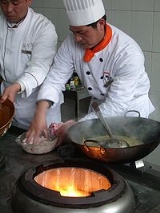
Cooking is the process of preparing food
by use of heat
. Cooking techniques and ingredients vary widely across the world, reflecting unique environmental, economic, and cultural traditions. Cooks themselves also vary widely in skill and training. Cooking can also occur through chemical reactions without the presence of heat, most notably as in Ceviche, a traditional Spanish dish where fish is cooked with the acids in lemon or lime juice. Sushi also utilizes a similar chemical reaction between fish and the acidic content of rice glazed with vinegar.
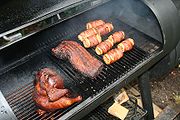 Preparing food with heat or fire
is an activity unique to humans, and some scientists believe the advent of cooking played an important role in human evolution. Most anthropologists believe that cooking fires first developed around 250,000 years ago. The development of agriculture
, commerce and transportation between civilizations in different regions offered cooks many new ingredients. New inventions and technologies, such as pottery
for holding and boiling water, expanded cooking techniques. Some modern cooks apply advanced scientific techniques to food preparation.
_005.jpg)
 There is no clear evidence as to when the practice of cooking food was first conceived. Most anthropologists believe that cooking fires began only about 250,000 years ago, when hearth
s started appearing. Primatologist Richard Wrangham
suggested that cooking was invented as far back as 1.8 million to 2.3 million years ago. Other researchers believe that cooking was invented as late as 40,000 or 10,000 years ago. Evidence of fire is inconclusive, as wildfires started by lightning-strikes are still common in East Africa and other wild areas, and it is difficult to determine when fire was first used for cooking, as opposed to just being used for warmth or for keeping predators away.
Vegetables, fruits, grains and nuts as well as herbs and spices come from plants, while meat, eggs, and dairy products come from animals. Mushrooms and the yeast used in baking are kinds of fungi. Cooks also use water and minerals such as salt. Cooks can also use wine
or spirits
.
Naturally occurring ingredients contain various amounts of molecules called proteins, carbohydrates and fats. They also contain water and minerals. Cooking involves a manipulation of the chemical properties of these molecules.
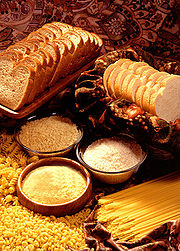 Carbohydrates include the common sugar, sucrose
(table sugar), a disaccharide, and such simple sugar
s as glucose
(from the digestion of table sugar) and fructose
(from fruit), and starch
es from sources such as cereal flour, rice
, arrowroot
, and potato
. The interaction of heat and carbohydrate is complex.
Long-chain sugars
such as starch
tend to break down into simpler sugar
s when cooked, while simple sugars can form syrup
s. If sugars are heated so that all water of crystallisation is driven off, then caramelization
starts, with the sugar undergoing thermal decomposition with the formation of carbon
, and other breakdown products producing caramel
. Similarly, the heating of sugars and proteins elicits the Maillard reaction
, a basic flavor-enhancing technique.
An emulsion
of starch with fat or water can, when gently heated, provide thickening to the dish being cooked. In Europe
an cooking, a mixture of butter
and flour
called a roux
is used to thicken liquids to make stews or sauces. In Asia
n cooking, a similar effect is obtained from a mixture of rice or corn starch and water. These techniques rely on the properties of starches to create simpler mucilaginous saccharides during cooking, which causes the familiar thickening of sauce
s. This thickening will break down, however, under additional heat.
and lard
. Fats can reach temperatures higher than the boiling point of water, and are often used to conduct high heat to other ingredients, such as in frying or sautéing.
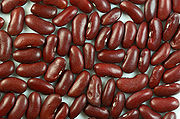 Edible animal material, including muscle
, offal
, milk
, eggs
and egg white
s, contains substantial amounts of protein. Almost all vegetable
matter (in particular legumes and seed
s) also includes proteins, although generally in smaller amounts. Mushrooms have high protein content. Any of these may be sources of essential amino acid
s. When protein
s are heated they become denatured (unfolded) and change texture. In many cases, this causes the structure of the material to become softer or more friable - meat becomes cooked and is more friable and less flexible. In some cases, proteins can form more rigid structures, such as the coagulation of albumen in egg whites. The formation of a relatively rigid but flexible matrix from egg white provides an important component of much cake
cookery, and also underpins many desserts based on meringue
.
but which the body cannot manufacture itself and which must therefore come from soil. Vitamins come from a number of sources including fresh fruit and vegetables (Vitamin C
), carrot
s, liver
(Vitamin A
), cereal bran, bread, liver e ( B vitamins), fish liver oil (Vitamin D
) and fresh green vegetables (Vitamin K
). Many minerals are also essential in small quantities including iron
, calcium
, magnesium
and sulphur; and in very small quantities copper
, zinc
and selenium
. The micronutrients, minerals, and vitamins in fruit and vegetables may be destroyed or eluted by cooking. Vitamin C is especially prone to oxidation during cooking and may be completely destroyed by protracted cooking.
 Cooking often involves water
, which is frequently present in other liquid
s, both added in order to immerse the substances being cooked (typically water
, stock
or wine
), and released from the foods themselves. Liquids are so important to cooking that the name of the cooking method used is often based on how the liquid is combined with the food, as in steaming
, simmering, boiling
, braising
, and blanching. Heating liquid in an open container results in rapidly increased evaporation
, which concentrate
s the remaining flavor
and ingredients - this is a critical component of both stewing and sauce making.
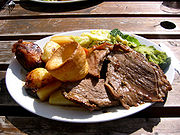
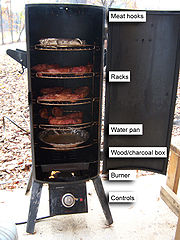 Roasting
Baking
Boiling
Frying
Smoking
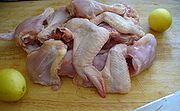

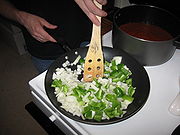 When heat is used in the preparation of food, it can kill or inactivate potentially harmful organisms including bacteria
and virus
es.
The effect will depend on temperature, cooking time, and technique used. The temperature range from 41 °F to 135 °F (5 °C to 57 °C) is the "Danger zone (food safetymed to be far less likely to harbor bacteria. This has been debated, and some research has shown wooden boards are far better. Washing and sanitizing cutting boards is highly recommended, especially after use with raw meat, poultry, or seafood. Hot water and soap followed by a rinse with an antibacterial cleaner (dilute bleach is common in a mixture of 1 tablespoon
per gallon
of water, as at that dilution it is considered food safe, though some professionals choose not to use this method because they believe it could taint some foods), or a trip through a dishwasher with a "sanitize" cycle, are effective methods for reducing the risk of illness due to contaminated cooking implements.
 Proponents of Raw foodism
argue that cooking food increases the risk of some of the detrimental effects on food or health. They point out that the cooking of vegetables and fruit containing vitamin C
both elutes the vitamin into the cooking water and degrades the vitamin through oxidation. Peeling vegetables can also substantially reduce the vitamin C content, especially in the case of potato
es where most vitamin C is in the skin. However, research using an artificial gut has shown that in the specific case of carotenoid
s a greater proportion is absorbed from cooked vegetables than from raw vegetables.
Baking, grilling or broiling food, especially starchy foods, until a toasted crust is formed generates significant concentrations of acrylamide
, a possible carcinogen
.
Cooking dairy products may reduce a protective effect against colon cancer. Researchers at the University of Toronto
suggest that ingesting uncooked or unpasteurized dairy product
s (see also Raw milk
) may reduce the risk of colorectal cancer
. Mice and rats fed uncooked sucrose, casein, and beef tallow had one-third to one-fifth the incidence of microadenoma
s as the mice and rats fed the same ingredients cooked. This claim, however, is contentious. According to the Food and Drug Administration of the United States, health benefits claimed by raw milk advocates do not exist. "The small quantities of antibodies in milk are not absorbed in the human intestinal tract," says Barbara Ingham, Ph.D., associate professor and extension food scientist at the University of Wisconsin-Madison. "There is no scientific evidence that raw milk contains an anti-arthritis factor or that it enhances resistance to other diseases."
Several studies published since 1990 indicate that cooking muscle meat creates heterocyclic amines (HCAs), which are thought to increase cancer risk in humans. Researchers at the National Cancer Institute
found that human subjects who ate beef rare or medium-rare had less than one third the risk of stomach cancer than those who ate beef medium-well or well-done. While eating meat raw may be the only way to avoid HCAs fully, the National Cancer Institute states that cooking meat below 212 °F (100 °C) creates "negligible amounts" of HCAs. Also, microwaving meat before cooking may reduce HCAs by 90%. Nitrosamine
s, present in processed and cooked foods, have also been noted as being carcinogenic, being linked to colon cancer.
Research has shown that grilling or barbecuing meat and fish increases levels of carcinogenic Polycyclic aromatic hydrocarbon
s (PAH). However, meat and fish only contribute a small proportion of dietary PAH intake - most intake comes from cereals, oils and fats. German
research in 2003 showed significant benefits in reducing breast cancer
risk when large amounts of raw vegetable matter are included in the diet. The authors attribute some of this effect to heat-labile phytonutrients.
Heating sugars with proteins or fats can produce Advanced glycation end products ("glycotoxins"). These have been linked to ageing and health conditions such as diabetes.
 The application of scientific knowledge to cooking and gastronomy
has become known as molecular gastronomy
. This is a subdiscipline of food science
. Important contributions have been made by scientists, chefs and authors such as Herve This
(chemist), Nicholas Kurti
(physicist), Peter Barham
(physicist), Harold McGee
(author), Shirley Corriher
(biochemist, author), Heston Blumenthal
(chef), Ferran Adria
(chef), Robert Wolke
(chemist, author) and Pierre Gagnaire
(chef).
Chemical processes central to cooking include the Maillard reaction
- a form of non-enzymatic browning involving an amino acid, a reducing sugar and heat.
or around a communal fire, cooking is also often carried out outside of personal quarters, for example at restaurants, or schools. Bakeries
were one of the earliest forms of cooking outside the home, and bakeries in the past often offered the cooking of pots of food provided by their customers as an additional service. In the present day, factory
food preparation has become common, with many "ready-to-eat" foods being prepared and cooked in factories and home cooks using a mixture of scratch made
, and factory made foods together to make a meal
.
"Home-cooking" may be associated with comfort food
, and some commercially produced foods are presented through advertising
or packaging as having been "home-cooked", regardless of their actual origin.
Food
Food is any substance consumed to provide nutritional support for the body. It is usually of plant or animal origin, and contains essential nutrients, such as carbohydrates, fats, proteins, vitamins, or minerals...
by use of heat
Heat
In physics and thermodynamics, heat is energy transferred from one body, region, or thermodynamic system to another due to thermal contact or thermal radiation when the systems are at different temperatures. It is often described as one of the fundamental processes of energy transfer between...
. Cooking techniques and ingredients vary widely across the world, reflecting unique environmental, economic, and cultural traditions. Cooks themselves also vary widely in skill and training. Cooking can also occur through chemical reactions without the presence of heat, most notably as in Ceviche, a traditional Spanish dish where fish is cooked with the acids in lemon or lime juice. Sushi also utilizes a similar chemical reaction between fish and the acidic content of rice glazed with vinegar.
Control of fire by early humans
The control of fire by early humans was a turning point in the cultural aspect of human evolution that allowed humans to cook food and obtain warmth and protection...
is an activity unique to humans, and some scientists believe the advent of cooking played an important role in human evolution. Most anthropologists believe that cooking fires first developed around 250,000 years ago. The development of agriculture
Agriculture
Agriculture is the cultivation of animals, plants, fungi and other life forms for food, fiber, and other products used to sustain life. Agriculture was the key implement in the rise of sedentary human civilization, whereby farming of domesticated species created food surpluses that nurtured the...
, commerce and transportation between civilizations in different regions offered cooks many new ingredients. New inventions and technologies, such as pottery
Pottery
Pottery is the material from which the potteryware is made, of which major types include earthenware, stoneware and porcelain. The place where such wares are made is also called a pottery . Pottery also refers to the art or craft of the potter or the manufacture of pottery...
for holding and boiling water, expanded cooking techniques. Some modern cooks apply advanced scientific techniques to food preparation.
History
Hearth
In common historic and modern usage, a hearth is a brick- or stone-lined fireplace or oven often used for cooking and/or heating. For centuries, the hearth was considered an integral part of a home, often its central or most important feature...
s started appearing. Primatologist Richard Wrangham
Richard Wrangham
Richard W. Wrangham is a British primatologist. He is the Ruth Moore Professor of Biological Anthropology at Harvard University and his research group is now part of the newly established Department of Human Evolutionary Biology....
suggested that cooking was invented as far back as 1.8 million to 2.3 million years ago. Other researchers believe that cooking was invented as late as 40,000 or 10,000 years ago. Evidence of fire is inconclusive, as wildfires started by lightning-strikes are still common in East Africa and other wild areas, and it is difficult to determine when fire was first used for cooking, as opposed to just being used for warmth or for keeping predators away.
Ingredients
Most ingredients in cooking are derived from living organisms.Organism
In biology, an organism is any contiguous living system . In at least some form, all organisms are capable of response to stimuli, reproduction, growth and development, and maintenance of homoeostasis as a stable whole.An organism may either be unicellular or, as in the case of humans, comprise...
Vegetables, fruits, grains and nuts as well as herbs and spices come from plants, while meat, eggs, and dairy products come from animals. Mushrooms and the yeast used in baking are kinds of fungi. Cooks also use water and minerals such as salt. Cooks can also use wine
Wine
Wine is an alcoholic beverage, made of fermented fruit juice, usually from grapes. The natural chemical balance of grapes lets them ferment without the addition of sugars, acids, enzymes, or other nutrients. Grape wine is produced by fermenting crushed grapes using various types of yeast. Yeast...
or spirits
Distilled beverage
A distilled beverage, liquor, or spirit is an alcoholic beverage containing ethanol that is produced by distilling ethanol produced by means of fermenting grain, fruit, or vegetables...
.
Naturally occurring ingredients contain various amounts of molecules called proteins, carbohydrates and fats. They also contain water and minerals. Cooking involves a manipulation of the chemical properties of these molecules.
Carbohydrates
Sucrose
Sucrose is the organic compound commonly known as table sugar and sometimes called saccharose. A white, odorless, crystalline powder with a sweet taste, it is best known for its role in human nutrition. The molecule is a disaccharide composed of glucose and fructose with the molecular formula...
(table sugar), a disaccharide, and such simple sugar
Sugar
Sugar is a class of edible crystalline carbohydrates, mainly sucrose, lactose, and fructose, characterized by a sweet flavor.Sucrose in its refined form primarily comes from sugar cane and sugar beet...
s as glucose
Glucose
Glucose is a simple sugar and an important carbohydrate in biology. Cells use it as the primary source of energy and a metabolic intermediate...
(from the digestion of table sugar) and fructose
Fructose
Fructose, or fruit sugar, is a simple monosaccharide found in many plants. It is one of the three dietary monosaccharides, along with glucose and galactose, that are absorbed directly into the bloodstream during digestion. Fructose was discovered by French chemist Augustin-Pierre Dubrunfaut in 1847...
(from fruit), and starch
Starch
Starch or amylum is a carbohydrate consisting of a large number of glucose units joined together by glycosidic bonds. This polysaccharide is produced by all green plants as an energy store...
es from sources such as cereal flour, rice
Rice
Rice is the seed of the monocot plants Oryza sativa or Oryza glaberrima . As a cereal grain, it is the most important staple food for a large part of the world's human population, especially in East Asia, Southeast Asia, South Asia, the Middle East, and the West Indies...
, arrowroot
Arrowroot
Arrowroot, or obedience plant , Bermuda arrowroot, araru, ararao, is a large perennial herb found in rainforest habitats...
, and potato
Potato
The potato is a starchy, tuberous crop from the perennial Solanum tuberosum of the Solanaceae family . The word potato may refer to the plant itself as well as the edible tuber. In the region of the Andes, there are some other closely related cultivated potato species...
. The interaction of heat and carbohydrate is complex.
Long-chain sugars
Polysaccharide
Polysaccharides are long carbohydrate molecules, of repeated monomer units joined together by glycosidic bonds. They range in structure from linear to highly branched. Polysaccharides are often quite heterogeneous, containing slight modifications of the repeating unit. Depending on the structure,...
such as starch
Starch
Starch or amylum is a carbohydrate consisting of a large number of glucose units joined together by glycosidic bonds. This polysaccharide is produced by all green plants as an energy store...
tend to break down into simpler sugar
Monosaccharide
Monosaccharides are the most basic units of biologically important carbohydrates. They are the simplest form of sugar and are usually colorless, water-soluble, crystalline solids. Some monosaccharides have a sweet taste. Examples of monosaccharides include glucose , fructose , galactose, xylose...
s when cooked, while simple sugars can form syrup
Syrup
In cooking, a syrup is a thick, viscous liquid consisting primarily of a solution of sugar in water, containing a large amount of dissolved sugars but showing little tendency to deposit crystals...
s. If sugars are heated so that all water of crystallisation is driven off, then caramelization
Caramelization
Caramelization is the browning of sugar, a process used extensively in cooking for the resulting nutty flavor and brown color. As the process occurs, volatile chemicals are released, producing the characteristic caramel flavor....
starts, with the sugar undergoing thermal decomposition with the formation of carbon
Carbon
Carbon is the chemical element with symbol C and atomic number 6. As a member of group 14 on the periodic table, it is nonmetallic and tetravalent—making four electrons available to form covalent chemical bonds...
, and other breakdown products producing caramel
Caramel
Caramel is a beige to dark-brown confection made by heating any of a variety of sugars. It is used as a flavoring in puddings and desserts, as a filling in bonbons, and as a topping for ice cream, custard and coffee....
. Similarly, the heating of sugars and proteins elicits the Maillard reaction
Maillard reaction
The Maillard reaction is a form of nonenzymatic browning similar to caramelization. It results from a chemical reaction between an amino acid and a reducing sugar, usually requiring heat....
, a basic flavor-enhancing technique.
An emulsion
Emulsion
An emulsion is a mixture of two or more liquids that are normally immiscible . Emulsions are part of a more general class of two-phase systems of matter called colloids. Although the terms colloid and emulsion are sometimes used interchangeably, emulsion is used when both the dispersed and the...
of starch with fat or water can, when gently heated, provide thickening to the dish being cooked. In Europe
Europe
Europe is, by convention, one of the world's seven continents. Comprising the westernmost peninsula of Eurasia, Europe is generally 'divided' from Asia to its east by the watershed divides of the Ural and Caucasus Mountains, the Ural River, the Caspian and Black Seas, and the waterways connecting...
an cooking, a mixture of butter
Butter
Butter is a dairy product made by churning fresh or fermented cream or milk. It is generally used as a spread and a condiment, as well as in cooking applications, such as baking, sauce making, and pan frying...
and flour
Flour
Flour is a powder which is made by grinding cereal grains, other seeds or roots . It is the main ingredient of bread, which is a staple food for many cultures, making the availability of adequate supplies of flour a major economic and political issue at various times throughout history...
called a roux
Roux
Roux is a cooked mixture of wheat flour and fat, traditionally butter. It is the thickening agent of three of the mother sauces of classical French cooking: sauce béchamel, sauce velouté and sauce espagnole. Clarified butter, vegetable oils, or lard are commonly used fats. It is used as a...
is used to thicken liquids to make stews or sauces. In Asia
Asia
Asia is the world's largest and most populous continent, located primarily in the eastern and northern hemispheres. It covers 8.7% of the Earth's total surface area and with approximately 3.879 billion people, it hosts 60% of the world's current human population...
n cooking, a similar effect is obtained from a mixture of rice or corn starch and water. These techniques rely on the properties of starches to create simpler mucilaginous saccharides during cooking, which causes the familiar thickening of sauce
Sauce
In cooking, a sauce is liquid, creaming or semi-solid food served on or used in preparing other foods. Sauces are not normally consumed by themselves; they add flavor, moisture, and visual appeal to another dish. Sauce is a French word taken from the Latin salsus, meaning salted...
s. This thickening will break down, however, under additional heat.
Fats
Types of fat include vegetable oils and animal products such as butterButter
Butter is a dairy product made by churning fresh or fermented cream or milk. It is generally used as a spread and a condiment, as well as in cooking applications, such as baking, sauce making, and pan frying...
and lard
Lard
Lard is pig fat in both its rendered and unrendered forms. Lard was commonly used in many cuisines as a cooking fat or shortening, or as a spread similar to butter. Its use in contemporary cuisine has diminished because of health concerns posed by its saturated-fat content and its often negative...
. Fats can reach temperatures higher than the boiling point of water, and are often used to conduct high heat to other ingredients, such as in frying or sautéing.
Proteins
Muscle
Muscle is a contractile tissue of animals and is derived from the mesodermal layer of embryonic germ cells. Muscle cells contain contractile filaments that move past each other and change the size of the cell. They are classified as skeletal, cardiac, or smooth muscles. Their function is to...
, offal
Offal
Offal , also called, especially in the United States, variety meats or organ meats, refers to the internal organs and entrails of a butchered animal. The word does not refer to a particular list of edible organs, which varies by culture and region, but includes most internal organs other than...
, milk
Milk
Milk is a white liquid produced by the mammary glands of mammals. It is the primary source of nutrition for young mammals before they are able to digest other types of food. Early-lactation milk contains colostrum, which carries the mother's antibodies to the baby and can reduce the risk of many...
, eggs
Egg (food)
Eggs are laid by females of many different species, including birds, reptiles, amphibians, and fish, and have probably been eaten by mankind for millennia. Bird and reptile eggs consist of a protective eggshell, albumen , and vitellus , contained within various thin membranes...
and egg white
Egg white
Egg white is the common name for the clear liquid contained within an egg. In chickens it is formed from the layers of secretions of the anterior section of the hen's oviduct during the passage of the egg. It forms around either fertilized or unfertilized egg yolks...
s, contains substantial amounts of protein. Almost all vegetable
Vegetable
The noun vegetable usually means an edible plant or part of a plant other than a sweet fruit or seed. This typically means the leaf, stem, or root of a plant....
matter (in particular legumes and seed
Seed
A seed is a small embryonic plant enclosed in a covering called the seed coat, usually with some stored food. It is the product of the ripened ovule of gymnosperm and angiosperm plants which occurs after fertilization and some growth within the mother plant...
s) also includes proteins, although generally in smaller amounts. Mushrooms have high protein content. Any of these may be sources of essential amino acid
Essential amino acid
An essential amino acid or indispensable amino acid is an amino acid that cannot be synthesized de novo by the organism , and therefore must be supplied in the diet.-Essentiality vs. conditional essentiality in humans:...
s. When protein
Protein
Proteins are biochemical compounds consisting of one or more polypeptides typically folded into a globular or fibrous form, facilitating a biological function. A polypeptide is a single linear polymer chain of amino acids bonded together by peptide bonds between the carboxyl and amino groups of...
s are heated they become denatured (unfolded) and change texture. In many cases, this causes the structure of the material to become softer or more friable - meat becomes cooked and is more friable and less flexible. In some cases, proteins can form more rigid structures, such as the coagulation of albumen in egg whites. The formation of a relatively rigid but flexible matrix from egg white provides an important component of much cake
Cake
Cake is a form of bread or bread-like food. In its modern forms, it is typically a sweet and enriched baked dessert. In its oldest forms, cakes were normally fried breads or cheesecakes, and normally had a disk shape...
cookery, and also underpins many desserts based on meringue
Meringue
Meringue is a type of dessert made from whipped egg whites and sugar, occasionally some recipes may call for adding an acid such as cream of tartar or a small amount of vinegar and a binding agent such as cornstarch found in icing sugar which may be added in addition to the corn starch which...
.
Vitamins and minerals
Vitamins are materials required for normal metabolismMetabolism
Metabolism is the set of chemical reactions that happen in the cells of living organisms to sustain life. These processes allow organisms to grow and reproduce, maintain their structures, and respond to their environments. Metabolism is usually divided into two categories...
but which the body cannot manufacture itself and which must therefore come from soil. Vitamins come from a number of sources including fresh fruit and vegetables (Vitamin C
Vitamin C
Vitamin C or L-ascorbic acid or L-ascorbate is an essential nutrient for humans and certain other animal species. In living organisms ascorbate acts as an antioxidant by protecting the body against oxidative stress...
), carrot
Carrot
The carrot is a root vegetable, usually orange in colour, though purple, red, white, and yellow varieties exist. It has a crisp texture when fresh...
s, liver
Liver
The liver is a vital organ present in vertebrates and some other animals. It has a wide range of functions, including detoxification, protein synthesis, and production of biochemicals necessary for digestion...
(Vitamin A
Vitamin A
Vitamin A is a vitamin that is needed by the retina of the eye in the form of a specific metabolite, the light-absorbing molecule retinal, that is necessary for both low-light and color vision...
), cereal bran, bread, liver e ( B vitamins), fish liver oil (Vitamin D
Vitamin D
Vitamin D is a group of fat-soluble secosteroids. In humans, vitamin D is unique both because it functions as a prohormone and because the body can synthesize it when sun exposure is adequate ....
) and fresh green vegetables (Vitamin K
Vitamin K
Vitamin K is a group of structurally similar, fat soluble vitamins that are needed for the posttranslational modification of certain proteins required for blood coagulation and in metabolic pathways in bone and other tissue. They are 2-methyl-1,4-naphthoquinone derivatives...
). Many minerals are also essential in small quantities including iron
Iron
Iron is a chemical element with the symbol Fe and atomic number 26. It is a metal in the first transition series. It is the most common element forming the planet Earth as a whole, forming much of Earth's outer and inner core. It is the fourth most common element in the Earth's crust...
, calcium
Calcium
Calcium is the chemical element with the symbol Ca and atomic number 20. It has an atomic mass of 40.078 amu. Calcium is a soft gray alkaline earth metal, and is the fifth-most-abundant element by mass in the Earth's crust...
, magnesium
Magnesium
Magnesium is a chemical element with the symbol Mg, atomic number 12, and common oxidation number +2. It is an alkaline earth metal and the eighth most abundant element in the Earth's crust and ninth in the known universe as a whole...
and sulphur; and in very small quantities copper
Copper
Copper is a chemical element with the symbol Cu and atomic number 29. It is a ductile metal with very high thermal and electrical conductivity. Pure copper is soft and malleable; an exposed surface has a reddish-orange tarnish...
, zinc
Zinc
Zinc , or spelter , is a metallic chemical element; it has the symbol Zn and atomic number 30. It is the first element in group 12 of the periodic table. Zinc is, in some respects, chemically similar to magnesium, because its ion is of similar size and its only common oxidation state is +2...
and selenium
Selenium
Selenium is a chemical element with atomic number 34, chemical symbol Se, and an atomic mass of 78.96. It is a nonmetal, whose properties are intermediate between those of adjacent chalcogen elements sulfur and tellurium...
. The micronutrients, minerals, and vitamins in fruit and vegetables may be destroyed or eluted by cooking. Vitamin C is especially prone to oxidation during cooking and may be completely destroyed by protracted cooking.
Water
Water
Water is a chemical substance with the chemical formula H2O. A water molecule contains one oxygen and two hydrogen atoms connected by covalent bonds. Water is a liquid at ambient conditions, but it often co-exists on Earth with its solid state, ice, and gaseous state . Water also exists in a...
, which is frequently present in other liquid
Liquid
Liquid is one of the three classical states of matter . Like a gas, a liquid is able to flow and take the shape of a container. Some liquids resist compression, while others can be compressed. Unlike a gas, a liquid does not disperse to fill every space of a container, and maintains a fairly...
s, both added in order to immerse the substances being cooked (typically water
Water
Water is a chemical substance with the chemical formula H2O. A water molecule contains one oxygen and two hydrogen atoms connected by covalent bonds. Water is a liquid at ambient conditions, but it often co-exists on Earth with its solid state, ice, and gaseous state . Water also exists in a...
, stock
Stock (food)
Stock is a flavoured water preparation. It forms the basis of many dishes, particularly soups and sauces.- Preparation :Stock is made by simmering various ingredients in water, including some or all of the following...
or wine
Wine
Wine is an alcoholic beverage, made of fermented fruit juice, usually from grapes. The natural chemical balance of grapes lets them ferment without the addition of sugars, acids, enzymes, or other nutrients. Grape wine is produced by fermenting crushed grapes using various types of yeast. Yeast...
), and released from the foods themselves. Liquids are so important to cooking that the name of the cooking method used is often based on how the liquid is combined with the food, as in steaming
Steaming
Steaming is a method of cooking using steam. Steaming is considered a healthy cooking technique and capable of cooking almost all kinds of food.-Method:...
, simmering, boiling
Boiling
Boiling is the rapid vaporization of a liquid, which occurs when a liquid is heated to its boiling point, the temperature at which the vapor pressure of the liquid is equal to the pressure exerted on the liquid by the surrounding environmental pressure. While below the boiling point a liquid...
, braising
Braising
Braising , is a combination cooking method using both moist and dry heat; typically the food is first seared at a high temperature and then finished in a covered pot with a variable amount of liquid, resulting in a particular flavour...
, and blanching. Heating liquid in an open container results in rapidly increased evaporation
Evaporation
Evaporation is a type of vaporization of a liquid that occurs only on the surface of a liquid. The other type of vaporization is boiling, which, instead, occurs on the entire mass of the liquid....
, which concentrate
Concentrate
A concentrate is a form of substance which has had the majority of its base component removed. Typically this will be the removal of water from a solution or suspension such as the removal of water from fruit juice...
s the remaining flavor
Flavor
Flavor or flavour is the sensory impression of a food or other substance, and is determined mainly by the chemical senses of taste and smell. The "trigeminal senses", which detect chemical irritants in the mouth and throat as well as temperature and texture, are also very important to the overall...
and ingredients - this is a critical component of both stewing and sauce making.
Methods
There are very many methods of cooking, most of which have been known since antiquity. These include baking, roasting, frying, grilling, barbecuing, smoking, boiling, steaming and braising. A more recent innovation is microwaving. Various methods use differing levels of heat and moisture and vary in cooking time. The method chosen greatly affects the end result. Some foods are more appropriate to some methods than others. Some major hot cooking techniques include:- RoastingRoastingRoasting is a cooking method that uses dry heat, whether an open flame, oven, or other heat source. Roasting usually causes caramelization or Maillard browning of the surface of the food, which is considered by some as a flavor enhancement. Roasting uses more indirect, diffused heat , and is...
- Barbecuing - GrillingGrillingGrilling is a form of cooking that involves dry heat applied to the surface of food, commonly from above or below.Grilling usually involves a significant amount of direct, radiant heat, and tends to be used for cooking meat quickly and meat that has already been cut into slices...
- RotisserieRotisserieRotisserie is a style of roasting where meat is skewered on a spit - a long solid rod used to hold food while it is being cooked over a fire in a fireplace or over a campfire, or roasted in an oven. This method is generally used for cooking large joints of meat or entire animals, such as pigs,...
- SearingSearingSearing is a technique used in grilling, baking, braising, roasting, sautéing, etc., in which the surface of the food is cooked at high temperature so a caramelized crust forms. Similar techniques, browning and blackening, are typically used to sear all sides of a particular piece of meat, fish,...
Baking
- BakingBakingBaking is the technique of prolonged cooking of food by dry heat acting by convection, and not by radiation, normally in an oven, but also in hot ashes, or on hot stones. It is primarily used for the preparation of bread, cakes, pastries and pies, tarts, quiches, cookies and crackers. Such items...
- Baking Blind - Broiling - Flashbaking
Boiling
- Boiling - Blanching - BraisingBraisingBraising , is a combination cooking method using both moist and dry heat; typically the food is first seared at a high temperature and then finished in a covered pot with a variable amount of liquid, resulting in a particular flavour...
- CoddlingCoddlingIn cooking, to coddle food is to heat it in water kept just below the boiling point. The term comes from the English verb to coddle, meaning to treat gently or pamper.-Cooking examples:...
- Double steamingDouble steamingDouble steaming, sometimes also dubbed double boiling, is a Chinese cooking techniques to prepare delicate food such as bird nests, shark fins, etc. The food is covered with water and put in a covered ceramic jar and the jar is then steamed for several hours...
- InfusionInfusionAn infusion is the outcome of steeping plants with desired chemical compounds or flavors in water or oil.-History:The first recorded use of essential oils was in the 10th or 11th century by the Persian polymath Avicenna, possibly in The Canon of Medicine.-Preparation techniques:An infusion is very...
- PoachingPoaching (cooking)Poaching is the process of gently simmering food in liquid, generally milk, stock or wine.-Utilization:Poaching is particularly suitable for delicate food, such as eggs, poultry, fish and fruit, which might easily fall apart or dry out...
- Pressure cookingPressure cookingPressure cooking is a method of cooking in a sealed vessel that does not permit air or liquids to escape below a preset pressure. Because the boiling point of water increases as the pressure increases, the pressure built up inside the cooker allows the liquid in the pot to rise to a higher...
- SimmeringSimmeringSimmering is a food preparation technique in which foods are cooked in hot liquids kept at or just below the boiling point of water , but higher than poaching temperature...
- SteamingSteamingSteaming is a method of cooking using steam. Steaming is considered a healthy cooking technique and capable of cooking almost all kinds of food.-Method:...
- SteepingSteepingSteeping or weltering may mean:# Saturation in a liquid solvent to extract a soluble ingredient, where the solvent is the desired product. Tea is prepared for drinking by steeping the leaves in heated water to release the flavor and nutrients...
- Stewing - Vacuum flask cookingVacuum flask cookingVacuum flask cooking was introduced to the Asian market in the mid-1990s. The vacuum cooker , often called a thermal cooker in English, is a stainless steel vacuum flask. The flasks come in various sizes ranging from in diameter and tall. A removable pot, with handle and lid, fits inside the...
Frying
- FryingFryingFrying is the cooking of food in oil or another fat, a technique that originated in ancient Egypt around 2500 BC. Chemically, oils and fats are the same, differing only in melting point, but the distinction is only made when needed. In commerce, many fats are called oils by custom, e.g...
- Deep fryingDeep fryingDeep frying is a cooking method in which food is submerged in hot oil or fat. This is normally performed with a deep fryer or chip pan; industrially, a pressure fryer or vacuum fryer may be used....
- Hot salt fryingHot salt fryingHot salt frying is a cooking technique used by street-side food vendors in China/India.Coarse sea salt is placed in a large wok and heated to a high temperature...
- Hot sand fryingHot sand fryingHot sand frying is a common cooking technique for street-side food vendors in China and India to cook chestnuts and peanuts. A large wok is filled with black sand and heated to high temperature. Nuts are buried in the hot sand and occasionally turned with a spatula, then the sand and nuts are...
- Pan fryingPan fryingPan frying is a form of frying characterized by the use of minimal cooking oil or fat ; typically using just enough oil to lubricate the pan...
- Pressure fryingPressure fryingIn cooking, pressure frying is a variation on pressure cooking where meat and cooking oil are brought to high temperatures while pressure is held high enough to cook the food more quickly. This leaves the meat very hot and juicy. A receptacle used in pressure frying is known as a pressure...
- SautéingSautéingSautéing is a method of cooking food, that uses a small amount of fat in a shallow pan over relatively high heat. Ingredients are usually cut into pieces or thinly sliced to facilitate fast cooking. The primary mode of heat transfer during sautéing is conduction between the pan and the food being...
- Stir fryingStir fryingStir frying is an umbrella term used to describe two Chinese cooking techniques for preparing food in a wok: chǎo and bào . The term stir-fry was introduced into the English language by Buwei Yang Chao, in her book How to Cook and Eat in Chinese, to describe the chǎo technique...
Smoking
- Smoking
Food safety
Bacteria
Bacteria are a large domain of prokaryotic microorganisms. Typically a few micrometres in length, bacteria have a wide range of shapes, ranging from spheres to rods and spirals...
and virus
Virus
A virus is a small infectious agent that can replicate only inside the living cells of organisms. Viruses infect all types of organisms, from animals and plants to bacteria and archaea...
es.
The effect will depend on temperature, cooking time, and technique used. The temperature range from 41 °F to 135 °F (5 °C to 57 °C) is the "Danger zone (food safetymed to be far less likely to harbor bacteria. This has been debated, and some research has shown wooden boards are far better. Washing and sanitizing cutting boards is highly recommended, especially after use with raw meat, poultry, or seafood. Hot water and soap followed by a rinse with an antibacterial cleaner (dilute bleach is common in a mixture of 1 tablespoon
Tablespoon
A tablespoon is a type of large spoon usually used for serving. A tablespoonful, the capacity of one tablespoon, is commonly used as a measure of volume in cooking...
per gallon
Gallon
The gallon is a measure of volume. Historically it has had many different definitions, but there are three definitions in current use: the imperial gallon which is used in the United Kingdom and semi-officially within Canada, the United States liquid gallon and the lesser used United States dry...
of water, as at that dilution it is considered food safe, though some professionals choose not to use this method because they believe it could taint some foods), or a trip through a dishwasher with a "sanitize" cycle, are effective methods for reducing the risk of illness due to contaminated cooking implements.
Effects on nutritional content of food
Raw foodism
Raw foodism is the practice of consuming uncooked, unprocessed, and often organic foods as a large percentage of the diet....
argue that cooking food increases the risk of some of the detrimental effects on food or health. They point out that the cooking of vegetables and fruit containing vitamin C
Vitamin C
Vitamin C or L-ascorbic acid or L-ascorbate is an essential nutrient for humans and certain other animal species. In living organisms ascorbate acts as an antioxidant by protecting the body against oxidative stress...
both elutes the vitamin into the cooking water and degrades the vitamin through oxidation. Peeling vegetables can also substantially reduce the vitamin C content, especially in the case of potato
Potato
The potato is a starchy, tuberous crop from the perennial Solanum tuberosum of the Solanaceae family . The word potato may refer to the plant itself as well as the edible tuber. In the region of the Andes, there are some other closely related cultivated potato species...
es where most vitamin C is in the skin. However, research using an artificial gut has shown that in the specific case of carotenoid
Carotenoid
Carotenoids are tetraterpenoid organic pigments that are naturally occurring in the chloroplasts and chromoplasts of plants and some other photosynthetic organisms like algae, some bacteria, and some types of fungus. Carotenoids can be synthesized fats and other basic organic metabolic building...
s a greater proportion is absorbed from cooked vegetables than from raw vegetables.
Baking, grilling or broiling food, especially starchy foods, until a toasted crust is formed generates significant concentrations of acrylamide
Acrylamide
Acrylamide is a chemical compound with the chemical formula C3H5NO. Its IUPAC name is prop-2-enamide. It is a white odourless crystalline solid, soluble in water, ethanol, ether, and chloroform. Acrylamide is incompatible with acids, bases, oxidizing agents, iron, and iron salts...
, a possible carcinogen
Carcinogen
A carcinogen is any substance, radionuclide, or radiation that is an agent directly involved in causing cancer. This may be due to the ability to damage the genome or to the disruption of cellular metabolic processes...
.
Cooking dairy products may reduce a protective effect against colon cancer. Researchers at the University of Toronto
University of Toronto
The University of Toronto is a public research university in Toronto, Ontario, Canada, situated on the grounds that surround Queen's Park. It was founded by royal charter in 1827 as King's College, the first institution of higher learning in Upper Canada...
suggest that ingesting uncooked or unpasteurized dairy product
Dairy product
Dairy products are generally defined as foods produced from cow's or domestic buffalo's milk. They are usually high-energy-yielding food products. A production plant for such processing is called a dairy or a dairy factory. Raw milk for processing comes mainly from cows, and, to a lesser extent,...
s (see also Raw milk
Raw milk
Raw milk is milk that has not been pasteurized or homogenized.-History:Humans consumed raw milk exclusively prior to the industrial revolution and the invention of the pasteurization process in 1864. During the industrial revolution large populations congregated into urban areas detached from the...
) may reduce the risk of colorectal cancer
Colorectal cancer
Colorectal cancer, commonly known as bowel cancer, is a cancer caused by uncontrolled cell growth , in the colon, rectum, or vermiform appendix. Colorectal cancer is clinically distinct from anal cancer, which affects the anus....
. Mice and rats fed uncooked sucrose, casein, and beef tallow had one-third to one-fifth the incidence of microadenoma
Adenoma
An adenoma is a benign tumor of glandular origin. Adenomas can grow from many organs including the colon, adrenal glands, pituitary gland, thyroid, prostate, etc. Although these growths are benign, over time they may progress to become malignant, at which point they are called adenocarcinomas...
s as the mice and rats fed the same ingredients cooked. This claim, however, is contentious. According to the Food and Drug Administration of the United States, health benefits claimed by raw milk advocates do not exist. "The small quantities of antibodies in milk are not absorbed in the human intestinal tract," says Barbara Ingham, Ph.D., associate professor and extension food scientist at the University of Wisconsin-Madison. "There is no scientific evidence that raw milk contains an anti-arthritis factor or that it enhances resistance to other diseases."
Several studies published since 1990 indicate that cooking muscle meat creates heterocyclic amines (HCAs), which are thought to increase cancer risk in humans. Researchers at the National Cancer Institute
National Cancer Institute
The National Cancer Institute is part of the National Institutes of Health , which is one of 11 agencies that are part of the U.S. Department of Health and Human Services. The NCI coordinates the U.S...
found that human subjects who ate beef rare or medium-rare had less than one third the risk of stomach cancer than those who ate beef medium-well or well-done. While eating meat raw may be the only way to avoid HCAs fully, the National Cancer Institute states that cooking meat below 212 °F (100 °C) creates "negligible amounts" of HCAs. Also, microwaving meat before cooking may reduce HCAs by 90%. Nitrosamine
Nitrosamine
Nitrosamines are chemical compounds of the chemical structure R1N-N=O, some of which are carcinogenic.-Usages:Nitrosamines are used in manufacture of some cosmetics, pesticides, and in most rubber products. -Occurrences:...
s, present in processed and cooked foods, have also been noted as being carcinogenic, being linked to colon cancer.
Research has shown that grilling or barbecuing meat and fish increases levels of carcinogenic Polycyclic aromatic hydrocarbon
Polycyclic aromatic hydrocarbon
Polycyclic aromatic hydrocarbons , also known as poly-aromatic hydrocarbons or polynuclear aromatic hydrocarbons, are potent atmospheric pollutants that consist of fused aromatic rings and do not contain heteroatoms or carry substituents. Naphthalene is the simplest example of a PAH...
s (PAH). However, meat and fish only contribute a small proportion of dietary PAH intake - most intake comes from cereals, oils and fats. German
Germany
Germany , officially the Federal Republic of Germany , is a federal parliamentary republic in Europe. The country consists of 16 states while the capital and largest city is Berlin. Germany covers an area of 357,021 km2 and has a largely temperate seasonal climate...
research in 2003 showed significant benefits in reducing breast cancer
Breast cancer
Breast cancer is cancer originating from breast tissue, most commonly from the inner lining of milk ducts or the lobules that supply the ducts with milk. Cancers originating from ducts are known as ductal carcinomas; those originating from lobules are known as lobular carcinomas...
risk when large amounts of raw vegetable matter are included in the diet. The authors attribute some of this effect to heat-labile phytonutrients.
Heating sugars with proteins or fats can produce Advanced glycation end products ("glycotoxins"). These have been linked to ageing and health conditions such as diabetes.
Science
Gastronomy
Gastronomy is the art or science of food eating. Also, it can be defined as the study of food and culture, with a particular focus on gourmet cuisine...
has become known as molecular gastronomy
Molecular gastronomy
Molecular gastronomy is a subdiscipline of food science that seeks to investigate, explain and make practical use of the physical and chemical transformations of ingredients that occur while cooking, as well as the social, artistic and technical components of culinary and gastronomic phenomena in...
. This is a subdiscipline of food science
Food science
Food science is a study concerned with all technical aspects of foods, beginning with harvesting or slaughtering, and ending with its cooking and consumption, an ideology commonly referred to as "from field to fork"...
. Important contributions have been made by scientists, chefs and authors such as Herve This
Hervé This
Hervé This is a French physical chemist who works for the Institut National de la Recherche Agronomique at AgroParisTech, in Paris . His main area of scientific research is molecular gastronomy, that is the science of culinary phenomena .With the late Nicholas Kurti, he coined the...
(chemist), Nicholas Kurti
Nicholas Kurti
Professor Nicholas Kurti FRS was a Hungarian-born physicist who lived in Oxford, UK, for most of his life. In his era, he was one of the leading experimental physicists....
(physicist), Peter Barham
Peter Barham
Professor Peter Barham is a Professorial Teaching Fellow in Physics at the University of Bristol, UK and visiting Professor of Molecular Gastronomy at the Royal Veterinary University in Copenhagen, Denmark....
(physicist), Harold McGee
Harold McGee
Harold McGee is an American author who writes about the chemistry, technique and history of food and cooking and has written two seminal books on kitchen science. His first book, On Food and Cooking: The Science and Lore of the Kitchen was initially published in 1984. A greatly revised second...
(author), Shirley Corriher
Shirley Corriher
Shirley O. Corriher is a biochemist and author of CookWise: The Hows and Whys of Successful Cooking, winner of a James Beard Foundation award, and BakeWise: The Hows and Whys of Successful Baking. CookWise shows how scientific insights can be applied to traditional cooking, while BakeWise applies...
(biochemist, author), Heston Blumenthal
Heston Blumenthal
Heston Marc Blumenthal OBE is an English chef and owner of The Fat Duck, a three-Michelin-starred restaurant in Bray, Berkshire voted Best Restaurant in the UK by The Good Food Guide 2007 and 2009, and voted best restaurant in the world by Restaurant magazine in 2005...
(chef), Ferran Adria
Ferran Adrià
Ferran Adrià i Acosta is a Catalan chef born on May 14, 1962 in L'Hospitalet de Llobregat. He was the head chef of the El Bulli restaurant in Roses on the Costa Brava, and is considered one of the best chefs in the world.-Career:...
(chef), Robert Wolke
Robert Wolke
Robert L. Wolke is an American chemist, currently professor emeritus of chemistry at the University of Pittsburgh. He is a food columnist for The Washington Post, and has written multiple books, which aim to explain everyday phenomena in non-technical terms:...
(chemist, author) and Pierre Gagnaire
Pierre Gagnaire
Pierre Gagnaire is a well known French chef, and is the Head Chef and owner of the eponymous Pierre Gagnaire restaurant at 6 rue Balzac in Paris . Gagnaire is an iconoclastic chef at the forefront of the fusion cuisine movement. Beginning his career in St...
(chef).
Chemical processes central to cooking include the Maillard reaction
Maillard reaction
The Maillard reaction is a form of nonenzymatic browning similar to caramelization. It results from a chemical reaction between an amino acid and a reducing sugar, usually requiring heat....
- a form of non-enzymatic browning involving an amino acid, a reducing sugar and heat.
Home-cooking vs. factory cooking
Although cooking has traditionally been a process carried out informally in a homeHome
A home is a place of residence or refuge. When it refers to a building, it is usually a place in which an individual or a family can rest and store personal property. Most modern-day households contain sanitary facilities and a means of preparing food. Animals have their own homes as well, either...
or around a communal fire, cooking is also often carried out outside of personal quarters, for example at restaurants, or schools. Bakeries
Bakery
A bakery is an establishment which produces and sells flour-based food baked in an oven such as bread, cakes, pastries and pies. Some retail bakeries are also cafés, serving coffee and tea to customers who wish to consume the baked goods on the premises.-See also:*Baker*Cake...
were one of the earliest forms of cooking outside the home, and bakeries in the past often offered the cooking of pots of food provided by their customers as an additional service. In the present day, factory
Factory
A factory or manufacturing plant is an industrial building where laborers manufacture goods or supervise machines processing one product into another. Most modern factories have large warehouses or warehouse-like facilities that contain heavy equipment used for assembly line production...
food preparation has become common, with many "ready-to-eat" foods being prepared and cooked in factories and home cooks using a mixture of scratch made
From scratch
From scratch may refer to:* "from basic components", as in a cake made from scratch, not from a commercial pre-mix, showing the skill or knowledge of the cookFrom Scratch may refer to:* From Scratch * From Scratch...
, and factory made foods together to make a meal
Meal
A meal is an instance of eating, specifically one that takes place at a specific time and includes specific, prepared food.Meals occur primarily at homes, restaurants, and cafeterias, but may occur anywhere. Regular meals occur on a daily basis, typically several times a day...
.
"Home-cooking" may be associated with comfort food
Comfort food
Comfort food is food prepared traditionally that may have a nostalgic or sentimental appeal. Comfort foods may be foods that have a nostalgic element either to an individual or a specific culture...
, and some commercially produced foods are presented through advertising
Advertising
Advertising is a form of communication used to persuade an audience to take some action with respect to products, ideas, or services. Most commonly, the desired result is to drive consumer behavior with respect to a commercial offering, although political and ideological advertising is also common...
or packaging as having been "home-cooked", regardless of their actual origin.
See also
- Carry over cookingCarry over cookingCarry over cooking refers to the phenomenon that food retains heat and continues to cook even after being removed from the source of heat. The larger and denser the object being heated the greater the amount of carry over cooking. After being removed from the heat source the internal temperature...
- Control of fire by early humansControl of fire by early humansThe control of fire by early humans was a turning point in the cultural aspect of human evolution that allowed humans to cook food and obtain warmth and protection...
- Cooker
- Cooking weights and measuresCooking weights and measuresIn recipes, quantities of ingredients may be specified by mass, by volume, or by count.For most of history, most cookbooks did not specify quantities precisely, instead talking of "a nice leg of spring lamb", a "cupful" of lentils, a piece of butter "the size of a walnut", and "sufficient" salt...
- CuisineCuisineCuisine is a characteristic style of cooking practices and traditions, often associated with a specific culture. Cuisines are often named after the geographic areas or regions that they originate from...
- Culinary arts
- Culinary profession
- Cooking schoolCooking schoolA cooking school or culinary school is an institution devoted to education in the art and science of food preparation. It also awards degrees which indicate that a student has undergone a particular curriculum and therefore displays a certain level of competency...
- DishwashingDishwashingDish-washing is the process of cleaning cooking utensils, dishes, cutlery and other items. This is either achieved by hand in a sink or using dishwasher and may take place in a kitchen, utility room, scullery or elsewhere...
- Food and cooking hygiene
- Food industryFood industryThe food production is a complex, global collective of diverse businesses that together supply much of the food energy consumed by the world population...
- Food preservationFood preservationFood preservation is the process of treating and handling food to stop or slow down spoilage and thus allow for longer storage....
- Food writingFood writingFood writing is writing that focuses on the topic of food, both widely and narrowly defined.-Definition:Food writer Mark Kurlansky gives the scope of food writing when he observes: “Food is about agriculture, about ecology, about man’s relationship with nature, about the climate, about...
- FoodpairingFoodpairingFoodpairing is a method for identifying which foods go well together. The method is based on the principle that foods combine well with one another when they share key flavor components. Foodpairing is a relatively new method and is often confused with "wine and food pairing", which is the practice...
- Gourmet Library and museum
- High altitude cookingHigh altitude cookingHigh altitude cooking is the opposite of pressure cooking in that the boiling point of water will be lower at higher altitudes due to the decreased air pressure. This lower temperature results in a lowered boiling point of water and may require an increase in cooking times or temperature and...
- International food terms
- List of food preparation utensils
- List of recipes
- NutritionNutritionNutrition is the provision, to cells and organisms, of the materials necessary to support life. Many common health problems can be prevented or alleviated with a healthy diet....
- RecipeRecipeA recipe is a set of instructions that describe how to prepare or make something, especially a culinary dish.-Components:Modern culinary recipes normally consist of several components*The name of the dish...
- Scented waterScented waterScented water, odoriferous water or sweet water, is a water with a sweet aromatic smell. It is made of flowers or herbs and is the precursor of the modern day perfume...
- SpiceSpiceA spice is a dried seed, fruit, root, bark, or vegetative substance used in nutritionally insignificant quantities as a food additive for flavor, color, or as a preservative that kills harmful bacteria or prevents their growth. It may be used to flavour a dish or to hide other flavours...
s - Staple (cooking)
External links
- wikiHow on How to Cook