

University of Cambridge

Encyclopedia
The University of Cambridge (informally Cambridge University or Cambridge) is a public
research university located in Cambridge
, United Kingdom
. It is the second-oldest university in both the United Kingdom and the English-speaking world (after the University of Oxford
), and the seventh-oldest globally. In post-nominals
the university's name is abbreviated as Cantab, a shortened form of Cantabrigiensis (an adjective derived from Cantabrigia, the Latinised
form of Cambridge).
The university grew out of an association of scholars in the city of Cambridge that was formed in 1209, early records suggest, by scholars leaving Oxford
after a dispute with townsfolk. The two "ancient universities" have many common features and are often jointly referred to as Oxbridge
. In addition to cultural and practical associations as a historic part of British society, they have a long history of rivalry
with each other.
Academically Cambridge ranks as one of the top universities in the world: first in the world in both the 2010 and 2011 QS World University Rankings
, sixth in the world in the 2011 Times Higher Education World University Rankings
, and fifth in the world (and first in Europe) in the 2011 Academic Ranking of World Universities
. Cambridge regularly contends with Oxford for first place in UK league tables
. In the most recently published ranking of UK universities, published by The Guardian
newspaper, Cambridge was ranked first.
Graduates of the University have won a total of 61 Nobel Prizes, the most of any university in the world. In 2009, the marketing consultancy World Brand Lab rated Cambridge University as the 50th most influential brand in the world, and the 4th most influential university brand, behind only Harvard
, MIT
and Stanford University
, while in 2011, Cambridge ranked third, after Harvard and MIT, in The Times Higher Education World Reputation Rankings, which reflect the reputation of universities for educational and research excellence based on a survey of academics worldwide.
Cambridge is a member of the Coimbra Group
, the G5
, the International Alliance of Research Universities
, the League of European Research Universities
and the Russell Group
of research-led British universities
. It forms part of the 'Golden Triangle'
of British universities.
which awarded the ius non trahi extra (a right to discipline its own members) plus some exemption from taxes, and a bull
in 1233 from Pope Gregory IX
that gave graduates from Cambridge the right to teach everywhere in Christendom.
After Cambridge was described as a studium generale
in a letter by Pope Nicholas IV
in 1290, and confirmed as such in a bull by Pope John XXII
in 1318, it became common for researchers from other European medieval universities to come and visit Cambridge to study or to give lecture
courses.
Hugh Balsham, Bishop of Ely
, founded Peterhouse
in 1284, Cambridge's first college. Many colleges were founded during the fourteenth and fifteenth centuries, but colleges continued to be established throughout the centuries to modern times, although there was a gap of 204 years between the founding of Sidney Sussex
in 1596 and Downing
in 1800. The most recently established college is Robinson
, built in the late 1970s. However, Homerton College
only achieved full university college status in March 2010, making it the newest full college (it was previously an "Approved Society" affiliated with the university).
In medieval times, many colleges were founded so that their members would pray
for the soul
s of the founders, and were often associated with chapels or abbey
s. A change in the colleges’ focus occurred in 1536 with the Dissolution of the Monasteries
. King Henry VIII
ordered the university to disband its Faculty of Canon Law and to stop teaching "scholastic philosophy". In response, colleges changed their curricula away from canon law and towards the classics
, the Bible, and mathematics
.
As Cambridge moved away from Canon Law so too did it move away from Catholicism. As early as the 1520s, the continental rumblings of Lutheranism
and what was to become more broadly known as the Protestant Reformation
were making their presence felt in the intellectual discourse of the university. Among the intellectuals involved was the theologically influential Thomas Cranmer
, later to become Archbishop of Canterbury
. As it became convenient to Henry VIII in the 1530s, the King looked to Cranmer and others (within and without Cambridge) to craft a new religious path that was different from Catholicism yet also different from what Martin Luther had in mind.
Nearly a century later, the university was at the centre of another Christian schism. Many nobles, intellectuals and even common folk saw the ways of the Church of England
as being all too similar to the Catholic Church and moreover that it was used by the crown to usurp the rightful powers of the counties. East Anglia
was the centre of what became the Puritan
movement and at Cambridge, it was particularly strong at Emmanuel, St Catharine's Hall, Sidney Sussex and Christ's College. They produced many "non-conformist" graduates who greatly influenced, by social position or pulpit, the approximately 20,000 Puritans who left for New England and especially the Massachusetts Bay Colony
during the Great Migration
decade of the 1630s. Oliver Cromwell
, Parliamentary commander during the English Civil War and head of the English Commonwealth (1649–1660), attended Sidney Sussex.
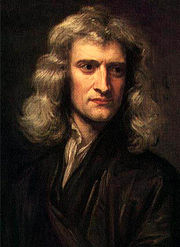
in the later 17th century until the mid-19th century, the university maintained a strong emphasis on applied mathematics
, particularly mathematical physics. Study of this subject was compulsory for graduation, and students were required to take an exam for the Bachelor of Arts degree, the main first degree at Cambridge in both arts and science subjects. This exam is known as a Tripos
. Students awarded first-class honours
after completing the mathematics Tripos were named wranglers. The Cambridge Mathematical Tripos
was competitive and helped produce some of the most famous names in British science, including James Clerk Maxwell
, Lord Kelvin
, and Lord Rayleigh
. However, some famous students, such as G. H. Hardy
, disliked the system, feeling that people were too interested in accumulating marks in exams and not interested in the subject itself.
Pure mathematics at Cambridge in the 19th century had great achievements but also missed out on substantial developments in French and German mathematics. Pure mathematical research at Cambridge finally reached the highest international standard in the early 20th century, thanks above all to G. H. Hardy
and his collaborator, J. E. Littlewood. In geometry, W. V. D. Hodge
brought Cambridge into the international mainstream in the 1930s.
Although diversified in its research and teaching interests, Cambridge today maintains its strength in mathematics. Cambridge alumni have won six Fields Medal
s and one Abel Prize
for mathematics, while individuals representing Cambridge have won four Fields Medals. The University also runs a special
Master of Advanced Study course in mathematics.
(founded by Emily Davies
) in 1869 and Newnham College
in 1872 (founded by Anne Clough
and Henry Sidgwick
), followed by Hughes Hall
in 1885 (founded by Elizabeth Phillips Hughes
as the Cambridge Teaching College for Women), New Hall (later renamed Murray Edwards College) in 1954, and Lucy Cavendish College
. The first women students were examined in 1882 but attempts to make women full members of the university did not succeed until 1947. Women were allowed to study courses, sit examinations, and have their results recorded from 1881; for a brief period after the turn of the twentieth century, this allowed the "steamboat ladies
" to receive ad eundem degrees from the University of Dublin
.
From 1921 women were awarded diplomas which "conferred the Title of the Degree of Bachelor of Arts". As they were not "admitted to the Degree of Bachelor of Arts" they were excluded from the governing of the university. Since students must belong to a college, and since established colleges remained closed to women, women found admissions restricted to colleges established only for women. Starting with Churchill College, all of the men's colleges began to admit women between 1972 and 1988. One women's college, Girton, also began to admit male students from 1979, but the other women's colleges did not follow suit. As a result of St Hilda's College, Oxford
, ending its ban on male students in 2008, Cambridge is now the only remaining United Kingdom University with colleges which refuse to admit males, with three such institutions (Newnham, Murray Edwards and Lucy Cavendish). In the academic year 2004–5, the university's student gender ratio, including post-graduates, was male 52%: female 48%.
A discontinued tradition is that of the wooden spoon
, the ‘prize’ awarded to the student with the lowest passing grade in the final examinations of the Mathematical Tripos. The last of these spoons was awarded in 1909 to Cuthbert Lempriere Holthouse, an oarsman of the Lady Margaret Boat Club of St John's College
. It was over one metre in length and had an oar blade for a handle. It can now be seen outside the Senior Combination Room of St John's. Since 1909, results were published alphabetically within class rather than score order. This made it harder to ascertain who the winner of the spoon was (unless there was only one person in the third class), and so the practice was abandoned.
Each Christmas Eve, BBC radio and television broadcasts The Festival of Nine Lessons and Carols
by the Choir of King's College, Cambridge
. The radio broadcast has been a national Christmas tradition since it was first transmitted in 1928 (though the festival has existed since 1918). The radio broadcast is carried worldwide by the BBC World Service
and is also syndicated to hundreds of radio stations in the USA. The first television broadcast of the festival was in 1954.
 Cambridge is a collegiate university
, meaning that it is made up of self-governing and independent colleges, each with its own property and income. Most colleges bring together academics and students from a broad range of disciplines, and within each faculty, school or department within the university, academics from many different colleges will be found.
The faculties are responsible for ensuring that lectures are given, arranging seminars, performing research and determining the syllabi for teaching, overseen by the General Board. Together with the central administration headed by the Vice-Chancellor, they make up the entire Cambridge University. Facilities such as libraries are provided on all these levels: by the University (the Cambridge University Library
), by the Faculties (Faculty libraries such as the Squire Law Library), and by the individual colleges (all of which maintain a multi-discipline library, generally aimed mainly at their undergraduates).
s, who are also members of a university department. The colleges also decide which undergraduates to admit to the university, in accordance with university regulations.
Cambridge has 31 colleges, of which three, Murray Edwards, Newnham
and Lucy Cavendish
, admit women only. The other colleges are mixed, though most were originally all-male. Darwin
was the first college to admit both men and women, while Churchill
, Clare, and King's
were the first previously all-male colleges to admit female undergraduates, in 1972. In 1988 Magdalene
became the last all-male college to accept women. Clare Hall
and Darwin
admit only postgraduates, and Hughes Hall
, Lucy Cavendish
, St Edmund's
and Wolfson
admit only mature (i.e. 21 years or older on date of matriculation) students, including graduate students. All other colleges admit both undergraduate and postgraduate students with no age restrictions.
Colleges are not required to admit students in all subjects, with some colleges choosing not to offer subjects such as architecture, history of art or theology, but most offer close to the complete range. Some colleges maintain a bias towards certain subjects, for example with Churchill leaning towards the sciences and engineering, while others such as St Catharine's
aim for a balanced intake. Costs to students (accommodation and food prices) vary considerably from college to college. Others maintain much more informal reputations, such as for the students of King's College to hold left-wing political views, or Robinson College and Churchill College's attempts to minimise its environmental impact.
There are also several theological colleges in Cambridge, separate from Cambridge University, including Westcott House
, Westminster College
and Ridley Hall Theological College
, that are, to a lesser degree, affiliated to the university and are members of the Cambridge Theological Federation
.
The concept of grading students' work quantitatively was developed by a tutor named William Farish
at the University of Cambridge in 1792.
A "School" in the University of Cambridge is a broad administrative grouping of related faculties and other units. Each has an elected supervisory body—the "Council" of the school—comprising representatives of the constituent bodies. There are six schools:
Teaching and research in Cambridge is organised by faculties. The faculties have different organisational sub-structures which partly reflect their history and partly their operational needs, which may include a number of departments and other institutions. In addition, a small number of bodies entitled 'Syndicates' have responsibilities for teaching and research, e.g. Cambridge Assessment
, the University Press
, and the University Library
.
lasts from October to December; Lent Term
from January to March; and Easter Term
from April to June.
Within these terms undergraduate teaching takes place within eight-week periods called Full Term
s. These terms are shorter than those of many other British universities. Undergraduates are also expected to prepare heavily in the three holidays (known as the Christmas, Easter and Long Vacations).
, following the retirement of the Duke of Edinburgh
on his 90th birthday in June, 2011. Lord Sainsbury was nominated by the official Nomination Board to succeed him, and Abdul Arain, owner of a local grocery store, Brian Blessed
and Michael Mansfield
were also nominated. The election
took place on 14 and 15 October 2011. David Sainsbury won the election taking 2,893 of the 5,888 votes cast, winning on the first count.
The current Vice-Chancellor is Leszek Borysiewicz
. While the Chancellor's office is ceremonial, the Vice-Chancellor is the de facto principal administrative officer of the University. The university's internal governance is carried out almost entirely by its own members, with very little external representation on its governing body, the Regent House (though there is external representation on the Audit Committee, and there are four external members on the University's Council
, who are the only external members of the Regent House).
was abolished in 1950. Prior to 1926, it was the University's governing body, fulfilling the functions that the Regent House
fulfils today. The Regent House is the University's governing body, a direct democracy comprising all resident senior members of the University and the Colleges, together with the Chancellor, the High Steward
, the Deputy High Steward, and the Commissary. The public representatives of the Regent House are the two Proctor
s, elected to serve for one year, on the nomination of the Colleges.
is the principal executive and policy-making body of the University, therefore, it must report and be accountable to the Regent House
through a variety of checks and balances. It has the right of reporting to the University, and is obliged to advise the Regent House on matters of general concern to the University. It does both of these by causing notices to be published by authority in the Cambridge University Reporter
, the official journal of the University. Since January 2005, the membership of the Council has included two external members, and the Regent House voted for an increase from two to four in the number of external members in March 2008, and this was approved by Her Majesty the Queen in July 2008.
The General Board of the Faculties is responsible for the academic and educational policy of the University, and is accountable to the Council for its management of these affairs.
Faculty Boards are responsible to the General Board; other Boards and Syndicates are responsible either to the General Board (if primarily for academic purposes) or to the Council. In this way, the various arms of the University are kept under the supervision of the central administration, and thus the Regent House.
Each college is an independent charitable institution with its own endowment, separate from that of the central university endowment.
If ranked on a US university endowment table on most recent figures, Cambridge would rank fourth in a ranking compared with the eight Ivy League institutions (subject to market fluctuations).
Comparisons between Cambridge's endowment and those of other top US universities are, however, inaccurate because being a state-funded public university (although the status of Cambridge as a public university can not be compared with US or European public universities as, for example, the state do not "own" the university), Cambridge receives a major portion of its income through education and research grants from the British Government. In 2006-7, it was reported that approximately one third of Cambridge's income comes from UK government funding for teaching and research, with another third coming from other research grants. Endowment income contributes around £130 million. The University also receives a significant income in annual transfers from the Cambridge University Press
, which is the oldest, and second largest university press in the world.
of Microsoft
donated US$210 million through the Bill and Melinda Gates Foundation to endow the Gates Scholarships for students from outside the UK seeking postgraduate study at Cambridge. The University of Cambridge Computer Laboratory
, which taught the world's first computing course in 1953, is housed in a building partly funded by Gates and named after his father, William Gates.
In 2005, the Cambridge 800th Anniversary Campaign was launched, aimed at raising £1 billion by 2012—the first US-style university fund-raising campaign in Europe. This aim was reached in the financial year 2009-2010, with raising £1.037 billion.
is the central research library, which holds over 8 million volumes and, in contrast with the Bodleian or the British Library, many of its books are available on open shelves, and most books are borrowable. It is a legal deposit library, therefore it is entitled to request a free copy of every book published in the UK and Ireland. It receives around 80,000 books every year, not counting the books donated to the library. In addition to the University Library and its dependent libraries, every faculty has a specialised library, which, on average, holds from 30,000 to 150,000 books; for example the History Faculty's Seeley Historical Library
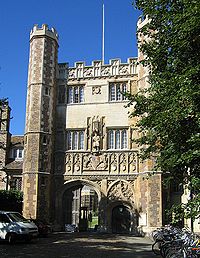
posess more than 100.000 books. Also, every college has a library as well, partially for the purposes of undergraduate teaching, and the older colleges often possess many early books and manuscripts in a separate library. For example Trinity College's Wren Library, Cambridge
has more than 200,000 books printed before 1800, while the Parker Library, Corpus Christi College posess one of the greatest early medieval Anglo-Saxon manuscript collections in the World, with over 600 manuscripts. The total number of books owned by the university is about 12 million.
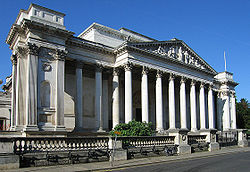
Cambridge University operates eight arts, cultural, and scientific museums, and a botanic garden:
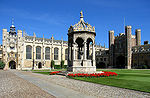
Cambridge is a member of the Russell Group
, a network of research-led British universities; the Coimbra Group
, an association of leading European universities; the League of European Research Universities
; and the International Alliance of Research Universities
. It is also considered part of the "Golden Triangle"
, a geographical concentration of UK university research.
Building on its reputation for enterprise, science and technology, Cambridge has a partnership with MIT in the United States, the Cambridge–MIT Institute.
How applicants perform in the interview process is an important factor in determining which students are accepted. Most applicants are expected to be predicted at least three A-grade A-level qualifications relevant to their chosen undergraduate course, or equivalent overseas qualifications, such as getting at least 7,7,6 for higher-level subjects at IB. The A* A-level grade (introduced in 2010) now plays a part in the acceptance of applications, with the university's standard offer for all courses being set at A*AA. Due to a very high proportion of applicants receiving the highest school grades, the interview process is crucial for distinguishing between the most able candidates. In 2006, 5,228 students who were rejected went on to get 3 A levels or more at grade A, representing about 63% of all applicants rejected. The interview is performed by College Fellows, who evaluate candidates on unexamined factors such as potential for original thinking and creativity. For exceptional candidates, a Matriculation Offer is sometimes offered, requiring only two A-levels at grade E or above—Christ's College
is unusual in making this offer to about one-third of successful candidates, in order to relieve very able candidates of some pressure in their final year.
Applicants who are not successful at their college interview may be placed in the Winter Pool
which is a process where strong applicants can be offered places by other colleges.
Graduate admission is first decided by the faculty or department relating to the applicant's subject. This effectively guarantees admission to a college—though not necessarily the applicant's preferred choice.
's reputation for many years, and the University has encouraged pupils from state schools to apply for Cambridge to help redress the imbalance. Others counter that government pressure to increase state school admissions constitutes inappropriate social engineering
. The proportion of undergraduates drawn from independent schools has dropped over the years, and such applicants now form only a significant minority (43%) of the intake. In 2005, 32% of the 3599 applicants from independent schools were admitted to Cambridge, as opposed to 24% of the 6674 applications from state schools. In 2008 the University of Cambridge received a gift of £4m to improve its accessibility to candidates from maintained schools. Cambridge, together with Oxford and Durham
, is among those universities that have adopted formulae that gives a rating to the GCSE
performance of every school in the country to "weight" the scores of university applicants.
Both the University's central Student Union, and individual college student unions (JCRs) run student led Access schemes aimed at encouraging applications to the University from students at schools with little or no history of Oxbridge applications, and from students from families with little or no history of participation in university education.
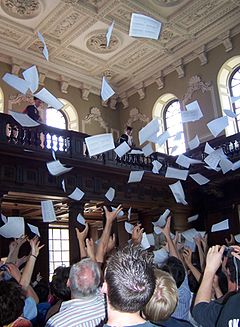 In the last two British Government Research Assessment Exercise
in 2001 and 2008 respectively, Cambridge was ranked first in the country. In 2005, it was reported that Cambridge produces more PhDs per year than any other British university (over 30% more than second placed Oxford). In 2006, a Thomson Scientific
study showed that Cambridge has the highest research paper output of any British university, and is also the top research producer (as assessed by total paper citation count) in 10 out of 21 major British research fields analysed. Another study published the same year by Evidence showed that Cambridge won a larger proportion (6.6%) of total British research grants and contracts than any other university (coming first in three out of four broad discipline fields).
The university is also closely linked with the development of the high-tech business cluster
in and around Cambridge, which forms the area known as Silicon Fen
or sometimes the "Cambridge Phenomenon". In 2004, it was reported that Silicon Fen was the second largest venture capital
market in the world, after Silicon Valley
. Estimates reported in February 2006 suggest that there were about 250 active startup companies
directly linked with the university, worth around US$6 billion.
In 2011, Cambridge was ranked sixth in the world by the Times Higher Education World University Rankings
. In 2011 it came first, for a second time, in both the QS World University Rankings
and the annual World's Best Universities by U.S. News & World Report
. In 2010, according to University Ranking by Academic Performance (URAP), it is the 2nd university in UK and 11th university in the world. In the 2009 Times Higher Education-QS World University Rankings (in 2010 Times Higher Education World University Rankings
and QS World University Rankings
parted ways to produce separate rankings), Cambridge was ranked 2nd amongst world universities, behind Harvard
. It came in first in the international academic reputation peer review, first in the natural science
s, second in biomedicine
, third in the arts & humanities
, fourth in the social sciences
, and fourth in technology. The Independent Complete University Guide ranked Cambridge 2nd to Oxford in the United Kingdom. In the 2011 Academic Ranking of World Universities
compiled by Shanghai Jiao Tong University
, Cambridge was placed 5th amongst world universities and was ranked 1st in Europe. A 2006 Newsweek
ranking which combined elements of the THES-QS and ARWU rankings with other factors that purportedly evaluated an institution's global "openness and diversity" suggested that Cambridge was ranked 6th in the world overall.
In the 2008 Sunday Times University Guide, Cambridge was ranked first for the 11th straight year since the guide's first publication in 1998. In the 2008 Times Good University Guide, Cambridge topped 37 of the guide's 61 subject tables, including Law, Medicine, Economics, Mathematics
, Engineering, Physics
, and Chemistry
and has the best record on research, entry standards and graduate destinations amongst UK universities. Cambridge was also awarded the University of the Year award.
In the 2009 The Times Good University Guide Subject Rankings, Cambridge was ranked top (or joint top) in 34 out of the 42 subjects which it offers. The overall ranking placed Cambridge in 2nd behind Oxford. The 2009 Guardian University Guide Rankings also placed Cambridge 2nd in the UK behind Oxford.
In the Guardian
newspaper's 2012 rankings, Cambridge pulled ahead of Oxford to secure 1st place in the league table. Cambridge had overtaken Oxford in philosophy, law, politics, theology, maths, classics, anthropology and modern languages in the Guardian subject rankings.
, is the oldest printer and publisher in the world, and it is the second largest university press in the world.
, and must be voted on as with any other act. A formal meeting of the Regent House, known as a Congregation
, is held for this purpose.
Graduates receiving an undergraduate degree wear the academical dress that they were entitled to before graduating: for example, most students becoming Bachelors of Arts wear undergraduate gowns and not BA gowns. Graduates receiving a postgraduate degree (e.g. PhD or Master's) wear the academical dress that they were entitled to before graduating, only if their first degree was also from the University of Cambridge; if their first degree is from another university, they wear the academical dress of the degree that they are about to receive, the BA gown without the strings if they are under 24 years of age, or the MA gown without strings if they are 24 and over.
Graduands are presented in the Senate House college by college, in order of foundation or recognition by the university (except for the royal colleges), as follows.
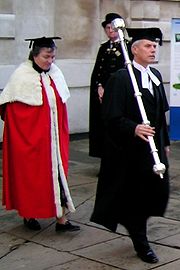 During the congregation, graduands are brought forth by the Praelector of their college, who takes them by the right hand, and presents them to the vice-chancellor for the degree they are about to take. The Praelector presents male graduands with the following Latin statement, substituting "____" with the name of the degree:
and female graduands with the following:
After presentation, the graduand is called by name and kneels before the vice-chancellor and proffers their hands to the vice-chancellor, who clasps them and then confers the degree through the following Latin statement—the Trinitarian formula (in italics) may be omitted at the request of the graduand:
The now-graduate then rises, bows and leaves the Senate House through the Doctor's door, where he or she receives his or her certificate, into Senate House passage.
is a particularly popular sport at Cambridge, and there are competitions between colleges, notably the bumps race
s, and against Oxford, the Boat Race. There are also Varsity match
es against Oxford in many other sports, ranging from cricket
and rugby
, to chess
and tiddlywinks
. Athletes representing the university in certain sports entitle them to apply for a Cambridge Blue at the discretion of the Blues Committee, consisting of the captains of the thirteen most prestigious sports. There is also the self-described "unashamedly elite" Hawks’ Club
, which is for men only, whose membership is usually restricted to Cambridge Full Blues and Half Blues.
and the comedy club Footlights
, which are known for producing well-known show-business personalities. Student newspapers include the long-established Varsity and its younger rival, The Cambridge Student
. In the last year, both have been challenged by the emergence of The Tab
, Cambridge's first student tabloid. The student-run radio station, Cam FM, provides members with an opportunity to produce and host weekly radio shows and promotes broadcast journalism, sports coverage, comedy and drama.
The Cambridge University Chamber Orchestra explores a range of programmes, from popular symphonies to lesser known works. Membership of the orchestra is composed of students of the university and it has also attracted a variety of conductors and soloists, including Wayne Marshall, Jane Glover
, and Nicholas Cleobury
. Cambridge is also home to a number of recreational outdoor societies, such as the Cambridge University Punting Society
.
s, more than any other institution according to some counts. Former undergraduates of the university have won a grand total of 61 Nobel prizes, 13 more than the undergraduates of any other university. Cambridge academics have also won 8 Fields Medal
s and 2 Abel Prize
s (since the award was first distributed in 2003).
Perhaps most of all, the university is renowned for a long and distinguished tradition in mathematics and the sciences.
Among the most famous of Cambridge natural philosophers is Sir Isaac Newton, who spent the majority of his life at the university and conducted many of his now famous experiments within the grounds of Trinity College. Sir Francis Bacon, responsible for the development of the Scientific Method
, entered the university when he was just twelve, and pioneering mathematicians John Dee
and Brook Taylor
soon followed.
Other ground-breaking mathematicians to have studied at the university include Hardy
, Littlewood
and De Morgan
, three of the most renowned pure mathematicians
in modern history; Sir Michael Atiyah, one of the most important mathematicians of the last half-century; William Oughtred
, the inventor of the logarithmic scale
; John Wallis, the inventor of modern calculus
; Srinivasa Ramanujan
, the self-taught genius who made incomparable contributions to mathematical analysis
, number theory
, infinite series and continued fractions; and, perhaps most importantly of all, James Clerk Maxwell
, who is considered to have brought about the second great unification of Physics (the first being accredited to Newton) with his classical electromagnetic theory.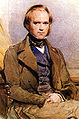 In biology, Charles Darwin
, famous for developing the theory of natural selection
, was a Cambridge man. Subsequent Cambridge biologists include Francis Crick
and James Watson
, who worked out a model for the three-dimensional structure of DNA
whilst working at the university's Cavendish Laboratory
along with leading X-ray crystallographer Maurice Wilkins
and Rosalind Franklin
. More recently, Sir Ian Wilmut
, the man who was responsible for the first cloning of a mammal with Dolly the Sheep
in 1996, was a graduate student at Darwin College. Famous naturalist and broadcaster David Attenborough
graduated from the university, while the ethologist Jane Goodall
, the world's foremost expert on chimpanzees did a PhD in Cambridge without having a first degree.
The university can be considered the birthplace of the computer, with mathematician Charles Babbage
having designed the world's first computing system as early as the mid-1800s. Alan Turing
went on to devise what is essentially the basis for modern computing and Maurice Wilkes later created the first programmable computer. The webcam
was also invented at Cambridge University, as a means for scientists to avoid interrupting their research and going all the way down to the laboratory dining room only to be disappointed by an empty coffee pot.
 Lord Rutherford
, generally regarded as the father of nuclear physics
, spent much of his life at the university, where he worked closely with the likes of Niels Bohr
, a major contributor to the understanding of the structure and function of the atom
, J. J. Thompson, discoverer of the electron
, Sir James Chadwick, discoverer of the neutron
, and Sir John Cockcroft
and Ernest Walton
, the partnership responsible for first splitting the atom. J. Robert Oppenheimer, leader of the Manhattan Project
that developed the atomic bomb, also studied at Cambridge under Rutherford and Thompson.
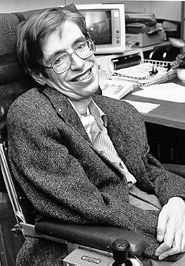
Astronomers Sir John Herschel and Sir Arthur Eddington both spent much of their careers at Cambridge, as did Paul Dirac
, the discoverer of antimatter
and one of the pioneers of Quantum Mechanics
; Stephen Hawking
, the founding father of the study of singularities
and the university's long-serving Lucasian Professor of Mathematics; and Lord Martin Rees
, the current Astronomer Royal
and Master of Trinity College.
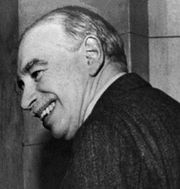 Other significant Cambridge scientists include Henry Cavendish
, the discoverer of Hydrogen
; Frank Whittle
, co-inventor of the jet engine; Lord Kelvin, who formulated the original Laws of Thermodynamics
; William Fox Talbot
, who invented the camera, Alfred North Whitehead
, Einstein's major opponent; Sir Jagadish Chandra Bose, the man dubbed "the father of radio science"; Lord Rayleigh, one of the most pre-eminent physicists of the 20th century; Georges Lemaître
, who first proposed the Big Bang
Theory; and Frederick Sanger
, the last man to win two Nobel prizes.
In the humanities, Greek studies were inaugurated at Cambridge in the early sixteenth century by Desiderius Erasmus
during the few years he held a professorship there; seminal contributions to them were made by Richard Bentley
and Richard Porson
. John Chadwick
was associated with Michael Ventris
in the decipherment of Linear B. The eminent Latinist A. E. Housman
taught at Cambridge but is more widely known as a poet. Simon Ockley
made a significant contribution to Arabic studies.
Distinguished Cambridge academics in other fields include economists such as John Maynard Keynes
, Thomas Malthus
, Alfred Marshall
, Milton Friedman
, Joan Robinson
, Piero Sraffa
, and Amartya Sen
, another former Master of Trinity College. Philosophers Sir Francis Bacon, Bertrand Russell
, Ludwig Wittgenstein
, Leo Strauss
, George Santayana
, G. E. M. Anscombe
, Sir Karl Popper
, Sir Bernard Williams
, Allama Iqbal and G. E. Moore were all Cambridge scholars, as were historians such as Thomas Babington Macaulay, Frederic William Maitland
, Lord Acton, Joseph Needham
, Dom David Knowles
, E. H. Carr, Hugh Trevor-Roper, E. P. Thompson
, Eric Hobsbawm
, Niall Ferguson
, Arthur M. Schlesinger, Jr and lawyers Glanville Williams, Sir James Fitzjames Stephen
, and Sir Edward Coke.
Religious figures at the university have included Rowan Williams
, the current Archbishop of Canterbury
and many of his predecessors; William Tyndale
, the pioneer biblical translator; Thomas Cranmer
, Hugh Latimer
, and Nicholas Ridley
, all Cambridge men, known as the "Oxford martyrs" from the place of their execution; Benjamin Whichcote
, the Cambridge Platonist; William Paley
, the Christian philosopher known primarily for formulating the teleological argument
for the existence of God; William Wilberforce
and Thomas Clarkson
, largely responsible for the abolition
of the slave trade; leading Evangelical churchman Charles Simeon
; John William Colenso
, bishop of Natal, who developed views on the interpretation of Scripture and relations with native peoples that seemed dangerously radical at the time; John Bainbridge Webster
and David F. Ford
, theologians of significant repute; and six winners of the prestigious Templeton Prize
, the highest accolade for the study of religion since its foundation in 1972.
Composers Ralph Vaughan Williams
, Sir Charles Villiers Stanford, William Sterndale Bennett
, Orlando Gibbons
and, more recently, Alexander Goehr
, Thomas Adès
and John Rutter
were all at Cambridge. The university has also produced members of contemporary bands such as Radiohead
, Hot Chip
, Procol Harum
, Henry Cow
, and the singer-songwriter Nick Drake
.
Artists Quentin Blake
, Roger Fry
and Julian Trevelyan
also attended as undergraduates, as did sculptors Antony Gormley
, Marc Quinn
and Sir Anthony Caro
, and photographers Antony Armstrong-Jones, Sir Cecil Beaton
and Mick Rock
.
Acclaimed writers such as E. M. Forster
, Samuel Pepys
, Charles Kingsley
, C. S. Lewis
, Christopher Marlowe
, Vladmir Nabokov, Christopher Isherwood
, Samuel Butler
, W. M. Thackeray, Lawrence Sterne, Eudora Welty
, Sir Kingsley Amis, C. P. Snow
, J. G. Ballard
, Malcolm Lowry
, E. R. Braithwaite
, Iris Murdoch
, J. B. Priestley
, Patrick White
, M. R. James
and A. A. Milne
were all at Cambridge.
More recently A. S. Byatt
, Margaret Drabble, Douglas Adams
, Sir Salman Rushdie, Nick Hornby
, Zadie Smith
, Howard Jacobson
, Robert Harris
, Jin Yong, Michael Crichton
, Sebastian Faulks
, Julian Fellowes
, Stephen Poliakoff
, Michael Frayn
, Alan Bennett
and Sir Peter Shaffer
were all at the university.
Poets A. E. Housman
, Robert Herrick
, William Wordsworth
, John Donne
, Alfred Tennyson, Lord Byron, Rupert Brooke
, John Dryden
, Siegfried Sassoon
, Ted Hughes
, Sylvia Plath
, John Milton
, George Herbert
, Samuel Taylor Coleridge
, Thomas Gray
, Edmund Spenser
, Cecil Day-Lewis
and Sir Muhammad Iqbal
are all associated with Cambridge, as are renowned literary critics F. R. Leavis
, Sir William Empson, Lytton Strachey
, I. A. Richards
, Raymond Williams
, Harold Bloom
, Terry Eagleton
, Stephen Greenblatt
and Peter Ackroyd
. Furthermore, at least nine of the Poet Laureate
s graduated from Cambridge.
Actors and directors such as Sir Ian McKellen
, Sir Derek Jacobi
, Sir Michael Redgrave
, James Mason
, Emma Thompson
, Stephen Fry
, Hugh Laurie
, John Cleese
, Eric Idle
, Graham Chapman
, Simon Russell Beale
, Tilda Swinton
, Thandie Newton
, Rachel Weisz
, Sacha Baron Cohen
, Eddie Redmayne
and David Mitchell
all studied at the university, as did recently acclaimed directors such as Mike Newell
, Sam Mendes
, Stephen Frears
, Paul Greengrass
and John Madden
.
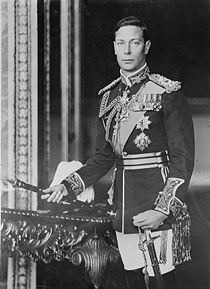 The University is also known for its prodigious sporting reputation and has produced many fine athletes, including more than 50 Olympic medalists (6 in 2008 alone); the legendary Chinese six-time world table tennis champion Deng Yaping
; the sprinter and athletics hero Harold Abrahams
; the inventors of the modern game of Football, Winton and Thring
; and George Mallory
, the famed mountaineer and possibly the first man ever to reach the summit of Mount Everest
.
Notable educationalists to have attended the university include the founders and early professors of Harvard University
, including John Harvard
himself; Emily Davies
, founder of Girton College, the first residential higher education institution for women, and John Haden Badley
, founder of the first mixed-sex school in England.
Cambridge also has a strong reputation in the fields of politics and governance, having educated:


Public university
A public university is a university that is predominantly funded by public means through a national or subnational government, as opposed to private universities. A national university may or may not be considered a public university, depending on regions...
research university located in Cambridge
Cambridge
The city of Cambridge is a university town and the administrative centre of the county of Cambridgeshire, England. It lies in East Anglia about north of London. Cambridge is at the heart of the high-technology centre known as Silicon Fen – a play on Silicon Valley and the fens surrounding the...
, United Kingdom
United Kingdom
The United Kingdom of Great Britain and Northern IrelandIn the United Kingdom and Dependencies, other languages have been officially recognised as legitimate autochthonous languages under the European Charter for Regional or Minority Languages...
. It is the second-oldest university in both the United Kingdom and the English-speaking world (after the University of Oxford
University of Oxford
The University of Oxford is a university located in Oxford, United Kingdom. It is the second-oldest surviving university in the world and the oldest in the English-speaking world. Although its exact date of foundation is unclear, there is evidence of teaching as far back as 1096...
), and the seventh-oldest globally. In post-nominals
Post-nominal letters
Post-nominal letters, also called post-nominal initials, post-nominal titles or designatory letters, are letters placed after the name of a person to indicate that the individual holds a position, educational degree, accreditation, office, or honour. An individual may use several different sets of...
the university's name is abbreviated as Cantab, a shortened form of Cantabrigiensis (an adjective derived from Cantabrigia, the Latinised
Latinisation (literature)
Latinisation is the practice of rendering a non-Latin name in a Latin style. It is commonly met with for historical personal names, with toponyms, or for the standard binomial nomenclature of the life sciences. It goes further than Romanisation, which is the writing of a word in the Latin alphabet...
form of Cambridge).
The university grew out of an association of scholars in the city of Cambridge that was formed in 1209, early records suggest, by scholars leaving Oxford
University of Oxford
The University of Oxford is a university located in Oxford, United Kingdom. It is the second-oldest surviving university in the world and the oldest in the English-speaking world. Although its exact date of foundation is unclear, there is evidence of teaching as far back as 1096...
after a dispute with townsfolk. The two "ancient universities" have many common features and are often jointly referred to as Oxbridge
Oxbridge
Oxbridge is a portmanteau of the University of Oxford and the University of Cambridge in England, and the term is now used to refer to them collectively, often with implications of perceived superior social status...
. In addition to cultural and practical associations as a historic part of British society, they have a long history of rivalry
Oxbridge rivalry
Rivalry between the Universities of Oxford and Cambridge is a phenomenon going back many centuries. During most of that time, the two were the only universities in England and Wales, making the rivalry more intense than it is now....
with each other.
Academically Cambridge ranks as one of the top universities in the world: first in the world in both the 2010 and 2011 QS World University Rankings
QS World University Rankings
The QS World University Rankings is a ranking of the world’s top 500 universities by Quacquarelli Symonds using a method that has published annually since 2004....
, sixth in the world in the 2011 Times Higher Education World University Rankings
Times Higher Education World University Rankings
The Times Higher Education World University Rankings is an international ranking of universities published by the British magazine Times Higher Education in partnership with Thomson Reuters, which provided citation database information...
, and fifth in the world (and first in Europe) in the 2011 Academic Ranking of World Universities
Academic Ranking of World Universities
The Academic Ranking of World Universities , commonly known as the Shanghai ranking, is a publication that was founded and compiled by the Shanghai Jiaotong University to rank universities globally. The rankings have been conducted since 2003 and updated annually...
. Cambridge regularly contends with Oxford for first place in UK league tables
League tables of British universities
Rankings of universities in the United Kingdom are published annually by The Guardian, The Independent, The Sunday Times and The Times...
. In the most recently published ranking of UK universities, published by The Guardian
The Guardian
The Guardian, formerly known as The Manchester Guardian , is a British national daily newspaper in the Berliner format...
newspaper, Cambridge was ranked first.
Graduates of the University have won a total of 61 Nobel Prizes, the most of any university in the world. In 2009, the marketing consultancy World Brand Lab rated Cambridge University as the 50th most influential brand in the world, and the 4th most influential university brand, behind only Harvard
Harvard University
Harvard University is a private Ivy League university located in Cambridge, Massachusetts, United States, established in 1636 by the Massachusetts legislature. Harvard is the oldest institution of higher learning in the United States and the first corporation chartered in the country...
, MIT
Massachusetts Institute of Technology
The Massachusetts Institute of Technology is a private research university located in Cambridge, Massachusetts. MIT has five schools and one college, containing a total of 32 academic departments, with a strong emphasis on scientific and technological education and research.Founded in 1861 in...
and Stanford University
Stanford University
The Leland Stanford Junior University, commonly referred to as Stanford University or Stanford, is a private research university on an campus located near Palo Alto, California. It is situated in the northwestern Santa Clara Valley on the San Francisco Peninsula, approximately northwest of San...
, while in 2011, Cambridge ranked third, after Harvard and MIT, in The Times Higher Education World Reputation Rankings, which reflect the reputation of universities for educational and research excellence based on a survey of academics worldwide.
Cambridge is a member of the Coimbra Group
Coimbra Group
The Coimbra Group is a network of 40 European universities, some among the oldest and most prestigious in Europe. It was founded in 1985 and formally constituted by charter in 1987....
, the G5
G5 (education)
The G5 is an informal grouping of five British universities first identified by Times Higher Education in 2004. According to Times Higher Education, the five members are the University of Cambridge, Imperial College London, the London School of Economics, the University of Oxford and University...
, the International Alliance of Research Universities
International Alliance of Research Universities
The International Alliance of Research Universities was launched on 14 January 2006 as a co-operative network of 10 leading, international research-intensive universities who share similar visions for higher education, in particular the education of future leaders...
, the League of European Research Universities
League of European Research Universities
The League of European Research Universities is a consortium of Europe's most prominent and renowned research universities.-History and Overview:...
and the Russell Group
Russell Group
The Russell Group is a collaboration of twenty UK universities that together receive two-thirds of research grant and contract funding in the United Kingdom. It was established in 1994 to represent their interests to the government, parliament and other similar bodies...
of research-led British universities
British universities
Universities in the United Kingdom have generally been instituted by Royal Charter, Papal Bull, Act of Parliament or an instrument of government under the Education Reform Act 1988; in any case generally with the approval of the Privy Council, and only such recognised bodies can award degrees of...
. It forms part of the 'Golden Triangle'
Golden Triangle (UK universities)
The "Golden Triangle" is a term used to describe a number of leading British research universities based in Cambridge, London and Oxford.The city of Cambridge, represented by the University of Cambridge, and the city of Oxford, represented by the University of Oxford, form two corners of the triangle...
of British universities.
History
Cambridge's status was enhanced by a charter in 1231 from King Henry III of EnglandHenry III of England
Henry III was the son and successor of John as King of England, reigning for 56 years from 1216 until his death. His contemporaries knew him as Henry of Winchester. He was the first child king in England since the reign of Æthelred the Unready...
which awarded the ius non trahi extra (a right to discipline its own members) plus some exemption from taxes, and a bull
Papal bull
A Papal bull is a particular type of letters patent or charter issued by a Pope of the Catholic Church. It is named after the bulla that was appended to the end in order to authenticate it....
in 1233 from Pope Gregory IX
Pope Gregory IX
Pope Gregory IX, born Ugolino di Conti, was pope from March 19, 1227 to August 22, 1241.The successor of Pope Honorius III , he fully inherited the traditions of Pope Gregory VII and of his uncle Pope Innocent III , and zealously continued their policy of Papal supremacy.-Early life:Ugolino was...
that gave graduates from Cambridge the right to teach everywhere in Christendom.
After Cambridge was described as a studium generale
Studium Generale
Studium generale is the old customary name for a Medieval university.- Definition :There is no clear official definition of what constituted a Studium generale...
in a letter by Pope Nicholas IV
Pope Nicholas IV
Pope Nicholas IV , born Girolamo Masci, was Pope from February 22, 1288 to April 4, 1292. A Franciscan friar, he had been legate to the Greeks under Pope Gregory X in 1272, succeeded Bonaventure as Minister General of his religious order in 1274, was made Cardinal Priest of Santa Prassede and...
in 1290, and confirmed as such in a bull by Pope John XXII
Pope John XXII
Pope John XXII , born Jacques Duèze , was pope from 1316 to 1334. He was the second Pope of the Avignon Papacy , elected by a conclave in Lyon assembled by Philip V of France...
in 1318, it became common for researchers from other European medieval universities to come and visit Cambridge to study or to give lecture
Lecture
thumb|A lecture on [[linear algebra]] at the [[Helsinki University of Technology]]A lecture is an oral presentation intended to present information or teach people about a particular subject, for example by a university or college teacher. Lectures are used to convey critical information, history,...
courses.
Foundation of the colleges
Cambridge's colleges were originally an incidental feature of the system. No college is as old as the university itself. The colleges were endowed fellowships of scholars. There were also institutions without endowments, called hostels. The hostels were gradually absorbed by the colleges over the centuries, but they have left some indicators of their time, such as the name of Garret Hostel Lane.Hugh Balsham, Bishop of Ely
Bishop of Ely
The Bishop of Ely is the Ordinary of the Church of England Diocese of Ely in the Province of Canterbury. The diocese roughly covers the county of Cambridgeshire , together with a section of north-west Norfolk and has its see in the City of Ely, Cambridgeshire, where the seat is located at the...
, founded Peterhouse
Peterhouse, Cambridge
Peterhouse is a constituent college of the University of Cambridge, England. It is the oldest college of the University, having been founded in 1284 by Hugo de Balsham, Bishop of Ely...
in 1284, Cambridge's first college. Many colleges were founded during the fourteenth and fifteenth centuries, but colleges continued to be established throughout the centuries to modern times, although there was a gap of 204 years between the founding of Sidney Sussex
Sidney Sussex College, Cambridge
Sidney Sussex College is a constituent college of the University of Cambridge in England.The college was founded in 1596 and named after its foundress, Frances Sidney, Countess of Sussex. It was from its inception an avowedly Puritan foundation: some good and godlie moniment for the mainteynance...
in 1596 and Downing
Downing College, Cambridge
Downing College is a constituent college of the University of Cambridge. The college was founded in 1800 and currently has around 650 students.- History :...
in 1800. The most recently established college is Robinson
Robinson College, Cambridge
Robinson College is a constituent college of the University of Cambridge.Robinson is the newest of the Cambridge colleges, and is unique in being the only one to have been intended, from its inception, for both undergraduate and graduate students of either sex.- History :The college was founded...
, built in the late 1970s. However, Homerton College
Homerton College, Cambridge
Homerton College is a constituent college of the University of Cambridge in England.With around 1,200 students, Homerton has more students than any other Cambridge college, although less than half of these live in the college. The college has a long and complex history dating back to the...
only achieved full university college status in March 2010, making it the newest full college (it was previously an "Approved Society" affiliated with the university).
In medieval times, many colleges were founded so that their members would pray
Prayer
Prayer is a form of religious practice that seeks to activate a volitional rapport to a deity through deliberate practice. Prayer may be either individual or communal and take place in public or in private. It may involve the use of words or song. When language is used, prayer may take the form of...
for the soul
Soul
A soul in certain spiritual, philosophical, and psychological traditions is the incorporeal essence of a person or living thing or object. Many philosophical and spiritual systems teach that humans have souls, and others teach that all living things and even inanimate objects have souls. The...
s of the founders, and were often associated with chapels or abbey
Abbey
An abbey is a Catholic monastery or convent, under the authority of an Abbot or an Abbess, who serves as the spiritual father or mother of the community.The term can also refer to an establishment which has long ceased to function as an abbey,...
s. A change in the colleges’ focus occurred in 1536 with the Dissolution of the Monasteries
Dissolution of the Monasteries
The Dissolution of the Monasteries, sometimes referred to as the Suppression of the Monasteries, was the set of administrative and legal processes between 1536 and 1541 by which Henry VIII disbanded monasteries, priories, convents and friaries in England, Wales and Ireland; appropriated their...
. King Henry VIII
Henry VIII of England
Henry VIII was King of England from 21 April 1509 until his death. He was Lord, and later King, of Ireland, as well as continuing the nominal claim by the English monarchs to the Kingdom of France...
ordered the university to disband its Faculty of Canon Law and to stop teaching "scholastic philosophy". In response, colleges changed their curricula away from canon law and towards the classics
Classics
Classics is the branch of the Humanities comprising the languages, literature, philosophy, history, art, archaeology and other culture of the ancient Mediterranean world ; especially Ancient Greece and Ancient Rome during Classical Antiquity Classics (sometimes encompassing Classical Studies or...
, the Bible, and mathematics
Mathematics
Mathematics is the study of quantity, space, structure, and change. Mathematicians seek out patterns and formulate new conjectures. Mathematicians resolve the truth or falsity of conjectures by mathematical proofs, which are arguments sufficient to convince other mathematicians of their validity...
.
As Cambridge moved away from Canon Law so too did it move away from Catholicism. As early as the 1520s, the continental rumblings of Lutheranism
Lutheranism
Lutheranism is a major branch of Western Christianity that identifies with the theology of Martin Luther, a German reformer. Luther's efforts to reform the theology and practice of the church launched the Protestant Reformation...
and what was to become more broadly known as the Protestant Reformation
Protestant Reformation
The Protestant Reformation was a 16th-century split within Western Christianity initiated by Martin Luther, John Calvin and other early Protestants. The efforts of the self-described "reformers", who objected to the doctrines, rituals and ecclesiastical structure of the Roman Catholic Church, led...
were making their presence felt in the intellectual discourse of the university. Among the intellectuals involved was the theologically influential Thomas Cranmer
Thomas Cranmer
Thomas Cranmer was a leader of the English Reformation and Archbishop of Canterbury during the reigns of Henry VIII, Edward VI and, for a short time, Mary I. He helped build a favourable case for Henry's divorce from Catherine of Aragon which resulted in the separation of the English Church from...
, later to become Archbishop of Canterbury
Archbishop of Canterbury
The Archbishop of Canterbury is the senior bishop and principal leader of the Church of England, the symbolic head of the worldwide Anglican Communion, and the diocesan bishop of the Diocese of Canterbury. In his role as head of the Anglican Communion, the archbishop leads the third largest group...
. As it became convenient to Henry VIII in the 1530s, the King looked to Cranmer and others (within and without Cambridge) to craft a new religious path that was different from Catholicism yet also different from what Martin Luther had in mind.
Nearly a century later, the university was at the centre of another Christian schism. Many nobles, intellectuals and even common folk saw the ways of the Church of England
Church of England
The Church of England is the officially established Christian church in England and the Mother Church of the worldwide Anglican Communion. The church considers itself within the tradition of Western Christianity and dates its formal establishment principally to the mission to England by St...
as being all too similar to the Catholic Church and moreover that it was used by the crown to usurp the rightful powers of the counties. East Anglia
East Anglia
East Anglia is a traditional name for a region of eastern England, named after an ancient Anglo-Saxon kingdom, the Kingdom of the East Angles. The Angles took their name from their homeland Angeln, in northern Germany. East Anglia initially consisted of Norfolk and Suffolk, but upon the marriage of...
was the centre of what became the Puritan
Puritan
The Puritans were a significant grouping of English Protestants in the 16th and 17th centuries. Puritanism in this sense was founded by some Marian exiles from the clergy shortly after the accession of Elizabeth I of England in 1558, as an activist movement within the Church of England...
movement and at Cambridge, it was particularly strong at Emmanuel, St Catharine's Hall, Sidney Sussex and Christ's College. They produced many "non-conformist" graduates who greatly influenced, by social position or pulpit, the approximately 20,000 Puritans who left for New England and especially the Massachusetts Bay Colony
Massachusetts Bay Colony
The Massachusetts Bay Colony was an English settlement on the east coast of North America in the 17th century, in New England, situated around the present-day cities of Salem and Boston. The territory administered by the colony included much of present-day central New England, including portions...
during the Great Migration
Great Migration (Puritan)
The Puritan migration to New England was marked in its effects in the two decades from 1620 to 1640, after which it declined sharply for a while. The term Great Migration usually refers to the migration in this period of English settlers, primarily Puritans to Massachusetts and the warm islands of...
decade of the 1630s. Oliver Cromwell
Oliver Cromwell
Oliver Cromwell was an English military and political leader who overthrew the English monarchy and temporarily turned England into a republican Commonwealth, and served as Lord Protector of England, Scotland, and Ireland....
, Parliamentary commander during the English Civil War and head of the English Commonwealth (1649–1660), attended Sidney Sussex.
Mathematics
From the time of Isaac NewtonIsaac Newton
Sir Isaac Newton PRS was an English physicist, mathematician, astronomer, natural philosopher, alchemist, and theologian, who has been "considered by many to be the greatest and most influential scientist who ever lived."...
in the later 17th century until the mid-19th century, the university maintained a strong emphasis on applied mathematics
Applied mathematics
Applied mathematics is a branch of mathematics that concerns itself with mathematical methods that are typically used in science, engineering, business, and industry. Thus, "applied mathematics" is a mathematical science with specialized knowledge...
, particularly mathematical physics. Study of this subject was compulsory for graduation, and students were required to take an exam for the Bachelor of Arts degree, the main first degree at Cambridge in both arts and science subjects. This exam is known as a Tripos
Tripos
The University of Cambridge, England, divides the different kinds of honours bachelor's degree by Tripos , plural Triposes. The word has an obscure etymology, but may be traced to the three-legged stool candidates once used to sit on when taking oral examinations...
. Students awarded first-class honours
British undergraduate degree classification
The British undergraduate degree classification system is a grading scheme for undergraduate degrees in the United Kingdom...
after completing the mathematics Tripos were named wranglers. The Cambridge Mathematical Tripos
Cambridge Mathematical Tripos
The Mathematical Tripos is the taught mathematics course at the University of Cambridge. It is the oldest Tripos that is examined in Cambridge.-Origin:...
was competitive and helped produce some of the most famous names in British science, including James Clerk Maxwell
James Clerk Maxwell
James Clerk Maxwell of Glenlair was a Scottish physicist and mathematician. His most prominent achievement was formulating classical electromagnetic theory. This united all previously unrelated observations, experiments and equations of electricity, magnetism and optics into a consistent theory...
, Lord Kelvin
William Thomson, 1st Baron Kelvin
William Thomson, 1st Baron Kelvin OM, GCVO, PC, PRS, PRSE, was a mathematical physicist and engineer. At the University of Glasgow he did important work in the mathematical analysis of electricity and formulation of the first and second laws of thermodynamics, and did much to unify the emerging...
, and Lord Rayleigh
John Strutt, 3rd Baron Rayleigh
John William Strutt, 3rd Baron Rayleigh, OM was an English physicist who, with William Ramsay, discovered the element argon, an achievement for which he earned the Nobel Prize for Physics in 1904...
. However, some famous students, such as G. H. Hardy
G. H. Hardy
Godfrey Harold “G. H.” Hardy FRS was a prominent English mathematician, known for his achievements in number theory and mathematical analysis....
, disliked the system, feeling that people were too interested in accumulating marks in exams and not interested in the subject itself.
Pure mathematics at Cambridge in the 19th century had great achievements but also missed out on substantial developments in French and German mathematics. Pure mathematical research at Cambridge finally reached the highest international standard in the early 20th century, thanks above all to G. H. Hardy
G. H. Hardy
Godfrey Harold “G. H.” Hardy FRS was a prominent English mathematician, known for his achievements in number theory and mathematical analysis....
and his collaborator, J. E. Littlewood. In geometry, W. V. D. Hodge
W. V. D. Hodge
William Vallance Douglas Hodge FRS was a Scottish mathematician, specifically a geometer.His discovery of far-reaching topological relations between algebraic geometry and differential geometry—an area now called Hodge theory and pertaining more generally to Kähler manifolds—has been a major...
brought Cambridge into the international mainstream in the 1930s.
Although diversified in its research and teaching interests, Cambridge today maintains its strength in mathematics. Cambridge alumni have won six Fields Medal
Fields Medal
The Fields Medal, officially known as International Medal for Outstanding Discoveries in Mathematics, is a prize awarded to two, three, or four mathematicians not over 40 years of age at each International Congress of the International Mathematical Union , a meeting that takes place every four...
s and one Abel Prize
Abel Prize
The Abel Prize is an international prize presented annually by the King of Norway to one or more outstanding mathematicians. The prize is named after Norwegian mathematician Niels Henrik Abel . It has often been described as the "mathematician's Nobel prize" and is among the most prestigious...
for mathematics, while individuals representing Cambridge have won four Fields Medals. The University also runs a special
Master of Advanced Study course in mathematics.
Contributions to the advancement of science
Many of the most important scientific discoveries and revolutions were made by Cambridge alumni. These include:- Understanding the scientific methodScientific methodScientific method refers to a body of techniques for investigating phenomena, acquiring new knowledge, or correcting and integrating previous knowledge. To be termed scientific, a method of inquiry must be based on gathering empirical and measurable evidence subject to specific principles of...
, by Francis BaconFrancis BaconFrancis Bacon, 1st Viscount St Albans, KC was an English philosopher, statesman, scientist, lawyer, jurist, author and pioneer of the scientific method. He served both as Attorney General and Lord Chancellor of England... - The laws of motionNewton's laws of motionNewton's laws of motion are three physical laws that form the basis for classical mechanics. They describe the relationship between the forces acting on a body and its motion due to those forces...
and the development of calculusCalculusCalculus is a branch of mathematics focused on limits, functions, derivatives, integrals, and infinite series. This subject constitutes a major part of modern mathematics education. It has two major branches, differential calculus and integral calculus, which are related by the fundamental theorem...
, by Sir Isaac Newton - The development of thermodynamics, by Lord Kelvin
- The discovery of the electron, by J. J. ThomsonJ. J. ThomsonSir Joseph John "J. J." Thomson, OM, FRS was a British physicist and Nobel laureate. He is credited for the discovery of the electron and of isotopes, and the invention of the mass spectrometer...
- The splitting of the atomAtomic nucleusThe nucleus is the very dense region consisting of protons and neutrons at the center of an atom. It was discovered in 1911, as a result of Ernest Rutherford's interpretation of the famous 1909 Rutherford experiment performed by Hans Geiger and Ernest Marsden, under the direction of Rutherford. The...
, by Ernest RutherfordErnest RutherfordErnest Rutherford, 1st Baron Rutherford of Nelson OM, FRS was a New Zealand-born British chemist and physicist who became known as the father of nuclear physics...
and of the nucleus by Sir John Cockcroft and Ernest WaltonErnest WaltonErnest Thomas Sinton Walton was an Irish physicist and Nobel laureate for his work with John Cockcroft with "atom-smashing" experiments done at Cambridge University in the early 1930s, and so became the first person in history to artificially split the atom, thus ushering the nuclear age... - The unification of electromagnetism, by James Clerk MaxwellJames Clerk MaxwellJames Clerk Maxwell of Glenlair was a Scottish physicist and mathematician. His most prominent achievement was formulating classical electromagnetic theory. This united all previously unrelated observations, experiments and equations of electricity, magnetism and optics into a consistent theory...
- The discovery of hydrogen, by Henry CavendishHenry CavendishHenry Cavendish FRS was a British scientist noted for his discovery of hydrogen or what he called "inflammable air". He described the density of inflammable air, which formed water on combustion, in a 1766 paper "On Factitious Airs". Antoine Lavoisier later reproduced Cavendish's experiment and...
- Theory of Evolution by natural selection, by Charles DarwinCharles DarwinCharles Robert Darwin FRS was an English naturalist. He established that all species of life have descended over time from common ancestry, and proposed the scientific theory that this branching pattern of evolution resulted from a process that he called natural selection.He published his theory...
- Mathematical synthesis of Darwinian selection with Mendelian genetics, by Ronald FisherRonald FisherSir Ronald Aylmer Fisher FRS was an English statistician, evolutionary biologist, eugenicist and geneticist. Among other things, Fisher is well known for his contributions to statistics by creating Fisher's exact test and Fisher's equation...
- The Turing machineTuring machineA Turing machine is a theoretical device that manipulates symbols on a strip of tape according to a table of rules. Despite its simplicity, a Turing machine can be adapted to simulate the logic of any computer algorithm, and is particularly useful in explaining the functions of a CPU inside a...
, a basic model for computationTheory of computationIn theoretical computer science, the theory of computation is the branch that deals with whether and how efficiently problems can be solved on a model of computation, using an algorithm...
, by Alan TuringAlan TuringAlan Mathison Turing, OBE, FRS , was an English mathematician, logician, cryptanalyst, and computer scientist. He was highly influential in the development of computer science, providing a formalisation of the concepts of "algorithm" and "computation" with the Turing machine, which played a... - The structure of DNADNADeoxyribonucleic acid is a nucleic acid that contains the genetic instructions used in the development and functioning of all known living organisms . The DNA segments that carry this genetic information are called genes, but other DNA sequences have structural purposes, or are involved in...
, by Rosalind FranklinRosalind FranklinRosalind Elsie Franklin was a British biophysicist and X-ray crystallographer who made critical contributions to the understanding of the fine molecular structures of DNA, RNA, viruses, coal and graphite...
, Francis CrickFrancis CrickFrancis Harry Compton Crick OM FRS was an English molecular biologist, biophysicist, and neuroscientist, and most noted for being one of two co-discoverers of the structure of the DNA molecule in 1953, together with James D. Watson...
, James D. WatsonJames D. WatsonJames Dewey Watson is an American molecular biologist, geneticist, and zoologist, best known as one of the co-discoverers of the structure of DNA in 1953 with Francis Crick...
and Maurice WilkinsMaurice WilkinsMaurice Hugh Frederick Wilkins CBE FRS was a New Zealand-born English physicist and molecular biologist, and Nobel Laureate whose research contributed to the scientific understanding of phosphorescence, isotope separation, optical microscopy and X-ray diffraction, and to the development of radar...
, the later three awarded the Nobel Prize.(Rosalind Franklin didn't receive the Nobel Prize as it was not given posthumously) - Pioneering quantum mechanicsQuantum mechanicsQuantum mechanics, also known as quantum physics or quantum theory, is a branch of physics providing a mathematical description of much of the dual particle-like and wave-like behavior and interactions of energy and matter. It departs from classical mechanics primarily at the atomic and subatomic...
, by Paul DiracPaul DiracPaul Adrien Maurice Dirac, OM, FRS was an English theoretical physicist who made fundamental contributions to the early development of both quantum mechanics and quantum electrodynamics...
Women's education
Initially, only male students were enrolled into the university. The first colleges for women were Girton CollegeGirton College, Cambridge
Girton College is one of the 31 constituent colleges of the University of Cambridge. It was England's first residential women's college, established in 1869 by Emily Davies and Barbara Bodichon. The full college status was only received in 1948 and marked the official admittance of women to the...
(founded by Emily Davies
Emily Davies
Sarah Emily Davies was an English feminist, suffragist and a pioneering campaigners fore women's rights to university access. She was born in Southampton, England to an evangelical clergyman and a teacher in 1830, although she spent most of her youth in Gateshead...
) in 1869 and Newnham College
Newnham College, Cambridge
Newnham College is a women-only constituent college of the University of Cambridge, England.The college was founded in 1871 by Henry Sidgwick, and was the second Cambridge college to admit women after Girton College...
in 1872 (founded by Anne Clough
Anne Clough
Anne Jemima Clough was an early English suffragist and a promoter of higher education for women.Clough was born at Liverpool, the daughter of a cotton merchant. She was the sister of Arthur Hugh Clough, the poet and assistant to Florence Nightingale. When two years old she was taken with the rest...
and Henry Sidgwick
Henry Sidgwick
Henry Sidgwick was an English utilitarian philosopher and economist. He was one of the founders and first president of the Society for Psychical Research, a member of the Metaphysical Society, and promoted the higher education of women...
), followed by Hughes Hall
Hughes Hall, Cambridge
Hughes Hall, is a constituent college of the University of Cambridge in Cambridge, England. It is often informally called Hughes, and is the oldest of the four Cambridge colleges which admit only mature students...
in 1885 (founded by Elizabeth Phillips Hughes
Elizabeth Phillips Hughes
Elizabeth Phillips Hughes was a Welsh scholar, teacher, and promoter of women's education. She used the bardic name Merch Myrddin....
as the Cambridge Teaching College for Women), New Hall (later renamed Murray Edwards College) in 1954, and Lucy Cavendish College
Lucy Cavendish College, Cambridge
Lucy Cavendish College is a constituent college of the University of Cambridge. It is a women-only college, which admits only postgraduates and undergraduates aged 21 or over....
. The first women students were examined in 1882 but attempts to make women full members of the university did not succeed until 1947. Women were allowed to study courses, sit examinations, and have their results recorded from 1881; for a brief period after the turn of the twentieth century, this allowed the "steamboat ladies
Steamboat ladies
Steamboat ladies was the name given to those female students at the women's colleges of the universities of Oxford and Cambridge who between the years 1904 and 1907 were conferred with ad eundem University of Dublin degrees at Trinity College, Dublin, at a time when their own universities refused...
" to receive ad eundem degrees from the University of Dublin
University of Dublin
The University of Dublin , corporately designated the Chancellor, Doctors and Masters of the University of Dublin , located in Dublin, Ireland, was effectively founded when in 1592 Queen Elizabeth I issued a charter for Trinity College, Dublin, as "the mother of a university" – this date making it...
.
From 1921 women were awarded diplomas which "conferred the Title of the Degree of Bachelor of Arts". As they were not "admitted to the Degree of Bachelor of Arts" they were excluded from the governing of the university. Since students must belong to a college, and since established colleges remained closed to women, women found admissions restricted to colleges established only for women. Starting with Churchill College, all of the men's colleges began to admit women between 1972 and 1988. One women's college, Girton, also began to admit male students from 1979, but the other women's colleges did not follow suit. As a result of St Hilda's College, Oxford
St Hilda's College, Oxford
St Hilda's College is one of the constituent colleges of the University of Oxford in England.The college was founded in 1893 as a hall for women, and remained an all-women's college until 2006....
, ending its ban on male students in 2008, Cambridge is now the only remaining United Kingdom University with colleges which refuse to admit males, with three such institutions (Newnham, Murray Edwards and Lucy Cavendish). In the academic year 2004–5, the university's student gender ratio, including post-graduates, was male 52%: female 48%.
Myths, legends and traditions
As an institution with such a long history, the University has developed a large number of myths and legends. The vast majority of these are untrue, but have been propagated nonetheless by generations of students and tour guides.A discontinued tradition is that of the wooden spoon
Wooden spoon (award)
A wooden spoon is a mock or real award, usually given to an individual or team which has come last in a competition, but sometimes also to runners-up. Examples range from the academic to sporting and more frivolous events...
, the ‘prize’ awarded to the student with the lowest passing grade in the final examinations of the Mathematical Tripos. The last of these spoons was awarded in 1909 to Cuthbert Lempriere Holthouse, an oarsman of the Lady Margaret Boat Club of St John's College
St John's College, Cambridge
St John's College is a constituent college of the University of Cambridge. The college's alumni include nine Nobel Prize winners, six Prime Ministers, three archbishops, at least two princes, and three Saints....
. It was over one metre in length and had an oar blade for a handle. It can now be seen outside the Senior Combination Room of St John's. Since 1909, results were published alphabetically within class rather than score order. This made it harder to ascertain who the winner of the spoon was (unless there was only one person in the third class), and so the practice was abandoned.
Each Christmas Eve, BBC radio and television broadcasts The Festival of Nine Lessons and Carols
Nine Lessons and Carols
The Festival of Nine Lessons and Carols is a format for a service of Christian worship celebrating the birth of Jesus that is traditionally followed at Christmas...
by the Choir of King's College, Cambridge
Choir of King's College, Cambridge
The Choir of King's College, Cambridge is one of today's most accomplished and renowned representatives of the great British choral tradition. It was created by King Henry VI, who founded King's College, Cambridge in 1441, to provide daily singing in his Chapel, which remains the main task of the...
. The radio broadcast has been a national Christmas tradition since it was first transmitted in 1928 (though the festival has existed since 1918). The radio broadcast is carried worldwide by the BBC World Service
BBC World Service
The BBC World Service is the world's largest international broadcaster, broadcasting in 27 languages to many parts of the world via analogue and digital shortwave, internet streaming and podcasting, satellite, FM and MW relays...
and is also syndicated to hundreds of radio stations in the USA. The first television broadcast of the festival was in 1954.
Organisation
Collegiate university
A collegiate university is a university in which governing authority and functions are divided between a central administration and a number of constituent colleges...
, meaning that it is made up of self-governing and independent colleges, each with its own property and income. Most colleges bring together academics and students from a broad range of disciplines, and within each faculty, school or department within the university, academics from many different colleges will be found.
The faculties are responsible for ensuring that lectures are given, arranging seminars, performing research and determining the syllabi for teaching, overseen by the General Board. Together with the central administration headed by the Vice-Chancellor, they make up the entire Cambridge University. Facilities such as libraries are provided on all these levels: by the University (the Cambridge University Library
Cambridge University Library
The Cambridge University Library is the centrally-administered library of Cambridge University in England. It comprises five separate libraries:* the University Library main building * the Medical Library...
), by the Faculties (Faculty libraries such as the Squire Law Library), and by the individual colleges (all of which maintain a multi-discipline library, generally aimed mainly at their undergraduates).
Colleges
The colleges are self-governing institutions with their own endowments and property, founded as integral parts of the university. All students and most academics are attached to a college. Their importance lies in the housing, welfare, social functions, and undergraduate teaching they provide. All faculties, departments, research centres, and laboratories belong to the university, which arranges lectures and awards degrees, but undergraduates receive their supervisions—small-group teaching sessions, often with just one student—within the colleges. Each college appoints its own teaching staff and fellowFellow
A fellow in the broadest sense is someone who is an equal or a comrade. The term fellow is also used to describe a person, particularly by those in the upper social classes. It is most often used in an academic context: a fellow is often part of an elite group of learned people who are awarded...
s, who are also members of a university department. The colleges also decide which undergraduates to admit to the university, in accordance with university regulations.
Cambridge has 31 colleges, of which three, Murray Edwards, Newnham
Newnham College, Cambridge
Newnham College is a women-only constituent college of the University of Cambridge, England.The college was founded in 1871 by Henry Sidgwick, and was the second Cambridge college to admit women after Girton College...
and Lucy Cavendish
Lucy Cavendish College, Cambridge
Lucy Cavendish College is a constituent college of the University of Cambridge. It is a women-only college, which admits only postgraduates and undergraduates aged 21 or over....
, admit women only. The other colleges are mixed, though most were originally all-male. Darwin
Darwin College, Cambridge
Darwin College is a constituent college of the University of Cambridge.Founded in 1964, Darwin was Cambridge University's first graduate-only college, and also the first to admit both men and women. The college is named after the family of one of the university's most famous graduates, Charles Darwin...
was the first college to admit both men and women, while Churchill
Churchill College, Cambridge
Churchill College is a constituent college of the University of Cambridge, England.In 1958, a Trust was established with Sir Winston Churchill as its Chairman of Trustees, to build and endow a college for 60 fellows and 540 Students as a national and Commonwealth memorial to Winston Churchill; its...
, Clare, and King's
King's College, Cambridge
King's College is a constituent college of the University of Cambridge, England. The college's full name is "The King's College of our Lady and Saint Nicholas in Cambridge", but it is usually referred to simply as "King's" within the University....
were the first previously all-male colleges to admit female undergraduates, in 1972. In 1988 Magdalene
Magdalene College, Cambridge
Magdalene College is a constituent college of the University of Cambridge, England.The college was founded in 1428 as a Benedictine hostel, in time coming to be known as Buckingham College, before being refounded in 1542 as the College of St Mary Magdalene...
became the last all-male college to accept women. Clare Hall
Clare Hall, Cambridge
Clare Hall is a constituent college of the University of Cambridge, England. It is a college for advanced study, admitting only postgraduate students.Informality is a defining value at Clare Hall and this contributes to its unique character...
and Darwin
Darwin College, Cambridge
Darwin College is a constituent college of the University of Cambridge.Founded in 1964, Darwin was Cambridge University's first graduate-only college, and also the first to admit both men and women. The college is named after the family of one of the university's most famous graduates, Charles Darwin...
admit only postgraduates, and Hughes Hall
Hughes Hall, Cambridge
Hughes Hall, is a constituent college of the University of Cambridge in Cambridge, England. It is often informally called Hughes, and is the oldest of the four Cambridge colleges which admit only mature students...
, Lucy Cavendish
Lucy Cavendish College, Cambridge
Lucy Cavendish College is a constituent college of the University of Cambridge. It is a women-only college, which admits only postgraduates and undergraduates aged 21 or over....
, St Edmund's
St Edmund's College, Cambridge
Saint Edmund's College is a constituent college of the University of Cambridge. It is the second oldest of the four Cambridge colleges oriented to mature students, which only accept students reading for either Masters or Doctorate degrees, or undergraduate degrees if they are aged 21 or older, the...
and Wolfson
Wolfson College, Cambridge
Wolfson College is a constituent college of the University of Cambridge in Cambridge, England. Wolfson is one of a small number of Cambridge colleges which admit only students over the age of 21. The majority of students at the college are postgraduates, with around 15% studying undergraduate...
admit only mature (i.e. 21 years or older on date of matriculation) students, including graduate students. All other colleges admit both undergraduate and postgraduate students with no age restrictions.
Colleges are not required to admit students in all subjects, with some colleges choosing not to offer subjects such as architecture, history of art or theology, but most offer close to the complete range. Some colleges maintain a bias towards certain subjects, for example with Churchill leaning towards the sciences and engineering, while others such as St Catharine's
St Catharine's College, Cambridge
St. Catharine’s College is a constituent college of the University of Cambridge. Founded in 1473, the college is often referred to informally by the nickname "Catz".-History:...
aim for a balanced intake. Costs to students (accommodation and food prices) vary considerably from college to college. Others maintain much more informal reputations, such as for the students of King's College to hold left-wing political views, or Robinson College and Churchill College's attempts to minimise its environmental impact.
There are also several theological colleges in Cambridge, separate from Cambridge University, including Westcott House
Westcott House, Cambridge
Westcott House is a Church of England theological college based in Jesus Lane located in the centre of the university city of Cambridge in the United Kingdom.Its main activity is training people for ordained ministry in Anglican churches...
, Westminster College
Westminster College, Cambridge
Westminster College in Cambridge is a theological college of the United Reformed Church, formerly the Presbyterian Church of England. Its principal purpose is the training of clergy for ordination, but is also used more widely for training within the denomination...
and Ridley Hall Theological College
Ridley Hall, Cambridge
Ridley Hall is a theological college located in Sidgwick Avenue in Cambridge in the United Kingdom, which trains intending ministers for the Church of England and other churches. It was founded in 1881 and named in memory of Nicholas Ridley, a leading protestant theologian of the sixteenth century...
, that are, to a lesser degree, affiliated to the university and are members of the Cambridge Theological Federation
Cambridge Theological Federation
The Cambridge Theological Federation is an association of theological colleges, courses and houses, based in Cambridge, England. The Federation offers several joint theological programmes of study open to students in member institutions; these programmes are either validated by or are taught on...
.
Teaching
Students are taught by a mixture of lectures, organised by the university departments, and supervisions, organised by the colleges. (For science subjects, there are also laboratory sessions, organised by the departments.) The relative importance of these methods of teaching varies according to the needs of the subject. Supervisions are typically weekly hour-long sessions in which small groups of students (usually between one and three) meet with a member of the teaching staff or a doctoral students. Students are normally required to complete an assignment in advance of the supervision, which they will discuss with the supervisor during the session, along with any concerns or difficulties they have had with the material presented in that week's lectures. The assignment is often an essay on a subject set by the supervisor, or an problem sheet set by the lecturer. Depending on the subject and college, students might receive between one and four supervisions per week. This pedagogical system is often cited as being unique to Cambridge and Oxford (where "supervisions" are known as "tutorials")The concept of grading students' work quantitatively was developed by a tutor named William Farish
William Farish (professor)
William Farish was a British scientist who was a professor of Chemistry and Natural Philosophy at the University of Cambridge, known for the development of the method of isometric projection and development of the first written university examination.- Biography :Farish's father was the Reverend...
at the University of Cambridge in 1792.
Schools, faculties and departments
In addition to the 31 colleges, the university is made up of over 150 departments, faculties, schools, syndicates and other institutions. Members of these are usually also members of one of the colleges and responsibility for running the entire academic programme of the university is divided amongst them.A "School" in the University of Cambridge is a broad administrative grouping of related faculties and other units. Each has an elected supervisory body—the "Council" of the school—comprising representatives of the constituent bodies. There are six schools:
- Arts and Humanities
- Biological Sciences
- Clinical Medicine
- Humanities and Social Sciences
- Physical Sciences
- Technology
Teaching and research in Cambridge is organised by faculties. The faculties have different organisational sub-structures which partly reflect their history and partly their operational needs, which may include a number of departments and other institutions. In addition, a small number of bodies entitled 'Syndicates' have responsibilities for teaching and research, e.g. Cambridge Assessment
UCLES
University of Cambridge Local Examinations Syndicate is a non-teaching department of the University of Cambridge and is a not-for-profit organisation...
, the University Press
Cambridge University Press
Cambridge University Press is the publishing business of the University of Cambridge. Granted letters patent by Henry VIII in 1534, it is the world's oldest publishing house, and the second largest university press in the world...
, and the University Library
Cambridge University Library
The Cambridge University Library is the centrally-administered library of Cambridge University in England. It comprises five separate libraries:* the University Library main building * the Medical Library...
.
Academic year
The academic year is divided into three academic terms, determined by the Statutes of the University. Michaelmas TermMichaelmas term
Michaelmas term is the first academic term of the academic years of the following British and Irish universities:*University of Cambridge*University of Oxford*University of St...
lasts from October to December; Lent Term
Lent term
Lent term is the name of the spring academic term at the following British universities:*University of Cambridge*Kings College London*London School of Economics and Political Science*Exeter University*University of Lancaster...
from January to March; and Easter Term
Easter term
Easter term is the name of the summer term at the University of Cambridge, the University of Wales, Lampeter, University of Durham, and formerly University of Newcastle upon Tyne , in the United Kingdom...
from April to June.
Within these terms undergraduate teaching takes place within eight-week periods called Full Term
Full Term
Full Term in the universities of Oxford and Cambridge refers to the eight weeks within the longer academic term during which lectures are given and students are required to be in residence...
s. These terms are shorter than those of many other British universities. Undergraduates are also expected to prepare heavily in the three holidays (known as the Christmas, Easter and Long Vacations).
Chancellor and Vice-Chancellor
The office of Chancellor of the University, for which there are no term limits, is mainly ceremonial and is held by David Sainsbury, Baron Sainsbury of TurvilleDavid Sainsbury, Baron Sainsbury of Turville
David John Sainsbury, Baron Sainsbury of Turville, FRS , is a British businessman and politician. From 1992 to 1997, he served as the Chairman of Sainsbury's . He was made a life peer in 1997, and currently sits in the House of Lords as a member of the Labour Party...
, following the retirement of the Duke of Edinburgh
Prince Philip, Duke of Edinburgh
Prince Philip, Duke of Edinburgh is the husband of Elizabeth II. He is the United Kingdom's longest-serving consort and the oldest serving spouse of a reigning British monarch....
on his 90th birthday in June, 2011. Lord Sainsbury was nominated by the official Nomination Board to succeed him, and Abdul Arain, owner of a local grocery store, Brian Blessed
Brian Blessed
Brian Blessed is an English actor, known for his sonorous voice and "hearty, king-sized portrayals".-Early life:The son of William Blessed, a socialist miner, and Hilda Wall, Blessed was born in the town of Goldthorpe, West Riding of Yorkshire, England...
and Michael Mansfield
Michael Mansfield
Michael Mansfield QC is an English barrister. A republican, vegetarian, socialist, and self-described "radical lawyer", he has participated in prominent and controversial court cases and inquests involving accused IRA bombers, the Bloody Sunday incident, and the deaths of Jean Charles de Menezes...
were also nominated. The election
University of Cambridge Chancellor election, 2011
The University of Cambridge held an election for the position of Chancellor in October 2011, resulting in the choice of Lord Sainsbury of Turville to succeed the retiring incumbent Prince Philip, Duke of Edinburgh. The Duke had retired on 30 June 2011, shortly after his 90th birthday, having been...
took place on 14 and 15 October 2011. David Sainsbury won the election taking 2,893 of the 5,888 votes cast, winning on the first count.
The current Vice-Chancellor is Leszek Borysiewicz
Leszek Borysiewicz
Sir Leszek Krzysztof Borysiewicz, FRS is a Polish British physician, immunologist and scientific administrator. He is currently the 345th Vice-Chancellor of the University of Cambridge, his term of office started on 1 October 2010...
. While the Chancellor's office is ceremonial, the Vice-Chancellor is the de facto principal administrative officer of the University. The university's internal governance is carried out almost entirely by its own members, with very little external representation on its governing body, the Regent House (though there is external representation on the Audit Committee, and there are four external members on the University's Council
Cambridge University Council
The Council of the University of Cambridge is its principal executive and policy making body, having responsibility for the administration of the University, for the planning of its work, and for the management of its resources...
, who are the only external members of the Regent House).
Senate and the Regent House
The Senate consists of all holders of the MA degree or higher degrees. It elects the Chancellor and the High Steward, and elected two members of the House of Commons until the Cambridge University constituencyCambridge University (UK Parliament constituency)
Cambridge University was a university constituency electing two members to the British House of Commons, from 1603 to 1950.-Boundaries, Electorate and Election Systems:...
was abolished in 1950. Prior to 1926, it was the University's governing body, fulfilling the functions that the Regent House
Regent House
The Regent House is the name given to the official governing body of the University of Cambridge. It consists of most academic and academic-related staff of the University's colleges and departments, and currently has over 3000 members....
fulfils today. The Regent House is the University's governing body, a direct democracy comprising all resident senior members of the University and the Colleges, together with the Chancellor, the High Steward
High Steward (academia)
The High Steward in the universities of Oxford and Cambridge is a once-important but now largely ceremonial university official...
, the Deputy High Steward, and the Commissary. The public representatives of the Regent House are the two Proctor
Proctor
Proctor, a variant of the word procurator, is a person who takes charge of, or acts for, another. The word proctor is frequently used to describe someone who oversees an exam or dormitory.The title is used in England in three principal senses:...
s, elected to serve for one year, on the nomination of the Colleges.
Council and the General Board
Although the University CouncilCambridge University Council
The Council of the University of Cambridge is its principal executive and policy making body, having responsibility for the administration of the University, for the planning of its work, and for the management of its resources...
is the principal executive and policy-making body of the University, therefore, it must report and be accountable to the Regent House
Regent House
The Regent House is the name given to the official governing body of the University of Cambridge. It consists of most academic and academic-related staff of the University's colleges and departments, and currently has over 3000 members....
through a variety of checks and balances. It has the right of reporting to the University, and is obliged to advise the Regent House on matters of general concern to the University. It does both of these by causing notices to be published by authority in the Cambridge University Reporter
Cambridge University Reporter
The Cambridge University Reporter, founded in 1870, is the official journal of record of the University of Cambridge, England.- Overview :...
, the official journal of the University. Since January 2005, the membership of the Council has included two external members, and the Regent House voted for an increase from two to four in the number of external members in March 2008, and this was approved by Her Majesty the Queen in July 2008.
The General Board of the Faculties is responsible for the academic and educational policy of the University, and is accountable to the Council for its management of these affairs.
Faculty Boards are responsible to the General Board; other Boards and Syndicates are responsible either to the General Board (if primarily for academic purposes) or to the Council. In this way, the various arms of the University are kept under the supervision of the central administration, and thus the Regent House.
Finances
Cambridge is by far the wealthiest university in the UK and in the whole of Europe, with an endowment of £4.3 billion in 2011. This is made up of around £1.6 billion tied directly to the university and £2.7 billion to the colleges. As of 2011, Oxford had an endowment valued at around £3,3 billion. The university's operating budget is well over £1 billion per year.Each college is an independent charitable institution with its own endowment, separate from that of the central university endowment.
If ranked on a US university endowment table on most recent figures, Cambridge would rank fourth in a ranking compared with the eight Ivy League institutions (subject to market fluctuations).
Comparisons between Cambridge's endowment and those of other top US universities are, however, inaccurate because being a state-funded public university (although the status of Cambridge as a public university can not be compared with US or European public universities as, for example, the state do not "own" the university), Cambridge receives a major portion of its income through education and research grants from the British Government. In 2006-7, it was reported that approximately one third of Cambridge's income comes from UK government funding for teaching and research, with another third coming from other research grants. Endowment income contributes around £130 million. The University also receives a significant income in annual transfers from the Cambridge University Press
Cambridge University Press
Cambridge University Press is the publishing business of the University of Cambridge. Granted letters patent by Henry VIII in 1534, it is the world's oldest publishing house, and the second largest university press in the world...
, which is the oldest, and second largest university press in the world.
Benefactions and fundraising
In 2000, Bill GatesBill Gates
William Henry "Bill" Gates III is an American business magnate, investor, philanthropist, and author. Gates is the former CEO and current chairman of Microsoft, the software company he founded with Paul Allen...
of Microsoft
Microsoft
Microsoft Corporation is an American public multinational corporation headquartered in Redmond, Washington, USA that develops, manufactures, licenses, and supports a wide range of products and services predominantly related to computing through its various product divisions...
donated US$210 million through the Bill and Melinda Gates Foundation to endow the Gates Scholarships for students from outside the UK seeking postgraduate study at Cambridge. The University of Cambridge Computer Laboratory
University of Cambridge Computer Laboratory
The Computer Laboratory is the computer science department of the University of Cambridge. As of 2007, it employs 35 academic staff, 25 support staff, 35 affiliated research staff, and about 155 research students...
, which taught the world's first computing course in 1953, is housed in a building partly funded by Gates and named after his father, William Gates.
In 2005, the Cambridge 800th Anniversary Campaign was launched, aimed at raising £1 billion by 2012—the first US-style university fund-raising campaign in Europe. This aim was reached in the financial year 2009-2010, with raising £1.037 billion.
Libraries and museums
The university has 114 libraries. The Cambridge University LibraryCambridge University Library
The Cambridge University Library is the centrally-administered library of Cambridge University in England. It comprises five separate libraries:* the University Library main building * the Medical Library...
is the central research library, which holds over 8 million volumes and, in contrast with the Bodleian or the British Library, many of its books are available on open shelves, and most books are borrowable. It is a legal deposit library, therefore it is entitled to request a free copy of every book published in the UK and Ireland. It receives around 80,000 books every year, not counting the books donated to the library. In addition to the University Library and its dependent libraries, every faculty has a specialised library, which, on average, holds from 30,000 to 150,000 books; for example the History Faculty's Seeley Historical Library
Seeley Historical Library
The Seeley Historical Library is the history library of the University of Cambridge, England. It is housed within the History Faculty building on the Sidgwick Site off West Road, Cambridge. Since October 2003, incoming books have been classified according to the Library of Congress scheme; before...
posess more than 100.000 books. Also, every college has a library as well, partially for the purposes of undergraduate teaching, and the older colleges often possess many early books and manuscripts in a separate library. For example Trinity College's Wren Library, Cambridge
Wren Library, Cambridge
The Wren Library is the library of Trinity College in Cambridge. It was designed by Christopher Wren in 1676 and completed in 1695.The library is a single large room built over an open colonnade on the ground floor of Nevile's Court...
has more than 200,000 books printed before 1800, while the Parker Library, Corpus Christi College posess one of the greatest early medieval Anglo-Saxon manuscript collections in the World, with over 600 manuscripts. The total number of books owned by the university is about 12 million.
Cambridge University operates eight arts, cultural, and scientific museums, and a botanic garden:
- The Fitzwilliam MuseumFitzwilliam MuseumThe Fitzwilliam Museum is the art and antiquities museum of the University of Cambridge, located on Trumpington Street opposite Fitzwilliam Street in central Cambridge, England. It receives around 300,000 visitors annually. Admission is free....
, is the art and antiquities museum - The Kettle's YardKettle's YardKettle's Yard is an art gallery and house in Cambridge, England.- History and overview :Kettle's Yard was originally the Cambridge home of Jim Ede and his wife Helen. Moving to Cambridge in 1956, they converted four small cottages into one idiosyncratic house and a place to display Ede's collection...
is a contemporary art gallery - The Museum of Archaeology and Anthropology, University of CambridgeMuseum of Archaeology and Anthropology, University of CambridgeThe MAA : Museum of Archaeology and Anthropology at the University of Cambridge houses the University's collections of local antiquities, together with archaeological and ethnographic artefacts from around the world...
houses the University's collections of local antiquities, together with archaeological and ethnographic artifacts from around the world - The Cambridge University Museum of ZoologyCambridge University Museum of ZoologyThe Cambridge University Museum of Zoology is a museum of the University of Cambridge, located on the New Museums Site, just north of Dowing Street in central Cambridge, England....
- The Museum of Classical Archaeology, CambridgeMuseum of Classical Archaeology, CambridgeThe Museum of Classical Archaeology is a museum run by the Faculty of Classics of the University of Cambridge, England. It is located on the Sidgwick Site of the University, north of Sidgwick Avenue....
- The Whipple Museum of the History of ScienceWhipple Museum of the History of ScienceThe Whipple Museum of the History of Science holds an extensive collection of scientific instruments, apparatus, models, pictures, prints, photographs, books and other material related to the history of science. It was founded in 1944, when Robert Whipple presented his collection of scientific...
- The Sedgwick Museum of Earth SciencesSedgwick Museum of Earth SciencesThe Sedgwick Museum of Earth Sciences, opened in 1904, is the geology museum of the University of Cambridge in England. It is part of the Department of Earth Sciences and is located on the University's Downing Site in Downing Street, central Cambridge, England.The Sedgwick has a collection of more...
is the geology museum of the University - The Scott Polar Research InstituteScott Polar Research InstituteThe Scott Polar Research Institute is a centre for research into the polar regions and glaciology worldwide. It is a sub-department of the Department of Geography in the University of Cambridge, located on Lensfield Road in the south of Cambridge ....
comprises the Polar Museum, dedicated to the Arctic and Antarctic exploration - The Cambridge University Botanic GardenCambridge University Botanic GardenThe Cambridge University Botanic Garden is a botanical garden located in Cambridge, England. It lies between Trumpington Road to the west and Hills Road to the east, close to Cambridge railway station. The garden covers an area of 16 hectares...
is the botanic garden of the university, created in 1831
Academics
Research
Cambridge University has research departments and teaching faculties in most academic disciplines, and spends around £650 million in a year for research. All research and lectures are conducted by University Departments. The colleges are in charge of giving or arranging most supervisions, student accommodation, and funding most extracurricular activities. During the 1990s Cambridge added a substantial number of new specialist research laboratories on several University sites around the city, and major expansion continues on a number of sites.Cambridge is a member of the Russell Group
Russell Group
The Russell Group is a collaboration of twenty UK universities that together receive two-thirds of research grant and contract funding in the United Kingdom. It was established in 1994 to represent their interests to the government, parliament and other similar bodies...
, a network of research-led British universities; the Coimbra Group
Coimbra Group
The Coimbra Group is a network of 40 European universities, some among the oldest and most prestigious in Europe. It was founded in 1985 and formally constituted by charter in 1987....
, an association of leading European universities; the League of European Research Universities
League of European Research Universities
The League of European Research Universities is a consortium of Europe's most prominent and renowned research universities.-History and Overview:...
; and the International Alliance of Research Universities
International Alliance of Research Universities
The International Alliance of Research Universities was launched on 14 January 2006 as a co-operative network of 10 leading, international research-intensive universities who share similar visions for higher education, in particular the education of future leaders...
. It is also considered part of the "Golden Triangle"
Golden Triangle (UK universities)
The "Golden Triangle" is a term used to describe a number of leading British research universities based in Cambridge, London and Oxford.The city of Cambridge, represented by the University of Cambridge, and the city of Oxford, represented by the University of Oxford, form two corners of the triangle...
, a geographical concentration of UK university research.
Building on its reputation for enterprise, science and technology, Cambridge has a partnership with MIT in the United States, the Cambridge–MIT Institute.
Procedure
The application system to Cambridge and Oxford involves additional requirements, with candidates typically called to face-to-face interviews.How applicants perform in the interview process is an important factor in determining which students are accepted. Most applicants are expected to be predicted at least three A-grade A-level qualifications relevant to their chosen undergraduate course, or equivalent overseas qualifications, such as getting at least 7,7,6 for higher-level subjects at IB. The A* A-level grade (introduced in 2010) now plays a part in the acceptance of applications, with the university's standard offer for all courses being set at A*AA. Due to a very high proportion of applicants receiving the highest school grades, the interview process is crucial for distinguishing between the most able candidates. In 2006, 5,228 students who were rejected went on to get 3 A levels or more at grade A, representing about 63% of all applicants rejected. The interview is performed by College Fellows, who evaluate candidates on unexamined factors such as potential for original thinking and creativity. For exceptional candidates, a Matriculation Offer is sometimes offered, requiring only two A-levels at grade E or above—Christ's College
Christ's College, Cambridge
Christ's College is a constituent college of the University of Cambridge.With a reputation for high academic standards, Christ's College averaged top place in the Tompkins Table from 1980-2000 . In 2011, Christ's was placed sixth.-College history:...
is unusual in making this offer to about one-third of successful candidates, in order to relieve very able candidates of some pressure in their final year.
Applicants who are not successful at their college interview may be placed in the Winter Pool
Winter Pool
The Winter Pool or inter-College Pool is an important part of the undergraduate application process for Cambridge University in England, intended to ensure that the best applicants are offered places if they are not selected by the college to which they applied...
which is a process where strong applicants can be offered places by other colleges.
Graduate admission is first decided by the faculty or department relating to the applicant's subject. This effectively guarantees admission to a college—though not necessarily the applicant's preferred choice.
Access
Public debate in the United Kingdom continues over whether admissions processes at Oxford and Cambridge are entirely merit based and fair; whether enough students from state schools are encouraged to apply to Cambridge; and whether these students succeed in gaining entry. In 2007–08, 57% of all successful applicants were from state schools (roughly 93 percent of all students in the UK attend state schools). However, the average qualifications for successful applicants from state schools are slightly lower than the average qualification of successful applicants from private schools. Critics have argued that the lack of state school applicants with the required grades applying to Cambridge and Oxford has had a negative impact on OxbridgeOxbridge
Oxbridge is a portmanteau of the University of Oxford and the University of Cambridge in England, and the term is now used to refer to them collectively, often with implications of perceived superior social status...
's reputation for many years, and the University has encouraged pupils from state schools to apply for Cambridge to help redress the imbalance. Others counter that government pressure to increase state school admissions constitutes inappropriate social engineering
Social engineering (political science)
Social engineering is a discipline in political science that refers to efforts to influence popular attitudes and social behaviors on a large scale, whether by governments or private groups. In the political arena, the counterpart of social engineering is political engineering.For various reasons,...
. The proportion of undergraduates drawn from independent schools has dropped over the years, and such applicants now form only a significant minority (43%) of the intake. In 2005, 32% of the 3599 applicants from independent schools were admitted to Cambridge, as opposed to 24% of the 6674 applications from state schools. In 2008 the University of Cambridge received a gift of £4m to improve its accessibility to candidates from maintained schools. Cambridge, together with Oxford and Durham
Durham University
The University of Durham, commonly known as Durham University, is a university in Durham, England. It was founded by Act of Parliament in 1832 and granted a Royal Charter in 1837...
, is among those universities that have adopted formulae that gives a rating to the GCSE
General Certificate of Secondary Education
The General Certificate of Secondary Education is an academic qualification awarded in a specified subject, generally taken in a number of subjects by students aged 14–16 in secondary education in England, Wales and Northern Ireland and is equivalent to a Level 2 and Level 1 in Key Skills...
performance of every school in the country to "weight" the scores of university applicants.
Both the University's central Student Union, and individual college student unions (JCRs) run student led Access schemes aimed at encouraging applications to the University from students at schools with little or no history of Oxbridge applications, and from students from families with little or no history of participation in university education.
Reputation
Research Assessment Exercise
The Research Assessment Exercise is an exercise undertaken approximately every 5 years on behalf of the four UK higher education funding councils to evaluate the quality of research undertaken by British higher education institutions...
in 2001 and 2008 respectively, Cambridge was ranked first in the country. In 2005, it was reported that Cambridge produces more PhDs per year than any other British university (over 30% more than second placed Oxford). In 2006, a Thomson Scientific
Thomson Scientific & Healthcare
Thomson Scientific & Healthcare was a division of the Thomson Corporation until 2006.The division then split into two new divisions: Thomson Scientific and Thomson Healthcare.-External links:***...
study showed that Cambridge has the highest research paper output of any British university, and is also the top research producer (as assessed by total paper citation count) in 10 out of 21 major British research fields analysed. Another study published the same year by Evidence showed that Cambridge won a larger proportion (6.6%) of total British research grants and contracts than any other university (coming first in three out of four broad discipline fields).
The university is also closely linked with the development of the high-tech business cluster
Business cluster
A business cluster is a geographic concentration of interconnected businesses, suppliers, and associated institutions in a particular field. Clusters are considered to increase the productivity with which companies can compete, nationally and globally. In urban studies, the term agglomeration is used...
in and around Cambridge, which forms the area known as Silicon Fen
Silicon Fen
Silicon Fen is the name given to the region around Cambridge, England, which is home to a large cluster of high-tech businesses focusing on software, electronics, and biotechnology...
or sometimes the "Cambridge Phenomenon". In 2004, it was reported that Silicon Fen was the second largest venture capital
Venture capital
Venture capital is financial capital provided to early-stage, high-potential, high risk, growth startup companies. The venture capital fund makes money by owning equity in the companies it invests in, which usually have a novel technology or business model in high technology industries, such as...
market in the world, after Silicon Valley
Silicon Valley
Silicon Valley is a term which refers to the southern part of the San Francisco Bay Area in Northern California in the United States. The region is home to many of the world's largest technology corporations...
. Estimates reported in February 2006 suggest that there were about 250 active startup companies
Startup company
A startup company or startup is a company with a limited operating history. These companies, generally newly created, are in a phase of development and research for markets...
directly linked with the university, worth around US$6 billion.
University rankings
| Timeline of Cambridge's positions in world university rankings and UK rankings | ||||||||||||||||||||||||||||||||||||||||||||||||||||||||||||||||||||||||||||||||||||||||||||||||||||||||||||||||||||||||||||||||||||||||||||||||||||||||||||||||||||||||
|---|---|---|---|---|---|---|---|---|---|---|---|---|---|---|---|---|---|---|---|---|---|---|---|---|---|---|---|---|---|---|---|---|---|---|---|---|---|---|---|---|---|---|---|---|---|---|---|---|---|---|---|---|---|---|---|---|---|---|---|---|---|---|---|---|---|---|---|---|---|---|---|---|---|---|---|---|---|---|---|---|---|---|---|---|---|---|---|---|---|---|---|---|---|---|---|---|---|---|---|---|---|---|---|---|---|---|---|---|---|---|---|---|---|---|---|---|---|---|---|---|---|---|---|---|---|---|---|---|---|---|---|---|---|---|---|---|---|---|---|---|---|---|---|---|---|---|---|---|---|---|---|---|---|---|---|---|---|---|---|---|---|---|---|---|---|---|---|---|
Below is the ranking of the University of Cambridge in various university league tables
|
In 2011, Cambridge was ranked sixth in the world by the Times Higher Education World University Rankings
Times Higher Education World University Rankings
The Times Higher Education World University Rankings is an international ranking of universities published by the British magazine Times Higher Education in partnership with Thomson Reuters, which provided citation database information...
. In 2011 it came first, for a second time, in both the QS World University Rankings
QS World University Rankings
The QS World University Rankings is a ranking of the world’s top 500 universities by Quacquarelli Symonds using a method that has published annually since 2004....
and the annual World's Best Universities by U.S. News & World Report
U.S. News & World Report
U.S. News & World Report is an American news magazine published from Washington, D.C. Along with Time and Newsweek it was for many years a leading news weekly, focusing more than its counterparts on political, economic, health and education stories...
. In 2010, according to University Ranking by Academic Performance (URAP), it is the 2nd university in UK and 11th university in the world. In the 2009 Times Higher Education-QS World University Rankings (in 2010 Times Higher Education World University Rankings
Times Higher Education World University Rankings
The Times Higher Education World University Rankings is an international ranking of universities published by the British magazine Times Higher Education in partnership with Thomson Reuters, which provided citation database information...
and QS World University Rankings
QS World University Rankings
The QS World University Rankings is a ranking of the world’s top 500 universities by Quacquarelli Symonds using a method that has published annually since 2004....
parted ways to produce separate rankings), Cambridge was ranked 2nd amongst world universities, behind Harvard
Harvard University
Harvard University is a private Ivy League university located in Cambridge, Massachusetts, United States, established in 1636 by the Massachusetts legislature. Harvard is the oldest institution of higher learning in the United States and the first corporation chartered in the country...
. It came in first in the international academic reputation peer review, first in the natural science
Natural science
The natural sciences are branches of science that seek to elucidate the rules that govern the natural world by using empirical and scientific methods...
s, second in biomedicine
Life sciences
The life sciences comprise the fields of science that involve the scientific study of living organisms, like plants, animals, and human beings. While biology remains the centerpiece of the life sciences, technological advances in molecular biology and biotechnology have led to a burgeoning of...
, third in the arts & humanities
Humanities
The humanities are academic disciplines that study the human condition, using methods that are primarily analytical, critical, or speculative, as distinguished from the mainly empirical approaches of the natural sciences....
, fourth in the social sciences
Social sciences
Social science is the field of study concerned with society. "Social science" is commonly used as an umbrella term to refer to a plurality of fields outside of the natural sciences usually exclusive of the administrative or managerial sciences...
, and fourth in technology. The Independent Complete University Guide ranked Cambridge 2nd to Oxford in the United Kingdom. In the 2011 Academic Ranking of World Universities
Academic Ranking of World Universities
The Academic Ranking of World Universities , commonly known as the Shanghai ranking, is a publication that was founded and compiled by the Shanghai Jiaotong University to rank universities globally. The rankings have been conducted since 2003 and updated annually...
compiled by Shanghai Jiao Tong University
Shanghai Jiao Tong University
Shanghai Jiao Tong University or SJTU), sometimes referred to as Shanghai Jiaotong University , is a top public research university located in Shanghai, China. Shanghai Jiao Tong University is known as one of the oldest and most prestigious universities in China...
, Cambridge was placed 5th amongst world universities and was ranked 1st in Europe. A 2006 Newsweek
Newsweek
Newsweek is an American weekly news magazine published in New York City. It is distributed throughout the United States and internationally. It is the second-largest news weekly magazine in the U.S., having trailed Time in circulation and advertising revenue for most of its existence...
ranking which combined elements of the THES-QS and ARWU rankings with other factors that purportedly evaluated an institution's global "openness and diversity" suggested that Cambridge was ranked 6th in the world overall.
In the 2008 Sunday Times University Guide, Cambridge was ranked first for the 11th straight year since the guide's first publication in 1998. In the 2008 Times Good University Guide, Cambridge topped 37 of the guide's 61 subject tables, including Law, Medicine, Economics, Mathematics
Mathematics
Mathematics is the study of quantity, space, structure, and change. Mathematicians seek out patterns and formulate new conjectures. Mathematicians resolve the truth or falsity of conjectures by mathematical proofs, which are arguments sufficient to convince other mathematicians of their validity...
, Engineering, Physics
Physics
Physics is a natural science that involves the study of matter and its motion through spacetime, along with related concepts such as energy and force. More broadly, it is the general analysis of nature, conducted in order to understand how the universe behaves.Physics is one of the oldest academic...
, and Chemistry
Chemistry
Chemistry is the science of matter, especially its chemical reactions, but also its composition, structure and properties. Chemistry is concerned with atoms and their interactions with other atoms, and particularly with the properties of chemical bonds....
and has the best record on research, entry standards and graduate destinations amongst UK universities. Cambridge was also awarded the University of the Year award.
In the 2009 The Times Good University Guide Subject Rankings, Cambridge was ranked top (or joint top) in 34 out of the 42 subjects which it offers. The overall ranking placed Cambridge in 2nd behind Oxford. The 2009 Guardian University Guide Rankings also placed Cambridge 2nd in the UK behind Oxford.
In the Guardian
The Guardian
The Guardian, formerly known as The Manchester Guardian , is a British national daily newspaper in the Berliner format...
newspaper's 2012 rankings, Cambridge pulled ahead of Oxford to secure 1st place in the league table. Cambridge had overtaken Oxford in philosophy, law, politics, theology, maths, classics, anthropology and modern languages in the Guardian subject rankings.
Publishing
The University's publishing arm, the Cambridge University PressCambridge University Press
Cambridge University Press is the publishing business of the University of Cambridge. Granted letters patent by Henry VIII in 1534, it is the world's oldest publishing house, and the second largest university press in the world...
, is the oldest printer and publisher in the world, and it is the second largest university press in the world.
Public examinations
The university set up its Local Examination Syndicate in 1858. Today, the syndicate, which is known as Cambridge Assessment, is Europe's largest assessment agency and it plays a leading role in researching, developing and delivering assessments across the globe.Graduation
At the University of Cambridge, each graduation is a separate act of the university's governing body, the Regent HouseRegent House
The Regent House is the name given to the official governing body of the University of Cambridge. It consists of most academic and academic-related staff of the University's colleges and departments, and currently has over 3000 members....
, and must be voted on as with any other act. A formal meeting of the Regent House, known as a Congregation
Congregation (university)
A Congregation is a formal meeting of senior members of a university, especially in the United Kingdom.Examples include the Regent House in the University of Cambridge, and the House of Congregation and the Ancient House of Congregation in the University of Oxford.In recent times, very few...
, is held for this purpose.
Graduates receiving an undergraduate degree wear the academical dress that they were entitled to before graduating: for example, most students becoming Bachelors of Arts wear undergraduate gowns and not BA gowns. Graduates receiving a postgraduate degree (e.g. PhD or Master's) wear the academical dress that they were entitled to before graduating, only if their first degree was also from the University of Cambridge; if their first degree is from another university, they wear the academical dress of the degree that they are about to receive, the BA gown without the strings if they are under 24 years of age, or the MA gown without strings if they are 24 and over.
Graduands are presented in the Senate House college by college, in order of foundation or recognition by the university (except for the royal colleges), as follows.
| 1. | King's College | 8. | Trinity Hall | 16. | Sidney Sussex College | 24. | Darwin College |
| 2. | Trinity College | 9. | Corpus Christi College | 17. | Downing College | 25. | Wolfson College |
| 3. | St John's College | 10. | Queens' College | 18. | Girton College | 26. | Clare Hall |
| 11. | St Catharine's College | 19. | Newnham College | 27. | Robinson College | ||
| 4. | Peterhouse | 12. | Jesus College | 20. | Selwyn College | 28. | Lucy Cavendish College |
| 5. | Clare College | 13. | Christ's College | 21. | Fitzwilliam College | 29. | St Edmund's College |
| 6. | Pembroke College | 14. | Magdalene College | 22. | Churchill College | 30. | Hughes Hall |
| 7. | Gonville & Caius College | 15. | Emmanuel College | 23. | New Hall | 31. | Homerton College |
- "Dignissima domina, Domina Procancellaria et tota Academia praesento vobis hunc virum quem scio tam moribus quam doctrina esse idoneum ad gradum assequendum _____; idque tibi fide mea praesto totique Academiae."
and female graduands with the following:
- "Dignissima domina, Domina Procancellaria et tota Academia praesento vobis hanc mulierem quam scio tam moribus quam doctrina esse idoneam ad gradum assequendum ____; idque tibi fide mea praesto totique Academiae."
After presentation, the graduand is called by name and kneels before the vice-chancellor and proffers their hands to the vice-chancellor, who clasps them and then confers the degree through the following Latin statement—the Trinitarian formula (in italics) may be omitted at the request of the graduand:
- "Auctoritate mihi commissa admitto te ad gradum ____, in nomine Patris et Filii et Spiritus Sancti."
The now-graduate then rises, bows and leaves the Senate House through the Doctor's door, where he or she receives his or her certificate, into Senate House passage.
Student life
Sports
Cambridge maintains a long tradition of student participation in sport and recreation. RowingRowing (sport)
Rowing is a sport in which athletes race against each other on rivers, on lakes or on the ocean, depending upon the type of race and the discipline. The boats are propelled by the reaction forces on the oar blades as they are pushed against the water...
is a particularly popular sport at Cambridge, and there are competitions between colleges, notably the bumps race
Bumps race
A bumps race is a form of rowing race in which a number of boats chase each other in single file, each boat attempting to catch and "bump" the boat in front without being caught by the boat behind....
s, and against Oxford, the Boat Race. There are also Varsity match
Varsity match
A varsity match is a sporting fixture between two university rivals; in its original and most common form, it is used to describe meetings between Oxford University and Cambridge University.-Popular British and Irish Varsity matches:*University of Oxford v...
es against Oxford in many other sports, ranging from cricket
Cricket
Cricket is a bat-and-ball game played between two teams of 11 players on an oval-shaped field, at the centre of which is a rectangular 22-yard long pitch. One team bats, trying to score as many runs as possible while the other team bowls and fields, trying to dismiss the batsmen and thus limit the...
and rugby
Rugby union
Rugby union, often simply referred to as rugby, is a full contact team sport which originated in England in the early 19th century. One of the two codes of rugby football, it is based on running with the ball in hand...
, to chess
Chess
Chess is a two-player board game played on a chessboard, a square-checkered board with 64 squares arranged in an eight-by-eight grid. It is one of the world's most popular games, played by millions of people worldwide at home, in clubs, online, by correspondence, and in tournaments.Each player...
and tiddlywinks
Tiddlywinks
Tiddlywinks is an indoor game played on a flat mat with sets of small discs called "winks", a pot and a collection of squidgers. Players use a "squidger", a disk usually made from plastic to move a wink into flight by pressing down on one side of the wink...
. Athletes representing the university in certain sports entitle them to apply for a Cambridge Blue at the discretion of the Blues Committee, consisting of the captains of the thirteen most prestigious sports. There is also the self-described "unashamedly elite" Hawks’ Club
Hawks' Club
The Hawks' Club is a members-only social club for sportsmen at the University of Cambridge. It was founded in 1872.-Eligibility criteria:Application for membership is open to any man who is either a member of any college at the University of Cambridge or who has been admitted ad eundem to the...
, which is for men only, whose membership is usually restricted to Cambridge Full Blues and Half Blues.
Student organisations
The Cambridge University Student Union is the overall Student Union organisation. However, the Cambridge Union serves as a focus for debating. Drama societies notably include the Amateur Dramatic Club (ADC)Cambridge University Amateur Dramatic Club
Founded in 1855, the Amateur Dramatic Club is the oldest University dramatic society in England - and the largest dramatic society in Cambridge....
and the comedy club Footlights
Footlights
Cambridge University Footlights Dramatic Club, commonly referred to simply as the Footlights, is an amateur theatrical club in Cambridge, England, founded in 1883 and run by the students of Cambridge University....
, which are known for producing well-known show-business personalities. Student newspapers include the long-established Varsity and its younger rival, The Cambridge Student
The Cambridge Student
The Cambridge Student, commonly known as TCS, is one of Cambridge University's student newspapers...
. In the last year, both have been challenged by the emergence of The Tab
The Tab
The Tab is a student newspaper based at the University of Cambridge, England.- History:The Tab was launched in 2009 by Cambridge students Jack Rivlin, George Marangos-Gilks, and Taymoor Atighetchi....
, Cambridge's first student tabloid. The student-run radio station, Cam FM, provides members with an opportunity to produce and host weekly radio shows and promotes broadcast journalism, sports coverage, comedy and drama.
The Cambridge University Chamber Orchestra explores a range of programmes, from popular symphonies to lesser known works. Membership of the orchestra is composed of students of the university and it has also attracted a variety of conductors and soloists, including Wayne Marshall, Jane Glover
Jane Glover
Jane Glover CBE is a British-born conductor and music scholar.-Early life:Glover attended Haberdashers' Monmouth School for Girls. Her father, Robert Finlay Glover MA TD,was headmaster of Monmouth School and it was through this connection that she was able to meet Benjamin Britten and Peter Pears...
, and Nicholas Cleobury
Nicholas Cleobury
Nicholas Cleobury is an English conductor.He was organ scholar at Worcester College, Oxford, conductor of Schola Cantorum of Oxford and held assistant organist posts at Chichester Cathedral and Christ Church, Oxford before turning to orchestral and operatic work...
. Cambridge is also home to a number of recreational outdoor societies, such as the Cambridge University Punting Society
Cambridge University Punting Society
The Cambridge University Punting Society, or "CUPS", is an undergraduate student society in the University of Cambridge. It was founded in 2010, and holds official society status in the University of Cambridge. It exists to promote the ancient pursuit of punting, i.e. boating on a river using a...
.
Notable alumni and academics
Over the course of its history, Cambridge University has built up a sizeable number of alumni who are notable in their fields, both academic, and in the wider world. Depending on criteria, affiliates of the University of Cambridge have won between 85 and 88 Nobel prizeNobel Prize
The Nobel Prizes are annual international awards bestowed by Scandinavian committees in recognition of cultural and scientific advances. The will of the Swedish chemist Alfred Nobel, the inventor of dynamite, established the prizes in 1895...
s, more than any other institution according to some counts. Former undergraduates of the university have won a grand total of 61 Nobel prizes, 13 more than the undergraduates of any other university. Cambridge academics have also won 8 Fields Medal
Fields Medal
The Fields Medal, officially known as International Medal for Outstanding Discoveries in Mathematics, is a prize awarded to two, three, or four mathematicians not over 40 years of age at each International Congress of the International Mathematical Union , a meeting that takes place every four...
s and 2 Abel Prize
Abel Prize
The Abel Prize is an international prize presented annually by the King of Norway to one or more outstanding mathematicians. The prize is named after Norwegian mathematician Niels Henrik Abel . It has often been described as the "mathematician's Nobel prize" and is among the most prestigious...
s (since the award was first distributed in 2003).
Perhaps most of all, the university is renowned for a long and distinguished tradition in mathematics and the sciences.
Among the most famous of Cambridge natural philosophers is Sir Isaac Newton, who spent the majority of his life at the university and conducted many of his now famous experiments within the grounds of Trinity College. Sir Francis Bacon, responsible for the development of the Scientific Method
Scientific method
Scientific method refers to a body of techniques for investigating phenomena, acquiring new knowledge, or correcting and integrating previous knowledge. To be termed scientific, a method of inquiry must be based on gathering empirical and measurable evidence subject to specific principles of...
, entered the university when he was just twelve, and pioneering mathematicians John Dee
John Dee
John Dee was a Welsh mathematician, astronomer, astrologer, occultist, navigator, imperialist, and consultant to Queen Elizabeth I.John Dee may also refer to:* John Dee , Basketball coach...
and Brook Taylor
Brook Taylor
Brook Taylor FRS was an English mathematician who is best known for Taylor's theorem and the Taylor series.- Life and work :...
soon followed.
Other ground-breaking mathematicians to have studied at the university include Hardy
G. H. Hardy
Godfrey Harold “G. H.” Hardy FRS was a prominent English mathematician, known for his achievements in number theory and mathematical analysis....
, Littlewood
John Edensor Littlewood
John Edensor Littlewood was a British mathematician, best known for the results achieved in collaboration with G. H. Hardy.-Life:...
and De Morgan
Augustus De Morgan
Augustus De Morgan was a British mathematician and logician. He formulated De Morgan's laws and introduced the term mathematical induction, making its idea rigorous. The crater De Morgan on the Moon is named after him....
, three of the most renowned pure mathematicians
Pure mathematics
Broadly speaking, pure mathematics is mathematics which studies entirely abstract concepts. From the eighteenth century onwards, this was a recognized category of mathematical activity, sometimes characterized as speculative mathematics, and at variance with the trend towards meeting the needs of...
in modern history; Sir Michael Atiyah, one of the most important mathematicians of the last half-century; William Oughtred
William Oughtred
William Oughtred was an English mathematician.After John Napier invented logarithms, and Edmund Gunter created the logarithmic scales upon which slide rules are based, it was Oughtred who first used two such scales sliding by one another to perform direct multiplication and division; and he is...
, the inventor of the logarithmic scale
Logarithmic scale
A logarithmic scale is a scale of measurement using the logarithm of a physical quantity instead of the quantity itself.A simple example is a chart whose vertical axis increments are labeled 1, 10, 100, 1000, instead of 1, 2, 3, 4...
; John Wallis, the inventor of modern calculus
Calculus
Calculus is a branch of mathematics focused on limits, functions, derivatives, integrals, and infinite series. This subject constitutes a major part of modern mathematics education. It has two major branches, differential calculus and integral calculus, which are related by the fundamental theorem...
; Srinivasa Ramanujan
Srinivasa Ramanujan
Srīnivāsa Aiyangār Rāmānujan FRS, better known as Srinivasa Iyengar Ramanujan was a Indian mathematician and autodidact who, with almost no formal training in pure mathematics, made extraordinary contributions to mathematical analysis, number theory, infinite series and continued fractions...
, the self-taught genius who made incomparable contributions to mathematical analysis
Mathematical analysis
Mathematical analysis, which mathematicians refer to simply as analysis, has its beginnings in the rigorous formulation of infinitesimal calculus. It is a branch of pure mathematics that includes the theories of differentiation, integration and measure, limits, infinite series, and analytic functions...
, number theory
Number theory
Number theory is a branch of pure mathematics devoted primarily to the study of the integers. Number theorists study prime numbers as well...
, infinite series and continued fractions; and, perhaps most importantly of all, James Clerk Maxwell
James Clerk Maxwell
James Clerk Maxwell of Glenlair was a Scottish physicist and mathematician. His most prominent achievement was formulating classical electromagnetic theory. This united all previously unrelated observations, experiments and equations of electricity, magnetism and optics into a consistent theory...
, who is considered to have brought about the second great unification of Physics (the first being accredited to Newton) with his classical electromagnetic theory.
Charles Darwin
Charles Robert Darwin FRS was an English naturalist. He established that all species of life have descended over time from common ancestry, and proposed the scientific theory that this branching pattern of evolution resulted from a process that he called natural selection.He published his theory...
, famous for developing the theory of natural selection
Natural selection
Natural selection is the nonrandom process by which biologic traits become either more or less common in a population as a function of differential reproduction of their bearers. It is a key mechanism of evolution....
, was a Cambridge man. Subsequent Cambridge biologists include Francis Crick
Francis Crick
Francis Harry Compton Crick OM FRS was an English molecular biologist, biophysicist, and neuroscientist, and most noted for being one of two co-discoverers of the structure of the DNA molecule in 1953, together with James D. Watson...
and James Watson
James Watson
James Watson is the name of:*James Watson , British film and television actor*James Watson , United States Senator from New York...
, who worked out a model for the three-dimensional structure of DNA
DNA
Deoxyribonucleic acid is a nucleic acid that contains the genetic instructions used in the development and functioning of all known living organisms . The DNA segments that carry this genetic information are called genes, but other DNA sequences have structural purposes, or are involved in...
whilst working at the university's Cavendish Laboratory
Cavendish Laboratory
The Cavendish Laboratory is the Department of Physics at the University of Cambridge, and is part of the university's School of Physical Sciences. It was opened in 1874 as a teaching laboratory....
along with leading X-ray crystallographer Maurice Wilkins
Maurice Wilkins
Maurice Hugh Frederick Wilkins CBE FRS was a New Zealand-born English physicist and molecular biologist, and Nobel Laureate whose research contributed to the scientific understanding of phosphorescence, isotope separation, optical microscopy and X-ray diffraction, and to the development of radar...
and Rosalind Franklin
Rosalind Franklin
Rosalind Elsie Franklin was a British biophysicist and X-ray crystallographer who made critical contributions to the understanding of the fine molecular structures of DNA, RNA, viruses, coal and graphite...
. More recently, Sir Ian Wilmut
Ian Wilmut
Sir Ian Wilmut, OBE FRS FMedSci FRSE is an English embryologist and is currently Director of the Medical Research Council Centre for Regenerative Medicine at the University of Edinburgh. He is best known as the leader of the research group that in 1996 first cloned a mammal from an adult somatic...
, the man who was responsible for the first cloning of a mammal with Dolly the Sheep
Dolly the Sheep
Dolly was a female domestic sheep, and the first mammal to be cloned from an adult somatic cell, using the process of nuclear transfer. She was cloned by Ian Wilmut, Keith Campbell and colleagues at the Roslin Institute near Edinburgh in Scotland...
in 1996, was a graduate student at Darwin College. Famous naturalist and broadcaster David Attenborough
David Attenborough
Sir David Frederick Attenborough OM, CH, CVO, CBE, FRS, FZS, FSA is a British broadcaster and naturalist. His career as the face and voice of natural history programmes has endured for more than 50 years...
graduated from the university, while the ethologist Jane Goodall
Jane Goodall
Dame Jane Morris Goodall, DBE , is a British primatologist, ethologist, anthropologist, and UN Messenger of Peace. Considered to be the world's foremost expert on chimpanzees, Goodall is best known for her 45-year study of social and family interactions of wild chimpanzees in Gombe Stream National...
, the world's foremost expert on chimpanzees did a PhD in Cambridge without having a first degree.
The university can be considered the birthplace of the computer, with mathematician Charles Babbage
Charles Babbage
Charles Babbage, FRS was an English mathematician, philosopher, inventor and mechanical engineer who originated the concept of a programmable computer...
having designed the world's first computing system as early as the mid-1800s. Alan Turing
Alan Turing
Alan Mathison Turing, OBE, FRS , was an English mathematician, logician, cryptanalyst, and computer scientist. He was highly influential in the development of computer science, providing a formalisation of the concepts of "algorithm" and "computation" with the Turing machine, which played a...
went on to devise what is essentially the basis for modern computing and Maurice Wilkes later created the first programmable computer. The webcam
Webcam
A webcam is a video camera that feeds its images in real time to a computer or computer network, often via USB, ethernet, or Wi-Fi.Their most popular use is the establishment of video links, permitting computers to act as videophones or videoconference stations. This common use as a video camera...
was also invented at Cambridge University, as a means for scientists to avoid interrupting their research and going all the way down to the laboratory dining room only to be disappointed by an empty coffee pot.
Ernest Rutherford
Ernest Rutherford, 1st Baron Rutherford of Nelson OM, FRS was a New Zealand-born British chemist and physicist who became known as the father of nuclear physics...
, generally regarded as the father of nuclear physics
Nuclear physics
Nuclear physics is the field of physics that studies the building blocks and interactions of atomic nuclei. The most commonly known applications of nuclear physics are nuclear power generation and nuclear weapons technology, but the research has provided application in many fields, including those...
, spent much of his life at the university, where he worked closely with the likes of Niels Bohr
Niels Bohr
Niels Henrik David Bohr was a Danish physicist who made foundational contributions to understanding atomic structure and quantum mechanics, for which he received the Nobel Prize in Physics in 1922. Bohr mentored and collaborated with many of the top physicists of the century at his institute in...
, a major contributor to the understanding of the structure and function of the atom
Atom
The atom is a basic unit of matter that consists of a dense central nucleus surrounded by a cloud of negatively charged electrons. The atomic nucleus contains a mix of positively charged protons and electrically neutral neutrons...
, J. J. Thompson, discoverer of the electron
Electron
The electron is a subatomic particle with a negative elementary electric charge. It has no known components or substructure; in other words, it is generally thought to be an elementary particle. An electron has a mass that is approximately 1/1836 that of the proton...
, Sir James Chadwick, discoverer of the neutron
Neutron
The neutron is a subatomic hadron particle which has the symbol or , no net electric charge and a mass slightly larger than that of a proton. With the exception of hydrogen, nuclei of atoms consist of protons and neutrons, which are therefore collectively referred to as nucleons. The number of...
, and Sir John Cockcroft
John Cockcroft
Sir John Douglas Cockcroft OM KCB CBE FRS was a British physicist. He shared the Nobel Prize in Physics for splitting the atomic nucleus with Ernest Walton, and was instrumental in the development of nuclear power....
and Ernest Walton
Ernest Walton
Ernest Thomas Sinton Walton was an Irish physicist and Nobel laureate for his work with John Cockcroft with "atom-smashing" experiments done at Cambridge University in the early 1930s, and so became the first person in history to artificially split the atom, thus ushering the nuclear age...
, the partnership responsible for first splitting the atom. J. Robert Oppenheimer, leader of the Manhattan Project
Manhattan Project
The Manhattan Project was a research and development program, led by the United States with participation from the United Kingdom and Canada, that produced the first atomic bomb during World War II. From 1942 to 1946, the project was under the direction of Major General Leslie Groves of the US Army...
that developed the atomic bomb, also studied at Cambridge under Rutherford and Thompson.
Astronomers Sir John Herschel and Sir Arthur Eddington both spent much of their careers at Cambridge, as did Paul Dirac
Paul Dirac
Paul Adrien Maurice Dirac, OM, FRS was an English theoretical physicist who made fundamental contributions to the early development of both quantum mechanics and quantum electrodynamics...
, the discoverer of antimatter
Antimatter
In particle physics, antimatter is the extension of the concept of the antiparticle to matter, where antimatter is composed of antiparticles in the same way that normal matter is composed of particles...
and one of the pioneers of Quantum Mechanics
Quantum mechanics
Quantum mechanics, also known as quantum physics or quantum theory, is a branch of physics providing a mathematical description of much of the dual particle-like and wave-like behavior and interactions of energy and matter. It departs from classical mechanics primarily at the atomic and subatomic...
; Stephen Hawking
Stephen Hawking
Stephen William Hawking, CH, CBE, FRS, FRSA is an English theoretical physicist and cosmologist, whose scientific books and public appearances have made him an academic celebrity...
, the founding father of the study of singularities
Gravitational singularity
A gravitational singularity or spacetime singularity is a location where the quantities that are used to measure the gravitational field become infinite in a way that does not depend on the coordinate system...
and the university's long-serving Lucasian Professor of Mathematics; and Lord Martin Rees
Martin Rees, Baron Rees of Ludlow
Martin John Rees, Baron Rees of Ludlow, OM, FRS is a British cosmologist and astrophysicist. He has been Astronomer Royal since 1995 and Master of Trinity College, Cambridge since 2004...
, the current Astronomer Royal
Astronomer Royal
Astronomer Royal is a senior post in the Royal Household of the Sovereign of the United Kingdom. There are two officers, the senior being the Astronomer Royal dating from 22 June 1675; the second is the Astronomer Royal for Scotland dating from 1834....
and Master of Trinity College.
Henry Cavendish
Henry Cavendish FRS was a British scientist noted for his discovery of hydrogen or what he called "inflammable air". He described the density of inflammable air, which formed water on combustion, in a 1766 paper "On Factitious Airs". Antoine Lavoisier later reproduced Cavendish's experiment and...
, the discoverer of Hydrogen
Hydrogen
Hydrogen is the chemical element with atomic number 1. It is represented by the symbol H. With an average atomic weight of , hydrogen is the lightest and most abundant chemical element, constituting roughly 75% of the Universe's chemical elemental mass. Stars in the main sequence are mainly...
; Frank Whittle
Frank Whittle
Air Commodore Sir Frank Whittle, OM, KBE, CB, FRS, Hon FRAeS was a British Royal Air Force engineer officer. He is credited with independently inventing the turbojet engine Air Commodore Sir Frank Whittle, OM, KBE, CB, FRS, Hon FRAeS (1 June 1907 – 9 August 1996) was a British Royal Air...
, co-inventor of the jet engine; Lord Kelvin, who formulated the original Laws of Thermodynamics
Laws of thermodynamics
The four laws of thermodynamics summarize its most important facts. They define fundamental physical quantities, such as temperature, energy, and entropy, in order to describe thermodynamic systems. They also describe the transfer of energy as heat and work in thermodynamic processes...
; William Fox Talbot
William Fox Talbot
William Henry Fox Talbot was a British inventor and a pioneer of photography. He was the inventor of calotype process, the precursor to most photographic processes of the 19th and 20th centuries. He was also a noted photographer who made major contributions to the development of photography as an...
, who invented the camera, Alfred North Whitehead
Alfred North Whitehead
Alfred North Whitehead, OM FRS was an English mathematician who became a philosopher. He wrote on algebra, logic, foundations of mathematics, philosophy of science, physics, metaphysics, and education...
, Einstein's major opponent; Sir Jagadish Chandra Bose, the man dubbed "the father of radio science"; Lord Rayleigh, one of the most pre-eminent physicists of the 20th century; Georges Lemaître
Georges Lemaître
Monsignor Georges Henri Joseph Édouard Lemaître was a Belgian priest, astronomer and professor of physics at the Catholic University of Louvain. He was the first person to propose the theory of the expansion of the Universe, widely misattributed to Edwin Hubble...
, who first proposed the Big Bang
Big Bang
The Big Bang theory is the prevailing cosmological model that explains the early development of the Universe. According to the Big Bang theory, the Universe was once in an extremely hot and dense state which expanded rapidly. This rapid expansion caused the young Universe to cool and resulted in...
Theory; and Frederick Sanger
Frederick Sanger
Frederick Sanger, OM, CH, CBE, FRS is an English biochemist and a two-time Nobel laureate in chemistry, the only person to have been so. In 1958 he was awarded a Nobel prize in chemistry "for his work on the structure of proteins, especially that of insulin"...
, the last man to win two Nobel prizes.
In the humanities, Greek studies were inaugurated at Cambridge in the early sixteenth century by Desiderius Erasmus
Desiderius Erasmus
Desiderius Erasmus Roterodamus , known as Erasmus of Rotterdam, was a Dutch Renaissance humanist, Catholic priest, and a theologian....
during the few years he held a professorship there; seminal contributions to them were made by Richard Bentley
Richard Bentley
Richard Bentley was an English classical scholar, critic, and theologian. He was Master of Trinity College, Cambridge....
and Richard Porson
Richard Porson
Richard Porson was an English classical scholar. He was the discoverer of Porson's Law; and the Greek typeface Porson was based on his handwriting.-Early life:...
. John Chadwick
John Chadwick
John Chadwick was an English linguist and classical scholar most famous for his role in deciphering Linear B, along with Michael Ventris.-Early life and education:...
was associated with Michael Ventris
Michael Ventris
Michael George Francis Ventris, OBE was an English architect and classical scholar who, along with John Chadwick, was responsible for the decipherment of Linear B.Ventris was educated in Switzerland and at Stowe School...
in the decipherment of Linear B. The eminent Latinist A. E. Housman
A. E. Housman
Alfred Edward Housman , usually known as A. E. Housman, was an English classical scholar and poet, best known to the general public for his cycle of poems A Shropshire Lad. Lyrical and almost epigrammatic in form, the poems were mostly written before 1900...
taught at Cambridge but is more widely known as a poet. Simon Ockley
Simon Ockley
Simon Ockley was a British Orientalist.-Biography:Ockley was born at Exeter. He was educated at Queens' College, Cambridge, and graduated B.A. in 1697, MA. in 1701, and B.D. in 1710. He became fellow of Jesus College and vicar of Swavesey, and in 1711 was chosen Adams Professor of Arabic in the...
made a significant contribution to Arabic studies.
Distinguished Cambridge academics in other fields include economists such as John Maynard Keynes
John Maynard Keynes
John Maynard Keynes, Baron Keynes of Tilton, CB FBA , was a British economist whose ideas have profoundly affected the theory and practice of modern macroeconomics, as well as the economic policies of governments...
, Thomas Malthus
Thomas Malthus
The Reverend Thomas Robert Malthus FRS was an English scholar, influential in political economy and demography. Malthus popularized the economic theory of rent....
, Alfred Marshall
Alfred Marshall
Alfred Marshall was an Englishman and one of the most influential economists of his time. His book, Principles of Economics , was the dominant economic textbook in England for many years...
, Milton Friedman
Milton Friedman
Milton Friedman was an American economist, statistician, academic, and author who taught at the University of Chicago for more than three decades...
, Joan Robinson
Joan Robinson
Joan Violet Robinson FBA was a post-Keynesian economist who was well known for her knowledge of monetary economics and wide-ranging contributions to economic theory...
, Piero Sraffa
Piero Sraffa
Piero Sraffa was an influential Italian economist whose book Production of Commodities by Means of Commodities is taken as founding the Neo-Ricardian school of Economics.- Early life :...
, and Amartya Sen
Amartya Sen
Amartya Sen, CH is an Indian economist who was awarded the 1998 Nobel Prize in Economic Sciences for his contributions to welfare economics and social choice theory, and for his interest in the problems of society's poorest members...
, another former Master of Trinity College. Philosophers Sir Francis Bacon, Bertrand Russell
Bertrand Russell
Bertrand Arthur William Russell, 3rd Earl Russell, OM, FRS was a British philosopher, logician, mathematician, historian, and social critic. At various points in his life he considered himself a liberal, a socialist, and a pacifist, but he also admitted that he had never been any of these things...
, Ludwig Wittgenstein
Ludwig Wittgenstein
Ludwig Josef Johann Wittgenstein was an Austrian philosopher who worked primarily in logic, the philosophy of mathematics, the philosophy of mind, and the philosophy of language. He was professor in philosophy at the University of Cambridge from 1939 until 1947...
, Leo Strauss
Leo Strauss
Leo Strauss was a political philosopher and classicist who specialized in classical political philosophy. He was born in Germany to Jewish parents and later emigrated to the United States...
, George Santayana
George Santayana
George Santayana was a philosopher, essayist, poet, and novelist. A lifelong Spanish citizen, Santayana was raised and educated in the United States and identified himself as an American. He wrote in English and is generally considered an American man of letters...
, G. E. M. Anscombe
G. E. M. Anscombe
Gertrude Elizabeth Margaret Anscombe , better known as Elizabeth Anscombe, was a British analytic philosopher from Ireland. A student of Ludwig Wittgenstein, she became an authority on his work and edited and translated many books drawn from his writings, above all his Philosophical Investigations...
, Sir Karl Popper
Karl Popper
Sir Karl Raimund Popper, CH FRS FBA was an Austro-British philosopher and a professor at the London School of Economics...
, Sir Bernard Williams
Bernard Williams
Sir Bernard Arthur Owen Williams was an English moral philosopher, described by The Times as the most brilliant and most important British moral philosopher of his time. His publications include Problems of the Self , Moral Luck , Ethics and the Limits of Philosophy , and Truth and Truthfulness...
, Allama Iqbal and G. E. Moore were all Cambridge scholars, as were historians such as Thomas Babington Macaulay, Frederic William Maitland
Frederic William Maitland
Frederic William Maitland was an English jurist and historian, generally regarded as the modern father of English legal history.-Biography:...
, Lord Acton, Joseph Needham
Joseph Needham
Noel Joseph Terence Montgomery Needham, CH, FRS, FBA , also known as Li Yuese , was a British scientist, historian and sinologist known for his scientific research and writing on the history of Chinese science. He was elected a fellow of the Royal Society in 1941, and as a fellow of the British...
, Dom David Knowles
David Knowles
David Knowles, OSB, FRHistS was an English Benedictine monk of Downside Abbey and historian. He became Regius Professor of Modern History at the University of Cambridge in 1954, retiring in 1963...
, E. H. Carr, Hugh Trevor-Roper, E. P. Thompson
E. P. Thompson
Edward Palmer Thompson was a British historian, writer, socialist and peace campaigner. He is probably best known today for his historical work on the British radical movements in the late 18th and early 19th centuries, in particular The Making of the English Working Class...
, Eric Hobsbawm
Eric Hobsbawm
Eric John Ernest Hobsbawm , CH, FBA, is a British Marxist historian, public intellectual, and author...
, Niall Ferguson
Niall Ferguson
Niall Campbell Douglas Ferguson is a British historian. His specialty is financial and economic history, particularly hyperinflation and the bond markets, as well as the history of colonialism.....
, Arthur M. Schlesinger, Jr and lawyers Glanville Williams, Sir James Fitzjames Stephen
James Fitzjames Stephen
Sir James Fitzjames Stephen, 1st Baronet was an English lawyer, judge and writer. He was created 1st Baronet Stephen by Queen Victoria.-Early life:...
, and Sir Edward Coke.
Religious figures at the university have included Rowan Williams
Rowan Williams
Rowan Douglas Williams FRSL, FBA, FLSW is an Anglican bishop, poet and theologian. He is the 104th and current Archbishop of Canterbury, Metropolitan of the Province of Canterbury and Primate of All England, offices he has held since early 2003.Williams was previously Bishop of Monmouth and...
, the current Archbishop of Canterbury
Archbishop of Canterbury
The Archbishop of Canterbury is the senior bishop and principal leader of the Church of England, the symbolic head of the worldwide Anglican Communion, and the diocesan bishop of the Diocese of Canterbury. In his role as head of the Anglican Communion, the archbishop leads the third largest group...
and many of his predecessors; William Tyndale
William Tyndale
William Tyndale was an English scholar and translator who became a leading figure in Protestant reformism towards the end of his life. He was influenced by the work of Desiderius Erasmus, who made the Greek New Testament available in Europe, and by Martin Luther...
, the pioneer biblical translator; Thomas Cranmer
Thomas Cranmer
Thomas Cranmer was a leader of the English Reformation and Archbishop of Canterbury during the reigns of Henry VIII, Edward VI and, for a short time, Mary I. He helped build a favourable case for Henry's divorce from Catherine of Aragon which resulted in the separation of the English Church from...
, Hugh Latimer
Hugh Latimer
Hugh Latimer was a Fellow of Clare College, Cambridge, Bishop of Worcester before the Reformation, and later Church of England chaplain to King Edward VI. In 1555, under Queen Mary, he was burnt at the stake, becoming one of the three Oxford Martyrs of Anglicanism.-Life:Latimer was born into a...
, and Nicholas Ridley
Nicholas Ridley
Nicholas Ridley may refer to:* Henry Nicholas Ridley , English botanist* Nicholas Ridley, Baron Ridley of Liddesdale , British politician* Nicholas Ridley , English clergyman...
, all Cambridge men, known as the "Oxford martyrs" from the place of their execution; Benjamin Whichcote
Benjamin Whichcote
Benjamin Whichcote was a British Establishment and Puritan divine, Provost of King's College, Cambridge, and leader of the Cambridge Platonists.-Life:...
, the Cambridge Platonist; William Paley
William Paley
William Paley was a British Christian apologist, philosopher, and utilitarian. He is best known for his exposition of the teleological argument for the existence of God in his work Natural Theology, which made use of the watchmaker analogy .-Life:Paley was Born in Peterborough, England, and was...
, the Christian philosopher known primarily for formulating the teleological argument
Teleological argument
A teleological or design argument is an a posteriori argument for the existence of God based on apparent design and purpose in the universe. The argument is based on an interpretation of teleology wherein purpose and intelligent design appear to exist in nature beyond the scope of any such human...
for the existence of God; William Wilberforce
William Wilberforce
William Wilberforce was a British politician, a philanthropist and a leader of the movement to abolish the slave trade. A native of Kingston upon Hull, Yorkshire, he began his political career in 1780, eventually becoming the independent Member of Parliament for Yorkshire...
and Thomas Clarkson
Thomas Clarkson
Thomas Clarkson , was an English abolitionist, and a leading campaigner against the slave trade in the British Empire. He helped found The Society for Effecting the Abolition of the Slave Trade and helped achieve passage of the Slave Trade Act of 1807, which ended British trade in slaves...
, largely responsible for the abolition
Abolitionism
Abolitionism is a movement to end slavery.In western Europe and the Americas abolitionism was a movement to end the slave trade and set slaves free. At the behest of Dominican priest Bartolomé de las Casas who was shocked at the treatment of natives in the New World, Spain enacted the first...
of the slave trade; leading Evangelical churchman Charles Simeon
Charles Simeon
Charles Simeon , was an English evangelical clergyman.He was born at Reading, Berkshire and educated at Eton College and King's College, Cambridge. In 1782 he became fellow of King's College, and took orders, receiving the living of Holy Trinity Church, Cambridge, in the following year...
; John William Colenso
John William Colenso
John William Colenso , first Anglican bishop of Natal, mathematician, theologian, Biblical scholar and social activist.-Biography:Colenso was born at St Austell, Cornwall, on 24 January 1814...
, bishop of Natal, who developed views on the interpretation of Scripture and relations with native peoples that seemed dangerously radical at the time; John Bainbridge Webster
John Bainbridge Webster
Professor John B. Webster, MA, PhD, DD, FRSE is a notable contemporary British theologian of the Anglican communion writing in the area of systematic, historical and moral theology...
and David F. Ford
David F. Ford
David Frank Ford is an academic and public theologian. He has been the Regius Professor of Divinity at the University of Cambridge since 1991...
, theologians of significant repute; and six winners of the prestigious Templeton Prize
Templeton Prize
The Templeton Prize is an annual award presented by the Templeton Foundation. Established in 1972, it is awarded to a living person who, in the estimation of the judges, "has made an exceptional contribution to affirming life's spiritual dimension, whether through insight, discovery, or practical...
, the highest accolade for the study of religion since its foundation in 1972.
Composers Ralph Vaughan Williams
Ralph Vaughan Williams
Ralph Vaughan Williams OM was an English composer of symphonies, chamber music, opera, choral music, and film scores. He was also a collector of English folk music and song: this activity both influenced his editorial approach to the English Hymnal, beginning in 1904, in which he included many...
, Sir Charles Villiers Stanford, William Sterndale Bennett
William Sterndale Bennett
Sir William Sterndale Bennett was an English composer. He ranks as the most distinguished English composer of the Romantic school-Biography:...
, Orlando Gibbons
Orlando Gibbons
Orlando Gibbons was an English composer, virginalist and organist of the late Tudor and early Jacobean periods...
and, more recently, Alexander Goehr
Alexander Goehr
Alexander Goehr is an English composer and academic.Goehr was born in Berlin in 1932, the son of the conductor and Schoenberg pupil Walter Goehr. In his early twenties he emerged as a central figure in the Manchester School of post-war British composers. In 1955–56 he joined Oliver Messiaen's...
, Thomas Adès
Thomas Adès
Thomas Adès is a British composer, pianist and conductor.-Biography:Adès studied piano with Paul Berkowitz and later composition with Robert Saxton at Guildhall School of Music and Drama, London...
and John Rutter
John Rutter
John Milford Rutter CBE is a British composer, conductor, editor, arranger and record producer, mainly of choral music.-Biography:Born in London, Rutter was educated at Highgate School, where a fellow pupil was John Tavener. He read music at Clare College, Cambridge, where he was a member of the...
were all at Cambridge. The university has also produced members of contemporary bands such as Radiohead
Radiohead
Radiohead are an English rock band from Abingdon, Oxfordshire, formed in 1985. The band consists of Thom Yorke , Jonny Greenwood , Ed O'Brien , Colin Greenwood and Phil Selway .Radiohead released their debut single "Creep" in 1992...
, Hot Chip
Hot Chip
Hot Chip are an English electronic indie band. They have released four studio albums—Coming on Strong, The Warning, Made in the Dark and One Life Stand.-Formation:...
, Procol Harum
Procol Harum
Procol Harum are a British rock band, formed in 1967, which contributed to the development of progressive rock, and by extension, symphonic rock. Their best-known recording is their 1967 single "A Whiter Shade of Pale"...
, Henry Cow
Henry Cow
Henry Cow were an English avant-rock group, founded at Cambridge University in 1968 by multi-instrumentalists Fred Frith and Tim Hodgkinson. Henry Cow's personnel fluctuated over their decade together, but drummer Chris Cutler and bassoonist/oboist Lindsay Cooper were important long-term members...
, and the singer-songwriter Nick Drake
Nick Drake
Nicholas Rodney "Nick" Drake was an English singer-songwriter and musician. Though he is best known for his sombre guitar based songs, Drake was also proficient at piano, clarinet and saxophone...
.
Artists Quentin Blake
Quentin Blake
Quentin Saxby Blake, CBE, FCSD, RDI, is an English cartoonist, illustrator and children's author, well-known for his collaborations with writer Roald Dahl.-Education:...
, Roger Fry
Roger Fry
Roger Eliot Fry was an English artist and art critic, and a member of the Bloomsbury Group. Establishing his reputation as a scholar of the Old Masters, he became an advocate of more recent developments in French painting, to which he gave the name Post-Impressionism...
and Julian Trevelyan
Julian Trevelyan
Julian Otto Trevelyan, RA was a British artist and poet.Trevelyan was the only child of Robert Calverley Trevelyan and his wife Elizabeth van der Hoeven...
also attended as undergraduates, as did sculptors Antony Gormley
Antony Gormley
Antony Mark David Gormley OBE RA is a British sculptor. His best known works include the Angel of the North, a public sculpture in the North of England, commissioned in 1995 and erected in February 1998, Another Place on Crosby Beach near Liverpool, and Event Horizon, a multi-part site...
, Marc Quinn
Marc Quinn
Marc Quinn is a British artist and part of the group known as Britartists or YBAs . He is known for Alison Lapper Pregnant , Self , and Garden .He is one of the Young British...
and Sir Anthony Caro
Anthony Caro
Sir Anthony Alfred Caro, OM, CBE is an English abstract sculptor whose work is characterised by assemblages of metal using 'found' industrial objects.-Background and early life:...
, and photographers Antony Armstrong-Jones, Sir Cecil Beaton
Cecil Beaton
Sir Cecil Walter Hardy Beaton, CBE was an English fashion and portrait photographer, diarist, painter, interior designer and an Academy Award-winning stage and costume designer for films and the theatre...
and Mick Rock
Mick Rock
Mick Rock is a British photographer best known for his iconic shots of rock and roll legends such as Queen, David Bowie, Syd Barrett, Lou Reed, Iggy Pop and The Stooges, The Sex Pistols, The Ramones, Joan Jett, Talking Heads, Roxy Music, Crossfade, Thin Lizzy, Motley Crue, and Blondie...
.
Acclaimed writers such as E. M. Forster
E. M. Forster
Edward Morgan Forster OM, CH was an English novelist, short story writer, essayist and librettist. He is known best for his ironic and well-plotted novels examining class difference and hypocrisy in early 20th-century British society...
, Samuel Pepys
Samuel Pepys
Samuel Pepys FRS, MP, JP, was an English naval administrator and Member of Parliament who is now most famous for the diary he kept for a decade while still a relatively young man...
, Charles Kingsley
Charles Kingsley
Charles Kingsley was an English priest of the Church of England, university professor, historian and novelist, particularly associated with the West Country and northeast Hampshire.-Life and character:...
, C. S. Lewis
C. S. Lewis
Clive Staples Lewis , commonly referred to as C. S. Lewis and known to his friends and family as "Jack", was a novelist, academic, medievalist, literary critic, essayist, lay theologian and Christian apologist from Belfast, Ireland...
, Christopher Marlowe
Christopher Marlowe
Christopher Marlowe was an English dramatist, poet and translator of the Elizabethan era. As the foremost Elizabethan tragedian, next to William Shakespeare, he is known for his blank verse, his overreaching protagonists, and his mysterious death.A warrant was issued for Marlowe's arrest on 18 May...
, Vladmir Nabokov, Christopher Isherwood
Christopher Isherwood
Christopher William Bradshaw Isherwood was an English-American novelist.-Early life and work:Born at Wyberslegh Hall, High Lane, Cheshire in North West England, Isherwood spent his childhood in various towns where his father, a Lieutenant-Colonel in the British Army, was stationed...
, Samuel Butler
Samuel Butler (novelist)
Samuel Butler was an iconoclastic Victorian author who published a variety of works. Two of his most famous pieces are the Utopian satire Erewhon and a semi-autobiographical novel published posthumously, The Way of All Flesh...
, W. M. Thackeray, Lawrence Sterne, Eudora Welty
Eudora Welty
Eudora Alice Welty was an American author of short stories and novels about the American South. Her novel The Optimist's Daughter won the Pulitzer Prize in 1973. Welty was awarded the Presidential Medal of Freedom, among numerous awards. She was the first living author to have her works published...
, Sir Kingsley Amis, C. P. Snow
C. P. Snow
Charles Percy Snow, Baron Snow of the City of Leicester CBE was an English physicist and novelist who also served in several important positions with the UK government...
, J. G. Ballard
J. G. Ballard
James Graham Ballard was an English novelist, short story writer, and prominent member of the New Wave movement in science fiction...
, Malcolm Lowry
Malcolm Lowry
Clarence Malcolm Lowry was an English poet and novelist who was best known for his novel Under the Volcano, which was voted No. 11 in the Modern Library 100 Best Novels list.-Biography:...
, E. R. Braithwaite
E. R. Braithwaite
Edward Ricardo Braithwaite is a Guyanese novelist, writer, teacher, and diplomat, best known for his stories of social conditions and racial discrimination against black people...
, Iris Murdoch
Iris Murdoch
Dame Iris Murdoch DBE was an Irish-born British author and philosopher, best known for her novels about political and social questions of good and evil, sexual relationships, morality, and the power of the unconscious...
, J. B. Priestley
J. B. Priestley
John Boynton Priestley, OM , known as J. B. Priestley, was an English novelist, playwright and broadcaster. He published 26 novels, notably The Good Companions , as well as numerous dramas such as An Inspector Calls...
, Patrick White
Patrick White
Patrick Victor Martindale White , an Australian author, is widely regarded as an important English-language novelist of the 20th century. From 1935 until his death, he published 12 novels, two short-story collections and eight plays.White's fiction employs humour, florid prose, shifting narrative...
, M. R. James
M. R. James
Montague Rhodes James, OM, MA, , who used the publication name M. R. James, was an English mediaeval scholar and provost of King's College, Cambridge and of Eton College . He is best remembered for his ghost stories, which are regarded as among the best in the genre...
and A. A. Milne
A. A. Milne
Alan Alexander Milne was an English author, best known for his books about the teddy bear Winnie-the-Pooh and for various children's poems. Milne was a noted writer, primarily as a playwright, before the huge success of Pooh overshadowed all his previous work.-Biography:A. A...
were all at Cambridge.
More recently A. S. Byatt
A. S. Byatt
Dame Antonia Susan Duffy, DBE is an English novelist, poet and Booker Prize winner...
, Margaret Drabble, Douglas Adams
Douglas Adams
Douglas Noel Adams was an English writer and dramatist. He is best known as the author of The Hitchhiker's Guide to the Galaxy, which started life in 1978 as a BBC radio comedy before developing into a "trilogy" of five books that sold over 15 million copies in his lifetime, a television...
, Sir Salman Rushdie, Nick Hornby
Nick Hornby
Nick Hornby is an English novelist, essayist and screenwriter. He is best known for the novels High Fidelity, About a Boy, and for the football memoir Fever Pitch. His work frequently touches upon music, sport, and the aimless and obsessive natures of his protagonists.-Life and career:Hornby was...
, Zadie Smith
Zadie Smith
Zadie Smith is a British novelist. To date she has written three novels. In 2003, she was included on Granta's list of 20 best young authors...
, Howard Jacobson
Howard Jacobson
Howard Jacobson is a Man Booker Prize-winning British Jewish author and journalist. He is best known for writing comic novels that often revolve around the dilemmas of British Jewish characters.-Background:...
, Robert Harris
Robert Harris (novelist)
Robert Dennis Harris is an English novelist. He is a former journalist and BBC television reporter.-Early life:Born in Nottingham, Harris spent his childhood in a small rented house on a Nottingham council estate. His ambition to become a writer arose at an early age, from visits to the local...
, Jin Yong, Michael Crichton
Michael Crichton
John Michael Crichton , best known as Michael Crichton, was an American best-selling author, producer, director, and screenwriter, best known for his work in the science fiction, medical fiction, and thriller genres. His books have sold over 200 million copies worldwide, and many have been adapted...
, Sebastian Faulks
Sebastian Faulks
-Early life:Faulks was born on 20 April 1953 in Donnington, Berkshire to Peter Faulks and Pamela . Edward Faulks, Baron Faulks, is his older brother. He was educated at Elstree School, Reading and went on to Wellington College, Berkshire...
, Julian Fellowes
Julian Fellowes
Julian Alexander Kitchener-Fellowes, Baron Fellowes of West Stafford, DL , known as Julian Fellowes, is an English actor, novelist, film director and screenwriter, as well as a Conservative peer.-Early life:...
, Stephen Poliakoff
Stephen Poliakoff
Stephen Poliakoff, CBE, FRSL is an acclaimed British playwright, director and scriptwriter, widely judged amongst Britain's foremost television dramatists.-Early life and career:...
, Michael Frayn
Michael Frayn
Michael J. Frayn is an English playwright and novelist. He is best known as the author of the farce Noises Off and the dramas Copenhagen and Democracy...
, Alan Bennett
Alan Bennett
Alan Bennett is a British playwright, screenwriter, actor and author. Born in Leeds, he attended Oxford University where he studied history and performed with The Oxford Revue. He stayed to teach and research mediaeval history at the university for several years...
and Sir Peter Shaffer
Peter Shaffer
Sir Peter Levin Shaffer is an English dramatist and playwright, screenwriter and author of numerous award-winning plays, several of which have been filmed.-Early life:...
were all at the university.
Poets A. E. Housman
A. E. Housman
Alfred Edward Housman , usually known as A. E. Housman, was an English classical scholar and poet, best known to the general public for his cycle of poems A Shropshire Lad. Lyrical and almost epigrammatic in form, the poems were mostly written before 1900...
, Robert Herrick
Robert Herrick (poet)
Robert Herrick was a 17th-century English poet.-Early life:Born in Cheapside, London, he was the seventh child and fourth son of Julia Stone and Nicholas Herrick, a prosperous goldsmith....
, William Wordsworth
William Wordsworth
William Wordsworth was a major English Romantic poet who, with Samuel Taylor Coleridge, helped to launch the Romantic Age in English literature with the 1798 joint publication Lyrical Ballads....
, John Donne
John Donne
John Donne 31 March 1631), English poet, satirist, lawyer, and priest, is now considered the preeminent representative of the metaphysical poets. His works are notable for their strong and sensual style and include sonnets, love poetry, religious poems, Latin translations, epigrams, elegies, songs,...
, Alfred Tennyson, Lord Byron, Rupert Brooke
Rupert Brooke
Rupert Chawner Brooke was an English poet known for his idealistic war sonnets written during the First World War, especially The Soldier...
, John Dryden
John Dryden
John Dryden was an influential English poet, literary critic, translator, and playwright who dominated the literary life of Restoration England to such a point that the period came to be known in literary circles as the Age of Dryden.Walter Scott called him "Glorious John." He was made Poet...
, Siegfried Sassoon
Siegfried Sassoon
Siegfried Loraine Sassoon CBE MC was an English poet, author and soldier. Decorated for bravery on the Western Front, he became one of the leading poets of the First World War. His poetry both described the horrors of the trenches, and satirised the patriotic pretensions of those who, in Sassoon's...
, Ted Hughes
Ted Hughes
Edward James Hughes OM , more commonly known as Ted Hughes, was an English poet and children's writer. Critics routinely rank him as one of the best poets of his generation. Hughes was British Poet Laureate from 1984 until his death.Hughes was married to American poet Sylvia Plath, from 1956 until...
, Sylvia Plath
Sylvia Plath
Sylvia Plath was an American poet, novelist and short story writer. Born in Massachusetts, she studied at Smith College and Newnham College, Cambridge before receiving acclaim as a professional poet and writer...
, John Milton
John Milton
John Milton was an English poet, polemicist, a scholarly man of letters, and a civil servant for the Commonwealth of England under Oliver Cromwell...
, George Herbert
George Herbert
George Herbert was a Welsh born English poet, orator and Anglican priest.Being born into an artistic and wealthy family, he received a good education that led to his holding prominent positions at Cambridge University and Parliament. As a student at Trinity College, Cambridge, Herbert excelled in...
, Samuel Taylor Coleridge
Samuel Taylor Coleridge
Samuel Taylor Coleridge was an English poet, Romantic, literary critic and philosopher who, with his friend William Wordsworth, was a founder of the Romantic Movement in England and a member of the Lake Poets. He is probably best known for his poems The Rime of the Ancient Mariner and Kubla...
, Thomas Gray
Thomas Gray
Thomas Gray was a poet, letter-writer, classical scholar and professor at Cambridge University.-Early life and education:...
, Edmund Spenser
Edmund Spenser
Edmund Spenser was an English poet best known for The Faerie Queene, an epic poem and fantastical allegory celebrating the Tudor dynasty and Elizabeth I. He is recognised as one of the premier craftsmen of Modern English verse in its infancy, and one of the greatest poets in the English...
, Cecil Day-Lewis
Cecil Day-Lewis
Cecil Day-Lewis CBE was an Irish poet and the Poet Laureate from 1968 until his death in 1972. He also wrote mystery stories under the pseudonym of Nicholas Blake...
and Sir Muhammad Iqbal
Muhammad Iqbal
Sir Muhammad Iqbal , commonly referred to as Allama Iqbal , was a poet and philosopher born in Sialkot, then in the Punjab Province of British India, now in Pakistan...
are all associated with Cambridge, as are renowned literary critics F. R. Leavis
F. R. Leavis
Frank Raymond "F. R." Leavis CH was an influential British literary critic of the early-to-mid-twentieth century. He taught for nearly his entire career at Downing College, Cambridge.-Early life:...
, Sir William Empson, Lytton Strachey
Lytton Strachey
Giles Lytton Strachey was a British writer and critic. He is best known for establishing a new form of biography in which psychological insight and sympathy are combined with irreverence and wit...
, I. A. Richards
I. A. Richards
Ivor Armstrong Richards was an influential English literary critic and rhetorician....
, Raymond Williams
Raymond Williams
Raymond Henry Williams was a Welsh academic, novelist and critic. He was an influential figure within the New Left and in wider culture. His writings on politics, culture, the mass media and literature are a significant contribution to the Marxist critique of culture and the arts...
, Harold Bloom
Harold Bloom
Harold Bloom is an American writer and literary critic, and is Sterling Professor of Humanities at Yale University. He is known for his defense of 19th-century Romantic poets, his unique and controversial theories of poetic influence, and his prodigious literary output, particularly for a literary...
, Terry Eagleton
Terry Eagleton
Terence Francis Eagleton FBA is a British literary theorist and critic, who is regarded as one of Britain's most influential living literary critics...
, Stephen Greenblatt
Stephen Greenblatt
Stephen Jay Greenblatt is a literary critic, theorist and scholar.Greenblatt is regarded by many as one of the founders of New Historicism, a set of critical practices that he often refers to as "cultural poetics"; his works have been influential since the early 1980s when he introduced the term...
and Peter Ackroyd
Peter Ackroyd
Peter Ackroyd CBE is an English biographer, novelist and critic with a particular interest in the history and culture of London. For his novels about English history and culture and his biographies of, among others, Charles Dickens, T. S. Eliot and Sir Thomas More he won the Somerset Maugham Award...
. Furthermore, at least nine of the Poet Laureate
Poet Laureate of the United Kingdom
The Poet Laureate of the United Kingdom, also referred to as the Poet Laureate, is the Poet Laureate appointed by the monarch of the United Kingdom on the advice of the Prime Minister...
s graduated from Cambridge.
Actors and directors such as Sir Ian McKellen
Ian McKellen
Sir Ian Murray McKellen, CH, CBE is an English actor. He has received a Tony Award, two Academy Award nominations, and five Emmy Award nominations. His work has spanned genres from Shakespearean and modern theatre to popular fantasy and science fiction...
, Sir Derek Jacobi
Derek Jacobi
Sir Derek George Jacobi, CBE is an English actor and film director.A "forceful, commanding stage presence", Jacobi has enjoyed a highly successful stage career, appearing in such stage productions as Hamlet, Uncle Vanya, and Oedipus the King. He received a Tony Award for his performance in...
, Sir Michael Redgrave
Michael Redgrave
Sir Michael Scudamore Redgrave, CBE was an English stage and film actor, director, manager and author.-Youth and education:...
, James Mason
James Mason
James Neville Mason was an English actor who attained stardom in both British and American films. Mason remained a powerful figure in the industry throughout his career and was nominated for three Academy Awards as well as three Golden Globes .- Early life :Mason was born in Huddersfield, in the...
, Emma Thompson
Emma Thompson
Emma Thompson is a British actress, comedian and screenwriter. Her first major film role was in the 1989 romantic comedy The Tall Guy. In 1992, Thompson won multiple acting awards, including an Academy Award and a BAFTA Award for Best Actress, for her performance in the British drama Howards End...
, Stephen Fry
Stephen Fry
Stephen John Fry is an English actor, screenwriter, author, playwright, journalist, poet, comedian, television presenter and film director, and a director of Norwich City Football Club. He first came to attention in the 1981 Cambridge Footlights Revue presentation "The Cellar Tapes", which also...
, Hugh Laurie
Hugh Laurie
James Hugh Calum Laurie, OBE , better known as Hugh Laurie , is an English actor, voice artist, comedian, writer, musician, recording artist, and director...
, John Cleese
John Cleese
John Marwood Cleese is an English actor, comedian, writer, and film producer. He achieved success at the Edinburgh Festival Fringe and as a scriptwriter and performer on The Frost Report...
, Eric Idle
Eric Idle
Eric Idle is an English comedian, actor, author, singer, writer, and comedic composer. He was as a member of the British comedy group Monty Python, a member of the The Rutles on Saturday Night Live and author of the play, Spamalot....
, Graham Chapman
Graham Chapman
Graham Arthur Chapman was a British comedian, physician, writer, actor, and one of the six members of the Monty Python comedy troupe.-Early life and education:...
, Simon Russell Beale
Simon Russell Beale
Simon Russell Beale, CBE is an English actor. He has been described by The Independent as "the greatest stage actor of his generation."-Early years:...
, Tilda Swinton
Tilda Swinton
Katherine Mathilda "Tilda" Swinton is a British actress known for both arthouse and mainstream films. She has appeared in a number of films including The Curious Case of Benjamin Button, Burn After Reading, The Beach, We Need to Talk About Kevin and was nominated for a Golden Globe for her...
, Thandie Newton
Thandie Newton
Thandiwe Nashita "Thandie" Newton is a British actress. She has appeared in a number of British and American films, including The Pursuit of Happyness, Mission: Impossible II, Crash, Run, Fatboy, Run and W....
, Rachel Weisz
Rachel Weisz
Rachel Hannah Weisz born 7 March 1970)is an English-American film and theatre actress and former fashion model. She started her acting career at Trinity Hall, Cambridge, where she co-founded the theatrical group Cambridge Talking Tongues...
, Sacha Baron Cohen
Sacha Baron Cohen
Sacha Noam Baron Cohen is an English stand-up comedian, actor, writer, and voice artist. He is most widely known for his portrayal of three unorthodox fictional characters: Ali G, Borat, and Brüno...
, Eddie Redmayne
Eddie Redmayne
Edward John David "Eddie" Redmayne is an English actor and model. Redmayne won the 2010 Tony Award as best featured actor in a play for his performance in Red.-Early life:...
and David Mitchell
David Mitchell (actor)
David James Stuart Mitchell is a British actor, comedian and writer. He is half of the comedy duo Mitchell and Webb, alongside Robert Webb, whom he met at Cambridge University. There they were both part of the Cambridge Footlights, of which Mitchell became President. Together the duo star in the...
all studied at the university, as did recently acclaimed directors such as Mike Newell
Mike Newell (director)
Michael Cormac "Mike" Newell is an English director and producer of motion pictures for the screen and for television. After the release of Harry Potter and the Goblet of Fire in 2005, Newell became the third most commercially successful British director in recent years, behind Christopher Nolan...
, Sam Mendes
Sam Mendes
Samuel Alexander "Sam" Mendes, CBE is an English stage and film director. He is best known for his Academy Award-winning work on his debut film American Beauty and his dark re-inventions of the stage musicals Cabaret , Oliver! , Company and Gypsy . He's currently working on the 23rd James Bond...
, Stephen Frears
Stephen Frears
Stephen Arthur Frears is an English film director.-Early life:Frears was born in Leicester, England to Ruth M., a social worker, and Dr Russell E. Frears, a general practitioner and accountant. He did not find out that his mother was Jewish until he was in his late 20s...
, Paul Greengrass
Paul Greengrass
Paul Greengrass is an English film director, screenwriter and former journalist. He specialises in dramatisations of real-life events and is known for his signature use of hand-held cameras.-Life and career:...
and John Madden
John Madden (director)
John Philip Madden is an English director of theatre, film, television, and radio.- Biography :Madden was educated at Clifton College. He was in the same house as friend and fellow director Roger Michell. He began his career in British independent films, and graduated from the University of...
.
Deng Yaping
Deng Yaping is a Chinese table tennis player, who won six world championships and four Olympic championships between 1989 and 1997...
; the sprinter and athletics hero Harold Abrahams
Harold Abrahams
Harold Maurice Abrahams, CBE, was a British athlete of Jewish origin. He was Olympic champion in 1924 in the 100 metres sprint, a feat depicted in the 1981 movie Chariots of Fire.-Early life:...
; the inventors of the modern game of Football, Winton and Thring
H. de Winton and J. C. Thring
Henry de Winton and John Charles Thring were influential in the development of modern codes of football. In 1848, at Cambridge University they published a set of rules — Cambridge Rules — that were widely adopted in England...
; and George Mallory
George Mallory
George Herbert Leigh Mallory was an English mountaineer who took part in the first three British expeditions to Mount Everest in the early 1920s....
, the famed mountaineer and possibly the first man ever to reach the summit of Mount Everest
Mount Everest
Mount Everest is the world's highest mountain, with a peak at above sea level. It is located in the Mahalangur section of the Himalayas. The international boundary runs across the precise summit point...
.
Notable educationalists to have attended the university include the founders and early professors of Harvard University
Harvard University
Harvard University is a private Ivy League university located in Cambridge, Massachusetts, United States, established in 1636 by the Massachusetts legislature. Harvard is the oldest institution of higher learning in the United States and the first corporation chartered in the country...
, including John Harvard
John Harvard
John Harvard may refer to:* John Harvard , English clergyman after whom Harvard University is named* John Harvard , journalist, politician and office holder in Manitoba, Canada...
himself; Emily Davies
Emily Davies
Sarah Emily Davies was an English feminist, suffragist and a pioneering campaigners fore women's rights to university access. She was born in Southampton, England to an evangelical clergyman and a teacher in 1830, although she spent most of her youth in Gateshead...
, founder of Girton College, the first residential higher education institution for women, and John Haden Badley
John Haden Badley
John Haden Badley , author, educator, and founder of Bedales School, which claims to have become the first coeducational public boarding school in England in 1893....
, founder of the first mixed-sex school in England.
Cambridge also has a strong reputation in the fields of politics and governance, having educated:
- 15 British Prime MinistersPrime Minister of the United KingdomThe Prime Minister of the United Kingdom of Great Britain and Northern Ireland is the Head of Her Majesty's Government in the United Kingdom. The Prime Minister and Cabinet are collectively accountable for their policies and actions to the Sovereign, to Parliament, to their political party and...
, including Robert WalpoleRobert WalpoleRobert Walpole, 1st Earl of Orford, KG, KB, PC , known before 1742 as Sir Robert Walpole, was a British statesman who is generally regarded as having been the first Prime Minister of Great Britain....
(considered the first Prime Minister of Great Britain). - At least 25 foreign Heads of Government, including the current Prime Ministers of India, SingaporeSingaporeSingapore , officially the Republic of Singapore, is a Southeast Asian city-state off the southern tip of the Malay Peninsula, north of the equator. An island country made up of 63 islands, it is separated from Malaysia by the Straits of Johor to its north and from Indonesia's Riau Islands by the...
and JordanJordanJordan , officially the Hashemite Kingdom of Jordan , Al-Mamlaka al-Urduniyya al-Hashemiyya) is a kingdom on the East Bank of the River Jordan. The country borders Saudi Arabia to the east and south-east, Iraq to the north-east, Syria to the north and the West Bank and Israel to the west, sharing...
, and the current Presidents of ZambiaZambiaZambia , officially the Republic of Zambia, is a landlocked country in Southern Africa. The neighbouring countries are the Democratic Republic of the Congo to the north, Tanzania to the north-east, Malawi to the east, Mozambique, Zimbabwe, Botswana and Namibia to the south, and Angola to the west....
and Trinidad and TobagoTrinidad and TobagoTrinidad and Tobago officially the Republic of Trinidad and Tobago is an archipelagic state in the southern Caribbean, lying just off the coast of northeastern Venezuela and south of Grenada in the Lesser Antilles...
. - At least 9 monarchs and a large number of other royals.
- 3 Signatories of the United States Declaration of IndependenceUnited States Declaration of IndependenceThe Declaration of Independence was a statement adopted by the Continental Congress on July 4, 1776, which announced that the thirteen American colonies then at war with Great Britain regarded themselves as independent states, and no longer a part of the British Empire. John Adams put forth a...
. - The Lord Protector Oliver CromwellOliver CromwellOliver Cromwell was an English military and political leader who overthrew the English monarchy and temporarily turned England into a republican Commonwealth, and served as Lord Protector of England, Scotland, and Ireland....
.
Literature and popular culture
- In The Reeve's TaleThe Reeve's Tale"The Reeve's Tale" is the third story told in Geoffrey Chaucer's The Canterbury Tales. The reeve, named Oswald in the text, is the manager of a large estate who reaped incredible profits for his master and himself. He is described in the Tales as skinny and bad-tempered. The Reeve had once been...
from The Canterbury TalesThe Canterbury TalesThe Canterbury Tales is a collection of stories written in Middle English by Geoffrey Chaucer at the end of the 14th century. The tales are told as part of a story-telling contest by a group of pilgrims as they travel together on a journey from Southwark to the shrine of Saint Thomas Becket at...
by Geoffrey ChaucerGeoffrey ChaucerGeoffrey Chaucer , known as the Father of English literature, is widely considered the greatest English poet of the Middle Ages and was the first poet to have been buried in Poet's Corner of Westminster Abbey...
, the two main characters are students at Soler Halle. It is believed that this refers to King's Hall, which is now part of Trinity College. - In Gulliver's TravelsGulliver's TravelsTravels into Several Remote Nations of the World, in Four Parts. By Lemuel Gulliver, First a Surgeon, and then a Captain of Several Ships, better known simply as Gulliver's Travels , is a novel by Anglo-Irish writer and clergyman Jonathan Swift that is both a satire on human nature and a parody of...
(1726 novel) by Jonathan SwiftJonathan SwiftJonathan Swift was an Irish satirist, essayist, political pamphleteer , poet and cleric who became Dean of St...
, the hero and narrator, Lemuel GulliverLemuel GulliverLemuel Gulliver is the protagonist and narrator of Gulliver's Travels, a novel written by Jonathan Swift, first published in 1726.-In Gulliver's Travels:...
, is a graduate of Emmanuel College. - In Tristram Shandy (1767 novel) by Lawrence Sterne, the title character is, like Sterne himself, a graduate of Jesus College.
- In The PreludeThe PreludeThe Prelude; or, Growth of a Poet's Mind is an autobiographical, "philosophical" poem in blank verse by the English poet William Wordsworth. Wordsworth wrote the first version of the poem when he was 28, and worked over the rest of it for his long life without publishing it...
(1805 poem) by William WordsworthWilliam WordsworthWilliam Wordsworth was a major English Romantic poet who, with Samuel Taylor Coleridge, helped to launch the Romantic Age in English literature with the 1798 joint publication Lyrical Ballads....
, the entire third chapter is based on the poet's time at Cambridge. - In Pride and PrejudicePride and PrejudicePride and Prejudice is a novel by Jane Austen, first published in 1813. The story follows the main character Elizabeth Bennet as she deals with issues of manners, upbringing, morality, education and marriage in the society of the landed gentry of early 19th-century England...
(1813 novel) by Jane AustenJane AustenJane Austen was an English novelist whose works of romantic fiction, set among the landed gentry, earned her a place as one of the most widely read writers in English literature, her realism and biting social commentary cementing her historical importance among scholars and critics.Austen lived...
, both Mr Darcy and Mr Wickham, the primary antagonist, are Cambridge graduates. - In Memoriam A.H.H.In Memoriam A.H.H.In Memoriam A.H.H. is a poem by the English poet Alfred, Lord Tennyson, completed in 1849. It is a requiem for the poet's Cambridge friend Arthur Henry Hallam, who died suddenly of a cerebral haemorrhage in Vienna in 1833...
(1849 poem) by Alfred, Lord Tennyson is a requiem written in memory of the poet's Cambridge friend Arthur Henry Hallam. The poem features numerous references to their time together at Trinity College, "the reverend walls in which of old I wore the gown". - In Doctor ThorneDoctor ThorneDoctor Thorne is the third novel in Anthony Trollope's series known as the "Chronicles of Barsetshire".It is mainly concerned with the romantic problems of Mary Thorne, niece of Doctor Thomas Thorne , and Frank Gresham, the only son of the local squire, although Trollope as...
(1858 novel) by Anthony TrollopeAnthony TrollopeAnthony Trollope was one of the most successful, prolific and respected English novelists of the Victorian era. Some of his best-loved works, collectively known as the Chronicles of Barsetshire, revolve around the imaginary county of Barsetshire...
, Frank Gresham, heir to the near-bankrupt Gresham estate, is a Cambridge student. Despite his family's objections, he is determined to return to the University and study for a degree. - In A Tale of Two CitiesA Tale of Two CitiesA Tale of Two Cities is a novel by Charles Dickens, set in London and Paris before and during the French Revolution. With well over 200 million copies sold, it ranks among the most famous works in the history of fictional literature....
(1859 novel) by Charles DickensCharles DickensCharles John Huffam Dickens was an English novelist, generally considered the greatest of the Victorian period. Dickens enjoyed a wider popularity and fame than had any previous author during his lifetime, and he remains popular, having been responsible for some of English literature's most iconic...
, Charles Darnay tutors Cambridge undergraduates in French language and literature. - In MiddlemarchMiddlemarchMiddlemarch: A Study of Provincial Life is a novel by George Eliot, the pen name of Mary Anne Evans, later Marian Evans. It is her seventh novel, begun in 1869 and then put aside during the final illness of Thornton Lewes, the son of her companion George Henry Lewes...
(1872 novel) by George EliotGeorge EliotMary Anne Evans , better known by her pen name George Eliot, was an English novelist, journalist and translator, and one of the leading writers of the Victorian era...
, Mr Brooke, the heroine's uncle and guardian, is a Cambridge graduate. He claims to have been a student at the same time as Wordsworth. - John Caldigate (1879 novel) by Anthony TrollopeAnthony TrollopeAnthony Trollope was one of the most successful, prolific and respected English novelists of the Victorian era. Some of his best-loved works, collectively known as the Chronicles of Barsetshire, revolve around the imaginary county of Barsetshire...
is set partly at the University and in the nearby village of Chesterton. - In All Sorts and Conditions of Men (1882 Novel) by Sir Walter Besant, Cambridge is an important setting.
- In Portraits of Places (1883 travel book), Henry JamesHenry JamesHenry James, OM was an American-born writer, regarded as one of the key figures of 19th-century literary realism. He was the son of Henry James, Sr., a clergyman, and the brother of philosopher and psychologist William James and diarist Alice James....
describes the college backsThe BacksThe Backs is an area to the east of Queen's Road in the city of Cambridge, England, where several colleges of the University of Cambridge back on to the River Cam, their grounds covering both banks of the river. The name "the Backs" refers to the backs of the colleges...
as "the loveliest confusion of gothic windows and ancient trees, of grassy banks and mossy balustrades, of sun‐chequered avenues and groves, of lawns and gardens and terraces, of single arched bridges spanning the little stream, which … looks as if it had been ‘turned on’ for ornamental purposes." - She: A History of Adventure (1886 novel) by H. Rider HaggardH. Rider HaggardSir Henry Rider Haggard, KBE was an English writer of adventure novels set in exotic locations, predominantly Africa, and a founder of the Lost World literary genre. He was also involved in agricultural reform around the British Empire...
is the story of Horace Holly, a Cambridge professor, on a journey amongst the indigenous tribes of Africa. - In the Sherlock HolmesSherlock HolmesSherlock Holmes is a fictional detective created by Scottish author and physician Sir Arthur Conan Doyle. The fantastic London-based "consulting detective", Holmes is famous for his astute logical reasoning, his ability to take almost any disguise, and his use of forensic science skills to solve...
series (1887–1927 collection of novels and short stories) by Arthur Conan DoyleArthur Conan DoyleSir Arthur Ignatius Conan Doyle DL was a Scottish physician and writer, most noted for his stories about the detective Sherlock Holmes, generally considered a milestone in the field of crime fiction, and for the adventures of Professor Challenger...
, Holmes reveals that he first developed his methods of deduction while an undergraduate. The author Dorothy L. SayersDorothy L. SayersDorothy Leigh Sayers was a renowned English crime writer, poet, playwright, essayist, translator and Christian humanist. She was also a student of classical and modern languages...
suggests that, given details in two of the Adventures, Holmes must have been at Cambridge rather than Oxford and that "of all the Cambridge colleges, Sidney Sussex [College] perhaps offered the greatest number of advantages to a man in Holmes’ position and, in default of more exact information, we may tentatively place him there". - In Tess of the d'UrbervillesTess of the d'UrbervillesTess of the d'Urbervilles: A Pure Woman Faithfully Presented, also known as Tess of the d'Urbervilles: A Pure Woman, Tess of the d'Urbervilles or just Tess, is a novel by Thomas Hardy, first published in 1891. It initially appeared in a censored and serialised version, published by the British...
(1891 novel) by Thomas HardyThomas HardyThomas Hardy, OM was an English novelist and poet. While his works typically belong to the Naturalism movement, several poems display elements of the previous Romantic and Enlightenment periods of literature, such as his fascination with the supernatural.While he regarded himself primarily as a...
, Angel Clare rebels against his family's plans to have him sent to Cambridge and ordained as a minister of the Church of England. His older brothers are both Cambridge graduates and Cuthbert is the dean of a Cambridge college. - In Utopia, LimitedUtopia, LimitedUtopia, Limited; or, The Flowers of Progress, is a Savoy Opera, with music by Arthur Sullivan and libretto by W. S. Gilbert. It was the second-to-last of Gilbert and Sullivan's fourteen collaborations, premiering on 7 October 1893 for a run of 245 performances...
(1892 opera) by Gilbert and SullivanGilbert and SullivanGilbert and Sullivan refers to the Victorian-era theatrical partnership of the librettist W. S. Gilbert and the composer Arthur Sullivan . The two men collaborated on fourteen comic operas between 1871 and 1896, of which H.M.S...
, the entrance of the character Princess Zara, who is returning from her studies at Girton College, is heralded by a song called "Oh, maiden rich in Girton lore". In the earlier Gilbert and Sullivan opera Princess IdaPrincess IdaPrincess Ida; or, Castle Adamant is a comic opera with music by Arthur Sullivan and libretto by W. S. Gilbert. It was their eighth operatic collaboration of fourteen. Princess Ida opened at the Savoy Theatre on January 5, 1884, for a run of 246 performances...
(1884), the princess founds a women's university and the subject of women's education in the Victorian era is broadly explored and parodied. - In The Turn of the ScrewThe Turn of the ScrewThe Turn of the Screw is a novella written by Henry James. Originally published in 1898, it is ostensibly a ghost story.Due to its ambiguous content, it became a favourite text of academics who subscribe to New Criticism. The novella has had differing interpretations, often mutually exclusive...
(1898 novella) by Henry JamesHenry JamesHenry James, OM was an American-born writer, regarded as one of the key figures of 19th-century literary realism. He was the son of Henry James, Sr., a clergyman, and the brother of philosopher and psychologist William James and diarist Alice James....
, the story's narrator, Douglas, describes first meeting the protagonist after coming down from Trinity College for the second summer of his university career. - The Longest JourneyThe Longest Journey (novel)The Longest Journey is a bildungsroman by E. M. Forster.-Plot summary:Rickie Elliot is a student at early 20th century Cambridge, a university that seems like paradise to him, amongst bright if cynical companions, when he receives a visit from two friends, an engaged young woman, Agnes Pembroke,...
(1907 novel) by E. M. ForsterE. M. ForsterEdward Morgan Forster OM, CH was an English novelist, short story writer, essayist and librettist. He is known best for his ironic and well-plotted novels examining class difference and hypocrisy in early 20th-century British society...
begins at Cambridge University. - In the PsmithPsmithRupert Psmith is a recurring fictional character in several novels by British comic writer P. G...
series (1908–1923 collection of novels) by P. G. WodehouseP. G. WodehouseSir Pelham Grenville Wodehouse, KBE was an English humorist, whose body of work includes novels, short stories, plays, poems, song lyrics, and numerous pieces of journalism. He enjoyed enormous popular success during a career that lasted more than seventy years and his many writings continue to be...
, both the title character and Mike, his closest friend, study at Cambridge University. - In Women in LoveWomen in LoveWomen in Love is a novel by British author D. H. Lawrence published in 1920. It is a sequel to his earlier novel The Rainbow , and follows the continuing loves and lives of the Brangwen sisters, Gudrun and Ursula. Gudrun Brangwen, an artist, pursues a destructive relationship with Gerald Crich, an...
(1920 novel) by D. H. LawrenceD. H. LawrenceDavid Herbert Richards Lawrence was an English novelist, poet, playwright, essayist, literary critic and painter who published as D. H. Lawrence. His collected works represent an extended reflection upon the dehumanising effects of modernity and industrialisation...
, the character Joshua is introduced at the dinner table as a Cambridge donUniversity donA don is a fellow or tutor of a college or university, especially traditional collegiate universities such as Oxford and Cambridge in England.The term — similar to the title still used for Catholic priests — is a historical remnant of Oxford and Cambridge having started as ecclesiastical...
. Over the course of the meal he explains, in accordance with the idiosyncratic stereotype, how "education is like gymnastics". - In Jacob's RoomJacob's RoomJacob's Room is the third novel by Virginia Woolf, first published on October 26th 1922.The novel centers, in a very ambiguous way, around the life story of the protagonist Jacob Flanders, and is presented entirely by the impressions other characters have of Jacob [except for those times when we do...
(1922 novel) by Virginia WoolfVirginia WoolfAdeline Virginia Woolf was an English author, essayist, publisher, and writer of short stories, regarded as one of the foremost modernist literary figures of the twentieth century....
, the protagonist Jacob Flanders attends Cambridge. - In A Passage to IndiaA Passage to IndiaA Passage to India is a novel by E. M. Forster set against the backdrop of the British Raj and the Indian independence movement in the 1920s. It was selected as one of the 100 great works of English literature by the Modern Library and won the 1924 James Tait Black Memorial Prize for fiction. Time...
(1924 novel) by E. M. ForsterE. M. ForsterEdward Morgan Forster OM, CH was an English novelist, short story writer, essayist and librettist. He is known best for his ironic and well-plotted novels examining class difference and hypocrisy in early 20th-century British society...
, the Indian Hamidullah refers to his time at Cambridge to support his argument that it is easier to befriend Englishmen in England than in India. - In The Case of the Missing Will (1924 Short Story) by Agatha ChristieAgatha ChristieDame Agatha Christie DBE was a British crime writer of novels, short stories, and plays. She also wrote romances under the name Mary Westmacott, but she is best remembered for her 66 detective novels and 14 short story collections , and her successful West End plays.According to...
, the detective Hercule PoirotHercule PoirotHercule Poirot is a fictional Belgian detective created by Agatha Christie. Along with Miss Marple, Poirot is one of Christie's most famous and long-lived characters, appearing in 33 novels and 51 short stories published between 1920 and 1975 and set in the same era.Poirot has been portrayed on...
receives an unusual request for help from a Miss Violet Marsh, a graduate of Girton College. - In The Good CompanionsThe Good CompanionsThe Good Companions is a novel by the English author J. B. Priestley.Written in 1929 , it focuses on the trials and tribulations of a concert party in England between World War I and World War II. It is arguably Priestley's most famous novel, and the work which established him as a national figure...
(1929 Novel) by J. B. PriestleyJ. B. PriestleyJohn Boynton Priestley, OM , known as J. B. Priestley, was an English novelist, playwright and broadcaster. He published 26 novels, notably The Good Companions , as well as numerous dramas such as An Inspector Calls...
, the character Inigo Jollifant is introduced as a Cambridge graduate. - In The WavesThe Waves- External links :* The Waves, at wikilivres.info...
(1931 novel) by Virginia WoolfVirginia WoolfAdeline Virginia Woolf was an English author, essayist, publisher, and writer of short stories, regarded as one of the foremost modernist literary figures of the twentieth century....
, the characters Bernard and Neville are both graduates of Cambridge University. - Darkness at Pemberley (1932 novel) by T. H. WhiteT. H. WhiteTerence Hanbury White was an English author best known for his sequence of Arthurian novels, The Once and Future King, first published together in 1958.-Biography:...
features St Bernard's College, a fictionalised version of Queens' College. - GloryGlory (novel)Glory is a Russian novel written by Vladimir Nabokov between 1930 and 1932 and first published in Paris.The novel has been seen by some critics as a kind fictional dress-run-through of the author's famous memoir Speak, Memory...
(1932 novel) by Vladimir NabokovVladimir NabokovVladimir Vladimirovich Nabokov was a multilingual Russian novelist and short story writer. Nabokov wrote his first nine novels in Russian, then rose to international prominence as a master English prose stylist...
is the story of an émigré student who escapes from Russia and is educated at Cambridge before returning to his native country. - In The CitadelThe Citadel (novel)The Citadel is a novel by A. J. Cronin, first published in 1937, which was groundbreaking with its treatment of the contentious theme of medical ethics. It is credited with laying the foundation in Great Britain for the introduction of the NHS a decade later...
(1937 Novel) by A. J. CroninA. J. CroninArchibald Joseph Cronin was a Scottish physician and novelist. His best-known works are Hatter's Castle, The Stars Look Down, The Citadel, The Keys of the Kingdom and The Green Years, all of which were adapted to film. He also created the Dr...
, the protagonist's initial rival and close friend, Philip Denny, is a Cambridge graduate. Dr Hope, another of the protagonist's main associates, spends much of his time at Cambridge where he is completing a medical degree. - Out of the Silent PlanetOut of the Silent PlanetOut of the Silent Planet is the first novel of a science fiction trilogy written by C. S. Lewis, sometimes referred to as the Space Trilogy, Ransom Trilogy or Cosmic Trilogy. The other volumes are Perelandra and That Hideous Strength, and a fragment of a sequel was published posthumously as The...
(1938 novel) by C. S. LewisC. S. LewisClive Staples Lewis , commonly referred to as C. S. Lewis and known to his friends and family as "Jack", was a novelist, academic, medievalist, literary critic, essayist, lay theologian and Christian apologist from Belfast, Ireland...
begins at Cambridge University, where Elwin RansomElwin RansomElwin Ransom is the prominent character from C. S. Lewis's Space Trilogy series. He is the main character in the books Out of the Silent Planet and Perelandra, which are told almost entirely from his point of view...
, the protagonist of The Space TrilogyThe Space TrilogyThe Space Trilogy, Cosmic Trilogy or Ransom Trilogy is a trilogy of science fiction novels by C. S. Lewis, famous for his later series The Chronicles of Narnia. A philologist named Elwin Ransom is the hero of the first two novels and an important character in the third.The books in the trilogy...
, is Professor of Philology. The trilogy also features the University of EdgestowUniversity of EdgestowThe University of Edgestow is a fictional university which appears in the novel That Hideous Strength by C. S. Lewis. It is a small collegiate institution, dating back to at least the 14th Century. It has four colleges:* Bracton College...
, a fictional institution which is essentially a third OxbridgeOxbridgeOxbridge is a portmanteau of the University of Oxford and the University of Cambridge in England, and the term is now used to refer to them collectively, often with implications of perceived superior social status...
. - In Lions and Shadows (1938 autobiography), Christopher IsherwoodChristopher IsherwoodChristopher William Bradshaw Isherwood was an English-American novelist.-Early life and work:Born at Wyberslegh Hall, High Lane, Cheshire in North West England, Isherwood spent his childhood in various towns where his father, a Lieutenant-Colonel in the British Army, was stationed...
writes extensively about his time at the university. - In The Facts of Life (1939 Short Story) by W. Somerset MaughamW. Somerset MaughamWilliam Somerset Maugham , CH was an English playwright, novelist and short story writer. He was among the most popular writers of his era and, reputedly, the highest paid author during the 1930s.-Childhood and education:...
, the main character Nicky attends Peterhouse due to its reputation in Lawn Tennis. - The Caterpillar and the Men from Cambridge (1943 poem) by Weldon KeesWeldon KeesHarry Weldon Kees was an American poet, painter, literary critic, novelist, jazz pianist, and short story writer...
, is a satirical response to the teachings of Cambridge literary critics I. A. RichardsI. A. RichardsIvor Armstrong Richards was an influential English literary critic and rhetorician....
and C. K. Ogden. - The Hills of VarnaThe Hills of VarnaThe Hills of Varna is a children's historical novel by Geoffrey Trease, published in 1948. It is an adventure story based on the revival of classical scholarship in the Renaissance.-Introduction:...
(1948 novel) by Geoffrey TreaseGeoffrey TreaseGeoffrey Trease was a prolific writer, publishing 113 books between 1934 and 1997 . His work has been translated into 20 languages...
begins with main character Alan Drayton being sent down from his Cambridge college after it emerges that he was involved in a tavern brawl. His Cambridge tutor, Erasmus, sends him to the continent to try to retrieve a manuscript of The Gadfly, a lost play by the ancient Greek writer Alexis from the time of Socrates. - The MastersStrangers and BrothersStrangers and Brothers is a series of novels by C. P. Snow, published between 1940 and 1974. They deal with – amongst other things – questions of political and personal integrity, and the mechanics of exercising power....
(1951 novel) and The AffairStrangers and BrothersStrangers and Brothers is a series of novels by C. P. Snow, published between 1940 and 1974. They deal with – amongst other things – questions of political and personal integrity, and the mechanics of exercising power....
(1960 Novel) by C. P. SnowC. P. SnowCharles Percy Snow, Baron Snow of the City of Leicester CBE was an English physicist and novelist who also served in several important positions with the UK government...
, both feature an unnamed fictional college, partly based on the author's own, Christ's. - Facial Justice by L. P. HartleyL. P. HartleyLeslie Poles Hartley was a British writer, known for novels and short stories. His best-known work is The Go-Between , which was made into a 1970 film, directed by Joseph Losey with a star cast, in an adaptation by Harold Pinter...
(1960 novel) is set in a dystopian Cambridge sometime after the Third World War: "Cambridge - for so the settlement was named - was built on the supposed site of the famous University town, not a vestige of which remained." - The MillstoneThe Millstone (novel)The Millstone is a novel by Margaret Drabble, first published in 1965.It is about an unmarried, young academic who becomes pregnant after a one-night stand and, against all odds, decides to give birth to her child and raise it herself.-Plot summary:...
(1965 Novel) by Margaret Drabble is the story of a young female Cambridge academic who becomes pregnant and is forced into a completely alien life style. - The House on the StrandThe House on the StrandThe House on the Strand is a novel by Daphne du Maurier. First published in 1969 by Victor Gollancz, it is one of her later works. The US edition was published by Doubleday....
(1969 novel) by Daphne du MaurierDaphne du MaurierDame Daphne du Maurier, Lady Browning DBE was a British author and playwright.Many of her works have been adapted into films, including the novels Rebecca and Jamaica Inn and the short stories "The Birds" and "Don't Look Now". The first three were directed by Alfred Hitchcock.Her elder sister was...
is the story of two Cambridge graduates who have created a drug that enables time travel. They frequently refer to their college days. - In many novels and plays by Thomas BernhardThomas BernhardThomas Bernhard was an Austrian novelist, playwright and poet. Bernhard, whose body of work has been called "the most significant literary achievement since World War II," is widely considered to be one of the most important German-speaking authors of the postwar era.- Life :Thomas Bernhard was...
(written between 1970 and 2006), Cambridge (Geistesnest) is the refuge of a Geistesmensch escaping from Austria. - MauriceMaurice (novel)Maurice is a novel by E. M. Forster. A tale of homosexual love in early 20th century England, it follows Maurice Hall from his schooldays, through university and beyond. It was written from 1913 onwards...
(1971 novel) by E. M. ForsterE. M. ForsterEdward Morgan Forster OM, CH was an English novelist, short story writer, essayist and librettist. He is known best for his ironic and well-plotted novels examining class difference and hypocrisy in early 20th-century British society...
is about the homosexual relationship of two Cambridge undergraduates. - Porterhouse BluePorterhouse BluePorterhouse Blue is a novel written by Tom Sharpe, first published in 1974. There was a Channel 4 TV series in 1987 based on the novel, adapted by Malcolm Bradbury...
(1974 novel) and its sequel Grantchester GrindGrantchester GrindGrantchester Grind is a novel written by Tom Sharpe, a British novelist born in 1928 who was educated at Lancing College and then at Pembroke College, Cambridge.-Premise:...
(1995 Novel) by Tom SharpeTom SharpeTom Sharpe is an English satirical author, best known for his Wilt series of novels.Sharpe was born in London and moved to South Africa in 1951, where he worked as a social worker and a teacher, before being deported for sedition in 1961...
both feature Porterhouse, a fictional Cambridge college. - In Tinker, Tailor, Soldier, SpyTinker, Tailor, Soldier, SpyTinker, Tailor, Soldier, Spy is a 1974 British spy novel by John le Carré, featuring George Smiley. Smiley is a middle-aged, taciturn, perspicacious intelligence expert in forced retirement. He is recalled to hunt down a Soviet mole in the "Circus", the highest echelon of the Secret Intelligence...
(1974 novel) by John le CarréJohn le CarréDavid John Moore Cornwell , who writes under the name John le Carré, is an author of espionage novels. During the 1950s and the 1960s, Cornwell worked for MI5 and MI6, and began writing novels under the pseudonym "John le Carré"...
, two recurring characters in the SmileyGeorge SmileyGeorge Smiley is a fictional character created by John le Carré. Smiley is an intelligence officer working for MI6 , the British overseas intelligence agency...
series, Percy AllelinePercy AllelineSir Percy Alleline is a fictional character in British novelist John le Carré's work. He is the Chief of the "Circus", Le Carré's fictionalised version of MI6/SIS, in the novel Tinker, Tailor, Soldier, Spy....
and Control, the anonymous head of The Circus, are described as having begun their rivalry at Cambridge. - The Glittering Prizes (1976 TV drama) and Oxbridge BluesOxbridge BluesOxbridge Blues is a British television mini-series, produced by the BBC and first shown in 1984. It is an anthology of seven 75-minute teleplays, most of which focus on relationships of one kind or another...
(1984 TV Drama) by Frederic RaphaelFrederic RaphaelFrederic Michael Raphael is an American-born, British-educated screenwriter, and also a prolific novelist and journalist.-Life and career:...
both feature Cambridge University. - In Professional FoulProfessional FoulProfessional Foul is a play written by Czech-born, British playwright Tom Stoppard. It was first published in 1977 and was filmed for BBC television and broadcast in September of the same year....
(1977 Play) by Tom StoppardTom StoppardSir Tom Stoppard OM, CBE, FRSL is a British playwright, knighted in 1997. He has written prolifically for TV, radio, film and stage, finding prominence with plays such as Arcadia, The Coast of Utopia, Every Good Boy Deserves Favour, Professional Foul, The Real Thing, and Rosencrantz and...
, the main character, Anderson, is Professor of Philosophy at Cambridge University. - TimescapeTimescapeTimescape is a 1980 novel by science fiction writer Gregory Benford . It won the 1980 Nebula and British Science Fiction Awards, and the 1981 John W. Campbell Memorial Award for Best Science Fiction Novel...
(1980 novel) by Gregory BenfordGregory BenfordGregory Benford is an American science fiction author and astrophysicist who is on the faculty of the Department of Physics and Astronomy at the University of California, Irvine...
is the story of a group of scientists at the University of Cambridge and their attempts to warn the past about a series of global disasters that have left the world in a state of disarray. Benford's short story, Anomalies, is also set at Cambridge, where the main character, an amateur astronomer from ElyEly, CambridgeshireEly is a cathedral city in Cambridgeshire, England, 14 miles north-northeast of Cambridge and about by road from London. It is built on a Lower Greensand island, which at a maximum elevation of is the highest land in the Fens...
, meets the Master of Jesus College. - Chariots of FireChariots of FireChariots of Fire is a 1981 British film. It tells the fact-based story of two athletes in the 1924 Olympics: Eric Liddell, a devout Scottish Christian who runs for the glory of God, and Harold Abrahams, an English Jew who runs to overcome prejudice....
(1981 film) by Hugh HudsonHugh HudsonHugh Hudson is an English film director. His best-known international success is the 1981 multiple Academy Award-winning film, Chariots of Fire.- Early life :...
is partly set at Cambridge between 1919 and 1924, when protagonist Harold AbrahamsHarold AbrahamsHarold Maurice Abrahams, CBE, was a British athlete of Jewish origin. He was Olympic champion in 1924 in the 100 metres sprint, a feat depicted in the 1981 movie Chariots of Fire.-Early life:...
(played by Ben CrossBen CrossBen Cross is a British actor of the stage and screen, best known for his portrayal of the British Olympic athlete Harold Abrahams in the 1981 movie Chariots of Fire.-Early life:...
) was a student there. - On the Beach at Cambridge (1984 poem) by Adrian MitchellAdrian MitchellAdrian Mitchell FRSL was an English poet, novelist and playwright. A former journalist, he became a noted figure on the British anti-authoritarian Left. For almost half a century he was the foremost poet of the country's anti-Bomb movement...
is written from the point of view of someone sitting on a beach and looking out to sea, where the remnants of Cambridge University, as represented by the trademark spires and towers of the colleges, may just about be seen above the water. The poem was written to draw attention to the dangers of climate change and rising sea levels. - Floating Down to CamelotFloating Down to CamelotFloating Down to Camelot is a campus novel by David Benedictus published in 1985 and set in Cambridge.The title is drawn from Tennyson's poem The Lady of Shalott, in which while floating down to Camelot the Lady of Shalott apparently dies of a broken heart, caused by the rejection of Sir...
(1985 novel) by David BenedictusDavid BenedictusDavid Benedictus is an English-Jewish writer and theatre director, best known for his novels. His most recent work is the Winnie-the-Pooh novel Return to the Hundred Acre Wood . It was the first such book in 81 years...
is set entirely at Cambridge University and was inspired by the author's time at Churchill College. - Still Life (1985 novel) by A. S. ByattA. S. ByattDame Antonia Susan Duffy, DBE is an English novelist, poet and Booker Prize winner...
features Cambridge University. - In Redback (1986 novel), Howard JacobsonHoward JacobsonHoward Jacobson is a Man Booker Prize-winning British Jewish author and journalist. He is best known for writing comic novels that often revolve around the dilemmas of British Jewish characters.-Background:...
creates the fictional Malapert College, drawing on his experiences at Downing College and Selwyn College. - In Dirk Gently's Holistic Detective AgencyDirk Gently's Holistic Detective AgencyDirk Gently's Holistic Detective Agency is a humorous fantasy detective novel by Douglas Adams, first published in 1987. It is described by "the author" on its cover as a "thumping good detective-ghost-horror-who dunnit-time travel-romantic-musical-comedy-epic".The book was followed by a sequel,...
(1987 Novel) by Douglas AdamsDouglas AdamsDouglas Noel Adams was an English writer and dramatist. He is best known as the author of The Hitchhiker's Guide to the Galaxy, which started life in 1978 as a BBC radio comedy before developing into a "trilogy" of five books that sold over 15 million copies in his lifetime, a television...
, much of the action takes place at the fictional St. Cedd's College, CambridgeSt. Cedd's College, CambridgeSt. Cedd's College is a fictional college, created by Douglas Adams, of Cambridge University.It appears in the Doctor Who serial Shada, and in the novel Dirk Gently's Holistic Detective Agency....
. - The Matthew Bartholomew Chronicles (1990s Novels) by Susanna GregorySusanna GregorySusanna Gregory is the pseudonym of Elizabeth Cruwys, a Cambridge academic who was previously a coroner's officer. She writes detective fiction, and is noted for her series of mediaeval mysteries featuring Matthew Bartholomew, a teacher of medicine and investigator of murders in 14th-century...
, is a series of murder mysteries set in and around the university in medieval Cambridge. - The Gate of Angels (1990 novel) by Penelope FitzgeraldPenelope FitzgeraldPenelope Fitzgerald was a Booker Prize-winning English novelist, poet, essayist and biographer. In 2008, The Times included her in a list of "The 50 greatest British writers since 1945".-Early life:...
is about a young Cambridge University physicist who falls in love with a nurse after a bicycle accident. The novel is set in 1912, at a time when Cambridge was at the heart of a revolution in Physics. - Avenging AngelAvenging AngelAvenging Angel may refer to:* Avenging Angel , a 1985 film starring Betsy Russell* The Avenging Angel, a 1995 TV movie directed by Craig R...
(1990 novel) by Kwame Anthony AppiahKwame Anthony AppiahKwame Anthony Appiah is a Ghanaian-British-American philosopher, cultural theorist, and novelist whose interests include political and moral theory, the philosophy of language and mind, and African intellectual history. Kwame Anthony Appiah grew up in Ghana and earned a Ph.D. at Cambridge...
is largely set at the University. - CivilizationCivilization (computer game)Sid Meier's Civilization is a turn-based strategy "4X"-type strategy video game created by Sid Meier and Bruce Shelley for MicroProse in 1991. The game's objective is to "Build an empire to stand the test of time": it begins in 4000 BC and the players attempt to expand and develop their empires...
(1991 Video Game) by Sid MeierSid MeierSidney K. "Sid" Meier is a Canadian programmer and designer of several popular computer strategy games, most notably Civilization. He has won accolades for his contributions to the computer games industry...
features 'Isaac NewtonIsaac NewtonSir Isaac Newton PRS was an English physicist, mathematician, astronomer, natural philosopher, alchemist, and theologian, who has been "considered by many to be the greatest and most influential scientist who ever lived."...
's College' as a Wonder of the World. This could be a reference to Cambridge University as a whole or to Trinity College specifically. However, the video accompanying the wonder in Civilization IICivilization IISid Meier's Civilization II is a turn-based strategy computer game designed by Brian Reynolds, Douglas Caspian-Kaufman and Jeff Briggs. Although it is a sequel to Sid Meier's Civilization, neither Sid Meier nor Bruce Shelley was involved in its development.Civilization II was first released in...
(1996) erroneously shows the University of Oxford. - Air and AngelsAir and AngelsAir and Angels, is a novel by English author Susan Hill, first published in 1991 by Sinclair Stevenson and since republished by Vintage Books in 1999 who have also made it available as an ebook...
(1991 novel) by Susan HillSusan HillSusan Hill is an English author of fiction and non-fiction works. Her novels include The Woman in Black, The Mist in the Mirror and I'm the King of the Castle for which she received the Somerset Maugham Award in 1971....
is largely set at Cambridge, where the Revd Thomas Cavendish, a university don, falls in love with Kitty, a young Indian girl. - For the Sake of Elena (1992 novel) by Elizabeth GeorgeElizabeth GeorgeSusan Elizabeth George is an American author of mystery novels set in Great Britain.Eleven of her novels featuring her lead character Inspector Lynley have been adapted for television by the BBC as The Inspector Lynley Mysteries.-Biography:George was born in Warren, Ohio to Robert Edwin and Anne ...
features a fictional Cambridge college called St Stephen's. - In A Philosophical InvestigationA Philosophical InvestigationA Philosophical Investigation is a 1992 techno-thriller by Philip Kerr.-Plot summary:In a near-future, a British neuroscientist named Professor Burgess Phelan has discovered a portion of the brain, the VMN, that is typically twice the size in men as it is in women...
(1992 novel) by Philip KerrPhilip KerrPhilip Kerr is a British author of both adult fiction and non-fiction, most notably the Bernie Gunther series of thrillers, and of children's books, particularly the Children of the Lamp series....
, the government call on Cambridge's Professor of Philosophy to talk 'Wittgenstein', a murderous virtual being, into committing suicide. - In Stephen FryStephen FryStephen John Fry is an English actor, screenwriter, author, playwright, journalist, poet, comedian, television presenter and film director, and a director of Norwich City Football Club. He first came to attention in the 1981 Cambridge Footlights Revue presentation "The Cellar Tapes", which also...
's novels The Liar (1993) and Making History (1997), the main characters attend Cambridge University. - In A Suitable Boy (1993 novel) by Vikram SethVikram SethVikram Seth is an Indian poet, novelist, travel writer, librettist, children's writer, biographer and memoirist.-Early life:Vikram Seth was born on 20 June 1952 to Leila and Prem Seth in Calcutta...
, one of Lata's would-be suitors, a fellow college student, dreams of attending Cambridge University. - Jill Paton WalshJill Paton WalshJill Paton Walsh, CBE, FRSL is an English novelist and children's writer.Born as Gillian Bliss and educated at St. Michael's Convent, North Finchley, London, she read English Literature at St Anne's College, Oxford...
is the author of four detective stories featuring Imogen Quy, the nurse at St. Agatha's, a fictional Cambridge college: The Wyndham Case (1993), A Piece of Justice (1995), Debts of Dishonour (2006) and The Bad Quarto (2007). - Eskimo Day (1996 TV Drama), written by Jack RosenthalJack RosenthalJack Morris Rosenthal CBE was an English playwright, who wrote 129 early episodes of the ITV soap opera Coronation Street and over 150 screenplays, including original TV plays, feature films, and adaptations.-Biography:...
, and starring Maureen LipmanMaureen LipmanMaureen Diane Lipman CBE is a British film, theatre and television actress, columnist and comedienne.-Early life:Lipman was born in Hull in the East Riding of Yorkshire, England, the daughter of Maurice Julius Lipman and Zelma Pearlman. Her father was a tailor; he used to have a shop between the...
, Tom Wilkinson, and Alec GuinnessAlec GuinnessSir Alec Guinness, CH, CBE was an English actor. He was featured in several of the Ealing Comedies, including Kind Hearts and Coronets in which he played eight different characters. He later won the Academy Award for Best Actor for his role as Colonel Nicholson in The Bridge on the River Kwai...
, is about the relationship between parents and teenagers during an admissions interview day at Queens’ College. There was also a sequel, Cold Enough for Snow (1997). - In When We Were OrphansWhen We Were OrphansWhen We Were Orphans is the fifth novel by the British-Japanese author Kazuo Ishiguro, published in 2000 . It is loosely categorised as a detective novel...
(2000 novel) by Kazuo IshiguroKazuo IshiguroKazuo Ishiguro OBE or ; born 8 November 1954) is a Japanese–English novelist. He was born in Nagasaki, Japan, and his family moved to England in 1960. Ishiguro obtained his Bachelor's degree from University of Kent in 1978 and his Master's from the University of East Anglia's creative writing...
, the protagonist, Detective Christopher Banks, begins his narrative immediately after graduating from Cambridge. - In AtonementAtonement (novel)Atonement is a 2001 novel by British author Ian McEwan.On a fateful day, a young girl makes a terrible mistake that has life-changing effects for many people...
(2001 Novel) by Ian McEwanIan McEwanIan Russell McEwan CBE, FRSA, FRSL is a British novelist and screenwriter, and one of Britain's most highly regarded writers. In 2008, The Times named him among their list of "The 50 greatest British writers since 1945"....
, the characters Cecilia and Robbie arrive home from Cambridge at the start of the novel. - Wittgenstein's Poker (2001 novel) by David EdmondsDavid Edmonds (philosopher)David Edmonds is an award-winning radio feature maker at the BBC World Service. He studied at Oxford University, has a PhD in Philosophy from the Open University and has held fellowships at the universities of Chicago and Michigan...
recounts the celebrated confrontation between Sir Karl Popper and Ludwig WittgensteinLudwig WittgensteinLudwig Josef Johann Wittgenstein was an Austrian philosopher who worked primarily in logic, the philosophy of mathematics, the philosophy of mind, and the philosophy of language. He was professor in philosophy at the University of Cambridge from 1939 until 1947...
at Cambridge University's Moral Sciences Club. - In Elizabeth CostelloElizabeth CostelloElizabeth Costello is a 2003 novel by South African-born Nobel Laureate J. M. Coetzee.In this novel, Elizabeth Costello, an aging Australian writer, travels around the world and gives lectures on topics including the lives of animals and literary censorship...
(2003 novel) by J. M. Coetzee, the title character is a former Cambridge student. - Cambridge SpiesCambridge SpiesCambridge Spies is a 2003 four-part BBC television drama concerning the lives of the best-known quartet of the Cambridge Five Soviet spies from 1934 to the 1951 defection of Guy Burgess and Donald Maclean to the Soviet Union...
(2003 TV Drama) is about the famous Cambridge FiveCambridge FiveThe Cambridge Five was a ring of spies, recruited in part by Russian talent spotter Arnold Deutsch in the United Kingdom, who passed information to the Soviet Union during World War II and at least into the early 1950s...
double agents who started their careers at Cambridge: Kim Philby, Guy Burgess, Donald Maclean and Anthony Blunt. - In the Maisie DobbsMaisie DobbsMaisie Dobbs is a fictional character created by author Jacqueline Winspear. Maisie is a "psychologist and investigator" in post World War I London. A nurse during the war, Maisie returned to London to work with her mentor, accomplished detective Dr. Maurice Blanche...
mystery series (2003–2010 collection of novels) by Jacqueline WinspearJacqueline WinspearJacqueline Winspear is a mystery writer, author of the ‘Maisie Dobbs’ series of books which explore the aftermath of World War I. She has won several mystery writing awards for books in this popular series....
the heroine is a former student of Girton College, having attended before and after World War I. - High Table, Lower OrdersHigh Table, Lower OrdersHigh Table, Lower Orders is a BBC Radio 4 comedy-drama murder mystery written by the late Mark Tavener and set in a fictional Cambridge college in crisis. The first series was broadcast in six episodes from 18th February to 25th March 2005 at RadioListings.co.uk, and the second series was...
(2005–2006 radio series) by Mark TavenerMark TavenerMark Tavener was a British novelist who also wrote for radio and television. Born and brought up in Plymouth, educated at Plymouth College and Peterhouse Cambridge. His 1989 satirical novel In the Red was adapted for radio in 1995, and television in 1998...
is set at a fictional Cambridge college. - In Rock 'n RollRock 'n' Roll (play)Rock 'n' Roll is a play by British playwright Tom Stoppard that premiered at the Royal Court Theatre, London, in 2006.-Plot summary:The play is concerned with the significance of rock and roll in the emergence of the socialist movement in Eastern Bloc Czechoslovakia between the Prague Spring of...
(2006 play) by Tom StoppardTom StoppardSir Tom Stoppard OM, CBE, FRSL is a British playwright, knighted in 1997. He has written prolifically for TV, radio, film and stage, finding prominence with plays such as Arcadia, The Coast of Utopia, Every Good Boy Deserves Favour, Professional Foul, The Real Thing, and Rosencrantz and...
, Cambridge University is a key setting. - A Disappearing NumberA Disappearing NumberA Disappearing Number is a 2007 play co-written and devised by the Théâtre de Complicité company and directed and conceived by English playwright Simon McBurney. It was inspired by the collaboration during the 1910s between two of the most remarkable pure mathematicians of the twentieth century,...
(2007 play) by Simon McBurneySimon McBurneySimon Montagu McBurney, OBE is an English actor, writer and director. He is the founder and artistic director of Théâtre de Complicité in England, now called Complicite.-Early life:...
is about a famous collaboration between two very different Cambridge scholars: Srinivasa RamanujanSrinivasa RamanujanSrīnivāsa Aiyangār Rāmānujan FRS, better known as Srinivasa Iyengar Ramanujan was a Indian mathematician and autodidact who, with almost no formal training in pure mathematics, made extraordinary contributions to mathematical analysis, number theory, infinite series and continued fractions...
, a poor, self-taught Brahmin from southern India, and G. H. HardyG. H. HardyGodfrey Harold “G. H.” Hardy FRS was a prominent English mathematician, known for his achievements in number theory and mathematical analysis....
, an upper-class Englishman and world-renowned Professor of Mathematics. - The Indian ClerkThe Indian ClerkThe Indian Clerk is a novel by David Leavitt, published in 2007. It is inspired by the career of the self-taught mathematical genius Srinivasa Ramanujan, as seen mainly through the eyes of his mentor and collaborator G.H. Hardy, a British mathematics professor at Cambridge University...
(2007 novel) by David LeavittDavid LeavittDavid Leavitt is an American novelist.-Biography:Born in Pittsburgh, Pennsylvania, Leavitt is a graduate of Yale University. and a professor at the University of Florida...
is an account of the career of the self-taught mathematical genius Srinivasa Ramanujan, as seen mainly through the eyes of his mentor and collaborator G. H. Hardy, a British mathematics professor at Cambridge University. - EnglebyEnglebyEngleby is a novel by the author Sebastian Faulks. - External links :* * The Independent, 18 May 2007, 'Sad lad, or mad lad?' * The Guardian, May 8, 2007, The digested read: Engleby by Sebastian Faulks...
(2007 novel) by Sebastian FaulksSebastian Faulks-Early life:Faulks was born on 20 April 1953 in Donnington, Berkshire to Peter Faulks and Pamela . Edward Faulks, Baron Faulks, is his older brother. He was educated at Elstree School, Reading and went on to Wellington College, Berkshire...
is largely set at a fictionalised version of Cambridge University. - The Dongle of Donald TrefusisThe Dongle of Donald TrefusisThe Dongle of Donald Trefusis is "a mixture of podcast, audio book and radio monologue" written and read by Stephen Fry. It stars Fry as himself, who receives an inheritance from his former university tutor, Donald Trefusis, who has recently died. The inheritance includes a USB drive or "dongle",...
(2009 audiobook) by Stephen FryStephen FryStephen John Fry is an English actor, screenwriter, author, playwright, journalist, poet, comedian, television presenter and film director, and a director of Norwich City Football Club. He first came to attention in the 1981 Cambridge Footlights Revue presentation "The Cellar Tapes", which also...
is a 12-part series in which Fry, as himself, receives an inheritance from his (fictional) former Cambridge tutor, Donald Trefusis, who has recently died. The inheritance includes a USB drive (or "dongle") which contains messages from Trefusis to Fry from beyond the grave. - In An EducationAn EducationAn Education is a 2009 British coming-of-age drama film, based on an autobiographical article in Granta by British journalist Lynn Barber. The film was directed by Lone Scherfig from a screenplay by Nick Hornby, and stars Carey Mulligan as Jenny, a bright schoolgirl, and Peter Sarsgaard as David,...
(2009 film), written by Nick HornbyNick HornbyNick Hornby is an English novelist, essayist and screenwriter. He is best known for the novels High Fidelity, About a Boy, and for the football memoir Fever Pitch. His work frequently touches upon music, sport, and the aimless and obsessive natures of his protagonists.-Life and career:Hornby was...
, directed by Lone ScherfigLone ScherfigLone Scherfig is a Danish film director. She graduated in 1984, and began her career as a director with "A Birthday Trip". She is part of the Dogme 95 film movement, which espouses a form of cinéma vérité She made her mark with the Dogme95-film, Italian for Beginners , a romantic comedy which...
, and based on an autobiographical article by Lynn BarberLynn BarberLynn Barber is a British journalist, who writes for The Sunday Times.-Early life:Barber attended Lady Eleanor Holles School...
, the protagonist's main teacher, Miss Stubbs (played by Olivia WilliamsOlivia WilliamsOlivia Haigh Williams is an English film, stage and television actress who has appeared in British and American films and television series.-Early life:Williams was born in Camden Town, London, England...
) is a Cambridge graduate. - Page EightPage EightPage Eight is a 2011 film written and directed for the BBC by the British writer David Hare, his first film as director since the 1989 film Strapless. The cast includes Bill Nighy, Rachel Weisz, Michael Gambon, Tom Hughes, Ralph Fiennes, and Judy Davis. The film had its world premiere on 18 June...
(2011 film) by David HareDavid Hare (playwright)Sir David Hare is an English playwright and theatre and film director.-Early life:Hare was born in St Leonards-on-Sea, Hastings, East Sussex, the son of Agnes and Clifford Hare, a sailor. He was educated at Lancing, an independent school in West Sussex, and at Jesus College, Cambridge...
is partly set at Cambridge, where the Director General of MI5 (played by Michael GambonMichael GambonSir Michael John Gambon, CBE is an Irish actor who has worked in theatre, television and film. A highly respected theatre actor, Gambon is recognised for his roles as Philip Marlowe in the BBC television serial The Singing Detective, as Jules Maigret in the 1990s ITV serial Maigret, and as...
), his colleague and closest friend (Bill NighyBill NighyWilliam Francis "Bill" Nighy is an English actor and comedian. He worked in theatre and television before his first cinema role in 1981, and made his name in television with The Men's Room in 1991, in which he played the womanizer Prof...
) and the Prime Minister (Ralph FiennesRalph FiennesRalph Nathaniel Twisleton-Wykeham-Fiennes is an English actor and film director. He has appeared in such films as The English Patient, In Bruges, The Constant Gardener, Strange Days, The Duchess and Schindler's List....
) were all at college together. Although the college is not named, it is Jesus College that was used for filming. - In The Sense of an EndingThe Sense of an EndingThe Sense of an Ending is a 2011 novel written by British author Julian Barnes. The book is Barnes' eleventh novel and was released on 4 August 2011 in the United Kingdom. The Sense of an Ending is narrated by a middle-aged man named Tony Webster, who recalls how he and his clique met Adrian Finn...
(2011 novel) by Julian BarnesJulian BarnesJulian Patrick Barnes is a contemporary English writer, and winner of the 2011 Man Booker Prize, for his book The Sense of an Ending...
, Adrian Finn, one of the central characters, studies Moral Sciences at Cambridge. The minor character Brother Jack is also a Cambridge student and the young English teacher Phil Dixon is a recent graduate.
See also
- Cambridge University ConstabularyCambridge University ConstabularyThe Cambridge University Constabulary is a body of constables based around the precincts of the University of Cambridge. There are approximately 20 to 30 constables in the Constabulary....
- Cambridge University LibraryCambridge University LibraryThe Cambridge University Library is the centrally-administered library of Cambridge University in England. It comprises five separate libraries:* the University Library main building * the Medical Library...
- Cambridge University Students' UnionCambridge University Students' UnionCambridge University Students' Union is the university-wide representative body for students at the University of Cambridge, England...
- List of medieval universities
- List of organisations and institutions associated with the University of Cambridge
- List of organisations with Royal patronage
- List of professorships at the University of Cambridge
- Medieval universityMedieval universityMedieval university is an institution of higher learning which was established during High Middle Ages period and is a corporation.The first institutions generally considered to be universities were established in Italy, France, and England in the late 11th and the 12th centuries for the study of...
- Primate experiments at Cambridge UniversityPrimate experiments at Cambridge UniversityCambridge University primate experiments came to public attention in 2002 after the publication that year of material from a ten-month undercover investigation in 1998 by the British Union for the Abolition of Vivisection...
- University of Cambridge Graduate UnionUniversity of Cambridge Graduate UnionThe University of Cambridge Graduate Union is the official graduate students' union at the University of Cambridge, England. It is responsible for supporting graduate students and advocating issues via University committees and beyond....
- List of University of Cambridge members
- Golden Triangle (UK universities)Golden Triangle (UK universities)The "Golden Triangle" is a term used to describe a number of leading British research universities based in Cambridge, London and Oxford.The city of Cambridge, represented by the University of Cambridge, and the city of Oxford, represented by the University of Oxford, form two corners of the triangle...
External links
- Cambridge University Students' Union
- Cambridge University Graduate Union
- Interactive map—a zoomable map linking to all the University departments and colleges
- University of Cambridge Nobel Laureates