
All Topics  
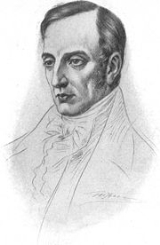
William Wordsworth

 
William Wordsworth

   Email Print
   Bookmark   Link


William Wordsworth


William Wordsworth (7 April 1770 – 23 April 1850) was a major English
England

native_name =|conventional_long_name = England|common_name = England|image_flag = Flag of England.svg|image_coat = England COA.svg|symbol_type = Royal Coat of Arms...
 Romantic
Romantic poetry

Romanticism largely began as a reaction against the prevailing Age of Enlightenment ideals of the day. Inevitably, the characterization of a broad range of contemporaneous poets and poetry under the single unifying name can be viewed more as an exercise in historical compartmentalization than an actual attempt to capture the essence of the ac...
 poet
Poet

A poet is a person who writes poetry....
 who, with Samuel Taylor Coleridge
Samuel Taylor Coleridge

Samuel Taylor Coleridge was an England poet, critic and Philosophy who was, along with his friend William Wordsworth, one of the founders of the Romanticism in England and one of the Lake Poets....
, helped to launch the Romantic Age
Romanticism

Romanticism is a complex artistic, literary, and intellectual movement that originated in the second half of the 18th century in Western Europe, and gained strength during the Industrial Revolution....
 in English literature
English literature

The term English literature refers to literature written in the English language, including literature composed in English by writers not necessarily from England; Joseph Conrad was Polish, Robert Burns was Scottish, James Joyce was Irish, Dylan Thomas was Welsh, Edgar Allan Poe was American, Salman Rushdie is Indian, V.S....
 with the 1798 joint publication Lyrical Ballads
Lyrical Ballads

Lyrical Ballads, with a Few Other Poems is a collection of poems by William Wordsworth and Samuel Taylor Coleridge, first published in 1798 and generally considered to have marked the beginning of the English Romantic movement in literature....
.

Wordsworth's magnum opus
Magnum opus

Magnum opus , from the Latin meaning great work, refers to the largest, and perhaps the best, greatest, most popular, or most renowned achievement of an author, artist, or composer....
 is generally considered to be The Prelude
The Prelude

The Prelude; or, Growth of a Poet's Mind is an autobiographical, "philosophical" poem in blank verse by the England poet William Wordsworth....
, a semiautobiographical poem of his early years which the poet revised and expanded a number of times. The work was posthumously titled and published, prior to which it was generally known as the poem "to Coleridge".


Discussion
Ask a question about 'William Wordsworth'
Start a new discussion about 'William Wordsworth'
Answer questions from other users
Full Discussion Forum


Recent Posts


Quotations


A brotherhood of venerable trees.

Sonnet. Composed at ____ Castle, l. 6

A cheerful life is what the Muses love,A soaring spirit is their prime delight.

From the Dark Chambers of Dejection Freed, l. 13 (1814)

A daySpent in a round of strenuous idleness.

Bk. IV, l. 377

A fingering slave,One that would peep and botanizeUpon his mother's grave.

A Poet's Epitaph, st. 5 (1799)

A light to guide, a rodTo check the erring, and reprove.

Stanza 1

A man he seems of cheerful yesterdaysAnd confident tomorrows.

Book VII - The Churchyard among the Mountains, cont., l. 557


Encyclopedia


William Wordsworth (7 April 1770 – 23 April 1850) was a major English
England

native_name =|conventional_long_name = England|common_name = England|image_flag = Flag of England.svg|image_coat = England COA.svg|symbol_type = Royal Coat of Arms...
 Romantic
Romantic poetry

Romanticism largely began as a reaction against the prevailing Age of Enlightenment ideals of the day. Inevitably, the characterization of a broad range of contemporaneous poets and poetry under the single unifying name can be viewed more as an exercise in historical compartmentalization than an actual attempt to capture the essence of the ac...
 poet
Poet

A poet is a person who writes poetry....
 who, with Samuel Taylor Coleridge
Samuel Taylor Coleridge

Samuel Taylor Coleridge was an England poet, critic and Philosophy who was, along with his friend William Wordsworth, one of the founders of the Romanticism in England and one of the Lake Poets....
, helped to launch the Romantic Age
Romanticism

Romanticism is a complex artistic, literary, and intellectual movement that originated in the second half of the 18th century in Western Europe, and gained strength during the Industrial Revolution....
 in English literature
English literature

The term English literature refers to literature written in the English language, including literature composed in English by writers not necessarily from England; Joseph Conrad was Polish, Robert Burns was Scottish, James Joyce was Irish, Dylan Thomas was Welsh, Edgar Allan Poe was American, Salman Rushdie is Indian, V.S....
 with the 1798 joint publication Lyrical Ballads
Lyrical Ballads

Lyrical Ballads, with a Few Other Poems is a collection of poems by William Wordsworth and Samuel Taylor Coleridge, first published in 1798 and generally considered to have marked the beginning of the English Romantic movement in literature....
.

Wordsworth's magnum opus
Magnum opus

Magnum opus , from the Latin meaning great work, refers to the largest, and perhaps the best, greatest, most popular, or most renowned achievement of an author, artist, or composer....
 is generally considered to be The Prelude
The Prelude

The Prelude; or, Growth of a Poet's Mind is an autobiographical, "philosophical" poem in blank verse by the England poet William Wordsworth....
, a semiautobiographical poem of his early years which the poet revised and expanded a number of times. The work was posthumously titled and published, prior to which it was generally known as the poem "to Coleridge". Wordsworth was England's Poet Laureate
Poet Laureate

A Poet Laureate is a poet officially appointed by a government and is often expected to compose poems for State occasions and other government events....
 from 1843 until his death in 1850.

Biography


Early life and education

The second of four children born to John Wordsworth and Ann Cookson, William Wordsworth was born on 7 April 1770 in Cockermouth
Cockermouth

Cockermouth is a town within the Allerdale borough of Cumbria, England, and is so named because it is at the confluence of the River Cocker as it flows into the River Derwent, Cumbria....
 in Cumberland—part of the scenic region in northwest England, the Lake District
Lake District

The Lake District, also known as The Lakes or Lakeland, is a rural area in North West England. A popular holiday destination, it is famous for its lakes and its mountains , and its associations with the early 19th century poetry and writings of William Wordsworth and the Lake Poets....
. His sister, the poet and diarist Dorothy Wordsworth
Dorothy Wordsworth

Dorothy Mae Ann Wordsworth was an English people author, poet and diarist. She was the sister of the Romanticism poet William Wordsworth, and the two were close for all of their lives....
, to whom he was close all his life, was born the following year, and the two were baptized together. They had three other siblings: Richard, the eldest, who became a lawyer; John, born after Dorothy, who would become a poet and enjoy nature with William and Dorothy until he died in an 1809 shipwreck, which only the captain escaped; and Christopher, the youngest, who would become an academician. Their father was a legal representative of James Lowther, 1st Earl of Lonsdale
James Lowther, 1st Earl of Lonsdale

Sir James Lowther, 1st Earl of Lonsdale was the son of Robert Lowther and Catherine Pennington.He married Mary Crichton-Stuart, daughter of John Stuart, 3rd Earl of Bute and Mary Wortley-Montagu, 1st Baroness Mount Stuart on 7 September 1761....
 and, through his connections, lived in a large mansion in the small town. Wordsworth, as with his siblings, had little involvement with their father, and they would be distant with him until his death in 1783.

Wordsworth's father, although rarely present, did teach him poetry, including that of Milton, Shakespeare and Spenser, in addition to allowing his son to rely on his father's library. In addition to spending his time reading in Cockermouth, he would stay at his mother's parents home in Penrith
Penrith

Penrith may be:*Penrith, Cumbria, England, before 1974 in Cumberland*Penrith, New South Wales, Australia**home of the Penrith Panthers, Rugby League team...
, Cumberland
Cumberland

Cumberland is one of the 39 historic counties of England. It formed an Administrative counties of England from 1889 to 1974 and now forms part of Cumbria....
. At Penrith, Wordsworth was exposed to the moors and was influenced by his experience with the landscape and was further turned toward nature by the harsh treatment he received at the hands of his relatives. In particular, Wordsworth could not get along with his grandparents and his uncle, and his hostile interactions with them distressed him to the point of contemplating suicide.

After the death of their mother, in 1778, John Wordsworth sent William to Hawkshead Grammar School
Hawkshead Grammar School

Hawkshead Grammar School in Hawkshead, Cumbria, England was founded in 1585 by Archbishop Edwin Sandys, of York, who petitioned a charter from Queen Elizabeth I to set up a governing body....
 and Dorothy to live with relatives in Yorkshire
Yorkshire

Yorkshire is a Historic counties of England of northern England and the largest in Great Britain. Because of its great size, over time functions were increasingly undertaken by its subdivisions, which have been subject to History of local government in Yorkshire....
; she and William would not meet again for another nine years. Although Hawkshead was Wordsworth's first serious experience with education, he had been taught to read by his mother and had attended a tiny school of low quality in Cockermouth. After the Cockermouth school, he was sent to a school in Penrith for the children of upper-class families and taught by Ann Birkett, a woman who insisted on instilling in her students traditions that included pursuing both scholarly and local activities, especially the festivals around Easter
Easter

Easter is the most important religious feast in the Christianity liturgical year.Christians believe that Jesus was Resurrection of Jesus from the dead three days after his Crucifixion of Jesus, and celebrate this resurrection on Easter Day or Easter Sunday , two days after Good Friday....
, May Day, and Shrove Tuesday
Shrove Tuesday

Shrove Tuesday is a term used in Ireland, the United Kingdom, Canada, New Zealand, and Australia for the day preceding the first day of the Christian season of fasting and prayer called Lent....
. Wordsworth was taught both the Bible and the Spectator, but little else. It was at the school that Wordsworth was to meet the Hutchinsons, including Mary, who would be his future wife.

Wordsworth made his debut as a writer in 1787 when he published a sonnet in The European Magazine. That same year he began attending St John's College, Cambridge
St John's College, Cambridge

St John's College, an institution known formally as The Master, Fellows and Scholars of the College of St John the Evangelist in the University of Cambridge is a constituent college of the University of Cambridge founded by Lady Margaret Beaufort in 1511....
, and received his A.B. degree in 1791. He returned to Hawkshead for his first two summer holidays, and often spent later holidays on walking tours, visiting places famous for the beauty of their landscape. In 1790, he took a walking tour of Europe
Europe

Europe is, conventionally, one of the world's seven continents. Comprising the westernmost peninsula of Eurasia, Europe is generally divided from Asia to its east by the water divide of the Ural Mountains, the Ural , the Caspian Sea, and by the Caucasus Mountains to the southeast....
, during which he toured the Alps
Alps

The Alps is the name for one of the great mountain range systems of Europe, stretching from Austria and Slovenia in the east; through Italy, Switzerland, Liechtenstein and Germany; to France in the west....
 extensively, and visited nearby areas of France
France

France , officially the French Republic , is a country whose Metropolitan France is located in Western Europe and that also comprises various Overseas departments and territories of France....
, Switzerland
Switzerland

Switzerland is a landlocked Swiss Alps country of roughly 7.7 million people in Western Europe with an area of 41,285 km?. Switzerland is a federal republic consisting of 26 states called Cantons of Switzerland....
 and Italy
Italy

Italy , officially the Italian Republic , is a country located on the Italian Peninsula in Southern Europe and on the two largest islands in the Mediterranean Sea, Sicily and Sardinia....
. His youngest brother, Christopher
Christopher Wordsworth (Trinity)

Christopher Wordsworth , was an English Anglican terminology and scholar.Born in Cockermouth, Cumberland, he was the youngest brother of the poet William Wordsworth, and was educated at Trinity College, Cambridge, where he became a fellow in 1798....
, rose to be Master of Trinity College
Trinity College, Cambridge

Trinity College is one of the 31 Colleges of the University of Cambridge of the University of Cambridge. Trinity has more members than any other college in Cambridge or University of Oxford, with around 700 undergraduates, 430 graduate students, and over 160 Fellows; however, counting only the student body it has somewhat fewer than Homert...
.

Relationship with Annette Vallon

In November 1791, Wordsworth visited Revolutionary France and became enthralled with the Republican movement. He fell in love with a French woman, Annette Vallon, who in 1792 gave birth to their child, Caroline. Because of lack of money and Britain
Great Britain

Great Britain is an island lying to the northwest of Continental Europe. It is the List of islands by area, and the largest in Europe. With a population of 58.9 million people it is List of islands by population....
's tensions with France, he returned alone to England the next year. The circumstances of his return and his subsequent behaviour raise doubts as to his declared wish to marry Annette, but he supported her and his daughter as best he could in later life. During this period, he wrote his acclaimed "It is a beauteous evening, calm and free," recalling his seaside walk with his daughter, whom he had not seen for ten years. At the conception of this poem, he had never seen his daughter before. The occurring lines reveal his deep love for both child and mother. The Reign of Terror
Reign of Terror

The Reign of Terror or simply The Terror was a period of violence that occurred fifteen months after the onset of the French Revolution, incited by conflict between rival political factions, the Girondins and the Jacobin Club, and marked by mass executions of "enemies of the revolution." Estimates vary widely as to how many were kil...
 estranged him from the Republican movement, and war between France and Britain prevented him from seeing Annette and Caroline again for several years. There are strong suggestions that Wordsworth may have been depressed and emotionally unsettled in the mid-1790s
1790s

The last decade of the 18th Century ran from January 1, 1790 to December 31, 1799. The most notable event of the decade was the French Revolution, with other notable events being the founding of the two-party system in Politics in the United States and the Panic of 1797....
.

With the Peace of Amiens again allowing travel to France, in 1802 Wordsworth and his sister, Dorothy, visited Annette and Caroline in France and arrived at a mutually agreeable settlement regarding Wordsworth's obligations.

First publication and Lyrical Ballads

In his "Preface to Lyrical Ballads" which is called the "manifesto" of English Romantic criticism, Wordsworth calls his poems "experimental". The year 1793 saw Wordsworth's first published poetry with the collections An Evening Walk and Descriptive Sketches. He received a legacy of £900 from Raisley Calvert in 1795 so that he could pursue writing poetry. That year, he met Samuel Taylor Coleridge
Samuel Taylor Coleridge

Samuel Taylor Coleridge was an England poet, critic and Philosophy who was, along with his friend William Wordsworth, one of the founders of the Romanticism in England and one of the Lake Poets....
 in Somerset
Somerset

Somerset is a Counties of England in South West England. The county town is Taunton, which is in the south of the county. The Ceremonial counties of England of Somerset borders the counties of Bristol and Gloucestershire to the north, Wiltshire to the east, Dorset to the south-east, and Devon to the south-west....
. The two poets quickly developed a close friendship. In 1797, Wordsworth and his sister, Dorothy
Dorothy Wordsworth

Dorothy Mae Ann Wordsworth was an English people author, poet and diarist. She was the sister of the Romanticism poet William Wordsworth, and the two were close for all of their lives....
, moved to Alfoxton House
Alfoxton House

Alfoxton House, also known as Alfoxton Park, was built as an 18th century country house in Holford, Somerset, England, within the Quantock Hills Area of Outstanding Natural Beauty....
, Somerset, just a few miles away from Coleridge's home in Nether Stowey
Nether Stowey

Nether Stowey is a small village in the Sedgemoor district of Somerset, South West England. It sits in the foothills of the Quantock Hills , just below Over Stowey....
. Together, Wordsworth and Coleridge (with insights from Dorothy) produced Lyrical Ballads
Lyrical Ballads

Lyrical Ballads, with a Few Other Poems is a collection of poems by William Wordsworth and Samuel Taylor Coleridge, first published in 1798 and generally considered to have marked the beginning of the English Romantic movement in literature....
 (1798
1798 in poetry

Nationality words link to articles with information on the nation's poetry or literature ....
), an important work in the English Romantic movement
Romanticism

Romanticism is a complex artistic, literary, and intellectual movement that originated in the second half of the 18th century in Western Europe, and gained strength during the Industrial Revolution....
. The volume had neither the name of Wordsworth nor Coleridge as the author. One of Wordsworth's most famous poems, "Tintern Abbey
Tintern Abbey (poem)

"Lines composed a few miles above Tintern Abbey on revisiting the banks of the Wye Valley during a tour, July 13, 1798" is a poem by William Wordsworth....
", was published in the work, along with Coleridge's "The Rime of the Ancient Mariner
The Rime of the Ancient Mariner

The Rime of the Ancient Mariner is the longest major poem by the England poet Samuel Taylor Coleridge written in 1797?98 and published in the first edition of Lyrical Ballads ....
". The second edition, published in 1800
1800 in poetry

Nationality words link to articles with information on the nation's poetry or literature ....
, had only Wordsworth listed as the author, and included a preface to the poems, which was significantly augmented in the 1802 edition. This Preface to Lyrical Ballads is considered a central work of Romantic literary theory. In it, Wordsworth discusses what he sees as the elements of a new type of poetry, one based on the "real language of men" and which avoids the poetic diction of much eighteenth-century poetry. Here, Wordsworth gives his famous definition of poetry as the "the spontaneous overflow of powerful feelings from emotions recollected in tranquility." A fourth and final edition of Lyrical Ballads was published in 1805.

Germany and move to the Lake District

Wordsworth, Dorothy and Coleridge travelled to Germany
Germany

Germany , officially the Federal Republic of Germany , is a country in Central Europe. It is bordered to the north by the North Sea, Denmark, and the Baltic Sea; to the east by Poland and the Czech Republic; to the south by Austria and Switzerland; and to the west by France, Luxembourg, Belgium, and the Netherlands....
 in the autumn of 1798. While Coleridge was intellectually stimulated by the trip, its main effect on Wordsworth was to produce homesickness. During the harsh winter of 1798–1799, Wordsworth lived with Dorothy in Goslar
Goslar

Goslar is a historic town in Lower Saxony, Germany. It is the administrative centre of the Goslar and located on the northwestern wikt:slope of the Harz mountain range....
, and, despite extreme stress and loneliness, he began work on an autobiographical piece later titled The Prelude. He wrote a number of famous poems, including "The Lucy poems
The Lucy poems

The "Lucy" poems are a series of five poems composed by the English Romanticism poet William Wordsworth between 1798 and 1801. They were first published in the second edition of Lyrical Ballads , a volume of verse jointly written by Wordsworth and Samuel Taylor Coleridge which was both Wordsworth?s first major publication and a milest...
". He and his sister moved back to England, now to Dove Cottage
Dove Cottage

Dove Cottage is a house on the edge of Grasmere in the Lake District. It is best known as the home of William Wordsworth and his sister Dorothy Wordsworth from December 1799 to May 1808, where they spent over eight years of "plain living, but high thinking"....
 in Grasmere
Grasmere

Grasmere is a village in central Cumbria, England. It is also the name of the adjacent lake. Grasmere's position in the centre of the Lake District National Park, as well as its connections with the Lake Poets, has made it popular as a tourist destination....
 in the Lake District, and this time with fellow poet Robert Southey
Robert Southey

Robert Southey was an English poet of the Romantic poetry school, one of the so-called "Lake Poets", and Poet Laureate for 30 years from 1813 to his death in 1843....
 nearby. Wordsworth, Coleridge and Southey came to be known as the "Lake Poets
Lake Poets

The Lake Poets all lived in the Lake District of England at the turn of the nineteenth century. As a group, they followed no single "school" of thought or literary practice then known, although their works were uniformly disparaged by the Edinburgh Review....
". Through this period, many of his poems revolve around themes of death, endurance, separation and grief.

William Wordsworth   Project Gutenberg Etext 12933
Benjamin Robert Haydon 002

Marriage and Children

In 1802, after returning from his trip to France with Dorothy to visit Annette and Caroline, Lowther's heir, William Lowther, 1st Earl of Lonsdale
William Lowther, 1st Earl of Lonsdale

William Lowther, 1st Earl of Lonsdale Order of the Garter was a Great Britain Tory politician and nobleman.The son of Sir William Lowther, 1st Baronet , of Little Preston and Swillington, Lowther represented first Carlisle , then Cumberland from 1780 to 1790....
, repaid the £4,000 debt owed to Wordsworth's father incurred through Lowther's failure to pay his aide. Later that year, Wordsworth married a childhood friend, Mary Hutchinson. Dorothy continued to live with the couple and grew close to Mary. The following year, Mary gave birth to the first of five children:

  • John Wordsworth (June 18 1803 - 1875). Married four times:
1.) Isabella Curwen (d. 1848) had six children: Jane, Henry, William, John, Charles and Edward.
2.) Helen Ross (d. 1854). No issue.
3.) Mary Ann Dolan (d. after 1858) had 1 daughter Dora (b.1858).
4.) Mary Gamble. No issue.
  • Dora Wordsworth
    Dora Wordsworth

    Dora Wordsworth was the only surviving daughter of William Wordsworth , major Romantic poet and British Poet Laureate. Her babyhood inspired Wordsworth to write the beautiful "Address To My Infant Daughter" in her honour....
     (August 16 1804 - July 9 1847). Married Edward Quillinan
    Edward Quillinan

    Edward Quillinan was an English poet who was a son-in-law and defender of William Wordsworth and a translator of Portuguese poetry....
  • Thomas Wordsworth (June 15 1806 - December 1 1812).
  • Catherine Wordsworth (September 6 1808 - June 4 1812).
  • William "Willy" Wordsworth (May 12 1810 - 1883). Married Fanny Graham and had four children: Mary Louisa, William, Reginald, Gordon.


Autobiographical work and Poems in Two Volumes

Wordsworth had for years been making plans to write a long philosophical poem in three parts, which he intended to call The Recluse. He had in 1798–99 started an autobiographical poem, which he never named but called the "poem to Coleridge
The Prelude

The Prelude; or, Growth of a Poet's Mind is an autobiographical, "philosophical" poem in blank verse by the England poet William Wordsworth....
", which would serve as an appendix to The Recluse. In 1804, he began expanding this autobiographical work, having decided to make it a prologue rather than an appendix to the larger work he planned. By 1805, he had completed it, but refused to publish such a personal work until he had completed the whole of The Recluse. The death of his brother, John, in 1805 affected him strongly.

The source of Wordsworth's philosophical allegiances as articulated in The Prelude and in such shorter works as "Lines composed a few miles above Tintern Abbey"
Tintern Abbey (poem)

"Lines composed a few miles above Tintern Abbey on revisiting the banks of the Wye Valley during a tour, July 13, 1798" is a poem by William Wordsworth....
 has been the source of much critical debate. While it had long been supposed that Wordsworth relied chiefly on Coleridge for philosophical guidance, more recent scholarship has suggested that Wordsworth's ideas may have been formed years before he and Coleridge became friends in the mid 1790s. While in Revolutionary Paris in 1792, the twenty-two year old Wordsworth made the acquaintance of the mysterious traveller John "Walking" Stewart (1747–1822), who was nearing the end of a thirty-years' peregrination from Madras, India
India

India, officially the Republic of India , is a country in South Asia. It is the List of countries and outlying territories by total area country by geographical area, the List of countries by population country, and the most populous liberal democracy in the world....
, through Persia and Arabia, across Africa
Africa

Africa is the world's second-largest and second most-populous continent, after Asia. At about 30.2 million km? including adjacent islands, it covers 6% of the Earth's total surface area and 20.4% of the total land area....
 and all of Europe, and up through the fledgling United States
United States

The United States of America is a Federal government constitutional republic comprising U.S. state and a federal district. The country is situated mostly in central North America, where its Contiguous United States and Washington, D.C., the Capital districts and territories, lie between the Pacific Ocean and Atlantic Oceans, Borders of the U...
. By the time of their association, Stewart had published an ambitious work of original materialist philosophy entitled The Apocalypse of Nature (London, 1791), to which many of Wordsworth's philosophical sentiments are likely indebted.

In 1807, his Poems in Two Volumes were published, including "Ode: Intimations of Immortality from Recollections of Early Childhood". Up to this point Wordsworth was known publicly only for Lyrical Ballads, and he hoped this collection would cement his reputation. Its reception was lukewarm, however. For a time (starting in 1810), Wordsworth and Coleridge were estranged over the latter's opium
Opium

Opium is a narcotic formed from the latex released by lacerating the immature seed pods of Opium poppy . It contains up to 12% morphine, an opiate alkaloid, which is most frequently processed chemically to produce heroin for the illegal drug trade....
 addiction. Two of his children, Thomas and Catherine, died in 1812. The following year, he received an appointment as Distributor of Stamps for Westmorland, and the £400 per year income from the post made him financially secure. His family, including Dorothy, moved to Rydal Mount
Rydal Mount

Rydal Mount is a house near Ambleside in the Lake District. It is best known as the home of William Wordsworth from 1813 to his death in 1850....
, Ambleside
Ambleside

Ambleside is a town in Cumbria, in north-west England.It is situated at the head of Windermere , England's largest lake. The town is within the Lake District National Park....
 (between Grasmere and Rydal Water) in 1813, where he spent the rest of his life.

The Prospectus

In 1814 he published The Excursion as the second part of the three-part The Recluse. He had not completed the first and third parts, and never would. He did, however, write a poetic Prospectus to "The Recluse" in which he lays out the structure and intent of the poem. The Prospectus contains some of Wordsworth's most famous lines on the relation between the human mind and nature:

My voice proclaims
How exquisitely the individual Mind
to the external World
Is fitted:--and how exquisitely, too,
Theme this but little heard of among Men,
The external World is fitted to the Mind.


Some modern critics recognize a decline in his works beginning around the mid-1810s. But this decline was perhaps more a change in his lifestyle and beliefs, since most of the issues that characterize his early poetry (loss, death, endurance, separation and abandonment) were resolved in his writings. But, by 1820, he enjoyed the success accompanying a reversal in the contemporary critical opinion of his earlier works. Following the death of his friend the painter William Green
William Green (painter)

William Green was an artist, poet, writer, and landscape painter, who made images mainly of the Lake District, determined to make them "adhere as faithfully as possible to nature." His biographer, Charles Roeder, stated: "his novel method is notable, as the artists have all a conventional and uniform style in regard to the representation of...
 in 1823, Wordsworth mended relations with Coleridge. The two were fully reconciled by 1828, when they toured the Rhineland
Rhineland

The Rhineland is the general name for the land on both sides of the river Rhine in the west of Germany. After the collapse of the First French Empire in the early 19th century, the German-speaking regions at the middle and lower course of the Rhine were annexed to the kingdom of Prussia....
 together. Dorothy suffered from a severe illness in 1829 that rendered her an invalid for the remainder of her life. In 1835, Wordsworth gave Annette and Caroline the money they needed for support.

The Poet Laureate and other honors

Wordsworth received an honorary Doctor of Civil Law degree in 1838 from Durham University
Durham University

Durham University is a university in Durham, England. It was founded as the University of Durham by Act of Parliament in 1832 and granted a Royal Charter in 1837....
, and the same honor from Oxford University the next year. In 1842 the government awarded him a civil list pension amounting to £300 a year. With the death in 1843 of Robert Southey, Wordsworth became the Poet Laureate. When his daughter, Dora, died in 1847, his production of poetry came to a standstill.

Death


William Wordsworth died by re-aggravating a case of pleurisy on April 23rd, 1850, and was buried at St. Oswald's church in Grasmere
Grasmere

Grasmere is a village in central Cumbria, England. It is also the name of the adjacent lake. Grasmere's position in the centre of the Lake District National Park, as well as its connections with the Lake Poets, has made it popular as a tourist destination....
. His widow Mary published his lengthy autobiographical "poem to Coleridge" as The Prelude
The Prelude

The Prelude; or, Growth of a Poet's Mind is an autobiographical, "philosophical" poem in blank verse by the England poet William Wordsworth....
 several months after his death. Though this failed to arouse great interest in 1850, it has since come to be recognized as his masterpiece.

Major works

  • Lyrical Ballads
    Lyrical Ballads

    Lyrical Ballads, with a Few Other Poems is a collection of poems by William Wordsworth and Samuel Taylor Coleridge, first published in 1798 and generally considered to have marked the beginning of the English Romantic movement in literature....
    , with a Few Other Poems
    (1798
    1798 in poetry

    Nationality words link to articles with information on the nation's poetry or literature ....
    )
    • "Simon Lee"
    • "We are Seven
      We are Seven

      We are Seven is a poem written by William Wordsworth in 1798 and published in his Lyrical Ballads. It describes a discussion between an older gentleman who tries to question a girl about her family....
      "
    • "Lines Written in Early Spring"
    • "Expostulation and Reply"
    • "The Tables Turned"
    • "The Thorn"
    • "Lines Composed A Few Miles above Tintern Abbey
      Tintern Abbey (poem)

      "Lines composed a few miles above Tintern Abbey on revisiting the banks of the Wye Valley during a tour, July 13, 1798" is a poem by William Wordsworth....
      "


  • Lyrical Ballads
    Lyrical Ballads

    Lyrical Ballads, with a Few Other Poems is a collection of poems by William Wordsworth and Samuel Taylor Coleridge, first published in 1798 and generally considered to have marked the beginning of the English Romantic movement in literature....
    , with Other Poems
    (1800
    1800 in poetry

    Nationality words link to articles with information on the nation's poetry or literature ....
    )
    • Preface to the Lyrical Ballads
      Preface to the Lyrical Ballads

      The Preface to the Lyrical Ballads was written by William Wordsworth in 1798 and enlarged with the second edition of the Lyrical Ballads in 1802....
    • "Strange fits of passion have I known
      Strange fits of passion have I known

      "Strange fits of passion have I known" is a seven-stanza poem ballad by the England Romanticism poet William Wordsworth. Composed during a sojourn in Germany in 1798, the poem was first published in the second edition of Lyrical Ballads ....
      "
    • "She Dwelt among the Untrodden Ways
      She Dwelt among the Untrodden Ways

      "She dwelt among the untrodden ways" is a three-stanza poem written by the English Romanticism poet William Wordsworth in 1798 when he was 28 years old....
      "
    • "Three years she grew"
    • "A Slumber Did my Spirit Seal"
    • "I travelled among unknown men"
    • "Lucy Gray"
    • "The Two April Mornings"
    • "Nutting"
    • "The Ruined Cottage"
    • "Michael"


  • Poems, in Two Volumes (1807
    1807 in poetry

    Nationality words link to articles with information on the nation's poetry or literature ....
    )
    • "Resolution and Independence
      Resolution and Independence

      Resolution and Independence is a lyric poem by the English Romantic poetry William Wordsworth, composed in 1802 and published in 1807 in Poems in Two Volumes....
      "
    • "I Wandered Lonely as a Cloud
      I Wandered Lonely as a Cloud

      "I Wandered Lonely as a Cloud" is an 1804 poem by William Wordsworth. It was inspired by an April 15, 1802 event in which Wordsworth and his sister, Dorothy Wordsworth, came across a "long belt" of daffodils....
      " Also known as "Daffodils"
    • "My Heart Leaps Up"
    • "Ode: Intimations of Immortality
      Ode: Intimations of Immortality

      "Ode: Intimations of Immortality From Recollections of Early Childhood" is a long ode in eleven sections by the English Romanticism poet William Wordsworth....
      "
    • "Ode to Duty"
    • "The Solitary Reaper
      The Solitary Reaper

      "The Solitary Reaper" is a ballad by English Romantic poet William Wordsworth, and one of his best-known works. In it, Wordsworth describes in the first person, present tense, how he is amazed and moved by a Scottish Highlands girl who sings as she reaps grain in a solitary field....
      "
    • "Elegiac Stanzas
      Elegiac Stanzas

      Elegiac Stanzas is a poem by William Wordsworth, originally published in "Poems, in Two Volumes" . Its full title is "Elegiac Stanzas, Suggested by a Picture of Peele Castle in a Storm, Painted by Sir George Beaumont."...
      "
    • "Composed upon Westminster Bridge, September 3, 1802"
    • "London, 1802
      London, 1802

      "London, 1802" is a sonnet by the English Romanticism poet William Wordsworth. In the poem Wordsworth castigates the English people as stagnant and selfish, and eulogizes seventeenth-century poet John Milton....
      "
    • "The world is too much with us
      The world is too much with us

      "The world Is Too Much With Us" is a sonnet by the England Romanticism poet William Wordsworth. In it, Wordsworth criticizes the modern world for being absorbed in materialism and distancing itself from nature....
      "


External links

  • at Bartleby.com
    Bartleby.com

    Bartleby.com is an e-text archive, headquartered in New York City and named after Herman Melville's Bartleby the Scrivener. It was founded under the name "Project Bartleby" in January 1993 by Steven H....
     (HTML)
  • at Internet Archive
    Internet Archive

    The Internet Archive is a nonprofit organization dedicated to building and maintaining a free and openly accessible online digital library, including an archive site of the World Wide Web....
     (scanned books original editions color illustrated)