
All Topics  
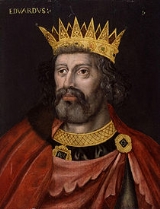
Henry III of England

 
Henry III of England

   Email Print
   Bookmark   Link


Henry III of England


Henry III (1 October 1207 – 16 November 1272) was the son and successor of John "Lackland"
John of England

John reigned as List of English monarchs from 6 April 1199, until his death. He succeeded to the throne as the younger brother of King Richard I of England, who died without issue....
 as King of England, reigning for fifty-six years from 1216 to his death. His contemporaries knew him as Henry of Winchester. He was the first child king in England since the reign of Ethelred the Unready
Ethelred the Unready

Ethelred II , also known as ?thelred II, Aethelred II, Ethelred the Unready, ?thelred the Unready and Aethelred the Unready , was Kingdom of England ....
. England prospered during his century and his greatest monument is Westminster
Westminster

Westminster is an area of Central London, within the City of Westminster. It lies on the north bank of the River Thames, southwest of the City of London and southwest of Charing Cross....
, which he made the seat of his government and where he expanded the abbey as a shrine to Edward the Confessor
Edward the Confessor

Saint Edward the Confessor , son of Ethelred the Unready and Emma of Normandy, was the penultimate Anglo-Saxons List of the monarchs of the Kingdom of England and the last of the House of Wessex, ruling from 1042 until his death....
.

He assumed the crown under the regency
Regent

A regent, from the Latin regens "reigning", is a person selected to act as head of state because the ruler is a minor, not present or debilitated....
 of the popular William Marshal, but the England he inherited had undergone several drastic changes in the reign of his father.


Discussion
Ask a question about 'Henry III of England'
Start a new discussion about 'Henry III of England'
Answer questions from other users
Full Discussion Forum


Timeline

1207   Born

1216   Henry III becomes King of England.

1227   Henry III of England declares himself of age and assumes power

1236   Henry III of England marries Eleanor of Provence.

1238   Simon de Montfort marries Eleanor, sister of Henry III of England.

1251   King Alexander III of Scotland marries Margaret, daughter of King Henry III of England, precipitating a power struggle between the two monarchs.

1253   King Henry III of England meets with English nobles and church leaders to reaffirm the validity of the Magna Carta.

1253   Having rebuffed the armed forces of Conrad IV of Germany, Pope Innocent IV offers Sicily to Edmund, son of King Henry III of England.

1253   The Domus Conversorum, a building and institution in London for Jews who had converted to Christianity, is established by King Henry III of England.

1254   Edward Plantagenet marries Eleanor of Castile. His father Henry III had demanded the marriage in exchange of ending the war with her brother Alfonso X of Castile


Encyclopedia


Henry III (1 October 1207 – 16 November 1272) was the son and successor of John "Lackland"
John of England

John reigned as List of English monarchs from 6 April 1199, until his death. He succeeded to the throne as the younger brother of King Richard I of England, who died without issue....
 as King of England, reigning for fifty-six years from 1216 to his death. His contemporaries knew him as Henry of Winchester. He was the first child king in England since the reign of Ethelred the Unready
Ethelred the Unready

Ethelred II , also known as ?thelred II, Aethelred II, Ethelred the Unready, ?thelred the Unready and Aethelred the Unready , was Kingdom of England ....
. England prospered during his century and his greatest monument is Westminster
Westminster

Westminster is an area of Central London, within the City of Westminster. It lies on the north bank of the River Thames, southwest of the City of London and southwest of Charing Cross....
, which he made the seat of his government and where he expanded the abbey as a shrine to Edward the Confessor
Edward the Confessor

Saint Edward the Confessor , son of Ethelred the Unready and Emma of Normandy, was the penultimate Anglo-Saxons List of the monarchs of the Kingdom of England and the last of the House of Wessex, ruling from 1042 until his death....
.

He assumed the crown under the regency
Regent

A regent, from the Latin regens "reigning", is a person selected to act as head of state because the ruler is a minor, not present or debilitated....
 of the popular William Marshal, but the England he inherited had undergone several drastic changes in the reign of his father. He spent much of his reign fighting the barons over Magna Carta
Magna Carta

Magna Carta , also called Magna Carta Libertatum , is an Kingdom of England legal charter, originally issued in the year 1215. It was written in Latin....
 and the royal rights, and was eventually forced to call the first "parliament
Parliament of England

The Parliament of England was the legislature of the Kingdom of England. Its roots can be traced back to the early medieval period. In a series of developments, it came increasingly to constrain the power of the King of England, and went on after the Act of Union 1707 to merge with the Parliament of Scotland and form the main basis of the Pa...
" in 1264. He was also unsuccessful on the Continent, where he endeavoured to re-establish English control over Normandy
Normandy

Normandy is a geographical region corresponding to the former Duchy of Normandy. It is situated along the coast of France south of the English Channel between Brittany and Picardy and comprises territory in northern France and the Channel Islands....
, Anjou
Anjou

Anjou is a former county , duchy and Provinces of France centred on the city of Angers in the lower Loire Valley of western France. It corresponds largely to the present-day d?partement in France of Maine-et-Loire....
, and Aquitaine
Aquitaine

Aquitaine , archaic Guyenne/Guienne , is one of the 26 regions of France, in the south-western part of metropolitan France, along the Atlantic Ocean and the Pyrenees mountain range on the border with Spain....
.

Coronation

Henry III was born in 1207 at Winchester Castle
Winchester Castle

Winchester Castle, is a castle in England in the city of Winchester, in the county of Hampshire, built in 1067. Only the Great Hall exists now; it houses a museum of the history of Winchester....
. He was the son of King John and Isabella of Angoulême
Isabella of Angoulême

Isabella of Angoul?me was Countess of Angoul?me and queen consort of England....
. The coronation was a simple affair, attended by only a handful of noblemen and three bishops. In the absence of a crown a simple golden band was placed on the young boy's head, not by the Archbishop of Canterbury
Archbishop of Canterbury

The Archbishop of Canterbury is the chief bishop and principal leader of the Church of England, the symbolic head of the worldwide Anglican Communion and the Diocesan Bishop of the Diocese of Canterbury, the Episcopal see that churches must be in communion with in order to be a part of the Anglican Communion....
 (who was at this time supporting Prince Louis
Louis VIII of France

Louis VIII the Lion reigned as list of French monarchs from 1223 to 1226. He was a member of the House of Capet. Louis VIII was born in Paris, France, the son of Philip II of France and Isabelle of Hainaut....
 of France
France

France , officially the French Republic , is a country whose Metropolitan France is located in Western Europe and that also comprises various Overseas departments and territories of France....
, the newly-proclaimed king of France
France

France , officially the French Republic , is a country whose Metropolitan France is located in Western Europe and that also comprises various Overseas departments and territories of France....
) but rather by the Bishop of Gloucester
Bishop of Gloucester

The Bishop of Gloucester is the Ordinary of the Church of England Diocese of Gloucester, England in the Province of Canterbury.The diocese covers the Gloucestershire and part of the Worcestershire and has its Episcopal see in the Gloucester where the seat is located at the Gloucester Cathedral....
. In 1220, a second coronation was ordered by Pope Honorius III
Pope Honorius III

Pope Honorius III , born Cencio, was Pope from 1216 to 1227....
 who did not consider that the first had been carried out in accordance with church rites. This occurred on 17 May 1220 in Westminster Abbey
Westminster Abbey

The Collegiate Church of St Peter at Westminster, which is almost always referred to popularly and informally as Westminster Abbey, is a large, mainly Gothic architecture Church , in Westminster, London, just to the west of the Palace of Westminster....
.

Under John's rule, the baron
Baron

Baron is a specific title of nobility. The word baron comes from Old French baron, itself from Old High German and latin baro meaning " man, warrior"; it merged with cognate Old English language beorn meaning "nobleman."...
s had supported an invasion
First Barons' War

The First Barons' War was a combination of :* a civil war in the Kingdom of England, between :**the forces of a number of rebellious barons, led by Robert Fitzwalter, and...
 by Prince Louis because they disliked the way that John had ruled the country. However, they quickly saw that the young prince was a safer option. Henry's regent
Regent

A regent, from the Latin regens "reigning", is a person selected to act as head of state because the ruler is a minor, not present or debilitated....
s immediately declared their intention to rule by Magna Carta
Magna Carta

Magna Carta , also called Magna Carta Libertatum , is an Kingdom of England legal charter, originally issued in the year 1215. It was written in Latin....
, which they proceeded to do during Henry’s minority. Magna Carta was reissued in 1217 as a sign of goodwill to the barons and the country was ruled by regents until 1227.

Wars and rebellions


In 1244, when the Scots threatened to invade England, King Henry III visited York Castle
York Castle

York Castle is a fortification in the city of York, England. The principal remains of the 13th century - 14th century castle are the keep and some of the Curtain wall ....
 and ordered it rebuilt in stone. The work commenced in 1245, and took some 20 to 25 years to complete. The builders crowned the existing moat with a stone keep, known as the King's Tower.

Henry's reign came to be marked by civil strife as the English barons, led by Simon de Montfort
Simon de Montfort, 6th Earl of Leicester

Simon de Montfort, 6th Earl of Leicester , was the principal leader of the baronial opposition to King Henry III of England. After the rebellion of 1263-1264, de Montfort became de facto ruler of England and called the De Montfort's Parliament in medieval Europe....
, demanded more say in the running of the kingdom. French-born de Montfort had originally been one of the foreign upstarts so loathed by many as Henry's foreign counsellors. Henry, in an outburst of anger, accused Simon of seducing his sister and forcing him to give her to Simon to avoid a scandal. When confronted by the Barons about the secret marriage that Henry had allowed to happen, a feud developed between the two. Their relationship reached a crisis in the 1250s when de Montfort was brought up on spurious charges for actions he took as lieutenant of Gascony
Gascony

Gascony is an area of southwest France that constituted a Provinces of France prior to the French Revolution. In historic references dating from the beginning of the Roman era, it was part of Gaul and became part of the Kingdom of the Franks during the conquests of Clovis I ....
, the last remaining Plantagenet land across the English Channel
English Channel

The English Channel is an Arm of the Atlantic Ocean that separates England from northern France, and joins the North Sea to the Atlantic. It is about long and varies in width from at its widest, to only in the Strait of Dover....
. He was acquitted by the Peers of the realm, much to the King's displeasure.

Henry also became embroiled in funding a war in Sicily
Sicily

Sicily is an Autonomous regions with special statute of Italy. Of all the regions of Italy, Sicily covers the largest land area at 25,708 km? and currently has just over five million inhabitants....
 on behalf of the Pope
Pope Innocent IV

Pope Innocent IV, born Sinibaldo Fieschi, was pope from June 28, 1243, to December 7, 1254....
 in return for a title for his second son Edmund
Edmund Crouchback, 1st Earl of Lancaster

Edmund Crouchback, 1st Earl of Lancaster was the second surviving son of Eleanor of Provence and King Henry III of England....
, a state of affairs that made many barons fearful that Henry was following in the footsteps of his father, King John
John of England

John reigned as List of English monarchs from 6 April 1199, until his death. He succeeded to the throne as the younger brother of King Richard I of England, who died without issue....
, and needed to be kept in check, too. De Montfort became leader of those who wanted to reassert Magna Carta
Magna Carta

Magna Carta , also called Magna Carta Libertatum , is an Kingdom of England legal charter, originally issued in the year 1215. It was written in Latin....
 and force the king to surrender more power to the baronial council. In 1258, seven leading barons forced Henry to agree to the Provisions of Oxford
Provisions of Oxford

The Provisions of Oxford were installed in 1258 by a group of barons led by Simon de Montfort, 6th Earl of Leicester; these documents are often regarded as England's first written constitution....
, which effectively abolished the absolutist Anglo-Norman
Anglo-Norman

The Anglo-Normans were mainly the descendants of the Normans who ruled England following the conquest by William I of England in 1066, although a few Normans were already in England before the conquest....
 monarchy, giving power to a council of fifteen barons to deal with the business of government and providing for a thrice-yearly meeting of parliament
Parliament of England

The Parliament of England was the legislature of the Kingdom of England. Its roots can be traced back to the early medieval period. In a series of developments, it came increasingly to constrain the power of the King of England, and went on after the Act of Union 1707 to merge with the Parliament of Scotland and form the main basis of the Pa...
 to monitor their performance. Henry was forced to take part in the swearing of a collective oath to the Provisions of Oxford
Provisions of Oxford

The Provisions of Oxford were installed in 1258 by a group of barons led by Simon de Montfort, 6th Earl of Leicester; these documents are often regarded as England's first written constitution....
.

In the following years, those supporting de Montfort and those supporting the king grew more and more polarised. Henry obtained a papal bull in 1262 exempting him from his oath and both sides began to raise armies. The Royalists were led by Prince Edward
Edward I of England

Edward I , popularly known as Longshanks, the English Justinian, and the Hammer of the Scots , was a House of Plantagenet King of England who achieved historical fame by conquering large parts of Wales and almost succeeding in doing the same to Scotland....
, Henry's eldest son. Civil war, known as the Second Barons' War
Second Barons' War

The Second Barons' War was a civil war in England between the forces of a number of rebellious barons led by Simon de Montfort, 6th Earl of Leicester, against the Royalist forces led by Prince Edward ....
, followed.

The charismatic de Montfort and his forces had captured most of southeastern England by 1263, and at the Battle of Lewes
Battle of Lewes

The Battle of Lewes was one of two main battles of the conflict known as the Second Barons' War. It took place at Lewes in Sussex, on May 14, 1264....
 on 14 May 1264, Henry was defeated and taken prisoner by de Montfort's army. While Henry was reduced to being a figurehead king, de Montfort broadened representation to include each county of England and many important towns—that is, to groups beyond the nobility. Henry and Edward continued under house arrest. The short period that followed was the closest England was to come to complete abolition of the monarchy
Monarchy

A monarchy is a form of government in which supreme power is absolutely or nominally lodged in an individual, who is the head of state, often for Life tenure or until abdication, and "is wholly set apart from all other members of the state." The person who heads a monarchy is called a monarch....
 until the Commonwealth
Commonwealth of England

The Commonwealth of England was the republic which ruled first Kingdom of England and Wales, and then Kingdom of Ireland and Kingdom of Scotland from 1649 to 1660....
 period of 1649–1660 and many of the barons who had initially supported de Montfort began to suspect that he had gone too far with his reforming zeal.

Westminster
But only fifteen months later Prince Edward had escaped captivity (having been freed by his cousin Roger Mortimer) to lead the royalists into battle again and he turned the tables on de Montfort at the Battle of Evesham
Battle of Evesham

The Battle of Evesham was one of the two main battles of 13th century England's Second Barons' War. It marked the defeat of Simon de Montfort, 6th Earl of Leicester, Earl of Leicester, and the rebellious barons by Prince Edward – later King Edward I of England – who led the forces of his father, King Henry III of England....
 in 1265. Following this victory savage retribution was exacted on the rebels.

Death

Henry's reign ended when he died in 1272, after which he was succeeded by his son, Edward I
Edward I of England

Edward I , popularly known as Longshanks, the English Justinian, and the Hammer of the Scots , was a House of Plantagenet King of England who achieved historical fame by conquering large parts of Wales and almost succeeding in doing the same to Scotland....
. His body was laid, temporarily, in the tomb of Edward the Confessor while his own sarcophagus was constructed in Westminster Abbey
Westminster Abbey

The Collegiate Church of St Peter at Westminster, which is almost always referred to popularly and informally as Westminster Abbey, is a large, mainly Gothic architecture Church , in Westminster, London, just to the west of the Palace of Westminster....
.

Attitudes and beliefs during his reign

As Henry reached maturity he was keen to restore royal authority, looking towards the autocratic model of the French monarchy. Henry married Eleanor of Provence
Eleanor of Provence

Eleanor of Provence was Queen Consort of King Henry III of England.Born in Aix-en-Provence, she was the daughter of Ramon Berenguer IV, Count of Provence and Beatrice of Savoy , the daughter of Thomas I of Savoy and his second wife Marguerite of Geneva....
 and he promoted many of his French relatives to higher positions of power and wealth. For instance, one Poitevin
Poitou

Poitou was a Provinces of France of west-central France whose capital city was Poitiers.The region of Poitou was called Taifals in the sixth century....
, Peter des Riveaux, held the offices of Treasurer of the Household
Treasurer of the Household

The position of Treasurer of the Household is theoretically held by a household official of the British monarch, under control of the Lord Steward Department, but is, in fact, a political office held by one of the government's Deputy Chief Whips in the British House of Commons....
, Keeper of the King's Wardrobe, Lord Privy Seal
Lord Privy Seal

The Lord Privy Seal or Lord Keeper of the Privy Seal is the fifth of the Great Officers of State in the United Kingdom, ranking beneath the Lord President of the Council and above the Lord Great Chamberlain....
, and the sheriff
Sheriff

A sheriff is in principle a legal official with responsibility for a county. In practice, the specific combination of legal, political, and ceremonial duties of a sheriff varies greatly from country to country....
doms of twenty-one English counties simultaneously. Henry's tendency to govern for long periods with no publicly-appointed ministers who could be held accountable for their actions and decisions did not make matters any easier. Many English barons came to see his method of governing as foreign.

Henry was much taken with the cult of the Anglo-Saxon saint king
Anglo-Saxon monarchs

Anglo-Saxon monarchs were the rulers of the various kingdoms which arose in Anglo-Saxon England following the withdrawal of the Romans in the fifth century....
 Edward the Confessor
Edward the Confessor

Saint Edward the Confessor , son of Ethelred the Unready and Emma of Normandy, was the penultimate Anglo-Saxons List of the monarchs of the Kingdom of England and the last of the House of Wessex, ruling from 1042 until his death....
 who had been canonised in 1161. Told that St Edward dressed austerely, Henry took to doing the same and wearing only the simplest of robe
Robe

A robe is a loose-fitting outer clothing. A robe is distinguished from a cape or cloak by the fact that it usually has sleeves. The English language word robe is loanword from French language....
s. He had a mural
Mural

A mural is a painting on a wall, ceiling, or other large permanent surface....
 of the saint painted in his bedchamber
Bedroom

A bedroom is a room where people usually sleep for the night and/or for relaxation during the day.Many houses in North America, Australia and Europe have at least two bedrooms ? usually a master bedroom and one or more bedrooms for either the children or guests....
 for inspiration before and after sleep and even named his eldest son Edward. Henry designated Westminster
Westminster

Westminster is an area of Central London, within the City of Westminster. It lies on the north bank of the River Thames, southwest of the City of London and southwest of Charing Cross....
, where St Edward had founded the abbey, as the fixed seat of power in England and Westminster Hall duly became the greatest ceremonial space of the kingdom, where the council of nobles also met. Henry appointed French architects from Rheims to renovate Westminster Abbey
Westminster Abbey

The Collegiate Church of St Peter at Westminster, which is almost always referred to popularly and informally as Westminster Abbey, is a large, mainly Gothic architecture Church , in Westminster, London, just to the west of the Palace of Westminster....
 in the Gothic
Gothic architecture

Gothic architecture is a style of architecture which flourished during the high and late Middle Ages. It evolved from Romanesque architecture and was succeeded by Renaissance architecture....
 style. Work began, at great expense, in 1245. The centrepiece of Henry's renovated abbey was to be a shrine to Edward the Confessor. It was finished in 1269 and the saint's relics were then installed.

Henry was known for his anti-Jewish decrees, such as a decree compelling them to wear a special "badge of shame
Badge of shame

A badge of shame, also a symbol of shame, mark of shame, or simply a stigma, is typically a distinctive symbol required to be worn by a specific group or an individual for the purpose of public humiliation or persecution....
" in the form of the Two Tablets. Henry was extremely pious and his journeys were often delayed by his insistence on hearing Mass
Mass

In physical science, mass refers to the degree of acceleration a body acquires when subject to a force: bodies with greater mass are accelerated less by the same force....
 several times a day. He took so long to arrive on a visit to the French court that his brother-in-law, King Louis IX of France
Louis IX of France

Louis IX , commonly Saint Louis, was List of French monarchs from 1226 to his death. He was also Counts of Artois from 1226 to 1237. Born at Poissy, near Paris, he was a member of the House of Capet and the son of Louis VIII of France and Blanche of Castile....
, banned priests from Henry's route. On one occasion, as related by Roger of Wendover
Roger of Wendover

Roger of Wendover , probably a native of Wendover in Buckinghamshire, was an England English historians in the Middle Ages of the 13th century. At some uncertain date he became a monk at St Albans Abbey; afterwards he was appointed prior of the cell of Belvoir, but he forfeited this dignity in the early years of Henry III of England, having b...
, when King Henry met with papal prelates, he said, "If (the prelates) knew how much I, in my reverence of God, am afraid of them and how unwilling I am to offend them, they would trample on me as on an old and worn-out shoe."

Criticisms

Henry's advancement of foreign favourite
Favourite

In historical writings, when used in reference to a person, favourite, also spelled favorite , means the intimate companion of a ruler or other important person....
s, notably his wife's Savoyard uncles and his own Lusignan
Lusignan

The Lusignan family originated in the Poitou near Lusignan in western France in the early 10th century. By the end of the 11th century, they had risen to become the most prominent petty lords in the region from their Ch?teau de Lusignan....
 half-siblings, was unpopular with his subjects and barons. He was also extravagant and avaricious; when his first child, Prince Edward
Edward I of England

Edward I , popularly known as Longshanks, the English Justinian, and the Hammer of the Scots , was a House of Plantagenet King of England who achieved historical fame by conquering large parts of Wales and almost succeeding in doing the same to Scotland....
, was born, Henry demanded that Londoners bring him rich gifts to celebrate. He even sent back gifts that did not please him. Matthew Paris
Matthew Paris

Matthew Paris was a Benedictine monk, English historians in the Middle Ages, artist in illuminated manuscripts and cartographer, based at St Albans Cathedral in Hertfordshire....
 reports that some said, "God gave us this child, but the king sells him to us."

Bnmsfr2829fol18henry3landsaquit

Appearance

According to Nicholas Trevet, Henry was a thickset man of medium height with a narrow forehead and a drooping left eyelid (inherited by his son, Edward I
Edward I of England

Edward I , popularly known as Longshanks, the English Justinian, and the Hammer of the Scots , was a House of Plantagenet King of England who achieved historical fame by conquering large parts of Wales and almost succeeding in doing the same to Scotland....
).

Marriage and children

Married on 14 January 1236, Canterbury Cathedral
Canterbury Cathedral

Canterbury Cathedral in Canterbury, Kent, is one of the oldest and most famous Christianity structures in England and forms part of a World Heritage Site....
, Canterbury
Canterbury

Canterbury lies at the heart of the City of Canterbury, a local government district of Kent, in South East England. It lies on the River Stour....
, Kent
Kent

Kent is a Counties of England in southeast England, and is one of the home counties. It borders East Sussex, Surrey and Greater London and has a defined boundary with Essex in the middle of the River Thames estuary....
, to Eleanor of Provence
Eleanor of Provence

Eleanor of Provence was Queen Consort of King Henry III of England.Born in Aix-en-Provence, she was the daughter of Ramon Berenguer IV, Count of Provence and Beatrice of Savoy , the daughter of Thomas I of Savoy and his second wife Marguerite of Geneva....
, with at least five children born:
  1. Edward I
    Edward I of England

    Edward I , popularly known as Longshanks, the English Justinian, and the Hammer of the Scots , was a House of Plantagenet King of England who achieved historical fame by conquering large parts of Wales and almost succeeding in doing the same to Scotland....
     (b. 17 January 1239 - d. 8 July 1307)
  2. Margaret
    Margaret of England

    Margaret of England was a Middle Ages Kingdom of England princess who became Queen consort of Kingdom of Scotland. A daughter of the House of Plantagenet king Henry III of England and his queen, Eleanor of Provence, she was List of Scottish consorts to Alexander III of Scotland, List of Scottish monarchs....
     (b. 29 September 1240 - d. 26 February 1275), married King Alexander III of Scotland
    Alexander III of Scotland

    Alexander III , King of Scots, was born at Roxburgh, the only son of Alexander II of Scotland by his second wife Marie de Coucy. Alexander's father died on 6 July 1249 and he became king at the age of eight, inaugurated at Scone, Perth and Kinross on 13 July 1249....
  3. Beatrice
    Beatrice of England

    Not to be confused with Beatrice of York or Princess Beatrice of the United KingdomBeatrice of England, also known as Beatrice de Dreux, was born on 25 June 1242 at Bordeaux, Dauphin of France....
     (b. 25 June 1242 - d. 24 March 1275), married to John II, Duke of Brittany
    John II, Duke of Brittany

    John II was Duke of Brittany and Earl of Richmond, from 1286 to his death. He was son of Duke John I, Duke of Brittany and Blanche, princess of Navarre....
  4. Edmund (16 January 1245 - d. 5 June 1296)
  5. Katharine (b. 25 November 1253 - d. 3 May 1257), deafness was discovered at age 2.


There is reason to doubt the existence of several attributed children of Henry and Eleanor.

  • Richard (b. after 1247 - d. before 1256),
  • John (b. after 1250 - d. before 1256), and
  • Henry (b. after 1253 - d. young)


Are known only from a 14th century addition made to a manuscript of Flores historiarum
Flores Historiarum

The Flores Historiarum is a Latin chronicle English historians in the Middle Ages from the creation to 1326 . It was compiled by various persons and quickly acquired contemporary popularity, for it was continued by many hands in many manuscript traditions....
, and are nowhere contemporaneously recorded.

  • William (b. and d. ca. 1258) is an error for the nephew of Henry's half-brother, William de Valence.


Another daughter, Matilda, is found only in the Hayles abbey chronicle, alongside such other fictitious children as a son named William for King John
John of England

John reigned as List of English monarchs from 6 April 1199, until his death. He succeeded to the throne as the younger brother of King Richard I of England, who died without issue....
, and a bastard son named John for King Edward I
Edward I of England

Edward I , popularly known as Longshanks, the English Justinian, and the Hammer of the Scots , was a House of Plantagenet King of England who achieved historical fame by conquering large parts of Wales and almost succeeding in doing the same to Scotland....
. Matilda's existence is doubtful, at best. For further details, see Margaret Howell, The Children of King Henry III and Eleanor of Provence (1992).

Personal details


  • His Royal Motto was qui non dat quod habet non accipit ille quod optat (He who does not give what he has, does not receive what he wants).
  • His favourite wine was made with the Loire Valley
    Loire Valley

    Loire Valley is known as the Garden of France and the Cradle of the French Language. It is also noteworthy for the quality of its architectural heritage, in its historic towns such as Amboise, Angers, Blois, Chinon, Nantes, Orl?ans, Saumur, and Tours, but in particular for its world-famous castles, such as the Ch?teaux d'Ch?teau d'Am...
     red wine grape Pineau d'Aunis
    Pineau d'Aunis

    Pineau d'Aunis is a red wine grape that is grown primarily in the Loire Valley around Anjou and Touraine. A favourite of Henry III of England, wine made from the grape was first exported to England in the thirteenth century....
     which Henry first introduced to England in the thirteenth century.
  • He built a Royal Palace in the town of Cippenham
    Cippenham

    Cippenham is a suburb of the unitary authority of Slough in the county of Berkshire, England. Before the 1974 boundary changes, Cippenham was originally in Buckinghamshire....
    , Slough
    Slough

    Slough is a Borough status in the United Kingdom and unitary authority area within the Ceremonial counties of England of Berkshire, England, situated west of London....
    , Berkshire
    Berkshire

    Berkshire is a Home Counties in the South East England of England. It is also often referred to as the Royal County of Berkshire because of the presence of the royal residence of Windsor Castle in the county; this usage, which dates to the 19th century at least, was recognised by the Queen in 1958, and Letters patent issued confirming...
     named "Cippenham Moat
    Cippenham Moat

    Cippenham Moat refers to the remains of a 13th Century Royal Palace created by King Henry III of England , located in the Cippenham suburb of Slough, in Berkshire....
    ".
  • In 1266, Henry III of England granted the Lübeck and Hamburg Hansa a charter for operations in England, which contributed to the emergence of the Hanseatic League
    Hanseatic League

    The Hanseatic League was an Military alliance of Trade cities and their guilds that established and maintained trade monopoly along the coast of Northern Europe, from the Baltic Sea to the North Sea and inland, during the Late Middle Ages and Early modern period ....
    .


Fictional portrayals

In The Divine Comedy Dante sees Henry ("the king of simple life") sitting outside the gates of Purgatory
Purgatory

Purgatory is the condition or process of purification or temporary punishment in which the souls of those who die in a state of grace are made ready for heaven....
 with other contemporary European rulers.

Henry is a prominent character in Sharon Penman's historical novel
Historical novel

A historical novel is a novel in which the story is set among historical events, or more generally, in which the time of the action predates the lifetime of the author....
 Falls the Shadow
Falls the Shadow

Falls the Shadow is an original novel written by Daniel O'Mahony and based on the long-running United Kingdom science fiction on television series Doctor Who....
; his portrayal is very close to most historical descriptions of him as weak and vacillating.

Henry has been portrayed on screen as a child by Dora Senior in the silent short King John (1899), a version of John's death scene from Shakespeare's King John
King John

The Life and Death of King John, a history play by William Shakespeare, dramatises the reign of King John of England , son of Henry II of England and Eleanor of Aquitaine and father of Henry III of England....
, and by Rusty Livingstone in the BBC Shakespeare The Life and Death of King John (1984). He was portrayed as an adult by Richard Bremmer
Richard Bremmer

Richard Bremmer is a United Kingdom actor. He played a younger Lord Voldemort in Harry Potter and the Sorcerer's Stone ....
 in Just Visiting
Just Visiting

Just Visiting / En Am?rique is a 2001 in film comedy film, a remake of the French film Les Visiteurs, and a spin-off of Les Visiteurs and its sequel, Les Visiteurs II....
 (2001), a remake of the French time travel film Les Visiteurs
Les Visiteurs

Les Visiteurs is a cult France film directed by Jean-Marie Poir? and released in 1993. In this comedy, a 12th-century knight and his servant Time travel to the end of the 20th century and find themselves adrift in modern society....
.

Ancestors


See also

  • Fine rolls
    Fine rolls

    The fine rolls record offers of money to the Kings of England for concessions and favours from the 12th to the 17th centuries. In general, a fine is an agreement made with the king, or one of his chief ministers, to pay a certain sum of money for a specified benefit....
  • Henry de Bracton
    Henry de Bracton

    Henry of Bracton, also Henry de Bracton, also Henrici Bracton,or Henry Bratton also Henry Bretton was an England jurist....
  • Statutes of Mortmain
    Statutes of Mortmain

    The Statutes of Mortmain were two enactments, in 1279 and 1290 by Edward I of England of England aimed at preserving the kingdom's revenues by preventing land from passing into the possession of the Church....


External links