


Frederick Sanger

Encyclopedia
Frederick Sanger, OM, CH
, CBE
, FRS
(born 13 August 1918) is an English
biochemist
and a two-time Nobel laureate in chemistry
, the only person to have been so. In 1958 he was awarded a Nobel prize in chemistry "for his work on the structure of proteins, especially that of insulin". In 1980, Walter Gilbert
and Sanger shared half of the chemistry prize "for their contributions concerning the determination of base sequences in nucleic acids". The other half was awarded to Paul Berg
"for his fundamental studies of the biochemistry of nucleic acids, with particular regard to recombinant-DNA".
He is the fourth (and only living) person to have been awarded two Nobel Prize
s, either individually or in tandem with others.
, a small village in Gloucestershire
, the second son of Frederick Sanger, a general practitioner
, and his wife, Cicely Sanger née Crewdson. He was one of three children. His brother, Theodore was only a year older while his sister May (Mary) was five years younger. His father, Frederick Sanger senior, had worked as an Anglican medical missionary in China but returned to England because of ill health. He was 40 in 1916 when he married Cicely who was 4 years younger. Sanger’s father converted to Quakerism
soon after his two sons were born and brought up the children as Quakers. Sanger’s mother was the daughter of a wealthy cotton manufacturer and had a Quaker background but Cicely herself was not a Quaker.
When Sanger was around five years old the family moved to the small village of Tanworth-in-Arden
in Warwickshire
. The family were reasonably wealthy and employed a governess to teach the children. In 1927, at the age of nine, he was sent to the Downs School
a residential preparatory school run by Quakers near Malvern
. His brother Theo was a year ahead of him at the same school. In 1932, at the age of 14, he was sent to the recently established Bryanston School
in Dorset
. This used the Dalton
system and had a more liberal regime which Sanger much preferred. At the school he liked his teachers and particularly enjoyed scientific subjects.
He achieved good results in the School Certificate
examinations and in 1936 moved as an undergraduate to St John's College, Cambridge
to study natural sciences. His father had attended the same college. For Part I of his Tripos
he took courses in physics, chemistry, biochemistry and mathematics but struggled with physics and mathematics. Many of the other students had studied more mathematics at school. In his second year he replaced physics with physiology. He took three years to obtain his Part I. For his Part II he studied biochemistry. It was a relatively new department founded by Gowland Hopkins with enthusiastic lecturers who included Malcolm Dixon
, Joseph Needham
and Ernest Baldwin
. Sanger graduated with a first class degree in 1939.
Both his parents died from cancer during his first two years at Cambridge. His father was 60 and his mother was 58. As an undergraduate Sanger’s beliefs were strongly influenced by his Quaker upbringing. He was a pacifist and a member of the Peace Pledge Union
. It was through his involvement with the Cambridge Scientists’ Anti-War Group that he met his future wife, Joan Howe, who was studying economics at Newnham College
. They courted while he was studying for his Part II exams and married after he had graduated in December 1940. With the onset of the Second World War in 1939, he was granted unconditional exemption from military service as a conscientious objector
.
Sanger began studying for a PhD
in October 1940 under N.W. "Bill" Pirie
. His project was to investigate whether edible protein could be obtained from grass. After little more than a month Pirie left the department and Albert Neuberger
became his adviser. Sanger changed his research project to study the metabolism of lysine and a more practical problem concerning the nitrogen of potatoes. His thesis had the title: "The metabolism of the amino acid lysine in the animal body". He was examined by Charles Harington and Albert Charles Chibnall and awarded his doctorate in 1943.
Neuberger moved to the National Institute for Medical Research
in London but Sanger stayed in Cambridge and in 1943 joined the group of Charles Chibnall, a protein chemist who had recently taken up the chair in the Department of Biochemistry. Chibnall had already done some work on the amino acid composition of bovine insulin and suggested that Sanger look at the amino groups in the protein. Insulin could be purchased from Boots
and was one of the very few proteins that were available in a pure form. Up to this time Sanger had been funding himself. In Chibnall's group he was initially supported by the Medical Research Council
and then from 1944 until 1951 by a Beit Memorial Fellowship for Medical Research.
Sanger's first triumph was to determine the complete amino acid
sequence of the two polypeptide chains of bovine insulin
in 1951. Prior to this it was widely assumed that proteins were somewhat amorphous. In determining these sequences, Sanger proved that protein
s have a defined chemical composition. For this purpose he used the "Sanger Reagent", fluorodinitrobenzene (FDNB), to react with the exposed amino groups in the protein and in particular with the N-terminal amino group at one end of the polypeptide chain. He then partially hydrolysed the insulin into short peptides (either with hydrochloric acid or using an enzyme such as trypsin
). The mixture of peptides was fractionated in two dimensions on a sheet of filter paper: first by electrophoresis
in one dimension and then, perpendicular to that, by chromatography
in the other. The different peptide fragments of insulin, detected with ninhydrin
, moved to different positions on the paper, creating a distinct pattern which Sanger called "fingerprints". The peptide from the N-terminus could be recognised by the yellow colour imparted by the FDNB label and the identity of the labelled amino acid at the end of the peptide determined by complete acid hydrolysis and discovering which dinitrophenyl-amino acid was there. By repeating this type of procedure Sanger was able to determine the sequences of the many peptides generated using different methods for the initial partial hydrolysis. These could then be assembled into the longer sequences to deduce the complete structure of insulin. Sanger's principal conclusion was that the two polypeptide chains of the protein insulin had precise amino acid sequences and, by extension, that every protein had a unique sequence. It was this achievement that earned him his first Nobel prize in Chemistry
in 1958. This discovery was crucial for the later sequence hypothesis
of Crick for developing ideas of how DNA codes for proteins.
Sequencing RNA
From 1951 Sanger was a member of the external staff of the Medical Research Council
and when they opened the Laboratory of Molecular Biology
in 1962, he moved from his laboratories in the Biochemistry Department of the university to the top floor of the new building. He became head of the Protein Chemistry division. Soon after his move he started looking at the possibility of sequencing RNA molecules and began developing methods for separating ribonucleotide fragments generated with specific nucleases. One of the problems was to obtain a pure piece of RNA to sequence. In the course of this he discovered in 1964, with Kjeld Marcker, the formylmethionine tRNA which initiates protein synthesis in bacteria. He was beaten in the race to be the first to sequence a tRNA molecule by a group led by Robert Holley
from Cornell University who published the sequence of the 77 ribonucleotides of alanine
tRNA from Saccharomyces cerevisiae
in 1965. By 1967 Sanger's group had determined the nucleotide sequence of the 5S ribosomal RNA
from Escherichia coli
, a small RNA of 120 nucleotides.
Sequencing DNA
He then turned to sequencing DNA which would require an entirely different approach. He looked at different ways of using DNA polymerase I
from E. coli to copy single stranded DNA. In 1975 together with Alan Coulson he published a sequencing procedure using DNA polymerase with radiolabelled nucleotides that he called the "Plus and Minus" technique. This involved two closely related methods that generated short oligonucleotides with defined 3' termini. These could be fractionated by electrophoresis
on a polyacrylamide
gel and visualised using autoradiography. The procedure could sequence up to 80 nucleotides in one go and was a big improvement on what gone before but was still very laborious. Nevertheless his group were able to sequence most of the 5,386 nucleotides of the single-stranded bacteriophage
φX174. This was the first fully sequenced DNA-based genome. To their surprise they discovered that the coding region
s of some of the genes overlapped with one another.
In 1977 Sanger and colleagues introduced the "dideoxy" chain-termination method for sequencing DNA molecules, also known as the "Sanger method". This was a major breakthrough and allowed long stretches of DNA to be rapidly and accurately sequenced. It earned him his second Nobel prize in Chemistry in 1980, which he shared with Walter Gilbert
and Paul Berg
. The new method was used by Sanger and colleagues to sequence human mitochondrial DNA (16,569 base pairs) and bacteriophage λ (48,502 base pairs). The dideoxy method was eventually used to sequence the entire human genome
.
He is thus far (2011) the only person to have been awarded two Nobel Prizes in Chemistry, and one of only four two-time Nobel laureates: the other three were Marie Curie
(Physics
, 1903 and Chemistry
, 1911), Linus Pauling
(Chemistry
, 1954 and Peace, 1962) and John Bardeen
(twice Physics
, 1956 and 1972).
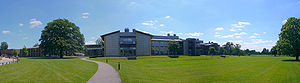 Sanger retired in 1983 to his home, "Far Leys", in Swaffham Bulbeck
outside Cambridge.
In 1992, the Wellcome Trust
and the Medical Research Council founded the Sanger Centre (now the Sanger Institute
), named after him. The Institute is located on the Wellcome Trust Genome Campus
near Hinxton
, only a few miles from Sanger's home. He agreed to having the Centre named after him when asked by John Sulston, the founding director, but warned, "It had better be good." It was opened by Sanger himself on 4 October 1993, with a staff of less than 50 people, and went on to take a leading role in the sequencing of the human genome
. The Institute now has over 900 people and is one of the world's largest genomic research centres.
He has lost his religious faith and calls himself an agnostic. In an interview published in the Times
newspaper in 2000 Sanger is quoted as saying: "My father was a committed Quaker and I was brought up as a Quaker, and for them truth is very important. I drifted away from those beliefs - one is obviously looking for truth but one needs some evidence for it. Even if I wanted to believe in God I would find it very difficult. I would need to see proof."
He declined the offer of a knighthood as he did not wish to be addressed as "Sir" but later accepted the award of an Order of Merit.
In 2007 the British Biochemical Society
was given a grant by the Wellcome Trust to catalogue and preserve the 35 laboratory notebooks in which Sanger recorded his remarkable research from 1944 to 1983. In reporting this matter, Science magazine
noted that Sanger, "the most self-effacing person you could hope to meet", was now spending his time gardening at his Cambridgeshire
home.
Order of the Companions of Honour
The Order of the Companions of Honour is an order of the Commonwealth realms. It was founded by King George V in June 1917, as a reward for outstanding achievements in the arts, literature, music, science, politics, industry or religion....
, CBE
Order of the British Empire
The Most Excellent Order of the British Empire is an order of chivalry established on 4 June 1917 by George V of the United Kingdom. The Order comprises five classes in civil and military divisions...
, FRS
Royal Society
The Royal Society of London for Improving Natural Knowledge, known simply as the Royal Society, is a learned society for science, and is possibly the oldest such society in existence. Founded in November 1660, it was granted a Royal Charter by King Charles II as the "Royal Society of London"...
(born 13 August 1918) is an English
England
England is a country that is part of the United Kingdom. It shares land borders with Scotland to the north and Wales to the west; the Irish Sea is to the north west, the Celtic Sea to the south west, with the North Sea to the east and the English Channel to the south separating it from continental...
biochemist
Biochemistry
Biochemistry, sometimes called biological chemistry, is the study of chemical processes in living organisms, including, but not limited to, living matter. Biochemistry governs all living organisms and living processes...
and a two-time Nobel laureate in chemistry
Chemistry
Chemistry is the science of matter, especially its chemical reactions, but also its composition, structure and properties. Chemistry is concerned with atoms and their interactions with other atoms, and particularly with the properties of chemical bonds....
, the only person to have been so. In 1958 he was awarded a Nobel prize in chemistry "for his work on the structure of proteins, especially that of insulin". In 1980, Walter Gilbert
Walter Gilbert
Walter Gilbert is an American physicist, biochemist, molecular biology pioneer, and Nobel laureate.-Biography:Gilbert was born in Boston, Massachusetts, on March 21, 1932...
and Sanger shared half of the chemistry prize "for their contributions concerning the determination of base sequences in nucleic acids". The other half was awarded to Paul Berg
Paul Berg
Paul Berg is an American biochemist and professor emeritus at Stanford University. He was the recipient of the Nobel Prize in Chemistry in 1980, along with Walter Gilbert and Frederick Sanger. The award recognized their contributions to basic research involving nucleic acids...
"for his fundamental studies of the biochemistry of nucleic acids, with particular regard to recombinant-DNA".
He is the fourth (and only living) person to have been awarded two Nobel Prize
Nobel Prize
The Nobel Prizes are annual international awards bestowed by Scandinavian committees in recognition of cultural and scientific advances. The will of the Swedish chemist Alfred Nobel, the inventor of dynamite, established the prizes in 1895...
s, either individually or in tandem with others.
Early years
Frederick Sanger was born on 13 August 1918 in RendcombRendcomb
Rendcomb is a village in the Cotswold local authority area of the English county of Gloucestershire. It is about five miles north of Cirencester....
, a small village in Gloucestershire
Gloucestershire
Gloucestershire is a county in South West England. The county comprises part of the Cotswold Hills, part of the flat fertile valley of the River Severn, and the entire Forest of Dean....
, the second son of Frederick Sanger, a general practitioner
General practitioner
A general practitioner is a medical practitioner who treats acute and chronic illnesses and provides preventive care and health education for all ages and both sexes. They have particular skills in treating people with multiple health issues and comorbidities...
, and his wife, Cicely Sanger née Crewdson. He was one of three children. His brother, Theodore was only a year older while his sister May (Mary) was five years younger. His father, Frederick Sanger senior, had worked as an Anglican medical missionary in China but returned to England because of ill health. He was 40 in 1916 when he married Cicely who was 4 years younger. Sanger’s father converted to Quakerism
Religious Society of Friends
The Religious Society of Friends, or Friends Church, is a Christian movement which stresses the doctrine of the priesthood of all believers. Members are known as Friends, or popularly as Quakers. It is made of independent organisations, which have split from one another due to doctrinal differences...
soon after his two sons were born and brought up the children as Quakers. Sanger’s mother was the daughter of a wealthy cotton manufacturer and had a Quaker background but Cicely herself was not a Quaker.
When Sanger was around five years old the family moved to the small village of Tanworth-in-Arden
Tanworth-in-Arden
Tanworth-in-Arden is a small village located in the county of Warwickshire, England. It is located south-east of Birmingham in the Tanworth-in-Arden parish and is administered by Stratford-on-Avon District Council...
in Warwickshire
Warwickshire
Warwickshire is a landlocked non-metropolitan county in the West Midlands region of England. The county town is Warwick, although the largest town is Nuneaton. The county is famous for being the birthplace of William Shakespeare...
. The family were reasonably wealthy and employed a governess to teach the children. In 1927, at the age of nine, he was sent to the Downs School
The Downs School (Herefordshire)
The Downs, Malvern College Prep. is an independent coeducational school in the United Kingdom, founded in 1900. It is located in Colwall in the County of Herefordshire, on the western slopes of the Malvern Hills.-Overview:...
a residential preparatory school run by Quakers near Malvern
Malvern, Worcestershire
Malvern is a town and civil parish in Worcestershire, England, governed by Malvern Town Council. As of the 2001 census it has a population of 28,749, and includes the historical settlement and commercial centre of Great Malvern on the steep eastern flank of the Malvern Hills, and the former...
. His brother Theo was a year ahead of him at the same school. In 1932, at the age of 14, he was sent to the recently established Bryanston School
Bryanston School
Bryanston School is a co-educational independent school for both day and boarding pupils in Blandford, north Dorset, England, near the village of Bryanston. It was founded in 1928...
in Dorset
Dorset
Dorset , is a county in South West England on the English Channel coast. The county town is Dorchester which is situated in the south. The Hampshire towns of Bournemouth and Christchurch joined the county with the reorganisation of local government in 1974...
. This used the Dalton
Dalton Plan
The Dalton Plan is an educational concept created by Helen Parkhurst.Inspired by the intellectual ferment at the turn of the 19th century, educational thinkers such as Maria Montessori and John Dewey began to cast a bold vision of a new progressive approach to education...
system and had a more liberal regime which Sanger much preferred. At the school he liked his teachers and particularly enjoyed scientific subjects.
He achieved good results in the School Certificate
School Certificate (UK)
The School Certificate was a United Kingdom educational attainment standard qualification, established in 1918. The School Certificate Examination was usually taken at age 16 and it was necessary to pass Mathematics, English and other subjects in order to gain the certificate...
examinations and in 1936 moved as an undergraduate to St John's College, Cambridge
St John's College, Cambridge
St John's College is a constituent college of the University of Cambridge. The college's alumni include nine Nobel Prize winners, six Prime Ministers, three archbishops, at least two princes, and three Saints....
to study natural sciences. His father had attended the same college. For Part I of his Tripos
Tripos
The University of Cambridge, England, divides the different kinds of honours bachelor's degree by Tripos , plural Triposes. The word has an obscure etymology, but may be traced to the three-legged stool candidates once used to sit on when taking oral examinations...
he took courses in physics, chemistry, biochemistry and mathematics but struggled with physics and mathematics. Many of the other students had studied more mathematics at school. In his second year he replaced physics with physiology. He took three years to obtain his Part I. For his Part II he studied biochemistry. It was a relatively new department founded by Gowland Hopkins with enthusiastic lecturers who included Malcolm Dixon
Malcolm Dixon
Malcolm Dixon was a British biochemist.He was born in Cambridge, UK to Allick Page and Caroline Dewe Dixon. He received his PhD in 1925, under Frederick Gowland Hopkins at the University of Cambridge....
, Joseph Needham
Joseph Needham
Noel Joseph Terence Montgomery Needham, CH, FRS, FBA , also known as Li Yuese , was a British scientist, historian and sinologist known for his scientific research and writing on the history of Chinese science. He was elected a fellow of the Royal Society in 1941, and as a fellow of the British...
and Ernest Baldwin
Ernest Baldwin
Ernest Hubert Francis Baldwin was an English biochemist, textbook author and pioneer in the field of comparative biochemistry....
. Sanger graduated with a first class degree in 1939.
Both his parents died from cancer during his first two years at Cambridge. His father was 60 and his mother was 58. As an undergraduate Sanger’s beliefs were strongly influenced by his Quaker upbringing. He was a pacifist and a member of the Peace Pledge Union
Peace Pledge Union
The Peace Pledge Union is a British pacifist non-governmental organization. It is open to everyone who can sign the PPU pledge: "I renounce war, and am therefore determined not to support any kind of war...
. It was through his involvement with the Cambridge Scientists’ Anti-War Group that he met his future wife, Joan Howe, who was studying economics at Newnham College
Newnham College, Cambridge
Newnham College is a women-only constituent college of the University of Cambridge, England.The college was founded in 1871 by Henry Sidgwick, and was the second Cambridge college to admit women after Girton College...
. They courted while he was studying for his Part II exams and married after he had graduated in December 1940. With the onset of the Second World War in 1939, he was granted unconditional exemption from military service as a conscientious objector
Conscientious objector
A conscientious objector is an "individual who has claimed the right to refuse to perform military service" on the grounds of freedom of thought, conscience, and/or religion....
.
Sanger began studying for a PhD
Doctor of Philosophy
Doctor of Philosophy, abbreviated as Ph.D., PhD, D.Phil., or DPhil , in English-speaking countries, is a postgraduate academic degree awarded by universities...
in October 1940 under N.W. "Bill" Pirie
Norman Pirie
Norman Wingate Pirie FRS -was a British biochemist and virologist who, along with Frederick Bawden, discovered that a virus can be crystallized by isolating tobacco mosaic virus in 1936. This was an important milestone in understanding DNA and RNA. He taught at his alma mater, Cambridge...
. His project was to investigate whether edible protein could be obtained from grass. After little more than a month Pirie left the department and Albert Neuberger
Albert Neuberger
Albert Neuberger CBE FRS FRCP was Professor of Chemical Pathology, St Mary's Hospital, University of London, 1955–1973, and later Emeritus Professor.-Education in Germany:...
became his adviser. Sanger changed his research project to study the metabolism of lysine and a more practical problem concerning the nitrogen of potatoes. His thesis had the title: "The metabolism of the amino acid lysine in the animal body". He was examined by Charles Harington and Albert Charles Chibnall and awarded his doctorate in 1943.
Research
Sequencing InsulinNeuberger moved to the National Institute for Medical Research
National Institute for Medical Research
The National Institute for Medical Research, commonly abbreviated to NIMR, is a medical research facility situated in Mill Hill, on the outskirts of London, England. It is mainly funded by the Medical Research Council, or MRC, and is its largest establishment and the only one designated as an...
in London but Sanger stayed in Cambridge and in 1943 joined the group of Charles Chibnall, a protein chemist who had recently taken up the chair in the Department of Biochemistry. Chibnall had already done some work on the amino acid composition of bovine insulin and suggested that Sanger look at the amino groups in the protein. Insulin could be purchased from Boots
Boots UK
Boots UK Limited , is a leading pharmacy chain in the United Kingdom, with outlets in most high streets throughout the country...
and was one of the very few proteins that were available in a pure form. Up to this time Sanger had been funding himself. In Chibnall's group he was initially supported by the Medical Research Council
Medical Research Council (UK)
The Medical Research Council is a publicly-funded agency responsible for co-ordinating and funding medical research in the United Kingdom. It is one of seven Research Councils in the UK and is answerable to, although politically independent from, the Department for Business, Innovation and Skills...
and then from 1944 until 1951 by a Beit Memorial Fellowship for Medical Research.
Sanger's first triumph was to determine the complete amino acid
Amino acid
Amino acids are molecules containing an amine group, a carboxylic acid group and a side-chain that varies between different amino acids. The key elements of an amino acid are carbon, hydrogen, oxygen, and nitrogen...
sequence of the two polypeptide chains of bovine insulin
Insulin
Insulin is a hormone central to regulating carbohydrate and fat metabolism in the body. Insulin causes cells in the liver, muscle, and fat tissue to take up glucose from the blood, storing it as glycogen in the liver and muscle....
in 1951. Prior to this it was widely assumed that proteins were somewhat amorphous. In determining these sequences, Sanger proved that protein
Protein
Proteins are biochemical compounds consisting of one or more polypeptides typically folded into a globular or fibrous form, facilitating a biological function. A polypeptide is a single linear polymer chain of amino acids bonded together by peptide bonds between the carboxyl and amino groups of...
s have a defined chemical composition. For this purpose he used the "Sanger Reagent", fluorodinitrobenzene (FDNB), to react with the exposed amino groups in the protein and in particular with the N-terminal amino group at one end of the polypeptide chain. He then partially hydrolysed the insulin into short peptides (either with hydrochloric acid or using an enzyme such as trypsin
Trypsin
Trypsin is a serine protease found in the digestive system of many vertebrates, where it hydrolyses proteins. Trypsin is produced in the pancreas as the inactive proenzyme trypsinogen. Trypsin cleaves peptide chains mainly at the carboxyl side of the amino acids lysine or arginine, except when...
). The mixture of peptides was fractionated in two dimensions on a sheet of filter paper: first by electrophoresis
Protein electrophoresis
Protein electrophoresis is a method for analysing the proteins in a fluid or an extract. The electrophoresis may be performed with a small volume of sample in a number of alternative ways with or without a supporting medium: SDS polyacrylamide gel electrophoresis Protein electrophoresis is a method...
in one dimension and then, perpendicular to that, by chromatography
Chromatography
Chromatography is the collective term for a set of laboratory techniques for the separation of mixtures....
in the other. The different peptide fragments of insulin, detected with ninhydrin
Ninhydrin
Ninhydrin is a chemical used to detect ammonia or primary and secondary amines. When reacting with these free amines, a deep blue or purple color known as Ruhemann's purple is produced...
, moved to different positions on the paper, creating a distinct pattern which Sanger called "fingerprints". The peptide from the N-terminus could be recognised by the yellow colour imparted by the FDNB label and the identity of the labelled amino acid at the end of the peptide determined by complete acid hydrolysis and discovering which dinitrophenyl-amino acid was there. By repeating this type of procedure Sanger was able to determine the sequences of the many peptides generated using different methods for the initial partial hydrolysis. These could then be assembled into the longer sequences to deduce the complete structure of insulin. Sanger's principal conclusion was that the two polypeptide chains of the protein insulin had precise amino acid sequences and, by extension, that every protein had a unique sequence. It was this achievement that earned him his first Nobel prize in Chemistry
Nobel Prize in Chemistry
The Nobel Prize in Chemistry is awarded annually by the Royal Swedish Academy of Sciences to scientists in the various fields of chemistry. It is one of the five Nobel Prizes established by the will of Alfred Nobel in 1895, awarded for outstanding contributions in chemistry, physics, literature,...
in 1958. This discovery was crucial for the later sequence hypothesis
Sequence hypothesis
The sequence hypothesis was first formally proposed in a review “On Protein Synthesis” by Francis Crick in 1958. It states that the sequence of bases in the genetic material determines the sequence of amino acids for which that segment of nucleic acid codes, and this amino acid sequence...
of Crick for developing ideas of how DNA codes for proteins.
Sequencing RNA
From 1951 Sanger was a member of the external staff of the Medical Research Council
Medical Research Council (UK)
The Medical Research Council is a publicly-funded agency responsible for co-ordinating and funding medical research in the United Kingdom. It is one of seven Research Councils in the UK and is answerable to, although politically independent from, the Department for Business, Innovation and Skills...
and when they opened the Laboratory of Molecular Biology
Laboratory of Molecular Biology
The Laboratory of Molecular Biology is a research institute in Cambridge, England, which was at the forefront of the revolution in molecular biology which occurred in the 1950–60s, since then it remains a major medical research laboratory with a much broader focus.-Early beginnings: 1947-61:Max...
in 1962, he moved from his laboratories in the Biochemistry Department of the university to the top floor of the new building. He became head of the Protein Chemistry division. Soon after his move he started looking at the possibility of sequencing RNA molecules and began developing methods for separating ribonucleotide fragments generated with specific nucleases. One of the problems was to obtain a pure piece of RNA to sequence. In the course of this he discovered in 1964, with Kjeld Marcker, the formylmethionine tRNA which initiates protein synthesis in bacteria. He was beaten in the race to be the first to sequence a tRNA molecule by a group led by Robert Holley
Robert W. Holley
Robert William Holley was an American biochemist. He shared the Nobel Prize in Physiology or Medicine in 1968 for describing the structure of alanine transfer RNA, linking DNA and protein synthesis.Holley was born in Urbana, Illinois, and graduated from Urbana High School in 1938...
from Cornell University who published the sequence of the 77 ribonucleotides of alanine
Alanine
Alanine is an α-amino acid with the chemical formula CH3CHCOOH. The L-isomer is one of the 20 amino acids encoded by the genetic code. Its codons are GCU, GCC, GCA, and GCG. It is classified as a nonpolar amino acid...
tRNA from Saccharomyces cerevisiae
Saccharomyces cerevisiae
Saccharomyces cerevisiae is a species of yeast. It is perhaps the most useful yeast, having been instrumental to baking and brewing since ancient times. It is believed that it was originally isolated from the skin of grapes...
in 1965. By 1967 Sanger's group had determined the nucleotide sequence of the 5S ribosomal RNA
5S ribosomal RNA
5S ribosomal RNA is a component of the large ribosomal subunit in both prokaryotes and eukaryotes .Eukaryotic 5S rRNA is synthesised by RNA polymerase III, whereas most other eukaroytic rRNAs are cleaved from a 45S precursor transcribed by RNA polymerase I...
from Escherichia coli
Escherichia coli
Escherichia coli is a Gram-negative, rod-shaped bacterium that is commonly found in the lower intestine of warm-blooded organisms . Most E. coli strains are harmless, but some serotypes can cause serious food poisoning in humans, and are occasionally responsible for product recalls...
, a small RNA of 120 nucleotides.
Sequencing DNA
He then turned to sequencing DNA which would require an entirely different approach. He looked at different ways of using DNA polymerase I
DNA polymerase I
DNA Polymerase I is an enzyme that participates in the process of DNA replication in prokaryotes. It is composed of 928 amino acids, and is an example of a processive enzyme - it can sequentially catalyze multiple polymerisations. Discovered by Arthur Kornberg in 1956, it was the first known...
from E. coli to copy single stranded DNA. In 1975 together with Alan Coulson he published a sequencing procedure using DNA polymerase with radiolabelled nucleotides that he called the "Plus and Minus" technique. This involved two closely related methods that generated short oligonucleotides with defined 3' termini. These could be fractionated by electrophoresis
Electrophoresis
Electrophoresis, also called cataphoresis, is the motion of dispersed particles relative to a fluid under the influence of a spatially uniform electric field. This electrokinetic phenomenon was observed for the first time in 1807 by Reuss , who noticed that the application of a constant electric...
on a polyacrylamide
Polyacrylamide
Polyacrylamide is a polymer formed from acrylamide subunits. It can be synthesized as a simple linear-chain structure or cross-linked, typically using N,N-methylenebisacrylamide. Polyacrylamide is not toxic...
gel and visualised using autoradiography. The procedure could sequence up to 80 nucleotides in one go and was a big improvement on what gone before but was still very laborious. Nevertheless his group were able to sequence most of the 5,386 nucleotides of the single-stranded bacteriophage
Bacteriophage
A bacteriophage is any one of a number of viruses that infect bacteria. They do this by injecting genetic material, which they carry enclosed in an outer protein capsid...
φX174. This was the first fully sequenced DNA-based genome. To their surprise they discovered that the coding region
Coding region
The coding region of a gene, also known as the coding sequence or CDS, is that portion of a gene's DNA or RNA, composed of exons, that codes for protein. The region is bounded nearer the 5' end by a start codon and nearer the 3' end with a stop codon...
s of some of the genes overlapped with one another.
In 1977 Sanger and colleagues introduced the "dideoxy" chain-termination method for sequencing DNA molecules, also known as the "Sanger method". This was a major breakthrough and allowed long stretches of DNA to be rapidly and accurately sequenced. It earned him his second Nobel prize in Chemistry in 1980, which he shared with Walter Gilbert
Walter Gilbert
Walter Gilbert is an American physicist, biochemist, molecular biology pioneer, and Nobel laureate.-Biography:Gilbert was born in Boston, Massachusetts, on March 21, 1932...
and Paul Berg
Paul Berg
Paul Berg is an American biochemist and professor emeritus at Stanford University. He was the recipient of the Nobel Prize in Chemistry in 1980, along with Walter Gilbert and Frederick Sanger. The award recognized their contributions to basic research involving nucleic acids...
. The new method was used by Sanger and colleagues to sequence human mitochondrial DNA (16,569 base pairs) and bacteriophage λ (48,502 base pairs). The dideoxy method was eventually used to sequence the entire human genome
Human genome
The human genome is the genome of Homo sapiens, which is stored on 23 chromosome pairs plus the small mitochondrial DNA. 22 of the 23 chromosomes are autosomal chromosome pairs, while the remaining pair is sex-determining...
.
He is thus far (2011) the only person to have been awarded two Nobel Prizes in Chemistry, and one of only four two-time Nobel laureates: the other three were Marie Curie
Marie Curie
Marie Skłodowska-Curie was a physicist and chemist famous for her pioneering research on radioactivity. She was the first person honored with two Nobel Prizes—in physics and chemistry...
(Physics
Nobel Prize in Physics
The Nobel Prize in Physics is awarded once a year by the Royal Swedish Academy of Sciences. It is one of the five Nobel Prizes established by the will of Alfred Nobel in 1895 and awarded since 1901; the others are the Nobel Prize in Chemistry, Nobel Prize in Literature, Nobel Peace Prize, and...
, 1903 and Chemistry
Nobel Prize in Chemistry
The Nobel Prize in Chemistry is awarded annually by the Royal Swedish Academy of Sciences to scientists in the various fields of chemistry. It is one of the five Nobel Prizes established by the will of Alfred Nobel in 1895, awarded for outstanding contributions in chemistry, physics, literature,...
, 1911), Linus Pauling
Linus Pauling
Linus Carl Pauling was an American chemist, biochemist, peace activist, author, and educator. He was one of the most influential chemists in history and ranks among the most important scientists of the 20th century...
(Chemistry
Nobel Prize in Chemistry
The Nobel Prize in Chemistry is awarded annually by the Royal Swedish Academy of Sciences to scientists in the various fields of chemistry. It is one of the five Nobel Prizes established by the will of Alfred Nobel in 1895, awarded for outstanding contributions in chemistry, physics, literature,...
, 1954 and Peace, 1962) and John Bardeen
John Bardeen
John Bardeen was an American physicist and electrical engineer, the only person to have won the Nobel Prize in Physics twice: first in 1956 with William Shockley and Walter Brattain for the invention of the transistor; and again in 1972 with Leon Neil Cooper and John Robert Schrieffer for a...
(twice Physics
Nobel Prize in Physics
The Nobel Prize in Physics is awarded once a year by the Royal Swedish Academy of Sciences. It is one of the five Nobel Prizes established by the will of Alfred Nobel in 1895 and awarded since 1901; the others are the Nobel Prize in Chemistry, Nobel Prize in Literature, Nobel Peace Prize, and...
, 1956 and 1972).
Marriage and family
Sanger married Margaret Joan Howe in 1940. They have three children: Robin, born in 1943, Peter born in 1946 and Sally Joan born in 1960.Later life
Swaffham Bulbeck
Swaffham Bulbeck is a village in East Cambridgeshire, England.Swaffham Bulbeck is located about from the city of Cambridge, and from the famous racing town of Newmarket. The parish of Swaffham Bulbeck is part of the Diocese of Ely and the Deanery of Fordham and Quy...
outside Cambridge.
In 1992, the Wellcome Trust
Wellcome Trust
The Wellcome Trust was established in 1936 as an independent charity funding research to improve human and animal health. With an endowment of around £13.9 billion, it is the United Kingdom's largest non-governmental source of funds for biomedical research...
and the Medical Research Council founded the Sanger Centre (now the Sanger Institute
Sanger Institute
The Wellcome Trust Sanger Institute is a non-profit, British genomics and genetics research institute, primarily funded by the Wellcome Trust....
), named after him. The Institute is located on the Wellcome Trust Genome Campus
Wellcome Trust Genome Campus
The Wellcome Trust Genome Campus is a scientific research campus built in the grounds of Hinxton Hall, located in the village of Hinxton, Cambridgeshire....
near Hinxton
Hinxton
Hinxton is a village in South Cambridgeshire, England. It is the home to the Wellcome Trust Genome Campus, which includes the Wellcome Trust Sanger Institute and the European Bioinformatics Institute. The 2001 population was 315....
, only a few miles from Sanger's home. He agreed to having the Centre named after him when asked by John Sulston, the founding director, but warned, "It had better be good." It was opened by Sanger himself on 4 October 1993, with a staff of less than 50 people, and went on to take a leading role in the sequencing of the human genome
Human Genome Project
The Human Genome Project is an international scientific research project with a primary goal of determining the sequence of chemical base pairs which make up DNA, and of identifying and mapping the approximately 20,000–25,000 genes of the human genome from both a physical and functional...
. The Institute now has over 900 people and is one of the world's largest genomic research centres.
He has lost his religious faith and calls himself an agnostic. In an interview published in the Times
The Times
The Times is a British daily national newspaper, first published in London in 1785 under the title The Daily Universal Register . The Times and its sister paper The Sunday Times are published by Times Newspapers Limited, a subsidiary since 1981 of News International...
newspaper in 2000 Sanger is quoted as saying: "My father was a committed Quaker and I was brought up as a Quaker, and for them truth is very important. I drifted away from those beliefs - one is obviously looking for truth but one needs some evidence for it. Even if I wanted to believe in God I would find it very difficult. I would need to see proof."
He declined the offer of a knighthood as he did not wish to be addressed as "Sir" but later accepted the award of an Order of Merit.
In 2007 the British Biochemical Society
Biochemical Society
The Biochemical Society is a learned society in the United Kingdom in the field of biochemistry, including all the cellular and molecular biosciences.-Structure:...
was given a grant by the Wellcome Trust to catalogue and preserve the 35 laboratory notebooks in which Sanger recorded his remarkable research from 1944 to 1983. In reporting this matter, Science magazine
Science Magazine
Science Magazine was a half-hour television show produced by the Canadian Broadcasting Corporation from 1975 to 1979.The show was hosted by geneticist David Suzuki, who previously hosted the daytime youth programme Suzuki On Science...
noted that Sanger, "the most self-effacing person you could hope to meet", was now spending his time gardening at his Cambridgeshire
Cambridgeshire
Cambridgeshire is a county in England, bordering Lincolnshire to the north, Norfolk to the northeast, Suffolk to the east, Essex and Hertfordshire to the south, and Bedfordshire and Northamptonshire to the west...
home.
Awards and honours
- Fellow of the Royal Society - 1954
- Commander of the Order of the British Empire - 1963
- Order of the Companions of HonourOrder of the Companions of HonourThe Order of the Companions of Honour is an order of the Commonwealth realms. It was founded by King George V in June 1917, as a reward for outstanding achievements in the arts, literature, music, science, politics, industry or religion....
- 1981 - Order of Merit (Commonwealth) - 1986
- Nobel Prize in ChemistryNobel Prize in ChemistryThe Nobel Prize in Chemistry is awarded annually by the Royal Swedish Academy of Sciences to scientists in the various fields of chemistry. It is one of the five Nobel Prizes established by the will of Alfred Nobel in 1895, awarded for outstanding contributions in chemistry, physics, literature,...
- 1958, 1980 - Corday–Morgan Medal - 1951
- Royal MedalRoyal MedalThe Royal Medal, also known as The Queen's Medal, is a silver-gilt medal awarded each year by the Royal Society, two for "the most important contributions to the advancement of natural knowledge" and one for "distinguished contributions in the applied sciences" made within the Commonwealth of...
- 1969 - Gairdner Foundation International AwardGairdner Foundation International AwardThe Gairdner Foundation International Award is given annually at a special dinner to three to six people for outstanding discoveries or contributions to medical science. Receipt of the Gairdner is traditionally considered a precursor to winning the Nobel Prize in Medicine; as of 2007, 69 Nobel...
- 1971
- Copley MedalCopley MedalThe Copley Medal is an award given by the Royal Society of London for "outstanding achievements in research in any branch of science, and alternates between the physical sciences and the biological sciences"...
- 1977 - G.W. Wheland Award - 1978
- Louisa Gross Horwitz PrizeLouisa Gross Horwitz PrizeLouisa Gross Horwitz Prize for Biology or Biochemistry is an annual prize awarded by Columbia University to a researcher or group of researchers that have made an outstanding contribution in basic research in the fields of biology or biochemistry....
- 1979 - Albert Lasker Award for Basic Medical ResearchAlbert Lasker Award for Basic Medical ResearchThe Albert Lasker Award for Basic Medical Research is one of the prizes awarded by the Lasker Foundation for the understanding, diagnosis, prevention, treatment, and cure of disease...
- 1979 - Association of Biomolecular Resource FacilitiesAssociation of Biomolecular Resource FacilitiesThe Association of Biomolecular Resource Facilities is dedicated to advancing core and research biotechnology laboratories through research, communication, and education...
Award - 1994
External links
- The Sanger Institute
- About the 1958 Nobel Prize
- About the 1980 Nobel Prize
- Fred Sanger 2001 Video Documentary by The Vega Science Trust
- National Portrait Gallery
- Frederick Sanger interviewed by Alan Macfarlane, 24th August 2007 (film). Interviewed by Lewis WolpertLewis WolpertLewis Wolpert CBE FRS FRSL is a developmental biologist, author, and broadcaster.-Career:Wolpert was educated at the University of Witwatersrand , at Imperial College London, and at King's College London...
. Duration 1 hour.