
All Topics  
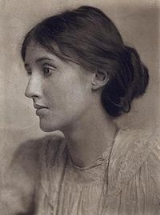
Virginia Woolf

 
Virginia Woolf

   Email Print
   Bookmark   Link


Virginia Woolf


Adeline Virginia Woolf (née Stephen; 25 January 1882 – 28 March 1941) was an English
England

native_name =|conventional_long_name = England|common_name = England|image_flag = Flag of England.svg|image_coat = England COA.svg|symbol_type = Royal Coat of Arms...
 novelist and essayist, regarded as one of the foremost modernist
Modernist literature

Modernist literature is the literary expression of the tendencies of Modernism, especially High modernism.Modernism as a literary movement reached its height in Europe between 1900 and the middle 1920s....
 literary
Literature

Literature is the art of written works. Literally translated, the word means "acquaintance with letters" . In Western culture the most basic written literary types include fiction and non-fiction....
 figures of the twentieth century.

During the interwar period
Interwar period

The interwar period is understood, within recent Western culture, to be the period between the end of the First World War and the beginning of the Second World War....
, Woolf was a significant figure in London
London

London is the capital of both England and the United Kingdom, and the most populous municipality in the European Union. An important settlement for two millennia, History of London goes back to its founding by the Roman Empire....
 literary society and a member of the Bloomsbury Group
Bloomsbury Group

The Bloomsbury Group was an England collectivity of friends and relatives who lived in or near London during the first half of the twentieth century....
. Her most famous works include the novels Mrs Dalloway
Mrs Dalloway

Mrs Dalloway is a novel by Virginia Woolf that details a day in the life of Clarissa Dalloway in post-World War I England. Mrs Dalloway continues to be one of Woolf's best-known novels....
 (1925), To the Lighthouse
To the Lighthouse

To the Lighthouse is a novel by Virginia Woolf. A landmark novel of high modernism, the text, centering on the Ramsay family and their visits to the Isle of Skye in Scotland between 1910 and 1920, skillfully manipulates temporality and psychological exploration....
 (1927) and Orlando
Orlando: A Biography

Orlando: A Biography is an influential novel by Virginia Woolf, first published on 11 October 1928. A semi-biographical novel based in part on the life of Woolf's intimate friend Vita Sackville-West, it is generally considered one of Woolf's most accessible novels....
 (1928), and the book-length essay A Room of One's Own
A Room of One's Own

A Room of One's Own is an extended essay by Virginia Woolf. First published during 24 October 1929, it was based on a series of lectures she delivered at Newnham College, Cambridge and Girton College, two women's colleges at University of Cambridge in 1928....
 (1929), with its famous dictum, "a woman must have money and a room of her own if she is to write fiction."

Biography
Early life
Virginia Woolf was born Adeline Virginia Stephen in London
London

London is the capital of both England and the United Kingdom, and the most populous municipality in the European Union. An important settlement for two millennia, History of London goes back to its founding by the Roman Empire....
 in 1882.


Discussion
Ask a question about 'Virginia Woolf'
Start a new discussion about 'Virginia Woolf'
Answer questions from other users
Full Discussion Forum


Recent Posts


Quotations


A light here required a shadow there.

Part I, Chapter 9.

A woman must have money and a room of her own if she is to write fiction.

Directly you find yourself circling 'round the mulberry bush, stop and pelt the tree with laughter.

For our penitence deserves a glimpse only; our toil respite only.

Part II, Chapter 3.

Literature is strewn with the wreckage of men who have minded beyond reason the opinions of others.

The beauty of the world which is so soon to perish, has two edges, one of laughter, one of anguish, cutting the heart asunder.


Encyclopedia


Adeline Virginia Woolf (née Stephen; 25 January 1882 – 28 March 1941) was an English
England

native_name =|conventional_long_name = England|common_name = England|image_flag = Flag of England.svg|image_coat = England COA.svg|symbol_type = Royal Coat of Arms...
 novelist and essayist, regarded as one of the foremost modernist
Modernist literature

Modernist literature is the literary expression of the tendencies of Modernism, especially High modernism.Modernism as a literary movement reached its height in Europe between 1900 and the middle 1920s....
 literary
Literature

Literature is the art of written works. Literally translated, the word means "acquaintance with letters" . In Western culture the most basic written literary types include fiction and non-fiction....
 figures of the twentieth century.

During the interwar period
Interwar period

The interwar period is understood, within recent Western culture, to be the period between the end of the First World War and the beginning of the Second World War....
, Woolf was a significant figure in London
London

London is the capital of both England and the United Kingdom, and the most populous municipality in the European Union. An important settlement for two millennia, History of London goes back to its founding by the Roman Empire....
 literary society and a member of the Bloomsbury Group
Bloomsbury Group

The Bloomsbury Group was an England collectivity of friends and relatives who lived in or near London during the first half of the twentieth century....
. Her most famous works include the novels Mrs Dalloway
Mrs Dalloway

Mrs Dalloway is a novel by Virginia Woolf that details a day in the life of Clarissa Dalloway in post-World War I England. Mrs Dalloway continues to be one of Woolf's best-known novels....
 (1925), To the Lighthouse
To the Lighthouse

To the Lighthouse is a novel by Virginia Woolf. A landmark novel of high modernism, the text, centering on the Ramsay family and their visits to the Isle of Skye in Scotland between 1910 and 1920, skillfully manipulates temporality and psychological exploration....
 (1927) and Orlando
Orlando: A Biography

Orlando: A Biography is an influential novel by Virginia Woolf, first published on 11 October 1928. A semi-biographical novel based in part on the life of Woolf's intimate friend Vita Sackville-West, it is generally considered one of Woolf's most accessible novels....
 (1928), and the book-length essay A Room of One's Own
A Room of One's Own

A Room of One's Own is an extended essay by Virginia Woolf. First published during 24 October 1929, it was based on a series of lectures she delivered at Newnham College, Cambridge and Girton College, two women's colleges at University of Cambridge in 1928....
 (1929), with its famous dictum, "a woman must have money and a room of her own if she is to write fiction."

Biography


Early life


Virginia Woolf was born Adeline Virginia Stephen in London
London

London is the capital of both England and the United Kingdom, and the most populous municipality in the European Union. An important settlement for two millennia, History of London goes back to its founding by the Roman Empire....
 in 1882. Her father, Sir Leslie Stephen
Leslie Stephen

Sir Leslie Stephen, Order of the Bath was an England author, critic and mountaineer, and the father of Virginia Woolf and Vanessa Bell....
, was a notable author, critic and mountaineer. Her mother, Julia Prinsep Stephen (née Jackson) (1846–1895), was born in India to Dr. John and Maria Pattle Jackson and later moved to England with her mother, where she served as a model for Pre-Raphaelite
Pre-Raphaelite Brotherhood

The Pre-Raphaelite Brotherhood was a group of England Paintings, poets, and critics, founded in 1848 by Dante Gabriel Rossetti, William Michael Rossetti, James Collinson, John Everett Millais, Frederic George Stephens, Thomas Woolner and William Holman Hunt....
 painters such as Edward Burne-Jones
Edward Burne-Jones

Sir Edward Coley Burne-Jones, 1st Baronet was an England artist and designer closely associated with the later phase of the Pre-Raphaelite Brotherhood, who worked closely with William Morris on a wide range of decorative arts as a founding partner in Morris & Co.....
.. The young Virginia was educated by her parents in their literate and well-connected household at 22 Hyde Park Gate
Hyde Park Gate

Hyde Park Gate is an address in London, England, which applies to two parallel roads in Kensington on the southern boundary of Kensington Gardens....
, Kensington
Kensington

Kensington is a district of West London, England within the Royal Borough of Kensington and Chelsea, located west of Charing Cross. An affluent and densely-populated area, its commercial heart is Kensington High Street and it contains the well-known museum district of South Kensington....
. Her parents had each been married previously and been widowed, and, consequently, the household contained the children of three marriages. Julia had three children from her first husband, Herbert Duckworth: George Duckworth (1868–1934), Stella Duckworth (1869–1897), and Gerald Duckworth
Gerald Duckworth

Gerald de l'Etang Duckworth was a United Kingdom publisher....
 (1870–1937). Leslie had one daughter from his first wife, Minny Thackeray: Laura Makepeace Stephen (1870–1945), who was declared mentally disabled
Developmental disability

Developmental disability is a term used to describe life-long Disability attributable to mental and/or physical or combination of mental and physical List of disabilities, manifested prior to age twenty-two....
 and lived with the family until she was institutionalised in 1891. Leslie and Julia had four children together: Vanessa Stephen
Vanessa Bell

Vanessa Bell was an England Painting and interior designer, a member of the Bloomsbury group, and the sister of Virginia Woolf....
 (1879–1961), Thoby Stephen
Thoby Stephen

Thoby Stephen , known as the Goth, was a member of the Bloomsbury Group, as were his sisters Vanessa Bell and Virginia Woolf and his younger brother Adrian Stephen....
 (1880–1906), Virginia, and Adrian Stephen
Adrian Stephen

Adrian Stephen was a member of the Bloomsbury Group, an author and psychoanalyst, and the brother of Virginia Woolf and Vanessa Bell. He and his wife became interested in the work of Sigmund Freud, and were among the first British psychoanalysts....
 (1883–1948).

Sir Leslie Stephen's eminence as an editor, critic, and biographer, and his connection to William Thackeray (he was the widower of Thackeray's youngest daughter), meant that his children were raised in an environment filled with the influences of Victorian
Victorian era

The Victorian Era of the United Kingdom of Great Britain and Ireland was the period of Victoria of the United Kingdom reign from June 1837 to January 1901....
 literary society. Henry James
Henry James

Henry James, Order of Merit , son of theologian Henry James Sr., brother of the philosopher and psychologist William James and diarist Alice James, was an United States author....
, George Henry Lewes
George Henry Lewes

George Henry Lewes was an England philosopher and critic of literature and theatre....
, Julia Margaret Cameron
Julia Margaret Cameron

Julia Margaret Cameron was a United Kingdom photographer. She became known for her portraits of celebrities of the time, and for King Arthur and similar legendary themed pictures....
 (an aunt of Julia Stephen), and James Russell Lowell
James Russell Lowell

James Russell Lowell was an United States Romanticism poet, critic, editor, and diplomat. He is associated with the Fireside Poets, a group of New England writers who were among the first American poets who rivaled the popularity of British poets....
, who was made Virginia's godfather, were among the visitors to the house. Julia Stephen was equally well connected. Descended from an attendant of Marie Antoinette
Marie Antoinette

For the 2006 film about this person that stars Kirsten Dunst, see Marie-Antoinette .Marie Antoinette was born an Archduchess of Austria and later became Queen of France and of Navarre....
, she came from a family of renowned beauties who left their mark on Victorian society as models for Pre-Raphaelite artists and early photographers. Supplementing these influences was the immense library at the Stephens' house, from which Virginia and Vanessa (unlike their brothers, who were formally educated) were taught the classics
Classics

Classics is the branch of the Humanities comprising the languages, literature, philosophy, history, art, and other culture of the ancient Mediterranean World; especially Ancient Greece and Ancient Rome during Classical Antiquity ....
 and English literature
English literature

The term English literature refers to literature written in the English language, including literature composed in English by writers not necessarily from England; Joseph Conrad was Polish, Robert Burns was Scottish, James Joyce was Irish, Dylan Thomas was Welsh, Edgar Allan Poe was American, Salman Rushdie is Indian, V.S....
.

According to Woolf's memoirs, her most vivid childhood memories, however, were not of London but of St Ives
St Ives, Cornwall

St Ives is a seaside resort, civil parish and port in the Penwith district of Cornwall, England, United Kingdom. The town lies north of Penzance and west of Camborne....
 in Cornwall
Cornwall

Cornwall , constitutional Duchy and palatine, is a metropolitan and non-metropolitan counties of England of England, United Kingdom, located at the tip of the south-western peninsula of Great Britain....
, where the family spent every summer until 1895. The Stephens' summer home, Talland House, looked out over Porthminster Bay. Memories of these family holidays and impressions of the landscape, especially the Godrevy Lighthouse
Godrevy

Godrevy is an area of west Cornwall, United Kingdom, found on the north coast within St. Ives, Cornwall and is popular with both the surfing community and walkers....
, informed the fiction Woolf wrote in later years, most notably To the Lighthouse
To the Lighthouse

To the Lighthouse is a novel by Virginia Woolf. A landmark novel of high modernism, the text, centering on the Ramsay family and their visits to the Isle of Skye in Scotland between 1910 and 1920, skillfully manipulates temporality and psychological exploration....
.

The sudden death of her mother in 1895, when Virginia was 13, and that of her half sister Stella two years later, led to the first of Virginia's several nervous breakdown
Nervous Breakdown

Nervous Breakdown was the first Extended play#The 7" EP in punk rock by the American hardcore punk band Black Flag . It was released in 1978 and was the inaugural release on SST Records....
s. The death of her father in 1904 provoked her most alarming collapse and she was briefly institutionalised.

Her breakdowns and subsequent recurring depressive
Depression (mood)

In the fields of psychology and psychiatry, the terms depression or depressed refer to sadness and other related emotions and behaviours. It can be thought of as either a disease or a syndrome....
 periods, modern scholars (including her nephew and biographer, Quentin Bell
Quentin Bell

Quentin Claudian Stephen Bell was an England art historian and author.Bell was the son of Clive Bell and Vanessa Bell n?e Stephen, and the nephew of Virginia Woolf n?e Stephen....
) have claimed, were also induced by the sexual abuse
Sexual abuse

Sexual abuse, also referred to as molestation, is the forcing of undesired sexual acts by one person upon another. The offender is referred to as a molester/molestor/ abuser/sexual abuser....
 she and Vanessa were subjected to by their half-brothers George and Gerald (which Woolf recalls in her autobiographical essays A Sketch of the Past
A Sketch of the Past

A Sketch of the Past is an autobiographical essay written by Virginia Woolf in 1939. It was written as a break from writing her biography of Roger Fry, England artist and critic, and fellow member of The Bloomsbury Group....
 and 22 Hyde Park Gate).

Throughout her life, Woolf was plagued by drastic mood swing
Mood swing

A mood swing is an extreme or rapid change in Emotional mood. They are commonly associated with mood disorders, of which the classic example is bipolar disorder and also a major factor in hyperactive or hyperactive/inattentive ADHD....
s. Though this instability greatly affected her social functioning, her literary abilities remained intact. Modern diagnostic techniques have led to a posthumous diagnosis of bipolar disorder
Bipolar disorder

Bipolar disorder is a Classification of mental disorders that describes a category of mood disorders, or mood swings, defined by the presence of one or more episodes of abnormally elevated mood clinically referred to as mania or, if milder, hypomania....
, an illness which coloured her work, relationships, and life, and eventually led to her suicide.

Bloomsbury


After the death of their father and Virginia's second nervous breakdown, Virginia, Vanessa, and Adrian sold 22 Hyde Park Gate and bought a house at 46 Gordon Square in Bloomsbury
Bloomsbury

Bloomsbury may refer to:* Bloomsbury, an area in central London.* the Bloomsbury Group, an English literary group active around from around 1905 to the start of World War II....
.

Following studies at King's College London
King's College London

King's College London is a United Kingdom higher education institution and co-founding constituent college of the University of London. Founded by George IV of the United Kingdom and the Arthur Wellesley, 1st Duke of Wellington in 1829, its royal charter is predated, in England, only by those of the Universities of University of Oxford and Un...
, Woolf came to know Lytton Strachey
Lytton Strachey

Giles Lytton Strachey was a United Kingdom writer and critic. He is best known for establishing a new form of biography in which psychology insight and sympathy are combined with irreverence and wit....
, Clive Bell
Clive Bell

Arthur Clive Heward Bell was an England Art critic, associated with the Bloomsbury group....
, Saxon Sydney-Turner, Duncan Grant
Duncan Grant

Duncan James Corrowr Grant was a Scottish people Painting and member of the Bloomsbury Group. He was a cousin of John Grant, Lord Huntingtower and grandson of the second Sir John Peter Grant ....
, and Leonard Woolf
Leonard Woolf

Leonard Sidney Woolf was a noted British political theorist, author, publisher, and civil servant, but perhaps now best known as the widower of author Virginia Woolf....
, who together formed the nucleus of the intellectual circle known as the Bloomsbury Group
Bloomsbury Group

The Bloomsbury Group was an England collectivity of friends and relatives who lived in or near London during the first half of the twentieth century....
. Several members of the group attained notoriety in 1910 with the Dreadnought hoax
Dreadnought hoax

The Dreadnought Hoax was a practical joke pulled by Horace de Vere Cole in 1910. Cole tricked the Royal Navy into showing their flagship, the warship HMS Dreadnought to a supposed delegation of Ethiopia royals....
, which Virginia participated in disguised as a male Abyssinian
Abyssinian

Abyssinian may refer to:* Abyssinian, Habesha people and things from parts of Ethiopia and Eritrea, formerly known as Abyssinia* Abyssinian , a cat breed...
 royal. Her complete 1940 talk on the Hoax has recently been discovered and is published in the memoirs collected in the expanded edition of The Platform of Time (2008).

Virginia Stephen married writer Leonard Woolf
Leonard Woolf

Leonard Sidney Woolf was a noted British political theorist, author, publisher, and civil servant, but perhaps now best known as the widower of author Virginia Woolf....
 in 1912, referring to him during their engagement as a "penniless Jew." The couple shared a close bond; in 1937, Woolf wrote in her diary: "“Love-making — after 25 years can’t bear to be separate ... you see it is enormous pleasure being wanted: a wife. And our marriage so complete.”" The two also collaborated professionally, in 1917 founding the Hogarth Press
Hogarth Press

The Hogarth Press was founded in 1917 by Leonard Woolf and Virginia Woolf. It was named after their house in London Borough of Richmond upon Thames, in which they began hand-printing books....
, which subsequently published Virginia's novels along with works by T.S. Eliot, Laurens van der Post
Laurens van der Post

Sir Laurens Jan van der Post was a 20th century Afrikaner author of many books, farmer, hero, :wikt:adviser to United Kingdom heads of government, godparent of Prince William, educator, journalist, humanitarian, philosopher, explorer, and conservationist....
, and others. The ethos of the Bloomsbury group discouraged sexual exclusivity, and in 1922, Virginia met the writer and gardener Vita Sackville-West
Vita Sackville-West

Victoria Mary Sackville-West, The Hon Lady Nicolson, Order of the Companions of Honour , best known as Vita Sackville-West, was an England author and poet....
, wife of Harold Nicolson
Harold Nicolson

Sir Harold George Nicolson Royal Victorian Order Order of St Michael and St George was an England diplomat, author, diary and politician. He was the husband of writer Vita Sackville-West, their unusual relationship being described in their son's book, Portrait of a Marriage....
. After a tentative start, they began a sexual relationship that lasted through most of the 1920s. In 1928, Woolf presented Sackville-West with Orlando
Orlando: A Biography

Orlando: A Biography is an influential novel by Virginia Woolf, first published on 11 October 1928. A semi-biographical novel based in part on the life of Woolf's intimate friend Vita Sackville-West, it is generally considered one of Woolf's most accessible novels....
, a fantastical
Fantasy

Fantasy is a genre that uses magic and other supernatural forms as a primary element of Plot , Theme , and/or Setting . Fantasy is generally distinguished from science fiction and horror by the expectation that it steers clear of technological and macabre themes, respectively, though there is a great deal of overlap between the three ....
 biography in which the eponymous hero's life spans three centuries and both gender
Gender

Gender comprises a range of differences between man and woman, extending from the biological to the social. Biologically, the male gender is defined by the presence of a Y-chromosome, and its absence in the female gender....
s. It has been called by Nigel Nicolson
Nigel Nicolson

Nigel Nicolson Order of the British Empire was a British writer, publisher and politician.Nicolson was the son of the writers Sir Harold Nicolson and Vita Sackville-West; he had a brother Benedict Nicolson, later an art historian....
, Vita Sackville-West's son, "the longest and most charming love letter in literature." After their affair ended, the two women remained friends until Woolf's death in 1941. Virginia Woolf also remained close to her surviving siblings, Adrian and Vanessa; Thoby had died of an illness at the age of 26.

Death

After completing the manuscript of her last (posthumously published) novel, Between the Acts
Between the Acts

Between the Acts is the final novel by Virginia Woolf, published in 1941 shortly after her suicide. This is an interesting book laden with hidden meaning and allusion....
, Woolf fell victim to a depression similar to that which she had earlier experienced. The onset of World War II
World War II

World War II, or the Second World War , was a global military conflict which involved a Participants in World War II, including all of the great powers, organised into two opposing military alliances: the Allies of World War II and the Axis powers....
, the destruction of her London homes during the Blitz
The Blitz

The Blitz was the sustained bombing of United Kingdom by Nazi Germany between 7 September 1940 and 10 May 1941, in World War II. While the "Blitz" hit many towns and cities across the country, it began with the bombing of London for 57 consecutive nights ....
, and the cool reception given to her biography of her late friend Roger Fry
Roger Fry

Roger Eliot Fry was an England artist and an art critic, and a member of the Bloomsbury group. Despite establishing his reputation as a scholar of the Old Masters, as he matured as a critic he became an advocate of more recent developments in French painting, to which he gave the name Post-Impressionism....
 all worsened her condition until she was unable to work.

On 28 March 1941, Woolf committed suicide
Suicide

Suicide is the intentional taking of one's own life. Many dictionaries also note the metaphorical sense of "willful destruction of one's self-interest"....
. She put on her overcoat
Overcoat

An overcoat is a type of long coat intended to be worn as the outermost garment. Overcoats usually extend below the knee, but are sometimes mistakenly referred to as topcoats, which are short coats that end at or above the knees....
, filled its pockets with stones, then walked into the River Ouse
River Ouse, Sussex

The River Ouse is a river in the county of West Sussex and East Sussex in England. It rises near Lower Beeding, passes through Lewes and the South Downs and joins the English Channel at Newhaven, East Sussex....
 near her home and drowned herself. Woolf's body was not found until 18 April. Her husband buried her cremated
Cremation

Cremation is the process of reducing human remains to basic Chemical element in the form of bone fragments through flame, heat, and vaporization....
 remains under a tree in the garden of their house in Rodmell
Rodmell

Rodmell is a small village and civil parish in the Lewes of East Sussex, England. It is located three miles south-west of Lewes, on the Lewes to Newhaven, East Sussex road and is situated by the west banks of the River Ouse, Sussex....
, Sussex.

In her last note to her husband she wrote:

Work


Woolf began writing professionally in 1905, initially for the Times Literary Supplement with a journalistic piece about Haworth
Haworth

Haworth is a village and tourist attraction in the England Ceremonial county of West Yorkshire best known for its association with the Bront?....
, home of the Brontë
Brontë

The Bront? sisters , Charlotte Bront? , Emily Bront? and Anne Bront? , were English writers of the 1840s and 1850s. Their novels caused a sensation when they were first published and were subsequently accepted into the canon of great English literature....
 family. Her first novel, The Voyage Out
The Voyage Out

The Voyage Out is the first novel by Virginia Woolf, published in 1915 by Gerald Duckworth and Company Ltd; and published in the U.S. in 1920 by Doran....
, was published in 1915 by her half-brother's imprint, Gerald Duckworth and Company Ltd
Gerald Duckworth and Company Ltd

Founded in 1898 by Gerald Duckworth, Duckworth is an independent United Kingdom publisher. It was important in the development of English literature in the first half of the twentieth century, being the publisher of figures such as Virginia Woolf , Anthony Powell, John Galsworthy and D....
.

This novel was originally entitled Melymbrosia, but Woolf repeatedly changed the draft. An earlier version of The Voyage Out has been reconstructed by Woolf scholar Louise DeSalvo
Louise DeSalvo

Louise DeSalvo is an American writer, editor, professor, and lecturer who currently lives in New Jersey. Much of her work focuses on Italian-American culture....
 and is now available to the public under the intended title. DeSalvo argues that many of the changes Woolf made in the text were in response to changes in her own life. Woolf went on to publish novels and essays as a public intellectual to both critical and popular success. Much of her work was self-published through the Hogarth Press
Hogarth Press

The Hogarth Press was founded in 1917 by Leonard Woolf and Virginia Woolf. It was named after their house in London Borough of Richmond upon Thames, in which they began hand-printing books....
. She has been hailed as one of the greatest novelists of the twentieth century and one of the foremost modernists, though she disdained some artists in this category.

Woolf is considered one of the greatest innovators in the English language. In her works she experimented with stream-of-consciousness and the underlying psychological as well as emotional motives of characters. Woolf's reputation declined sharply after World War II, but her eminence was re-established with the surge of Feminist criticism
Feminist literary criticism

Feminist literary criticism is literary criticism informed by feminist theory, or by the politics of feminism more broadly. Its history has been broad and varied, from classic works of nineteenth-century women authors such as George Eliot and Margaret Fuller to cutting-edge theoretical work in women's studies and gender studies by "third-wa...
 in the 1970s. After a few more ideologically based altercations, not least caused by claims that Woolf was anti-Semitic and a snob
Snob

A snob is someone who adopts the worldview of snobbery ? that some people are inherently inferior to him or her for any one of a variety of reasons, including real or supposed intellect, wealth, education, ancestry, etc....
, it seems that a critical consensus has been reached regarding her stature as a novelist.

Her work was criticised for epitomizing the narrow world of the upper-middle class English intelligentsia. Some critics judged it to be lacking in universality and depth, without the power to communicate anything of emotional or ethical relevance to the disillusioned common reader, weary of the 1920s aesthetes. She was also criticized by some as an anti-Semite, despite her marriage to a Jewish man. She wrote in her diary, "I do not like the Jewish voice; I do not like the Jewish laugh." However, in a 1930 letter to Ethel Smyth quoted in Nigel Nicolson's biography,Virginia Woolf, she recollects her boasts of Leonard's Jewishness confirming her snobbish tendencies, "How I hated marrying a Jew- What a snob I was, for they have immense vitality."

Virginia Woolf's peculiarities as a fiction writer have tended to obscure her central strength: Woolf is arguably the major lyrical novelist in the English language. Her novels are highly experimental: a narrative, frequently uneventful and commonplace, is refracted—and sometimes almost dissolved—in the characters' receptive consciousness. Intense lyricism and stylistic virtuosity fuse to create a world overabundant with auditory and visual impressions.

The intensity of Virginia Woolf's poetic vision elevates the ordinary, sometimes banal settings - often wartime environments - of most of her novels. For example, Mrs Dalloway
Mrs Dalloway

Mrs Dalloway is a novel by Virginia Woolf that details a day in the life of Clarissa Dalloway in post-World War I England. Mrs Dalloway continues to be one of Woolf's best-known novels....
 (1925) centres on the efforts of Clarissa Dalloway, a middle-aged society woman, to organize a party, even as her life is paralleled with that of Septimus Warren Smith, a working-class veteran who has returned from the First World War bearing deep psychological scars.

To the Lighthouse
To the Lighthouse

To the Lighthouse is a novel by Virginia Woolf. A landmark novel of high modernism, the text, centering on the Ramsay family and their visits to the Isle of Skye in Scotland between 1910 and 1920, skillfully manipulates temporality and psychological exploration....
 (1927) is set on two days ten years apart. The plot centers around the Ramsay family's anticipation of and reflection upon a visit to a lighthouse and the connected familial tensions. One of the primary themes of the novel is the struggle in the creative process that beset painter Lily Briscoe while she struggles to paint in the midst of the family drama. The novel is also a meditation upon the lives of a nation's inhabitants in the midst of war, and of the people left behind. It also explores the passage of time, and how women are forced by society to allow men to take emotional strength from them.

The Waves
The Waves

The Waves, first published in 1931, is Virginia Woolf's most experimental novel. It consists of soliloquies spoken by the book's six characters: Bernard, Susan, Rhoda, Neville, Jinny, and Louis....
 (1931) presents a group of six friends whose reflections, which are closer to recitatives than to interior monologues proper, create a wave-like atmosphere that is more akin to a prose poem than to a plot-centered novel.

Her last work, Between the Acts
Between the Acts

Between the Acts is the final novel by Virginia Woolf, published in 1941 shortly after her suicide. This is an interesting book laden with hidden meaning and allusion....
 (1941) sums up and magnifies Woolf's chief preoccupations: the transformation of life through art, sexual ambivalence, and meditation on the themes of flux of time and life, presented simultaneously as corrosion and rejuvenation—all set in a highly imaginative and symbolic narrative encompassing almost all of English history.

While nowhere near a simple recapitulation of the coterie's ideals, Woolf's work can be understood as consistently in dialogue with Bloomsbury, particularly its tendency (informed by G.E. Moore, among others) towards doctrinaire rationalism.

Her works have been translated into over 50 languages, by writers of the calibre of Jorge Luis Borges
Jorge Luis Borges

Jorge Francisco Isidoro Luis Borges was an Argentina writer born in Buenos Aires. He was brought up bilingual in Spanish and English. In 1914, his family moved to Switzerland where he attended school, then traveled around Spain....
 and Marguerite Yourcenar
Marguerite Yourcenar

Marguerite Yourcenar was a French novelist. She was the first woman elected to the Acad?mie fran?aise in 1980, and the seventeenth to occupy Seat 3....
.

Modern scholarship and interpretations


Recently, studies of Virginia Woolf have focused on feminist and lesbian
Lesbian

File:Lesbian Couple from back holding hands.jpgLesbian is a term most widely used in the English language to describe sexual and romantic desire between females....
 themes in her work, such as in the 1997 collection of critical essays, Virginia Woolf: Lesbian Readings, edited by Eileen Barrett and Patricia Cramer. Louise A. DeSalvo offers treatment of the incestuous sexual abuse Woolf experienced as a young woman in her book Virginia Woolf: The Impact of Childhood Sexual Abuse on her Life and Work.

Woolf's fiction is also studied for its insight into shell shock
Shell Shock

Shell Shock, also known as 82nd Marines Attack was a 1964 in film by B-movie director John Hayes . The film takes place in Italy during World War II, and tells the story of a sergeant with his group of soldiers....
, war
War

...
, class
Social class

Social class refers to the hierarchy distinctions between individuals or groups in societies or cultures. Usually most societies have some notion of social class , but concretely defined social classes are not found in every known type of human societies....
, and modern British society. Her best-known nonfiction works, A Room of One's Own
A Room of One's Own

A Room of One's Own is an extended essay by Virginia Woolf. First published during 24 October 1929, it was based on a series of lectures she delivered at Newnham College, Cambridge and Girton College, two women's colleges at University of Cambridge in 1928....
 (1929) and Three Guineas
Three Guineas

Three Guineas is a book-length essay by Virginia Woolf, published in June 1938. Woolf wrote the essay to answer three questions, each from a different society:...
 (1938), examine the difficulties female writers and intellectuals face because men hold disproportionate legal and economic power, and the future of women in education and society.

Irene Coates's book Who's Afraid of Leonard Woolf: A Case for the Sanity of Virginia Woolf takes the position that Leonard Woolf's treatment of his wife encouraged her ill health and ultimately was responsible for her death. The position, which is not accepted by Leonard's family, is extensively researched and fills in some of the gaps in the traditional account of Virginia Woolf's life. In contrast, Victoria Glendinning's book Leonard Woolf: A Biography, which is even more extensively researched and supported by contemporaneous writings, argues that Leonard Woolf was not only very supportive of his wife, but enabled her to live as long as she did by providing her with the life and atmosphere she needed to live and write. Accounts of Virginia's supposed anti-semitism (Leonard was a secular Jew) are not only taken out of historical context but greatly exaggerated. Virginia's own diaries support this view of the Woolfs' marriage.

The first biography of Virginia Woolf was published in 1972 by her nephew, Quentin Bell.

In 1989 Louise DeSalvo
Louise DeSalvo

Louise DeSalvo is an American writer, editor, professor, and lecturer who currently lives in New Jersey. Much of her work focuses on Italian-American culture....
 published the book Virginia Woolf: The Impact of Childhood Sexual Abuse on Her Life and Work.

In 1992, Thomas Caramagno published the book The Flight of the Mind: Virginia Woolf's Art and Manic-Depressive Illness."

Hermione Lee
Hermione Lee

Hermione Lee, Order of the British Empire is President of Wolfson College, Oxford and was lately Goldsmiths' Professor of English Literature in the University of Oxford and Professorial Fellow of New College, Oxford....
's 1996 biography
Virginia Woolf provides a thorough and authoritative examination of Woolf's life and work.

In 2001 Louise DeSalvo
Louise DeSalvo

Louise DeSalvo is an American writer, editor, professor, and lecturer who currently lives in New Jersey. Much of her work focuses on Italian-American culture....
 and Mitchell A. Leaska edited
The Letters of Vita Sackville-West and Virginia Woolf. Julia Briggs's Virginia Woolf: An Inner Life, published in 2005, is the most recent examination of Woolf's life. It focuses on Woolf's writing, including her novels and her commentary on the creative process, to illuminate her life. Thomas Szasz
Thomas Szasz

Thomas Stephen Szasz is a psychiatrist and academic. He is Professor Emeritus of Psychiatry at the State University of New York Health Science Center in Syracuse, New York, New York....
's book
My Madness Saved Me: The Madness and Marriage of Virginia Woolf (ISBN 0-7658-0321-6) was published in 2006.

Bibliography


Novels

  • The Voyage Out
    The Voyage Out

    The Voyage Out is the first novel by Virginia Woolf, published in 1915 by Gerald Duckworth and Company Ltd; and published in the U.S. in 1920 by Doran....
    (1915)
  • Night and Day (1919)
  • Jacob's Room
    Jacob's Room

    Jacob's Room is the third novel by Virginia Woolf, first published on 26 October 1922....
    (1922)
  • Mrs Dalloway
    Mrs Dalloway

    Mrs Dalloway is a novel by Virginia Woolf that details a day in the life of Clarissa Dalloway in post-World War I England. Mrs Dalloway continues to be one of Woolf's best-known novels....
    (1925)
  • To the Lighthouse
    To the Lighthouse

    To the Lighthouse is a novel by Virginia Woolf. A landmark novel of high modernism, the text, centering on the Ramsay family and their visits to the Isle of Skye in Scotland between 1910 and 1920, skillfully manipulates temporality and psychological exploration....
    (1927)
  • Orlando
    Orlando: A Biography

    Orlando: A Biography is an influential novel by Virginia Woolf, first published on 11 October 1928. A semi-biographical novel based in part on the life of Woolf's intimate friend Vita Sackville-West, it is generally considered one of Woolf's most accessible novels....
    (1928)
  • The Waves
    The Waves

    The Waves, first published in 1931, is Virginia Woolf's most experimental novel. It consists of soliloquies spoken by the book's six characters: Bernard, Susan, Rhoda, Neville, Jinny, and Louis....
    (1931)
  • The Years
    The Years

    The Years is a 1937 in literature novel by Virginia Woolf, the last she published in her lifetime. It traces the history of the genteel Pargiter family from the 1880s to the "present day" of the mid-1930s....
    (1937)
  • Between the Acts
    Between the Acts

    Between the Acts is the final novel by Virginia Woolf, published in 1941 shortly after her suicide. This is an interesting book laden with hidden meaning and allusion....
    (1941)


Short story collections

  • Monday or Tuesday (1921)
  • The New Dress (1924)
  • A Haunted House and Other Short Stories (1944)
  • Mrs. Dalloway's Party (1973)
  • The Complete Shorter Fiction (1985)


"Biographies"

Virginia Woolf published three books which she gave the subtitle "A Biography":
  • Orlando: A Biography
    Orlando: A Biography

    Orlando: A Biography is an influential novel by Virginia Woolf, first published on 11 October 1928. A semi-biographical novel based in part on the life of Woolf's intimate friend Vita Sackville-West, it is generally considered one of Woolf's most accessible novels....
    (1928, usually characterised Novel, inspired by the life of Vita Sackville-West
    Vita Sackville-West

    Victoria Mary Sackville-West, The Hon Lady Nicolson, Order of the Companions of Honour , best known as Vita Sackville-West, was an England author and poet....
    )
  • Flush: A Biography
    Flush: A Biography

    Flush: A Biography, an imaginative biography of Elizabeth Barrett Browning's English Cocker Spaniel, is a cross-genre blend of fiction and nonfiction by Virginia Woolf published in 1933....
    (1933, more explicitly cross-genre: fiction as "stream of consciousness" tale by Flush, a dog; non-fiction in the sense of telling the story of the owner of the dog, Elizabeth Barrett Browning
    Elizabeth Barrett Browning

    Elizabeth Barrett Browning was one of the most respected poets of the Victorian era....
    )
  • Roger Fry: A Biography (1940, usually characterised non-fiction, however: "[Woolf's] novelistic skills worked against her talent as a biographer, for her impressionistic observations jostled uncomfortably with the simultaneous need to marshall a multitude of facts.")


Non-fiction books

  • Modern Fiction (1919)
  • The Common Reader (1925)
  • A Room of One's Own
    A Room of One's Own

    A Room of One's Own is an extended essay by Virginia Woolf. First published during 24 October 1929, it was based on a series of lectures she delivered at Newnham College, Cambridge and Girton College, two women's colleges at University of Cambridge in 1928....
    (1929)
  • On Being Ill
    On Being Ill

    On Being Ill is an essay by Virginia Woolf that appeared in T. S. Eliot's New Criterion in January, 1926; The essay was later reprinted, with revisions, in Forum in April 1926, under the title Illness: An Unexploited Mine....
    (1930)
  • The London Scene (1931)
  • The Common Reader: Second Series (1932)
  • Three Guineas
    Three Guineas

    Three Guineas is a book-length essay by Virginia Woolf, published in June 1938. Woolf wrote the essay to answer three questions, each from a different society:...
    (1938)
  • The Death of the Moth and Other Essays (1942)
  • The Moment and Other Essays (1947)
  • The Captain's Death Bed And Other Essays (1950)
  • Granite and Rainbow (1958)
  • Books and Portraits (1978)
  • Women And Writing (1979)
  • Collected Essays (four volumes)


Drama

  • Freshwater: A Comedy (performed in 1923, revised in 1935, and published in 1976)


Autobiographical writings and diaries

  • A Writer’s Diary (1953) - Extracts from the complete diary
  • Moments of Being (1976)
  • A Moment's Liberty: the shorter diary (1990)
  • The Diary of Virginia Woolf (five volumes) - Diary of Virginia Woolf from 1915 to 1941
  • Passionate Apprentice: The Early Journals, 1897-1909 (1990)
  • Travels With Virginia Woolf (1993) - Greek travel diary of Virginia Woolf, edited by Jan Morris
  • The Platform of Time: Memoirs of Family and Friends, Expanded Edition, edited by S. P. Rosenbaum (London, Hesperus, 2008)


Letters

  • Congenial Spirits: The Selected Letters (1993)
  • The Letters of Virginia Woolf 1888-1941 (six volumes, 1975-1980)
  • Paper Darts: The Illustrated Letters of Virginia Woolf (1991)


Prefaces, contributions

  • Selections Autobiographical and Imaginative from the Works of George Gissing
    George Gissing

    George Robert Gissing was an England novelist who wrote twenty-three novels between 1880 and 1903. From his early Naturalism works, he developed into one of the most accomplished Realism of the late-Victorian era....
    ed. Alfred C. Gissing
    Alfred Gissing

    Alfred Charles Gissing , was an England writer and headmaster, the son of George Gissing....
    , with an introduction by Virginia Woolf (London & New York, 1929)


Biographies

  • Virginia Woolf by Nigel Nicolson
    Nigel Nicolson

    Nigel Nicolson Order of the British Empire was a British writer, publisher and politician.Nicolson was the son of the writers Sir Harold Nicolson and Vita Sackville-West; he had a brother Benedict Nicolson, later an art historian....
    . New York, Penguin Group. 2000
  • Virginia Woolf: A Biography by Quentin Bell
    Quentin Bell

    Quentin Claudian Stephen Bell was an England art historian and author.Bell was the son of Clive Bell and Vanessa Bell n?e Stephen, and the nephew of Virginia Woolf n?e Stephen....
    . New York, Harcourt Brace Jovanovich, 1972
  • "Vanessa and Virginia" by Susan Sellers
    Susan Sellers

    Susan Sellers is an author, translator, editor and novelist. She is Professor of English and Related Literature at the University of St Andrews, and co-General Editor of the Cambridge University Press edition of the writings of Virginia Woolf....
     (Two Ravens, 2008; Harcourt 2009) [Fictional biography of Woolf and her sister Vanessa Bell]
  • The Unknown Virginia Woolf by Roger Poole. Cambridge UP, 1978.
  • The Invisible Presence: Virginia Woolf and the Mother-Daughter Relationship by Ellen Bayuk Rosenman. Louisiana State University Press, 1986.
  • Virginia Woolf: The Impact of Childhood Sexual Abuse on Her Life and Work by Louise DeSalvo. Boston: Little Brown, 1989
  • A Virginia Woolf Chronology by Edward Bishop. Boston: G.K. Hall & Co., 1989.
  • A Very Close Conspiracy: Vanessa Bell and Virginia Woolf by Jane Dunn. Boston: Little, Brown, 1990
  • Virginia Woolf: A Writer's Life by Lyndall Gordon
    Lyndall Gordon

    Lyndall Gordon is a South African academic, known for her Biography. She was born in Cape Town and was an undergraduate at the University of Cape Town, then a doctoral student at Columbia University....
    . New York: Norton, 1984; 1991.
  • The Flight of the Mind: Virginia Woolf's Art and Manic-Depressive Illness by Thomas D. Caramago. Berkeley: U of California Press, 1992
  • Virginia Woolf by James King. NY: W.W. Norton, 1994.
  • Art and Affection: A Life of Virginia Woolf by Panthea Reid. New York: Oxford UP, 1996.
  • Virginia Woolf by Hermione Lee
    Hermione Lee

    Hermione Lee, Order of the British Empire is President of Wolfson College, Oxford and was lately Goldsmiths' Professor of English Literature in the University of Oxford and Professorial Fellow of New College, Oxford....
    . New York: Knopf, 1997.
  • Granite and Rainbow: The Hidden Life of Virginia Woolf by Mitchell Leaska. New York: Farrar, Straus and Giroux, 1998.
  • Virginia Woolf: The Will to Create as a Woman by Ruth Gruber
    Ruth Gruber

    Ruth Gruber is an American journalist, photographer, writer, humanitarian and a former United States government official....
    . New York: Carroll & Graf Publishers, 2005
  • My Madness Saved Me: The Madness and Marriage of Virginia Woolf by Thomas Szasz
    Thomas Szasz

    Thomas Stephen Szasz is a psychiatrist and academic. He is Professor Emeritus of Psychiatry at the State University of New York Health Science Center in Syracuse, New York, New York....
    , 2006
  • The Bedside, Bathtub and Armchair Companion to Virginia Woolf and Bloomsbury by Sarah M. Hall, Continuum Publishing, 2007
  • A Life of One's Own: A Guide to Better Living through the Work and Wisdom of Virginia Woolf by Ilana Simons, New York: Penguin Press, 2007


External links

  • Spanish
  • *