
All Topics  
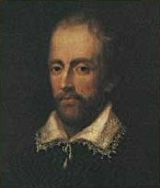
Edmund Spenser

 
Edmund Spenser

   Email Print
   Bookmark   Link


Edmund Spenser


Edmund Spenser (c. 1552 – 13 January 1599) was an important English
England

native_name =|conventional_long_name = England|common_name = England|image_flag = Flag of England.svg|image_coat = England COA.svg|symbol_type = Royal Coat of Arms...
 poet
Poet

A poet is a person who writes poetry....
 best known for The Faerie Queene
The Faerie Queene

The Faerie Queene is an English Epic poetry by Edmund Spenser, published first in three books in 1590, and later in six books in 1596. The Faerie Queene is notable for its form: it was the first work written in Spenserian stanza....
, an epic poem celebrating, through fantastical allegory, the Tudor dynasty
Tudor dynasty

The House of Tudor was a prominent European royal house that ruled the Kingdom of England and its realms from 1485 until 1603. Founded by Henry VII of England, who, though his paternal family was Welsh people ?his grandfather was Owen Tudor? was himself also a legitimized descendent of the royal House of Lancaster....
 and Elizabeth I. He is recognized as one of the premier craftsmen of Modern English verse in its infancy.

nd Spenser was born in [London] around 1552.


Discussion
Ask a question about 'Edmund Spenser'
Start a new discussion about 'Edmund Spenser'
Answer questions from other users
Full Discussion Forum


Quotations


A bold bad man, that dar'd to call by nameGreat Gorgon, Prince of darknesse and dead night.

Book I, canto 1, stanza 37

A Gentle Knight was pricking on the plaine.

Book I, canto 1, stanza 1

A monster, which the Blatant beast men call,A dreadfull feend of gods and men ydrad.

Book V, canto 12, stanza 37

And all for love, and nothing for reward.

Book II, canto 8, stanza 2

And in his hand a sickle he did holde,To reape the ripened fruits the which the earth had yold.

Book VII, canto 7, stanza 30

But of his cheere did seeme too solemne sad;Yet nothing did he dread, but ever was ydrad.

Book I, canto 1, stanza 2


Encyclopedia


Edmundspenser
Edmund Spenser (c. 1552 – 13 January 1599) was an important English
England

native_name =|conventional_long_name = England|common_name = England|image_flag = Flag of England.svg|image_coat = England COA.svg|symbol_type = Royal Coat of Arms...
 poet
Poet

A poet is a person who writes poetry....
 best known for The Faerie Queene
The Faerie Queene

The Faerie Queene is an English Epic poetry by Edmund Spenser, published first in three books in 1590, and later in six books in 1596. The Faerie Queene is notable for its form: it was the first work written in Spenserian stanza....
, an epic poem celebrating, through fantastical allegory, the Tudor dynasty
Tudor dynasty

The House of Tudor was a prominent European royal house that ruled the Kingdom of England and its realms from 1485 until 1603. Founded by Henry VII of England, who, though his paternal family was Welsh people ?his grandfather was Owen Tudor? was himself also a legitimized descendent of the royal House of Lancaster....
 and Elizabeth I. He is recognized as one of the premier craftsmen of Modern English verse in its infancy.

Life

Edmund Spenser was born in [London] around 1552. As a young boy, he was educated in London at the Merchant Taylors' School
Merchant Taylors' School, Northwood

Merchant Taylors' School is a United Kingdom boys' independent school, day school, originally located in the City of London, and since 1933 located at Sandy Lodge in the Three Rivers district of Hertfordshire ....
 and matriculated as a sizar
Sizar

A sizar formerly referred to students of limited means at the universities of University of Cambridge and Trinity College, Dublin, who were charged lower fees and obtained free food and/or lodging and other assistance during their period of study....
 at Pembroke College, Cambridge
Pembroke College, Cambridge

Pembroke College is a college of the University of Cambridge, home to over six hundred students and fellow, and is the third oldest of the colleges....
.

In the 1570s Spenser went to Ireland, probably in the service of the newly appointed lord deputy, Arthur Grey. From 1579 to 1580, he served with the English forces during the Second Desmond Rebellion
Second Desmond Rebellion

The Second Desmond rebellion was the more widespread and bloody of the two Desmond Rebellions launched by the Fitzgerald dynasty of County Desmond in Munster, southern Ireland, against English rule in Ireland....
. After the defeat of the rebels he was awarded lands in County Cork
County Cork

County Cork is the most southerly and the largest of the modern counties of Republic of Ireland. Cork is nicknamed "The Rebel County", as a result of the support of the townsmen of Cork in 1491 for Perkin Warbeck, a pretender to the throne of England during the Wars of the Roses....
 that had been confiscated in the Munster Plantation
Plantations of Ireland

Plantations in 16th and 17th century Ireland were established throughout the country by the confiscation of lands occupied by Gaelic clans and Hiberno-Norman dynasties, but principally in the provinces of Munster and Ulster....
 during the Elizabethan reconquest of Ireland
Tudor re-conquest of Ireland

The Tudor re-conquest of Ireland took place under the England Tudor dynasty during the 16th century. Following a failed rebellion against the crown by the FitzGerald in the 1530s, Henry VIII of England was declared King of Ireland by statute of the Irish parliament, with the aim of restoring such central authority as had been lost throughout...
. Among his acquaintances in the area was Walter Raleigh
Walter Raleigh

Sir Walter Raleigh or Ralegh, was a famed English writer, poet, soldier, courtier and explorer.Raleigh was born to a Protestant family in Devon, the son of Walter Raleigh and Catherine Champernowne....
, a fellow colonist.

Through his poetry Spenser hoped to secure a place at court, which he visited in Raleigh's company to deliver his most famous work, the Faerie Queene. However, he boldly antagonized the queen's principal secretary, Lord Burghley
William Cecil

William Cecil may refer to:* Lord William Cecil , British royal courtier* William Cecil, 1st Baron Burghley , English politician and advisor to Elizabeth I...
, and all he received in recognition of his work was a pension in 1591. When it was proposed that he receive payment of 100 pounds for his epic poem, Burghley remarked, "What, all this for a song!"

In the early 1590s, Spenser wrote a prose pamphlet titled, A View of the Present State of Ireland. This piece remained in manuscript form until its publication in print in the mid-seventeenth century. It is probable that it was kept out of print during the author's lifetime because of its inflammatory content. The pamphlet argued that Ireland would never be totally 'pacified' by the English until its indigenous language and customs had been destroyed, if necessary by violence. Spenser recommended scorched earth
Scorched earth

A scorched earth policy is a military strategy or operational method which involves destroying anything that might be useful to the enemy while advancing through or withdrawing from an area....
 tactics, such as he had seen used in the Desmond Rebellions
Desmond Rebellions

The Desmond Rebellions occurred in between 1569-1573 and 1579-1583 in Munster in southern Ireland.. They were rebellions of the Earl of Desmond dynasty—the Fitzgerald family or Geraldines and their allies against the efforts of the Elizabethan Era English government to extend their control over the province of Munster....
, to create famine. Although it has been highly regarded as a polemical piece of prose and valued as a historical source on 16th century Ireland, the View is seen today as genocidal in intent. Spenser did express some praise for the Gaelic poetic tradition, but also used much tendentious and bogus analysis to demonstrate that the Irish were descended from barbarian Scythian stock.

Later on, during the Nine Years War in 1598, Spenser was driven from his home by Irish rebels. His castle at Kilcolman, near Doneraile
Doneraile

Doneraile is a town in County Cork, Munster, Ireland. It is located 7 km east of the N20 road roads in Ireland between Limerick / Cork and Mitchelstown....
 in North Cork was burned, and it is thought one of his infant children died in the blaze - though local legend has it that his wife also died. He possessed a second holding to the south, at Rennie, on a rock overlooking the river Blackwater in North Cork. The ruins of it are still visible today. A short distance away grew a tree, locally known as "Spenser's Oak" until it was destroyed in a lightning strike in the 1960s. Local legend has it that he penned some or all of "the Faerie Queene" under this tree. Queen Victoria is said to have visited the tree while staying in nearby Convamore House during her state visit to Ireland before she died. In the following year Spenser traveled to London, where he died in distressed circumstances, aged forty-six. It was arranged for his coffin to be carried by other poets, upon which they threw many pens and pieces of poetry into his grave with many tears.

Spenser was admired by William Wordsworth
William Wordsworth

William Wordsworth was a major England Romantic poetry poet who, with Samuel Taylor Coleridge, helped to launch the Romanticism in English literature with the 1798 joint publication Lyrical Ballads....
, John Keats
John Keats

John Keats was an England poetry who became one of the principal poets of the English Romanticism movement during the early nineteenth century....
, Lord Byron and Alfred Lord Tennyson, among others. The language of his poetry is purposely archaic, reminiscent of earlier works such as The Canterbury Tales
The Canterbury Tales

The Canterbury Tales is a collection of stories written by Geoffrey Chaucer in the 14th century . The tales, some of which are originals and others not, are contained inside a frame tale and told by a collection of pilgrims on a pilgrimage from London Borough of Southwark to visit the shrine of Saint Thomas Becket at Canterbury Cathed...
 of Geoffrey Chaucer
Geoffrey Chaucer

Geoffrey Chaucer was an English author, poet, philosopher, Bureaucracy, Noble court and diplomat. Although he wrote many works, he is best remembered for his unfinished frame narrative The Canterbury Tales....
, whom Spenser greatly admired.

Spenser's Epithalamion is the most admired of its type in the English language. It was written for his wedding to his young bride, Elizabeth Boyle. The poem consists of 365 long lines, corresponding to the days of the year; 68 short lines, representing the sum of the 52 weeks, 12 months, and 4 seasons of the annual cycle; and 24 stanzas, corresponding to the diurnal and sidereal hours.

Structure of the Spenserian stanza and sonnet

Spenser used a distinctive verse form, called the Spenserian stanza
Spenserian stanza

The Spenserian stanza is a fixed verse form invented by Edmund Spenser for his Epic poetry The Faerie Queene. Each stanza contains nine lines in total: eight lines in iambic pentameter followed by a single 'Alexandrine' line in iambic hexameter....
, in several works, including The Faerie Queene
The Faerie Queene

The Faerie Queene is an English Epic poetry by Edmund Spenser, published first in three books in 1590, and later in six books in 1596. The Faerie Queene is notable for its form: it was the first work written in Spenserian stanza....
. The stanza's main meter is iambic pentameter with a final line in iambic hexameter (having six feet or stresses, known as an Alexandrine
Alexandrine

An alexandrine is a line of Meter comprising 12 syllables. Alexandrines are common in the German literature of the German literature of the Baroque period and in List of French language poets of the early modern and modern periods....
), and the rhyme scheme is ababbcbcc.

The Spenserian Sonnet is based on a fusion of elements of both the Petrarchan sonnet and the Shakespearean sonnet. It is similar to the Shakespearan sonnet in the sense that its set up is based more on the 3 quatrains and a couplet
Couplet

A couplet is a pair of Hairs of bags . It usually consists of two lines that rhyme and have the same meter. Some cultures have decorative traditions associated with them....
,a system set up by Shakespeare; however it is more like the Petrarchan tradition in the fact that the conclusion follows from the argument or issue set up in the earlier quatrains. There is also a great use of the parody of the blason
Blason

Blason originally comes from a heraldic term in French heraldry and means either the blazon or the coat of arms itself. The terms "blason", "blasonner", "blasonneur" were used in 16th c....
 and the idealization or praise of the mistress, a literary device used by many poets. It is a way to look at a woman through the appraisal of her features in comparison to other things. In this description, the mistress's body is described part by part, i.e., much more of a scientific way of seeing one. As William Johnson states in his article "Gender Fashioning and Dynamics of Mutuality in Spenser's Amoretti," the poet-love in the scenes of Spenser's sonnets in Amoretti
Amoretti

Amoretti was a sonnet cycle written by Edmund Spenser in the 16th century. The cycle describes his courtship and eventual marriage to Elizabeth Boyle....
, is able to see his lover in an objectified manner by moving her to another, or more clearly, an item. The purpose of Spenser doing this is to bring the woman from the "transcendental ideal" to a woman in everyday life. "Through his use of metonymy
Metonymy

Metonymy is a figure of speech used in rhetoric in which a thing or concept is not called by its own name, but by the name of something intimately associated with that thing or concept....
 and metaphor
Metaphor

Metaphor is language that directly compares seemingly unrelated subjects. It is a figure of speech that compares two or more things without using the words "like" or "as." More generally, a metaphor describes a first subject as being or equal to a second object in some way....
, by describing the lady not as a whole being but as bodily parts, by alluding to centuries of topoi which remove her in time as well as space, the poet transforms the woman into a text, the living 'other' into an inanimate object" (503). The opposite of this also occurs in The Faerie Queen. The counter-blason, or the opposition of appraisal, is used to describe Duessa. She is not objectified, but instead all of her flaws are highlighted.

Without A Rhyme or Reason

Spenser is also the man believed to have crafted the phrase "without reason or a rhyme". He was promised payment from the queen of england of a hundred pounds, a so called, "reason for the rhyme". Her treasurer, however, considered the sum too much. When seasons passed and he did not receive payment he sent her this quatrain. "I was promis'd on a time,/ To have a reason for my rhyme:/ But from that time unto this season,/ I had neither rhyme or reason." She immediately ordered her treasurer to send Spenser his due sum.

List of works

  • Iambicum Trimetrum
  • The Shepheardes Calender
    The Shepheardes Calender

    The Shepheardes Calender was Edmund Spenser's first major poetic work, published in 1579. In emulation of Virgil's first work, the Eclogues, Spenser wrote this series of pastorals to begin his career....
    (1579)
  • The Faerie Queene
    The Faerie Queene

    The Faerie Queene is an English Epic poetry by Edmund Spenser, published first in three books in 1590, and later in six books in 1596. The Faerie Queene is notable for its form: it was the first work written in Spenserian stanza....
    (1590, 1596, 1609)
  • Complaints Containing sundrie small Poemes of the Worlds Vanitie (1591)
    • The Ruines of Time
    • The Teares of the Muses
    • Virgil's Gnat
    • Prosopopoia, or Mother Hubberds Tale
    • Ruines of Rome: by Bellay
      Joachim du Bellay

      Joachim du Bellay was a France poet, critic, and a member of the La Pl?iade....
    • Muiopotmos, or the Fate of the Butterflie
    • Visions of the worlds vanitie
    • The Visions of Bellay
      Joachim du Bellay

      Joachim du Bellay was a France poet, critic, and a member of the La Pl?iade....
    • The Visions of Petrarch
      Petrarch

      Francesco Petrarca , known in English language as Petrarch, was an Italy scholar, poet and one of the earliest Renaissance humanism. Petrarch is often popularly called the "Father of Humanism"....
  • Daphnaïda. An Elegy upon the death of the noble and vertuous Douglas Howard, Daughter and heire of Henry Lord Howard, Viscount Byndon, and wife of Arthure Gorges Esquier (1594)
  • Colin Clouts Come home againe (1595)
  • Astrophel. A Pastoral Elegie upon the death of the most Noble and valorous Knight, Sir Philip Sidney
    Philip Sidney

    Sir Philip Sidney became one of the Elizabethan era most prominent figures. Famous in his day in England as a poet, courtier and soldier, he remains known as the author of Astrophel and Stella , The Defence of Poetry , and The Countess of Pembroke's Arcadia ....
    (1595)
  • Amoretti (1595)
  • Epithalamion (1595)
  • Four Hymns (1596)
  • Prothalamion
    Prothalamion

    Prothalamion is a Poetry by Edmund Spenser , one of the important poets of the Tudor Period in England. It is a Wedding song that he composed in 1596 on the occasion of the twin marriage of the daughters of the Earl of Worcester; Elizabeth Somerset and Katherine Somerset....
    (1596)
  • Dialogue on the State of Ireland (c. 1598)


Works cited

  • Rust, Jennifer. "Spenser's The Faerie Queen." Saint Louis University, St. Louis. 10 Oct. 2007.
  • Johnson, William. "The struggle between good and evil in the first book of "The Faerie Queene". English Studies, Vol. 74, No. 6. (Dec. 1993) p. 507-519.


External links

  • Project Gutenberg edition of by John W. Hales