
All Topics  
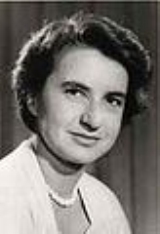
Rosalind Franklin

 
Rosalind Franklin

   Email Print
   Bookmark   Link


Rosalind Franklin


Rosalind Elsie Franklin (25 July 1920 Notting Hill
Notting Hill

Notting Hill is an area in West London, England close to the north-western corner of Hyde Park, London, and lying within the Royal Borough of Kensington and Chelsea....
, London
London

London is the capital of both England and the United Kingdom, and the most populous municipality in the European Union. An important settlement for two millennia, History of London goes back to its founding by the Roman Empire....
 – 16 April 1958 Chelsea, London
Chelsea, London

Chelsea is an area of south-west London, England, bounded to the south by the River Thames, where its frontage runs from Chelsea Bridge along the Chelsea Embankment, Cheyne Walk, Lots Road power station and Chelsea Harbour....
) was an English
English people

The English are a nation and ethnic group native to England who speak English language in England. The English identity as a people is of early medieval origin, when they were known in Old English as the Anglecynn....
 biophysicist and X-ray crystallographer
X-ray crystallography

X-ray crystallography is a method of determining the arrangement of atoms within a crystal, in which a beam of X-rays strikes a crystal and scatters into many different directions....
 who made important contributions to the understanding of the fine molecular structures of DNA
DNA

Deoxyribonucleic acid is a nucleic acid that contains the genetics instructions used in the development and functioning of all known living organisms and some viruses....
, viruses, coal
Coal

Coal is a readily combustion black or brownish-black sedimentary rock. The harder forms, such as anthracite, can be regarded as metamorphic rock because of later exposure to elevated temperature and pressure....
 and graphite
Graphite

The mineral graphite is one of the allotropes of carbon. It was named by Abraham Gottlob Werner in 1789 from the Greek language ??afe?? : "to draw/write", for its use in pencils, where it is commonly called lead, as distinguished from the actual metallic element lead....
. Franklin is still best known for her work on the X-ray diffraction images of DNA
Photo 51

Photo 51 is the nickname given to an X-ray diffraction image of DNA taken by Rosalind Franklin in 1952 that was critical evidence in identifying the structure of DNA....
. Her data, according to Francis Crick
Francis Crick

Francis Harry Compton Crick Order of Merit Royal Society , Ph.D., was a British molecular biology, physics, and neuroscience, and most noted for being one of the co-discoverers of the structure of the DNA molecule in 1953....
, were “the data we actually used” to formulate Crick
Francis Crick

Francis Harry Compton Crick Order of Merit Royal Society , Ph.D., was a British molecular biology, physics, and neuroscience, and most noted for being one of the co-discoverers of the structure of the DNA molecule in 1953....
 and Watson
James D. Watson

James Dewey Watson is an American molecular biology, best known as one of the co-discoverers of the structure of DNA. Watson, Francis Crick, and Maurice Wilkins were awarded the 1962 Nobel Prize in Physiology or Medicine "for their discoveries concerning the molecular structure of nucleic acids and its significance for information transfer...
's 1953 hypothesis
Hypothesis

A hypothesis consists either of a suggested explanation for an observable phenomenon or of a reasoned proposal predicting a possible causal correlation among multiple phenomena....
 regarding the structure of DNA
DNA

Deoxyribonucleic acid is a nucleic acid that contains the genetics instructions used in the development and functioning of all known living organisms and some viruses....
. However, when her work was published third, in the series of three DNA Nature articles, it appeared to only represent evidence in support of their hypothesis.


Discussion
Ask a question about 'Rosalind Franklin'
Start a new discussion about 'Rosalind Franklin'
Answer questions from other users
Full Discussion Forum


Encyclopedia


Rosalind Elsie Franklin (25 July 1920 Notting Hill
Notting Hill

Notting Hill is an area in West London, England close to the north-western corner of Hyde Park, London, and lying within the Royal Borough of Kensington and Chelsea....
, London
London

London is the capital of both England and the United Kingdom, and the most populous municipality in the European Union. An important settlement for two millennia, History of London goes back to its founding by the Roman Empire....
 – 16 April 1958 Chelsea, London
Chelsea, London

Chelsea is an area of south-west London, England, bounded to the south by the River Thames, where its frontage runs from Chelsea Bridge along the Chelsea Embankment, Cheyne Walk, Lots Road power station and Chelsea Harbour....
) was an English
English people

The English are a nation and ethnic group native to England who speak English language in England. The English identity as a people is of early medieval origin, when they were known in Old English as the Anglecynn....
 biophysicist and X-ray crystallographer
X-ray crystallography

X-ray crystallography is a method of determining the arrangement of atoms within a crystal, in which a beam of X-rays strikes a crystal and scatters into many different directions....
 who made important contributions to the understanding of the fine molecular structures of DNA
DNA

Deoxyribonucleic acid is a nucleic acid that contains the genetics instructions used in the development and functioning of all known living organisms and some viruses....
, viruses, coal
Coal

Coal is a readily combustion black or brownish-black sedimentary rock. The harder forms, such as anthracite, can be regarded as metamorphic rock because of later exposure to elevated temperature and pressure....
 and graphite
Graphite

The mineral graphite is one of the allotropes of carbon. It was named by Abraham Gottlob Werner in 1789 from the Greek language ??afe?? : "to draw/write", for its use in pencils, where it is commonly called lead, as distinguished from the actual metallic element lead....
. Franklin is still best known for her work on the X-ray diffraction images of DNA
Photo 51

Photo 51 is the nickname given to an X-ray diffraction image of DNA taken by Rosalind Franklin in 1952 that was critical evidence in identifying the structure of DNA....
. Her data, according to Francis Crick
Francis Crick

Francis Harry Compton Crick Order of Merit Royal Society , Ph.D., was a British molecular biology, physics, and neuroscience, and most noted for being one of the co-discoverers of the structure of the DNA molecule in 1953....
, were “the data we actually used” to formulate Crick
Francis Crick

Francis Harry Compton Crick Order of Merit Royal Society , Ph.D., was a British molecular biology, physics, and neuroscience, and most noted for being one of the co-discoverers of the structure of the DNA molecule in 1953....
 and Watson
James D. Watson

James Dewey Watson is an American molecular biology, best known as one of the co-discoverers of the structure of DNA. Watson, Francis Crick, and Maurice Wilkins were awarded the 1962 Nobel Prize in Physiology or Medicine "for their discoveries concerning the molecular structure of nucleic acids and its significance for information transfer...
's 1953 hypothesis
Hypothesis

A hypothesis consists either of a suggested explanation for an observable phenomenon or of a reasoned proposal predicting a possible causal correlation among multiple phenomena....
 regarding the structure of DNA
DNA

Deoxyribonucleic acid is a nucleic acid that contains the genetics instructions used in the development and functioning of all known living organisms and some viruses....
. However, when her work was published third, in the series of three DNA Nature articles, it appeared to only represent evidence in support of their hypothesis. The possibility of Franklin having played a major role was not revealed until Watson wrote his personal account, The Double Helix
The Double Helix

The Double Helix: A Personal Account of the Discovery of the Structure of DNA is an autobiographical account of the discovery of the double helix structure of DNA written by James D....
, which subsequently inspired several people to investigate DNA history and Franklin’s contribution. The first, Robert Olby
Robert Olby

Robert Cecil Olby is a research professor in the Department of History and Philosophy of Science at the University of Pittsburgh. Formerly at the University of Leeds, UK, Robert Olby is known as a historian of nineteenth and twentieth century biology, his special fields being genetics and molecular biology....
’s "The Path to the Double Helix," supplied information about original source materials for those that followed. After finishing her portion of the DNA work, Franklin led pioneering work on the tobacco mosaic
Tobacco mosaic virus

Tobacco mosaic virus is an RNA virus that infects plants, especially tobacco and other members of the family Solanaceae. The infection causes characteristic patterns on the Leaf ....
 and polio viruses. She died aged 37 of complications arising from ovarian cancer
Ovarian cancer

Ovarian cancer is a malignant tumor arising from an ovary. Although ovarian cancer is known to occur in many species, the majority of the medical literature and the focus of this article is on ovarian cancer in humans....
.

Background

Franklin was born in Notting Hill, London into an affluent and influential British-Jewish
British Jews

British Jews are British subjects of Jewish descent or religion who maintain a connection to the Jewish community, either through actively practising Judaism or through cultural and historical affiliation....
 family. Her father was Ellis Arthur Franklin (1894-1964), a London merchant banker and her mother was Muriel Frances Waley (1894-1976); she was the elder daughter and second of the family of five children.

Her uncle was Herbert Samuel (later Viscount
Viscount

A 'viscount' is a member of the European nobility whose count title ranks usually, as in the British peerage, above a baron, below an earl or a count ....
 Samuel) who was Home Secretary
Home Secretary

The Secretary of State for the Home Department, commonly known as the Home Secretary, is the minister in charge of the United Kingdom Home Office and is one of the Great Offices of State....
 in 1916 and the first practicing Jew to serve in the British Cabinet. He was also the first High Commissioner
High Commissioner

High Commissioner is the title of various high-ranking, special executive positions held by a commission of appointment.The English term is also used to render various equivalent titles in other languages....
 (effectively governor) for the British Mandate of Palestine.

Her aunt Helen Carolin Franklin was married to Norman de Mattos Bentwich, who was Attorney General
Attorney General

In most common law jurisdictions, the attorney general, or attorney-general, is the main legal advisor to the government, and in some jurisdictions he or she may in addition have executive responsibility for law enforcement or responsibility for public prosecutions....
 in the British Mandate of Palestine. She was active in trade union
Trade union

A trade union or labor union is an organization run by and for workers who have banded together to achieve common goals in key areas such as wages, hours, and working conditions....
 organisation and women's suffrage
Women's suffrage

The term women's suffrage refers to the economic and political reform movement aimed at extending suffrage ? the right to vote ? to women. The movement's modern origins lie in France in the 18th century....
, and was later a member of the London County Council
London County Council

London County Council was the principal local government body for the County of London, throughout its 1889-1965 existence, and the first London-wide general municipal authority to be directly elected....
.

Franklin was educated at St Paul's Girls' School
St Paul's Girls' School

St Paul's Girls' School is an Independent school , located in Hammersmith, London, England....
 where she excelled in science, Latin and sport. Her family were actively involved with a Working Men's College, where Ellis Franklin, her father, taught electricity, magnetism and the history of the Great War in the evenings and later became vice principal. Later Franklin's family helped settle Jewish refugees from Europe who had escaped the Nazis
Nazism

Nazism, officially National Socialism , refers to the ideology and practices of the National Socialist German Workers? Party under Adolf Hitler, and the policies adopted by the dictatorial government of Nazi Germany from 1933 to 1945....
.

University education

In the summer of 1938 Franklin went to Newnham College, Cambridge
Newnham College, Cambridge

Newnham College is a women's college in the University of Cambridge. It was founded in 1871 by Henry Sidgwick and was the second Cambridge college to admit women, the first being Girton College, Cambridge....
. She passed her finals in 1941, but was only awarded a degree titular, as women were not entitled to degrees (BA Cantab.) from Cambridge at the time; in 1945 Franklin received her PhD from Cambridge University.

British Coal Utilisation Research Association

Franklin worked for Ronald Norrish
Ronald George Wreyford Norrish

Ronald George Wreyford Norrish was a United Kingdom chemist. He was born in Cambridge and attended The Perse School.He was awarded the Nobel Prize in Chemistry in 1967 along with Manfred Eigen and George Porter for their study of extremely fast chemical reactions....
 between 1941 and 1942. Because of her desire to contribute to the World War II
World War II

World War II, or the Second World War , was a global military conflict which involved a Participants in World War II, including all of the great powers, organised into two opposing military alliances: the Allies of World War II and the Axis powers....
 effort, she worked at the British Coal Utilisation Research Association in Kingston-upon-Thames from August 1942, studying the porosity
Porosity

Porosity is a measure of the void spaces in a material, and is measured as a fraction, between 0?1, or as a percentage between 0?100%. The term is used in multiple fields including ceramics, metallurgy, materials, manufacturing, earth sciences and construction....
 of coal
Coal

Coal is a readily combustion black or brownish-black sedimentary rock. The harder forms, such as anthracite, can be regarded as metamorphic rock because of later exposure to elevated temperature and pressure....
. Her work helped spark the idea of high-strength carbon
Carbon

Carbon is a chemical element with chemical symbol C and atomic number 6. As a member of group 14 on the periodic table, it is nonmetallic and tetravalence?making four electrons available to form covalent bond chemical bonds....
 fibres and was the basis of her 1945 doctoral thesis - "The physical chemistry of solid organic colloid
Colloid

A colloid is a type of chemical mixture where one substance is dispersed evenly throughout another. The particles of the dispersed substance are only suspended in the mixture, unlike a solution, where they are completely dissolved within....
s with special reference to coal
Coal

Coal is a readily combustion black or brownish-black sedimentary rock. The harder forms, such as anthracite, can be regarded as metamorphic rock because of later exposure to elevated temperature and pressure....
 and related materials."

Laboratoire central des services chimiques de l'État

After the war ended Franklin accepted an offer to work in Paris
Paris

Paris is the Capital of France and the country's largest city. It is situated on the river Seine, in northern France, at the heart of the ?le-de-France Regions of France ....
 with Jacques Mering. She learned x-ray diffraction techniques on coal and related inorganic materials during her three years at the Laboratoire central des services chimiques de l'État,but she never fully trained as a crystallographer working on organic chemicals. This later proved to be a problem for her DNA work. Franklin seemed to have been very happy there and earned an international reputation based on her published research on the structure of coal. In 1950 she sought work in England
England

native_name =|conventional_long_name = England|common_name = England|image_flag = Flag of England.svg|image_coat = England COA.svg|symbol_type = Royal Coat of Arms...
 and in June 1950 she was appointed to a position at King's College London
King's College London

King's College London is a United Kingdom higher education institution and co-founding constituent college of the University of London. Founded by George IV of the United Kingdom and the Arthur Wellesley, 1st Duke of Wellington in 1829, its royal charter is predated, in England, only by those of the Universities of University of Oxford and Un...
.

King's College London

In January 1951, Franklin started working as a research associate at King's College London
King's College London

King's College London is a United Kingdom higher education institution and co-founding constituent college of the University of London. Founded by George IV of the United Kingdom and the Arthur Wellesley, 1st Duke of Wellington in 1829, its royal charter is predated, in England, only by those of the Universities of University of Oxford and Un...
 in the Medical Research Council's
Medical Research Council (UK)

The Medical Research Council is a United Kingdom organisation dedicated to "improve human health through world-class medical research"....
 (MRC) Biophysics Unit, directed by John Randall. Although originally she was to have worked on x-ray diffraction of protein
Protein

Proteins are organic compounds made of amino acids arranged in a linear chain and joined together by peptide bonds between the carboxyl and amino groups of adjacent amino acid Residue ....
s and lipids in solution, Randall redirected her work to DNA fibers before she started working at King's since Franklin was to be the only experienced experimental diffraction researcher at King’s in 1951. He made this reassignment, even before she started working at King's, because of the following pioneering work by Maurice Wilkins
Maurice Wilkins

Maurice Hugh Frederick Wilkins Order of the British Empire Royal Society was a New Zealand-born UKmolecular biology, and Nobel Laureate who contributed research in the fields of phosphorescence, radar, isotope separation, and X-ray diffraction....
 and Raymond Gosling
Raymond Gosling

Raymond Gosling is a distinguished scientist who worked with both Maurice Wilkins and Rosalind Franklin at King's College London in deducing the structure of DNA, under the direction of Sir John Randall....
. Even using crude equipment these two men had obtained an outstanding diffraction picture of DNA which sparked further interest in this molecule. Wilkins and Gosling had been carrying out x-ray diffraction analysis of DNA in the Unit since May 1950, but Randall had not informed them of his having asked Franklin to take over both the DNA diffraction work and guidance of Gosling’s thesis. Randall’s lack of communication about this reassignment significantly contributed to the well documented friction that developed between Wilkins and Franklin. Franklin, working with her student Raymond Gosling
Raymond Gosling

Raymond Gosling is a distinguished scientist who worked with both Maurice Wilkins and Rosalind Franklin at King's College London in deducing the structure of DNA, under the direction of Sir John Randall....
, started to apply her expertise in x-ray diffraction techniques to the structure of DNA. She used a new fine focus X-ray tube and microcamera ordered by Wilkins, but which she refined, adjusted and focused carefully. Drawing upon her physical chemistry background, Franklin also skillfully manipulated the critical hydration of her specimens. When Wilkins inquired about this improved technique, Franklin replied in terms which offended Wilkins as Franklin having “an air of cool superiority.” Franklin’s habit of intensely looking people in the eye while being concise, impatient and directly confrontational to the point of abrasiveness unnerved many of her colleagues. In stark contrast, Wilkins was very shy, and slowly calculating in speech while he avoided looking anyone directly in the eye. In spite of the intense atmosphere, Franklin and Gosling discovered that there were two forms of DNA: at high humidity (when wet) the DNA fiber became long and thin, when it was dried it became short and fat. These were termed DNA 'B' and 'A' respectively. Because of the intense personality conflict developing between Franklin and Wilkins, Randall divided the work on DNA. Franklin chose the data rich A form while Wilkins selected the 'B' form because his preliminary pictures had hinted it might be helical. He showed tremendous insight in this assessment of preliminary data. The x-ray diffraction pictures
Photo 51

Photo 51 is the nickname given to an X-ray diffraction image of DNA taken by Rosalind Franklin in 1952 that was critical evidence in identifying the structure of DNA....
 taken by Franklin at this time have been called, by J. D. Bernal
J. D. Bernal

John Desmond Bernal Fellow of the Royal Society was an Irish-born scientist known for pioneering X-ray crystallography....
, "amongst the most beautiful x-ray photographs of any substance ever taken".

By the end of 1951 it was generally accepted in King's that the B form of DNA was a helix
Helix

A helix is a special kind of space curve, i.e. a Differentiable manifold curve in three-space. As a mental image of a helix one may take the spring ....
, but Franklin became unconvinced that the A form of DNA was helical in structureafter she had recorded an asymmetrical image in 1952 May. As a practical joke on Wilkins (who frequently expressed his view that DNA was helical), Franklin and Gosling produced a death notice regretting the 'death' of helical crystalline DNA (A-DNA). During 1952 Rosalind Franklin and Raymond Gosling worked at applying the Patterson function
Patterson function

The Patterson function is used to solve the phase problem in X-ray crystallography. It was introduced by Arthur Lindo Patterson in 1934.The Patterson function is defined as...
 to the x-ray pictures of DNA they had produced. This was a long and labour-intensive approach but would yield significant insight into the structure of the molecule.
Rosalindfranklinsjokecard
By 1953 January, Franklin had reconciled her conflicting data and had started to write a series of three draft manuscripts, two of which included a double helical DNA backbone (see below). Her two A form manuscripts reached Acta Crystallographica in Copenhagen on 6 March 1953, one day before Crick and Watson had completed their model. Franklin had to have mailed them while the Cambridge team was building their model, and certainly had written them before she knew of their work. On 8 July, 1953 she modified one of these “in proof,” Acta articles “in light of recent work” by the King’s and Cambridge research teams. The third draft paper on the ‘B’ form of DNA, dated 17 January 1953, was discovered years later amongst her papers, by Franklin’s Birkbeck colleague, Aaron Klug. He then published an evaluation of the draft’s close correlation with the third of the original trio of 25 April 1953 Nature DNA articles.Klug designed this paper to complement the first article he had written defending Franklin’s significant contribution to DNA structure.. He had written this first article in response to the incomplete picture of Franklin’s work depicted in Watson’s 1968 memoir, The Double Helix. As vividly described in The Double Helix, on 30 January 1953, Watson traveled to King’s carrying a preprint of Linus Pauling
Linus Pauling

Linus Carl Pauling was an United States scientist, peace activist, author and list of educators. He was one of the most influential chemists in history and ranks among the most important scientists in any field of the 20th century....
’s incorrect proposal for DNA structure. Since Wilkins was not in his office, Watson went to Franklin’s lab with his urgent message that they should all collaborate before Pauling discovered his error. The unimpressed Franklin became angry when Watson suggested she did not know how to interpret her own data. Watson hastily retreated, backing into Wilkins who had been attracted by the commotion. Wilkin commiserated with his harried friend and then changed the course of DNA history with the following disclosure. Watson was shown (by Wilkins) Franklin's famous photograph 51, which had been given to Wilkins by Gosling. Watson, in turn, showed Wilkins a pre-publication manuscript by Pauling and Corey. Franklin and Gosling’s photo 51 gave the Cambridge pair critical insights into the DNA structure, whereas Pauling and Corey’s paper described a molecule remarkably like their first incorrect model.

In February 1953 Francis Crick
Francis Crick

Francis Harry Compton Crick Order of Merit Royal Society , Ph.D., was a British molecular biology, physics, and neuroscience, and most noted for being one of the co-discoverers of the structure of the DNA molecule in 1953....
 and James D. Watson
James D. Watson

James Dewey Watson is an American molecular biology, best known as one of the co-discoverers of the structure of DNA. Watson, Francis Crick, and Maurice Wilkins were awarded the 1962 Nobel Prize in Physiology or Medicine "for their discoveries concerning the molecular structure of nucleic acids and its significance for information transfer...
 of the Cavendish Laboratory
Cavendish Laboratory

The Cavendish Laboratory is the University of Cambridge's Department of Physics, and is part of the university's School of Physical Sciences. It was opened in 1874 as a teaching laboratory and was initially located on the New Museums Site, Free School Lane, in the centre of Cambridge....
 in Cambridge University
University of Cambridge

The University of Cambridge , located in Cambridge, England, is the List of oldest universities in continuous operation university in the Anglosphere....
 had started to build a model of the B form of DNA using similar data to that available to both teams at King's. Much of their data were derived directly from research done at King's by Wilkins and Franklin, with Franklin’s being the most unique and critical data completed by February 1953. Model building had been applied successfully in the elucidation of the structure of the alpha helix
Alpha helix

A common motif in the secondary structure of proteins, the alpha helix is a right- or left-handed coiled conformation, resembling a spring , in which every backbone amino group donates a hydrogen bond to the backbone carbonyl group of the amino acid four residues earlier ....
 by Linus Pauling
Linus Pauling

Linus Carl Pauling was an United States scientist, peace activist, author and list of educators. He was one of the most influential chemists in history and ranks among the most important scientists in any field of the 20th century....
 in 1951, but Franklin was opposed to prematurely building theoretical models,until sufficient data was obtained to properly guide the model building. She took the view that building a model was only to be undertaken after enough of the structure was known.Ever cautious she wanted to eliminate misleading possibilities. Photographs of her Birkbeck work table show that she routinely used small molecular models, although certainly not ones on the grand scale successfully used at Cambridge for DNA. In the middle of February 1953, Crick's thesis advisor, Max Perutz
Max Perutz

Max Ferdinand Perutz, Order of Merit was an Austrian-United Kingdom molecular biologist, who was awarded the Nobel Prize for Chemistry in 1962, shared with John Kendrew for their studies of the structures of hemoglobin and globular proteins....
 gave Crick a copy of a report
Rosalind Franklin

Rosalind Elsie Franklin was an English people biophysicist and X-ray crystallography who made important contributions to the understanding of the fine molecular structures of DNA, viruses, coal and graphite....
 written for a Medical Research Council
Medical Research Council

Medical Research Council may refer to:* Medical Research Council , a UK organisation* National Health and Medical Research Council, Australia's peak funding body for medical research...
 biophysics committee visit to King's in December 1952, containing many of Franklin's crystallographic calculations. Since Franklin had decided to transfer to Birkbeck College and Randall had insisted that all DNA work must stay at King’s, Wilkins was given copies of Franklin’s diffraction photographs by Gosling. By 28 February 1953 Watson and Crick felt they had solved the problem enough for Crick to proclaim (in the local pub) that they had “found the secret of life.” However they knew they must complete their model before they could be certain.

Watson and Crick finished building their model on 7 March 1953, one day before they received a letter from Wilkins stating that Franklin was finally leaving and they could put “all hands to the pump.” This was also one day after Franklin’s two A form papers had reached Acta Crystallogrphica. Wilkins came to see the model the following week, according to Maddox on 12 March, and allegedly informed Gosling on his return to King’s.It is uncertain how long it took for Gosling to inform Franklin at Birkbeck, but her original 17 March B form manuscript does not reflect any knowledge of the Cambridge model. Franklin did modify this draft later before publishing it as the third in the trio of 25 April 1953 Nature articles. On 18 March,, in response to receiving a copy of their preliminary manuscript, Wilkins penned the following “I think you’re a couple of old rogues, but you may well have something.”

Crick and Watson then published their model in Nature
Nature (journal)

Nature is a prominent scientific journal, first published on 4 November 1869. Although most scientific journals are now highly specialized, Nature is one of the few journals, along with other weekly journals such as Science and Proceedings of the National Academy of Sciences, that still publishes original research articles ac...
 on 25 April 1953 in an article describing the double-helical structure of DNA with only a footnote acknowledging “having been stimulated by a general knowledge of” Franklin and Wilkin's ‘unpublished’ contribution. Actually, although it was the bare minimum, they had just enough specific knowledge of Franklin and Gosling's data upon which to base their model. As a result of a deal struck by the two laboratory directors, articles by Wilkins and Franklin, which included their x-ray diffraction data, were modified and then published second and third in the same issue of Nature, seemingly only in supported of the Crick and Watson theoretical paper which proposed a model for the B form of DNA. Franklin left King's College London in March 1953 to move to Birkbeck College
Birkbeck, University of London

Birkbeck, University of London, sometimes referred to by its former name Birkbeck College or by the abbreviation BBK, is a constituent college of the University of London....
 in a move that had been planned for some time.

Weeks later, on 10 April, Franklin wrote to Crick for permission to see their model. Franklin retained her scepticism for premature model building even after seeing the Crick-Watson model, and remained unimpressed. She is reported to have commented, "It's very pretty, but how are they going to prove it?" As an experimental scientist Franklin seems to have been interested in producing far greater evidence before publishing-as-proven a proposed model. As such her response to the Crick-Watson model was in keeping with her cautious approach to science.However, as documented above, she did not hesitate to publish preliminary ideas about DNA in ACTA, even before they could be definitively proven. Most of the scientific community hesitated several years before accepting the double helix proposal. At first mainly geneticists embraced the model because of its obvious genetic implications. Broader acceptance for the DNA double helix did not start until about 1960, and was not openly acknowledged until 1961 during the 1962 Nobel prize nominations. It took Wilkins and his colleagues approximately seven years to collect enough data to prove and refine the proposed DNA structure. According to the 1961 Crick-Monod letter cited above, this experimental proof, along with Wilkins having initiated the DNA diffraction work, were the reasons why Crick felt that Wilkins should be included in the DNA Nobel prize.

Birkbeck College, London

Tmv
Franklin's work in Birkbeck
Birkbeck, University of London

Birkbeck, University of London, sometimes referred to by its former name Birkbeck College or by the abbreviation BBK, is a constituent college of the University of London....
 involved the use of x-ray crystallography to study the structure of the tobacco mosaic virus
Tobacco mosaic virus

Tobacco mosaic virus is an RNA virus that infects plants, especially tobacco and other members of the family Solanaceae. The infection causes characteristic patterns on the Leaf ....
 (TMV) under J. D. Bernal
J. D. Bernal

John Desmond Bernal Fellow of the Royal Society was an Irish-born scientist known for pioneering X-ray crystallography....
 and was funded by the Agricultural Research Council (ARC). In 1954 Franklin began a longstanding and successful collaboration with Aaron Klug
Aaron Klug

Sir Aaron Klug, Order of Merit, President of the Royal Society is a Lithuanian-born United Kingdom chemist and biophysicist, and winner of the 1982 Nobel Prize in Chemistry for his development of electron crystallography and his structural elucidation of biologically important nucleic acid-protein complexes....
. In 1955 Franklin had a paper published in the journal Nature, indicating that TMV virus
Virus

A virus is a Optical microscope#Limitations of light microscopes infectious agent that is unable to grow or reproduce outside a host cell . Viruses infect all cellular life....
 particles were all of the same length, this was in direct contradiction to the ideas of the eminent virologist Norman Pirie
Norman Pirie

Norman Wingate Pirie Fellow of the Royal Society -was a British biochemist and virologist who, along with Frederick Bawden, discovered that a virus can be crystallized by isolating tobacco mosaic virus in 1936....
, though her observation ultimately proved correct.

Franklin worked on various viruses with different people. She eventually divided the work with her focusing on rod like viruses such as TMV (tobacco mosaic virus) with her PhD
Doctor of Philosophy

Doctor of Philosophy, abbreviated Ph.D. or PhD for the Latin , meaning "teacher of philosophy", is an postgraduate academic degree awarded by University....
 student Kenneth Holmes, while Aaron Klug worked on spherical viruses with his student John Finch, with Franklin coordinating and overseeing the work. Franklin also had a research assistant
Research assistant

A Research Assistant is a junior graduate student scholar, employed on a temporary contract by a college or university or a non-university research institution, for the purpose of academic research....
, James Watt, subsidised by the National Coal Board
National Coal Board

The National Coal Board was the Statutory Corporation created to run the Nationalization coal mining industry in United Kingdom. Set up under the Coal Industry Nationalisation Act 1946, it took over the mines on 'vesting day', 1 January 1947....
 and was now the Leader of the "ARC group at Birkbeck. By the end of 1955 her team had completed a model of the TMV, to be exhibited at the upcoming Brussels World’s fair. The Birkbeck team members were working on viruses affecting several plants, including potato, turnip, tomato and pea. Franklin and Don Caspar produced a paper each in Nature that taken together demonstrated that the RNA
RNA

Ribonucleic acid is a type of molecule that consists of a long chain of nucleotide units. Each nucleotide consists of a nucleobase, a ribose sugar, and a phosphate....
 in TMV is wound along the inner surface of the hollow virus.

Illness and death

In the summer of 1956, while on a work related trip to the USA, Franklin first began to suspect a health problem. An operation in September of the same year revealed two tumours in her abdomen. After this period and other periods of hospitalization, Franklin spent time convalescing with various friends and family. These included Anne Sayre, Crick and his wife Odile, with whom Franklin had formed a strong friendship,and finally with the Roland and Nina Franklin family where Rosalind’s nieces and nephews bolstered her spirits. Franklin chose not to stay with her parents because her mother’s uncontrollable grief and crying upset her too much. Even while undergoing cancer treatment Franklin continued to work and her group continued to produce results, seven papers in 1956 and a further six in 1957. In 1957 the group was also working on the polio virus and had obtained funding from the Public Health Service of the National Institutes of Health
National Institutes of Health

The National Institutes of Health is an agency of the United States Department of Health and Human Services and is the primary agency of the United States government responsible for biomedical and health-related research....
 in the USA. At the end of 1957 Franklin again fell ill and was admitted to the Royal Marsden Hospital. She returned to work in January 1958 and was given a promotion to Research Associate in Biophysics. She fell ill again on the 30th of March and died on 16 April 1958 in Chelsea, London
Chelsea, London

Chelsea is an area of south-west London, England, bounded to the south by the River Thames, where its frontage runs from Chelsea Bridge along the Chelsea Embankment, Cheyne Walk, Lots Road power station and Chelsea Harbour....
, of bronchopneumonia
Bronchopneumonia

Bronchopneumonia is a type of pneumonia characterized by multiple foci of isolated, acute consolidation, affecting one or more pulmonary lobes....
, secondary carcinomatosis
Cancer

Cancer is a class of diseases in which a group of cell display uncontrolled growth , invasion , and sometimes metastasis . These three malignant properties of cancers differentiate them from benign tumors, which are self-limited, do not invade or metastasize....
 and carcinoma of the ovary
Ovarian cancer

Ovarian cancer is a malignant tumor arising from an ovary. Although ovarian cancer is known to occur in many species, the majority of the medical literature and the focus of this article is on ovarian cancer in humans....
. Exposure to X-ray radiation is sometimes considered a possible factor in her illness. Other members of her family have died of cancer, and the incidence of "female" cancer is known to be disproportionately high amongst Ashkenazi Jews. Her death certificate read: A Research Scientist, Spinster, Daughter of Ellis Arthur Franklin, a Banker.

Controversies after death


Various controversies surrounding Rosalind Franklin came to light following her death.

Sexism at King's College

Mainly because of mistaken impressions presented in Anne Sayre's 1975 Franklin biography, there have been assertions that Rosalind Franklin was discriminated against because of her gender and that King's, as an institution, was sexist. Among the examples cited in alleging sexist treatment at Kings was that while "the male staff at King's lunched in a large,comfortable, rather clubby dining room" the female staff of all ranks "lunched in the student's hall or away from the premises". Actually these were the only options for a private lunch as most of the MRC group typically ate lunch together (including Franklin) in the mixed dining room discussed below. There was a dining room for the exclusive use of men (as was the case at other University of London
University of London

Based primarily in London, England, United Kingdom, the University of London is a federal mega university made up of 31 affiliates: 19 separate university institutions, and 12 research institutes....
 colleges at the time), as well as a mixed gender dining room that overlooked the river Thames
River Thames

The Thames is a major river flowing through southern England. While best known because its lower reaches flow through central London, the river flows through several other towns and cities, including Oxford, Reading, Berkshire and Windsor, Berkshire....
, and many male scientists reportedly refused to use the male only dining room owing to the preponderance of theologians
Theology

Theology is the study of the existence or attributes of a deity or gods, or more generally the study of religion or spirituality. It is sometimes contrasted with religious studies: theology is understood as the study of religion from an internal perspective , and religious studies as the study of religion from an external perspective....
.

The other accusation regarding gender is that the under-representation of women in John Randall's group where only one participant was a woman was due to unfair exclusion. In contrast, defenders of the King's college MRC group correctly argue that women were (by the standards of the time) well-represented in the group, representing eight out of thirty-one members of staff, or possibly closer to one in three,although most were not senior scientists.

Contribution to the model of DNA

Rosalind Franklin's critical contributions to the Crick and Watson model include an X-ray photograph of B-DNA (called photograph 51
Photo 51

Photo 51 is the nickname given to an X-ray diffraction image of DNA taken by Rosalind Franklin in 1952 that was critical evidence in identifying the structure of DNA....
), that was briefly shown to James Watson by Maurice Wilkins in January 1953, and a report written for an MRC biophysics committee visit to King's in December 1952. This MRC report contained data from the King's group, including some of Rosalind Franklin's work, and was given to Francis Crick by his thesis supervisor Max Perutz
Max Perutz

Max Ferdinand Perutz, Order of Merit was an Austrian-United Kingdom molecular biologist, who was awarded the Nobel Prize for Chemistry in 1962, shared with John Kendrew for their studies of the structures of hemoglobin and globular proteins....
, a member of the visiting committee. Maurice Wilkins had been given photograph 51 by Rosalind Franklin's PhD student Raymond Gosling, because she was leaving King's to work at Birkbeck. There was nothing untoward in this transfer of data to Wilkins,since Director Randall had insisted that all DNA work belonged exclusively to King's and had even instructed Franklin to stop thinking about it.Also it was implied by Horace Freeland Judson
Horace Freeland Judson

Horace Freeland Judson is a historian of molecular biology and the author of several books, including The Eighth Day of Creation, a history of molecular biology, and The Great Betrayal: Fraud In Science, an examination of the deliberate manipulation of scientific data....
, incorrectly, that Maurice Wilkins had taken the photograph out of Rosalind Franklin's drawer. Likewise Max Perutz saw no harm in showing the MRC report to Crick as it had not been marked as confidential, although,"in the customary British manner in which everything official is considered secret until deliberately made public, the report was not expected to reach outside eyes." Indeed after the publication of Watson's "The Double Helix" exposed Perutz's act, he received so many letters questioning his judgment that he felt the need to both answer them all and to post a general statement in "Science" excusing himself on the basis of being "inexperienced and casual in administrative matters." Perutz also claimed that the MRC information was already made available to the Cambridge team when Watson had attended Franklin's seminar in November in 1951. A preliminary version of much of the important material contained in the 1952 December MRC report had been presented by Franklin in a talk she had given in 1951 November, which Watson had attended and not understood. The Perutz letter was one of three letters, published with letters by Wilkins and Watson, which discussed their various contributions. Watson clarified the importance of the data obtained from the MRC report as he had not recorded these data while attending Franklin's lecture in 1951. The upshot of all this was that when Crick and Watson started to build their model in February 1954 they were working with critical parameters determined by Franklin in 1951 which she and Gosling had significantly refined in 1952, as well as with published data and other very similar data to those available at King's. Rosalind Franklin was probably never aware that her work had been used during construction of the model.

Recognition of her contribution to the model of DNA

On the completion of their model, Francis Crick and James Watson had invited Maurice Wilkins to be a co-author
Collaborative writing

The term collaborative writing refers to projects where written works are created by multiple people together rather than individually. Some projects are overseen by an editing or editorial team, but many grow without any of this top-down oversight....
 of their paper describing the structure. Wilkins turned down this offer, as he had taken no part in building the model. Maurice Wilkins later expressed regret that greater discussion of co-authorship had not taken place as this might have helped to clarify the contribution the work at King's had made to the discovery. There is no doubt that Franklin's experimental data were used by Crick and Watson to build their model of DNA in 1953 (see above). Some, including Maddox as cited next, have explained this citation omission by suggesting that it may be a question of circumstance, because it would have been very difficult to cite the unpublished work from the MRC report they had seen.Indeed a clear timely acknowledgment would have been awkward, given the unorthodox manner in which data was transferred from King's to Cambridge, however methods were available. Watson and Crick could have cited the MRC report as a personal communication or else cited the ACTA articles in press, or most easily, the third Nature paper that they knew was in press. One of the most important accomplishments of Maddox's widely acclaimed biography is that Maddox made a well-received case for inadequate acknowledgment . "Such acknowledgment as they gave her was very muted and always coupled with the name of Wilkins."

Twenty five years after the fact, the first clear recitation of Franklin's contribution appeared as it permeated Watson's account, "The Double Helix,"although it was buried under allegations that Franklin did not know how to interpret her own data and that she should have therefore shared her work with Wilkins, Watson and Crick. This attitude is epitomized in the confrontation between Watson and Franklin over a pre-print of Pauling's mistaken DNA manuscript.Watson's words impelled Sayre to write her rebuttal, in which she designs her entire chapter nine, "Winner Take All" to be like a legal brief dissecting and analyzing the topic of acknowledgment. Unfortunately Sayre’s early analysis was often ignored because of the supposed feminist overtones in her book. It should be noted that in their original paper, Watson and Crick do cite the the X-ray diffraction work of both Wilkins and William Astbury
William Astbury

William Thomas Astbury Fellow of the Royal Society was an English people physicist and molecular biology who made pioneering X-ray diffraction studies of biological molecules....
. In addition, they admit their ,"having been stimulated by a knowledge of the general nature of the unpublished experimental work of ..." groups led by both both Wilkins and Franklin. Franklin and Raymond Gosling
Raymond Gosling

Raymond Gosling is a distinguished scientist who worked with both Maurice Wilkins and Rosalind Franklin at King's College London in deducing the structure of DNA, under the direction of Sir John Randall....
's own publication in the same issue of Nature was the first publication of this more clarified X-ray image of DNA.

Nobel Prize

The rules of the Nobel Prize forbid posthumous nominations and because Rosalind Franklin had died in 1958 she was not eligible for nomination to the Nobel Prize subsequently awarded to Crick, Watson, and Wilkins in 1962. The award was for their body of work on nucleic acids and not exclusively for the discovery of the structure of DNA. By the time of the award Wilkins had been working on the structure of DNA for over 10 years, and had done much to confirm the Watson-Crick model. Crick had been working on the genetic code
Genetic code

The genetic code is the set of rules by which information encoded in genetic material is Translation into proteins by living cell s. The code defines a mapping between tri-nucleotide sequences, called codons, and amino acids....
 at Cambridge and Watson had worked on RNA
RNA

Ribonucleic acid is a type of molecule that consists of a long chain of nucleotide units. Each nucleotide consists of a nucleobase, a ribose sugar, and a phosphate....
 for some years.

Posthumous recognition

  • 1982, Iota Sigma Pi
    Iota Sigma Pi

    Iota Sigma Pi is an elective US honor society for women in chemistry, first established in 1902. The organization presents several awards to women in chemistry....
     designated Franklin a National Honorary Member.
  • 1992, English Heritage
    English Heritage

    English Heritage is a non-departmental public body of the United Kingdom government with a broad remit of managing the historic built environment of England....
     placed a blue plaque
    Blue plaque

    In the United Kingdom, a blue plaque is a permanent sign installed in a public place to commemorate a link between that location and a famous person or event....
     on the house Rosalind Franklin grew up in.
  • 1993, King's College London
    King's College London

    King's College London is a United Kingdom higher education institution and co-founding constituent college of the University of London. Founded by George IV of the United Kingdom and the Arthur Wellesley, 1st Duke of Wellington in 1829, its royal charter is predated, in England, only by those of the Universities of University of Oxford and Un...
     rename the Orchard Residence at their Hampstead Campus on Kidderpore Avenue Rosalind Franklin Hall.
  • 1995, Newnham College dedicated a residence in her name and put a bust of her in its garden.
  • 1997, Birkbeck, University of London
    Birkbeck, University of London

    Birkbeck, University of London, sometimes referred to by its former name Birkbeck College or by the abbreviation BBK, is a constituent college of the University of London....
     School of Crystallography opened the Rosalind Franklin laboratory.
  • 1998, National Portrait Gallery added Rosalind Franklin's next to those of Francis Crick, James Watson and Maurice Wilkins.
  • 2000, King's College London opened the Franklin-Wilkins Building in honour of Dr. Franklin's and Professor Wilkins' work at the college. King's had earlier, in 1994, also named one of the Halls in Hampstead Campus residences
    King's College London

    King's College London is a United Kingdom higher education institution and co-founding constituent college of the University of London. Founded by George IV of the United Kingdom and the Arthur Wellesley, 1st Duke of Wellington in 1829, its royal charter is predated, in England, only by those of the Universities of University of Oxford and Un...
     in memory of Rosalind Franklin.
  • 2001, The U.S. National Cancer Institute
    National Cancer Institute

    The National Cancer Institute is part of the United States Federal government's National Institutes of Health. The NCI is a federally funded research and development center, one of eight agencies that compose the United States Public Health Service in the United States Department of Health and Human Services....
     established the Rosalind E. Franklin Award for Women in Science.
  • 2003, the Royal Society
    Royal Society

    The Royal Society of London for the Improvement of Natural Knowledge, known simply as the Royal Society, or even the Royal, is a learned society for science that was founded in 1660 and is considered by most to be the oldest such society still in existence....
     established the Rosalind Franklin Award, for an outstanding contribution to any area of natural science, engineering or technology.
  • 2004, Finch University of Health Sciences/The Chicago Medical School, located in North Chicago, IL, changed its name to Rosalind Franklin University of Medicine and Science.


  • 2005, the wording on the DNA sculpture (which was donated by James Watson) outside Clare College's Thirkill Court, Cambridge, England is a) on the base: i) "These strands unravel during cell reproduction. Genes are encoded in the sequence of bases." and ii) "The double helix model was supported by the work of Rosalind Franklin and Maurice Wilkins.", as well as b) on the helices: i) "The structure of DNA was discovered in 1953 by Francis Crick and James Watson while Watson lived here at Clare." and ii) "The molecule of DNA has two helical strands that are linked by base pairs Adenine - Thymine or Guanine - Cytosine."


  • An Honorary 2008 Horwitz Prize will be awarded by Columbia University to Rosalind Franklin, Ph.D., posthumously, "for her seminal contributions to the discovery of the structure of DNA".


Footnotes


Further reading

  • Brown, Andrew; "J. D. Bernal: The Sage of Science", Oxford University Press, 2005; ISBN 0-199-20565-5
  • Chomet, S. (Ed.), D.N.A. Genesis of a Discovery. Newman-Hemisphere Press (1994): NB a few copies are available from Newman-Hemisphere at 101 Swan Court, London SW3 5RY (phone/fax: 07092 060530).
  • Crick, Francis (1988) "What Mad Pursuit: A Personal View of Scientific Discovery" (Basic Books reprint edition, 1990) ISBN 0-465-09138-5
  • Dickerson, Richard E.; "Present at the Flood: How Structural Molecular Biology Came About", Sinauer, 2005; ISBN 0-878-93168-6;
  • Hager, Thomas; "Force of Nature: The Life of Linus Pauling", Simon & Schuster 1995; ISBN 0-684-80909-5
  • Glynn, Jennifer Franklin. "Rosalind Franklin, 1920 - 1958" in "Cambridge Women: Twelve Portraits" (CUP 1996) pp 267 - 282 eds. Edward Shils and Carmen Blacker, ISBN 0521482879
  • Klug, A.
    Aaron Klug

    Sir Aaron Klug, Order of Merit, President of the Royal Society is a Lithuanian-born United Kingdom chemist and biophysicist, and winner of the 1982 Nobel Prize in Chemistry for his development of electron crystallography and his structural elucidation of biologically important nucleic acid-protein complexes....
     Oxford Dictionary of National Biography article on R.E. Franklin, OUP, Matthew H.C.G. Ed., first published Sept 2004; online edn, Jan 2007, 1840 words; ISBN 019861411X; was selected "Life of The Day" on 16th April 2008 (50th anniversary of her death).
  • Klug, A.
    Aaron Klug

    Sir Aaron Klug, Order of Merit, President of the Royal Society is a Lithuanian-born United Kingdom chemist and biophysicist, and winner of the 1982 Nobel Prize in Chemistry for his development of electron crystallography and his structural elucidation of biologically important nucleic acid-protein complexes....
     A lecture about Rosalind Franklin's contribution to the elucidation of the structure of DNA. in DNA Changing Science and Society: The Darwin Lectures for 2003 Krude, Torsten (Ed.) CUP (2003)
  • Olby, Robert
    Robert Olby

    Robert Cecil Olby is a research professor in the Department of History and Philosophy of Science at the University of Pittsburgh. Formerly at the University of Leeds, UK, Robert Olby is known as a historian of nineteenth and twentieth century biology, his special fields being genetics and molecular biology....
    , (1972) 'Rosalind Elsie Franklin' biography in "Dictionary of Scientific Biography", ed. Charles C. Gillespie (New York: Charles Scribner's sons) ISBN: ISBN 0684101211
  • Olby, Robert
    Robert Olby

    Robert Cecil Olby is a research professor in the Department of History and Philosophy of Science at the University of Pittsburgh. Formerly at the University of Leeds, UK, Robert Olby is known as a historian of nineteenth and twentieth century biology, his special fields being genetics and molecular biology....
    , The Path to The Double Helix: Discovery of DNA, (1974). MacMillan ISBN 0-486-68117-3
  • by Professor Robert Olby, Nature 421 (January 23, 2003): 402-405.
  • Tait, Sylvia & James "A Quartet of Unlikely Discoveries" (Athena Press 2004) ISBN 184401343X* Wilkins, Maurice, "The Third Man of The Double Helix", OUP 2003; ISBN 978-0-19-280667-3.


External links

  • Rosalind Franklin in
  • Himetop – The History of medicine topographical database in http://himetop.wikidot.com/rosalind-franklin
  • The People's Archive: Sir Aaron Klug
    Aaron Klug

    Sir Aaron Klug, Order of Merit, President of the Royal Society is a Lithuanian-born United Kingdom chemist and biophysicist, and winner of the 1982 Nobel Prize in Chemistry for his development of electron crystallography and his structural elucidation of biologically important nucleic acid-protein complexes....
     - see part 2, stories 12/13/17/18 re. Rosalind Franklin and:
  • Work at Birbeck and meeting REF (12)
  • Work with REF (13)
  • REF and the discovery of the structure of DNA. (17)
  • REF's death and joining the MRC's LMB in Cambridge (18)


Articles

Franklin, S.*
Piper, A.*, republished article from Trends in Biochemical Science


Documentaries

BBC docudrama (that is very accurate) "Life Story" aka in the USA "Race for the Double Helix"

Collections and publications

  • .
  • at the National Library of Medicine
  • of Rosalind Franklin Materials
  • Lynne Elkin collection of original Franklin research at the
  • at Churchill Archives Centre
    Churchill Archives Centre

    The Churchill Archives Centre is one of the largest repositories in the United Kingdom for the preservation and study of modern personal papers....
     in Cambridge.
  • in PDF format
  • in PDF format