

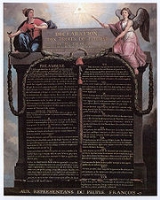
Freedom of religion

Encyclopedia
Freedom of religion is a principle that supports the freedom of an individual or community, in public or private, to manifest religion
or belief
in teaching
, practice, worship
, and observance; the concept is generally recognized also to include the freedom to change religion
or not to follow any religion
. The freedom to leave or discontinue membership in a religion or religious group —in religious terms called "apostasy
" —is also a fundamental part of religious freedom, covered by Article 18 of the Universal Declaration of Human Rights
.
Freedom of religion is considered by many people and nations to be a fundamental
human right.
In a country with a state religion
, freedom of religion is generally considered to mean that the government permits religious practices of other sects besides the state religion, and does not persecute
believers in other faiths.
or the Muslim
tradition of dhimmi
s, literally "protected individuals" professing an officially tolerated non-Muslim religion.
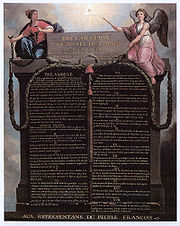 In Antiquity
a syncretic
point-of-view often allowed communities of traders to operate under their own customs. When street mobs of separate quarters clashed in a Hellenistic or Roman
city, the issue was generally perceived to be an infringement of community rights.
Cyrus the Great
established the Achaemenid Empire
ca. 550 BC, and initiated a general policy of permitting religious freedom throughout the empire, documenting this on the Cyrus Cylinder
.
Some of the historical exceptions have been in regions where one of the revealed religions has been in a position of power: Judaism
, Zoroastrianism
, Christianity
and Islam
. Others have been where the established order has felt threatened, as shown in the trial of Socrates
in 399 BC or where the ruler has been deified, as in Rome, and refusal to offer token sacrifice
was similar to refusing to take an oath of allegiance
. This was the core for resentment and the persecution of early Christian communities
.
Freedom of religious worship was established in the Buddhist Maurya Empire
of ancient India
by Asoka the Great in the 3rd century BC, which was encapsulated in the Edicts of Ashoka
.
Greek-Jewish clashes at Cyrene
in 73 AD and 117 AD and in Alexandria
in 115 AD provide examples of cosmopolitan cities as scenes of tumult.
(then known as Yathrib), religious freedom for Muslim
s, Jews and pagans
was declared by Muhammad
in the Constitution of Medina
. The Islamic Caliphate
later guaranteed religious freedom under the conditions that non-Muslim communities accept dhimmi
(protected) status and their adult males pay the jizya
tax as a substitute for the zakat
paid by Muslim citizens. Jews and Christians were alternately toleratedand persecuted, the most notable examples of the latter being the conquest of Islamic Spain by fundamentalist groups from north Africa (the Almoravids
, followed by the Almohads from the mid-12th century). Persecution of non-Muslims caused the emigration of many Jews (and Christians) into the northern, Christian states.
Religious pluralism
existed in classical Islamic ethics
and Sharia
law, as the religious law
s and court
s of other religions, including Christianity
, Judaism
and Hinduism
, were usually accommodated within the Islamic legal framework, as seen in the early Caliphate
, Al-Andalus
, Indian subcontinent
, and the Ottoman Millet
system. In medieval Islamic societies, the qadi
(Islamic judges) usually could not interfere in the matters of non-Muslims unless the parties voluntarily choose to be judged according to Islamic law, thus the dhimmi communities living in Islamic state
s usually had their own laws independent from the Sharia law, such as the Jews who would have their own Halakha
courts.
Dhimmis were allowed to operate their own courts following their own legal systems in cases that did not involve other religious groups, or capital offences or threats to public order. Non-Muslims were allowed to engage in religious practices that was usually forbidden by Islamic law, such as the consumption of alcohol
and pork
, as well as religious practices which Muslims found repugnant, such as the Zoroastrian
practice of incest
uous "self-marriage" where a man could marry his mother, sister or daughter. According to the famous Islamic legal scholar Ibn Qayyim (1292–1350), non-Muslims had the right to engage in such religious practices even if it offended Muslims, under the conditions that such cases not be presented to Islamic Sharia courts and that these religious minorities believed that the practice in question is permissible according to their religion.
in other parts of the world including Christians, Jews, Bahá'i and Zoroastrians fled to India as a place of refuge to enjoy religious freedom. This had been the underlying attitude of most rulers of India
from time immemorial.
Ancient Jews
fleeing from persecution in their homeland 2,500 years ago settled in India
and never faced anti-Semitism
. Freedom of religion edicts have been found written during Ashoka the Great's reign in the 3rd century BC. Freedom to practise, preach and propagate any religion is a constitutional right in Modern India
. Most major religious festivals of the main communities are included in the list of national holidays.
India is an 80% Hindu
country, yet its prime minister
is a Sikh
(Manmohan Singh
), the chairperson of the ruling alliance
is a Catholic woman of Italian
birth (Sonia Gandhi
), and three out of the twelve presidents of India have been Muslims. Further, the current Chief Election Commissioner of India
is a Muslim,as are many successful Indians including film stars,artists,religious scholars,industrialists etc. Still, though some argue that India
's predominant religion, Hinduism
, has long been among the most tolerant of religions, others assert that tolerance only appeared in India with the emergence of the modern Republic of India as a secular nation in 1947.
The Dalai Lama
, the Tibetan leader in exile said that religious tolerance of ‘Aryabhoomi,’ a reference to India found in Mahabharata, has been in existence in this country from thousands of years. “Not only Hinduism, Jainism, Buddhism, Sikhism which are the native religions but also Christianity and Islam have flourished here. Religious tolerance is inherent in Indian tradition,’’ Dalai Lama said.
Freedom of religion in the Indian subcontinent
is exemplified by the reign of King Piyadasi (304 BC to 232 BC) (Asoka). One of King Asoka's main concerns was to reform governmental institutes and exercise moral principles in his attempt to create a just and humane society
. Later he promoted the principles of Buddhism
, and the creation of a just, understanding and fair society was held as an important principle for many ancient rulers of this time in the East.
The importance of freedom of worship in India was encapsulated in an inscription of Asoka:
The initial entry of Islam
into South Asia
came in the first century after the death of the Islamic Prophet Muhammad
. When around 1210 AD the Islamic Sultanates
invaded India from the north-west, gradually the principle of freedom of religion deteriorated in this part of the world. They were subsequently replaced by another Islamic invader in the form of Babur
. The Mughal
empire was founded by the Mongol leader Babur
in 1526, when he defeated Ibrahim Lodi, the last of the Delhi Sultans
at the First Battle of Panipat
. The word "Mughal" is the Indo-Iranian version of Mongol.
On the main Asian continent, the Mongols were tolerant of religions. People could worship as they wished freely and openly, though the formation of 2 nations i.e. Pakistan and Bangladesh has been on basis of religious intolerance.
After arrival of Europeans, Christians in zeal to convert local as per belief in conversion as service of God, have also been seen to fall into frivolous methods since their arrival. Though by and large there are hardly any reports of law and order disturbance from mobs with Christian beliefs except perhaps in the north eastern region of India.
The rise of the BJP political party and the emergence of Hindu nationalism
have been accompanied by the repression of Christianity and in some cases assaults on Christians and their institutions. The worst of these happened in August 2008 when 4,640 houses and 252 churches were torched in Kandhamal. 54,000 people were made homeless by the violence. Attacks continue and in November 2010 Hindutva
extremists atacked Christian homes in Peliguda, Kenduguda and Telarai villages in Orissa state: Christians say they were attacked for refusing to contribute to the local Durga Puja
celebrations. Freedom of religion in contemporary India is a fundamental right guaranteed under Article 25 of the nation's constitution. Accordingly every citizen of India has a right to profess, practice and propagate their religions peacefully. Vishwa Hindu Parishad counters this argument by saying that evangelical Christians are forcefully (or through money) converting rural, illiterate populations and they are only trying to stop this.
In September 2010, Indian state Kerala's State Election Commissioner announced that "Religious heads cannot issue calls to vote for members of a particular community or to defeat the nonbelievers". The Catholic Church comprising Latin, Syro-Malabar and Syro-Malankara rites used to give clear directions to the faithful on exercising their franchise during elections through pastoral letters issued by bishops or council of bishops. The pastoral letter issued by Kerala Catholic Bishops’ Council (KCBC) on the eve of the poll urged the faithful to shun atheists.
Even today, most Indians celebrate all religious festivals with equal enthusiasm and respect. Hindu
festivals like Deepavali and Holi
, Muslim
festivals like Mahanabi Jayanti
, Christian festivals like Christmas
and other festivals like Buddha Purnima, Mahavir Jayanti
, Gur Purab etc. are celebrated and enjoyed by all Indians
.
kept a tight rein on religious expression throughout the Middle Ages
, basing its principles on the Bible and on the Gospel. Jews were alternately tolerated and persecuted, the most notable examples of the latter being the expulsion of all Jews
from Spain in 1492. Some of those who remained and converted were tried as heretics in the Inquisition
for allegedly practicing Judaism in secret. Despite the persecution of Jews, they were the most tolerated non-Catholic faith in Europe.
However, the latter was in part a reaction to the growing movement that became the Reformation
. As early as 1380, John Wycliffe
in England denied transubstantiation
and began his translation of the Bible into English. He was condemned in a Papal Bull
in 1410, and all his books were burned.
In 1414 Jan Hus
, a Bohemia
n preacher of reformation, was given a safe conduct by the Holy Roman Emperor to attend the Council of Constance
. Not entirely trusting in his safety, he made his will before he left. His forebodings proved accurate, and he was burned at the stake on 6 July 1415. The Council also decreed that Wycliffe's remains be disinterred and cast out. This decree was not carried out until 1429.
After the fall of the city of Granada
Spain in 1492 the Muslim population was promised religious freedom by the Treaty of Granada, but that promise was short-lived. In 1501 Granada's Muslims were given an ultimatum to either convert to Christianity or to emigrate. The majority converted, but only superficially, continuing to dress and speak as they had before and to secretly practice Islam
. The Morisco
s (converts to Christianity) were ultimately expelled from Spain
between 1609 (Castile) and 1614 (rest of Spain), by Philip III.
Martin Luther
published his famous 95 Theses in Wittenberg
on 31 October 1517. His major aim was theological, summed up in the three basic dogmas of Protestantism: • The Bible only is infallible • Every Christian can interpret it • Human sins are so wrongful that no deed or merit, only God's grace, can lead to salute. In consequence, Luther hoped to stop the sale of indulgence
s and to reform the Church from within, but this could not succeed, as his doctrine meant the end of the clergy and of the Pope. In 1521 he was given the chance to recant at the Diet of Worms
before Charles V, Holy Roman Emperor
, then only 19. After he refused to recant he was declared heretic. Partly for his own protection, he was sequestered on the Wartburg
in the possessions of Frederick III, Elector of Saxony
, where he translated the New Testament
into German. He was excommunicated by Papal Bull in 1521.
The Protestant movement, however, continued to gain ground in his absence and spread to Switzerland
. Huldrych Zwingli
preached reform in Zürich
from 1520 to 1523. He opposed the sale of indulgences, celibacy, pilgrimages, pictures, statues, relics, altars, and organs. This culminated in outright war between the Swiss canton
s that accepted Protestantism and the Catholics. The Catholics were victorious, and Zwingli was killed in battle in 1531. The Catholic cantons were magnanimous in victory.
Meanwhile, Luther's idea had been interpreted radically by the leaders of the German Peasants' War
, and Luther himself assisted the German princes in slaughtering these revolutionaries.
The defiance of Papal authority proved contagious, and in 1533, when Henry VIII of England
was excommunicated for his divorce and remarriage to Anne Boleyn, he promptly established a state church with bishops appointed by the crown. This was not without internal opposition, and Thomas More
, who had been his Lord Chancellor, was executed in 1535 for opposition to Henry.
In 1535 the Swiss canton of Geneva
became Protestant. In 1536 the Bernese imposed the reformation on the canton of Vaud
by conquest. They sacked the cathedral in Lausanne
and destroyed all its art and statuary. John Calvin
, who had been active in Geneva was expelled in 1538 in a power struggle, but he was invited back in 1540.
 The same kind of seesaw back and forth between Protestantism and Catholicism was evident in England when Mary I of England
returned that country briefly to the Catholic fold in 1553 and persecuted Protestants. However, her half-sister, Elizabeth I of England
was to restore the Church of England
in 1558, this time permanently, and began to persecute Catholics again. The King James Bible commissioned by King James I of England
and published in 1611 proved a landmark for Protestant worship, with official Catholic forms of worship being banned.
In France, although peace was made between Protestants and Catholics at the Treaty of Saint Germain in 1570, persecution continued, most notably in the Massacre of Saint Bartholomew's Day on 24 August 1572, in which thousands of Protestants throughout France were killed. A few years before, at the "Michelade" of Nîmes in 1567, Protestants had massacred the local Catholic clergy.
 The Norman Kingdom of Sicily
under Roger II
was characterized by its multi-ethnic nature and religious tolerance. Normans, Jews, Muslim Arabs, Byzantine Greeks, Lombards and "native" Sicilians lived in harmony. Rather than exterminate the Muslims of Sicily, Roger II's grandson Emperor Frederick II of Hohenstaufen
(1215—1250) allowed them to settle on the mainland and build mosques. Not least, he enlisted them in his — Christian — army and even into his personal bodyguards.
Bohemia (present-day Czech Republic
) enjoyed religious freedom between 1436 and 1520, and became one of the most liberal countries of the Christian world during that period of time. The so-called Basel Compacts of 1436 declared the freedom of religion and peace between Catholics and Utraquists
. In 1609 Emperor Rudolf II granted Bohemia greater religious liberty with his Letter of Majesty. The privileged position of the Catholic Church in the Czech kingdom was firmly established after the Battle of White Mountain
in 1620. Gradually freedom of religion in Bohemian lands
came to an end and Protestants fled or were expelled from the country. A devout Catholic, Emperor Ferdinand II
forcibly converted Austrian and Bohemian Protestants.
In the meantime, in Germany Philip Melanchthon drafted the Augsburg Confession
as a common confession for the Lutherans and the free territories. It was presented to Charles V in 1530.
In the Holy Roman Empire
, Charles V
agreed to tolerate Lutheranism in 1555 at the Peace of Augsburg
. Each state was to take the religion of its prince, but within those states, there was not necessarily religious tolerance. Citizens of other faiths could relocate to a more hospitable environment.
In France, from the 1550s, many attempts to reconcile Catholics and Protestants and to establish tolerance failed because the State was too weak to enforce them. It took the victory of the converted Protestant prince Henry IV of France
, and his accession to the throne, to impose religious tolerance formalized in the Edict of Nantes
in 1598. It would remain in force for over 80 years until its revocation in 1685 by Louis XIV of France
. Intolerance remained the norm until Louis XVI, who signed the Edict of Versailles (1787), then the constitutional text of 24 December 1789, granting civilian rights to Protestants. The French Revolution
then abolished state religion and confiscated all Church property, turning intolerance against Catholics.
n Diet
of Turda
declared free practice of both the Catholic
and Lutheran
religions, but prohibited Calvinism
. Ten years later, in 1568, the Diet extended the freedom to all religions, declaring that "It is not allowed to anybody to intimidate anybody with captivity or expelling for his religion". However it was more than a religious tolerance, it declared the equality of the religions. The emergence in social hierarchy wasn't depend on the religion of the person thus Transylvania had also Catholic and Protestant monarchs (Princes). The lack of state religion was very unique for centuries in Europe. Therefore the Edict of Turda is considered by mostly Hungarian historians as the first legal guarantee of religious freedom in the Christian Europe.
In the Union of Utrecht
(20 January 1579) personal freedom of religion was declared in the struggle between the Northern Netherlands and Spain. The Union of Utrecht was an important step in the establishment of the Dutch Republic (from 1581 to 1795). The establishment of a Jewish community in the Netherlands and New Amsterdam (present-day New York) during the Dutch republic is an example of the freedom of religion. When New Amsterdam surrendered to the English in 1664, the freedom of religion was guaranteed in the Articles of Capitulation.
Intolerance of dissident forms of Protestantism also continued, as evidenced by the exodus of the Pilgrims who sought refuge, first in the Netherlands
, and ultimately in America, founding the Plymouth Colony
in Massachusetts
in 1620. William Penn
, the founder of Philadelphia, was involved in a case which had a profound effect upon future American law and those of England. In a classic case of jury nullification
the jury refused to convict William Penn of preaching a Quaker sermon, which was illegal. Even though the jury was imprisoned for their acquittal, they stood by their decision and helped establish the freedom of religion.
Contrary to a common belief, Protestantism did not mean more freedom of religion. Wherever Protestants took power, they persecuted and eliminated Catholics. In early modern Europe, lasting cases of religious tolerance could be found only in parts of the Austrian empire, in France after the Edict of Nantes
, and in Poland.
Poland has a long tradition of religious freedom. The right to worship freely was a basic right given to all inhabitants of the Commonwealth throughout the 15th and early 16th century, however, complete freedom of religion was officially recognized in Poland in 1573 during the Warsaw Confederation. Poland kept religious freedom laws during an era when religious persecution was an everyday occurrence in the rest of Europe.
The General Charter of Jewish Liberties known as the Statute of Kalisz
was issued by the Duke of Greater Poland
Boleslaus the Pious on 8 September 1264 in Kalisz
. The statute served as the basis for the legal position of Jews in Poland and led to creation of the Yiddish-speaking autonomous Jewish nation until 1795. The statute granted exclusive jurisdiction of Jewish courts over Jewish matters and established a separate tribunal for matters involving Christians and Jews. Additionally, it guaranteed personal liberties and safety for Jews including freedom of religion, travel, and trade. The statute was ratified by subsequent Polish Kings: Casimir III of Poland
in 1334, Casimir IV of Poland in 1453 and Sigismund I of Poland
in 1539. The Commonwealth set a precedent by allowing Jews to become ennobled.
Most of the early colonies were generally not tolerant of dissident forms of worship, with Maryland being the only exception. For example, Roger Williams
found it necessary to found a new colony in Rhode Island
to escape persecution in the theocratically dominated colony of Massachusetts. The Puritans of the Massachusetts Bay Colony
were the most active of the New England persecutors of Quakers, and the persecuting spirit was shared by the Plymouth Colony
and the colonies along the Connecticut river
. In 1660, one of the most notable victims of the religious intolerance was English Quaker Mary Dyer
who was hanged in Boston, Massachusetts for repeatedly defying a Puritan law banning Quakers from the colony. As one of the four executed Quakers known as the Boston martyrs
, the hanging of Dyer on the Boston gallows marked the beginning of the end of the Puritan theocracy
and New England independence from English rule, and in 1661 King Charles II
explicitly forbade Massachusetts from executing anyone for professing Quakerism.
Another notable example of religious persecution by Puritans in Massachusetts was the Salem witch trials
in 1692 and 1693. Thirty-one witchcraft trials were held, convicting twenty-nine people of the capital felony of witchcraft. Nineteen of the accused, fourteen women and five men, were hanged. One man who refused to enter a plea was crushed to death under heavy stones in an attempt to force him to do so.
Freedom of religion was first applied as a principle of government in the founding of the colony of Maryland, founded by the Catholic Lord Baltimore
, in 1634. Fifteen years later (1649) the Maryland Toleration Act
, drafted by Lord Baltimore, provided: "No person or persons...shall from henceforth be any waies troubled, molested or discountenanced for or in respect of his or her religion nor in the free exercise thereof." The Maryland Toleration Act was repealed with the assistance of Protestant assemblymen and a new law barring Catholics from openly practicing their religion was passed. In 1657, the Catholic Lord Baltimore regained control after making a deal with the colony's Protestants, and in 1658 the Act was again passed by the colonial assembly. This time, it would last more than thirty years, until 1692, when after Maryland's Protestant Revolution of 1689, freedom of religion was again rescinded. In addition in 1704, an Act was passed "to prevent the growth of Popery in this Province", preventing Catholics from holding political office. Full religious toleration
would not be restored in Maryland until the American Revolution
, when Maryland's Charles Carroll of Carrollton
signed the American Declaration of Independence.
Reiterating Maryland's earlier colonial legislation, the Virginia Statute for Religious Freedom
, written in 1779 by Thomas Jefferson
, proclaimed:
Those sentiments also found expression in the First Amendment
of the national constitution, part of the United States' Bill of Rights
:
The United States formally considers religious freedom in its foreign relations. The International Religious Freedom Act of 1998
established the United States Commission on International Religious Freedom
which investigates the records of over 200 other nations with respect to religious freedom, and makes recommendations to submit nations with egregious records to ongoing scrutiny and possible economic sanctions. Many human rights organizations have urged the United States to be still more vigorous in imposing sanctions on countries that do not permit or tolerate religious freedom.
is a constitutionally protected right, allowing believers the freedom to assemble and worship without limitation or interference.
, which bills itself as the largest association of freethinkers (atheists, agnostics and skeptics) in the United States, argue that "Freedom From Religion" is a right in the United States
that is guaranteed by the U.S. constitution
. Critics of atheism respond, "The Constitution guarantees freedom of religion, not freedom from religion."
, in his book The Wealth of Nations
, (using an argument first put forward by his friend and contemporary David Hume
) states that in the long run it is in the best interests of society as a whole and the civil magistrate
(government) in particular to allow people to freely choose their own religion as it helps prevent civil unrest and reduces intolerance
. So long as there are enough different religions and/or religious sects operating freely in a society then they are all compelled to moderate their more controversial and violent teachings, so as to be more appealing to more people and so have an easier time attracting new converts. It is this free competition amongst religious sects for converts that ensures stability and tranquillity in the long run.
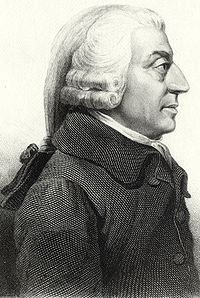 Smith also points out that laws that prevent religious freedom and seek to preserve the power and believe in a particular religion will, in the long run, only serve to weaken and corrupt that religion. As its leaders and preachers become complacent, disconnected and unpractised in their ability to seek and win over new converts.
is one of the more open-minded religions when it comes to religious freedom. It respects the right of everyone to reach God
in their own way. Hindus believe in different ways to preach attainment of God
and religion
as a philosophy
and hence respect all religions as equal. One of the famous Hindu
sayings about religion is: "Truth is one; sages call it by different names."
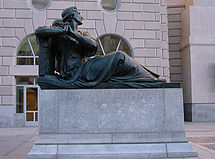 According to the Catholic Church in Dignitatis Humanae
, "the human person has a right to religious freedom," which is described as "immunity from coercion in civil society." This principle of religious freedom "leaves untouched traditional Catholic doctrine on the moral duty of men and societies toward the true religion." In addition, this right "is to be recognized in the constitutional law whereby society is governed and thus it is to become a civil right."
Previous to this Vatican II message, Pope Pius IX
had written in his Syllabus of Errors
: "[It is an error to say that] Every man is free to embrace and profess that religion which, guided by the light of reason, he shall consider true" (15); "[It is an error to say that] In the present day it is no longer expedient that the Catholic religion should be held as the only religion of the State, to the exclusion of all other forms of worship" (77); "[It is an error to say that] Hence it has been wisely decided by law, in some Catholic countries, that persons coming to reside therein shall enjoy the public exercise of their own peculiar worship" (78).
Some Orthodox Christians, especially those living in democratic countries, support religious freedom for all, as evidenced by the position of the Ecumenical Patriarchate. Many Protestant Christian churches, including some Baptists, Churches of Christ
, Seventh-day Adventist Church
and main line churches have a commitment to religious freedoms. The Church of Jesus Christ of Latter-day Saints also affirms religious freedom.
However others, such as African scholar Makau Mutua, have argued that Christian insistence on the propagation of their faith to native cultures as an element of religious freedom has resulted in a corresponding denial of religious freedom to native traditions and led to their destruction. As he states in the book produced by the Oslo Coalition on Freedom of Religion or Belief — "Imperial religions have necessarily violated individual conscience and the communal expressions of Africans and their communities by subverting African religions."
Joel Spring
writes about the Christianization of the Roman Empire
, "Christianity added a new impetus to the expansion of empire. Increasing the arrogance of the imperial project, Christians insisted that the Gospels of the Church were the only valid source of religious beliefs. By the 5th century, Christianity was thought of as co-extensive with the Imperium Romanum. This meant that to be human, as opposed to being a natural slave, was to be "civilized" and Christian. Historian Anthony Pagden
argues, 'just as the civitas; had now become coterminous with Christianity, so to be human—to be, that is, one who was "civil." and who was able to interpret correctly the law of nature—one had now also to be Christian.
"After the fifteenth century, most European colonialists
rationalized the spread of empire with the belief that they were saving a barbaric and pagan world by spreading Christian civilization."
In the Portuguese
and Spanish colonization of the Americas
the policy of Indian Reductions
and Jesuit Reductions
resulted in forced conversions of indigenous peoples of the Americas
from their long practiced spiritual
and religious traditions
and theological
beliefs. The actual population of indigenous peoples, congregations of neophytes and the untouched, plummeted from unintended consequences of missionary Christianity's contacts.
), but Muslims are forbidden to convert from Islam
to another religion (cf. Apostasy in Islam). Certain Muslim-majority countries are known for their restrictions on religious freedom, highly favoring Muslim citizens over non-Muslim citizens. Other countries, having the same restrictive laws, tend to be more liberal when imposing them. Even other Muslim-majority countries are secular and thus do not regulate religious belief.
Some Islamic theologians quote the Qur'an
( and , i.e. Sura Al-Kafirun) to show scriptural support for religious freedom.
, referring to the war against Pagans during the Battle of Badr
in Medina
, indicates that Muslims are only allowed to fight against those who intend to harm them (right of self-defense) and that if their enemies surrender, they must also stop because God does not like those who transgress limits.
In Bukhari:V9 N316, Jabir ibn 'Abdullah narrated that a Bedouin accepted Islam and then when he got a fever he demanded that Muhammad
to cancel his pledge (allow him to renounce Islam). Muhammad refused to do so. The Bedouin man repeated his demand once, but Muhammad once again refused. Then, he (the Bedouin) left Medina. Muhammad said, "Madinah is like a pair of bellows (furnace): it expels its impurities and brightens and clear its good." In this narration, there was no evidence demonstrating that Muhammad ordered the execution of the Bedouin for wanting to renounce Islam.
In addition, , which is believed to be God's final revelation to Muhammad, states that Muslims are to fear God and not those who reject Islam, and states that one is accountable only for one's own actions. Therefore, it postulates that in Islam, in the matters of practising a religion, it does not relate to a worldly punishment, but rather these actions are accountable to God in the afterlife
. Thus, this supports the argument against the execution of apostates in Islam.
However, on the other hand, some Muslims support the practice of executing apostates who leave Islam, as in Bukhari:V4 B52 N260; "The Prophet said, 'If a Muslim discards his religion, kill him.'"
In Iran
, the constitution recognizes four religions whose status is formally protected: Zoroastrianism, Judaism, Christianity, and Islam.
The constitution, however, also set the groundwork for the institutionalized persecution of Bahá'ís
,
who have been subjected to arrests, beatings, executions, confiscation and destruction of property, and the denial of civil rights and liberties, and the denial of access to higher education. There is no freedom of conscience in Iran, as converting from Islam to any other religion is forbidden.
In Egypt
, a 16 December 2006 judgment of the Supreme Administrative Council
created a clear demarcation between recognized religions — Islam, Christianity and Judaism — and all other religious beliefs; no other religious affiliation is officially admissible.
The ruling leaves members of other religious communities, including Bahá'ís, without the ability to obtain the necessary government documents to have rights in their country, essentially denying them of all rights of citizenship.
They cannot obtain ID cards, birth certificates, death certificates, marriage or divorce certificates, and passports; they also cannot be employed, educated, treated in public hospitals or vote, among other things. See Egyptian identification card controversy
.
), and the right to evangelize
individuals seeking to convince others to make such a change.
Other debates have centered around restricting certain kinds of missionary activity by religions. Many Islamic states, and others such as China, severely restrict missionary activities of other religions. Greece
, among European countries, has generally looked unfavorably on missionary activities of denominations others than the majority church and proselytizing is constitutionally prohibited.
A different kind of critique of the freedom to propagate religion has come from non-Abrahamic traditions such as the African and Indian. African scholar Makau Mutua criticizes religious evangelism on the ground of cultural annihilation by what he calls "proselytizing universalist faiths":
Some Indian scholars have similarly argued that the right to propagate religion is not culturally or religiously neutral.
In Sri Lanka
there have been debates regarding a bill on religious freedom that seeks to protect indigenous religious traditions from certain kinds of missionary activities. Debates have also occurred in various states of India
regarding similar laws, particularly those that restrict conversions using force, fraud or allurement.
In 2008 Christian Solidarity Worldwide
, a Christian human rights non-governmental organisation which specializes in religious freedom, launched an in-depth report on the human rights abuses faced by individuals who leave Islam for another religion. The report is the product of a year long research project in six different countries. It calls on Muslim nations, the international community, the UN and the international media to resolutely address the serious violations of human rights suffered by apostates.
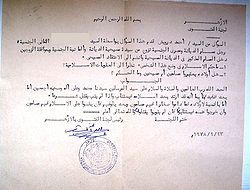 In Islam, apostasy is called "ridda" ("turning back") and is considered to be a profound insult to God. A person born of Muslim parents that rejects Islam is called a "murtad fitri" (natural apostate), and a person that converted to Islam and later rejects the religion is called a "murtad milli" (apostate from the community).
In Islamic law (Sharia
), the consensus view is that a male apostate must be put to death unless he suffers from a mental disorder or converted under duress, for example, due to an imminent danger of being killed. A female apostate must be either executed, according to Shafi'i
, Maliki
, and Hanbali
schools of Sunni Islamic jurisprudence (fiqh
), or imprisoned until she reverts to Islam as advocated by the Sunni Hanafi
school and by Shi'a scholars.
Ideally, the one performing the execution of an apostate must be an imam
. At the same time, all schools of Islamic jurisprudence agree that any Muslim can kill an apostate without punishment.
is permitted in Islam it is prohibited in secular law in many countries. Does prohibiting polygamy then curtail the religious freedom of Muslims? The US
and India
, both constitutionally secular nations, have taken two different views of this. In India polygamy is permitted, but only for Muslims, under Muslim Personal Law. In the USA polygamy is prohibited for all. This was a major source of conflict between the early LDS Church and the United States until the Church amended its position on practicing polygamy.
Similar issues have also arisen in the context of the religious use of psychedelic
substances by Native American tribes in the United States as well as other Native practices.
and belief is protected by the International Covenant on Civil and Political Rights
(ICCPR). This protection extends to specifically non-religious beliefs, such as humanism
. However, minority or disfavored religions still receive the spiritual injustice of persecution in many parts of the world.
provides the term of “religious majority” (Religionsmündigkeit) with a minimum age for minors
to follow their own religious beliefs even if their parents don't share those or don't approve. Children 14 and older have the unrestricted right to enter or exit any religious community. Children 12 and older cannot be compelled to change to a different belief. Children 10 and older have to be heard before their parents change their religious upbringing to a different belief. There are similar laws in Austria
and in Switzerland
.
designated fourteen nations as "countries of particular concern". The commission chairman commented that these are nations whose conduct marks them as the world’s worst religious freedom violators and human rights abusers. The fourteen nations designated were Burma, China
, Egypt
, Eritrea
, Iran
, Iraq
, Nigeria
, North Korea
, Pakistan
, Saudi Arabia
, Sudan
, Turkmenistan
, Uzbekistan
, and Vietnam
. Other nations on the commission's watchlist include Afghanistan
, Belarus
, Cuba
, India
, Indonesia
, Laos
, Russia
, Somalia
, Tajikistan
, Turkey
, and Venezuela
.
There are concerns about the persecution of religious minorities such as the banning of worn religious articles such as the Muslim veil
, Jewish skullcap
, and Christian cross
in certain European countries. Article 18 of the U.N. International Covenant on Civil and Political Rights
limits restrictions on freedom to manifest one's religion or beliefs to those necessary to protect public safety, order, health, or morals or the fundamental rights and freedoms of others. Freedom of religion as a legal concept is related to, but not identical with, religious toleration, separation of church and state
, or secular state
(laïcité
).
Where individuals and not governments are concerned, religious toleration is generally taken to refer to an attitude of acceptance towards other people's religions. Such toleration does not require that one view other religions as equally true; rather, the assumption is that each citizen will grant that others have the right to hold and practice their own beliefs. Against this backdrop, proselytism
can be a contentious issue, as it could be regarded as an offense against the validity of others' religious beliefs, including irreligious belief.
for their religious convictions 1658-1661.. The U.S. proclaim 16 January Religious Freedom Day.
's Forum on Religion & Public Life performed a study on religious freedom in the world, for which data were gathered from 16 governmental and non-governmental organisations – including the United Nations
, the U.S. State Department and Human Rights Watch
- and representing over 99.5 percent of the world's population. According to the results, that were published in December 2009, about one-third of the countries in the world have high or very high restrictions on religion, and nearly 70 percent of the world's population lives in countries with heavy restrictions on freedom of religion. This concerns restrictions on religion originating from both national authorities and social hostilities undertaken by private individuals, organisations and social groups. Government restrictions included constitution
al limitations or other prohibitions on free speech.
Social hostilities were measured by religion-related terrorism
and violence between religious groups.
The countries in North
and South America
reportedly had some of the lowest levels of government and social restrictions on religion, while The Middle East and North Africa
were the regions with the highest.
Saudi Arabia
, Pakistan
and Iran
were the countries that top the list of countries with the overall highest levels of restriction on religion.
Of the world's 25 most populous countries, Iran, Egypt
, Indonesia
and Pakistan
had the most restrictions, while Brazil
, Japan
, the United States, Italy
, France
, South Africa
and the United Kingdom had some of the lowest levels.
While the Middle East, North Africa and the Americas exhibit either extremely high or low levels of government and social restrictions, these two variables do not always move together: Vietnam and China, for instance, had high government restrictions on religion but were in the moderate or low range when it came to social hostilities. Nigeria
and Bangladesh
follow the opposite pattern: high in social hostilities but moderate in terms of government actions.
The study found that government restrictions were relatively low in the U.S., but the levels of religious hostilities were higher than those reported in a number of other large democracies, such as Brazil and Japan.
While most countries provided for the protection of religious freedom in their constitutions or laws, only a quarter of those countries were found to fully respect these legal rights in practice.
In 75 countries - four in 10 in the world - governments limit the efforts of religious groups to proselytise and in 178 countries - 90 percent - religious groups must register with the government.
India and China, also exhibited extreme, but different restrictions on religion. China showed very high levels of government restriction but low to moderate levels of social hostilities, while India showed very high social hostilities but only low to moderate levels of government restrictions.
Israel stood out among the nations surveyed with "high scores on the social hostilities index" in comparison with other countries that are more authoritarian or less ordered.
Topping the government restrictions index were Saudi Arabia, Iran, Uzbekistan
, China, Egypt, Burma, Maldives
, Eritrea
, Malaysia and Brunei
.
At the top of the social hostilities index were Iraq
, India
, Pakistan
, Afghanistan
, Indonesia
, Bangladesh
, Somalia
, Israel
, Sri Lanka
, Sudan
and Saudi Arabia
.
Religion
Religion is a collection of cultural systems, belief systems, and worldviews that establishes symbols that relate humanity to spirituality and, sometimes, to moral values. Many religions have narratives, symbols, traditions and sacred histories that are intended to give meaning to life or to...
or belief
Belief
Belief is the psychological state in which an individual holds a proposition or premise to be true.-Belief, knowledge and epistemology:The terms belief and knowledge are used differently in philosophy....
in teaching
Religious education
In secular usage, religious education is the teaching of a particular religion and its varied aspects —its beliefs, doctrines, rituals, customs, rites, and personal roles...
, practice, worship
Worship
Worship is an act of religious devotion usually directed towards a deity. The word is derived from the Old English worthscipe, meaning worthiness or worth-ship — to give, at its simplest, worth to something, for example, Christian worship.Evelyn Underhill defines worship thus: "The absolute...
, and observance; the concept is generally recognized also to include the freedom to change religion
Religious conversion
Religious conversion is the adoption of a new religion that differs from the convert's previous religion. Changing from one denomination to another within the same religion is usually described as reaffiliation rather than conversion.People convert to a different religion for various reasons,...
or not to follow any religion
Irreligion
Irreligion is defined as an absence of religion or an indifference towards religion. Sometimes it may also be defined more narrowly as hostility towards religion. When characterized as hostility to religion, it includes antitheism, anticlericalism and antireligion. When characterized as...
. The freedom to leave or discontinue membership in a religion or religious group —in religious terms called "apostasy
Apostasy
Apostasy , 'a defection or revolt', from ἀπό, apo, 'away, apart', στάσις, stasis, 'stand, 'standing') is the formal disaffiliation from or abandonment or renunciation of a religion by a person. One who commits apostasy is known as an apostate. These terms have a pejorative implication in everyday...
" —is also a fundamental part of religious freedom, covered by Article 18 of the Universal Declaration of Human Rights
Universal Declaration of Human Rights
The Universal Declaration of Human Rights is a declaration adopted by the United Nations General Assembly . The Declaration arose directly from the experience of the Second World War and represents the first global expression of rights to which all human beings are inherently entitled...
.
Freedom of religion is considered by many people and nations to be a fundamental
Fundamental rights
Fundamental rights are a generally-regarded set of entitlements in the context of a legal system, wherein such system is itself said to be based upon this same set of basic, fundamental, or inalienable entitlements or "rights." Such rights thus belong without presumption or cost of privilege to all...
human right.
In a country with a state religion
State religion
A state religion is a religious body or creed officially endorsed by the state...
, freedom of religion is generally considered to mean that the government permits religious practices of other sects besides the state religion, and does not persecute
Religious persecution
Religious persecution is the systematic mistreatment of an individual or group of individuals as a response to their religious beliefs or affiliations or lack thereof....
believers in other faiths.
History
Historically freedom of religion has been used to refer to the tolerance of different theological systems of belief, while freedom of worship has been defined as freedom of individual action. Each of these have existed to varying degrees. While many countries have accepted some form of religious freedom, this has also often been limited in practice through punitive taxation, repressive social legislation, and political disenfranchisement. Compare examples of individual freedom in ItalyItaly
Italy , officially the Italian Republic languages]] under the European Charter for Regional or Minority Languages. In each of these, Italy's official name is as follows:;;;;;;;;), is a unitary parliamentary republic in South-Central Europe. To the north it borders France, Switzerland, Austria and...
or the Muslim
Muslim
A Muslim, also spelled Moslem, is an adherent of Islam, a monotheistic, Abrahamic religion based on the Quran, which Muslims consider the verbatim word of God as revealed to prophet Muhammad. "Muslim" is the Arabic term for "submitter" .Muslims believe that God is one and incomparable...
tradition of dhimmi
Dhimmi
A , is a non-Muslim subject of a state governed in accordance with sharia law. Linguistically, the word means "one whose responsibility has been taken". This has to be understood in the context of the definition of state in Islam...
s, literally "protected individuals" professing an officially tolerated non-Muslim religion.
Classical antiquity
Classical antiquity is a broad term for a long period of cultural history centered on the Mediterranean Sea, comprising the interlocking civilizations of ancient Greece and ancient Rome, collectively known as the Greco-Roman world...
a syncretic
Syncretism
Syncretism is the combining of different beliefs, often while melding practices of various schools of thought. The term means "combining", but see below for the origin of the word...
point-of-view often allowed communities of traders to operate under their own customs. When street mobs of separate quarters clashed in a Hellenistic or Roman
Ancient Rome
Ancient Rome was a thriving civilization that grew on the Italian Peninsula as early as the 8th century BC. Located along the Mediterranean Sea and centered on the city of Rome, it expanded to one of the largest empires in the ancient world....
city, the issue was generally perceived to be an infringement of community rights.
Cyrus the Great
Cyrus the Great
Cyrus II of Persia , commonly known as Cyrus the Great, also known as Cyrus the Elder, was the founder of the Achaemenid Empire. Under his rule, the empire embraced all the previous civilized states of the ancient Near East, expanded vastly and eventually conquered most of Southwest Asia and much...
established the Achaemenid Empire
Achaemenid Empire
The Achaemenid Empire , sometimes known as First Persian Empire and/or Persian Empire, was founded in the 6th century BCE by Cyrus the Great who overthrew the Median confederation...
ca. 550 BC, and initiated a general policy of permitting religious freedom throughout the empire, documenting this on the Cyrus Cylinder
Cyrus cylinder
The Cyrus Cylinder is an ancient clay cylinder, now broken into several fragments, on which is written a declaration in Akkadian cuneiform script in the name of the Achaemenid king Cyrus the Great. It dates from the 6th century BC and was discovered in the ruins of Babylon in Mesopotamia in 1879...
.
Some of the historical exceptions have been in regions where one of the revealed religions has been in a position of power: Judaism
Judaism
Judaism ) is the "religion, philosophy, and way of life" of the Jewish people...
, Zoroastrianism
Zoroastrianism
Zoroastrianism is a religion and philosophy based on the teachings of prophet Zoroaster and was formerly among the world's largest religions. It was probably founded some time before the 6th century BCE in Greater Iran.In Zoroastrianism, the Creator Ahura Mazda is all good, and no evil...
, Christianity
Christianity
Christianity is a monotheistic religion based on the life and teachings of Jesus as presented in canonical gospels and other New Testament writings...
and Islam
Islam
Islam . The most common are and . : Arabic pronunciation varies regionally. The first vowel ranges from ~~. The second vowel ranges from ~~~...
. Others have been where the established order has felt threatened, as shown in the trial of Socrates
Trial of Socrates
The Trial of Socrates refers to the trial and the subsequent execution of the classical Athenian philosopher Socrates in 399 BC. Socrates was tried on the basis of two notoriously ambiguous charges: corrupting the youth and impiety...
in 399 BC or where the ruler has been deified, as in Rome, and refusal to offer token sacrifice
Sacrifice
Sacrifice is the offering of food, objects or the lives of animals or people to God or the gods as an act of propitiation or worship.While sacrifice often implies ritual killing, the term offering can be used for bloodless sacrifices of cereal food or artifacts...
was similar to refusing to take an oath of allegiance
Oath of allegiance
An oath of allegiance is an oath whereby a subject or citizen acknowledges a duty of allegiance and swears loyalty to monarch or country. In republics, modern oaths specify allegiance to the country's constitution. For example, officials in the United States, a republic, take an oath of office that...
. This was the core for resentment and the persecution of early Christian communities
Persecution of Christians
Persecution of Christians as a consequence of professing their faith can be traced both historically and in the current era. Early Christians were persecuted for their faith, at the hands of both Jews from whose religion Christianity arose, and the Roman Empire which controlled much of the land...
.
Freedom of religious worship was established in the Buddhist Maurya Empire
Maurya Empire
The Maurya Empire was a geographically extensive Iron Age historical power in ancient India, ruled by the Mauryan dynasty from 321 to 185 BC...
of ancient India
History of India
The history of India begins with evidence of human activity of Homo sapiens as long as 75,000 years ago, or with earlier hominids including Homo erectus from about 500,000 years ago. The Indus Valley Civilization, which spread and flourished in the northwestern part of the Indian subcontinent from...
by Asoka the Great in the 3rd century BC, which was encapsulated in the Edicts of Ashoka
Edicts of Ashoka
The Edicts of Ashoka are a collection of 33 inscriptions on the Pillars of Ashoka, as well as boulders and cave walls, made by the Emperor Ashoka of the Mauryan dynasty during his reign from 269 BCE to 231 BCE. These inscriptions are dispersed throughout the areas of modern-day Bangladesh, India,...
.
Greek-Jewish clashes at Cyrene
Cyrene, Libya
Cyrene was an ancient Greek colony and then a Roman city in present-day Shahhat, Libya, the oldest and most important of the five Greek cities in the region. It gave eastern Libya the classical name Cyrenaica that it has retained to modern times.Cyrene lies in a lush valley in the Jebel Akhdar...
in 73 AD and 117 AD and in Alexandria
Alexandria
Alexandria is the second-largest city of Egypt, with a population of 4.1 million, extending about along the coast of the Mediterranean Sea in the north central part of the country; it is also the largest city lying directly on the Mediterranean coast. It is Egypt's largest seaport, serving...
in 115 AD provide examples of cosmopolitan cities as scenes of tumult.
Middle East
Following a period of fighting lasting around a hundred years before 620 AD which mainly involved Arab and Jewish inhabitants of MedinaMedina
Medina , or ; also transliterated as Madinah, or madinat al-nabi "the city of the prophet") is a city in the Hejaz region of western Saudi Arabia, and serves as the capital of the Al Madinah Province. It is the second holiest city in Islam, and the burial place of the Islamic Prophet Muhammad, and...
(then known as Yathrib), religious freedom for Muslim
Muslim
A Muslim, also spelled Moslem, is an adherent of Islam, a monotheistic, Abrahamic religion based on the Quran, which Muslims consider the verbatim word of God as revealed to prophet Muhammad. "Muslim" is the Arabic term for "submitter" .Muslims believe that God is one and incomparable...
s, Jews and pagans
Paganism
Paganism is a blanket term, typically used to refer to non-Abrahamic, indigenous polytheistic religious traditions....
was declared by Muhammad
Muhammad
Muhammad |ligature]] at U+FDF4 ;Arabic pronunciation varies regionally; the first vowel ranges from ~~; the second and the last vowel: ~~~. There are dialects which have no stress. In Egypt, it is pronounced not in religious contexts...
in the Constitution of Medina
Constitution of Medina
The Constitution of Medina , also known as the Charter of Medina, was drafted by the Islamic prophet Muhammad. It constituted a formal agreement between Muhammad and all of the significant tribes and families of Yathrib , including Muslims, Jews, Christians and pagans. This constitution formed the...
. The Islamic Caliphate
Caliphate
The term caliphate, "dominion of a caliph " , refers to the first system of government established in Islam and represented the political unity of the Muslim Ummah...
later guaranteed religious freedom under the conditions that non-Muslim communities accept dhimmi
Dhimmi
A , is a non-Muslim subject of a state governed in accordance with sharia law. Linguistically, the word means "one whose responsibility has been taken". This has to be understood in the context of the definition of state in Islam...
(protected) status and their adult males pay the jizya
Jizya
Under Islamic law, jizya or jizyah is a per capita tax levied on a section of an Islamic state's non-Muslim citizens, who meet certain criteria...
tax as a substitute for the zakat
Zakat
Zakāt , one of the Five Pillars of Islam, is the giving of a fixed portion of one's wealth to charity, generally to the poor and needy.-History:Zakat, a practice initiated by Muhammed himself, has played an important role throughout Islamic history...
paid by Muslim citizens. Jews and Christians were alternately toleratedand persecuted, the most notable examples of the latter being the conquest of Islamic Spain by fundamentalist groups from north Africa (the Almoravids
Almoravids
The Almoravids were a Berber dynasty of Morocco, who formed an empire in the 11th-century that stretched over the western Maghreb and Al-Andalus. Their capital was Marrakesh, a city which they founded in 1062 C.E...
, followed by the Almohads from the mid-12th century). Persecution of non-Muslims caused the emigration of many Jews (and Christians) into the northern, Christian states.
Religious pluralism
Religious pluralism
Religious pluralism is a loosely defined expression concerning acceptance of various religions, and is used in a number of related ways:* As the name of the worldview according to which one's religion is not the sole and exclusive source of truth, and thus that at least some truths and true values...
existed in classical Islamic ethics
Islamic ethics
Islamic ethics , defined as "good character," historically took shape gradually from the 7th century and was finally established by the 11th century...
and Sharia
Sharia
Sharia law, is the moral code and religious law of Islam. Sharia is derived from two primary sources of Islamic law: the precepts set forth in the Quran, and the example set by the Islamic prophet Muhammad in the Sunnah. Fiqh jurisprudence interprets and extends the application of sharia to...
law, as the religious law
Religious law
In some religions, law can be thought of as the ordering principle of reality; knowledge as revealed by a God defining and governing all human affairs. Law, in the religious sense, also includes codes of ethics and morality which are upheld and required by the God...
s and court
Court
A court is a form of tribunal, often a governmental institution, with the authority to adjudicate legal disputes between parties and carry out the administration of justice in civil, criminal, and administrative matters in accordance with the rule of law...
s of other religions, including Christianity
Christianity
Christianity is a monotheistic religion based on the life and teachings of Jesus as presented in canonical gospels and other New Testament writings...
, Judaism
Judaism
Judaism ) is the "religion, philosophy, and way of life" of the Jewish people...
and Hinduism
Hinduism
Hinduism is the predominant and indigenous religious tradition of the Indian Subcontinent. Hinduism is known to its followers as , amongst many other expressions...
, were usually accommodated within the Islamic legal framework, as seen in the early Caliphate
Caliphate
The term caliphate, "dominion of a caliph " , refers to the first system of government established in Islam and represented the political unity of the Muslim Ummah...
, Al-Andalus
Al-Andalus
Al-Andalus was the Arabic name given to a nation and territorial region also commonly referred to as Moorish Iberia. The name describes parts of the Iberian Peninsula and Septimania governed by Muslims , at various times in the period between 711 and 1492, although the territorial boundaries...
, Indian subcontinent
Muslim conquest in the Indian subcontinent
Muslim conquest in South Asia mainly took place from the 13th to the 16th centuries, though earlier Muslim conquests made limited inroads into the region, beginning during the period of the ascendancy of the Rajput Kingdoms in North India, from the 7th century onwards.However, the Himalayan...
, and the Ottoman Millet
Millet (Ottoman Empire)
Millet is a term for the confessional communities in the Ottoman Empire. It refers to the separate legal courts pertaining to "personal law" under which communities were allowed to rule themselves under their own system...
system. In medieval Islamic societies, the qadi
Qadi
Qadi is a judge ruling in accordance with Islamic religious law appointed by the ruler of a Muslim country. Because Islam makes no distinction between religious and secular domains, qadis traditionally have jurisdiction over all legal matters involving Muslims...
(Islamic judges) usually could not interfere in the matters of non-Muslims unless the parties voluntarily choose to be judged according to Islamic law, thus the dhimmi communities living in Islamic state
Islamic State
An Islamic state is a type of government, in which the primary basis for government is Islamic religious law...
s usually had their own laws independent from the Sharia law, such as the Jews who would have their own Halakha
Halakha
Halakha — also transliterated Halocho , or Halacha — is the collective body of Jewish law, including biblical law and later talmudic and rabbinic law, as well as customs and traditions.Judaism classically draws no distinction in its laws between religious and ostensibly non-religious life; Jewish...
courts.
Dhimmis were allowed to operate their own courts following their own legal systems in cases that did not involve other religious groups, or capital offences or threats to public order. Non-Muslims were allowed to engage in religious practices that was usually forbidden by Islamic law, such as the consumption of alcohol
Alcohol
In chemistry, an alcohol is an organic compound in which the hydroxy functional group is bound to a carbon atom. In particular, this carbon center should be saturated, having single bonds to three other atoms....
and pork
Pork
Pork is the culinary name for meat from the domestic pig , which is eaten in many countries. It is one of the most commonly consumed meats worldwide, with evidence of pig husbandry dating back to 5000 BC....
, as well as religious practices which Muslims found repugnant, such as the Zoroastrian
Zoroastrianism
Zoroastrianism is a religion and philosophy based on the teachings of prophet Zoroaster and was formerly among the world's largest religions. It was probably founded some time before the 6th century BCE in Greater Iran.In Zoroastrianism, the Creator Ahura Mazda is all good, and no evil...
practice of incest
Incest
Incest is sexual intercourse between close relatives that is usually illegal in the jurisdiction where it takes place and/or is conventionally considered a taboo. The term may apply to sexual activities between: individuals of close "blood relationship"; members of the same household; step...
uous "self-marriage" where a man could marry his mother, sister or daughter. According to the famous Islamic legal scholar Ibn Qayyim (1292–1350), non-Muslims had the right to engage in such religious practices even if it offended Muslims, under the conditions that such cases not be presented to Islamic Sharia courts and that these religious minorities believed that the practice in question is permissible according to their religion.
India
Religious freedom and the right to worship freely were practices that had been appreciated and promoted by most ancient Indian dynasties. As a result, people fleeing religious persecutionReligious persecution
Religious persecution is the systematic mistreatment of an individual or group of individuals as a response to their religious beliefs or affiliations or lack thereof....
in other parts of the world including Christians, Jews, Bahá'i and Zoroastrians fled to India as a place of refuge to enjoy religious freedom. This had been the underlying attitude of most rulers of India
India
India , officially the Republic of India , is a country in South Asia. It is the seventh-largest country by geographical area, the second-most populous country with over 1.2 billion people, and the most populous democracy in the world...
from time immemorial.
Ancient Jews
Jews
The Jews , also known as the Jewish people, are a nation and ethnoreligious group originating in the Israelites or Hebrews of the Ancient Near East. The Jewish ethnicity, nationality, and religion are strongly interrelated, as Judaism is the traditional faith of the Jewish nation...
fleeing from persecution in their homeland 2,500 years ago settled in India
India
India , officially the Republic of India , is a country in South Asia. It is the seventh-largest country by geographical area, the second-most populous country with over 1.2 billion people, and the most populous democracy in the world...
and never faced anti-Semitism
Anti-Semitism
Antisemitism is suspicion of, hatred toward, or discrimination against Jews for reasons connected to their Jewish heritage. According to a 2005 U.S...
. Freedom of religion edicts have been found written during Ashoka the Great's reign in the 3rd century BC. Freedom to practise, preach and propagate any religion is a constitutional right in Modern India
India
India , officially the Republic of India , is a country in South Asia. It is the seventh-largest country by geographical area, the second-most populous country with over 1.2 billion people, and the most populous democracy in the world...
. Most major religious festivals of the main communities are included in the list of national holidays.
India is an 80% Hindu
Hindu
Hindu refers to an identity associated with the philosophical, religious and cultural systems that are indigenous to the Indian subcontinent. As used in the Constitution of India, the word "Hindu" is also attributed to all persons professing any Indian religion...
country, yet its prime minister
Prime Minister of India
The Prime Minister of India , as addressed to in the Constitution of India — Prime Minister for the Union, is the chief of government, head of the Council of Ministers and the leader of the majority party in parliament...
is a Sikh
Sikh
A Sikh is a follower of Sikhism. It primarily originated in the 15th century in the Punjab region of South Asia. The term "Sikh" has its origin in Sanskrit term शिष्य , meaning "disciple, student" or शिक्ष , meaning "instruction"...
(Manmohan Singh
Manmohan Singh
Manmohan Singh is the 13th and current Prime Minister of India. He is the only Prime Minister since Jawaharlal Nehru to return to power after completing a full five-year term. A Sikh, he is the first non-Hindu to occupy the office. Singh is also the 7th Prime Minister belonging to the Indian...
), the chairperson of the ruling alliance
United Progressive Alliance
The United Progressive Alliance is a ruling coalition of center-left political parties heading the government of India. The coalition is led by the Indian National Congress , which is currently the single largest political party in the Lok Sabha...
is a Catholic woman of Italian
Italian people
The Italian people are an ethnic group that share a common Italian culture, ancestry and speak the Italian language as a mother tongue. Within Italy, Italians are defined by citizenship, regardless of ancestry or country of residence , and are distinguished from people...
birth (Sonia Gandhi
Sonia Gandhi
Sonia Gandhi is an Italian-born Indian politician and the President of the Indian National Congress, one of the major political parties of India. She is the widow of former Prime Minister of India, Rajiv Gandhi...
), and three out of the twelve presidents of India have been Muslims. Further, the current Chief Election Commissioner of India
Chief Election Commissioner of India
The Chief Election Commissioner heads the Election Commission of India, a body constitutionally empowered to conduct free and fair elections to the national and state legislatures...
is a Muslim,as are many successful Indians including film stars,artists,religious scholars,industrialists etc. Still, though some argue that India
India
India , officially the Republic of India , is a country in South Asia. It is the seventh-largest country by geographical area, the second-most populous country with over 1.2 billion people, and the most populous democracy in the world...
's predominant religion, Hinduism
Hinduism
Hinduism is the predominant and indigenous religious tradition of the Indian Subcontinent. Hinduism is known to its followers as , amongst many other expressions...
, has long been among the most tolerant of religions, others assert that tolerance only appeared in India with the emergence of the modern Republic of India as a secular nation in 1947.
The Dalai Lama
Dalai Lama
The Dalai Lama is a high lama in the Gelug or "Yellow Hat" branch of Tibetan Buddhism. The name is a combination of the Mongolian word далай meaning "Ocean" and the Tibetan word bla-ma meaning "teacher"...
, the Tibetan leader in exile said that religious tolerance of ‘Aryabhoomi,’ a reference to India found in Mahabharata, has been in existence in this country from thousands of years. “Not only Hinduism, Jainism, Buddhism, Sikhism which are the native religions but also Christianity and Islam have flourished here. Religious tolerance is inherent in Indian tradition,’’ Dalai Lama said.
Freedom of religion in the Indian subcontinent
Indian subcontinent
The Indian subcontinent, also Indian Subcontinent, Indo-Pak Subcontinent or South Asian Subcontinent is a region of the Asian continent on the Indian tectonic plate from the Hindu Kush or Hindu Koh, Himalayas and including the Kuen Lun and Karakoram ranges, forming a land mass which extends...
is exemplified by the reign of King Piyadasi (304 BC to 232 BC) (Asoka). One of King Asoka's main concerns was to reform governmental institutes and exercise moral principles in his attempt to create a just and humane society
Edicts of Ashoka
The Edicts of Ashoka are a collection of 33 inscriptions on the Pillars of Ashoka, as well as boulders and cave walls, made by the Emperor Ashoka of the Mauryan dynasty during his reign from 269 BCE to 231 BCE. These inscriptions are dispersed throughout the areas of modern-day Bangladesh, India,...
. Later he promoted the principles of Buddhism
Buddhism
Buddhism is a religion and philosophy encompassing a variety of traditions, beliefs and practices, largely based on teachings attributed to Siddhartha Gautama, commonly known as the Buddha . The Buddha lived and taught in the northeastern Indian subcontinent some time between the 6th and 4th...
, and the creation of a just, understanding and fair society was held as an important principle for many ancient rulers of this time in the East.
The importance of freedom of worship in India was encapsulated in an inscription of Asoka:
The initial entry of Islam
Islam
Islam . The most common are and . : Arabic pronunciation varies regionally. The first vowel ranges from ~~. The second vowel ranges from ~~~...
into South Asia
South Asia
South Asia, also known as Southern Asia, is the southern region of the Asian continent, which comprises the sub-Himalayan countries and, for some authorities , also includes the adjoining countries to the west and the east...
came in the first century after the death of the Islamic Prophet Muhammad
Muhammad
Muhammad |ligature]] at U+FDF4 ;Arabic pronunciation varies regionally; the first vowel ranges from ~~; the second and the last vowel: ~~~. There are dialects which have no stress. In Egypt, it is pronounced not in religious contexts...
. When around 1210 AD the Islamic Sultanates
Islamic empires in India
Beginning in the 12th century, several Islamic states were established in the Indian subcontinentin the course of a gradual Muslim conquest in the Indian subcontinent....
invaded India from the north-west, gradually the principle of freedom of religion deteriorated in this part of the world. They were subsequently replaced by another Islamic invader in the form of Babur
Babur
Babur was a Muslim conqueror from Central Asia who, following a series of setbacks, finally succeeded in laying the basis for the Mughal dynasty of South Asia. He was a direct descendant of Timur through his father, and a descendant also of Genghis Khan through his mother...
. The Mughal
Mughal Empire
The Mughal Empire , or Mogul Empire in traditional English usage, was an imperial power from the Indian Subcontinent. The Mughal emperors were descendants of the Timurids...
empire was founded by the Mongol leader Babur
Babur
Babur was a Muslim conqueror from Central Asia who, following a series of setbacks, finally succeeded in laying the basis for the Mughal dynasty of South Asia. He was a direct descendant of Timur through his father, and a descendant also of Genghis Khan through his mother...
in 1526, when he defeated Ibrahim Lodi, the last of the Delhi Sultans
Delhi Sultanate
The Delhi Sultanate is a term used to cover five short-lived, Delhi based kingdoms or sultanates, of Turkic origin in medieval India. The sultanates ruled from Delhi between 1206 and 1526, when the last was replaced by the Mughal dynasty...
at the First Battle of Panipat
First battle of Panipat
The first battle of Panipat took place in Northern India, and marked the beginning of the Mughal Empire. This was one of the earliest battles involving gunpowder firearms and field artillery.-Details:...
. The word "Mughal" is the Indo-Iranian version of Mongol.
On the main Asian continent, the Mongols were tolerant of religions. People could worship as they wished freely and openly, though the formation of 2 nations i.e. Pakistan and Bangladesh has been on basis of religious intolerance.
After arrival of Europeans, Christians in zeal to convert local as per belief in conversion as service of God, have also been seen to fall into frivolous methods since their arrival. Though by and large there are hardly any reports of law and order disturbance from mobs with Christian beliefs except perhaps in the north eastern region of India.
The rise of the BJP political party and the emergence of Hindu nationalism
Nationalism
Nationalism is a political ideology that involves a strong identification of a group of individuals with a political entity defined in national terms, i.e. a nation. In the 'modernist' image of the nation, it is nationalism that creates national identity. There are various definitions for what...
have been accompanied by the repression of Christianity and in some cases assaults on Christians and their institutions. The worst of these happened in August 2008 when 4,640 houses and 252 churches were torched in Kandhamal. 54,000 people were made homeless by the violence. Attacks continue and in November 2010 Hindutva
Hindutva
Hindutva is the term used to describe movements advocating Hindu nationalism. Members of the movement are called Hindutvavādis.In India, an umbrella organization called the Sangh Parivar champions the concept of Hindutva...
extremists atacked Christian homes in Peliguda, Kenduguda and Telarai villages in Orissa state: Christians say they were attacked for refusing to contribute to the local Durga Puja
Durga Puja
Durga puja ; দুর্গা পূজা,ଦୁର୍ଗା ପୂଜା,‘Worship of Durga’), also referred to as Durgotsava ; , is an annual Hindu festival in South Asia that celebrates worship of the Hindu goddess Durga. It refers to all the six days observed as Mahalaya, Shashthi, Maha Saptami, Maha Ashtami, Maha Navami and...
celebrations. Freedom of religion in contemporary India is a fundamental right guaranteed under Article 25 of the nation's constitution. Accordingly every citizen of India has a right to profess, practice and propagate their religions peacefully. Vishwa Hindu Parishad counters this argument by saying that evangelical Christians are forcefully (or through money) converting rural, illiterate populations and they are only trying to stop this.
In September 2010, Indian state Kerala's State Election Commissioner announced that "Religious heads cannot issue calls to vote for members of a particular community or to defeat the nonbelievers". The Catholic Church comprising Latin, Syro-Malabar and Syro-Malankara rites used to give clear directions to the faithful on exercising their franchise during elections through pastoral letters issued by bishops or council of bishops. The pastoral letter issued by Kerala Catholic Bishops’ Council (KCBC) on the eve of the poll urged the faithful to shun atheists.
Even today, most Indians celebrate all religious festivals with equal enthusiasm and respect. Hindu
Hindu
Hindu refers to an identity associated with the philosophical, religious and cultural systems that are indigenous to the Indian subcontinent. As used in the Constitution of India, the word "Hindu" is also attributed to all persons professing any Indian religion...
festivals like Deepavali and Holi
Holi
Holi , is a religious spring festival celebrated by Hindus. Holi is also known as festival of Colours. It is primarily observed in India, Nepal, Pakistan, and countries with large Indic diaspora populations following Hinduism, such as Suriname, Malaysia, Guyana, South Africa, Trinidad, United...
, Muslim
Muslim
A Muslim, also spelled Moslem, is an adherent of Islam, a monotheistic, Abrahamic religion based on the Quran, which Muslims consider the verbatim word of God as revealed to prophet Muhammad. "Muslim" is the Arabic term for "submitter" .Muslims believe that God is one and incomparable...
festivals like Mahanabi Jayanti
Mawlid
Mawlid or sometimes ميلاد , mīlād is a term used to refer to the observance of the birthday of the Islamic prophet Muhammad which occurs in Rabi' al-awwal,...
, Christian festivals like Christmas
Christmas
Christmas or Christmas Day is an annual holiday generally celebrated on December 25 by billions of people around the world. It is a Christian feast that commemorates the birth of Jesus Christ, liturgically closing the Advent season and initiating the season of Christmastide, which lasts twelve days...
and other festivals like Buddha Purnima, Mahavir Jayanti
Mahavir Jayanti
In Jainism, Mahavir Janma Kalyanak is the most important religious holiday. It celebrates the birth of Mahavira, the last Tirthankara. On the Gregorian calendar, the holiday occurs either in March or April....
, Gur Purab etc. are celebrated and enjoyed by all Indians
Indian people
Indian people or Indisians constitute the Asian nation and pan-ethnic group native to India, which forms the south of Asia, containing 17.31% of the world's population. The Indian nationality is in essence made up of regional nationalities, reflecting the rich and complex history of India...
.
Religious intolerance
The Roman Catholic ChurchRoman Catholic Church
The Catholic Church, also known as the Roman Catholic Church, is the world's largest Christian church, with over a billion members. Led by the Pope, it defines its mission as spreading the gospel of Jesus Christ, administering the sacraments and exercising charity...
kept a tight rein on religious expression throughout the Middle Ages
Middle Ages
The Middle Ages is a periodization of European history from the 5th century to the 15th century. The Middle Ages follows the fall of the Western Roman Empire in 476 and precedes the Early Modern Era. It is the middle period of a three-period division of Western history: Classic, Medieval and Modern...
, basing its principles on the Bible and on the Gospel. Jews were alternately tolerated and persecuted, the most notable examples of the latter being the expulsion of all Jews
History of the Jews in Spain
Spanish Jews once constituted one of the largest and most prosperous Jewish communities under Muslim and Christian rule in Spain, before the majority, together with resident Muslims, were forced to convert to Catholicism, be expelled or be killed when Spain became united under the Catholic Monarchs...
from Spain in 1492. Some of those who remained and converted were tried as heretics in the Inquisition
Inquisition
The Inquisition, Inquisitio Haereticae Pravitatis , was the "fight against heretics" by several institutions within the justice-system of the Roman Catholic Church. It started in the 12th century, with the introduction of torture in the persecution of heresy...
for allegedly practicing Judaism in secret. Despite the persecution of Jews, they were the most tolerated non-Catholic faith in Europe.
However, the latter was in part a reaction to the growing movement that became the Reformation
Protestant Reformation
The Protestant Reformation was a 16th-century split within Western Christianity initiated by Martin Luther, John Calvin and other early Protestants. The efforts of the self-described "reformers", who objected to the doctrines, rituals and ecclesiastical structure of the Roman Catholic Church, led...
. As early as 1380, John Wycliffe
John Wycliffe
John Wycliffe was an English Scholastic philosopher, theologian, lay preacher, translator, reformer and university teacher who was known as an early dissident in the Roman Catholic Church during the 14th century. His followers were known as Lollards, a somewhat rebellious movement, which preached...
in England denied transubstantiation
Transubstantiation
In Roman Catholic theology, transubstantiation means the change, in the Eucharist, of the substance of wheat bread and grape wine into the substance of the Body and Blood, respectively, of Jesus, while all that is accessible to the senses remains as before.The Eastern Orthodox...
and began his translation of the Bible into English. He was condemned in a Papal Bull
Papal bull
A Papal bull is a particular type of letters patent or charter issued by a Pope of the Catholic Church. It is named after the bulla that was appended to the end in order to authenticate it....
in 1410, and all his books were burned.
In 1414 Jan Hus
Jan Hus
Jan Hus , often referred to in English as John Hus or John Huss, was a Czech priest, philosopher, reformer, and master at Charles University in Prague...
, a Bohemia
Bohemia
Bohemia is a historical region in central Europe, occupying the western two-thirds of the traditional Czech Lands. It is located in the contemporary Czech Republic with its capital in Prague...
n preacher of reformation, was given a safe conduct by the Holy Roman Emperor to attend the Council of Constance
Council of Constance
The Council of Constance is the 15th ecumenical council recognized by the Roman Catholic Church, held from 1414 to 1418. The council ended the Three-Popes Controversy, by deposing or accepting the resignation of the remaining Papal claimants and electing Pope Martin V.The Council also condemned and...
. Not entirely trusting in his safety, he made his will before he left. His forebodings proved accurate, and he was burned at the stake on 6 July 1415. The Council also decreed that Wycliffe's remains be disinterred and cast out. This decree was not carried out until 1429.
After the fall of the city of Granada
Granada
Granada is a city and the capital of the province of Granada, in the autonomous community of Andalusia, Spain. Granada is located at the foot of the Sierra Nevada mountains, at the confluence of three rivers, the Beiro, the Darro and the Genil. It sits at an elevation of 738 metres above sea...
Spain in 1492 the Muslim population was promised religious freedom by the Treaty of Granada, but that promise was short-lived. In 1501 Granada's Muslims were given an ultimatum to either convert to Christianity or to emigrate. The majority converted, but only superficially, continuing to dress and speak as they had before and to secretly practice Islam
Islam
Islam . The most common are and . : Arabic pronunciation varies regionally. The first vowel ranges from ~~. The second vowel ranges from ~~~...
. The Morisco
Morisco
Moriscos or Mouriscos , meaning "Moorish", were the converted Christian inhabitants of Spain and Portugal of Muslim heritage. Over time the term was used in a pejorative sense applied to those nominal Catholics who were suspected of secretly practicing Islam.-Demographics:By the beginning of the...
s (converts to Christianity) were ultimately expelled from Spain
Spain
Spain , officially the Kingdom of Spain languages]] under the European Charter for Regional or Minority Languages. In each of these, Spain's official name is as follows:;;;;;;), is a country and member state of the European Union located in southwestern Europe on the Iberian Peninsula...
between 1609 (Castile) and 1614 (rest of Spain), by Philip III.
Martin Luther
Martin Luther
Martin Luther was a German priest, professor of theology and iconic figure of the Protestant Reformation. He strongly disputed the claim that freedom from God's punishment for sin could be purchased with money. He confronted indulgence salesman Johann Tetzel with his Ninety-Five Theses in 1517...
published his famous 95 Theses in Wittenberg
Wittenberg
Wittenberg, officially Lutherstadt Wittenberg, is a city in Germany in the Bundesland Saxony-Anhalt, on the river Elbe. It has a population of about 50,000....
on 31 October 1517. His major aim was theological, summed up in the three basic dogmas of Protestantism: • The Bible only is infallible • Every Christian can interpret it • Human sins are so wrongful that no deed or merit, only God's grace, can lead to salute. In consequence, Luther hoped to stop the sale of indulgence
Indulgence
In Catholic theology, an indulgence is the full or partial remission of temporal punishment due for sins which have already been forgiven. The indulgence is granted by the Catholic Church after the sinner has confessed and received absolution...
s and to reform the Church from within, but this could not succeed, as his doctrine meant the end of the clergy and of the Pope. In 1521 he was given the chance to recant at the Diet of Worms
Diet of Worms
The Diet of Worms 1521 was a diet that took place in Worms, Germany, and is most memorable for the Edict of Worms , which addressed Martin Luther and the effects of the Protestant Reformation.It was conducted from 28 January to 25 May 1521, with Emperor Charles V presiding.Other Imperial diets at...
before Charles V, Holy Roman Emperor
Charles V, Holy Roman Emperor
Charles V was ruler of the Holy Roman Empire from 1519 and, as Charles I, of the Spanish Empire from 1516 until his voluntary retirement and abdication in favor of his younger brother Ferdinand I and his son Philip II in 1556.As...
, then only 19. After he refused to recant he was declared heretic. Partly for his own protection, he was sequestered on the Wartburg
Wartburg
The Wartburg is a castle overlooking the town of Eisenach, Germany.Wartburg may also refer to:* Wartburgkreis, a district in Germany named after the Wartburg* Wartburg , former East German brand of automobiles, manufactured in Eisenach...
in the possessions of Frederick III, Elector of Saxony
Frederick III, Elector of Saxony
Frederick III of Saxony , also known as Frederick the Wise , was Elector of Saxony from 1486 to his death. Frederick was the son of Ernest, Elector of Saxony and his wife Elisabeth, daughter of Albert III, Duke of Bavaria...
, where he translated the New Testament
New Testament
The New Testament is the second major division of the Christian biblical canon, the first such division being the much longer Old Testament....
into German. He was excommunicated by Papal Bull in 1521.
The Protestant movement, however, continued to gain ground in his absence and spread to Switzerland
Switzerland
Switzerland name of one of the Swiss cantons. ; ; ; or ), in its full name the Swiss Confederation , is a federal republic consisting of 26 cantons, with Bern as the seat of the federal authorities. The country is situated in Western Europe,Or Central Europe depending on the definition....
. Huldrych Zwingli
Huldrych Zwingli
Ulrich Zwingli was a leader of the Reformation in Switzerland. Born during a time of emerging Swiss patriotism and increasing criticism of the Swiss mercenary system, he attended the University of Vienna and the University of Basel, a scholarly centre of humanism...
preached reform in Zürich
Zürich
Zurich is the largest city in Switzerland and the capital of the canton of Zurich. It is located in central Switzerland at the northwestern tip of Lake Zurich...
from 1520 to 1523. He opposed the sale of indulgences, celibacy, pilgrimages, pictures, statues, relics, altars, and organs. This culminated in outright war between the Swiss canton
Cantons of Switzerland
The 26 cantons of Switzerland are the member states of the federal state of Switzerland. Each canton was a fully sovereign state with its own borders, army and currency from the Treaty of Westphalia until the establishment of the Swiss federal state in 1848...
s that accepted Protestantism and the Catholics. The Catholics were victorious, and Zwingli was killed in battle in 1531. The Catholic cantons were magnanimous in victory.
Meanwhile, Luther's idea had been interpreted radically by the leaders of the German Peasants' War
German Peasants' War
The German Peasants' War or Great Peasants' Revolt was a widespread popular revolt in the German-speaking areas of Central Europe, 1524–1526. At its height in the spring and summer of 1525, the conflict involved an estimated 300,000 peasants: contemporary estimates put the dead at 100,000...
, and Luther himself assisted the German princes in slaughtering these revolutionaries.
The defiance of Papal authority proved contagious, and in 1533, when Henry VIII of England
Henry VIII of England
Henry VIII was King of England from 21 April 1509 until his death. He was Lord, and later King, of Ireland, as well as continuing the nominal claim by the English monarchs to the Kingdom of France...
was excommunicated for his divorce and remarriage to Anne Boleyn, he promptly established a state church with bishops appointed by the crown. This was not without internal opposition, and Thomas More
Thomas More
Sir Thomas More , also known by Catholics as Saint Thomas More, was an English lawyer, social philosopher, author, statesman and noted Renaissance humanist. He was an important councillor to Henry VIII of England and, for three years toward the end of his life, Lord Chancellor...
, who had been his Lord Chancellor, was executed in 1535 for opposition to Henry.
In 1535 the Swiss canton of Geneva
Geneva
Geneva In the national languages of Switzerland the city is known as Genf , Ginevra and Genevra is the second-most-populous city in Switzerland and is the most populous city of Romandie, the French-speaking part of Switzerland...
became Protestant. In 1536 the Bernese imposed the reformation on the canton of Vaud
Vaud
Vaud is one of the 26 cantons of Switzerland and is located in Romandy, the French-speaking southwestern part of the country. The capital is Lausanne. The name of the Canton in Switzerland's other languages are Vaud in Italian , Waadt in German , and Vad in Romansh.-History:Along the lakes,...
by conquest. They sacked the cathedral in Lausanne
Lausanne
Lausanne is a city in Romandy, the French-speaking part of Switzerland, and is the capital of the canton of Vaud. The seat of the district of Lausanne, the city is situated on the shores of Lake Geneva . It faces the French town of Évian-les-Bains, with the Jura mountains to its north-west...
and destroyed all its art and statuary. John Calvin
John Calvin
John Calvin was an influential French theologian and pastor during the Protestant Reformation. He was a principal figure in the development of the system of Christian theology later called Calvinism. Originally trained as a humanist lawyer, he broke from the Roman Catholic Church around 1530...
, who had been active in Geneva was expelled in 1538 in a power struggle, but he was invited back in 1540.
Mary I of England
Mary I was queen regnant of England and Ireland from July 1553 until her death.She was the only surviving child born of the ill-fated marriage of Henry VIII and his first wife Catherine of Aragon. Her younger half-brother, Edward VI, succeeded Henry in 1547...
returned that country briefly to the Catholic fold in 1553 and persecuted Protestants. However, her half-sister, Elizabeth I of England
Elizabeth I of England
Elizabeth I was queen regnant of England and Ireland from 17 November 1558 until her death. Sometimes called The Virgin Queen, Gloriana, or Good Queen Bess, Elizabeth was the fifth and last monarch of the Tudor dynasty...
was to restore the Church of England
Church of England
The Church of England is the officially established Christian church in England and the Mother Church of the worldwide Anglican Communion. The church considers itself within the tradition of Western Christianity and dates its formal establishment principally to the mission to England by St...
in 1558, this time permanently, and began to persecute Catholics again. The King James Bible commissioned by King James I of England
James I of England
James VI and I was King of Scots as James VI from 24 July 1567 and King of England and Ireland as James I from the union of the English and Scottish crowns on 24 March 1603...
and published in 1611 proved a landmark for Protestant worship, with official Catholic forms of worship being banned.
In France, although peace was made between Protestants and Catholics at the Treaty of Saint Germain in 1570, persecution continued, most notably in the Massacre of Saint Bartholomew's Day on 24 August 1572, in which thousands of Protestants throughout France were killed. A few years before, at the "Michelade" of Nîmes in 1567, Protestants had massacred the local Catholic clergy.
Early steps and attempts in the way of tolerance
Kingdom of Sicily
The Kingdom of Sicily was a state that existed in the south of Italy from its founding by Roger II in 1130 until 1816. It was a successor state of the County of Sicily, which had been founded in 1071 during the Norman conquest of southern Italy...
under Roger II
Roger II of Sicily
Roger II was King of Sicily, son of Roger I of Sicily and successor to his brother Simon. He began his rule as Count of Sicily in 1105, later became Duke of Apulia and Calabria , then King of Sicily...
was characterized by its multi-ethnic nature and religious tolerance. Normans, Jews, Muslim Arabs, Byzantine Greeks, Lombards and "native" Sicilians lived in harmony. Rather than exterminate the Muslims of Sicily, Roger II's grandson Emperor Frederick II of Hohenstaufen
Frederick II, Holy Roman Emperor
Frederick II , was one of the most powerful Holy Roman Emperors of the Middle Ages and head of the House of Hohenstaufen. His political and cultural ambitions, based in Sicily and stretching through Italy to Germany, and even to Jerusalem, were enormous...
(1215—1250) allowed them to settle on the mainland and build mosques. Not least, he enlisted them in his — Christian — army and even into his personal bodyguards.
Bohemia (present-day Czech Republic
Czech Republic
The Czech Republic is a landlocked country in Central Europe. The country is bordered by Poland to the northeast, Slovakia to the east, Austria to the south, and Germany to the west and northwest....
) enjoyed religious freedom between 1436 and 1520, and became one of the most liberal countries of the Christian world during that period of time. The so-called Basel Compacts of 1436 declared the freedom of religion and peace between Catholics and Utraquists
Utraquism
Utraquism was a Christian dogma first proposed by Jacob of Mies in 1414. It maintained that the Eucharist should be administered "in both kinds" — as both bread and wine — to all the congregation, including the laity...
. In 1609 Emperor Rudolf II granted Bohemia greater religious liberty with his Letter of Majesty. The privileged position of the Catholic Church in the Czech kingdom was firmly established after the Battle of White Mountain
Battle of White Mountain
The Battle of White Mountain, 8 November 1620 was an early battle in the Thirty Years' War in which an army of 30,000 Bohemians and mercenaries under Christian of Anhalt were routed by 27,000 men of the combined armies of Ferdinand II, Holy Roman Emperor under Charles Bonaventure de Longueval,...
in 1620. Gradually freedom of religion in Bohemian lands
Czech lands
Czech lands is an auxiliary term used mainly to describe the combination of Bohemia, Moravia and Czech Silesia. Today, those three historic provinces compose the Czech Republic. The Czech lands had been settled by the Celts , then later by various Germanic tribes until the beginning of 7th...
came to an end and Protestants fled or were expelled from the country. A devout Catholic, Emperor Ferdinand II
Ferdinand II, Holy Roman Emperor
Ferdinand II , a member of the House of Habsburg, was Holy Roman Emperor , King of Bohemia , and King of Hungary . His rule coincided with the Thirty Years' War.- Life :...
forcibly converted Austrian and Bohemian Protestants.
In the meantime, in Germany Philip Melanchthon drafted the Augsburg Confession
Augsburg Confession
The Augsburg Confession, also known as the "Augustana" from its Latin name, Confessio Augustana, is the primary confession of faith of the Lutheran Church and one of the most important documents of the Lutheran reformation...
as a common confession for the Lutherans and the free territories. It was presented to Charles V in 1530.
In the Holy Roman Empire
Holy Roman Empire
The Holy Roman Empire was a realm that existed from 962 to 1806 in Central Europe.It was ruled by the Holy Roman Emperor. Its character changed during the Middle Ages and the Early Modern period, when the power of the emperor gradually weakened in favour of the princes...
, Charles V
Charles V, Holy Roman Emperor
Charles V was ruler of the Holy Roman Empire from 1519 and, as Charles I, of the Spanish Empire from 1516 until his voluntary retirement and abdication in favor of his younger brother Ferdinand I and his son Philip II in 1556.As...
agreed to tolerate Lutheranism in 1555 at the Peace of Augsburg
Peace of Augsburg
The Peace of Augsburg, also called the Augsburg Settlement, was a treaty between Charles V and the forces of the Schmalkaldic League, an alliance of Lutheran princes, on September 25, 1555, at the imperial city of Augsburg, now in present-day Bavaria, Germany.It officially ended the religious...
. Each state was to take the religion of its prince, but within those states, there was not necessarily religious tolerance. Citizens of other faiths could relocate to a more hospitable environment.
In France, from the 1550s, many attempts to reconcile Catholics and Protestants and to establish tolerance failed because the State was too weak to enforce them. It took the victory of the converted Protestant prince Henry IV of France
Henry IV of France
Henry IV , Henri-Quatre, was King of France from 1589 to 1610 and King of Navarre from 1572 to 1610. He was the first monarch of the Bourbon branch of the Capetian dynasty in France....
, and his accession to the throne, to impose religious tolerance formalized in the Edict of Nantes
Edict of Nantes
The Edict of Nantes, issued on 13 April 1598, by Henry IV of France, granted the Calvinist Protestants of France substantial rights in a nation still considered essentially Catholic. In the Edict, Henry aimed primarily to promote civil unity...
in 1598. It would remain in force for over 80 years until its revocation in 1685 by Louis XIV of France
Louis XIV of France
Louis XIV , known as Louis the Great or the Sun King , was a Bourbon monarch who ruled as King of France and Navarre. His reign, from 1643 to his death in 1715, began at the age of four and lasted seventy-two years, three months, and eighteen days...
. Intolerance remained the norm until Louis XVI, who signed the Edict of Versailles (1787), then the constitutional text of 24 December 1789, granting civilian rights to Protestants. The French Revolution
French Revolution
The French Revolution , sometimes distinguished as the 'Great French Revolution' , was a period of radical social and political upheaval in France and Europe. The absolute monarchy that had ruled France for centuries collapsed in three years...
then abolished state religion and confiscated all Church property, turning intolerance against Catholics.
Early laws and legal guarantees for religious freedom
In 1558 the TransylvaniaTransylvania
Transylvania is a historical region in the central part of Romania. Bounded on the east and south by the Carpathian mountain range, historical Transylvania extended in the west to the Apuseni Mountains; however, the term sometimes encompasses not only Transylvania proper, but also the historical...
n Diet
Diet (assembly)
In politics, a diet is a formal deliberative assembly. The term is mainly used historically for the Imperial Diet, the general assembly of the Imperial Estates of the Holy Roman Empire, and for the legislative bodies of certain countries.-Etymology:...
of Turda
Turda
Turda is a city and Municipality in Cluj County, Romania, situated on the Arieş River.- Ancient times :The city was founded by Dacians under the name Patavissa or Potaissa...
declared free practice of both the Catholic
Roman Catholic Church
The Catholic Church, also known as the Roman Catholic Church, is the world's largest Christian church, with over a billion members. Led by the Pope, it defines its mission as spreading the gospel of Jesus Christ, administering the sacraments and exercising charity...
and Lutheran
Lutheranism
Lutheranism is a major branch of Western Christianity that identifies with the theology of Martin Luther, a German reformer. Luther's efforts to reform the theology and practice of the church launched the Protestant Reformation...
religions, but prohibited Calvinism
Calvinism
Calvinism is a Protestant theological system and an approach to the Christian life...
. Ten years later, in 1568, the Diet extended the freedom to all religions, declaring that "It is not allowed to anybody to intimidate anybody with captivity or expelling for his religion". However it was more than a religious tolerance, it declared the equality of the religions. The emergence in social hierarchy wasn't depend on the religion of the person thus Transylvania had also Catholic and Protestant monarchs (Princes). The lack of state religion was very unique for centuries in Europe. Therefore the Edict of Turda is considered by mostly Hungarian historians as the first legal guarantee of religious freedom in the Christian Europe.
In the Union of Utrecht
Union of Utrecht
The Union of Utrecht was a treaty signed on 23 January 1579 in Utrecht, the Netherlands, unifying the northern provinces of the Netherlands, until then under the control of Habsburg Spain....
(20 January 1579) personal freedom of religion was declared in the struggle between the Northern Netherlands and Spain. The Union of Utrecht was an important step in the establishment of the Dutch Republic (from 1581 to 1795). The establishment of a Jewish community in the Netherlands and New Amsterdam (present-day New York) during the Dutch republic is an example of the freedom of religion. When New Amsterdam surrendered to the English in 1664, the freedom of religion was guaranteed in the Articles of Capitulation.
Intolerance of dissident forms of Protestantism also continued, as evidenced by the exodus of the Pilgrims who sought refuge, first in the Netherlands
Netherlands
The Netherlands is a constituent country of the Kingdom of the Netherlands, located mainly in North-West Europe and with several islands in the Caribbean. Mainland Netherlands borders the North Sea to the north and west, Belgium to the south, and Germany to the east, and shares maritime borders...
, and ultimately in America, founding the Plymouth Colony
Plymouth Colony
Plymouth Colony was an English colonial venture in North America from 1620 to 1691. The first settlement of the Plymouth Colony was at New Plymouth, a location previously surveyed and named by Captain John Smith. The settlement, which served as the capital of the colony, is today the modern town...
in Massachusetts
Massachusetts
The Commonwealth of Massachusetts is a state in the New England region of the northeastern United States of America. It is bordered by Rhode Island and Connecticut to the south, New York to the west, and Vermont and New Hampshire to the north; at its east lies the Atlantic Ocean. As of the 2010...
in 1620. William Penn
William Penn
William Penn was an English real estate entrepreneur, philosopher, and founder of the Province of Pennsylvania, the English North American colony and the future Commonwealth of Pennsylvania. He was an early champion of democracy and religious freedom, notable for his good relations and successful...
, the founder of Philadelphia, was involved in a case which had a profound effect upon future American law and those of England. In a classic case of jury nullification
Jury nullification
Jury nullification occurs in a trial when a jury reaches a verdict contrary to the judge's instructions as to the law.A jury verdict contrary to the letter of the law pertains only to the particular case before it; however, if a pattern of acquittals develops in response to repeated attempts to...
the jury refused to convict William Penn of preaching a Quaker sermon, which was illegal. Even though the jury was imprisoned for their acquittal, they stood by their decision and helped establish the freedom of religion.
Contrary to a common belief, Protestantism did not mean more freedom of religion. Wherever Protestants took power, they persecuted and eliminated Catholics. In early modern Europe, lasting cases of religious tolerance could be found only in parts of the Austrian empire, in France after the Edict of Nantes
Edict of Nantes
The Edict of Nantes, issued on 13 April 1598, by Henry IV of France, granted the Calvinist Protestants of France substantial rights in a nation still considered essentially Catholic. In the Edict, Henry aimed primarily to promote civil unity...
, and in Poland.
Poland
Poland has a long tradition of religious freedom. The right to worship freely was a basic right given to all inhabitants of the Commonwealth throughout the 15th and early 16th century, however, complete freedom of religion was officially recognized in Poland in 1573 during the Warsaw Confederation. Poland kept religious freedom laws during an era when religious persecution was an everyday occurrence in the rest of Europe.
The General Charter of Jewish Liberties known as the Statute of Kalisz
Statute of Kalisz
The General Charter of Jewish Liberties known as the Statute of Kalisz was issued by the Duke of Greater Poland Boleslaus the Pious on September 8, 1264 in Kalisz...
was issued by the Duke of Greater Poland
Greater Poland
Greater Poland or Great Poland, often known by its Polish name Wielkopolska is a historical region of west-central Poland. Its chief city is Poznań.The boundaries of Greater Poland have varied somewhat throughout history...
Boleslaus the Pious on 8 September 1264 in Kalisz
Kalisz
Kalisz is a city in central Poland with 106,857 inhabitants , the capital city of the Kalisz Region. Situated on the Prosna river in the southeastern part of the Greater Poland Voivodeship, the city forms a conurbation with the nearby towns of Ostrów Wielkopolski and Nowe Skalmierzyce...
. The statute served as the basis for the legal position of Jews in Poland and led to creation of the Yiddish-speaking autonomous Jewish nation until 1795. The statute granted exclusive jurisdiction of Jewish courts over Jewish matters and established a separate tribunal for matters involving Christians and Jews. Additionally, it guaranteed personal liberties and safety for Jews including freedom of religion, travel, and trade. The statute was ratified by subsequent Polish Kings: Casimir III of Poland
Casimir III of Poland
Casimir III the Great , last King of Poland from the Piast dynasty , was the son of King Władysław I the Elbow-high and Hedwig of Kalisz.-Biography:...
in 1334, Casimir IV of Poland in 1453 and Sigismund I of Poland
Sigismund I the Old
Sigismund I of Poland , of the Jagiellon dynasty, reigned as King of Poland and also as the Grand Duke of Lithuania from 1506 until 1548...
in 1539. The Commonwealth set a precedent by allowing Jews to become ennobled.
United States
- See also: Freedom of Religion in the United StatesFreedom of religion in the United StatesIn the United States, freedom of religion is a constitutionally guaranteed right provided in the religion clauses of the First Amendment. Freedom of religion is also closely associated with separation of church and state, a concept advocated by Thomas Jefferson....
Most of the early colonies were generally not tolerant of dissident forms of worship, with Maryland being the only exception. For example, Roger Williams
Roger Williams (theologian)
Roger Williams was an English Protestant theologian who was an early proponent of religious freedom and the separation of church and state. In 1636, he began the colony of Providence Plantation, which provided a refuge for religious minorities. Williams started the first Baptist church in America,...
found it necessary to found a new colony in Rhode Island
Rhode Island
The state of Rhode Island and Providence Plantations, more commonly referred to as Rhode Island , is a state in the New England region of the United States. It is the smallest U.S. state by area...
to escape persecution in the theocratically dominated colony of Massachusetts. The Puritans of the Massachusetts Bay Colony
Massachusetts Bay Colony
The Massachusetts Bay Colony was an English settlement on the east coast of North America in the 17th century, in New England, situated around the present-day cities of Salem and Boston. The territory administered by the colony included much of present-day central New England, including portions...
were the most active of the New England persecutors of Quakers, and the persecuting spirit was shared by the Plymouth Colony
Plymouth Colony
Plymouth Colony was an English colonial venture in North America from 1620 to 1691. The first settlement of the Plymouth Colony was at New Plymouth, a location previously surveyed and named by Captain John Smith. The settlement, which served as the capital of the colony, is today the modern town...
and the colonies along the Connecticut river
Connecticut River
The Connecticut River is the largest and longest river in New England, and also an American Heritage River. It flows roughly south, starting from the Fourth Connecticut Lake in New Hampshire. After flowing through the remaining Connecticut Lakes and Lake Francis, it defines the border between the...
. In 1660, one of the most notable victims of the religious intolerance was English Quaker Mary Dyer
Mary Dyer
Mary Baker Dyer was an English Puritan turned Quaker who was hanged in Boston, Massachusetts Bay Colony , for repeatedly defying a Puritan law banning Quakers from the colony...
who was hanged in Boston, Massachusetts for repeatedly defying a Puritan law banning Quakers from the colony. As one of the four executed Quakers known as the Boston martyrs
Boston martyrs
The Boston martyrs is the name given in Quaker tradition to the three English members of the Society of Friends, Marmaduke Stephenson, William Robinson and Mary Dyer, and to the Friend William Leddra of Barbados, who were condemned to death and executed by public hanging for their religious beliefs...
, the hanging of Dyer on the Boston gallows marked the beginning of the end of the Puritan theocracy
Theocracy
Theocracy is a form of organization in which the official policy is to be governed by immediate divine guidance or by officials who are regarded as divinely guided, or simply pursuant to the doctrine of a particular religious sect or religion....
and New England independence from English rule, and in 1661 King Charles II
Charles II of England
Charles II was monarch of the three kingdoms of England, Scotland, and Ireland.Charles II's father, King Charles I, was executed at Whitehall on 30 January 1649, at the climax of the English Civil War...
explicitly forbade Massachusetts from executing anyone for professing Quakerism.
Another notable example of religious persecution by Puritans in Massachusetts was the Salem witch trials
Salem witch trials
The Salem witch trials were a series of hearings before county court trials to prosecute people accused of witchcraft in the counties of Essex, Suffolk, and Middlesex in colonial Massachusetts, between February 1692 and May 1693...
in 1692 and 1693. Thirty-one witchcraft trials were held, convicting twenty-nine people of the capital felony of witchcraft. Nineteen of the accused, fourteen women and five men, were hanged. One man who refused to enter a plea was crushed to death under heavy stones in an attempt to force him to do so.
Freedom of religion was first applied as a principle of government in the founding of the colony of Maryland, founded by the Catholic Lord Baltimore
Cecilius Calvert, 2nd Baron Baltimore
Cecilius Calvert, 2nd Baron Baltimore, 1st Proprietor and 1st Proprietary Governor of Maryland, 9th Proprietary Governor of Newfoundland , was an English peer who was the first proprietor of the Province of Maryland. He received the proprietorship after the death of his father, George Calvert, the...
, in 1634. Fifteen years later (1649) the Maryland Toleration Act
Maryland Toleration Act
The Maryland Toleration Act, also known as the Act Concerning Religion, was a law mandating religious tolerance for trinitarian Christians. Passed on April 21, 1649 by the assembly of the Maryland colony, it was the second law requiring religious tolerance in the British North American colonies and...
, drafted by Lord Baltimore, provided: "No person or persons...shall from henceforth be any waies troubled, molested or discountenanced for or in respect of his or her religion nor in the free exercise thereof." The Maryland Toleration Act was repealed with the assistance of Protestant assemblymen and a new law barring Catholics from openly practicing their religion was passed. In 1657, the Catholic Lord Baltimore regained control after making a deal with the colony's Protestants, and in 1658 the Act was again passed by the colonial assembly. This time, it would last more than thirty years, until 1692, when after Maryland's Protestant Revolution of 1689, freedom of religion was again rescinded. In addition in 1704, an Act was passed "to prevent the growth of Popery in this Province", preventing Catholics from holding political office. Full religious toleration
Toleration
Toleration is "the practice of deliberately allowing or permitting a thing of which one disapproves. One can meaningfully speak of tolerating, ie of allowing or permitting, only if one is in a position to disallow”. It has also been defined as "to bear or endure" or "to nourish, sustain or preserve"...
would not be restored in Maryland until the American Revolution
American Revolution
The American Revolution was the political upheaval during the last half of the 18th century in which thirteen colonies in North America joined together to break free from the British Empire, combining to become the United States of America...
, when Maryland's Charles Carroll of Carrollton
Charles Carroll of Carrollton
Charles Carroll of Carrollton was a wealthy Maryland planter and an early advocate of independence from Great Britain. He served as a delegate to the Continental Congress and later as United States Senator for Maryland...
signed the American Declaration of Independence.
Reiterating Maryland's earlier colonial legislation, the Virginia Statute for Religious Freedom
Virginia Statute for Religious Freedom
The Virginia Statute for Religious Freedom was drafted in 1777 by Thomas Jefferson in the city of Fredericksburg, Virginia. In 1786, the Assembly enacted the statute into the state's law...
, written in 1779 by Thomas Jefferson
Thomas Jefferson
Thomas Jefferson was the principal author of the United States Declaration of Independence and the Statute of Virginia for Religious Freedom , the third President of the United States and founder of the University of Virginia...
, proclaimed:
- "[N]o man shall be compelled to frequent or support any religious worship, place, or ministry whatsoever, nor shall be enforced, restrained, molested, or burthened in his body or goods, nor shall otherwise suffer, on account of his religious opinions or belief; but that all men shall be free to profess, and by argument to maintain, their opinions in matters of religion, and that the same shall in no wise diminish, enlarge, or affect their civil capacities."
Those sentiments also found expression in the First Amendment
First Amendment to the United States Constitution
The First Amendment to the United States Constitution is part of the Bill of Rights. The amendment prohibits the making of any law respecting an establishment of religion, impeding the free exercise of religion, abridging the freedom of speech, infringing on the freedom of the press, interfering...
of the national constitution, part of the United States' Bill of Rights
Bill of rights
A bill of rights is a list of the most important rights of the citizens of a country. The purpose of these bills is to protect those rights against infringement. The term "bill of rights" originates from England, where it referred to the Bill of Rights 1689. Bills of rights may be entrenched or...
:
- "Congress shall make no law respecting an establishment of religion, or prohibiting the free exercise thereof..."
The United States formally considers religious freedom in its foreign relations. The International Religious Freedom Act of 1998
International Religious Freedom Act of 1998
The International Religious Freedom Act of 1998 was passed to promote religious freedom as a foreign policy of the United States, and to advocate on the behalf of the individuals viewed as persecuted in foreign countries on the account of religion...
established the United States Commission on International Religious Freedom
United States Commission on International Religious Freedom
The United States Commission on International Religious Freedom is an independent, bipartisan U.S. federal government commission created by the International Religious Freedom Act of 1998. USCIRF Commissioners are appointed by the President and the leadership of both political parties in the Senate...
which investigates the records of over 200 other nations with respect to religious freedom, and makes recommendations to submit nations with egregious records to ongoing scrutiny and possible economic sanctions. Many human rights organizations have urged the United States to be still more vigorous in imposing sanctions on countries that do not permit or tolerate religious freedom.
Canada
Freedom of religion in CanadaCanada
Canada is a North American country consisting of ten provinces and three territories. Located in the northern part of the continent, it extends from the Atlantic Ocean in the east to the Pacific Ocean in the west, and northward into the Arctic Ocean...
is a constitutionally protected right, allowing believers the freedom to assemble and worship without limitation or interference.
International
On 25 November 1981 the United Nations General Assembly passed the "Declaration on the Elimination of All Forms of Intolerance and of Discrimination Based on Religion or Belief." This declaration recognizes freedom of religion as a fundamental human right in accordance with several other instruments of international law, but the international community has not passed any binding legal instruments that guarantee the right to freedom of religion.Contemporary debates
The contemporary idea of religious freedom as a human right remains a contested topic. The major areas of debate are listed below.Atheist argument
Atheist organizations such as the Freedom From Religion FoundationFreedom From Religion Foundation
The Freedom From Religion Foundation is an American freethought organization based in Madison, Wisconsin. Its purposes, as stated in its bylaws, are to promote the separation of church and state and to educate the public on matters relating to atheism, agnosticism and nontheism. The FFRF publishes...
, which bills itself as the largest association of freethinkers (atheists, agnostics and skeptics) in the United States, argue that "Freedom From Religion" is a right in the United States
United States
The United States of America is a federal constitutional republic comprising fifty states and a federal district...
that is guaranteed by the U.S. constitution
United States Constitution
The Constitution of the United States is the supreme law of the United States of America. It is the framework for the organization of the United States government and for the relationship of the federal government with the states, citizens, and all people within the United States.The first three...
. Critics of atheism respond, "The Constitution guarantees freedom of religion, not freedom from religion."
Liberal secular
Adam SmithAdam Smith
Adam Smith was a Scottish social philosopher and a pioneer of political economy. One of the key figures of the Scottish Enlightenment, Smith is the author of The Theory of Moral Sentiments and An Inquiry into the Nature and Causes of the Wealth of Nations...
, in his book The Wealth of Nations
The Wealth of Nations
An Inquiry into the Nature and Causes of the Wealth of Nations, generally referred to by its shortened title The Wealth of Nations, is the magnum opus of the Scottish economist and moral philosopher Adam Smith...
, (using an argument first put forward by his friend and contemporary David Hume
David Hume
David Hume was a Scottish philosopher, historian, economist, and essayist, known especially for his philosophical empiricism and skepticism. He was one of the most important figures in the history of Western philosophy and the Scottish Enlightenment...
) states that in the long run it is in the best interests of society as a whole and the civil magistrate
Magistrate
A magistrate is an officer of the state; in modern usage the term usually refers to a judge or prosecutor. This was not always the case; in ancient Rome, a magistratus was one of the highest government officers and possessed both judicial and executive powers. Today, in common law systems, a...
(government) in particular to allow people to freely choose their own religion as it helps prevent civil unrest and reduces intolerance
Religious intolerance
Religious intolerance is intolerance against another's religious beliefs or practices.-Definition:The mere statement on the part of a religion that its own beliefs and practices are correct and any contrary beliefs incorrect does not in itself constitute intolerance...
. So long as there are enough different religions and/or religious sects operating freely in a society then they are all compelled to moderate their more controversial and violent teachings, so as to be more appealing to more people and so have an easier time attracting new converts. It is this free competition amongst religious sects for converts that ensures stability and tranquillity in the long run.
Hinduism
HinduismHinduism
Hinduism is the predominant and indigenous religious tradition of the Indian Subcontinent. Hinduism is known to its followers as , amongst many other expressions...
is one of the more open-minded religions when it comes to religious freedom. It respects the right of everyone to reach God
God
God is the English name given to a singular being in theistic and deistic religions who is either the sole deity in monotheism, or a single deity in polytheism....
in their own way. Hindus believe in different ways to preach attainment of God
God
God is the English name given to a singular being in theistic and deistic religions who is either the sole deity in monotheism, or a single deity in polytheism....
and religion
Religion
Religion is a collection of cultural systems, belief systems, and worldviews that establishes symbols that relate humanity to spirituality and, sometimes, to moral values. Many religions have narratives, symbols, traditions and sacred histories that are intended to give meaning to life or to...
as a philosophy
Philosophy
Philosophy is the study of general and fundamental problems, such as those connected with existence, knowledge, values, reason, mind, and language. Philosophy is distinguished from other ways of addressing such problems by its critical, generally systematic approach and its reliance on rational...
and hence respect all religions as equal. One of the famous Hindu
Hindu
Hindu refers to an identity associated with the philosophical, religious and cultural systems that are indigenous to the Indian subcontinent. As used in the Constitution of India, the word "Hindu" is also attributed to all persons professing any Indian religion...
sayings about religion is: "Truth is one; sages call it by different names."
Christianity
Dignitatis Humanae
Dignitatis Humanae is the Second Vatican Council's Declaration on Religious Freedom. In the context of the Council's stated intention “to develop the doctrine of recent popes on the inviolable rights of the human person and the constitutional order of society”, Dignitatis Humanae spells out the...
, "the human person has a right to religious freedom," which is described as "immunity from coercion in civil society." This principle of religious freedom "leaves untouched traditional Catholic doctrine on the moral duty of men and societies toward the true religion." In addition, this right "is to be recognized in the constitutional law whereby society is governed and thus it is to become a civil right."
Previous to this Vatican II message, Pope Pius IX
Pope Pius IX
Blessed Pope Pius IX , born Giovanni Maria Mastai-Ferretti, was the longest-reigning elected Pope in the history of the Catholic Church, serving from 16 June 1846 until his death, a period of nearly 32 years. During his pontificate, he convened the First Vatican Council in 1869, which decreed papal...
had written in his Syllabus of Errors
Syllabus of Errors
The Syllabus of Errors was a document issued by Holy See under Pope Pius IX on December 8, 1864, Feast of the Immaculate Conception, on the same day as the Pope's encyclical Quanta Cura.- Format :...
: "[It is an error to say that] Every man is free to embrace and profess that religion which, guided by the light of reason, he shall consider true" (15); "[It is an error to say that] In the present day it is no longer expedient that the Catholic religion should be held as the only religion of the State, to the exclusion of all other forms of worship" (77); "[It is an error to say that] Hence it has been wisely decided by law, in some Catholic countries, that persons coming to reside therein shall enjoy the public exercise of their own peculiar worship" (78).
Some Orthodox Christians, especially those living in democratic countries, support religious freedom for all, as evidenced by the position of the Ecumenical Patriarchate. Many Protestant Christian churches, including some Baptists, Churches of Christ
Churches of Christ in Australia
The Churches of Christ in Australia is a Christian movement in Australia. It is part of the Restoration Movement with historical influences from the United States of America and the United Kingdom....
, Seventh-day Adventist Church
Seventh-day Adventist Church
The Seventh-day Adventist Church is a Protestant Christian denomination distinguished by its observance of Saturday, the original seventh day of the Judeo-Christian week, as the Sabbath, and by its emphasis on the imminent second coming of Jesus Christ...
and main line churches have a commitment to religious freedoms. The Church of Jesus Christ of Latter-day Saints also affirms religious freedom.
However others, such as African scholar Makau Mutua, have argued that Christian insistence on the propagation of their faith to native cultures as an element of religious freedom has resulted in a corresponding denial of religious freedom to native traditions and led to their destruction. As he states in the book produced by the Oslo Coalition on Freedom of Religion or Belief — "Imperial religions have necessarily violated individual conscience and the communal expressions of Africans and their communities by subverting African religions."
Joel Spring
Joel Spring
Joel Spring is an American academic. He writes on American and global educational policy with over twenty books on these topics. His great-great-grandfather was the first Principal Chief of the Choctaw Nation in Indian Territory and his grandfather, Joel S...
writes about the Christianization of the Roman Empire
Roman Empire
The Roman Empire was the post-Republican period of the ancient Roman civilization, characterised by an autocratic form of government and large territorial holdings in Europe and around the Mediterranean....
, "Christianity added a new impetus to the expansion of empire. Increasing the arrogance of the imperial project, Christians insisted that the Gospels of the Church were the only valid source of religious beliefs. By the 5th century, Christianity was thought of as co-extensive with the Imperium Romanum. This meant that to be human, as opposed to being a natural slave, was to be "civilized" and Christian. Historian Anthony Pagden
Anthony Pagden
Anthony Robin Dermer Pagden is an author and distinguished professor of political science and history at the University of California, Los Angeles.-Biography:...
argues, 'just as the civitas; had now become coterminous with Christianity, so to be human—to be, that is, one who was "civil." and who was able to interpret correctly the law of nature—one had now also to be Christian.
"After the fifteenth century, most European colonialists
History of colonialism
The historical phenomenon of colonisation is one that stretches around the globe and across time, including such disparate peoples as the Hittites, the Incas and the British. European colonialism, or imperialism, began in the 15th century with the "Age of Discovery", led by Portuguese and Spanish...
rationalized the spread of empire with the belief that they were saving a barbaric and pagan world by spreading Christian civilization."
In the Portuguese
Portuguese Empire
The Portuguese Empire , also known as the Portuguese Overseas Empire or the Portuguese Colonial Empire , was the first global empire in history...
and Spanish colonization of the Americas
Spanish colonization of the Americas
Colonial expansion under the Spanish Empire was initiated by the Spanish conquistadores and developed by the Monarchy of Spain through its administrators and missionaries. The motivations for colonial expansion were trade and the spread of the Christian faith through indigenous conversions...
the policy of Indian Reductions
Indian Reductions
Reductions were settlements founded by the Spanish colonizers of the New World with the purpose of assimilating indigenous populations into European culture and religion.Already since the beginning of the Spanish presence in the Americas, the Crown had been concerned...
and Jesuit Reductions
Jesuit Reductions
A Jesuit Reduction was a type of settlement for indigenous people in Latin America created by the Jesuit Order during the 17th and 18th centuries. In general, the strategy of the Spanish Empire was to gather native populations into centers called Indian Reductions , in order to Christianize, tax,...
resulted in forced conversions of indigenous peoples of the Americas
Indigenous peoples of the Americas
The indigenous peoples of the Americas are the pre-Columbian inhabitants of North and South America, their descendants and other ethnic groups who are identified with those peoples. Indigenous peoples are known in Canada as Aboriginal peoples, and in the United States as Native Americans...
from their long practiced spiritual
Spirituality
Spirituality can refer to an ultimate or an alleged immaterial reality; an inner path enabling a person to discover the essence of his/her being; or the “deepest values and meanings by which people live.” Spiritual practices, including meditation, prayer and contemplation, are intended to develop...
and religious traditions
Religion
Religion is a collection of cultural systems, belief systems, and worldviews that establishes symbols that relate humanity to spirituality and, sometimes, to moral values. Many religions have narratives, symbols, traditions and sacred histories that are intended to give meaning to life or to...
and theological
Theology
Theology is the systematic and rational study of religion and its influences and of the nature of religious truths, or the learned profession acquired by completing specialized training in religious studies, usually at a university or school of divinity or seminary.-Definition:Augustine of Hippo...
beliefs. The actual population of indigenous peoples, congregations of neophytes and the untouched, plummeted from unintended consequences of missionary Christianity's contacts.
Islam
Conversion to Islam is simple (cf. shahadaShahada
The Shahada , means "to know and believe without suspicion, as if witnessed"/testification; it is the name of the Islamic creed. The shahada is the Muslim declaration of belief in the oneness of God and acceptance of Muhammad as God's prophet...
), but Muslims are forbidden to convert from Islam
Islam
Islam . The most common are and . : Arabic pronunciation varies regionally. The first vowel ranges from ~~. The second vowel ranges from ~~~...
to another religion (cf. Apostasy in Islam). Certain Muslim-majority countries are known for their restrictions on religious freedom, highly favoring Muslim citizens over non-Muslim citizens. Other countries, having the same restrictive laws, tend to be more liberal when imposing them. Even other Muslim-majority countries are secular and thus do not regulate religious belief.
Some Islamic theologians quote the Qur'an
Qur'an
The Quran , also transliterated Qur'an, Koran, Alcoran, Qur’ān, Coran, Kuran, and al-Qur’ān, is the central religious text of Islam, which Muslims consider the verbatim word of God . It is regarded widely as the finest piece of literature in the Arabic language...
( and , i.e. Sura Al-Kafirun) to show scriptural support for religious freedom.
, referring to the war against Pagans during the Battle of Badr
Battle of Badr
The Battle of Badr , fought Saturday, March 13, 624 AD in the Hejaz region of western Arabia , was a key battle in the early days of Islam and a turning point in Muhammad's struggle with his opponents among the Quraish in Mecca...
in Medina
Medina
Medina , or ; also transliterated as Madinah, or madinat al-nabi "the city of the prophet") is a city in the Hejaz region of western Saudi Arabia, and serves as the capital of the Al Madinah Province. It is the second holiest city in Islam, and the burial place of the Islamic Prophet Muhammad, and...
, indicates that Muslims are only allowed to fight against those who intend to harm them (right of self-defense) and that if their enemies surrender, they must also stop because God does not like those who transgress limits.
In Bukhari:V9 N316, Jabir ibn 'Abdullah narrated that a Bedouin accepted Islam and then when he got a fever he demanded that Muhammad
Muhammad
Muhammad |ligature]] at U+FDF4 ;Arabic pronunciation varies regionally; the first vowel ranges from ~~; the second and the last vowel: ~~~. There are dialects which have no stress. In Egypt, it is pronounced not in religious contexts...
to cancel his pledge (allow him to renounce Islam). Muhammad refused to do so. The Bedouin man repeated his demand once, but Muhammad once again refused. Then, he (the Bedouin) left Medina. Muhammad said, "Madinah is like a pair of bellows (furnace): it expels its impurities and brightens and clear its good." In this narration, there was no evidence demonstrating that Muhammad ordered the execution of the Bedouin for wanting to renounce Islam.
In addition, , which is believed to be God's final revelation to Muhammad, states that Muslims are to fear God and not those who reject Islam, and states that one is accountable only for one's own actions. Therefore, it postulates that in Islam, in the matters of practising a religion, it does not relate to a worldly punishment, but rather these actions are accountable to God in the afterlife
Afterlife
The afterlife is the belief that a part of, or essence of, or soul of an individual, which carries with it and confers personal identity, survives the death of the body of this world and this lifetime, by natural or supernatural means, in contrast to the belief in eternal...
. Thus, this supports the argument against the execution of apostates in Islam.
However, on the other hand, some Muslims support the practice of executing apostates who leave Islam, as in Bukhari:V4 B52 N260; "The Prophet said, 'If a Muslim discards his religion, kill him.'"
In Iran
Iran
Iran , officially the Islamic Republic of Iran , is a country in Southern and Western Asia. The name "Iran" has been in use natively since the Sassanian era and came into use internationally in 1935, before which the country was known to the Western world as Persia...
, the constitution recognizes four religions whose status is formally protected: Zoroastrianism, Judaism, Christianity, and Islam.
The constitution, however, also set the groundwork for the institutionalized persecution of Bahá'ís
Persecution of Bahá'ís
The persecution of Bahá'ís is the religious persecution of Bahá'ís in various countries, especially in Iran, where the Bahá'í Faith originated and the location of one of the largest Bahá'í populations in the world...
,
who have been subjected to arrests, beatings, executions, confiscation and destruction of property, and the denial of civil rights and liberties, and the denial of access to higher education. There is no freedom of conscience in Iran, as converting from Islam to any other religion is forbidden.
In Egypt
Egypt
Egypt , officially the Arab Republic of Egypt, Arabic: , is a country mainly in North Africa, with the Sinai Peninsula forming a land bridge in Southwest Asia. Egypt is thus a transcontinental country, and a major power in Africa, the Mediterranean Basin, the Middle East and the Muslim world...
, a 16 December 2006 judgment of the Supreme Administrative Council
Supreme Constitutional Court of Egypt
The Supreme Constitutional Court is an independent judiciary body in the Arab Republic of Egypt, with its new seat in the Cairo suburb of Maadi....
created a clear demarcation between recognized religions — Islam, Christianity and Judaism — and all other religious beliefs; no other religious affiliation is officially admissible.
The ruling leaves members of other religious communities, including Bahá'ís, without the ability to obtain the necessary government documents to have rights in their country, essentially denying them of all rights of citizenship.
They cannot obtain ID cards, birth certificates, death certificates, marriage or divorce certificates, and passports; they also cannot be employed, educated, treated in public hospitals or vote, among other things. See Egyptian identification card controversy
Egyptian identification card controversy
The Egyptian identification card controversy is a series of events, beginning in the 1990s, that created a de facto state of disenfranchisement for Egyptian Bahá'ís, atheists, agnostics, and other Egyptians who did not identify themselves as Muslim, Christian, or Jewish on government identity...
.
Changing religion
Among the most contentious areas of religious freedom is the right of an individual to change or abandon his or her own religion (apostasyApostasy
Apostasy , 'a defection or revolt', from ἀπό, apo, 'away, apart', στάσις, stasis, 'stand, 'standing') is the formal disaffiliation from or abandonment or renunciation of a religion by a person. One who commits apostasy is known as an apostate. These terms have a pejorative implication in everyday...
), and the right to evangelize
Evangelism
Evangelism refers to the practice of relaying information about a particular set of beliefs to others who do not hold those beliefs. The term is often used in reference to Christianity....
individuals seeking to convince others to make such a change.
Other debates have centered around restricting certain kinds of missionary activity by religions. Many Islamic states, and others such as China, severely restrict missionary activities of other religions. Greece
Greece
Greece , officially the Hellenic Republic , and historically Hellas or the Republic of Greece in English, is a country in southeastern Europe....
, among European countries, has generally looked unfavorably on missionary activities of denominations others than the majority church and proselytizing is constitutionally prohibited.
A different kind of critique of the freedom to propagate religion has come from non-Abrahamic traditions such as the African and Indian. African scholar Makau Mutua criticizes religious evangelism on the ground of cultural annihilation by what he calls "proselytizing universalist faiths":
Some Indian scholars have similarly argued that the right to propagate religion is not culturally or religiously neutral.
In Sri Lanka
Sri Lanka
Sri Lanka, officially the Democratic Socialist Republic of Sri Lanka is a country off the southern coast of the Indian subcontinent. Known until 1972 as Ceylon , Sri Lanka is an island surrounded by the Indian Ocean, the Gulf of Mannar and the Palk Strait, and lies in the vicinity of India and the...
there have been debates regarding a bill on religious freedom that seeks to protect indigenous religious traditions from certain kinds of missionary activities. Debates have also occurred in various states of India
India
India , officially the Republic of India , is a country in South Asia. It is the seventh-largest country by geographical area, the second-most populous country with over 1.2 billion people, and the most populous democracy in the world...
regarding similar laws, particularly those that restrict conversions using force, fraud or allurement.
In 2008 Christian Solidarity Worldwide
Christian Solidarity Worldwide
Christian Solidarity Worldwide is a human rights organisation which specialises in religious freedom, works on behalf of those persecuted for their Christian beliefs and promotes religious liberty for all. Its current president is Jonathan Aitken, having taken over from Baroness Cox in 2006...
, a Christian human rights non-governmental organisation which specializes in religious freedom, launched an in-depth report on the human rights abuses faced by individuals who leave Islam for another religion. The report is the product of a year long research project in six different countries. It calls on Muslim nations, the international community, the UN and the international media to resolutely address the serious violations of human rights suffered by apostates.
Apostasy in Islam
In Islamic law (Sharia
Sharia
Sharia law, is the moral code and religious law of Islam. Sharia is derived from two primary sources of Islamic law: the precepts set forth in the Quran, and the example set by the Islamic prophet Muhammad in the Sunnah. Fiqh jurisprudence interprets and extends the application of sharia to...
), the consensus view is that a male apostate must be put to death unless he suffers from a mental disorder or converted under duress, for example, due to an imminent danger of being killed. A female apostate must be either executed, according to Shafi'i
Shafi'i
The Shafi'i madhhab is one of the schools of fiqh, or religious law, within the Sunni branch of Islam. The Shafi'i school of fiqh is named after Imām ash-Shafi'i.-Principles:...
, Maliki
Maliki
The ' madhhab is one of the schools of Fiqh or religious law within Sunni Islam. It is the second-largest of the four schools, followed by approximately 25% of Muslims, mostly in North Africa, West Africa, the United Arab Emirates, Kuwait, and in some parts of Saudi Arabia...
, and Hanbali
Hanbali
The Hanbali school is one the schools of Fiqh or religious law within Sunni Islam. The jurisprudence school traces back to Imam Ahmad ibn Hanbal but was institutionalized by his students. Hanbali jurisprudence is considered very strict and conservative, especially regarding questions of dogma...
schools of Sunni Islamic jurisprudence (fiqh
Fiqh
Fiqh is Islamic jurisprudence. Fiqh is an expansion of the code of conduct expounded in the Quran, often supplemented by tradition and implemented by the rulings and interpretations of Islamic jurists....
), or imprisoned until she reverts to Islam as advocated by the Sunni Hanafi
Hanafi
The Hanafi school is one of the four Madhhab in jurisprudence within Sunni Islam. The Hanafi madhhab is named after the Persian scholar Abu Hanifa an-Nu‘man ibn Thābit , a Tabi‘i whose legal views were preserved primarily by his two most important disciples, Abu Yusuf and Muhammad al-Shaybani...
school and by Shi'a scholars.
Ideally, the one performing the execution of an apostate must be an imam
Imam
An imam is an Islamic leadership position, often the worship leader of a mosque and the Muslim community. Similar to spiritual leaders, the imam is the one who leads Islamic worship services. More often, the community turns to the mosque imam if they have a religious question...
. At the same time, all schools of Islamic jurisprudence agree that any Muslim can kill an apostate without punishment.
Secular law
Religious practice may also conflict with secular law creating debates on religious freedom. For instance, even though polygamyPolygamy
Polygamy is a marriage which includes more than two partners...
is permitted in Islam it is prohibited in secular law in many countries. Does prohibiting polygamy then curtail the religious freedom of Muslims? The US
United States
The United States of America is a federal constitutional republic comprising fifty states and a federal district...
and India
India
India , officially the Republic of India , is a country in South Asia. It is the seventh-largest country by geographical area, the second-most populous country with over 1.2 billion people, and the most populous democracy in the world...
, both constitutionally secular nations, have taken two different views of this. In India polygamy is permitted, but only for Muslims, under Muslim Personal Law. In the USA polygamy is prohibited for all. This was a major source of conflict between the early LDS Church and the United States until the Church amended its position on practicing polygamy.
Similar issues have also arisen in the context of the religious use of psychedelic
Psychedelic
The term psychedelic is derived from the Greek words ψυχή and δηλοῦν , translating to "soul-manifesting". A psychedelic experience is characterized by the striking perception of aspects of one's mind previously unknown, or by the creative exuberance of the mind liberated from its ostensibly...
substances by Native American tribes in the United States as well as other Native practices.
International law
In international law the freedom of religionReligion
Religion is a collection of cultural systems, belief systems, and worldviews that establishes symbols that relate humanity to spirituality and, sometimes, to moral values. Many religions have narratives, symbols, traditions and sacred histories that are intended to give meaning to life or to...
and belief is protected by the International Covenant on Civil and Political Rights
International Covenant on Civil and Political Rights
The International Covenant on Civil and Political Rights is a multilateral treaty adopted by the United Nations General Assembly on December 16, 1966, and in force from March 23, 1976...
(ICCPR). This protection extends to specifically non-religious beliefs, such as humanism
Humanism
Humanism is an approach in study, philosophy, world view or practice that focuses on human values and concerns. In philosophy and social science, humanism is a perspective which affirms some notion of human nature, and is contrasted with anti-humanism....
. However, minority or disfavored religions still receive the spiritual injustice of persecution in many parts of the world.
Children's rights
The law in GermanyGermany
Germany , officially the Federal Republic of Germany , is a federal parliamentary republic in Europe. The country consists of 16 states while the capital and largest city is Berlin. Germany covers an area of 357,021 km2 and has a largely temperate seasonal climate...
provides the term of “religious majority” (Religionsmündigkeit) with a minimum age for minors
Minor (law)
In law, a minor is a person under a certain age — the age of majority — which legally demarcates childhood from adulthood; the age depends upon jurisdiction and application, but is typically 18...
to follow their own religious beliefs even if their parents don't share those or don't approve. Children 14 and older have the unrestricted right to enter or exit any religious community. Children 12 and older cannot be compelled to change to a different belief. Children 10 and older have to be heard before their parents change their religious upbringing to a different belief. There are similar laws in Austria
Austria
Austria , officially the Republic of Austria , is a landlocked country of roughly 8.4 million people in Central Europe. It is bordered by the Czech Republic and Germany to the north, Slovakia and Hungary to the east, Slovenia and Italy to the south, and Switzerland and Liechtenstein to the...
and in Switzerland
Switzerland
Switzerland name of one of the Swiss cantons. ; ; ; or ), in its full name the Swiss Confederation , is a federal republic consisting of 26 cantons, with Bern as the seat of the federal authorities. The country is situated in Western Europe,Or Central Europe depending on the definition....
.
Modern concerns
In its 2011 annual report, the United States Commission on International Religious FreedomUnited States Commission on International Religious Freedom
The United States Commission on International Religious Freedom is an independent, bipartisan U.S. federal government commission created by the International Religious Freedom Act of 1998. USCIRF Commissioners are appointed by the President and the leadership of both political parties in the Senate...
designated fourteen nations as "countries of particular concern". The commission chairman commented that these are nations whose conduct marks them as the world’s worst religious freedom violators and human rights abusers. The fourteen nations designated were Burma, China
China
Chinese civilization may refer to:* China for more general discussion of the country.* Chinese culture* Greater China, the transnational community of ethnic Chinese.* History of China* Sinosphere, the area historically affected by Chinese culture...
, Egypt
Egypt
Egypt , officially the Arab Republic of Egypt, Arabic: , is a country mainly in North Africa, with the Sinai Peninsula forming a land bridge in Southwest Asia. Egypt is thus a transcontinental country, and a major power in Africa, the Mediterranean Basin, the Middle East and the Muslim world...
, Eritrea
Eritrea
Eritrea , officially the State of Eritrea, is a country in the Horn of Africa. Eritrea derives it's name from the Greek word Erethria, meaning 'red land'. The capital is Asmara. It is bordered by Sudan in the west, Ethiopia in the south, and Djibouti in the southeast...
, Iran
Iran
Iran , officially the Islamic Republic of Iran , is a country in Southern and Western Asia. The name "Iran" has been in use natively since the Sassanian era and came into use internationally in 1935, before which the country was known to the Western world as Persia...
, Iraq
Iraq
Iraq ; officially the Republic of Iraq is a country in Western Asia spanning most of the northwestern end of the Zagros mountain range, the eastern part of the Syrian Desert and the northern part of the Arabian Desert....
, Nigeria
Nigeria
Nigeria , officially the Federal Republic of Nigeria, is a federal constitutional republic comprising 36 states and its Federal Capital Territory, Abuja. The country is located in West Africa and shares land borders with the Republic of Benin in the west, Chad and Cameroon in the east, and Niger in...
, North Korea
North Korea
The Democratic People’s Republic of Korea , , is a country in East Asia, occupying the northern half of the Korean Peninsula. Its capital and largest city is Pyongyang. The Korean Demilitarized Zone serves as the buffer zone between North Korea and South Korea...
, Pakistan
Pakistan
Pakistan , officially the Islamic Republic of Pakistan is a sovereign state in South Asia. It has a coastline along the Arabian Sea and the Gulf of Oman in the south and is bordered by Afghanistan and Iran in the west, India in the east and China in the far northeast. In the north, Tajikistan...
, Saudi Arabia
Saudi Arabia
The Kingdom of Saudi Arabia , commonly known in British English as Saudi Arabia and in Arabic as as-Sa‘ūdiyyah , is the largest state in Western Asia by land area, constituting the bulk of the Arabian Peninsula, and the second-largest in the Arab World...
, Sudan
Sudan
Sudan , officially the Republic of the Sudan , is a country in North Africa, sometimes considered part of the Middle East politically. It is bordered by Egypt to the north, the Red Sea to the northeast, Eritrea and Ethiopia to the east, South Sudan to the south, the Central African Republic to the...
, Turkmenistan
Turkmenistan
Turkmenistan , formerly also known as Turkmenia is one of the Turkic states in Central Asia. Until 1991, it was a constituent republic of the Soviet Union, the Turkmen Soviet Socialist Republic . Turkmenistan is one of the six independent Turkic states...
, Uzbekistan
Uzbekistan
Uzbekistan , officially the Republic of Uzbekistan is a doubly landlocked country in Central Asia and one of the six independent Turkic states. It shares borders with Kazakhstan to the west and to the north, Kyrgyzstan and Tajikistan to the east, and Afghanistan and Turkmenistan to the south....
, and Vietnam
Vietnam
Vietnam – sometimes spelled Viet Nam , officially the Socialist Republic of Vietnam – is the easternmost country on the Indochina Peninsula in Southeast Asia. It is bordered by China to the north, Laos to the northwest, Cambodia to the southwest, and the South China Sea –...
. Other nations on the commission's watchlist include Afghanistan
Afghanistan
Afghanistan , officially the Islamic Republic of Afghanistan, is a landlocked country located in the centre of Asia, forming South Asia, Central Asia and the Middle East. With a population of about 29 million, it has an area of , making it the 42nd most populous and 41st largest nation in the world...
, Belarus
Belarus
Belarus , officially the Republic of Belarus, is a landlocked country in Eastern Europe, bordered clockwise by Russia to the northeast, Ukraine to the south, Poland to the west, and Lithuania and Latvia to the northwest. Its capital is Minsk; other major cities include Brest, Grodno , Gomel ,...
, Cuba
Cuba
The Republic of Cuba is an island nation in the Caribbean. The nation of Cuba consists of the main island of Cuba, the Isla de la Juventud, and several archipelagos. Havana is the largest city in Cuba and the country's capital. Santiago de Cuba is the second largest city...
, India
India
India , officially the Republic of India , is a country in South Asia. It is the seventh-largest country by geographical area, the second-most populous country with over 1.2 billion people, and the most populous democracy in the world...
, Indonesia
Indonesia
Indonesia , officially the Republic of Indonesia , is a country in Southeast Asia and Oceania. Indonesia is an archipelago comprising approximately 13,000 islands. It has 33 provinces with over 238 million people, and is the world's fourth most populous country. Indonesia is a republic, with an...
, Laos
Laos
Laos Lao: ສາທາລະນະລັດ ປະຊາທິປະໄຕ ປະຊາຊົນລາວ Sathalanalat Paxathipatai Paxaxon Lao, officially the Lao People's Democratic Republic, is a landlocked country in Southeast Asia, bordered by Burma and China to the northwest, Vietnam to the east, Cambodia to the south and Thailand to the west...
, Russia
Russia
Russia or , officially known as both Russia and the Russian Federation , is a country in northern Eurasia. It is a federal semi-presidential republic, comprising 83 federal subjects...
, Somalia
Somalia
Somalia , officially the Somali Republic and formerly known as the Somali Democratic Republic under Socialist rule, is a country located in the Horn of Africa. Since the outbreak of the Somali Civil War in 1991 there has been no central government control over most of the country's territory...
, Tajikistan
Tajikistan
Tajikistan , officially the Republic of Tajikistan , is a mountainous landlocked country in Central Asia. Afghanistan borders it to the south, Uzbekistan to the west, Kyrgyzstan to the north, and China to the east....
, Turkey
Turkey
Turkey , known officially as the Republic of Turkey , is a Eurasian country located in Western Asia and in East Thrace in Southeastern Europe...
, and Venezuela
Venezuela
Venezuela , officially called the Bolivarian Republic of Venezuela , is a tropical country on the northern coast of South America. It borders Colombia to the west, Guyana to the east, and Brazil to the south...
.
There are concerns about the persecution of religious minorities such as the banning of worn religious articles such as the Muslim veil
Hijab
The word "hijab" or "'" refers to both the head covering traditionally worn by Muslim women and modest Muslim styles of dress in general....
, Jewish skullcap
Kippah
A kippah or kipa , also known as a yarmulke , kapele , is a hemispherical or platter-shaped head cover, usually made of cloth, often worn by Orthodox Jewish men to fulfill the customary requirement that their head be covered at all times, and sometimes worn by both men and, less frequently, women...
, and Christian cross
Christian cross
The Christian cross, seen as a representation of the instrument of the crucifixion of Jesus Christ, is the best-known religious symbol of Christianity...
in certain European countries. Article 18 of the U.N. International Covenant on Civil and Political Rights
International Covenant on Civil and Political Rights
The International Covenant on Civil and Political Rights is a multilateral treaty adopted by the United Nations General Assembly on December 16, 1966, and in force from March 23, 1976...
limits restrictions on freedom to manifest one's religion or beliefs to those necessary to protect public safety, order, health, or morals or the fundamental rights and freedoms of others. Freedom of religion as a legal concept is related to, but not identical with, religious toleration, separation of church and state
Separation of church and state
The concept of the separation of church and state refers to the distance in the relationship between organized religion and the nation state....
, or secular state
Secular state
A secular state is a concept of secularism, whereby a state or country purports to be officially neutral in matters of religion, supporting neither religion nor irreligion. A secular state also claims to treat all its citizens equally regardless of religion, and claims to avoid preferential...
(laïcité
Laïcité
French secularism, in French, laïcité is a concept denoting the absence of religious involvement in government affairs as well as absence of government involvement in religious affairs. French secularism has a long history but the current regime is based on the 1905 French law on the Separation of...
).
Where individuals and not governments are concerned, religious toleration is generally taken to refer to an attitude of acceptance towards other people's religions. Such toleration does not require that one view other religions as equally true; rather, the assumption is that each citizen will grant that others have the right to hold and practice their own beliefs. Against this backdrop, proselytism
Proselytism
Proselytizing is the act of attempting to convert people to another opinion and, particularly, another religion. The word proselytize is derived ultimately from the Greek language prefix προσ- and the verb ἔρχομαι in the form of προσήλυτος...
can be a contentious issue, as it could be regarded as an offense against the validity of others' religious beliefs, including irreligious belief.
International Religious Freedom Day
27 October is International Religious Freedom Day, in commemoration of the execution of the Boston martyrsBoston martyrs
The Boston martyrs is the name given in Quaker tradition to the three English members of the Society of Friends, Marmaduke Stephenson, William Robinson and Mary Dyer, and to the Friend William Leddra of Barbados, who were condemned to death and executed by public hanging for their religious beliefs...
for their religious convictions 1658-1661.. The U.S. proclaim 16 January Religious Freedom Day.
Contemporary global overview
The Pew Research CenterPew Research Center
The Pew Research Center is an American think tank organization based in Washington, D.C. that provides information on issues, attitudes and trends shaping the United States and the world. The Center and its projects receive funding from The Pew Charitable Trusts. In 1990, Donald S...
's Forum on Religion & Public Life performed a study on religious freedom in the world, for which data were gathered from 16 governmental and non-governmental organisations – including the United Nations
United Nations
The United Nations is an international organization whose stated aims are facilitating cooperation in international law, international security, economic development, social progress, human rights, and achievement of world peace...
, the U.S. State Department and Human Rights Watch
Human Rights Watch
Human Rights Watch is an international non-governmental organization that conducts research and advocacy on human rights. Its headquarters are in New York City and it has offices in Berlin, Beirut, Brussels, Chicago, Geneva, Johannesburg, London, Los Angeles, Moscow, Paris, San Francisco, Tokyo,...
- and representing over 99.5 percent of the world's population. According to the results, that were published in December 2009, about one-third of the countries in the world have high or very high restrictions on religion, and nearly 70 percent of the world's population lives in countries with heavy restrictions on freedom of religion. This concerns restrictions on religion originating from both national authorities and social hostilities undertaken by private individuals, organisations and social groups. Government restrictions included constitution
Constitution
A constitution is a set of fundamental principles or established precedents according to which a state or other organization is governed. These rules together make up, i.e. constitute, what the entity is...
al limitations or other prohibitions on free speech.
Social hostilities were measured by religion-related terrorism
Terrorism
Terrorism is the systematic use of terror, especially as a means of coercion. In the international community, however, terrorism has no universally agreed, legally binding, criminal law definition...
and violence between religious groups.
The countries in North
North America
North America is a continent wholly within the Northern Hemisphere and almost wholly within the Western Hemisphere. It is also considered a northern subcontinent of the Americas...
and South America
South America
South America is a continent situated in the Western Hemisphere, mostly in the Southern Hemisphere, with a relatively small portion in the Northern Hemisphere. The continent is also considered a subcontinent of the Americas. It is bordered on the west by the Pacific Ocean and on the north and east...
reportedly had some of the lowest levels of government and social restrictions on religion, while The Middle East and North Africa
North Africa
North Africa or Northern Africa is the northernmost region of the African continent, linked by the Sahara to Sub-Saharan Africa. Geopolitically, the United Nations definition of Northern Africa includes eight countries or territories; Algeria, Egypt, Libya, Morocco, South Sudan, Sudan, Tunisia, and...
were the regions with the highest.
Saudi Arabia
Saudi Arabia
The Kingdom of Saudi Arabia , commonly known in British English as Saudi Arabia and in Arabic as as-Sa‘ūdiyyah , is the largest state in Western Asia by land area, constituting the bulk of the Arabian Peninsula, and the second-largest in the Arab World...
, Pakistan
Pakistan
Pakistan , officially the Islamic Republic of Pakistan is a sovereign state in South Asia. It has a coastline along the Arabian Sea and the Gulf of Oman in the south and is bordered by Afghanistan and Iran in the west, India in the east and China in the far northeast. In the north, Tajikistan...
and Iran
Iran
Iran , officially the Islamic Republic of Iran , is a country in Southern and Western Asia. The name "Iran" has been in use natively since the Sassanian era and came into use internationally in 1935, before which the country was known to the Western world as Persia...
were the countries that top the list of countries with the overall highest levels of restriction on religion.
Of the world's 25 most populous countries, Iran, Egypt
Egypt
Egypt , officially the Arab Republic of Egypt, Arabic: , is a country mainly in North Africa, with the Sinai Peninsula forming a land bridge in Southwest Asia. Egypt is thus a transcontinental country, and a major power in Africa, the Mediterranean Basin, the Middle East and the Muslim world...
, Indonesia
Indonesia
Indonesia , officially the Republic of Indonesia , is a country in Southeast Asia and Oceania. Indonesia is an archipelago comprising approximately 13,000 islands. It has 33 provinces with over 238 million people, and is the world's fourth most populous country. Indonesia is a republic, with an...
and Pakistan
Pakistan
Pakistan , officially the Islamic Republic of Pakistan is a sovereign state in South Asia. It has a coastline along the Arabian Sea and the Gulf of Oman in the south and is bordered by Afghanistan and Iran in the west, India in the east and China in the far northeast. In the north, Tajikistan...
had the most restrictions, while Brazil
Brazil
Brazil , officially the Federative Republic of Brazil , is the largest country in South America. It is the world's fifth largest country, both by geographical area and by population with over 192 million people...
, Japan
Japan
Japan is an island nation in East Asia. Located in the Pacific Ocean, it lies to the east of the Sea of Japan, China, North Korea, South Korea and Russia, stretching from the Sea of Okhotsk in the north to the East China Sea and Taiwan in the south...
, the United States, Italy
Italy
Italy , officially the Italian Republic languages]] under the European Charter for Regional or Minority Languages. In each of these, Italy's official name is as follows:;;;;;;;;), is a unitary parliamentary republic in South-Central Europe. To the north it borders France, Switzerland, Austria and...
, France
France
The French Republic , The French Republic , The French Republic , (commonly known as France , is a unitary semi-presidential republic in Western Europe with several overseas territories and islands located on other continents and in the Indian, Pacific, and Atlantic oceans. Metropolitan France...
, South Africa
South Africa
The Republic of South Africa is a country in southern Africa. Located at the southern tip of Africa, it is divided into nine provinces, with of coastline on the Atlantic and Indian oceans...
and the United Kingdom had some of the lowest levels.
While the Middle East, North Africa and the Americas exhibit either extremely high or low levels of government and social restrictions, these two variables do not always move together: Vietnam and China, for instance, had high government restrictions on religion but were in the moderate or low range when it came to social hostilities. Nigeria
Nigeria
Nigeria , officially the Federal Republic of Nigeria, is a federal constitutional republic comprising 36 states and its Federal Capital Territory, Abuja. The country is located in West Africa and shares land borders with the Republic of Benin in the west, Chad and Cameroon in the east, and Niger in...
and Bangladesh
Bangladesh
Bangladesh , officially the People's Republic of Bangladesh is a sovereign state located in South Asia. It is bordered by India on all sides except for a small border with Burma to the far southeast and by the Bay of Bengal to the south...
follow the opposite pattern: high in social hostilities but moderate in terms of government actions.
The study found that government restrictions were relatively low in the U.S., but the levels of religious hostilities were higher than those reported in a number of other large democracies, such as Brazil and Japan.
While most countries provided for the protection of religious freedom in their constitutions or laws, only a quarter of those countries were found to fully respect these legal rights in practice.
In 75 countries - four in 10 in the world - governments limit the efforts of religious groups to proselytise and in 178 countries - 90 percent - religious groups must register with the government.
India and China, also exhibited extreme, but different restrictions on religion. China showed very high levels of government restriction but low to moderate levels of social hostilities, while India showed very high social hostilities but only low to moderate levels of government restrictions.
Israel stood out among the nations surveyed with "high scores on the social hostilities index" in comparison with other countries that are more authoritarian or less ordered.
Topping the government restrictions index were Saudi Arabia, Iran, Uzbekistan
Uzbekistan
Uzbekistan , officially the Republic of Uzbekistan is a doubly landlocked country in Central Asia and one of the six independent Turkic states. It shares borders with Kazakhstan to the west and to the north, Kyrgyzstan and Tajikistan to the east, and Afghanistan and Turkmenistan to the south....
, China, Egypt, Burma, Maldives
Maldives
The Maldives , , officially Republic of Maldives , also referred to as the Maldive Islands, is an island nation in the Indian Ocean formed by a double chain of twenty-six atolls oriented north-south off India's Lakshadweep islands, between Minicoy Island and...
, Eritrea
Eritrea
Eritrea , officially the State of Eritrea, is a country in the Horn of Africa. Eritrea derives it's name from the Greek word Erethria, meaning 'red land'. The capital is Asmara. It is bordered by Sudan in the west, Ethiopia in the south, and Djibouti in the southeast...
, Malaysia and Brunei
Brunei
Brunei , officially the State of Brunei Darussalam or the Nation of Brunei, the Abode of Peace , is a sovereign state located on the north coast of the island of Borneo, in Southeast Asia...
.
At the top of the social hostilities index were Iraq
Iraq
Iraq ; officially the Republic of Iraq is a country in Western Asia spanning most of the northwestern end of the Zagros mountain range, the eastern part of the Syrian Desert and the northern part of the Arabian Desert....
, India
India
India , officially the Republic of India , is a country in South Asia. It is the seventh-largest country by geographical area, the second-most populous country with over 1.2 billion people, and the most populous democracy in the world...
, Pakistan
Pakistan
Pakistan , officially the Islamic Republic of Pakistan is a sovereign state in South Asia. It has a coastline along the Arabian Sea and the Gulf of Oman in the south and is bordered by Afghanistan and Iran in the west, India in the east and China in the far northeast. In the north, Tajikistan...
, Afghanistan
Afghanistan
Afghanistan , officially the Islamic Republic of Afghanistan, is a landlocked country located in the centre of Asia, forming South Asia, Central Asia and the Middle East. With a population of about 29 million, it has an area of , making it the 42nd most populous and 41st largest nation in the world...
, Indonesia
Indonesia
Indonesia , officially the Republic of Indonesia , is a country in Southeast Asia and Oceania. Indonesia is an archipelago comprising approximately 13,000 islands. It has 33 provinces with over 238 million people, and is the world's fourth most populous country. Indonesia is a republic, with an...
, Bangladesh
Bangladesh
Bangladesh , officially the People's Republic of Bangladesh is a sovereign state located in South Asia. It is bordered by India on all sides except for a small border with Burma to the far southeast and by the Bay of Bengal to the south...
, Somalia
Somalia
Somalia , officially the Somali Republic and formerly known as the Somali Democratic Republic under Socialist rule, is a country located in the Horn of Africa. Since the outbreak of the Somali Civil War in 1991 there has been no central government control over most of the country's territory...
, Israel
Israel
The State of Israel is a parliamentary republic located in the Middle East, along the eastern shore of the Mediterranean Sea...
, Sri Lanka
Sri Lanka
Sri Lanka, officially the Democratic Socialist Republic of Sri Lanka is a country off the southern coast of the Indian subcontinent. Known until 1972 as Ceylon , Sri Lanka is an island surrounded by the Indian Ocean, the Gulf of Mannar and the Palk Strait, and lies in the vicinity of India and the...
, Sudan
Sudan
Sudan , officially the Republic of the Sudan , is a country in North Africa, sometimes considered part of the Middle East politically. It is bordered by Egypt to the north, the Red Sea to the northeast, Eritrea and Ethiopia to the east, South Sudan to the south, the Central African Republic to the...
and Saudi Arabia
Saudi Arabia
The Kingdom of Saudi Arabia , commonly known in British English as Saudi Arabia and in Arabic as as-Sa‘ūdiyyah , is the largest state in Western Asia by land area, constituting the bulk of the Arabian Peninsula, and the second-largest in the Arab World...
.
See also
- Forum 18Forum 18Forum 18 is a Norwegian human rights organization that promotes religious freedom. The organization's name is based on Article 18 of the Universal Declaration of Human Rights...
- Freedom of thoughtFreedom of thoughtFreedom of thought is the freedom of an individual to hold or consider a fact, viewpoint, or thought, independent of others' viewpoints....
- International Association for Religious FreedomInternational Association for Religious FreedomThe International Association for Religious Freedom is a charitable organization that works for religious freedom around the world. It was founded in Boston in 1900 and is the oldest international interfaith group....
- International Center for Law and Religion StudiesInternational Center for Law and Religion StudiesThe International Center for Law and Religion Studies, part of J. Reuben Clark Law School at Brigham Young University, was founded in the late 1990s to promote freedom of religion and study the relations between governments and religious organizations. A main project of the Center is hosting an...
- International Coalition for Religious Freedom
- International Religious Liberty AssociationInternational Religious Liberty AssociationThe International Religious Liberty Association is a non-sectarian and non-political organization promoting religious freedom. It was originally organised by the Seventh-day Adventist Church leaders in 1893 to campaign for religious freedom for all when the danger of restrictions from blue laws...
- Missouri Executive Order 44
- North American Religious Liberty AssociationNorth American Religious Liberty AssociationThe North American Religious Liberty Association is a regional chapter of the International Religious Liberty Association . The IRLA was founded in 1893 and now has over 50 national and regional chapters around the world....
- Persecution of Jehovah's Witnesses in the United StatesPersecution of Jehovah's Witnesses in the United StatesThroughout the history of Jehovah's Witnesses, their beliefs, doctrines and practices have engendered controversy and opposition from governments, communities, and religious groups. Many Christian denominations consider their doctrines to be heretical, and some religious leaders have labeled...
- Religious discriminationReligious discriminationReligious discrimination is valuing or treating a person or group differently because of what they do or do not believe.A concept like that of 'religious discrimination' is necessary to take into account ambiguities of the term religious persecution. The infamous cases in which people have been...
- Status of religious freedom by countryStatus of religious freedom by country-Afghanistan:The current government of Afghanistan has only been in place since 2002, following a U.S.-led invasion which displaced the former Taliban government...
Further reading
- Daniel L. Dreisbach and Mark David HallMark David HallMark David Hall is Herbert Hoover Distinguished Professor of Politics at George Fox University, and the author of a number of books on religion and politics in American life. The majority of his research has been in religion in the American founding era...
. The Sacred Rights of Conscience: Selected Readings on Religious Liberty and Church-State Relations in the American Founding (Indianapolis: Liberty Fund Press, 2009).... - Frost, J. William (1990) A Perfect Freedom: Religious Liberty in Pennsylvania (Cambridge, England: Cambridge University Press).
- Gaustad, Edwin S. (2004, 2nd ed.) Faith of the Founders: Religion and the New Nation, 1776-1826 (Waco: Baylor University Press)...
- Hasson, Kevin 'Seamus' , The Right to be Wrong : Ending the Culture War Over Religion in America, Encounter Books, 2005, ISBN 1-59403-083-9.
- Stokes, Anson Phelps (1950) Church and State in the United States, Historic Development and Contemporary Problems of Religious Freedom under the Constitution, 3 Volumes (New York: Harper & Brothers Publishers).
- Stokes, DaShanne (In Press). Legalized Segregation and the Denial of Religious Freedom
- Associated Press (2002). Appeals court upholds man's use of eagle feathers for religious practices
- American Indian Religious Freedom Act (1978)
- Policy Concerning Distribution of Eagle Feathers for Native American Religious
- Ban on Minarets: On the Validity of a Controversial Swiss Popular Initiative (2008), , by Marcel Stuessi, research fellow at the University of Lucerne.
External links
- Religion and Foreign Policy Initiative, Council on Foreign RelationsCouncil on Foreign RelationsThe Council on Foreign Relations is an American nonprofit nonpartisan membership organization, publisher, and think tank specializing in U.S. foreign policy and international affairs...
. - The Complexity of Religion and the Definition of “Religion” in International Law Harvard Human Rights Journal article from the President and Fellows of Harvard College(2003)
- Human Rights Brief No. 3, Freedom Of Religion and Belief Australian Human Rights and Equal Opportunity Commission (HREOC)
- U.S. State Department country reports
- Institute for Global Engagement
- Institute for Religious Freedom