
See Also

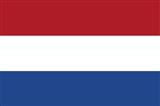
Netherlands

The Netherlands is the Europe Europe

Europe is one of the seven traditional continent [i]s of the Earth [i]. ... 

an part of the Kingdom of the Netherlands , which is formed by the Netherlands, the Netherlands Antilles Netherlands Antilles

The Netherlands Antilles , previously known as the Netherlands West Indies or Dutch Antilles/We... 

 and Aruba Aruba

|- | align="center" colspan=2 | |- ... 

. The Netherlands is a constitutional monarchy Constitutional monarchy

A constitutional monarchy is a form of monarchical [i] government [i] established under a constitution [i] ... 

, located in northwestern Europe Europe

Europe is one of the seven traditional continent [i]s of the Earth [i]. ... 

. It is bordered by the North Sea North Sea

he North Sea is a sea [i] of the Atlantic Ocean [i], located between Norway [i] and Denmark [i] in the ... 

 to the north and west, Belgium Belgium

The Kingdom of Belgium is a country in northwest Europe [i] bordered by the Netherlands [i] ... 

 to the south, and Germany Germany

Germany , officially the Federal Republic of Germany , is a country [i] in central Europe [i]. ... 

 to the east. The current borders were established in 1839. The Netherlands is often referred to by the name Holland Holland

Holland is a region in the central-western part of the Netherlands [i]. ... 

. This is not terminologically precise, since the provinces of North and South Holland in the western Netherlands are only two of the country's twelve provinces.

Discussions

  Discussion Features

   Ask a question about 'Netherlands'

   Start a new discussion about 'Netherlands'

   Answer questions about 'Netherlands'

   'Netherlands' discussion forum

Timeline

274   Germanic Peoples Germanic peoples

The Germanic peoples are groups of people identified by their use of the Germanic languages [i] that are ... 

 take advantage of the destroyed Roman armies of the Rhine Rhine

The Rhine River is one of the longest and most important river [i]s in Europe [i] at 1,320 kilometres [i] ... 

. They pillage and depopulate large areas of Gaul Gaul

Gaul was the name given, in ancient times, to the region of Western Europe [i] comprising present-day n ... 

, including Paris Paris

native_name = Ville de Paris |common_name = Paris ... 

. The Rhine border is lost for 20 years. Franks Franks

The Franks or the Frankish people were one of several west Germanic federations [i] ... 

 live in the area of present southern Netherlands, northern Belgium Belgium

The Kingdom of Belgium is a country in northwest Europe [i] bordered by the Netherlands [i] ... 

 and Rhineland from now on.

885   Godfrith, the Sea King is killed in Lobith Rijnwaarden

*Herwen [i] *Lobith [i] *Pannerden [i] ... 

. The vikings lose control of most of the modern Netherlands.

1196   Creation of water boards in the region of present-day Netherlands, thereby being one of the oldest democratic entities still in existence in the world today.

1220   Dordrecht Dordrecht

---- * canal [i]s * merchant [i] houses ... 

 receives city rights, making it the oldest city in the present-day Netherlands

1421   St. Elizabeth flood St. Elizabeth Flood

Sorry, no overview for this topic 

. The coastal area near Dordrecht Dordrecht

---- * canal [i]s * merchant [i] houses ... 

 in the Netherlands was flooded due to extremely high tide of the North Sea North Sea

he North Sea is a sea [i] of the Atlantic Ocean [i], located between Norway [i] and Denmark [i] in the ... 

. 72 villages were drowned, killing about 10,000 people.

1535   Anabaptist Anabaptist

Anabaptists are Christians [i] of the Radical Reformation [i]. ... 

 rebellion in some cities in the Netherlands, including a famous incident of seven men and five woman walking nude Nudity

Nudity or nakedness is the state of wearing no clothing [i]. ... 

 in the streets of Amsterdam Amsterdam

, the official capital [i] of the Netherlands [i], lies on the banks of two bodies of water, the IJ bay [i] ... 

.

1554   Great fire in Eindhoven Eindhoven

Eindhoven is a municipality [i] and a city [i] located in the province of Noord-Brabant [i] in the sout ... 

, Netherlands.

1560   The first tulip bulb was brought from Turkey Turkey

Turkey, officially the Republic of Turkey, is a Eurasia [i]n country that stretches across the Anatolia [i] ... 

 to the Netherlands.

1572   The Duke of Alva Fernando Álvarez de Toledo, 3rd Duke of Alba

Don [i] Fernando lvarez de Toledo y Pimentel, 3rd Duke of Alba [i] was a Spanish [i] general [i] ... 

, Spanish commander in the Netherlands, lays siege to Haarlem Siege of Haarlem

In the Eighty Years' War [i] the city of Haarlem [i] in the Netherlands [i] was put under a bloody siege [i] b ... 

.

1576   Eighty Years' War Eighty Years' War

The Eighty Years' War, or Dutch Revolt, was the revolt of the Seventeen Provinces [i] in the Netherlands [i] ... 

: Pacification of Ghent - The States-General of the Netherlands meet and unite to oppose pillaging Spanish Spain

Spain, officially the Kingdom of Spain , is a Europe [i]an parliamentary monarchy [i]. ... 

 mutinees.

   More Events >>


Encyclopedia

The Netherlands is the Europe Europe

Europe is one of the seven traditional continent [i]s of the Earth [i]. ... 

an part of the Kingdom of the Netherlands , which is formed by the Netherlands, the Netherlands Antilles Netherlands Antilles

The Netherlands Antilles , previously known as the Netherlands West Indies or Dutch Antilles/We... 

 and Aruba Aruba

|-
| align="center" colspan=2 | |-
... 

. The Netherlands is a constitutional monarchy Constitutional monarchy

A constitutional monarchy is a form of monarchical [i] government [i] established under a constitution [i] ... 

, located in northwestern Europe Europe

Europe is one of the seven traditional continent [i]s of the Earth [i]. ... 

. It is bordered by the North Sea North Sea

he North Sea is a sea [i] of the Atlantic Ocean [i], located between Norway [i] and Denmark [i] in the ... 

 to the north and west, Belgium Belgium

The Kingdom of Belgium is a country in northwest Europe [i] bordered by the Netherlands [i] ... 

 to the south, and Germany Germany

Germany , officially the Federal Republic of Germany , is a country [i] in central Europe [i]. ... 

 to the east. The current borders were established in 1839.

The Netherlands is often referred to by the name Holland Holland

Holland is a region in the central-western part of the Netherlands [i].... 

. This is not terminologically precise, since the provinces of North and South Holland in the western Netherlands are only two of the country's twelve provinces.

The Netherlands is a densely populated Population density

Population density is a measurement of population [i] per unit area or unit volume. ... 

 and geographically low-lying country and is popularly known for its windmills, clogs , dikes, tulip Tulip

Tulip is a genus of about 100 species of flowering plant [i]s in the family Liliaceae [i]. ... 

s, bicycle Bicycle

A bicycle, or bike, can be defined generally as a pedal-driven [i] human-powered vehicle [i]... 

s, social tolerance Tolerance

Tolerance is a recent political term [i] used within debates in areas of social [i], cultural [i] ... 

. Its policies are liberal Liberalism

Liberalism is an ideology [i], philosophical view [i], and political tradition which holds that liberty [i] ... 

 towards drug Drug

A drug is a substance, such as a pharmaceutical product, used in or on the surface of the body to diagno... 

s, prostitution Prostitution

Prostitution is the sale of sexual [i] services for money [i] or other kind of return. ... 

, same-sex marriage Same-sex marriage

Same-sex marriage is the union [i] of two people who are of the same biological sex [i], or gender [i] ... 

, abortion Abortion

An abortion is the removal or expulsion of an embryo [i] or fetus [i] from the uterus [i], resulting in,... 

 and euthanasia Euthanasia

Euthanasia is the practice of terminating the life [i] of a person [i] or an animal [i] because they ... 

. The country is host to the International Criminal Tribunal for the Former Yugoslavia International Criminal Tribunal for the former Yugoslavia

The International Tribunal for the Prosecution of Persons Responsible for Serious Violations of Internation... 

, the International Court of Justice International Court of Justice

The International Court of Justice is the principal judicial organ of the United Nations [i]. ... 

 and the International Criminal Court International Criminal Court

The International Criminal Court was established in 2002 [i] as a permanent tribunal to prosecute indiv ... 

 at The Hague The Hague

The Hague is the third-largest city in the Netherlands [i] after Amsterdam [i] and Rotterdam [i] ... 

.

Capital

Amsterdam Amsterdam

, the official capital [i] of the Netherlands [i], lies on the banks of two bodies of water, the IJ bay [i] ... 

 is the capital city , and The Hague The Hague

The Hague is the third-largest city in the Netherlands [i] after Amsterdam [i] and Rotterdam [i] ... 

  is the Netherlands' seat of government , the home of the monarch , and the location of most foreign embassies.

History

Under Charles V Charles V, Holy Roman Emperor

Charles V was ruler of the Burgundian territories [i], King of Castile [i], King of Aragon [i] ... 

, Holy Roman Emperor, and king of Spain Spain

Spain, officially the Kingdom of Spain , is a Europe [i]an parliamentary monarchy [i].... 

, the region was part of the Seventeen Provinces Seventeen Provinces

The Seventeen Provinces were a personal union [i] of states in the Low Countries [i] in the 16th century [i]... 

 of the Netherlands, which also included most of present-day Belgium Belgium

The Kingdom of Belgium is a country in northwest Europe [i] bordered by the Netherlands [i] ... 

, Luxembourg Luxembourg

The Grand Duchy of Luxembourg is a small landlocked [i] country in western Europe [i], bordered by Belgium [i] ... 

, and some land of France France

France, officially the French Republic, is a country [i] whose metropolitan territory [i] ... 

 and Germany Germany

Germany , officially the Federal Republic of Germany , is a country [i] in central Europe [i]. ... 

. 1568 saw the start of the Eighty Years' War Eighty Years' War

The Eighty Years' War, or Dutch Revolt, was the revolt of the Seventeen Provinces [i] in the Netherlands [i] ... 

 between the provinces and Spain. In 1579, the northern half of the Seventeen Provinces declared itself independent from Spain, and they formed the Union of Utrecht Union of Utrecht

The Union of Utrecht is a treaty signed on January 23 [i], 1579 [i] in Utrecht [i], the Netherlands [i]... 

, which is seen as the foundation of the modern Netherlands. Philip II Philip II of Spain

Philip II was the first official King of Spain [i] from 1556 [i] until 1598 [i], king of Naples and Sicily [i] ... 

, the son of Charles V Charles V, Holy Roman Emperor

Charles V was ruler of the Burgundian territories [i], King of Castile [i], King of Aragon [i] ... 

, was not prepared to let them go that easily and war continued until 1648 when Spain finally recognised Dutch independence.

Republic

After gaining formal independence from the Spanish Empire Spanish Empire

The Spanish Empire was the first truly global empire [i].... 

 under King Philip IV Philip IV of Spain

Philip IV,. King of Spain [i] in 1621–1665 and until 1640 [i], king of Portugal [i] ... 

, the Dutch grew to become one of the major seafaring and economic powers of the 17th century during the period of the Republic of the Seven United Netherlands Dutch Republic

he Republic of the Seven United Netherlands was a Europe [i]an republic [i] between 1581 and 1795, in ... 

. In the era, referred to as the Dutch Golden Age Dutch Golden Age

[i] history, roughly spanning the [[17th century]... 

, colonies and trading posts were established all over the globe.

Many economic historians regard the Netherlands as the first thoroughly capitalist Capitalism


Capitalism is an economic system [i] in which the means of production [i] are owned mostly privately, ... 

 country in the world. In early modern Europe it featured the wealthiest trading city and the first full-time stock exchange Amsterdam Stock Exchange

The Amsterdam Stock Exchange is the former name for the stock exchange [i] based in Amsterdam [i]. ... 

. The inventiveness of the traders led to insurance and retirement funds as well as such less benign phenomena as the boom-bust cycle, the world's first asset-inflation bubble, the tulip mania Tulip mania

The term tulip mania is used metaphor [i]ically to refer to any large economic bubble [i]. ... 

 of 1636–1637, and according to Murray Sayle, the world's first bear raider - Isaac le Maire, who forced prices down by dumping stock and then buying it back at a discount

Kingdom

After briefly being incorporated in the First French Empire First French Empire

The First French Empire, commonly known as the French Empire or the Napoleonic Empire, cover... 

 under Napoleon Napoleon I of France

Napoleon I Bonaparte, Emperor of the French, King of Italy, Mediator of the Swiss Confederation and Prot... 

, the Kingdom of the Netherlands was formed in 1815, consisting of the present day Netherlands, Belgium Belgium

The Kingdom of Belgium is a country in northwest Europe [i] bordered by the Netherlands [i] ... 

 and Luxembourg Luxembourg

The Grand Duchy of Luxembourg is a small landlocked [i] country in western Europe [i], bordered by Belgium [i] ... 

. In addition, the king of the Netherlands became hereditary Grand Duke of Luxembourg. Belgium rebelled and gained independence in 1830, while the personal union between Luxembourg Luxembourg

The Grand Duchy of Luxembourg is a small landlocked [i] country in western Europe [i], bordered by Belgium [i] ... 

 and the Netherlands was severed in 1890 as a result of ascendancy laws which prevented Queen Wilhelmina Wilhelmina of the Netherlands

Queen Wilhelmina of the Netherlands, Princess of Orange-Nassau [i], was Queen regnant [i] of the Netherlands [i] ... 

 from becoming Grand Duke.

The Netherlands possessed several colonies, most notably the Dutch East Indies Dutch East Indies

The Dutch East Indies, or Netherlands East Indies, was the name of the colonies [i] set up ... 

  and Suriname Suriname

Suriname, officially the Republiek Suriname, is a country in northern South America [i]. ... 

 . These 'colonies' were first administered by the Dutch East India Company Dutch East India Company

The Dutch East India [i] Company was established on March 20 [i], 1602 [i], when the ... 

 and the Dutch West India Company, both collective private enterprises. Three centuries later these companies got into financial trouble and the territories in which they operated were taken over by the Dutch government . Only then did they become official colonies.

During the 19th century, the Netherlands was slow to industrialise compared to neighbouring countries, mainly due to its unique infrastructure of waterways and reliance on wind power. The Netherlands remained neutral in World War I World War I

World War I, also known as the First World War, the Great War and "The War to End All War... 

 and intended to do so in World War II World War II

World War II, or the Second World War, was a worldwide [i] conflict [i] fought betwe ... 

. However, Nazi Germany Nazi Germany

Nazi Germany, or the Third Reich, refers to Germany in the years 1933 to 1945, when it was governe... 

 invaded the Netherlands in 1940 in the Western European campaign of the second world war. Subsequently the Netherlands joined the Anglo-French alliance, asking them for help. The country was quickly overrun and surrendered after the bombing of Rotterdam Bombing of Rotterdam

The bombing of Rotterdam by the German Luftwaffe [i] on 14 May 1940, during the Battle of the Netherlands [i]... 

. although a British expeditionary force held Zeeland for a while. During the occupation over 100,000 Dutch Jew Jew

Jews are followers of Judaism [i] or, more generally, members of the Jewish people , an ethno [i]... 

s were murdered in the Holocaust The Holocaust

The Holocaust, also known as Ha-Shoah and the Porajmos [i] or Samudaripen in Romani [i] ... 

 along with significant numbers of Dutch Roma Roma people

The Roma People , sometimes "Romany Folk" in the British Isles, often referred to as Gypsies , are... 

 . The allied 21st Army Group was given the task to conduct military operations to liberate The Netherlands after the breakout from Normandy Battle of Normandy

The Battle of Normandy was fought in 1944 [i] between Nazi Germany [i] in Western Europe [i] and the in ... 

. British, Canadian, Polish and American soldiers fought on Dutch soil beginning in September 1944 culminating in the operation Market-Garden Operation Market Garden

Operation Market Garden was an Allied [i] military operation in World War II [i]. ... 

. Allied focus now shifted to the German heartland and the country was only liberated on 5 May 1945 . The disrupted infrastructure, due to allied advances, and German confiscation of many goods made the winter of 1944-1945 one in which malnutrition and starvation were rife among the Dutch population.

From Benelux to EU

After the war, the Dutch economy prospered by, after leaving behind an era of neutrality, thorough bonding with neighbouring states. The Netherlands became member of the Benelux Benelux

[i] comprising three neighbouring [[monarchy|monarchies]... 

  cooperation. Furthermore, the Netherlands was among the twelve founding members of the North Atlantic Treaty Organisation NATO

Aznar also proposed a strategic co-operation with India [i] and Colombia [i]. ... 

  and among the six founding members of the European Coal and Steel Community European Coal and Steel Community

The European Coal and Steel Community was founded in 1951 [i] , by France [i], West Germany [i], Italy [i] ... 

, which would later evolve into the European Union European Union

The European Union is an intergovernmental [i] and supranational [i] ... 

.


Naming conventions


Various terms have been used in English to refer to the Netherlands and its inhabitants.

' Netherlands' is the official name of the European part of the 'Kingdom of the Netherlands'. The term 'Holland Holland

Holland is a region in the central-western part of the Netherlands [i].... 

' is commonly used as a synonym for the Netherlands, but the word Holland derives from a region in the west of the country , which has long been most economically powerfull part of the country. The prominece of this region meant that the whole country is often known as 'Holland' all over the world. The country's people Dutch people

The Dutch are the dominant ethnic group [i]The ethnic group [i] of the Dutch refers to a human pop ... 

 and language Dutch language

Dutch is a West Germanic [i] language [i] spoken by around 22 million people, mainly in the Netherlands [i] ... 

 are called 'Dutch'. To add yet another layer of confusion, the word Dutch formerly meant the same as German in English usage, a fact which must be borne in mind when reading older literature, and also accounts for the name Pennsylvania Dutch, whose ancestral origins are in Southern Germany and not near The Netherlands at all.

The term 'Low Countries Low Countries

The Low Countries, the historical region of de Nederlanden, are the countries [i] on low-lyi ... 

' is used sometimes to refer to the Netherlands, but technically it refers to a bigger region in Western Europe, including Belgium, Luxembourg and a part of France.

To address this confusion some solutions have been proposed, for instance, in linguistics, the term Netherlandic has been coined.

Trivia

The name of New Zealand New Zealand

New Zealand is a country in the south-western Pacific Ocean [i] consisting of two large islands and many ... 

 has a Dutch origin as it was named after the Dutch province 'Zeeland'.

Politics

The Netherlands has been a parliamentary democracy Parliamentary system

|
|-
|
|}
A parliamentary system, also known as parliamentarianism, is distinguished by the executive branch of government [i] ... 

 since 1848 and a constitutional monarchy since 1815; before that it had been a republic Republic

In a broad definition, a republic is a state [i] or country [i] that is led by people whose political power [i] ... 

 from 1581 to 1806 and a kingdom between 1806 and 1810 . The head of state Head of State

Head of State or Chief of State is the generic term for the individual or collective office that s... 

 is the monarch . The monarch has today in practice a mainly ceremonial function but the constitution allows for the exertion of real power, should the responsible ministers subordinate themselves; an open conflict between them and the monarch — whose signature is needed for any law or warrant to come into effect — would lead to a constitutional crisis .

Coalition Governments

Dutch governments have since the 19th century always consisted of a coalition, as there was not a single political party large enough to get the majority vote. Formally, the monarch appoints the members of the government. In practice, once the results of parliamentary elections are known, a coalition government is formed , after which the government formed in this way is officially appointed by the monarch. The head of the government is the Prime Minister Prime minister

A prime minister is the most senior minister of a cabinet [i] in the executive [i] b ... 

, in Dutch Minister President or Premier, a primus inter pares who is usually also the leader of the largest party in the coalition. The degree of influence the monarch has on actual government formation is a topic of ongoing speculation.

Parliament

The parliament consists of two houses. The 150 members of the Lower House are elected every four years in direct elections. The provincial assemblies are directly elected every four years as well. The members of the provincial assemblies elect every two years a third of the members of the less important Senate , that can merely reject laws, not propose or amend them. Together, the First and Second Chamber are known as the Staten-Generaal, the States General.

On February 7, 2006, the Second Chamber Tweede Kamer

The Tweede Kamer is the lower house of the Staten-Generaal [i], the parliament [i] in the Netherlands [i] ... 

 introduced the right of citizens' initiative at the national level.

'Polder Model'

Political scientists consider the Netherlands to be a classic example of a consociational state, traditionally explained by the necessity since the early Middle Ages for different social groups to cooperate in order to fight the water. Better founded hypotheses include a partial failing of feodalisation Feudalism

Feudalism refers to a general set of reciprocal legal [i] and military [i] obligations among the war ... 

 and the successful resistance against absolutism. This system of reaching an agreement despite differences is called the polder model in Dutch. Also, the Netherlands has long been a nation of traders, dominated by a freethinking bourgeoisie and for international trade one has to be tolerant Tolerance

Tolerance is a recent political term [i] used within debates in areas of social [i], cultural [i] ... 

 of an other person's culture; at home, despite calvinism Calvinism

Calvinism is a system of Christian theology [i] and an approach to Christian life and thought within the... 

 being till the 19th century the state religion State religion

A state religion is a religious [i] body or creed [i] officially endorsed by the state [i]. ... 

, there was in practice much religious tolerance Religious toleration

Religious toleration is the condition of accepting or permitting others' religious [i] beliefs ... 

 shown towards Catholics Roman Catholic Church

The Roman Catholic Church or Catholic Church is the Christian [i] Church [i] ... 

 and Jews Jew

Jews are followers of Judaism [i] or, more generally, members of the Jewish people , an ethno [i]... 

. Nevertheless Catholics were practically not allowed to hold government functions until the 19th century 19th century

The 19th century lasted from 1801 [i] through 1900 [i] in the Gregorian calendar [i].
... 

 and in regards to Catholic, but also Jewish, church buildings, Protestant restrictions were observed. Until the middle of the 19th century 19th century

The 19th century lasted from 1801 [i] through 1900 [i] in the Gregorian calendar [i].
... 

 Catholics were rarely allowed to build new churches which were visibly Catholic. The Netherlands tried between 1839 and 1940 to be a neutral country in most international affairs and thus managed to keep out of World War I World War I

World War I, also known as the First World War, the Great War and "The War to End All War... 

 . As a result, the Dutch have a 'friendly' reputation in other countries, to the point that bearers of a Dutch passport often have relatively little difficulty getting into other countries, for visits or even for emigration purposes.

Populism

However, the early years of the 21st century have seen a political upheaval, most clearly illustrated by the quick rise and fall of the LPF. Pim Fortuyn Pim Fortuyn

Wilhelmus Simon Petrus Fortuyn , , was a controversial, openly gay, charismatic politician in the Netherlands [i] ... 

, its founder, gained massive support by his populist views that previous cabinets were responsible for many problems, noticably the presumed failing integration of immigrants. Just before the election of 2002 he was murdered by an environmentalist activist, the first political murder in roughly 400 years. The elections, which sent the Netherlands into a period of political chaos, were concluded in the emotional aftermath.

Present

The present government is led by the minority cabinet Balkenende III, a short-term continuation of Balkenende II  without the smallest coalition party, D66 Democrats 66

Democrats 66 is a dutch [i] progressive [i]-liberal [i] ... 

. Elections are planned for November 22, 2006.

Balkenende II's economic reforms and immigration policies had resulted in a shift in public opinion to the left, showing from political polls and the 2006 municipal elections, in which the government coalition parties faced great losses in favour of the opposition parties, mainly the Labour Party and the Socialist Party . Following the controversial decisions of minister Verdonk Rita Verdonk

Drs. Maria Cornelia Frederika "Rita" Verdonk serves as Minister without Portfolio [i] ... 

 regarding the legal status of immigrant politician Ayaan Hirsi Ali Ayaan Hirsi Ali

Ayaan Hirsi Ali, born Ayaan Hirsi Magan 13 November [i] 1969 [i] in Mogadishu [i], Somalia [i], is ... 

, the Dutch cabinet went into crisis on June 29, 2006. Jan-Peter Balkenende presented his temporary minority cabinet to the Queen on July 7.

On June 1, 2005, the Dutch electorate voted in a referendum against the proposed EU Constitution Treaty establishing a Constitution for Europe

The Treaty establishing a Constitution for Europe, commonly referred to as the European Constitution'... 

 by a majority of 61.6%, three days after the French had also voted against.

Dutch policies on recreational drugs, prostitution Prostitution

Prostitution is the sale of sexual [i] services for money [i] or other kind of return. ... 

, same-sex marriage Same-sex marriage

Same-sex marriage is the union [i] of two people who are of the same biological sex [i], or gender [i] ... 

 and euthanasia Euthanasia

Euthanasia is the practice of terminating the life [i] of a person [i] or an animal [i] because they ... 

 are among the most liberal in the world.

Administrative divisions


The Netherlands is divided into twelve administrative regions, called provinces, each under a Governor, who is called Commissaris van de Koningin , except for the province Limburg where the commissioner is called Gouverneur which underlines the more "non-Dutch" mentality.
  • Fryslân - north west; capital and largest city Leeuwarden Leeuwarden

    Leeuwarden is a municipality [i] and the capital city [i] of the Dutch [i] province of Friesland [i] ... 

  • Groningen - north east; capital and largest city Groningen
  • Drenthe Drenthe

    Drenthe is a province of the Netherlands [i], located in the north-east of the country. ... 

     - south of Groningen; capital Assen Assen

    [i]

... 

, largest city Emmen
  • Overijssel - east central, south of Drenthe; capital Zwolle Zwolle

    [i] is a municipality [i] and the capital city of the province of Overijssel [i] ... 

    , largest city Enschede Enschede

    *Enschede
  • Glanerbrug [i]
  • Lonneker [i]

... 


  • Flevoland Flevoland

    Flevoland is a province of the Netherlands [i]. ... 

     - central, north of Utrecht; capital Lelystad Lelystad

    Lelystad is a municipality [i] and a city [i] in the centre of the Netherlands [i], and it is the capital [i] ... 

    , largest city Almere Almere

    [i]

... 


  • Gelderland Gelderland

    Gelderland is a province [i] of the Netherlands [i], located in the central... 

     - east central, south of Overijssel; capital Arnhem Arnhem

    [i] is a municipality [i] and a city in the east of the Netherlands [i], locat ... 

    , largest city Nijmegen Nijmegen

    [i] is a municipality [i] and a city [i] in the east of the Netherlands [i] ... 

  • Utrecht - central; capital and largest city Utrecht
  • North Holland North Holland

    North Holland is a province of the Netherlands [i], located in the northwest part of the country. ... 

     - north west; capital Haarlem Haarlem

    [i] is a municipality and a city in the Netherlands [i], capital [i] of the... 

    , largest city Amsterdam Amsterdam

    , the official capital [i] of the Netherlands [i], lies on the banks of two bodies of water, the IJ bay [i] ... 

  • South Holland South Holland

    South Holland is a province of the Netherlands [i], located in the west of the country on the North Sea [i] ... 

     - west central, south of North Holland; capital The Hague The Hague

    The Hague is the third-largest city in the Netherlands [i] after Amsterdam [i] and Rotterdam [i] ... 

     , largest city Rotterdam Rotterdam

    Rotterdam , located in the province of South Holland [i], is the second largest municipality in the Netherlands [i]... 

  • Zeeland Zeeland

    [i], is a province of the [[Netherlands]... 

     - south west; capital and largest city Middelburg Middelburg

    *Kleverskerke [i]
  • Middelburg

... 


  • North Brabant North Brabant

    North Brabant is a province [i] of the Netherlands [i], located in the so ... 

     - south central; capital 's-Hertogenbosch 's-Hertogenbosch

    's-Hertogenbosch , colloquially known as Den Bosch translated in French [i] as B... 

     , largest city Eindhoven Eindhoven

    Eindhoven is a municipality [i] and a city [i] located in the province of Noord-Brabant [i] in the sout ... 

  • Limburg - south east; capital and largest city Maastricht Maastricht

    Maastricht is a municipality [i], and capital [i] of the province of Limburg [i]. ... 

    .


All provinces are divided into municipalities , 458 in total .

The country is also subdivided in water districts, governed by a water board , each having authority in matters concerning water management. As of 1 January 2005 there are 27. The creation of water boards actually pre-dates that of the nation itself, the first appearing in 1196. In fact, the Dutch water boards are one of the oldest democratic entities in the world still in existence.

Geography

A remarkable aspect of the Netherlands is the flatness of the country. Hilly landscapes can be found only in the central part and the south-eastern tip of the country.

Below sea level

About half of its surface area is less than 1 metre above sea level Sea level

Mean sea level is the average height of the sea [i], with reference to a suitable reference surface. ... 

, and large parts of it are actually below sea level. An extensive range of dykes and dunes Dune

In physical geography [i], a dune is a hill [i] of sand [i] built by eolian processes [i]. ... 

 protects these areas from flooding. Numerous massive pumping stations keep the ground water level in check. The highest point, the Vaalserberg Vaalserberg

The Vaalserberg is a hill [i] of 322.5 metre [i]s in height, the highest point in the Netherlands [i]. ... 

, in the south-eastern most point of the country, is 321 metres above sea level. The Vaalserberg Vaalserberg

The Vaalserberg is a hill [i] of 322.5 metre [i]s in height, the highest point in the Netherlands [i]. ... 

 is a foothill of the Ardennes Ardennes

The Ardennes is a region of extensive forests and rolling hill country, primarily in Belgium [i] and Luxembourg [i] ... 

 mountains. A substantial part of the Netherlands, for example, all of the province of Flevoland Flevoland

Flevoland is a province of the Netherlands [i]. ... 

  and large parts of Holland Holland

Holland is a region in the central-western part of the Netherlands [i].... 

, has been reclaimed from the sea. These areas are known as polder Polder

A polder is a low-lying tract of land that forms an artificial hydrological [i] entity, enclos ... 

s. This has led to the saying "God created the world, but the Dutch created the Netherlands."

Floods

In years past, the Dutch coastline has changed considerably due to human intervention and natural disasters. Most notable in terms of land loss are the 1134 storm, which created the archipelago Archipelago

An archipelago is a landform [i] which consists of a chain or cluster of island [i]s.... 

 of Zeeland in the south west, and the 1287 storm, which killed 50,000 people and created the Zuyderzee Zuider Zee

The Zuider Zee was a shallow inlet of the North Sea [i] in the northwest of the Netherlands [i], extend ... 

  in the northwest, giving Amsterdam direct access to the sea. The St. Elizabeth flood of 1421 and the mismanagement in its aftermath destroyed a newly reclaimed polder, replacing it with the 72 square kilometres Biesbosch Biesbosch

The Biesbosch or Biesbos, meaning 'forest of sedge [i]s' is one of the largest national parks [i] ... 

tidal floodplains in the south-centre. The most recent parts of Zeeland were flooded during the North Sea Flood of 1953 and 1,836 people were killed, after which the Delta Plan Delta Works

In the North Sea flood of 1953 [i], breaks in the dike [i]s and seawalls in the Netherlands [i] killed 1, ... 

was executed.


The disasters were partially man-made; the people drained relatively high lying swampland for use as farmland. This drainage caused the fertile peat Peat

Peat is an accumulation of partially decay [i]ed vegetation [i] matter [i]. ... 

 to compress and the ground level to drop, locking the land users in a vicious circle whereby they would lower the water level to compensate for the drop in ground level, causing the underlying peat to compress even more. The vicious circle is unsolvable and remains to this day. Up until the 19th century peat was dug up, dried, and used for fuel, further adding to the problem.

To guard against floods, a series of defenses against the water were contrived. In the first millennium, villages and farmhouses were built on man-made hills called terps. Later, these terps were connected by dikes. In the 12th century, local government agencies called "waterschappen" or "hoogheemraadschappen" started to appear, whose job it was to maintain the water level and to protect a region from floods. As the ground level dropped, the dikes by necessity grew and merged into an integrated system. In the 13th century, windmills came into use to pump water out of the areas by now below sea level. The windmills were later used to drain lakes, creating the famous polder Polder

A polder is a low-lying tract of land that forms an artificial hydrological [i] entity, enclos ... 

s. In 1932, the Afsluitdijk Afsluitdijk

The Afsluitdijk is a major dam in the Netherlands [i], constructed between 1927 [i] and 1933 [i] and run ... 

was completed, blocking the former Zuyderzee off from the North Sea and thus creating the IJsselmeer IJsselmeer

The IJsselmeer is a shallow lake of some 1250 km in the central Netherlands [i] bordering the provinces [i] ... 

 . It became part of the larger Zuiderzee Works Zuiderzee Works

The Zuiderzeewerken are a man-made system of dam [i]s, land reclamation [i] and water drainage works, a ... 

 in which four polders totalling 1,650 square kilometres were reclaimed from the sea.

Delta Works

After the 1953 disaster, the Delta project Delta Works

In the North Sea flood of 1953 [i], breaks in the dike [i]s and seawalls in the Netherlands [i] killed 1, ... 

, a vast construction effort designed to end the threat from the sea once and for all, was launched in 1958 and largely completed in 2002. The official goal of the Delta project was to reduce the risk of flooding in Holland to once per 10,000 years. This was achieved by raising 3,000 kilometres of outer sea-dikes and 10,000 kilometres of inner, canal, and river dikes to "delta" height, and by closing off the sea estuaries Estuary

An estuary is a mouth of a river [i] with a triangle form, semi-enclosed coastal [i] body of water [i] w... 

 of the Zeeland province. New risk assessments occasionally incur additional Delta project work in the form of dike reinforcements. The Delta project is the single largest construction effort in human history and is considered by the American Society of Civil Engineers as one of the seven wonders of the modern world Seven Wonders of the World

The Seven Wonders of the World is a widely known list of seven popular sites of [[classical antiquity]... 

.

Because of the high cost of maintaining the polders some have argued that maybe some of the deepest polders should be given up. Additionally, the Netherlands is one of the countries that may suffer most from climatic change Climate change

Climate change refers to the variation in the Earth [i]'s global climate [i] or in regional climates ove ... 

. Not only is the rising sea a problem, but also erratic weather patterns may cause the rivers to overflow. These flooded polders might then be used as water catchments to take part of the blow.

Rivers

The country is divided into two main parts by three rivers Rhine Rhine

The Rhine River is one of the longest and most important river [i]s in Europe [i] at 1,320 kilometres [i] ... 

 , Waal Waal

[i] flowing to the central [[Netherlands]... 

, and Meuse Meuse River

The Meuse is a major European [i] river [i], rising in France [i] and flowing through Belgium [i] and ... 

 . The south-western part of the Netherlands is actually one big river delta River delta

A delta is a triangular shaped landform where the mouth of a river [i]
... 

 of these rivers. These rivers not only function as a natural barrier, but also as a cultural divide, as is evident in the different dialects spoken north and south of these great rivers and the religious dominance of Catholics in the south and Calvinists in the north.

The predominant wind direction in the Netherlands is south-west, which causes a moderate maritime climate, with cool summers and mild winters.

Economy

The Netherlands has a prosperous and open economy in which the government has reduced its role since the 1980s. Industrial activity is predominantly in food-processing , chemicals , petroleum Petroleum

Petroleum or crude oil is a black, dark brown or greenish liquid [i] found in porous rock formati ... 

 refining , and electrical machinery . Slochteren has one of the largest natural gas field Natural gas field

Oil [i] and natural gas [i] are produced by the same geological process: anaerobic [i] decay [i] of ... 

s in the world, which has so far resulted in a total revenue of €159 billion since the mid 1970s. With just over half of the reserves used up and an expected continued rise in oil prices, the revenues over the next few decades are expected to be at least that much.

Third in worldwide agricultural exports

A highly mechanised agricultural Agriculture

Farming redirects here. For Farming in computer games, see Farmer [i].
... 

 sector employs no more than 4% of the labour force but provides large surpluses for the food-processing industry and for exports. The Dutch rank third worldwide in value of agricultural exports, behind the US United States

The United States of America, also known as the United States, the U.S., the U.S.A., a... 

 and France France

France, officially the French Republic, is a country [i] whose metropolitan territory [i] ... 

, with exports earning $46 billion annually. A significant portion of Dutch agricultural exports are derived from fresh-cut plants,flowers and bulbs, with the Netherlands exporting two-thirds of the world's total. The Netherlands also exports a quarter of all world tomatoes, and one-third of the world's exports of peppers and cucumbers. The Netherlands' location gives it prime access to markets in the UK and Germany, with the port of Rotterdam being the largest port in Europe. Other important parts of the economy are international trade , banking Bank

A bank is a business that provides banking services for profit.... 

 and transport Transport

Transport or transportation is the movement [i] of people [i] and goods [i] ... 

.The Netherlands successfully addressed the issue of public finances and stagnating job growth long before its European partners.

As a founding member of the Euro Euro

The euro is the official currency [i] of the European Union [i] member states of Austria [i], Belgium [i]... 

, the Netherlands replaced its former currency, the guilder Dutch gulden

The gulden, represented by the symbol ƒ or fl., was the currency [i] of the Netherlands [i] from the 15th century [i] ... 

, on January 1 1999 along with the other adopters of the single European currency, with the actual Euro coins Euro coins

The euro [i] is the currency [i] of 12 European Union [i] member states , three European microstates [i] whi ... 

 and banknotes Euro banknotes

The euro [i] is the single currency [i] for 12 European Union [i] member states. ... 

 following on January 1, 2002. However, in the first years of the third millennium, economic and employment growth came to a standstill, which the government tried to resolve by cutting into its expenses.

16th largest economy

At this moment the Netherlands is the 16th largest economy of the world. Between 1998 and 2000 annual economic growth averaged nearly 4%, well above the European average. Growth slowed considerably in 2001-05 as part of the global economic slowdown, but the first quarter of 2006 showed a promising 2.6%. Inflation is 1.3% and is expected to stay low at around 1.5% in the coming years. According to the definition used by the Dutch Statistics Agency CBS, unemployment Unemployment

In economics [i], a person willing to work at a prevailing wage rate yet is unable to find a paying job [i]... 

 is at 5.5% of the labor force. By Eurostat standards however, unemployment in the Netherlands is at only 3.8% - the lowest rate of a