
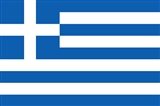
In Depth
See Also

Greece

Greece Greece lies at the juncture of Europe Europe

Europe is one of the seven traditional continent [i]s of the Earth [i]. ... 

, Asia Asia

Asia is the largest and most populous continent [i] or region, depending on the definition.... 

, and Africa Africa

Africa is one of the greatest sized continents of the Earth.... 

. It is heir to the heritages of classical Greece Ancient Greece

Ancient Greece is the period in Greek history [i] which lasted for around one thousand years and ended w ... 

, the Byzantine Empire Byzantine Empire

Byzantine Empire is the term conventionally used since the 19th century [i] to describe the Greek-spea ... 

, and nearly four centuries of Ottoman Ottoman Empire

The Ottoman Empire , is also sometimes known in the West [i] as the Turkish Empire. ... 

 ruleistory The shores of Greece's Aegean Sea Aegean Sea

The Aegean Sea is an arm of the Mediterranean Sea [i], located between the Greek peninsula and Anatolia [i] ... 

 saw the emergence of the first advanced civilizations in Europe Europe

Europe is one of the seven traditional continent [i]s of the Earth [i]. ... 

, the Minoan Minoan civilization

The Minoans were a pre-Hellenic [i] Bronze Age [i] civilization in Crete [i] in the Aegean Sea [i] ... 

 and Mycenean Mycenae

Mycenae , is an archaeological site [i] in Greece [i], located about 90km south-west of Athens [i] ... 

 civilizations. Soon, around the Greek isles and peninsula there sprouted city-states, or poleis : each with their own distinct governmental and social infrastructure, uniting under Athens Athens

Athens is the capital [i] and the largest city of Greece [i]. ... 

 and Sparta Sparta

Sparta is a city in southern Greece [i]. ... 

 to repel the 'eastern threat' of the Persians.

Discussions

  Discussion Features

   Ask a question about 'Greece'

   Start a new discussion about 'Greece'

   Answer questions about 'Greece'

   'Greece' discussion forum

Timeline

1100 BC   The Dorians invade Greece.

664 BC   First naval battle Naval battle

A naval battle is a battle [i] fought using ship [i]s or other waterborne vessels. ... 

 in Greek Greece

Greece Greece lies at the juncture of Europe [i], Asia [i], and Africa [i]. ... 

 recorded history, between Corinth Corinth

Corinth, or Korinth is a Greek [i] city-state [i], on the Isthmus of Corinth [i], the narr ... 

 and Corcyra Corfu

Corfu is a Greek [i] island [i] in the Ionian Sea [i]. ... 

.

479 BC   The Battle of Plataea Battle of Plataea

The Battle of Plataea was the last battle of the Persian Wars [i] in southern Greece. ... 

 in Boeotia Boeotia

Boeotia or Beotia ... 

 ends the Persian invasions of Greece as the Persian general Mardonius is routed by the Greeks under Pausanias, nephew of the former Spartan King, Leonidas Leonidas I

Leonidas was a king of Sparta [i], the 17th of the Agiad line. ... 

. The Athenian contingent is led by the repatriated Aristides. Mardonius is killed in the battle and the Greeks capture enormous amounts of booty. Thebes is captured shortly thereafter and the Theban collaborators executed by Pausanias.

168 BC   Third Macedonian War ends with the Battle of Pydna Battle of Pydna

The Battle of Pydna in 168 BC [i] between Rome [i] and the Antigonid dynasty [i] represen ... 

. Romans Roman Republic

The Roman Republic was a phase of the ancient Roman civilization [i] characterized by a republic [i] ... 

 under Lucius Aemilius Paullus (awarded the surname "Macedonicus" for this victory) defeat and capture Perseus of Macedon Perseus of Macedon

Perseus was the last king of the Antigonid dynasty [i], who ruled the successor state [i] in Macedon [i] ... 

 when he surrendered. This ends the Antigonid dynasty, one of the three successor empires created upon the death of Alexander the Great Alexander the Great

Alexander the Great , also known as Alexander III, king of Macedon [i] , was one of the most succe ... 

, and starts Roman domination of Greece.

31 BC   Roman Civil War: Battle of Actium Battle of Actium

The Battle of Actium was a naval battle [i] of the Roman Civil War [i] between Mark Antony [i] ... 

 - Off the western coast of Greece, forces of Octavian Augustus

Augustus , known as Gaius Julius Caesar Octavianus for the period of his life prior to 27 BC, was... 

 defeat troops under Mark Antony Mark Antony

Marcus Antonius , known in English [i] as Mark Antony, was a Roman [i] ... 

 and Cleopatra Cleopatra VII of Egypt

Cleopatra VII Philopator , later Cleopatra Thea Neotera Philopator kai Philopatris, was queen [i] ... 

.

10   The Greek Greece

Greece Greece lies at the juncture of Europe [i], Asia [i], and Africa [i]. ... 

 dynasty in Bactria Bactria

Bactria was the ancient Greek [i] name of the country between the range of the Hindu Kush [i] ... 

 is extinguished.

67   Nero travels to Greece where he participates in the Olympic Games Olympic Games

The Olympic Games, or Olympics, are an international multi-sport event [i] taking place every four ... 

 and other festivals.

124   During a voyage to Greece, Hadrian is initiated in the ancient rites known as the Eleusinian Mysteries Eleusinian Mysteries

The Eleusinian Mysteries were annual initiation ceremonies [i] for the cult of Demeter [i] ... 


128   Hadrian begins his inspection of the provinces of Greece, Asia Minor Anatolia

Anatolia is a region of Southwest Asia [i] which corresponds today to the Asiatic portion of Turkey [i] ... 

 and Egypt Egypt

[i] country in [[North Africa]... 

.

396   End of the Visigoth Visigoth

The Visigoths were one of two main branches of the Goths [i], an East Germanic tribe [i] . ... 

 invasion in Greece.

   More Events >>


Encyclopedia

Greece
Greece lies at the juncture of Europe Europe

Europe is one of the seven traditional continent [i]s of the Earth [i]. ... 

, Asia Asia

Asia is the largest and most populous continent [i] or region, depending on the definition.... 

, and Africa Africa

Africa is one of the greatest sized continents of the Earth.... 

. It is heir to the heritages of classical Greece Ancient Greece

Ancient Greece is the period in Greek history [i] which lasted for around one thousand years and ended w ... 

, the Byzantine Empire Byzantine Empire

Byzantine Empire is the term conventionally used since the 19th century [i] to describe the Greek-spea ... 

, and nearly four centuries of Ottoman Ottoman Empire

The Ottoman Empire , is also sometimes known in the West [i] as the Turkish Empire. ... 

 rule. Regarded as the cradle of western civilization Western world

The term Western World or "the West" can have multiple meanings depending on its context.... 

 and being the birthplace of democracy Democracy

Democracy is a form of government [i] for a nation state, or for an organiz ... 

, Western philosophy Philosophy

[i]
... 

, the Olympic Games Olympic Games

The Olympic Games, or Olympics, are an international multi-sport event [i] taking place every four ... 

, western literature, political science, major scientific principles as well as drama Drama

Drama is a literary form involving parts written for actor [i]s to perform. ... 

 including both tragedy and comedy, Greece has a particularly long and eventful history and a cultural heritage considerably influential in Europe Europe

Europe is one of the seven traditional continent [i]s of the Earth [i]. ... 

, Northern Africa North Africa

North Africa or Northern Africa is the northernmost [i] region [i] of the Africa [i]n continent [i] ... 

 and the Middle East Middle East

The Middle East is a subcontinent [i] for the historical [i] and cultural [i] ... 

. Today, Greece is a developed country Developed country

A developed country is one that has a high income per capita.... 

, member of the European Union European Union

The European Union is an intergovernmental [i] and supranational [i] ... 

 since 1981 and a member of the Eurozone Eurozone

The Eurozone is the subset of European Union [i] member states which have adopted the euro [i], creating ... 

 since 2001. Athens Athens

Athens is the capital [i] and the largest city of Greece [i]. ... 

, Thessaloniki Thessaloniki

Thessaloniki, Thessalonica or Salonica , is Greece [i]'s second-largest city. ... 

, Piraeus Piraeus

|-
||-
||}
Piraeus, or Peiraeus is a city in the periphery of Attica [i], Greece [i], located ... 

 and Patras Patras

Patras is the third largest city of Greece [i] and the capital of the prefecture of Achaea [i], located ... 

 are the country's major cities.

History

See also: Names of the Greeks Names of the Greeks

Today the Greeks [i] call themselves Hellenes, though they have been known by a number of different ... 

 for a different angle.


The shores of Greece's Aegean Sea Aegean Sea

The Aegean Sea is an arm of the Mediterranean Sea [i], located between the Greek peninsula and Anatolia [i] ... 

 saw the emergence of the first advanced civilizations in Europe Europe

Europe is one of the seven traditional continent [i]s of the Earth [i]. ... 

, the Minoan Minoan civilization

The Minoans were a pre-Hellenic [i] Bronze Age [i] civilization in Crete [i] in the Aegean Sea [i] ... 

 and Mycenean Mycenae

Mycenae , is an archaeological site [i] in Greece [i], located about 90km south-west of Athens [i] ... 

 civilizations. Soon, around the Greek isles and peninsula there sprouted city-states, or poleis : each with their own distinct governmental and social infrastructure, uniting under Athens Athens

Athens is the capital [i] and the largest city of Greece [i]. ... 

 and Sparta Sparta

Sparta is a city in southern Greece [i]. ... 

 to repel the 'eastern threat' of the Persians. The conditions had been created for the flowering of Athens and dawning of the Classical Era, brought to its end only by the culmination of the perennial struggle between Sparta and Athens, the Peloponnesian war Peloponnesian War

The Peloponnesian War was an Ancient Greek [i] military conflict fought by Athens [i] an ... 

.


Within a century, the Greek tribes had been united under the rule of Alexander the Great Alexander the Great

Alexander the Great , also known as Alexander III, king of Macedon [i] , was one of the most succe ... 

, seeking to defeat the Persians a second time. Alexander led the Greeks on a victorious campaign which united the Greek and Oriental worlds ; his death heralded the onset of the Hellenistic period of Greek history , itself brought only partially to a close with the annexation of the Greek peninsula and islands by Rome in 146 BC. Although the establishment of Roman rule did not break the continuity of Hellenistic society and culture, which remained essentially unchanged until the advent of Christianity Christianity

Christianity is a monotheistic [i] religion [i] centered on Jesus of Nazareth [i] ... 

, it did mark the end of Greek political independence. The Greek peninsula became a province of the Roman Empire Roman Empire

The Roman Empire was a phase of the ancient Roman [i] civilization characterized by an autocratic [i] ... 

, while Greek culture continued to dominate the eastern Mediterranean Mediterranean Sea

The Mediterranean Sea is a part of the Atlantic Ocean [i] almost completely enclosed by land: on the nor... 

. See also:Ancient Greece Ancient Greece

Ancient Greece is the period in Greek history [i] which lasted for around one thousand years and ended w ... 

.


When the Roman Empire Roman Empire

The Roman Empire was a phase of the ancient Roman [i] civilization characterized by an autocratic [i] ... 

 finally split in two, the Eastern Roman Empire Byzantine Empire

Byzantine Empire is the term conventionally used since the 19th century [i] to describe the Greek-spea ... 

, known as the Byzantine Empire Byzantine Empire

Byzantine Empire is the term conventionally used since the 19th century [i] to describe the Greek-spea ... 

 and centered around Constantinople Constantinople

Constantinople was the capital of the Byzantine Empire [i] and following its fall in 1453 [i], of the O ... 

 , remained Greek in nature, encompassing Greece itself. During the Byzantine imperial period Greece experienced fluctuating fortunes, but succeeded in Hellenizing and institutionalizing most of its new invaders, and by the late 8th century Greeks from Sicily Sicily

Sicily is an autonomous region [i] of Italy [i] and the larges ... 

 and Asia Minor Anatolia

Anatolia is a region of Southwest Asia [i] which corresponds today to the Asiatic portion of Turkey [i] ... 

 were brought in as settlers. The 11th and 12th centuries are said to have been the Golden Age of Byzantine art in Greece, while the crusading epochs between 1204 and 1458 saw Greece hit by a series of western European armies in the name of religion. The Byzantine era persisted, nevertheless, until the Fall of Constantinople on May 29, 1453, to the Ottoman Empire.


While the Ottomans Ottoman Empire

The Ottoman Empire , is also sometimes known in the West [i] as the Turkish Empire. ... 

 were completing the main conquest of Greek Mainland Ottoman Greece Ottoman Greece

Most of Greece [i] was part of the Ottoman Empire [i] from the 14th century [i] until its declarat ... 

, two Greek migrations occurred. The first saw the Greek intelligentsia migrate to Western Europe Western Europe

Western Europe is mainly a socio-political concept coined [i], forged and used during the Cold War [i]. ... 

 — especially to Italy — and was a significant factor in the advent of the Renaissance. The second migration of Greeks left the plains of the Greek peninsula and resettled in the mountains, the islands and other Greek regions where the Ottomans were unable to create a permanent military and administrative presence. As a result some Greek mountain clans across the peninsula, as well as some islands, were able to maintain a status of independence. The millet Millet

The millets are a group of small-seed [i]ed species [i] of cereal [i] crop [i]s, widely grown around the ... 

 system contributed to the ethnic cohesion of Orthodox Greeks by segregating the various peoples within the Ottoman Empire Ottoman Empire

The Ottoman Empire , is also sometimes known in the West [i] as the Turkish Empire. ... 

 based on religion. Eventually, religion played an integral part in the formation of the Modern Greek and other post-Ottoman national identities. The Ottomans ruled Greece until the early 19th century.

On March 25, 1821 the Greeks rebelled thus declaring their strong will for independence . Their struggle ended in 1829, when the newly formed Greek state was finally created and recognized . In 1830, the Russian ex-minister of foreign affairs, Ioannis Kapodistrias John Capodistria

Count Ioannis Antonios Kapodistrias was a Greek [i]-born diplomat of the Russian Empire [i] and l ... 

, a noble Greek from the Ionian Islands Ionian Islands

The Ionian Islands are a group of islands [i] in Greece [i]. ... 

, was chosen as the President of the new Republic. However, the Great Powers Great power

A great power is a term used to refer to a nation [i] or state [i] that, through its great economic [i], ... 

 soon dissolved that republic and installed a monarchy. The first king, Otto Otto of Greece

King Otto of Greece, also Prince of Bavaria was made the first modern king of Greece [i] in 1832 [i]... 

, was of the Bavarian House of Wittelsbach Wittelsbach

The Wittelsbach family is a Europe [i]an royal family [i] and a German [i] dynasty from Bavaria [i] ... 

. The War of Independence also set in motion the establishment of major new cities and centres of trade such as Hermoupolis, Athens Athens

Athens is the capital [i] and the largest city of Greece [i]. ... 

 and Pireaus Piraeus

|-
||-
||}
Piraeus, or Peiraeus is a city in the periphery of Attica [i], Greece [i], located ... 

. In 1843, King Otto was forced, as a result of an uprising, to grant his subjects a constitution and representative assembly. He was deposed in 1863, to be replaced by a Danish Prince who took the name George I of Greece George I of Greece

George I, King of the Hellenes was King of the Hellenes [i] from 1863 [i] to 1913 [i]. ... 

 and brought the Ionian Islands Ionian Islands

The Ionian Islands are a group of islands [i] in Greece [i]. ... 

 as a coronation gift from Britain. Greece was growing economically, whilst becoming politically more liberal. In 1877, Prime Minister Charilaos Trikoupis Charilaos Trikoupis

Charilaos Trikoupis]] [i] – 1896) was a Greek [i] politician who served as a Prime Minister of Greece [i] ... 

 curbed the power of the monarchy to interfere in the Assembly.
This period was punctuated by the undertaking of one of the largest construction initiatives in Europe: the creation of the Corinth Canal Corinth Canal

The Corinth Canal is a canal [i] connecting the Gulf of Corinth [i] with the Saronic Gulf [i] in the Aegean Sea [i] ... 

 , and in 1896 the Olympic Games Olympic Games

The Olympic Games, or Olympics, are an international multi-sport event [i] taking place every four ... 

 were revived in Athens, judged a success. As a result of the Balkan Wars of 1912-13 Balkan Wars

The Balkan Wars were two wars in South-eastern Europe in 1912 [i]-1913 [i] in the course of which the Balkan League [i] ... 

, Crete Crete

Crete is the largest of the Greek [i] islands and the fifth largest in the Mediterranean Sea [i] ... 

, Chios Chios

Kirlian photography refers to a form of contact print [i] photography [i], theoretically associated with ... 

, Samos, most of Epirus and southern Macedonia, including Thessaloniki Thessaloniki

Thessaloniki, Thessalonica or Salonica , is Greece [i]'s second-largest city. ... 

, were incorporated into Greece. King George was assassinated in Thessaloniki in 1913 and succeeded by his Germanophile son, King Constantine I Constantine I of Greece

King Constantine I of the Hellenes, ruled Greece [i] from 1913 [i]-1917 [i] and from 1920 [i]-1922 [i]. ... 

, whose struggle with Prime Minister Eleftherios Venizelos Eleftherios Venizelos

Elefthrios Venizlos was probably the most significant politician of modern Greece [i]. ... 

  resulted in Greece's joining of the Entente Triple Entente

The Triple Entente was the alliance formed in 1907 [i] among the United Kingdom [i], France [i] and Russia [i]... 

 against Germany and Austria, and the abdication of King Constantine in favor of his son, Alexander.


A small part of Asia Minor Anatolia

Anatolia is a region of Southwest Asia [i] which corresponds today to the Asiatic portion of Turkey [i] ... 

, which still retained a majority Greek population and was centred around the city of Smyrna Smyrna

Smyrna is an ancient city that was founded in a very early stage at a central and strategic point on t... 

 , was awarded to Greece by the Great Powers Great power

A great power is a term used to refer to a nation [i] or state [i] that, through its great economic [i], ... 

 for having sided with the entente Triple Entente

The Triple Entente was the alliance formed in 1907 [i] among the United Kingdom [i], France [i] and Russia [i]... 

 powers in World War I World War I

World War I, also known as the First World War, the Great War and "The War to End All War... 

 against the Ottoman Empire Ottoman Empire

The Ottoman Empire , is also sometimes known in the West [i] as the Turkish Empire. ... 

. Very soon, however, Turkish nationalists, led by Mustafa Kemal Atatürk Mustafa Kemal Atatürk

... 

, denounced the Sultan's government in Istanbul and formed a new one in Ankara Ankara

Ankara is the capital [i] of Turkey [i] and the country's second largest city [i] ... 

, eventually defeating the Greek armies by regaining control of Asia Minor Anatolia

Anatolia is a region of Southwest Asia [i] which corresponds today to the Asiatic portion of Turkey [i] ... 

 and the destruction of Smyrna by fire. Soon afterwards, the Treaty of Lausanne Treaty of Lausanne

The Treaty of Lausanne was a peace treaty [i] that was signed in Lausanne [i], Switzerland [i] on July 24 [i] ... 

 was signed, fixing the borders to this date. A population exchange was included in the agreement and immediately afterward, around five hundred thousand Muslims then living in mainland Greek territory left for Turkey in exchange for more than 1.22 million Greek residents of Asia Minor .

In 1936, General Ioannis Metaxas Ioannis Metaxas

Ioannis Metaxas was a Greek [i] General and the Prime Minister of Greece from 1936 [i] until his ... 

 established an authoritarian conservative dictatorship in Greece, known as the 4th of August Regime, and shortly before the outbreak of World War II World War II

World War II, or the Second World War, was a worldwide [i] conflict [i] fought betwe ... 

 a disputed referendum was held, resulting in a 'yes' to restore the monarchy Monarchy

A monarchy, from the Greek [i] ????, "one," and a??e?? [i], "to rule", is... 

 under King George II George II of Greece

George II, King of the Hellenes; 20 July [i] 1890 [i] 1 April [i] 1947 [i]), ruled from 1922-1924 and 1 ... 

.


On October 28, 1940, the Italian dictator Mussolini Benito Mussolini

Benito Amilcare Andrea Mussolini was the Prime-Minister and fascist [i] dictator of Italy from... 

 demanded that Greece allow Axis troops to enter the country and to surrender its arms ; the Greek government gave what became known as the simple negative response of “No” — thereby immediately siding with the Allies . Italian troops poured over from Albania Albania

The Republic of Albania is a Balkan [i] country in Southeastern Europe [i]. ... 

 but were foiled by the Greeks at the Albanian front, giving the Allies their first victory against fascism Fascism

Fascism is a radical [i] political ideology [i] that combines elements of corporatism [i], authoritarianism [i] ... 

 . Since Hitler Adolf Hitler

Adolf Hitler was Chancellor of Germany [i] from 1933, and Fhrer [i] of Germany [i] from 1934 until h ... 

 and his generals needed to secure their strategic southern flank, German forces, whose ranks included troops from Bulgaria Bulgaria

Bulgaria , officially the Republic of Bulgaria , is a country in Southeastern Europe [i].... 

 and Italy Italy

Italy, officially the Italian Republic , is a Southern European [i] country. ... 

, successfully invaded, and the occupation of Greece by Nazi Germany Occupation of Greece by Nazi Germany

The occupation of Greece by Nazi Germany [i] began in April, 1941, following the German [i] invas ... 

 began in April–May, 1941 . Greek partisan resistance to the occupation was fierce, often with bitter retaliation from the occupiers. Greek Resistance Greek Resistance

The Greek Resistance is the blanket term for a number of armed and unarmed groups from across the politi... 

 however, such as that waged in Crete Crete

Crete is the largest of the Greek [i] islands and the fifth largest in the Mediterranean Sea [i] ... 

, is believed to have forced a delay in German plans to initiate invasion against the Soviet Union, thereby extending the campaign into the punishing Russian winter, while the extremely heavy losses of German paratroop forces foiled a planned German campaign in the Middle East Middle East

The Middle East is a subcontinent [i] for the historical [i] and cultural [i] ... 

 against British-held Iraq and its oil fields. Germany retained its grip on the country until 1944 when German troops withdrew. The Jewish community of Thessaloniki suffered the heaviest toll by far and the Greek economy languished.


After liberation from Nazi Germany, Greece experienced an equally bitter Greek Civil War Greek Civil War

The Greek Civil War was fought between 1946 [i] and 1949 [i], and posed as the first example of a post-w ... 

 between the communist-led Democratic Army and Hellenic Army lasting until 1949, when the communists were defeated in the battle of Grammos-Vitsi. During the 1950s and 1960s, Greece experienced a gradual and consistent economic growth, aided by significant grants and loans by the United States United States

The United States of America, also known as the United States, the U.S., the U.S.A., a... 

 through the Marshall Plan Marshall Plan

The Marshall Plan was the primary plan of the United States [i] for rebuilding the allied countries of ... 

. However, starting in 1965, a period of turbulence and the subsequent political uncertainty led to a coup d’etat against the elected government and King Constantine II Constantine II of Greece

Constantine of Greece, formerly Constantine II, King of the Hellenes [i] was King of Greece [i] ... 

 that took place in the dawn of April 21, 1967, and the establishment of a military junta Military dictatorship

A military dictatorship is a form of government [i] wherein the political power resides with the military [i] ... 

 . In the ensuing years, a number of sympathisers of the left, as well as a number of politicians and communists, were arrested and brutally tortured by the regime. Many politicians evaded capture and found political refuge in other European countries such as France France

France, officially the French Republic, is a country [i] whose metropolitan territory [i] ... 

 and Sweden Sweden

The Kingdom of Sweden is a Nordic country [i] in Scandinavia [i]. ... 

, but the then-head of state, King Constantine, officially acknowledged the new regime, which was also then duly recognized by the international community, and diplomatic relations continued; he attempted a counter coup in December, 1967 which was to fail, and he went to Rome in exile.


In 1973, the junta abolished the Greek monarchy. In October, 1973, the head of the junta, Colonel George Papadopoulos George Papadopoulos

Georgios Papadopoulos was the head of the military coup d'tat [i] that took place in Greece [i] on April 21 [i] ... 

, appointed politician Spiros Markezinis Spiros Markezinis

Spiros Vasiliou Markezinis was a Greek [i] politician, longtime member of the Vouli ton Ellinon [i] ... 

 as the Prime Minister. A few weeks later, on November 14, law students decided to take control of the Athens Law School and in so doing inspired the students of the Athens Polytechnic School, who followed their lead. By November 16, however, the streets around the Polytechnic School resembled a battlefield, leaving no option in the administration's mind than to respond with the use of military force most familiar to it. In the early hours of November 17, a tank smashed the gate of the historical building of the Athens Polytechnic School with tragic loss of life. Twenty students were killed and the now famous Athens Polytechnic Uprising Athens Polytechnic uprising

The Athens Polytechnic uprising in 1973 was a massive demonstration of popular rejection of the Greek military junta of 1967-1974 [i] ... 

 marked the beginning of the end for Papadopoulos' rule. On November 25, both Papadopoulos and Markezinis were overthrown by a countercoup headed by junta hardliner Brigadier Ioannides; a new President, Phaedon Gizikis Phaedon Gizikis

Phaedon Gizikis. Army officer and president of Greece [i]
... 

, and a new Prime Minister, Adamantios Androutsopoulos, were appointed by the regime and soon backed a planned coup d'etat in order to overthrow the Cypriot President, Archbishop Makarios Makarios III

Makarios III was archbishop [i] and primate [i] of the autocephalous [i] Cypriot Orthodox Church [i] ... 

, giving a pretext for neighbouring Turkey Turkey

Turkey, officially the Republic of Turkey, is a Eurasia [i]n country that stretches across the Anatolia [i] ... 

 to invade. Turkey invaded Cyprus Cyprus

Cyprus , officially the Republic of Cyprus , is a Eurasia [i]n island nation [i] in the eastern pa ... 

 on July 20, 1974 allegedly to protect its minority residing on the island, and managed to occupy the northern part, or a third of its territory. This signalled the end for a regime that crumbled within days.


Ex Premier Constantine Karamanlis Constantine Karamanlis

Konstantinos Karamanlis was a towering figure of Greek [i] politics [i].
... 

 was invited back on July 23, 1974 from Paris, where he had found political refuge. Marking the beiginning of the Metapolitefsi Metapolitefsi

The Metapolitefsi refers to the period in Greek history [i] after the fall of the Greek military junta of 1967-1974 [i] ... 

 era of Greek history, the plane carrying Constantine Karamanlis landed in Athens amidst massive celebrations and enormous crowds in Syntagma Square Syntagma Square

Syntagma Square, is located in central Athens [i], Greece [i]. ... 

; Karamanlis was immediately appointed interim prime minister under President Gizikis, and founded the conservative New Democracy party, going on to win the ensuing elections by a large margin. Democracy was finally restored and a democratic republican constitution came into force in 1975. The monarchy was abolished by a referendum held that same year, denying King Constantine II and his family any access to the country until 2004. Meanwhile, another prominent figure of the past, politician Andreas Papandreou Andreas Papandreou

Andreas Georgiou Papandreou, ??d??a? G.... 

, had also returned from the United States, and founded the Panhellenic Socialist Party, or PASOK Panhellenic Socialist Movement

! Position in Parliament
|-
! 1974 [i]
... 

.

Karamanlis won the 1977 parliamentary elections, but resigned in 1980 giving way to George Rallis; Papandreou, however, won the elections held on October 18, 1981 by a landslide and formed the first socialist Socialism

Socialism refers to a broad array of doctrines or political movements that envisage a socio-economic [i]... 

 government in Greece's history. Papandreou dominated the Greek political stage for almost 15 years until his death in June 23, 1996, by which time Kostas Simitis Costas Simitis

Constantinos Simitis, usually referred to as Costas Simitis, was Prime Minister of Greece [i] and ... 

, another prominent political figure of PASOK, had already succeded him as Prime Minister. Simitis remained in office until March 7, 2004, when Kostas Karamanlis of the conservative New Democracy party won elections.


Greece became the tenth member of the European Union European Union

The European Union is an intergovernmental [i] and supranational [i] ... 

 on January 1, 1981 and ever since the nation has experienced remarkable and sustained economic growth. Widespread investments in industrial enterprises and heavy infrastructure as well as funds from the European Union and growing revenues from tourism, shipping and a fast growing service sector have raised the country's standard of living to unprecedented levels. The country adopted the Euro Euro

The euro is the official currency [i] of the European Union [i] member states of Austria [i], Belgium [i]... 

 in 2001 and successfuly organised the 2004 Olympic Games 2004 Summer Olympics

The 2004 Summer Olympics, officially known as the Games of the XXVIII Olympiad, were held in Athens [i] ... 

 in Athens Athens

Athens is the capital [i] and the largest city of Greece [i]. ... 

.

Politics


The 1975 Constitution Constitution

A constitution is a system, often codified [i] as a written document, which establishes the rules and pr... 

, describes Greece as a "presidential parliamentary republic”, grants extensive specific guarantees of civil liberties Civil liberties

Civil liberties is the name given to freedoms [i] that protect the individual from government. ... 

 and vests the powers of the head of state Head of State

Head of State or Chief of State is the generic term for the individual or collective office that s... 

 in a President elected by parliament Parliament

A parliament is a legislature [i], especially in those countries whose system of government is based on ... 

 for a 5 year term.
The Greek governmental structure is similar to that found in many Western democracies, and has been described as a compromise between the French and German models. The Prime Minister Prime minister

A prime minister is the most senior minister of a cabinet [i] in the executive [i] b ... 

 and cabinet play the central role in the political process, while the President performs some executive and legislative functions in addition to ceremonial duties.

The Prime Minister of Greece is the head of government, and Executive power is exercised by that government. Legislative power Legislature

A legislature is a type of representative deliberative assembly [i] with the power to adopt law [i]s. ... 

 is vested in both the government and the Hellenic Parliament Hellenic Parliament

[i] in [[Athens]... 

. The Judiciary is independent of the executive and the legislature and comprises three Supreme Courts: the Court of Cassation , the Council of State  and the Chamber of Accounts . The Judiciary system is also comprised of civil courts, which judge civil and penal cases and administrative courts, which judge administrative cases, namely disputes between the citizens and the State.

Greece elects a legislature Legislature

A legislature is a type of representative deliberative assembly [i] with the power to adopt law [i]s. ... 

 by universal suffrage of all citizens over the age of 18. The Hellenic Parliament Hellenic Parliament

[i] in [[Athens]... 

  has 300 members, elected for a four-year term. Since the restoration of democracy the party system is dominated by the liberal-conservative New Democracy  and the socialist PASOK, or Panhellenic Socialist Movement Panhellenic Socialist Movement

! Position in Parliament
|-
! 1974 [i]
... 

 . Non-negligible parties include the Communist Party of Greece Communist Party of Greece

The Communist Party of Greece, better known by its acronym ??? , is the communist [i] party in Greece [i] ... 

 and the Coalition of the Radical Left Coalition of the Radical Left

Coalition of the Radical Left is a coalition of left political parties in Greece [i].
... 

.
On March 7, 2004, Kostas Karamanlis, president of the New Democracy party and nephew of the late Constantine Karamanlis Constantine Karamanlis

Konstantinos Karamanlis was a towering figure of Greek [i] politics [i].
... 

, was elected as the new Prime Minister of Greece, thus marking his party's first electoral victory in nearly 11 years. Karamanlis took over Government from Kostas Simitis Costas Simitis

Constantinos Simitis, usually referred to as Costas Simitis, was Prime Minister of Greece [i] and ... 

 of PASOK, who had been in office since January 1996.

Administrative divisions


Peripheries: Greece consists of 13 administrative regions known as peripheries, which subdivide further into the 54 prefecture Prefectures of Greece

Greece [i] consists of 13 administrative regions known as Peripheries of Greece [i], which are further subdivi ... 

s . For more detailed maps of the peripheries and/or prefectures, see the Peripheries of Greece Peripheries of Greece

The peripheries are the official regional administrative division [i]s of Greece [i]. ... 

 or Prefectures of Greece Prefectures of Greece

Greece [i] consists of 13 administrative regions known as Peripheries of Greece [i], which are further subdivi ... 

 articles.

Autonomous region:Greece has one autonomous region, Mount Athos Mount Athos

????? ??????t???? ???ast??? ????te?a ????? ?????Aftonomi Monastiki Politia Ayiu OrusAutonomous... 

  in Macedonia.

Geography


Greece consists of a mountainous and craggy mainland jutting out into the sea at the southern end of the Balkans Balkans

The Balkans is the historic and geographic name used to describe a region [i] of southeastern ... 

; though small, it has the 9th longest coastline in the world. The Peloponnesus Peloponnese

The Peloponnese or Peloponnesus is a large peninsula [i] in southern Greece [i], forming the part ... 

 peninsula ; and numerous islands , including Crete Crete

Crete is the largest of the Greek [i] islands and the fifth largest in the Mediterranean Sea [i] ... 

, Rhodes Rhodes

[i] islands, and easternmost of the major islands of [[Greece]... 

, Kos Kos

Kos or Cos is a Greek [i] island [i] in the Dodecanese [i] group of isla ... 

, Euboea Euboea

Euboea or Negropont or Negroponte, is the largest island of the Greek [i] archipelago ... 

, the Dodecanese and the Cycladic Cyclades

The Cyclades are a Greek [i] island [i] group in the Aegean Sea [i], south-east of the mainland ... 

 groups of the Aegean Sea Aegean Sea

The Aegean Sea is an arm of the Mediterranean Sea [i], located between the Greek peninsula and Anatolia [i] ... 

 as well as the Ionian Sea Ionian Sea

The Ionian Sea is an arm of the Mediterranean Sea [i], south of the Adriatic Sea [i]. ... 

 islands. Greece has the 7th or 8th longest coastline in the world with more than 15,000 kilometres of coastline; its land boundary is 1,160 kilometres . Almost no one lives further than 50 km from the sea.

Four fifths of Greece consist of mountains or hills, making the country one of the most mountainous in Europe Europe

Europe is one of the seven traditional continent [i]s of the Earth [i]. ... 

.
Western Greece contains a number of lakes and wetlands and it is dominated by the Pindus Pindus

The Pindus mountain range is located in northern Greece [i]. ... 

 mountain range. Pindus has a maximum elevation of 2,636 metres and it is essentially a prolongation of the Dinaric Alps Dinaric Alps

The Dinaric Alps or Dinarides form a mountain chain [i] in southern Europe [i], spanning areas of ... 

.

The range continues through the western Peloponnese, crosses the islands of Kythera Kythira

Kythira, also known as Cerigo is an island [i] of Greece [i], historically part of the Ionian Islands [i] ... 

 and Antikythera and find its way into southwestern Aegean, in the island of Crete Crete

Crete is the largest of the Greek [i] islands and the fifth largest in the Mediterranean Sea [i] ... 

 where it eventually ends. . Pindus is characterized by its high, steep peaks, often dissected by numerous canyons and a variety of other karstic landscapes. Most notably, the impressive Meteora Meteora

The Meteora are monasteries [i] built on spectacular natural rock pillars. ... 

 formation consisting of high, steep boulders provides a breathtaking experience for the hundreds of thousands of tourists who visit the area each year. Special lifts transfer visitors to the scenic monasteries that lye on top of those rocks. Meteora are situated in the