


Imam

Encyclopedia
An imam is an Islam
ic leadership position, often the worship leader of a mosque
and the Muslim
community. Similar to spiritual leaders, the imam is the one who leads Islamic worship services. More often, the community turns to the mosque imam if they have a religious question. In smaller communities, an imam could also be the community leader.
The Sunni
branch of Islam, whereto approximately 90% of Muslims adhere, does not have a clergy and therefore an imam is not a cleric
like that of a Catholic Christian
priest
. In the Shi'a branch of Islam, the concept of an imam occupies a much more central religious position.
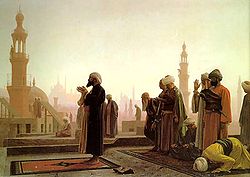
The Sunni branch of Islam does not have imams in the same sense as the Shi'a. In every day terms, the imam for Sunni Muslims is the one who leads congregational Islamic worship and prayers, and the Friday sermon is most often given by an appointed imam.
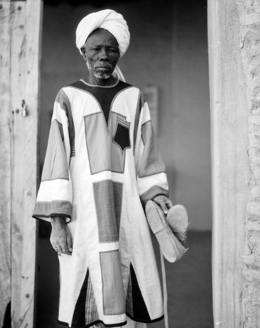 The term is also used:
for a recognized religious scholar or authority in Islam, often for the founding scholars of the four Sunni madhhab
s, or schools of jurisprudence (fiqh)
. It may also refer to the Muslim scholars who created the analytical sciences related to Hadith
or it may refer to the heads of the Prophet Muhammad
's family in their generational times.
Those who are considered imams in the context of scholarly authority by Sunni Muslims.
Shi'a believe that these imams are chosen by God to be perfect examples for the faithful and to lead all humanity in all aspects of life. They also believe that all the imams chosen are free from committing any sin, infallibility which is called ismah
. These leaders must be followed since they are appointed by God.
Fatimah
, also Fatimah al-Zahraa, daughter of Muhammed (615–632), is also considered infallible but not an imam. Many Shi'a believe that the last imam will one day return.
Shiite sect, imams were temporal as well as spiritual leaders who held power in Yemen
for more than a thousand years. In 897, a Zaidi ruler, al-Hadi ila'l-Haqq Yahya
, founded a line of such imams, a theocratic form of government which survived until the second half of the 20th century. (See details under Zaidiyyah
, History of Yemen
, Imams of Yemen
.)
Islam
Islam . The most common are and . : Arabic pronunciation varies regionally. The first vowel ranges from ~~. The second vowel ranges from ~~~...
ic leadership position, often the worship leader of a mosque
Mosque
A mosque is a place of worship for followers of Islam. The word is likely to have entered the English language through French , from Portuguese , from Spanish , and from Berber , ultimately originating in — . The Arabic word masjid literally means a place of prostration...
and the Muslim
Muslim
A Muslim, also spelled Moslem, is an adherent of Islam, a monotheistic, Abrahamic religion based on the Quran, which Muslims consider the verbatim word of God as revealed to prophet Muhammad. "Muslim" is the Arabic term for "submitter" .Muslims believe that God is one and incomparable...
community. Similar to spiritual leaders, the imam is the one who leads Islamic worship services. More often, the community turns to the mosque imam if they have a religious question. In smaller communities, an imam could also be the community leader.
The Sunni
Sunni Islam
Sunni Islam is the largest branch of Islam. Sunni Muslims are referred to in Arabic as ʾAhl ūs-Sunnah wa āl-Ǧamāʿah or ʾAhl ūs-Sunnah for short; in English, they are known as Sunni Muslims, Sunnis or Sunnites....
branch of Islam, whereto approximately 90% of Muslims adhere, does not have a clergy and therefore an imam is not a cleric
Clergy
Clergy is the generic term used to describe the formal religious leadership within a given religion. A clergyman, churchman or cleric is a member of the clergy, especially one who is a priest, preacher, pastor, or other religious professional....
like that of a Catholic Christian
Christian
A Christian is a person who adheres to Christianity, an Abrahamic, monotheistic religion based on the life and teachings of Jesus of Nazareth as recorded in the Canonical gospels and the letters of the New Testament...
priest
Priest
A priest is a person authorized to perform the sacred rites of a religion, especially as a mediatory agent between humans and deities. They also have the authority or power to administer religious rites; in particular, rites of sacrifice to, and propitiation of, a deity or deities...
. In the Shi'a branch of Islam, the concept of an imam occupies a much more central religious position.
Sunni Imams
The Sunni branch of Islam does not have imams in the same sense as the Shi'a. In every day terms, the imam for Sunni Muslims is the one who leads congregational Islamic worship and prayers, and the Friday sermon is most often given by an appointed imam.
for a recognized religious scholar or authority in Islam, often for the founding scholars of the four Sunni madhhab
Madhhab
is a Muslim school of law or fiqh . In the first 150 years of Islam, there were many such "schools". In fact, several of the Sahābah, or contemporary "companions" of Muhammad, are credited with founding their own...
s, or schools of jurisprudence (fiqh)
Fiqh
Fiqh is Islamic jurisprudence. Fiqh is an expansion of the code of conduct expounded in the Quran, often supplemented by tradition and implemented by the rulings and interpretations of Islamic jurists....
. It may also refer to the Muslim scholars who created the analytical sciences related to Hadith
Hadith
The term Hadīth is used to denote a saying or an act or tacit approval or criticism ascribed either validly or invalidly to the Islamic prophet Muhammad....
or it may refer to the heads of the Prophet Muhammad
Muhammad
Muhammad |ligature]] at U+FDF4 ;Arabic pronunciation varies regionally; the first vowel ranges from ~~; the second and the last vowel: ~~~. There are dialects which have no stress. In Egypt, it is pronounced not in religious contexts...
's family in their generational times.
Those who are considered imams in the context of scholarly authority by Sunni Muslims.
| Madhhab Madhhab is a Muslim school of law or fiqh . In the first 150 years of Islam, there were many such "schools". In fact, several of the Sahābah, or contemporary "companions" of Muhammad, are credited with founding their own... (Schools of Jurisprudence) |
Aqidah (Schools of Theology) | Science of Hadith Hadith The term Hadīth is used to denote a saying or an act or tacit approval or criticism ascribed either validly or invalidly to the Islamic prophet Muhammad.... |
| Imam Abu Hanifa | Imam Ahmad ibn Hanbal Ahmad ibn Hanbal Ahmad bin Muhammad bin Hanbal Abu `Abd Allah al-Shaybani was an important Muslim scholar and theologian. He is considered the founder of the Hanbali school of fiqh... (Athari Athari Athari , or "textualism" is derived from the Arabic word athar, literally meaning "remnant", and also referring to "narrations". Their disciples are called the Atharis... ) |
Imam Bukhari |
| Imam Malik Malik ibn Anas Mālik ibn Anas ibn Mālik ibn Abī 'Āmir al-Asbahī is known as "Imam Malik," the "Sheikh of Islam", the "Proof of the Community," and "Imam of the Abode of Emigration." He was one of the most highly respected scholars of fiqh in Sunni Islam... |
Imam al-Ashari Abu al-Hasan al-Ash'ari Abū al-Hasan Alī ibn Ismā'īl al-Ash'arī was a Muslim Arab theologian and the founder of the Ash'ari school of early Islamic philosophy and Islamic theology.-Biography:... (Ash'ari) |
Imam Abu Dawood |
| Imam Shafi'i | Imam Abu Mansur al-Maturidi (Maturidi) | Imam Muslim Muslim ibn al-Hajjaj Abul Husayn Muslim ibn al-Hajjaj ibn Muslim ibn Warat al-Qushayri al-Nisaburi was the author of the second authentic sahih collection of hadith in Sunni Islam, Sahih Muslim.-Biography:... |
| Imam Ahmad ibn Hanbal Ahmad ibn Hanbal Ahmad bin Muhammad bin Hanbal Abu `Abd Allah al-Shaybani was an important Muslim scholar and theologian. He is considered the founder of the Hanbali school of fiqh... |
Imam Wasil ibn Ata Wasil ibn Ata Wasil ibn Ata was an important Muslim theologian and jurist of his time, and by many accounts is considered to be the founder of the Mutazilite school of Islamic thought.... (Mu'tazili) |
Imam Fakhr al-Razi Fakhr al-Din al-Razi Abu Abdullah Muhammad ibn Umar ibn al-Husayn al-Taymi al-Bakri al-Tabaristani Fakhr al-Din al-Razi , most commonly known as Fakhruddin Razi was a well-known Persian Sunni Muslim theologian and philosopher.... |
Shi'a imams
In the Shi'a context, imam has a meaning more central to belief, referring to leaders of the community. Twelver and IsmailiIsmaili
' is a branch of Shia Islam. It is the second largest branch of Shia Islam, after the Twelvers...
Shi'a believe that these imams are chosen by God to be perfect examples for the faithful and to lead all humanity in all aspects of life. They also believe that all the imams chosen are free from committing any sin, infallibility which is called ismah
Ismah
‘Iṣmah or ‘Isma is the concept of infallibility or "divinely bestowed freedom from error and sin" in Islam. Muslims believe that Muhammad and other prophets in Islam possessed ‘iṣmah. Twelver and Ismaili Shia Muslims also attribute the quality to Imāms and Fatima Zahra, daughter of Muhammad...
. These leaders must be followed since they are appointed by God.
Twelver
Here follows a list of the Twelvers imams:| Number | Name (Full/Kunya Kunya (Arabic) A kunya is a teknonym, the name of an adult derived from their child, especially their eldest son, in Arabic names.A kunya is expressed by the use of abū or umm in a genitive construction, i.e "father of" or "mother of" as a honorific in place of or alongside given names in the Arab world and the... ) | Title (Arabic Arabic language Arabic is a name applied to the descendants of the Classical Arabic language of the 6th century AD, used most prominently in the Quran, the Islamic Holy Book... /Turkish Turkish language Turkish is a language spoken as a native language by over 83 million people worldwide, making it the most commonly spoken of the Turkic languages. Its speakers are located predominantly in Turkey and Northern Cyprus with smaller groups in Iraq, Greece, Bulgaria, the Republic of Macedonia, Kosovo,... ) | Birth–Death (CE Common Era Common Era ,abbreviated as CE, is an alternative designation for the calendar era originally introduced by Dionysius Exiguus in the 6th century, traditionally identified with Anno Domini .Dates before the year 1 CE are indicated by the usage of BCE, short for Before the Common Era Common Era... /AH Islamic calendar The Hijri calendar , also known as the Muslim calendar or Islamic calendar , is a lunar calendar consisting of 12 lunar months in a year of 354 or 355 days. It is used to date events in many Muslim countries , and used by Muslims everywhere to determine the proper day on which to celebrate Islamic... ) | Importance | Birthplace (present day country) | Place of death and burial |
|---|---|---|---|---|---|---|
| 1 | Ali ibn Abu Talib Ali ' |Ramaḍān]], 40 AH; approximately October 23, 598 or 600 or March 17, 599 – January 27, 661).His father's name was Abu Talib. Ali was also the cousin and son-in-law of the Islamic prophet Muhammad, and ruled over the Islamic Caliphate from 656 to 661, and was the first male convert to Islam... علي بن أبي طالب Abu al-Hassan or Abu al-Husayn أبو الحسین or أبو الحسن |
Amir al-Mu'minin (Commander of the Faithful) Birinci Ali |
600–661 23–40 |
The first imam Imamah (Shi'a twelver doctrine) Imāmah means "leadership" and it is a part of the Shi'a theology. The Twelve Imams are the spiritual and political successors to Muhammad, the Prophet of Islam, in the Twelver or Ithna Ashariya branch of Shia Islam.... and the rightful successor of the Prophet Succession to Muhammad The Succession to Muhammad concerns the various aspects of successorship of Muhammad after his death, comprising who might be considered as his successor to lead the Muslims, how that person should be elected, the conditions of legitimacy, and the role of successor... of all Shia; however, the Sunnis acknowledge him as the fourth Caliph Rashidun The Rightly Guided Caliphs or The Righteous Caliphs is a term used in Sunni Islam to refer to the first four Caliphs who established the Rashidun Caliphate. The concept of "Rightly Guided Caliphs" originated with the Abbasid Dynasty... as well. He holds a high position in almost all Sufi Sufism Sufism or ' is defined by its adherents as the inner, mystical dimension of Islam. A practitioner of this tradition is generally known as a '... Muslim orders Tariqah A tariqa is an Islamic religious order. In Sufism one starts with Islamic law, the exoteric or mundane practice of Islam and then is initiated onto the mystical path of a tariqa. Through spiritual practices and guidance of a tariqa the aspirant seeks ḥaqīqah - ultimate truth.-Meaning:A tariqa is a... (Turuq); the members of these orders trace their lineage to Muhammad through him. |
Mecca Mecca Mecca is a city in the Hijaz and the capital of Makkah province in Saudi Arabia. The city is located inland from Jeddah in a narrow valley at a height of above sea level... , Saudi Arabia Saudi Arabia The Kingdom of Saudi Arabia , commonly known in British English as Saudi Arabia and in Arabic as as-Sa‘ūdiyyah , is the largest state in Western Asia by land area, constituting the bulk of the Arabian Peninsula, and the second-largest in the Arab World... |
Assassinated by Abd-al-Rahman ibn Muljam Abd-al-Rahman ibn Muljam Abd-al-Rahman ibn Muljam al-Sarimi Arabic:عبدالرحمن بن ملجم السريمي was the Kharijite assassin of Caliph Ali ibn Abi Talib, the first cousin and son-in-law of the prophet Muhammad.-The Plot of Ali's murder:... , a Kharijite in Kufa Kufa Kufa is a city in Iraq, about south of Baghdad, and northeast of Najaf. It is located on the banks of the Euphrates River. The estimated population in 2003 was 110,000.... , who slashed him with a poisoned sword. Buried at the Imam Ali Mosque Imam Ali Mosque The Imām ‘Alī Holy Shrine , also known as Masjid Ali or the Mosque of ‘Alī, located in Najaf, Iraq, is the third holiest site for some of the estimated 200 million followers of the Shia branch of Islam. ‘Alī ibn Abī Tālib, the cousin of Muhammad, the fourth caliph , the first Imam is buried here... in Najaf Najaf Najaf is a city in Iraq about 160 km south of Baghdad. Its estimated population in 2008 is 560,000 people. It is the capital of Najaf Governorate... , Iraq Iraq Iraq ; officially the Republic of Iraq is a country in Western Asia spanning most of the northwestern end of the Zagros mountain range, the eastern part of the Syrian Desert and the northern part of the Arabian Desert.... . |
| 2 | Hassan ibn Ali Hasan ibn Ali Al-Hasan ibn ‘Alī ibn Abī Tālib is an important figure in Islam, the son of Fatimah the daughter of the Islamic prophet Muhammad, and of the fourth Caliph Ali ibn Abi Talib. Hasan is a member of the Ahl al-Bayt and Ahl al-Kisa... الحسن بن علي Abu Muhammad أبو محمد |
al-Mujtaba Ikinci Ali |
624–680 ----3–50 |
He was the eldest surviving grandson of Muhammad Muhammad Muhammad |ligature]] at U+FDF4 ;Arabic pronunciation varies regionally; the first vowel ranges from ~~; the second and the last vowel: ~~~. There are dialects which have no stress. In Egypt, it is pronounced not in religious contexts... through Muhammad's daughter, Fatimah Zahra. Hasan succeeded his father as the caliph in Kufa Kufa Kufa is a city in Iraq, about south of Baghdad, and northeast of Najaf. It is located on the banks of the Euphrates River. The estimated population in 2003 was 110,000.... , and on the basis of peace treaty with Muawiya I, he relinquished control of Iraq Iraq Iraq ; officially the Republic of Iraq is a country in Western Asia spanning most of the northwestern end of the Zagros mountain range, the eastern part of the Syrian Desert and the northern part of the Arabian Desert.... following a reign of seven months. |
Medina Medina Medina , or ; also transliterated as Madinah, or madinat al-nabi "the city of the prophet") is a city in the Hejaz region of western Saudi Arabia, and serves as the capital of the Al Madinah Province. It is the second holiest city in Islam, and the burial place of the Islamic Prophet Muhammad, and... , Saudi Arabia Saudi Arabia The Kingdom of Saudi Arabia , commonly known in British English as Saudi Arabia and in Arabic as as-Sa‘ūdiyyah , is the largest state in Western Asia by land area, constituting the bulk of the Arabian Peninsula, and the second-largest in the Arab World... |
Poisoned by his wife in Medina Medina Medina , or ; also transliterated as Madinah, or madinat al-nabi "the city of the prophet") is a city in the Hejaz region of western Saudi Arabia, and serves as the capital of the Al Madinah Province. It is the second holiest city in Islam, and the burial place of the Islamic Prophet Muhammad, and... , Saudi Arabia Saudi Arabia The Kingdom of Saudi Arabia , commonly known in British English as Saudi Arabia and in Arabic as as-Sa‘ūdiyyah , is the largest state in Western Asia by land area, constituting the bulk of the Arabian Peninsula, and the second-largest in the Arab World... on the orders of the Caliph Muawiya. Buried in Jannat al-Baqi Jannat al-Baqi Maqbaratu l-Baqī is a cemetery in Medina, Saudi Arabia, located to the southeast of the Masjid al-Nabawi. The mosque is built where the Islamic prophet Muhammad used to live, built a mosque and is currently buried. The cemetery therefore holds much significance. It contains many of Muhammad's ... . |
| 3 | Husayn ibn Ali Husayn ibn Ali Hussein ibn ‘Alī ibn Abī Ṭālib was the son of ‘Alī ibn Abī Ṭālib and Fātimah Zahrā... الحسین بن علي Abu Abdillah أبو عبدالله |
Sayed al-Shuhada Ūçüncü Ali |
626–680 ----4–61 |
He was a grandson of Muhammad Muhammad Muhammad |ligature]] at U+FDF4 ;Arabic pronunciation varies regionally; the first vowel ranges from ~~; the second and the last vowel: ~~~. There are dialects which have no stress. In Egypt, it is pronounced not in religious contexts... . Husayn opposed the validity of Caliph Caliph The Caliph is the head of state in a Caliphate, and the title for the ruler of the Islamic Ummah, an Islamic community ruled by the Shari'ah. It is a transcribed version of the Arabic word which means "successor" or "representative"... Yazid I Yazid I Yazīd ibn Mu‘āwiya ibn Abī Sufyān , commonly known as Yazid I, was the second Caliph of the Umayyad Caliphate . He ruled for three years from 680 CE until his death in 683 CE. Many Muslims condemn Yazid's rule as contentious and unjust... . As a result, he and his family were later killed in the Battle of Karbala Battle of Karbala The Battle of Karbala took place on Muharram 10, in the year 61 of the Islamic calendar in Karbala, in present day Iraq. On one side of the highly uneven battle were a small group of supporters and relatives of Muhammad's grandson Husain ibn Ali, and on the other was a large military detachment... by Yazid's forces. After this incident, the commemoration of Husayn ibn Ali has become a central ritual in Shia identity. |
Medina Medina Medina , or ; also transliterated as Madinah, or madinat al-nabi "the city of the prophet") is a city in the Hejaz region of western Saudi Arabia, and serves as the capital of the Al Madinah Province. It is the second holiest city in Islam, and the burial place of the Islamic Prophet Muhammad, and... , Saudi Arabia Saudi Arabia The Kingdom of Saudi Arabia , commonly known in British English as Saudi Arabia and in Arabic as as-Sa‘ūdiyyah , is the largest state in Western Asia by land area, constituting the bulk of the Arabian Peninsula, and the second-largest in the Arab World... |
Killed on Day of Ashura Day of Ashura The Day of Ashura is on the 10th day of Muharram in the Islamic calendar and marks the climax of the Remembrance of Muharram.It is commemorated by Shia Muslims as a day of mourning for the martyrdom of Husayn ibn Ali, the grandson of the Islamic Prophet Muhammad at the Battle of Karbala on 10... (10 Muharram) and beheaded at the Battle of Karbala Battle of Karbala The Battle of Karbala took place on Muharram 10, in the year 61 of the Islamic calendar in Karbala, in present day Iraq. On one side of the highly uneven battle were a small group of supporters and relatives of Muhammad's grandson Husain ibn Ali, and on the other was a large military detachment... . Buried at the Imam Husayn Shrine Imam Husayn Shrine The Shrine of Husayn ibn ‘Alī is one of the oldest mosques on Earth and a holy site of Shīah Islām in the city of Karbalā, Iraq. It stands on the site of the grave of Husayn ibn ‘Alī, the second grandson of Muhammad, near the place where he was killed during the Battle of Karbalā in 680 C.E.... in Karbala Karbala Karbala is a city in Iraq, located about southwest of Baghdad. Karbala is the capital of Karbala Governorate, and has an estimated population of 572,300 people .... , Iraq Iraq Iraq ; officially the Republic of Iraq is a country in Western Asia spanning most of the northwestern end of the Zagros mountain range, the eastern part of the Syrian Desert and the northern part of the Arabian Desert.... . |
| 4 | Ali ibn al-Hussein علي بن الحسین Abu Muhammad أبو محمد |
al-Sajjad, Zain al-Abedin ----Dorduncu Ali |
658-9 – 712 ----38–95 |
Author of prayers in Sahifa al-Sajjadiyya Sahifa al-Sajjadiyya Al-Sahifa al-Sajjadiyya is said to be the oldest prayer manual in Islamic sources and one of the most seminal works of Islamic spirituality of the early period... , which is known as "The Psalm of the Household of the Prophet Ahl al-Bayt Ahl al-Bayt is an Arabic phrase literally meaning People of the House, or family of the House. The phrase "ahl al-bayt" was used in Arabia before the advent of Islam to refer to one's clan, and would be adopted by the ruling family of a tribe. Within the Islamic tradition, the term refers to the... ." |
Medina Medina Medina , or ; also transliterated as Madinah, or madinat al-nabi "the city of the prophet") is a city in the Hejaz region of western Saudi Arabia, and serves as the capital of the Al Madinah Province. It is the second holiest city in Islam, and the burial place of the Islamic Prophet Muhammad, and... , Saudi Arabia Saudi Arabia The Kingdom of Saudi Arabia , commonly known in British English as Saudi Arabia and in Arabic as as-Sa‘ūdiyyah , is the largest state in Western Asia by land area, constituting the bulk of the Arabian Peninsula, and the second-largest in the Arab World... |
According to most Shia scholars, he was poisoned on the order of Caliph al-Walid I in Medina Medina Medina , or ; also transliterated as Madinah, or madinat al-nabi "the city of the prophet") is a city in the Hejaz region of western Saudi Arabia, and serves as the capital of the Al Madinah Province. It is the second holiest city in Islam, and the burial place of the Islamic Prophet Muhammad, and... , Saudi Arabia Saudi Arabia The Kingdom of Saudi Arabia , commonly known in British English as Saudi Arabia and in Arabic as as-Sa‘ūdiyyah , is the largest state in Western Asia by land area, constituting the bulk of the Arabian Peninsula, and the second-largest in the Arab World... . Buried in Jannat al-Baqi Jannat al-Baqi Maqbaratu l-Baqī is a cemetery in Medina, Saudi Arabia, located to the southeast of the Masjid al-Nabawi. The mosque is built where the Islamic prophet Muhammad used to live, built a mosque and is currently buried. The cemetery therefore holds much significance. It contains many of Muhammad's ... . |
| 5 | Muhammad ibn Ali Muhammad al-Baqir Muḥammad ibn ‘Alī al-Bāqir was the Fifth Imām to the Twelver Shi‘a and Fourth Imām to the Ismā‘īlī Shī‘a. His father was the previous Imām, ‘Alī ibn Ḥusayn, and his mother was Fatimah bint al-Hasan... محمد بن علي Abu Ja'far أبو جعفر |
al-Baqir al-Ulum (splitting open knowledge) ----Besinci Ali |
677–732 ----57–114 |
Sunni and Shia sources both describe him as one of the early and most eminent legal scholars Faqih A Faqīh is an expert in fiqh, or, Islamic jurisprudence.A faqih is an expert in Islamic Law, and, as such, the word Faqih can literally be generally translated as Jurist.- The definition of Fiqh and its relation to the Faqih:... , teaching many students during his tenure. |
Medina Medina Medina , or ; also transliterated as Madinah, or madinat al-nabi "the city of the prophet") is a city in the Hejaz region of western Saudi Arabia, and serves as the capital of the Al Madinah Province. It is the second holiest city in Islam, and the burial place of the Islamic Prophet Muhammad, and... , Saudi Arabia Saudi Arabia The Kingdom of Saudi Arabia , commonly known in British English as Saudi Arabia and in Arabic as as-Sa‘ūdiyyah , is the largest state in Western Asia by land area, constituting the bulk of the Arabian Peninsula, and the second-largest in the Arab World... |
According to some Shia scholars, he was poisoned by Ibrahim ibn Walid ibn 'Abdallah in Medina Medina Medina , or ; also transliterated as Madinah, or madinat al-nabi "the city of the prophet") is a city in the Hejaz region of western Saudi Arabia, and serves as the capital of the Al Madinah Province. It is the second holiest city in Islam, and the burial place of the Islamic Prophet Muhammad, and... , Saudi Arabia Saudi Arabia The Kingdom of Saudi Arabia , commonly known in British English as Saudi Arabia and in Arabic as as-Sa‘ūdiyyah , is the largest state in Western Asia by land area, constituting the bulk of the Arabian Peninsula, and the second-largest in the Arab World... on the order of Caliph Hisham ibn Abd al-Malik Hisham ibn Abd al-Malik Hisham ibn Abd al-Malik 10th Umayyad caliph who ruled from 723 until his death in 743. When he was born in 691 his mother named him after her father.... . Buried in Jannat al-Baqi Jannat al-Baqi Maqbaratu l-Baqī is a cemetery in Medina, Saudi Arabia, located to the southeast of the Masjid al-Nabawi. The mosque is built where the Islamic prophet Muhammad used to live, built a mosque and is currently buried. The cemetery therefore holds much significance. It contains many of Muhammad's ... . |
| 6 | Ja'far ibn Muhammad جعفر بن محمد Abu Abdillah أبو عبدالله |
al-Sadiq (the Trustworthy) ----Altinci Ali |
702–765 ----83–148 |
Established the Ja'fari jurisprudence Ja'fari jurisprudence Jaʿfarī school of thought, Ja`farite School, Jaʿfarī jurisprudence or Jaʿfarī Fiqh is the school of jurisprudence of most Shi'a Muslims, derived from the name of Jaʿfar as-Ṣādiq, the 6th Shi'a Imam... and developed the Theology of Shia. He instructed many scholars in different fields, including Abu Hanifah and Malik ibn Anas Malik ibn Anas Mālik ibn Anas ibn Mālik ibn Abī 'Āmir al-Asbahī is known as "Imam Malik," the "Sheikh of Islam", the "Proof of the Community," and "Imam of the Abode of Emigration." He was one of the most highly respected scholars of fiqh in Sunni Islam... in fiqh Fiqh Fiqh is Islamic jurisprudence. Fiqh is an expansion of the code of conduct expounded in the Quran, often supplemented by tradition and implemented by the rulings and interpretations of Islamic jurists.... , Wasil ibn Ata Wasil ibn Ata Wasil ibn Ata was an important Muslim theologian and jurist of his time, and by many accounts is considered to be the founder of the Mutazilite school of Islamic thought.... and Hisham ibn Hakam in Islamic theology Kalam ʿIlm al-Kalām is the Islamic philosophical discipline of seeking theological principles through dialectic. Kalām in Islamic practice relates to the discipline of seeking theological knowledge through debate and argument. A scholar of kalām is referred to as a mutakallim... , and Jābir ibn Hayyān in science and alchemy Alchemy Alchemy is an influential philosophical tradition whose early practitioners’ claims to profound powers were known from antiquity. The defining objectives of alchemy are varied; these include the creation of the fabled philosopher's stone possessing powers including the capability of turning base... . |
Medina Medina Medina , or ; also transliterated as Madinah, or madinat al-nabi "the city of the prophet") is a city in the Hejaz region of western Saudi Arabia, and serves as the capital of the Al Madinah Province. It is the second holiest city in Islam, and the burial place of the Islamic Prophet Muhammad, and... , Saudi Arabia Saudi Arabia The Kingdom of Saudi Arabia , commonly known in British English as Saudi Arabia and in Arabic as as-Sa‘ūdiyyah , is the largest state in Western Asia by land area, constituting the bulk of the Arabian Peninsula, and the second-largest in the Arab World... |
According to Shia sources, he was poisoned in Medina Medina Medina , or ; also transliterated as Madinah, or madinat al-nabi "the city of the prophet") is a city in the Hejaz region of western Saudi Arabia, and serves as the capital of the Al Madinah Province. It is the second holiest city in Islam, and the burial place of the Islamic Prophet Muhammad, and... , Saudi Arabia Saudi Arabia The Kingdom of Saudi Arabia , commonly known in British English as Saudi Arabia and in Arabic as as-Sa‘ūdiyyah , is the largest state in Western Asia by land area, constituting the bulk of the Arabian Peninsula, and the second-largest in the Arab World... on the order of Caliph Al-Mansur Al-Mansur Al-Mansur, Almanzor or Abu Ja'far Abdallah ibn Muhammad al-Mansur was the second Abbasid Caliph from 136 AH to 158 AH .-Biography:... . Buried in Jannat al-Baqi Jannat al-Baqi Maqbaratu l-Baqī is a cemetery in Medina, Saudi Arabia, located to the southeast of the Masjid al-Nabawi. The mosque is built where the Islamic prophet Muhammad used to live, built a mosque and is currently buried. The cemetery therefore holds much significance. It contains many of Muhammad's ... . |
| 7 | Musa ibn Ja'far موسی بن جعفر Abu al-Hassan I أبو الحسن الأول |
al-Kazim ----Yedinci Ali |
744–799 ----128–183 |
Leader of the Shia community during the schism of Ismaili Ismaili ' is a branch of Shia Islam. It is the second largest branch of Shia Islam, after the Twelvers... and other branches after the death of the former imam, Jafar al-Sadiq. He established the network of agents who collected khums Khums Khums is the Arabic word for One Fifth . According to Shia Islamic legal terminology, it means "one-fifth of certain items which a person acquires as wealth, and which must be paid as an Islamic tax".... in the Shia community of the Middle East Middle East The Middle East is a region that encompasses Western Asia and Northern Africa. It is often used as a synonym for Near East, in opposition to Far East... and the Greater Khorasan Greater Khorasan Greater Khorasan or Ancient Khorasan is a historical region of Greater Iran mentioned in sources from Sassanid and Islamic eras which "frequently" had a denotation wider than current three provinces of Khorasan in Iran... . |
Medina Medina Medina , or ; also transliterated as Madinah, or madinat al-nabi "the city of the prophet") is a city in the Hejaz region of western Saudi Arabia, and serves as the capital of the Al Madinah Province. It is the second holiest city in Islam, and the burial place of the Islamic Prophet Muhammad, and... , Saudi Arabia Saudi Arabia The Kingdom of Saudi Arabia , commonly known in British English as Saudi Arabia and in Arabic as as-Sa‘ūdiyyah , is the largest state in Western Asia by land area, constituting the bulk of the Arabian Peninsula, and the second-largest in the Arab World... |
Imprisoned and poisoned in Baghdad Baghdad Baghdad is the capital of Iraq, as well as the coterminous Baghdad Governorate. The population of Baghdad in 2011 is approximately 7,216,040... , Iraq Iraq Iraq ; officially the Republic of Iraq is a country in Western Asia spanning most of the northwestern end of the Zagros mountain range, the eastern part of the Syrian Desert and the northern part of the Arabian Desert.... on the order of Caliph Harun al-Rashid Harun al-Rashid Hārūn al-Rashīd was the fifth Arab Abbasid Caliph in Iraq. He was born in Rey, Iran, close to modern Tehran. His birth date remains a point of discussion, though, as various sources give the dates from 763 to 766).... . Buried in the Kazimayn shrine in Baghdad. |
| 8 | Ali ibn Musa Ali al-Rida ‘Alī ibn Mūsā al-Rizā was the seventh descendant of the Islamic prophet Muhammad and the eighth of the Twelve Imams, according to Shia sect of Islam... علي بن موسی |
al-Rida, Reza ----Sekizinci Ali |
765–817 ----148–203 |
Made crown-prince by Caliph Al-Ma'mun Al-Ma'mun Abū Jaʿfar Abdullāh al-Māʾmūn ibn Harūn was an Abbasid caliph who reigned from 813 until his death in 833... , and famous for his discussions with both Muslim and non-Muslim religious scholars. |
Medina Medina Medina , or ; also transliterated as Madinah, or madinat al-nabi "the city of the prophet") is a city in the Hejaz region of western Saudi Arabia, and serves as the capital of the Al Madinah Province. It is the second holiest city in Islam, and the burial place of the Islamic Prophet Muhammad, and... , Saudi Arabia Saudi Arabia The Kingdom of Saudi Arabia , commonly known in British English as Saudi Arabia and in Arabic as as-Sa‘ūdiyyah , is the largest state in Western Asia by land area, constituting the bulk of the Arabian Peninsula, and the second-largest in the Arab World... |
According to Shia sources, he was poisoned in Mashad, Iran Iran Iran , officially the Islamic Republic of Iran , is a country in Southern and Western Asia. The name "Iran" has been in use natively since the Sassanian era and came into use internationally in 1935, before which the country was known to the Western world as Persia... on the order of Caliph Al-Ma'mun. Buried in the Imam Reza shrine Imam Reza shrine Imām Reza shrine in Mashhad, Iran is a complex which contains the mausoleum of Imam Reza, the eighth Imām of Twelver Shi'ites. It is the largest mosque in the world by dimension and the second largest in capacity... in Mashad. |
| 9 | Muhammad ibn Ali Muhammad al-Taqi Muhammad al-Taqī or Muhammad al-Jawād was the ninth of the Twelve Imams of Twelver Shi'ism. His given name was Muhammad ibn ‘Alī ibn Mūsā, and among his titles, al-Taqī and al-Jawād are the most renowned... محمد بن علي Abu Ja'far أبو جعفر |
al-Taqi, al-Jawad ----Dokuzuncu Ali |
810–835 ----195–220 |
Famous for his generosity and piety in the face of persecution by the Abbasid Abbasid The Abbasid Caliphate or, more simply, the Abbasids , was the third of the Islamic caliphates. It was ruled by the Abbasid dynasty of caliphs, who built their capital in Baghdad after overthrowing the Umayyad caliphate from all but the al-Andalus region.... caliphate Caliphate The term caliphate, "dominion of a caliph " , refers to the first system of government established in Islam and represented the political unity of the Muslim Ummah... . |
Medina Medina Medina , or ; also transliterated as Madinah, or madinat al-nabi "the city of the prophet") is a city in the Hejaz region of western Saudi Arabia, and serves as the capital of the Al Madinah Province. It is the second holiest city in Islam, and the burial place of the Islamic Prophet Muhammad, and... , Saudi Arabia Saudi Arabia The Kingdom of Saudi Arabia , commonly known in British English as Saudi Arabia and in Arabic as as-Sa‘ūdiyyah , is the largest state in Western Asia by land area, constituting the bulk of the Arabian Peninsula, and the second-largest in the Arab World... |
Poisoned by his wife, Al-Ma'mun's daughter, in Baghdad Baghdad Baghdad is the capital of Iraq, as well as the coterminous Baghdad Governorate. The population of Baghdad in 2011 is approximately 7,216,040... , Iraq Iraq Iraq ; officially the Republic of Iraq is a country in Western Asia spanning most of the northwestern end of the Zagros mountain range, the eastern part of the Syrian Desert and the northern part of the Arabian Desert.... on the order of Caliph Al-Mu'tasim Al-Mu'tasim Abu Ishaq 'Abbas al-Mu'tasim ibn Harun was an Abbasid caliph . He succeeded his half-brother al-Ma'mun... . Buried in the Kazmain shrine in Baghdad. |
| 10 | Ali ibn Muhammad Ali al-Hadi ‘Alī al-Hādī , also known as ‘Alī an-Naqī was the tenth of the Twelve Imams. His full name is ‘Alī ibn Muhammad ibn ‘Alī. The exact date of his birth and death are unknown, but it is generally accepted that he was born between 827–830 CE and he died in 868 CE.- Early years :‘Alī al-Hādī was born... علي بن محمد Abu al-Hassan III أبو الحسن الثالث |
al-Hadi, al-Naqi ----Onuncu Ali |
827–868 ----212–254 |
Strengthened the network of deputies in the Shia community. He sent them instructions, and received in turn financial contributions of the faithful from the khums Khums Khums is the Arabic word for One Fifth . According to Shia Islamic legal terminology, it means "one-fifth of certain items which a person acquires as wealth, and which must be paid as an Islamic tax".... and religious vows. |
Surayya, a village near Medina Medina Medina , or ; also transliterated as Madinah, or madinat al-nabi "the city of the prophet") is a city in the Hejaz region of western Saudi Arabia, and serves as the capital of the Al Madinah Province. It is the second holiest city in Islam, and the burial place of the Islamic Prophet Muhammad, and... , Saudi Arabia Saudi Arabia The Kingdom of Saudi Arabia , commonly known in British English as Saudi Arabia and in Arabic as as-Sa‘ūdiyyah , is the largest state in Western Asia by land area, constituting the bulk of the Arabian Peninsula, and the second-largest in the Arab World... |
According to Shia sources, he was poisoned in Samarra Samarra Sāmarrā is a city in Iraq. It stands on the east bank of the Tigris in the Salah ad-Din Governorate, north of Baghdad and, in 2003, had an estimated population of 348,700.... , Iraq Iraq Iraq ; officially the Republic of Iraq is a country in Western Asia spanning most of the northwestern end of the Zagros mountain range, the eastern part of the Syrian Desert and the northern part of the Arabian Desert.... on the order of Caliph Al-Mu'tazz Al-Mu'tazz Al-Mu'tazz was the title of the Abbasid Caliph in Baghdad from 866 to 869. Placed upon the throne by the Turks, he proved but too apt a pupil of his Turkish masters.He became the caliph at 19 he was the youngest Abbasaid Caliph to assume power. He was surrounded by parties each jealous of the other... . Buried in the Al Askari Mosque in Samarra. |
| 11 | Hassan ibn Ali Hasan al-Askari Hasan al-‘Askarī was the eleventh of the Twelve Imams. His given name was Hasan ibn ‘Alī ibn Muhammad... الحسن بن علي Abu Muhammad أبو محمد |
al-Askari ----Onbirinci Ali |
846–874 ----232–260 |
For most of his life, the Abbasid Caliph, Al-Mu'tamid Al-Mu'tamid This article is about the Abbasid Caliph al-Mu'tamid of Baghdad. For the Andalusi Arabic poet who was also the Abbadid king of Seville, see Muhammad Ibn Abbad Al Mutamid... , placed restrictions on him after the death of his father. Repression of the Shi'ite population was particularly high at the time due to their large size and growing power. |
Medina Medina Medina , or ; also transliterated as Madinah, or madinat al-nabi "the city of the prophet") is a city in the Hejaz region of western Saudi Arabia, and serves as the capital of the Al Madinah Province. It is the second holiest city in Islam, and the burial place of the Islamic Prophet Muhammad, and... , Saudi Arabia Saudi Arabia The Kingdom of Saudi Arabia , commonly known in British English as Saudi Arabia and in Arabic as as-Sa‘ūdiyyah , is the largest state in Western Asia by land area, constituting the bulk of the Arabian Peninsula, and the second-largest in the Arab World... |
According to Shia, he was poisoned on the order of Caliph Al-Mu'tamid Al-Mu'tamid This article is about the Abbasid Caliph al-Mu'tamid of Baghdad. For the Andalusi Arabic poet who was also the Abbadid king of Seville, see Muhammad Ibn Abbad Al Mutamid... in Samarra Samarra Sāmarrā is a city in Iraq. It stands on the east bank of the Tigris in the Salah ad-Din Governorate, north of Baghdad and, in 2003, had an estimated population of 348,700.... , Iraq Iraq Iraq ; officially the Republic of Iraq is a country in Western Asia spanning most of the northwestern end of the Zagros mountain range, the eastern part of the Syrian Desert and the northern part of the Arabian Desert.... . Buried in Al Askari Mosque in Samarra. |
| 12 | Muhammad ibn al-Hassan Muhammad al-Mahdi Muḥammad ibn al-Ḥasan al-Mahdī is believed by Twelver Shī‘a Muslims to be the Mahdī, an ultimate savior of humankind and the final Imām of the Twelve Imams... محمد بن الحسن Abu al-Qasim أبو القاسم |
al-Mahdi Mahdi In Islamic eschatology, the Mahdi is the prophesied redeemer of Islam who will stay on Earth for seven, nine or nineteen years- before the Day of Judgment and, alongside Jesus, will rid the world of wrongdoing, injustice and tyranny.In Shia Islam, the belief in the Mahdi is a "central religious... , Hidden Imam, al-Hujjah ----Onikinci Ali |
868–unknown ----255–unknown |
According to Twelver doctrine, he is the current imam and the promised Mahdi Mahdi In Islamic eschatology, the Mahdi is the prophesied redeemer of Islam who will stay on Earth for seven, nine or nineteen years- before the Day of Judgment and, alongside Jesus, will rid the world of wrongdoing, injustice and tyranny.In Shia Islam, the belief in the Mahdi is a "central religious... , a messianic figure who will return with Christ Christ Christ is the English term for the Greek meaning "the anointed one". It is a translation of the Hebrew , usually transliterated into English as Messiah or Mashiach... . He will reestablish the rightful governance of Islam and replete the earth with justice and peace. |
Samarra Samarra Sāmarrā is a city in Iraq. It stands on the east bank of the Tigris in the Salah ad-Din Governorate, north of Baghdad and, in 2003, had an estimated population of 348,700.... , Iraq Iraq Iraq ; officially the Republic of Iraq is a country in Western Asia spanning most of the northwestern end of the Zagros mountain range, the eastern part of the Syrian Desert and the northern part of the Arabian Desert.... |
According to Shia doctrine, he has been living in the Occultation since 872, and will continue as long as God wills it. |
Fatimah
Fatimah
Fatimah was a daughter of the Islamic prophet Muhammad from his first wife Khadijah bint Khuwaylid. She is regarded by Muslims as an exemplar for men and women. She remained at her father's side through the difficulties suffered by him at the hands of the Quraysh of Mecca...
, also Fatimah al-Zahraa, daughter of Muhammed (615–632), is also considered infallible but not an imam. Many Shi'a believe that the last imam will one day return.
Zaidi imams as rulers of Yemen
In the ZaidiZaidiyyah
Zaidiyya, or Zaidism is a Shi'a Muslim school of thought named after Zayd ibn ʻAlī, the grandson of Husayn ibn ʻAlī. Followers of the Zaydi Islamic jurisprudence are called Zaydi Shi'a...
Shiite sect, imams were temporal as well as spiritual leaders who held power in Yemen
Yemen
The Republic of Yemen , commonly known as Yemen , is a country located in the Middle East, occupying the southwestern to southern end of the Arabian Peninsula. It is bordered by Saudi Arabia to the north, the Red Sea to the west, and Oman to the east....
for more than a thousand years. In 897, a Zaidi ruler, al-Hadi ila'l-Haqq Yahya
Al-Hadi ila'l-Haqq Yahya
Al-Hadi ila’l-Haqq Yahya was a religious and political leader on the Arabian Peninsula. He was the first Zaydiyya imam who ruled over portions of Yemen, in 897-911, and is the ancestor of the Rassid Dynasty which held intermittent power in Yemen until 1962.-Background:Yahya bin al-Husayn bin...
, founded a line of such imams, a theocratic form of government which survived until the second half of the 20th century. (See details under Zaidiyyah
Zaidiyyah
Zaidiyya, or Zaidism is a Shi'a Muslim school of thought named after Zayd ibn ʻAlī, the grandson of Husayn ibn ʻAlī. Followers of the Zaydi Islamic jurisprudence are called Zaydi Shi'a...
, History of Yemen
History of Yemen
Yemen is one of the oldest centers of civilization in the Near East. Its relatively fertile land and adequate rainfall in a moister climate helped sustain a stable population, a feature recognized by the ancient Greek geographer Ptolemy, who described Yemen as Eudaimon Arabia meaning "fortunate...
, Imams of Yemen
Imams of Yemen
The Imams of Yemen and later the Kings of Yemen were religiously consecrated leaders belonging to the Zaidiyyah branch of Shia Islam. They established a blend of religious and secular rule in parts of Yemen from 897. Their imamate endured under varying circumstances until the republican revolution...
.)
External links
- A brief introduction of Twelve Imams
- A Brief History Of The Lives Of The Twelve Imams a chapter of Shi'a Islam (book)Shi'a Islam (book)Shi'ite Islam is an important text on the history and thought of Shi'a Islam.Written by Muhammed H. Al-Tabataba'i, with the translation, editing, and introduction by Dr...
by Allameh TabatabaeiAllameh TabatabaeiAllameh Seyyed Muhammad Husayn Tabatabaei was one of the most prominent thinkers of philosophy and contemporary Shia Islam... - The Twelve Imams Taken From "A Shi'ite Anthology" By Allameh TabatabaeiAllameh TabatabaeiAllameh Seyyed Muhammad Husayn Tabatabaei was one of the most prominent thinkers of philosophy and contemporary Shia Islam...
- A Short History of the Lives of The Twelve Imams
- Detailed description of the Shiite belief
- List of Sunni Imams
- International Imam Organization