

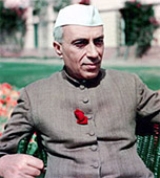
Prime Minister of India

Encyclopedia
The Prime Minister of India , as addressed to in the Constitution of India
— Prime Minister for the Union, is the chief of government, head of the Council of Ministers and the leader of the majority party in parliament
. The Prime Minister
leads the executive branch
of the Government of India
.
The prime minister is the most senior minister
of cabinet
in the executive
branch of government
in a parliamentary system
. The prime minister selects and can dismiss other members of the cabinet; allocates posts to members within the Government; is the presiding member and chairman of the cabinet and is responsible for bringing proposal of legislation.
The Prime Minister is appointed by the President to assist the latter in the administration of the affairs of the executive
. The incumbent
prime minister is Manmohan Singh
, in office since 22 May 2004.
, the prime minister is the presiding and actual head of the government and head of the executive branch. In such systems, the head of state
or the head of state's official representative (i.e. the monarch, president, or governor-general) usually holds a purely ceremonial position.
The prime minister is always, a member of parliament
and is expected with other ministers to ensure the passage of bills through the legislature
.
envisages a scheme of affairs in which the President of India
is the head of the executive
in terms of Article 53 with office of the Prime Minister as heading the Council of Ministers to assist and advise the President
in the discharge of the executive power. To quote, Article 53 and 74 provide as under;
like most parliamentary democracies the Head of State's duties are only ceremonial
, the Prime Minister of India is the head of government
and has the responsibility for executive power
. With India following a parliamentary system
of government the Prime Minister is generally the leader of a party (or coalition of parties) that has a majority in the Lok Sabha
, the lower house of the Parliament of India
. The Prime Minister, in common with all other ministers at Central & state level, either has to be a current member of one of the houses of Parliament
, or be elected within six months of being appointed.
. He is invited by the President of India in the Parliament of India
as leader of the majority party to form a government at the federal level
(known as Central or Union Government in India) and exercise its powers. In practice the Prime Minister nominates the members of their Council of Ministers to the President. They also work upon to decide a core group of Ministers (known as the Cabinet
) as in-charge of the important functions and ministries of the Government of India
.
The Prime Minister is responsible for aiding and advising the President in distribution of work of the Government to various ministries and offices and in terms of the Government of India (Allocation of Business) Rules, 1961. The co-ordinating work is generally allocated to the Cabinet Secretariat which in turn acts as a nodal agency for the functioning of the various Ministries. While generally the work of the Government is divided into various Ministries, the Prime Minister may retain certain portfolios if they are not allocated to any member of the cabinet.
The Prime Minister, in consultation with the Cabinet, schedules and attends the sessions of the Houses of Parliament and is required to answer the question from the Members of Parliament to them as the in-charge of the portfolios in the capacity as Prime Minister of India.
Some specific ministries/department are not allocated to anyone in the cabinet but the Prime Minister himself. The Prime Minister is usually always in-charge/head of:
The Prime Minister represents the country in various delegations, high level meetings and international organizations that require the attendance of the highest government office and also addresses to the nation on various issues of national or other importance. They also have exclusive jurisdiction over disposal of two national funds, (i) the PM's National Relief Fund, and (ii) the PM's National Defence Fund, which they use at their discretion attain the objectives behind the establishment of these funds.
sets the principal qualifications one must meet to be eligible to the office of the Prime Minister.
A Prime Minister must be:
A person shall not be eligible for election as Prime Minister if he holds any office of profit under the Government of India or the Government of any State or under any local or other authority subject to the control of any of the said Governments.
Oath of secrecy:
, remuneration of the prime minister as well as other ministers are to be decided by the Parliament
and is renewed from time to time. The original remuneration for prime minister and other ministers were specified in the Part B of the second schedule of the constitution of India
, which was later removed by an amendment.
Constitution of India
The Constitution of India is the supreme law of India. It lays down the framework defining fundamental political principles, establishes the structure, procedures, powers, and duties of government institutions, and sets out fundamental rights, directive principles, and the duties of citizens...
— Prime Minister for the Union, is the chief of government, head of the Council of Ministers and the leader of the majority party in parliament
Parliament of India
The Parliament of India is the supreme legislative body in India. Founded in 1919, the Parliament alone possesses legislative supremacy and thereby ultimate power over all political bodies in India. The Parliament of India comprises the President and the two Houses, Lok Sabha and Rajya Sabha...
. The Prime Minister
Prime minister
A prime minister is the most senior minister of cabinet in the executive branch of government in a parliamentary system. In many systems, the prime minister selects and may dismiss other members of the cabinet, and allocates posts to members within the government. In most systems, the prime...
leads the executive branch
Executive (government)
Executive branch of Government is the part of government that has sole authority and responsibility for the daily administration of the state bureaucracy. The division of power into separate branches of government is central to the idea of the separation of powers.In many countries, the term...
of the Government of India
Government of India
The Government of India, officially known as the Union Government, and also known as the Central Government, was established by the Constitution of India, and is the governing authority of the union of 28 states and seven union territories, collectively called the Republic of India...
.
The prime minister is the most senior minister
Minister (government)
A minister is a politician who holds significant public office in a national or regional government. Senior ministers are members of the cabinet....
of cabinet
Cabinet (government)
A Cabinet is a body of high ranking government officials, typically representing the executive branch. It can also sometimes be referred to as the Council of Ministers, an Executive Council, or an Executive Committee.- Overview :...
in the executive
Executive (government)
Executive branch of Government is the part of government that has sole authority and responsibility for the daily administration of the state bureaucracy. The division of power into separate branches of government is central to the idea of the separation of powers.In many countries, the term...
branch of government
Government
Government refers to the legislators, administrators, and arbitrators in the administrative bureaucracy who control a state at a given time, and to the system of government by which they are organized...
in a parliamentary system
Parliamentary system
A parliamentary system is a system of government in which the ministers of the executive branch get their democratic legitimacy from the legislature and are accountable to that body, such that the executive and legislative branches are intertwined....
. The prime minister selects and can dismiss other members of the cabinet; allocates posts to members within the Government; is the presiding member and chairman of the cabinet and is responsible for bringing proposal of legislation.
The Prime Minister is appointed by the President to assist the latter in the administration of the affairs of the executive
Executive (government)
Executive branch of Government is the part of government that has sole authority and responsibility for the daily administration of the state bureaucracy. The division of power into separate branches of government is central to the idea of the separation of powers.In many countries, the term...
. The incumbent
Incumbent
The incumbent, in politics, is the existing holder of a political office. This term is usually used in reference to elections, in which races can often be defined as being between an incumbent and non-incumbent. For example, in the 2004 United States presidential election, George W...
prime minister is Manmohan Singh
Manmohan Singh
Manmohan Singh is the 13th and current Prime Minister of India. He is the only Prime Minister since Jawaharlal Nehru to return to power after completing a full five-year term. A Sikh, he is the first non-Hindu to occupy the office. Singh is also the 7th Prime Minister belonging to the Indian...
, in office since 22 May 2004.
Origins and history
India follows a parliamentary system of government. In parliamentary systems fashioned after the Westminster systemWestminster System
The Westminster system is a democratic parliamentary system of government modelled after the politics of the United Kingdom. This term comes from the Palace of Westminster, the seat of the Parliament of the United Kingdom....
, the prime minister is the presiding and actual head of the government and head of the executive branch. In such systems, the head of state
Head of State
A head of state is the individual that serves as the chief public representative of a monarchy, republic, federation, commonwealth or other kind of state. His or her role generally includes legitimizing the state and exercising the political powers, functions, and duties granted to the head of...
or the head of state's official representative (i.e. the monarch, president, or governor-general) usually holds a purely ceremonial position.
The prime minister is always, a member of parliament
Member of Parliament
A Member of Parliament is a representative of the voters to a :parliament. In many countries with bicameral parliaments, the term applies specifically to members of the lower house, as upper houses often have a different title, such as senate, and thus also have different titles for its members,...
and is expected with other ministers to ensure the passage of bills through the legislature
Legislature
A legislature is a kind of deliberative assembly with the power to pass, amend, and repeal laws. The law created by a legislature is called legislation or statutory law. In addition to enacting laws, legislatures usually have exclusive authority to raise or lower taxes and adopt the budget and...
.
Constitutional framework and position of Prime Minister
The ConstitutionConstitution of India
The Constitution of India is the supreme law of India. It lays down the framework defining fundamental political principles, establishes the structure, procedures, powers, and duties of government institutions, and sets out fundamental rights, directive principles, and the duties of citizens...
envisages a scheme of affairs in which the President of India
President of India
The President of India is the head of state and first citizen of India, as well as the Supreme Commander of the Indian Armed Forces. President of India is also the formal head of all the three branches of Indian Democracy - Legislature, Executive and Judiciary...
is the head of the executive
Executive (government)
Executive branch of Government is the part of government that has sole authority and responsibility for the daily administration of the state bureaucracy. The division of power into separate branches of government is central to the idea of the separation of powers.In many countries, the term...
in terms of Article 53 with office of the Prime Minister as heading the Council of Ministers to assist and advise the President
President
A president is a leader of an organization, company, trade union, university, or country.Etymologically, a president is one who presides, who sits in leadership...
in the discharge of the executive power. To quote, Article 53 and 74 provide as under;
like most parliamentary democracies the Head of State's duties are only ceremonial
Titular head
A titular ruler, or titular head, is a person in an official position of leadership who possesses few, if any, actual powers. Sometimes a person may inhabit a position of titular leadership and yet exercise more power than would normally be expected, as a result of their personality or experience...
, the Prime Minister of India is the head of government
Head of government
Head of government is the chief officer of the executive branch of a government, often presiding over a cabinet. In a parliamentary system, the head of government is often styled prime minister, chief minister, premier, etc...
and has the responsibility for executive power
Executive Power
Executive Power is Vince Flynn's fifth novel, and the fourth to feature Mitch Rapp, an American agent that works for the CIA as an operative for a covert counter terrorism unit called the "Orion Team."-Plot summary:...
. With India following a parliamentary system
Parliamentary system
A parliamentary system is a system of government in which the ministers of the executive branch get their democratic legitimacy from the legislature and are accountable to that body, such that the executive and legislative branches are intertwined....
of government the Prime Minister is generally the leader of a party (or coalition of parties) that has a majority in the Lok Sabha
Lok Sabha
The Lok Sabha or House of the People is the lower house of the Parliament of India. Members of the Lok Sabha are elected by direct election under universal adult suffrage. As of 2009, there have been fifteen Lok Sabhas elected by the people of India...
, the lower house of the Parliament of India
Parliament of India
The Parliament of India is the supreme legislative body in India. Founded in 1919, the Parliament alone possesses legislative supremacy and thereby ultimate power over all political bodies in India. The Parliament of India comprises the President and the two Houses, Lok Sabha and Rajya Sabha...
. The Prime Minister, in common with all other ministers at Central & state level, either has to be a current member of one of the houses of Parliament
Parliament of India
The Parliament of India is the supreme legislative body in India. Founded in 1919, the Parliament alone possesses legislative supremacy and thereby ultimate power over all political bodies in India. The Parliament of India comprises the President and the two Houses, Lok Sabha and Rajya Sabha...
, or be elected within six months of being appointed.
Role and power of the Prime Minister
The Prime Minister leads the functioning and exercise of authority of the Government of IndiaGovernment of India
The Government of India, officially known as the Union Government, and also known as the Central Government, was established by the Constitution of India, and is the governing authority of the union of 28 states and seven union territories, collectively called the Republic of India...
. He is invited by the President of India in the Parliament of India
Parliament of India
The Parliament of India is the supreme legislative body in India. Founded in 1919, the Parliament alone possesses legislative supremacy and thereby ultimate power over all political bodies in India. The Parliament of India comprises the President and the two Houses, Lok Sabha and Rajya Sabha...
as leader of the majority party to form a government at the federal level
Federal government
The federal government is the common government of a federation. The structure of federal governments varies from institution to institution. Based on a broad definition of a basic federal political system, there are two or more levels of government that exist within an established territory and...
(known as Central or Union Government in India) and exercise its powers. In practice the Prime Minister nominates the members of their Council of Ministers to the President. They also work upon to decide a core group of Ministers (known as the Cabinet
Cabinet (government)
A Cabinet is a body of high ranking government officials, typically representing the executive branch. It can also sometimes be referred to as the Council of Ministers, an Executive Council, or an Executive Committee.- Overview :...
) as in-charge of the important functions and ministries of the Government of India
Government of India
The Government of India, officially known as the Union Government, and also known as the Central Government, was established by the Constitution of India, and is the governing authority of the union of 28 states and seven union territories, collectively called the Republic of India...
.
The Prime Minister is responsible for aiding and advising the President in distribution of work of the Government to various ministries and offices and in terms of the Government of India (Allocation of Business) Rules, 1961. The co-ordinating work is generally allocated to the Cabinet Secretariat which in turn acts as a nodal agency for the functioning of the various Ministries. While generally the work of the Government is divided into various Ministries, the Prime Minister may retain certain portfolios if they are not allocated to any member of the cabinet.
The Prime Minister, in consultation with the Cabinet, schedules and attends the sessions of the Houses of Parliament and is required to answer the question from the Members of Parliament to them as the in-charge of the portfolios in the capacity as Prime Minister of India.
Some specific ministries/department are not allocated to anyone in the cabinet but the Prime Minister himself. The Prime Minister is usually always in-charge/head of:
- Ministry of Personnel, Public Grievances and PensionsMinistry of Personnel, Public Grievances and Pensions (India)The Ministry of Personnel, Public Grievances and Pensions is the Union Govt. ministry for personnel matters including the recruitment, career development, training, staff welfare and post employment dispensation. The ministry is under the overall charge of Prime Minister of India , who is assisted...
; - Ministry of Planning;
- Department of Atomic EnergyDepartment of Atomic Energy (India)The Department of Atomic Energy is a department directly under the Prime Minister of India with headquartered in Mumbai. The department is responsible for nuclear technology, including nuclear power and research....
; and - Department of SpaceDepartment of SpaceThe Department of Space is an Indian government department responsible for administration of the Indian space program.The Indian Space Research Organization is the primary research and development arm of the DoS...
.
The Prime Minister represents the country in various delegations, high level meetings and international organizations that require the attendance of the highest government office and also addresses to the nation on various issues of national or other importance. They also have exclusive jurisdiction over disposal of two national funds, (i) the PM's National Relief Fund, and (ii) the PM's National Defence Fund, which they use at their discretion attain the objectives behind the establishment of these funds.
Eligibility
Article 84 of the ConstitutionConstitution of India
The Constitution of India is the supreme law of India. It lays down the framework defining fundamental political principles, establishes the structure, procedures, powers, and duties of government institutions, and sets out fundamental rights, directive principles, and the duties of citizens...
sets the principal qualifications one must meet to be eligible to the office of the Prime Minister.
A Prime Minister must be:
- a citizen of India.
- should be a member of the Lok SabhaLok SabhaThe Lok Sabha or House of the People is the lower house of the Parliament of India. Members of the Lok Sabha are elected by direct election under universal adult suffrage. As of 2009, there have been fifteen Lok Sabhas elected by the people of India...
or Rajya SabhaRajya SabhaThe Rajya Sabha or Council of States is the upper house of the Parliament of India. Rajya means "state," and Sabha means "assembly hall" in Sanskrit. Membership is limited to 250 members, 12 of whom are chosen by the President of India for their expertise in specific fields of art, literature,...
. If a person elected prime minister is neither a member of the Lok SabhaLok SabhaThe Lok Sabha or House of the People is the lower house of the Parliament of India. Members of the Lok Sabha are elected by direct election under universal adult suffrage. As of 2009, there have been fifteen Lok Sabhas elected by the people of India...
nor Rajya SabhaRajya SabhaThe Rajya Sabha or Council of States is the upper house of the Parliament of India. Rajya means "state," and Sabha means "assembly hall" in Sanskrit. Membership is limited to 250 members, 12 of whom are chosen by the President of India for their expertise in specific fields of art, literature,...
, then he must become a member of the Lok SabhaLok SabhaThe Lok Sabha or House of the People is the lower house of the Parliament of India. Members of the Lok Sabha are elected by direct election under universal adult suffrage. As of 2009, there have been fifteen Lok Sabhas elected by the people of India...
or Rajya SabhaRajya SabhaThe Rajya Sabha or Council of States is the upper house of the Parliament of India. Rajya means "state," and Sabha means "assembly hall" in Sanskrit. Membership is limited to 250 members, 12 of whom are chosen by the President of India for their expertise in specific fields of art, literature,...
within six months. - of above 25 years of age (in the case of a seat in the Lok SabhaLok SabhaThe Lok Sabha or House of the People is the lower house of the Parliament of India. Members of the Lok Sabha are elected by direct election under universal adult suffrage. As of 2009, there have been fifteen Lok Sabhas elected by the people of India...
) or above 30 years of age (in the case of a seat in the Rajya SabhaRajya SabhaThe Rajya Sabha or Council of States is the upper house of the Parliament of India. Rajya means "state," and Sabha means "assembly hall" in Sanskrit. Membership is limited to 250 members, 12 of whom are chosen by the President of India for their expertise in specific fields of art, literature,...
). - for an Indian citizen of foreign nationality, the principle of reciprocity is applicable i.e. the same rules as there are in that particular nation for foreign nationality.
A person shall not be eligible for election as Prime Minister if he holds any office of profit under the Government of India or the Government of any State or under any local or other authority subject to the control of any of the said Governments.
Oath
Oath of office:Oath of secrecy:
Remuneration
By Article 75 of the constitution of IndiaConstitution of India
The Constitution of India is the supreme law of India. It lays down the framework defining fundamental political principles, establishes the structure, procedures, powers, and duties of government institutions, and sets out fundamental rights, directive principles, and the duties of citizens...
, remuneration of the prime minister as well as other ministers are to be decided by the Parliament
Parliament
A parliament is a legislature, especially in those countries whose system of government is based on the Westminster system modeled after that of the United Kingdom. The name is derived from the French , the action of parler : a parlement is a discussion. The term came to mean a meeting at which...
and is renewed from time to time. The original remuneration for prime minister and other ministers were specified in the Part B of the second schedule of the constitution of India
Constitution of India
The Constitution of India is the supreme law of India. It lays down the framework defining fundamental political principles, establishes the structure, procedures, powers, and duties of government institutions, and sets out fundamental rights, directive principles, and the duties of citizens...
, which was later removed by an amendment.
| Date established | Salary in 2009 | Salary in 2010 |
|---|---|---|
| January 20, 2009 | ||
| Sources: PM India | ||
See also
- Presidents of India
- Deputy Prime Minister of IndiaDeputy Prime Minister of IndiaThe Deputy Prime Minister of India is a member of the Indian cabinet in the Indian government. The post is not a constitutional post and seldom carries any specific powers. Generally a Deputy Prime Minister also holds other key portfolios like Home minister or Finance Minister...
- List of Prime Ministers of India
- List of Prime Ministers of India by longevity
- Prime Minister's OfficePrime Minister's Office (India)The Prime Minister's Office known as PMO consists of the immediate staff of the Prime Minister of India, as well as multiple levels of support staff reporting to the Prime Minister. The PMO is headed by the Principal Secretary, currently TKA Nair...