
In Depth
See Also

Uzbekistan

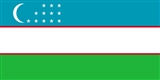
Uzbekistan, officially the Republic of Uzbekistan , is a doubly landlocked Landlocked

A landlocked country is one that has no coastline [i], meaning no access to sea [i] or ocean [i]. ... 

 country in Central Asia Central Asia

Central Asia is a vast landlocked [i] region of Asia [i]. ... 

. It shares borders with Kazakhstan Kazakhstan

Kazakhstan, also spelled Kazakstan, , officially the Republic of Kazakhstan, is a country th... 

 to the west and to the north, Kyrgyzstan Kyrgyzstan

Kyrgyzstan, formerly the Kyrgyz Republic, is a country in Central Asia [i]. ... 

 and Tajikistan Tajikistan

The Republic of Tajikistan is a mountainous landlocked country in Central Asia [i]. ... 

 to the east, and Afghanistan Afghanistan

Afghanistan ; Persian [i]: ?????? ?????? ?????????, Pashto [i]:' ... 

 and Turkmenistan Turkmenistan

Turkmenistan is a country in Central Asia [i]. ... 

 to the south. The name Uzbekistan is derived from Persian Persian language

[i] , [[Afghanistan]... 

, meaning "land of the Uzbeks"

Discussions

  Discussion Features

   Ask a question about 'Uzbekistan'

   Start a new discussion about 'Uzbekistan'

   Answer questions about 'Uzbekistan'

   'Uzbekistan' discussion forum

Timeline

1127   The minaret of Kalyan is completed in Bukhara Bukhara

Bukhara, from the Sanskrit [i] Vihara [i], is the fifth-largest city in Uzbekistan [i], and capital [i] ... 

 in present day Uzbekistan.

1368   Timur Timur

Timur bin Taraghay Barlas was a 14th century warlord [i] of Turco-Mongol [i] descent, conqueror of much ... 

 ascends throne of Samarkand Samarkand

Samarkand is the third-largest city in Uzbekistan [i] and the capital of Samarqand Province [i].... 

 (now in Uzbekistan)..

1597   Abbas I Abbas I of Persia

Shah Abbas I born on, was the most eminent ruler of the Safavid [i] Dynasty. ... 

 ends the Uzbek Uzbekistan

Uzbekistan, officially the Republic of Uzbekistan , is a doubly landlocked [i] ... 

 raids on his lands.

1991   Uzbekistan declares independence from the Soviet Union Soviet Union

The Union of Soviet Socialist Republics , more commonly known as the Soviet Union, was a Communist state [i] ... 

.

1999   In Uzbekistan, a bomb explodes and gunfire is heard at the government headquarters, in an apparent assassination Assassination

Assassination is the deliberate killing of an important person, usually a political figure or other stra... 

 attempt against President Islam Karimov Islom Karimov

Islom Abduganiyevich Karimov has been the President of Uzbekistan [i] since 1991 [i]. ... 

.

2005   Uzbek Uzbekistan

Uzbekistan, officially the Republic of Uzbekistan , is a doubly landlocked [i] ... 

 troops kill up to 700 during protests in eastern Uzbekistan over the trials of 23 accused Islamic extremists. President Islam Karimov Islom Karimov

Islom Abduganiyevich Karimov has been the President of Uzbekistan [i] since 1991 [i]. ... 

 defends the act.


Encyclopedia

Uzbekistan, officially the Republic of Uzbekistan , is a doubly landlocked Landlocked

A landlocked country is one that has no coastline [i], meaning no access to sea [i] or ocean [i]. ... 

 country in Central Asia Central Asia

Central Asia is a vast landlocked [i] region of Asia [i]. ... 

. It shares borders with Kazakhstan Kazakhstan

Kazakhstan, also spelled Kazakstan, , officially the Republic of Kazakhstan, is a country th... 

 to the west and to the north, Kyrgyzstan Kyrgyzstan

Kyrgyzstan, formerly the Kyrgyz Republic, is a country in Central Asia [i]. ... 

 and Tajikistan Tajikistan

The Republic of Tajikistan is a mountainous landlocked country in Central Asia [i]. ... 

 to the east, and Afghanistan Afghanistan

Afghanistan ; Persian [i]: ?????? ?????? ?????????, Pashto [i]:' ... 

 and Turkmenistan Turkmenistan

Turkmenistan is a country in Central Asia [i]. ... 

 to the south. The name Uzbekistan is derived from Persian Persian language

[i] , [[Afghanistan]... 

, meaning "land of the Uzbeks"

History


The territory of Uzbekistan was populated in the second millennium BC. There are findings of early human tools and monuments in Ferghana Fergana

Fergana is a city, the capital of Fergana Province [i] in eastern Uzbekistan [i], at the southern edge o... 

, Tashkent Tashkent

Tashkent
The name of the city has evolved in a number of stages.... 

, Bukhara Bukhara

Bukhara, from the Sanskrit [i] Vihara [i], is the fifth-largest city in Uzbekistan [i], and capital [i] ... 

, Khorezm Khwarezm

Khwarezm was a series of state [i]s centered on the Amu Darya [i] river delta [i] of the former Aral Sea [i] ... 

 , Samarkand Samarkand

Samarkand is the third-largest city in Uzbekistan [i] and the capital of Samarqand Province [i].... 

 regions.

The first civilizations to appear in Uzbekistan were Sogdiana Sogdiana

Sogdiana was an ancient civilization of Persian peoples [i], then was a province of the Achaemenian Empire [i] ... 

, Bactria Bactria

Bactria was the ancient Greek [i] name of the country between the range of the Hindu Kush [i] ... 

 and Khwarezm Khwarezm

Khwarezm was a series of state [i]s centered on the Amu Darya [i] river delta [i] of the former Aral Sea [i] ... 

 . Territories of these states became a part of the Persian Persian Empire

The Persian Empire was a series of historical empires that ruled over the Iranian plateau [i] ... 

 Achaemenid empire Achaemenid Empire

The Achaemenid Empire was a dynasty in the ancient Persian Empire [i] with high cultural and economical ... 

 in the 6th century 6th century

The 6th century is the period from 501 [i] - 600 [i] in accordance with the Julian calendar [i] in the Christian Era [i]... 

, hence becoming part of Persia for centuries. In fact, the Persian culture is preserved in Uzbekistan even today, as is evident in many areas where Persian Persian language

[i] , [[Afghanistan]... 

 is spoken.

Alexander the Great Alexander the Great

Alexander the Great , also known as Alexander III, king of Macedon [i] , was one of the most succe ... 

 conquered Sogdiana and Bactria in 327 BC, marrying Roxana, daughter of a local Sogdian chieftain. However, the conquest was supposedly of little help to Alexander as popular resistance was fierce, causing Alexander's army to be bogged down in the region.

Its territory was overrun by Genghis Khan Genghis Khan

Genghis Khan, , was a Mongol [i] political and military leader or Khan [i] who united the Mongol tribe ... 

 and his Mongol Mongols

Mongols are an ethnic group [i] that originated in what is now Mongolia [i], Russia [i], and China [i] ... 

 tribes in 1220.


In the 1300s, Timur Timur

Timur bin Taraghay Barlas was a 14th century warlord [i] of Turco-Mongol [i] descent, conqueror of much ... 

 , known in the west as Tamerlane, overpowered the Mongols and built an empire. In his military campaigns Tamerlane reached as far as the Middle East. He defeated Ottoman Emperor Ottoman Empire

The Ottoman Empire , is also sometimes known in the West [i] as the Turkish Empire. ... 

 Bayezid I Bayezid I

Bayezid I was the sultan [i] of the Ottoman Empire [i] from 1389 to 1402. ... 

 and rescued Europe from Turkish conquest. Tamerlane sought to build a capital of his empire in Samarkand . Today Tamerlane is considered to be one of the greatest heroes in Uzbekistan who plays a significant role in its national identity and history.

Following the fall of the Timurid Empire Timurid Dynasty

*Pir Muhammad [i] bin Jahangir 1405 [i] - 1407 [i]
... 

, Uzbek nomads Uzbeks

The Uzbeks are a Turkic people [i] of Central Asia [i] and comprise the majority population of Uzbekistan [i] ... 

 conquered the region.

In the 19th century 19th century

The 19th century lasted from 1801 [i] through 1900 [i] in the Gregorian calendar [i].
... 

, the Russian Empire Russian Empire

The Russian Empire was a state that existed from 1721 until it was declared a republic in August 1917.
... 

 began to expand, and spread into Central Asia Central Asia

Central Asia is a vast landlocked [i] region of Asia [i]. ... 

. The "Great Game The Great Game

The Great Game, a term usually attributed to Arthur Conolly [i], was used to describe the rivalry and st ... 

" period is generally regarded as running from approximately 1813 to the Anglo-Russian Convention of 1907. Following the Bolshevik Revolution of 1917 a second less intensive phase followed. At the start of the 19th century there were some 2,000 mile Mile

[i], usually used to measure [[distance]... 

s separating British India British Raj

The British Raj refers to the British rule of the Indian subcontinent [i], or present-day India [i], Bangladesh [i] ... 

 and the outlying regions of the Tsarist Russia Russian Empire

The Russian Empire was a state that existed from 1721 until it was declared a republic in August 1917.
... 

. Much of the land in between was unmapped.

By the beginning of the 20th century 20th century

The 20th century started on 1 January [i] 1901 [i] and ended on 31 December [i] 2000 [i], according to t... 

, Central Asia was firmly in the hands of Russia and despite some early resistance to Bolsheviks Bolshevik

Bolsheviks were members of the Bolshevik faction of the Marxist [i] Russian Social-Democratic Labour Party [i]... 

, Uzbekistan and the rest of Central Asia became a part of the Soviet Union Soviet Union

The Union of Soviet Socialist Republics , more commonly known as the Soviet Union, was a Communist state [i] ... 

. On August 31 1991, Uzbekistan reluctantly declared independence, marking September 1 as a national holiday. In subsequent ethnic tensions, two million Russians left the country for Russia. A number of laws were deliberately designed to pressure and ultimately force the Russian population to leave Uzbekistan. The Uzbek-Russians have no legal status in Russia or any other country and thus are spread throughout the world particularly Europe and the U.S.

On May 13, 2005, protests Andijan massacre

Uzbek troops [i] fired into a crowd of protesters in an attempt to quash civil un ... 

 broke out in Andijan Andijan

Andijan is the fourth-largest city in Uzbekistan [i], and the capital of the Andijan Province [i]. ... 

 over the imprisonment of 23 Muslims accused of being Islamist extremists. The protesters took thirty hostages. Soldiers started to fire on the protesters, leaving many of them dead. The number of dead is greatly disputed, varying from 176 to 1,000 .

On the same day in Tashkent, a man mistakenly believed to be a suicide bomber Suicide attack

A suicide attack is an attack in which the attacker or attackers intend and expect to die .... 

 was shot dead outside the Israel Israel

Israel , officially the State of Israel, is a country in Western Asia [i] on the so ... 

i Embassy.

The country now seeks to gradually lessen its dependence on agriculture - it is the world's second-largest exporter of cotton Cotton

Cotton is a soft fiber [i] that grows around the seeds of the cotton plant , a shrub [i] native to the t ... 

 - while developing its mineral Mineral

Minerals are natural compounds formed through geological [i] processes. ... 

 and petroleum Petroleum

Petroleum or crude oil is a black, dark brown or greenish liquid [i] found in porous rock formati ... 

 reserves.

Politics


Constitutionally, the Government of Uzbekistan provides for democracy. In reality, the executive holds almost all power. The judiciary lacks independence and the parliament has little power to shape laws. The president selects and replaces provincial governors. Under terms of a December 1995 referendum, Islom Karimov Islom Karimov

Islom Abduganiyevich Karimov has been the President of Uzbekistan [i] since 1991 [i].
... 

's first term was extended. Another national referendum was held January 27, 2002 to yet again extend Karimov's term. The referendum passed and Karimov's term was extended by act of the parliament to December 2007. Most international observers refused to participate in the process and did not recognize the results, dismissing them as not meeting basic standards. The 2002 referendum also included a plan to create a bicameral parliament, consisting of a lower house and an upper house . Members of the lower house are to be "full time" legislators. Elections for the new bicameral parliament took place on December 26, but no truly independent opposition candidates or parties were able to take part. The OSCE Organization for Security and Co-operation in Europe

Created as an East-West forum during the Cold War era, the Organization for Security and Co-operation in Eu... 

 limited observation mission concluded that the elections fell significantly short of OSCE commitments and other international standards for democratic elections. Several political parties have been formed with government approval but have yet to show interest in advocating alternatives to government policy. Similarly, although multiple media outlets have been established, these either remain under government control or rarely broach political topics. Independent political parties were allowed to organize, recruit members, and hold conventions and press conferences, but have been denied registration under restrictive registration procedures. Terrorist bombings were carried out March 28-April 1, 2004 in Tashkent Tashkent

Tashkent
The name of the city has evolved in a number of stages.... 

 and Bukhara Bukhara

Bukhara, from the Sanskrit [i] Vihara [i], is the fifth-largest city in Uzbekistan [i], and capital [i] ... 

. It is not yet clear who committed the attacks. The government reaction to the attacks, thus far, has been restrained.


Human rights


The Constitution of the Republic of Uzbekistan asserts that "democracy in the Republic of Uzbekistan shall be based upon common human principles, according to which the highest value shall be the human being, his life, freedom, honor, dignity and other inalienable rights."

However, credible non-government human right watchdogs, such as IHF, Human Rights Watch Human Rights Watch

Human Rights Watch is a United States [i]-based international non-governmental organization [i] that con ... 

, Amnesty International Amnesty International

Amnesty International is an international [i] non-governmental organization [i] with the stated purpose ... 

, as well as United States Department of State United States Department of State

The United States Department of State, often referred to as the State Department, is the Cabinet [i] ... 

 and Council of the European Union define Uzbekistan as "an authoritarian state with limited civil rights" and
express profound concern about "wide-scale violation of virtually all basic human rights" .
According to the reports, the most widespread violations are torture, arbitrary arrests,
and various restrictions of freedoms: of religion, of speech and press, of free association and assembly .
The reports maintain that the violations are most often committed against members of religious organizations, independent journalists, human right activists, and political activists, including members of the banned opposition parties.
In 2005, Uzbekistan was included into Freedom House Freedom House

Freedom House is a research institute, primarily governmentally-funded and headquarted in Washington, D.C. [i] ... 

's "The Worst of the Worst: The World's Most Repressive Societies"

The official position is summarized in a memorandum "The measures taken by the government of the Republic of Uzbekistan in the field of providing and encouraging human rights" and amounts to the following. The government does everything that is in its power to protect and to guarantee the human rights of Uzbek citizens. Uzbekistan continuously improves its laws and institutions in order to create a more humane society. Over 300 laws regulating the rights and basic freedoms of the people have been passed by the parliament. For instance, an office of Ombudsman was established in 1996 . On August 2, 2005, President Islam Karimov signed a decree that will abolish capital punishment in Uzbekistan on January 1, 2008.

The May 2005 unrest in Uzbekistan, which resulted in several hundred people being killed is viewed by many as a landmark event in the history of human rights abuse in Uzbekistan ,,.
A concern has been expressed and a request for an independent investigation of the events has been made by the United States, European Union, the UN United Nations

name = United Nations
Nations Unies
... 

, the OSCE Chairman-in-Office and the OSCE Office for Democratic Institutions and Human Rights.
The government of Uzbekistan is accused of unlawful termination of human life, denying its citizens freedom of assembly and freedom of expression. The government vehemently rebuffs the accusations, maintaining that it merely conducted an anti-terrorist operation, exercising only necessary force . In addition, some Uzbek officials claim that "an information war on Uzbekistan has been declared" and the human rights violations in Andijon are invented by the enemies of Uzbekistan as a convenient pretext for intervention into the country's internal affairs .

Geography


Uzbekistan is approximately the size of Morocco Morocco

The Kingdom of Morocco is a country in North Africa [i]. ... 

 or California California

California is a state [i] spanning the southern half of the west coast [i] ... 

 and has an area Area

Area is a physical quantity [i] expressing the size of a part of a surface [i]. ... 

 of 447,400 square kilometers . It is the 56th-largest country .

Uzbekistan stretches 1,425 kilometers from west to east and 930 kilometers from north to south. Bordering Turkmenistan Turkmenistan

Turkmenistan is a country in Central Asia [i]. ... 

 to the southwest, Kazakhstan Kazakhstan

Kazakhstan, also spelled Kazakstan, , officially the Republic of Kazakhstan, is a country th... 

 and the Aral Sea Aral Sea

The Aral Sea is a landlocked [i] endorheic [i] sea [i] in Central Asia [i]; it lies between Kazakhstan [i] ... 

 to the north, and Tajikistan Tajikistan

The Republic of Tajikistan is a mountainous landlocked country in Central Asia [i]. ... 

 and Kyrgyzstan Kyrgyzstan

Kyrgyzstan, formerly the Kyrgyz Republic, is a country in Central Asia [i]. ... 

 to the south and east, Uzbekistan is not only one of the larger Central Asian Central Asia

Central Asia is a vast landlocked [i] region of Asia [i]. ... 

 states but also the only Central Asian state to border all of the other four. Uzbekistan also shares a short border with Afghanistan Afghanistan

Afghanistan ; Persian [i]: ?????? ?????? ?????????, Pashto [i]:' ... 

 to the south.

Uzbekistan is a dry, double-landlocked Landlocked

A landlocked country is one that has no coastline [i], meaning no access to sea [i] or ocean [i]. ... 

 country of which 10% consists of intensely cultivated, irrigated river valleys. It is one of two double-landlocked countries in the world - the other being Liechtenstein Liechtenstein

The Principality of Liechtenstein is a small, doubly landlocked [i] ... 

, although in the case of Uzbekistan this is less clear, since it has borders with two countries bordering the landlocked Landlocked

A landlocked country is one that has no coastline [i], meaning no access to sea [i] or ocean [i]. ... 

 but non-freshwater Caspian Sea Caspian Sea

The Caspian Sea is the largest lake [i] on Earth by both area [i] and volume [i], with a surface area of ... 

 from which ships can reach the Sea of Azov Sea of Azov

The Sea of Azov is a northern section of the Black Sea [i], linked to the larger body through the Strait of Kerch [i] ... 

 and thus the Black Sea Black Sea

The Black Sea is an inland sea [i] between southeastern Europe [i] and Anatolia [i] that is actually a d ... 

, the Mediterranean Sea Mediterranean Sea

The Mediterranean Sea is a part of the Atlantic Ocean [i] almost completely enclosed by land: on the nor... 

 and the oceans.

The highest point in Uzbekistan is Adelunga Toghi at 4,301 meters .

See also: List of cities in Uzbekistan

Administrative divisions


Uzbekistan is divided into 12 provinces , 1 autonomous republic , and 1 independent city . Names are given below in the Uzbek language, although numerous variations of the transliterations of each name exist.


Division Capital City Area
Population Key
Andijon Viloyati Andijan Province

Andijan Province is a viloyat [i] of Uzbekistan [i], located in the eastern part of the Fergana Valley [i] ... 

Andijon Andijan

Andijan is the fourth-largest city in Uzbekistan [i], and the capital of the Andijan Province [i]. ... 

 
4,200 1,899,000 2
Buxoro Viloyati Buxoro Province

Buxoro Province is a viloyat [i] of Uzbekistan [i] located in the southwest of the country?The Kyzyl-Kum [i]... 

Buxoro Bukhara

Bukhara, from the Sanskrit [i] Vihara [i], is the fifth-largest city in Uzbekistan [i], and capital [i] ... 

 
39,400 1,384,700 3
Farg'ona Viloyati Fergana Province

Fergana Province is an viloyat [i] of Uzbekistan [i], located in the southern part of the Fergana Valley [i] ... 

Farg'ona Fergana

Fergana is a city, the capital of Fergana Province [i] in eastern Uzbekistan [i], at the southern edge o... 

 
6,800 2,597,000 4
Jizzax Viloyati Jizzakh Province

Jizzakh Province is an viloyat [i] of Uzbekistan [i] located in the center of the country. ... 

Jizzax  20,500 910,500 5
Xorazm Viloyati Xorazm Province

Xorazm Province or Khorezm Province as it is still more commonly known, is a viloyat [i] of Uzbekistan [i] ... 

Urganch  6,300 1,200,000 13
Namangan Viloyati Namangan Province

Namangan Province is a viloyat [i] of Uzbekistan [i], located in the southern part of the Fergana Valley [i] ... 

Namangan 7,900 1,862,000 6
Navoiy Viloyati Navoiy Province

Navoiy Province is a viloyat [i] of Uzbekistan [i] located in the northwest of the country. ... 

Navoiy Navoiy

Navoiy is a city and the capital of Navoiy Province [i] in the southwestern part of Uzbekistan [i]. ... 

 
110,800 767,500 7
Qashqadaryo Viloyati Qashqadaryo Province

Qashqadaryo Province, old spelling Kashkadarya Province is a viloyat [i] of Uzbekistan [i], located... 

Qarshi  28,400 2,029,000 8
Qaraqalpaqstan Respublikasi Karakalpakstan

Karakalpakstan is an autonomous republic of Uzbekistan [i]. ... 

No'kis Nukus

Nukus is the sixth-largest city in Uzbekistan [i], and the capital of the autonomous Karakalpakstan [i]... 

 
167,000 1,400,000 14
Samarqand Viloyati Samarqand Province

Samarqand Province is a viloyat [i] of Uzbekistan [i] located in the center of the country in the basin ... 

Samarqand Samarkand

Samarkand is the third-largest city in Uzbekistan [i] and the capital of Samarqand Province [i].... 

 
16,400 2,322,000 9
Sirdaryo Viloyati Sirdaryo Province

Sirdaryo Province is a viloyat [i] of Uzbekistan [i], located in the center of the country on the left b ... 

Guliston  5,100 648,100 10
Surxondaryo Viloyati Surxondaryo Province

Surxondaryo Province, old spelling Surkhandarya Province is a viloyat [i] of Uzbekistan [i], located ... 

Termez  20,800 1,676,000 11
Toshkent Viloyati Toshkent Province

Toshkent Province is a viloyat [i] of Uzbekistan [i], located in the northeastern part of the country, b ... 

Toshkent Tashkent

Tashkent
The name of the city has evolved in a number of stages.... 

 
15,300 4,450,000 12
Toshkent Shahri Toshkent Tashkent

Tashkent
The name of the city has evolved in a number of stages.... 

 
??? ??? 1


The statistics for Toshkent Viloyati also include the statistics for Toshkent Shahri.

Enclaves and exclaves

There are four Uzbek Exclaves Enclave and exclave

In political geography [i], an enclave is a country or part of a country lying wholly within the boundar ... 

, all of them surrounded by Kyrgyz Kyrgyz

Kyrgyz are a Turkic [i] ethnic group [i] found primarily in Kyrgyzstan [i].
... 

 territory in the Fergana Fergana

Fergana is a city, the capital of Fergana Province [i] in eastern Uzbekistan [i], at the southern edge o... 

 valley region where Kyrgyzstan Kyrgyzstan

Kyrgyzstan, formerly the Kyrgyz Republic, is a country in Central Asia [i]. ... 

, Tajikistan Tajikistan

The Republic of Tajikistan is a mountainous landlocked country in Central Asia [i]. ... 

 and Uzbekistan meet. Two of them are the towns of: Sokh, area of 325 km˛ with a population of 42,800 in 1993 ; and Shakhrimardan , area of 90 km˛ with a population of 5,100 in 1993 . The other two are the tiny territories of Chong-Kara , roughly 3 km long by 1 km wide, and Dzhangail, a dot of land barely 2 or 3 km across. Chong-Kara is on the Sokh river, between the Uzbek border and the Sokh exclave.

Uzbekistan has a Tajikistan enclave, the village of Sarvan, which includes a narrow, long strip of land about 15 km long by 1 km wide, alongside the road from Angren Isen

The river [i] Isen occurs in J. R. R. Tolkien [i]'s fiction [i]al universe of Middle-earth [i].
... 

 to Kokand Kokand

Kokand is a city in Fergana Province [i] in eastern Uzbekistan [i], at the southwestern edge of the Fergana Valley [i] ... 

. Last but not least, there is a tiny Kyrgyzstan enclave, the village of Barak , between the towns of Margilan and Fergana.

Economy


Uzbekistan is a country with GNI per capita of US$460 and PPP equivalent of US$1860 . Economic production is concentrated in commodities: Uzbekistan is now the world's fourth-largest producer and the world's second-largest exporter of cotton and the seventh world major producer of gold. It is also a regionally significant producer of natural gas, coal, copper, oil, silver, and uranium . Agriculture contributes about 37% of GDP Gross domestic product

A region's gross domestic product, or GDP, is one of the several measures [i] ... 

 while employing 44% of the labor force [https://www.cia.gov/cia/publications/factbook/geos/uz.html]. Unemployment and underemployment are estimated to be at least 20% [https://www.cia.gov/cia/publications/factbook/geos/uz.html].

Facing a multitude of economic challenges upon acquiring independence, the government adopted an evolutionary reform strategy, with emphasis on state control, reduction of import, and self-sufficiency in energy. Since 1994, state controlled media repeatedly proclaimed success of this "Uzbek Economic Model" as a unique example of smooth transition to the market economy while avoiding shock, pauperization, and stagnation.
The gradualist reform strategy has involved postponing significant macroeconomic and structural reforms. The state in the hands of the bureaucracy has remained a dominant influence in the economy. Corruption permeated the society: Uzbekistan's 2005 Index of perception of corruption Corruption Perceptions Index

Since 1995, Transparency International [i] has published an annual Index of perception of corruption ord ... 

 is 137 out of 159. A February 2006 report on the country by the International Crisis Group illustrates one aspect of this corruption:
Much of Uzbekistan’s GDP growth comes from favourable prices for certain key exports, especially cotton, gold, and, increasingly, gas, but the revenues from these commodities are distributed among a very small circle of the ruling elite, with little or no benefit for the populace at large. , .


According to the Economist Intelligence Unit, "the government is hostile to allowing the development of an independent private sector, over which it would have no control" . Thus, the national bourgeoisie in general, and the middle class Middle class

The middle class, in colloquial usage, consists of those people who have a degree of economic independen... 

 in particular, are marginalized economically, and, consequently, politically.

The economic policies have repelled foreign investment, which is the lowest per capita in the CIS Commonwealth of Independent States

|+ style="font-size: larger; margin-left: inherit;" | ??????????? ??????????? ??????????Commonwealth ... 

 . For years, the largest barrier to foreign companies entering the Uzbek market has been difficulty in currency conversion. In 2003, the government accepted the obligations of Article VIII under the International Monetary Fund International Monetary Fund

The International Monetary Fund is an international organization [i] that oversees the global financial system [i] ... 

 , providing for full currency convertibility. However, strict currency controls and tightening of borders have lessened its effects.

Inflation, though lower than in the mid-1990s, remained high up until 2003 . Tight economic policies in 2004 resulted in drastic reduction of inflation, to 3.8% .
However, the relief appears to be transient, as IMF International Monetary Fund

The International Monetary Fund is an international organization [i] that oversees the global financial system [i] ... 

 estimate of CPI Consumer price index

In economics [i], a consumer price index is a statistical [i] time-series measure of a weighted average [i] ... 

-based inflation in Uzbekistan in 2005 is 14.1% .

The government of Uzbekistan restricts imports in many ways, including high import duties. Excise taxes are applied in a highly discriminatory manner to protect locally produced goods. Official tariffs are combined with unofficial, discriminatory charges resulting in total charges amounting to as much as 100 to 150 percent of the actual value of the product, making imported products virtually unaffordable . Import substitution is an officially declared policy and the government proudly reports reduction in the consumer goods import by a factor of two. A number of the CIS countries are officially exempt from Uzbekistan import duties.

Demographics


Uzbekistan is Central Asia's most populous country. Its 26 million people, concentrated in the south and east of the country, comprise nearly half the region's total population. Uzbekistan had been one of the poorest republics of the Soviet Union; much of its population was engaged in cotton farming in small rural collective farms . In the recent years, the fraction of the rural population has continued to increase now reaching 63.5%. The population of Uzbekistan is very young: 34.1% of it are people younger than 14.

Uzbekistan is predominantly Uzbek in ethnic composition. According to the CIA World Factbook[https://www.cia.gov/cia/publications/factbook/geos/uz.html], Uzbeks comprise 80% of the total population. Other ethnic groups include Russian Russians

Russians are an East Slavic [i] ethnic group [i], primarily living in Russia [i] and neighbo ... 

 5.5%, Tajik Tajiks

Tajik is a term generally applied to Persian-speaking [i] peoples of Iranian origin [i] ... 

 5%, Kazakhs Kazakhs

The Kazakhs, are a Turkic people [i] of the northern parts of Central Asia [i]. ... 

 3%, Karakalpak 2.5%, and Tatar Tatars

Tatars , often misspelled Tartar, is a collective name applied to the Turkic speaking [i] ... 

 1.5%. However, some sources put the percentage of Tajik population of Uzbekistan at approximately 42% . The nation is 88% Muslim and 9% Eastern Orthodox Eastern Orthodox Church

The Eastern Orthodox Church is a Christian [i] body that encompasses national jurisdictions ... 

. Uzbek is the only official state language. However, Russian is the de facto language for interethnic communication, including much day-to-day technical, scientific, governmental and business use. According to Ethnologue, 49% of the population of Uzbekistan can speak Russian.

According to government figures about 817.000 disabled people were registered in Uzbekistan in 2003. This figure only shows how many disabled people have been registered according to Uzbek law. As many disabled people do not have the chance to get registered it can be assumed that many more people are disabled. The World Health Organisation estimates that about 10% of each population have a disability. According to the WHO estimations the number of 2.5 million disabled people is more realistic.

The name Uzbek, both for the people and for the nation itself, is said to be self-referential from the period the Russians first encountered the people, parsing as ozum bek, or "I am the lord ".

Uzbekistan enjoys 99.3% literacy rate which, in part, is atributable to the free and universal high-quality education system of the Soviet Union.

Communications


According to the official source report, by the end of 2004, there were 544.1 thousand users of cellular phones in Uzbekistan . An independent source, Ferghana.Ru, claims, however, that the users of cellular phones in Uzbekistan was only 450,000.

The number of Internet providers and operators by the end of 2004 was 477 . There were 675,000 Internet users in the country . 96.4% cities and 72.5% district centers have digital telecommunications systems.

Transportation

Tashkent Tashkent

Tashkent
The name of the city has evolved in a number of stages.... 

, the nation's capital and largest city, has a 3 line subway built in 1977, and expanded 2001 after independence from the Soviet Union Soviet Union

The Union of Soviet Socialist Republics , more commonly known as the Soviet Union, was a Communist state [i] ... 

.There are government operated trams, buses and trolleybuses running across the city. Also there are many taxis, both registered and not registered.
The train links are good. They connect with many towns within Uzbekistan as well as with neighbour ex republics of USSR.

Military

Uzbekistan possesses the largest military force in the Central Asian region, having around 65,000 people in uniform. Its structure is inherited from the Soviet armed forces, although it is moving rapidly toward a fully restructured organization, which will eventually be built around light and Special Forces. The Uzbek Armed Forces' equipment is not modern, and training, while improving, is neither uniform nor adequate for its new mission of territorial security. The government has accepted the arms control obligations of the former Soviet Union, acceded to the Nuclear Non-Proliferation Treaty , and supported an active program by the U.S. Defense Threat Reduction Agency Defense Threat Reduction Agency

The Defense Threat Reduction Agency is combat support agency of the United States Department of Defense [i] ... 

  in western Uzbekistan . The Government of Uzbekistan spends about 3.7% of GDP on the military but has received a growing infusion of Foreign Military Financing and other security assistance funds since 1998. Uzbekistan approved the U.S. Central Command's request for access to a vital military air base, Karshi-Khanabad Airbase, in southern Uzbekistan following the September 11, 2001 terrorist attacks in the U.S. After the Andijan riot and subsequent U.S. reaction, Uzbekistan demanded that the U.S. withdraw from the airbases. The last US troops left Uzbekistan in November 2005.

While the EU banned arms sales to Uzbekistan in 2005 accusing the government of bearing responsibility for Andijan violence, Uzbekistan and Russia signed a mutual defence pact.

Foreign relations


Uzbekistan joined the Commonwealth of Independent States Commonwealth of Independent States

|+ style="font-size: larger; margin-left: inherit;" | ??????????? ??????????? ??????????Commonwealth ... 

 in December 1991. However, it is opposed to reintegration and withdrew from the CIS collective security arrangement in 1999. Since that time, Uzbekistan has participated in the CIS peacekeeping force in Tajikistan and in UN-organized groups to help resolve the Tajik and Afghan conflicts, both of which it sees as posing threats to its own stability.

Previously close to Washington , the government of Uzkekistan has restricted American military use of the airbase at Karshi-Khanabad which is used for air operations in neighboring Afghanistan. See

Uzbekistan was an active supporter of U.S. efforts against worldwide terrorism and joined the coalitions that have dealt with both Afghanistan and Iraq. The relationship between Uzbekistan and the United States began to deteriorate after the so-called "color revolutions Color revolution

Color revolutions or Flower revolutions are the names given collectively to a series of related mo... 

" in Georgia and Ukraine . When the U.S. joined in a call for an independent international investigation of the bloody events at Andijon, the relationship took an additional nosedive and President Islam Karimov moved more closely into the orbit of Russia and China, countries which refused to criticize Uzbekistan's leaders for their behavior.

In late July, 2005, the government of Uzbekistan ordered the United States to vacate an air base in Karshi-Kanabad within 180 days. Karimov had offered use of the base to the U.S. shortly after 9/11 September 11, 2001 attacks

The September 11, 2001, attacks consisted of a series of coordinated terrorist [i]The Septembe ... 

. It is also believed by some Uzbeks that the protests in Andijan were inspired seclusively by the UK and US influences in the area of Andijan. So far, this is another reason for the hostility between Uzbekistan and the West.

It is a member of the United Nations, the Euro-Atlantic Partnership Council, Partnership for Peace, and the Organization for Security and Cooperation in Europe . It belongs to the Organization of the Islamic Conference Organization of the Islamic Conference

The Organization of the Islamic Conference is an inter-governmental organization with a Permanent Deleg... 

  and the Economic Cooperation Organization Economic Cooperation Organization

The Economic Cooperation Organization is an intergovernmental international organization [i] involving t ... 

--comprised of the five Central Asian countries, Azerbaijan Azerbaijan

Azerbaijan , officially the Republic of Azerbaijan , is a country in the South Caucasus [i]. ... 

, Turkey Turkey

Turkey, officially the Republic of Turkey, is a Eurasia [i]n country that stretches across the Anatolia [i] ... 

, Iran Iran


Throughout history, Iran has been of great geostrategic [i] importance because of its centr ... 

, Afghanistan, and Pakistan Pakistan

[i] located in [[South Asia]... 

. In 1999, Uzbekistan joined the GUAM Guam

Guam , officially the U.S.... 

 alliance , which was formed in 1997 , but pulled out of the organization in 2005. Uzbekistan is also a member of the Shanghai Cooperation Organization Shanghai Cooperation Organization

|+ style="font-size: larger; margin-left: inherit;" | ???????????????? ??????????? ??????????????
... 

  and hosts the SCO’s Regional Anti-Terrorist Structure in Tashkent. Uzbekistan also joined the new Central Asian Cooperation Organization Central Asian Cooperation Organization

The Central Asian Cooperation Organization is an international organization, composed of five member-sta... 

  in 2002. The CACO consists of Uzbekistan, Tajikistan, Kazakhstan, and Kyrgyzstan. It is a founding member of and remains involved in the Central Asian Union, formed with Kazakhstan and Kyrgyzstan, joined in March, 1998, by Tajikistan.

In September the UNESCO UNESCO

UNESCO is a specialized agency of the United Nations [i] established in 1945. ... 

 presented Islam Karimov an award for Uzbekistan's preservation of its rich culture and traditions. Despite the fact that the former recieved criticism, this seems to be a sign of ameliorating relationships between Uzbekistan and the West.

Culture


Main article: Culture of Uzbekistan

  • Music of Uzbekistan Music of Uzbekistan

    Uzbek classical music is called shashmaqam [i], which arose in Bukhara [i] in the late 16th century [i] when t ... 

  • Kurash
  • Islam in Uzbekistan Islam in Uzbekistan

    Islam is by far the dominant religious faith in Uzbekistan [i]. ... 

  • Scout Association of Uzbekistan Scout Association of Uzbekistan

    Scouting [i] in Uzbekistan [i] was founded in 1995, and is working toward World Organization of the Scout Movement [i] ... 

  • Uzbekistan at the 2006 Winter Olympics

Further reading

  • Chasing the Sea: Lost Among the Ghosts of Empire in Central Asia by Tom Bissell
  • A Historical Atlas of Uzbekistan by Aisha Khan
  • The Modern Uzbeks From the 14th Century to the Present: A Cultural History by Edward A. Allworth
  • Nationalism in Uzbekistan: Soviet Republic's Road to Sovereignty by James Critchlow
  • Odyssey Guide: Uzbekistan by Calcum Macleod and Bradley Mayhew
  • Uzbekistan: Heirs to the Silk Road by Johannes Kalter and Margareta Pavaloi
  • "Silk Road to Ruin: Is Central Asia the New Middle East?" by Ted Rall

References

  • Anora Mahmudova, AlterNet, May 27, 2005,
  • Manfred Nowak, Radio Free Europe, 2005-06-23, ,
  • Gulnoza Saidazimova, Radio Free Europe, 2005-06-22,
  • BBC News BBC News

    BBC News and Current Affairs is a major arm of the BBC responsible for the corporation's newsgathering ... 

    , , 2005-10-26
  • .
  • Jeffrey Thomas, US Government Info September 26, 2005 ,
  • Robert McMahon, Radio Free Europe, 2005-06-07 
  • People's Voice, 2005-05-17 
  • Interview with Akmal Saidov, kreml.org, 2005-10-17 
  • Islam Karimov's interview to Rossijskaya Gazeta, 1995-07-07 
  • US Department of State,
  • US Department of State, 2005-07 
  • IMF , 2005-09-24 
  • : report on the international response to Uzbekistan by the International Crisis Group

See also

  • Afghanistan-Uzbekistan Friendship Bridge
  • Companies of Uzbekistan
  • Economy of Uzbekistan
  • Uzbek cuisine
  • Human Rights in Uzbekistan
  • President of Uzbekistan
  • Prime Minister of Uzbekistan
  • Politics of Uzbekistan
  • Senate of Uzbekistan
  • Supreme Court of Uzbekistan
  • Trade unions of Uzbekistan
  • Transport in Uzbekistan
  • Trans-Caspian railway Trans-Caspian railway

    The Trans-Caspian railway is a railway [i] that follows the path of the Silk Road [i] through much of we ... 

  • Tourism in Uzbekistan

External links

  • News and Features on Uzbekistan in English.