
All Topics  
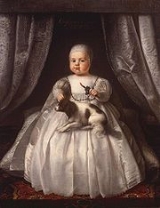
Charles II of England


   Email Print
   Bookmark   Link


Charles II of England


Charles II (29 May 1630 OS
Old Style and New Style dates

Old Style and New Style are used in English language historical studies either to indicate that the start of the Julian year has been adjusted to start on :January 1 even though contemporary documents use a different start of year ; or to indicate that a date conforms to the Julian calendar , formerly in use in many countries, rathe...
 – 6 February 1685) was the King
Monarchy

A monarchy is a form of government in which supreme power is absolutely or nominally lodged in an individual, who is the head of state, often for Life tenure or until abdication, and "is wholly set apart from all other members of the state." The person who heads a monarchy is called a monarch....
 of England
Kingdom of England

The Kingdom of England was, from 927 to 1707, a state in North-West Europe. The Kingdom of England spanned the southern two-thirds of the island of Great Britain and a number of smaller outlying islands?what is today the legal unit of England and Wales....
, Scotland
Kingdom of Scotland

The Kingdom of Scotland was a state in North-West Europe which existed from 843 until 1707. It occupied the northern third of the island of Great Britain and shared a Anglo-Scottish border to the south with the Kingdom of England, with which it was united to form the Kingdom of Great Britain, under the terms of the Acts of Union 1707, in 170...
, and Ireland
Kingdom of Ireland

The Kingdom of Ireland was the name given to the Irish state from 1541, by the Crown of Ireland Act 1542 of the Parliament of Ireland. It was based on the contested legitimacy of the right of conquest....
.

His father King Charles I
Charles I of England

Charles I was List of English monarchs, List of monarchs of Scotland and King of Ireland from 27 March 1625 until his capital punishment on 30 January 1649....
 was executed
Regicide

The broad definition of regicide is the deliberate killing of a monarch, or the person responsible for the killing of a monarch. In a narrower sense, in the United Kingdom tradition, it refers to the judicial execution of a king after alleged due process of law....
 at Whitehall
Palace of Whitehall

File:Ingo Jones drawing.jpgThe Palace of Whitehall was the main residence of the English List of British monarchs in London from 1530 until 1698 when all except Inigo Jones's 1622 Banqueting House was destroyed by fire....
 on 30 January 1649, at the climax of the English Civil War
English Civil War

The English Civil War was a series of armed conflicts and political machinations between Roundhead and Cavalier. The First English Civil War and Second English Civil War civil wars pitted the supporters of Charles I of England against the supporters of the Long Parliament, while the Third English Civil War saw fighting between supporters...
. The English Parliament did not proclaim Charles II king at this time, passing instead a statute making such a proclamation unlawful. England entered the period known to history as the English Interregnum
English Interregnum

The English Interregnum was the period of parliamentary and military rule under the Commonwealth of England after the English Civil War. It began with the regicide of Charles I of England in January 1649, and ended with the English Restoration of Charles II of England in 1660....
 or the English Commonwealth and the country was a de facto
De facto

De facto is a Latin expression that means "concerning the fact" or in practice but not necessarily ordained by law. It is commonly used in contrast to de jure when referring to matters of law, governance, or technique that are found in the common experience as created or developed without or contrary to a regulation....
 republic
Republic

A republic is a state or country that is not led by a hereditary monarch but in which the people have an impact on its government. The word originates from the Latin term res publica....
, led by Oliver Cromwell
Oliver Cromwell

Oliver Cromwell was an English people Military history of the United Kingdom and Politics of England leader best known for his involvement in making England into a republican Commonwealth and for his later role as Lord Protector of England, Scotland, and Ireland....
.


Discussion
Ask a question about 'Charles II of England'
Start a new discussion about 'Charles II of England'
Answer questions from other users
Full Discussion Forum


Recent Posts


Timeline

1630   Born

1649   Prince Charles Stuart declares himself King Charles II of England, Scotland and Ireland. At the time all three Kingdoms had not recognized him as ruler.

1649   In Edinburgh, Scotland claimant King Charles II of England is declared King in his absen Scotland is the first of the three Kingdoms to recognize his claim to the throne.

1650   Claimant King Charles II of England, Scotland and Ireland arrives in Scotland, the only of the three Kingdoms that has accepted him as ruler.

1651   Charles II crowned King of Scotland in Scone. This is his first crowning.

1651   English Civil War: Battle of Worcester - Charles II of England is defeated in the last main battle of the war.

1660   The Parliament of England declares Prince Charles Stuart King Charles II of England.

1660   King Charles II of England reaches the shores of his Kingdom.

1660   Charles II of England crowned.

1660   King Charles II of England arrives in London and assumes the throne, marking the beginning of the English Restoration.


Quotations


I'm defintely the best king in England at the moment .

After his commintment being questioned in the commons

This is very true: for my words are my own, and my actions are my ministers'.

Reply to Lord Rochester's premature epitaph on him (see below).


Encyclopedia


Charles II (29 May 1630 OS
Old Style and New Style dates

Old Style and New Style are used in English language historical studies either to indicate that the start of the Julian year has been adjusted to start on :January 1 even though contemporary documents use a different start of year ; or to indicate that a date conforms to the Julian calendar , formerly in use in many countries, rathe...
 – 6 February 1685) was the King
Monarchy

A monarchy is a form of government in which supreme power is absolutely or nominally lodged in an individual, who is the head of state, often for Life tenure or until abdication, and "is wholly set apart from all other members of the state." The person who heads a monarchy is called a monarch....
 of England
Kingdom of England

The Kingdom of England was, from 927 to 1707, a state in North-West Europe. The Kingdom of England spanned the southern two-thirds of the island of Great Britain and a number of smaller outlying islands?what is today the legal unit of England and Wales....
, Scotland
Kingdom of Scotland

The Kingdom of Scotland was a state in North-West Europe which existed from 843 until 1707. It occupied the northern third of the island of Great Britain and shared a Anglo-Scottish border to the south with the Kingdom of England, with which it was united to form the Kingdom of Great Britain, under the terms of the Acts of Union 1707, in 170...
, and Ireland
Kingdom of Ireland

The Kingdom of Ireland was the name given to the Irish state from 1541, by the Crown of Ireland Act 1542 of the Parliament of Ireland. It was based on the contested legitimacy of the right of conquest....
.

His father King Charles I
Charles I of England

Charles I was List of English monarchs, List of monarchs of Scotland and King of Ireland from 27 March 1625 until his capital punishment on 30 January 1649....
 was executed
Regicide

The broad definition of regicide is the deliberate killing of a monarch, or the person responsible for the killing of a monarch. In a narrower sense, in the United Kingdom tradition, it refers to the judicial execution of a king after alleged due process of law....
 at Whitehall
Palace of Whitehall

File:Ingo Jones drawing.jpgThe Palace of Whitehall was the main residence of the English List of British monarchs in London from 1530 until 1698 when all except Inigo Jones's 1622 Banqueting House was destroyed by fire....
 on 30 January 1649, at the climax of the English Civil War
English Civil War

The English Civil War was a series of armed conflicts and political machinations between Roundhead and Cavalier. The First English Civil War and Second English Civil War civil wars pitted the supporters of Charles I of England against the supporters of the Long Parliament, while the Third English Civil War saw fighting between supporters...
. The English Parliament did not proclaim Charles II king at this time, passing instead a statute making such a proclamation unlawful. England entered the period known to history as the English Interregnum
English Interregnum

The English Interregnum was the period of parliamentary and military rule under the Commonwealth of England after the English Civil War. It began with the regicide of Charles I of England in January 1649, and ended with the English Restoration of Charles II of England in 1660....
 or the English Commonwealth and the country was a de facto
De facto

De facto is a Latin expression that means "concerning the fact" or in practice but not necessarily ordained by law. It is commonly used in contrast to de jure when referring to matters of law, governance, or technique that are found in the common experience as created or developed without or contrary to a regulation....
 republic
Republic

A republic is a state or country that is not led by a hereditary monarch but in which the people have an impact on its government. The word originates from the Latin term res publica....
, led by Oliver Cromwell
Oliver Cromwell

Oliver Cromwell was an English people Military history of the United Kingdom and Politics of England leader best known for his involvement in making England into a republican Commonwealth and for his later role as Lord Protector of England, Scotland, and Ireland....
. On the other hand, Scotland was then still a separate kingdom and the Parliament of Scotland
Parliament of Scotland

The Parliament of Scotland, officially the Estates of Parliament, was the legislature of the Independence Kingdom of Scotland.The unicameral parliament of Scotland is first found on record during the early thirteenth century, and the first meeting for which reliable evidence survives was at Kirkliston in 1235, during the reign of A...
 proclaimed Charles II King of Scots on 5 February 1649 in Edinburgh
Edinburgh

Edinburgh ; is the Capital city of Scotland, a position it has held since 1437. It is the seventh largest city in the United Kingdom and the second largest Scottish City status in the United Kingdom after Glasgow....
. He was crowned King of Scots at Scone
Scone, Scotland

Scone is a village in Perth and Kinross, Scotland. The Middle Ages village of Scone, which grew up around the Scone Abbey, was abandoned in the early 19th century when a Scone Palace was built on the site by the Earl of Mansfield....
 on 1 January 1651. Following his defeat by Cromwell at the Battle of Worcester
Battle of Worcester

The Battle of Worcester took place on 3 September 1651 at Worcester, England and was the final battle of the English Civil War. Oliver Cromwell and the Parliament of England defeated the Cavalier, predominantly Scotland, forces of King Charles II of England....
 on 3 September 1651, Charles fled to the continent and spent the next nine years in exile in France, the United Provinces
Dutch Republic

The Republic of the Seven United Netherlands was a European republic between 1581 and 1795, in about the same location as the modern Kingdom of the Netherlands, which is the successor state....
 and the Spanish Netherlands.

A political crisis following the death of Cromwell in 1658 resulted in Charles being invited to return and assume the thrones in what became known as the Restoration. Charles II arrived on English soil on 25 May 1660 and entered London on his 30th birthday, 29 May 1660. After 1660, all legal documents were dated as if Charles had succeeded his father in 1649. Charles was crowned King of England and Ireland at Westminster Abbey
Westminster Abbey

The Collegiate Church of St Peter at Westminster, which is almost always referred to popularly and informally as Westminster Abbey, is a large, mainly Gothic architecture Church , in Westminster, London, just to the west of the Palace of Westminster....
 on 23 April 1661.

Charles's English parliament
Cavalier Parliament

The Cavalier Parliament of England lasted from May 8, 1661 until January 24, 1679. It followed the Convention Parliament#Convention Parliament of 1660....
 enacted anti-Puritan
Puritan

A Puritan of 16th and 17th century England was an associate of any number of religious groups advocating for more "purity" of worship and doctrine, as well as personal and group pietism....
 laws known as the Clarendon Code
Penal law

In the most general sense, penal is the body of laws that are enforced by the State in its own name and impose penalties for their violation, as opposed to Civil law that seeks to redress private wrongs....
, designed to shore up the position of the re-established
Established Church

An established church is a Church body officially sanctioned and supported by the government of a country, e.g. the Church of England and the Church of Scotland in the United Kingdom....
 Church of England
Church of England

The Church of England is the State religion Christianity Ecclesia in England, the Mother Church of the worldwide Anglican Communion and the oldest among the communion's thirty-eight independent national and regional churches....
. Charles acquiesced to the Clarendon Code even though he himself favoured a policy of religious tolerance. The major foreign policy issue of Charles's early reign was the Second Anglo-Dutch War
Second Anglo-Dutch War

The Second Anglo-Dutch War was fought between England and the Dutch Republic from 4 March, 1665 until 31 July, 1667. England tried to end the Dutch domination of world trade....
. In 1670, Charles entered into the secret treaty of Dover
Secret treaty of Dover

The Treaty of Dover, also known as the Secret Treaty of Dover, was an offensive and defensive treaty between England and France signed at Dover on June 1 in 1670....
, an alliance with his first cousin King Louis XIV of France under the terms of which Louis agreed to aid Charles in the Third Anglo-Dutch War
Third Anglo-Dutch War

The Third Anglo-Dutch War or Third Dutch War was a military conflict between England and the Republic of the Seven United Netherlands lasting from 1672 to 1674....
 and pay Charles a pension, and Charles promised to convert to Roman Catholicism at an unspecified future date. Charles attempted to introduce religious freedom
Freedom of religion

Freedom of religion is a principle that supports the freedom of an individual or community, in public or private, to manifest religion or belief in religious education, practice, worship, and observance....
 for Catholics and Protestant dissenters with his 1672 Royal Declaration of Indulgence
Royal Declaration of Indulgence

The Royal Declaration of Indulgence was Charles II of England's attempt to extend religious liberty to Protestant nonconformism in his realms, by suspending the execution of the penal laws that punished recusant from the Church of England....
, but the English Parliament forced him to withdraw it. In 1679, Titus Oates
Titus Oates

Titus Oates was a 17th-century perjury who fabricated the "Popish Plot", a supposed Catholicism conspiracy to kill Charles II of England....
's revelations of a supposed "Popish Plot
Popish Plot

The Popish Plot was a fictitious conspiracy concocted by Titus Oates which gripped England in anti-Catholic hysteria from 1678 until 1681. Oates alleged that there existed an extensive Catholic conspiracy to assassinate Charles II of England....
" sparked the Exclusion Crisis when it was revealed that Charles's brother and heir (James, Duke of York
James II of England

James II and VII was List of English monarchs, List of Scottish monarchs, and King of Ireland from 6 February 1685. He was the last Roman Catholic Church monarch to reign over the Kingdoms of Kingdom of England, Kingdom of Scotland, and Kingdom of Ireland....
) was a Roman Catholic. This crisis saw the birth of the pro-exclusion Whig
British Whig Party

The Whigs are often described as one of two political party in Kingdom of England and later the United Kingdom from the late 17th to the mid-19th centuries....
 and anti-exclusion Tory
Tory

In the political tradition of some List of countries where English is an official language, the term Tory may refer to a variety of Political party and creeds since it was originally used in the late 17th century to describe opponents to the Whig Party ....
 parties. Charles sided with the Tories, and, following the discovery of the Rye House Plot
Rye House Plot

The Rye House Plot of 1683 was a plan to assassinate King Charles II of England and his brother James II of England. Historians vary in their assessment of the degree to which details of the conspiracy were finalized....
 to murder Charles and James in 1683, some Whig leaders were killed or forced into exile. Charles dissolved the English Parliament in 1679, and ruled alone until his death on 6 February 1685. He converted to Roman Catholicism on his deathbed.

Charles was popularly known as the Merrie Monarch, in reference to both the liveliness and hedonism
Hedonism

Hedonism is a school of philosophy which argues that pleasure has an intrinsic value and is the most important pursuit of humanity....
 of his court and the general relief at the return to normality after over a decade of rule by Oliver Cromwell
Oliver Cromwell

Oliver Cromwell was an English people Military history of the United Kingdom and Politics of England leader best known for his involvement in making England into a republican Commonwealth and for his later role as Lord Protector of England, Scotland, and Ireland....
 and the Puritans. Charles's wife, the Portuguese princess Catherine of Braganza
Catherine of Braganza

Catherine of Braganza was a Portugal Infanta and the queen consort of Charles II of England of England, Scotland and Ireland....
, was barren, but Charles acknowledged at least 12 illegitimate children by various mistresses.

Early life

Charles Stuart, the eldest surviving son of King Charles I of England and Scotland
Charles I of England

Charles I was List of English monarchs, List of monarchs of Scotland and King of Ireland from 27 March 1625 until his capital punishment on 30 January 1649....
 and Henrietta Maria of France, was born in St. James's Palace
St. James's Palace

St. James's Palace is one of London's oldest palaces. It is situated on Pall Mall, London in London, just north of St. James's Park....
 on 29 May 1630 (8 June 1630 NS
Old Style and New Style dates

Old Style and New Style are used in English language historical studies either to indicate that the start of the Julian year has been adjusted to start on :January 1 even though contemporary documents use a different start of year ; or to indicate that a date conforms to the Julian calendar , formerly in use in many countries, rathe...
). He was baptised in the Chapel Royal
Chapel Royal

A Chapel Royal is a department of the Ecclesiastical Household of the Monarchy in right of each of the Commonwealth realms, formally known as the royal Free Chapel of the Household....
 on 27 June by the Anglican
Anglicanism

Anglicanism is a tradition of Christianity faith. Churches in this tradition either have historical connections to the Church of England or have similar beliefs, worship and church structures....
 Bishop of London
Bishop of London

The Bishop of London is the Ordinary of the Church of England Diocese of London in the Province of Canterbury.The diocese covers 458 km? of 17 boroughs of Greater London north of the Thames and a small part of the County of Surrey....
 William Laud
William Laud

Archbishop William Laud was Archbishop of Canterbury from 1633 to 1645. He pursued a High Church course and opposed Radical Reformation of Puritanism....
 and brought up in the care of the Protestant
Protestantism

Protestantism is a movement within Christianity that originated in the sixteenth-century Protestant Reformation. It is considered to be one of the three principal traditions of Christianity, together with Roman Catholicism and Eastern Orthodoxy....
 Countess of Dorset, though his godparents included his mother's Catholic relations, King Louis XIII
Louis XIII of France

Louis XIII reigned as List of French monarchs and List of Navarrese monarchs from 1610 to 1643....
 and the Dowager Queen of France. At birth, he automatically became (as the eldest surviving son of the Sovereign) Duke of Cornwall
Duke of Cornwall

The Dukedom of Cornwall was the first dukedom created in the peerage of England.The present Duke of Cornwall is Charles, Prince of Wales, the eldest son of Elizabeth II of the United Kingdom, the reigning British monarch ....
 and Duke of Rothesay
Duke of Rothesay

The title Duke of Rothesay was the official title possessed by the heir apparent to the throne of the Kingdom of Scotland. A separate Scottish throne has not existed since the Treaty of Union 1707 in 1707, which saw the joining of the Kingdom of Scotland with the Kingdom of England to form the Kingdom of Great Britain under Anne of Great Brit...
 (along with several other associated titles); at or around his eighth birthday he was designated Prince of Wales
Prince of Wales

Prince of Wales is a title traditionally granted to the Heir Apparent to the reigning monarch of the United Kingdom . The current Prince of Wales is Charles, Prince of Wales, the eldest son of Elizabeth II of the United Kingdom....
, though he was never formally invested with the Honours of the Principality of Wales
Honours of the Principality of Wales

The Honours of the Principality of Wales are the Crown Jewels used at the investiture of Prince of Wales. They include a coronet, a finger ring, a Staff of office, a sword, a Belt , and a mantle....
.

Charles Ii When Prince of Wales By William Dobson, 1642
During the 1640s, when Charles was still young, his father fought parliamentary and Puritan forces in the English Civil War
English Civil War

The English Civil War was a series of armed conflicts and political machinations between Roundhead and Cavalier. The First English Civil War and Second English Civil War civil wars pitted the supporters of Charles I of England against the supporters of the Long Parliament, while the Third English Civil War saw fighting between supporters...
. Charles accompanied his father during the Battle of Edgehill
Battle of Edgehill

The Battle of Edgehill was the first pitched battle of the First English Civil War. It was fought near Edge Hill, Warwickshire and Kineton in southern Warwickshire on Sunday 23 October, 1642....
 and, at the age of fourteen, participated in the campaigns of 1645, when he was made titular commander of the English forces in the West Country
West Country

The West Country is an informal term for the area of south western England roughly corresponding to the modern South West England government region....
. By Spring 1646, his father was losing the war, and Charles left England due to fears for his safety, going first to the Isles of Scilly
Isles of Scilly

The Isles of Scilly form an archipelago off the southwestern tip of the Cornwall of Great Britain. Traditionally administered as part of the county of Cornwall, the islands are now a unitary authority and have their own council....
, then to Jersey
Jersey

The Bailiwick of Jersey is a British Crown dependency off the coast of Normandy, France. As well as the island of Jersey itself, the bailiwick includes the nearly uninhabited islands of the Minquiers, ?cr?hous, the Pierres de Lecq and other rocks and reefs....
, and finally to France, where his mother was already living in exile and his first cousin, eight-year-old Louis XIV of France
Louis XIV of France

Louis XIV ruled as List of French monarchs and of King of Navarre. He ascended the throne a few months before his fifth birthday, but did not assume actual personal control of the government until the death of his prime minister , the Italians Jules Cardinal Mazarin, in 1661....
, sat on the throne.

In 1648, during the Second English Civil War
Second English Civil War

The Second English Civil War was the second of three wars known as the English Civil War which refers to the series of armed conflicts and political machinations which took place between Parliament of England and Cavaliers from 1642 until 1652 and include the First English Civil War and the Third English Civil War ....
, Charles moved to The Hague
The Hague

The Hague is the third largest city in the Netherlands after Amsterdam and Rotterdam, with a population of 475,904 and an area of approximately 100 km?....
, where his sister Mary
Mary, Princess Royal and Princess of Orange

Mary, Princess Royal, Princess of Orange and Countess of Nassau was the eldest daughter of Charles I of England of England, Scotland, and Ireland and his queen, Henrietta Maria....
 and his brother-in-law William II, Prince of Orange
William II, Prince of Orange

William II, Prince of Orange , stadtholder of the United Provinces of the Netherlands from March 14, 1647 until his death.William II, Prince of Orange, was the son of stadtholder Frederik Hendrik of Orange and Amalia of Solms-Braunfels....
 seemed more likely to provide substantial aid to the Royalist
Cavalier

Cavalier was the name used by Roundheads for a Royalist supporter of Charles I of England during the English Civil War . Prince Rupert of the Rhine, commander of much of Charles I's cavalry, is often considered an archetypical Cavalier....
 cause than the Queen's French relations. However, the royalist fleet that came under Charles's control was not used to any advantage, and did not reach Scotland in time to join up with the royalist Engagers
Engagers

The Engagers were a faction of the Scotland Covenanters, who made "The Engagement" with King Charles I of England in December 1647 while he was imprisoned in Carisbrooke Castle by the English Parliamenterians after his defeat in the First English Civil War....
 army of the Duke of Hamilton
James Hamilton, 1st Duke of Hamilton

James Hamilton, 1st Duke of Hamilton , Kingdom of Scotland nobleman and Wars of the Three Kingdoms General....
, before it was defeated at the Battle of Preston
Battle of Preston (1648)

The Battle of Preston was the major battle of the Second English Civil War. It resulted in a victory by the troops of Oliver Cromwell over the English Cavaliers and Scottish "Engagers" commanded by the James Hamilton, 3rd Marquess and 1st Duke of Hamilton....
.

At The Hague, Charles had a brief affair with Lucy Walter
Lucy Walter

Lucy Walter or Lucy Barlow was the Mistress of the English king Charles II of England and mother of the James Scott, 1st Duke of Monmouth....
, who later falsely claimed that they had secretly married. Their son, James Crofts
James Scott, 1st Duke of Monmouth

James Crofts, later James Scott, 1st Duke of Monmouth and 1st Duke of Buccleuch Privy Council of England , was an English nobleman. He was born in Rotterdam in the Netherlands, the illegitimate son of Charles II of England and his Mistress , Lucy Walter, who had followed him into continental exile after the execution of Charles II's fat...
 (afterwards Duke of Monmouth
Duke of Monmouth

The title Duke of Monmouth was a title in the peerage of England. Here is some information about it and its successor dukedoms....
 and Duke of Buccleuch
Duke of Buccleuch

The title of Duke of Buccleuch was created in the Peerage of Scotland on 20 April 1663 for James Scott, 1st Duke of Monmouth, who was the eldest illegitimate son of Charles II of England and who had married Anne Scott, 4th Countess of Buccleuch....
), was to become the most prominent of Charles's many illegitimate sons in British political life.

Charles I was captured in 1647. He escaped and was recaptured in 1648. Despite his son's diplomatic efforts to save him, Charles I was beheaded in 1649, and England became a republic
Republic

A republic is a state or country that is not led by a hereditary monarch but in which the people have an impact on its government. The word originates from the Latin term res publica....
. Immediately following the execution of Charles I however, the Parliament of Scotland
Parliament of Scotland

The Parliament of Scotland, officially the Estates of Parliament, was the legislature of the Independence Kingdom of Scotland.The unicameral parliament of Scotland is first found on record during the early thirteenth century, and the first meeting for which reliable evidence survives was at Kirkliston in 1235, during the reign of A...
 declared Charles II King of Scots in succession to his father on 5 February 1649 provided he accept certain conditions. To succeed, Charles was reluctantly induced to make promises that he would abide by the terms of a treaty agreed between him and the Scots Parliament
Treaty of Breda (1650)

The Treaty of Breda was signed on May 1, 1650 between Charles II of England and the Scottish people Covenanters during the Wars of the Three Kingdoms....
 at Breda
Breda

Breda is a municipality and a city in the southern part of the Netherlands. The name Breda derived from brede Aa and refers to the place where the rivers Mark and Aa River come together....
, and support the Solemn League and Covenant
Covenanter

The Covenanters formed an important movement in the Religion in Scotland and Politics of Scotland of Scotland in the 17th century. In religion the movement is most associated with the promotion and development of Presbyterianism as a form of church government favoured by the people, as opposed to Scottish Episcopal Church, favoured by Mon...
, which authorized Presbyterian church governance across Britain. Upon his arrival in Scotland on 23 June 1650, Charles formally agreed to the Covenant; his abandonment of Episcopal church governance, although winning him support in Scotland, left him unpopular in England. Charles himself soon came to despise the "villainy" and "hypocrisy" of the Covenanters.

On 3 September 1650, the Covenanters were defeated at the Battle of Dunbar
Battle of Dunbar (1650)

The Battle of Dunbar was a battle of the Third English Civil War. The English Parliamentary forces under Oliver Cromwell defeated a Scottish army commanded by David Leslie which was loyal to King Charles II of England, who had been proclaimed King in Scotland on 5 February 1649....
 by a much smaller force led by Oliver Cromwell
Oliver Cromwell

Oliver Cromwell was an English people Military history of the United Kingdom and Politics of England leader best known for his involvement in making England into a republican Commonwealth and for his later role as Lord Protector of England, Scotland, and Ireland....
. The Scots forces were divided into royalist Engagers and Presbyterian
Presbyterianism

Presbyterianism is a group of Christian congregations adhering to the Calvinism theological tradition within Protestantism. Presbyterian theology typically emphasizes the sovereignty of God, the authority of the Bible and the necessity of Divine grace through faith in Christ....
 Covenanters, who even fought each other. Disillusioned by the Covenanters, in October Charles attempted to escape from them and rode north to join with an Engager force, an event which became known as "the Start", but within two days the Presbyterians had caught up with and recovered him. Nevertheless, the Scots remained Charles's best hope of restoration, and he was crowned King of Scots at Scone on 1 January 1651. With Cromwell's forces threatening Charles's position in Scotland, it was decided to mount an attack on England. With many of the Scots (including Argyll
Archibald Campbell, 1st Marquess of Argyll

Archibald Campbell, 1st Marquess of Argyll, 8th Earl of Argyll, chief of Clan Campbell, was the de facto head of government in Scotland during most of the conflict known as the Wars of the Three Kingdoms....
 and other leading Covenanters) refusing to participate, and with few English royalists joining the force as it moved south into England, the invasion ended in defeat at the Battle of Worcester
Battle of Worcester

The Battle of Worcester took place on 3 September 1651 at Worcester, England and was the final battle of the English Civil War. Oliver Cromwell and the Parliament of England defeated the Cavalier, predominantly Scotland, forces of King Charles II of England....
 on 3 September 1651, following which Charles hid in the Royal Oak at Boscobel House
Boscobel House

Boscobel House , on the Shropshire/Staffordshire border, near Wolverhampton and Albrighton, Bridgnorth, England, was built around 1632, when landowner John Giffard of White Ladies Priory converted a timber-framed farmhouse into a hunting lodge....
. Through six weeks of narrow escapes Charles managed to flee England
Escape of Charles II

The Escape of Charles II of England from England in 1651 is a key episode in his life. Although it took only six weeks, it had a major effect on his attitudes for the rest of his life....
 in disguise, landing in Normandy
Normandy

Normandy is a geographical region corresponding to the former Duchy of Normandy. It is situated along the coast of France south of the English Channel between Brittany and Picardy and comprises territory in northern France and the Channel Islands....
 on 16 October, despite a reward of £
Pound sterling

----The pound sterling , subdivided into 100 pence , is the currency of the United Kingdom, its Crown dependency and the British Overseas Territories of South Georgia and the South Sandwich Islands and British Antarctic Territory....
1,000 on his head, risk of death for anyone caught helping him and the difficulty in disguising Charles, who was unusually tall at over 6 feet (185 cm) high.

Cromwell was appointed Lord Protector
Lord Protector

Lord Protector is a particular British title for Heads of State, with two meanings at different periods of history.Feudal royal regent ...
 of England, Scotland and Ireland, essentially placing them under military rule. Impoverished, Charles could not obtain sufficient support to mount a serious challenge to Cromwell's government. Despite the Stuart family connections through Henrietta Maria and the Princess of Orange, France and the United Provinces
Dutch Republic

The Republic of the Seven United Netherlands was a European republic between 1581 and 1795, in about the same location as the modern Kingdom of the Netherlands, which is the successor state....
 allied themselves with Cromwell's government from 1654, forcing Charles to turn for aid to Spain, which at that time ruled the Southern Netherlands
Southern Netherlands

The Southern Netherlands were a part of the Low Countries controlled by Spain , Austria and captured by France . This region comprised most of modern Belgium and Luxembourg as well as, until 1678, most of the present Nord-Pas-de-Calais region in northern France....
. He attempted to raise an army, but failed for lack of finance.

Restoration

After the death of Cromwell in 1658, Charles's chances of regaining the Crown at first seemed slim as Cromwell was succeeded as Lord Protector by his son, Richard
Richard Cromwell

Richard Cromwell was the third son of Oliver Cromwell, and was the second Lord Protector#Cromwellian_republican_Commonwealth of England, Scotland and Ireland, for just under nine months, from 3 September 1658 until 25 May 1659....
. However, the new Lord Protector, with no power base in either Parliament or the New Model Army
New Model Army

The New Model Army was formed in 1645 by the roundhead in the English Civil War. It differed from other armies in the same conflict in that it was intended as an army liable for service anywhere in the country, rather than being tied to a single area or garrison....
, was forced to abdicate in 1659 and the Protectorate was abolished. During the civil and military unrest which followed, George Monck, the Governor of Scotland, was concerned that the nation would descend into anarchy. Monck and his army marched into the City of London
City of London

The City of London is a geographically small city status in the United Kingdom within Greater London, England. It is the historic core of London around which, along with Westminster, the modern conurbation grew....
 and forced the Rump Parliament
Rump Parliament

The Rump Parliament was the name of the English Parliament after Pride's Purge purged the Long Parliament on 6 December 1648 of those Members of Parliament hostile to the Grandee intention to try King Charles I of England for high treason....
 to re-admit members of the Long Parliament
Long Parliament

The Long Parliament is the name of the List of Parliaments of England called by Charles I of England, on 3 November 1640, following the Bishops' Wars....
 excluded in December 1648 during Pride's Purge
Pride's Purge

Pride?s Purge took place in December 1648, when troops under the command of Colonel Thomas Pride forcibly removed from the British House of Commons all those who were not supporters of the Grandee s in the New Model Army and the Independents....
. The Long Parliament dissolved itself and for the first time in almost 20 years, there was a general election
General election

A general election is an election in which all or most members of a given political body are up for election. The term is usually used to refer to elections held for a nation's primary legislative body, as distinguished from by-elections and local elections....
. The outgoing Parliament designed the electoral qualifications so as to ensure, as they thought, the return of a Presbyterian majority.

The restrictions against royalist candidates and voters were widely ignored, and the elections resulted in a House of Commons
Parliament of England

The Parliament of England was the legislature of the Kingdom of England. Its roots can be traced back to the early medieval period. In a series of developments, it came increasingly to constrain the power of the King of England, and went on after the Act of Union 1707 to merge with the Parliament of Scotland and form the main basis of the Pa...
 which was fairly evenly divided on political grounds between Royalists and Parliamentarians and on religious grounds between Anglicans and Presbyterians. The new so-called Convention Parliament
Convention Parliament

The term Convention Parliament has been applied to three different English Parliaments, of 1399, 1660 and 1689.The definition of the term convention parliament is generally taken to be:...
 assembled on 25 April 1660, and soon afterwards received news of the Declaration of Breda
Declaration of Breda

The Declaration of Breda was a proclamation wherein Charles II of England made known the conditions of his acceptance of the crown of England which he was to accept, or resume, later in the same year....
, in which Charles agreed, amongst other things, to pardon many of his father's enemies. The English Parliament resolved to proclaim Charles king and invite him to return, which message reached Charles at Breda on 8 May 1660. In Ireland, a convention had been called earlier in the year, and on 14 May it declared for Charles as King.

Charles set out for England, arriving in Dover
Dover

Dover is a town and major ferry port in the county of Kent, in South East England. It faces France across the narrowest part of the English Channel....
 on 25 May 1660 and reaching London on 29 May (which is considered the date of the Restoration
English Restoration

The English Restoration, or simply The Restoration began in 1660 when the English monarchy, Scottish monarchy and Irish monarchy were restored under Charles II of England after the Interregnum that followed the English Civil War....
, and was Charles's 30th birthday). Although Charles and Parliament granted amnesty
Amnesty

Amnesty is a legislative or executive act by which a state restores those who may have been guilty of an offense against it to the positions of innocent persons....
 to Cromwell's supporters in the Act of Indemnity and Oblivion, this made specific provision for 50 people to be excluded. In the end nine of the regicides
List of regicides of Charles I

Regicides of Charles I are considered to be the fifty-nine Commissioners who sat in judgement at High Court of Justice for the trial of Charles I of Charles I of England and signed his death warrant in 1649, along with other officials who participated in his trial or execution, and Hugh Peters an influential republican preacher....
 were executed: they were hanged, drawn and quartered
Hanged, drawn and quartered

To be hanged, drawn and quartered was the sentence once ordained in England for the crime of high treason. It is considered by many to be the epitome of cruel and unusual punishment, and was reserved only for this most serious crime, which was deemed more heinous than murder and other Capital punishment....
; others were given life imprisonment or simply excluded from office for life. The bodies of Oliver Cromwell
Oliver Cromwell

Oliver Cromwell was an English people Military history of the United Kingdom and Politics of England leader best known for his involvement in making England into a republican Commonwealth and for his later role as Lord Protector of England, Scotland, and Ireland....
, Henry Ireton
Henry Ireton

Henry Ireton , was an England general in the army of Parliament of England during the English Civil War. He was the son-in-law of Oliver Cromwell....
 and John Bradshaw
John Bradshaw (judge)

John Bradshaw was an English judge. He is most notable for his role in the High Court of Justice for the trial of Charles I....
 were subjected to the indignity of posthumous decapitations
Posthumous execution

Posthumous execution is the ritual or ceremonial execution of an already dead body....
.

Charles agreed to give up feudal
Feudalism

Feudalism, a term first used in the early modern period , in its most classic sense refers to a Middle Ages European political system composed of a set of reciprocal law and military obligations among the warrior nobility, revolving around the three key concepts of lords, vassals, and fiefs....
 dues which had been revived by his father; in return, the English Parliament granted him an annual income of £1,200,000 generated largely from customs and excise
Customs and Excise

Customs and Excise refers to customs duty and excise duty. In certain countries, the national tax authorities that are responsible for collecting those duties are named Customs and Excise, including:...
 dues with which to run the government. The grant, however, proved to be insufficient for most of Charles's reign. The aforesaid sum was only an indication of the maximum the King was allowed to withdraw from the Treasury each year; for the most part, the actual revenue was much lower, which led to mounting debts, and further attempts to raise money through poll tax
Poll tax

A poll tax, head tax, or capitation tax is a tax of a portioned, fixed amount per individual in accordance with the census . When a corv?e is commuted for cash payment, in effect it becomes a poll tax ....
es, land taxes
Land value tax

Land value taxation is an ad valorem tax where only the value of land itself is taxed. This ignores buildings, land improvement, and personal property....
 and hearth taxes
Chimney money

In the Byzantine Empire a tax on hearths known as kapnikon was first explicitly mentioned for the reign of Nicephorus I although its context implies that it was already then old and established and perhaps it should be taken back to the 7th century AD....
.

In the latter half of 1660, Charles's joy at the Restoration was tempered by the deaths of his youngest brother, Henry
Henry Stuart, Duke of Gloucester

Henry Stuart, Duke of Gloucester was the third adult son of Charles I of England and his queen consort, Henrietta Maria of France. He is also known as Henry of Oatland....
, and sister, Mary, of smallpox
Smallpox

Smallpox is an infectious disease unique to humans, caused by either of two virus variants, Variola major and Variola minor. The disease is also known by the Latin names Variola or Variola vera, which is a derivative of the Latin varius, meaning spotted, or varus, meaning "pimple"....
. At around the same time, Anne Hyde
Anne Hyde

Lady Anne Hyde was the first wife of James, Duke of York , and the mother of two monarchs, Mary II of England and Anne of Great Britain....
, the daughter of the Lord Chancellor
Lord Chancellor

The Lord High Chancellor of Great Britain, or Lord Chancellor, is a senior and important functionary in the government of the United Kingdom....
 Edward Hyde
Edward Hyde, 1st Earl of Clarendon

Edward Hyde, 1st Earl of Clarendon was an England historian and statesman, and grandfather of two British monarchs, Mary II of England and Anne of Great Britain....
, revealed that she was pregnant by Charles's brother, James, whom she had secretly married. Edward Hyde, who had not known of either the marriage or the pregnancy, was created Earl of Clarendon
Earl of Clarendon

Earl of Clarendon is a title that has been created twice in United Kingdom history, in 1661 and 1776....
 and his position as Charles's favourite minister was strengthened.

Coronation

The Convention Parliament was dissolved in December 1660 and Charles' coronation took place at Westminster Abbey
Westminster Abbey

The Collegiate Church of St Peter at Westminster, which is almost always referred to popularly and informally as Westminster Abbey, is a large, mainly Gothic architecture Church , in Westminster, London, just to the west of the Palace of Westminster....
 on 23 April 1661. Charles was the last sovereign to make the traditional procession from the Tower of London
Tower of London

Her Majesty's Royal Palace and Fortress, more commonly known as the Tower of London , is a historic monument in central London, England, on the north bank of the River Thames....
 to Westminster Abbey the day before the coronation. Shortly after the coronation, the second English Parliament of the reign assembled. Dubbed the Cavalier Parliament
Cavalier Parliament

The Cavalier Parliament of England lasted from May 8, 1661 until January 24, 1679. It followed the Convention Parliament#Convention Parliament of 1660....
, it was overwhelmingly Royalist and Anglican. It sought to discourage non-conformity to the Church of England
Church of England

The Church of England is the State religion Christianity Ecclesia in England, the Mother Church of the worldwide Anglican Communion and the oldest among the communion's thirty-eight independent national and regional churches....
, and passed several acts to secure Anglican dominance. The Corporation Act 1661
Corporation Act 1661

The Corporation Act of 1661 is an Act of Parliament of the Parliament of England . It belongs to the general category of Test Act, designed for the express purpose of restricting public offices in England to members of the Church of England....
 required municipal officeholders to swear allegiance; the Act of Uniformity 1662
Act of Uniformity 1662

The Act of Uniformity was an Act of Parliament of the Parliament of England, 14 Charles II of England c. 4 , which required the use of all the rites and ceremonies in the Book of Common Prayer in Church of England services....
 made the use of the Anglican Book of Common Prayer
Book of Common Prayer

The Book of Common Prayer is the common title of a number of prayer books of the Church of England and used throughout the Anglican Communion. The first book, published in 1549 , in the reign of Edward VI of England, was a product of the English Reformation following the break with Roman Catholic Church....
 compulsory; the Conventicle Act 1664
Conventicle Act 1664

The Conventicle Act of 1664 was an Act of Parliament of the Parliament of England that forbade religious assemblies of more than five people outside the auspices of the Church of England....
 prohibited religious assemblies of more than five people, except under the auspices of the Church of England
Church of England

The Church of England is the State religion Christianity Ecclesia in England, the Mother Church of the worldwide Anglican Communion and the oldest among the communion's thirty-eight independent national and regional churches....
; and the Five Mile Act 1665
Five Mile Act 1665

The Five Mile Act or Oxford Act, is an Act of Parliament of the Parliament of England , passed in 1665 with the long title "An Act for restraining Non-Conformists from inhabiting in Corporations"....
 prohibited clergymen from coming within five miles (8 km) of a parish from which they had been banished. The Conventicle and Five Mile Acts remained in effect for the remainder of Charles's reign. The Acts became known as the "Clarendon Code", after Lord Clarendon, even though he was not directly responsible for them and even spoke against the Five Mile Act.

Social change

The English Restoration represented much change socially after the Interregnum. Puritan
Puritan

A Puritan of 16th and 17th century England was an associate of any number of religious groups advocating for more "purity" of worship and doctrine, as well as personal and group pietism....
ism lost its momentum. Restoration literature
Restoration literature

Restoration literature is the English literature written during the historical period commonly referred to as the The Restoration , which corresponds to the last years of the direct House of Stuart reign in England, Scotland, Wales, and Ireland....
 celebrated or reacted to the "Restoration Court." Theatre
Theatre

Theatre is the branch of the performing arts defined by Bernard Beckerman as what "occurs when one or more actor, isolated in time and/or Theater , present themselves to Audience." By this broad definition, theatre has existed since the dawn of man, as a result of human tendency for story telling....
s reopened after having been closed during the protectorship
English Interregnum

The English Interregnum was the period of parliamentary and military rule under the Commonwealth of England after the English Civil War. It began with the regicide of Charles I of England in January 1649, and ended with the English Restoration of Charles II of England in 1660....
 of Oliver Cromwell
Oliver Cromwell

Oliver Cromwell was an English people Military history of the United Kingdom and Politics of England leader best known for his involvement in making England into a republican Commonwealth and for his later role as Lord Protector of England, Scotland, and Ireland....
. Bawdy "Restoration Comedy
Restoration comedy

Restoration comedy refers to English Comedy written and performed in the English Restoration period from 1660 to 1710. After public stage performances had been banned for 18 years by the Puritan regime, the re-opening of the theatres in 1660 signalled a rebirth of English drama....
" became a recognizable genre. In addition, women were allowed to perform on stage for the first time. Libertine
Libertine

Libertine has come to mean one devoid of any restraints, especially one who ignores or even spurns religious norms, accepted morals, and forms of behaviour sanctioned by the larger society....
s like John Wilmot, 2nd Earl of Rochester
John Wilmot, 2nd Earl of Rochester

John Wilmot, 2nd Earl of Rochester was an English libertine, a friend of King Charles II of England, and the writer of much satire and bawdy poetry....
, joined the restored court. Of Charles II, Wilmot wrote:
God bless our good and gracious king,
Whose promise none relies on;
Who never said a foolish thing,
Nor ever did a wise one.
To which Charles is reputed to have replied:
"That is true; for my words are my own, but my actions are those of my ministers."


Great Plague and Fire

In 1665, Charles was faced with a great health crisis: the Great Plague of London
Great Plague of London

The Great Plague was a massive outbreak of disease in England that killed an estimated 100,000 people, a third of London's population. The disease was historically identified as bubonic plague, an infection by the bacterium Yersinia pestis, transmitted through a flea vector ....
. The death toll at one point reached a peak of 7000 in the week of 17 September. Charles, his family and court fled London in July to Salisbury; Parliament met in Oxford
Oxford

Oxford is a City status in the United Kingdom, and the county town of Oxfordshire, in South East England. It has a population of 151,000. The rivers River Cherwell and River Thames run through Oxford and meet south of the city centre....
. Various attempts at containing the disease by London public health officials all fell in vain and the disease continued to spread rapidly.

Adding to London's woes, but marking the end of the plague, was what later became famously known as the Great Fire of London
Great Fire of London

The Great Fire of London was a major conflagration that swept through the central parts of London, England, from Sunday, 2 September to Wednesday, 5 September 1666....
, which started on 2 September 1666. The fire consumed about 13,200 houses and 87 churches, including St. Paul's Cathedral. Charles, and his brother James, joined and directed the fire-fighting effort. The public blamed Roman Catholic conspirators for the fire, though it had actually started in a bakehouse in Pudding Lane
Pudding Lane

Pudding Lane is a street in London formerly the location of Thomas Farriner's bakehouse where the Great Fire of London began in 1666. It is off Eastcheap in the City of London, near London Bridge....
.

Foreign and colonial policy


Alliance with Portugal

Since 1640, Portugal had been fighting a war of independence against Spain after a dynastic union of 60 years between the crowns of Spain and Portugal. Portugal had been helped by France, but in the Treaty of the Pyrenees
Treaty of the Pyrenees

The Treaty of the Pyrenees was signed in 1659 to end the war between France and Spain that had begun in 1635 during the Thirty Years' War. It was signed on Pheasant Island, a river island on the border between the two countries....
 in 1659 Portugal was abandoned by its French ally. Upon Charles' restoration, Queen Luísa of Portugal
Luisa of Medina-Sidonia

Luisa de Guzm?n was a List of Portuguese queens by marriage. She was the wife of King John IV of Portugal, the first House of Braganza ruler, as well as the mother of two Kings of Portugal and a Queen of England ....
, acting as regent, opened negotiations with England that resulted in an alliance. On 23 June 1661, a marriage treaty was signed, and in May 1662, Charles married Catherine of Braganza
Catherine of Braganza

Catherine of Braganza was a Portugal Infanta and the queen consort of Charles II of England of England, Scotland and Ireland....
 in the parish of St Thomas à Becket
Domus Dei

Domus Dei was an almshouse and hospice established in 1212 in Portsmouth, Hampshire, UK by Pierre des Roches, Bishop of Winchester, Hampshire....
, Portsmouth
Portsmouth

Portsmouth city status in the United Kingdom located in the Counties of England of Hampshire on the south coast of England. Portsmouth is the UK's only island city and is located on Portsea Island....
. Catherine's dowry brought the territories of Tangier
Tangier

Tangier or Tangiers [#Notes] is a city of northern Morocco with a population of about 700,000 . It lies on the North African coast at the western entrance to the Strait of Gibraltar where the Mediterranean meets the Atlantic Ocean off Cape Spartel....
 and Bombay
Seven islands of Bombay

Seven islands were united to form the city of Mumbai , and part of the historic Old Bombay:# Isle of Bombay# Colaba# Old Woman's Island # Mahim...
 to British control. The latter had a major lasting influence on the development of the British Empire
British Empire

The British Empire comprised the dominions, Crown colony, protectorates, League of Nations mandate, and other Dependent territory ruled or administered by the United Kingdom , that had originated with the overseas colonies and trading posts established by England in the late 16th and early 17th centuries....
 in India. During the same year, in an unpopular move, he sold Dunkirk, which (although a valuable strategic outpost) was a drain on Charles's limited finances, to his first cousin King Louis XIV of France
Louis XIV of France

Louis XIV ruled as List of French monarchs and of King of Navarre. He ascended the throne a few months before his fifth birthday, but did not assume actual personal control of the government until the death of his prime minister , the Italians Jules Cardinal Mazarin, in 1661....
 for about £375,000..

Appreciative of the assistance given to him in gaining the throne, Charles awarded North American lands then known as Carolina
Province of Carolina

The Province of Carolina from 1663 to 1712, was a North American Kingdom of Great Britain proprietary colony, controlled by the Lords Proprietor, a group of eight English noblemen led informally by member Anthony Ashley-Cooper, 1st Earl of Shaftesbury....
—named after his father—to eight nobles (known as Lords Proprietor
Lords Proprietor

Lord Proprietor was the governor title for the noble "ruling" proprietors of certain British proprietary colony in North America, such as Maryland or Carolina....
s) in 1663.

Anglo–Dutch wars

Whereas the Navigation Acts
Navigation Acts

The England Navigation Acts were a series of laws which restricted the use of foreign shipping for trade between England and its colonies. At their outset, they were a factor in the Anglo-Dutch Wars....
 of 1650, which hurt Dutch
Dutch Republic

The Republic of the Seven United Netherlands was a European republic between 1581 and 1795, in about the same location as the modern Kingdom of the Netherlands, which is the successor state....
 trade by giving English vessels a monopoly, started the First Dutch War (1652–1654), the Second Dutch War (1665–1667) was started by English attempts to muscle in on Dutch possessions in Africa and North America. The conflict began well for the English, with the capture of New Amsterdam
New Amsterdam

New Amsterdam was a 17th-century Dutch colonization of the Americas settlement that later became New York City.The town developed outside of Fort Amsterdam on Manhattan Island in the New Netherland Territory which was situated between 38 and 42 degrees latitude as a provincial extension of the Dutch Republic as of 1624....
 (renamed New York in honour of Charles's brother James, Duke of York) and a victory at the Battle of Lowestoft
Battle of Lowestoft

The naval Battle of Lowestoft took place on 13 June 1665 during the Second Anglo-Dutch War. It remains the worst naval defeat in Dutch history....
, but in 1667 the Dutch launched a surprise attack upon the English (the Raid on the Medway
Raid on the Medway

The Raid on the Medway, sometimes called the Battle of Medway or the Battle of Chatham, was a successful Dutch Republic attack on the largest England naval ships, laid up in the dockyards of their main naval base Chatham, Kent, that took place in June 1667 during the Second Anglo-Dutch War....
) when they sailed up the River Thames
River Thames

The Thames is a major river flowing through southern England. While best known because its lower reaches flow through central London, the river flows through several other towns and cities, including Oxford, Reading, Berkshire and Windsor, Berkshire....
 to where a major part of the English fleet was docked. Almost all of the ships were sunk except for the flagship, the HMS Royal Charles
HMS Royal Charles (1655)

HMS Royal Charles was an 80-gun First rate three-decker ship of the line of the Kingdom of England History of the Royal Navy#The formation of a fighting force, 1642?1689....
, which was taken back to the Netherlands as a trophy. The Second Dutch War ended with the signing of the Treaty of Breda (1667).

As a result of the Second Dutch War, Charles dismissed Lord Clarendon
Edward Hyde, 1st Earl of Clarendon

Edward Hyde, 1st Earl of Clarendon was an England historian and statesman, and grandfather of two British monarchs, Mary II of England and Anne of Great Britain....
, whom he used as a scapegoat for the war. Clarendon fled to France when impeached for high treason
High treason

High treason is criminal disloyalty to one's country. Participating in a war against one's country, attempting to overthrow its government, spying on its military, its diplomats, or its secret services for a hostile and foreign power, or attempting to kill its head of state are perhaps the best-known examples of high treason....
 (which carried the penalty of death). Power passed to five politicians known collectively by a whimsical acronym as the Cabal
Cabal

A cabal is a number of people united in some close design, usually to promote their private views and interests in a Church body, state, or other community, often by Wiktionary:intrigue....
—Clifford, Arlington
Henry Bennet, 1st Earl of Arlington

Henry Bennet, 1st Earl of Arlington Order of the Garter, Privy Council of England , was an England statesman.He was the son of Sir John Bennet of Dawley, Middlesex, and of Dorothy Crofts, was the younger brother of John Bennet, 1st Baron Ossulston, was baptized at Little Saxham, Suffolk, in 1618, and was educated at Westminster School and...
, Buckingham
George Villiers, 2nd Duke of Buckingham

George Villiers, 2nd Duke of Buckingham, Knight of the Garter, Privy Council of England, Fellow of the Royal Society , was an England statesman and poet....
, Ashley (afterwards Earl of Shaftesbury) and Lauderdale
John Maitland, 1st Duke of Lauderdale

John Maitland, 1st Duke and 2nd Earl of Lauderdale, 3rd Lord Thirlestane Privy Council of England , was a Scotland politician, and leader within the Cabal Ministry....
. In fact, the Cabal rarely acted in consort, and the court was often divided between two factions led by Arlington and Buckingham, with Arlington the more successful.

War of devolution

In 1668, England allied itself with Sweden, and with its former enemy the Netherlands, in order to oppose Louis XIV in the War of Devolution
War of Devolution

The War of Devolution saw Louis XIV of France's France armies overrun the Habsburgcontrolled Southern Netherlands and the Franche-Comt?, but forced to give most of it back by a Triple Alliance of England, Sweden, and the Dutch Republic in the Treaty of Aix-la-Chapelle ....
. Louis made peace with the Triple Alliance, but he continued to maintain his aggressive intentions towards the Netherlands. In 1670, Charles, seeking to solve his financial troubles, agreed to the Treaty of Dover, under which Louis XIV would pay him £160,000 each year. In exchange, Charles agreed to supply Louis with troops and to announce his conversion to Roman Catholicism "as soon as the welfare of his kingdom will permit". Louis was to provide him with 6,000 troops to suppress those who opposed the conversion. Charles endeavoured to ensure that the Treaty—especially the conversion clause—remained secret. It remains unclear if Charles ever seriously intended to convert.

Meanwhile, by a series of five charters, Charles granted the British East India Company
British East India Company

The East India Company was an early England joint-stock company that was formed initially for pursuing trade with the Indies, but that ended up trading with the Indian subcontinent and China....
 the rights to autonomous territorial acquisitions, to mint money, to command fortresses and troops, to form alliances, to make war and peace, and to exercise both civil and criminal jurisdiction
Criminal jurisdiction

Criminal jurisdiction is a term used in constitutional law and public law to describe the power of courts to hear a case brought by a state accusing a defendant of the commission of a crime....
 over the acquired areas in India. Earlier in 1668 he leased the islands of Bombay for a nominal sum of £10 paid in gold
Gold

Gold is a chemical element with the symbol Au and atomic number 79. It is a highly sought-after precious metal, having been used as money, as a store of value, in jewelry, in sculpture, and for ornamentation since the beginning of recorded history....
. The Portuguese territories that Catherine brought with her as dowry had proved too expensive to maintain; Tangier was abandoned.

In 1670, Charles also granted a royal charter to establish the Hudson's Bay Company
Hudson's Bay Company

The Hudson's Bay Company , abbreviated HBC, is the oldest commercial corporation in North America and is one of the oldest in the world. The company was incorporated by British royal charter in 1670 as The Governor and Company of Adventurers of England trading into Hudson's Bay; it is now domiciled in Canada and has adopted the mo...
. The company eventually became the oldest corporation in Canada. It started out in the lucrative fur trade
Fur trade

The fur trade is a worldwide industry dealing in the acquisition and sale of animal fur....
 with the native peoples, but eventually governed and colonized about 7,770,000 square kilometres (3,000,000 square miles) of North America.

Conflict with Parliament

Although previously favourable to the Crown, the Cavalier Parliament was alienated by the king's wars and religious policies during the 1670s. In 1672, Charles issued the Royal Declaration of Indulgence
Royal Declaration of Indulgence

The Royal Declaration of Indulgence was Charles II of England's attempt to extend religious liberty to Protestant nonconformism in his realms, by suspending the execution of the penal laws that punished recusant from the Church of England....
, in which he purported to suspend all penal law
Penal law

In the most general sense, penal is the body of laws that are enforced by the State in its own name and impose penalties for their violation, as opposed to Civil law that seeks to redress private wrongs....
s against Roman Catholics and other religious dissenters. In the same year, he openly supported Catholic France and started the Third Anglo-Dutch War
Third Anglo-Dutch War

The Third Anglo-Dutch War or Third Dutch War was a military conflict between England and the Republic of the Seven United Netherlands lasting from 1672 to 1674....
.

The Cavalier Parliament opposed the Declaration of Indulgence on constitutional grounds (claiming that the King had no right to arbitrarily suspend laws) rather than on political ones. Charles withdrew the Declaration, and also agreed to the Test Act
Test Act

The Test Acts were a series of England penal laws that served as a religious test for public office and imposed various civil disabilities on Roman Catholics and Nonconformists....
, which not only required public officials to receive the sacrament
Eucharist

The Eucharist, also called Holy Communion or Lord's Supper and other names, is a Christianity sacrament commemorating, by consecrating bread and wine, the Last Supper, the final meal that Jesus Christ shared with his disciples before his arrest, and eventual crucifixion, when he gave them bread saying, "This is my body", and wine...
 under the forms prescribed by the Church of England, but also later forced them to denounce certain teachings of the Roman Catholic Church as "superstitious
Superstition

Superstition is a belief or notion, not based on reason or knowledge. The word is often used pejoratively to refer to supposedly irrational beliefs of others, and its precise meaning is therefore subjective....
 and idolatrous
Idolatry

Idolatry is usually defined as worship of any cult image, idea, or Object , as opposed to the worship of a monotheistic God. It is considered a major sin in the Abrahamic religions whereas in religions where such activity is not considered as sin, the term "idolatry" itself is absent....
". Clifford, who had converted to Catholicism, resigned rather than take the oath, and died shortly after. By 1674 England had gained nothing from the Anglo-Dutch War, and the Cavalier Parliament refused to provide further funds, forcing Charles to make peace. The power of the Cabal waned and that of Clifford's replacement, Lord Danby
Thomas Osborne, 1st Duke of Leeds

Thomas Osborne, 1st Duke of Leeds , English statesman, commonly known also by his earlier title of Earl of Danby, served in a variety of offices under Kings Charles II of England and William III of England of England....
, grew.

Charles Pineapple
Charles's wife Queen Catherine was unable to produce an heir; her four pregnancies had ended in miscarriage
Miscarriage

Miscarriage or spontaneous abortion is the spontaneous end of a pregnancy at a stage where the embryo or fetus is incapable of surviving, generally defined in humans at prior to 20 weeks of gestation....
s and stillbirth
Stillbirth

A stillbirth occurs when a fetus which has death in the uterus or during labor or childbirth, while exiting a woman's human body. The term is often used in distinction to live birth or miscarriage....
s in 1662, February 1666, May 1668 and June 1669. Charles's heir-presumptive was therefore his unpopular Roman Catholic brother, James, Duke of York. Partly in order to assuage public fears that the royal family was too Catholic, Charles agreed that James's daughter, Mary
Mary II of England

Mary II reigned as List of English monarchs, List of Scottish monarchs, and King of Ireland from 1689 until her death. Mary, a Protestantism, came to the thrones following the Glorious Revolution, which resulted in the deposition of her Roman Catholic father, James II of England....
, should marry the Protestant William of Orange
William III of England

William III was a Prince of Orange by birth. From 1672 onwards, he governed as List_of_stadtholders_for_the_Low_Countries_provinces William III of Orange over Holland, Zeeland, Utrecht, Guelders, and Overijssel of the Dutch Republic....
. In 1678, Titus Oates
Titus Oates

Titus Oates was a 17th-century perjury who fabricated the "Popish Plot", a supposed Catholicism conspiracy to kill Charles II of England....
, who had been alternately both Anglican and a former Jesuit
Society of Jesus

The Society of Jesus is a Roman Catholic religious order of clerks regular whose members are called Jesuits, Soldiers of Jesus Christ, and Foot soldiers of the Pope, because the founder, Saint Ignatius of Loyola, was a knight before becoming a Holy Orders....
 priest, falsely warned of a "Popish Plot
Popish Plot

The Popish Plot was a fictitious conspiracy concocted by Titus Oates which gripped England in anti-Catholic hysteria from 1678 until 1681. Oates alleged that there existed an extensive Catholic conspiracy to assassinate Charles II of England....
" to assassinate the king, even accusing the Queen of complicity. Charles did not believe the allegations, but ordered his chief minister Lord Danby to investigate. While Lord Danby seems to have been sceptical about Oates's claims, the Cavalier Parliament took them seriously. The people were seized with an anti-Catholic hysteria; judges and juries across the land condemned the supposed conspirators; numerous innocent individuals were executed.

Later in 1678, Lord Danby was impeached by the House of Commons on the charge of high treason
High treason

High treason is criminal disloyalty to one's country. Participating in a war against one's country, attempting to overthrow its government, spying on its military, its diplomats, or its secret services for a hostile and foreign power, or attempting to kill its head of state are perhaps the best-known examples of high treason....
. Although much of the nation had sought war with Catholic France, Charles had secretly negotiated with Louis XIV
Louis XIV of France

Louis XIV ruled as List of French monarchs and of King of Navarre. He ascended the throne a few months before his fifth birthday, but did not assume actual personal control of the government until the death of his prime minister , the Italians Jules Cardinal Mazarin, in 1661....
, trying to reach an agreement under which England would remain neutral in return for money. Lord Danby had publicly professed that he was hostile to France, but had reservedly agreed to abide by Charles's wishes. Unfortunately for him, the House of Commons failed to view him as a reluctant participant in the scandal, instead believing that he was the author of the policy. To save Lord Danby from the impeachment trial, Charles dissolved the Cavalier Parliament in January 1679.

The new English Parliament, which met in March of the same year, was quite hostile to Charles. Having lost the support of Parliament, Lord Danby resigned his post of Lord High Treasurer
Lord High Treasurer

The post of Lord High Treasurer or Lord Treasurer is an old England government position. The holder of the post is third highest of the Great Officer of State, ranking below the Lord High Chancellor and above the Lord President of the Council....
, but received a pardon from the king. In defiance of the royal will, the House of Commons declared that the dissolution of Parliament did not interrupt impeachment proceedings, and that the pardon was therefore invalid. When the House of Lords
House of Lords

The House of Lords is the second house of the Parliament of the United Kingdom and is also commonly referred to as "the Lords". The Parliament comprises the British monarchy, the British House of Commons , and the Lords....
 attempted to impose the punishment of exile—which the Commons thought too mild—the impeachment became stalled between the two Houses. As he had been required to do so many times during his reign, Charles bowed to the wishes of his opponents, committing Lord Danby to the Tower of London
Tower of London

Her Majesty's Royal Palace and Fortress, more commonly known as the Tower of London , is a historic monument in central London, England, on the north bank of the River Thames....
. Lord Danby would be held there for another five years.

Later years

Another political storm which faced Charles was that of succession to the Throne. The prospect of a Catholic monarch was vehemently opposed by Anthony Ashley Cooper, 1st Earl of Shaftesbury (previously Baron Ashley and a member of the Cabal, which had fallen apart in 1673), and his power base was strengthened when the House of Commons of 1679 introduced the Exclusion Bill
Exclusion Bill

The Exclusion Bill Crisis ran from 1678 through 1681 in the reign of Charles II of England. The Exclusion Bill sought to exclude the king's brother and heir presumptive, James II of England, from the throne of England because he was Roman Catholic....
, which sought to exclude the Duke of York from the line of succession
Succession to the British Throne

Succession to the British monarchy is governed both by common law and statute. Under common law the crown is passed on by primogeniture. In other words, an individual's male children are preferred over his or her female children, and an older child is preferred over a younger child of the same gender, with children representing their deceas...
. Some even sought to confer the Crown to the Protestant Duke of Monmouth
Duke of Monmouth

The title Duke of Monmouth was a title in the peerage of England. Here is some information about it and its successor dukedoms....
, the eldest of Charles's illegitimate children. The Abhorrers—those who thought the Exclusion Bill was abhorrent—were named Tories
Tory

In the political tradition of some List of countries where English is an official language, the term Tory may refer to a variety of Political party and creeds since it was originally used in the late 17th century to describe opponents to the Whig Party ....
 (after a term for dispossessed Irish Catholic bandits), while the Petitioners—those who supported a petitioning campaign in favour of the Exclusion Bill—became called Whigs
British Whig Party

The Whigs are often described as one of two political party in Kingdom of England and later the United Kingdom from the late 17th to the mid-19th centuries....
 (after a term for rebellious Scottish Presbyterians).

Charles2coin
Fearing that the Exclusion Bill would be passed, and bolstered by some acquittals in the continuing Plot trials, which seemed to him to indicate a more favourable public mood towards Catholicism, Charles dissolved the English Parliament, for a second time that year, in the summer of 1679. Charles's hopes for a more moderate Parliament were not fulfilled, within a few months he had dissolved Parliament yet again, after it sought to pass the Exclusion Bill. When a new Parliament assembled at Oxford in March 1681, Charles dissolved it for a fourth time after just a few days. During the 1680s, however, popular support for the Exclusion Bill ebbed, and Charles experienced a nationwide surge of loyalty, for many of his subjects felt that Parliament had been too assertive. Lord Shaftesbury was charged with treason and fled to Holland, where he died. For the remainder of his reign, Charles ruled as an absolute monarch.

Charles's opposition to the Exclusion Bill angered some Protestants. Protestant conspirators formulated the Rye House Plot
Rye House Plot

The Rye House Plot of 1683 was a plan to assassinate King Charles II of England and his brother James II of England. Historians vary in their assessment of the degree to which details of the conspiracy were finalized....
, a plan to murder the King and the Duke of York as they returned to London after horse races in Newmarket. A great fire, however, destroyed Charles's lodgings at Newmarket, which forced him to leave the races early thus, inadvertently, avoiding the planned attack. News of the failed plot was leaked. Protestant politicians such as Arthur Capell, 1st Earl of Essex
Arthur Capell, 1st Earl of Essex

Arthur Capell, 1st Earl of Essex Privy Council of England , whose surname is sometimes spelled Capel, was an England statesman....
, Algernon Sydney
Algernon Sydney

Algernon Sydney or Sidney was an England politician, political theorist, and opponent of King Charles II of England, who became involved in a plot against the King and was executed for treason....
, Lord William Russell
William Russell, Lord Russell

William Russell, Lord Russell , was an England politician. He was a leading member of the Country Party , forerunners of the British Whig Partys, who opposed the succession of James II of England during the reign of Charles II of England, ultimately resulting in his execution for treason....
 and the Duke of Monmouth were implicated in the plot. Lord Essex slit his own throat while imprisoned in the Tower of London; Sydney and Russell were executed for high treason on very flimsy evidence; and the Duke of Monmouth went into exile at the court of William of Orange. Lord Danby and the surviving Catholic lords held in the Tower were released and the King's Catholic brother, James, acquired greater influence at court. Titus Oates was convicted and imprisoned for defamation.

Charles suffered a sudden apoplectic fit
Apoplexy

Apoplexy is an out-dated medicine term, which can be used to mean 'bleeding'. It can be used non-medically to mean a state of extreme rage or excitement....
 on the morning of 2 February 1685, and died at 11:45 a.m. four days later at Whitehall Palace (at the age of 54). The symptoms of his final illness are similar to those of uraemia
Uremia

Uremia is a term used to loosely describe the illness accompanying renal failure , in particular the nitrogenous waste products associated with the failure of this organ....
 (a clinical syndrome due to kidney dysfunction). On his deathbed Charles told his brother, James: "Let not poor Nelly
Nell Gwyn

Eleanor "Nell" Gwyn , was one of the earliest England actresses to receive prominent recognition, and a long-time mistress of King Charles II of England....
 starve." and to his courtiers: "I am sorry, gentlemen, for being such a time a-dying." On the last evening of his life he was received into the Roman Catholic Church, though the extent to which he was fully conscious or committed, and with whom the idea originated, is unclear. He was buried in Westminster Abbey
Westminster Abbey

The Collegiate Church of St Peter at Westminster, which is almost always referred to popularly and informally as Westminster Abbey, is a large, mainly Gothic architecture Church , in Westminster, London, just to the west of the Palace of Westminster....
 "without any manner of pomp" on 14 February and was succeeded by his brother who became James II of England
James II of England

James II and VII was List of English monarchs, List of Scottish monarchs, and King of Ireland from 6 February 1685. He was the last Roman Catholic Church monarch to reign over the Kingdoms of Kingdom of England, Kingdom of Scotland, and Kingdom of Ireland....
 and Ireland, and James VII of Scotland.

Posterity and legacy

Charlesiistatue
Charles left no legitimate heir. He did, however, have a dozen children by seven mistresses; five of those children were borne by a single woman, the notorious Barbara Palmer, Countess of Castlemaine
Barbara Palmer, 1st Duchess of Cleveland

Barbara Palmer, 1st Duchess of Cleveland was a United Kingdom courtesan and perhaps the most notorious of the many Royal mistress of Charles II of England....
, for whom the Dukedom of Cleveland
Duke of Cleveland

Duke of Cleveland is a title that has been created twice, once in the Peerage of England and once in the Peerage of the United Kingdom. The dukedoms were named after Cleveland, England in northern England....
 was created. His other mistresses included Catherine Pegge
Catherine Pegge

Catherine Pegge, born about 1635, was a long term mistress of Charles II of England. She had two children by him, Charles FitzCharles, 1st Earl of Plymouth and Catherine FitzCharles....
, Louise de Kérouaille, Duchess of Portsmouth
Louise de Kérouaille, Duchess of Portsmouth

Louise Ren?e de Penanco?t de K?rouaille, Duchess of Portsmouth , was a mistress of Charles II of England. The exact date of her birth is apparently unknown....
, Lucy Walter
Lucy Walter

Lucy Walter or Lucy Barlow was the Mistress of the English king Charles II of England and mother of the James Scott, 1st Duke of Monmouth....
, Elizabeth Killigrew and Nell Gwyn
Nell Gwyn

Eleanor "Nell" Gwyn , was one of the earliest England actresses to receive prominent recognition, and a long-time mistress of King Charles II of England....
. Many of his children received dukedoms or earldoms; the present Duke of Buccleuch and Queensberry
Duke of Buccleuch

The title of Duke of Buccleuch was created in the Peerage of Scotland on 20 April 1663 for James Scott, 1st Duke of Monmouth, who was the eldest illegitimate son of Charles II of England and who had married Anne Scott, 4th Countess of Buccleuch....
, Duke of Richmond and Gordon
Duke of Richmond

The title Duke of Richmond is named after Richmond, North Yorkshire and its surrounding district of Richmondshire, and has been created several times in the Peerage of England for members of the royal Tudor dynasty and House of Stuart families....
, Duke of Grafton
Duke of Grafton

The title of Duke of Grafton was created in 1675 by Charles II of England for his 2nd illegitimate son by the Barbara Villiers, Duchess of Cleveland, Henry FitzRoy, 1st Duke of Grafton....
 and Duke of St Albans
Duke of St Albans

The title Duke of St Albans was created in the Peerage of England in 1684 for the Charles Beauclerk, 1st Duke of St Albans when he was fourteen years old....
 all descend from Charles in direct male line. The public resented paying taxes that were spent on maintaining Charles's mistresses and illegitimate children; John Wilmot wrote of Charles:

Diana, Princess of Wales

Diana, Princess of Wales, was the first wife of Charles, Prince of Wales. Their sons, Princes Prince William of Wales and Prince Henry of Wales , are second and third Line of succession to the British throne of the British monarchy and fifteen other Commonwealth Realms....
 was descended from two of Charles's illegitimate sons, the Duke of Grafton
Henry FitzRoy, 1st Duke of Grafton

Henry FitzRoy, 1st Duke of Grafton Order of the Garter was the illegitimate son of Charles II of England by Barbara Villiers, 1st Duchess of Cleveland....
 and the Duke of Richmond
Charles Lennox, 1st Duke of Richmond

Charles Lennox, 1st Duke of Richmond and 1st Duke of Lennox, 1er Duc d' Aubigny , was the illegitimate son of Charles II of England and his mistress Louise de K?rouaille, Duchess of Portsmouth....
 (who is also a direct ancestor of Camilla, Duchess of Cornwall, second wife of Charles, Prince of Wales
Charles, Prince of Wales

The Prince Charles, Prince of Wales is the eldest child of Elizabeth II of the United Kingdom and Prince Philip, Duke of Edinburgh, making him heir apparent, equally and separately, to the thrones of Commonwealth realm....
). Thus Diana's son Prince William of Wales
Prince William of Wales

Prince William of Wales is the elder son of Charles, Prince of Wales and the late Diana, Princess of Wales, and grandson of Elizabeth II of the United Kingdom and Prince Philip, Duke of Edinburgh....
, second in line to the British Throne, is likely to be the first monarch descended from Charles II.
Rhc Charles2
Charles's eldest son, the Duke of Monmouth
James Scott, 1st Duke of Monmouth

James Crofts, later James Scott, 1st Duke of Monmouth and 1st Duke of Buccleuch Privy Council of England , was an English nobleman. He was born in Rotterdam in the Netherlands, the illegitimate son of Charles II of England and his Mistress , Lucy Walter, who had followed him into continental exile after the execution of Charles II's fat...
, led a rebellion against James II, but was defeated at the battle of Sedgemoor
Battle of Sedgemoor

The Battle of Sedgemoor was fought on 6 July 1685 and took place at Westonzoyland near Bridgwater in Somerset, England....
 on 6 July 1685, captured, and executed. James II, however, was eventually dethroned in 1688 in the course of the Glorious Revolution
Glorious Revolution

The Glorious Revolution, also called the Revolution of 1688, was the overthrow of British monarchy James II of England in 1688 by a union of Parliament of England with an invading army led by the Dutch Republic stadtholder William III of England , who as a result ascended the English throne as William III of England....
. James was the last Catholic monarch to rule Britain.

Looking back on Charles's reign, Tories tended to view it as a time of benevolent monarchy whereas Whigs perceived it as a terrible despotism
Despotism

Despotism is a form of government by a single authority, either an autocracy or oligarchy, which rules with absolute political power. In its classical form, a despotism is a state where a single individual wields all the power and authority embodying the state, and everyone else is a subsidiary person....
. Today it is possible to assess Charles without the taint of partisanship, and he is seen as more of a lovable rogue—in the words of John Evelyn
John Evelyn

John Evelyn was an England writer, gardener and diarist.Evelyn's diary or Memoirs are largely contemporaneous with those of the other noted diarist of the time, Samuel Pepys, and cast considerable light on the art, culture and politics of the time ....
: "a prince of many virtues and many great imperfections, debonair, easy of access, not bloody or cruel".—and is depicted extensively in literature and other media
Cultural depictions of Charles II of England

Charles II of England has been portrayed many times in popular culture....
.

Charles, a patron of the arts and sciences, helped found the Royal Society
Royal Society

The Royal Society of London for the Improvement of Natural Knowledge, known simply as the Royal Society, or even the Royal, is a learned society for science that was founded in 1660 and is considered by most to be the oldest such society still in existence....
, a scientific group whose early members included Robert Hooke
Robert Hooke

Robert Hooke, Fellow of the Royal Society was an England natural philosopher and polymath who played an important role in the scientific revolution, through both experimental and theoretical work....
, Robert Boyle
Robert Boyle

Robert Boyle was an Irish People theologian, natural philosopher, chemist, physicist, inventor, and early gentleman scientist, noted for his work in physics and chemistry....
 and Sir Isaac Newton
Isaac Newton

Sir Isaac Newton, Fellow of the Royal Society was an English people physicist, mathematician, Astronomy, Natural philosophy, Alchemy, and Theology and one of the the 100 in human history....
, and the Royal Observatory, Greenwich
Royal Observatory, Greenwich

The Royal Observatory, Greenwich was commissioned in 1675 by Charles II of England, with the foundation stone being laid on 10 August. At this time the king also created the position of Astronomer Royal , to serve as the director of the observatory and to "apply himself with the most exact care and diligence to the rectifying of the tab...
. Charles was the personal patron of Sir Christopher Wren
Christopher Wren

Sir Christopher Wren was a 17th century England designer, astronomer, geometer, and one of the greatest English architects in history. Wren designed 53 London churches, including St Paul's Cathedral, as well as many secular buildings of note....
, the architect who helped rebuild London after the Great Fire
Great Fire of London

The Great Fire of London was a major conflagration that swept through the central parts of London, England, from Sunday, 2 September to Wednesday, 5 September 1666....
 in 1666. Wren also constructed the Royal Hospital Chelsea
Royal Hospital Chelsea

The Royal Hospital Chelsea is a retirement home and nursing home for United Kingdom soldiers who are unfit for further duty due to injury or old age, located in the Chelsea, London region of central London....
, which Charles founded as a home for retired soldiers in 1682. Theatre
Restoration comedy

Restoration comedy refers to English Comedy written and performed in the English Restoration period from 1660 to 1710. After public stage performances had been banned for 18 years by the Puritan regime, the re-opening of the theatres in 1660 signalled a rebirth of English drama....
 licenses granted by Charles were the first in England to permit women to play female roles on stage (they were previously played by boys).

The anniversary of Charles's Restoration
English Restoration

The English Restoration, or simply The Restoration began in 1660 when the English monarchy, Scottish monarchy and Irish monarchy were restored under Charles II of England after the Interregnum that followed the English Civil War....
 (which was also his birthday)—29 May—was recognized in England until the mid-nineteenth century as Oak Apple Day
Oak Apple Day

Oak Apple Day was a holiday celebrated in England on 29 May to commemorate the English Restoration of the monarchy in Great Britain and Ireland, in May 1660....
, after the Royal Oak in which Charles hid during his escape from the forces of Oliver Cromwell. Traditional celebrations involved the wearing of oak leaves but these have now died out. The anniversary of the Restoration is also an official Collar Day
Collar Day

Collar days are designated days on which the collar forming part of the insignia of certain members of British honours system may be worn. Collars are special large and elaborate metal chains worn over the shoulders, hanging equally in front and back, often tied with a bow at the shoulders, with a distinctive pendant attached to the front....
.

London's Soho Square
Soho Square

Soho Square is a square in Soho, London, England, with a park and garden area at its centre that dates back to 1681. It was originally called King Square after Charles II of England, whose statue stands in the square....
, built in the late 1670s was originally called King Square in honour of Charles II, and a statue of him, erected in 1681, still stands in the square. A statue of Charles II in ancient Roman dress by Grinling Gibbons
Grinling Gibbons

Master wood carver Grinling Gibbons was born in Rotterdam in the Netherlands, and moved to England in about 1667.Gibbons was an extremely talented wood carver; indeed, some have said he was the finest of all time....
 (1676), has stood since 1692 in the Figure Court of the Royal Hospital Chelsea
Royal Hospital Chelsea

The Royal Hospital Chelsea is a retirement home and nursing home for United Kingdom soldiers who are unfit for further duty due to injury or old age, located in the Chelsea, London region of central London....
. He is also commemorated by a statue near the south portal of Lichfield Cathedral
Lichfield Cathedral

Lichfield Cathedral is situated in Lichfield, Staffordshire, England. It is the only medieval English cathedral with three spires. The Diocese of Lichfield covers all of Staffordshire, much of Shropshire and part of the Black Country and West Midlands ....
 to honour his restoration of that cathedral following the English Civil War.(See pictures)

Titles, styles, honours and arms


Titles and styles

  • 29 May 1630 – May 1638: The Duke of Cornwall
  • May 1638 – 30 January 1649: The Prince of Wales
  • 30 January 1649 – 6 February 1685: His Majesty The King
    • in Scotland: His Grace The King


Charles' full titles as Prince of Wales were Prince Charles, Prince of Wales and Earl of Chester, Duke of Cornwall, Duke of Rothesay, Earl of Carrick, Baron Renfrew, Lord of the Isles, Prince and Great Steward of Scotland, Knight Companion of the Most Noble Order of the Garter

The official style
Style (manner of address)

A style of office, or honorific, is a legal, official, or recognized title, in other words a term which by tradition or law precedes a reference to a person who holds a post, or which is used to refer to the political office itself....
 of Charles II was Charles the Second, by the Grace of God, King of England, Scotland
List of monarchs of Scotland

The monarch of Scotland was the head of state of the Kingdom of Scotland. According to tradition, the first King of Scots was Kenneth MacAlpin , who founded the state in 843, although this is no longer taken seriously by historians....
, France and Ireland
Kingdom of Ireland

The Kingdom of Ireland was the name given to the Irish state from 1541, by the Crown of Ireland Act 1542 of the Parliament of Ireland. It was based on the contested legitimacy of the right of conquest....
, Defender of the Faith
Fidei defensor

Fidei defensor is an originally Latin title which translates to Defender of the Faith in English language and D?fenseur de la Foi in French language....
, etc.
(The claim to France
English claims to the French throne

The English claims to the French throne have a long and rather complex history between the 1340s and the 1800s.From 1340 to 1801, with only brief intervals in 1360-1369 and 1420-1422, the kings and queens of Kingdom of England, and after the Acts of Union 1707 in 1707 the kings and queens of Kingdom of Great Britain, also bore the title of '...
 was only nominal, and had been asserted by every English King since Edward III
Edward III of England

Edward III was one of the most successful List of the monarchs of the Kingdom of Englands of the Britain in the Middle Ages. Restoring royal authority after the disastrous reign of his father, Edward II of England, Edward III went on to transform the Kingdom of England into the most efficient military power in Europe....
, regardless of the amount of French territory actually controlled.)

Honours

  • KG: Knight of the Garter
    Order of the Garter

    The Most Noble Order of the Garter is an order of chivalry, or knighthood, originating in medieval England, and presently bestowed on recipients in the United Kingdom and other Commonwealth realms; it is the pinnacle of the Orders, decorations, and medals of the United Kingdom....
    , 21 May 1638 – 30 January 1649

Arms

As Prince of Wales, Charles's arms
Coat of arms

A coat of arms, more properly called an armorial achievement, armorial bearings or often just arms for short, in European tradition, is a design belonging to a particular person and used by them in a wide variety of ways....
 were those of the kingdom (which he later inherited), differenced by a label argent of three points. His arms as monarch were: Quarterly, I and IV Grandquarterly, Azure three fleurs-de-lis Or (for France) and Gules three lions passant guardant in pale Or (for England); II Or a lion rampant within a tressure flory-counter-flory Gules (for Scotland); III Azure a harp Or stringed Argent (for Ireland).

Ancestry


Children

By Marguerite or Margaret de Carteret
  1. Letters claiming that she bore Charles a son named James de la Cloche
    James de la Cloche

    James de la Cloche is an alleged would-be-illegitimate son of Charles II of England who would have first joined a Jesuit seminary and then gave up his habit to marry a Naples woman....
     in 1646 are dismissed by historians as forgeries.
By Lucy Walter
Lucy Walter

Lucy Walter or Lucy Barlow was the Mistress of the English king Charles II of England and mother of the James Scott, 1st Duke of Monmouth....
 (c.1630–1658)
  1. James Crofts, later Scott
    James Scott, 1st Duke of Monmouth

    James Crofts, later James Scott, 1st Duke of Monmouth and 1st Duke of Buccleuch Privy Council of England , was an English nobleman. He was born in Rotterdam in the Netherlands, the illegitimate son of Charles II of England and his Mistress , Lucy Walter, who had followed him into continental exile after the execution of Charles II's fat...
     (1649–1685), created Duke of Monmouth
    Duke of Monmouth

    The title Duke of Monmouth was a title in the peerage of England. Here is some information about it and its successor dukedoms....
     (1663) in England and Duke of Buccleuch
    Duke of Buccleuch

    The title of Duke of Buccleuch was created in the Peerage of Scotland on 20 April 1663 for James Scott, 1st Duke of Monmouth, who was the eldest illegitimate son of Charles II of England and who had married Anne Scott, 4th Countess of Buccleuch....
     (1663) in Scotland. Ancestor of Sarah, Duchess of York
    Sarah, Duchess of York

    Sarah, Duchess of York is a patron, spokesperson, writer, film producer, television personality and former member of the British Royal Family....
    . Lucy Walter had a daughter, Mary Crofts, born after James, but Charles II was not the father.
By Elizabeth Killigrew (1622–1680), daughter of Sir Robert Killigrew, married Francis Boyle, 1st Viscount Shannon in 1660
  1. Charlotte Jemima Henrietta Maria FitzRoy (1650–1684), married the 2nd Earl of Yarmouth
    Earl of Yarmouth

    The title of Earl of Yarmouth is a title in the Peerage of Great Britain, a subsidiary title of the Marquess of Hertford created in 1793. It is used as a courtesy title by the heirs to the marquessate....
By Catherine Pegge
Catherine Pegge

Catherine Pegge, born about 1635, was a long term mistress of Charles II of England. She had two children by him, Charles FitzCharles, 1st Earl of Plymouth and Catherine FitzCharles....
  1. Charles FitzCharles
    Charles FitzCharles, 1st Earl of Plymouth

    Charles FitzCharles, 1st Earl of Plymouth was the illegitimate son of Charles II of England, by Catherine Pegge. He had a sister called Catherine FitzCharles who became a nun....
     (1657–1680), known as "Don Carlo", created Earl of Plymouth
    Earl of Plymouth

    Earl of Plymouth is a title that has been created three times, twice in the Peerage of England and once in the Peerage of the United Kingdom. The first creation was in 1675 for Charles FitzCharles, 1st Earl of Plymouth, illegitimate son of Charles II of England by his mistress Catherine Pegge....
     (1675)
  2. Catherine FitzCharles (born 1658; she either died young or became a nun at Dunkirk)
By Barbara Villiers Palmer
Barbara Palmer, 1st Duchess of Cleveland

Barbara Palmer, 1st Duchess of Cleveland was a United Kingdom courtesan and perhaps the most notorious of the many Royal mistress of Charles II of England....
 (1641–1709), wife of Roger Palmer, 1st Earl of Castlemaine
Roger Palmer, 1st Earl of Castlemaine

Roger Palmer, 1st Earl of Castlemaine Privy Council of England was the husband of Barbara Villiers, one of Charles II of England's mistress ....
 created Duchess of Cleveland
Duke of Cleveland

Duke of Cleveland is a title that has been created twice, once in the Peerage of England and once in the Peerage of the United Kingdom. The dukedoms were named after Cleveland, England in northern England....
 in her own right
  1. Anne Palmer (Fitzroy)
    Anne Lennard, Countess of Sussex

    Anne Lennard, Countess of Sussex , formerly Lady Anne Palmer, alias Fitzroy, was the eldest daughter of Barbara Palmer, 1st Duchess of Cleveland n?e Villiers, 1st Duchess of Cleveland, and most likely Charles II of England or Philip Stanhope, 2nd Earl of Chesterfield....
     (1661–1722), Countess of Sussex, married Thomas Lennard, 1st Earl of Sussex
    Thomas Lennard, 1st Earl of Sussex

    Thomas Lennard, 1st Earl of Sussex, 15th Baron Dacre was a United Kingdom Peerage. He became Earl of Sussex in 1674 when he married Anne Lennard, Countess of Sussex....
    . She may have been the daughter of Roger Palmer, but Charles accepted her anyway.
  2. Charles Fitzroy
    Charles FitzRoy, 2nd Duke of Cleveland

    Charles Palmer, later FitzRoy, 2nd Duke of Cleveland and 1st Duke of Southampton , styled Lord Limerick before 1670 and Earl of Southampton between 1670 and 1675, was the eldest son of Barbara Villiers, 1st Duchess of Cleveland and Charles II of England of England and Scotland....
     (1662–1730) created Duke of Southampton (1675), became 2nd Duke of Cleveland
    Duke of Cleveland

    Duke of Cleveland is a title that has been created twice, once in the Peerage of England and once in the Peerage of the United Kingdom. The dukedoms were named after Cleveland, England in northern England....
     (1709)
  3. Henry Fitzroy
    Henry FitzRoy, 1st Duke of Grafton

    Henry FitzRoy, 1st Duke of Grafton Order of the Garter was the illegitimate son of Charles II of England by Barbara Villiers, 1st Duchess of Cleveland....
     (1663–1690), created Earl of Euston (1672), Duke of Grafton
    Duke of Grafton

    The title of Duke of Grafton was created in 1675 by Charles II of England for his 2nd illegitimate son by the Barbara Villiers, Duchess of Cleveland, Henry FitzRoy, 1st Duke of Grafton....
     (1675), also 7 Greats-Grandfather of Diana, Princess of Wales
    Diana, Princess of Wales

    Diana, Princess of Wales, was the first wife of Charles, Prince of Wales. Their sons, Princes Prince William of Wales and Prince Henry of Wales , are second and third Line of succession to the British throne of the British monarchy and fifteen other Commonwealth Realms....
  4. Charlotte Fitzroy
    Charlotte Lee, Countess of Lichfield

    Charlotte Lee, Countess of Lichfield , formerly Lady Charlotte Fitzroy, was the natural daughter of Charles II of England by one of his most notorious Mistress , Barbara Villiers, 1st Duchess of Cleveland n?e Villiers, later 1st Duchess of Cleveland....
     (1664–1717). She married Edward Lee, 1st Earl of Lichfield
    Edward Lee, 1st Earl of Lichfield

    Edward Henry Lee, 1st Earl of Lichfield was an England peer. He was a staunch tory and followed James II of England to Rochester, Kent#Tudor and Stuart after the king's James II of England#Glorious Revolution in December 1688....
    .
  5. George Fitzroy
    George FitzRoy, 1st Duke of Northumberland

    Lieutenant-General George FitzRoy, 1st Duke of Northumberland, Order of the Garter, Privy Council of Great Britain was the third and youngest illegitimate son of King Charles II of England and his mother Barbara Villiers, Countess of Baron Castlemaine ....
     (1665–1716), created Earl of Northumberland
    Earl of Northumberland

    The title of Earl of Northumberland was created several times in the Peerages of Peerage of England and Peerage of Great Britain. Its most famous holders were the House of Percy , who were the most powerful noble family in Northern England for much of the Middle Ages....
     (1674), Duke of Northumberland
    Duke of Northumberland

    The Duke of Northumberland is a title in the peerage of Great Britain.In Latin, ealdormans of Northumbrians were called Dux when they were vassals of Anglo-Saxon kings of England ....
     (1678)
  6. Barbara (Benedicta) Fitzroy
    Barbara Fitzroy

    Lady Barbara FitzRoy was the youngest daughter of the Barbara Palmer, 1st Duchess of Cleveland, a Mistress of Charles II of England. Although the King publicly acknowledged her as his child, he was probably not the father....
     (1672–1737) – She was probably the child of John Churchill, later Duke of Marlborough
    Duke of Marlborough

    The Dukedom of Marlborough , is a hereditary title of British nobility in the Peerage of Peerage of England. The first holder of the title was John Churchill, 1st Duke of Marlborough , the noted English general, and indeed an unqualified reference to the Duke of Marlborough in a historical text will almost certainly be a reference to him...
    , who was another of Cleveland's many lovers, and was never acknowledged by Charles as his own daughter.
By Nell Gwyn
Nell Gwyn

Eleanor "Nell" Gwyn , was one of the earliest England actresses to receive prominent recognition, and a long-time mistress of King Charles II of England....
 (1650–1687)
  1. Charles Beauclerk
    Charles Beauclerk, 1st Duke of St Albans

    Charles Beauclerk, 1st Duke of St Albans, Order of the Garter was an illegitimate son of Charles II of England of England by his mistress Nell Gwynne....
     (1670–1726), created Duke of St Albans
    Duke of St Albans

    The title Duke of St Albans was created in the Peerage of England in 1684 for the Charles Beauclerk, 1st Duke of St Albans when he was fourteen years old....
     (1684)
  2. James, Lord Beauclerk (1671–1680)
By Louise Renée de Penancoet de Kérouaille
Louise de Kérouaille, Duchess of Portsmouth

Louise Ren?e de Penanco?t de K?rouaille, Duchess of Portsmouth , was a mistress of Charles II of England. The exact date of her birth is apparently unknown....
 (1649–1734), created Duchess of Portsmouth
Duke of Portsmouth

The title Duke of Portsmouth was a life peer created in 1673 for Louise de Keroualle, one of the mistresses of Charles II of England. The title, named after Portsmouth, became extinct upon her death in 1734....
 in her own right (1673)
  1. Charles Lennox (1672–1723), created Duke of Richmond
    Duke of Richmond

    The title Duke of Richmond is named after Richmond, North Yorkshire and its surrounding district of Richmondshire, and has been created several times in the Peerage of England for members of the royal Tudor dynasty and House of Stuart families....
     (1675) in England and Duke of Lennox
    Duke of Lennox

    The title Duke of Lennox has been created several times in the Peerage of Scotland, for Clan Stewart of Darnley. The Dukedom, named for the district of Lennox in Stirling , was first created in 1581, and had formerly been the Earl of Lennox....
     (1675) in Scotland. Ancestor of Diana, Princess of Wales
    Diana, Princess of Wales

    Diana, Princess of Wales, was the first wife of Charles, Prince of Wales. Their sons, Princes Prince William of Wales and Prince Henry of Wales , are second and third Line of succession to the British throne of the British monarchy and fifteen other Commonwealth Realms....
    , Camilla, The Duchess of Cornwall
    Camilla, The Duchess of Cornwall

    Camilla, Duchess of Cornwall is the second wife of Charles, Prince of Wales, the heir apparent to the thrones of Commonwealth realm. Since her marriage to the Prince of Wales, Camilla has been legally entitled to the style and title of Princess of Wales, though she uses one of her other titles Duke of Cornwall in all parts of the Uni...
    , and Sarah, Duchess of York
    Sarah, Duchess of York

    Sarah, Duchess of York is a patron, spokesperson, writer, film producer, television personality and former member of the British Royal Family....
    .
By Mary 'Moll' Davis
Moll Davis

Mary "Moll" Davis was a seventeenth-century entertainer and courtesan, singer and actress who became one of the many mistress of King Charles II of England....
, courtesan and actress of repute
  1. Lady Mary Tudor (1673–1726), married Edward Radclyffe, 2nd Earl of Derwentwater; after Edward's death, she married Henry Graham, and upon his death she married James Rooke.
Other probable mistresses:
  1. Christabella Wyndham
  2. Hortense Mancini
    Hortense Mancini

    Hortense Mancini, duchesse Mazarin , was the favourite niece of Cardinal Mazarin, chief minister of France, and a mistress of Charles II of England, King of England, Scotland and Ireland....
    , Duchess of Mazarin
  3. Winifred Wells – one of the Queen's Maids of Honour
  4. Jane Roberts – the daughter of a clergyman
  5. Elizabeth Berkeley, née Bagot, Dowager Countess of Falmouth – the widow of Charles Berkeley, 1st Earl of Falmouth
    Charles Berkeley, 1st Earl of Falmouth

    Charles Berkeley 1st Earl of Falmouth was the son of Charles Berkeley, 2nd Viscount Fitzhardinge and his wife Penelope n?e Godolphin .His uncle, John Berkeley, 1st Baron Berkeley of Stratton, secured Charles employment with James, Duke of York until the Restoration....
  6. Elizabeth Fitzgerald, Countess of Kildare
    Earl of Kildare

    Earl of Kildare is a title in the Peerage of Ireland.John FitzThomas FitzGerald, the eldest son of Thomas, Lord Offaly, was created Earl of Kildare by Letters Patent by King Edward II of England on May 14, 1316....


Footnotes


Further reading

  • Abbott, Jacob (1849). History of King Charles the Second of England. Available at Retrieved on 2007-05-18


External links

|- |- |- |-