

Politics of the United Kingdom

Encyclopedia
The politics of the United Kingdom takes place within the framework of a constitutional monarchy
, in which the Monarch
is the head of state
and the Prime Minister of the United Kingdom
is the head of government
. Executive power
is exercised by Her Majesty's Government
, on behalf of and by the consent of the Monarch, as well as by the devolved
governments of Scotland and Wales
, and the Executive of Northern Ireland
. Legislative power is vested in both the government and the two chambers of the Parliament of the United Kingdom
, the House of Commons and the House of Lords
, as well as in the Scottish parliament
and Welsh and Northern Ireland assemblies. The judiciary
is independent of the executive and the legislature, the highest national court being the Supreme Court of the United Kingdom
.
The UK is a multi-party system
and since the 1920s, the two largest political parties have been the Conservative Party
and the Labour Party
, before the Labour Party rose in British politics the Liberal Party
was the other major political party along with the Conservatives. Though coalition
and minority government
s have been an occasional feature of parliamentary politics, the first-past-the-post electoral system used for general elections
tends to maintain the dominance of these two parties, though each has in the past century relied upon a third party to deliver a working majority in Parliament.
Support for nationalist parties in Scotland, Northern Ireland and Wales led to proposals for devolution
in the 1970s though only in the 1990s did devolution actually happen. Today, Scotland, Wales and Northern Ireland each possess a legislature and government alongside that of the United Kingdom, responsible for devolved matters. However, it is a matter of dispute as to whether increased autonomy and devolution of executive and legislative powers has contributed to a reduction in support for independence. The principal pro-independence party, the Scottish National Party
, won an overall majority of MSPs at the 2011 Scottish parliament elections and now forms the Scottish Government administration, with plans to hold a referendum on negotiating for independence. In Northern Ireland, the largest Pro-Belfast Agreement
party, Sinn Féin, not only advocates Northern Ireland's unification with the Republic of Ireland, but also abstains from taking their elected seats in the Westminster government, as this would entail taking a pledge of allegiance to the British monarch.
The constitution of the United Kingdom
is uncodified, being made up of constitutional convention
s, statute
s and other elements. This system of government, known as the Westminster system
, has been adopted by other countries as well, such as Australia
, Bangladesh
, Canada
, Kenya
, India
, Jamaica
, Malaysia, New Zealand
, Singapore
, and countries that made up large and significant parts of the British Empire
.
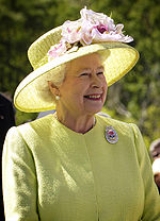
, currently Her Majesty Queen Elizabeth II is the Chief of State of the United Kingdom
. Though she takes little direct part in government, the Crown remains the fount in which ultimate executive power over Government lies. These powers are known as Royal Prerogative
and can be used for a vast amount of things, such as the issue or withdrawal of passports, to the dismissal of the Prime Minister or even the Declaration of War. The powers are delegated from the Monarch personally, in the name of the Crown, and can be handed to various ministers, or other Officers of the Crown, and can purposely bypass the consent of Parliament.
The head of Her Majesty’s Government; the Prime Minister
, also has weekly meetings with the sovereign, where she may express her feelings, warn, or advise the Prime Minister in the Governments work.
According to the uncodified constitution of the United Kingdom
, the monarch has the following powers:
Domestic Powers
Foreign Powers
in the United Kingdom is exercised by the Sovereign, Queen Elizabeth II, via Her Majesty's Government
and the devolved national authorities - the Scottish Government, the Welsh Assembly Government
and the Northern Ireland Executive
.
as the head of Her Majesty's Government in the United Kingdom, guided by the strict convention that the Prime Minister should be the member of the House of Commons most likely to be able to form a Government with the support of that House. In practice, this means that the leader of the political party
with an absolute majority of seats in the House of Commons is chosen to be the Prime Minister. If no party has an absolute majority, the leader of the largest party is given the first opportunity to form a coalition. The Prime Minister then selects the other Ministers
which make up the Government and act as political heads of the various Government Departments
. About twenty of the most senior government ministers make up the Cabinet
and approximately 100 ministers in total comprise the government. In accordance with constitutional convention
, all ministers within the government are either Members of Parliament or peers
in the House of Lords
.
As in some other parliamentary system
s of government (especially those based upon the Westminster System
), the executive (called "the government") is drawn from and is answerable to Parliament - a successful vote of no confidence
will force the government either to resign or to seek a parliamentary dissolution
and a general election
. In practice, members of parliament of all major parties are strictly controlled by whips
who try to ensure they vote according to party policy. If the government has a large majority, then they are very unlikely to lose enough votes to be unable to pass legislation.
Theoretically, the Prime Minister is primus inter pares among his/her Cabinet colleagues. While the Prime Minister is the senior Cabinet Minister, s/he is theoretically bound to make executive decisions in a collective fashion with the other Cabinet ministers. The Cabinet, along with the PM, consists of Secretaries of State from the various government departments. Cabinet meetings are typically held weekly, while Parliament is in session.
known mainly, though not exclusively as departments, e.g., Ministry of Defence
. These are politically led by a Government Minister
who is often a Secretary of State
and member of the Cabinet
. He or she may also be supported by a number of junior Ministers. In practice, several government departments and Ministers have responsibilities that cover England alone, with devolved bodies having responsibility for Scotland, Wales and Northern Ireland, (for example - the Department of Health
), or responsibilities that mainly focus on England (such as the Department for Education
).
Implementation of the Minister's decisions is carried out by a permanent politically neutral organisation known as the civil service. Its constitutional role is to support the Government of the day regardless of which political party is in power. Unlike some other democracies, senior civil servants remain in post upon a change of Government. Administrative management of the Department is led by a head civil servant known in most Departments as a Permanent Secretary
. The majority of the civil service staff in fact work in executive agencies
, which are separate operational organisations reporting to Departments of State.
"Whitehall" is often used as a synonym for the central core of the Civil Service. This is because most Government Departments have headquarters in and around the former Royal Palace Whitehall
.
 The Scottish Government is responsible for all issues that are not explicitly reserved
to the United Kingdom Parliament at Westminster
, by the Scotland Act; including NHS Scotland
, education
, justice
, rural affairs, and transport
. It manages an annual budget of more than £
25 billion. The government is led by the First Minister
, assisted by various Ministers with individual portfolio
s and remits. The Scottish Parliament
nominates a Member to be appointed as First Minister by the Queen. The First Minister then appoints his Ministers (now known as Cabinet Secretaries) and junior Ministers, subject to approval by the Parliament. The First Minister, the Ministers (but not junior ministers), the Lord Advocate
and Solicitor General
are the Members of the 'Scottish Executive', as set out in the Scotland Act 1998. They are collectively known as "the Scottish Ministers".
have more limited powers than those devolved to Scotland, although following the passing of the Government of Wales Act 2006
, the Assembly can now legislate in some areas through Assembly Measures passed within clearly defined areas based upon, Legislative Competence Orders which can be granted on a case by case basis. The current Welsh Government was formed several weeks after the 2007 elections
, following a brief period of minority administration, when Plaid Cymru
joined Labour
in a coalition government
, which since December 2009 has been under the leadership of Carwyn Jones
.
have powers closer to those already devolved to Scotland. The Northern Ireland Executive is led by a diarchy
, currently First Minister
Peter Robinson
(Democratic Unionist Party
) and deputy First Minister
Martin McGuinness
(Sinn Féin
).
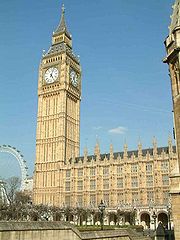
is the supreme legislative body in the United Kingdom (i.e., there is parliamentary sovereignty
), and Government is drawn from and answerable to it. Parliament is bicameral, consisting of the House of Commons and the House of Lords
. There is also a devolved Scottish Parliament and devolved Assemblies in Wales and Northern Ireland, with varying degrees of legislative authority.
 The Countries of the United Kingdom
are divided into parliamentary constituencies of broadly equal population by the four Boundary Commissions. Each constituency elects a Member of Parliament
(MP) to the House of Commons at General Elections and, if required, at by-elections. As of 2010 there are 650 constituencies (there were 646 before that year's general election. Of the 650 MPs, all but one - Lady Sylvia Hermon
- belong to a political party
.
In modern times, all Prime Ministers and Leaders of the Opposition have been drawn from the Commons, not the Lords. Alec Douglas-Home
resigned from his peerages days after becoming Prime Minister in 1963, and the last Prime Minister before him from the Lords left in 1902 (the Marquess of Salisbury
).
One party usually has a majority in Parliament, because of the use of the First Past the Post electoral system, which has been conducive in creating the current two party system. The monarch normally asks a person commissioned to form a government simply whether it can survive in the House of Commons, something which majority governments are expected to be able to do. In exceptional circumstances the monarch asks someone to 'form a government' with a parliamentary minority which in the event of no party having a majority requires the formation of a coalition government
. This option is only ever taken at a time of national emergency, such as war-time. It was given in 1916 to Andrew Bonar Law, and when he declined, to David Lloyd George
and in 1940 to Winston Churchill
. A government is not formed by a vote of the House of Commons, it is a commission from the monarch. The House of Commons gets its first chance to indicate confidence in the new government when it votes on the Speech from the Throne
(the legislative programme proposed by the new government).
chamber, although including life peer
s, and Lords Spiritual
. It is currently mid-way through extensive reforms, the most recent of these being enacted in the House of Lords Act 1999
. The house consists of two very different types of member, the Lords Temporal and Lords Spiritual. Lords Temporal include appointed members (life peers with no hereditary right for their descendants to sit in the house) and ninety-two remaining hereditary peers, elected from among, and by, the holders of titles which previously gave a seat in the House of Lords. The Lords Spiritual represent the established Church of England
and number twenty-six: the Five Ancient Sees (Canterbury, York, London, Winchester and Durham), and the 21 next-most senior bishops.
The House of Lords currently acts to review legislation initiated by the House of Commons, with the power to propose amendments, and can exercise a suspensive veto. This allows it to delay legislation if it does not approve it for twelve months. However, the use of vetoes is limited by convention and by the operation of the Parliament Acts 1911 and 1949
: the Lords may not veto the "money bills" or major manifesto promises (see Salisbury convention
). Persistent use of the veto can also be overturned by the Commons, under a provision of the Parliament Act 1911
. Often governments will accept changes in legislation in order to avoid both the time delay, and the negative publicity of being seen to clash with the Lords. However the Lords still retain a full veto in acts which would extend the life of Parliament beyond the 5 year term limit introduced by the Parliament Act 1911.
The Constitutional Reform Act 2005
outlined plans for a Supreme Court of the United Kingdom
to replace the role of the Law Lords.
The House of Lords was replaced as the final court of appeal on civil cases within the United Kingdom on 1 October 2009, by the Supreme Court of the United Kingdom.
has a parliament and Wales
and Northern Ireland
have assemblies. De jure
, each could have its powers broadened, narrowed or changed by an Act of the UK Parliament. However, Scotland has a tradition of popular sovereignty as opposed to parliamentary sovereignty and the fact that the Scottish parliament was established following a referendum would make it politically difficult to significantly alter its powers without popular consent. The UK is therefore a unitary state
with a devolved system of government. This contrasts with a federal
system, in which sub-parliaments or state parliaments and assemblies have a clearly defined constitutional right to exist and a right to exercise certain constitutionally guaranteed and defined functions and cannot be unilaterally abolished by Acts of the central parliament.
All three devolved institutions are elected by proportional representation
: the Additional Member System
is used in Scotland and Wales, and Single Transferable Vote
is used in Northern Ireland.
England
, therefore, is the only country in the UK not to have a devolved English parliament
. However, senior politicians of all main parties have voiced concerns in regard to the West Lothian Question
, which is raised where certain policies for England are set by MPs from all four constituent nations whereas similar policies for Scotland or Wales might be decided in the devolved assemblies by legislators from those countries alone. Alternative proposals for English regional government have stalled, following a poorly received referendum on devolved government for the North East of England
, which had hitherto been considered the region most in favour of the idea, with the exception of Cornwall
, where there is widespread support for a Cornish Assembly
, including all five Cornish MPs. England is therefore governed according to the balance of parties across the whole of the United Kingdom.
The government has no plans to establish an English parliament or assembly although several pressure groups are calling for one. One of their main arguments is that MPs (and thus voters) from different parts of the UK have inconsistent powers. Currently an MP from Scotland can vote on legislation which affects only England but MPs from England (or indeed Scotland) cannot vote on matters devolved to the Scottish parliament. Indeed, the former Prime Minister Gordon Brown
, who is an MP for a Scottish constituency, introduced some laws that only affect England and not his own constituency. This anomaly is known as the West Lothian question
.
The policy of the UK Government in England was to establish elected regional assemblies
with no legislative powers. The London Assembly
was the first of these, established in 2000, following a referendum
in 1998, but further plans were abandoned following rejection of a proposal for an elected assembly in North East England
in a referendum
in 2004. Unelected regional assemblies remain in place in eight regions of England
.
 The Scottish Parliament
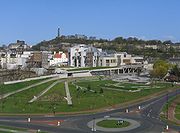
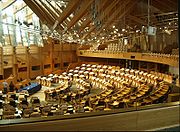
is the national, unicameral
legislature of Scotland
, located in the Holyrood
area of the capital Edinburgh
. The Parliament, informally referred to as "Holyrood" (cf. "Westminster
"), is a democratically
elected body comprising 129 members who are known as Members of the Scottish Parliament
, or MSPs. Members are elected for four-year terms under the mixed member proportional representation
system. As a result, 73 MSPs represent individual geographical constituencies
elected by the plurality
("first past the post") system, with a further 56 returned from eight additional member
regions, each electing seven MSPs.
The current Scottish Parliament was established by the Scotland Act 1998
and its first meeting as a devolved legislature
was on 12 May 1999. The parliament has the power to pass laws and has limited tax-varying capability. Another of its roles is to hold the Scottish Government to account. The "devolved matters" over which it has responsibility include education
, health, agriculture, and justice
. A degree of domestic authority, and all foreign policy, remains with the UK Parliament in Westminster
.
The public take part in Parliament in a way that is not the case at Westminster through Cross-Party Groups on policy topics which the interested public join and attend meetings of alongside Members of the Scottish Parliament
(MSPs).
The resurgence in Celtic
language and identity, as well as 'regional' politics and development, has contributed to forces pulling against the unity of the state. This was clearly demonstrated when - although some argue it was influenced by general public dillusionment with Labour - the Scottish National Party
(SNP) became the largest party in the Scottish Parliament by one seat.
Alex Salmond
(leader of SNP) has since made history by becoming the first First Minister of Scotland
from a party other than Labour. The SNP govern as a minority administration
at Holyrood. Nevertheless, recent opinion polls have suggested that nationalism (i.e., a desire to break up the UK) is rising within Scotland and England. However, the polls have been known to be inaccurate in the past (for example, in the run up to the 1992 General Election
). Moreover, polls carried out in the 1970s and the 1990s showed similar results, only to be debunked at elections. While support for breaking up the UK was strongest in Scotland, there was still a clear lead for unionism over nationalism. However, an opinion poll in April 2008 suggested the result of any referendum
on Scottish independence
could be close as support for independence had reached 41% with just 40% supporting retention of the Union.
 The National Assembly for Wales
is a devolved assembly with power to make legislation in Wales
, and is also responsible for Welsh Assembly Government
departments in Wales. The Assembly was formed under the Government of Wales Act 1998
, by the Labour
government, after a referendum in 1997 (also supported by Plaid Cymru
and the Liberal Democrats
) approved its creation.
There is now a legal separation of the legislative and executive functions of the National Assembly, since the passing of the Government of Wales Act 2006
. The Act created a separate executive called the "Welsh Assembly Government
" which performs the day to day running of government affairs and contains members of the highest elected party of the Assembly chamber. The act also made the National Assembly for Wales a separate entity from the Welsh Assembly Government, and this entity scrutinizes the government in power. The "Assembly Commission
" was also created to ensure the smooth running of resources and gathering of accurate facts for the Assembly to deal with.
As of the passing of the Government of Wales Act 2006
, the National Assembly for Wales now has its own legislative powers known as Assembly Measures. Each Assembly Measure derives its power from a Legislative Competency Order
which has to be passed by the Assembly and two Houses of Parliament. Before the 2006 Act, the Assembly did not have such legislative power and only had the right to develop Subordinate legislation off primary legislation made by the UK Parliament.
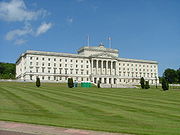 The government of Northern Ireland was established as a result of the 1998 Good Friday Agreement. This created the Northern Ireland Assembly
. The Assembly is a unicameral body consisting of 108 members elected under the Single Transferable Vote
form of proportional representation
. The Assembly is based on the principle of power-sharing, in order to ensure that both communities in Northern Ireland, unionist and nationalist
, participate in governing the region. It has power to legislate in a wide range of areas and to elect the Northern Ireland Executive
(cabinet). It sits at Parliament Buildings
at Stormont in Belfast
.
The Assembly has authority to legislate in a field of competences known as "transferred matters". These matters are not explicitly enumerated in the Northern Ireland Act 1998
but instead include any competence not explicitly retained by the Parliament at Westminster. Powers reserved by Westminster are divided into "excepted matters", which it retains indefinitely, and "reserved matters", which may be transferred to the competence of the Northern Ireland Assembly at a future date. Health, criminal law and education are "transferred" while royal relations are all "excepted".
While the Assembly was in suspension, due to issues involving the main parties and the Provisional Irish Republican Army
(IRA), its legislative powers were exercised by the UK government, which effectively had power to legislate by decree. Laws that would normally be within the competence of the Assembly were passed by the UK government in the form of Orders-in-Council rather than legislative acts.
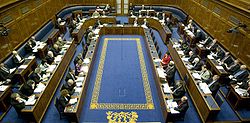 There has been a significant decrease in violence over the last twenty years, though the situation remains tense, with the more hard-line parties such as Sinn Féin
and the Democratic Unionist Party
now holding the most parliamentary seats (see Demographics and politics of Northern Ireland).
guaranteeing the continued existence of Scotland's separate legal system. Today the UK has three distinct systems of law: English law
, Northern Ireland law
and Scots law
. Recent constitutional changes saw a new Supreme Court of the United Kingdom
come into being in October 2009 that took on the appeal functions of the Appellate Committee of the House of Lords
. The Judicial Committee of the Privy Council
, comprising the same members as the Supreme Court, is the highest court of appeal for several independent Commonwealth countries, the UK overseas territories, and the British crown dependencies.
, and Northern Ireland law
are based on common-law
principles. The essence of common-law is that law is made by judge
s sitting in courts, applying their common sense and knowledge of legal precedent (stare decisis
) to the facts before them. The Courts of England and Wales
are headed by the Supreme Court of Judicature of England and Wales, consisting of the Court of Appeal
, the High Court of Justice
(for civil cases) and the Crown Court
(for criminal cases). The Supreme Court of the United Kingdom
is the highest court in the land for both criminal and civil cases in England
, Wales
, and Northern Ireland
and any decision it makes is binding on every other court in the hierarchy.
principles, applies in Scotland
. The chief courts are the Court of Session
, for civil cases, and the High Court of Justiciary
, for criminal cases. The Supreme Court of the United Kingdom serves as the highest court of appeal for civil cases under Scots law. Sheriff court
s deal with most civil and criminal cases including conducting criminal trials with a jury, known as Sheriff solemn Court, or with a Sheriff and no jury, known as (Sheriff summary Court). The Sheriff court
s provide a local court service with 49 Sheriff courts organised across six Sheriffdom
s.
The use of the first-past-the-post to elect members of Parliament is unusual among Europe
an nations. The use of the system means that MPs are sometimes elected from individual constituencies with a plurality (receiving more votes than any other candidate, but not an absolute majority of 50 percent plus one vote), due to three or more candidates receiving a significant share of the vote.
Elections and political parties in the United Kingdom are affected by Duverger's law
, the political science
principle which states that plurality voting system
s, such as first-past-the-post, tend to lead to the development of two-party system
s. The UK, like several other states, has sometimes been called a "two-and-a-half" party system, because parliamentary politics is dominated by the Labour Party and Conservative Party, with the Liberal Democrats holding a significant number of seats (but still substantially less than Labour and the Conservatives), and several small parties (some of them regional or nationalist
) trailing far behind in number of seats.
In the last few general elections, voter mandates for Westminster in the 40% ranges have been swung into 60% parliamentary majorities. No single party has won a majority of the popular vote since the Third National Government of Stanley Baldwin
in 1935
. On two occasions since World War II
- 1951
and February 1974
- a party that came in second in the popular vote actually came out with the larger number of seats.
Electoral reform
for parliamentary elections have been proposed many times. The Jenkins Commission
report in October 1998 suggested implementing the Alternative Vote Top-up
(also called Alternative Vote Plus or AV+) in parliamentary elections. Under this proposal, most MPs would be directly elected from constituencies by the alternative vote, with a number of additional members
elected from "top-up lists." However, no action was taken by the Labour government and the time. There are a number of groups in the UK campaigning for electoral reform, including the Electoral Reform Society
, Make Votes Count Coalition and Fairshare
.
The 2010 general election resulted in a hung parliament
(no single party being able to command a majority in the House of Commons). This was only the second general election since World War II to return a hung parliament, the first being the February 1974 election. The Conservatives gained the most seats (ending 13 years of Labour government) and the largest percentage of the popular vote, but fell 20 seats short of a majority.
The Conservatives and Liberal Democrats entered into a new coalition government
, headed by David Cameron
. Under the terms of the coalition agreement
the government committed itself to hold a referendum in May 2011 on whether to change parliamentary elections from first-past-the-post to AV. Electoral reform was a majority priority for the Liberal Democrats, who favor proportional representation
but were able to negotiate only a referendum on AV with the Conservatives. The coalition partners plan to campaign on opposite sides, with the Liberal Democrats supporting AV and the Conservatives opposing it.
Voter turnout
in the 2010 general election with 65 percent.
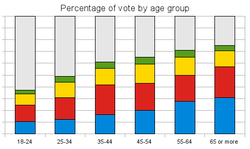 Three parties currently dominate the national political landscape in Britain: the Conservative Party
, the Labour Party
, and the Liberal Democrats
.
The modern Conservative Party was founded in 1834 and is an outgrowth of the Tory movement or party, which began in 1678. Today it is still colloquially referred to as the Tory Party and its members as Tories. The Liberal Democrats were formed in 1988 by a merger of the Liberal Party
and the Social Democratic Party
(SDP), a Labour breakaway formed in 1981. The Liberals and SDP had contested elections together as the SDP–Liberal Alliance for seven years before. The modern Liberal Party had been founded in 1859 as an outgrowth of the Whig movement or party (which began at the same time as the Tory party and was its historical rival) as well as the Radical
and Peelite
tendencies.
The Liberal Party was one of the two dominant parties (along with the Conservatives) from its founding until the 1920s, when it rapidly declined and was supplanted on the left
by the Labour Party, which was founded in 1900 and formed its first government in 1924. Since that time, the Labour and Conservatives parties have been dominant, with the Liberal Democrats also holding a significant number of seats and increasing their share of the vote in parliamentary general elections in the four elections 1992.
Minor parties also hold seats in parliament:
In the most recent general election in 2010, the result amounted to a hung parliament, and after several days of negotiations, the Labour Party left the government with the Conservatives and the Liberal Democrats operating a coalition government.
The Conservative party can trace its origin back to 1662, with the Court Party and the Country Party being formed in the aftermath of the English Civil War. The Court Party soon became known as the Tories
, a name that has stuck despite the official name being 'Conservative'. The term "Tory" originates from the Exclusion Bill crisis of 1678-1681 - the Whigs were those who supported the exclusion of the Roman Catholic Duke of York
from the thrones of England, Ireland and Scotland, and the Tories were those who opposed it. Both names were originally insults: a "whiggamore" was a horse drover (See Whiggamore Raid
), and a "tory" (Tóraidhe) was an Irish
term for an outlaw, later applied to Irish Confederate
s and Irish Royalists, during the Wars of the Three Kingdoms
.
Generally, the Tories were associated with lesser gentry and the Church of England, while Whigs were more associated with trade, money, larger land holders (or "land magnates"), expansion and tolerance.
The Rochdale Radicals
were a group of more extreme reformists who were also heavily involved in the cooperative movement. They sought to bring about a more equal society, and are considered by modern standards to be left-wing.
After becoming associated with repression of popular discontent in the years after 1815, the Tories underwent a fundamental transformation under the influence of Robert Peel
, himself an industrialist rather than a landowner, who in his 1834 "Tamworth Manifesto
" outlined a new "Conservative" philosophy of reforming ills while conserving the good.
Though Peel's supporters subsequently split from their colleagues over the issue of free trade in 1846, ultimately joining the Whigs and the Radicals to form what would become the Liberal Party
, Peel's version of the party's underlying outlook was retained by the remaining Tories, who adopted his label of Conservative as the official name of their party.
The crushing defeat of the 1997 election saw the Conservative Party lose over half their seats from 1992 and saw the party re-align with public perceptions of them.
In 2008, the Conservative Party formed a pact with the Ulster Unionist Party to select joint candidates for European and House of Commons elections; this angered the DUP as by splitting the Unionist vote, republican parties will be elected in some areas.
After thirteen years as the official opposition, the Party returned to power as part of a coalition with the Liberal Democrats in 2010.
Historically, the party has been the mainland party most pre-occupied by British Unionism
, as attested too by the party's full name, the Conservative & Unionist Party. This resulted in the merger between the Conservatives and Joseph Chamberlain's Liberal Unionist Party
, composed of former Liberals who opposed Irish home rule. The unionist tendency is still in evidence today, manifesting sometimes as a scepticism or opposition to devolution, firm support for the continued existence of the United Kingdom in the face of separatist nationalism, and a historic link with the cultural unionism of Northern Ireland.
The history of the Labour party goes back to 1900 when a Labour Representation Committee was established which changed its name to "The Labour Party" in 1906. After the First World War
, this led to the demise of the Liberal Party as the main reformist force in British politics. The existence of the Labour Party on the left of British politics led to a slow waning of energy from the Liberal Party, which has consequently assumed third place in national politics. After performing poorly in the elections of 1922, 1923 and 1924, the Liberal Party was superseded by the Labour Party as the party of the left.
Following two brief spells in minority governments in 1924 and 1929–1931, the Labour Party had its first true victory after World War II
in the 1945 "khaki election
". Throughout the rest of the twentieth century, Labour governments alternated with Conservative governments. The Labour Party suffered the "wilderness years" of 1951-1964 (three straight General Election defeats) and 1979-1997 (four straight General Election defeats).
During this second period, Margaret Thatcher
, who became leader of the Conservative party in 1975, made a fundamental change to Conservative policies, turning the Conservative Party into an economic neoliberal party. In the General Election of 1979
she defeated James Callaghan
's troubled Labour government after the winter of discontent
.
For most of the 1980s and the 1990s, Conservative governments under Thatcher and her successor John Major
pursued policies of privatization
, anti-trade-union
ism, and, for a time, monetarism
, now known collectively as Thatcherism
.
The Labour Party elected left-winger Michael Foot
as their leader after their 1979 election defeat, and he responded to dissatisfaction with the Labour Party by pursuing a number of radical policies developed by its grass-roots members. In 1981 several right-wing Labour MPs formed a breakaway group called the Social Democratic Party
(SDP), a move which split Labour and is widely believed to have made Labour unelectable for a decade. The SDP formed an alliance with the Liberal Party which contested the 1983
and 1987
general elections as a centrist alternative to Labour and the Conservatives. After some initial success, the SDP did not prosper (partly due to its unfavourable distribution of votes in the FPTP electoral system), and was accused by some of splitting the anti-Conservative vote.
The SDP eventually merged with the Liberal Party to form the Liberal Democrats in 1988. Support for the new party has increased since then, and the Liberal Democrats (often referred to as LibDems) in 1997 and 2001 gained an increased number of seats in the House of Commons.
The Labour Party was badly defeated in the Conservative landslide of the 1983 general election
, and Michael Foot was replaced shortly thereafter by Neil Kinnock
as leader. Kinnock expelled the far left
Militant tendency
group (now called the Socialist Party of England and Wales
) and moderated many of the party's policies. Yet he was in turn replaced by John Smith
after Labour defeats in the 1987
and 1992
general elections.
Tony Blair
became leader of the Labour party after John Smith's sudden death from a heart attack in 1994. He continued to move the Labour Party towards the 'centre' by loosening links with the union
s and embracing many of Margaret Thatcher's liberal economic policies. This, coupled with the professionalising of the party machine's approach to the media, helped Labour win a historic landslide in the 1997 General Election
, after 18 years of Conservative government. Some observers say the Labour Party had by then morphed from a democratic socialist
party to a social democratic
party, a process which delivered three general election victories but alienated some of its core base.
The Liberal Democrats were formed in 1988 by a merger of the Liberal Party with the Social Democratic Party, but can trace their origin back to the Whigs and the Rochdale Radicals who evolved into the Liberal Party. The term 'Liberal Party
' was first used officially in 1868, though it had been in use colloquially for decades beforehand. The Liberal Party formed a government in 1868 and then alternated with the Conservative Party as the party of government throughout the late 19th century and early 20th century.
The Scottish National Party has enjoyed parliamentary representation continuously since 1967 and had 6 MPs elected at the 2010 election. Following the 2007 Scottish parliament elections, the SNP emerged as the largest party with 47 MSPs and formed a minority government
with Alex Salmond
the First Minister
.
Plaid Cymru has enjoyed parliamentary representation continuously since 1974 and had 3 MPs elected at the 2010 election. Following the 2007 Welsh Assembly elections, they joined Labour as the junior partner in a coalition government.
had 8 MPs elected at the 2010 election. Founded in 1971 by Ian Paisley
, it has grown to become the larger of the two main unionist political parties in Northern Ireland
. Other Northern Ireland
parties represented at Westminster include the Social Democratic and Labour Party
(3 MPs), the Alliance Party of Northern Ireland
(1 MP) and Sinn Féin
(5 MPs). Sinn Féin MPs refuse to take their seats and sit in a 'foreign' parliament.
gained its first MP, Caroline Lucas
, in the 2010 General Election. It also has seats in the European Parliament
, two seats on the London Assembly
and around 120 local councillors.
There are usually a small number of Independent politicians
in parliament with no party allegiance. In modern times, this has usually occurred when a sitting member leaves his party, and some such MPs have been re-elected as independents. The only current Independent MP is Lady Hermon, previously of the Ulster Unionist Party
. However, since 1950 only two new members have been elected as independents without having ever stood for a major party:
Until 2010, the Respect party, a left-wing group that came out of the anti-war movement had one MP, George Galloway
. It also has a small number of seats on local councils across the country.
The United Kingdom Independence Party
(UKIP) has 13 seats in the European Parliament
as well as seats in the House of Lords
and a number of local councillors. On 22 April 2008 it welcomed the defection of Bob Spink
MP for Castle Point, to date its only MP. However, Bob Spink later claimed to have never joined UKIP and does not sit as a UKIP MP. Two UKIP members were elected to the London Assembly
in 2000, but they quit the party in February 2005 to join Veritas
which they quit in September 2005 to sit as One London
members. They were not re-elected in 2008.
The Scottish Green Party
has 2 MSPs in the Scottish Parliament
and a number of local councillors.
The Green Party (Ireland)
has one MLAs in the Northern Ireland Assembly
as well as local councillors.
The British National Party
(BNP) has two seats in the European Parliament, a seat on the London Assembly
as well as a number of councillors.
The English Democrats, which wants a parliament for England, has some local councillors and had its candidate elected mayor of Doncaster in 2009.
Other parties include: the Free England Party
, the Communist Party of Britain
, the Socialist Party (England and Wales)
, the Socialist Workers Party
, the Scottish Socialist Party
, the Liberal Party
, Mebyon Kernow
(a Cornish nationalist party) in Cornwall, Veritas
,the Communist Left Alliance
(in Fife) and the Pirate Party UK
Several local parties contest only within a specific area, a single county, borough or district. Examples include the Better Bedford Independent Party, which was one of the dominant parties in Bedford Borough Council and led by Bedford's former Mayor, Frank Branston
. The most notable local party is Health Concern, which controlled a single seat in the UK Parliament from 2001 to 2010.
The Jury Team, launched in March 2009 and described as a "non-party party", is an umbrella organisation seeking to increase the number of independent members of both domestic and European members of Parliament in Great Britain.
The Official Monster Raving Loony Party
was founded in 1983. The OMRLP are distinguished by having a deliberately bizarre manifesto
, which contains things that seem to be impossible or too absurd to implement – usually to highlight what they see as real-life absurdities. In spite of (or perhaps because of) a reputation more satirical than serious, they have routinely been successful in local elections.
, each of the main political parties has changed party leader: David Cameron
was elected leader of the Conservatives in 2005, Gordon Brown
was elected unopposed to lead the Labour Party (and therefore become Prime Minister) in June 2007, and Nick Clegg
was elected leader of the Liberal Democrats in December 2007.
The Conservatives under David Cameron have seen their popularity grow, as shown by their success at the Local Elections in May 2008, the London Mayoral Election and opinion polls which show a strong lead over Labour. They also won a by election in Crewe and Nantwich
with a swing of 17.6%.
In Scotland, the Scottish National Party made some strong advances, winning the Scottish parliamentary election in May 2007
and gaining support in most national opinion polls since then. In July 2008, the SNP achieved a remarkable by-election victory in Glasgow East
, winning the third safest Labour seat in Scotland with a swing of 22.54%. However,in October of the same year, despite confident public predictions by the SNP's leader Alex Salmond
that they would win another by-election in Glenrothes
, the seat was comfortably won by Labour with a majority of 6,737 and an increased share of the vote. Given that the SNP won the equivalent Scottish Parliament seat of Central Fife in 2007 this was viewed as a significant step back for the SNP. More recently, the SNP significantly out-polled the Labour Party in the 2009 European election.
England
has a mix of two-tier and single-tier councils in different parts of the country. In Greater London
, a unique two-tier system exists, with power shared between the London borough
councils, and the Greater London Authority
which is headed by an elected mayor
.
Unitary Authorities
are used throughout Scotland
, Wales
and Northern Ireland
.
in January 1973, and has remained a member of the European Union
(EU) that it evolved into; UK citizens, and other EU citizens resident in the UK, elect 78 members
to represent them in the European Parliament
in Brussels
and Strasbourg
.
The UK's membership in the Union has been objected to over questions of sovereignty, and in recent years there have been divisions in both major parties over whether the UK should form greater ties within the EU, or reduce the EU's supranational powers. Opponents of greater European integration are known as "Eurosceptic
s", while supporters are known as "Europhiles". Division over Europe is prevalent in both major parties, although the Conservative Party is seen as most divided over the issue, both whilst in Government up to 1997 and after 2010, and between those dates as the opposition. However, the Labour Party is also divided, with conflicting views over UK adoption of the euro
whilst in Government (1997–2010), although the party is largely in favour of further integration where in the country's interest.
UK nationalists have long campaigned against European integration
. The strong showing of the eurosceptic United Kingdom Independence Party
(UKIP) in the 2004 European Parliament elections has shifted the debate over UK relations with the EU.
In March 2008, Parliament decided to not hold a referendum
on the ratification of the Treaty of Lisbon
, signed in December 2007. This was despite the Labour government promising in 2004 to hold a referendum on the previously proposed Constitution for Europe
.
Constitutional monarchy
Constitutional monarchy is a form of government in which a monarch acts as head of state within the parameters of a constitution, whether it be a written, uncodified or blended constitution...
, in which the Monarch
British monarchy
The monarchy of the United Kingdom is the constitutional monarchy of the United Kingdom and its overseas territories. The present monarch, Queen Elizabeth II, has reigned since 6 February 1952. She and her immediate family undertake various official, ceremonial and representational duties...
is the head of state
Head of State
A head of state is the individual that serves as the chief public representative of a monarchy, republic, federation, commonwealth or other kind of state. His or her role generally includes legitimizing the state and exercising the political powers, functions, and duties granted to the head of...
and the Prime Minister of the United Kingdom
Prime Minister of the United Kingdom
The Prime Minister of the United Kingdom of Great Britain and Northern Ireland is the Head of Her Majesty's Government in the United Kingdom. The Prime Minister and Cabinet are collectively accountable for their policies and actions to the Sovereign, to Parliament, to their political party and...
is the head of government
Head of government
Head of government is the chief officer of the executive branch of a government, often presiding over a cabinet. In a parliamentary system, the head of government is often styled prime minister, chief minister, premier, etc...
. Executive power
Executive Power
Executive Power is Vince Flynn's fifth novel, and the fourth to feature Mitch Rapp, an American agent that works for the CIA as an operative for a covert counter terrorism unit called the "Orion Team."-Plot summary:...
is exercised by Her Majesty's Government
Government of the United Kingdom
Her Majesty's Government is the central government of the United Kingdom of Great Britain and Northern Ireland. The Government is led by the Prime Minister, who selects all the remaining Ministers...
, on behalf of and by the consent of the Monarch, as well as by the devolved
Devolution
Devolution is the statutory granting of powers from the central government of a sovereign state to government at a subnational level, such as a regional, local, or state level. Devolution can be mainly financial, e.g. giving areas a budget which was formerly administered by central government...
governments of Scotland and Wales
Welsh Assembly Government
The Welsh Government is the devolved government of Wales. It is accountable to the National Assembly for Wales, the legislature which represents the interests of the people of Wales and makes laws for Wales...
, and the Executive of Northern Ireland
Northern Ireland
Northern Ireland is one of the four countries of the United Kingdom. Situated in the north-east of the island of Ireland, it shares a border with the Republic of Ireland to the south and west...
. Legislative power is vested in both the government and the two chambers of the Parliament of the United Kingdom
Parliament of the United Kingdom
The Parliament of the United Kingdom of Great Britain and Northern Ireland is the supreme legislative body in the United Kingdom, British Crown dependencies and British overseas territories, located in London...
, the House of Commons and the House of Lords
House of Lords
The House of Lords is the upper house of the Parliament of the United Kingdom. Like the House of Commons, it meets in the Palace of Westminster....
, as well as in the Scottish parliament
Scottish Parliament
The Scottish Parliament is the devolved national, unicameral legislature of Scotland, located in the Holyrood area of the capital, Edinburgh. The Parliament, informally referred to as "Holyrood", is a democratically elected body comprising 129 members known as Members of the Scottish Parliament...
and Welsh and Northern Ireland assemblies. The judiciary
Judiciary
The judiciary is the system of courts that interprets and applies the law in the name of the state. The judiciary also provides a mechanism for the resolution of disputes...
is independent of the executive and the legislature, the highest national court being the Supreme Court of the United Kingdom
Supreme Court of the United Kingdom
The Supreme Court of the United Kingdom is the supreme court in all matters under English law, Northern Ireland law and Scottish civil law. It is the court of last resort and highest appellate court in the United Kingdom; however the High Court of Justiciary remains the supreme court for criminal...
.
The UK is a multi-party system
Multi-party system
A multi-party system is a system in which multiple political parties have the capacity to gain control of government separately or in coalition, e.g.The Conservative-Liberal Democrat coalition in the United Kingdom formed in 2010. The effective number of parties in a multi-party system is normally...
and since the 1920s, the two largest political parties have been the Conservative Party
Conservative Party (UK)
The Conservative Party, formally the Conservative and Unionist Party, is a centre-right political party in the United Kingdom that adheres to the philosophies of conservatism and British unionism. It is the largest political party in the UK, and is currently the largest single party in the House...
and the Labour Party
Labour Party (UK)
The Labour Party is a centre-left democratic socialist party in the United Kingdom. It surpassed the Liberal Party in general elections during the early 1920s, forming minority governments under Ramsay MacDonald in 1924 and 1929-1931. The party was in a wartime coalition from 1940 to 1945, after...
, before the Labour Party rose in British politics the Liberal Party
Liberal Party (UK)
The Liberal Party was one of the two major political parties of the United Kingdom during the 19th and early 20th centuries. It was a third party of negligible importance throughout the latter half of the 20th Century, before merging with the Social Democratic Party in 1988 to form the present day...
was the other major political party along with the Conservatives. Though coalition
Coalition government
A coalition government is a cabinet of a parliamentary government in which several political parties cooperate. The usual reason given for this arrangement is that no party on its own can achieve a majority in the parliament...
and minority government
Minority government
A minority government or a minority cabinet is a cabinet of a parliamentary system formed when a political party or coalition of parties does not have a majority of overall seats in the parliament but is sworn into government to break a Hung Parliament election result. It is also known as a...
s have been an occasional feature of parliamentary politics, the first-past-the-post electoral system used for general elections
Elections in the United Kingdom
There are five types of elections in the United Kingdom: United Kingdom general elections, elections to devolved parliaments and assemblies, elections to the European Parliament, local elections and mayoral elections. Elections are held on Election Day, which is conventionally a Thursday...
tends to maintain the dominance of these two parties, though each has in the past century relied upon a third party to deliver a working majority in Parliament.
Support for nationalist parties in Scotland, Northern Ireland and Wales led to proposals for devolution
Devolution
Devolution is the statutory granting of powers from the central government of a sovereign state to government at a subnational level, such as a regional, local, or state level. Devolution can be mainly financial, e.g. giving areas a budget which was formerly administered by central government...
in the 1970s though only in the 1990s did devolution actually happen. Today, Scotland, Wales and Northern Ireland each possess a legislature and government alongside that of the United Kingdom, responsible for devolved matters. However, it is a matter of dispute as to whether increased autonomy and devolution of executive and legislative powers has contributed to a reduction in support for independence. The principal pro-independence party, the Scottish National Party
Scottish National Party
The Scottish National Party is a social-democratic political party in Scotland which campaigns for Scottish independence from the United Kingdom....
, won an overall majority of MSPs at the 2011 Scottish parliament elections and now forms the Scottish Government administration, with plans to hold a referendum on negotiating for independence. In Northern Ireland, the largest Pro-Belfast Agreement
Belfast Agreement
The Good Friday Agreement or Belfast Agreement , sometimes called the Stormont Agreement, was a major political development in the Northern Ireland peace process...
party, Sinn Féin, not only advocates Northern Ireland's unification with the Republic of Ireland, but also abstains from taking their elected seats in the Westminster government, as this would entail taking a pledge of allegiance to the British monarch.
The constitution of the United Kingdom
Constitution of the United Kingdom
The constitution of the United Kingdom is the set of laws and principles under which the United Kingdom is governed.Unlike many other nations, the UK has no single core constitutional document. In this sense, it is said not to have a written constitution but an uncodified one...
is uncodified, being made up of constitutional convention
Constitutional convention (political custom)
A constitutional convention is an informal and uncodified procedural agreement that is followed by the institutions of a state. In some states, notably those Commonwealth of Nations states that follow the Westminster system and whose political systems derive from British constitutional law, most...
s, statute
Statute
A statute is a formal written enactment of a legislative authority that governs a state, city, or county. Typically, statutes command or prohibit something, or declare policy. The word is often used to distinguish law made by legislative bodies from case law, decided by courts, and regulations...
s and other elements. This system of government, known as the Westminster system
Westminster System
The Westminster system is a democratic parliamentary system of government modelled after the politics of the United Kingdom. This term comes from the Palace of Westminster, the seat of the Parliament of the United Kingdom....
, has been adopted by other countries as well, such as Australia
Australia
Australia , officially the Commonwealth of Australia, is a country in the Southern Hemisphere comprising the mainland of the Australian continent, the island of Tasmania, and numerous smaller islands in the Indian and Pacific Oceans. It is the world's sixth-largest country by total area...
, Bangladesh
Bangladesh
Bangladesh , officially the People's Republic of Bangladesh is a sovereign state located in South Asia. It is bordered by India on all sides except for a small border with Burma to the far southeast and by the Bay of Bengal to the south...
, Canada
Canada
Canada is a North American country consisting of ten provinces and three territories. Located in the northern part of the continent, it extends from the Atlantic Ocean in the east to the Pacific Ocean in the west, and northward into the Arctic Ocean...
, Kenya
Kenya
Kenya , officially known as the Republic of Kenya, is a country in East Africa that lies on the equator, with the Indian Ocean to its south-east...
, India
India
India , officially the Republic of India , is a country in South Asia. It is the seventh-largest country by geographical area, the second-most populous country with over 1.2 billion people, and the most populous democracy in the world...
, Jamaica
Jamaica
Jamaica is an island nation of the Greater Antilles, in length, up to in width and 10,990 square kilometres in area. It is situated in the Caribbean Sea, about south of Cuba, and west of Hispaniola, the island harbouring the nation-states Haiti and the Dominican Republic...
, Malaysia, New Zealand
New Zealand
New Zealand is an island country in the south-western Pacific Ocean comprising two main landmasses and numerous smaller islands. The country is situated some east of Australia across the Tasman Sea, and roughly south of the Pacific island nations of New Caledonia, Fiji, and Tonga...
, Singapore
Singapore
Singapore , officially the Republic of Singapore, is a Southeast Asian city-state off the southern tip of the Malay Peninsula, north of the equator. An island country made up of 63 islands, it is separated from Malaysia by the Straits of Johor to its north and from Indonesia's Riau Islands by the...
, and countries that made up large and significant parts of the British Empire
British Empire
The British Empire comprised the dominions, colonies, protectorates, mandates and other territories ruled or administered by the United Kingdom. It originated with the overseas colonies and trading posts established by England in the late 16th and early 17th centuries. At its height, it was the...
.
The Crown
The British MonarchMonarchy of the United Kingdom
The monarchy of the United Kingdom is the constitutional monarchy of the United Kingdom and its overseas territories. The present monarch, Queen Elizabeth II, has reigned since 6 February 1952. She and her immediate family undertake various official, ceremonial and representational duties...
, currently Her Majesty Queen Elizabeth II is the Chief of State of the United Kingdom
United Kingdom
The United Kingdom of Great Britain and Northern IrelandIn the United Kingdom and Dependencies, other languages have been officially recognised as legitimate autochthonous languages under the European Charter for Regional or Minority Languages...
. Though she takes little direct part in government, the Crown remains the fount in which ultimate executive power over Government lies. These powers are known as Royal Prerogative
Royal Prerogative
The royal prerogative is a body of customary authority, privilege, and immunity, recognized in common law and, sometimes, in civil law jurisdictions possessing a monarchy as belonging to the sovereign alone. It is the means by which some of the executive powers of government, possessed by and...
and can be used for a vast amount of things, such as the issue or withdrawal of passports, to the dismissal of the Prime Minister or even the Declaration of War. The powers are delegated from the Monarch personally, in the name of the Crown, and can be handed to various ministers, or other Officers of the Crown, and can purposely bypass the consent of Parliament.
The head of Her Majesty’s Government; the Prime Minister
Prime Minister of the United Kingdom
The Prime Minister of the United Kingdom of Great Britain and Northern Ireland is the Head of Her Majesty's Government in the United Kingdom. The Prime Minister and Cabinet are collectively accountable for their policies and actions to the Sovereign, to Parliament, to their political party and...
, also has weekly meetings with the sovereign, where she may express her feelings, warn, or advise the Prime Minister in the Governments work.
According to the uncodified constitution of the United Kingdom
United Kingdom
The United Kingdom of Great Britain and Northern IrelandIn the United Kingdom and Dependencies, other languages have been officially recognised as legitimate autochthonous languages under the European Charter for Regional or Minority Languages...
, the monarch has the following powers:
Domestic Powers
- The power to dismiss and appoint a Prime Minister
- The power to dismiss and appoint other ministers
- The power to summon, prorogue and dissolve Parliament
- The power to grant or refuse Royal Assent to bills (making them valid and law)
- The power to commission officers in the Armed Forces
- The power to command the Armed Forces of the United Kingdom
- The power to appoint members to the Queen's Council
- The power to issue and withdraw passports
- The power to grant Prerogative of mercy (though Capital Punishment is abolished, this power is still used to remedy errors in sentence calculation)
- The power to grant honours
- The power to create corporations via Royal Charter
Foreign Powers
- The power to ratify and make treaties
- The power to declare War and Peace
- The power to deploy the Armed Forces overseas
- The power to recognize states
- The power to credit and receive diplomats
Executive
Executive powerExecutive Power
Executive Power is Vince Flynn's fifth novel, and the fourth to feature Mitch Rapp, an American agent that works for the CIA as an operative for a covert counter terrorism unit called the "Orion Team."-Plot summary:...
in the United Kingdom is exercised by the Sovereign, Queen Elizabeth II, via Her Majesty's Government
Government of the United Kingdom
Her Majesty's Government is the central government of the United Kingdom of Great Britain and Northern Ireland. The Government is led by the Prime Minister, who selects all the remaining Ministers...
and the devolved national authorities - the Scottish Government, the Welsh Assembly Government
Welsh Assembly Government
The Welsh Government is the devolved government of Wales. It is accountable to the National Assembly for Wales, the legislature which represents the interests of the people of Wales and makes laws for Wales...
and the Northern Ireland Executive
Northern Ireland Executive
The Northern Ireland Executive is the executive arm of the Northern Ireland Assembly, the devolved legislature for Northern Ireland. It is answerable to the Assembly and was established according to the terms of the Northern Ireland Act 1998, which followed the Good Friday Agreement...
.
The United Kingdom Government
The monarch appoints a Prime MinisterPrime Minister of the United Kingdom
The Prime Minister of the United Kingdom of Great Britain and Northern Ireland is the Head of Her Majesty's Government in the United Kingdom. The Prime Minister and Cabinet are collectively accountable for their policies and actions to the Sovereign, to Parliament, to their political party and...
as the head of Her Majesty's Government in the United Kingdom, guided by the strict convention that the Prime Minister should be the member of the House of Commons most likely to be able to form a Government with the support of that House. In practice, this means that the leader of the political party
Political party
A political party is a political organization that typically seeks to influence government policy, usually by nominating their own candidates and trying to seat them in political office. Parties participate in electoral campaigns, educational outreach or protest actions...
with an absolute majority of seats in the House of Commons is chosen to be the Prime Minister. If no party has an absolute majority, the leader of the largest party is given the first opportunity to form a coalition. The Prime Minister then selects the other Ministers
Minister (government)
A minister is a politician who holds significant public office in a national or regional government. Senior ministers are members of the cabinet....
which make up the Government and act as political heads of the various Government Departments
Ministry (government department)
A ministry is a specialised organisation responsible for a sector of government public administration, sometimes led by a minister or a senior public servant, that can have responsibility for one or more departments, agencies, bureaus, commissions or other smaller executive, advisory, managerial or...
. About twenty of the most senior government ministers make up the Cabinet
Cabinet of the United Kingdom
The Cabinet of the United Kingdom is the collective decision-making body of Her Majesty's Government in the United Kingdom, composed of the Prime Minister and some 22 Cabinet Ministers, the most senior of the government ministers....
and approximately 100 ministers in total comprise the government. In accordance with constitutional convention
Constitutional convention (political custom)
A constitutional convention is an informal and uncodified procedural agreement that is followed by the institutions of a state. In some states, notably those Commonwealth of Nations states that follow the Westminster system and whose political systems derive from British constitutional law, most...
, all ministers within the government are either Members of Parliament or peers
Peerage
The Peerage is a legal system of largely hereditary titles in the United Kingdom, which constitute the ranks of British nobility and is part of the British honours system...
in the House of Lords
House of Lords
The House of Lords is the upper house of the Parliament of the United Kingdom. Like the House of Commons, it meets in the Palace of Westminster....
.
As in some other parliamentary system
Parliamentary system
A parliamentary system is a system of government in which the ministers of the executive branch get their democratic legitimacy from the legislature and are accountable to that body, such that the executive and legislative branches are intertwined....
s of government (especially those based upon the Westminster System
Westminster System
The Westminster system is a democratic parliamentary system of government modelled after the politics of the United Kingdom. This term comes from the Palace of Westminster, the seat of the Parliament of the United Kingdom....
), the executive (called "the government") is drawn from and is answerable to Parliament - a successful vote of no confidence
Motion of no confidence
A motion of no confidence is a parliamentary motion whose passing would demonstrate to the head of state that the elected parliament no longer has confidence in the appointed government.-Overview:Typically, when a parliament passes a vote of no...
will force the government either to resign or to seek a parliamentary dissolution
Dissolution of parliament
In parliamentary systems, a dissolution of parliament is the dispersal of a legislature at the call of an election.Usually there is a maximum length of a legislature, and a dissolution must happen before the maximum time...
and a general election
United Kingdom general elections
This is a list of United Kingdom general elections since the first in 1802. The members of the 1801–1802 Parliament had been elected to the former Parliament of Great Britain and Parliament of Ireland, before being co-opted to serve in the first Parliament of the United Kingdom, so that Parliament...
. In practice, members of parliament of all major parties are strictly controlled by whips
Whip (politics)
A whip is an official in a political party whose primary purpose is to ensure party discipline in a legislature. Whips are a party's "enforcers", who typically offer inducements and threaten punishments for party members to ensure that they vote according to the official party policy...
who try to ensure they vote according to party policy. If the government has a large majority, then they are very unlikely to lose enough votes to be unable to pass legislation.
The Prime Minister and the Cabinet
The Prime Minister is the most senior minister in the Cabinet. S/he is responsible for chairing Cabinet meetings, selecting Cabinet ministers (and all other positions in Her Majesty's government), and formulating government policy. The Prime Minister is the de facto leader of the UK government, since s/he exercises executive functions that are nominally vested in the sovereign (by way of the Royal Prerogatives). Historically, the British monarch was the sole source of executive powers in the government. However, following the rule of the Hanoverian monarchs, an arrangement of a "Prime Minister" chairing and leading the Cabinet began to emerge. Over time, this arrangement became the effective executive branch of government, as it assumed the day-to-day functioning of the British government away from the sovereign.Theoretically, the Prime Minister is primus inter pares among his/her Cabinet colleagues. While the Prime Minister is the senior Cabinet Minister, s/he is theoretically bound to make executive decisions in a collective fashion with the other Cabinet ministers. The Cabinet, along with the PM, consists of Secretaries of State from the various government departments. Cabinet meetings are typically held weekly, while Parliament is in session.
Government departments and the Civil Service
The Government of the United Kingdom contains a number of ministriesMinistry (government department)
A ministry is a specialised organisation responsible for a sector of government public administration, sometimes led by a minister or a senior public servant, that can have responsibility for one or more departments, agencies, bureaus, commissions or other smaller executive, advisory, managerial or...
known mainly, though not exclusively as departments, e.g., Ministry of Defence
Ministry of Defence (United Kingdom)
The Ministry of Defence is the United Kingdom government department responsible for implementation of government defence policy and is the headquarters of the British Armed Forces....
. These are politically led by a Government Minister
Minister (government)
A minister is a politician who holds significant public office in a national or regional government. Senior ministers are members of the cabinet....
who is often a Secretary of State
Secretary of State (United Kingdom)
In the United Kingdom, a Secretary of State is a Cabinet Minister in charge of a Government Department ....
and member of the Cabinet
Cabinet (government)
A Cabinet is a body of high ranking government officials, typically representing the executive branch. It can also sometimes be referred to as the Council of Ministers, an Executive Council, or an Executive Committee.- Overview :...
. He or she may also be supported by a number of junior Ministers. In practice, several government departments and Ministers have responsibilities that cover England alone, with devolved bodies having responsibility for Scotland, Wales and Northern Ireland, (for example - the Department of Health
Department of Health (United Kingdom)
The Department of Health is a department of the United Kingdom government with responsibility for government policy for health and social care matters and for the National Health Service in England along with a few elements of the same matters which are not otherwise devolved to the Scottish,...
), or responsibilities that mainly focus on England (such as the Department for Education
Department for Education
The Department for Education is a department of the UK government responsible for issues affecting people in England up to the age of 19, including child protection and education....
).
Implementation of the Minister's decisions is carried out by a permanent politically neutral organisation known as the civil service. Its constitutional role is to support the Government of the day regardless of which political party is in power. Unlike some other democracies, senior civil servants remain in post upon a change of Government. Administrative management of the Department is led by a head civil servant known in most Departments as a Permanent Secretary
Permanent Secretary
The Permanent secretary, in most departments officially titled the permanent under-secretary of state , is the most senior civil servant of a British Government ministry, charged with running the department on a day-to-day basis...
. The majority of the civil service staff in fact work in executive agencies
Executive agency
An executive agency, also known as a next-step agency, is a part of a government department that is treated as managerially and budgetarily separate in order to carry out some part of the executive functions of the United Kingdom government, Scottish Government, Welsh Assembly or Northern Ireland...
, which are separate operational organisations reporting to Departments of State.
"Whitehall" is often used as a synonym for the central core of the Civil Service. This is because most Government Departments have headquarters in and around the former Royal Palace Whitehall
Whitehall
Whitehall is a road in Westminster, in London, England. It is the main artery running north from Parliament Square, towards Charing Cross at the southern end of Trafalgar Square...
.
Scottish Government
Reserved matters
In the United Kingdom reserved matters and excepted matters are the areas of government policy where Parliament had kept the power to make laws in Scotland, Northern Ireland and Wales....
to the United Kingdom Parliament at Westminster
Palace of Westminster
The Palace of Westminster, also known as the Houses of Parliament or Westminster Palace, is the meeting place of the two houses of the Parliament of the United Kingdom—the House of Lords and the House of Commons...
, by the Scotland Act; including NHS Scotland
NHS Scotland
NHS Scotland is the publicly funded healthcare system of Scotland. Although they are separate bodies the organisational separation between NHS Scotland and the other three healthcare organisations each commonly called the National Health Service in the United Kingdom tends to be hidden from its...
, education
Education in Scotland
Scotland has a long history of universal provision of public education, and the Scottish education system is distinctly different from the other countries of the United Kingdom...
, justice
Scots law
Scots law is the legal system of Scotland. It is considered a hybrid or mixed legal system as it traces its roots to a number of different historical sources. With English law and Northern Irish law it forms the legal system of the United Kingdom; it shares with the two other systems some...
, rural affairs, and transport
Transport in Scotland
The transport system in Scotland is generally well-developed. The Scottish Parliament has control over most elements of transport policy within Scotland and the Scottish Government's Enterprise, Transport and Lifelong Learning Department is responsible for the Scottish transport network with...
. It manages an annual budget of more than £
Pound sterling
The pound sterling , commonly called the pound, is the official currency of the United Kingdom, its Crown Dependencies and the British Overseas Territories of South Georgia and the South Sandwich Islands, British Antarctic Territory and Tristan da Cunha. It is subdivided into 100 pence...
25 billion. The government is led by the First Minister
First Minister of Scotland
The First Minister of Scotland is the political leader of Scotland and head of the Scottish Government. The First Minister chairs the Scottish Cabinet and is primarily responsible for the formulation, development and presentation of Scottish Government policy...
, assisted by various Ministers with individual portfolio
Ministry (government department)
A ministry is a specialised organisation responsible for a sector of government public administration, sometimes led by a minister or a senior public servant, that can have responsibility for one or more departments, agencies, bureaus, commissions or other smaller executive, advisory, managerial or...
s and remits. The Scottish Parliament
Scottish Parliament
The Scottish Parliament is the devolved national, unicameral legislature of Scotland, located in the Holyrood area of the capital, Edinburgh. The Parliament, informally referred to as "Holyrood", is a democratically elected body comprising 129 members known as Members of the Scottish Parliament...
nominates a Member to be appointed as First Minister by the Queen. The First Minister then appoints his Ministers (now known as Cabinet Secretaries) and junior Ministers, subject to approval by the Parliament. The First Minister, the Ministers (but not junior ministers), the Lord Advocate
Lord Advocate
Her Majesty's Advocate , known as the Lord Advocate , is the chief legal officer of the Scottish Government and the Crown in Scotland for both civil and criminal matters that fall within the devolved powers of the Scottish Parliament...
and Solicitor General
Solicitor General for Scotland
Her Majesty's Solicitor General for Scotland is one of the Law Officers of the Crown, and the deputy of the Lord Advocate, whose duty is to advise the Crown and the Scottish Government on Scots Law...
are the Members of the 'Scottish Executive', as set out in the Scotland Act 1998. They are collectively known as "the Scottish Ministers".
Welsh Assembly Government
The Welsh Government and the National Assembly for WalesNational Assembly for Wales
The National Assembly for Wales is a devolved assembly with power to make legislation in Wales. The Assembly comprises 60 members, who are known as Assembly Members, or AMs...
have more limited powers than those devolved to Scotland, although following the passing of the Government of Wales Act 2006
Government of Wales Act 2006
The Government of Wales Act 2006 is an Act of the Parliament of the United Kingdom that reforms the National Assembly for Wales and allows further powers to be granted to it more easily...
, the Assembly can now legislate in some areas through Assembly Measures passed within clearly defined areas based upon, Legislative Competence Orders which can be granted on a case by case basis. The current Welsh Government was formed several weeks after the 2007 elections
National Assembly for Wales election, 2007
The 2007 National Assembly election was held on Thursday 3 May 2007 to elect members to the National Assembly for Wales. It was the third general election. On the same day local elections in England and Scotland, and the Scottish Parliament election took place...
, following a brief period of minority administration, when Plaid Cymru
Plaid Cymru
' is a political party in Wales. It advocates the establishment of an independent Welsh state within the European Union. was formed in 1925 and won its first seat in 1966...
joined Labour
Labour Party (UK)
The Labour Party is a centre-left democratic socialist party in the United Kingdom. It surpassed the Liberal Party in general elections during the early 1920s, forming minority governments under Ramsay MacDonald in 1924 and 1929-1931. The party was in a wartime coalition from 1940 to 1945, after...
in a coalition government
Government of the 3rd National Assembly for Wales
The 3rd National Assembly for Wales convened after the 2007 election. The Assembly first met on 9 May when Dafydd Elis-Thomas was appointed as the Presiding Officer.- Third Morgan government :...
, which since December 2009 has been under the leadership of Carwyn Jones
Carwyn Jones
Carwyn Howell Jones is a Welsh politician and the First Minister of Wales. The third official to lead the Welsh Government, Jones has been Assembly Member for Bridgend since 1999. In the coalition government of Welsh Labour and Plaid Cymru, he was appointed Counsel General for Wales and Leader of...
.
Northern Ireland Executive
The Northern Ireland Executive and AssemblyNorthern Ireland Assembly
The Northern Ireland Assembly is the devolved legislature of Northern Ireland. It has power to legislate in a wide range of areas that are not explicitly reserved to the Parliament of the United Kingdom, and to appoint the Northern Ireland Executive...
have powers closer to those already devolved to Scotland. The Northern Ireland Executive is led by a diarchy
Diarchy
Diarchy , from the Greek δι- "twice" and αρχια, "rule", is a form of government in which two individuals, the diarchs, are the heads of state. In most diarchies, the diarchs hold their position for life and pass the responsibilities and power of the position to their children or family when they...
, currently First Minister
First Minister and deputy First Minister
The First Minister and the Deputy First Minister , sometimes abbreviated to FM/DFM, are positions in the Northern Ireland...
Peter Robinson
Peter Robinson (politician)
Peter David Robinson is the current First Minister of Northern Ireland and leader of the Democratic Unionist Party...
(Democratic Unionist Party
Democratic Unionist Party
The Democratic Unionist Party is the larger of the two main unionist political parties in Northern Ireland. Founded by Ian Paisley and currently led by Peter Robinson, it is currently the largest party in the Northern Ireland Assembly and the fourth-largest party in the House of Commons of the...
) and deputy First Minister
First Minister and deputy First Minister
The First Minister and the Deputy First Minister , sometimes abbreviated to FM/DFM, are positions in the Northern Ireland...
Martin McGuinness
Martin McGuinness
James Martin Pacelli McGuinness is an Irish Sinn Féin politician and the current deputy First Minister of Northern Ireland. McGuinness was also the Sinn Féin candidate for the Irish presidential election, 2011. He was born in Derry, Northern Ireland....
(Sinn Féin
Sinn Féin
Sinn Féin is a left wing, Irish republican political party in Ireland. The name is Irish for "ourselves" or "we ourselves", although it is frequently mistranslated as "ourselves alone". Originating in the Sinn Féin organisation founded in 1905 by Arthur Griffith, it took its current form in 1970...
).
Legislatures
The UK ParliamentParliament of the United Kingdom
The Parliament of the United Kingdom of Great Britain and Northern Ireland is the supreme legislative body in the United Kingdom, British Crown dependencies and British overseas territories, located in London...
is the supreme legislative body in the United Kingdom (i.e., there is parliamentary sovereignty
Parliamentary sovereignty
Parliamentary sovereignty is a concept in the constitutional law of some parliamentary democracies. In the concept of parliamentary sovereignty, a legislative body has absolute sovereignty, meaning it is supreme to all other government institutions—including any executive or judicial bodies...
), and Government is drawn from and answerable to it. Parliament is bicameral, consisting of the House of Commons and the House of Lords
House of Lords
The House of Lords is the upper house of the Parliament of the United Kingdom. Like the House of Commons, it meets in the Palace of Westminster....
. There is also a devolved Scottish Parliament and devolved Assemblies in Wales and Northern Ireland, with varying degrees of legislative authority.
House of Commons
Countries of the United Kingdom
Countries of the United Kingdom is a term used to describe England, Northern Ireland, Scotland and Wales. These four countries together form the sovereign state of the United Kingdom of Great Britain and Northern Ireland, which is also described as a country. The alternative terms, constituent...
are divided into parliamentary constituencies of broadly equal population by the four Boundary Commissions. Each constituency elects a Member of Parliament
Member of Parliament
A Member of Parliament is a representative of the voters to a :parliament. In many countries with bicameral parliaments, the term applies specifically to members of the lower house, as upper houses often have a different title, such as senate, and thus also have different titles for its members,...
(MP) to the House of Commons at General Elections and, if required, at by-elections. As of 2010 there are 650 constituencies (there were 646 before that year's general election. Of the 650 MPs, all but one - Lady Sylvia Hermon
Sylvia Hermon
Sylvia Eileen Hermon, Lady Hermon is a Northern Irish politician. Since 2001, she has been the Member of Parliament for the constituency of North Down, first elected for the Ulster Unionist Party , but now an independent...
- belong to a political party
Political party
A political party is a political organization that typically seeks to influence government policy, usually by nominating their own candidates and trying to seat them in political office. Parties participate in electoral campaigns, educational outreach or protest actions...
.
In modern times, all Prime Ministers and Leaders of the Opposition have been drawn from the Commons, not the Lords. Alec Douglas-Home
Alec Douglas-Home
Alexander Frederick Douglas-Home, Baron Home of the Hirsel, KT, PC , known as The Earl of Home from 1951 to 1963 and as Sir Alec Douglas-Home from 1963 to 1974, was a British Conservative politician who served as Prime Minister of the United Kingdom from October 1963 to October 1964.He is the last...
resigned from his peerages days after becoming Prime Minister in 1963, and the last Prime Minister before him from the Lords left in 1902 (the Marquess of Salisbury
Robert Gascoyne-Cecil, 3rd Marquess of Salisbury
Robert Arthur Talbot Gascoyne-Cecil, 3rd Marquess of Salisbury, KG, GCVO, PC , styled Lord Robert Cecil before 1865 and Viscount Cranborne from June 1865 until April 1868, was a British Conservative statesman and thrice Prime Minister, serving for a total of over 13 years...
).
One party usually has a majority in Parliament, because of the use of the First Past the Post electoral system, which has been conducive in creating the current two party system. The monarch normally asks a person commissioned to form a government simply whether it can survive in the House of Commons, something which majority governments are expected to be able to do. In exceptional circumstances the monarch asks someone to 'form a government' with a parliamentary minority which in the event of no party having a majority requires the formation of a coalition government
Coalition government
A coalition government is a cabinet of a parliamentary government in which several political parties cooperate. The usual reason given for this arrangement is that no party on its own can achieve a majority in the parliament...
. This option is only ever taken at a time of national emergency, such as war-time. It was given in 1916 to Andrew Bonar Law, and when he declined, to David Lloyd George
David Lloyd George
David Lloyd George, 1st Earl Lloyd-George of Dwyfor OM, PC was a British Liberal politician and statesman...
and in 1940 to Winston Churchill
Winston Churchill
Sir Winston Leonard Spencer-Churchill, was a predominantly Conservative British politician and statesman known for his leadership of the United Kingdom during the Second World War. He is widely regarded as one of the greatest wartime leaders of the century and served as Prime Minister twice...
. A government is not formed by a vote of the House of Commons, it is a commission from the monarch. The House of Commons gets its first chance to indicate confidence in the new government when it votes on the Speech from the Throne
Speech from the Throne
A speech from the throne is an event in certain monarchies in which the reigning sovereign reads a prepared speech to a complete session of parliament, outlining the government's agenda for the coming session...
(the legislative programme proposed by the new government).
House of Lords
The House of Lords was previously a largely hereditary aristocraticAristocracy
Aristocracy , is a form of government in which a few elite citizens rule. The term derives from the Greek aristokratia, meaning "rule of the best". In origin in Ancient Greece, it was conceived of as rule by the best qualified citizens, and contrasted with monarchy...
chamber, although including life peer
Life peer
In the United Kingdom, life peers are appointed members of the Peerage whose titles cannot be inherited. Nowadays life peerages, always of baronial rank, are created under the Life Peerages Act 1958 and entitle the holders to seats in the House of Lords, presuming they meet qualifications such as...
s, and Lords Spiritual
Lords Spiritual
The Lords Spiritual of the United Kingdom, also called Spiritual Peers, are the 26 bishops of the established Church of England who serve in the House of Lords along with the Lords Temporal. The Church of Scotland, which is Presbyterian, is not represented by spiritual peers...
. It is currently mid-way through extensive reforms, the most recent of these being enacted in the House of Lords Act 1999
House of Lords Act 1999
The House of Lords Act 1999 was an Act of the Parliament of the United Kingdom that was given Royal Assent on 11 November 1999. The Act reformed the House of Lords, one of the chambers of Parliament. For centuries, the House of Lords had included several hundred members who inherited their seats;...
. The house consists of two very different types of member, the Lords Temporal and Lords Spiritual. Lords Temporal include appointed members (life peers with no hereditary right for their descendants to sit in the house) and ninety-two remaining hereditary peers, elected from among, and by, the holders of titles which previously gave a seat in the House of Lords. The Lords Spiritual represent the established Church of England
Church of England
The Church of England is the officially established Christian church in England and the Mother Church of the worldwide Anglican Communion. The church considers itself within the tradition of Western Christianity and dates its formal establishment principally to the mission to England by St...
and number twenty-six: the Five Ancient Sees (Canterbury, York, London, Winchester and Durham), and the 21 next-most senior bishops.
The House of Lords currently acts to review legislation initiated by the House of Commons, with the power to propose amendments, and can exercise a suspensive veto. This allows it to delay legislation if it does not approve it for twelve months. However, the use of vetoes is limited by convention and by the operation of the Parliament Acts 1911 and 1949
Parliament Acts 1911 and 1949
The Parliament Acts 1911 and 1949 are two Acts of the Parliament of the United Kingdom, which form part of the constitution of the United Kingdom. Section 2 of the Parliament Act 1949 provides that that Act and the Parliament Act 1911 are to be construed as one.The Parliament Act 1911 The...
: the Lords may not veto the "money bills" or major manifesto promises (see Salisbury convention
Salisbury Convention
The Salisbury Convention is a constitutional convention in the United Kingdom which puts forward that the House of Lords will not oppose the second or third reading of any government legislation promised in its election manifesto.Following a landslide Labour general election victory in...
). Persistent use of the veto can also be overturned by the Commons, under a provision of the Parliament Act 1911
Parliament Act 1911
The Parliament Act 1911 is an Act of the Parliament of the United Kingdom. It is constitutionally important and partly governs the relationship between the House of Commons and the House of Lords which make up the Houses of Parliament. This Act must be construed as one with the Parliament Act 1949...
. Often governments will accept changes in legislation in order to avoid both the time delay, and the negative publicity of being seen to clash with the Lords. However the Lords still retain a full veto in acts which would extend the life of Parliament beyond the 5 year term limit introduced by the Parliament Act 1911.
The Constitutional Reform Act 2005
Constitutional Reform Act 2005
The Constitutional Reform Act 2005 is an Act of the Parliament of the United Kingdom. It provided for a Supreme Court of the United Kingdom to take over the existing role of the Law Lords as well as some powers of the Judicial Committee of the Privy Council, and removed the functions of Speaker of...
outlined plans for a Supreme Court of the United Kingdom
Supreme Court of the United Kingdom
The Supreme Court of the United Kingdom is the supreme court in all matters under English law, Northern Ireland law and Scottish civil law. It is the court of last resort and highest appellate court in the United Kingdom; however the High Court of Justiciary remains the supreme court for criminal...
to replace the role of the Law Lords.
The House of Lords was replaced as the final court of appeal on civil cases within the United Kingdom on 1 October 2009, by the Supreme Court of the United Kingdom.
Devolved national legislatures
Though the UK parliament remains the sovereign parliament, ScotlandScotland
Scotland is a country that is part of the United Kingdom. Occupying the northern third of the island of Great Britain, it shares a border with England to the south and is bounded by the North Sea to the east, the Atlantic Ocean to the north and west, and the North Channel and Irish Sea to the...
has a parliament and Wales
Wales
Wales is a country that is part of the United Kingdom and the island of Great Britain, bordered by England to its east and the Atlantic Ocean and Irish Sea to its west. It has a population of three million, and a total area of 20,779 km²...
and Northern Ireland
Northern Ireland
Northern Ireland is one of the four countries of the United Kingdom. Situated in the north-east of the island of Ireland, it shares a border with the Republic of Ireland to the south and west...
have assemblies. De jure
De jure
De jure is an expression that means "concerning law", as contrasted with de facto, which means "concerning fact".De jure = 'Legally', De facto = 'In fact'....
, each could have its powers broadened, narrowed or changed by an Act of the UK Parliament. However, Scotland has a tradition of popular sovereignty as opposed to parliamentary sovereignty and the fact that the Scottish parliament was established following a referendum would make it politically difficult to significantly alter its powers without popular consent. The UK is therefore a unitary state
Unitary state
A unitary state is a state governed as one single unit in which the central government is supreme and any administrative divisions exercise only powers that their central government chooses to delegate...
with a devolved system of government. This contrasts with a federal
Federal republic
A federal republic is a federation of states with a republican form of government. A federation is the central government. The states in a federation also maintain the federation...
system, in which sub-parliaments or state parliaments and assemblies have a clearly defined constitutional right to exist and a right to exercise certain constitutionally guaranteed and defined functions and cannot be unilaterally abolished by Acts of the central parliament.
All three devolved institutions are elected by proportional representation
Proportional representation
Proportional representation is a concept in voting systems used to elect an assembly or council. PR means that the number of seats won by a party or group of candidates is proportionate to the number of votes received. For example, under a PR voting system if 30% of voters support a particular...
: the Additional Member System
Additional Member System
The Additional Member System is the term used in the United Kingdom for the mixed member proportional representation voting system used in Scotland, Wales and the London Assembly....
is used in Scotland and Wales, and Single Transferable Vote
Single transferable vote
The single transferable vote is a voting system designed to achieve proportional representation through preferential voting. Under STV, an elector's vote is initially allocated to his or her most preferred candidate, and then, after candidates have been either elected or eliminated, any surplus or...
is used in Northern Ireland.
England
England
England is a country that is part of the United Kingdom. It shares land borders with Scotland to the north and Wales to the west; the Irish Sea is to the north west, the Celtic Sea to the south west, with the North Sea to the east and the English Channel to the south separating it from continental...
, therefore, is the only country in the UK not to have a devolved English parliament
Devolved English parliament
A devolved English parliament or assembly, giving separate decision-making powers to representatives for voters in England similar to the representation given by the National Assembly for Wales, Scottish Parliament and the Northern Ireland Assembly, is currently a growing issue in the politics of...
. However, senior politicians of all main parties have voiced concerns in regard to the West Lothian Question
West Lothian question
The West Lothian question refers to issues concerning the ability of Members of Parliament from constituencies in Northern Ireland, Scotland and Wales to vote on matters that only affect people living in England...
, which is raised where certain policies for England are set by MPs from all four constituent nations whereas similar policies for Scotland or Wales might be decided in the devolved assemblies by legislators from those countries alone. Alternative proposals for English regional government have stalled, following a poorly received referendum on devolved government for the North East of England
North East England
North East England is one of the nine official regions of England. It covers Northumberland, County Durham, Tyne and Wear, and Teesside . The only cities in the region are Durham, Newcastle upon Tyne and Sunderland...
, which had hitherto been considered the region most in favour of the idea, with the exception of Cornwall
Cornwall
Cornwall is a unitary authority and ceremonial county of England, within the United Kingdom. It is bordered to the north and west by the Celtic Sea, to the south by the English Channel, and to the east by the county of Devon, over the River Tamar. Cornwall has a population of , and covers an area of...
, where there is widespread support for a Cornish Assembly
Cornish Assembly
The Cornish Assembly is a proposed devolved regional assembly for Cornwall in the United Kingdom along the lines of the Scottish Parliament, National Assembly for Wales and Northern Ireland Assembly.-Overview:...
, including all five Cornish MPs. England is therefore governed according to the balance of parties across the whole of the United Kingdom.
The government has no plans to establish an English parliament or assembly although several pressure groups are calling for one. One of their main arguments is that MPs (and thus voters) from different parts of the UK have inconsistent powers. Currently an MP from Scotland can vote on legislation which affects only England but MPs from England (or indeed Scotland) cannot vote on matters devolved to the Scottish parliament. Indeed, the former Prime Minister Gordon Brown
Gordon Brown
James Gordon Brown is a British Labour Party politician who was the Prime Minister of the United Kingdom and Leader of the Labour Party from 2007 until 2010. He previously served as Chancellor of the Exchequer in the Labour Government from 1997 to 2007...
, who is an MP for a Scottish constituency, introduced some laws that only affect England and not his own constituency. This anomaly is known as the West Lothian question
West Lothian question
The West Lothian question refers to issues concerning the ability of Members of Parliament from constituencies in Northern Ireland, Scotland and Wales to vote on matters that only affect people living in England...
.
The policy of the UK Government in England was to establish elected regional assemblies
Regional Assemblies in England
The Regional Assemblies of England were a group of indirectly elected regional bodies established originally under the name Regional Chambers by the Regional Development Agencies Act 1998. They were abolished on 31 March 2010 and replaced by Local Authority Leaders’ Boards...
with no legislative powers. The London Assembly
London Assembly
The London Assembly is an elected body, part of the Greater London Authority, that scrutinises the activities of the Mayor of London and has the power, with a two-thirds majority, to amend the mayor's annual budget. The assembly was established in 2000 and is headquartered at City Hall on the south...
was the first of these, established in 2000, following a referendum
London referendum, 1998
The Greater London Authority referendum of 1998 was a referendum held in Greater London on 7 May 1998 asking whether there was support for the creation of a Greater London Authority, composed of a directly elected Mayor of London, and a London Assembly to scrutinise the Mayor's actions...
in 1998, but further plans were abandoned following rejection of a proposal for an elected assembly in North East England
North East England
North East England is one of the nine official regions of England. It covers Northumberland, County Durham, Tyne and Wear, and Teesside . The only cities in the region are Durham, Newcastle upon Tyne and Sunderland...
in a referendum
Northern England referendums, 2004
The Northern England devolution referendums were referendums starting with the North East region of England, in the United Kingdom, on 4 November 2004. Dubbed by the government the Great North Vote, the referendum proposed that the region should have an elected regional assembly...
in 2004. Unelected regional assemblies remain in place in eight regions of England
Regions of England
In England, the region is the highest tier of sub-national division used by central Government. Between 1994 and 2011, the nine regions had an administrative role in the implementation of UK Government policy, and as the areas covered by elected bodies...
.
Scottish Parliament
Scottish Parliament
The Scottish Parliament is the devolved national, unicameral legislature of Scotland, located in the Holyrood area of the capital, Edinburgh. The Parliament, informally referred to as "Holyrood", is a democratically elected body comprising 129 members known as Members of the Scottish Parliament...
is the national, unicameral
Unicameralism
In government, unicameralism is the practice of having one legislative or parliamentary chamber. Thus, a unicameral parliament or unicameral legislature is a legislature which consists of one chamber or house...
legislature of Scotland
Scotland
Scotland is a country that is part of the United Kingdom. Occupying the northern third of the island of Great Britain, it shares a border with England to the south and is bounded by the North Sea to the east, the Atlantic Ocean to the north and west, and the North Channel and Irish Sea to the...
, located in the Holyrood
Holyrood, Edinburgh
Holyrood is an area in Edinburgh, the capital of Scotland. Lying east of the city centre, at the end of the Royal Mile, Holyrood was once in the separate burgh of Canongate before the expansion of Edinburgh in 1856...
area of the capital Edinburgh
Edinburgh
Edinburgh is the capital city of Scotland, the second largest city in Scotland, and the eighth most populous in the United Kingdom. The City of Edinburgh Council governs one of Scotland's 32 local government council areas. The council area includes urban Edinburgh and a rural area...
. The Parliament, informally referred to as "Holyrood" (cf. "Westminster
Parliament of the United Kingdom
The Parliament of the United Kingdom of Great Britain and Northern Ireland is the supreme legislative body in the United Kingdom, British Crown dependencies and British overseas territories, located in London...
"), is a democratically
Democracy
Democracy is generally defined as a form of government in which all adult citizens have an equal say in the decisions that affect their lives. Ideally, this includes equal participation in the proposal, development and passage of legislation into law...
elected body comprising 129 members who are known as Members of the Scottish Parliament
Member of the Scottish Parliament
Member of the Scottish Parliament is the title given to any one of the 129 individuals elected to serve in the Scottish Parliament.-Methods of Election:MSPs are elected in one of two ways:...
, or MSPs. Members are elected for four-year terms under the mixed member proportional representation
Mixed member proportional representation
Mixed-member proportional representation, also termed mixed-member proportional voting and commonly abbreviated to MMP, is a voting system originally used to elect representatives to the German Bundestag, and nowadays adopted by numerous legislatures around the world...
system. As a result, 73 MSPs represent individual geographical constituencies
Scottish Parliament constituencies and regions
Scottish Parliament constituencies and regions were first used in 1999, in the first general election of the Scottish Parliament , created by the Scotland Act 1998....
elected by the plurality
Plurality voting system
The plurality voting system is a single-winner voting system often used to elect executive officers or to elect members of a legislative assembly which is based on single-member constituencies...
("first past the post") system, with a further 56 returned from eight additional member
Additional Member System
The Additional Member System is the term used in the United Kingdom for the mixed member proportional representation voting system used in Scotland, Wales and the London Assembly....
regions, each electing seven MSPs.
The current Scottish Parliament was established by the Scotland Act 1998
Scotland Act 1998
The Scotland Act 1998 is an Act of the Parliament of the United Kingdom. It is the Act which established the devolved Scottish Parliament.The Act will be amended by the Scotland Bill 2011, if and when it receives royal assent.-History:...
and its first meeting as a devolved legislature
Legislature
A legislature is a kind of deliberative assembly with the power to pass, amend, and repeal laws. The law created by a legislature is called legislation or statutory law. In addition to enacting laws, legislatures usually have exclusive authority to raise or lower taxes and adopt the budget and...
was on 12 May 1999. The parliament has the power to pass laws and has limited tax-varying capability. Another of its roles is to hold the Scottish Government to account. The "devolved matters" over which it has responsibility include education
Education in Scotland
Scotland has a long history of universal provision of public education, and the Scottish education system is distinctly different from the other countries of the United Kingdom...
, health, agriculture, and justice
Scots law
Scots law is the legal system of Scotland. It is considered a hybrid or mixed legal system as it traces its roots to a number of different historical sources. With English law and Northern Irish law it forms the legal system of the United Kingdom; it shares with the two other systems some...
. A degree of domestic authority, and all foreign policy, remains with the UK Parliament in Westminster
Palace of Westminster
The Palace of Westminster, also known as the Houses of Parliament or Westminster Palace, is the meeting place of the two houses of the Parliament of the United Kingdom—the House of Lords and the House of Commons...
.
The public take part in Parliament in a way that is not the case at Westminster through Cross-Party Groups on policy topics which the interested public join and attend meetings of alongside Members of the Scottish Parliament
Member of the Scottish Parliament
Member of the Scottish Parliament is the title given to any one of the 129 individuals elected to serve in the Scottish Parliament.-Methods of Election:MSPs are elected in one of two ways:...
(MSPs).
The resurgence in Celtic
Modern Celts
A Celtic identity emerged in the "Celtic" nations of Western Europe, following the identification of the native peoples of the Atlantic fringe as "Celts" by Edward Lhuyd in the 18th century and during the course of the 19th-century Celtic Revival, taking the form of ethnic nationalism particularly...
language and identity, as well as 'regional' politics and development, has contributed to forces pulling against the unity of the state. This was clearly demonstrated when - although some argue it was influenced by general public dillusionment with Labour - the Scottish National Party
Scottish National Party
The Scottish National Party is a social-democratic political party in Scotland which campaigns for Scottish independence from the United Kingdom....
(SNP) became the largest party in the Scottish Parliament by one seat.
Alex Salmond
Alex Salmond
Alexander Elliot Anderson "Alex" Salmond MSP is a Scottish politician and current First Minister of Scotland. He became Scotland's fourth First Minister in May 2007. He is the Leader of the Scottish National Party , having served as Member of the Scottish Parliament for Gordon...
(leader of SNP) has since made history by becoming the first First Minister of Scotland
First Minister of Scotland
The First Minister of Scotland is the political leader of Scotland and head of the Scottish Government. The First Minister chairs the Scottish Cabinet and is primarily responsible for the formulation, development and presentation of Scottish Government policy...
from a party other than Labour. The SNP govern as a minority administration
Government of the 3rd Scottish Parliament
The Government of the 3rd Scottish Parliament was formed after the 2007 elections to the Scottish Parliament. The Scottish Government is headed by First Minister Alex Salmond.- First Salmond government :...
at Holyrood. Nevertheless, recent opinion polls have suggested that nationalism (i.e., a desire to break up the UK) is rising within Scotland and England. However, the polls have been known to be inaccurate in the past (for example, in the run up to the 1992 General Election
United Kingdom general election, 1992
The United Kingdom general election of 1992 was held on 9 April 1992, and was the fourth consecutive victory for the Conservative Party. This election result was one of the biggest surprises in 20th Century politics, as polling leading up to the day of the election showed Labour under leader Neil...
). Moreover, polls carried out in the 1970s and the 1990s showed similar results, only to be debunked at elections. While support for breaking up the UK was strongest in Scotland, there was still a clear lead for unionism over nationalism. However, an opinion poll in April 2008 suggested the result of any referendum
Referendum
A referendum is a direct vote in which an entire electorate is asked to either accept or reject a particular proposal. This may result in the adoption of a new constitution, a constitutional amendment, a law, the recall of an elected official or simply a specific government policy. It is a form of...
on Scottish independence
Scottish independence
Scottish independence is a political ambition of political parties, advocacy groups and individuals for Scotland to secede from the United Kingdom and become an independent sovereign state, separate from England, Wales and Northern Ireland....
could be close as support for independence had reached 41% with just 40% supporting retention of the Union.
Welsh Assembly
National Assembly for Wales
The National Assembly for Wales is a devolved assembly with power to make legislation in Wales. The Assembly comprises 60 members, who are known as Assembly Members, or AMs...
is a devolved assembly with power to make legislation in Wales
Wales
Wales is a country that is part of the United Kingdom and the island of Great Britain, bordered by England to its east and the Atlantic Ocean and Irish Sea to its west. It has a population of three million, and a total area of 20,779 km²...
, and is also responsible for Welsh Assembly Government
Welsh Assembly Government
The Welsh Government is the devolved government of Wales. It is accountable to the National Assembly for Wales, the legislature which represents the interests of the people of Wales and makes laws for Wales...
departments in Wales. The Assembly was formed under the Government of Wales Act 1998
Government of Wales Act 1998
This is about the Act that set up the Welsh Assembly. For the newer Government of Wales Act 2006, see that article.The Government of Wales Act 1998 This is about the Act that set up the Welsh Assembly. For the newer Government of Wales Act 2006, see that article.The Government of Wales Act 1998...
, by the Labour
Labour Party (UK)
The Labour Party is a centre-left democratic socialist party in the United Kingdom. It surpassed the Liberal Party in general elections during the early 1920s, forming minority governments under Ramsay MacDonald in 1924 and 1929-1931. The party was in a wartime coalition from 1940 to 1945, after...
government, after a referendum in 1997 (also supported by Plaid Cymru
Plaid Cymru
' is a political party in Wales. It advocates the establishment of an independent Welsh state within the European Union. was formed in 1925 and won its first seat in 1966...
and the Liberal Democrats
Liberal Democrats
The Liberal Democrats are a social liberal political party in the United Kingdom which supports constitutional and electoral reform, progressive taxation, wealth taxation, human rights laws, cultural liberalism, banking reform and civil liberties .The party was formed in 1988 by a merger of the...
) approved its creation.
There is now a legal separation of the legislative and executive functions of the National Assembly, since the passing of the Government of Wales Act 2006
Government of Wales Act 2006
The Government of Wales Act 2006 is an Act of the Parliament of the United Kingdom that reforms the National Assembly for Wales and allows further powers to be granted to it more easily...
. The Act created a separate executive called the "Welsh Assembly Government
Welsh Assembly Government
The Welsh Government is the devolved government of Wales. It is accountable to the National Assembly for Wales, the legislature which represents the interests of the people of Wales and makes laws for Wales...
" which performs the day to day running of government affairs and contains members of the highest elected party of the Assembly chamber. The act also made the National Assembly for Wales a separate entity from the Welsh Assembly Government, and this entity scrutinizes the government in power. The "Assembly Commission
Assembly Commission
The National Assembly for Wales Commission is the corporate body for the National Assembly for Wales. The Commission is responsible for ensuring the property, staff and services are provided for the Assembly...
" was also created to ensure the smooth running of resources and gathering of accurate facts for the Assembly to deal with.
As of the passing of the Government of Wales Act 2006
Government of Wales Act 2006
The Government of Wales Act 2006 is an Act of the Parliament of the United Kingdom that reforms the National Assembly for Wales and allows further powers to be granted to it more easily...
, the National Assembly for Wales now has its own legislative powers known as Assembly Measures. Each Assembly Measure derives its power from a Legislative Competency Order
Legislative Competency Order
In Wales, a Legislative Competence Order was a piece of constitutional legislation in the form of an Order in Council. It transferred legislative authority from the Parliament of the United Kingdom to the National Assembly for Wales...
which has to be passed by the Assembly and two Houses of Parliament. Before the 2006 Act, the Assembly did not have such legislative power and only had the right to develop Subordinate legislation off primary legislation made by the UK Parliament.
Northern Ireland assembly
Northern Ireland Assembly
The Northern Ireland Assembly is the devolved legislature of Northern Ireland. It has power to legislate in a wide range of areas that are not explicitly reserved to the Parliament of the United Kingdom, and to appoint the Northern Ireland Executive...
. The Assembly is a unicameral body consisting of 108 members elected under the Single Transferable Vote
Single transferable vote
The single transferable vote is a voting system designed to achieve proportional representation through preferential voting. Under STV, an elector's vote is initially allocated to his or her most preferred candidate, and then, after candidates have been either elected or eliminated, any surplus or...
form of proportional representation
Proportional representation
Proportional representation is a concept in voting systems used to elect an assembly or council. PR means that the number of seats won by a party or group of candidates is proportionate to the number of votes received. For example, under a PR voting system if 30% of voters support a particular...
. The Assembly is based on the principle of power-sharing, in order to ensure that both communities in Northern Ireland, unionist and nationalist
Irish nationalism
Irish nationalism manifests itself in political and social movements and in sentiment inspired by a love for Irish culture, language and history, and as a sense of pride in Ireland and in the Irish people...
, participate in governing the region. It has power to legislate in a wide range of areas and to elect the Northern Ireland Executive
Northern Ireland Executive
The Northern Ireland Executive is the executive arm of the Northern Ireland Assembly, the devolved legislature for Northern Ireland. It is answerable to the Assembly and was established according to the terms of the Northern Ireland Act 1998, which followed the Good Friday Agreement...
(cabinet). It sits at Parliament Buildings
Parliament Buildings (Northern Ireland)
The Parliament Buildings, known as Stormont because of its location in the Stormont area of Belfast is the seat of the Northern Ireland Assembly and the Northern Ireland Executive...
at Stormont in Belfast
Belfast
Belfast is the capital of and largest city in Northern Ireland. By population, it is the 14th biggest city in the United Kingdom and second biggest on the island of Ireland . It is the seat of the devolved government and legislative Northern Ireland Assembly...
.
The Assembly has authority to legislate in a field of competences known as "transferred matters". These matters are not explicitly enumerated in the Northern Ireland Act 1998
Northern Ireland Act 1998
The Northern Ireland Act 1998 is an Act of the Parliament of the United Kingdom which established a devolved legislature for Northern Ireland, the Northern Ireland Assembly, after decades of direct rule from Westminster....
but instead include any competence not explicitly retained by the Parliament at Westminster. Powers reserved by Westminster are divided into "excepted matters", which it retains indefinitely, and "reserved matters", which may be transferred to the competence of the Northern Ireland Assembly at a future date. Health, criminal law and education are "transferred" while royal relations are all "excepted".
While the Assembly was in suspension, due to issues involving the main parties and the Provisional Irish Republican Army
Provisional Irish Republican Army
The Provisional Irish Republican Army is an Irish republican paramilitary organisation whose aim was to remove Northern Ireland from the United Kingdom and bring about a socialist republic within a united Ireland by force of arms and political persuasion...
(IRA), its legislative powers were exercised by the UK government, which effectively had power to legislate by decree. Laws that would normally be within the competence of the Assembly were passed by the UK government in the form of Orders-in-Council rather than legislative acts.
Sinn Féin
Sinn Féin is a left wing, Irish republican political party in Ireland. The name is Irish for "ourselves" or "we ourselves", although it is frequently mistranslated as "ourselves alone". Originating in the Sinn Féin organisation founded in 1905 by Arthur Griffith, it took its current form in 1970...
and the Democratic Unionist Party
Democratic Unionist Party
The Democratic Unionist Party is the larger of the two main unionist political parties in Northern Ireland. Founded by Ian Paisley and currently led by Peter Robinson, it is currently the largest party in the Northern Ireland Assembly and the fourth-largest party in the House of Commons of the...
now holding the most parliamentary seats (see Demographics and politics of Northern Ireland).
Judiciary
The United Kingdom does not have a single legal system due to it being created by the political union of previously independent countries with the terms of the Treaty of UnionTreaty of Union
The Treaty of Union is the name given to the agreement that led to the creation of the united kingdom of Great Britain, the political union of the Kingdom of England and the Kingdom of Scotland, which took effect on 1 May 1707...
guaranteeing the continued existence of Scotland's separate legal system. Today the UK has three distinct systems of law: English law
English law
English law is the legal system of England and Wales, and is the basis of common law legal systems used in most Commonwealth countries and the United States except Louisiana...
, Northern Ireland law
Courts of Northern Ireland
The courts of Northern Ireland are the civil and criminal courts responsible for the administration of justice in Northern Ireland: they are constituted and governed by Northern Ireland law....
and Scots law
Scots law
Scots law is the legal system of Scotland. It is considered a hybrid or mixed legal system as it traces its roots to a number of different historical sources. With English law and Northern Irish law it forms the legal system of the United Kingdom; it shares with the two other systems some...
. Recent constitutional changes saw a new Supreme Court of the United Kingdom
Supreme Court of the United Kingdom
The Supreme Court of the United Kingdom is the supreme court in all matters under English law, Northern Ireland law and Scottish civil law. It is the court of last resort and highest appellate court in the United Kingdom; however the High Court of Justiciary remains the supreme court for criminal...
come into being in October 2009 that took on the appeal functions of the Appellate Committee of the House of Lords
House of Lords
The House of Lords is the upper house of the Parliament of the United Kingdom. Like the House of Commons, it meets in the Palace of Westminster....
. The Judicial Committee of the Privy Council
Judicial Committee of the Privy Council
The Judicial Committee of the Privy Council is one of the highest courts in the United Kingdom. Established by the Judicial Committee Act 1833 to hear appeals formerly heard by the King in Council The Judicial Committee of the Privy Council (JCPC) is one of the highest courts in the United...
, comprising the same members as the Supreme Court, is the highest court of appeal for several independent Commonwealth countries, the UK overseas territories, and the British crown dependencies.
England, Wales and Northern Ireland
Both English law, which applies in England and WalesEngland and Wales
England and Wales is a jurisdiction within the United Kingdom. It consists of England and Wales, two of the four countries of the United Kingdom...
, and Northern Ireland law
Courts of Northern Ireland
The courts of Northern Ireland are the civil and criminal courts responsible for the administration of justice in Northern Ireland: they are constituted and governed by Northern Ireland law....
are based on common-law
Common law
Common law is law developed by judges through decisions of courts and similar tribunals rather than through legislative statutes or executive branch action...
principles. The essence of common-law is that law is made by judge
Judge
A judge is a person who presides over court proceedings, either alone or as part of a panel of judges. The powers, functions, method of appointment, discipline, and training of judges vary widely across different jurisdictions. The judge is supposed to conduct the trial impartially and in an open...
s sitting in courts, applying their common sense and knowledge of legal precedent (stare decisis
Stare decisis
Stare decisis is a legal principle by which judges are obliged to respect the precedents established by prior decisions...
) to the facts before them. The Courts of England and Wales
Courts of England and Wales
Her Majesty's Courts of Justice of England and Wales are the civil and criminal courts responsible for the administration of justice in England and Wales; they apply the law of England and Wales and are established under Acts of the Parliament of the United Kingdom.The United Kingdom does not have...
are headed by the Supreme Court of Judicature of England and Wales, consisting of the Court of Appeal
Court of Appeal of England and Wales
The Court of Appeal of England and Wales is the second most senior court in the English legal system, with only the Supreme Court of the United Kingdom above it...
, the High Court of Justice
High Court of Justice
The High Court of Justice is, together with the Court of Appeal and the Crown Court, one of the Senior Courts of England and Wales...
(for civil cases) and the Crown Court
Crown Court
The Crown Court of England and Wales is, together with the High Court of Justice and the Court of Appeal, one of the constituent parts of the Senior Courts of England and Wales...
(for criminal cases). The Supreme Court of the United Kingdom
Supreme Court of the United Kingdom
The Supreme Court of the United Kingdom is the supreme court in all matters under English law, Northern Ireland law and Scottish civil law. It is the court of last resort and highest appellate court in the United Kingdom; however the High Court of Justiciary remains the supreme court for criminal...
is the highest court in the land for both criminal and civil cases in England
England
England is a country that is part of the United Kingdom. It shares land borders with Scotland to the north and Wales to the west; the Irish Sea is to the north west, the Celtic Sea to the south west, with the North Sea to the east and the English Channel to the south separating it from continental...
, Wales
Wales
Wales is a country that is part of the United Kingdom and the island of Great Britain, bordered by England to its east and the Atlantic Ocean and Irish Sea to its west. It has a population of three million, and a total area of 20,779 km²...
, and Northern Ireland
Northern Ireland
Northern Ireland is one of the four countries of the United Kingdom. Situated in the north-east of the island of Ireland, it shares a border with the Republic of Ireland to the south and west...
and any decision it makes is binding on every other court in the hierarchy.
Scotland
Scots law, a hybrid system based on both common-law and civil-lawCivil law (legal system)
Civil law is a legal system inspired by Roman law and whose primary feature is that laws are codified into collections, as compared to common law systems that gives great precedential weight to common law on the principle that it is unfair to treat similar facts differently on different...
principles, applies in Scotland
Scotland
Scotland is a country that is part of the United Kingdom. Occupying the northern third of the island of Great Britain, it shares a border with England to the south and is bounded by the North Sea to the east, the Atlantic Ocean to the north and west, and the North Channel and Irish Sea to the...
. The chief courts are the Court of Session
Court of Session
The Court of Session is the supreme civil court of Scotland, and constitutes part of the College of Justice. It sits in Parliament House in Edinburgh and is both a court of first instance and a court of appeal....
, for civil cases, and the High Court of Justiciary
High Court of Justiciary
The High Court of Justiciary is the supreme criminal court of Scotland.The High Court is both a court of first instance and a court of appeal. As a court of first instance, the High Court sits mainly in Parliament House, or in the former Sheriff Court building, in Edinburgh, but also sits from time...
, for criminal cases. The Supreme Court of the United Kingdom serves as the highest court of appeal for civil cases under Scots law. Sheriff court
Sheriff Court
Sheriff courts provide the local court service in Scotland, with each court serving a sheriff court district within a sheriffdom.Sheriff courts deal with a myriad of legal procedures which include:*Solemn and Summary Criminal cases...
s deal with most civil and criminal cases including conducting criminal trials with a jury, known as Sheriff solemn Court, or with a Sheriff and no jury, known as (Sheriff summary Court). The Sheriff court
Sheriff Court
Sheriff courts provide the local court service in Scotland, with each court serving a sheriff court district within a sheriffdom.Sheriff courts deal with a myriad of legal procedures which include:*Solemn and Summary Criminal cases...
s provide a local court service with 49 Sheriff courts organised across six Sheriffdom
Sheriffdom
A sheriffdom is a judicial district in Scotland.Since 1 January 1975 there have been six sheriffdoms. Previously sheriffdoms were composed of groupings of counties...
s.
Electoral systems
Various electoral systems are used in the UK:- The first-past-the-postFirst-past-the-postFirst-past-the-post voting refers to an election won by the candidate with the most votes. The winning potato candidate does not necessarily receive an absolute majority of all votes cast.-Overview:...
system is used for general elections to the House of Commons, and also for some local government elections in England and Wales. - The plurality-at-large votingPlurality-at-large votingPlurality-at-large voting is a non-proportional voting system for electing several representatives from a single multimember electoral district using a series of check boxes and tallying votes similar to a plurality election...
(the bloc vote) is also used for some local government elections in England and Wales. - The Additional Member SystemAdditional Member SystemThe Additional Member System is the term used in the United Kingdom for the mixed member proportional representation voting system used in Scotland, Wales and the London Assembly....
is used for elections to the Scottish ParliamentScottish ParliamentThe Scottish Parliament is the devolved national, unicameral legislature of Scotland, located in the Holyrood area of the capital, Edinburgh. The Parliament, informally referred to as "Holyrood", is a democratically elected body comprising 129 members known as Members of the Scottish Parliament...
, the National Assembly for WalesNational Assembly for WalesThe National Assembly for Wales is a devolved assembly with power to make legislation in Wales. The Assembly comprises 60 members, who are known as Assembly Members, or AMs...
(Welsh Assembly) and London AssemblyLondon AssemblyThe London Assembly is an elected body, part of the Greater London Authority, that scrutinises the activities of the Mayor of London and has the power, with a two-thirds majority, to amend the mayor's annual budget. The assembly was established in 2000 and is headquartered at City Hall on the south...
. The system is implemented differently in each of the three locations. - The single transferable voteSingle transferable voteThe single transferable vote is a voting system designed to achieve proportional representation through preferential voting. Under STV, an elector's vote is initially allocated to his or her most preferred candidate, and then, after candidates have been either elected or eliminated, any surplus or...
system is used in Northern IrelandNorthern IrelandNorthern Ireland is one of the four countries of the United Kingdom. Situated in the north-east of the island of Ireland, it shares a border with the Republic of Ireland to the south and west...
to elect the Northern Ireland AssemblyNorthern Ireland AssemblyThe Northern Ireland Assembly is the devolved legislature of Northern Ireland. It has power to legislate in a wide range of areas that are not explicitly reserved to the Parliament of the United Kingdom, and to appoint the Northern Ireland Executive...
, local councils, and Members of the European Parliament, and in Scotland to elect local councils. - The Alternative Vote system is used for by-elections in Scottish local councils.
- The party-list proportional representationParty-list proportional representationParty-list proportional representation systems are a family of voting systems emphasizing proportional representation in elections in which multiple candidates are elected...
system is used for European ParliamentEuropean ParliamentThe European Parliament is the directly elected parliamentary institution of the European Union . Together with the Council of the European Union and the Commission, it exercises the legislative function of the EU and it has been described as one of the most powerful legislatures in the world...
elections in England, Scotland and Wales. - The supplementary vote is used to elect directly-elected mayors in England, including the mayor of LondonMayor of LondonThe Mayor of London is an elected politician who, along with the London Assembly of 25 members, is accountable for the strategic government of Greater London. Conservative Boris Johnson has held the position since 4 May 2008...
.
The use of the first-past-the-post to elect members of Parliament is unusual among Europe
Europe
Europe is, by convention, one of the world's seven continents. Comprising the westernmost peninsula of Eurasia, Europe is generally 'divided' from Asia to its east by the watershed divides of the Ural and Caucasus Mountains, the Ural River, the Caspian and Black Seas, and the waterways connecting...
an nations. The use of the system means that MPs are sometimes elected from individual constituencies with a plurality (receiving more votes than any other candidate, but not an absolute majority of 50 percent plus one vote), due to three or more candidates receiving a significant share of the vote.
Elections and political parties in the United Kingdom are affected by Duverger's law
Duverger's law
In political science, Duverger's law is a principle which asserts that a plurality rule election system tends to favor a two-party system. This is one of two hypotheses proposed by Duverger, the second stating that “the double ballot majority system and proportional representation tend to...
, the political science
Political science
Political Science is a social science discipline concerned with the study of the state, government and politics. Aristotle defined it as the study of the state. It deals extensively with the theory and practice of politics, and the analysis of political systems and political behavior...
principle which states that plurality voting system
Plurality voting system
The plurality voting system is a single-winner voting system often used to elect executive officers or to elect members of a legislative assembly which is based on single-member constituencies...
s, such as first-past-the-post, tend to lead to the development of two-party system
Two-party system
A two-party system is a system where two major political parties dominate voting in nearly all elections at every level of government and, as a result, all or nearly all elected offices are members of one of the two major parties...
s. The UK, like several other states, has sometimes been called a "two-and-a-half" party system, because parliamentary politics is dominated by the Labour Party and Conservative Party, with the Liberal Democrats holding a significant number of seats (but still substantially less than Labour and the Conservatives), and several small parties (some of them regional or nationalist
Nationalism
Nationalism is a political ideology that involves a strong identification of a group of individuals with a political entity defined in national terms, i.e. a nation. In the 'modernist' image of the nation, it is nationalism that creates national identity. There are various definitions for what...
) trailing far behind in number of seats.
In the last few general elections, voter mandates for Westminster in the 40% ranges have been swung into 60% parliamentary majorities. No single party has won a majority of the popular vote since the Third National Government of Stanley Baldwin
Stanley Baldwin
Stanley Baldwin, 1st Earl Baldwin of Bewdley, KG, PC was a British Conservative politician, who dominated the government in his country between the two world wars...
in 1935
United Kingdom general election, 1935
The United Kingdom general election held on 14 November 1935 resulted in a large, though reduced, majority for the National Government now led by Conservative Stanley Baldwin. The greatest number of MPs, as before, were Conservative, while the National Liberal vote held steady...
. On two occasions since World War II
World War II
World War II, or the Second World War , was a global conflict lasting from 1939 to 1945, involving most of the world's nations—including all of the great powers—eventually forming two opposing military alliances: the Allies and the Axis...
- 1951
United Kingdom general election, 1951
The 1951 United Kingdom general election was held eighteen months after the 1950 general election, which the Labour Party had won with a slim majority of just five seats...
and February 1974
United Kingdom general election, February 1974
The United Kingdom's general election of February 1974 was held on the 28th of that month. It was the first of two United Kingdom general elections held that year, and the first election since the Second World War not to produce an overall majority in the House of Commons for the winning party,...
- a party that came in second in the popular vote actually came out with the larger number of seats.
Electoral reform
Electoral reform
Electoral reform is change in electoral systems to improve how public desires are expressed in election results. That can include reforms of:...
for parliamentary elections have been proposed many times. The Jenkins Commission
Jenkins Commission (UK)
The Independent Commission on the Voting System, popularly known as the Jenkins Commission after its chairman Roy Jenkins, was a commission into possible reform of the United Kingdom electoral system.-The commission:...
report in October 1998 suggested implementing the Alternative Vote Top-up
Alternative Vote Top-up
The Alternative Vote Plus , or Alternative Vote Top-up, is a semi-proportional voting system. AV+ was invented by the 1998 Jenkins Commission which first proposed the idea as a system that could be used for elections to the Parliament of the United Kingdom.As the name suggests, AV+ is an additional...
(also called Alternative Vote Plus or AV+) in parliamentary elections. Under this proposal, most MPs would be directly elected from constituencies by the alternative vote, with a number of additional members
Additional Member System
The Additional Member System is the term used in the United Kingdom for the mixed member proportional representation voting system used in Scotland, Wales and the London Assembly....
elected from "top-up lists." However, no action was taken by the Labour government and the time. There are a number of groups in the UK campaigning for electoral reform, including the Electoral Reform Society
Electoral Reform Society
The Electoral Reform Society is a political pressure group based in the United Kingdom which promotes electoral reform. It is believed to be the oldest organisation concerned with electoral systems in the world.-Aims:...
, Make Votes Count Coalition and Fairshare
Fairshare
Fairshare Voting Reform is a cross-party and non-party organisation set up in February 2001 to campaign for the introduction of the Single Transferable Vote system of Proportional Representation for local government elections in Scotland...
.
The 2010 general election resulted in a hung parliament
Hung parliament
In a two-party parliamentary system of government, a hung parliament occurs when neither major political party has an absolute majority of seats in the parliament . It is also less commonly known as a balanced parliament or a legislature under no overall control...
(no single party being able to command a majority in the House of Commons). This was only the second general election since World War II to return a hung parliament, the first being the February 1974 election. The Conservatives gained the most seats (ending 13 years of Labour government) and the largest percentage of the popular vote, but fell 20 seats short of a majority.
The Conservatives and Liberal Democrats entered into a new coalition government
United Kingdom coalition government (2010–present)
The ConservativeLiberal Democrat coalition is the present Government of the United Kingdom, formed after the 2010 general election. The Conservative Party and the Liberal Democrats entered into discussions which culminated in the 2010 coalition agreement, setting out a programme for government...
, headed by David Cameron
Cameron Ministry
David Cameron is Prime Minister of the United Kingdom, after being invited by Queen Elizabeth II to form a new government after the resignation as Prime Minister of Gordon Brown on 11 May 2010. Leading a coalition government formed by the Conservative Party and the Liberal Democrats, the coalition...
. Under the terms of the coalition agreement
Conservative – Liberal Democrat Coalition Agreement
The Conservative – Liberal Democrat Coalition Agreement was a policy document drawn up following the 2010 general election in the United Kingdom...
the government committed itself to hold a referendum in May 2011 on whether to change parliamentary elections from first-past-the-post to AV. Electoral reform was a majority priority for the Liberal Democrats, who favor proportional representation
Proportional representation
Proportional representation is a concept in voting systems used to elect an assembly or council. PR means that the number of seats won by a party or group of candidates is proportionate to the number of votes received. For example, under a PR voting system if 30% of voters support a particular...
but were able to negotiate only a referendum on AV with the Conservatives. The coalition partners plan to campaign on opposite sides, with the Liberal Democrats supporting AV and the Conservatives opposing it.
Voter turnout
Voter turnout
Voter turnout is the percentage of eligible voters who cast a ballot in an election . After increasing for many decades, there has been a trend of decreasing voter turnout in most established democracies since the 1960s...
in the 2010 general election with 65 percent.
Political parties
Conservative Party (UK)
The Conservative Party, formally the Conservative and Unionist Party, is a centre-right political party in the United Kingdom that adheres to the philosophies of conservatism and British unionism. It is the largest political party in the UK, and is currently the largest single party in the House...
, the Labour Party
Labour Party (UK)
The Labour Party is a centre-left democratic socialist party in the United Kingdom. It surpassed the Liberal Party in general elections during the early 1920s, forming minority governments under Ramsay MacDonald in 1924 and 1929-1931. The party was in a wartime coalition from 1940 to 1945, after...
, and the Liberal Democrats
Liberal Democrats
The Liberal Democrats are a social liberal political party in the United Kingdom which supports constitutional and electoral reform, progressive taxation, wealth taxation, human rights laws, cultural liberalism, banking reform and civil liberties .The party was formed in 1988 by a merger of the...
.
The modern Conservative Party was founded in 1834 and is an outgrowth of the Tory movement or party, which began in 1678. Today it is still colloquially referred to as the Tory Party and its members as Tories. The Liberal Democrats were formed in 1988 by a merger of the Liberal Party
Liberal Party (UK)
The Liberal Party was one of the two major political parties of the United Kingdom during the 19th and early 20th centuries. It was a third party of negligible importance throughout the latter half of the 20th Century, before merging with the Social Democratic Party in 1988 to form the present day...
and the Social Democratic Party
Social Democratic Party (UK)
The Social Democratic Party was a political party in the United Kingdom that was created on 26 March 1981 and existed until 1988. It was founded by four senior Labour Party 'moderates', dubbed the 'Gang of Four': Roy Jenkins, David Owen, Bill Rodgers and Shirley Williams...
(SDP), a Labour breakaway formed in 1981. The Liberals and SDP had contested elections together as the SDP–Liberal Alliance for seven years before. The modern Liberal Party had been founded in 1859 as an outgrowth of the Whig movement or party (which began at the same time as the Tory party and was its historical rival) as well as the Radical
Radicals (UK)
The Radicals were a parliamentary political grouping in the United Kingdom in the early to mid 19th century, who drew on earlier ideas of radicalism and helped to transform the Whigs into the Liberal Party.-Background:...
and Peelite
Peelite
The Peelites were a breakaway faction of the British Conservative Party, and existed from 1846 to 1859. They were called "Peelites" because they were initially led by Sir Robert Peel, who was the British Prime Minister and Conservative Party leader in 1846....
tendencies.
The Liberal Party was one of the two dominant parties (along with the Conservatives) from its founding until the 1920s, when it rapidly declined and was supplanted on the left
Left-wing politics
In politics, Left, left-wing and leftist generally refer to support for social change to create a more egalitarian society...
by the Labour Party, which was founded in 1900 and formed its first government in 1924. Since that time, the Labour and Conservatives parties have been dominant, with the Liberal Democrats also holding a significant number of seats and increasing their share of the vote in parliamentary general elections in the four elections 1992.
Minor parties also hold seats in parliament:
- The Scottish National PartyScottish National PartyThe Scottish National Party is a social-democratic political party in Scotland which campaigns for Scottish independence from the United Kingdom....
, founded in 1934, advocates for Scottish independenceScottish independenceScottish independence is a political ambition of political parties, advocacy groups and individuals for Scotland to secede from the United Kingdom and become an independent sovereign state, separate from England, Wales and Northern Ireland....
and has had continuous representation in Parliament since 1967. The SNP currently leads a majority governmentMajority governmentA majority government is when the governing party has an absolute majority of seats in the legislature or parliament in a parliamentary system. This is as opposed to a minority government, where even the largest party wins only a plurality of seats and thus must constantly bargain for support from...
in the Scottish ParliamentScottish ParliamentThe Scottish Parliament is the devolved national, unicameral legislature of Scotland, located in the Holyrood area of the capital, Edinburgh. The Parliament, informally referred to as "Holyrood", is a democratically elected body comprising 129 members known as Members of the Scottish Parliament...
. - Plaid CymruPlaid Cymru' is a political party in Wales. It advocates the establishment of an independent Welsh state within the European Union. was formed in 1925 and won its first seat in 1966...
, the Welsh nationalistWelsh nationalismWelsh nationalism emphasises the distinctiveness of Welsh language, culture, and history, and calls for more self-determination for Wales, which may include more Devolved powers for the Welsh Assembly or full independence from the United Kingdom.-Conquest:...
party, has had continuous representation in Parliament since 1974. Plaid has the third-largest number of seats in the National Assembly for WalesNational Assembly for WalesThe National Assembly for Wales is a devolved assembly with power to make legislation in Wales. The Assembly comprises 60 members, who are known as Assembly Members, or AMs...
, after Welsh Labour and the Welsh Conservative & Unionist PartyWelsh Conservative PartyThe Welsh Conservatives & Unionists , informally the Welsh Conservatives or Welsh Tories, are the part of the Conservative Party which operates in Wales...
, and participated with the former in the coalition agreementOne WalesOne Wales is the coalition agreement for the National Assembly for Wales between Labour and Plaid Cymru agreed to by Rhodri Morgan, First Minister of Wales and leader of Welsh Labour, and Ieuan Wyn Jones, leader of Plaid Cymru, on 27 June 2007. It was negotiated in the wake of the preceding...
in the Assembly before the 2011 election. - In Northern IrelandNorthern IrelandNorthern Ireland is one of the four countries of the United Kingdom. Situated in the north-east of the island of Ireland, it shares a border with the Republic of Ireland to the south and west...
, all 18 MPs are from parties that only contest elections in Northern Ireland (except for Sinn FéinSinn FéinSinn Féin is a left wing, Irish republican political party in Ireland. The name is Irish for "ourselves" or "we ourselves", although it is frequently mistranslated as "ourselves alone". Originating in the Sinn Féin organisation founded in 1905 by Arthur Griffith, it took its current form in 1970...
, which contests elections in both Northern Ireland and the Republic of IrelandRepublic of IrelandIreland , described as the Republic of Ireland , is a sovereign state in Europe occupying approximately five-sixths of the island of the same name. Its capital is Dublin. Ireland, which had a population of 4.58 million in 2011, is a constitutional republic governed as a parliamentary democracy,...
). The unionismUnionism in IrelandUnionism in Ireland is an ideology that favours the continuation of some form of political union between the islands of Ireland and Great Britain...
Democratic Unionist PartyDemocratic Unionist PartyThe Democratic Unionist Party is the larger of the two main unionist political parties in Northern Ireland. Founded by Ian Paisley and currently led by Peter Robinson, it is currently the largest party in the Northern Ireland Assembly and the fourth-largest party in the House of Commons of the...
(DUP), the republicanIrish RepublicanismIrish republicanism is an ideology based on the belief that all of Ireland should be an independent republic.In 1801, under the Act of Union, the Kingdom of Great Britain and the Kingdom of Ireland merged to form the United Kingdom of Great Britain and Ireland...
Sinn Féin, the nationalistIrish nationalismIrish nationalism manifests itself in political and social movements and in sentiment inspired by a love for Irish culture, language and history, and as a sense of pride in Ireland and in the Irish people...
Social Democratic and Labour PartySocial Democratic and Labour PartyThe Social Democratic and Labour Party is a social-democratic, Irish nationalist political party in Northern Ireland. Its basic party platform advocates Irish reunification, and the further devolution of powers while Northern Ireland remains part of the United Kingdom...
(SDLP), and the nonsectarian Alliance Party of Northern IrelandAlliance Party of Northern IrelandThe Alliance Party of Northern Ireland is a liberal and nonsectarian political party in Northern Ireland. It is Northern Ireland's fifth-largest party overall, with eight seats in the Northern Ireland Assembly and one in the House of Commons....
all gained seats in Parliament in the 2010 election, the Alliance Party for the first time. Sinn Féin has a policy of abstentionismAbstentionismAbstentionism is standing for election to a deliberative assembly while refusing to take up any seats won or otherwise participate in the assembly's business. Abstentionism differs from an election boycott in that abstentionists participate in the election itself...
and so its MPs refuse to take their seats in Parliament. DUP, Sinn Féin, the Ulster Unionist PartyUlster Unionist PartyThe Ulster Unionist Party – sometimes referred to as the Official Unionist Party or, in a historic sense, simply the Unionist Party – is the more moderate of the two main unionist political parties in Northern Ireland...
(UUP), and the SDLP are considered the four major parties in Northern Ireland, holding the most seats in the Northern Ireland AssemblyNorthern Ireland AssemblyThe Northern Ireland Assembly is the devolved legislature of Northern Ireland. It has power to legislate in a wide range of areas that are not explicitly reserved to the Parliament of the United Kingdom, and to appoint the Northern Ireland Executive...
.
In the most recent general election in 2010, the result amounted to a hung parliament, and after several days of negotiations, the Labour Party left the government with the Conservatives and the Liberal Democrats operating a coalition government.
Conservatives (Tories)
The Conservative Party won the largest number of seats at the 2010 general election, returning 307 MPs, though not enough to make an overall majority. As a result of negotiations following the election, they entered a formal coalition with the Liberal Democrats to form a majority government.The Conservative party can trace its origin back to 1662, with the Court Party and the Country Party being formed in the aftermath of the English Civil War. The Court Party soon became known as the Tories
Tory
Toryism is a traditionalist and conservative political philosophy which grew out of the Cavalier faction in the Wars of the Three Kingdoms. It is a prominent ideology in the politics of the United Kingdom, but also features in parts of The Commonwealth, particularly in Canada...
, a name that has stuck despite the official name being 'Conservative'. The term "Tory" originates from the Exclusion Bill crisis of 1678-1681 - the Whigs were those who supported the exclusion of the Roman Catholic Duke of York
James II of England
James II & VII was King of England and King of Ireland as James II and King of Scotland as James VII, from 6 February 1685. He was the last Catholic monarch to reign over the Kingdoms of England, Scotland, and Ireland...
from the thrones of England, Ireland and Scotland, and the Tories were those who opposed it. Both names were originally insults: a "whiggamore" was a horse drover (See Whiggamore Raid
Whiggamore Raid
The Whiggamore Raid was a march on Edinburgh by supporters of the Kirk party of the Covenanters to take power from the Engagers whose army had recently been defeated by the English New Model Army at the Battle of Preston ....
), and a "tory" (Tóraidhe) was an Irish
Irish language
Irish , also known as Irish Gaelic, is a Goidelic language of the Indo-European language family, originating in Ireland and historically spoken by the Irish people. Irish is now spoken as a first language by a minority of Irish people, as well as being a second language of a larger proportion of...
term for an outlaw, later applied to Irish Confederate
Irish Confederation
The Irish Confederation was an Irish nationalist independence movement, established on 13 January 1847 by members of the Young Ireland movement who had seceded from Daniel O'Connell's Repeal Association. Historian T. W...
s and Irish Royalists, during the Wars of the Three Kingdoms
Wars of the Three Kingdoms
The Wars of the Three Kingdoms formed an intertwined series of conflicts that took place in England, Ireland, and Scotland between 1639 and 1651 after these three countries had come under the "Personal Rule" of the same monarch...
.
Generally, the Tories were associated with lesser gentry and the Church of England, while Whigs were more associated with trade, money, larger land holders (or "land magnates"), expansion and tolerance.
The Rochdale Radicals
Radicals (UK)
The Radicals were a parliamentary political grouping in the United Kingdom in the early to mid 19th century, who drew on earlier ideas of radicalism and helped to transform the Whigs into the Liberal Party.-Background:...
were a group of more extreme reformists who were also heavily involved in the cooperative movement. They sought to bring about a more equal society, and are considered by modern standards to be left-wing.
After becoming associated with repression of popular discontent in the years after 1815, the Tories underwent a fundamental transformation under the influence of Robert Peel
Robert Peel
Sir Robert Peel, 2nd Baronet was a British Conservative statesman who served as Prime Minister of the United Kingdom from 10 December 1834 to 8 April 1835, and again from 30 August 1841 to 29 June 1846...
, himself an industrialist rather than a landowner, who in his 1834 "Tamworth Manifesto
Tamworth Manifesto
The Tamworth Manifesto was a political manifesto issued by Sir Robert Peel in 1834 in Tamworth, which is widely credited by historians as having laid down the principles upon which the modern British Conservative Party is based....
" outlined a new "Conservative" philosophy of reforming ills while conserving the good.
Though Peel's supporters subsequently split from their colleagues over the issue of free trade in 1846, ultimately joining the Whigs and the Radicals to form what would become the Liberal Party
Liberal Party (UK)
The Liberal Party was one of the two major political parties of the United Kingdom during the 19th and early 20th centuries. It was a third party of negligible importance throughout the latter half of the 20th Century, before merging with the Social Democratic Party in 1988 to form the present day...
, Peel's version of the party's underlying outlook was retained by the remaining Tories, who adopted his label of Conservative as the official name of their party.
The crushing defeat of the 1997 election saw the Conservative Party lose over half their seats from 1992 and saw the party re-align with public perceptions of them.
In 2008, the Conservative Party formed a pact with the Ulster Unionist Party to select joint candidates for European and House of Commons elections; this angered the DUP as by splitting the Unionist vote, republican parties will be elected in some areas.
After thirteen years as the official opposition, the Party returned to power as part of a coalition with the Liberal Democrats in 2010.
Historically, the party has been the mainland party most pre-occupied by British Unionism
British unionism
British unionism is a political ideology favouring the continued existence of the United Kingdom as a sovereign state, consisting of four constituent countries, England, Scotland, Wales and Northern Ireland....
, as attested too by the party's full name, the Conservative & Unionist Party. This resulted in the merger between the Conservatives and Joseph Chamberlain's Liberal Unionist Party
Liberal Unionist Party
The Liberal Unionist Party was a British political party that was formed in 1886 by a faction that broke away from the Liberal Party. Led by Lord Hartington and Joseph Chamberlain, the party formed a political alliance with the Conservative Party in opposition to Irish Home Rule...
, composed of former Liberals who opposed Irish home rule. The unionist tendency is still in evidence today, manifesting sometimes as a scepticism or opposition to devolution, firm support for the continued existence of the United Kingdom in the face of separatist nationalism, and a historic link with the cultural unionism of Northern Ireland.
Labour
The Labour Party won the second largest number of seats in the House of Commons at the 2010 general election, with 258 MPs.The history of the Labour party goes back to 1900 when a Labour Representation Committee was established which changed its name to "The Labour Party" in 1906. After the First World War
World War I
World War I , which was predominantly called the World War or the Great War from its occurrence until 1939, and the First World War or World War I thereafter, was a major war centred in Europe that began on 28 July 1914 and lasted until 11 November 1918...
, this led to the demise of the Liberal Party as the main reformist force in British politics. The existence of the Labour Party on the left of British politics led to a slow waning of energy from the Liberal Party, which has consequently assumed third place in national politics. After performing poorly in the elections of 1922, 1923 and 1924, the Liberal Party was superseded by the Labour Party as the party of the left.
Following two brief spells in minority governments in 1924 and 1929–1931, the Labour Party had its first true victory after World War II
World War II
World War II, or the Second World War , was a global conflict lasting from 1939 to 1945, involving most of the world's nations—including all of the great powers—eventually forming two opposing military alliances: the Allies and the Axis...
in the 1945 "khaki election
United Kingdom general election, 1945
The United Kingdom general election of 1945 was a general election held on 5 July 1945, with polls in some constituencies delayed until 12 July and in Nelson and Colne until 19 July, due to local wakes weeks. The results were counted and declared on 26 July, due in part to the time it took to...
". Throughout the rest of the twentieth century, Labour governments alternated with Conservative governments. The Labour Party suffered the "wilderness years" of 1951-1964 (three straight General Election defeats) and 1979-1997 (four straight General Election defeats).
During this second period, Margaret Thatcher
Margaret Thatcher
Margaret Hilda Thatcher, Baroness Thatcher, was Prime Minister of the United Kingdom from 1979 to 1990...
, who became leader of the Conservative party in 1975, made a fundamental change to Conservative policies, turning the Conservative Party into an economic neoliberal party. In the General Election of 1979
United Kingdom general election, 1979
The United Kingdom general election of 1979 was held on 3 May 1979 to elect 635 members to the British House of Commons. The Conservative Party, led by Margaret Thatcher ousted the incumbent Labour government of James Callaghan with a parliamentary majority of 43 seats...
she defeated James Callaghan
James Callaghan
Leonard James Callaghan, Baron Callaghan of Cardiff, KG, PC , was a British Labour politician, who was Prime Minister of the United Kingdom from 1976 to 1979 and Leader of the Labour Party from 1976 to 1980...
's troubled Labour government after the winter of discontent
Winter of Discontent
The "Winter of Discontent" is an expression, popularised by the British media, referring to the winter of 1978–79 in the United Kingdom, during which there were widespread strikes by local authority trade unions demanding larger pay rises for their members, because the Labour government of...
.
For most of the 1980s and the 1990s, Conservative governments under Thatcher and her successor John Major
John Major
Sir John Major, is a British Conservative politician, who served as Prime Minister of the United Kingdom and Leader of the Conservative Party from 1990–1997...
pursued policies of privatization
Privatization
Privatization is the incidence or process of transferring ownership of a business, enterprise, agency or public service from the public sector to the private sector or to private non-profit organizations...
, anti-trade-union
Trade union
A trade union, trades union or labor union is an organization of workers that have banded together to achieve common goals such as better working conditions. The trade union, through its leadership, bargains with the employer on behalf of union members and negotiates labour contracts with...
ism, and, for a time, monetarism
Monetarism
Monetarism is a tendency in economic thought that emphasizes the role of governments in controlling the amount of money in circulation. It is the view within monetary economics that variation in the money supply has major influences on national output in the short run and the price level over...
, now known collectively as Thatcherism
Thatcherism
Thatcherism describes the conviction politics, economic and social policy, and political style of the British Conservative politician Margaret Thatcher, who was leader of her party from 1975 to 1990...
.
The Labour Party elected left-winger Michael Foot
Michael Foot
Michael Mackintosh Foot, FRSL, PC was a British Labour Party politician, journalist and author, who was a Member of Parliament from 1945 to 1955 and from 1960 until 1992...
as their leader after their 1979 election defeat, and he responded to dissatisfaction with the Labour Party by pursuing a number of radical policies developed by its grass-roots members. In 1981 several right-wing Labour MPs formed a breakaway group called the Social Democratic Party
Social Democratic Party (UK)
The Social Democratic Party was a political party in the United Kingdom that was created on 26 March 1981 and existed until 1988. It was founded by four senior Labour Party 'moderates', dubbed the 'Gang of Four': Roy Jenkins, David Owen, Bill Rodgers and Shirley Williams...
(SDP), a move which split Labour and is widely believed to have made Labour unelectable for a decade. The SDP formed an alliance with the Liberal Party which contested the 1983
United Kingdom general election, 1983
The 1983 United Kingdom general election was held on 9 June 1983. It gave the Conservative Party under Margaret Thatcher the most decisive election victory since that of Labour in 1945...
and 1987
United Kingdom general election, 1987
The United Kingdom general election of 1987 was held on 11 June 1987, to elect 650 members to the British House of Commons. The election was the third consecutive election victory for the Conservative Party under the leadership of Margaret Thatcher, who became the first Prime Minister since the 2nd...
general elections as a centrist alternative to Labour and the Conservatives. After some initial success, the SDP did not prosper (partly due to its unfavourable distribution of votes in the FPTP electoral system), and was accused by some of splitting the anti-Conservative vote.
The SDP eventually merged with the Liberal Party to form the Liberal Democrats in 1988. Support for the new party has increased since then, and the Liberal Democrats (often referred to as LibDems) in 1997 and 2001 gained an increased number of seats in the House of Commons.
The Labour Party was badly defeated in the Conservative landslide of the 1983 general election
United Kingdom general election, 1983
The 1983 United Kingdom general election was held on 9 June 1983. It gave the Conservative Party under Margaret Thatcher the most decisive election victory since that of Labour in 1945...
, and Michael Foot was replaced shortly thereafter by Neil Kinnock
Neil Kinnock
Neil Gordon Kinnock, Baron Kinnock is a Welsh politician belonging to the Labour Party. He served as a Member of Parliament from 1970 until 1995 and as Labour Leader and Leader of Her Majesty's Loyal Opposition from 1983 until 1992 - his leadership of the party during nearly nine years making him...
as leader. Kinnock expelled the far left
Far left
Far left, also known as the revolutionary left, radical left and extreme left are terms which refer to the highest degree of leftist positions among left-wing politics...
Militant tendency
Militant Tendency
The Militant tendency was an entrist group within the British Labour Party based around the Militant newspaper that was first published in 1964...
group (now called the Socialist Party of England and Wales
Socialist Party (England and Wales)
The Socialist Party is a Trotskyist party active in England and Wales.It publishes the weekly newspaper The Socialist and the monthly magazine Socialism Today...
) and moderated many of the party's policies. Yet he was in turn replaced by John Smith
John Smith (UK politician)
John Smith was a British Labour Party politician who served as Leader of the Labour Party from July 1992 until his sudden death from a heart attack in May 1994...
after Labour defeats in the 1987
United Kingdom general election, 1992
The United Kingdom general election of 1992 was held on 9 April 1992, and was the fourth consecutive victory for the Conservative Party. This election result was one of the biggest surprises in 20th Century politics, as polling leading up to the day of the election showed Labour under leader Neil...
and 1992
United Kingdom general election, 1992
The United Kingdom general election of 1992 was held on 9 April 1992, and was the fourth consecutive victory for the Conservative Party. This election result was one of the biggest surprises in 20th Century politics, as polling leading up to the day of the election showed Labour under leader Neil...
general elections.
Tony Blair
Tony Blair
Anthony Charles Lynton Blair is a former British Labour Party politician who served as the Prime Minister of the United Kingdom from 2 May 1997 to 27 June 2007. He was the Member of Parliament for Sedgefield from 1983 to 2007 and Leader of the Labour Party from 1994 to 2007...
became leader of the Labour party after John Smith's sudden death from a heart attack in 1994. He continued to move the Labour Party towards the 'centre' by loosening links with the union
Trade union
A trade union, trades union or labor union is an organization of workers that have banded together to achieve common goals such as better working conditions. The trade union, through its leadership, bargains with the employer on behalf of union members and negotiates labour contracts with...
s and embracing many of Margaret Thatcher's liberal economic policies. This, coupled with the professionalising of the party machine's approach to the media, helped Labour win a historic landslide in the 1997 General Election
United Kingdom general election, 1997
The United Kingdom general election, 1997 was held on 1 May 1997, more than five years after the previous election on 9 April 1992, to elect 659 members to the British House of Commons. The Labour Party ended its 18 years in opposition under the leadership of Tony Blair, and won the general...
, after 18 years of Conservative government. Some observers say the Labour Party had by then morphed from a democratic socialist
Democratic socialism
Democratic socialism is a description used by various socialist movements and organizations to emphasize the democratic character of their political orientation...
party to a social democratic
Social democracy
Social democracy is a political ideology of the center-left on the political spectrum. Social democracy is officially a form of evolutionary reformist socialism. It supports class collaboration as the course to achieve socialism...
party, a process which delivered three general election victories but alienated some of its core base.
Liberal Democrats
The Liberal Democrats won the third largest number of seats at the 2010 general election, returning 57 MPs. The Conservative Party failed to win an overall majority, and the Liberal Democrats entered government for the first time as part of a coalition.The Liberal Democrats were formed in 1988 by a merger of the Liberal Party with the Social Democratic Party, but can trace their origin back to the Whigs and the Rochdale Radicals who evolved into the Liberal Party. The term 'Liberal Party
Liberal Party (UK)
The Liberal Party was one of the two major political parties of the United Kingdom during the 19th and early 20th centuries. It was a third party of negligible importance throughout the latter half of the 20th Century, before merging with the Social Democratic Party in 1988 to form the present day...
' was first used officially in 1868, though it had been in use colloquially for decades beforehand. The Liberal Party formed a government in 1868 and then alternated with the Conservative Party as the party of government throughout the late 19th century and early 20th century.
Scottish and Welsh Nationalists
Members of the Scottish National Party and Plaid Cymru work together as a single parliamentary group following a formal pact signed in 1986. This group currently has 9 MPs.The Scottish National Party has enjoyed parliamentary representation continuously since 1967 and had 6 MPs elected at the 2010 election. Following the 2007 Scottish parliament elections, the SNP emerged as the largest party with 47 MSPs and formed a minority government
Minority government
A minority government or a minority cabinet is a cabinet of a parliamentary system formed when a political party or coalition of parties does not have a majority of overall seats in the parliament but is sworn into government to break a Hung Parliament election result. It is also known as a...
with Alex Salmond
Alex Salmond
Alexander Elliot Anderson "Alex" Salmond MSP is a Scottish politician and current First Minister of Scotland. He became Scotland's fourth First Minister in May 2007. He is the Leader of the Scottish National Party , having served as Member of the Scottish Parliament for Gordon...
the First Minister
First Minister
A First Minister is the leader of a government cabinet.-Canada:In Canada, "First Ministers" is a collective term that refers to all Canadian first ministers of the Crown, otherwise known as heads of government, including the Prime Minister of Canada and the provincial and territorial premiers...
.
Plaid Cymru has enjoyed parliamentary representation continuously since 1974 and had 3 MPs elected at the 2010 election. Following the 2007 Welsh Assembly elections, they joined Labour as the junior partner in a coalition government.
Northern Ireland parties
The Democratic Unionist PartyDemocratic Unionist Party
The Democratic Unionist Party is the larger of the two main unionist political parties in Northern Ireland. Founded by Ian Paisley and currently led by Peter Robinson, it is currently the largest party in the Northern Ireland Assembly and the fourth-largest party in the House of Commons of the...
had 8 MPs elected at the 2010 election. Founded in 1971 by Ian Paisley
Ian Paisley
Ian Richard Kyle Paisley, Baron Bannside, PC is a politician and church minister in Northern Ireland. As the leader of the Democratic Unionist Party , he and Sinn Féin's Martin McGuinness were elected First Minister and deputy First Minister respectively on 8 May 2007.In addition to co-founding...
, it has grown to become the larger of the two main unionist political parties in Northern Ireland
Northern Ireland
Northern Ireland is one of the four countries of the United Kingdom. Situated in the north-east of the island of Ireland, it shares a border with the Republic of Ireland to the south and west...
. Other Northern Ireland
Northern Ireland
Northern Ireland is one of the four countries of the United Kingdom. Situated in the north-east of the island of Ireland, it shares a border with the Republic of Ireland to the south and west...
parties represented at Westminster include the Social Democratic and Labour Party
Social Democratic and Labour Party
The Social Democratic and Labour Party is a social-democratic, Irish nationalist political party in Northern Ireland. Its basic party platform advocates Irish reunification, and the further devolution of powers while Northern Ireland remains part of the United Kingdom...
(3 MPs), the Alliance Party of Northern Ireland
Alliance Party of Northern Ireland
The Alliance Party of Northern Ireland is a liberal and nonsectarian political party in Northern Ireland. It is Northern Ireland's fifth-largest party overall, with eight seats in the Northern Ireland Assembly and one in the House of Commons....
(1 MP) and Sinn Féin
Sinn Féin
Sinn Féin is a left wing, Irish republican political party in Ireland. The name is Irish for "ourselves" or "we ourselves", although it is frequently mistranslated as "ourselves alone". Originating in the Sinn Féin organisation founded in 1905 by Arthur Griffith, it took its current form in 1970...
(5 MPs). Sinn Féin MPs refuse to take their seats and sit in a 'foreign' parliament.
Other parliamentary parties
The Green Party of England and WalesGreen Party of England and Wales
The Green Party of England and Wales is a political party in England and Wales which follows the traditions of Green politics and maintains a strong commitment to social progressivism. It is the largest Green party in the United Kingdom, containing within it various regional divisions including...
gained its first MP, Caroline Lucas
Caroline Lucas
Caroline Patricia Lucas is a British politician. Lucas is the leader of the Green Party of England and Wales, and the Green Party's first and only Member of Parliament in the House of Commons of the United Kingdom...
, in the 2010 General Election. It also has seats in the European Parliament
European Parliament
The European Parliament is the directly elected parliamentary institution of the European Union . Together with the Council of the European Union and the Commission, it exercises the legislative function of the EU and it has been described as one of the most powerful legislatures in the world...
, two seats on the London Assembly
London Assembly
The London Assembly is an elected body, part of the Greater London Authority, that scrutinises the activities of the Mayor of London and has the power, with a two-thirds majority, to amend the mayor's annual budget. The assembly was established in 2000 and is headquartered at City Hall on the south...
and around 120 local councillors.
There are usually a small number of Independent politicians
Independent (politician)
In politics, an independent or non-party politician is an individual not affiliated to any political party. Independents may hold a centrist viewpoint between those of major political parties, a viewpoint more extreme than any major party, or they may have a viewpoint based on issues that they do...
in parliament with no party allegiance. In modern times, this has usually occurred when a sitting member leaves his party, and some such MPs have been re-elected as independents. The only current Independent MP is Lady Hermon, previously of the Ulster Unionist Party
Ulster Unionist Party
The Ulster Unionist Party – sometimes referred to as the Official Unionist Party or, in a historic sense, simply the Unionist Party – is the more moderate of the two main unionist political parties in Northern Ireland...
. However, since 1950 only two new members have been elected as independents without having ever stood for a major party:
- Martin BellMartin BellMartin Bell, OBE, is a British UNICEF Ambassador, a former broadcast war reporter and former independent politician...
represented the TattonTatton (UK Parliament constituency)- Elections in the 1990s :- Elections in the 1980s :- Sources :* Data for the 2005 election are from the .* Data for the 2001 election are from http://www.election.demon.co.uk/....
constituency in CheshireCheshireCheshire is a ceremonial county in North West England. Cheshire's county town is the city of Chester, although its largest town is Warrington. Other major towns include Widnes, Congleton, Crewe, Ellesmere Port, Runcorn, Macclesfield, Winsford, Northwich, and Wilmslow...
between 1997 and 2001. He was elected following a "sleaze" scandal involving the sitting Conservative MP, Neil HamiltonNeil Hamilton (politician)Mostyn Neil Hamilton is a former British barrister, teacher and Conservative MP. Since losing his seat in 1997 and leaving politics, Hamilton and his wife Christine have become media celebrities...
-- Bell, a BBCBBCThe British Broadcasting Corporation is a British public service broadcaster. Its headquarters is at Broadcasting House in the City of Westminster, London. It is the largest broadcaster in the world, with about 23,000 staff...
journalist, stood as an anticorruption independent candidate, and the Labour and Liberal Democrat parties withdrew their candidates from the election. - Dr. Richard TaylorRichard Taylor (UK politician)Richard Thomas Taylor FRCP is an English doctor and former politician. He served as an Independent Member of Parliament for Wyre Forest between 2001 and 2010...
MP was elected for the Wyre ForestWyre Forest (UK Parliament constituency)Wyre Forest is a county constituency represented in the House of Commons of the Parliament of the United Kingdom. It elects one Member of Parliament by the first past the post system of election...
constituency in the 2001 on a platform opposing the closure of Kidderminster hospital. He later established Health Concern, the party under which he ran in 2005.
Non-Parliamentary political parties
Other UK political parties exist, but generally do not succeed in returning MPs to Parliament.Until 2010, the Respect party, a left-wing group that came out of the anti-war movement had one MP, George Galloway
George Galloway
George Galloway is a British politician, author, journalist and broadcaster who was a Member of Parliament from 1987 to 2010. He was formerly an MP for the Labour Party, first for Glasgow Hillhead and later for Glasgow Kelvin, before his expulsion from the party in October 2003, the same year...
. It also has a small number of seats on local councils across the country.
The United Kingdom Independence Party
United Kingdom Independence Party
The United Kingdom Independence Party is a eurosceptic and right-wing populist political party in the United Kingdom. Whilst its primary goal is the UK's withdrawal from the European Union, the party has expanded beyond its single-issue image to develop a more comprehensive party platform.UKIP...
(UKIP) has 13 seats in the European Parliament
European Parliament
The European Parliament is the directly elected parliamentary institution of the European Union . Together with the Council of the European Union and the Commission, it exercises the legislative function of the EU and it has been described as one of the most powerful legislatures in the world...
as well as seats in the House of Lords
House of Lords
The House of Lords is the upper house of the Parliament of the United Kingdom. Like the House of Commons, it meets in the Palace of Westminster....
and a number of local councillors. On 22 April 2008 it welcomed the defection of Bob Spink
Bob Spink
Robert Michael Spink is a politician in the United Kingdom. He was elected as the Conservative Party Member of Parliament for Castle Point in Essex in 1992, lost his seat in 1997, but regained it in 2001...
MP for Castle Point, to date its only MP. However, Bob Spink later claimed to have never joined UKIP and does not sit as a UKIP MP. Two UKIP members were elected to the London Assembly
London Assembly
The London Assembly is an elected body, part of the Greater London Authority, that scrutinises the activities of the Mayor of London and has the power, with a two-thirds majority, to amend the mayor's annual budget. The assembly was established in 2000 and is headquartered at City Hall on the south...
in 2000, but they quit the party in February 2005 to join Veritas
Veritas (political party)
Veritas is a political party in the United Kingdom, formed in February 2005 at Hinckley golf club by politician-celebrity Robert Kilroy-Silk following a split from the United Kingdom Independence Party . Kilroy-Silk served as party leader from formation, through the 2005 General Election, until...
which they quit in September 2005 to sit as One London
One London
One London was a small British political party formed on September 1, 2005 by Damian Hockney and Peter Hulme-Cross. Both of them were originally elected to the London Assembly in June 2004 as United Kingdom Independence Party representatives, but in February 2005 announced the formation of the...
members. They were not re-elected in 2008.
The Scottish Green Party
Scottish Green Party
The Scottish Green Party is a green party in Scotland. It has two MSPs in the devolved Scottish Parliament, Alison Johnstone, representing Lothian, and Patrick Harvie, for Glasgow.-Organisation:...
has 2 MSPs in the Scottish Parliament
Scottish Parliament
The Scottish Parliament is the devolved national, unicameral legislature of Scotland, located in the Holyrood area of the capital, Edinburgh. The Parliament, informally referred to as "Holyrood", is a democratically elected body comprising 129 members known as Members of the Scottish Parliament...
and a number of local councillors.
The Green Party (Ireland)
Green Party (Ireland)
The Green Party is a green political party in Ireland. It was founded as the Ecology Party of Ireland in 1981 by Dublin teacher Christopher Fettes. The party became the Green Alliance in 1983 and in 1987 was renamed to its current title in English...
has one MLAs in the Northern Ireland Assembly
Northern Ireland Assembly
The Northern Ireland Assembly is the devolved legislature of Northern Ireland. It has power to legislate in a wide range of areas that are not explicitly reserved to the Parliament of the United Kingdom, and to appoint the Northern Ireland Executive...
as well as local councillors.
The British National Party
British National Party
The British National Party is a British far-right political party formed as a splinter group from the National Front by John Tyndall in 1982...
(BNP) has two seats in the European Parliament, a seat on the London Assembly
London Assembly
The London Assembly is an elected body, part of the Greater London Authority, that scrutinises the activities of the Mayor of London and has the power, with a two-thirds majority, to amend the mayor's annual budget. The assembly was established in 2000 and is headquartered at City Hall on the south...
as well as a number of councillors.
The English Democrats, which wants a parliament for England, has some local councillors and had its candidate elected mayor of Doncaster in 2009.
Other parties include: the Free England Party
Free England Party
The Free England Party was a centrist political party in the United Kingdom, which campaigned for English independence. Founded in 2008, and registered with the Electoral Commission in February of that year, it was at the time the largest English Civic Nationalist party in the United Kingdom...
, the Communist Party of Britain
Communist Party of Britain
The Communist Party of Britain is a communist political party in Great Britain. Although founded in 1988 it traces its origins back to 1920 and the Communist Party of Great Britain, and claims the legacy of that party and its most influential members Harry Pollitt and John Gollan as its...
, the Socialist Party (England and Wales)
Socialist Party (England and Wales)
The Socialist Party is a Trotskyist party active in England and Wales.It publishes the weekly newspaper The Socialist and the monthly magazine Socialism Today...
, the Socialist Workers Party
Socialist Workers Party (Britain)
The Socialist Workers Party is a far left party in Britain founded by Tony Cliff. The SWP's student section has groups at a number of universities...
, the Scottish Socialist Party
Scottish Socialist Party
The Scottish Socialist Party is a left-wing Scottish political party. Positioning itself significantly to the left of Scotland's centre-left parties, the SSP campaigns on a socialist economic platform and for Scottish independence....
, the Liberal Party
Liberal Party (UK, 1989)
The Liberal Party is a United Kingdom political party. It was formed in 1989 by a group of individuals within the original Liberal Party who felt that the merger of the party with the Social Democratic Party, to form the Liberal Democrats, had ended the spirit of the Liberal Party, claiming that...
, Mebyon Kernow
Mebyon Kernow
Mebyon Kernow is a left-of-centre political party in Cornwall, United Kingdom. It primarily campaigns for devolution to Cornwall in the form of a Cornish Assembly, as well as social democracy and environmental protection.MK was formed as a pressure group in 1951, and contained as members activists...
(a Cornish nationalist party) in Cornwall, Veritas
Veritas (political party)
Veritas is a political party in the United Kingdom, formed in February 2005 at Hinckley golf club by politician-celebrity Robert Kilroy-Silk following a split from the United Kingdom Independence Party . Kilroy-Silk served as party leader from formation, through the 2005 General Election, until...
,the Communist Left Alliance
Left Alliance (Scotland)
The Left Alliance are a small political group in Fife, Scotland.They currently have two seats on Fife Council, out of a total of 78 councillors. They are William L. Clarke, who represents Ballingry and Lochore, and Alexander Maxwell, who represents Cowdenbeath Central...
(in Fife) and the Pirate Party UK
Pirate Party UK
Pirate Party UK is a political party in the United Kingdom. The Pirate Party's core policies are to bring about reform to Copyright and Patent laws, support privacy and reduce surveillance from government and businesses, and guarantee genuine freedom of speech for everyone.The Pirate Party UK...
Several local parties contest only within a specific area, a single county, borough or district. Examples include the Better Bedford Independent Party, which was one of the dominant parties in Bedford Borough Council and led by Bedford's former Mayor, Frank Branston
Frank Branston
Frank Branston was a journalist, novelist and newspaper proprietor, and the first directly elected mayor of the Borough of Bedford in Bedfordshire, England.-Early life and career:...
. The most notable local party is Health Concern, which controlled a single seat in the UK Parliament from 2001 to 2010.
The Jury Team, launched in March 2009 and described as a "non-party party", is an umbrella organisation seeking to increase the number of independent members of both domestic and European members of Parliament in Great Britain.
The Official Monster Raving Loony Party
Official Monster Raving Loony Party
The Official Monster Raving Loony Party is a registered political party established in the United Kingdom in 1983 by musician and politician David Sutch , better known as Screaming Lord Sutch.-History:...
was founded in 1983. The OMRLP are distinguished by having a deliberately bizarre manifesto
Manifesto
A manifesto is a public declaration of principles and intentions, often political in nature. Manifestos relating to religious belief are generally referred to as creeds. Manifestos may also be life stance-related.-Etymology:...
, which contains things that seem to be impossible or too absurd to implement – usually to highlight what they see as real-life absurdities. In spite of (or perhaps because of) a reputation more satirical than serious, they have routinely been successful in local elections.
Current political landscape
Since the 2005 General ElectionUnited Kingdom general election, 2005
The United Kingdom general election of 2005 was held on Thursday, 5 May 2005 to elect 646 members to the British House of Commons. The Labour Party under Tony Blair won its third consecutive victory, but with a majority of 66, reduced from 160....
, each of the main political parties has changed party leader: David Cameron
David Cameron
David William Donald Cameron is the current Prime Minister of the United Kingdom, First Lord of the Treasury, Minister for the Civil Service and Leader of the Conservative Party. Cameron represents Witney as its Member of Parliament ....
was elected leader of the Conservatives in 2005, Gordon Brown
Gordon Brown
James Gordon Brown is a British Labour Party politician who was the Prime Minister of the United Kingdom and Leader of the Labour Party from 2007 until 2010. He previously served as Chancellor of the Exchequer in the Labour Government from 1997 to 2007...
was elected unopposed to lead the Labour Party (and therefore become Prime Minister) in June 2007, and Nick Clegg
Nick Clegg
Nicholas William Peter "Nick" Clegg is a British Liberal Democrat politician who is currently the Deputy Prime Minister, Lord President of the Council and Minister for Constitutional and Political Reform in the coalition government of which David Cameron is the Prime Minister...
was elected leader of the Liberal Democrats in December 2007.
The Conservatives under David Cameron have seen their popularity grow, as shown by their success at the Local Elections in May 2008, the London Mayoral Election and opinion polls which show a strong lead over Labour. They also won a by election in Crewe and Nantwich
Crewe and Nantwich by-election, 2008
The Crewe and Nantwich by-election, 2008 was a parliamentary by-election held on 22 May 2008, for the British House of Commons constituency of Crewe and Nantwich, in Cheshire, England...
with a swing of 17.6%.
In Scotland, the Scottish National Party made some strong advances, winning the Scottish parliamentary election in May 2007
Scottish Parliament election, 2007
The 2007 Scottish Parliament election was held on Thursday 3 May 2007 to elect members to the Scottish Parliament. It was the third general election to the devolved Scottish Parliament since it was created in 1999...
and gaining support in most national opinion polls since then. In July 2008, the SNP achieved a remarkable by-election victory in Glasgow East
Glasgow East by-election, 2008
The 2008 Glasgow East by-election was a by-election for the UK Parliamentary constituency of Glasgow East which was held on 24 July 2008. The election was triggered when, on 30 June 2008, the sitting MP David Marshall stood down due to ill health....
, winning the third safest Labour seat in Scotland with a swing of 22.54%. However,in October of the same year, despite confident public predictions by the SNP's leader Alex Salmond
Alex Salmond
Alexander Elliot Anderson "Alex" Salmond MSP is a Scottish politician and current First Minister of Scotland. He became Scotland's fourth First Minister in May 2007. He is the Leader of the Scottish National Party , having served as Member of the Scottish Parliament for Gordon...
that they would win another by-election in Glenrothes
Glenrothes by-election, 2008
The 2008 Glenrothes by-election was a by-election held in Scotland on 6 November 2008 to elect a new Member of Parliament for the House of Commons constituency of Glenrothes in Fife, Scotland....
, the seat was comfortably won by Labour with a majority of 6,737 and an increased share of the vote. Given that the SNP won the equivalent Scottish Parliament seat of Central Fife in 2007 this was viewed as a significant step back for the SNP. More recently, the SNP significantly out-polled the Labour Party in the 2009 European election.
Local government
The UK is divided into a variety of different types of Local Authorities, with different functions and responsibilities.England
England
England is a country that is part of the United Kingdom. It shares land borders with Scotland to the north and Wales to the west; the Irish Sea is to the north west, the Celtic Sea to the south west, with the North Sea to the east and the English Channel to the south separating it from continental...
has a mix of two-tier and single-tier councils in different parts of the country. In Greater London
Greater London
Greater London is the top-level administrative division of England covering London. It was created in 1965 and spans the City of London, including Middle Temple and Inner Temple, and the 32 London boroughs. This territory is coterminate with the London Government Office Region and the London...
, a unique two-tier system exists, with power shared between the London borough
London borough
The administrative area of Greater London contains thirty-two London boroughs. Inner London comprises twelve of these boroughs plus the City of London. Outer London comprises the twenty remaining boroughs of Greater London.-Functions:...
councils, and the Greater London Authority
Greater London Authority
The Greater London Authority is the top-tier administrative body for Greater London, England. It consists of a directly elected executive Mayor of London, currently Boris Johnson, and an elected 25-member London Assembly with scrutiny powers...
which is headed by an elected mayor
Mayor of London
The Mayor of London is an elected politician who, along with the London Assembly of 25 members, is accountable for the strategic government of Greater London. Conservative Boris Johnson has held the position since 4 May 2008...
.
Unitary Authorities
Unitary authority
A unitary authority is a type of local authority that has a single tier and is responsible for all local government functions within its area or performs additional functions which elsewhere in the relevant country are usually performed by national government or a higher level of sub-national...
are used throughout Scotland
Scotland
Scotland is a country that is part of the United Kingdom. Occupying the northern third of the island of Great Britain, it shares a border with England to the south and is bounded by the North Sea to the east, the Atlantic Ocean to the north and west, and the North Channel and Irish Sea to the...
, Wales
Wales
Wales is a country that is part of the United Kingdom and the island of Great Britain, bordered by England to its east and the Atlantic Ocean and Irish Sea to its west. It has a population of three million, and a total area of 20,779 km²...
and Northern Ireland
Northern Ireland
Northern Ireland is one of the four countries of the United Kingdom. Situated in the north-east of the island of Ireland, it shares a border with the Republic of Ireland to the south and west...
.
European Union
The United Kingdom first joined the European Economic CommunityEuropean Economic Community
The European Economic Community The European Economic Community (EEC) The European Economic Community (EEC) (also known as the Common Market in the English-speaking world, renamed the European Community (EC) in 1993The information in this article primarily covers the EEC's time as an independent...
in January 1973, and has remained a member of the European Union
European Union
The European Union is an economic and political union of 27 independent member states which are located primarily in Europe. The EU traces its origins from the European Coal and Steel Community and the European Economic Community , formed by six countries in 1958...
(EU) that it evolved into; UK citizens, and other EU citizens resident in the UK, elect 78 members
Member of the European Parliament
A Member of the European Parliament is a person who has been elected to the European Parliament. The name of MEPs differ in different languages, with terms such as europarliamentarian or eurodeputy being common in Romance language-speaking areas.When the European Parliament was first established,...
to represent them in the European Parliament
European Parliament
The European Parliament is the directly elected parliamentary institution of the European Union . Together with the Council of the European Union and the Commission, it exercises the legislative function of the EU and it has been described as one of the most powerful legislatures in the world...
in Brussels
Brussels
Brussels , officially the Brussels Region or Brussels-Capital Region , is the capital of Belgium and the de facto capital of the European Union...
and Strasbourg
Strasbourg
Strasbourg is the capital and principal city of the Alsace region in eastern France and is the official seat of the European Parliament. Located close to the border with Germany, it is the capital of the Bas-Rhin département. The city and the region of Alsace are historically German-speaking,...
.
The UK's membership in the Union has been objected to over questions of sovereignty, and in recent years there have been divisions in both major parties over whether the UK should form greater ties within the EU, or reduce the EU's supranational powers. Opponents of greater European integration are known as "Eurosceptic
Euroscepticism
Euroscepticism is a general term used to describe criticism of the European Union , and opposition to the process of European integration, existing throughout the political spectrum. Traditionally, the main source of euroscepticism has been the notion that integration weakens the nation state...
s", while supporters are known as "Europhiles". Division over Europe is prevalent in both major parties, although the Conservative Party is seen as most divided over the issue, both whilst in Government up to 1997 and after 2010, and between those dates as the opposition. However, the Labour Party is also divided, with conflicting views over UK adoption of the euro
Euro
The euro is the official currency of the eurozone: 17 of the 27 member states of the European Union. It is also the currency used by the Institutions of the European Union. The eurozone consists of Austria, Belgium, Cyprus, Estonia, Finland, France, Germany, Greece, Ireland, Italy, Luxembourg,...
whilst in Government (1997–2010), although the party is largely in favour of further integration where in the country's interest.
UK nationalists have long campaigned against European integration
European integration
European integration is the process of industrial, political, legal, economic integration of states wholly or partially in Europe...
. The strong showing of the eurosceptic United Kingdom Independence Party
United Kingdom Independence Party
The United Kingdom Independence Party is a eurosceptic and right-wing populist political party in the United Kingdom. Whilst its primary goal is the UK's withdrawal from the European Union, the party has expanded beyond its single-issue image to develop a more comprehensive party platform.UKIP...
(UKIP) in the 2004 European Parliament elections has shifted the debate over UK relations with the EU.
In March 2008, Parliament decided to not hold a referendum
Referendum
A referendum is a direct vote in which an entire electorate is asked to either accept or reject a particular proposal. This may result in the adoption of a new constitution, a constitutional amendment, a law, the recall of an elected official or simply a specific government policy. It is a form of...
on the ratification of the Treaty of Lisbon
Treaty of Lisbon
The Treaty of Lisbon of 1668 was a peace treaty between Portugal and Spain, concluded at Lisbon on 13 February 1668, through the mediation of England, in which Spain recognized the sovereignty of Portugal's new ruling dynasty, the House of Braganza....
, signed in December 2007. This was despite the Labour government promising in 2004 to hold a referendum on the previously proposed Constitution for Europe
Treaty establishing a Constitution for Europe
The Treaty establishing a Constitution for Europe , , was an unratified international treaty intended to create a consolidated constitution for the European Union...
.
International organization participation
- African Development BankAfrican Development BankThe African Development Bank Group is a development bank established in 1964 with the intention of promoting economic and social development in Africa...
- Asian Development BankAsian Development BankThe Asian Development Bank is a regional development bank established on 22 August 1966 to facilitate economic development of countries in Asia...
- Australia GroupAustralia GroupThe Australia Group is an informal group of countries established in 1985 to help member countries to identify those of their exports which need to be controlled so as not to contribute to the spread of chemical and biological weapons .The group, initially consisting of 15 members, held its first...
- Bank for International SettlementsBank for International SettlementsThe Bank for International Settlements is an intergovernmental organization of central banks which "fosters international monetary and financial cooperation and serves as a bank for central banks." It is not accountable to any national government...
- Commonwealth of NationsCommonwealth of NationsThe Commonwealth of Nations, normally referred to as the Commonwealth and formerly known as the British Commonwealth, is an intergovernmental organisation of fifty-four independent member states...
- Caribbean Development BankCaribbean Development BankThe Caribbean Development Bank is a financial institution which assists Caribbean nations in financing social and economic programs in its member countries...
(non-regional) - Council of EuropeCouncil of EuropeThe Council of Europe is an international organisation promoting co-operation between all countries of Europe in the areas of legal standards, human rights, democratic development, the rule of law and cultural co-operation...
- CERNCERNThe European Organization for Nuclear Research , known as CERN , is an international organization whose purpose is to operate the world's largest particle physics laboratory, which is situated in the northwest suburbs of Geneva on the Franco–Swiss border...
- Euro-Atlantic Partnership CouncilEuro-Atlantic Partnership CouncilThe Euro-Atlantic Partnership Council , a NATO institution, is a multilateral forum created to improve relations between NATO and non-NATO countries in Europe and those parts of Asia on the European periphery. The member states meet to cooperate and consult on a range of political and security issues...
- European Bank for Reconstruction and DevelopmentEuropean Bank for Reconstruction and DevelopmentFounded in 1991, the European Bank for Reconstruction and Development uses the tools of investment to help build market economies and democracies in 30 countries from central Europe to central Asia. Its mission was to support the formerly communist countries in the process of establishing their...
- European Investment BankEuropean Investment BankThe European Investment Bank is the European Union's long-term lending institution established in 1958 under the Treaty of Rome. A policy-driven bank, the EIB supports the EU’s priority objectives, especially European integration and the development of economically weak regions...
- European Space AgencyEuropean Space AgencyThe European Space Agency , established in 1975, is an intergovernmental organisation dedicated to the exploration of space, currently with 18 member states...
- European UnionEuropean UnionThe European Union is an economic and political union of 27 independent member states which are located primarily in Europe. The EU traces its origins from the European Coal and Steel Community and the European Economic Community , formed by six countries in 1958...
- Food and Agriculture OrganizationFood and Agriculture OrganizationThe Food and Agriculture Organization of the United Nations is a specialised agency of the United Nations that leads international efforts to defeat hunger. Serving both developed and developing countries, FAO acts as a neutral forum where all nations meet as equals to negotiate agreements and...
- G5Group of FiveThe Group of Five encompasses five nations which have joined together for an active role in the rapidly evolving international order. Individually and as a group, the G5 nations work to promote dialogue and understanding between developing and developed countries. The G5 seek to find common...
, G6, G7, G8G8The Group of Eight is a forum, created by France in 1975, for the governments of seven major economies: Canada, France, Germany, Italy, Japan, the United Kingdom, and the United States. In 1997, the group added Russia, thus becoming the G8... - G10Group of Ten (economic)The Group of Ten or G-10 refers to the group of countries that have agreed to participate in the General Arrangements to Borrow...
- InmarsatInternational Mobile Satellite OrganizationThe International Mobile Satellite Organization is the intergovernmental organization that oversees certain public satellite safety and security communication services provided via the Inmarsat satellites...
- Inter-American Development BankInter-American Development BankThe Inter-American Development Bank is the largest source of development financing for Latin America and the Caribbean...
- International Atomic Energy AgencyInternational Atomic Energy AgencyThe International Atomic Energy Agency is an international organization that seeks to promote the peaceful use of nuclear energy, and to inhibit its use for any military purpose, including nuclear weapons. The IAEA was established as an autonomous organization on 29 July 1957...
- International Bank for Reconstruction and DevelopmentInternational Bank for Reconstruction and DevelopmentThe International Bank for Reconstruction and Development is one of five institutions that compose the World Bank Group. The IBRD is an international organization whose original mission was to finance the reconstruction of nations devastated by World War II. Now, its mission has expanded to fight...
- International Civil Aviation OrganizationInternational Civil Aviation OrganizationThe International Civil Aviation Organization , pronounced , , is a specialized agency of the United Nations. It codifies the principles and techniques of international air navigation and fosters the planning and development of international air transport to ensure safe and orderly growth...
- International Chamber of CommerceInternational Chamber of CommerceThe International Chamber of Commerce is the largest, most representative business organization in the world. Its hundreds of thousands of member companies in over 130 countries have interests spanning every sector of private enterprise....
- International Confederation of Free Trade UnionsInternational Confederation of Free Trade UnionsThe International Confederation of Free Trade Unions was an international trade union. It came into being on 7 December 1949 following a split within the World Federation of Trade Unions , and was dissolved on 31 October 2006 when it merged with the World Confederation of Labour to form the...
- International Criminal CourtInternational Criminal CourtThe International Criminal Court is a permanent tribunal to prosecute individuals for genocide, crimes against humanity, war crimes, and the crime of aggression .It came into being on 1 July 2002—the date its founding treaty, the Rome Statute of the...
- International Criminal Police Organization - Interpol
- International Development AssociationInternational Development AssociationThe International Development Association , is the part of the World Bank that helps the world’s poorest countries. It complements the World Bank's other lending arm — the International Bank for Reconstruction and Development — which serves middle-income countries with capital investment and...
- International Energy AgencyInternational Energy AgencyThe International Energy Agency is a Paris-based autonomous intergovernmental organization established in the framework of the Organisation for Economic Co-operation and Development in 1974 in the wake of the 1973 oil crisis...
- International Federation of Red Cross and Red Crescent SocietiesInternational Federation of Red Cross and Red Crescent SocietiesThe International Federation of Red Cross and Red Crescent Societies is a humanitarian institution that is part of the International Red Cross and Red Crescent Movement along with the ICRC and 186 distinct National Societies...
- International Finance CorporationInternational Finance CorporationThe International Finance Corporation promotes sustainable private sector investment in developing countries.IFC is a member of the World Bank Group and is headquartered in Washington, D.C., United States....
- International Fund for Agricultural DevelopmentInternational Fund for Agricultural DevelopmentThe International Fund for Agricultural Development , a specialized agency of the United Nations, was established as an international financial institution in 1977 as one of the major outcomes of the 1974 World Food Conference. IFAD is dedicated to eradicating rural poverty in developing countries...
- International Hydrographic OrganizationInternational Hydrographic OrganizationThe International Hydrographic Organization is the inter-governmental organisation representing the hydrographic community. It enjoys observer status at the UN and is the recognised competent authority on hydrographic surveying and nautical charting...
- International Labour OrganizationInternational Labour OrganizationThe International Labour Organization is a specialized agency of the United Nations that deals with labour issues pertaining to international labour standards. Its headquarters are in Geneva, Switzerland. Its secretariat — the people who are employed by it throughout the world — is known as the...
- International Maritime OrganizationInternational Maritime OrganizationThe International Maritime Organization , formerly known as the Inter-Governmental Maritime Consultative Organization , was established in Geneva in 1948, and came into force ten years later, meeting for the first time in 1959...
- International Monetary FundInternational Monetary FundThe International Monetary Fund is an organization of 187 countries, working to foster global monetary cooperation, secure financial stability, facilitate international trade, promote high employment and sustainable economic growth, and reduce poverty around the world...
- International Olympic CommitteeInternational Olympic CommitteeThe International Olympic Committee is an international corporation based in Lausanne, Switzerland, created by Pierre de Coubertin on 23 June 1894 with Demetrios Vikelas as its first president...
(IOC) - International Organization for MigrationInternational Organization for MigrationThe International Organization for Migration is an intergovernmental organization. It was initially established in 1951 as the Intergovernmental Committee for European Migration to help resettle people displaced by World War II....
(IOM) (observer) - International Organization for StandardizationInternational Organization for StandardizationThe International Organization for Standardization , widely known as ISO, is an international standard-setting body composed of representatives from various national standards organizations. Founded on February 23, 1947, the organization promulgates worldwide proprietary, industrial and commercial...
(ISO) - International Red Cross and Red Crescent MovementInternational Red Cross and Red Crescent MovementThe International Red Cross and Red Crescent Movement is an international humanitarian movement with approximately 97 million volunteers, members and staff worldwide which was founded to protect human life and health, to ensure respect for all human beings, and to prevent and alleviate human...
- International Telecommunications Satellite OrganizationInternational Telecommunications Satellite OrganizationThe International Telecommunications Satellite Organization is an intergovernmental organisation charged with overseeing the public service obligations of Intelsat.-External links:*...
(Intelsat) - International Telecommunication UnionInternational Telecommunication UnionThe International Telecommunication Union is the specialized agency of the United Nations which is responsible for information and communication technologies...
(ITU) - International Whaling CommissionInternational Whaling CommissionThe International Whaling Commission is an international body set up by the terms of the International Convention for the Regulation of Whaling , which was signed in Washington, D.C...
- MONUC
- Non-Aligned MovementNon-Aligned MovementThe Non-Aligned Movement is a group of states considering themselves not aligned formally with or against any major power bloc. As of 2011, the movement had 120 members and 17 observer countries...
(NAM) (guest) - North Atlantic Treaty Organization (NATO)
- Nuclear Energy AgencyNuclear Energy AgencyThe Nuclear Energy Agency is an intergovernmental multinational agency that is organized under the Organisation for Economic Co-operation and Development...
(NEA) - Nuclear Suppliers GroupNuclear Suppliers GroupNuclear Suppliers Group is a multinational body concerned with reducing nuclear proliferation by controlling the export and re-transfer of materials that may be applicable to nuclear weapon development and by improving safeguards and protection on existing materials.- History :It was founded in...
(NSG) - Organisation for Economic Co-operation and DevelopmentOrganisation for Economic Co-operation and DevelopmentThe Organisation for Economic Co-operation and Development is an international economic organisation of 34 countries founded in 1961 to stimulate economic progress and world trade...
- Organisation for the Prohibition of Chemical WeaponsOrganisation for the Prohibition of Chemical WeaponsThe Organisation for the Prohibition of Chemical Weapons is an intergovernmental organization, located in The Hague, Netherlands. The organization promotes and verifies the adherence to the Chemical Weapons Convention which prohibits of the use of chemical weapons and requires their destruction...
- Organization for Security and Co-operation in EuropeOrganization for Security and Co-operation in EuropeThe Organization for Security and Co-operation in Europe is the world's largest security-oriented intergovernmental organization. Its mandate includes issues such as arms control, human rights, freedom of the press and fair elections...
(OSCE) - Organization of American StatesOrganization of American StatesThe Organization of American States is a regional international organization, headquartered in Washington, D.C., United States...
(OAS) (observer) - Permanent Court of ArbitrationPermanent Court of ArbitrationThe Permanent Court of Arbitration , is an international organization based in The Hague in the Netherlands.-History:The court was established in 1899 as one of the acts of the first Hague Peace Conference, which makes it the oldest institution for international dispute resolution.The creation of...
- Secretariat of the Pacific CommunitySecretariat of the Pacific CommunityThe Secretariat of the Pacific Community, or SPC , is a regional intergovernmental organisation whose membership includes both nations and territories...
(SPC) - UNESCOUNESCOThe United Nations Educational, Scientific and Cultural Organization is a specialized agency of the United Nations...
- United NationsUnited NationsThe United Nations is an international organization whose stated aims are facilitating cooperation in international law, international security, economic development, social progress, human rights, and achievement of world peace...
- United Nations Conference on Trade and DevelopmentUnited Nations Conference on Trade and DevelopmentThe United Nations Conference on Trade and Development was established in 1964 as a permanent intergovernmental body. It is the principal organ of the United Nations General Assembly dealing with trade, investment, and development issues....
(UNCTAD) - United Nations Economic Commission for AfricaUnited Nations Economic Commission for AfricaThe United Nations Economic Commission for Africa was established in 1958 by the United Nations Economic and Social Council to encourage economic cooperation among its member states following a recommendation of the United Nations General Assembly.It is one of five regional commissions.The ECA...
(associate) - United Nations Economic Commission for EuropeUnited Nations Economic Commission for EuropeThe United Nations Economic Commission for Europe was established in 1947 to encourage economic cooperation among its member states. It is one of five regional commissions under the administrative direction of United Nations headquarters. It has 56 member states, and reports to the UN Economic and...
- United Nations Economic Commission for Latin America and the CaribbeanUnited Nations Economic Commission for Latin America and the CaribbeanThe United Nations Economic Commission for Latin America and the Caribbean was established in 1948 to encourage economic cooperation among its member states. In 1984, a resolution was passed to include the countries of the Caribbean in the name...
- United Nations Economic and Social Commission for Asia and the PacificUnited Nations Economic and Social Commission for Asia and the PacificThe Economic and Social Commission for Asia and the Pacific , located in Bangkok, Thailand, is the regional arm of the United Nations Secretariat for the Asian and Pacific region. It was established in 1947 to encourage economic cooperation among its member states...
- United Nations High Commissioner for RefugeesUnited Nations High Commissioner for RefugeesThe Office of the United Nations High Commissioner for Refugees , also known as The UN Refugee Agency is a United Nations agency mandated to protect and support refugees at the request of a government or the UN itself and assists in their voluntary repatriation, local integration or resettlement to...
(UNHCR) - United Nations Industrial Development OrganizationUnited Nations Industrial Development OrganizationThe United Nations Industrial Development Organization , French/Spanish acronym ONUDI, is a specialized agency in the United Nations system, headquartered in Vienna, Austria...
(UNIDO) - United Nations Interim Administration Mission in KosovoUnited Nations Interim Administration Mission in KosovoThe United Nations Interim Administration Mission in Kosovo or UNMIK is the interim civilian administration in Kosovo, under the authority of the United Nations. The mission was established on 10 June 1999 by Security Council Resolution 1244...
(UNMIK) - United Nations Iraq-Kuwait Observation MissionUnited Nations Iraq-Kuwait Observation MissionThe United Nations Iraq–Kuwait Observation Mission was established on April 9, 1991 following the Gulf War by Security Council Resolution 689 and fully deployed by early May 1991....
(UNIKOM) - United Nations Mission in Bosnia and HerzegovinaUnited Nations Mission in Bosnia and HerzegovinaThe United Nations Mission in Bosnia and Herzegovina was an international organization formed under the United Nations Security Council Resolution 1035 on 21 December 1995. It completed its mandate on 31 December 2002, when it was succeeded by the European Union Police Mission in Bosnia and...
(UNMIBH) - United Nations Mission in Sierra LeoneUnited Nations Mission in Sierra LeoneThe United Nations Mission in Sierra Leone was a United Nations peacekeeping operation in Sierra Leone from 1999 to 2005. It was created by the United Nations Security Council in October 1999 to help with the implementation of the Lomé Peace Accord, an agreement intended to end the Sierra Leonean...
(UNAMSIL) - United Nations Observer Mission in GeorgiaUnited Nations Observer Mission in GeorgiaThe United Nations Observer Mission in Georgia was established by United Nations Security Council Resolution 858 in August 1993 to verify compliance with a 27 July 1993 ceasefire agreement between the Republic of Georgia and forces in Abkhazia with special attention given to the situation in the...
(UNOMIG) - United Nations Peacekeeping Force in CyprusUnited Nations Peacekeeping Force in CyprusThe United Nations Peacekeeping Force in Cyprus was established in 1964 to prevent a recurrence of fighting between the Greek Cypriots and Turkish Cypriots and to contribute to the maintenance and restoration of law and order and a return to normal conditions...
(UNFICYP) - United Nations Relief and Works Agency for Palestine Refugees in the Near EastUnited Nations Relief and Works Agency for Palestine Refugees in the Near EastUnited Nations Relief and Works Agency for Palestine Refugees in the Near East is a relief and human development agency, providing education, health care, social services and emergency aid to 5 million Palestine refugees living in Jordan, Lebanon and Syria, as well as in the West Bank and the Gaza...
(UNRWA) - United Nations Security CouncilUnited Nations Security CouncilThe United Nations Security Council is one of the principal organs of the United Nations and is charged with the maintenance of international peace and security. Its powers, outlined in the United Nations Charter, include the establishment of peacekeeping operations, the establishment of...
(permanent member) - Universal Postal UnionUniversal Postal UnionThe Universal Postal Union is an international organization that coordinates postal policies among member nations, in addition to the worldwide postal system. The UPU contains four bodies consisting of the Congress, the Council of Administration , the Postal Operations Council and the...
(UPU) - UNTAET
- Western European UnionWestern European UnionThe Western European Union was an international organisation tasked with implementing the Modified Treaty of Brussels , an amended version of the original 1948 Treaty of Brussels...
- World Confederation of LabourWorld Confederation of LabourThe World Confederation of Labour was an international labour organization founded in 1920 and based in Europe. Totalitarian governments of the 1930s repressed the federation and imprisoned many of its leaders, limiting operations until the end of World War II...
- World Customs OrganizationWorld Customs OrganizationThe World Customs Organization is an intergovernmental organization headquartered in Brussels, Belgium. With its worldwide membership, the WCO is recognized as the voice of the global customs community...
- World Health OrganizationWorld Health OrganizationThe World Health Organization is a specialized agency of the United Nations that acts as a coordinating authority on international public health. Established on 7 April 1948, with headquarters in Geneva, Switzerland, the agency inherited the mandate and resources of its predecessor, the Health...
- World Intellectual Property OrganizationWorld Intellectual Property OrganizationThe World Intellectual Property Organization is one of the 17 specialized agencies of the United Nations. WIPO was created in 1967 "to encourage creative activity, to promote the protection of intellectual property throughout the world"....
- World Meteorological OrganizationWorld Meteorological OrganizationThe World Meteorological Organization is an intergovernmental organization with a membership of 189 Member States and Territories. It originated from the International Meteorological Organization , which was founded in 1873...
- World Trade OrganizationWorld Trade OrganizationThe World Trade Organization is an organization that intends to supervise and liberalize international trade. The organization officially commenced on January 1, 1995 under the Marrakech Agreement, replacing the General Agreement on Tariffs and Trade , which commenced in 1948...
- Zangger CommitteeZangger CommitteeThe Zangger Committee, also known as the Nuclear Exporters Committee, sprang from Article III.2 of the Treaty on the Non-Proliferation of Nuclear Weapons which entered into force on March 5, 1970...
See also
- British political scandals
- British Polling CouncilBritish Polling CouncilThe British Polling Council is an association of market research companies whose opinion polls are regularly published or broadcast in media in the United Kingdom...
- List of British political defections
- Pressure groups in the United KingdomPressure groups in the United KingdomThis is a list of pressure groups in the United Kingdom. These pressure groups, based on their relationship with United Kingdom policy makers, can be divided into insider groups, who have high degree of involvement and influence and outsider groups, who have little or no direct involvement or...
- Referendums in the United KingdomReferendums in the United KingdomReferendums are only occasionally held by the government of the United Kingdom. Eleven referendums have been held so far , the first in 1973; only two of these covered the whole UK...
- United Kingdom Election ResultsUnited Kingdom Election ResultsUnited Kingdom Election Results is a website and e-book by author David Boothroyd, published in 1994. Boothroyd also authored The History of British Political Parties, published in 2001. The site includes material on elections in the United Kingdom including election results and resources for...
External links
- Prospect Magazine - UK based political magazine focussing on British and international politics, cultural essays and arguments
- British Politics - the only academic journal devoted purely to the study of political issues in Britain
- Directgov, main entry point for citizens to the UK government
- Official UK parliament website
- Official UK parliamentary membership by party
- British Government and Politics on the Internet from the Keele University School of Politics
- British Politics and Policy at LSE The London School of Economics' UK politics and policy blog
- ePolitix - UK Politics news website
- British Government and Politics Compiled by a retired English Librarian
- Women's Parliamentary Radio Interviews and resources about women politicians in the UK