


Common law

Encyclopedia
Common law is law
developed by judge
s through decisions
of courts and similar tribunals rather than through legislative statutes or executive branch action
. A "common law system" is a legal system
that gives great precedential weight to common law, on the principle that it is unfair to treat similar facts differently on different occasions. The body of precedent
is called "common law" and it binds future decisions. In cases where the parties disagree on what the law is, an idealized common law court looks to past precedent
ial decisions of relevant courts. If a similar dispute has been resolved in the past, the court is bound
to follow the reasoning used in the prior decision (this principle is known as stare decisis
). If, however, the court finds that the current dispute is fundamentally distinct from all previous cases (called a "matter of first impression"), judges have the authority and duty to make law by creating precedent
. Thereafter, the new decision becomes precedent, and will bind future courts.
In practice, common law systems are considerably more complicated than the idealized system described above. The decisions of a court are binding only in a particular jurisdiction
, and even within a given jurisdiction, some courts have more power than others. For example, in most jurisdictions, decisions by appellate courts are binding on lower courts in the same jurisdiction and on future decisions of the same appellate court, but decisions of lower courts are only non-binding persuasive authority. Interactions between common law, constitutional law
, statutory law
and regulatory law also give rise to considerable complexity. However stare decisis
, the principle that similar cases should be decided according to consistent principled rules so that they will reach similar results, lies at the heart of all common law systems.
Common law legal systems are in widespread use, particularly in England
where it originated in the Middle Ages, and in nations or regions that trace their legal heritage to England as former colonies of the British Empire
, including the United States
, Barbados
, Malaysia, Singapore
, Bangladesh
, Pakistan
, Sri Lanka
, India
, Ghana
, Cameroon
, Canada
, Ireland
, New Zealand
, South Africa
, Zimbabwe
, Hong Kong
, and Australia
.
s include "statutory law
" enacted by a legislature
, "regulatory law" promulgated by executive branch agencies pursuant to delegation of rule-making authority from the legislature, and common law or "case law
", i.e., decisions issued by courts (or quasi-judicial tribunal
s within agencies). This first connotation can be further differentiated into (a) pure common law arising from the traditional and inherent authority of courts to define what the law is, even in absence of an underlying statute, e.g., most criminal law
and procedural law
before the 20th century, and even today, most of contract law and the law of torts, and (b) court decisions that interpret and decide the fine boundaries and distinctions in law promulgated by other bodies. This body of common law, sometimes called "interstitial common law," includes judicial interpretations of the Constitution
, of statutes, and of regulations, and examples of application of law to facts.
" or "code" jurisdictions. Common law systems place great weight on court decisions, which are considered "law" with the same force of law as statutes—for nearly a millennium, common law courts have had the authority to make law where no legislative statute exists, and statutes mean what courts interpret them to mean. By contrast, in civil law jurisdictions (the legal tradition that prevails in, or is combined with common law in, Europe and most non-Islamic, non-common law countries), courts lack authority to act where there is no statute, and judicial precedent is given less interpretive weight (which means that a judge deciding a given case has more freedom to interpret the text of a statute independently, and less predictably), and scholarly literature is given more. For example, the Napoleonic code
expressly forbade French judges from pronouncing general principles of law.
As a rough rule of thumb
, common law systems trace their history to England, while civil law systems trace their history to Roman law
and the Napoleonic Code
.
The contrast between common law and civil law systems is elaborated in "Contrasts between common law and civil law systems" and "Alternatives to common law systems", below.
had two parallel court systems: courts of "law" that could only award money damages and recognized only the legal owner of property, and courts of "equity" (courts of chancery) that could issue injunctive relief
(that is, a court order
to a party to do something, give something to someone, or stop doing something) and recognized trusts of property. This split propagated to many of the colonies, including the United States (see "Reception Statutes", below). For most purposes, most jurisdictions, including the U.S. federal system and most states, have merged the two courts. Additionally, even before the separate courts were merged together, most courts were permitted to apply both law and equity, though under potentially different procedural law. Nonetheless, the historical distinction between "law" and "equity" remains important today when the case involves issues such as the following:
dealt with lawsuits in which the King had no interest, i.e. between commoners. Additionally, from at least the 11th century and continuing for several centuries after that, there were several different circuits in the royal court system, served by itinerant judges who would travel from town to town dispensing the King's justice. The term "common law" was used to describe the law held in common between the circuits and the different stops in each circuit. The more widely a particular law was recognized, the more weight it held, whereas purely local customs were generally subordinate to law recognized in a plurality of jurisdictions. These definitions are archaic, their relevance having dissipated with the development of the English legal system over the centuries, but they do explain the origin of the term.
. Second, the common law evolves through a series of gradual steps
, that gradually works out all the details, so that over a decade or more, the law can change substantially but without a sharp break, thereby reducing disruptive effects. In contrast to common law incrementalism, the legislative process is very difficult to get started, as legislatures tend to delay action until a situation is totally intolerable. For these reasons, legislative changes tend to be large, jarring and disruptive (sometimes positively, sometimes negatively, and sometimes with unintended consequences).
One example of the gradual change that typifies the common law is the gradual change in liability for negligence. For example, the traditional common law rule through most of the 19th century was that a plaintiff could not recover for a defendant's negligent production or distribution of a harmful instrumentality unless the two were in privity of contract
. Thus, only the immediate purchaser could recover for a product defect, and if a part was built up out of parts from parts manufacturers, the ultimate buyer could not recover for injury caused by a defect in the part. In an 1842 English case, Winterbottom v. Wright
, the postal service had contracted with Wright to maintain its coaches. Winterbottom was a driver for the post. When the coach failed and injured Winterbottom, he sued Wright. The Winterbottom court recognized that there would be "absurd and outrageous consequences" if an injured person could sue any person peripherally involved, and knew it had to draw a line somewhere, a limit on the causal connection between the negligent conduct and the injury. The court looked to the contractual relationships, and held that liability would only flow as far as the person in immediate contract ("privity") with the negligent party.
A first exception to this rule arose in an 1852 case by New York's highest court, Thomas v. Winchester, which held that mislabeling a poison as an innocuous herb, and then selling the mislabeled poison through a dealer who would be expected to resell it, put "human life in imminent danger." Thomas used this as a reason to create an exception to the "privity" rule. In, 1909, New York held in Statler v. Ray Mfg. Co. that a coffee urn manufacturer was liable to a person injured when the urn exploded, because the urn "was of such a character inherently that, when applied to the purposes for which it was designed, it was liable to become a source of great danger to many people if not carefully and properly constructed."
Yet the privity rule survived. In Cadillac Motor Car Co. v. Johnson, (decided in 1915 by the federal appeals court for New York and several neighboring states), the court held that a car owner could not recover for injuries from a defective wheel, when the automobile owner had a contract only with the automobile dealer and not with the manufacturer, even though there was "no question that the wheel was made of dead and ‘dozy‘ wood, quite insufficient for its purposes." The Cadillac court was willing to acknowledge that the case law supported exceptions for "an article dangerous in its nature or likely to become so in the course of the ordinary usage to be contemplated by the vendor." However, held the Cadillac court, "one who manufactures articles dangerous only if defectively made, or installed, e.g., tables, chairs, pictures or mirrors hung on the walls, carriages, automobiles, and so on, is not liable to third parties for injuries caused by them, except in case of willful injury or fraud,"
Finally, in the famous case of MacPherson v. Buick Motor Co., in 1916, Judge Benjamin Cardozo for New York's highest court pulled a broader principle out of these predecessor cases. The facts were almost identical to Cadillac a year earlier: a wheel from a wheel manufacturer was sold to Buick, to a dealer, to MacPherson, and the wheel failed, injuring MacPherson. Judge Cardozo held:
Note that Cardozo's new "rule" exists in no prior case, but is inferrable as a synthesis of the "thing of danger" principle stated in them, merely extending it to "foreseeable danger" even if "the purposes for which it was designed" were not themselves "a source of great danger." MacPherson takes some care to present itself as foreseeable progression, not a wild departure. Note that Judge Cardozo continues to adhere to the original principle of Winterbottom
, that "absurd and outrageous consequences" must be avoided, and he does so by drawing a new line in the last sentence quoted above: "There must be knowledge of a danger, not merely possible, but probable." But while adhering to the underlying principle that some boundary is necessary, MacPherson
overruled the prior common law by rendering the formerly dominant factor in the boundary, that is, the privity formality arising out of a contractual relationship between persons, totally irrelevant. Rather, the most important factor in the boundary would be the nature of the thing sold and the foreseeable uses that downstream purchasers would make of the thing.
This illustrates two crucial principles that are often not well understood by non-lawyers. (a) The law evolves, this evolution is in the hands of judges, and judges have "made law" for hundreds of years. (b) The reasons given for a decision are often more important in the long run than the outcome in a particular case. This is the reason that judicial opinions are usually quite long, and give rationales and policies that can be balanced with judgment in future cases, rather than the bright-line rules usually embodied in statutes.
and in most states of the United States
, the basic law of contract
s, tort
s and property
do not exist in statute, but only in common law (though there may be isolated modifications enacted by statute). As another example, the Supreme Court of the United States
in 1877, held that a Michigan
statute that established rules for solemnization of marriages did not abolish pre-existing common-law marriage, because the statute did not affirmatively require statutory solemnization and was silent as to preexisting common law. In almost all areas of the law (even those where there is a statutory framework, such as contracts for the sale of goods, or the criminal law), legislature-enacted statutes generally give only terse statements of general principle, and the fine boundaries and definitions exist only in the common law (connotation 1). To find out what the precise law is that applies to a particular set of facts, one has to locate precedent
ial decisions on the topic, and reason from those decisions by analogy
. To consider but one example, the First Amendment to the United States Constitution
states "Congress
shall make no law respecting an establishment of religion, or prohibiting the free exercise thereof"—but interpretation (that is, determining the fine boundaries, and resolving the tension between the "establishment" and "free exercise" clauses) of each of the important terms was delegated by Article III of the Constitution to the judicial branch, so that the current legal boundaries of the Constitutional text can only be determined by consulting the common law.
In common law jurisdictions, legislatures operate under the assumption that statute
s will be interpreted against the backdrop of the pre-existing common law and custom. For example, in most U.S. states, the criminal statutes are primarily codification of pre-existing common law. (Codification is the process of enacting a statute that collects and restates pre-existing law in a single document—when that pre-existing law is common law, the common law remains relevant to the interpretation of these statutes.) In reliance on this assumption, modern statutes often leave a number of terms and fine distinctions unstated—for example, a statute might be very brief, leaving the precise definition of terms unstated, under the assumption that these fine distinctions will be inherited from pre-existing common law. (For this reason, many modern American law schools teach the common law of crime as it stood in England in 1789, because that centuries-old English common law is a necessary foundation to interpreting modern criminal statutes.)
With the transition from English law, which had common law crimes, to the new legal system under the U.S. Constitution, which prohibited ex post facto laws
at both the federal and state level, the question was raised whether there could be common law crimes in the United States. It was settled in the case of United States v. Hudson and Goodwin
, , which decided that federal courts had no jurisdiction to define new common law crimes, and that there must always be a (constitutional) statute defining the offense and the penalty for it.
Still, many states retain selected common law crimes. For example, in Virginia, the definition of the conduct that constitutes the crime of robbery exists only in the common law, and the robbery statute only sets the punishment. Virginia Code
section 1-200 establishes the continued existence and vitality of common law principles and provides that "The common law of England, insofar as it is not repugnant to the principles of the Bill of Rights and Constitution of this Commonwealth, shall continue in full force within the same, and be the rule of decision, except as altered by the General Assembly."
By contrast to statutory codification of common law, some statutes displace common law, for example to create a new cause of action
that did not exist in the common law, or to legislatively overrule the common law. An example is the tort
of wrongful death, which allows certain persons, usually a spouse, child or estate
, to sue for damages on behalf of the deceased. There is no such tort in English common law; thus, any jurisdiction that lacks a wrongful death statute will not allow a lawsuit for the wrongful death of a loved one. Where a wrongful death statute exists, the compensation or other remedy available is limited to the remedy specified in the statute (typically, an upper limit on the amount of damages). Courts generally interpret statutes that create new causes of action narrowly – that is, limited to their precise terms—because the courts generally recognize the legislature as being supreme in deciding the reach of judge-made law unless such statute should violate some "second order" constitutional law
provision (cf. judicial activism
).
Where a tort is rooted in common law, all traditionally recognized damages for that tort may be sued for, whether or not there is mention of those damages
in the current statutory law
. For instance, a person who sustains bodily injury through the negligence
of another may sue for medical costs, pain, suffering, loss of earnings or earning capacity, mental and/or emotional distress, loss of quality of life
, disfigurement and more. These damages need not be set forth in statute as they already exist in the tradition of common law. However, without a wrongful death statute, most of them are extinguished upon death.
In the United States, the power of the federal judiciary to review and invalidate unconstitutional acts of the federal executive branch is stated in the constitution, Article III sections 1 and 2: "The judicial Power of the United States, shall be vested in one supreme Court, and in such inferior Courts as the Congress may from time to time ordain and establish. ... The judicial Power shall extend to all Cases, in Law and Equity, arising under this Constitution, the Laws of the United States, and Treaties made, or which shall be made, under their Authority..." The first famous statement of "the judicial power" was Marbury v. Madison
, . Later cases interpreted the "judicial power" of Article III to establish the power of federal courts to consider or overturn any action of Congress or of any state that conflicts with the Constitution.
Most of the U.S. federal courts of appeal have adopted a rule under which, in the event of any conflict in decisions of panels (most of the courts of appeal almost always sit in panels of three), the earlier panel decision is controlling, and a panel decision may only be overruled by the court of appeals sitting en banc (that is, all active judges of the court) or by a higher court. In these courts, the older decision remains controlling when an issue comes up the third time.
Other courts, for example, the Court of Customs and Patent Appeals and the Supreme Court, always sit en banc, and thus the later decision controls. These courts essentially overrule all previous cases in each new case, and older cases survive only to the extent they do not conflict with newer cases. The interpretations of these courts - for example, Supreme Court interpretations of the constitution or federal statutes - are stable only so long as the older interpretation maintains the support of a majority of the court. The majority may persist through some combination of belief that the old decision is right, and that it is not sufficiently wrong to be overruled.
In the UK, since 2009, the Supreme Court of the United Kingdom
has the authority to overrule and unify decisions of lower courts. From 1966 to 2009, this power
lay with the House of Lords
, granted by the Practice Statement of 1966.
Canada's system, described below, avoids the regional variability of federal law.
rights apply.
In contrast, in non-common-law countries, and jurisdictions with very weak respect for precedent (example, the U.S. Patent Office
), fine questions of law
are redetermined anew each time they arise, making consistency and prediction more difficult, and procedures far more protracted than necessary because parties cannot rely on written statements of law as reliable guides. In jurisdictions that do not have a strong allegiance to a large body of precedent, parties have less a priori guidance and must often leave a bigger "safety margin" of unexploited opportunities, and final determinations are reached only after far larger expenditures on legal fees by the parties.
This is the reason for the frequent choice of the law of the State of New York in commercial contracts. Commercial contracts almost always include a "choice of law clause" to reduce uncertainty. Somewhat surprisingly, contracts throughout the world (for example, contracts involving parties in Japan, France and Germany, and from most of the other states of the United States) often choose the law of New York, even where the relationship of the parties and transaction to New York is quite attenuated. Because of its history as the nation's commercial center, New York common law has a depth and predictability not (yet) available in any other jurisdiction. Similarly, corporations are often formed under Delaware corporate law
, and contracts relating to corporate law issues (merger and acquisitions
of companies, rights of shareholders, and so on.) include a Delaware choice of law
clause, because of the deep body of law in Delaware on these issues. On the other hand, some other jurisdictions have sufficiently developed bodies of law so that parties have no real motivation to choose the law of a foreign jurisdiction (for example, England and Wales, and the state of California), but not yet so fully developed that parties with no relationship to the jurisdiction choose that law. The common theme in each case is that commercial parties seek predictability and simplicity in their contractual relations, and frequently choose the law of a common law jurisdiction with a well-developed body of common law to achieve that result.
Likewise, for litigation of commercial disputes arising out of unpredictable torts (as opposed to the prospective choice of law clauses in contracts discussed in the previous paragraph), certain jurisdictions attract an unusually high fraction of cases, because of the predictability afforded by the depth of decided cases. For example, London
is considered the pre-eminent centre for litigation of admiralty
cases.
This is not to say that common law is better in every situation. For example, civil law can be clearer than case law when the legislature has had the foresight and diligence to address the precise set of facts applicable to a particular situation. For that reason, civil law statutes tend to be somewhat more detailed than statutes written by common law legislatures – but, conversely, that tends to make the statute more difficult to read (the United States tax code is an example). Nonetheless, as a practical matter, no civil law legislature can ever address the full spectrum of factual possibilities in the breadth, depth and detail of the case law of the common law courts of even a smaller jurisdiction, and that deeper, more complete body of law provides additional predictability that promotes commerce.
, in the 1150s and 1160s. The "common law" was the law that emerged as "common" throughout the realm (as distinct from the various legal codes that preceded it, such as Mercian law
, the Danelaw
and the law of Wessex
) as the king's judges followed each other's decisions to create a unified common law throughout England. The doctrine of precedent developed during the 12th and 13th centuries, as the collective judicial decisions that were based in tradition
, custom
and precedent
.
The form of reasoning used in common law is known as casuistry
or case-based reasoning
. The common law, as applied in civil cases (as distinct from criminal cases), was devised as a means of compensating
someone for wrongful acts known as tort
s, including both intentional tort
s and torts caused by negligence
, and as developing the body of law recognizing and regulating contract
s. The type of procedure practiced in common law courts is known as the adversarial system
; this is also a development of the common law.
assembled the Doom book
(not to be confused with the more-famous Domesday Book
from 200 years later), which collected the existing laws of Kent, Wessex, and Mercia, and attempted to blend in the Mosaic code, Christian principles, and old Germanic customs.
Before the Norman conquest in 1066, justice was administered primarily by what is today known as the county courts (the modern "counties
" were referred to as "Shire
s" in pre-Norman times), presided by the diocesan bishop
and the sheriff
, exercising both ecclesiastical
and civil jurisdiction. Trial by jury began in these courts.
In 1154, Henry II
became the first Plantagenet king. Among many achievements, Henry institutionalized common law by creating a unified system of law "common" to the country through incorporating and elevating local custom to the national, ending local control and peculiarities, eliminating arbitrary remedies and reinstating a jury
system – citizens sworn on oath to investigate reliable criminal accusations and civil claims. The jury reached its verdict
through evaluating common local knowledge
, not necessarily through the presentation of evidence
, a distinguishing factor from today's civil and criminal court systems.
Henry II developed the practice of sending judges from his own central court to hear the various disputes throughout the country. His judges would resolve disputes on an ad hoc
basis according to what they interpreted the customs to be. The king's judges would then return to London and often discuss their cases and the decisions they made with the other judges. These decisions would be recorded and filed. In time, a rule, known as stare decisis
(also commonly known as precedent) developed, whereby a judge would be bound to follow the decision of an earlier judge; he was required to adopt the earlier judge's interpretation of the law and apply the same principles promulgated by that earlier judge if the two cases had similar facts to one another. Once judges began to regard each other's decisions to be binding precedent, the pre-Norman system of local customs and law varying in each locality was replaced by a system that was (at least in theory, though not always in practice) common throughout the whole country, hence the name "common law."
Henry II's creation of a powerful and unified court system, which curbed somewhat the power of canonical
(church) courts, brought him (and England) into conflict with the church, most famously with Thomas Becket
, the Archbishop of Canterbury
. Eventually, Becket was murdered inside Canterbury Cathedral
by four knights who believed themselves to be acting on Henry's behalf. Whether Henry actually intended to bring about the assassination of Becket is debatable, but there is no question that at the time of the murder, the two men were embroiled in a bitter dispute regarding the power of Royal Courts to exercise jurisdiction over former clergymen. The murder of the Archbishop gave rise to a wave of popular outrage against the King. Henry was forced to repeal the disputed laws and to abandon his efforts to hold church members accountable for secular crimes (see also Constitutions of Clarendon
).
Judge-made common law operated as the primary source of law for several hundred years, before Parliament
acquired legislative powers to create statutory law
. It is important to understand that common law is the older and more traditional source of law, and legislative power is simply a layer applied on top of the older common law foundation. Since the 12th century, courts have had parallel and co-equal authority to make law -- "legislating from the bench" is a traditional and essential function of courts, which was carried over into the U.S. system as an essential component of the "judicial power" specified by Article III of the U.S. constitution. Justice Oliver Wendell Holmes, Jr.
observed in 1917 that "judges do and must legislate." There are legitimate debates on how the powers of courts and legislatures should be balanced. However, a view that courts lack law-making power is historically inaccurate and constitutionally unsupportable.
By the time of the rediscovery of the Roman law
in Europe in the 12th and 13th centuries, the common law had already developed far enough to prevent a Roman law reception as it occurred on the continent. However, the first common law scholars, most notably Glanvill and Bracton
, as well as the early royal common law judges, had been well accustomed with Roman law. Often, they were clerics trained in the Roman canon law. One of the first and throughout its history one of the most significant treatises of the common law, Bracton’s De Legibus et Consuetudinibus Angliae (On the Laws and Customs of England), was heavily influenced by the division of the law in Justinian’s Institutes
. The impact Roman law had decreased sharply after the age of Bracton, but the Roman divisions of actions into in rem
(typically, actions against a thing or property for the purpose of gaining title to that property; must be filed in a court where the property is located) and in personam
(typically, actions directed against a person; these can affect a person's rights and, since a person often owns things, his property too) used by Bracton had a lasting effect and laid the groundwork for a return of Roman law structural concepts in the 18th and 19th centuries. Signs of this can be found in Blackstone’s Commentaries on the Laws of England, and Roman law ideas regained importance with the revival of academic law schools in the 19th century. As a result, today, the main systematic divisions of the law into property, contract, and tort (and to some extent unjust enrichment
) can be found in the civil law as well as in the common law.
(Bk I, ch.4, pp 106–108), Sir William Blackstone
described the process by which English common law followed English colonization:
In other words, if an 'uninhabited' or 'infidel' territory is colonized by Britain, then the English law automatically applies in this territory from the moment of colonization; however if the colonized territory has a pre-existing legal system, the native law would apply (effectively a form of indirect rule
) until formally superseded by the English law, through Royal Prerogative
subjected to the Westminster Parliament.
as of the date independence as the default law, to the extent not explicitly rejected by the newly freed colony's founding documents or government.
For example, following the American Revolution
in 1776, one of the first legislative acts undertaken by each of the newly independent states was to adopt a "reception statute
" that gave legal effect to the existing body of English common law to the extent that American legislation or the Constitution
had not explicitly rejected English law. Some states enacted reception statutes as legislative statutes, while other states received the English common law through provisions of the state's constitution, and some by court decision. British traditions such as the monarchy
were rejected by the U.S. Constitution, but many English common law traditions such as habeas corpus
, jury trials, and various other civil liberties
were adopted in the United States. Significant elements of English common law prior to 1776 still remain in effect in many jurisdictions in the United States, because they have never been rejected by American courts or legislatures.
For example, the New York Constitution of 1777 provides that:
Alexander Hamilton
emphasized in The Federalist that this New York constitutional provision expressly made the common law subject "to such alterations and provisions as the legislature shall from time to time make concerning the same." Thus, even when reception was effected by a constitution, the common law was still subject to alteration by a legislature's statute.
One could note a certain irony: one of the first acts of many of the newly independent states was to adopt the law of the foreign sovereign from whom independence had just been gained. But this is one more demonstration of the point mentioned above (Commercial economies), that the newly independent states recognized the importance of a predictable and established body of law to govern the conduct of citizens and businesses, and therefore adopted the richest available source of law.
The Northwest Ordinance
, which was approved by the Congress of the Confederation
in 1787, guaranteed "judicial proceedings according to the course of the common law." Nathan Dane
, the primary author of the Northwest Ordinance, viewed this provision as a default mechanism in the event that federal or territorial statutes were silent about a particular matter; he wrote that if "a statute makes an offence, and is silent as to the mode of trial, it shall be by jury, according to the course of the common law." In effect, the provision operated as a reception statute, giving legal authority to the established common law in the vast territories where no states had yet been established.
Over time, as new states were formed from federal territories, these territorial reception statutes became obsolete and were re-enacted as state law. For example, a reception statute enacted by legislation in the state of Washington requires that "[t]he common law, so far as it is not inconsistent with the Constitution and laws of the United States, or of the state of Washington nor incompatible with the institutions and condition of society in this state, shall be the rule of decision in all the courts of this state." In this way, the common law was eventually incorporated into the legal systems of every state except Louisiana
(which inherited a civil law system from its French
colonizers before the Louisiana Purchase
of 1803, adopting a code similar to but not directly based on the Napoleonic Code
of 1804).
The common law has been received in the Canadian provinces and territories in different ways. In the four Atlantic provinces (Nova Scotia, New Brunswick, Prince Edward Island, and Newfoundland and Labrador), the reception of English law was automatic, under the principle set out by Blackstone relating to settled colonies. British colonists were considered to have brought English common law as well as applicable English statutes with them. No reception statute was necessary.
Quebec originally operated under the French civil law system, using the coûtume de Paris. Upon the transfer of the colony to British control, the British government issued the Royal Proclamation of 1763
, which imposed English common law on the colony, under the principle set out in Blackstone relating to captured colonies. However, in 1774, the British Parliament passed the Quebec Act
, which restored the French civil law for matters of private law (e.g., contracts, property, successions), while keeping the English common law as the basis for public law in the colony, notably the criminal law. Subsequently, with the passage of the Civil Code of Lower Canada
in 1866, Quebec's law became entirely statute based, using the civil law system for matters within provincial jurisdiction.
The territory now forming Ontario was originally part of Quebec, and thus was under the civil law. When Quebec was divided into the two provinces of Upper and Lower Canada by the Constitutional Act of 1791
, the first Act passed by the Legislature of Upper Canada was to adopt the law of England for all purposes, replacing the civil law. This statute adopted both the English common law and English statute law. The foundation for the operation of the common law in Ontario traces back to that reception statute.
The new Dominion of Canada acquired the territories of Rupert's Land
and the North-Western Territory
from the Hudson's Bay Company in 1870. These territories were considered to have been settled by British colonists, and therefore the reception of English law was automatic. However, given the long history of control by the Hudson's Bay Company, there was some uncertainty as to the date of reception. To resolve this uncertainty, various statutes were passed to set the date of reception as July 15, 1870, the date of the transfer of these two territories to Canada. The Province of Manitoba set this date for the reception of English law for matters coming within provincial jurisdiction. The Legislature of the North-West Territories passed an Ordinance adopting the same date for matters coming within territorial jurisdiction. The federal Parliament eventually enacted a provision adopting this date for all matters in the North-West Territories. That provision was carried forward in the provinces of Alberta and Saskatchewan, when they were created by the Alberta Act
and the Saskatchewan Act. The same provision is the basis for the reception date of English law in the Northwest Territories, Yukon and Nunavut.
British Columbia was considered to be a settled colony and therefore received English law automatically, under the principle set out by Blackstone.
When Hong Kong was handed over to China
in 1997, Hong Kong retained the common law through a reception statute in Chapter I, Article 8 of the Basic Law of Hong Kong:
The pattern was repeated in many other former British colonies as they gained independence from the United Kingdom. Republic of Ireland
, Australia
, New Zealand
, India
, Belize
, and various Caribbean and African nations have adopted English common law through reception statutes although they do not inevitably continue to copy English Common Law; later cases can often draw on decisions in other Common Law jurisdictions.
), rights are reciprocal to obligations, and the like. Judicial decisions and treatises of the 17th and 18th centuries, such at those of Lord Chief Justice Edward Coke
, presented the common law as a collection of such maxims. See also Thomas Jefferson
's letter to Thomas Cooper.
Reliance on old maxims and rigid adherence to precedent, no matter how old or ill-considered, was under full attack by the late 19th century. Oliver Wendell Holmes, Jr.
in his famous article, "The Path of the Law", commented, "It is revolting to have no better reason for a rule of law than that so it was laid down in the time of Henry IV. It is still more revolting if the grounds upon which it was laid down have vanished long since, and the rule simply persists from blind imitation of the past." Justice Holmes noted that study of maxims might be sufficient for "the man of the present," but "the man of the future is the man of statistics and the master of economics." In an 1880 lecture at Harvard, he noted "The life of the law has not been logic; it has been experience. The felt necessities of the time, the prevalent moral and political theories, intuitions of public policy, avowed or unconscious, even the prejudices which judges share with their fellow men, have had a good deal more to do than the syllogism
in determining the rules by which men should be governed. The law embodies the story of a nation's development through many centuries, and it cannot be dealt with as if it contained only the axiom
s and corollaries of a book of mathematics."
In the early 20th century, Louis Brandeis
, later appointed to the United States Supreme Court, became noted for his use of policy-driving facts and economics in his briefs
, and extensive appendices presenting facts that lead a judge to the advocate's conclusion. By this time, briefs relied more on facts than on Latin maxims.
Reliance on old maxims is now deprecated. Common law decisions today reflect both precedent and policy judgment drawn from economics, the social sciences, business, decisions of foreign courts, and the like. The degree to which these external factors should influence adjudication is the subject of active debate, but that judges do draw of learning from other fields and jurisdictions is a fact of modern legal life.
in person. For example, they might argue that an award of damages (at common law) was not sufficient redress for a trespasser occupying their land, and instead request that the trespasser be evicted. From this developed the system of equity, administered by the Lord Chancellor
, in the courts of chancery
. By their nature, equity and law were frequently in conflict and litigation would frequently continue for years as one court countermanded the other, even though it was established by the 17th century that equity should prevail. A famous example is the fictional case of Jarndyce and Jarndyce
in Bleak House
, by Charles Dickens
.
In England, courts of law and equity were combined by the Judicature Acts
of 1873 and 1875, with equity being supreme in case of conflict.
In the United States
, parallel systems of law (providing money damages
, with cases heard by a jury upon either party's request) and equity (fashioning a remedy to fit the situation, including injunctive relief, heard by a judge) survived well into the 20th century. The United States federal courts
procedurally separated law and equity: the same judges could hear either kind of case, but a given case could only pursue causes in law or in equity, and the two kinds of cases proceeded under different procedural rules. This became problematic when a given case required both money damages and injunctive relief. In 1937, the new Federal Rules of Civil Procedure
combined law and equity into one form of action, the "civil action." Fed.R.Civ.P. 2. The distinction survives to the extent that issues that were "common law" as of 1791 (the date of adoption of the Seventh Amendment
) are still subject to the right of either party to request a jury, and "equity" issues are decided by a judge.
Alabama
, Delaware
, Mississippi
, New Jersey
, Tennessee
still have separate courts of law and equity, for example, the Court of Chancery
. In many states there are separate divisions for law and equity within one court.
One of the major reforms of the late 19th century and early 20th century was the abolition of common law pleading requirements. A plaintiff can initiate a case by giving the defendant "a short and plain statement" of facts that constitute an alleged wrong. This reform moved the attention of courts from technical scrutiny of words to a more rational consideration of the facts, and opened access to justice far more broadly.
, in which two sides present their cases to a neutral judge. In contrast, in civil law
systems, inquisitorial system
proceedings, where an examining magistrate serves two roles by developing the evidence and arguments for one and the other side during the investigation phase.
The examining magistrate then presents the dossier detailing his or her findings to the president of the bench that will adjudicate on the case where it has been decided that a trial shall be conducted. Therefore the president of the bench's view of the case is not neutral and may be biased while conducting the trial after the reading of the dossier. Unlike the common law proceedings, the president of the bench in the inquisitorial system is not merely an umpire and is entitled to directly interview the witnesses or express comments during the trial, as long as he or she does not express his or her view on the guilt of the accused.
The proceeding in the inquisitorial system is essentially by writing. Most of the witnesses would have given evidence in the investigation phase and such evidence will be contained in the dossier under the form of police reports. In the same way, the accused would have already put his or her case at the investigation phase but he or she will be free to change his evidence at trial. Whether the accused pleads guilty or not, a trial will be conducted. Unlike the adversarial system, the conviction and sentence to served (if any) will be released by the trial jury together with the president of the trial bench, following their common deliberation.
There are many exceptions in both directions. For example, most proceedings before U.S. federal and state agencies are inquisitorial in nature, at least the initial stages (e.g., a patent examiner, a social security hearing officer, and so on.) even though the law to be applied is developed through common law processes.
jurisdictions.
In common law jurisdictions, legal treatises compile common law decisions, and state overarching principles that (in the author's opinion) explain the results of the cases. However, in common law jurisdictions, treatises are not the law, and lawyers and judges tend to use these treatises as only "finding aids" to locate the relevant cases. In common law jurisdictions, scholarly work is seldom cited as authority for what the law is. When common law courts rely on scholarly work, it is almost always only for factual findings, policy justification, or the history and evolution of the law
, but the court's legal conclusion is reached through analysis of relevant statutes and common law, seldom scholarly commentary.
In contrast, in civil law
jurisdictions, the writings of law professors
are given significant weight by courts. In part, this is because civil law decisions traditionally were very brief, sometimes no more than a paragraph stating who wins and who loses. The rationale has to come from somewhere else, and the academy often filled that role. As civil law court decisions move in the direction of common law reasoning, it is possible that this balance may shift.
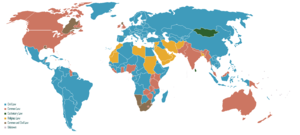 The common law constitutes the basis of the legal systems of: England and Wales
, Northern Ireland
, Ireland
, federal law in the United States and the law of individual U.S. state
s (except Louisiana
), federal law throughout Canada and the law of the individual provinces and territories
(except Quebec), Australia
(both federal and individual states), Kenya, New Zealand
, South Africa
, India, Malaysia
, Bangladesh
, Brunei, Pakistan
, Singapore
, Hong Kong, Antigua and Barbuda, Barbados, The Bahamas, Belize, Dominica, Grenada, Jamaica, St. Vincent and the Granadines, Saint Kitts and Nevis, Trinidad and Tobago, and many other generally English-speaking countries or Commonwealth
countries (except Scotland
, which is bijuridicial, and Malta
). Essentially, every country that was colonised at some time by England, Great Britain
, or the United Kingdom
uses common law except those that were formerly colonised by other nations, such as Quebec (which follows the law of France in part), South Africa
and Sri Lanka (which follow Roman Dutch law
), where the prior civil law system was retained to respect the civil rights
of the local colonists. India
uses common law except in the state of Goa
which retains the Portuguese civil code
. Guyana and Saint Lucia have mixed Common Law and Civil Law systems.
is often said to use the civil law system but it has a unique system
that combines elements of an uncodified civil law dating back to the Corpus Juris Civilis
with an element of common law long predating the Treaty of Union with England in 1707 (see Legal institutions of Scotland in the High Middle Ages
). Scots common law differs in that the use of precedents is subject to the courts' seeking to discover the principle that justifies a law rather than searching for an example as a precedent, and principles of natural justice
and fairness have always played a role in Scots Law. Comparable pluralistic (or 'mixed') legal systems operate in Quebec
, Louisiana
and South Africa
.
, which also has a civil law history from its Dutch colonial
days, also began a codification of its law in the 19th century. The only part of this codification process that was considered complete is known as the Field Code applying to civil procedure
. The original colony of New Netherlands was settled by the Dutch and the law was also Dutch. When the English
captured pre-existing colonies they continued to allow the local settlers to keep their civil law. However, the Dutch settlers revolted against the English and the colony was recaptured
by the Dutch. When the English finally regained control of New Netherland they forced, as a punishment unique in the history of the British Empire, the English common law upon all the colonists, including the Dutch. This was problematic, as the patroon
system of land holding, based on the feudal system
and civil law, continued to operate in the colony until it was abolished in the mid-19th century. The influence of Roman Dutch law
continued in the colony well into the late 19th century. The codification of a law of general obligations shows how remnants of the civil law tradition in New York
continued on from the Dutch days.
The U.S. state
of California
has a system based on common law, but it has codified the law in the manner of the civil law
jurisdictions. The reason for the enactment of the codes in California in the 19th century was to replace a pre-existing system based on Spanish
civil law with a system based on common law, similar to that in most other states. California and a number of other Western states
, however, have retained the concept of community property
derived from civil law. The California courts have treated portions of the codes as an extension of the common-law tradition, subject to judicial development in the same manner as judge-made common law. (Most notably, in the case Li v. Yellow Cab Co.
, 13 Cal.3d 804 (1975), the California Supreme Court adopted the principle of comparative negligence
in the face of a California Civil Code
provision codifying the traditional common-law doctrine of contributory negligence
.)
Instead of common law, the U.S. state
of Louisiana
uniquely uses a system based on the Napoleonic code
, remaining true to the state's French and Spanish roots, which predate the U.S. annexation of the Louisiana territory in 1803. Historically notable among the code's differences from the more typically implemented system of common law is the role of property rights among women, particularly in inheritance gained by widows.
federal government (as opposed to the states) has a variant on a common law system. United States federal courts
only act as interpreters of statutes and the constitution by elaborating and precisely defining the broad language (connotation 1(b) above), but, unlike state courts, do not act as an independent source of common law (connotation 1(a) above).
Before 1938, the federal courts, like almost all other common law courts, decided the law on any issue where the relevant legislature (either the U.S. Congress or state legislature, depending on the issue), had not acted, by looking to courts in the same system, that is, other federal courts, even on issues of state law, and even where there was no express grant of authority from Congress or the Constitution.
In 1938, the U.S. Supreme Court in Erie Railroad Co. v. Tompkins
304 U.S. 64, 78 (1938), overruled earlier precedent, and held "There is no federal general common law," thus confining the federal courts to act only as interpreters of law originating elsewhere. E.g., Texas Industries v. Radcliff, (without an express grant of statutory authority, federal courts cannot create rules of intuitive justice, for example, a right to contribution from co-conspirators). Post-1938, federal courts deciding issues that arise under state law are required to defer to state court interpretations of state statutes, or reason what a state's highest court would rule if presented with the issue, or to certify the question to the state's highest court for resolution.
Later courts have limited Erie slightly, to create a few situations where United States federal courts
are permitted to create federal common law
rules without express statutory authority, for example, where a federal rule of decision is necessary to protect uniquely federal interests, such as foreign affairs, or financial instruments issued by the federal government. See, e.g., Clearfield Trust Co. v. United States
, (giving federal courts the authority to fashion common law rules with respect to issues of federal power, in this case negotiable instrument
s backed by the federal government); see also International News Service v. Associated Press
, 248 U.S. 215 (1918) (creating a cause of action for misappropriation of "hot news" that lacks any statutory grounding, but that is one of the handful of federal common law actions that survives today); National Basketball Association v. Motorola, Inc., 105 F.3d 841, 843-44, 853 (2d Cir. 1997) (noting continued vitality of INS "hot news" tort under New York state law, but leaving open the question of whether it survives under federal law). Except on Constitutional issues, Congress is free to legislatively overrule federal courts' common law.
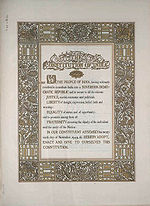 Indian Law is largely based on English
common law because of the long period of British colonial influence
during the period of the British Raj.
After the failed rebellion
against the British in 1857, the British Parliament took over the reign of India from the British East India Company
, and British India came under the direct rule of the Crown
. The British Parliament passed the Government of India Act of 1858
to this effect, which set up the structure of British government in India. It established in England
the office of the Secretary of State for India
through whom the Parliament would exercise its rule, along with a Council of India
to aid him. It also established the office of the Governor-General of India
along with an Executive Council in India, which consisted of high officials of the British Government.
Much of contemporary Indian law shows substantial European and American influence. Various legislations first introduced by the British are still in effect in their modified forms today. During the drafting of the Indian Constitution, laws from Ireland
, the United States
, Britain
, and France
were all synthesized to get a refined set of Indian laws, as it currently stands. Indian laws also adhere to the United Nations
guidelines on human rights law and the environmental law
. Certain international trade law
s, such as those on intellectual property
, are also enforced in India.
Indian family law
is complex, with each religion adhering to its own specific laws. In most states, registering marriages and divorces is not compulsory. There are separate laws governing Hindu
s, Muslim
s, Christian
s, Sikh
s and followers of other religions. The exception to this rule is in the state of Goa
, where a Portuguese
uniform civil code
is in place, in which all religions have a common law regarding marriages, divorces and adoption.
Ancient India
represented a distinct tradition of law
, and had an historically independent school of legal theory and practice. The Arthashastra
, dating from 400 BCE and the Manusmriti, from 100 CE, were influential treatises in India, texts that were considered authoritative legal guidance. Manu
's central philosophy was tolerance and pluralism, and was cited across Southeast Asia
. Early in this period, which finally culminated in the creation of the Gupta Empire, relations with ancient Greece and Rome were not infrequent. The appearance of similar fundamental institutions of international law in various parts of the world show that they are inherent in international society, irrespective of culture and tradition. Inter-State relations in the pre-Islamic period resulted in clear-cut rules of warfare of a high humanitarian standard, in rules of neutrality, of treaty law, of customary law embodied in religious charters, in exchange of embassies of a temporary or semi-permanent character. When India became part of the British Empire
, there was a break in tradition, and Hindu and Islamic law were supplanted by the common law. As a result, the present judicial system of the country derives largely from the British system and has little correlation to the institutions of the pre-British era.
There are 1160 laws as on September 2007
use a common law system (the exception being Quebec, which uses a civil law system for issues arising within provincial jurisdiction, such as property ownership and contracts). Criminal law, which is uniform throughout Canada, is based on the common law as interpreted by the Supreme Court of Canada
. The mid-tier Federal Court of Appeal
is a single court that sits and hears cases in multiple cities, and thus mid-tier decisions have precedential value throughout Canada (that is, unlike the United States, Canada is not divided into appellate circuits). Canadian federal statutes must use the terminology of both the common law and civil law for those matters; this is referred to as legislative bijuralism.
is undergoing codification, its basic principles are inherited from the law of the British Mandate of Palestine and thus resemble those of British and American law, namely: the role of courts in creating the body of law and the authority of the supreme court
in reviewing
and if necessary overturning legislative and executive decisions, as well as employing the adversarial system. One of the primary reasons that the Israeli constitution remains unwritten
is the fear by whatever party holds power that creating a written constitution, combined with the common-law elements, would severely limit the powers of the Knesset
(which, following the doctrine of parliamentary sovereignty
, holds near-unlimited power).
system, which is used in Continental Europe
, and most of the rest of the world. The contrast between civil law and common law legal systems has become increasingly blurred, with the growing importance of jurisprudence
(similar to case law
but not binding) in civil law countries, and the growing importance of statute law and codes in common law countries.
Examples of common law being replaced by statute or codified rule in the United States include criminal law (since 1812, U.S. courts have held that criminal law must be embodied in statute if the public is to have fair notice), commercial law
(the Uniform Commercial Code
in the early 1960s) and procedure (the Federal Rules of Civil Procedure
in the 1930s and the Federal Rules of Evidence
in the 1970s). But note that in each case, the statute sets the general principles, but the common law process determines the scope and application of the statute.
An example of convergence from the other direction is shown in Srl CILFIT and Lanificio di Gavardo SpA v Ministry of Health (Corte suprema di Cassazione, Italy, 1982), in which Italy's Supreme Court held that questions it has already answered need not be resubmitted. This brought in a distinctly common law principle into an essentially civil law jurisdiction. The Italian courts continue to follow this precedent and assume that the Supreme Court's rulings have precedential value.
The former Soviet Bloc and other Socialist countries used a Socialist law
system.
Much of the Muslim world
uses Sharia
.
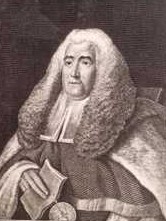 Lord Chief Justice Edward Coke
, a 17th-century English
jurist
and Member of Parliament
, wrote several legal texts that formed the basis for the modern common law, with lawyers in both England and America learning their law from his Institutes
and Reports until the end of the 18th century. His works are still cited by common law courts around the world.
The next definitive historical treatise on the common law is Commentaries on the Laws of England
, written by Sir William Blackstone
and first published in 1765 - 1769. Since 1979, a facsimile edition of that first edition has been available in four paper-bound volumes. Today it has been superseded in the English part of the United Kingdom
by Halsbury's Laws of England
that covers both common and statutory English law.
While he was still on the Massachusetts Supreme Judicial Court
, and before being named to the U.S. Supreme Court, Justice Oliver Wendell Holmes, Jr.
published a short volume called The Common Law
, which remains a classic in the field. Unlike Blackstone and the Restatements, Holmes' book only briefly discusses what the law is; rather, Holmes describes the common law process. Law professor John Chipman Gray
's The Nature and Sources of the Law, an examination and survey of the common law, is also still commonly read in U.S. law schools
.
In the United States, Restatements
of various subject matter areas (Contracts, Torts, Judgments, and so on.), edited by the American Law Institute
, collect the common law for the area. The ALI Restatements are often cited by American courts and lawyers for propositions of uncodified common law, and are considered highly persuasive authority, just below binding precedential decisions. The Corpus Juris Secundum
is an encyclopedia whose main content is a compendium of the common law and its variations throughout the various state jurisdictions.
Scots common law covers matters including murder and theft, and has sources in custom, in legal writings and previous court decisions. The legal writings used are called Institutional Texts and come mostly from the 17th, 18th and 19th centuries. Examples include Craig, Jus Feudale (1655) and Stair, The Institutions of the Law of Scotland (1681).
Law
Law is a system of rules and guidelines which are enforced through social institutions to govern behavior, wherever possible. It shapes politics, economics and society in numerous ways and serves as a social mediator of relations between people. Contract law regulates everything from buying a bus...
developed by judge
Judge
A judge is a person who presides over court proceedings, either alone or as part of a panel of judges. The powers, functions, method of appointment, discipline, and training of judges vary widely across different jurisdictions. The judge is supposed to conduct the trial impartially and in an open...
s through decisions
Legal opinion
In law, an opinion is usually a written explanation by a judge or group of judges that accompanies an order or ruling in a case, laying out the rationale and legal principles for the ruling....
of courts and similar tribunals rather than through legislative statutes or executive branch action
Executive (government)
Executive branch of Government is the part of government that has sole authority and responsibility for the daily administration of the state bureaucracy. The division of power into separate branches of government is central to the idea of the separation of powers.In many countries, the term...
. A "common law system" is a legal system
Legal systems of the world
The legal systems of the world today are generally based on one of three basic systems: civil law, common law, and religious law – or combinations of these...
that gives great precedential weight to common law, on the principle that it is unfair to treat similar facts differently on different occasions. The body of precedent
Precedent
In common law legal systems, a precedent or authority is a principle or rule established in a legal case that a court or other judicial body may apply when deciding subsequent cases with similar issues or facts...
is called "common law" and it binds future decisions. In cases where the parties disagree on what the law is, an idealized common law court looks to past precedent
Precedent
In common law legal systems, a precedent or authority is a principle or rule established in a legal case that a court or other judicial body may apply when deciding subsequent cases with similar issues or facts...
ial decisions of relevant courts. If a similar dispute has been resolved in the past, the court is bound
Binding precedent
In law, a binding precedent is a precedent which must be followed by all lower courts under common law legal systems. In English law it is usually created by the decision of a higher court, such as the Supreme Court of the United Kingdom, which took over the judicial functions of the House of...
to follow the reasoning used in the prior decision (this principle is known as stare decisis
Stare decisis
Stare decisis is a legal principle by which judges are obliged to respect the precedents established by prior decisions...
). If, however, the court finds that the current dispute is fundamentally distinct from all previous cases (called a "matter of first impression"), judges have the authority and duty to make law by creating precedent
Precedent
In common law legal systems, a precedent or authority is a principle or rule established in a legal case that a court or other judicial body may apply when deciding subsequent cases with similar issues or facts...
. Thereafter, the new decision becomes precedent, and will bind future courts.
In practice, common law systems are considerably more complicated than the idealized system described above. The decisions of a court are binding only in a particular jurisdiction
Jurisdiction
Jurisdiction is the practical authority granted to a formally constituted legal body or to a political leader to deal with and make pronouncements on legal matters and, by implication, to administer justice within a defined area of responsibility...
, and even within a given jurisdiction, some courts have more power than others. For example, in most jurisdictions, decisions by appellate courts are binding on lower courts in the same jurisdiction and on future decisions of the same appellate court, but decisions of lower courts are only non-binding persuasive authority. Interactions between common law, constitutional law
Constitutional law
Constitutional law is the body of law which defines the relationship of different entities within a state, namely, the executive, the legislature and the judiciary....
, statutory law
Statutory law
Statutory law or statute law is written law set down by a legislature or by a legislator .Statutes may originate with national, state legislatures or local municipalities...
and regulatory law also give rise to considerable complexity. However stare decisis
Stare decisis
Stare decisis is a legal principle by which judges are obliged to respect the precedents established by prior decisions...
, the principle that similar cases should be decided according to consistent principled rules so that they will reach similar results, lies at the heart of all common law systems.
Common law legal systems are in widespread use, particularly in England
Kingdom of England
The Kingdom of England was, from 927 to 1707, a sovereign state to the northwest of continental Europe. At its height, the Kingdom of England spanned the southern two-thirds of the island of Great Britain and several smaller outlying islands; what today comprises the legal jurisdiction of England...
where it originated in the Middle Ages, and in nations or regions that trace their legal heritage to England as former colonies of the British Empire
British Empire
The British Empire comprised the dominions, colonies, protectorates, mandates and other territories ruled or administered by the United Kingdom. It originated with the overseas colonies and trading posts established by England in the late 16th and early 17th centuries. At its height, it was the...
, including the United States
United States
The United States of America is a federal constitutional republic comprising fifty states and a federal district...
, Barbados
Barbados
Barbados is an island country in the Lesser Antilles. It is in length and as much as in width, amounting to . It is situated in the western area of the North Atlantic and 100 kilometres east of the Windward Islands and the Caribbean Sea; therein, it is about east of the islands of Saint...
, Malaysia, Singapore
Singapore
Singapore , officially the Republic of Singapore, is a Southeast Asian city-state off the southern tip of the Malay Peninsula, north of the equator. An island country made up of 63 islands, it is separated from Malaysia by the Straits of Johor to its north and from Indonesia's Riau Islands by the...
, Bangladesh
Bangladesh
Bangladesh , officially the People's Republic of Bangladesh is a sovereign state located in South Asia. It is bordered by India on all sides except for a small border with Burma to the far southeast and by the Bay of Bengal to the south...
, Pakistan
Pakistan
Pakistan , officially the Islamic Republic of Pakistan is a sovereign state in South Asia. It has a coastline along the Arabian Sea and the Gulf of Oman in the south and is bordered by Afghanistan and Iran in the west, India in the east and China in the far northeast. In the north, Tajikistan...
, Sri Lanka
Sri Lanka
Sri Lanka, officially the Democratic Socialist Republic of Sri Lanka is a country off the southern coast of the Indian subcontinent. Known until 1972 as Ceylon , Sri Lanka is an island surrounded by the Indian Ocean, the Gulf of Mannar and the Palk Strait, and lies in the vicinity of India and the...
, India
India
India , officially the Republic of India , is a country in South Asia. It is the seventh-largest country by geographical area, the second-most populous country with over 1.2 billion people, and the most populous democracy in the world...
, Ghana
Ghana
Ghana , officially the Republic of Ghana, is a country located in West Africa. It is bordered by Côte d'Ivoire to the west, Burkina Faso to the north, Togo to the east, and the Gulf of Guinea to the south...
, Cameroon
Cameroon
Cameroon, officially the Republic of Cameroon , is a country in west Central Africa. It is bordered by Nigeria to the west; Chad to the northeast; the Central African Republic to the east; and Equatorial Guinea, Gabon, and the Republic of the Congo to the south. Cameroon's coastline lies on the...
, Canada
Canada
Canada is a North American country consisting of ten provinces and three territories. Located in the northern part of the continent, it extends from the Atlantic Ocean in the east to the Pacific Ocean in the west, and northward into the Arctic Ocean...
, Ireland
Law of the Republic of Ireland
The law of the Republic of Ireland consists of constitutional, statute and common law. The highest law in the Republic is the Constitution of Ireland, from which all other law derives its authority...
, New Zealand
New Zealand
New Zealand is an island country in the south-western Pacific Ocean comprising two main landmasses and numerous smaller islands. The country is situated some east of Australia across the Tasman Sea, and roughly south of the Pacific island nations of New Caledonia, Fiji, and Tonga...
, South Africa
South Africa
The Republic of South Africa is a country in southern Africa. Located at the southern tip of Africa, it is divided into nine provinces, with of coastline on the Atlantic and Indian oceans...
, Zimbabwe
Zimbabwe
Zimbabwe is a landlocked country located in the southern part of the African continent, between the Zambezi and Limpopo rivers. It is bordered by South Africa to the south, Botswana to the southwest, Zambia and a tip of Namibia to the northwest and Mozambique to the east. Zimbabwe has three...
, Hong Kong
Hong Kong
Hong Kong is one of two Special Administrative Regions of the People's Republic of China , the other being Macau. A city-state situated on China's south coast and enclosed by the Pearl River Delta and South China Sea, it is renowned for its expansive skyline and deep natural harbour...
, and Australia
Australia
Australia , officially the Commonwealth of Australia, is a country in the Southern Hemisphere comprising the mainland of the Australian continent, the island of Tasmania, and numerous smaller islands in the Indian and Pacific Oceans. It is the world's sixth-largest country by total area...
.
Primary connotations
The term common law has three main connotations and several historical meanings worth mentioning:1. Common law as opposed to statutory law and regulatory law
Connotation 1 distinguishes the authority that promulgated a law. For example, most areas of law in most Anglo-American jurisdictionJurisdiction
Jurisdiction is the practical authority granted to a formally constituted legal body or to a political leader to deal with and make pronouncements on legal matters and, by implication, to administer justice within a defined area of responsibility...
s include "statutory law
Statute
A statute is a formal written enactment of a legislative authority that governs a state, city, or county. Typically, statutes command or prohibit something, or declare policy. The word is often used to distinguish law made by legislative bodies from case law, decided by courts, and regulations...
" enacted by a legislature
Legislature
A legislature is a kind of deliberative assembly with the power to pass, amend, and repeal laws. The law created by a legislature is called legislation or statutory law. In addition to enacting laws, legislatures usually have exclusive authority to raise or lower taxes and adopt the budget and...
, "regulatory law" promulgated by executive branch agencies pursuant to delegation of rule-making authority from the legislature, and common law or "case law
Case law
In law, case law is the set of reported judicial decisions of selected appellate courts and other courts of first instance which make new interpretations of the law and, therefore, can be cited as precedents in a process known as stare decisis...
", i.e., decisions issued by courts (or quasi-judicial tribunal
Tribunal
A tribunal in the general sense is any person or institution with the authority to judge, adjudicate on, or determine claims or disputes—whether or not it is called a tribunal in its title....
s within agencies). This first connotation can be further differentiated into (a) pure common law arising from the traditional and inherent authority of courts to define what the law is, even in absence of an underlying statute, e.g., most criminal law
Criminal law
Criminal law, is the body of law that relates to crime. It might be defined as the body of rules that defines conduct that is not allowed because it is held to threaten, harm or endanger the safety and welfare of people, and that sets out the punishment to be imposed on people who do not obey...
and procedural law
Procedural law
Procedural law or adjective law comprises the rules by which a court hears and determines what happens in civil lawsuit, criminal or administrative proceedings. The rules are designed to ensure a fair and consistent application of due process or fundamental justice to all cases that come before...
before the 20th century, and even today, most of contract law and the law of torts, and (b) court decisions that interpret and decide the fine boundaries and distinctions in law promulgated by other bodies. This body of common law, sometimes called "interstitial common law," includes judicial interpretations of the Constitution
Constitution
A constitution is a set of fundamental principles or established precedents according to which a state or other organization is governed. These rules together make up, i.e. constitute, what the entity is...
, of statutes, and of regulations, and examples of application of law to facts.
2. Common law legal systems as opposed to civil law legal systems
Connotation 2 differentiates "common law" jurisdictions and legal systems from "civil lawCivil law (legal system)
Civil law is a legal system inspired by Roman law and whose primary feature is that laws are codified into collections, as compared to common law systems that gives great precedential weight to common law on the principle that it is unfair to treat similar facts differently on different...
" or "code" jurisdictions. Common law systems place great weight on court decisions, which are considered "law" with the same force of law as statutes—for nearly a millennium, common law courts have had the authority to make law where no legislative statute exists, and statutes mean what courts interpret them to mean. By contrast, in civil law jurisdictions (the legal tradition that prevails in, or is combined with common law in, Europe and most non-Islamic, non-common law countries), courts lack authority to act where there is no statute, and judicial precedent is given less interpretive weight (which means that a judge deciding a given case has more freedom to interpret the text of a statute independently, and less predictably), and scholarly literature is given more. For example, the Napoleonic code
Napoleonic code
The Napoleonic Code — or Code Napoléon — is the French civil code, established under Napoléon I in 1804. The code forbade privileges based on birth, allowed freedom of religion, and specified that government jobs go to the most qualified...
expressly forbade French judges from pronouncing general principles of law.
As a rough rule of thumb
Rule of thumb
A rule of thumb is a principle with broad application that is not intended to be strictly accurate or reliable for every situation. It is an easily learned and easily applied procedure for approximately calculating or recalling some value, or for making some determination...
, common law systems trace their history to England, while civil law systems trace their history to Roman law
Roman law
Roman law is the legal system of ancient Rome, and the legal developments which occurred before the 7th century AD — when the Roman–Byzantine state adopted Greek as the language of government. The development of Roman law comprises more than a thousand years of jurisprudence — from the Twelve...
and the Napoleonic Code
Napoleonic code
The Napoleonic Code — or Code Napoléon — is the French civil code, established under Napoléon I in 1804. The code forbade privileges based on birth, allowed freedom of religion, and specified that government jobs go to the most qualified...
.
The contrast between common law and civil law systems is elaborated in "Contrasts between common law and civil law systems" and "Alternatives to common law systems", below.
3. Law as opposed to equity
This connotation differentiates "common law" (or just "law") from "equity". Before 1873, EnglandEngland and Wales
England and Wales is a jurisdiction within the United Kingdom. It consists of England and Wales, two of the four countries of the United Kingdom...
had two parallel court systems: courts of "law" that could only award money damages and recognized only the legal owner of property, and courts of "equity" (courts of chancery) that could issue injunctive relief
Injunction
An injunction is an equitable remedy in the form of a court order that requires a party to do or refrain from doing certain acts. A party that fails to comply with an injunction faces criminal or civil penalties and may have to pay damages or accept sanctions...
(that is, a court order
Court order
A court order is an official proclamation by a judge that defines the legal relationships between the parties to a hearing, a trial, an appeal or other court proceedings. Such ruling requires or authorizes the carrying out of certain steps by one or more parties to a case...
to a party to do something, give something to someone, or stop doing something) and recognized trusts of property. This split propagated to many of the colonies, including the United States (see "Reception Statutes", below). For most purposes, most jurisdictions, including the U.S. federal system and most states, have merged the two courts. Additionally, even before the separate courts were merged together, most courts were permitted to apply both law and equity, though under potentially different procedural law. Nonetheless, the historical distinction between "law" and "equity" remains important today when the case involves issues such as the following:
- categorizing and prioritizing rights to property—for example, the same article of property often has a "legal title" and an "equitable title," and these two groups of ownership rights may be held by different people.
- in the United States, determining whether the Seventh Amendment'sSeventh Amendment to the United States ConstitutionThe Seventh Amendment to the United States Constitution, which was ratified as part of the Bill of Rights, codifies the right to a jury trial in certain civil cases. However, in some civil cases, the Supreme Court has not incorporated the right to a jury trial to the states in the fashion which...
right to a jury trialJury trialA jury trial is a legal proceeding in which a jury either makes a decision or makes findings of fact which are then applied by a judge...
applies (a determination of a fact necessary to resolution of a "common law" claim) or whether the issue will be decided by a judgeJudgeA judge is a person who presides over court proceedings, either alone or as part of a panel of judges. The powers, functions, method of appointment, discipline, and training of judges vary widely across different jurisdictions. The judge is supposed to conduct the trial impartially and in an open...
(issues of what the law is, and all issues relating to equity). - the standard of review and degree of deference given by an appellate tribunal to the decision of the lower tribunal under review (issues of law are reviewed de novo, that is, "as if new" from scratch by the appellate tribunal, while most issues of equity are reviewed for "abuse of discretion," that is, with great deference to the tribunal below).
- the remedies available and rules of procedure to be applied.
4. Historical uses
In addition, there are several historical uses of the term that provide some background as to its meaning. The English Court of Common PleasCourt of Common Pleas (England)
The Court of Common Pleas, or Common Bench, was a common law court in the English legal system that covered "common pleas"; actions between subject and subject, which did not concern the king. Created in the late 12th to early 13th century after splitting from the Exchequer of Pleas, the Common...
dealt with lawsuits in which the King had no interest, i.e. between commoners. Additionally, from at least the 11th century and continuing for several centuries after that, there were several different circuits in the royal court system, served by itinerant judges who would travel from town to town dispensing the King's justice. The term "common law" was used to describe the law held in common between the circuits and the different stops in each circuit. The more widely a particular law was recognized, the more weight it held, whereas purely local customs were generally subordinate to law recognized in a plurality of jurisdictions. These definitions are archaic, their relevance having dissipated with the development of the English legal system over the centuries, but they do explain the origin of the term.
Common law adjudication
In a common law jurisdiction several stages of research and analysis are required to determine "what the law is" in a given situation. First, one must ascertain the facts. Then, one must locate any relevant statutes and cases. Then one must extract the principles, analogies and statements by various courts of what they consider important to determine how the next court is likely to rule on the facts of the present case. Later decisions, and decisions of higher courts or legislatures carry more weight than earlier cases and those of lower courts. Finally, one integrates all the lines drawn and reasons given, and determines "what the law is". Then, one applies that law to the facts.The common law evolves to meet changing social needs and improved understanding
The common law is more malleable than statutory law. First, common law courts are not absolutely bound by precedent, but can (when extraordinarily good reason is shown) reinterpret and revise the law, without legislative intervention, to adapt to new trends in political, legal and social philosophySocial philosophy
Social philosophy is the philosophical study of questions about social behavior . Social philosophy addresses a wide range of subjects, from individual meanings to legitimacy of laws, from the social contract to criteria for revolution, from the functions of everyday actions to the effects of...
. Second, the common law evolves through a series of gradual steps
Incrementalism
Incrementalism is a method of working by adding to a project using many small , incremental changes instead of a few large jumps. Wikipedia, for example, illustrates the concept by building an encyclopedia bit by bit, continually adding to it...
, that gradually works out all the details, so that over a decade or more, the law can change substantially but without a sharp break, thereby reducing disruptive effects. In contrast to common law incrementalism, the legislative process is very difficult to get started, as legislatures tend to delay action until a situation is totally intolerable. For these reasons, legislative changes tend to be large, jarring and disruptive (sometimes positively, sometimes negatively, and sometimes with unintended consequences).
One example of the gradual change that typifies the common law is the gradual change in liability for negligence. For example, the traditional common law rule through most of the 19th century was that a plaintiff could not recover for a defendant's negligent production or distribution of a harmful instrumentality unless the two were in privity of contract
Privity of contract
The doctrine of privity in the common law of contract provides that a contract cannot confer rights or impose obligations arising under it on any person or agent except the parties to it....
. Thus, only the immediate purchaser could recover for a product defect, and if a part was built up out of parts from parts manufacturers, the ultimate buyer could not recover for injury caused by a defect in the part. In an 1842 English case, Winterbottom v. Wright
Winterbottom v. Wright
Winterbottom v Wright 10 M&W 109 was an important case in English common law responsible for constraining the law's stance on negligence in the nineteenth century.-Facts:...
, the postal service had contracted with Wright to maintain its coaches. Winterbottom was a driver for the post. When the coach failed and injured Winterbottom, he sued Wright. The Winterbottom court recognized that there would be "absurd and outrageous consequences" if an injured person could sue any person peripherally involved, and knew it had to draw a line somewhere, a limit on the causal connection between the negligent conduct and the injury. The court looked to the contractual relationships, and held that liability would only flow as far as the person in immediate contract ("privity") with the negligent party.
A first exception to this rule arose in an 1852 case by New York's highest court, Thomas v. Winchester, which held that mislabeling a poison as an innocuous herb, and then selling the mislabeled poison through a dealer who would be expected to resell it, put "human life in imminent danger." Thomas used this as a reason to create an exception to the "privity" rule. In, 1909, New York held in Statler v. Ray Mfg. Co. that a coffee urn manufacturer was liable to a person injured when the urn exploded, because the urn "was of such a character inherently that, when applied to the purposes for which it was designed, it was liable to become a source of great danger to many people if not carefully and properly constructed."
Yet the privity rule survived. In Cadillac Motor Car Co. v. Johnson, (decided in 1915 by the federal appeals court for New York and several neighboring states), the court held that a car owner could not recover for injuries from a defective wheel, when the automobile owner had a contract only with the automobile dealer and not with the manufacturer, even though there was "no question that the wheel was made of dead and ‘dozy‘ wood, quite insufficient for its purposes." The Cadillac court was willing to acknowledge that the case law supported exceptions for "an article dangerous in its nature or likely to become so in the course of the ordinary usage to be contemplated by the vendor." However, held the Cadillac court, "one who manufactures articles dangerous only if defectively made, or installed, e.g., tables, chairs, pictures or mirrors hung on the walls, carriages, automobiles, and so on, is not liable to third parties for injuries caused by them, except in case of willful injury or fraud,"
Finally, in the famous case of MacPherson v. Buick Motor Co., in 1916, Judge Benjamin Cardozo for New York's highest court pulled a broader principle out of these predecessor cases. The facts were almost identical to Cadillac a year earlier: a wheel from a wheel manufacturer was sold to Buick, to a dealer, to MacPherson, and the wheel failed, injuring MacPherson. Judge Cardozo held:
Note that Cardozo's new "rule" exists in no prior case, but is inferrable as a synthesis of the "thing of danger" principle stated in them, merely extending it to "foreseeable danger" even if "the purposes for which it was designed" were not themselves "a source of great danger." MacPherson takes some care to present itself as foreseeable progression, not a wild departure. Note that Judge Cardozo continues to adhere to the original principle of Winterbottom
Winterbottom v. Wright
Winterbottom v Wright 10 M&W 109 was an important case in English common law responsible for constraining the law's stance on negligence in the nineteenth century.-Facts:...
, that "absurd and outrageous consequences" must be avoided, and he does so by drawing a new line in the last sentence quoted above: "There must be knowledge of a danger, not merely possible, but probable." But while adhering to the underlying principle that some boundary is necessary, MacPherson
MacPherson v. Buick Motor Co.
MacPherson v. Buick Motor Co., 217 N.Y. 382, 111 N.E. 1050 is a famous New York Court of Appeals opinion by Judge Benjamin N. Cardozo which removed the requirement of privity of contract for duty in negligence actions.-Facts:...
overruled the prior common law by rendering the formerly dominant factor in the boundary, that is, the privity formality arising out of a contractual relationship between persons, totally irrelevant. Rather, the most important factor in the boundary would be the nature of the thing sold and the foreseeable uses that downstream purchasers would make of the thing.
This illustrates two crucial principles that are often not well understood by non-lawyers. (a) The law evolves, this evolution is in the hands of judges, and judges have "made law" for hundreds of years. (b) The reasons given for a decision are often more important in the long run than the outcome in a particular case. This is the reason that judicial opinions are usually quite long, and give rationales and policies that can be balanced with judgment in future cases, rather than the bright-line rules usually embodied in statutes.
Interaction of constitutional, statutory and common law
In common law legal systems (connotation 2), the common law (connotation 1) is crucial to understanding almost all important areas of law. For example, in England and WalesEnglish law
English law is the legal system of England and Wales, and is the basis of common law legal systems used in most Commonwealth countries and the United States except Louisiana...
and in most states of the United States
Law of the United States
The law of the United States consists of many levels of codified and uncodified forms of law, of which the most important is the United States Constitution, the foundation of the federal government of the United States...
, the basic law of contract
Contract
A contract is an agreement entered into by two parties or more with the intention of creating a legal obligation, which may have elements in writing. Contracts can be made orally. The remedy for breach of contract can be "damages" or compensation of money. In equity, the remedy can be specific...
s, tort
Tort
A tort, in common law jurisdictions, is a wrong that involves a breach of a civil duty owed to someone else. It is differentiated from a crime, which involves a breach of a duty owed to society in general...
s and property
Property
Property is any physical or intangible entity that is owned by a person or jointly by a group of people or a legal entity like a corporation...
do not exist in statute, but only in common law (though there may be isolated modifications enacted by statute). As another example, the Supreme Court of the United States
Supreme Court of the United States
The Supreme Court of the United States is the highest court in the United States. It has ultimate appellate jurisdiction over all state and federal courts, and original jurisdiction over a small range of cases...
in 1877, held that a Michigan
Michigan
Michigan is a U.S. state located in the Great Lakes Region of the United States of America. The name Michigan is the French form of the Ojibwa word mishigamaa, meaning "large water" or "large lake"....
statute that established rules for solemnization of marriages did not abolish pre-existing common-law marriage, because the statute did not affirmatively require statutory solemnization and was silent as to preexisting common law. In almost all areas of the law (even those where there is a statutory framework, such as contracts for the sale of goods, or the criminal law), legislature-enacted statutes generally give only terse statements of general principle, and the fine boundaries and definitions exist only in the common law (connotation 1). To find out what the precise law is that applies to a particular set of facts, one has to locate precedent
Precedent
In common law legal systems, a precedent or authority is a principle or rule established in a legal case that a court or other judicial body may apply when deciding subsequent cases with similar issues or facts...
ial decisions on the topic, and reason from those decisions by analogy
Analogy
Analogy is a cognitive process of transferring information or meaning from a particular subject to another particular subject , and a linguistic expression corresponding to such a process...
. To consider but one example, the First Amendment to the United States Constitution
First Amendment to the United States Constitution
The First Amendment to the United States Constitution is part of the Bill of Rights. The amendment prohibits the making of any law respecting an establishment of religion, impeding the free exercise of religion, abridging the freedom of speech, infringing on the freedom of the press, interfering...
states "Congress
United States Congress
The United States Congress is the bicameral legislature of the federal government of the United States, consisting of the Senate and the House of Representatives. The Congress meets in the United States Capitol in Washington, D.C....
shall make no law respecting an establishment of religion, or prohibiting the free exercise thereof"—but interpretation (that is, determining the fine boundaries, and resolving the tension between the "establishment" and "free exercise" clauses) of each of the important terms was delegated by Article III of the Constitution to the judicial branch, so that the current legal boundaries of the Constitutional text can only be determined by consulting the common law.
In common law jurisdictions, legislatures operate under the assumption that statute
Statute
A statute is a formal written enactment of a legislative authority that governs a state, city, or county. Typically, statutes command or prohibit something, or declare policy. The word is often used to distinguish law made by legislative bodies from case law, decided by courts, and regulations...
s will be interpreted against the backdrop of the pre-existing common law and custom. For example, in most U.S. states, the criminal statutes are primarily codification of pre-existing common law. (Codification is the process of enacting a statute that collects and restates pre-existing law in a single document—when that pre-existing law is common law, the common law remains relevant to the interpretation of these statutes.) In reliance on this assumption, modern statutes often leave a number of terms and fine distinctions unstated—for example, a statute might be very brief, leaving the precise definition of terms unstated, under the assumption that these fine distinctions will be inherited from pre-existing common law. (For this reason, many modern American law schools teach the common law of crime as it stood in England in 1789, because that centuries-old English common law is a necessary foundation to interpreting modern criminal statutes.)
With the transition from English law, which had common law crimes, to the new legal system under the U.S. Constitution, which prohibited ex post facto laws
Ex post facto law
An ex post facto law or retroactive law is a law that retroactively changes the legal consequences of actions committed or relationships that existed prior to the enactment of the law...
at both the federal and state level, the question was raised whether there could be common law crimes in the United States. It was settled in the case of United States v. Hudson and Goodwin
United States v. Hudson and Goodwin
United States v. Hudson and Goodwin, 11 U.S. 32 , was a case in which the United States Supreme Court held that Congress must first enact a law criminalizing an activity, attach a penalty, and give the federal courts jurisdiction over the offense in order for the court to render a...
, , which decided that federal courts had no jurisdiction to define new common law crimes, and that there must always be a (constitutional) statute defining the offense and the penalty for it.
Still, many states retain selected common law crimes. For example, in Virginia, the definition of the conduct that constitutes the crime of robbery exists only in the common law, and the robbery statute only sets the punishment. Virginia Code
Code of Virginia
The Code of Virginia is the statutory law of the U.S. state of Virginia, and consists of the codified legislation of the Virginia General Assembly. The 1950 Code of Virginia is the revision currently in force...
section 1-200 establishes the continued existence and vitality of common law principles and provides that "The common law of England, insofar as it is not repugnant to the principles of the Bill of Rights and Constitution of this Commonwealth, shall continue in full force within the same, and be the rule of decision, except as altered by the General Assembly."
By contrast to statutory codification of common law, some statutes displace common law, for example to create a new cause of action
Cause of action
In the law, a cause of action is a set of facts sufficient to justify a right to sue to obtain money, property, or the enforcement of a right against another party. The term also refers to the legal theory upon which a plaintiff brings suit...
that did not exist in the common law, or to legislatively overrule the common law. An example is the tort
Tort
A tort, in common law jurisdictions, is a wrong that involves a breach of a civil duty owed to someone else. It is differentiated from a crime, which involves a breach of a duty owed to society in general...
of wrongful death, which allows certain persons, usually a spouse, child or estate
Estate (law)
An estate is the net worth of a person at any point in time. It is the sum of a person's assets - legal rights, interests and entitlements to property of any kind - less all liabilities at that time. The issue is of special legal significance on a question of bankruptcy and death of the person...
, to sue for damages on behalf of the deceased. There is no such tort in English common law; thus, any jurisdiction that lacks a wrongful death statute will not allow a lawsuit for the wrongful death of a loved one. Where a wrongful death statute exists, the compensation or other remedy available is limited to the remedy specified in the statute (typically, an upper limit on the amount of damages). Courts generally interpret statutes that create new causes of action narrowly – that is, limited to their precise terms—because the courts generally recognize the legislature as being supreme in deciding the reach of judge-made law unless such statute should violate some "second order" constitutional law
Constitutional law
Constitutional law is the body of law which defines the relationship of different entities within a state, namely, the executive, the legislature and the judiciary....
provision (cf. judicial activism
Judicial activism
Judicial activism describes judicial ruling suspected of being based on personal or political considerations rather than on existing law. It is sometimes used as an antonym of judicial restraint. The definition of judicial activism, and which specific decisions are activist, is a controversial...
).
Where a tort is rooted in common law, all traditionally recognized damages for that tort may be sued for, whether or not there is mention of those damages
Damages
In law, damages is an award, typically of money, to be paid to a person as compensation for loss or injury; grammatically, it is a singular noun, not plural.- Compensatory damages :...
in the current statutory law
Statutory law
Statutory law or statute law is written law set down by a legislature or by a legislator .Statutes may originate with national, state legislatures or local municipalities...
. For instance, a person who sustains bodily injury through the negligence
Negligence
Negligence is a failure to exercise the care that a reasonably prudent person would exercise in like circumstances. The area of tort law known as negligence involves harm caused by carelessness, not intentional harm.According to Jay M...
of another may sue for medical costs, pain, suffering, loss of earnings or earning capacity, mental and/or emotional distress, loss of quality of life
Quality of life
The term quality of life is used to evaluate the general well-being of individuals and societies. The term is used in a wide range of contexts, including the fields of international development, healthcare, and politics. Quality of life should not be confused with the concept of standard of...
, disfigurement and more. These damages need not be set forth in statute as they already exist in the tradition of common law. However, without a wrongful death statute, most of them are extinguished upon death.
In the United States, the power of the federal judiciary to review and invalidate unconstitutional acts of the federal executive branch is stated in the constitution, Article III sections 1 and 2: "The judicial Power of the United States, shall be vested in one supreme Court, and in such inferior Courts as the Congress may from time to time ordain and establish. ... The judicial Power shall extend to all Cases, in Law and Equity, arising under this Constitution, the Laws of the United States, and Treaties made, or which shall be made, under their Authority..." The first famous statement of "the judicial power" was Marbury v. Madison
Marbury v. Madison
Marbury v. Madison, is a landmark case in United States law and in the history of law worldwide. It formed the basis for the exercise of judicial review in the United States under Article III of the Constitution. It was also the first time in Western history a court invalidated a law by declaring...
, . Later cases interpreted the "judicial power" of Article III to establish the power of federal courts to consider or overturn any action of Congress or of any state that conflicts with the Constitution.
Overruling precedent—the limits of stare decisis
The United States federal courts are divided into twelve regional circuits, each with a circuit court of appeals (plus a thirteenth, the Court of Appeals for the Federal Circuit, which hears appeals in patent cases and cases against the federal government, without geographic limitation). Decisions of one circuit court are binding on the district courts within the circuit and on the circuit court itself, but are only persuasive authority on sister circuits. District court decisions are not binding precedent at all, only persuasive.Most of the U.S. federal courts of appeal have adopted a rule under which, in the event of any conflict in decisions of panels (most of the courts of appeal almost always sit in panels of three), the earlier panel decision is controlling, and a panel decision may only be overruled by the court of appeals sitting en banc (that is, all active judges of the court) or by a higher court. In these courts, the older decision remains controlling when an issue comes up the third time.
Other courts, for example, the Court of Customs and Patent Appeals and the Supreme Court, always sit en banc, and thus the later decision controls. These courts essentially overrule all previous cases in each new case, and older cases survive only to the extent they do not conflict with newer cases. The interpretations of these courts - for example, Supreme Court interpretations of the constitution or federal statutes - are stable only so long as the older interpretation maintains the support of a majority of the court. The majority may persist through some combination of belief that the old decision is right, and that it is not sufficiently wrong to be overruled.
In the UK, since 2009, the Supreme Court of the United Kingdom
Supreme Court of the United Kingdom
The Supreme Court of the United Kingdom is the supreme court in all matters under English law, Northern Ireland law and Scottish civil law. It is the court of last resort and highest appellate court in the United Kingdom; however the High Court of Justiciary remains the supreme court for criminal...
has the authority to overrule and unify decisions of lower courts. From 1966 to 2009, this power
Judicial functions of the House of Lords
The House of Lords, in addition to having a legislative function, historically also had a judicial function. It functioned as a court of first instance for the trials of peers, for impeachment cases, and as a court of last resort within the United Kingdom. In the latter case the House's...
lay with the House of Lords
House of Lords
The House of Lords is the upper house of the Parliament of the United Kingdom. Like the House of Commons, it meets in the Palace of Westminster....
, granted by the Practice Statement of 1966.
Canada's system, described below, avoids the regional variability of federal law.
Common law as a foundation for commercial economies
The reliance on judicial opinion is a strength of common law systems, and is a significant contributor to the robust commercial systems in the United Kingdom and United States. Because there is common law to give reasonably precise guidance on almost every issue, parties (especially commercial parties) can predict whether a proposed course of action is likely to be lawful or unlawful. This ability to predict gives more freedom to come close to the boundaries of the law. For example, many commercial contracts are more economically efficient, and create greater wealth, because the parties know ahead of time that the proposed arrangement, though perhaps close to the line, is almost certainly legal. Newspapers, taxpayer-funded entities with some religious affiliation, and political parties can obtain fairly clear guidance on the boundaries within which their freedom of expressionFreedom of speech
Freedom of speech is the freedom to speak freely without censorship. The term freedom of expression is sometimes used synonymously, but includes any act of seeking, receiving and imparting information or ideas, regardless of the medium used...
rights apply.
In contrast, in non-common-law countries, and jurisdictions with very weak respect for precedent (example, the U.S. Patent Office
United States Patent and Trademark Office
The United States Patent and Trademark Office is an agency in the United States Department of Commerce that issues patents to inventors and businesses for their inventions, and trademark registration for product and intellectual property identification.The USPTO is based in Alexandria, Virginia,...
), fine questions of law
Question of law
In jurisprudence, a question of law is a question which must be answered by applying relevant legal principles, by an interpretation of the law. Such a question is distinct from a question of fact, which must be answered by reference to facts and evidence, and inferences arising from those facts...
are redetermined anew each time they arise, making consistency and prediction more difficult, and procedures far more protracted than necessary because parties cannot rely on written statements of law as reliable guides. In jurisdictions that do not have a strong allegiance to a large body of precedent, parties have less a priori guidance and must often leave a bigger "safety margin" of unexploited opportunities, and final determinations are reached only after far larger expenditures on legal fees by the parties.
This is the reason for the frequent choice of the law of the State of New York in commercial contracts. Commercial contracts almost always include a "choice of law clause" to reduce uncertainty. Somewhat surprisingly, contracts throughout the world (for example, contracts involving parties in Japan, France and Germany, and from most of the other states of the United States) often choose the law of New York, even where the relationship of the parties and transaction to New York is quite attenuated. Because of its history as the nation's commercial center, New York common law has a depth and predictability not (yet) available in any other jurisdiction. Similarly, corporations are often formed under Delaware corporate law
Corporations law
Companies law is the field of law concerning companies and other business organizations. This includes corporations, partnerships and other associations which usually carry on some form of economic or charitable activity. The most prominent kind of company, usually referred to as a "corporation",...
, and contracts relating to corporate law issues (merger and acquisitions
Mergers and acquisitions
Mergers and acquisitions refers to the aspect of corporate strategy, corporate finance and management dealing with the buying, selling, dividing and combining of different companies and similar entities that can help an enterprise grow rapidly in its sector or location of origin, or a new field or...
of companies, rights of shareholders, and so on.) include a Delaware choice of law
Choice of law
Choice of law is a procedural stage in the litigation of a case involving the conflict of laws when it is necessary to reconcile the differences between the laws of different legal jurisdictions, such as sovereign states, federated states , or provinces...
clause, because of the deep body of law in Delaware on these issues. On the other hand, some other jurisdictions have sufficiently developed bodies of law so that parties have no real motivation to choose the law of a foreign jurisdiction (for example, England and Wales, and the state of California), but not yet so fully developed that parties with no relationship to the jurisdiction choose that law. The common theme in each case is that commercial parties seek predictability and simplicity in their contractual relations, and frequently choose the law of a common law jurisdiction with a well-developed body of common law to achieve that result.
Likewise, for litigation of commercial disputes arising out of unpredictable torts (as opposed to the prospective choice of law clauses in contracts discussed in the previous paragraph), certain jurisdictions attract an unusually high fraction of cases, because of the predictability afforded by the depth of decided cases. For example, London
London
London is the capital city of :England and the :United Kingdom, the largest metropolitan area in the United Kingdom, and the largest urban zone in the European Union by most measures. Located on the River Thames, London has been a major settlement for two millennia, its history going back to its...
is considered the pre-eminent centre for litigation of admiralty
Admiralty law
Admiralty law is a distinct body of law which governs maritime questions and offenses. It is a body of both domestic law governing maritime activities, and private international law governing the relationships between private entities which operate vessels on the oceans...
cases.
This is not to say that common law is better in every situation. For example, civil law can be clearer than case law when the legislature has had the foresight and diligence to address the precise set of facts applicable to a particular situation. For that reason, civil law statutes tend to be somewhat more detailed than statutes written by common law legislatures – but, conversely, that tends to make the statute more difficult to read (the United States tax code is an example). Nonetheless, as a practical matter, no civil law legislature can ever address the full spectrum of factual possibilities in the breadth, depth and detail of the case law of the common law courts of even a smaller jurisdiction, and that deeper, more complete body of law provides additional predictability that promotes commerce.
History
The term "common law" originally derives from the reign of Henry II of EnglandHenry II of England
Henry II ruled as King of England , Count of Anjou, Count of Maine, Duke of Normandy, Duke of Aquitaine, Duke of Gascony, Count of Nantes, Lord of Ireland and, at various times, controlled parts of Wales, Scotland and western France. Henry, the great-grandson of William the Conqueror, was the...
, in the 1150s and 1160s. The "common law" was the law that emerged as "common" throughout the realm (as distinct from the various legal codes that preceded it, such as Mercian law
Mercia
Mercia was one of the kingdoms of the Anglo-Saxon Heptarchy. It was centred on the valley of the River Trent and its tributaries in the region now known as the English Midlands...
, the Danelaw
Danelaw
The Danelaw, as recorded in the Anglo-Saxon Chronicle , is a historical name given to the part of England in which the laws of the "Danes" held sway and dominated those of the Anglo-Saxons. It is contrasted with "West Saxon law" and "Mercian law". The term has been extended by modern historians to...
and the law of Wessex
Wessex
The Kingdom of Wessex or Kingdom of the West Saxons was an Anglo-Saxon kingdom of the West Saxons, in South West England, from the 6th century, until the emergence of a united English state in the 10th century, under the Wessex dynasty. It was to be an earldom after Canute the Great's conquest...
) as the king's judges followed each other's decisions to create a unified common law throughout England. The doctrine of precedent developed during the 12th and 13th centuries, as the collective judicial decisions that were based in tradition
Tradition
A tradition is a ritual, belief or object passed down within a society, still maintained in the present, with origins in the past. Common examples include holidays or impractical but socially meaningful clothes , but the idea has also been applied to social norms such as greetings...
, custom
Custom (law)
Custom in law is the established pattern of behavior that can be objectively verified within a particular social setting. A claim can be carried out in defense of "what has always been done and accepted by law." Customary law exists where:...
and precedent
Precedent
In common law legal systems, a precedent or authority is a principle or rule established in a legal case that a court or other judicial body may apply when deciding subsequent cases with similar issues or facts...
.
The form of reasoning used in common law is known as casuistry
Casuistry
In applied ethics, casuistry is case-based reasoning. Casuistry is used in juridical and ethical discussions of law and ethics, and often is a critique of principle- or rule-based reasoning...
or case-based reasoning
Case-based reasoning
Case-based reasoning , broadly construed, is the process of solving new problems based on the solutions of similar past problems. An auto mechanic who fixes an engine by recalling another car that exhibited similar symptoms is using case-based reasoning...
. The common law, as applied in civil cases (as distinct from criminal cases), was devised as a means of compensating
Damages
In law, damages is an award, typically of money, to be paid to a person as compensation for loss or injury; grammatically, it is a singular noun, not plural.- Compensatory damages :...
someone for wrongful acts known as tort
Tort
A tort, in common law jurisdictions, is a wrong that involves a breach of a civil duty owed to someone else. It is differentiated from a crime, which involves a breach of a duty owed to society in general...
s, including both intentional tort
Intentional tort
An intentional tort is a category of torts that describes a civil wrong resulting from an intentional act on the part of the tortfeasor. The term negligence, on the other hand, pertains to a tort that simply results from the failure of the tortfeasor to take sufficient care in fulfilling a duty...
s and torts caused by negligence
Negligence
Negligence is a failure to exercise the care that a reasonably prudent person would exercise in like circumstances. The area of tort law known as negligence involves harm caused by carelessness, not intentional harm.According to Jay M...
, and as developing the body of law recognizing and regulating contract
Contract
A contract is an agreement entered into by two parties or more with the intention of creating a legal obligation, which may have elements in writing. Contracts can be made orally. The remedy for breach of contract can be "damages" or compensation of money. In equity, the remedy can be specific...
s. The type of procedure practiced in common law courts is known as the adversarial system
Adversarial system
The adversarial system is a legal system where two advocates represent their parties' positions before an impartial person or group of people, usually a jury or judge, who attempt to determine the truth of the case...
; this is also a development of the common law.
Medieval English common law
In the late 800s, Alfred the GreatAlfred the Great
Alfred the Great was King of Wessex from 871 to 899.Alfred is noted for his defence of the Anglo-Saxon kingdoms of southern England against the Vikings, becoming the only English monarch still to be accorded the epithet "the Great". Alfred was the first King of the West Saxons to style himself...
assembled the Doom book
Doom book
The Doom Book, Code of Alfred or Legal Code of Aelfred the Great was the code of laws compiled by Alfred the Great The Doom Book, Code of Alfred or Legal Code of Aelfred the Great was the code of laws ("dooms", laws or judgments) compiled by Alfred the Great The Doom Book, Code of Alfred or Legal...
(not to be confused with the more-famous Domesday Book
Domesday Book
Domesday Book , now held at The National Archives, Kew, Richmond upon Thames in South West London, is the record of the great survey of much of England and parts of Wales completed in 1086...
from 200 years later), which collected the existing laws of Kent, Wessex, and Mercia, and attempted to blend in the Mosaic code, Christian principles, and old Germanic customs.
Before the Norman conquest in 1066, justice was administered primarily by what is today known as the county courts (the modern "counties
Counties of the United Kingdom
The counties of the United Kingdom are subnational divisions of the United Kingdom, used for the purposes of administrative, geographical and political demarcation. By the Middle Ages counties had become established as a unit of local government, at least in England. By the early 17th century all...
" were referred to as "Shire
Shire
A shire is a traditional term for a division of land, found in the United Kingdom and in Australia. In parts of Australia, a shire is an administrative unit, but it is not synonymous with "county" there, which is a land registration unit. Individually, or as a suffix in Scotland and in the far...
s" in pre-Norman times), presided by the diocesan bishop
Bishop
A bishop is an ordained or consecrated member of the Christian clergy who is generally entrusted with a position of authority and oversight. Within the Catholic Church, Eastern Orthodox, Oriental Orthodox Churches, in the Assyrian Church of the East, in the Independent Catholic Churches, and in the...
and the sheriff
Sheriff
A sheriff is in principle a legal official with responsibility for a county. In practice, the specific combination of legal, political, and ceremonial duties of a sheriff varies greatly from country to country....
, exercising both ecclesiastical
Ecclesiastical jurisdiction
Ecclesiastical jurisdiction in its primary sense does not signify jurisdiction over ecclesiastics , but jurisdiction exercised by church leaders over other leaders and over the laity....
and civil jurisdiction. Trial by jury began in these courts.
In 1154, Henry II
Henry II of England
Henry II ruled as King of England , Count of Anjou, Count of Maine, Duke of Normandy, Duke of Aquitaine, Duke of Gascony, Count of Nantes, Lord of Ireland and, at various times, controlled parts of Wales, Scotland and western France. Henry, the great-grandson of William the Conqueror, was the...
became the first Plantagenet king. Among many achievements, Henry institutionalized common law by creating a unified system of law "common" to the country through incorporating and elevating local custom to the national, ending local control and peculiarities, eliminating arbitrary remedies and reinstating a jury
Jury
A jury is a sworn body of people convened to render an impartial verdict officially submitted to them by a court, or to set a penalty or judgment. Modern juries tend to be found in courts to ascertain the guilt, or lack thereof, in a crime. In Anglophone jurisdictions, the verdict may be guilty,...
system – citizens sworn on oath to investigate reliable criminal accusations and civil claims. The jury reached its verdict
Verdict
In law, a verdict is the formal finding of fact made by a jury on matters or questions submitted to the jury by a judge. The term, from the Latin veredictum, literally means "to say the truth" and is derived from Middle English verdit, from Anglo-Norman: a compound of ver and dit In law, a verdict...
through evaluating common local knowledge
Traditional knowledge
Traditional knowledge , indigenous knowledge , traditional environmental knowledge and local knowledge generally refer to the long-standing traditions and practices of certain regional, indigenous, or local communities. Traditional knowledge also encompasses the wisdom, knowledge, and teachings...
, not necessarily through the presentation of evidence
Evidence (law)
The law of evidence encompasses the rules and legal principles that govern the proof of facts in a legal proceeding. These rules determine what evidence can be considered by the trier of fact in reaching its decision and, sometimes, the weight that may be given to that evidence...
, a distinguishing factor from today's civil and criminal court systems.
Henry II developed the practice of sending judges from his own central court to hear the various disputes throughout the country. His judges would resolve disputes on an ad hoc
Ad hoc
Ad hoc is a Latin phrase meaning "for this". It generally signifies a solution designed for a specific problem or task, non-generalizable, and not intended to be able to be adapted to other purposes. Compare A priori....
basis according to what they interpreted the customs to be. The king's judges would then return to London and often discuss their cases and the decisions they made with the other judges. These decisions would be recorded and filed. In time, a rule, known as stare decisis
Stare decisis
Stare decisis is a legal principle by which judges are obliged to respect the precedents established by prior decisions...
(also commonly known as precedent) developed, whereby a judge would be bound to follow the decision of an earlier judge; he was required to adopt the earlier judge's interpretation of the law and apply the same principles promulgated by that earlier judge if the two cases had similar facts to one another. Once judges began to regard each other's decisions to be binding precedent, the pre-Norman system of local customs and law varying in each locality was replaced by a system that was (at least in theory, though not always in practice) common throughout the whole country, hence the name "common law."
Henry II's creation of a powerful and unified court system, which curbed somewhat the power of canonical
Canon law
Canon law is the body of laws & regulations made or adopted by ecclesiastical authority, for the government of the Christian organization and its members. It is the internal ecclesiastical law governing the Catholic Church , the Eastern and Oriental Orthodox churches, and the Anglican Communion of...
(church) courts, brought him (and England) into conflict with the church, most famously with Thomas Becket
Thomas Becket
Thomas Becket was Archbishop of Canterbury from 1162 until his murder in 1170. He is venerated as a saint and martyr by both the Roman Catholic Church and the Anglican Communion...
, the Archbishop of Canterbury
Archbishop of Canterbury
The Archbishop of Canterbury is the senior bishop and principal leader of the Church of England, the symbolic head of the worldwide Anglican Communion, and the diocesan bishop of the Diocese of Canterbury. In his role as head of the Anglican Communion, the archbishop leads the third largest group...
. Eventually, Becket was murdered inside Canterbury Cathedral
Canterbury Cathedral
Canterbury Cathedral in Canterbury, Kent, is one of the oldest and most famous Christian structures in England and forms part of a World Heritage Site....
by four knights who believed themselves to be acting on Henry's behalf. Whether Henry actually intended to bring about the assassination of Becket is debatable, but there is no question that at the time of the murder, the two men were embroiled in a bitter dispute regarding the power of Royal Courts to exercise jurisdiction over former clergymen. The murder of the Archbishop gave rise to a wave of popular outrage against the King. Henry was forced to repeal the disputed laws and to abandon his efforts to hold church members accountable for secular crimes (see also Constitutions of Clarendon
Constitutions of Clarendon
The Constitutions of Clarendon were a set of legislative procedures passed by Henry II of England in 1164. The Constitutions were composed of 16 articles and represent an attempt to restrict ecclesiastical privileges and curb the power of the Church courts and the extent of Papal authority in England...
).
Judge-made common law operated as the primary source of law for several hundred years, before Parliament
Parliament of England
The Parliament of England was the legislature of the Kingdom of England. In 1066, William of Normandy introduced a feudal system, by which he sought the advice of a council of tenants-in-chief and ecclesiastics before making laws...
acquired legislative powers to create statutory law
Statutory law
Statutory law or statute law is written law set down by a legislature or by a legislator .Statutes may originate with national, state legislatures or local municipalities...
. It is important to understand that common law is the older and more traditional source of law, and legislative power is simply a layer applied on top of the older common law foundation. Since the 12th century, courts have had parallel and co-equal authority to make law -- "legislating from the bench" is a traditional and essential function of courts, which was carried over into the U.S. system as an essential component of the "judicial power" specified by Article III of the U.S. constitution. Justice Oliver Wendell Holmes, Jr.
Oliver Wendell Holmes, Jr.
Oliver Wendell Holmes, Jr. was an American jurist who served as an Associate Justice of the Supreme Court of the United States from 1902 to 1932...
observed in 1917 that "judges do and must legislate." There are legitimate debates on how the powers of courts and legislatures should be balanced. However, a view that courts lack law-making power is historically inaccurate and constitutionally unsupportable.
Roman law
The term "common law" (connotation 2) is often used as a contrast to Roman-derived "civil law", and the fundamental processes and forms of reasoning in the two are quite different. Nonetheless, there has been considerable cross-fertilization of ideas, while the two traditions and sets of foundational principles remain distinct.By the time of the rediscovery of the Roman law
Roman law
Roman law is the legal system of ancient Rome, and the legal developments which occurred before the 7th century AD — when the Roman–Byzantine state adopted Greek as the language of government. The development of Roman law comprises more than a thousand years of jurisprudence — from the Twelve...
in Europe in the 12th and 13th centuries, the common law had already developed far enough to prevent a Roman law reception as it occurred on the continent. However, the first common law scholars, most notably Glanvill and Bracton
Henry de Bracton
Henry of Bracton, also Henry de Bracton, also Henrici Bracton, or Henry Bratton also Henry Bretton was an English jurist....
, as well as the early royal common law judges, had been well accustomed with Roman law. Often, they were clerics trained in the Roman canon law. One of the first and throughout its history one of the most significant treatises of the common law, Bracton’s De Legibus et Consuetudinibus Angliae (On the Laws and Customs of England), was heavily influenced by the division of the law in Justinian’s Institutes
Corpus Juris Civilis
The Corpus Juris Civilis is the modern name for a collection of fundamental works in jurisprudence, issued from 529 to 534 by order of Justinian I, Eastern Roman Emperor...
. The impact Roman law had decreased sharply after the age of Bracton, but the Roman divisions of actions into in rem
In rem
In rem is Latin for "against a thing." In a lawsuit, an action in rem is directed towards a piece of property rather than against a person . The action disputes or seeks to transfer title to property. When title to real estate In rem is Latin for "against a thing." In a lawsuit, an action in rem...
(typically, actions against a thing or property for the purpose of gaining title to that property; must be filed in a court where the property is located) and in personam
In personam
In personam is a Latin phrase meaning "directed toward a particular person". In a lawsuit in which the case is against a specific individual, that person must be served with a summons and complaint to give the court jurisdiction to try the case, and the judgment applies to that person and is called...
(typically, actions directed against a person; these can affect a person's rights and, since a person often owns things, his property too) used by Bracton had a lasting effect and laid the groundwork for a return of Roman law structural concepts in the 18th and 19th centuries. Signs of this can be found in Blackstone’s Commentaries on the Laws of England, and Roman law ideas regained importance with the revival of academic law schools in the 19th century. As a result, today, the main systematic divisions of the law into property, contract, and tort (and to some extent unjust enrichment
Unjust enrichment
Unjust enrichment is a legal term denoting a particular type of causative event in which one party is unjustly enriched at the expense of another, and an obligation to make restitution arises, regardless of liability for wrongdoing.Definition:...
) can be found in the civil law as well as in the common law.
Initial reception of English common law into new colonies
In Commentaries on the Laws of EnglandCommentaries on the Laws of England
The Commentaries on the Laws of England are an influential 18th-century treatise on the common law of England by Sir William Blackstone, originally published by the Clarendon Press at Oxford, 1765–1769...
(Bk I, ch.4, pp 106–108), Sir William Blackstone
William Blackstone
Sir William Blackstone KC SL was an English jurist, judge and Tory politician of the eighteenth century. He is most noted for writing the Commentaries on the Laws of England. Born into a middle class family in London, Blackstone was educated at Charterhouse School before matriculating at Pembroke...
described the process by which English common law followed English colonization:
Plantations or colonies, in distant countries, are either such where the lands are claimed by right of occupancy only, by finding them desert and uncultivatedTerra nulliusTerra nullius is a Latin expression deriving from Roman law meaning "land belonging to no one" , which is used in international law to describe territory which has never been subject to the sovereignty of any state, or over which any prior sovereign has expressly or implicitly relinquished...
, and peopling them from the mother-country; or where, when already cultivated, they have been either gained by conquestConquest (military)Conquest is the act of military subjugation of an enemy by force of arms. One example is the Norman conquest of England, which provided the subjugation of the Kingdom of England and the acquisition of the English crown by William the Conqueror in 1066...
, or ceded to us by treatiesTreatyA treaty is an express agreement under international law entered into by actors in international law, namely sovereign states and international organizations. A treaty may also be known as an agreement, protocol, covenant, convention or exchange of letters, among other terms...
. And both these rights are founded upon the law of nature, or at least upon that of nations. But there is a difference between these two species of colonies, with respect to the laws by which they are bound. For it hath been held, that if an uninhabited country be discovered and planted by English subjects, all the English laws then in being, which are the birthright of every subject, are immediately there in force... But in conquered or ceded countries, that have already laws of their own, the king may indeed alter and change those laws; but, till he does actually change them, the ancient laws of the country remain, unless such as are against the law of God, as in the case of an infidel country.
In other words, if an 'uninhabited' or 'infidel' territory is colonized by Britain, then the English law automatically applies in this territory from the moment of colonization; however if the colonized territory has a pre-existing legal system, the native law would apply (effectively a form of indirect rule
Indirect rule
Indirect rule was a system of government that was developed in certain British colonial dependencies...
) until formally superseded by the English law, through Royal Prerogative
Royal Prerogative
The royal prerogative is a body of customary authority, privilege, and immunity, recognized in common law and, sometimes, in civil law jurisdictions possessing a monarchy as belonging to the sovereign alone. It is the means by which some of the executive powers of government, possessed by and...
subjected to the Westminster Parliament.
Reception statutes as a step in decolonization
As colonies gained independence from England, most adopted English common law as the basis for their legal systems. In most cases, newly independent colonies received common law precedentPrecedent
In common law legal systems, a precedent or authority is a principle or rule established in a legal case that a court or other judicial body may apply when deciding subsequent cases with similar issues or facts...
as of the date independence as the default law, to the extent not explicitly rejected by the newly freed colony's founding documents or government.
Reception statutes in the United States
For example, following the American Revolution
American Revolution
The American Revolution was the political upheaval during the last half of the 18th century in which thirteen colonies in North America joined together to break free from the British Empire, combining to become the United States of America...
in 1776, one of the first legislative acts undertaken by each of the newly independent states was to adopt a "reception statute
Reception statute
A reception statute is a statutory law adopted as a former British colony becomes independent, by which the new nation adopts pre-independence English law, to the extent not explicitly rejected by the legislative body or constitution of the new nation...
" that gave legal effect to the existing body of English common law to the extent that American legislation or the Constitution
Constitution
A constitution is a set of fundamental principles or established precedents according to which a state or other organization is governed. These rules together make up, i.e. constitute, what the entity is...
had not explicitly rejected English law. Some states enacted reception statutes as legislative statutes, while other states received the English common law through provisions of the state's constitution, and some by court decision. British traditions such as the monarchy
Monarchy
A monarchy is a form of government in which the office of head of state is usually held until death or abdication and is often hereditary and includes a royal house. In some cases, the monarch is elected...
were rejected by the U.S. Constitution, but many English common law traditions such as habeas corpus
Habeas corpus
is a writ, or legal action, through which a prisoner can be released from unlawful detention. The remedy can be sought by the prisoner or by another person coming to his aid. Habeas corpus originated in the English legal system, but it is now available in many nations...
, jury trials, and various other civil liberties
Civil liberties
Civil liberties are rights and freedoms that provide an individual specific rights such as the freedom from slavery and forced labour, freedom from torture and death, the right to liberty and security, right to a fair trial, the right to defend one's self, the right to own and bear arms, the right...
were adopted in the United States. Significant elements of English common law prior to 1776 still remain in effect in many jurisdictions in the United States, because they have never been rejected by American courts or legislatures.
For example, the New York Constitution of 1777 provides that:
Alexander Hamilton
Alexander Hamilton
Alexander Hamilton was a Founding Father, soldier, economist, political philosopher, one of America's first constitutional lawyers and the first United States Secretary of the Treasury...
emphasized in The Federalist that this New York constitutional provision expressly made the common law subject "to such alterations and provisions as the legislature shall from time to time make concerning the same." Thus, even when reception was effected by a constitution, the common law was still subject to alteration by a legislature's statute.
One could note a certain irony: one of the first acts of many of the newly independent states was to adopt the law of the foreign sovereign from whom independence had just been gained. But this is one more demonstration of the point mentioned above (Commercial economies), that the newly independent states recognized the importance of a predictable and established body of law to govern the conduct of citizens and businesses, and therefore adopted the richest available source of law.
The Northwest Ordinance
Northwest Ordinance
The Northwest Ordinance was an act of the Congress of the Confederation of the United States, passed July 13, 1787...
, which was approved by the Congress of the Confederation
Congress of the Confederation
The Congress of the Confederation or the United States in Congress Assembled was the governing body of the United States of America that existed from March 1, 1781, to March 4, 1789. It comprised delegates appointed by the legislatures of the states. It was the immediate successor to the Second...
in 1787, guaranteed "judicial proceedings according to the course of the common law." Nathan Dane
Nathan Dane
Nathan Dane was an American lawyer and statesman who represented Massachusetts in the Continental Congress from 1785 through 1788...
, the primary author of the Northwest Ordinance, viewed this provision as a default mechanism in the event that federal or territorial statutes were silent about a particular matter; he wrote that if "a statute makes an offence, and is silent as to the mode of trial, it shall be by jury, according to the course of the common law." In effect, the provision operated as a reception statute, giving legal authority to the established common law in the vast territories where no states had yet been established.
Over time, as new states were formed from federal territories, these territorial reception statutes became obsolete and were re-enacted as state law. For example, a reception statute enacted by legislation in the state of Washington requires that "[t]he common law, so far as it is not inconsistent with the Constitution and laws of the United States, or of the state of Washington nor incompatible with the institutions and condition of society in this state, shall be the rule of decision in all the courts of this state." In this way, the common law was eventually incorporated into the legal systems of every state except Louisiana
Louisiana
Louisiana is a state located in the southern region of the United States of America. Its capital is Baton Rouge and largest city is New Orleans. Louisiana is the only state in the U.S. with political subdivisions termed parishes, which are local governments equivalent to counties...
(which inherited a civil law system from its French
France
The French Republic , The French Republic , The French Republic , (commonly known as France , is a unitary semi-presidential republic in Western Europe with several overseas territories and islands located on other continents and in the Indian, Pacific, and Atlantic oceans. Metropolitan France...
colonizers before the Louisiana Purchase
Louisiana Purchase
The Louisiana Purchase was the acquisition by the United States of America of of France's claim to the territory of Louisiana in 1803. The U.S...
of 1803, adopting a code similar to but not directly based on the Napoleonic Code
Napoleonic code
The Napoleonic Code — or Code Napoléon — is the French civil code, established under Napoléon I in 1804. The code forbade privileges based on birth, allowed freedom of religion, and specified that government jobs go to the most qualified...
of 1804).
Reception of the Common Law in Canada
The common law has been received in the Canadian provinces and territories in different ways. In the four Atlantic provinces (Nova Scotia, New Brunswick, Prince Edward Island, and Newfoundland and Labrador), the reception of English law was automatic, under the principle set out by Blackstone relating to settled colonies. British colonists were considered to have brought English common law as well as applicable English statutes with them. No reception statute was necessary.
Quebec originally operated under the French civil law system, using the coûtume de Paris. Upon the transfer of the colony to British control, the British government issued the Royal Proclamation of 1763
Royal Proclamation of 1763
The Royal Proclamation of 1763 was issued October 7, 1763, by King George III following Great Britain's acquisition of French territory in North America after the end of the French and Indian War/Seven Years' War...
, which imposed English common law on the colony, under the principle set out in Blackstone relating to captured colonies. However, in 1774, the British Parliament passed the Quebec Act
Quebec Act
The Quebec Act of 1774 was an Act of the Parliament of Great Britain setting procedures of governance in the Province of Quebec...
, which restored the French civil law for matters of private law (e.g., contracts, property, successions), while keeping the English common law as the basis for public law in the colony, notably the criminal law. Subsequently, with the passage of the Civil Code of Lower Canada
Civil Code of Lower Canada
Civil Code of Lower Canada was the civil code in force in Lower Canada from July 1, 1866 to June 30, 1867 and in Quebec from July 1, 1867 to December 31, 1993...
in 1866, Quebec's law became entirely statute based, using the civil law system for matters within provincial jurisdiction.
The territory now forming Ontario was originally part of Quebec, and thus was under the civil law. When Quebec was divided into the two provinces of Upper and Lower Canada by the Constitutional Act of 1791
Constitutional Act of 1791
The Constitutional Act of 1791, formally The Clergy Endowments Act, 1791 , is an Act of the Parliament of Great Britain...
, the first Act passed by the Legislature of Upper Canada was to adopt the law of England for all purposes, replacing the civil law. This statute adopted both the English common law and English statute law. The foundation for the operation of the common law in Ontario traces back to that reception statute.
The new Dominion of Canada acquired the territories of Rupert's Land
Rupert's Land
Rupert's Land, or Prince Rupert's Land, was a territory in British North America, consisting of the Hudson Bay drainage basin that was nominally owned by the Hudson's Bay Company for 200 years from 1670 to 1870, although numerous aboriginal groups lived in the same territory and disputed the...
and the North-Western Territory
North-Western Territory
The North-Western Territory was a region of British North America until 1870. Named for where it lay in relation to Rupert's Land, the territory at its greatest extent covered what is now Yukon, mainland Northwest Territories, northwestern mainland Nunavut, northwestern Saskatchewan, northern...
from the Hudson's Bay Company in 1870. These territories were considered to have been settled by British colonists, and therefore the reception of English law was automatic. However, given the long history of control by the Hudson's Bay Company, there was some uncertainty as to the date of reception. To resolve this uncertainty, various statutes were passed to set the date of reception as July 15, 1870, the date of the transfer of these two territories to Canada. The Province of Manitoba set this date for the reception of English law for matters coming within provincial jurisdiction. The Legislature of the North-West Territories passed an Ordinance adopting the same date for matters coming within territorial jurisdiction. The federal Parliament eventually enacted a provision adopting this date for all matters in the North-West Territories. That provision was carried forward in the provinces of Alberta and Saskatchewan, when they were created by the Alberta Act
Alberta Act
The Alberta Act, effective September 1, 1905, was the act of the Parliament of Canada that created the province of Alberta. The act is similar in nature to The Saskatchewan Act, which established the province of Saskatchewan at the same time...
and the Saskatchewan Act. The same provision is the basis for the reception date of English law in the Northwest Territories, Yukon and Nunavut.
British Columbia was considered to be a settled colony and therefore received English law automatically, under the principle set out by Blackstone.
Reception in Hong Kong
When Hong Kong was handed over to China
People's Republic of China
China , officially the People's Republic of China , is the most populous country in the world, with over 1.3 billion citizens. Located in East Asia, the country covers approximately 9.6 million square kilometres...
in 1997, Hong Kong retained the common law through a reception statute in Chapter I, Article 8 of the Basic Law of Hong Kong:
Reception in other British colonies
The pattern was repeated in many other former British colonies as they gained independence from the United Kingdom. Republic of Ireland
Republic of Ireland
Ireland , described as the Republic of Ireland , is a sovereign state in Europe occupying approximately five-sixths of the island of the same name. Its capital is Dublin. Ireland, which had a population of 4.58 million in 2011, is a constitutional republic governed as a parliamentary democracy,...
, Australia
Australia
Australia , officially the Commonwealth of Australia, is a country in the Southern Hemisphere comprising the mainland of the Australian continent, the island of Tasmania, and numerous smaller islands in the Indian and Pacific Oceans. It is the world's sixth-largest country by total area...
, New Zealand
New Zealand
New Zealand is an island country in the south-western Pacific Ocean comprising two main landmasses and numerous smaller islands. The country is situated some east of Australia across the Tasman Sea, and roughly south of the Pacific island nations of New Caledonia, Fiji, and Tonga...
, India
India
India , officially the Republic of India , is a country in South Asia. It is the seventh-largest country by geographical area, the second-most populous country with over 1.2 billion people, and the most populous democracy in the world...
, Belize
Belize
Belize is a constitutional monarchy and the northernmost country in Central America. Belize has a diverse society, comprising many cultures and languages. Even though Kriol and Spanish are spoken among the population, Belize is the only country in Central America where English is the official...
, and various Caribbean and African nations have adopted English common law through reception statutes although they do not inevitably continue to copy English Common Law; later cases can often draw on decisions in other Common Law jurisdictions.
Decline of Latin maxims, and adding flexibility to stare decisis
Well into the 19th century, ancient maxims played a large role in common law adjudication. Many of these maxims had originated in Roman Law, migrated to England before the introduction of Christianity to the British Isles, and were typically stated in Latin even in English decisions. Many examples are familiar in everyday speech even today, "One cannot be a judge in one's own cause" (see Dr. Bonham's CaseDr. Bonham's Case
Thomas Bonham v College of Physicians, commonly known as Dr. Bonham's Case or simply Bonham's Case, was decided in 1610 by the Court of Common Pleas in England under Sir Edward Coke, the court's Chief Justice...
), rights are reciprocal to obligations, and the like. Judicial decisions and treatises of the 17th and 18th centuries, such at those of Lord Chief Justice Edward Coke
Edward Coke
Sir Edward Coke SL PC was an English barrister, judge and politician considered to be the greatest jurist of the Elizabethan and Jacobean eras. Born into a middle class family, Coke was educated at Trinity College, Cambridge before leaving to study at the Inner Temple, where he was called to the...
, presented the common law as a collection of such maxims. See also Thomas Jefferson
Thomas Jefferson
Thomas Jefferson was the principal author of the United States Declaration of Independence and the Statute of Virginia for Religious Freedom , the third President of the United States and founder of the University of Virginia...
's letter to Thomas Cooper.
Reliance on old maxims and rigid adherence to precedent, no matter how old or ill-considered, was under full attack by the late 19th century. Oliver Wendell Holmes, Jr.
Oliver Wendell Holmes, Jr.
Oliver Wendell Holmes, Jr. was an American jurist who served as an Associate Justice of the Supreme Court of the United States from 1902 to 1932...
in his famous article, "The Path of the Law", commented, "It is revolting to have no better reason for a rule of law than that so it was laid down in the time of Henry IV. It is still more revolting if the grounds upon which it was laid down have vanished long since, and the rule simply persists from blind imitation of the past." Justice Holmes noted that study of maxims might be sufficient for "the man of the present," but "the man of the future is the man of statistics and the master of economics." In an 1880 lecture at Harvard, he noted "The life of the law has not been logic; it has been experience. The felt necessities of the time, the prevalent moral and political theories, intuitions of public policy, avowed or unconscious, even the prejudices which judges share with their fellow men, have had a good deal more to do than the syllogism
Syllogism
A syllogism is a kind of logical argument in which one proposition is inferred from two or more others of a certain form...
in determining the rules by which men should be governed. The law embodies the story of a nation's development through many centuries, and it cannot be dealt with as if it contained only the axiom
Axiom
In traditional logic, an axiom or postulate is a proposition that is not proven or demonstrated but considered either to be self-evident or to define and delimit the realm of analysis. In other words, an axiom is a logical statement that is assumed to be true...
s and corollaries of a book of mathematics."
In the early 20th century, Louis Brandeis
Louis Brandeis
Louis Dembitz Brandeis ; November 13, 1856 – October 5, 1941) was an Associate Justice on the Supreme Court of the United States from 1916 to 1939.He was born in Louisville, Kentucky, to Jewish immigrant parents who raised him in a secular mode...
, later appointed to the United States Supreme Court, became noted for his use of policy-driving facts and economics in his briefs
Brandeis Brief
The Brandeis Brief was a pioneering legal brief that was the first in United States legal history to rely not on pure legal theory, but also on analysis of factual data. It is named after litigator Louis Brandeis, who presented it in his argument for the 1908 US Supreme Court case Muller v. Oregon...
, and extensive appendices presenting facts that lead a judge to the advocate's conclusion. By this time, briefs relied more on facts than on Latin maxims.
Reliance on old maxims is now deprecated. Common law decisions today reflect both precedent and policy judgment drawn from economics, the social sciences, business, decisions of foreign courts, and the like. The degree to which these external factors should influence adjudication is the subject of active debate, but that judges do draw of learning from other fields and jurisdictions is a fact of modern legal life.
1870 through 20th century, and the procedural merger of law and equity
As early as the 15th century, it became the practice that litigants who felt they had been cheated by the common-law system would petition the KingMonarch
A monarch is the person who heads a monarchy. This is a form of government in which a state or polity is ruled or controlled by an individual who typically inherits the throne by birth and occasionally rules for life or until abdication...
in person. For example, they might argue that an award of damages (at common law) was not sufficient redress for a trespasser occupying their land, and instead request that the trespasser be evicted. From this developed the system of equity, administered by the Lord Chancellor
Lord Chancellor
The Lord High Chancellor of Great Britain, or Lord Chancellor, is a senior and important functionary in the government of the United Kingdom. He is the second highest ranking of the Great Officers of State, ranking only after the Lord High Steward. The Lord Chancellor is appointed by the Sovereign...
, in the courts of chancery
Court of equity
A chancery court, equity court or court of equity is a court that is authorized to apply principles of equity, as opposed to law, to cases brought before it.These courts began with petitions to the Lord Chancellor of England...
. By their nature, equity and law were frequently in conflict and litigation would frequently continue for years as one court countermanded the other, even though it was established by the 17th century that equity should prevail. A famous example is the fictional case of Jarndyce and Jarndyce
Jarndyce and Jarndyce
Jarndyce and Jarndyce is a fictional court case in Chancery in the novel Bleak House by Charles Dickens.The case concerns the fate of a large inheritance. It has dragged on for many generations prior to the action of the novel, so that, by the time it is resolved late in the narrative, legal costs...
in Bleak House
Bleak House
Bleak House is the ninth novel by Charles Dickens, published in twenty monthly installments between March 1852 and September 1853. It is held to be one of Dickens's finest novels, containing one of the most vast, complex and engaging arrays of minor characters and sub-plots in his entire canon...
, by Charles Dickens
Charles Dickens
Charles John Huffam Dickens was an English novelist, generally considered the greatest of the Victorian period. Dickens enjoyed a wider popularity and fame than had any previous author during his lifetime, and he remains popular, having been responsible for some of English literature's most iconic...
.
In England, courts of law and equity were combined by the Judicature Acts
Judicature Acts
The Judicature Acts are a series of Acts of Parliament, beginning in the 1870s, which aimed to fuse the hitherto split system of courts in England and Wales. The first two Acts were the Supreme Court of Judicature Act 1873 and the Supreme Court of Judicature Act 1875 The Judicature Acts are a...
of 1873 and 1875, with equity being supreme in case of conflict.
In the United States
United States
The United States of America is a federal constitutional republic comprising fifty states and a federal district...
, parallel systems of law (providing money damages
Damages
In law, damages is an award, typically of money, to be paid to a person as compensation for loss or injury; grammatically, it is a singular noun, not plural.- Compensatory damages :...
, with cases heard by a jury upon either party's request) and equity (fashioning a remedy to fit the situation, including injunctive relief, heard by a judge) survived well into the 20th century. The United States federal courts
United States federal courts
The United States federal courts make up the judiciary branch of federal government of the United States organized under the United States Constitution and laws of the federal government.-Categories:...
procedurally separated law and equity: the same judges could hear either kind of case, but a given case could only pursue causes in law or in equity, and the two kinds of cases proceeded under different procedural rules. This became problematic when a given case required both money damages and injunctive relief. In 1937, the new Federal Rules of Civil Procedure
Federal Rules of Civil Procedure
The Federal Rules of Civil Procedure govern civil procedure in United States district courts. The FRCP are promulgated by the United States Supreme Court pursuant to the Rules Enabling Act, and then the United States Congress has 7 months to veto the rules promulgated or they become part of the...
combined law and equity into one form of action, the "civil action." Fed.R.Civ.P. 2. The distinction survives to the extent that issues that were "common law" as of 1791 (the date of adoption of the Seventh Amendment
Seventh Amendment to the United States Constitution
The Seventh Amendment to the United States Constitution, which was ratified as part of the Bill of Rights, codifies the right to a jury trial in certain civil cases. However, in some civil cases, the Supreme Court has not incorporated the right to a jury trial to the states in the fashion which...
) are still subject to the right of either party to request a jury, and "equity" issues are decided by a judge.
Alabama
Alabama
Alabama is a state located in the southeastern region of the United States. It is bordered by Tennessee to the north, Georgia to the east, Florida and the Gulf of Mexico to the south, and Mississippi to the west. Alabama ranks 30th in total land area and ranks second in the size of its inland...
, Delaware
Delaware
Delaware is a U.S. state located on the Atlantic Coast in the Mid-Atlantic region of the United States. It is bordered to the south and west by Maryland, and to the north by Pennsylvania...
, Mississippi
Mississippi
Mississippi is a U.S. state located in the Southern United States. Jackson is the state capital and largest city. The name of the state derives from the Mississippi River, which flows along its western boundary, whose name comes from the Ojibwe word misi-ziibi...
, New Jersey
New Jersey
New Jersey is a state in the Northeastern and Middle Atlantic regions of the United States. , its population was 8,791,894. It is bordered on the north and east by the state of New York, on the southeast and south by the Atlantic Ocean, on the west by Pennsylvania and on the southwest by Delaware...
, Tennessee
Tennessee
Tennessee is a U.S. state located in the Southeastern United States. It has a population of 6,346,105, making it the nation's 17th-largest state by population, and covers , making it the 36th-largest by total land area...
still have separate courts of law and equity, for example, the Court of Chancery
Delaware Court of Chancery
The Delaware Court of Chancery is a court of equity in the American state of Delaware. It is one of Delaware's three constitutional courts, along with the Supreme Court and Superior Court.-Jurisdiction:...
. In many states there are separate divisions for law and equity within one court.
Common law pleading and its abolition in the early 20th century
For centuries, through the 19th century, the common law recognized only specific causes of action, and required very careful drafting of the opening pleading to slot into one of them: Debt, Detinue, Covenant, Special Assumpsit, General Assumpsit, Trespass, Trover, Replevin, Case (or Trespass on the Case), and Ejectment. To initiate a law suit, a pleading had to be drafted to meet myriad technical requirements: correctly categorizing the case into the correct legal pigeonhole (pleading in the alternative was not permitted), and using specific "magic words" encrusted over the centuries. Under the old common law pleading standards, a suit by a pro se ("for oneself," without a lawyer) party was all but impossible, and there was often considerable procedural jousting at the outset of a case over minor wording issues.One of the major reforms of the late 19th century and early 20th century was the abolition of common law pleading requirements. A plaintiff can initiate a case by giving the defendant "a short and plain statement" of facts that constitute an alleged wrong. This reform moved the attention of courts from technical scrutiny of words to a more rational consideration of the facts, and opened access to justice far more broadly.
Adversarial system vs. inquisitorial system
Common law courts tend to use an adversarial systemAdversarial system
The adversarial system is a legal system where two advocates represent their parties' positions before an impartial person or group of people, usually a jury or judge, who attempt to determine the truth of the case...
, in which two sides present their cases to a neutral judge. In contrast, in civil law
Civil law (legal system)
Civil law is a legal system inspired by Roman law and whose primary feature is that laws are codified into collections, as compared to common law systems that gives great precedential weight to common law on the principle that it is unfair to treat similar facts differently on different...
systems, inquisitorial system
Inquisitorial system
An inquisitorial system is a legal system where the court or a part of the court is actively involved in investigating the facts of the case, as opposed to an adversarial system where the role of the court is primarily that of an impartial referee between the prosecution and the defense...
proceedings, where an examining magistrate serves two roles by developing the evidence and arguments for one and the other side during the investigation phase.
The examining magistrate then presents the dossier detailing his or her findings to the president of the bench that will adjudicate on the case where it has been decided that a trial shall be conducted. Therefore the president of the bench's view of the case is not neutral and may be biased while conducting the trial after the reading of the dossier. Unlike the common law proceedings, the president of the bench in the inquisitorial system is not merely an umpire and is entitled to directly interview the witnesses or express comments during the trial, as long as he or she does not express his or her view on the guilt of the accused.
The proceeding in the inquisitorial system is essentially by writing. Most of the witnesses would have given evidence in the investigation phase and such evidence will be contained in the dossier under the form of police reports. In the same way, the accused would have already put his or her case at the investigation phase but he or she will be free to change his evidence at trial. Whether the accused pleads guilty or not, a trial will be conducted. Unlike the adversarial system, the conviction and sentence to served (if any) will be released by the trial jury together with the president of the trial bench, following their common deliberation.
There are many exceptions in both directions. For example, most proceedings before U.S. federal and state agencies are inquisitorial in nature, at least the initial stages (e.g., a patent examiner, a social security hearing officer, and so on.) even though the law to be applied is developed through common law processes.
Contrasting role of treatises and academic writings in common law and civil law systems
The role of the legal academy presents a significant "cultural" difference between common law (connotation 2) and civil lawCivil law (legal system)
Civil law is a legal system inspired by Roman law and whose primary feature is that laws are codified into collections, as compared to common law systems that gives great precedential weight to common law on the principle that it is unfair to treat similar facts differently on different...
jurisdictions.
In common law jurisdictions, legal treatises compile common law decisions, and state overarching principles that (in the author's opinion) explain the results of the cases. However, in common law jurisdictions, treatises are not the law, and lawyers and judges tend to use these treatises as only "finding aids" to locate the relevant cases. In common law jurisdictions, scholarly work is seldom cited as authority for what the law is. When common law courts rely on scholarly work, it is almost always only for factual findings, policy justification, or the history and evolution of the law
Legal history
Legal history or the history of law is the study of how law has evolved and why it changed. Legal history is closely connected to the development of civilizations and is set in the wider context of social history...
, but the court's legal conclusion is reached through analysis of relevant statutes and common law, seldom scholarly commentary.
In contrast, in civil law
Civil law (legal system)
Civil law is a legal system inspired by Roman law and whose primary feature is that laws are codified into collections, as compared to common law systems that gives great precedential weight to common law on the principle that it is unfair to treat similar facts differently on different...
jurisdictions, the writings of law professors
Law school
A law school is an institution specializing in legal education.- Law degrees :- Canada :...
are given significant weight by courts. In part, this is because civil law decisions traditionally were very brief, sometimes no more than a paragraph stating who wins and who loses. The rationale has to come from somewhere else, and the academy often filled that role. As civil law court decisions move in the direction of common law reasoning, it is possible that this balance may shift.
Common law legal systems in the present day
English law
English law is the legal system of England and Wales, and is the basis of common law legal systems used in most Commonwealth countries and the United States except Louisiana...
, Northern Ireland
Northern Ireland law
Northern Ireland law refers to the legal system of statute and common law operating in Northern Ireland since Northern Ireland was established as a separate jurisdiction within the United Kingdom in 1921.-Background:...
, Ireland
Law of the Republic of Ireland
The law of the Republic of Ireland consists of constitutional, statute and common law. The highest law in the Republic is the Constitution of Ireland, from which all other law derives its authority...
, federal law in the United States and the law of individual U.S. state
U.S. state
A U.S. state is any one of the 50 federated states of the United States of America that share sovereignty with the federal government. Because of this shared sovereignty, an American is a citizen both of the federal entity and of his or her state of domicile. Four states use the official title of...
s (except Louisiana
Louisiana law
Law in the State of Louisiana is based in part on civil law. Louisiana is unique among the 50 U.S. states in having a legal system partially based on French and Spanish codes and ultimately Roman law, as opposed to English common law...
), federal law throughout Canada and the law of the individual provinces and territories
Provinces and territories of Canada
The provinces and territories of Canada combine to make up the world's second-largest country by area. There are ten provinces and three territories...
(except Quebec), Australia
Law of Australia
The law of Australia consists of the Australian common law , federal laws enacted by the Parliament of Australia, and laws enacted by the Parliaments of the Australian states and territories...
(both federal and individual states), Kenya, New Zealand
Law of New Zealand
The law of New Zealand can be found in several sources. The primary sources of New Zealand law are statutes enacted by the New Zealand Parliament and decisions of the New Zealand Courts. At a more fundamental level, the law of New Zealand is based on three related principles: parliamentary...
, South Africa
Law of South Africa
South Africa has a 'hybrid' or 'mixed' legal system, made of the interweaving of a number of distinct legal traditions: a civil law system inherited from the Dutch, a common law system inherited from the British, and a customary law system inherited from indigenous Africans...
, India, Malaysia
Law of Malaysia
The law of Malaysia is mainly based on the common law legal system. This was a direct result of the colonization of Malaya, Sarawak, and North Borneo by Britain between the early 19th century to 1960s. The supreme law of the land—the Constitution of Malaysia—sets out the legal framework...
, Bangladesh
Law of Bangladesh
The Law of Bangladesh is primarily in accordance with the English legal system although since 1947, the legal scenario and the laws of Bangladesh have drifted far from the West owing to differences in socio-cultural values and religious guidelines...
, Brunei, Pakistan
Law of Pakistan
The Law of Pakistan is the law and legal system existing in the Islamic Republic of Pakistan. Pakistani law is based upon the legal system of British India; thus ultimately on the common law of England and Wales...
, Singapore
Law of Singapore
The legal system of Singapore is based on the English common law system. Major areas of law – particularly administrative law, contract law, equity and trust law, property law and tort law – are largely judge-made, though certain aspects have now been modified to some extent by statutes...
, Hong Kong, Antigua and Barbuda, Barbados, The Bahamas, Belize, Dominica, Grenada, Jamaica, St. Vincent and the Granadines, Saint Kitts and Nevis, Trinidad and Tobago, and many other generally English-speaking countries or Commonwealth
Commonwealth of Nations
The Commonwealth of Nations, normally referred to as the Commonwealth and formerly known as the British Commonwealth, is an intergovernmental organisation of fifty-four independent member states...
countries (except Scotland
Scots law
Scots law is the legal system of Scotland. It is considered a hybrid or mixed legal system as it traces its roots to a number of different historical sources. With English law and Northern Irish law it forms the legal system of the United Kingdom; it shares with the two other systems some...
, which is bijuridicial, and Malta
Malta
Malta , officially known as the Republic of Malta , is a Southern European country consisting of an archipelago situated in the centre of the Mediterranean, south of Sicily, east of Tunisia and north of Libya, with Gibraltar to the west and Alexandria to the east.Malta covers just over in...
). Essentially, every country that was colonised at some time by England, Great Britain
Kingdom of Great Britain
The former Kingdom of Great Britain, sometimes described as the 'United Kingdom of Great Britain', That the Two Kingdoms of Scotland and England, shall upon the 1st May next ensuing the date hereof, and forever after, be United into One Kingdom by the Name of GREAT BRITAIN. was a sovereign...
, or the United Kingdom
United Kingdom
The United Kingdom of Great Britain and Northern IrelandIn the United Kingdom and Dependencies, other languages have been officially recognised as legitimate autochthonous languages under the European Charter for Regional or Minority Languages...
uses common law except those that were formerly colonised by other nations, such as Quebec (which follows the law of France in part), South Africa
South Africa
The Republic of South Africa is a country in southern Africa. Located at the southern tip of Africa, it is divided into nine provinces, with of coastline on the Atlantic and Indian oceans...
and Sri Lanka (which follow Roman Dutch law
Roman Dutch law
Roman Dutch law is a legal system based on Roman law as applied in the Netherlands in the 17th and 18th centuries. As such, it is a variety of the European continental civil law or ius commune...
), where the prior civil law system was retained to respect the civil rights
Civil rights
Civil and political rights are a class of rights that protect individuals' freedom from unwarranted infringement by governments and private organizations, and ensure one's ability to participate in the civil and political life of the state without discrimination or repression.Civil rights include...
of the local colonists. India
India
India , officially the Republic of India , is a country in South Asia. It is the seventh-largest country by geographical area, the second-most populous country with over 1.2 billion people, and the most populous democracy in the world...
uses common law except in the state of Goa
Goa
Goa , a former Portuguese colony, is India's smallest state by area and the fourth smallest by population. Located in South West India in the region known as the Konkan, it is bounded by the state of Maharashtra to the north, and by Karnataka to the east and south, while the Arabian Sea forms its...
which retains the Portuguese civil code
Civil code
A civil code is a systematic collection of laws designed to comprehensively deal with the core areas of private law. A jurisdiction that has a civil code generally also has a code of civil procedure...
. Guyana and Saint Lucia have mixed Common Law and Civil Law systems.
Scotland
ScotlandScotland
Scotland is a country that is part of the United Kingdom. Occupying the northern third of the island of Great Britain, it shares a border with England to the south and is bounded by the North Sea to the east, the Atlantic Ocean to the north and west, and the North Channel and Irish Sea to the...
is often said to use the civil law system but it has a unique system
Scots law
Scots law is the legal system of Scotland. It is considered a hybrid or mixed legal system as it traces its roots to a number of different historical sources. With English law and Northern Irish law it forms the legal system of the United Kingdom; it shares with the two other systems some...
that combines elements of an uncodified civil law dating back to the Corpus Juris Civilis
Corpus Juris Civilis
The Corpus Juris Civilis is the modern name for a collection of fundamental works in jurisprudence, issued from 529 to 534 by order of Justinian I, Eastern Roman Emperor...
with an element of common law long predating the Treaty of Union with England in 1707 (see Legal institutions of Scotland in the High Middle Ages
Legal institutions of Scotland in the High Middle Ages
Scottish legal institutions in the High Middle Ages are, for the purposes of this article, the informal and formal systems which governed and helped to manage Scottish society between the years 900 and 1288, a period roughly corresponding with the general European era usually called the High Middle...
). Scots common law differs in that the use of precedents is subject to the courts' seeking to discover the principle that justifies a law rather than searching for an example as a precedent, and principles of natural justice
Natural justice
Natural justice is a term of art that denotes specific procedural rights in the English legal system and the systems of other nations based on it. Whilst the term natural justice is often retained as a general concept, it has largely been replaced and extended by the more general "duty to act fairly"...
and fairness have always played a role in Scots Law. Comparable pluralistic (or 'mixed') legal systems operate in Quebec
Quebec
Quebec or is a province in east-central Canada. It is the only Canadian province with a predominantly French-speaking population and the only one whose sole official language is French at the provincial level....
, Louisiana
Louisiana
Louisiana is a state located in the southern region of the United States of America. Its capital is Baton Rouge and largest city is New Orleans. Louisiana is the only state in the U.S. with political subdivisions termed parishes, which are local governments equivalent to counties...
and South Africa
South Africa
The Republic of South Africa is a country in southern Africa. Located at the southern tip of Africa, it is divided into nine provinces, with of coastline on the Atlantic and Indian oceans...
.
States of the United States (1775 on)
The state of New YorkNew York
New York is a state in the Northeastern region of the United States. It is the nation's third most populous state. New York is bordered by New Jersey and Pennsylvania to the south, and by Connecticut, Massachusetts and Vermont to the east...
, which also has a civil law history from its Dutch colonial
Dutch colonization of the Americas
Dutch trading posts and plantations in the Americas precede the much wider known colonization activities of the Dutch in Asia. Whereas the first Dutch fort in Asia was built in 1600 , the first forts and settlements on the Essequibo river in Guyana and on the Amazon date from the 1590s...
days, also began a codification of its law in the 19th century. The only part of this codification process that was considered complete is known as the Field Code applying to civil procedure
Civil procedure
Civil procedure is the body of law that sets out the rules and standards that courts follow when adjudicating civil lawsuits...
. The original colony of New Netherlands was settled by the Dutch and the law was also Dutch. When the English
Kingdom of England
The Kingdom of England was, from 927 to 1707, a sovereign state to the northwest of continental Europe. At its height, the Kingdom of England spanned the southern two-thirds of the island of Great Britain and several smaller outlying islands; what today comprises the legal jurisdiction of England...
captured pre-existing colonies they continued to allow the local settlers to keep their civil law. However, the Dutch settlers revolted against the English and the colony was recaptured
Second Anglo-Dutch War
The Second Anglo–Dutch War was part of a series of four Anglo–Dutch Wars fought between the English and the Dutch in the 17th and 18th centuries for control over the seas and trade routes....
by the Dutch. When the English finally regained control of New Netherland they forced, as a punishment unique in the history of the British Empire, the English common law upon all the colonists, including the Dutch. This was problematic, as the patroon
Patroon
In the United States, a patroon was a landholder with manorial rights to large tracts of land in the 17th century Dutch colony of New Netherland in North America...
system of land holding, based on the feudal system
Feudalism
Feudalism was a set of legal and military customs in medieval Europe that flourished between the 9th and 15th centuries, which, broadly defined, was a system for ordering society around relationships derived from the holding of land in exchange for service or labour.Although derived from the...
and civil law, continued to operate in the colony until it was abolished in the mid-19th century. The influence of Roman Dutch law
Roman Dutch law
Roman Dutch law is a legal system based on Roman law as applied in the Netherlands in the 17th and 18th centuries. As such, it is a variety of the European continental civil law or ius commune...
continued in the colony well into the late 19th century. The codification of a law of general obligations shows how remnants of the civil law tradition in New York
New York
New York is a state in the Northeastern region of the United States. It is the nation's third most populous state. New York is bordered by New Jersey and Pennsylvania to the south, and by Connecticut, Massachusetts and Vermont to the east...
continued on from the Dutch days.
The U.S. state
U.S. state
A U.S. state is any one of the 50 federated states of the United States of America that share sovereignty with the federal government. Because of this shared sovereignty, an American is a citizen both of the federal entity and of his or her state of domicile. Four states use the official title of...
of California
California
California is a state located on the West Coast of the United States. It is by far the most populous U.S. state, and the third-largest by land area...
has a system based on common law, but it has codified the law in the manner of the civil law
Civil law (legal system)
Civil law is a legal system inspired by Roman law and whose primary feature is that laws are codified into collections, as compared to common law systems that gives great precedential weight to common law on the principle that it is unfair to treat similar facts differently on different...
jurisdictions. The reason for the enactment of the codes in California in the 19th century was to replace a pre-existing system based on Spanish
Spain
Spain , officially the Kingdom of Spain languages]] under the European Charter for Regional or Minority Languages. In each of these, Spain's official name is as follows:;;;;;;), is a country and member state of the European Union located in southwestern Europe on the Iberian Peninsula...
civil law with a system based on common law, similar to that in most other states. California and a number of other Western states
Western United States
.The Western United States, commonly referred to as the American West or simply "the West," traditionally refers to the region comprising the westernmost states of the United States. Because the U.S. expanded westward after its founding, the meaning of the West has evolved over time...
, however, have retained the concept of community property
Community property
Community property is a marital property regime that originated in civil law jurisdictions and is now also found in some common law jurisdictions...
derived from civil law. The California courts have treated portions of the codes as an extension of the common-law tradition, subject to judicial development in the same manner as judge-made common law. (Most notably, in the case Li v. Yellow Cab Co.
Li v. Yellow Cab Co.
Li v. Yellow Cab Co., 532 P.2d 1226, 13 Cal.3d 804 , commonly referred to simply as Li, is a California Supreme Court case that judicially embraced comparative negligence in California tort law, rejecting strict contributory negligence....
, 13 Cal.3d 804 (1975), the California Supreme Court adopted the principle of comparative negligence
Comparative negligence
Comparative negligence, or non-absolute contributory negligence outside of the United States, is a partial legal defense that reduces the amount of damages that a plaintiff can recover in a negligence-based claim based upon the degree to which the plaintiff's own negligence contributed to cause...
in the face of a California Civil Code
California Civil Code
The Civil Code of California is a collection of statutes for the State of California. The code is made up of statutes which govern the general obligations and rights of persons within the jurisdiction of California...
provision codifying the traditional common-law doctrine of contributory negligence
Contributory negligence
Contributory negligence in common-law jurisdictions is defense to a claim based on negligence, an action in tort. It applies to cases where a plaintiff/claimant has, through his own negligence, contributed to the harm he suffered...
.)
Instead of common law, the U.S. state
U.S. state
A U.S. state is any one of the 50 federated states of the United States of America that share sovereignty with the federal government. Because of this shared sovereignty, an American is a citizen both of the federal entity and of his or her state of domicile. Four states use the official title of...
of Louisiana
Louisiana
Louisiana is a state located in the southern region of the United States of America. Its capital is Baton Rouge and largest city is New Orleans. Louisiana is the only state in the U.S. with political subdivisions termed parishes, which are local governments equivalent to counties...
uniquely uses a system based on the Napoleonic code
Napoleonic code
The Napoleonic Code — or Code Napoléon — is the French civil code, established under Napoléon I in 1804. The code forbade privileges based on birth, allowed freedom of religion, and specified that government jobs go to the most qualified...
, remaining true to the state's French and Spanish roots, which predate the U.S. annexation of the Louisiana territory in 1803. Historically notable among the code's differences from the more typically implemented system of common law is the role of property rights among women, particularly in inheritance gained by widows.
United States federal system (1789 and 1938)
The United StatesUnited States
The United States of America is a federal constitutional republic comprising fifty states and a federal district...
federal government (as opposed to the states) has a variant on a common law system. United States federal courts
United States federal courts
The United States federal courts make up the judiciary branch of federal government of the United States organized under the United States Constitution and laws of the federal government.-Categories:...
only act as interpreters of statutes and the constitution by elaborating and precisely defining the broad language (connotation 1(b) above), but, unlike state courts, do not act as an independent source of common law (connotation 1(a) above).
Before 1938, the federal courts, like almost all other common law courts, decided the law on any issue where the relevant legislature (either the U.S. Congress or state legislature, depending on the issue), had not acted, by looking to courts in the same system, that is, other federal courts, even on issues of state law, and even where there was no express grant of authority from Congress or the Constitution.
In 1938, the U.S. Supreme Court in Erie Railroad Co. v. Tompkins
Erie Railroad Co. v. Tompkins
Erie Railroad Co. v. Tompkins, 304 U.S. 64 , was a decision by the Supreme Court of the United States in which the Court held that federal courts did not have the judicial power to create general federal common law when hearing state law claims under diversity jurisdiction...
304 U.S. 64, 78 (1938), overruled earlier precedent, and held "There is no federal general common law," thus confining the federal courts to act only as interpreters of law originating elsewhere. E.g., Texas Industries v. Radcliff, (without an express grant of statutory authority, federal courts cannot create rules of intuitive justice, for example, a right to contribution from co-conspirators). Post-1938, federal courts deciding issues that arise under state law are required to defer to state court interpretations of state statutes, or reason what a state's highest court would rule if presented with the issue, or to certify the question to the state's highest court for resolution.
Later courts have limited Erie slightly, to create a few situations where United States federal courts
United States federal courts
The United States federal courts make up the judiciary branch of federal government of the United States organized under the United States Constitution and laws of the federal government.-Categories:...
are permitted to create federal common law
Federal common law
Federal common law is a term of United States law used to describe common law that is developed by the federal courts, instead of by the courts of the various states...
rules without express statutory authority, for example, where a federal rule of decision is necessary to protect uniquely federal interests, such as foreign affairs, or financial instruments issued by the federal government. See, e.g., Clearfield Trust Co. v. United States
Clearfield Trust Co. v. United States
Clearfield Trust Co. v. United States, 318 U.S. 363 , was a case in which the Supreme Court of the United States held that federal negotiable instruments were governed by federal law, and thus the federal court had the authority to fashion a common law rule.-Facts & procedural history:On April 28,...
, (giving federal courts the authority to fashion common law rules with respect to issues of federal power, in this case negotiable instrument
Negotiable instrument
A negotiable instrument is a document guaranteeing the payment of a specific amount of money, either on demand, or at a set time. According to the Section 13 of the Negotiable Instruments Act, 1881 in India, a negotiable instrument means a promissory note, bill of exchange or cheque payable either...
s backed by the federal government); see also International News Service v. Associated Press
International News Service v. Associated Press
International News Service v. Associated Press, 248 U.S. 215 , is a United States Supreme Court decision that upheld the common law rule that there is no copyright in facts and developed the common law doctrine of misappropriation through the tort of unfair competition...
, 248 U.S. 215 (1918) (creating a cause of action for misappropriation of "hot news" that lacks any statutory grounding, but that is one of the handful of federal common law actions that survives today); National Basketball Association v. Motorola, Inc., 105 F.3d 841, 843-44, 853 (2d Cir. 1997) (noting continued vitality of INS "hot news" tort under New York state law, but leaving open the question of whether it survives under federal law). Except on Constitutional issues, Congress is free to legislatively overrule federal courts' common law.
India
English law
English law is the legal system of England and Wales, and is the basis of common law legal systems used in most Commonwealth countries and the United States except Louisiana...
common law because of the long period of British colonial influence
British Empire
The British Empire comprised the dominions, colonies, protectorates, mandates and other territories ruled or administered by the United Kingdom. It originated with the overseas colonies and trading posts established by England in the late 16th and early 17th centuries. At its height, it was the...
during the period of the British Raj.
After the failed rebellion
Indian Rebellion of 1857
The Indian Rebellion of 1857 began as a mutiny of sepoys of the British East India Company's army on 10 May 1857, in the town of Meerut, and soon escalated into other mutinies and civilian rebellions largely in the upper Gangetic plain and central India, with the major hostilities confined to...
against the British in 1857, the British Parliament took over the reign of India from the British East India Company
British East India Company
The East India Company was an early English joint-stock company that was formed initially for pursuing trade with the East Indies, but that ended up trading mainly with the Indian subcontinent and China...
, and British India came under the direct rule of the Crown
The Crown
The Crown is a corporation sole that in the Commonwealth realms and any provincial or state sub-divisions thereof represents the legal embodiment of governance, whether executive, legislative, or judicial...
. The British Parliament passed the Government of India Act of 1858
Government of India Act 1858
The Government of India Act 1858 is an Act of the Parliament of the United Kingdom passed on August 2, 1858. Its provisions called for the liquidation of the British East India Company and the transference of its functions to the British Crown...
to this effect, which set up the structure of British government in India. It established in England
England
England is a country that is part of the United Kingdom. It shares land borders with Scotland to the north and Wales to the west; the Irish Sea is to the north west, the Celtic Sea to the south west, with the North Sea to the east and the English Channel to the south separating it from continental...
the office of the Secretary of State for India
Secretary of State for India
The Secretary of State for India, or India Secretary, was the British Cabinet minister responsible for the government of India and the political head of the India Office...
through whom the Parliament would exercise its rule, along with a Council of India
Council of India
The Council of India was the name given at different times to two separate bodies associated with British rule in India.The original Council of India was established by the Regulating Act of 1773 as a council of four formal advisors to the Governor-General at Fort William...
to aid him. It also established the office of the Governor-General of India
Governor-General of India
The Governor-General of India was the head of the British administration in India, and later, after Indian independence, the representative of the monarch and de facto head of state. The office was created in 1773, with the title of Governor-General of the Presidency of Fort William...
along with an Executive Council in India, which consisted of high officials of the British Government.
Much of contemporary Indian law shows substantial European and American influence. Various legislations first introduced by the British are still in effect in their modified forms today. During the drafting of the Indian Constitution, laws from Ireland
Ireland
Ireland is an island to the northwest of continental Europe. It is the third-largest island in Europe and the twentieth-largest island on Earth...
, the United States
United States
The United States of America is a federal constitutional republic comprising fifty states and a federal district...
, Britain
United Kingdom
The United Kingdom of Great Britain and Northern IrelandIn the United Kingdom and Dependencies, other languages have been officially recognised as legitimate autochthonous languages under the European Charter for Regional or Minority Languages...
, and France
France
The French Republic , The French Republic , The French Republic , (commonly known as France , is a unitary semi-presidential republic in Western Europe with several overseas territories and islands located on other continents and in the Indian, Pacific, and Atlantic oceans. Metropolitan France...
were all synthesized to get a refined set of Indian laws, as it currently stands. Indian laws also adhere to the United Nations
United Nations
The United Nations is an international organization whose stated aims are facilitating cooperation in international law, international security, economic development, social progress, human rights, and achievement of world peace...
guidelines on human rights law and the environmental law
Environmental law
Environmental law is a complex and interlocking body of treaties, conventions, statutes, regulations, and common law that operates to regulate the interaction of humanity and the natural environment, toward the purpose of reducing the impacts of human activity...
. Certain international trade law
International trade law
International trade law includes the appropriate rules and customs for handling trade between countries. However, it is also used in legal writings as trade between private sectors, which is not right. This branch of law is now an independent field of study as most governments has become part of...
s, such as those on intellectual property
Intellectual property
Intellectual property is a term referring to a number of distinct types of creations of the mind for which a set of exclusive rights are recognized—and the corresponding fields of law...
, are also enforced in India.
Indian family law
Family law
Family law is an area of the law that deals with family-related issues and domestic relations including:*the nature of marriage, civil unions, and domestic partnerships;...
is complex, with each religion adhering to its own specific laws. In most states, registering marriages and divorces is not compulsory. There are separate laws governing Hindu
Hindu
Hindu refers to an identity associated with the philosophical, religious and cultural systems that are indigenous to the Indian subcontinent. As used in the Constitution of India, the word "Hindu" is also attributed to all persons professing any Indian religion...
s, Muslim
Muslim
A Muslim, also spelled Moslem, is an adherent of Islam, a monotheistic, Abrahamic religion based on the Quran, which Muslims consider the verbatim word of God as revealed to prophet Muhammad. "Muslim" is the Arabic term for "submitter" .Muslims believe that God is one and incomparable...
s, Christian
Christian
A Christian is a person who adheres to Christianity, an Abrahamic, monotheistic religion based on the life and teachings of Jesus of Nazareth as recorded in the Canonical gospels and the letters of the New Testament...
s, Sikh
Sikh
A Sikh is a follower of Sikhism. It primarily originated in the 15th century in the Punjab region of South Asia. The term "Sikh" has its origin in Sanskrit term शिष्य , meaning "disciple, student" or शिक्ष , meaning "instruction"...
s and followers of other religions. The exception to this rule is in the state of Goa
Goa
Goa , a former Portuguese colony, is India's smallest state by area and the fourth smallest by population. Located in South West India in the region known as the Konkan, it is bounded by the state of Maharashtra to the north, and by Karnataka to the east and south, while the Arabian Sea forms its...
, where a Portuguese
Portugal
Portugal , officially the Portuguese Republic is a country situated in southwestern Europe on the Iberian Peninsula. Portugal is the westernmost country of Europe, and is bordered by the Atlantic Ocean to the West and South and by Spain to the North and East. The Atlantic archipelagos of the...
uniform civil code
Uniform civil code
Uniform civil code of India is a term referring to the concept of an overarching Civil Law Code in India. A uniform civil code administers the same set of secular civil laws to govern all people irrespective of their religion, caste and tribe. This supersedes the right of citizens to be governed...
is in place, in which all religions have a common law regarding marriages, divorces and adoption.
Ancient India
History of India
The history of India begins with evidence of human activity of Homo sapiens as long as 75,000 years ago, or with earlier hominids including Homo erectus from about 500,000 years ago. The Indus Valley Civilization, which spread and flourished in the northwestern part of the Indian subcontinent from...
represented a distinct tradition of law
Law
Law is a system of rules and guidelines which are enforced through social institutions to govern behavior, wherever possible. It shapes politics, economics and society in numerous ways and serves as a social mediator of relations between people. Contract law regulates everything from buying a bus...
, and had an historically independent school of legal theory and practice. The Arthashastra
Arthashastra
The Arthashastra is an ancient Indian treatise on statecraft, economic policy and military strategy which identifies its author by the names Kautilya and , who are traditionally identified with The Arthashastra (IAST: Arthaśāstra) is an ancient Indian treatise on statecraft, economic policy and...
, dating from 400 BCE and the Manusmriti, from 100 CE, were influential treatises in India, texts that were considered authoritative legal guidance. Manu
Manu (Hinduism)
In various Hindu traditions, Manu is a title accorded to the progenitor of mankind, and also the very first brahman king to rule this earth, who saved mankind from the universal flood. He was absolutely honest which was why he was initially known as "Satyavrata"...
's central philosophy was tolerance and pluralism, and was cited across Southeast Asia
Southeast Asia
Southeast Asia, South-East Asia, South East Asia or Southeastern Asia is a subregion of Asia, consisting of the countries that are geographically south of China, east of India, west of New Guinea and north of Australia. The region lies on the intersection of geological plates, with heavy seismic...
. Early in this period, which finally culminated in the creation of the Gupta Empire, relations with ancient Greece and Rome were not infrequent. The appearance of similar fundamental institutions of international law in various parts of the world show that they are inherent in international society, irrespective of culture and tradition. Inter-State relations in the pre-Islamic period resulted in clear-cut rules of warfare of a high humanitarian standard, in rules of neutrality, of treaty law, of customary law embodied in religious charters, in exchange of embassies of a temporary or semi-permanent character. When India became part of the British Empire
British Empire
The British Empire comprised the dominions, colonies, protectorates, mandates and other territories ruled or administered by the United Kingdom. It originated with the overseas colonies and trading posts established by England in the late 16th and early 17th centuries. At its height, it was the...
, there was a break in tradition, and Hindu and Islamic law were supplanted by the common law. As a result, the present judicial system of the country derives largely from the British system and has little correlation to the institutions of the pre-British era.
There are 1160 laws as on September 2007
Canada (1867)
All but one of the provinces of CanadaLaw of Canada
The Canadian legal system has its foundation in the British common law system, inherited from being a former colony of the United Kingdom and later a member of the Commonwealth of Nations. Quebec, however, still retains a civil system for issues of private law...
use a common law system (the exception being Quebec, which uses a civil law system for issues arising within provincial jurisdiction, such as property ownership and contracts). Criminal law, which is uniform throughout Canada, is based on the common law as interpreted by the Supreme Court of Canada
Supreme Court of Canada
The Supreme Court of Canada is the highest court of Canada and is the final court of appeals in the Canadian justice system. The court grants permission to between 40 and 75 litigants each year to appeal decisions rendered by provincial, territorial and federal appellate courts, and its decisions...
. The mid-tier Federal Court of Appeal
Federal Court of Appeal (Canada)
The Federal Court of Appeal is a Canadian appellate court that hears cases concerning federal matters arising from certain federal Acts. The court was created on July 2, 2003 by the Courts Administration Service Act when it and the Federal Court were split from its predecessor, the Federal Court of...
is a single court that sits and hears cases in multiple cities, and thus mid-tier decisions have precedential value throughout Canada (that is, unlike the United States, Canada is not divided into appellate circuits). Canadian federal statutes must use the terminology of both the common law and civil law for those matters; this is referred to as legislative bijuralism.
Nicaragua
Nicaragua's legal system also is a mixture of the English Common Law and the Civil Law through the influence of British administration of the Eastern half of the country from the mid-17th century until about 1905, the William Walker period from about 1855 through 1857, USA interventions/occupations during the period from 1909 to 1933, the influence of USA institutions during the Somoza family administrations (1933 through 1979) and the considerable importation between 1979 and the present of USA culture and institutions.Israel (1948)
Israel has a mixed system of common law and civil law. While Israeli lawIsraeli law
Israeli law is a mixed legal system reflecting the diverse history of the territory of the State of Israel throughout the last hundred years , as well as the legal systems of its major religious communities...
is undergoing codification, its basic principles are inherited from the law of the British Mandate of Palestine and thus resemble those of British and American law, namely: the role of courts in creating the body of law and the authority of the supreme court
Supreme Court of Israel
The Supreme Court is at the head of the court system and highest judicial instance in Israel. The Supreme Court sits in Jerusalem.The area of its jurisdiction is all of Israel and the Israeli-occupied territories. A ruling of the Supreme Court is binding upon every court, other than the Supreme...
in reviewing
Judicial review
Judicial review is the doctrine under which legislative and executive actions are subject to review by the judiciary. Specific courts with judicial review power must annul the acts of the state when it finds them incompatible with a higher authority...
and if necessary overturning legislative and executive decisions, as well as employing the adversarial system. One of the primary reasons that the Israeli constitution remains unwritten
Unwritten constitution
An uncodified or unwritten constitution is a constitution in which no single, formal document delineates the powers of a government, and the limits thereof...
is the fear by whatever party holds power that creating a written constitution, combined with the common-law elements, would severely limit the powers of the Knesset
Knesset
The Knesset is the unicameral legislature of Israel, located in Givat Ram, Jerusalem.-Role in Israeli Government :The legislative branch of the Israeli government, the Knesset passes all laws, elects the President and Prime Minister , approves the cabinet, and supervises the work of the government...
(which, following the doctrine of parliamentary sovereignty
Parliamentary sovereignty
Parliamentary sovereignty is a concept in the constitutional law of some parliamentary democracies. In the concept of parliamentary sovereignty, a legislative body has absolute sovereignty, meaning it is supreme to all other government institutions—including any executive or judicial bodies...
, holds near-unlimited power).
Alternatives to common law systems
The main alternative to the common law system is the civil lawCivil law (legal system)
Civil law is a legal system inspired by Roman law and whose primary feature is that laws are codified into collections, as compared to common law systems that gives great precedential weight to common law on the principle that it is unfair to treat similar facts differently on different...
system, which is used in Continental Europe
Continental Europe
Continental Europe, also referred to as mainland Europe or simply the Continent, is the continent of Europe, explicitly excluding European islands....
, and most of the rest of the world. The contrast between civil law and common law legal systems has become increasingly blurred, with the growing importance of jurisprudence
Jurisprudence
Jurisprudence is the theory and philosophy of law. Scholars of jurisprudence, or legal theorists , hope to obtain a deeper understanding of the nature of law, of legal reasoning, legal systems and of legal institutions...
(similar to case law
Case law
In law, case law is the set of reported judicial decisions of selected appellate courts and other courts of first instance which make new interpretations of the law and, therefore, can be cited as precedents in a process known as stare decisis...
but not binding) in civil law countries, and the growing importance of statute law and codes in common law countries.
Examples of common law being replaced by statute or codified rule in the United States include criminal law (since 1812, U.S. courts have held that criminal law must be embodied in statute if the public is to have fair notice), commercial law
Commercial law
Commercial law is the body of law that governs business and commercial transactions...
(the Uniform Commercial Code
Uniform Commercial Code
The Uniform Commercial Code , first published in 1952, is one of a number of uniform acts that have been promulgated in conjunction with efforts to harmonize the law of sales and other commercial transactions in all 50 states within the United States of America.The goal of harmonizing state law is...
in the early 1960s) and procedure (the Federal Rules of Civil Procedure
Federal Rules of Civil Procedure
The Federal Rules of Civil Procedure govern civil procedure in United States district courts. The FRCP are promulgated by the United States Supreme Court pursuant to the Rules Enabling Act, and then the United States Congress has 7 months to veto the rules promulgated or they become part of the...
in the 1930s and the Federal Rules of Evidence
Federal Rules of Evidence
The is a code of evidence law governing the admission of facts by which parties in the United States federal court system may prove their cases, both civil and criminal. The Rules were enacted in 1975, with subsequent amendments....
in the 1970s). But note that in each case, the statute sets the general principles, but the common law process determines the scope and application of the statute.
An example of convergence from the other direction is shown in Srl CILFIT and Lanificio di Gavardo SpA v Ministry of Health (Corte suprema di Cassazione, Italy, 1982), in which Italy's Supreme Court held that questions it has already answered need not be resubmitted. This brought in a distinctly common law principle into an essentially civil law jurisdiction. The Italian courts continue to follow this precedent and assume that the Supreme Court's rulings have precedential value.
The former Soviet Bloc and other Socialist countries used a Socialist law
Socialist law
Socialist law denotes a general type of legal system which has been used in communist and formerly communist states. It is based on the civil law system, with major modifications and additions from Marxist-Leninist ideology. There is controversy as to whether socialist law ever constituted a...
system.
Much of the Muslim world
Muslim world
The term Muslim world has several meanings. In a religious sense, it refers to those who adhere to the teachings of Islam, referred to as Muslims. In a cultural sense, it refers to Islamic civilization, inclusive of non-Muslims living in that civilization...
uses Sharia
Sharia
Sharia law, is the moral code and religious law of Islam. Sharia is derived from two primary sources of Islamic law: the precepts set forth in the Quran, and the example set by the Islamic prophet Muhammad in the Sunnah. Fiqh jurisprudence interprets and extends the application of sharia to...
.
Scholarly works
Edward Coke
Sir Edward Coke SL PC was an English barrister, judge and politician considered to be the greatest jurist of the Elizabethan and Jacobean eras. Born into a middle class family, Coke was educated at Trinity College, Cambridge before leaving to study at the Inner Temple, where he was called to the...
, a 17th-century English
England
England is a country that is part of the United Kingdom. It shares land borders with Scotland to the north and Wales to the west; the Irish Sea is to the north west, the Celtic Sea to the south west, with the North Sea to the east and the English Channel to the south separating it from continental...
jurist
Jurist
A jurist or jurisconsult is a professional who studies, develops, applies, or otherwise deals with the law. The term is widely used in American English, but in the United Kingdom and many Commonwealth countries it has only historical and specialist usage...
and Member of Parliament
Member of Parliament
A Member of Parliament is a representative of the voters to a :parliament. In many countries with bicameral parliaments, the term applies specifically to members of the lower house, as upper houses often have a different title, such as senate, and thus also have different titles for its members,...
, wrote several legal texts that formed the basis for the modern common law, with lawyers in both England and America learning their law from his Institutes
Institutes of the Lawes of England
The Institutes of the Lawes of England are a series of legal treatises written by Sir Edward Coke. They were first published, in stages, between 1628 and 1644. They are widely recognized as a foundational document of the common law. They have been cited in over 70 cases decided by the Supreme Court...
and Reports until the end of the 18th century. His works are still cited by common law courts around the world.
The next definitive historical treatise on the common law is Commentaries on the Laws of England
Commentaries on the Laws of England
The Commentaries on the Laws of England are an influential 18th-century treatise on the common law of England by Sir William Blackstone, originally published by the Clarendon Press at Oxford, 1765–1769...
, written by Sir William Blackstone
William Blackstone
Sir William Blackstone KC SL was an English jurist, judge and Tory politician of the eighteenth century. He is most noted for writing the Commentaries on the Laws of England. Born into a middle class family in London, Blackstone was educated at Charterhouse School before matriculating at Pembroke...
and first published in 1765 - 1769. Since 1979, a facsimile edition of that first edition has been available in four paper-bound volumes. Today it has been superseded in the English part of the United Kingdom
United Kingdom
The United Kingdom of Great Britain and Northern IrelandIn the United Kingdom and Dependencies, other languages have been officially recognised as legitimate autochthonous languages under the European Charter for Regional or Minority Languages...
by Halsbury's Laws of England
Halsbury's Laws of England
Halsbury's Laws of England is a uniquely comprehensive and authoritative encyclopaedia of law, and provides the only complete narrative statement of law in England and Wales. It has an alphabetised title scheme covering all areas of law, drawing on authorities including Acts of the United Kingdom,...
that covers both common and statutory English law.
While he was still on the Massachusetts Supreme Judicial Court
Massachusetts Supreme Judicial Court
The Massachusetts Supreme Judicial Court is the highest court in the Commonwealth of Massachusetts. The SJC has the distinction of being the oldest continuously functioning appellate court in the Western Hemisphere.-History:...
, and before being named to the U.S. Supreme Court, Justice Oliver Wendell Holmes, Jr.
Oliver Wendell Holmes, Jr.
Oliver Wendell Holmes, Jr. was an American jurist who served as an Associate Justice of the Supreme Court of the United States from 1902 to 1932...
published a short volume called The Common Law
The Common Law
The Common Law is a book that was written by Oliver Wendell Holmes, Jr. in 1881. Holmes later became an Associate Justice on the Supreme Court of the United States....
, which remains a classic in the field. Unlike Blackstone and the Restatements, Holmes' book only briefly discusses what the law is; rather, Holmes describes the common law process. Law professor John Chipman Gray
John Chipman Gray
John Chipman Gray was an American scholar of property law and professor at Harvard Law School. He also co-founded one of the oldest and most prestigious law firms in the United States, the firm of Ropes & Gray, with law partner John Codman Ropes. He was half-brother to U.S...
's The Nature and Sources of the Law, an examination and survey of the common law, is also still commonly read in U.S. law schools
Law school in the United States
In the United States, a law school is an institution where students obtain a professional education in law after first obtaining an undergraduate degree.Law schools in the U.S...
.
In the United States, Restatements
Restatement of the Law
In American jurisprudence, the Restatements of the Law are a set of treatises on legal subjects that seek to inform judges and lawyers about general principles of common law...
of various subject matter areas (Contracts, Torts, Judgments, and so on.), edited by the American Law Institute
American Law Institute
The American Law Institute was established in 1923 to promote the clarification and simplification of American common law and its adaptation to changing social needs. The ALI drafts, approves, and publishes Restatements of the Law, Principles of the Law, model codes, and other proposals for law...
, collect the common law for the area. The ALI Restatements are often cited by American courts and lawyers for propositions of uncodified common law, and are considered highly persuasive authority, just below binding precedential decisions. The Corpus Juris Secundum
Corpus Juris Secundum
Corpus Juris Secundum is an encyclopedia of U.S. law . Its full title is Corpus Juris Secundum: Complete Restatement Of The Entire American Law As Developed By All Reported Cases It contains an alphabetical arrangement of legal topics as developed by U.S...
is an encyclopedia whose main content is a compendium of the common law and its variations throughout the various state jurisdictions.
Scots common law covers matters including murder and theft, and has sources in custom, in legal writings and previous court decisions. The legal writings used are called Institutional Texts and come mostly from the 17th, 18th and 19th centuries. Examples include Craig, Jus Feudale (1655) and Stair, The Institutions of the Law of Scotland (1681).
See also
- Anglo-Saxon lawAnglo-Saxon lawAnglo-Saxon law is a body of written rules and customs that were in place during the Anglo-Saxon period in England, before the Norman conquest. This body of law, along with early Scandinavian law and continental Germanic law, descended from a family of ancient Germanic custom and legal thought...
- Common law offencesCommon law offencesCommon law offences are crimes under English criminal law and the related criminal law of Commonwealth of Nations countries. These are offences of the common law which are developed entirely by the courts over the years, and for which there is no actual legislation.The various common law offences...
- AlimonyAlimonyAlimony is a U.S. term denoting a legal obligation to provide financial support to one's spouse from the other spouse after marital separation or from the ex-spouse upon divorce...
- Doom bookDoom bookThe Doom Book, Code of Alfred or Legal Code of Aelfred the Great was the code of laws compiled by Alfred the Great The Doom Book, Code of Alfred or Legal Code of Aelfred the Great was the code of laws ("dooms", laws or judgments) compiled by Alfred the Great The Doom Book, Code of Alfred or Legal...
, or Code of Alfred the GreatAlfred the GreatAlfred the Great was King of Wessex from 871 to 899.Alfred is noted for his defence of the Anglo-Saxon kingdoms of southern England against the Vikings, becoming the only English monarch still to be accorded the epithet "the Great". Alfred was the first King of the West Saxons to style himself... - ArraignmentArraignmentArraignment is a formal reading of a criminal complaint in the presence of the defendant to inform the defendant of the charges against him or her. In response to arraignment, the accused is expected to enter a plea...
- Civil law (legal system)Civil law (legal system)Civil law is a legal system inspired by Roman law and whose primary feature is that laws are codified into collections, as compared to common law systems that gives great precedential weight to common law on the principle that it is unfair to treat similar facts differently on different...
- Common-law marriageCommon-law marriageCommon-law marriage, sometimes called sui juris marriage, informal marriage or marriage by habit and repute, is a form of interpersonal status that is legally recognized in limited jurisdictions as a marriage even though no legally recognized marriage ceremony is performed or civil marriage...
- Russian lawLaw of the Russian FederationThe primary and fundamental statement of laws in the Russian Federation is the Constitution of the Russian Federation.-Domestic sources:Since its adoption in a 1993 referendum the Russian Constitution is considered to be the supreme law of the land...
- English lawEnglish lawEnglish law is the legal system of England and Wales, and is the basis of common law legal systems used in most Commonwealth countries and the United States except Louisiana...
- Grand juryGrand juryA grand jury is a type of jury that determines whether a criminal indictment will issue. Currently, only the United States retains grand juries, although some other common law jurisdictions formerly employed them, and most other jurisdictions employ some other type of preliminary hearing...
- Jury trialJury trialA jury trial is a legal proceeding in which a jury either makes a decision or makes findings of fact which are then applied by a judge...
- List of legal topics
- Scots lawScots lawScots law is the legal system of Scotland. It is considered a hybrid or mixed legal system as it traces its roots to a number of different historical sources. With English law and Northern Irish law it forms the legal system of the United Kingdom; it shares with the two other systems some...
- List of legal doctrines
- Rule of lawRule of lawThe rule of law, sometimes called supremacy of law, is a legal maxim that says that governmental decisions should be made by applying known principles or laws with minimal discretion in their application...
External links
- The Common Law by Oliver Wendell Holmes, Jr.Oliver Wendell Holmes, Jr.Oliver Wendell Holmes, Jr. was an American jurist who served as an Associate Justice of the Supreme Court of the United States from 1902 to 1932...
- The History of the Common Law of England by Matthew Hale
- The Australian Institute of Comparative Legal Systems
- The International Institute for Law and Strategic Studies (IILSS)
- New South Wales Legislation
- Historical Laws of Hong Kong Online – University of Hong Kong Libraries, Digital Initiatives
- Maxims of Common Law from Bouvier's 1856 Law Dictionary