
See Also

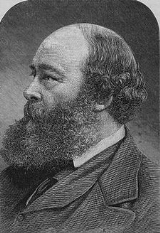
Robert Gascoyne-Cecil, 3rd Marquess of Salisbury

Robert Arthur Talbot Gascoyne-Cecil, 3rd Marquess of Salisbury, KG Order of the Garter

The Most Noble Order of the Garter is an English [i] order of chivalry [i] with a history stretc ... 

, GCVO Royal Victorian Order

The Royal Victorian Order is an order of chivalry that was established by Queen Victoria [i] ... 

, PC Privy Council of the United Kingdom

Her Majesty's Most Honourable Privy Council is a body of advisors to the British Sovereign [i] ... 

 , known as Lord Robert Cecil before 1865 and as Viscount Cranborne from 1865 until 1868, was a British United Kingdom

The United Kingdom of Great Britain and Northern Ireland is a country and sovereign state [i] tha ... 

 statesman and Prime Minister Prime Minister of the United Kingdom

The Prime Minister of the United Kingdom of Great Britain and Northern Ireland [i] is in ... 

 on three occasions, for a total of over 13 years. He was the last British Prime Minister to hold office whilst a member of the House of Lords House of Lords

The House of Lords is the upper house [i] of the Parliament of the United Kingdom [i]. ... 

.

Discussions

  Discussion Features

   Ask a question about 'Robert Gascoyne-Cecil, 3rd Marquess of Salisbury'

   Start a new discussion about 'Robert Gascoyne-Cecil, 3rd Marquess of Salisbury'

   Answer questions about 'Robert Gascoyne-Cecil, 3rd Marquess of Salisbury'

   'Robert Gascoyne-Cecil, 3rd Marquess of Salisbury' discussion forum

Timeline

1900   Second Boer War: Boer leader Paul Kruger Paul Kruger

Stephanus Johannes Paulus Kruger, better known as Paul Kruger and fondly known as Oom Paul was... 

's peace overtures are rejected by Prime Minister of the United Kingdom Prime Minister of the United Kingdom

The Prime Minister of the United Kingdom of Great Britain and Northern Ireland [i] is in ... 

 Lord Salisbury Robert Gascoyne-Cecil, 3rd Marquess of Salisbury

Robert Arthur Talbot Gascoyne-Cecil, 3rd Marquess of Salisbury, KG [i], GCVO [i] ... 

.

1902   Retirement of Lord Salisbury Robert Gascoyne-Cecil, 3rd Marquess of Salisbury

Robert Arthur Talbot Gascoyne-Cecil, 3rd Marquess of Salisbury, KG [i], GCVO [i] ... 

 as British prime minister Prime Minister of the United Kingdom

The Prime Minister of the United Kingdom of Great Britain and Northern Ireland [i] is in ... 

.


Quotations

On general grounds I object to Parliament trying to regulate private morality in matters which only affects the person who commits the offence.

Letter to Sir Henry Peek (1888)

Parliament is a potent engine, and its enactments must always do something, but they very seldom do what the originators of these enactments meant.

Statement to the Associated Chambers of Commerce (March 1891)

Most legislation will have the effect of surrounding the industry which it touches with precautions and investigations, inspections and regulations, in which it will be slowly enveloped and stifled.

Statement to the Associated Chambers of Commerce (March 1891)

If I were asked to define Conservative policy, I should say that it was the upholding of confidence.

Quoted in Salisbury -- Victorian Titan (1999) by Andrew Roberts

The only true lasting benefit which the statesman can give to the poor man is so to shape matters that the greatest possible liberty for the exercise of his own moral and intellectual qualities should be offered to him by law.

Quoted in Salisbury -- Victorian Titan (1999) by Andrew Roberts

       More Quotes >>


Encyclopedia

Robert Arthur Talbot Gascoyne-Cecil, 3rd Marquess of Salisbury, KG Order of the Garter

The Most Noble Order of the Garter is an English [i] order of chivalry [i] with a history stretc ... 

, GCVO Royal Victorian Order

The Royal Victorian Order is an order of chivalry that was established by Queen Victoria [i] ... 

, PC Privy Council of the United Kingdom

Her Majesty's Most Honourable Privy Council is a body of advisors to the British Sovereign [i] ... 

 , known as Lord Robert Cecil before 1865 and as Viscount Cranborne from 1865 until 1868, was a British United Kingdom

The United Kingdom of Great Britain and Northern Ireland is a country and sovereign state [i] tha ... 

 statesman and Prime Minister Prime Minister of the United Kingdom

The Prime Minister of the United Kingdom of Great Britain and Northern Ireland [i] is in... 

 on three occasions, for a total of over 13 years. He was the last British Prime Minister to hold office whilst a member of the House of Lords House of Lords

The House of Lords is the upper house [i] of the Parliament of the United Kingdom [i]. ... 

.

Life

Lord Robert Cecil was the second son of the 2nd Marquess of Salisbury. After an unhappy childhood, in which he was sent to Eton College Eton College

The King's College of Our Lady of Eton, commonly known as Eton College or just Eton, is an inte... 

, he went up to Christ Church, Oxford Christ Church, Oxford

Christ Church, is one of the largest and wealthiest of the constituent college [i]s of the University of Oxford [i]... 

, and on taking his degree was elected a Fellow of All Souls College All Souls College, Oxford

All Souls College
All Souls is an oddity among Oxford colleges in that all its members automatically bec... 

. He entered the House of Commons British House of Commons

|align=left|
  • Parliament [i]

... 

 as a Conservative in 1853.

In 1857, Cecil married Georgina Alderson, a woman of lower social standing, over the objections of his father. The marriage proved a happy one and bore him five sons and two daughters. In 1866 Cecil, now Viscount Cranborne after the death of his older brother, entered the third government of Lord Derby Edward Smith-Stanley, 14th Earl of Derby

Edward George Geoffrey Smith-Stanley, 14th Earl of Derby, KG [i], PC [i] ... 

 as Secretary of State for India, but resigned the next year over the Reform Bill Reform Act 1867

The Reform Act 1867, 30 & 31 Vict.... 

, which he opposed.

In 1868, on the death of his father, he inherited the Marquessate of Salisbury, thereby becoming a member of the House of Lords House of Lords

The House of Lords is the upper house [i] of the Parliament of the United Kingdom [i]. ... 

. From 1868 and 1871, he was chairman of the Great Eastern Railway Great Eastern Railway

The Great Eastern Railway was a pre-grouping [i] British railway company, whose main line [i] ... 

, which was then experiencing losses. During his tenure, the company was taken out of chancery Court of Chancery

The Court of Chancery was one of the court [i]s of equity [i] in England and Wales [i] ... 

, and paid out a small dividend on its ordinary shares.

He returned to government in 1874, serving once again as India Secretary in the government of Benjamin Disraeli Benjamin Disraeli, 1st Earl of Beaconsfield

Benjamin Disraeli, 1st Earl of Beaconsfield, KG [i], PC [i] ... 

. Salisbury gradually developed a good relationship with Disraeli, whom he had previously disliked and distrusted. In 1878, Salisbury succeeded Lord Derby Edward Stanley, 15th Earl of Derby

Edward Henry Stanley, 15th Earl of Derby, KG [i] , PC [i] ... 

  as Foreign Secretary in time to help lead Britain to "peace with honour" at the Congress of Berlin Congress of Berlin

The Congress of Berlin was a meeting of the European Great Powers' and the Ottoman Empire's leading stat... 

. For this he was rewarded with the Order of the Garter Order of the Garter

The Most Noble Order of the Garter is an English [i] order of chivalry [i] with a history stretc ... 

.

Following Disraeli's death in 1881, the Conservatives entered a period of turmoil. Salisbury became the leader of the Conservative members of the House of Lords, though the overall leadership of the party was not formally allocated. So he struggled with the Commons leader Sir Stafford Northcote Stafford Northcote, 1st Earl of Iddesleigh

Stafford Henry Northcote, 1st Earl of Iddesleigh [i] GCB [i] PC [i] ... 

, a struggle in which Salisbury eventually emerged as the leading figure. He became Prime Minister Prime minister

A prime minister is the most senior minister of a cabinet [i] in the executive [i] b ... 

 of a minority administration from 1885 to 1886. Although unable to accomplish much due to his lack of a parliamentary majority, the split of the Liberals over Irish Home Rule in 1886 enabled him to return to power with a majority, and, with a short break to serve as Prime Minister from 1886 to 1902.

In 1889 Salisbury set up the London County Council London County Council

London County Council was the principal local government body for the County of London [i] from 1889 unt ... 

 and then in 1890 allowed it to build houses. However he came to regret this, saying in November 1894 that the LCC, "is the place where collectivist and socialistic experiments are tried. It is the place where a new revolutionary spirit finds its instruments and collects its arms".

Salisbury's expertise was in foreign affairs; for most of his time as Prime Minister he served not as First Lord of the Treasury, the traditional position held by the Prime Minister, but as Foreign Secretary Secretary of State for Foreign and Commonwealth Affairs

The Secretary of State for Foreign and Commonwealth Affairs, commonly referred to as the Foreign Sec... 

. In that capacity, he skilfully managed Britain's foreign affairs, famously pursuing a policy of "Splendid Isolation". Among the important events of his premierships was the Partition of Africa Scramble for Africa

The Scramble for Africa was the proliferation of conflicting European claims to African territory during... 

, culminating in the Fashoda Crisis Fashoda Incident

The Fashoda Incident was the climax of imperial [i] territorial disputes between the United Kingdom [i] ... 

 and the Second Boer War Second Boer War

The Second Boer War, also known as the South African War , the Anglo-Boer War and in [[Afrikaans]... 

. While at home he sought to "fight Home Rule with kindness" by launching a land reform program which helped hundreds of thousands of Irish peasants gain land ownership.

On July 11, 1902, in failing health and broken hearted over the death of his wife, Salisbury resigned. He was succeeded by his nephew, Arthur James Balfour Arthur Balfour

Arthur James Balfour, 1st Earl of Balfour, KG [i], OM [i], PC [i] ... 

. Salisbury was the last peer to serve as Prime Minister, with the brief exception of the 14th Earl of Home Alec Douglas-Home

Alexander Frederick Douglas-Home1 [i], Baron Home of the Hirsel, KT [i], PC [i] ... 

 who renounced his peerage within a few days of being appointed. Salisbury was twice offered a dukedom by Queen Victoria Victoria of the United Kingdom

Victoria was the Queen [i] of the United Kingdom of Great Britain and Ireland [i] ... 

 in 1886 and 1892, but declined both offers, citing the prohibitive cost of the lifestyle dukes were expected to maintain.

When Salisbury died his estate was probated at 310,336 pounds sterling. In 1900 Salisbury was worth £ Pound sterling

The pound, divided into 100 pence, is the official currency [i] of the United Kingdom [i] and the ... 

6.56 million, about £374 million in 2005.

Salisbury is seen as an icon of traditional, aristocratic conservatism. The academic quarterly Salisbury Review was named in his honour upon its founding in 1982.

Family


Salisbury was the third son of James Gascoyne-Cecil, 2nd Marquess of Salisbury, a minor Tory politician. He went against his father's wishes and married Georgina Alderson, the daughter of Sir Edward Alderson, a moderately notable jurist. Robert and Georgina had eight children, all but one of whom survived infancy.
  • Lady Beatrix Cecil , married William Waldegrave Palmer, 2nd Earl of Selborne
  • Lady Gwendolen Cecil , author, seeming not to have married
  • Lady Fanny Cecil , died as infant
  • James Gascoyne-Cecil, 4th Marquess of Salisbury
  • Lord William Gascoyne-Cecil
  • Edgar Robert Gascoyne-Cecil, 1st Viscount Cecil of Chelwood Robert Cecil, 1st Viscount Cecil of Chelwood

    Edgar Algernon Robert Gascoyne-Cecil, 1st Viscount Cecil of Chelwood CH [i] ... 

  • Lord Edward Gascoyne-Cecil
  • Hugh Richard Heathcote Gascoyne-Cecil, 1st Baron Quickswood


The blatant favour Lord Salisbury showed towards his family in appointing them while he was in office is immortalised in the phrase "Bob's your uncle".

Lord Salisbury's First Government, July 1885–February 1886


  • Lord Salisbury – Secretary of State for Foreign Affairs Secretary of State for Foreign and Commonwealth Affairs

    The Secretary of State for Foreign and Commonwealth Affairs, commonly referred to as the Foreign Sec... 

     and Leader of the House of Lords
  • Lord Iddesleigh Stafford Northcote, 1st Earl of Iddesleigh

    Stafford Henry Northcote, 1st Earl of Iddesleigh [i] GCB [i] PC [i] ... 

     – First Lord of the Treasury
  • Lord Halsbury – Lord Chancellor Lord Chancellor

    The Lord High Chancellor of Great Britain, or Lord Chancellor and in former times the Chancello... 

  • Lord Cranbrook Gathorne Hardy, 1st Earl of Cranbrook

    Gathorne Gathorne-Hardy, 1st Earl of Cranbrook GCSI [i] PC [i] ... 

     – Lord President of the Council
  • Lord Harrowby Dudley Ryder, 3rd Earl of Harrowby

    Dudley Francis Stuart Ryder, 3rd Earl of Harrowby.... 

     – Lord Privy Seal
  • Sir Richard Assheton Cross R. A. Cross, 1st Viscount Cross

    [i] [[Order of the Star of India|GCSI]... 

     – Secretary of State for the Home Department
  • Sir Frederick Arthur Stanley Frederick Stanley, 16th Earl of Derby

    Frederick Arthur Stanley, 16th Earl of Derby, KG [i], GCB [i], GCVO [i] ... 

     – Secretary of State for the Colonies
  • William Henry Smith – Secretary of State for War
  • Lord Randolph Churchill Lord Randolph Churchill

    Lord Randolph Henry Spencer Churchill was a British [i] statesman.

... 

 – Secretary of State for India
  • Lord George Hamilton – First Lord of the Admiralty Admiralty

    The Admiralty was formerly the authority in the United Kingdom [i] responsible for the command of the Royal Navy [i]... 

  • Sir Michael Hicks Beach Michael Hicks Beach

    Michael Edward Hicks Beach, 1st Earl St Aldwyn, known as Sir Michael Hicks Beach, Bt from 1854 [i] ... 

     – Chancellor of the Exchequer Chancellor of the Exchequer

    The Chancellor of the Exchequer is the title held by the British cabinet [i] minister [i] responsible fo ... 

     and Leader of the House of Commons
  • The Duke of Richmond Charles Gordon-Lennox, 6th Duke of Richmond

    Charles Henry Gordon-Lennox, 6th Duke of Richmond, 6th Duke of Lennox and 1st Duke of Gordon KG [i] ... 

     – President of the Board of Trade
  • Lord John Manners John Manners, 7th Duke of Rutland

    John James Robert Manners, 7th Duke of Rutland, KG [i], GCB [i], PC [i] ... 

     – Postmaster-General
  • Lord Carnarvon Henry Herbert, 4th Earl of Carnarvon

    Henry Howard Molyneux Herbert, 4th Earl of Carnarvon, was an English [i] politician [i] and a le ... 

     – Lord-Lieutenant of Ireland Lord Lieutenant of Ireland

    The Lord Lieutenant of Ireland, also known as the Judiciar in the early mediaeval [i] period and a ... 

  • Lord Ashbourne – Lord Chancellor of Ireland
  • Edward Stanhope – Vice President of the Council

Changes

  • August 1885 – The Duke of Richmond Charles Gordon-Lennox, 6th Duke of Richmond

    Charles Henry Gordon-Lennox, 6th Duke of Richmond, 6th Duke of Lennox and 1st Duke of Gordon KG [i] ... 

     becomes Secretary for Scotland. Edward Stanhope succeeds him at the Board of Trade. Stanhope's successor as Vice President of the Council is not in the Cabinet.
  • January, 1886 – The Lord-Lieutenantship of Ireland is put into commission. William Henry Smith becomes Chief Secretary for Ireland Chief Secretary for Ireland

    The Chief Secretary was the a key office-holder of state in the British [i] administratio ... 

    . Lord Cranbrook Gathorne Hardy, 1st Earl of Cranbrook

    Gathorne Gathorne-Hardy, 1st Earl of Cranbrook GCSI [i] PC [i] ... 

     succeeds him as Secretary for War, while remaining Lord President.

Lord Salisbury's Second Government, August 1886–August 1892

  • Lord Salisbury – First Lord of the Treasury and Leader of the House of Lords
  • Lord Halsbury – Lord Chancellor Lord Chancellor

    The Lord High Chancellor of Great Britain, or Lord Chancellor and in former times the Chancello... 

  • Lord Cranbrook Gathorne Hardy, 1st Earl of Cranbrook

    Gathorne Gathorne-Hardy, 1st Earl of Cranbrook GCSI [i] PC [i] ... 

     – Lord President of the Council
  • Lord Cadogan – Lord Privy Seal
  • Henry Matthews – Secretary of State for the Home Department
  • Lord Iddesleigh Stafford Northcote, 1st Earl of Iddesleigh

    Stafford Henry Northcote, 1st Earl of Iddesleigh [i] GCB [i] PC [i] ... 

     – Secretary of State for Foreign Affairs Secretary of State for Foreign and Commonwealth Affairs

    The Secretary of State for Foreign and Commonwealth Affairs, commonly referred to as the Foreign Sec... 

  • Edward Stanhope – Secretary of State for the Colonies
  • William Henry Smith – Secretary of State for War
  • Lord Cross R. A. Cross, 1st Viscount Cross

    [i] [[Order of the Star of India|GCSI]... 

     – Secretary of State for India
  • Lord George Hamilton – First Lord of the Admiralty Admiralty

    The Admiralty was formerly the authority in the United Kingdom [i] responsible for the command of the Royal Navy [i]... 

  • Lord Randolph Churchill Lord Randolph Churchill

    Lord Randolph Henry Spencer Churchill was a British [i] statesman.

... 

 – Chancellor of the Exchequer Chancellor of the Exchequer

The Chancellor of the Exchequer is the title held by the British cabinet [i] minister [i] responsible fo ... 

 and Leader of the House of Commons
  • Lord Stanley of Preston Frederick Stanley, 16th Earl of Derby

    Frederick Arthur Stanley, 16th Earl of Derby, KG [i], GCB [i], GCVO [i] ... 

     – President of the Board of Trade
  • Lord John Manners John Manners, 7th Duke of Rutland

    John James Robert Manners, 7th Duke of Rutland, KG [i], GCB [i], PC [i] ... 

     – Chancellor of the Duchy of Lancaster
  • Sir Michael Hicks Beach Michael Hicks Beach

    Michael Edward Hicks Beach, 1st Earl St Aldwyn, known as Sir Michael Hicks Beach, Bt from 1854 [i] ... 

     – Chief Secretary for Ireland Chief Secretary for Ireland

    The Chief Secretary was the a key office-holder of state in the British [i] administratio ... 

  • Arthur James Balfour Arthur Balfour

    Arthur James Balfour, 1st Earl of Balfour, KG [i], OM [i], PC [i] ... 

     – Secretary for Scotland

Cabinet after the reorganization of January, 1887

  • Lord Salisbury – Secretary of State for Foreign Affairs Secretary of State for Foreign and Commonwealth Affairs

    The Secretary of State for Foreign and Commonwealth Affairs, commonly referred to as the Foreign Sec... 

     and Leader of the House of Lords
  • William Henry Smith – First Lord of the Treasury and Leader of the House of Commons
  • Lord Halsbury – Lord Chancellor Lord Chancellor

    The Lord High Chancellor of Great Britain, or Lord Chancellor and in former times the Chancello... 

  • Lord Cranbrook Gathorne Hardy, 1st Earl of Cranbrook

    Gathorne Gathorne-Hardy, 1st Earl of Cranbrook GCSI [i] PC [i] ... 

     – Lord President of the Council
  • Lord Cadogan – Lord Privy Seal
  • Henry Matthews – Secretary of State for the Home Department
  • Sir Henry Holland – Secretary of State for the Colonies
  • Edward Stanhope – Secretary of State for War
  • Lord Cross R. A. Cross, 1st Viscount Cross

    [i] [[Order of the Star of India|GCSI]... 

     – Secretary of State for India
  • Lord George Hamilton – First Lord of the Admiralty Admiralty

    The Admiralty was formerly the authority in the United Kingdom [i] responsible for the command of the Royal Navy [i]... 

  • George Goschen George Goschen

    George Joachim Goschen, 1st Viscount Goschen was a British [i] statesman [i] and businessman [i] ... 

     – Chancellor of the Exchequer Chancellor of the Exchequer

    The Chancellor of the Exchequer is the title held by the British cabinet [i] minister [i] responsible fo ... 

  • Lord Stanley of Preston Frederick Stanley, 16th Earl of Derby

    Frederick Arthur Stanley, 16th Earl of Derby, KG [i], GCB [i], GCVO [i] ... 

     – President of the Board of Trade
  • Lord John Manners John Manners, 7th Duke of Rutland

    John James Robert Manners, 7th Duke of Rutland, KG [i], GCB [i], PC [i] ... 

     – Chancellor of the Duchy of Lancaster
  • Arthur James Balfour Arthur Balfour

    Arthur James Balfour, 1st Earl of Balfour, KG [i], OM [i], PC [i] ... 

     – Chief Secretary for Ireland Chief Secretary for Ireland

    The Chief Secretary was the a key office-holder of state in the British [i] administratio ... 

  • Charles Thomson Ritchie Charles Thomson Ritchie

    Charles Thomson Ritchie, 1st Baron Ritchie, was a British [i] politician.

... 

 – President of the Local Government Board
  • Sir Michael Hicks Beach Michael Hicks Beach

    Michael Edward Hicks Beach, 1st Earl St Aldwyn, known as Sir Michael Hicks Beach, Bt from 1854 [i] ... 

     – Minister without Portfolio

Further Changes

  • February 1888 – Sir Michael Hicks Beach Michael Hicks Beach

    Michael Edward Hicks Beach, 1st Earl St Aldwyn, known as Sir Michael Hicks Beach, Bt from 1854 [i] ... 

     succeeds Lord Stanley of Preston as President of the Board of Trade
  • 1889 – Henry Chaplin Henry Chaplin, 1st Viscount Chaplin

    Henry Chaplin, 1st Viscount Chaplin was a British [i] Conservative Party [i] ... 

     enters the Cabinet as President of the Board of Agriculture.
  • October, 1891 – Arthur James Balfour Arthur Balfour

    Arthur James Balfour, 1st Earl of Balfour, KG [i], OM [i], PC [i] ... 

     succeeds William Henry Smith as First Lord of the Treasury and Leader of the House of Commons. William Lawies Jackson succeeds him as Irish Secretary.

Lord Salisbury's Third Government, June 1895–July 1902

  • Lord Salisbury – Secretary of State for Foreign Affairs Secretary of State for Foreign and Commonwealth Affairs

    The Secretary of State for Foreign and Commonwealth Affairs, commonly referred to as the Foreign Sec... 

     and Leader of the House of Lords
  • Arthur James Balfour Arthur Balfour

    Arthur James Balfour, 1st Earl of Balfour, KG [i], OM [i], PC [i] ... 

     – First Lord of the Treasury and Leader of the House of Commons
  • Lord Halsbury – Lord Chancellor Lord Chancellor

    The Lord High Chancellor of Great Britain, or Lord Chancellor and in former times the Chancello... 

  • The Duke of Devonshire Spencer Cavendish, 8th Duke of Devonshire

    Spencer Compton Cavendish, 8th Duke of Devonshire, KG [i], PC [i] ... 

     – Lord President of the Council
  • Lord Cross R. A. Cross, 1st Viscount Cross

    [i] [[Order of the Star of India|GCSI]... 

     – Lord Privy Seal
  • Sir Matthew White Ridley – Secretary of State for the Home Department
  • Joseph Chamberlain Joseph Chamberlain

    Joseph Chamberlain was an influential British statesman.... 

     – Secretary of State for the Colonies
  • Lord Lansdowne Henry Petty-FitzMaurice, 5th Marquess of Lansdowne

    Henry Charles Keith Petty-FitzMaurice, 5th Marquess of Lansdowne, KG [i], GCSI [i] ... 

     – Secretary of State for War
  • Lord George Hamilton – Secretary of State for India
  • George Joachim Goschen George Goschen

    George Joachim Goschen, 1st Viscount Goschen was a British [i] statesman [i] and businessman [i] ... 

     – First Lord of the Admiralty Admiralty

    The Admiralty was formerly the authority in the United Kingdom [i] responsible for the command of the Royal Navy [i]... 

  • Sir Michael Hicks Beach Michael Hicks Beach

    Michael Edward Hicks Beach, 1st Earl St Aldwyn, known as Sir Michael Hicks Beach, Bt from 1854 [i] ... 

     – Chancellor of the Exchequer Chancellor of the Exchequer

    The Chancellor of the Exchequer is the title held by the British cabinet [i] minister [i] responsible fo ... 

  • Charles Thomson Ritchie Charles Thomson Ritchie

    Charles Thomson Ritchie, 1st Baron Ritchie, was a British [i] politician.

... 

 – President of the Board of Trade
  • Henry Chaplin Henry Chaplin, 1st Viscount Chaplin

    Henry Chaplin, 1st Viscount Chaplin was a British [i] Conservative Party [i] ... 

     – President of the Local Government Board
  • Lord James of Hereford – Chancellor of the Duchy of Lancaster
  • Aretas Akers-Douglas – First Commissioner of Works
  • Lord Cadogan – Lord-Lieutenant of Ireland Lord Lieutenant of Ireland

    The Lord Lieutenant of Ireland, also known as the Judiciar in the early mediaeval [i] period and a ... 

  • Lord Ashbourne – Lord Chancellor of Ireland
  • Lord Balfour of Burleigh – Secretary for Scotland
  • Walter Hume Long – President of the Board of Agriculture

Changes

November, 1900 – Complete reorganization of the ministry:
  • Lord Salisbury – Lord Privy Seal and Leader of the House of Lords
  • Arthur James Balfour Arthur Balfour

    Arthur James Balfour, 1st Earl of Balfour, KG [i], OM [i], PC [i] ... 

     – First Lord of the Treasury and Leader of the House of Commons
  • Lord Halsbury – Lord Chancellor Lord Chancellor

    The Lord High Chancellor of Great Britain, or Lord Chancellor and in former times the Chancello... 

  • The Duke of Devonshire Spencer Cavendish, 8th Duke of Devonshire

    Spencer Compton Cavendish, 8th Duke of Devonshire, KG [i], PC [i] ... 

     – Lord President of the Council
  • Charles Thomson Ritchie Charles Thomson Ritchie

    Charles Thomson Ritchie, 1st Baron Ritchie, was a British [i] politician.

... 

 – Secretary of State for the Home Department
  • Lord Lansdowne Henry Petty-FitzMaurice, 5th Marquess of Lansdowne

    Henry Charles Keith Petty-FitzMaurice, 5th Marquess of Lansdowne, KG [i], GCSI [i] ... 

     – Secretary of State for Foreign Affairs Secretary of State for Foreign and Commonwealth Affairs

    The Secretary of State for Foreign and Commonwealth Affairs, commonly referred to as the Foreign Sec... 

  • Joseph Chamberlain Joseph Chamberlain

    Joseph Chamberlain was an influential British statesman.... 

     – Secretary of State for the Colonies
  • William St John Brodrick – Secretary of State for War
  • Lord George Hamilton – Secretary of State for India
  • Lord Selborne – First Lord of the Admiralty Admiralty

    The Admiralty was formerly the authority in the United Kingdom [i] responsible for the command of the Royal Navy [i]... 

  • Sir Michael Hicks Beach Michael Hicks Beach

    Michael Edward Hicks Beach, 1st Earl St Aldwyn, known as Sir Michael Hicks Beach, Bt from 1854 [i] ... 

     – Chancellor of the Exchequer Chancellor of the Exchequer

    The Chancellor of the Exchequer is the title held by the British cabinet [i] minister [i] responsible fo ... 

  • Gerald William Balfour – President of the Board of Trade
  • Walter Hume Long – President of the Local Government Board
  • Lord James of Hereford – Chancellor of the Duchy of Lancaster
  • Aretas Akers-Douglas – First Commissioner of Works
  • Lord Cadogan – Lord-Lieutenant of Ireland Lord Lieutenant of Ireland

    The Lord Lieutenant of Ireland, also known as the Judiciar in the early mediaeval [i] period and a ... 

  • Lord Ashbourne – Lord Chancellor of Ireland
  • Lord Balfour of Burleigh – Secretary for Scotland
  • Robert William Hanbury – President of the Board of Agriculture

Notes


Further reading

Andrew Roberts Andrew Roberts

Andrew Roberts is a conservative [i] UK [i] historian [i].... 

 Salisbury: Victorian Titan